Tag: 2016

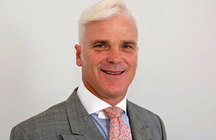
  • Desmond Swayne – 2016 Speech on UK’s Funding of Ghana Elections

    desmondswayne

    Below is the text of the speech made by Desmond Swayne, the Minister of State for International Development, in Ghana on 6 April 2016.

    Good afternoon everyone and thank you all for sparing the time to join us in formally announcing our new Deepening Democratic Governance Programme.

    My name is Desmond Swayne and I am the Minister of State for the Department of International Development. I am visiting as Ghana is seven months away from holding Presidential and Parliamentary Elections on 7 November. I should state upfront our expectation is that Ghana will deliver peaceful and credible elections, building on its already impressive track record. Having held 6 free and fair elections since the end of military rule, Ghana is already “best in class” in the region and indeed amongst the very best electoral democracies in Africa.

    The UK is interested in helping to enhance Ghana’s strong effort, recognising that each election cycle presents new challenges, which mandated institutions are required to respond to. The UK has been steadfast in its commitment to Ghana’s democratic transformation, most recently disbursing over £6 million to support election in 2012.

    Our new programme of support will focus on three main areas over a period of five years. Firstly, state institutions. We are already well acquainted with Ghana’s Electoral Management Bodies, the Electoral Commission; the Judiciary and the Ghana Police Service. Our aim is to identify and agree priority needs where the UK can best lend support, based on our comparative advantage, including assisting with some critical institutional reforms following the elections, where there is clear evidence of strong national commitment.

    Secondly, it is our intention to enhance existing support through the multi-donor Strengthening Transparency Accountability and Responsiveness Programme, better known as STAR Ghana, which offers assistance to civil society organisations. Here, we have a specific focus on doing more to support the inclusion of women, youth and persons with disabilities.

    Thirdly, we want to be flexible and opportunistic in our support, this includes being ready to respond in helping national partners to tackle unforeseen challenges which may have a destabilising impact. Regional experiences have taught us the importance of being prepared and alert to the risk of electoral related violence. So our support includes a rapid response facility that allows us to respond to challenges as they emerge. If all goes well – and we sincerely hope it does – we won’t need to draw on the rapid response facility. That will be a sign of success, not failure.

    Lastly, the programme focuses strongly on sustainability. We want to work with national partners to achieve lasting results, reducing the dependency on international assistance in this area. We envisage this to be our final electoral assistance programme to Ghana. It is our intention to exit from this area by 2020.

    There is a very clear and strong rationale for this exit from further electoral assistance by 2020. Ghana has an unrivalled record in the region for delivering peaceful and credible elections. In 2020, the country will be holding its 8th democratic elections. Ghana is also ranked as a Lower Middle Income Country, which calls for greater self-financing of critical aspects of its own development. So the UK’s withdrawal from supporting electoral processes in Ghana is a positive sign of Ghana’s success, and reduced reliance on external finance.

    Prior to my arrival, I heard quite a lot about how the elections this year were shaping up to be more challenging than in the past. Let me be clear that the UK’s only interest is that the outcome is peaceful and represents the will of Ghanaian people. My Government will work with whichever Government Ghana chooses.

    But we do want Ghana to protect and further enhance its reputation as a beacon of democracy that others across Africa can emulate. For that to happen, the people and the political parties need to work with the police to resolve concerns, not rely on militia groups; and all involved need to respect Ghana’s electoral laws and codes of conduct.

    If our support can help Ghana achieve that result in 2016 and beyond, it will prove to be a very worthwhile investment indeed.

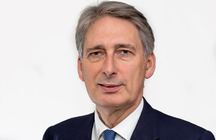
  • Philip Hammond – 2016 Speech at Lord Mayor’s Easter Banquet

    philiphammond

    Below is the text of the speech made by Philip Hammond, the Foreign Secretary, at the Mansion House in London on 6 April 2016.

    They say that a week is a long time in politics. And I have to tell you that the last year, frankly, seems like a lifetime. But when I stood here just before the General Election, I set out what we had achieved since 2010 to re-establish Britain’s place in the world.

    Re-shaping with a new National Security Council and prosperity as a central aim of diplomacy. Addressing the new security challenges we faced and consolidating our position as a major defence power. And restating our commitment in the Foreign Office to excellence in diplomacy.

    And since that election, as a single party Government (because I have to confide to you, when it comes to parties in Government less is definitely more) we’ve been able to go still further:

    In the post-Election Budget, we committed to continue to spend 2% of GDP on Defence – demonstrating our determination to maintain world class Armed Forces with cutting edge capabilities.

    And in the spending review we protected the Foreign and Commonwealth Office budget, confirming the value that we place on our worldwide network and our global influence.

    We’ve boosted our unrivalled soft power, with new cash for the British Council and a strengthened BBC World Service.

    And in the Commons, last December, the new Parliament, wiped clean the stain of the August 2013 Syria vote when, by a large majority, it voted to extend our military action against Daesh from Iraq into Syria – demonstrating that Britain does have the political will to act to safeguard our national security.

    But these achievements have been made against a backdrop of some serious storm clouds gathering on the horizon.

    Headwinds continue to buffet the global economy, forcing economic policymakers around the world to revise growth rates down.

    In the first six weeks of the year, concerns about China’s economic slowdown wiped over eight trillion dollars off world markets.

    And the collapse in oil markets – which welcome for consumers – is devastating those countries which rely on oil revenues for their public finances.

    Persistently weak inflation, negative interest rates in some countries, stagnating global trade, and vanishing demand. All, I’m afraid, point to turbulent times ahead.

    And as we seek to protect the British economy from these headwinds we have to recognise that we also face significant and growing threats to our national security.

    Last year, I set out the principal challenges we faced: Islamist extremism; Russian aggression; and EU reform.

    One year on and none of these challenges has gone away.

    The Prime Minister’s prediction that tackling Islamist extremism would be a “generational struggle” is looking increasingly prescient. And the succession of terrorist atrocities around the world including Sousse; the Metrojet bombing; Paris; Brussels; as well as attacks in Turkey, Pakistan, Lebanon and Nigeria, confirm that the terrorists’ desire to attack our values, our democracy and our freedom remains undiminished.

    But, in spite of these tragic incidents, we should not overlook the progress we have made in tackling Daesh in their heartlands of Syria and Iraq over the last year.

    In Iraq, government forces have retaken the strategically significant cities of Tikrit, Baiji, Sinjar and Ramadi, recovering some 40% of the territory that Daesh in Iraq once held. And an increasingly self-confident Iraqi Security Force is now preparing the ground for the forthcoming battle to liberate Mosul.

    In Syria, we and our coalition partners have been systematically targeting the Daesh senior leadership and the external attack planners who threaten us directly, as well as the oil infrastructure that has provided so much of their financing.

    But we are also upping our preparedness for the broader counter-terrorism fight: doubling the number of counter-terrorism officers on the FCO overseas network, standing up the four regional Counter Terrorism hubs announced in the recent Strategic Defence and Security Review and, I can announce tonight, creating a fifth Counter Terrorism hub in Europe, in the wake of the Paris and Brussels attacks, and the ongoing Daesh violence in Turkey. And underpinning this growth, we’re boosting our counter-terrorism funding, with an extra £80 million committed to Foreign Office CT over this next spending review period.

    But while we boost our fight against terrorism, the old challenge of state-based aggression in breach of the rules-based international order has not gone away.

    Just three weeks on from the second anniversary of Russia’s illegal annexation of Crimea, fighting has flared up again in the last few days in eastern Ukraine.

    In Syria, Russia’s unannounced intervention last September has strengthened Asad, who continues to wage war on his own people, driving some into the arms of the terrorists, and many more out of their homes, out of their country into the refugee camps in Jordan, Lebanon and Turkey – and onward to Europe.

    Russia and Iran are the two countries which have real influence on the Syrian regime and as members of the International Syria Support Group they have responsibility for telling Asad that it is time to go.

    For our part, we will continue to work with Russia where it is clearly in our national interest to do so – as it is in Syria. But all nations must know that if they violate the rules by which the international community lives, that community will hold them to account.

    And it is through the EU – my third topic from last year’s speech – that we’ve applied the hard-hitting, co-ordinated sanctions in response to Russia’s intervention in Ukraine.

    I said last year that we would fight for reform in the European Union, and the Prime Minister has delivered it: an historic deal which protects our special status outside the Euro and outside the Schengen area, exempts us from ‘ever closer Union’, creates a red card for national parliaments, and a new mechanism for repatriating powers, as well as a new regime to limit access to our benefit system for EU migrants.

    I have historically been a sceptic on the EU, and if you’d asked me a decade ago whether I believed it would be possible to achieve the package which is now on offer to the UK, I would have said “no”.

    Because at that time, many of our partners suffered from the belief that there could only be a one-size-fits-all model for the European Union.

    But that has changed, and it’s changed, I believe, for three reasons:

    First, the dawning realisation that the Eurozone countries will inevitably require further fiscal and political integration. The recent financial crisis has underscored that reality. With Euro-ins and Euro-outs, a multi-destination EU has become inevitable, destroying the federalists’ vision of a one-track Europe. So now, different views of the future can be accommodated: greater integration for those who want or need it; a looser model for those of us who do not.

    Secondly, the impact of the global financial crisis on the Eurozone. In Britain, we were hit hard, but thanks to the measures we’ve taken since 2010, and thanks to the fact that we’ve kept the pound, we are back on the path of economic growth and rising employment. But in the Eurozone, without the safety valve of devaluation, the impact has been longer term. Many countries are still suffering from sclerotic growth and record unemployment. This bitter experience has been a wake-up call for those whose principal concern used to be protecting something called the “European social model” – an awakening to the fact that you can’t protect any kind of social model if you don’t have a competitive economy. Boosting competitiveness and a focus on job creation are the new policy drivers in Europe. The penny has finally dropped: without a strong and competitive economy, everything we value is built on sand.

    And thirdly, political views across the EU have shifted decisively. Seven or eight years ago, the UK was a genuine outlier in terms of what we believed the EU should look like and what role it should play in people’s lives. But no longer. There is now a long list of countries who believe, to quote Italian Prime Minister Renzi, in “Better Europe, not more Europe”. What used to be regarded as eccentrically British views on the future on Europe are now firmly established in the mainstream of European political thought.

    It’s probably fair to observe that we, in my party, may not always have been the greatest cheerleaders for Mr Juncker but he has certainly detected, and taken on board, this change of mood – and this Commission is now delivering on a reform agenda. Proposals for new legislation have been cut by 80%. And the Prime Minister’s deal commits the Commission to sectoral targets for burden reduction, with a special focus on SMEs.

    That’s a good start, but our job is far from done. We now need to lock this change of mood into the DNA of the European Union, and turn the commitments made to the UK into a working reality, institutionalising our reform agenda. And if Britain votes, as I hope it will, to remain, taking active leadership of the reform agenda in the European Union. So despite my historic scepticism about the EU, it is my firm judgement that, on balance, the benefits of the single market with the unique terms of membership now offered to the UK, mean that we will be safer, stronger and better off in.

    Increasing competitiveness through strengthening the single market and driving more EU trade deals… while maintaining Britain’s attractiveness as a destination for inward investment by staying in the 500 million-consumer Single Market, but keeping the Pound.

    Britain is, and will remain, a world-class player. But our ability to project our influence around the world is enhanced by our EU membership. Acting as part of a European bloc to deliver stronger trade deals, to bolster the resilience of fragile partners around our periphery and to impose tough economic sanctions against those who threaten our security, gives us greater reach and greater influence.

    So to those of my countrymen who care passionately about maintaining Britain’s influence in the world, I say this: our voice will be louder and more persuasive if the United Kingdom votes to “remain” on June 23rd.

    There was of course, I have to admit, one big challenge I did not foresee in my speech last year, and that was the migration crisis in Europe.

    The movement of hundreds of thousands, perhaps a million or more, of people across the Middle East into Europe is at a level not seen since the immediate aftermath of the Second World War.

    Some of them are fleeing terror and conflict; others are simply pursuing a better life – enabled in their quest by the ubiquitous smart phone, delivering the instant access to information that has revolutionised all of our lives.

    The fact is, the digital revolution means access to information is now ubiquitous, but economic opportunity is not.

    And it’s clear to me that information-enabled economic migration will be a major challenge for all rich countries, long after the Syria crisis is resolved.

    Working out how we discharge our moral and legal obligations to genuine refugees fleeing persecution and conflict while dealing robustly with the traffickers and those who are seeking to circumvent the rules to access a better standard of living, will be a major challenge for politicians across the developed world for many years to come.

    My Lord Mayor, Excellencies, Ladies and Gentlemen, I’ve focused this year and last on we’ve acted to restore and enhance Britain’s role on the world stage.

    We’re rebuilding our economy, the foundation of everything we do.

    We’ve committed the funding to strengthen our defences and protect our diplomatic network.

    And we’ve rediscovered the political will to act to protect our national security.

    In the fight against Islamist extremism, we’re degrading Daesh and exposing the fallacy of the so-called “Caliphate”;

    We’re keeping up the pressure on Russia over Ukraine and seeking a negotiated solution and an end to Asad’s rule in Syria;

    We’ve secured a unique membership arrangement from the European Union and we’re giving the British people the final say on it at the ballot box;

    And we’re working with the EU and with Turkey to crush the traffickers, stem the flow of economic migrants and protect genuine refugees.

    Through the actions we’re taking, we’re ensuring that Britain is better prepared both to deal with the major threats today and for the unknown challenges yet to come.

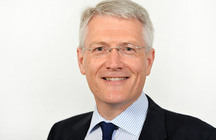
  • Andrew Jones – 2016 Speech on Funding for Road Maintenance

    andrewjones

    Below is the text of the speech made by Andrew Jones, the Parliamentary Under Secretary of State for Transport, at the Road Surface Treatments Association Conference on 7 April 2016.

    Introduction

    It’s a real pleasure to be here today.

    To give the keynote address on the future of funding for road maintenance.

    After all, this is a subject of vital importance to all of us – government, industry, and – above all – everyone who uses our roads.

    Funding

    That importance is why the condition of the local road network is so often in the media.

    And it is why even before I was appointed Roads Minister, I received more letters about potholes than about anything else.

    And since becoming Roads Minister, I’ve realised my colleagues in Parliament do too.

    Given that I’ve become the person they pass all their letters onto for my response.

    I don’t mind – that’s why I came into politics: to deal with some of the problems that matter to people’s everyday lives.

    And right now, when we’ve just emerged from a winter that the Met Office has said was one of the wettest on record.

    Leading to severe flooding and damage to our roads.

    Public interest in road maintenance is at its annual highest.

    I pay tribute to those who worked to respond to the floods, helping to repair and rebuild damaged infrastructure.

    Both over the winter and more recently in response to Storm Katie over the Easter Weekend.

    It’s because of the extreme weather we’ve seen that we have agreed to provide a further £180 million so affected authorities can repair the damage to local roads.

    However you look at it, £180 million is a lot of money – especially in the context of the still-urgent need to balance the nation’s books.

    But even that figure is dwarfed by the quarter of a billion pounds we’re targeting at fixing potholes on the local road network through our Pothole Action Fund.

    Enough to repair over 4 million holes by 2021.

    Then there is also the £578 million we are making available between now and 2021 to incentivise highways authorities’ performance.

    And those figures are just a fraction of the overall total of £6 billion we’ve committed for local highway authorities in England during the same period.

    Representing a funding increase of nearly £400 million for local roads maintenance compared to the last Parliament.

    And the fact that we have laid out our spending plans 5 years ahead is another clue as to how seriously the government is taking highway maintenance.

    We want to provide local highway authorities with funding certainty.

    So they can use the cash in the best possible way.

    Perhaps identifying preventative maintenance to undertake now that will save them money later.

    Sound asset management

    That, after all, is what good asset management is all about.

    The motto that prevention is better than cure applies to our roads, just as much as anything else.

    And as a former Cabinet Member for Finance and Resources for my local council in Harrogate, I understand the pressures authorities are under.

    But I also understand that there’s scope for local authorities to improve their approach to maintaining their roads.

    To find efficiencies, and to invest money at the right time in these assets’ lifecycles.

    I wouldn’t be surprised if most people in the room today could give me stories about how they’ve seen money being spent in ways that are far from ideal.

    And I know that of the 150-plus highway authorities in this country, most are doing very similar things in different ways, rather than pooling knowledge and expertise for common gain.

    It was painfully evident from the National Audit Office study undertaken in 2014 that many highway authorities did not have an asset management strategy or plan.

    Despite the fact that authorities who use such plans see real financial benefits, improved accountability, value for money and customer service.

    So that’s why 2 years ago we decided to introduce incentive funding – the £578 million pound pot I mentioned just now.

    This money is to be allocated to highways authorities based on their performance.

    Authorities that spend money on roads efficiently.

    Will be rewarded with extra funds to keep up the good work.

    While authorities with a history of inefficiency will receive comparatively less money.

    Over time, we expect that all authorities will improve.

    By the financial year 2018/19, over a quarter of funding will be allocated on the basis of competition or performance.

    I have been pleased that all authorities eligible to apply for incentive funding have submitted self-assessment returns to the department.

    You will hear more from Matthew Lugg later today about how we are assessing authorities.

    Matthew has worked closely with the Department for Transport and the Highways Maintenance Efficiency Programme Board to put our plans into action.

    I express my thanks for his and the board’s contribution.

    But what I can announce for the first time today is the results of the incentive funding for 2016/17.

    All the authorities that applied will receive some incentive funding.

    But I would particularly like to mention what we now know are the 2 top performing highways authorities in the country: Durham and Lincolnshire.

    They scored highly against all 22 criteria and they will receive the maximum possible funding.

    I would urge other authorities to look closely at how Durham and Lincolnshire are running such an efficient operation.

    Where all the other authorities rank and the funding they will receive is to be published on the DfT’s website today.

    For those authorities which have not ranked as highly as they’d have liked my officials in the department stand ready to support them in learning from the best.

    Indeed, if highways authorities feel that they need someone from the Department for Transport to make the case for proper highways management to elected members in person, we are happy to send one of our experts along.

    Please contact the department or me directly if you feel this would be helpful in your area.

    Conclusion

    And so, in conclusion.

    The sector has come a long way over the past few years.

    By becoming more efficient.

    By adopting better principles of asset management and by working more collaboratively.

    Now we want highways authorities and their contractors to keep improving.

    To keep learning from one another.

    And to make funding go further still.

    Places like Durham and Lincolnshire are showing what’s possible.

    By following their lead, we’ll have a better road network that better meets the needs of the nation.

    Thank you.

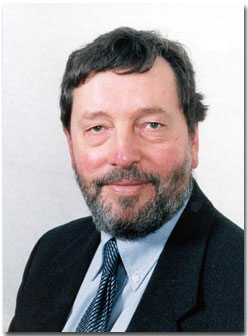
  • David Blunkett – 2004 Speech on Renewing Democracy

    davidblunkett

    Below is the text of the speech made by David Blunkett, the then Home Secretary, in Boston, USA, on 9 March 2004.

    I am very pleased to be invited to this celebration for the Ash Institute for Democratic Governance and Innovation.

    The Institute has become an increasingly influential source of ideas and new approaches in this country and both directly and indirectly in other parts of the world too and has certainly been an important stimulus to my thinking. Over the past 15 years, I have been able to visit some of the programmes growing out of the work of the Institute and its predecessors – including the Compstat system in New York, the Centre for Court Innovation, La Bodega de la Familia and Operation Ceasefire in Boston. I’ve even succeeded intempting one of your distinguished alumni Paul Evans across the Atlantic! And I have had long-standing links with the Kennedy School as a whole through Professor Robert Putnam.

    But that is not my theme for today. Instead the issue I want to address (and it’s one which never goes away) is a more fundamental one. Does Government matter, what kind of Government and for what purpose? On our side of the Atlantic we have exactly the same debates and challenges: people call for action on every front one day and demand that we devolve responsibility and downscale resources the next.

    I’ll come later to the contradictions of a liberal left who want more Government at home and less abroad and the right preaching no Government at home and big Government abroad.

    I start from the premise that Government matters, Government is the alternative to anarchy, to disintegration and to conflict. Government is about resolving differences, determining priorities, allocating resources peacefully and without conflict not to mention its more ancient and fundamental role of providing the basic framework of protection from harm necessary for both communities and individuals. One of the first books I read at University was by Professor Sir Bernard Crick, “In Defence of Politics”. I believe that Bernard’s analysis holds good for today.

    But the question is not whether we need politics or Government or even good Government, but what kind of Government, what role Government can play in the 21st century and how democracy can be revitalised and renewed in an era of global capital, the world wide web, mobile phones and multi channel media. And of course this leads us into wider questions. What is the glue that holds society together? How do we build on the family, what should we do to reinforce self-reliance and mutuality?

    If we are to answer these questions, we must be very clear about the nature of the challenges that now confront us. Above all it seems clear to me that the challenge is one of the most enormous change both in terms of scale but also rapidity. Change economically, socially and globally. Change which can bring enormous benefits to individuals, communities and countries but which can also be threatening for all of these. In particular change which can undermine the cohesion, the social capital, the networks and support structures which are crucial part of every area of human activity – economic, educational and personal and family life. Old certainties have disappeared – but there is no room for nostalgia, we have to develop a new sense of identity and belonging – and government has to look to build new forms of social capital, new networks and new cohesion which will help us all to thrive in the new world in which we find ourselves.

    I want therefore to explore for a moment what it is that determines the level of social capital in a society?

    It seems to be affected in a negative way by a number of contemporary trends. Firstly, the breakdown of family in the traditional sense which can undermine our sense of where we belong. Secondly, mobility – if you don’t expect to stay long in one place you are unlikely to invest in the social networks that bind communities together. And thirdly, the decay in people’s sense of community can lead to the disintegration of actual communities – with people leaving, crime rising, drug use, and despair which can become a vicious cycle

    But of course Government should not be a purely passive player in this. And the steps we are taking – for example to give people and local communities the powers and the confidence to tackle anti-social behaviour – are I believe helping to turn this round. Perhaps more important still for long term change is our approach to education – which brings not just personal strength, hope, and the capacity to cope with change, but also gives people a stake in society. And finally, ownership, financial and material assets, which of course also gives people a stake in society. Research I commissioned while at the Department of Education, using data from the National Child Development Study, suggests that asset ownership brings wider social and psychological benefits. Having savings appears to be correlated with enjoying better health, and having more interest in politics. This applies to community assets as well as individual assets. When physical capital in a community goes up, so too does social capital.

    This suggests for me a new and different role for Government. The challenge for government is, by taking a more enabling, facilitating role, to help individuals and communities see a way forward – not by doing things for them but by doing things with them, as a means to lasting change. Leadership is crucial – not just government, but also schools and colleges, churches, community organisations. But without participation, the difference leadership makes will be temporary not permanent. Let me give you some practical examples of precisely this kind of change in the UK.

    In London, the Families in Focus initiative at Ampthill Square, Camden, has clearly shown the benefits of involving residents in working with ‘at risk’ children and young people. Anti-social behaviour has fallen sharply. Caretakers estimate that problems of vandalism, graffiti and litter have been cut by 70%. According to the local Council’s lead on anti-social behaviour, “the area went from being well-known for youth anti-social behaviour to being well-known for the lack of it.”

    In Birmingham, Balsall Heath, once a blighted red-light area, has been revived by community activists who engaged local residents through 22 self-help associations. House prices have risen and local people are more satisfied with improvements made to their area than other parts of the City.

    I know that Britain does not have a monopoly on these kinds of initiatives. In Dudley, one of the poorest neighbourhoods in Boston, and a deteriorating and crime-ridden wasteland in the early 1980s, the area was saved by a civic association that knocked on every door, overcame ethnic differences, and now plays an ongoing role in the neighborhood. At countless community meetings, at multicultural festivals, and through side-by-side labor, organizers helped people in the neighborhood connect and reconnect. A major achievement has been gaining control of unused land, convincing Boston’s city government to give the neighbourhood power of ‘eminent domain’ over various parcels of land. This gave local people greater control of the neighbourhood, and a ‘place at the table’ during discussions surrounding development of their community. More than 300 of the 1,300 abandoned plots of land have been transformed into high quality affordable housing, gardens and public spaces.

    This is the kind of control which neighbourhoods should be getting – not the gated, fenced, walled off communities which are a symbol of the importance of security, but also a warning. Once this way of striving for security takes over, society is fractured as those who try to withdraw from perceived danger also withdraw their talents and resources from any attempt to reverse the cycle to which I referred earlier. The flight from the most difficult urban areas denudes the neighbourhood of the capacity to recover and the downward spiral can only be reversed by drastic remedial steps. We end up with a kind of community isolationism.

    There are parallels here with the international sphere – where we in the UK, or you here, cannot truly gate-off our countries from terrorism, organised crime and other threats to world stability. Migration, globalisation mean that we need to work together to look for solutions to our common problems. And when the terrorist threat increasingly knows no borders, we have to respond to the threat by reaching out for international solutions rather than retrenching into isolation.

    But I want to focus here on the domestic context. Professor Putnam’s work has helped to draw attention to the links between how individuals interact and the wider effects on society. It is essential we continue to refine our understanding of these links and examine more precisely not just the apparent correlations, but the underlying causes. ‘Social capital’ has come to be used to describe a wide range of activities and relationships, from informal volunteering, engagement with civic institutions, to any form of group activities, socialising beyond family members, to community activism. How these are affected by, and in turn affect, other social, economic and political factors require careful but also imaginative thinking. And that’s where we politicians look to the social and political scientists like you for help.

    In Britain in the last few weeks, there has been a good deal of controversy about the related issue of whether the left should really believe in diversity, if it makes other progressive values, like redistribution and the welfare state, more difficult to pursue. Here in the US, I know that Professor Putnam – while not questioning the value of diversity – does believe that some on the left underestimate the challenges it presents, in terms of its effects on social capital.

    There are those on the left in Britain have reacted in a way which suggests that it is dangerous even to raise these questions. My own view is that we need to be rigorously honest so that the debate is one worth having. The idea that there is a potential tension between supporting diversity and other progressive aims, is not a new one – it goes back at least to Friedrich Engels. And the evidence that diversity is correlated with a decline in social capital is sufficiently powerful – both in the US and in the UK, through work carried out by MORI – that we need to address it. For my part, as I have said, I am convinced that instability through high mobility and therefore turnover of population is a central factor in contributing to the decline in social capital. I have an open mind as to whether diversity of itself has a similar impact but the important thing is that I am convinced that we can combine diversity with integration and therefore with stability, leading to a greater capacity to manage difference. The sense of belonging and identification clearly matters.

    In Britain we’ve just introduced a proper ceremony for naturalisation purposes, whereas you have had them for 100 years. The ceremonies will be firmly anchored in the local communities. These symbols are important – but of course they can only support, not replace, hard-edged action at local level. The example I gave earlier, of Balsall Heath, shows how communities with real problems – and also diversity, whether or not that is related – can turn themselves around, with help from government help, and rebuild their social networks, and with that tolerance and ultimately, mutuality. As well as Balsall Heath, parts of London display the same kind of virtuous circle – with minority groups for example often involved in the most active and open church organisations – whilst in other communities elsewhere, for example in the North of England, diversity has taken a different route, with segregation leading ultimately to fracture. We need to understand why. We need to think about how the experiences which have worked can be shared and replicated across other local areas – without losing the vital sense of connection with particular local energy and concerns.

    I promised earlier to deal with the contradictions of a liberal left who want more Government at home and less abroad and the right preaching no Government at home and big Government abroad. There is also the paradox that those in favour of no government are usually quick to recognise the potential of government in terms of awarding contracts, when it comes to an election.

    But I realise this is a caricature. There are genuine disagreements over the value and scope of government. Instead of choosing between a picture of a government which does everything for us or a government which prides itself on trying not to do anything, we need to move towards a new compact between government and governed. This means responsibilities and duties resting with the individual and community as well as with the Government, the politics of something-for-something, with rights and responsibilities going hand in hand. This is an extension of the family, where mutual help has to be balanced by willingness to self-help. But self-help is impossible in many circumstances without mutual help – and without a more equal distribution of resources and opportunities. We are struggling to address this, not just in re-shaping the relationship between Government and governed but in defining where accountability should lie.

    This is about hard-edged policy in capacity-building for civil renewal and for youth engagement – and for making the link between the political and civil aspects of democracy. All the evidence shows that those with assets engage, those who engage also vote, those who vote influence, those who are very wealthy have the most influence. But crucially those who do not engage and do not vote have little or no influence. Their lack of both alienates them from broader engagement with society as well as from the formal decision-making process. And those, including those in the media, who foster cynicism and preach doctrines which alienate are never the ones who disengage themselves, they know better! But when people disengage, especially those who most need help, the public domain is drained of legitimacy.

    Which brings me back to my original theme or question – why do we need Government? Well, we invented government because we had to, not just for defending ourselves and guaranteeing our protection and security, but also because we amount to more, we achieve more, if we work in common rather than as isolated individuals. This is why government is still needed today – because left purely to individual choice we will not invest enough in social capital, and not in a co-ordinated enough way, to respond to the challenges of a rapidly changing world.

    So Government is about making things possible, by sharing resources, including where gross inequality prevents any sense of community, and by fostering a public space which is inhabitable by us all – and here I mean not just the physical space, but also the space of opportunities and life chances, together with the ability to grasp those life chances, the ability to be independent, self-reliant and self-determining.

    I believe that this way of understanding what government is about transcends traditional political divides. The choice is not between being “on your own”, or “under the dead hand of Government” – it is whether government, which must exist and will always affect people’s lives, can do so in a way that enables them both as individuals and as communities.

    There are areas in our lives where we offer to share sovereignty and invest together because individually we could never realise our goals and values. Not just obvious areas like defence, but also public education, social capital and the settling of differences. In other words, the different ways in which we socialise our civic and democratic sphere. Without that ability to inhabit a shared public space, we have dysfunctional communities and dysfunctional states. With it we have the chance of a civilised democracy which is as much about participation as it is about primaries and Presidential elections.

  • Jo Johnson – 2016 Speech on Franco-British Co-operation

    jojohnson

    Below is the text of the speech made by Jo Johnson, the Minister of State for Universities and Science, at the French Ambassador’s Residence in London on 17 March 2016.

    Prenez garde! Je vais parlez francais!

    There is a debate raging in Europe. Both sides are entrenched, immovable. Families are divided, with brothers on different sides. The question is to stay with something imperfect but reformable, or to make a leap into the unknown. I’m talking, of course, about whether France should get rid of the circumflex!

    It’s a pleasure to be invited to speak at today’s event. Francophonie week is a wonderful celebration of a beautiful language. From growing up in Uccle in Belgium, to my MBA at Fountainebleau, to my time working as a journalist at the Financial Times in Paris, where I was married and where my daughter was born at the Franco-British hospital, making an effort to speak French has always been an important part of my life.

    This week you’re thinking about how the French language unites peoples from across the world. As Minister for Universities, Science and Innovation, I see how a shared scientific curiosity and desire to make things better plays a similar role in uniting our 2 cultures.

    We work with France because it is a world leader in research and innovation. It is home to the world’s largest multidisciplinary research agency and it hosts international agencies and research organisations such as the ESA and OECD.

    We’ve worked together in competitive funding projects such as Horizon 2020. Under Horizon 2020’s predecessor, there were 3,600 projects involving UK and French partners.

    Indeed, France is the UK’s fourth most important international research partner and the UK is France’s third most important partner. Research collaborations between France and the UK from 2008 to 2012 had an 80% greater impact in terms of citations compared to the UK average.

    This mutually advantageous collaboration is addressing challenges beyond just those that we face today. Last December France successfully led COP21 to think about how we tackle emerging threats to our environment. We are looking forward to working together closely on ‘mission innovation’ which seeks to continue to drive the good work done during that week.

    Science and research is by no means the only area where we work together. Britain’s financial sector, central to our country’s prosperity, is also emblematic of our close and mutually beneficial relations. All of the main financial services firms have French staff at senior levels. Not least Xavier Rolet at the London Stock Exchange who has been CEO for the past 7 years.

    Many French financial services firms found the UK fertile ground for their businesses. Companies like AXA, Societe Generale and BNP Paribas employ thousands of people here. And this isn’t just in the traditional home of London. AXA spread across Ipswich and Basingstoke and Societe Generale is in Cambridge, Manchester and Edinburgh.

    As well as crucial talent and thousands of jobs, the EU is the UK’s biggest market for exports of financial services, generating a trade surplus of £20 billion – over a third of the UK’s trade surplus in financial services in 2013.

    And we must remember that when London attracts capital from around the world, this is thanks to its position within the EU, and this success in turn benefits the EU. Like the French aerospace industry, financial services are a cutting edge industry in Europe. To put that in danger would be like risking New York or Honk Kong or one of the new centres emerging in developing countries. Weakening London would damage the whole of the EU.

    The EU has clear benefits to our economy, to the City and to our science and our ability to protect against future global threats. Our desire to thrive in a modern knowledge economy unites our 2 countries. To do this, we need to be building relationships, not turning our back on them.

    It’s clear that Britain will be safer, stronger and better off inside a reformed EU where France and UK can continue working together, whatever the future holds for the circumflex.

  • Karen Bradley – 2016 Speech at International Crime and Policing Conference

    karenbradley

    Below is the text of the speech made by Karen Bradley, a Parliamentary Under Secretary of State in the Home Office, at the International Crime and Policing Conference on 23 March 2016.

    We have heard many powerful speeches over the last 2 days about how crime is changing, and how crime prevention needs to change as a result.

    Throughout the conference, but especially today, speakers have considered ways to prevent crimes against the most vulnerable and voiceless people in our society. Many of these crimes have too often been hidden, with victims scared to come forward for fear they won’t be believed or will suffer repercussions.

    This afternoon I want to outline some of our work to tackle these crimes – in particular, violence against women and girls, child sexual abuse and slavery.

    I also want to talk about some of the factors that contribute to vulnerability. As Minister for Preventing Abuse, Exploitation and Crime, I am acutely aware that addressing those factors is crucial to preventing crime.

    In England and Wales 77,000 children and young people were recorded as missing or absent in 2014/15.

    The reasons why people go missing are as varied but we know that in many cases, children and young people who repeatedly go missing are at serious risk of becoming victims of crime and in many cases, horrific forms of abuse like sexual exploitation and trafficking.

    It is therefore essential that government, statutory agencies and the voluntary sector collectively do all we can to tackle the factors which lead to people going missing.

    The government’s missing children and adults strategy published in 2011 is updated with proposals to better protect and support missing people and their families. One key element of our strategy is prevention – ensuring all agencies have a targeted, proactive plan in place to respond to instances where a vulnerable child or adult goes missing. The links between missing people and other forms of vulnerability are quite apparent but it is clear we need to do more to ensure everyone takes this symptom of a problem more seriously.

    Similarly, since 2010 we have delivered a series of measures to tackle violence against women and girls, and Ministers across government are determined to ensure everyone is providing greater protection to victims, and in turn bringing more perpetrators to justice.

    We have criminalised forced marriage and revenge pornography; introduced 2 new stalking offences; rolled out domestic violence protection orders and the domestic violence disclosure scheme across the country; and recently commenced the new offence of domestic abuse to recognise coercive and controlling behaviour.

    We have also seen an increase in reporting and recording of what are often hidden crimes; and prosecutions and convictions for violence against women and girls are at their highest ever levels.

    But as more of these crimes are identified and reported, and their true scale is revealed, we need to strengthen our work to change attitudes, to improve prevention, and ensure victims and survivors get the support they need, and where possible rehabilitate offenders to stop reoffending.

    Earlier this month we published the refreshed violence against women and girls strategy, setting out a package of measures to support our ambitious vision of eliminating these crimes.

    We have pledged £80 million to help deliver our goal and will work with local commissioners to ensure a secure future for rape support centres, refuges and female genital mutilation and forced marriage units. At the same time, we will look to our partners to drive major change across all services so that early intervention and prevention, not crisis response, is the norm.

    Working with the voluntary sector, we will help local areas go further and faster to develop new and more integrated approaches that facilitate earlier intervention, and swifter, pre-emptive action through multi-agency specialist teams that help all members of a family at the same time.

    We will ensure that women can seek help in a range of everyday settings as they go about their daily lives – for example through interactions with Citizens Advice, housing providers, and employers – and secure appropriate support from specialist victim services. Every point of interaction with a victim is an opportunity for intervention and should not be missed.

    We are now also shining a light on child sexual exploitation. It remains difficult to ascertain its true extent, but here too we are seeing more victims and survivors feeling confident in reporting abuse; more offenders being charged and more successful prosecutions.

    Last year the Home Secretary set out a national response to the failures we have seen in Rotherham, Manchester, Oxford and elsewhere, where children were let down by the very people who were responsible for protecting them.

    We have made significant progress in delivering a range of measures including prioritising child sexual abuse as a national threat in the Strategic Policing Requirement, which sets a clear expectation on police forces to collaborate across force boundaries to safeguard children, to share intelligence and to share best practice; and as Baroness Shields said yesterday, we have rolled out to all UK police forces a single, secure database of indecent images of children. We are piloting joint official health, police and education inspections as well as launching a new national whistleblowing helpline for any employee to report bad practise within their organisation in relation to child safeguarding.

    But again, more can be done and that is why we are legislating, in the Police and Crime Bill, to amend the definition of sexual exploitation to include streamed or otherwise transmitted images, ensuring our laws keep pace with technological changes.

    We have also made significant progress to tackle modern slavery, culminating in passing the Modern Slavery Act last year. As Professor Bales said earlier this afternoon, slavery is a terrible, hidden crime that affects some of the most vulnerable people in society. The fact that individuals around the world, including here in the UK, are still being forced into lives of slavery and servitude in the 21 century is appalling.

    The Modern Slavery Act is a landmark piece of legislation which gives law enforcement the tools to tackle modern slavery, ensures that perpetrators can receive suitably severe sentences and enhances support and protection for victims. Crucially, the act emphasises prevention and I’m delighted that a year after the act received Royal Assent it is beginning to have a real impact: we have already seen 12 Slavery and Trafficking Prevention Orders issued, restricting the activity of those individuals who have been convicted of modern slavery offences.

    We are the first country in the world to bring in legislation requiring businesses to be open about what they have done to prevent modern slavery themselves and in their supply chains. I want this to create a level playing field, in which responsible businesses who are acting to eradicate slavery are recognised for doing so. I commend the businesses that have already published their statements, especially those who are being open about the slavery-related challenges they are facing. Just this week I hosted representatives from around 80 businesses, in the Home Office, to share good practice. I also want customers, investors and shareholders to have the information that they need to pressurise businesses that are not acknowledging the issue or taking action to address it.

    Whilst government and law enforcement can tackle criminality against vulnerable people, we also must focus on some of the causes of vulnerability.

    Mental ill health is a huge issue. One in 4 British adults experiences at least one diagnosable mental health problem.

    But in too many cases, people suffering mental health crises have ended up in police cells instead of getting the support and health care they need.

    A significant proportion will have committed no crime and simply need urgent help because they are vulnerable or may pose a risk to themselves or to others. We are committed to ensure proper provision of health and community based places of safety; police cells are not the place for people in need of medical interventions.

    We have an overarching Mental Health Crisis Care Concordat with 27 national signatories involved in health, policing, social care, housing, local government and the third sector. It includes a focus on prevention and intervention, stopping future crises by making sure people are referred to appropriate services.

    We have increasingly seen ambulances replace police vehicles to transport the mentally ill with dignity. And we have seen engagement with community and voluntary groups to establish places of refuge or calm where those on the brink of a crisis can go to receive support, and referral to appropriate services.

    We are reinforcing recent advances by legislating to further limit the use of police cells for those in mental health crisis, banning their use altogether for those under 18, reducing detention time limits, and increasing the ability to use locations outside of traditional health settings as places of safety to help increase local capacity.

    Legislation alone, however, cannot provide the best outcomes for those in need of care. We will continue to rely on our local partnerships to work collectively to achieve the most beneficial outcomes for the individual in need.

    Another important factor in vulnerability is drug misuse, which cuts across our society at every level. It can cause unimaginable pain and suffering for individuals and their families, and sits behind the violence, exploitation and serious organised crime that drives drug markets. And it is both a cause and consequence of a number of other problems including poor physical and mental health, employment, housing and crime issues.

    Our approach to tackling drugs in 2010 fundamentally changed the delivery landscape and put our focus on recovery. We have seen a reduction in drug misuse among adults and young people over the last ten years and more people are recovering from their dependence now than in 2010. It is with a renewed commitment to tackling these issues that we will be launching a revised drug strategy later this year.

    Finally I would like to touch on alcohol. Alcohol is strongly associated with crime and is a factor in almost half of all violent crimes, particularly at night-time.

    As the Home Secretary outlined this morning, the Modern Crime Prevention Strategy sets out the approach that we believe that local authorities, together with the police, health partners and the alcohol industry, should take in order to prevent alcohol-related crime: improving local intelligence to enhance the level of data that is available to local decision makers; fostering strong and sustained local partnerships with the ability to devise local solutions; and equipping the police and local authorities with the powers they need.

    We have already come a long way in protecting vulnerable people, shining a light on abuses that have for too long been suffered in silence, and preventing further crimes. But as more victims come forward, we owe it to them to do more to protect the vulnerable, bring perpetrators to justice and prevent these crimes from happening in the first place.

    We can all learn from each other to understand how crime, and crime prevention, is changing.

    So, as we come to the end of this year’s conference, I would like to take this opportunity to thank you for attending, especially those who have travelled from overseas. I hope that what you have heard here provokes further thought, helps to influence your future work, and fosters a collaborative approach to modern crime prevention going forward.

  • Nicky Morgan – 2016 Speech on the EU

    nickymorgan

    Below is the text of the speech made by Nicky Morgan, the Secretary of State for Education, on The Fashion Retail Academy in London on 29 March 2016.

    Thank you, June [Sarpong, Britain Stronger in Europe Board Member] and Amber [Atherton, founder of My Flash Trash], for that kind introduction.

    It’s a pleasure to be here today and thank you to the Fashion Retail Academy for hosting us.

    Earlier this year I had the pleasure of visiting the academy with Sir Philip Green. Founded and led by giants of fashion and retail, the college is a great example of our vision for employers to play a key role in designing courses that give young people the skills they really need, and those that will help them succeed in the workplace.

    Two weeks ago, I published an education white paper – ‘Educational excellence everywhere’ – setting out our plans for how we would continue the work to reform and improve our schools over the course of this Parliament.

    From improving how teachers are trained, to tackling educational cold spots, to giving all schools the freedoms that come with academy status, our white paper was about making sure that the next generation are receiving the sort of high-quality education they need to succeed in adult life. To make sure they leave school able to compete, not just against their peers in the UK, but from across the world, in what is an increasingly globalised labour market.

    And to do that we have to make sure that young people are able to engage with the world as global citizens, that they know about the world beyond our country’s borders. It’s also about ensuring that we give young people the opportunities that allow them to make the most of their education and the chance to realise their talents.

    I passionately believe that our membership of the European Union supports all of those things.

    It does so by not only making our country more prosperous, but also by offering young people opportunities, right across the continent, opportunities which leaving the EU would certainly put at risk.

    It’s those opportunities and risks for young people that I want to talk about today.

    In doing so, I also want to send out the message to young people, loud and clear, that this is a decision which, whatever way it is ultimately decided, will shape the rest of their lives.

    My message to them is to make sure that they make their voice heard in that debate, and not to have the decision made for them by other people.

    After all, the whole reason that this referendum is taking place is because David Cameron made a commitment to the British people to let them decide.

    So it won’t be a decision taken by politicians in Westminster, it will be a decision taken by every single adult British citizen who chooses to take part, and that must include young adults.

    Because it is young people who arguably have the most at stake.

    Brexit risks a lost generation

    One of the reasons that the Great Recession was so damaging was that it hit young people the hardest. Youth unemployment soared, entry level jobs were cut and graduate opportunities were closed off.

    I don’t think it’s hyperbole to say that we risked seeing a lost generation in this country.

    In fact you only have to look at Greece, Spain or Portugal, to see how easily that could have been the case, with scores of young people unable to fulfil their potential and display their talents because of economic turmoil.

    That’s the simple reason why tackling youth employment and making sure young people have the education and skills to get a job has been at the heart of our long term economic plan.

    It’s why we made the difficult decisions which were necessary to rebuild a strong economy, so we could offer the promise of a better future to the next generation.

    Undeniably, there is still work to be done, but the outlook for young people entering adulthood in 2016 is a far cry from where it was in 2010.

    There are now a third of a million fewer 16- to 24-year-olds unemployed with a 25% drop in the rate of young people who are not in education, training or employment and the lowest number of 16-to-18 NEETs on record.

    This year graduate recruiters are expecting 8% more vacancies – a 10-year high.

    It’s thanks to the growing economy that we are making good progress on delivering our pledge of 3 million apprenticeships, with a significant recent rise in the number of 16-to-19 apprentices.

    That doesn’t leave us any room for complacency, but things are significantly brighter for a young person leaving school today than they were 5 years ago.

    A vote to leave the European Union would put all of that progress, and young people’s future prospects at risk.

    CBI analysis has shown that a vote to leave could cost 950,000 jobs, leaving the unemployment rate between 2 and 3% higher; a report from the LSE last week showed that the average household is likely to see a fall in income of between £850 and £1,700 and new research out today from Adzuna shows that firms are already cutting back on advertising jobs because of their fear of a Brexit.

    And we know it’s young people who will face the brunt of the damage a vote to leave would bring.

    Because the Great Recession demonstrated the stark reality that when we experience economic shocks, the likes of which we could suffer if we leave the EU, it’s young people who suffer. As we saw in that recession, the largest increases in the rate of unemployment were among these young people.

    That shouldn’t be a surprise – when the economy struggles and firms stop hiring, it’s those at entry level who they stop recruiting for first.

    Even those jobs that are advertised receive many more applicants from higher skilled, older workers and second earners, meaning young people, looking for their first big break, are crowded out.

    I know of one student who was told his graduate offer was at risk if the UK didn’t stay in Europe, as that firm was considering moving jobs elsewhere. He certainly isn’t alone.

    It’s clear, that if Britain leaves Europe it will be young people who suffer the most, left in limbo while we struggle to find and then negotiate an alternative mode. In doing so we risk that lost generation becoming a reality. And everyone who casts their vote must understand that.

    If parents and grandparents vote to leave, they’ll be voting to gamble with their children and grandchildren’s future.

    At a time when people are rightly concerned about inter-generational fairness, the most unfair decision that the older generation could make would be to take Britain out of Europe and damage the ability of young people to get on in life.

    The opportunities for young people

    But it’s not just the risks of leaving that mean young people should vote for us to remain.

    The opportunities afforded by the ability to work, study and travel in Europe are particularly important and exciting to young people as they plan their adult lives.

    Taking them in turn:

    The EU offers young people the opportunity to work anywhere within its borders.

    So they can start a career as an engineer for Volkswagen in Wolfsburg in Germany, or spend a year as an English language teacher in Nice or as we’re here at the British Fashion Retail Academy, take the opportunity to work in the fashion capitals of Paris, Milan and Barcelona.

    And young people can do this all without the hassle and risk of employment visas and time limits – free to stay for as long as they want and travel back to Britain when they want.

    In fact, estimates suggest that there are more than 1.2 million British citizens taking advantage of freedom of movement and living in Europe – over 180,000 in France, over 250,000 in Ireland and almost 310,000 in Spain. I myself spent time working in Amsterdam and that experience of working abroad was invaluable, giving me new experiences and broadening my horizons.

    Young people also benefit from the fact that people come from the EU to work in the UK as well.

    To take just one example, relevant to my own department, we currently have over 1,000 language assistants from the EU teaching in British schools. That means hundreds of thousands of pupils are having the opportunities to have their study of French, German and Spanish supported by native speakers.

    Which leads me on to the opportunities that the EU offers young people to study in Europe.

    Being in the EU means young people have the chance to study at any of the thousands of European Universities. They have the flexibility to do so for either part of their studies, for a summer language course or for their entire degree.

    In fact in 2013 there were over 20,000 British students studying in the European Union.

    That is no surprise given that language skills and international experience is regularly cited by employers as a key competency they look for in job applications.

    And students from other EU countries who choose to study here generate around £2.27 billion for the UK economy, supporting around 19,000 jobs.

    Then there are the opportunities to travel.

    For many young people travelling around the continent is a rite of passage before they settle down into adult life.

    Whether it’s inter-railing, backpacking or city hopping.

    Being in the EU makes it easier and safer to travel around the countries of Europe.

    Young people traveling in Europe don’t have to worry about a myriad of visas and entry requirements and they don’t have to worry about the cost of falling ill because the European Health Insurance Card means they’ll be treated for free or at a reduced cost no matter which country they are in, with students covered for the duration of their course or foreign assignment.

    And perhaps most importantly for young people traveling on tight budgets, our EU membership makes it much cheaper to travel as well.

    The cost of flights is down by 40% thanks to EU action and the cost of using a mobile phone in Europe down by almost three-quarters, with roaming charges due to be scrapped completely in the next year. Meaning there’s no excuse not to make that call home!

    Britain as a nation

    But I know for many young people, the main reason that they want Britain to remain in a reformed Europe, is about more than simply weighing up the risks of leaving and the benefits of staying.

    The fundamental reason why many young people think it’s important that we stay in the EU is because of what our membership of that block of 28 nations, says about our country and our place in the world.

    They want Britain to be an outward looking country that engages with the world, they want us to choose internationalism over isolation.

    This is the generation of Instagram, Easy Jet and Ebay.

    They don’t want to see a Britain cut off from the world, where not only their opportunities, but our influence as a country, ends at our shores.

    These young people have grown up in a world where international cooperation, economic growth, technological advancements and social media, have seen barriers being torn down across the world.

    They want that to continue, for their lives to become ever more open, not for us to put up walls and go the other way.

    They’ve grown up in a Europe which hasn’t seen war or conflict within its borders in over 70 years, which they know is in no small part a product of multinational cooperation. And they’ve seen first-hand how the EU is able to face down emerging threats, like Russian aggression.

    Young people want to see the UK working internationally to tackle the big problems and issues that they care about because they want to make their world a better place.

    Whether it’s sexual and gender equality, tackling poverty or protecting the environment and tackling climate change, the young people like those I often speak to at Loughborough University in my constituency, want to see the UK leading the fight against these global ills, and they know that our voice and impact are magnified by playing a leading role through the EU as part of a group of 28 nations.

    The EU provides development assistance to 150 countries and is the largest aid donor in the world. We exercise considerable influence to ensure that aid is maximised, and it’s thanks to our lobbying that the vast majority of that aid goes directly to low-income countries.

    As Minister for Women and Equalities, I’ve witnessed first-hand the important work that the EU does, driven by the UK’s leadership, in tackling issues such as FGM, human trafficking and forced marriage, which blight the lives of women across the globe.

    And I’ve seen the impact that EU funding has in supporting projects which make a real difference to women’s lives.

    Projects ranging from giving counselling and support to women accused of witchcraft and excluded from their communities in Burkina Faso, to providing training to 2,000 former female soldiers in Indonesia to help them find new employment.

    And it’s thanks to our influence that the EU development agency has become much more focused on the rights of women and girls, leading to the EU Council declaring in December that gender equality in development is now an EU priority.

    At the same time as we seek to secure global equality for LGBT people, the fact that there is an EU wide commitment to eliminating discriminatory laws and policies against LGBT people makes a profound difference – and in particular the fact that the EU has made ending the death penalty for same-sex relationships a key priority in terms of its diplomatic efforts.

    On these issues, issues which young people don’t just care about, but expect us to be making a difference on, our role in Europe allows us to achieve real change and improve the lives of vulnerable people and groups around the world.

    In short being in the EU allows us to exercise even more clout on the world stage, while at the same time allowing us to keep our distinct national identity.

    That’s what most young people want to see, they are rightly proud of our culture, heritage and everything that makes us British. But they want us to be a nation confident enough to realise that working through international organisations doesn’t mean we have to compromise on any of that.

    So my view is that our membership of the European Union not only offers young people significant opportunities, it also ensures we’re the type of engaged and outward-facing nation that those young people want to live in.

    And as I started this speech by saying, I want young people to make sure their voices are heard in this debate – whichever side of the debate they might be on – otherwise they risk having the decision made by other people, their future decided for them, not by them.

    As political scientist Larry Sabato rightly says: “Elections are decided by the people who turn up.”

    And the evidence from elections and referendums in the past is that young people are the least likely to do that – estimates suggest that 18- to 24-year-olds were almost half as likely to have voted in the 2015 election compared to over 65s.

    So firstly I’d ask young people to make sure they’re registered to vote, and to register by the 18th of April so that they can vote in the local, mayoral and police and crime commissioner elections that are taking place across the country as well, but at the very latest by the week of the 6th of June. It takes no more than 5 minutes and can be done online.

    Secondly, on June 23rd I hope young people make sure they have their say on the future of their country, to make the decision about the type of country they want to spend their adult life living in, by casting their vote.

    Thirdly, to those young people, I want say this – don’t think you have to keep your opinion on the EU debate to yourself. Go out and make the case to others and in particular your older friends and relatives. Make sure they know what the vote means for you.

    In the Irish gay marriage referendum, young people made a real difference to the outcome, not just through their own vote, but by calling their parents and grandparents to tell them why it was so important to vote in favour. And I’d encourage young people here in the UK to do the same – tell your grandparents why you want Britain to remain in the EU and why they should vote to do the same.

    And finally to those of you like me, who even on a generous interpretation, no longer fall into the ‘young person’ category.

    I’d simply ask this – when you cast your vote, remember that you’re making a decision on the future of this country and shaping our country for generations to come.

    I’d ask you to think about the impact of that vote, not just on your lives, but on that of your children and grandchildren.

    I’d ask you to ask yourselves – what the impact of that leap into the dark will mean for them and others in the next generation.

    I want to spend the next few years making sure that we build on the opportunities now available to young people, not trying to repair the damage that a vote to leave would do to them.

    I want us to use our position in a reformed Europe, to demand more for the next generation and I want that generation to grow up in a nation comfortable enough with its own identity to work with others and lead on the international stage.

    That’s why I’ll be voting to remain and why I’d urge all of you to do the same.

    Thank you.

  • Nicky Morgan – 2016 Speech to NASUWT Conference

    nickymorgan

    Below is the text of the speech made by Nicky Morgan, the Secretary of State for Education, to the NASUWT Conference in Birmingham on 26 March 2016.

    Thank you, Kathy [Kathy Wallis, NASUWT National President] for that introduction.

    And thank you for inviting me here today. I know there are those who have expressed surprise – astonishment even – that I would ‘brave’ coming to this conference.

    Well, let me be absolutely clear I will engage with any audience, with anyone who wants to participate in the conversation on how we make England’s education system the best system it possibly can be. That’s why I regularly hold Teacher Direct sessions across the country so that teachers can ask me questions and I can hear their views.

    That’s my job as Education Secretary. It’s about listening to teachers, parents, anyone who has a role in our educations system and – based on those judgements – making decisions about what is best for young people. Unsurprisingly that’s what I want to talk about today.

    Shared goals

    I know there are things on which we disagree. And I will address some of them today but first I’d like to talk about those areas on which I think we do agree and about the significant progress we are making together.

    I hope we agree that the education system can and should be a motor to drive social justice, helping to build a fairer society, where people are rewarded on the basis of their talents and the efforts they put in.

    I hope we also agree that it can and should extend opportunity and serve to improve the life chances of every single young person in this country – no matter where they are, what their background is, or who their parents are.

    I know we agree that we should strengthen the teaching profession by supporting it to become vibrantly diverse.

    And we agree that the system should do all that while still valuing the amazing workforce we are so fortunate to have in this country.

    None of us can – or should want to – deny that the education system is in much better shape than it was 5 years ago.

    The evidence speaks for itself – compared with 2012 we now have 120,000 more 6-year-olds on track to become confident readers; we have 29,000 more 11-year-olds entering secondary school able to read, write and add up properly; and compared with 2010 we have 1.4 million more children in ‘good’ or ‘outstanding’ schools.

    And without you and your phenomenal efforts on behalf of the young people you care so passionately about, none of that would have been possible so let me say – thank you.

    Focusing on what matters

    We all know that the decisions made in government can make it easier or harder for you to do your job. And I’m not afraid to hold my hands up and say that sometimes we get it wrong. One area that governments of all stripes haven’t done enough to tackle is teacher workload.

    As I said in my very first speech as Education Secretary to my party’s conference:

    I don’t want my child to be taught by someone too tired, too stressed and too anxious to do the job well.

    I don’t want any child to have to settle for that.

    That’s why I launched the workload challenge, which received over 44,000 responses from the teaching profession on how we could cut down on their workload.

    Off the back of that challenge we outlined a set of principles and a new workload protocol to ensure we gave schools and teachers a longer lead time before making significant changes to the curriculum, accountability or assessment and Ofsted committed to doing the same.

    Ofsted have also issued a myth buster on inspections and we cut more than 21,000 pages of guidance to streamline the process.

    Today, I am going further and publishing the results of the 3 workload review groups on marking, planning and data collection .

    These groups were led by 3 outstanding female head teachers Lauren Costello, Kathryn Greenhalgh and Dawn Copping. The groups included representation from classroom teachers and union representatives – they are a great example of the profession taking charge of their own development. Thank you to all involved.

    All 3 issues: marking, planning and data collection are important – no vital – to pupil outcomes. But too often they have become an end in of themselves detached from pupils. Green ink is added to school books because teachers think that’s what Ofsted wants to see, lesson plans are reinvented every year because school leaders think that’s what they should ask for and schools find themselves collecting ever more data, and even more frustratingly, sometimes the same data in different formats for different people.

    The panels have come up with some clear recommendations for government, which I am now studying and looking at how to take forward. But importantly they also have clear recommendations for the profession as well – because as I’m sure you know, tackling workload requires much more than change from government, but culture change on the ground as well.

    This isn’t the end of the process. We’re continuing to make decisions that will make your lives easier and clear the way for you to focus on teaching.

    The proposals for Ofsted reform outlined in the white paper are designed to make sure you are not beholden to certain styles or methods of teaching. Removing the quality of teaching judgement means there will be less scrutiny on methods, and instead a focus on outcomes and pupil achievement.

    Protecting Teachers

    At the same time, I want to be absolutely clear, that no teacher should ever have to work in fear of violence or harassment, either in school, outside of school, or online.

    Like the rest of the country, I was horrified last year to read of the case of Vincent Uzomah, the teacher attacked in his own school.

    And I was appalled to read in January about the case of teaching assistant Lesley-Ann Noel, knocked unconscious by a parent for doing her job.

    And I was disgusted when I read some of NASUWT’s research which shows the extent to which teachers are being trolled and abused on social media platforms. What is even more shocking is that this abuse doesn’t just come from pupils it can come from their parents as well.

    It is unacceptable that this should happen to teachers.

    Teachers are the pinnacle of the community, they are charged with the greatest of responsibilities, moulding the next generation, and that means we owe it to you to treat you with the greatest of respect.

    Yes, I absolutely want parents to be involved in their children’s education and if they’re unhappy I want them to be able to demand more of schools. But if their actions spill over into abuse or violence, they should expect to be dealt with severely. Because there is never an excuse to threaten, harass or attack a teacher.

    Your research suggests that these incidents are on the rise, and so I have asked my officials to start work on what more can be done to ensure we protect teachers, particularly online, and they will be using your research and engaging closely with the NASUWT and the police on how to do that.

    Our reforms

    Academisation

    Let me turn to the wider reforms in the white paper, because every single one of those reforms are about what we can do to create better environments for teaching and for teachers.

    And yes, I’m talking about every school becoming an academy.

    I know NASUWT has voiced concerns about the academies programme right from the outset but let’s be clear that this is about creating a system that is school-led; one that puts trust in you – the professionals inside the system, giving you the freedom from government to do your jobs as you see fit, based on the evidence of what you know works.

    It isn’t for me, or officials in Whitehall, or Ofsted to decide how best to teach or run schools – it’s for you: the teachers who know better than anyone what works in the classroom and what your pupils need.

    Alongside all of the other reforms outlined in the white paper the autonomy that academy status brings is ultimately about giving you the opportunity to step up and make the decisions that will shape the future of schools.

    Considering a lot of the press coverage of our Educational Excellence Everywhere white paper you could be forgiven for thinking that full academisation is the only thing it says.

    But schools becoming academies is only one chapter of a much bigger story told in the white paper about how we create the infrastructure that allows a self-improving school-led system to flourish: what role government should play in that system, when we should offer you support and when we should get out of the way.

    Because as we make clear in the white paper, autonomy is not the same as abdication, for that school-led system to succeed we need to make sure you have access to the best training, the broadest support and a fair share of resources that will allow you to do your jobs to the best of your abilities.

    Initial teacher training

    So let me start with training.

    In the white paper we outline how we want to strengthen initial teacher training (ITT).

    What we want to see is more rigorous ITT content with a greater focus on evidence based practice and subject knowledge.

    So we have set up an independent working group chaired by Stephen Munday, a school leader with a proven track record, to develop a new ITT core content framework.

    To guarantee quality we will create new quality criteria for providers and allocate training places on the basis of those criteria.

    And so that the best providers can plan ahead with a greater degree of certainty we will explore ways to allocate training places for several years so we can move away from the short-term allocations system of the past.

    Schools know what schools need so we are clear that the ITT system should be increasingly school-led if it is to genuinely prepare trainee teachers for the careers ahead of them and ensure that the education system is able to recruit great teachers in every part of the country. Particularly where they are needed most.

    There is evidence, from the recently published ‘Good Teacher Guide’, that the move to a school-led system has been positive, with high-quality training available and a high conversion rate of trainees.

    Qualified teacher status

    Beyond ITT the white paper outlines how we intend to replace qualified teacher status (QTS) with a much stronger, more meaningful accreditation.

    Our plan is to hand control of that accreditation to great schools and heads – creating a more robust system; that commands the confidence of parents and school teachers.

    This reform to teacher accreditation will, I am sure, raise the status of teaching; allowing it to mature as a profession, gain control of its own destiny and take its rightful place alongside other great professions like law and medicine.

    Continuing professional development

    Like all professionals teachers need continuing professional development (CPD) which allows them to grow in their roles and adapt to meet the new challenges their jobs present them all the time.

    We know that schools find it difficult to identify meaningful CPD opportunities which represent good value for money. I’m sure many of you have experiences of unproductive INSET days you could share with me.

    So the white paper is clear that we will do more to support the provision of high-quality CPD by creating a new ‘Standard for Teachers’ Professional Development’.

    We don’t want to author the standard ourselves. I’m sure the idea of CPD designed by the Department for Education fills you with dread, so we have set up an independent group of experts comprising classroom teachers, school leaders and academics to do it.

    The standard they are developing, based on a robust assessment of the evidence, will represent a new benchmark for teachers’ professional development.

    College of Teaching

    And our white paper commits us to supporting the establishment of an independent College of Teaching.

    The new College of Teaching will be a professional body like those in other high status professions like law and medicine. It will be a voluntary membership organisation, independent of government, run by teachers for teachers.

    The College will lead the profession in taking responsibility for its own improvement, supporting its members’ development and – much like the medical colleges – promoting the use of evidence to improve professional practice.

    It will be the embodiment of the school-led system we envisage for England.

    National funding formula

    Finally, the white paper outlines our plan for a new national funding formula for schools. We want to put an end to the antiquated system of school funding which saw so many young people miss out on resources because of an unfair postcode lottery.

    So we are delivering on our commitment to put in a place a fairer formula for schools, and for allocating high needs funding to LAs for both special needs and alternative provision. We believe that this is central to achieving educational excellence everywhere.

    Because it must be right that the same child, with the same costs and same characteristics attracts the same funding. That is just basic fairness.

    The formula itself will contain a significant weighting of disadvantage funding, but on top of that, we are also committed to the pupil premium so that pupils from disadvantaged backgrounds can get the extra resources they need and we want schools to use evidence to advance its effectiveness.

    Thanks to the additional funding that the government announced last week our aim is to move 90% of schools due to gain onto this new formula by the end of this Parliament, so that schools aren’t kept waiting for the funding they deserve.

    Fundamentally our white paper is there to outline our vision about how we improve the education system in this country.

    And while I welcome challenge, I welcome debate, feedback and discussion, and I’ve already received lots of it on the white paper, I want to be clear there will be no pulling back from that vision, there is no reverse gear when it comes to our education reforms. Because we were elected with a mandate to drive up standards, and with your help that’s exactly what we want to do.

    Representatives of the profession

    As I said earlier, we have a shared goal: creating a system that helps all young people to succeed and at the same time values excellent teachers.

    Whatever my disagreements on issues of policy with Chris [Keates – NASUWT General Secretary] and Patrick [Roach – NASUWT Deputy General Secretary] I know that when they step up on behalf of their members they are doing it because they believe they can get a better deal for you – their members. That’s their job and I respect that.

    And I hope that you can respect, that my job as Education Secretary is to make sure we get the best deal for young people.

    But despite the job NASUWT and other unions do in representing teachers’ interests, I worry that sometimes the rhetoric risks straying into territory where it actually damages the reputation of the profession.

    Let me take a case in point.

    I visited the NASUWT website recently and found that of the last 20 press releases NASUWT has issued only 3 said anything positive.

    Wouldn’t it be helpful if more of your press releases were actually positive about the teaching profession?

    Because If I were a young person making decisions about my future career, and I saw some of the language coming out of NASUWT as well as some of the other unions, would I want to become a teacher? If I read about a profession standing on the precipice of crisis would I consider a life in teaching?

    No I wouldn’t and it’s no surprise that TES research this week found that a third of teachers think that talk of a recruitment crisis was more likely to make them leave the profession. And ultimately those who talk of a crisis are being misleading. It doesn’t tell the whole story. Like the fact that 70% of vacancies advertised via TES are filled within 4 weeks of advertising.

    Yes, recruitment is a challenge and we in government are stepping up, listening to school leaders, putting in place bursaries and schemes to encourage applicants for the subjects they tell us they find it difficult to recruit for.

    I know NASUWT want to help – more so than other unions – and they already do good work boosting the teaching profession through the conferences and CPD sessions they run so why then talk it down so much?

    Now I need NASUWT to do their bit. In an economy that is growing, with more graduate opportunities than ever before, why aren’t the teaching unions to do everything they can to help? Why aren’t they using the tools available to them to build up teachers, promote the profession and tell the story of what a rewarding job teaching really is?

    That would be stepping up. Choosing to be part of the solution to the challenges we face in recruiting new teachers, rather than adding to the problem.

    Just as I accept that this government hasn’t always got it right – and I wasn’t shy in saying that earlier – I want the teaching unions to accept that they haven’t always got it right either.

    There isn’t another government just around the corner to be frank. I’m yet to hear concrete policy proposals on raising standards from our critics.

    So teaching unions have a choice – spend the next 4 years doing battle with us and doing down the profession they represent in the process, or stepping up, seizing the opportunities and promise offered by the white paper and helping us to shape the future of the education system.

    Working with you

    The education system I see – in the schools I visit up and down the country, at every opportunity – is not in disarray or crisis. Quite the opposite.

    It is a system of increasing confidence, innovation and success. When I see professionals like Colin Hegarty, a teacher nominated for the international Varkey Foundation Award for his ground breaking approach to teaching maths; and Luke Sparkes, Principal at Dixons Trinity Academy in Bradford whose focus is on seeking out what pupils don’t know rather than affirming what they do, I know that the teaching profession is fizzing with bright new ideas as well as passionate teachers and leaders who are committed to driving up educational outcomes.

    If NASUWT’s leadership were being totally open, they wouldn’t tell you the system is in crisis either.

    So let’s resolve to work together so that we can build the education system we agree we all want.

    Ultimately it’s the young people up and down this country who will suffer if we don’t. They only get one shot at their time at school and they are counting on us – all of us – to give them the best possible start in life.

    We all know how far we have come since 2010. And we have done it together.

    Yes, we will continue to hold school leaders to account on behalf of children and parents. And where capacity is lacking, for whatever reason, we will make sure schools can get the support they need to improve. But we believe that educational excellence everywhere can only be achieved when the power rests in your hands.

    You know how best to use it.

    So I stand before you today to ask you to step up, decide to be a part of the exciting changes happening in the education system and seize all the opportunities that come with it.

    Thank you.

  • Arlene Foster – 2016 Speech at DUP Spring Conference

    arlenefoster

    Below is the text of the speech made by Arlene Foster, the First Minister of Northern Ireland, at the DUP Spring Conference held in March 2016.

    Mr Chairman, I am absolutely delighted to be here in Limavady today as we move towards the start of the most important election campaign in years.

    It is good to be back and see this beautiful constituency which has served these last 15 years as a pathfinder for DUP success.

    And so it will be again this year. ​

    This is an historic moment for this party and for this country. We are starting a campaign that will determine the direction of Northern Ireland for decades to come, shape our future and – importantly – determine who will be the First Minister to chart this course.

    There can be no better place to start than in the constituency of my friend and colleague Gregory Campbell. For the first time in many years, Gregory will not be fighting the Assembly election but I am absolutely certain he will be with us each and every step of the way.

    I am also delighted that former Ulster Unionist Councillor Raymond Farrell has travelled from Fermanagh to be with us today. I am even more delighted that Raymond is fully supporting the DUP election campaign in Fermanagh and South Tyrone.

    Thank you Councillor Farrell, and we look forward to having your support in the weeks ahead.

    We gather here today in Limavady on the cusp of a new era for this party and new opportunities for Northern Ireland.

    I took on this job at an important moment in Northern Ireland’s history.

    Our country has changed beyond all recognition from the society I grew up in not too many years ago. There is so much that has been achieved but there is still so much more to do.

    We all know from the despicable attack on a prison officer in East Belfast yesterday that we must always be vigilant against those who would seek to take us back to the past.

    But one thing is absolutely clear, no matter how hard they try, no matter what depths they stoop to, they will never ever win.

    Northern Ireland has changed for the better. You don’t need me to tell you this you just need to watch the news or read the papers or look around in your own communities.

    We have begun the long slow process of rebuilding from the lost decades of the seventies, eighties and nineties.

    Twenty years ago who would have believed that Northern Ireland would become better known for golfers than guns? Who would have believed that our cities would be thronged by tour buses? Who would have believed that we could attract top businesses from across the globe to provide jobs for our young people and who would have believed we could attract world class sporting events to places people once feared to travel?

    These changes did not come about easily or by accident but because we were prepared to take tough decisions.

    Things are better and Northern Ireland is moving in the right direction, but we cannot be complacent. It took strong leadership to get us this far and it will take even stronger leadership to stay the course and see this journey through.

    You will not believe it but I’m old enough to remember what it used to be like! But I am also young enough to see through the next phase of the transformation of our society.

    I have seen the changes first hand. And I have spoken to others too.

    When I was elected leader of this party last December, I made it my first priority to get out and listen to what people had to say. Since then I have continued to travelall across Northern Ireland to hear from the people who make this country so great.

    Today, I want to talk to you about what the community has told me over the last ten weeks and to set our stall out for the election on the fifth of May.

    I want to build on the strong foundations laid down by my predecessors Ian Paisley and Peter Robinson – Northern Ireland is much better off for their vision and strength of leadership.

    The evening I was endorsed by our party executive andelected as party leader, I made it clear that while the fundamental values of the DUP would not change, I would want to make my own mark on this party.

    Ten weeks on, that process of change and renewal continues.

    I want to repay the faith that has been shown in me and do all in my power to help this Country and our peoplereach new heights.

    As a mother, I understand the pressures and worries of families when it comes to relying on a strong health system, balancing the family budget, hoping there are real job opportunities.

    As a politician, I am uniquely placed to help unite unionism and put an end to the decades of division we have seen.

    But if we want to continue to lead the people of Northern Ireland, we must first make sure our own house is in order.

    That’s why I want our party to set the standards in public life and not just to meet them. I want our members to know they are listened to and valued, and I want the public to get the best value from our political system.

    If, in the months and years to come, that means taking difficult decisions to help restore confidence in the political system, I will take those decisions.

    My plan for a stronger future for Northern Ireland comes from what I’ve heard, not just from party members but the wider community. It is their voice as much as mine that needs to be heard in the corridors of power, the Executive room and in the Assembly chamber. Before we can ask people to be on our side we must prove to them that we are on their side too.

    In just six weeks I have travelled from Bessbrook to Ballymoney, Ballynahinch to Bushmills, Cookstown to Coleraine, Dungannon to Larne, from Omagh to Bangor, Limavady to Lisburn, Enniskillen to Portadown to Ballymena and to north, south, east and west Belfast – and all places in between.

    I’ve been to party meetings and business breakfasts,visited schools and commercial premises and spoke to literally thousands of people.

    I’ve been lucky to have met people in every walk of life right across Northern Ireland.

    They are the bedrock of this country and why I have so much optimism for the future.

    The welcome I have received everywhere I have gone has been truly humbling.

    I started the tour to listen and to learn and finished more inspired and motivated than ever before.

    Many of the people I met have very different experiences of life but almost all share the same Northern Ireland values. Those values are belief in hard work, belief in family, in helping our neighbours, compassion for those who are less well off, and pride in our country.

    These are the values I was brought up with and have lived by all of my life.

    I may be the leader of the DUP and now First Minister but my story is really no different than that of so many people across Northern Ireland.

    Some of the most inspirational visits of all have been to primary schools to meet children who have been untouched by the Troubles and with boundless imagination for the future. Children who have not yet been sullied by the past or have grown tired of political stalemate.

    What more can any of us ask than for the next generation to have a better chance and a better start in life than the last?

    My vision for our future is simple.

    I want to build a stronger Northern Ireland.

    It’s easy to spout words –but it takes strong leadership to see it through.

    When our election campaign starts I will set out my detailed plan for Northern Ireland. But today I want to set out my priorities for the next Assembly term.

    They are shaped by what I have heard over the last six weeks but also by what I have known growing up in this community, all of my life.

    As a politician I know that there are some legacy issues that will not be easily or quickly addressed, but as a mother I know that we have to get on and sort the everyday problems that face ourselves, our friends and our neighbours.

    And what matters to people is not always what they are bombarded by on TV screens, on the radio or in the papers – it is what makes a difference to their everyday lives.

    They care about the public services they receive. They know that more money isn’t always the answer to every problem but they also know it takes money to run our schools and our hospitals.

    They care about the health service. My mother is over eighty years of age. I know how important it is to be able to see a doctor when you need to and to get treated within a reasonable time. People want to know that the NHS will be there when they need it.

    They care about being able to get a decent job for themselves and their children, so they can grow up in Northern Ireland and not have to move elsewhere. They care about having enough left from the pay cheque tolook after their families and they want to see government spending money wisely before they are asked to pay more.

    I know how much you want your children to have a good start in life and a fair chance from the education system. You want a good home and safe neighbourhoods in which to live and you want to see your local areas improved.

    These are aspirations we all share and I want to see them delivered for everyone in Northern Ireland.

    There is a renewed sense of pride in Northern Ireland – and not just from people from a traditional unionist background.

    Despite all of the pain and the hurt, I feel a genuinedesire in the community to put the past behind us. People tell me they want a peace process that works but they want to make sure that it is fair and balanced.

    They are prepared to move on from the past but they are not prepared to allow those who terrorised this country for over thirty years to rewrite it.

    They are optimistic about the future, but frustrated that progress has been slow.

    The Northern Ireland people are proud, they are strong and excited that we are on a new path.

    And when I go to the United States next weekend yes it will be to tell them that political progress has been made. We are a great place to invest and create jobs because a lower rate of Corporation Tax is being introduced – but more than anything, it will be to tell them to come to Northern Ireland to meet our people and share in our strong future.

    I want to lead a stronger Northern Ireland and continue on the path to make it a safer place for all of our people.

    Today I want to set out the five key priorities which will be at the very heart of my plan for a stronger Northern Ireland.

    Firstly, I want to continue creating more jobs and increase incomes.
    In the last five years we have promoted over 40,000 jobs though foreign direct investment, business start ups and local support.
    With the reduction of Corporation Tax to 12.5% from April 2018 I believe we can create tens of thousands ofjobs by 2020.

    Secondly, I want to protect family budgets.
    Due to the tough decisions taken by DUP Finance Ministers, Northern Ireland continues to have the lowest household taxes anywhere in the UK.
    We pay half as much as people in England and around 60% of the average in Scotland. That means people living here get to keep more of their hard earned money than anywhere else in the United Kingdom.
    In this next Assembly term I want to continue protectinghousehold budgets, ensuring we don’t raise a penny more in household taxes than is needed.

    Thirdly, I will prioritise spending on the health service.
    I believe the single most important role for government in Northern Ireland is to provide the best possible health service for all of our people. That’s why our Health Ministers have employed 1200 more nurses and almost 300 more consultants. At the same time, we have tackled waste and saved £800m.
    To build on this work will involve a significant cross party agreement on reform but will also require prioritising funding. That’s why in the next five years we will increase the health budget by at least £1 billion to employ more doctors and nurses and to reduce waiting times.

    Fourthly, I want to raise standards in education for everyone.
    We rightly take pride in the best of our education system,which produces better exam results than anywhere else in the UK. But we must make sure that every child is given a chance in life and the best possible education.
    I want to build an education system which does not play favourites but is fair to every sector, every school and every child.

    And fifthly I want to invest in infrastructure for the future.
    That means building new schools, new roads and new hospitals so that Northern Ireland is prepared for the future.
    I want to see real investment in local communities and neighbourhoods so that everyone can take pride in where they live and improve their quality of life.
    I don’t pretend that government can solve all of our problems. In fact a government that tries to do too much will inevitably fall short: that is why I am clear about our priorities and our direction.

    As I indicated earlier, when the election proper gets under way I will set out my detailed plan for the next five years. We will also launch a series of policy documents detailing how we will deliver on our ambitions.

    But I need the strongest mandate to implement our plan to build a stronger, safer, more stable Northern Ireland.

    That is why I am asking for the support of people from right across Northern Ireland, from people who have always loyally supported us and from people who are prepared to give us a chance.

    I can’t promise the earth but I will promise to be as good as my word.

    If I’m asked a simple question, I will give a simple answer. I will not change course to court popularity but will always remain resolute to ensure I do what I believe is best for Northern Ireland.

    That may not always win me friends but I hope it will always win me respect.

    It is on this basis that I will put myself forward to be returned as First Minister at the next election.

    At the heart of this election is an important choice for the community.

    108 MLAs will be elected but in reality the next first Minister will either be me or Martin McGuinness. Your vote will decide. It’s that simple.

    We have come too far to now turn to the untried and untested. There is too much at risk.

    This is a time for political leaders, who have stood the test of time.

    It is the time for those who have made their name by having achievements of their own.

    It is time for those who are rooted in the community and have withstood the political battles to come out stronger.

    My record shows I can work with anyone in the best interests of Northern Ireland but make no mistake Martin McGuinness and I have very different visions of the future of this country.

    I want to work with our national government to bring about a better future, not against it.

    I want to make sure that we remember the past, not rewrite it.

    And I want to make sure that we have a fair and balanced peace process, not one where some are more equal than others.

    It is a choice between his vision of taking this Province out of the United Kingdom and my vision to strengthen the Union.

    What Northern Ireland needs now, more than ever, is strong unionist leadership.

    We need to move forward to a stronger future and not go back to the past.

    We must not allow all that has been achieved to be set back.

    Northern Ireland needs stability, not instability.

    We need a party with a plan and not half a dozen with competing and conflicting visions for the future.

    That is what the DUP under my leadership will offer on the fifth of May.

    Division and instability would be disastrous for Northern Ireland and would put at risk everything that has been achieved.

    I have more respect for those who stand their ground than those who blow with the wind and will seek to be all things to all men.

    On Election Day the people of Northern Ireland will be faced with a simple choice.

    I may not be on the ballot across the Province but a vote for our DUP candidates all across the country will return a unionist First Minister.

    People who vote for the DUP in East Belfast or East Antrim are voting for me to be the First Minister every bit as much as people who are living in Enniskillen.

    Northern Ireland needs strong leadership.

    That’s why your success will give me the opportunity to deliver on my plan to strengthen Northern Ireland.

    People seem to assume that this election is a foregone conclusion and that it has been decided even before a vote has been cast.

    Nothing could be further from the truth.

    Politics in Northern Ireland is tough and brutal. This election campaign will be no different.

    Make no mistake, this election is very close.

    A swing of only two votes in every hundred from the DUP to Sinn Fein would see Martin McGuinness become the next First Minister.

    Their real agenda in the May election is to shred and split unionist votes.

    They didn’t make the breakthrough they wanted in the South and will do all they can to take Northern Ireland.

    They will seek to capitalise on a new and untested leader of the SDLP and on the complacency of some unionists.

    That would be bad for unionism and bad for Northern Ireland.

    It would take Northern Ireland in the wrong direction and send out the wrong message at this crucial time.

    For many, including myself, power sharing with Sinn Fein is difficult but it is a price worth paying to keep Northern Ireland Moving Forward.

    But if you think it is difficult now just imagine what it would be like with a Sinn Fein First Minister and the Executive dominated by republicans.

    That’s why we must stand our ground and fight for every vote.

    And it’s not just to stop a Sinn Fein First Minister, I want the mandate to promote my positive agenda for the future.

    But we can only deliver it if we get the support of the people at the ballot box.

    The next two months will determine the fate and fortunes of this party and of this country for decades to come.

    Every vote in every seat will matter.

    The stakes could not be higher. Not a single vote has yet been cast. The outcome will be for the people of Northern Ireland alone to decide. We serve at their pleasure and only with their consent.

    If motivation were needed just imagine what our forefathers a century ago fought for and endured.

    Let ours be the generation that brought unionism back together and gave unionism new hope for the future.

    Let ours be the generation that made 2016 the year the people of Northern Ireland made clear our place within the United Kingdom is settled for decades to come.

    Last December, you did me the honour of electing me as leader. Today I am asking you to go out to fight for every vote and for every seat.

    This party is the only party that can provide strong leadership for a better future.

    A momentous choice faces the people of Northern Ireland.

    To win this election we need your help.

    We must remind people of the choice they face and take our plan to every city, every town and every villageacross the Province and up and down every lane way on the map and a few that are not!

    When you meet them on the doorsteps tell them what is at stake on the fifth of May.

    Remind them that their vote matters and their vote will determine if Martin McGuinness or myself wake up as First Minister on the sixth of May.

    Tell them about our plan for the future of Northern Ireland.

    Tell them how close this election really is.

    And when you have done all of that, ask them for their precious vote on election day.

    We need strong leadership if we are to build a stronger Northern Ireland that is a better and safer place to live.

    I look forward to seeing you all on the campaign trail. Let us go out and make sure we can commemorate the sacrifice of 1916 and celebrate the centenary of Northern Ireland with unionism still in the driving seat.

    Thank you.

  • Ed Miliband – 2016 Speech on the EU Referendum

    edmiliband

    Below is the text of the speech made by Ed Miliband, the former Leader of the Opposition, on 22 March 2016.

    I want to start by echoing Alan’s words about the terror we have seen unfolding in Brussels.

    All my thoughts are with the victims and their families.

    It is a terrible reminder of the threats we face and the whole of our party will be feeling the deepest solidarity with the people of Belgium.

    I am speaking out today because of the importance of the EU referendum.

    I am doing so because I know some Labour voters feel ambivalent about it.

    Because this was a referendum called by David Cameron.

    Because the EU, like any institution, is not perfect and needs reform.

    And because there are so many other issues that concern us about the future of the country.

    We may not have sought this referendum, we may not have chosen its timing but this debate is too important to be one conducted between the centre-right, the right and the further-right.

    My speech today will be followed after Easter by our leader Jeremy Corbyn.

    And today I want to explain why this referendum should matter to us as Labour supporters and to every progressive in Britain.

    This is not a debate about whether we support David Cameron or who will lead the Tory Party after him.

    It is a debate about the future of our country.

    I want to send a very clear message to the nine million people who voted Labour at the last election:

    I believe the change you voted for and still want to see in Britain can only be achieved by us remaining in the European Union.

    And leaving would irreparably set back the cause of Labour politics.

    So I urge you to vote for Remain on June 23rd.

    And I want to say to all members of our party that we cannot sit this one out.

    We cannot sit it out when this choice is so fundamental to helping build the kind of country we want.

    We cannot sit it out when the decision of Labour voters will be so crucial to the outcome of this referendum.

    We are united, we can speak with one voice, and we need to do so.

    By contrast, the last few days have shown the Conservative Party is divided, disunited and at each other’s throats.

    But that makes it all the more important that we set out our case on Europe.

    The civil war in the Conservative Party cannot and must not obscure the central question in this referendum:

    Are we more likely to secure social justice and progressive change inside the EU or outside?

    The answer is resoundingly that we should vote Remain.

    This is my case:

    First, the problems of the 21st century need co-operation across borders more than ever.

    Second, yes, the EU needs to change to make it the more progressive union it needs to be – but that cannot be an argument for leaving.

    Third, we need to expose the real agenda of most of those who would Leave –a direct route to a more unequal, unfair, unjust Britain.

    My argument begins with the most basic of all Labour principles.

    It unites Keir Hardie and Tony Blair, Clement Attlee and Jeremy Corbyn.

    At heart our principle as a party is one of collectivism: the idea that we achieve more together than we can alone.

    It says it on our party card.

    It is true in Britain as we think about our great achievements produced by collective struggle and collective advance: trade unions, workers’ rights, the NHS, the minimum wage.

    And it has always been the case that we have applied that principle internationally too: from the Spanish civil war, to the fight against the Nazis, to post war reconstruction.

    But the unique thing about the 21st century is that this principle of international co-operation applies to so many more of the problems we face.

    Think of any of the great challenges we care about in Britain 2016, and I will tell you why it is essential we stay in the EU.

    Tackling inequality is the cause that brought me and so many of us into the Labour Party.

    Then think about the different ways we need to tackle it.

    We need to trade across borders to ensure good jobs and keep prices low.

    That’s why we need to be in the European Union.

    We need to make companies pay their taxes but one country can’t do it alone.

    That’s why we need to be in the European Union.

    We need to guarantee basic rights for workers but one country will find it much harder to do it on its own.

    In a world where countries can be played off against each other, we need to co-ordinate across borders to make it happen.

    That’s why we need to be in the European Union.

    And don’t just take my word for it, look at the rights that have been delivered: four weeks paid holiday, better maternity leave, the 48 hour week.

    It didn’t happen by chance, it happened because of our collective power in the European Union.

    We need to cope with the threat of global stagnation, not with continued austerity but a different response.

    But once again one country cannot do it on its own.

    That’s why we need to be in the European Union.

    Then take the most important threat of all; climate change.

    It just isn’t realistic to think one country can do this on its own.

    Britain is about one per cent of global emissions, the EU ten per cent.

    Far from us being smaller, weaker and less significant in the EU the opposite is true.

    We walk taller, prouder and have more influence inside not outside.

    Membership of the EU has cleaned up our beaches, improved our water supplies and without the EU we would not even be debating the silent killer that is air pollution.

    It is only EU legislation that is forcing any action from this government.

    And then take the wider world in which we live.

    The high ideals that led to the setting up of the EU after two world wars – are more relevant than ever

    How do we deal with global threats and challenges?

    Only by acting together not alone.

    So mine is an argument rooted deep in Labour values of solidarity and co-operation.

    And it is not based on the idea that our country doesn’t need to change – far from it.

    We need to tackle inequality, turn away from austerity, make companies pay their taxes, confront the threat of climate change, and work internationally for a just world.

    But the best way, indeed the only way we can effectively do it is by remaining in and not leaving the European Union.

    The EU is an essential tool to tackle the great injustices of the 21st century.

    But as I said at the outset, the EU is not perfect.

    Some people on the Left look at what has happened in the European Union in recent years and see quite a lot they don’t like: austerity, the remoteness of some EU institutions, the response to the migration crisis, the proposed trade agreement with the US.

    Some Labour voters worry about free movement of workers.

    And in particular, what it means for them.

    Let me confront head on both sets of concerns.

    To the first set of concerns, I say, let’s not take the flaws in the implementation of a great principle and conclude that cooperation between countries is somehow the problem.

    Because it isn’t.

    The idea that we could confront the great causes of the 21st century outside the European Union is simply a fantasy.

    We can’t end centre-right austerity across Europe on our own.

    We can’t tackle climate change on our own.

    We can’t make companies pay their taxes on our own.

    We can’t solve the refugee crisis on our own.

    We can’t confront any of the great injustices on our own.

    Nothing in our values, our history, our beliefs tells us otherwise.

    I ask you – how would we explain to our Socialist partners in France, Germany, Sweden, Spain that we had decided to abandon our principles of internationalism and go our own way?

    The Labour party with our proud history.

    They would look at us with disbelief and dismay.

    They would ask why we are abandoning them and their attempt to build a centre-left Europe.

    And they would be right to do so.

    The answer is not to leave or hedge our bets, but instead implement a compelling progressive reform agenda for Britain and Europe.

    We know the areas where we need change.

    We must champion the opening up of EU institutions.

    We must make the EU the powerhouse for tackling corporate tax avoidance.

    We should be persuaders for the EU stepping up on the environment and not shrinking back.

    And on the trade agreement with America, say ‘yes’ to trade across borders, but say ‘no’ to undemocratic, corporate dominated decision-making.

    This kind of reform agenda is not only necessary but is in my view, also possible.

    As far as the second set of worries is concerned, as a constituency MP, I hear it a lot.

    The workers brought in and used to try and undercut wages.

    The loopholes in rules which seem to mean unfair treatment.

    The exploitation of migrant workers to undermine terms and conditions.

    This is a profound issue.

    But the answer is not to leave the European Union.

    Because think about how much our workers would lose out from the end of the single market and all that means.

    And even if we were to stay within the single market, but outside the EU, the experience of Norway shows, you end up being subject to free movement anyway – but having no say over the rules.

    The real answer is to do a far better job of tackling that exploitation here at home.

    Exploitation that this Government chooses not to act on.

    Exploitation that is nothing to do with Europe and everything to do with political will.

    We can end the abuse of agency workers rules.

    We can end the rogue landlords.

    We can change the rules in Europe to counter the undermining of collective agreements.

    All this is possible.

    It doesn’t need us to leave Europe.

    It needs a government willing to make it happen.

    So the answer is reform and remain – not leave.

    And as we make our positive case, we need to be clear about the real agenda of most of those who would have us leave.

    There are honourable Labour colleagues who have been consistent advocates of Leave.

    I leave them aside in this.

    But the vast majority of those who would Leave are not trying to build a fairer, more just Britain as we understand it.

    They may play on people’s concerns about standards of living but just think of what they believe.

    They are people who are anti-regulation wherever it comes from, who are anti-workers’ rights wherever they come from, who are sceptical about laws on the environment wherever they come from.

    To be fair, that is because they have a consistent position.

    When I say that the EU is a necessary tool against the power of corporations, they shake their heads.

    They do not want to counter that corporate power.

    Iain Duncan Smith in his maiden speech as an MP lauded the opt out from the social chapter.

    Boris Johnson has repeatedly said he wanted to create a narrow relationship with Europe simply focussed on the single market.

    Nigel Farage opposes protections for workers not simply because of Europe but because of what he believes.

    Now these people may differ in some respects but they are united in their vision of a free market, low regulated, race to the bottom offshore Britain.

    They believe low tax, low regulation is the way we succeed.

    You can hear it in their speeches and see it in their agenda and even read it in their articles in the Daily Telegraph.

    Think of the vision of Boris Johnson, Nigel Farage, Iain Duncan-Smith for the country.

    It is not my vision, it is not your vision and it is not the vision of nine million Labour voters either.

    If Britain left the European Union, it would not serve a progressive, optimistic agenda.

    It would serve a reactionary, pessimistic agenda.

    Tax avoiders want to divide country from country to drive down tax rates.

    Polluters want to turn country against country in a race to the bottom on standards.

    Russia and those who disagree with us want to divide Europe.

    Outside the EU that is what we would be exposed to.

    Our strategic influence would be diminished, our country would be weaker and our capacity to achieve fairness and justice would be shrunken.

    And in the end this is about the character of our country.

    The fundamental question being asked now in Europe as in America is are we stronger as a nation when we build bridges or build walls?

    Are we a people who choose to face our problems linking arms with our friends or hunkering down on our own?

    Where the little Englanders look at the channel and see a moat, Britain’s success has been built for centuries by those who saw not a moat but sea lanes, shipping, the means of bringing our peoples together not dividing them.

    That is what my parents found when they got refuge here.

    They built a life for themselves and their family.

    They made a contribution to the country.

    Theirs was a life built from optimism out of the darkness and pessimism of the second world war.

    And I believe we are the optimists in this campaign.

    Optimists that we can conquer problems of inequality together.

    That we can tackle climate change together.

    That we can build social justice together.

    That we can tackle the threats the world faces together.

    Our opponents are not the optimists.

    They share one thing in common

    They are the pessimists.

    Pessimists that we can work with others to build a better Britain.

    Pessimists that these great causes like inequality and climate change can be tackled.

    Pessimists that a more hopeful, internationalist future lies ahead.

    We have always been the optimists.

    So my message to you is to go out and win this referendum heart and soul.

    Let’s recognise that we cannot put our feet up and see what happens

    We cannot as party members be spectators or bystanders in this campaign.

    Let’s understand the obvious fact: that those who turn up and vote will decide this referendum

    Let’s be for remain not with apathy but enthusiasm.

    Let’s win this referendum not simply with the arguments for remain but the arguments for how we want to change Britain and change Europe.

    I want a more equal, a more just future.

    We can only get it by remaining in the European Union.

    Let’s vote to remain and then let’s elect a Labour government that can change Britain and change Europe.