Tag: 2016

  • John Woodcock – 2016 Speech on Poppi Worthington

    johnwoodcock

    Below is the text of the speech made by John Woodcock in the House of Commons on 11 February 2016.

    Thank you, Madam Deputy Speaker. I will heed your very appropriate warning on these matters. Indeed, the precise nature of what can and cannot, and should and should not, be disclosed is an important issue in this debate, as I will go on to discuss. I want to thank colleagues who have been right behind the push to try to salvage some justice after the death of Poppi Worthington and to press for the changes that this investigation clearly must lead to, both in the way the police operate in these matters and in social services. I am grateful to the Minister for her time today in the meeting, and it is good to be able to follow on so directly with this public debate.

    Poppi Worthington died in December 2012, when she was 13 months old. We are now in February 2016, so more than three years later I am still having to come to this House for answers. Indeed, it has been only weeks since it has been possible to discuss this matter in public, because of the extensive, deeply surprising and in many ways concerning injunction that was placed upon reporting this matter. That was only partially lifted by Mr Justice Jackson’s ruling last month.

    I will briefly go through some of the key facts, before moving on to the questions I hope the Minister will answer. On 11 December 2012, Poppi Worthington was put to bed by her mother a perfectly healthy child. Eight hours later, she was brought downstairs by her father lifeless and with troubling injuries, including significant bleeding from her anus. She was just 13 months old when she died. It then took until June 2013 for the full post mortem to declare the cause of death as “unascertained”.

    In August 2013—eight months after Poppi’s death—Paul Worthington, her father, was brought in for questioning. That was the first time he had been questioned by police. He had twice before been questioned in relation to different child sexual abuse allegations. Critical evidence, such as Poppi’s clothes and last nappy, had been lost or never gathered by police. The media have reported that Mr Worthington’s laptop was not requested by police at the time, and by the time they eventually asked for it, the device had apparently been sold and sold again and so was unavailable to the police’s store of evidence.

    In March 2014, a fact-finding report was delivered in private in a family court. Court records dated 18 December 2014 make it clear that lawyers acting for Cumbria County Council originally applied for a 15-year ban on the disclosure even of Poppi’s name. In the judge’s words, their case for secrecy included the claim that

    “disclosure of alleged shortcomings by agencies might be unfair to the agencies”.

    The coroner’s inquest in Barrow town hall took just seven minutes to declare her death as “unexplained”. That is less than a quarter of the time we have for this debate.

    It took legal action from a variety of media organisations to force a second inquest, after the first was declared insufficient and therefore unlawful. I pay tribute to several people in the media who have pushed for this tirelessly, particularly Clare Fallon of “BBC North West Tonight” and the North West Evening Mail, whose Justice for Poppi campaign is still gathering signatures on the Downing Street website for the full and independent investigation that I believe is necessary, given the scale and breadth of the failings.

    It then took until July 2015 for the High Court to order the second inquest. In November, Mr Justice Jackson in the family court released part of his original fact-finding judgment from the March before. This revealed that Cumbria police conducted “no real investigation” into Poppi’s death for nine months, despite a senior pathologist at the time raising concerns that Poppi might have suffered a serious sexual assault. It then took until this January—just last month—for Mr Justice Jackson to give his final, very clear verdict: based on medical evidence, he believed that Poppi had suffered a penetrative sexual assault before her death. It was only after this judgment that the second coroner’s inquest could get off the ground. It had been requested in January 2015 and confirmed in July.

    We heard earlier this week that the second inquest would commence in March and that we would find out the timetable soon. Worryingly, the senior coroner has indicated that it might not even be concluded this year. Meanwhile, the Independent Police Complaints Commission has put together a report into failings by Cumbria police that names several officers. The report was finished last March—nearly a full 12 months ago—and leaked to the BBC, but the IPCC is currently still refusing to publish it. Similarly, a serious case review by Cumbria Local Safeguarding Children Board is being withheld, despite the Under-Secretary of State for Women and Equalities and Family Justice, the hon. Member for Gosport (Caroline Dinenage) making it clear that the publication of neither of these reports could prejudice the coroner’s second inquest.

    In addition, the Crown Prosecution Service is reviewing the evidence to see if a criminal prosecution is possible. The fact that it is in doubt is surely largely the result of the astounding failures by the police in their handling of this case. The clear question to the police, which must now be taken up, is why they did not act immediately after a pathologist raised the prospect of a serious sexual assault. Why did they not keep hold of vital evidence from the scene?

    Those questions demand serious action from the force itself and from the Government. That brings me to the following serious issues: the nature of and justification for the refusal by the IPCC to publish its completed report; and the appointment and continued tenure of acting Chief Constable Michelle Skeer.

    We are told that lessons have been learnt by the force, but we cannot judge because we are not permitted even to see the IPCC report into what went wrong. We do not know exactly why these failures occurred. We do not know if those responsible have been held properly accountable. Most importantly of all, we do not know if new systems have been put in place to stop this happening again.

    I have written to the IPCC to ask for the release of its report. It refused on the grounds that it could prejudice the second inquest, the disciplinary processes that have yet to be fully undergone or a future criminal investigation. My case to the Minister today is that none of those three potential justifications holds any water.

    Let me deal first with the idea that the report could prejudice the second inquest. The inquest, by definition of course, looks at the cause of death. It looks at the period of time up to death occurring. The IPCC report is concerned exclusively with the police investigation into that death, so there is zero overlap between those two periods of time. One cannot logically prejudice the other. While I understand that the Minister cannot command the IPCC, as it is currently constituted, to do anything—it is an independent body for justifiable reasons—I urge her to comment on her view of the logic of that case.

    Neither is it legally possible to prejudice disciplinary proceedings, which are yet to get under way. That is my clear legal understanding based on evidence I have seen provided to the BBC. I would like the Minister to confirm that. The key failure we face is whether there is the prospect of mounting any criminal investigation at all.

    When I was first able to question the Minister a couple of weeks ago after Mr Speaker granted me an urgent question on this matter, I called for a separate force to be brought in, given the manifest failures of the original investigation. I wanted a separate force to be brought in to take over this investigation. The Minister and I have been able to discuss this outside the Chamber and I understand that she does not yet have the necessary information to make a judgment on that, but part of the necessary information will be the IPCC report that is currently being withheld. Every day that goes by, the evidence trail gets colder, and every day without justice for Poppi is a day in which her killer, if she was unlawfully killed, is able to walk free.

    Will the Minister confirm that she wants to see the report as quickly as possible, preferably through full and open publication? If that is not possible, is she prepared to ask for a private copy like that provided to the police and crime commissioner, who has confirmed that, although he is not allowed to refer to it publicly, he is able to use it to make judgments?

    It has become apparent that the police and crime commissioner, Mr Richard Rhodes, had not received the report when he endorsed the temporary promotion of Michelle Skeer from deputy chief constable to acting chief constable after Chief Constable Jerry Graham was forced to stand down temporarily on the grounds of ill health. Regulations state that the PCC should be given an unpublished report only if it relates to the chief constable, but he was not made aware of the contents of this report, even though he was required to endorse the temporary promotion of a woman—this is clear, because the report has been leaked to and reported on by the BBC, and it has been shown to me—whom it directly names and criticises for her actions in this case. She is now overseeing the force’s path of improvement from the case, despite the fact that she was directly implicated in it.

    Is the Minister as troubled as I am by this situation, and will she agree to re-examine the regulations and procedures, to ensure that this kind of thing cannot happen again? If a report relates to someone who may be promoted to the position of chief constable, the police and crime commissioner should automatically be given sight of that important evidence.

    I have come to the conclusion that it is unsustainable for Michelle Skeer to continue in the post of acting chief constable, because that is to the detriment of restoring confidence in the police force and the process of change that it now needs to carry out. She was named in the report from which the police force needs to recover, and the manner of her appointment was flawed. The Minister will probably say that that judgment is not for her, but for the PCC to make. However, if the PCC reaches that view, will the Minister at least pledge to give him her Department’s assistance in finding an alternative acting chief constable while the permanent chief constable returns to health?

    These are incredibly difficult and distressing matters. No professional intentionally allows such horrific cases to go without justice. Police officers go to work to prevent and to solve crimes, and social workers go to work to protect children, but that has not happened in this case. Although this is a difficult and complex issue, the Government face a binary choice: either they must be prepared to step in and do all they can to increase transparency and to remove the logjam and the cloud of secrecy hanging over the case, or they will end up being part of a system that perpetuates that secrecy.

  • Barbara Woodward – 2016 Speech on Inspiring Women

    barbarawoodward

    Below is the text of the speech made by Barbara Woodward, the British Ambassador to China, in China on 2 April 2016.

    I want to start by thanking Yang Lan not just for convening this forum today, but also for all the inspiring work she and Her Village do to inspire us all and bring out the best in us day after day.

    Being able to share experiences and support is critical to all our success. Zhang Xin, another wonderful speaker who will be talking the floor later today, reminded us all of that in her inspiring remarks in Davos earlier this year when she referred to the importance of support groups.

    We have just heard from Kevin Rudd about Advancing the Rights Interests and Role of Women Around the World. Since the Beijing UN Conference on Women, there have been important strides. President Xi Jinping’s commitment at UN GA last year reemphasised China’s commitment to this agenda.

    I have to pay tribute to Australia and China. As many of you know, I am the first female Ambassador to China. Of course, we are behind China already as State Councillor Mme Fu Ying was the first female Chinese Ambassador to London. And of course I am embarrassed to say that we are behind Australia too in this respect, as Australia has just sent their second female Ambassador to China.

    No matter. We have at least made some progress. I was very amused last month to hear this anecdote about Lord Killearn. He was a former British Ambassador in Cairo and earlier in his career, he was an official, a 1st Secretary in Peking. In 1933, he’s reported to have said, when he confronted with the possibility of a future with a female ambassador to China, this would be ‘’unsuitable and highly inadvisable’’!

    Well, if I hadn’t already been Ambassador, I would have been inspired right out there to go out and do the job and prove him wrong!

    And that’s what so many great women have done. Prove people wrong and challenge stereotypes.

    We are all familiar with Nobel prize winner Malala Yousafzai who refused to accept that girls could not have an education. She – and her classmates – went to school, day in day out. She wrote about her experience. Then one day in 2012 she was shot by a gunman on her way to school. She made a miraculous recovery- and I pay tribute to medical professionals in Pakistan and the UK. She has continued not only to pursue her own education, but also to press the right of all children to education. The youngest ever winner of a Nobel peace prize in 2014 and one whose work continues to inspire us today.

    Progress/the remaining challenge

    We are currently living under a record-high number of simultaneous female world leaders. The UK’s own Queen Elizabeth, who visited China in 1986, 30 years ago, and who celebrates her 90th Birthday this year is one. But that’s still only 20 or so out of more than 200. That’s 10%! But who knows if the next US President or the next UN Secretary General might be a woman?

    There are more women leading business. Our host today, Yang Lan, and many wonderful colleagues joining us are included in that number. In the UK, all FTSE 100 companies have at least one female board member and last year 33% of appointments were to women. But around the world somewhere between 8 and 15% of top executive jobs in business are held by women.

    Between 1901-1920, 4 women won Nobel prizes. Between 2001-2015, 19 women won prizes, including Chinese scientist Tu Youyou last year. That’s progress! But let’s bear in mind that in the whole history of Nobel prizes, 822 have been won by men and only 48 by women: that’s quite an imbalance!

    In sport, at the London Olympics in 2012, for the first time, women competed in as many sports as men, and every team sent at least one female athlete. That’s not equality, but it’s progress.

    That’s for leaders. What about the rest of us? Well, there’s still scope for progress.

    There is still not a single country in the world where women have equal economic and political power to men.

    What does that mean? Let me give two concrete examples.

    First: although women in sub Saharan Africa manage 80% of the farmland, they access only 10% of the credit available for smallholders.

    Second: The recent World Economic Forum Report (Nov 2015) suggests it will take another 118 years to achieve pay equality between men and women. That means even those girls born today may still not achieve equal pay before they die, even if they live to a ripe old age.

    But by narrowing the gender gap in work, as much as $12 trillion could be added to annual global GDP in 2025. Adding another economy the size of China’s must be something worth us all pursuing. And if China were to succeed in breaking down gender stereotypes and unleashing women’s economic potential, $2.5 trillion could be added to China’s own annual GDP . That’s a prize worth having for men and women.

    So what are we going to do about it?!

    The good news is that we all hold the power to accelerate change.

    Today I want to introduce three ways to accelerate change.

    Government and company policy

    First, Obviously governments and companies have a critical role to play. Equality is enshrined in China’s constitution. In the UK, women won the vote in 1918. In the 1970s the UK passed key legislation on equal pay and on sexual discrimination.

    But it takes time to implement legislation and catch up. It requires each organisation to have policies to make these laws work in practice. In my own organisation, the UK Foreign Ministry, now 35% of the FCO Board are women. More than 20% of Ambassadors and Heads of Mission are women. This number will continue to rise.

    Because we encourage flexible and remote working.

    Because we have career breaks and unpaid leave for up to 10 years.

    Because we have a nursery in the FCO where staff can leave their children while they work.

    Because we check every job advertisement to make sure it does not put women off.

    Because we have committed to having a woman on the shortlist for all senior jobs.

    Because we are committed to mentoring and coaching to develop women’s talents.

    Because we insist on diverse interview panels (not just men conducting the interviews).

    But it takes more than that….

    So, second let me talk a bit about

    Peer support.

    Following your dream, building your career, facing the challenges as knowing how and when to seize the opportunities involve tough choices. Since I came to China, I’ve been the very lucky beneficiary of support from a group of talented and supportive women.

    I have also met inspired and motivated members of Lean In Groups followers of Sheryl Sandberg’s seminal advice.

    Last month, the British Embassy in China organised a month long campaign “Be Yourself”. The aim of our campaign was empowering women to fulfil their potential, to break down barriers and be themselves.

    By the end of the month, our energetic, talented and committed staff had organised more than 20 events in 7 cities in China, including in Beijing, Shanghai, Wuhan Chongqing and Guangzhou.

    Over 1500 people had participated directly.

    Over 4m had participated on line.

    That was our small contribution last month to inspiring and empowering women through peer learning and mutual support.

    Third, we need to smooth the path of the next generation- of boys and girls.

    We all know the value of education. I was very struck by what the First Lady, Madam Peng Liyuan said last autumn in New York, to mark the 20th anniversary of the Beijing Women’s conference.

    After generations of hard work, China has come a long way in education. I myself am a beneficiary of that progress. Otherwise I would never have become a soprano and a professor of music.

    I myself started my work in China as an English teacher. I am passionate about education. I’m delighted that the UK is renowned as a world leader in education and that students from around the world, including 150,000 from China, many the beneficiaries of scholarships without which that study would not be possible, come to study in the UK.

    Why? Because education, for boys and girls is a route to opportunity, to realising dreams, and ultimately to the security of society. Nobel prize winner Amartya Sen maintains that “if we continue to leave vast sections of the people of the world outside the orbit of education, we make the world not only less just, but also less secure”.

    Education and the skills you learn in the classroom are important. But it’s not just about the learning.

    I was delighted last autumn to become the patron of a new British Council initiative, which is taking up the challenge for action by launching Inspiring Women China.

    Inspiring Women China is based on a successful UK-led model launched in 2013. Its aim is to break down gender stereotypes through real-life examples of what is possible.

    Inspiring Women provides an opportunity for female professionals from a wide range of occupations to volunteer just a small amount of time a year – to go into schools to talk with young people about the job they do and the route they took to get there.

    As the film so vividly portrays, research shows that children as young as 6-years old are already classifying particular careers as ‘male’ or ‘female’. If children hold on to this stereotyping, young women may never fulfil their true potential. They may rule themselves out of careers in which they might have otherwise excelled. Industries and employers fail to benefit from all the talent that is potentially available.

    Already over 20,000 women volunteers in the UK, from apprentices to CEOs, women from all walks of life are talking to 250,000 children.

    By rolling out Inspiring Women in China, the British Council and the British Embassy are supporting our country’s and our organisation’s commitments under the UN Sustainable Development Goals.

    I am delighted that Yang Lan has joined me as patron of this wonderful programme. And this is the young entrepreneur and philanthropist He Lan at the first Inspiring Women talk in Beijing last month!

    Let me conclude then by saying this. The world has much to gain from women fulfilling their potential and realising their dreams. All the women here are role models for achieving that. Thank you for getting involved with our peers and by inspiring the next generation, that is how we can truly accelerate progress.

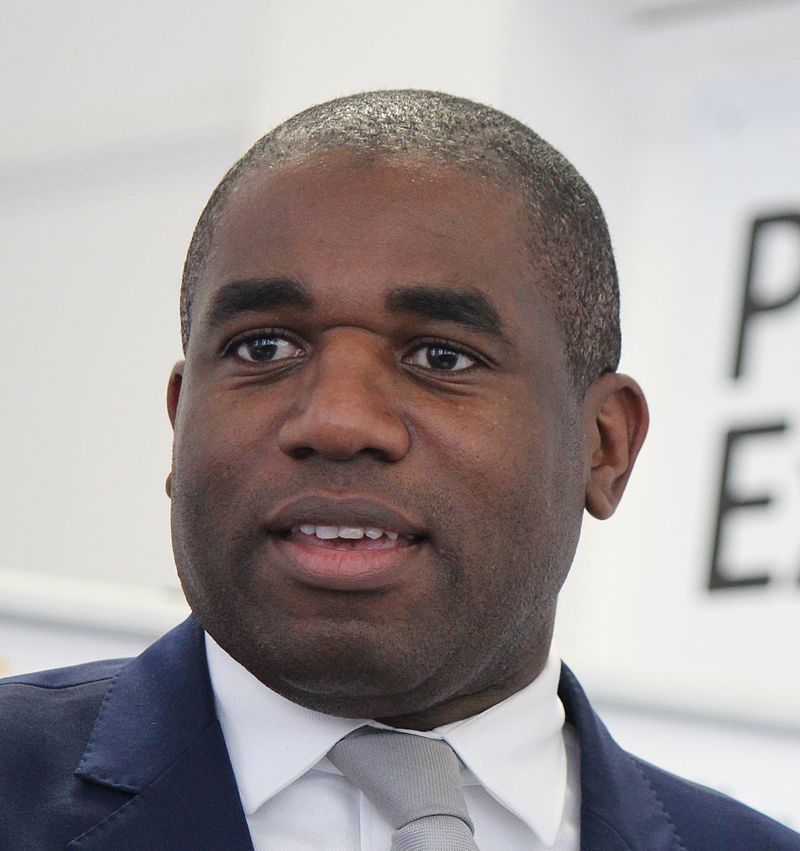
  • David Lammy – 2016 Speech on BBC Diversity

    davidlammy

    Below is the text of the speech made in the House of Commons by David Lammy on 14 April 2016.

    I beg to move,

    That this House notes the crucial cultural role the BBC plays in modern Britain; welcomes the fact that one of the public purposes outlined in the BBC Charter is to represent the UK, its nations, regions and communities; notes with concern that the last employment census in 2012 showed the number of black, Asian and minority ethnic people working in the UK creative media fell by 30.9 per cent between 2006 and 2012; believes that a BBC target of 14.2 per cent for 2017 is insufficient; further notes that this target falls short of other UK broadcasters; and calls on the Government to recognise these failings when considering the BBC’s charter renewal and make representations to the BBC to ensure that the corporation is not failing in any of its diversity objectives, including, but not limited to, delivering high quality programming which reflects modern Britain accurately and authentically and that the Corporation must advance equal opportunities to diversify and develop its workforce and senior leaders so that they better reflect audiences.

    I am grateful to the Backbench Business Committee for allowing me to bring this motion before the House today, and to my colleagues the hon. Members for Maidstone and The Weald (Mrs Grant) and for East Renfrewshire (Kirsten Oswald) for co-sponsoring this debate.

    Over the past few weeks I have met and spoken to many people, both black and white, who work in our creative industries. They do an extraordinary job, and our creative industries rightly have an envied international reputation. I am acutely aware that this is the first time in the history of the BBC that matters of diversity have been debated on the Floor of this House.

    This is certainly not, however, a new issue. I must begin by acknowledging those who have called for many years for greater diversity in the arts, especially in television. I salute the work my good friend Lenny Henry has done. Back in 2013 he called on me to help him as he began to think about the issues more deeply. In 2014 he laid out his plan for the BBC to set aside money for black, Asian and minority ethnic shows. Earlier this year, Idris Elba came to Parliament and spoke of the

    “disconnect between the real world and the TV world”,

    and the even bigger gap

    “between people who make TV, and people who watch TV”.

    I pay tribute to the Minister for Culture and the Digital Economy, who is in his place. In his six years in post he has been a champion of diversity in the media. I absolutely agree with his comments on “Channel 4 News” last week, when he said that the current position on diversity across our broadcasters is unacceptable and that more progress is needed. He has taken our broadcasters and the wider arts and culture sector and held their feet to the fire. I am grateful to him for doing so. On this issue, there is very little between us.

    Let me make it clear that diversity is not of course just about black and minority ethnic individuals; there is still significant work to be done to improve the representation within broadcasting and across our public life of women; of lesbian, gay, bisexual and transgender individuals; and of people with disabilities. It is also right to say that class and social mobility play a role in representation across the BBC. I am quite sure that colleagues in the House are also concerned that, despite some progress, there is a north-south divide in England. There is still some way to go, particularly on the representation of the depth and range of voices across the north of this country.

    Diversity is an issue across the whole media sector, not just in broadcasting and certainly not just within the BBC. From Fleet Street to Hollywood, there are clearly many more rivers to cross. City University’s latest survey, conducted just last month, found that British journalism as a whole is 94% white, and that there was not a single BAME face among the entire list of nominees for the 2016 Oscars. In 2006, representation of BAME people in the creative media industries stood at 7.4%; yet in 2012, the figure fell to 5.4%, and in television it fell from 9.9% to 7.5%, so it is going in the wrong direction.

    Directors UK has said that the number of BAME directors working in UK TV is “critically low”. A sample of 55,000 episodes drawn from 546 titles found that only 1.29% of programmes were made by black, Asian and minority ethnic directors. In some areas—period dramas, talk shows, panel shows and sketch shows—not a single episode had been made by a black, Asian or minority ethnic director. This is just not good enough in 2016.

    We are privileged in this country to enjoy so much public broadcasting. That goes beyond the BBC: ITV, Channel 4, Channel 5, S4C, STV and UTV have a public service broadcasting remit, meaning that they operate for the public benefit rather than purely for commercial purposes. Taken together, those channels account for 70% of all TV watched in the UK.

    Mr Angus Brendan MacNeil (Na h-Eileanan an Iar) (SNP) The statistic the right hon. Gentleman read out about programmes produced by black and ethnic minority people is shocking. I would support his argument by pointing out that when a population of 60,000—I am talking about the Gaelic speakers of Scotland—is given the opportunity, tremendous talent comes forward and great programmes are made. I think the point he is making is that if that opportunity was available to others, the same would happen. I support him in that.

    Mr Lammy The hon. Gentleman is absolutely right. We have gone beyond the point where we say, “The talent is not there. Can we do some training?” The talent exists. Can we now bring it forward and get the change that is required?

    One of the central statutory responsibilities of public service broadcasters, as outlined in the Communications Act 2003, is to ensure that the diversity of the UK is reflected in their output. They must broadcast

    “programmes that reflect the lives and concerns of different communities…within the United Kingdom”.

    Ofcom has made it clear that all public sector broadcasters must do more on diversity and the portrayal of under-represented groups. Its latest research found that 26% of black viewers saw people from black ethnic groups on TV daily. Over half of black viewers feel both under-represented and unfairly portrayed across our public service broadcasts. Some 55% of viewers from a black ethnic group felt there were

    “too few people from black ethnic groups on TV”

    and 51% felt that black, Asian and minority ethnic people were shown negatively on TV.

    Since its inception at Alexandra Palace in Haringey, my home borough, the BBC has time and again proved its worth as a national broadcaster in the quality, depth and breadth of its output. Its great programmes bring the nation together, its outstanding journalism brings stories to life, and its online offering has seen the Beeb continue to flourish and serve its audience in the digital age.

    Over the years, the BBC has made significant strides in reflecting Britain’s increasing diversity. In 1964, it made the groundbreaking documentary “The Colony”, about West Indian immigrants living in Birmingham. In 1967 “Rainbow City” was the first drama series that saw a black man in a leading role. There was not a huge number of black actors on television when I was growing up, but Benny in “Grange Hill” was one of them and I was grateful for him. I remember Moira Stuart reading the news, beginning in 1981; the Tavernier family arriving on the set of “EastEnders”; and Diane-Louise Jordan presenting “Blue Peter” for the first time, as I made my way to university—not to mention great shows such as “Black Britain”, “The Lenny Henry Show”, “The Real McCoy” and “Goodness Gracious Me”.

    Seeing black faces on the BBC, the national broadcaster, has helped show Britain’s black community that they belong and that they are part of the nation’s social fabric. The BBC is the cornerstone of public service broadcasting in our country and our most important cultural institution. Most of all, it is the recipient of huge amounts of money, receiving £3.7 billion from the licence fee. Tony Hall, the director-general, has admitted that although this is “a truly cross-industry challenge”,

    “the BBC must take the lead because of our unique funding and responsibility to licence fee payers”,

    which comes with that funding.

    Let me state categorically that I am a friend of the BBC; I love its output. Today, my remarks are strong because I think my friend is in trouble. Too many people from ethnic minority backgrounds who work in the organisation have contacted my office over the past few weeks to say that they cannot speak up because they do not want to be labelled a troublemaker. Well, I have no problem with being called a troublemaker. That is why I and so many colleagues are in this House to speak up on their behalf.

    Between 1999 and the inquiry of the Select Committee on Culture, Media and Sport into the future of the BBC in 2014—within 15 years—the BBC ran 29 initiatives aimed at black and ethnic minorities, but the situation is still not improving. In September 1999, it published a statement of promises, pledging better to reflect the UK’s diversity. In 2000, it published a cultural diversity action plan, promising that the corporation would

    “reflect the UK’s diversity in our programmes, our services and workforce”.

    It set up a new recruitment agency to reach out to “different communities”, a mentoring programme and a development scheme to enable

    “minority ethnic staff to compete for senior positions within the BBC”.

    In 2011, the BBC published “Everyone has a story: The BBC’s Diversity Strategy 2011-15”, which outlined its

    “determination to visibly increase our diversity on and off air”

    and five separate

    “strategic equality and diversity objectives”.

    Diversity was outsourced to various divisions, which were told to create divisional diversity action plans and diversity action groups.

    In 2014, Tony Hall unveiled yet another action plan to tackle on and off-air representation, stating

    “we need to do more”.

    He announced a senior leadership development programme, under which six talented people from black and minority ethnic backgrounds would come forward, and a diversity creative talent fund.

    We heard last year, and we are hearing it again, that at the end of this month the BBC will publish an equality and diversity report. Yet another one is coming very shortly, and it is all going to be fixed—£3.7 billion! It will be another strategy to get our teeth sunk into, and we will fix this challenge. If the BBC is genuinely a universal broadcaster, we have to ask these questions. This can no longer be about skills training. The skills are there. This is about the institution and the change that is now required. That is why we brought this debate forward.

    I am growing tired of strategies, new approaches, action plans, initiatives and press releases. The net result of all these strategies and initiatives is, sadly, very little. Despite the good intentions, the rhetoric has not been matched by real progress. In 2011, the proportion of the BBC’s workforce that was from a black, Asian or minority ethnic background was 12.2%. Tracked against the progress of its 2011-15 strategy, we see modest rises to 12.3% in 2012, 12.4% in 2013, 12.6% in 2014 and 13.1% in 2015. In four years, we have seen a 0.9 increase. In 2003, BAME employment was 10%, so in 12 years, it has increased the proportion of black, Asian and minority ethnic staff by just 2.2 percentage points.

    That is still not reflected by an increase in management roles in the organisation. We can all go into Broadcasting House and see black staff in security and at the junior end, but when we walk into that newsroom and think about the editorial decisions that are being made, we must ask ourselves, “Is this really representative of our country as a whole?”

    Everyone I have spoken to recognises that over the past two to three years, on-screen representation has improved significantly. There are areas of the BBC’s output that, frankly, are fantastic. I have young children, and children’s television is one of the areas that is really diverse. Anyone here who has teenagers or slightly older children who watch BBC Three’s output will know that it is really diverse. Documentary-making is another strong area. Last year, my constituency was portrayed in a documentary called “This Is Tottenham”, which showed the lives of people in that part of north London. However, in many areas, there is still a huge amount of work to be done.

    Let us take the headlines around the BBC’s new drama, “Undercover”, which people can see on BBC iPlayer at the moment. It is a great drama, but it was announced with great fanfare as, “The first time we’ve had a drama with two black leads.” In 2016? That was not news in the 20th century, let alone in this century.

    We must also ask questions about current affairs. I love sitting next to Andrew Neil on a Thursday night, when I occasionally stand in for my hon. Friend the Member for Hackney North and Stoke Newington (Ms Abbott).

    Andrew Marr is a great guy, as are John Humphries and David Dimbleby—when they allow me on the show, which they have not for almost five years. But they are white, patrician men. What does that communicate about our country—that there cannot be a voice that is not a southern one? That there cannot be a woman? That there cannot be someone from a diverse background? Those men are the arbiters of current affairs in this country. We have to be brave and hold our public broadcaster to account. It cannot just appoint the same old faces from the same old schools to the same old jobs. That is not acceptable from a public broadcaster that takes licence fee money from all our constituents. We must hold it to account and say that yes, those individuals are brilliant, but more needs to be done to get that diversity across the spectrum.

    A lot of this comes back to senior management, and with systemic change what really matters is who the decision makers are. As I have said, there has been a lot of focus on training schemes and apprenticeships to open up the industry, but we need to change the culture and practices that stop black, Asian and minority ethnic people rising to the top; it should not just be that new schemes are set up to encourage more people to get in from the bottom. Only one of the BBC Trust’s 16 trustees is from a black, Asian and minority ethnic background. The executive directors are really important, as they are the controllers—the people who really govern the decisions on the executive board. Of the BBC’s eight executive directors, none is from a black, Asian and minority ethnic background, and only two are women.

    My question to the BBC is simple: what will it take to see a black, Asian or minority ethnic channel controller? When will we get there, I wonder? What have we got to do to see a black commissioner in an important area—current affairs, or drama—in the BBC? Is our public broadcaster really saying that across the population of this great country there are no individuals from a BAME background who could take up those posts today? That is what it has to explain to us over the coming weeks as it heads towards its diversity strategy.

    Mr Gareth Thomas (Harrow West) (Lab/Co-op) Given the lack of diversity at the very top of the BBC, on its board, is it not now time to think about having a radical reorganisation of the BBC’s top management, potentially with elected directors for the board?

    Mr Lammy My hon. Friend is good at radical ideas—he is known for them—and that is certainly one. I am not going to stake my name today on what the change should be, but clearly we have come to a point—perhaps that is why the issue is on the Floor of the House for the first time—where we want step change. Change cannot be incremental any longer. I say that because if we treasure our public service broadcaster and the universality that it represents, I am afraid that in a multi-platform world, where people can turn to other services, that broadcaster is going to be in deep trouble if it does not step up pretty quickly.

    In 2015, 9.2% of the BBC’s senior leadership were black, Asian and minority ethnic. Looking beneath the surface, in TV the percentage drops to 7.1%; in news, the figure for senior leaders who are BAME drops to 5.8%. The lack of diversity at management and senior levels creates a dangerous vicious circle. If those decision makers are not from diverse backgrounds, content and programming will lack fresh narratives and insight, and will not speak to the breadth of this country. When we have all the same people at the top, hiring people in their own image, the circle simply stays closed.

    Bob Stewart (Beckenham) (Con) I really commend the right hon. Gentleman on his speech, which has highlighted the issue to me and educated me. I hope very much that, because of the brilliance of his speech and the force with which it is being given, the BBC board will insist on change.

    Mr Lammy Well, I am very grateful to the hon. Gentleman for that, but I am only halfway through—just hold fire.

    Let us look at targets. The BBC has set itself a target of increasing representation in its workforce to 14.2% and increasing onscreen portrayal to 15%. As I have outlined, the track record does not fill me with absolute confidence that those targets will be met. The targets also fall short of those set by other broadcasters. Take Sky, for example. It has said that all new TV shows in Sky Entertainment will have people from black, Asian and minority ethnic backgrounds in at least 20% of significant onscreen roles. All original Sky Entertainment productions will have someone from a BAME background in at least one senior role, either producer, series producer, executive producer, director or head of production—my God, that is tall order. It has also said that 20% of writers on all team-written shows across all Sky Entertainment productions will be from a BAME background. Looking at the statistics from January and February 2016, Sky has also made progress in current affairs and news: on “Sky News” 15% of interviewers were BAME; on “Murnaghan”, the figure was 17%; on “Sunrise” it was 22%; and it was 17% on “Ian King Live”.

    Let us look at Channel 4’s targets in its “360° Diversity Charter”. One is that by 2020 20% of all Channel 4 staff will be BAME, a 33% increase from the 15% figure in 2015. Another is that of the top 120 people in the Channel 4 organisation—executive teams, heads of department and senior commissioning executives—15% will be from a BAME background, a big increase on the current figure of 8%.

    Instead of being behind the curve, the BBC should be setting the gold standard. This issue does not affect only in-house teams. Broadcasters commission a lot of their work from independent production companies. The relationship between the BBC and those third-party suppliers is growing in importance, because the BBC is moving towards a new, more fluid production model, whereby BBC Studios will operate in the market and produce programmes for other broadcasters, and the BBC will allow independents to compete for more of the corporation’s commissioning spend.

    If we look at the BBC’s editorial guidelines, which apply to all content made by a third party working for the BBC, we will see 19 separate subsections and eight appendices, but not one is specifically related to diversity and representation. Nudity, violence, the watershed, the right of reply, privacy, religion, editorial integrity and conflicts of interest are all covered specifically and in great detail, but there is not a single section on diversity. In a 228-page document, there is not even a mention of the 14.2% target that the BBC is setting for itself internally. In section 4, on impartiality, production companies sign up to providing a breadth and diversity of opinion, but they do not sign up to any diversity in terms of equality and representation.

    The BBC’s latest equality and diversity report, published in 2015, made this promise:

    “We will be clear with our suppliers about our diversity requirements so that they are able to deliver on them.”

    To find out just how clear the BBC is with its suppliers about diversity, I submitted a freedom of information request asking to see the agreements that BBC makes with its supplier for one show, “Question Time”. I was told that the information would not be supplied to me because it is

    “held for the purposes of journalism, art or literature”.

    Although the BBC is promising to be clear with its suppliers about diversity requirements, it is altogether less clear with its audience and those who pay the licence fee about what exactly those diversity requirements are. I therefore ask the Minister to look at the freedom of information rules that are enabling the BBC to be less than wholly transparent on these issues. I am sure that he, and all Members here today, would agree that a publicly funded body must adhere to the highest standards of openness. Over 50% of the FOI requests put to that organisation are denied. That cannot be right.

    Mr MacNeil The right hon. Gentleman’s point about transparency and openness is very important. The Liberal Democrats used to be in the position that the Scottish National party is in now, and I have asked “Question Time” and “Any Questions” for an impression of what the Liberal Democrat representation on those programmes was like compared with the representation of the SNP at the moment. An answer was not forthcoming.

    Mr Lammy The hon. Gentleman makes his case.

    By comparison, Channel 4’s diversity commissioning guidelines cover on-screen and off-screen diversity, and all commissions must adhere to one guideline in each section. For example, at least one lead character must be black or minority ethnic, disabled or LGBT. At least one senior off-screen role—executive producer, director, series editor, or executive producer—for all factual and scripted programmes must be from an ethnic minority or have a disability, and at least 15% of the entire production team or crew of a factual or scripted programme must be from an ethnic minority or have a disability. Channel 4’s expectations seem altogether much clearer, which means that production companies know exactly what is expected of them.

    Last month, Trevor Phillips presented research to the Oxford Media Convention that showed that in 2015 BBC 1 had a 21.9% audience share, but only 13.3% of BAME audience share. BBC 2 had a 5.7% share of the total audience, which falls to 3.3% for the BAME audience. Because the BBC is failing in its duty to reflect modern Britain, ethnic minorities are well within their rights to ask why they should continue to pay their licence fee at all, given that it is used to fund a service that does not serve them.

    The BBC, Channel 4, ITV and Sky have come together to create a diversity monitoring scheme to provide detailed, consistent and comparative data on diversity, and that will go live imminently. Project DIAMOND is a groundbreaking project that will shine a light on the industry, and provide independent data to show where we are with diversity in broadcasting so that we can make comparisons. Its monitoring and transparency will be clear, which I welcome, and I am sure the Minister will say more about that.

    The current BBC charter runs to the end of this year, so renewal provides a vital opportunity to drive real change if the BBC wants to be serious about being a leader in delivering diversity. I believe that diversity requirements should be stated clearly in the new charter as one of the BBC’s public purposes, and a core value at the heart of what the BBC does. We need something stronger, more ambitious and—importantly—more tangible than the current requirement for it to represent the UK, its nations and communities, which is frankly too woolly. I call on the Minister to assure the House that diversity will be front and centre of new ongoing debates about the BBC charter.

    A new public purpose should be written into the BBC charter, including a specific commitment accurately to reflect the diversity of the UK in its on-screen and off-screen workforce, and in its programming, including, but not limited to, promoting equal opportunities irrespective of age, gender, race, ethnicity, disability, sexual orientation or gender reassignment. It is time to update the BBC’s founding mission for the 21st century so that it becomes “to inform, educate, entertain and reflect”. Writing diversity into the heart of the charter would be a bold first step. If we are to have another strategy at the end of this month and more initiatives, the BBC must propose specific actions to secure progress each year, together with details of how that progress will be measured objectively. To be taken seriously, we need answers to the questions of “how?” and “when?”

    Money talks, and money alone will drive real change. We have hard evidence of what works when it comes to addressing under-representation. The BBC had a problem when it came to representing the nations and regions, so it did something about that which involved a dedicated pot of money. It did not rely on mentorship or apprenticeship schemes—there was structural change, and the move to Salford was part of that. Since 2003, there has been a 400% increase in the number of network programmes produced in the English regions. As of this year, half the network spend will be outside the M25, and the amount of spend in Scotland and Wales has matched or exceeded the size of the population since 2014. I absolutely agree with that direction. I was a culture Minister at that time, and there were real concerns in Scotland because it paid 9% of the licence fee and had none of the programming. That has changed in recent times, although I am sure there is more to do.

    The BBC’s core purpose is to represent the UK’s nations, regions and communities. It seems to have got there or beyond for the first two, but what about BAME communities? I am sure that moving production spend out of London has not led to more employment for people of Chinese heritage in Liverpool, of Somalian heritage in Cardiff, or of Pakistani heritage in Glasgow. A focus on improving the representation of nations and regions has also seen areas with high concentrations of BAME people—such as Birmingham and London—lose out. We need something similar to act as a counterbalance, and if that is not in this next strategy, it will have failed. The holistic approach has not worked. After 15 years of focusing on people, skills and mentoring, it has not delivered the step change that we need in the institution.

    This is a seminal moment for the BBC and its position as our national broadcaster, and it must rise to the challenge. It is not enough for the director general to make the right noises. The will is clearly there, but the institution is big and it will take more than good intentions to turn such a huge tanker around. We cannot rely on individuals pushing the agenda; we need systemic change.

    Charter renewal is around the corner. We have reached a point of fragmentation in the TV industry where more content is available than ever before and viewers are consuming it online, and watching it on demand and through Netflix and Amazon Prime. They are challenging the BBC’s position at the centre of our national conversation. That national conversation is hugely important, especially when things go wrong and we see something awful. I was culture Minister in 2005 when there were those terrible bombs in London, and we looked to the BBC for that national conversation.

    Let us get it right. We cannot have people from BAME backgrounds turning to mother-tongue cable stations because they do not see themselves represented on the BBC. Take the Chinese community in this country. My God, it has been here for more than 100 years—talk about invisible! That community is not just invisible in this House—I recognise that the Government have made some progress on their Benches—but it is totally invisible among our broadcasters. I secured this debate because it is time for change, and I welcome the leadership shown by the Minister, and the fact that so many people have gathered across the House to debate these issues this afternoon.

  • David Davis – 2016 Speech on Iraq Inquiry Report

    Below is the text of the speech made by David Davis in the House of Commons on 14 April 2016.

    I beg to move,

    That this House calls on the Government to conclude the National Security checking of the Iraq Inquiry report as soon as possible in order to allow publication of that report as soon as possible after 18 April 2016, and no later than two weeks after that date, in line with the undertaking on time taken for such checking by the Prime Minister in his letter to Sir John Chilcot of 29 October 2015.

    As an aside, Mr Speaker, I never cease to be impressed by your short-term memory.

    The second Iraq war was started to liberate the Iraqi people. Instead, it shattered their country. It was intended to stabilise the middle east. Instead, it destabilised the middle east. It was intended to remove a threat of weapons of mass destruction that did not exist. Instead, it exacerbated and massively increased a threat of terrorism that does exist. It was supposedly fought in defence of our values, but it has led to the erosion of civil liberties at home and the use of torture abroad. Because we were misled on the matter, Parliament voted for the war by 412 to 149. So there were very good reasons for setting up the inquiry in the first place.

    The war led to the deaths of 4,800 allied soldiers, 179 of them British. The lowest estimate of Iraqi civilian casualties was 134,000, but plausible estimates put the number up to four times higher. The war immediately created 3.4 million refugees, and half of them fled the country. It cost the British taxpayer £9.6 billion, and it cost the American taxpayer $1,100 billion. It has done untold damage to the reputation of the west throughout the middle east and, indeed, among Muslim populations at home and abroad. Initiated to protect the west from terrorism, it has, in fact, destroyed the integrity of the Iraqi state and triggered a persistent civil war that has created the conditions for perhaps the worst terrorist threat yet to the west: ISIL or ISIS. The war has done huge harm to the self-confidence and unity of the west, in effect neutering our foreign policy. The war was, with hindsight, the greatest foreign policy failure of this generation, and I say that as someone who was misled into voting for it.

    It has been more than six and a half years since Gordon Brown launched the Iraq inquiry and more than five years since it heard its last evidence. It has been more than a year since this House, in a similar debate, called for the Government to publish the Iraq inquiry report as soon as possible, and yet that report has still not been published. It is no surprise that one of the most pre-eminent politicians of our era, the highly respected and very civilised ex-Foreign Secretary, Douglas Hurd, branded the delays a scandal. He is right. They are a disgrace.

    In 2009, the then Leader of the Opposition, who is now Prime Minister, was scornful about the suggestion that the report would not be published before the 2010 election. In 2009, Sir John Chilcot told families that he would complete the inquiry in a year if he could, but that it would definitely not take more than two years. In fact, the evidence taking did not conclude until 2 February 2011. Nevertheless, at that time—more than five years ago—Sir John Chilcot said:

    “It is going to take some months to deliver the report itself.”

    It has been 62 months and counting.

    Then the inquiry started the classification process. Under the inquiry protocols, there are nine different categories of reason for turning down the classification—for preventing Sir John not from seeing the information, but from publishing it. What the inquiry can publish is determined by a series of protocols that have criteria so broad that a veto on application can be applied virtually at Whitehall’s discretion.

    Compare that with the Scott inquiry into the Iraqi super-gun affair. It also covered issues of incredible sensitivity in terms of national security, international relations, intelligence agency involvement, judicial propriety and ministerial decision making—the whole gamut. Sir Richard Scott was allowed to decide himself what he would release into the public domain, unfettered by Whitehall, so that whole tranche of time—that couple of years—would have been unnecessary. By contrast, Sir John Chilcot, a former permanent secretary at the Northern Ireland Office who chaired an incredibly sensitive inquiry into intercept—some Members of the House may remember that—and who is considered a responsible keeper of the Government’s secrets, is tied up in protocols subject to the whim of Whitehall.

    There have been long negotiations between the inquiry and Sir Jeremy Heywood, the Cabinet Secretary, and his predecessors over the disclosure of some material, most notably correspondence between ex-Prime Minister Tony Blair and George W. Bush. There is no point whatsoever in the inquiry if it cannot publish the documents that show how the decision to go to war was arrived at. That is, after all, the point of half the inquiry. Chilcot wrote in a letter to the Cabinet Secretary:

    “The question when and how the prime minister made commitments to the US about the UK’s involvement in military action in Iraq and subsequent decisions on the UK’s continuing involvement, is central to its considerations”.

    The negotiations between Chilcot and Jeremy Heywood concluded only in May 2014, when it was announced that an agreement had been reached. The process was clearly frustrating for Sir John. He queried why it was that

    “individuals may disclose privileged information (without sanction) whilst a committee of privy counsellors established by a former prime minister to review the issues, cannot”.

    He was of course referring to Alastair Campbell and Jonathan Powell’s respective diaries, which quoted such information, again without Whitehall veto.

    Then came the excruciatingly long process of Maxwellisation. This is meant to be a process of notifying any people criticised in the report so they can correct factual errors and be ready to respond to those criticisms when they become public. It is not intended to allow protected negotiation between the commission and teams of expensive lawyers—incidentally, those expensive lawyers are paid for by the taxpayer—who negotiate ad nauseam, at any cost, to protect their client’s reputation, even over and above the national interest. That is what is happening.

    We know that finally, after all that, the Iraq inquiry is now due to submit its report to the Government next week. The next stage will be security clearance before publication. The Prime Minister stated last October that he fully expected security clearance to take less than two weeks, the time taken by the equally enormous Saville inquiry. Let us remember that the Saville inquiry took decades to come to its conclusion, but it was cleared in two weeks. I cannot believe that clearance will take any longer than that, given, as we already know, that every single piece of this report has already been negotiated with Whitehall, presumably on the basis of security considerations.

    Given that, and the Prime Minister’s declaration that he is as exasperated as anyone by the delays to publication, the public ought to expect the report to be published in the first week of May. That should be the reasonable conclusion, but that is not the case. There are now reports that the publication of the report will be postponed until after the EU referendum at the end of June. This is frankly outrageous. It is for this reason that I, together with right hon. and hon. Members from all parties in this House, have called for this debate. We demand that the Government publish the report as soon as security clearance is complete, and certainly no more than two weeks after its receipt.

    While this inquiry has lumbered on, there have been at least three significant foreign policy decisions that could have been dramatically different had we had the benefit of the Iraq inquiry’s findings. The decision to intervene in Libya was intended to prevent a massacre, but since then, partly because we changed the aim to regime change, the country has descended into civil war and miserable, fractured chaos. On the question of regime change, when the Prime Minister first asked this House to support military action against the Assad regime in Syria in 2013, the House turned him down. Had the House not blocked military intervention, we could have ended up as military supporters of our now sworn enemies, IS. In Iraq, the UK is of course involved in the ongoing civil war that has raged since the invasion in 2003.

    There are lessons to learn from the Iraq war about our foreign policy, our political decisions to go to war and our military operations. The longer we leave it, the less useful these lessons will be, and the more likely it is that we will make the same mistakes. When decisions such as those that were made in Libya, Syria and Iraq are made without knowledge of the facts, mistakes are made and sometimes people die as a result. Therefore, it is not hyperbole to say that the delay to the Iraq inquiry could cost lives because bad decisions may be made. I would go further and say that it probably has cost lives because bad decisions were made. Indeed, many of the revelations in the report will come too late to be useful in relation to decisions that have already been taken. This is the irrecoverable harm that has been caused by the delays—the unconscionable delays—in this inquiry.

    Mr Graham Allen (Nottingham North) (Lab) The right hon. Gentleman is absolutely right that the Iraq war was the most appalling miscalculation and the most idiotic way of conducting foreign policy in living memory. As he is looking to the future, does he accept that the fracture within Islam that the war exacerbated and the Pandora’s box that was then opened of violence and extremism within Islam, both in the middle east and internationally, are sadly the gift of the Iraq war that will keep on giving, and that there may be decades’ worth of interventions from extreme Islamic elements across the globe?

    Mr Davis I do not think it is a question of “may be”; I think there will be the continued disruption of international affairs and the continued threat of terrorism. Europol’s assessment that there are 5,000 jihadists in Europe implies an arrival rate of 1,000 a year, and the rate is going up, not down. It is clear that the hon. Gentleman is absolutely right.

    That brings us to a significant point. When the individual Prime Ministers involved in each of the decisions I mentioned made their decision, I am sure that in their own mind they were doing the right thing—they were trying to save lives, to save a civilisation or to intervene to prevent further terrorism. The trouble is that every single one of them made simplistic decisions, without detailed understanding. The complexity of the issues they were reaching into was beyond their knowledge. It is correcting, enhancing and improving that knowledge that the inquiry report is all about.

    I am no pacifist, but I find myself horrified at the thoughtless, aggressive and unnecessary interventions by the west in areas that it does not understand. I did not like the Gaddafi regime; I did not like the Saddam Hussein regime; I do not particularly like the Bashar Assad regime, but ripping them out has led to something even worse. The hon. Member for Nottingham North (Mr Allen) is therefore absolutely right in his analysis, which demonstrates why this report and its speed of preparation are so important.

    Mr Andrew Mitchell (Sutton Coldfield) (Con) My right hon. Friend is making an immensely compelling point. Does he agree that when the report is published, which, I like him, hope will be as soon as possible, although the tendency in the British media will be to use it as a trial of the former Prime Minister—Blair guilty or innocent—the great gain of the report will be in showing how the whole mechanism of government worked in the run-up to the decision to go to war? A Prime Minister is not Dr Strangelove; this is about how the whole machine in Whitehall works.

    Mr Davis My right hon. Friend will forgive me if I do not follow him down his comparison between Dr Strangelove and past Prime Ministers, but he is right in one respect: the most important element of this is what we learn from our mistakes. However, there are also issues of accountability and closure, which I will return to in a moment.

    Pete Wishart (Perth and North Perthshire) (SNP) I am reluctant to interrupt, because I am very much enjoying the powerful case that the right hon. Gentleman is making, but I invite him to ignore the representations of his colleague, the right hon. Member for Sutton Coldfield (Mr Mitchell), because this war is bound up with one key individual: Tony Blair. For ever and a day, he will be associated with this particular war. It was personalised around the personality of that Prime Minister. As far as I am concerned, he could have a tattoo across his forehead reading “Iraq”, such is his legacy. This will be a comment and a statement about his day. I was in this House when we voted to go to war, as was the right hon. Member for Haltemprice and Howden (Mr Davis), and I had to listen to the nonsense and drivel that was that former Prime Minister’s case for war. Please let us make sure that where blame is to be apportioned, it is apportioned rightly.

    Mr Davis I will come back to this issue in the latter part of my speech. My right hon. Friend the Member for Sutton Coldfield (Mr Mitchell) and I have a very dear common friend who thinks that Mr Blair should be at The Hague, so there is a range of opinion on this, but to come to that conclusion today would be to pre-empt the report. I do not intend to do that, but I do intend to turn to the issue of accountability in a minute.

    Mr Graham Allen Just to get the balance correct, if we go back to the time of the vote, a majority of the non-payroll vote in the Labour party—122 Members, and I was proud to be one of the organisers—actually rebelled against their own Government. Had the Conservative party supported us we would not have gone to war. Those are historical matters, but it is important to place on the record that the biggest ever parliamentary rebellion within a governing party was by the Labour party on the issue of taking us to war. Many of us at the time realised that it would be a disaster, but none of us realised what an appalling disaster it would be—one that would carry on for decades and influence us domestically as well as in the middle east.

    Mr Davis The hon. Gentleman has made his point well, but one of the issues that the report will face up to, one hopes, is the veracity of what was told to the House that day. That will be one of the key issues, which is why the argument between Sir John Chilcot and Whitehall is very important. Reading between the lines of his letters, that argument was very much about what decisions were taken before the House made its decision and after—what was told to the House, whether it was accurate, whether it was based on impartial briefings and whether, indeed, the politics of the issue coloured the views of important components of the state. I am not going to attempt to answer those questions today, but I would be incredibly disappointed if the commission’s report did not actually answer them in plain English. That is why I would not be drawn by my right hon. Friend the Member for Sutton Coldfield, who is a very great friend of mine. The report has to answer those questions; what the tabloid and other press do with the report the day after publication is not for me.

    I will press on, briefly, with the lessons to learn not just about the war but about how we should conduct these inquiries. The Government now intend to review the Maxwellisation process, in which those who have been criticised in a report are given the chance to respond. That is to be welcomed, as Maxwellisation has been responsible for half the delays here. It is clear that strict time controls are needed for future inquiries. It cannot be right that those who are to be criticised can delay publication for their own interests, so I hope that strict time controls will arise as a result.

    There is no reason for further delay. It has been suggested that the delay between the report being security cleared and its publication is because it needs to be proof-read and typeset. That would be unacceptable if true. The report is already in electronic format. It has already been repeatedly checked for accuracy, and will be checked again by the security services. It will have been read by more people than some newspapers. The fact is that the report has been pored over by many people for five years. We are in the 21st century, not the era of hot lead typesetting. Someone said to me this morning that I might have summarised the rather long motion rather more crisply by saying, “This House instructs Sir John Chilcot simply to press ‘send’.”

    Liz Saville Roberts (Dwyfor Meirionnydd) (PC) I am sure that the right hon. Gentleman agrees that the public at large, and bereaved families in particular, deserve answers, so redactions must be kept to an absolute minimum. Those families should not have to endure any further suggestions of a cover-up.

    Mr Davis The hon. Lady is absolutely right, but, to be honest with her, I will be astonished if there are any redactions in the report. I remember that once, when I was Chair of the Public Accounts Committee, a report was given to me about the overrun of MI5 and MI6 on their buildings. It had four chapters: the introduction, the chapter on MI6, the chapter on MI5 and the conclusion. The chapters on MI5 and MI6 were virtually identical, except that all the redactions were different. We rang up MI5 and said, “MI6 has agreed to all these,” then we rang up MI6 and said, “MI5 has agreed to all these,” and then we removed nearly all the redactions. They were political—they were redactions to preserve the interests of the bureaucracy involved, not the national interest. The simple truth is that the facts in the report have already been cleared. That is what two years of the argument was about. If there is a single redaction, I and others will be looking at it very closely and asking why it was not redacted years ago instead of now. The hon. Lady is absolutely right about the rights of the families in this affair.

    There is no doubt that the whole country is fed up with waiting for the final report, but none more so than the families of those 179 British soldiers who died fighting for their country in Iraq. The families have suffered for years as this inquiry has dragged on and on, and it would be disgraceful to make them wait for months longer, just because the Government are worried about what effect—if any—the report will have on the referendum. I cannot imagine what impact that might be, given that there is no party political advantage in this to either side.

    The Conservatives and Labour both supported the war. As the hon. Member for Nottingham North said, half the Labour party stood back or voted against it, and there is no advantage either way. The inquiry was started by Labour and supported by the Prime Minister. It is therefore inconceivable that the Government should seek to wait until after the June referendum to publish the report, and I hope that when the Minister replies to the debate, he will make it clear that that will not happen—I am sure he will address that point directly.

    Let us put this issue in context. If the report waits until June, it will be seven years since the inquiry started, and some parents of the dead soldiers will have been waiting 10 or 12 years for an answer. To give the House a simple comparison, the Israeli Government appointed the Winograd commission in 2006 to investigate the war with Lebanon. It produced its interim report not in seven years but in seven months, and it was highly critical of the existing Government that had set it up. The final report was produced after 17 months. Any argument for delay on grounds of political sensitivity or national security would be far more pressing in Israel, where that is a matter of daily life and death to all its citizens. Because of that, it is also a matter of very high and extremely important politics. If Israel can produce a report in seven and 17 months, we should be able to do it in a lot less than seven years.

    Some people will, of course, be held to account in this report; otherwise it will properly be dismissed as a whitewash. That is to be expected and must be right. However, this is principally about learning from mistakes that we made as a nation, and ensuring that we do not make the same mistakes again. It is also about remembering those who have suffered great loss, and giving them some measure of solace in the truth and some degree of closure. This is about doing the honourable thing by those who have made the ultimate sacrifice on behalf of their nation, and to delay any further for no good reason would be an insult to those brave soldiers who died in the Iraq war, and a cruel insult to their families who have waited more than six years for a proper answer.

  • David Lidington – 2016 Speech on the UK in a Reformed Europe

    davidlidington

    Below is the text of the speech made by David Lidington, the Minister of State for Europe, at the Central Hall Conference Centre in London on 14 April 2016.

    Tomorrow marks the start of the formal referendum campaign. In 10 weeks’ time the British public will take an historic decision.

    I am convinced that remaining a member of a reformed European Union is in the economic, political and security interests of this country.

    That does not mean I think the EU is perfect. Frankly, you can’t serve 6 years as Europe Minister and think that this is an organisation that does not need some further reforms. But neither are the alternatives perfect and as I’ll indicate later in my remarks, I think that those alternatives carry much greater risks for the prosperity and security of the United Kingdom.

    If we look at the record we see that while we may not win every battle, though neither does any other country, the evidence shows that 9 times out of 10, the UK does manage to get its own way.

    And the new settlement the Prime Minister secured in February represented a further success. I’m sure you will be familiar with what we achieved – boosting European competitiveness and cutting red tape, ensuring fairness between euro-ins and euro-outs, securing a UK carve out from ever closer union, and restricting access to our welfare system.

    Looking at it a different way, that February agreement did something vitally strategically important. We persuaded all other members to accept the principle that one size does not fit all; that different countries, as the EU develops further, should have the right to choose different levels of integration, while all remaining part of the Union.

    When I consider the way in which the debate has developed so far in this country; I think the thing I have found most dismaying about the leave campaigns is that the advocates of a UK exit display a dispiriting lack of confidence in the ability of the United Kingdom to lead or shape the future course of Europe; a paucity of ambition.

    Yet if we look at the history of Europe in the 40 years since Britain joined, we can see how this country has contributed to – or, I would say, driven – the EU’s greatest achievements.

    The creation of the single market has brought benefits of higher economic growth, greater inward investment, and lower prices for consumers.

    It was made possible by a formidable, if somewhat unexpected, partnership between Margaret Thatcher and Jacques Delors. Mrs Thatcher as Prime Minister realised that striking down barriers to trade and opening up Europe as the home market for British business made sense, and was worth the downside of moving to majority voting on those matters, as long as there was a strong British voice present at the table making those rules.

    Benefits have followed too from the enlargement of the European Union to the new democracies of Central Europe.

    Now like the single market, this was not something that was bound, inevitably to take place. At the time it was a controversial policy. And both Margaret Thatcher and John Major fought successfully to persuade their fellow leaders that this was the right thing to do.

    The measure of their achievement can be seen if we compare the 25 years since the Velvet Revolutions, with the fate of the infant democracies that emerged in Central Europe after the First World War.

    The first time round, every one of those democracies fell – under pressure of home-grown extremism or invasion by one or more neighbours.

    In this last quarter of a century, we have seen the democratic process take root and flourish.

    The difference is that this time, the complex, detailed work of EU accession negotiations – with their multifarious chapters and benchmarks – provided a mechanism which we could use to embed the rule of law, democratic institutions and human rights in parts of our continent where those values and traditions had been crushed for most of the 20th century.

    But these 2 achievements of the single market and the enlargement of democracies in Central Europe are of the past generation.

    So what are the great economic and political challenges that face Europe – and which require British leadership – today? I will talk about 4.

    None can be overcome by one country acting on their own – not us; not France; not Germany. And I look forward with optimism and determination to our country leading and shaping the European response to those common challenges.

    The first challenge is economic.

    Global competition and digital technology are now dramatically shaking up the ways in which we and other advanced economies do business.

    Unless we raise our game in terms of competitiveness, the next generation of Europeans will not be able to afford the standard of living or the social protection or the public services that our peoples expect to enjoy as their entitlement today.

    We need to give all British and European businesses, whether they sell goods or services, the advantages of a home market on a continental scale.

    At the same time we need regulation that is proportionate to the problem it is designed to tackle – which is why the Commission’s acceptance of sectoral regulatory burden reduction targets, and the ability to review the existing acquis, that we secured in February are so important.

    And we need to redouble efforts to remove the costs that harm growth and stifle the creation of new jobs.

    We also need to harness the collective weight of Europe – 500 million people – to forge new trade agreements: with the US, Asia and Latin America.

    That would give our businesses easier access to world markets, so they can seize the opportunity to sell our goods and services to hundreds of millions of new customers in the emerging economies.

    Tackling the economic challenge must start with the single market.

    I understand why people sometimes complain about EU regulations, and sometimes they have good reason to do so. But we should not forget that having one set of regulations governing trade across 28 countries and 500 million people, can simplify bureaucracy, strip out transaction costs and allow firms to do business across our continent with astonishing ease.

    And if we consider the alternatives; even if EU regulations did not have the force of law here, they would in the other 27 member states places UK businesses will want to carry on selling to even in the event of exit. Which means that firms could face having to follow one set of rules to sell here and other to sell into the rest of Europe. Not a recipe for success or for keeping costs down.

    Since its launch the single market has added an estimated £200 billion a year to the EU economy, in today’s prices. That means trade, investment and jobs.

    And this is not benefiting big businesses alone, 80% of Federation of Small Businesses members who export do so into the EU.

    Even those who don’t – even those who don’t export at all – benefit from access to the Single Market. It means a more competitive supply chain. And a wealthier domestic consumer.

    At the most obvious level, the single market means exporting to the EU without paying tariffs.

    Previously, trade with the EU was clunky, confusing and costly. You faced a bewildering array of tariffs, from 14% on cars to 32% on salt.

    Today, there are no tariffs.

    Would we get that deal outside of the EU? It frankly seems unlikely.

    What is the alternative? It depends which advocate of exit you listen to. Norway maintains access to large parts of the single market. But they pay nearly as much as we do per head into the EU budget. They accept free movement. And they have no say in the rules they nevertheless have to adopt.

    Some have pointed to the Canadian model. But the EU/Canada trade deal took 7 years to agree and is still not in force. And it contains a raft of exemptions to free trade demanded by one side or the other.

    It works for Canada. But we are not in their position. We are much more entwined economically and geographically with our immediate neighbours in Europe.

    If not Canada, perhaps we could fall back on our membership of the World Trade Organisation (WTO).

    But that would mean even more trade restrictions. Under the WTO ‘most favoured nation’ rules, we’d face tariffs of up to 10% on cars, 11% on clothes and 36% on dairy products.

    Considerably worse than zero, that we currently have.

    We all know that eliminating tariffs is not enough in a modern economy.

    We must go further, and extend the benefits to trade in goods to other areas.

    With four-fifths of the UK economy based on services, removing non-tariff barriers is essential.

    As the Prime Minister has said, Britain is the country that “designs the building, consults on the deal and insures the premises”. I would add that we fly people to do the deal – EasyJet have said they simply wouldn’t exist without the EU – and then publicise it on social media afterwards – our tech sector is the biggest in the EU. The EU allows UK businesses to provide those vital services throughout Europe. And it allows individuals to work in any member state, with their professional qualifications recognised.

    That is why the Prime Minister made this a focus of the UK’s renegotiation. And he achieved a clear commitment to continue deepening and liberalising the market in services, energy and digital.

    Let’s look at trade.

    The UK has always been the EU’s most vociferous and powerful champion of free trade in Europe. It’s an enormous British success story that the EU has signed trade deals with more than 50 countries – with more to come.

    I well remember the Prime Minister intervening personally to get the South Korea deal over the line.

    The EU has 9 more Free Trade Agreements on the way, including with Japan, India and America. Last year the Confederation of British Industry (CBI) estimated that when they are all completed, they will cover 88% of all UK trade.

    If we left, each one of these would have to be renegotiated, bilaterally, one by one.

    Of course, we could attempt to do this. But how long would it take? And would we really carry as much weight on our own as we would as one of 28, benefitting from the leverage in negotiations of the biggest market anywhere in the world? I think not.

    Both the EU and Australia have signed deals with South Korea. The EU got a better deal: it eliminates tariffs nearly 4 times as quickly as the Australian deal.

    So being part of the EU gets our business access to better terms for global trade.

    Membership also gives the UK the opportunity to shape the rules that govern trade.

    We are leading the negotiations on the Transatlantic Trade and Investment Partnership (TTIP) between the EU and US, the 2 of the most important markets in the world. When that deal is finalised, it will set the standards for trade across the world.

    Where would you rather be in that transatlantic negotiation – standing on the sidelines hoping everyone gets to the right place? Asking our friends to tell us what has been going on inside the Council room in Brussels? Or at the forefront of the negotiation, pushing hard to get the best deal possible? I know where I would rather be and what outcome I believe is in the best interests of the people of this country.

    The second challenge is one of security.

    Some say we would be safer outside the EU. I simply do not agree.

    The world faces serious challenge from the globalisation of crime; terrorism; drugs; sexual offences; people-trafficking. The list goes on.

    These problems do not stop at national borders. Pulling up the drawbridge and hoping that things will be all right, as some wanting to leave the EU seem to want, is not realistic in the modern world.

    Our security relies on co-operation and collaboration with our allies.

    We already exercise control at the border. We can refuse entry or deport individuals where we believe that they pose a threat. Since 2010 we’ve refused access to 6,000 European Economic Area (EEA) nationals.

    But in order to do all this work effectively, we need to act in concert with our neighbours. EU membership helps us exchange criminal records with other Member States. Leaving is not going to help us share the intelligence we need with our European allies. It would make it harder.

    And thanks to the EU’s police and judicial cooperation, we can work effectively across borders to tackle crime and terrorism.

    Some here will remember the bad old days of the so-called Costa del Crime. When you could spend months trying to bring British criminals back from the continent to face British justice. Extraditions that failed because of different systems, incompatible bureaucracies.

    Those days are gone. And they are gone because of progress made at the European level. Before the European Arrest Warrant was introduced, extradition took a year on average. Now there is a maximum of 90 days, and the average is only 48 days – or just 16 days if the suspect surrenders.

    So it is not surprising that the men and women actually on the front line today, in the police, in the intelligence agencies and in the military have emphasised the security offered by the European Union membership.

    Rob Wainwright, the British director of Europol, called the EU “critical to the UK’s attempts to fight serious crime.”

    Of course, we can and should go further and the Home Secretary is at the forefront of these efforts. We are leading Europe in tackling the movement of people and weapons linked to terrorism by pressing for increased information-sharing, stronger control on the movement of firearms and enhanced aviation security. We have now secured stricter deactivation standards for firearms across Europe and shaped the Passenger Name Records directive.

    In a world fraught with risk, we need more cooperation, not less.

    The third challenge is an aggressive and truculent Russia.

    We have seen aggression in Ukraine, through the destabilisation of the Donbas, the aggression in Georgia and – in defiance of the Helsinki Final Acts and international law – the illegal annexation of Crimea. And only a few months ago an independent inquiry found what we have long thought: that the Russian state probably directed the cold-blooded murder of Alexander Litvinenko here in London.

    Yes, in facing that challenge the role of NATO is key: meaning that the UK’s role of ensuring the EU is aligned with and supports and complements NATO is all the more important.

    It is vital, as we face this major diplomatic and security challenge, to ensure that the relationship between Europe and the United States remains strong. And we have to do this at a time when it’s very apparent that the American public, and many American politicians, are becoming impatient with what they see as Europe free-riding upon American taxpayers in financing the provision of security. So the historic role of the United Kingdom in ensuring that Europe and the United States remain in lock step, that we support and build a still vibrant and relevant trans-Atlantic western alliance is more important today than any time since the end of the cold war. And the EU is essential when it comes to imposing tough economic sanctions on Russia; responding to Russia’s use of energy as a tool of political interference; in ensuring defence against potential cyber attack; and strengthening the rule of law in countries in Eastern Europe.

    Here too the UK is playing a leading role in Europe – in keeping the EU focussed on the gravity of the challenge posed by Putin’s Russia, and in ensuring that the positions of the EU and the US are aligned.

    Finally, the fourth challenge is the collapse of effective governance in parts of Africa and the Middle East.

    This has created safe spaces for terrorist groups to plan strikes against us. And the chaos has led to a humanitarian disaster, driving people out of their homes and across borders.

    It’s not the only cause of the migratory pressures Europe is facing. There are pressures that arise, from economic underperformance in countries in African and Asia where 60% of the population are under 30, pressures that I think are building from climate change in certain parts of the world. But those phenomena together add up to a picture of sustained migratory pressures on the European continent.

    We see the results every day in Greece, in Macedonia and elsewhere.

    We simply cannot turn our backs. These problems are not going to go away. Quitting the EU is going to do absolutely nothing to stem the pressures from migration. What our priority ought to be is to help build an effective European response to this challenge.

    Working with and through the EU, as well as with other international partners, the UK can help direct a comprehensive approach to the crisis. Working with our friends and allies to bring diplomatic pressure to bear where necessary; to build capacity in the local police, armed forces and courts in those countries; to help countries in Africa and the Middle East to create greater political and economic stability; to use aid and trade to give people in those developing countries the hope of a decent life and fulfilment of ambition in their own country. So they don’t feel the need to get out.

    The EU-Turkey agreement for the first time means we have a plan that – if properly implemented – breaks the business model of the people smugglers by ending the link between getting in a boat and settling in Europe.

    And the initial signs are that the deal is having an effect. It’s still early days, but the average number of daily arrivals to Greece so far in April is almost half of that in March. Turkey accepted over 300 returnees from Greece last week. Turkey, Greece and the EU will need to maintain efforts to ensure quick and effective implementation of the deal, and of course more will need to be done with the newly established, but still quite fragile, Government of National Accord in Libya.

    The UK is playing an active, and I would argue a leading, role. We are contributing £2.3 billion in humanitarian assistance to support Syrian refugees, and the London Conference galvanised others to increase their support. British experts are now working in Greece to support the EU-Turkey agreement, and we are considering how future UK support could be most effectively deployed. We are already cooperating closely with Turkey to support their generous hosting of nearly 3 million refugees, and improving the effectiveness of their migration management. We stand ready to do more.

    Responding to this challenge is not going to be easy, there are no instant overnight solutions. But I think that British work within Europe in recent years, in Somalia and Mali in particular, show that when the EU brings its range of assets to bear on international problems, we can succeed.

    Now some like to portray the EU as something ‘done to’ the UK. The truth is that we are a leading member of the EU, and responsible for some of its key successes. The record shows that – whether we’re talking about the economic, security or foreign policy– where we seek to lead, we are able to do so.

    We have helped already to shape the current state of the European Union – one of the world’s most important economic and political entities – I would argue we have done as much as if not more than almost any other Member State.

    And I look forward to the UK continuing to play a leading role, through the European Union, in helping to shaping the future of our continent in the interest of the people of every one of the EU Member states.

  • Jeremy Corbyn – 2016 Speech on the EU

    jeremycorbyn

    Below is the text of the speech made by Jeremy Corbyn, the Leader of the Opposition, at the Senate House on 14 April 2016.

    The people of this country face a historic choice on 23rd June whether to remain part of the European Union, or to leave. I welcome the fact that that decision is now in the hands of the British people. Indeed, I voted to support a referendum in the last Parliament.

    The move to hold this referendum may have been more about managing divisions in the Conservative party. But it is now a crucial democratic opportunity for people to have their say on our country’s future, and the future of our continent as a whole.

    The Labour Party is overwhelmingly for staying in because we believe the European Union has brought: investment, jobs and protection for workers, consumers and the environment, and offers the best chance of meeting the challenges we face in the 21st century. Labour is convinced that a vote to remain is in the best interests of the people of this country.

    In the coming century, we face huge challenges, as a people, as a continent and as a global community. How to deal with climate change. How to address the overweening power of global corporations and ensure they pay fair taxes. How to tackle cyber-crime and terrorism. How to ensure we trade fairly and protect jobs and pay in an era of globalisation. How to address the causes of the huge refugee movements across the world, and how we adapt to a world where people everywhere move more frequently to live, work and retire.

    All these issues are serious and pressing, and self-evidently require international co-operation. Collective international action through the European Union is clearly going to be vital to meeting these challenges. Britain will be stronger if we co-operate with our neighbours in facing them together.

    As Portugal’s new Socialist Prime Minister, Antonio Costa, has said: ‘in the face of all these crises around us. We must not divide Europe – we must strengthen it.’

    When the last referendum was held in 1975, Europe was divided by the Cold War, and what later became the EU was a much smaller, purely market-driven arrangement. Over the years I have been critical of many decisions taken by the EU, and I remain critical of its shortcomings; from its lack of democratic accountability to the institutional pressure to deregulate or privatise public services.

    So Europe needs to change. But that change can only come from working with our allies in the EU. It’s perfectly possible to be critical and still be convinced we need to remain a member.

    I’ve even had a few differences with the direction the Labour Party’s taken over the past few years but I have been sure that it was right to stay a member some might say I’ve even managed to do something about changing that direction.

    In contrast to four decades ago, the EU of today brings together most of the countries of Europe and has developed important employment, environmental and consumer protections.

    I have listened closely to the views of trade unions, environmental groups, human rights organisations and of course to Labour Party members and supporters, and fellow MPs. They are overwhelmingly convinced that we can best make a positive difference by remaining in Europe.

    Britain needs to stay in the EU as the best framework for trade, manufacturing and cooperation in 21st century Europe. Tens of billion pounds-worth of investment and millions of jobs are linked to our relationship with the EU, the biggest market in the world.

    EU membership has guaranteed working people vital employment rights, including four weeks’ paid holiday, maternity and paternity leave, protections for agency workers and health and safety in the workplace. Being in the EU has raised Britain’s environmental standards, from beaches to air quality, and protected consumers from rip-off charges.

    But we also need to make the case for reform in Europe – the reform David Cameron’s Government has no interest in, but plenty of others across Europe do.

    That means democratic reform to make the EU more accountable to its people. Economic reform to end to self-defeating austerity and put jobs and sustainable growth at the centre of European policy, labour market reform to strengthen and extend workers’ rights in a real social Europe. And new rights for governments and elected authorities to support public enterprise and halt the pressure to privatise services.

    So the case I’m making is for ‘Remain – and Reform’ in Europe.

    Today is the Global Day of Action for Fast Food Rights. In the US workers are demanding $15 an hour, in the UK £10 now. Labour is an internationalist party and socialists have understood from the earliest days of the labour movement that workers need to make common cause across national borders.

    Working together in Europe has led to significant gains for workers here in Britain and Labour is determined to deliver further progressive reform in 2020 the democratic Europe of social justice and workers’ rights that people throughout our continent want to see.

    But real reform will mean making progressive alliances across the EU – something that the Conservatives will never do.

    Take the crisis in the steel industry. It’s a global problem and a challenge to many European governments. So why is it only the British Government that has failed so comprehensively to act to save steel production at home?

    The European Commission proposed new tariffs on Chinese steel, but it was the UK Government that blocked these co-ordinated efforts to stop Chinese steel dumping.

    Those proposals are still on the table. So today I ask David Cameron and George Osborne to to start sticking up for British steel and work with our willing European partners to secure its future.

    There are certainly problems about EU state aid rules, which need reform. But if as the Leave side argues, it is the EU that is the main problem, how is that Germany, Italy, France and Spain have all done so much better at protecting their steel industries?

    It is because those countries have acted within EU state aid rules to support their industries; whether through taking a public stake, investing in research and development, providing loan guarantees or compensating for energy costs.

    It is not the EU that is the problem, but a Conservative Government here in Britain that doesn’t recognise the strategic importance of steel, for our economy and for the jobs and skills in those communities.

    The Conservative Government has blocked action on Chinese steel dumping. It has cut investment in infrastructure that would have created demand for more steel and had no procurement strategy to support British steel.

    A Labour government would have worked with our partners across Europe to stand up for steel production in Britain.

    The European Union – 28 countries and 520 million people – could have made us stronger, by defending our steel industries together. The actions of the Conservative Government weakened us.

    The jobs being created under this Government are too often low skill, low pay and insecure jobs. If we harnessed Europe’s potential we could be doing far more to defend high skill jobs in the steel industry.

    And that goes for other employers of high skilled staff too – from Airbus to Nissan – they have made it clear that their choice to invest in Britain is strengthened by our membership of the European Union.

    Of course the Conservatives are loyally committed to protecting one British industry in Europe – the tax avoidance industry.

    The most telling revelation about our Prime Minister has not been about his own tax affair, but that in 2013 he personally intervened with the European Commission President to undermine an EU drive to reveal the beneficiaries of offshore trusts, and even now, in the wake of the Panama Papers, he still won’t act.

    And on six different occasions since the beginning of last year Conservative MEPs have voted down attempts to take action against tax dodging.

    Labour has allies across Europe prepared to take on this global network of the corrupt and we will work with them to clamp down on those determined to suck wealth out of our economies and the pockets of our people.

    On Tuesday, the EU announced a step forward on country-by-country reporting. We believe we can go further. But even this modest measure was opposed by Conservative MEPs last December.

    Left to themselves, it is clear what the main Vote Leave vision is for Britain to be the safe haven of choice for the ill-gotten gains of every dodgy oligarch, dictator or rogue corporation.

    They believe this tiny global elite is what matters, not the rest of us, who they dismiss as “low achievers”.

    Some argue that we need to leave the EU because the single market’s rules are driving deregulation and privatisation. They certainly need reform. But it was not the EU that privatised our railways. It was the Conservative Government of John Major and many of our rail routes are now run by other European nations’ publicly owned rail companies. They haven’t made the mistake of asset stripping their own countries.

    Labour is committed to bringing rail back into public ownership in 2020. And that is why Labour MEPs are opposing any element of the fourth rail package, currently before the European Parliament, that might make that more difficult.

    The Transatlantic Trade and Investment Partnership is also a huge cause for concern, but we defeated a similar proposal before in Europe, together when it was called the Multilateral Agreement on Investment, back in 1998.

    Labour MEPs are rightly opposing the Investor-State Dispute Mechanism opposing any attempt to enforce privatisation on our public services, to reduce consumer rights, workplace protections or environmental standards.

    The free market enthusiasts in the Leave campaign would put all those protections at risk. Labour is building alliances to safeguard them.

    We must also put human rights at the centre of our trade agreements, not as an optional add-on. We already have allies across Europe to do that. And the EU is vital for promoting human rights at home. As a result of EU directives and regulations, disabled people are protected from discrimination. Lifts, cars and buses need to be accessible, as does sea and air travel.

    And it was the Labour Government that signed the Human Rights Act into UK law that transferred power from government – not to Brussels – but to individual citizens.

    Climate change is the greatest threat that humanity faces this century. And Britain cannot tackle it alone. We could have the best policies possible but unless we act together internationally, it is worthless. Labour brought in the Climate Change Act, John Prescott played a key role in getting the Kyoto Protocols agreed. Labour has led the debate within Europe.

    But despite David Cameron pledging to lead the greenest Government ever, Britain still lags far behind most of Europe in terms of renewable energy production. We have much to learn from what Germany has done in particular.

    The Conservative Government has cut subsidies for solar power while increasing subsidies for diesel. It has cut regulatory burdens on fracking yet increased regulations on onshore wind. They say one thing, but do another.

    Again, it has been regulations agreed in Europe that have improved Britain’s beaches and waterways and that are forcing us to tackle the scandal of air pollution which will kill 500,000 people in Britain by 2025, unless we act.

    Working together in the European Union is vital for tackling climate change and vital in protecting the environment we share.

    No doubt debate about EU membership in the next couple of months will focus strongly on jobs and migration. We live in an increasingly globalised world. Many of us will study, work or even retire abroad at some point in our lives.

    Free movement has created opportunities for British people. There are nearly three-quarters of a million British people living in Spain and over two million living in the EU as a whole.

    Learning abroad and working abroad, increases the opportunities and skills of British people and migration brings benefits as well as challenges at home.

    But it’s only if there is government action to train enough skilled workers to stop the exploitation of migrant labour to undercut wages and invest in local services and housing in areas of rapid population growth that they will be felt across the country.

    And this Government has done nothing of the sort. Instead, its failure to train enough skilled workers means we have become reliant on migration to keep our economy functioning.

    This is especially true of our NHS which depends on migrant nurses and doctors to fill vacancies. This Government has failed to invest in training, and its abolition of nurses’ bursaries, and its decision to pick a fight with junior doctors is likely to make those shortages worse.

    As a former representative of NHS workers, I value our NHS and admire the dedication of all its staff. It is Labour’s proudest creation. But right now, it would be in even greater crisis if many on the Leave side had their way. Some of whom have argued against the NHS and free healthcare on demand in principle.

    And of course it is EU regulations that that underpin many rights at work, like holiday entitlement, maternity leave, rights to take breaks and limits to how many hours we can work, and that have helped to improve protection for agency workers.

    The Tories and UKIP are on record as saying they would like to cut back EU-guaranteed workplace rights if they could.

    A Labour government would instead strengthen rights at work making common cause with our allies to raise employment standards throughout Europe, to stop the undercutting of wages and conditions by unscrupulous employers, to strengthen the protection of every worker in Europe.

    Just imagine what the Tories would do to workers’ rights here in Britain if we voted to leave the EU in June. They’d dump rights on equal pay, working time, annual leave, for agency workers, and on maternity pay as fast as they could get away with it. It would be a bonfire of rights that Labour governments secured within the EU.

    Not only that, it wouldn’t be a Labour government negotiating a better settlement for working people with the EU. It would be a Tory government, quite possibly led by Boris Johnson and backed by Nigel Farage, that would negotiate the worst of all worlds: a free market free-for-all shorn of rights and protections.

    It is sometimes easier to blame the EU, or worse to blame foreigners, than to face up to our own problems. At the head of which right now is a Conservative Government that is failing the people of Britain.

    There is nothing remotely patriotic about selling off our country and our national assets to the highest bidder. Or in handing control of our economy to City hedge-funds and tax-dodging corporations based in offshore tax havens.

    There is a strong socialist case for staying in the European Union. Just as there is also a powerful socialist case for reform and progressive change in Europe.

    That is why we need a Labour government, to stand up – at the European level – for industries and communities in Britain, to back public ownership and public services, to protect and extend workers’ rights and to work with our allies to make both Britain and Europe work better for working people.

    Many people are still weighing up how they will vote in this referendum. And I appeal to everyone, especially young people – who will live longest with the consequences – to make sure you are registered to vote. And vote to keep Britain in Europe this June. This is about your future.

    By working together across our continent, we can develop our economies protect social and human rights, tackle climate change and clamp down on tax dodgers.

    You cannot build a better world unless you engage with the world, build allies and deliver change. The EU, warts and all, has proved itself to be a crucial international framework to do that.

    That is why I will be am backing Britain to remain in Europe and I hope you will too.

  • Harriett Baldwin – 2016 Speech on Tax Avoidance and Evasion

    Harriett Baldwin
    Harriett Baldwin

    Below is the text of the speech made by Harriett Baldwin, the Economic Secretary to the Treasury, in the House of Commons on 13 April 2016.

    I am again delighted to be given the opportunity to outline the action that the Government are proud to have taken to tackle tax evasion, tax avoidance and aggressive tax planning. No Government have done more to ensure that people and companies pay the taxes they owe and to crack down on those who do not play by the rules. That is why, from day one, we have introduced measure after measure to close down the tax loopholes we inherited, to increase the punishment for those who break the law, to drive forward tax transparency and ensure that the UK is at the forefront of new global standards, to ensure that international tax rules are fit for the 21st century, to reform the regimes in overseas territories and Crown dependencies, and to increase HMRC’s powers to collect the money that pays for the public services on which we all depend.

    Yes, individuals and companies should pay their fair share of tax, which is exactly what this Government have been ensuring that they do. The activities in Panama are already the subject of intensive HMRC investigation. It is imperative that the leaked data are examined closely, which is why we are setting up and providing funding for an operationally independent, cross-agency taskforce to sift through the millions of pages of data. Where there is evidence of any wrongdoing, rapid action will be taken. The Government also attach great importance to giving HMRC the resources to protect our tax base, which is why at last year’s summer Budget we announced an extra £800 million to fund additional work to tackle evasion and non-compliance by 2020-21. That will enable HMRC to recover a cumulative £7.2 billion in tax over the next five years.

    The Opposition motion talks about beneficial ownership. Thanks to this Government’s action, our register of company beneficial ownership will go live in June. We are the first major country to have such a list in place, free for anyone to access. In addition, we are consulting on requiring foreign companies that own property or bid on public contracts in England to provide beneficial ownership information, too.

    We heard from a range of speakers today. The hon. Member for Hayes and Harlington (John McDonnell) has a new-found interest in a topic he asked no questions on during 13 years of Labour government, but he has managed over the past week to confirm his party as anti-aspiration and anti-wealth-creation, and as wanting to create an atmosphere of envy. We heard from the hon. Member for Dundee East (Stewart Hosie), who was much more welcoming of the measures the Government have introduced, and he also attacked Labour’s lack of action in 13 years. We heard a very informed speech from my hon. Friend the Member for Torbay (Kevin Foster), a member of the Public Accounts Committee, who shared with us his expertise in that area. We also heard an interesting speech from the hon. Member for Newcastle upon Tyne North (Catherine McKinnell), who is chair and founder of the all-party group on anti-corruption. She will be aware of the proposed new offences that we are introducing in terms of prosecuting companies that fail to prevent evasion. She will want to participate in that consultation and in the process of legislation on that offence.

    My hon. Friend the Member for South Suffolk (James Cartlidge) brought in his expertise in business, highlighting the steps the Government have taken to help low earners. The hon. Member for Oldham East and Saddleworth (Debbie Abrahams) used some fairly dodgy statistics, but I am pleased to confirm that the amount of £1.8 billion has been made available for compliance and enforcement, which is an increase in resources, over the last two Parliaments. She raised questions about trusts, asking whether the arrangements relating to the beneficial ownership of companies should be extended to trusts. There are many legitimate reasons for creating a trust and the vast majority of trusts across the UK are used for legitimate purposes. Setting up a blanket requirement would distract action from the areas of most concern, such as shell companies.

    My hon. Friend the Member for Bracknell (Dr Lee) made an interesting speech, in which he recommended abolishing corporation tax completely. The Government are not ready to do that at this point in time. The hon. Member for Newport West (Paul Flynn) made an angry speech that included rather a lot of personal attacks on individual Conservative politicians. My hon. Friend the Member for Lewes (Maria Caulfield) made an excellent speech highlighting the Labour party’s politics of envy and our steps to make our income tax system even more progressive.

    The hon. Member for Blaydon (Mr Anderson) spoke up for the low-paid, but I detected a strong streak of the politics of envy for anyone else in his speech. My hon. Friend the Member for Newark (Robert Jenrick) made a good speech about the credible action against corruption and criminality that this Government have taken. He gave an excellent and incisive summary of what we have done, drawing on his knowledge of the art world. We heard an interesting speech from the hon. Member for Glasgow South (Stewart Malcolm McDonald), and I can confirm that HMRC does work closely with Interpol and is indeed finalising the list for the anti-corruption summit as we speak. We heard helpful contributions from Members from Northern Ireland, who welcomed some of the steps the Government have taken.

    In conclusion, this country is leading the way on tackling tax evasion and tax avoidance, bringing in billions from offshore tax evaders since 2010 through the actions we have taken. We have made more than 40 changes to tax law in the last Parliament alone, and in this Parliament more than 25 have already been announced for legislation.

    Although Labour has suddenly decided to give lectures on tax, I remind the House that when we came into office there were foreign nationals not paying capital gains tax when selling UK property, private equity managers paying lower rates of tax than their cleaners, and rich homebuyers getting away without paying stamp duty by owning homes through companies. We have taken action to fix that. We have increased the amount paid in income tax by the top 1% from £31 billion 10 years ago to £47 billion now. We have made our taxes more internationally competitive. We have cut income tax for tens of millions of hard-working people, rewarded aspiration and made the tax system better, fairer and more efficient. That is our record. We are proud of it, and I urge the House to vote against today’s Opposition motion.

  • Sammy Wilson – 2016 Speech on Tax Avoidance and Evasion

    Below is the text of the speech made by Sammy Wilson, the DUP MP for East Antrim, in the House of Commons on 13 April 2016.

    This debate is important for all the reasons that have been mentioned: public frustration at those who can earn money and not pay tax while the rest of the people have to pay it; the stretching of public finances at a time of austerity and the need to ensure that legitimate taxes are paid; and, of course, the concern that the ability to evade taxes and to hide sources of income leads to all kinds of corruption, including, as we have found in Northern Ireland, the ability to finance terrorism.

    Let me put it on the record that however much the Leader of the Opposition and the shadow Chancellor beat their chests about the evasion of taxes, they showed friendship to and favoured the very people who used all kinds of fiscal fraud to finance murder in Northern Ireland for 30 years—and we have never heard an apology from them about it.

    As the hon. Member for Glasgow South (Stewart Malcolm McDonald) said, we must approach this matter with a sense of maturity rather than a “politics of envy” approach. I know that some Opposition Members have denied it, but some contributions have demonstrated such an approach. Equally, on the Government side, there must be a willingness to listen to the genuine concerns and deal with the issues raised.

    I do not believe that we can deal with this matter simply by demanding that everybody produce and publish their tax returns. Someone who is going to evade tax is hardly going to put that down on their tax return in any case. Where does this stop? If the issue is all about how the creation of policy has been influenced, what about top civil servants, who are involved in policy making? What about the heads of many public sector organisations, who are also involved in it? What of the press? We cannot have the critics of what happens in this House avoiding the publication of their own tax returns. As I say, where does it stop?

    In any case, the answer does not lie in publishing tax returns. I believe that three important points have been identified. I shall not go through all of them, but the first one is that we must know who is responsible for the income of a certain business or company and be able to trace it, because the issues of accessibility and transparency are important. How do we achieve that? I think that the Government have already gone some way along the road.

    Strangely enough, Labour Members believe that we should use Orders in Council against independent territories—a form of colonialism that I would have thought they would not support. [Interruption.] Opposition Members may say that is nonsense, but either we regard these places as independent territories that make their own laws, and seek to co-operate with and persuade them to do the right thing, or we impose the laws on them, which as far as I am concerned is a form of colonialism. I do not think it would work. I think the Government are right to seek to persuade those territories to come along and see the implications of allowing people to hide their identities in some of the businesses based in them.

    The second important point is about tax avoidance. Many Members have talked about it today, but millions of people in the United Kingdom engage in tax avoidance and think nothing of it, because it is within the law. When a tax code can run to 22,000-plus pages, with all the allowances and other provisions in it, of course people are going to find loopholes. Unfortunately, as the hon. Member for Blaydon (Mr Anderson) said, the people best able to do that are people who have huge resources at their disposal. Many taxpayers do not have such resources, so a simpler tax system would help. Adam Smith, whose words have been cited in the Chamber today, laid down the canons of taxation, which he said were fairness, simplicity and the ability to collect taxes economically. Those are some of the principles that we should keep in mind.

    Thirdly, there is the issue of enforceability. I have reservations about the direction in which the Government are going. Of course we should find efficiencies in public services, but when I see how many tax offices are closing, especially in border towns in Northern Ireland, where hundreds of years’ worth of experience in dealing with some of the worst money launderers in the United Kingdom is being lost, I ask myself whether we are really serious about taking on the tax evaders. Even when we spot them, they are not always prosecuted. HSBC has been identified as one bank that enabled many people to evade taxes—I believe that there were 7,000, and that more than 1,100 were in the United Kingdom—but there has been only one prosecution so far. It is not just a case of having the resources to enforce. It is a case of making sure that when people are caught, examples are made of them and they are punished accordingly, so that the message that goes out is, “This will not be tolerated.”

    I believe that if we do not work to achieve greater transparency, an efficient tax system that does not leave loopholes and a proper method of enforcement, what is happening now will go on and on.

  • Joan Ryan – 2016 Speech on Rail Passenger Services

    joanryan

    Below is the text of the speech made by Joan Ryan in the House of Commons on 13 April 2016.

    I beg to move,

    That leave be given to bring in a Bill to require Schedule 8 disruption payments between Network Rail and train operating companies to be allocated to specified projects aimed at increasing the quality, value for money or reliability of passengers’ experience of railway travel and associated services; and for connected purposes.

    I am grateful for the opportunity to present the Bill to the House today, the purposes of which are threefold. First, the Bill seeks to improve the services on offer to rail commuters across the country. Secondly, it aims to ensure that millions of pounds of taxpayers’ money is directed towards benefiting passengers, rather than lining the pockets of train operating companies. Thirdly, the Bill seeks to shine a light on a part of the rail industry that is bewildering in its complexity, and to open it up to greater public scrutiny and accountability. The Bill would create a responsibility for the regulator to guarantee that any net income made by train operators from schedule 8 payments in totality is used to fund overall passenger benefits on the network. It is important to note that the Bill is not intended to stop or replace current compensation arrangements between train operators and passengers, which reimburse passengers for delays.

    Rail commuters in Enfield and throughout the country are getting a raw deal. They are paying sky-high ticket prices for a rock-bottom service. They are currently having to endure the worst performance in terms of train punctuality for almost a decade. In 2014-15, 47 million passenger journeys on the railways were either cancelled or delayed. Members of the public are shocked when they learn that train operators can actually make a profit from Network Rail failures. If trains are delayed or cancelled and the responsibility lies with Network Rail—for instance, when points do not work or power fails—Network Rail makes compensation payments to the train operators. These are known as intra-industry arrangements or schedule 8 disruption payments. However, train operators are not obliged to reinvest any of that money in services for the benefit of passengers.

    The payments received from Network Rail bear no relation whatever to the passenger compensation schemes between the train operators and their customers. Indeed, only a fraction of what train operators receive in payments from Network Rail is ever passed on to commuters whose journeys have been disrupted. Passengers are certainly not helped to claim what they are owed for delays, given that train operators make it so difficult for them to access compensation. It is really important that passengers are made more aware of their rights. I applaud the recent work of Which? and its “Make rail refunds easier” campaign, putting pressure on the rail regulator and train operators to make this whole process simpler, fairer and more accessible to commuters.

    I call on the Government to bring rail travel within the EU-compliant Consumer Rights Act 2015. The unfairness of the current structure of railway compensation payments is really brought to light when we consider how much money is involved and how poorly passengers are compensated compared with train operators. I commend the recent work of my hon. Friend the Member for Nottingham South (Lilian Greenwood) and the shadow Transport team to expose this issue. Their analysis has shown that between 2010 and 2015 Network Rail paid out £575 million to train operators in schedule 8 payments. Over the same period, train operators provided compensation to passengers to the tune of only £73 million. That is a compensation gap of more than half a billion pounds, a substantial boost to train operating companies’ profit margins.

    I accept that train operators should be able to cover the costs of any loss of revenue they incur that arise from the unplanned delays caused by Network Rail. What they should not be able to do, however, is make a profit over and above those costs from train delays and cancellations. That is just plain wrong.

    In 2014-15, the Government provided a grant payment to Network Rail of £3.8 billion. Therefore, to add insult to injury, a significant amount of taxpayers’ money flows from Network Rail back to private train operating companies, many of them ultimately owned by foreign Governments, under schedule 8 payments. It is scandalous that a system can be designed in such a way that the very people using the rail network and who are most affected by the poor standard of service on offer—tax-paying commuters—can end up contributing to train operators’ profits out of their own misery! How can this be right? Where is the accountability to the fare-paying, taxpaying public for how this system operates and where this money goes?

    The rail expert Christian Wolmar has said:

    “In an ideal world, the train operators would only get back the actual money that unexpected delays costs them. However, instead the level is determined by an economic model that only very vaguely reflects the impact of delays felt by passengers. So vaguely, in fact, to be meaningless.”

    He went on to say that the current system

    “does the railways no credit and creates the perverse incentives that plague the industry.”

    I could not agree more; the situation must change. We need a way of linking schedule 8 payments to benefits that improve the customer experience of the railways. This Bill would make that happen.

    I want the rail regulator to be given the power to ensure that train operating companies have to provide full disclosure of any net profit they might make from schedule 8 payments. This information should be made available to the public. With rigorous monitoring by the regulator, this money should be put towards improving the customer experience and providing a high-value service. Such measures could include retaining ticket office staff; facilitating easier access to station platforms and trains; free wi-fi on trains; or using the money towards paying for a guarantee that trains will not miss out stops—a particular frustration for a number of my constituents. These are just a few suggestions, and I think that, should this Bill become law, it would be a very good idea to consult passengers on the improvements they want to see to their services.

    It is clear from recent evidence that the rail regulator understands many of the issues I am looking to address with this Bill. At the end of last year, the regulator and Network Rail agreed a £4 million rail reparation fund to benefit directly commuters affected by poor performance on routes provided by Thameslink, Southern and the Gatwick Express services. By increasing the number of staff at stations, employing more track workers to deal with disruptions and introducing incident management software to resolve issues on routes more quickly, the regulator sought to “enhance” the services for passengers affected by poor performance.

    I want a permanent rather than a temporary scheme in place that can benefit all passengers across the country. However, the rail reparation fund example is an important first step by the regulator. What it has set out to achieve reinforces the fundamental principle that lies at the heart of the Bill before us—that improving rail passengers’ services should be the top priority for Network Rail and train operators. Commuters should not be left waiting on station platforms while train operators pick up big profits from the rail industry’s complex, opaque and unfair compensation arrangements.

    I would like to thank colleagues from across the House who have agreed to sponsor my motion today. That support shows the extent to which we all want to see the rail industry reformed for the benefit of passengers—our constituents. It is for all these reasons that I commend this Bill to the House.

  • Harriett Baldwin – 2016 Speech on Financial Advice

    Harriett Baldwin
    Harriett Baldwin

    Below is the text of the speech made by Harriett Baldwin, the Economic Secretary to the Treasury, on 13 April 2016.

    Good morning – I’m very pleased indeed to be here today to discuss one of the most important priorities for the financial services sector: helping people make the right financial decisions at the key stages of their lives.

    Financial decisions are some of the most important a person will make during their lifetime. And it is therefore vital that people can get the help they need, and can choose the type of support that works for them.

    Currently, we have an advice market that works well for wealthier customers. But those without significant wealth have an ‘advice gap’.

    The average cost of advice is £150 per hour, and the average advice process takes over 7 hours for investment advice and 9 hours for retirement advice. This means that for many, advice is seen as unaffordable.

    And firms faced barriers too. I heard evidence from a firm that felt unable to list funds in order of risk, only alphabetically. Another felt unable to contact customers to let them know that they have not used their ISA allowance in a given tax year, or point out that a customer had never increased their pension payments, despite receiving a pay increase.

    So that is the context in which we launched the Financial Advice Market Review, which became immediately known as FAMR.

    As you’ll know, FAMR published its final report last month.

    It set out a new approach to financial advice through 28 recommendations. These recommendations are aimed at stimulating the development of a market that will provide affordable and accessible financial advice and guidance for everyone, at all stages of their lives.

    I was delighted by the response to the consultation.

    The FAMR secretariat received almost 270 responses, and conducted over 115 hours of meetings to hear your views and ideas.

    And I would like to thank all of you here who participated over the course of the review for your invaluable input.

    I hope that the recommendations made by FAMR will enable firms and providers to offer consumers different advice and guidance options that suit a range of needs.

    From robo-advice that enables people to select an investment fund that helps them meet their savings goals; to streamlined advice on how to protect their income after starting a family; to affordable, holistic retirement advice.

    So today I’d like to talk about FAMR’s recommendations, and how the government, the FCA, industry, employers and consumer bodies can work together to ensure that FAMR is a success.

    For our part, we have committed to take forward all of the recommendations for which we, as a government, are responsible, and I know that industry will continue to work with us to drive forward progress.

    So let me talk about some of these recommendations…

    A number of the recommendations focus on ensuring that the regulatory environment helps firms provide affordable advice services.

    I know how frustrating it is – for firms and customers alike – when there’s uncertainty about the boundary between “regulated advice” and “guidance” when all people really want is help.

    That is why we committed at Budget to consult on changing the definition of financial advice so that it reflects the EU definition of advice as a “personal recommendation”, and we will consult on this over the summer.

    I hope that this will do away with the current confusion surrounding multiple definitions, and enable firms to do more for their customers.

    I hope that the development of a new streamlined advice regime will also enable advisers to give affordable advice focussed on specific needs, without conducting a disproportionately long and expensive fact find.

    I am confident that these measures will give firms the flexibility to bring forward innovative new guidance and advice offerings, so that consumers can select a service that meets their individual needs.

    I am also a big believer in the potential for technology to have a significant impact on the supply of advice.

    I was delighted when last month the UK was ranked as the world’s leading fintech hub, according to an independent report by EY.

    One of the key factors that led to this success was the UK’s supportive regulatory environment, with the Financial Conduct Authority’s Project Innovate receiving special mention as a ‘best-in-class’ programme.

    The speed with which technology has changed our day to day lives is astonishing and wonderful. For many people, engaging with their finances online is becoming the norm. For example, over half of people use internet banking.

    High quality automated advice has the potential to help bridge the advice gap by bringing affordable options to the mass market. There are already a number of excellent examples on the market, for example LV=’s CORA.

    However, I know some firms have been cautious about bringing their models to market, for fear that they won’t comply with regulatory requirements.

    That is why FAMR has recommended that we apply our expertise as a global fintech centre, and build on the success of Project Innovate. So the FCA will provide regulatory support for high quality robo-advice propositions that will have impact on the mass market through a new ‘advice unit’, which Tracey McDermott will tell you more about shortly.

    A key objective of FAMR is to help consumers engage with their finances. And the development of fintech and the use of data will play an important part of this.

    Allowing customers to have easy access to their data is critical. That’s why we have taken action through the excellent collaborative work on Midata and the Open Banking Standard.

    And throughout the FAMR consultation, there was also overwhelming support for a Pensions Dashboard that would allow people to access their pension data easily, viewing all of their pension savings in one place.

    This would help them to engage with their pension, and gain a better understanding of what actions they can take to ensure a comfortable income in retirement. This matters to a lot of people.

    Since the start of auto-enrolment, over 6 million people have been auto-enrolled into a workplace pension. Once fully implemented, around 9 million people are expected to be enrolled, increasing the amount being saved into workplace pensions by around £15 billion per year. And this presents both a need, and an opportunity, to help consumers engage with their finances through the workplace.

    There are a number of exciting dashboard initiatives already going on, and I am keen to ensure that the government does what it can to support their progress.

    That is why I will act as ministerial champion to support industry in designing and delivering the dashboard, and I am looking forward to working together to bring this technology to consumers by 2019.

    Good financial advice is also imperative. Research by Scottish Widows found that 57% of employees want financial advice in the workplace. Employers have also told us that they want to do more to help their employees at retirement. While Unbiased, an independent UK directory of advisers, found that those who sought retirement advice increased their retirement savings by an average of £98 a month as a direct result.

    We want to support employers who give employees access to advice, so we announced at Budget that we will increase the tax exemption for employer arranged-pension advice from £150 to £500. We will also remove a cliff edge that meant that if the employer spends £151, all the tax benefit is lost. This will make advice more affordable for employers who want to provide it to their staff.

    But we want a benefit of this kind to be available to everyone, including the self-employed and those whose employers do not arrange advice on their behalf.

    We will therefore be consulting over the summer on introducing a pensions advice allowance.

    This would allow people to withdraw £500 tax free from their defined contribution pension pot before the age of 55, to redeem against the cost of holistic financial advice.

    The pensions advice allowance could also provide a ‘nudge’ to get people thinking about their retirement early, so that they can plan for their retirement, and if necessary step up their savings rate.

    I encourage the industry to engage with the pensions advice allowance consultation, and view this as an opportunity to tell us how the allowance could best meet the needs of consumers, whilst also working for firms.

    It is our intention that the tax exemption for employer provided advice and the pensions advice allowance could be complementary, so it would be possible for those who are able to use both to access up to £1000 of tax advantaged advice.

    For these measures to be a success, and for consumers to have the confidence to engage with financial services, they need to know that the industry is designed to work for them and that they will have access to redress. That is why FAMR did not recommend a reverse of the Retail Distribution Review, no return to commission, and no compromise on consumer protection.

    In the context of FAMR, it is also right that the government reassesses its public financial guidance provision.

    Changing the regulatory regime for advice will make much more financial guidance available to consumers by facilitating greater availability of alternatives to government-backed financial guidance, as both financial services firms and third sector providers come forward with innovative guidance offerings.

    Of course, some people will still require impartial financial guidance, particularly those with lower financial capability. But we need an approach to guidance that works with the market, and doesn’t duplicate it.

    The public financial guidance consultation was positive about the commissioning model the government currently uses for debt advice. This is why we have decided to replace the Money Advice Service with a new, slimmed down money guidance body that will identify gaps in the financial guidance market, and commission targeted debt advice, money guidance and financial capability projects to fill these gaps.

    This body will have no brand, and will not engage in direct delivery. Instead it will focus purely on commissioning services and will seek significant input from the financial services sector. Money will no longer be spent on marketing – allowing the new body to channel as much money as possible directly to the front line, via third parties and charities with local expertise.

    The new money guidance body will have a corporate, rather than a consumer-facing website, where details of funding opportunities will be published. We will ensure that useful budgeting tools and products created by MAS will continue to be hosted on appropriate websites

    We will, however, be continuing to offer government backed guidance. Many people find pensions a complex subject and are likely to have a range of questions in their lifetime that they will want help and support to answer.

    So we are pooling the expertise of the Pensions Advisory Service and Pension Wise, and some pensions guidance provided by the Money Advice Service into a single pensions guidance body. This will make sure that customers can get all their pensions questions answered in one place, and will not face frustrating hand-offs if they have questions about a range of issues.

    These are exciting changes which will deliver more financial help to more people, advice tailored to their specific needs, and guidance for those who just need some support in making their own decisions.

    And all with no compromise on quality or consumer protection; in short, a market that works for the customer.

    To get these reforms bedded in, we will need to work together – alongside consumer groups, industry and employers.

    So I’m pleased that a Financial Advice Working Group, drawing members from the FAMR Expert Advisory Panel and the FCA Consumer and Practitioner Panels, chaired by Nick Prettejohn, will take an active role in implementing some of these recommendations.

    The next step will be to make these recommendations a success – and I look forward to working with you all to do exactly that.