Below is the text of the speech made by Sir Gerald Kaufman in the House of Commons on 21 April 2016.
This morning, when I was buying my muffin in Portcullis House, I noticed Elizabeth II on the coin with which I paid. However, today is not about the Elizabeth on our coins; it is about the Elizabeth in our hearts. She is of course Her Majesty the Queen, but today is not a royal occasion, even though it is an occasion about a royal. Turning 90 is a marvellous signpost in life, as I hope to experience myself before long. Not long ago, one of my sisters turned 90 and we had a huge family celebration. Today, the national family is celebrating, and that very much includes those in this House.
I remember the celebrations of King George V’s silver jubilee. I was five years old at the time, and I was in hospital recovering from having my tonsils out. I remember the ceremony of the jubilee being broadcast on the wireless throughout the ward. It was very impressive, even to someone of my age. It was respected, but it was remote. Over the generations, Her Majesty the Queen’s family has had its share of vicissitudes, some of which have been handled with greater adroitness than others. However, over the years, Her Majesty the Queen has sustained and increased the potency of the monarchy. That emerges from her own personality and from the fact that she has been brought up to serve and that it is her instinct to serve and to associate.
The basis of these celebrations today is that Her Majesty the Queen has turned the nation into a united family in a way that has never been achieved, or even attempted, by any previous monarch. We are all together, and that is why people feel so strongly about the celebrations and so happy about them. As shown in the photographs of a recent visit by Her Majesty to my constituency, which I have in my house, people are not only honoured to meet the Queen but delighted to do so. They are honoured by the position, but they are delighted by the person, and that is the reason that we celebrate so gladly today. It is not just “Congratulations, your Majesty”; it is “Happy birthday, Elizabeth.”
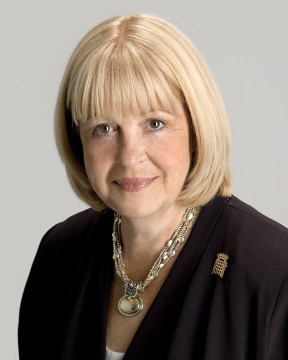
Below is the text of the speech made by Cheryl Gillan in the House of Commons on 21 April 2016.
Thank you, Mr Speaker, for calling me, on what I think is a momentous day, to celebrate the birthday of our longest-serving monarch. I have to say that it is also today that I celebrate my birthday, although I am a little younger than Her Majesty. I feel that a Beatles song would be most appropriate if I find it among my birthday presents.
I have always been tremendously proud to share the date of my birth with our monarch. When I was very little, in Cardiff, my father always used to kid me that the 24-gun salute in Sophia Gardens was, in fact, for me, but I found out fairly soon that it was for a much more important lady.
Like many who are here today, I am a modern Elizabethan. We have never known any other monarch, and we are staunchly proud to live in the reign of Queen Elizabeth II. She is truly a beacon and an exemplar of dedication to the people of the United Kingdom, and an exemplar of devotion to duty. She is also a wonderful role model for women not just in this country but around the world, particularly as women try to take their place in public life and to have a voice in the Governments of their countries.
In this House and in Parliament, we know about public service, but none of us will ever equal what our Queen does as a matter of course in caring for all the people of this kingdom and across the globe, in the countries of the Commonwealth. The Queen’s achievement in drawing all those countries together for their mutual support and benefit is truly magnificent. It is a notable achievement in this day and age, and one that is a testament to her gentle guardianship and powerful advocacy.
The poet John Milton lived for a while in Chalfont St Giles, in my constituency, and his cottage is still there, preserved as a monument to his work. He was a parliamentarian and a person who argued against the restoration of the monarchy—a servant of the then Commonwealth—but I would like to think that had John Milton known our monarch, he would have altered his view. As it is, I turn to the words that he wrote about Shakespeare, whose 400th anniversary we celebrate in two days’ time. He wrote that the poet and playwright needed no monument, because
“Thou in our wonder and astonishment
Hast built thyself a live-long monument.”
Throughout the ceaseless work of a long life, with the welfare of her people always at the heart and centre of her being, Her Majesty the Queen has created such a monument.
This place is often described as “the mother of Parliaments”, but Her Majesty is truly the mother of our parliamentary democracy, and easily commands our love and respect. Long may the Queen rule over us, and, your Majesty, a very happy birthday too.
Below is the text of the speech made by Angus Robertson in the House of Commons on 21 April 2016.
It is an honour to co-sponsor today’s motion with the Prime Minister and the Leader of the Opposition, and to follow the right hon. Member for Mid Sussex (Sir Nicholas Soames) who spoke so eloquently.
I would like to take the opportunity to put on record the appreciation of Her Majesty by the people of Scotland, with whom she has had a lifetime connection and a commitment to the country. While she has managed to serve as Head of State to a remarkable 32 independent countries during her unprecedented and successful reign, her association with Scotland is enduring and it is special.
Just last year, the Queen and the Duke of Edinburgh marked the day she became the UK’s longest-reigning monarch with a steam-train ride from Edinburgh to the opening of the new Borders Railway. When the Queen was born, she was delivered by a Scottish nurse, Nurse Barrie, and since then she has made regular visits north of the border. Her youngest days were spent at Glamis in Angus, where her mother and grandparents were from, and much of her childhood was spent at Balmoral, while part of her honeymoon was at nearby Birkhall.
On becoming Queen after the death of her father King George VI, one of her first official tasks was to plant a cherry tree at the Canongate Kirk in Edinburgh, the parish church for the Palace of Holyroodhouse. After her coronation, crowds lined the streets of the Scottish capital as the Queen received the honours of Scotland: the Scottish crown, the sceptre and the sword of state. Notwithstanding concerns from some in the 1950s about how Her Majesty could be Queen Elizabeth II of Scotland when we have never had a Queen Elizabeth I, an elegant solution was found on postboxes north of the border, where there is a Scottish crown rather than the ERII royal cypher.
Throughout the decades of her reign, the Queen has been a regular visitor across Scotland. For me, the most remarkable events have been in recent years, including the 1999 re-opening of the Scottish Parliament after a recess of nearly 300 years. Who could forget the entire chamber, all MSPs of all parties, the public gallery, Her Majesty and the Duke of Edinburgh all singing “A Man’s a Man for A’ That” by Robert Burns?
As Head of the Commonwealth, the Queen attended the Glasgow 2014 games opening ceremony and, always good at keeping up with the times, Her Majesty went viral on Twitter following a trip to the Glasgow national hockey centre after appearing to “photobomb” a selfie by an Australian player by smiling in the background.
While the Queen’s official visits and functions in Scotland are well received, there is an appreciation that it is at Balmoral that she likes to be most. Queen Victoria described Balmoral as her “heaven on earth”, while the current Queen is said to be “never happier” than when spending her summer break at the north-east estate, her private home which was handed down through generations of royals. The usual two-month stay in August and September traditionally includes a visit to the nearby Braemar Gathering where the Queen is Chieftain of the Highland games event and attends Crathie Kirk as a member of the Church of Scotland.
Her Majesty also has a love of the Hebrides and cruising around the islands and coastline. One story I particularly recall is from 2006 when the royal party was moored by the island of Gigha off the west coast of Kintyre. The Queen wanted to see the famous Achamore Gardens. However, no advance arrangements had been made, so Princess Anne apparently cycled to the local newsagents to see if there was a way for her mother to be transported around. That duly happened in the newsagent’s people carrier by the newsagent—now that must have been a sight to behold.
There is a legion of stories of tourists and visitors encountering a lady bearing a striking resemblance to Her Majesty walking her dogs alone on Arthur’s Seat in Edinburgh by the Palace of Holyroodhouse, or being offered a lift as she drove her Land Rover on Royal Deeside. I am sure that, if he is able to catch your eye, Mr Speaker, my hon. Friend the Member for West Aberdeenshire and Kincardine (Stuart Blair Donaldson), whose constituency includes Balmoral, will have more stories of that kind to recount. Her Majesty’s connections with Balmoral and the north-east of Scotland are abiding. She is a reader of the Aberdeen Press and Journal, and we have learned in recent days, from an interview with her cousin, that she is an accomplished speaker of the Doric, which is no mean feat. The Queen’s connections with the north of Scotland are also highly prized by leading small and large companies and businesses, including Speyside firms Walkers of Abelour, Baxters of Fochabers and Johnstons of Elgin. More than 80 Scottish companies hold royal warrants, and no doubt many others would like to be warrant-holders as well.
A 90th birthday is a remarkable milestone for all who reach it, but particularly for our Head of State and her ongoing lifetime of public service. We wish her, the Duke of Edinburgh, and all her family well, and look forward to many further years of outstanding public service.
Below is the text of the speech made by Nicholas Soames in the House of Commons on 21 April 2016.
May I associate myself with the excellent tribute paid by the Prime Minister to the Queen, and on behalf of myself and my constituents, may I congratulate the Queen on this great milestone in a life of service and punctilious duty, dedicated entirely to her people in the United Kingdom and the Commonwealth, and as the most formidable ambassador to the rest of the world that this country has ever had? It has been a life of devotion, fortitude, good judgment, selfless duty, great good humour and uncomplaining hard work. In all that, she has been supported by a loving family, and blessed with a happy marriage to a remarkable consort who has done so much for her and for our country. The Queen was crowned in the same abbey church as William the Conqueror, and at the age of 26—the same age as Queen Elizabeth I had been 400 years earlier. She embodies all the best qualities that are most important to our country, and lends such distinction to our nation.
The Queen brings to our national life an experience and knowledge of government and events, and of men and women all over the world, which is truly unrivalled by any other person in the land. Throughout her long reign, she has displayed judgment of the first order, great tolerance, and absolute neutrality at all times. When she ascended to the throne, her first Prime Minister, Winston Churchill, was of an age to have charged with the 21st Lancers at the battle of Omdurman in 1898, armed with a sword and a pistol, yet her current Prime Minister was not even born in 1952. Such is the scale and breadth of the life that she has so triumphantly lived through. During those extraordinary 90 years of some of the most tumultuous social, economic and technological change that Britain has ever seen, she has provided a very firm hand on the tiller.
The Queen is a source of powerful influence for this country throughout the world. She is the Queen of 16 countries, including Canada, Australia and New Zealand, and the Head of the Commonwealth—a greatly undervalued organisation that includes more than a quarter of the world’s population. She thus brings a vital and often unrecognised addition to our efforts and influence overseas, and the House should pay great tribute to her work down the years in that remarkable organisation since 1949.
Every country needs someone who can represent the whole nation. That may seem primitive—and indeed it is—but if nationhood is to mean anything, it must have a focus. In our case, for many years that focus has been and remains the Queen. Nations have values, and they should be proud of them and willing to express that pride. That is what we are able to do with our monarchy and our Queen.
It is my firmly held belief that the Queen is the single most important, respected, admired and loved public figure in the world today, and if I may, I will conclude with a vignette that I have told in the House before but that bears repeating. On the night of 4 April 1955, on the eve of his resignation as Prime Minister, Churchill gave a dinner at No. 10 in honour of the Queen. It was agreed between the private offices that there would be no speeches, but the Queen, greatly moved by the impending retirement of her first Prime Minister, whom she had known since she was a very small child, rose in her place and lifted her glass with a toast to “My Prime Minister”. And Churchill, a very old man in the full-dress evening uniform of a Knight of the Garter, completely unprepared, pulled himself to his feet, and this is what he said to the Queen:
“Madam, I propose a toast to your Majesty which I used to enjoy drinking as a subaltern officer in the 4th Hussars at Bangalore in India in the reign of your Majesty’s great-great-grandmother, Queen Victoria. I drink to the wise and kindly way of life, of which your Majesty is the young and gleaming champion.”
For 90 years of her life and 64 years of her reign, she has always been the same. God save the Queen!
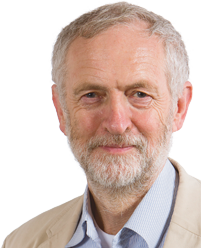
Below is the text of the speech made by Jeremy Corbyn, the Prime Minister, in the House of Commons on 21 April 2016.
It is a pleasure to second the Humble Address. Many people across the country today will be wishing Her Majesty a very happy 90th birthday, and we on the Labour Benches send our warmest greetings to add to them. May I say, as a relatively young whippersnapper, that I am fully in favour of our country having leaders of a finer vintage?
Today, we are talking about a highly respected individual who is 90. Whatever differing views people across this country have about the institution, the vast majority share an opinion that Her Majesty has served this country, and has overwhelming support in doing so, with a clear sense of public service and public duty, as the Prime Minister has indicated.
Her Majesty has carried out that duty with great warmth. My dear friend Mildred Gordon, the former Member for Bow and Poplar, who recently died aged 92 and whose funeral is tomorrow, met the Queen at the opening of the docklands light railway. The Queen asked Mildred how she was getting on as a newly elected MP, and Mildred replied, with the devastating honesty with which she replied to everything, by saying that she felt she had very little power to help her constituents. The Queen took her on one side and said, with her customary wit:
“Once they find out you lot can’t help them, they all write to me”.
Her Majesty was born less than a month before the general strike. A first daughter, who would later unexpectedly become heir to the throne, she was born two years before all women in Britain got the vote, as the Prime Minister pointed out. Her childhood was during the mass poverty of the long slump of the 1930s and she had her teenage years during the brutal carnage of the second world war. At war’s end, she experienced people’s joy first hand, as the young princess walked through the streets of London; I am pleased that this morning Radio 4 replayed that very moving oral history of our time and lives—indeed, of before the time of most of us in the House.
Her Majesty became Queen at just 25, following the death of her father, and has reigned for nearly 64 years. She is the longest reigning monarch in our history. In that time, our country has become a better and more civilised place. We have enacted equality legislation, ended colonialism and created the national health service, the welfare state and the Open University. As Head of the Commonwealth, she has been a defender of that incredible multicultural global institution. We are all very grateful for the way in which she has stood up for the Commonwealth; she has visited every Commonwealth country, I think. The Prime Minister was quite right to draw attention to her historic visit to Ireland in 2011, and her speaking in the Irish language at the reception held for her in Dublin during that visit.
Today I am welcoming two nonagenarians from my constituency to Parliament. Both have a link with the celebrations that we are conducting today. They are Iris Monaghan and George Durack. Iris was born in what is now the Republic of Ireland, but was then part of Britain. She came to London in 1951, before the coronation, and was a Crown civil servant in the Inland Revenue. She has helped to collect taxes since 1951, keeping us all in the state to which we are accustomed.
George fought in the second world war, serving in the 1st Battalion of the Rifle Brigade, attached to the 7th Armoured Division. He had a daily close affinity with Her Majesty throughout his working life, as he worked for the Royal Mail, delivering Her Majesty’s head through letterboxes all over north London.
Yesterday, I was present at the graduation of a 91-year-old constituent who has just completed her third degree—a master’s no less—at Birkbeck, University of London. That proves that it is never too late to take up a new career and learn something else.
It is their generation—that of the Queen and of my parents—that defeated the horrors of fascism in Europe, endured the privations of the post-war era and built a more civilised and equal Britain. We have much to be grateful to them for.
On the day of her coronation in 1953, Her Majesty was driven through Upper Street in my borough. But her crowning achievement in Islington was to come some years later—you will enjoy this, Mr Speaker. In 2006, she was due to open the new Emirates Stadium in my constituency, but had to pull out due to an injury. Unfortunately, that is a fate that has afflicted far too many of Arsenal’s squad in subsequent years, so we must congratulate her on her prescience. My hon. Friend the Member for Hornsey and Wood Green (Catherine West) was then leader of Islington Council. As the Queen could not attend the opening, the whole squad was invited to Buckingham Palace to meet her, and my hon. Friend accompanied them. We know that the Queen is absolutely above politics. She may be above football, too, but many locals harbour a quiet, secret view that she is actually privately a gooner.
In her reign, the Queen has seen off 12 Prime Ministers. I recently attended my first state dinner; she has received over 100 state visits, and, as the Prime Minister indicated, visited well over 100 countries on our behalf. I admire her energy and wish her well in her continuing and outstanding commitment to public life. I wish her a very happy 90th birthday.
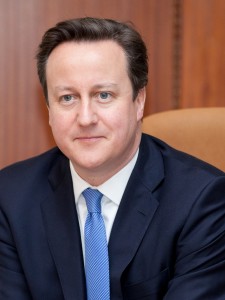
Below is the text of the speech made by David Cameron, the Prime Minister, in the House of Commons on 21 April 2016.
I beg to move,
That an humble Address be presented to Her Majesty to offer the heartfelt good wishes of the House on the occasion of Her Majesty’s ninetieth birthday, expressing its deep gratitude for Her Majesty’s lifelong commitment to the service of the country and the Commonwealth, and praying that Her Majesty may long continue in health and happiness.
That Mr Speaker, the Prime Minister, Chris Grayling, Jeremy Corbyn, Chris Bryant, Angus Robertson, Mr Nigel Dodds, Tim Farron, Hywel Williams, Dr Alasdair McDonnell, Danny Kinahan, Caroline Lucas and Mr Douglas Carswell do wait upon Her Majesty with the said Message.
The motion stands in my name and those of the Leader of the Opposition and the leader of the Scottish National party.
Today we celebrate the 90th birthday of our country’s longest reigning monarch. Her Majesty the Queen—our Queen—has lived a life of service that began long before her accession to the throne. In 1940, at just 14 years old, the then Princess Elizabeth made her first BBC radio broadcast, to bring comfort and hope to children who had been evacuated from Britain’s cities during the war. At 18, she became the first female member of the royal family to join the armed forces, joining the Women’s Auxiliary Territorial Service, training as a driver and a mechanic. At just 21, she made the exquisite and defining broadcast from Cape Town in which she uttered the famous words
“my whole life whether it be long or short shall be devoted to your service”.
Never has such an extraordinary promise been so profoundly fulfilled.
As I said when we gathered in September to mark Her Majesty becoming our longest-reigning monarch, for all of us in this Chamber who seek to play our part in public service, it is truly humbling to comprehend the scale of service that Her Majesty has given to our country over so many years. If we think of the vital landmark in completing our journey to democracy when everyone over 21 was finally given the vote in 1928, it means that Her Majesty has presided over two thirds of our history as a full democracy. In that time, she has met a quarter of all the American Presidents since independence. She has provided counsel to no fewer than 12 Prime Ministers, and that is just in Britain. She has worked with well over 150 Prime Ministers in her other realms. If anyone can come up with a collective noun for a group of Prime Ministers, it is probably Her Majesty. I think I will leave it her to make some suggestions.
I know that, like me, every Prime Minister has found Her Majesty’s counsel an incredibly valuable part of the job. Her perspective and length of experience are unique and utterly invaluable. Her first Prime Minister, in 1952, was Winston Churchill. Like him and all those who have followed, I can testify that she is quite simply one of the best audiences in the world. There is no one else in public life to whom any Prime Minister can really speak in total confidence, and no other country has a Head of State with such wisdom and such patience. There are some who suspect that, at times, I may have put her patience to the test. In the play “The Audience”, the character who portrays me goes on and on about Europe so long that she falls asleep, but I can guarantee that that has never happened. I may not have kept my promise not to bang on about Europe in every forum, but this is certainly the one where I try the hardest.
As some have pointed out, Her Majesty is now entering her 10th decade and starting to take things a little easier, which is why in the last year alone she has only undertaken 177 public engagements. In 90 years, Her Majesty has lived through some extraordinary times in our world, from the second world war, when her parents, the King and Queen, were nearly killed as bombs were dropped on Buckingham Palace, to the rations with which she bought the material for her wedding dress; from presenting the World cup to England at Wembley in 1966, to man landing on the moon three years later; and from the end of the cold war to peace in Northern Ireland.
Throughout it all, as the sands of culture shift and the tides of politics ebb and flow, Her Majesty has been steadfast—a rock of strength for our nation, for our Commonwealth and, on many occasions, for the whole world. As her grandson, Prince William, has said:
“Time and again, quietly and modestly, the Queen has shown us all that we can confidently embrace the future without compromising the things that are important.”
As Her Majesty said in her first televised Christmas broadcast in 1957, it is necessary to hold fast to “ageless ideals” and “fundamental principles”, and that requires a
“special kind of courage…which makes us stand up for everything we know is right, everything that is true and honest.”
In this modern Elizabethan era, Her Majesty has led a gentle evolution of our monarchy. From the first televised Christmas Day message, more than three decades before cameras were allowed into this House, to the opening up of the royal palaces and the invention of the royal walkabout, she has brought the monarchy closer to the people while retaining its dignity.
Her Majesty’s role as supreme governor of the Church of England has also been incredibly important to her. She has often said that her life is inspired not only by her love of this great country but by her faith in God. As she has said,
“I know that the only way to live my life is to try to do what is right, to take the long view, to give of my best in all that the day brings, and to put my trust in God.”
In standing up for Christianity, she has been clear that the Church of England has a duty to protect the free practice of all faiths in our country.
Her Majesty always performs her constitutional duty as Head of State impeccably, but as head of our nation she is held in even higher regard for the way in which she represents the United Kingdom. It has rightly been said by some constitutional experts that Her Majesty the Queen is the only person born in the United Kingdom who is not English, Scottish, Welsh or Northern Irish; she is all and none of those things and can represent all the nations of the United Kingdom on an equal basis in a way that no President ever could.
The Queen has also constantly represented the nation when abroad. Foreign leaders from President Truman to Nelson Mandela and Ronald Reagan have all testified to her extraordinary ability both to represent this country and to understand the world. On her hugely important and healing state visit to Ireland in 2011, Her Majesty began her remarks in Irish and spoke about the history of the troubled relationship between the UK and Ireland. She did so with a kindness as well as an authority that went far beyond anything that would be possible for an elected politician.
As a diplomat and ambassador for the United Kingdom, the Queen has represented our country on 266 official visits to 116 different countries. As I saw again at the Commonwealth Heads of Government meeting in Malta last year, she has made an extraordinary contribution to the future of our Commonwealth, growing it from eight Members in 1952 to 53 today. In doing so, she has helped to build a unique family of nations that spans every continent, all the main religions, a quarter of the members of the United Nations and nearly a third of the world’s population. The reach of Her Majesty’s diplomacy is without parallel—so much so that, as a result of a visit to Balmoral, she can claim to be the only woman ever to have driven the King of Saudi Arabia around in a car. I have that story sourced from both the participants.
Through it all, Her Majesty has carried herself with the most extraordinary grace and humility. When people meet the Queen, they talk about it for the rest of their lives. She understands that, and she shows a genuine interest in all she meets. They can really see that she cares. As the constitutional historian Vernon Bogdanor has said, Her Majesty understands what might be called
“the soul of the British people.”
Her Majesty has done so much throughout her life that when it comes to her 90th birthday, there cannot be much that is new for her to try, but I am pleased to hear that she will be sampling the orange drizzle birthday cake baked by the winner of “The Great British Bake Off”, Nadiya Hussain.
As she lights the first in a chain of 1,000 beacons, Her Majesty will be joined, as ever, by her family, including her son the Prince of Wales and her husband the Duke of Edinburgh, who has stood by her side throughout her extraordinary reign. They have both served this country with an unshakeable sense of duty, and their work, including the Duke of Edinburgh’s award scheme and the Prince’s Trust, has inspired millions of young people around the world. As we see in those delightful birthday portraits released this week, family has always been at the heart of Her Majesty’s long life.
Mr Speaker, we are uniquely blessed in our country. Her Majesty’s service is extraordinary, and it is a joy for us all to celebrate, to cherish and to honour it. In June, the whole country will share in this special milestone, with a service of thanksgiving in St Paul’s cathedral and a wonderful royal street party. But today, I know the whole House and the whole country will want to join me in wishing Her Majesty the Queen health, happiness and, above all, a very special 90th birthday.
Below is the text of the speech made by Greg Hands, the Chief Secretary to the Treasury, on 21 April 2016.
Good morning – it’s very good to be here today.
For those of you who don’t know me, I’m Greg Hands, Chief Secretary to the Treasury – you may know me as the minister who gives your departments a hard time during the spending process!
That is of course in the best traditions of the Treasury. And it’s particularly vital to meeting this government’s commitment to fixing the public finances.
A responsible government should only spend what it can afford. And it is the job of the Chief Secretary to make sure that happens.
As you will all be aware, the job has got a little harder recently. We have experienced a downturn in the economic forecast, largely due to factors outside of our control. That increases the need for government to keep the pressure up on public spending.
So what I will be doing is searching for £3.5 billion of savings from public spending in 2019-20, on top of the existing savings plans set out at Spending Review 2015, in line with continuing action to ensure maximum efficiency from every pound of public spending.
This is very much doable: the extra sum represents less than 0.5% of total government spending, or around 1% of departmental resource spending.
These savings are smaller than those we have delivered before. Over the last five years government expenditure was reduced to 40%, from the unsustainable level of 45% of GDP (Gross Domestic Product), in 2010. That involved a fall in departmental spending of 1.7% in real terms per annum, from 2010-11 to 2015-16. Looking towards 2019-20, the projected savings are only 0.9% per annum in real terms.
Perhaps even more importantly, at the same time as cutting the cost of government, we protected, and in many cases, improved core services:
Crime has fallen by more than a quarter since 2010; there are more young people going to study full time at university than ever before; and record numbers of children are now taught in schools that are “good” or “outstanding”.
So we have proven that we can do more with less.
The challenge is that the electorate likes to say “more please”. The demand is always there for government to do more. That is invariably going to be an ongoing pressure.
The situation is, therefore, that money remains tight, while expectations continue to increase. What this means for departments is that we all need to be even more alive to opportunities to become more efficient in everything we do.
This is where the efficiency work initiated by the Cabinet Office creates real value.
And there are some smart ways in which they have helped departments achieve further efficiencies:
Whether that’s developing and using common platforms and services, to drive economies of scale.
Rationalising our estates footprints, through property hubs, whereby departments share a smaller number of buildings in key locations…
Or increasing the skills of the civil service, both generally, and among specific professions and functions, such as digital, commercial and change management.
In addition, we are also merging the Major Projects Authority with Infrastructure UK, to strengthen the assurance and support afforded to departments and project teams, and you heard from Tony Meggs earlier.
We’re introducing single departmental plans, to ensure that departments have the right resources and can deploy them where they are most needed, and you will shortly hear from John Manzoni more on that.
We’re improving both our recruitment and training, to ensure that we have the right commercial and leadership skills in-house.
And we’re undertaking a review of the government’s strategy for IT contracts, an area where I still think significant savings could be realised.
So what can you, as non-executive directors, do to help drive efficiency forward?
I would recommend five things:
First, maintaining focus, within your departments, on the five cross-cutting priorities Sir Ian [Cheshire] has drawn up: talent, single departmental plans, arms’ length bodies, major projects and risk management.
Second, making sure that your boards have sight of data on efficiency measures in the department, and scrutinise departmental programmes through the lens of efficiency.
Third, ensuring that your departments have programmes that are in line with the work of the Cabinet Office’s efficiency unit: programmes to develop common platforms and services (where relevant); the rationalisation of estates,; and the upskilling of the workforce, particularly in relation to digital, commercial and leading and managing change.
Fourth, ensuring robust engagement with the delivery of your Single Departmental Plan, particularly the commitments to drive efficiency.
Fifth, making the most of your expertise, and getting involved in projects outside of your board – for example, taking a leadership role in departmental reviews on issues such as procurement, or advising specific programmes.
I think what underpins all five actions is the need, across the Civil Service, to get a better understanding of costs and outputs.
A lot of you will know about the transformation which took place in the prison service. They used their detailed understanding of the costs of running a prison, from meals, to staff, to building maintenance, to really drive down costs by holding service providers to account.
But there is a lot of other good work going on in the public sector, looking at costs and productivity.
In the Spending Review last year, we said we would establish a new Costing Unit to build a more forensic understanding of the cost of public services and drive productivity across the public sector’.
This is now up and running, and using cost data to improve efficiency across government.
The Costing Unit has done 11 projects so far, on a wide variety of topics such as the border, further education, criminal justice and mental health.
To give you an example of the sort of savings which are up for grabs, the Border Force looked at their costs and outputs to think about their productivity and how they could achieve the same service for less. By looking at costs, they identified £200 million of potential savings out of £900 million, for instance by increasing the number of passengers using e-gates.
That is the sort of saving which should be exciting all of us.
And, to conclude, that is where your role, as non-executive directors, can really add value: by asking the tricky questions, suggesting solutions which you’ve seen work well elsewhere, and – to borrow a phrase from the founder of FedEx, Fred W Smith – making sure that your departments are “keeping the main thing the main thing”.
Thank you for your work so far – and let’s keep up the pressure.
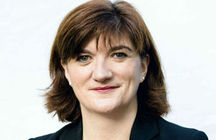
Below is the text of the speech made by Nicky Morgan, the Secretary of State for Education, at the ExCel Centre in London on 20 April 2016.
Thank you, Tom [Clark, Chair of Freedom and Autonomy for Schools – National Association (FASNA)], for that introduction.
It’s such a pleasure to be here with you today. I know my colleague, Lord Nash, has been a regular visitor to the show. It is with thanks to the incredible teaching profession that we now have 1.4 million more children in ‘good’ or ‘outstanding’ schools. And you are the vanguard, leading the way and showing just what can be done with the autonomy offered by the academies programme. You have seized the opportunities to lead school improvement from the front, offering a world-class education and a bright future to more young people than ever before.
Why academies?
But I know that academy status doesn’t raise standards as a matter of course. What I believe is that academy status means that you have the vehicle by which we can achieve higher standards and that you – the excellent leaders in the system – are the drivers, using it to propel schools to success.
Academy status puts the power in your hands to innovate and try new things to get great results, you put in place local solutions and you can make long-term plans based on the needs of the children in your communities. This is a crucial rejection of the outdated, one-size-fits-all approach of the past, freeing your schools from the diktats of local and national governments.
Academies make it easier for you to recruit, train, develop and deploy better teachers and leaders in your schools and trusts; they allow you to recognise the expertise of any person who can have a positive impact for young people; pay them what you think they’re worth; and give them a clear path to career progression that will keep them engaged rather than looking for opportunities elsewhere.
We know there are lots of models for operating academies but we think many will choose – as many of you have already – to work in local clusters, supporting each other to succeed. But let me be absolutely clear that there is a place for successful and sustainable stand-alone academies and we will never put pressure on them to subscribe to a different model.
Right now 66% of secondary schools and 19% of primary schools are already enjoying the freedoms that come with academy status but there are schools, teachers and pupils that have been denied those freedoms and their associated opportunities for far too long.
New role for local authorities
So yes, we will ensure that – by 2022 – all schools become part of the dynamic academies system. The fact is that even if we didn’t, three-quarters of secondary and a third of primary schools would have converted to academy status by 2022 anyway.
That trajectory makes it impossible for local authorities to manage expensive bureaucracies with fewer and fewer schools. Resources are better focused in the classroom than on servicing inefficient bureaucratic structures. LAs themselves have expressed concerns about the sustainability of the situation and those concerns have been echoed by schools.
And yes, ‘good’ maintained schools will need to become academies too. So they can become sponsors and support those schools which are not meeting the high standards pupils need. But also because we do believe the freedoms that come with academy status will allow those ‘good’ schools to improve even further and achieve even more for their pupils.
We have deliberately given schools plenty of time – 6 years – to plan their transition so that they are in a position to make well thought out decisions in the best interests of their students and their local communities.
Many academies already work closely with their local authorities and we see no reason why that should change. LAs will continue to offer services which schools can pick and choose to purchase; they will continue to provide services for children with special educational needs; and they will continue to have a duty to provide school places for all children.
We believe this change in LAs’ relationship to schools will give them the opportunity to truly fulfil their role as advocates for parents and pupils. They will cease to be central service providers and will instead become champions of those in our schools.
Intervention
Many of the critical voices of our vision point to the fact that we have seen some academies fail. But that doesn’t take account of the swift intervention offered by the academy route – which will now become the norm – and the range of solutions which will be offered to schools in difficulties.
We have already shown that we can respond quickly in the few instances where academies do underperform. We have issued 154 formal notices to underperforming academies and free schools, changing their leadership in 129 cases. And the powers introduced by the Education and Adoption Act – recently passed by Parliament – mean we can do that more quickly, ensuring that schools cannot continue to fail or coast – putting the future success of young people at risk.
We want you to seize the opportunities, in a new system of supported autonomy, to re-mould schools that aren’t working in the image of the successful schools you are already leading.
Too many children are still denied the access to excellent education that I believe should be their birth right. It is a matter of social justice for every child to have access to a good education, regardless of their background. But we know – and the white paper showed – that in some parts of the country that just isn’t happening. And as I have made clear the “everywhere” in educational excellence everywhere is, for me, non-negotiable. So we need to make sure that what is already happening in the best of our schools spreads to the rest of our schools.
I know from my conversations with teachers up and down the country that you go into teaching because you want to have a positive impact on the lives of young people. We want you to be able to do that for as many of them as possible, particularly in those areas currently lagging behind. The young people in areas of particular challenge need you to build capacity in the system. Without it they won’t be able to access the type of education that can deliver them bright futures. For our part we will do all we can to remove the barriers that might otherwise discourage you from rising to those challenges.
Our white paper
The proposals put forward in our ‘Educational excellence everywhere’ white paper concentrate on building the framework that will allow you to succeed. If academies are the vehicle for success then I want you, as the drivers, to get in the driving seat safe in the knowledge that you are supported throughout the journey.
The white paper outlines our plans to put more power into the hands of the best leaders; expand teaching schools and NLEs and target their reach so no areas will be without access; ensure teaching schools co-ordinate and define high-quality ITT and CPD, as well as acting as brokerage hubs to facilitate school-to-school support; put in place a new fairer funding formula and target funding so the best leaders can build capacity for support; and create a growth fund for multi-academy trusts as well as an excellence in leadership fund to develop innovative new leadership ideas for challenged areas.
We are going to incentivise work in challenging areas by offering inspection holidays to give you enough time to truly make your mark on schools, and through accountability that focuses on progress – rather than simply attainment – as a measure of success; create achieving excellence areas so the schools in the most need can get better access to excellent teachers and leaders; and crucially we will create a national teaching service so we can recruit and retain the best teachers where they are needed most.
Far from being about academy status alone, our white paper is about nurturing great teachers, developing great leaders, tackling underperformance, targeting intervention, resourcing that’s fair and accountability that’s intelligent. Taken as a whole it represents a new era for the education system, one with opportunities and incentives for you to spread your reach so we really can realise excellence in every part of the country and in every school.
In closing let me take this opportunity to say: thank you – for everything you are already doing to change the lives of young people. And let me urge you to seize the opportunities in the new era of education outlined by our white paper. Let me encourage you to use your incredible expertise to ‘inspire success and excellence’ in every part of the system. Let me say as your Secretary of State, how honoured I feel to see you telling the story of your own success.
With you, the professionals, rightly at the helm of the education system I know we will make educational excellence everywhere a reality.
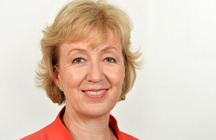
Below is the text of the speech made by Andrea Leadsom, the Minister of State at the Department of Energy and Climate Change, in London on 20 April 2016.
Introduction
Good Morning Ladies and Gentlemen. It’s a huge pleasure to open Marketforce’s Nuclear New Build Forum today. As you will know, we face a number of very important challenges in the energy sector over the coming years – not just dealing with decades of under investment, but also meeting our energy trilemma of keeping the lights on, keeping the bills down and all whilst addressing our world leading decarbonisation targets. Your industry has a huge part to play in each of our objectives.
Since the start of the year, new nuclear has never been far from the headlines. Both Government and the nuclear industry have faced question after question about our plans for expansion.
And to be honest, I welcome those questions. I think it is healthy that projects on the scale of those proposed for nuclear new build should come under close public scrutiny.
One of the reasons I welcome questions about our new build programme is because it gives me an opportunity to restate, again and again, why we believe new nuclear is so important for the UK; it gives us the chance to explain that Hinkley Point C is a very good deal for the people of Britain; and it gives us the opportunity to say what we are doing to enable other new nuclear power stations to be built, for example at Wylfa in Anglesey and at Moorside in Cumbria and others besides.
Case for New Nuclear
New nuclear has a crucial role to play as the UK makes the transition to a low-carbon economy. To make this transition a success we must completely decarbonise the power sector and we need nuclear to do that. Why? Because nuclear is the only proven technology that can be deployed on a sufficiently large scale to provide continuous low-carbon power.
Our own analysis tells us that decarbonisation of the power sector can be achieved most cheaply, securely and reliably if nuclear remains a core part of the UK’s energy system.
And it is also clear that security of supply is far more likely if we have good diversity of supply. Whether we are considering the number of different suppliers of gas, or in this case the number of technologies we rely on for our power, avoiding over-reliance on a small number of sources is important.
Existing nuclear plants currently meet around 16% of our electricity needs. Without nuclear new build, the share of generation from nuclear could dip to 3% in 2030. This would reduce the diversity of our energy supplies and would almost certainly make achieving our goals to cut the UK’s greenhouse gas emissions far more challenging and more expensive.
So pursuing new nuclear is the clear and right choice for the Government.
But there are other considerations, too. Britain is a world leader in civil nuclear, through our skills-base, infrastructure and regulatory regime. Making nuclear projects happen can keep Britain at the forefront of nuclear development – generating skilled employment, building our supply chain and creating global export opportunities.
Hinkley
Good progress is being made so that Hinkley can provide clean, affordable and secure energy that hardworking families and businesses can rely on now and in the future. I was delighted to see for myself the progress being made at the site at the end of last year and it was amazing to see the level of enthusiasm there.
EDF and the French Government have said that EDF are working towards a Final Investment Decision ‘in the near future with the full support of the French Government’ and I’m sure EDF will be able to go into further detail later on today.
Hinkley Point C is expected to be up and running in 2025, and will provide 3.2 GW of secure, base-load and low carbon electricity, meeting 7% of the UK’s electricity needs. That is enough to power six million homes – twice as many as the whole of London.
Hinkley will provide an enormous boost to both the local and national economy: 25,000 jobs during construction; 1,000 apprenticeships; 900 permanent staff once up and running ;£40 million a year to the local economy. These are good numbers. Hinkley will make a difference.
Some people ask “is Hinkley a good deal for consumers?” I believe it is. We have made sure that consumers won’t pay a penny for electricity until the plant is generating, and so the risks during construction are with the developer.
If profits prove to be higher than expected a proportion will be shared with consumers; if the project comes in under budget, savings will be shared with consumers; but if there are overspends then the developer bears all the additional costs. That is a good deal for UK consumers.
But Hinkley C is only the first in a series of proposed new nuclear projects in the pipeline. It will blaze a trail for further nuclear development. Industry has set out proposals to develop 18 gigawatts of new nuclear power in the UK at six sites – Hinkley Point, Sizewell, Bradwell, Moorside, Wylfa and Oldbury. This pipeline could deliver around a third of the electricity we will need in the 2030s; reduce our carbon emissions by more than 40 million tonnes; bring an estimated £80 billion of investment into the UK and employ up to 30,000 people across the new nuclear supply chain at the peak of construction.
Supply Chain
There is massive potential for UK suppliers from the new nuclear programme in the UK. It is a top priority for me that the UK supply chain must be given the opportunity to compete for high value contracts throughout the sector.
We are working closely with industry to create an environment that will have several benefits:
First, by developing an open and transparent approach to the supply chain: The Government is clear that we want the developers of new nuclear plant to share supply chain information with UK industry early, so that companies can prepare for the opportunity and line themselves up to bid for contracts.
Second, by maximising UK content in Hinkley Point C and future new nuclear plant: EDF has estimated that more than 60% of Hinkley Point C’s construction cost will be placed with UK firms. We want to match or better this percentage for all New Nuclear Build in the UK.
Third, through new trade partnerships: we believe UK expertise can help deliver nuclear projects in other countries, whether that is in the home countries of those proposing to build plant in the UK, or in third markets.
And finally by developing sustainable content: huge value comes from long-term contracts and I want to see our UK companies playing the long game, developing competitive investment strategies that will lead to a healthy and enduring nuclear skills base in the UK.
The Nuclear Industry Association has a very valuable role to play to support our supply chain, for example, by leading the way in creating the ‘Demand Model’, which will identify the UK Nuclear Industry’s capability and capacity for New Nuclear. The model will help companies understand where there are opportunities and match them to those opportunities.
And there is help for companies elsewhere – the Nuclear Advanced Manufacturing Research Centre is not only the UK centre of excellence for research into advance manufacturing but it supports the UK Nuclear Industry with its Fit for Nuclear programme which is readying UK businesses for new build.
Skills Challenge
A thriving supply chain needs a thriving skills base. A skilled workforce will be essential to build new nuclear plant on time and on budget and to maximise the opportunities for the UK supply chain. I was delighted to meet some of the new apprentices on my visit to EDF’s Cannington Court at the end of last year.
The scale of the industry’s new build aspirations, the length of time since the last new build project and the high average age of the existing nuclear workforce mean that it is essential to take action now to prevent skills gaps appearing during the course of the new nuclear programme. 70% of highly skilled workers in the nuclear sector are due to retire by 2025.
The most recent Nuclear Workforce Assessment suggests the total current demand for skilled nuclear workers is about 78,000. This is expected to rise to 111,000 as both the civil and defence new build programmes gather pace.
This is a challenge for industry and Government to tackle in partnership. The Nuclear Skills Strategy Group brings this partnership to life – the NSSG is the UK’s lead strategic skills forum for the sector and it will be accountable for developing a national nuclear skills strategy. The group will address the skills infrastructure, processes and the training provision. In addressing the skills challenge, the NSSG will continue to develop the pool of existing skills across the nuclear sector and will also consider the transferability of skills from other sectors in the energy space – something I believe is crucial to sustaining the industry.
To support these efforts, last year, the Chancellor confirmed funding to create five National Colleges, among which was The National College for Nuclear.
The College will work collaboratively with the wider industry, skills bodies and training providers and will look at international best practice to develop an industry-wide curriculum. It will start off two campuses in Cumbria and the South West and incorporate the best colleges, universities and training providers operating nationally to help deliver its objectives. BIS have now completed the due diligence process and are preparing the final grant offer letter.
Small Modular Reactors
Looking further into the future, alternative nuclear technologies may offer exciting opportunities that could help us to meet our energy and climate change challenges, as well as develop domestic capability. They could offer huge commercial opportunities for UK industry.
The Government already recognises the potential of Small Modular Reactors.
In November last year, we committed to investing at least £250m in nuclear research and development. This included a competition to identify the best value SMR design for the UK. Because SMRs are at the early stages of development, the UK is in a strong position to leverage its considerable expertise across the nuclear supply chain to develop them. This will help position the UK as a global leader in innovative nuclear technologies.
During the Budget the Chancellor announced the launch of phase one of a competitive process to identify which Small Modular Reactor designs could feasibly deliver in the UK. It will include structured engagement with technology developers, utilities, potential investors, funders and others interested in developing, commercialising and financing SMRs in the UK.
In addition, and as part of our wider R&D programme, Government will allocate up to £30m over the next 5 years for an SMR-enabling advanced manufacturing programme to develop skills capacity.
Separately, the Government commissioned a techno-economic assessment of SMRs, which is due to conclude shortly. This will contribute to the evidence that helps Government understand the potential long-term value that SMRs contribute to our in the energy portfolio and how they could contribute to the UK’s economic needs.
I would encourage those of you here today, who would like to participate in phase one of the competition, to register your interest. Now is the time.
Wider Nuclear R&D
But our efforts in research and development go wider than just SMRs. The Government is investing in an ambitious nuclear R&D programme intended to revive the UK’s nuclear expertise and position us as a global leader in innovative nuclear technologies.
As we develop the details of the programme, we are listening to the advice and recommendations of the Nuclear Innovation and Research Advisory Board (NIRAB), which has developed a proposed programme of national nuclear R&D under the leadership of Dame Sue Ion, an expert advisor on the nuclear power industry.
The NIRAB’s recommendations focus on 5 key themes:
Firstly, creating a strategic toolkit to better underpin future planning on nuclear R&D;
Secondly, researching more efficient and tolerant fuels for future and current reactors;
Thirdly, developing 21st Century manufacturing to build the advanced and modular equipment of the future;
Fourthly, working towards SMRs and the fourth generation reactors of the future through Advanced Reactor Design; and
Fifthly, recycling fuel to ensure a secure, cost effective and sustainable future for advanced reactors.
We will be announcing the priority work streams for the first year of the wider programme soon. We hope to announce the full 5 year programme later this year.
Close
So, in closing, let me return to where I started.
Questions about new nuclear are part of a healthy conversation about this country’s future energy make-up. The rationale for bringing forward new nuclear plant remains strong – we are working to build a secure, affordable and clean energy system, with your help.
The opportunities for UK business are already there and are growing fast.
And the potential for the UK to be at the forefront of the next generation of nuclear that this government is determined to seize.
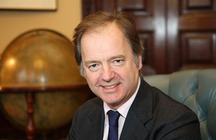
Below is the text of the speech made by Hugo Swire, the Minister of State at the Foreign & Commonwealth Office, on 18 April 2016 in Washington DC, United States.
It’s great to be back here in the US. I’ve just come from four days in Texas, where as you would expect there was much talk of the Presidential election, which we are all following closely in the UK, and I suspect some of you are following developments in the UK as well. Last time I spoke in Washington on this theme, was two years ago, I set out what the Asian Century means to the UK. This time I want to make a more specific proposition.
That proposition is as follows. In the 20th Century, the UK and US co-operated alongside others to establish the modern, rules-based, international system; one based on a primarily Trans-Atlantic set of issues. In the 21st Century, we need to cooperate more in a different geography – an Asia Pacific one; and this time, instead of creating an international system, we need to work to ensure that the current system evolves to remain effective and relevant and that new powers are bound in to the rules.
To achieve this, we, like the US, will need to work even more closely with allies and partners, both in and beyond the region. Of course, in the US you have had a substantial presence in Asia Pacific for decades, which you have strengthened in recent years through the Rebalance. Defence Secretary Carter’s visit last week reaffirmed once more that the region commands senior US attention. We in the UK have also recognised and acted on the need to shift more of our diplomatic focus and tools to Asia Pacific.
Last week the Foreign Secretary, Philip Hammond, visited Hong Kong, China, Japan and Vietnam – his fourth visit to East Asia in the space of sixteen months. The regularity of his visits to the region reflects our commitment. The spread of countries he has visited demonstrates the span of our interest, across the whole region, not just any one country. In my four years as Minister for Asia, I have sought to ensure that we have dedicated the necessary resource to support our All of Asia commitment, and to encourage my Ministerial colleagues to make regular visits to the region.
Trade is an important part of that equation. We have been a leading European voice in championing free trade with Asia Pacific and worldwide. Today, the UK also benefits from our EU membership to secure our trade interests and increase our influence. The direct benefits that flow through trade deals are essential to our prosperity. UK exports under the EU-Korea Free trade agreement, for example, more than doubled between 2011 and 2014, to over $6 billion. We are selling ten times more jet engines to South Korea than we were in 2011, and car exports are up 87%. The US and EU objectives on trade are complementary: we are seeking better market access, fewer restrictions on our investments and better and more predictable environments for business. As the US pursues TPP to push up standards in these areas, so the UK leads the EU to seek similar outcomes with the economies of the region. But trade is only part of the equation.
We are all familiar with joint UK and US diplomatic efforts in many parts of the world, such as stopping Iran from developing nuclear weapons, or standing up to a revanchist Russia. But we are less accustomed to discussing our partnership in the Pacific. I want that to become as normal and frequent as our discussions of Trans-Atlantic challenges.
Let me pause for a moment to reflect on a truly symbolic event which took place one week ago in Hiroshima. Your Secretary of State, John Kerry, stood beside our Foreign Secretary, Philip Hammond, at the Peace Park. With the benefit of many decades of hindsight, we can see what a national catastrophe the Second World War was for Japan. We can also see how difficult it remains, even 70 years on, to achieve full reconciliation in Asia.
So this year, with Japan chairing the G7 group of like-minded partners, and Allied Ministers visiting Hiroshima, shows us how far we have come to re-establish trust and partnership.
This trust and partnership is not just an intellectual exercise. Last year Japan passed significant new security legislation which removes the final legal barrier to a more proactive Japanese posture overseas, and allows for a greater Japanese contribution to international security. We welcome that move, and encourage Japanese involvement in global security challenges. In this vein, we support Japan’s bid for a permanent Security Council seat. We are deepening our security co-operation, with the first UK-Japan air force exercise due in the autumn, involving an RAF Typhoon squadron. That exercise was announced by Foreign and Defence Ministers after the second round of UK-Japan security and defence talks in Tokyo. Incidentally, whilst in Tokyo the Ministers visited the US naval aircraft carrier ‘USS Ronald Reagan’ in Tokyo harbour.
And also this year, the G20 group of major economies is hosted by China. This group, which was forged during the most serious global economic crisis since the great depression, seemed radical eight years ago. Would such a disparate grouping have the coherence and common purpose to contribute to global goods and stability? Today, we look at China, the world’s second largest economy, accounting for around one third of all global growth, and take for granted its important role in shaping global economic policy.
In recent years we have reformed voting in the Bretton Woods institutions to give China a louder voice, in line with its increased contributions. The launch of the Asia Infrastructure Investment Bank in January this year has demonstrated that China could successfully initiate a new international institution that will adhere to international standards of best practice, as is clear from its recently published environmental and social framework. The fact it will be a genuinely multinational and democratic body is due in large part to the role that the UK, working with others, played in shaping its formation. The AIIB will be complementary to existing multilateral banks, most notably the Asian Development Bank, with which it will co-finance its initial projects. We are well represented within the Bank, with former Chief Secretary to the Treasury Sir Danny Alexander appointed Vice President, and the UK leading a constituency of non-Eurozone European countries. China wants to play an increased role in the international system, and it has the will and wherewithal to do so. Our engagement, constructive criticism and sharing of expertise are crucial to ensure that this enhances the existing system, rather than undermining it.
The dynamic shift under way in Asia Pacific is not simply a question of great power politics: it reflects important trends within nations. Another recent development with implications for the wider region and beyond is the democratic election of a new National League for Democracy Government in Burma, marking a return to democracy after decades of military rule. The release of political prisoners over the last week is a welcome sign of that return to democracy and an important step forward for the new government. We will be encouraging the new government to build on this early demonstration of commitment to human rights and rule of law, and providing practical support.
Beginning to tackle the issue of Rakhine and the appalling treatment of the Rohingya community will be a particular test of the NLD-led administration. Alongside the US, the UK has played a leading role in keeping Rakhine in the international spotlight. While the solution to Rakhine must come from within Burma itself, there is a supporting role for the UK and likeminded states. We have been clear that the new government must use its substantial mandate to begin making progress.
The other pressing issue facing Burma’s new government will be reinvigorating the process seeking to bring an end to more than fifty years of conflict. We have played a lead role in supporting the peace process, and we are offering continued support to the new NLD-led administration. Burma’s transition is a good sign for the wider region, where democratic institutions are not always succeeding. The UK has pursued agile diplomacy and development support, together with the US, and it has paid off.
Of course Burma’s is not the only reconciliation process going on in the region. In Cambodia we support the Khmer Rouge Tribunal to ensure there can be no impunity for the worst of crimes. This is a vital mechanism for the Cambodian people to establish the truth and bring about reconciliation between communities, as well as an important ingredient to build a peaceful and inclusive society, and we believe it sends a strong message on accountability and fundamental Human Rights in the region.
I do not want to give the impression that we think everything across Asia Pacific is inexorably moving in the right direction. The regime in North Korea has shown in recent days that it remains dangerously willing to provoke its neighbours and a very real threat to regional and global security. The failed launch of its intermediate ballistic missile on Friday is just another example of this increasingly provocative behaviour. North Korea’s pursuit of nuclear weapons remains a gravely concerning international issue: proactive UK diplomacy and engagement with the regime is used to deliver frank and robust messages, in support of the international concern that this programme is halted.
We must exert pressure through sanctions on the North Korean regime to deter it from this dangerous pursuit of nuclear weapons, and be united in condemning the continued violation of UN Security Council Resolutions by the regime. The UK worked closely with the US in securing the latest UN Security Council Resolution 2270, which contained some of the toughest measures yet – designed to restrict technology transfers and impede efforts to secure a deployable nuclear weapon. We are working alongside the US to ensure that others implement it fully and effectively.
Through our Embassy in North Korea we pursue a policy of critical engagement, taking every opportunity to send tough messages to the regime about its nuclear programme and appalling human rights record. It is unconscionable that amid reports of widespread hardship amongst the North Korean people and human rights abuses committed by the state, the regime continues to prioritise the development of its nuclear and ballistic missile programmes over the well-being of its own people. We cannot rule out dialogue or even a return to talks, but North Korea should be very clear that this can only happen if de-nuclearisation is firmly on the agenda.
Elsewhere in the region, the growing tensions in the South China Sea are driven by an assertive Chinese approach, demonstrated by an increase in land reclamation and militarisation. This is worrying for regional stability, for the principle of freedom of navigation, and for the rules-based international system on which we all rely. The visit last week of a high-level delegation of Chinese military officers led by General Fan Changlong, Vice Chairman of the Central Military Commission, to the Spratly Islands, will do little to calm those rising tensions. The G7 Foreign Ministers’ Statement on Maritime Security last week was an important signal to all claimants, setting out the expectation of the international community for a rules-based approach to the disputes.
Like the US, the UK does not take a position on the underlying sovereignty claims, but we do take a firm view on how those claims should be pursued. Disputes should be settled peacefully and in line with international law, and any actions liable to raise tensions, including militarisation, should be avoided. The maintenance of freedom of navigation and overflight is non-negotiable. We recognise and support the US role in defending those principles in Asia Pacific, a role we saw reinforced just last week when Defense Secretary Carter visited the region.
We are following closely the arbitration case in The Hague brought by the Philippines. We consider any ruling to be binding on all parties, as provided for by the UN Convention on the Law of the Sea. We also see the ruling as an opportunity for the governments in China and the Philippines, be it under the current or next administration, to engage constructively in renewed dialogue. In our response to this ruling, the UK will stand alongside the US and the wider international community.
I have focused so far on security challenges because these are the issues where the costs of miscalculation are highest. To ensure a consistent approach, we are strengthening security relationships with our Asia Pacific partners, including those who are our traditional allies, such as Australia and New Zealand, who bring an increasing range of assets and influence to bear in Asia Pacific. We are deepening our security relationship with the Republic of Korea too, working together on maritime and cyber issues. We recently made our largest ever deployment there for the recent military exercise, ‘Operation Key Resolve’, working closely with the US.
We will continue to speak up loudly in support of rules, and against coercion. We will ensure that the EU remains robust in the same vein. And we will continue to co-ordinate closely with the US as we do so.
Projecting our values
I would also like to touch on the way we project our values in Asia Pacific. The British brand is strong in Asia Pacific in many areas, particularly innovation, creativity and education. This is at the core of our commercial success and we seek to develop that as the emerging middle class grows. But a brand like ours cannot exist in a vacuum. It needs to be based on associations with the protection of rights, freedoms and rule of law. That is why we put effort into promoting values, even in environments where this is difficult.
Our commitment to Hong Kong remains as strong as ever. We have a strong legal interest in the implementation of the Sino-British Joint Declaration to protect Hong Kong’s high degree of autonomy. We have a moral and political responsibility to report to the British Parliament on Hong Kong. We have a commercial interest in an independent judiciary to protect the 126 UK companies headquartered in Hong Kong. And finally we have enduring personal connections, which mean we need the rule of law to ensure the rights and freedoms of Hong Kongers. Most recently, the Foreign Secretary reiterated our concerns in Hong Kong and Beijing over the disappearance from Hong Kong of a British citizen, making clear that it constitutes a breach of the Joint Declaration and calling on China to reinforce its commitment to Hong Kong’s current status under ‘One Country, Two Systems’.
More broadly with China, we continue to take a proactive approach to influencing on human rights and rule of law. We set out our concerns regularly – China will feature in the latest version of our global Human Rights report which will be published this week. We also raised our concerns at the Human Rights Council in Geneva last month. As well as our own national statement, we fully endorsed the statement signed by the US and a broad coalition of states, which made very clear our assessment of China’s deteriorating human rights record.
So Asia Pacific today presents us with cause for celebration and concern. We celebrate its economic rise, its dynamism and the opportunities this presents us, and applaud the work done by so many to embed diplomacy and the rule of law in transitioning nations. Asia Pacific is at the heart of the global system, yet arguable has the potential to fracture the hard-won international system of rules and law, should we not stand up for it.
The UK has already firmly signaled its renewed focus on the region: this focus will continue. We will continue to use agile and smart diplomacy in an Asia-Pacific century to confirm our relationships and build new ones. We will continue to work in partnership to ensure that the order which has served the global community so well for 70 years remains fit for purpose. And we stand side by side with the US in this aim. Thank you.