Tag: 2016

  • Jeremy Hunt – 2016 Statement on Junior Doctors Contracts

    jeremyhunt

    Below is the text of the speech made by Jeremy Hunt, the Secretary of State for Health, in the House of Commons on 18 April 2016.

    This House has been updated regularly on all developments relating to the junior doctors contract, and there has been no change whatsoever in the Government’s position since my statement to the House in February. I refer Members to my statement in Hansard on 11 February, and to answers to parliamentary questions from my ministerial colleagues on 3 March, which set out the position clearly. Nevertheless, I am happy to reiterate those statements to the hon. Lady.

    The Government have been concerned for some time about higher mortality rates at weekends in our hospitals, which is one reason why we pledged a seven-day NHS in our manifesto. We have been discussing how to achieve that through contract reform with the British Medical Association for more than three years without success. In January, I asked Sir David Dalton, the highly respected chief executive of Salford Royal, to lead the negotiating team for the Government as a final attempt to resolve outstanding issues. He had some success, with agreement reached in 90% of areas.

    However, despite having agreed in writing in November to negotiate on Saturday pay, and despite many concessions from the Government on this issue, the BMA went back on that agreement to negotiate, leading Sir David to conclude that

    “there was no realistic prospect of a negotiated outcome.”

    He therefore asked me to end the uncertainty for the service by proceeding with the introduction of a new contract without further delay. That is what I agreed to, and what we will be doing. It will start with those in foundation year 1 from this August, and proceed with a phased implementation for other trainees as their current contracts expire through rotation to other NHS organisations.

    Let me be very clear: it has never been the Government’s plan to insist on changes to existing contracts. The plan was only to offer new contracts as people changed employer and progressed through training. This is something that the Secretary of State, with NHS organisations as employers, is entitled to do according even to the BMA’s own legal advice. NHS foundation trusts are technically able to determine pay and conditions for the staff they employ, but the reality within the NHS is that we have a strong tradition of collective bargaining, so in practice trusts opt to use national contracts. Health Education England has made it clear that a single national approach is essential to safeguard the delivery of medical training and that implementation of the national contract will be a key criterion in deciding its financial investment in training posts. As the Secretary of State is entitled to do, I have approved the terms of the national contract.

    The Government have a mandate from the electorate to introduce a seven-day NHS, and there will be no retreat from reforms that save lives and improve patient care. Modern contracts for trainee doctors are an essential part of that programme, and it is a matter of great regret that obstructive behaviour from the BMA has made it impossible to achieve that through a negotiated outcome.

  • Philip Hammond – 2016 Statement on Libya

    philiphammond

    Below is the text of the speech made by Philip Hammond, the Foreign Secretary, to the House of Commons on 19 April 2016.

    With permission, I shall update the House on the current situation in Libya and on what the Government are doing to support the new Libyan Government of National Accord.

    Yesterday, I visited Tripoli; it was the first time that a British Foreign Secretary had done so since 2011. The fact that the visit was able to take place is a positive sign of the progress made in recent weeks, including in the security situation in and around the capital. During my visit, I met Prime Minister Sarraj and members of the Presidency Council in the naval base that has been the headquarters of the Government of national accord since they relocated to Tripoli on 30 March. I welcomed their commitment to representing all the Libyan people and the progress they have made in establishing the GNA as a Government of the whole of Libya.

    I underlined to Prime Minister Sarraj the UK’s support for the GNA as the only legitimate Government of Libya. They have the endorsement of the Libyan political dialogue and the majority of members of the House of Representatives. I believe the Libyan people want them to succeed. We look forward to the House of Representatives completing its formal vote of endorsement in line with its obligations under the Libyan political agreement.

    I was encouraged to hear from Prime Minister Sarraj and his Ministers about the steps they are taking to assume control of Government Ministries in Tripoli. After five years of conflict following the overthrow of Gaddafi, the Libyan people are weary of fighting and eager for peace. They want a Government who will start to address the many challenges Libya faces. It is important that the international community works in partnership with the GNA as they continue to consolidate their position and take forward their work to meet the needs of Libyan citizens across the country.

    In my meetings, I emphasised the need to keep up momentum on the political process and to deliver practical progress on the ground. I was encouraged to hear that a clear plan was being developed to address some of the immediate challenges: delivering security, tackling Daesh, restoring basic public services, countering people-trafficking, restarting oil production, and getting the economy back on track.

    We agreed that delivering security was fundamental to improving the day-to-day lives of the Libyan people and creating an environment for economic reactivation. The security agenda must, of course, be owned and led by the GNA, but the UK, along with other European nations, stands ready to respond to requests from the Libyan Government for assistance in training the Libyan armed forces in order to improve their effectiveness in providing security and in the fight against Daesh. Prime Minister Sarraj and I agreed that we should continue to work closely to establish what those training and technical support requirements were, and what role, if any, the international community could play in helping to meet them.

    A number of Members have speculated in recent days that the Government might be on the cusp of committing British troops to Libya in a combat, or combat support, role. I am pleased to have the opportunity to clarify the situation. I am clear about the fact that there is no appetite in Libya for foreign combat troops on the ground. We do not anticipate any requests from the GNA for ground combat forces to take on Daesh or any other armed groups, and we have no plans to deploy troops in such a role. I will, of course, keep the House informed of any plans that we develop in the future in response to requests from the Libyan Government, but the type of mission that we currently envisage would be focused on providing training and technical support, away from any front-line operations.

    The Libyan economy is suffering from the effects of years of conflict and the impact of low oil prices. It is clear that the Presidency Council is focused on the immediate need to alleviate the pressures on ordinary Libyans, including those arising from the current squeeze on liquidity in the banking system, the shortfall in power generation and the shortage of basic commodities, as well as the slightly longer-term challenge of ensuring the effective functioning of the key state financial institutions—the Central Bank of Libya, the National Oil Corporation and the Libyan Investment Authority—and the challenge of rebuilding oil production and export capacity. As I said to Prime Minister Sarraj, the UK stands ready to provide whatever technical assistance it can with those issues, in all of which British companies have relevant experience and expertise to share.

    As for the migration threat, there is clearly an urgent need to tackle the challenges arising from irregular migration and the organised criminal and terrorist networks that facilitate so much of it. In my discussions, I highlighted our desire to work in close partnership with the GNA to make progress on that issue, including progress in tackling the people-smugglers and traffickers. As part of that initiative, we should look at creating a package of support that could include extending the EU’s naval Operation Sophia and building the capacity of the Libyan coastguard to support, and eventually take over, the operation, but clearly such a package would be implemented only at the invitation of the Libyan Government.

    Yesterday I announced that Britain would allocate £10 million for technical support to the GNA in this financial year, to be delivered through the conflict, security and stability fund. The package will support the strengthening of political participation, economic development, and the delivery of capacity in security, justice and defence. We will work closely with the GNA to ensure that that support is channelled into the areas where it can have the greatest effect.

    After years of conflict in Libya, the formation of the Government of national accord and their arrival in Tripoli have the potential to mark a real turning point in Libya’s fortunes. The challenges facing the GNA should not be underestimated, and delivering the security and economic development that will allow the Libyan people to realise their country’s huge potential will not be an easy task to fulfil, but the UK, together with many of our international partners, stands ready to assist. It is in all our interests that Prime Minister Sarraj and his Government are able to re-establish security, reactivate the economy, and defeat Daesh in Libya as quickly as possible. I commend this statement to the House.

  • Theresa May – 2016 Statement on the Border Force Budget

    theresamay

    Below is the text of the speech made by Theresa May, the Home Secretary, in the House of Commons on 20 April 2016.

    The first priority of government is the safety and security of its citizens, and the Government have always made the integrity of the UK border a priority. We will never compromise on keeping the people of this country safe from terrorism, criminality and illegal immigration.

    My right hon. Friend the Chancellor of the Exchequer will publish the Treasury main supply estimates in just over an hour’s time, setting out estimated budget allocations for the whole of government, including Border Force, for the financial year 2016-17. In advance of those figures being laid in the Library, I can inform Members that these estimates will show that the indicative budget for Border Force is £558.1 million in 2016-17—a 0.4% reduction in overall resource spending compared to the supplementary estimate for 2015-16. At the same time, we will increase capital spending at the border by just over 70%, from £40.1 million in 2015-16 to an estimated £68.3 million in 2016-17. That means that Border Force spending is, to all intents and purposes, protected compared to 2015-16, with increased capital investment to improve the technology at the border, to improve security and intelligence and to strengthen control.

    Over the next four years, we will invest £130 million in state-of-the-art technology at the border. Since I became Home Secretary six years ago, we have pursued an ambitious programme of reform at the border to keep this country safe. In the last Parliament we abolished the dysfunctional UK Border Agency, set up by the last Labour Government, and made Border Force directly accountable to Ministers within the Home Office. Since then, Border Force has transformed its working practices, command and control and leadership, and we have invested in new technology such as e-gates at airports and heartbeat monitors at freight ports to improve security, prevent illegal entry to the UK, benefit passengers and deliver efficiencies.

    At the same time I have worked closely with my French counterpart, Bernard Cazeneuve, to secure the juxtaposed controls in Calais and Coquelles, reduce the number of migrants attempting to reach the United Kingdom, and safeguard UK drivers and hauliers travelling through those ports. We have developed a robust, intelligence-led approach to organised crime at the border, working closely with the National Crime Agency, which we established in 2012. We have supported greater collaboration between counter-terrorism police and Border Force, while increasing counter-terrorism budgets to prevent foreign fighters from returning and dangerous terrorists from travelling to the UK.

    These reforms are working. Border security has been enhanced. Border Force continues to perform 100% checks on scheduled passengers arriving at primary check- points in the UK. When passengers are deemed a threat to public safety, we can and do exclude them from the UK, and 99,020 people have been refused entry to the UK since 2010. We are disrupting more organised crime at the UK border than ever before. In the past year, Border Force has seized nearly 8 tonnes of class A drugs, more than 2.5 times as much as in 2009-10. Meanwhile, legitimate passengers and hauliers of goods continue to be provided with excellent levels of service.

    The Government remain committed to making further investments when necessary to exploit new technology and strengthen controls. As a result, Border Force will grow more efficient year on year, while improving security for the safety of citizens, businesses and the country as a whole.

  • Fiona Bruce – 2016 Speech on Daesh

    fionabruce

    Below is the text of the speech made by Fiona Bruce in the House of Commons on 20 April 2016.

    I beg to move,

    That this House believes that Christians, Yazidis, and other ethnic and religious minorities in Iraq and Syria are suffering genocide at the hands of Daesh; and calls on the Government to make an immediate referral to the UN Security Council with a view to conferring jurisdiction upon the International Criminal Court so that perpetrators can be brought to justice.

    I thank the Backbench Business Committee for allocating time for this debate.

    Genocide is a word of such gravity that it should never be used readily. It is rightly known as the “crime above all crimes”. For that reason, it is incumbent on us to prevent the term from being devalued or overused. However, such caution must not stop us naming a genocide when one is taking place. The supporters of the motion are here to insist that there is overwhelming evidence that the atrocities of Daesh in Syria and Iraq should be recognised for the genocide they are and considered as such by the UN Security Council and the International Criminal Court. It will support similar resolutions of other leading international and legislative bodies.

    There are only two possibilities for Members here. If the House is not satisfied that genocidal atrocities are being perpetrated, we must not pass the motion, on which I am minded to test the will of the House, but if colleagues believe that the depravities of Daesh are being undertaken with genocidal intent, we have already waited far too long to recognise it.

    Yesterday evening, here in the UK Parliament, we heard the truly harrowing personal testimony of a brave 16-year-old Yazidi girl called Ekhlas. She was seized by Daesh from her home, along with others from her community in Sinjar in northern Iraq. At the age of 15, she saw her father and brother killed in front of her. She told of how every girl in her community over eight, including herself, was imprisoned and raped. She spoke of witnessing her friends being raped and hearing their screams, and of seeing a girl aged nine being raped by so many men that she died. Many young girls had their fragile bodies rendered incapable of pregnancy, and others who were far too young to be so were made pregnant. Horrifically, she spoke of seeing a two-year-old boy being killed and of his body parts being ground down and fed to his own mother. She told of children being brainwashed and forced to kill their own parents. Fortunately, she managed to escape the prison during a bombardment of the area around it. Others are not so fortunate.

    We heard from another women, Yvette, who had come directly from Syria for last night’s meeting. She spoke of Christians being killed and tortured, and of children being beheaded in front of their parents. She showed us recent film footage of herself talking with mothers—more than one—who had seen their own children crucified. Another woman had seen 250 children put through a dough kneader and burnt in an oven. The oldest was four years old. She told us of a mother with a two-month-old baby. When Daesh knocked at the front door of her house and ordered the entire family out, she pleaded with them to let her collect her child from another room. They told her, “No. Go. It is ours now.”

    Catherine McKinnell (Newcastle upon Tyne North) (Lab) I thank the hon. Lady for bringing forward this very important debate. She is making a powerful speech. Every year, Members of this House sign the holocaust book of commitment, making the pledge that that terrible genocide will never be forgotten. I have personally signed a pledge that I will never walk on by. Does she agree that today we have the opportunity to make sure that none of us walks on by as we see this terrible genocide unfold?

    Fiona Bruce I absolutely do. After the horrors of the holocaust, the words, “Never again” resounded through civilisation. We must not let them resound again.

    Speaking to MPs at yesterday’s meeting, the young girl Ekhlas implored us:

    “Listen to me, help the girls, help those in captivity; I am pleading with you, let us come together and call this what it is: a genocide. This is about human dignity. You have a responsibility. ISIS are committing a genocide, because they are trying to wipe us out.”

    Genocide is an internationally recognised term, defined in the 1948 convention on genocide, to which we are a signatory as a country, as

    “any of the following acts committed with intent to destroy, in whole or in part, a national, ethnical, racial or religious group…Killing…Causing serious bodily or mental harm… Deliberately inflicting on the group conditions…calculated to bring about its physical destruction in whole or in part…Imposing measures intended to prevent births…Forcibly transferring children”.

    I put it to the House that not just one but every single one of those criteria was satisfied by the two testimonies yesterday.

    Rehman Chishti (Gillingham and Rainham) (Con) Will my hon. Friend give way?

    Fiona Bruce I will, but after that I will not take any further interventions because of the limitation placed on my speaking time.

    Rehman Chishti I applaud my hon. Friend for bringing this motion to the Floor of the House. She talks about using the term genocide; our international partners, such as the United States, its Secretary of State and House of Representatives, and the European Parliament have already said that the acts committed by Daesh amount to genocide. We should interpret international law in line with our key partners, who we are working with to defeat Daesh.

    Fiona Bruce I absolutely agree. We do not want to be behind but in the lead. Our country has a proud history of leading on human rights and ensuring that aggressors are brought to justice. We must do so in this case, too.

    Yazidis and Christians have been targeted explicitly because of their religion and ethnicity. It is not just them, but Alawites, Shi’as, Shabaks and Mandaeans. The suffering of the two women I mentioned has been replicated countless times by other families, as we know from the statistics that we have all heard in this House. I have seen many reports documenting evidence of genocidal atrocities, as I am sure other Members have, from the office of the United Nations High Commissioner for Human Rights, the UN assistance mission for Iraq and others—thousands of pages recording executions, mass graves, assassinations of church leaders, crucifixions, systematic rapes, torture of men, women and children, beheadings, and many other acts of violence so unspeakable that their evil seems almost fictional. But it is not.

    Daesh is targeting specific groups precisely because of those groups’ characteristics, and it has declared that, and that its acts have genocidal intent. For example, issue 4 of its online magazine “Dabiq” tells its followers that they will be held accountable if the Yazidi people continue to exist. As Lord Alton of Liverpool—I pay tribute to him for his work on this issue—has said, if we do not recognise this as genocide:

    “we might as well rip up the genocide convention as a worthless piece of paper.”

    As a consequence of the evidence meticulously collected by non-governmental organisations, activists and the UN, resolutions condemning the actions of Daesh’s genocide have been passed around the world—as has been mentioned—by the Council of Europe in January 2016, the European Parliament in February and the US House of Representatives in March. Following that, the US Secretary of State, John Kerry, made an announcement confirming the position of the US Government, stating that,

    “Daesh is responsible for genocide against groups in areas under its control including Yazidis, Christians and Shia Muslims. Daesh is genocidal by self-proclamation, by ideology and by actions”.

    If that is the position of the US Government, why is it not the position of our own?

    In answer to that question, which has been raised many times, UK Government Ministers have repeatedly said that,

    “it is a long-standing Government policy that any judgements on whether genocide has occurred should be a matter for the international judicial system rather than legislatures, governments or other non-judicial bodies.”

    In other words, whether this is genocide is a matter for the courts to decide; in this case, more specifically, it is a matter for the International Criminal Court. But—this is the crucial point of the motion—under the procedures relating to the ICC, it cannot make that judgment until it is requested to do so, and the only way that can now happen is if such a referral is made by the UN Security Council, of which the UK Government are a permanent member. That is why supporting the motion is so important. There is a circular argument here—a stalemate—which this Parliament needs to break. The motion before the House calls on us, as Members of the UK Parliament, to make a declaration of genocide, and then asks that the UK Government refer that to the UN Security Council so that the chief prosecutor of the International Criminal Court can take action.

    That prosecutor, Fatou Bensouda, has already said, as long as a year ago, that she stands ready to take action, given a referral, saying:

    “I remain profoundly concerned by this situation and I want to emphasise our collective duty as a global community to respond to the plight of victims whose rights and dignity have been violated. ISIS continues to spread terror on a massive scale in the territories it occupies. The international community pledged that appalling crimes that deeply shock the conscience of humanity must not go unpunished. As Prosecutor of the ICC, I stand ready to play my part, in an independent and impartial manner.”

    When so much suffering continues daily, can we wait any longer before doing all that we can to act against it?

    I am aware that the UK Government are already involved in assertively tackling the aggression of Daesh and its poisonous ideology in many ways, not least through air strikes, cutting off finance and providing counter-terrorism expertise, as well as through humanitarian aid and information gathering. I commend the Government for that, but there can surely be no good reason for delaying the additional step of referring this to the UN Security Council with a view to conferring jurisdiction on the ICC to start its own unique procedures to bring the perpetrators to justice.

    Some may ask what difference that would really make. It will make a real difference. Recognition of genocide brings with it obligations on the part of the international community to prevent, punish and protect. It initiates the process leading to the prosecution of perpetrators and makes it more likely that guilty individuals will be punished. It is often followed by a stronger international response both against the atrocities and in the provision of greater help for survivors with their urgent needs—something that is much needed in this case. It can facilitate reparations for survivors.

    Recognising the actions of Daesh as genocide should therefore help inject further momentum into the international efforts to stop the killings. It would, I hope, lead to more active safeguarding of those members of religious minorities on the ground whose lives and very communities currently hang in the balance. It may also make potential new recruits—including those from the UK—think twice about joining Daesh, given the ramifications of being caught.

    Recognition of genocide is not the only or the final action of the international community, but it is a crucial step, and one that we should make today. I recognise that conferring jurisdiction on the ICC requires the support of other members of the Security Council, but that should not stop our country from initiating the process. I add that there is precedent for the Security Council to establish a fact-finding committee of experts, so that all current evidence can be assessed and new evidence can be collected. If the motion is passed, I appeal to the Government to consider that recommendation at the Security Council.

    I repeat: some may ask, “What difference will this really make?” I leave the final word to the young girl Ekhlas. To her, it would make all the difference in the world. When I asked her yesterday what her hopes were for the future, she replied,

    “to see justice done for my people.”

    I ask Members to support the motion. In the final analysis, it is about doing justice and seeing it done.
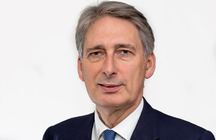
  • Oliver Letwin – 2016 Speech on Psychoactive Substances

    Oliver Letwin
    Oliver Letwin

    Below is the text of the speech made by Oliver Letwin at the UN General Assembly on 19 April 2016.

    Chair and distinguished guests.

    The United Kingdom welcomes this Special Session as a unique opportunity to enhance the global approach to drugs, and to lay forward a clear roadmap for a new Political Declaration and Plan of Action in 2019.

    We must ensure that our work is fully integrated with the Global Goals Because the 2030 Development Agenda and our efforts to address drug harms are complementary and mutually reinforcing.

    The United Kingdom welcome the Outcome Document. It combines ambitious goals with operational recommendations that all Member States should consider implementing.

    Chair,

    The United Kingdom is delivering a modern, balanced, evidence-based response to drugs within the UN conventions.

    There’s been a reduction in drug misuse among adults and young people over the last ten years in England and Wales and more people are recovering from their dependency now than in 2009.

    We are currently developing a new drug strategy, which we will publish shortly. Our 2016 drug strategy will build on our current balanced approach of reducing demand, restricting supply and building recovery, and will tackle drugs as a key driver of crime.

    Chair,

    Responding to the global challenges posed by new psychoactive substances is a priority for the UK.

    In January we introduced new legislation, the Psychoactive Substances Act 2016. This introduces a general ban on the production, supply, import and export of all new psychoactive substances and complements our wider, balanced response.

    Over the last three years the United Kingdom has worked to demonstrate global leadership on this issue, with the long-term objective of establishing a sustainable international system that can deal effectively with new psychoactive substances.

    Our work has included forming the International Action Group on New Psychoactive Substances – an informal group of Member States and international organisations that seeks to coordinate and drive the international response.

    The international community has made significant progress, but there is more to be done.

    We must redouble our efforts to meet the challenge of new psychoactive substances, including through data-sharing, policy exchange and international cooperation to bring the most harmful substances under international control.

    Chair,

    The United Kingdom implements a smart, proportionate criminal justice response at each stage of the process.

    This includes alternatives to incarceration for minor drug offences, integration of criminal justice and health services to ensure that offenders who misuse drugs get the support they need, and independently-produced sentencing guidelines that ensure consistency and proportionality in sentencing.

    Importantly, the United Kingdom delivers proportionality in criminal justice and good health outcomes while retaining a criminal offence for drug possession.

    Chair,

    The United Kingdom has a proud history of championing human rights, and we oppose the use of the death penalty in all circumstances as a matter of principle.

    The UK does not provide criminal justice, or other assistance, which may result in a death sentence being applied. We will hold international agencies funded by the UK to account for compliance with this and all other human rights obligations.

    Chair,

    The United Kingdom remains fully committed to reducing the transmission of HIV and other blood-borne diseases among people who inject drugs.

    The agreed target of reducing HIV transmission by 50% by 2015 has not been fully met, but we have the tools to achieve this reduction now at our disposal.

    We have clear evidence that the package of measures set out in the WHO’s 2014 Consolidated Guidelines are effective.

    The UK is proud to be the second largest international funder of HIV prevention, care and treatment, and we will continue to take a leading role on this issue, including at the High Level Meeting on HIV/AIDS in June.

    Chair,

    Up to 5.5 billion people live in countries with low or non-existent access to controlled medicines. Too many people live and die in avoidable pain.

    The UK will continue to invest in supporting health systems across the world, and we must strengthen international efforts to make material progress here, in accordance with the roadmap set by the Global Goals and the accompanying targets.

    Chair, thank you for this opportunity to address the General Assembly.

  • Chris Bryant – 2016 Speech to Commons on Queen’s 90th Birthday

    Below is the text of the speech made by Chris Bryant in the House of Commons on 21 April 2016.

    Of course, as you know, Mr Speaker, it will be you who properly summarise this debate, because it is for you to choose the appropriate words from it when you go to the Palace with 12 of us. This is not really a summing-up speech, but more a contribution of my own, and I am grateful for that opportunity, not least because I think I am the only Member of this House who has ever sworn the Oath of Allegiance to Her Majesty and her successors both as a Member of Parliament and as a clerk in holy orders. I would therefore like to thank her enormously for the faithfulness she has shown to the Church of England and, for that matter, the Church of Scotland. She manages to be ambidextrous in that, as in so many other things.

    I am delighted to be here. It reminds me of the time when Norman St John-Stevas, who was simultaneously Leader of the House and Arts Minister, greeted Queen Elizabeth, the then Queen Mother, at the foot of the stairs of the Royal Opera House. As they climbed the stairs, the large crowd burst into a spontaneous round of applause, at which Her Majesty was distinctly heard to say, “Lucky things: two queens for the price of one.”

    I cannot pretend to know Her Majesty well—or, indeed, at all—but I once canvassed the staff at Balmoral in the Kincardine and Deeside by-election. We did not get very many supporters—in fact, I think we came fourth in the by-election.

    My father Rees, however, played an important part in the coronation in 1953. He was serving in the RAF in Lytham at the time, but when 31 Group, which was based in Hawarden in north Wales, decided to send 40 male and female RAF officers to march in the coronation, it was decided that somebody had to brush up their marching skills, so my 19-year-old father was sent for. He was flown up to Hawarden in a tiny aeroplane and spent a few days with the officers. Apparently my father was so good at shouting at people that he was not needed for the coronation itself.

    I make that point simply to underline quite how many people’s lives Her Majesty has touched. She has visited the Rhondda many times. Indeed, a photo of her at Plas Horeb in Treherbert in 1989 was used for the 24p stamp to celebrate her 40th anniversary in 1992.

    When Her Majesty came to the Rhondda in June 2002, I was asked to walk with her past the great number of people who had lined the streets of Treorchy, all of whom were singing, “She’ll be stopping in Treorchy when she comes”. I knew that my office manager, Kevin Morgan, was going to be there with his two young sons, Sam and Owen, so when I saw them waving their little Union flags, I gently steered Her Majesty towards them. The two boys were very young at the time and rather shy, so as we approached I said, “Go on, then—say hello.” Unfortunately, Her Majesty thought I was talking to her: “All right, young man!” she barked back at me, so she will probably not read this speech later.

    The truth is that Her Majesty has had to put up with an awful lot in her time. She has had to suffer a phenomenal stream of politicians—she will be getting another 13 in a few days’ time—and 160 Prime Ministers in all her dominions.

    Living with change is one of the most difficult things in the world, especially when you are almost powerless yourself to affect it. Yet that is exactly what she has done, in admirable style. Technology has changed faster than in any other generation, including television, computers, mobile phones, Twitter and so on. Social attitudes have changed dramatically, too. It is strange to think that in 1952 there were just 17 women in Parliament—18, I suppose, if we include her—but today there are 191 women MPs and 201 women peers. That is still not enough, but it is better than it was.

    It seems incredible today, but in 1952 parents of children with cerebral palsy found it impossible to find anyone to educate their children, which is why three parents set up the Spastics Society, which became Scope. Since then, we have made enormous strides: the first Minister for Disabled People, the Disability Discrimination Acts, the Disability Rights Commission and so on. Quite often, the royal family have played a dramatic role in changing those attitudes by the way in which they have reached out. Likewise, when the “Diagnostic and Statistical Manual of Mental Disorders” was first published in 1952, it classified homosexuality as a mental disorder, yet very few today would hold that view, and one can even get married in Parliament in a same-sex ceremony.

    When we think about what the Queen has lived through—the second world war, the cold war, the Falklands, the end of empire, the troubles and then the peace in Northern Ireland—it is difficult not to feel, in Shakespeare’s words from the end of “King Lear”:

    “The oldest hath borne most: we that are young

    Shall never see so much, nor live so long.”

    For all the pomp and circumstance, regalia and deference, the reason why our constituents—republicans and monarchists alike—admire and respect the Queen is because of her fundamental decency, her manifest commitment to doing her duty and her ability to keep her counsel. At the end of Thomas Hardy’s novel “The Woodlanders”, the courageous peasant girl Marty South pays tribute to Giles Winterborne in very simple terms as “a good man” who “did good things”. I think we can all agree that we could surely say the same of Her Majesty: a good woman who does good things.

  • Tim Farron – 2016 Speech to Commons on Queen’s 90th Birthday

    timfarron

    Below is the text of the speech made by Tim Farron, the Leader of the Liberal Democrats, in the House of Commons on 21 April 2016.

    I thank you, Mr Speaker, for calling me to speak, especially as I managed to make it into the Chamber only when the Prime Minister was concluding his remarks—my apologies to him. On this occasion I am convinced that, not having heard one of his remarks, I would have agreed with them all.

    It is a massive honour to give praise and to acknowledge the service of Her Majesty on her 90th birthday. Unlike many people in this place, I have spoken to Her Majesty on only a limited number of occasions. It was on one occasion really, as a very new Member of Parliament. She was asking me how I was getting on as a new MP and how I was coping with the correspondence. I did confide that, on occasions, people would come up to me in the street and say thank you, or acknowledge a letter that I had written to them, and I would sometimes just go blank. I am sure that colleagues share that sensation and think, “Right, what are they talking about? I can’t quite remember the detail.” Her Majesty said, “Yes, that happens to me all the time. I always say that it is the least I could do”. Perhaps we should all cling on to that as a good get-out-of-jail card.

    Her Majesty has had occasion to visit formally my part of the world—Westmorland—on two occasions in her reign. The first was in 1956, which was 14 years before I was born. It was the year of the Suez crisis; the year of the Clean Air Act; and the year that the United Kingdom turned on its first nuclear power station. The second occasion was three years ago, when I was privileged to meet her in Kendal as the Member of Parliament for Westmorland and Lonsdale. In the 57 years between those two visits, and indeed since she assumed the throne, so much has changed for all of us. Much, much more has changed for Britain and the world in which we live. The Elizabethan age will be reviewed by history as a vast, transformational and tumultuous era, during which our Queen has provided immeasurable constancy, which will be looked back on as the thread that runs through all of it, and that has made change possible without the uncertainty and instability that could have come about otherwise.

    In Her Majesty’s time, Governments have indeed come and gone. She has seen them lead Britain into the European Common Market, and then seen her people vote to remain—that was when I was five years of age. She has seen Britain lead the world by becoming the first G7 country to commit 0.7% of GDP to international development aid. She has seen Britain become a world leader in renewable energy and make great strides in tackling climate change. She has seen technological advances race ahead from when a telegram or a radio programme was a thing of great excitement to the prevalence of satellite television, the iPhone, letters being supplanted by email and playground conversations by tweets and Facebook status updates.

    Through all those years of change and upheaval, Her Majesty’s selfless service to Britain has remained a constant. She is admired at home and around the world for her constant and consistent advocacy of Britain at its best. I am bound to say—others have reflected on this—that she embodies the value of a constitutional monarchy. She is a neutral person who is above politics and who is the foundation of our constitution. She is someone to whom all of us, whatever our political views, can look, and with whom we can share an allegiance. That is an immeasurably valuable thing.

    Even as we contemplate the monumental things that have occurred during Her Majesty’s reign, it is worth remembering that birthdays are very personal occasions. They are opportunities to celebrate the lives we lead and give thanks with friends and families. Hers has been an extraordinary life and she is an extraordinary example to all of us in public life of the meaning of public service. As we and others pay tribute to her example, I hope that she, who has so many friends, children, grandchildren and great-grandchildren and a loving husband, experiences the same joy and pleasure that we all do when we get together to celebrate with those whom we love. On this wonderful and historic day, on behalf of my party and my constituents in Westmorland and Lonsdale, I pay tribute to Her Majesty, to her dedication, to a lifetime of public service and to her faith, and wish her a very happy birthday and many more to come. I thank God for her service. Long live the Queen.

  • Jim Fitzpatrick – 2016 Speech to Commons on Queen’s 90th Birthday

    Below is the text of the speech made by Jim Fitzpatrick in the House of Commons on 21 April 2016.

    I am pleased to follow the hon. Member for Aldershot (Sir Gerald Howarth), and I am grateful to be able to contribute to this collective greeting. I just wish to relate three experiences from my period as the Vice-Chamberlain of Her Majesty’s Household between 2003 and 2005. I see that another former Vice-Chamberlain, the right hon. Member for Guildford (Anne Milton), is in the Chamber. As colleagues will know, the Vice-Chamberlain, who traditionally is a senior Government Whip, has a variety of duties to fulfil, three of which are: to design a daily message to send to Her Majesty outlining what is happening here; to act as hostage during state openings of Parliament; and to take to Her Majesty treaties to be signed and presented to the House of Commons.

    I was first presented to Her Majesty in 2003. When I asked her what she would like to see in the message—the same question, I am sure, that all my predecessors and successors have asked—she answered, “That which generally does not make the papers will be of interest.” In other words: “Just give us the gossip—that which is not fit to print.” Given how we are reported in today’s media, that was a pretty high bar, but I managed to achieve it at least once.

    The second duty is to act as hostage. Since our predecessors executed Charles I in 1649, every time the monarch comes to visit us, we have to send a senior MP to act as a hostage, which I did on two occasions. I felt like Patrick McGoohan in “The Prisoner” and that I was not allowed to leave, although I never actually tried. The Buckingham Palace officials were very generous and hospitable. They said that I could watch television, read the paper, have a coffee or a gin and tonic, or walk about, but I was not leaving. When I expressed my anxiety at this experience a short time later to the then head of our armed forces, Sir Mike Jackson, he said, “Jim, you shouldn’t have worried.” I said, “Shouldn’t I, Mike?” and he said, “No, if anything had happened to Her Majesty, we would just have shot you.” He was not kidding, as I am sure that Members know.

    One Easter, when we needed a document to be signed and then presented to the House, the civil servants in the Whips Office contacted Buckingham Palace, which responded that Her Majesty was not at Buckingham Palace, but at Windsor. Our officials said, “Well, Fitzpatrick will go to Windsor to get the document signed.” The message came back from Her Majesty, and the officials looked at me and said, “Her Majesty said, ‘If Mr Fitzpatrick is coming all the way to Windsor, ask him if he would like to stay to lunch’”. My civil servants said, “Do you want to stay?” I said, “Bite her royal hand off”—except I do not think that I used the word “royal”.

    When I was being driven down in the Government car to Windsor castle, on a beautiful, sunny Easter Monday, I wondered, “How many people does Her Majesty entertain to lunch on an Easter Monday?” There were six of us: her private secretary, three equerries, me and Her Majesty. I was totally unprepared. It was a measure of the dear lady’s humanness that for an hour and a half she commanded the conversation around the table and included everybody. Not having known her before, I saw her charm, generosity and regality.

    I am grateful for the experience of being Vice-Chamberlain for two years and am pleased to add my and my constituents’ greetings to Her Majesty on this auspicious day.

  • Gerald Howarth – 2016 Speech to Commons on Queen’s 90th Birthday

    Below is the text of the speech made by Gerald Howarth in the House of Commons on 21 April 2016.

    Mr Speaker, thank you very much indeed for calling me, and I hope that in the event that the Whip on duty on the delegated legislation Committee that I am supposed now to be attending chastises me, you may come to my aid. I am delighted to join my right hon. Friend the Prime Minister in, once again, saluting Her Majesty’s extraordinary, dedicated service to the nation and to the Commonwealth, and in wishing her many happy returns on her 90th birthday.

    I do so as the Member privileged to represent Aldershot, home of the British Army, and I am authorised by the most senior officer in Aldershot, Lieutenant General James Bashall, to associate the garrison most warmly with today’s tributes. Her Majesty is head of her armed forces, Colonel-in-Chief of 17 British Army regiments and of 24 Commonwealth regiments. Soldiers, sailors and airmen, like Members of Parliament, swear an oath of allegiance to the sovereign. It is she they serve, and that bond between the sovereign and the men and women of the armed forces is a very special one, not least because in her is personified the ideal of service and duty. Although King George II was the last sovereign to lead his forces into battle—in the battle of Dettingen, in 1743—Elizabeth II has led from the front by example, as my right hon. Friend the Prime Minister said, not least in upholding her commitment to defend the faith, our Christian faith. My own modest commission in the Royal Air Force volunteer reserve hangs prominently on my study wall, to remind me of the duty I owe to my sovereign.

    My right hon. Friend the Prime Minister knows how important the support of a spouse is as he discharges his duties, and I am sure that he obtains advice, welcome and sometimes perhaps unwelcome, from his spouse—I certainly do. It is therefore right today that we should reflect also on the support that His Royal Highness the Duke of Edinburgh has given the Queen throughout her life. Although we have not been privileged to know the nature of any advice he may have had the temerity to proffer to Her Majesty, we can be sure that his immense reservoir of common sense and capacity for candid, plain speaking, which has so endeared him to the British people, will have been an added blessing to her.

    As others have said, not least the Leader of the Opposition, Her Majesty does have a wonderful sense of humour. I recall the story, as many others may do, of the Privy Council meeting where, unfortunately, a Cabinet Minister’s telephone had not been switched off. When it rang, the Cabinet Minister took the phone out of her handbag and duly moved away to answer it. When she had finished the call, Her Majesty turned to her and said, “Somebody important, was it?”

    Finally, Mr Speaker, I conclude with the admirable editorial in this week’s Country Life, which has just relocated to Farnborough in my constituency: It said:

    “Often accused in the past of being too traditional, it is now her old-fashioned values and steadfastness that have made her someone to be admired and emulated the world over. Her long reign and vast accumulated wisdom have helped to stabilise relations across the world, especially within the Commonwealth.”

    We owe Her Majesty a great debt of gratitude. God save the Queen.

  • Nigel Dodds – 2016 Speech to Commons on Queen’s 90th Birthday

    Below is the text of the speech made by Nigel Dodds in the House of Commons on 21 April 2016.

    We gather today not only to rejoice in the Queen having lived a long and glorious life, but to celebrate the reign that encompasses so much of it as well as the lives of almost everyone over whom she rules today.

    We must remember that the Queen was not born to this role. She was not an heir and not expected to ascend the throne. Instead, with her mother, father and sister, she was part of a loving and contented family, growing up in devoted respect of her grandfather, King George V, and in the shade of her glamorous uncle, the Prince of Wales. That peaceful life came to an end for the Duke of York and his family with the trauma of the abdication. With the support of Elizabeth, later the Queen Mother, and their loyal daughters, His Majesty King George VI ensured that the Crown remained at the heart of its people’s affections. Together, they embodied our will to defeat the supreme evil of living memory and win the war that ensured that civilisation, decency and democracy prospered, rather than perished, in Europe and across the world. Her Majesty, iconic and perpetual as she sometimes seems, is not a symbol; she is a reminder to us all of the generation who did great things and stopped terrible things being done to us. The great history of our nation, of which we can be truly proud, is not something that our Queen merely symbolises; it is something that she and her generation lived for us. Thank God that she and they did.

    In deserved and romantic fashion, the Queen saw a dashing young hero enter her life after the war. In her choice of husband, Her Majesty has kept us all alert, invigorated and—more than once—amused. Their life together, rising to some 70 years, is a tribute to the character of both our Queen and the Duke of Edinburgh. Only yesterday, we saw the wonderful picture of Her Majesty, the Prince of Wales, the Duke of Cambridge and the young Prince George all together—continuity and change in one loving and beloved image. The gift of the Queen’s long life includes seeing the future that assuredly lies in store. We in the Commonwealth that she has done so much to sustain see that the Crown rests securely on a sure line of succession.

    In a country such as ours and in the other realms over which she reigns, the crown worn by the Queen embodies our unity. In my corner of this kingdom, Northern Ireland, it will never be forgotten how steadfast the Queen was in her support for and affection towards our afflicted Province. From my time as Lord Mayor of the great city of Belfast, I can personally attest to her compassion and concern for those affected by the violence. Those dark days are, we pray, now over, but Her Majesty’s enduring interest and contribution towards peace in Northern Ireland continues. Her frequent visits and those of other members of the royal family are always warmly received right across the community. For that and so much more, we from Northern Ireland are immensely grateful.

    Like most, I have known no other sovereign. We have been blessed through the generations to have one so dedicated to the service of our country and the Commonwealth. The nations of the Commonwealth are joining with us today in our tributes to the Queen. As we have been reminded, the Commonwealth is a powerful expression of the unifying and inspirational spirit of its great Head. It is but one of Her Majesty’s enduring legacies. She has been the rock upon which this country has continued to flourish and built a modern democracy so envied across the world. Her shining faith has been a constant and unwavering inspiration through times of national celebration and national occasion. In times of personal sadness, Her Majesty has exhibited the great grace that comes with great faith.

    We are thankful for the wonderful life that God has given us in His servant Queen Elizabeth, and may He in his great wisdom and His great mercy be pleased to grant Her Majesty and we her people the continued blessing of having her reign over us for many, many more years to come. We wish her a very, very happy birthday. God save the Queen.