Tag: 2016

  • David Lidington – 2016 Statement on the Foreign Affairs Council

    davidlidington

    Below is the text of the speech made by David Lidington, the Minister of State for Europe, in the House of Commons on 28 April 2016.

    My right hon. Friend the Secretary of State for Foreign and Commonwealth Affairs and I attended the Foreign Affairs Council on 18 April and my right hon. Friend the Secretary of State for Defence attended the Foreign Affairs Council (Defence) on 19 April. The Foreign Affairs Council and Foreign Affairs Council (Defence) were both chaired by the High Representative of the European Union for Foreign Affairs and Security Policy, Federica Mogherini. The meetings were held in Luxembourg.

    Foreign Affairs Council

    A provisional report of the meeting and conclusions adopted can be found at: http://www.consilium.europa. eu/en/meetings/fac/2016/04/18-19/

    Iran

    Ms Mogherini briefed the Council on her recent visit to Iran. The context for this visit was the lifting of EU nuclear-related economic and financial sanctions against Iran in the wake of Iran’s implementation of measures set out in the joint comprehensive plan of action. Ms Mogherini and a number of EU Commissioners who also participated in the visit explored the possibilities for future co-operation between the EU and Iran in a number of areas. In addition to areas for economic co-operation they also announced the intention to establish EU-Iran political and human rights dialogues. A joint statement by Ms Mogherini and the Iranian Foreign Minister, Javad Zarif, can be found at: http://europa.eu/rapid/press-release_STATEMENT-16-1441_en.htm

    Colombia

    The Colombian Government’s High Commissioner for Peace, Sergio Jaramillo Caro, briefed Ministers on the Colombian peace process, prompting a discussion on transitional justice. The risk of organised crime groups stepping into any power vacuum and the importance of a joined-up approach within the Colombian system was highlighted. The EU Commission confirmed continued support to the process through initiatives on local justice, education and demining. I offered strong support for the peace process, and underlined that we would be happy to share the UK experience of peace building. Mr Jaramillo confirmed that the Government of Colombia remained committed to a popular referendum on the agreement.

    EU external migration

    Ministers discussed the external aspects of the migration crisis, and the need for the European Union to maintain focus on both the Aegean and the central Mediterranean migration routes. The importance of full implementation of the EU-Turkey agreement on migration, concluded at the European Council on 17-18 March 2016, was noted; as was the ongoing work to tackle irregular migration from Africa to Europe, including through the action plan agreed at the Valletta summit on migration on 11-12 November 2015.

    Lunch with UN High Commissioner for Refugees

    Over lunch, Ministers exchanged views with the United Nations High Commissioner for Refugees, Mr Filippo Grandi, on global challenges posed by mass migration, and on implementation of the EU-Turkey agreement on migration.

    Eastern Partnership

    Ministers exchanged views on recent developments in the six Eastern Partnership countries and on preparations for the forthcoming EU-Eastern Partnership ministerial meeting on 23 May.

    Topics discussed included reform programmes in Ukraine, Georgia and Moldova, and the work of the Minsk Group Co-Chairs and the OSCE Chair-in-Office to de-escalate the recent violent clashes between Armenia and Azerbaijan in Nagorno-Karabakh.

    EU Iraq/Syria/Daesh strategy

    Ministers agreed to Ms Mogherini’s proposal to discuss counter-Daesh at the May Foreign Affairs Council and to agree Council conclusions. This would complement a planned discussion on Syria. In response to my call for a detailed assessment of progress, Ms Mogherini also agreed to task the EEAS and Commission to produce an assessment of implementation of the EU’s Syria/Iraq/Daesh strategy to help prepare for next month’s discussion.

    Libya

    The EU welcomed the arrival of the presidency Council in Tripoli on 30 March, and expressed its support for the Libyan political agreement which considers the Government of National Accord (GNA) as the sole legitimate Government in Libya. The EU reiterated that it has a package of immediate support totalling €100 million to the GNA, making clear that areas of support will be defined and prioritised in close co-ordination with the GNA and the UN. Council conclusions on Libya made reference to a possible civilian CSDP mission to support the Libyan security sector, and consideration of enhanced support that could be provided through EU Operation Sophia, for example through potential capacity building for the Libyan coastguard.

    Ministers agreed without discussion a number of measures:

    The Council approved the agenda of the 41st session of the African, Caribbean and Pacific group of states (ACP)—EU Council of Ministers, which will take place in Dakar (Senegal) on 28-29 April 2016.

    The Council adopted a decision extending the mandate of Fernando Gentilini as the European Union special representative for the middle east peace process until 28 February 2017.

    The Council adopted a decision extending the mandate of Peter Burian as the European Union special representative for central Asia until 28 February 2017.

    The Council adopted a decision extending by 24 months, as of 31 January 2016, the validity of national permits for entry and stay granted by member states for the temporary reception of certain Palestinians.

    The Council adopted a decision supplementing the statement of reasons for its restrictive measures against Bank Saderat Iran.
    Foreign Affairs Council (Defence)

    Countering hybrid threats

    The Council adopted conclusions, welcoming the publication of the joint communication on countering hybrid threats, underlining the need to mobilise EU instruments to prevent and counter hybrid threats to the EU, its member states and partners, such as NATO. EU-NATO co-operation was highlighted as essential, with EU tools well placed to complement those of NATO to support member states and allies. Member states will reflect on the document further before considering next steps, including implementation.

    Central African Republic

    The Council adopted conclusions that approved the establishment of a new military training mission in the Central African Republic (EUTM RCA), to contribute to the country’s defence sector reform as led by the UN. The mission, based in Bangui has a mandate of two years. EUTM RCA will build on the work of the EU military advisory mission (EUMAM RCA), working towards a modernised, effective and democratically accountable Central African armed forces.

    Capacity building in support of security and development

    The Council discussed the EU’s efforts to find options for funding instruments for capacity building in support of security and development in order to enable partner countries and regional organisations to prevent and manage crises themselves. Defence Ministers noted that a public consultation was currently underway on the wider initiative. The European Commission also detailed progress towards a security sector reform framework, the adoption of which was anticipated in mid-2016.

    EDA steering board

    Defence Ministers also met in EDA steering board format. Ministers were updated on the implementation of key taskings and next steps, which included: the policy framework for defence co-operation; hybrid threats; preparatory action for common security and defence policy-related research; and the European Commission’s upcoming European defence action plan.

  • Geoffrey Clifton-Brown – 2016 Speech on Digital Records in the NHS

    Below is the text of the speech made by Geoffrey Clifton-Brown in Westminster Hall, the Houses of Parliament, on 28 April 2016.

    I beg to move,

    That this House has considered use of digital records in the NHS.

    I am delighted to serve under your chairmanship, Mr Wilson, and grateful to you and Mr Speaker for the opportunity to debate this matter. I am delighted to see my hon. Friend the Member for South Basildon and East Thurrock (Stephen Metcalfe) in his place.

    The issue of data is of transformative significance for the NHS. The health service has so many interactions with patients on a daily basis that it creates an enormous amount of health data that have a huge number of practical applications for those who know how to analyse the data correctly. With more patients being treated, more work being done on access to drugs, and massive breakthroughs in genomics and the study of rare diseases, the NHS must use IT effectively to digitise patient records and allow clinicians to harness the power of such valuable data. That is the essence of this debate.

    My involvement in this subject area began through my late constituent, Les Halpin, who was diagnosed with the dreadful motor neurone disease in 2011. Les was one of the country’s foremost statisticians by profession, and a gifted mathematician with an inquisitive brain. He quickly realised that the numbers were stacked against him—when I first met him, he was absolutely clear that he had between a couple of months and a couple of years to live, about which he was absolutely stoical—and furthermore that the money spent on new drugs was widely out of kilter with the output.

    Rather than take on the treatment of and research into MND directly, as that was already catered for by a number of non-governmental organisations, Les set his sights on tackling the system more widely. Understanding that the system he wanted to change was governed by the regulatory and political world, he began the Empower: Access to Medicine campaign. As a statistician, he knew better than anyone that it is information that furthers medical research. Empower taking on this debate is therefore the logical extension of his original work. Les died while on the waiting list for new treatments, for there had been no new treatment for MND for more than 20 years.

    Through comprehensive engagement across Government, industry and the academic world, Empower helped to secure a major positive change for patients, known as the early access to medicine scheme. Working with a number of patient and medical campaign groups—Joining Jack, the Duchenne Children’s Trust and the Genetic Alliance UK, to name just a few—Empower hosted a summit in the House of Commons, at which the Department of Health launched its new early access scheme, with Empower’s support.
    On 23 February, I hosted the parliamentary launch of Empower: Data4Health—my hon. Friend the Member for Bury St Edmunds (Jo Churchill) was present; perhaps other Members were as well—which is the next stage of this work and falls under the subject of this debate. The new campaign brings together politicians, clinicians and patients and calls for an NHS that uses state-of-the-art IT to collate and analyse health data to improve outcomes for patients. The campaign is a natural continuation of Les’s work, because it seeks to create an NHS that uses anonymised patient data to identify new treatments, effective new drugs and even repurposed drugs that can have major benefits for sufferers of rare or life-limiting diseases.

    To my mind, there are three ways of deploying this IT effectively in the NHS—this is part of a wider debate, but it is worth mentioning here. First, with the right technology, data can be analysed for particular cohorts of disease sufferers to look for trends, monitor the effects of new drugs treatments and therapies and, ultimately, improve patients’ information about their own conditions, patient outcomes, and access to medicines or other treatments that are right for them.

    Incidentally, we are seeing growing evidence of repurposed drugs being used to treat a variety of diseases that they were not originally intended for, with some success. For example, recent research suggests that some statins—drugs generally used to control cholesterol—can affect the treatment of brain tumours. Before such research can be turned into real treatment options for patients, we need to be able to use modern technology and digital records to flag where patients are receiving that treatment and look at the effects across a much larger cohort.

    The potential offered by using IT to identify new treatments and trends could fundamentally change how the NHS operates. Indeed, the Science and Technology Committee recently reported that the value of big data to the health sector will equate to £14.4 billion by 2017. In fact, some consultants have found that efficiency savings between £16 billion and £66 billion could be generated in the NHS were the data deployed properly.

    Once we start to use data, we can leverage the value of the intellectual property, which is created in a number of ways, by using it to incentivise GPs or clinicians to pursue certain treatment paths; by funding patient interest groups and other bodies; and, ultimately, by selling the IP to drug companies to speed up the development of new drugs. The whole thing then becomes a virtuous circle.

    The second key benefit of IT and digital records is that they enable us to address the lack of co-ordination in the NHS. Clinicians will be able to monitor what is happening to a patient cohort for a particular disease across the country, rather than re-invent the wheel when approving treatment. Digital records will enable different teams to co-ordinate across one or a number of hospitals, synchronise appointments and ensure that all clinicians are fully informed of how their treatment is interacting with a patient. That should lead to the best possible outcomes for patients, and enable co-ordination across the health service.

    Thirdly, patients will have more control over their own health information. In an age in which the use of medical self-diagnostic tools is on the rise, patients will be able to control—possibly remotely or at home—the data produced by the diagnostic machines; view it in whatever form they like; use it to inform their self-care; and feed it remotely, through IT, back to clinicians, who if necessary can modify the patient’s treatment. Treating people remotely will prevent unnecessary hospital visits and visits to clinicians.

    Fourthly, once we start collecting data on patient outcomes, we will be able to drive processes within the NHS, identify things that are taking too long and work that is being duplicated, and ultimately save the NHS money on its day-to-day processes and tests. For example, we will be able to transfer huge amounts of data across different systems in the NHS. New patient tests are emerging almost weekly, which produce data that can be transferred across different parts of the NHS more efficiently. In those four ways, IT can transform the NHS.

    Members from all parties, members of the public and clinicians have concerns about data privacy, and I would like to tackle that point head-on. I thought that some Members might be here to speak about their concerns about privacy and data protection. Some of those concerns are serious and legitimate; it is no use pretending that they are not. We all hear horror stories from our constituents about NHS trusts mishandling data, losing records and sharing inappropriate information. When this debate was granted, a member of the public contacted me to bring to my attention his experience of massive data breaches by one NHS trust, which is alleged to have consistently failed to adhere to data protection principles and to have hidden its failings from NHS England. Make no mistake: concerns about the handling of patient data are very real.

    That member of the public highlighted that data protection breaches are regrettably already taking place. One of the purposes of this debate is to highlight the need for a national framework for digital records with built-in safeguards to protect patient privacy, and for genuine national accountability for trusts. We need to generate a debate on that subject. No patient record system is absolutely secure. Even the old-fashioned paper system is not absolutely secure, because it can leak: people can get into files, access the data and pass them on in an unauthorised way. With modern technology, we ought to be able to protect patient records.

    Digital records may ring alarm bells with some patients, such as that member of the public, so it is imperative that the Government develop a comprehensive public information campaign on the enormous treatment benefits, which I have outlined, that health data can provide. We must convince the public that the benefits of the effective use of IT in the NHS far outweigh the potential obstacles and pitfalls that there may be along the way. We have the technology to keep patient data safe. A fear of errors should not paralyse progress on this issue.

    There are some great examples of things happening across the country. For example, the Cystic Fibrosis Trust has done incredible work in putting together a patient registry of more than 99% of all cystic fibrosis sufferers. As I am sure all Members realise, cystic fibrosis is a horrible disease. Babies born with it cannot breathe properly and need continuous treatment for the whole of their often only too short lives. The first new-generation genotypic drugs are beginning to be introduced, and by using patient data to measure their effectiveness and possible side effects we can begin to make real progress on rare diseases such as cystic fibrosis.

    The Cystic Fibrosis Trust operates a strict evaluation process, overseen by a committee of experts, to ensure that its registry data are used in line with patients’ consent. It is interesting that those with that debilitating disease realise the effect that IT can have and have willingly given permission for their data to be used in that way. That is an example of the importance of patient buy-in to IT patient records. Thanks to the Cystic Fibrosis Trust’s determination to promote and maintain its registry, we are seeing new treatments for particular strains of CF, which completely alleviate the dreadful symptoms that I outlined in young babies, who would otherwise die prematurely, and enable them to live a relatively normal life. Proper deployment of IT in a digital NHS would enable us to develop similar drugs for suffers of all sorts of rare and debilitating illnesses.

    A shining example of what I am outlining is happening in Birmingham, where clinicians are trailblazing in this area. They are an example of what we hope will happen nationally. The University Hospitals Birmingham NHS Foundation Trust uses electronic patient records. Since 2011, all records have been electronic. Its commitment to innovation has allowed for some remarkable projects, such as Cure Leukaemia, which was established in 2003 to enable patients with blood cancer to access effective new treatments. In 2005, it helped to secure a £2.2 million grant to build the Centre for Clinical Haematology at the Queen Elizabeth hospital in Birmingham. It resulted in the development of the second-largest adult stem cell transplant programme in the United Kingdom. The impact of Cure Leukaemia and the Centre for Clinical Haematology in Birmingham is closely linked to the distinct make-up of the west midlands and the fact that they use IT in the way that we propose. With a population of 5.5 million and the most ethnically diverse catchment area in Europe, the west midlands offers access to the broadest possible data pool for drugs trials.

    Over the past decade, Cure Leukaemia has funded a network of 15 specialist nurses, who work across the west midlands and administer pioneering drug treatments to leukaemia-suffering patients. The combination of the west midlands’ unique demographic and the network of well-supported nurses has enabled us to leverage millions of pounds worth of pioneering drugs and give patients access to clinical trials for drugs not readily available in the rest of the NHS. Cure Leukaemia’s founder, Graham Silk, is also a member of the Empower: Data4Health campaign. Graham’s hope is that, one day, everyone will be able to benefit as he has from the amazing work being done with digital records in the west midlands.

    The medical community see the advantages that digital records can bring to the NHS. The Royal College of Physicians believes:

    “Fully digital patient records will bring benefits to the NHS, but to do so they need to be based on standards for the structure and content. Common standards are essential to enable interoperability between digital records in different care settings.”

    The RCP goes on to list the benefits that digital records can bring, and I will take them in turn.
    First, digital records have the potential to improve the quality of patient care. The people at the RCP believe that, with fully digital records, it will be

    “easier for care professionals to bring together a person-centred view of the patient from all the disparate records held in different settings and over time. They believe digital records will improve communication between professionals in different care settings and that it will be easier to drive timely, relevant automatic clinical alerts. They believe that digital records can improve safety by reducing errors in transcription of paper documents and they are of the opinion that it will be easier for patients to access their records for self-care purposes”—

    something I have already outlined.

    The second major benefit comes in NHS quality improvement and research activities. That is very much the key theme of my speech today. The RCP states that digital records could provide:

    “Much improved ability to carry out records-based research (with appropriate protection of confidential data and respect for those who wish to opt out)”—

    my buy-in point—

    “and support for the development of stratified medicine which enables doctors to provide patients with specific treatments according to individual needs. It requires the collection of genotype (information on an individual’s genetics) and phenotype (lifestyle and environmental information) from patients.”

    The final benefit that the RCP highlights is the potential cost saving. With the NHS under increasing pressure, because of a variety of factors, the importance of opportunities to do more for less, while protecting patient outcomes, should not be dismissed. The RCP believes that the potential cost savings could come from reduced duplication of test orders and unsuccessful treatment, fewer errors and reduced time spent on searching for missing paper records.

    I want to give a powerful example that really sums up what this is all about. Using IT and patient data to improve access to breakthrough treatments and personalised medicine is, fundamentally, about patients who are looking for answers and for some hope, not only for themselves, but for everyone in a similar situation. At this point, I want to mention a remarkable woman from my constituency, Christiana Knudsen. Christiana can explain her situation and her journey far more effectively than I ever could. If you will permit me, Mr Wilson, I will read the words she sent to me:

    “The unusual aspect of my situation is that I am relatively young, midforties, and otherwise very healthy, sporty, have a positive mindset and have no cancer in my DNA. Where the illness originates from is a mystery (I personally believe it is from emotional stress from an unusually challenging childhood) and like many cancers, it seems to have been unprovoked. Unfortunately, we do not yet have a nationwide dataset of patients with ampullary cancer that could be used to cross-reference symptoms and treatments. This would, in my case, be a vital resource. It would not only allow doctors to help pinpoint the cause, but also make an informed decision on my treatment according to what has worked well with other patients who have suffered from the disease and who have similar attributes to me.

    Ultimately, I am getting a feeling that I can turn this into something different. Perhaps I can use the situation in a positive way and be an inspiration to others. There’s no point in just going downhill with it, so I am slowly thinking that I could create a new reality around my predicament. One that would depend on my surviving this as best as possible, and showing the rest of the world that you can go through this and remain strong and positive, perhaps even overcome it. Apparently no one has beaten the particular cancer that I have, so why not try to reverse the statistics and make this into a first?”
    Extraordinary! We can all agree that the drive to turn the experience of such a terrible illness into something positive for others, as Christiana and Les have done, is the hallmark of someone truly heroic. When we think about the obstacles that we face in getting a fully digital NHS, and the potential pitfalls along the way, we need only think of Christiana and Les, and the many patients like them who will benefit.

    To conclude, effective use of digitisation in the NHS heralds the possibility of a complete transformation in how health services are delivered. This is one of those rare moments in human innovation when we could make a step change and deliver much more, for significantly less, on a permanent basis. We should, therefore, seize the opportunity with both hands, without delay.

  • David Lammy – 2016 Speech on Mental Health Services

    davidlammy

    Below is the text of the speech made by David Lammy in the House of Commons on 28 April 2016.

    I am grateful to have the opportunity of this debate on this very serious subject. I am pleased to be joined by my hon. Friend the Member for Hornsey and Wood Green (Catherine West), who stands with me on this debate and also wants to speak about our mental health services in Haringey.

    Let me state from the outset that I have the utmost respect for and gratitude towards all the staff working within Barnet, Enfield and Haringey Mental Health NHS Trust, who tirelessly care for some of the most vulnerable members of our community. Not least among those is the trust’s chief executive, Maria Kane, who has been recognised by the Health Service Journal as a top NHS chief executive who was shown to be doing a stellar job in the recent BBC “Panorama” film, “Britain’s Mental Health Crisis”. They have all been asked to do, frankly, an impossible job in the constituency and in the London borough of Haringey, which has 12 of the most deprived wards in the country where 2,284 people are receiving personal independence payments, over 270 different languages are spoken, 1,334 people have had their benefits sanctioned, and 826 households have found themselves homeless in the past year. Social tensions are high, funds are tight, and there is an ever-increasing need for urgent help, from mental health services for children and young people to dementia services for the old.

    I bring this debate to the House today because it is unacceptable that, despite the fact that mental health problems cost the economy £100 billion per year, three out of every four people with mental health problems in England receive little or no help for their condition. I suspect that that figure is far higher in my constituency, given the high level of need. Today in this country mental health problems are not just some form of rare disease. The truth is that one in every four people will suffer from mental health problems during the course of this year.

    For the most greatly affected, mental health problems are fatal. It simply cannot be right that in our country in 2016 those who suffer from the most severe mental illnesses die, on average, 15 to 20 years earlier than the general population. I have already brought to the attention of this House the fact that, on average, an adult male in my constituency can expect to live to just under 75 years of age. It is a sobering picture, then, that the average age of a male suffering from a severe mental health problem in my constituency may be under 55. But premature death is not the only complication for my constituents suffering from mental health problems. The Mental Health Taskforce commissioned by NHS England in February this year found that men of African and Caribbean heritage are up to 6.6 times more likely to be admitted as in-patients or detained under the Mental Health Act 1983, indicating a systemic failure to provide effective crisis care for these groups. The taskforce’s draft report also revealed that men from these groups are, on average, detained for five times longer.
    As mental health problems affect so many lives, 23% of the UK’s burden of disease is mental health. That figure is higher than the burden of disease in cancer or in cardiovascular disease, which stands at 16.2%. Why then do mental health services receive only 11% of the NHS’s budget? It is clear that institutional bias against providing proper care for people suffering from mental health problems persists in 2016.

    It was as far back as February 2011 that the coalition Government published their strategy for improving the nation’s mental health, which stated the now much-trumpeted concept of parity of esteem—an idea that began with a Lords amendment from Labour peers in the other place. Then, the very first section of the coalition Government’s infamous Health and Social Care Act 2012, which contained the central duty imposed on the Secretary of State in relation to our treasured national health service, was amended to put these services on an apparently equal footing. However, the reality already facing mental health patients across the country in 2014 was something different: mental health funding was cut for the first time in 10 years, and there were fewer services for children and young people, fewer beds, and more people on acute psychiatric wards.

    Many other strategies and documents were published, promising an improvement in services and repeating the mantra of parity of esteem, until the Prime Minister himself returned to the issue at the beginning of the year and finally announced some funding. However, given that the budget had previously been cut, I find it difficult to see how it was a net increase, not least given the pressures of an ageing population. The Prime Minister announced that those particular funds would be targeted towards helping new and expectant mothers with poor mental health and towards liaison between mental health services, A&E departments and crisis teams, but that is not what I am seeing on the ground.

    As demonstrated so vividly in BBC’s “Panorama”, the truth on the ground could not be more different. Far from the level of funding being equal between physical and mental health services, or the gap decreasing, mental health hospitals have had far deeper cuts imposed on them. The reality is that 3,000 mental health beds have been cut across the country in the past five to six years.

    However bleak the national picture, it does not get anywhere close to the gaping holes in funding for mental health services that face the patients of Barnet, Enfield and Haringey Mental Health NHS Trust. Despite the obvious and ever-increasing need, that trust, on top of the vast inequality between physical and mental health services, receives a lower share of income proportionately than any other mental health provider in London. It is hard to understand how an area that includes Tottenham gets the lowest level of funding in London.

    The trust has already done so much cost-cutting over the years that it is the most efficient NHS mental health provider in London. It already has the lowest number of acute mental health in-patient beds in London and higher productivity than other providers. It has also been proven to be underfunded over the course of not one or two, but three independent reports. The first of those reports was back in early 2014, the second in late 2014, and the third in October 2015. The independent evidence is that the trust needs £4 million a year, but it has not received a penny extra in funds, and no firm plan has been established to address the funding gap, which means that the trust now anticipates a deficit of £12.9 million in 2016-17.

    The reality locally is that St Ann’s hospital in my constituency has lost a third of its beds in the past eight years alone, and this is a hospital that is obliged under section 136 of the Mental Health Act 1983 to find a bed for every patient detained under that section because they pose a risk to their own life or to the lives of others. We are not talking about varicose veins or wisdom teeth; losing beds in these circumstances has a dire impact.

    My hon. Friend the Member for Hornsey and Wood Green will be aware of a recent case in the constituency. A young man whom I have known all his life attempted suicide and it has had a life-changing physical effect on his body. My hon. Friend might say a little more about that case, but it happened directly because there was no bed for him.

    St Ann’s hospital is constantly running at over 100% capacity, while other mental health providers in London run at 85% to 90%. With each new admission, St Ann’s wards each have to nominate their “least ill patients” for discharge back into the community. Despite the efforts of staff, does that really present a safe outcome for those vulnerable patients and their families? Is that really a safe outcome for the community that requires the trust to serve it as best it can?

    The shortfall in income is not the only problem the trust faces. Far from the Government’s rhetoric of parity of esteem, the truth in Haringey is that patients are condemned to treatment in a hospital that was designed to meet the needs of 19th-century fever patients, long before the discovery of antibiotics, rather than the delivery of therapeutic interventions appropriate to current patients’ needs.

    Indeed, the most recent Care Quality Commission inspection found that

    “the physical environment of the three inpatient…wards”

    on the St Ann’s site was

    “not fit for purpose due to its age and layout. This impacts on the trusts ability to deliver safe services within this environment.”

    That is a problem that the site has tried to resolve on the 28-acre St Ann’s site over the last decade.

    Finally, the trust submitted plans to develop the site last year. It hopes to fund a new hospital and other health services on one third of the site by building homes on the remaining land. I have to say that I oppose those proposals, because they include only 14% affordable housing, even though London has a housing crisis. Despite my objections, the trust was granted planning permission in March last year.

    There is an alternative proposal—it is a great proposal, which needs support—to build a community land trust. That is exactly what successive Mayors of London have said they want to see. It would result in affordable homes being built on the site, it would be holistic and it would fit with the mental health plan. I hope that the Minister might take an interest in it and that the next Mayor of London, whoever that is, will also take an interest.

    The trust’s plan would not require any capital from NHS England. I have to ask why, on this site and in this constituency, and given the circumstances in which the trust finds itself, no capital is forthcoming from NHS England. It seems that the decision about whether to build a new hospital has, once again, been pushed by the Government into the long grass, and we have been given no date at all.

    This debate about mental health comes on the back of a debate that I secured about the situation of primary care in the borough. I have raised both those subjects because I am seriously worried about health in the London Borough of Haringey and in my constituency. Despite myriad problems, only 16 months ago the independent Carnell Farrar review of the affordability of mental health services provided by the trust found that there was no compelling evidence to support merging the trust with any other organisation; that the trust is relatively efficient; and that there is a clear case for clinical commissioning groups to invest in it.

    I had hoped that that would mark the end of the speculation about the trust’s future, but the CQC report, published in March this year, of the routine inspection conducted in December 2015 gave the trust an overall rating of “requires improvement”. It is no surprise to me that that is the case, despite the efforts of staff and leadership, when funding is so tight and the level of need is so high. The CQC report stated that out of 11 areas, five required improvement, five were good and one was outstanding.

    The report concluded that mental health admission wards for adults required improvement, community-based mental health services required improvement, child and adolescent mental health required improvement, specialist community health services for children and young people required improvement and crisis mental health, including home treatment teams, required improvement. Many detailed recommendations have been made by the CQC to improve services, but no extra money has been put on the table to enable the trust to comply.

    I am grateful to the Minister for last week agreeing to my November request for a cross-party delegation of local MPs to come and discuss our concerns about the trust. Let me put on record what I call on him to do to help the trust, to ensure that the services that it provides are safe and that work begins to ensure true equality between physical and mental health services in Haringey. The context is important, not just because of the suicide rate in England—the number of suicides recently soared to 4,881 in 2014—but, most disturbingly, because the draft version of that report stated that had just £10 million extra been spent on services for people who were suicidal, 400 extra lives would have been saved. For the sake of £25,000, which is less than the national average salary, each of those lives could have been saved.

    I call on the Minister urgently to look at the plans for the redevelopment of the St Ann’s site. I understand that the north London estates plan will be finalised by the end of June, and I seek an assurance that a decision, including consideration of the community land trust’s proposal, will now be made. I ask the Minister to visit the St Ann’s site to see the problems for himself, and I ask him to earmark appropriate funding for the crisis team and children’s mental health services.

    I must warn the Minister that we have seen some terrible cases in my constituency. A young boy was injured and died outside his secondary school as he left with three friends. Police officers were assaulted with a machete. We have seen suicide and attempted suicide, with catastrophic consequences, in the recent past. I trust the Minister will ensure that the trust receives the funding it needs, and that he will recognise the CQC recommendations. By having this debate, I am putting him on notice of the real concerns about the development of the St Ann’s site and the real need to bear down on the pressures that the trust is under, in this pretty tough part of north London.

  • Matt Hancock – 2016 Speech on Open Data

    Matt Hancock
    Matt Hancock

    Below is the text of the speech made by Matt Hancock, the Minister for the Cabinet Office, in London on 28 April 2016.

    The reign of Edward II saw the development of the first postal system. Handwritten notes were added to letters that gave instructions to messengers.

    The earliest known example simply said “Haste. Post haste”.

    Over the next 200 years, these notes became more detailed instructions about who to deliver the message to, and where to find them. By the mid-15th century, the word ‘address’ had new meanings – it was a location and something written on the outside of an envelope.

    But sending mail was expensive, and the number of letters very small, until Charles I created the national postal service in 1635 – for the first time, anyone could send and receive mail. And suddenly everyone needed an address.

    So by the time of the first census in 1801, the UK had the comprehensive address system of street names and numbers that we recognise today.

    Addresses are now part of our lives, our culture and our history. We know that the Great Fire of London started in Pudding Lane. We know who lived at 221b Baker Street and are familiar with the significance of 10 Downing Street.

    I have a personal interest and connection to addressing and its importance.

    My first job was in my family’s software company, which wrote software to put postcodes on addresses, and helped you find an address from a postcode. I have an intimate knowledge of the Postcode Address File. I can vividly remember loading magnetic tape reels of address data into the computer to be processed. My first job involved putting postcodes on addresses and fixing the Y2K bug in COBOL.

    But times have changed. I’ve changed career, and addresses are big data, not on big rolls of tape.

    In government we are committed to open data and have demonstrated its value in the now 24,000 datasets published as open data.

    This is a revolution in attitude and has sprung a revolution in services, improving the lives of the citizens we serve.

    And addresses are the bedrock of our nation’s data infrastructure, of our digital economy. It is extremely important that a modern, digital economy has access to high quality, precise and open address data.

    High quality, precise, and open. Let me go through these in turn.

    High quality

    I want to talk first about high quality address data.

    Addresses are invaluable to our economy and our public services. Addresses help make sure that emergency services get to our door as quickly as possible; addresses help confirm our identity, they help us to access products and services.

    It is true that everything happens somewhere, and as a result, high quality address data is fundamental. And this is the reason why I am so excited to be here today.

    Because it is the people in this room that ensure we have high quality address data.

    I want to pay tribute to the work local authorities do in creating accurate addresses across Britain through the role of the Local Land and Property Gazetteer Custodian, which is invaluable to the process of querying and matching addresses – driving up accuracy and improving the frequency of updates.

    And any data cannot be high quality unless it is definitive. We cannot have different versions of the truth. I am extremely glad that we have a National Address Gazetteer and Geoplace to collaborate across local government, Ordnance Survey and the wider public sector.

    And I have to say this: we have barely scratched the surface of the potential of this data.

    The challenge and the opportunity that lies ahead is to ensure that high quality, precise address data anchors the UK’s digital economy and the transformation of our public services, and is used to improve the lines of the citizens we serve.

    Precise address data

    That brings me to my second point: precision.

    In the past, address data primarily served local needs. Addresses connected people and place. The local postie knew exactly where the letterbox was, so could handle a bit of imprecision.

    But in the last few decades, the uses of addresses have expanded exponentially. Addresses are not just for mail: addresses help connect us to the digital world.

    We rightly demand immediate access to location-based services through our phones.

    We expect to have our journey to work instantly mapped, and expect an Uber to find our exact address, not arrive halfway down the street. And for the millions who have ever put a rural postcode into a sat nav and ended up in the middle of nowhere, they know the importance of precision.

    For digital services, too, to verify your identity, register to vote, get a driving licence, buy broadband, the uses of addresses are countless, from our emergency services, welfare provision, social care, council tax charging, and fraud prevention. The address is the point of reference that anchors people throughout these services and across geographical boundaries.

    So precision is vitally and increasingly important. And this brings me to the Unique Property Reference Number (UPRN). Just as modern 21st century technology has replaced the magnetic tape reels of the past, we now have new needs and new uses for addresses that cannot be met with imprecise identifiers.

    The UPRN is the jewel at the heart of the addressing system. It links address data across a diverse range of systems and services. The UPRN facilitates greater accuracy and immediate data sharing and matching – delivering better services and better outcomes for citizens.

    In short, it links an address in human form to a specific place on this earth. The name of a place in the language of Shakespeare to the longitude and latitude that can drop a package on your doorstep.

    And as we look to the future – if we want to live in smarter cities and smarter homes then we need to exploit the benefits of precise interconnected data. It is difficult to imagine a world of driverless cars, of drone delivery, and truly integrated public services, without realising the benefits of high quality, precise data.

    The case for ensuring we have accurate and precise address data has never been so acute. And it is the UPRN that provides the precision that 21st century users demand.

    Open address data

    So third I want to talk about openness. If we make things open, we make things better.

    Since 2010, the UK has led the world on open data. Just last week it was confirmed that yet again we are ranked first in the world on the World Wide Web Foundation’s Open Data Barometer.

    On data.gov.uk we have record numbers of datasets for citizens and businesses to re-use, boosting the UK economy and driving positive disruption in fields such as transport, financial services and retail.

    But we cannot rest on our laurels.

    We need to remove licensing barriers and paywalls. We need to improve the quality and reliability of government’s data infrastructure.

    And we need to continue to make data open. If we make data open, the quality of that data is improved. Errors are spotted, new solutions are suggested and standards are raised.

    If we put restrictions on data, we restrict its quality and its use. Data should be allowed to flow. Data should be used and re-used.

    It is critical that businesses have the ability to create new and innovative products without being hampered by cost, by licensing conditions, or the inertia caused by uncertainty and doubt.

    This will substantially reduce friction in the public sector and wider economy, thereby encouraging data-driven innovation and public service transformation.

    The evidence for opening up data assets is overwhelming.

    Recent research commissioned by the Open Data Institute found that opening up core public sector data assets will contribute an additional 0.5% of GDP every year.

    UK companies using, producing or investing in open data have a combined annual turnover of over £92 billion, employing over 500,000 people.

    A global market powered by open data from all sectors would create an additional $3 trillion to $5 trillion a year.

    Budget announcement

    So let me link my three themes: high quality, precise, open data.

    In the Budget we set aside £5m to develop options for an authoritative address register that is open and freely available.

    This is extremely exciting. It is critical that address data is made open. The potential benefits are enormous.

    Just as the release of GPS data in the 1980s by Ronald Reagan kick-started a multi-billion dollar proliferation of digital goods and services, and GPS and mapping services now contribute to an industry worth over $90 billion a year in value to the US economy, so open addresses have huge potential now.

    When Denmark created an open address register the economic impact represented a return on investment in excess of 3,000%.

    I want the UK to be the best place in the world to set up and grow a data business. But in order to achieve this, we need to make future innovation simpler and remove the barriers that stifle progress.

    Innovation is impossible without being open to new ideas and new solutions – without being prepared to be bold.

    So we are working across government, with enthusiasm at the highest levels, to explore options for an open address register. There is lots of work for us still to do but we are ambitious and excited by the potential impact that an open address register could have.

    And I pledge today that we want to work with you, hear your thoughts and harness your creativity to make this happen.

    Conclusion

    I believe that countries that find ways to offer their businesses and public services reliable, trusted access to high quality data – will reap similar benefits to countries that led on the provision of access to roads, transport and water in previous centuries.

    During Edward II’s reign – there were just a few thousand letters being distributed around the country each year. It took the establishment of the national postal service in 1635 dramatically to expand that market and to create the need for every property and place to have an address.

    Let us take the next step now and build Britain’s place as the most vibrant, innovative place upon earth, to help fulfil our mission of improving the lives of the citizens we serve.

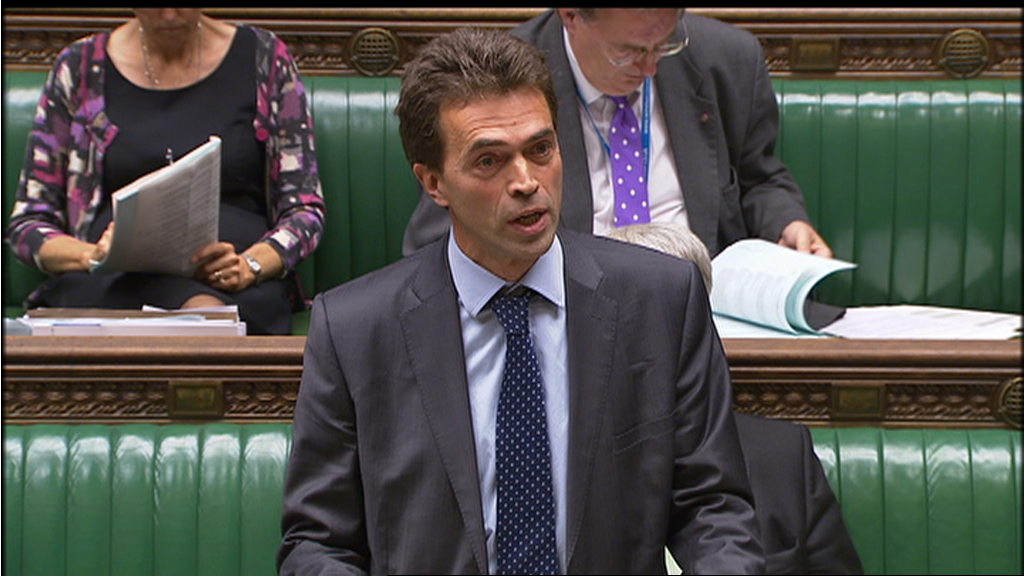
  • Tom Brake – 2016 Speech on Landlord and Tenant Reform

    tombrake

    Below is the text of the speech made by Tom Brake, the Liberal Democrat MP for Carshalton and Wallington, in the House of Commons on 27 April 2016.

    I beg to move,

    That leave be given to bring in a Bill to make provision about the regulation of landlords and private rented accommodation; to extend tenants’ rights, particularly in relation to the sale of occupied rental property; to cap letting agents’ fees; to require the Mayor of London to establish a mandatory licensing scheme in respect of private landlords in Greater London; and for connected purposes.

    It is no exaggeration to say that we have a national emergency in housing. It is unacceptable that in 2016 millions of people still suffer daily from poor housing, and live in fear and desperation without a secure, affordable place to call home. This fear is tearing communities apart and risks further dividing our country between a very well-off minority and the rest of us. We have soaring house prices, with the average cost of a two-bedroom house in London now out of the reach of more than 80% of people, and a rental sector in which too many people on low and middle incomes are spending around two-fifths of their salaries on housing—something confirmed by a report in the Evening Standard yesterday—and often suffer at the hands of rogue landlords. This problem is not going to go away soon.

    Over the past decade, London’s private rented sector has more than doubled in size to become the second-largest housing tenure in the capital. There are now almost 1 million private rented sector properties in London, housing over 2 million people—about a third of the population. For many of those people, living in the private rented sector works well, with short-term tenancy agreements offering them the flexibility they need to move homes quickly for new jobs or career opportunities. Many of their private landlords are responsible, carrying out repairs in a timely manner and returning deposits promptly. However, for many others the sector has become a tenure of last resort, rather than a housing destination of choice.

    There have been huge changes in the demographics of the private rented sector in recent years with an increasing number of families, low-income and vulnerable households living in the sector, but conditions remain poor: a third of homes fail to meet the Government’s decent homes standard, with over 60% of renters having experienced either damp, mould, leaking roofs or windows, electrical hazards, animal infestation or gas leaks, according to a recent survey commissioned by the housing charity Shelter.

    Just last week at my surgery I met a woman who, soon after she started describing the conditions in her rented property, broke down in tears. She and her young son could no longer face waking up to live or dead rodents in their flat. In this case, her landlord is trying to help, but the quality of the housing stock makes it very difficult to stop rodents getting into the property. A few weeks previously, at another surgery, a young woman came to see me with her mother. Repairs are outstanding on their rented property. The landlord is refusing to sort them out while at the same time putting pressure on them to leave their flat. I am sure every MP will be all too familiar with these types of cases. This is why I am supporting the measures put forward by Caroline Pidgeon’s London Liberal Democrat team to overhaul the private rented sector. We believe the measures will benefit tenants and good landlords, and shut down the Rachmans of this world.

    The exact number of rogue landlords operating in the sector remains unknown, but there is a growing sense that the problem is getting worse as demand for housing, and the profits that can be made from renting out any accommodation in whatever condition, continues to increase. One in 20 renters say they have rented from a rogue landlord in the past 12 months. As a survey of local authority enforcement in the private rented sector carried out in March 2016 by my Liberal Democrat colleagues on the Greater London Authority shows, the enforcement of standards in the private rented sector by local authorities is highly variable, with recent cuts to local authority budgets further diminishing the resources available to councils to tackle landlords who provide poor or unsafe living conditions. The resulting patchwork of enforcement has left thousands of Londoners at the mercy of rogue landlords.

    Much of the problem lies with the lack of effective regulation and enforcement in the sector. The Residential Landlords Association, which represents small private landlords, would welcome tougher enforcement. Unfortunately, enforcement and inspection is very weak. One third of councils in London—10 boroughs—failed to prosecute a single landlord for providing unsafe accommodation in 2014-15. On average, London boroughs inspected one in every 55 homes in the private rented sector using the housing health and safety rating system. There is significant variation in the level of enforcement activity, with some councils inspecting one in 14 private rented properties for hazards and others about one in 500.

    The private rented sector may have met the needs of tenants in years gone by, but the profile of renters, and the average length of tenancy, has changed dramatically in recent years. If some landlords are to lose their reputation as the property industry’s wild west cowboys, it is clear that a proper framework of regulation and enforcement is required. That is what is set out in the plans I am about to refer to, which would reform the private rented sector. My Bill seeks to implement them.

    First, all landlords in London should be registered. This would make it easier to identify the scale of, and trends in, the private rented sector, and to ensure landlords can be traced easily.

    Secondly, there should be a crackdown on rogue landlords through a licensing scheme. The Government should introduce a licensing scheme for all private landlords in London, with the aim of professionalising the sector, improving conditions and removing rogue landlords from the housing market. I accept that this proposal would not be welcomed by all landlords, but some accept a limited role, in certain circumstances, for licensing in some areas of London.

    Thirdly, unfair letting agent fees for renters should be scrapped. Moving from one rented home to another can be very expensive, with high letting fees and large deposit requirements. I am told that agents try to poach landlords from each other to secure for themselves the fees that are triggered on a change of tenancy. Of course, they dangle the prospects of higher rents in front of the would-be landlord. In Sutton, a quick check suggests fees of around £400 to £500 when signing up a new tenant. When that is added to the six-week deposit—currently approximately £1,500 for a two-bedroom flat—a tenant would need to find a total of £2,000 upfront.

    Fourthly, renters should be given extra rights when landlords sell up. There should be a requirement for tenants to be given first refusal to buy the home they are renting, should the landlord decide to sell it during a tenancy.

    Finally, councils should be given the power to manage private rental property and offer longer tenancies. This would allow councils to develop, own and manage private sector rented homes, outside of housing revenue accounts, to improve the quality of homes in the sector, with the freedom to offer long-term tenancies. I call on the Government to work with private landlords, mortgage companies and freeholders to enable private landlords to offer longer tenancies. It is often the mortgage companies or the freeholders who are standing in the way of longer tenancies. This is a package that will make a real difference.

    Neither I nor Caroline Pidgeon is claiming that these measures are the silver bullet that will solve London’s housing problems, because the fundamental challenge is a lack of supply, particularly of affordable homes, and that problem is no closer to a solution, given that fewer than 5,000 affordable homes were built in London last year, the lowest figure since the current Mayor was first elected in 2008. However, we believe that these proposals will improve the lot of private renters, some of whom suffer in poorly insulated, damp, mouldy properties with the threat of a retaliatory eviction hanging over the heads every time they ask for a repair. This has to stop. I urge the House to support this Bill.

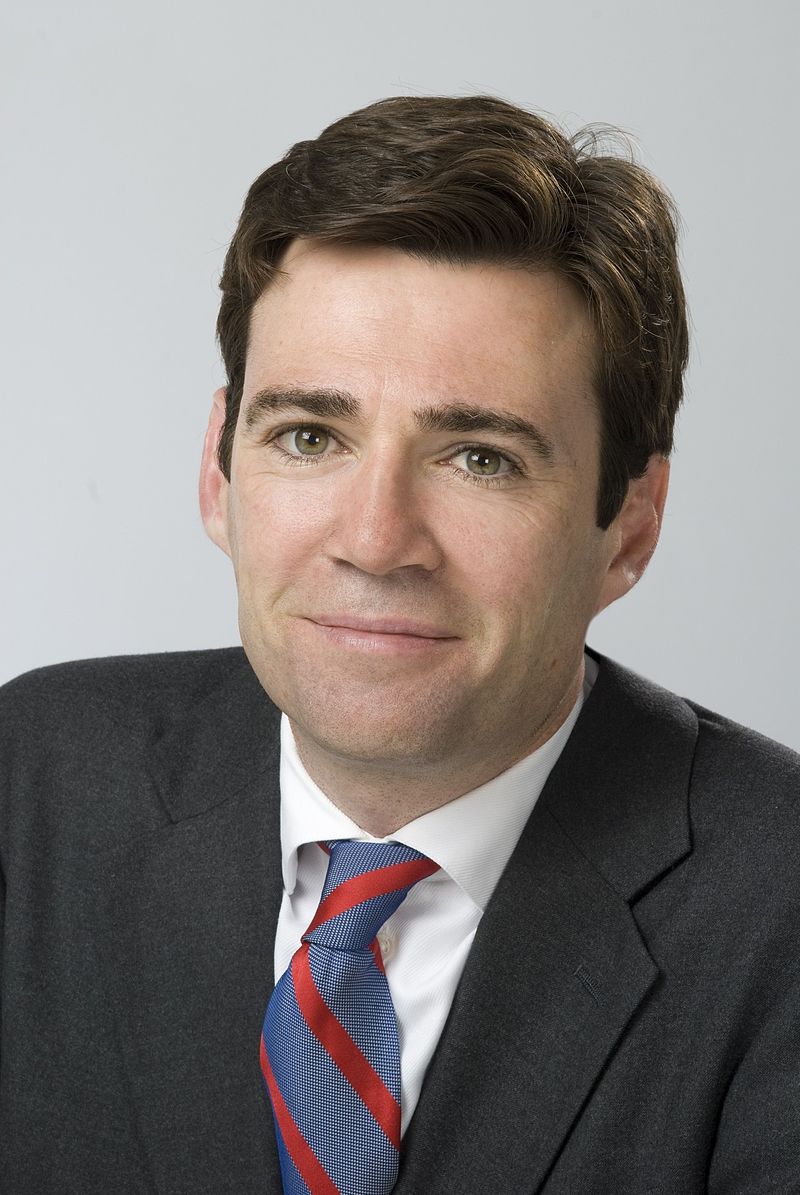
  • Andy Burnham – 2016 Speech on Hillsborough

    andyburnham

    Below is the text of the speech made by Andy Burnham, the Shadow Home Secretary, in the House of Commons on 27 April 2016.

    I thank the Home Secretary for her powerful statement and her kind words. At long last, justice—for the 96, for their families, for all Liverpool supporters, for an entire city. But it took too long in coming, and the struggle for it took too great a toll on too many. Now, those responsible must be held to account for 96 unlawful deaths and a 27-year cover-up.

    Thankfully, the jury saw through the lies. I am sure—to repeat what the Home Secretary said—that the House will join me in thanking the jury for their devotion to this task and for giving two years of their lives to this important public duty.

    When it came, their verdict was simple, clear, powerful and emphatic, but it begged the question: how could something so obvious have taken so long? There are three reasons: first, a police force that has consistently put protecting itself over and above protecting people harmed by Hillsborough; secondly, collusion between that force and a complicit print media; and thirdly, a flawed judicial system that gives the upper hand to those in authority, over and above ordinary people. Let me take each of those issues in turn, starting with South Yorkshire police.

    Can the Home Secretary assure me that there will be no holding back in pursuing prosecutions? The CPS has said that files will be submitted by December. While we understand the complexity, can she urge it to do whatever it can to bring that date forward?
    Of course, the behaviour of some officers, while reprehensible, was not necessarily chargeable, but, through retirement, police officers can still escape misconduct proceedings. In her Policing and Crime Bill, the Home Secretary proposes a 12-month period after retirement where proceedings can be initiated, but one of the lessons of Hillsborough is that there can be no arbitrary time limits on justice and accountability. Will the Home Secretary work with me to insert a Hillsborough clause into her Bill, ending the scandal of retirement as an escape route and of wrongdoers claiming full pensions? Will she join me in making sure that that applies retrospectively?

    The much bigger question for South Yorkshire police to answer today is this: why, at this inquest, did they go back on their 2012 public apology? When the Lord Chief Justice quashed the original inquest, he requested that the new one not degenerate into an “adversarial battle”. Sadly, that is exactly what happened. Shamefully, the cover-up continued in that Warrington courtroom. Millions of pounds of public money was spent retelling discredited lies against Liverpool supporters. Lawyers for retired officers threw disgusting slurs around; those for today’s force tried to establish that others were responsible for the opening of the gate. If the police had chosen to maintain their apology, this inquest would have been much shorter. But they did not, and they put the families through hell once again. It pains me to say it, but the NHS, through the Yorkshire ambulance service, was guilty of the same.

    Does the Home Secretary agree that, because of his handling of this inquest, the position of the South Yorkshire chief constable is now untenable? Does she further agree that the problems go deeper? I promised the families the full truth about Hillsborough. I do not believe they will have it until we know the truth about Orgreave. This force used the same underhand tactics against its own people in the aftermath of the miners’ strike that it would later use to more deadly effect against the people of Liverpool. There has been an IPCC report on Orgreave, but parts of it are redacted. It has been put to me that those parts contain evidence of direct links between Orgreave and Hillsborough.

    This is a time for transparency, not secrecy—time for the people of South Yorkshire to know the full truth about their police force. So will the Home Secretary accept the legal submission from the Orgreave Truth and Justice Campaign and set up a disclosure process? This force has not learned and has not changed. Let me be clear. I do not blame the ordinary police officers—the men and women who did their very best on that day and who today are out there keeping our streets safe—but I do blame their leadership and culture, which seems rotten to the core. Orgreave, Hillsborough, Rotherham: how much more evidence do we need before we act? So will the Home Secretary now order the fundamental reform of this force and consider all potential options?

    Let me turn to collusion between police and the media. The malicious briefings given in the aftermath were devastatingly efficient. They created a false version of events which lingered until yesterday. No one in the police or media has ever been held to account for the incalculable harm they caused in smearing a whole city in its moment of greatest grief. Imagine how it felt to be my constituent Lee Walls, who came through gate C just before 3 pm with his friend Carl Brown. Carl died but Lee survived, but days later he had to read that he was to blame. Given the weakness of the press regulatory system back then, the survivors of this tragedy had no ability to correct the lies. But is it any different today? If a tragedy like Hillsborough were to happen now, victims would not be able quickly to undo the damage of a misleading front page. Leveson recommended a second-stage inquiry to look at the sometimes unhealthy relationship between police and press. I know the Hillsborough families feel strongly that this should be taken forward. So will the Government end the delay and honour the Prime Minister’s promises to the victims of press intrusion?

    I turn to the judicial system. I attended this inquest on many occasions. I saw how hard it was on the families: trapped for two years in a temporary courtroom; told to show no emotion as police lawyers smeared the dead and those who survived—beyond cruel. I welcome Bishop James’s new role in explaining just how cruel this was to the House and to the country. The original inquest was similarly brutal, but that did not even get to the truth. Just as the first inquest muddied the waters after the clarity of the Taylor report, so this inquest, at moments, lost sight of the Hillsborough Independent Panel report. One of the reasons why it produced a different outcome, though, is that this time the families had the best lawyers in the land. If they could have afforded them back in 1990, history might have been very different. At many inquests today there is often a mismatch between the legal representation of public bodies and those of the bereaved. Why should the authorities be able to spend public money like water to protect themselves when families have no such help? So will the Government consider further reforms to the coronial system, including giving the bereaved at least equal legal funding as public bodies? This, the longest case in English legal history, must mark a watershed in how victims are treated.

    The last question is for us in this House. What kind of country leaves people who did no more than wave off their loved ones to a football match still sitting in a courtroom 27 years later begging for the reputations of their sons, daughters, brothers, sisters and fathers? The answer is one that needs now to do some deep soul-searching. This cover-up went right to the top. It was advanced in the Committee Rooms of this House and in the press rooms of 10 Downing Street. It persisted because of collusion between elites in politics—on both sides—police and the media. But this Home Secretary stood outside of that. Today I express my sincere admiration and gratitude to her for the stance she has consistently taken in righting this wrong.

    But my final words go to the Hillsborough families. I think of those who did not live to see this day: of the courageous Anne Williams; of my constituent Stephen Whittle, the “97th victim”, who gave his own ticket to a friend on the morning of the match and later took his own life. I think of people like Phil Hammond, who sacrificed his own health to this struggle. I think of the many people who died from outside Merseyside, recognising that this was not just Liverpool’s but the country’s tragedy. I think of Leigh lad Carl Brown and his devoted mum Delia who still visits his grave most days. I think of Trevor and Jenni Hicks and their heart-breaking testimony to the new inquest. But I think most of my friend Margaret Aspinall. She did not just sacrifice everything for her own son James: she took on the heavy burden of fighting for everyone else’s loved ones—and, by God, didn’t she do them proud? It has been the privilege of my life to work with them all. They have prevailed against all the odds. They have kept their dignity in the face of terrible adversity. They could not have shown a more profound love for those they lost on that day. They truly represent the best of what our country is all about. Now it must reflect on how it came to let them down for so long.

  • Theresa May – 2016 Statement on Hillsborough

    theresamay

    Below is the text of the statement made by Theresa May, the Home Secretary, in the House of Commons on 27 April 2016.

    With permission, Mr Speaker, I will make a statement on the Hillsborough stadium disaster, the determinations and findings of the fresh inquests presided over by Sir John Goldring, and the steps that will now take place.

    Twenty-seven years ago, the terrible events of Saturday 15 April 1989 shocked this country and devastated a community. That afternoon, as thousands of fans were preparing to watch the FA cup semi-final between Liverpool and Nottingham Forest, a crush developed in the central pens of the Leppings Lane terrace. Ninety-six men, women and children lost their lives as a result. Hundreds more were injured, and many were left traumatised.

    It was this country’s worst disaster at a sporting event. For the families and survivors, the search to get to the truth of what happened on that day has been long and arduous. They observed the judicial inquiry led by Lord Justice Taylor. They gave evidence to the original inquests, which recorded a verdict of accidental death. They have seen further scrutiny, reviews and a private prosecution. They suffered the injustice of hearing the victims—their loved ones and fellow supporters—being blamed. They have heard the shocking conclusions of the Hillsborough Independent Panel, and they have now once again given evidence to the fresh inquests presided over by Sir John Goldring.

    I have met members of the Hillsborough families on a number of occasions and, in their search for truth and justice, I have never failed to be struck by their extraordinary dignity and determination. I do not think it is possible for any of us truly to understand what they have been through—not only in losing their loved ones in such horrific circumstances that day, but in hearing finding after finding over 27 years telling them something that they believed to be fundamentally untrue. Quite simply, they have never given up.

    I also take this opportunity to pay tribute to the right hon. Member for Leigh (Andy Burnham), who has campaigned so tirelessly over the years on the families’ behalf, and also to the hon. Members for Liverpool, Walton (Steve Rotheram), for Garston and Halewood (Maria Eagle), for Halton (Derek Twigg), for Liverpool, Riverside (Mrs Ellman) and for Wirral South (Alison McGovern).

    Yesterday, the fresh inquest into the deaths at Hillsborough gave its determinations and findings. Its establishment followed the report of the Hillsborough Independent Panel, chaired by Bishop James Jones. The contents of that report were so significant that it led to the new inquests and to two major new criminal investigations: one by the Independent Police Complaints Commission, which examined the actions of the police in the aftermath of Hillsborough, and a second criminal investigation, Operation Resolve, led by Jon Stoddart, the former chief constable of Durham.

    Since the fresh inquests opened in Warrington on 31 March 2014, the jury has heard 296 days of evidence. They ran for more than two years and were part of the longest running inquest process in British legal history. I am sure that the whole House will want to join me in thanking the jury for the important task it has undertaken and the significant civic duty the jurors have performed.

    I will turn now to the jury’s determinations and findings. In its deliberations, the jury was asked to answer 14 general questions covering the role of South Yorkshire police, the South Yorkshire Metropolitan Ambulance Service, Sheffield Wednesday football club and Hillsborough stadium’s engineers, Eastwood and Partners. In addition, the jury was also required to answer two questions specific to each of the individual deceased relating to the time and medical cause of their death. I would like to put on the record the jury’s determinations in full. They are as follows.

    Question 1: do you agree with the following statement, which is intended to summarise the basic facts of the disaster?

    “Ninety-six people died as a result of the Disaster at Hillsborough Stadium on 15 April 1989 due to crushing in the central pens of the Leppings Lane Terrace, following the admission of a large number of supporters to the Stadium through exit gates.”

    Yes.

    Question 2: was there any error or omission in police planning and preparation for the semi-final match on 15 April 1989 which caused or contributed to the dangerous situation that developed on the day of the match?

    Yes.

    Question 3: was there any error or omission in policing on the day of the match which caused or contributed to a dangerous situation developing at the Leppings Lane turnstiles?

    Yes.

    Question 4: was there any error or omission by commanding officers which caused or contributed to the crush on the terrace?

    Yes.

    Question 5: when the order was given to open the exit gates at the Leppings Lane end of the stadium, was there any error or omission by the commanding officers in the control box which caused or contributed to the crush on the terrace?

    Yes.

    Question 6: are you satisfied, so that you are sure, that those who died in the disaster were unlawfully killed?

    Yes.

    Question 7: was there any behaviour on the part of football supporters which caused or contributed to the dangerous situation at the Leppings Lane turnstiles?

    No.

    Further to question 7: was there any behaviour on the part of football supporters which may have caused or contributed to the dangerous situation at the Leppings Lane turnstiles?

    No.

    Question 8: were there any features of the design, construction and layout of the stadium which you consider were dangerous or defective and which caused or contributed to the disaster?

    Yes.
    Question 9: was there any error or omission in the safety certification and oversight of Hillsborough stadium that caused or contributed to the disaster?

    Yes.

    Question 10: was there any error or omission by Sheffield Wednesday Football Club and its staff in the management of the stadium and/or preparation for the semi-final match on 15 April 1989 which caused or contributed to the dangerous situation that developed on the day of the match?

    Yes.

    Question 11: was there any error or omission by Sheffield Wednesday Football Club and its staff on 15 April 1989 which caused or contributed to the dangerous situation that developed at the Leppings Lane turnstiles and in the west terrace?

    No.

    Further to question 11: was there any error or omission by Sheffield Wednesday Football Club and its staff on 15 April 1989 which may have caused or contributed to the dangerous situation that developed at the Leppings Lane turnstiles and in the west terrace?

    Yes.

    Question 12: should Eastwood and Partners have done more to detect and advise on any unsafe or unsatisfactory features of Hillsborough stadium which caused or contributed to the disaster?

    Yes.

    Question 13: after the crush in the west terrace had begun to develop, was there any error or omission by the police which caused or contributed to the loss of lives in the disaster?

    Yes.

    Question 14: after the crush in the west terrace had begun to develop, was there any error or omission by the ambulance service, SYMAS, which caused or contributed to the loss of lives in the disaster?

    Yes.

    Finally, the jury also recorded the cause and time of death for each of the 96 men, women and children who died at Hillsborough. In all but one case, the jury recorded a time bracket running beyond the 3.15 pm cut-off point adopted by the coroner at the original inquests. These determinations were published yesterday by the coroner, and I would urge the reading of each and every part in order to understand fully the outcome of the inquests.

    The jury also heard evidence about the valiant efforts made by many of the fans to rescue those caught up in the crush. Their public spiritedness is to be commended and I am sure that the House will want to take this opportunity to recognise what they did in those terrible circumstances. [Hon. Members: “Hear, hear!”]

    Clearly, the jury’s determination that those who died were unlawfully killed is of great public importance. It overturns in the starkest way possible the verdict of accidental death returned at the original inquests. However, the jury’s findings do not, of course, amount to a finding of criminal liability, and no one should impute criminal liability to anyone while the ongoing investigations are still pending.

    Elsewhere, the jury noted that commanding officers should have ordered the closure of the central tunnel before the opening of gate C was requested, as pens 3 and 4 were full. They should have established the number of fans still to enter the stadium after 2.30 pm, and they failed to recognise that pens 3 and 4 were at capacity before gate C was opened.

    Although the inquests have concluded, this is not the end of the process. The decision about whether any criminal prosecution or prosecutions can be brought forward will be made by the Crown Prosecution Service on the basis of evidence gathered as part of the two ongoing investigations. That decision is not constrained in any way by the jury’s conclusions.

    The House will understand that I cannot comment in detail on matters that may lead to a criminal investigation. I can, however, say that the offences under investigation include gross negligence manslaughter, misconduct in public office, perverting the course of justice and perjury, as well as offences under the Safety of Sports Grounds Act 1975 and the Health and Safety at Work etc. Act 1974.

    I know that those responsible for the police and Independent Police Complaints Commission investigations anticipate that they will conclude the criminal investigations by the turn of the year. We must allow them to complete their work in a timely and thorough manner, and we must be mindful not to prejudice the outcome in any way.

    I have always been clear that the Government will support the families in their quest for justice, so throughout the ongoing investigations we will ensure that support remains in place in three ways.

    First, the family forums, which have provided the families with a regular and structured means of engaging with the investigative teams and the CPS, will continue. They will remain under Bishop James Jones’s chairmanship, in a similar format, but will reflect the fact that they will be operating after the inquests. The CPS, the IPCC and Operation Resolve will remain part of the forums.

    Secondly, now that the inquests have concluded, it is the intention to reconstitute the Hillsborough article 2 reference group, whose work has been in abeyance during the course of the inquests, under revised terms of reference. The group has two members: Sir Stephen Sedley, a retired lord justice of appeal, and Dr Silvia Casale, an independent criminologist.

    Thirdly, we want to ensure that the legal representation scheme for the bereaved families continues. This was put in place, with funding from the Government, following the original inquests’ verdicts being quashed. Discussions are currently taking place with the families’ legal representatives to see how best the scheme can be continued.

    In addition, I am keen that we understand and learn from the families’ experiences. I have therefore asked Bishop James, who is my adviser on Hillsborough, to write a report which draws on these experiences. This report will be published in due course to ensure that the full perspective of those most affected by the Hillsborough disaster is not lost.

    I would like to express my thanks to Bishop James again for his invaluable advice over the years. [Hon. Members: “Hear, hear!”] There is further work to be done, so I have asked Bishop James to remain as my adviser, and I am pleased to say that he has agreed to do so.

    The conclusion of the inquests brings to an end an important step since the publication of the Hillsborough Independent Panel’s report. Thanks to that report and now the determinations of the inquests, we know the truth of what happened on that day at Hillsborough. Naturally, the families will want to reflect on yesterday’s historic outcome, which is of national significance.

    I am clear that this raises significant issues for the way that the state and its agencies deal with disasters. Once the formal investigations are concluded, we should step back, reflect and act, if necessary, so that we can better respond to disasters and ensure that the suffering of families is taken into account.

    But I want to end by saying this. For 27 years, the families and survivors of Hillsborough have fought for justice. They have faced hostility, opposition and obfuscation, and the authorities, which should have been trusted, have laid blame and tried to protect themselves, instead of acting in the public interest.

    But the families have never faltered in their pursuit of the truth. Thanks to their actions, they have brought about a proper reinvestigation and a thorough re-evaluation of what happened at Hillsborough. That they have done so is extraordinary. I am sure the whole House will want to join me in paying tribute to their courage, determination and resolve. We should also remember those who have, sadly, passed away while still waiting for justice. [Hon. Members: “Hear, hear!”]

    No one should have to endure what the families and survivors have been through. No one should have to suffer the loss of their loved ones through such appalling circumstances, and no one should have to fight year after year, decade after decade, in search of the truth.

    I hope that, for the families and survivors, who have been through such difficult times, yesterday’s determinations will bring them closer towards the peace they have been so long denied. I commend this statement to the House.

  • Nick Gibb – 2016 Speech on the Curriculum

    nickgibb

    Below is the text of the speech made by Nick Gibb, the Minister of State for Schools, in London on 27 April 2016.

    Thank you for inviting me to join the ASCL curriculum summit today.

    Developing a well-thought-through, challenging school curriculum is central to the running of any school, and this is a topic I am always keen to discuss.

    Schools are making significant changes to their curriculum to prepare for new examinations. Next month, primary pupils will for the first time sit tests assessing them on the new national curriculum. New GCSEs in maths and English are already being taught, and will be examined for the first time next year. And this September, secondary schools will see the first teaching of 20 new GCSEs, and 11 new A levels.

    The subject of school curriculum is also timely from a historical perspective. This year marks the 40th anniversary of Jim Callaghan’s ‘Ruskin speech’, a landmark speech in which Callaghan in many ways set the direction of reform for the next 4 decades.

    Back in 1976, Callaghan alluded to the significant concerns that existed amongst parents and employers about the form many school curriculum had taken during the ‘experimental’ atmosphere of the mid-1970s. He suggested that there is, I quote, a “strong case for the so-called ‘core curriculum’ of basic knowledge” in schools.

    In doing so, Callaghan was making a bold foray into an area of school life which had been dubbed the ‘secret garden’, to which educationists had previously been granted exclusive access, and politicians and the public had never seen fit to tread.

    But, as Callaghan said at the time, £6 billion is spent every year on education, so in his view public interest in how this money is spent was, I quote, “strong and legitimate”. I believe the same is true today, though the figure of overall expenditure rather higher.

    The government’s curriculum reforms, which began in 2010, have been a lengthy and thoroughgoing process, but necessarily so. Many changes which began 6 years ago are only now hitting the ground in schools. With that in mind, today is an opportune moment to revisit the original justification for these reforms.

    In 2010, 64% of pupils achieved a level 4 in reading, writing and mathematics at the end of primary school, but we were continually hearing from secondary schools that even pupils who arrived brandishing their level 4s were not, in fact, sufficiently prepared. Pupils unable to write cogently, or perform basic procedures in mathematics, were being judged as having met the expected standard aged 11.

    At GCSE, 55% of pupils achieved the ‘minimum standard’ of 5 GCSEs at grades A* to C including English and mathematics. However, this number masked a multitude of deficiencies. The design of performance measures encouraged pupils to enter ‘equivalent qualifications’ in less academically demanding subjects, which employers told us they didn’t value. And there was widespread suspicion of grade inflation within the profession and amongst employers.

    Having compared the reported improvement in GCSE results to an annual benchmarked aptitude test, Professor Coe concluded that the question, I quote, “is not whether there has been grade inflation, but how much”.

    Lastly, there was a widespread feeling that qualifications, in particular GCSEs, did not represent the mastery of a sufficiently challenging body of subject knowledge. Did a good GCSE in history represent a basic understanding of the chronology of Britain’s past? Did a good GCSE in MFL mean a degree of fluency in the language? Did a good GCSE in English literature mean a pupil had read widely from the corpus of great works?

    We all know the cliché of older generations asking their children, or grandchildren, ‘don’t they teach you that at school?’ We were determined to allow the children of tomorrow to answer such inquisitions, ‘yes, in fact, they do’.

    Before 2010, pupils’ future life chances were being sacrificed for an illusion of success, which served short-term political expediency. Our objective whilst in government from that date onwards has always been to help build an education system that instead is designed for the long-term benefit of pupils.

    More challenging standards may mean a temporary drop in the reported success rate of pupils – for example for those taking their key stage 2 national assessments in 2 weeks’ time. But this is something that we are unafraid to oversee. Because let me ask you: what is a more responsible political decision? To be realistic about the level of numeracy or literacy a child has achieved at the end of primary school, and increase the likelihood that any shortfall is addressed; or to tell a child that they have reached an adequate level of literacy and numeracy for their age, when their secondary school will state they have not?

    You do not need me to tell you that the implementation of the new key stage 1 and key stage 2 tests has been bumpy, and I and the department are more than willing to accept that some things could have been smoother. The current frameworks for teacher assessment, for example, are interim, precisely because we know that teething problems that exist in this phase of reform need to leave room for revision.

    But against those who attack the underlying principle of these reforms, I stand firm in my belief that they are right and necessary. Our new tests in grammar, punctuation and spelling have been accused by many in the media of teaching pupils redundant or irrelevant information. “Completely inappropriate” was the verdict of one union general secretary interviewed on Radio 4 last week.

    One fundamental outcome of a good education system must be that all children, not just the offspring of the wealthy and privileged, are able to write fluent, cogent and grammatically correct English. This is the sort of written language which tutors expect to see in university essays and employers expect to see in a covering letter. All children, irrespective of birth or background, should be able to write prose where verbs agree with subjects, commas separate independent clauses, and pronouns agree in number with the nouns to which they refer.

    Now, for children from homes where parents read and share books with their family, it may be possible over time to assimilate such grammatical rules indirectly. But for a great number of children in our schools, the easiest way for a teacher to explain to their pupils the rules that govern our language is to ensure that both have a shared vocabulary of grammatical terms. And when it comes to learning a foreign language, the benefit of having a shared vocabulary of grammatical terms is, again, enormous.

    And, of course, the learned op-eds which attack the addition of grammar to the national curriculum are always grammatically correct – why the writers would want to take from children the ability to write with the accuracy that they consistently display is beyond me. It often occurs to me that grammatical knowledge, as with knowledge more generally, is much like money: only those who have it can be complacent enough to deny its importance.

    This is also why we are undertaking the process of enhancing the subject content of our GCSEs. The new mathematics GCSE introduces more demanding content, such as ensuring pupils work with percentages higher than 100%, and use inequality notation to specify truncation or rounding errors.

    Teachers are also half way through teaching the new English literature GCSE. I recently read a blog by an English teacher about planning for the new exam, in which he wrote, “I’m not afraid to say that, in our humble little department, we’re rather enjoying it”. His English department had been writing long-term plans to teach new texts: ‘Lord of the Flies’, ‘A Christmas Carol’, ‘Macbeth’ and a number of poems.

    The texts that awarding organisations are offering for the new GCSE show a rich and rewarding span of literature old and new, from ‘Animal Farm’ to ‘Anita and Me’, Charlotte Bronte to Kazuo Ishiguro. In 2010, 90% of pupils studying for an English literature GCSE read, as their only text, the same short novella. Such narrowing of the GCSE curriculum is no longer possible.

    The aforementioned blog was titled, ‘The New English GCSEs: a pleasure, not a chore’, and this is the spirit in which I hope that other new GCSEs are taken on in schools.

    Geography teachers will teach the geography of the country we live in and the world in greater depth to their pupils, and carry out at least 2 pieces of fieldwork outside the classroom. Science teachers will address topics from the cutting edge of their subject – such as the human genome in biology, and nanoparticles in chemistry.

    The new computer science GCSE will require students to understand mathematical principles and concepts such as data representation, Boolean logic and different data types. Students will also have to understand the components of computer systems, and write and refine programs.

    In history, teachers can break away from the previous diet of predominantly 20th-century history that pupils have commonly studied at GCSE for 2 decades. History teachers with a passion for the medieval period can now teach in-depth studies of the Norman Conquest or Edward I. Those teachers with a passion for the early modern can choose between Spain and the ‘New World’, or the Restoration.

    I am pleased to say that in all of the new GCSE and A level subjects, Ofqual has accredited at least one exam board qualification. I am also delighted that high-quality GCSEs and A levels in a range of community languages, such as Panjabi, Portuguese and Japanese, will continue. This comes as a result of government action and the commitment from those exam boards who have worked with us to protect these languages.

    Of course, planning for these new examinations is placing a significant workload on teachers for the next 2 years. But as workload burdens go, I hope that secondary school teachers will see this as a chance to re-engage with the subject they love, the subject that they went into teaching to communicate.

    In addition, a host of reforms that we have pursued since 2010 have been explicitly geared towards reducing extraneous workload burdens for teachers, freeing them to focus on the areas of school life, like the curriculum, that really matter. It is no longer compulsory to write a SEF for Ofsted; the inspectorate no longer require individual lesson plans during inspections; and we have removed 21,000 pages of unnecessary guidance for schools, reducing the volume by 75%, and centralising all that remains in one place on the GOV.UK website.

    In addition, the independent workload reports which were published last month offer clear and constructive guidance for schools and for government, to ensure that such burdens reduce further.

    The reformed performance measures which coincide with the new GCSEs will free teachers’ time to value the progress of every pupil individually, whether they are on the cusp of achieving a C or a new grade 5 or striving to reach an A* or a new grade 8 or 9.

    On the topic of performance measures, there have been concerns amongst ASCL members about our aspiration that, in time, 90% of pupils will be entered for the EBacc. And I understand why these concerns exist. The key concern appears to be the challenge of teaching modern foreign languages to a much larger proportion of pupils, in terms of both recruitment of teachers and achieving success for lower attaining pupils.

    There is work afoot on both fronts to tackle these concerns. We are in the early stages of developing a range of programmes to boost the number of teachers recruited to teach foreign languages in our schools. And I am delighted that today the Teaching Schools Council announced their forthcoming review into how foreign languages are taught in secondary schools. Led by former ASCL President Ian Bauckham, this report will look at rigorous research and international evidence, and provide schools across the country with thought-provoking, practical advice on how to pursue the most effective method for teaching foreign languages to their pupils.

    Many have challenged the fundamental premise of the EBacc performance measure, arguing that a core academic curriculum up to the age of 16 is not suitable for all pupils. This is a claim with which I cannot agree. A tacit snobbery about ‘kids like these’ – which so often means kids from poorer homes – can lie behind such claims. Indeed, research by the Sutton Trust has revealed that high-achieving pupils of precisely the same starting point at secondary schools are significantly less likely to be entered into the EBacc if they are on free school meals. In 2015, 19% of pupils in Knowsley were entered for the EBacc, compared with 58.9% of pupils in Barnet.

    An academic education is the entitlement of every child, irrespective of birth or background. All school leavers should be able to partake in intelligent conversation, and to do so children need to be given a good level of cultural literacy. This should be seen as a foundational purpose of any school.

    It is the luxury of living in today’s world that there is no rush to start studying for the workplace. All pupils can be afforded the time and opportunity to be initiated into the great conversations of humankind, and develop an intellectual hinterland which will last them a lifetime.

    In his Ruskin speech, Callaghan attacked the view that lower attaining pupils should be fitted with, I quote, “just enough learning to earn their living in the factory”. His retort was that all schools should, I quote, “equip children to the best of their ability for a lively, constructive place in their society”.

    The same mission lies behind the EBacc policy. A child will almost certainly end up working in a job far removed from the curriculum content that they studied at school. But to limit the work of school to the world of work is depressingly reductive. Adults do not just work: they also read, converse, travel, vote and participate in other processes of democratic life. Just because someone goes on to work in a technical or scientific field, it does not mean they should not enjoy great literature, understand the history of their own country, or be able to communicate in a language other than their own.

    All children can rise to this challenge. The structural reforms undertaken by this government have created extraordinary school success stories, which force all of us to revise our expectations about what children, particularly those from deprived backgrounds, can achieve.

    King Solomon Academy sits in one of the most disadvantaged boroughs of London for child poverty – 44% of its pupils are eligible for free school meals – just over 3 times the national average. Yet last year, 77% of their pupils achieved the English Baccalaureate – compared to a national figure of 24%. The Tauheedul Islam Girls High School in Blackburn has a higher than average proportion of disadvantaged pupils, and 95% of its pupils speak English as a second language. Yet last year, 74% of their pupils achieved the EBacc.

    Lastly, I would like to talk briefly about the importance of focusing on curriculum as a means of school improvement. Many during Callaghan’s time referred to the curriculum as the ‘secret garden’ for policy makers, but I think that the curriculum has also in recent history been something of a ‘secret garden’ in schools – an issue which is seen as slightly peripheral when it comes to driving improvement.

    I am delighted to see how many schools are now thinking about how to devise a curriculum that consistently challenges their pupils, and does not allow a single year to be wasted.

    Ark Schools, which has been devising a mathematics curriculum to be taught in all its schools based on the mastery principles of south Asian countries. Harris Academies and the Inspiration Trust have both appointed teachers to work across their schools in certain subjects, driving improvements on the quality of curriculum taught to their pupils.

    Last year, a think tank called the Center for American Progress published a report entitled ‘The hidden value of curriculum reform’, which showed that adopting new curriculum resources is an inexpensive, effective and currently under-recognised means of improving pupil outcomes.

    Their claim was based on an analysis of 4 elementary school mathematics curricula, conducted by the US Department of Education in 2011. The most successful curriculum in boosting pupil outcomes was Saxon math, a ‘back to basics’ approach which blends teacher-directed instruction of new material with daily recap and practice (much like the ‘mastery’ principles of mathematics teaching that we are currently spreading through our 35 maths hubs).

    The Center for American Progress report created a minor tremor on Twitter thanks to the claim that – compared to other school improvement policies – adopting an effective school curriculum such as Saxon maths has almost 40 times the average cost-effectiveness ratio.

    Due to the increased challenge of national examinations, and the new degree of innovation occurring in schools and academy trusts, I believe the conversation about curriculum taking place today is of a higher quality than at any time in the past. And this is a conversation that should lie at the heart of any successful school.

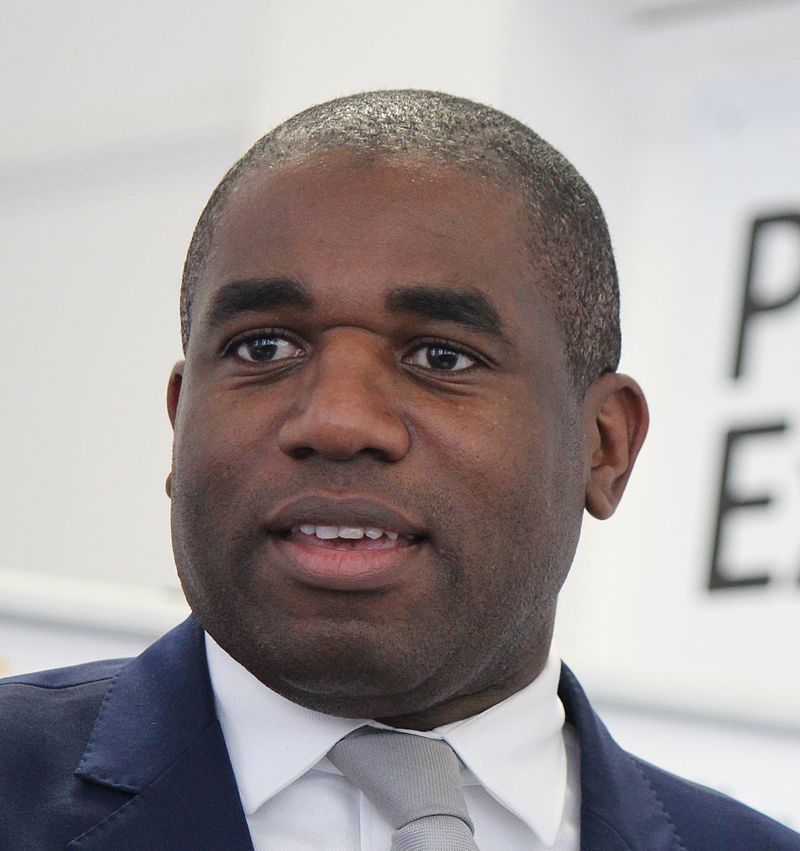
  • Greg Hands – 2016 Speech on EU Membership

    Gregg Hands
    Greg Hands

    Below is the text of the speech made by Greg Hands, the Chief Secretary to the Treasury, at the Mansion House in London on 27 April 2016.

    Introduction

    Good afternoon – it’s great to be here today in Mansion House, and many thanks to Gerald and the City of London Corporation for inviting me along to talk to you.

    Let me introduce myself – I’m Greg Hands and I’m the Chief Secretary to the Treasury, as well as the MP for Chelsea and Fulham – some of you here may even be my constituents. As Chief Secretary, my job is to run all of public spending.

    But before I entered politics I used to work in financial services myself, in the 1990s – including at two foreign banks – and people in the City often tell me that once you’ve worked in the industry, you can never really leave it behind!

    When I started work at Credit Suisse in 1990, it was only 3 years after the ‘Big Bang’, and working for a foreign bank seemed like an exotic adventure. Now, graduates would treat it as something entirely natural, so open has London become to the global financial services industry.

    So although my day job is mainly focused on managing the £742 billion this country spends every year, I’m really pleased to talk to you today about a subject which is still very close to my heart: making sure the UK remains one of the best financial hubs in the World.

    World Leaders

    The UK is officially the world’s premier international financial centre.

    Three leading independent surveys all rank London number one last year, praising our stable legal system, skilled workforce, and cluster of complementary professional services.

    We should be really proud of this achievement, and vow to maintain it.

    We manage over £6 trillion of assets here – with well over half of that from international banking.

    We’ve got around half of the world’s top financial firms choosing to base their European HQs here in the UK.

    In fact, there are more bank head offices here in London than in any other place in the world.

    And the contribution you make to our economy is huge:

    International banking accounts for around half of the worth of our entire banking sector, give work to just under a third of its employees, and pay over 50% of its taxes.

    That’s why we are not resting on our laurels, and so I’d like to talk about just 4 areas where we’re taking action to make sure Britain is a place that banks from across the world wish to be based in:

    – getting our tax system right
    – making sure our regulatory framework is world-class
    – investing in the country’s infrastructure
    – staying at the cutting edge of financial technology

    Tax

    So let’s start with one of the most crucial, as well as controversial areas: getting the tax system right.

    We believe in low taxes but taxes that are paid – that’s why, for example, we’ve cut corporation tax dramatically to make sure we will still have the lowest rate in the G20.

    But, as ever, it’s always a balancing act.

    I will be very frank here. Because, of course, the government is committed to reinforcing the UK’s position as a world-leading financial centre.

    However, this commitment needs to be balanced against the need for banks and building societies to make an appropriate tax contribution, one that reflects their unique risks to the financial system, and to the wider UK economy.

    That is why we have introduced specific taxes on the banking sector.

    These taxes will result in banks paying a 25% rate of tax on profit greater than £25 million – the lowest rate among G7 nations – and a 0.1% levy on the UK balance sheet liabilities of the largest banks.

    Extra tax will rarely prove popular with those who have to pay it.

    But the recent changes mean a fairer and more sustainable basis for taxing the UK banking sector, which allows banks to plan for the long term with greater certainty.

    Regulation

    Secondly, we are working hard to make sure we have a regulatory system that delivers a high standard of oversight, while at the same time supporting competition.

    Of course, that means regulation that is both clear and proportionate.

    But it also means making sure we work to bring international standards into line – to make it easier for companies like yours to operate across borders.

    That’s why, for example, we’ve been strong supporters of the European Commission’s plan for Capital Markets Union – a range of measures designed to further integrate Europe’s capital markets – whether through reform of, say, venture capital rules, or changes to securitisation regulations.

    And I’m pleased to see that the Commission seem keen to make swift progress on this, as well as more proportionate regulation for smaller banks.

    We will certainly continue to push them to accelerate their efforts on this front.

    Investment in Infrastructure

    Third, we’re making sure we have the infrastructure in place to support our status as a global hub.

    It’s no secret that for too long, we didn’t build enough.

    To put it in context, across the Channel in France, they’ve built 2700 miles of new motorway since 1990. That’s more than the entire UK motorway network put together.

    And in the noughties, the Dutch built over 4 times more motorways than we did – for a country a fifth of the size.

    We’re turning that around with over £100 billion investment scheduled by the end of this Parliament.

    Crucial to this is regional growth, which flows on from the idea of the Northern Powerhouse.

    Our strategy is this: let’s increase investment, let’s get money flowing in, let’s get these projects built; but, at the same time, let’s think about the coming decades and how we can prioritise meeting the challenges we face.

    FinTech

    Fourth, we’re determined to embrace and nurture new ideas and technology.

    We’re already the ones to beat when it comes to FinTech, ahead of other hotspots such as California, New York and Singapore. And the support we are providing for this sector is envied across the world.

    We have one of the best regulatory systems and we are committed to keeping it that way.

    Membership of the EU

    There is, of course, a lot more we’re doing. But, in the interest of time, I really want to turn now to an issue looming on the horizon, and one which I know many of you are following very closely: what happens on the 23 June 2016.

    I know that many of you may have real concerns about the possibility of the UK leaving the EU – some of you may even have done some serious thinking about what your companies might do, in the event of a vote to leave.

    We understand how important our membership of the EU is for many of you, who have chosen to base your European headquarters here in the UK.

    As a member, we act as a gateway to the European market. Not only do we have common regulatory standards, but firms in the UK can sell their services across the single market through the EU’s financial services passport.

    We share your concerns about leaving. In our view, the evidence is clear: we are stronger, safer and better off, as a member of a reformed European Union, compared with outside on our own.

    You’ll have seen last week the publication of the Treasury’s analysis of the risks involved in leaving the EU.

    This showed that if the UK left the EU, we would be permanently poorer – an annual loss of 6.2% of GDP after 15 years.

    And it set out that EU membership is an important factor in the UK’s position as a global financial centre, providing a gateway to European markets.

    There are those who say that we were just scaremongering about the effect it could have on our position as a financial hub; that we’ll still get market access; that Europe won’t harm itself by cutting us off.

    Well, no one actually knows what would happen. It would be a huge leap into the unknown.

    But what we do know is that the EU hasn’t signed an agreement with any other country – including Switzerland – to give them full access to the single market in financial services, without having to comply with EU rules.

    We know that it wouldn’t be in the EU’s interest to do so.

    And we know that even with access to the EU financial services passport, we’d have to follow EU rules, just without any say over what they are.

    So I want you to rest assured that we are doing all we can to make the case to stay in the EU, and help people understand what we would risk, if we were to leave.

    Conclusion

    Above all, we know how much a strong, thriving financial services sector matters to the economy.

    That is why we’re not only working hard to fend off the huge threat to your industry that leaving the EU would entail, we’re also going on the offensive with a wide range of proactive measures, to cement our place as a dynamic and attractive place for foreign banks to operate in.

    And I look forward to continuing our successful partnership with you, long into the future.

    Thank you.

  • Jeremy Wright – 2016 Statement on the European Convention on Human Rights

    jeremywright

    Below is the text of the speech made by Jeremy Wright, the Attorney General, in the House of Commons on 26 April 2016.

    I am answering this urgent question today on behalf of the Home Secretary, but my right hon. Friend will be making a statement to this House on the Hillsborough inquest findings tomorrow. Mr Speaker, I hope that it is in order for me to make a brief comment on that subject before I turn to the right hon. Gentleman’s question.

    As the House knows, the inquest jury has now returned its verdict. I am sure that the whole House will wish to join me in thanking the jurors for the considerable public service that they have performed. As a result, this morning I have written to Members advising that care be exercised when making public statements, to ensure that nothing is said that suggests that any individual or organisation has been found to be criminally liable. Ultimately, a jury in a criminal trial may need to decide that issue, and it is important that nothing is said that may prejudice the right to a fair trial, or make it more difficult to pursue appropriate prosecutions.

    On the subject of this urgent question, the United Kingdom is a founder member of the European convention on human rights, and lawyers from the United Kingdom were instrumental in the drafting of the European convention. We are signatories to the convention and we have been clear throughout that we have no objections to the text of the convention; it is indeed a fine document and the Government are firmly of the view that the rights that it enshrines are rights that British citizens and others should continue to hold as part of a reformed human rights framework.

    However, this Government were elected with a mandate to reform and modernise the UK human rights framework: the 2015 Conservative party manifesto said that a Conservative Government would scrap the Human Rights Act and introduce a British Bill of Rights. As with all elements of our manifesto, we intend to meet that commitment in the course of this Parliament. Members will be aware that we have set out our intention to consult on the future of the UK’s human rights framework both in this country and abroad, and that consultation will be published in due course. We will fully consult on our proposals before introducing legislation; in doing so, we will welcome constructive contributions from all parts of the House.

    The intention of reform is to protect human rights, to prevent the abuse of human rights law and to restore some common sense to the system. The Prime Minister has been clear throughout that we

    “rule out absolutely nothing in getting that done”.

    Our preference, though, is to seek to achieve reforms while remaining members of the European convention. Our reforms will focus on the expansionist approach to human rights by the Strasbourg court and under the Human Rights Act, but although we want to remain part of the ECHR, we will not stay in at any cost. We have been clear that if we cannot achieve a satisfactory settlement within the ECHR, we may have no option but to consider withdrawal.

    However, the question before the people of the United Kingdom in June—again, thanks to this Government—is not about our future membership of the European convention on human rights, but about our future membership of the European Union. It is important that, in taking that significant decision, people do not conflate those separate questions.

    Let me make one thing absolutely clear: the United Kingdom has a proud tradition of respect for human rights that long pre-dates the Human Rights Act—and, indeed, the European convention on human rights. Any reforms that we make will maintain that protection. Those are not just words. This Government and the coalition Government who preceded them have a strong record on human rights, both here and abroad.

    We brought forward the Modern Slavery Act 2015 to protect some of the most vulnerable and exploited people in our society and to punish those responsible for that exploitation. We have fought to promote and protect human rights internationally. We are one of the leading members of the UN Human Rights Council, leading negotiations to set up international investigations into human rights abuses in Syria and elsewhere. We have transformed the fight against sexual violence in conflict, persuading more than150 states to agree for the first time that sexual violence should be recognised as a grave breach of the Geneva convention. We have been leading the world on the business and human rights agenda: we are one of the first states to argue for the UN’s “Guiding Principles on Business and Human Rights”, and the first state in the world to implement them through a national action plan.

    That is a track record of which we can justifiably be proud, and it is that track record on which we will build when we set out proposals for the reform of the human rights framework in the United Kingdom.