Tag: 2016

  • Nigel Mills – 2016 Speech on Anti-Corruption Summit

    Below is the text of the speech made by Nigel Mills, the Conservative MP for Amber Valley, in Westminster Hall on 3 May 2016.

    I beg to move,

    That this House has considered the Anti-Corruption Summit.

    Hon. Members, members of the public and people watching this debate will not be surprised to learn that tackling corruption is one of the biggest items on the agenda this year. Barely a day goes by without it hitting the news. As co-chair of the all-party group on anti-corruption, I was keen to hold this debate so we can air the issues that the Government hope to tackle in the important summit next week and subject the summit to parliamentary scrutiny.

    I thank the Backbench Business Committee for awarding me this debate. Unusually for a Back-Bench debate, we are not here to criticise the Government. We may have some suggestions about how they can be a bit stronger, but we are here to congratulate the Prime Minister and the Government for holding the summit, for placing this issue at the top of the agenda and for consistently championing transparency and accountability as enablers of good governance. We want real actions and agreements from the summit next week, so that those important things can be taken forward and enforced. I will set the scene and explain how I see the agenda, and then I will ask the Minister some questions about how the summit will work, who will be there, what the key Government aims are and how we can enforce the actions that are agreed.

    In next Thursday’s summit, international partners will, we hope, agree a package of practical steps to expose corruption, punish the perpetrators, support the victims and drive out the culture of corruption. That is clearly timely, given what we have seen in recent weeks and months. It is difficult to measure the impact of corruption, but the scale has never been more obvious: the FIFA scandal, the Unaoil leaks and the recent Panama papers gave us a glimpse of the far-reaching and egregious damage that bribery, fraud, grand corruption and tax evasion can cause. As the Prime Minister said last July,

    “Corruption is one of the greatest enemies of progress in our time.”

    Bribes, tax evasion and grand corruption destabilise development, keep the vulnerable in poverty, add significantly to the cost of doing business and fund terrorism. We all agree that we need to find a way of fixing those things.

    Next week’s extraordinary summit is outside the usual gamut of United Nations, G20, G7 or even OECD processes. It is a one-off, stand-alone, unique summit, and we are all keen to understand how any actions that are agreed can be enforced. We do not want just warm words next week; real action must result from them.

    It is right that the UK takes the lead on this issue, because we are uniquely exposed to corruption. Our status as a pre-eminent global financial centre and the unfortunate financial secrecy touted by our overseas territories and Crown dependencies make the UK seem a safe haven for the proceeds of corruption and the individuals and organisations that facilitate and benefit from financial crime and tax evasion. We ought to recognise that.

    When MPs go around the world and look at the issues that developing countries face, we often think, “Isn’t it great that we’re not suffering from that level of day-to-day corruption? We don’t have to bribe public officials to get the service we want. We are not at risk of being stopped by the police and being asked for a charge to keep driving.” But the UK is not completely corruption-free. As a big financial centre, we are very exposed to corruption, and we are used as a way to launder money and hide the proceeds of corruption and crime elsewhere in the world.

    It is right that we praise what the Government have done in that regard. We will soon be one of the first countries in the world, and the first in the European Union, to have a public register of beneficial ownership. That is a real step forward, which will allow us all to see who owns the companies that operate in the UK. I am sure that it will give us some extremely useful and interesting information. We all welcome the recent consultation on extending that transparency to property ownership. We also welcome the new anti-money laundering action plan, which, if fully implemented, will bolster the regulators’ enforcement powers and their ability to identify and freeze suspicious transactions.

    Of course, we have issues with our overseas territories, and if we cannot convince them to get on board with this agenda, our reputation for being a truly anti-corruption jurisdiction will not be intact. As the Panama papers show, secret company ownership makes most cases of large-scale corruption, money laundering and terrorist financing possible. Without secrecy, much of that could not be done.

    A World Bank review of more than 200 of the biggest corruption cases between 1980 and 2010 found that more than 70% relied on shadow entities that hide ownership. Sadly, company service providers in the UK and the Crown dependencies are second on the list of providing the shell entities that facilitate those awful crimes. This summit and our international reputation will prevail only if we secure commitments from all our overseas territories and dependencies to introduce public registers of beneficial ownership and strip companies of the secrecy that allows them to hide the proceeds of crime, corruption and tax evasion.

    Success will depend on whether we tackle the risks that are somewhat closer to home. Trillions of pounds flow through the UK’s financial system every year, and sadly some of those transactions are less than clean. The National Crime Agency recently estimated that tens to hundreds of billions of pounds-worth of corrupt and illicit funds are laundered through the UK each year. Last week, the acting chief executive of the Financial Conduct Authority appeared before the Treasury Committee, and when asked whether the UK system is suitably hostile to money launderers, she could only reply, “We could do better.” Clearly, we could and must do better. The laundered funds that are used to buy property here get into the system through the secrecy that our overseas territories allow. It is harder to spot and stop such funds once they are in the system, so we need to prevent them from getting there in the first place.

    We must tackle money laundering in the UK. We welcome the action plan, but having 27 different institutions to supervise the anti-money laundering rules in the bodies that they regulate is far too many. They cannot have a real picture of what is going on, what action is needed, the trends and who is not complying. Will the Minister say whether the Government plan to find a way to reduce the number of supervisors, so that we can be confident that the new rules and those that are already in place will be enforced?

    Law enforcement authorities identify three sectors that do not adequately report suspicious activity: the legal sector, accountancy and estate agency. Property ownership is a topical issue, and the fact that only 0.05% of all suspicious activity reports came from estate agents in 2013-14 suggests that action is needed to make that sector transparent. Recent research from Transparency International and investigations from Global Witness show how London’s property market is used for corrupt ends. More than 36,000 properties in London are owned by companies registered in offshore jurisdictions, and almost 10% of the properties in Westminster are owned by anonymous companies. We clearly cannot allow that situation to continue.

    Anonymity has a clear link to corruption. More than 75% of corruption cases involving property investigated by the Metropolitan police’s proceeds of corruption unit involved anonymous companies registered in secrecy jurisdictions, 78% of which were registered in the UK’s overseas territories or Crown dependencies. This huge problem is sadly centred in territories over which we have some influence, so it is imperative that we produce some action from them.

    Senior figures at the National Crime Agency have reported that corrupt investment in London’s most expensive properties is driving up house prices across the board. So money laundering not only is a problem for the rich and powerful, but has an impact on everyday life here in London. The longer we allow London to be a kleptocrats’ playground, the worse off we are making ordinary people.

    We have all those statistics to recount, and an APG inquiry is ongoing at which we have heard many anecdotes about how British firms working overseas are losing out on contracts to unscrupulous firms based in countries that do not have the same regulations and rules, and do not play fair, as we do. We are losing jobs and income here, because other countries around the world are not following the rules that they ought to be. It is right for us to make a stand. We do not want businesses bribing their way into contracts around the world. Where we find that happening, businesses and their executives will be punished, and serious action will be taken. We will not turn a blind eye to it. Recently, Ernst and Young’s 2016 global fraud survey of senior executives found that 98% of UK respondents believed that it was important to know who ultimately owns and controls the entities with which they do business. So this is not a minority interest; the business world agrees that we should all know about such things.

    Turning to the summit next week, will the Minister confirm exactly which countries are attending and the level of their representation? How many of the overseas territories and Crown dependencies will be present? Perhaps he will list which ones will not be. According to the recent statement, the two territories that had not agreed to have even a closed register of official ownership were Guernsey, which had some excuse to do with having elections and so could not agree—has any progress been made?—and Anguilla. Has some sense prevailed in that small part of the world? Has it seen the light?

    The Parliamentary Secretary, Cabinet Office (John Penrose)

    I will try to answer the broader questions at the end, but I can confirm that Anguilla has signed up. Guernsey’s election was last week, so we expect discussions to begin in earnest very promptly.

    Nigel Mills

    At least we have all the territories over that first hurdle.

    Next week, the important thing will be to get real commitments on beneficial ownership and a timeframe for the register to be transparent and public, so everyone can see who owns every company established in a jurisdiction. For law-enforcement providers to be able to find such information in a timely way may be of some use, but we also want everyone to be able to search the register—for example, campaign groups could trace right through the system and see who owns properties. I suspect that law enforcement does not have the resources, sadly, to do that proactively, whereas sunlight and transparency will give us far more progress than a closed register ever could.

    Will the Minister confirm whether the summit agenda includes discussion of a certain time by which all those territories will have a publicly accessible register of who owns companies and, preferably, of trusts in the jurisdiction? I accept that trusts are more complicated, but we need to see some progress on them as well.

    Last autumn, I attended a meeting at which the Government’s anti-corruption champion, my right hon. Friend the Member for Brentwood and Ongar (Sir Eric Pickles)—sadly, he cannot be present today—confirmed that the Prime Minister was pretty determined to get overseas territories on board with a public register. The words the anti-corruption champion used were

    “through legislation, guidance or naked pressure”.

    I am not sure whether the summit counts as guidance or naked pressure, but if those do not work, what other options do the Government have? My right hon. Friend said “legislation”—his word—so will the Government put that on the table? At some point, will they take action if the territories will not go as far as we want them to, or is that completely off the table?

    What other major countries are turning up? Are the Americans sending anyone next week, because they clearly have an important role to play in sorting out the world financial system? Those of us who would like to see greater action on global tax avoidance realise that the Americans have a real and vital role in that situation, so are they turning up next week?

    If some actions are agreed next week and, as we hope, they are specific and have a real timeframe, how will they be enforced? Presumably, there will be no binding global agreement, but are the Government conscious of that? We do not want to hear warm words and promises that have been made before, followed by years of drift; we want real, concrete actions that are reviewed, with a timescale and ways to enforce progress.

    If there is an agreement next week and some territories subsequently resile from it, what actions will the Government propose taking to convince the territories otherwise? It is not encouraging to see the Government announce that everyone has agreed to a closed register, and then senior people from some of our overseas territories glory in being able to say, “We’ve won. We’ve got everything we wanted out of this,” implying that it will be business as usual—presumably, not what we were aiming for. We want any agreement next week to be meaningful and strong, not just hot air.

    With those thoughts, I wish the Government and the Minister well at the summit next week. We hope that they will come out with a strong and binding agreement, which can take the agenda forward towards finding ways of materially reducing the amount of corrupt money that flows around the world, especially into the UK. Nations around the world should, rightly, keep the money that they earn and have the tax revenues necessary to grow their economies. Everyone throughout the world should be able to see our financial system moving in the direction of being open, transparent and honest, rather than corrupt.

  • Matt Hancock – 2016 Speech at Going Global Conference

    Matt Hancock
    Matt Hancock

    Below is the text of the speech made by Matt Hancock, the Cabinet Office Minister, in South Africa on 3 May 2016.

    My sincere gratitude to Higher Education Minister Blade Nzimande and Sir Ciarán Devane, Chief Executive of the British Council, for welcoming me here today at the opening of Going Global.

    I am delighted to have the opportunity to speak to such a distinguished audience of ministers, international education leaders and experts as well as participating in Steering Committee of the Open Government Partnership in Cape Town this week.

    Going Global has become the premier platform for higher education leaders from across the world to engage. It lives up to its name. And this is a very special conference: the first time ever held on the African continent. I am honoured to be participating.

    In 1947, our great monarch, Her Majesty the Queen, aged 21, visited Cape Town with her parents. During her speech here, she dedicated her life to the service of the Commonwealth, talked about the challenges faced by young people and the need to work together.

    Many years later, South Africa’s greatest son Nelson Mandela famously stated that “education is the most powerful weapon which you can use to change the world”. While today young people face different challenges, these 2 messages – working together, and transforming the world through education – are as relevant as ever.

    This week marks 22 years since the world celebrated, and South Africans participated in, those thrilling first democratic elections.

    Over those 22 years, much has changed. South Africa has seen unprecedented development. Successive South African governments have reduced serious poverty in South Africa from 42% in 2000 to 29% in 2011. Yes there are bumps on the road – there always are – but in those 22 years, the world has developed faster than ever before.

    And what does that mean? What does it really mean? It means over those 22 years that more people than ever before – millions here, billions around the world – have been lifted out of grinding poverty. Millions more have the chance to put their ingenuity and capability to good use, and to better their lives.

    And it has not happened by accident. This unprecedented development over a generation has happened by a golden combination of courageous openness and the expansion of education.

    The spread of openness: open democracy, open markets, open societies and open access to education for all have been the seeds of this change, because these things empower the people.

    But all is not done. Challenges, deep challenges, remain. And while there is one hungry mouth to feed. While there is one fertile mind unnourished by the invigorating food of education. While illiteracy and want and poverty exist on this earth. It is our job, our task, and our duty, to empower and open and educate.

    Let us today recommit to that goal.

    Global importance of higher education

    For in forging this open, empowered world the global connections of higher education are a major force for good, for innovation, for knowledge and for partnership.

    We in the UK take great pleasure – and pride – in welcoming students from all over the world. We work hard to make sure they enjoy as well as learn. Our scholarships have provided life-changing chances for thousands across the globe and here in South Africa.

    We are keen too to see more UK students study overseas and I want to thank the British Council for their work on this. And as technology marches on, the world opens up innovative, ways of learning – joint overseas campuses, joint degrees, and online learning – taking advantage of the digital revolution, to reach more young people.

    Modern technology allows learning to spread better to every inch of humanity, in every corner of the globe. From here in Cape Town in the south to Nunavut in the north, let us celebrate this radical expansion of the potential for education, that all can benefit from the best teaching and education in the world.

    Our research collaboration is second to none, with the growing reach of our Newton Fund supporting collaborative research.

    We are privileged to work with so many of you. With Brazil and Columbia on biodiversity; with Egypt on health and water; with India on solar; and with China on life sciences. This is bringing the best people together in our universities and building bridges that go way beyond the research itself.

    Our collaboration with South Africa is a great example of success, underpinning our relationship, with joint research to address issues in health, agritech and energy. Their work strengthens our knowledge, understanding and trust.

    Growth in global demand, sustainable development goals and the UK’s response

    But we know that when it comes to reaching our joint goal, more needs to be done.

    Today’s generation of young people represents 1 quarter of the world’s population.

    Over the next decade, 1 billion young people will enter the global labour force.

    The number of students enrolling in higher education worldwide will increase by 21 million between 2011 and 2020. But only about 2% of these students will travel abroad for study.

    In many of the developing countries, where demand for higher education is expanding fastest, domestic systems are not responding quickly enough to meet need.

    And for a new generation of 200 million young Africans seeking a more prosperous future, this represents a demographic window of opportunity.

    For while the challenges are real, meeting this need will require millions more in higher education.

    We need to look beyond primary and secondary education to invest in young people to generate job-ready, productive and entrepreneurial graduates who will be the teachers, engineers, philosophers, diplomats, doctors, inventors and leaders of the future.

    I profoundly believe that the ingenuity in every human breast is an asset, with a value incalculable. Let us unlock that potential together.

    And while countries around the world face headwinds and risks, I look forward to working with you on your impressive and ambitious national development plan here in South Africa.

    I can commit that we in the UK will play our part. Through our trade, growing as it is. Through collaboration, the theme of this conference. And through support for higher education specifically. Today I can commit to you our support for the SPHEIR programme – funded by the UK to catalyse ambitious, multi-sector and high-value partnerships to transform the quality, relevance, access and affordability of higher education.

    SPHEIR will support partnerships that bring businesses and universities together to develop bespoke curricula, improve the quality of teaching and make higher education provision more affordable for students.

    I want to thank the British Council and others for the role they will play in delivering the SPHEIR programme. The programme will have a strong focus on Sub-Saharan Africa and other countries where there is strongest unmet need.

    Let us not see the window of opportunity close. Let us collaborate to deliver for the citizens who we serve.

    Open government

    Just as we must collaborate to support education, so too I believe we must collaborate to promote openness. Sunlight, it is said, is the best disinfectant. And Cape Town this week is host to the Open Government Partnership of 69 countries, across the world, committed to opening up government and tackling corruption. Openness supports the rule of law, builds economies and fights poverty.

    And in this context, transparency is vitally important for the further development of effective national education plans, jobs and growth and in developing the international partnerships that Going Global will establish.

    We shall only succeed by working together, through and with international organisations and partnerships. Later this month in London leaders from around the world are meeting at my Prime Minister’s Anti-Corruption Summit. This presents a big opportunity for us to demonstrate our commitment to action, and I am very pleased that South Africa and other countries here today will be represented.

    So let us rise to the challenges we face together. And let us seize the opportunities the world presents.

    Conclusion

    Six decades since Her Majesty spoke here, and 2 decades after South Africa opened to the world, that world has changed for the better. But many challenges remain. Our role, and our duty, is to ensure a bright, open future in the decades to come.

    So let’s work together and make it happen.

    I wish you an excellent conference.

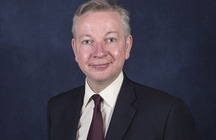
  • Michael Gove – 2016 Speech on the EU

    michaelgove

    Below is the text of the speech made by Michael Gove, the Lord Chancellor, on 19 April 2016.

    Speech available as a PDF.

  • Priti Patel – 2016 Speech at Association of Licensed Multiple Retailers Conference

    pritipatel

    Below is the text of the speech made by Priti Patel, the Minister of State for Employment, on 28 April 2016.

    It is a privilege to be here today and speak to and meet so many representatives from our licensed retail sector.

    Coming from a family business background,

    I believe passionately in the vital role that businesses and entrepreneurs play in supporting investment, growth and jobs in our economy.

    A strong, dynamic private sector creates wealth and opportunity for all.

    So I want to pay tribute to everyone here today for the tremendous work you do and the tireless efforts you put into supporting our economy.

    The 200 companies that are members for the ALMR have an amazing and powerful economic footprint.

    22,000 outlets supporting 650,000 jobs gives you a voice in every part of the country

    – And that number is growing at a fast and impressive pace.

    And I particularly welcome the employment opportunities provided to young people, starting out in their chosen careers and getting their first taste of employment.

    The skills and responsibilities that they learn and the training and apprenticeships that this sector provides gives them an invaluable start in life.

    I also welcome the lead your members are taking with supporting apprenticeships, with over two-thirds of your members giving young people the chance to earn and learn through this career path.

    Your success and entrepreneurial spirit is very much appreciated and welcome.

    I also welcome the opportunity to be able to speak to you about the big choice that Britain faces in the forthcoming referendum on our membership of the European Union,

    The economic benefits of standing tall as a free, independent and sovereign country,

    And to set out the positive case for Britain to Vote Leave on 23 June.

    EU Referendum

    I am a firm believer in setting business free to innovate and invest,

    I know how much red tape and regulation acts a barrier to your businesses.

    I know that every pound you have to spend complying with rules and regulations is a pound taken away from investment on the frontline of your business;

    And as a result you expect and demand action from Government on delivering supply-side reforms and reductions in red tape.

    But Government and Parliament can only go so far –

    There is a limit to what they can do to cut red tape

    And that limit is there because we are a member of the European Union.

    Ladies and Gentlemen,

    It is a fact that while we remain a member of the European Union, our hands are tied and we are powerless to act on reducing the burdens of red tape.

    Britain is a proud nation of entrepreneurs, and small businesses, including in your sector, are the backbone of our economy.

    I want us to be able to do everything we can to support them to thrive, but EU membership prevents that.

    Unaccountable and unelected bureaucrats with no clue how to run a business and no local knowledge of this country dictate the rules that we all must follow.

    British Ministers and MEPs are left to plead our case but all too often their views are over-ruled.

    The UK has not managed to block a single proposal from becoming law through the EU Council, costing this country £2.4 billion each year.

    We have opposed 72 measures in the EU Council, all of which have gone on to become law with the British interest ignored.

    While our success rate at standing up for the Britain interest in the EU Parliament is also almost as bad.

    During the last full term of the EU Parliament (2009-2014), 1,936 motions were passed, of which 576 were opposed by a majority of British MEPs.

    But 485 of those – 84% – were still passed.

    That means that when the British national interest is at stake,

    Government Ministers in the EU Council have always been outvoted by the rest of Europe,

    And five times in every six votes, European MEPs block our national interests.

    Not only does this undermine our democracy as we are unable to hold European decision-makers to account,

    Our lack of power over these matters is worrying because new rules and regulations from Europe cost you and our country money.

    Research from Open Europe has shown that there are dozens of regulations imposed by the EU with the costs on British business totalling over £33 billion.

    In 2010 the British Chambers of Commerce put the total cost of EU regulation on British business at £80 billion per year.

    In 2005, the Treasury, estimated that the costs of the ‘single market’ could be over £125 billion per year, which is the equivalent of 7% of GDP, £4,639 per household, or £23,236 per company.

    Other research shows that while every single business is bound to the EU’s ever-increasing rulebook, the percentage of businesses exporting to the EU are 6% and 12.5% of the British economy is exports to the EU.

    Just think of the jobs that you could create and the investments you could make in expanding your businesses if you were not bound by these burdens.

    Just think of the freedom you would have to innovate if we were no longer forced to compel with every diktat from Brussels.

    Just think that by getting rid of some of the EU rules that make it so difficult to create employment, we could deliver a £4.3 billion boost to our economy and 60,000 new jobs.

    The evidence from business of the consequences to our economy of EU regulations is damning.

    CBI members list cutting back EU regulatory burdens as a priority, and 49% of their members report that EU employment law has a negative impact on their business.

    Similar findings from the English Business Survey found that 46% of businesses affected by EU red tape said the impact was negative.

    Bureaucracy from the EU does not have the confidence of British businesses.

    Businesses, growth and jobs have all been sacrificed to satisfy the dogmatic march towards greater integration and a federal European superstate.

    The only way we can liberate ourselves from these burdens is to Vote Leave and take control over our laws on 23 June.

    Red Tape Cuts for Small Business

    If this country Votes Leave, we can have a strong and positive future as an independent, free and sovereign country.

    By being able to take back control of the laws that we make, we can begin the process of auditing and untangling our laws from the Brussels red tape from that hits our businesses hardest.

    This is categorically not about rolling back workers’ rights

    – this is about releasing businesses from unnecessary and meddlesome red tape

    – which will in fact benefit working people by helping businesses create more jobs.

    Cutting EU red tape on business – starting with small and medium sized businesses business – will be a valuable boost to productivity, growth and job creation.

    We know that we can only safeguard business from EU red tape by leaving the EU because attempts to reform from within have failed.

    Despite those wanting to remain in the EU stating that they want to “exempt Europe’s smallest entrepreneurial companies from more EU Directives.”

    The renegotiation deal has given no guarantees of red tape cuts.

    But if we Vote Leave on 23 June, we will not need to negotiate and lobby the EU,

    Or beg Commissioners and other Governments for favours.

    We can crack-on and free business from the shackles of regulation.

    EU laws will be replaced by laws made in the UK by politicians accountable to you.

    Risk

    During the campaign so far, those in favour of remaining in the EU have played up the so-called risks of leaving the EU.

    We’ve heard all sorts of scare stories about the economy,

    And British business has been talked down.

    But the biggest risk and uncertainty does not come from leaving the EU.

    The biggest risks to business come from remaining in the EU.

    Leaving business exposed to face the consequences of the future burdens that the EU can unilaterally impose on them is playing Russian Roulette with peoples’ livelihoods.

    With all the damage and costs from the EU, it is astonishing to see that those who want the UK to remain in the EU have put so much faith in its failing institutions.

    It is simply not plausible to claim that the EU is ‘good for jobs’ when there is over 20% unemployment in Spain and Greece, with youth unemployment in some parts of the EU over 40%.

    And there’s over 10% unemployment – some 3.6 million people – across the Channel in France.

    In fact, 3 of the 4 European countries with the highest employment rates – Norway, Switzerland and Iceland – are not in the EU,

    While Japan and the USA also have much lower unemployment rates.

    Membership of the EU is no guarantee of a strong healthy jobs market.

    In fact, with the plans from Brussels to harmonise more of our employment, social and other laws with countries that have a terrible jobs record, like Greece and Spain,

    We can see that the big risk to peoples’ jobs is staying in the EU.

    Outside of the EU, we can set the sensible and flexible employment policies that suit employers and employees and offer secure employment.

    History also tells us that the prosperity of our businesses cannot be left in the hands of the EU.

    I remember the devastating consequences that the ERM had on businesses, including my parents’.

    And just imagine the utter carnage that would have affected our economy had we listened to the EU elite and joined the Euro.

    More recently, the EU has forced up insurance prices for female drivers.

    Last year they turned their fire on small scale cider producers demanding the removal of tax exemptions.

    And they’ve put obligations on housebuilders, set limits on the maximum energy of appliances like vacuum cleaners, and limited the size of containers that olive oil can be sold in.

    Remember, at any time bureaucrats from the Commission and judges in the Court can strike.

    And your business and your interests could be next.

    That is a risk that to business that I cannot stand by and accept.

    And this is why we are safer and more secure as a free, independent, and sovereign country.

    Money

    If we vote to leave the EU, we will be better off from being liberated to cut red tape to boost productivity.

    We will also be better off as a result of no longer needing to send a £350 million per week membership fee to Brussels.

    Those costs are forecast by the Office for Budget Responsibility and the Treasury to be a contribution to the EU of £19 billion in this financial year,

    And a total of £96.5 billion by 2021.

    As our economy grows stronger compared to the rest of the EU, we could end up paying even more in.

    That money does not come out of thin air.

    It comes from the tills of your businesses from the taxes that you pay.

    It comes from the fruits of your labours and from the rewards for the risks that you take.

    And what does the EU do with your money?

    It does not spend it on your priorities.

    It spends it on its own self-serving schemes, wasteful bureaucracy, and on projects in far-flung parts of Europe.

    By leaving the EU, that money can be spent in this country on your priorities.

    We can use it, for example, to support businesses by investing in new infrastructure, or by cutting the tax burden.

    I am sure you will agree with me that your hard-earned taxes can be put to more productive use in this country.

    Conclusion

    I spoke earlier of the importance of business and your sector to our economy,

    And it is because I am determined to see business succeed that I believe we will be better off voting to leave the EU.

    We have the fifth largest economy in the world, with growth outstripping Germany for the past four years.

    We are bursting with innovators, entrepreneurs and wealth-creators who bring in investment, create growth, and support jobs.

    We have a workforce that is upskilling.

    We have more children learning in good and outstanding schools being equipped with the skills needed for the modern workplace.

    We have record numbers of people in work.

    And we have more people starting their own businesses.

    But I want us to do better,

    And we can only do better if we vote to leave the EU and take back control of our laws and our money.

    Our choice on 23 June is a clear one.

    We can choose to remain in an unaccountable, unreformed EU,

    – that damages British business,

    – takes our money,

    – and puts our future prosperity at risk.

    Or we can vote for a positive and secure future as a free, independent and sovereign country,

    Where we can spend our money on our priorities,

    Make our own laws,

    Take an axe to EU red tape to free enterprise,

    And make the most of the potential and talent that our great country has to offer.

    Let’s Vote Leave on 23 June and take control of our destiny.

    Thank you.

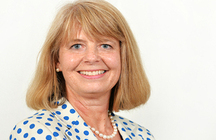
  • Harriett Baldwin – 2016 Speech on Financial Centres

    Harriett Baldwin
    Harriett Baldwin

    Below is the text of the speech made by Harriett Baldwin, the Economic Secretary to the Treasury, in Manchester on 28 April 2016.

    For those of you who don’t know me, I’m the Economic Secretary to the Treasury – often known as ‘The City Minister’. My job is to make sure the UK remains a world leader when it comes to Financial Services.

    But I want to make it absolutely clear from the start: my job is certainly not just about the City of London.

    One of the things I’m always keen to point out is that the UK has a lot more than a square mile to offer the world of finance.

    And in fact out of over 2 million people who work across the UK in financial and related services, around two-thirds of them are employed outside London.

    So it’s a real pleasure to be here in Manchester today and I want to thank Matt [Wells – Site Exec BNY Mellon] and our hosts at BNY Mellon.

    BNY Mellon is clearly a global company which knows full well just how much the UK has to offer – with offices across the country – from London to Poole, from Leeds to here in Manchester.

    Because this is a country which has considerable strengths:

    – we have a global location that allows firms to do business with Asia in the morning and the Americans in the afternoon

    – we have a robust and independent legal system

    – a fair and effective regulatory system

    – a multicultural, multilingual workforce

    – and full access to the EU single market

    We can be proud of the reputation we have built as one of the best places to do business – we have more overseas financial institutions and investors choosing to do business in and with the UK than any other country.

    It’s also great news that earlier in the month, the Global Financial Centres Index kept us in the number one position.

    But we need to keep it that way and I’d like to elaborate briefly on three particular areas where we’re taking action to support this.

    Firstly, we want our financial services industry to be the most competitive and innovative in the world.

    We want it to deliver greater choice and value for customers.

    So we’re delivering the 7 day Current Account Switch Service and midata, making it easier for customers to switch when they see a better deal.

    We’re also helping new entrants and challengers enter the market by lowering the barriers to entry and establishing a regulatory environment which helps smaller, new firms grow.

    And we’re leading the world on innovation around open bank data to provide a range of extra services to consumers.

    We’re also setting the pace when it comes to financial technology, or FinTech. This is already of huge significance to our economy – last year it brought in £6.6 billion of revenue.

    We’re helping it grow further with a wide range of supporting measures – from establishing an industry-led panel to lead our strategy, to creating an information hub or creating ‘FinTech Bridges’ to help our FinTech companies expand internationally.

    We’re also looking at how we can best aid FinTech growth around the UK – be that through regional hubs or special envoys.

    And we’re not letting our regulation lack behind the advances made in technology – and the FCA Innovation Hub’s work on this is being copied around the world.

    Lastly, we are absolutely determined to invest in the skills of our workforce – and apprenticeships are at the heart of this.

    The new apprenticeship levy will put the funding in the hands of employers to ensure that it delivers the training that they need.

    This will help realise our commitment to significantly increase the quantity and quality of apprenticeships in England to 3 million starts by 2020.

    And we’re looking at what more we can do to help more women get on in the financial services sector. Last month Jayne-Anne Gadhia, CEO of Virgin Money, published her review into the representation of women in senior jobs in the sector.

    Since then we’ve launched a Women in Finance Charter – asking firms to adopt its recommendations – and if you haven’t heard of this yet, I’d urge you to look into it and sign up!

    So we’ll continue to keep our regulation world class; to invest in talent; to develop areas such as financial technology, where we have a competitive advantage; to promote greater competition on the high street; and to continue to build up the strengths of all of our cities and regions.

    That’s why we’re here today in the North West.

    BNY Mellon is not alone in recognising that this is a great region for business.

    Banks are increasingly choosing to make their homes here in Manchester.

    The Cooperative Bank has its headquarters here. Barclays has over 4000 staff here, forming an essential part of their operations – whether they are supporting the bank’s infrastructure, working on product development or looking at Big Data opportunities.

    There is also cutting-edge work in financial technology here.

    And beyond Manchester, Liverpool has an experienced wealth, asset and fund management industry.

    Chester is also a top city for financial and professional services – including for example the 2000 people employed by Bank of America Merrill Lynch.

    Furthermore, the North West has excellent transport links. Manchester airport, for example, has seen rapid growth in direct long haul flights in recent years including the first direct route to China set to start soon.

    And let’s not forget that the region is also within 2 hours rail commute from London and also Birmingham Airport, giving easy access to the UK’s largest international airports at Heathrow and Gatwick.

    The North West is proving itself on the world stage as a great place to set up shop.

    And it’s easy to see why.

    Costs for businesses operating in the North West region are typically 30 to 40% lower than London, yet the region still provides the established business communities, infrastructure and quality of life that firms require to thrive.

    Furthermore, it’s a region that can offer the talent and skills companies need. It’s not surprising. The North West boasts 14 universities and gives us around 50,000 graduates a year – two-thirds of whom choose to stay in the region after university.

    So it is little wonder that the region’s financial services sector now has over 5,000 firms, is worth over £8 billion and already employs almost 100,000 people and counting – with Manchester alone set to create over 60,000 more jobs in the industry over the next decade.

    But I think we’re all here today because we want to see the North West go even further.

    That’s why I’m delighted that we are launching the North West Financial Centre of Excellence today…the fourth of an initial series of 8 UK regions, pulling out all the stops to convince companies across the world that they are the places to do business.

    This has been an enormously collaborative project: the Treasury, UK Trade & Investment, and local enterprise partnerships have worked and are working hand-in-hand to promote the North West as a ‘Financial Centre of Excellence’.

    And I want to thank everybody who is involved in this – I’ve been told again and again what a positive process this has been.

    But particular mentions must go to Midas here in Manchester, and the Cheshire West & Chester and Liverpool region Local Enterprise partnerships; the Universities of Liverpool, Chester, Manchester, Lancaster, and Manchester Metropolitan and Liverpool John Moores Universities.

    And a final thank you to TheCityUK who are helping us reach out far and wide to make our pitch on the world stage.

    This project ties in closely with wider government work to help our cities and regions outside London realise their huge potential.

    Our concept of the Northern Powerhouse is based on harnessing the latent power of the great cities of the North, and creating something that can compete not only with London, but with cities and financial hubs across the globe.

    It’s based heavily on the work my Ministerial colleague Lord O’Neill carried out in Cities Growth Commission and beyond, which showed that the fastest-growing areas in the world all had clusters of innovative, interconnected urban regions beyond the capital.

    So that’s what we want to do in the UK.

    Of course, there is no monopoly on Powerhouses: we’re working closely with all our regions to create growth and build up their strengths.

    But the North is where some of the most exciting things are happening.

    Look at our devolution agenda.

    We strongly believe in putting more power in the hands of the people who know best: the people who actually live there. That’s why we’ve been striking devolution deals with authorities in every part of England, giving local communities more power and responsibility to make the decisions that work best for them.

    And last month, our Budget showed how serious we were – devolving even more powers to Greater Manchester – like the adult education budget, powers on criminal justice and powers to retain 100% of business rates.

    Liverpool, too, will pilot the approach on the retention of business rates, as well as getting new powers over transport.

    These are flagship leads: and it’s the North West leading the way.

    Investment is an essential part of building the Northern Powerhouse – in everything from schools to science and technology, transport, digital and innovation, and culture and tourism across the region.

    And, at the last Budget, we announced investment in vital transport connections – such as giving the green light to HS3 between Leeds and Manchester, spending over £160 million on improving the road network in the North, and exploring the possibility of a Trans-Pennine tunnel between Sheffield and Manchester.

    With state-of-the-art transport links, with award-winning centres of research and development, with world-class skills and with a positive, can-do attitude, we can create another economic revolution here in the North West.

    It is, ultimately, our ambition to end the historic North/South divide: and that will make the whole of the UK more prosperous.

    I know it’s an agenda we all share and I look forward to continuing our work together to win more investment, more jobs, more opportunities and more growth for the North West – it’s not just good for this region, but for the prosperity and success of the country as a whole.

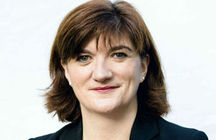
  • Nicky Morgan – 2016 Speech at NAHT Annual Conference

    nickymorgan

    Below is the text of the speech made by Nicky Morgan, the Secretary of State for Education, on 30 April 2016.

    Thank you, Kim [Johnson, NAHT President], for that introduction.

    I want to start by saying thank you – to all of you. Thank you for your hard work, your commitment and your exceptional ability to bring about excellent educational outcomes for young people. You, together with your dedicated staff, are at the forefront of our education system and it’s thanks to your collective efforts that education in England has taken huge leaps forward, with 1.4 million more children and young people in ‘good’ or ‘outstanding’ schools since our reforms began in 2010.

    And let me be clear that, while we may not always agree, I have enormous respect for the work you do, leading your schools to success and ensuring that every child is encouraged and enabled to reach their potential.

    Primary assessment

    I recognise the pressures this term brings in terms of assessments, but it’s because we, like you, want to continue raising standards for young people that we made changes to primary assessment.

    Let me take this opportunity to apologise again for the recent incident where a section of the key stage 1 final test was published early, alongside the sample papers. I have received a personal assurance from the Chief Executive of the Standards and Testing Agency that she and her team will be taking every possible step, working closely with my department, to ensure that such a mistake can never happen again.

    We all agree it’s critical that we get primary assessment right, with tests fit for purpose, because mastering the basics in primary school is vital to the future success of young people.

    But in terms of evaluating school performance, the primary school floor standard has 2 parts: attainment and, crucially, progress. We are increasing the emphasis on the progress pupils make, because it’s a fairer way of evaluating school performance, particularly for those schools making great progress for pupils from a low starting point.

    Although one part of the floor standard is more challenging this year, with the new expected standard, we are really clear that schools will be judged on their pupils’ progress as well as their attainment.

    As you know, if a school meets the progress standard it is above the floor altogether. We have made sure all who hold schools accountable are aware of this too, and we will continue to do so.

    Historically, the floor standard has identified only a small proportion of schools every year which are below that standard – and this year I can reassure you that no more than 1% more schools will be below the floor standard than last year.

    To get primary assessment right we have to make sure teachers have the time and resources to prepare, so we appreciate that we have to make primary assessment run more smoothly, with as much support as possible.

    But I don’t accept the claim from some outside this hall, that the higher expectations embodied in the new national curriculum are somehow ‘inappropriate’. Virtually all children have the potential to become properly literate and numerate and I am unwilling, as I know you are, to settle for anything less.

    In countries like Korea and Singapore, the proportion of functionally literate and numerate pupils aged 15 is over 90%, according to the 2012 PISA survey. In Ireland the proportion of functionally literate pupils aged 15 is more than 90% too, but in England it’s only 82%, and only 77% are functionally numerate.

    According to the materials used by PISA, this means that one year prior to leaving school, just under a fifth of our pupils cannot read and understand the moral behind one of Aesop’s fables. And more than a fifth are unable to work out how many people on average climb a mountain each day, when given the annual figure – while more than 90% of their peers in Korea and Singapore can do so.

    ‘Will more rigorous tests at key stage 2 actually address this gap?’ you might ask. My answer is yes. These new key stage 2 assessments give a better picture of whether a pupil has the reading and mathematical ability, to prosper at secondary school. Because literacy and numeracy are not just 2 subjects among many, they are the foundation on which all other subjects rest.

    And to those who say we should let our children be creative, imaginative, and happy – of course I agree, both as a parent and as the Education Secretary. But I would ask them this – how creative can a child be if they struggle to understand the words on the page in front of them – they certainly can’t enjoy them? What are the limits placed on a child’s imagination, when they cannot write down their ideas for others to read?

    That is why the campaign being led by some of those who do not think we should set high expectations, who want to ‘keep their children home for a day’ next week, is so damaging.

    Keeping children home – even for a day – is harmful to their education and I think it undermines how hard you as heads are working. I urge those running these campaigns to reconsider their actions.

    The case for every school as an academy

    I realise some of you have concerns about our plan for every school in England to become an academy, so I want to take this opportunity to explain why I believe it’s the right step for our education system.

    The autonomy academy status brings means putting power into the hands of school leaders, because we improve outcomes for young people by ensuring the teachers who teach them, and the heads who lead their schools, are given the freedom to make the right decisions in the interests of those children.

    The status alone doesn’t raise standards, it’s the framework of collaboration and support it provides that does. Far from creating a system of survival of the fittest, we want to build the scaffolding that will make it easier for swift action to be taken to support struggling schools with a range of solutions, facilitating excellent leaders to have a positive impact where they are needed most.

    Academies make it easier to spread the reach of the best leaders over several schools; recruit, train, develop and deploy better teachers, incentivising them to stay in the profession through new career opportunities; and ensure teachers can share best practice on what works in the classroom.

    On current projections, around three-quarters of secondary and a third of primary schools would convert to academy status by 2020. Before the white paper was published I was constantly being asked, at events like this one, whether this government wanted all schools to become academies. So I wanted to give you all a clear sense of direction and a 6-year time frame, so that all schools including those who had not yet considered academy status, can make the right choices, planning effectively for a sustainable future in the model – standalone or multi-academy trust – that works for them, keeping in place local arrangements that work and looking at new arrangements aimed at driving up standards.

    We believe that most schools will choose to work in local clusters, which will enable you, our most effective leaders, and your best teachers to extend your reach locally, in order to support one other to succeed, as many do already.

    Rowanfield Junior School, which I visited just 2 days ago, is a great example of how local schools can group together. A single converter academy, Rowanfield has expanded to form a MAT cluster in the Cheltenham community. Through this partnership it extends professional development, career opportunities and provides school to school support. Children benefit as teachers develop best practice and model excellence to develop the skills of colleagues within the trust.

    Most multi-academy trusts are small and 80% are entirely based in a single local authority area – because collaboration works well. But I should be absolutely clear that there is a place for successful, sustainable, standalone academies.

    For local authorities we envision a new role, continuing to provide special educational needs services and acting as champions for SEND young people, making sure every child has a school place, and offering excellent local services, which academies can continue to purchase – as many do now.

    I know there are concerns about the costs of this policy but it is fully funded, and we have set aside more than £500 million to build capacity in the system, including the development of strong local trusts, so that no school will be left behind.

    And as I know this is a particular concern for some members here, I want to be clear that no good rural school will close as a result of this policy.

    ‘Educational excellence everywhere’ white paper

    But actually, despite what you might see in the media, or hear from the opposition, every school gaining academy status is only one chapter of a much bigger story told in the ‘Educational excellence everywhere’ white paper. In fact, much of it addresses issues raised by the teaching profession itself.

    Our white paper is about great leaders, great teachers, intelligent accountability, fair funding and targeted support in challenging parts of the country – it’s about building the framework of school-led working and collaboration that will allow all schools to succeed.

    We know that NAHT believes in the impact collaboration can have. The Aspire project demonstrates the potential of what can be achieved when schools work together to share expertise and drive up standards, and as we move towards a more school-led system that collaboration will soon be commonplace across the country.

    Great leaders

    We know that the leaders in our education system have an enormous impact on educational outcomes, with effective leadership shown to raise achievement, in some cases by the equivalent of many months of learning in a single school year.

    So we need to make sure there is a healthy pipeline of leaders, and schools will take the lead on this. And through the new Foundation for Leadership, led by NAHT, ASCL and the NGA, we will be working with the best leaders and other experts, to develop a new suite of voluntary national professional qualifications for every level of leadership.

    Through our new Excellence in Leadership fund we will encourage the best providers and multi-academy trusts to look at innovative ways of developing leadership in system cold spots, and through the new National Teaching Service we will put the very best leaders and teachers into the schools where they are needed most.

    We envisage a dynamic new approach to collaborative system leadership with up to 300 more teaching schools and 800 more national leaders in education, targeted so that no part of the country misses out. And with new achieving excellence areas we will focus intensively on driving up standards where they have been too low for too long.

    We want to ensure that accountability does not discourage excellent leaders from working in the most challenging areas, so as I’ve already said we are putting more emphasis on progress in accountability, which is fairer to schools with lower attaining intakes.

    And we are introducing improvement periods, during which schools won’t be inspected, where a new headteacher is brought into a challenging school, so they can be given enough time to turn a school around before being judged by Ofsted.

    And we’re doing it because you told us that you had concerns about taking the leap to schools in challenging circumstances, without sufficient time to make your mark and the potential career implications.

    Excellent teachers

    The white paper outlines our plans to get excellent teachers into the profession, recognise their proficiency in the classroom, and deploy them where they are needed most.

    You have made it clear that recruitment is a challenge, so we have taken steps to help, like putting in place bursaries and prestigious scholarships for the subjects most difficult to recruit for.

    But now we must go further, so we will reform the National College for Teaching and Leadership to plan and execute targeted incentive programmes, teacher recruitment campaigns, and opportunities that will attract the best graduates and entice back those who have left the profession.

    We are continuing to drive up quality in initial teacher training, giving schools a greater role in selecting and training great teachers, and ensuring that there continues to be a clear role for high-quality universities, recognising the strengths they can bring to teacher education.

    Crucially, we are replacing the arrangements for awarding qualified teacher status with a stronger accreditation that recognises consistently high standards of practice in the classroom. It is vital that school leaders and parents have confidence in the quality of teachers so the new accreditation will only be given to those demonstrating real proficiency in the classroom.

    And we want the people best placed – leaders like you – to decide what good teaching looks like, and when a teacher should be accredited. And we want you to have the freedom to bring in subject experts who can have a positive impact on the lives of young people, developing and supporting them so they too can achieve accreditation.

    Workload review reports

    This government wants to make the school-led system a reality and we need your input to do that, as we develop the policies outlined in the white paper, so we will continue engaging with the teaching profession, as we do on things like workload.

    The teacher workload reviews carried out by 3 outstanding school leaders – one of whom, Dawn Copping, is here today – with input from teachers and unions – including the NAHT’s very own Kathy James. The reviews were launched because of the concerns you highlighted.

    I am committed to rising to the challenges set for the government and I hope you will consider the impact the recommendations have on the way you work, because reducing workload is not about one single policy from Whitehall, it’s about us in government, you in schools and Ofsted delivering on the report’s recommendations.

    As I said at the beginning of this speech, for everything on which we disagree, we continue to be united in our desire to do better, be better and achieve more for children and young people in this country.

    So let me say thank you once again, for everything you do already to bring about excellence in our system, let me reassure you that my door is always open and I always want to hear your views on how together we can achieve educational excellence everywhere.

    Thank you.

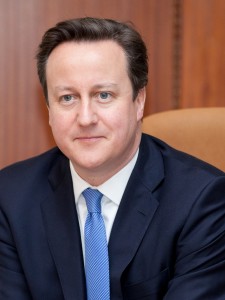
  • David Cameron – 2016 Speech on the EU at Caterpillar Factory

    davidcameron

    Below is the text of the speech made by David Cameron, the Prime Minister, at the Caterpillar Factory in Peterborough on 28 April 2016.

    Thank you very much for the welcome, great to see so many of you here. I think this is probably the biggest one of these I’ve ever done so thank you for coming. It’s great to be here at Caterpillar. You are a huge employer in our country; 9,000 people. You’re a massive investor in training with something like 300 apprentices being hired every year. You’re a huge exporter from our country and something like 50% of what comes out of this plant goes into other European countries so you’re doing all the things that we want great British businesses to do. So it’s good to be here with you today. And it’s good to be here too with the former head of the Trades Union Congress, Sir Brendan Barber. It’s not often you find a Conservative prime minister and the leader of a trade union movement standing together, but we both think this issue about Britain and Europe is so important that we put aside our other disagreements, put aside party political arguments, in order to say very clearly we think Britain should remain within a reformed European Union.

    Now, as I’ve said, I think this is the biggest question for our country that we’ve faced in 20 or 30 years. It’s much bigger than a general election. When you vote in a general election if you think you’ve made a mistake 5 years later you can throw them out again. I obviously don’t like that bit, a bit uncomfortable, but nonetheless that’s what happens in a general election. This is a choice for a generation, possibly a choice for a lifetime. When you vote on June 23rd, you’re voting for the sort of country and the sort of relationship you want with the rest of Europe for your children and your grandchildren. It is incredibly important. Now I want to take as much time answering your questions as possible, but let me just tell you the 3 things that I think are crucial in this debate.

    First is, I believe Britain will be stronger if we stay inside the European Union. If you think of the things we need to get done in the world, whether it is standing up to Vladimir Putin, whether it’s fighting terrorism, whether it’s making sure Iran can’t get a nuclear weapon. We’re not weaker inside the European Union, we’re stronger. Working with our allies there’s strength in numbers to get things done. So I believe the bigger Britain choice, the patriotic choice, the way to get things done in the world choice to enhance the power of this great country will be stronger inside the European Union.

    Second thing is I think will be safer. There’s no doubt in my mind about the scale of the terrorist threat that we face today. We saw those terrible attacks in Brussels, in Paris. We’ve had attacks before in London. And I know from being your prime minister from the last 6 years that, of course, our safety depends on the work of our police force. It depends on our intelligence and security services. It depends on our relationship with the United States of America and other close allies. But it also depends on our relationship with other European Union countries. We now exchange information about criminals, about terrorists, about passengers on aeroplanes, vital information that helps to keep our country safe. And if we were to leave, we’d have to work out how to get back into all those things that we just left, so we are safer inside the European Union.

    But the third argument I think is the most important and the most crucial which is that we are better off as an economy, better off for jobs, better off for investment if we stay inside a reformed European Union. Why? Well, because the European Union and Britain together is a market of 500 million people. It’s the biggest single market anywhere on our planet. And we are in it. We have a say over it. And we can trade freely into it. As I said, I understand the 50% of what you make here goes into the European Union. Three million jobs in our country depend on trade with the European Union. Now I’m not saying that if we left the European Union all of those 3 million jobs would go, but the people who want us to leave can’t tell us what our trading relationship would be with the biggest market that we’re now a part of. One minute they say we’re going to be like Norway and have full access to the market. But then you discover if you have that position, you still get the free movement of people and you still pay into the European budget so there’s no point in that relationship. Then they say let’s have a trade relationship like Canada. Well that’s a good deal for Canada, but they’re thousands of miles away from the European continent. We’re just 20 miles away.

    And that trade deal doesn’t cover services. It doesn’t cover all of agriculture. It would even mean for some manufactured goods, like what you make here, there wouldn’t be automatic access and tariff-free access to the European Union. That would be bad for our country. So then I’ve given up saying they want a trade deal like Canada, but they can’t tell you what we’d get. And I say that is a risk too far. I don’t think we should risk jobs. I don’t think we should risk our economy. We shouldn’t risk the investment that a company like this brings into Britain. So I think the most important argument in this debate is the one about our economy.

    Now you’re going to hear lots of arguments. There’ve been lots of debates. And I want to take your questions. But I just want to leave you with one other last thought because I sit in this European Council with the 27 other member states and, yes, sometimes it can be a bit maddening. Sometimes you don’t get your way. Sometimes it can be frustrating, but however frustrated I get, I never forget that 70 years ago the countries of Europe that we sit round the table with were fighting and killing each other for the second time in a century. So for all its imperfections, we shouldn’t lose that idealism that we have found a way in Europe of settling our differences through discussion and negotiation rather than all the things that happened in the past.

    So I have no hesitation in saying to you after 6 years as your prime minister that we will be stronger, we’ll be safer, we’ll be better off inside the European Union. It is your decision. I’m your prime minister. Whatever you decide on June 23rd, I will carry out. But I have no hesitation in saying I think the right outcome is to vote to stay in. And I hope that’s what you’ll do. Thank you.

    Question

    Hello Prime Minister, at one stage, you wanted us to go in the euro but we stopped in the pound so surely that decision at that time was worked out right that we stopped in the pound. So surely if we come out the EU, could that be the same effect?

    Prime Minister

    Right, very good question. I never supported Britain joining the euro. And I never will. I think we should keep our own currency, the pound. We’re the fifth biggest economy in the world. We can sustain and work with our own currency, and it gives us certain flexibility. And what we have now if you like is a special status in the European Union. Britain is in the single market which is what we want for the trade and the jobs, but we’re not in the single currency and we don’t have to join the single currency. And through my negotiation, we made sure we can never be asked to bail out other eurozone countries. And crucially, one of the things I secured in the negotiation is that the eurozone countries, 18 of the 28, they can’t gang up and try and disadvantage countries inside the EU that have their own currency.

    Why does this matter so much for Britain? Well, because financial services are a big industry for us, and we want to make sure that, in Britain, we can do euro business and dollar business, and yen business, and all the rest of it, without the eurozone trying to take away our jobs. And we secured that, that they cannot discriminate against us. So in my view, we’ve got the best of both worlds: in the European Union; in the single market; out of the eurozone; and, crucially, out of the Schengen no-borders system. Some other countries in Europe have taken down their borders to ease the flow of people between countries. We’ve kept our borders; we are able to stop and search, and ask people questions at our borders, and we’ll maintain that throughout.

    So the people who say, you know, joining the eurozone would have been a bad idea, and so staying in Europe is a bad idea, I think they’ve got the wrong argument. We’ve got the best of both worlds; in the market for the jobs, out of the currency to give us our own flexibility. And it’s that best of both worlds we should maintain.

    Question

    Thank you. Good afternoon Prime Minister. Everyone who works here at Caterpillar is familiar with the word ‘accountable’. We’re all held accountable for delivering in our roles, as are you as the prime minister of this great country. Why, therefore, should I vote for an organisation which is fundamentally unaccountable?

    Prime Minister

    Well, I would argue it is accountable. It is accountable to the 28 prime ministers and presidents who sit in the European Council. And I think it’s wrong to think that we don’t ever get our way in Europe, we do. The single market, which I was talking about; the 500 million people that we can sell our goods and services to, that was a British idea, that was a British proposal. So I don’t accept that it’s not accountable.

    The European Union consists of these 28 countries. We are the sovereign ones, and if you don’t like what your prime minister’s doing or your government’s doing, you can get rid of them. So we’re all accountable, and the European Union has to account for itself by the things that we agree in that European Council.

    So it goes to this argument, as well, about sovereignty. The people who want us to leave, one of their arguments is if we left, we’d have greater sovereignty and a greater ability to write our own laws. Now, that’s true in a technical sense, but is it really true that we’d become more powerful; that we’d be able to get things done? And I think the answer to that is no. Let’s take Caterpillar, let’s take this great business, right? You’re making engines, for instance, which are governed to some extent by single market rules in Europe. If we were to leave, if you want to sell your engines to Europe you’ve still got to meet those rules. The only difference is, today I’m sat round the table helping to write those rules. I can listen to you here at Caterpillar and make sure the rules are written in a way that will help British business. If we’re outside the EU, you’ve got to meet all those rules, but you have absolutely no accountability for what they are.

    So I think we would be less sovereign; we’d be less in control of our destiny. We’d be subject to all these rules and regulations, but without a say on what they are. I think that would make us less powerful; less great, if you think of Great Britain; and less in charge of our own destiny. It’s the same in life. Just because an institution isn’t perfect, just because a relationship isn’t perfect, it doesn’t mean you walk away from it. It means you stay and you fight to get the outcome that you need, and that’s what we should do in Europe.

    Question

    Prime Minister. I believe that immigration is a good thing for the country, but uncontrolled immigration is damaging this country vastly. Only a few weeks ago I took – I had to take my boy to the hospital, to A&E. After an hour of waiting, a nurse came out begging people to leave A&E because there was too many people there. More than half of those people in there were from – not from the UK.

    My daughter, at school, was – she was sat at home crying because of her homework. Her homework she got 100.0%; she was upset because she knew some of them answers were wrong. I have a friend – I have 2 friends who work at that school as teachers and they have told me that the reason they cannot mark the work correctly is because they spend too much time with the non-speaking – non-English speaking children. If we stay part of the EU, how will you control immigration?

    Prime Minister

    Very good question. Alex, I think it’s a very good question. First of all, I agree with the premise of your question, which is we benefit as a country from people coming here to work hard and contribute, but we don’t benefit from uncontrolled immigration; people want to know we have a control over it. Now, half of our migration comes from outside the EU and we’ve taken steps to bring it under better control. We’ve set a cap on the number of people that can come for economic reasons; we’ve closed down dozens of bogus education colleges; and tightened up some of the rules. But there’s more we should do, I would completely accept that.

    When it comes to migration within Europe, there is the free movement of people; the ability that anyone in Britain has to go and live and work, and study, in another country, and people can come and study and work here in Britain. Now, what we’re going to do to control it better is to say if you come to Britain – and we’re putting these changes in now – and you don’t have a job, you can’t claim unemployment benefit. And after 6 months, if you haven’t got a job, you have to go home. If you come here and get a job, you do not get access in full to our welfare system, and tax credits and universal credit, and the top-ups and the rest of it. You don’t get full access for 4 years. You have to pay into the system before you get out of the system, and I think that is a very important change that I secured through this negotiation. But I do accept that we obviously need to make sure, as a country, that we continue to put money into our health service, into our schools, to make sure they are there for hard-working people who pay their taxes and work hard, like you do.

    But you do have to ask yourself, if we were to leave the European Union, what would that mean, not just for our economy, but what would it also mean for immigration? If we chose the Norway option and said we’re going to stay in the single market because it’s so important for our jobs, we’d have to accept free movement of people. In fact, Norway doesn’t even have the deal I’ve got to make sure people have to pay in before they get out on welfare. So that’s the choice. If you leave but want the access to the single market that’s good for Caterpillar, that’s good for jobs, you don’t have the control over the free movement of people. If you decide to leave the single market altogether and you try and do some trade deal, it could be years of uncertainty, years of lost jobs, years of lower incomes, years affecting wages and prices, as the former head of the TUC said today.

    So I think the right choice is to stay in; better control immigration from outside the EU; introduce our welfare changes inside the EU; and make sure we keep growing our economy and generating the jobs that pay for the hospitals and the schools that we need for our children.

    Let’s have Faisal Islam from Sky.

    Question

    Thanks Prime Minister. Could you respond to the idea from Bernard Jenkin that you have done a deal with the unions to water down the Trade Union Bill for the sake of this EU referendum?

    Prime Minister

    For the issue of the trade union legislation, which I now hope is going to pass through Parliament, in the House of Lords, Lord Burns and a cross-party group suggested an amendment and voted on it, and defeated the government. We’ve accepted that amendment, but the Trade Union Bill, which I think is a very important piece of legislation, will pass. Am I talking to the trade unions and are my team talking to the trade unions about how to campaign to help keep Britain in a reformed Europe? Yes, I am, because although we have many disagreements, including over the Trade Union Bill, we’re putting aside those disagreements and saying, on this issue, we should stand alongside each other and say to people in Britain, ‘If we want jobs, if we want investment, if we want a successful economy, we should stay in.’

    And the interesting thing is this, you can now add the TUC to the CBI, to the IMF, to the OECD, to President Obama, to just about every friendly government anywhere in the world or any reputable set of economists looking at this issue, that the best answer for Britain is to say in a reformed EU. Now, you can say that this is all some grand conspiracy. The establishment are all getting together. Well, it’s a pretty great conspiracy that can get a Tory leader standing next to the former leader of the TUC to say this is in our country’s interest. And it may just be possible that when we have all those people saying the same thing effectively, even though we have deep disagreements in other areas, it’s because we believe passionately this is the right answer for our country. For jobs, for investment, for livelihood and we worry about the leap in the dark and the uncertainty that would be involved in Britain leaving a reformed European Union.

    Question

    Thank you, Prime Minister, and welcome to our facility. As you can see, we’re so proud of it. I’ve worked here for 39 years. I’ve got a regional sort of concern, Lincolnshire. I live in South Holland and The Deepings, got a massive housing development programme over the next 20 years but I feel there’s a – a lack of infrastructure. Could you tell me what level of euro funding goes into that infrastructure?

    Prime Minister

    Right. Well, in terms of the – the money that the east of England gets from European grants I think it is something like, from memory, £400 million over – between the period of now to 2020. Some of that money can go into things like infrastructure or other projects like science and research and our universities. But the crucial thing we need to do is make sure that the decisions about housing are made more locally. And that’s why we’re saying to every local council, ‘Draw up your own local plan and when you’ve set out how you’re going to meet the demand for housing and when you’ve set out where you want the housing to be and where you don’t want the housing to be, you will then have far greater powers to say yes to things that fit with your plan and no to the things that don’t fit with your plan.’

    The next thing we’re doing which I think helps, is to make sure that councils keep the council tax that they raise but crucially all of the business rates that they raise. So you restore the link between a council encouraging industry and development and enterprise and business and people living in the area. They keep the money so are better able to spend it on the infrastructure and the services that the area needs.

    So I’m not arguing for a minute that Europe is absolutely vital for our infrastructure but I think it is vital for our economy. And the fact is if we leave, I think we’ll have a smaller economy, we’ll have lower taxes – tax revenues coming in and less ability to fund the vital infrastructure as well as the vital services that we need. And that’s not just my view. You’ve had in the recent weeks the Treasury, the OECD, the IMF, all saying the same thing. Our economy would take a hit if we leave. And if the economy takes a hit tax revenues take a hit. And if tax revenues take a hit you’ve got less money to spend on the things that we need.

    Question

    Prime Minister, do you believe it’ll be easier to change Europe from within or from without?

    Prime Minister

    Well, a very good question but I think the truth is absolutely it is easier to change from within. Indeed, if we leave, you lose your voice. I don’t believe as some say that if Britain leaves the European Union, the whole thing will collapse. I don’t think that will happen. I think what would happen is I think Europe will become more protectionist, more inward-looking, less engaged in the world, more of a political union, because the British voice wouldn’t be there. Our voice is about saying we should be trading with the rest of the world. We want Caterpillar to be able to sell products from here to countries all over the world. And Europe should be using its might of 500 million people to drive those trade deals all over the world, including the Far East because that’ll be good for us.

    If we go, that’s the end of reform in Europe. I think it would slip backwards and we would be left outside. And, as I said, in an answer to an earlier question, we might have the impression of greater sovereignty but we wouldn’t have the ability to get things done. Now, I know some people look at what’s happening in Europe today and they worry about it. You look at the crisis of migration because of the Syrian conflict and people flooding through Turkey and into the European continent. You look at the problems with the eurozone and think, ‘Look, their economies aren’t doing very well because of the euro. Wouldn’t we be better off if we separated ourselves from this?’

    Well, my answer is, no, we wouldn’t. Because we’d still be affected by those things. The migration crisis doesn’t go away because Britain leaves. The eurozone problems don’t end because we’ve exited the European Union. We’re still affected by those things. The thing that changes is we don’t have any say over how Europe is responding to those crises. Now, because Britain’s been there making a strong argument that you have to return people from the Greek Islands to Turkey to break the model of the business of the people smugglers and demonstrate they can’t keep bringing people to Europe. Because we were there making that argument, and that’s now happening, the migration crisis in the Eastern Mediterranean is getting better. And the same with the eurozone. If we weren’t in the room talking about how Europe can try and expand and improve its economies, we’re still affected by the eurozone crisis but we have no say.

    So we’re better off there. As I said, it’s not a perfect organisation and it can be incredibly frustrating but you maximise your influence by staying in and fighting for the things that you want rather than walking away.

    Question

    Thank you very much. You mentioned just a few months ago, you kept referring to the European referendum. Today you have a number of times mentioned the reformed European Union or Union membership. One, I’d like to understand why you’ve changed your wording slightly to reformed. I think – personally I think it’s because you recognise it needs reformation because of the strength of feeling. I welcome your comment on that. And secondly, after the 23rd what will you do to reform this membership?

    Prime Minister

    Yes. Sure. Why I say the reformed European Union is because I’ve always believed it needs reform and that is what my renegotiation was all about. Now, I will not stand here and say, ‘I’ve solved all of Europe’s problems or indeed all of Britain’s problems with Europe.’ It is still an imperfect organisation but there were a set of things I thought needed fixing from Britain’s point of view. And I think we’ve gone a long way from fixing them. It was too much of a political union and a sense that people were being pulled into a political union against their will. And it now says very clearly in this legal document that I have negotiated, that Britain will not be part of a political – further political union and integration. So I think that – that helps.

    The second thing is I think it was too much of a bureaucracy, too many rules being generated. So we have now got, for the first time, targets for cutting the amount of bureaucracy in Europe, to help businesses, to help farmers, to help those most affected. The third thing I think was wrong was there wasn’t enough emphasis on economic growth and generating possibilities for the future. And so I got in this document guarantees that we’re going to complete the single market, not just in goods such as you produce but in digital services, in energy and in services like legal services and financial services and the rest. And we’re going to sign more trade deals. It’s too slow at signing these trade deals. We want trade deals with India. We want trade deals with China. We want trade deals with other countries in the Far – Far East so we can sell our products to them and grow our economy.

    And the fourth thing I wanted changed was this issue about immigration that I think while this free movement of people is something that is part of the single market, you can’t be in the single market without having it. And of course many British people choose to work or live or retire in other European countries. I think this issue about welfare needed to be addressed. And so for the first time ever people coming from Europe to Britain they cannot get full access to our welfare system, the tax credits and all the rest of it. They cannot get that until they’ve worked here for 4 years. They’ve got to pay in just like everyone in Britain does. They’ve got to pay in before they get out. And I think that is a very important change because I think people really feel that, yes, if you come here and work hard, you’re making a contribution, you’re paying your taxes, you’re – you’re contributing to our country but you shouldn’t get out of the welfare system until you’ve paid in.

    So those were 4, I think, significant changes and that’s why I call it a reformed European Union. But is the job done? Should we go on with reform after 23rd June, if we vote to stay in? Yes, absolutely. And I think the right way to do this is make sure we continue to build on the special status that Britain has, not in the eurozone, not in the no-borders system, out of the political union. We shouldn’t be embarrassed about the fact that Britain is different. We are a very special country. You know, we’ve had our own successful political institutions. We haven’t been invaded for 1,000 years. We’ve helped to bring democracy and free trade and arguments about human rights, all over the world.

    So our membership isn’t like the French membership or the German membership or the Italian membership and I wouldn’t want to be in Europe if it was. Our membership is special. And I want to make it more special. But if we vote to leave on 23rd June, that’s it. No more special membership, we’d be out of the EU and I think probably then thinking how do we get back in to things like the single market and the cooperation over terrorism and the work we do to keep our defences strong. How do we get back into those things we just got out of? So I say stay in and fight for the special status and for the values that our country rightly holds dear.

    But time for a couple more. Let’s have – I think we’ve got some local newspapers and television.

    Question

    Emma Hutchinson, ITV News Anglia. Prime Minister if leaving the European Union was as risky as you say for the economy – could potentially cost 300,000 jobs in this region, could be bad news for businesses like this – haven’t you taken a huge gamble with people’s jobs, family finances, and businesses by having this referendum at all?

    Prime Minister

    I think it’s right for our country to make a decision about this. The last bunch of people who were able to vote on this were people back in 1975. And so I think you can’t hold a country in an organisation against its will. So what I decided was the right thing to do is not have a simple in-out referendum but to go and negotiate a better deal for Britain, sort out some of these problems that we have and then fulfil our manifesto commitment to let people choose in a referendum. I have great faith in the common sense and rationality and good sense of the British people that I think that being offered a choice of maintaining and enhancing our special status or leaving altogether, we’ll choose to stay in.

    But at the end of the day, these decisions are actually too important simply for your government to take on your behalf. This is about our relationship with Europe, our trade with Europe, our place in the world, the way we’re governed, the sort of country we are. We should determine all sorts of things in Parliament, representing you on your behalf. But when it comes to a question as fundamental as this, I think it’s right to hold this referendum and I’m very happy to accept the verdict and the judgement passed down by the British people.

    Question

    Andrew Sinclair BBC East. Welcome to Peterborough. The Leave campaign’s been talking today a lot about cost of EU red tape, most businesses in this region are small businesses. Do you accept that for them that EU regulation can be an expensive business?

    Prime Minister

    I accept that all regulation can cost money and we should be trying to reduce unnecessary regulation where possible. But I’d simply make 2 points: first of all, if you are a business that trades with Europe, or if you are a business that trades with a business that trades with a business that trades with Europe, you have to meet the regulations. And if we were to leave, you have to meet the regulations when you sell into Europe even though you have no say as to what those regulations are. And I fear, let’s take this great plant and great business and the small suppliers that supply into it, if we’re not there and you’ve got the Germans and the Italians and the French writing the rules about diesel engines and emissions and environmental constraints and all the rest of it. Wouldn’t they write those rules thinking let’s support our own manufacturers rather than British manufacturers? I fear they might. We need to be round that table. So, if you’re a small business in any way connected to Europe, you need to make sure we have a say over those rules.

    Second thing I’d say, is actually within Europe, because of my renegotiation, we are now setting targets for taking unnecessary regulations away from business. If we’re not there, I’ll tell you it wouldn’t be happening. This is very much a British initiative that we drove through because of our negotiations. And I was quite struck this morning when one of the people wanting us to leave the Europe Union was on the radio and asked, ‘Well which regulations is it you want to get rid of in Europe?’ He actually couldn’t come up with a good example. Sometimes we over-regulate in this country. So, I’m in favour of getting rid of unnecessary regulations whether it’s done by Britain, whether it’s done by the government, whether it’s done by the council, or whether it’s done by the European Union. That’s the right approach.

    Question

    Mr Prime Minister, you’ve mentioned on 2 occasions today about taking out the pot – you know, you can’t take out the pot what you don’t put in. How does that go on for the smaller member states of the EU because to the man on the street and to myself, we read in the papers, we hear on television it’s costing us X, Y, Z to be a member of the European Union, these smaller states are now coming in after we’ve joined, so the goalposts have moved, but we don’t see a lot coming in from them but we see a lot allegedly being taken out. For example, Greece, only this morning. It’s there for all to see, I’ve got news for you, you’re not going to get your money back. Nobody’s going to get their money back. That was on the television this morning, now let’s be honest about it –

    Prime Minister

    Luckily we never gave them any money so we don’t have to expect any back. That’s the good news.

    Speaker

    You never gave them any money but the debt could be written off.

    Prime Minister

    Those are very fair points, so let me answer, a very fair point. First of all, with bailing out the eurozone, one of the first things I did as Prime Minister was get us out of those eurozone bailout funds. So we are not bailing out other eurozone countries we’re not owed money by that. So we don’t have to worry about that and in my renegotiation I put that beyond doubt. It is now written into the rules, written into the law as it were, that we don’t bail out other countries.

    But you are right sir, we do pay into the European Union. We get money back for farming. We get money back for science and research. We get money back for regional development. But yes, we do put in more than we get out. I would argue that we benefit though because of the single market making our economy bigger, creating jobs, creating a bigger economy and more tax revenues, we get back much more overall than we put in. I think our membership fee is worthwhile, and the good news is that in a budget negotiation I have made sure that the European Union budget is on a downward trajectory, not an upward trajectory, so we know if we stay in what we have to pay and what we get out.

    But let me just say this, the fact that yes, some of these smaller, much poorer countries get much more out of the European Union than they put in, I don’t actually think that’s bad thing. Look at our continent and remember how recently it was that Balkan countries were fighting each other. Remember how recently it was that Spain and Portugal were dictatorships rather than democracies. Remember how recently Greece wasn’t a democracy. Remember how poor those counties were behind the Iron Curtain after decades of communism.

    And the point is this, the single market of 500 million people, it’s a single market that enables us to trade, to move, to work, to provide our services, but it’s also a single market in which we have agreed to help each other and to help these poorer countries raise their living standards. Now I would argue that is obviously good for them, but actually it’s good for us. If we can create a new middle class of customers in Poland or the Czech Republic or Slovakia, if we can see their housing industries grow, they are going to buy more Caterpillars, they are going to buy more of our goods. Our single market gets richer.

    So yes we pay in more than we get out and some others get more out than they pay in, but is this market of 500 million people in our interests? Yes. Is this organisation that has helped to keep the peace in Europe worthwhile for us to be a part of? Yes. Has joining the European Union for some of these former communist countries that don’t have our history of democracy been good for their societies, their democracies and their economies? Yes. Does that make all of us stronger as result on the continent that we share? Yes. Winston Churchill said, “We are not of Europe, but we are with Europe.” Britain is special. We are an amazing country. The fifth largest economy in the world. A country that’s given so much to the world. And my view is we will not be smaller by staying in, we will be bigger, and that is the patriotic big Britain case that I believe in and I hope you’ll back on June 23rd.

    Thank you very much indeed.
  • Justine Greening – 2016 Speech on the EU Referendum

    justinegreening

    Below is the text of the speech made by Justine Greening, the Secretary of State for International Development, at the London Business School on 29 April 2016.

    I am delighted to be back here at the London Business School. Although I’ve been a Member of Parliament for over 10 years, even now, most of my career has been spent in business.

    And some of that time was spent here doing an MBA in this very lecture room.

    In fact it was in the sandwich shop over the street that another student, who was more involved with the Conservative Party than I was then, suggested I go on the Parliamentary Candidates list.

    So it wasn’t just my business career that got a kick start at LBS, it was my political career too.

    All of which means, I know from first-hand experience that this is a place that builds people’s future. It’s a place that builds opportunity.

    And the decision we make on 23 June will either open doors, or close them on, opportunity for Britain’s young people.

    And it will be a decision of profound importance to not only our country but much wider in the world.

    It is unlike any vote this country has had in decades.

    For many people, myself included, it will be the first time we get the chance to have our say on Britain’s relationship with the EU.

    The consequences of those millions of votes cast in just 8 weeks’ time will be as long-lasting in the decades to come as the result of the 1975 referendum.

    There will be no election in 5 years’ time to change our mind if we get this wrong.

    Generations of people growing up in our country will have to live with the consequences of our vote.

    In fact the younger you are, the longer you have to live with the consequences.

    So for young people this is no vote to leave to others.

    Those who advocate us leaving the EU make an argument about sovereignty, and being able to choose the people who take the decisions that govern our lives.

    I agree…. those issues – sovereignty….and choosing those who take the decisions, being in control of our own destiny – they are vital.

    But I disagree that this means Britain should leave the EU.

    People say our decisions should be made in Westminster. I agree. And they are.

    But quite simply, we are part of a wider world that takes decisions that affect us too.

    We are not insulated from them.

    Europe is our continent. It’s not a choice, it’s a geographical fact.

    What happens across Europe affects us, first and foremost because of proximity, not politics.

    We can’t just ignore this.

    This isn’t a vote to abolish the EU, it will still be there.

    As a group of nations, the European Union will still be taking decisions that affect Europe’s single market.

    To me, it’s an odd concept of sovereignty and influence…that sees our country walk away from being a voice around the table where decisions are taken that affect us.

    That somehow we are a more powerful voice all on our own.

    It flies in the face of common sense, and of basic diplomacy.

    Staying in the EU is smart diplomacy and smart economics.

    Smart economics because we keep access to the European free trade area we call the single market.

    A single market of 500 million people, and we keep a say over the rules of doing business across Europe. That means more jobs, lower prices, and more financial security for British families.

    And it’s smart diplomacy because we can influence more widely by staying within the EU. As President Obama said, this amplifies Britain’s influence.

    Britain can no more successfully insulate itself from the EU and Europe than Sheffield could declare itself a “Nuclear Free Zone” in the 1980s.

    Some say we will embark on a new British “internationalism”.

    But de facto, on our own, it will be a unilateral internationalism.

    And if that sounds like an oxymoron that’s because it is.

    The reality is that Britain’s and Europe’s common future is as surely bound up together as our past has been.

    Europe is our continent. A continent that our country has shaped as much as any other country that is part of it.

    I’m proud of Britain’s history standing up for freedom and liberty.

    Europe wouldn’t even exist in its current form if we hadn’t.

    But are we really to reach the conclusion that those days of influence are over?

    That those arguments on the future course of the EU are ones our country does not have the wherewithal to win?

    I believe that those who advocate leaving Europe are wrong in substance and wrong in strategy.

    They are wrong in substance because whether you take your economic analysis from the IMF, the OECD, the IFS, or the Treasury, to name a few, the evidence is overwhelmingly clear.

    The choice in this referendum is: economic security as part of the EU free trade area that we are already in, or a leap in the dark.

    A Britain outside the EU will be worse off by comparison.

    £36 billion, or maybe even more.

    Annually.

    That is a huge dent in our public spending on the very things our country depends on for its success: education, health, transport infrastructure, all of it put under pressure if we leave.

    The central estimate from the Treasury analysis is that in the long run GDP would be lower and Britain would be worse off by £4,300 per household, every year.

    So this affects us all.

    Look at Albania…as I understand it, that’s the current Brexit destination of choice.

    A country with a deal that the Prime Minister of Albania has pointed out this week, took 6 years to negotiate, one that still doesn’t give it full access to Europe’s single market and keeps tariffs on certain goods.

    A deal that sees it have to comply with EU regulations to sell into that single market, getting checked up on by EU institutions so they follow the rules, but with no seat around the table.

    I said those advocating leaving were wrong in substance and strategy.

    Leaving is wrong in strategy too, because it is illogical to make an argument that we shape the EU more from being outside than in.

    Why? How would we do that? Again, it flies in the face of common sense.

    It would be like getting divorced, moving out, then still expecting to pick what colour curtains you have in the front room.

    There’s not a lot of post-Brexit referendum strategy out there to analyse. Maybe a plan is coming.

    But it seems to me that as it stands, leaving the EU is a one-way ticket, with no clear destination.

    As far as I can see, we want to leave Europe’s single market, to then immediately attempt to rejoin it, but on better terms?

    There is no evidence for that being possible all, in fact quite the reverse if you look at Norway, Canada, Switzerland…

    Why would any club or membership organisation give non-members a better deal – people who are outside it?

    It’s like cancelling your gym subscription and expecting to get upgraded access to all the fitness machines.

    But of course, this is no joke.

    This is worse than wishful thinking because it comes with a cost.

    As I said, that cost is our economy – a £36bn hit to tax receipts every year – it won’t just be public services squeezed, it will be our jobs, especially the livelihoods of people on lower incomes.

    When I go back to my childhood I was surrounded by people.

    They were adamant about their vision of a better Britain, why it was right… It was also one that somehow didn’t want to confront economic reality….

    These were the same people who thought it was sensible to declare Sheffield a Nuclear Free Zone.

    But I learnt that it’s never them that pay the price for misplaced idealism, the unwillingness to deal with reality.

    It’s other people, generally on much lower incomes.

    People like my father. They’re the ones who actually lose their jobs when idealism unravels in the face of hard practicalities.

    And if you’re someone already fed up of this EU referendum, well if we vote to leave, then you’ll have a lot more Europe in the coming years.

    This referendum debate will be just the start as the big Brexit renegotiate kicks off.

    It’ll be on our TVs every night for ever. Gogglebox will get really boring.

    As we leave the EU…to then start our renegotiation to get back in to the European single market.

    We would get 2 years to negotiate a new agreement with the EU – that’s how long the grace period is.

    Otherwise we end up with a WTO country status which is worse than the Norway model, worse than the Canada model and it would cost us £47bn – annually.

    In addition, there are 53 markets we have free trade with through the EU that we would leave and have to renegotiate.

    With more on the way, including with some of the world’s biggest markets such as the US, India and Japan. These would lapse the day we left the EU and would have to be renegotiated. How long would it take to negotiate trade deals with over 50 countries?

    And this argument that on exports the EU needs us more than we need them is also wrong in fact.

    44% of our exports are with the EU, but just 8% of theirs are to us. The EU exports more to the United States than it does to us.

    So as well as being back of the queue for the US, as President Obama pointed out, there’s a danger we’ll be back of the queue for the EU too.

    So queues, lines, whatever you call them, we’ll be at the back.

    And these renegotiations, taking years, would be an unwanted, frustrating source of diplomatic friction across the board on our international relationships.

    In practice, the danger is that there would be little space for us to work on anything else.

    It would take all of Britain’s diplomatic bandwidth. At a time when we can least afford it.

    In this job I have had to confront some of the most intractable problems that our world faces: from Syria, to South Sudan, to Yemen….

    … to the recent outbreak of Ebola in West Africa, …..

    …..the progressive impact of climate change,…..

    …. and dramatically changing demographics in Africa.

    And we have the challenges of economics as we see commodity price falls and the knock on effects of global instability.

    These global shifts are there irrespective of the EU, and whether we’re in it or not.

    We either face them together, or alone.

    Our best chance of rising to those challenges is by working in partnership.

    It was Britain, sat around the EU table, making the case that there needed to be more support in the region for Syrian refugees…

    …That the smart response to the refugee crisis last summer was to take people direct from the camps. Something the EU is now doing.

    It was Britain, sat around the EU table, making the case for education for Syrian children, for jobs and livelihoods for Syrian refugees to better support themselves…

    ….working with Germany so that we could both lobby the EU and other member states directly at a European Council meeting in December last year….

    And that gave us the platform for our successful London Syria conference earlier this year.

    We just wouldn’t have had the network or the sheer lobbying clout to do that outside of the EU.

    This is an example of what we mean when we say being around the EU table “magnifies” Britain’s influence.

    We have always been a country that has taken a lead, taken the world’s priorities and made them ours to deal with too.

    I was at the World Bank two weeks ago. Not one person I met wants Britain to disengage from Europe.

    We are the country that has not only shaped Europe’s response to the Syria humanitarian crisis, but the world’s.

    And to walk away from our own near neighbourhood would be taken by others around the world as a step of isolation, not “internationalism”.

    At the very moment our views around the table are most needed and can make the most impact.

    Britain pulling up the drawbridge doesn’t stop the world out there from having these problems. It just makes it a lot harder for us to make sure the global response is a smart one, tackling problems at source.

    It’s a bit like arguing you should get rid of police tackling crime and just put all your money into putting more locks on your front door.

    It’s an unwise choice in today’s world and the future world.

    And it’s a false choice.

    We need to do both.

    The world isn’t more secure with Britain isolating itself from Europe, it’s less secure…

    …just as surely as if we left NATO, or the UN Security Council. Which would of course also be nonsensical.

    And fundamentally, if Britain has something to say, why would our great country not be around the EU table to say it?

    And that’s why in the end this is a vote not just about Britain’s place in Europe…

    … but about Britain’s place in the world.

    Together, working as partners, shaping events,

    Or,

    Isolated, lobbying from the sidelines.

    And I wanted to finish by saying that I think Britain’s young people understand this better than any of us.

    They are the most connected generation ever.

    For them, the world feels like a much smaller place, and they understand it’s only going to get smaller still in their lifetime.

    The young volunteers we have on DFID’s International Citizens Service understand that you address today’s challenges by working constructively with others, not by turning your back.

    My message to young people is – this is your country.

    This vote is about your future.

    This vote is about what you want Britain to stand for in the 21st century. Part of the wider world, or apart from it.

    This vote is about whether your voice will be at the EU table of the future.

    I believe that winning those arguments about Europe’s future….

    ….about how we collectively rise to the global challenges my department grapples with every day….

    …..that starts with being in those debates in the first place.

    This referendum will produce a result.

    A result that will have to be accepted by everyone. Including you.

    So as a young person, if you’re not even voting in this referendum, how can you make your voice count?

    Yet your view matters as much as anyone’s.

    We know each new generation is less likely to vote than the one before. Nearly 80% of over 65’s vote, but well under half of 18-24 year olds vote.

    That works out at 2 million missing votes of young people, compared to if they voted as much as their grandparents.

    It’s a powerful voice. But it’s not being heard.

    2 million missing votes

    So it’s time for a new generation to have your say.

    This isn’t about party politics, if that’s what’s switching you off voting.

    It’s about taking care of our country’s future – of your future.

    Your country has never needed you to vote more than it will do on 23rd June, 2016.

    Our democracy is precious, but it only works when everyone has their say.

    That has to include you.

    This referendum can be an opportunity – a watershed moment for Britain, and it can be a watershed moment for a new generation of voters.

    If you’ve never voted before, give yourself the chance to take a first step towards building the country that you want and making our democracy work for you.

    Shaping our politics away from a divisive, negative debate about what we don’t want towards an agreement about what we do want.

    Make it a vote about setting out what our country stands for, what our place is in the 21st century.

    Even if you don’t get involved with the formal campaign, if you care, get out there and persuade your friends, your family. Make the difference in this referendum.

    To those 2 million missing young voters and all young people.

    Don’t leave this referendum to others.

    So much of what is ahead of you and Britain will turn on referendum day on the 23rd June.

    Everything is at stake.

    And it’s time for you to start setting the agenda, to start setting our agenda.

    This is about your country, your future.

    It’s about your vote. Use it.

    Thank you.

  • Ken Livingstone – 2016 Comments on Antisemitism

    kenlivingstone

    Below is the text of the comments made by Ken Livingstone on 28 April 2016 which led to his suspension from the Labour Party.

    She’s a deep critic of Israel and its policies. Her remarks were over-the-top but she’s not antisemitic. I’ve been in the Labour party for 47 years; I’ve never heard anyone say anything antisemitic. I’ve heard a lot of criticism of the state of Israel and its abuse of Palestinians but I’ve never heard anyone say anything antisemitic.

    It’s completely over the top but it’s not antisemitism. Let’s remember when Hitler won his election in 1932, his policy then was that Jews should be moved to Israel. He was supporting Zionism – this before he went mad and ended up killing six million Jews.

    The simple fact in all of this is that Naz made these comments at a time when there was another brutal Israeli attack on the Palestinians; and there’s one stark fact that virtually no one in the British media ever reports, in almost all these conflicts the death toll is usually between 60 and 100 Palestinians killed for every Israeli. Now, any other country doing that would be accused of war crimes but it’s like we have a double standard about the policies of the Israeli government.

    As I’ve said, I’ve never heard anybody say anything antisemitism-Semitic, but there’s been a very well-orchestrated campaign by the Israel lobby to smear anybody who criticises Israeli policy as antisemitic. I had to put up with 35 years of this.

    Let’s look at someone who’s Jewish who actually said something very similar to what Naz has just said. Albert Einstein, when the first leader of Likud, the governing party now in Israel, came to America, he warned American politicians: don’t talk to this man because he’s too similar to the fascists we fought in the Second World War. Now, if Naz or myself said that today we would be denounced as antisemitic, but that was Albert Einstein.

    After Jeremy became leader I was having a chat with Michael and he said he was very worried because one of his friends who was Jewish had come to him and said ‘the election of Jeremy Corbyn is exactly the same as the first step to the rise of Adolf Hitler to power’.

    Frankly, there’s been an attempt to smear Jeremy Corbyn and his associates as antisemitic from the moment he became leader. The simple fact is we have the right to criticise what is one of the most brutal regimes going in the way it treats the Palestinians.

  • Theresa May – 2016 Statement on Justice and Home Affairs Council

    theresamay

    Below is the text of the speech made by Theresa May, the Home Secretary, in the House of Commons on 29 April 2016.

    A meeting of the Justice and Home Affairs (JHA) Council was held on 21 April. My right hon. Friend the Immigration Minister and I attended on behalf of the UK.

    The Council began with an adoption of the A items, including the formal adoption of the passenger name records (PNR) directive, which the Government welcome. I have always been clear of the importance of PNR and strongly believe that this directive will enable all members of the European Union to work even closer together to tackle terrorist threats.

    The Commission then presented its smart borders proposals and communication on “stronger and smarter information systems for borders and security”. On smart borders, the Council agreed to work towards achieving political agreement by the end of the year. Given that the UK does not participate in the borders aspects of Schengen, we will not take part in these measures.

    On the information systems communication, the focus was on improving interoperability of data systems. The majority of member states agreed with the position I set out, prioritising improving data quality in existing systems and ensuring that appropriate data sets could be easily “washed” against each other. I also emphasised the need to further strengthen co-operation between member states on two important areas: first, non-Schengen states, including the UK, need to be able fully to share important removal and entry ban data with Schengen states; second, the need for more proactive and systematic sharing of criminal records data of people convicted of offences relating to terrorism and serious organised crime.

    Member states also agreed on the need to ensure the right quantity and quality of information is provided to EU systems, such as the second generation Schengen information system—SISII. I supported these calls, while noting that provision of this information remained a matter for member states.

    The presidency reiterated the importance of the political commitment to data sharing and concluded that the next step would be the development of a “roadmap” on improving information sharing, which it intended to present for adoption to the June JHA Council.

    The Commission then introduced its communication on security. The Commission stressed that this would not in any way affect member states competence for security matters and highlighted the need for effective implementation of existing initiatives, including on tackling firearms, and for better data sharing and threat analysis. I welcomed the focus on making better progress on practical initiatives and underlined that responsibility for national security lies solely with member states.

    Over lunch, Ministers discussed the Commission communication on the reform of the Common European asylum system, in particular options for changes to the Dublin system.

    There was considerable opposition to any radical change to the Dublin system and no consensus on the preferred option for change. Views among member states were diverse and several opposed relocation being a part of any new system. The Immigration Minister set out the UK’s clear view that the existing principles of the Dublin system should be retained and shared the concerns of many others about relocation: any crisis relocation mechanism must be kept separate from the existing Dublin system. The Government do not support relocation as it is the wrong response to the migratory pressures the EU faces. It undermines the important principle that asylum should be claimed in the first safe country and does not address the causes of illegal migration.

    After lunch, there was a progress report on the proposed European Border and Coast Guard Agency. Given the UK’s position in relation to Schengen we will not participate in this measure. However, we support the efforts by member states to improve management of the external border of the EU. The presidency would now open “triologue” negotiations with the European Parliament and reaffirmed its intention to reach agreement with the Parliament by June, in line with the deadline set by the European Council.
    Discussion then turned to EU-Turkey migration. The presidency reaffirmed the need to speed up the implementation of the EU-Turkey agreement of 18 March. The Commission stressed that they were working on securing guarantees for non-Syrians returned to Turkey.

    A number of members states stressed the need for strong security checks on individuals coming to the EU. Frontex highlighted its role in returning 325 irregular migrants from Greece to Turkey on 4 and 8 April. The European Asylum Support Office (EASO) reiterated the request for longer deployments and stated that they needed 50 or 60 people to facilitate relocation from Greece and Italy.

    The Immigration Minister announced a new package of support for Greece, in particular 75 personnel ready to be deployed. The UK would also launch a new scheme to resettle children at risk from the middle east and North Africa. Several hundred would be resettled in the first year with a view to resettling up to 3,000 by the end of the Parliament.

    The Immigration Minister set out that making the EU-Turkey deal work was vital and the inadmissibility procedures needed to be applied appropriately to avoid undermining the agreed approach. The EU needed to ensure that it was possible to return all nationalities to Turkey. Helping to develop the Turkish asylum system was also a top priority.

    The presidency concluded that there was agreement to increase the quantity and quality of pledges to EASO and Frontex, and that attention would need to be given to the possibility that migratory routes may shift, especially towards the central Mediterranean.