Tag: 2016

  • Nick Gibb – 2016 Speech on School Improvement

    nickgibb

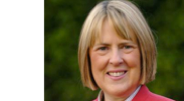
    Below is the text of the speech made by Nick Gibb, the Minister of State for Schools, in Brighton on 5 May 2016.

    Can I start by saying thank you for inviting me to join you today at your annual conference. It is an honour to be included on such an esteemed roster of speakers, though it is rather daunting to offer insights on leadership when followed by the likes of Charles Moore and David Starkey, biographers of Margaret Thatcher and Henry VIII respectively.

    One of the advantages of speaking first, however, is that I can lay claim to all of the more obvious quotations about political and school leadership. It was Winston Churchill, in his memoirs ‘My Early Life’, who made the observation: ‘Headmasters have powers at their disposal with which Prime Ministers have never yet been invested.’

    Whilst this may be true of an English public school at the end of the nineteenth century, it would not apply to English state schools for much of the twentieth century.

    Up until the 1988 Education Reform Act, the budget for state-maintained schools was reserved for only a miniscule proportion of expenditure – exercise books and school stationery, so the cliché went. Decisions on school meals, school maintenance, staff training, and school insurance all lay with the local authority. Even something so crucial to a school as the recruitment, appointment, and payment of staff was decided by the local authority, not the school head.

    Only during the late eighties, with the arrival of what became known as the ‘local management of schools’, could school hire staff as they saw fit. Only then did decisive and strong school leadership become a genuine possibility in the state sector.

    Since the arrival of local management of schools, the trend in school reform has been towards greater school autonomy, and greater powers for heads. And this trend has significantly accelerated since 2010. Our government has been guided by the international evidence showing that high levels of school autonomy, coupled with strong accountability, is a consistent feature of the world’s top-performing school systems.

    But one has to go further, and ask: ‘why are autonomous school systems superior to school systems characterised by centralised direction?’ My answer would be this. English state education was once characterised by uniform mediocrity, and a sense of resigned acceptance that it would forever be thus.

    I remember talking to a consultant who in the early 2000s was asked to write a report on what could be done to improve London’s state schools. So, as any consultant would, he set out to find case studies of those high-achieving state schools within London which were delivering an outstanding education to pupils in disadvantaged circumstances. He returned empty handed: no such schools could be found.

    Nothing could have summed up the outlook at the time better than that once ubiquitous phrase: ‘bog-standard comprehensive’.

    How different the situation is today. We now have a school system where autonomous schools are able to break free from the intellectual and bureaucratic constraints of the past, allowing school leaders to beat a new path of previously unimaginable success. King Solomon Academy was founded in 2009 in one of the most disadvantaged London wards for child poverty. 44% of the pupils are eligible for free school meals – more than 3 times the national average.

    From its inception, King Solomon Academy created an ethos-based on no-excuses school discipline, and unapologetically high academic expectations. Today, it is the best non-selective state secondary school in the country, according to the 5 A* to C measure at GCSE, with 95% of pupils reaching that standard.

    King Solomon Academy is now able to spread its means of success to the 34 other schools within its multi-academy trust, Ark Schools. Unsurprisingly, school leaders are clammering at the doors to visit King Solomon Academy.

    As a result of a cohort of some of the best teachers we’ve ever had in the state sector, 1.4 million more pupils are in ‘good’ and ‘outstanding’ schools today compared to 2010. We have a generation of Teach First alumni and other teachers who are challenging prevailing education orthodoxies. People like Joe Kirby, Katie Ashford, Rob Peal, David Perks and Hwyell Jones.

    We have a profession that is embracing an evidence based approach to the curriculum and pedagogy – new institutions such as Research Ed, founded by Tom Bennett and the Knowledge Network, a grouping of teachers committed to a knowledge rich curriculum. This government’s reforms have been the most radical and far reaching since the 1944 Butler Act. That’s why, on occasion, ‎they attract controversy. Our reforms are designed to deliver more schools like King Solomon; non-selective schools achieving GCSE results that exceed those of many selective independent schools.

    Of course, there are still too many failing schools with weak leadership in this country. But that number is significantly down since 2010. We have taken nearly 1,400 failing schools out of local-authority control and had their governance transferred to academy trusts. We have invested heavily in the use of phonics in primary schools, and in an innovative scheme to the mastery method of mathematics teaching from Shanghai and Singapore to English schools; 2 measures which, in time, could all but eradicate illiteracy and innumeracy.

    Reforms in education cannot be rushed. Changes to the examination and assessment system, which began in 2010, are only just starting, with 20 new GCSEs and 11 new A levels being taught from September and new national curriculum assessments at primary school being taken this week and next. And there has been a complete end to grade inflation since 2012. Quick fixes for turning the tanker of educational underperformance in this country do not exist. But let me reassure you that things are moving in the right direction.

    The state and independent sectors need to work together – using your expertise to sponsor academies and new free schools, helping us to create more state schools that deliver standards we are seeing at Mossbourne Academy, the City Academy Hackney and the London Academy of Excellence – a project in which some here are involved. School leaders visiting these schools will return full of new ideas for improving the curriculum, teaching and organisation at their own institution.

    And this is how improvement in any sector occurs: autonomy allows exemplary institutions to emerge, and the innovations which made those institutions exemplary can in turn migrate to drive improvement elsewhere. In time, and given the right channels of communication, the ideas which currently characterise the best of the education sector, will come to characterise the rest of the education sector.

    The historical trend towards school autonomy has not been entirely linear. When I first became Schools Minster in 2010, it was clear that – whilst power had passed from local authorities to schools – the Department for Children, Schools and Families as it was then known, had become addicted to meddling in the minutia of school administration.

    Schools had gone through a period of ‘initiativeitus’, with a constant turnover of ‘clever wheezes’ emerging from the department, or one of its ever-growing panoply of quangos. national strategies, national curriculum re-writes, a Five-Year Strategy, Every Child Matters – all burdening schools with bureaucracy and complex guidance.

    We took clear and purposeful action to free heads from such meddling. We disbanded, merged or cut the government funding of 8 government quangos, an alphabetic soup including Becta; the GTC; the NCSL; the SSAT; and the QCDA.

    We also removed 21,000 pages of unnecessary school guidance, reducing the volume by 75%, and centralising all that remained in one place on the GOV.UK website. In place of continual missives to school leaders, the department now sticks to one short monthly email.

    Needless legislation which constrained the smooth running of schools has been amended, strengthening teachers’ powers to discipline pupils: teachers can now issue same-day detentions; they have stronger powers to search pupils’ possessions; and we have clarified teachers’ power to use reasonable force.

    Today, headteachers no longer have to complete self evaluation forms, submit annual absence and performance targets to local authorities, or instruct their teachers to produce lesson plans or teach in a particular style simply to please Ofsted inspectors.

    At the department, we have worked constructively with Ofsted and Sir Michael Wilshaw to ensure that headteachers are freed to focus on what is best for raising pupil outcomes, and not what is best for pleasing visitors. Ofsted guidance was reduced in 2014 from 411 to 136 pages, and last year guidance was further reduced despite the increased reach of the common inspection framework. The guidance that remains is clear, considered, and concise.

    For headteachers who lead academies, the freedoms are more extensive still. They have more control over their funding, the ability to change term times and the school day, greater freedom over their curriculum, and the freedom to choose where to go to get the best services, such as behaviour support and school improvement.

    This is because institutions thrive when the people who lead them are actually in charge. Conversely, there is nothing more deflating than being responsible for an organisation over which you do not have adequate control.

    Crucial to a policy of school autonomy is, of course, having enough school leaders with the right skills and experience. For this reason, a significant focus of the white paper that we published in March is on improving the quality of school leadership within our schools.

    The National Professional Qualification for headship, known as the NPQ, became optional for heads in the state-funded schools in 2012. We have passed on the delivery of these qualifications to schools and other organisations, in a bid to ensure their content is as focused as possible on real school concerns, and not distracting theories.

    We are now taking reforms a step further, redesigning the NPQ to make it a truly world-class badge of excellence. We are convening a group of leading headteachers and education experts to guide and advise on exactly what this qualification should include, and the group will include expertise from across the state and independent sectors.

    We will make sure that the new NPQ focuses solely on the practices which are backed up by rigorous evidence and research, not fads.

    You may have noticed that when I earlier listed exemplar schools which visitors are keen to visit, they were all in London. Of course, there are excellent schools in all parts of the country, but we are keenly aware of the existence of cold and hot spots in school improvement. Good leaders are indispensable for turning schools around, but tempting good leaders to schools in areas of historic underperformance is an ongoing challenge.

    For this reason, we are launching an Excellence in Leadership Fund, which will offer the development of innovate programmes to train leaders to work in areas where they are needed most.

    For ambitious heads who take over failing schools, change cannot occur overnight. Schools run on annual cycles. It has been a disincentive for some leaders taking over underperforming schools, however, that they feel at risk of being judged harshly by Ofsted before they have had time to turn the organisation around.

    To prevent this occurring, we are working with Ofsted to introduce ‘improvement periods’, which give new heads taking on challenging schools sufficient time to make an impact. Where a new head steps in to a school requiring improvement, the school will not face re-inspection until around 30 months after the previous inspection. And where a failing maintained school is replaced by a sponsored academy or a new sponsor is appointed to drive further improvement in an academy, the school will not normally face inspection until its third year of operation.

    We have invested in a number of programmes which encourage promising young graduates into the profession, or which train promising teachers to take on leadership positions.

    Teach First, for example, currently has 2,463 graduates of its programme teaching in UK state schools. Of these, 1 in 3 is already a middle or senior leader, and 18 are headteachers.

    For bright and ambitious young graduates, a career in teaching now offers rapid advancement opportunities to rival any other profession.

    And career advancement for teachers does not end with headship. The challenges of running a multi-academy trust demand a whole different set of abilities compared to headship, but equally should offer an exciting new avenue for the brightest and best in the profession to continue progressing throughout their careers.

    This government will have achieved its aims, if in the years to come, teaching has become established as one of the most exciting and rewarding professions available to young people.

    It is a remarkable fact, and perhaps no coincidence, that King Solomon Academy is today making headlines as the best school in the country, but 6 years ago was making headlines for employing the youngest head in the country: Max Haimendorf, who established the school aged just 28 years old, and is still there today.

    Another inspiring school leader who I would like to mention is Katharine Birbalsingh. She is currently running a free school in Wembley which shows an admirable disregard for the way in which English schools are normally operated. The school is unapologetically strict and demanding: desks are in rows; corridors are walked in silence; and pupils memorise subject content for weekly tests.

    Having visited the school last year, the whole institution emits a sense of positivity and purpose quite unlike any other school I have ever been inside. In this area of significant deprivation, children are brimming with pride at the progress they are making.

    Such a school could never have existed before the academies and free school policies. Today, there are over 300 free schools in operation, which will create over 153,000 new school places once at capacity. The best are already extraordinary success stories, forcing all of us to revise our expectations about what children, particularly children from deprived backgrounds, are capable of achieving.

    When this government talks about increased school autonomy, I do sense the incredulity with which some school leaders react. They point to a new curriculum; new national assessments at ages 7 and 11; and reforms to GCSE and A levels.

    It is true that since 2010 we have overhauled the testing and assessment system, but that was for good reason. In 2010, 55% of pupils achieved the ‘minimum standard’ of 5 GCSEs at grades A* to C including English and mathematics. However, this number masked a multitude of deficiencies. The design of performance measures encouraged schools to enter its pupils for ‘equivalent qualifications’ in less academically demanding subjects, which employers told us were worthless. And there was suspicion of grade inflation within the profession and amongst employers.

    Having compared the reported improvement in GCSE results to an annual benchmarked aptitude test, Professor Coe of Durham University concluded that the question, I quote, ‘is not whether there has been grade inflation, but how much’.

    There was also a widespread feeling that qualifications, in particular GCSEs, did not represent the mastery of a sufficiently challenging body of subject knowledge. Did a good GCSE in history represent a basic understanding of the chronology of Britain’s past? Did a good GCSE in MFL mean a degree of fluency in the language? Did a good GCSE in English Literature mean a pupil had read widely from the corpus of great works?

    The trend towards modular entry for GCSE, and the existence of A and AS levels, meant that pupils were experiencing a continual cycle of examination cramming and practice, limiting opportunity for teachers to revel in the simple pleasure of teaching their subject. Similarly, controlled assessment had become a time-consuming burden on teachers, which limited classroom teaching, and encouraged dubious practices in schools.

    So we saw a pressing need to reform the examination system. Many of these reforms which began almost 6 years ago are only just becoming a reality in schools. I believe this process of reform is consistent with a policy of school autonomy. The government’s role in education should not be to dictate school practices, but it does need to act as the guardian of high expectations.

    General Patton’s dictum on leadership was this: ‘Never tell people how to do things. Tell them what to do and they will surprise you with their ingenuity.’

    And that represents the philosophy behind our education reforms. Good government does not improve public services. It sets the conditions in which public services can improve themselves. That is what our reforms are achieving in this country’s state schools.

  • David Cameron – 2016 Speech on Security in the EU

    davidcameron

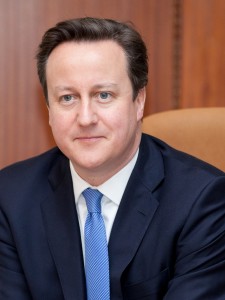
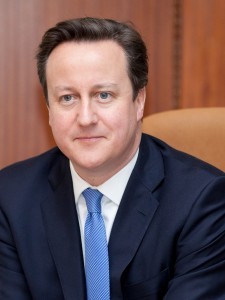
    Below is the text of the speech made by David Cameron, the Prime Minister, at the British Museum in London on 9 May 2016.

    Introduction

    In 45 days’ time, the British people will go to polling stations across our islands and cast their ballots in the way we have done in this country for generations.

    They will, as usual, weigh up the arguments, reflect on them quietly, discuss them with friends and family, and then, calmly and without fuss, take their decision.

    But this time, their decision will not be for a Parliament, or even two.

    They will decide the destiny of our country, not for 5 years or for 10, but in all probability for decades, perhaps a lifetime.

    This is a decision that is bigger than any individual politician or government.

    It will have real, permanent and direct consequences for this country and every person living in it.

    Should we continue to forge our future as a proud, independent nation while remaining a member of the European Union, as we have been for the last 43 years? Or should we abandon it?

    Let me say at the outset that I understand why many people are wrestling with this decision, and why some people’s heads and hearts are torn.

    And I understand and respect the views of those who think we should leave, even if I believe they are wrong and that leaving would inflict real damage on our country, its economy and its power in the world.

    Where I stand

    I believe that, despite its faults and its frustrations, the United Kingdom is stronger, safer and better off by remaining a member of the European Union. Better off? Certainly.

    We are part of a single market of 500 million people which Britain helped to create. Our goods and, crucially, our services – which account for almost 80% of our economy – can trade freely by right. We help decide the rules. The advantages of this far outweigh any disadvantages.

    Our membership of the single market is one of the reasons why our economy is doing so well, why we have created almost 2.4 million jobs over the last 6 years, and why so many companies from overseas – from China or India, the United States, Australia and other Commonwealth countries invest so much in the UK.

    It is one of the factors – together with our superb workforce, the low taxes set by the British government, and our climate of enterprise – which makes Britain such an excellent place to do business.

    All this is alongside – let us note – our attractive regulatory environment. According to the OECD, it is second only to the Netherlands, itself an EU member – giving the lie to those who claim that the British economy is being strangled by regulation from Brussels.

    If we leave, the only certainty we will have is uncertainty.

    The Treasury has calculated that the cost to every household in Britain would be as high as £4,300 by 2030 if we leave. £4,300.

    The overwhelming weight of independent opinion – from the International Monetary Fund to the OECD, from the London School of Economics to the Institute for Fiscal Studies – also supports the fact that Britain will suffer an immediate economic shock, and then be permanently poorer for the long-term.

    The evidence is clear: we will be better off in, and poorer if we leave.

    As Charles Dunstone, the founder of Carphone Warehouse, an entrepreneur not averse to risk, has said: “In my experience there are calculated risks, there are clever risks, and there are unnecessary and dangerous risks. And from all I can conclude, Brexit sits firmly in the latter camp.”

    So the onus is on those who advocate leaving to prove that Britain will be better off outside the EU. Those advocating Brexit have spent many years preparing for this moment. And yet they seem unable to set out a clear, comprehensive plan for our future outside the EU.

    Some admit there would be a severe economic shock, but assert nonchalantly that it would be ‘a price worth paying’.

    Others are in denial that there would be a shock at all. And they can’t agree what their plan for post-Brexit Britain would look like.

    One minute we are urged to follow Norway, the next minute Canada. A few days later Switzerland offers the path forward, until it becomes clear that their arrangement doesn’t provide much access for services to the EU’s single market – and services, as I’ve said, are almost 4 fifths of the British economy.

    Most recently, the Leavers have noticed that a number of European countries that sit outside of the EU have negotiated separate trade arrangements with the EU.

    They called this collection of countries the ‘European free trade zone’.

    But in fact, this doesn’t exist: it is a patchwork of different arrangements, all of them far inferior to what we have now.

    They have gone on to suggest that Britain might join this non-existent zone, just like Albania.

    Seriously? Even the Albanian Prime Minister thought that idea was a joke.

    The Leave campaign are asking us to take a massive risk with the future of our economy and the future of our country.

    And yet they can’t even answer the most basic questions.

    What would Britain’s relationship be with the EU if we were to leave? Will we have a free trade agreement, or will we fall back on World Trade Organisation rules?

    The man who headed the WTO for 8 years thinks this would be and I quote “a terrible replacement for access to the EU single market.”

    Some of them say we would keep full access to the EU single market.

    If so, we would have to accept freedom of movement, a contribution to the EU budget, and accept all EU rules while surrendering any say over them.

    In which case, we would have given up sovereignty rather than taken it back.

    Others say we would definitely leave the single market – including, yesterday, the Vote Leave campaign – despite the critical importance of the single market to jobs and investment in our country.

    I can only describe this as a reckless and irresponsible course. These are people’s jobs and livelihoods that are being toyed with.

    And the Leave campaign have no answers to the most basic questions.

    What access would we try to secure back into the single market from the outside? How long would it take to negotiate a new relationship with the EU? What would happen to the 53 trade deals we have with other markets around the world through the EU?

    The Leave campaign can’t answer them because they don’t know the answers. They have no plan.

    And yet sceptical voters who politely ask for answers are denounced for their lack of faith in Britain, or met with sweeping assurances that the world will simply jump to our tune.

    If you were buying a house or a car, you wouldn’t do it without insisting on seeing what was being offered, and making sure it wasn’t going to fall apart the moment you took possession of it.

    So why would you do so when the future of your entire country is at stake?

    The British people will keep asking these questions every day between now and 23 June, and demanding some answers.

    Nothing is more important than the strength of our economy.

    Upon it depends the jobs and livelihoods of our people, and also the strength and security of our nation.

    If we stay, we know what we get – continued full access to a growing single market, including in energy, services and digital, together with the benefit of the huge trade deals in prospect between the EU and the United States and other large markets.

    If we leave, it is – genuinely – a leap in the dark.

    But my main focus today will not be on the economic reasons to remain in the EU, important though they are.

    I want to concentrate instead on what our membership means for our strength and security in the world, and the safety of our people, and to explain why, again, I believe the balance of advantage comes down firmly in favour of staying rather than leaving.

    Because this decision is a decision about our place in the world, about how we keep our country safe, about how Britain can get things done – in Europe and across the world – and not just accept a world dictated by others.

    A proud, confident nation

    So today I want to set out the big, bold patriotic case for Britain to remain a member of the EU.

    I want to show that if you love this country, if you want to keep it strong in the world, and keep our people safe, our membership of the EU is one of the tools – one of the tools – that helps us to do these things, like our membership of other international bodies such as NATO or the UN Security Council.

    Let us accept that for all our differences, one thing unites both sides in this referendum campaign.

    We love this country, and we want the best future for it. Ours is a great country.

    Not just a great country in the history books, although it surely is that.

    But a great country right now, with the promise of becoming even greater tomorrow.

    We’re the fifth largest economy in the world. Europe’s foremost military power. Our capital city is a global icon. Our national language the world’s language.

    Our national flag is worn on clothing and t-shirts the world over – not only as a fashion statement, but as a symbol of hope and a beacon for liberal values all around the world.

    People from all 4 corners of the earth watch our films, dance to our music, flock to our galleries and theatres, cheer on our football teams and cherish our institutions.

    These days, even our food is admired the world over.

    Our national broadcaster is one of the most recognised brands on the planet, and our monarch is one of the most respected people in the world.

    Britain today is a proud, successful, thriving nation, a nation the world admires and looks up to, and whose best days lie ahead of it.

    We are the product of our long history – of the decision of our forebears, of the heroism of our parents and grandparents.

    And yet we are a country that also has our eyes fixed firmly on the future – that is a pioneer in the modern world: from the birth of the internet to the decoding of the genome.

    The character of the British people

    If there is one constant in the ebb and flow of our island story, it is the character of the British people.

    Our geography has shaped us, and shapes us today. We are special, different, unique.

    We have the character of an island nation which has not been invaded for almost a thousand years, and which has built institutions which have endured for centuries.

    As a people we are ambitious, resilient, independent-minded. And, I might add, tolerant, generous, and inventive.

    But above all we are obstinately practical, rigorously down to earth, natural debunkers.

    We approach issues with a cast of mind rooted in common sense. We are rightly suspicious of ideology, and sceptical of grand schemes and grandiose promises.

    So we have always seen the European Union as a means to an end – the way to boost our prosperity and help anchor peace and stability across the European continent – but we don’t see it as an end in itself.

    We insistently ask: why? How?

    And as we weigh up the competing arguments in this referendum campaign, we must apply that practical rigour which is the hallmark of being British.

    Would going it alone make Britain more powerful in the world? Would we be better able to get our way, or less able?

    Would going it alone make us more secure from terrorism, or would it be better to remain and cooperate closely with our neighbours?

    Would going it alone really give us more control over our affairs, or would we soon find that actually we had less, and that we had given up a secure future for one beset by years of uncertainty and trouble with no way back?

    Would going it alone open up new opportunities, or would it in fact close them down and narrow our options?

    Stronger in the world

    That is certainly the approach I have taken to judging whether Britain is stronger and safer inside the European Union or leaving it.

    And I have just one yardstick: how do we best advance our national interest?

    Keeping our people safe at home and abroad, and moulding the world in the way that we want – more peaceful, more stable, more free, with the arteries of commerce and trade flowing freely.

    That is our national interest in a nutshell – and it’s the question that has confronted every British prime minister since the office was created: how do we best advance Britain’s interests in the circumstances of the day?

    If my experience as Prime Minister had taught me that our membership of the EU was holding Britain back or undermining our global influence, I would not hesitate to recommend that we should leave.

    But my experience is the opposite.

    The reason that I want Britain to stay in a reformed EU is in part because of my experience over the last 6 years is that it does help make our country better off, safer and stronger.

    And there are 4 reasons why this is the case.

    First, what happens in Europe affects us, whether we like it or not, so we must be strong in Europe if we want to be strong at home and in the world.

    Second, the dangerous international situation facing Britain today, means that the closest possible cooperation with our European neighbours isn’t an optional extra – it is essential. We need to stand united. Now is a time for strength in numbers.

    Third, keeping our people safe from modern terrorist networks like Daesh and from serious crime that increasingly crosses borders means that we simply have to develop much closer means of security cooperation between countries within Europe. Britain needs to be fully engaged with that.

    Fourth, far from Britain’s influence in the world being undermined by our membership of the EU, it amplifies our power, like our membership of the UN or of NATO. It helps us achieve the things we want – whether it is fighting Ebola in Africa, tackling climate change, taking on the people smugglers. That’s not just our view; it’s the view of our friends and allies, too.

    Let me go through them in turn.

    What happens in Europe affects us

    First: Europe is our immediate neighbourhood, and what happens on the continent affects us profoundly, whether we like it or not.

    Our history teaches us: the stronger we are in our neighbourhood, the stronger we are in the world.

    For 2,000 years, our affairs have been intertwined with the affairs of Europe. For good or ill, we have written Europe’s history just as Europe has helped to write ours.

    From Caesar’s legions to the wars of the Spanish Succession, from the Napoleonic Wars to the fall of the Berlin Wall.

    Proud as we are of our global reach and our global connections, Britain has always been a European power, and we always will be.

    We know that to be a global power and to be a European power are not mutually exclusive.

    And the moments of which we are rightly most proud in our national story include pivotal moments in European history.

    Blenheim. Trafalgar. Waterloo. Our country’s heroism in the Great War.

    And most of all our lone stand in 1940, when Britain stood as a bulwark against a new dark age of tyranny and oppression.

    When I sit in the Cabinet Room, I never forget the decisions that were taken in that room in those darkest of times.

    When I fly to European summits in Brussels from RAF Northolt, I pass a Spitfire just outside the airfield, a vital base for brave RAF and Polish pilots during the Battle of Britain.

    I think of the Few who saved this country in its hour of mortal danger, and who made it possible for us to go on and help liberate Europe.

    Like any Brit, my heart swells with pride at the sight of that aircraft, or whenever I hear the tell-tale roar of those Merlin engines over our skies in the summer.

    Defiant, brave, indefatigable.

    But it wasn’t through choice that Britain was alone. Churchill never wanted that. Indeed he spent the months before the Battle of Britain trying to keep our French allies in the war, and then after France fell, he spent the next 18 months persuading the United States to come to our aid.

    And in the post-war period he argued passionately for Western Europe to come together, to promote free trade, and to build institutions which would endure so that our continent would never again see such bloodshed.

    Isolationism has never served this country well. Whenever we turn our back on Europe, sooner or later we come to regret it.

    We have always had to go back in, and always at a much higher cost.

    The serried rows of white headstones in lovingly-tended Commonwealth war cemeteries stand as silent testament to the price that this country has paid to help restore peace and order in Europe.

    Can we be so sure that peace and stability on our continent are assured beyond any shadow of doubt? Is that a risk worth taking?

    I would never be so rash as to make that assumption.

    It’s barely been 20 years since war in the Balkans and genocide on our continent in Srebrenica. In the last few years, we have seen tanks rolling into Georgia and Ukraine. And of this I am completely sure.

    The European Union has helped reconcile countries which were once at each others’ throats for decades. Britain has a fundamental national interest in maintaining common purpose in Europe to avoid future conflict between European countries.

    And that requires British leadership, and for Britain to remain a member. The truth is this: what happens in our neighbourhood matters to Britain.

    That was true in 1914, in 1940 and in 1989. Or, you could add 1588, 1704 and 1815. And it is just as true in 2016.

    Either we influence Europe, or it influences us.

    And if things go wrong in Europe, let’s not pretend we can be immune from the consequences.

    The international situation means cooperation with Europe is essential

    Second, the international situation confronting Britain today means that the closest possible cooperation with our European neighbours isn’t an optional extra.

    It is essential for this country’s security and our ability to get things done in the world.

    We see a newly belligerent Russia. The rise of the Daesh network to our east and to our south. The migration crisis. Dealing with these requires unity of purpose in the west.

    Sometimes you hear the Leave campaign talk about these issues as if they are – in and of themselves – reasons to leave the EU.

    But we can’t change the continent to which we are attached. We can’t tow our island to a more congenial part of the world.

    The threats affect us whether we’re in the EU or not, and Britain washing its hands of helping to deal with them will only make the problems worse.

    Within Europe they require a shared approach by the European democracies, more than at any time since the height of the Cold War.

    It is true, of course, that it is to NATO and to the Transatlantic Alliance that we look to for our defence.

    The principle enshrined in the North Atlantic Treaty – that an attack on one is an attack on all – that remains the cornerstone of our national defence.

    That fundamental sharing of national sovereignty in order to deter potential aggressors. That is as valid today as it was when NATO was founded in 1949.

    It is an example of how real control is more important than the theory of sovereignty.

    The European Union – and the close culture of intergovernmental cooperation between governments which it embodies – is a vital tool in our armoury to deal with these threats.

    That is why NATO and top military opinion – British, American, European – is clear that the common purpose of the EU does not undermine NATO, it is a vital reinforcement to it.

    And they are equally crystal clear: Britain’s departure would weaken solidarity and the unity of the west as a whole.

    Now some of those who wish us to leave the EU openly say that they hope the entire organisation will unravel as a result.

    I find this extraordinary.

    How could it possibly be in our interests to risk the clock being turned back to an age of competing nationalisms in Europe?

    And for Britain, of all countries, to be responsible for triggering such a collapse would be an act of supreme irresponsibility, entirely out of character for us as a nation.

    Others suggest that Britain stalking out could lead to and I quote “the democratic liberation of an entire continent”.

    Well, tell that to the Poles, the Czechs, the Baltic States and the other countries of central and eastern Europe which languished for so long behind the Iron Curtain.

    They cherish their liberty and their democracy. They see Britain as the country that did more than any other to unlock their shackles and enable them to take their rightful place in the family of European nations.

    And frankly they view the prospect of Britain leaving the EU with utter dismay. They watch what is happening in Moscow with alarm and trepidation.

    Now is a time for strength in numbers. Now is the worst possible time for Britain to put that at risk. Only our adversaries will benefit.

    Security risks

    Now third, the evolving threats to our security and the rise of the Daesh network mean that we have to change the way we work to keep our people safe. Security today is not only a matter of hard defence, of stopping tanks – it is also about rooting out terrorist networks, just as it is about detecting illegal immigrants, stopping human trafficking and organised crime. And that makes much closer security cooperation between our European nations essential.

    I have no greater responsibility than the safety of the people of this country, and keeping us safe from the terrorist threat.

    As the Home Secretary said in her speech a fortnight ago: being in the EU helps to makes us safer.

    We shouldn’t put ourselves at risk by leaving.

    One of her predecessors, Charles Clarke, reiterated that only this morning.

    And the message of Jonathan Evans and John Sawers, former heads of MI5 and MI6 respectively, is absolutely unmistakable: Britain is safer inside the European Union.

    During the last 6 years, the terrorist threat against this country has grown.

    Our threat level is now at ‘Severe’, which means that an attack is ‘highly likely’. Indeed such an attack could happen at any time.

    But the threat has not only grown, it has changed in its nature.

    The attacks in Paris and Brussels are a reminder that we face this threat together – and we will only succeed in overcoming it by working much more closely together.

    These terrorists operate throughout Europe; their networks use technology to spread their poison and to organise beyond geographical limits.

    People say that to keep our defences up, you need a border. And they’re right.

    That’s why we kept our borders, and we can check any passport – including for EU nationals – and we retain control over who we allow into our country.

    But against the modern threat, having a border isn’t enough. You also need information, you need data, you need intelligence. You need to cooperate with others to create mechanisms for sharing this information.

    And, just as the Home Secretary said a fortnight ago, I can tell you this: whether it’s working together to share intelligence on suspected terrorists; whether it’s strengthening aviation security; addressing the challenge of cybercrime; preventing cross-border trade in firearms; tackling the migration crisis; or enhancing our own border security, the EU is not some peripheral institution, or a hindrance we have to work around – it is now an absolutely central part of how Britain can get things done.

    Not by creating a vast new EU bureaucracy. Nor by sucking away the role and capabilities of our own world beating intelligence and law enforcement agencies.

    But because their superb work depends on much closer cooperation between European governments and much faster and more determined action across Europe to deal with this new threat.

    As the historian Niall Ferguson observed, it takes a network to defeat a network.

    And European measures are a key weapon.

    The European Arrest Warrant allows us to bring criminals and terrorists, like one of the failed 21/7 Tube bombers who had fled to Italy, we can bring them back to the UK to face justice straight away.

    Our membership of Europol gives us access to important databases that help us to identify criminals.

    And we have begun to cooperate on DNA and fingerprint matching across borders, too. These tools help us in real-time, life-or-death situations.

    One of the Paris attackers, Salah Abdeslam, was only identified quickly after the attack because the French police were able to use EU powers to exchange DNA and fingerprints with the Belgians.

    Before this cooperation, DNA matching between 2 countries didn’t take minutes, it could take over 4 months.

    In the last few months alone, we have agreed a new Passenger Name Records directive, so that EU countries will have access to airline passenger data to enable us to identify those on terror watch-lists.

    These new arrangements will also provide crucial details about how the tickets were bought, the bank accounts used and the people they are travelling with.

    And the EU has recently switched on a new database, called SIS II, which is providing real-time alerts for suspected jihadists and other serious criminals.

    Now I don’t argue that if we left we would lose any ability to cooperate with our neighbours on a bilateral basis, or even potentially through some EU mechanisms.

    But it is clear that leaving the EU will make cooperation more legally complex – and make our access to vital information much slower and more difficult.

    Look at for instance Norway and Iceland: they began negotiating an extradition agreement with the EU in 2001 and yet today it is still not in force.

    And of course we will miss out on the benefits of these new arrangements, and any that develop in future.

    Now you can take the view that we don’t need this cooperation – that we can just do without these extra capabilities.

    That in my view is a totally complacent view. Especially in a world where the difference between a prevented attack and a successful attack can be just 1 missing piece of data; 1 piece of the jigsaw that the agencies found just too late.

    You can also decide, as some on the Leave side seriously do, that even though working together is helpful for keeping us safe, it involves giving up too much sovereignty and ceding too much power over security cooperation to the European Court of Justice.

    My view is this: when terrorists are planning to kill and maim people on British streets, the closest possible security cooperation is far more important than sovereignty in its purest theoretical form. I want to give our country real power, not the illusion of power.

    Britain’s power in the world

    Fourth, Britain’s unique position and power in the world is not defined by our membership of the EU, any more than it is by our membership of the Commonwealth or the UN Security Council or the OECD or the IMF or the myriad other international organisations to which we belong.

    But our EU membership, like our membership of other international organisations, magnifies our national power.

    Britain is a global nation, with a global role and a global reach.

    We take our own decisions, in our own interests. We always have done, we always will do.

    In the years since we joined the EU, we have shown that time and again with British, national, sovereign decisions about our foreign and defence policy taken by British prime ministers and British ministers.

    Liberating the Falkland Islands in a great feat of military endeavour. Freeing Kuwait from Iraq.

    And, more recently, our mission to prevent Afghanistan continuing to be a safe haven for international terrorists.

    As I speak here today, we are flying policing missions over the Baltic states. Training security forces in Nigeria. And of course, taking the fight to Daesh in Syria and Iraq.

    So the idea that our membership of the EU has emasculated our power as a nation – this is complete nonsense.

    Indeed, over the last 40 years, our global power has grown, not diminished.

    In the years before we joined the EU, British governments presided over a steady retrenchment of our world role, borne of our economic weakness.

    The decision to retreat East of Suez and abandon our aircraft carriers was taken in 1968.

    Since then, starting with the transformation of our economy by Margaret Thatcher, we have turned around our fortunes.

    In the 21st century, Britain is once again a country that is advancing, not retreating,

    We have reversed the East of Suez policy, we are building permanent military bases in the Gulf, we are opening embassies all around the world, particularly in Asia.

    We have a new strategic relationship with both China and India, have committed to spending 2% of our GDP on defence – 1 of only 5 NATO nations to be meeting that target.

    Our expertise in aid, development and responding to crises is admired the world over.

    We are renewing our independent nuclear deterrent.

    Our 2 new aircraft carriers will be the biggest warships the Royal Navy has ever put to sea.

    These are the actions of a proud, independent, self-confident, go-getting nation, a nation that is confident and optimistic about its future, not one cowed and shackled by its membership of the European Union.

    On the contrary, our membership of the EU is one of the tools – just one – which we use, as we do our membership of NATO, or the Commonwealth, or the Five Power Defence Agreement with Australia, New Zealand and our allies in South East Asia, to amplify British power and to enhance our influence in the world.

    Decisions on foreign policy are taken by unanimity. Britain has a veto.

    So suggestions of an EU army are fanciful: national security is a national competence, and we would veto any suggestion of an EU army.

    And as we sit in Britain’s National Security Council, time and again I know that making Britain’s actions count for far more means working with other countries in the EU.

    Let me just take 3 specific examples of what I mean.

    When Russia invaded Crimea and Eastern Ukraine, there was a real risk of a feeble European response, and of a split between the United States and Europe.

    I convened a special meeting of the key European countries in Brussels, agreed a package of sanctions, and then drove that package through the full meeting of EU leaders – the European Council – later that same evening. I could not have done that outside the EU.

    An example of Britain injecting steel into Europe’s actions; delivering sanctions which have been far more effective because 28 countries are implementing them, not just the UK. And at the same time, we maintained that crucial unity between Europe and the US in the face of Russian aggression.

    On Iran, again, it was Britain that pushed hardest for the implementation of an EU oil embargo against that country.

    And it was the embargo which helped bring Iran to the negotiating table, and ultimately led to the UN sanctions that led to Iran abandoning its ambition to build a nuclear weapon. Who led those negotiations? It was the EU, with Britain playing a central role.

    And on Ebola, it was Britain that used a European Council to push leaders into massively increasing Europe’s financial contribution to tackling the disease in West Africa, thereby helping to contain and deal with what was a major public health emergency.

    If Britain left the EU, we would lose that tool.

    The German Chancellor would be there. The French President. The Italian Prime Minister. So would the Maltese, the Slovak, the Czech, the Polish, the Slovene, as well as all the others.

    But Britain – the fifth largest economy in the world, the second biggest in Europe – would be absent, outside the room.

    We would no longer take those decisions which have a direct bearing on Britain.

    Instead we would have to establish an enormous diplomatic mission in Brussels to try and lobby participants before those meetings took place, and to try and then find out what had happened at them once they broke up.

    Would we really be sitting around congratulating ourselves on how ‘sovereign’ we feel, without any control over events that affect us?

    What an abject act of national retreat that would be for our great country, a diminution of Britain’s power inflicted for the first time in our history not by economic woe or military defeat, but entirely of our own accord.

    And when it comes to the strength of our United Kingdom, we should never forget that our strength is that of a voluntary union of 4 nations. So let me just say this about Scotland: you don’t renew your country by taking a decision that could, ultimately, lead to its disintegration.

    So as we weigh up this decision, let’s do so with our eyes open.

    And, of course, there is something closely connected to our power and influence that is absolutely vital: and that’s the view of Britain’s closest friends and allies.

    Before you take any big decision in life, it’s natural to consult those who wish you well, those who are with you in the tough times as well as in the good.

    Sometimes they offer contradictory advice. Sometimes they don’t have much of a view.

    That’s not the case here.

    Our allies have a very clear view. They want us to remain members of the European Union.

    Not only our fellow members of the EU – they want us to stay, and could be resentful if we chose to leave.

    The Leave campaign keep telling us that there is a big world out there, if only we could lift our sights beyond Europe.

    But the problem is they don’t seem to hearing what that big world is saying.

    There is our principal and indispensable ally, the guarantor of our security – the United States – whose President made the American position very plain, as only the oldest and best friends can.

    And then there are the nations to which we are perhaps closest in the world, our cousins in Australia and New Zealand, whose prime ministers have spoken out so clearly.

    The Secretary-General of NATO says that a weakened and divided Europe would be “bad for security and bad for NATO”.

    Only on Thursday, the Japanese Prime Minister – whose country is such a huge investor and employer in the United Kingdom – made very clear that Japan hoped the UK would decide to remain in the EU.

    So too have big emerging economies like Indonesia.

    And then there are our major new trading and strategic relationships – China and India – in whom some of the Leave campaign claim to invest such great hopes, at least when they’re not saying they want to impose hefty tariffs on them. They too want us to remain in the EU.

    So from America to Asia, from Australasia and the Indian sub-continent, our friends and our biggest trading partners, or potential trading partners, are telling us very clearly: it’s your decision. But we hope you vote to stay in the European Union.

    By the way, so too are our own Dependent Territories – Gibraltar and the Falkland Islands – with whom we have such a special bond and for whom we have a special responsibility.

    Conclusion

    And so? Next month we will make our choice as a nation.

    I am very clear.

    Britain is stronger and safer in the EU, as well as better off.

    And the EU benefits from Britain being inside rather than out.

    This is a Europe that Britain has helped to shape.

    A continent that Britain helped liberate not once in the last century, but twice.

    And we always wanted 2 things from the EU.

    One: the creation of a vast single market; one we thought would benefit our economy enormously and spread prosperity throughout our neighbourhood.

    And two: a Europe in which Britain helped the nations which languished under Communism return to the European fold; nations who still look to us as a friend and protector and do not want us to abandon them now.

    We’ve got both of those things.

    We did all that.

    And imagine if we hadn’t been there.

    Who would have driven forward the single market?

    Who would have prevented Europe from becoming a protectionist bloc?

    Who would have stopped the EU from becoming a single currency zone?

    Who would have stood up and said no to those pushing for political union?

    Who would have done these things?

    Because the truth is that if we were not in it, the European Union would in all likelihood still exist.

    So we would still have to deal with it.

    Now we have the opportunity to have what we have always wanted: to be in the single market, but out of the euro.

    To be at the European Council, with our full voting and veto rights, but specifically exempted from ever closer union.

    To have the opportunity to work, live and travel in other EU countries, but to retain full controls at our border.

    To take part in the home affairs cooperation that benefits our security, but outside those measures we don’t like.

    And to keep our currency.

    That is, frankly, the best of both worlds.

    No wonder our friends and allies want us to take it. To lead, not to quit.

    It is what the Chinese call a win win.

    The Americans would probably say it’s a slam dunk.

    We are Britain.

    No one seriously suggests any more that after 40 years in the EU, we have become less British.

    We’re proud. We’re independent.

    We get things done.

    So let’s not walk away from the institutions that help us to win in the world.

    Let’s not walk away from the EU, any more than we would walk away from the UN, or from NATO.

    We’re bigger than that.

    So I say – instead, let us remain, let us fight our corner, let us play the part we should, as a great power in the world, and a great and growing power in Europe.

    That is the big, bold, and patriotic decision for Britain on 23 June.
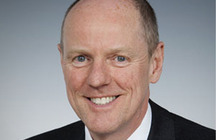
  • Chris Chope – 2016 Speech on the European Convention on Human Rights

    Below is the text of the speech made by Chris Chope, the Conservative MP for Christchurch, in the House of Commons on 9 May 2016.

    I am most grateful to Mr Speaker for giving me the opportunity this evening to raise the issue of the UK’s membership of the European convention on human rights. I want to focus on the issue in the context of the referendum that will take place on 23 June—and let me say, as a Brexiteer, that it is good to know that a fellow Brexiteer will be responding to the debate.

    I should, at the outset, set out my position on sovereignty and human rights. I want our Parliament to make the laws to which United Kingdom citizens are subject, and I want our independent judges to interpret those laws without fear or favour. I believe that if Parliament does not like a court’s interpretation of the law, Parliament should be able to change that law, prospectively but not retrospectively. I also believe that supranational courts should not be able to legislate for us by judicial means. If the wording of a treaty is to be changed, it should be changed by an amending protocol and not by judges.

    That is why I support the European convention on human rights, but am very uneasy about the way in which it has been extended by judicial activism into fields that Parliament has never approved—a prime example, obviously, is giving votes to prisoners, an issue which the Prime Minister told us made him feel physically sick—and that is why I am so keen for the United Kingdom to take back control over the making and interpretation of our laws. Currently, 60% of our laws are made by the European Union, and they can be changed at will by the European Union against our wishes, because even if all United Kingdom Members of the European Parliament vote in one way, they can muster fewer than 10% of the votes in that Parliament.

    I applied for this debate because I am very confused about Government policy on UK membership of the European convention on human rights. I read the speech delivered by my right hon. Friend the Home Secretary to the Institution of Mechanical Engineers on 25 April, entitled “The United Kingdom, the European Union, and our place in the world”. In that speech, my right hon. Friend set out what she considered to be the principles for Britain’s membership of international institutions. She said:

    “We need…to establish clear principles…Does it make us more influential beyond our…shores? Does it make us more secure? Does it make us more prosperous? Can we control or influence the direction of the organisation in question? To what extent does membership bind the hands of Parliament?”

    Having asked all those questions, she said that

    “the case for remaining a signatory of the European Convention on Human Rights—which means Britain is subject to the jurisdiction of the European Court of Human Rights—is not clear.”

    She went on to say:

    “The ECHR can bind the hands of Parliament, adds nothing to our prosperity, makes us less secure by preventing the deportation of dangerous foreign criminals.”

    “If we want to reform human rights laws in this country, it isn’t the EU we should leave but the ECHR and the jurisdiction of its court.”

    Jim Shannon (Strangford) (DUP)

    If we want to have influence, we should bear in mind that tomorrow is the eighth anniversary of the imprisonment of seven Bahá’i leaders in Iran. They are prisoners of conscience, and were imprisoned as a result of their religious belief. That is an unquestionable violation of their human rights.

    Outside Europe, the United Kingdom’s membership of the European convention on human rights sends a strong signal of our continued commitment to upholding and advancing human rights globally. Is there not a good reason for our being a member of the convention when we can do something for those Bahá’i leaders in Iran who have been violated and persecuted because of their beliefs? That is one example.

    Mr Chope

    The hon. Gentleman has made his point very well. However, I am concentrating on what the Home Secretary said. She seemed to be announcing a Government policy that the United Kingdom should leave the convention but stay in the EU. Her speech led to an urgent question, which was granted by Mr Speaker, and I—and other people who were present on that occasion—could not understand how we were going to be able to deliver the Home Secretary’s agenda on human rights if we remained in the European Union and subject to the EU charter of fundamental rights.

    Questions were raised by Members during those exchanges, and it became clear that the Home Secretary—and, indeed, the Government—were indeed rather muddled about this. One of the questions that was asked was whether membership of the European Union required us to be a party to the European convention on human rights. The Home Secretary was not answering the urgent question. The Attorney General answered, as a Law Officer. He said:

    “It is not…in any way clear that membership of the European Union requires membership of the European convention on human rights…there are considerable legal complexities”.—[Official Report, 26 April 2016; Vol. 608, c. 1291.]

    My hon. Friend the Member for North East Somerset (Mr Rees-Mogg) then cited article 6.3 of the treaty on European Union, which states:

    “Fundamental rights, as guaranteed by the European Convention…shall constitute general principles of the Union’s law.”

    He went on to refer to the fact that the Commission had said that any member country of the European Union that sought to disengage from the European convention on human rights might have its voting rights suspended.

    Then, as so often happens in this House, my hon. Friend the Member for Wellingborough (Mr Bone) asked a really pertinent question. He said:

    “Can a country remain in the European Union and still come out of the convention? What is his legal opinion on that?”

    The Attorney General replied:

    “As I have suggested, the legal position is not clear.”

    He went on to say that he did not

    “have the time to go into all the ins and outs of that particular question now, but I suggest it would also be wrong to say that it is clear in the opposite direction.”—[Official Report, 26 April 2016; Vol. 608, c. 1301.]

    So that was what the Government were saying about this particular matter.

    This morning, I heard the Prime Minister chiding Brexiteers for having no clear comprehensive plan for life outside the EU, but that was a classic case of the pot calling the kettle black. As I have just said, the Prime Minister and the Government have no clear plan for life inside the European Union if there is a remain vote on 23 June. They do not know what will happen to their human rights agenda. There are many other examples beyond that.

    It is a failure by the Government not to address this issue up front, and to leave it hanging in the air pending the referendum. We have had some quite clear advice from lawyers of great distinction. For example, Lord Woolf said:

    “You can legally reconcile the doctrine of the sovereignty of Parliament with the European Convention on Human Rights. You cannot do that with regard to the European Charter, because the position there is that you can trump a statute.”

    Lord Woolf was being quoted there in the House of Lords paper 139, which was published today. We now have a situation in which the Home Secretary seems to be arguing that we would be more secure if we left the convention on human rights but retained European law relating to fundamental rights.

    I should like to give the House some examples of how EU law is undermining our security. In The Sunday Telegraph yesterday, it was reported that six Algerian terror suspects with links to Osama bin Laden and al-Qaeda were to be allowed to stay here after a 10-year battle in the courts. I think that the Under-Secretary of State for Justice, my hon. Friend the Member for Esher and Walton (Mr Raab) has made the point that the number of people fraudulently trying to gain entry into the United Kingdom has almost doubled in a year. That is because those people realise that we do not have the power to turn them away at our borders if they are waving a European Union identity document.

    I was speaking at a conference on European freight security last week, at which it became apparent that we are not allowed to X-ray lorries in Calais to see whether they contain illegal migrants because it might be damaging to the human rights and health of those illegal migrants. That is another example of how human rights laws undermine our ability to keep our borders secure. Another example is that we are not allowed to take DNA samples from migrants who refuse to give their fingerprints when they enter the European Union, which is expressly prohibited by the Eurodac regulations.

    Then we have the example, which came out a couple of months ago, of Abu Hamza’s daughter-in-law. We found out that she was his daughter-in-law only through a freedom of information request. An advocate-general in the European Court of Justice said that it was in principle contrary to European Union treaties to remove the lady from the United Kingdom, notwithstanding the fact that she had been convicted and sentenced to a year’s imprisonment. It was subsequently revealed that she had been convicted of attempting to smuggle a Sim card to Abu Hamza while he was in a high-security prison, but even that grave crime was insufficient to allow the courts to remove her from the United Kingdom because of the intervention of the European Court of Justice, which exercised its powers under the EU’s fundamental rights laws.

    I cannot understand how the Home Secretary can consistently argue that we should stay in the European Union when the logic of everything she said in her speech was that we should be leaving the EU. It is potentially misleading for members of the public to think that they can have their cake and eat it by leaving the European convention on human rights while still remaining subject to the European Court of Justice.

    Sir Edward Leigh (Gainsborough) (Con)

    Perhaps all these complexities explain why so little progress is being made on our manifesto commitment to leave the European convention on human rights. When the Minister replies, I hope that he will make it clear that the Government have not gone cold on that.

    Mr Chope

    I hope that the Minister will be able to respond to that. We had a debate towards the beginning of this parliamentary Session in which the Minister made it clear that the Government intended to bring forward a consultation document on this sooner rather than later. I think he envisaged that that would be before Christmas, but it then became after Christmas and now it is after the referendum. They were talking about a consultation document, so why can we not have even a discussion? I fear that it has been kicked into the long grass on the instructions of No. 10, because it was realised that it would lead to lot of awkward questions. The Government have demonstrated throughout the course of the referendum debate that they are quite happy to ask hypothetical questions and complain when people are unable to answer them, but they are unwilling to respond positively to the questions that people are asking them.

    Sir Gerald Howarth (Aldershot) (Con)

    I am sorry that I missed the first part of my hon. Friend’s speech; I very much look forward to reading it tomorrow. While the view of the general public is that infringements on the rights of Parliament are the result of the intervention of the European Court of Human Rights, will my hon. Friend confirm that even if we were to leave the European convention on human rights and remain in the EU, we would still be subject to the same kind of interference from the European Court of Justice?

    Mr Chope

    Yes. It would be not only the same type of interference, but graver. That is the conclusion of the House of Lords EU Justice Sub-Committee, the report of which I referred to earlier and came out today. The European Court of Justice has much greater powers and can effectively remove legislation from our statutes. The European Court of Human Rights is much more restricted and can deal only with individual cases, which then can be the subject of negotiation and we can ultimately exercise more discretion or have a greater “margin of appreciation”, to put it in legal language. As Lord Woolf was saying, the European convention on human rights may not be perfect, and we may not like the way in which it has been changed by judge-made law, but most people would agree with its actual wording.

    The European charter of fundamental rights is anathema. You may recall, Mr Deputy Speaker, that when the charter was first brought forward and the then Labour Government were saying that it would have no application to the United Kingdom, the then Minister for Europe, the right hon. Member for Leicester East (Keith Vaz), memorably said that it would have no more status in UK law than a copy of the Beano. That just illustrates the speed with which change comes about. One moment we think something has been passed which is not going to apply to us and now we find, on the highest authorities in the land, that we are indeed subordinate to the European Court of Justice and that the European fundamental rights agency and charter are supreme. My plea to the Minister is: can we get this sorted out? Will he confirm that the UK would be in an absurd position if it wanted to stay in the EU but denounced the European convention on human rights?

  • Nicky Morgan – 2016 Speech in Leicester

    nickymorgan

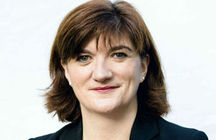
    Below is the text of the speech made by Nicky Morgan, the Secretary of State for Education, in Leicester on 6 May 2016.

    Good morning ladies and gentleman, and thank you Corin [Crane, Director, Leicester and Leicestershire Enterprise Partnership] for that introduction.

    Both as the Secretary of State for Education and as a Leicestershire MP, it’s such a delight to be here today, launching the Leicester and Leicestershire Local Enterprise Partnership’s local Enterprise Adviser Network in partnership with the Careers and Enterprise Company.

    And it’s a real pleasure to welcome the Careers and Enterprise Company’s Chief Executive, Claudia Harris, here this morning.

    As a government we have made it a priority to make sure the education system is better linked to the world of work, with emphasis on young people mastering the skills the economy needs and relevant qualifications respected by employers who are able to have greater influence on the curriculum and how it is delivered.

    This government wants to see real and long-lasting improvements to the quality of careers advice and guidance, with schools and employers working more closely together.

    Getting this right means opening a world of opportunity for young people, making sure each and every one of them has the chance to succeed in life, and is a key component of our commitment to govern as one nation and deliver social justice.

    We know we have made great strides forward since 2010, with the latest national figures showing 7.3% of 16- to 18-year-olds not in education, employment or training (NEET) – that is the lowest level since consistent records began.

    However, in parts of our local area NEET levels are significantly higher than others, so we cannot rest on our laurels, and we have to continually commit ourselves to helping all young people to reach their potential.

    By working together – government, schools, colleges, universities and employers – we can all play a part in the success of young people, setting them up with the tools to find a career that suits them and delivers the financial security of a prosperous future.

    It’s vital for individuals, but actually it’s vital for the economy as a whole too. That’s why the careers strategy we’re publishing this year will rightly recognise the importance of careers provision.

    I’m proud that this government has committed £70 million throughout this Parliament to transform careers provision – and we’re investing an additional £20 million to increase mentor numbers for those at risk of underachieving, so that they can get the high-quality mentoring that will give them the guidance and the confidence that will allow them to succeed.

    Many organisations are already offering excellent careers and enterprise activities for schools, employers and young people, but access is inconsistent and coverage is patchy.

    That’s why we backed the creation of the Careers and Enterprise Company, so that it could test and share evidence on what works, address inconsistencies and deliver targeted support where it is most needed, invest in and facilitate young people having more contact with employers during the crucial period when they are making decisions about their future, and create the lasting connections between schools and local employers that will make careers guidance meaningful and matched to local need.

    The Careers and Enterprise Company has made excellent progress to date, launching its £5 million careers and enterprise fund, benefiting a number of national projects and of which £184k has been specifically awarded to excellent local initiatives.

    Bridge to Work, based at Loughborough College, an initiative I have been delighted to support as a local MP, is one of the recipients.

    It offers flexible courses, work experience, interview training, employability and job coaching, as well as intensive courses in vital English, maths and ICT skills. Its focus on the skills gap is helping young people to make a smooth transition from education to the world of work.

    In October last year I was thrilled to be able to attend one of their careers events, alongside Claudia Harris of the Careers and Enterprise Company.

    Bridge to Work is not alone, with other local schemes like the Engineering Development Trust, Founders for Schools, Twenty Twenty and World Skills UK also benefiting from the fund.

    The Careers and Enterprise Company has made other progress too, publishing its ‘what works’ toolkit and announcing that it will lead a new mentoring campaign with the aim by 2020 for 25,000 young people a year to receive mentor support.

    Enterprise education is about teaching young people to recognise and develop the skills of innovation, creativity, risk-taking and management and – while it is for schools to decide how best to provide entrepreneurship education – we know that contact with entrepreneurs and businesses is key, because modern careers guidance is as much about fostering aspiration and building confidence in young people as it is about making sure they have access to meaningful advice.

    I am delighted that the Enterprise Adviser Network, launched by the Careers and Enterprise Company in September 2015, has been such a success.

    Local enterprise partnerships (LEPs) up and down the country have embraced this opportunity to help deliver their skills plans by bringing schools, colleges, local employers and other organisations together.

    The hard work of people like Corin, Abdul [Bathin, Enterprise Co-ordinator, Leicester and Leicestershire Local Enterprise Partnership] and the fabulous team at the Careers and Enterprise Company has got the network off to a flying start and it is already making a difference.

    There are now 59 enterprise co-ordinators in 35 local enterprise partnerships, with 340 enterprise advisers signed up.

    And it’s set to grow rapidly, with the remaining local enterprise partnerships signing up and the recruitment of more coordinators and many more volunteer advisers.

    As you know, the Enterprise Adviser Network is able to pair senior business volunteers with senior leadership teams in schools and colleges, with the volunteers supporting those schools to build employer engagement and careers and enterprise plans.

    The network is underpinned by the enterprise co-ordinators working in clusters of 20 schools and colleges, knocking on employers’ doors and making it their mission to understand offers from service providers, significantly decluttering the work-facing schools and colleges trying to build engagement plans.

    The success of the Enterprise Adviser Network depends on business volunteers giving up their time to work with schools and inspire young people, opening their eyes to opportunities available to them and helping them to take control of their futures.

    I want to say a massive thank you to those who have volunteered already – it’s such an important role, and I think there’s something to be gained for the volunteers too, with the potential to inspire young people into their own sectors and contribute to the way their local economy adds to its workforce with the kinds of skills it really needs.

    Evidence indicates, for example, that manufacturing employers find it difficult to fill vacancies because of a lack of applicants with the requisite skills.

    This is a particular challenge here in Leicester and Leicestershire because we have higher-than-average concentrations of manufacturing with 14% compared to 9% nationally.

    In other industries we have higher-than-average logistics and public sectors too, so we need to make sure we are taking steps to address that in the way we train and advise our young people on careers.

    The Leicester and Leicestershire Enterprise Adviser Network was created to build the lasting connections between local employers, and schools and colleges that Leicester and Leicestershire really needs.

    I’m so pleased that the Leicester and Leicestershire Local Enterprise Partnership has been so quick off the mark, recruiting one enterprise co-ordinator already, with 17 local schools and colleges signed up, and 14 enterprise advisers recruited to the programme, which it is now seeking to match.

    The network ambitiously aims to have 20 schools signed up and 20 enterprise advisers recruited by the end of this month, and to have another enterprise co-ordinator in post, and 40 schools and enterprise advisers involved by September.

    And I think that approach is absolutely right because we have to be ambitious for every young person and stretch the network’s reach as far as we can.

    I’m really pleased that established and successful local provision like the Leicestershire Education Business Company and Leicestershire Cares are at the heart of the local enterprise partnership’s development of the Enterprise Adviser Network.

    The network is already a fantastic example, building on the excellent practice that exists and stripping out unnecessary duplication, making it easier for schools and colleges to connect with local employers and careers and enterprise providers across the country.

    I want to take this opportunity to wish Abdul well in his role as Enterprise Co-ordinator and ask that you work with him in the coming months and years, as he seeks, with his wealth of experience working with local businesses and young people, to grow the network and make it a success.

    I’m so excited to see the Enterprise Adviser Network operating here in our local area.

    The guidance, support and opportunities it can and will offer to young people here in Leicester and Leicestershire is crucial to making sure they are able to make informed decisions about their future careers, while at the same time matching them with the needs of our local economy.

    Armed with the right information those young people can make choices that suit them and their skills, setting them up for the futures they really want.

    Thank you.

  • Lord Price – 2016 Speech in Argentina

    lordprice

    Below is the text of the speech made by Lord Price at the Stock Exchange, Buenos Aires, Argentina on 6 May 2016.

    Delighted to be here today and thanks for that introduction.

    “Buenas tardes”.

    As you can see, I have been practising my Argentine Spanish.

    I was able to hone my skills when I came here a few years ago. At the time, I was Managing Director of Waitrose, one of the largest supermarkets in the UK, and I had come to Argentina on a buying trip. I had a memorable time travelling around this beautiful country and meeting our suppliers.

    So, when I became the British Minister for Trade & Investment last month, I knew that Argentina was a country with vast potential and was keen for a return visit.

    There were two things that intrigued me.

    The first was the very strong relationship that Argentina and Britain had from the very early days of independence; and the second was the issue of trade.

    I knew that when Argentina became independent, Britain was its natural ally as the pre-eminent power of the day.Railways and ports were built using British engineering knowhow and Liverpool bricks. These helped to open up the interior, enabling Argentina to develop into the major food producer it is today.

    And the architectural legacy of this time lives on in the 300,000 tiles supplied by Royal Doulton for the Palace of Flowing Waters (the Palacio de Aguas Corrientes) in Buenos Aires. And in the design produced by British engineers for the beautiful Retiro Mitre railway station.

    Less tangible are the common passions we both share.

    I am a supporter of Crewe Alexandra Football Club. Not heard of them? They are the second bottom team in the bottom league of English football. They would probably struggle against Boca or River Plate, but – like any football fan – I live in hope.

    We enjoy the finer things of life.

    It was no coincidence that I unveiled the sleek lines of the Jaguar XE car at the British residence last night.

    And both our nations admire fashion and creativity.

    I am here today because I think there is an opportunity to transform these shared interests into tangible business interests.

    The second issue that caught my attention was our attitude to trade. I am a great believer that business is a force for good. It is business that creates the jobs and profits, that generate the taxes, that pay for our schools, hospitals and roads, making our countries safer and more secure. And by doing business internationally, we can spread these benefits to more people.

    The freedom to trade is something that the UK believes in very strongly.

    That’s why we use our influence as the world’s fifth largest economy to promote this via bodies such as the EU, the World Trade Organization, the G20 and the Organization for Economic Development and Cooperation. We warmly welcome Argentina’s renewed engagement on the international scene, and the direction of your government’s economic reforms.

    As the third largest economy in Latin America and a fellow member of the G20, it’s important that Argentina’s voice is heard. The UK is pushing for rapid progress on the EU-Mercosur trade deal; we are supportive of your bid to join the OECD; and we look for Argentina’s support in enabling the WTO’s Agreement on Trade Facilitation to come into force.

    Expanding trade was one of the subjects under discussion when Prime Minister David Cameron met President Mauricio Macri in Davos, this January. It was the focus of a meeting between Chancellor George Osborne and Finance Minister Alfonso Prat-Gay.

    And, for these last two days, it has been my focus here, and that of the business delegation accompanying me. We have had the great pleasure of meeting Francisco Cabrera, your Minister for Production; Miguel Braun, your Secretary for Commerce; and Guillermo Dietrich, the Minister of Transport.

    The message we bring is that the UK is committed to developing our bilateral relationship and supporting Argentina’s growth.

    With this depth of activity going on, we are looking at specific opportunities. So what are these?

    Rail is clearly one of them. Our countries worked together to help build the railway network here, now we can work together to develop it further. Yesterday, I visited the Mitre railway line where British company Brecknell Willis is involved with the electrification project. And Transport for London has a memorandum of understanding to support the development of a transfer station in Buenos Aires.

    Foster + Partners designed the Buenos Aires City Hall; and we have a wide range of architects and engineers with track records of producing unforgettable designs and practical solutions for airports, housing, roads and ports.

    Waste water is not the most glamorous of subjects, but this is an area where our civil engineers can work together to bring real benefit to people in Argentina.

    I am excited by the prospect of increasing e-commerce. The UK is number one in Europe in this field, and I am delighted that British e-tailers will soon be promoted on the Mercado Libre website, in accordance with an agreement with UK Trade & Investment. With such technology, trading overseas has never been easier.

    And the UK is keen to use its expertise in agri-tech to help Argentine farmers to improve yields and reduce costs, as we were able to discuss with Sociedad Rural, the Argentine Rural Association, just prior to our arrival at the Bolsa.

    None of these projects can get off the ground without support from the financial sector.

    I spoke earlier about the power of business to do good. This is not something our stockbrokers and bankers are accused of doing very frequently. Yet when you think about it, financial services are the bedrock that underpins so much other business activity. Where would the start-up be without the bank manager’s loan? Where would expanding businesses be without the ability to seek capital in the stock markets? And who would do business if they had no cover against risk? Financial services not only generate tax revenues on their own account, they allow the rest of the economy to do the same.

    The UK and Argentina have a long history of cooperation in the financial sphere. And London is the leading centre in Europe for financial services. If we can work together on this, we can free up the resources that will enable Argentine businesses to grow.

    For those Argentine companies that do want to expand internationally, I hope you will consider the UK. You would be warmly welcomed.

    The UK is consistently the number one destination for foreign direct investment in Europe.

    We are the fastest-growing major economy in the world.
    We have a tax system that says that we are open for business. Our corporation tax is due to fall to 17% by 2020 and there is a tax rate of 10% that applies to profits earned on income from patents.
    And we are home to businesses from around the globe; with a cosmopolitan and highly skilled workforce and standard of living that few other countries can match.
    Furthermore, we actively welcome entrepreneurs and have visas for those wish to invest in the UK and their families.

    Sadly, this lunch is the finale of my trip, and I am deeply honoured that I have been brought to such magnificent surroundings to speak to such a distinguished audience. Thank you for your time.

    We are at the start of a new era for relations between our two countries, forging fresh ties that build on our historic connections and common interests. Over the coming weeks, we will see a British oil and gas delegation coming to Argentina, and an Argentine delegation attending London Tech Week.

    I hope to see many more firms follow in their footsteps.

    I have had a wonderful time in Argentina, and have been welcomed as a guest wherever I have been.

    Thanks once again for a very valuable visit.

  • Philip Hollobone – 2016 Speech on EU Immigration

    Below is the text of the speech made by Philip Hollobone in Westminster Hall on 5 May 2016.

    I beg to move,

    That this House has considered immigration from the EU.

    It is a pleasure to serve under your chairmanship, Mr Pritchard. I thank my hon. Friend the Member for Isle of Wight (Mr Turner) for attending; this is a bigger audience than I normally get, and I will do my best to cope with it.

    Immigration is an important issue for my constituents—it is the number one issue on the doorstep. It is now, in the run-up to the EU referendum on 23 June, but it has been for many years. Simply put, the problem is that the number of people coming into our country, both from outside the European Union and from inside it, is simply too great for our country or, indeed, my constituency to cope with.

    Hon. Members will recall that when we joined the European Union on 1 January 1973, immigration from the then Common Market was not an issue. We joined an association of trading partners. That was the decision taken at the time, rightly or wrongly, but the number of Common Market citizens coming to the United Kingdom was relatively small and easy for the country to cope with. Indeed, the flow of United Kingdom citizens into the Common Market area was also small. But we are now in a different world, in which our membership of what was then the Common Market morphed into the European Community and now the European Union—if we stay in, no doubt, it will become the united states of Europe. Immigration is happening on a simply unprecedented scale and we are not able to cope with the numbers coming to our shores from the European Union. That is a big problem, because we have absolutely no control over it.

    Immigration has been a big issue for some time, but my attention was drawn to the scale of the problem when it was revealed just a few weeks ago that, although official figures from the Home Office state that 257,000 EU migrants arrived in our country last year, 630,000 EU citizens were issued with British national insurance numbers over the same period. My alarm at the scale of those numbers was intensified by the disparity between the two. My constituents and I are extremely worried that the official Government statistics on the number of people coming to our shores from the European Union are simply not true. If the discrepancy between the two figures cannot somehow be reconciled, we are underestimating the numbers coming into this country by a significant margin. The number of migrants living in the UK may have been undercounted by a quarter of a million over the past five years. If that is true, the British public need to be told. Unless we have some faith in the official statistics given by Her Majesty’s Government, widespread alarm could grow that the scale of the problem we are facing is far bigger than we had estimated.

    Migration Watch, which is the respected body of choice for the independent analysis of migration figures, has done a report comparing the migration figures with population estimates for migrants born in the group of eastern European countries known as the A8 nations—the nations that joined the European Union in 2004. The report shows that between 2010 and 2015, the population born in the A8 countries and living in the UK increased by an average of 90,000 a year, but, during the same period, estimated net migration and the official statistics from the A8 countries averaged only 40,000. That is a difference of more than 50,000 a year. The chairman of Migration Watch UK, the respected Lord Green of Deddington, said:

    “This analysis casts serious doubt on the accuracy of our immigration figures.”

    The row over the numbers has been stirred by the fact that Her Majesty’s Government refused freedom of information requests at the end of last year that would have clarified the situation. Figures from the Office for National Statistics show that some 919,000 EU migrants have arrived in Britain since June 2010, but in that same time—over the past six years—some 2.2 million national insurance numbers have been issued to EU migrants. That official figure, 919,000, is worth dwelling on for a moment. The spokesman for Her Majesty’s Opposition, the hon. and learned Member for Holborn and St Pancras (Keir Starmer), might like to note that when the Labour party was in government and the A8 countries were admitted to the European Union, we were reliably told by the Minister at the time that only 13,000 A8 migrants were expected to come to our shores. We are now approaching 1 million and counting.

    The gap in the numbers is extremely disturbing. I understand that, having resisted for several months, Her Majesty’s Revenue and Customs agreed in April to pass information to the Office for National Statistics to examine whether the numbers might be reconciled, and that the Office for National Statistics is now processing the information and plans to release a reconciliation on 26 May. Will the Minister confirm whether that is his understanding of the process and that we can expect the reconciliation numbers to be published on 26 May? It is important that the numbers are released before the referendum on 23 June; otherwise, the British people might make the decision on our ongoing membership of the European Union without all the requisite information.

    Of the national insurance numbers issued, I understand that some 209,000 were given to Romanians and Bulgarians, yet, officially, only 55,000 Romanians and Bulgarians settled here last year. Those numbers are extremely worrying for my constituents and for the country. We may now have reached a total of some 450,000 Romanian and Bulgarian nationals living in the United Kingdom. When we debated the number of Romanians and Bulgarians expected to come to this country after their countries’ accession, we were told that projections of half a million people coming from those two countries were simply fanciful and scaremongering and that we should know better. We have had debates in this very Chamber in which those dangers were highlighted.

    If it is true that we now have 450,000 Romanians and Bulgarians in this country, an apology from Her Majesty’s Government would be most welcome, because those of us who have been trying for some time to alert the Government to the dangers of the scale of migration have, frankly, been ignored. The British people will not put up with this for much longer. Also, it is a breach of a key Government promise that EU migrants coming to this country must have a job offer, because, in November 2014, the Prime Minister said:

    “We want EU jobseekers to have a job offer before they come here”.

    EU migrants are coming to this country without a job offer and getting national insurance numbers, yet our official statistics are not recognising those people properly.

    Mr Andrew Turner (Isle of Wight) (Con)

    It occurs to me that the Prime Minister actually said the people from overseas would be here for up to six months when they were looking for work. Which was correct? Was it the people overseas telling me that or was it the Prime Minister?

    Mr Hollobone

    I would like to know the answer to that question as well. I am most grateful to my hon. Friend for posing it. Perhaps the Minister will clarify when he responds at the end of the debate, because my hon. Friend makes an extremely important point.

    We have had an attempt to reform how Britain’s membership of the European Union works. The Prime Minister has concluded some form of minor renegotiation of our terms of membership, which, surprisingly and increasingly, members of the Government do not seem to talk much about, but apparently this reform has given us special status in the EU, despite the fact that in the official communiqué about the supposed renegotiation, the term “special status” is nowhere mentioned. It is my contention that the proposed minor reforms to benefit entitlements for EU migrants will not slow the intake of EU migrants to our shores at all.

    A report this week says that only 6% of such migrants would be affected by the proposals, and I would suggest that the very welcome increase in the national minimum wage and the new national living wage will act as a far greater magnet for workers to come here from other European Union countries. Increasingly, even more than now, the United Kingdom will be seen to be the land of milk and honey with not only the strongest growth rate in the European Union, but now a national living wage well above what many could hope to earn in their own poorer countries within the European Union.

    My concerns on behalf of my constituents about the dodgy statistics being used by the Government to count the number of people coming here and about the inadequacy of the supposed renegotiation that the Prime Minister has concluded were added to by further talk about the future admission of Turkey to the European Union. The more I have researched this subject on behalf of my constituents in Kettering, the more alarmed I have become. Yesterday, perhaps anticipating remarks that might be made during this debate, the Prime Minister told the Liaison Committee:

    “I would say very clearly to people, if your vote in this referendum is being influenced by considerations about Turkish membership of the EU, don’t think about it… It’s not an issue in this referendum and it shouldn’t be.”

    He went on to say that it would not happen for “decades”. I contend that that is simply not the case. Indeed, it is official Government policy to encourage Turkish membership and accession to the European Union. Were Turkey ever to join, the concerns we have now about the present level of immigration to this country from the European Union would be magnified several times over. Perhaps I can give the House some figures that demonstrate the scale of the potential challenge we face.

    The A8 countries that joined in 2004 comprise Poland, with 38.5 million people; the Czech Republic, with 10.5 million; Hungary, 10 million; Slovakia, 5.5 million; Lithuania, 3 million; Slovenia and Latvia, with 2 million each; and Estonia, with 1.3 million. Mr Pritchard, you are probably the only person in this room to have visited all those countries, given your reputation for wanting to see international issues at first hand. I know that your reputation precedes you in many of those nations. If we add up all the A8 countries, the figure comes to 72.8 million people. That is the number of people who joined the European Union when the A8 countries joined in 2004.

    There are 75 million people in Turkey. The figure is slightly smaller than Germany’s population of 80 million and bigger than the populations of France with 66 million, ourselves with 65 million, and Italy with 61 million. In addition, Turkey would be the poorest member of the European Union. Its GDP per capita is $9,500 per year compared with Poland’s—the biggest of the A8 countries—$13,400 per year and our $43,800 per year. Those 75 million Turkish people are more numerous than us and poorer than us. Most of them are Muslim and they have a different culture. Were those people to emigrate to our shores at the same rate as people from the A8 countries have done, it would transform communities in this country up and down the land, yet it is the official policy of Her Majesty’s Government to actively encourage Turkey to join the European Union.

    In Kettering, there are 74,000 registered electors; 4,000 of them are EU citizens, most of whom come from the A8 accession countries. Were Turkey to join the European Union—given that it is poorer than any of the A8 and more numerous than all the A8 combined—we can expect, within five to 10 years of Turkish accession, 4,000 Turkish people in Kettering. I am sure you know many Turkish people, Mr Pritchard; I know several, some of whom live in Kettering and are a great asset to the local community. They are hard-working, diligent, family people. The problem is not their ethnicity, their language or their culture; it is the number that could come to our shores.

    If a little borough such as Kettering can expect to have 4,000 Turkish people in short order, imagine what would happen in some of our larger towns and cities. There would be an influx with which we would simply not be able to cope. We are finding it difficult to absorb 1 million migrants—that is the official statistic. It could be double that once the true figures are revealed from the accession A8 eastern European countries. Were we to get immigration on a similar scale from Turkey, this country would be transformed and, I would suggest, not for the better.

    London is currently the biggest city in the European Union with 8.5 million people. Istanbul has 14 million people, and only 3% of Turkey is actually in Europe. Turkey’s accession would extend the borders of the European Union to the borders of Syria, Iraq and Iran, and we know that Turkey’s borders are not secure, which is one of the reasons why we have the troubles that we do with ISIS in Syria. Imagine if Frontex, the EU border force, were put in charge of the Turkish border with Syria, Iraq and Iran. I suggest that there is simply no way that Britain’s future would be safer and more secure as a member of a European Union with such external frontiers.

    The Prime Minister said in his remarks to the Liaison Committee that he did not expect Turkish accession for decades, yet Her Majesty’s Government are providing millions of pounds to Turkey to help it to prepare for entry to the European Union. Other accession countries are also in the queue: Albania, Bosnia and Herzegovina, Iceland, Kosovo, Montenegro and Serbia; and the EU has agreed to an instrument for pre-accession assistance to pay money to those countries to facilitate their becoming EU nation states. The UK’s share of that money is £1.2 billion between 2014 and 2020, which is a rate of £170 million each year. That annual sum is the equivalent of half the NHS cancer drugs fund managed by NHS England. It would pay for child benefit for 157,000 children. It would pay for 27,000 state pensions. I know that this will interest my hon. Friend the Member for Northampton North (Michael Ellis): it would treble the UK Government’s dedicated pothole action fund. Those are very large sums of money, which we are giving to the accession states, yet the Prime Minister tells us that accession will not happen for decades. Well, both sides of the argument cannot be right. Either Turkey is not going to join—in which case, why are we spending all this money?—or it is going to, in which case the British people are not being told the whole truth.

    We are giving, each year, for this fund, £9 million to Albania, yet Albania has some of the nastiest criminals in the whole European Union. I am afraid that, along with lots of immigrants from the EU to this country, we are also importing a wave of crime. There are 472 Albanian nationals currently serving time at Her Majesty’s pleasure in our prisons. Albania is in fifth place in the list of countries that have exported their criminals to this country. Albania, with 472 people in our jails, has a population of 3 million. Poland has a population of 38 million, and there are 951 Polish nationals in our prisons. Albania in particular has a problem with organised crime, and it has come, and is coming, our way. Albanian mafia gangs are believed to be largely behind sex trafficking and immigrant smuggling, as well as working with Turkish gangs that control the heroin trade in the United Kingdom. I am sure that the Minister will want to help the House by giving us more details about the extent to which crime from Turkey and Albania is already on the streets of London.

    Vice squad officers estimate that Albanians now control more than 75% of this country’s brothels and that their operations in London’s Soho alone are worth more than £15 million a year. They are said to be present in every big city in Britain, after fighting off rival criminals in turf wars. Hon. Members will know from the number of Romanians and Bulgarians in our prisons and the number of arrests made of Romanians and Bulgarians that we have already imported a wave of crime from EU-entrant countries. I and my constituents are worried about that wave of crime being magnified with new entrant countries if they include Albania and Turkey.

    We are giving £2 billion to the accession countries to encourage them to join the European Union. On top of that financial assistance, which would be better spent on health services in our constituencies, we now have a visa-free area all the way from Calais to the Syrian border, because the EU Commission, in its wisdom, has proposed visa-free access for 75 million Turkish citizens, to the Schengen area. That is part of a co-ordinated, accelerated move towards Turkish accession to the European Union. The Commission has also proposed visa-free access for Kosovo. The problem with Schengen is that, although it makes it easy for people to travel across the Schengen area without having to show their passports, criminals can now pass from the Syrian border to the French coast at Calais without being intercepted. Ronald Noble, the former Secretary General of Interpol, has said that the Schengen system

    “is effectively an international passport-free zone for terrorists to execute attacks on the Continent and make their escape… Leading up to these latest attacks, none of those countries systematically screened passports or verified the identities of those crossing borders by land or at seaports or airports. This is like hanging a sign welcoming terrorists to Europe. And they have been accepting the invitation”.

    With the wave of immigration, we now have visa-free travel for citizens of non-EU-member states across the Schengen area, all the way to the English channel. I suggest that that endangers our security.

    The Lord Chancellor, who is a wise man and who has been ahead of the curve on the issue, has said that the wave of immigration hitting our shores, which is set to get worse if we stay in the European Union, is a direct and serious threat to public services in the United Kingdom. To give one example, GP registrations have increased in this country by 1.5 million in the past three years alone.

    It is commonly assumed that the crisis in our accident and emergency departments is caused by new migrants not actually registering with their GPs at all, but going straight to A&E whenever something goes wrong, thus clogging up the system for everyone else. That is just one example of the pressure on our public services. Another would be schools. It is not now uncommon for primary schools to have lots of children whose first language is not English. That puts a great strain not only on the number of school places but on the resources that schools must find to provide the requisite education for our youngsters.

    Not only has the EU bent rules to create a visa-free zone from Syria to the English channel, but I contend that many of the people in that zone will end up as migrants to these shores in the fullness of time. It is all very well for the Germans to grant asylum to 1 million Syrians, but in five years’ time those 1 million Syrians will be able to get EU passports and to come to this country, with London in particular acting as a magnet. While we remain in the European Union we have no control on the numbers coming to our shores.

    Frontex, the seriously discredited EU border force, which is clearly struggling to maintain the security of Europe’s borders, has said that the expansion of the visa-free area will increase the pressure on our borders. A recent Frontex report noted:

    “The number of persons aiming to get to the UK with fraudulent document significantly increased (+70%) compared to 2014. This trend is mostly attributable to the increasing number of Albanian nationals often misusing Italian and Greek ID cards followed by Ukrainian nationals abusing authentic Polish ID cards”.

    There we have it. Members do not have to believe me: Frontex, the EU’s border force, says that there has been a 70% increase in the number of people using false documentation to try to get into the United Kingdom.

    Mr Andrew Turner

    Will my hon. Friend repeat what he just said about the ability of people with no UK passport to come into this country because they have a German passport, which they can become a holder of very quickly?

    Mr Hollobone

    My hon. Friend is right to highlight that issue. Many other EU countries do not have the rigorous rules on the issuance of passports that we have. For example, in Romania, there are lots of Moldovans. Moldova is not in the European Union; it is next door to Romania and used to be part of Romania, but it is no longer. Lots of Moldovans qualify for EU passports because they are the grandparents of Romanian citizens. They are not EU citizens, but with their EU passport they are able to waltz into the United Kingdom and we are unable to do anything about it. Were we a free, independent and sovereign nation once again, we could say, “No, you’re not allowed into this country,” because we could set new rules. While we are a member of the European Union and the European Court oversees our border policy, we do not have that right.

    The migration crisis is already having an impact on the forces that we have at our disposal to control our borders. The UK Border Force runs five seaborne cutters to protect Britain’s shores from immigration from the European Union. At any one time, one is under repair, which leaves four others. Two have been sent to help out with the migration crisis between Greece and Turkey, which leaves just two to patrol Britain’s territorial waters. Members will be as shocked as I am to learn that official Home Office statistics show that 67,500 small planes and boats enter Britain each year unchecked. At least, that is what the Home Office tells us. That is an alarming number of incursions into British airspace and British territorial waters. Reducing the number of seaborne cutters available to intercept such vessels clearly weakens our borders.

    This week, the situation relating to our borders and to people coming to this country from the EU was made even worse by new European Union rules on the Dublin regulations. The Dublin regulations say that, if a person claims asylum in an EU nation state and then goes to another EU nation state, the second country can send them back to the first. That is the way the system is meant to work, except that it does not work with Greece, because its system is meant to be so badly run that sending an individual back to that country after they have been intercepted here breaches their human rights. That is despite the fact that tens of thousands of our citizens go to Greece on holiday every year.

    Under the Dublin regulations, we have been sending back only 1% of the asylum seekers who reach our shores. That is pretty pathetic, but the European Commission is now changing the regulations, and will give us no guarantee that Britain will be able to maintain even the current regulations should we decide to stay in the European Union. I seek further clarification from the Minister on that point, because my constituents are concerned not only about the volume of legal immigration to this country, but about people abusing the asylum system to come to our shores.

    The Minister for Immigration (James Brokenshire)

    As I said on the Floor of the House yesterday, the Commission has said that the UK would be able to maintain the Dublin regulations as they currently exist should we decide not to opt in to the new proposals. It is important to make that point clear.

    Mr Hollobone

    The Minister places more reliance on the European Commission’s word than my constituents and I do. There is nothing to stop it changing its mind once we have voted to stay in the European Union. Indeed, in the draft proposals, it threatened the United Kingdom with financial consequences should we not co-operate with its decision. Although I take careful note of what the Minister says, I am afraid I do not have as much faith as he has in what the Commission tells us.

    James Brokenshire

    On that point, my hon. Friend has highlighted the issues relating to the new regulation but, as he knows, the UK has an opt-out: we have to positively opt in to new measures with a justice and home affairs base, of which this is one. Therefore, the UK has that protection, which goes much further than anything the Commission says.

    Mr Hollobone

    Again, although I admire the Minister’s confidence that what the European Union tells us will in fact be the case, I simply do not trust it, because it has gone back on things before and I expect it will again. The reason why I think it will go back on its word is that the scale of the asylum problem in the European Union is out of control. The EU has decided that it is simply not possible for the existing Dublin regulations to work effectively. Now it wants a quota of people from non-EU countries who come to Europe claiming asylum to be allocated to other member states. My great fear is that, if we vote to stay in the European Union, we will be lumbered with some of those asylum seekers, especially because we would remain under the control of the European Court, which would ultimately decide what our asylum policy should be. If we decide to leave the European Union, we will be able to decide our asylum policy for ourselves. I am sure it would be free and fair, but it would not be the free-for-all that we have at the moment.

    The consequence of all this immigration from the EU, in whatever form it takes, is that we are losing control of our country. I asked the Transport Secretary for his transport projections, and I was given three sets of figures. The road traffic forecast for England suggests that traffic will increase between 4% and 20% by 2020; between 11% and 38% by 2030; and between 15% and 52% by 2040—that is before Turkey joins the European Union. Can hon. Members imagine 50% more vehicles on our roads by 2040? Those are not my figures, but Her Majesty’s Government’s official estimates of what is happening to roads in every constituency in our country.

    Increasingly—I am sure we all have constituents who have had this experience—job vacancies require people to speak Polish, Romanian, Bulgarian or even Russian. A recent report showed that dozens of vacancies on a Government-backed recruitment site called Universal Jobmatch stressed that it is important for people working in certain occupations, such as painting or decorating, to be able to converse in Polish. That is discrimination against our own people, and we all know it is happening in every constituency in this country. It is absurd to expect someone who was born and brought up in this country to speak one of those eastern European languages to secure a fairly menial job.

    The pressure of all this immigration from the EU has caused the population of this country to rise to seriously unsustainable levels. As the chairmen of the cross-party group on balanced migration highlighted, official Government projections show that our population will grow by nearly 10 million in the next 25 years to more than 74 million people.

    Currently, we are at 64 million; they expect that to go up to 74 million.

    If all immigration from the EU and elsewhere were to end tomorrow and were reduced to zero, the UK population would rise from 64 million today, to almost 68 million by 2039, official Government statistics estimate. If we were to have net migration of just over 100,000 a year—just outside the commitment in the Conservative manifesto, on which you, Mr Pritchard, the Minister, the Parliamentary Private Secretary present, my hon. Friend the Member for Northampton North, my hon. Friend the Member for Isle of Wight and I were elected only a year ago—the population would rise to 72 million by 2039. If immigration were to rise at 185,000 a year, which is the central long-term estimate that Her Majesty’s Government agree with and included in the infamous, dodgy Treasury document published a few weeks ago, our population would be set to rise to 74 million by 2039. If immigration were to rise at the high predicted rate of 265,000 a year, we could expect a population of almost 77 million.

    Turkey has a population of 75 million. Its population is going down in number, and the people coming to this country will help to boost our population from 64 million today to perhaps 77 million by 2040. My contention is that this country will simply not be able to cope, in terms of infrastructure, public service provision or culture, if we agree to a wave of immigration on that scale.

    When my constituents are thinking about how to vote on 23 June, I say, “This is it. This is going to be your one and only chance. Do you want your country back? If so, vote to leave. If you’re happy to have a wave of immigration from Turkey, Albania, Serbia, Montenegro and other new entrant countries, then either stay at home or vote to remain, but your country will not be your country in 2040.”


  • Stephen Phillips – 2016 Speech on Great Northern Great Eastern Upgrade

    Below is the text of the speech made by Stephen Phillips, the Conservative MP for Sleaford and North Hykeham, in Westminster Hall on 5 May 2016.

    I beg to move,

    That this House has considered the matter of compensation for residents affected by the upgrade of the Great Northern Great Eastern railway line.

    It is a pleasure to serve under your chairmanship, Ms Vaz, for what I think is the first time. Let me begin by defining what we are dealing with. The Great Northern Great Eastern line runs through my constituency, as well as those of many right hon. and hon. Members, on its way from Peterborough to Doncaster. Self-evidently, it passes close to the homes of many of my constituents.

    The line has, of course, been in daily use for a long time and those who move next to railways lines know—it is not unreasonable—that some noise and vibration can be generated and is expected. However, decisions about where people live and where their homes should be are based on existing use and what is at issue here is the increase in frequency and speed of traffic along the line, following Network Rail’s recent upgrade, and the measures that should be taken to ameliorate the effects of that, which is something that to date Network Rail has been intransigent on with regards to both measures to deal with increased noise and vibration, and compensation for those affected.

    The Under-Secretary of State for Transport, my hon. Friend the Member for Devizes (Claire Perry), formally opened the upgraded line in March last year. That huge project was a substantial investment in the infrastructure of Lincolnshire and the east midlands. Network Rail apparently spent £280 million on improving the line, including the upgrading of 61 level crossings and 57 bridges and the renewing of more than 80 miles of track to increase line speed to 75 mph for passenger trains and 60 mph for freight trains.

    New electronic modular signalling systems mean that the line can be kept open 24 hours a day, which is obviously a problem for residents given that that was not previously the case. Moreover, the upgrade has increased the number of freight trains as part of plans to free up slots for more passenger trains on the east coast main line route between Peterborough and Doncaster.

    Everyone appreciates the need for investment in our railways and I understand the benefits of the upgrade: better and faster services, reduction in the need for heavy maintenance over the next decade and a decrease in delays owing to infrastructure faults. Moving freight traffic on our railways also reduces the number of polluting heavy goods vehicles, which helps us all with congestion and is a welcome move for anyone who has been stuck behind a goods lorry on a Lincolnshire A road, as I all too frequently am.

    However—here is the thing—since the upgraded line came into full use, serious problems have become apparent that Network Rail is at present failing to address. In particular the Minister should be aware that, as a result of the upgrade, my constituents and those of other right hon. and hon. Members who live beside the line are now subjected to a level of traffic that they never could have reasonably anticipated when they moved into their homes. These trains—both passenger and freight—are now more frequent, faster and heavier than before. There are more trains during the evening, night and early morning. As one of my constituents, Mr Scrutton, pointed out to me in an email late last night, Network Rail told those who live along the line that the use of continuous rail would improve noise disruption, but the experience of those who actually live along the line is different. Noise and vibration have got worse and, of course, far more frequent.

    Those issues were first drawn to my attention some time ago by the Surfleet and Joiner families who live in the beautiful village of Helpringham and who are watching this debate keenly. They are neighbours, and their properties both lie alongside the line. They have been subjected to increased noise and vibration from the upgrade and they have been assiduous in trying to find an amicable solution with Network Rail to the concerns they have expressed.

    Over recent months, I have also been contacted by more and more constituents from Helpringham and from other affected villages who tell me of sleepless nights, structural damage to their homes and an inability to sell their properties. One mother wrote to tell me that her young daughter now cannot sleep through the night, which is affecting her school work. However beneficial to the nation’s infrastructure the upgrade is, it should not, I venture to suggest, have come at the cost that it has to those families, with few or no ameliorative measures put in place. The parish council in another village, Metheringham, one of the worst affected, held a public meeting last year. Residents expressed serious concern about the noise and speed of the trains along the line, and the council pleaded with Network Rail at least to reduce the speed of trains as they go through the village, all to no avail.

    I have to tell the Minister that we have come up against the same point again and again. In renewing the track, Network Rail has used continuous welded rail, which it says reduces the noise and vibration and lessens the old clickety-clack noise that could be so infuriating to residents. That is cold or no comfort, because even if it is correct, it simply does not address the additional noise, vibration and nuisance that result from more trains, faster trains and heavier trains.

    To show the House just how arrogant the unaccountable Network Rail is, I can do no better than offer its own words to one of my local newspapers last year:

    “The line was already in daily use for both passenger and freight rail services and there is therefore no automatic obligation to introduce noise or particulate mitigation measures for increases in service levels.”

    That not only displays the attitude that I have faced in trying to raise this issue but neatly summarises the problem: there is seemingly no obligation for Network Rail to mitigate those problems or to deal with me or local residents. If it were a new line or if the line had been substantially changed, there would have been such an obligation and residents would have been able either to claim compensation or to get noise mitigation measures installed to improve their individual circumstances. However, we are repeatedly told that in this situation there is no such obligation, so nothing is being done. “Deal with it and get lost” is the clear message that I am receiving.

    I well appreciate that Network Rail cannot provide compensation to everyone who lives alongside a railway line, but its response when I have raised individual cases has been that residents can apply for compensation on an individual basis, but the burden of proof falls on them to show that they are suffering from increased noise and vibration. Network Rail seems to think that everyone affected should have to pay for noise monitoring, structural surveys and so on, which are frankly beyond the means of most of those people. Worse still, even if they are successful in claiming compensation, those costs are not covered or taken into account. Although I am not asking Network Rail to pay for a survey every time someone comes along with a complaint, it is surely right, given the volume of people who were misled into thinking that the upgrade would actually improve their lives, that Network Rail should take up the burden and either pay compensation or take steps to improve the lives of those people.

    The Minister will know that I have raised this issue in the House before with the Under-Secretary of State for Transport, my hon. Friend the Member for Devizes, who has responsibility for this area, and she has met me to discuss it. She kindly promised to write to Network Rail to encourage it to engage with me and the problems and to do what it can. I have yet to see a copy of that letter, but perhaps he will in due course tell me and the whole House the current state of play.

    In truth, despite their welcome sympathy for my constituents, I suspect that the Department and the Government have not yet given this issue the focus it demands in their dealings with Network Rail, which seems unaccountable to Members of Parliament and Ministers without some sort of adverse publicity, which I hope this short debate will provoke. We can push, we can plead and we can shame, all of which I have sought to do, but in the end it simply seems that none of us can push past the brick wall and make Network Rail address problems if it does not want to.

    Colleagues across the House will know how difficult it can be to engage with Network Rail on difficult issues, but the problems that I have experienced in communicating with it pale in comparison with those faced by members of the public, parish councils and others. I would like to hear from the Minister about what more he can do to improve the responsiveness and accountability of Network Rail on this issue. I appreciate that he may say that his power and that of the Department to intervene in this case is limited, but I would say that is precisely the problem. It is a problem that needs to be addressed and one that I intend to keep pressing on behalf of all my affected constituents. It simply must be dealt with.

  • James Duddridge – 2016 Speech on Burundi

    jamesduddridge

    Below is the text of the speech made by James Duddridge, the Parliamentary Under-Secretary of State for Foreign and Commonwealth Affairs, in the House of Commons on 5 May 2016.

    It is indeed a pleasure to be here at a slightly earlier time than billed. Before starting on the substance of this very important debate, may I pay enormous tribute to my hon. Friend the Member for Congleton (Fiona Bruce)? For me, today marks 11 years since I entered this House; for others, it is election day. Going forward, we should name today Congleton day. Looking at the Order Paper, I can see that my hon. Friend had questions for the Department for Environment, Food and Rural Affairs and for the Church Commissioners. I cannot see on the Order Paper whether she raised anything in business questions—hopefully, at that point she had a short break before having debates on faith organisations and Burundi. It should be Congleton day from 5 May to celebrate this active and effective campaign. I look forward to receiving a copy of her local paper with that quote in next week.

    I also pay tribute to the work of my hon. Friend the Member for Stafford (Jeremy Lefroy). I thank both he and my hon. Friend for phoning me, emailing me, bending my ear in the Lobby, and providing important information from their friends and colleagues in Burundi and from others in the world who have a particular interest in Burundi.

    At the outset, I would like to say that I am answering on behalf of the whole of Her Majesty’s Government. The Under-Secretary of State for International Development, my hon. Friend the Member for Ruislip, Northwood and Pinner (Mr Hurd), and I work incredibly closely on this and all issues. We are one Government, one HMG.

    The United Kingdom is playing a leading role in trying to build a strong and coherent international response. I visited Burundi in December 2015 and have consistently urged the Burundian Government, in the strongest terms, to end the violence and engage in inclusive dialogue. We have suspended development aid, as was mentioned earlier. We have also imposed travel restrictions and frozen assets of those who have undermined democracy and fuelled conflict.

    In June 2015, the UK appointed a special envoy to the great lakes, Danae Dholakia, who is very active in delivering our messages on Burundi. In fact, I spoke to her yesterday when she was in Stockholm, working with other special envoys. Through the conflict, stability and security fund, we will be increasing our efforts on the ground. These will include deploying a Burundian co-ordinator in Bujumbura. I know that hon. Members present today, and through the Select Committee, are keen for us to do more on the ground in Bujumbura, and that message is very much understood.

    DFID offices in both Kigali and Dar es Salaam have significantly stepped up their analysis and coverage of the crisis, to ensure that they can respond to an evolving situation and increasing humanitarian need as necessary. My hon. Friend the Under-Secretary has visited the refugee camps in Tanzania, where we have consistently provided support to refugees, and in fact increased that support. When I was in Uganda, I spoke to UN non-governmental organisations and DFID, which is providing refugee support in that country, as well as looking at the political relationships across the region.

    I can assure my hon. Friend the Member for Congleton that when I was in Burundi, I met both the UN and human rights organisations in private to hear their detailed concerns, which are not dissimilar from those that hon. Members expressed. In March I addressed the UN Security Council and regional leaders of the great lakes, highlighting the need for urgent action in Burundi. When I visited Rwanda and Uganda last year, I stressed the importance of the countries in the region playing a constructive role. I also met the African Union’s peace and security commissioner, Smail Chergui, in the margins of the African Union summit in January. The African Union is continuing to lead the international response to the crisis. The British ambassadors and high commissioners across the region continue to lobby their host Governments on the importance of taking action to resolve the situation in Burundi, using all parties, be they regional or international.

    As this debate has highlighted, the situation in the country remains extremely fragile. The UN estimates that nearly 500 people have died in the past 12 months, and that 280,000 people have fled to neighbouring countries, although you will appreciate, Madam Deputy Speaker, that it is very difficult to monitor precise numbers, and actual figures may well be higher. The International Criminal Court has opened a preliminary examination of the violence committed in Burundi to date. We will continue to work with our partners, including the UN Security Council, to promote accountability through every means available.

    Burundi was rightly identified as one of the Foreign and Commonwealth Office’s 30 priority countries in our 2015 human rights report, published last month. The report makes it clear that the human rights situation in Burundi

    “poses a threat to the stability of the country and wider region”.

    We are extremely concerned about a further deterioration, which is one reason why I welcome this debate and a continued dialogue around the actions that we can take to militate against further deterioration in that conflict.

    In recent weeks, there has been an alarming increase in assassinations, with about 30 in April, compared with nine in March. There seems to be a move from indiscriminate to more targeted killings. Most recently, Brigadier General Kararuza and his wife, to whom my hon. Friend the Member for Congleton referred, were assassinated on 25 April with their family on the way to school. I thank my hon. Friend for showing me those photos, along with our hon. Friend the Member for Stafford. As harrowing as the photos are, we have a responsibility to see the reality of the atrocities in order to understand what is happening in Burundi. I condemn these killings unreservedly and call on the Government of Burundi to ensure that the perpetrators are brought to justice. I will be writing again to the Foreign Minister and, I hope, speaking to the Foreign Minister of Burundi next week to make these points yet again.

    Looking beyond the individual tragedy of each death, we are concerned that these events indicate that, far from abating, the cycle of violence fuelled by the Burundian Government is getting worse. Some of that violence is, I think, directed by the Burundian Government and some is conducted by people outwith the direct command and control of the Burundian Government. It does appear that the nightly violence that was a feature of the conflict has subsided. However, this is no cause for optimism, as more and more people have left the country, are not coming out at night or have gone into hiding.

    The Burundian Government continue to encourage a climate of fear and intimidation with abductions, disappearances and arrests still commonplace. Some of those people are taken into police custody, but many are being held by the intelligence services in secret detention facilities, without access to due process. Families fear that they will never see their disappeared loved ones again. Recently there has been a small but significant increase in reports of sexual violence—systematic multiple rape organised as a way of punishing and subduing a community.

    The UN High Commissioner for Human Rights has indicated that many detainees show signs of torture. There is an increase in torture in Burundi, over and above the initial killings. Reports suggest that torture and ill treatment are not limited to the capital, where the majority of arrests have taken place. A pattern of abuse is emerging across the country. That may be a result of a time lag in our finding out what is happening outside Bujumbura.

    The Government of Burundi claim that the security forces are only arresting those suspected of serious crimes. I do not believe that that is true, but even if it were, there is no justification for the ill treatment of prisoners, who have the right to expect the state to protect them, and certainly not to pass them on to the Imbonerakure or other third parties who may be responsible for the torture and killings.

    I know that many Members are concerned at reports that the violence is increasingly ethnic in nature, and that the spectre of ethnically driven mass violence is hovering over the conflict. Although I share those concerns—there are some indications that ethnicity is an increasing factor—we must steer clear of assuming that the whole conflict is racially motivated. The conflict was primarily political and remains so. My hon. Friend the Member for Congleton explained the history of President Nkurunziza’s attempts to cling on to power for a third term. That was the origin of the conflict. It was not primarily a Hutu-Tutsi conflict. Hutu opponents of Nkurunziza are also being targeted, and initially were targeted in larger numbers, both by the state and by the Imbonerakure, the youth militia, but there is an increasingly ethnic tone to the conflict, which makes the neighbours of Burundi deeply worried and the international community even more worried than we would otherwise have been.

    I want to see an end to the conflict and an end to the human rights abuses in Burundi. When I spoke to former Tanzanian President Benjamin Mkapa yesterday, we agreed that the only route to a lasting solution lies in an inclusive political process. I give him my full support in his role as the facilitator of the dialogue established by the East African Community. It is right that we let that dialogue take place, and Benjamin Mkapa is the right person to lead it.

    I was disappointed by the postponement of the Burundi dialogue, which was due to take place in Arusha this week. Following my conversations, however, I am encouraged by indications that talks will begin on 21 May. President Mkapa is using the intervening period to bring more people to the talks and to have more bilateral talks before the talks themselves happen.

    It is essential that all parties, including people who have taken up arms or who have now left Burundi, are part of the engagement and peace process, because a peace process without all the participants is not a proper peace process and will not lead to peace in Burundi. Everybody needs to be included, and by not engaging in an inclusive dialogue, the Government of Burundi are actively obstructing the national reconciliation process. In my phone call to the Burundian Foreign Minister next week and in my letter to him, I will call on the Government of Burundi to come together with all participants and to allow them in some way, shape or form to be in Arusha for the week of 21 May so that the talks can commence.

    It is essential that the talks are based very much on the Arusha accord, but I am flexible about the details of how they take place. Like the rest of the international community, I will follow the lead of President Mkapa when he agrees a strategy for the talks.

    We are working with our partners on the UN Security Council to agree a deployment of UN police to Burundi. The force will be tasked with monitoring the situation, promoting respect for human rights and advancing the rule of law—all with the aim of creating conditions that will allow a political dialogue to go forward.

    The UN Secretary-General has brought forward three options for the police force. The first is a protection and monitoring force with around 3,000 personnel in uniformed units. The second is a monitoring operation with over 220 officers. The third would involve more of an assessment mission, with 20 to 50 officers working with the Burundian police force to increase its capacity.

    The UK Government are trying to seek UN agreement on what should happen, but we want the UN police to work with the African Union’s deployment of 200 military and human rights observers. The monitoring mission will have to go across the whole of Burundi and have an authoritative way to report back to the UN Security Council. Once the mission is in place, there will be the opportunity to scale it up, but it is important that we get individuals on the ground as soon as possible to assist with the mission.

    The protection and monitoring option is desirable, but, to be frank, highly unlikely to get the support of the Government of Burundi or, indeed, the agreement of the UN Security Council as a whole. Although this option would be tempting for the British Government, it would take a lengthy time to recruit 3,000 French-speaking officers, and we really need them on the ground now. However, discussions are ongoing in the UN Security Council, and I am more than happy, through parliamentary questions or any other method, to keep the House updated.

    My hon. Friend the Member for Stafford has raised with me specific cases of detention and of people who have died in Burundi. I thank him for doing that, because it has been very helpful. He discreetly did not go into details of those cases, but we are working on them, and we will continue to do so. For anyone listening to the debate who knows about those cases, let me say that Her Majesty’s Government are actively pursuing them. People should find some comfort in that, although it does not immediately provide the certainty that I would like them to have.

    Let me assure Members that I am as concerned as they are about the human rights situation in Burundi. The UK Government and our international partners want to end these dreadful abuses and find a peaceful way forward. Only then will the people of Burundi be able to live freely without violence and without intimidation. As I said, I visited Burundi last December. I also visited it way back in 2006, when I met President Nkurunziza. Burundi can be a great country again. It needs our help now, but it has the help and attention of the UK Government.

  • Fiona Bruce – 2016 Speech on Human Rights in Burundi

    fionabruce

    Below is the text of the speech made by Fiona Bruce, the Conservative MP for Congleton, in the House of Commons on 5 May 2016.

    I am pleased to see the Minister in his place to respond. I thank the Speaker for granting this debate; it is a privilege to raise in the House the human rights situation in Burundi, which I had the privilege of visiting in 2013 and 2014 and where I received a welcome from the Burundian people that could not have been warmer.

    My hon. Friend the Member for Stafford (Jeremy Lefroy) and I jointly called for this debate, so we are dividing the allotted speaking time between us. I acknowledge with great respect the work that he has already undertaken, including the debate that he secured last December, to which the Minister also responded. It is unfortunate that the matter must be revisited so soon, but the human rights situation in Burundi has deteriorated further since. Indeed, the day after last December’s debate, more than 100 individuals were murdered by Government security forces on the worst day of violence in Burundi since the crisis began.

    The crisis started a year ago after President Nkurunziza contentiously announced that he would seek a third term, triggering an unsuccessful coup followed by presidential elections in July 2015 that were declared by the UN as neither free nor fair. As I mentioned, there were major disturbances in December, including fighting on the streets by armed opponents of the President, both Hutu and Tutsi. They mounted an attack on a barracks, after which Government troops moved through the neighbourhoods of the capital that were thought to have supported rebels, reportedly killing as many as 700 people and subsequently transporting them to mass graves in state vehicles.

    Since then, while there has fortunately been no repeat of fighting on that scale, killings continue on a regular basis. Weekly reports are coming in of new violence and killings and of the Government adopting a strategy of eliminating their opponents. Grounds for suspicion have been described as razor thin. A scared 15-year-old was killed while simply running away from the police. A cameraman and his family were killed, seemingly in the wrong place at the wrong time. Another victim was a teenage boy selling eggs. Other killings seem not so random, with reports of young men who had opposed the Government being hunted down in a refugee camp some distance from Bujumbura to which they had fled. Of most concern are the reports that people are now being targeted for their ethnicity as well as for their political affiliation, with a disproportionate number of the minority Tutsis being sidelined from Government institutions and with the army, which has recently considerably increased in size, being divided into Hutus and Tutsis. Such reports have increased concern in the international community, and it is right that the House discuss this issue now so that we can add our voices to those calling for help to achieve stability and justice for the Burundian people.

    Burundi was already one of the poorest countries in the world before the crisis began. It has the second-lowest income and is highly dependent on external aid, with almost half of the state budget externally financed. However, the suspension of aid flows over the past year mean that the share of the budget accounted for by aid is projected to fall by a third this year. Further economic decline and the redirection of funds by the Government from social programmes to the army have combined to produce a humanitarian emergency that has resulted in severe malnutrition. There are reports that people are beginning to starve. The price of rice has trebled in some areas. Farmers who used to sell vegetables to people on the road can no longer do so, saying that their customers have disappeared, fearful of being out and about. Medical supplies dwindle. Children, who make up half of Burundians, suffer disproportionately as a result of violence, exploitation, and family separation. More than 230,000 people have fled in the past year alone, and that number is increasing. Most have gone as refugees to Rwanda and Tanzania, but some have gone to the Democratic Republic of the Congo and Uganda.

    In Burundi, people cannot freely move around, given a proliferation of police roadblocks and the chance of being arrested if caught in the wrong place. Alarmingly, there have been reports of hundreds of Burundians, perhaps more—they are often young Burundians; those between their mid-teens and mid-20s—having disappeared or been tortured, reportedly with gun butts, electric cables, bricks or metal rods, with some having even been required to sit in acid. There are reports of girls being raped in front of their parents and of mutilations, such as the removal of genitals and even of hearts. UN human rights records show 600 cases in 2015 and more than 340 during the first four months of this year. Private media outlets have been shut down, and civil society organisations have been closed or banned. Perhaps worst of all, Burundi has become a place of fear. In cities, people fear abductions, torture and murder; in the countryside, they fear hunger, as the economy collapses. Even among the Government’s higher ranks there is a constant fear of assassination, a reality in evidence all too clearly only a couple of weeks ago when a major general in the Burundi army, who had returned to Burundi just three weeks earlier, after a two year-peacekeeping mission in the Central African Republic, was shot in his car while going to work with his wife and four children, whom he was going to take to school.

    Perhaps the biggest fear of all is that this conflict, which has so far been fought on political lines, could divide Burundi on ethnic ones, between Hutus and Tutsis, and lead to new massacres. History has shown that such events can happen swiftly, as in Rwanda in 1994, with the outside world barely noticing until it was too late. To prevent that, above all, is surely why we in this place must sound an alarm and call on our Government to call on the UN and others in the international community to do all they can to step in to secure peace and stability for the people of Burundi.

    I know that this Minister and other Foreign Office Ministers understand the severity of the crisis in Burundi, as he has been good enough to speak with me and my hon. Friend the Member for Stafford on a number of occasions. But in the light of the continuing deterioration of the human rights situation in Burundi, may I urge that Ministers press the United Nations to consider the deployment of a substantial UN force to Burundi, as outlined in a letter of 15 April from the UN Secretary-General to the UN Security Council? That would help to monitor the security situation, improve respect for human rights and advance the rule of law. We hope that it would stem any further human rights deterioration and facilitate dialogue toward a political settlement with the Burundian Government, to be conducted free of a climate of violence or reprisal. We hope that this would, in turn, help stem the increasing humanitarian crisis and perhaps facilitate the reinstatement of aid, suspended by some members of the international community following the commencement of these disturbances, as soon as possible. I would appreciate the Minister’s specific response on those points.

    I also welcome last week’s statement by the prosecutor of the International Criminal Court on opening a preliminary examination into the situation in Burundi over the past year. That shows how grave the human rights situation is there. What further support or contribution can the UK offer to help promote peace, stability and a restoration of human rights for the beleaguered people of Burundi?

    Finally, on UK aid, the Government have already provided substantial support for refugees from Burundi, and that is appreciated and acknowledged. In view of the numbers involved, which continue to increase, will the Minister use his influence to ask the Department for International Development to encourage other donors to add their support, and to ascertain what further UK support can be provided? Will the Government confirm that they will also look, on the basis that if the UN deployment that I have referred to achieves its objectives, at the reinstatement of bilateral UK aid to Burundi, which was suspended some years ago? Those of us on the Select Committee on International Development have been calling for that for some years.

    I look forward to responses on these points from the Minister, if need be after the debate, given that some of them refer to areas where DFID has authority. I do not wish to sound more alarmist than current circumstances indicate, but they are grave. For those of us who have spent time in the past few years in both Burundi and Rwanda, and know how close these countries are, geographically and in other ways, there is deep concern to ensure that our Government and the international community do all they can to ensure that there is no chance of a repeat of the haunting occurrences in Rwanda in the 1990s.


  • Fiona Bruce – 2016 Speech on Faith Organisations in the Voluntary Sector

    fionabruce

    Below is the text of the speech made by Fiona Bruce, the Conservative MP for Congleton, in the House of Commons on 5 May 2016.

    I beg to move,

    That this House has considered the contribution of faith organisations to the voluntary sector in local communities.

    Christians possess a rich heritage of social reform and charitable care which is alive today. In the 19th century, William Wilberforce and Lord Shaftesbury led campaigns for the abolition of slavery and child labour. Others, such as Barnardo and William and Catherine Booth, were involved in founding charitable organisations, covering every conceivable form of human need, as an expression of Christian love. The Christian principles that drove Wilberforce and Shaftesbury are still very much alive in Britain today and are as relevant as ever.

    The Evangelical Alliance, the largest and oldest body representing evangelical Christians in the UK, estimates that there are more than 2 million evangelicals in the UK. This is an increasingly diverse constituency, including 500,000 Christians from black majority churches and, more widely, over 1 million UK Christians from black, Asian and other minority ethnic communities.

    To clarify, I shall speak mainly about the contribution of Christian communities, as those are the ones I know best. I am sure that other hon. Members will speak about the contribution of other faiths to our local communities.

    The 2014 national church and social action survey listed the top 10 activities of churches sampled as involving: food distribution; parent and toddler groups; school assemblies and religious education work; festivals and fun days; children’s clubs for those aged up to 11; caring for the elderly; debt counselling; youth work for those aged 12 to 18; cafés that are open to the public; and marriage counselling courses. Every one of these activities takes place in my constituency, most multiple times. The tremendous work done by church members in my constituency is, I am sure, representative of that taking place across the country, often in the toughest and most challenging situations and areas. I am talking about street pastors helping the homeless at night; addiction support; job clubs, which are particularly successful in New Life church in my constituency; helping victims of human trafficking; supporting children with special needs; prison visiting; literacy projects; fostering and adoption support; and getting alongside those with mental health problems.

    Philip Davies (Shipley) (Con)

    I absolutely agree with my hon. Friend. To add to her list, over Christmas when we had terrible floods in Yorkshire, some of the people who helped the most in our communities were from faith-based organisations. I should particularly mention the Salvation Army and the mosques in Bradford; people from them came over to my constituency to help with the clear-up operation. They play a vital role when there is an emergency such as flooding.

    Fiona Bruce

    My hon. Friend is quite right, and indeed the Brethren also play a vital role in disaster relief support. The value of these activities to society is vast. They represent a glue that holds together the fabric of our communities, particularly in many needy places. Indeed, I have heard it said that youth work in this country would collapse without the churches’ involvement. Toddlers might miss out on the developmental benefits of playing with others at a vital age, and their mothers—particularly young mums—would miss out on relationship building and support. Cafés provide not only nutritious, wholesome and economical meals in pleasant surroundings, but a place with a listening ear for the vulnerable, the lonely and the low.

    Marriage counselling services invest in families and stable homes, which we know bring massive benefits to society, in terms of children’s mental health and educational attainment. When things go wrong, there is a great emotional cost to families and society. In fact, the Marriage Foundation has estimated that the cost of family breakdown is greater than the entire defence budget. That shows the invaluable contribution that strengthening family life can make to our society.

    On caring for the elderly, we know what a strain our social services are under, caring for an ageing population and providing them with dignity, when families are often at a distance. It is so often the church that fills the gap when things do not work out as intended. Faith-based organisations and charities often go the extra mile in ensuring that someone is seen, remembered and reassured. They often provide bereavement support, too.

    Faith groups and churches are doing vital work on debt counselling, helping individuals to best manage their finances. We know the cost of spiralling debt: it can lead to family breakdown, emotional heartache and misery for many. I commend the work of Christians Against Poverty, which works with the whole person to provide a range of services for those in debt, without any public funding. It was recently named debt advice provider of the year at an industry awards ceremony.

    I can confidently say that most of these services are provided without public funding. Where public funding is obtained, the value for money is outstanding. To speak for a moment in monetary terms, a recent report by the Cinnamon Network, the “Cinnamon Faith Action Audit”, estimates that collectively, the Church provides over £3 billion of social support to UK society. It also found that faith groups deliver 220,000 social action projects, serve 48 million beneficiaries, and mobilise 2 million volunteers. The Church may not be perfect, but without her, society would certainly notice a difference.

    Research by the Evangelical Alliance found that 81% of evangelical Christians do some form of voluntary work, serving in the wider community with their church at least once a year, and 37% do so at least once a week. At the recent mayoral hustings for churches in London, the Church of England was quoted as having three times as many outlets in the capital as Starbucks. My hon. Friend the Member for Richmond Park (Zac Goldsmith) said in his remarks at the end of the debate:

    “The Evangelical Alliance is part of the Big Society, on the front line tackling crime, on the front line tackling homelessness, and so many other of the challenges London is facing.”

    That is so true.

    I shall now refer to other quotes from both individuals and organisations, including one from the Prime Minister who said:

    “I’m an unapologetic supporter of the role of faith in this country…Across the country, we have tens of thousands of fantastic faith-based charities. Every day they’re performing minor miracles in local communities. As Prime Minister, I’ve worked hard to stand up for these charities and give them more power and support. If my party continues in government, it’s our ambition to do even more.”

    I was very pleased indeed to hear that. Similarly, several local authorities have spoken positively of the contribution that church groups make to our local communities, many of them speaking of the fact that they are closely embedded and close to the grassroots of their communities. They speak of their continuing involvement in local communities, which is so important.

    Today is an election day. Political parties will come and go when it comes to their authorities in our communities, but the Churches will be there enduring—this century, as they did last century and for centuries before. That is why it is so important that we support them in the way that we need to.

    Sir Simon Burns (Chelmsford) (Con)

    Does my hon. Friend accept that these faith groups are the unsung heroes of society, who—day in, day out—selflessly look after others and provide help within our communities without looking for any thanks whatever, doing so purely for the satisfaction of being able to help people less fortunate than ourselves?

    Fiona Bruce

    I absolutely agree and thank my right hon. Friend for his intervention.

    Churches across the country are not just buildings that bring people together; they are made up of people of all ages, of all political persuasions, the well-off and the not so well-off who, compelled by compassion, work—day in, day out—alongside some of the most vulnerable on our streets and estates to support our local communities.

    Local authorities, however, would do well to improve their understanding of what faith groups do and the way that they work. I believe this has improved over recent years, but I still think more could be done. During the last Parliament, the all-party Christian group produced a report that dealt with this issue. Some of its recommendations still stand today. Local authorities have been concerned about, for want of a better word, the “motivation” of faith groups, while faith groups themselves often have a limited understand of how local government works and the language required to engage with it.

    Guidance from central Government on how to improve these relations and how to improve religious literacy on the part of all of us working in our local communities would be helpful. Steps should be taken to help us all understand the diversity of beliefs in today’s United Kingdom—a key factor in strengthening civil society and promoting community cohesion, stability and resilience. Also helpful would be an approach by local authorities to provide what has been termed “reasonable accommodation” of religion and belief, wherever possible.

    Faith groups do not expect funding for what is often called “proselytisation”, but they do ask to be free to be open about their beliefs and values. If, for example, a conversation starts naturally during voluntary work, it is not unreasonable to be allowed to continue it, particularly if it was initiated by those who are being helped. It is, after all, their faith that motivates religious people to work in their local communities in the first place. An approach should be adopted that allows faith groups to be open about their beliefs and values and the practices they encourage rather than promoting a privatisation of belief. This would provide for authentic religious expression.

    Many Christians, in particular, are deeply concerned about their religious liberty and freedom of expression. Not so long ago, the Evangelical Alliance conducted a poll, and 97% of those who responded said that

    “policies which ensure religious liberty and freedom of expression were important to them”,

    and 71%—1.3 million people—said that it would affect their votes. That is almost an election-shifting number. Of all the concerns that were highlighted in the poll, that was the one that mattered most to Christians, even more than issues such as euthanasia and policies to reduce the availability of pornography. The Government would do well to note that.

    Many of the recommendations contained in the Christians in Parliament report “Faith in the Community”, produced in 2013, remain relevant today. Only last week, the Oasis Foundation published a report entitled “Faith in Public Service—The Role of the Church in Public Service Delivery”. Time prohibits me from quoting from it in as much detail as I should like, but I do want to quote from one or two sections. For instance, the report stated:

    “Local authorities…have yet to grasp the opportunities for engagement with the voluntary sector”.

    That, I think, is very relevant to the work of the churches, which is what the report was highlighting. It also stated that

    “the Church possesses…An unparalleled reach and volunteer membership…A sense of ‘place’ both in terms of physical presence and as a bridge into local communities…A traditional and largely accepted…role in community cohesion and regeneration…The ability to deliver locally-specific integrated services, tailored to individual needs, with both personality and precision. These strengths have enabled individual churches around the country to engage confidently in the delivery of…important projects that have benefited their local communities. Research commissioned for this report finds that churches feel confident in that delivery and the public feels confident in the competency and abilities of church groups to deliver those services.”

    I pay tribute to organisations such as the Cinnamon Network, the Street Pastors, the Trussell Trust and Christians Against Poverty, all of which have done important work in encouraging that level of confidence. They have rolled out programmes that churches have been able to adopt, knowing that they will be successful and effective. However, according to the 2013 report,

    “There remains a perception on the part of local authorities and the public that faith organisations will be conditional in who they deliver services to and that they will seek to proselytise…that fear is more one of perception than reality”.

    I ask Ministers to think about how we can get the balance right, ensuring that there is the freedom of religion that is so yearned for by people of faith while also ensuring that local church groups are confident that they can engage with local authorities, that the expression of their faith will be accepted and understood, and that they are able to exhibit it freely. We can all do more in that regard.

    Let me make one more point before I end my speech. A great many organisations and volunteers are concerned about a proposal, on which consultation took place a few months ago, for Ofsted inspectors to regulate and inspect out-of-school activities among young people that take up more than six hours a week. Earlier this year, the Schools Minister told us that there had been more than 10,000 responses to that proposal, although the consultation had taken place over the Christmas period. It is proposed that if members of a Christian youth group engage in sport or games on one day a week, or meet on one evening a week and, perhaps, on Sundays to discuss their faith, Ofsted inspectors can visit them to establish whether their activities are compatible with a list of British values drawn up by the Government to find out whether they are extremist. Could any of the types of work that I have described today be described as extremist? Actually, perhaps they could, because of their love, care and concern for the most vulnerable and needy in our society. However, I submit that there is nothing less British than the Government restricting the expression of religious faith based on an arbitrary set of values drawn up in Whitehall. That is the very opposite of what I understand conservatism to be.

    Ofsted inspectors are unlikely to be looking for illegal activities. They will be looking for activities that fit into a vaguely defined list of sentiments such as non-violent extremism. This was criticised only yesterday at the Joint Committee on Human Rights—a Committee of both Houses on which I sit—as being an impossibly vague definition. It is not clear what the list of British values actually involves. There have been countless statements on the matter from Government Ministers, including the Prime Minister, and a number of uses of it in regulations. If the Government do not have a clear idea of what these values are, how can anyone else do so? As we in this House should be well aware, vague laws and vague policies are a breeding ground for abuse and misapplication.

    There is grave concern on the part of many Christians across the country about these proposals, and rightly so. A witness who appeared before the Joint Committee yesterday told us that the proposals could deter volunteerism. That is by no means the first time we have heard that opinion being expressed, including by many faith organisations. Many small immensely valuable initiatives fear that if they use the wrong word or if their words or phrases are misinterpreted, they will come under unfair scrutiny from inspectors, whose job is to inspect schools.

    Steve Double (St Austell and Newquay) (Con)

    Does my hon. Friend agree that concerns have also been expressed by teachers? Many of the volunteers who work in Sunday schools and other youth organisations are teachers, and they are afraid about possible damage to their professional reputation following an Ofsted inspection. This could well result in their withdrawing from such work, which would be hugely damaging to those organisations.

    Fiona Bruce

    I entirely agree with my hon. Friend that teachers are concerned about their professional reputations and even about their jobs.

    Ofsted’s job is to inspect educational standards in schools, not to make ideological judgments about church youth groups or any other voluntary initiatives. Professor Julian Rivers told us in his evidence to the Joint Committee on Human Rights that the proposal could well be in breach of the European convention on human rights because even the registration—let alone the inspection—would restrict the free exercise of religion.

    A joint statement made last month by several national organisations representing millions of Christians said of the proposals that

    “the scope for vexatious complaints is considerable, especially in the current climate of aggressive secularism and religious illiteracy.”

    That is something that I mentioned earlier. The statement went on:

    “Whilst Christians wholeheartedly support reasonable measures to prevent terrorism and violent extremism, these proposals will lead to a loss of civil liberties and create a large bureaucracy that will divert resources away from restraining extremists who reject UK law. Such individuals will simply ignore or effortlessly circumvent the registration requirements. We urge the government to drop these proposals and develop a targeted, intelligence-led approach that will genuinely inhibit the activities of violent extremists.”

    I ask the Minister to consider this and supply a response to these concerns, perhaps not in this debate but later.

    I should like to give the House an example of an organisation that is concerned about the proposals. Christian Camping International UK provides in excess of 30,000 children and young people with more than 500 events across more than 250 venues. They are experts in this sector. My own boys have benefited from camping holidays run by faith groups. The organisation has listed a number of potential unintended consequences from the proposals. It says:

    “Much of the activity referred to above is dependent on a large number of volunteers. Finding volunteers is a constant issue and the Government should be aware that increasing the level of bureaucracy involved in providing such events will only exacerbate the difficulty.”

    The organisation points out that it is already regulated in a number of ways, including under charity laws and regulations and safeguarding regulations, and through the Disclosure and Barring Service. It says that

    “there are no examples of such Christian ministries in the UK teaching extremism, nor encouraging young people to celebrate terrorism or become terrorists…The proposals have the potential both to overload the sector with more costs and red tape…which the Government seems to have radically underestimated”.

    I ask the Minister to respond to that.

    The Government have begun to roll back on some of the proposals put out in the consultation document. Earlier this year, the Minister for Schools said that one-off residential activities would not be included, and we have had an indication that Sunday schools would also not be included. While I welcome those intentions, I point out again to the Government that the proposals have severe issues that run far deeper than those few qualifications can address.