Tag: 2016

  • George Osborne – 2016 Speech on the EU Made at Ryanair, Stansted

    gosborne

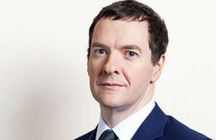
    Below is the text of the speech made by George Osborne, the Chancellor of the Exchequer, at Ryanair in Stansted Airport, on 16 May 2016.

    Thank you Michael [O’Leary]. It’s good to be here at Ryanair today.

    Ed Balls, Vince Cable and I are from different political parties.

    We fought each other at the last general election with different economic arguments and we’ve clashed repeatedly in the House of Commons over the years.

    But there’s one thing we all agree on.

    And it’s that it would be a huge mistake for Britain to leave the EU and to leave the Single Market And we’ve come here today to Ryanair to make that point.

    You are an Irish company, but you’ve got 3,000 thousand employees here in Britain, flying 41 million British passengers to over 200 destinations every year.

    That would not be possible without the Single Market.

    And it’s because you’re part of a growing British economy that you’re announcing today a plan to invest $1.4 billion this year – that’s almost £1 billion – and create 450 new jobs in the UK.

    And you are very clear: those are jobs and investment that would be at risk if we left the EU.

    It’s one, very practical example of what is at stake on June 23rd when we vote in this referendum.

    In the past week we’ve seen two defining moments in the campaign.

    The first was the 24 hour period when both the Monetary Policy Committee of the Bank of England, and the Managing Director of the International Monetary Fund told us that Britain’s economy would suffer if we left the EU.

    Their message could not have been clearer: Britain will be poorer and the British people will be poorer.

    A vote to leave could see family incomes fall, growth hit, and borrowing costs rise.

    It is difficult to think of more credible observers of the British economy than the 9 members of the Monetary Policy Committee and the staff of the International Monetary Fund.

    And they join a line of observers that range from the OECD, to the London School of Economics, to 8 former US Treasury secretaries, to the President of the United States of America, to the Prime Minister of Japan, to the leaders of Australia and New Zealand – indeed every member of the G20, every one of our major trading partners and every major international financial institution has been unequivocal: leaving the EU would come at an economic cost.

    And what has been the response of the leave campaign?

    They say it’s all a massive conspiracy.

    So that’s everyone from Mark Carney to Christine Lagarde, to Barack Obama, to the entire editorial team at ITV, the staff at the IMF and the OECD, to hundreds of economists, a majority of leaders of small, medium and large firms – they think they’re all part of some global stitch up to give misinformation to the British people.

    The next thing we know the Leave camp will be accusing us all of faking the moon landings, kidnapping Shergar, and covering up the existence of the Loch Ness monster.

    The response to the sober economic warnings from around the world by those who want to leave the EU has not been credible or serious.

    There is a reason the three of us are standing here today, putting aside our very obvious differences.

    It’s not a conspiracy – it’s called a consensus.

    The interventions of the last couple of weeks, from the IMF to the Bank of England make very clear that the economic argument is beyond doubt.

    Britain will be worse off if we leave the EU. British families will be worse off – equivalent to £4,300 per household.

    Leaving the EU is a one way ticket to a poorer country.

    This emergence of this overwhelming consensus has been one of the defining moments of the last week. But there is now a second key development and it’s just as revealing.

    And that is that the leading advocates for Britain leaving the EU have finally conceded – after weeks of evasive answers – that not only do they want Britain to leave the European Union, they want us to leave the Single Market too.

    It’s a major admission from the leave campaign – and a major moment. For it means we can begin to quantify just what the economic costs of leaving are.

    And it’s important for everyone in Britain to understand what the Single Market is.

    This is the arrangement that Margaret Thatcher took us into in the 1980s.

    The arrangement that the House of Commons, under Labour, Conservative and Coalition governments has endorsed.

    The Single Market gives British companies and the people who work for them access to half a billion customers. It is the world’s largest trading area.

    It means that when you sell something like a car, or an aeroplane engine, or a plane ticket or a food product, they can all be sold to consumers in other European countries without paying any tariffs or customs duties – in other words, there’s no extra costs to selling to our neighbours.

    And it means we, as consumers, can buy those things from our European neighbours without us having to pay extra costs for doing so.

    It also means we can offer services like insurance premiums and architectural designs and pensions and engineering plans direct to customers in Europe and vice versa.

    The Single Market is more than just a free trade area. It’s a set of common standards.

    And in an age when we’re buying and selling things on the internet, it’s more important than ever.

    The Single Market means that when we buy things from companies, we know that they’re safe, that they don’t cause environmental damage, that the labelling is accurate and that you know you’re going to get what you pay for.

    In the European Single Market instead of having 28 sets of rules, we have one agreed set of rules, that Britain helps shape and influence.

    If we leave the EU Single Market we would lose all of that.

    Ed Balls and Vince Cable are going to explain what this means in practice for British companies, British workforces and British consumers.

    But I can tell you today what the overall impact on the British economy would be.

    In recent weeks the leave campaign have made clear they would be prepared to see Britain leave the EU and fall back on default World Trade Organisation rules.

    This is the worst case scenario and would be a disaster for the British economy.

    New Treasury analysis shows that if we left the Single Market and relied on the rules of the World Trade Organisation, then after 15 years we’d be doing £200 billion less trade every year, in today’s terms.

    And we’d miss out on over £200 billion of overseas investment into our country.

    And let me tell you what £200 billion less trade every year and £200 billion less overseas investment means.

    It means we don’t see the new jobs and facilities like we see here today at Ryanair.

    It means less investment in offices, factories, car plants, shopping centres, high street shops and local industrial estates.

    It means companies don’t sell as much, don’t make as much, don’t employ as much.

    What does all that mean for you? It means fewer jobs, lower incomes and higher prices in the shops.

    So let me end by saying this – the British people want to know the facts. In the last week we’ve learnt two key facts.

    Fact: we now know the Leave campaign want to take us out of both European Union and the Single Market.

    Fact: we know that the overwhelming consensus of the independent economic experts is that Britain would be poorer if we left.

    And from those two facts, we can work this out:

    Those who will pay the price if we leave the EU are the working people up and down this country, doing the right thing, providing for their families, worrying about their children’s future; these are the people that politicians from all parties should seek to represent.

    These are the working people who will be stronger, safer and better off if we remain in the EU.
  • Sir John Major – 2016 Speech at Oxford Union on the EU

    johnmajor

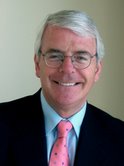
    Below is the text of the speech made by Sir John Major, the former Prime Minister, at the Oxford Union on 13 May 2016.

    This is my first formal speech in the Referendum campaign, and it is appropriate that it is here – because it is your generation’s future that will be enhanced or diminished by whether we “remain” in or “leave” the EU.

    I’ve no particular reason to be a supporter of the EU. It is far from perfect. A quarter of a century ago it bitterly divided my Party, and European disagreements wrecked many of the ambitions I had as Prime Minister. It opened disputes that linger yet. Nor am I an unquestioning European: I did, after all, say “No” to the Euro, and “No” to joining the Schengen Agreement on open borders.

    Even so, I passionately believe we must remain in Europe and help shape its future: geography, trade and logic mean our futures are linked whether we wish it or not.

    Tonight I want to explain why I believe that is so, and then cast a critical eye over the flawed – and misleading – arguments for Brexit.

    What sort of country are we? For hundreds of years we’ve been a positive force in the world – a nation that looked outwards, and spread our ideas, our principles, our laws, our democracy, across the world.

    But that world has changed. Today, we are 65 million people: less than 1% of a world of 7,000 million, forecast to become 9,000 million by the time your own children are at University.

    And the global market is inexorably drawing that world together on a scale we could not have imagined even a few years ago. It is counter-intuitive to try to go it alone and, as our friends around the world tell us, a disastrously bad decision to do so.

    Within the EU, we are a large and influential nation and – while we remain a part of a Union of 500 million people – we have serious political and diplomatic clout, as well as economic advantages. Some examples make this clear.

    In Europe, we were able to impose sanctions on Russia to keep her in check, and deter further misbehaviour in Ukraine. We persuaded the EU to join America and impose sanctions on Iran, to bring about a deal that halts development of a nuclear weapon. We could not do this alone. If we were to leave, the world would consider us diminished. Departure would be a gratuitous act of self-harm.

    The economic argument for Europe is overwhelming: it is nearly half our export market, and nearly five times bigger than all the 52 Commonwealth countries added together, or indeed, six times more than the sum total of trade with Brazil, Russia, India and China.

    In the EU, we have unimpeded access to the richest trade market in the world – right here on our doorstep. Access to that market of 500 million people encourages a wealth of investment into our country. That’s not an abstract statistic – it’s people’s jobs, taxes, profits and overall quality of life.

    Outside Europe, we would still have to comply with EU rules and regulations, unless we surrendered all access to the Single Market – which all reputable authorities, not least the IMF, OECD, NIESR and the Bank of England, regard as economically foolish.

    And, once out – or “liberated” in the more emotive language of the “Leave” campaign – we could no longer protect ourselves against the impact of EU laws on the City of London, nor on our industry and service sectors.

    Nominally, we would indeed be “free”, but – in practice – we would only be “free” to accept whatever the EU determined, with no power to argue against it. Is that “taking back control” – as the “Leave” campaign describes it? No it isn’t. And it’s not glorious sovereignty either. It is nothing other than reckless, imprudent folly. And the price for that would be paid by every British family.

    It is not the only price. The NIESR warns of a collapse in the value of Sterling. The LSE warns of higher prices. The Bank of England fears higher interest rates and mortgages. All this and more – from independent bodies – is ignored and brushed aside by the “Leave” campaign.

    Yet many people – not least in my own Party – wish to leave.

    Their motives are many and variable: pride in our country, concern over sovereignty and immigration, and fear that we have no influence in Europe and are heading towards a federal structure.

    We must address these instincts, these emotions, and debunk myths that are wrong, but sunk in our national consciousness. If we fail to do so, we may end up leaving Europe because absurd falsehoods are widely believed to be true.

    One absurdity is that, subsumed in Europe, we would lose our traditions, our heritage, our individuality. We won’t: after sixty years of Europe are the French less French or the Germans less German? Of course not: and nor will we be less British.

    In the search for voter support the “Leave” campaign repeatedly overstate their case: if they were to win, they risk a backlash from those who reasonably might say they were misled.

    There is no shortage of such exaggerations. One clear example is the cost of Europe. Nigel Farage, Iain Duncan-Smith and Boris Johnson all put it at £20 billion a year; Michael Gove is more modest at £18 billion (£350 million a week), all of which, they tell us – if only we could be free of Europe – would be spent on the Health Service and our hospitals.

    If only … if only…. but the truth is their figures are wrong by a factor of over three! During the last five years the average gross payment was £12.7 billion of which £5.6 billion was paid back to us. Last year, our gross payment was just over £11 billion, of which over £5 billion was paid back to our farmers, businesses, science, research and regional aid. This is not my calculation – it is the calculation of the Institute for Fiscal Studies.

    So, to put £20 billion more into hospitals the “Leave” campaign would have to claw back all the money paid to some of our fellow countrymen and, on top of that, tax us all by an additional £10 billion. Those who make such false claims – and knowingly do so – need to apologise that they’ve got their figures badly wrong – and stop peddling a demonstrable untruth – as they have been repeatedly asked to do by the Chairman of the UK Statistics Authority.

    The “Leave” campaign fret that we have surrendered our “sovereignty” to Europe. That is a very rum claim: and – if it were true – how could we offer our nation a Referendum? It is certainly true that we have shared sovereignty: we share ours and, in return, we gain a share of the sovereignty of 27 other nations.

    But this is our choice – because it is in our own national interest. And, if it ever ceased to be, our Government can always commence withdrawal with Parliament support. So let me make the position on sovereignty absolutely clear: we share it within the EU only for as long as our British Parliament wishes us to do so.

    And even that sharing is partial.

    What say does the EU have over our economic policy? None.
    Our education system? None.
    Our NHS? None.
    Our welfare system? None.
    Our Armed Forces? None.
    Our police? None

    I could go on: 98% of government spending is entirely in the control of the British Parliament.

    Like much we hear from the “Leave” campaign, the sovereignty argument is emotive but specious. In a global economy, no country truly has sovereignty – not even our mighty friend the US. And in our most crucial area – security – we have happily shared sovereignty within NATO for over 60 years.

    Of course, we don’t always get our own way. Who does in any relationship of two – let alone one that numbers 27 other Member States? But we should not forget that – in well over 90% of the votes cast in Brussels – the UK wins. The caricature that we are repeatedly voted down in Europe is ill-informed nonsense.

    Another cherished “Leave” mantra is that we will all be “dragged” into a “federal” Europe. It is their favourite horror story. But, yet again, it is fantasy.

    Were we dragged into the Euro? No
    Were we dragged into Schengen and open borders? No
    Are we now exempt from “ever-closer union”? Yes, we are.

    And if any new Treaty seeks more power, that Treaty would have to be put to the British nation in a Referendum and if – and only if – it were approved by us would it become law.

    A final point on sovereignty: we have sovereignty in its purest and most potent form: we – the UK – can leave the EU at any time; nothing legally binds us to the EU forever. That is the fact and we should disregard the fiction.

    As the “Leave” arguments implode one by one, some of the Brexit leaders morph into UKIP, and turn to their default position: immigration. This is their trump card. I urge them to take care: this is dangerous territory that – if handled carelessly – can open up long-term divisions in our society.

    I grew up in Brixton in the 1950s – a time of massive West Indian immigration. As a boy, I played in local parks with the children of migrants. Some of these newcomers rented rooms in the same house as my family.

    So, I can tell you, as a matter of fact, not fantasy, that those I knew then – and later – didn’t come here for our benefits: they came half-way across the world to give themselves and their families a better life.

    But, at the time, fears were fanned by careless statements from political figures. That was a mistake then, and would be a mistake now.

    Do not misunderstand me. Of course, it is legitimate to raise the issue of the sheer number of those wishing to enter our country. I wholly accept that. Nor do I wish to silence debate. We mustn’t overlook genuine concerns: but these should be expressed with care, honesty and balance. Not in a manner that can raise fears or fuel prejudice. The “Leave” campaign are crossing that boundary, and I caution them not to do so.

    They attribute motives to new arrivals that are speculative and, frankly, offensive. They highlight – with grotesque exaggeration – the risk of mass migration from Turkey – which is unlikely to be joining the EU any time soon and indeed may never do so. And – even if she did – the terms of her accession would need to be agreed by every Member State.

    So, when the “Leave” campaign warn of “opening our borders to 88 million” (meaning Turkey and the Western Balkans) they cross the boundaries of responsible comment. It is unlikely in the extreme that – I quote – “another 88 million people will soon be eligible for NHS care and school places for their children”.

    I assume this distortion of reality was intended to lead the British people into believing that almost the entire population of possible new entrants will wish to relocate to the UK. If so, this is pure demagoguery. I hope that – when the heat of the Referendum is behind us – the proponents of such mischief making will be embarrassed and ashamed at how they have mis-used this issue.

    They advance a second migration red herring – that the recent modest rise in our National Living Wage will be “irresistible” to would-be migrants.

    This is very dubious. First of all, 40% of all migrants are under 25 and therefore ineligible.

    Second, are people really motivated to cross an entire Continent to receive a few pence a week extra? I very much doubt it.

    But even if they were – why would they choose the UK, when the minimum wage is higher, for example, in France; and wage levels higher in other countries that have no statutory minimum.

    And what of the “numbers” argument?

    There are various categories of immigrants. Commonwealth immigration is entirely unaffected by our membership of the EU.

    Would-be migrants from around the world need skilled worker visas to enter: and these are under our control.

    Refugees are dealt with on a case by case basis. Many of those applying for citizenship have lost everything, and we have always been a compassionate nation. But these decisions are under our control.

    But there are clearly undesirables, who we can – and already do – exclude. This includes anyone where there is concern over national security, criminal activity or adverse immigration history. This, too, is already under our control.

    But yes, if we were to leave Europe, we could exclude more EU citizens – such as the 54,000 EU migrants now working as Doctors, or Nurses or Ancilliaries in our Health Service, or the nearly 80,000 working in Social Care. We could exclude skilled workers like builders and plumbers – or unskilled labour that takes jobs that are unappealing to the British. In short, the people we could most easily keep out are the very people we most need.

    A balanced approach would acknowledge the contribution of migrants to our national wellbeing. Without their contribution, the Health Service would not be able to cope – nor would our public transport system; and our hotels, restaurants and shops would be without staff to serve their customers. We would have a shortage of many skills for industry. This is the reality of what lies beneath the emotive language of those who seek to raise the drawbridge on our country.

    This problem of numbers will not be forever. The growth of the Eurozone economy – now clearly underway – should cut demand to come here, as jobs grow elsewhere across Europe. And, in any event, a short term migrancy flow should not be the issue that drives the UK out of an economic union that already benefits our country immensely – and will continue to do so in the future.

    I asked earlier: what sort of country are we? And what sort of people are we?

    Under our undemonstrative exterior we are an essentially kind and benevolent nation, and more inclined to emotion than the age old caricature of stiff upper lip.

    Show us charitable need and we dig deep.

    Show us children in need, and we pay up happily.

    Show us people starving in Africa, and we text our contributions by the million.

    Show us a far away nation suffering from natural disaster, and we rush to help.

    We do so because our emotions are touched. But we should not let those emotions be stirred by false fear: nor allow false fear to impair our judgement on the future of our country.

    Over the next few weeks we – the British people – will decide the future direction of our country.

    This is not a General Election which rolls around every five years: we can’t “suck it and see”. There will not be another Referendum on Europe. This is it.

    So – whatever your view – register and vote. Because the decision you take on the 23rd of June will shape our country, our people, and our livelihoods for generations to come.

  • Michael Gove – 2016 Statement on Youth Justice (Medway Prison)

    michaelgove

    Below is the text of the written statement issued by Michael Gove, the Lord Chancellor and Secretary of State for Justice, to the House of Commons on 12 May 2016.

    Following the troubling allegations raised by whistleblowers—and documented by the BBC’s “Panorama”—about the treatment of young people in custody at Medway, I appointed an independent improvement board to investigate the centre’s governance and the safeguarding measures in place there.

    I am today publishing the board’s report, which tells a powerful story—not just about what went wrong at Medway, but about broader problems in the youth justice system, and specifically in the children’s secure estate. The board’s conclusions reinforce the interim findings from the separate, wider review that I have asked Charlie Taylor to prepare on the youth justice system, which will report this summer.

    Given the findings of the independent improvement board, the pending Charlie Taylor review and the announcement by G4S in February 2016 of its intention to sell its children’s services business I have agreed with G4S that the new contract to operate Medway will not proceed.

    The National Offender Management Service (NOMS) will take over the running of Medway in the short term—by the end of July—and will work closely with the Youth Justice Board on the enhanced monitoring arrangements that will be put in place. Beverley Bevan—an experienced prison governor with seven years’ experience of working with young offenders—will be appointed as the governor at that time.

    The independent improvement board made a series of recommendations which we accept in full and which will be implemented across all three secure training centres (STCs). By implementing these recommendations, we will strengthen external scrutiny, safeguarding and monitoring arrangements and clarify the responsibilities of organisations and individuals involved in providing services at all STCs. Steps will be taken to ensure that whistleblowers—including young people who speak out—are supported and listened to.

    However, the fundamental problem identified by the independent improvement board was that those running Medway conceived of it as a place of coercion, where the culture and the incentives—as they were designed in the contracts—were centred around the corralling and control of children, rather than their full rehabilitation. Their focus should instead have been on education and care, on identifying root problems and giving children the opportunity to find their way back into society, and to make something of themselves.

    Charlie Taylor’s interim findings have made it clear that the places where young offenders spend time should not be junior prisons, but secure schools. I am announcing today that each of the secure training centres will have a new governing body who will scrutinise and support those running each centre. This will be a first step towards giving these centres the type of oversight and support that we would see in an ordinary school.

    When Charlie’s final report is published, I hope we will be able to move swiftly to a model which ensures that the educational mission of these establishments is central to their existence.

    Based on the findings of the independent improvement board, I will appoint a similar youth custody improvement board to work across the youth secure estate, to help to make sure that children are safe and to improve standards of behaviour management in each secure training centre and young offender institution that holds children, including those currently run by NOMS. I will confirm the board appointments in due course.

    I am grateful to all the members of the independent improvement board who delivered their important work at such impressive speed.

    This report, and our response to the recommendations made by the independent improvement board can be found at: https://www.gov.uk/government/publications/medway-improvement-board-report-and-moj-response-to-its-recommendations.

    I will place a copy of these in the Libraries of both Houses.

  • Maria Eagle – 2016 Speech on the BBC

    marieagle

    Below is the text of the speech made by Maria Eagle, the Shadow Secretary of State for Culture, Media and Sport, in the House of Commons on 12 May 2016.

    May I thank the Secretary of State for his statement and for early sight of it? Despite being very coy in the House yesterday when we asked about his plans, he seems to have managed to brief various newspapers overnight on a large part of the contents of the White Paper—a deplorable state of affairs. Indeed, for the last few weeks, we have had to read an increasing avalanche of briefing to Conservative-supporting newspapers—especially those hostile to the BBC—which appears to have emanated from his Department.

    The fact that most of the Secretary of State’s wilder proposals appear to have been watered down, dumped or delayed by the Government, of which he is a member, is a reflection of his diminishing influence and lack of clout. He has not got his way in most things, and I welcome that.

    There is no point the Secretary of State denying that he has been overruled by the Prime Minister and the Chancellor. We know he is extremely hostile to the BBC. He wants it diminished in scope and size. He recently told an audience in Cambridge that the BBC is merely

    “a market intervention of around £4 billion by government”.

    That was before he described the disappearance of the BBC if the charter was not renewed as “a tempting prospect”.

    The Secretary of State has spent time in speeches trying to tell the BBC that it should not be making popular programmes or that, if it does, they should be scheduled at times when fewer people will watch them. The truth is that, in large part, he has not got his way.

    [Interruption.]

    Mr Speaker

    Order.

    Maria Eagle

    The Secretary of State’s views are also totally out of step with licence fee payers, who value and support the BBC. I said yesterday that the Opposition believe the BBC charter should have governance arrangements that guarantee the BBC’s editorial and financial independence and refrain from interfering with the BBC’s mission to inform, educate and entertain us all. We will examine the White Paper in detail to see how well it measures up against those criteria.

    I welcome the fact that the length of the new charter is to be 11 years, but I am concerned with the imposition of a break clause that will, in effect, reduce that to five and a half years. That does not really give the BBC the certainty and stability it requires to get on with the job. I also welcome the fact that the licence fee is to continue until 2022, increased by CPI inflation, but we wait to see how his proposals over the second half of the charter period develop and will look very closely at what the Government do at that stage.

    I still have some major concerns. On governance, I said yesterday that it is unacceptable for a majority of the unitary board, which will have major influence over output and therefore over editorial decisions, to be appointed by the Government. Today we learned that the Secretary of State plans that only up to at least half the board will be Government appointees. This board will run the BBC. Despite what he says, it will have influence over output and therefore over editorial decisions. Appointing a unitary board is different from appointing either governors or trustees, who have had no power to run the BBC day to day.

    The Secretary of State’s suggestion that these proposals enhance the independence of the BBC are hard to reconcile with reality. We have seen overnight a political campaign—the leave campaign—headed up by Cabinet Ministers threatening a broadcaster with unspecified consequences for doing something that Cabinet Ministers did not like. How much more serious a threat would that be if those Cabinet Ministers got to appoint at least half the board of the broadcaster concerned? Yet that is the prospect facing the BBC under his plans.

    I am still worried, therefore, that the Government are seeking unduly to influence the output and editorial decision making of the BBC—or can be seen to be doing so. Will he now promise that all Government appointments will be made by a demonstrably independent process overseen by the Commissioner for Public Appointments that prevents there being any suspicion that the Government seek to turn the BBC into something over which they have more control than is currently the case? Reports in today’s newspapers that the Prime Minister has personally intervened to insist that Rona Fairhead be installed as chair of the new board do not augur well in this respect. I make no comment on the merits of Rona Fairhead, but there has been no process at all to reach such a decision—simply a prime ministerial diktat. That does not augur well for these arrangements in future.

    On financial independence, a funding agreement was struck by the Chancellor with the BBC last year. We will look to ensure that it is met in full by the Government, with no more top-slicing—I welcome what the Secretary of State said about that—and no siphoning off of licence fee payers’ money into funds to be given to other broadcasters. We are glad, in that respect, that his contestable pot proposals, widely briefed in advance of the publication of the White Paper, are now somewhat shrunken and are to be consulted on. Will he give the House an assurance that he will listen to the results of that consultation and be prepared, if necessary and if that is its outcome, to abandon these proposals?

    I am very concerned that the Secretary of State wants to change the mission of the BBC when it has worked well for more than 90 years and is supported by the public. There is a great virtue to the simplicity and clarity of the current phraseology of its mission statement. Given what he has said, we will look closely at what he proposes to see how it might work. I do not believe that his obsession with distinctiveness should be imported into the BBC’s mission statement. However, we will look at the wording he proposes to see whether we have any concerns about what the implications will be.

    I welcome the Secretary of State’s focus on improving the diversity of the BBC in respect of its staffing and the way in which it produces its output. Again, I am not convinced that the mission statement is the best place to put that. None the less, we will look closely at what he proposes, and I welcome the general tenor of his remarks and his intentions in this respect.

    The Opposition do not accept the Secretary of State’s assertion that the size and scale of the BBC crowd out investment and have a negative impact on the media market—quite the opposite. The BBC already works well with other UK creative industries and other broadcasters, to the benefit of all. He might be better advised to keep his nose out of this rather than trying to tell the BBC how to do the job that it does on a day-to-day basis. He ought to stop his ideologically driven meddling and let it get on with the job.

    We note what the Secretary of State had to say about the new and enhanced role that Ofcom will have in regulating the BBC. It will be a big job, and Ofcom already has a lot on its plate. Can he guarantee to the House that Ofcom will be given the proper resource—extra staffing, expertise and money—to do the job he now expects it to do? He said nothing about that in his statement today, but an important part of whether this will work is how Ofcom will be able to do this job.

    In respect of what the Secretary of State said about the National Audit Office, I respect the National Audit Office and its work very much—I think everybody in this House does—so I have no objection. I note that he said in his statement that there will be appropriate safeguards for editorial independence once value-for-money reports have been done. That is tremendously important. It needs to be totally clear that any work done by the National Audit Office does not interfere with the editorial independence of the BBC. We will look at the detail of those safeguards, and I hope that he will be very open in setting out that detail.

    The BBC is one of the UK’s most successful and loved institutions. There has developed a feeling, both inside this Parliament and outside it, that the Government are seeking inappropriate influence over the BBC. Will he now agree that when his proposals are debated in both Houses of Parliament, it should be on a substantive motion that enables Members of both Houses to express their views by way of a vote?

  • John Whittingdale – 2016 Statement on the BBC

    johnwhittingdale

    Below is the text of the speech made by John Whittingdale, the Secretary of State for Culture, Media and Sport, in the House of Commons on 12 May 2016.

    With permission, Mr Speaker, I should like to make a statement.

    The Government are today laying before Parliament and depositing in the Libraries of both Houses a White Paper on the BBC charter review. The royal charter is the constitutional basis for the BBC. It is the framework for how the BBC is governed and guarantees its independence. The current royal charter will expire at the end of 2016; today we lay out our plans for the next one.

    The White Paper represents the culmination of 10 months’ work. I thank everyone who contributed to the Green Paper consultation process, not least 190,000 members of the public. I am also very grateful to Sir David Clementi and his team for their independent review of the governance and regulation of the BBC, to the Committees in both Houses that made recommendations and to all the stakeholders, BBC representatives and others who helped inform our deliberations.

    The BBC is one of the country’s greatest institutions, and 80% of those who responded to our Green Paper said the BBC serves audiences very well or well. Every week the BBC reaches 97% of the UK population and 348 million people across the globe, informing, educating and entertaining them and promoting Britain around the world.

    It is our overriding aim to ensure that the BBC continues to thrive in a media landscape that has changed beyond recognition since the last charter review 10 years ago and that it continues to delivers the best possible service for licence fee payers. So today we are setting out a framework for the BBC that allows it to focus on high-quality, distinctive content that informs, educates and entertains while also serving all audiences; enhances its independence while also making it much more effective and accountable in its governance and regulation; makes support for the UK’s creative industries central to the BBC’s operations while at the same time minimising any undue negative market impacts; increases the BBC’s efficiency and transparency; and supports the BBC with a modern, sustainable and fair system of funding.

    The BBC’s special public service ethos and funding allow it to take creative risks, to be innovative, and to produce high-quality content. That means more choice for listeners and viewers. The BBC delivers a huge amount of outstanding programming, including in drama, news and current affairs, sport, science and the arts. Many programmes have received awards, not least at the BAFTAs on Sunday, and they demonstrate that, at its best, the BBC is still the finest broadcaster in the world. However, as the BBC Trust itself has recognised, in some areas the BBC needs to be more ambitious, particularly in its more mainstream television, radio and online services.

    The BBC director-general has called for a BBC that is

    “more distinctive than ever—and clearly distinguishable from the market”.

    The Government are emphatically not saying that the BBC should not be popular. Indeed, some of its most distinctive programmes, such as “Life on Earth”, “Wonders of the Universe” and “Strictly Come Dancing” on TV, or the “Newsbeat” programme or Jeremy Vine show on Radio 1 and 2 respectively, have very wide audiences because they are so good.

    With a 33% share in television, 53% share in radio and the third most popular UK website, and with only 27% of people believing that the BBC makes lots of programmes that are more daring and innovative than those of other broadcasters, commissioning editors should ask consistently of new programming, “Is this idea sufficiently innovative and high quality?” rather than simply, “How will it do in the ratings?” So we will place a requirement to provide distinctive content and services at the heart of the BBC’s overall core mission of informing, educating and entertaining in the public interest, and we will also affirm the need for impartiality in its news and current affairs broadcasts.

    The BBC’s existing minimum content requirements will be replaced with a new licensing regime that will ensure its services are clearly differentiated from the rest of the market, enhancing choice for licence fee payers and backed up by robust incentive structures. The BBC will also be required to give greater focus to under-served audiences, in particular those from black, Asian and ethnic minority backgrounds and from the nations and regions, who are currently less well served. That will involve the BBC building on its new diversity strategy, maintaining out-of-London production quotas, and ensuring that it continues to provide for minority languages in its partnerships with S4C and MG Alba.

    Over the next charter period, we want the BBC to be the leading broadcaster in addressing issues of diversity. For the first time, diversity will be enshrined in the new charter’s public purposes. This, along with a commitment to serve all audiences in the BBC’s mission, will help hold the BBC to account for delivering for everyone in the UK.

    Looking beyond these shores, the BBC World Service is rightly considered across the globe to be a beacon of impartial and objective news. It is a vital corrective to the state-run propaganda of certain other countries. So we will protect its annual funding of £254 million for five years and also make available £289 million of additional Government funding over the spending review period, as announced by the Chancellor last year, so that the World Service can represent the UK and its values around the globe.

    All organisations need a governance and regulatory structure that is fit for purpose. The BBC’s is not, and it is no longer supportable for the BBC to regulate itself. Governance failures, including excessive severance payments and the costly digital media initiative, have illustrated that the division of responsibilities between the BBC executive and the BBC Trust is confusing and ineffective. As the independent review led by Sir David Clementi made clear, there is widespread agreement that reform is vital. I can announce today that we are accepting the review’s recommendations.

    The new charter will create a unitary board for the BBC that has a much clearer separation of governance and regulation. The board will be responsible for ensuring that the BBC’s strategy, activity and output are in the public interest and accord with the missions and purposes set out in the charter. Editorial decisions will remain the responsibility of the director-general and his editorial independence will be explicitly enshrined in the Charter, while the unitary board will consider any issues or complaints that arise post-transmission. For the first time, the BBC will have the ability to appoint a majority of its board independently of Government. This is a major change, as previously the BBC governors, and then the members of the BBC Trust, were all appointed by Government.

    Ofcom has a proven track record as a regulator of media and telecoms. It is the right body to take on external regulation of the BBC. We will require Ofcom to establish new operating licences for the BBC, with powers to ensure that its findings are acted upon. Ofcom will also take charge of regulating the distribution framework and fair trading arrangements for the BBC. It will be a strong regulator to match a strong BBC.

    The Government will introduce four further changes to make the BBC more accountable to those it serves. The charter review process will be separated from the political cycle by establishing an 11-year charter to 2027, with an opportunity to check that the reforms are working as we intend at the mid-term. This will be the third longest charter in the BBC’s history, and allows for an orderly transition to the new arrangements. The BBC will become more accountable to the devolved nations; the complaints system will undergo long overdue reform; and new expectations will be set for public engagement and responsiveness. These are major changes to the way that the BBC is governed. They will take time to effect and it is important that this process runs smoothly, so the current BBC chair, Rona Fairhead, will remain in post for the duration of her current term, which ends in October 2018.

    The creative sector is one of this country’s great success stories, growing at twice the rate of the rest of the economy since 2008 and accounting for £84 billion of gross value added and nearly 9% of service exports. The BBC should be at the core of the creative sector, supporting everyone from established players to SMEs. It is already a major purchaser, spending more than £1 billion on the services of around 2,700 suppliers involved in making programmes for the BBC.

    The BBC already allows up to 50% of its content to be competed for by the independent sector. The Government now intend that the remaining 50% in-house guarantee for television should be removed for all BBC content except news and related current affairs output. Unless there is clear evidence that it would not provide value for money, all productions will be tendered. There will be a phased introduction of this requirement, which will open up hundreds of millions of pounds of production expenditure to competition. Not only will this benefit the creative industries, but it is fundamentally a good thing for viewers and listeners, with BBC commissioning editors given greater freedom to pick the most creative ideas and broadcast the highest quality programmes.

    The BBC plans to make its in-house production unit a commercial subsidiary. We support these plans in principle, provided they meet the necessary regulatory approvals. However, the BBC can, by virtue of its size and scale, potentially have a negative impact on the media market, crowding out investment and deterring new entrants, so Ofcom will be given the power to assess all aspects of BBC services to see how they impact on the market, with proportionate powers to sanction. Rather than seeing other players as rivals, the BBC should proactively seek to enhance, bolster and work in partnership with the wider broadcasting and creative industries. There will be a focus on that in the new charter. In particular, the BBC will support and invigorate local democracy across the UK, working with local news outlets.

    The Government will also consult in the autumn on a new contestable public service content fund that will allow other broadcasters and producers to make more public service content in areas that are currently underserved, such as programmes for children and for black, Asian and minority ethnic audiences. It will be worth £20 million a year, and it will be paid for from unallocated funding from the 2010 licence fee agreement. There will be more transparency in the way the BBC promotes its own services, and a requirement to steer such activity towards areas of high public value. The BBC will be expected to share its content as widely as possible, and it will also be encouraged further to open up its archive so that other organisations and the public can enjoy its many treasures.

    The BBC belongs to all of us. Making its archive more widely available is just one part of a broader opening up process. We want the BBC to be much more transparent, in particular about efficiency improvements. The BBC already plans to make £1.5 billion of savings by the end of this charter period, and the BBC Trust has driven some improvements in transparency, but the BBC needs to become more accountable to those it serves. Only 23% of the public believe that the BBC is efficient. Licence fee payers need the BBC to spend the nearly £4 billion they give it every year more wisely. The National Audit Office, which has an outstanding track record, will therefore become the financial auditor of the BBC and will have the power to conduct value for money investigations of the BBC’s activities, with appropriate safeguards for editorial matters. The BBC will also be required to ensure that it is transparent and efficient in its spending by reporting expenditure by genre.

    The BBC already publishes data on the salaries of its staff by broad bands, and the names and detailed remuneration packages of those in management earning more than £150,000. The public have a right to know what the highest earners the BBC employs are paid out of their licence fee. The new charter will therefore require the BBC to go further regarding the transparency of what it pays its talent and publish the names of all its employees and freelancers who earn above £450,000—the current director-general’s salary—in broad bands. The Government also expect the new BBC board to consider other ways in which it can improve transparency of talent pay. The BBC will also be required to undertake a root-and-branch review of its research and development activity, laying out its objectives for the future.

    Finally, the BBC needs a fair, accountable and sustainable funding system that is fit for the future. There is no perfect model for funding the BBC but, given the stability it provides and the lack of clear public support for any alternative model, the licence fee remains the most appropriate funding model for the next charter period. The licence fee has been frozen at £145.50 since 2010. We will end the freeze and increase the licence fee in line with inflation to 2021-22, at which point there will be a new settlement. In line with the other reforms to funding announced last July, this means that the BBC will have a flat cash settlement to 2021-22. This gives it the certainty and funding levels it needs to deliver its updated mission and purposes, and it will ensure that the BBC will remain one of the best-funded public service broadcasters in the world, receiving more than £18 billion from 2017-18 to 2021-22.

    Future funding settlements will be made using a new regularised process every five years, giving the BBC greater independence from Government. The licence fee concession for the over-75s will be protected during this Parliament, although voluntary payments will be allowed. We will give the BBC more freedom to manage its budgets. Protected funding of £150 million a year for broadband and £5 million a year for local television will be phased out. The World Service will be an exception to this, given its enormously important role.

    The current licence fee system needs to be fairer, so we will close the iPlayer loophole, meaning that those who watch BBC programmes on demand will now need a TV licence like everyone else. There will be pilots of a more flexible payment system to benefit those on lower incomes and make it fairer for everyone. At the moment, people have to pay for the first year in only six months, meaning six much higher monthly payments. We will take forward many of the recommendations from David Perry QC’s review to make the process of investigating and prosecuting licence fee evasion more effective and fair.

    Although the licence fee remains the best way of funding the BBC for this charter period, it is likely to become less sustainable as the media landscape continues to evolve. The Government therefore welcome the BBC’s intention to explore whether additional revenue could be raised at home and abroad from additional subscription services sitting alongside the core universal fee.

    The Government are clear that any new subscription offer would be for additional services beyond what the BBC already offers. It will be for the BBC to set the scope of these plans, but we expect it to review progress and success in order to feed into the next charter review process. We would also like to see BBC content become portable so that licence fee payers have access when travelling abroad.

    The BBC is, and must always remain, at the very heart of British life. We want the BBC to thrive, to make fantastic programmes for audiences and to act as an engine for growth and creativity. Our reforms give the BBC much greater independence from Government—in editorial matters, in its governance, in setting budgets and through a longer charter period. They secure the funding of the BBC and will help the BBC to develop new funding models for the future.

    At the same time, these reforms will assist the BBC to fulfil its own stated desire to become more distinctive and better to reflect the diverse nature of its audience. They place the BBC at the heart of the creative industries—as a partner of the local and commercial sectors, not a rival. The BBC will operate in a more robust and more clearly defined governance and regulatory framework. It will be more transparent and accountable to the public it serves, who rely on the BBC to be the very best it can possibly be so that it can inform, educate and entertain for many years to come. I commend this statement to the House.

  • David Cameron – 2016 Speech on Corruption

    davidcameron

    Below is the text of the speech made by David Cameron, the Prime Minister, at Lancaster House in London on 12 May 2016.

    Introduction

    Today the world has come together in a coalition of the committed to expose, punish and drive out corruption.

    This has been the first summit of its kind and the biggest demonstration of the political will to address corruption that we have seen for many, many years.

    Frankly we’ve known for years what a problem this is; we’ve known for years it prevents us from achieving so many things we want to fix in our world.

    But I’ve really sensed today there is far more political will – not just from words but from actions – that will make a difference.

    There’s nothing as powerful than an idea whose time has come and I believe that’s the case with fighting and driving our corruption.

    When the UK hosted the G8 in Lough Erne in 2013, we took what many had seen as a series of technical issues around tax, trade and transparency and we showed how political will could begin a concerted effort to get to grips with tax evasion, aggressive tax avoidance and corporate secrecy.

    When we first talked about ideas like automatic exchange of tax information and registries of who owns each company, many people, I think, wondered what on earth we were on about, and whether any of these things would actually happen.

    But now 129 jurisdictions have committed to implementing the international standard for exchange of tax information on request – and more than 95 have committed to implementing the new global common reporting standard on tax transparency.

    And as the Head of the OECD Angel Gurría has said today, this started, in his words, a “dramatic revolution” that has since brought in 50 billion euros in extra tax revenue and has the potential with automatic exchange of information to bring in 200 billion more. Think of the schools, the hospitals, the roads, the services that could be provided and are needlessly lost.

    Today’s summit has built on these foundations.

    Today it’s not just the G8, but representatives from over 40 countries.

    Not just political leaders but leaders from business, civil society and sport too, all working together to produce a series of ground-breaking commitments that can really transform our ability to tackle corruption.

    Just as at Lough Erne, many of these agreements are quite technical, but their impact is far reaching.

    Exposing corruption

    First, we will expose corruption so there is nowhere to hide.

    If you don’t know who owns what, you can’t stop people stealing from poor countries and hiding that stolen wealth in rich ones.

    That is why it is so important that today 5 countries have agreed to create public registers of beneficial ownership and 6 more will explore similar arrangements.

    This will mean that everyone in the world will be able to see who really owns and controls each and every company in these countries.

    The EU, Iceland, UAE and most of our Overseas Territories and Crown Dependencies with major financial centres have agreed to automatically exchange their entire registries of beneficial ownership information.

    This means that law enforcement agencies across the world will be able to access this data – in many cases for the first time – and use it to expose the corrupt.

    Does it need to go further? Yes of course it does, but today is a good start.

    It is no good having laws against corruption, if lawyers, accountants and estate agents find ways around the law.

    So that is why it is so important that at this summit a new professional services statement of support has shown an unprecedented commitment from these professions to stop the facilitation of corruption.

    Again, does this go far enough? Does it need to go further? Of course it does – we need this adopted in every country, not just some countries.

    Public procurement and construction have both been massive areas for corruption around the world for years.

    So a range of countries including the UK will use open contracting in their government procurement, to keep public money out of corrupt hands.

    And here in the UK, we want to clean up our property market and show that there is no home for the corrupt in Britain.

    So all foreign companies which own properties in the UK will have to register publicly who really owns them, who really controls them – and no foreign company will be able to buy UK property or bid for central government contracts without joining this register.

    Punish the perpetrators

    Next, we will do more to punish the perpetrators of corruption and to support those affected by it.

    We know that corruption is a global phenomenon, so it’s essential that we share information and pursue the corrupt across borders, joining the dots to identify and prosecute the corrupt and to seize their assets – a point that so many speakers have made today.

    So the new International Anti-Corruption Co-ordination Centre we are creating will help police and prosecutors work together to do just that.

    But we also need to ensure that when we expose the corrupt, we are able to seize their assets and return them to the countries from which they were stolen.

    That’s why our Global Forum for Asset Recovery will be so important – enabling governments and law enforcement agencies around the world to work together to achieve this.

    We have also agreed today that 22 countries will introduce new asset recovery legislation, 14 will strengthen their protections for whistle-blowers – a discussion we had in the last session and 11 countries will review the penalties for companies that fail to prevent tax evasion.

    Here in Britain we will consult on extending that criminal offence of tax evasion, to other economic crimes such as fraud and money laundering, and we hope others will follow.

    We want firms properly held to account for any criminal activity within them.

    We are also consulting on Unexplained Wealth Orders, reversing the burden of proof so if someone is suspected of corruption, the onus is on them to prove they acquired their wealth legitimately or they will face having it stripped from them by a court.

    Driving out corruption

    Third, we will do more to drive out corruption wherever it is found.

    This requires the political leadership we have seen today – and a sustained effort at changing cultures of corruption.

    One example of this is the twinning of different countries’ tax inspectors to help build a shared culture of probity and honesty.

    And today we’ve seen 17 countries commit to such partnerships between their institutions and professions, and I want to thank Professor Paul Collier for his great work on this.

    We have also had a very frank discussion about changing cultures in sport.

    The world loves sport – and the world knows that sport is riddled with corruption.

    So only when we deal with corruption in sport will people really believe that we are dealing with corruption more broadly.

    Today we have taken an important step towards an International Sport Integrity Partnership that would restore integrity to the games we love and we will be keeping up the pressure to land this at a meeting with the IOC in February.

    We are also raising our own standards of governance and transparency to the highest possible levels here in the UK through the new Sports Charter.

    Next steps

    But today’s summit hasn’t just been about securing these agreements.

    We have also held, I think you’ll agree, a different kind of event.

    Instead of simply having speeches talking to ourselves about we have agreed and we have had open, honest and challenging conversations.

    We have asked tough questions about the challenges in implementing these agreements and explored new ideas and next steps that can really raise the ambition further.

    We have been asked whether we could enforce action against corruption in the same way that we enforce action against terrorism?

    We have been challenged to protect the freedom of the press and the whistleblowers who are so vital in helping them to expose the corrupt.

    We have talked about the need for more action from multinational companies.

    There was a great challenge for anti-corruption organisations to work more closely together – to deliver a more co-ordinated effort.

    We’ve talked about the need for every country to ultimately reach what I call the gold standard of a having a public register of beneficial ownership.

    And I am clear that I include all the Overseas Territories and Crown Dependencies in that. But it was encouraging to hear praise for what the head of the OECD described as, and I quote, the “exemplary delivery” of our crown dependencies in the steps they have taken so far.

    Finally, we have been clear that this summit will not be a single one-off moment.

    We are building a global movement against corruption.

    As President Ghani said – this cannot be a fashion – we have stay the course on this for the next 10 years and beyond.

    We welcome the commitment from Japan to include this issue and the learnings of this summit in its G7 Presidency.

    We have agreed that we will meet again at the UN General Assembly next year.

    And in the meantime we will continue to track the implementation of everything we have agreed today.

    And let’s just be clear what all these agreements really add up to.

    As I said, some of them are very technical.

    But what we are talking about is stopping the corrupt hiding their loot from the authorities.

    So as John Kerry said – there are “no more safe harbours” for the corrupt.

    It means that when people steal money from your country and hide it in mine – we can expose them and return the money to you.

    It means getting stolen assets returned to people like President Buhari and President Ghani, so they can be reinvested in the future of their countries.

    It means cleaning up our property market right here in London.

    It means helping to secure for all our economies some of the trillions in potential economic growth that is so needlessly lost to corruption.

    It means building an unprecedented global coalition to tackle this cancer of corruption which destroys jobs, traps the poorest in poverty and as Sarah Chayes has argued so powerfully today – even undermines our security.

    It means quite simply – winning the battle against one of the greatest enemies of progress in our time.

    And I say again, if we want to beat poverty, if we want to beat extremism and narrow the gap between the richest countries in the world and the poorest countries in the world, we have to tackle corruption.

    That is our mission. And that is the vital work that we have begun today and I want to thank everyone for their contributions.

  • Nicky Morgan – 2016 Speech at the Careers & Enterprise Company Conference

    nickymorgan

    Below is the text of the speech made by Nicky Morgan, the Secretary of State for Education, in Liverpool on 11 May 2016.

    Good morning, ladies and gentlemen and thank you Christine for that introduction.

    It’s a real delight to be here in Liverpool today for this conference, to take stock of what The Careers & Enterprise Company has achieved already and for me, as the Secretary of State, to outline the government’s vision for careers provision, which we believe should be high-quality, consistent, engaging with employers, made up of several rather than one-off encounters, which start early on in a young person’s life.

    Careers provision should focus on giving young people the information, aspiration, advice and training that will allow them to unlock their potential.

    It has been a year now since The Careers & Enterprise Company appointed its CEO, Claudia Harris, and started its operations in earnest. It’s so great to see Claudia here today and I know you’re going to hear her speak later about her own enthusiasm for and dedication to the aims of the company.

    Let me take this opportunity to thank Claudia for all the hard work she, and her team, have put in so far.

    The truth is there is so much energy and enthusiasm in the careers space, and there are huge amounts of talent and excellent practice too, but there isn’t enough co-ordination. That’s why the work of the company is so important – amplifying the work of others as it seeks to ‘join the dots’ from education to the world of work.

    It’s great to see so many of you here today as providers of careers and enterprise services, businesses, and school and college leaders – all seeking to support young people as they make the transition from school to the world of work.

    Making real links between schools and colleges and those who can help young people to unlock their potential is vital to improving the life chances of individuals and delivering the social justice that we, as a government, are committed to. But it’s also vital for our country as a whole and our economy because we can achieve so much more when we harness everyone’s talents.

    As I have said in the past, and as I’m sure all of you know, there is no one route to success. I believe in the academic route and I believe in the technical and skilled route, too – because we all have differing skills and strengths – so I want to see parity between the routes offered to young people, so they can make a real choice in choosing their career.

    At the heart of The Careers & Enterprise Company’s work, as well as the government’s vision for the future of careers provision, is the Enterprise Adviser Network, established to build the long-lasting, regional coalitions that can inspire and prepare young people to make the right choices about their futures.

    The Enterprise Adviser Network is the cornerstone of the company’s work, making it easier for schools and colleges to connect with local employers and careers and enterprise providers across the country. The network is able to stimulate provision where it is scarce or lacking, and filter the quality services where provision is overloaded or confusing.

    Since its launch only 6 months ago, the Enterprise Adviser Network has engaged more than 30 local enterprise partnerships (LEPs), including my own in Leicester and Leicestershire and I was so pleased to speak, alongside Claudia, at the launch of my local Network at the National Space Centre in Leicester last week.

    I know that Leicester and Leicestershire’s own Enterprise Co-ordinator, Abdul Bathin, is here today. His passion and enthusiasm for young people and building links with business is infectious and I know that he will grow a fantastic local network in my area, where he will soon be joined by more enterprise co-ordinators.

    Locally here in the Liverpool city region there have been 4 enterprise co-ordinators in post since February, engaging with 30 schools, and 16 enterprise advisers who have been matched to 7 schools.

    The national network already has 60 full-time enterprise co-ordinators employed by local enterprise partnerships all over the country, co-funded by the Careers & Enterprise Company; and has already signed up 600 schools.

    The huge scale of that success in such a short time is testament to the collaborative leadership offered by the local enterprise partnerships and the dedication of the enterprise co-ordinators and business volunteers. But I know that this is only the beginning and I have no doubt that the national and local networks will continue to grow in the months and years ahead.

    Alongside the Enterprise Adviser Network, The Careers & Enterprise Company is working to transform careers provision across the country, growing the evidence, sharing what works and providing investment, enabling the best programmes to scale up their work and do more in the areas where they are needed most.

    It’s such a pleasure to see the 33 amazing projects backed by The Careers & Enterprise Company in their recent careers and enterprise fund. With government’s investment and by unlocking match funding, £9.5 million is backing the people and organisations working hard in this area, with 75% going to ‘cold spot’ areas where it is needed most.

    What’s remarkable about this is that almost a quarter of a million young people stand to benefit.

    And they will be benefiting from projects like CareerConnect here in Liverpool, a STEM-focussed programme which coaches young people to develop key character traits that will help them to succeed like confidence and resilience; Bridge to Work, from my own area in Loughborough, which offers flexible skills and coaching courses to help students get their careers on the right path; Groundwork UK in Birmingham which, through its enterprise camp, helps unemployed young people to develop their skills and engage with employers; the Ideas Foundation, providing inspiring encounters for young people with advertising and design agencies; and many more.

    I understand that most, if not all, of the 33 programmes benefitting from the funding are here today. Let me say to you, I am so excited to see the impact of your work and looking forward to meeting you all.

    One thing which has been shown to improve the life chances of young people is high-quality mentoring. We know that inspiration has to start young, so that’s why I am delighted that later this year The Careers & Enterprise Company will be launching its mentoring campaign to unlock mentors from across the business community and its supporting fund.

    This exciting and important work will further bridge the gap between education and employment, scaling up proven mentoring programmes across the country, particularly in ‘cold spot’ areas.

    The campaign will target young people and our rightly ambitious aim by 2020 is to reach and serve 25,000 young people a year who are most at risk of disengaging by offering them high-quality, careers-focussed mentoring.

    Unlocking young people’s potential is something that involves all of us – which is why there is such a need for co-ordination and galvanisation if we are to end the postcode lottery that has existed in careers and enterprise provision for far too long. It means everyone involved needs to engage and make sure their voices are heard.

    I’m really pleased to say The Careers & Enterprise Company intends to facilitate powerful, local voices in education to support the Enterprise Adviser Network. The company proposes to convene annually 39 school leaders who represent schools on local enterprise partnership boards. Those school leaders will ensure effective dialogue exists between the network and schools and colleges.

    I have to say that I have been incredibly impressed by the scale of support from employers. A roundtable earlier this year brought together 40 leading employers and I will be convening the chief executives of those companies later this year to further harness their collective influence.

    At the event in Leicestershire last week it was amazing to hear employers talk about their input to the Enterprise Adviser Network and, on the day, we had new volunteers stepping forward to get involved and offer their expertise.

    I’d like to take this opportunity to thank everyone: careers and enterprise organisations, employers and schools for the hard work that is transforming this hugely important agenda.

    The voluntary work of employers is a really important part of supporting the system to become a success and, if you’ve already signed up, please keep working with The Careers & Enterprise Company and your local enterprise partnership to improve the Enterprise Adviser Network, to scale up fantastic provision in your local areas; and sponsor those cold spots where better provision is so desperately needed.

    The willingly collaborative work of our many excellent careers and enterprise organisations has been remarkable over this last year and I know that in continuing to work together so much more can be achieved.

    I know the schools who are already working with the Enterprise Adviser Network recognise its worth to their students and I’d like to encourage all schools to work with the network and local enterprise co-ordinators to build employer engagement plans and take advantage of the Gatsby Tool that Sir John Holman and the Careers and Enterprise Company are launching later this year.

    I’m delighted that our ambitions to improve the life chances of young people all over England are continually being strengthened. I am constantly thrilled to see the great work going on up and down the country to ensure our nation’s young people have every opportunity to thrive and reach their full potential – securing the prosperous future everyone wants and deserves.

    I’m particularly pleased that The Careers & Enterprise Company is working closely with the government’s flagship National Citizen Service programme to look at the ways young people participating in it can benefit from engagement with employers and other organisations.

    I know that if we all continue to work together: government, schools, business, providers and LEPs – then we can make a real difference to the life chances and future prosperity of everyone coming through the education system and heading into the world of work, whilst at the same time growing our economy with the types of skilled jobs it really needs.

    Thank you for everything you do. Thank you for your hard work. And thank you for making a difference to the lives of children and young people.

  • Matt Hancock – 2016 Speech on Tackling Corruption

    Matt Hancock
    Matt Hancock

    Below is the text of the speech made by Matt Hancock, the Minister for the Cabinet Office and Paymaster General, in London on 11 May 2016.

    Thank you Patricia, our new and brilliant Secretary General of the Commonwealth.

    Mr President, it is an honour to welcome you here, with united determination to tackle corruption. I pay tribute to the work you have led and leadership you have shown.

    Everyone here today, from Civil Society, from business and from governments around the world stands testament to that determination.

    We are here today because of what we share: The view, forged by experience, founded in evidence, not just, that corruption is an evil in itself – and that surely is so – not just that corruption exacerbates other evils of poverty and extremism and want but that together, as global community, we know endemic corruption can be wiped from this Earth.

    Corruption is the cancer at the heart of so many of the world’s problems.

    But there is nothing permanent about countries being held back by its scourge.

    There is nothing inevitable about the injustice it represents.

    Corruption is made by man and it is within man’s gift to end it.

    It will not be easy. The forces ranged against are powerful and strong.

    But we here are the optimists.

    This week marks the world’s first international summit dedicated to the eradication of corruption.

    The goal is to make the fight against corruption a priority for world leaders.

    The summit will tomorrow discuss, and, with effort, agree to, commitments aimed at seeing a real reduction in global corruption.

    Attended by people from across the world, from countries each at different stages of taking on this challenge.

    For corruption exists in every country to different degrees. No matter what the starting point, what matters is our shared determination to tackle the problem.

    We are bringing together world leaders, business and civil society to agree a package of practical steps to expose corruption, so there is nowhere to hide; punish the perpetrators, and support those affected, and drive out the culture of corruption wherever it exists.

    Now it’s worth taking a moment to reflect on the scale of the challenge, and why we are here to tackle it.

    The cost of corruption

    First, the cost.

    Consider just the economic costs.

    On top of the lives ruined and the immorality.

    The economic costs are stark.

    It is estimated that corruption adds 10% to business costs globally and that cutting corruption by just 10% could benefit the global economy by $380 billion every year.

    Corrupt practices inhibit business; precious resources are whittled away directly in bribes, and indirectly in biased decisions.

    Customers, honest businesses and taxpayers pick up the bill.

    And these direct costs are just the start.

    Other effects of corruption

    Opportunities are lost; lives blighted; investment hindered; and the chance for people to get on and get up and make the most of the world around us and fulfil their potential – all this is held back.

    And it is not the well off who suffer the most.

    It is very poorest who are hardest hit.

    Those for whom there is no escape.

    In their name it is our duty to act.

    And let us share another honest truth.

    Let us openly admit this fault.

    When it comes to tackling corruption, the international community has looked the other way for too long.

    For too long.

    We simply can no longer afford to side-step corruption: we must step up.

    That is our task today.

    What the UK has done

    Prime Minister Cameron has put corruption on the agenda as never before: at the G7, the G20, the OECD and the United Nations.

    We want to work through the existing international infrastructure – not to invent another layer, but to convert the multinational system to the task.

    We are taking the lead in calling the summit.

    And we are not just talking but acting at home.

    It was my privilege to pilot through Parliament the rules to establish a public central registry of beneficial ownership.

    When this goes live next month we will be the first in the G20 to do it.

    It is now in the UK a criminal offence for a company to fail to prevent a bribe being paid.

    We are driving open data, transparency and open contracts.

    And we will now make it a criminal offence for corporations who fail to stop their staff facilitating tax evasion.

    But no government, working alone, can tackle this problem.

    In an increasingly inter-connected world of instant communication and mobile capital, no country is immune from the threat posed by corruption.

    And no country can fight it alone.

    We are making progress.

    Good governance is now at the heart of the Sustainable Development Goals to transform the way the international community fights poverty.

    We have created a new international anti-corruption unit in the UK’s National Crime Agency, to recover funds stolen from developing countries and prosecute those responsible.

    Over the next 36 hours we must aim high for an agreement among governments to the next vital steps.

    Yet governments do not operate in a vacuum.

    A strong civil society has a critical role to play, holding us in government to account and driving innovation in the detection and reporting of corruption. Tomorrow we will launch our Open Government Partnership National Action Plan, developed with civil society.

    Technology gives us an opportunity for openness. And business must play its part.

    Conclusion

    We all have our part to play.

    So let us seize this moment.

    This is the time.

    Corruption is a global problem that demands co-ordinated action.

    We must act together so there is no hiding place for those that perpetrate, the corruption that spreads injustice and divides our world.

    Let us today resolve.

    That while, yes, the task is hard.

    Surely, the prize is worth it.

    So let us work to our objective, with optimism and ambition, and deliver our goals in the interests of the citizens who we serve.

  • Justine Greening – 2016 Speech on Tackling Corruption

    justinegreening

    Below is the text of the speech made by Justine Greening, the Secretary of State for International Development, at Marlborough House in London on 11 May 2016.

    Introduction: the cost of corruption

    Thank you for that introduction and thank you to our hosts the Commonwealth Secretariat and Baroness Scotland.

    I’m delighted to be able to join you today. This conference is an absolutely critical precursor to tomorrow’s Anti-Corruption Summit. I know there have already been some important and wide-ranging discussions over the course of today.

    I’m not going to take this opportunity to make a long and detailed argument about why corruption is a bad thing…

    We know corruption is propping up failed and failing regimes, and providing cash for criminals and terrorists. We know how corruption is bad for global economic growth – and adds about 10% to business costs globally.

    We also know how, behind all the statistics, there are people… people being robbed of the life they might have had…women being sexually exploited when they try to get basic services like water and electricity. People who then have no chance to get justice from corrupt law enforcement officials.

    Corruption hurts the poorest most – but in the end it is a threat to the national interests of every country.

    The brilliant ‘Leaders Manifesto’ published by Transparency International today is an extraordinarily powerful call to arms for why we must take action now.

    Corruption is bad for people. Bad for development. And bad for business.

    And yet – despite knowing how much it costs us – as a global community I believe we have been far too hesitant about getting to grips with corruption. It’s too often been seen as too entrenched, too widespread, just too subsuming to knock down.

    So the questions we’re left with are not whether corruption should be fought but whether corruption can be fought and whether we – as a global community – are prepared to fight it?

    Growing momentum

    The answer to the first question is yes – yes, we can fight corruption and secondly yes, we can defeat it.

    Many brilliant examples of civil society, citizens, businesses and governments fighting corruption have been showcased here today.

    And for the last few years there’s been growing momentum around this agenda.

    The Open Government Partnership, strongly championed by the UK and others as part of our role in driving forward a global movement on transparency, has grown from 8 to 69 countries since 2011. Greatly welcome President Buhari’s commitment that Nigeria will join.

    The Sustainable Development Goals agreed by the world last year acknowledged the vital importance of tackling corruption for defeating poverty – with Global Goal Number 16 committing us to reduce corruption and bribery in all their forms.

    I’m very proud of how the UK, led by our Prime Minister David Cameron, has seized the initiative on this these last few years. The government’s 2010 Bribery Act introduced some of the world’s strictest legislation on bribery – making companies corporately liable to prosecution if they fail to prevent bribery. We are first major country in the world to establish a public central registry of who really owns and controls companies that will go live next month.

    But we need to do more – and do more together. Which is of course the theme for today, and indeed for tomorrow, tackling corruption together – all of us, civil society, business, government leaders and citizens.

    The Summit: exposing, punishing and driving out corruption

    So is the world really prepared to take the comprehensive actions needed to stamp out corruption?

    Tomorrow’s summit, hosted by our Prime Minister, is a once-in-a-generation opportunity to show that we are. The summit brings together world leaders from Afghanistan to Colombia to Nigeria to Norway, multinational companies, civil society groups, law enforcement bodies and multilaterals like the UN and the World Bank.

    But whether or not this summit will truly be a turning point in the fight against corruption depends on whether this unique coalition will commit to practical, transformative steps that will expose corruption, punish the perpetrators and drive out entrenched corruption wherever it exists.

    We all know the world we want – countries’ resources being used to improve people’s lives not stolen and squandered domestically or hidden abroad – the international legal system effectively recovering stolen funds and the perpetrators being punished – citizens being able to report and expose the corruption if they encounter it in their daily lives – businesses operating in a level playing field.

    So what needs to happen tomorrow to ensure that we get there?

    Firstly, tomorrow’s summit is about developed countries including the UK getting their own house in order and making key commitments.

    In critical areas such as:

    – Lifting the veil of secrecy over who ultimately owns and controls companies

    – Denying the corrupt the use of legitimate business channels and ensuring anyone who launders the proceeds of corruption feels the full force of the law

    – And ensuring the necessary laws are in place to expose and punish corruption, including working together across international borders to pursue and prosecute the corrupt.

    Secondly, and just as crucially, tomorrow is about supporting change in developing countries, because tackling corruption is a two-way street – it’s not ‘us and them’ or ‘here and there’, it’s about sharing expertise, information and best practise – for our shared interests.

    And that’s why it’s so important that developing countries, like Kenya, Afghanistan, Tanzania, Ghana and Nigeria will have a voice at the table tomorrow, so that we can work together, in partnership, to stamp out corruption in all its forms.

    And let’s be clear – supporting these countries to fight corruption should be an absolutely key priority for everyone working in development. In many of the poorest countries, the resources lost through corruption often far outstrip the aid flows they are receiving.

    It’s a key priority for the UK, as set out in our new UK Aid Strategy. I’ve ensured that my Department for International Development has anti-corruption and counter-fraud plans for every country we give bilateral aid to.

    And we’ll be saying more tomorrow about our commitment to boost partnerships between UK institutions and their counterparts in the developing world.

    Of top concern to me is effective and transparent tax systems.

    I believe the Addis Tax Initiative (ATI) launched at Financing for Development last year has the potential to be really transformative. Countries like Ghana, Ethiopia and Tanzania are signing up to put a priority on developing their own sustainable tax administrations – while donor countries like the UK are providing the right support, we’re doubling our support whether financial or technical assistance. It means as growth happens, these countries are better placed to reap the financial rewards.

    To date, 31 countries have committed to the ATI and over the course of this summit we want to see many more step up and make a public commitment to this crucial initiative.

    Thirdly, this summit is not just about governments – we also want to see businesses really seizing the initiative on this.

    To me this is about much more than corporate responsibility – it’s in businesses’ best interests to join the fight against corruption. Corruption is bad for business.

    And in a recent survey of business attitudes to corruption – carried out the by business risks consultancy Control Risks – 34% of respondents from Africa reported losing out on deals to corrupt competitors. That’s why having a level playing field is so important.

    So governments will play their part but the onus is also on businesses themselves to take action on transparency, on procurement and who they’re working with – and it’s crucial that we see more and more businesses adding their powerful voice to the anti-corruption agenda. And I want to see businesses engaged in a race to the top in terms of standards.

    Fourthly, and importantly, tomorrow’s summit must be about empowering citizens to fight corruption – with civil society playing a key role in this.

    This summit needs to offer new hope for citizens – a guarantee that when the dust settles it won’t be business as usual and that corrupt leaders and officials will not have impunity.

    That means commitments for more opening up of government data to citizens, using the latest technology to make it accessible and it means protections for whistleblowers.

    Civil society will continue to have a vital role helping to mobilise citizens to monitor their governments using all the new data available. And I hope that even more civil society groups can play a role in changing attitudes, and changing public expectation over what can be achieved in the fight against corruption.

    I also want to see civil society organisations building innovative partnerships with other players…in particular working in partnership with businesses to stop corruption.

    I look forward to hearing from you on how this could work in the next session.

    Conclusion

    So, in the end, this issue of tackling corruption is for everyone.

    Tackling corruption is not only morally the right thing to do – it’s in our national interest, it’s in every country’s national interest.

    This week is a once-in-a-generation opportunity for developed countries to get their house in order and for developing countries who suffer the most from corruption – and have the most to gain by stamping it out.

    There is no question that corruption matters wherever you are in the world, whoever you are and whatever field you represent.

    That’s why this Anti-Corruption Summit needs to stick – it can’t be a one-off, it has to be the start of a truly global movement to stamp out corruption.

    Governments need to live up to their promises – and civil society and businesses need to hold governments to account but also commit to learning and adapting from each other.

    We won’t eradicate all corruption at the summit tomorrow, but we are taking a crucial step in the journey. And I firmly believe that, with the right global effort, we can turn back the tide of corruption.

    We owe this to the poorest people in the world – we owe it to ourselves. The world and our global economy can’t afford not to tackle corruption. The world needs to look very different by 2020. Let’s make sure tomorrow’s summit is the crucial step to driving just that.

    Thank you.

  • Jack Lopresti – 2016 Speech on Parkrun and Organised Sporting Events

    Below is the text of the speech made by Jack Lopresti, the Conservative MP for Filton and Bradley Stoke, in Westminster Hall on 11 May 2016.

    I beg to move,

    That this House has considered powers of local government to charge for organised sporting events.

    I have called the debate mainly to highlight an ongoing dispute between Stoke Gifford parish council in my constituency and Parkrun Ltd. It has now developed into a much bigger issue to do with the freedom, authority and ability of directly elected local councils to charge for organised sporting events in their parks and recreational areas. The other question is what actually constitutes an organised sporting event.

    The dispute has led to the intervention of the Secretary of State for Communities and Local Government, who threatened—in a letter to the chairman of the parish council, Councillor Ernie Brown, who is present in the Public Gallery—to consider the use of legislation to stop Stoke Gifford parish council charging for organised sporting events in its park. In the autumn, I was contacted by a small number of local residents, and I passed their concerns on to the parish council, mindful of the fact that, ultimately, this is a matter for directly elected parish councillors.

    I want to say that, obviously, I fully support and understand the aims of Parkrun Ltd as an admirable organisation for getting people to do exercise. The fact that a small, local community idea, which started in Teddington, now provides organised runs every weekend in 850 locations and 12 countries throughout the world is fantastic. I understand that UK Parkrun Ltd attracts a large number of runners, with some 395 events every Saturday and Sunday. That is clearly great.

    Let me set the scene. Little Stoke park is used regularly by about 3,000 people for organised sporting events, including 12 regular football teams, 12 occasional football teams, four rugby teams, tag ruby league and Australian rules football, and it provides a 3G all-weather football pitch. Little Stoke park has a significant number of other, diverse user groups, amounting to about 1,000 people, who access the existing community hall facilities on a regular basis, and the venue also accommodates occasional bookings, which include the likes of children’s birthday parties and other one-off events. The general public have access to a range of other facilities on the site, including a BMX track, a Jurassic park and a children’s play area.

    In recent years, the average income generated from pitch and hall hire at Little Stoke park has been approximately £35,000 per year. Over that time, there has been considerable investment in the site’s large car park, of £55,000; in parks machinery, of £90,000; and in a large section of path, which has been converted into a pedestrian and cycle route and incorporates solar lighting in the ground to enhance the safety of park users. Furthermore, the construction costs of a 4 metre-wide path on one side of the park were £140,000, while the 3G pitch was also enhanced at a cost of £52,000 during the same period. That all shows me that we are talking about a sensible and responsible parish council, which is making sure that its park is well managed, with good outdoor facilities that can continue to be used well into the future.

    In the past three years, the parish council has welcomed Parkrun, but weekend runs organised by it had begun to dominate the park, with up to 300 runners arriving every weekend. The park is just over 30 acres and has 120 car parking spaces for visitors, but all the parking spaces are filled by the Parkrun runners on Saturday and Sunday mornings.

    Mrs Helen Grant (Maidstone and The Weald) (Con)

    I hear what my hon. Friend has to say, but does he also agree that sport and, in particular, Parkrun have a really important role to play in bringing people from different backgrounds together, and bringing communities and women together—a lot of women enjoy a park run, with the camaraderie of other women? Obviously, there are cost issues, but does he not think that such activities should be encouraged, rather than discouraged?

    Jack Lopresti

    I am not, of course, seeking to discourage any such activities. As I said in my opening remarks, I appreciate fully what Parkrun does and is trying to achieve, and the benefits of that. The debate is about the ability of a local council to raise money for the maintenance of its facilities, and about what constitutes an organised sporting event, which I will come to later in my remarks.

    The parish council is not seeking a large amount from Parkrun Ltd—a contribution that would have equated to less than a pound a runner, put towards the maintenance and possible future enhancement of the facilities. The chairman of the parish council, Ernie Brown, even offered to apply for a grant for Parkrun—all Parkrun had to do was to ask him officially, but it has not done so. The parish council has also made it clear that the dispute is not about charging individual runners—just as it would not charge individuals who go for walks, or runs—but only about charging for regular organised events.

    Andrea Jenkyns (Morley and Outwood) (Con)

    I am one of the vice-presidents of the Local Government Association, and I chair the all-party group on local democracy. That is on behalf of the National Association of Local Councils, which represents 7,000 town and parish councils. So I can understand what my hon. Friend’s parish council is going through. The Government talk about devolution and more local powers, so I am shocked that we have to have this debate, to be honest, especially as the council had gone to so much trouble even to get Parkrun involved and to help it apply for grants. How can we talk about devolving powers more locally, only for the Government to stick their nose in? How can that be right?

    Jack Lopresti

    My hon. Friend is absolutely right. What we are talking about flies completely in the face of localism and the devolution agenda; a sledgehammer is being used to crack a nut, on an issue that should not be a matter for the Secretary of State or any national Department—this is a local matter.

    The point is, with up to 300 people turning up every Saturday and Sunday, and stewards organising and timing the runs, the event is most definitely an organised one. I run regularly in the Bristol half-marathon and the Bradley Stoke 10 km, both of which it is worth noting that I pay for—I accept that, because they are organised sporting events. This year, I know that the Bristol half costs £38, because I entered it in the past few days. Moreover, when my daughter, Sophie, as a teenager, played football for Stoke Lane Ladies at that very park, all the players had to pay £2.50 per game per week, to contribute to the maintenance of the park and its facilities. She has now gone to play rugby in America, while she is studying at university, which I am hugely proud of.

    The fact that Parkrun refuses to make a contribution, on principle, to the park for its events means that other local groups and organisations are beginning to question why they have to make a contribution, when Parkrun clearly does not. It is important to note that Parkrun in the UK is a limited company, and not a registered charity. Parkrun only publishes abbreviated accounts, so we cannot see whether it pays its directors or any staff—I have heard it does, but I cannot confirm that. Perhaps the Minister can help us with that in his remarks.

    Parkrun has numerous sponsors and supporters for which the full sponsorship details—how much and in return for what—are also not noted in the accounts. Sponsors listed on the website include Fitbit, Intersport, Alzheimer’s Research UK and VitalityHealth. The supporters listed include the London Marathon, the mobile phone company Three, and Muckle LLP, a law firm.

    People have made the point that Parkrun Ltd events are organised by local volunteers. That is great, but we must never forget that Stoke Gifford parish council are volunteers who work tirelessly for their local community, as do other volunteers who run many other organised sporting events in the park and make a financial contribution to its upkeep. Incidentally, Parkrun’s website has a shop link on it from which sales are made on behalf of Wiggle Ltd.

    I am not against Parkrun making profit and paying staff. I do, however, object to the argument that it should have the right to use Little Stoke park for free for organised events that dominate the park when all other local organisations have to pay to do so. The pressure that some of the Parkrun lobby have put on our democratically elected parish councillors has been appalling: they have received an influx of aggressive emails from non-constituents, 50 freedom of information requests and letters with threats of changes to the law from the Secretary of State. Parkrun has also threatened a judicial review, which would be massively expensive for a small parish council to fight and a further waste of local taxpayers’ money. I have been told, and I take this seriously, that some local councillors feel that a hate campaign is being waged against them.

    I would like to highlight some of the legislation referred to in the letters between the Secretary of State and Stoke Gifford parish council. Parish councils have the right to charge for organised sporting events under section 19 of the Local Government (Miscellaneous Provisions) Act 1976, which gives local authorities the powers to provide various recreational facilities, including

    “premises for the use of clubs or societies having athletic, social or recreational objects”.

    The Act gives the local authority the power to provide those facilities

    “either without charge or on payment of such charges as the authority thinks fit.”

    The Secretary of State mentioned in a letter that, under section 151 of the Local Government and Housing Act 1989, he has general powers to make regulations to amend or revoke any pre-existing powers for the local authority to charge. However, having looked into that with the House of Commons Library, I see that section 152 of the 1989 Act, which defines the relevant authorities that section 151 refers to, does not include parish councils, which suggests that the Secretary of State cannot do that. Recent legislation that the Secretary of State and I voted on in the Localism Act 2011 allows local authorities the power of competence

    “to do anything that individuals generally may do.”

    Under that power, section 3 of the Act has provisions regarding charging, which, as far as I can see, the parish council meets.

    None of that has been tested in a court of law, and hopefully the Secretary of State would not like to embark on an expensive legal battle with a small parish council. Stoke Gifford parish council’s decision to charge Parkrun for the use of its local park is not a matter for central Government and that should remain the case. The truth of the matter is that Parkrun Ltd, however admirable, has become a victim of its own success: it has now reached a size that overwhelms local facilities, so—like other sporting organisations—it needs to make a contribution to the facilities it uses. I do not want to discourage runners—being one myself, I fully appreciate the benefits of keeping fit—but Parkrun Ltd is no longer a small voluntary group; it is an organisation with nearly a million users registered on its website.

    I am sure the Secretary of State agrees that we want people to be realistic about the actual cost of running local services and we want to promote the localism agenda by giving local representatives the power to run their facilities on behalf of local people as they deem fit. The Government have stated their commitment to devolving greater powers to local authorities, but an exception seems to be made when the local parish council does something that Secretary of State does not agree with.