Tag: 2016

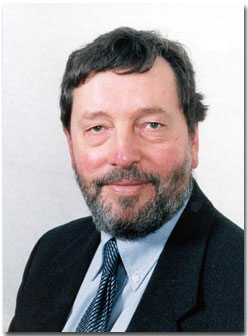
  • Iain Duncan Smith – 2016 Speech on the EU

    Ian  Duncan Smith
    Iain Duncan Smith

    Below is the text of the speech made by Iain Duncan Smith, the Conservative MP for Chingford and Woodford Green, on 10 May 2016.

    Today I want to briefly explain why the EU, particularly for the UK has become a force for social injustice and why leaving provides a vital opportunity for us to be able to develop policies that will protect the people who often find themselves at the sharp end of global economic forces and technological change. My plea to better off Britons who have done well in recent years is to consider using their vote in the referendum to vote for a better deal for people who haven’t enjoyed the same benefits as them. Because the EU, despite its grand early intentions, has become a friend of the haves rather than the have-nots.

    Take the euro, for example. It has greatly favoured already wealthy Germany and its export industries at the expense of southern Europe. The euro has meant serious unemployment for millions of young Greeks, Portuguese, Spaniards and Italians and has produced political extremism. The EU is also working well for big banks. The bailouts being financed by extreme levels of austerity in countries like Greece have largely benefited financial institutions that lent irresponsibly before the crash. The EU is also working for big corporates that benefit from mass immigration. Businesses that have under-invested for decades in the productivity and training of their own and local workforces have no reason to mend their ways so long as cheap labour can be imported from abroad.

    But if the EU is working for Germany, for banks, for big corporates and for the public affairs companies with large lobbying operations in Brussels, the EU isn’t working for over regulated small businesses and lower-paid and lower-skilled Britons. They now have to compete with millions of people from abroad for jobs and a wage rise. The Government’s own Migration Advisory Committee reported that for every 100 migrants employed twenty three UK born workers would have been displaced.

    The construction of the Olympic Park was a powerful illustration of the way in which immigrants undercut UK workers through their willingness to endure family-unfriendly living conditions. Visiting job centres in East London at the time I met both skilled and unskilled workers who struggled to get work on the site. When I asked why they said that people from Eastern Europe, often living in bedsits, without UK housing and family costs, hugely underbid them for their work. Since then those stories have been borne out by the facts. Despite the all the statements about the Olympic Park helping British workers, we now know that nearly half of all the jobs on the site went to foreign nationals.

    Given this evidence, I find the Labour party’s current position ironic. As Frank Field has pointed out, in saying they are now in favour of staying in the EU they are acting against the interests of the communities they purport to serve. Even Stuart Rose of the Stronger In campaign has admitted that immigration cuts the pay of the poor in a rare moment of candour – and acknowledged that wages will go up for many Britons if immigration is restricted.

    The downward pressure on wages is a trend will only get worse if we continue to have open borders with the EU – and would get most difficult in a recession. A Bank of England study in December 2015 concluded: ‘the biggest effect is in the semi/unskilled services sector, where a 10 percentage point rise in the proportion of immigrants is associated with a 2 percent reduction in pay’.

    This significantly affects British workers – especially those on low wages.

    We know that EU migration has increased by 50% since 2010. If the number of EU jobseekers entering the UK over the next decade remains at current levels, some 690,000 people would be added to the UK population as a direct result. And with 5 more countries due to join, that number looks conservative. This would be the equivalent of a city the size of Glasgow.

    Another big negative economic effect of the level of immigration that the British people have never voted for – and do not want- is on house prices. Young people are the biggest losers from this. They are being forced to pay an ever larger share of their incomes on accommodation, are suffering longer commutes and often have to move far away from their families. We need to build around 240 houses every day for the next 20 years just to be able to cope with increased demand from future migration. Of course there are a number of issues in the difficulty to get housing in the UK but the impact of uncontrolled immigration make it a major factor in the demand for housing. Official data shows that over the last fifteen years, over two thirds (66%) of the additional households created in the UK were headed by a person born abroad.
    The struggle to get on the housing ladder is one that affects families up and down the UK. Such is the pressure that the average age for a first time buyer is now 31.

    Everyone should have the opportunity to own their own home, but as the EU continues to expand to other countries such as Macedonia, Albania, and Turkey, the population pressures that remaining in the EU would bring can only make that prospect less likely.

    And as the Government’s own recent figures show, to cope with the kind of pressure that immigration is placing on the schools system the taxpayer is having to find extra school places equivalent to building 27 new average-sized secondary schools or 100 new primary schools. So my Vote Leave and Conservative colleague Priti Patel was correct when she highlighted the fact that as always, when public services are under pressure, those without the resources to afford alternatives are most vulnerable. In short, getting a place in your local school gets more and more difficult.

    The heavy burden of EU regulation is particularly hard on the smaller businesses that, all evidence shows, are the best route back into the workforce for the unemployed. Even though the vast majority of these businesses never trade with the EU they are subject to EU red tape at the cost of tens of billions of pounds. Those regulations don’t just mean lower profits for small entrepreneurs, they also mean fewer new businesses starting up and fewer jobs created.

    Then there are the higher grocery prices that the EU’s Common Agricultural Policy has produced. The independent House of Commons Library has concluded that EU membership actually increases the cost of living, stating that the EU’s Common Agricultural Policy ‘artificially inflates food prices’ and that ‘consumer prices across a range of other goods imported from outside the EU are raised as a result of the common external tariff and non-tariff barriers to trade imposed by the EU. These include footwear (a 17% tariff), bicycles (15% tariff) and a range of clothing (12% tariff)’.

    This may not sound a lot for better off British families – but for many it might be the difference between paying the rent or not paying the rent.

    And this takes me back to my central appeal to what I think are the best, compassionate instincts of the British people. When you vote on 23rd June – even if you believe what you are being told by those who want to remain in the EU; that you may have done ok from the EU – think about the people who haven’t and, just as importantly, think about the economic changes that are coming fast down the track and ask, very seriously, whether a Britain in charge of all policy levers will be better equipped to cope with those changes than a Britain that is still part of what, all evidence suggests, is the dysfunctional, declining, high unemployment EU.

    Because this EU vote is happening at a time of enormous global economic upheaval. We are at a point in the development of the world economy where, if we are not careful, we are going to see an explosion of have-nots. We are going to see increasing divides between people who have a home of their own and those who are, to coin a phrase, at the back of a queue – a lengthening queue – to ever get on the housing ladder. People who have jobs that aren’t threatened by automation and people who live in the shadow of the impact of technological innovation. People who benefit from the immigration of cheap nannies and baristas and labourers – and people who can’t find work because of uncontrolled immigration.

    I have always wanted people to be able to own their own home but that gets more difficult particularly for young people through our inability to control the scale of migration.

    We are entering a long period of much slower growth than we’ve been used to. We are entering a period when white collar jobs are going to be replaced by technology on the same scale that innovation has already replaced many manual, industrial and other blue collar jobs. In the coming decades the populations of China and India and other developing countries will be increasingly educated and will compete more directly with us. In this world we need to be nimble and we need to do everything we can to ensure that those likely to be most affected by these changes are, ideally, equipped to meet them or, if necessary, are cushioned from their worst effects.

    Britain avoided the high unemployment and savage austerity that many Eurozone nations suffered because we wisely ignored the advice of groups like the CBI and retained sterling. The principle that it is better to be in control of our own destiny can and should apply to all areas of national life, starting with our borders. It should cover the design of agricultural and environmental policies and the implication of those policies for grocery and energy bills. To the design of trade agreements. To fisheries policies – another regressive EU policy that has devastated some of our coastal communities. And, of course, to budget and tax policies.

    If we want to cut VAT on fuel to help families afford to heat their homes, we should be free to do so. We should be able to choose how we spend the £350 million that we currently send to Brussels every week. It would in any normal world be a strange choice to make for a British government that whilst bearing down on welfare spending and other budgets since the election we continue to send to this wealthy EU hundreds of millions of taxpayers money. This is money that could help fund the NHS. It could fund extra training and infrastructure to help every Briton to thrive in the coming economic age.

    The EU is fast sliding to economic irrelevance. Just look how it’s losing its share of world trade at twice the rate of the US. There are many reasons for this but one key reason is that its institutions have become irredeemably unwieldly. EU leaders and the Brussels army of bureaucrats can’t agree on how to fix the euro. They can’t agree on what to do about refugees. They cannot agree on what kind of transatlantic trade partnership they want with the USA – such that it is very unlikely that it will ever happen. They cannot agree on the kind of steel and industrial policies that will ensure that Europe doesn’t lose even more of its manufacturing base. The EU can only move as quickly as its slowest member states and that means it can only move very slowly indeed. And in today’s global economy it’s not speed that kills but indecision. EU leaders and ministers spend so much time in Brussels, not agreeing decisions, that they aren’t focused on the challenges back in their home nations.

    This is the key point. No matter what those who want to remain say about the EU as a market place, the reality is that it is first and foremost a political project; the aim of which is the creation of an overarching federal power, above the nation states. It is the reason why economic common sense cannot prevail and why many Greeks are now living in third world conditions, Italian banks are becoming insolvent and terrible levels of youth unemployment have become, for the EU a terrible price worth paying.

    Yet outside of the EU an independent Britain can design migration, agricultural, environmental, budgetary and trade policies that the rest of Europe seems sadly incapable of agreeing upon.

    I hope I’ve persuaded you that leaving the EU is in the clear interests of social justice within Britain. Let me end by saying I I also think it could also advance social justice across the whole continent. A vote to Leave by the British people might be the shock to the EU system that is so desperately needed. Perhaps I’m being unrealistic. The EU does not have a good track record of changing course after member states have voted against the EU project in referenda. But Brexit – coming after the Greek crisis, after so much impossibly high youth unemployment, after the election of so many extremist parties –should be the moment when Brussels finally decides to give member states more freedom to design economic, social and migration policies that reflect the democratic will and particular needs of each individual state. Given we are so uninfluential inside the EU, our maximum moment of influence might be in leaving. Confronting the rest of the EU with the need and opportunity to radically change its structures is the most socially just and, indeed, European-friendly service that Britain can provide to our neighbours across the Channel.

    Surely like me you believe the UK can do better. Why should we set such a low vision about our future by tying it to this failing project.

    Inside the EU our politicians can only talk of what we would like to do to change things knowing they will achieve very little. Outside the EU we can change our destiny and dare to believe in the greatness of all our citizens.

    Britain deserves better than this which is why on 23rd June we should take back control and vote for our own British independence day.
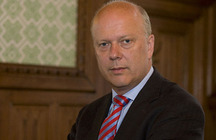

  • Chris Grayling – 2016 Speech on the EU

    chrisgrayling

    Below is the text of the speech made by Chris Grayling, the Leader of the House of Commons, on 31 May 2016.

    Good morning Ladies and Gentlemen.

    For the past few weeks you have been hearing regularly from the Remain campaign about how they believe we should stay in a “reformed” European Union.

    This morning I want to set out for you the reasons that they are right about the fact that the European Union is going to reform, but how the inevitable reform that is coming our way is very different to what they are claiming.

    The Remain campaign keep challenging us about what they call the risks of leaving the European Union. This morning I want to set out for you in detail the risks of staying in, and what lies ahead of us if this country votes to remain in the EU on June 23rd.

    And I want to stress very clearly to the people of this country that on June 23rd they are not voting on staying in, or leaving the EU as it is today. They are voting for or against being part of the EU as it must become over the next decade. And that new look EU will be very different.

    The seminal moment for the European Union came seventeen years ago with the creation of the single currency. In my view the countries that joined the euro created the economic equivalent of the San Andreas fault. They tried to create a single economy in a geographic area where there was no single government, no common culture or commonality of performance, and where the traditional escape valves when things went wrong in underperforming nations simply disappeared.

    So the countries of Southern Europe ran up massive deficits, leading the life of Riley off the back of a strong currency, whereas in the past the drachma and the lire would have fallen sharply on the exchange markets, forcing those countries back to a degree of rectitude. At its simplest, the Greeks didn’t pay their taxes, retired at 55 and hoped someone else would pay the bill. And in the end they did – the Germans, the European Central Bank, and the IMF stepped in to prevent an all-out collapse.

    But you can’t go on doing that. In a single currency area, if things look doubtful, the wealthy transfer all their money to safe havens in places like Frankfurt. The run on local banks brings them down, and the resulting collapse affects all. So no rescue is not an option.

    That’s where the Eurozone finds itself now. And it cannot carry on that way. They’ve managed to stabilise things once, but it’s hard to see how they could withstand another major shock.

    But there’s no easy solution either. You can’t just kick a country out of the Eurozone without creating that massive collapse either. If Greece had been forced out of the Euro, it would have been left with a devalued currency, unable to afford to pay its Euro-denominated debts. It would have defaulted and left massive losses across the continent.

    So the inevitable future is beginning to take shape. As my former Government colleague, the former UK Foreign Secretary William Hague once said, the Euro is like a burning building with no exits.

    They have to make it work.

    And that means political union. There is no other way. There has to be a single Government structure for the Eurozone. There has to be a United States of the Eurozone.

    The plans are already taking shape. Angela Merkel, the German Chancellor, her deputy Wolfgang Schauble, the Italian Finance Minister, the French President Francois Hollande, the Speakers of the biggest Eurozone Parliaments, the Presidents of the big EU institutions have all called for political union.

    It’s not idle chatter. It’s become a recurring theme of speeches, articles and interviews across the European Union.

    Political Union means, according to Hollande, a Eurozone Parliament, a common budget and a common cabinet. Inevitably it means giving up independent nation status. “It’s not an excess of Europe but a shortage of it that threatens us,” he’s said.

    Angela Merkel has said: “We need more Europe, we need not only a monetary union, but we also need a so-called fiscal union, in other words more joint budget policy,”

    “And we need most of all a political union – that means we need to gradually give competencies to Europe and give Europe control,” she added.

    Last summer the Italian Finance Minister Pier Carlo Padoan called for a common budget and a common unemployment insurance scheme, perhaps even an elected eurozone parliament alongside the existing European Parliament and a euro zone finance minister.

    Then the Five Presidents Report, produced by the Presidents of the European Commission, the Council, the Parliament, the Central Bank and the Eurogroup started to set out what would happen in much more detail and with a clear timeline over the next ten years, aiming to complete the work by 2025. The report is very broad ranging and all-encompassing.

    “Progress must happen on four fronts: first, towards a genuine Economic Union that ensures each economy has the structural features to prosper within the Monetary Union. Second, towards a Financial Union that guarantees the integrity of our currency across the Monetary Union and increases risk-sharing with the private sector. This means completing the Banking Union and accelerating the Capital Markets Completing Europe’s Economic and Monetary Union 5 Union. Third, towards a Fiscal Union that delivers both fiscal sustainability and fiscal stabilisation. And finally, towards a Political Union that provides the foundation for all of the above through genuine democratic accountability, legitimacy and institutional strengthening. All four Unions depend on each other.”

    It’s a view shared in many of the national parliaments of the Eurozone. Last September the Speakers of the Parliaments of Italy, German, France and Luxembourg combined to agree a vision statement for the future of the Eurozone and the EU. It called for a rapid progress of integration, and a broad ranging one at that. They recommended that….

    “The on‐going integration process should not be limited to the field of economic and fiscal matters, or to the internal market and to agricultural policy. It should include all matters pertaining to the European ideal ‐ social and cultural affairs as well as foreign, security and defence policy. “

    Now each time I talk about this renewed drive towards integration in this campaign, those on the Remain side tell me it will never happen, that there is no political support for it, that it is just a scare story, and in any case we won’t be affected.

    Well let me tell them how wrong they are.

    The process is already under way. And we will be affected whether we like it or not.

    The Commission in Brussels is now embarking on a process that will lead to much deeper integration than we have even seen before now. Don’t believe me? Then listen to the man driving this next stage of change. Jean Claude Juncker. In his so-called State of the Union Speech last autumn.

    “As part of these efforts, I will want to develop a European pillar of social rights, which takes account of the changing realities of Europe’s societies and the world of work. And which can serve as a compass for the renewed convergence within the euro area.

    This European pillar of social rights should complement what we have already jointly achieved when it comes to the protection of workers in the EU. I will expect social partners to play a central role in this process. I believe we do well to start with this initiative within the euro area, while allowing other EU Member States to join in if they want to do so.”

    Fine, so it only applies to the Euro member states. So we aren’t affected. Are we? Well actually we are…

    The Social Pillar consultation was launched in Brussels in February. It’s clear where it is designed to end up.

    “The pillar of social rights should be a self-standing reference document, of a legal nature, setting out key principles and values shared at EU level.”, it says.

    And the Commission has set out the areas covered by the process.

    Among these are many areas where we already have protection or would want better protection in the UK.

    They include:

    A right to minimum pay;
    Minimum measures to ensure awareness of rights and access to justice;
    Access to lifelong learning and skills; and
    Access to basic social services, including health care.
    Let me make clear that I do not want to see social rights and protections diminished if we vote to leave the EU.

    The point however is whether it is for the EU or for the people of the United Kingdom to control our rights and protections.

    If we vote to remain in the EU then it would be EU rules that would determine our minimum wage, EU rules that would say how our pensions work, it would be EU rules to govern our skills system and even EU rules that would tell us how health services should work.

    But that’s the Ever Closer Union that we are supposed no longer to be part of.

    And this package is only for the Eurozone.

    So what’s the problem.

    Well Ladies and Gentlemen, the problem is this.

    We have an opt-out from the Euro.

    We have an opt-out from the Schengen Area

    We have an opt-out from some Justice and Home Affairs measures.

    But on everything else we have no opt out. We are subject to every law introduced by the EU and in the Eurozone.

    On banking and financial services.

    On business regulation.

    And on EU social policy, on the so-called Social Europe, we have no opt out.

    So we have a new list of EU social policies which will deepen integration across the Eurozone. But these will be EU laws passed in the normal way. There is no other method of doing so right now. And we have no opt-out from them.

    Many of these measures will be things we already do well; some may be measures we would want in the UK. The point is that it should be up to us to control what happens to the NHS, to workers’ rights and to social protection and control over these areas should not lie with Brussels.

    So when there are new EU rules on pensions, skills and health, they will apply to us too. It means the EU starting to set the rules for our NHS. With no opt-out. And millions more people able to access our free at the point of delivery service as countries like Albania, Serbia and then Turkey join the EU.

    And this is why we are not at all exempt from Ever Closer Union. Because the nuts and bolts of integration will come from new EU laws passed under the terms of the Lisbon Treaty.

    The Lisbon Treaty itself is a huge part of the problem.

    It is vaguely worded, and gives both the Commission and the European Court of Justice free rein to expand their brief and take over competences from the member states.

    It’s already happened. Under the Treaty individual countries are supposed to be responsible for social security. But the European Court decided that the free movement rights of the European Citizen were more important, and now the EU controls more and more aspects of our benefit system. A treaty we signed in good faith is being rewritten by a Court whose president made a speech saying the job of the European Commission is to resist Euroscepticism.

    So what happens now then?

    Well, nothing until after June 23rd. We know the Commission is on its best behaviour right now. Everyone in Brussels is under strict instructions not to rock the boat. Frankly I am surprised that they have even started the consultation on the Social Pillar now.

    But the decision to delay anything controversial in Brussels until after our referendum is an open secret there. Legislation is being held back. The budget is being held back. The EU institutions are in lock down until the British decision is done and dusted.

    But if we vote to remain, the plans move full steam ahead.

    And just remember. This is not a political flight of fancy. They have no choice. The Eurozone cannot be confident of its survival unless they follow down this road. It was the Italian Finance Minister last year who said a move “straight towards political union” is the only way to ensure the survival of the common currency.

    And Britain? What happens to us?

    Our influence will diminish.

    Our sovereignty will diminish.

    Our ability to look after our own national interest will diminish.

    There will be no “reformed European Union”, British style.

    Instead we will be subject to most of the integration that the Eurozone is poised to embark upon whether we like it or not. We will have little or no say in what they decide is necessary to pursue their goal of political union.

    Ladies and Gentlemen, that is not for us.

    I want us to live in an independent sovereign country. I want us to take back control of our democracy.

    If we all want that, there is no alternative for us. On June 23rd we have to Vote Leave.

  • Liam Fox – 2016 Speech on the EU

    Below is the text of the speech made by Liam Fox, the Conservative MP for North Somerset, on 2 June 2016.

    All across the country, local authorities are facing huge challenges to meet additional housing targets set by Central Government. Local communities are facing the loss of green spaces in the rush for housebuilding, often failing to take into account the limitations on existing infrastructure.

    Take the village of Yatton, in my own constituency of North Somerset, for instance. Despite having no surplus school places, fully saturated GP surgeries and an already overstretched road system, it is typical of innumerable of villages across the country, where local communities are being asked to absorb large numbers of extra houses without any realistic possibility that the money will be found to provide the extra infrastructure required.

    It is a story being repeated time and time again in more and more places. People rightly ask, “how much of our green space will disappear, possibly forever?” and “how much of our quality of life will be compromised to deal with problems often created far away?”

    And they are right that the problem that is being faced at the local level begins well away from our communities at the level of national policy failure. It lies in the failure to control the growth of our population through immigration, including immigration from the European Union.

    As the Government fails to control the increase in the population due to migration, it forces local authorities to build more and more houses to deal with the ripple effect.

    If we remain in the European Union we will be forced to accept unlimited free movement of people – but there will be no free movement of space coming with them. The inevitable result will be worsening overcrowding in our land limited country.

    Most of the focus in the housing debate has been on supply. There is a relatively broad consensus that the UK needs to build around 250,000 additional homes every year to meet current demand. In the last ten years an average of only 170,000 have been built and the debate has largely been around how changes to planning can facilitate the level of house building required.

    Yet, what this approach to the problem fails to understand is that it is not merely an issue of supply, but one of demand.

    For much of the 20th century, the number of households grew at a faster rate than the population as a whole. Changes in social behaviour, such as divorce and the increased tendency for people to live alone, as well as demographics, meant that the average household size fell. In recent times, however, average household size has changed little, and the key factor driving the growth in household numbers has been population growth.

    The total non-British net inflow of immigrants is close to 350,000 with migration from the EU now accounting for about half of that figure.

    The outcome of the recent renegotiation of benefits will make no significant difference to these numbers, as the office for budget responsibility, the government’s advisory body has confirmed.

    This implies continued total net EU migration to the UK of the order of almost 200,000 people per annum.

    This number is growing dramatically and has already more than doubled since 2012.

    The continuing failure of the Eurozone and the tragically high levels of unemployment in Southern Europe is likely to mean that more and more young people will head to the North of Europe, including the UK, in search of work.

    And all this does not include those countries who may join the EU in the coming years.

    All these factors could considerably boost the numbers and we are powerless to stop it. Staying in the EU is likely to mean continued high levels of immigration over which the UK would have no control while leaving the EU would give back control of immigration policy to the UK government so enabling the number of immigrants to be reduced while, at the same time, being more selective about who can come to the UK.

    Continuation of net migration on the current scale would mean an increase in our population of almost 5 million in 15 years’ time.

    This would be the equivalent of adding the combined population of the cities of Birmingham, Glasgow, Manchester, Liverpool, Leeds, Sheffield, Bradford and Bristol.

    60% of this increase would be from future migrants and their children. This is not a scare story, simply an extrapolation of how today’s immigration figures will impact on our society in the years ahead if changes are not made to policy. Half of this huge figure is attributable to the EU.

    Official figures show that in the last ten years, two thirds of additional households in the UK have been headed up by an immigrant (that is to say that they had a foreign born “Household Reference Person (HRP) – what used to be known as head of household) [c]. Households with a foreign born HRP have increased by around 120,000 a year during this period.

    In London, despite the rapid growth in population the number of households headed by a British born person has actually fallen in the last ten years.

    This is a particular problem in England which takes over 90% of immigrants to the UK despite the fact that it is is already nearly twice as crowded as Germany and 3½ times as crowded as France.

    Yet population growth on the present scale means making our urban areas still more overcrowde or building over valuable green belt or farmland with all the loss of amenity involved.

    At current levels of immigration, the Office for National Statistics project that our population will continue to grow by around half a million a year – a city the size of Liverpool every year.

    This will mean that, in England, we will have to build a new home every six minutes, or 240 a day, for the next 20 years to accommodate just the additional demand for housing from new migrants. That is before we take into account the needs of those who were born here.

    Of course, it would be wrong to imply that most newly built housing is occupied by immigrants. Many immigrant households move into existing properties. The need to build a new home every 6 minutes it is to deal with the additional demand for housing, it is obviously not that these new homes will be occupied directly by immigrants.

    To be even more specific, the difference in projected household growth between ‘high’ net migration and ‘zero’ net migration is 95,000 households per year or more than one additional household every 6 minutes.

    These patterns create consequences for almost all sections of society.

    Most new immigrants move into the private rented sector which has grown as the immigrant population has grown. Competition for rented accommodation obliges all those in the private rented sector to pay high rents which take a large share of income and makes saving to buy a home even harder.

    These resulting high rents and a shortage of housing make it much more difficult for young people to set up home on their own so they have to spend more time in house shares or with their parents.

    The problem in the private rented sector may well be exacerbated by recent moves to clamp down on the buy to rent sector.

    High rents and high house prices resulting from an imbalance of supply and demand in the market often means that families have to live in overcrowded conditions or move away from their local area to find suitable accommodation that they can afford.

    Those living in the parts of the UK with lower housing costs cannot afford to move for work leaving, them trapped in areas with fewer opportunities.

    Of course there are other drivers to housing demand, some of which will have been hidden by the recent undersupply in the market.

    For example, if supply were to be increased some younger people would leave their parents’ home or house shares thus adding to effective demand.

    But this cannot get away from the fact that a huge increase in population is driving a demand for housing that we are finding difficult to cope with, at least without potentially damaging the quality of life for those who already live in our country.

    A satellite survey by a research team at the University of Leicester between 2006 and 2012, found that between 2006 and 2012, 22,000 hectares (54,000 acres) of green space in Britain was converted to “artificial surfaces” – mostly housing, but including the roads, other infrastructure required to support the houses themselves.

    More than 7,000 hectares of forest was felled, 14,000 hectares of farmland concreted and 1,000 hectares of precious wetland was drained to make way for urban sprawl.

    That’s a landscape twice the size of Liverpool, transformed forever, in just six years.

    Without a substantial change in policy, the same thing will happen – again and again and again.

    Membership of the European Union is usually measured in monetary terms but there are other ways of measuring the cost.

    A constant unchecked flow of migration will inevitably result in more of our open spaces and natural greenery being turned over to housing.

    Some of that may be inevitable, with growth of our own population, or changing social behaviours, but simply because some of this pattern may be inevitable is no reason to be resigned to it.

    My message, especially to the young and those with young families is this – if we remain in the EU, if we have uncontrolled migration year after year after year after year, you will find it harder to get a home of your own.

    You will find it harder to see a GP or you will find it harder to get a school place and you will see our green spaces disappear at an even greater rate.

    If we are unable to control immigration and registered from its current levels, then we will pay a much more subtle and long-term price than money can measure.

  • Greg Hands – 2016 Speech on the UK and Algeria

    Gregg Hands
    Greg Hands

    Below is the text of the speech made by Greg Hands, the Chief Secretary to the Treasury, in Algiers on 22 May 2016.

    Ministers, Lord Risby, Ambassadors, distinguished members of the business community, ladies and gentlemen:

    It is a great pleasure to be here with you today in Algiers.

    Aside from being a government minister, I’m the Member of Parliament for Chelsea and Fulham – not just MP for two famous football clubs, but two thriving and lively parts of London, home to 80,000 people. But at the moment, I am in the shadow of the MP for Leicester after their amazing Premiership win.

    As you heard, I am also Chief Secretary to the Treasury in the British government.

    That means I am No 2 in the team of Ministers, led by George Osborne, whose task is to pull out all the stops for economic growth and greater prosperity.

    Indeed, I manage a portfolio of some 740 billion pounds’ worth of spending – although, unlike some of my former colleagues in the City, my objective is not to make that number bigger!

    This is my second visit to Algeria after being here for 10 days in 2006.

    I had already met President Bouteflika in London, at the inauguration of the UK-Algeria Parliamentary Friendship Group.

    So I was delighted to have the chance to visit, as part of a Parliamentary delegation 10 years ago, Algiers, Oran and Constantine. I was struck by the great heritage of this country, including Tipasa and Djemila. I very much enjoyed your wonderful hospitality.

    And, as I stared across the Gorges du Rhumel in Constantine, I was able to reflect on the way in which different cultures and eras – including, of course, the 21st century – had each, in turn, made their mark.

    So when I was given the opportunity to revisit Algeria, this time as a member of Her Majesty’s government, I leapt at the chance.

    The Prime Minister has told me what an excellent, informative visit he had here in 2013, when he had a most productive discussion with His Excellency the President of the Republic. And he warmly recalls his meeting with you, Prime Minister, at No 10 Downing Street in December 2014.

    The Prime Minister’s visit in 2013 was, of course, the start of something significant.

    President Bouteflika asked David Cameron to help project the partnership with Algeria into the 21st century.

    Together, they agreed that the partnership needed to acquire 3 strong components: first, close security co-operation; second, the increased participation of the United Kingdom in the Algerian economy; and third, to support Algeria’s efforts as it increases the use of the English language.

    Before I turn to business issues, let me say a very few words about the first two components.

    The security issue is fundamental to our joint success. The attack at In Amenas in 2013 made this clear. Vital Algerian and British interests were attacked; and I am proud of the way in which we stood firmly together to tackle the terrorists.

    Progress since then has been strong. We had our sixth bilateral session of talks just last Thursday, in Algiers, which took further steps forward in what is an increasingly close relationship. This is an area where we will continue to work together over the coming years.

    On the use of the English language, I am delighted that the British Council is reaching millions of Algerian schoolchildren through its work with the Algerian Education Ministry; and thousands of others directly, through their Teaching Centre, and through courses run for, and in, businesses in Algiers.

    I say this as a keen linguist myself: knowledge of foreign languages is one of the most important skills that can be taught. And English, in particular, equips people to succeed throughout the world. Where there is an appetite for people to learn it, we will strive to meet that appetite.

    But it is, of course, the business relationship that brings me here today.

    For too long – and excuse me for being blunt – the UK didn’t attach enough importance to Algeria.

    That’s now changing; since the Prime Minister’s visit, and the appointment of Lord Risby as the Prime Minister’s Envoy for Economic Partnership, we’ve seen important partnerships forged, as together, we explore the opportunities Algeria has to offer.

    Over 120 British companies have now come here today. And an even larger number from the Algerian business community are here to meet them. That proves to me that the message – that there is good business to be done here – is truly sinking in.

    So I hope you have the chance to talk to each other and to establish strong links.

    And I hope you continue to build those links after this forum as well. London and Algiers are not very far away from each other – indeed, Algiers is the nearest capital to London, outside Europe. And there are so many sectors in which Algeria and the United Kingdom can work together, for the joint benefit of our businesses and our peoples.

    Oil and gas is of course a given. BP and Shell are long established here and our Ambassador hosts trade missions from the oil and gas supply chain every few months.

    But with the fall in the price of oil over the last two years, I know that you, Prime Minister, have recognised that Algeria has to develop its portfolio beyond hydrocarbons.

    You are right. There is a vast untapped resource here. Renewable Energy, for example, can be really significant, and I want the UK to get more involved.

    But alongside developing the links sector by sector, we need to offer practical assistance to our business communities.

    So I want to talk today about 3 separate projects which are going to make a difference for all of us.

    The first is the Double Taxation Treaty, which will ensure that tax isn’t charged on the same income in both countries – levelling the playing field for UK businesses active in Algeria.

    I am delighted that ratification has now been completed. It has entered into force, and will have effect in Algeria on the 1 January 2017, and in the UK in April 2017. I’m sure you’ll all be very pleased to hear that!

    The second is establishing a UK-Algeria Chamber of Commerce. This has long been a stated desire of our Embassy here, and of the Embassy of Algeria in London.

    The Embassy here has, of course, offered advice and services for several years, but it makes sense for these efforts to be supported by a business-run forum, where Algerian and British companies can develop the habits of joint working.

    So I am pleased to say that plans are now being developed to establish a chamber here in Algiers.

    This is very much work in progress. It could provide a workspace for visiting businesspeople. It should be a hub for information for those Algerian businesspeople seeking partners or seeking to invest in the UK. But whatever shape it ends up taking, its success will depend on your input.

    So I want as many of you as possible who are here today – from both countries – to register your interest by simply leaving your business card at the Embassy’s Stand in the foyer outside. You’ll then find yourself automatically included on Ambassador Noble’s updates as his team keep you all informed.

    The third ground-breaking project is to open a British International School in Algiers. The plan is to offer education in English working to the UK and Algerian curriculums. The objective is to open in 2018.

    No-one likes to leave their family behind when working overseas, so this will be another great incentive to companies who want to invest in Algeria.

    This all goes to emphasize that the United Kingdom doesn’t see Algeria just as a market, but as a place to invest in: and one with a great deal of potential.

    There are 28 million people under 30 years of age here: they are the future of the country, together with its other resources.

    I’ve heard of the changes recently made to the Constitution, and know that work has now begun on the new Investment Code.

    Your new Economic Model, Prime Minister, is eagerly awaited and I hope that, in improving the business environment, it will play an important role in growing the Algerian economy and British participation in it.

    So although my visit here is brief this time around, I am already looking forward to visit number 3!

    I hope that the roundtables this afternoon will help you all in finding new ventures to pursue.

    My government’s global objective is to help 100,000 British companies start exporting by 2020 – and this Forum today should certainly play a role in achieving that.

    Let me close by once again thanking you, Prime Minister, for joining us here today; and I look forward to seeing the relations between our two nations grow ever closer and stronger.

  • Adrian Bailey – 2016 Speech on Coal Authority Compensation

    Below is the text of the speech made by Adrian Bailey, the Labour MP for West Bromwich West, in the House of Commons on 26 May 2016.

    I rise to discuss the case of my constituents, Mr and Mrs King of No. 61 Myrtle Terrace, Tipton, Mrs Freeman of No. 59, and Mr and Mrs Shaw of No. 57, all of whom purchased their homes between 1975 and 1980. Prior to purchasing their homes, and as a condition for receipt of a mortgage, they were required to have a search for mine shafts in the immediate vicinity of their properties. It was conducted by the National Coal Board, which is now known as the Coal Authority.

    All of the searches confirmed that the properties were “clear” of any mine shafts. I have a copy of the letter sent to Mr and Mrs King’s solicitors from the NCB surveyor. It is dated 12 November 1980 and states clearly that

    “the property is clear of disused mine shafts and adits as shown on our records.”

    Fast forward to 2011: the Coal Authority wrote to the owners of these properties, indicating that it wished to carry out an inspection for old mine workings in the immediate vicinity. Imagine their surprise and horror when, following the inspection, it was confirmed that Mr and Mrs Shaw had a mine shaft immediately under their kitchen floor and that both of the other properties had shafts very close by in their gardens. It is fair to say that it was most homeowners’ worst nightmare. I reassure the street’s other residents by emphasising that the inspection identified no other mine shafts in the immediate locality.

    It appears that the location of the shafts was identified on maps from 1870—I have a copy of one myself. The Coal Authority and its predecessor body, the NCB, had maps with these locations in their possession, certainly since 1936. It would appear that when the surveyor certified the location as clear from mine shafts, they totally failed to identify them from the records that they had in their possession.

    My constituents have had extensive correspondence with both the Department of Energy and Climate Change and the Coal Authority, neither of which will accept responsibility for the inaccuracy of the original NCB report, and they have been met with nothing more than an evasive smokescreen designed to obscure the relative level of their culpability.

    When confronted with such evidence, the usual tactic of the Coal Authority has been to give reassurances on safety and to point to compensation schemes that are available in the event of damage or subsidence arising from instability. That ignores completely the stress arising from the doubt and uncertainty caused by these revelations and the wider financial implications of purchasing a house with mine shafts underneath or in the immediate vicinity. Those concerns were not helped by the fact that in 1999, which is in most people’s recent memory, a house in nearby Moxley disappeared down a mineshaft and, I believe, subsequently a considerable number of adjacent properties had to be demolished.

    The safety of the houses is not the only concern; residents are also worried about the reduction in the resale value of their properties. The Department of Energy and Climate Change, in correspondence with the residents, has suggested that the Coal Authority has no responsibility in relation to property devaluation and that its responsibility is limited to subsidence claims, which may, in some cases, result in the loss of value. To counter that, the residents obtained an independent evaluation, in which the surveyor suggested that

    “usually the likelihood of subsidence problems related to old mine shafts is remote, and consequently the location of a mine entry should not significantly alter the value of a property.

    However, the public’s perception of properties located within the zone of influence of a mine shaft is usually negative, and this is often the case with their surveyor and solicitor, upon whose advice the public rely.

    From a logical perspective the value of the property should only be marginally affected. However the public perception is not always based on logic and it is likely that one will find with a resale of a house within the zone of influence of a mine shaft will prove more difficult than would normally be the case”.

    That is a masterpiece of understatement. The surveyor went on to say that, from their 25 years’ experience, the location of a mine entry under a property with no records of it being filled could deduct 30% from the resale value of the property, and potentially up to 50%.

    That does not deal with the added issue of mortgage lenders, who are often reluctant to lend on properties with mine shafts nearby. That is not altogether surprising, because I cannot believe that anyone would pay the full asking price for a house with a mine under the kitchen. I would not; perhaps the Minister would like to confirm whether she would. If she would, I am sure that my constituents would be interested.

    My constituents have been left trapped in houses that could be sold at only a fraction of the asking price of properties of similar size in the area. They are effectively denied the option normally available to people of their generation of selling their house and moving to suitable accommodation that might be more appropriate to their needs as they get older. The devaluation of my constituents’ homes was accepted by the listing officer when the properties were revalued for council tax purposes in December 2013. The properties were revalued downwards to reflect what had happened.

    By failing to provide my constituents with proper, sound advice, the NCB denied my constituents the opportunity to make an informed choice about the initial purchase of their homes. Not only would they probably not have proceeded with the purchases, but even if they had wanted to, it is unlikely that their mortgage provider—the then Midshires building society—would have given them mortgages on those properties. The residents believe that the actions of the negligent surveyor sentenced them to spending the next 25 years paying a mortgage on properties that they could never hope of selling at prices comparable with those of unaffected properties.

    Residents’ demands for compensation were met with complete indifference by the Coal Authority, which resorted to a breath-taking abuse of logic to justify this indifference. The Coal Authority claims that because the information was available in 1980 to the surveyor, who failed to identify it within the time limit, but was only revealed in a subsequent inspection 31 years later, they could not claim because the time had expired. In effect, the residents are excluded from claiming because they failed to identify an error made by the National Coal Board when the only evidence that could be used to identify the error was in the hands of the National Coal Board and its successor, the Coal Authority. The only other way in which they could have satisfied that particular demand was to have taken their own initiative and to have dug up their kitchen floor or back garden to identify whether there were any rogue mineshafts.

    My constituents took their case to the Parliamentary Commissioner for Administration. The ombudsman’s report confirmed maladministration in the way the Coal Authority handled their complaint, and it recommended a small sum of compensation for each complainant. It also confirmed that DECC is responsible for any errors in NCB mining reports, and criticised the Coal Authority for failing to advise the complainants of that fact. However, the ombudsman’s remit was confined to adjudicating on the process of dealing with the complaint, not on the merits of the complaint itself. Therefore, the substantive issue of compensation for my constituents is still unresolved. They are still condemned to living in houses they cannot sell at a realistic market price, as a result of mistakes made by the NCB and which are now the responsibility of DECC.

    Mine searches are a vital part of the process of purchasing properties. They allow the purchaser to make an informed decision about whether they want to proceed on a property. A positive or negative search vastly affects the value of a property. My constituents paid full price for their property, based on the assumption made by the National Coal Board—the experts—that the property was clear of mines. This was clearly negligent because the surveyor clearly did not access the correct records to make the informed decision on which my constituents relied.

    My constituents have done everything right. They have worked hard, got on, paid taxes and bought homes. Now, however, because of an oversight over 30 years ago by a professional specifically employed to avoid such a situation, they are unable to enjoy the fruits of their labour and are trapped in properties they have no hope of selling for their normal market value. My constituents have no way and no process by which they can have their case heard and adjudicated without recourse to a court of law. It is unjust that people of their age and financial circumstances have to invest in what might be an expensive legal process to obtain justice.

    I ask the Minister and DECC to ensure that the Coal Authority treats sensitively any future complainants with issues of this nature and give them appropriate guidance about how they can best get redress for their particular concerns, as the Coal Authority clearly did not do in this case. To do that, there needs to be a change of culture and a change in the ownership of responsibility for these issues. I also ask the Minister to set up a tribunal and an adjudication service within DECC, to which people affected by such an issue—there may be many others now or in the future—can take their complaint, and have it assessed by experts and adjudicated on, so that they do not have to suffer in the way that my constituents have suffered.

    Not only were my constituents denied the right to make a properly informed decision when they brought their homes, but they are now being denied the right to receive compensation for an error that was not of their making and was beyond their control, and which will have a significant impact on their finances for the rest of their lives.

  • Jo Johnson – 2016 Statement on Business Department’s Future

    jojohnson

    Below is the text of the statement made by Jo Johnson, the Minister for Universities and Science, to the House of Commons on 26 May 2016.

    Today the Department for Business, Innovation and Skills has announced its decision to create a combined BIS headquarters and policy function in London to deliver a simpler, smaller Department that is more flexible and responsive to stakeholders and businesses by 2020. This involves basing all policy roles in London by 2018 and closing the St Paul’s Place office in Sheffield.

    Everyone affected will be able to stay in post in their current location until January 2018 and if they choose to take up a post in London there will be financial assistance for travel available for the first three years.

    Anyone choosing to leave will benefit from the best exit terms currently available in the civil service. The support package on offer will include money for re-skilling, career coaching, and time off to look for other jobs.

    The executive board and ministerial team take the future of staff affected by this decision, and the contribution they have made, very seriously. We are aware this decision will directly affect people’s lives, livelihoods and families and it has therefore not been taken lightly. Support for staff has been and remains our priority.

    This unanimous decision has been reached by the BIS executive board after the Department conducted a consultation with staff and with the departmental trade unions which closed on 2 May. Inevitably it has been a period of uncertainty for staff but the consultation period has enabled the executive board to reflect on its proposal, to hear from staff, to take into account the equality analysis, and to consider the alternative business models which have been put forward.

    Following the recent spending review, BIS has set itself the target of becoming a more flexible and efficient Department, as well as reducing its cost to the taxpayer. We have committed to deliver reductions in the Department’s operating expenditure which equate to around £350 million by 2020. Savings of this magnitude can only be delivered by fundamentally changing the Department’s overall business model in a way that works for a smaller workforce with more streamlined structures in a demanding service and policy environment.

    BIS 2020 is the transformation programme to deliver that new business model—creating a Department that is simpler, smaller, and better for users by 2020. As a transformation programme it is ambitious. It means reducing our operating costs and associated headcount by 30% to 40%; more than halving our 45 public bodies; and rationalising customer support, grant giving and digital service delivery. It also involves reducing our locations from around 80 sites to seven business centres plus a regional presence across the country. These business centres will each focus on a key area of business activity bringing together expertise and helping us to build our capability.

    One of these business centres will be a combined BIS headquarters and policy function in London. Crucial to this decision was bringing together BIS’ policy capability which is currently dispersed across 14 offices, and locating it near Ministers, Parliament, and other Government Departments in Whitehall.

    Over the course of this Parliament our policy function will reduce from around 2,000 roles to around 1,500 roles, reflecting the size of the Department’s pay bill on our operating expenditure. As we get smaller we need a simpler structure that allows staff to interact easily and to respond rapidly and flexibly to Ministers, Parliament and other stakeholders. Being more flexible, agile and re-deployable enables us to respond to the challenging demands of modern Government. The steel crisis is a recent example of where we have had to urgently re-deploy large numbers of staff to address an urgent priority.

    Operating split site and split team working as we become smaller would put an increasing strain on our organisational effectiveness which is why the executive board has concluded that a combined headquarters and policy function is the most effective model to continue to serve Ministers and stakeholders flexibly, effectively and sustainably.

  • David Blunkett – 2016 Speech on Britain in the EU

    davidblunkett

    Below is the text of the speech made by David Blunkett, the former Labour Home Secretary, on 26 May 2016.

    The 23 June referendum could be and still might be, the opportunity to demonstrate the gritty grasp of reality which is surely the hallmark of the British people. A reality which has been displayed time and time again, in the glories and the tragedies of the past. In creating and developing alliances, in making sacrifices on behalf of others and yes, calling on others to rally to our defence in times of need.

    Forty years ago I voted ‘No’ to staying in the European Union. So what has changed? The simple answer is “the world”. The dramatic change of the last four decades can be summed up in one word, “power”. Who exercises it, on whose behalf and how those without wealth and influence can use democratic politics to have their voices heard, their needs met and their rights and wellbeing protected.

    From the school playground through to international negotiations, strength lies in numbers. From the emergence of the United Kingdom, to the development of the Trade Union movement, men and women understood that combining together provided power that individuals could never exercise alone.

    In today’s world this has never been more apparent. Global companies exercise enormous power over the world economy; the lives, the jobs and the wellbeing of individuals and families across the world. From finance to modern communication, it is the global giants who exercise sway over our lives.

    Some have compared the Googles and Amazons to the Roman Empire, and the collection of tribute and the exercise of cultural hegemony, whatever and wherever the nation state they touch.

    Why is it that these giants, including companies like Apple, are prepared to do entirely different deals with China than other parts of the world, including on issues such as personal privacy? The answer is of course simple – 1.2 billion people provide a market which any international company would wish to get its hand on.

    This is an example of a highly populated and increasingly powerful nation-state being able to “do a deal” with extraordinarily powerful forces in the private sector. It is about the reality of political power confronting market forces.

    In or out of the European Union we are affected by decisions taken collectively by other European nations. In or out of the European Union we are directly affected by how the rest of the world perceive the United Kingdom, its economy, its potential trade, its standing in relation to influence in international affairs and decision making outside its own boundaries.

    Hence the announcements of the International Monetary Fund, the view of the Credit Rating agencies, the opinion of the President of the United States, senior statesmen and women past and present really do matter. They matter because we are in a global economy, affected by decisions made collectively in relation to trade, to the handling of the threat and insecurity posed by terrorism, and of mass people movements across the world.

    None of this can be dealt with or understood sensibly, with belligerence and bluster. The buffoonery of Boris Johnson is no substitute for rational thought or an assessment of and counterweight to, the reality of power. I have over recent weeks come to wonder whether the BBC should be renamed the Boris Broadcasting Corporation. Not a day goes by without some mention made by our main broadcaster of the increasingly irrational and almost irrelevant remarks of this newly converted politician, to leaving the European Union.

    But this decision is not about individuals, it’s not about a contest for the leadership of the Conservative Party, it is not about the Conservative Party. This is a decision about the future of the United Kingdom, the future of our children and grandchildren, and above all facing the reality of life in a very changed landscape.

    So, let me address two central issues that the Out campaign constantly say are upper most in people’s minds. Namely, security and immigration.

    As Home Secretary in the period covering the attack on the World Trade Centre on the 11 September 2001, and at a time of enormous upheaval and instability leading to large scale people movements across the world at that time, I think I can claim to have some understanding of how decisions are made, and the impact that collaboration offers to achieving a successful outcome.

    Fifteen years ago, I was in partnership with the then Interior Minister of France, Nicolas Sarkozy, later to become President. He and I got to know each other precisely because we were working together on what was then the Justice and Home Affairs Council of the European Union. Both of us were opponents of the grinding bureaucracy that we sought to change. Yes, there is bureaucracy, there is enormous need for continuing reform but I make the point entirely to demonstrate that we are not the only people within the European Union, who believe in progressive change. The notion that only the plucky Brits are against bureaucracy, against overbearing centralism and the top down edicts of the Commission is frankly insulting to the rest of the democratic world!

    We worked together with other partners including the then Interior Minister of Germany Otto Schilly, to get the right decisions made and to ensure that they were practical, workable and relevant to the key threats that existed at the time.

    The benefits arising from enhanced co-operation and collaboration within Europe – rather than on a bilateral basis – apply equally to countering the threat of terror and dealing with the major challenge of the movement of people across the world.

    In both cases we are talking about a global threat, not solely a breach of our own borders. On the one hand, the perverted ideology and interpretation of the world which leads to a threat to our life and economic wellbeing is nurtured and propagated on a global scale. Whilst it is true that the European Union is only one part of a multiplicity of collaborative processes for information gathering, data collation and sharing, it is an important element in ensuring common cause.

    This is not simply (and this is true of so much of what we are dealing with in relation to our future in Europe), a matter of what we can “get out of” other countries including the European Union machinery. It is about what we are able to contribute in both helping and improving the ability to collaborate, with other countries. In other words, being part of the process is essential both in terms of workable practical measures but also the overall direction, relevance and competence of what is done by all those in a position to contribute. We should be asking ‘what can we do for you’, as well as ‘what can we gain from you?’

    Yes, we are in a fortunate position that we are trusted by and able to work extremely closely with the United States on intelligence gathering, analysis and action. But it is extremely silly and beneath those who should know better to suggest that this somehow “trumps” if I dare use such expression these days, wider co-operation against terrorism on our doorstep.

    The meetings we held at the Justice and Affairs Council, at a Europe-wide level after 11 September, were illustrative of the importance of the ability to work quickly and effectively with all those who were then part of the Union.

    The European Arrest Warrant, the data sharing improvements, the use of biometrics and yes, improved collaboration on the wider European border all demonstrate the importance of what we call the European Union. In simple terms, if we had not had the EU, we would, on these issues, have had to invent it.

    Suggesting that this amounts to some conspiracy for a “European State” and analogies with the intent of Hitler are not only dangerous and risible but illustrate the lengths to which the Out campaign will now go to distort reality in attempting to frighten people in a way that they claim to be a hallmark of the In campaign.

    Actually, it is collaboration across Europe, building alliances with both historic friends and neighbours with the United Kingdom and new entrants from the East that ensure a balance of power within the Union. Power being one theme of my contribution to this debate, should to any intelligent human being, equal ensuring that no one nation or two nations working together can dominate not just the structures and decision-making processes of the European Union but of Europe as a whole. Remembering that in or out, decisions taken in Europe, the balance of power within Europe, the economic, social, cultural and wider influences, all impact on this, our nation off the geographic coast of mainland Europe.

    We understood this in relation to the debate as to why it was important that Scotland remained within the United Kingdom. The same argument apply equally to the debate about the future of Britain in Europe. For it is about the future of Europe as a whole and not just the future of Britain, that should determine our vote on 23June.

    Which brings me to immigration. The agreement that Nicolas Sarkozy and I reached in 2002, which saw the closure of the Sangatte camp outside Calais in 2003 was mutually beneficial. Both of us recognised that this was not a matter that either nation on their own could deal with nor for that matter was solely about France and the United Kingdom. This was about people being trafficked by organised criminals across the world, attracted by both a better life as well as in many cases, escaping from death and torture.

    To reach the United Kingdom by land and water, involved having arrived in the European Union through its outer borders. The Out campaign talk as though what we are dealing with is “fortress Britain” where we erect on our own soil mechanisms to stop people actually arriving, touching our soil and therefore becoming entitled under international – not European – treaties, to claim asylum. Or, to disappear into the sub-economy to work and operate below the radar. This is frankly nonsense. The best way of illustrating why collective action can be effective and is important in terms of dealing with global displacement is the agreement, temporary or otherwise, between the bulk of the European Union and Turkey. The dramatic stemming of those breaching the European borders and flowing across Europe is a remarkable example of how you have to negotiate together. We are as much beneficiaries of the agreement and the steps taken as those who initiated these measures.

    But as Nicolas Sarkozy and I recognised 14 years ago, you have to ensure that those seeking a better life realise exactly what will happen when they make their way across the European continent, and that this will impact on countries in the pipeline as well as those countries to whom the migrants aim to settle.

    That is why in closing the camp, it was necessary to reach agreement on immigration, security and customs personnel, to be located on French soil. Effectively and for the French, counter-intuitively, to move the UK border to northern France.

    I am absolutely clear that this agreement could not have been reached had we not built an understanding, worked together as part of and understood that our future was in, the European Union. Why would the French in other circumstances wish to prevent people reaching Britain? What measures do the Out campaign believe they could implement that would return those reaching our soil were we not to have this zone on French soil, which would enable them to return such individuals to France? Eurostar checks in Paris and Brussels, the double-lock of both French and UK officials on French soil dramatically reducing illegal entry into Britain is possible because we are part of the European Union.

    Let me be clear. The fact is that having our security service representatives on French soil in Calais, at Paris Gard de Nord and Brussels Midi is a major safeguard that we have grossly underestimated in recent years. Were the French to decide to revoke the agreement, which leading French spokespeople have indicated, it would be a calamity for robust and rational border controls. This in practice means that we couldn’t use these immigration and security controls to stop people reaching our country. This would lead to an increase in asylum claims from people who came to our shores and the disappearance of tens of thousands of people into the illegal economy.

    And to illustrate the point still further, and to lay aside the misunderstanding about “free movement”, it is worth just recalling that 40 per cent of those who declared themselves as applicants for the right to work when the E8 countries fully joined the EU in May 2004 were already in the country. I repeat, they were already here.

    I have heard no one of any stature suggest that we would prevent people coming on holiday to the United Kingdom.

    Once people are here they can so easily disappear into the sub-economy, as I have already illustrated. Our current mechanisms for electronic data processing, does not allow us to ensure accuracy in terms of those who leave our borders (embarkation) as well as those arriving. As the Home Secretary who initiated the E-borders programme, I am as frustrated as anyone else that over a decade has past and we are still not in a position to fully implement a secure and reliable system scheme.

    It is in no way to dismiss the genuine fear that many people have in this country about too rapid and large scale immigration, to indicate that working together to tackle the causes, to reduce the flow and to manage what is inevitable, must be the only rational way of proceeding in a world which cannot be wished away, and where global events have to be dealt with on a global scale.

    When the coalition government in 2010 abolished the Migrant Impact Fund, they undermined the proper preparation for and investment in new arrivals and the communities bearing the biggest challenge. With the introduction of net migration targets, which included full time graduate and post-graduate legitimate students, the Government set an impossible hurdle. Failing to reach it added to the sense that we were not in control of our borders. We are!

    And here’s a thought. Were we to be Italy or Greece, or in the past Spain, finding 100,000’s of migrants seeking to enter the European Union through our shores, would we not expect and wish for help from the European Union as a whole? Would we quite rightly point out that we were carrying an enormous burden in circumstances where those entering our country wished to settle elsewhere? Germany and Sweden in particular, have taken decisions over the last three years to welcome extraordinarily large numbers of those fleeing from death and torture.

    So, whether on countering terror and improving our security, or rational policies to reduce unmanageable immigration inside or from outside the European Union, we are able to use appropriate opt-out mechanisms when it is right for Britain to do so. This places us in a highly favourable situation in terms of cooperation and collaboration when needed, and separate national policies when required.

    In a world of global markets, people movements and global blocks, we need each other more than ever before. In terms of finance and business, in terms of the nation state and democratic politics, the challenge in front of us is blindingly obvious. To have power, we need to be able to work together.

    To gain that power, you need critical mass. The capacity and the clout go with scale, and with understanding the nature of globalisation.

    That is why the strength, the innovation, and the talent present in the United Kingdom provides leverage beyond our capacity to deliver in isolation. By joining instead with others of like mind who want a better Europe, a less bureaucratic and corporatist Europe, but who also understand that we can only achieve this and our wider goals, by working together, a vote to stay in on 23 June is self-evidently the right thing for our future.

  • Theresa May – 2016 Speech to Association of Police and Crime Commissioners

    theresamay

    Below is the text of the speech made by Theresa May, the Home Secretary, at the Association of Police and Crime Commissioner Meeting on 24 May 2016.

    Thank you. I am delighted to be at this first Association of Police and Crime Commissioners (APCC) general meeting since the elections in May.

    As I look about the room, I can see some familiar faces. But some new faces as well. Together you represent policing in towns, cities, villages and rural areas across the country and you represent a broad spectrum of views and a range of parties. So I am delighted to be with you all here today – and I look forward to hearing about your plans for ensuring the police can continue to cut crime and keep communities safe.

    Now first of all, I want to begin by saying congratulations to you all. You put yourselves forward to stand as police and crime commissioners on 5 May and the public went to the polls and placed their votes at the ballot box. They elected you to represent their interests; to reflect their policing and crime priorities; and to hold their police force to account on their behalf.

    And that is an immense privilege and a great responsibility. Whether you are new to the role or have just been returned for a second term, I am sure that you will take that responsibility seriously, and bring new perspectives and new leadership to policing in your area.

    New perspectives and leadership

    Now 2 weeks ago, I attended an event which clearly demonstrated the value of new perspectives and leadership in policing – and that was the graduation ceremony for the first cohort of Direct Entry superintendents.

    Now there are only 8 of them in the first year, but they represent something that is ground-breaking in policing. They are the first senior leaders recruited from outside policing in the modern era, they’re bringing with them skills and experiences from the worlds of finance, the military, the civil service and industry. In the process, they are opening up a career that for too long meant starting as a constable and working your way up, they’re disrupting a culture which too often respects time served over skills gained or results delivered.

    And I think those skills and experiences are breathing new life into police leadership. As one police constable (PC), whose testimony was shared at the event, made clear, their Direct Entry superintendent had inspired them to carry on in the job. After years of having their ideas rejected and being told that “this was just the way things are”, the constable was ready to quit policing. But the Direct Entry superintendent, herself frustrated by the system but committed to changing it, convinced the PC to be part of that solution. As she said, policing needs people like that constable – people with new ideas and the energy to follow them through – if it is going change for the better.

    And the same is true of course of Police Now, which is a flagship scheme to bring the brightest and best university graduates into policing. It was just 2 years ago that I announced some seed funding for Police Now at the 2014 Police Federation conference but last summer, 69 graduates from some of the UK’s top institutions left university and entered the first Police Now summer academy. Within 6 weeks, they were on the beat as dedicated ward officers in neighbourhood teams, and the early results are extremely positive.

    It has proved so popular that this year nearly 2,500 students applied for the 100 places available, with 7 police forces signed up. Of those who are expected to start their training in July, 55% are women and 21% are from a black and ethnic minority (BME) background, compared to 30.9% and 9.3% respectively for regular recruitment schemes. And with the help of Home Office funding, Police Now has now spun out of the Metropolitan Police to become a national social enterprise, available to all police forces in England and Wales.

    It was only when I sat listening to the story of that Direct Entry superintendent, and when I met the outstanding group of individuals graduating Direct Entry, that it truly struck me. The tired, closed culture of policing is being opened up for the first time in its history. Innovative thinking is being injected into police practice and new leadership are being marshalled in the fight against crime, and I think it is benefiting existing police officers as much as the new recruits themselves.

    So I hope each of you will encourage your forces to take up these schemes and accelerate that pace of change. Because, as police and crime commissioners, you also embody new leadership in policing, and you bring with you the new perspectives, skills and expertise that has been lacking for too long.

    The importance of police and crime commissioners

    Six years ago, when I first became Home Secretary and set about the task of introducing police and crime commissioners (PCCs), there were many who denied the need for new leadership. I was met with criticism, scepticism and doubt, and, looking back, it is easy to forget the strength of feeling we faced at the time.

    There were those who claimed that the system of governance back then – police authorities – was working just fine. Others claimed that a single, directly-elected individual would lead to relationships with chief constables that were either too close or too adversarial. And many argued that politics had no place in policing and threatened the sacred principle of operational independence.

    But the system was broken, and it had to change. And police authorities were not only unaccountable and invisible committees who no one knew existed; they were also ineffective. In 2010, only 4 of the 22 police authorities inspected by Her Majesty’s Inspectorate of Constabulary (HMIC) were judged to have performed well in 2 of their primary functions – setting strategic direction and ensuring value for money for taxpayers.

    Chief constables held too much power and were not robustly held to account and I challenge any of you to find a chief constable formally dismissed for poor performance in the two decades prior to 2010. And politics of the worst kind plagued policing – through the system of distorting targets and bureaucratic requirements imposed on local police forces by the Home Office.

    I introduced police and crime commissioners to change that. To properly hold chief constables to account for how well they are cutting crime and keeping communities safe. To ensure that each force’s priorities reflected the concerns of local people, not the whim of Whitehall. And to reinforce the British model of policing by consent through direct, democratic accountability.

    And today when we consider how far we have come, I think we can say that many of the benefits are plain to see. And for me personally, I have to say that today it is tremendous to see how an idea – long in the making and hard fought to deliver – is now flourishing and bearing fruit.

    This May around 9 million people went to the polls to elect you as their police and crime commissioners. Overall turnout was 27.4% across England and Wales, according to provisional analysis of police area returning officer certificates. The Electoral Commission will obviously confirm turnout later this summer, but it indicates a clear increase on the first elections in 2012, when 5.5 million votes were cast, and turnout was 15.1%. Now of course this year your elections were held alongside other local elections, but even in force areas where there were no other elections turnout increased. And I think these figures can – and should – improve in future years.

    The achievements of PCCs so far

    Police and crime commissioners have brought real democratic accountability, leadership and engagement to local policing in a way that never existed before. You’ve presided over a fall in crime of over a quarter since 2010, according to the independent Crime Survey for England and Wales. You have made efficiencies, which have helped us save hundreds of millions of pounds for the taxpayer and put this country’s finances back on a sustainable footing. You have increased the proportion of police officers on the front line, and brought new impetus to police volunteering freeing up police officers for roles only they can do.

    And the achievements of PCCs in their first term demonstrate just what is possible in the second.

    PCCs have engaged the public in ways that police authorities could never have imagined. Collectively your offices will receive upwards of 7,000 pieces of correspondence every month, and your websites are being visited by over 85,000 people, every month. Through webcasts and public accountability meetings, PCCs have involved the public in the practice of holding the chief constable to account. And in Sussex last year, Katy Bourne’s Youth Commission gathered the views of more than 2,000 young people from across the county to inform, support and challenge the priorities set out in her police and crime plan.

    PCCs have relentlessly pursued efficiencies, not just to save money for the taxpayer but also to deliver operational benefits for officers. Some of you have invested in technology, like Martin Surl’s work with BAE Systems to analyse local data to identify ‘at risk’ children and young people; or Graham Bright’s work in Cambridgeshire to give thousands of officers mobile technology and to move to paperless policing to save time, money and improve the officers’ experience.

    Others have driven much closer collaboration with other forces, both through the back office and in front line specialist teams. Warwickshire and West Mercia; Surrey and Sussex; Hertfordshire, Cambridgeshire and Bedfordshire; Durham and Cleveland – a constellation of partnerships has sprung up in the last 4 years which I think we must build on in the future.

    And of course some PCCs have used their mandate to drive change across other local services, despite not having direct oversight or budgetary control. In Staffordshire, Matthew Ellis has created a tri-service neighbourhood centre at the site of the existing fire station, with specific space for each service plus a shared service area. The project will enhance the effectiveness and integrated nature of the local emergency services provision while delivering cash and organisational benefits for each of their service partners, which equates to £1.18 million worth. While in Greater Manchester, Tony Lloyd has worked with the Ministry of Justice to commission probation services to deliver intensive community orders over the next 18 months.

    So these are just some of the examples, the positive examples, of what has been achieved in three and a half years under police and crime commissioners. But policing is not always positive. The issues you will deal with can be tough. The behaviour of officers and staff can be shameful. And the crimes you will have to contend with can be abhorrent. So I have been pleased that PCCs have not shied away from the difficult decisions either.

    None more so than the recent verdict of the Hillsborough inquests. It was a momentous day for the families and campaigners who have fought for too long, in the face of hostility and obfuscation, for justice. As I said in my statement to Parliament, the conclusions of the inquests were clear on the role of South Yorkshire police officers on that day and the force must recognise the truth and be willing to accept it.

    And I therefore welcome Alan Billings’s determination to take action and I am similarly heartened to see that he has been working with other policing leaders to find solutions that work for the people of South Yorkshire. I would like to pay tribute to Julia Mulligan, whose decision to allow chief constable Dave Jones to take temporary command of South Yorkshire Police has ensured that both forces have strong leadership in the interim. I continue to stand ready to support this process, and to help South Yorkshire Police confront the mistakes of the past and regain the confidence of their community.

    Reform in the last Parliament

    So police and crime commissioners have proved themselves. You have proved yourselves. And PCCs have been at the heart of the reforms I have put in place in policing since 2010. Because 6 years after the government was first elected, we now have a framework of institutions and processes to ensure policing is more accountable, more effective, and more professional than ever before.

    The comprehensive annual inspection regime to scrutinise forces’ efficiency, effectiveness and legitimacy, run by Her Majesty’s Inspectorate which is truly independent of the police and not afraid to ask difficult questions on your and the public’s behalf.

    The College of Policing, to act as a proper professional body for police officers and staff, and to oversee training, create an evidence base of what works, and set clear professional standards, as I told the federation conference last week.

    A National Crime Agency with the resources, international reach and powers to direct the fight against serious and organised crime, at home and abroad, and work with local forces on strategic threats.

    A reformed National Police Chiefs’ Council, held to account by you – police and crime commissioners – with a much stronger emphasis on operational coordination.

    A modern and independent evidence based process for pay and conditions.

    A strengthened and reformed Independent Police Complaints Commission (IPCC) being resourced so that it can take on all serious and sensitive cases, and, through the Policing and Crime Bill given the powers and structure to deliver it.

    And a Home Office that no longer believes it runs policing and which no longer imposes targets and unnecessary bureaucracy on your forces.

    So in the last Parliament, we rebuilt the institutions of policing and vested in them the powers, the clout and the legitimacy for them to work effectively. In the next 4 years, we will put you – PCCs at the heart of reform once again.

    Putting PCCs at the heart of future reform

    So in the Policing and Crime Bill that is currently going through Parliament, we are already taking steps to give you greater scope to reform policing locally, and drive improvements in the service to the public.

    Over the last three and half years, many of you and your predecessors invested time, energy and resources in making the emergency services work better together locally, with impressive results. So we will help you go further, by legislating to enable PCCs to take on responsibilities for fire and rescue services locally, where a local case is made, and to place a statutory duty on all three emergency services to collaborate.

    As I said yesterday at Reform, speaking largely to fire and rescue service chiefs, these reforms are central to a programme of reform in fire and rescue that I hope will be as urgent and as radical as that in policing since 2010.

    We will help you reconnect your forces with the public by radically reforming the police complaints system, so that you – PCCs – can take a more active role in handling low-level complaints and appeals. Because as Vera Baird in Northumbria has shown, PCCs are well placed to deal with the public and ensure that the service they receive is more customer focused, responsive and accountable.

    But, because the Home Office no longer believes it runs policing, I am not imposing these changes on you. I am not mandating you take on fire or all new functions regarding police complaints. You are in charge, and you can decide where the opportunities lie for your area and your communities.

    Where you have an appetite for further devolution and greater responsibility, I am committed to working with you to deliver it. As I said in February, I have been working with the Justice Secretary, Michael Gove, on what role PCCs could play in the wider criminal justice system. That’s something that I have long believed in and which a number of PCCs have shown an interest in. There is, after all, a reason why we included the words ‘and crime’ in PCC’s titles all those years ago.

    This work is not yet complete, but I hope that in the coming months we can work with you to shape these proposals. So that PCCs can bring about direct accountability to the criminal justice system in the same way that you have for policing, and to further cut crime and improve rehabilitation in the process.

    The Police Transformation Fund

    So I am doing my bit to give you the powers for you to effect change at a local level, if you want them. But the real challenge is yours. As I told many of you last December, the next stage of reform is not something I will impose on you. It is something you must design and deliver for yourselves, using the fact that overall police spending will increase by up to £900 million in cash terms over the Spending Review period and this will include hundreds of millions of transformation funding.

    And in doing so, you must be willing to act collectively and do so in the interests of what is best for policing as a whole, not just for your own force. Because as I said then, the debate in policing is no longer about structures, it is about which capabilities are needed in policing, where they best sit and how they are best delivered. That is not something I can prescribe; it must come from you – from PCCs – and chief constables, through the Police Reform and Transformation Board.

    And that board is now up and running and I hope you will start proposing areas where funding is needed to deliver new and improved capability, following the decisions to improve police capability in firearms and digital policing which announced at the Spending Review. And I am grateful to Sara Thornton for the momentum that she has injected into this programme of work and for bringing chief constables together around common objectives for the future of policing. It is also absolutely right that the case for operational capability is developed by those with the operational expertise. Chief constables are the professionals, and there is no escaping the essential role they play in establishing what is needed and how it might be delivered.

    But I know there have been some concerns that the process is overly reliant on chief constables and that PCCs have been squeezed out. I understand those concerns, and to some degree I share them. Police transformation and the investment in new capabilities cannot and should not happen without the input of police and crime commissioners. Collectively you are accountable for local policing, and I am clear that you should have a say on how this money is spent. At times you will all also need to look beyond your own force boundaries and your own force interests to work together to deliver it in the best interests of law enforcement as a whole. And I will not accept proposals that do not have the support of PCCs. But you must also take much greater ownership of the Police Reform and Transformation Board (PRTB) yourselves. There is a reason the board has as many PCCs on it as chief constables, and that the chair rotates between the APCC and the NPCC. You are equal partners, and you have an equal opportunity to shape it.

    And to support you do that, I agree to the allocation of a small proportion of transformation funding to help support PCCs on the board. This role would coordinate oversight of the work of the PRTB on behalf of PCCs, link into your offices and provide day-to-day oversight of delivery to time and budget, reporting through the APCC chief executive of the APCC board. But I am only doing that because the APCC has requested this on your behalf. Because it’s your money, not mine. Determining how to use it to deliver transformation in policing is best done by you– policing as a whole – and not by the Home Office.

    Conclusion

    And if I could offer one message, one word of advice, to hold with you over the next 4 years, it would be this.

    Do not seek permission. Don’t look to the Home Office. Do not rely on the words of ministers or the Home Secretary to justify your actions or provide cover for what you want to do. You’ve been elected to represent your constituents, not to represent the Whitehall view. Your police and crime plans should reflect their priorities, not mine.

    Where I can help, I will do so. Where you believe the law needs to be changed, I will listen. When the Home Office or other parts of Whitehall are getting in your way, I will work to clear your path. But I gave up the power to appoint chief constables for good reason. Just as I ended the system of Home Office targets for good reason. Because policing and crime should be properly accountable to the communities they serve.

    Police and crime commissioners are here to stay. You have the potential to safeguard the historic principle of policing by consent and restore the link between the public and the police and I look forward to working with you to do just that.

  • John Morris – 2016 Speech on the Loyal Address

    Below is the text of the speech made by John Morris, Baron Morris of Aberavon, in the House of Lords on 25 May 2016.

    My Lords, as a presumptuous new MP, I commented in the Queens’s Speech debate in 1959 on the need for a bypass to serve the area of Port Talbot steel and the south Wales economy generally. I return in tonight’s debate to a greater issue: the whole future of the steel industry in Port Talbot, which is a vital part of the economy in south Wales. I am glad that the Business Secretary has found time to be present in Mumbai today, when fateful decisions may be taken, with whatever support Her Majesty’s Government are able to give. That is in contrast with the role of union leaders and my successor but one as MP, Stephen Kinnock, who were aware of the importance of the last board meeting in Mumbai. They are to be congratulated. They observed the first rule of Welsh politics: be there. The Minister’s advisers seemed not to be aware of the speed of the developments revealed, or the Minister, regrettably, put his own diary and convenience first. I welcome very much the change in his priorities, and the presence of Carwyn Jones, the First Minister.

    As a junior Minister, I supervised the writing of the White Paper to bring steel into public ownership. The main reason for public ownership was the cyclical nature of the market for steel, with years of plenty followed by years of famine, as in the Bible itself. Stability was essential for British steel production.

    The first question for the Government to answer is: do they believe in the need for a British steel industry? Many years ago, believe it or not, this was challenged in the Economist magazine. If we do believe in that need, what should be the basis of decisions to ensure that British steel production continues in its various forms, and who should take them?

    Secondly, how have we come to a position where the whole future of steel-making in Port Talbot is under threat? Is it because of Chinese dumping, the extra costs that British steel has to bear for energy, business rating, or some other reason? Has the Commission in Brussels acted too leisurely to meet the challenge of Chinese dumping which has developed over the years, or has there been lack of direction and rigour on the part of the British Government in making representations? How does the action taken in Brussels and here compare with that of the United States, which, we are told, has increased tariffs by more than 500% and doubled those on cold rolled steel from China? How significant is the EU’s 16% provisional tariff? The Business Secretary is reported as saying that it would not be right for the EU to scrap the lesser duty rule. There it is. How do we compare with the States?

    I wish the proceedings in Mumbai today well. I hope that we get something significant from them. But the problem of dumping will remain. What Port Talbot needs is a level playing field. Is it true that the Government have offered to pump in hundreds of millions by way of a loan and a 25% stake in the industry to avoid Port Talbot closing before referendum day? I marvel at how the approach of the referendum and the Government’s need not to make enemies now is having such wide repercussions, including, mercifully, the emasculation of the Trade Union Bill.

    One question of general significance remains: how do major companies—this is not the only one—amass huge unfunded pension liabilities without inhibition? This particular pension deficit seems to be a stumbling block for buyers. I welcome the reported comments of Community Union that there needs to be swifter and more robust action by the EU. I tried in this House, by way of a Question, to find out when the Government first took action. The replies were unimpressive. I was told:

    “The government makes regular representations to the … Commission”.

    The pleas of high energy users such as the steel and paper industries were not listened to in the past. How far is a balanced view being taken of a fair energy policy for high energy users, coupled with our obligations to prevent climate change? Surely the danger of destroying whole industries should not be ignored.

    Lastly, how far has a business rate for Port Talbot steel militated against its economic survival? I thought the rating for the new harbour, the basis of Port Talbot’s survival, had been fixed years ago. What happened in the intervening years? I hope the Minister will expand on his answers by letter to me, and will place that in the Library.

  • Christine Hardman – 2016 Maiden Speech in the House of Lords

    christinehardman

    Below is the text of the speech made by Christine Hardman, the Lord Bishop of Newcastle, in the House of Lords on 25 May 2016.

    My Lords, the theological understanding of grace is of the love and mercy given to us by God because God desires us to have it, not because of anything we have done to deserve it. In these early days in your Lordships’ House, it is grace that I have experienced—wonderful kindness and a warmth of welcome from your Lordships, the staff and all who work in this place. It has been entirely undeserved but a truly heart-warming experience. It will be no surprise to your Lordships that one of the loveliest and warmest welcomes came from the late Lord Walton—a fine and godly man, and a distinguished son of the north-east.

    I grew up in the 1950s on a large London overspill council estate. In those large sprawling estates there were precious few community facilities and the school I attended had two classes of 45 children in each year group. The life chances of many growing up on that estate were very limited. Out of the 90 children in my year group, only 10 went to grammar school.

    Two things were key in supporting me through those childhood years. The first was to be fortunate enough to be born into a loving family and the second was to be blessed by some truly inspirational, vocational teachers, who gave so generously of their free time to expand our horizons above and beyond the ordinary. One of those teachers was Mrs. Boyd, who started a debating society at our school. She had a passion for the art of debating and wanted us to catch that passion. Her sister, the late Lady Birk, had just been introduced to the Lords as one of those pioneering early women life Peers. Through Lady Birk’s good offices, Mrs Boyd brought our little debating team to this place to inspire us by witnessing debating at its best. How could I have imagined, as a 16 year-old girl up in that Gallery, that one day I would find myself making a maiden speech in your Lordships’ House?

    I have the privilege of being the 12th Bishop of Newcastle. I would like to pay tribute to my predecessor, Bishop Martin—a fine Bishop and one of the longest-serving Bishops in your Lordships’ House. I will do my best to be a worthy successor, with the important exception that I will probably spend slightly less time in the smoking shed.

    My diocese stretches from the River Tyne in the south to the River Tweed in the north and encompasses the city of Newcastle, North Tyneside and the county of Northumberland, together with a very small area of eastern Cumbria and four parishes in northern County Durham. Newcastle diocese is wonderful, with extraordinary contrasts: from the vibrant regional capital of Newcastle upon Tyne, with two world-class universities and 50,000 students, to the remote hill farms, some still without mains electricity and water; from the Northumberland Church of England Academy with 2,500 students in Ashington, to our smallest Church of England school on Holy Island with just four children. We have the stunning Dark Skies at Kielder and the bright lights of the big city, alongside places of pilgrimage such as Holy Island—or St James’ Park. The beauty of my diocese takes my breath away.

    The gracious Speech emphasised the importance of increasing life chances for the most disadvantaged, supporting economic recovery, creating jobs and apprenticeships, and creating the kind of infrastructure that businesses need to grow. All these issues are absolutely key to economic and human flourishing in the north-east. The issues around the development of the northern powerhouse are also of great significance. I therefore warmly welcome the commitment from the noble Lord, Lord O’Neill, earlier in this debate to regional growth in the north and the Midlands.

    The people of the north-east are warm, hospitable, proud and resilient. Our workforce is famed for its loyalty, with a very low staff turnover. The north-east is not a problem to be solved by the rest of the country but an asset to be valued. We are one of the very few parts of the UK with a surplus of both water and energy. Rather than transporting these vital resources to other parts of the country, we should be looking to relocate water-and energy-intensive businesses to the north-east. We are the only region in the UK with a consistent positive balance of trade and we export nearly a third of everything we make and do.

    As I have journeyed around the diocese in my first five months, I have seen more signs of hope than I have time to talk about. Let me give just one example— Port of Blyth. Blyth, on the coast in the south-east corner of Northumberland, is one of the most deprived areas in the whole of England. With the closure of the Alcan Lynemouth aluminium smelter in 2012, the future of the port looked bleak. But with great leadership, a determination to find new trade and a policy of recruiting local young people who stay, Port of Blyth is now facing an increasingly optimistic future. It has just announced record results for 2015, with a doubling of pre-tax profits to £1.2 million.

    Human flourishing in all its forms, including economic flourishing, depends above all on our most precious resource: our people. If these signs of flourishing are to be sustained and grow, we need the commitments in the gracious Speech to be made real in everyday lives. The most important of these commitments is to our children. There are many areas of poverty in the north-east, Blyth among them, where children’s life chances will continue to be curtailed without the determination and ambition to give such children the start in life that they deserve.

    As I experienced so powerfully in my own early life, education can be absolutely transformative. Northumberland is the most sparsely populated county in England, so it is not surprising that our schools are inevitably among the smallest in the country. I therefore warmly welcome the commitment in the education White Paper to provide sparsity funding for every single small rural school, but I hope that this will not be at the expense of schools in urban areas. We need to support schools in all disadvantaged areas if the commitment to life chances is to be realised. That is made very clear in the report on northern schools issued this week by the IPPR North and Teach First, where the gap in secondary education for disadvantaged children is particularly highlighted.

    The northern powerhouse will be anything but unless there is a 100% commitment to adequate funding—funding for education, apprenticeships and the infrastructure that the north-east needs. It would be this kind of vision and commitment that would make a real difference.