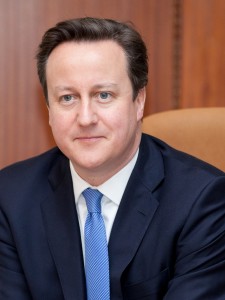
Below is the text of the speech made in the House of Commons by David Cameron, the Prime Minister, on 20 June 2016.
We are here today to remember an extraordinary colleague and friend. Jo Cox was a voice of compassion, whose irrepressible spirit and boundless energy lit up the lives of all who knew her and saved the lives of many she never ever met. Today, we grieve her loss and we hold in our hearts and prayers her husband Brendan, her parents and sister, and her two children, who are just three and five years old. We express our anger at the sickening and despicable attack that killed her as she did her job serving her constituents on the streets of Birstall. Let me join the Leader of the Opposition in his moving words praising Bernard Kenny and all those who tried to save her. Above all, in this House we pay tribute to a loving, determined, passionate and progressive politician, who epitomised the best of humanity and who proved so often the power of politics to make our world a better place.
I first met Jo in 2006 in Darfur. She was doing what she was so brilliant at: bravely working in one of the most dangerous parts of the world, fighting for the lives of refugees. Her decision to welcome me, then a Conservative Leader of the Opposition, had not been entirely welcomed by all her colleagues and friends, but it was typical of her determination to reach across party lines on issues that she felt were so much more important than party politics. Jo was a humanitarian to her core—a passionate and brilliant campaigner, whose grit and determination to fight for justice saw her, time and time again, driving issues up the agenda and making people listen and, above all, act; drawing attention to conflicts in Sudan and the Democratic Republic of the Congo; helping to expose the despicable practice of rape in war; her work with Sarah Brown on cutting mortality in childbirth; her support for refugees fleeing the war in Syria. Quite simply, there are people on our planet today who are only here and alive because of Jo.
Jo was a committed democrat and a passionate feminist. She spent years encouraging and supporting women around the world to stand for office, long before she did so herself. When she was elected as an MP, just over a year ago, she said to one of her colleagues that she did not just want to be known for flying around the world tackling international issues, but that she had a profound duty to stand up for the people of Batley and Spen, and she was absolutely as good as her word. As she said in her maiden speech, Jo was proud to be made in Yorkshire and to serve the area in which she had grown up. She belonged there, and in a constituency of truly multi-ethnic, multi-faith communities, she made people feel that they belonged too.
Jo’s politics were inspired by love, and the outpouring and unity of the tributes we have seen in the past few days show the extraordinary reach and impact of her message, for in remembering Jo we show today that what she said in this House is true—and I know it will be quoted many times today:
“we are far more united and have far more in common with each other than things that divide us.”—[Official Report, 3 June 2015; Vol. 596, c. 675.]
This Wednesday, as the Leader of the Opposition said, would have been Jo’s 42nd birthday, and there will be a global celebration of her life and values with simultaneous events in New York and Washington, London, Batley, Brussels, Geneva, Nairobi and Beirut. She should of course have been celebrating her birthday by hosting her traditional summer solstice party. It reminds us that behind the formidable professional was a loving and fun mother, daughter, sister, wife and friend, with a warm welcoming smile and so often laughter in her voice. Jo brought people together; she saw the best in people and she brought out the best in them.
A brave adventurer and a keen climber, Jo was never daunted. When most people hear of a place called the Inaccessible Pinnacle, they leave it well alone. Not Jo. She did not just climb it; she abseiled down it, and did so despite a bad case of morning sickness. It was her irrepressible spirit that helped to give her such determination and focus in her politics, too. A Conservative colleague of mine said this weekend:
“If you lost your way for a moment in the cut and thrust of political life, meeting Jo would remind you why you went into politics in the first place.”
There have been so many moving tributes in the past few days, but if I may I would like to quote someone already mentioned—the hon. Member for Wirral South (Alison McGovern):
“We mourn your loss, yet know that all you stood for is unbreakable. We promise to stand up, even though we are broken. We promise that we will never be cowed by hate.”
May we and the generations of Members who follow us in this House honour Jo’s memory by proving that the democracy and freedoms that Jo stood for are indeed unbreakable, by continuing to stand up for our constituents, and by uniting against the hatred that killed her, today and forever more.
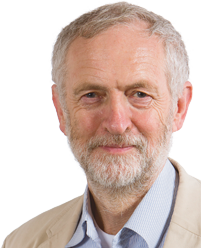
Below is the text of the speech made in the House of Commons by Jeremy Corbyn, the Leader of the Opposition, on 20 June 2016.
I beg to move,
That this House has considered the matter of tributes to Jo Cox.
Last Thursday, Jo Cox was doing what all of us here do: representing and serving the people who elected her. We have lost one of our own, and our society as a whole has lost one of our very best. She had spent her life serving and campaigning for other people, whether as a worker for Oxfam or for the anti-slavery charity, the Freedom Fund, as a political activist and as a feminist.
The horrific act that took Jo from us was an attack on democracy, and our whole country has been shocked and saddened by it, but in the days since the country has also learned something of the extraordinary humanity and compassion that drove her political activism and beliefs. Jo Cox did not just believe in loving her neighbour; she believed in loving her neighbour’s neighbour. She saw a world of neighbours and she believed that every life counted equally.
In a very moving tribute, Kate Allen, the director of Amnesty International, said:
“Her campaigning on refugees, Syria and the rights of women and girls made her stand out as an MP who always put the lives of the most vulnerable at the heart of her work.”
Her former colleague at the Freedom Fund, Nick Grono, said:
“Jo was a powerful champion for the world’s most vulnerable and marginalised.”
She spoke out in support of refugees, for the Palestinian people and against Islamophobia in this country. Her integrity and talent was known by everyone in this House, and by the community of Batley and Spen, which she proudly represented here for the past year. It was that community in Batley and Spen that brought her up, as well, of course, as her wonderful family, with whom we share their grief today.
Her community and the whole country has been united in grief and united in rejecting the well of hatred that killed her in what increasingly appears to have been an act of extreme political violence. We are filled with sorrow for her husband, Brendan, and young children. They will never see her again, but they can be so proud of everything she was, all she achieved and all she stood for, as we are, as are her parents, as is her sister and as are her whole wider family.
Jo would have been 42 this Wednesday. She had much more to give, and much more that she would have achieved.
I want to thank the heroes who tried to intervene. Bernard Kenny, a 77-year-old former miner, saw the need and ran to Jo’s aid. He was stabbed and taken to hospital. I am sure that the whole House will join me in wishing Mr Kenny a speedy and full recovery—[Hon. Members: “Hear, hear.”] Many shopkeepers and bystanders also tried to help, and administered first aid to Jo and Bernard, and there were also the police officers who made the arrest and the national health service paramedics who were on the scene so quickly.
In her maiden speech last year, Jo said:
“Our communities have been deeply enhanced by immigration…While we celebrate our diversity, what surprises me time and time again as I travel around the constituency is that we are far more united and have far more in common with each other than things that divide us.”—[Official Report, 3 June 2015; Vol. 596, c. 674-75.]
We need a kinder and gentler politics. This is not a factional party political point. We all have a responsibility in this House and beyond not to whip up hatred or sow division.
Thank you, Mr Speaker, and thank you, Prime Minister, and Rose Hudson-Wilkin, our wonderful chaplain, for accompanying me to the vigil for Jo last Friday at the Priestley statue in the centre of the lovely town of Birstall. We—all of us—were moved by the unity and warmth of the crowd brought together in grief and solidarity.
I have been very moved by the public outpourings since her death—the hundreds of letters and emails we have all received in solidarity with Jo’s family in their hour of grief—and by the outpouring of charitable donations to causes close to her heart, the White Helmets, HOPE not hate, and the Royal Voluntary Service. Last night, my hon. Friend the Member for Islington South and Finsbury (Emily Thornberry) and I held a vigil outside our town hall, one of hundreds of vigils attended by tens of thousands of people right across our land who are so shocked by what has happened and want to express that shock and grief.
I also want to thank the other parties in this House, which have offered their sympathy and support at this very difficult time. We are united in grief at her loss, and we must be aware that her killing is an attack on our democracy. It is an attack on our whole society. As my hon. Friend the Member for Wirral South (Alison McGovern) wrote recently,
“Jo’s life was a demonstration against despair”.
In Jo’s tragic death, we can come together to change our politics, to tolerate a little more and condemn a little less. Jo’s grieving husband Brendan said:
“Jo believed in a better world and she fought for it every day of her life with an energy, and a zest for life that would exhaust most people.”
Today, we remember Jo’s compassion and her passion to create a better world. In her honour, we recommit ourselves to that task.
Below is the text of the statement made by Theresa May to the House of Commons on 15 June 2016.
The final Justice and Home Affairs Council of the Dutch presidency took place on 9 and 10 June in Luxembourg. The Minister for Immigration (James Brokenshire) attended the justice day and I attended the interior day.
Justice day (9 June) began with a progress report on the draft directive on the supply of digital content. The proposal aims to advance the growth of cross-border e-commerce in the EU by setting common rules for governing the supply of digital content.
The Council then discussed four files in which the UK does not participate: matrimonial property regimes; registered partnerships; the European Public Prosecutor’s Office (EPPO); and the directive on protection of the Union’s financial interests. Ministers agreed general approaches on both matrimonial property regimes and registered partnerships, enabling negotiations with the European Parliament to begin. Ministers secured broad conceptual support on a number of issues relating to the internal functioning of the EPPO, and on the directive on protection of the Union’s financial interests, Ministers did not reach agreement on a number of compromise options. The presidency then presented a progress report on negotiations to extend the European criminal record information system (ECRIS) to third country (non-EU) nationals. The Immigration Minister intervened to support the principles behind the ECRIS proposal and to emphasise the importance of finding a suitable technical solution to data sharing.
Over lunch, the presidency facilitated a discussion on compensating victims of crime, focusing on improving co-operation and sharing best practice. The Commission committed to look at practical steps to support improved co-operation.
After lunch, the presidency sought a steer from Ministers on work to improve criminal justice in cyberspace. The Immigration Minister intervened to agree the importance of tackling cybercrime and to stress that best use should be made of existing tools.
Under any other business, the Commission informed Ministers that a code of conduct to combat hate speech online had been developed with the IT industry and the Commission will present an impact report to Council in December. The presidency also updated Ministers on outcomes from the recent EU-US JHA ministerial meeting on 1 and 2 June. Finally, the incoming Slovakian presidency presented its justice and home affairs priorities. The A points were then adopted.
Interior day (10 June) began with a discussion on the draft weapons directive, which relates to control of the acquisition and possession of weapons. Supported by other member states, I intervened to welcome the progress made, but underlined the potential to go even further in ensuring appropriately high standards of regulation. The presidency concluded that there was support for a general approach and trilogue negotiations with the European Parliament will now begin.
The Council then turned to the presidency’s data sharing road map. The road map contains a number of practical proposals aimed at enhancing data sharing between member states to enhance security and law enforcement, which reflects in particular proposals made by the UK and France. I fully supported the presidency’s prioritisation of this work to enhance internal security across Europe, particularly the sharing of data between Schengen and non-Schengen member states. Several member states supported both my position and the objectives and actions set out in the road map.
The discussion on the fight against terrorism focused on a paper from the European Counter Terrorism Coordinator (EUCTC) which made a number of recommendations to advance work to tackle the terrorist threat. I welcomed the role of the EUCTC in supporting member states in tackling terrorist finance, online radicalisation and firearms, and stressed the clear difference in mandate and competence between the work of Europol and that of the member state-driven Counter Terrorist Group (CTG). The CTG, which has provided a multilateral platform to enhance co-operation between independent European intelligence services, also gave a presentation.
The Council noted a report on the implementation of the renewed internal security strategy and the presidency updated Interior Ministers on the outcomes of the EU-US JHA ministerial meeting on 1 and 2 June, and the outcomes from the high-level meeting on cyber security on 12 and 13 May.
Over lunch, there was a discussion on migration through the central Mediterranean route and the Commission presented its communication on external migration. After lunch, the Council discussed the implementation of the EU-Turkey statement of 18 March. Supported by the Commission, I intervened to ensure a continued focus in the Council on the effective and full implementation of the statement by leaders.
The Council then discussed proposals concerning the relationship between the Schengen states and Georgia, Ukraine, Kosovo, and Turkey. There was an exchange of views on these proposals and the Council did not agree a general approach on Georgia. The UK does not participate in these measures.
Next on the agenda was the European border and coast guard, where the presidency provided a progress update on negotiations with the European Parliament. The UK does not participate in this measure.
The Commission then presented its proposals to the Council on reform of the common European asylum system. Finally, the incoming Slovakian presidency presented its justice and home affairs priorities to Interior Ministers.
Below is the text of the speech made by Sajid Javid, the Secretary of State for Business, in Liverpool on 13 June 2016.
Good afternoon everyone.
It’s great to be here in Liverpool.
It’s great to be at the International Festival of Business (IFB).
And it’s great to be kicking off the Blue Skies sessions.
Looking at the weather forecast I fear this is the only place we’re going to get blue skies today!
We’re here to talk about the future of manufacturing.
And it seems kind of appropriate that we’ve gathered next to the China and India suites.
Because within the past couple of decades both China and India have rapidly established themselves as major global manufacturers.
And that presents something of a dilemma for more traditional manufacturing countries like the UK.
Because developing nations often have a lot of factors on their side.
Cheaper labour, lower standards.
Raw materials on site.
And, sometimes, governments that are focused on economic success at the expense of workers’ safety and wellbeing.
Faced with that, it’s hard to see how British manufacturers can possibly compete.
We have higher standards.
Higher wages too, both secured over many years of development and growth.
And while we’re rightly proud of that, it translates into higher costs.
The way I see it, we have 2 choices.
We can get into a race to the bottom with the developing economies.
We can cut corners, costs and quality in order to get by.
Or we can do what Britain has always done.
We can innovate.
We can do things nobody else can do.
We can take our skills and our experience and our history and our heritage and apply it to the challenges of the future.
And make no mistake, the future is coming and it is coming fast.
Whether you call it Industry 4.0 or the Fourth Industrial Revolution, it’s impossible to deny that the way in which we live and work is undergoing a seismic shift.
People often talk about how nobody would have predicted a company the size of Kodak suddenly disappearing from view.
But the biggest changes aren’t going to be in what we manufacture so much as how we manufacture.
Where we manufacture.
Even who does the manufacturing.
From 3D printing to virtual factories to the internet of things, the old order is being turned on its head.
And I don’t want to see British manufacturers just responding to the changes and challenges the future will bring.
I want to see them shaping that future.
But before I get on to that, let me set one myth to bed once and for all.
I often hear people say that the UK is no longer a manufacturing nation.
That we simply don’t make things anymore.
That’s utter nonsense.
Our service economy has been an incredible success story and now accounts for something like 80% of British jobs.
But manufacturing is still going strong.
It contributed £168 billion to our economy last year.
In the past 10 years it has grown 2.5 times faster than the rest of UK PLC.
The sector spans almost 90,000 companies and provides work for literally millions of people.
And it accounts for half of all British exports.
The world wants what we’re making.
2015 was the most successful year ever for our £23 billion aircraft industry.
Delivery numbers are up 44% since 2010.
A new car rolls off a British production line every 20 seconds, with 80% destined for export.
So around the world people are flying on British-built planes and driving in British-built cars.
And the Australians are even throwing British-made boomerangs!
That’s right, the world’s biggest boomerang manufacturer is based in south-west London.
And our Aussie friends provide one of their biggest export markets.
Although there’s a chance they’re just exporting one boomerang that keeps on coming back!
But the world doesn’t just want to passively consume what we’re selling.
The world wants in.
Since 2010, foreign direct investment in British manufacturing has risen by 60%.
Now, I used to work in international finance.
And I know that investment on that scale is a massive vote of confidence in a country’s economy.
It’s not all plain sailing.
Unprecedented conditions in the international steel market have had a devastating impact on too many British communities.
But alongside the steel industry, the unions and politicians of all parties, we’re doing all we can secure the future of UK steelmaking.
That work is beginning to bear fruit.
The British Steel brand has returned to Scunthorpe thanks to Greybull Capital.
And bidders from around the world are keen to take over Tata’s remaining British assets.
People know that British steelmakers are the best in the world and they’re willing to invest serious money in the sector.
So British manufacturing has a proud history, and strong present.
And, most importantly, it also has a bright future.
As I said, that future doesn’t lie in a race to the bottom with developing economies.
It lies in using our unique capability to shape the future of a sector that we did so much to create 2 centuries ago.
That’s something we’re already excelling at.
Around 70% of all UK research and development (R&D) spending takes place in manufacturing.
This is a sector that’s used to pushing boundaries, used to experimenting.
Used to turning the blue sky thinking of today into the must-have products of tomorrow.
And I’m one business secretary who’s determined to play an active role in making that happen.
Now it’s not the job of government to come up with the ideas.
That’s not something politicians and civil servants are generally very good at!
And it’s certainly not our job to try and pick winners – to look at one company or one individual and throw taxpayers’ money at them to try and secure success.
But what we can, should, must do, is create the environment in which modern manufacturing can thrive.
That’s why, later this year, our national innovation plan will provide a clear framework for ensuring the UK is at the forefront of the fourth industrial revolution.
But our support goes way beyond that.
We’re also encouraging long-term investment and a dynamic economy with open and competitive markets.
That includes cutting corporation tax to 17%, slashing a further £10 billion of red tape, and investing £6.9 billion in the UK’s research infrastructure up to 2021.
We’re also making sure our young people have the skills they need to fill the jobs of tomorrow, for which job descriptions have not yet been written.
We’re developing digital skills capability.
We’re reforming the computing science curriculum.
We’re establishing a National Institute for Coding, and the new National College for Digital Skills.
And Higher Apprenticeships and Degree Apprenticeships are also helping to develop the higher level technical skills that manufacturers need.
Our High Value Manufacturing Catapult is helping smaller businesses access the R&D technology and knowhow they need in order to grow.
In its first 5 years of operation, around £300 million has been invested through the Catapult.
And in the past year alone it has worked with more than 1,600 private sector clients on over 1,300 projects.
Manufacturing is now a truly international industry, so this work doesn’t begin and end at the UK border.
I’m personally working with the World Economic Forum to shape the focus of its work on the fourth industrial revolution.
The G20 has established a new industrial revolution task force.
And the UK is leading an EU-wide project on the digitisation of European industry.
Now it’s no coincidence that the IFB is being held here in Liverpool.
This is a city whose reputation is built on creativity, innovation, and reinvention.
Whether it’s in industry or music or football, Liverpool is known throughout the world for doing things differently.
The Albert Dock, right next door, was revolutionary in its day, the first of its kind.
Today it’s home to Tate Liverpool and The Beatles Story, both showcases for groundbreaking creative talent.
Up on Prince’s Dock you can find the Liverpool City Region Local Enterprise Partnership.
It has a vision to make the city region a global manufacturing hotspot with the smartest networks, talent, technology and investment.
So Liverpool is synonymous with innovation.
And if businesses are going to thrive in the global markets of the 21st century they have to embrace that spirit themselves.
That’s what this session is all about.
Over the next few weeks, each day will end with ‘Blue Skies’.
It’s an opportunity to hear from some of the great creative thinkers from all kinds of different fields.
The people who, as George Bernard Shaw put it, “dream things that never were; and say ‘why not?’”
There’s the first sailor to complete a non-stop solo circumnavigation.
The politician who ended apartheid.
The extreme adventurer who’s all set to become the fastest woman on water.
Thinkers and dreamers, sure.
But most important of all do-ers.
They’re the kind of people you’re going to be hearing from at Blue Skies.
And they’re the kind of people I want to be hearing from as Business Secretary.
My door is always open to blue sky thinkers who can help British industry thrive in the years to come.
Because Liverpool has long been inspiring the world.
And in the 21st century I want Britain’s manufacturers to do the same.
Below is the text of the speech made by Matt Hancock, the Cabinet Office Minister, at the National Digital Conference held on 15 June 2016.
It’s a pleasure to be back.
Today’s conference is all about how we make it to the future and given that theme it would be easy to start with a riff on the marvels of modern technology.
I could talk about blockchain, 3D printing, artificial intelligence or data science. I could talk about how I drove around my constituency in an autonomous electric car this weekend, going for miles without steering or touching the pedals.
But I’m not going to do that. Because everyone here knows that digital is the easy part of digital transformation.
The hard part is the transformation.
It’s easier to write new software than to rewrite an organisational culture. Easier to upgrade to the latest device than to upgrade to the latest skills. Old technology can be replaced but old habits die hard.
Put simply, innovation is easy but change is hard. You can see the truth of that both in the economy as a whole and within organisations, including government.
Today I want to touch on both. Let’s take the economy first.
Digital technology is inherently disruptive. And on the whole, technological disruption is good for our economy.
Consumers benefit from better, faster, more convenient, more responsive services, at lower cost, often for free.
At the same time, digital platforms have created whole new marketplaces, in which millions can trade on their time and talent.
The single parent who tops up her earnings selling hand-made jewellery on Etsy. The Uber driver saving up to open a restaurant – they too are beneficiaries of disruption.
Some say new technology is displacing workers. Throughout history people have said that technology would.
The problem for the techno-pessimists is that real wages are rising and employment is at record levels.
In fact, the more technology we have, the more productive we become.
This cuts costs and allows people to spend more of their money on other things, creating new jobs.
The problem for optimists like us is that people don’t live life in the aggregate. Nobody experiences the economy as a whole.
The challenge of technological disruption is that its effects are spread unevenly.
Just ask travel agents, checkout assistants, HMV employees or Blockbuster franchisees.
My argument is that we won’t capture the full benefits of all this innovation if we don’t help people to manage the change.
That means continuing to invest in basic digital skills, delivering on our commitment to support one million people to get online, driving forward our massive expansion of apprenticeships and getting all young people earning or learning.
It means tilting policy towards pay rises – as we have with the National Living Wage – so everyone has a chance to share in a growing economy.
And where a concentrated area is hit by a big change, like a sudden factory closure, it means being prepared to intervene: working with business to redeploy and retrain workers, working with local government to bring new business in.
So that’s the challenge for the macro-economy: supporting the disruptors and the disrupted, getting to the future without leaving anyone behind.
Now I want to turn to the challenge for our own organisations. Because to fully exploit the transformative potential of new technology we too have to change the way we work.
And as in the wider economy, change can be hard.
I want to set out three guiding principles, based on what we’ve learnt from the last six years of digital transformation in central government.
Start small
My first principle is to start small, because the best way to convince the naysayers is to build something that actually works.
The Government Digital Service (GDS) was deliberately conceived as an insurgent start-up bolted onto the Civil Service, not some grand Ministry of Technology.
And rather than tell GDS to go out and disrupt the entire public sector, we gave them a specific set of high volume transactions to transform.
The idea was to demonstrate clearly to the rest of government not just the technology, but the underlying methodology that made it work.
Agile working, user research, A/B testing, rapid iteration, data-driven feedback, real-time service improvements and so on.
Its delivered 20, usually, brilliant digital public services, and it’s also proved our point.
Now digital transformation is going from start-up to mainstream. GDS has been backed with £450 million in the Spending Review to drive forward the next phase of transformation over this Parliament.
Right across Whitehall and the public sector, digital transformation is a core part of everything we’re trying to do.
So that’s my first principle: start small and scale-up.
My second principle follows from the first, and it’s that digital transformation ultimately is business transformation.
Digital transformation is business transformation
No one here needs to be told that this agenda is not about replacing paper forms with websites.
Rather, it’s about recognising that you can’t redesign a service without redesigning the organisation delivering it.
Before GDS, government technology was really just contract management. Digital services were designed, built and delivered by other people, working towards inflexible contracts that locked us into ageing IT.
Now, by contrast, we’ve brought our tech architecture, project management and delivery in-house.
It means we control and understand our own technology, and, where we do procure through the digital marketplace, we have the knowhow to be an intelligent customer.
It also means we can do the common stuff once, then share it with everyone.
Tech has traditionally functioned in departmental silos with limited interoperability.
Yet we all have the same users and, ultimately, the same budget, so it makes much more sense to think of our technology as belonging to a single system.
It’s why we’re now building platforms for common activities, like GOV.UK/Pay for payments or GOV.UK/Notify for status tracking, which can be reused across government.
Crucially, this also means we can work to deliver more complex services, involving multiple departments, in a way that is seamless and straightforward from the point of view of the user.
In future it will be possible to set up a business easily online, for example, or tell government once that you’ve changed your address, or register for the government’s free childcare offer once.
This new way of doing things requires new skills.
We need more specialists for sure, but we also need the Civil Service as a whole to add digital to their skillset.
So our Digital and Technology Fast Stream is developing the tech-savvy leaders of the future, with a cohort of almost 100 graduates currently working right across government.
At the same time, we’re working with our most senior civil servants to ensure they are equipped with the skills, tools and vocabulary to lead this transformation.
But for me the most important aspect of business transformation is transforming the way we think about delivery.
In the past, government would launch a new service and then not think about it much until the minister was hauled up in front of the Public Accounts Committee to explain why it wasn’t delivering as planned.
Instead we’re now moving towards a culture of continuous incremental improvement, where service managers adjust the service in real-time, in response to user feedback.
Take GOV.UK/Verify, the new service allowing you prove who are online.
It’s now live, and already over half a million identities have been verified securely online. GDS have carried fortnightly user research, including in their user lab and in citizens’ homes as they use the service.
This has led to improvements that mean a new GOV.UK Verify user is almost twice as likely to successfully complete the process than they were a year ago.
Underpinning any transformation is the central role of data.
Which brings me onto my third point. We increasingly need to think of the role of data in delivering public services.
Data as a public service
Let’s take a very topical example: voter registration.
When the register to vote service crashed last week, within two hours we knew exactly what was wrong and we could fix it – because we had the data.
Each of our digital services has a page on the GOV.UK performance platform, allowing us to see how many people are using the service at any one time.
This meant we knew exactly how many people had been trying to get onto the system when it crashed.
Armed with this information, we were than able to make a case for emergency legislation to give people more time to register.
We’ve spoken for many years about evidence-based policymaking, but modern data science is making this a reality.
Interlinking disparate datasets is allowing for radically more targeted interventions.
Combining tax and education data allows us to see which courses deliver the best employment outcomes, for example.
The Digital Economy Bill will take this further forward, to ensure that shared information can improve public services reduce fraud and improve the statistics we rely on.
This is done in a way that supports privacy and strengthens trust but also ensures that society benefits from the opportunities of data science.
With a sensible data-driven approach, it will be possible, for example, to provide automatic discounts off the energy bills of people living in fuel poverty.
Or to deliver more timely interventions for troubled families dealing with multiple government agencies.
And where we’ve published government data in an open, usable format, people have discovered applications for it that we simply couldn’t have imagined.
Travel apps, property valuation software, food hygiene ratings for online takeaway platforms, footfall simulations for retail businesses, a service to check whether your bike’s been stolen – these are just a small fraction of the applications that have so far been engineered by third parties using government data.
Not only that, but the traditional accountability function of data has also been enhanced by digital technology.
Anyone can see our performance platform, how often a service is used and how it much costs per transaction.
In a data-driven world, our effectiveness as a government is a matter of fact rather than opinion.
So these are the principles that guide our approach to digital transformation:
– start small then scale up
– treat tech as the means rather than the end
– treat data as a public service in its own right rather than an afterthought
Yes change is hard, but in the end it’s worth it. The most exciting thing about technology is that it frees people up to focus on the most fulfilling parts of human experience.
We can digitise the drudgery and make public service more rewarding.
We can automate work and humanise jobs.
This is a huge agenda and a huge opportunity to deliver for the citizens that we serve.
Below is the text of the speech made by Tim Farron, the Leader of the Liberal Democrats, on 6 June 2016.
Thank you all for being here. And thank you David Cameron, Harriet Harman and Natalie Bennett for what I think you’ll agree is an unprecedented – and, frankly, pretty unlikely – showing of cross-party consensus.
We are about to face the most important decision of a generation, and one that that will determine the future of our country.
And the fact we’re all here today shows how important we all feel this is. I know, in Europe, Britain can thrive. Together we will be a stronger and more prosperous nation, creating opportunity for future generations, respected all over the world.
I believe in the positive case for Europe. But I cannot stand back and allow the leave campaign to guide us towards economic ruin, because of a campaign based on lies.
How betrayed will people feel if they vote to leave Europe based on the reasons presented by the Leave Campaign, only to see in the weeks, months and years that follow that those reasons were utter, invented rubbish?
You won’t find me saying this about the Prime Minister very often, but what he has just said is absolutely right.
It’s not just that the Brexit camp won’t say what sort of deal we’ll get – and what rules we’ll have to play by – it’s that they will literally say anything and everything.
The list of countries they have claimed we can emulate – Norway, Switzerland, Albania, Iceland, Turkey, Ukraine and all the others… A reminder of how absurd the Leave campaign has become, and that I really need to crack on with my Euro 2016 Panini sticker album.
But seriously, nowhere is Leave campaign’s con-trick more pronounced than when it comes to public spending.
Their big red bus says you can save £350m a week, and then spend it all on the NHS. A complete con. And they’re still driving it round despite the figure being rubbished by every economist under the sun.
And it’s not just the NHS this made-up, magic money is spent on. This dossier shows they have made two dozen different spending commitments.
Want more money for schools? You got it. Roads, railways, houses. Yep. Do you want to pay junior doctors more, increase welfare spending and slash the deficit all in one go? Of course you do.
You can even have more submarines if that is your thing.
How about abolishing prescription charges? Cutting your council tax by more than half? Slashing VAT – and your energy bills too while they’re at it.
They have even said they’d spend millions and millions filling in Britain’s potholes.
All of which sounds very tempting, especially that last one – filling in potholes is a cause very close to every Liberal Democrat’s heart.
But, if you add all these things up, it would cost £113bn.
One hundred and thirteen BILLION pounds.
Another clear as day example of one of their cons was just this week. On Saturday, they said by 2020, we can give the NHS a £100 million per week cash injection. On Sunday, they said we wouldn’t leave the EU until after 2020.
So where would this magic money come from?
They are literally making it up as they go along, trying to con the British public along the way.
And that’s not the end of it. Every major financial institution – from the Treasury and the Bank of England to the IMF, the OECD and the World Bank – not to mention just about every credible economist in the country, thinks leaving Europe will hurt Britain’s economy.
A few days ago the Institute for Fiscal Studies warned that it would leave us up to £40 billion short in the public finances by 2020 – and that’s before all that extra magic spending.
It is a black hole at the heart of their spending plans of more than £150bn.
So they’ve got to come clean to the British public. Will they now disown these commitments and admit this is fantasy economics? That these are lies? That they add up to one, big massive con-trick?
That’s why the four of us are here together today.
There’s not much we all agree on, but we agree on this:
It’s time for the Leave campaign to come clean about what will really happen if we leave the European Union.
Below is the text of the speech made by Heidi Alexander, the Shadow Secretary of State for Health, on 8 June 2016.
Thank you, Wendy – and thank you to UNISON for hosting us today.
In fifteen days’ time the British people will take the biggest political decision of my lifetime – whether or not we should remain part of the European Union.
I was just two months old when the last referendum on Europe took place.
Back then, the questions my parents’ generation had to answer were similar to the questions we face today:
What is in the best interest of me and my family?
How can we guarantee our country’s security and influence in a changing world?
And how do we ensure a strong economy that delivers decent jobs and decent public services?
In 1975, my parents voted to stay in the Common Market and like millions of others, I have grown up taking our membership of the EU for granted.
Easy travel, the opportunity to study and work abroad, the basic principle that we would co-operate with the countries closest to us to foster progress and tackle shared challenges.
I don’t claim the EU is perfect. It is in need of reform. But I have no doubt that overall our interests are best served by staying in.
Whether it’s the economy, jobs, trade or our ability to deal with the big global issues which don’t respect national borders, we are better off working with our European neighbours than going it alone.
Now, the past few weeks of this campaign have sometimes felt like a beauty contest for the next leader of the Conservative Party.
I don’t know about you, but I’m fed up of it.
Fed up of the mud-slinging and the name-calling.
Fed up of the dry debates about sovereignty and the rebate.
And fed up of being told that people like me, a comprehensive girl from Swindon are somehow part of an elitist establishment that have been brainwashed by bureaucrats from Brussels.
Boris, Nigel – I can assure you that is NOT the case.
It seems to me the public want less spin and more substance in this debate. They want to understand what their vote on the 23rd June means for them and for the things they care about – like the National Health Service.
And that’s what I want to talk to you about today
I have been the shadow health secretary for nine months now.
And in that time I have seen the critical state that the NHS is in.
Hospital finances are spiralling out of control.
Mental health patients are bussed half way across the country for a bed.
Waiting lists are up.
Staff morale is down.
And the care sector is on the brink of collapse.
Don’t let anyone tell you this is the fault of migrants – this is the fault of Ministers.
I am under no illusion about the scale of the challenge facing the NHS and the risks associated with another four years of Tory Government.
However, I am absolutely clear that leaving the EU would make the challenges greater and the risks bigger for an already fragile NHS.
I could talk to you this morning about the billions of pounds we receive from European research grants.
How EU laws on air pollution and food packaging are helping to improve our nation’s health.
Or the protection we receive when we travel to the continent through the European Health Insurance Card.
These are all important issues. But I want to focus my remarks this morning on the threat of Brexit to people who work in the NHS and to people who rely on the NHS.
We’re here at UNISON this morning because this is a union that stands up for its members – the nurses, health care assistants, midwives, health visitors, paramedics, technicians and many, many more who keep our health service running.
UNISON stands up for jobs; for our standard of living; and for the public services upon which we all rely.
You understand the importance of our membership to the EU.
And that is why your members have overwhelmingly backed the case for us to remain.
Now, I know that being a frontline member of staff in the NHS at the moment is hard going.
I know how you constantly feel as if you are being asked to do more for less.
How cuts to nurse training places mean staff are overworked and spread too thin.
And how you are left picking up the pieces of a social care system which is on its knees due to years of underfunding.
I know that if we want our NHS to be there in the years and decades to come, we must invest in the current generation of staff and the next generation too.
We shouldn’t be scrapping student nurse bursaries, putting off the next generation of midwives and healthcare worker.
No, we want more home-grown NHS staff and we should put our money where our mouth is.
But we have to be honest: as of today, parts of the health system would not function without the contribution of EU migrants.
Put simply, you’re more likely to come across a migrant caring for you in a hospital, then in the bed next to you.
52,000 people working in the NHS today are from other European countries.
These are doctors, nurses and midwives who work day-in, day-out saving lives and caring for our loved ones through ill health.
Two years ago my grandmother passed away. Who was it that sat by her bedside and dabbed water onto her dry lips in the days before she died?
It was a polish care assistant called Kristina.
Now, don’t get me wrong, I want young people to grow up in this country, wanting those jobs. I want those positions to be paid at decent wages and for people to see care as a vocation and not as a job of last resort.
But at the moment, our care system relies upon people like Kristina.
The job she did helped my gran to have the dignity and support I wanted for her at the end of her life.
If we vote to leave, what would happen to Kristina and the thousands of other staff like her?
What restrictions would there be on recruiting new staff?
Would existing staff have to leave if they didn’t earn enough to meet income thresholds to renew visas?
Would hospitals be able to fill staff shortages without immediate access to the pool of qualified staff from other European countries?
The truth is we just don’t know.
And it’s not just these questions no-one can answer.
In fact every time leave campaigners are asked what Britain would look like if we left the EU their answer is always the same – we just don’t know.
So at a time when hospital wards are already dangerously understaffed, when the care system is already in crisis, is leaving the EU a risk the NHS can afford to take?
I don’t think so – and I don’t think many patients would agree either.
And that brings me onto the threat of Brexit to patient care.
The financial crisis facing the NHS today is the worst in its history.
Hospitals ended the last year more than £2.4 billion in the red.
Extra money allocated to this year has gone towards paying off the bills from last year.
It has got so bad that the Health Secretary can’t even guarantee his Department has kept within its own spending limits.
I am in no doubt that as a country we need to have a big, open and honest debate about the future funding of health and care in England.
A big debate about how we pay for elderly care and how we reshape our services to meet the needs of our ageing population.
That’s a process I want to lead as Labour’s Shadow Health Secretary.
But I know too that the economic shock of a vote to leave Europe risks plunging the health service into an even deeper financial crisis.
The Institute for Fiscal Studies warned last month that if we leave the European Union, Britain could face another two years of austerity.
The economy would slow.
Tax income would fall.
And public sector spending would be squeezed even further.
In the worst-case scenario, new analysis published by Labour today reveals that the Tories would have to cut the Department of Health’s budget by up to £10.5 billion in 2019/20 to meet their promise of balancing the books by the end of the Parliament.
That’s £10.5 billion pounds worth of cuts which if made today would mean every hospital trust in England cutting 1,000 nurses and 155 doctors.
It’s the equivalent of the entire annual budget for the NHS in London.
These are future cuts that the NHS could well do without.
Now I think I know what the leave camp is going to say – I’ve read the leaflets, I’ve watched the adverts, I’ve seen the bus.
They claim if we leave the EU then we’ll have a load of extra money to throw around.
Well let me be absolutely clear – this claim is misleading, simplistic and complete and utter nonsense.
They began this campaign promising £350 million a week more to the NHS. Now it’s £100 million. At this rate, by the 23 June it’s probably going to be zero.
Because how many times have the Brexit brigade spent this money? First they said it could build hospitals, and then schools, and then they could use it to cut VAT and the cut council tax and then fix potholes.
Come on, really?
What answer do they have to economists who are lining up to say in the short term an economic downturn is almost inevitable? And what does that mean for NHS finances?
And who are these people making these claims? Most of them are just pretenders to David Cameron’s throne. These aren’t manifesto commitments, they are the cheap lines of people prepared to say anything to get your vote.
Just because the bus has got the NHS logo plastered on its side, doesn’t mean for a second that you should trust the people sat in its seats.
People like Boris Johnson who has written that “people [should] have to pay” for the NHS.
People like Daniel Hannan and Douglas Carswell who have called for a “price-mechanism in healthcare”.
Or people like Nigel Farage, who was caught on video, saying that he wants the NHS to move to an insurance based system like the United States.
When Leave campaigners say it’s time for ordinary people to take back control, what they really mean is it’s time for people like them to take control.
Iain Duncan Smith, Boris Johnson and Nigel Farage taking control of our NHS.
I couldn’t think of anything worse.
But don’t take my word for it.
This is what John Major had to say on Sunday:
“The NHS is about as safe with them as a pet hamster would be with a hungry python.”
Now I don’t often agree with John Major, but when Tories say they don’t trust the Tories with the NHS, I think it’s probably worth listening.
I want to finish by returning to why this referendum is important to me and to my family.
Eighty years ago my grandfather and my husband’s Austrian grandfather found themselves on opposing sides in the Second World War.
Now, some say the role of the EU in keeping the peace since then has been overstated.
I’m not so sure.
An organisation which routinely brings together leaders, governments and policy makers across a continent seems like a pretty sensible idea to me.
We might not always get our way, but in the grown up world of international politics, we have to be sat at the table and not out in the cold.
Peace in Europe is taken for granted by my generation.
But when parties such as Golden Dawn rear their head in Greece and when barbed wire fencing goes up in Hungary, Macedonia and Bulgaria to keep foreigners out, we shouldn’t be turning our back on our neighbours, we should be helping them to find solutions.
Ugly nationalism and ignorant prejudice have no place in British politics. We have fought it before – a few weeks ago in the case of London – and we will fight it again. We must not allow this referendum campaign to give some sort of perverse permission for it.
This month’s vote isn’t just about our membership of the EU. It’s about the type of country we want to be and the message we want to send to the rest of the world.
So in two weeks’ time let’s send that message loud and clear.
That Britain is better off in Europe.
That Britain is stronger and safer in Europe.
And that Britain shares that intrinsic Labour value that by the strength of our common endeavour we achieve more than we achieve alone.
This is the campaign of our generation – let’s go out there and win it.
Below is the text of the speech made by Matt Hancock, the Minister for the Cabinet Office, at the Keith Joseph Memorial Lecture at the CPS in London on 8 June 2016.
It is a huge honour to give this lecture in the memory of the great Sir Keith Joseph.
And a particular privilege that several members of the Joseph family are here tonight.
My generation can’t remember the Britain that existed before the revolution borne by Sir Keith.
We owe him a great debt of thanks.
But my generation is having to refight battles which we all thought Sir Keith had won.
Keith Joseph was clear-eyed in analysing the problems of his time, rigorous in his pursuit of solutions.
And one of today’s great challenges, that needs his sort of rigour, is the disruptive rise of new technology.
So today, I want to ask how he would have approached the rise of technology, and what my generation must do to rise to it.
Let’s start with a story.
Fifteen years ago, the video rental company Blockbuster was at the very height of its powers.
It had 60,000 employees and 9000 outlets worldwide, dominating its market almost as completely as the Roman Empire dominated the Mediterranean in the age of Hadrian.
Back then the famous blocky, yellow font could be seen on every high street in every town across Britain.
But, like the Romans, the decline proved just as irreversible.
In 2010 Blockbuster filed for bankruptcy. Shops were boarded up, thousands lost their jobs.
Their fate had been sealed when Blockbuster refused to move with the times, when the founder of a little-known tech start-up arrived at Blockbuster’s giant Dallas HQ with a business proposal.
He was offering to run their brand online, and was apparently laughed out of the room.
But today that little-known start-up – Netflix – has 80 million subscribers, including me, and no one’s laughing at them now.
This story of disruption has been repeated in different forms, with different protagonists, the world over.
Yet the underlying plot remains the same.
An entrepreneur uses new technology to disrupt an established business model, offering consumers a better, faster, cheaper, or more convenient service.
The disruptor rakes in billions, consumers benefit, but the disrupted lose their livelihoods.
And those old jobs are often gone forever. Netflix employs just 3,500 employees worldwide.
Tonight I want to address two big questions that come from this.
First, is this disruption a good thing?
Is the overall picture one of innovation and rising prosperity, or of dislocation and growing insecurity?
The second question flows from the first, and it’s the oldest question in Conservative politics.
What, if any, is the role for government?
What place for lumbering Leviathan in a world that gets faster and more interconnected every year?
It’s vital we have answers to these questions, both so we can govern well, and because ideas we thought Sir Keith helped vanquish long ago are back on the agenda.
This is a battle of ideas we’ve got to win.
In recent times, two political tendencies have grown strong by feeding on the anger and anxiety of the disrupted.
There is the populist right.
Trump. Le Pen. Farage: angry nativists who want to wall off the world.
Then there is the populist left.
Corbyn, McDonnell. Sanders: unreconstructed Socialists who’ve learnt nothing from the mistakes of history.
Both sides reject open markets; both are obsessed with recreating a better yesterday.
Their political programme amounts to a demand that things go back to the way they were: to the spirit of ’45, or les Trentes Glorieuses, or the glory days of the American past.
Both seek false certainties.
They are reactionaries, so we need to be Conservatives, preserving the best of the past with the best of the new, seeking security and opportunity based on a hard-headed analysis of a complex world.
The reactionary Socialism of the far Left and the closed minds of the reactionary Right would unlearn hard-won lessons of how to build a prosperous and dignified society.
They must be resisted.
Instead, a big opportunity awaits those who can provide an optimistic, open, forward-looking agenda, engaged in the world while resolutely focused on engaging people in what they want in life:
A satisfying job, a loving relationship, a caring family, a good home and a safety net when they need it…
… where their children can do better than them; where anyone – anyone – can, by rights, go as far as their talents and efforts can take them, irrespective of background, and where we know and acknowledge that change is hard and people deserve a helping hand through it.
That is the modern Conservatism that we must offer.
So let’s ask these two big questions.
First, should we be afraid of disruption?
Since Keith Joseph’s death twenty years ago, the global economy has changed profoundly.
Back then a third of the world survived on less than $2 a day.
Just a billion people earned enough money to make any discretionary purchases at all.
China’s economy was smaller than Italy’s.
Twenty years on, in part because of what he did and what he stood for, that extreme poverty has more than halved…
…The global middle class has doubled to over 2 billion, and China creates an Italian-sized economy every 18 months.
The explanation for that growth is a massive expansion of the free market, twinned with the mass-deployment of new technology.
It is impossible to separate out these forces, since both complement and catalyse the other.
Technology has opened up ever more avenues for trade. Think refrigeration and pasteurisation. Mass transit and bulk shipping. Click and collect.
At the same time, markets have refined and diffused new technology.
The result is that, as a world, on all objective measures, we’re getting richer, healthier, less hungry taller and more interconnected.
And yet despite all this, many suggest that we’ve hit the end of the road of rising living standards.
Today’s received wisdom seems to be that, despite all this technology, we live in an age of stagnation, that our children will not be as prosperous as our parents, and that technology is somehow making everything worse.
This belief is popular in academic circles, it’s espoused by Nobel-Prize winning economists and by politicians of the Left and the Right.
Now one of Sir Keith Joseph’s great talents was to face up to flawed assumptions, to be a warrior against lazy consensus.
In his day the received wisdom was that inflation was unmanageable, the trade unions ungovernable and that Britain’s best days were behind her.
He tackled that received wisdom head-on, and we now must do the same.
So let us tackle this modern day pessimism that technological progress is bad news.
We can start with its internal contradiction.
Some say that the pace of innovation has slowed, that we’re now living in a world of diminishing technological returns to production.
This is the thesis of a book by Professor Robert Gordon that’s fashionable in academic circles right now.
Others say that new general-purpose technology is destroying good jobs faster than they can be replaced.
But they can’t both right. Do we have a problem of too much disruptive technology, or too little?
Are we stuck in a new Middle Ages? Or, are we hurtling towards a dystopian future?
Let’s look at the first.
Has invention lost its momentum?
Professor Gordon argues that we came up with revolutionary inventions during what he calls the second Industrial Revolution, from 1870 to the post-war boom.
Inventions like electric lighting and the internal combustion engine, were, he says, transformational. But now, he says, the advances we’re making are only incremental.
To paraphrase, instead of making the jump from the telegraph to the telephone – written word to human voice – we’re just building slimmer phones.
As a result, he claims, young Americans will be first in their history not to exceed their parents’ standard of living.
When I hear that I can’t help but think of the words of William Preece, chief engineer at the British Post Office back in the 1890s.
Preece, an expert on the telegraph, just couldn’t see the point of the phone, saying: ‘we have plenty of messenger boys’.
He wasn’t alone.
‘Unworthy of the attention of practical and scientific men’, concluded a Parliamentary Select Committee set up to investigate Edison’s light bulb.
I’m glad the accuracy of Select Committee predictions has improved.
‘We have reached the limits of what is possible with computers,’ said pioneering computer scientist John von Neumann in 1949.
Even our heroes sometimes make mistakes. Sir Keith once visited a high-tech factory as Industry Secretary and asked one of the directors: ‘Do you think television has really come to stay?’
Or maybe, with the advent of Netflix, he was once again ahead of his time.
Now, for the first time in history, we have reached a point where machines can do cognitive as well as physical labour, thinking as well as doing.
And this affects almost everything.
Let’s take cars.
Professor Gordon says they accomplish the same basic role of transporting people from A to B as they did in 1970, just with a bit more convenience and safety.
But this misses one vital detail. Computers are now learning to drive. Driverless cars promise a new revolution.
You can work in them en route. They can reduce emissions and traffic, make journey times shorter, give disabled people far greater mobility.
And as the vast majority of accidents are caused by human error, they promise to cut road deaths too.
For the average British family their car is their second biggest investment, and yet they’re used just 4 per cent of the time.
What a massive waste of resources.
Should driverless cars become ubiquitous, families will be able to spend their savings on something far more useful than a steel box that spends most of its life sat on the driveway.
Everywhere we turn, digital technology is driving improvements in almost every sphere of life.
From 3D printers producing jet engine components, to the sensors in concrete that report on its own structural integrity…
…From smart traffic planning, to dynamic energy demand …
…The fact is we are just in the foothills of a new technological revolution, that will do even more to lift living standards and improve the human condition.
Gordon’s hard evidence for a loss of inventive momentum is in the data on productivity, and here we optimists need to have an answer.
Because the data does show a slowing that coincides with the rise of the Internet.
My response is that we need better measurement, because the current measures are broken.
It may surprise you, but we don’t measure productivity directly, we essentially take measured GDP and divide it by the total number of hours worked.
GDP matters. It’s the sum total of all the income our economy creates. It’s the best measure we’ve got of peoples’ standards of living.
But this way of measuring it was designed in the middle of the last century to capture exactly the sort of things that were being made then – cars and fridges and widgets of all kinds.
It suits the economy of the second Industrial Revolution because it is a product of that revolution.
For decades this didn’t matter much. The economy was all about widgets.
But now it’s all about binary digits.
Why does this matter?
It matters in the theory because digital is breaking down the binary distinction between consumption and production that much of economics has been built on since the days of Adam Smith.
While much progress in the last two centuries was based on separating consumption and production in pursuit of efficiency, much of what gets produced in digital form today is done so at zero marginal cost to the producer and at zero cost to the consumer.
And in the act of consuming a digital service we are also producing, because much of the digital economy runs on the user data we provide.
In an information age, these zero marginal costs fundamentally change the economics. I don’t know what all the conclusions will be, but this is a big challenge to the economics profession.
And this matters hugely in practice too, because many of the benefits of technological advance don’t get picked up in traditional measures of GDP.
Let’s take an example.
A few years ago we released TfL travel data as open data, free for anyone to access and reuse.
Then CityMapper came along and used that data to build an app telling you whether it’s quicker to walk or take the Tube when you go home on a fine summer’s evening like this.
Not only that, but it tells you how many calories you’ll burn in the process.
Surely that represents an improvement in peoples’ wellbeing and quality of life?
Not according to GDP as measured.
The enjoyment of the walk compared to the sweaty compression of the Tube? Not measured.
The health benefits? Not included.
The improvement to the environment? Nope.
The time saved? Nada.
In fact the only way that decision troubles the scorers is that the cost of your Tube ticket no longer counts as economic activity.
GDP is lower.
Productivity, as measured, is lower. We are, according to the stats, worse off.
The failure of GDP to capture the consumers’ side of life – the environmental or health considerations, for example – isn’t new, although where the impact was often negative – with more widgets meaning more pollution for example – now it’s often positive.
But the failure of GDP to measure the economic impact accurately – not even getting the direction of the GDP impact right – is on a completely new scale.
Because it’s not just CityMapper.
The watch that reminds you to take your medicine.
Ordering your weekly shop online.
Sharing pictures with your family, even though you’re a continent away.
These all have no impact on measured GDP, but they enrich our lives immensely.
What about the money saved from an online home-swap?
The app that saves energy?
How about the time and cost saved when you make a money transfer on your phone for free?
These changes, formally, reduce existing measures of GDP and therefore productivity.
Yet these are the innovations of our time.
One recent study in America found the welfare gains associated with access to free products on the Internet was equivalent to a 0.75 percentage point boost to growth each year.
Fortunately, here the ONS recognise these problems, and we’re lucky to have one of the best statistical agencies in the world rising to the challenge of measuring the modern economy.
There are some big questions for them to answer.
What is the nature of the value consumers receive from digital services?
How does the sharing economy fit in?
So my response to Professor Gordon is clear: progress hasn’t faltered. Progress marches on.
Now let us look at the second hypothesis of the naysayers.
What if robots are coming for our jobs?
In George Eliot’s Middlemarch, set in 1832, a riot nearly breaks out when engineers from London come to survey the parish for the construction of a railway.
‘There’s no knowing what there is at the bottom of it’, says one suspicious local, ‘ and it’s to do harm to the land and the poor man in the long-run.’
Some things never change.
This sums up the second hypothesis: that innovation is happening, that it might well benefit some, but everyone else is going to lose out.
This is not a new concern.
And I’m afraid I’ve got an admission to make.
Two hundred years ago in Nottinghamshire there was a large cottage industry of wool knitting.
Then Richard Arkwright invented the water frame and the Luddites organised riots in protest.
In 1812 1000 people met up near Arnold outside Nottingham to smash up the frames, and the riot was only stopped when dragoons rode in to arrest the ringleader.
The Luddites were protesting against the effects of the inevitable march of technology.
And the Luddite leader’s name? Benjamin Hancock.
Fast forward to 1933. Then it was John Maynard Keynes, who was worried about the ‘new disease’ of ‘technological unemployment’.
In 1963, it was Harold Wilson telling the Labour Party conference that technological progress would lead to ‘a high rate of employment for a few, and to mass redundancies for the many’.
Each time we enter a downturn and unemployment rises people point their fingers at the robots of the day.
My argument is that blaming technology is a mistake.
Today we’re recovering still from a deep cyclical downturn, not just an ordinary demand-led recession but a debt crisis.
As Carmen Reinhart and Ken Rogoff’s history of financial crises shows, after a systemic banking crisis it takes on average 8 years to reach pre-crisis levels of income.
It took the UK 7 years to do this after the 2008 crisis, so there’s nothing to suggest that this time is different.
That Great Recession is now thankfully abating, and a jobs-rich recovery is in train – which, unlike some pessimists like Paul Krugman, I think is unambiguously a good thing.
Likewise on pay.
In the aftermath of the Great Recession, real wages stagnated.
The good news is that here in the UK they are rising again, and there is no evidence of permanent stagnation.
There is, rightly, a debate about the labour share – the proportion of national output paid out in wages.
I’m firmly from the school of thought that holds that the purpose of growth is better pay, and so we should bend policy towards pay-rises.
Where in the last Parliament we made huge progress on the quantity of jobs, now we must make further progress on quality. Whether it’s ensuring shareholders can express a view on executive pay in the last Parliament, or introducing a National Living Wage in this one.
Here I differ from many Conservatives of a generation ago.
But where a generation ago the challenge was in the unaccountable power of trade unions, now the labour share is at historic lows, and we want to ensure everyone benefits from economic recovery and that the proceeds of growth are spread fairly.
Here too, as with jobs, with the right approach, technology can be our ally in the drive for higher pay.
Yet techno-pessimists continue to forecast a future in which the average human is obsolete.
Those who only see the job losses have fallen for the classic Lump of Labour fallacy.
As Keith Joseph himself said, the history of the last 200 years, packed as it is with labour-saving inventions, demonstrated the error.
Once again he was right.
There is not a static stock of jobs, which, if destroyed, reduces available employment.
People are dynamic.
Technology boosts productivity. It cuts costs and allows people to spend more of their money on other things. This creates new jobs.
The jobs our forebears did 100 years ago were vastly different from the ones we do today.
My great grandfather was a Nottinghamshire miner. When he was in his prime in the 1920s, over a million people were employed in coalmines deep underground.
Now there are none.
Last year there were 20,000 fewer personal assistants and secretaries than in 2001.
Thinking ahead, there are still 1 million jobs in call centres, and 200,000 check out operators.
But for how long?
Carl Frey and Michael Osborne at Oxford University estimate that 35 per cent of UK jobs are at risk from automation.
Yet while every period of unprecedented innovation has seen its pessimists predicting mass unemployment, technological advancement has never previously failed to deliver new opportunities.
The same is true today.
Employment rates in the UK are at record highs.
Whole occupations exist that didn’t exist 20 years ago.
In the future machines will do lots of the things that are currently done by humans.
But get this right and technology will free us up to do the jobs that only we humans can.
Jobs that involve problem-solving, creativity and social intelligence, for instance. Coming up with new business ideas, writing thrilling books, making scientific breakthroughs. Caring for one another, teaching one another, motivating one another.
We should automate work and humanise jobs.
Let’s give the mundane to the machines and purpose back to people.
—
Causing technological unemployment isn’t the only charge levelled at the disruptors.
They’re also accused of being the driving force behind unacceptable levels of inequality.
So is technology creating undeserving rich?
For Conservatives who believe in social mobility this is a serious issue.
Because it’s no good creating a fantastically productive and sophisticated economy if only the top few can enjoy it and the rest are consigned to the scrap heap.
Some argue that digital technology has an inherent tendency to concentrate wealth and market power.
This is because the value of a digital network increases as more people join.
Simply put, the more who sign onto Facebook, the more use it is to everyone.
So many digital services are dominated by a few giant platforms – Google for searching, Amazon and Ali Baba for retail, Uber for minicabs.
The owners of these platforms can make a fortune, and we’ve seen vast fortunes made.
But these platforms have another crucial characteristic: they create new markets so millions or billions of others can improve their lives.
Indeed, Professor William Nordhaus has suggested that only 2 per cent of the social value of innovation is captured by the innovators themselves.
The PhD student who drives an Uber part-time to fund her course.
The family-run takeaway business who use Just Eat to grow their brand.
The retired couple who supplement their pension trading on Ebay.
They all benefit from the platforms and the new markets that they create.
What’s more, by replacing mundane jobs technology can enhance social mobility too.
Technology, ultimately, is what makes it possible to live better lives than our parents and grandparents.
I say the more difficult and dangerous work that can be done by machines, the better.
But some argue that the real truth is more brutal – that we can’t all rise: that for each person who climbs, another must fall.
So who is right?
I know which view Keith Joseph would have supported.
He would have pointed out that, just as free markets and technology mean people as a whole are more prosperous than at any time in the course of human history, so these same forces mean the overall direction of social mobility is upwards.
He would, in other words, have argued that the lump of labour fallacy is matched by a lump of advantage fallacy.
As humanity becomes wealthier through technology, as work is automated and jobs are humanised, all can rise.
Of course there can only be one Lord Chief Justice or Chief Executive of Rolls Royce. But if we get this right there will be more of these interesting, rewarding and stimulating jobs and a higher proportion of the workforce in them.
In short, we shouldn’t think of social mobility as relative to our peers. That is the politics of envy.
We should think of social mobility as relative to our forebears. That is the politics of progress.
But social mobility is not automatic, it doesn’t happen without effort.
So while it is wrong to discriminate against anyone because of their background, it is right to measure how effectively people can access the top.
Let’s take the specific example of entry into the Civil Service.
A lot of ink has been spilled over the last couple of weeks about our approach to broadening access to the Civil Service.
Some have accused me of fomenting a class war, others have called me suicidally brave.
So I want to set out exactly what we are, and are not, planning to do.
Recent evidence suggests that the Fast Stream is less socially diverse than Oxbridge.
And it’s true that too little effort has gone into finding talent from all parts of our country and all backgrounds. This is much broader than the school you attended.
I’m a product of, and proud supporter of, Britain’s independent schools. I’m about as far from a class warrior as you could get.
But the Civil Service is not drawing on the all the talents it could.
And unlike gender or ethnicity, for example, this isn’t normally measured.
Over the past few years we’ve put a huge amount of effort into broadening access to the Civil Service.
Our apprenticeship schemes bring in talent from completely new backgrounds.
We’ve expanded outreach to encourage people to apply more broadly.
We’re making recruitment processes less London-centric.
And we want to measure, overall, how successful these policies are.
Any background measures would be collected on an entirely voluntary basis and used anonymously.
Let me be absolutely clear. They will not form the basis of any individual recruitment decision.
When it comes to appointment, that is and should always be on merit.
Positive action yes. Positive discrimination no.
In fact, we’re going further to remove discrimination. Some have suggested that the best way to tackle this is anonymous applications. They are exactly right.
Since September we’ve ensured that applications are both name-blind and school-blind.
This now covers 70 per cent of the Civil Service by default, and will soon be standard across the board.
It’s part of a wider plan to remove bias in peoples’ applications.
Just like the success we’ve had in radically increasing the number of women on boards, this meritocracy can only be promoted by eschewing quotas and sticking rigorously to appointment on merit, while measuring how well we do in giving everyone a fair chance to serve their country.
—
So.
It is my core belief that technology enhances opportunity and upward social mobility. But we must not be blind to the challenges in getting there.
So given all this, let us turn to what is the role for government?
Keith Joseph spoke eloquently of a Conservatism that emphasises security, stability, the human urge to form loving bonds with family and community.
This has never been wholly reconciled with the demands of the free market.
Sometimes developed economies – the UK included – have historically not done enough to support those who lose their jobs to economic disruption.
Especially when the losses have come in highly concentrated geographic areas, meaning whole towns and industries have closed virtually overnight.
Luddite may now be a byword for backwardness, but the original Luddites were skilled workers with families to feed, who’d seen the value of lifetime’s craftsmanship vanish overnight, and who had no legitimate, democratic power to protest.
We have to remember that for all the benefits driverless technology will bring, it’s not much good if you’re a truck driver.
So how do we get to the future without leaving anyone behind?
For a modern, compassionate Conservative it is vital that we address this question.
Supporting the disruptors and the disrupted
The first thing need to do is support the disruptors.
This isn’t just about the Valley.
Huge efforts over the last 6 years have gone into creating a dynamic environment for enterprise in which peoples’ talents and passions can be unleashed.
We can be incredibly proud that we are home to fastest growing tech cluster in Europe, that we’ve embraced sharing economy platforms like Uber and AirBnB, that we do more e-commerce per head than any other nation, and that other governments are using code written by our very own GDS.
Of course, technology sometimes has its frustrations, as I’ve discovered myself in the last 24 hours.
But it is the flexibility of an economy that allows its people to make the most of the new technologies available.
By contrast, the Left are currently fixated with the idea, espoused by Mariana Mazzucato, that government itself is the best disruptive innovator.
It’s true that the things that make a smartphone work – GPS, the Internet, even Siri – began life as DARPA research projects.
Yet no-one at the Pentagon dreamed that one day Cold War-era military hardware would be used for online shopping. That required the market.
Yes, there is a vital role for government in scientific research, but only as part of a dynamic economy that can take that research to market.
Likewise we need a regulatory framework that stays up to speed with new technologies and ensures a level playing field.
We need a business environment and competition policy in which the disruptors can themselves be disrupted: pro-market not pro-incumbent, where businesses can arrive, thrive and fail to survive.
It means relentlessly tackling barriers to entry, like licenses, restrictive practices and monopolies, while pursuing smart deregulation so businesses aren’t crippled by bureaucracy and consumers are protected.
It means lower corporate tax, to encourage businesses to expand.
And it means allowing for new platforms to be developed.
Just one example. Care work is a difficult, low-paid and incredibly important job that has so far been untouched by the digital revolution.
It can’t be done by machines, but how about a platform allowing local authorities, with appropriate safeguards, to get services directly from care-workers, that would cut out the huge agency fees and allow direct user feedback from families?
Another way the government can support disruption is to release the data it holds on behalf of the country.
Where we’ve published our data in open, usable format, entrepreneurs, academics and pioneering local authorities have found applications for it that we simply couldn’t have imagined.
Travel apps, property valuations, flood modelling, footfall simulations for retail: these are a small fraction of the applications that have been engineered with open data.
So far we’ve released 29,000 datasets and counting.
We are already world leaders at this, with a blossoming data economy to show for it, but there is much more to do.
So first, we support the disruptors.
Second, supporting both disruptors and the disrupted demands the right skills.
The quality of schools are critical of course, and must produce rounded, dynamic and entrepreneurial young people prepared to adapt to an ever-changing world.
We need to think of digital skills as foundational, alongside English and maths, and continue the massive expansion of apprenticeships.
But we must stop thinking of education as ending at 18 or 21. Constant learning is the norm, and we must do much more to harness education technology to expand the options for adults and children alike.
Third, we must support those who are disrupted too.
True Conservatism has always rejected laissez-faire.
After all, the purpose of a strong and flexible economy is to support people.
Where job-losses from automation are dispersed, and among people with transferable skills, the challenge is not as great.
But when a big change hits an area with a high concentration of jobs in one place we’ve got to be prepared to intervene.
The benefits of technological progress are well worth the cost of government intervention to support the disrupted.
Over the past few years, government has improved its toolkit for helping communities manage disruption.
In 2011, when Pfizer decided to sell its Sandwich site, the Government stepped in to create an enterprise zone with lower business rates and superfast broadband.
In 2012 when Ford shut their production plant in Southampton we worked to redeploy workers who were out of a job.
By 2014, under 2 per cent were out of work.
We are now working intensively to save the Port Talbot steelworks.
And for those who say we shouldn’t have industrial strategies, my answer is clear: government has an imprint on the economy just by existing, so let’s be strategic about that imprint and not passive.
Geography matters too: increasing agglomeration, like with the Northern Powerhouse, improving transport and economic ties reduces the impact of any given shock.
Balancing the proven value of clusters, with the need to avoid wherever possible isolated industries.
So we must help new businesses create jobs, not just in general but specifically in the places that need them.
This all means government rolling its sleeves up and getting its hands dirty to regenerate and attract businesses where jobs have been lost.
Look at the Orgreave colliery site, derelict for years after the mine closed.
But now, thanks to our work in the last Parliament, it’s a cutting-edge catapult centre combining business, government and academic research.
Our attitude to the rise in self-employment matters too.
Some see the rise in self-employment as a problem: by contrast it brings flexibility and dynamism that needs to be matched by tailored support where feasible.
This is the way a modern, dynamic, free economy works.
Freeing disruptors to expand, helping the disrupted where needs demand. Supporting people to change, not to stay the same.
Sir Keith Joseph spent his life in a battle of ideas in pursuit of a free society that worked for its citizens.
He believed, as he put it, in ‘government as a maker of rules for men who want to fashion their lives for themselves’.
Today we must remake those rules, drawing inspiration from and learning from the past, recognising that technology is not an enemy of humanity but a collective expression of humanity.
We have a duty to win this battle against the reactionaries of left and right.
We need to be on the side of the disrupted, as well as the disruptors.
Throughout history it’s been the role of Conservatives to trust in the ingenuity of the human spirit, and put forward the ideas that prepare the world best for the future.
Now our generation must win that battle of ideas once again.
There is a lot at stake, but the prize is worth it.
We have the opportunity to remake Britain once again as a world-leading, dynamic, prosperous society, in which all can play their part.
We should be excited about what the future could hold, determined that all should benefit from it.
And in so doing win the case for a country in which all can reach their potential.
Below is the text of the speech made by Jeremy Corbyn, the Leader of the Opposition, at the Institute of Engineering Technology in London on 2 June 2016.
Today, we want to set out the positive case for remaining in Europe and for reforming Europe.
There are just three weeks to go until the referendum vote on 23 June but too much of the debate so far has been dominated by myth-making and prophecies of doom.
In the final stage of this referendum, as we get closer to what is expected by many to be a very tight vote, it does not help the debate over such a serious issue if the hype and histrionic claims continue or worse intensify. I believe the EU has the potential to deliver positive change for the people of Britain if there was a radical, reforming government to drive that agenda. Too often what has held back the EU is having to move at the pace of the slowest. Too often that has been the British government.
And let me say up front to anyone listening who is not already registered to vote – Please register – you have five days to do so. We appeal especially to young people who will live longest with the consequences of any vote.
Just over a week ago, George Osborne claimed that the British economy would enter a year-long recession if we voted to leave. This is the same George Osborne who predicted his austerity policies would close the deficit by 2015. That’s now scheduled for 2021.
It’s the same George Osborne who said the British economy would be “carried aloft by the march of the makers” yet the manufacturing sector has stagnated ever since, and manufacturing employment declined.
The biggest risk of recession in this country is from a Conservative Government that is failing, failing on the deficit, failing on the debt, failing to rebalance the economy and failing to boost productivity.
Two weeks ago, Boris Johnson claimed: “It is absurd that we are told that you cannot sell bananas in bunches of more than two or three bananas.”
No, what’s absurd is for a senior politician, a former Mayor of London, to say “Vote to Leave the EU, they’re after our bananas!”
The Leave side has concocted a number of myths about the evils of the EU. Many are, frankly, bananas.
So let’s remind ourselves of the positives it was EU regulation that improved the UK’s beaches which, if you go back 30 or 40 years, were in a terrible state .
Britain used to pump our untreated sewage straight into the sea. Just 25 years ago one in four British beaches were too dirty to swim in. Now 95 per cent of our beaches have a clean bill of health.
Three years ago the EU voted to restrict the use of some pesticides that are strongly linked to the decline of the bee population, essential for our biodiversity. The coalition Government lobbied against the restrictions but they passed.
Too often the British government has had to be dragged kicking and screaming into acting to protect our own environment. As we know, we have a Prime Minister who has lurched from ‘hug a huskie’ when he became Tory leader to, a decade on, ‘gas a badger’ and ‘poison the bees’.
When recent court judgement ordered the British Government to do more to tackle air pollution, it was the UK Supreme Court in London, acting to enforce EU standards. A recent study found that EU air quality regulations are saving 80,000 lives a year across Europe. It’s time this Government acted to save lives here too.
European Union targets have been vital in encouraging the adoption of renewable energy. Some countries like Germany and Denmark have embraced this change, invested and revolutionised their energy markets, creating new high skill jobs and leading technological advance.
Britain has dragged its heels so much for David Cameron’s rhetoric of “leading the greenest government ever”.
It is an EU directive that has stopped the mobile phone companies from ripping us off if we make or receive a call abroad. It was the collective strength of 28 countries representing 520 million people achieved that.
The European Convention on Human Rights, empowering citizens to hold the Government accountable has strengthened our rights as citizens and stopped the Government gagging free speech and a free press.
It was the Labour Government who wrote the Convention into UK law through the Human Rights Act of 1998.
Today senior figures in the Conservative Government are discussing repealing that Act which has ensured the state cannot violate people’s human rights.
It is because of those human rights in law that we had the inquest into Hillsborough, so that those families finally got justice after 27 years – and congratulations to them for their tenacity and their dignity.
And it’s worth reflecting that if this Government repealed the Human Rights Act, and opted out of the European Convention, it would join Europe’s only dictatorship Belarus as the only other country not to support these universal human rights.
On rights at work, Europe through the social chapter and other directives has delivered:
Over 26 million workers in Britain benefit from being entitled to 28 days of paid leave and a limit to how many hours they can be forced to work;
Over eight million part-time workers (over six million of whom are women) have equal rights with full-time colleagues,
Over one million temporary workers have the same rights as permanent workers,
340,000 women every year have guaranteed rights to take maternity leave.
And it’s important to understand the benefit of these gains. It means workers throughout Europe have decent rights at work. Meaning it’s harder to undercut terms and conditions across Europe.
Several Leave supporters have stated clearly they want to leave Europe to water down workers’ rights. To rip up the protections that protect work-life balance, that prevent discrimination and prevent exploitation and injustice.
That is why we say, the threat to the British people is not the European Union, it is a Conservative Government here in Britain, seeking to undermine the good things we have achieved in Europe and resisting changes that would benefit the ordinary people of Britain.
A vote to Leave means a Conservative Government would then be in charge of negotiating Britain’s exit. Everything they have done as a Government so far means we could not rely on them to protect the workplace rights that millions rely on. A Tory Brexit negotiation would be a disaster for the majority of people in Britain.
But that’s not to say we can be satisfied with the European Union as it is. We believe Europe can and must do far more to meet the needs of our people. That’s why when we make the case to remain, we also make the Labour case for reform.
A Labour government will protect the gains that have benefited our people, while energetically pushing for progressive reform in Europe, in alliance with our allies across the continent. A vision of a Europe of co-operation and solidarity.
We can reform to get a better deal for consumers;
To strengthen workers’ rights across Europe and prevent the undercutting of wages,
To meet the challenges posed by migration and the refugee crisis,
To end the pressure to privatise public services,
To democratise the EU’s institutions and bring them closer to people,
And for reforms to ensure we generate prosperity across Europe to the benefit of all.
Many people will be taking a European holiday in the coming months they will benefit from lower air fares and cheaper roaming charges on their mobile phones. But there are other areas where working with our political allies in Europe and the 27 other countries representing over 450 million people. We can use our collective negotiating power to stop corporations taking consumers to the cleaners.
A few weeks ago, I raised with the Prime Minister the need for reform of the Posting of Workers Directive to close a loophole that allows workers from one country to work in another and be paid less than local workers doing the same job. Although the instances are relatively few, such incidents undermine community cohesion by exploiting migrant workers and undercutting local workers.
His loophole only benefits unscrupulous employers seeking to drive down wages and Labour is pressuring the UK Government to back the proposals on the table to close this loophole.
It is not migrants that undercut wages, but unscrupulous employers. Migrant workers are often the victims of the worst exploitation, and it is our duty to close loopholes and strengthen enforcement of employment protection here in Britain and across Europe.
A couple of months ago, I held talks with the Greek Prime Minister Alexis Tsipras who was elected on a clear anti-austerity platform to resolve his country’s financial crisis.
The way in which Greece was treated by its creditors, including the EU, shows that Europe has to develop fairer and more effective mechanisms to manage such crises for the future. No one benefits from enforcing unpayable debt with yet more destructive austerity and the ties of solidarity are undermined by such counter-productive action.
But although Greece has suffered from enforced austerity, the Greek President and the Greek people are clear that their country wants to stay within a reformed Europe.
That must be a Europe that works together to develop a strategy for renewed and shared growth, and for the gains of that growth to be shared more equally.
Many thousands of people have written to me, with their concerns about the Transatlantic Trade and Investment Partnership (or T-TIP) the deal being negotiated, largely in secret, between the US and the EU.
Many people are concerned rightly, that it could open up public services to further privatisation – and make privatisation effectively irreversible. Others are concerned about any potential watering down of consumer rights, food safety standards, rights at work or environmental protections and the facility for corporations to sue national governments if regulations impinged on their profits.
I share those concerns.
A few weeks ago the French President, Francois Hollande, said he would veto the deal as it stands and to become law any deal would have to be ratified by each member state. So today we give this pledge, as it stands, we too would reject TTIP – and veto it in Government.
And there is a challenge to the Prime Minister, if it’s not good enough for France; it’s not good enough for Britain either.
David Cameron make clear now that if Britain votes to remain this month you will block any TTIP trade treaty that threatens our public services, our consumer and employment rights and that hands over power to giant corporations to override democratically elected governments.
The EU’s state aid rules, which limit the scope for governments to intervene to support our vital industries, also need to change. But so does how British governments interpret them. The steel crisis highlighted how Germany, Italy, France and Spain all did much better at protecting their steel industries.
They acted within EU state aid rules to support their industries, whether through taking a public stake, investing in research and development, providing loan guarantees or compensating for energy costs.
Nevertheless, the rules are too restrictive and national governments must have the powers to act to protect key industries.
We are committed to bringing the railways into public ownership. That is the democratic will of the public and of our party. That is why our MEPs are scrutinising the Fourth Rail Package currently being negotiated in the European Parliament to ensure that there is no obstacle to a fully socially owned rail network.
More widely, we need reform in Europe to ensure we put a stop to the drive to privatise and break up our public services and utilities. The experience of Britain’s many failed privatisations and the damage done by the outsourcing of our public services is an object lesson in why the pressure to continue this three-decades-old experiment has to be brought to an end. Here and across Europe.
When it comes to the refugee crisis, many European countries have made great efforts in response. Whether taking in large numbers of people fleeing persecution, or funding refugee camps in Lebanon and Turkey as Britain has done.
But collectively, as a continent we have failed, failed to co-ordinate our efforts, failed those countries like Greece and Italy that have seen desperate people land on their shores in unprecedented number. And, tragically, we have failed people who desperately need and deserve our help.
Labour is determined that this failure must never be allowed to happen again and that in future we co-ordinate our efforts as a continent.
On migration, we cannot deny the inevitable; we live in a smaller world. Most of us in Britain know someone who has studied, worked or retired abroad. We have reciprocal arrangements with the European Union. Our citizens, well over one million of them, live in other EU countries and EU citizens come to live and work here.
But it is not that simple, I’ve already talked about how some industries are affected by the undercutting of wages and the action that can be taken to tackle that. But some communities can change dramatically and rapidly and that can be disconcerting for some people. That doesn’t make them Little Englanders, xenophobes or racists. More people living in an area can put real pressure on local services like GPs surgeries, schools and housing.
This isn’t the fault of migrants. It’s a failure of government. The coalition government in 2010 abolished the Migrant Impact Fund; a national fund to manage the short term impacts of migration on local communities. By abolishing it, David Cameron’s Coalition undermined the proper preparation and investment that communities need to adapt.
We are clear, we would restore such a fund and it could be funded from unspent
We cannot and should not want to close the borders. Not for European citizens wanting to come here, tens of thousands of whom work in our NHS. And not for British citizens who want to take advantage of opportunities elsewhere in Europe.
But we do have to make sure that public services are able to sustain the communities we have here, part of that is through a Migrant Impact Fund, but partly too it is about reversing the damaging and unnecessary austerity policies that this government continues to impose on our communities and our country.
We, the Labour Party, are overwhelmingly for staying in, because we believe the European Union has brought investment, jobs and protection for workers, consumers and the environment.
But also because we recognise that our membership offers a crucial route to meeting the challenges we face in the 21st century, on climate change, on restraining the power of global corporations and ensuring they pay fair taxes, on tackling cyber-crime and terrorism, on ensuring trade is fair with protections for workers and consumers and in addressing refugee movements
Britain will be stronger if we co-operate with our neighbours in facing those challenges together.
Europe needs to change. Today, I’ve outlined some areas for progressive reform. But those changes can only be achieved by working with our allies.
There is an overwhelming case to remain and reform so that we build on the best that Europe has achieved.
But that will only happen if we elect a Labour Government, committed to engaging with our allies to deliver real improvements in the lives of the people of our country.
That is why we established the Labour In campaign, because we have a distinct agenda, a vision to make Britain better and fairer for everyone, by engaging with our neighbours.
So please use your vote on 23 June, to vote Remain and then campaign with us for the reforms we need.
Below is the text of the speech made by Harriet Harman, the Labour MP for Camberwell and Peckham, at Lloyds of London on 13 May 2016.
Thank you so much for letting me come and talk to you today about women at work and the European Union.
You work here in the financial services industry, an industry which is crucially important to the economy of this country and for the employment of women.
Financial services generate over £126 billion for our economy every year and half a million women work in it. Not just here in London but in Leeds, Edinburgh, Bristol and throughout the country.
The work that you do in financial services powers that industry and provides the income for hundreds of thousands of households.
Your work is important to this sector and I know that it’s also important to you and your family. The fact of the matter is that there are few households, and no regions and no sectors which could manage without women’s work. Our work is vital to household budgets and to our economy. The workforce is now women and men. But despite that we are still not equal at work or at home. We’ve made great strides at work, and you can see that with women’s earning power increasing. But the higher up you get in any workplace the fewer women there are. And there is still not equal sharing of family responsibilities – whether it be for bringing up children or caring for the elderly or disabled. Though men are doing more at home, in the overwhelming majority of households, the responsibility still rests firmly with women.
So the rights and protections that we have at work remain important- the right to be paid equally, not to be discriminated against, not to be harassed, not to be oppressed because you’re a part-timer, a right to return to work after having a baby, to have a right to take time off to go to ante-natal appointments, the right for fathers to have time off when their children are young.
One of the great social changes over the last 30 years has been the progress that women have made. Women now have equal educational qualifications to men and expect to be able to work on equal terms with men in whatever field they choose. Womens’ attitudes have changed – we’re no longer prepared to put up with being second-class citizens.
This is a huge, and quite recent change. When I first started work there was no right to equal pay – job adverts showed the woman’s rate and the man’s rate for the same job. Employers could and did advertise jobs for men, which women couldn’t apply for. And when you got pregnant you usually kept it secret to try and keep your job for as long as possible. When you left work to have a baby your job went. You had to apply to go back to work like a new employee – even to your old job. Most women worked part-time and were completely the poor relations at work – not allowed to be in the workplace pension scheme, first to be made redundant, and denied access to training and promotion.
For women starting out in 2016 rather than in the 1970s when I started work, all this might seem positively prehistoric. But remember that the changes that we achieved didn’t come through hoping something would turn up – but through action.
The women’s movement saw women demanding change – prepared to fight against the government, employers and even their own trade unions to assert their rights to work and be equal at work with laws to back them up. And that is what has happened year on year over the decades. And the EU has been a massive ally in this process.
You may have seen the opinion polls on the EU referendum which will be on June 23rd. The latest show that 42% are for staying and 40% are for leaving. But I’ve met so many people who are undecided, who haven’t made up their mind, who want further information and are still thinking about it. And twice as many women as men haven’t yet decided how to vote in the referendum.
It doesn’t help anyone make up their mind to see men shouting at each other in speeches. So, rather than joint them, I want to bring some facts into the debate.
It’s easy to overlook, but it’s impossible to overstate, how important the EU has been in our struggle for women’s rights at work. Some of our rights came directly from the EU, some rights were enhanced because of the EU and our rights as women at work can’t be taken away, as they are guaranteed by our membership of the EU.
This is a paradox because the EU is every bit as woefully male-dominated as our own political institutions. But despite that, the historical fact is that the EU has led and strengthened our rights as women at work in this country. And we should never take that for granted. Faceless bureaucrats they may be – but the EU has been a strong friend to British women at work.
The rights that we now have at work did not just arrive out of thin air. They came from a combination of what our governments have done and what the EU has made them do. I would rather we got all of our rights from our own government. Half the population are women and we are a democracy – it doesn’t seem too much to ask for our own government to back us up. It feels odd to get legal rights handed to us from Brussels rather than from Westminster. But if it’s a case of having them coming from Brussels or not at all, let’s not be in any doubt that wherever they come from, these rights are essential for women’s progress in their lives. No government likes a Directive – let alone from abroad – telling them what to do or a Court – and God forbid a foreign court – forcing them to make changes. But EU Directives and European Court judgments have been making our government back women up at work. So if it comes to a choice between Directives or fewer protections for women at work – I’ll take the Directives any day.
I want Brussels to be there to guarantee these rights. I don’t want our government to have the “sovereignty” to take away those rights. Over the years we fought for those rights and they should be there for you now.
For most people, what goes on in Parliament is baffling enough, let alone understanding the complex interplay of our Parliament and Brussels. But when people come to vote about whether to stay or leave Europe, it’s important for them to know what Europe has done which has made a difference to their lives. The language might be impenetrable and the institutions baffling, but the fact is that the EU has been a strong friend to women at work.
Let me explain specifically about women’s rights at work. And these are facts here – not spin, not conjecture, not predictions – plain facts. And although this goes back some decades, it’s not “historical” because I was there fighting for those rights, for the progress which was hard won, inch by inch, and these rights are still important for you now and I don’t want to see them threatened by our leaving the EU.
Take equal pay for women. The founding treaty of the EU, the Treaty of Rome which everyone has to sign up to when they join the EU, requires that women should be paid equally and get equal treatment. When we signed up to the EU in 1973 that was a right that all women in this country got.
In 1970 the Equal Pay Act came into force and said that you could get equal pay but only if there was a man doing the same job that you could compare with. Because we were in the EU our government was required, in 1976, to extend that to where women were doing work which was not the same as a man but where they could show their work was of “equal value”. This gave hundreds of thousands of women better pay. Like the women at Ford, who in 1984 got a pay increase claiming their work as machinists was of equal value to the higher paid men.
Like low paid women council cleaners who claimed the same pay and bonuses as the higher paid men in refuse collection. I was there in Cabinet Committees when my colleagues gnashed their teeth at the European Court for telling our councils that the agreement they’d reached with the unions would have to be changed. They said it wasn’t the right time for the women to get the same pay as the men. But it’s never “the right time” for government or employers to be able to afford equality for women. And this is not a luxury, its basic fairness.
Take the situation for part-timers. Our Equal Pay Act covered pay, but didn’t cover pensions – nor did the 1975 Sex Discrimination Act. Most part-timers were women – they still are. And part-timers were excluded from companies’ workplace pension schemes, making certain that women would be worse off in retirement than men. In 1986, an EU ruling said that excluding part-timers from occupational pension schemes was sex discrimination, that pensions were “deferred pay” and should be covered by the Equal Pay Act. This meant that hundreds of thousands of part-time women got access to pension schemes for the first time, and part-timers were still protected.
The EU is full of guarantees for working women as we have our babies. The EU guarantees that women have to get some maternity pay. The 1992 Pregnant Workers Directive required that women who were off work on maternity leave had to be paid an “adequate allowance” not less than sick pay.
The EU guarantees that women have a right to return to work after they’ve had a baby. The Pregnant Workers Directive guarantees women at least 14 weeks’ maternity leave and a right to return to their old job. Our government gives women more than that – extending maternity leave to a year – but the EU Directive guarantees that women can never have their right to return to work abolished.
The EU gave, for the first time, a right to fathers to take time off when they have a baby. In 1996 the EU issued the Parental Leave Directive which requires EU members to give fathers as well as mothers four months leave in the first eight years of their child’s life. This was the first time fathers got rights in law and that’s important not just for the child and the father, but also for the mother.
EU Directives and court rulings mean that our government has to ensure that employers give women time off work to go to ante-natal appointments. They have to protect breast-feeding women, and they have to give parents a right to time off for urgent family reasons – like a child falling ill.
The EU has waded in against sexual harassment at work. The 1975 Sex Discrimination Act made it illegal for a woman to be harassed at work. And that can’t be repealed because it’s guaranteed by the 2006 EU Equal Opportunities Directive which ruled that sexual harassment is unlawful discrimination
“Those rights are now secure”
We fought hard for those rights, in Brussels and in Westminster. That’s a fact. If we leave the EU, the guarantees of those rights will be gone. That’s a fact too.
Some people will say, “OK the EU helped us to get those rights, and guaranteed them, but we don’t need Europe anymore because those rights are accepted by everyone now. We don’t need the guarantee anymore.”
Would that it were the case that everyone now agrees that women’s rights at work are paramount. But they don’t.
Every time any new right for women has been introduced, whether it’s come from Westminster, our courts, or Brussels – it’s been bitterly opposed. There was opposition to the Equal Pay and the Sex Discrimination Acts. The Tories voted against the Equality Act as recently as 2010. In the past, even unions opposed equal rights for their part-timer women members. The CBI and the Chambers of Commerce oppose new rights. Even the Labour government which I was part of complained about European Court of Justice rulings on women’s rights. It’s naive to suppose that everyone now suddenly agrees with them. Women’s rights are in the firing line whenever there’s a call for deregulation or “cutting red tape”. Bright ideas pop up to give businesses “greater freedom” in this sector or that region. Right now, though few will say they oppose women’s rights, given half the chance, the covert hostility to these rights would soon rear its ugly head. They argue that it’s about saving government money or cutting red tape on business, but women’s rights would be sacrificed.
And why should we trust the likes of Boris Johnson, Iain Duncan-Smith or Nigel Farage with our rights as women? And even if they say they’d guarantee not to go below the rights for women that the EU guarantees, I don’t trust them as far as I can throw them. It’s your rights which are at stake here – so nor should you.
We need more rights for women – not fewer
Instead of fighting to stop us going backwards, we should be pressing for more rights for women at work. I want to see the laws on preventing discrimination against older women brought into force. I want to see rights for carers to take time off. I want to see mothers able to share their maternity leave with the child’s grandparents as they can now share their maternity leave with the child’s father. I want maternity leave to be longer and maternity pay to be better.
We’ve made huge progress over the years but we are still far from equal. The last thing we need now is to have to fight to defend and protect the rights we’ve already got. But that is what would happen if we left the EU. We’ve got used to being able to rely on the EU to underpin those rights. Let’s not take them for granted and find that we have to fight for them all over again. We need our energy to be going forward, not to prevent ourselves going backwards.
So if you think it’s important that women at work have rights at work, to equal pay, to opportunity, as parents, stand up for those rights and vote to stay in the EU. Don’t be complacent about those rights. Protect them by voting to stay in.
Jobs as well as rights.
It’s not just your rights at work which Europe is important for, it’s also those jobs themselves.
Women are now working in every sector, in every region. Those sectors are bolstered by our membership of the EU because the EU helps our economy generally. It’s our biggest trading partner, with EU countries buying nearly half of everything we sell abroad.
We’re here in the City of London at the heart of our financial services sector. If you look at the people at the top of financial services, you’d be forgiven for thinking that it’s all men. But that is far from the case. Half a million women work in financial services – women like you who work hard, do well and are ambitious – and 41% of those financial services we sell abroad go to Europe. If we weren’t in the EU, Frankfurt, Paris and Dublin would be looking to hoover up those jobs. A study by City Link and PWC estimates that around 50,000 women working in financial services would lose their jobs if we left the EU.
And what about other sectors where women work?
Over half of the chemicals and pharmaceuticals we export go to Europe. Over half our food exports go to the EU. What would happen to the 1 million jobs of women who work in that sector if we leave?
My decision to vote to remain is based on a whole range of issues:
– Jobs and investment.
– UK influence in Europe.
– UK influence through the EU in the rest of the world.
– The EU as a body of countries committed to human rights.
And my general belief that it’s best to look forward and outward rather than backward and inward – especially in a globalised world.
Opting out for a quiet life was never a way to make progress on anything. And outside the EU it wouldn’t be a quiet life but one of frustration and ineffectiveness. A quick adrenaline boost of “going it alone” followed by long endurance of problems and marginalisation.
I think we should have the confidence to recognise that we make a big impact in the EU. Why wouldn’t we want to continue to do that when they are our nearest neighbours and our biggest trading partners? Our history has been about being a leading country in Europe, not cutting and running.
Over the last few decades there’s been a transformation in women’s lives, with women going out to work as well as caring for children and elderly. Regarding ourselves as equal citizens whose contribution in the world outside the home is important and should not be undervalued.
Over the last three decades (when I’ve been an MP) we’ve struggled to make our way forward towards equality at work. The objective fact is that through those decades the EU has been a friend to women in this country. Let’s stick with them and let’s work to make further progress.