Tag: 2016

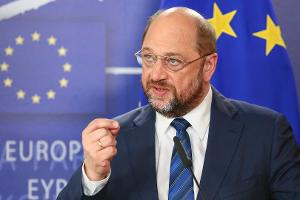
  • Martin Schulz – 2016 Speech in European Parliament

    martinshulz

    Below is the text of the speech made by Martin Schulz, the President of the European Parliament, in the Parliament on 28 June 2016.

    Ladies and Gentlemen,

    The UK referendum is now behind us. The people have spoken.

    They were given a once in a lifetime choice and have now made that choice.

    Personally, and I know most of my colleagues share this view, I very much regret this choice.

    At this difficult time, I would like to honour on behalf of the European Parliament all those British women and men, great Europeans known and unknown who over the last four decades invested their strength and expertise to shape decisively the European Union we have today.

    They understood what Edward Heath pointed out in 1973: that the world is shrinking fast and forming new configurations. That “no island is [really] an island” anymore.

    And I also pay tribute to the many strands of British society which decided to make the case for remaining in the EU – from civil society, to teachers, to the police, from churches to sports people, to nurses to artists and to business leaders. They often faced relentless and vitriolic opposition – and I am incredibly saddened to say, in the case of MP Jo Cox, to whom the European Parliament paid tribute last week, despicable murder.

    What struck me particularly in the result are the clear-cut voting divides – both geographical, regional and generational.

    These divides must be taken very seriously, and when the UK negotiates its new relationship with the EU, the voice of those who chose to remain, those who saw their future, their jobs and their families at the heart of Europe, should not be disregarded.

    Ladies and Gentlemen,

    That being said, the European Parliament takes note of the democratic will of the majority of citizens of the United Kingdom to leave the European Union and points out that this will needs to be fully respected and implemented as soon as possible.

    A spell of prolonged uncertainty would be in no-one’s interest and would threaten the Union’s integrity.

    To put it quite bluntly, the instruction given to the UK government through the referendum is now to negotiate withdrawal from the EU.

    The EU is a voluntary community. No one is forced to be a part of it. But when one member decides to leave, then leave that member must.

    Out means out.

    The people’s will must be respected and the European Parliament is sure that the British Government will do so.

    Waiting for several months, as has been announced by you, Prime Minister Cameron, and taking the destiny of our entire continent hostage purely for internal party political reasons would be totally unacceptable.

    That would not mean stability – on the contrary it would mean prolonged uncertainty.

    At its extraordinary session this morning, the view expressed by the European Parliament was clear: we expect the UK Prime Minister to notify the outcome of the referendum to this meeting of the European Council. And this notification will launch the withdrawal procedure.

    The European Parliament invites the Council to appoint the Commission as negotiator on Article 50.

    Any new relationship between the UK and the EU can only be agreed after the conclusion of the withdrawal agreement.

    The European Parliament has a right of consent in both cases – for the withdrawal and for the future relationship – and must therefore be fully involved at all stages.

    Ladies and Gentlemen,

    Three urgent organisational measures are also necessary in the eyes of the European Parliament, and I want to outline them to you now.

    Firstly, we will enact changes to our internal parliamentary organisation to reflect the will of the UK citizens to leave the Union.

    Secondly, we take note of the resignation of the UK Commissioner and the relocation of his portfolio.

    And lastly we call on the Council to change the order of its rotating Presidencies to prevent the process of withdrawal from jeopardizing the management of day-to-day business of the Union next year.

    As for the Settlement agreed by you all last February, it was only ever meant to enter into force in case of a vote to remain.

    A self-destruct button had been included in its design, and the British citizens pressed that button.

    It goes without saying therefore that the Settlement is now null and void.

    Ladies and Gentlemen,

    And then what?

    Is this all that the European Union can aspire to in the 21st century? To merely achieve, in the best of cases, amicable divorces? Is this the only legacy we want for our children?

    The European Parliament is convinced that things cannot go on as they have in recent years.

    If the Union is to remain a force that matters in the world, if it is to give centre stage to the expectations of our 443 million citizens from the remaining 27 Member States, then it must be given the means to achieve this.

    We need to relaunch the European idea, to show a capacity for self-criticism, an awareness of where we should reform the EU to deliver more effectively and make it closer to citizens.

    Some Member States may want to integrate less or more slowly, which is fine. But let’s avoid yet another à la carte menu of opt-ins and opt-outs and devise a clear framework for this.

    Conversely, we should reinforce the core of the EU to allow for closer integration to address current challenges. We must develop and democratise the Economic and Monetary Union to provide sustainable growth and jobs and to overcome persistent economic and social uncertainty.

    We must develop and democratise the Area of Freedom, Security and Justice and our Common Foreign and Security Policy to promote our common values, to protect our citizens, and to address the challenge of migration.

    To achieve such an ambitious and yet coherent reinvigoration, the European Parliament calls for a roadmap for a better Union based on exploiting the Lisbon Treaty, to be completed by a revision of the Treaties.

    Jobs, growth and investment

    Ladies and Gentlemen,

    Dealing efficiently and swiftly with the withdrawal of the UK from the European Union will allow us to put an end to this period of uncertainty.

    It will also allow the Union to concentrate on the different priorities where citizens expect concrete results to be delivered.

    Although the economic environment has shown signs of improvement, the EU must do better.

    We should be ambitious and aim at strong growth and full employment.

    We owe this to our citizens, and in particular to the younger generation.

    The European Parliament once again calls on all Member States to fully implement the Country-specific Recommendations.

    The track-record in this regard remains poor. If we want to boost growth but also maintain trust within and between Member States, we all have to deliver on what we agreed to do.

    The necessary policy mix should include not only reforms and fiscal soundness but also closing the investment gap.

    One year after I signed into law, together with the Latvian Council Presidency, the European Fund for Strategic Investments, we see the first results.

    Practically all Member States are now implementing projects under the Fund.

    The European Parliament welcomes this encouraging start and calls on all parties to continue promoting the Fund throughout the Union.

    I would like to remind you that we conceived the Fund to support projects with a high potential but which struggle to achieve financing from other sources because of the high risk involved. Let’s try to use it more in that way.

    It’s also time to start thinking about extending the Fund beyond the agreed three years, and making the necessary improvements to it. Indeed, what are three years in the life cycle of an investment project? Parliament therefore awaits the Commission’s proposal on this, planned for the autumn.

    Ladies and Gentlemen,

    What will really ensure the success of the Investment Fund is further private investment – encouraged by a deepened Single Market and a more business-friendly environment.

    Let me tell you what would be irresponsible: having the biggest single market in the world and failing to unleash its true potential!

    President Juncker, you pointed out last year that the Digital Single Market can generate €250 billion in additional growth and hundreds of thousands of new, skilled jobs by 2020.

    Despite this enormous potential, Member State legislation on regulating the internet and the sharing economy continues to be fragmented.

    Coming from a border region myself, I simply don’t understand why it’s so much more expensive, for example, to send a small package from Aachen just across the border to Maastricht than it is to send it six hundred and fifty kilometres on to Munich. This is economic and ecological nonsense and contradicts the principles of the Single Market.

    The European Parliament is a strong supporter of the Single Market, of removing barriers between Member States and facilitating market access for European businesses, in particular SMEs and start-ups.

    And to help these SMEs access funding, and to complement the role of banks by promoting the growth of innovative financing models such as crowd-funding and peer-to-peer lending, we need a fully-fledged Capital Markets Union.

    Last but not least, we must deepen the Economic and Monetary Union, for which the Five Presidents drew up a roadmap last summer. We all know that this roadmap is divided into several stages – but this should not prevent work from starting in parallel on all stages, including the swift implementation of Stage Two “Completing the EMU Architecture”.

    Ladies and Gentlemen,

    On the Banking Union, we have already come a long way by setting up a Single Supervisory Mechanism and a Single Resolution Mechanism.

    Let’s not stop now – so close to our common goal. The current situation on the financial markets shows the need for a strong and stable Eurozone.

    We promised our citizens a system that resists future crises, that protects depositors and taxpayers alike, that severs the link between banks and sovereigns. Let’s now deliver on these promises.

    Some Member States want to focus on reducing risk, which is understandable, but this must go in parallel with work on sharing risk.

    The same goes for the introduction of a proper backstop for the Single Resolution Fund. Member States committed to such a backstop. It is now time to finish the job and ensure the soundness of our banking and financial system.

    A central aspect of our strategy not only for growth, but also to rebuild trust in the EU, is the fight against tax fraud, tax evasion and money laundering. Our Single Market cannot function properly if Member States are competing against each other in a race to the bottom, or if SMEs end up paying higher tax rates than multinationals.

    Every year, Member States lose between €100 and 240 billion in taxes because of aggressive corporate “tax planning”. Fighting for a fairer taxation system is not only a way to significantly increase public revenue, it is also a matter of social justice.

    This month, the European Parliament adopted the mandate of an inquiry committee to follow up the Panama Papers scandal. Next week, we will vote on the report of our special committee on tax rulings.

    In parallel, work must continue on legislative files, and I name only two important cases.

    Firstly, on the Directive against tax avoidance, the European Parliament has highlighted once again that taxes must be paid where profits are made..

    Secondly, increasing transparency is decisive. Public country-by-country reporting, a common European blacklist of tax havens, and revised rules to fight money laundering are all things which the European Parliament has been pushing for years and which should be put in place quickly.

    The European Parliament has been very active in delivering constructive proposals, but unanimity in this area means that the buck stops with the Member States. And for the moment your actions have not kept up with your promises nor with citizens’ expectations.

    III. Agriculture

    Ladies and Gentlemen,

    Agriculture is part of our common European heritage, it has an environmental and a social function, and we should rightly be proud of it and fight for it where necessary.

    But we are facing a persisting crisis in the agricultural sector. Our milk farmers, in particular, are struggling to survive.

    The European Parliament is following the situation very carefully and counts on the Commission and Member States to implement fully the measures as agreed in September 2015 and March 2016.

    It is unacceptable that the financial support of 500m € agreed in 2015 did not fully reach the farmers yet.

    We expect the Commission, depending on the situation on the ground, to come with further proposals still this month if necessary. A truly European solution should also be completed with a strong framework for fighting unfair trading practices in the food supply chain.

    Migration

    Ladies and Gentlemen,

    Migration is a global challenge for which there is a global responsibility. We need a global partnership to manage it properly. The European Union and its Member States, like every other country, region and international organisation in the world, must play their part.

    It’s clear that many of our citizens are losing trust that their elected governments are able to manage the crisis. This feeling of powerlessness breeds fear, and fear leads them to the doorstep of the populists. We must break this cycle.

    We will break it by demonstrating that the Union and its Member States are able not only to make sensible proposals on border management, migration, asylum and security, but also to deliver them.

    We will break it by distinguishing ever more clearly between asylum and economic migration.

    We will break it by returning those who have no right to stay. When third countries refuse to cooperate on returns, we should be clear that this has consequences in other fields of cooperation. It also means clear rules for refugees who don’t respect the duties or geographical limitations attached to their status.

    To manage migration fairly and in solidarity, the European Parliament considers a double focus is necessary:

    Firstly, doing our homework inside the Union. This means unifying further the EU’s asylum system, legal migration possibilities, and integrating the management of the external borders.

    The agreement reached only last week on the European Border and Coastguard is welcome and I would like to pay tribute to the intensive work of the negotiators. It’s high time for all Member States to be ready for implementation, and by this I mean preparing the necessary equipment and nominating the 1500 border and coastguards of the rapid reaction pool.

    Secondly, the Union must focus on its external policy, recognising that the trail of hopelessness that leads people to our shores often starts many thousands of kilometres away, and therefore engaging more effectively with third countries of origin and transit.

    Any fresh thinking, any approach oriented to results which brings together all the different actors and tools we have, is worthy of serious consideration.

    The EU’s cooperation with Turkey on migration has demonstrated that it is not impossible in the Aegean Sea to break the business model of the smugglers and traffickers, and with it reduce drastically the loss of life at sea.

    It has demonstrated that it is possible to start replacing irregular travel with legal routes with the necessary security checks.

    That it is possible to support refugees in countries of transit, although disbursements should be increased ten-fold to reach €1bn by the end of this summer.

    The European Parliament calls on all actors concerned to step up their political commitment to making this partnership with Turkey work on the ground and on the islands, in full respect of European and international law.

    We stand ready to start consideration of the proposal on visa liberalisation as soon as we receive from the Commission the necessary signal that Turkey has fulfilled all remaining benchmarks, as was agreed here on 18 March.

    Now the Commission, building on the very useful ideas put on the table by Prime Minister Renzi, proposes a mix of positive and negative incentives to reward those third countries willing to cooperate effectively with us, and to ensure that there are consequences for those who do not.

    No one is trying to impose a one-size-fits-all approach. On the contrary, agreements must suit each country’s specific circumstances. A quick look at the diversity of the seven countries proposed as priority countries – Jordan, Lebanon, Niger, Nigeria, Senegal, Mali and Ethiopia – confirms this.

    Let me insist however on behalf of the European Parliament that these agreements certainly cannot be limited to solving security concerns or they are doomed to fail.

    They must be real partnerships – also economic, social and cultural ones.

    The eight billion euro over five years which Vice-President Timmermans mentioned in our hemicycle earlier this month are of course significant and require proper democratic scrutiny, whatever the name of the instrument used.

    The European Parliament welcomes giving a greater role to private investors and improving opportunities in countries of origin so people are not compelled to leave. The European Investment Bank’s initiative for the Southern Neighbourhood and the Western Balkans is therefore worthy of support. And so is the agreement reached two weeks ago to exclude conflict minerals from the European market to break the link between minerals extraction, trade and the financing of armed conflicts. We also look forward to the future External Investment Plan aiming to replicate the European success of EFSI outside our borders. With levels of growth our countries could only envy, Africa is certainly fertile ground for such projects.

    We must be honest – the development of the African continent is both a matter of solidarity and in the EU’s own interest. Africa is our unavoidable and essential partner.

    That’s why the European Parliament welcomes the increase of the EU’s contribution to the Africa Trust Fund by €500 million and urges the Member States to match this contribution.

    The promises made in Valetta should not be forgotten.

    External relations

    Ladies and Gentlemen,

    The High Representative will present to you a new Global Strategy, as was requested a year ago.

    At that time, in June 2015, I spoke about how the world around us had become more complex and conflict-ridden. It has become even truer today.

    The EU must safeguard the security of its citizens and of its territory by reinforcing a global system based on democracy, good governance, the rule of law and human rights.

    And by achieving coherence between development aid, migration management and military operations.

    The European Parliament expects the Global Strategy to be revised every five years, when the new Parliament and the new Commission are constituted. We also expect all EU actions to be subject to democratic oversight, for instance through annual implementation reports.

    On 8 and 9 July, NATO will hold its summit in Warsaw. The location of the summit reminds us that we still have security challenges and an ongoing conflict on the Eastern borders of the EU, in Ukraine.

    Our sanctions send a signal to Russia that it should respect the rules of the international community, and NATO’s military presence can reassure our Eastern Member States about their sovereignty and territorial integrity.

    The EU has to take its share of responsibility for its own collective security and territorial defence.

    This does not mean, however, falling back into a kind of East-West thinking reminiscent of the Cold War.

    The effective coordination of EU and NATO, bringing together their strengths and expertise for concrete and well-defined objectives should be key to Europe’s security.

    EU and NATO working side-by-side against pirates off the Somali coast, or against traffickers and smugglers and saving lives in the Aegean Sea.

    The European Parliament is convinced that this is how to achieve a successful European security policy.

    Ladies and Gentlemen, and I conclude here,

    This is a historical moment in our common project and your responsibility to take decisive action is all the more pressing.

    Despite the sad and dramatic days we are living in the European Union, I trust that our respective national football teams will demonstrate the best of their ability in the coming days and I take this occasion, President Hollande, to salute on behalf of the European Parliament the considerable organisational efforts deployed by France in hosting the tournament.

    And to condemn in the strongest of terms the shameful violence we have seen inside and outside of the stadiums. This criminal behaviour has no place in sport, and tarnishes the image of our continent.

    Our security forces should instead be able to focus entirely on countering the terrorist threat to our countries, and the barbaric and cowardly attacks that took place in Orlando and Magnanville show that this threat is more than ever present in our midst.

    Thank you for your attention.

  • Nigel Farage – 2016 Speech to European Parliament

    nigelfarage

    Below is the text of the speech made by Nigel Farage, the Leader of UKIP, to the European Parliament on 28 June 2016.

    Funny, isn’t it? When I came here 17 years ago and I said that I wanted to lead a campaign to get Britain to leave the EU, you all laughed at me. Well I have to say, you’re not laughing now, are you? And the reason you’re so upset, the reason you’re so angry has been perfectly clear form all the angry exchanges this morning – you as a political project are in denial. You’re in denial that your currency is failing, just look at the Mediterranean, as a policy to impose poverty on Greece and the rest of the Mediterranean you’ve done very well and you’re in denial over Mrs Merkel’s call last year for as many people as possible to cross the Mediterranean into the EU has led to massive divisions between countries and within countries.

    But the biggest problem you’ve got and the main reason the UK voted the way that it did is you have, by stealth, by deception, without ever telling the truth to the British or the rest of the people of Europe, you have imposed upon them a political union and when the people in 2005 in the Netherlands and France voted against that political union when they rejected the constitution, you simply ignored them and brought the Lisbon Treaty in through the back door.

    What happened last Thursday was a remarkable result, it was indeed a seismic result, not just for British politics, for European politics but perhaps even for global politics too because what the little people did, what the ordinary people did, what the people who have been oppressed over the last few years and see their living standards go down – they rejected the multinationals, they rejected the merchant banks, they rejected big politics and they said, actually, we want our country back, we want our fishing waters back, we want our borders back, we want to be an independent self-governing, normal nation and that is what we have done and that is what must happen. And in doing so we now offer a beacon of hope to democrats across the rest of the European continent. I’ll make one prediction this morning – the UK will not be the last member state to leave the EU.

    The question is what do we do next – it is up to the British government to invoke Article 50 and I have to say I don’t think we should take too long in doing it. I totally agree, Mr Juncker, that the British people have voted, we need to make sure that it happens.

    But what I would like to see is a grown-up and sensible attitude to how we negotiate a different relationship. I know that virtually none of you have ever done a proper job in your lives or worked in business or worked in trade or, indeed, ever created a job, but listen, just listen.

    You’re quite right Mr Schulz, UKIP used to protest against the establishment and now the establishment protests against UKIP, so something has happened here. Let us listen to some simple, pragmatic economics.

    We between us, between your countries and my country we do an enormous amount of business in goods and services, that trade is mutually beneficial to both of us, that trade matters – if you were to decide to cut off your noses to spite your faces and reject any idea of a sensible trade deal the consequences would be far worse for you than it would be for us. Even no deal is better for the United Kingdom than the current rotten deal we’ve got, but if we were to move to a position where tariffs were reintroduced on products like motor cars then hundreds of thousands of German workers would risk losing their jobs.

    Why don’t we just be pragmatic, sensible, grown-up, realistic and let’s cut between us a sensible, tariff-free deal and thereafter recognise that the UK will be your friend, that we will trade with you, we will co-operate with you, we will be your best friends in the world but do that, do it sensible and allow us to go off and pursue our global ambitions and future. Thank you.

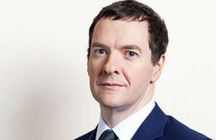
  • George Osborne – 2016 Statement on the UK Economy

    gosborne

    Below is the text of the speech made by George Osborne, the Chancellor of the Exchequer, on 27 June 2016.

    Today I want to reassure the British people, and the global community, that Britain is ready to confront what the future holds for us from a position of strength.

    That is because in the last six years the government and the British people have worked hard to rebuild the British economy.

    We have worked systematically through a plan that today means Britain has the strongest major advanced economy in the world.

    Growth has been robust.

    The employment rate is at a record high.

    The capital requirements for banks are ten times what they were.

    And the budget deficit has been brought down from 11% of national income, and was forecast to be below 3% this year.

    I said we had to fix the roof so that we were prepared for whatever the future held.

    Thank goodness we did.

    As a result, our economy is about as strong as it could be to confront the challenge our country now faces.

    That challenge is clear.

    On Thursday, the people of the United Kingdom voted to leave the European Union.

    That is not the outcome that I wanted or that I threw everything into campaigning for.

    But Parliament agreed that there are issues of such constitutional significance that they cannot solely be left to politicians, and must be determined by the people in a referendum.

    Now the people have spoken and we, in this democracy, must all accept that result and deliver on their instructions.

    I don’t resile from any of the concerns I expressed during the campaign, but I fully accept the result of the referendum and will do everything I can to make it work for Britain.

    It is inevitable, after Thursday’s vote, that Britain’s economy is going to have to adjust to the new situation we find ourselves in.

    In the analysis that the Treasury and other independent organisations produced, three particular challenges were identified – and I want to say how we meet all three.

    First, there is the volatility we have seen and are likely to continue to see in financial markets.

    Those markets may not have been expecting the referendum result – but the Treasury, the Bank of England, and the Financial Conduct Authority have spent the last few months putting in place robust contingency plans for the immediate financial aftermath in the event of this result.

    We and the PRA have worked systematically with each major financial institution in recent weeks to make sure they were ready to deal with the consequences of a vote to leave.

    Swap lines were arranged in advance so the Bank of England is now able to lend in foreign currency if needed. As part of those plans, the Bank and we agreed that there would be an immediate statement on Friday morning from the Governor, Mark Carney.

    As Mark made clear, the Bank of England stands ready to provide £250 billion of funds, through its normal facilities, to continue to support banks and the smooth functioning of markets.

    And we discussed our co-ordinated response with other major economies in calls on Friday with the Finance Ministers and Central Bank Governors of the G7.

    The Governor and I have been in regular touch with each other over the weekend – and I can say this this morning: we have further well-thought-through contingency plans if they are needed.

    In the last 72 hours I have been in contact with fellow European finance ministers, central bank governors, the managing director of the IMF, the US Treasury Secretary and the Speaker of Congress, and the CEOs of some of our major financial institutions so that collectively we keep a close eye on developments.

    It will not be plain sailing in the days ahead.

    But let me be clear. You should not underestimate our resolve.

    We were prepared for the unexpected.

    We are equipped for whatever happens.

    And we are determined that unlike eight years ago, Britain’s financial system will help our country deal with any shocks and dampen them – not contribute to those shocks or make them worse.

    The second challenge our analysis identified in advance was the uncertainty that a vote to leave would bring in the coming months and beyond as Britain worked with its European allies to create a new relationship.

    The Prime Minister has given us time as a country to decide what that relationship should be by delaying the decision to trigger the Article 50 procedure until there is a new Prime Minister in place for the autumn.

    Only the UK can trigger Article 50, and in my judgement we should only do that when there is a clear view about what new arrangement we are seeking with our European neighbours.

    In the meantime, and during the negotiations that will follow, there will be no change to people’s rights to travel and work, and to the way our goods and services are traded, or to the way our economy and financial system is regulated.

    However, it is already evident that as a result of Thursday’s decision, some firms are continuing to pause their decisions to invest, or to hire people.

    As I said before the referendum, this will have an impact on the economy and the public finances – and there will need to be action to address that.

    Given the delay in triggering Article 50 and the Prime Minister’s decision to hand over to a successor, it is sensible that decisions on what that action should consist of should wait for the OBR to assess the economy in the autumn, and for the new Prime Minister to be in place.

    But no one should doubt our resolve to maintain the fiscal stability we have delivered for this country. To all companies large and small I would say this: the British economy is fundamentally strong, we are highly competitive and we are open for business.

    The third and final challenge I spoke of was that of ensuring that Britain was able to agree a long-term economic relationship with the rest of Europe that provided for the best possible terms of trade in goods and services.

    Together, my colleagues in the government, the Conservative Party and in Parliament will have to determine what those terms should be – and we’ll have to negotiate with our European friends to agree them.

    I intend to play an active part in that debate – for I want this great trading nation of ours to put in place the strongest possible economic links with our European neighbours, with our close friends in North America and the Commonwealth, and our important partners like China and India.

    I do not want Britain to turn its back on Europe or the rest of the world.

    We must bring unity of spirit and purpose and condemn hatred and division wherever we see it.

    Britain is an open and tolerant country and I will fight with everything I have to keep it so.

    Today I am completely focussed on the task in hand as Chancellor of the Exchequer to bring stability and reassurance.

    In conclusion, the British people have given us their instructions.

    There is much to do to make it work.

    We start from a position of hard-won strength.

    And whatever the undoubted challenges, my colleagues and I are determined to do the best for Britain.

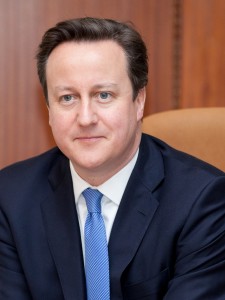
  • David Cameron – 2016 Resignation Speech

    davidcameron

    Below is the text of the speech made by David Cameron, the Prime Minister, on 24 June 2016 following the referendum result to leave the EU.

    The country has just taken part in a giant democratic exercise – perhaps the biggest in our history. Over 33 million people – from England, Scotland, Wales, Northern Ireland and Gibraltar – have all had their say.

    We should be proud of the fact that in these islands we trust the people with these big decisions.

    We not only have a parliamentary democracy, but on questions about the arrangements for how we are governed, there are times when it is right to ask the people themselves – and that is what we have done.

    The British people have voted to leave the European Union and their will must be respected.

    I want to thank everyone who took part in the campaign on my side of the argument, including all those who put aside party differences to speak in what they believed was the national interest.

    And let me congratulate all those who took part in the leave campaign – for the spirited and passionate case that they made.

    The will of the British people is an instruction that must be delivered. It was not a decision that was taken lightly, not least because so many things were said by so many different organisations about the significance of this decision.

    So there can be no doubt about the result.

    Across the world people have been watching the choice that Britain has made. I would reassure those markets and investors that Britain’s economy is fundamentally strong.

    And I would also reassure Brits living in European countries and European citizens living here that there will be no immediate changes in your circumstances. There will be no initial change in the way our people can travel, in the way our goods can move or the way our services can be sold.

    We must now prepare for a negotiation with the European Union. This will need to involve the full engagement of the Scottish, Welsh and Northern Ireland Governments, to ensure that the interests of all parts of our United Kingdom are protected and advanced.

    But above all this will require strong, determined and committed leadership.

    I am very proud and very honoured to have been Prime Minister of this country for six years.

    I believe we have made great steps, with more people in work than ever before in our history; with reforms to welfare and education; increasing people’s life chances; building a bigger and stronger society; keeping our promises to the poorest people in the world, and enabling those who love each other to get married whatever their sexuality.

    But above all restoring Britain’s economic strength, and I am grateful to everyone who has helped to make that happen.

    I have also always believed that we have to confront big decisions – not duck them.

    That’s why we delivered the first Coalition government in seventy years to bring our economy back from the brink. It’s why we delivered a fair, legal and decisive referendum in Scotland. And why I made the pledge to renegotiate Britain’s position in the European Union and hold a referendum on our membership, and have carried those things out.

    I fought this campaign in the only way I know how – which is to say directly and passionately what I think and feel – head, heart and soul.

    I held nothing back.

    I was absolutely clear about my belief that Britain is stronger, safer and better off inside the European Union, and I made clear the referendum was about this and this alone – not the future of any single politician, including myself.

    But the British people have made a very clear decision to take a different path, and as such I think the country requires fresh leadership to take it in this direction.

    I will do everything I can as Prime Minister to steady the ship over the coming weeks and months, but I do not think it would be right for me to try to be the captain that steers our country to its next destination.

    This is not a decision I have taken lightly, but I do believe it is in the national interest to have a period of stability and then the new leadership required.

    There is no need for a precise timetable today, but in my view we should aim to have a new Prime Minister in place by the start of the Conservative Party Conference in October.

    Delivering stability will be important and I will continue in post as Prime Minister with my Cabinet for the next three months. The Cabinet will meet on Monday.

    The Governor of the Bank of England is making a statement about the steps that the Bank and the Treasury are taking to reassure financial markets. We will also continue taking forward the important legislation that we set before Parliament in the Queen’s Speech. And I have spoken to Her Majesty the Queen this morning to advise her of the steps that I am taking.

    A negotiation with the European Union will need to begin under a new Prime Minister, and I think it is right that this new Prime Minister takes the decision about when to trigger article 50 and start the formal and legal process of leaving the EU.

    I will attend the European Council next week to explain the decision the British people have taken and my own decision.

    The British people have made a choice. That not only needs to be respected – but those on the losing side of the argument, myself included, should help to make it work.

    Britain is a special country.

    We have so many great advantages.

    A parliamentary democracy where we resolve great issues about our future through peaceful debate; a great trading nation, with our science and arts, our engineering and our creativity respected the world over.

    And while we are not perfect, I do believe we can be a model of a multi-racial, multi-faith democracy, where people can come and make a contribution and rise to the very highest that their talent allows.

    Although leaving Europe was not the path I recommended, I am the first to praise our incredible strengths. I have said before that Britain can survive outside the European Union and indeed that we could find a way.

    Now the decision has been made to leave, we need to find the best way, and I will do everything I can to help.

    I love this country – and I feel honoured to have served it.

    And I will do everything I can in future to help this great country succeed.

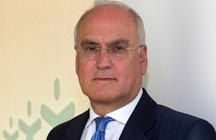
  • Michael Wilshaw – 2016 Speech to Festival of Education

    fmichaelwilshaw

    Below is the text of the speech made by Michael Wilshaw at the Festival of Education held at Wellington College in Berkshire on 23 June 2016.

    It is good to speak on this momentous day in British history when the decision to stay or leave the European Union will have a profound effect on the future of our country.

    I do hope though, when the decision is made and the dust settles, people will see that despite the sound and fury, those on both sides of the argument have spoken with passion for what they truly believe.

    In the same way, I hope that when my term of office ends in a few months’ time, people will understand that what I have said and done has been motivated by a passionate desire to improve the lives of children and young people.

    If I have stirred up emotions from time to time and caused offence by speaking bluntly, then I apologise. But I have been a Chief Inspector in a hurry, impatient to bring about improvement through inspection.

    I leave office knowing that, although our inspection frameworks are now tougher and more demanding than 5 years ago, many more children are in good and outstanding schools than ever before. I do hope that this is recognised by those who have, from time to time, questioned my approach and sometimes taken my words completely out of context.

    Our education system is miles better than it was 20 years ago when Ofsted came into being. And each year since, we’ve seen incremental improvement.

    Our primary schools, in particular, are doing well, although there is much to do in many of our secondary schools. So why is our education system still mediocre and not up there with the best in the world?

    Quite simply, it’s because we have largely failed to address the long-tail of underachievement in our country, containing most of our poorest children.

    This one constituency has not felt the benefits of the improvements I have just mentioned. And the irony is not lost on me saying this to you in a school like this – bedecked with privilege, with the opportunities that are often denied to our poorest children.

    The lot of disadvantaged children in primary schools has improved – a bit. But in secondary schools, the attainment gap between children on free school meals (FSM) and their better-off peers has refused to budge in a decade.

    Despite all the good intentions, the fine words and some imaginative initiatives, we are not making a real difference. The needle has barely moved. In 2005, the attainment gap between FSM and non-FSM pupils in secondary schools was 28 percentage points. It is still 28 percentage points now. Our failure to improve significantly the educational chances of the poor disfigures our school system. It scars our other achievements. It stands as a reproach to us all.

    Not long after I started my tenure at Ofsted, we published a report Unseen Children, which looked at the increasing invisibility of underachieving poor pupils as they progressed through our schools, not just in urban areas but also in isolated rural and coastal communities. We wanted to understand why a majority of disadvantaged children consistently underachieved at school.

    As I approach the end of my tenure, I’m returning to that theme.

    I spoke earlier in the year about the widening gap between the performance of schools in the North and those in the South. But as I stand in these glorious grounds, in this beautiful corner of Berkshire, I wonder how many people realise just how badly the poorest pupils have been let down in some of the wealthiest parts of the country?

    The attainment gap between FSM and non-FSM secondary school children in West Berkshire is 31 percentage points. In Kent it’s 34. In Surrey it’s 36. In Buckinghamshire it’s 39. And, in Reading, it’s a whopping 40 percentage points – all far in excess of the national gap of 28. What an appalling injustice. What an inexcusable waste of potential.

    And yet, alarming as these figures are, they do not reveal the full extent of our failure. They hide the continuing underperformance of the white working-class, for instance, or the dashed hopes of too many of the most able disadvantaged children, whose early promise is so often left to wither.

    As a teacher who has spent his professional life working in some of the most deprived areas of the country, I find our failure perplexing and infuriating. I know individual schools across the country have turned things around, particularly in London, and managed to give children who had been written off a good education. So why have we failed at a system level? Why haven’t we made progress? Why do we keep letting down our poorest children in large parts of our country?

    Guilty parties

    To my mind there are 5 culprits. The first are the political ideologues of both Left and Right.

    The poor have been caught in the crossfire between these two for as long as I can recall. Of course, both claim to be acting in the interests of the disadvantaged. Yet neither accepts the damage they invariably inflict.

    The Left’s brand of snake oil was very pervasive in the 70s and 80s. They infiltrated scores of local authorities, peddling their anti-academic nonsense and undermining the authority and respect of school leaders.

    I know I have talked about this before. But the reason I keep returning to the subject is that their irresponsible, ideological agenda ruined the education of hundreds of thousands of our poorest children − children now in middle-age whose literacy levels are worse than their parents’ and grandparents’.

    I have been criticised for saying that school leaders should be battle-axes and bruisers. But in the 70s and 80s, headteachers who wanted to stand against this destructive tide had to be educational warriors. It was only those who were prepared to stand up to the ideological bullies, masquerading as pastoral reformers, who survived that terrible period.

    Many didn’t. I well remember, for example, an experienced and respected headteacher in Newham who was quite simply broken by his experiences of dealing with endless militancy in his school in the mid 1980s, with insults being thrown at him when he refused to allow staff to join the demonstrations during school time to support the miners’ strike. There were many others who experienced similar intimidation.

    The middle classes, of course, could escape to the remaining grammars and independent sector. The poor had no such option. They had to endure the chaos, the indifferent teaching and threadbare curriculum that passed for education in many state schools of the time.

    They and we are still living with the consequences. Those who are fundamentally opposed to the academy programme should remember why it happened in the first place. Academies were a response to the failure of so many local authorities. They let down the very children they were supposedly supporting.

    The market-based laissez-faire approach of the Right can equally damage the chances of the poor. Schools will wither on the vine as they did 20 or 30 years ago if a more liberal and autonomous system is not subject to strong central and local intervention when early decline sets in.

    The market will not stop the strong getting stronger and the weak getting weaker. Teachers and leaders will always gravitate to the places where it is more attractive, comfortable, more leafy and easier to work.

    The figures for teacher training speak for themselves. The prosperous South East region has over 458 trainee teachers per 100,000 pupils. Yet the East Midlands manages only 362 per 100,000 pupils. The East of England fares even worse, with only 294 per 100,000. No wonder these last two regions are poorly performing. Schools in these areas find it more difficult to get good staff. Teacher supply follows well-resourced demand, not educational need.

    Hastily rebranded schools in deprived areas soon find that the magic of the market hasn’t eradicated underlying problems. But when they fail, as so many do, it is the system, or reactionary leftists, or those old hippies in Ofsted that are to blame.

    Free marketeers forget, or perhaps they never cared to think, that without the semblance of a strategy, without meaningful accountability, or early intervention, the system risks repeating all the mistakes of the worst local authorities. They forget that it’s easy to destroy a school and so much harder to build one up. And once again, it is the poor who ultimately pay the price.

    Structural vandals

    The second group that has helped hobble the poor are the structural vandals, those who argue that children don’t need structure in school.

    In educational establishment circles it was argued in the 70s and 80s, and still is in some quarters, that structure stifles. It kills childhood creativity; it dictates mindless conformity. This argument rears its head most often today in the endless whines about ‘petty’ uniform rules or the insistent shriek that testing is inhumane. And again, it is the poor who have to bear the consequences.

    Many middle-class children, of course, are less reliant on structure in the school and classroom. They get implicit support and direction at home. But many of our poorest children don’t. A rule-based classroom culture helps compensate for a chaotic home life. Take it away and the poorest children rarely swim; they sink.

    Even when home structures are in place, the poor’s expectations and potential are often constrained by limited cultural horizons. Through no fault of their own, many simply aren’t aware of what is possible. Why should they be? Few of them have had access to the life-enhancing opportunities a good education brings.

    Middle-class children always have a head start. Their cultural hinterland is usually rich. Their parents are usually well educated. They tend to do well in school. And when they don’t, their parents can always hire a tutor.

    To those who bleat about the tyranny of testing, let me say this. Testing isn’t a burden; it’s an opportunity. It allows teachers to know where a child stands and what help they need. It gives the poor a passport to the prospect of a better life.

    Weak heads often complain about testing. But in my experience, a good head never tells colleagues to teach to the test. They insist on good teaching, which invariably leads to good results. The tests take care of themselves.

    We can see what happens to progress when there aren’t any tests. It is one of the reasons why there is such a gap in attainment between key stages 2 and 4. It is the reason why I called for a return to testing at key stage 3, so the poor, in particular, can benefit from formal assessment.

    Take testing and exams away and the poor can’t rely on the cultural capital or family connections that middle-class children possess. The irresponsibility of the anti-testing lobby in this regard is breathtaking. It is the disadvantaged who suffer from their thoughtless crusade.

    A constricting curriculum

    The third culprit is our continuing failure to develop a curriculum pathway for those youngsters who want a strong route into an apprenticeship, especially after the age of 14.

    Let me be clear. You will find no stronger supporter of a core curriculum and strong literacy and numeracy programmes than me. I was insisting on the primacy of subject knowledge and the importance of an academic bedrock when many latter-day evangelists were negotiating their way around a Wagon Wheel.

    Nor have I ever made the mistake of thinking that the poor wouldn’t benefit from access to the canon, to that rich corpus of knowledge that underpins all learning. The poor have as much right to – and capacity to appreciate – the works of Shakespeare and Newton and Austen and Macaulay as their better-off peers.

    This I do not dispute. But what about those youngsters who would benefit from a technical education? What about those employers who, year after year, say that school leavers are not equipped with the technical skills that they are crying out for?

    The figures are shocking. In the UK as a whole, there are now 210,000 vacancies as a consequence of skills shortages across the economy – an increase of 43% from 2013. In key sectors such as manufacturing, construction and utilities, over 30% of vacancies exist because there aren’t enough people with the right skills to fill them.

    I have taught in disadvantaged communities for most of my professional life. And I can tell you that there will always be some children who will respond better to a technical curriculum than others.

    The consequences of an inflexible curriculum are plain to see. We see it in the demotivated youngsters who leave school with few relevant qualifications and an antipathy to learning. We see it in the ranks of the unskilled unemployed. We see it in the hundreds of thousands of skilled vacancies that go unfilled and are eventually filled by those from abroad. We see it in the 40% of youngsters who don’t get 5 good GCSEs.

    Poor teaching

    The fourth reason why the poor continue to languish at the bottom of the educational pile is that they are often lumbered with the worst teaching. Despite excellent initiatives such as Teach First, poor communities are still more likely to have less access to good teaching than better-off ones.

    According to the Social Market Foundation, schools in deprived areas are more likely to have fewer experienced teachers, more likely to have teachers without formal teaching qualifications, more likely to have teachers without degrees in relevant subjects, and more likely to have higher teacher turnover than schools elsewhere.

    Unsurprisingly, these problems have been exacerbated as teacher recruitment becomes more difficult. Last year, Ofsted’s own Annual Report acknowledged that recruitment was toughest for schools in deprived areas.

    A recent snapshot survey my inspectors carried out of secondary schools in Kent and Medway has found that the situation is at least as grave now as it was then.

    The problem in Kent is compounded by selection. As you know, the proportion of FSM eligible children attending selective schools nationally is only 3%, way below the national figure of 15%. Yet many of the good and outstanding schools in Kent are grammars and, according to research from Education Datalab, grammar schools in this area are more likely to attract and retain many of the best teachers.

    As a result, secondary schools in Kent with the most disadvantaged children have more unqualified and less experienced teachers. They are also less likely to be judged good or outstanding for teaching, learning and assessment. Kent is an example of what happens to the poor nationally when market forces predominate.

    As heads of non-selective schools told our inspectors: “The few good teachers that there are around prefer to go to the grammars,” and “We end up having to appoint unqualified or less experienced teachers. This places just more and more demands on experienced staff.” While another said: “There are just no incentives for teachers trained in Kent to stay in Kent and teach in more challenging schools.”

    As I said earlier, the lack of a national, strategic approach to teacher training means that there are challenging areas of the country without ready access to the best newly qualified teachers. Outstanding schools train and retain the best candidates, leaving schools where the need is greatest to scramble for the rest.

    In Kent, as in the rest of the country, challenging schools are finding it increasingly difficult to recruit the best teachers. We can roll out as many new shiny, well-intentioned educational initiatives as we like. But if we don’t have the people to carry them out, the disadvantaged will remain where they are – at the bottom of the heap.

    Poor leadership

    The same thing is true of leadership. The final culprit, the final reason why we continue to let down the poor is our inability to deliver strong leadership to those who need it the most. The poor disproportionately attend schools that are strangers to good leadership. Yet we know that good teaching can only thrive when leadership is strong.

    Why have we not given greater priority to developing good leadership in our country, particularly in the most difficult areas? Why has the National College for Teaching and Leadership fallen on such hard times? Is the Talented Leaders programme enough?

    As things stand, only 6% of schools in the most prosperous areas of England have leadership and management that are judged less than good by Ofsted. In the most deprived areas, almost 4 times as many schools – 23% – suffer the same.

    Unless we resolve to get more of our best leaders into the most challenging schools, the poor will continue to be short changed.

    What is to be done?

    We don’t have to dig too deep to understand why we have failed our poorest children.

    We can see it for ourselves in increasing alienation, the bitter resentment as others arrive to do the jobs the badly educated cannot do. “Blame the parents,” say some; “Blame the immigrants,” say others. Well, we should really blame ourselves, because it doesn’t have to be like this.

    We should start by refusing to patronise the poor. There is nothing wrong in insisting on structure in school. We should be tough on feckless parents who allow their children to break the rules. I appreciate that many of them were let down by the education system. But they need to be reminded – through letters, meetings and sanctions – that the way they bring up their children has profound implications for us all.

    We should have a curriculum that not only has a strong core but is flexible enough to meet the needs of those youngsters who want a technical pathway.

    The government should insist that every major multi-academy trust should have a University Technical College. Every multi-academy trust should be inspected to ensure that the University Technical College does not become a dumping ground for the difficult or disaffected and that it delivers high quality pre-apprenticeship programmes to the age of 19.

    Finally, the government must do more to direct good people into the most challenging areas. There have been some laudable initiatives. But they have been late, small and piecemeal.

    Conclusion

    I came into teaching, above all, to make a difference to the lives of our poorest children. As Chief Inspector, I have attempted to show how the educational underperformance that blights the lives of disadvantaged pupils in reality beggars us all. Of course, the poor suffer the worst consequences. But we are all the poorer for their missed opportunities and wasted potential.

    We know that it does not have to be this way. We know that their life chances would be greatly improved if they had the best teachers, the best leaders and a better curriculum.

    As I begin my last few months as Chief Inspector, it saddens me immeasurably to say frankly that we are still letting down our poorest children and that if things do not change fundamentally, we will continue to do so.

    Thank you.

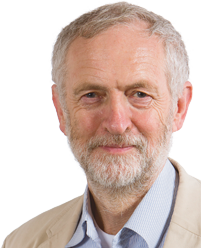
  • Jeremy Corbyn – 2016 Speech Made in South Yorkshire on the EU

    jeremycorbyn

    Below is the text of the speech made by Jeremy Corbyn, the Leader of the Opposition, in South Yorkshire on 16 June 2016.

    Thank you for inviting me here to South Yorkshire. I appreciate the time of the workforce and the support from the management to enable this to go ahead.

    Talking of the workers here, I’m guessing you were delighted when you heard you were going to get an extra hour’s break from work. And so I can only imagine the disappointment when you then learned that hour was for listening to a politician talking about Europe.

    But there is no doubt we all face a vital vote just a week away and I want to have a serious conversation about it and set out some of Labour’s ideas about Europe, and how to reform it.

    Not many people are grateful for the work politicians do. I don’t have any difficulty understanding why, the political class has let our country down in so many ways, but today I want to try and restore a bit of faith in politics, and set out how politics done in a different way, can improve our lives and our communities.

    The work you do here in developing the manufacturing base of the future is crucial to our economy. We need many more sites like this, backed up with a proper industrial strategy to use their innovations to build an economy of the future that can deliver for all.

    The Chancellor George Osborne promised “a march of the makers” five years ago, but that has signally failed to materialise. Once again we’ve been given a soundbite, but very little action on the ground.

    What this referendum campaign has shown, more than anything, is that politicians have failed, and are failing, to come up with solutions to the problems that people face across Britain.

    The insecurity of work the lack of good well-paid jobs, the high cost of housing, whether to rent or to buy, how we adjust to, and pay for, an ageing society, the failure to ensure decent economic growth in all parts of the country and in which we all share.

    That is the failure of politicians, not of the EU or of EU migrants for that matter.

    Too many voices in this debate are only playing that old trick the blame game. And when politicians play the blame game, it’s usually because they have nothing serious to offer themselves.

    Those pushing us to leave the EU, Conservative MPs like Iain Duncan Smith, Boris Johnson and Michael Gove, say that more money could be spent on the NHS if we left, they’ve also promised more money for farming, for fishing, for university research, for tax cuts. They’ve promised our EU contribution over and over again.

    But does anyone really believe they’re the saviours of our NHS? Hardly. They really are wolves in sheep’s clothing:

    These are the same Tory Ministers and MPs who voted to:

    – cut mental health budgets

    – scrap nurses’ and midwives’ bursaries

    – slash social care for the elderly and disabled

    – open up ever more of the NHS to private companies and private patients

    – pick damaging and unnecessary fights with junior doctors.

    Now they want to use people’s real concerns about the impact of EU migration to turn the campaign into a referendum on immigration.

    It’s easy to blame people who come to this country, to blame the outsider, to blame bureaucrats in Brussels. It’s also very convenient for politicians too. If you’re blaming a scapegoat you’re not blaming the people with the real power, the corporate elite and the politicians in government who do its bidding.

    Politicians certainly need to take responsibility, so let me make a start.

    I mentioned the banking crash yes, that was the fault of bankers but the Conservative governments of Thatcher and Major scrapped financial regulations that would have prevented that crash and Labour failed to re-regulate. So blame our own governments, don’t blame the EU or immigrants.

    It was those same governments of the 1980s and early 90s that deregulated the labour market so that zero hours contracts could flourish and the share of wealth going to workers fell off a cliff. It is unscrupulous employers and politicians who have allowed temporary contracts, agency and enforced part-time working, and bogus self-employment to mushroom. So blame the politicians who opened the door to rampant job insecurity.

    When people migrated here from the Caribbean in the 1950s and 1960s there was very little debate about migrants driving down wages and undercutting because then we had powerful employment protection and strong trade union rights.

    The veteran Labour MP Dennis Skinner talked yesterday in Parliament about Shirebrook. For many years that site was a coal mine where Eastern European miners working alongside English colleagues doing the same job, earning the same pay and in the same union.

    Today that same site is owned by Mike Ashley’s Sports Direct where he employs 200 full-time employees and 3,000 people, mainly east Europeans, on zero-hours contracts.

    Today we have a deregulated labour market that allows unscrupulous employers to undercut local pay by exploiting migrant workers and undercut good businesses by forcing a race to the bottom. So migrants aren’t driving down wages. Unscrupulous employers are because the government allows them.

    Actually by working with the European Union, Labour governments brought in the agency workers’ directive the working time directive and a whole package of legislation that helped to protect workers across Europe.

    Migrants that come here, work here, earn here and pay their taxes here.

    But, do you know what? There are other forms of free movement that really anger me. The free movement of money abroad to dodge the taxes that fund our public services, the free movement of our country’s wealth and corporate profits into tax havens.

    Does anyone here own an offshore trust? Do any of your family or friends own an offshore trust? So who was David Cameron standing up for when he wrote to the EU in November 2013 opposing proposals transparency into who owns these shady offshore trusts?

    From cuts to disability benefits and cuts tax credits, to tax breaks for the super-rich and corporations. We have a Government making the wrong choices and sticking up for the wrong people.

    Or take another example, a couple of years ago, the EU also came forward with a proposal to restrict bankers’ bonuses and what did George Osborne do? Again he rushed to Brussels within an army of taxpayer-funded lawyers to oppose it and he lost.

    But what about the positive solutions? I won the leadership of the Labour Party by a landslide because our campaign stood for something different, straight-talking, honest politics.

    If there’s a problem we will work to find a solution – not someone to blame.

    Start with immigration the biggest issue for many people in this referendum campaign.

    EU migrants pay in more in taxes than they take out in benefits. They contribute to our society and 52,000 of them work in our NHS saving our lives, caring for our loved ones.

    But large increases in migration in particular areas can put a strain on our stretched public services, already hammered by government spending cuts – local schools, GPs surgeries and housing.

    So we are calling for a Migrant Impact Fund to pump extra cash into local areas where large scale migration puts a strain on public services – on schools, GPs surgeries and housing.

    Such a fund used to exist, Gordon Brown established it in 2008 but David Cameron abolished it two years later. He was also the guy who pledged he would cut net migration below 100,000, if you remember. But today it’s well over 300,000 far higher than at any point under Labour governments and local authorities and public services have had their budgets slashed at the same time.

    And, as I raised with David Cameron yesterday in parliament, we can and we must act now to end the scandal of jobs here in Britain that are only advertised abroad.

    As I said before, if you want someone to blame, blame politicians and some of the appalling employers they protect.

    And if we want to stop insecurity at work and the exploitation of zero hours contracts that are being used to drive down pay and conditions, why don’t we do what other European countries have done and simply ban them?

    Zero hours contracts are not allowed in Austria, Belgium, Czech Republic, Denmark, France, Germany, Hungary, Italy, Netherlands, Poland and Spain. It seems we’re the odd one out. Our politicians now in power are choosing not to tackle exploitation, but we will.

    We have to clamp down on exploitation as we’ve seen at Sports Direct in Shirebrook and hire many more workplace inspectors to enforce the minimum wage. I don’t want to see workers here being exploited and driving down wages and conditions. We can stop this, and we must.

    Many of you from this part of South Yorkshire will remember that miners used to get free coal. In Denmark, Portugal and Germany today communities are setting up energy companies which sell electricity back to them at discounted rates. But ridiculously, it’s illegal to do that here.

    We need to learn from the best in Europe.

    Just down the road in Nottingham, Robin Hood Energy – a community energy scheme – has been established by the Labour council, no private shareholders, no director bonuses. Just low and competitive energy tariffs, but they could be lower still, and more councils would be doing the same if we had the same rules as elsewhere in Europe.

    Labour is calling for a vote to remain in Europe at next week’s referendum because we believe staying in the European Union offers our people a better future in terms of jobs, investment, rights at work and environmental protection.

    But we are also campaigning for reform of the European Union because we are convinced Europe needs to change to work for all, to become more democratic, strengthen workers’ rights, ditch austerity and end the pressure to privatise.

    So we have a vision for Europe, and an agenda for change, I have been discussing with leaders and governments across Europe.

    Because in our globalised world we cannot live in isolation, we achieve far more by cooperating and working together with other countries.

    Think about pollution, we could have the best environmental protection in the world, but if our neighbours are pumping poisonous chemicals into the air, or dumping waste into the sea, that will damage us regardless. Pollution doesn’t respect national borders.

    Next year the UK will have the presidency of the European Union, if we vote to remain. That means Britain can lead, can push our agenda for change, our vision for Europe.

    On tax avoidance, our Revenue and Customs estimates that there is a £34 billion tax gap. Little infuriates people more than the super-rich class and big business acting as if paying taxes is optional only for the little people.

    There are proposals now in Europe for country-by-country tax reporting, which means that companies pay their taxes in the countries where they make their profits.

    Labour members of the European parliament have backed this plan every time, while Conservatives ones oppose it, time and time again.

    We also have a special obligation to tackle tax havens, since so many of Britain’s overseas territories and crown dependencies are tax havens. So we must support an EU-wide blacklist of tax havens, to sanction them and back measures to eradicate them.

    On workers’ rights, we need far stronger action across Europe. There is a little known EU directive, for example, called the Posting of Workers Directive. It allows companies that win contracts in another part of Europe to take workers to other countries. They can post their workers abroad temporarily, rather than go through new recruitment processes.

    But legal judgements have opened up loopholes meaning that these companies are able to undercut the going rate in one country by paying the going rate in another.

    In extreme cases it has meant workers not being paid the minimum wage of the country they’re working in because it is above the rate of their home nation.

    This loophole can and must be closed and there is a proposal on the table to do so. Labour would work to secure agreement from other countries to back it.

    I mentioned the scandal of zero hours contracts earlier too. As well as outlawing these exploitative contracts in Britain, we should go further and work with our allies to establish a European minimum standard of rights at work to stop undercutting and give people the job security they need.

    And now that Germany has introduced a minimum wage there is an opportunity to move towards a European-wide minimum wage – linked to average pay and the cost of living in each country to halt the race to the bottom in pay and conditions, and increase wages across Europe.

    On the refugee crisis, Europe has had to respond to a crisis on our borders on an unprecedented scale. It is the biggest refugee crisis in global history. We – as a continent, all of us – have made mistakes but now we have to learn the lessons.

    If our union means anything, it means coming up with an agreed and united response that shares the responsibility.

    On energy and the environment, under the Tories, the UK has slipped from 3rd to 13th in the world as the best place to invest in renewables.

    Subsidies for renewables have been cut by this government, yet the European Investment Bank has invested nearly £1.5 billion since 2007 – a quarter of all its renewable funding. The European Investment Bank has been bailing out this government’s failure to invest.

    Across Europe, investment in renewable energy is coming from government and being supported properly, renewable energy is increasingly being owned by local communities, schools or workplaces. These decentralised energy grids are more efficient, less polluting and give us all more control.

    So we need to learn from the best practice across Europe, and find a mechanism to promote and encourage socially-owned clean energy across our continent.

    Our government has watered down our commitments under the EU energy efficiency directive, we would recommit to that because the technology is there to make every new building a near-zero energy building.

    We must have the vision and the strategy to create a sustainable economy, both in Britain and across our continent.

    On banking regulation, we need to throw our weight behind a Financial Transaction Tax, sometimes known as the Robin Hood Tax.

    There are currently 10 countries in Europe working together to secure a financial transactions tax across the European Union. This is a small tax on specific financial transactions to help prevent the sort of banking crash we saw a few years back, that led to the deepest economic crisis since the 1930s.

    What was the British Government’s response to this proposal? To rush to Europe to oppose it, threatening legal action.

    Labour wants to help drive this reform, to build support for an EU-wide tax as a step towards a global tax. We must reform our banking sector and discourage the dangerous practices that undermined the banks across Europe and globally.

    The process is currently in a fragile state, despite the support of France and Germany, but imagine the impetus Britain’s support could give to the campaign, both in Europe and among major economies around the world.

    On migration, we should press at European level for a Migration Relief Fund available to local authorities all over Europe to assist in supporting and upgrading schools, hospitals and public services in areas of high migration within the EU.

    On trade, we know that core purpose of the European single market scrapping trade tariffs and barriers between countries not just in Europe but dozens more has helped bring us jobs, investment and growth.

    But EU legislation that pressures governments to privatise or deregulate public services, such as rail and communications, or restrict public ownership, needs to be reformed.

    And we will not sign up to trade deals that are about privatising our public services weakening consumer protections, environmental standards or food safety standards.

    That’s why – like France – Labour would veto the TTIP transatlantic EU-US trade deal as it stands.

    By taking this approach, setting out a positive vision of hope and progress, and a clear agenda of reform for Britain’s EU presidency in 2017, I believe we can demonstrate that politics can make a difference. That we can improve lives and communities and show not only what the European Union is, but what it can become.

    There is a warning for Europe here, whatever the outcome of next week’s referendum, that the EU must demonstrate its continued relevance to its people or it will be rejected. But it’s up to British politicians too, to lead that change.

    I have tried to set out today some of Labour vision for Remain and Reform in the European Union.

    More importantly I hope I’ve been able to restore a bit of faith in what politics can do. If you have a decent government committed to making our country and our world a better place.

    I encourage you all to vote Remain on 23 June and then to support our campaign for the changes we want to see here in Britain and across Europe.

    Things can and, with your help, they will change.

  • Rosena Allin-Khan – 2016 Statement on Becoming Labour MP for Tooting

    Below is the text of the speech made by Rosena Allin-Khan after she was elected as the Labour for Tooting at a by-election on 16 June 2016.

    Given the horrific events of today and the shocking death of Jo Cox, I do not intend to make a speech. Instead, I would like to make a short statement.

    First of all, I would like to give my profound thanks to the people of Tooting for electing me as their MP.

    But my thoughts and prayers are with Jo’s husband and her children. She was a proud and passionate campaigner who will be desperately missed.

    Jo’s death reminds us that our democracy is precious but fragile – we must never forget to cherish it. Thousands of people voted today and we are all here in recognition of our democratic values.

    I would like to thank the police for all the hard work they have done today, not just here but across the country.

    I would like to thank the returning officer and staff for their efficient and smooth running of this by-election, and I would also like to thank my agent and his campaign staff.

    I would like to thank the other candidates for the respectful way in which this by-election has been fought.

    And lastly, I would like to thank my family and friends for their love and support.

    Thank you very much.

  • Jeremy Corbyn – 2016 Speech at People’s History Museum

    jeremycorbyn

    Below is the text of the speech made by Jeremy Corbyn, the Leader of the Opposition, at the People’s History Museum in Manchester on 21 June 2016.

    Thank you for being here today and for that introduction, Diane.

    Thank you to Alan Johnson for all of your hard work and mileage you’ve put into the campaign, and to all colleagues: MPs, MEPs, councillors and activists who are determined to make our remain and reform position clear.

    Kate Green is the shadow secretary of state for Women & Equalities and an excellent advocate for that cause.

    But, as you will all know a few days ago we lost one of the great fighters for women and equalities in this country so I would ask you all to reflect for a moment on the life of Jo Cox.

    It’s a pleasure to be here today at the People’s History Museum which chronicles the struggles of working people over generations.

    There are now under 48 hours until polls open in the European referendum I am very clear, and Labour is very clear we are for staying in.

    One of the major reasons for that is about jobs and workers’ rights.

    So it is fitting that we are here today in this building which reflects the gains that working people, trade unions and the Labour Party have won.

    Today we live in a globalised world. The battles we fight today as a labour movement are not confined by national borders.

    Workers, capital, and corporations move across borders. That is a reality whether we vote to leave or remain.

    But only by remaining and working together with our allies across Europe can we regulate those flows and improve things for working people here in Britain.

    It was a Labour government that introduced the Equal Pay Act in 1970 following a courageous campaign by women trade unionists.

    By it was only in 1984 that law was strengthened and extended in Europe to mean equal pay for equal work of equal value in line with the EU Directive.

    There was no limit on working time for workers in Britain until the Working Time Directive, which also provided for rest breaks.

    Our rights to annual leave were underpinned by the EU too we would not have a right to 28 days leave without that membership.

    But for too many people in Britain today – work is still not secure.

    So we cannot be content with the status quo.

    If we want to stop insecurity at work and the exploitation of zero hours contracts why don’t we do what other European countries have done and ban them?

    Zero hours contracts are not permitted in Austria, Belgium, Czech Republic, Denmark, France, Germany, Hungary, Italy, Netherlands, Poland and Spain. It seems we’re the odd one out. This Tory government is choosing not to tackle exploitation Labour would.

    As well as outlawing these exploitative contracts in Britain we should go further and work with our allies to establish a European minimum standard of rights at work to stop undercutting and give people the job security they need.

    And now that Germany has introduced a minimum wage is there an opportunity to establish a European-wide minimum wage – based on the cost of living in different nations to increase workers’ pay across our continent?

    There is a little known directive called the Posting of Workers Directive nothing to do with postal workers, Alan although I do hope they get overtime for all of the referendum leaflets they are about to deliver! The Posting of Workers Directive enables companies that win contracts in another part of Europe to take their workers to work in other countries they can post their workers abroad temporarily rather than go through new recruitment processes.

    However, some legal judgements have opened up loopholes meaning that these companies are able to undermine the going rate in one country by paying the going rate in another.

    In extreme cases it has meant workers not being paid the minimum wage of the country they’re working in because it is above the rate of their home nation.

    This loophole can be closed and there is a proposal on the table to do so Labour would secure agreement from other countries and back it.

    The European Union is neither inherently good nor inherently bad. It is what we make of it and it can be an ally in our campaigning for better rights at work across Europe.

    Because, in this day and age we can only strengthen rights at work here in Britain by strengthening them across Europe.

    The only way to stop the race to the bottom on jobs and wages is to work together across our continent to raise standards for all. That’s what we did with rights for agency workers for part-time workers and on so many other issues.

    Through the social chapter and other directives we have achieved a situation in which:

    Over 26 million workers in Britain benefit from being entitled to 28 days of paid leave and a limit to how many hours they can be forced to work

    Over 8 million part-time workers (over six million of whom are women) have equal rights with full-time colleagues

    Over 1 million temporary workers have the same rights as permanent workers

    340,000 women every year have guaranteed rights to take maternity leave

    And it’s important to understand the benefit of these gains it means workers throughout Europe have decent rights at work meaning it’s harder to undercut terms and conditions across Europe.

    Several Leave supporters have stated clearly they want to leave Europe to water down workers’ rights to rip up the protections that protect work-life balance that prevent discrimination and prevent exploitation and injustice.

    That is why we say the threat to the British people is not the European Union it is a Tory-led Brexit

    So remain and fight; don’t walk away in despair.

    Today three million jobs in Britain are linked to our trade with Europe that is why our major manufacturers and our major trade unions are for remaining within Europe.

    But it is not only jobs with a direct link with Europe that are at risk our whole economy is threatened by any potential downturn caused by Brexit.

    Whatever you feel about the European Union we should not lightly be prepared to put at risk the jobs and rights of people in this country.

    Our economy is fragile and insecure hit by six years of Tory austerity that have weakened wages weakened rights at work and weakened job security.

    We know who gets laid off when there is a downturn: it is young workers, insecure workers; those most recently hired are often first out.

    We know who gets hit hardest by any downturn, it is working class communities.

    A vote to leave risks more Tory austerity and more wrong choices because those would lead the Brexit negotiations would be the Tory right cheered on by UKIP.

    They won’t pay for any downturn with tax increases on the wealthy or big corporations but with cuts to the public services of those who can least afford to lose them.

    Those running the Vote Leave campaign have supported every cut to public services every privatisation and every tax break for the richest.

    And frankly their divisive campaign deserves to lose. A vote to leave will embolden the likes of Nigel Farage and embolden them to be more xenophobic and more divisive.

    Migrants that come here, they work here, earn here and pay their taxes here.

    Many EU migrants – 52,000 of them – work in our National Health Service; they are 10% of all our doctors and 5% of our nurses.

    Many more work in other public services educating our children caring for our elderly and helping to run our public transport.

    They also come here and establish businesses providing jobs for people here in Britain and paying taxes.

    Parties like UKIP whip up division and emphasise the problems but they don’t offer any solutions.

    Identifying problems is not enough. As politicians we have to resolve them.

    Housing is in short supply because governments have not built enough in the 1980s council housing was sold off without replacement and today the Tories have let housebuilding fall to the lowest level since the 1920s.

    This year our NHS is in record deficit due to the Tories’ top-down reorganisation and their underfunding. They’ve cut social care for the elderly and disabled cut bursaries for nursed and midwives and cut mental health budgets.

    They’ve allowed NHS Trusts to dedicate more resources to be used to treat private patients and have failed to train enough nurses and doctors. Now we rely on 52,000 doctors, nurses and other staff from the EU to work in our NHS.

    Far from being a burden on our health service, migrants are saving it and saving lives here in Britain every day. You’re more likely to be treated by an EU migrant than be laying in the next bed down.

    Our schools are about to suffer the largest budget cut since the 1970s yet there is a teacher shortage and class sizes are rising. Instead of finding the money to solve this the Tory government gave a tax break that benefits the richest 5% (capital gains tax).

    Wrong government making the wrong choices and too often trying to blame someone else for the problems.

    But large increases in migration in particular areas sometimes can put a strain on our stretched public services local schools, GPs surgeries and housing.

    Some communities can change dramatically and rapidly and that can be disconcerting for some people. But that doesn’t make them Little Englanders, xenophobes or racists.

    This isn’t the fault of migrants it’s a failure of government. We propose re-establishing a Migrant Impact Fund to distribute extra money to local areas where large scale migration puts a strain on public services on schools, GPs surgeries and on housing.

    Such a fund used to exist Gordon Brown established a £50 million a year fund 2008 but David Cameron abolished it in 2010 we would reinstate it.

    It could be funded through a combination of using EU underspend and reprioritising money from outdated existing EU schemes.

    But if you want to find the main reason that our public services are struggling then it’s because of the cuts that this Tory government has made

    And we mustn’t let them get away with playing that old game: divide and rule.

    For all the arguments of recent weeks this Thursday’s decision can be boiled down to one crucial question. “What’s best for jobs in Britain, rights at work and our future prosperity?”

    On 23rd June we are faced with a choice: Do we remain to protect jobs and prosperity in Britain. Or do we step into an unknown future with Leave where a Tory-negotiated Brexit risks economic recovery and threatens a bonfire of employment rights?

    A vote for remain is a vote to put our economy and your future first. On Thursday please join me and join the overwhelming majority of the Labour movement in voting remain to protect jobs and rights at work.

    But just as importantly join with us the day after to fight for a better society to campaign for reform and to strengthen jobs and workers’ rights across Europe.

    We achieve more by working together we will achieve very little if we stand alone.

    So let’s unite to make this country better to make the EU better and to make the world a better place.

    Thank you.

  • Sir John Major – 2016 Speech at Peterborough Cathedral

    johnmajor

    Below is the text of the speech made by Sir John Major in Peterborough Cathedral on 10 June 2016.

    It is extraordinary that this is the 900th Anniversary of this great Cathedral.

    Its foundations were laid over 50 years before the martyrdom of Thomas Beckett, and 100 years before Magna Carta opened a small chink towards democracy. In those days, one third of England was forest – and the Cathedral would have dominated the landscape.

    Today, it sits in the middle of a city, and the forest has long gone: although part of its wood survives in the great ceiling above us in this Nave.

    Nine hundred years ago our dinner – on a Friday – would, of course, have been fish: probably sole or eels. We would have shared a communal soup bowl and eaten from common plates of food, helping ourselves with – hopefully clean – fingers.

    We would have had knives but no forks. We would have been discouraged from licking our fingers clean (very bad table manners), or taking too much food, or using bread to mop up morsels from the communal plate. And if we were wise, we would not have drunk the water. We would certainly have never imagined the future.

    So much has happened since then and – today – events are moving faster than ever before. For many, it is a bewildering world, throwing up choices and decisions perhaps more complex than anything we have known in all our long history.

    The role of the Cathedral has evolved over the centuries. Faith is more liberal now, more user-friendly, more open to accept different cultures – and more tolerant of those who have no faith at all.

    Yet it remains massively important to its community. As part of the celebrations of this anniversary Peterborough 900 is raising funds for community purposes: a heritage and education centre, and a Music School, are projects that will benefit many people.

    So will re pitching the Organ to enable the Cathedral to function as a concert venue with a new sound system. Some may say – is this the purpose of a Cathedral?

    I would say, “Yes, it is”: in a secular – often too materialist – world, in a multi-cultural and multi-faith City, it must reach out and be seen as a relevant part of our way of living: if it were to become a mausoleum for only the committed to visit on Sunday it would surely wither.

    Our country was once a collection of small towns and cities and tiny villages, and the Church was the heart and soul of the community: today, when so many are elderly, some lonely, and others possibly a little frightened at the pace and change of modern life, this role is as important as it has ever been.

    For the sick at heart, it is a sanctuary: open to the good and the bad alike: a comfort zone for some when none other may exist. That is why in my view – though this is not shared by everyone in public life – it should use its pulpit to speak out more clearly on issues that affect the lives of everyday people.

    Today, around the world, intolerance of minorities is on the rise. In country after country we see them scape-goated. Extreme politicians reach for power. Even in our own backyard of Europe, intolerant voices influence opinion. Here, in this bastion of faith, I invite the Church, and all faith groups, to speak out whilst intolerance can still be beaten back. It is important that they do – without fear and without reservation.

    * * * * *

    Some problems are eternal. Twenty five years ago, at the door of Downing Street, I set out my ambition for “a nation at ease with itself”. At the heart of this was my wish to tackle inequality.

    That day I had the power, but the economy was failing and there was no money. By the time the economy was mended and I had the money, I lost the power. I made some progress – but not enough. Overall, I failed in my own objective.

    With age comes reflection and, these days, I am more and more concerned about inequality. Sixty-five years ago, my family’s circumstances were not easy. And for many – in a country now immensely more wealthy – life is still not easy.

    The global market is driving inequality – and the uncomfortable truth is that there is a gap between what our nation needs in social provision, and what the taxpayer is willing to pay.

    For a long time, civil society has bridged much of this gap – helped, in recent years, by tax reliefs to encourage giving, and State funding to carry out statutory social work. The National Lottery, too, has now disbursed over £33 billion to good causes – mostly to provide facilities the State could not afford. Indeed, this Cathedral has benefited from some of them.

    But, inevitably, there are gaps: as a country, we are one of the richest in the world – and yet some of our communities are amongst the poorest in all Northern Europe.

    Even in areas that are recognised as wealthy, there are families or individuals who have fallen behind.

    In communities where traditional jobs have gone, too many are on low incomes – or no income at all. A minority move elsewhere to find work. But the majority can’t: not through disinclination, but because – even if they have sufficient savings to do so – it is tough to uproot to find a job and a home. For the penniless, or for those with families or who act as carers, it can – literally – be impossible. They are effectively trapped.

    And let us cast aside a common misconception. Everyone out of work is not an idler. Everyone in receipt of benefits is not a scrounger. Of course idlers and scroungers exist – and Governments are right to root out the cheats who rip off the taxpayer. But the focus must not only be on those who abuse the system; we need equal concentration on those who are failed by the system.

    We have made progress. We can raise living standards: we have been doing so for a long time. At the turn of the 20th Century, millions struggled to eat. In London, one in three lived below the poverty line; in York, one in four ate less well than the unfortunate wretches in the poor house.

    Over the decades, mass poverty has shrunk back. The quality of life has risen across all income groups – but much less evenly than is healthy. Politicians, and charities, and churches, and the free market, can all take a mini-bow for what has been achieved. But there is no cause for complacency: a hard core of relative poverty still remains.

    A nation at ease with itself requires fairness.

    370 years ago, in the Putney Debates, Colonel Rainsborough observed: “… the poorest he that is in England has a life to live, as [has] the greatest he…”. So had he, or she, then, and so has he, or she, now. We may never achieve a perfect society, but we can surely create a fairer one.

    Of course we’re not all born equal: the raw ingredients of an impoverished life often start in childhood. As a boy, my family lived in two rooms in Brixton. Life was hard but for others it was worse. I saw poverty all around me – and have never forgotten that.

    There is no security. No peace of mind. The pain of every day is the fear of what might happen tomorrow. It is terrifying – and the memory of it never leaves you.

    We see poverty as a social evil – which, of course, it is: but it is far more than that. It is an economic evil. It wastes talent. It destroys ambition. It lowers national output. It cuts competitiveness. It creates dependency. It leaves families in despair and communities in decline.

    And inequality – poverty amid plenty – is corrosive. It alienates and breeds resentment. It undermines national cohesion. The human spirit can endure great hardship: but inequality gives it a bitter edge.

    Some think the solution is easy. Penalise the rich. Cut defence. End overseas aid to people who are far poorer than us – and living in conditions of squalor that we cannot even imagine. Then, borrow more and spend more. But this doesn’t work.

    The arguments against such an approach are so comprehensive, so compelling, I won’t waste any time on them, except to note they have failed before and would do so again. Easy promises, with no practical policy to bring them about, are simply posturing.

    And that is of no help to the poor. Good intentions don’t fill empty bellies, or provide shelter for the homeless, or jobs for the unemployed.

    What does help is national wealth accompanied by national conscience. The richer we are as a nation, the more we can do. If the Good Samaritan is in debt, he can be of no help to others. That is why the health of our national economy is an essential preliminary to a nation at ease with itself.

    * * * * * *

    And that brings me to my final point. Ahead of us in a few days is a pivotal choice – to stay in the European Union or leave it. This arouses strong emotions among some people – and no doubt both sides of the argument are represented here tonight. I am no starry-eyed European. I was, after all, the Prime Minister who kept us out of the Euro and declined to join the Schengen zone on free movement of people.

    But I am a realist. And unlike many in the present debate, I sat for seven years at Europe’s top table and saw it from the inside. I learned its intentions. I know its virtues, its faults and its frustrations at first hand, yet I have not a shred of doubt that it is in our present and long-term interest to remain in the EU. Inside we will be richer. We will be more influential. We can do more.

    Our world has changed. We Britons are 65 million people in a world of 7,000 million. And it is a world that is drawing together in trade, in politics, in travel, and in facing common threats. It would be an extraordinary moment to suddenly cut ourselves adrift from the largest and richest free market in history.

    I am a Briton, and an Englishman, and I believe our country is a benevolent influence in the world. I don’t want us to isolate ourselves. Overall, we are a force for good, for reason, for moderation. We have much to offer.

    I hope everyone will think of that – and of the future, and the next generation – before they make up their minds. The decision we take is, quite literally, more relevant to our future then any General Election has or will be.

  • Sir John Major – 2016 Speech in Bristol on EU Referendum

    johnmajor

    Below is the text of the speech made by Sir John Major, the former UK Prime Minister from 1990 until 1997, in Bristol on 22 June 2016.

    This is the last day we have left to try and persuade the British people to remain in the EU.

    As Prime Minister, European rows upset many of my ambitions. I should wish to leave …. and yet I passionately believe that our jobs, homes, savings and family life will be safer and more secure if we remain in the EU.

    Of course I understand there is concern over the current level of immigration – I stress current. I understand it – the PM understands it. But leaving the EU is no solution. To try and solve a short-term problem by doing so is to risk a far greater longer-term impact on our prosperity and place in the world.

    If we were to leave, we would be seriously diminished as a country. I don’t want a Broken Britain without influence. And that is what we risk.

    Throughout this campaign I – and others – have been accused of “scaremongering”. Of running a “Project Fear”. What a grotesque travesty of the truth.

    So many respected bodies have pointed out the risks – and the Remain campaign has a duty to inform, correct myths and untruths – and to warn. That is Project Reality.

    That is our responsibility. If we had failed in that – and if the British people vote out and all the things we have warned of come to pass – they would be fully entitled to say: “Why on earth did no-one ever tell us it would be like this?”

    The British people will make their own choice tomorrow – but I do not want to sit on my rocking chair in a few years’ time wishing I had done more to lay the truth on the line …

    Of course being a member of the EU can be frustrating. Sometimes deeply frustrating. No-one knows that better than me – and the PM – for both of us have sat around that top table for many years.

    But the benefits of being inside the EU are real and by far outweigh any downsides: our international prestige, influence, security, wellbeing are all enhanced inside Europe.

    As I stand here beside a still very youthful and energetic PM … I am very much aware that I represent the “grey” vote – actually, I think I’ve probably represented that for many years …..

    But this is an important point: many people my own age – and older – remember the last referendum in 1975. Many say “We voted IN then – but we never voted for this ….. we never voted for what we have now ….. this is my chance to reverse that … to get out of Europe”.

    I understand that sentiment, but would put another one to them: our country, Europe – and the wider world – is a very different place than it was in 1975. The world has moved on – and we have had to move with it. Who would have imagined that China would become so economically dominant? Who would have imagined that the communist Soviet Union would collapse, and that wall of division – of hate – between the East and the West would be torn down? Who would have foreseen the Global Market?

    Our country is as free as any in the world. We take freedom for granted. Political freedom. Freedom of movement. And these are not one-way freedoms: our children and grandchildren think nothing of hopping onto Eurostar and heading off to Paris for a weekend break. Or travelling around Europe with a backpack earning money to pay their way …. why should such freedoms be denied to others?

    Our nation is instinctively compassionate, open-hearted, generous-spirited, fair-minded and tolerant. We balk against hatred and extremism. We are fiercely patriotic – but not nationalistic.

    And it is patriotic to work with others to ensure our security; to improve our economic wellbeing; to carry British influence and British values around Europe and the world. The optimistic patriot looks outwards and forwards – not inwards and backwards.

    I am at an age when I often look back. But I owe it to my children and my grandchildren to look forward.

    And it is because I want the very best for their future – and for the future of your own children and grandchildren – that I wish to remain in the EU.

    I want their futures to be safe. Secure. I want them to enjoy the freedoms that I have enjoyed. I want them to know prosperity not austerity. I want them to feel compassion for those in genuine need. I want them to reject hatred and violence – and to live in a country that does so too.

    For these and many other reasons, we cannot – must not – pull up the drawbridge on our own country, and shrink back into ourselves. We need to be a strong voice, with a strong influence inside the EU and on the global stage.

    If we leave, Europe would lose the country with the best performing economy; one of only two countries with a military capability and nuclear capacity; and the country with the longest, deepest and widest foreign policy reach.

    And how ironic it would be if Britain – the nation that once, by her steadfastness saved Europe – were to end up as the architect of disarray across Europe.

    If our nation does vote to leave – we must respect their decision.

    But, if they vote to leave on the basis of half-truths, untruths and misunderstandings then – pretty soon – the gravediggers of our prosperity will have to account for what they have said and done.

    But that will be of no consolation. For we will be out. Out for good. Diminished as an influence on the world. A truly Great Britain, shrunk down to a Little England.

    This is not how our island story should go.

    Tomorrow – millions of our fellow citizens can save our country from a mistake we will live to regret … for a very long time to come.