Tag: 2016

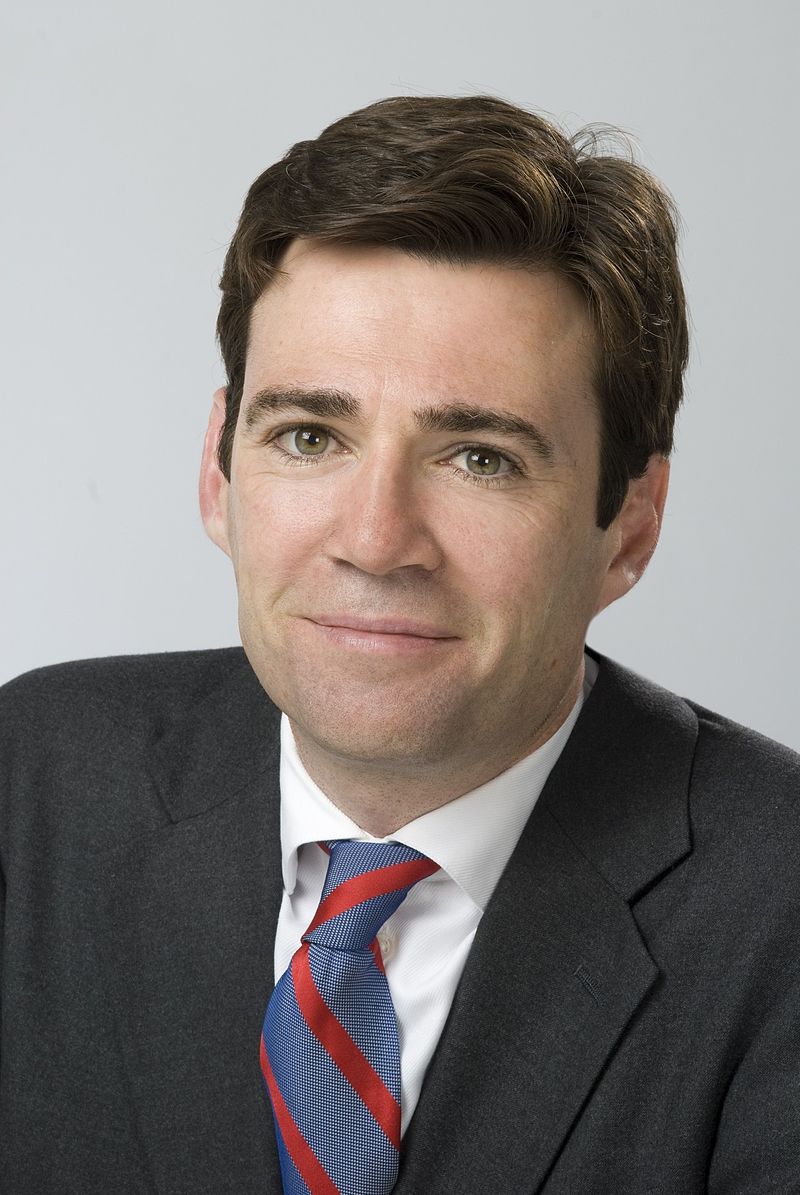
  • Justine Greening – 2016 Statement on School Funding

    justinegreening

    Below is the text of the statement made by Justine Greening, the Secretary of State for Education, in the House of Commons on 21 July 2016.

    The government is firmly committed to introducing fairer funding for schools, high needs and early years. This is an important reform, which will fairly and transparently allocate funding on the basis of schools’ and children’s actual needs, rather than simply on historic levels of funding tied to out of date local information. Along with the record levels of funding for schools announced at the spending review, and our commitment to the pupil premium for pupils from disadvantaged backgrounds, a fairer funding system will set a common foundation that will enable schools – no longer held back by a funding system that is arbitrary, out of date and unfair – to maximise the potential of every child. It will provide a crucial underpinning for the education system to act as a motor for social mobility and social justice.

    The first stage consultations on national funding formula for schools and high needs, which were published in March, have been met with an overwhelmingly positive response from headteachers, teachers, governors and parents.

    There is also a strong sense in the response to the first stage of the consultation that this is a once in a generation opportunity for an historic change and that we must get our approach right. I will therefore publish the government’s full response to the first stage of the schools and high needs consultations and set out my proposals for the second stage once Parliament returns in the autumn. We will run a full consultation, and make final decisions early in the new year. Given the importance of consulting widely and fully with the sector and getting implementation right, the new system will apply from 2018 to 2019. I will set out our full plans for a national funding formula for early years shortly.

    In the meantime, I understand the need for local authorities to have sufficient information to begin to plan their schools and high needs funding arrangements for 2017 to 2018. Many of those who responded to the first stage national funding formula consultations emphasised that schools and local authorities need stability, and where there are changes need early notice, as well as a fair system.

    In that context, I am confirming that in 2017 to 2018 no local authority will see a reduction from their 2016 to 2017 funding (adjusted to reflect authorities’ most recent spending patterns) on the schools block of the dedicated schools grant (per pupil funding) or the high needs block (cash amount). As usual, we will apply an uplift for high needs later in the year. I am also publishing today detailed funding tables so that authorities can see exactly how this funding has been calculated.

    Final allocations for schools and high needs blocks will follow in December on the basis of pupil numbers recorded in the October census.

    I am setting this out now so that local authorities can begin the process of setting the budgets of schools in their area and that this can be concluded in time for the start of the coming financial year.

    I am also confirming that, for 2017 to 2018, we will retain the current minimum funding guarantee for schools, so that no school can face a funding reduction of more than 1.5% per pupil next year in what it receives through the local authority funding formula. To ensure that local authorities can start planning their budgets for next year with certainty, I do not intend to proceed, for 2017 to 2018, with proposals to create a new central schools block, allow local flexibility on the minimum funding guarantee or to ring-fence the schools block within the dedicated schools grant. These will be covered, for 2018 to 2019 and beyond, in my response to the first stage consultation in the autumn.

    I will shortly publish the Education Funding Agency’s operational guide to schools funding in 2017 to 2018, and send the draft Authority Proforma Tool to authorities.

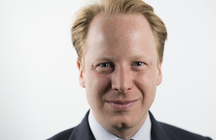
  • Ben Gummer – 2016 Statement on English Language Requirement

    bengummer

    Below is the text of the statement made by Ben Gummer, the Minister for the Cabinet Office and Paymaster General, in the House of Commons on 21 July 2016.

    The government believes that the public should expect that all those with whom they interact, within the sphere of public services, have the language abilities required to respond to their needs.

    A clear commitment in our manifesto was to ensure that all public sector workers in customer-facing roles can speak fluent English. I am delighted to announce that this manifesto commitment has now been fulfilled, with the Immigration Act 2016 receiving Royal Assent on 12 May 2016.

    Part 7 of the Immigration Act 2016 places a duty on all public authorities in scope to ensure that their customer-facing staff can speak fluent English, or in Wales fluent English or Welsh. This will assure citizens that there is not a language barrier that might prevent them from contacting or using public services or inadvertently put them at risk.

    It is a clear priority for the government to ensure public services are delivered to a high standard in spoken English, or in Wales in English or Welsh.

    In support of this aim, the government is today publishing:

    – a draft statutory code of practice which is intended to support public sector employers in complying with this new duty, whilst ensuring minimal burden. It provides principles and examples for public authorities to consider when fulfilling their legal duties and obligations. It will also be available in Welsh.

    – a final impact assessment is available, which evaluates the impact of this duty. It details the problem under consideration, the rationale for intervention and the policy objective. It also evaluates the monetised and non-monetised costs and benefits of the preferred option, as well as considering risks and possible wider impacts of the policy.

    The government has worked with relevant employers throughout the development of the draft Code of Practice and will continue to do so to ensure that the duty is implemented in a way which ensures a positive impact for employees and service users in front line organisations.

    The code will be laid before Parliament and issued in October but the early publication of the document is intended to support organisations to be ready to adhere to the statutory duty once it comes into force.

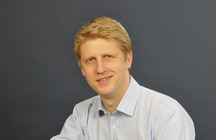
  • Jo Johnson – 2016 Speech on International Scientific Solutions

    jojohnson

    Below is the text of the speech made by Jo Johnson, the Minister of State for Universities and Science, in Manchester on 25 July 2016.

    Manchester is a city of radical thinking, inspirational science and world-changing firsts.

    It is excellent to be here today in one of the cradles of the industrial revolution. The city where, in 1948, the first computer with a stored programme and memory, nicknamed ‘Baby’, was developed at Manchester University.

    And the birthplace of graphene, a revolutionary material, discovered by 2 scientists, who were born overseas and chose to make Britain their home.

    Ladies and gentleman, this is an important moment for British science, as we contemplate our future beyond membership of the European Union.

    Theresa May, in one of her first major speeches as Prime Minister, said she wanted the United Kingdom to formulate a new industrial strategy; and great British science, as one of our truly outstanding national assets and areas of comparative advantage, will surely be one of its main building-blocks.

    The case for doing everything we can to build up our national strengths in science and innovation in a post-Brexit world is powerful.

    And Manchester must play its full part.

    I am pleased that Manchester and the East Cheshire region are undertaking one of the first science and innovation audits, focusing on their ‘core strength’ areas of health innovation and advanced materials; as well as the ‘fast growth opportunities’ around digital, energy, and industrial biotechnology.

    You are leading the way in these audits, gathering the evidence needed to make quality decisions that will have a real impact.

    And it is with this in mind I am pleased to be able to announce that the second call for expressions of interest for the next wave of science and innovation audits will be launched today.

    Designed to map out local research, innovation and infrastructure strengths across the UK, these audits will help identify and build on the potential of every region across the country by making sure investment is properly targeted and uncovering opportunities for businesses to tap into.

    Today, here at ESOF, we have an opportunity to remind ourselves that science is international; that we live in a world in which no border can be closed to science; that the UK plays a leading role in that global endeavour; and that scientific progress here or anywhere else hinges on the close partnerships that we forge.

    It was impressive that the organisers of ESOF received 350 applications from scientists from the 4 corners of the globe to be given the opportunity to deliver scientific sessions during this conference in response to the overarching conference theme ‘Science as Revolution’.

    I hope that the presentations and discussions in the 150 successful sessions over the coming 3 days allow for exploration and debate on the ways which science and technology are continuing to revolutionise the world around us.

    Post-referendum priorities

    You don’t need me to tell you that excellent science depends on excellent collaboration: sharing ideas, comparing notes, testing assumptions and, occasionally, disagreeing with each other.

    This is why ‘openness’, as Commissioner Carlos Moedas has so eloquently explained, is such an important part of the equation.

    And, I completely agree with his assessment that the strongest position to have, that benefits us all, is to be collaborative, outcome-focussed and global in our approach.

    It is just over a month since the UK referendum, and the exact structure of the relationship that the UK has with the EU will require much detailed discussion. But I am absolutely clear that we will be more outward-looking than ever as a country. As the Prime Minister has said, leaving the EU does not mean leaving Europe or turning our backs on the world.

    That’s why I am concerned by reports that UK participants are being asked not to lead or participate in Horizon 2020 project bids or are reluctant to apply for longer projects as they are not confident they will receive money due after the UK’s eventual departure from the EU.

    It is worth remembering that in legal terms, nothing changed overnight following the referendum. The UK remains an EU member during the 2-year renegotiation period, with all the rights and obligations that derive from this.

    EU students studying here, or looking to start in the autumn, remain eligible for student finance for the full duration of their courses. We remain fully open to scientists and researchers from across the EU. We hugely value the contribution of EU and international staff. And there are no immediate changes to their rights to live and work in the UK.

    I would like to thank Commissioner Carlos Moedas and his colleagues in the European Commission for helping us to remind people of these facts.

    Just as I welcome the statement by the League of European Research Universities that UK universities are, and will continue to be, indispensable collaborative partners; its decision to call upon those who review funding applications to see the engagement of UK partners as a desirable feature of projects, rather than a risk; and its commendable position that it is “completely inappropriate to respond to the referendum by taking decisions that punish UK researchers, or disrupt partnerships”.

    Of course, I completely understand that Brexit inevitably poses new challenges for us all. The immediate concerns around movement of people and grant status, are understandable, they are the obvious things to worry about when collaborations can run for many years and individual careers depend on making the right decisions.

    I recognise the demand for further clarity on these issues.

    In the meantime, as the UK establishes its new position in the world, we will work with you to protect our research and innovation at this time of change.

    And, forgive me, Carlos, but even on the continent of Europe, the EU is not the only game in town. Academic and research cooperation in Europe predates the EU by centuries, and the community of European academic institutions has always been much wider than the EU.

    The UK will continue to play a leading role in major non-EU research collaborations that take place here – from CERN in Switzerland to the European Space Agency. Just this month we confirmed the UK’s application to become a full member of a major new particle accelerator, the European Spallation Source in Sweden.

    Here in the UK, we have fundamental strengths on which we must now build.

    First and foremost, we have a long established system that supports, and therefore attracts, the brightest minds, at all stages of their careers. We fund excellent science wherever it is found, and ensure there is the academic freedom – the support for the scientific temper – to tackle important scientific questions.

    As a government, we recognise the contribution that our world-class research base makes to our economy and wellbeing, which is why we have committed to protect the science budget in real terms, and protect the funding that flows through Innovate UK in cash terms.

    The new Prime Minister has already recognised this in a letter last week to Sir Paul Nurse, the Royal Society and the CBI, which reiterated the government’s manifesto and Spending Review pledges to protecting science and research funding in real terms. This clear personal commitment is hugely welcome.

    Second, we have excellent scientific infrastructure here in the UK – in universities, in existing research institutes, such as the Medical research Council MRC Laboratory for Molecular Biology and the Wellcome Trust Sanger Institute, and in new institutes like ‘The Crick’ and ‘Royce’. This is backed by a manifesto commitment of £6.9 billion capital funding up to 2021 – that’s record levels of investment in new equipment, new laboratories and new research institutes.

    Third, we have access to major research infrastructures across the world, such as the Large Hadron Collider, in which the UK plays a leading role. We are a major partner in building new infrastructure such as the Square Kilometre Array whose global headquarters will be based at Jodrell Bank; and in the LIGO Scientific Collaboration, which made the dramatic gravitational waves discovery. It was UK researchers, working with their counterparts, who made this discovery possible.

    And we are also hugely successful at innovation – second in the latest Global Innovation Index and one of the most attractive countries in the OECD for international business research and development investment.

    Newton Fund

    And to add to these successes, we are now more ambitious than ever to build global research partnerships that not only put the UK at the forefront of international research on global challenges, but also support the economic development and social welfare of developing countries around the world.

    The government’s Science and Innovation Network, through which 90 staff based in 31 countries around the world support work on global challenges such as antimicrobial resistance and climate change, exemplifies our global approach.

    We have doubled our investment in the Newton Fund to £150 million per year by 2021, meaning a total UK investment of £735 million from 2014 to 2021. This is match-funded by developing countries we have identified as having the potential to become future science and innovation leaders and can benefit most from collaboration.

    Extending the Newton Fund has provided a unique opportunity for UK scientists to work with partners around the world to address some of the biggest challenges of our time. And we are already seeing an impact. Since its launch, the Newton Fund has supported more than 420 awarded funded research projects on development topics including sustainable food production, urbanisation and antimicrobial resistance. Over 1,000 fellowships and placements were awarded in the first 2 years and around 1,750 researchers have made links between the UK and Newton partner countries.

    We are also creating a new £1 million Newton Prize, starting next year. This will not be just a one off, but an annual prize – awarded for the best science or innovation projects that promote the economic development and social welfare of Newton partner countries or address the problems of poor people around the world.

    By working together on bi-lateral and multi-lateral programmes with a research and innovation focus, the UK will build strong, sustainable, systemic relationships with partner countries. This will support the continued excellence of the UK research base and innovation ecosystem and act as a catalyst to unlock opportunities for wider collaboration and trade.

    ESOF is a fantastic example of the international nature of collaboration – long may it continue. As I hope I have made clear today, the UK is, and will continue to be, a hub of global activity. And this government, now more than ever, will play its part in ensuring that the UK continues to be a place for great minds to come together from Europe and from all over the world to build knowledge, understanding and better solutions to our shared global challenge.

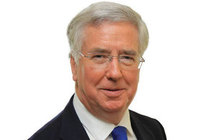
  • Michael Fallon – 2016 Speech on Britain’s Global Role

    michaelfallon

    Below is the text of the speech made by Michael Fallon, the Secretary of State for Defence, in Washington on 21 July 2016.

    This year marks 70 years on from Winston Churchill’s famous speech “The Sinews of Peace” delivered in Fulton, Missouri in March 1946 in which he talked about the “special relationship.”

    While that phrase is well known, it is perhaps less well known that Churchill was in the United States to receive an honorary degree from Westminster College.

    An apt name as Westminster was the place he received a large part of his political education. And Churchill more than anyone seemed to embody the will of the British people.

    To the extent that both sides in the recent Referendum campaign sought to claim that he would have backed their particular position.

    We can’t ever be sure how Churchill would have voted.

    We do know that whatever the outcome he would have accepted the result, rolled up his sleeves and got on and delivered using all the considerable powers at his command to help us forge a new path.

    Now I’m very much aware that vote has raised questions about the implications for Britain’s role in the world.

    I’m here to assure you that we have a new Prime Minister

    …technically a new government

    …who wants Britain to continue to play a global role

    …a government that is determined to make Brexit a success

    …but a government that will put security front and centre of its efforts.

    Today I’d like to set out the UK’s government’s approach.

    It is based around 3 things.

    1. Defence of our values

    First, on the defence of our values of democracy, of the rule of law, and of freedom.

    Back in that speech of 1946, Churchill memorably imagined an “Iron Curtain” spreading from east to west across Europe.

    Today the Cold War is over but new threats continue… that spread an equally serious shadow.

    In recent weeks we’ve seen the horrific truck attack on innocent men, women and children from France enjoying a summer’s evening on Bastille Day.

    That attack and the others we’ve seen over the last year in places as far apart as Orlando, Brussels, Paris, Ankara, and Baghdad are similar r manifestations of extremism.

    This isn’t the only danger we’re facing.

    We’re seeing a resurgent Russia and a more assertive China.

    We’re seeing North Korea continuing to rattle the nuclear sabre.

    We’re seeing cyber attacks on states as well as companies and hybrid warfare.

    Dangers which, taken together, seek to undermine our rules based international order on which the security and prosperity of ourselves and the next generation depend.

    Like Churchill, we believe Britain, like the US, has a responsibility not just to defend its own security but the global system itself.

    And we do have have the will and intent to respond to those threats whenever, or wherever, they come from.

    Thanks to the Strategic Defence and Security Review we published before the end of last year, we are going to match that will with greater capacity.

    Our SDSR gives us stronger defence with more than $200 billion to spend over the next 10 years on a more agile Joint Force with more ships, more planes, more troops at readiness, better equipment for Special Forces, and increased spend on cyber.

    Let me tell you about those forces.

    Last year our forces were active all round the world.

    Some 80,000 soldiers deployed on more than 383 commitments during the year.

    More than 30,000 sailors deployed, on over 700 ship visits, from Africa to Asia, Europe to Latin America.

    More than 10,000 Royal Air Force personnel deployed in over 60 countries on operations, training exercises and defence engagement.

    And we will have a similar level of effort this year.

    2. Stronger NATO, stronger defence

    My second point is that to defend our values we will rely on a stronger more united NATO.

    And we will continue helping that alliance to adapt.

    Two years ago our Prime Minister, David Cameron then stood with your President at the Wales Summit and challenged other nations to step up, to spend more on defence and new capabilities.

    Since then we have led by example.

    And having honoured our pledge to meet the 2% target we’re now seeing other nations follow suit.

    Twenty allies have now increased their spending since Wales and the overall decline in alliance defence spending has been halted.

    As well as increasing spending, NATO has now agreed its Readiness Action Plan to ensure that the allies can respond swiftly and strongly.

    Once more the UK is at the forefront of these efforts.

    Our Typhoons are today conducting Baltic air-policing missions from a base in Estonia.

    Our ships are making a significant contribution to NATO’s naval forces.

    And we will lead NATO’s Very High Readiness Taskforce next year, with 3,000 UK troops ready to deploy within days.

    And at last month’s Warsaw Summit we again helped to lead the way as NATO adapted its deterrence posture to challenges from east and south.

    In the east, we are helping to reinforce the Wales’ commitment to act against aggression by delivering an enhanced forward presence in Estonia, Latvia, Lithuania, and Poland.

    The UK is one of four nations to lead a framework battalion, including the United States.

    These battalions will be defensive in nature, but fully combat capable. Our force will be located in Estonia with 2 UK companies, a headquarters element and equipment including armoured vehicles, Javelin anti-tank guided missiles and mortars.

    That contribution will be underpinned by our network of allies, including our partnerships with the French and the Danes… “multi-national by design”, reflecting the “international by design” approach in our SDSR.

    In addition, to positing a formed Battalion to Estonia we will also deploy a company group of troops to Poland.

    We also continue to train the Ukrainian Armed Forces with a further 4,000 troops due to be trained by this year.

    All this is NATO’s response to Russian aggression.

    A response rooted in balancing strong defence and dialogue.

    Dialogue where it is right and in our interests to deliver hard messages to promote transparency and build the understanding necessary to avoid the risk of miscalculation.

    As well as its efforts in the east, the alliance is also enhancing its role in the south.

    We are increasingly seeing unstable, or fragile states threaten our collective security.

    Putting a greater onus on NATO’s role in tackling potential conflict at source.

    And following the Wales Summit NATO now has a defence capacity building initiative, to provide more tailored support to project stability.

    And we will conduct more training and capacity building under a NATO auspices inside Iraq.

    NATO’s biggest operation is its Resolute Support Mission in Afghanistan. That mission has helped local forces take on the responsibility for providing security across their country.

    As a leading member of NATO, it is right that we stand by our allies and the Afghan people as they seek to build a safer Afghanistan because that also helps to keep our streets safe.

    So next year, we will be increasing our t troop contribution by 10% to help build the capacity of the Afghan security institutions. And let me welcome the United States’ on going commitment to that particular mission.

    Finally, we have promoted and supported initiatives that respond to the longer-term demands of 21st century warfare with initiatives on cyber and hybrid warfare among others agreed at Warsaw.

    Nuclear deterrent

    But if our defence and deterrence are to retain their credibility, they must respond to both conventional and nuclear dangers.

    NATO remains a nuclear alliance, and our independent nuclear deterrent in Britain makes a key contribution to the overall security of the alliance.

    That’s contribution recognised by the Warsaw Communiqué, and I quote:

    “The independent strategic nuclear forces of the United Kingdom and France have a deterrent role of their own and contribute to the overall security of the alliance. These allies’ separate centres of decision making contribute to deterrence by complicating the calculations of potential adversaries.”

    And what’s clear to us, as the world becomes more dangerous and unpredictable, is that the nuclear threat has not gone away. If anything, it is increasing.

    We can’t today second guess the sorts of extreme threats to our very existence that we might face in the 2030s, 2040s and 2050s.

    So our deterrent gives us that priceless advantage so that our adversaries know that the cost of an attack on the UK or our allies will always be far greater than anything it might hope to gain.

    So our Defence Review committed to building 4 new Successor submarines to replace the Vanguard class which start going out of service in the early 2030s.

    On Monday this week the Prime Minister made it her first duty in Parliament to lead the debate on renewing that nuclear deterrent.

    And the House of Commons voted by an overwhelming majority of 355, over 100 more than when it was last debated in 2007, to maintain our deterrent to protect our way of life and that of our allies.

    3. US-UK partnership

    A powerful NATO is vital to our future.

    So too are our key bilateral relationships.

    And leaving the EU means will be we will be working harder to commit to NATO and our key allies.

    We are now focused on reshaping our relationship with Europe, restoring sovereignty to the British Parliament but making sure our security, and trading relationship remain strong, while we forge new relationships right across the globe

    70 years on from Churchill’s speech, the UK still has no stronger ally than the US.

    We’re proud that together we continue to lead the world on security.

    Nowhere is this better demonstrated than in our operations against Daesh.

    At the end of last year, the UK erased the stain of its previous Syria vote in Parliament in 2013 with the new Parliament voting overwhelmingly to extend our airstrikes from Iraq to Syria.

    Since then we’ve upped the intensity of our efforts.

    Our aircrews have conducted more airstrikes in Iraq and Syria than any other country other than the United States.

    Our aircraft are co-ordinating Coalition aircraft and providing a significant amount of the Coalition’s overall ISR.

    And those collective efforts are paying off. Daesh has lost 40% of the territory it once held. Major progress has been made in the key cities of Ramadi, Hit and Fallujah.

    But we’re going this year to go further.

    At the Counter Daesh ministerial. which I have just come from, we have focused on reviewing our campaign plan and building on the progress we’ve already seen in the Euphrates River Valley and Tigris River Valley.

    And we are responding to calls for the Coalition to accelerate its efforts by increasing our presence in Iraq.

    We will be sending additional trainers to Al Asad Airbase in Western Iraq to instruct more Iraqi Troops in how they counter improvised explosive devices, improve infantry skills and provide combat first aid.

    Those extra trainers will be working closely with US and Danish forces, providing training to the Iraqi Army 7th Division to their Border Guards and Federal Police.

    We’re providing more people to assist in guarding the airbase, personnel to form an HQ to command the mission, and an engineering squadron to build the necessary infrastructure.

    Those efforts as part of the Counter-Daesh coalition are just a small illustration of our co-operation with the US.

    A collaboration as broad as it is deep.

    And that joint-working is only set to intensify.

    On exercises we’ve recently agreed to integrate a UK division more effectively into a US corps.

    And on equipment there’s on going collaboration on F-35 and a week ago we saw this fifth generation fighter soaring over our new Queen Elizabeth carrier from whose decks they will fly in years to come.

    And I look forward to the day when not only do our planes fly from your carriers but your planes too fly from ours.

    And our carriers will be protected by another of our new equipment collaborations.

    Our 9 new P-8 maritime patrol aircraft whose multi-billion dollar purchase I announced last week…alongside a further decision to buy 50 Apache attack helicopters.

    But besides thinking of today’s technologies, we’re looking together with the US to tomorrow’s.

    Last year, on his visit to London, Ash Carter and I challenged our 2 teams to develop together new technologies, new disruptive capabilities and new concepts of operation.

    And we’re now seizing on the exciting opportunities. Last week, we announced the first project to develop autonomous robotic technologies…driverless technology that can ferry equipment over that last, most dangerous mile up to the frontline

    That’s the kind of collaboration that will help us maintain the West’s technological edge.

    And it’s that fraternal association between Britain and the US that Churchill was speaking about 70 years ago when he said:

    “If all British moral and material forces and convictions are joined with your own in fraternal association, the high roads of the future will be clear, not only for us but for all, not only for our time, but for a century to come”

    Conclusion
    In conclusion, let me reassure you, Britain is not stepping back. On the contrary, we’re stepping up.

    Standing up for our values.

    Strengthening NATO.

    Backing our nuclear deterrent.

    And seeking a stronger alliance than ever with you in the US.

    There’s been much speculation in recent weeks about our defence and security policy.

    Let me reassure you.

    The UK is leaving the EU.

    But we’ve not forgotten that deterrence and defence are underpinned by cohesion and solidarity.

    We’re still committed to those vital sinews of peace.

    And we remain committed to European security and we are not turning our back on Europe or the world.

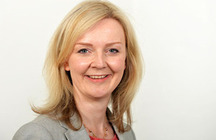
  • Liz Truss – 2016 Speech at Lord Chancellor’s Swearing-In

    Liz Truss
    Liz Truss

    Below is the text of the speech made by Liz Truss, the Lord Chancellor and Secretary of State for Justice, on 21 July 2016.

    Mr Attorney, let me begin by thanking the Lord Chief Justice for his kind words – and the warm welcome he has given me over the past week.

    I am delighted to have been appointed to this role.

    It’s a privilege and an honour for me to have been sworn in today as the first woman Lord Chancellor.

    Although, as the Lord Chief Justice has mentioned, I may not be the first woman to hold the Great Seal.

    The duties that go with this role today – to respect and defend the rule of law and the independence of the judiciary – must be upheld now as ever.

    In my time as Lord Chancellor, I will uphold them with dedication.

    Because the rule of law is the cornerstone of the British way of life.

    It is the “safest shield”, as Sir Edward Coke – a great son of Norfolk – put it.

    And as Lord Bingham wrote:

    “the hallmarks of a regime which flouts the rule of law are, alas, all too familiar – the midnight knock on the door, the sudden disappearance, the show trial”.

    The fundamentals of civilisation and liberty depend on the rule of law.

    It is our safeguard against extremism, oppression and dictatorship – the separation of powers keeps the executive in check.

    It is the basis of our prosperity, which is sustained by secure contracts and free trade.

    And it shapes the fabric of our free society – the order, the stability, the equality and the individual freedom that we all love and respect.

    We have inherited the finest legal tradition in the world.

    And it is our duty to protect it.

    We know that all successful societies have the rule of law at their core.

    And it is a source of pride that the common law has played a key role in so many of them.

    Our law, English common law, has shaped the world for the better.

    It is at the heart of everything I believe in.

    As a Parliamentarian, the rule of law has been at the centre of my work.

    When I was in commerce – negotiating anything from shipping charters to telecoms supply agreements – every single transaction was underpinned by contract law.

    And wherever I did business around the world, the preferred contract law was English law.

    That’s because we have the most open and trusted legal system in the world.

    That is why we are so often the first choice of legal venue for international litigators looking to be treated fairly.

    They know that we have the greatest judiciary in the world, with a reputation for excellence, incorruptibility, objectivity and independence.

    I would like to see that reputation acknowledged more widely at home.

    Without judges – from the supreme court to the local magistrates’ court – the rule of law would be nothing more than an empty slogan.

    You are the human face of the administration of justice, and there can be no higher calling.

    As a career, it should be seen as attractive – and prestigious – by every possible person, from every possible background.

    In time, this will help the judiciary to be drawn from a pool of the widest available talent.

    As a young woman, I remember going to Leeds Crown Court to see a female barrister defending cases, and saw for myself how the profession was changing.

    I saw how justice was done, the importance of trial by jury, how everyone participates in the legal process – it was an inspiring experience.

    I want as many people as possible to have that same experience, to understand the process of law, to want to join the legal profession and to become judges.

    There has already been fantastic work carried out by the Lord Chief Justice on this front – and I will help with that, widening and opening up the profession.

    After all, the law is our common law, our shared law.

    I am a great supporter of reform and modernisation throughout the courts and tribunals system; and that urgent task will be high on my agenda in the months ahead, as I know it is for senior members of the judiciary.

    As the first woman Lord Chancellor, I am proud to be part of our constantly evolving justice system.

    It is a system that evolves, from precedent to precedent, in step with society.

    But all the while, the fundamental principles of justice in this country remain the same.

    The thread running through it all is the rule of law – it shaped society in the past, does so now, and will do so in the future.

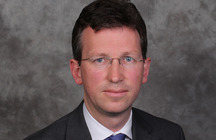
  • Jeremy Wright – 2016 Speech at Lord Chancellor’s Swearing-In

    jeremywright

    Below is the text of the speech made by Jeremy Wright, the Attorney General, at the Royal Courts of Justice on 21 July 2016.

    It is an honour and a pleasure to be here today.

    Of course, this is not the first time I have played a part in swearing in a new Lord Chancellor.

    Last time I did so, it was 2015 – a year where we celebrated an anniversary of great importance to the justice system. I speak, of course, of the 700th anniversary of the first recorded use of the term “King’s Attorney” – the forerunner of the office I have the privilege of holding. The office itself is even older.

    2015 was also the 500th anniversary of the first recorded use of the term Solicitor General. The present incumbent of that office is here beside me today, and I know I speak for us both in saying how proud we are to continue to serve as Law Officers – 801 years on from Magna Carta.

    But there is one office of state – and the only one of which I am aware – that predates mine. That is the office of Lord Chancellor, to which I am delighted to welcome Liz Truss this afternoon.

    2016 is not, as far as I know, itself an anniversary of anything particularly auspicious. But perhaps in another 800 years from now, our successors will still be marking 2016 as a remarkable year for this country.

    In the last few weeks alone, we have seen the momentous decision to withdraw from the European Union. We have seen a change of government and only our second female Prime Minister. And now, courtesy of that Prime Minister, the oldest office in the land finally has its first female incumbent, at least in modern times. As someone who has sat at the Cabinet table with her, let me say something about her qualities, and how they relate to the qualities we seek in a Lord Chancellor.

    As the daughter of an academic and a teacher, it is not hard to see how she developed an inquiring mind and a willingness to challenge received wisdom.

    At Reform, a place designed for radical thinkers, she showed that while respectful of traditions, she is not afraid to embrace change. That is a combination of virtues which is most appropriate for a justice system that combines ancient principles of fairness with modernising ambitions in delivering the right service for the twenty first century.

    In seeing through reforms, she will also benefit from a career outside politics at Shell and at Cable and Wireless. While she will be well able to debate high principle, I know she will also be capable of grappling with the practical challenges of implementing lofty ideals in the real world.

    And there is one other quality that is less often talked about which is arguably just as important. Lord Chancellors do not just stand up to people, important as that is; they also stand up for people. A passion for justice, in all its forms, is at the heart of making a success of this vital role. This Lord Chancellor will be a passionate advocate, who will relish working with the passionate advocates up and down the land who populate our justice system, and from whose representatives we will shortly hear.

    So I wish you well in all your endeavours. If I can support you in any way within my gift, I will. And I look forward to working with you in the interest of justice in these momentous times.

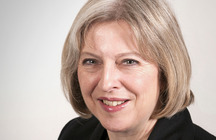
  • Theresa May – 2016 Statement in Paris

    theresamay

    Below is the text of the statement made by Theresa May, the Prime Minister, in Paris on 21 July 2016.

    President Hollande, thank you for inviting me to Paris.

    I am delighted to have this opportunity, so soon after taking office, to underline my commitment to the profound friendship between our countries and our peoples; a friendship that I believe has never been more important than it is today.

    A week ago, France suffered another horrific terrorist attack and on behalf of all the British people, I offer our heartfelt condolences to all the loved ones of those who were so callously killed and injured in Nice, including a small number of British casualties.

    These were innocent victims, murdered by terrorists who want to destroy our democracy and our way of life.

    As the President and I have discussed today, we must never let them win.

    Last year, in the wake of the Charlie Hebdo attack, we stood together and said to the world that we will not let these extremists divide us.

    In November after the devastating attacks in Paris, British fighter pilots joined their French counterparts to attack and destroy Daesh in Syria.

    Now, in the aftermath of another attack, it is Britain who will stand with you shoulder to shoulder as your great ally and friend.

    The intelligence and security co-operation between our countries is something that will always endure – even after Britain has left the European Union.

    As I have said Brexit means Brexit and I firmly believe we will make a success of it, not just for the UK but for our European partners too.

    We will continue to work together to keep our people safe and to stand up for our values around the world.

    We did so long before the European Union existed and we will continue to do so long after the UK has left.

    That means, in addition to our growing co-operation on counter-terrorism, we will strengthen the wider strategic defence partnership between our two countries.

    Britain brings a great deal to the table.

    We will continue to meet our NATO obligation to spend 2 per cent of our GDP on defence and to keep our promise to spend 0.7 per cent of our national income on aid.

    This week, as you have said Mr President, I made it my first act as Prime Minister in Parliament to secure the future of our nuclear deterrent.

    Together with France, we are also working on the next generation of military equipment – including a 2 billion euro project to develop the most advanced combat air system anywhere in Europe.

    Turning to our discussions on trade and economic co-operation, I have said to President Hollande that I want Britain to continue to work with our European partners to boost trade and economic growth in both our countries.

    Last year the value of our bilateral trade reached 50 billion euros.

    We are one another’s fifth largest export markets. Today French companies employ 360,000 people across the UK and we are the fourth largest investor in France.

    This matters for both of us, so as the UK leaves the EU we will have to determine how to maintain the closest possible economic relationship between our countries.

    And it will take time to prepare for those negotiations.

    I understand the need for certainty and confidence in the markets and that is why I have already been clear that the UK will not invoke Article 50 until before the end of this year.

    I hope that we can all make the most of the next six months to prepare for these discussions in a constructive way so that we maximise the opportunities for both the UK and the EU.

    In the meantime, I want to reiterate that Britain remains open for business, that French citizens and their EU counterparts can continue to work in Britain – and they are very welcome in the UK.

    To conclude, as I have said before, Britain is leaving the European Union, but we are not leaving Europe and we are not walking away from our friendship with France, or any of our other European partners.

    Britain and France are two allies that stand together looking out to the world, fighting for the values we share.

    As I said in my first speech as Prime Minister in the British Parliament this week: we share a firm belief in the values of liberté, égalité and fraternité.

    And together we will always defend them.

  • Sarah Champion – 2016 Speech on Online Child Abuse

    Below is the text of the speech made by Sarah Champion, the Labour MP for Rotherham, in Westminster Hall on 20 July 2016.

    I beg to move,

    That this House has considered prevention of online child abuse.

    I am honoured to serve under your chairmanship, Mrs Moon, and to be in a room of parliamentarians who have campaigned for so long on this issue. I feel I am among friends, and I hope that together we can cover some real distance.

    Tomorrow, the Office for National Statistics will release its police crime data for the past six months. It is the first time it is including online fraud and computer misuse. Fraud is a huge issue in this country—Age UK says that 53% of people over the age of 65 believe that they have been targeted by fraudsters—but the data coming out tomorrow will not include online abuse and harassment. Sexual offences are recorded, but not the age of the victim or the specific nature of the crime. I ask the Minister to look into that. For sexual offences, if we can differentiate between under 18s and over 18s, we would have a much better understanding of the scale of child abuse in this country.

    Today I want to focus on online child abuse. Too often we think of child abuse as something that happens only to vulnerable children—many child protection services focus only on their definition of vulnerable children—but the truth is that the internet means that almost every child in the UK is at risk of abuse. Ministers have yet to show that they understand that. The Minister before us has an understanding of child abuse—I welcome her to her new role—and I hope she will be able to make a difference.

    Let me set out the context. With respect to everyone in this Chamber, we are too old to understand the generational pressure that our youngsters are under because of social media. I was 26 when I got my first mobile phone, and I used it to text. I did not have the 24/7 immersion of the online world on my phone. We cannot understand the enormous psychological pressure that that puts on young children. They cannot get away from abuse; it follows them home. Bullying has always been here, but if I was bullied at school, when I got home and shut the door I would hopefully be safe from it. For children now, it goes on and on. We need to understand that as a country and as a Government. Seventy-eight per cent. of 12 to 15-year-olds own a mobile phone, 65% of which are smartphones, and a smartphone means access to the internet.

    According to the 2015 Parent Zone survey, 67% of parents admitted to resorting to “iParenting”—that is, they are a bit busy, so they give their child the iPad as a babysitter. I understand that: children love being on the internet, and they love their iPads, but the iPad is a direct link to the outside world and its dangers. The problem is that parents often fail to appreciate the severity of the threat faced by their children, largely because they do not understand everything that their children are doing online. Half of young people living at home report that their parents know only some of what they get up to on the internet, according to an Ipsos MORI poll commissioned by Barnardo’s.

    People do not grasp how sneaky—for want of a better word, and keeping it polite—abusers and groomers of children are. I will give two examples, the first being gaming. A parent might buy the child an online game as a Christmas or birthday present. When the child is online playing, say, a shoot ’em up game, a chat is going on, and that is open internationally. When I speak to girls, they tell me that they turn it off, because of the amount of sexual harassment they get; when I speak to boys, they tell me, “Oh no, it’s other boys my age who are talking to me about who we are going to shoot, and who we are going to kill.” Talking about the abuse on the screen is only a slight step from starting to groom or radicalise a child—we need to understand that.

    My other example is something else that we need to understand. A police officer told me this. A family might be watching TV on a Sunday evening and the child is there, but with an iPad. The parents have no idea whom that child is talking to, or what is being said. Parents do all they can to protect their children, but they are literally letting someone into their home—someone they have no control over and have not vetted. To be honest, there are a lot of bad people out there who are deliberately using the internet to target our most vulnerable.

    Mrs Maria Miller (Basingstoke) (Con)

    I commend the hon. Lady on securing this debate. I also welcome my hon. Friend the Minister to her place—a promotion long overdue. The hon. Lady is absolutely right that children can be open to the many different ways of harassment that she is describing. Does she, like me, want to see the producers of such platforms and products take far more responsibility for building out the problems from the design stage, rather than leaving it to parents to police what can be almost impenetrable problems?

    Sarah Champion

    The right hon. Lady makes a very key point. For film, the British Board of Film Classification will vet films and put criteria and age limits in place. That needs to be happening much more robustly with games. Gaming in particular has a nasty, misogynistic element. For example, one incredibly well known game gives extra points to someone sleeping with prostitutes who then abuses or gang-rapes them. The game might have age verification for 18, but what happens if someone is playing it with a younger brother who is eight? We need robust legislation, because we are taking those games into our homes and giving them to our children.

    As I said, the mobile phone and the iPad enable children to be bullied 24/7. To give some stats to back that up, one in three children has been a victim of cyber-bullying, and almost one in four young people has come across racist or other hate messages online. According to the 2016 Childnet survey, 82% of 13 to 17-year-olds had seen or heard something hateful on the internet in the past year. By “hateful”, I mean something that has been targeted at people or communities because of their gender or transgender identity, sexual orientation, disability, race, ethnicity, nationality or religion.

    To highlight the impact of bullying, I will focus on one aspect of it: the lesbian, gay, bisexual and transgender community. Recently, Stonewall released truly shocking figures: nine in 10 young people have heard homophobic remarks at school; six in 10 young people have experienced homophobic bullying; and one in four young gay people has reported experiencing homophobic abuse online. Then there are the consequences—I am going goosebumpy as I read this—which are that two in five of those young LGBT people contemplate suicide and 50% self-harm. Young LGBT people are three times more likely to commit suicide than their straight peers. That is what our young people have to deal with.

    When I started to research online abuse, I had not considered the targeting of specific groups because of their sexuality or situation. We should think about it from the point of view of young people considering their sexuality. They will not talk to their mum or, probably, to their teacher. Where do they go to find information? They go online. Paedophiles and perpetrators deliberately target young LGBT people because they know that young LGBT people are vulnerable and isolated. They then meet and abuse them. Unfortunately, for some of our young people, that is a daily occurrence.

    I also want to talk about young people and children with learning difficulties, and two things in particular. First, the overly sexualised behaviour of children with learning difficulties is often put down to their condition rather than being considered to be a cry for help, or a side-effect of being abused. We absolutely have to challenge that. One in four children is targeted with online hate because of their gender, sexual orientation, race, religion or transgender identity, but that horrifying figure goes up to 38% for someone who has learning difficulties. Those people are being deliberately targeted because of their condition. I urge the Minister to focus on those specific groups.

    I will now talk about the internet world. I have been very honoured to work with a fantastic organisation called the Internet Watch Foundation, which I commend to the House. The foundation’s most recent report was in 2015. It found 68,092 pages of web images that it confirmed as child sexual abuse images. To break the stat down, that is 68,000 children who have been abused for the gratification of a paedophile, and 68,000 lives that have been decimated. We need to put support in place. That figure is 118% up on last year, an increase that tallies with what police forces and social services are telling us—such crime is growing exponentially. We have to do all that we can to prevent it.

    Liz Saville Roberts (Dwyfor Meirionnydd) (PC)

    I am grateful to the hon. Lady for securing the debate, and I, too, welcome the Minister to her place. Something raised during consideration of the Policing and Crime Bill was the need for child sexual exploitation units, as well as specialist digital units, in police forces throughout the country. I am sure she shares my concern about the inconsistency of approach among police forces and, possibly, among the devolved nations.

    Sarah Champion

    I do. We should praise the Child Exploitation and Online Protection Centre, which has done fantastic work, but I have spoken to officers on the street. Once CEOP went into the National Crime Agency, it seemed to lose its teeth and identity a little. I know the hon. Lady tabled an amendment to that Bill to that end, but we need to ensure that the whole police force understands online abuse, how to refer it and how to act on it. Online crimes are as deprived as those that happen in the real world, and in sentencing terms need to be seen as involving the same degree of violence towards a young child. We seem to think that, because online crimes happen in the virtual world, they do not matter as much, but they really do.

    Liz Saville Roberts

    I very much praise the child abuse image database, which is evidently helping to deal with the backlog of forensic work on digital devices. None the less, there were 410 victims of child sexual exploitation in the first months of last year, and those victims need support. This is not just a matter of dealing with the evidence; it is about how we actually support those children afterwards. The figure of 68,000 that the hon. Lady mentioned is a terrifying number of lives to have been affected.

    Sarah Champion

    It really is, but let us scale that internationally. The Internet Watch Foundation does fantastic work. When it finds an image, it takes that image down and reports it to the police, and the police will act on it. Google and Facebook get a lot of criticism, but they are doing what they can to manage, contain, report and take down offensive images. We have really good legislation on that kind of thing in this country, and there is really good legislation in Europe, America and Canada. If any of the creators of child abuse websites are in those countries, we can do something swiftly. However, there has been a proliferation in third-world countries—particularly those in south-east Asia—of the most heinous forms of child abuse. I will not go into detail; I will just say that there are “pay as you view” systems there—sorry, it gets me every time. We cannot do anything about that, because unless those countries sign up proactively to address this issue, all that we will be doing is shifting the problem from one country to another. I urge the Minister to work with her international counterparts to get absolutely zero tolerance across the country and around the world.

    Mrs Miller

    There is one way that we can tackle that problem: through payment systems. It is important for the Minister to respond to that point with particular regard to putting pressure on international payment systems to try to address the problem that the hon. Lady is talking about. The previous Prime Minister worked hard on the use of splash pages to try to obscure the pages that internet companies may not be able to take down. Some of the very best people work in the internet industry. Does the hon. Lady not wonder, like me, why we are not seeing more innovative ways of resolving the sorts of problems she is describing?

    Sarah Champion

    I do, but given the proliferation of such abuse, we are always lagging behind. There are twisted people with the life mission of abusing children and sharing these images. Sadly, we are always playing catch-up to them, which is why we always need to send out the strongest possible message: “This is not tolerated. We will come after you, and we will prosecute you.”

    We also need to accept an uncomfortable truth. A survey by the National Society for the Prevention of Cruelty to Children found that one in five indecent images were actually generated by children themselves. I would like to explore two parts of that issue. The first is sexting. Young people are sexually curious—they always have been and they always will be—and we should celebrate that; it is part of developing. However, they need guidance on the consequences and boundaries of that and the long-term impact of putting something into the ether of the internet.

    There is a lot of pressure on young people to upload more and more explicit images. The young girls I have spoken to in particular do not realise that there are perpetrators out there who go through Facebook or chatrooms harvesting images, and a large proportion of those images actually appear on paedophile websites. When a girl sends a picture to her boyfriend and he uploads it as a “joke”, it is very likely that it will not just be her boyfriend who sees it, but there will be a vile old man in a room somewhere looking at it. That is one of the things that we need to get across.

    Esther Rantzen is doing some fantastic work on this issue and is looking to create an extension of ChildLine, specifically for teenagers, called “Is that okay?” Young people are saying that they are not quite sure what the boundaries are or what is appropriate, so we need to step in and tell them—probably through the internet, because that is where they get all their information from—what is okay and what the consequences are.

    One of the things that started me on this crusade to do something to make people aware of the threats on the internet was that last autumn a mum came to one of my surgeries absolutely distraught and devastated because she had found that her 12-year-old was uploading very sexually explicit videos of herself to a chat website. She was getting a barrage of responses and an awful lot of pressure to keep uploading images. When the mum spoke to her daughter, the daughter said that it was fun, it was up to her, she could do it herself, there was no harm in it and the man was her boyfriend. The mum tried to explain the consequences, but the 12-year-old was not listening, so the mum went to the police. The police said, “Well, it’s just a bit of fun, and she’s choosing to do it.” The mum went to social services, and they did send round a social worker, who met with the girl and explained some of the dangers. Both services then backed off.

    The uploading of the videos got more extreme. The mum telephoned round again and was told to take the phone off the daughter. As the mum explained, “That’s all very well—I can take the phone off her—but what about her friends who have phones? What about the iPad that her brother has? What about the computers at school?” The mum had come to me because she was desperate. She said, “I don’t know what to do. I don’t know how to stop this. I can’t find any advice.” I created a website called Dare2Care, where we have brought together all the information about this issue. Parents are crying out for the tools and the understanding to protect their children online, and I urge the Minister to do all that she can to circulate that information.

    The mum tried to take the phone off her daughter and, lo and behold, the daughter stole her phone and hid it. It was only when the mum went to the police with some of the images and videos that her daughter had taken and said, “This is what she’s doing,” that the whole child protection system suddenly swooped down. It swooped down to protect the child, but I have a mum who is devastated that she let her child down, and I am devastated that as a country we let that mum down. That mum will be representative of mums around the country. That is why I urge us to make sure that all parents and professionals are aware of this issue.

    Why is this happening? The internet is a relatively new phenomenon. Sadly, we have always had paedophiles, but whereas before they might have taken a couple of years to groom a couple of children, now they will have a phishing exercise. They will chuck out a thousand emails to children, and they will target the one or two who are vulnerable. That process, which used to take years, now takes days or hours. Paedophiles’ reach has become enormous.

    Another thing to which I draw hon. Members’ attention is online porn. Again, we have always had porn, but the internet is giving it a new, more sinister overtone. The NSPCC and the Children’s Commissioner surveyed 1,000 children aged between 11 and 16, and found that at least half had been exposed to online porn, with 94% having seen it by the age of 14. A Girlguiding survey found that among girls aged 11 to 21, seven in 10 feel that the increase in online porn contributes to women being treated less fairly than men, and 73% believe that pictures such as those on page 3 have that effect.

    Again, I give my own story: when I was 14, a gang of us had a porno mag that we kept in our den. Looking at an image of a naked woman is very different from looking at a video of someone being gang-raped, and that is what our children are finding. There is no suggestion or imagination; this is basically an online manual of how to abuse a woman, and it is predominantly, by far, the abuse of women that is happening in porn.

    From a child’s perspective, they are curious about relationships, they try to find out and they find out by going online. What do they find? Porn. I have had boys in my constituency who are really anxious about having sex because they do not want to strangle their girlfriend, and they think that is what they have to do. I have girls in my constituency who are terrified about having to endure the violence, but they want to have a boyfriend so they think that is what they have to go through. They have no background to let them see that as a fantasy. They have no background knowledge of consent, of respect and of the ability to say no.

    What is the solution? Basically, it is to give all children understanding around resilience and relationships. Currently, children are not learning about the dangers of the online world, or about respect, sex or consent. Sex Education Forum found that 53% of pupils have not even learnt how to recognise grooming or sexual exploitation. Charities, experts and survivors of abuse are all united in saying that improving children’s awareness of respect for relationships from a young age is the best way to prevent child abuse. Introducing compulsory, age-appropriate resilience in relationship education in schools would show that the new Prime Minister, the new Education Secretary, the new Home Secretary and the new Minister are serious about acting to prevent more child abuse.

    What I am saying is that we need to give the children the tools to protect themselves. I urge that to happen from the youngest age. For example, as soon as children go into school, I want them to be taught about “No means no”. If someone wants them to keep a secret that makes them uncomfortable, they should tell someone else and they should be listened to. I want them to understand that there are people who are bad out there and that they can tell people if they feel uncomfortable.

    I am not talking about teaching five and six-year-olds about sex—nothing about that—but when two-year-olds start to go to playgroup, we teach them not to snatch toys and not to push children over, so why can we not also teach them about respecting themselves and other people in the language they will understand? The NSPCC runs the fantastic PANTS campaign, which teaches about just that: what is in your pants is yours and is private. That is a very simple message that we can get across.

    The other key thing is to ensure that parents and professionals know and understand the signs and symptoms and how to tackle the suggestion and the actual online abuse that is happening. We need to arm them in advance, because as I have said, this is a generational crime. We are not, and have never been, in that submersive environment as young, malleable children, so we need to ensure that everyone who is there to protect our children understands the effects of that and also how to prevent them. I have to say—not least because we have a Select Committee Chair in the Chamber—that the Select Committees on Education, Health, Home Affairs, and Business, Innovation and Skills all recommend statutory relationship education.

    I have three asks of the Minister. The first is a public awareness campaign. I have mentioned my campaign, Dare2Care, which she is free to take and use. All the major charities and academics have contributed, as well as survivors and campaigners, so all the information about preventing child abuse is there. Secondly, she knows that there is already a good e-safety course, which goes to all children in all key stages, but it focuses more on data protection and personal security than on recognising and dealing with abuse. There will be some fantastic teachers who will ensure that online safety in its broadest sense is happening, but I urge the Minister in her guidance to ensure that that is a serious component. The other, final point is about relationship and resilience education for all children to prevent online abuse. I also say to the Minister that we need to focus on literally all children, whether they are home schooled or not and whatever sort of school they go to.

    The Government have done quite a lot in this area, but they need to do more, because I do not think they recognise the scale of online abuse that is happening and the potential dangers to our children. I ask the Minister to please take up this campaign, because our children depend on her.

  • Jack Lopresti – 2016 Speech on Gibraltar and the EU Referendum

    Below is the text of the speech made by Jack Lopresti, the Conservative MP for Filton and Bradley Stoke, in Westminster Hall on 20 July 2016.

    I beg to move,

    That this House has considered the effect of the EU referendum on Gibraltar.

    It is a pleasure to serve under your chairmanship, Mr Evans. I declare an interest: I am the chairman of the all-party group on Gibraltar. I have visited Gibraltar several times, funded by the Gibraltar Government, and I hope to visit again in September for Gibraltar’s national day. I also declare that I was the parliamentary lead for the Brexit campaign for a large part of the south-west of England, so, naturally, I was delighted by the result a month ago. Once again, we will be a free, sovereign and independent people, and that includes Gibraltar.

    I welcome and congratulate the Under-Secretary of State for Exiting the European Union, my hon. Friend the Member for Worcester (Mr Walker), on his new position and I am sure that his father would have been very proud to see him occupying it. This is an historic occasion, as it is the first time that a Minister from the Department for Exiting the European Union, or the “Brexit Department”, has responded to a debate in this House.

    Of the 23,000 members of the electorate in Gibraltar who were entitled to vote in the EU referendum, 96% voted to remain; there were 19,322 votes to remain as opposed to 823 votes to leave. Admittedly, that is slightly less than the 98% of the electorate who voted to remain British, but it is very impressive all the same. For perspective, however, that result in Gibraltar has to be seen in the context of the whole UK, where there were 17.4 million votes to leave, and as the Prime Minister has said, “Brexit means Brexit”.

    Of course we recognise and understand the uneasiness, nervousness and fear that many people—including a large number of people in Gibraltar—are feeling at the moment. When the Chief Minister of Gibraltar spoke to the all-party group a couple of weeks ago, he described grown men being reduced to tears by the referendum result. However, I am told that the report in the Financial Times that Gibraltarians would like another referendum on their membership of the EU was not accurate.

    Those feelings are obviously due to both the historic and very difficult relations with Spain—for example, Franco closed the border in 1969 and it remained closed until 1985—and to the ongoing and ridiculous posturing by Spain. Spain has attempted to bully Gibraltar with totally unnecessary and antagonistic border delays. Also, as I have said in this Chamber on several occasions, I am sure that Spain’s ongoing war of attrition against Gibraltar, including the foolish and dangerous games that its security forces play by entering British Gibraltarian territorial waters and airspace without permission, is deliberately provocative and I fear that one day it could result in a terrible and tragic accident.

    Daniel Kawczynski (Shrewsbury and Atcham) (Con)

    I pay tribute to my hon. Friend for the work that he does on Anglo-Gibraltarian relations. Does he agree that the confrontational approach towards Gibraltar that Spain adopts is rather ironic, bearing in mind that Spain has numerous territories in Morocco? I thought that it had only Ceuta and Melilla, but upon closer inspection of the atlas, I see that Spain actually has more enclaves in Morocco.

    Jack Lopresti

    I thank my hon. Friend for his intervention and I would put it more strongly than that. “Ironic” is too polite a word; the fact that Spain harasses Gibraltar and constantly seeks to undermine its status when, as he says, it has overseas enclaves of its own is tantamount to hypocrisy.

    Gibraltar is the only British overseas territory that has a land border with mainland Europe. Given Spanish politicians’ continued use of Gibraltar to distract from their own failed policies and the dire economic situation in their own country, Gibraltar has a right to feel nervous about leaving the EU and Spain’s potential response.

    Gibraltar is a fantastic economic success story. It has impressive economic growth, with GDP for 2014-15 having increased by more than 10.6% in real terms on the previous year, and I understand that the forecast for 2015-16 is for a further 7.5% increase. Gibraltar has a higher GDP per capita than the UK and Spain as a whole, and one that is greatly higher per head than in the neighbouring Spanish region of Andalucia. GDP per capita for Gibraltar is forecast to be £54,979 in 2015-16, which is a long way above that of Andalucia, whose GDP per capita was £12,700 in 2015, and even above that of Madrid, which was £23,400 in 2015. Therefore, it is unsurprising that up to 10,000 Spaniards a day cross the border to work in Gibraltar.

    There is a feeling in Gibraltar, however, that leaving the EU will risk the current economic model and expose Gibraltar to new threats from Spain. Gibraltar faces a clear time imperative, as established businesses consider what to do next if they require access to the single market on an ongoing basis. The Gibraltarians’ large vote to stay in the EU is seen as a reflection of the fact that the EU provided a legal framework that drew red lines on how far Spain could go in imposing heavy-handed border controls and other sanctions before being called to order for breaching the law. However, international law and the UN also arbitrate on these issues, and as Spain’s NATO ally, we may actually have more strength in direct negotiations than we would otherwise.

    Bob Stewart (Beckenham) (Con)

    I congratulate my hon. Friend on securing this great and very appropriate debate. He referred to NATO. Spain is our NATO ally, and as a NATO ally, it is utterly disgraceful that it does not allow our Royal Air Force aeroplanes to overfly its territory, while allowing Russian warships to rebunker at Ceuta. It is about time that our Foreign Office got a grip on this issue and explained very harshly to Spain that that approach is unacceptable, and I hope that message will also go out from this debate to the Spanish authorities.

    Jack Lopresti

    I thank my hon. Friend for his customarily robust intervention, and of course he is absolutely right. As he says, it is astonishing that a NATO ally should do that. It costs the British taxpayer several thousand pounds extra every time there is an RAF flight to Gibraltar, because the RAF does not have overfly rights with Spain, so its planes have to take a slightly longer route. It is also astonishing, given what is happening in the world with Russian aggression, that the Spanish are not only content to receive Russian warships but encourage them to refuel in their Moroccan territories. Those of us on the NATO Parliamentary Assembly are working towards getting that message—loud and clear—up the chain of command, because the current situation is appalling.

    The people of Gibraltar should be reassured that my right hon. Friend the Member for Witney (Mr Cameron) said on his last day as Prime Minister that there would be no talks on sovereignty—joint or otherwise—against the wishes of the people of Gibraltar. I was extremely pleased to see that the new Foreign Secretary, my right hon. Friend the Member for Uxbridge and South Ruislip (Boris Johnson), said last weekend:

    “I was delighted to meet Chief Minister Picardo. I reassured him of both our steadfast commitment to Gibraltar, and our intention to fully involve Gibraltar in discussions on our future relationship with the EU.

    The people of Gibraltar have repeatedly and overwhelmingly expressed their wish to remain under British sovereignty and we will respect their wishes.”

    Importantly, he went on to say:

    “We will never enter into arrangements under which the people of Gibraltar would pass under the sovereignty of another State against their wishes. Furthermore, the UK will not enter into any process of sovereignty negotiations with which Gibraltar is not content. We will continue to take whatever action is necessary to safeguard Gibraltar, its people and its economy”—

    and crucially he concluded:

    “including maintaining a well-functioning Gibraltar-Spain border.”

    Not only does Gibraltar wish to remain British—that is a right that we will always fight for—but it is a vital strategic military asset for the United Kingdom. It is one of our key forward operating bases in the Mediterranean and commands the straits. I look forward to the day when one of our new Queen Elizabeth-class aircraft carriers visits Gibraltar.

    There are two key issues for Gibraltar: the freedom to provide services, and a free-flowing frontier. Therefore, when the Minister sums up, I would like him to assure us that Gibraltar will not be a side-discussion that is left to the end of the negotiations on Brexit and therefore allowed to be bargained away, but that it is a red line that any bilateral treaty must include. Britain will need to be robust in the EU and the UN and in its lobbying of other countries to counter the consistent lobbying of them by Spain, as it presses its own sovereignty claim on Gibraltar. Importantly, the EU must not be allowed to take sides against the UK and Gibraltar on this issue in any way. We should increase our efforts in the UN to remove Gibraltar from its list of non-self-governing territories, as Gibraltar is clearly self-governing.

    To reassure Gibraltar and its business community, I ask the Minister to act immediately and take one initial and hugely supportive step: establish a common single market between Gibraltar and the UK. It is within the British Government’s remit to do so. It is an entirely domestic matter that can be agreed by Her Majesty’s Government and the Government of Gibraltar bilaterally at any time without any EU involvement. It will give our Government some of the tools they need to stand ready to robustly defend Gibraltar if Spain exerts pressure, such as introducing heavy-handed frontier controls, during the future negotiations with the EU.

    We must seek and promote the opportunities that Brexit presents to the people of Gibraltar. Gibraltar is building its own world trade centre, and unshackled from the EU, it will be able to maximise its ability to trade globally and to seek and secure bilateral deals with its nearest neighbours and worldwide. As part of the Great British family, Gibraltar and the UK will thrive and prosper out of the EU. The United Kingdom is the fifth largest economy in the world. We trade globally. We are the biggest defence spender in Europe—the fourth biggest in the world—with the world’s best armed forces. We are one of the five permanent members of the UN Security Council. We have one of the best diplomatic services across the world. We have a unique relationship with the United States and the Commonwealth.

    Unshackled from the European Union, we will thrive and prosper as a nation even more. We will be free to make trade deals all over the world without the increasingly restrictive practices of the European Union. Gibraltar, as part of the Great British family, will also gain great advantages from being unshackled from the European Union and being free to trade with the world. The fact is that Gibraltar is British and will stay British as long as it wishes.

    Mr Nigel Dodds (Belfast North) (DUP)

    Will the hon. Gentleman give way?

    Jack Lopresti

    I was on my last sentence, but please go ahead.

    Mr Dodds

    I thank the hon. Gentleman. I apologise for interrupting his peroration. I congratulate him on securing the debate and on his re-election as chair of the all-party group. On what more we can do to reassure Gibraltar, one of the issues that came up at the last all-party group meeting was a desire not only to frame things in the negative, where we talk about having no discussions and no ceding of sovereignty unless the people of Gibraltar agree, but to adopt a more positive attitude, with the British Government saying, “We cherish Gibraltar. We value it, and we want it to remain British.” In all our discussions, we need to emphasise that we look positively on Gibraltar’s Britishness.

    Jack Lopresti

    Absolutely. A lot of us have been fighting almost a rear guard action, initially in the days following the referendum, against all the negativity. There seemed to be a grey cloud over people who were on the wrong side of the debate, so far as the referendum went. We all know that optimism is a great driver of business and opportunity. We have a responsibility to re-emphasise and reinforce—I hope the Minister will do so—the fantastic period that can come after Gibraltar is free to trade with the whole world in its own right. Gibraltar is in the hearts of everyone here in Parliament.

  • Andy Burnham – 2016 Speech on Orgreave

    andyburnham

    Below is the text of the speech made by Andy Burnham, the Shadow Home Secretary, in the House of Commons on 20 July 2016.

    I promised the Hillsborough families the full truth about the 20-year cover-up. They will not have it until we also know what happened after Orgreave. A year ago the IPCC found senior officers gave untrue statements exaggerating violence from miners to distract from their own use of force, some would say brutality. So the force that would wrongly blame Liverpool supporters tried to do the same against the miners five years before. In response, the then Home Secretary promised to consider a public inquiry. That was welcome because the miners’ strike caused deep scars when, in the words of a former chief constable, the police were used as an “army of occupation”. The Orgreave Truth and Justice Campaign has, as the Home Secretary said, submitted an application, but there was a somewhat unexpected announcement in another place last week that it would now be substantially delayed. The Advocate General’s exact words were:

    “The IPCC told Home Office officials that if it announced any action to set up an inquiry or other investigation relating to Orgreave, it would have an impact on the Hillsborough investigation.”—[Official Report, House of Lords, 13 July 2016; Vol. 744, c. 216.]

    However, the deputy chair of the IPCC says:

    “I would like to clarify that the IPCC has not taken or offered any position on whether there should be a public inquiry…That is a decision that is entirely a matter for the Home Secretary.”

    That is why we have brought the Home Secretary here today.

    I welcome the Home Secretary’s offer to meet me, but might it not help to build the right climate if she today corrects the misleading impression given to Parliament that the IPCC had advised against the establishment of an inquiry at this time? Does she accept that there is no reason why ongoing investigations should delay an Orgreave inquiry, and that in similar situations it is commonplace for protections to be put in place to manage any risks? Can she see why the Government’s actions look like a Home Office manoeuvre to shunt a controversial issue into the long grass?

    This, one of the final decisions of the former Home Secretary, was announced as she stood on the steps of Downing street promising to “fight injustice”. People may remember another Tory Prime Minister quoting St Francis of Assisi outside No. 10 and the subsequent gap that emerged between her fine words and her deeds. To ensure that history does not repeat itself, will the Home Secretary do the right thing? Will she restore the trust that has been damaged among people who have already waited more than 30 years for the truth and, today order a full public inquiry into Orgreave?