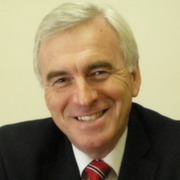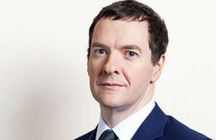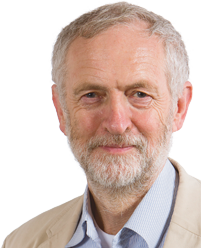
Tag: 2016

  • Richard Burgon – 2016 Speech at Labour Party Conference

    Below is the text of the speech made by Richard Burgon, the Shadow Justice Secretary, at the Labour Party Conference in Liverpool on 27 September 2016.

    Conference, I am honoured to open this debate on Justice and Home Affairs.

    And I am proud to speak to you as Shadow Justice Secretary.

    But Conference, I have a confession to make: before entering Parliament, I was a lawyer.

    A trade union lawyer – representing people injured at work because bosses cut corners.

    Representing people sacked because of their gender or the colour of their skin.

    Representing people not paid a fair day’s pay for a fair day’s work.

    Conference, 10 years of that taught me an important lesson.

    That justice and the rule of law are essential ingredients to create a fairer society.

    The type of society that the Labour movement has always fought for.

    The legal profession in our country is much derided.

    But who is it that defends the rights of striking workers in the courts?

    Who is it that represents victims of domestic violence?

    Who is it that prosecutes criminals who terrorise working-class communities?

    Who is that provides legal assistance to the heroic grassroots campaigns for justice for Orgreave? Justice for the Shrewsbury 24? And justice for the families of those killed at Hillsborough? I pay tribute to those families and I pay tribute to our Shadow Home Secretary Andy Burnham for backing them all the way.

    Justice goes to heart of what we are as a movement. And the values we hold dear. It is the justice system that protects our freedoms, our rights, and helps hold our society together.

    But Conference, I am sure you are all aware that our legal system is creaking under the strain of this Conservative Government’s brutal onslaught of austerity and ideological dogma.

    Privatising our prisons and probation service and making the working conditions of our dedicated prison and probation officers tougher and tougher.

    Cutting legal aid to the poorest and imposing unaffordable employment tribunal fees.

    Slashing the Ministry of Justice budget by a whopping and reckless 34%.

    And what of the flag bearer of these failing policies?

    Let me turn to my Conservative opponent, Liz Truss.

    Believe it or not – she’s best known for railing against – ranting against even – imports of foreign cheese.

    It’s fair to say her appointment as Justice Secretary was not universally welcomed.

    Many said that, as another non-lawyer in the role, she didn’t fulfil the legislative requirement for a person “qualified by experience”.

    Her colleague, Lord Faulks, even resigned from the frontbench because of it.

    Others criticised her for being loyal to her Party leader. Nothing wrong with that.

    But what I will criticise Liz for is her voting for legal aid cuts.

    For privatising our probation service.

    And for closing down the courts we need to deliver justice in our country.

    Conference, we need a change of direction.

    Justice policy will be at the core of Jeremy’s drive for a fairer society.

    And I must thank Willy Bach for the review he is conducting into how best to deliver the improved access to justice we need in our country. A major review requested by our Labour Party Leader.

    Conference, one of the most reprehensible policies of the Conservative Government has been the introduction of Employment Tribunal fees.

    It means that those who have faced discrimination in the workplace – often people struggling to make ends meet – are expected to fork out even more to achieve justice.

    It will come as no surprise to delegates in this hall that the number of cases brought to Employment Tribunals has plummeted, as many just give up hope they will ever achieve justice.

    But under Labour, people will not only be able to hope – people will be able to take action – because we will abolish these cruel Employment Tribunal Fees once and for all and give wronged workers the access to justice they deserve.

    It was once said that “the degree of civilization in a society can be judged by entering its prisons”.

    And what is the state of our prisons today? Overcrowded. Understaffed. Awash with drugs.

    This must change – and under Labour it will.

    No longer will profit and privatisation drive policy.

    We will do all we can to ensure that when prisoners are released they turn their backs on a life of crime.

    And there is no-one better to spearhead this agenda than our Shadow Prisons Minister, Jo Stevens.

    Conference, we will achieve our goals by working with – and most importantly treating with respect – those who work in our justice system and the trade unions that represent them.

    Human rights have always been at the top of Labour’s agenda. Indeed, it was our Labour Government that introduced the Human Rights Act that protects so many of the freedoms we cherish.

    An Act introduced and upheld by three great Labour Justice Secretaries – Derry Irvine, Charlie Falconer and Jack Straw.

    I want to assure them – and assure you all – that in the aftermath of Brexit, Labour will fight to ensure that none of these hard won rights and freedoms are diluted or diminished by this Conservative Government.

    The next Labour Government will have much to do. Ending austerity. Rebuilding public services. And delivering a fairer society. At the heart of this approach will be strengthening our justice system.

    Conference, we will turn our backs on the failed approach of the Conservative Government so that once again our rights and freedoms will be protected and enhanced.

    And in this way we will build – together – a fairer society that we can be proud of.

    A Labour justice system in a Labour Britain.

    Conference. There’s work to do. Together – let’s get on and do it.

  • Cat Smith – 2016 Speech at Labour Party Conference

    Below is the text of the speech made by Cat Smith, the Shadow Minister for Voter Engagement and Youth Affairs, at Labour Party conference on 28 September 2016.

    Conference it’s a pleasure to speak in today’s debate.

    This is an important debate for us to have. The policies being pursued by this Tory Government, will, if unchallenged, cause lasting harm to our communities.

    Cuts to local authorities have resulted in youth service spending being cut by £387 million since 2010. That’s 3,600 youth worker jobs lost, 603 youth centres closed, and 138,000 places for young people cut.

    These cuts have had a disproportionate effect on some groups. Many LGBT specific youth services have been forced to close. And because of structural racism and failures in our education system, young black people have been disadvantaged more than their peers.

    This is a false economy. Rather than supporting young people now, the government is storing up problems. These problems will grow, become more complicated and cost more to address in future years.

    Figures for poverty, material deprivation and unemployment, all show young people suffering the most. It is clear young people and future generations have been disproportionately hit by failing Tory austerity.

    The challenge for us, conference, is how do we respond?

    We need to expose the Tories for what they are – the party of the past..

    The legacy of David Cameron’s Government, is a nation divided. Theresa May was at its heart and will not unite the country. She cannot give Britain the change we need. It is our responsibility, as Labour, to heal these divisions.

    It would be wrong to allow an artificial divide to be created between our young people and older generations. We need to stand together. Young people, want to know there will be a state pension not only to look after their parents and grandparents, but one that will be there for them too. Our parents and grandparents want to see the next generation well-educated, engaged and healthy.

    Age is not the only divide the Tories have sought to create. The failing austerity agenda says there is not enough to look after refugees, not enough to support women’s refuges, not enough to ensure proper care and support for disabled people. But conference, make no mistake austerity is a choice, a choice made by the Tories, not an inevitability.

    Their failed policies are taking the country backwards. Theresa May wants to return us to an education system that most of the country moved on from forty years ago.

    I am proud that as a Labour Party we are engaging with young people and investing in our future. Restoring the Educational Maintenance Allowance and student grants will give all young people the opportunity to fulfil their potential. Labour will ensure that education is not just a commodity for those who can afford it, but is financially accessible to everyone.

    We want a society that will support future generations, in education, in training and in the workplace.

    We have a historic opportunity. Young people are more politicised than they have been for generations. Around ¾ of a million young people registered to vote in the month prior to the EU referendum. Then we saw a 20 per cent jump from the General Election in young people using their vote.

    The Tories have ignored this. They are too busy disenfranchising two million people in their rush to gerrymander constituency boundaries.

    Labour in contrast have listened to our young people. We heard the demand for votes at 16. We did all we could to secure 16 and 17 year olds a vote in the referendum. A referendum that impacts their lives more than anyone, given the Tories have no answer to what Brexit means.

    Austerity, grammar schools and Brexit chaos. The Tories are looking to the past. It is Labour that is the party of the future.

    We lead the polls amongst young people. Tens of thousands of young people have joined the Labour Party since the referendum. I am proud we have the largest political youth wing in Britain. In fact we have more members aged under 27 than UKIP has in total.

    I attended Young Labour events at this conference and I have heard the ideas our young members have. They have so much to offer our Party. We must value them, they must be more than just activists to deliver leaflets. They should be our elected representatives, our policy makers and our political leaders. For too long we have called our young members ‘the future of the Labour Party’. They are not. They are the Labour Party.

    We are all the Labour party. Our future, our country’s future depends on us being united. When life is becoming harder for the majority of people, we cannot let the ‘divide and rule’ politics of the Tory party distract from our mission. We have a moral, political, and historic obligation to work together, on behalf of working people. We are one party, one family, one Labour.

  • Yvette Cooper – 2016 Speech at Labour Party Conference

    cooper-300x300

    Below is the text of the speech made by Yvette Cooper at the Labour Party conference held in Liverpool on 28 September 2016.

    Think on two children.

    Aged ten and nine. Primary school children by the side of a busy road.

    A ten year old who’s father was killed when extremists took hold of their village.

    Whose mother paid smugglers to take the boys away.

    They live on their own in a muddy tent.

    And each night they run along the side of a motorway – waiting for a lorry going slow enough to climb aboard.

    They are scared.

    And they should be.

    Two weeks ago a fourteen year-old fell off the lorry he clung to and was hit by a car.

    Killed, trying to reach his brother in Britain.

    He had a legal right to be here, yet he lived for months in danger and squalor.

    And he died by the side of a road. How have we let this happen?

    Sometimes people say to me this is not our problem. Just walk by on the other side of the road.

    But these are children whose lives are at stake, someone’s young son, someone’s teenage daughter.

    Our children.

    Our common humanity.

    Conference on suffering children, this country and this party must never turn our backs.

    And I want to pay tribute to those who are working so hard to help.

    To all the community groups and organisations we have worked with in the Refugee Taskforce, to Save the Children, Citizens UK, Help Refugees, UNICEF, the Churches, the Synagogues and Mosques, Care4Calais groups in towns and Cities across the UK.

    To thank Jeremy and Tom, Andy Burnham and Kate Osamor for the support they have given and continue to give to the Refugee Taskforce’s work. To Stella Creasy and Thangam Debbonaire who’ve played such important roles.

    To thank the councils across the country encouraged by Nick Forbes who have stepped forward and said yes we will help,

    And the campaigners from all parties who worked with us to change the law

    A promise to do our bit, just as our country did when we rescued 10,000 Jewish children from the Nazis in Europe.

    Alf Dubs was one of those children, six years old, put on a train in Prague bound for England to escape the war. Three quarters of a century on.

    Alf, lifelong campaigner for social justice, Labour councillor, Labour MP then Labour Lord, each time leading the way with his amendment so that Britain does its bit again to help a new generation of child refugees.

    Giving them the new future our country gave him.

    For them, and for all of us,

    Lord Alf Dubs – We pay tribute to you today.

    This is a global crisis we face. Across the world 65 million people driven from their homes by conflict or persecution. You will hear the Government talk of the pull factor. What of the push factor? See the pictures from Aleppo.

    Bombs launched by the Syrian regime that rip through reinforced concrete, creating craters twenty metres wide. So there is no bunker, no cellar in which families can hide

    No wonder they run.

    Most incredible of all are those who stay – the doctors who stay to treat the wounded. The white helmets who stay to rescue those left alive. On Saturday, our Conference remembered the humanitarian work Jo Cox fought for throughout her life.

    And today I also want to pay tribute to Jo’s family, who through their support of the White Helmets keep Jo’s work alive now. No country can solve this alone, but every country needs to play its part:

    No one says it is easy.

    People are worried about security, worried that the system can be abused or will be out of control.

    And we should be clear.

    Helping refugees doesn’t mean open borders.

    We need strong border checks to stop smuggler gangs, criminals and extremists exploiting the crisis.

    We need fast and robust asylum procedures so that refugees get swift help and illegal migrants have to return so that everyone can have faith in the system

    We need proper integration plans for refugees and their families.

    But conference, immigration and asylum are different – too often the Government treats them as the same.

    Many people I have spoken to who want more controls on the number of people who come here to work, also think we should our bit to help those fleeing persecution who have no safe home to which they can return.

    Refugees are less than 5 percent of those who come to our country.

    So we should never let fear of the difficult politics of immigration paralyse us from helping refugees.

    But nor must we be paralysed from debating immigration reform either – or our tin ear to the concerns of the country will stop others listening to our case for helping refugees.

    Just as people want to know the asylum system is fair, managed and controlled

    They want to know that the immigration system is too.

    And it isn’t racist to talk about how best every country manages migration or to say that whilst immigration is important, low skilled migration should come down.

    And saying this should not spark a row it should open up the debate.

    In the referendum people voted against free movement. But there is no consensus over what people voted for.

    Between cities and towns,

    Between Scotland and England,

    Young and old,

    And we should be part of a serious, thoughtful debate on what fair rules should be,

    We cannot do that if we dig in from the start. But here’s what we must never do.

    We won’t use fear on immigration as reason not to help those most in need,

    We won’t call people “swarms” or “hoards” – they are mothers, fathers and children.

    And we will never ever do what Nigel Farage did in the referendum campaign and use a poster of desperate people to stoke fear and hatred.

    That man should be ashamed.

    So conference, our country rightly leads the way with international aid.

    I am glad the Conservative Government has maintained that commitment

    And proud that it was Labour campaigners many years ago who set the aid target, and the last Labour Government who brought it in.

    But on sanctuary our country isn’t doing enough.

    Just 3,000 of the promised 20,000 Syrian refugees have come. After the Dubs amendment, so far no children from Greece or Italy have been helped.

    And Calais should be a scar on the conscience of both France and Britain.

    Ten thousand people. One thousand children alone.

    Scabies rife. Violence and sectarianism in camp. Lorry drivers facing intimidation and serious safety threats.

    No one assessing asylum cases, no one protecting the children.

    This is a shameful failure by the French authorities in the basic duty to keep children safe. But Britain has a responsibility too. Hundreds of those children have family in Britain, but they are still stuck waiting months.The foot dragging, the bureaucracy, the delays are a disgrace.

    So Conference, we should support the contemporary resolution today. And Parliament should back Alf Dubs new amendment – drafted by Stella Creasy – to bring in safeguarding for child refugees.

    France plans to dismantle the camp moving people to accommodation centres across the country. But there are no places being provided for lone children.

    Last time the authorities cleared part of the camp, over a hundred children just disappeared.

    So let each country now agree to take half the lone children straight away.

    Let’s get all of these children into safety fast while their assessments are done, so there is no child left alone in the Calais mud and cold by the time Christmas comes.

    Because this stalemate over children is dangerous.

    France says its Britain’s problem

    Britain says it’s up to the French

    I am sick of this standoff. Children’s lives and safety are at risk.

    Both Governments need to get a grip and act.

    Conference, I’ve heard from child and teenage refugees who want to be engineers, scientists, doctors, footballers.

    But the one who surprised me was a teenager helped by Citizens UK and our political campaign, who said he wants to get involved in politics.

    He said politics destroyed his country, but politics also saved his life.

    Now he wants to help, to give something back, just as Alf has done so many years on.

    Because politics matters. So if ever you despair at the state of our politics even the divisions you think there are in our party.

    If ever you think of walking away,

    If ever you want to know why so many of us carry on,

    Think of him and the children we can help,

    Think of him and the lives Labour Governments have saved,

    Think of him, of Alf, the Kindertransport,

    of future doctors, poets, nobel laureates,

    husbands, sisters, mothers, children.

    Of the amazing things we can do together, the people we can help, the amazing things that Labour can do.

    Conference – that’s what our politics is all about.

  • Jeremy Corbyn – 2016 Speech at Labour Party Conference

    jeremycorbyn

    Below is the text of the speech made by Jeremy Corbyn, the Leader of the Labour Party, to the party’s conference being held in Birmingham on 28 September 2016.

    Thank you for that introduction. And how brilliant it is to see the hall here in Liverpool, absolutely packed for the Labour conference, well I say it’s packed but Virgin Trains assure me there are 800 empty seats.

    Either way Conference, it’s a huge pleasure to be holding our party’s annual gathering here in this fantastic city that has shaped our country, our economy, our culture and our music.

    Liverpool and its people have always been central to the Labour party and our movement. And I know some people say campaigns and protests don’t change things. But the Hillsborough families have shown just how wrong that is.

    It’s taken twenty-seven years but those families have, with great courage and dignity, finally got some truth and justice for the ninety-six who died. And I want to pay tribute to all the families and campaigners, for their solidarity, their commitment and their love.

    We must learn from them so we promise those campaigning for Orgreave, for Shrewsbury, for the thousands of workers blacklisted for being trade unionists that we will support your battles for truth and justice and when we return to government we will make sure that you have both.

    Because winning justice for all and changing society for the benefit of all is at the heart of what Labour is about.

    So yes, our party is about campaigning and it’s about protest too.

    But most of all it’s about winning power in local and national government, to deliver the real change our country so desperately needs.

    That’s why the central task of the whole Labour party, must be to rebuild trust and support to win the next general election and form the next government. That is the government I am determined to lead, to win power to change Britain for the benefit of working people.

    But every one of us in this hall today knows that we will only get there if we work together. And I think it’s fair to say after what we’ve been through these past few months that hasn’t always been exactly the case.

    Those months have been a testing time for the whole party, first the horrific murder of Jo Cox, followed by the shock of the referendum result and then the tipping over of divisions in parliament, into the leadership contest that ended last Saturday.

    Jo’s killing was a hate-filled attack on democracy itself that shocked the whole country. Jo Cox didn’t just believe in loving her neighbor, she believed in loving her neighbour’s neighbor, that every life counted the same.

    And as Jo said in her maiden speech as an MP “we have far more in common with each other than things that divide us”. Let that essential truth guide us as we come together again to challenge this Tory Government and its shaky grip on power.

    We have also lost good MPs like Michael Meacher and Harry Harpham. They were Labour through and through, passionate campaigners for a better world.

    And let me pay particular tribute to those parliamentary colleagues who stepped forward in the summer to fill the gaps in the shadow cabinet and ensure that Labour could function as an effective opposition in parliament.

    They didn’t seek office, but they stepped up when their party and in fact the country needed them to serve. They all deserve the respect and gratitude of our party and movement. And this conference should thank them today, they are our future.

    We’ve just had our second leadership election within a year. It had its fraught moments of course, not only for Owen Smith and me , and I hope we don’t make a habit of it.

    But there have also been upsides. Over 150,000 new members joined our party. Young rising stars have shone on the front bench and we found that the party is more united on policy than we would ever have guessed.

    I am honoured to have been re-elected by our party a second time with an even larger mandate. But we all have lessons to learn and a responsibility to do things better and work together more effectively. I will lead in learning those lessons and I’d like to thank Owen, for the campaign and his work as shadow work and pensions secretary.

    And all the Labour Party Staff and my own team for their brilliant work.

    One lesson is, that there is a responsibility on all of us to take care with our rhetoric, respect democratic decisions, respect our differences and respect each other. We know that robust debate has at times spilled over into abuse and hate around our party, including misogyny and anti-Semitism, especially on social media.

    That is utterly unacceptable. Our party must be a safe and welcoming space for everybody and we will continue to take firm action against abuse and intimidation.

    And let me be absolutely clear, anti-Semitism is an evil, it led to the worst crimes of the 20th century, every one of us has a responsibility to ensure that it is never allowed to fester in our society again. This party always has and always will fight against prejudice and hatred of Jewish people with every breath in its body.

    We meet this year as the largest political party in western Europe with over half a million members campaigning in every community in Britain.

    More people have joined our party in the last twenty months than in the previous twenty years. We have more of our fellow citizens in our party than all the others put together.

    Some may see that as a threat. But I see it as a vast democratic resource. Our hugely increased membership is part of a movement that can take Labour’s message into every community, to win support for the election of a Labour government. Each and every one of these new members is welcome in our party.

    And after a ten year absence, we welcome back the Fire Brigades Union to our party and to conference. We are reuniting the Labour family.

    And over the past year, we’ve shown what Labour can do when the party stands together.

    At conference a year ago, I launched our campaign against cuts to tax credits and we succeeded in knocking this government back.

    This year, three million families are over £1,000 better off because Labour stood together.

    In the Budget, the government tried to take away billions from disabled people but we defeated them …

    We have won all four by-elections we’ve contested. In the May elections, we overtook the Tories to become the largest party nationally. We won back London with a massive win for Sadiq Khan the first Muslim mayor of a western capital city.

    And we won the Bristol mayor for the first time, Marvin Rees, the first black mayor in any European city. And of course we also won the mayoralty in Salford and here in Liverpool.

    That’s the road of advance we have to return to if we’re going to challenge the Tories for power and turn the huge growth in the Labour party into the electoral support we need across Britain.

    There’s no doubt my election as Labour leader a year ago. And re-election this month grew out of a thirst for a new kind of politics, and a conviction that the old way of running the economy and the country, isn’t delivering for more and more people.

    It’s not about me of course, or unique to Britain but across Europe, North America and elsewhere, people are fed up with a so-called free market system, that has produced grotesque inequality stagnating living standards for the many calamitous foreign wars without end and a political stitch-up which leaves the vast majority of people shut out of power.

    Since the crash of 2008, the demand for an alternative and an end to counter-productive austerity has led to the rise of new movements and parties in one country after another.

    In Britain it’s happened in the heart of traditional politics, in the Labour party which is something we should be extremely proud of. It’s exactly what Labour was founded for to be the voice of the many of social justice and progressive change from the bottom up.

    But it also means it’s no good harking back to the tired old economic and political fixes of twenty years ago because they won’t work anymore. The old model is broken. We’re in a new era that demands a politics and economics that meets the needs of our own time.

    Even Theresa May gets it, that people want change. That’s why she stood on the steps of Downing Street and talked about the inequalities and burning injustices in today’s Britain.

    She promised a country: “that works not for a privileged few but for every one of us”.

    But even if she manages to talk the talk, she can’t walk the walk.

    This isn’t a new government, it’s David Cameron’s government repackaged with progressive slogans but with a new harsh rightwing edge, taking the country backwards and dithering before the historic challenges of Brexit.

    Who seriously believes that the Tories could ever stand up to the privileged few? They are the party of the privileged few, funded by the privileged few, for the benefit of the privileged few.

    This is a party, after all that now wants to force through an undemocratic Boundary Review based on an out-of-date version of the electoral register with nearly two million voters missing.

    They’ve dressed up as a bid to cut the cost of politics by abolishing fifty MPs, but the £12million savings are dwarfed by the expense of the 260 peers David Cameron appointed at a cost of £34million a year. It’s nothing but a cynical attempt to gerrymander the next election.

    And this is a prime minister who was elevated to her job without a single vote being cast after a pantomime farce which saw one leading Tory after another falling on their swords.

    When I meet Theresa May across the dispatch box, I know that only one of us has been elected to the office they hold, by the votes of a third of a million people.

    In any case, the Tories are simply incapable of responding to the breakdown of the old economic model. Because that failed model is in their political DNA.

    It’s what they deliver every time they’re in government. Tory governments deregulate, they outsource and privatise they stand by as inequality grows.

    They’ve cut taxes for the privileged few sold off our national assets to them, always on the cheap and turned a blind eye to their chronic tax avoidance.

    They’re so committed to the interests of the very richest they recruited Sir Phillip Green into government as something called an efficiency tsar.

    Well, government might be a bit more efficient if the super-rich like Sir Phillip actually paid their taxes.

    When government steps back there are consequences for every one of us.

    Look what’s happened to housing under the Tories:

    housebuilding has fallen to its lowest level since the 1920s;

    home ownership is falling as more people are priced out of the market;

    evictions and homelessness go up every year;

    council homes are sold off without being replaced.

    And another consequence is that we’re paying over £9 billion a year to private landlords in housing benefit.

    Instead of spending public money on building council housing, we’re subsidising private landlords. That’s wasteful, inefficient, and poor government.

    So Labour will, as Teresa Pearce said, build over a million new homes at least half of them council houses and we will control private rents, so we can give every British family that basic human right – a decent home.

    It’s the same in the jobs market. Without proper employment regulation, there’s been an explosion of temporary, insecure jobs nearly one million people on zero hour contracts.

    There are now six million working people earning less than the living wage and poverty among those in work is at record levels.

    That didn’t happen by accident, the Tories have torn up employment rights and deliberately tried to weaken the organisations that get people justice at work the trade unions.

    Of course trade unions are not taking this lying down. Look at the great campaign Unite has waged at Sports Direct, to get justice for exploited workers and hold Mike Ashley to account. That is why Labour will repeal the Trade Union Act and set unions free to do their job.

    And we will raise the minimum wage to a real living wage that brings working people out of poverty and we’ll ban zero hours contracts as John McDonnell and Ian Lavery have set out at this conference.

    And then there’s the scandal of the privatised railways more public subsidy than under the days of British Rail all going to private firms and more delays more cancellations. And the highest fares in Europe.

    That is why the great majority of the British people back Labour’s plan, set out by Andy MacDonald, to take the railways back into public ownership.

    But if you want the most spectacular example of what happens, when government steps back, the global banking crash is an object lesson a deregulated industry of out of control greed and speculation that crashed economies across the globe and required the biggest ever government intervention and public bailout in history.

    Millions of ordinary families paid the price for that failure. I pledge that Labour will never let a few reckless bankers wreck our economy again.

    So Labour is offering solutions. During this summer’s leadership campaign, I set out ten pledges which I believe can be the platform for our party’s programme at the next election.

    They have now been put to you and endorsed by this conference.

    They lay out the scope of the change we need to see for full employment, a homes guarantee, security at work, a strong public NHS and social care, a National Education Service for all, action on climate change, public ownership and control of our services, a cut in inequality of income and wealth action to secure an equal society and peace and justice at the heart of foreign policy.

    Don’t worry, they’re not the Ten Commandments. They will now go to the National Policy Forum and the whole party needs to build on them, refine them and above all take them out to the people of this country.

    But those ten pledges the core of the platform on which I was re-elected leader will now form the framework for what Labour will campaign for and for what a Labour government will do.

    Together they show the direction of change we are determined to take – and the outline of a programme to rebuild and transform Britain.

    They are rooted in traditional Labour values and objectives shaped to meet the challenges of the 21st century. They are values Labour is united on. They reflect the views and aspirations of the majority of our people. And they are values our country can and will support as soon as they are given the chance.

    And these pledges are not just words. Already, across the country, Labour councils are putting Labour values into action, in a way that makes a real difference to millions of people, despite cynical government funding cuts that have hit Labour councils five times as hard as Tory-run areas.

    Like Nottingham City Council setting up the not-for-profit Robin Hood Energy company to provide affordable energy;

    Or Cardiff Bus Company taking 100,000 passengers every day, publicly owned with a passenger panel to hold its directors to account;

    Or Preston Council working to favour local procurement, and keep money in the town;

    Or Newcastle Council providing free wi-fi in 69 public buildings across the city;

    Or Croydon Council which has set up a company to build 1,000 new homes, as Cllr Alison Butler said: “We can no longer afford to sit back and let the market take its course”.

    Or Glasgow that has established high quality and flexible workspaces for start-up, high growth companies in dynamic new sectors.

    Or here in Liverpool, set to be at the global forefront of a new wave of technology and home to Sensor City, a £15million business hub that aims to create 300 start-up businesses and 1,000 jobs over the next decade.

    It is a proud Labour record each and every Labour councilor deserves our heartfelt thanks for the work they do.

    But I want to go further because we want local government to go further and put public enterprise back into the heart of our economy and services to meet the needs of local communities, municipal socialism for the 21st century, as an engine of local growth and development.

    So today I’m announcing that Labour will remove the artificial local borrowing cap and allow councils to borrow against their housing stock.

    That single measure alone would allow them to build an extra 12,000 council homes a year.

    Labour councils increasingly have a policy of in-house as the preferred provider and many councils have brought bin collections, cleaners, and IT services back in-house, insourcing privatized contracts to save money for council tax payers and to ensure good terms and conditions for staff.

    I have said that Labour will put security at work and employment and union rights from day one centre stage.

    But one in six workers now in Britain are now self-employed. They’re right to value their independence but for too many it comes with insecurity and a woeful lack of rights.

    So we will review arrangements for self-employed people including social security that self-employed people pay for in their taxes, yet aren’t fully covered by.

    And we will ensure that successful innovators have access to the finance necessary to take their ideas to the next level grow their businesses and generate employment.

    So as part of our Workplace 2020 review, we will make sure that and our tax and social security arrangements are fit for the 21st century, consulting with self-employed workers and the Federation of Small Businesses.

    If the Tories are the party of cuts and short-termism. Labour is the Party of investing for the future.

    With the same level of investment as other major economies, we could be so much more unlock so much skill, ingenuity and wealth.

    That’s why we’ll establish a National Investment Bank at the heart of our plan to rebuild and transform Britain.

    And we will borrow to invest at historically low interest rates, to generate far greater returns. It would be foolish not to, because that investment is expanding the economy and the income it generates for us all in the process.

    Even this government, after years of austerity and savage cuts to investment is starting to change its tune.

    I am not content with accepting second-class broadband, not content with creaking railways, not content with seeing the US and Germany investing in cutting edge and green technologies, while Britain lags behind.

    Last year, for example the Prime Minister promised a universal service obligation for ten megabyte broadband.

    But since then the government has done nothing letting down entrepreneurs, businesses and families, especially in rural areas.

    That’s why we’ve set out proposals for a National Investment Bank with £500 billion of investment to bring our broadband, our railways, our housing and our energy infrastructure up to scratch.

    A country that doesn’t invest is a country that has given up. That has taken the path of managed decline. A Labour government will never accept second best for Britain.

    Our country’s history is based on individual ingenuity and collective endeavor.

    We are the country of Ada Lovelace, Alan Turing and Tim Berners-Lee, the land of Isambard Kingdom Brunel and Sarah Guppy of George Stephenson and Eric Laithwaite.

    The Tories have turned their back on this proud British tradition. They have put privatisation and cutting spending first.

    Britain now spends less on research as a share of national income than France, Germany, the US and China. A Labour Government will bring research and development up to three percent of GDP.

    Yesterday, Rebecca Long Bailey set out the terms of our Industrial Strategy Review. We need an economy that works for every part of this country so that no community is left behind.

    And today I’m asking everyone, businesses, academics, workers, trade unions and anyone who cares about our future prosperity to have your say in that review.

    We are a wealthy country – and not just in terms of money.

    We are rich in talent, rich in potential.

    That’s why we’ve proposed a comprehensive National Education Service at the heart of our programme for government to deliver high quality education for all throughout our lives.

    Education has always been a core Labour value from the time of Ellen Wilkinson and before.

    And a National Education Service will be an essential part of the 21st century welfare state.

    In a rapidly changing economy people need to re-train or upgrade their skills without falling into debt.

    Britain already lags behind other in productivity.

    Partly that’s about investing in technology and infrastructure.

    And partly it’s about investing in people and their skills.

    How can we build and expand the sectors of the future without a skilled workforce?

    But this Conservative government has slashed adult education budgets taking away opportunities for people to develop their skills and leaving businesses struggling to find the skilled workforce they need to succeed.

    So today I am offering business a new settlement. A new deal for Rebuilding Britain.

    Under Labour we will provide the investment to rebuild Britain’s infrastructure.

    We will fund that investment because it will lead to a more productive economy providing the basis on which our economy and our businesses can thrive, helping to provide over a million good jobs and opportunities for businesses.

    But investment in capital must include investment in human capital, the skilled workers needed to make our economy a success.

    So this is the deal Labour will offer to business.

    To help pay for a National Education Service, we will ask you pay a little more in tax.

    We’ve already started to set out some of this, pledging to raise corporation tax by less than 1.5 percent to give an Education Maintenance Allowance to college students and grants to university students so that every young learner can afford to support themselves as they develop skills and get qualifications.

    Business shares in economic success and it must contribute to it too.

    And I recognise that good businesses deserve a level playing field.

    So I also pledge to good businesses that we will clamp down those that dodge their taxes you should not be undercut by those that don’t play by the rules.

    There is nothing more unpatriotic than not paying your taxes it is an act of vandalism, damaging our NHS, damaging older people’s social care, damaging younger people’s education. So a Labour government will make shabby tax avoidance a thing of the past.

    Labour’s National Education Service is going to be every bit as vital as our National Health Service has become.

    And we recognise that education isn’t simply about preparing for the workplace. It’s also about the exploration of knowledge and unlocking the creativity in every human being.

    So all school pupils should have the chance to learn an instrument take part in drama and dance and have regular access to a theatre, gallery or museum in their local area.

    That’s why we will introduce an arts pupil premium to every primary school in England and Wales and consult on the design and national roll-out to extend this pupil premium to all secondary schools.

    This will be a £160million boost for schools to invest in projects that will support cultural activities for schools over the longer-term.

    It could hardly be more different to the Tory approach to education. Their only plan is the return of grammar schools, segregation and second class schooling for the majority and what a great job Angela Rayner is doing in opposing them.

    So this Saturday 1 October, I want you to take the message into your community that Labour is standing up for education for all.

    Grammar Schools are not the only way, the Tories are bringing division back into our society. They are also using the tried-and-tested tricks of demonising and scapegoating to distract from their failures.

    Whether it be single mothers, unemployed people, disabled people or migrants, Tory failure is always someone else’s fault.

    And those smears have consequences, from children being bullied in school, to attacks in the street – such as the rise of disability hate crime.

    I am so proud of this party. In the last year, we stood up to the government on cuts to disabled people’s benefits and cuts to working families tax credits.

    And on Monday, our shadow work & pensions secretary Debbie Abrahams announced we would be scrapping the punitive sanctions regime and the degrading Work Capability Assessment.

    As politicians, as political activists, as citizens, we must have zero tolerance towards those who whip up hate and division, stand together against racism, Islamophobia and anti-Semitism and defend those being demonised.

    It has been shaming to our multicultural society that assaults on migrants have increased sharply since the referendum campaign a campaign that peddled myths and whipped up division.

    It isn’t migrants that drive down wages, it’s exploitative employers and the politicians who deregulate the labour market and rip up trade union rights.

    It isn’t migrants who put a strain on our NHS, it only keeps going because of the migrant nurses and doctors who come here filling the gaps left by politicians who have failed to invest in training.

    It isn’t migrants that have caused a housing crisis; it’s a Tory government that has failed to build homes.

    Immigration can certainly put extra pressure on services and that’s why, under Gordon Brown, Labour setup the Migrant Impact Fund to provide extra funding to communities that have the largest rises in population.

    What did the Tories do? They abolished it and then they demonise migrants for putting pressure on services.

    A Labour government will not offer false promises on immigration as the Tories have done. We will not sow division by fanning the flames of fear. We will tackle the real issues of immigration instead whatever the eventual outcome of the Brexit negotiations and make the changes that are needed.

    We will act decisively to end the undercutting of workers’ pay and conditions through the exploitation of migrant labour and agency working which would reduce the number of migrant workers in the process.

    And we will ease the pressure on hard pressed public services – services that are struggling to absorb Tory austerity cuts, in communities absorbing new populations.

    Labour will reinstate the migrant impact fund, and give extra support to areas of high migration using the visa levy for its intended purpose. And we will add a citizenship application fee levy to boost the fund.

    That is the Labour way to tackle social tension investment and assistance, not racism and division.

    This party campaigned hard to remain in the European Union. I spoke at rallies from Cornwall to Aberdeenshire for our Labour campaign to remain and reform.

    But although most Labour voters backed us we did not convince millions of natural Labour voters especially in those parts of the country left behind.

    Left behind by years of neglect under-investment and de-industrialisation.

    Now we have to face the future together we are not helped by patronising or lecturing those in our communities who voted to leave. We have to hear their concerns about jobs, about public services, about wages, about immigration, about a future for their children. And we have to respect their votes, and the decision of the British people.

    Of course that doesn’t mean giving a blank cheque to Theresa May and her three-legged team of fractious Brexiteers as they try to work up a negotiating plan and squabble about whose turn it is to have the Chevening country retreat each weekend.

    We have made it clear that we will resist a Brexit at the expense of workers’ rights and social justice we have set out our red lines on employment, environmental and social protection and on access to the European market.

    But we will also be pressing our own Brexit agenda including the freedom to intervene in our own industries without the obligation to liberalise or privatise our public services and building a new relationship with Europe based on cooperation and internationalism.

    And as Europe faces the impact of a refugee crisis fuelled by wars across the Middle East we have to face the role that repeated military interventions by British governments have played in that crisis.

    The Chilcot report made absolutely clear, the lessons to be learned from the disastrous invasion and occupation of Iraq, just as this month’s Foreign Affair Select Committee report into the war in Libya demonstrated those lessons had still not been learned a decade later.

    The consequences of those wars have been the spread of terrorism, sectarianism and violence across an arc of conflict that has displaced millions of people forcing them from their countries.

    That is why it was right to apologise on behalf of the party for the Iraq war right to say that we have learned the lessons and right to say that such a catastrophe must never be allowed to happen again.

    We need a foreign policy based on peace, justice and human rights and what great news to hear the peace treaty in Colombia after fifty years of war and we need to honour our international treaty obligations on nuclear disarmament and encourage others to do the same.

    We are a long way from that humanitarian vision. Britain continues to sell arms to Saudi Arabia, a country that the United Nations says is committing repeated violations of international humanitarian law war crimes in Yemen just as we have seen taking place in Syria.

    So today I make it clear that under a Labour government when there are credible reports of human rights abuses or war crimes being committed British arms sales will be suspended, starting with Saudi Arabia.

    Last year, the votes we needed to win power went many different ways in all parts of our country while millions of our potential voters stayed at home.

    Many didn’t believe we offered the alternative they wanted.

    It’s true there’s an electoral mountain to climb.

    But if we focus everything on the needs and aspirations of middle and lower income voters, of ordinary families, if we demonstrate we’ve got a viable alternative to the government’s failed economic policies. I’m convinced we can build the electoral support that can beat the Tories.

    That means being the voice of women, of young people and pensioners middle and lower income workers, the unemployed and the self-employed, minority communities and those struggling with the impact of migration at work and everyone struggling to get on, and secure a better life for themselves, their families and communities.

    Running like a golden thread through Labour’s vision for today as throughout our history is the struggle for equality.

    Rampant inequality has become the great scandal of our time, sapping the potential of our society, and tearing at its fabric.

    Labour’s goal isn’t just greater equality of wealth and income but also of power.

    Our aim could not be more ambitious. We want a new settlement for the 21st century, in politics, business, our communities with the environment, and in our relations with the rest of the world.

    Every one of us in the Labour party is motivated by the gap between what our country is and what it could be.

    We know that in the sixth largest economy in the world the foodbanks, stunted life chances and growing poverty alongside wealth on an undreamed of scale are a mark of shameful and unnecessary failure.

    We know how great this country could be, for all its people, with a new political and economic settlement.

    With new forms of democratic public ownership, driven by investment in the technology and industries of the future, with decent jobs, education and housing for all with local services run by and for people not outsourced to faceless corporations.

    That’s not backward-looking, it’s the very opposite.

    It’s the socialism of the 21st century.

    Our job is now to win over the unconvinced to our vision. Only that way can we secure the Labour government we need.

    And let’s be frank, no one will be convinced of a vision, promoted by a divided party. We all agree on that.

    So I ask each and every one of you, accept the decision of the members end the trench warfare and work together to take on the Tories.

    Anything else is a luxury that the millions of people who depend on Labour cannot afford.

    We know there will be local elections next May. In Scotland, where we have won three council by-elections this summer, in Wales and in counties across England.
    And there’ll be metro mayor elections too, including here on Merseyside, where my good friend Steve Rotherham will standing as Labour’s candidate, Steve, best of luck, I will miss your comradeship and support.

    But we could also face a general election next year.

    Whatever the Prime Minister says about snap elections, there is every chance that Theresa May, will cut and run, for an early election.

    So I put our party on notice today, Labour is preparing for a general election in 2017, we expect all our members to support our campaign and we will be ready for the challenge whenever it comes.

    Let us do it, in the spirit of the great Scots-born Liverpool football manager Bill Shankly who said:

    “The socialism I believe in, is everybody working for the same goal and everybody having a share in the rewards. That’s how I see football, that’s how I see life.”

    We are not all Bill Shanklys. Each of us comes to our socialism from our own experiences.

    Mine was shaped by my mum and dad, a teacher and an engineer. Both committed socialists and peace campaigners, my mum’s inspiration was to encourage girls to believe they could achieve anything in their lives.

    And by working as a teacher in Jamaica when I was a young man, that taught me so much about the strength of communities living in adversity, as well as fighting for the low paid as a trade union organiser here in Britain.

    As the great American poet Langston Hughes put it: “I see that my own hands can make the world that’s in my mind”.

    Everyone here and every one of our hundreds of thousands of members has something to contribute to our cause.

    That way we will unite, build on our policies. Take our vision out to a country crying out for change.

    We are half a million of us, and there will be more, working together to make our country the place it could be.

    Conference, united we can shape the future and build a fairer Britain in a peaceful world.

    Thank you.
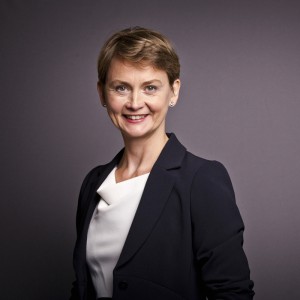
  • Clive Lewis – 2016 Speech at Labour Party Conference

    Below is the text of the speech made by Clive Lewis, the Shadow Secretary of State for Defence, on 26 September 2016.

    Conference, as a lifelong party activist it’s a great honour not just to address you for the first time, but to do so as Shadow Defence Secretary.

    I speak today not just as a politician, but as someone who has seen first-hand the consequences when political failure leads us to war.

    I’ve found there are some who are surprised to find an Army veteran serving as a Labour MP, as if it was somehow against the values we collectively believe in.

    But I see no contradiction between my service and my socialism.

    I want to pay tribute to the extraordinary men and women of our armed forces, who work so hard to keep us safe every single day.

    They have continued to do so at a time of unprecedented challenges. From operations against Da’esh in the Middle East, to peacekeeping missions in Somalia, South Sudan and elsewhere, our armed forces have been exceptionally busy and dedicated.

    Conference, when I look at our key military alliance – NATO – I see an organisation that springs directly from our values: collectivism, internationalism and the strong defending the weak. Its founding charter – a progressive charter – includes standing up for democracy and defending human rights. These are values that I believe go to the core of our political identity.

    So, of course, a Labour government would fulfil our international commitments, including those under Article 5. But let’s be clear: that means both our military and our diplomatic obligations. We cannot have one without the other, and nor should we.

    Every Labour government since Attlee’s has met NATO’s spending target of at least 2 per cent of GDP, every single year. And I confirm today that the next Labour government will do the same, including our UN and peacekeeping obligations.

    Of course, what really matters isn’t so much what you spend as how you spend it.

    And when I look at the Tories’ record on defence, I do not see a proper recognition of the value of our people

    What I do see is a government that has cut the size of the armed forces by a fifth, imposed an effective pay cut year-on-year, and it’s an insult to their dedication that they are not adequately housed.

    But Conference, let’s be honest. There are defence issues on which we are not united. This should not surprise us though. The security of our country – the first duty of any government – demands nothing less than the most rigorous of examination and debate.

    Friends, we know that nuclear weapons are one of those issues.

    As you know, I am sceptical about Trident renewal, as are many here.

    But I am clear that our Party has a policy for Trident renewal.

    But I also want to be clear that our Party’s policy is also that we all share the ambition of a nuclear-free world.

    So we will take steps to make that ambition a reality.

    So we will make our long-standing multilateralism reality, not rhetoric. We will be working with international organisations, including the United Nations General Assembly First Committee on Disarmament and International Security, within the spirit and the letter of the Nuclear Non-Proliferation Treaty.

    That will stand in stark contrast to the Tories’ lip service on nuclear disarmament; they have not brought forward a single proposal as to how they intend to achieve it.

    Because Conference, we know how Theresa May uses Trident. Not as a military weapon aimed at deterring enemies overseas – but as a political weapon aimed at her party’s opposition at home. Us.

    The best possible chance for a better, safer world is a Labour government.

    Conference, only we in the Labour Party have the ideological foundation on which a defence policy fit for the 21st Century can be built. We have to rethink what real security means.

    Increasingly, what threatens us are complex, interlinked systemic forces: the collapse of states, asymmetric warfare, resource depletion and catastrophic climate change.

    Each of these will make the lives of hundreds of millions unimaginably hard, starting with the poorest.

    Every day we see through our media the pitiful pictures of ordinary men, women and children forced from their homes, families desperately seeking sanctuary from war and social collapse.

    And this is just the beginning. If we want it to stop we must look beyond the symptoms and tackle the root causes. The Tories can never do this because their right-wing dogma is the cause.

    Economic policies that foster rampant inequality, the shoring up of oppressive regimes, conniving in proxy wars, ruthless over-exploitation of natural resources, complacent denialism on climate change.

    No Conference, it will be our values that solve these problems. Our internationalism, our passion for social justice, for economic justice and for environmental justice.

    Our Labour Party recognises that a world without justice is a world that will never be at peace. By addressing injustice, we can help to deliver real security.

    And if the Tories’ philosophy leaves them incapable of dealing with the challenges of the future, their practical choices are no better.

    When I look at the Tories’ record on defence I can see that, as with so many of our public services, they simply don’t recognise the value of the most important asset we have in this country – our people.

    The men and women – who have this Party’s deepest respect – that are the backbone of our nation’s defence. They are our sons, our daughters, cousins, nieces, nephews. They are all of us.

    This government has systematically undermined and demoralised far too many of them.

    And yet this government has systematically undermined and demoralised far too many of them.

    They have systematically undermined our industrial communities, ripping up Labour’s Defence Industrial Strategy and spent billions overseas, instead of investing in British jobs and British steel.

    I want the money we spend on defence equipment to go not to the cheapest bidder but to those who pay fair taxes and fair wages, who provide decent jobs and support communities.

  • John McDonnell – 2016 Speech at Labour Party Conference

    John McDonnell GB Labour MP Hayes and Harlington

    Below is the text of the speech made by John McDonnell, the Shadow Chancellor of the Exchequer, in Liverpool on 26 September 2016.

    Now the leadership election is over, I tell you, we have to become a government in waiting. An election could come at any time. Theresa May has said that she will not be calling an early election, but when could anyone trust a Tory leader?

    We have to prepare ourselves not just for fighting an election but for moving into Government. To do that successfully we have to have the policies and the plans for their detailed implementation on the shelf, in place for when we enter government whenever that election comes.

    Everybody in the Party, at every level and in every role, needs to appreciate the sense of urgency about this task, the mess we will inherit. So in this speech I want to address some of the key issues we will face and how we will face them.

    First though, we need to appreciate the mess that the Tories are leaving behind for when we go into Government. Six years on from when they promised to eliminate the Government’s deficit in five years, they are nowhere near that goal. The national debt burden was supposed to be falling by last year, and it is still rising. In money terms, it now stands at £1.6 trillion. Our productivity has fallen far behind. Each hour worked in the US, Germany or France is one-third more productive than each hour worked here. Our economy is failing on productivity because the Tories are failing to deliver the investment it needs, and government investment is still planned to fall in every remaining year of this Parliament.

    In the real world economy that our people live in wages are still lower than they were before the global financial crisis in 2008. There are now 800,000 people on zero hours contracts, unable to plan from one week to the next, and the number continues to rise. Nearly half a million in bogus self-employment, 86 per cent of austerity cuts fall on women, nearly 4 million of our children are living in poverty.

    As the fifth richest economy in the world, it shoudn’t be like this.

    So let’s talk about the immediate issues facing us. On Brexit, we campaigned to remain but we have to respect the decision of the referendum. That doesn’t mean we have to accept what the Tories serve up for our future relationship with Europe.

    Since the Brexit vote, the Tories have come up with no plan whatsoever. They have no clue. Half of them want a hard Brexit, to walk away from 30 years of investment in our relationship with Europe. Some are just paralysed by the scale of the mess they created. Working with our socialist and social democratic colleagues across Europe, our aim is to create a new Europe which builds upon the benefits of the EU but tackles the perceived disbenefits.

    I set out Labour’s red lines on the Brexit negotiations a few days after the vote. Let’s get it straight, we have to protect jobs here. So we will seek to preserve access to the Single Market for goods and services. Today, access to the Single Market requires freedom of movement of labour. But we will address the concerns that people have raised in the undercutting of wages and conditions, and the pressure on local public services.

    We will not let the Tories to bargain away our workers’ rights. We will defend the rights of EU nationals that live and work here and UK citizens currently living and working in Europe. We were all appalled at the attacks that took place on the Polish community in our country following the Brexit vote. Let’s be clear that, as a Party, we will always stand up against racism and xenophobia in any form.

    In the negotiations we also want Britain to keep its stake in the European Investment Bank. At the centre of negotiations is Britain’s financial services industry.Our financial services have been placed under threat as a result of the vote to leave. Labour has said we will support access to European markets for financial services. But our financial services must understand that 2008 must never happen again. We will not tolerate a return to the casino economy that contributed to that crash.

    We will support financial services where they deliver a clear benefit to the whole community – not just enriching a lucky few. We’ll work with the finance sector to develop this new deal with finance for the British people.

    We will fight for the best possible Brexit deal for the British people.

    There will be no more support for TTIP or any other trade deal that promotes deregulation and privatisation, here or across Europe. And we’ll make sure any future government has the power to intervene in our economy in the interests of the whole country.

    For Britain to prosper in that new Europe and on the world stage, our next major challenge is to call a halt to this government’s austerity programme.

    The Conservative Party built upon the disaster of the 2008 financial crisis by introducing an austerity programme that has made the impact of the economic crisis more prolonged, protected the corporations and the rich, and made the rest of society pay for the mistakes and greed of the speculators that caused the crash.

    Last year this Conference determined that this party would oppose austerity and that’s exactly what we’ve done. We have had some major successes. We’ve forced the reversal of tax credit cuts.We also fought and won to have the Personal Independence Payment cuts scrapped.

    Sometimes we don’t thank people enough in our movement. So I want to thank Owen Smith for the work he’s done working with Jeremy to defeat the Tories on this.

    These are tangible victories that are making a real difference to people’s lives. This is what we can achieve when we are united.

    So when we go into government united, be clear, we will end this government’s austerity programme that has damaged the lives of so many of our communities. The first step is opposing austerity; the second step is creating the alternative.

    Exactly as our economic advisor, Nobel Prize winner, Joe Stiglitz, says: “we have to rewrite the rules of our economy”.

    We will rewrite the rules to the benefit of working people on taxes, investment, and how our economic institutions work. So on tax, we know we can’t run the best public services in the world on a flagging economy with a tax system that does not tax fairly or effectively.

    I’ll congratulate the Christians on the Left for their campaign promoting the hashtag “patriots pay their taxes”. It’s a great slogan. Patriots should pay their taxes. Labour are already setting the pace on tackling tax avoidance and tax evasion.

    We launched our Tax Transparency and Enforcement Programme to force the Government into action. I’d like to thank Rebecca Long-Bailey for leading the Labour charge in Parliament to hold the tax dodgers to account.

    The publication of the Panama papers threw just some light on the scale of tax evasion and avoidance. Some of the largest firms in the City of London are up to their necks in it. HSBC alone accounted for more than 2,300 shell companies established to help the super-rich duck their taxes.

    In government we will end the social scourge of tax avoidance. We will create a new Tax Enforcement Unit at HMRC, doubling the number of staff investigating wealthy tax avoiders. We will ban tax-dodging companies from winning public sector contracts. And we will ensure that all British Crown Dependencies and Overseas Territories introduce a full, public register of company owners and beneficiaries.

    Our review of HMRC has also exposed the corporate capture of the tax system, and how staff cutbacks are undermining our ability to collect the taxes we need. I want to thank PCS, Professor Prem Sikka, John Christiansen and their team for the expertise they have provided us in drawing up this review.

    The next stage of our work will be to develop the legislation and international agreements needed to close tax havens and end tax abuse. I’ll give you this assurance that when we go back into government, we’ll make sure HMRC has the staffing, the resources, and the legal powers to close down the tax avoidance industry that has grown up in this country.

    But we have to do more than stop tax avoidance. The burden of taxation as a whole now falls too heavily on those least able to pay. So let me make it clear: in this coming period we will be developing the policies that will shift the tax burden more fairly, away from those who earn wages and salaries and onto those who hold wealth.

    Turning to investment, as I’ve said before, Labour as a party of government needs to think not just how we spend money but how we earn it. I’ve announced a £250billion investment programme that will ensure no community is left behind. This is the scale of investment that independent experts say will start to bring Britain’s infrastructure into the 21st century.

    It means putting the investment in place that will transform our energy system, providing cheap, low-carbon electricity. It means ensuring every part of the country has access to superfast broadband, matching the best in the world. It means delivering the transport improvements, including HS3 in the north of England, that will unlock the potential of our whole country.

    For too long major decisions about what and where to invest have been taken by Whitehall and the City. The result has been underinvestment and decline across the country. It’s time for our regions and localities to take back control. So we will create new institutions, not run by the old elite circles.

    Our £250billion National Investment Bank will supply the long-term, patient finance needed to sustain a new, more productive economy. It will be backed up by a network of regional development banks, with a clear public mandate to supply finance to regional and local economies.

    It’s a disgrace that our small businesses can’t get the finance they need to grow. Our financial system is letting them down badly. The new regional development banks will have a mandate to provide the patient, long-term investment they need.

    But we’ll go further than this. We’ll shake up how our major corporations work and change how our economy is owned and managed. We’ll clamp down on the abuses of power at the very top. There’ll be no more Philip Greens under Labour and we will legislate to rewrite company law to prevent them.

    We’ll introduce legislation to ban companies taking on excessive debt to pay out dividends to shareholders. And we’ll rewrite the Takeover Code to make sure every takeover proposal has a clear plan in place to pay workers and pensioners.

    But we can do more to transform our economy for working people. Theresa May has spoken about worker representation on boards. It’s good to see her following our lead. We know that when workers own and manage their companies, those businesses last longer and are more productive.

    If we want patient, long-term investment, and high-quality firms, what better way to do it than give employees themselves a clear stake in both? Co-operation and collaboration is how the emerging economy of the future functions. We’ll look to at least double our co-operative sector so that it matches those in Germany and the US.

    We’ll build on the good example of Labour Councils like Preston, here in the north-west, using public procurement to support co-operatives where they can. We’ll help create 200 local energy companies and 1,000 energy co-operatives, giving power back to local communities and breaking up the monopoly of the Big Six producers. And we’ll introduce a “Right to Own”, giving workers first refusal on a proposal for worker ownership when their company faces a change of ownership or closure.

    So the next Labour government will promote a renaissance in co-operative and worker ownership. The new regional development banks will be tasked with supplying the capital a new generation of business owners will need to succeed.

    We’ll support business hubs across the country. I visited Make Liverpool yesterday, where an abandoned warehouse is being turned into a shared workshop space for small businesses and the self-employed. The next Labour government will provide support to establish business hubs in every town and city.

    We know the economy is changing, with more people self-employed than ever before. We need to think creatively about how to respond and so we’ll be taking a serious look at how to make the welfare system better support the self-employed.

    And I am also interested in the potential of a Universal Basic Income – to learn from its potential from the experiments currently taking place across Europe.

    But until working people have proper protections at work, the labour market will always work against them. To achieve fair wages, the next Labour government will look to implement the recommendations of the Institute of Employment Relations.

    We’ll reintroduce sectoral collective bargaining across the economy, ending the race to the bottom on wages. And let me give you this commitment: in the first hundred days of our Labour government, we’ll repeal the Trade Union Act.

    And what happens when trade unions are weakened? Over 200,000 workers in the UK are receiving less than the minimum wage set down in law. This is totally unacceptable.

    Under Labour, we will properly resource HMRC and the Gangmasters and Labour Abuse Authority to make sure there are no more national scandals like Mike Ashley of Sports Direct. And our vision for a high-wage economy, with everyone receiving their fair dues, does not end there.

    I have spoken before about building on the great achievements of previous Labour governments. One of the greatest achievements of the government elected in 1997 was the establishment of a national minimum wage, lifting millions out of poverty. The Tories opposed it, claiming it would cost millions of jobs, but – united in purpose – we won the argument.

    Under the next Labour government, everyone will earn enough to live on. When we win the next election we will write a real Living Wage into law. We’ll charge a new Living Wage Review Body with the task of setting it at the level needed for a decent life. Independent forecasts suggest that this will be over £10 per hour. This will be a fundamental part of our new bargain in the workplace.

    But we know that small businesses need to be a part of the bargain. That’s why we will also be publishing proposals to help businesses implement the Living Wage, particularly small and medium-sized companies. We will be examining a number of ideas, including the expansion and reform of Employment Allowance, to make sure that this historic step forward in improving the living standards of the poorest paid does not impact on hours or employment.

    Backed up by our commitment to investment, we will end the scourge of poverty pay. Decent pay is not just fundamentally right, it’s good for business, it’s good for employees, and it’s good for Britain. We need a new deal across our whole economy.Because whatever we do in Britain, the old rules of the global economy are being rewritten for us.

    The winds of globalisation are blowing in a different direction.They are blowing against the belief in the free market and in favour of intervention. Look at the steel crisis. With the world market flooded by cheap steel, major governments moved to protect their domestic steel industries. Ours did not, until we pushed them to. They are so blinkered by their ideology that they can’t see how the world is changing.

    Good business doesn’t need no government. Good business needs good government. And the best governments today, right across the world, recognise that they need to support their economies because the way the world works is changing.

    For decades, manufacturing jobs disappeared as producers looked for the cheapest labour they could find. Today, one in six manufacturers in the UK are bringing jobs back to Britain. That’s because production today is about locating close to markets and drawing on highly-skilled labour and high-quality investment.

    Digital technology means production can be smaller-scale, in smaller, faster firms dependent on co-operation and collaboration, not dog-eat-dog competition. The economies that are making best use of this shift are those with governments that understand it is taking place, and support their new industries and small businesses. We could be a part of that change here.

    There is a huge potential in this country, and in every part of this country. We have an immense heritage of scientific research, and engineering expertise. Today, our science system is a world-leader. We have natural resources that could make us world-leaders in renewables. We have talent and ambition in every part of the country.

    Yet at every single stage we have a government that fails to reach that potential. It has cut scientific research spending, it has slashed subsidies to renewables, threatening tens of thousands of jobs, and it plans to cut essential public investment in transport, energy, and housing across the whole country.

    Be certain, the next Labour government will be an interventionist government. We will not stand by like this one has and see our key industries flounder and our future prosperity put at risk. Like Rebecca Long-Bailey has said, when we return to government we will implement a comprehensive industrial strategy.

    After Brexit, we want to see a renaissance in British manufacturing and as we’ve committed ourselves, our government will create an entrepreneurial state that works with the wealth creators, the workers and the entrepreneurs to create the products and the markets that will secure our long term prosperity.

    Let me just say this in conclusion, on a personal note. I’m so pleased that this conference is being held in Liverpool. I was born in the city, not far from here. My dad was a Liverpool docker and my mum was a cleaner who then served behind the counter at British Homes Stores for 30 years. I was part of the 1960’s generation. We lived in what sociological studies have described as some of the worst housing conditions that exist within this country. We just called it home.

    As a result of Labour government policies, I remember the day we celebrated moving into our council house. My brother and I had our own bedrooms for the first time. We had a garden front and rear, both of us were born in NHS hospitals, and both of us had a great free education. There was an atmosphere of eternal optimism.

    Our generation always thought that from here on there would always be a steady improvement in people’s living standards. We expected the lives of each generation would improve upon the last. Successive Tory governments put an end to that.

    Under Jeremy’s leadership, I believe that we can restore that optimism, people’s faith in the future. In the birthplace of John Lennon, it falls to us to inspire people to imagine.

    Imagine the society that we can create. It’s a society that’s radically transformed, radically fairer, more equal and more democratic. Yes, based upon a prosperous economy but an economy that’s economically and environmentally sustainable and where that prosperity is shared by all.

    That’s our vision to rebuild and transform Britain.

    In this party you no longer have to whisper it, it’s called Socialism.

  • George Osborne – 2016 Speech in Chicago

    gosborne

    Below is the text of the speech made by George Osborne, the former Chancellor of the Exchequer, in Chicago on 23 September 2016.

    Thank you for inviting me here to Chicago to speak to you this evening.

    I accepted the invitation not just because this Council is renowned around the world for its contribution to the debate about how we manage global challenges; I accepted because this lecture is in honour of Louis Susman, a quite exceptional US Ambassador to the United Kingdom.

    I worked closely with Lou as the new British Government, led by David Cameron, sought to find its feet in the world six years ago. The bond we formed with the then still relatively new Obama administration was a strong one. On the fallout from the financial crisis, on the challenge of the Arab Spring, on the promotion of free trade, we worked together as close partners and allies.

    And with Lou and his wonderful wife Marjorie, the serious business of politics was always mixed with the smart diplomacy of good hospitality. I remember the spectacular dinner they invited me and my wife Frances to at Winfield House, the palatial ambassador’s residence in Regents Park.

    President Obama was there in his tux. Her Majesty the Queen was wearing her diamonds. I walked into a room full of the A-list, from Tom Hanks to David Beckham. Frankly, I was a little over-awed. Then Lou came up to me and said: the Queen and the President are having Martinis, you want to join them? After that, the evening slipped by beautifully.

    That glamorous night with the Susmans was one of the many high points of the six years that I spent as Britain’s Chancellor of the Exchequer. There’s little doubt what one of the low points was.

    The evening of 23rd June this year. When David Cameron and I watched the television in the first floor study of 10 Downing Street, as the results came in from the European Referendum and it became clear that the British people had voted to leave the EU.

    That result has sent shock waves around the world. People here in the United States have been asking me whether it means the retreat of Britain as an outward facing global power; they have questioned what it means for the integrity of the western alliance; they worry about the consequences for European stability; and they wonder whether the deeply felt economic insecurity and anger at the established political order so evident in that referendum vote will have echoes here in the United States this fall.

    I don’t pretend to have definitive answers to those questions tonight; and I would be skeptical of anyone who claims they do. That history is not yet written. But I do intend to spend this time ahead of me, out of government office but still in the House of Commons, trying to understand better the powerful forces that are driving the disruption of our democratic politics and widespread feelings of insecurity.

    And I want to help devise what the best response should be from those of us who believe that free trade, open societies and international co-operation are the best guarantors of prosperity and a stable world order.

    For if we don’t provide answers, then others will – those who want to erect barriers and sow division and exploit new technology to echo-back to people their anger and insecurity.

    Politics, like nature, abhors a vacuum – and if the mainstream can’t find answers, then the extremes will. And their solutions will make the situation for those yearning for more economic security and control over their lives a whole lot worse.

    Let me start by examining that European referendum result. You cannot say that the British public were not engaged in the choice they were being offered. More Britons went to the polls on 23rd June than in any general election in British history.

    More voters voted to Remain in the European Union than have ever voted to elect a party of government; and of course, even more – 52% of the total – voted to Leave. Among that 52% were close to 3 million voters who had not voted in our general election a year ago.

    In short, this was a huge exercise in direct democracy. And so, frankly, ignoring the result or thinking that we can simply have a re-run to get a different result is – I believe – fanciful. We can’t behave like the East German government who, when faced with an election result they didn’t like, said it was time to elect a new people.

    Britain has taken a decision, and it’s difficult to imagine the circumstances in which that doesn’t lead to Britain leaving the European Union.

    That, however, is just one decision – and it gives rise to many future decisions for which we don’t yet have answers.

    Since July, work has been done to understand what people’s primary motivations were for voting to leave. Half of all Leave voters said the main reason was that they felt decisions about the UK should be taken in the UK. A third of Leave voters cited control over immigration. Just 6% of Leave voters – around one in twenty – said their main reason for voting was that ‘when it comes to trade and the economy, the UK would benefit more from being outside the EU’.

    There are lessons to be learnt across the political spectrum. Those who, like me, frankly underestimated public concerns about sovereignty need to think hard about how we can give people a greater say about the decisions that affect them and their community.

    My feeling is that the answers go deeper than simply repatriating decisions from Brussels to Westminster – that people sense there are forces beyond their control that are driving their lives, from remote government to technological change, and that makes them feel insecure.

    Likewise, those who claim that voting to leave was a great rebellion against the economic status quo need to accept that precious few Leave voters thought the country would be more prosperous outside the EU.

    This was not a popular mandate for less free trade or for a more closed economy.

    We should bear that in mind as we approach the decisions that lie ahead.

    We may be leaving the EU, but we are not clear about what we are joining. What is the new relationship we will have with our European allies? What will the trade arrangements look like? Not just for physical goods, but intangible services like financial services? What will our border controls with our neighbours be, including at our currently invisible land border with Ireland? What are the criminal justice, immigration and extradition agreements we will strike? There may be millions of continental Europeans living in Britain, but what about the millions of Britons living in continental Europe? How, if at all, will we participate in collective European policy towards the Mediterranean and Eastern Europe?

    We don’t have answers to any of these questions – and nor should we rush to provide them. This is the most important set of decisions Britain has faced since the Second World War, and getting them right is more crucial than taking them early.

    Get them wrong – consign Britain to a relationship with our neighbours that makes us permanently poorer and more insecure – and the people most likely to pay the price will be precisely those who already feel the most marginalised.

    So David Cameron was correct, on the morning after the referendum result, not to trigger the exit procedures that Article 50 of the European Treaties provide.

    I commend Theresa May for resisting the pressure, from some Brexiteers at home and from some European capitals abroad, to trigger Article 50 this autumn. She is right that we need time to decide what Britain’s approach to these negotiations will be before we enter into them.

    In any case, it is highly unlikely that the rest of Europe will be in any position to conduct serious negotiations until the autumn of next year.

    My experience of six years of European negotiations is that nothing serious happens until the French and, especially, the German governments take a view – and both countries will be preoccupied with their own domestic elections for much of next year.

    That’s an opportunity for the British Government and the House of Commons to think hard about how we should approach the decisions we now face.

    For me, the guiding principle should be this: we should aim for the closest possible economic and security relationship with our European partners while no longer being formal members of the EU.

    That is most likely to deliver the prosperity and stability and control over events that people are clearly yearning for. For what are the alternatives?

    I am all for strengthening Britain’s ties with the rest of the world.

    Throughout my fifteen years in Parliament, I have championed the vital alliance we have with the United States – both when it was fashionable and when it has been unfashionable.

    It is the cornerstone of western security and prosperity. But it is an alliance that all British Governments and US Administrations since the war believe is enhanced because of Britain’s engagement in Europe.

    Likewise, in government, I did more than almost anyone to promote Britain’s ties with the fast growing emerging economies – risking controversy to form a new economic partnership with China and making more trips to India than any Chancellor before me.

    But these are complements to our relationships with our European allies, not substitutes. Britain cannot choose the continent we exist in. We are – and have always been – a European power.

    Our economy is completely intertwined with the European economy – and always has been. Close to half of all our exports go to our near neighbours, and no amount of extra trade with the likes of Australia or New Zealand – desirable as it is – can possibly replace those large, mature markets on our doorstep.

    Our financial centre is a global one, but one of its huge strengths is that it services a continental economy. I made it a special mission of mine to make London a home to Indian masala bonds, Islamic finance and offshore renminbi trading – last year, more renminbi bonds were issued in London than the rest of the world outside of China put together.

    But again, this is not a substitute for our role as Europe’s wholesale financial centre – it is a complement – and it is not just in our interests, but the interests of the whole of Europe that it remains so.

    Indeed, it is in the whole of Europe’s interest that the voice of Britain as a force for economic reform, global competitiveness and free trade is not lost from the collective discussion about how we raise the productivity of the whole European economy – or else we will all be poorer for it.

    And our security is also completely interdependent with the continent of Europe. Two thousand years of British history, from the Roman invasion to the Battle of Britain, have taught us that. Each and every time we have tried to disengage from Europe, and wipe our hands of its problems, it has been a disaster for Britain and a tragedy for our continent.

    So, as I say, we should approach all the decisions we now face about trade, about finance, about security, looking to forge the closest possible relationship with the rest of Europe consistent with being outside the EU.

    We shouldn’t assume that there is an off-the-shelf arrangement that works for the second largest economy in Europe – I can’t see us consenting to the current arrangements around free movement of people that clearly caused such concern in the referendum.

    Equally, I find some of the take-or-leave it bravado we hear from those who assume Europe has no option but to give us everything we want more than a little naive.

    We need to be realistic that this is a two-way relationship: that Britain cannot expect to maintain all the benefits that came from EU membership without incurring any of the costs or the obligations.

    There will have to be compromise.

    Above all, we need to resist the false logic that leads from exiting the EU to exiting all forms of European co-operation – and that values the dangerous purity of splendid isolation over the practical necessity of co-operation in the real world.

    Brexit won a majority. Hard Brexit did not.

    The mainstream majority in our country do not want to be governed from the extremes.

    The same principles of co-operation and engagement that drives Britain’s relationship with Europe should guide our approach to the global challenges we all face.

    We have to confront the false prophets who – as in previous generations – tell people that their concerns about security in the world can be addressed by retreating from it.

    None of the huge issues confronting our generation – from terrorism to mass migration, from disease to climate change – can be tackled alone.

    Indeed, if we fail to intervene and solve these problems together, then the insecurity people feel will only increase.

    I was elected to the House of Commons in June 2001, a Conservative opposition MP in a Parliament where the Labour Party had just won re-election with a large majority.

    As new MPs, we were told to expect a relentless focus on domestic priorities. Instead, those early years in Parliament were dominated by conflict abroad.

    The savage attacks in New York and Washington on 9/11; the overthrow of the Taliban government in Afghanistan; the invasion of Iraq.

    For my political generation, the high price of intervention became painfully clear.

    The loss of life. The sacrifice of our armed forces. The budgetary cost.

    The shock and awe of well-planned invasions giving way to the long, messy chaos of insurgencies.

    And the deep divisions this brought to our society at home. The marches. The bitterness in our politics.

    Long gone is the confidence that Tony Blair expressed here in Chicago as Prime Minister back in 1999, when he discarded the old Westphalian settlement of non-intervention – and confidently set out new principles that would govern the right of the international community to intervene in the affairs of a sovereign state.

    In its place is a resignation that it is never worth getting involved – that the price of intervention is never worth paying.

    That, sadly, is the conclusion our western democracies have come to after a decade or more of difficult, divisive, drawn-out conflict in Afghanistan, Iraq and more latterly, Libya.

    Last week, the Foreign Affairs Committee of the House of Commons censured David Cameron for Britain’s involvement in Libya.

    They tell a simplistic story. A rushed intervention. A failure to understand the complexity of the country. The removal of the strong leader who held the country together – however brutally. The chaos that ensues. The armed militias. The terrorism. Five years on, we’re still trying to bring stability to Libya.

    But we forget: Libya wasn’t stable five years ago – that’s why we intervened.

    And ask yourself the question; what if we hadn’t intervened?

    I sat on the British National Security Council that saw the satellite imagery of Colonel Gaddafi’s forces advancing up the coast road from Tripoli to Benghazi to crush the uprising there.

    There was no doubt that if British, French and American forces did not intervene right away then a massacre would take place in the following days. Many, many thousands of people would have died.

    Benghazi would have been added to the list, alongside Srebrenica and Rwanda, of places where the west had shamefully stood aside – and where our failure to intervene still haunts us today.

    And what confidence do we have that Libya would not still have descended further into civil war and chaos? After all, we chose not to intervene in strength in Syria.

    We made a conscious decision not to intervene in 2011, when Britain, America and our allies could have tried to alter the outcome of the emerging civil war there by forcefully backing the more moderate elements of the opposition.

    There was a plan put forward to do that. But collectively the West chose not to take it up – and we settled on something much weaker.

    And we chose not to intervene again in 2013, when Assad crossed the red line we had drawn and used chemical weapons. The vote of the House of Commons against military action was the single most depressing moment of my time to date in Parliament.

    I don’t know whether these interventions in Syria would have worked. I am sure they would have been very messy and difficult. Clinical interventions and text book nation building exist only in newspaper columns.

    But I do know what has happened in Syria while we chose not to intervene decisively. Hundreds of thousands killed. Millions displaced. Neighbouring countries destabilised. The taboo on the use of chemical weapons broken. The emergence of a terrorist state. Russia back as a major player in the Middle East. And a refugee crisis that has fuelled the rise of extremism across Europe.

    Yes, my political generation knows the cost of intervention – but we are also beginning to understand the cost of not intervening. It doesn’t make our countries more secure.

    It doesn’t help address the fears of those who feel we invite the problems of the world on our shoulders – it makes those problems worse.

    Those of us who are internationalists – who believe that co-operation is better than isolation – need to rediscover our self-confidence and make our case.

    What is at stake is the kind of nations we want to be. Let me speak about my own.

    In the last few years, with David Cameron, we took some deliberate and expensive decisions that were controversial and which required constraints on spending elsewhere in the budget.

    I announced that we will continue to spend two percent of our national income on defence – meeting alongside US and unlike almost everyone else, our NATO obligation to do so.

    That rising defence budget is being spent on the latest generation of military equipment, from aircraft carriers to submarines to fast jets, that will enable Britain to be one of the few countries to be able to project hard power abroad.

    We have also decided to be one of the very few countries in the world to meet our UN obligation to spend 0.7% of our national income on international development – and that rising aid budget has put Britain not just at the forefront of the fight to eliminate diseases like malaria, but also central to the efforts to bring stability and support to Syria’s neighbours.

    Indeed, Britain is unique among the major western nations in meeting both the NATO commitment on defence and our UN commitment on aid. Why did the government I was part of choose to do that at a time when resources are scarce?

    It is more than just an expression of what we want our country to be – and it is a practical solution to the disorder that we see in the world, and the insecurity and the anger that is breeding at home.

    That aid budget is not just meeting a moral obligation to the world’s poorest. It is a tool in responding to the refugee crisis that is destabilising Europe.

    That defence budget is not just about protecting Britain’s own shores. It enables our new Prime Minister to deploy additional forces this week into Somalia to tackle terrorism there before it visits us here.

    Together aid and defence add to Britain’s influence and reach, alongside our diplomatic network, our intelligence agencies, our prominent role in international bodies, our language, our culture, our science and – after this Olympic summer – our sporting prowess.

    Mind you, I see the Chicago Cubs are on roll.

    The Economist Magazine has ranked Britain number one in the world for the impact of its soft power. Our hard power makes us the only ally that can fight alongside the US in strength.

    Together that concentration of power makes our country safer and makes our world more secure than it would otherwise be.

    For if we, Britain, are not a nation prepared to intervene to secure free trade and international order and the rule of law, why should we expect anyone else to be?

    If we don’t make that argument to our population than we cannot expect others to.

    And what applies to Britain, applies to our European allies and to the United States as well. We were present at the creation of the post-war order. We must take care not to allow its destruction.

    If we leave a vacuum of leadership in the world, then others who do not share our values will fill it.

    If we don’t make an effort to co-opt new rising powers like China to the world order we created, and make them feel part of it, then we face the prospect of disintegration and confrontation.

    If we, the countries that have championed world trade rules and open markets, do not continue to advance the case for trade across the Pacific and Atlantic, then who will?

    If we don’t have a plan for global order, then we will fall mercy to other people’s plans.

    This is a deeply unsettling time in so many western democracies.

    Barriers are being erected.

    Free trade is in retreat.

    A voice is being given to the extremes.

    That is not, in the end, going to help people who feel insecure and feel like they are losing control – it will make that insecurity and powerlessness very much worse.

    We shouldn’t be afraid to say so.

    We should fight fiercely for our values – for the co-operation, free markets and international institutions that have sustained our peace and prosperity, and can continue to do so.

    As they say here in Wrigley Field, it’s time to step up to the plate.

  • Kirsty Williams – 2016 Speech to Liberal Democrat Party Conference

    Below is the text of the speech made by Kirsty Williams, the Welsh Cabinet Secretary for Education, made at the party conference on 19 September 2016.

    Conference, it’s great to be here today and to be a foot soldier in the Lib Dem fight-back.

    And in Wales we’re fighting back, in government, on behalf of pupils and parents right across the country.

    As Education Secretary in Wales, I’m still relatively new to Government.

    Many of you here will have had the honour of leading your local councils.

    Many drove devolution forward in government in Scotland and Wales previously.

    And of course, many of our friends held some of the highest offices in the land during the coalition government.

    Nick’s decided to call his memoir ‘Between the Extremes’. I’ve been taking some tips, and of course some of the warning signs.

    But if he really wanted to experience the extremes, he should try the current Welsh Assembly.

    UKIP leading Plaid and the Tories in a merry dance in opposition, pulling stunts such as the initial failure to elect the First Minister.

    As the song goes, clowns to the left of me, jokers to the right….

    Now, this is the first time I’ve spoken with you since the Assembly Elections.

    While the result wasn’t one any of us would have wanted, I am immensely proud to have been part of a group that was, no doubt in my mind, pound for pound, the strongest and most effective in the Assembly.

    I’ll be honest, being left on my own, as the sole Welsh Liberal Democrat, hurts.

    But you know what makes it worse? The fact that when I look around the chamber, it is UKIP Assembly Members that replaced us.

    Welsh Liberal Democrats out, UKIP in.

    Never could you find two more opposing parties.

    We see diversity and tolerance as a strength, not a weakness.

    Farage sharing a platform with Trump says all you need to know about what they believe.

    You know, in my first Education questions in the Assembly, all of the opposition parties had the chance to scrutinise my decisions.

    Plaid’s spokesman stood up and asked his three questions. The Tory stood up and asked his.

    UKIP?… Well he stood up… but no questions came.

    Mark Reckless, you may remember him, well he let the opportunity pass by saying he had no questions this week.

    Well, UKIP’s politics of intolerance, indolence and insularity will never be the answer.

    Not this week, not this month, not ever.

    Neil Hamilton, another blast from the past who decided to cross the border and try his luck in Wales, thought it okay to launch a sexist tirade in his maiden Assembly speech.

    And when I say “crossed the border” – I mean that he crosses the border each and every day when he drives all the way from his Wiltshire home to Cardiff to take up his seat in the Assembly. Yes really!

    (No wonder they supported our campaign to scrap the Severn Bridge tolls!)

    Conference, I worry that the Brexit vote showed us that perhaps we progressives and liberals have rested on our laurels.

    Our victories on feminism, gay rights, devolution, widening access to education, tolerance in society – they may be more fragile than we ever imagined.

    We must keep making the case that these advancements are for the benefit of all.

    A tolerant, more educated and liberal society is a better society for everyone.

    That cause must be our motivation to get back out there, work hard, fight for our communities, and start to rebuild our party.

    It can’t be done overnight, but in next year’s local elections, remember our values, then remembers theirs.

    Conference, the local elections will we be our chance to start to rebuild, and we must take it.

    Of course, following the election, I stepped down as leader after eight years – a role that filled me with immense pride.

    But the time had come for someone else to lead to help rebuild and rejuvenate our party.

    Mark Williams, who is a good friend, was always there when I needed support and advice. I will now repay that favour.

    Mark, there is no-one I trust more to take this great party forward.

    And of course the unexpected happened, I was offered the role of Cabinet Secretary for Education.

    Conference, the decision whether to take the role wasn’t easy.

    I’d spent the last decade holding the Labour Government in Wales to account. Lambasting their failings, nowhere more so than on education where Wales continues to struggle in international tables.

    But there were two over-riding factors that swung the decision for me.

    Firstly, I am in no doubt that in the eyes of the media, having just one AM was the equivalent of none.

    We may have had a seat in the chamber, but we would be ignored – no media coverage, no FMQs, no nothing.

    The Welsh Liberal Democrats silenced.

    So, I took my agreement with the First Minister to a special conference. It was essential that members across Wales got the opportunity to debate and vote on delivering our manifesto.

    And make no mistake, I am in government as a Welsh Liberal Democrat, guided by our values and commitments.

    I’ve been fortunate to receive the support of friends, family and fellow members over the country in the last few months.

    Everyone is clear that education has always been our number one priority.

    It has to be: From it, stems everything we believe in.

    It is our national mission that every child, no matter who they are or where they are from, has the opportunity to be the very best they can be.

    I want parents dropping their kids off at the school gates to know that they are opening up the world of possibility to their child.

    Every parent should have confidence that their son or daughter goes to a school that helps them grow as capable, healthy and well-rounded people.

    And every parent should be able to trust the schools system to enhance their child’s opportunities, rather than hold them back.

    Wales once led the way on education, parents once had that belief.

    Conference, it’s my job to rebuild that belief. It’s our job to rebuild that belief. And that is what we will do.

    Now, one policy that it seems the opposition is not happy with, is our plan to cut class sizes.

    I’ll let the Tories and Plaid make the case to their constituents that large class sizes are a good thing. I wish them luck with that endeavor.

    For teachers and parents, large class sizes are a major issue. The Welsh Liberal Democrats share that concern.

    Our plan will be aimed at reducing the largest classes first, and in particular those that have a high proportion of children who qualify for free school meals.

    Evidence time and time again shows that reduced class sizes can help close the attainment gap between the poorest pupils and their peers.

    This policy will be linked to other reforms that will create space for teachers to teach and pupils to learn.

    Our opponents are determined to paint this as a binary choice: either invest in class sizes or in teaching.

    Let me be clear: they are not mutually exclusive.

    Conference, the Welsh Liberal Democrats will invest in both.

    Nothing proves more that we are the party of education than the fact that the Welsh Liberal Democrats prioritised education spending in budget negotiations in the previous Assembly term.

    For five years, in negotiations with the Welsh Government, we consistently fought for more investment into our very own Welsh Pupil Premium, also known as the Pupil Deprivation Grant

    In England, we dragged the Tories kicking and screaming to introduce this progressive policy.

    In Wales, we did the same with Labour.

    I will never grow tired of hearing of the homework clubs, the one-to-one tuition and the extra resources that children are getting because of us – because of the Welsh Liberal Democrats.

    Helping to deliver this from outside government was one of our proudest achievements.

    That is why today I am announcing that it is my intention to double the Early Years Pupil Premium.

    Concentrating extra resources on our youngest pupils.

    Because it is our mission that every child deserves a fair start in life.

    That is the benefit of a Welsh Liberal Democrat sitting around the cabinet table.

    Conference, inside of government or outside of government – equal opportunity will always be our priority and it is what we will deliver.

    Now, why is it that some terrible ideas simply never seem to go away?

    Yes, I’m talking about grammar schools.

    In England, the Tories are still banging this tired old drum, they do so in Wales too.

    For them, dogma and doctrine rule the day.

    As Education Secretary, evidence will guide my decisions.

    And Grammar schools tick all the wrong boxes:

    – Writes people off at the age of 11, lowering their aspirations – tick

    – Gives the majority of pupils a second class deal – tick

    – Excludes children from poorer backgrounds – tick

    And to think Theresa May made this announcement under the banner of working for everyone.

    Clearly irony is not dead.

    Grammar schools are a policy based on myth, not evidence.

    Proportionately, these selective schools have the lowest levels of children from poorer backgrounds.

    Fewer than 3% of grammar school pupils are on free school meals, compared to 20% across England.

    I won’t deny that there are big challenges in the Welsh education system. But all of our polices will be targeted to raise standards and address the enduring injustice of the attainment gap.

    As Education Secretary, I am pursuing ‘made in Wales’ polices, shaped by the best from around the world.

    In contrast, the Tories are intent on ignoring international evidence.

    The OECD find that the best performing school systems do not segregate pupils.

    Let me be clear conference: social mobility, opportunity and excellence in our schools will drive our agenda.

    Mark my words, under no circumstance we will be seeing an expansion of grammar schools on my watch.

    Under the Welsh Liberal Democrats, every child will have the opportunity to succeed. Every child.

    In this new role, I also have responsibility for Higher Education.

    Now, I have no interest in raking up old arguments from the past. The key is that we learn from mistakes.

    That is why, ahead of the Assembly elections, I was up front and entirely clear with the nation that the Welsh Government tuition fees policy was unsustainable.

    I was also clear that it was living costs, not fees, that are the barrier to poorer people enrolling at university.

    Later this month, Sir Ian Diamond will be presenting his independent, cross-party review of higher education funding in Wales.

    I have set out clear principles that I hope and expect the Diamond review to meet:

    One: I want a progressive system that maintains the principle of universalism and ensures a fair and consistent approach across all levels of study

    Two: I want a system that ensures shared investment between government and those who directly benefit.

    Three: Student support should be portable for Welsh students anywhere in the UK.

    And finally, this system must enhance accessibility, breaking down barriers that reduce social mobility.

    Conference, not a single HE system in the UK meets these tests.

    The Welsh Liberal Democrats will change that.

    Now, the Liberal Democrat Constitution states we believe in a society “in which no-one is enslaved by poverty, ignorance or conformity”.

    In Wales, our party has been given the chance to put our principles into practice.

    We believe in Freedom. Freedom of the individual, so everyone has the opportunity to be who they want to be and reach their full potential.

    We believe in Fairness – for diversity, against intolerance – the voice for the voiceless.

    And we believe in Community. Where we as individuals work together for the common good – a nation acting together to ensure that all benefit from an equal opportunity to reach the highest standards.

    Education is not just a rehearsal.

    It’s not simply the process of preparing our youngest people for the future workplace. It’s more than that.

    It involves learners of all ages,

    a united teaching profession committed to excellence,

    world-leading universities and colleges forging the strongest bonds with international partners and communities at home.

    No Minister can do this on their own.

    No Government can do this on their own.

    This is a national mission.

    A National Mission that our party will help drive forward:

    Reducing class sizes,

    A progressive higher education system,

    Raising standards in our schools,

    An Academy of Leadership that develops teaching talent,

    And yes, the Welsh Pupil Premium – tearing down barriers to opportunity.

    I maybe the only Liberal Democrat sitting at that cabinet table – but I’m one with a growing membership behind her – motivated by the challenges and opportunities ahead of us.

    The Welsh Liberal Democrats…. a party that is growing and making a difference to the lives of the people of Wales.

    Be proud conference.

    Thank you.

  • Susan Kramer – 2016 Speech to Liberal Democrat Party Conference

    Below is the text of the speech made by Susan Kramer, the Liberal Democrat Treasury Spokesperson, at the party conference on 19 September 2016.

    A few years ago, in 2014, a man by the name of George Osborne stood up at Tory Party Conference and announced that the Conservatives had a ‘long-term economic plan’.

    It was a plan built on sorting out the financial mess, restoring business confidence, and showing that ‘Britain is open for business.’

    … well that went well.

    The reality was the moment Osborne was left to his own devises come May 2015, he doubled down on a strategy that was anything but long-term.

    It was a plan based on short-term targets for short-term political gain.

    Focused on tax giveaways on the very richest

    On deeper, increasingly unnecessary cuts in welfare and support for the working poor.

    On slashing support for renewables, undermining a new British green industry revolution.

    And on setting economic targets that required severe cuts in spending on infrastructure- on the roads, rail, broadband, schools and hospitals.

    The very tools people need to keep our economy competitive.

    From May 2015 onwards George Osborne hollowed out the economic recovery.

    He turned away from the Coalition’s work to put the economy on a path to recovery and instead embarked down a road he hoped would lead him to Downing Street.

    …Unfortunately for him it led directly off a cliff.

    He suffered a backlash, led by the Liberal Democrats, over his plans to cut Tax Credits.

    He proposed plans to hit disabled people so hard even Iain Duncan Smith couldn’t stomach it.

    And while job figures and headline economic figures continued to flatter him, underneath the surface we saw the construction sector enter recession, housing starts flattened, and the Bank of England downgraded forecasts for wages, growth and inflation.

    …and then Brexit happened.

    Let’s be clear, Brexit poses the biggest existential threat to the long-term prospects of our economy in a generation.

    Despite what David Davies or Boris Johnson will tell you about a ‘Brexit bounce back’, the underlying picture is already much, much worse than it was on June 22nd.

    The pound has plummeted and stayed down- making all of us poorer.

    Manufacturing output has had three successive month on month falls as a result of the uncertainty- with the last, immediately post Brexit fall being the biggest fall yet this year.

    And the costs faced by businesses importing raw materials to the UK is already increasing rapidly… ultimately ensuring consumers will have to pay more.

    And all this has real impacts on people’s lives.

    And that is before you even consider the future of the thousands of hard working EU citizens running businesses, creating jobs and paying taxes here in the UK.

    Conference, Brexit is casting us into an economic storm and the Government’s short sighted management of our economy means we are sailing on a raft made of twigs.

    Three have already fallen off the raft- Cameron, Osborne and Gove.

    Boris has a natural buoyancy.

    You know, when I hear Boris, I’m always reminded of the late, great Gene Wilder… and it’s not just the ridiculous hair.

    It’s that his referendum campaign was essentially ‘Come with me, and you’ll be, in a world of pure imagination’.

    So, the three Oompa Lompa’s of politics- Boris, Davies and Fox, rolled out the old Prime Minister, and in his place now stands Theresa May.

    And, say it quietly, her rhetoric on her first day was almost encouraging.

    She said that her mission was to make ‘Britain a country that works for everyone’…

    ‘When we take the big calls, we’ll think not of the powerful, but of you.”

    Inspiring words- but from the moment they left her lips her actions have done anything but.

    From appointing a Secretary of State for Work and Pensions who believes the minimum wage is “actively immoral” to proposing a return to an education system where young people’s futures are determined at age 11, she is leading a True Blue, Tory Government for the few not the many.

    And almost nowhere is it more obvious than in her appointment of Philip Hammond as her Chancellor.

    I don’t know how much you know about Philip Hammond, but I wouldn’t hold your breath.

    He makes a point of keeping a low profile.

    And since taking on the second biggest job in Government he has pretty much disappeared.

    He has left us, during the most tumultuous economic times since at least 2008, without any sense of the Government’s economic strategy.

    He abandoned George Osborne’s ludicrous and unnecessary plans for a budget surplus by 2020, but has done nothing to suggest an alternative.

    While the Governor of the Bank of England (thank goodness for Mark Carney) raced to prop up a faltering economy, the Chancellor has done nothing but offer the most basic of assurances to key sectors of our economy.

    While experts predict a downturn, and new black-holes in public spending, he has hidden away and left businesses, public sector workers and the public to wait.

    So we are left to look into his history for some clues as to what our new Chancellor’s priorities will be- to look at what he has said in the past.

    And what it shows is not a man who will think of the poor, the voiceless or the general public first.

    It shows someone whose first, and only, economic priority is the wealthy elite.

    For example, while in opposition, the then Tory Shadow Chief Secretary, claimed that public sector workers aren’t ‘dreading cuts’, because they in fact feel ‘a sense of liberation’.

    I’m sure those public workers facing yet further pay freezes under this Government are feeling happy with their new found freedom.

    On welfare spending he said that there should be further cuts to social security spending, in order to fund increased spending on defence.

    On what to do in the face of a falling pound- well – in the past he has claimed the best thing to do when exchange rates fall is to ‘ease the regulatory burden on businesses’.

    More Conservative plans to cut regulations that protect employees and consumers.

    When it comes to standing up to those who refuse to pay their fair share in tax- can Philip Hammond deliver on this?

    Well, despite being one of the richest MPs in Parliament, it was reported by Channel 4’s Dispatches programme in 2010, that he has done “a Philip Green” and transferred shares to his wife – which can have the happy co-incidence of reducing one’s tax bill.

    Certainty not illegal, but is it really the actions of a man willing to put the interests of Britain first, let alone to launch a crusade against corporate tax avoidance?

    He too is no fan of the minimum wage- claiming, when it was introduced that it amounted to ‘a tax on business.’

    And just two weeks ago he told everyone not to worry about Freedom of Movement- because he would guarantee that bankers from the EU would be able to continue to live and work in the UK.

    Just bankers- and maybe a few other wealthy individuals.

    Not the thousands of Europeans living, working and paying tax in our country.

    The entrepreneurs and small businesses owners, nurses and teachers, the people who pick our strawberries or anyone else.

    Just for those most wealthy people.

    A divisive society rather than an open, tolerant and united one.

    An economy that works not for everyone, but for the select few.

    So let’s be clear.

    Whatever Theresa May might say, the man she has appointed to deliver an economy that works for everyone, is a man whose every thought and action speaks of a wealthy elite, a shrunken state and a do as you please economy.

    And that can only lead to one thing- just at the time when we will need economic dynamism and creativity we will have deadlock and stagnation.

    The Chancellor and the Prime Minister need to be a partnership- committed to the same vision and the same goals.

    At least Blair and Brown were fellow travellers, May and Hammond can’t even agree on a destination.

    And yet, when, on November 23rd at his first Autumn Statement, Philip Hammond looks across the Dispatch Box, who will he see staring back?

    Labour’s failures as an opposition are many, but nowhere is it more damaging than their ability to present a real economic alternative to the Conservatives.

    Instead of offering insight they attack business.

    They sneer at those who run businesses, and seem content to refight the battles of the 1980s when it was the bosses versus the unions.

    Just recently he proposed scrapping a £1 billion tax allowance for research that supports companies developing new medicines.

    In the 21st Century, when our economy is more reliant than ever before on new ideas and innovation, these are the actions of someone with a dislike for business.

    McDonell has even, suggested that one of Britain’s most celebrated entrepreneurs, Sir Richard Branson, should lose his knighthood – in petty retaliation against Branson’s criticism of Jeremy Corbyn’s ability to find a seat on a train.

    But most importantly of all, when it comes to our vital membership of the Single Market, he and Jeremy Corbyn want us to return to a little island, closed to free trade and the economic benefits it can bring.

    When we need the country to look out and forwards, he is dwelling on the internal Labour wars of the past.

    And I for one find it so frustrating, because never has it been more important to have a Party that’s focused on the next 5, 10, 20 years of our future.

    And that means it’s up to us.

    But to do so we must challenge not just the Government, not just the Labour Party, but ourselves.

    We must become the Party for those who want to succeed, but who want to see no one left behind.

    To start with, we need to protect the economic wellbeing of the youngest generations- something successive Government have often failed to do.

    In the last 20 years, the average household income of those under 29 have fallen by 2%, while that of those over 70 has increased by 66%.

    This isn’t about pitting one generation against another- young people will be old one day too, and (surprise surprise) I care about the lives of my kids and grandchildren.

    We should be proud of what we’ve done for older people- ensuring there is a decent, flat rate pension, fighting, as Norman Lamb has done, for a New Deal on the care system, so no one has to sell their home to pay for care – a deal now quietly dropped by the Conservatives, and ensuring the poorest pensioners get extra to help with heating costs when it’s cold.

    But ensuring older people have a decent life should not mean foisting all the burden on the younger generations.

    Young adults suffered the most joblessness and the greatest wage compression of any group during the recession.

    The disposable incomes of young adults have lagged well behind the rest of society.

    The big costs in life – education, housing and securing a pension – all cost significantly more than they did for my generation.

    As Paul Johnson of the Institute of Fiscal Studies has said, the growing gap between young and old will fuel wider inequality in society because youngsters with rich parents would retain unfair advantage in the important years of early adulthood.

    He recently said “it’s become more and more important that your parents happen to have a house”.

    Conference, it’s our job to reverse that trend.

    To ensure that everyone has the skills, resources and support they need to take advantage of opportunity.

    That the circumstances of your birth do not make the difference as to whether you can buy your own home, get a decent job or attend a first class school

    And Conference, to do so we need to ensure that balancing the needs of different generations sits right at the heart of the way our Government runs.

    That is why last Friday I tabled a Bill in the House of Lords which would require any new spending rules set by the Government to consider the need to balance the taxation and spending burden across the needs of different generations.

    We need an economy which works for us all- not one that works for a Tory election in 2020.

    Conference, our second priority must be to address the chronic lack of investment in infrastructure.

    At a time of historically low interest rates we should be seeking to invest in building the roads, schools and hospitals we need.

    And perhaps most importantly, we need to build the houses our county needs.

    Putting a roof over everyone’s head is not just a moral imperative but an economic one.

    We cannot go on building only half of the 150,000 homes we need each year.

    We need to double that number.

    And that includes affordable rental and social housing.

    A sector gutted by Conservative policies.

    I support home owners, but renters, let us tell the Tories are people too.

    That is why my Private Member’s Bill also includes rules requiring the Government to prioritise infrastructure spending- ensuring that future generations have the tools they need to compete.

    And it is also why I believe we should start, by putting up to an extra £45 billion directly into house building over the next 5 years.
    Enough to build the homes we need, and give everyone the stability they need to take advantage of opportunities.

    And finally Conference there is a new and rising challenge that we need to face if we are to build an economy truly fit for the future.
    The rise of AI and machine learning.

    What was science fiction just a few years ago is increasingly a reality- and it will have huge implications for the way we live and work.

    From self-driving cars to automated customer services, this revolution can have huge advantages for our economy and our lives.

    But we also need to ensure that no one is left behind in such a revolution.

    Conference, this challenge is coming, and we aren’t just talking unskilled Labour.

    There will be challenges for many of those in society who have traditionally felt safe from automisation.

    I’ll give you an example- in the last year one of the biggest financial institutions in this country has been training its automated systems to handle not just routine but complex customer facing services.

    Every time one of its highly skilled, highly paid employees in the 50 strong team made a decision about how to help a client, the machine made a parallel decision.

    And every time the machine got a decision wrong, the skilled employee would correct it, so that it learnt from its mistakes.

    As of now that team of 50 is reduced to 10.

    Thankfully, in such a big organisation there are ways to reallocate those staff.

    But it shows the scale of the challenges to come.

    If Government is not alive to the challenge, we risk a repeat of what happened in great industrial towns across our country in the 1970s happening all over again.

    And that means a Government willing to really invest in helping people transition into the new economy by embracing life-long learning, and putting serious investment into ensuring that those whose jobs are at risk are given the opportunities they need develop new skills and careers.

    It also means being aware of the potential for exploitation that may come as a result of this transition.

    We have some incredibly good businesses in this country, but frankly we have some pretty awful employers too.

    And can you imagine the Philip Green or Mike Ashley view of how automation should affect their business?

    No more pesky employment rights for staff.

    No more payroll taxes or costly pension schemes.

    No more bad publicity for exploiting zero hour contracts or cutting pay.

    Moving to the future economy means protecting employees from these kind of unscrupulous employers.

    And that means rediscovering as a Party our passion for different forms of company ownership.

    To re-embrace our reformist zeal for the mutual movement, the community benefit company and employee owned businesses.

    It also means understanding that in the businesses of the future the old employer versus employee relationship will become increasingly irrelevant.

    The gig economy, as they call it, self-employed entrepreneurs and contractors are now a growing part of the workforce.

    But we cannot let this turn into exploitation.

    For example- how do we ensure the Uber driver gets access to maternity leave?

    How does the self-employed programmer ensure that, if sick, he or she can make ends meet?

    Conference, if we are to build an economy fit for the future these are the questions we must answer.

    That is why I am so pleased the Party has set up the 21st Century economy working group- led by the excellent Julia Church and Mike Tuffrey, who can look at how we build an economy where people have a stake in their work they do and reap the economic reward.

    I believe that, to be the part of the future we must tackle these questions head on, and that is why addressing the transition of a machine economy must be the third plank of our economic rules for the future.

    Conference, during Coalition we proved that we are an economically credible party.

    Since leaving it the Conservatives have proved they are anything but.

    Our country lacks both leadership and opposition at a time when it desperately needs both.

    By embracing a vision of a better future, one focused on tackling inter-generational fairness, investing in infrastructure and ensuring no one is left behind by the changes working lives we can build an economy fit for the future.

  • Willie Rennie – 2016 Speech to Liberal Democrat Party Conference

    Below is the text of the speech made by Willie Rennie, the leader of the Scottish Liberal Democrats, at the 2016 party conference on 19 September 2016.

    On May 5th this year, in Scotland, Liberal Democrats started winning again.

    Not only did I win in Fife with a by–election standard 9.5% swing but the exceptional Alex Cole-Hamilton crushed the SNP in Edinburgh, securing a 3,000 vote majority.

    And look what happened in the Northern Isles. Tavish Scott and Liam McArthur confounded the critics and the pundits to win their seats with almost 70% of the vote.

    70% of the vote when everyone told us we would be wiped out.

    No-one is supposed to beat the SNP. But we did.

    North East Fife and Edinburgh West: Lost last year. Gained this year.

    The first gains in a decade.

    It’s wasn’t in the script.

    We tore up the script.

    Liberal Democrats – back to winning again.

    So how did we do it.

    No, it wasn’t just a couple of amorous pigs in the background of my daily TV interview that won the election.

    But, like those pigs, we won by casting aside any inhibitions.

    We shed any lingering coalition caution.

    We told people what we stood for.

    Progressive, optimistic, outward-looking.

    And we told people with huge smiles on our faces.

    We said we wanted to make Scotland the best in the world again.

    The best in the world.

    Isn’t that what liberals should always aspire to?

    Scottish education used to be the best in the world but with the SNP it is now just average:

    College places cut

    Nursery education roll-out flagging

    And schools have seen massive cuts to their budgets.

    We said a transformational investment using a progressive penny on income tax for education would project Scotland right back up to the best again.

    Progressive, optimistic, outward looking.

    Scotland’s police were the pride of the nation, helping to train other forces across the world.

    But with the SNP the new force is a shadow of its former self.

    Our plans would bring democracy back to the police and would put that pride back.

    We would guarantee our civil liberties by rejecting the intrusive super ID database, industrial scale stop and search, and armed police on routine duties.

    Progressive, optimistic, outward looking.

    With renewable energy resources in abundance Scotland could be a world leader on tackling climate change.

    The SNP have struggled to meet their own targets.

    Their response is to add 60,000 tonnes of CO2 into the atmosphere through tax cuts for the aviation industry, with their proposal to end Air Passenger Duty.

    And the SNP is keeping the door open for fracking. They should take a stand against the new frontier of fossil fuels that fracking represents. We say no fracking in Scotland.

    Progressive, optimistic, outward looking.

    Hundreds of young people in Scotland have to wait over one year to get the mental health treatment they deserve.

    A mother told me about her son.

    Regularly he would lie curled up on the floor screaming. She had to phone every day for weeks on end to get the mental health support he needed.

    That is a disgrace and an embarrassment to our country.

    They are not alone.

    The waiting lists grow.

    People wait an age.

    Yet the SNP committed just 22 words to mental health in their long programme for government last week.

    Scotland used to have a world leading mental health strategy now it does not even have one.

    As a result £70million available for mental health remains unspent because they do not know what to do with it.

    I know what to do with it.

    Our plan will put mental health professionals into accident and emergency, into primary care, alongside the emergency services, and into child and adolescent mental health services.

    We will give people the support they need.

    Progressive, optimistic, outward looking.

    After almost ten years in government the SNP talk a good game but they are not progressive.

    I want to make Scotland the best again so that everyone can have the opportunity to succeed no matter what their background, where people can live as they wish as long as it does not cause harm to others and where we pass on the planet in a better state than we found it.

    It’s why we were clear on mental health.

    Clear on a transformational investment.

    Clear on the future of Scotland together with the United Kingdom.

    We were progressive, optimistic and outward-looking.

    It was a big, bold programme of Scottish liberal values and Liberal Democrat action.

    No more timidity.

    No more coalition caution.

    Proud of our values.

    Proud to be liberal.

    Just as I did in the Holyrood elections I intend to use this five year term to provide a progressive, optimistic, and outward-looking voice.

    And it will be a voice for the United Kingdom and a voice for Europe.

    In a No Borders approach we will oppose independence and we will support strong relationships with Europe.

    Tim Farron is spot on about Europe. He spoke for every bereft remain voter in the hours after the result. He was a tall statesman when others never looked so small.

    In the direct interests of the country and of our democracy he wants to give voters the democratic choice to accept or reject the deal that the Tories finally agree with the European Union.

    He is right to demand that the British people should have their say on the final deal in a referendum.

    Voting for departure is not the same as voting for a destination.

    This is not an attempt to re-run the first referendum; it is to enable the public to vote on the final deal.

    You’ll have seen our First Minister over the summer.

    While our Leader Tim Farron was making the case for cleaning up after the chaos of the Brexit vote our First Minister was on a mission to make it a whole lot worse.

    Nicola Sturgeon’s response to breaking up Europe is to break up Britain too.

    After withdrawing from Scotland’s second biggest economic market – the EU – she thinks it would be a good idea to compound that by withdrawing from our biggest market – the UK.

    I had hoped before the summer that she meant what she said about building a broad consensus on seeking solutions to Brexit. I hoped she would act in the interests of the whole country and not just in the interests of the SNP. But with her actions since she has trashed that consensus.

    I want to be clear. There is no place on the independence fence for this party. We won a mandate in May to oppose independence and stand up for our place in the United Kingdom. And we will stick to that mandate like glue.

    After everything we have been through I can tell you I meant what I said. No independence.

    In the face of a belligerent, destructive campaign from the SNP we will oppose independence.

    Nicola Sturgeon has adopted a special code book, a new dictionary of nationalism. And I can help you translate.

    When they say all of us should keep an “Open mind” they mean independence is back on the table.

    When they say everyone else should “consider all options” they mean independence is back on the table.

    When they say “Good faith” that means independence is back on the table.

    But every reasonable-sounding phrase is code for breaking up Britain.

    And I can tell Nicola Sturgeon – we are not falling for it.

    We have read the book. We know how you want it to end.

    I have already explained that if we leave progressive politics to the SNP then that will fail.

    If we leave the campaign for Scotland’s place in the United Kingdom to the Conservatives it will fail too.

    When Prime Minister David Cameron had a chance to heal the nation after the bruising Scottish referendum campaign he made a grubby appeal to English nationalism instead.

    Exactly two years ago today, at one of the most significant constitutional moments since the formation of the United Kingdom, David Cameron put his party’s interests before our country’s.

    The Tories compounded that misjudgement by seeking to scare middle England with the prospect of the rise of the Scots.

    Their election poster of a Scotsman, pick-pocketing an English taxpayer was a reckless act, promoting an inaccurate characteristic of Scots and was a disgrace. How on earth does that help keep the country together?

    Conservatives were only interested in election victory, and never mind the damage done to the relationship between Scotland and England.

    And in the final arrogant misjudgement the Tories divided the country in attempt to heal the divisions of the Conservative Party.

    That dragged us out of Europe which has put further strains on the unity of the United Kingdom.

    No amount of draping themselves in the Union flag and singing Rule Britannia will hide their record of putting the future of the United Kingdom at risk.

    The Tories are not unionists. They are divisionists.

    I have a warning to you today here in Brighton.

    It is an alarm that should sound across the whole of Britain, and should worry us all.

    With the blow of Brexit and the threat of another Scottish independence referendum it means that divisive constitutional politics remain at the centre of our national debate.

    It is a dismal scene that has been visited upon us by the Conservatives and the SNP.

    Stalled investment.

    Uncertain future for EU citizens.

    Divided families.

    Split communities.

    Economic instability.

    Tensions between the nations of the UK.

    This is the work of the terrible twins of politics.

    The Tories and the Nationalists have so much in common. They have a shared interest.

    The Tories need nationalists to scare voters in England.

    The nationalists need the Tories to scare voters in Scotland.

    It’s a campaign based on fear, not hope.

    Our future will be a divided one if we leave it to the Tories and the Nationalists.

    The terrible twins of divisive politics.

    The threat to the UK by a politics dominated by those two should be taken seriously by all liberal-minded, progressive people in Britain.

    This is why we need progressive moderate, optimistic, hopeful voices that advance a No Borders approach.

    That is why we need the Liberal Democrats.

    Progressive, optimistic, outward looking.

    That progressive alternative to the terrible twins of division is what our country needs.

    And it is the progressive alternative that we will provide.

    Liberal Democrats will provide that clear voice.

    A clear voice to guarantee our civil liberties.

    For our environment.

    For education

    And for mental health.

    A clear voice for Europe

    And a clear voice for the United Kingdom.

    Progressive, optimistic and outward-looking in Scotland and the whole of the United Kingdom.