Tag: 2016

  • Sarah Olney – 2016 Winning Speech at Richmond Park By-Election

    Below is the text of the speech made by Sarah Olney following her by-election victory in Richmond Park on 2 December 2016.

    Let me start by thanking the other candidates for a hard-fought campaign – and to Zac Goldsmith in particular, I wish you well and assure you that I will continue your fight against the expansion of Heathrow.

    I also would like to thank the returning officer, the staff that have worked so hard today and yesterday and of course the police. I want to thank my amazing campaign team led by James Lillis and the thousands of volunteers who have taken time to support me over the course of the campaign. I want to thank my family and friends for the wonderful support they’ve given me – particularly my husband Ben and our children. I want to thank our leader Tim Farron, and all the other party members who could not have been more supportive. And I’d like to thank the Greens, More United, the Women’s Equality Party and all the other people beyond the Lib Dems who have supported me in this campaign.

    A year and a half ago, I wasn’t involved in politics. I wasn’t a member of a political party. I’d never been involved in a political campaign. I’d never thought about being a politician. But I knew I was a Liberal – I believed in openness, tolerance, compassion, working with our neighbours at home and around the world – and when I saw what happened at the General Election and I felt I had to get involved.

    I think a lot of people in this community had the same feeling this summer. Richmond Park is full of people like me who felt that something was going wrong. That the politics of anger and division were on the rise. That the liberal, tolerant values we took for granted were under threat. We were seeing the UKIP vision for Britain in the ascendancy – intolerant, backward-looking, divisive; just as we see it in America and across Europe.

    Well today we have said no. We will defend the Britain we love. We will stand up for the open, tolerant, united Britain that we believe in. The people of Richmond Park and North Kingston have sent a shockwave through this Conservative Brexit Government. And our message is clear: we do not want a ‘hard Brexit’; we do not want to be pulled out of the Single Market; and we will not let intolerance, division and fear win.

  • Boris Johnson – 2016 Speech on the UK’s Policy in the Gulf

    Below is the text of the speech made by Boris Johnson, the Foreign Secretary, in Bahrain on 9 December 2016.

    It is a great honour to be speaking here at this Manama dialogue in this 200th anniversary year of the friendship between Britain and Bahrain.

    I have just come from an audience with His Majesty King Hamad during which we hailed the strength of a friendship that has been unbroken, and that was inaugurated in 1816 by one Captain William Bruce, who rejoiced in the title of British Resident in the Gulf.

    In between chasing slavers and harrying pirates he discovered that the milk from the local cows was a cure for smallpox.

    As he said: “Of the truth of it I have not the smallest doubt. I have asked some 40 or 50 persons” which strikes me as a pretty solid piece of medical research.

    Perhaps lured by this magic milk the British came in growing numbers to the region until 1861 when the UK and Bahrain signed a “treaty of perpetual peace and friendship” and through two world wars assisted by all sorts of formalities of friendship and fealty the relationship progressed until 1968 and then something went wrong. Not here. Not in the Gulf. But in London.

    And so, Ladies and Gentlemen, I want us tonight to drag our eyes back from this splendid dinner to a less opulent scene – to Britain in January 1968, a nation in the grip of a freezing winter with debts so bad that we were dependent – as Harold Wilson put it – on the mercy of the gnomes of Zurich (apologies to any gnomes for his political incorrectness).

    A Britain where the snow was so deep that kids couldn’t get to school; the Beatles were on the verge of breaking up and the national self-confidence had sunk like mercury in the thermometer and I want to take you into that Cabinet room where two powerful figures were battling over the direction – the whole orientation – of the country.

    On the one side there was Roy Jenkins, the urbane Chancellor of the Exchequer, with his frog-like beam who yearned to take Britain into what was then called the European Common Market, even though the UK had already been rejected twice by “nos amis” and in the other corner there was the colourful and brilliant Foreign Secretary George Brown, the man who gave the euphemism “tired and emotional” to the English language.

    A man who once went up to a lovely scarlet clad creature at an embassy soiree in Peru and asked for the honour of dancing a waltz and was rebuffed on three grounds. The first was that he was drunk, the second was that this was not a waltz but the Peruvian national anthem and the third was that his interlocutor was the Cardinal Archbishop of Lima.

    Those were the two adversaries, Roy Jenkins and George Brown, and the argument went on in the Cabinet for 7 consecutive meetings, breaking sometimes for only a brief meal, lasting a total of 36 hours.

    And what was that argument about? It was about Britain’s role in the Gulf, and everywhere East of Suez; and whether the country, my country, could any longer afford it. Roy Jenkins said that British overseas expenditure was already £381 million a year (less than we give today in overseas aid to some countries these days) and he said this spending had to be cut back.

    George Brown came back strongly. Yes, Europe was important, he accepted, but so was the rest of the world. And he made the key point that military and political partnerships went hand in hand with trade, and economic growth. On and on went the debate in tones that contemporaries described as “icy”, “bad-tempered”, “furious” until I am afraid Harold Wilson, the Prime Minister, summed up in favour of the defeatists and the retreatists.

    George Brown lost; the flag came down; the troops came home, from Borneo, from the Indian Ocean, from Singapore, and yes from the Gulf and we in the UK lost our focus on this part of the world.

    And so tonight I want to acknowledge that this policy of disengagement East of Suez was a mistake and in so far as we are now capable, and we are capable of a lot, we want to reverse that policy at least in this sense: that we recognise the strong historical attachment between Britain and the Gulf, and more importantly, we underscore the growing relevance and importance of that relationship in today’s uncertain and volatile world.

    We are here at the Manama dialogue – and I am following a stellar series of emissaries including the Prince of Wales and the Prime Minister to make a strategic point that was symbolised by the GCC inviting our Prime Minister, Theresa May to be guest of honour at their summit. That any crisis in the Gulf is a crisis for Britain – from day one; that your security is our security and that we recognise the wisdom of those who campaigned for a policy of engagement east of Suez – that your interests military, economic, political – are intertwined with our own. Of course I don’t believe we can run the Union Jack Flag back up on every outpost around the world even if anyone else wanted us to do so – and they don’t – but we are reopening HMS Jufair, a naval support facility here in Bahrain, which His Majesty the King said he remembered from his childhood before our disengagement.

    We are renewing military ties with old friends: Britain’s Gulf Defence Staff is being located in Dubai. The Al-Minhad air base in the UAE provides a hub for the RAF. In Oman, the British Army is establishing a Regional Land Training centre – one of only four in the world – and creating a permanent present in the Sultanate.

    We cooperate intensively with our friends in Saudi Arabia and elsewhere on counter-terrorism, in sharing military technology, in what is still a highly dangerous geopolitical landscape where the spores of terrorism can be incubated and are incubated not just in the Middle East, but in our own country as well.

    And it is absolutely right that we should so share and cooperate because our interests and our problems are shared.

    That is why Britain has in total 1,500 military personnel in the region and 7 warships, more than any other Western nation apart from the US. We are spending £3 billion on our military commitments in the Gulf over the next 10 years and that is deepening a partnership that is stronger than with any other group of nations in the world outside NATO.

    Together with our allies in the Gulf, we are fighting together to defeat Daesh in Iraq and Syria, and we are winning. The RAF is the second biggest contributors to the airborne strike missions after the Americans. And together we have helped dramatically to reduce the footprint of that terrorist organisation.

    We are steadily exposing the absurdity of their pretensions to be a caliphate. And of course we all know the immensity of the challenges we face in this region. Helping – when stability is finally restored – Iraq to rebuild and unify that country. And we all know, as the Prime Minister said only a few days ago, that we must be clear-eyed and vigilant about the role of Iran.

    And yes, I believe that it was worth spending 12 years to negotiate the JCPOA, the nuclear agreement with Iran. I think it was a genuine achievement of diplomacy that has helped to make the world a safer place. And I think we must build on this foundation and try to develop a better relationship with Tehran. But that can only happen if Iran plays by the same rules, and exercises its influence by diplomacy and by dialogue.

    And so when you look at what is happening in Yemen – where the hand of Iran is clearly visible – I of course understand Saudi concerns about security and the paramount importance of Saudi Arabia securing itself from bombardment by the Houthis.

    But I must also share my profound concern – which I’m sure is universal in this room – about the present suffering of the people of Yemen and I think we can all agree on this key point: that force alone will not bring about a stable Yemen. And that is why we in London have been working so hard with all our partners to drive that political process forwards and the same point – about the need above all for a political solution – can be made about every other conflict and struggle in this region.

    Yes, it may very well be true that after months of barbaric bombing Bashar al-Asad and his Russian and Iranian sponsors are on the point of capturing the last of rebel-held Aleppo – perhaps within a matter of days, we can’t know. But if and when that happens it will assuredly be a victory that turns to ashes, it is but a Pyrrhic victory.

    Remember that two thirds of Syria is currently outside Asad’s control, and that he is still besieging 30 other areas containing 571,000 tormented inhabitants. Surely to goodness, there can be no lasting peace in Syria, if that peace is simply re-imposed by a man who has engendered such hatred among millions of his own people.

    And that’s why there must be a political solution in which the people of Syria take the lead. Of course we can all work together to try and bring about peace and stability.

    But ultimately it must be up to the people of those countries to find the leadership and the solutions from within themselves – to reach out across communities and to build unity with their own new and uplifting national narratives and the best way we can all help, all of us, the whole region is to answer the social and economic challenge to meet the demands of this amazingly young and growing population and what they need is the prospect of an exciting economic future. They need jobs. And it’s here I think there is so much that we can do together.

    And I think now is the time for us to recognise the wisdom of those “East of Suez” cabinet members around the table in 1968– to build partnerships and relationships that deliver for all of our constituents whether in the UK or in the Gulf. And now is the time for us in the UK to seize the opportunities of leaving the EU.

    And let me stress as I have told so many representatives from the Gulf who have been to see me that though we may be extricating ourselves from the treaties of the European Union we are not leaving Europe. That would be geographically, culturally, physically, intellectually, aesthetically, morally impossible to do. You couldn’t take Britain away from the European continent unless you towed us out into the middle of the Atlantic and tried to shell us, it’s not going to happen.

    We are going to be part of Europe we will be part of Europe’s security architecture, we will be there to work for European peace and stability. And by the way, we will still be able to stick up for our friends and partners in the Gulf. But now for the first time since the 1970s we will additionally be able to do new free trade deals and we will be able to build on the extraordinary commercial relationships that already exist between the UK and the Gulf.

    You may remember that I used to be Mayor of London. Look at the impact of the Gulf on London. The Shard – which I opened myself, at least twice. The only building in the world that looks as though it is actually erupting through the skin of the planet like the tip of a super-colossal cocktail stick erupting through a gigantic pickled onion. Owned by the Qataris as they own the Olympic village, Harrods, Chelsea Barracks.

    The UAE owns the Excel exhibition centre and the Tidal Array, so much of our energy comes from that vital green investment in the Thames estuary. It is thanks to the Gulf that we have such vital pieces of transport infrastructure as the DP World Port. And of course the Emirates cable car, an indispensable mode of transport, thank you very much for that. And do I hear a small murmur of assent there from the audience? It is a little known fact that Kuwait owns City Hall itself. I didn’t know it until today but I’m stunned to find out.

    I don’t know whether our Kuwaiti friends want to claim credit for all City Hall’s policies – including the popular cycle superhighways which we are now extending but when you consider that we have 20,000 Gulf students in London and they are very welcome may I say, as are their fees when you think the academic exchanges, the cultural exchanges you can see why London is sometimes called the eighth Emirate. I think I may have made that up myself, but we’re proud of it. And of course we get the ball back over the net in our own modest British way – Brits pay 1.7 million visits to the Gulf every year.

    We export colossal and ever growing numbers of Jaguar cars and Land Rovers. Marks and Spencer is here in force. I was told just now we have done a big deal to sell Rolls Royce engines to Gulf Air. And it really is true that for the purposes of some golf bunkers we have managed to export sand to Saudi Arabia. It’s true. And all that adds up to an export market for the UK in the Gulf region worth £20 billion per year, we sell more to the Gulf than any other non-EU export market, second only to the United States.

    Almost 50 years since that famous disagreement in the British cabinet, which went the wrong way, I hope that we can conclude this evening that the conversation has ended in a triumphant vindication of George Brown, at least in this sense that Britain is back East of Suez not as the greatest military power on earth, though we certainly pay our share and we certainly have a fantastic capability.

    Not as the sole guarantor of peace, although we certainly have a huge role to play. But as a nation that is active in and deeply committed to the region. And I want to stress that this is not just about politics, not just about trade, not just about strategic support. This is about building on and intensifying old friendships. Britain has been part of your story for the last two hundred years, and we will be with you for the centuries to come.

    Thank you very much.

  • Sajid Javid – 2016 Speech on Cornwall

    Below is the text of the speech made by Sajid Javid, the Secretary of State for Communities and Local Government, in Penhale, Cornwall, on 8 December 2016.

    It’s great to be here, many thanks to Joel for the invite.

    Thanks to Barclays for hosting us today.

    And thank you all for coming along.

    I know you’re all busy people with businesses to run.

    But this is a very good opportunity for me to tell you what government is up to, and for you to tell me what more we need to do.

    Like most of you I’m a businessman at heart.

    I’m a relative novice at politics.

    I spent the first 20 years of my adult life working in international finance.

    Some would say that’s not a good thing.

    I remember when I became culture secretary in 2014, some leading lights of the arts world asked “what does this banker know about culture?”

    At least I think they said “banker”.

    I don’t know if you saw, earlier this week, the new list of Britain’s most and least-trusted professions.

    Nurses, doctors and teachers are at the top, the people the public thinks are most likely to tell the truth.

    And down at the very bottom, the least-trusted professions included government ministers, politicians generally, and of course bankers!

    Three out of three for me!

    For my next job, I’m going to become an estate agent.

    Joking aside, I know that everyone in this room went into business or politics for the right reasons.

    We all want to make things better.

    It might mean passing laws or allocating funding that make a difference.

    It might mean delivering a service or a product that nobody else can deliver.

    We’re all here because we want to serve our communities in the best way we can.

    From what I’ve seen today I think that’s particularly true of smaller businesses here in Cornwall.

    It’s a place that has a very strong sense of identity and community, and a very real pride in that.

    And that’s something I applaud.

    The last time I was back in the south west of England was in October, speaking at a business event in Exeter.

    And I talked about how all the counties in the south-west of England can achieve even more when they work together on issues that affect all the people who live here.

    This seemed to upset a few people, certainly on Twitter, who thought I was talking up some kind of regional assembly idea.

    I think the comment that hurt most was “what do you expect from someone who went to university in Devon!”

    But the critics couldn’t be more wrong.

    Cornwall is a unique place. A very special place.

    By far the biggest county in southern England, it has its own history, its own culture, its own needs.

    I’ve absolutely no interest in steamrollering Cornwall into some kind of forced regional identity.

    The failed vision of a South West Assembly has rightly been consigned to the scrapheap of history, and there it will stay.

    Of course, that doesn’t mean Cornwall exists in isolation.

    Devon lies just across the Tamar.

    The rest of the South West and the United Kingdom lie beyond.

    And, while it’s vitally important that we protect and respect the Cornish identity, there are undoubtedly areas in which working across boundaries can bring benefits to the people of this very special county.

    In 2016 people live, work and shop across county lines, across national borders even.

    Supply chains and customer bases for even the smallest companies can stretch for hundreds or thousands of miles.

    Joined-up, strategic thinking can bring huge benefits to employers, employees and the general public alike.

    There are plenty of cases where that’s happening already.

    Thanks to Devon and Cornwall Police you have some of the lowest crime rates in the country.

    Exeter and Plymouth universities operate in both counties too, with numerous projects that help people right across the south west and beyond.

    It just shows how locally-led co-operation is much more effective than top-down, Westminster-imposed regional government.

    Which is precisely why I’m an enthusiastic supporter of the Cornwall Devolution Deal.

    The devolution deal was conceived locally, refined locally and now it’s going to be delivered locally.

    It will bring the county closer together and give it a stronger voice when dealing with the wider south west and the rest of the UK.

    And, most importantly, it puts power over decisions that affect Cornwall right back where it should be.

    In the hands of Cornish people.

    That doesn’t mean central government is just leaving Cornwall to get on with it, to sink or swim alone.

    We’re still very much on your side.

    For starters, we’re guaranteeing funding for European Union projects signed before the UK’s departure from the EU.

    You don’t need me to tell you that this move is particularly important for Cornwall and the Isles of Scilly.

    The area has an allocation of almost £350 million in the current European Regional Development Fund round, nearly £160 million of which has already been allocated.

    This guarantee gives Cornish businesses the certainty they need, allowing you to plan for funding that’s already in place and even apply for further EU funding right up until the moment we leave.

    And let me be very, very clear that we WILL be leaving the European Union.

    The majority of people in Cornwall voted for it, the majority of people right across the UK voted for it.

    There will be no backdoor attempts to remain a member, and certainly no second referendum.

    Now, you’re all business leaders.

    You know as well as I do that you don’t go into a negotiation with all your cards on the table – at least not if you want a good outcome!

    When I worked in finance, I knew that the key to landing the best deal was always having better information.

    Knowing the stuff the guys on the other side of the table didn’t.

    It gave us leverage, it gave us power and it repeatedly gave us success.

    So I can’t give you the inside track on our negotiating position.

    We won’t be giving you a running commentary on every twist and turn as the negotiations unfold.

    But know this.

    We’re going to secure a deal that works for all British businesses.

    Large and small, international and local, online and high street, in the service sector, in tourism, in the creative industries, in manufacturing, in fisheries, in farming…

    Nobody will be left behind.

    Of course, there’s more to life than Brexit.

    You might not believe it from reading the papers recently, but it’s true!

    So our commitment to Cornwall’s economy goes beyond simply steering you through our departure from the EU.

    Over the past few years we’ve invested tens of millions of pounds in Cornwall and Isles of Scilly through Local Growth Deals.

    The latest round of funding will be announced shortly, but to see the kind of impact it can make you just have to look at the Newquay Growth Area, which I visited earlier today.

    £2 million from the first Local Growth Deal paid for transport improvements that have opened up the enterprise zone and created countless jobs for Cornish people.

    In the grand scheme of things it’s a relatively small amount of money.

    But thanks to the Local Enterprise Partnership (LEP) it was carefully targeted exactly where it would make the biggest difference.

    And that’s what local growth funding is all about.

    Local business leaders working with local political leaders to deliver local economic success

    You’ve got a great LEP here in Cornwall.

    I know that your brilliant local MPs are really closely involved with it.

    And if you’re not already engaging with the LEP I’d urge you to do so.

    After all, you understand Cornish business needs far better than any politician or Westminster bureaucrat. But I know there are some things that ALL businesses want and need.

    Top of that list is a strong, stable, growing economy.

    And that’s exactly what this government has helped give you for nearly 7 years now.

    The economy is 14.3 per cent bigger than it was in 2010

    The deficit has been cut by two-thirds.

    In 2014, we were the fastest growing economy in the G7.

    And in ‎2015 only the US did better than us.

    But this isn’t just a paper recovery, something of interest only to economists.

    It’s changing real lives.

    Since 2010, the number of unemployed people in Cornwall has halved.

    Nationwide, more people are in work than ever before.

    We’ve gone from a record-breaking recession to record-breaking employment.

    The number of households in which nobody works has fallen by more than 20%t.

    And more than a million private sector businesses have been created, a 20% rise.

    We want that success to continue.

    So we’re cutting Corporation Tax to 17%, the lowest in the G7.

    We’re doubling Small Business Rate Relief and cutting the Business Rates of 900,000 smaller properties.

    We’re increasing the Employment Allowance by £1,000, helping half a million businesses.

    And we’re helping small businesses secure the funding they need in order to grow, with the British Business Bank supporting more than £3 billion of finance.

    Businesses leaders like the people in this room are capable of doing great things.

    All you need is the right conditions, the right environment.

    And I’m proud to say you’ve got a government that’s totally committed to giving you just that.

    Maintaining that success for another six, seven, eight years or more is not going to be easy.

    There are storm clouds over the global economy.

    There are challenges ahead.

    And leaving the European Union will be a momentous change for many businesses in this country.

    But we’re here today to talk about moving forward in business.

    Not looking back, not pondering what might have been.

    So let’s look forwards.

    Let’s move forwards.

    And let’s work together.

    So I don’t want to just stand here and talk at you all afternoon.

    I’d much rather hear from you.

    The truth is, in this job, it’s very easy to spend too much time stuck in London surrounded by politicians, lobbyists and Civil Servants.

    If we’re going to make Brexit work, if we’re going to make LEPs work, if we’re going to maintain Cornwall’s incredible record of success, we can’t just be a government of Westminster navel-gazers.

    That’s why this government got behind initiatives like the creation of the Tourism Industry Council.

    It gives the people who actually work in the tourism sector a direct line to government.

    And it helps us all work together to deliver the change you need.

    Nobody knows Cornwall better than you.

    Nobody else knows as much as you do about what investment is needed where, about what regulations are causing you problems, about what infrastructure needs updating in order to let the economy grow.

    So there’s no point me coming here and just giving you the usual sales pitch for half an hour or more.

    I’d rather have a conversation.

    I’d rather hear what’s on your minds.

    If we talk together we can work together.

    And if we work together we can do what we’re all here today to do.

    We can build a Cornwall that works for everyone.

    Thank you.

  • Theresa May – 2016 Speech to CBI Annual Conference

    theresamay

    Below is the text of the speech made by Theresa May, the Prime Minister, at the CBI Annual Conference on 21 November 2016.

    A week ago, I spoke at the Lord Mayor’s Banquet at the Guildhall and set out Britain’s historic global opportunity – to lead the world in understanding the extent to which some people feel left behind by the forces of capitalism, and embracing a new approach that ensures everyone shares in the benefits of economic growth.

    Today, I want to talk about how – by working together – we can seize that opportunity and deliver the change that people want.

    But it is not just an opportunity. It is a responsibility too.

    For we believe in free markets. They are the means by which we spread opportunity and lift people out of poverty.

    We believe in capitalism – the means by which we drive economic growth, putting people into work to provide for their families.

    And we believe in business – the entrepreneurs and the innovators who employ millions of people up and down this country – the basis for our prosperity.

    The government I lead will always believe in these things.

    But I am here today not just to reaffirm these core beliefs, but to say that – if this is what we value – we need to be prepared to adapt and change.

    For if we support free markets, value capitalism and back business – and we do – we must do everything we can to keep faith with them.

    And with not enough people feeling that they share in the wealth created by capitalism – and with the recent behaviour of a small minority of businesses and business leaders undermining the reputation of the corporate world as a whole – the way to keep that faith is to embrace reform.

    To do things differently. To recognise that some people – particularly those on modest to low incomes – people worried about the future of their children and their grandchildren – see these forces working well for a privileged few, but not always for them.

    So today, I want to ask you to join me in shaping this new approach and seizing this opportunity.

    I want to ask you to work with me to show that the forces of capitalism, globalisation and free trade offer the best hope for the problems facing so many people in our country.

    I want you to help me show those who feel let down, left behind or marginalised that we can respond. We can change.

    And that together, we can meet this great national moment with a great national effort to seize the opportunities ahead and build a stronger, fairer Britain – a country that works for everyone.

    A new approach

    For this is a true national moment. The decision of the British people on 23rd June gives us a once-in-a-generation chance to shape a new future for our nation: the chance to build a stronger, fairer country.

    That’s the kind of change people voted for – not just to leave the European Union, but to change the way our country works – and the people for whom it works – forever.

    And I am determined that we will deliver the change they need.

    So we will do things differently. Not carrying on with ‘business as usual’, but opening our minds to new ways of thinking – those of us in government, and those in business too.

    For government, it means not just stepping back and leaving you to get on with the job, but stepping up to a new, active role that backs British business and ensures more people in all corners of the country share in the benefits of your success.

    For business, it means doing more to spread those benefits around the country, playing by the same rules as everyone else when it comes to tax and behaviour, and investing in Britain for the long-term.

    All things that I know the vast majority of businesses do already. Not just by creating jobs, by supporting smaller businesses, training and developing your people, but also by working to give something back to communities and supporting the next generation.

    I have no doubt at all about the vital role business plays – not just in the economic life of our nation, but in our society too. But as Prime Minister, I want to support you to do even more.

    That is why, when the Chancellor delivers the government’s Autumn Statement on Wednesday, he will lay out an agenda that is ambitious for business and ambitious for Britain.

    He will commit to providing a strong and stable foundation for our economy: continuing the task of bringing the deficit down and getting our debt falling so that we can live within our means once again. He will build on the actions that our independent Bank of England has already taken to support our economy. And he will do more to boost Britain’s long-term economic success, setting out how we will take the big decisions we need to invest in our nation’s infrastructure so that we can get the country – and business – moving.

    And he will show how we will do everything possible to make the UK outside the EU the most attractive place for businesses to grow and invest.

    Leaving the European Union

    I know that leaving the European Union creates uncertainty for business. I know that some are unsure about the road ahead or what your future operating environment will look like. And there will certainly be challenges – a negotiation like the one on which we are about to embark cannot be done quickly, or without give and take on both sides.

    But there are opportunities too. Opportunities to get out into the world and do new business with old allies and new partners. To use the freedoms that come from negotiating with partners directly, to be flexible, to set our own rules and forge new and dynamic trading agreements that work for the whole UK. Opportunities to become the true global champion of free trade.

    And opportunities to demonstrate how a free, flexible, ambitious country like Britain can trade freely with others according to what’s in their own best interests and those of their people.

    That is our aim and our ambition. And I am ambitious for Britain.

    I believe that if we approach the difficult negotiations to come in the right way, with the right spirit, we can strike a deal that’s right for Britain and right for the rest of Europe too.

    And the right approach is not to rush ahead without doing the ground work, but to take the time to get our negotiating position clear before we proceed. It’s not to seek to replicate the deal that any other country has, but to craft a new arrangement that’s right for us and right for Europe – recognising that a strong EU is good for Britain. It’s not to provide a running commentary on every twist and turn, but to acknowledge that businesses and others need some clarity – so where I can set out our plans without prejudicing the negotiation to come, I will.

    That’s why I have been able to set out the timetable for triggering Article 50 – before the end of March next year. Why I want an early agreement on the status of UK nationals in Europe and EU nationals here, so that you and they can plan with certainty. And why we have been engaging heavily with businesses over the past few months to understand your priorities and concerns, and why we will continue to do so.

    A modern industrial strategy

    But while the negotiation to come will be critical, we must not lose sight of the wider message people sent on 23rd June.

    And so, we must use this opportunity to build a more prosperous, more equal country – where prosperity is shared and there is genuine opportunity for all.

    We have already received massive votes of confidence in Britain’s long-term future from some of the world’s most innovative companies. Nissan’s decision to build 2 next-generation models at its plant in the North East, securing 7,000 jobs. A record £24 billion investment from Softbank in Britain’s future; a £500 million expansion and 3,000 jobs from Jaguar Land Rover; a £200 million investment from Honda, £275 million from GlaxoSmithKline; investment in a new headquarters from Apple; an estimated £1 billion investment and 3,000 new jobs from Google; and this morning Facebook have announced a 50% increase in their workforce in the UK by the end of 2017.

    Yet there is more that government can do – not just to encourage businesses to invest in Britain, but to ensure those investments benefit people in every corner of the country.

    That’s why one of my first actions as Prime Minister was to establish a new department with specific responsibility for developing a modern Industrial Strategy.

    A strategy that will back Britain’s strategic strengths and tackle our underlying weaknesses.

    Our strengths are clear. We are an open, competitive, trading economy. We compete with the best in autos, aerospace and advanced engineering. We are breaking new ground in life sciences and new fields like robotics, artificial intelligence, and quantum computing. We are leaders in global professional services from architecture to accountancy from law to consulting.

    We’ve world beating universities and the highest research productivity of the top research nations. We have a vibrant creative industry, producing an extraordinary level of talent recognised and respected the world over. And of course we’re leaders in global finance – not just banking, but investment management and insurance too.

    But as we celebrate these strengths, so we should also be frank about some of our weaknesses.

    We have more Nobel Laureates than any country outside the United States, but all too often great ideas developed here end up being commercialised elsewhere.

    We are home to one of the world’s financial capitals, but too frequently fast-growing firms can’t get the patient long-term capital investment they require, and have to sell-out to overseas investors to access the finance they need.

    We have truly world class sectors and firms, but overall business and government investment remains lower than our competitors.

    We have outstanding firms and clusters in every part of this country, but taken as a whole our economic success is still too unbalanced and focused on London and the south east.

    We have gold-standard universities, but we are not strong enough in STEM subjects, and our technical education isn’t good enough.

    And while the UK’s recovery since the financial crisis has been one of the strongest in the G7, our productivity is still too low. But if we want to increase our overall prosperity, if we want more people to share in that prosperity, if we want bigger real wages for people, if we want more opportunities for young people to get on, we have to improve the productivity of our economy.

    So these are the long-term, structural challenges the Industrial Strategy aims to address. It is not about propping up failing industries or picking winners, but creating the conditions where winners can emerge and grow. It is about backing those winners all the way to encourage them to invest in the long-term future of Britain. And about delivering jobs and economic growth to every community and corner of the country.

    That is the ambition – and we need your help to put it into practice. We cannot create a proper industrial strategy without listening to industry and we want to work with you and shape it together. So we will publish a green paper before the end of the year to seek your views before issuing a white paper early in the new year.

    Research and development

    But today I want to sketch out some of the first steps and spell out some specific things we will do to turn our ambition into reality.

    We’re ambitious for Britain to become the global go-to place for scientists, innovators and tech investors. We will continue to welcome the brightest and the best – but can only do so by bringing immigration down to sustainable levels overall so we maintain public faith in the system.

    Today, Britain has firms and researchers leading in some of the most exciting fields of human discovery. We need to back them and turn research strengths into commercial success.

    That means not only investing more in research and development, but ensuring we invest that money wisely. Supporting technologies and sectors that have the potential to deliver long-term benefits for Britain.

    In the last Parliament, despite the deficit we inherited, we protected the basic science budget, even when that meant we had to take difficult decisions to control other spending.

    But our competitors aren’t standing still. They’re investing heavily in research and development.

    So in the Autumn Statement on Wednesday, we will commit to substantial real terms increases in government investment in R&D – investing an extra £2 billion a year by the end of this Parliament to help put post-Brexit Britain at the cutting edge of science and tech.

    A new Industrial Strategy Challenge Fund will direct some of that investment to scientific research and the development of a number of priority technologies in particular, helping to address Britain’s historic weakness on commercialisation and turning our world-leading research into long-term success.

    And we will also review the support we give innovative firms through the tax system.

    Since 2010 we have made the Research and Development Credit more generous and easier to use – and support has risen from £1 billion to almost £2.5 billion a year.

    Now we want to go further, and look at how we can make our support even more effective – because my aim is not simply for the UK to have the lowest corporate tax rate in the G20, but also a tax system that is profoundly pro-innovation.

    Start-ups to scale-ups

    This is a comprehensive package designed to set us on the path to becoming one of the best places for research and development in the world.

    But there is no point having great ideas, great products, great start ups, if you can’t get the investment you need to grow your business here. For while the UK ranks 3rd in the OECD for the number of start-ups we create, we are only 13th for the number that go-on to become scale-up businesses.

    I want us to turn our bright start-ups into successful scale-ups by backing them for the long-term. To do this we need to better understand where the barriers are, so I am pleased to announce we will launch a new Patient Capital Review – led by the Treasury – that will examine how we can break down the obstacles to getting long-term investment into innovative firms. The review will be supported by a panel of experts, and I am pleased to announce that Sir Damon Buffini has agreed to chair that panel.

    So we are backing the innovators, and backing the long-term investors.

    But government can also step up to help drive innovative procurement, particularly from small businesses – just as the United States does so effectively. There, strategic use of government procurement not only spurs innovation in the public sector, it gives new firms a foot in the door. In fact, many of the technologies in your smartphone, from touchscreens to voice recognition, were originally commissioned, not by Apple or Microsoft, but by the US government.

    So I can announce today that we will review our Small Business Research Initiative and look at how we can increase its impact and give more innovators their first break. And that Cambridge entrepreneur David Connell will lead the review and report back next year.

    Our modern Industrial Strategy will be ambitious for business and ambitious for Britain.

    It is a new way of thinking for government – a new approach. It is about government stepping up, not stepping back, building on our strengths, and helping Britain overcome the long-standing challenges in our economy that have held us back for too long.

    It’s about making the most of the historic opportunity we now have to signal an important, determined change.

    Reforming corporate governance

    But just as government needs to change its approach, so business needs to do so too.

    For we all know that in recent years the reputation of business as a whole has been bruised. Trust in business runs at just 35% among those in the lowest income brackets.

    The behaviour of a limited few has damaged the reputation of the many. And fair or not, it is clear that something has to change.

    For when a small minority of businesses and business figures appear to game the system and work to a different set of rules, we have to recognise that the social contract between business and society fails – and the reputation of business as a whole is undermined.

    So just as government must open its mind to a new approach, so the business community must too.

    That is why we will shortly publish our plans to reform corporate governance, including executive pay and accountability to shareholders, and proposals to ensure the voice of employees is heard in the boardroom.

    The UK rightly has a strong reputation for corporate governance – the Cadbury, Greenbury and other reforms, built on the strong foundations of the Companies Act and the Corporate Governance Code, have made the UK a prime location for listing and headquartering.

    But we can’t stand still – we must continue to make improvements where these result in better companies and improved confidence in business on the part of investors and the public.

    Much can be done by voluntary improvements in practice – in the representation of women on company Boards and in senior positions for example, or in broadening diversity. But where we need to go further we will.

    So there will be a green paper later this autumn that addresses executive pay and accountability to shareholders, and how we can ensure the employee voice is heard in the boardroom.

    This will be a genuine consultation – we want to work with the grain of business and to draw from what works. But it will also be a consultation that will deliver results.

    And let me be clear about some important points.

    First, while it is important that the voices of workers and consumers should be represented, I can categorically tell you that this is not about mandating works councils, or the direct appointment of workers or trade union representatives on boards.

    Some companies may find that these models work best for them – but there are other routes that use existing board structures, complemented or supplemented by advisory councils or panels, to ensure all those with a stake in the company are properly represented. It will be a question of finding the model that works.

    Second, this is not about creating German-style binary boards which separate the running of the company from the inputs of shareholders, employees, customers or suppliers. Our unitary board system has served us well and will continue to do so.

    But it is about establishing the best corporate governance of any major economy, ensuring employees’ voices are properly represented in board deliberations, and that business maintains and – where necessary – regains the trust of the public.

    There is nothing anti-business about this agenda. Better governance will help companies to take better decisions, for their own long-term benefit and that of the economy overall.

    So this is an important task. We will work with you to achieve it, and I know you will rise to the challenge.

    Conclusion

    This amounts to a big and ambitious agenda: but the times we are living through demand nothing less.

    For change is in the air – and when people demand change it is the job of politicians to respond.

    But we cannot do so alone. You who employ the people and generate the prosperity on which our country depends, must be part of this endeavour. You who are so often on the frontline of our engagement with the world – whose actions so often project our values in the world – must also play your part.

    By joining us to shape this new approach, helping us put it into practice, and embracing the change we need.

    Investing in Britain for the long-term, generating wealth and opportunity in every corner of the country, and reforming corporate governance to call out the bad in order to promote the good.

    So let us join together and show that we can rise to meet this moment. Let us respond to the public’s demand for change.

    Let us restore their faith and prove that capitalism can deliver them a better future. And let us build a stronger, fairer Britain together. Thank you.

  • Chris Grayling – 2016 Speech on Public Transport in County Council Areas

    chrisgrayling

    Below is the text of the speech made by Chris Grayling, the Secretary of State for Transport, in Guildford on 7 November 2016.

    Introduction

    Thank you for inviting me to speak today.

    It’s a pleasure to join you.

    And it is a particular pleasure to be here to speak about transport.

    I make no secret that, before the reshuffle, I let it be known to the Prime Minister that if a vacancy were to become available, I would be happy with a post in transport.

    And one reason is because transport is intrinsically local, to an extent that few other parts of government can match.

    Transport is, above all, about places and people.

    It’s about particular towns and villages,

    Their particular roads and bridges; particular stations, ports and airports; and the people who live near them, use them, and depend on them.

    In transport, there are no generalities.

    No transport policy can ever be divorced from the places and people it is designed to serve.

    That is why everyone has a view about transport in their area.

    Transport is sometimes controversial.

    Often contested.

    But always important.

    Pragmatism about devolution

    Today I’d like to mention some of the things we’re doing to improve transport in county council areas.

    But first I’d like to say something about my approach to devolution.

    And if I could sum-up that approach in a single word, it would be pragmatism.

    I want structures of power, accountability and responsibility that work.

    And when I say that, I don’t mean structures that work for the Department for Transport, for Parliament, for transport operators, or even county councils.

    I mean structures that work for passengers.

    I have a straightforward test for any transport network.

    Does it enable people to get where they need to go, safely, quickly, cleanly and affordably?

    If so, it is working, and we are succeeding.

    But if journeys are beset by congestion, delay, crowding, needless cost, or preventable pollution, then we are not succeeding, and we need to take action.

    Now, in some cases, devolution will be part of the solution.

    Transport for London is an obvious example.

    TfL has been at the forefront of innovation in areas like smart ticketing and cycling.

    The devolvement of responsibility for rail services on Merseyside is also working well for passengers.

    We are now seeing other metropolitan areas take advantage of the opportunities provided by devolution.

    Greater Manchester, for example.

    And the West Midlands.

    But the devolution we’ve seen for cities might not be the right choice everywhere.

    Counties, for example, have different requirements.

    Your transport challenges include maintaining extensive local road networks.

    Providing rural bus services.

    And keeping widely-dispersed populations connected.

    In the north-east, areas have not been able to agree on what improvements should be delivered by whom.

    So devolution should not be seen as automatically beneficial for every area.

    It’s also important to recognise that county councils already hold significant transport powers, and they use them well.

    So I welcome any county’s proposal for how things could work even better.

    But when we talk about devolution we should do so on the basis of evidence of what’s likely to improve things for passengers and other transport users.

    That means the commuter catching his or her daily train to work; the motorist trying to avoid congestion; the truck driver moving freight for a living; the young person on their way to school; or the retired person taking the bus to the high street.

    I’m no fan of devolution for devolution’s sake, or of changes that might be attractive from an administrative or political perspective, but that to drivers and passengers look like the endless rearrangement of deckchairs.

    The same goes for sub-national transport bodies.

    If we are to set up new public bodies, funded by taxpayers, we need very good reasons for doing so.

    In several places, we have those reasons.

    Bodies such as Transport for the North and Midlands Connect are doing fantastic work, proving the benefits that come from local decision-making.

    I am sure bodies like these could be part of the solution in other areas too, even if they are not the answer for every part of the country.

    So I am happy to talk devolution with any county council.

    But as Transport Secretary, I will never forget that, just like county councils, I am ultimately accountable to the public, particularly the passenger and the everyday transport user.

    Investment in local areas

    And, sometimes, the best way to get things done is just for the government to stump up the cash.

    That’s exactly how, in many areas, we are already making significant, long-overdue improvements.

    The Bay Gateway Road in Lancashire, for example.

    It was first proposed in 1948.

    Lancashire County Council made the case and in 2013 we backed it with over £100 million of government funds.

    The road opened to traffic just last week.

    It’s the biggest new road to open in the county for decades, giving better access to Morecambe and the Port of Heysham.

    Then there’s the new Bedale Bypass in North Yorkshire.

    It opened this summer following £30 million of government investment.

    It’s reduced congestion in the town centre, improved journey times into the Yorkshire Dales, and provided better access to the Leeming Bar Industrial Estate.

    And in Cornwall we’re funding improvements to the A30, meaning that by the spring it will be possible to drive from Central London to Cambourne on dual-carriageway-standard roads for the first time.

    In Nottinghamshire there’s the Hucknall Town Centre Improvement Scheme, currently under construction with the government’s support.

    It’s going to take traffic out of the town centre, improve local quality of life and increase access to public transport.

    And in Suffolk, we’ve provided £150 million for new bridges at Ipswich and Lowestoft.

    These are major schemes that will open sites for economic development, improve connectivity and stimulate growth in the region.

    Local Enterprise Partnership working well

    Yet across the country as a whole, I’ve been impressed by the achievements of the Local Enterprise Partnerships.

    They’ve done a great job considering transport in the context of local needs, such as housing, employment and economic development.

    Thanks to their work, over 500 schemes are in planning or construction for completion this Parliament.

    So there’s a huge amount of work going on; all of which will make everyday life better for passengers, drivers and cyclists, and all of it proof that it isn’t just the big cities benefitting from the government’s investment in transport, but the whole country.

    Conclusion: thanks to councils

    In closing I’d like to turn the focus onto what you do every day to keep transport moving.

    Often, the newspaper headlines focus on big projects such as Crossrail, HS2 or Heathrow’s new runway.

    Yet I’ll never forget the local services that are maintained by county councils.

    The local roads that people travel on every day.

    The concessionary bus passes you issue to older and disabled people.

    Last year, almost 10 million of them.

    And all this, and more, underpinned by the local transport plans that guide my department in the allocation of funds.

    Keeping on top of all that isn’t easy.

    But, overwhelmingly, county councils do a brilliant job.

    And, ultimately, local transport is what keeps businesses in touch with their local markets, connects families and friends, and gives people access to jobs, education and training.

    So, thank you for working for people in your area.

    And thank you for keeping your areas moving.

    Thank you.

  • Sajid Javid – 2016 Speech on Future of County Councils

    CBI Conference

    Below is the text of the speech made by Sajid Javid, the Secretary of State for Communities and Local Government, in Guildford on 7 November 2016.

    Good evening everyone, it’s great to be here.

    And it’s a pleasure to be speaking alongside some really great people.

    Unfortunately I won’t be here to catch Ben Page’s talk tomorrow.

    I know that in 2013 he did a presentation that featured, in huge bold text, the message “ERIC PICKLES WAS RIGHT”.

    That’s about the best endorsement any DCLG (Department for Communities and Local Government) Secretary of State has ever had!

    I’m hoping tomorrow he’ll have a slide that says “SAJID’S OK TOO”…

    Ben’s team at Ipsos Mori have also found that local government is the most trusted part of government in England.

    That’s certainly something you should be proud of.

    Although of course it’s all relative.

    Saying you’re the most popular kind of politician is a bit like saying you’re the most pleasant form of root canal surgery!

    Given the choice, most people would rather not have any at all…

    When I left the banking industry a few years ago I was the only new MP who came to politics from a less popular profession!

    When I’m done with Westminster I might go for the hat-trick, become an estate agent.

    Joking aside, I fully understand why the public put more faith in their local representatives.

    It’s precisely because you’re local.

    You’re right there.

    You deliver the day-to-day services we all rely on.

    And you tirelessly dedicate yourselves to the people you serve.

    County councils also have a special place in English hearts and history.

    Most of you, including our hosts here in Surrey, have been around since Victoria was on the throne.

    I’m not talking about you, Dave!

    In many cases the areas you serve reflect boundaries that have been there for centuries more.

    And with that history comes a strong sense of local identity and pride.

    Passions can run high, as I found in my home town of Rochdale recently.

    I met a woman who said “You’re in charge of local government? Well I’m not happy about you making Rochdale part of Manchester!”

    I assumed she was talking about the new devolved administration we’re creating there, so I tried to reassure her.

    But no.

    She was still angry about 1974!

    I told her it really wasn’t my fault, I was 5 years old then.

    Didn’t help.

    “Typical politician, always making excuses …”

    But for all that history, local government in England has always evolved to meet the needs of the day.

    And that’s as true of the counties as it is of the cities.

    After all, I’m not standing here tonight speaking at the Network of Wapentakes, Hundreds and Quarter Sessions!

    Although I do like a nice Wapentake!

    Times change, boundaries shift, responsibilities are taken on or given away.

    I don’t believe in change for the sake of change.

    But I’m sure you all agree that, where something can be done better, more effectively or more efficiently, you need a very good argument to stand in the way.

    When change comes, even if you’re not entirely happy with it, the best course of action is to embrace it.

    To make the most of it.

    To make it work.

    That’s what’s happening on the national stage with the Brexit negotiations.

    MPs and ministers who voted remain are working to secure the best possible deal.

    And I’m delighted to see so many examples of it at county council level too.

    Just look at funding.

    Over the past 6 years we in central government have asked a lot of you.

    And you have certainly delivered.

    The savings you have achieved have been nothing short of remarkable.

    I know it’s not been easy.

    But you’ve got on with it.

    You’ve done the job we asked of you.

    We asked you to put forward efficiency plans and sign up for 4-year funding settlements.

    And nearly every council in England has done exactly that, including almost all of you here this evening.

    It’s a great step forward that means more certainty for councils and better services for taxpayers.

    You’ve also embraced change in the way you drive economic growth.

    We asked you to work with the Local Enterprise Partnerships (LEPs) and, again, you’ve done exactly that.

    Time and again, when I speak to leading figures from LEPs, I hear praise for the proactive, can-do attitude of their local councils.

    Maybe some of you still long for the days of the Regional Development Agencies?

    I don’t know.

    What matters is that you’ve embraced the new way of doing things.

    You’ve made it work for the people you serve.

    More investment, more jobs, more growth.

    I really couldn’t have asked for anything more.

    With funding and with efficiency plans and with local growth councils have done so well because they’ve thought for themselves.

    We in central government have set out a destination – better value for money, business-led development – and you have worked out your own way of getting there.

    That for me is what localism is all about.

    Local ideas.

    Local implementation.

    Delivering for local people.

    Councils figuring out what’s right for their areas and getting on with it.

    Not sitting around waiting to be told what to do by DCLG.

    That’s why my door will always be open to councils with interesting, locally driven solutions to the challenges we face.

    I’ve seen councils sharing services, pooling back-offices, rationalising their physical footprints.

    Meanwhile, some councils are even prepared to think about changing the very structure of local government itself.

    For example, Buckinghamshire has just delivered a detailed, innovative and original proposal to transform the county into a single unitary authority.

    Obviously there’s a long way to go yet.

    A lot of conversations to be had.

    A lot of decisions to be made.

    And I certainly don’t want to say anything today that could prejudice any of that.

    But the plans put forward by Martin Tett and his team in Aylesbury are exactly the kind of proactive, locally driven thinking I want to see.

    They were conceived locally.

    They were developed locally.

    And they have a firm focus on what’s best for local people.

    Now, let me be absolutely, 100% clear.

    I think unitary status can be a great model.

    It certainly seems to be working well in Durham and Wiltshire.

    And, as we’ve seen from the CCN reports being published last week, it has the potential to save a lot of money.

    But I’m not for one moment saying it’s for everyone.

    I’m not even saying it’s definitely right for Bucks.

    And – don’t worry Gary Porter! – I’m certainly not saying that I want to make every council go unitary.

    This is not compulsory.

    It’s not going to be imposed.

    If you choose to stick with a 2-tier model I’m not going send Lord Heseltine round to play with your kids’ pet dog!

    However, if the people of your county want it, and if it’s going to make their services and their lives better, I’ll do my best to help you make it happen.

    The same goes for any reform that can offer better local services, greater value for money and stronger local leadership.

    And that final point, stronger local leadership, is particularly important.

    Because the main lesson from the result of the EU referendum was that the people of Britain want to take back control.

    We don’t want our country to be run by a remote, anonymous elite.

    We don’t want our taxes to be spent by a faceless bureaucracy.

    The opposite is true.

    We want to know who’s in charge.

    Who holds the purse strings.

    Who’s making the decisions.

    And we want to be able to chuck them out if they’re not doing a good job!

    That’s why increasing accountability is at the heart of the devolution deals I’ve been working on.

    Now, I get that directly elected mayors aren’t universally popular within local government.

    And I know that’s especially true of the counties.

    Even up here I can see the eyes starting to roll!

    I’ve heard all the arguments.

    Mayors are something that cities have.

    The counties are too big, too rural, for one person to control.

    Everything’s fine as it is, we don’t need change.

    And, again, if you don’t want a directly elected leader, that’s fine.

    I’m not going to demand that you have one.

    But I’m not going to devolve significant new powers and more taxpayers’ money without a corresponding increase in local accountability.

    It’s a real red line for me when it comes to negotiating devolution deals.

    So a directly elected leader can get you the full Monty.

    Everything I can offer under the terms of the 2016 Act.

    Powers we’ve handed out so far include additional investment of tens of million of pounds for the next 30 years.

    Multi-year transport budgets.

    Strategic planning powers.

    Adult education budget funding.

    And greater local influence on employment support.

    But people want to know who is in charge of spending that money.

    Who is in charge of delivering those services.

    So I’m not going to devolve power without clearer responsibility.

    I often get told that directly elected leaders are only suitable for huge urban centres.

    And yes, the office of mayor has transformed how London works.

    Yes, next year will see mayoral elections in the urban areas centred on Liverpool, Manchester, and Birmingham.

    But elected leaders are also being rolled out in places like Cambridgeshire and Peterborough, and the West of England.

    In both cases, local leaders have stepped up to the mark and negotiated agreements that work for their communities.

    And, in return, they’re being given a much greater level of control over their affairs.

    Once again, it’s about councils putting themselves at the heart of change.

    About actively seeking new opportunities.

    About shaping your own destiny in a changing world instead of just hoping things will go back the way they were.

    This kind of thinking is especially relevant around education.

    For decades, it’s something local authorities had a monopoly on.

    Today that’s all changed.

    Academies and free schools are here to stay.

    And councils need to think about the role they want to play now that education is no longer their sole dominion.

    Again, my door is open to ideas.

    Rather than complaining about extremely popular policies, tell me how you can work with them.

    Pining for the past will not serve our children well.

    The innovations of a forward-thinking council will.

    Seize the opportunity.

    Shape your own future.

    None of this means you’re on your own.

    Central government is not leaving you to sink or swim.

    For example, something that always keeps my inbox full is adult social care.

    While I was Business Secretary I was very proud to create the National Living Wage.

    It’s a much-needed and well-earned pay rise for millions of hardworking people, and one that will help grow the economy too.

    But I know it’s causing some concern for councils, especially around the impact on provision of adult social care.

    So let me reassure you.

    This government has provided and will continue to provide support to local authorities to manage this important change.

    And I know demand pressures keep many of you awake at night.

    I understand this.

    That’s why we’re giving councils access to £3.5 billion of new support for social care by the end of this Parliament.

    As part of this, the social care precept will give you the flexibility to raise taxes if you need to, potentially bringing in £2 billion to help some of your most vulnerable people.

    I know that some councils can’t raise as much as others this way.

    That’s why we’re providing additional funding for the Better Care Fund through a separate grant to local government.

    One that targets support where it’s needed most.

    And that’s why, together, we are undertaking the Fair Funding Review.

    I know many of you work hard to join up with the NHS and give local people a seamless service.

    And I know that’s not always easy.

    So we’re continuing to work with you and with the NHS to make health and social care integration a success.

    Health is not just hospitals and the NHS.

    We need a place-based approach, with strong local leaders working to shape provision around the needs of their communities.

    And we need them to push forward the integration of health and social care.

    The people of England voted for it in 2015, and by 2020 it’s exactly what they’ll get.

    But it will only be a real success if it is locally led.

    Through all this change, all this turbulence, I want you to remember one thing.

    I’m on your side.

    We might not always see eye-to-eye.

    We might not agree on the best way forward.

    We might not find much common ground.

    But I am the Secretary of State for Local Government.

    And that means I am your secretary of state.

    Your voice in Cabinet.

    Other ministers may occasionally drift into your orbit.

    You’ve already heard from Chris Grayling on transport today.

    Jeremy Hunt is in charge of health.

    Justine Greening runs education.

    They all have some interest in different areas of local government.

    But I’m there for you and you alone.

    That’s my job.

    I know we’ve asked a lot of you over the past few years.

    I wish I could say the tough times are behind us.

    But unfortunately there are plenty of difficult decisions that still need to be made.

    We need to decide where and how to build the hundreds of thousands of homes this country needs, and you have a vital role in that.

    We need to decide how to make local government more effective, more efficient and more accountable.

    We need to deliver the training that young people and adults need.

    We need to make choices about infrastructure and economic development.

    We need to meet the ever-changing needs of an ever-growing population in an ever-changing world. That’s a quite intimidating to-do list!

    But this is also a hugely exciting time for local government.

    Devolution deals are re-energising and re-shaping local democracy.

    Local Enterprise Partnerships are breaking down old barriers and bringing communities together to create jobs.

    Initiatives like the Midlands Engine and Northern Powerhouse are putting England’s regions on the world stage.

    And you’re about to take control of £26 billion of business rates.

    By 2020, every council represented in this room is going to be self-financing.

    Your taxpayers’ money being spent in your areas.

    It’s something you’ve been calling for for decades and I’m hugely proud that it will be delivered on my watch.

    You really deserve nothing less.

    Our local councils are the bedrock of our democracy, our local councillors are its foot soldiers.

    You do so much for so many, and yet you seldom get the credit you deserve.

    And that’s particularly true of the counties.

    You quietly get on with delivering word-class services to millions of hardworking people – just as you have done since the 19th century.

    That’s why people trust you.

    That’s why I trust you.

    And that’s why we’re devolving so much.

    The changes we’re introducing give unprecedented independence and control to county councils.

    I know that change can sometimes be difficult.

    But if you put yourself at the heart of it…

    If you embrace change and strive to succeed…

    Well, the opportunities for county councils are almost limitless.

    And I will be working every day to help you make the most of them.

    Thank you.

  • Rob Wilson – 2016 Speech on Young People

    robwilson

    Below is the text of the speech made by Rob Wilson, the Parliamentary Under Secretary of State for Civil Society, in Milton Keynes on 8 November 2016.

    I’m delighted to be here today, and to see so many familiar faces in the room. I’ve been lucky enough to meet a good number of you before, and to see for myself how your work supports and inspires young people to make the most of opportunities and go as far as their talents can take them.

    The best thing about my job in government is the chance it gives me to meet young people and witness first hand their talent and creativity. It also allows me to see the fantastic work many of you do with those young people.

    This government is committed to creating a Britain that works for everyone and that, most of all for me, means young people. I want all young people, regardless of their background or circumstances, to lead independent, fulfilling lives and to reach their true potential.

    We all know how a lack of confidence, of not feeling good enough, of just not getting a chance, can hold people back and stop them reaching their true potential.

    I don’t want that to happen to young people today and neither do you. Together we can make sure young people have their say on matters that concern them, act on their interest or passion and develop the skills they need to succeed.

    All of us in this room share a huge responsibility. Everyone here is tasked with making a positive difference to the lives of our young people. To equip them for challenges, some of which may be familiar to us and others much more novel. A world so connected provides young people with huge opportunity but also many challenges and some danger.

    I want us to build a society where young people feel appreciated and want to give back to their communities, because they understand just how much their communities value them. Where they have high aspirations for their own life and feel their views and opinions matter.

    We know that’s not true for everyone and I’m passionately committed to changing that.

    It’s why I’ve recently announced £80million of new investment in youth projects. This joint funding between Government and the Big Lottery Fund will drive our twin ambitions for young people going forward.

    First to support young people, especially those in the most challenging circumstances to grow in confidence and ambition.

    Secondly, to encourage all young people to find ways of contributing to society and make their views heard in their communities as well as across Government.

    So let me talk first about how government and civil society can support those young people who need our help the most and the ones we need to reach out to first.

    The Youth Investment Fund targets disadvantaged communities and will support place based youth activity in local areas. Funding is available up to 2020 to deliver open access services and help organisations invest and plan for the future. We have had to make choices about where to prioritise this initial investment but I believe we’ve made the right ones.

    I hope and intend this to be only the first wave of the fund, and it will attract even more investment from local organisations, businesses and philanthropists.

    A further £40million will go towards the second part of our vision, to support young people’s personal growth through positive engagement in our communities. The #iwill Fund, which is part of our on-going support of Step Up To Serve’s ‘#iwill’ campaign, will encourage volunteering in young people and instil it as a habit for life.

    By helping others, by tackling other people’s problems, our young people feel empowered to take charge of their own lives and can see that their actions have an impact.

    In giving, they receive so much back.

    The Uniformed Youth Social Action Fund is a good recent example. With a little help from government investment, Youth United have successfully created over 27,000 new uniformed places, including in the Fire Cadets and St John Ambulance.

    90% of the units created two years ago are still running, with no additional grant funding required. They are also engaging more people from diverse backgrounds, including those with disabilities, young offenders and those who have English as their second language.

    Let me say again, it’s the people who need our help the most that we must reach out to first. And we should provide the opportunity for all young people to give back and speak out.

    But there is one programme we want to be a single, unifying rite of passage for young people across the whole country – because it so embodies what we’ve set out to do – and that is National Citizen Service.

    Over 275,000 young people have taken part since the NCS programme began, and independent evaluation shows that it has given them a great head start in life. It teaches them resilience and leadership skills and better prepares them for the future.

    In my view, the best thing about NCS is that it draws in young people from every background and brings them together, to live and work as a united team. It’s what government wants for this country – social cohesion, social mobility and social engagement.

    Let me tell you about Carlton Bolling School in Bradford. A school that has over half the pupils eligible for free school meals. A school where the majority of the pupil’s parents don’t speak English at home.

    This summer, 85 Year 11 & 12 students enrolled onto NCS; the highest figure in Yorkshire and one of the highest in the country. In the words of the Head Teacher Adrian Kneeshaw, not only do our children return more confident, resilient and eager to learn but they are often much more eager to volunteer and help out in their local community.”

    Evidence like this that motivates me every day and it’s why I am so pleased to have recently introduced the NCS Bill to Parliament. It should bring NCS to the notice of even more young people and encourage them to get involved. It will also ensure the NCS Trust works efficiently, effectively and transparently.

    What has really struck me through the course of this bill is the support NCS commands across all political parties and interests. We have to spread the news of NCS to all those disadvantaged young people who would stand to gain from it the most.

    I am delighted that Ambition and others here today have signed up to the NCS Trust’s Pathfinders programme. This means we can draw on your experience, reach, creativity and commitment to test innovative and more flexible ways of getting the best from NCS. It is a much-needed step forward and I thank you for your support.

    But our eagerness to work hand in hand with the youth sector doesn’t extend only to NCS. Everything we want to do we can do much more effectively with your help and support. Your knowledge, your expertise can help make so much difference.

    One of the highlights of my year is taking part in the UK Youth Parliament, when young people debate issues they care about and tell me all the things I’m doing wrong.

    It is inspiring to see the energy, enthusiasm and intelligence of the speakers. Reassuring too – not only that our future is in such good hands, but that our policy of supporting and encouraging young people to be the best they can be really works. Give them the opportunity and young people shine.

    This year they are set to debate; education reform, racial and religious discrimination, public transport, votes at 16 and the future of the health service. Now whatever your politics you can’t help but be impressed by that agenda.

    The future we build today is theirs to inherit tomorrow therefore it is right that they should have a say on how it is shaped. That’s why I’m pleased we are talking regularly to the Department for Exiting the European Union to make sure young people do not go unheard.

    It’s also why we’re arranging a Ministerial roundtable with organisations working in youth voice. This will help us to plan a process through which young people’s views are represented and they can tell DExEU what their priorities are.

    Of course this time of change isn’t only unnerving for the young, I know many of you in the youth sector will be feeling a little unsettled. But it is in times of change that we get to show our real strengths – in how we adapt and embrace opportunity.

    If we work together, if we are innovative, if we keep a relentless focus on the needs of young people we will be successful and make good progress.

    I was pleased to see Ambition promote this forward-thinking in its recent ‘Count Me In’ paper, recognising that effective and collaborative services can really make a difference to young people, even in challenging times.

    I’m thinking, for example, of the Wayz Youth Club in Bracknell. When their funding came under threat they formed cross-sector partnerships with housing associations, corporates and others to support a long-term strategy for young people in the local area. It is exactly this sort of innovative leadership and readiness to adapt and change that we all could learn from.

    We all know there is less public money to go around, and what we have needs to be spent in a way we know makes the most difference.

    That means a focus on reaching those who need it most and, crucially, helping the organisations you represent to broaden and diversify funding.

    This means looking at a wider range of options for funding. For example, using philanthropy, trusts and charitable funds, social investment, direct fundraising and private sector support to build a more sustainable funding environment.

    We know plenty of private organisations out there share your belief in the potential of young people. By demonstrating your capability, by showing them the real impact your work has, you can tap into this vital funding and transform even more young lives.

    Of course we in Government will support you. I hope everyone here has benefited from the work of the Centre for Youth Impact. If not, get in touch. By understanding the impact of your services we can continually improve their performance.

    There is so much to look forward to in this sector. Indeed, I’m delighted to announce that over the coming months we’ll be developing a new youth policy statement. This statement will bring together a clear narrative and vision for how we best help our young people.

    It will highlight the opportunities that come with our move to the Department for Culture, Media and Sport – how we can use our new position to give young people a greater engagement with our sporting and cultural heritage.

    We want to benefit from your insights and wisdom. This new statement should draw on your experiences and celebrate the innovative work that is already happening.

    I’m keen for it to act as a road map until at least 2020 and to show where this Government is heading with youth policy, so you can see where to work with us along the way.

    More than anything I want the statement to be a commitment to every young person. That we will help them pursue their passions, lead happy, independent lives and feel an active, engaged and valued part of their communities.

  • Theresa May – 2016 Speech at Conservative Party Conference

    theresamay

    Below is the text of the speech made by Theresa May, the Prime Minister, at the party conference in Birmingham on 5 October 2016.

    When we came to Birmingham this week, some big questions were hanging in the air.

    Do we have a plan for Brexit? We do.

    Are we ready for the effort it will take to see it through? We are.

    Can Boris Johnson stay on message for a full four days? Just about.

    But I know there’s another big question people want me to answer.

    What’s my vision for Britain? My philosophy? My approach?

    Today I want to answer that question very directly.

    I want to set out my vision for Britain after Brexit.

    I want to lay out my approach – the things I believe.

    I want to explain what a country that works for everyone means.

    I want to set our party and our country on the path towards the new centre ground of British politics…

    built on the values of fairness and opportunity…
    where everyone plays by the same rules and where every single person – regardless of their background, or that of their parents – is given the chance to be all they want to be.

    And as I do so, I want to be clear about something else: that a vision is nothing without the determination to see it through.

    No vision ever built a business by itself. No vision ever clothed a family or fed a hungry child. No vision ever changed a country on its own.

    You need to put the hours in and the effort too.

    But if you do, great things can happen. Great changes can occur.

    And be in no doubt, that’s what Britain needs today.

    Because in June people voted for change. And a change is going to come.

    BRITAIN’S QUIET REVOLUTION

    Change has got to come because as we leave the European Union and take control of our own destiny, the task of tackling some of Britain’s long-standing challenges – like how to train enough people to do the jobs of the future – becomes ever more urgent.

    But change has got to come too because of the quiet revolution that took place in our country just three months ago – a revolution in which millions of our fellow citizens stood up and said they were not prepared to be ignored anymore.

    Because this is a turning point for our country.

    A once-in-a-generation chance to change the direction of our nation for good.

    To step back and ask ourselves what kind of country we want to be.

    Let’s be clear: we have come a long way over the past six years.

    We’ve brought the deficit down.

    Got more people into work than ever before.

    Taken the lowest paid out of income tax.

    Established a new National Living Wage.

    Helped nearly a million new business to set up and grow.

    Got almost one and a half million more children into good or outstanding schools.

    Put record investment into the NHS.

    Created nearly 3 million new apprenticeships.

    And brought crime down by more than a quarter to its lowest ever level.

    That’s a record of which we should all be proud.

    And this morning it’s right that we pause to say thank you to the man who made that possible. A man who challenged us to change and told us that if we did then we would win again.

    And he was right. We did change. We did win. The first majority Conservative Government in almost 25 years.

    A great leader of our party – a great servant to our country.

    David Cameron, thank you.

    But now we need to change again. For the referendum was not just a vote to withdraw from the EU. It was about something broader – something that the European Union had come to represent.

    It was about a sense – deep, profound and let’s face it often justified – that many people have today that the world works well for a privileged few, but not for them.

    It was a vote not just to change Britain’s relationship with the European Union, but to call for a change in the way our country works – and the people for whom it works – forever.

    Knock on almost any door in almost any part of the country, and you will find the roots of the revolution laid bare.

    Our society should work for everyone, but if you can’t afford to get onto the property ladder, or your child is stuck in a bad school, it doesn’t feel like it’s working for you.

    Our economy should work for everyone, but if your pay has stagnated for several years in a row and fixed items of spending keep going up, it doesn’t feel like it’s working for you.

    Our democracy should work for everyone, but if you’ve been trying to say things need to change for years and your complaints fall on deaf ears, it doesn’t feel like it’s working for you.

    And the roots of the revolution run deep. Because it wasn’t the wealthy who made the biggest sacrifices after the financial crash, but ordinary, working class families.

    And if you’re one of those people who lost their job, who stayed in work but on reduced hours, took a pay cut as household bills rocketed, or – and I know a lot of people don’t like to admit this – someone who finds themselves out of work or on lower wages because of low-skilled immigration, life simply doesn’t seem fair.
    It feels like your dreams have been sacrificed in the service of others.

    So change has got to come.

    Because if we don’t respond – if we don’t take this opportunity to deliver the change people want – resentments will grow. Divisions will become entrenched.

    And that would be a disaster for Britain.

    Because the lesson of Britain is that we are a country built on the bonds of family, community, citizenship.

    Of strong institutions and a strong society.

    The country of my parents who instilled in me a sense of public service and of public servants everywhere who want to give something back.

    The parent who works hard all week but takes time out to coach the kids football team at the weekend.

    The local family business in my constituency that’s been serving the community for more than 50 years.

    The servicemen and women I met last week who wear their uniform proudly at home and serve our nation with honour abroad.

    A country of decency, fairness and quiet resolve.

    And a successful country – small in size but large in stature – that with less than 1% of the world’s population boasts more Nobel Laureates than any country outside the United States… with three more added again just yesterday – two of whom worked here in this great city.

    A country that boasts three of the top ten universities in the world.

    The world’s leading financial capital. And institutions like the NHS and BBC whose reputations echo in some of the farthest corners of the globe.

    All possible because we are one United Kingdom – England, Scotland, Wales and Northern Ireland – and I will always fight to preserve our proud, historic Union and will never let divisive nationalists drive us apart.

    Yet within our society today, we see division and unfairness all around. Between a more prosperous older generation and a struggling younger generation. Between the wealth of London and the rest of the country.

    But perhaps most of all, between the rich, the successful and the powerful – and their fellow citizens.

    Now don’t get me wrong. We applaud success. We want people to get on.

    But we also value something else: the spirit of citizenship.

    That spirit that means you respect the bonds and obligations that make our society work. That means a commitment to the men and women who live around you, who work for you, who buy the goods and services you sell.

    That spirit that means recognising the social contract that says you train up local young people before you take on cheap labour from overseas.

    That spirit that means you do as others do, and pay your fair share of tax.

    But today, too many people in positions of power behave as though they have more in common with international elites than with the people down the road, the people they employ, the people they pass in the street.

    But if you believe you’re a citizen of the world, you’re a citizen of nowhere. You don’t understand what the very word ‘citizenship’ means.

    So if you’re a boss who earns a fortune but doesn’t look after your staff…

    An international company that treats tax laws as an optional extra…

    A household name that refuses to work with the authorities even to fight terrorism…

    A director who takes out massive dividends while knowing that the company pension is about to go bust…

    I’m putting you on warning. This can’t go on anymore.

    A change has got to come. And this party – the Conservative Party – is going to make that change.

    BELIEVING IN THE GOOD THAT GOVERNMENT CAN DO

    So today, I want to set out my plan for a Britain where everyone plays by the same rules and every person has the opportunity to be all they want to be.

    It’s a plan to tackle the unfairness and injustice that divides us, so that we may build a new united Britain, rooted in the centre ground.

    A plan that will mean government stepping up. Righting wrongs.

    Challenging vested interests. Taking big decisions. Doing what we believe to be right. Getting the job done.

    Because that’s the good that government can do. And it’s what I’m in this for. To stand up for the weak and stand up to the strong.

    And to put the power of government squarely at the service of ordinary working-class people.

    Because too often that isn’t how it works today.

    Just listen to the way a lot of politicians and commentators talk about the public.

    They find your patriotism distasteful, your concerns about immigration parochial, your views about crime illiberal, your attachment to your job security inconvenient.

    They find the fact that more than seventeen million voters decided to leave the European Union simply bewildering.

    Because if you’re well off and comfortable, Britain is a different country and these concerns are not your concerns. It’s easy to dismiss them – easy to say that all you want from government is for it to get out of the way.

    But a change has got to come. It’s time to remember the good that government can do.

    Time for a new approach that says while government does not have all the answers, government can and should be a force for good;

    that the state exists to provide what individual people, communities and markets cannot;
    and that we should employ the power of government for the good of the people.

    Time to reject the ideological templates provided by the socialist left and the libertarian right and to embrace a new centre ground in which government steps up – and not back – to act on behalf of us all.

    Providing security from crime, but from ill health and unemployment too.

    Supporting free markets, but stepping in to repair them when they aren’t working as they should.

    Encouraging business and supporting free trade, but not accepting one set of rules for some and another for everyone else.

    And if we do – if we act to correct unfairness and injustice and put government at the service of ordinary working people – we can build that new united Britain in which everyone plays by the same rules, and in which the powerful and the privileged no longer ignore the interests of the people.

    Only we can do it. Because the main lesson I take from their conference last week is that the Labour Party is not just divided, but divisive.

    Determined to pit one against another. To pursue vendettas and settle scores. And to embrace the politics of pointless protest that simply pulls people further apart.

    That’s what Labour stands for today. Fighting among themselves.

    Abusing their own MPs. Threatening to end their careers. Tolerating anti-Semitism and supporting voices of hate.

    You know what some people call them?

    The nasty party.

    And with Labour divided, divisive and out-of-touch, we have a responsibility to step up, represent and govern for the whole nation.

    So where Labour build barriers, we will build bridges.

    That means tackling unfairness and injustice, and shifting the balance of Britain decisively in favour of ordinary working class people.

    Giving them access to the opportunities that are too often the preserve of the privileged few.

    Putting fairness at the heart of our agenda and creating a country in which hard work is rewarded and talent is welcome.

    A nation where contribution matters more than entitlement. Merit matters more than wealth.

    A confident global Britain that doesn’t turn its back on globalisation but ensures the benefits are shared by all.

    A country that is prosperous and secure, so every person may share in the wealth of the nation and live their life free from fear.

    That’s what I mean by a country that works for everyone.

    A GLOBAL BRITAIN

    And if we believe in the good that government can do, it’s important for people to trust us to deliver the change they need.

    We can start – as I said on Sunday – by doing something obvious. And that is to stop quibbling, respect what the people told us on the 23rd of June – and take Britain out of the European Union.

    Because it took that typically British quiet resolve for people to go out and vote as they did: to defy the establishment, to ignore the threats, to make their voice heard.

    So let us have that same resolve now.

    And let’s be clear about what is going to happen.

    Article Fifty – triggered no later than the end of March.

    A Great Repeal Bill to get rid of the European Communities Act – introduced in the next Parliamentary session.

    Our laws made not in Brussels but in Westminster.

    Our judges sitting not in Luxembourg but in courts across the land.

    The authority of EU law in this country ended forever.

    The people told us they wanted these things – and this Conservative Government is going to deliver them.

    It is, of course, too early to say exactly what agreement we will reach with the EU. It’s going to be a tough negotiation, it will require some give and take. And while there will always be pressure to give a running commentary, it will not be in our national interest to do so.

    But let me be clear about the agreement we seek.

    I want it to reflect the strong and mature relationships we enjoy with our European friends.

    I want it to include cooperation on law enforcement and counter-terrorism work.

    I want it to involve free trade, in goods and services.

    I want it to give British companies the maximum freedom to trade with and operate within the Single Market – and let European businesses do the same here.

    But let’s state one thing loud and clear: we are not leaving the European Union only to give up control of immigration all over again.

    And we are not leaving only to return to the jurisdiction of the European Court of Justice. That’s not going to happen.

    We are leaving to become, once more, a fully sovereign and independent country – and the deal is going to have to work for Britain.

    And that Britain – the Britain we build after Brexit – is going to be a Global Britain.

    Because while we are leaving the European Union, we will not leave the continent of Europe. We will not abandon our friends and allies abroad. And we will not retreat from the world.

    In fact, now is the time to forge a bold, new, confident role for ourselves on the world stage.

    Keeping our promises to the poorest people in the world.

    Providing humanitarian support for refugees in need.

    Taking the lead on cracking down on modern slavery wherever it is found.

    Ratifying the Paris Agreement on Climate Change.

    Always acting as the strongest and most passionate advocate for free trade right across the globe.

    And always committed to a strong national defence and supporting the finest Armed Forces known to man.

    And this week, our excellent Defence Secretary, Michael Fallon, proved not only that we will support them with our hearts and souls.

    Not only will we remain committed to spending two per cent of our national income on defence.

    But we will never again – in any future conflict – let those activist, left-wing human rights lawyers harangue and harass the bravest of the brave – the men and women of Britain’s Armed Forces.

    AN ECONOMY THAT WORKS FOR EVERYONE

    It’s about restoring fairness – something that must be at the heart of everything we do. Supporting those who do the right thing, who make a contribution.

    Helping those who give something back.

    And that’s at the heart of my plan for our economy too.

    An economy that’s fair and where everyone plays by the same rules.
    That means acting to tackle some of the economy’s structural problems that hold people back.

    Things like the shortage of affordable homes. The need to make big decisions on – and invest in – our infrastructure. The need to rebalance the economy across sectors and areas in order to spread wealth and prosperity around the country.

    Politicians have talked about this for years. But the trouble is that this kind of change will never just happen by itself. If that’s what we want, we need the vision and determination to see it through.

    That’s why Philip Hammond and Greg Clark are working on a new industrial strategy to address those long-term structural challenges and get Britain firing on all cylinders again.

    It’s not about picking winners, propping up failing industries, or bringing old companies back from the dead.

    It’s about identifying the industries that are of strategic value to our economy and supporting and promoting them through policies on trade, tax, infrastructure, skills, training, and research and development.

    It’s about doing what every other major and growing economy in the world does.

    Not just sitting back and seeing what happens – but putting in place a plan and getting on with the job.

    So we will identify the sectors of the economy – financial services, yes, but life sciences, tech, aerospace, car manufacturing, the creative industries and many others – that are of strategic importance to our economy, and do everything we can to encourage, develop and support them.

    And we will identify the places that have the potential to contribute to economic growth and become the homes to millions of new jobs.
    That means inspiring an economic and cultural revival of all of our great regional cities.

    We have made a start.

    Thanks to George Osborne’s Northern Powerhouse, over the past year, foreign direct investment in the North has increased at double the rate of the rest of the country.

    Here in Birmingham, thanks to the incredible Jaguar Land Rover, the West Midlands is the only part of the country to run a trade surplus with China.

    And across the region, the Midlands Engine is on track to deliver 300,000 more jobs by 2020.

    Now it’s time to build on that success – in Birmingham and Manchester and in other cities across the country.

    And as we are here in Birmingham this week, let us show our support for the Conservative Party’s candidate for next year’s mayoral election.

    A success in business running John Lewis. An action man in Birmingham, playing his part in transforming this city. A man to get things done, the future Mayor of the West Midlands – Andy Street.

    MAKING MARKETS WORK FOR WORKING PEOPLE

    An economy that works for everyone is an economy where everyone plays by the same rules.

    I understand the frustration people feel when they see the rich and the powerful getting away with things that they themselves wouldn’t dream of doing. And they wouldn’t get away with if they tried.

    I understand that because I feel it too.

    There’s always an excuse – a reason why something can’t be done – but when that is used as a basis for inaction, faith in capitalism and free markets falls.

    The Conservative Party will always believe in free markets. And that’s precisely why it’s this party that should act to defend them.

    From Edmund Burke onwards, Conservatives have always understood that if you want to preserve something important, you need to be prepared to reform it. We must apply that same approach today.

    That’s why where markets are dysfunctional, we should be prepared to intervene.

    Where companies are exploiting the failures of the market in which they operate, where consumer choice is inhibited by deliberately complex pricing structures, we must set the market right.

    It’s just not right, for example, that half of people living in rural areas, and so many small businesses, can’t get a decent broadband connection.

    It’s just not right that two thirds of energy customers are stuck on the most expensive tariffs.

    And it’s just not right that the housing market continues to fail working people either.

    Ask almost any question about social fairness or problems with our economy, and the answer so often comes back to housing.

    High housing costs – and the growing gap between those on the property ladder and those who are not – lie at the heart of falling social mobility, falling savings and low productivity.

    We will do everything we can to help people financially so they can buy their own home. That’s why Help to Buy and Right to Buy are the right things to do.

    But as Sajid said in his bold speech on Monday, there is an honest truth we need to address. We simply need to build more homes.

    This means using the power of government to step in and repair the dysfunctional housing market.

    It means using public sector land for more and faster house building.

    It means encouraging new technologies that will help us to get more houses built faster. And putting in more government investment too.

    It means stepping up and doing what’s right for Britain.

    Making the market work for working people.

    Because that’s what government can do.

    And something else we need to do: take big, sometimes even controversial, decisions about our country’s infrastructure.

    Because we need to get Britain firing in all areas again.

    It is why we will press ahead with plans for High Speed 2, linking London and Birmingham and, eventually, towns and cities in the North.

    Why we will shortly announce a decision on expanding Britain’s airport capacity.

    And why – having reviewed the evidence and added important new national security safeguards – we signed up to Hinkley Point.

    We will take the big decisions when they’re the right decisions for Britain.

    Because that’s what government can do.

    And we can make these big decisions because our economy is strong and because of the fiscal discipline we have shown over the last six years.

    And we must continue to aim for a balanced budget.

    But to build an economy that works for everyone, we must also invest in the things that matter, the things with a long-term return.

    That is how we will address the weaknesses in our economy, improve our productivity, increase economic growth and ensure everyone gets a fair share.

    And that’s not the only reason.

    Because while monetary policy – with super-low interest rates and quantitative easing – provided the necessary emergency medicine after the financial crash, we have to acknowledge there have been some bad side effects.

    People with assets have got richer. People without them have suffered. People with mortgages have found their debts cheaper. People with savings have found themselves poorer.

    A change has got to come. And we are going to deliver it.

    Because that’s what a Conservative Government can do.

    A FAIRER ECONOMY

    This party will always be the party of businesses large and small.

    But we must acknowledge that the way a small number of businesses behave fuels the frustration people feel.

    It’s not the norm. I know that most businesses and the people who run them are hardworking, entrepreneurial and public spirited at heart.

    But the actions of a few tar the reputations of the many.

    So the party that believes in business is going to change things to help support it.

    Too often the people who are supposed to hold big business accountable are drawn from the same, narrow social and professional circles as the executive team.

    And too often the scrutiny they provide is not good enough.

    A change has got to come.

    So later this year we will publish our plans to have not just consumers represented on company boards, but workers as well.

    Because we are the party of workers. Of those who put in the effort.

    Those who contribute and give of their best.

    That’s why we announced on Saturday that we’re going to review our laws to make sure that, in our modern and flexible economy, people are properly protected at work.

    That’s right.

    Workers’ rights – not under threat from a Conservative government.

    Workers’ rights – protected and enhanced by a Conservative government.

    And let me say something about tax.

    We’re all Conservatives here. We all believe in a low-tax economy.

    But we also know that tax is the price we pay for living in a civilised society.

    Nobody, no individual tycoon and no single business, however rich, has succeeded on their own.

    Their goods are transported by road, their workers are educated in schools, their customers are part of sophisticated networks taking in the private sector, the public sector and charities.

    We’ve all played a part in that success.

    So it doesn’t matter to me who you are.

    If you’re a tax-dodger, we’re coming after you.

    If you’re an accountant, a financial adviser or a middleman who helps people to avoid what they owe to society, we’re coming after you too.

    An economy that works for everyone is one where everyone plays by the same rules.

    So whoever you are you – however rich or powerful – you have a duty to pay your tax.

    And we’re going to make sure you do.

    A SOCIETY THAT WORKS FOR EVERYONE

    This is a big agenda for change. But it is necessary and essential.

    It is a programme for government to act to create an economy that works for everyone – an economy that’s on the side of ordinary working class people.

    And an economy that can support the vital public services and institutions upon which we all rely – to invest in the things we hold dear.

    Like the NHS – one of the finest health care systems anywhere in the world, and a vital national institution.

    An institution that reflects our values, our belief in fairness, and in which we all take enormous pride.

    And I mean all.

    Because there is complete cross-party support for the NHS.

    For its status as a provider of free-at-the-point-of-use health care.

    For the thousands of doctors and nurses that work around the clock to care for their patients.

    We all have a story about the nurse who cared for a loved one, or a surgeon who saved the life of a friend.

    So let us take this opportunity to say to those doctors and nurses – thank you.

    The NHS should unite us. But year after year, election after election, Labour try to use it to divide us.

    At every election since it was established, Labour have said the

    Tories would cut the NHS – and every time we have spent more on it.

    Every election, they say we want to privatise the NHS – and every time we have protected it.

    In fact, the party that expanded the use of the private sector in the NHS the fastest was not this party, but the Labour Party.

    The only party to ever cut spending on the NHS is not this party, but the Labour Party – that’s what they did in Wales.

    And at the last election, it wasn’t the Labour Party that pledged to give the NHS the money it asked for to meet its five-year plan – it was this party, the Conservative Party…

    investing an extra £10 billion in the NHS – more than its leaders asked for…

    and this year more patients are being treated, and more operations

    are being carried out, by more doctors and more nurses than ever before.

    That’s a tribute to everyone who works in the NHS.

    But also to one man – Jeremy Hunt – who is one of the most passionate advocates for patients and for the doctors, nurses and others who work in our health service that I have ever known.

    So let’s have no more of Labour’s absurd belief that they have a monopoly on compassion.

    Let’s put an end to their sanctimonious pretence of moral superiority.

    Let’s make clear that they have given up the right to call themselves the party of the NHS, the party of the workers, the party of public servants.

    They gave up that right when they adopted the politics of division.

    When their extreme ideological fixations led them to simply stop listening to the country.

    When they abandoned the centre ground.

    And let us take this opportunity to show that we, the Conservative Party, truly are the party of the workers… the party of public servants… the party of the NHS.

    Because we believe in public service. We believe in investing in and supporting the institutions that make our country great.

    We believe in the good that government can do.

    Government cannot stand aside when it sees social injustice and unfairness. If we want to make sure Britain is a country that works for everyone, government has to act to make sure opportunity is fairly shared.

    And I want us to be a country where it doesn’t matter where you were born, who your parents are, where you went to school, what your accent sounds like, what god you worship, whether you’re a man or a woman, gay or straight, or black or white.

    All that should matter is the talent you have and how hard you’re prepared to work.

    But if we’re honest we’ll admit that’s simply not the case for everyone today.

    Advancement in today’s Britain is still too often determined by wealth or circumstance.

    By an accident of birth rather than talent.

    By privilege not merit.

    Rebalancing our economy is a start, but if we’re serious about overturning some of the longstanding injustices and barriers that stop working people from getting on, we need that economic reform to be allied with genuine and deep social reform too.

    Because a society that works for everyone is a society based on fairness. And only genuine social reform can deliver it.

    Genuine social reform means helping more people onto the housing ladder. It means making sure every child has access to a good school place.

    It means never writing off people who can work and consigning them to a life on benefits, but giving them the chance to go out and earn a living and to enjoy the dignity that comes with a job well done.

    But for those who can’t work, we must offer our full support – which is why it was so important that Damian Green announced on Saturday that we will end the mandatory retesting of those with chronic health conditions that only induces stress but does nothing at all to help.

    And genuine social reform means addressing historic injustices that hold too many people back.

    Some of my proudest moments as Home Secretary came when we began to tackle deep-seated and long-standing problems that few had dared to tackle before.

    I introduced the first ever Modern Slavery Act, bringing in tough new penalties to put slave masters behind bars, with life sentences for the worst offenders.

    I cut the police’s use of stop and search by almost two thirds and reduced the disproportionate targeting of young, black men.

    And I know our impressive new Home Secretary Amber Rudd is committed to carrying on that work.

    But injustices remain.

    If you are from a black Caribbean background, you are three times more likely to be permanently excluded from school than other children.

    If you are a black woman, you are seven times more likely to be detained under mental health legislation than a white woman.

    People in ethnic minority households are almost twice as likely to live in relative poverty as white people.

    But it is not just those from minority backgrounds who are affected.

    White working class boys are less likely to go to university than any other group in society.

    We cannot let this stand – not if a country that works for everyone is the principle that binds us all together.

    That’s why I have launched an unprecedented audit of public services to shine a light on these racial disparities and let us do something about them.

    Because they are all burning injustices, and I want this government – this Conservative Government – to fight every single one of them.

    A society that works for everyone is one of fairness and opportunity.

    A society in which everyone has the chance to go as far as their talents will take them.

    That’s why in one of the first speeches I gave as Prime Minister I set out my plans to transform Britain into a Great Meritocracy.

    And that starts in our schools.

    I want Britain to be a country in which every child has access to a good school place that’s right for that individual child.

    Because Britain after Brexit will need to make use of all of the talent we have in this country.

    We have come a long way.

    Thanks to the free schools and academies programme and the efforts of teachers, heads and governors, there are now 1.4 million more children in good and outstanding schools compared with 2010.

    But we need to go further. Because there are still one and a quarter million children in schools that are just not good enough.

    And if you live in the Midlands or the North, you have less chance of attending a good school than children in the South.

    This simply cannot go on.

    That’s why Justine Greening and I have set out a new package of reforms, building on Michael Gove’s success, to increase the number of good school places across the country… so there’s not just a school place for every child, but a good school place for every child.

    A school place that suits the skills, interests and abilities of every single pupil.

    That is why we want more of our great universities to set up or sponsor schools in the state sector – just as the University of Birmingham has done, a few miles from here.

    It’s why we are saying to the great private schools that – in return for their charitable tax status – we want them to do more to take on children without the means to pay, or set up and sponsor good state schools.

    It is why we want more good faith schools for parents and pupils who want them.

    And it is why we have said – where there is demand from parents, where they will definitely take pupils from all backgrounds, where they will play a part in improving the quality of all schools in their area – we will lift the ban on establishing new grammar schools too.

    And here we see the challenge.

    Because for too long politicians have said to people and communities who are crying out for change that they can’t have what they want.

    They’ve said we don’t think you should have it, even though we might enjoy those very same things for ourselves.

    And you end up in the absurd situation where you stop these good, popular, life-changing schools from opening – by law.

    Imagine. Think of what that says.

    If you’re rich or well off, you can have a selective education for your child. You can send them to a selective private school. You can move to a better catchment area or afford to send them long distances to get the education you want.

    But if you’re not, you can’t.

    I can think of no better illustration of the problem – why ordinary working class people think it’s one rule for them, and another for everyone else.

    Because the message we are sending them is this: we will not allow their children to have the same opportunities that wealthier children enjoy.

    That is a scandal and we – the Conservative Party – must bring it to an end.

    A COUNTRY THAT WORKS FOR EVERYONE

    So my vision is for Britain to be a Great Meritocracy.

    That’s what I’ve always believed in. The cause that everything I have ever done in politics has been designed to serve.

    Because a country based on merit not privilege, is a country that’s fair. And when we overcome unfairness and injustice, we can build that new united Britain that we need.

    And united, we can do great things.

    We saw that in the summer in Rio. We saw how individual success was powered by collective effort. How the dedication and talent of one was supported by a united team.

    And how a government’s determination – John Major’s Conservative Government’s determination – to step up and back Britain’s sporting success contributed to such a remarkable result.

    We were honoured to welcome four members of the team – Helen Richardson-Walsh, Dame Sarah Storey, Vicky Thornley and Andrew Triggs-Hodge – to our conference on Monday.

    And to them – and to every athlete and every member of Team and Paralympics GB – we say, thank you. You did your country proud.

    It was a memorable summer for British sport, but one moment stood out for me above all other.

    It was not from Rio. It happened later. Just a couple of weeks ago on the sun-drenched streets of Cozumel in Mexico.

    There, our celebrated triathlon champion Jonny Brownlee was heading for glory, the finishing line in sight, when he faltered. Stopped. And was falling exhausted to the ground.

    And just behind him, his brother Alistair – a tough competitor who typically yields to no one – had the chance to run on and steal the prize.

    But seeing his brother’s struggle, he didn’t pass on by. As other competitors ran past, he stopped. Reached out his hand. And gently carried him home.

    And there in that moment, we saw revealed an essential truth. That we succeed or fail together. We achieve together or fall short together.

    And when one among us falters, our most basic human instinct is to put our own self-interest aside, to reach out our hand and help them over the line.

    That’s why the central tenet of my belief is that there is more to life than individualism and self-interest.

    We form families, communities, towns, cities, counties and nations.

    We have a responsibility to one another.

    And I firmly believe that government has a responsibility too.

    It is to act to encourage and nurture those relationships, networks and institutions – and to step up to correct injustices and tackle unfairness where it can – because these are the things that can drive us apart.

    That’s why I say today – as I have always said – that my mission – and the mission of this party – is to build a country that truly works for everyone, not just the privileged few.

    It’s why when I stood on the steps of Number 10 for the first time as Prime Minister 84 days ago, I said that the Government I lead will be driven not by the interests of the rich and powerful, but by the interests of ordinary, working class people.

    And this week, we have shown the country that we mean business.

    Not just protecting, but enhancing workers’ rights.

    Building an economy that’s fair, where everyone plays by the same rules.

    Getting more houses built. More doctors in the NHS.

    Investing in things that will make our economy grow.

    Hundreds of great new schools. Universities and fee-paying schools helping state schools to improve.

    And yes, where parents want them and where they’ll improve standards for children of whatever background – the first new grammar schools to open in England for fifty years.

    A DEMOCRACY THAT WORKS FOR EVERYONE

    This is a bold plan to bring Britain together. To build a new united Britain, rooted in the centre ground.

    An agenda for a new modern Conservatism. That understands the good government can do. That will never hesitate to face down the powerful when they abuse their positions of privilege.

    That will always act in the interests of ordinary, working class people.

    That’s what government’s about: action. It’s about doing something, not being someone.

    About identifying injustices, finding solutions, driving change.

    Taking, not shirking, the big decisions. Having the courage to see things through.

    It’s not always glamorous or exciting, but at its best it’s a noble calling.

    And where many just see government as the problem, I want to show it can be part of the solution too.

    And I know this to be true.

    For as I leave the door of my office at Number 10, I pass that famous staircase – the portraits of prime ministers past lined up along the wall.

    Men – and of course one woman – of consequence, who have steered this country through difficult times – and changed it for the better too.

    There’s Disraeli, who saw division and worked to heal it. Churchill, who confronted evil and had the strength to overcome. Attlee, with the vision to build a great national institution. And Lady Thatcher who taught us we could dream great dreams again.

    Those portraits remind me of the good that government can do.

    That nothing good comes easy.

    But with courage and vision and determination you can always see things through.

    And as I pass them every day, I remember that our nation has been shaped by those who stepped up to be counted when the big moments came.

    Such opportunities are rare, but we face such a moment today.

    A moment that calls us to respond and to reshape our nation once again.

    Not every generation is given this opportunity.

    Not every generation called to step up in such a way.

    But this is our generation’s moment.

    To write a new future upon the page.

    To bring power home and make decisions… here in Britain.

    To take back control and shape our future… here in Britain.

    To build an outward looking, confident, trading nation… here in Britain.

    To build a stronger, fairer, brighter future… here in Britain.

    That is the opportunity we have been given.

    And the responsibility to grasp it falls upon us all.

    So to everyone here this morning – and the millions beyond whether leavers or remain – I say:

    Come with me and we’ll write that brighter future.

    Come with me and we’ll make that change.

    Come with me as we rise to meet this moment.

    Come with me and together let’s seize the day.
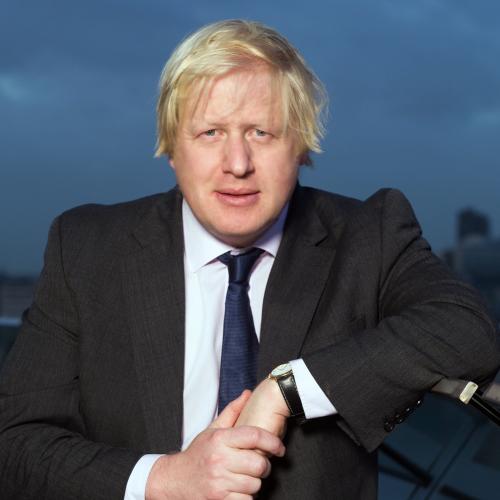
  • Matt Hancock – 2016 Speech at Royal Television Society Conference

    Matt Hancock
    Matt Hancock

    Below is the text of the speech made by Matt Hancock, the Minister of State for Digital and Culture, on 27 September 2016.

    It is a pleasure to speak at this Royal Television Society conference – and to take up the post as Minister responsible for our most vital, cherished and thriving sector.

    I’ve always thought that there is a risk that because people so enjoy what you make, they might take for granted the craft – the sheer industry – behind it. When you entertain, when people are laughing, or crying cathartic tears, or cheering on a favourite contestant, they don’t always care to be reminded that for some people – for you – this is work. Complex, demanding work.

    I do not take your work for granted. And in Government we know that you’re exceptionally good at what you do.

    Throughout its history, TV has been one of the UK’s greatest success stories. In recent years it has grown at twice the rate of the rest of our economy, and annually generates over £13 billion in revenue. Of that, the growing independent production sector now contributes £3 billion a year.

    More than just the economic statistics, your work really matters. You are one of the UK’s best shop windows, introducing the world to our culture, telling them who we are as a nation. That we are hugely creative, inquisitive, innovative, silly when we want to be, daring. The export market for finished programmes, international commissions and format sales has more than doubled in size over the past decade to over a billion today.

    You and your programmes are among our most powerful cultural ambassadors. Kids in South Korea queue to meet Peter Capaldi. Crowds in New York scream for Benedict Cumberbatch. And all over the world people make their arms into an X and tell Simon Cowell “No one wants this more than me.” That is soft power in action. And it is great for the UK.

    But of course this is also a time of great change. Digital technology is revolutionising viewing habits. And it is primarily these challenges – and these opportunities – I want to talk about today.

    Traditional TV viewing, in front of the set, now accounts for only around two thirds of the nation’s viewing time. It’s perhaps ironic that as we watch the families on Gogglebox face a traditional screen many of us will do so on phones, laptops or tablets.

    And what we watch is changing. 72% of us now regularly watch short-form videos, on YouTube and elsewhere. James Corden’s car-pool karaoke, that Calvin Harris video featuring Rihanna, Hillary Clinton’s latest spot ad, even back-copies of PMQs – everyone’s taste is catered for, mine included.

    And if we want more conventional length programmes we won’t necessarily turn to the conventional channels. Netflix now reaches 4.4 million households in the UK, and Amazon Prime over a million.

    These figures may sound unsettling – disruptive to the way you’ve always worked.

    But let’s bear in mind too that some of our greatest, most creative TV shows were made when the medium was relatively young. Series like Monty Python or the plays of Dennis Potter were able to experiment so freely, so successfully, because no one was yet clear what the rules were. Some of those brilliant, innovative shows, like Doctor Who and Coronation Street, are still with us today so it’s easy to forget just how radical they once were.

    The exciting thing about now is: the toys are new again. The rules are being rewritten. This can and should be another Golden Age of creativity.

    And the Government will support you in making it so.

    I’ve set out three core priorities for all the creative industries, and they are no less important in TV than the others.

    The first is backing success.

    In all we do, we want to back success where we find it; to build on and strengthen Britain’s creativity.

    So we have introduced new TV tax breaks. And they are working. In the first full year of the TV tax credit, nearly £400 million was invested in high-end television programmes, a further £52 million in animation, and £35 million in video games.

    Amid this constant change, Public Service Broadcasting remains hugely valued in most viewers’ lives. In a typical week, figures show 84% of us will watch Public Service television. And the vast majority – 73% of viewers, according to a recent poll – believe it is doing a fine job.

    Following one of the largest ever consultation exercises in the UK, the new draft BBC Charter establishes the Corporation’s funding, its governance, its mission and purpose, its scale and its scope for the next 11 years, beyond the life of this Parliament and the next.

    The new draft Charter secures the BBC’s independence by taking the next Charter review out of the electoral cycle and by creating a BBC Board that has fair and transparent appointments and the majority of whose members are appointed by the BBC itself.

    And by enhancing its distinctiveness, accountability, transparency and efficiency it will make sure the BBC continues to thrive. New powers for Ofcom and the NAO, new requirements on competitive tendering, partnership and market impact, and new transparency duties on pay and genre spend are all important elements of the draft Charter reform package. And of course the BBC will enjoy an inflation-linked increase to the licence fee for the next 5 years.

    The Charter also firmly embeds the BBC’s historic duty to be impartial. For liberal democracy to flourish, serious debate needs to be anchored in fact. And with a proliferation of media voices the role for our trusted Public Service Broadcasters here is ever more critical.

    Of course public service broadcasting is only part of the mix. The UK has a vibrant multichannel sector delivering over 500 channels via free and pay platforms.

    Over half of spend on content is now from these alternative sources. And, counting investment in Film and Sport, the UK multichannel sector spent over £3 billion on content in 2015. On original UK content multichannels are investing £800 million.

    These channels – and their location in the UK – bring significant benefits to our economy, including over 12,000 jobs and around £4bn of annual gross value added.

    The prestige of the UK as the number one broadcasting hub in Europe is something that I’m enormously proud of and which brings very significant benefits to the UK creative sector. I know many of you worry about the impact of Brexit.

    The EU referendum highlighted the need to bring this country together, and that can only be achieved by reaching out to – by directly addressing – all its constituent parts. You and your industry have that power.

    And your role in defining how we see ourselves as a nation – and how we are seen around the world – is more important than perhaps any other sector’s. Throughout her history Britain has succeeded best when we’ve been open, positive, engaged, and looking outwards, towards the whole world. You can help define Britain’s place in the world today, and bring the people of Britain along with us.

    On the specifics, we absolutely get the importance of: the Country of Origin principle; continuation of UK content’s designation as European work; access to skilled labour; to funding and to the central importance of the broadcasting industry.

    And we are working on those things as we prepare to negotiate Britain’s exit.

    We want to celebrate and strengthen our pre-eminent role in broadcasting as we move forward. UK success is here to stay. You can take it from me that UK success is here to stay.

    That brings me to my second principle: expanding access.

    It is a central objective of this Government that everyone, from every background, should have equal chance to succeed, equal chance to access arts and culture. In TV, you are already bringing culture – high-brow, middle-brow, resolutely low-brow, it really doesn’t matter – into homes up and down the land.

    And you do it every day of the year.

    But just as your audience is wide and diverse, so should your industry be. While there is already a push for greater diversity on-screen, and we will continue to support that, it must be matched by a similar drive behind the scenes.

    Among writers, directors, commissioners – executives. Ideally, this room would echo to a range of accents, from all parts of the country, from every ethnicity, from every class and gender. Does it yet? I challenge you. The BBC move to Salford has been a triumph, and it is one that I would like to see other broadcasters follow in terms of spreading people, production and investment beyond London.

    On diversity and social media there is already much good practice.

    I was delighted to launch Diamond in August and sure it will go from strength to strength

    The BBC is on track to meet their 2017 goal of over 14 per cent BAME representation on and off screen.

    ITV have achieved 14 per cent on-screen BAME representation across all channels.

    85 per cent of Channel 4’s commissions now meet their guidelines on diversity.

    And Sky has achieved its aim of 20 per cent on screen and writing talent from BAME backgrounds

    New technology and distribution is making it easier to break through. But does commissioning reflect the diversity of our modern nation? On gender, disability, sexual identity, and ethnicity, yes, you are beginning to make strides. But what of social and geographic diversity?

    I ask you, and I hold you to a higher standard, because a popular, demotic industry like yours, with such a wide and diverse audience, should be leading the way.

    So reflect the country you serve. Thrive on Britain’s diversity. Look to opportunities beyond the nearest horizon.

    Show by example that people from any walk of life can get ahead if they’ve got talent.

    My third priority is to drive the opportunities of digital syntheses.

    There is a very good reason I’m the Minister for Digital and Culture. The synergy between art and technology has never been more important. This link: between our creative and cultural assets, and the digital platforms and technology that deliver it, is, in my profound belief, how Britain will pay her way in the twenty first century

    This sector is perhaps the best example of what I’m talking about: the pipes and wires of digital delivery meet the beauty and creative genius of the TV sector. Convergence has delivered exciting, disruptive new business models and programme formats like the challenge of multi platform media.

    I’m very clear on our job.

    If a Wikipedia page is slightly slow to load, it probably won’t greatly try the patience. If a programme we’re engrossed in begins to buffer it can feel like the end of the world. And all the tension you’ve carefully crafted – the gags you’ve expertly timed – are ruined.

    So I’m absolutely determined the UK’s digital infrastructure must-be world-leading. We have substantially invested in our digital communications infrastructure – both for mobile and fixed connectivity – with three quarters of a billion pounds from central government. We are rolling out superfast broadband across as many homes and businesses as possible. We have already achieved 90% coverage. We are on track to reach 95% by the end of next year, and we are pushing fibre too.

    It will get easier and quicker, year on year, for people to access the brilliant shows you make.

    And digital needs content. That nexus between technology and culture is our future economy’s sweet spot, and it is at that nexus that your industry has always lived, and where it must continue to thrive.

    Yes there are challenges but there are huge opportunities to reach more people, to open more minds, embrace new technology to educate, excite and entertain like never before. That is a passion we share and in doing so I will be at your side.

  • Andrew Jones – 2016 Speech on Road Safety

    andrewjones

    Below is the text of the speech made by Andrew Jones, the Parliamentary Under Secretary of State for Transport, at the National Safer Roads Partnership on 27 September 2016.

    Introduction

    Good morning everyone and thank you Adam for that introduction.

    It’s a real pleasure to be here and to be part of an event that brings together so many distinguished experts and professionals.

    Everyone is dedicated to a common cause of making Britain’s roads safer and it’s a job you do incredibly well. We focus so much on the number of fatalities and injuries on the road network, none of us will ever know precisely how many lives are saved each year through prevention.

    Through police enforcement, dedicated road safety specialists within local authorities and your efforts, we can be sure that it’s a very significant number.

    That’s why we in government so value what you do and why we want to help you do your jobs as effectively as possible.

    Indeed, we have a manifesto commitment to reduce the number of people killed or injured on our roads every year and 9 months ago, we published our Road safety statement, setting out the government’s priorities for improving safety over this parliament.

    It included:

    – adopting the safe systems approach to reduce the severity of collisions so more people survive

    – protecting vulnerable road users, from pedestrians and cyclists to horse riders, motorcyclists and younger drivers

    – taking tough action against those who speed, exceed the drink-drive limit, take drugs or use their mobile phone while on the road
    promoting connected and autonomous vehicle technologies in a way that maximises safety

    – preparing new motorists for the road through better driver testing and training

    – enabling the police to use modern enforcement technologies, while protecting the privacy of law-abiding people

    We also pledged to work more closely with stakeholders like the insurance industry and employers and to support further devolution of road safety policy.

    Altogether the Road Safety Statement detailed 47 actions which we are delivering with you and the broader road safety sector.

    How much progress has been made?

    We’ve already provided £1 million for police forces in England and Wales to support drug-driving enforcement. This has been backed up in March by the launch of the THINK! drug driving campaign which sends a clear message to the public.

    We’re not just going after the utterly irresponsible minority who drive after taking drugs but also warning those who might consider it in the future that the consequences will be very serious indeed.

    This was groundbreaking work.

    Today I’d like to thank police forces around the country for making it such a success. Elsewhere, we’ve helped local authorities introduce safer traffic signalling and signage and we’ve recently announced new arrangements for our RAIDS collision research programme.

    Specialist teams attend the scene of road incidents minutes after they’ve occurred to gather vital evidence.

    Phase 1 saw over 1200 collisions investigated and the findings have already proved vital. We’ve also launched several consultations to ensure that road safety keeps pace with changing technology. These include:

    – mobile phone penalties

    – changes to the driving test

    – connected and autonomous vehicles

    – Using electronic devices while driving

    The use of a hand-held mobile phone at the wheel increases the likelihood of a collision 4-fold and It’s a growing problem.

    In January, we launched a consultation proposing increased fixed penalties for phone use while driving and we talked about increases from £100 and 3 penalty points to £150 and 4 penalty points and 6 for lorry drivers.

    However, such is the threat posed by mobiles that we now plan to go further with much tougher penalties for motorists using their devices while driving whether calling, texting, or using an app.

    We are also developing a THINK! campaign to drive home the message.

    You might not be the sort of driver to speed, or drive while under the influence of drugs or alcohol but the simple act of glancing down at your mobile phone to send a text at the wheel can be just as dangerous.

    We expect to introduce new sanctions in the first half of 2017.

    Younger drivers

    We also want to improve safety of younger and novice drivers.

    In fact, around 1 in 5 new drivers are involved in a crash within 6 months of passing their test and following a trial, the DVSA has run a consultation on making sure the driving test reflects today’s driving conditions.

    As a result, the proposed new driving test will include a longer period of independent driving and more realistic manoeuvres and a requirement for the driver to follow directions from a sat nav, and answer questions at the wheel.

    Connected and automated vehicles

    Another consultation came from the Centre for Connected and Automated Vehicles (CCAV).This new technology promises to profoundly change the way we travel – making road transport not just smoother and smarter, but safer too. After all, 90% of collisions involving some form of human error.

    With automated vehicles in their infancy, we need to avoid regulating too soon or too far so the consultation set out proposals for reforming regulation to support the introduction of these technologies.

    We will publish the outcomes shortly. And there will be more to come.

    Accuracy and relevance of evidence

    Like much road safety work, progress depends on the accuracy and relevance of evidence.

    Highway authorities, police forces, educators and campaigners spend hundreds of millions of pounds a year on road safety in Britain.

    And everyone in this room will recognise the critical importance of evidence in getting these decisions right.

    This is why we as a government put so much value on police-recorded collision data and we know how much time and work goes into collecting and validating it.

    One of our concerns in recent years is whether it’s sufficiently accurate or timely and that’s why £7 million has been invested to create CRASH. This is a common platform for police forces to collect and process collision data and we already we are seeing the benefits.

    The average delay between a collision occurring and data arriving at the Department for Transport (DfT) has dropped from around 80 to 30 days. This means highway authorities can respond to problems more quickly.

    The use of mapping as part of the data entry can also reduce the number of incorrectly plotted collisions meaning that authorities are less likely to waste valuable funds.

    New information about the type of injuries victims are suffering will help improve road safety policy.

    CRASH is not yet perfect but we will continue to work with you to understand how it could be made better and to improve the quality of data.

    Management capacity review

    Finally, to join all this together, we hope soon to start our ‘management capacity review’ which we will look across the road safety industry to identify areas for improvement.

    It’s crucial that the sector has the capability to strengthen the evidence-base, and ensure that road safety interventions really deliver and bring down the number of road deaths and injuries.

    That’s what the review will accomplish.

    Conclusion

    So the road safety landscape is changing, technology is changing and techniques are changing.

    We have to change if we want Britain to retain its reputation for road safety excellence.

    Pushing to improve everything we do.

    Focusing our attention on all the areas covered by the ‘safe systems’ approach, from safer roads and vehicles to gathering better evidence.

    I’m absolutely confident that we have the right strategy. I’m absolutely confident that we have the most professional and dedicated road safety industry in the world and I’m absolutely confident that together, we can continue reducing the number of road collision victims in this country.

    Thank you.