Tag: 2016

  • Boris Johnson – 2016 Speech on Leaving EU Creating More Money for NHS

    Boris Johnson – 2016 Speech on Leaving EU Creating More Money for NHS

    The speech made by Boris Johnson, Gisela Stuart and Boris Johnson on 3 June 2016.

    A STRONGER NHS AND MORE MONEY FOR THOSE IN NEED – WHY LEAVING THE EU HELPS PROTECT WORKING PEOPLE

    Our NHS is a precious asset. No other European country gives its citizens the guarantee of free healthcare, there when people need it, irrespective of ability to pay.

    The NHS is a great British institution and its core values – of solidarity, fairness and inclusivity – need to be protected and defended. The wealthy can always buy themselves top quality care and jump the queue for treatment. Working people don’t have that option. Working people need an NHS which is strong and well-funded to give them security at every stage in their lives.

    As our population grows, and as we all live for longer, so the pressures on the NHS are set to grow. We believe that one of the best ways to protect, and to strengthen, the NHS, for the people of this country is to use some money we currently spend on EU membership to invest in improving healthcare.

    The NHS leadership has said it needs an additional £30 billion each year by 2020 to meet future pressures. Eight billion pounds will come from spending increases, and £22 billion will need to come from efficiency savings. The Government rightly committed at the last election to meet that £8 billion target.

    But we don’t underestimate how difficult it will be to make the £22 billion worth of efficiency savings. Again, we are sure ministers, managers, doctors, nurses and everyone in the Health Service will do everything they can. However, trusted health experts such as the Nuffield Trust, the Health Foundation and the King’s Fund have all stressed how difficult it will be to achieve the planned net efficiency savings of 2% each year.

    This level of savings is far above what the NHS has achieved historically. And the demand for NHS services is only set to grow. NHS Improvement, the NHS regulator, has identified rising demand as one of the principal challenges for the NHS’s future funding.

    If we vote to leave the EU on 23 June, we will be able to do something about one of the main causes of higher demand – uncontrolled and unlimited migration from the EU into the UK.

    In 2015, 270,000 people came to the UK from Europe, a population movement equivalent to all the inhabitants of a city the size of Newcastle arriving in our country. Net migration was 184,000, a population increase equivalent to adding a city the size of Oxford to the UK population. Year after year, similar numbers arrive.

    On top of this, between 2005 and 2014, there were 475,000 live births to mothers who were EU citizens. This is the equivalent of adding a city the size of Manchester to the UK population. The cost of maternity services alone to these families is likely to exceed £1.3 billion.

    As we have set out before, it is government policy for five new countries to join the EU: Albania, Macedonia, Montenegro, Serbia and Turkey. We are paying billions to these countries to help them join. The EU is already opening visa-free travel to Turkey. That would create a borderless travel zone from the frontiers of Syria and Iraq to the English Channel. The EU’s plans for future growth will lead to demands being placed on the NHS far beyond what its funding can cope with.

    We have set out our plan to change the immigration system after we vote to leave. We will end the ‘free movement’ of people from the EU and take back control. We will introduce a points-based system under which migrants will be admitted to the UK on the basis of their skills, not their passport.

    But even after we take back control of our migration policy, the NHS will still face funding pressures. Restoring control over our borders is a necessary step, but there is more we should do to guarantee quality care for working people.

    We need to ensure the NHS has as much money as possible and after we vote to leave we will have the means to do so without damaging public finances.

    After we Vote Leave on 23 June, the Government should use some of the billions saved from leaving the EU to give at least a £100 million per week cash transfusion to the NHS.

    This money will be over and above the commitment that the Prime Minister rightly made at the last election to an £8 billion real terms increase.

    How can we pay for this additional spending? From the money we save from leaving the EU.

    The UK’s gross budget contribution is currently over £19 billion or £350 million per week. According to Treasury estimates, this will increase to nearly £400 million per week by 2020.

    We get some cash back through a negotiated rebate and some other money we hand over to the EU is spent here in the UK on areas like farm subsidies.

    But the rebate is not a fixed benefit anchored in the treaties. It is there only by the consent of other EU nations, it has to be negotiated, it has already been reduced, and if we vote to stay it can, and will, be whittled away.

    If we Vote Leave, we take back control of the whole sum. We will no longer be dependent on other countries to protect the money we get back in our rebate. And we will continue to support farming, science, universities and poorer areas of the UK with the money they currently receive from the EU.

    That would mean we would then be able to spend all of our net EU contribution of £10.6 billion on our priorities like the NHS and cutting VAT on fuel.

    Other money will also be liberated to spend on public services in the event of a vote to leave.

    We have already set out plans to amend the European Communities Act 1972 immediately after the referendum to stop multinationals using EU law to claim tax refunds in the UK. This will save taxpayers between £7 billion and £43 billion by 2021.

    It is wrong that big businesses have been using the European Court to starve public services of money they could never have recovered under English law.

    If we leave the EU we could also restore our system of taxation of offshore companies which was set aside by the European Court. The European Court’s judgment has cost UK taxpayers an estimated £840 million each year.

    We can also scrap the EU’s foolish rules on how Whitehall runs procurement processes which add billions to costs every year. The European Commission’s own conservative figures suggest that procurement rules cost at least £1.7 billion each year and delay projects by years.

    There are billions of savings that Government will be able to make after we vote leave and escape the control of the rogue European Court.

    A vote to leave is a vote for a fairer Britain. You only have to look at who funds the IN campaign to realise this: the undeserving rich, the investment banks that crashed the world economy in 2008 and who bankrupted the people of Greece, and the multinational corporations who spend millions on lobbying the corrupt Brussels system.

    This is the choice on 23 June.

    A Vote to Remain means that we keep handing over control of £350 million of our money to the EU every week. A Vote to Remain means we cannot control immigration. A Vote to Remain means greater pressure on the NHS, school places and housing.

    If we Vote Leave, we can take back control of our borders and our money. By 2020, we can give the NHS a £100 million per week cash injection, and we can ensure that the wealthy interests that have rigged the EU rules in their favour at last pay their fair share.

    That is why we believe a Vote to Leave is the right choice for social justice, safer for public services, jobs, and families and better for the next generation.

  • Liam Fox – 2016 Speech on Housing Pressures Caused by Migrants

    Liam Fox – 2016 Speech on Housing Pressures Caused by Migrants

    The speech made by Liam Fox on 2 June 2016.

    All across the country, local authorities are facing huge challenges to meet additional housing targets set by Central Government. Local communities are facing the loss of green spaces in the rush for housebuilding, often failing to take into account the limitations on existing infrastructure.

    Take the village of Yatton, in my own constituency of North Somerset, for instance. Despite having no surplus school places, fully saturated GP surgeries and an already overstretched road system, it is typical of innumerable of villages across the country, where local communities are being asked to absorb large numbers of extra houses without any realistic possibility that the money will be found to provide the extra infrastructure required.

    It is a story being repeated time and time again in more and more places. People rightly ask, “how much of our green space will disappear, possibly forever?” and “how much of our quality of life will be compromised to deal with problems often created far away?”

    And they are right that the problem that is being faced at the local level begins well away from our communities at the level of national policy failure. It lies in the failure to control the growth of our population through immigration, including immigration from the European Union.

    As the Government fails to control the increase in the population due to migration, it forces local authorities to build more and more houses to deal with the ripple effect.

    If we remain in the European Union we will be forced to accept unlimited free movement of people – but there will be no free movement of space coming with them. The inevitable result will be worsening overcrowding in our land limited country.

    Most of the focus in the housing debate has been on supply. There is a relatively broad consensus that the UK needs to build around 250,000 additional homes every year to meet current demand. In the last ten years an average of only 170,000 have been built and the debate has largely been around how changes to planning can facilitate the level of house building required.

    Yet, what this approach to the problem fails to understand is that it is not merely an issue of supply, but one of demand.

    For much of the 20th century, the number of households grew at a faster rate than the population as a whole. Changes in social behaviour, such as divorce and the increased tendency for people to live alone, as well as demographics, meant that the average household size fell. In recent times, however, average household size has changed little, and the key factor driving the growth in household numbers has been population growth.

    The total non-British net inflow of immigrants is close to 350,000 with migration from the EU now accounting for about half of that figure.

    The outcome of the recent renegotiation of benefits will make no significant difference to these numbers, as the office for budget responsibility, the government’s advisory body has confirmed.

    This implies continued total net EU migration to the UK of the order of almost 200,000 people per annum.

    This number is growing dramatically and has already more than doubled since 2012.

    The continuing failure of the Eurozone and the tragically high levels of unemployment in Southern Europe is likely to mean that more and more young people will head to the North of Europe, including the UK, in search of work.

    And all this does not include those countries who may join the EU in the coming years.

    All these factors could considerably boost the numbers and we are powerless to stop it. Staying in the EU is likely to mean continued high levels of immigration over which the UK would have no control while leaving the EU would give back control of immigration policy to the UK government so enabling the number of immigrants to be reduced while, at the same time, being more selective about who can come to the UK.

    Continuation of net migration on the current scale would mean an increase in our population of almost 5 million in 15 years’ time.

    This would be the equivalent of adding the combined population of the cities of Birmingham, Glasgow, Manchester, Liverpool, Leeds, Sheffield, Bradford and Bristol.

    60% of this increase would be from future migrants and their children. This is not a scare story, simply an extrapolation of how today’s immigration figures will impact on our society in the years ahead if changes are not made to policy. Half of this huge figure is attributable to the EU.

    Official figures show that in the last ten years, two thirds of additional households in the UK have been headed up by an immigrant (that is to say that they had a foreign born “Household Reference Person (HRP) – what used to be known as head of household) [c]. Households with a foreign born HRP have increased by around 120,000 a year during this period.

    In London, despite the rapid growth in population the number of households headed by a British born person has actually fallen in the last ten years.

    This is a particular problem in England which takes over 90% of immigrants to the UK despite the fact that it is is already nearly twice as crowded as Germany and 3½ times as crowded as France.

    Yet population growth on the present scale means making our urban areas still more overcrowded or building over valuable green belt or farmland with all the loss of amenity involved.

    At current levels of immigration, the Office for National Statistics project that our population will continue to grow by around half a million a year – a city the size of Liverpool every year.

    This will mean that, in England, we will have to build a new home every six minutes, or 240 a day, for the next 20 years to accommodate just the additional demand for housing from new migrants. That is before we take into account the needs of those who were born here.

    Of course, it would be wrong to imply that most newly built housing is occupied by immigrants. Many immigrant households move into existing properties. The need to build a new home every 6 minutes it is to deal with the additional demand for housing, it is obviously not that these new homes will be occupied directly by immigrants.

    To be even more specific, the difference in projected household growth between ‘high’ net migration and ‘zero’ net migration is 95,000 households per year or more than one additional household every 6 minutes.

    These patterns create consequences for almost all sections of society.

    Most new immigrants move into the private rented sector which has grown as the immigrant population has grown. Competition for rented accommodation obliges all those in the private rented sector to pay high rents which take a large share of income and makes saving to buy a home even harder.

    These resulting high rents and a shortage of housing make it much more difficult for young people to set up home on their own so they have to spend more time in house shares or with their parents.

    The problem in the private rented sector may well be exacerbated by recent moves to clamp down on the buy to rent sector.

    High rents and high house prices resulting from an imbalance of supply and demand in the market often means that families have to live in overcrowded conditions or move away from their local area to find suitable accommodation that they can afford.

    Those living in the parts of the UK with lower housing costs cannot afford to move for work leaving, them trapped in areas with fewer opportunities.

    Of course there are other drivers to housing demand, some of which will have been hidden by the recent undersupply in the market.

    For example, if supply were to be increased some younger people would leave their parents’ home or house shares thus adding to effective demand.

    But this cannot get away from the fact that a huge increase in population is driving a demand for housing that we are finding difficult to cope with, at least without potentially damaging the quality of life for those who already live in our country.

    A satellite survey by a research team at the University of Leicester between 2006 and 2012, found that between 2006 and 2012, 22,000 hectares (54,000 acres) of green space in Britain was converted to “artificial surfaces” – mostly housing, but including the roads, other infrastructure required to support the houses themselves.

    More than 7,000 hectares of forest was felled, 14,000 hectares of farmland concreted and 1,000 hectares of precious wetland was drained to make way for urban sprawl.

    That’s a landscape twice the size of Liverpool, transformed forever, in just six years.

    Without a substantial change in policy, the same thing will happen – again and again and again.

    Membership of the European Union is usually measured in monetary terms but there are other ways of measuring the cost.

    A constant unchecked flow of migration will inevitably result in more of our open spaces and natural greenery being turned over to housing.

    Some of that may be inevitable, with growth of our own population, or changing social behaviours, but simply because some of this pattern may be inevitable is no reason to be resigned to it.

    My message, especially to the young and those with young families is this – if we remain in the EU, if we have uncontrolled migration year after year after year after year, you will find it harder to get a home of your own.

    You will find it harder to see a GP or you will find it harder to get a school place and you will see our green spaces disappear at an even greater rate.

    If we are unable to control immigration and registered from its current levels, then we will pay a much more subtle and long-term price than money can measure.

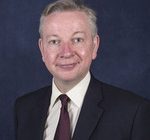
  • Michael Gove – 2016 Speech on Why UK Should Leave European Union

    Michael Gove – 2016 Speech on Why UK Should Leave European Union

    The speech made by Michael Gove on 8 June 2016.

    I want to thank Dominic for the masterly way in which he has laid out the security risks of staying in an unreformed European Union. With the precision of a great lawyer and the clarity of a truly gifted minister he has made an unarguable case.

    Of course our security rests on the robustness of our borders, the rigour of our surveillance and intelligence systems and the ability of the police and other agencies to take all the necessary steps to keep us safe.

    These are vital policy and operational questions. As Dominic has shown, we currently lack the control we need to maximise our resilience against a range of new threats.

    I want to touch on one other area where we need to feel a greater degree of confidence if we are to safeguard our society in the future. The question of values. Liberal, democratic, values.

    OUR VALUES UNDER CHALLENGE

    If we consider the threats we face today they are – in their origin – ideological. Conflict in the nineteenth and early twentieth centuries was driven primarily by competition between empires and nation states whereas conflict today is driven increasingly by competition between ideologies.

    The terror threat from ISIS, Boko Haram, Al Qaeda and their brothers in Hamas and Hizbollah springs from Islamist fundamentalism. Vladimir Putin’s Russia is driven by an anti-liberal, anti-democratic ideology rooted in an imagined Russian past and revived by figures like Alexander Dugin who see their country providing an alternative to the post-Christian and decadent West.

    If we are to safeguard our country, and indeed our allies, in this world of new dangers then we need not just the right tools, policies and institutions, the right policing, data-gathering and security forces, we also need to be resolute in our support for the right values.

    The United Kingdom has played a distinguished global role in the past as an upholder and defender of liberal democratic values – all the while doing so as an independent democratic nation state.

    Whether it was suppressing the slave trade, or supporting liberal nationalist movements against static autocratic European empires, in the first half of the nineteenth century or seeking to defend the rights of small nations and the principle of self-determination in the twentieth century, the United Kingdom has been clear about its values. And the clearer and more confident we’ve been about our values, the better we’ve been able to defend those values.

    A belief in parliamentary democracy, in the accountability of the powerful to the people, in the settling of laws, taxes and rules by elected representatives, in the independence and objectivity of the judiciary, and in vigorous free speech and open debate – these beliefs have characterised this country for centuries. And it’s by standing firm by those values that we have been able to be a global champion for freedom, working with our allies, for many generations.

    Liberal and democratic values are, of course, very far from being a British possession alone. Ludwig Erhard and Karl Popper, Theodore Herzl and David Ben-Gurion, Alexis de Tocqueville and Raymond Aron, Hernando de Soto and Aung San Suu Kyi are all great liberals and democrats who embody the best in shared humanist values.

    NATION STATES AS VESSELS FOR OUR VALUES – AND HOW THE EU UNDERMINES THEM

    But while these values have universal application they are, history tells us, best upheld and defended by nation states.

    That is one of the central reasons why this debate on our membership of the European Union matters so much.

    If power is to be held accountable it needs a democratic culture and a common electorate to hold it to account. That means a nation state.

    And if a nation state is to be sustainable it needs to know its borders and enjoy a sense of shared allegiance.

    Despite the idealism which attended its birth, the EU is not democratic. The people who guide its destiny – the Five Presidents of Europe – have never been directly elected to their current offices, are in no way democratically accountable, indeed their identities are scarcely known to most of Europe’s citizens. Even one of my most intelligent – and most pro-European Union – friends the editor of the Financial Times Lionel Barber – when questioned last week couldn’t name all five.

    The EU is indeed actually designed purposely to frustrate democracy. Its institutions exist to transfer power away from accountable parliaments in liberal nation states to the supra-national level.

    Of no institution is this more true than the European Court of Justice. The ECJ is, as Dominic pointed out, a court with an activist agenda to advance integration and erode national sovereignty.

    It has been given a hugely powerful tool to advance its agenda in the Charter of Fundamental Rights, which came into force in 2009 and which goes much, much further than the post-war European Convention on Human Rights.

    We believed we had an opt-out from the operation of the Charter nailed down at the time of the Lisbon Treaty.

    But the ECJ — against which there is no right of appeal — has now made it clear this so-called opt-out was nothing of the kind.

    The Luxembourg judges simply disregard it when making rulings based on the Charter, for example on applying the 1951 UN Convention on Asylum and Refugees.

    The Luxembourg Court’s willingness to set aside agreements between nation states is not just troubling in itself as evidence of how an elitist institution at the heart of the EU seeks to override democratic principles, it should also give us warning that agreements made in good faith – like the renegotiation we secured in February – can also be overridden in future.

    If the Court believes an agreement between states runs counter to its own interpretation of the Treaties then the Court will insist on its will being done. As Denmark found when agreements made in the aftermath of its rejection of the Maastricht Treaty were overridden by the Court.

    It’s not just the Court which is prepared to set aside agreements and rip up acts which stand in the way of its integrationist agenda. When the euro ran into, inevitable, difficulties the EU set aside its own rules to provide bailouts for Greece.

    Article 125 of the EU Treaty could not be clearer when it states ‘the Union shall not be liable for, or assume the commitments of, central governments, regional, local or other public authorities, other bodies governed by public law, or public undertakings of any Member State.’

    Yet that clear legal declaration was ignored when it got in the way of keeping the eurozone going. The EU has shown it is willing to cast aside solemn agreements and trample over the rule of law if integration is threatened.

    The high-handedness and undemocratic nature of EU institutions, the ongoing failure of the euro and the economic misery it has brought have all contributed to a weakening of liberal and democratic forces across Europe.

    Extremist and populist forces have grown in strength. A far-right party in Austria has come within an ace of the Presidency, an openly anti-semitic party is the second force in Hungarian politics, Marine Le Pen is in pole position for the French Presidency. The growth in fringe parties has made it much more difficult to form stable governments in EU states such as Spain and Ireland and has brought Nazis into the Greek Parliament. Our ability to present a united front across the West in defence of liberalism and democracy is currently vitiated and undermined by the operation of the EU and its institutions.

    Being more muscular in our liberalism and more insistent on democracy

    The weakening of nation states in Europe has not been accompanied, however, by any upsurge of faith, confidence or loyalty towards EU institutions. Quite the opposite. They command no popular affection, inspire no popular admiration, enjoy no popular enthusiasm.

    And because nation states are less able to assert and embody liberal and democratic values, while EU institutions lack liberal and democratic legitimacy, the forces of liberalism and democracy have been weakened just when they need to be asserted more vigorously than ever.

    Our Prime Minister has been right, and brave, in arguing forcefully that we need to take on the poisonous narrative peddled by Islamist extremists.

    But in order to counter Islamist extremists as effectively as possible we need not just to challenge their beliefs but assert confidence in our own.

    That means strengthening national parliaments, not weakening them, upholding the rule of law not abrogating it and, above all, expressing confidence in nation states and the democratic accountability they bring. The more confident and optimistic we are about the United Kingdom, its traditions, values and potential the better equipped we are to counter enemies of liberalism and democracy.

    And there are particular times when the assertion of our liberalism needs to be especially muscular.

    Nowhere more so than when the essential freedom – freedom of speech – is threatened.

    Which brings me to the case of Turkey.

    That country’s democratic development has been put into reverse under President Erdogan.

    The country which achieved so much under the secular nationalism of Ataturk and his successors is now moving backwards under Erdogan and his Islamist rule.

    The NGO Freedom House has found that freedom of expression is being ‘undermined by provisions in the penal code, the criminal procedure code, and the harsh, broadly worded anti-terrorism law’.

    Journalists who seek to expose corruption have been arrested and efforts to investigate Turkish relationships with fighters in Syria have been thwarted.

    Erdogan’s assault on free speech doesn’t stop at his own borders.

    Erdogan demanded – and won – Angela Merkel’s agreement to the prosecution of the German comedian Jan Böhmermann for producing a lewd poem about him.

    We and the European Union should be protesting in the clearest and loudest possible manner at this erosion of fundamental democratic freedoms.

    But instead we and the European Union are making concession after concession to Erdogan.

    Let’s look at the facts.

    Fact One. It is official British Government policy for Turkey to join the EU, restated by Ministers time and again.

    Fact Two. It is official EU policy for Turkey to become a member. Indeed the Commission has announced the pace of accession will be accelerated.

    Fact Three. Turkey has threatened to end cooperation in stopping mass migration unless the deal for visa-free travel to Europe is implemented in full.

    Fact Four. This visa-free zone which stretches from Turkey’s border with Syria, Iraq and Iran to the English channel is anticipated to start this year once this referendum is out of the way. Sir Richard Dearlove, former chief of MI6, has warned that this is like ‘storing gasoline next to the fire we are trying to put out’.

    Fact Five. The British Government is spending nearly £2 billion to help five countries join the EU including Albania, Serbia, and Turkey.

    Fact Six. It is official British Government policy not to have a referendum on new countries joining. As As things stand, the British people won’t be given a vote in the future on Turkish accession. We were not offered a referendum when Bulgaria, Romania or 17 other states joined. Your only chance to have a say on this is on 23 June.

    With the terrorism threat we face only growing, it is hard to see how it could possibly be in our security interests to open visa free travel to 77 million Turkish citizens and create a border-free zone from Iraq, Iran and Syria to the English Channel.

    It is even harder to see how such a course is wise when extremists everywhere will see that the West is opening its borders to appease an Islamist Government.

    We have a chance on June 23rd to signal with our votes that we want to follow a different course. That we believe in democracy, that we have confidence in our country and its values, that we want the EU at last to get the jolt it needs to change, that we want fundamental liberties upheld, we want to take control of our destiny and we want to stand resolute for freedom. I hope the people for this country take that opportunity, and that stand, and Vote to leave and take back control.

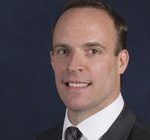
  • Dominic Raab – 2016 Speech on Controlled Immigration

    Dominic Raab – 2016 Speech on Controlled Immigration

    The speech made by Dominic Raab, the then Secretary of State for Justice, on 8 June 2016.

    There is no European country more global in outlook than Britain.

    We trade more beyond this continent than any EU country except Malta.

    Britain is a hub for many of the world’s commercial networks.

    The one truly global language is English,

    And millions of our citizens have family ties beyond Europe, whether with the Indian subcontinent, Australia, New Zealand or Africa.

    I’m only here today because Britain welcomed my father as a refugee from Czechoslovakia in 1938.

    So, I appreciate the advantages of immigration.

    I feel the emotional tug of Europe.

    And I understand the lessons of history.

    But you can feel European and want to leave the anti-competitive and undemocratic EU club.

    It’s not about being a Little Englander.

    I started my career as an international business lawyer, and I later worked at the Foreign Office.

    I spent 3 years posted to The Hague, representing the UK at global institutions like the International Criminal Court and working closely with EU bodies like Eurojust.

    I lost count of how many times Australian, Japanese, Brazilian diplomats bitterly lamented the inward, navel-gazing, focus of EU discussions … at the expense of what was going on in the rest of the world.

    I also have a wife from Brazil, and two young sons.

    My 3 year old already speaks better Portuguese than me.

    I want them to have a perspective of the world beyond our shores, and beyond Europe.

    And I want Britain to leave the EU so we can be more, not less, of a global nation.

    That’s why I am so disappointed with the EU’s lousy record on negotiating free trade deals, from Asia to Latin America.

    And, yes, if we want to be a truly global player,

    With world-beating economic competitiveness, and broad horizons, immigration will be vital both to a thriving economy and a tolerant, outward-looking, society.

    Controlling Immigration

    But, common sense says it has to be properly controlled.

    So, people come in at a rate that can be absorbed by local communities.

    Last year, over a million arrived in Europe from the Middle East, north Africa and beyond.

    They swept across the continent.

    In the UK, net migration was 333,000 last year.

    The government’s pledge is to reduce it to the tens of thousands.

    Yet, net migration from the EU was 184,000 alone.

    Those numbers are likely to rise as economic migrants flee the mass unemployment the single currency has inflicted on southern Europe.

    And they will increase further with Turkey and four low-income Balkan states being lined up for EU membership.

    We could just take the view that mass migration is an irresistible force.

    That national borders are outdated.

    If those campaigning for Britain to stay in the EU embrace that view, they need to be honest with the public about it, including the impact it will have.

    It’s no good dismissing concerns based on people’s real life experiences,

    Of finding their local schools full,

    Of struggling to get a GP appointment, or a home they can afford.

    Of having their wages undercut.

    And those campaigning to stay in the EU need to be up front about who bears the burden.

    Because it is often those on the lowest incomes who feel these pressures the most.

    The Bank of England has calculated that, for this group, every 10% increase in migration leads to a 2% fall in wages.

    Ultimately, if we don’t take back control, I fear Britain’s traditional openness may be tested as never before.

    When I lived in Holland, I saw first-hand the emergence of a nasty strain of anti-immigration politics in the aftermath of the murder of the politician Pym Fortuyn.

    People felt mainstream parties ignored their concerns about immigration.

    It became an issue of mistrust in the political class, not just immigration policy.

    We are seeing it spread across Europe.

    I don’t want it here.

    So, David Cameron was absolutely right to test the dogmatic consensus in Brussels in favour of the rigid rules on free movement.

    They should have listened to him.

    But, we got short shrift, no change to allow us to control the volume of immigration.

    The dogmatic defenders of the EU’s free movement rules are like the most stubborn opponents of gun control in the United States.

    They believe that because something was written into a constitutional document long ago.

    It must be sacrosanct,

    It can’t be challenged,

    Even when it is causing such tensions,

    Even when it puts our safety at risk.

    Security and Border Checks

    Let me turn to security.

    Of all the security issues debated in this referendum, there is one absolutely clear-cut dividend from leaving the EU.

    That is our ability to regain control of our borders.

    Including far stronger powers over who we can deport.

    And proper preventative checks at the border.

    At the moment, we can’t bar anyone in possession of an EU passport or identity card unless they represent a “genuine, present and sufficiently serious threat” to our security.

    There’s two points here.

    First we are forced to rely on other EU government’s putting in place proper controls.

    And yet we already have a very serious problem with other EU states undermining proper border controls and effective passport checks.

    We have to admit EU citizens with residence cards, even though Frontex, the EU’s own external border agency, says these documents are forged on a systematic basis.

    The European Court has prevented us requiring persons from the EU to have documents issued by our Government to come to the UK.
    EU law even forbids us from automatically refusing entry to people without any travel documents at all.

    But this is only the start of the problem.

    On your chair is a photocopy of a Cyprus estate agent journal, advertised particularly to Russians as the Russian text shows.

    This shows open, flagrant selling of EU passports.

    Once people buy these EU passports and with it citizenship of an EU member state, they have the automatic right to come to the UK because of ‘free movement’.

    Given this is already happening at scale, imagine how much worse this problem will be after the next wave of EU accessions.

    The second point concerns the substantive EU test for denial of entry and deportation.

    Even if that high threshold – a genuine, serious, present threat to our security – is met, we have to disclose the reasons to the individual barred, even if that itself could endanger national security.

    We can’t just deny entry to someone, because they made an unexplained trip to Syria, or because sketchy intelligence suggests a link to terrorist activity.

    We can’t even bar people from coming in, solely because they have a criminal record, even for murder.

    Yes, in the past ten years since the Free Movement Directive entered into force, we have refused entry to around 11,000 people coming from the EU.

    But that compares with more than 200,000 barred from outside Europe, who can be excluded simply because their presence is deemed not conducive to the public good.

    That’s the massive difference in the operational bite of our border powers, as a result of EU law.

    Ronald Noble, the former head of Interpol, called the EU open borders policy a “real and present danger” that “abets terrorists”, as shown by the ease with which the Paris and Brussels terrorists moved to and fro across Europe.

    We know Mohammed Abrini, accused of involvement in both the Paris and Brussels bombings, visited the UK three times in 2015, despite a criminal record for robbery and other violent offences.

    We have a terrorism trial going on at the Old Bailey right now,

    Which will shed further light on the links between plotters based in Birmingham and Brussels.

    But it’s clear that the EU’s fetters on our power to deny entry and deport are crucial security issues.

    Both sides in this referendum recognise this.

    That is why the Prime Minister made it a key point in our renegotiation, in his letter to Donald Tusk last November.

    But, the EU point blank refused to change the Free Movement Directive, let alone the EU treaties.

    In fact, the Council Conclusions re-asserted the current rules.

    The best the Commission could offer was to ‘examine the thresholds’ on deportation and denial of entry.

    If the Free Movement Directive is revised at some indeterminate, unspecified, point in the future.

    That means: no change.

    Not even a promise of future change.

    We can’t responsibly bet this country’s security on that.

    It is now the EU and the Luxembourg Court that present the clear and present danger to our security.

    They put their ivory tower dogma of EU free movement ahead of the safety of our citizens.

    Sir Richard Dearlove, the former head of MI6, says leaving the EU would bring important security gains.

    Peter Higgins, former head of immigration at UK ports, describes the passport checks we have in place because we are outside Schengen as ‘pretty minimal’.

    And evidence from the EU’s own institutions, Frontex and Europol, shows the rising security risk we face, if we stay in the EU.

    Conclusion

    When the British people vote to leave the EU and take back control on June 23rd, we will be able to restore control over our immigration policy and our borders.

    An Australian-style, points-based regime so we can choose who comes to this country, based on the skills we need, not the passport of the applicant.

    That’s better for Britain, and it will remove the arbitrary discrimination against non-Europeans.

    Operational law enforcement cooperation with our European partners will continue, because it is in everyone’s interests, and the EU already engages in important operational cooperation, from data-sharing to police cooperation, with non-EU countries, from the US to Australia.

    But, critically, we can put in place the proper border controls required to keep Britain safe.

    I want make sure immigration is managed in the best interests of our economy and our security.

    That’s why I will be voting to leave the EU, to take back control of our borders on 23 June.

  • Dominic Raab – 2016 Comments on Tackling Corporate Fraud

    Dominic Raab – 2016 Comments on Tackling Corporate Fraud

    The comments made by Dominic Raab, the then Justice Minister, on 12 May 2016.

    The government is finding new ways to tackle economic crime and we are taking a rigorous and robust approach to corporations that fail to prevent bribery or allow the tax evasion on their behalf.

    We now want to carefully consider whether the evidence justifies any further extension of this model to other areas of economic crime, so that large corporations are properly held to account.

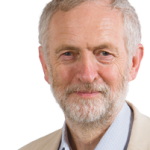
  • Jeremy Corbyn – 2016 Comments on Brussels Terror Attack

    Jeremy Corbyn – 2016 Comments on Brussels Terror Attack

    The comments made by Jeremy Corbyn, the then Leader of the Labour Party, on 22 March 2016.

    Today, our thoughts and sympathies are with the people of Brussels.

    We stand in solidarity with the victims of these horrific attacks, their friends and families, and the men and women of the emergency services.

    We must defend our security and values in the face of such terrorist outrages, and refuse to be drawn into a cycle of violence and hatred.

    We take pride in our societies of diverse faiths, races and creeds and will not allow those who seek to divide us to succeed.

  • Jean-Claude Juncker – 2016 State of the Union Address

    Below is the text of the speech made by Jean-Claude Juncker, the President of the European Commission, on 14 September 2016 in Brussels, Belgium.

    Mr President,

    Honourable Members of the European Parliament,

    I stood here a year ago and I told you that the State of our Union was not good. I told you that there is not enough Europe in this Union. And that there is not enough Union in this Union.

    I am not going to stand here today and tell you that everything is now fine.

    It is not.

    Let us all be very honest in our diagnosis.

    Our European Union is, at least in part, in an existential crisis.

    Over the summer, I listened carefully to Members of this Parliament, to government representatives, to many national Parliamentarians and to the ordinary Europeans who shared their thoughts with me.

    I have witnessed several decades of EU integration. There were many strong moments. Of course, there were many difficult times too, and times of crisis.

    But never before have I seen such little common ground between our Member States. So few areas where they agree to work together.

    Never before have I heard so many leaders speak only of their domestic problems, with Europe mentioned only in passing, if at all.

    Never before have I seen representatives of the EU institutions setting very different priorities, sometimes in direct opposition to national governments and national Parliaments. It is as if there is almost no intersection between the EU and its national capitals anymore.

    Never before have I seen national governments so weakened by the forces of populism and paralysed by the risk of defeat in the next elections.

    Never before have I seen so much fragmentation, and so little commonality in our Union.

    We now have a very important choice to make.

    Do we give in to a very natural feeling of frustration? Do we allow ourselves to become collectively depressed? Do we want to let our Union unravel before our eyes?

    Or do we say: Is this not the time to pull ourselves together? Is this not the time to roll up our sleeves and double, triple our efforts? Is this not the time when Europe needs more determined leadership than ever, rather than politicians abandoning ship?

    Our reflections on the State of the Union must start with a sense of realism and with great honesty.

    First of all, we should admit that we have many unresolved problems in Europe. There can be no doubt about this.

    From high unemployment and social inequality, to mountains of public debt, to the huge challenge of integrating refugees, to the very real threats to our security at home and abroad – every one of Europe’s Member States has been affected by the continuing crises of our times.

    We are even faced with the unhappy prospect of a member leaving our ranks.

    Secondly, we should be aware that the world is watching us.

    I just came back from the G20 meeting in China. Europe occupies 7 chairs at the table of this important global gathering. Despite our big presence, there were more questions than we had common answers to.

    Will Europe still be able to conclude trade deals and shape economic, social and environmental standards for the world?

    Will Europe’s economy finally recover or be stuck in low growth and low inflation for the next decade?

    Will Europe still be a world leader when it comes to the fight for human rights and fundamental values?

    Will Europe speak up, with one voice, when territorial integrity is under threat, in violation of international law?

    Or will Europe disappear from the international scene and leave it to others to shape the world?

    I know that you here in this House would be only too willing to give clear answers to these questions. But we need our words to be followed by joint action. Otherwise, they will be just that: words. And with words alone, you cannot shape international affairs.

    Thirdly, we should recognise that we cannot solve all our problems with one more speech. Or with one more summit.

    This is not the United States of America, where the President gives a State of the Union speech to both Houses of Congress, and millions of citizens follow his every word, live on television.

    In comparison to this, our State of the Union moment here in Europe shows very visibly the incomplete nature of our Union. I am speaking today in front of the European Parliament. And separately, on Friday, I will meet with the national leaders in Bratislava.

    So my speech can not only compete for your applause, ignoring what national leaders will say on Friday. I also cannot go to Bratislava with a different message than I have for you. I have to take into account both levels of democracy of our Union, which are both equally important.

    We are not the United States of Europe. Our European Union is much more complex. And ignoring this complexity would be a mistake that would lead us to the wrong solutions.

    Europe can only work if speeches supporting our common project are not only delivered in this honourable House, but also in the Parliaments of all our Member States.

    Europe can only work if we all work for unity and commonality, and forget the rivalry between competences and institutions. Only then will Europe be more than the sum of its parts. And only then can Europe be stronger and better than it is today. Only then will leaders of the EU institutions and national governments be able to regain the trust of Europe’s citizens in our common project.

    Because Europeans are tired of the endless disputes, quarrels and bickering.

    Europeans want concrete solutions to the very pertinent problem that our Union is facing. And they want more than promises, resolutions and summit conclusions. They have heard and seen these too often.

    Europeans want common decisions followed by swift and efficient implementation.

    Yes, we need a vision for the long term. And the Commission will set out such a vision for the future in a White Paper in March 2017, in time for the 60th anniversary of the Treaties of Rome. We will address how to strengthen and reform our Economic and Monetary Union. And we will also take into account the political and democratic challenges our Union of 27 will be facing in the future. And of course, the European Parliament will be closely involved in this process, as will national Parliaments.

    But a vision alone will not suffice. What our citizens need much more is that someone governs. That someone responds to the challenges of our time.

    Europe is a cord of many strands – it only works when we are all pulling in the same direction: EU institutions, national governments and national Parliaments alike. And we have to show again that this is possible, in a selected number of areas where common solutions are most urgent.

    I am therefore proposing a positive agenda of concrete European actions for the next twelve months.

    Because I believe the next twelve months are decisive if we want to reunite our Union. If we want to overcome the tragic divisions between East and West which have opened up in recent months. If we want to show that we can be fast and decisive on the things that really matter. If we want to show to the world that Europe is still a force capable of joint action.

    We have to get to work.

    I sent a letter with this message to President Schulz and Prime Minister Fico this morning.

    The next twelve months are the crucial time to deliver a better Europe:

    a Europe that protects;

    a Europe that preserves the European way of life;

    a Europe that empowers our citizens,

    a Europe that defends at home and abroad; and

    a Europe that takes responsibility.

    A EUROPE THAT PRESERVES OUR WAY OF LIFE

    I am convinced the European way of life is something worth preserving.

    I have the impression that many seem to have forgotten what being European means.

    What it means to be part of this Union of Europeans – what it is the farmer in Lithuania has in common with the single mother in Zagreb, the nurse in Valetta or the student in Maastricht.

    To remember why Europe’s nations chose to work together.

    To remember why crowds celebrated solidarity in the streets of Warsaw on 1 May 2004.

    To remember why the European flag waved proudly in Puerta del Sol on 1 January 1986.

    To remember that Europe is a driving force that can help bring about the unification of Cyprus – something I am supporting the two leaders of Cyprus in.

    Above all, Europe means peace. It is no coincidence that the longest period of peace in written history in Europe started with the formation of the European Communities.

    70 years of lasting peace in Europe. In a world with 40 active armed conflicts, which claim the lives of 170,000 people every year.

    Of course we still have our differences. Yes, we often have controversy. Sometimes we fight. But we fight with words. And we settle our conflicts around the table, not in trenches.

    An integral part of our European way of life is our values.

    The values of freedom, democracy, the rule of law. Values fought for on battlefields and soapboxes over centuries.

    We Europeans can never accept Polish workers being harassed, beaten up or even murdered on the streets of Harlow. The free movement of workers is as much a common European value as our fight against discrimination and racism.

    We Europeans stand firmly against the death penalty. Because we believe in and respect the value of human life.

    We Europeans also believe in independent, effective justice systems. Independent courts keep governments, companies and people in check. Effective justice systems support economic growth and defend fundamental rights. That is why Europe promotes and defends the rule of law.

    Being European also means being open and trading with our neighbours, instead of going to war with them. It means being the world’s biggest trading bloc, with trade agreements in place or under negotiation with over 140 partners across the globe.

    And trade means jobs – for every €1 billion we get in exports, 14,000 extra jobs are created across the EU. And more than 30 million jobs, 1 in 7 of all jobs in the EU, now depend on exports to the rest of the world.

    That is why Europe is working to open up markets with Canada – one of our closest partners and one which shares our interests, our values, our respect for the rule of law and our understanding of cultural diversity. The EU-Canada trade agreement is the best and most progressive deal the EU has ever negotiated. And I will work with you and with all Member States to see this agreement ratified as soon as possible.

    Being European means the right to have your personal data protected by strong, European laws. Because Europeans do not like drones overhead recording their every move, or companies stockpiling their every mouse click. This is why Parliament, Council and Commission agreed in May this year a common European Data Protection Regulation. This is a strong European law that applies to companies wherever they are based and whenever they are processing your data. Because in Europe, privacy matters. This is a question of human dignity.

    Being European also means a fair playing field.

    This means that workers should get the same pay for the same work in the same place. This is a question of social justice. And this is why the Commission stands behind our proposal on the Posting of Workers Directive. The internal market is not a place where Eastern European workers can be exploited or subjected to lower social standards. Europe is not the Wild West, but a social market economy.

    A fair playing field also means that in Europe, consumers are protected against cartels and abuses by powerful companies. And that every company, no matter how big or small, has to pay its taxes where it makes its profits. This goes for giants like Apple too, even if their market value is higher than the GDP of 165 countries in the world. In Europe we do not accept powerful companies getting illegal backroom deals on their taxes.

    The level of taxation in a country like Ireland is not our issue. Ireland has the sovereign right to set the tax level wherever it wants. But it is not right that one company can evade taxes that could have gone to Irish families and businesses, hospitals and schools. The Commission watches over this fairness. This is the social side of competition law. And this is what Europe stands for.

    Being European also means a culture that protects our workers and our industries in an increasingly globalised world. Like the thousands who risk losing their jobs in Gosselies in Belgium – it is thanks to EU legislation that the company will now need to engage in a true social dialogue. And workers and local authorities can count on European solidarity and the help of EU funds.

    Being European also means standing up for our steel industry. We already have 37 anti-dumping and anti-subsidy measures in place to protect our steel industry from unfair competition. But we need to do more, as overproduction in some parts of the world is putting European producers out of business. This is why I was in China twice this year to address the issue of overcapacity. This is also why the Commission has proposed to change the lesser duty rule. The United States imposes a 265% import tariff on Chinese steel, but here in Europe, some governments have for years insisted we reduce tariffs on Chinese steel. I call on all Member States and on this Parliament to support the Commission in strengthening our trade defence instruments. We should not be naïve free traders, but be able to respond as forcefully to dumping as the United States.

    A strong part of our European way of life that I want to preserve is our agricultural sector. The Commission will always stand by our farmers, particularly when they go through difficult moments as is the case today. Last year, the dairy sector was hit with a ban imposed by Russia. This is why the Commission mobilised €1 billion in support of milk farmers to help them get back on their feet. Because I will not accept that milk is cheaper than water.

    Being European, for most of us, also means the euro. During the global financial crisis, the euro stayed strong and protected us from even worse instability. The euro is a leading world currency, and it brings huge, often invisible economic benefits. Euro area countries saved €50 billion this year in interest payments, thanks to the European Central Bank’s monetary policy. €50 billion extra that our finance ministers can and should invest into the economy.

    Mario Draghi is preserving the stability of our currency. And he is making a stronger contribution to jobs and growth than many of our Member States.

    Yes, we Europeans suffered under a historic financial and debt crisis. But the truth is that while public deficits stood at 6.3% on average in the euro area in 2009, today they are below 2%.

    Over the last three years, almost 8 million more people found a job. 1 million in Spain alone, a country which continues to show an impressive recovery from the crisis.

    I wish all this was recalled more often – everywhere in Europe where elected politicians take the floor.

    Because in our incomplete Union, there is no European leadership that can substitute national leadership.

    European nations have to defend the rationale for unity. No one can do it for them.

    They can.

    We can be united even though we are diverse.

    The great, democratic nations of Europe must not bend to the winds of populism.

    Europe must not cower in the face of terrorism.

    No – Member States must build a Europe that protects. And we, the European institutions, must help them deliver this promise.

    A EUROPE THAT EMPOWERS

    The European Union should not only preserve our European way of life but empower those living it.

    We need to work for a Europe that empowers our citizens and our economy. And today, both have gone digital.

    Digital technologies and digital communications are permeating every aspect of life.

    All they require is access to high-speed internet. We need to be connected. Our economy needs it. People need it.

    And we have to invest in that connectivity now.

    That is why today, the Commission is proposing a reform for our European telecommunications markets. We want to create a new legal framework that attracts and enables investments in connectivity.

    Businesses should be able to plan their investments in Europe for the next 20 years. Because if we invest in new networks and services, that is at least 1.3 million new jobs over the next decade.

    Connectivity should benefit everyone.

    That is why today the Commission is proposing to fully deploy 5G, the fifth generation of mobile communication systems, across the European Union by 2025. This has the potential to create a further two million jobs in the EU.

    Everyone benefiting from connectivity means that it should not matter where you live or how much you earn.

    So we propose today to equip every European village and every city with free wireless internet access around the main centres of public life by 2020.

    As the world goes digital, we also have to empower our artists and creators and protect their works.Artists and creators are our crown jewels. The creation of content is not a hobby. It is a profession. And it is part of our European culture.

    I want journalists, publishers and authors to be paid fairly for their work, whether it is made in studios or living rooms, whether it is disseminated offline or online, whether it is published via a copying machine or hyperlinked on the web.

    The overhaul of Europe’s copyright rules we are proposing today does exactly that.

    Empowering our economy means investing not just in connectivity, but in job creation.

    That is why Europe must invest strongly in its youth, in its jobseekers, in its start-ups.

    The €315 billion Investment Plan for Europe, which we agreed together here in this House just twelve months ago, has already raised €116 billion in investments – from Latvia to Luxembourg – in its first year of operation.

    Over 200,000 small firms and start-ups across Europe got loans. And over 100,000 people got new jobs. Thanks to the new European Fund for Strategic Investments I proposed, my Commission developed, and you here in the European Parliament supported and adopted in record time.

    And now we will take it further. Today, we propose to double the duration of the Fund and double its financial capacity.

    With your support, we will make sure that our European Investment Fund will provide a total of at least €500 billion – half a trillion – of investments by 2020. And we will work beyond that to reach €630 billion by 2022. Of course, with Member States contributing, we can get there even faster.

    Alongside these efforts to attract private investment, we also need to create the right environment to invest in.

    European banks are in much better shape than two years ago, thanks to our joint European efforts. Europe needs its banks. But an economy almost entirely dependent on bank credit is bad for financial stability. It is also bad for business, as we saw during the financial crisis. That is why it is now urgent we accelerate our work on the Capital Markets Union. The Commission is putting a concrete roadmap for this on your table today.

    A Capital Markets Union will make our financial system more resilient. It will give companies easier and more diversified access to finance. Imagine a Finnish start-up that cannot get a bank loan. Right now, the options are very limited. The Capital Markets Union will offer alternative, vital sources of funding to help start-ups get started – business angels, venture capital, market financing.

    To just mention one example – almost a year ago we put a proposal on the table that will make it easier for banks to provide loans. It has the potential of freeing up €100 billion of additional finance for EU businesses. So let us please speed up its adoption.

    Our European Investment Plan worked better than anyone expected inside Europe, and now we are going to take it global. Something many of you and many Member States have called for.

    Today we are launching an ambitious Investment Plan for Africa and the Neighbourhood which has the potential to raise €44 billion in investments. It can go up to €88 billion if Member States pitch in.

    The logic is the same that worked well for the internal Investment Plan: we will be using public funding as a guarantee to attract public and private investment to create real jobs.

    This will complement our development aid and help address one of the root causes of migration. With economic growth in developing countries at its lowest level since 2003, this is crucial. The new Plan will offer lifelines for those who would otherwise be pushed to take dangerous journeys in search of a better life.

    As much as we invest in improving conditions abroad, we also need to invest in responding to humanitarian crises back home. And, more than anything, we need to invest in our young people.

    I cannot and will not accept that Europe is and remains the continent of youth unemployment.

    I cannot and will not accept that the millennials, Generation Y, might be the first generation in 70 years to be poorer than their parents.

    Of course, this is mainly a task of national governments. But the European Union can support their efforts. We are doing this with the EU Youth Guarantee that was launched three years ago. My Commission enhanced the effectiveness and sped up delivery of the Youth Guarantee. More than 9 million young people have already benefitted from this programme. That is 9 million young people who got a job, traineeship or apprenticeship because of the EU. And we will continue to roll out the Youth Guarantee across Europe, improving the skillset of Europeans and reaching out to the regions and young people most in need.

    The European Union can also contribute by helping create more opportunities for young people.

    There are many young, socially-minded people in Europe willing to make a meaningful contribution to society and help show solidarity.

    Solidarity is the glue that keeps our Union together.

    The word solidarity appears 16 times in the Treaties which all our Member States agreed and ratified.

    Our European budget is living proof of financial solidarity.

    There is impressive solidarity when it comes to jointly applying European sanctions when Russia violates international law.

    The euro is an expression of solidarity.

    Our development policy is a strong external sign of solidarity.

    And when it comes to managing the refugee crisis, we have started to see solidarity. I am convinced much more solidarity is needed. But I also know that solidarity must be given voluntarily. It must come from the heart. It cannot be forced.

    We often show solidarity most readily when faced with emergencies.

    When the Portuguese hills were burning, Italian planes doused the flames.

    When floods cut off the power in Romania, Swedish generators turned the lights back on.

    When thousands of refugees arrived on Greek shores, Slovakian tents provided shelter.

    In the same spirit, the Commission is proposing today to set up a European Solidarity Corps. Young people across the EU will be able to volunteer their help where it is needed most, to respond to crisis situations, like the refugee crisis or the recent earthquakes in Italy.

    I want this European Solidarity Corps up and running by the end of the year. And by 2020, to see the first 100,000 young Europeans taking part.

    By voluntarily joining the European Solidarity Corps, these young people will be able to develop their skills and get not only work but also invaluable human experience.

    A EUROPE THAT DEFENDS

    A Europe that protects is a Europe that defends – at home and abroad.

    We must defend ourselves against terrorism.

    Since the Madrid bombing of 2004, there have been more than 30 terrorist attacks in Europe – 14 in the last year alone. More than 600 innocent people died in cities like Paris, Brussels, Nice, or Ansbach.

    Just as we have stood shoulder to shoulder in grief, so must we stand united in our response.

    The barbaric acts of the past year have shown us again what we are fighting for – the European way of life. In face of the worst of humanity we have to stay true to our values, to ourselves. And what we are is democratic societies, plural societies, open and tolerant.

    But that tolerance cannot come at the price of our security.

    That is why my Commission has prioritised security from day one – we criminalised terrorism and foreign fighters across the EU, we cracked down on the use of firearms and on terrorist financing, we worked with internet companies to get terrorist propaganda offline and we fought radicalisation in Europe’s schools and prisons.

    But there is more to be done.

    We need to know who is crossing our borders.

    That is why we will defend our borders with the new European Border and Coast Guard, which is now being formalised by Parliament and Council, just nine months after the Commission proposed it. Frontex already has over 600 agents on the ground at the borders with Turkey in Greece and over 100 in Bulgaria. Now, the EU institutions and the Member States should work very closely together to quickly help set up the new Agency. I want to see at least 200 extra border guards and 50 extra vehicles deployed at the Bulgarian external borders as of October.

    We will defend our borders, as well, with strict controls, adopted by the end of the year, on everyone crossing them. Every time someone enters or exits the EU, there will be a record of when, where and why.

    By November, we will propose a European Travel Information System – an automated system to determine who will be allowed to travel to Europe. This way we will know who is travelling to Europe before they even get here.

    And we all need that information. How many times have we heard stories over the last months that the information existed in one database in one country, but it never found its way to the authority in another that could have made the difference?

    Border security also means that information and intelligence exchange must be prioritised. For this, we will reinforce Europol – our European agency supporting national law enforcement – by giving it better access to databases and more resources. A counter terrorism unit that currently has a staff of 60 cannot provide the necessary 24/7 support.

    A Europe that protects also defends our interests beyond our borders.

    The facts are plain: The world is getting bigger. And we are getting smaller.

    Today we Europeans make up 8% of the world population – we will only represent 5% in 2050. By then you would not see a single EU country among the top world economies. But the EU together? We would still be topping the charts.

    Our enemies would like us to fragment.

    Our competitors would benefit from our division.

    Only together are we and will we remain a force to be reckoned with.

    Still, even though Europe is proud to be a soft power of global importance, we must not be naïve. Soft power is not enough in our increasingly dangerous neighbourhood.

    Take the brutal fight over Syria. Its consequences for Europe are immediate. Attacks in our cities by terrorists trained in Daesh camps. But where is the Union, where are its Member States, in negotiations towards a settlement?

    Federica Mogherini, our High Representative and my Vice-President, is doing a fantastic job. But she needs to become our European Foreign Minister via whom all diplomatic services, of big and small countries alike, pool their forces to achieve leverage in international negotiations. This is why I call today for a European Strategy for Syria. Federica should have a seat at the table when the future of Syria is being discussed. So that Europe can help rebuild a peaceful Syrian nation and a pluralistic, tolerant civil society in Syria.

    Europe needs to toughen up. Nowhere is this truer than in our defence policy.

    Europe can no longer afford to piggy-back on the military might of others or let France alone defend its honour in Mali.

    We have to take responsibility for protecting our interests and the European way of life.

    Over the last decade, we have engaged in over 30 civilian and military EU missions from Africa to Afghanistan. But without a permanent structure we cannot act effectively. Urgent operations are delayed. We have separate headquarters for parallel missions, even when they happen in the same country or city. It is time we had a single headquarters for these operations.

    We should also move towards common military assets, in some cases owned by the EU. And, of course, in full complementarity with NATO.

    The business case is clear. The lack of cooperation in defence matters costs Europe between €25 billion and €100 billion per year, depending on the areas concerned. We could use that money for so much more.

    It can be done. We are building a multinational fleet of air tankers. Let’s replicate this example.

    For European defence to be strong, the European defence industry needs to innovate. That is why we will propose before the end of the year a European Defence Fund, to turbo boost research and innovation.

    The Lisbon Treaty enables those Member States who wish, to pool their defence capabilities in the form of a permanent structured cooperation. I think the time to make use of this possibility is now. And I hope that our meeting at 27 in Bratislava a few days from now will be the first, political step in that direction.

    Because it is only by working together that Europe will be able to defend itself at home and abroad.

    A EUROPE THAT TAKES RESPONSIBILITY

    The last point I want to make is about responsibility. About taking responsibility for building this Europe that protects.

    I call on all EU institutions and on all of our Member States to take responsibility.

    We have to stop with the same old story that success is national, and failure European. Or our common project will not survive.

    We need to remember the sense of purpose of our Union. I therefore call on each of the 27 leaders making their way to Bratislava to think of three reasons why we need the European Union. Three things they are willing to take responsibility for defending. And that they are willing to deliver swiftly afterwards.

    Slow delivery on promises made is a phenomenon that more and more risks undermining the Union’s credibility. Take the Paris agreement. We Europeans are the world leaders on climate action. It was Europe that brokered the first-ever legally binding, global climate deal. It was Europe that built the coalition of ambition that made agreement in Paris possible. But Europe is now struggling to show the way and be amongst the first to ratify our agreement. Only France, Austria and Hungary have ratified it so far.

    I call on all Member States and on this Parliament to do your part in the next weeks, not months. We should be faster. Let’s get the Paris agreement ratified now. It can be done. It is a question of political will. And it is about Europe’s global influence.

    The European institutions too, have to take responsibility.

    I have asked each of my Commissioners to be ready to discuss, in the next two weeks, the State of our Union in the national Parliaments of the countries they each know best. Since the beginning of my mandate, my Commissioners have made over 350 visits to national Parliaments. And I want them to do this even more now. Because Europe can only be built with the Member States, never against them.

    We also have to take responsibility in recognising when some decisions are not for us to take. It is not right that when EU countries cannot decide among themselves whether or not to ban the use of glyphosate in herbicides, the Commission is forced by Parliament and Council to take a decision.

    So we will change those rules – because that is not democracy.

    The Commission has to take responsibility by being political, and not technocratic.

    A political Commission is one that listens to the European Parliament, listens to all Member States, and listens to the people.

    And it is us listening that motivated my Commission to withdraw 100 proposals in our first two years of office, to present 80% fewer initiatives than over the past 5 years and to launch a thorough review of all existing legislation. Because only by focusing on where Europe can provide real added value and deliver results, we will be able to make Europe a better, more trusted place.

    Being political also means correcting technocratic mistakes immediately when they happen. The Commission, the Parliament and the Council have jointly decided to abolish mobile roaming charges. This is a promise we will deliver. Not just for business travellers who go abroad for two days. Not only for the holiday maker who spends two weeks in the sun. But for our cross-border workers. And for the millions of Erasmus students who spend their studies abroad for one or two semesters. I have therefore withdrawn a draft that a well-meaning official designed over the summer. The draft was not technically wrong. But it missed the point of what was promised. And you will see a new, better draft as of next week. When you roam, it should be like at home.

    Being political is also what allows us to implement the Stability and Growth Pact with common sense. The Pact’s creation was influenced by theory. Its application has become a doctrine for many. And today, the Pact is a dogma for some. In theory, a single decimal point over 60 percent in a country’s debt should be punished. But in reality, you have to look at the reasons for debt. We should try to support and not punish ongoing reform efforts. For this we need responsible politicians. And we will continue to apply the Pact not in a dogmatic manner, but with common sense and with the flexibility that we wisely built into the rules.

    Finally, taking responsibility also means holding ourselves accountable to voters. That is why we will propose to change the absurd rule that Commissioners have to step down from their functions when they want to run in European elections. The German Chancellor, the Czech, Danish or Estonian, Prime Minister do not stop doing their jobs when they run for re-election. Neither should Commissioners. If we want a Commission that responds to the needs of the real world, we should encourage Commissioners to seek the necessary rendez-vous with democracy. And not prevent this.

    CONCLUSION

    Honourable Members,

    I am as young as the European project that turns 60 next years in March 2017.

    I have lived it, worked for it, my whole life.

    My father believed in Europe because he believed in stability, workers’ rights and social progress.

    Because he understood all too well that peace in Europe was precious – and fragile.

    I believe in Europe because my father taught me those same values.

    But what are we teaching our children now? What will they inherit from us? A Union that unravels in disunity? A Union that has forgotten its past and has no vision for the future?

    Our children deserve better.

    They deserve a Europe that preserves their way of life.

    They deserve a Europe that empowers and defends them.

    They deserve a Europe that protects.

    It is time we – the institutions, the governments, the citizens – all took responsibility for building that Europe. Together.

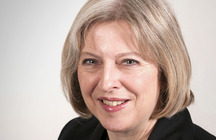
  • Theresa May – 2016 Speech to the Gulf Co-operation Council

    Below is the text of the speech made by Theresa May, the Prime Minister, in Manama on 7 December 2016.

    I am delighted to be here in Manama, following in the footsteps of His Royal Highness the Prince of Wales in celebrating 2 centuries of relations between Bahrain and the United Kingdom. And I am very grateful to His Majesty King Hamad for bestowing on me this special honour – to be invited to address the leaders of the Gulf Co-operation Council.

    We meet at a time of great change in the world. Political change, economic change, social change; in almost every sphere we are confronted with change and uncertainty.

    The risks to our shared security are growing and evolving, as terrorists operate across national borders to plot attacks against our people; as new threats emerge from the malevolent use of the internet, and as certain states continue to act in ways that undermine stability in your region – undermining, in turn, our own security in the West and further reinforcing the need for all of us to work together.

    We, in the West, face the challenge of trying to manage those forces of globalisation that have in recent times left some of our people behind.

    Here in the Gulf you, too, are facing the challenges of securing jobs and opportunities for your peoples and building what I call an economy that works for everyone.

    In this uncertain world, people are searching for direction and leadership and we have a responsibility to provide it. I believe it is more than a responsibility. For if we work together, it is also an unparalleled opportunity to show that we understand the scale of the change people need; understand truly what lies behind it; and most importantly of all; that we as leaders are trusted to deliver.

    One of the prevailing sentiments in all my conversations with GCC leaders over the last 5 months since I became Prime Minister has been this sense that in challenging times, you turn to your oldest and most dependable friends.

    That is the spirit in which I come here today.

    We have a rich history on which to build. From the very first treaties, in the mid-17th century, which saw the East India Company reach agreements on British trade and a military presence in Oman, to our deep partnership as Cold War allies, the UK has been proudly at the forefront of a relationship between the Gulf and the West that has been the bedrock of our shared prosperity and security.

    And as the United Kingdom leaves the European Union, I am determined that we should seize the opportunity to get out into the world and to shape an even bigger global role for my country: yes, to build new alliances but more importantly, to go even further in working with old friends, like our allies here in the Gulf, who have stood alongside us for centuries.

    There has never been a more important, or more challenging time to do so. In the face of growing extremism and radicalisation, not unique to this region but here in its most egregious form; in the face of threats to the rules-based order which has underpinned not just our shared security but also the foundations for our shared prosperity, the UK stands here today seeking not just to reaffirm a relationship that is of great historic value but to renew a partnership that is absolutely fundamental to our shared future.

    So in accepting the honour of addressing GCC leaders, I seek not just to offer a message of continuity, but to begin to build a bold new chapter in our co-operation; not to develop a transactional relationship but rather to forge a strategic relationship, a relationship based on true partnership and an enduring commitment between our countries and our peoples; a relationship through which together we can meet these great challenges to our shared security and prosperity, and grab this opportunity to build an exciting future for the generations that follow us.

    So let me set out some of the ways in which the UK will step up its relationship with the GCC. And let me start with security.

    Gulf security is our security

    Gulf security is our security. Extremists plotting terror attacks here in this region are not only targeting the Gulf but, as we have seen, targeting the streets of Europe too. Whether we are confronting the terrorism of Al Qaeda or the murderous barbarity of Daesh, no country is a more committed partner for you in this fight than the United Kingdom.

    Today UK servicemen and women are putting their lives on the line at the heart of the international mission against Daesh in Iraq and Syria. We are making progress. And as we are seeing with the current operations in Mosul, the days of Daesh as an occupying force are numbered.

    Through our close co-operation on counter-terrorism we are succeeding in foiling terrorist plots and a range of threats against citizens in all our countries. For example, intelligence we have received in the past from Saudi Arabia has saved potentially hundreds of lives in the UK.

    And by focusing not just on violent extremism, but on the whole spectrum of extremism, violent and non-violent, at home and abroad, we are not just going after the terrorists but working to address the causes of this terrorist threat by targeting the ideology of extremism and all those who seek to spread it.

    As we address new threats to our security, so we must also continue to confront state actors whose influence fuels instability in the region. So I want to assure you that I am clear-eyed about the threat that Iran poses to the Gulf and the wider Middle East.

    The UK is fully committed to our strategic partnership with the Gulf and working with you to counter that threat. We secured a deal which has neutralised the possibility of Iran acquiring nuclear weapons for over a decade. It has already seen Iran remove 13,000 centrifuges together with associated infrastructure and eliminate its stock of 20% enriched uranium. That was vitally important for regional security. But we must also work together to push back against Iran’s aggressive regional actions, whether in Lebanon, Iraq, Yemen, Syria or in the Gulf itself.

    We must also continue to work together to achieve a just and comprehensive settlement to the Israeli-Palestinian issue, building on efforts such as the Arab Peace Initiative and harnessing the influence of all of us around this table to bring together those with a stake in a lasting peace, built around a 2-state solution. This remains fundamental to the long-term security and prosperity of the whole Middle East.

    In recent years we have retained the ability to defend our mutual interests when threatened by deploying UK assets to the region, as we did when Saddam Hussein invaded Kuwait, and as we are continuing to do with HMS Ocean – which I visited yesterday – as it begins its deployment here in Bahrain.

    But as part of the renewed relationship that I want to forge with you, the United Kingdom will make a more permanent and more enduring commitment to the long-term security of the Gulf.

    We will invest in hard power, with over £3 billion of defence spending in the region over the next decade, spending more on defence in the Gulf than in any other region of the world.

    Through the construction of HMS Jufair, and thanks to the generosity of the Kingdom of Bahrain, we will create a permanent presence in the region, the first such facility east of Suez since 1971, with more British warships, aircraft and personnel deployed on operations in the Gulf than in any other part of the world.

    At the same time, a regional land training hub in Oman is establishing a permanent British army presence in the region. And I am delighted to announce that Saif Sareea 3 will take place in Oman in 2018 – the largest UK-Omani exercise for 15 years.

    We will also go further in deepening our defence co-operation through a new Strategic Partnership between the UK and the GCC, supporting the development of your defence capacity and capability, including for humanitarian operations and crisis response planning.

    As part of this we will establish a new British Defence Staff in Dubai to co-ordinate our regional activities and, here in Bahrain, we will embed a dedicated military officer with the Ministry of Interior bomb disposal unit to provide bomb scene management support and training.

    We will establish a new Joint Working Group on Counter-Terrorism and Border Security and a new National Security Dialogue at GCC level to protect critical national infrastructure, facilitate faster intelligence sharing on suspected foreign terrorist fighters and implement traveller screening systems to detect terrorists attempting to pass through any GCC airport.

    And because we know that our enemies are increasingly using the internet against us, we will use our expertise in cyber security technologies to build our resilience, and that of our international partners.

    So we are appointing world-leading cyber experts with extensive backgrounds in delivering cyber security in the UK to provide focused advice to Gulf States on developing your own capacity – as well as a new Cyber Industry Representative based in the region who will build links between cyber sectors in the UK and the Gulf.

    In all of these ways, I am determined that the UK will be at the forefront of a wider Western effort to step up our defence and security partnership. Not just to provide greater stability and security to the region but also to protect the rules-based order that has been so fundamental to our shared prosperity.

    When I think of the growth of this region over the past 50 years, from the transformation of Dubai to the position of the Gulf as the UK’s third largest export market, I never forget that the bedrock of this prosperity and stability has been the relationship between the Gulf and the West.

    Now, in this period of uncertainty, is the time to recommit to this relationship. That is why I am here – to signal my commitment to this relationship and to build on the foundations of our continued partnership in security and prosperity for decades to come.

    Your prosperity is our prosperity

    For just as Gulf security is our security, so your prosperity is also our prosperity.

    Already the Gulf is a special market for the United Kingdom. Last year alone, trade between the UK and GCC was worth more than £30 billion.

    At the same time Gulf investment in the UK is helping to regenerate cities from Aberdeen to Teeside, and from Manchester to London.

    I am determined that we should do everything possible to build on this and elevate our trade and investment to an even more ambitious level.

    So I will continue the work that the UK has been leading over the past 3 years to make London one of the great capitals of Islamic finance anywhere in the world. And as Britain leaves the European Union so we intend to take a leap forward, to look outwards and seek to become the most committed and most passionate advocate of free trade in the world.

    For free trade makes us all richer. It creates jobs. It increases investment. It improves productivity. It transforms living standards and creates opportunities for all of our citizens.

    And nowhere is that more important than here with our friends and allies in the Gulf.

    So first, I am delighted that we agreed yesterday to set up a new Joint Working Group to examine how we can unblock remaining barriers to trade and take steps to further liberalise our economies for the benefit of our mutual prosperity.

    For example, we have just reached a new agreement with Saudi Arabia to allow British businesses to obtain 5-year multiple entry visas for the first time, creating new opportunities for more bilateral business. And we have agreed that in March next year, the UK will host an event on Gulf national transformation and economic diversification plans at the Mansion House – for centuries, a home of finance and trade at the heart of the City of London.

    These steps are exactly the sort of measures that we can pursue together to advance everything that is possible from business and trade for the benefit of all of our economies and therefore all of our citizens.

    Second, I can confirm that the UK will take part in Dubai’s Expo 2020 continuing the tradition started in Britain with The Great Exhibition of the Works of Industry of All Nations in Hyde Park in 1851.

    Dubai 2020 will offer an enormous commercial opportunity. There will be over 180 nations taking part with more than 25 million visitors expected – from the world’s top business leaders to its biggest investors. It is an opportunity which I am determined we should seize together.

    And third, I want these talks at official level to pave the way for an ambitious trade arrangement for when the UK has left the EU. And I want us to be imaginative about the scale and reach of this.

    I want us to explore whether in this dynamic and diverse market, we could forge a new trade arrangement for the whole of the Gulf area.

    I want to leave no-one in any doubt about the scale of my ambition or the extent of my determination to establish the strongest possible trading relationships between the UK and the Gulf.

    Building societies that work for all

    Just as we take every possible step to break down the barriers that are restricting our trade and prosperity; it is also important that we continue the work to bring our peoples together and to ensure that the benefits of greater prosperity are shared by all.

    In Britain I have talked about the need to create a country that works for everyone.

    In doing so, I have set out Britain’s great global opportunity to lead the way in managing the unintended negative forces of globalisation so that large segments of our society are not left behind; and so we restore trust between citizens and institutions.

    Just as we face some major economic and social challenges in the West, so in your own economies you also face the challenge of helping to secure jobs and opportunities for your peoples.

    We all recognise that there is some way to go before we can say that these economies really work for everyone. But I have been encouraged by recent economic and social reforms you have taken forward and by the bold vision set out by all of the Gulf States for more fundamental and lasting change, most recently with Saudi Arabia’s vision for 2030.

    We in the UK are determined to continue to be your partner of choice as you embed international norms and see through the reforms which are so essential for all of your people.

    And this is only possible because the strength of the relationship between our countries, and the respect that we have for each other, enables us to speak frankly and honestly as friends.

    Together we can meet the challenges of these changing times and secure greater prosperity and security. But to do so will require more than an occasional meeting or a visit every few years. It will require a strengthening of relationships between our countries at every level.

    So I look forward to the next chapter of the Manama Dialogue run by the UK’s International Institute for Strategic Studies which the Foreign Secretary will attend later this week.

    This vital strategic relationship between the UK and the Gulf – a partnership steeped in so much history and so full of potential for our future – now demands even more concentrated efforts.

    That is why I want to continue the hugely positive discussions we are having this week in this first ever UK-GCC dialogue at leader level.

    I am delighted that you have agreed to make this an annual event. And I look forward to welcoming you to London next year.

    Conclusion

    In the face of some of the greatest challenges to our security and our prosperity, we will succeed together. We will succeed through our continued commitment to the rules-based order on which our prosperity has been built. And we will succeed by deepening our security co-operation, expanding our trade and working harder than ever to build economies and societies that work for everyone.

    I believe there has never been a more important moment for us to get this right. And under my leadership, Britain will play its full part in delivering on that vision.

  • Baroness Anelay – 2016 Speech on Human Rights

    Below is the text of the speech made by Baroness Anelay, the Minister of State for the Commonwealth, on 8 December 2016.

    Introduction

    Lords, Ladies and Gentlemen, distinguished guests, colleagues. Welcome to the Foreign and Commonwealth Office. It is a pleasure to see so many of you here tonight.

    The theme of this year’s UN Human Rights Day is ‘stand up for someone’s human rights’. It is more relevant this year than ever, because all around the world people’s human rights are under threat every single day. Whether it is through a squeeze on civil society space, a stifling of public debate or free speech, or a ban on freedom of assembly: it all means the same thing: our human rights are at risk. A short while ago, Hannah who helps me with all my human rights work, asked me what human rights mean to me. Human rights are the right to be yourself without fear of prosecution or persecution, because that runs a theme across everything that makes human beings who they are and who they can be.

    Importance of civil society

    That is why the role of civil society is so important to ensure that human rights can be both promoted, and where they do exist, preserved. It is also why this year’s theme is so relevant to our work here in the Foreign and Commonwealth Office, with our focus on civil society and democracy. I share the Foreign Secretary’s belief that human rights, vital in themselves, are also good for the security, prosperity and development of countries around the world. If the Foreign Secretary were here today – as he would very much like to have been – he would tell you how much he personally values civil society as the mechanism through which all citizens can exercise their freedoms and make their voices heard.

    Today I would like to talk to you about the work that the Foreign and Commonwealth Office is doing to support civil society, and our commitment to promote and defend human rights around the world.

    Work of FCO

    Many of you are regular visitors to this building and may have attended some of our recent events – such as our ground breaking conference in October on freedom of religion or belief as a bulwark against extremism, or last month’s Week of Women events. Some of you were with us just this week for the visit of the UN Special Rapporteur on Contemporary Forms of Slavery; or at Australia House for the event we co-hosted an event on the Abolition of the Death Penalty. Those are just a few examples of the human rights work we do here in London.

    Overseas, our Embassies and High Commissions are also working on human rights every day. Whether it is supporting organisations that defend human rights, lobbying host governments or debating rules in international fora, our diplomats put human rights at the heart of everything they do. They promote and defend human rights not just because it is the right thing to do, but because it is integral to our national interest and our international reputation.

    Their efforts are making a real and positive impact – for example, in helping to create the Human Rights Council’s first ever mechanism to combat violence and discrimination against LGBT communities – that was crucial work they did. When that mandate was challenged at the UN General Assembly, our diplomats helped rally support around the world, to ensure that challenge was defeated, as it should be.

    Our work with the UN is crucial, and the UK has been a member of the Human Rights Council for 8 of the last 10 years. I was delighted that earlier this autumn we were re-elected last month to serve a further 3-year term.

    Traditional diplomacy like this is still highly effective but we are also moving with the times and adapting how we promote human rights and democracy. Today, that means harnessing traditional and social media channels to get our messages across. They are enabling us to reach some of the most hostile and least democratic corners of our world. An example of this media diplomacy is our support via social media to the UN’s “16 Days of Activism Against Gender Based Violence”, which concludes on Human Rights Day. Naturally, we all know that we need more than 16 days to achieve our goals. Our commitment to promote human rights is for the long term.

    Civil society space

    I mentioned earlier that one of our current priorities is to counter the “shrinking of civil society space” we are seeing happening around the world. It is a problem that has been on the rise for some time: our last 2 annual Human Rights Reports both noted the alarming rise of anti-NGO legislation and other practices that stifle basic human rights, such as public debate and freedom of assembly. The evidence is clear that shrinking civil society space harms a country’s stability, economic prospects and wider social development.

    One example of where we are seeing this is Egypt. I am concerned that the new law on non-governmental organisations passed by the Egyptian Parliament on 29 November will be used to prevent Egyptians from contributing to their country’s future, and will create obstacles for international support for Egypt. At a time of economic hardship, Egypt needs civil society more than ever before, and I hope Egypt accepts the UK’s friendly offer of support.

    Human rights defenders

    In this context of shrinking space for civil society, the work of human rights defenders has never been more important than it is now. In their efforts to stand up for the human rights of others, they exemplify the theme of this year’s Human Rights Day as well as the wider principles and values of democracy and the rule of law. They deserve our support and protection and they are going to be the focus of our social media activity on Human Rights Day this year. You’ll be able to see some of our clips being played in the background tonight.

    The Foreign and Commonwealth Office works with human rights defenders around the world, sharing information with them and learning from them. We hugely value their courage and dedication. They are a crucial dimension of the projects that we support. This year we are funding 129 human rights projects in over 60 countries through our Magna Carta Fund for Human Rights and Democracy, and that fund is reaching some of the harder to reach communities, who are benefiting from that. But we know we can learn how to do more. Since 2014 the Fund has supported 9 NGO-led projects focused specifically on the work of human rights defenders.

    Colombia, which I visited earlier this year, remains one of the most dangerous countries in the world for human rights defenders. We are running a project to open up dialogue between human rights defenders, local and national government, and the international community. It aims to foster a common understanding of the many challenges they face, and of the potential solutions.

    We are also investing in the next generation of human rights defenders, through awarding 60 Chevening scholarships for postgraduate studies in human rights. Our scholars are selected for their academic talent and their future leadership potential, and we are confident they will be a force for good when they return home. As I travel the world for the Foreign and Commonwealth Office, it is always a joy to be able to meet our Chevening scholars and see the work they are achieving. They tell me how the opportunity offered to them is making a difference on issues of human rights in their country.

    Conclusion

    An active civil society is the hallmark of a mature society; a healthy society: one that is open to challenge and able to protect the rights of its citizens. Governments should open the space for civil society, not close it down. They should commend human rights defenders – not condemn them.

    That is our message from across the Foreign and Commonwealth Office, that we will continue to promote, at home and abroad. This Human Rights Day, let’s all stand up for human rights.

    Thank you for working with us.

  • Keir Starmer – 2016 Speech at Bloomberg

    Below is the text of the speech made by Keir Starmer, the Shadow Secretary of State for Brexit, on 13 December 2016.

    I would like to thank Bloomberg for hosting this speech today.

    At this time of year, it is natural to reflect.

    To look back on the year that has passed and to look forward to the year ahead.

    Years that are so full of significance that the year itself becomes a shorthand for a set of events are rare.

    But there can be no doubt that 2016 will go down as one of the truly defining years of the 21st century.

    Two years ago today – on 13 December 2014 – I was in St Pancras Church opposite Euston Station.

    I was speaking to hundreds of Labour Party members, having just been selected to succeed Frank Dobson as Labour’s candidate for my home constituency of Holborn & St Pancras.

    How different the world looked then.

    Is it any wonder that we are still attempting to understand the world as it has now become and how we got to here?

    But the real challenge is not just to interpret the past but to chart a path towards the future.

    And that is my task for today.

    Coming here to Bloomberg to deliver a speech on Britain and the European Union might be considered to be tempting fate.

    When David Cameron spoke here in January 2013 he decided – as was so often the case – to put short-term political considerations ahead of the national interest.

    My speech today will be guided by a different lodestar – our country’s interest.

    I want to talk about how Labour should respond to Brexit in the national interest.

    First, the context.

    The Labour Party campaigned to stay in the EU.

    I campaigned to stay in the EU.

    The vote was to leave.

    A high turnout.

    A relatively close result.

    But a clear result.

    Yes, there were half-truths and untruths told in the campaign – none more egregious than the promise of £350 million a-week for our NHS that was daubed on the Vote Leave bus.

    Yes, the tone of the referendum was deeply divisive, with social consequences that we all have a duty to tackle.

    But we had a referendum and we have a clear result.

    Had it gone the other way, those of us who passionately campaigned for Remain would have expected the result to be accepted and respected.

    And that cuts both ways.

    Now we face an uncertain future.

    The first step is for the Prime Minister to distil the diverse and divergent views within her own party into a model of Brexit that can be negotiated with the EU.

    I understand what a difficult position the Prime Minister is in.

    Her predecessor, leading a government in which she served as Home Secretary, oversaw one of the greatest derelictions of duty of a British government in modern times.

    The decision not to undertake any preparations whatsoever for a vote to leave has left the country without a plan and the government without direction.

    The stakes could not be higher and the risks of getting this wrong should not be underestimated.

    The Prime Minister must embark on the most difficult and complicated negotiations this country has undertaken since the end of the Second World War.

    The outcome will determine not just our place in Europe but also our place in the world.

    The role of the opposition is crucial.

    This is not business as usual.

    Setting out what Labour would do in 2020 does not suffice.

    This is real opposition in real time.

    By 2020, we will be living in a different world.

    So how should Labour approach the task?

    Some have argued that Labour should adopt the stance taken by the Liberal Democrats.

    Frustrate the process: vote against the triggering of Article 50, block the road and somehow turn the clock back to 22 June this year.

    Insofar as those advocating this course of action fear that in exiting the EU we risk becoming isolated, abandoning our values of tolerance and damaging our economy, I can understand the plea.

    But it is the wrong response for three reasons.

    First, as a matter of principle, no serious political party can claim to accept and respect the outcome of the referendum and in the next breath say that it will seek to prevent the Prime Minister from even starting the Article 50 negotiations.

    A short point; but an important one.

    Second, any political party with an ambition simply to frustrate the process cannot unify or heal the country.

    Since I was appointed to my current role, I have travelled all over the UK – including to Wales, Northern Ireland and Scotland.

    I have met groups and individuals, held public events, talked to businesses large and small and discussed Brexit with different political parties and leaders.

    From this, the evidence is clear: As a society we are more divided now than at any time in my life.

    The divide is deep and, in some instances, it is bitter.

    The surge in hate crime across the country and the reaction to the High Court judges who delivered judgment in the Article 50 case are testament to this.

    In some London constituencies, 75% of those voting in the referendum voted to Remain.

    Yet in other areas the precise opposite is the case.

    Last Friday, I was in the Midlands, where in some areas 75% of those voting voted to leave.

    A new fracture in politics has emerged.

    And it is real.

    The role of any responsible government ought to be to repair the breach.

    Bring the country back together.

    Unify.

    But from the start, the Prime Minister has only had a message for one side of the divide.

    The Conservative Party failed to act in the national interest by not planning for Brexit.

    And this Conservative Prime Minister has set aside the national interest once again by serving the interests of just one side of the divide.

    It is a double dereliction of duty.

    Extrapolating the view of a group within the 52%, who were seriously concerned about freedom of movement and immigration, the Prime Minister has issued a ‘loud and clear’ warning that control over immigration will be prioritised over jobs, the economy and living standards.

    I’m not going to shy away from the question of immigration, or to suggest that it was not a powerful factor in the referendum debate and outcome.

    But by clinging to the discredited promise to get immigration into the tens of thousands, the Prime Minister is raising Brexit expectations which cannot be fulfilled without seriously harming our economy and public services.

    Most reasonable people expect that the government should aim both for economic security and for the fair management of migration.

    Not that it would sacrifice jobs and living standards to make arbitrary reductions in immigration.

    Pursuing Brexit in the partisan interest might make Tory party management easier in the short run.

    But as David Cameron could tell Theresa May: stray too far from the national interest, and you will be found out in the end.

    The Prime Minister’s approach is also alienating the 48% of voters who voted to remain in the EU.

    They feel increasingly despondent and despairing.

    The government is treating them as if they voted themselves out of their own future.

    They did no such thing.

    And no party that proceeds against our economic interests in such a divisive way deserves to govern for long.

    The government should be negotiating in the national interest, pulling the 52% and the 48% together, imagining and striving for a future that works for the 100%.

    But those who advocate frustrating the Article 50 process are making the same mistake.

    The Liberal Democrats hold out the false promise to the 48% of being able to frustrate the process.

    But what have they got to say to the 52%?

    Absolutely nothing.

    How can their stance unify the country?

    It can’t.

    And Labour should not fall into the same trap.

    A party that can only speak to and for half a nation cannot heal the rift in our society.

    A party that can only speak to and for half a nation does not deserve to govern.

    A party that can only speak to and for half a nation cannot forge a bold inclusive vision of the future capable of working for everyone.

    The same is true of UKIP’s approach to Brexit.

    Immediate withdrawal, without even bothering to negotiate a deal.

    The hardest of hard Brexits.

    Not only would this be deeply divisive – ignoring the 48% and many more besides – it would be disastrous for our economy, for jobs and for working class communities across the country.

    That brings me to the third reason why Labour should not set its sights simply on frustrating the Article 50 process.

    That is because to do so would mean walking away from the bigger battle that we must fight.

    As we stand on the brink of profound change, it is clear that there are two versions of our future that could be negotiated.

    The first is a future that tears us apart from our EU partners.

    Standing outside and shut off from the European market of 500 million people who could buy our products and services.

    Reverting to World Trade Organisation rules, which as the CBI have said “would do serious and lasting damage to the UK economy and those of our trading partners”.

    A global race to the bottom which would not only put our economy and jobs at risk, but which would also abandon our shared scientific, educational and cultural endeavours with the EU.

    So-called ‘Hard’ Brexit.

    The second version of our future is a version where we exit the EU but build a new and strong relationship with our EU partners based on the principles of co-operation, collaboration and mutual benefit.

    A future which preserves our ability to trade in goods and services with our biggest market of 500 million people.

    A future that values joint scientific, educational and cultural work with our EU partners, and maintains our status as a global scientific superpower.

    A future that guarantees our continued co-operation in the fight against organised crime and terrorism.

    A future which allows the UK to retain its leading position in the world, influencing and contributing to developments across Europe and beyond.

    The battle between these two versions of our future is the battle of our times.

    It will be fought out over the next few years.

    Labour needs to be leading that battle.

    As the opposition, we need to be fighting the battle for the future of Britain.

    If we do not, the chance to shape the future of our country will be lost.

    Future generations will not forgive us for such a dereliction of duty.

    But accepting and respecting the referendum result is not the end of the process; it is the beginning.

    The referendum answered the question of what we should do, but provided no answer to how we should do so.

    That question was not on the ballot paper on 23rd June.

    It was not in the Conservative Party manifesto.

    And it was not addressed by Theresa May before she became Prime Minister.

    But it is the now the most pressing question Britain has faced for generations.

    So what does fighting for the right version of our future entail?

    Let me start with trade.

    A good deal of ink has been spilt in the last few months on the finer distinctions of the single market and the customs union.

    I’m not sure how much clarity that has provided.

    So let me attempt to put Labour’s position succinctly by focussing on function not form.

    Put simply, Labour will push for a Brexit model which maintains and protects our ability successfully to trade goods and deliver services with and to the EU.

    That means:

    A model that ensures continued tariff-free trade for UK businesses with the EU

    A model that ensures that any new regulatory frameworks do not add bureaucratic burdens or risk harmful divergence from the EU market.

    A model that protects the competitiveness of our services and manufacturing sectors; and

    A model that ensures that existing protections at work provided by the EU are maintained.

    These tests complement the aims set out by John McDonnell earlier this year and set a blueprint against which the government’s endeavours can be measured.

    Significantly, the Government has provided far less clarity about its approach.

    It has veered between a hard, extreme Brexit and some other undefined, vaguer form of Brexit.

    The Prime Minister’s conference speech outlined the former: a UK out of any EU rules based systems altogether.

    Necessarily isolated and detached.

    When I visited Brussels shortly afterwards, it was clear this had been received by our EU colleagues as the Prime Minister wanting to take the UK out of the single market, out of the customs union and adopting the stance of a remote third party to the EU.

    Hence the description, “Hard Brexit”.

    Contrast that with the tone struck by the Business Secretary Greg Clark when he announced Nissan’s welcome investment in Sunderland.

    We were told that the Government had given private assurances to Nissan that the UK would seek to achieve ‘continued access’ to the single market ‘without tariffs and without bureaucratic impediments’.

    Amid those two very different visions of Brexit we have had a range of contradictory messages from Cabinet Members, as well as leaks, hints and Boris Johnson’s never ending running commentary.

    Given the complexity of the issues before us and the deliberate lack of planning by the Cameron government, it is perhaps not surprising that we have this level of chaos and confusion.

    But it needs to end now.

    That is why Labour’s victory last week in securing a commitment from the government to publish a plan before invoking Article 50 was so important.

    During the debate last week, I set out five tests for the plan to satisfy:

    Does it end uncertainty surrounding the Government’s position on fundamental issues such the access to the single market, the customs union and transitional arrangements?

    Does it include sufficient detail to allow the Brexit select committee and other relevant Parliamentary bodies to carry out their scrutiny functions effectively?

    Does it enable the Office of Budget Responsibility to do its job properly in assessing the economic impact of Brexit?

    Does it include sufficient detail to allow the devolved administrations in Scotland, Wales and Northern Ireland to be assured that their particular and specific concerns are being addressed?

    Will it help build a national consensus on Brexit?

    A late vague plan will not do.

    And I have put the government on notice that if no meaningful plan emerges, Labour will seek to amend any Article 50 Bill brought forward early next year.

    Anyone who thinks that the government has been handed a blank cheque is very much mistaken.

    Let me now turn to freedom of movement.

    If Labour has the ambition to bring the 52% and the 48% together and to build a national consensus on Brexit, we have to recognise that changes to the way freedom of movement rules operate in the UK have to be part of the Brexit negotiations.

    When I was Shadow Immigration Minister I spent months visiting every region of the UK to listen to views on immigration.

    I know how important the issue is to many voters.

    I know that any party that seeks to govern needs to listen to their concerns and come up with adequate and appropriate responses.

    No comprehensive approach to Brexit or response to the referendum result can ignore the issue of freedom of movement.

    As Len McCluskey recently said:

    “There is no doubt that concerns about the impact of the free movement played a significant part in the referendum result, particularly in working-class communities…We are well past the point where [this] issue can be ignored”.

    Labour needs a bold and ambitious response.

    The rules must change.

    And our new relationship with the EU will have to be one which is based on fair migration rules and the reasonable management of migration.

    If Brexit forces us to confront the appalling and enduring skills gap in the UK, that is a good thing.

    If Brexit forces us to confront low pay exploitation, that is also a good thing.

    But the status quo is not an option.

    Labour’s response must, of course, be driven by our values.

    As President Obama recently said, the rapidly changing nature of:

    “….politics in all of our countries is going to require us to manage technology and global integration…in a way that makes people feel more control, that gives them more confidence in their future, but does not resort to simplistic answers or divisions of race or tribe, or crude nationalism”.

    The Labour Party and the wider Labour movement have always been at the forefront of fighting discrimination and building a fairer, more equal society.

    Labour recognises that without the hard work and skill of migrants our public services, our businesses and our economy would suffer.

    But we have also always been the party that values strong, cohesive communities.

    It was striking that the referendum results showed the areas in the country with the highest levels of immigration voted most strongly to Remain.

    But the areas with the highest pace of change voted most strongly to Leave.

    That tells me that the British people are open and tolerant; but that they also expect change to be managed, rather than simply allowing the free market to rip through communities.

    This is not to pretend that arguing for changes to freedom of movement will not make a deal on single market access harder.

    It will.

    But in the negotiations to come, it is incumbent on the government to fight for the fullest possible market access and reasonable management of migration.

    We should demand nothing less.

    But our new relationship with the EU has to go beyond an economic argument and protecting our ability to trade in goods and services – vital though they are.

    Underpinning everything we have done with our European partners since the war have been shared values – British values.

    Of peace.
    Of co-operation.
    Of collaboration.
    The rule of law.
    Human rights.
    Shared security and safety.

    As we forge a new future outside the EU, it is vital that we re-assert these values and use them to guide us through the turbulent times ahead.

    Labour must argue for a bold, progressive domestic policy post-Brexit.

    It is true – as many of us argued during the referendum campaign – that EU legislation has been a driver of progressive UK policy in areas such the environment, consumer rights and employment rights.

    Protecting these gains is essential.

    Particularly since some Conservative MPs have already signalled an intention to use the Great Repeal Bill as an opportunity to water down or erode these vital rights and standards.

    But defending the status quo should never be the summit of Labour’s ambitions.

    Enshrining rights in our law is important, but we should also pursue more progressive, more ambitious policies than those enshrined in EU law.

    Not to match EU standards but to use Labour values to go beyond them.

    And, in doing so, to seek to address some of the underlying causes of the division in our society.

    So to conclude.

    Many of the certainties and policy assumptions we have made for more than four decades are now up for grabs.

    That is why the role of the opposition is so important right here; right now.

    The future of Britain is being decided and Labour will be at the centre of it.

    Respecting the result.

    Fighting for a confident and outward looking country and a co-operative, collaborative and values-led version of our future.

    Bringing a fractured country back together.

    Responding to Brexit in the national interest.

    That is Labour’s task.