Tag: 2015

  • Jeremy Hunt – 2015 Speech on Patient Power

    jeremyhunt

    Below is the text of the speech made by Jeremy Hunt, the Secretary of State for Health, at the Health Service Journal, Barber-Surgeons‘ Hall, London, on 29 October 2015.

    I want to talk about the most interesting issue in global healthcare. This is something that I believe we will all be talking about long after new models of care, accountable care organisations or any of the current ‘hot topics’ have long become too normal to be interesting.

    I am talking about the inescapable, irreversible shift to patient power that is about to change the face of modern medicine beyond recognition. And I want to talk about how this can ease pressure on frontline doctors and nurses, already working incredibly hard, by creating a stronger partnership between doctor and patient that leads to better outcomes.

    Emma Hill, editor of the Lancet, said that every patient is an expert in their own chosen field, namely themselves and their own life. Doctors now regularly find patients who know more than they do about their rare disease in a way that fundamentally changes the dynamic between doctor and patient to a partnership, or even one where the patient is boss. Perhaps the most eloquent exponent of this change is Professor Eric Topol in his latest book ‘The patient will see you now’. He describes it as the death of medical paternalism and the democratisation of healthcare.

    These changes are being driven by technology and by our ability to use data differently. And although healthcare has lagged behind the travel, retail and banking sectors in embracing what is possible, we are now on the cusp of changes in modern healthcare that will be as profound for humanity as the invention of the internet. Changes that will be as welcomed by doctors as by patients, given the evidence-based improvements in care that follow when patients take more responsibility for their health outcomes.

    It won’t surprise you to know I want our NHS to get there first. It may surprise you, however, to know that with the British people and the government’s strong commitment to NHS values, and the extra £10 billion being invested this Parliament, I believe we are well placed to do so. And it may surprise you even more that I believe that by running faster towards that destination we are more likely – not less – to be able to cope with the huge pressures doctors and nurses face on the frontline now.

    Patient power: the future

    Last month I met Michael Milken, the Wall Street junk bond trader who went to prison, became a philanthropist and is now a major funder of cancer research. I asked him what advice he would give his grandchildren about how to lead their lives. He said ‘think of the world as it will be, not as it is now’.

    So how will the world of medicine look in a decade’s time?

    Take people with complex, long-term conditions. Many of them are prescribed a confusing cocktail of medications, each with a different set of instructions which make it easy to forget or mistake doses. So a British entrepreneur living in California has invented a microchip the size of a grain of sand to make these patients’ lives much easier. This chip is attached to every pill you swallow, and is activated by the liquids in your stomach so your phone records exactly which medicines you have actually taken. Early evidence suggests that this could result in significant behaviour change by patients, notably much better adherence to drug regimes. In one study nearly 40% more patients reached their target blood pressure when using the digital pill.

    Or think about those suffering from mental illness. An app called Ginger has now been developed which advocates say can detect depression or suicidal tendencies with greater accuracy than a psychiatrist. Without even being opened, this app monitors whether you got out of bed, if you skip a meal and if you are texting or calling friends in line with normal social activity. By tracking what an average day looks like for that patient, the app detects deviations from the norm and alerts clinicians or relatives when they should check in to see how you’re doing.

    Or take a child with earache. At the moment his or her parent has to book an appointment with a GP, travel down to the surgery, and get their child’s ear checked for infection with an otoscope. But now entrepreneurs have developed a simple attachment for an iPhone which can take an incredibly powerful and accurate picture inside someone’s ear. This means with 2 clicks the parent can send an image to their doctor and with e-prescriptions and home delivery, the problem can be rectified without stepping outside your home. Time and money are saved, and that family’s consumer experience is revolutionised.

    In some ways this is just the onward march of modern technology finally taking place in healthcare. But these changes are doing something more: all of them are giving patients much greater control of their own healthcare and responsibility for their health outcomes.

    Opportunity for doctors

    Is this good or bad for doctors?

    US health-tech entrepreneur Vinod Khosla says that soon we will never ask a doctor for a diagnosis. Somewhat provocatively he asks why would you trust a human brain to make a judgement when a single drop of blood contains 300,000 biomarkers that can be analysed by a computer before you even have any symptoms. More likely than his prediction is a partnership between a doctor’s judgement and the information provided by data analysis: while the best computer chess programme can now beat the best human player, it has not yet defeated a human working in partnership with a computer.

    That partnership will seem blindingly obvious when it happens.

    Like the transition in tennis from depending on linesmen at Wimbledon to using Hawkeye, the move to the ‘quantified self’ in medicine presents a huge opportunity to improve the quality and accuracy of a diagnosis. Perhaps the most high profile example of this is Angelina Jolie choosing to have a double mastectomy after genetic sequencing. But it is also clear that in an era of chronic conditions, when patients take responsibility for managing their condition, the outcomes are better. The Expert Patient Programme showed that, after training patients to self-manage conditions, 40% felt reduced pain, tiredness or breathlessness within months; and some reported a reduced use in NHS services such as GP consultations and hospitals visits. Likewise when it comes to lifestyle decisions like obesity or relating to smoking, doctors cannot be held responsible. But working with patients who are prepared to take responsibility, they can transform life chances.

    No one disagrees with this – so now it is time to move away from the ivory towers of theory to the gritty job of implementation. Today I will therefore talk about this government’s plan to make this happen and the 4 elephant traps we need to avoid in the process. But first let’s look at our progress to date.

    NHS progress to date

    Over the last few years we have been pursuing an ambitious digital strategy in the NHS. Three years ago I – perhaps foolishly – said I wanted the NHS to go paperless by 2018. I am sure someone somewhere will be able to find a lone sheet of paper in use in 3 years’ time, but the spirit of that ambition remains alive and well, not least thanks to the inspirational leadership of Tim Kelsey and his team and NHS England.

    For example last year the number of GP practices offering access to summary GP records rose from 3% to 97%. And in the last 2 years the number of practices offering e-booking and e-prescribing rose from 45% to 99%. Take-up by the public is still lower than we want, but from April next year all patients will be able to access their full GP electronic record and not just a summary. By 2018 this record will include information from all their health interactions across the system and by 2020 it will include interactions with the social care system as well. By then patients will not just be able to read their medical record but add their own comments. They will also be able to link it to wearable devices like Fitbits or Jawbones.

    As important as the improvements in clinical care that come from electronic health records is the cultural change that comes from transparency. In January, the World Wide Web Foundation ranked the UK first in the world for open data, which includes a health category. Similarly, Professor Don Berwick of the world renowned Institute for Healthcare Improvement, has commended our ‘serious commitment to evolving the NHS as a learning organisation committed to the never-ending pursuit of safer care’. [describes slide]

    From a standing start a year ago, the new MyNHS website has drawn together outcomes and performance data across the whole health and care spectrum, from individual consultants, GP surgeries and dentistry practices, to care homes, hospitals and mental health facilities. The site now holds 700,000 individual pieces of performance data and has been visited over 300,000 times – with many of those via the BBC! We now have a new-look MyNHS with much more user-friendly functions, and we will continue improving it to help drive this consumer revolution in our NHS.

    But we didn’t stop with a new website. There’s now monthly publication of ‘never events’; some 10.5 million responses to the Friends and Family Test; the new duty of candour; the new ‘no-blame’ patient safety investigatory service, IPSIS; CQC ratings by hospital department; GPs soon telling patients about local hospitals’ CQC ratings to inform referral choices; Sir Bruce Keogh’s review of the professional codes to ensure people are able to report openly and learn from mistakes; and from next March the publishing of estimated avoidable deaths by hospital.

    I said in July this kind of intelligent transparency would not just empower patients, but could also help make the NHS the world’s largest learning organisation.

    But while we can be proud of our progress in building a patient-focused culture, for anyone who believes in the NHS as passionately as this government does there is still much work to do. We still put too many obstacles in the way of doctors and nurses wanting to do the right thing; bureaucracy, blurred accountability and a blame culture are still too common.

    So here are 4 ‘elephant traps’ that we need to avoid followed by some areas where we need to go further and faster to harness the opportunities offered by empowering patients.

    1 The bureaucracy trap

    Surely people say technology will help to reduce bureaucracy by eliminating repetitive form filling? Not in parts of the US. While thanks to President Obama’s Health Information Technology for Economic and Clinical Health Act, the US has gone further and faster than most countries in digitising hospital records, this change has met huge resistance from doctors because of the extra burden that can reduce contact time with patients. Put simply for many doctors it feels like screen contact has replaced eye contact.

    One recent US study videoed 100 patient visits and found doctors were spending around one third of the time looking at their screens. Another found that emergency room doctors spend 40% of their time filling out online forms and just 28% with patients. An emergency department in Arizona tried to attract applicants by stating on the advertisement that they had no electronic medical records. This was a selling point for the hospital. In the UK, some think the new IT system at Addenbrooke’s helped tip it into special measures.

    The lesson here must be to ensure that new IT systems improve rather than reduce clinician productivity – so that it helps rather than hinders them in their jobs. Professor Robert Wachter of the University of California San Francisco says this means understanding that the digitisation of healthcare is about ‘adaptive’ change rather than just ‘technical’ change – a change in behaviour rather than just a new process. And I will discuss later the need to get this right in general practice as well as hospitals.

    2 The accountability trap

    One of the best reasons for investing in digital records is to allow communication between multi-disciplinary teams in different organisations for patients with complex needs. But by making cross-team and cross-agency working easier, there is also a risk that accountability to the patient is blurred.

    Let me read you a line from a recent report about a tragedy in our NHS: ‘Assurance had become circular. The CQC was taking reassurance from the fact that the PHSO was not investigating; the PHSO was taking assurance that the CQC would investigate, the SHA was continuing to give assurances based in part on the CQC position. Monitor asked for assurance and received the perceived wisdom.’

    Now let me read you a line from a completely different report about a different tragedy: ‘There was a systemic culture where organisations took inappropriate comfort from assurances given by other organisations. As a result, organisations often failed to carry out sufficient scrutiny of information, instead treating these assurances as fulfilling their own, independent obligations’.

    That was Morecambe Bay and Mid Staffs respectively, perhaps our 2 greatest healthcare scandals in recent history, with more in common than we’ve cared to admit. One of the biggest lessons that I have learnt in my time as health secretary is that if the buck stops with 6 people, it stops with no one. Technology should allow easy communication with the person responsible for your care. But what if no such person exists? We must never let shared records become an excuse for diluted accountability or the lack of a personal touch, which is why the work done by the Academy of Medical Royal Colleges about clinical accountability outside hospitals is so important. I am delighted that guidance has been published today.

    3 The cost trap

    Computer systems are expensive. They can also be a total waste of money. Just look at the Connecting for Health catastrophe. £9 billion over 10 years came to virtually nothing in our biggest ever IT disaster. While all such investments have the right intentions, many in practice divert resources away from frontline care. And often the investment was targeted at improving organisational convenience rather than patient experience. The lesson here is surely that incremental improvements closely tied to clinician productivity and patient experience are as valuable as big bang changes which carry much greater risk.

    4 The data security trap

    We need to be honest. None of this – none at all – will be possible if the public do not trust us to look after their personal data securely. Remember Vinod Khosla’s 300,000 biomarkers in a drop of blood? But who will send their sample to a laboratory if they are worried about the security of highly personal information? The plain truth is that the NHS has not yet won the public’s trust that it is competent in protecting basic personal information. Hospitals, GP surgeries and social care organisations do not yet all have proper data security protocols in place. So the new data guidelines being developed by Dame Fiona Caldicott, our National Data Guardian, as well as the CQC’s review will be vital.

    Let’s be ambitious when it comes to technology – but let’s be humble as well. We haven’t always got this right, especially when it has interfered with rather than enhanced the relationship between doctor and patient.

    So I am delighted to announce today that Professor Robert Wachter, not only UCSF Professor but also author of The Digital Doctor and a world expert on the promise and pitfalls of new IT systems, will conduct a review for the NHS on the critical lessons we need to get right as we move to a digital future. He will guide and inspire us as Professor Don Berwick did on safety and we look forward to receiving his report next summer.

    Five point patient power plan

    Four elephant traps to avoid – and 5 suggestions where we need to go further to make a reality of patient power. Because we have already started this journey these 5 points are more about plugging some gaps in the architecture and making sure we square the opportunities ahead with the significant financial and operational pressures we face. But if we plug those gaps and stick to the plan I am confident as promised in July – we really can make NHS patients some of the most powerful in the world.

    First we need to plug the transparency gap. We publish more information than anywhere else, but we need to go further, and ensure that we have truly intelligent transparency. That’s why the King’s Fund report on CCG accountability is so important. I can announce today that we are pressing ahead with these changes in accordance with their advice. Chris Ham advised us that aggregated ratings were only possible if human judgement was used to interpret the data we have, so NHS England will provide ratings of all CCGs, similar to the ratings that Ofsted and the CQC provide in the following categories: outstanding, good, requires improvement, inadequate. This will have that element of human judgement that the King’s Fund advised was important and will help people have a good sense of the quality of healthcare provision in their area and how it compares to other localities.

    By June next year we will publish these – both as an overall rating, and for cancer, dementia, diabetes, mental health, maternity and learning difficulties. In line with the Kings Fund recommendations, the ultimate judgements for these ratings will be made not by algorithm but by expert committees. I am delighted to announce the names of the people chairing two of these expert committees today: Harpal Kumar of Cancer research UK for cancer and Paul Farmer of MIND for mental health. The overall CCG rating published next June will use 2015-16 data and be informed by the current NHS England CCG scoring methodology.

    However under Ian Dodge’s leadership NHS England will be developing a new methodology based on the wider responsibilities CCGs now have for their local health economies. Ian will consult with CCGs on this so that the new methodology is in place from the start of the next financial year, to inform the next set of ratings published in June 2017. We will also to do more to ensure the public get clear information about the quality of their local GP surgery, informed by the Health Foundation’s work. We should not underestimate the boldness of publishing these ratings. This has never been done anywhere else in the world.

    Secondly, we need to tackle the accountability gap that I touched on earlier. How can patients be truly in control if they don’t know where the buck stops for their care? We’ve made good progress on this front with the introduction of named GPs, names above the bed in hospitals, and the Academy report into named responsible hospital consultants. We’re now going further, and hard-wiring the principle of named, responsible clinicians into planning guidance next year. Today’s report from the Academy of Medical Royal Colleges will be another big step forward as I mentioned.

    Thirdly we need to tackle the time gap. Patients will never be powerful if we do not give their doctors enough time to listen to them. Managers will never make the right decisions if they do not have time to listen to their own frontline staff. We need to think about this across the system, but today I am announcing a 4 point NHS England plan to help one group in particular: GPs.

    Firstly, by cutting down on the ludicrous amounts of time they have to spend chasing different organisations for payment by allowing everyone access to GPs’ own payments system. Secondly, to stop the pointless referrals from hospitals back to GPs when they miss an appointment – a total waste of professional time that accounts for around 3% of all GP appointments. Thirdly, we must make general practice truly paperless by 2018. Embarrassingly someone told me that we believe the NHS is currently the world’s largest purchaser of fax machines.

    Finally, we need to support GPs to innovate locally across organisational boundaries. Today an independent review on the PM Challenge Fund has shown a statistically significant 15% reduction in minor self-presenting A&E attendances by patients at those practices. This is family doctoring at its best: keeping people happy and healthy outside hospital.

    Next, a patient-centred system needs to ask whether it really is really giving patients choice and control over their care at every available opportunity. So we will continue to explore ways to increase choice in maternity, end of life care and the roll out of personal budgets, where NHS England has promised plans before the end of the year.

    Finally, and most difficult of all, we must continue to tackle the culture gap which still acts as a barrier to putting patients first. Professor Sir Mike Richards frequently expresses astonishment at the variations in care he has found in NHS hospitals – much greater than he anticipated, with world class hospitals like Frimley and Salford Royal alongside 22 hospitals which sadly have had to be put into special measures. The CQC say this variation is not principally about money, challenging though the current financial situation is, but about leadership and culture. People become doctors and nurses because they want to do the right thing for patients. But too often a defensive culture makes them pay too high a price for speaking out if they think they have made a mistake or seen others making a mistake. We must accept that there will always be mistakes, sometimes with tragic consequences. But the overwhelming patient interest is in an open and transparent culture that learns from those mistakes and stops them being repeated.

    And that patient interest is served not just by eliminating variation between hospitals – but within them as well. A patient-centred system cannot justify mortality rates 15% higher for those admitted on a Sunday compared to those admitted on a Wednesday. Hospitals must be allowed to roster according to patient need – and to those who point to low morale as a reason not to change this, I simply say the highest morale is almost always found at the hospitals that are best at looking after patients. There is no conflict between a motivated workforce and a patient-centred culture – on the contrary the overwhelming evidence is that they go together. So we must challenge those who resist improvements that put the patient interest first with the utmost vigour.

    Conclusion

    Technology in healthcare should never be an end in itself. It must be about improving the safety of your baby’s delivery, accurately identifying if you’re having a heart attack, or diagnosing your cancer more quickly. But most of all it must be about control – about moving away from a culture when you ‘get what you’re given’ to a democratic culture where for the first time in centuries of medical history the patient really is the boss. Both the tech optimists and the tech sceptics have plenty of evidence to use. But I am unashamedly one of the optimists. When it comes to the coming changes in healthcare, it’s not man versus machine, it’s what man and machine can accomplish together. And to that there really are no limits.

  • David Cameron – 2015 Speech in Poland

    davidcameron

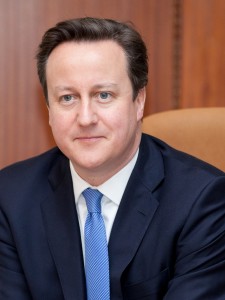
    Below is the text of the speech made by David Cameron, the Prime Minister, in Warsaw, Poland, on 10 December 2015.

    Thank you Prime Minister for welcoming me here to Warsaw.

    It is an honour to be the first leader to make a bilateral visit to Poland since your inauguration.

    The relationship between the United Kingdom and Poland matters – it matters for our prosperity and for our security.

    It always has. It always will.

    This year we commemorated the 75th anniversary of the Battle of Britain, and it was an honour to do so in St Paul’s Cathedral in London standing alongside President Duda.

    People in Britain never forget how brave Polish pilots played such a critical role in standing up for freedom and in fighting fascism.

    And we will never forget the role that Poland played in standing up to communism and restoring liberty to this continent.

    The images of Solidarity, defying and defeating a repressive government and ultimately helping to tear down the iron curtain – these are the images of my childhood, images which have shaped my entire political outlook.

    Today, in 2015, I believe we are natural partners.

    Partners in trade – the UK is Poland’s second largest trading partner and British companies invested over 3 billion euros here last year.

    Partners in defence – as fellow NATO members, we are steadfastly committed to the security of our allies.

    And as partners in the EU – it is great to see a sister party in the European Conservatives and Reformists Group back in power.

    Together we founded that group, now the third largest grouping in the European Parliament.

    I look forward to building stronger links between our parties – in Brussels but also in Poland and in Britain too.

    We have had very good discussions here, particularly about working together on defence and on EU reform.

    Let me say a word on each.

    Defence and security

    We are both strong members of NATO.

    We are both meeting the target of spending 2% of GDP on defence.

    And Britain is committed to making the next NATO Summit, which will be held here in Warsaw next July, as much of a success as the Wales Summit was.

    The United Kingdom is firmly committed to protecting the security of NATO’s eastern flank.

    The Royal Air Force regularly participates in the Baltic Air Policing mission and we have deployed 3,000 troops on training exercises in Poland in the last 15 months alone.

    But we want to do more, that’s why Britain is one of the first countries to join NATO’s new training and capability initiative that will mean the persistent presence of NATO troops in Poland and its neighbours.

    And we will lead NATO’s high readiness joint action task force in 2017 and provide around 1000 personnel for the task in subsequent years.

    We also want to reinvigorate our bilateral security relationship, so today we have agreed to hold the next meeting of our foreign and defence ministers in the UK early next year, and we’ve to work together on the situation in Ukraine and in countering Russian propaganda.

    We also want to enhance the collaboration between our defence industries, in particular by looking at what more we can do on technology transfer.

    EU reform

    Turning to EU reform.

    We both believe in a Europe of nation states, in a European Union that recognises that its strength comes from diversity, and which has the flexibility to respond to the concerns of member states.

    We have discussed in some detail the reforms I am seeking to address the concerns of the British people about the status quo.

    And there is much on which we agree, as you’ve just said.

    We both want to see a stronger role for national parliaments and an acceptance that ever closer union is not the aim of all.

    We both want new rules to govern the relationship between those inside the eurozone and those like both Poland and the UK who are outside.

    We both think much more should be done to make the EU a source of growth and jobs – cutting back needless bureaucracy and driving forward completion of both the single market and trade deals with fast growing parts of the world.

    Even on the most difficult issue of welfare, we have agreed to work together to find a solution.

    I support the principle of free movement and I greatly value the contribution that many Poles and other Europeans make to Britain.

    The challenge is the scale of the vast movement of people we have seen across Europe over the last decade and the pressure that can put on public services.

    That is the problem we need to address and I believe with the type of political will I have seen here in Poland we can find a way.

    I want Britain to stay in a reformed European Union, and the Prime Minister has made clear that Poland wants Britain to remain in the EU.

    Conclusion

    So I think these have been excellent discussions.

    We are 2 leaders that want to work together to get things done – to create jobs for our citizens and to help keep them safe too.

    The relationship between our countries is already good but I believe we have the opportunity to make it great.

    And I look forward to working together to achieve just that.

    Thank you.

  • Matthew Hancock – 2015 Speech on Open Data

    Matt Hancock
    Matt Hancock

    Below is the text of the speech made by Matthew Hancock, the Minister for the Cabinet Office, in Berlin, Germany on 10 December 2015.

    Thank you to the Konrad Adenauer Foundation for hosting me to speak today. The Konrad Adenauer Foundation has done excellent work to build foundations between Germany and the UK for 50 years. It’s a great honour to be here.

    (Guten Tag. Wir bedanken uns bei der Konrad Adanauer Stiftung, die mich heute als Gast eingeladen hat, hier zu sprechen. Seit fünfzig Jahren macht die Stiftung ausgezeichnete Arbeit, um solide Grundlagen zwischen Deutschland und England zu schaffen.)

    And for me, there’s something very special about coming to Germany to talk about open data, because this country was the birthplace of a much earlier data revolution.

    In about 1450 a Mainz goldsmith – Johannes Gutenberg – perfected the mechanical printing press.

    Gutenberg’s process radically cut the cost of copying information.

    And because the process itself could be easily copied, the number of printed texts in Europe exploded: from virtually none in 1450 to around 20 million by 1500.

    The result of that technological improvement was the birth of mass literacy, the rise of mass culture, and ultimately, the end of feudal society.

    Now, with the shift from paper to pixel, the cost of storing and copying information has once again fallen dramatically, to almost zero.

    We are already in the very early stages of the next data revolution.

    Its contours are visible in everything from smart energy, to driverless cars, to the sharing economy.

    And just as government had a key role to play in the rise of print – repealing censorship laws and developing the principle of copyright – so too we have the power to unlock the awesome power of data.

    It’s a whole new area of challenging policy and challenging political questions:

    • how to protect privacy
    • how to enable improvements
    • how to keep data secure
    • how to unlock its value

    The UK has gone further down this path than most other governments around the world.

    So today I want to set out some guiding principles on open data, based on the lessons that we’ve learnt and where we can go next.

    Usability

    The first principle is that openness on its own is not enough; data also has to be usable.

    In the early years, our UK data strategy was deliberately focused on volume. We wanted to get as much data as possible out into the open.

    Today we’ve published over 20,000 datasets on our government data portal.

    This was a great way of building early momentum.

    Government officials are trained to ask: where’s the evidence base, what’s the justification for doing this?

    But with open data, the only way you can assemble an evidence base is by publishing it first.

    For example, some were sceptical about the idea of crime maps: interactive maps showing recent crimes in a given area.

    No one would be interested in local crime figures, they said.

    In fact, the website was so popular with the public that it crashed on the day it went live. Now people use it for all sorts of reasons. Open transport data makes it easier and quicker to navigate our cities. Open education data helps people choose options and drive up standards in schools.

    So quantity does matter. The more data you publish, the more evidence you’ll find of its usefulness, and that’s critical for changing attitudes within government.

    But what we’ve learnt is that quality, reliability and accessibility are just as important.

    Indeed, open data that isn’t usable isn’t really open at all.

    Think back to the printing press.

    It transformed Europe not just because printing was faster than copying out by hand, but because books were printed in vernacular languages not just in Latin.

    Today the modern equivalent of printing in Latin is publishing a key dataset as a PDF.

    So our focus now is on developing common data standards for use across government.

    On auditing our data, so we can be sure of its accuracy and integrity.

    And on modernising our data infrastructure, replacing competing and often contradictory datasets held by different government departments with a series of high quality data registers that can be used across the public sector.

    Government as a consumer of open data

    Yet the best way of all to guarantee to the usefulness of open data is if we as governments use it ourselves.

    And this brings me onto my second principle: open data should be treated not as an optional extra – something that’s ‘nice to have’ but inessential – but rather as a key driver of public services reform.

    When we started to publish open data in the UK we thought of it mainly as a tool of accountability, a way of being more transparent about where taxpayers’ money was going and how well it was spent.

    Government using our own data, ‘hundefutter’, or dogfooding as it is called in English, also ensures that we publish high quality data because we know what it feels like to use it. This is taken from a US Chief Executive of a dog food company who ate a can of his own product to prove its quality.

    And it absolutely does deliver greater accountability.

    When we started publishing travel data, for example, we found that senior officials became much happier to book themselves into economy class on long-haul flights.

    But what we’ve learnt since is that open data can also be used to improve the effectiveness of public services.

    Deaths in coronary artery surgery dropped by 21% after publication of surgeons’ performance data.

    Publishing contract data allowed one of our officials to find £4 million in savings in just 10 minutes, simply by spotting that several government departments had all been buying the same expensive report.

    Openly available demographic data has been used by government agencies in everything from forecasting pressure points in doctors’ surgeries, to finding the best locations for defibrillators.

    And this is before you even get to the entirely new services that have been built by innovators outside government using government data.

    Travel apps, property valuation software, a home swap service, food hygiene ratings for online takeaway platforms, footfall simulations for retail businesses, a service to check whether your second-hand bike’s been stolen – these are just a small fraction of the applications that have so far been engineered by third parties using government data.

    Our focus is on making sure that every part of government, at every level, understands how data can help us achieve our objectives, whether as consumers or compilers of open data.

    This is all based on a very clear principle: government data is a public asset and should be used for the public benefit.

    Collaboration

    But we can’t do it alone, and this brings me onto my third principle: being open to collaboration – and challenge – from the wider community.

    In the UK we’ve worked closely with the Open Data Institute, an internationally recognised research and education body, co-founded by 2 of our most eminent data scientists, Sir Nigel Shadbolt and Sir Tim Berners-Lee.

    They play a dual role: holding us to account for delivering our open data programme, and connecting us to the leading businesses and innovators progressing this field.

    We’ve found them incredibly valuable partners:

    • in identifying the datasets with the greatest potential
    • helping to demonstrate the business case for the release of those datasets
    • as an incubator for the start-ups which go on to use them

    But as well as collaboration within countries, we can also benefit from collaboration between them.

    Open data is a powerful weapon in the fight against cross-border crimes like fraud, corruption and money-laundering.

    By working together and standardising our approach, we can compare more data across borders, design better policies and make it harder for crime to evade detection.

    Trust

    Data is power, which is why governments have traditionally hoarded it. But even in open form it must still be handled responsibility.

    And this brings me onto my fourth principle, which is trust.

    Citizen trust must be at heart of the open data agenda.

    If the first duty of government is to keep citizens safe, then the first duty of a digital government is to keep citizens’ data safe.

    We will only realise the full benefits of an open, data-driven economy if we can show people that their personal data is safe, secure, and handled with utmost care.

    So one of the most important things we can do as a government is develop a strong ethical framework – in partnership with civil society – so policymakers and data-scientists can be sure that they’re getting this right.

    This is a key priority for the UK.

    Yet far from being in conflict, more openness and better security actually go hand in hand.

    Both require effective data management: knowing exactly what you own, cutting out duplication and making sure it’s properly audited.

    And both require a clear focus on data integrity: making sure that data can’t be changed or corrupted.

    On this, as on so much else, we are committed to working closely with our European partners to secure that trust: on the successor to Safe Harbour, so companies can safely transfer data to third parties outside the EU.

    And on an EU data protection package that protects the rights of citizens while, crucially, supporting innovation.

    So these are my principles for living the open data revolution.

    Make it usable, make sure that government itself is a user, collaborate, and put citizen trust front and centre, remembering always that data paid for by the citizen belongs to the citizen.

    Conclusion

    With half of Berlin closed up and walled off for nearly 40 years, this city knows a lot about the value of openness.

    Now we must bring down the wall on government data, returning to citizens what is rightfully theirs, using it to solve age-old problems and unlock brand new possibilities.

    Unleashing the free flow of information, innovation and ideas in the service of human progress.

    It won’t be easy, it will take time, effort, patience and debate, but we in the UK are looking forward to working with you in Germany to make it happen.

  • David Cameron – 2015 Speech in Romania

    davidcameron

    Below is the text of the speech made by David Cameron, the Prime Minister, in Romania on 9 December 2015.

    Introduction

    Thank you President Iohannis for welcoming me to Bucharest today. It’s a pleasure to be here and to have had good discussions with you, and with Prime Minister Ciolos.

    The United Kingdom and Romania share important ties. We are partners in the EU, partners in NATO – and good trading partners too. Our bilateral trade is growing – up to a record high of €3.5 billion last year.

    The UK is an important energy partner for Romania and a firm supporter of the need to strengthen energy security across Europe.

    We have also worked together, as you’ve just said, in the face of adversity, with British doctors providing specialist burns treatment in the UK for some of the victims of the tragic nightclub fire in October.

    Today, we have talked about how we can strengthen our co-operation further on defence, on migration and on EU reform.

    Defence

    On defence, as a country that is already investing 2% of our GDP on defence, Britain welcomes Romania’s commitment to meet this target by 2017.

    Our armed forces already train together and today we have discussed how we can strengthen our collaboration further.

    Romania is updating its naval fleet, which is a potential opportunity to work together with the United Kingdom.

    And we’re deploying UK military officers to the new NATO headquarters here.

    Imigration

    On migration, on the Middle East and Africa, we have also discussed how together we can pursue a comprehensive approach to tackle the root causes of migration.

    That means doing more to help alleviate the poverty and the conflict that drives people from their homes in the first place.

    And it means doing more to break the business model of the people smugglers. We must break the link between getting in a boat and embarking on a new life in Europe.

    The UK is playing its part. We are the largest European donor to the humanitarian crisis in Syria.

    HMS Enterprise is on deployment in the Mediterranean – helping to save lives and also to detain the smugglers.

    And we are providing practical assistance to European countries on the frontline – with UK border officers helping with the screening and the registering of migrants.

    EU reform

    We have also discussed how we can reform the EU to make it more competitive – and to address the concerns of the British people about our membership.

    The United Kingdom is a vital member – the second largest economy, a significant net contributor and a leading security partner.

    I want Britain to stay in a reformed European Union. That’s why I am seeking important reforms to address the concerns of the British people about the status quo.

    As the President of the European Council said earlier this week, we are making good progress; but I recognise that some areas are more difficult than others, particularly the reforms I have proposed on welfare.

    I support the principle of free movement to work – it is a basic treaty right and a key part of the single market. And Romanians, alongside other Europeans, make a valuable contribution to the United Kingdom in a wide range of fields, from finance to science and medicine.

    But it was never envisaged that free movement would trigger quite such vast numbers of people moving across our continent. And countries have got to be able to cope with all the pressures that it can bring – on our schools, our hospitals and other public services.

    Net migration in the UK is running at well over 300,000 a year and that is not sustainable.

    So we do need to find ways to allow member states to make changes to their social security systems that will help them to deal with this issue.

    At next week’s summit we will have a substantive discussion about all the reforms that I have proposed. And I am confident we can find solutions in each area.

    The EU has shown before it has the flexibility to respond to the concerns of its member states. Now, it needs to do so again starting in December and then with further discussions in February.

    Conclusion

    This has been a very useful meeting.

    I am delighted to be the first British Prime Minister to make a bilateral visit to Romania this century. It shouldn’t be another 15 years before one comes back again.

    And I look forward to strengthening relationships between our 2 countries in the future.

  • Priti Patel – 2015 Speech on Apprenticeships

    piritpatel

    Below is the text of the speech made by Priti Patel, the Minister of State for Employment, at the 5% Club event, 1 Sail Street, London on 3 December 2015.

    Thank you for inviting me here today.

    Everyone should be talking about the 5% Club. This is a fantastic initiative to ensure companies have the next generation of skilled workers, through high-quality apprenticeships and graduate schemes.

    You have made a commitment to ensure that 5% of your workforce is on an apprenticeship or graduate programme. Business has a vital role in enabling young people to find lasting work through an apprenticeship.

    The government too has made a pledge. To deliver 3 million apprenticeship starts in England by 2020. Through these, we can deliver the skills that business and the economy need for growth.

    State of the labour market and youth unemployment

    On the whole, the labour market is in a good position. Employment levels continue to rise.

    We have 31.2 million people in work, a record high of 73.7%. Unemployment as measured by the International Labour Organisation (ILO) fell again this quarter.

    There are nearly 740,000 vacancies at any one time, slightly below the record high but still above levels seen before the recession.

    Young people too have gained from the recovering labour market. The claimant count for unemployed 18- to 24-year-olds has fallen over the year and in October stood at 183,000.

    Government measures to tackle youth unemployment have helped to reduce the number of young jobseekers by a quarter of a million since 2010.

    Yet this still means that there remain young people who have not been given the chance to realise their potential and prove their worth.

    This is where you come in.

    Apprenticeships

    Apprenticeships offer young people a chance to reach their potential. Through an apprenticeship, they can achieve a successful career and secure finances in the years ahead.

    Apprenticeships should not been seen as the poor relation of academia. Higher and degree apprenticeships are widening access to skilled trades and professions. They provide the higher-level technical skills employers need to improve productivity, whilst giving young people an equally valid career route as going to university.

    This year we increased the apprentice National Minimum Wage to £3.30 an hour. Furthermore, from April 2016, employers will not be required to pay employer National Insurance contributions for apprentices under age of 25 on earnings up to the upper earnings limit. Eligible employers can currently also receive a £1,500 grant for up to 5 new young apprentices.

    There was just short of half a million starts to an apprenticeship in the 2014/15 academic year. We are taking action to support the growth of apprenticeships to meet our 3 million commitment by 2020.

    Government is ready to work with businesses large and small to introduce and expand apprenticeship programmes. We are also setting new expectations for public sector bodies and through public procurement.

    A levy will be introduced to help fund the increase in quantity and quality of apprenticeship training.

    High-quality apprenticeships are essential if Britain’s economy is to prosper in the years ahead.

    Routes into apprenticeships

    Young people face many challenges. We all remember thinking about what we would like to do when we left school. Many of us may have been lucky enough to be surrounded by friends and family who had wonderful, interesting jobs to inspire us.

    But what about those who are not so fortunate? The young people from disadvantaged backgrounds, whose friends and family have themselves struggled with unemployment? These are the young people who need a helping hand to realise their potential.

    This is where business has a vital role to play. Employers can open their doors and show them the possibilities. Business can help young people obtain the experience and skills they need to succeed.

    Not everyone will be ready to step straight into an apprenticeship. Schemes such as work experience and traineeships can offer a great stepping stone.

    Work experience is a deceptively simple idea but opens the door to so many possibilities. Young people get a real taste for a possible career, while you get to see them in action.

    Two years ago, some of the UK’s biggest companies announced Movement to Work, an initiative to encourage employers across the country to do more to help unemployed young people.

    Over 200 UK employers are now committed to the Movement. To date, together they have delivered over 25,000 opportunities. Early reports show over half of participants have gone into paid work, including apprenticeships.

    Jobcentre Plus work coaches in schools

    Many young people leave school not understanding the full range of options open to them and unsure how to progress into employment.

    This can lead to missed opportunities and wasted potential. Only 5% of 18-year-olds enter an apprenticeship.

    Jobcentre Plus will soon be helping young people at school get the support they need to progress into employment or training. This will supplement schools careers advice and be targeted at those in danger of becoming NEET – not in employment, education or training.

    Jobcentres will coordinate this support with the new Careers and Enterprise Company. The aim is to offer support and advice on work experience, apprenticeships and traineeships, the labour market and the world of work.

    Jobcentres have a role, but better still is for employers and others to take the message out to schools and colleges about the opportunities available.

    We want young people to progress onto bigger and better things. There is no substitute for quality opportunities that allow people to learn and to grow.

    Conclusion

    Employers have a lot to gain from taking young people under their wing and giving them the chance to prove themselves. And we can support you in that.

    Some people need a little extra help to find a job. This may be training, the support of a mentor, work experience or even something as simple as a new suit for a job interview.

    Jobcentre employer teams are ready to help you find new apprentices and support young people in your area.

    Employers have a vested interest in making sure the next generation of workers has the skills to succeed. You know what works best for your business and the sort of talent you need to thrive.

    Together we can open more doors to the 5% Club and help young people forge the skills for Britain’s future.

    Thank you for your time.

  • Sam Gyimah – 2015 Speech on Children and Young People

    samgyimah

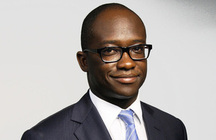
    Below is the text of the speech made by Sam Gyimah, the Parliamentary Under Secretary of State for Childcare and Education, in Regents Park, London, on 3 December 2015.

    Thank you so much for having me here today (3 December 2015), and for putting on such an important event. The fact that this conference is focused solely on children’s mental health, reflects the priority it should be given. And right across government we are committed to getting it right.

    We are at a turning point in how we tackle children’s mental health issues, and events like this one are pivotal in helping us work together to change both how we think about good mental health and what we can do to support it.

    It is a just over a year since I was at the Children and Young People Now awards evening, talking about the importance of mental health support. And I am back to the same again today – because young people’s mental health remains a priority for this government.

    I am delighted that this year’s winner of the Children and Young People’s Charity Award was won by 42nd Street, the youth mental health charity.

    They have rightly been recognised for their outstanding work in delivering a range of therapy and advocacy services for young people in Greater Manchester. These services are reaching some of our most vulnerable young people, increasing their access to early intervention and prevention services.

    A lot has happened in the last year, both across government and within the Department for Education.

    ‘Future in Mind’ was published in March, providing us with a really clear framework for our focus on these issues. Government has committed £1.4 billion over the next 5 years to transform children’s mental health services and each local area is developing a plan to make that transformation a reality.

    But there is more happening nationally as well.

    Earlier this week I was at the launch of 2 incredible anti-stigma campaigns run by Time to Change. They are 2 digital campaigns. One is the largest ever for teenagers and the other, the first campaign to be targeted specifically at parents.

    Both aim to reduce stigma and discrimination and were developed in consultation with the children, young people and their parents. These campaigns will run over the next 3 weeks. And we are really excited about the part they will play in transforming attitudes about mental illness.

    At that event, I heard some boldly honest stories from very impressive young people, about the struggles they have faced. It is this honesty and willingness to share with others that will help us to truly tackle the stigma around mental health.

    In a moment, I’ll talk to you about the work we have been doing within the Department for Education to look at the ways that we can support schools and colleges to understand and address the mental health needs of their pupils.

    But first, a key message I’d like you to take away: the success of these activities depends on putting children and young people at the heart of the policy-making process – nationally and locally. This isn’t new – and it is a theme that I’ll continue to refer to – but it is one that can often get overlooked when with the best will in the world, we’re back at our desks thinking about what we can ‘do’ for children and young people.

    I have seen for myself the importance of listening to, and working with young people themselves. Back in July, Alistair Burt and I were expertly grilled by the Youth Select Committee. We were impressed with their knowledge of the issues, their passion for taking action and their insights into what can be done.

    No young person wants an adult to tell them how they should feel, or how they should deal with a problem. We held a young person’s round table where we tested our policy ideas with a panel of very young people, with lived experience.

    We have distilled this down into 4 areas in which the ‘education system’, can have a particular impact:

    • preventing children and young people from developing poor mental health
    • identifying those who are at risk and who are developing problems
    • providing initial and complementary support within schools, colleges or children’s service settings
    • helping children and young people access specialist services where they need them

    Knowledge about mental health is a key underpinning in all 4 areas – to both promote good mental health and recognise and support when things go wrong. Since last year we have put a lot of new things in place.

    You may have seen an announcement in the press this morning, from the Secretary of State, that to facilitate better access to specialist services, we are working jointly with NHS England to run pilots looking at how schools and CAMHS can work better together. We have invested £1.5 million and are working with 255 schools to test how training and subsequent joint working can improve local knowledge and identification of mental health issues, and improve referrals to specialist services. This is the most recent thing we have done.

    We have also funded the PSHE Association to publish guidance and lesson plans to support age-appropriate teaching about mental health and funded the development of the fantastic MindEd resources to specifically include materials for parents. I would urge you to take a look.

    We have updated advice on mental health and behaviour to help schools look beneath behaviour to better support young people with mental health needs, and to help them develop their early support offer we published a blueprint for schools on how to deliver high quality school-based counselling.

    In addition, we have invested £5 million in Voluntary and Community Sector grants which include a number of projects developing innovate ways to support children and young people in schools and children’s services. 42nd Street was one of those recipients through its work as part of Youth Access.

    And to help us raise awareness and reduce the stigma around young people’s mental health we are working with our first mental health champion, Natasha Devon.

    Natasha has real experience of supporting schools to address mental health issues with their pupils and can make a real difference in encouraging more young people to talk openly about mental health and I am thrilled that she is here today.

    I am sure you will enjoy her session on developing positive approaches to discussing mental health issues.

    But we know there is still a very long way to go and that we are just at the foothills of tackling this incredibly important issue.

    At any one time one in 10 children are suffering from a mental illness – that is 3 in any average sized class. Even more alarmingly, a recent study suggests one in 5 children will suffer some form of mental illness during their childhood. We need to do 2 things urgently – we need to do more to prevent occurrences and escalation of illness, and we need to ensure that the support is in place so that those that have a mental illness are not suffering in silence.

    The recent Youth Select Committee report on mental health highlighted peer support as a key tool in tackling exam stress.

    They also quoted me as saying that I want to use peer support in a large scale way as part of our broader response to young people’s mental health issues. This is something that I am committed to taking forward.

    We know that young people understand better than anyone the pressures their peers face. Pressures that are completely different to those we faced when I was growing up. With their online lives following them wherever they go there are no longer the ‘safe spaces’ that I enjoyed, away from the pressures of school-life, friendships and preparing for adult life.

    But young people have stressed to us that the online world shouldn’t just be seen as a threat. It’s increasingly where young people look for support too. In recognition of this, we funded the development of the award winning Silent Secret app that allows young people to safely share secrets whilst providing direct support from key organisations when a young person seems to need mental health support.

    Silent Secret is just one of the increasing number of apps that provide young people with support from their peers – and this is an area that I am particularly interested in looking at more closely.

    Of course there are times that you can’t replace face to face support. At the young person’s round table we held in the last parliament, a particular story stood out for me. A pair of good friends, Amber and Sophia, told of how when Sophia was dealing with anorexia, Amber provided help and support. In Amber’s eyes, this was no more than being a good friend to Sophia, but I’m sure you’ll all agree it is an example of how valuable it can be when young people step up for each other.

    With this in mind we will be working over the coming months to find out about what works in peer support. I am setting up an advisory group to identify what good peer support looks like and consider how we can embed it in schools.

    We want to hear from children and young people and will be seeking their views through the social media channels that they use to communicate.

    I want to consider whether young people would benefit from training to be able to support others better and to provide them with the opportunities, and recognition for, volunteering to support their peers with appropriate advice and information. And by simply being there to listen.

    Although we know many schools do this already, my vision is that parents will expect all schools to offer some form of peer support programme as part of their whole school approach to mental health and emotional wellbeing.

    We will work with schools and those with expertise – including in the voluntary sector to get them to a place where rather than parents being pleasantly surprised by schools that do offer a range of prevention, identification and early support activities, parents are asking “why not” from those that don’t.

    I am really excited by this work and look forward to hearing from you with your views.

    Thank you very much for your time.

  • Hilary Benn – 2015 Speech at Coventry Rising 15

    hilarybenn

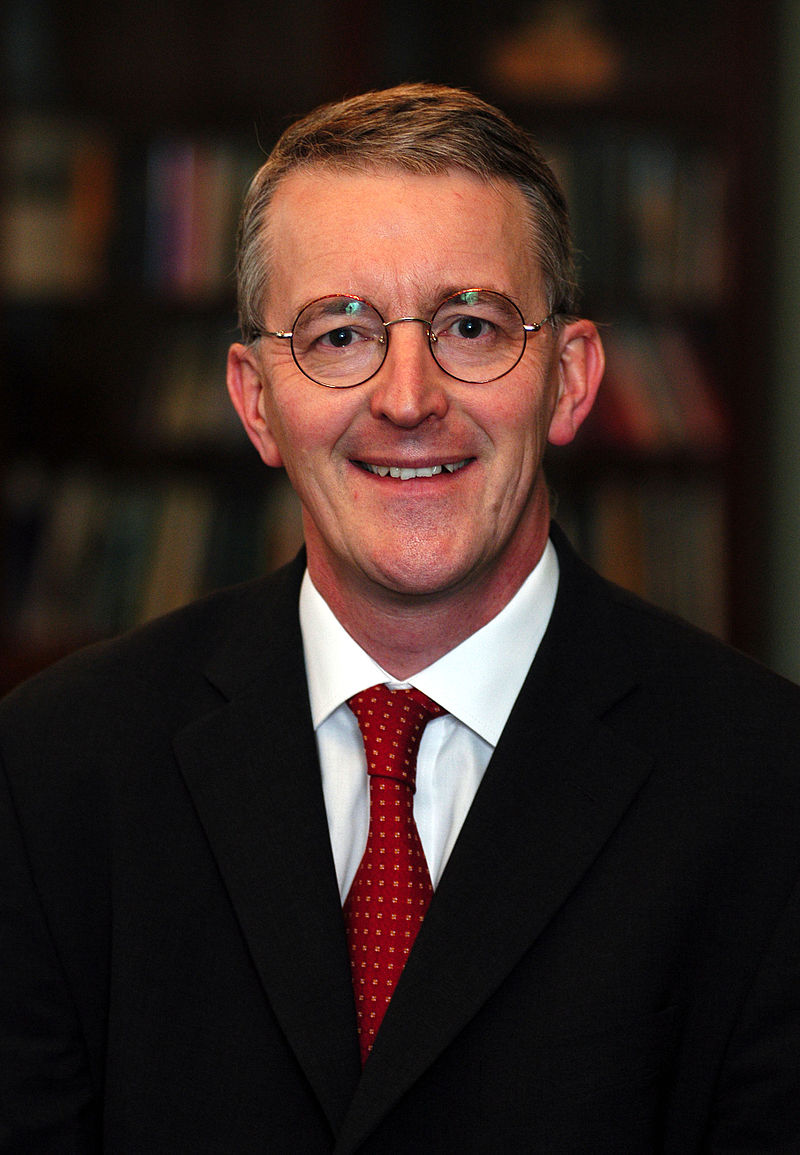
    Below is the text of the speech made by Hilary Benn, the Shadow Secretary of State for Foreign and Commonwealth Affairs, at Coventry Rising 15 on 11 November 2015.

    It is a great honour to have been invited to contribute to Rising 15 and to do so on 11 November here in Coventry.

    This cathedral – the old and the new – stands as a reminder both of the consequences of war and of the enduring power of faith to inspire.

    Two weeks ago I was in Jordan listening to a mother describe how she fled there from Syria with her children after her husband, a baker, was arrested, tortured and killed by President Assad’s forces.

    There is not one of us who does not ask why human beings do this to their brothers and sisters? Maybe we shall never know, but there is another question that we can try and answer. What should we do when these things happen ?

    I was brought up on the parables of the New Testament, and the one that left the greatest mark on me was the Good Samaritan.

    St Luke’s gospel records that it was the question “And who is my neighbour?” that prompted Jesus to tell the story of the man on his way from Jerusalem to Jericho who was robbed and beaten and left for dead by the side of the road.

    While the Priest and the Levite both, separately, chose to pass by on the other side, it was the Samaritan who stopped to help.

    And having told the story, Jesus then asked his questioner:

    “Which now of these three, thinkest thou, was neighbour unto him that fell among the thieves ?

    And he said, He that shewed mercy on him.

    Then said Jesus unto him, Go, and do thou likewise.”

    I have chosen this parable as my text for today.

    When we see the extreme suffering of others, what is our responsibility to our neighbours?

    For some, this is an uncomfortable moral choice and they hope it will pass them by.  Some say it is none of our business. Others respond by renouncing violence – an aspiration we should all share – but until all 7 billion of us do so, we have to face up to the effects of violence on its victims.

    War is often the handmaiden of poverty and civil wars on average result in 20 years of lost development.

    It is no accident that Afghanistan and Somalia have the highest rates of infant mortality in the world.

    Both are poor and both have been wracked by conflict.

    The causes of war are many. The legacy of colonialism. Resources. Ethnic and regional tensions. Politics. Nationalism. Ideology. Religion. Terrorism.

    And in the years to come, we may see added to this list people increasingly fighting over energy, land or water.

    So when is it right to act to prevent these things?

    Looking back on the Second World War which led to the bombing of this cathedral, did more people die than would have lost their lives if Hitler had not been confronted? Maybe. Was the war an expression of failure? Most certainly. And yet, was the second world war justified?  In my view, it was.

    And from its ashes came a determination that such a conflict should never happen again.

    Its expression was the founding of the United Nations in 1945 and three years later, the UN General Assembly adopted and proclaimed the Universal Declaration of Human Rights.

    Article 3 states: “Everyone has the right to life, liberty and security of person.”

    Article 28 says: “Everyone is entitled to a social and international order in which the rights and freedoms set forth in this Declaration can be fully realised.”

    And yet, for millions of people these rights – so nobly expressed – have remained just words on paper.  The refugees from Syria I met in Jordan could not have been clearer. They said simply: “The world has forgotten us”.

    Why is this so? Because those affected lack the means to do anything about these conflicts themselves and because we, the rest of the world, lack the will or act imperfectly or not at all.

    This will not do.

    First, and most importantly, because we should uphold the principles enshrined in the Universal Declaration of Human Rights. They mean something as the ultimate expression of our responsibility to one another. And yet without the rule of law and peace in all countries they mean nothing.

    Imagine if the world consisted only of the United Kingdom and someone argued that it would be alright to have peace in Coventry, but civil war in Leeds and genocide in Glasgow. What would we think ?

    Of course, this doesn’t happen because these rights are enjoyed in all parts of our country. And yet, we are one world and having created the United Nations, we have a duty to ensure these same rights are available to our fellow humans whichever part of the  planet they were born on

    The second reason why this matters is because  interdependence defines the condition of humankind today more clearly than at any other time in human history.

    The effects of conflict elsewhere are felt here, whether it is watching it on television, seeing the flow of refugees, feeling the repercussions in our politics or experiencing the impact of terrorism on our own lives. And as the world’s economies become more dependent on each other, the consequences for trade and travel are increasingly serious.

    The third reason is that no country can progress while it is mired in conflict.

    So those who care most passionately about overcoming the scars of poverty, disease and squalor, must be equally passionate about the part that peace and stability play in helping to bring this about.

    And the fourth reason is that new threats beckon.  Unchecked, climate change will affect our future security. If people can no longer live where they were born because their homes are under water or it has stopped raining, then they will do what human beings have done throughout history. They will move in search of a better life. They may be coming to live near you or me. And their number will dwarf anything we have seen thus far.

    What recent history teaches us is that whether it was Sierra Leone under the RUF and the West Side Boys, the Rwandan genocide, Kosovo when Muslims were being murdered in Europe’s backyard or Syria today, the world needs to find a way of dealing with crimes against humanity.

    In some of these cases we did act; in others we failed.

    It is not that the international community does not care. But there is not yet a settled and united will to act, and we lack the capacity to do so in an effective way.

    So how can we build this capacity?

    One of the problems we face is national sovereignty. A country invading another is one thing, but when terrible events happen within a country some still say that this is an internal matter and none of anyone else’s business.

    We used to hold the same view of domestic violence here in the UK. Forty or fifty years ago, if the police were called because of reports that a man was beating up someone in the street, he would be swiftly arrested. But if the victim was his wife or his partner behind a closed front door, then the prevailing attitude was ‘it’s a domestic dispute and not for us to get involved.’

    That doesn’t happen anymore. A crime is a crime, and the sovereign state of the kitchen or the bedroom no longer provides any protection against enforcement of the law.

    I think we are currently witnessing the world going through exactly the same process internationally for exactly the same reason. An increasing number of voices are saying that leaving people by the roadside of conflict to fend for themselves simply cannot be right.

    And so was born the concept of Responsibility to Protect – the idea that the international community does have a responsibility to stop people becoming victims of the most terrible crimes.

    Developed by the Canadian Government’s International Commission on Intervention and State Sovereignty in 2001, it led – following Ban Ki Moon’s report on implementing the Responsibility to Protect – to the UN General Assembly adopting a resolution in 2009.

    Seeing state sovereignty not as a privilege but a responsibility, R2P seeks to prevent and stop genocide, war crimes, crimes against humanity and ethnic cleansing. And it explicitly accepts that the international community does have a responsibility to act in certain circumstances.

    I support R2P very strongly, but it is not without controversy, so I want to try and address directly the reservations and concerns people raise about it.

    The first is authority. Who is to decide what should be done?

    For me the answer is clear. It should be the Security Council of the United Nations. That is why we created it. The UN has both a unique responsibility because of its authority and a unique legitimacy.

    And yet we see from history that the UN has not always been capable of agreeing on what should be done or of acting effectively when it has.

    We have to accept that the veto exists to bind the world’s major powers – the five permanent members of the Security Council – into the United Nations, but with it comes a great responsibility. That is why the French Government has proposed that in cases of mass atrocities permanent members of the Security Council would voluntarily agree not to use their veto. I think this is an important proposal and it should be strongly supported by the UK and others.

    But what if the UN will not or cannot act – then what?  Is that an argument for standing on one side?  Not in all cases some would argue, including me, as our support for intervention in Sierra Leone and Kosovo demonstrated. Others, however, take the view that in the absence of a UN mandate there can be no legitimacy for any action.

    The second issue is that people fear premature military intervention. That’s why diplomatic and public pressure should always be the first resort. It can work.

    Western sanctions have played an important part, for example, in persuading Russia to implement the Minsk Agreement in Ukraine.

    We have also learned that a single camera or a single reporter bearing witness to an atrocity – and the shame that can be brought upon those responsible – can have a power equal to a thousand resolutions. The reason why the UK Government changed its mind in September about Britain taking more Syrian refugees was that photograph of little Aylan Kurdi’s lifeless body lying on a beach in Turkey.

    The third issue is deciding when states should act.

    Agreeing a threshold is difficult and highly contentious and achieving consensus about whether or not diplomatic options have been exhausted is fraught with difficulty. And yet, if we wait for evidence of genocide to become conclusive then it may be too late to do anything or to save anybody.

    The fourth issue is practicality. If a decision is taken to act, then who is going to undertake the work? If it involves military intervention, then whose troops will be used?  How many?  Under whose command?  With what resources and what mandate? And what is the plan for after military intervention?

    One way of answering these questions is to continue to build capacity regionally to be able to handle  peacekeeping. Was it right for the African Union to take the lead in Darfur and Somalia? Absolutely.

    Both because western forces in an Islamic country in those circumstances would not have been accepted and because these were conflicts in Africa’s backyard.

    On mandate, peacekeepers need the tools to do the job, and that includes the ability to protect and intervene if necessary under Chapter VII.

    Where there are people to protect or a peace to keep, we need more peacekeepers. At present there are close to 125,000 military and civilian UN peacekeepers compared with only 11,000 a quarter of a century ago.

    Despite this, there still aren’t enough for all the missions the UN would wish to run, and to the high standards we expect of them. For as well as numbers, there is also the question of training, equipment, and capacity, particularly as regional institutions build their own peacekeeping.

    This is an area in which Britain could and should play a much bigger part given the skill, experience and expertise of our armed forces. There are currently just under 300 British peacekeepers contributing to UN missions although another 300 are soon to deploy to South Sudan and Somalia. That simply is not good enough and I call on the Government to set out in the forthcoming Strategic Defence and Security Review how the UK can play a much bigger part in UN peacekeeping in the years ahead.

    And when action has been taken, it needs to be followed up with stabilisation, a political process and decent governance. There is no substitute for the parties to a conflict finding their own way out of it.

    Lastly, what is the consequence? There are two types of consequence; that of acting and that of not acting.

    In the case of Sierra Leone, the outcome of British and UN intervention was beneficial. The country remains poor but it is largely free of violence now and has taken the first steps on the road to recovery.

    In the case of Afghanistan, where the world responded to 9/11, the removal of the Taliban enabled about three and a half million of the estimated four million refugees who had fled the country to return. The conflict however continues – many lives have been and are being lost – but the aim remains enabling the elected Afghan government to look after its own security as politics brings a peace settlement.

    In Somalia, the American troops who went in to help with humanitarian relief ended up in a gun battle. They were replaced in time by African forces, but despite recent progress, parts of the country remain deeply troubled and insecure as the recent attack by al-Shabab in Mogadishu demonstrated. More positive has been the impact that international co-operation has had on piracy off the country’s coast. And, by contrast, Somaliland shows what can be done if politics is made to work.

    For the people of Rwanda the consequence of our not acting was devastating. In 100 days just under one million people were killed – the equivalent of 6 million people being murdered here in the United Kingdom on our street corners, and in our schools and on churches – as the world stood by and watched.

    Anyone who has read Romeo Dallaire’s book ‘Shake Hands with the Devil: the failure of humanity in Rwanda’ will weep with him in rage at what happened while we failed to help.

    And while the Syrian civil war has continued, over 200,000 people have been lost their lives, half the population have had to flee their homes and the barrel bombing by the regime and brutality of ISIL/Daesh continue.

    The world has to be much more effective in dealing with conflicts like this before they turn into brutal and bloody civil wars. The responsibility to protect was meant to be about that, but let us be honest: in Syria, no-one has taken responsibility and nobody has been protected.

    Now we do also have to deal with charges of selectivity and, at times, hypocrisy; that we have not been consistent in our choice of when to act, or that countries have chosen to act when there is much at stake for them but not when there isn’t.

    It is a reasonable criticism, and it has on occasions force.

    And yet the argument that just because you have failed to do the right thing everywhere you should not attempt to do the right thing anywhere is one I find profoundly unconvincing.

    Of course, in the case of all conflict, prevention is better than cure. There is nothing more important than putting time, effort and energy in trying to prevent violent conflict in the first place.

    Particularly important is the UN’s capacity to mediate and so help the parties to resolve their differences without turning to violence. So we need skilled, readily deployable teams able to go and support peace talks around the world, as Staffan de Mistura and Bernardino Leon are currently trying to do in Syria and Libya.

    Few civil wars arise from nowhere. So we need to be better at monitoring and understanding the causes of tension; the exclusion and injustice that makes people angry.

    The establishment of the Atrocity Prevention Board by the US Government is a particularly good example of what can be done.

    If all this sounds depressing, two decades ago things were much worse. Half of the countries in Africa were then affected by violence – many in regional conflicts across West and Central Africa.

    Now, we can look back and say that sub-Saharan Africa was the only region in the world to see a decline in violent conflict at the start of the 21st century.

    Much of that is down to the pioneering work of the African Union and its Peace and Security Council. It can deploy military forces in situations which include genocide and crimes against humanity and can also authorise peacekeeping missions. The AU has put troops on the ground in Burundi, the Central African Republic, Darfur, and most recently in Somalia in the form of AMISON – a regional mission operating under a UN mandate

    We are getting better at negotiating peace. According to the Human Security Report, the international community has negotiated more settlements to conflict in the last 15 years than in the 185 years previously.

    Finally, when all of this is done, we need to end up where we started – with the rule of law so we can call those responsible to account.

    That is why the UK has been such a strong supporter of the International Criminal Court. The message it sends is clear and simple. Anyone who is planning crimes against humanity will think twice because they will know that the international community will in the end catch up with them, as Slobodan Milosevic and Radko Mladic both discovered.

    The reason why we should want international action at the UN to succeed is that this is all about demonstrating that multilateralism – countries working together – can provide the answer to that uncomfortable question – what is to be done?

    And the more it does succeed, the stronger is the argument we can make with those who would act unilaterally that there is another way.

    I would like to end on a note of optimism. 100 years ago this year my grandfather William fought in Gallipoli in the First World War. He lost his younger brother in that campaign and his eldest son in World War Two. This is what he wrote about war:

    “Is there anyone, now, who will deny that, step by step, warfare degrades a nation? …[Soldiers] know from bitter experiences what militarism really means; its stupidity, its brutality, its waste. They are chivalrous because they have learned the one good thing that war can teach, namely that peril shared knits hearts together – yes, even between enemies. They have mingled with strangers. They know that common folk the world over love peace and in the main desire good will.”

    Nearly a hundred years after he wrote those words, they remain true.

    Human beings everywhere yearn for peace and if together we can make our politics work in the service of humankind then we will bring nearer the day on which that hope is realised.

    Thank you.

  • Hilary Benn – 2015 Speech to Labour Party Conference

    hilarybenn

    Below is the text of the speech made by Hilary Benn, the Shadow Secretary of State for Foreign and Commonwealth Affairs, to the 2015 Labour Party conference.

    Good morning Conference.

    I would like to begin by thanking our friend and my predecessor, Douglas Alexander. Douglas gave outstanding service to his constituents and to our Party over many years. We wish him well.

    Conference. At the start of this new century, what do we see as we look around our world?

    Fewer conflicts. Technology transforming and enriching our lives at a blistering pace. The rise of new global powers. Economic and social advance as trade opens minds. But we still face old problems like poverty and new challenges like climate change.

    And one constant remains. The innate human desire to decide for ourselves and our families how we live our lives. The argument for democracy.

    This changing world is at times uncertain but it is also full of possibility, and it calls on us to look outwards.

    And that’s why the choice the British people will make when they vote in the European referendum will be the most important decision for 40 years about our place in the world.

    Thank you Alan for leading Labour’s campaign to stay in and thank you Glenis and our MEPs for the important work you do.

    Together we believe that Britain’s future lies in Europe because whatever the disagreements of today or the changes we want to see tomorrow, it has given us jobs, investment, growth, security, influence in the world and workers’ rights.

    Don’t mess with them, Prime Minister, but be assured that if you do, a future Labour Government in Europe will restore them. We will not be part of a race to the bottom.

    Above all Europe has brought peace to our continent; a continent that has seen enough graveyards filled with the flower of generations who gave their lives in war.

    In our party, in our movement, we understand that our responsibilities extend beyond Britain’s shores. From the struggle against Franco’s fascism in the 1930s to the defeat of Nazi Germany; from the fight against apartheid in South Africa to the protection of the people of Kosovo and Sierra Leone, we have always been proud internationalists.

    Proud to stand in solidarity with those in trouble.

    And determined not to walk by on the other side of the road.

    And so, despite all the progress that humankind has made, when we see the five remaining giant evils of our time – disease, inequality, oppression, war and environmental damage – we have a moral duty to act.

    Earlier this summer we looked in horror at that photograph of Aylan Kurdi lying dead on a Turkish beach, and our eyes filled with tears.

    I think we all felt ashamed. This small and precious child had his whole life before him when his desperate family – victims of a civil war that is raging through Syria – stepped into that boat in search of a better life. They had fled from Kobane – a city in which the BBC reports “every building, home, shop and street is ruined.”

    Each death in this conflict is a rebuke to the world for its failure. We believe in the responsibility to protect, but in Syria no-one has taken responsibility and no-one has been protected.

    Nearly half the population are today no longer living where they were when the civil war broke out.

    Seven and a half million people are internally displaced.

    Four million have fled the country.

    That’s why this is the great humanitarian crisis of our age.

    Britain is second only to the United States in the generosity of its humanitarian aid.

    But that makes it all the more shocking that David Cameron thought that our nation had already done enough when he turned away and said we would not take in any more refugees.

    It was the British people who changed his mind, and now we must change his mind again to offer shelter, not just to families still in the region, but also to the most vulnerable already here in Europe.

    After all, why is a child now in Greece who has safely made the same perilous journey that claimed little Aylan Kurdi’s life any less deserving of our help than a child still in a Syrian refugee camp?

    It is a false choice for the Prime Minister to say we shouldn’t. He’s wrong. We should help both.

    And it is not just the bloody terror of President Assad they are fleeing. It is also ISIL/Daesh whose brutality is as indiscriminate as it is mind-numbing.

    In Syria and Iraq, they have killed Muslims and Christians alike.

    Stoned people to death.

    Thrown gay men off buildings.

    Raped girls and women and sold them in markets.

    Cut the heads off brave humanitarians who only came to help.

    If doing something about this crisis is not one of the great tests of our age, then what is?

    And just as the first responsibility of any government is to ensure the security of its people and to be prepared to defend our nation from those who would do us harm, so we are right to be offering air support to the Government of Iraq in trying to defeat ISIL/Daesh, but let me be clear we do not want British boots on the ground in either Iraq or Syria.

    Now, there’s been a lot of talk about airstrikes in Syria, but to bring peace, stability and security there we need a much broader, more comprehensive plan than just trying to deal with ISIL/Daesh.

    This will require political, diplomatic and humanitarian will too.

    This week the United Nations General Assembly is meeting in New York for the world leaders’ debate.

    Presidents Obama, Putin, Xi Jinping and Rouhani will be among those speaking, but it seems that the UK’s contribution will be made by the Foreign Secretary and not by David Cameron.

    I say to the Prime Minister today that that’s just not good enough. Given the scale of the crisis in Syria he should be staying on in New York and straining every sinew to secure a comprehensive United Nations Security Council Resolution under Chapter VII of the UN Charter calling for:

    Effective action to end the threat from ISIL/Daesh;

    The creation of Safe Zones in Syria to shelter those who have had to flee their homes;

    The referral of suspected war crimes to the International Criminal Court;

    Increased humanitarian aid to those who have fled to neighbouring states;

    An international agreement for countries to welcome their share of Syrian refugees; and
    A major international effort bringing together Russia, Iran, the neighbouring countries, the Gulf states, the United States of America and Europe to agree a post-civil war plan for Syria.

    It is no longer good enough for the world to say “this is too difficult.”

    Instead we must say “this has got to stop” so that the people of Syria can go home, rebuild their country and give hope to their children for a better future.

    Conference, we live in an increasingly interdependent world in which what happens in one country – as we have seen this summer – will increasingly affect those of us who live in another.

    We are 7.2 billion people today. By the end of this century we will be 11 billion.

    And so, whether it is how we are going to overcome conflict, or poverty or climate change there is a truth we must face.

    If people can no longer live where they were born and brought up because their homes are under water or their crops have failed because it has stopped raining.

    If young people having had the chance to go to school, discover that there is no job for them afterwards.

    If disease means that a mother thinks ‘if only I could get to a country with good health care than I could save my child’s life.’

    If people experience these things and think these things, then they will try to move to find a better life.

    It is after all what human beings have done since the dawn of time.

    The reason why we stand against this inequality in life chances is not only because it is morally right, but also because continuing inequality in our world in this century is unsustainable.

    And so, the fight for freedom from disease, inequality, oppression, war and environmental damage is our fight.  It is the challenge of our age.

    We can end conflict. Look at Angola, look at Northern Ireland, look at what is happening in Colombia today.

    And we must end the conflict in the Middle East, where it is now time for the Palestinian people to have their own state so that they and the people of Israel can live in peace.

    Britain’s voice, Britain’s influence, can and should help make these things happen.

    Because those of us who have enjoyed the benefits of progress have a particular responsibility to use that voice and that influence to help others – our friends and neighbours – with whom we share this small and fragile planet.

    At this Conference nearly 70 years ago, our Prime Minister Clem Attlee said this:

    “We ask for others the freedom that we claim for ourselves. We proclaim this freedom, but we do more. We seek to put it into effect.”

    And that is why Conference, as a country we should reject the siren calls of those who would have us turn our backs on the rest of the world.

    Instead let us proclaim.

    That Britain always has been, is now and always will be an outward facing country.

    That Labour always has been, is now and always will be an internationalist movement.

    And let us stand together – a Party united – ready to play our part in building a better world.

  • Nicola Sturgeon – 2015 Rural Summit Speech

    nicolasturgeon

    Below is the text of the speech made by Nicola Sturgeon, the Scottish First Minister, in Musselburgh on 24 November 2015.

    The rural parliament was established to ensure that the needs of rural communities were considered, debated and acted upon by government, by the wider public sector and by local communities themselves.

    Last year’s event was a major success, and I welcome the fact that next year’s parliament – which we hope will be even more successful – will be held in Brechin. I’m sure that they will be great hosts.

    For today’s rural summit, I want to do two things. The first – very simply – is to confirm that the Scottish Government broadly agrees with the five “asks” which you have just heard outlined. We believe that delivering them – in partnership with rural communities – will bring benefits for rural areas and for Scotland.

    We will publish a detailed response before the end of the year, and as part of that, we will make it clear that we expect all public sector bodies to play their part in meeting our shared aims for rural communities.

    The second thing I want to do – which will take a bit more time – is to set the Scottish Government’s ambitions for rural Scotland a wider context.

    The Programme for Government which we published in September – sets out our intention to create a Scotland which is fairer, more prosperous, and which has more empowered local communities.

    So I’m going to look at each of those aims – fairness, prosperity and empowerment – in turn.

    Because each in different ways demonstrates the potential value of the rural parliament. Although the aims we have for rural areas are often the same as those for Scotland as a whole – what’s often distinctive, are the particular issues and challenges which rural areas face.

    If you look at our ambitions for a fairer Scotland, for example, we know that in general – although there are genuine difficulties around measuring rural poverty – poverty rates seem to be lower in rural Scotland than in urban Scotland.

    But there are some quite specific problems in rural areas. For example – and I know this was raised in Oban last year – in remote rural areas, more than 1 person in every 5 lives in extreme fuel poverty. In the rest of Scotland it’s fewer than 1 in 10.

    Fuel poverty is something this government is determined to address – it’s scandalous that in a developed, energy-rich nation, there are people who cannot afford to heat their homes. So we are allocating almost £120 million this year to relieve poverty and improve energy efficiency across Scotland.

    But we know that we need to do more for rural areas. That’s why we have established a Rural Fuel Poverty Task Force – to explore the specific challenges we face, and to guide future policies. It will report within a year with specific proposals which make it easier for people in rural areas to keep their homes warm.

    Another example is housing. The Scottish Government is currently well on course to deliver our pledge of 30,000 affordable homes during this Parliament. That’s a record level since devolution. And one of our key commitments for the next parliament is to increase this still further, and deliver 50,000 affordable homes in the next 5 years.

    But we know that there are very specific challenges relating to rural areas.

    That’s why we have established a new rural housing fund. It’s open to community groups and rural landowners – meaning that they can take a more active role in meeting the housing needs of local communities.

    Again, it’s a specific intervention targeted at a specific rural issue – it will help to reduce housing costs, and enable more people to live in rural areas.

    Alongside our work to promote equality, we also want to build prosperity.

    The two go together – a more equal society, where everyone can participate to their full potential, will lead to a stronger and more sustainable economy. And we need a strong economy to fund the public services we value so highly.

    My view is that although rural areas face challenges, they also have great economic opportunities – maybe to a greater extent now, than at any time for many years.

    It’s maybe worth providing some context for that statement. Tomorrow night, there’s a reception in the Scottish Parliament. It will mark the 50th anniversary of the establishment of the Highlands and Islands Development Board – now Highlands and Islands Enterprise.

    When that board was established, it was a time of great gloom about the economic prospects of the Highlands and Islands. The population of the area had been in decline for more than a century. Unemployment was higher than in the rest of Scotland.

    Times have changed dramatically since then. In fact, the population of the Highlands and Islands is now at its highest point in more than a century. The area accounts for 4/5 of Scotland’s total population growth since the 1960s. Employment is higher than the Scottish average.

    This area has a stronger, more diverse and productive economy than ever before.

    There are still challenges. But the successes have been significant. And one thing which is contributing to those successes is that if you look at the key sectors in our national economic strategy – ones where we see great growth potential for the future – they are ones where rural areas are well placed to prosper. For example they include tourism, food and drink, renewable energy and life sciences.

    So what we are doing is promoting those sectors – food and drink has been a huge success story in recent years, for example. And we are also providing the wider business support and infrastructure investment which will help rural communities to flourish.

    Rural rates relief benefits more than 2,500 businesses across Scotland. It’s an important way of alleviating the extra costs companies can incur, and of helping the sustainability of the rural economy.

    We’re making major investments in rural infrastructure. This autumn has seen the completion of the Borders railway – the longest new domestic railway line in Britain in more than a century.

    We’ve also started work on the dualling of the A9 – our largest road infrastructure project for a generation. It will bring major economic benefits across the north of Scotland.

    And the Digital Scotland Superfast Broadband project is currently making broadband available to approximately 7,000 properties every week. By the end of 2017, 95% of properties across Scotland will have access.

    I’m going to spend a bit of time talking about that, since I know that it was a major issue in Oban last year.

    To give some idea of how much we have achieved so far – 2 years ago, only 4% of homes in the Highlands could get superfast broadband. Now, it’s 59%. By the end of next year, that proportion will increase to 84%.

    But – and this is a hugely important point – we see that as a staging post, rather than an endpoint. That’s why we have lobbied the UK Government to introduce a Universal Service Obligation for broadband – it’s commitment to do that is welcome.

    And we have allocated £7.5 million to Community Broadband Scotland to work with local communities to reach the remaining properties in the Highlands and across Scotland.

    That actually provides a very good example of the value of the rural parliament. Earlier this year, the rural parliament asked for more data about the Digital Scotland programme. It wanted greater transparency about which postcodes weren’t likely to be connected under the current plans.

    That information is now starting to be released more quickly. It means that communities – if they’re not likely to be covered – can get on with developing alternative plans.

    We’ve seen a good example today of what can be achieved by local communities here in East Lothian.

    Community Broadband Scotland has just announced a grant of £150,000 to Humbie Lammermuir Community Enterprise – a non-profit venture which has been established to deliver broadband in the villages of Humbie, Fala and neighbouring areas.

    The initial project – using wireless transmission – could connect up to 250 homes. It’s a good example of how Government funding, combined with local initiative, can make a major difference.

    Improving digital connectivity doesn’t just boost economic opportunities; it transforms the way people live, work and learn. That’s particularly true in remote and rural Scotland – so we need to do everything possible to connect those areas.

    And I know that the rural Parliament, as you have already shown, will be an important ally of the Scottish Government – and sometimes a very challenging ally – as we work to do that.

    The grant to Humbie Lammermuir Community Trust demonstrates something else. It’s a good example of the fact that economic development requires more than central or local government investment. It’s often about local initiative.

    That’s why – and this of course is a major theme of the 5 “asks” from the parliament – this Government is giving communities more power to take decisions about issues which directly affect them.

    For example the Parliament passed a Community Empowerment Act earlier in the summer– among other things, it requires public bodies, including the Scottish Government, to consider how to engage with local communities.

    We have also a target of ensuring that 1 million acres of land were in community ownership by 2020. We have set up a short life working group to help us to achieve that target. We have also introduced a Land Reform Bill, and we are trebling the size of the Scottish Land Fund, which supports community buy-outs.

    And we are taking very specific steps to give more powers to islands and coastal communities. In September we published a consultation paper seeking views on specific proposals for an islands Bill.

    We’re also ensuring that when Crown Estate lands are devolved to the Scottish parliament, the parliament will in turn devolve power to local communities.

    We will consult widely on the best way of doing that. But we have already made it clear that Coastal and island communities will benefit from the net revenues resulting from offshore activities within 12 miles of their coast. It’s a further way in which we will ensure that local communities benefit from their natural resources.

    It is consistent with a wider vision for Scotland – as a nation whose natural resources bring prosperity to every corner of the country.

    The rural parliament has an important role to play in achieving that vision. It is also a further vital way of giving communities a stronger voice and a bigger say.

    By coming together, we can discuss and address the distinct challenges and opportunities facing rural areas. We can ensure that local communities have a real say in the decisions that directly affect them. And we can take steps which will improve the prosperity and wellbeing of rural Scotland, and of Scotland as a whole.

    So I’m delighted to speak here this afternoon; I wish all of you, all the best for a productive set of discussions; and I look forward to working with you in the months and years ahead.

  • Nicola Sturgeon – 2015 Speech at Jimmy Reid Memorial Lecture

    nicolasturgeon

    Below is the text of the speech made by Nicola Sturgeon, the Scottish First Minister, at the Jimmy Reid Memorial Lecture held in Glasgow on 24 November 2015.

    Thank you, Grahame [Smith, General Secretary of the STUC].

    You know, I sat quite a few of my university exams in this room. But I don’t think I’ve ever been set a bigger test than to follow what we have just seen.

    To give a lecture in Jimmy Reid’s honour – in the room, indeed on the very spot, where he delivered, what is undoubtedly the finest political speech in Scotland’s postwar history – is a daunting challenge. It is also of course an enormous privilege.

    I was privileged to know Jimmy, and it’s a particular honour tonight to speak in the presence of his family. I am grateful to them, and to all of you, for coming here tonight, and to the Jimmy Reid Foundation for organising tonight’s event.

    I’m going to start with the rectorial address you’ve just listened to – partly because it’s magnificent, but partly also because it’s directly relevant to what I want to talk about tonight. The reason that speech has endured – and you heard it very clearly in that clip – is that Jimmy, above all else, was making a moral case. He was articulating the values which he exemplified throughout his entire life.

    He argued that humans are essentially social beings. We flourish through contact, conversation, the contribution we make to each other and to our wider society. And so when people sign up to the values of a rat-race, when they allow themselves to be blinded to the misfortunes of others.

    And also, when things are done to people – when they are told they are expendable, or feel excluded from decision-making – it doesn’t simply cut their income. It corrodes their soul and diminishes their sense of self. So the basic principle of empowerment – through respect for individual dignity, and encouragement of individual potential – is at the core of what I want to talk about tonight.

    The title of this speech is that worker’s rights are human rights. I’ll spend some time looking at the UK Government’s Trade Union Bill – since it’s such an extraordinary and unwarranted assault on some of the social and economic rights we value and have come to take for granted.

    I’ll then make a broader case about rights; about our duty to recognise and cherish the value, dignity and potential of every individual in our society – and the fact that when we fail to do so, we don’t just harm those individuals, but diminish our society as well.

    But I want to start with some immediate context. Tomorrow, the Chancellor of the Exchequer will announce the results of the UK government’s spending review. He has a chance – possibly the final chance – to accept austerity is not a necessity, to change course on some potentially catastrophic decisions.

    For example, if all of the UK Government’s proposed tax credit changes are implemented, around 200,000 families with children in Scotland stand to lose an average of approximately £3000 a year. More than three quarters of the families who receive tax credits have at least one person who works. The cuts are directly targeted at working people on low incomes and their children. They hurt many of the people we most need to help.

    I call, again tonight, on the Chancellor to reverse his decision to cut tax credits when he has the opportunity to do so tomorrow. If he doesn’t do so, the Scottish Government will set out proposals to protect the incomes of low paid families in our budget in December.

    Obviously, the substance of the Chancellor’s proposals on tax credits is of greatest concern, but the process is deeply damaging too.

    There was no consultation before the Chancellor announced these cuts in June and no mention of them in the Conservative manifesto. The decision was taken behind closed doors with no opportunity for people to vote against it, and the full implications and will be made clear to families in letters around Christmas time. This is something which is being done to people – to working families and their children – with no opportunity for meaningful debate or discussion, or for them to influence their own destiny.

    If you reflect on the opening of Jimmy Reid’s rectorial address– its evocation of “the despair and hopelessness that pervades people who feel with justification that they have no real say in shaping or determining their own destinies” – it’s hard to avoid the conclusion that UK Government policy is not tackling alienation, it is breeding alienation.

    The tax credit cuts; the bedroom tax; the way in which budgets in recent years have impacted most negatively on women, those on low incomes and people with disabilities – These are things which are being done to the least powerful in our society, by a Government which too often seems oblivious to the consequences.

    And they are now being accompanied by other measures which seem set to strike at basic and fundamental rights – protections which are most valuable, for people who are at their most vulnerable. The proposal to abolish the Human Rights Act is one deeply regressive step; the Trade Union Bill is another.

    When Jimmy Reid spoke here in April 1972, it was towards the end of the Upper Clyde Shipworkers dispute. The work-in Jimmy helped to organise was arguably – in fact, in my view, unarguably – the greatest achievement of the post war union movement in Scotland. It asserted the fundamental right of individuals to work. It did so through a peaceful, positive, optimistic, uplifting protest which captured the imagination of people at home and around the world.

    It stands as an enduring example of how trade unions empower people; of how they provide a voice for those who might otherwise go unheard.

    The right to strike is an essential part of that, but the real value of trade unions goes much further. They help employers to create the safe, humane, productive working conditions which head off industrial disputes – and which build better businesses. Because of that, trade unions are a force for good in modern society.

    That’s certainly been our experience in Scotland. Industrial relations here are strong. The number of working days lost due to strikes has declined by 84% since 2007- that’s the highest reduction anywhere in the UK. Last year, fewer days were lost in Scotland, relative to our working population, than in any other part of the UK.

    And so the UK Government’s proposed Trade Union Bill is based on a worldview we simply don’t recognise. It sees the relationship between employers and unions as one of conflict rather than co-operation. It does not reflect public opinion here, or the reality of industrial relations either. It offers illiberal solutions to a problem which simply doesn’t exist in Scotland.

    And it makes an overwhelming case – one which both the Scottish government and the STUC made last year – for trade union law to be devolved to our own democratically elected parliament in Scotland. After all, that Bill doesn’t contain a single proposal, in my view, which would ever be passed by the current Scottish Parliament. In fact, in a debate two weeks ago, the Scottish Parliament disagreed with the bill by 104 votes to 14.

    It’s worth looking at some of the measures. The UK Government wants the right to restrict facility time. Facility time means that employees can spend time carrying out union duties – helping employees at disciplinary hearings, offering training, or meeting employers. It’s a vital part of partnership working, it is the embodiment of how we do industrial relations – it’s not an abuse which needs to be controlled.

    The UK Government also advocates a ban on public sector employers using “check off” facilities – that’s the payroll mechanism which enables union membership subscriptions to be deducted at source.

    Now the Scottish Government, as an employer, has been operating a check-off facility for years. The costs are so minimal that we have never charged unions for it.

    The UK Government intends to make our actions illegal. It’s maybe worth repeating that. The UK Government doesn’t want to stop using check-off procedures themselves; it wants to make them illegal for the Scottish Government to use.

    It’s an extraordinary and completely unacceptable attempt to control how we act as an employer. It demonstrates that fundamentally, the UK Government wants to discourage union membership. The provision has no other conceivable purpose.

    The UK Government also wants the power to call in agency workers to take over the duties of people who go on strike. And it has consulted on the proposal that picket leaders should wear armbands or identification tags – a proposal that quite frankly borders on the sinister.

    Liberty has pointed out that this provision increases the chances of blacklisting – something which has been a very real and recent danger for union members.

    Overall, in fact, Liberty has stated that the Bill “represents a severe unnecessary and unjustified intrusion by the state into the freedom of association and assembly of trade union members.”

    The UK Government’s own Regulatory Policy Committee has pointed out that key consultation proposals aren’t backed by any supporting data. The entire Bill is driven by dogma and ideology rather than being underpinned by evidence. That’s why the Scottish Government is part of a broad coalition – among the devolved administrations, the trade unions and wider civic society – we are, and will continue to be vigorously opposing the Bill.

    We have argued for it to be voted down at Westminster. We have proposed that Scotland should be exempted from its provisions. And since the Bill will have a significant impact on Scotland – including on how the Scottish Government as an employer carries out devolved functions – we will argue that it should only apply to Scotland if legislative consent is given by the Scottish Parliament. It is almost impossible to imagine that such consent would ever be granted.

    We will do everything in our power to frustrate this Bill. Finally, if the Bill is passed, and its provisions do apply to Scotland, the Scottish Government will not willingly co-operate with it. We will seek to do everything we can to continue the good workplace practices that the Bill attacks. Indeed, I can pledge categorically tonight that we would never employ agency workers in the event of industrial action in the Scottish Government.

    But in addition to opposing this Bill we want to do something much more positive. We want to exemplify here in Scotland that there is a better way of conducting industrial relations; one which is based on a different vision of society. After all, there’s a fundamental contradiction in the UK Government’s approach. The UK Government claims to want a high-wage/high-productivity economy. But if you genuinely want to bring that about, hostility to union membership makes no sense.

    It’s maybe worth looking at West Germany after the war. It developed what became known as Rhine capitalism. It was based on a strong sense of partnership between workers, trade unions, businesses and the public sector. Rhine Capitalism encouraged competitive markets, but combined them with strong social protections. As a result, the German economy has been characterised by innovation, high productivity and strong exports.

    That approach to the economy was based on a distinct vision of society. Article 1 of postwar Germany’s constitution places human dignity as the underpinning principle of the entire state. That feeds into concepts such as the constitutional principle of the “social state” – a state which strives for social justice.

    What we’re aiming to create in Scotland isn’t identical, of course – this is a different time and context. But the core principles are very similar – they’re based on human dignity, value and potential. We have put a commitment to inclusive growth at the heart of our economic strategy. We reject the idea that a strong economy and a fair society are competing objectives. Instead, we recognise them as mutually supportive.

    Of course we need a strong economy to fund the public services we value so highly.

    But it is just as true that a more equal society, where everyone can participate to their full potential, will lead to a stronger and more sustainable economy. And workers who are well educated and trained, well paid and highly valued and supported, will be more productive than those who aren’t.

    That is the principle driving our Fair Work Convention that was established earlier this year. It’s a partnership between Government, unions, employers and employees. It aims to promote productivity in a way that ensures that companies and employees all benefit.

    We’ve also established the Scottish Business Pledge for companies that openly embrace those values to show public leadership and commitment. More than 150 companies in Scotland have signed up. And we are championing the real living wage – last year there were only 34 living wage accredited employers in Scotland, now there are 400, and that number is growing.

    We have also published new procurement guidance which explicitly recognises fair work – including payment of the living wage – as important considerations when we decide how public sector contracts are awarded.

    Now, these are just beginnings – but they are very important beginnings. We’re starting to use the influence and purchasing power of government to send a clear signal. Progressive employment practices are something to be celebrated – not simply because they’re good in themselves, though they are, but also because they contribute to long-term economic and business success.

    And of course the basic principle that applies to businesses – that they prosper when their people are valued and empowered – also applies to society as a whole.

    Many of you will remember Jimmy Reid’s memorial service. Billy Connolly was one of the speakers, and told a story about going for walks with Jimmy in Govan when they were young. This was probably in the late 1950s or early 1960s. It resonated particularly strongly with me because many of the streets they walked are streets I now represent in parliament.

    Jimmy would point to a tower block and say: “Behind that window is a guy who could win Formula One. And behind that one there’s a winner of the round-the-world yacht race. And behind the next one … And none of them will ever get the chance to sit at the wheel of a racing car or in the cockpit of a yacht.”

    Jimmy put the same sentiment even more poignantly when he spoke in this hall – “I am convinced that the great mass of our people go through life without even a glimmer of what they could have contributed to their fellow beings.”

    Getting people to see that glimmer, and kindling it into a spark or fire of ambition, and then enabling them to realise that ambition – that is one of the key challenges today for government and for wider society.

    Indeed, if you were to ask me to sum up what I consider to be my mission as First Minister, assuming I am re-elected next May, it would be that – the mission of making real progress towards genuine equality of opportunity It will require sustained work to tackle intergenerational poverty.

    That’s why I’ve appointed an independent adviser on poverty – to advise and, more importantly, challenge my government to subject all of our policies to the test of whether they help tackle poverty.

    It’s also why our commitment to transformative, high quality and universally available childcare; and our determination to close the attainment gap at school; and our work to ensure that more children from deprived areas get to university are such important priorities for this government.

    But helping everyone to realise their potential, creating a society in which the determinants of an individual’s success are their own talents and their capacity for hard work, not the accident of their birth or their family background – that will also require sustained work to overturn stereotypes and challenge assumptions.

    Last week I went to two events, one after another – one relating to digital skills, and another relating to childcare.

    Both are hugely important – we will need thousands more digital specialists in our workforce every year for the next decade, and we will also need many more childcare workers.

    But if we proceed as we always have done – 80% of the new digital workers will be men, and more than 90% of the child care workers will be women. It would be wrong to proceed as we have done. That’s why I put such emphasis on gender equality and the need to tackle gender stereotypes.

    Similarly, we know we need many more doctors over the coming years. But if we proceed as we have in the past, only 1 in 20 will come from the most disadvantaged areas, rather than the 1 in 5 that equality of opportunity would demand. That’s why the work I’ve put in train through the Commission for Widening Access to university is so important.

    Because the facts that I have just cited don’t reflect the real talents of people in Scotland – instead, they reflect social circumstance and entrenched assumption.

    And the truth is this – we simply can’t afford as a society, morally or economically, to squander so much of our talent. The price is too high.

    I was incredibly fortunate when I was growing up, to have parents who instilled an absolute belief that if I wanted to, had the ability and worked hard enough, I could go to university and achieve my dreams. I’m all too aware that too many people still – more than 30 years later – aren’t that fortunate.

    So there’s a responsibility on all of us to encourage each other’s ambitions, and also to vigorously challenge society’s barriers and stereotypes.

    And there’s a particular obligation for Government in everything we have responsibility for – whether it’s – support for pregnant mothers, or care for older people; tackling the inequities in our education system ; reducing reoffending, or developing a new welfare system; promoting equal marriage rights, or resettling refugees.

    There is an fundamental human right and an obligation to demonstrate that we value the dignity and recognise the potential of every individual. It’s an important part of empowering our people and our communities.

    One of the things which came to define the referendum debate last year was not just a desire, but a yearning, for a better society – not just a more prosperous society, but also a fairer one country as well. That wasn’t confined to those who voted yes – it was shared across the entire country.

    And one of the things which also changed last year was that we all got to see that alternative futures for Scotland are possible. As a nation we could see what every individual would ideally know from birth – that we control our own fate; that with hard work, the sky is the limit.

    I see it as my job, and the job of my government to take that sense of possibility, and to help people experience it in their day to day lives. Our great challenge – and opportunity – is to ensure that:

    Schoolchildren thinking about their future know that if they work hard, they can achieve their dreams;

    That workers have a real voice in how their employers operate; That their rights are not expendable; that welfare recipients are spoken to as human beings, not scrutinised as cheats;

    That people who run small businesses get encouragement to grow;

    That citizens have a say in the future of their communities;

    That older people receive the support and care they need to live with security and dignity. That is the society we should be striving for.

    Jimmy Reid rejected a society where human beings are told that they are expendable; where ordinary people are excluded from the forces of decision-making; where people feel themselves to be victims of forces beyond their control.

    We must reject a society where workers’ rights are derided; where inequality is unchecked; where working families wait to get letters telling them their income is being cut by thousands of pounds.

    Instead, we can build a better society, based on respecting rights, recognising dignity and encouraging and, crucially, enabling each other’s potential.

    Near the beginning of my speech I quoted some of the opening words of Jimmy Reid’s rectorial address. I want to end with the final verse of the final song which was played at his memorial service. It was Paul Robeson’s wonderful version of “Ode to Joy”. It speaks of a society where:

    None shall push aside another

    None shall let another fall.

    March beside me, sisters and brothers

    All for one and one for all.

    The verse represents the antithesis of the rat race Jimmy Reid rejected. Its vision – of individuals making progress through solidarity – is the one which he worked towards throughout his life.

    My hope is that we in Scotland can make much more progress towards it in the years ahead. If we do, we will live in a wealthier, fairer, better nation. And we will have built a fitting memorial to the wonderful, inspiring and challenging legacy of the great and irreplaceable Jimmy Reid.