Tag: 2015

  • Chris Ruane – 2015 Parliamentary Question to the Speaker’s Committee on the Electoral Commission

    Chris Ruane – 2015 Parliamentary Question to the Speaker’s Committee on the Electoral Commission

    The below Parliamentary question was asked by Chris Ruane on 2015-02-11.

    To ask the hon. Member for South West Devon, representing the Speaker’s Committee on the Electoral Commission, what steps the Electoral Commission has taken on local authorities who have improperly sold on the details of electors who have opted out of the open register.

    Mr Gary Streeter

    If an Electoral Registration Officer (ERO) wrongly supplies the details of an elector who has opted out of the open register, this could constitute a breach of the Data Protection Act. In those circumstances, The Electoral Commission would advise an ERO to immediately speak to their local authority’s Data Protection Officer (or an equivalent officer) and/or directly contact the Information Commissioner’s Office. Depending on the circumstances it could potentially constitute a breach of the ERO’s official duty. An ERO guilty of any act or omission in breach of their official duty – without reasonable cause – is liable on summary conviction to a fine not exceeding level 5 on the standard scale.

    The Commission’s guidance to EROs makes clear that the details of any elector who has asked to opt out of the open register must not appear in the open register.

    It also highlights that an ERO is a data controller with statutory responsibilities under the Data Protection Act, and links to the data protection principles produced by the Information Commissioner’s Office, as well as other sources of guidance for local authorities on data handling, including the Local Government Association and the Society of Information Technology Management (SOCITM).

  • Jim Shannon – 2015 Parliamentary Question to the HM Treasury

    Jim Shannon – 2015 Parliamentary Question to the HM Treasury

    The below Parliamentary question was asked by Jim Shannon on 2015-02-10.

    To ask Mr Chancellor of the Exchequer, what advice his Department provides to pensioners on how to invest their money.

    Andrea Leadsom

    At Budget 2014, the Chancellor announced a number of measures to give people more choice about how they use and manage their money in retirement.

    The Chancellor announced that from April 2015, anyone 55 and over will be able to access their defined contribution pension savings and use the savings as they choose.

    A new service, Pension Wise, will provide guidance online, face-to-face and on the phone, and will be up and running in time for April 2015.

    The website, in pilot form, is already available.

  • Ian Lavery – 2015 Parliamentary Question to the Department for Business, Innovation and Skills

    Ian Lavery – 2015 Parliamentary Question to the Department for Business, Innovation and Skills

    The below Parliamentary question was asked by Ian Lavery on 2015-02-10.

    To ask the Secretary of State for Business, Innovation and Skills, what meetings he and Ministers in his Department had with the Prospect and Public and Commercial Services trades unions before taking the decision to change Ordnance Survey from a trading fund to a Government-owned company; and whether he plans further such meetings.

    Matthew Hancock

    Ordnance Survey senior management have led on discussions with the trade unions and other Ordnance Survey staff members as the project has developed. This dialogue took place throughout 2014, and will continue as the project reaches its conclusion through regular meetings.

  • Katy Clark – 2015 Parliamentary Question to the HM Treasury

    Katy Clark – 2015 Parliamentary Question to the HM Treasury

    The below Parliamentary question was asked by Katy Clark on 2015-02-10.

    To ask Mr Chancellor of the Exchequer, when he last reviewed the level of the island fuel rebate.

    Priti Patel

    The Government keeps all elements of the island rural fuel rebate scheme under review. In 2013, the Government published a report which found the rebate to be effectively reducing prices for motorists.

    The UK required EU approval to introduce the scheme. The EU permission for the island scheme is in place until 2017. Ahead of the scheme’s expiry in 2017, the Government will consider the case for applying to the EU for renewal, along with the case for altering aspects of the scheme.

  • Paul Flynn – 2015 Parliamentary Question to the Department for Business, Innovation and Skills

    Paul Flynn – 2015 Parliamentary Question to the Department for Business, Innovation and Skills

    The below Parliamentary question was asked by Paul Flynn on 2015-02-10.

    To ask the Secretary of State for Business, Innovation and Skills, if he will introduce legislative proposals to ensure social care workers and home care providers are paid costs for travel to clients, training and on-call time in addition to being paid for the time spent with those for whom they provide care.

    Jo Swinson

    The Government already makes clear in legislation and guidance that travel time between assignments should be paid at least the appropriate National Minimum Wage (NMW) rate. Whether a worker paid by the hour is entitled to the minimum wage for periods such as the time spent travelling between home and their first assignment and between their last assignment and home depends on the terms of their contract and whether they are working during that time. We have updated our guidance on the Gov.UK to make it clear that time spent travelling between assignments and rest breaks must be paid at least the NMW.

    In relation to training, the NMW rules state that, where a worker is paid according to the number of hours they work, the NMW must be paid for all time spent training.

    Workers who are required to be available to work, either on standby or on call, should also receive at least the NMW rate for this time, although there are exceptions in some circumstances.

    We encourage any care sector worker who believes that they have been underpaid to make a complaint, using the free and confidential Pay & Work Rights Helpline on 0800 917 2368. HM Revenue & Customs investigate all complaints. In addition, they are currently undertaking proactive enforcement action into the six largest care providers.

  • Vernon Coaker – 2015 Parliamentary Question to the Ministry of Defence

    Vernon Coaker – 2015 Parliamentary Question to the Ministry of Defence

    The below Parliamentary question was asked by Vernon Coaker on 2015-02-10.

    To ask the Secretary of State for Defence, pursuant to his Written Statement of 10 February 2015, HCWS273, on gifting of counter-IED equipment to Iraq, how many members of the British Armed Forces are being deployed as part of the C-IED training package in Erbil; and what the time frame is for their deployment.

    Michael Fallon

    The UK will have around 30 personnel delivering counter IED training in Northern Iraq at Erbil, with a further two working in a supporting role in the Coalition headquarters. Subject to Parliamentary approval, training is due to commence in March and personnel will deliver training packages for at least six months, depending on demand.

  • Kevan Jones – 2015 Parliamentary Question to the Ministry of Defence

    Kevan Jones – 2015 Parliamentary Question to the Ministry of Defence

    The below Parliamentary question was asked by Kevan Jones on 2015-02-10.

    To ask the Secretary of State for Defence, how many personnel undertook phase two training for the regular army band at Kneller Hall in 2013-14.

    Anna Soubry

    The requested detail for Financial Year 2013-14 is provided below:

    Number of personnel who

    completed Phase Two training

    Cost of providing Phase

    Two training

    Royal Marines School

    of Music (Portsmouth)

    22

    Information is not held

    centrally and could be

    provided only at

    disproportionate cost

    Royal Military School of Music (Army, Kneller Hall)

    66

    £2.8 million (approx)

    No personnel undertook phase two training with the RAF Music Services. The RAF recruits are fully trained musicians who undertake a rigorous audition process and are only admitted once their playing ability is proven.

  • Kevan Jones – 2015 Parliamentary Question to the Ministry of Defence

    Kevan Jones – 2015 Parliamentary Question to the Ministry of Defence

    The below Parliamentary question was asked by Kevan Jones on 2015-02-10.

    To ask the Secretary of State for Defence, what the cost to his Department was of providing phase two training for the regular Army band at Kneller Hall in 2013-14.

    Anna Soubry

    The requested detail for Financial Year 2013-14 is provided below:

    Number of personnel who

    completed Phase Two training

    Cost of providing Phase

    Two training

    Royal Marines School

    of Music (Portsmouth)

    22

    Information is not held

    centrally and could be

    provided only at

    disproportionate cost

    Royal Military School of Music (Army, Kneller Hall)

    66

    £2.8 million (approx)

    No personnel undertook phase two training with the RAF Music Services. The RAF recruits are fully trained musicians who undertake a rigorous audition process and are only admitted once their playing ability is proven.

  • Tracey Crouch – 2015 Parliamentary Question to the Department for Education

    Tracey Crouch – 2015 Parliamentary Question to the Department for Education

    The below Parliamentary question was asked by Tracey Crouch on 2015-02-10.

    To ask the Secretary of State for Education, what funds her Department has allocated to the Alcohol and Drug Education and Prevention Information Service in 2015-16.

    Mr Nick Gibb

    No decision has been made about allocation of funding in 2015-16.

    Effective drug and alcohol education plays an important role in helping to ensure that young people are equipped with the information they need to make informed, healthy decisions and to keep themselves safe. Drugs education is a statutory part of the new national curriculum for science. Pupils should be taught about the effects of recreational drugs, including substance misuse, on behaviour, health and life processes. Teaching in this area can be further strengthened through PSHE education.

    ADEPIS have produced a range of resources for schools to support teachers when they provide drug education. In particular, ADEPIS help teachers to tackle difficult topics by producing briefing papers on themes such as ‘Novel Psychoactive Substances’ or ‘Alcohol, drugs and sexual health’.

    ADEPIS have also produced a toolkit which aims to help schools when reviewing their drug and alcohol policy, including practical advice on consulting with parents, teachers, pupils and others in the community.

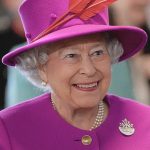
  • Queen Elizabeth II – 2015 Christmas Broadcast

    Queen Elizabeth II – 2015 Christmas Broadcast

    The Christmas Broadcast made by HM Queen Elizabeth II on 25 December 2015.

    At this time of year, few sights evoke more feelings of cheer and goodwill than the twinkling lights of a Christmas tree.

    The popularity of a tree at Christmas is due in part to my great-great grandparents, Queen Victoria and Prince Albert. After this touching picture was published, many families wanted a Christmas tree of their own, and the custom soon spread.

    In 1949, I spent Christmas in Malta as a newly-married naval wife. We have returned to that island over the years, including last month for a meeting of Commonwealth leaders; and this year I met another group of leaders: The Queen’s Young Leaders, an inspirational group, each of them a symbol of hope in their own Commonwealth communities.

    Gathering round the tree gives us a chance to think about the year ahead — I am looking forward to a busy 2016, though I have been warned I may have Happy Birthday sung to me more than once or twice. It also allows us to reflect on the year that has passed, as we think of those who are far away or no longer with us. Many people say the first Christmas after losing a loved one is particularly hard. But it’s also a time to remember all that we have to be thankful for.

    It is true that the world has had to confront moments of darkness this year, but the Gospel of John contains a verse of great hope, often read at Christmas carol services: “The light shines in the darkness, and the darkness has not overcome it.”

    One cause for thankfulness this summer was marking seventy years since the end of the Second World War. On VJ Day, we honoured the remaining veterans of that terrible conflict in the Far East, as well as remembering the thousands who never returned. The procession from Horse Guards Parade to Westminster Abbey must have been one of the slowest ever, because so many people wanted to say ‘thank you’ to them.

    At the end of that War, the people of Oslo began sending an annual gift of a Christmas tree for Trafalgar Square. It has five hundred lightbulbs and is enjoyed not just by Christians but by people of all faiths, and of none. At the very top sits a bright star, to represent the Star of Bethlehem.

    The custom of topping a tree also goes back to Prince Albert’s time. For his family’s tree, he chose an angel, helping to remind us that the focus of the Christmas story is on one particular family.
    For Joseph and Mary, the circumstances of Jesus’s birth — in a stable – were far from ideal, but worse was to come as the family was forced to flee the country. It’s no surprise that such a human story still captures our imagination and continues to inspire all of us who are Christians, the world over.

    Despite being displaced and persecuted throughout his short life, Christ’s unchanging message was not one of revenge or violence but simply that we should love one another. Although it is not an easy message to follow, we shouldn’t be discouraged; rather, it inspires us to try harder: to be thankful for the people who bring love and happiness into our own lives, and to look for ways of spreading that love to others, whenever and wherever we can.

    One of the joys of living a long life is watching one’s children, then grandchildren, then great grandchildren, help decorate the Christmas tree. And this year my family has a new member to join in the fun!

    The customary decorations have changed little in the years since that picture of Victoria and Albert’s tree first appeared, although of course electric lights have replaced the candles.

    There’s an old saying that “it is better to light a candle than curse the darkness”.

    There are millions of people lighting candles of hope in our world today. Christmas is a good time to be thankful for them, and for all that brings light to our lives.

    I wish you a very happy Christmas.