Tag: 2015

  • Gregory Campbell – 2015 Parliamentary Question to the Cabinet Office

    Gregory Campbell – 2015 Parliamentary Question to the Cabinet Office

    The below Parliamentary question was asked by Gregory Campbell on 2015-09-16.

    To ask the Minister for the Cabinet Office, what estimate he has made of the likely change in the number of UK residents aged 100 years and over between 2015 and 2025.

    Mr Rob Wilson

    The information requested falls within the responsibility of the UK Statistics Authority. I have asked the Authority to reply.

  • Jonathan Ashworth – 2015 Parliamentary Question to the HM Treasury

    Jonathan Ashworth – 2015 Parliamentary Question to the HM Treasury

    The below Parliamentary question was asked by Jonathan Ashworth on 2015-09-16.

    To ask Mr Chancellor of the Exchequer, whether the Enterprise Investment Scheme will be available to fund the construction of diesel power stations taking part in Capacity Market auctions after 2015.

    Mr David Gauke

    HM Revenue and ‎Customs (HMRC), which administers the Enterprise Investment Scheme (EIS), does not keep a record of the number of diesel power generation companies receiving capacity market payments that have received investments under the EIS.

    HMRC does not disclose details of companies that have raised investments under the EIS.

    No estimate has been made of the number of diesel power stations taking part in the next Capacity Market Auction that may receive investments under the EIS. Whether a company qualifies for EIS depends on its individual circumstances.

    The Government keeps all tax schemes under review, to ensure that any reliefs continue to encourage investment in a well-targeted and effective manner.

  • Nicholas Soames – 2015 Parliamentary Question to the Ministry of Defence

    Nicholas Soames – 2015 Parliamentary Question to the Ministry of Defence

    The below Parliamentary question was asked by Nicholas Soames on 2015-09-16.

    To ask the Secretary of State for Defence, how much (a) direct resource and (b) capital departmental expenditure limit funding his Department received from the Department for Health in relation to the (i) provision of improved psychiatric support to the armed forces and (ii) Midlands Medical Accommodation project in each financial year from 2010-11 to 2014-15.

    Mark Lancaster

    The Department of Health (DoH) has provided Resource Departmental Expenditure Limit (DEL) funding in support of improved mental health care for the Armed Forces and Capital DEL funding for the Midlands Medical Accommodation (MMA) project. These funding arrangements between the DoH and the Ministry of Defence (MOD) commenced in Financial Year 2011-2012. DoH funding in each of the last four Financial Years was:

    Financial Year

    2011-2012

    2012-2013

    2013-2014

    2014-2015

    £ million

    £ million

    £ million

    £ million

    Improved mental health care

    1.01

    1.01

    1.79

    0.71

    MMA

    19

    26.67

    25

    10

    DoH funding in support of improved mental health care has been spent in a number of areas including, but not limited to; the provision of mental health social workers; civilian and locum manpower and enhanced training, assessment and support tools.

    The figures shown in the table exclude DoH funding spent on MOD research associated with mental health issues, as it has not been possible to separately identify this from other expenditure.

  • Barry Sheerman – 2015 Parliamentary Question to the Department for Environment, Food and Rural Affairs

    Barry Sheerman – 2015 Parliamentary Question to the Department for Environment, Food and Rural Affairs

    The below Parliamentary question was asked by Barry Sheerman on 2015-09-16.

    To ask the Secretary of State for Environment, Food and Rural Affairs, what recent decisions she has had with (a) representatives of the EU and (b) her counterparts in other member states on EU timber regulations.

    Rory Stewart

    Defra officials regularly discuss the EU Timber Regulation (EUTR) and the Forest Law Enforcement, Governance and Trade (FLEGT) Regulation with both the European Commission and other EU Member States.

    Most recently (September 2015) Defra officials participated in a FLEGT/EUTR Expert Group meeting in Brussels, covering a range of related issues including implementation of the two regulations across the EU.

  • Nicholas Soames – 2015 Parliamentary Question to the Department of Health

    Nicholas Soames – 2015 Parliamentary Question to the Department of Health

    The below Parliamentary question was asked by Nicholas Soames on 2015-09-16.

    To ask the Secretary of State for Health, what proportion of the NHS budget was spent on people with long-term health conditions in each financial year from 2000-01 to 2014-15; and if he will make a statement.

    Jane Ellison

    The most recent estimate on overall costs of long term conditions is set out in the Long Term Conditions Compendium of Information: Third Edition, which was published in 2012. The Compendium estimates that, in total, around 70% of the total health and care spend in England is attributed to caring for people with long term conditions.

  • Mike Kane – 2015 Parliamentary Question to the Home Office

    Mike Kane – 2015 Parliamentary Question to the Home Office

    The below Parliamentary question was asked by Mike Kane on 2015-09-16.

    To ask the Secretary of State for the Home Department, if she will estimate the effect on demand on policing services of budgetary reductions in other government departments.

    Mike Penning

    Home Office officials are working with the police and other government departments as part of the Spending Review preparations. This work includes understanding of the interface between the police and other agencies. We encourage greater joint working to continue to reduce crime and manage demand. The Department also welcomed the College of Policing report “Estimating demand on the police service", published in January, which included analysis of non crime demand. The report is available on the College of Policing website www.college.police.uk

  • Douglas Carswell – 2015 Parliamentary Question to the Department for Business, Innovation and Skills

    Douglas Carswell – 2015 Parliamentary Question to the Department for Business, Innovation and Skills

    The below Parliamentary question was asked by Douglas Carswell on 2015-09-16.

    To ask the Secretary of State for Business, Innovation and Skills, what plans his Department has for implementation of the ruling of the European Court of Justice in case C-266/14 of 10 September 2015, on justice and citizens’ rights.

    Nick Boles

    This judgment of the European Court of Justice automatically became part of UK law on the date of its publication. It is not necessary to amend UK domestic legislation to implement the judgment.

  • Gary Streeter – 2015 Parliamentary Question to the Department for Transport

    Gary Streeter – 2015 Parliamentary Question to the Department for Transport

    The below Parliamentary question was asked by Gary Streeter on 2015-09-16.

    To ask the Secretary of State for Transport, what infrastructure upgrades, other than the Reading rebuilding project, are being undertaken or planned to gain journey time benefit for the South West Peninsula from the new high-speed AT300 trains when they are introduced in December 2018.

    Claire Perry

    As part of the long-term economic plan to increase growth and create jobs in the South West, this Government has a commitment to £7.2 billion investment in transport infrastructure in the South West over this Parliament.

    As the Secretary of State for Transport set out in his oral statement to the House on 25 June, he has asked the new Chair of Network Rail, Sir Peter Hendy, to re-plan the enhancements programme. A full assessment of the delivery of the enhancements programme will be a specific task of the re-plan, which is due to report back in the autumn.

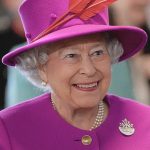
  • Queen Elizabeth II – 2015 Christmas Broadcast

    Queen Elizabeth II – 2015 Christmas Broadcast

    The Christmas Broadcast made by HM Queen Elizabeth II on 25 December 2015.

    At this time of year, few sights evoke more feelings of cheer and goodwill than the twinkling lights of a Christmas tree.

    The popularity of a tree at Christmas is due in part to my great-great grandparents, Queen Victoria and Prince Albert. After this touching picture was published, many families wanted a Christmas tree of their own, and the custom soon spread.

    In 1949, I spent Christmas in Malta as a newly-married naval wife. We have returned to that island over the years, including last month for a meeting of Commonwealth leaders; and this year I met another group of leaders: The Queen’s Young Leaders, an inspirational group, each of them a symbol of hope in their own Commonwealth communities.

    Gathering round the tree gives us a chance to think about the year ahead — I am looking forward to a busy 2016, though I have been warned I may have Happy Birthday sung to me more than once or twice. It also allows us to reflect on the year that has passed, as we think of those who are far away or no longer with us. Many people say the first Christmas after losing a loved one is particularly hard. But it’s also a time to remember all that we have to be thankful for.

    It is true that the world has had to confront moments of darkness this year, but the Gospel of John contains a verse of great hope, often read at Christmas carol services: “The light shines in the darkness, and the darkness has not overcome it.”

    One cause for thankfulness this summer was marking seventy years since the end of the Second World War. On VJ Day, we honoured the remaining veterans of that terrible conflict in the Far East, as well as remembering the thousands who never returned. The procession from Horse Guards Parade to Westminster Abbey must have been one of the slowest ever, because so many people wanted to say ‘thank you’ to them.

    At the end of that War, the people of Oslo began sending an annual gift of a Christmas tree for Trafalgar Square. It has five hundred lightbulbs and is enjoyed not just by Christians but by people of all faiths, and of none. At the very top sits a bright star, to represent the Star of Bethlehem.

    The custom of topping a tree also goes back to Prince Albert’s time. For his family’s tree, he chose an angel, helping to remind us that the focus of the Christmas story is on one particular family.
    For Joseph and Mary, the circumstances of Jesus’s birth — in a stable – were far from ideal, but worse was to come as the family was forced to flee the country. It’s no surprise that such a human story still captures our imagination and continues to inspire all of us who are Christians, the world over.

    Despite being displaced and persecuted throughout his short life, Christ’s unchanging message was not one of revenge or violence but simply that we should love one another. Although it is not an easy message to follow, we shouldn’t be discouraged; rather, it inspires us to try harder: to be thankful for the people who bring love and happiness into our own lives, and to look for ways of spreading that love to others, whenever and wherever we can.

    One of the joys of living a long life is watching one’s children, then grandchildren, then great grandchildren, help decorate the Christmas tree. And this year my family has a new member to join in the fun!

    The customary decorations have changed little in the years since that picture of Victoria and Albert’s tree first appeared, although of course electric lights have replaced the candles.

    There’s an old saying that “it is better to light a candle than curse the darkness”.

    There are millions of people lighting candles of hope in our world today. Christmas is a good time to be thankful for them, and for all that brings light to our lives.

    I wish you a very happy Christmas.

  • Liz Truss – 2015 Speech at Agrihive on UK Businesses Exporting Food

    Liz Truss – 2015 Speech at Agrihive on UK Businesses Exporting Food

    The speech made by Liz Truss, the then Secretary of State for Environment, Food and Rural Affairs, at the Agrihive Conference on 18 November 2015.

    We have some of the most exciting and inventive people in our food and farming industry in this country. And one of the things we’re doing is tonight, we’re launching Great British Food, which is a new campaign celebrating those pioneers, but also talking about how we can get the message out about how exciting British food is, how exciting British farming is, and what we are doing here in our industry to make sure that we can compete internationally, as well as make sure we’re buying selling and growing more British food here in our own country. And there’s been a lot of work in the dairy area.

    I know a lot of exciting innovations. Only a couple of weeks ago when I announced the extension of the Yorkshire Dales National Park, I visited the Wensleydale Creamery, and I think it’s a brilliant example of a business which operates within a national park. It succeeded in expanding and it does very good job with local farmers, so they are supplying the milk to the dairy. It also promotes itself as a visitor attraction and it’s attracting increasing visitors in the Yorkshire Dales.

    In fact I first came across the people from Wensleydale in Paris, when they were at the CL trade fair and their stand was being mobbed by Japanese buyers wanting to buy into that unique product from Yorkshire. It’s a protected product and I think success stories like Wensleydale who’ve now launched their first yoghurt product. This shows what can happen and where dairy businesses can succeed in the future. I’ve said before at the moment we’ve got a big opportunity on products, we still import the majority of our butter and our cheese. We import 40,000 tonnes of cheddar every year which after all, is a British product kicked off here in the UK.

    So I think there are opportunities, of course we know that many farmers are struggling at the moment and we’ve worked hard at a European level to secure that additional funding, which will be paid in December. We’re also making sure that the BPS payments go out on time which I know many farmers are concerned about, but what we also need to do whilst making sure we retain the strength of our industry in the short term is building up those longer term opportunities.

    So we’re working at looking at the grocery chain adjudicator now at a European level to reflect the nature of the food chain and the way it goes beyond national boundaries. We’re looking at futures markets in dairy to help farmers plan for the future. And we’re consulting on tax averaging over five years to help farmers maintain those long term businesses. We’re also very focused on exports and we’ve seen a 60% increase in dairy exports since 2009. I think there are many more opportunities out there. I’ve highlighted Wensleydale, but we’ve got a whole host of dairy companies coming with us next week on our visit to China on our trade mission to China.

    So there are lots of opportunities but I think an event like this Agrihive, that really involves the leaders of the industry. And those working with the industry is really important to get those ideas out there to look at the pioneering efforts across British dairy, because I’m absolutely clear that dairy is a core part of our food and farming industry. You know, we need to not just maintain it for the long term, but also help build up the industry and I think it is the pioneers. It’s the people with ideas, with new ways of doing things, to make sure that we can maintain our productivity, our competitiveness, and really win in those international markets.

    It’s really important of course, the government is a very big procurer of food. Last year we launched the Bonfield report, which is all about making it easier for public sector bodies like schools and hospitals to buy British food so they can now look at things like where it’s from, is it local, they can look at the quality of the product, rather than just going on the price and that is having an impact. We are seeing more British dairy bought across the public sector. And I want see more progress on that in the next few years.

    So we’re setting an example in government. I think there’s more we can do across the country to support our dairy industry and we are in discussions with supermarkets as well about that, but also, the industry has a major role to play in putting itself forward in grasping those potential. opportunities both here and overseas. But thank you very much for having me along today. It’s a great innovation and I hope to see you all soon. Thank you