The comments made by Nadhim Zahawi on Twitter (X) on 12 March 2015.
I’m not British born Nigel Farage. I am as British as you are, your comments are offensive and racist. I would be frightened to live in a country run by you.
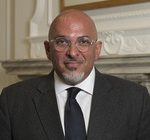
The comments made by Nadhim Zahawi on Twitter (X) on 12 March 2015.
I’m not British born Nigel Farage. I am as British as you are, your comments are offensive and racist. I would be frightened to live in a country run by you.
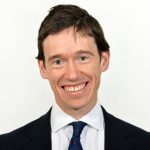
The speech made by Rory Stewart, the then Parliamentary Under-Secretary of State for Environment, Food and Rural Affairs, in the House of Commons on 10 November 2015.
Multa novit vulpes, verum echinus unum magnum, Madam Deputy Speaker.
Tom Tugendhat (Tonbridge and Malling) (Con): In every happy home is a hedgehog, as the Pashtuns would say. I urge my hon. Friend to encourage our Pashtun community in this country to follow that example.
Rory Stewart: I am very grateful for that Pushtun intervention, but my hon. Friend refers, of course, to the Asian variety of the hedgehog rather than the western hedgehog, which is the subject of our discussion today.
The fox knows many things, but the hedgehog knows one big thing.
I am extremely pleased to have the opportunity to respond to my hon. Friend the Member for Plymouth, Sutton and Devonport (Oliver Colvile). I believe that this is the first time that Parliament has discussed hedgehogs since 1566, when the subject was famously raised in relation to the attribution of a bounty of tuppence for the collection of the hedgehog throughout the United Kingdom.
The hedgehog has undergone an extraordinary evolution. The year 1566 seems very recent, but the hedgehog was around before then. It was around before this Parliament. The hedgehog, and its ancestor, narrowly missed being crushed under the foot of Tyrannosaurus rex. The hedgehog was around long before the human species: it existed 56 million years ago. It tells us a great deal about British civilisation that my hon. Friend has raised the subject, because the hedgehog is a magical creature. It is a creature that appears on cylinder seals in Sumeria, bent backwards on the prows of Egyptian ships. The hedgehog has of course a famous medicinal quality taken by the Romany people for baldness and it represents a symbol of the resurrection found throughout Christian Europe.
This strange animal was known, of course, in Scotland, Wales and Ireland originally in Gaelic as that demonic creature, that horrid creature, and is the hedgehog celebrated by Shakespeare:
“Thorny hedgehogs, be not seen…
Come not near our faerie queen”,
and famously of course in “Richard III” there is that great moment when Gloucester is referred to as a hedgehog. It tells us something about Britain today; it represents a strange decline in British civilisation from a notion of this magical, mystical, terrifying creature to where it is today, and I refer of course to my own constituent, the famous cleanliness representative of Penrith and The Border, Mrs Tiggy-Winkle.
I want to be serious for a moment. The hedgehog is of course an important environmental indicator, with its habitat, its ability to occupy 30 hectares of land, and its particular relationship to the hibernaculum, by which I mean the hedgehog’s ability, almost uniquely among animals in the United Kingdom, to go into a state of genuine hibernation. Its heartbeat goes from 240 a minute to only two a minute for six months a year. It has a particular diet—a focus on grubs and beetles. The street hedgehog initiative, which my hon. Friend has brought forward, reminds us that, by cutting holes in the bottom of our hedges, we can create again an opportunity for hedgehogs to move.
The hedgehog provides a bigger lesson for us in our environment—first, a lesson in scientific humility. The hedgehog has of course been studied for over 2,000 years. The first scientific reference to the hedgehog is in Aristotle; he is picked up again by Isidore of Seville in the 8th century and again by Buffon in the 18th century, and these are reminders of the ways in which we get hedgehogs wrong. Aristotle points out that the hedgehog carries apples on his spine into his nest. Isidore of Seville argues that the hedgehog travels with grapes embedded on his spine. Buffon believes these things might have been food for the winter, but as we know today the hedgehog, hibernating as he does, is not a creature that needs to take food into his nest for the winter.
Again, our belief in Britain that the five teeth of the hedgehog represent the reaction of the sinful man to God—the five excuses that the sinful man makes to God—is subverted by our understanding that the hedgehog does not have five teeth. Finally, the legislation introduced in this House, to my great despair, in 1566 which led to the bounty of a tuppence on a hedgehog was based on a misunderstanding: the idea that the hedgehog fed on the teats of a recumbent cow in order to feed itself on milk. This led to the death of between of half a million and 2 million hedgehogs between 1566 and 1800, a subject John Clare takes forward in a poem of 1805 and which led my own Department, the Ministry of Agriculture, in 1908 to issue a formal notice to farmers encouraging them not to believe that hedgehogs take milk from the teats of a recumbent cow, because of course the hedgehog’s mouth is too small to be able to perform this function.
But before we mock our ancestors, we must understand this is a lesson for us. The scientific mistakes we made in the past about the hedgehog are mistakes that we, too, may be mocked for in the future. We barely understand this extraordinary creature. We barely understand for example its habit of self-anointing; we will see a hedgehog produce an enormous amount of saliva and throw it over its back. We do not understand why it does that. We do not really understand its habit of aestivation, which is to say the hedgehog which my hon. Friend referred to—the Pushto version of the hedgehog—hibernates in the summer as well as the winter. We do not understand that concept of aestivation.
For those of us interested in environmental management, the hedgehog also represents the important subject of conflict in habitats. The habitat that suits the hedgehog is liminal land: it is edge land, hedgerows and dry land. The hedgehog is not an animal that flourishes in many of our nature reserves. It does not do well in peatland or in dense, heavy native woodland. The things that prey on the hedgehog are sometimes things that we treasure. My hon. Friend mentioned badgers.
Rebecca Pow: Does the Minister agree that the successful survival of our hedgehog population is a direct reflection of how healthy and sustainable our environment is? It is important that we should look after the environment, because the knock-on effect of that will be that our hedgehog population will be looked after.
Rory Stewart: That is an important point. The hedgehog is a generalist species, and traditionally we have not paid much attention to such species. We have been very good at focusing on specialist species, such as the redshank, which requires a particular kind of wet habitat. The hedgehog is a more challenging species for us to take on board.
As I was saying, the hedgehog is a good indicator for hedgerow habitat, although it is not much use for peatland or wetland. The hedgehog raises some important environmental questions. One is the question of conflict with the badger. Another is the question of the hedgehog in the western isles, which relates to the issue of the hedgehog’s potential predation on the eggs of the Arctic tern.
Patrick Grady (Glasgow North) (SNP): On the point about the hedgehog in the western isles, we have established that hedgehogs are a devolved matter. My hon. Friend the Member for Na h-Eileanan an Iar (Mr MacNeil) is not in the Chamber at the moment. Scottish Natural Heritage is doing careful work to humanely remove hedgehogs from the Hebrides, and it would be interesting to hear how the UK Government intend to support that work.
Rory Stewart: This is an important reminder that things that matter enormously to our civilisation, our society and our hearts—such as the hedgehog—have to be in the right place. In New Zealand, hedgehogs are considered an extremely dangerous invasive species that has to be removed for the same reasons that people in Scotland are having to think about controlling them there. It does not matter whether we are talking about badgers, hedgehogs or Arctic terns—it is a question of what place they should occupy.
Finally—and, I think, more positively—what the hedgehog really represents for us is an incredible symbol of citizen science. The energy that my hon. Friend the Member for Plymouth, Sutton and Devonport has brought to the debate is a great example of British, or perhaps English, eccentricity, and it is on the basis of English eccentricity that our habitat has been preserved. Gilbert White, the great 18th century naturalist, was himself an immense eccentric. It has been preserved thanks to eccentrics such as my hon. Friend and, perhaps most famously of all, Hugh Warwick, the great inspiration behind the British Hedgehog Preservation Society. He has written no fewer than three books on the hedgehog, and he talks very movingly about staring into the eyes of a hedgehog and getting a sense of its wildness from its gaze. These enthusiasts connect the public to nature, sustain our 25-year environment programme and contribute enormously to our scientific understanding of these animals. This is true in relation to bees, to beavers and in particular to Hugh Warwick’s work on hedgehogs. I am also pleased that the hon. Member for East Kilbride, Strathaven and Lesmahagow (Dr Cameron) mentioned national hedgehog day in an earlier intervention.
Ultimately, we need to understand that the hedgehog is a very prickly issue. The reason for that is that my hon. Friend the Member for Plymouth, Sutton and Devonport has raised the question of adopting the hedgehog as our national symbol. Some hon. Members will remember that the hedgehog was used by Saatchi & Saatchi in an advertising campaign for the Conservative party in 1992 general election. We should therefore pay tribute to the hedgehog’s direct contribution to our election victory in that year. But I would like to challenge my hon. Friend’s assertion that the hedgehog should become our national symbol. I ask you, Madam Deputy Speaker, as I ask those on both sides of this House, because this question concerns not only one party, but all of us: do we want to have as our national symbol an animal which when confronted with danger rolls over into a little ball and puts its spikes up? Do we want to have as our national symbol an animal that sleeps for six months of the year? Or would we rather return to the animal that is already our national symbol? I refer, of course, to the lion, which is majestic, courageous and proud.
If I may finish with a little testimony to my hon. Friend and to those innocent creatures which are hedgehogs, perhaps I can reach back to them not as a symbol for our nation but as a symbol of innocence to Thomas Hardy. He says:
“When the hedgehog travels furtively over the lawn,
One may say, ‘He strove that such innocent creatures should come to no harm,
But he could do little for them; and now he is gone.’
If, when hearing that I have been stilled at last, they stand at the door,
Watching the full-starred heavens that winter sees,
Will this thought rise on those who will meet my face no more,
‘He was one who had an eye for such mysteries’?
Madam Deputy Speaker (Mrs Eleanor Laing): I paused because I wanted to encourage some more positive noises for the Minister, who has just made one of the best speeches I have ever heard in this House.

The below Parliamentary question was asked by Mark Durkan on 2015-11-05.
To ask the Secretary of State for Foreign and Commonwealth Affairs, what assessment he has made of the progress made by the Cayman Islands since June 2013 in meeting the Prime Minister’s ambition for a public register of beneficial ownership.
Mr Hugo Swire
I refer the Honourable Gentleman to the answer given by my Rt Hon Friend, the Member for South West Hertfordshire (David Gauke MP), the Financial Secretary to the Treasury, to questions 10437, 10438 and 10448, which sets out the criteria we expect the Overseas Territories to meet in relation to their central register of company beneficial ownership, or similarly effective system.
We are continuing our dialogue with the Anguilla authorities on this and have offered any technical support that might be required as they develop their proposals.
The below Parliamentary question was asked by Mark Field on 2015-12-04.
To ask the Secretary of State for the Home Department, what the average unit cost of caring for a victim of human trafficking in a government-funded shelter is; and if she will make a statement.
Karen Bradley
The Government funds a range of support services through a contract with The Salvation Army. It is not possible to provide an average unit cost because the needs of potential victims of trafficking are varied, as is the length of stay in accommodation, where provided.
The below Parliamentary question was asked by Nigel Evans on 2015-11-05.
To ask the Secretary of State for Defence, what the reasons were for the Ministry of Defence Police failing to disclose army doctors’, chaplains’, commanding officers’ and Lt. Col. Jolleys’ own statement of his circumstances.
Mark Lancaster
A Special Investigation Branch Report was served as evidence at Lt Col Jolleys’ trial and was provided to his Defence team pre-trial.
It will take time to gather the further information and I will write to the hon. Member shortly.
The below Parliamentary question was asked by Tulip Siddiq on 2015-12-03.
To ask the Secretary of State for Work and Pensions, how many employers applied to HM Revenue and Customs (HMRC) to have their employees’ statutory maternity pay paid in advance in each of the last five financial years; what proportion of those applications were (a) accepted and (b) rejected; and what average time was taken by HMRC to make decisions on those applications.
Priti Patel
DWP data on the amount of National Insurance Contributions claimed by employers to pay for Statutory Maternity Pay comes from HM Revenue and Customs (HMRC).
The information is not available as requested. HMRC do not keep records of the number of claims to advanced funding which are rejected and therefore it is not possible to provide proportions of those (a) accepted and (b) rejected.
The below Parliamentary question was asked by Helen Hayes on 2015-11-05.
To ask the Secretary of State for Energy and Climate Change, what estimate her Department has made of the likely annual cost to electricity customers of the proposed Hinkley Point C power station (a) in total and (b) per customer.
Andrea Leadsom
Under the CfD consumers will not pay anything for electricity until the plant is powering their homes and businesses. Payments under the CfD are expected to make up around £10 (real 2012 prices) of the average household energy bill in 2030. This should be seen in the context of Hinkley Point C meeting 7% of the UK’s energy needs, and set against our estimate that a new nuclear programme could reduce average household bills by up to around £30 in 2030. This is calculated by comparing the costs for consumers in a modelled scenario for the future electricity mix with Hinkley Point C and a further role out of the new nuclear programme with the cost for consumers in a scenario where there are no new nuclear power stations by 2030. Savings could be higher or lower depending on changes in the cost of alternative generation technologies and what mix of technologies would ultimately be used.
The below Parliamentary question was asked by Liz McInnes on 2015-12-03.
To ask the Secretary of State for Communities and Local Government, what the average response time to dwelling fires was for Cheshire Fire and Rescue Service in 2013-14.
Mike Penning
I have been asked to reply on behalf of the Home Office.
Information on average response times to dwelling fires for each fire and rescue service and for each year is available in Table 3b of the Department’s Fire incidents response times: England publication at:
https://www.gov.uk/government/statistics/fire-incidents-response-times-england-2014-to-2015
“
The below Parliamentary question was asked by David Amess on 2015-11-05.
To ask the Secretary of State for Foreign and Commonwealth Affairs, what conclusions he wants the Vienna talks on the Syria crisis to reach.
Mr Tobias Ellwood
We hope that the 30 October Vienna meeting is the start of an international process, alongside talks between the Syrian parties, which will lead to transition away from Assad in line with the Geneva communiqué of 2012.
The below Parliamentary question was asked by Madeleine Moon on 2015-12-03.
To ask the Secretary of State for Defence, pursuant to the Answer of 2 December 2015 to Question 17679, for what reasons the maintenance costs for FDTC Grantown-on-Spey cannot be broken down; and if he will make a statement.
Mr Julian Brazier
Maintenance costs for Grantown-On-Spey are accounted within the larger RAF Lossiemouth budget and costs could not be broken down and identified.
More generally, I refer the hon. Member to the answer my hon. Friend the Minister for Defence Personnel and Veterans (Mark Lancaster) gave on 7 December 2015 to Question number 18570. Some costs for some previous years may be available and Ministry of Defence officials are reviewing available data from a variety of sources. The Minister for Defence Personnel and Veterans will write to the hon. Member and place a copy of his letter in the Library of the House.