Tag: 2014

  • Lynne Featherstone – 2014 Speech at Education World Forum

    Below is the text of the speech made by Lynne Featherstone, the International Development Minister, at the Education World Forum in London on 21st January 2014.

    Distinguished guests.

    The focus of this year’s conference – planning for the decade beyond 2015 – is a top priority for the UK’s Department for International Development. Global poverty reduction is what drives the work in my department and we’re really involved in the discussions on a global development framework to succeed the existing Millennium Development Goals. In the post-2015 framework, we want to see a set of compelling goals and targets that will catalyse the action needed to eradicate poverty within a generation.

    The next set of goals must also go beyond the MDGs and include accountable and effective institutions that avert the risk of conflict, provide a stable and peaceful environment for business to thrive, and ensure that all people have a voice in the decisions that affect them. We know education is fundamental to development: it underpins economic growth and more democratic and open institutions, it has transformative effects on the lives of girls and women and it enables people to live the life they choose. Today, I want to tell you what DFID is doing on each of the conference themes – measurement, reach and enterprise – to ensure education is a catalyst for development.

    Let me start with Reach. As a global community, great progress has been made at getting more children in school across the developing world. Out of school children have fallen from 105 million in 1999 to 57 million today. However just getting children into school isn’t enough. At least 250 million children cannot read or count, even after spending 4 years in school. DFID is committed to reaching all children with quality education as we approach 2015 and beyond.

    I’m passionate about our work to support people with disabilities. We know that data on excluded groups is difficult to pin down but according to some estimates, children with disabilities comprise nearly one-third of all out of school children. Of those in school, it’s estimated that 15% to 20% will have some kind of special educational need. The UK works to ensure that all children are able to complete a full cycle of quality education, and that includes children with disabilities.

    I’ve recently announced 2 initial commitments to step up our support. First to ensure all construction, directly funded by DFID, is fully accessible. And second, to work with partners to improve data on children with disabilities and special educational needs. Echoing the report of the High Level Panel on post 2015, we should not consider targets met unless they are met for all social groups, including those with disabilities. Every country, including my own, must work hard to ensure that no one is left behind.

    There are still 31 million girls of primary school age who have never been to school and the majority of these come from the most disadvantaged communities. Getting girls in school and learning is both right and a smart investment for development. An extra year of primary schooling for girls can increase their wages by up to 20%, most of which is likely to be reinvested in her family and community.

    In 2011, the UK established the Girls’ Education Challenge, the world’s largest global fund dedicated to girls’ education. This will reach up to 1 million of the worlds’ poorest girls to ensure that they receive a quality education to transform their future. It’s an exciting initiative and has been enthusiastically received by NGOs, charities and the private sector. The GEC’s programmes in Afghanistan, for example, are helping the Afghan government to rebuild its education system, continue its drive to enrol girls, and improve education quality.

    So with the private sector’s strategic involvement in the Girls’ Education Challenge, let me turn now to the theme of enterprise. For countries to grow out of low income status they need to address existing skills’ deficits, and make the most of their current growth potential. Skills, acquired at every level of education, play a critical role in a country’s economic and social development.

    When I have asked young people in the countries I have visited with DFID, what they tell me they most want on completing their studies is a good job. So we need to ensure that young people are learning job-relevant skills and have access to information on work experience and internships. We need to nurture the entrepreneurs of tomorrow.

    Education systems are not always very good at shaping today’s workforce, let alone the workforce of tomorrow, or making sure that the hardest to reach groups can progress through the system. That is why DFID is currently considering how best to invest and support important work in this area.

    Getting it right on skills is also important for business and enterprise to flourish. Companies need people with both specialist technical skills, and transferable skills like problem solving, that can be applied practically in a job. Higher education is the route by which technical skills in areas like engineering, agriculture, science, health and finance are acquired, and the sector is very weak in many countries. Failing to address this, equitably, puts a break on human potential as well as stalling an economy’s growth.

    Technology can play a big role in this – both in teaching and learning, and shaping the jobs of the future. We are already seeing evidence for this, but I am sure there is more to come. I think for all of us it is hard to predict what those future developments might be – but my interest is in making sure that the bright thinkers are incentivised to look at the developing world, as much as they currently look at the developed.

    Now to the final theme. Measurement. Without good measurement, good data, we are unlikely to develop the right policies to ensure that no one is left behind, to ensure that all girls and boys are learning when in school and to know how many engineers need training to drive a growing manufacturing sector.

    Improving data and measurement is a big challenge for the post-2015 development framework which is why the High Level Panel report called for a data revolution. Improved data on education will help countries and their partners to respond more effectively to the global learning crisis.

    As the leading bilateral donor in basic education, part of DFID’s response is to step up our efforts to support and strengthen data collection and data use in countries where we work. In parallel we have developed partnerships with the UNESCO Institute of Statistics, the PISA for Development pilot, and UNESCO’s Global Monitoring Report to help drive global education data improvements in the run up to to 2015.

    We need to act quickly to ensure learning can be tracked post-2015. UNESCO has a crucial role to play if we are to deliver options on learning targets and their measurement in the next 6 months. DFID has been part of the work of the Learning Metrics Task Force which is an initiative looking to catalyse and support this process under a UN-lead.

    Ultimately, the goal of this work is to better enable Ministries of Education and other policymakers to not only track how they are doing, but also to target policy changes that improve the learning experiences of all children and youth.

    Finally, DFID is a firm believer that our investments should be based on a strong evidence base. This is why I am pleased to announce to you all today that we are launching 2 major education research programmes through our Research and Evidence Division.

    The first of these programmes, in collaboration with our partners such as the World Bank, UNICEF and Children’s Investment Fund Foundation will focus on system level reform. Unblocking parts of the system that aren’t working offers huge potential to ensure government education budgets go further. The second programme, a partnership with the UK Economic and Social Research Council, will focus on improving teaching performance.

    We will deliver these programmes in partnership with our country governments and I am delighted to be meeting with several of the delegations to discuss our collaborations in education. We need to share the lessons from our programmes, policy reforms and innovations and use this evidence to understand what works to deliver an ambitious post-2015 agenda.

    The combination of research, evaluation and high quality programmes will help ensure all children – whichever country they are from, whatever their background – have the chance to fulfil their potential as productive citizens of the future. That is our mission, and I wish you all the best in your debates and deliberations over the coming 2 days.

    Thank you.

  • Queen Elizabeth II – 2014 Queen’s Speech

    queenelizabethii

    Below is the text of the 2014 Queen’s Speech, delivered by HM Queen Elizabeth II in the House of Lords, London, on 5th June 2014.

    My Lords and Members of the House of Commons.

    My government’s legislative programme will continue to deliver on its long-term plan to build a stronger economy and a fairer society.

    To strengthen the economy and provide stability and security, my ministers will continue to reduce the country’s deficit, helping to ensure that mortgage and interest rates remain low.

    An updated Charter for Budget Responsibility will be brought forward to ensure that future governments spend taxpayers’ money responsibly.

    My government will also continue to cut taxes in order to increase people’s financial security.

    My ministers will implement measures to increase further the personal allowance and to freeze fuel duty.

    Measures will be brought forward for a married couple’s allowance, which will recognise marriage in the tax system.

    Legislation will be introduced to help make the United Kingdom the most attractive place to start, finance and grow a business. The bill will support small businesses by cutting bureaucracy and enabling them to access finance.

    For more information about today’s announcements, read the Queen’s Speech background briefing notes.

    New legislation will require ministers to set and report on a deregulation target for each Parliament. The legislation will also reduce delays in employment tribunals, improve the fairness of contracts for low paid workers and establish a public register of company beneficial ownership. Legislation will be introduced to provide for a new statutory code and an adjudicator to increase fairness for public house tenants.

    Legislation will impose higher penalties on employers who fail to pay their staff the minimum wage. Measures will be brought forward to limit excessive redundancy payments across the public sector.

    In respect of National Insurance contributions, legislation will be brought forward to tackle avoidance and to simplify their collection from the self-employed.

    My government will introduce a bill to bolster investment in infrastructure and reform planning law to improve economic competitiveness. The bill will enhance the United Kingdom’s energy independence and security by opening up access to shale and geothermal sites and maximising North Sea resources. Legislation will allow for the creation of an allowable solutions scheme to enable all new homes to be built to a zero carbon standard and will guarantee long-term investment in the road network.

    My government will continue to implement major reforms to the electricity market and reduce the use of plastic carrier bags to help protect the environment.

    A key priority for my ministers will be to continue to build an economy that rewards those who work hard.

    Legislation will be brought forward to give those who have saved discretion over the use of their retirement funds. My government’s pension reforms will also allow for innovation in the private pensions market to give greater control to employees, extend the ISA and Premium Bond schemes and abolish the savers’ 10 pence tax rate.

    The overall benefits bill will continue to be capped so that public expenditure continues to be controlled and policies will be pursued so people are helped from welfare to work.

    My government will increase housing supply and home ownership by reforming the planning system, enabling new locally-led garden cities and supporting small house building firms.

    Legislation will be brought forward to sell high value government land, encouraging development and increasing housing.

    My ministers will continue to promote the Help to Buy and Right to Buy schemes to support home ownership.

    My government will continue to deliver the best schools and skills for young people. In England, my ministers will help more schools to become academies and support more free schools to open, whilst continuing investment to deliver more school places. Further reforms to GCSEs and A Levels will be taken forward to raise standards in schools and prepare school pupils for employment. My government will increase the total number of apprenticeship places to 2 million by the end of the Parliament.

    My government will continue to work to build a fairer society.

    To improve education attainment and child health, my government will ensure all infants will receive a free school meal. Free childcare will be extended to more of the most disadvantaged 2-year-olds and a bill will be introduced to help working families with childcare costs.

    A bill will be introduced to strengthen the powers to prevent modern slavery and human trafficking whilst improving support for victims of such crimes. A bill will be brought forward to provide that where a person acts heroically, responsibly or for the benefit of others, this will be taken into account by the courts.

    Legislation will be introduced to improve the complaints system in the Armed Forces through the creation of an ombudsman.

    A serious crime bill will be brought forward to tackle child neglect, disrupt serious organised crime and strengthen powers to seize the proceeds of crime.

    My government will continue its programme of political reform.

    My ministers will introduce legislation on the recall of Members of Parliament.

    My government will continue to implement new financial powers for the Scottish Parliament and make the case for Scotland to remain a part of the United Kingdom.

    My ministers will continue with legislation giving the National Assembly for Wales and Welsh ministers more power over taxation and investment.

    My government will continue to work with the devolved administration in Northern Ireland to rebalance the economy, promote reconciliation and create a shared future.

    Draft legislation will be published providing for direct elections to National Park authorities in England.

    Members of the House of Commons.

    Estimates for the public services will be laid before you.

    My Lords and Members of the House of Commons.

    The United Kingdom will work for peace and security on Europe’s borders, and for stable relations between Russia and Ukraine based on respect for national sovereignty, territorial integrity and international law.

    My government will host the NATO summit in Wales as a sign of the United Kingdom’s commitment to the alliance.

    My ministers will strive to improve the humanitarian situation in Syria, to reduce violence and promote a political settlement. It will work for a successful transition in Afghanistan, and will work towards a comprehensive nuclear agreement with Iran.

    The United Kingdom will lead efforts to prevent sexual violence in conflict worldwide.

    My government will work to promote reform in the European Union, including a stronger role for member states and national parliaments. My ministers will also champion efforts to secure a global agreement on climate change.

    Prince Philip and I will pay a state visit to France and will attend events to mark the 70th anniversary of the D-Day landings.

    We look forward to welcoming His Excellency the President of the Republic of Singapore on his forthcoming state visit.

    Other measures will be laid before you.

    My Lords and Members of the House of Commons.

    I pray that the blessing of Almighty God may rest upon your counsels.

  • Eric Pickles – 2014 Speech at Naz Legacy Foundation

    ericpickles

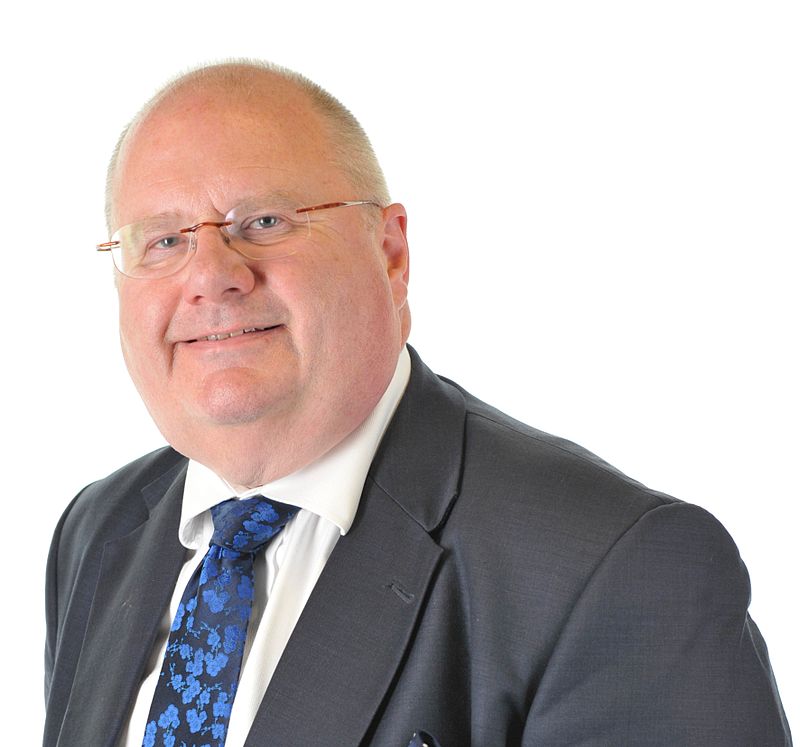
    Below is the text of the speech made by Eric Pickles, the Secretary of State for Local Government and Communities, to the Naz Legacy Foundation annual reception held in the Churchill Dining Room of the House of Commons, in London, on 30th April 2014.

    This very sad week we have thought a lot about teachers and their dedication to our country, given the tragic news of Anne Maguire.

    I think Naz knew that classrooms are a place to bring people of different backgrounds together and pursue common goals.

    This is the messages that the foundation established in his name and continues to promote today.

    Being a kind citizen, a helping hand, or a friendly face shouldn’t just fall to the Naz’s of this world, but to each of us who care about our community.

    As a government, we cannot force cohesion, or compel people to spend time together.

    But as Naz did, and what we can all do, is create the right conditions to break down barriers and encourage communities to come together.

    A particular focus for me has been encouraging faith communities to work together, rather than concentrating on their own communities.

    Together in Service has not only funded some great projects, but I think it has sent out the right kind of message.

    We achieve more by working together than by doing things separately, and we are offering small grants to ramp up their impact and create closer ties.

    The Near Neighbours scheme is all about building relationships across faith boundaries, and it has seen a fantastic response. Almost everyone taking part has said that they feel more connected to their community.

    As supporters of Mosaic, the Naz Legacy Foundation are enabling youngsters across the country to find inspiration in enterprise. To discover, and achieve their true potential, no matter what their background.

    It’s great to hear the Foundation’s next project, the Diversity Programme, to introduce culture and arts to kids who may not otherwise have the chance or that experience.

    This is something Naz did for children in his own classroom, and now thousands of others will benefit from this too.

    It can be daunting to take on a role in communities. You might not know where to start.

    But by opening up a discussion about the sort of communities we want to live in, or simply by encouraging folk just to come together, we are helping to reduce that fear of taking on a new role in society.

    Of course, we have great role models in the Naz Legacy Foundation, enablers of education, mentoring, and training. You take the memory of a great man and remind us of the lengths we should all go to to make our communities thrive.

    I am delighted this evening that the Prime Minister has asked me to present a Big Society Award.

    This is in recognition of the Foundation’s hard work, to inspire young people to strive for excellence, and to play a full part in their community.

    It is well deserved, and it is my pleasure to present it.

  • Eric Pickles – 2014 Speech at Baha’i Faith Festival

    ericpickles

    Below is the text of the speech made by Eric Pickles, the Secretary of State for Local Government and Communities, at the Baha’i Faith Festival Celebration held at the House of Commons on 30th April 2014.

    I am an enormous admirer of the Baha’i faith.

    All faiths in this country put a lot back into their communitiy, but none more so than Baha’i.

    In terms of looking out for the vulnerable, in terms of wanting to make friends with people of different faiths, there is always a Baha’i in the mix.

    What we all have in common is our basic humanity which binds us. It is this commonality, this ‘oneness’ of the human race, that inspires the Baha’i faith.

    Whilst the Baha’i religion is relatively young, your message of harmony and unity ripples down through the ages.

    It creates an opportunity for all, rejecting all forms of prejudice, and bringing all faiths together to celebrate what we have in common, rather than focusing on our differences.

    These are the qualities we strive to promote in the UK, and luckily for us, there are over 10,000 members of the Baha’i faith in this country, each with the same message of optimism and hope.

    Whilst you may not be huge in number, you have an enormous impact. You threw yourselves behind projects like A Year of Service, got yourselves involved in the Big Iftar, and continue to be a shining presence in inter-faith projects around the country.

    Your knack of reaching out to people of all faiths, and frankly, those of no faith, and promoting ‘one-ness’ is very inspiring, and a little humbling.

    This one-ness in the human race, the one-ness of religion – through your Divine Plan, I know will continue to inspire and motivate young people, and ensure the Baha’i Faith will go from strength to strength, continuing to bring people together here and around the world.

    As you celebrate this day of divine felicity, I want to say thank you for making the UK a more tolerant, a more cohesive, and a more cheerful place. I want to wish you all a very happy Rizwan!

  • Eric Pickles – 2014 Speech on Rwanda

    ericpickles

    Below is the text of the speech made by Eric Pickles, the Secretary of State for Local Government and Communities, in Birmingham on 12th April 2014.

    For many, 1994 was a year of progress and inspiration.

    The world saw the final end of apartheid, with the election of Nelson Mandela.

    Here at home we saw the opening of the Euro-Tunnel, so it would take only around two hours to get from London to Paris. Israel and Jordan ended a 40 year war – and the IRA formally announced they would cease their military operations.

    However, a modern world does not necessarily mean a humane one.

    As we celebrated hope, others experienced hatred, and none as dreadful as the genocide experienced by Rwandans. To all those Tutsi’s who died and moderate Hutu’s who died, this month in 1994 marked the beginning of 100 days of hell.

    100 days of rape, of torture, and of murder. 100 days which took nearly a million lives.

    For those who bore witness to Rwanda’s genocide, it was a time that humanity seemed to forget. And as we saw at Kigali’s official commemoration last week, 20 years doesn’t seem so long ago. I am sure that there are memories here in this room today that have been replayed time and time again, as though they were yesterday.

    As quickly as day turned to night, wives became widows, and children became orphans. Leaving three quarters of the Tutsi population eliminated, and a nation with a great gaping hole at the centre of it .

    So how could this country reconcile to such a loss?

    Well we first need to remember.

    It is not just the first step to honouring survivors, and the memory of their families, but it is how we ensure that we retain constant vigilance.

    My colleague Andrew Mitchell talked about this never happening again, and we know that something like this in some part of the world can happen again.

    It requires constant vigilance, it requires prompt action at the first sign of hatred. We have a tradition in the UK of remembrance. We have remembered the Jewish people lost to the Holocaust, the Cambodians that died in the Killing Fields, and we have a duty to remember our Rwandan friends.

    Amongst so many experiences of loss and violence, there are always examples of true heroism, tales that are important to tell in the face of such malice.

    Stories like that of Senagalese peacekeeper Mbaye Diagne. It was his sense of humour that got him through so many road blocks, and with him hundreds of Tutsi’s stowed in trucks, who would have otherwise been killed,

    Mbaye was a good man within a sea of evil. When he lost his life, a small candle, a small flickering light against the darkness went out.

    Today we remember all he did for Rwandans.

    Or Romeo Dallaire, a Canadian commander and now a member of the Canadian Senate. He was one of the first to warn of the trouble brewing. He urged action. But his words fell on deaf ears.

    Despite this, Romeo spoke up after the genocide, and went on to set up both a foundation in Rwanda and the Child Soldiers Initiative.

    Today we also remember what Romeo did for Rwandans. And we echo his comments of worry.

    These are just two examples, of how the spirit of one person can overcome a world of inaction.

    I have often heard survivors of the genocide call themselves the ‘unlucky ones.’ Because they have been left to face a seemingly dark and bleak future. But it is in these times that we must remember that whilst world governments slept, individuals shone through.

    Our collective responsibility shapes a new future of telling these stories. Looking past the statistics, which can be so overwhelming, and recalling the stories of survival and determination of the need to carry on.

    We remind ourselves of the other side of humanity, the selfless and determined characteristics, that shape the Rwanda we see today.

    It is a country to be immensely proud of. Rwanda has the highest number of female parliamentarians of anywhere in the world. Girls are given the same access to education as boys. Less Rwandans are going hungry, more are finding work, and the economic fortune of the country continues to improve.

    Rwanda has a future.

    It is a future that perpetrators of the genocide could not imagine.

    But changing does not mean forgetting.

    1994 was not that long ago. The twenty-first century was on the horizon, and we looked towards it expectantly. The era of genocides and mass-killing seemed a distant memory. But for as long as people are judged by the colour of their skin, the religion they worship, or the roots of their ethnicity, our achievements will forever be dwarfed by the callousness of mankind.

    Sparks of intolerance can only exist, at the will of our own complacency. And no matter how many years pass – one, twenty, or two hundred, we owe it to Rwanda, and all victims of genocide – to remain vigilant, and to always remember the sacrifice you never deserved to make.

  • Eric Pickles – 2014 Speech on Holocaust Memorial Day

    ericpickles

    Below is the text of the speech made by Eric Pickles, the Secretary of State for Local Government and Communities, on Holocaust Memorial Day on 28th January 2014.

    Journeys

    So far this afternoon, we have heard about journeys punctuated with suffering, with immeasurable loss, and with the scars which still bear their memory.

    Journeys to a new life are by no means easier – but nonetheless I hope they have brought some healing, and the chance of a new start.

    This year is particularly poignant. 75 years have just passed since Kristallnacht – and as we have just heard, 20 years have passed since the start of the Rwandan genocide.

    Time does not stand still to allow us to remember. And as time passes, persecution and hatred remain a threat. Which is why our vigilance can never rest.

    As Josef Stalin said,

    “A single death is a tragedy. A million deaths are just a statistic.”

    This is once day dedicated to remembrance reminds us of the people and the stories – not the statistics.

    The walls of the gas chambers cannot talk – and the grass of the killing fields have no voice.

    Human experience is the best memory.

    Your resilience allowed you to journey on; not to forget, but to rebuild your lives again.

    Journey’s like Ben Helf-gott’s (Helfgott), who went on to captain the British weightlifting team in the Melbourne and Rome Olympics (1956 and 1960).

    Or like Anita Lak-sar Wall-fish’s (Lakser-Wallfisch) – who believes her talent as a cellist saved her from a certain death. She went from the discomfort of playing for SS officers – to co-founding the English Chamber Orchestra.

    Or a journey like Kitty Hart Moxon’s – who endured 2 years of concentration camp life and survived the death marches. She trained to become a nurse in Britain. Despite all she had been through – Kitty retained her humanity to care for others, and tend to the sick.

    Their new lives couldn’t erase the past, but decades after the Third Reich, they have been victorious over the Nazis, and they are incredible achievements in the face of adversity.

    ‘Seeing is believing’

    And visiting Auschwitz and Birkenau with the Education Trust is one of the most powerful ways of doing so.

    The Trust also brings survivors into schools, to share their testimony – and now it is falling to their children pick up the baton and ensure their legacy never fades.

    Incredibly, David Herman, survived 5 separate concentration camps – an experience that his daughter Julia Burton now retells in schools. Making sure her father’s story, and the words of a Grandmother she never met, is never forgotten.

    Alongside the Holocaust Memorial Day Trust and the Holocaust Education Trust – there are many other ways we combat anti-semitic, anti-muslim, and other hate crimes.

    The Anne Frank Trust uses her moving diary to educate others.

    Show Racism the Red Card has got top footballers behind it.

    And Tell MAMA brings unacceptable Muslim attacks to light.

    Their vigilant work stops the cracks of intolerance forming in today’s society.

    Reminding people of why the holocaust happened – is something our Prime Minister truly believes in.

    In September, David Cameron announced the formation of the Holocaust commission.

    The commission will consider the best way to commemorate the holocaust for future generations.

    The road back to Auschwitz is taken by steps. Small acts of intolerance can be very powerful. That is why we must always be vigilant.

    We are lucky enough to live in a largely tolerant society. But only a thin veneer separates us from committing such betrayals. Like the anti-semitic salute by a footballer.

    We only need to look at recent atrocities in the Central African Republic to see – that one spark of intolerance quickly spreads to an untameable fire.

    Our neighbours, friends and school teachers can quickly become our enemies.

    Like Kemal Pervanitch’s teacher – someone who he considered a role model – quickly became his torturer.

    Kemal has poignantly said before,

    “I was a victim. Then I was a survivor. But all I wanted to be was a human being again.”

    In spite of the circumstances – those who have rebuilt their lives here have made this country a richer place, A more tolerant place, You make it the great country we are all proud of.

    I’d like to end with a quote. One which I think captures our responsibility –

    In Joel 1:3, he prophesises –

    “Tell it to your children, And let your children tell it to their children, And their children to the next generation.”

    Pledging to keep doing just that is what we all must do.

    We must continue to remember.

  • Stephen Williams – 2014 Speech on Community Finance

    Below is the text of the speech made by Stephen Williams, the Parliamentary Under-Secretary of State for Communities and Local Government, in Bristol on 13th February 2014.

    The government recognises the challenges faced by small and medium enterprises in accessing finance to start up their operations and grow.

    In my department we are seeing more and more communities coming together to deal with the issues they face, addressing the things they want to see change in their communities and creating innovative ways to bring economic growth to their communities.

    My department has committed over £50 million in the support communities need to make use of the range of community rights powers and other initiatives that were brought into force through the Localism Act. The support package helps groups to become investment ready, develop business plans and carry out pre-feasibility studies. Already we are seeing an impact.

    The community right to bid has seen over 800 assets of community value listed which means that if an asset comes up for sale the group that nominated it will work hard to bring it into community ownership. In Hastings, local people came together and created a viable business model for an abandoned pier that will bring economic growth and jobs to the local area.

    This is the type of example I think of when thinking about investment for the wider good of communities.

    I am pleased to announce that the department will be providing over £100,000 financial support towards the Bristol based community economic development project. I am very keen to support the partner organisations like Bristol City Council, Bristol Enterprise Development Fund, Co-op and Community Finance, Bristol Housing Partnership who are joining up with local communities to develop local community economy plans to boost investment into those areas.

    This project will build on the lessons from international programmes in Canada and the United States that have successfully increased neighbourhood employment and attracted further investment into local economies that were otherwise economically marginalised. Officials in my department have started and will continue to work with the partners and communities here in Bristol to get the project up and running.

    We want more and more communities to achieve their ambitions, whether to redevelop an abandoned site, to save their last shop or to bring a new lease of life to their town centre using innovative business models that private businesses would otherwise struggle to make viable.

    We are already taking steps to create the conditions in which social investment can flourish, through the formation of initiatives such as Big Society Capital and supporting the development of other financial support routes – like community shares, crowd sourcing and social impact bonds.

    We also hope that the soon to be introduced measures such as tax relief for social investors will boost social investments.

    You would have heard from speakers here today that communities are adopting other finance models such as crowdfunding and community shares as a way of engaging their communities and de-risking their projects. My department is particularly interested in encouraging communities to invest in themselves. We have seen that those who do will often pull together to ensure that their business models are sustained for the long term.

    We have funded the Co-operatives UK to develop the community shares unit that will enable growth of this sector. I am encouraged by the growth thus far which in 2012 alone saw communities investing over £15 million compared to £9 million the year before. We take very seriously the protection of investors which is why we are working closely with the Financial Conduct Authority (FCA) to encourage and ensure good practice is adopted within the regulatory landscape.

    Today, I am also pleased to announce the availability of a handbook that will help advisers like yourselves better understand and provide advice on community shares. Our hope is that many of you and your partners will champion community shares and encourage organisations to consider this model – especially to help de-risk their enterprises. The handbook can be found on the community shares unit’s website.

    We know that communities require a healthy mix of finance to successfully acquire larger community assets and deliver more ambitious projects such as renewable energy schemes.

    They may be able to draw down equity capital from grants and other crowdfunding sources, however this is not enough.

    Debt capital is often a necessity for social enterprises in reaching their financing goals. We know that secured lending (debt finance) accounts for 90% of financial products used by social enterprises.

    There is a significant need among social sector and social enterprise organisations for long term risk-taking capital.

    More and more investors are interested in where their money is being invested. A study carried out by YouGov for National Ethical Investment Week found that the proportion of British adults interested in knowing more about ‘impact investments’ (of our financial services) rose significantly from 36% in 2011 to 55% in 2012 – pointing to the public’s interest and concern in where banks invest their money (The City UK).

    These are all good reasons for financial institutions to consider and to capitalise on when pulling together and designing products and offers for enterprises.

    My department is exploring what more we can do to promote the public benefits of investing in community enterprises and I hope those of you attending here today will consider how you can do the same.

    I am pleased to open this debate and will be interested in hearing from you about how you think these trends and findings can become tangible additions to how financial products and services are designed.

  • Baroness Warsi – 2014 Speech Honouring Overseas World War One Heroes

    baronesswarsi

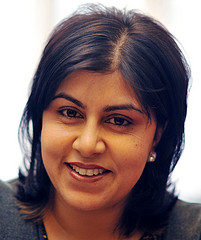
    Below is the text of the speech made by Baroness Warsi, the Foreign and Commonwealth Office Minister, in London on 26th June 2014.

    Your Royal Highness, Ladies and Gentlemen. It is a great privilege to welcome you here this afternoon, to commemorate the Victoria Cross recipients of the Great War.

    I am delighted to welcome His Royal Highness The Duke of Kent, as our Guest of Honour. As President of The Commonwealth War Graves Commission, and through his military roles as Colonel-in-Chief of the Royal Regiment of Fusiliers, Royal Colonel of 1st Battalion The Rifles, and Honorary Air Chief Marshall of the Royal Air Force, His Royal Highness has connections to several of the VCs we are commemorating today and it is an issue that is as dear to his heart as it is to mine.

    The bugle call to arms that sounded across Britain in August 1914 carried to the farthest corners of the world.

    It was heard in Australia, Canada, and New Zealand; in the countries we know today as India, Pakistan, Bangladesh and Burma; and across Africa and the Caribbean – where men travelled at their own expense to enlist.

    And around three million men responded, coming to Britain’s aid and joining the Allied cause. Tariqs and Tajinders fought shoulder to shoulder with Tommies in Flanders, Ypres, Gallipoli and Passchendaele.

    And, it is very clear, that without all of them Britain, the Allies, could not have prevailed. Without them, we would not have the rights and freedoms that we all enjoy today.

    A little over a year ago I visited the battlefields of France and Belgium. My own personal pilgrimage.

    I saw the Neuve Chapelle Indian Memorial which honours almost 5000 soldiers from the Indian sub-continent who have no known grave;

    I laid a wreath to Sikh soliders at Hollebeke in Belgium. And also then thought of Khudadad Khan, a Punjabi Muslim, who single-handedly held back the enemy long enough for reinforcements to arrive, making him the Great War’s first overseas recipient of the Victoria Cross;

    And I paid my respects at Menin Gate in Ypres – which lists the names of the 54,000 British and overseas soldiers whose resting places are unknown.

    Seeing names like Khan and Singh, Ali and Atwal listed alongside Smith, Jones and Williams and Taylor reminded me of a line by Rudyard Kipling, inscribed on the Tomb of an unknown Seypoy who fell in France, which reads: “This man in his own country prayed we know not to what powers; We pray to them to reward him for his bravery in ours.”

    All deserve our enduring gratitude and respect for the hardships and horrors they endured, and for the selfless sacrifice they made.

    To me, they are all heroes.

    But, as we are here today to commemorate, the courage and fortitude of many of Britain’s overseas soldiers brought them particular distinction. 175 were judged to have acted “with most conspicuous bravery, or some daring or pre-eminent act of valour or self-sacrifice, or extreme devotion to duty in the presence of the enemy” to warrant the award of Britain’s highest military honour – the Victoria Cross.

    Men like:

    – Private John Kerr from Canada – awarded his Victoria Cross for “most conspicuous bravery” on 16 September 1916, towards the end of the Battle of the Somme. Knowing that bombs were running short, Private Kerr ran under heavy fire until he was in close contact with the enemy. He opened fire on them at point-blank range, and inflicted heavy loss. The enemy, thinking they were surrounded, surrendered. Sixty-two prisoners were taken and 250 yards of enemy trench captured.

    – Or Captain Alfred Shout from New Zealand who fought with the Australian Imperial Force. Captain Shout won his VC for most conspicuous bravery at Lone Pine trenches, in the Gallipoli Peninsula.

    – And Gobind Singh from India. He won his VC during the Battle of Cambrai in 1917 when, on three occasions, he saved his fellow men by volunteering to deliver urgent messages over 1.5 miles of open fire – despite having his horse shot from under him on each occasion and having to finish each journey on foot.

    Today, there are just nine Victoria Cross recipients alive. And I am honoured that we have two of them here with us this afternoon: Sergeant Johnson Beharry VC and Corporal Mark Donaldson VC.

    Sergeant Beharry’s story will be familiar to many of you gathered here today. He became the first living soldier in more than 30 years to be awarded the Victoria Cross. Twice, in direct face of the enemy, under intense fire, and at great personal risk, he showed heroism in saving the lives of his comrades.

    Corporal Donaldson, who has travelled from Australia to be with us today, became the first recipient of the Victoria Cross for Australia in January 2009. While deployed in Afghanistan, his patrol was ambushed. He deliberately made himself the target of enemy fire in order to draw Taliban fighters’ attention away from the casualties and allow wounded soldiers to be moved to safety.

    These acts go beyond bravery.

    The word “hero” is bandied around too often these days. And I’m sure you will agree with me, all of these men are the true heroes.

    Over the next four years, the centenary commemorations give us an opportunity to mark the important contributions of Victoria Cross winners, past and present, so that they become known and understood by a whole new generation. And 5 years since the last veterans of the Great War passed away, it is more important than ever to ensure future generations never forget.

    That is why:

    – we are providing funding support towards the restoration of the burial places of all VC winners;

    – we will honour 400 British Victoria Cross recipients from the First World War with commemorative paving-stones in their place of birth;

    – we will dispatch these beautifully handcrafted bronze plaque to the 11 other countries that the VC winners of the conflict came from;

    And finally, why I’m pleased to announce we will be launching a digital archive later this year to memorialise all overseas VC recipients. Ensuring that people of all backgrounds, from all over the world can remember and learn from their stories of heroism.

    To conclude, as I said at the beginning, it would not have been possible for Britain to prevail in the First World War without the massive contribution and sacrifice of countries from the Commonwealth and beyond.

    I am proud that that both my grandfathers fought in the Bombay Royal Sappers and Miners Regiment in the Second World War. It is incredible that, like them, men were inspired to fight for a country they had never seen; pledge loyalty to a far away King…for the value of freedom. Something they themselves had yet to fully experience.

    It shows the rich diversity of our shared history and that, whether you can trace your families heritage back to the Norman Conquest, or to a relative who gave his life for Britain a century ago; whether your grandparents came from Nigeria or your parents from Jamaica – this commemoration is relevant to us all.

    And it puts paid to the idea that you cannot be a Muslim and British; serve your country; support the military – our ancestors were doing these things 100 years ago.

    Today, we must ensure that the things they embodied and fought for: freedom, liberty, duty, courage, loyalty, sacrifice and caring for others are as alive today as they were in 1914 – regardless of race, creed or nationality.

    But the centenary also gives us the opportunity to commemorate and honour those who truly went above and beyond the call of duty- the VC recipients from overseas, and I hope you will find that these plaques are a fitting tribute – a reminder that Britain will never forget their courage and a powerful message that people of all backgrounds and faiths can unite in the name of a common cause.

  • Baroness Warsi – 2014 Speech in Oman

    baronesswarsi

    Below is the text of the speech made by Baroness Warsi, the Minister for Faith, in Muscat, Oman on 18th February 2014.

    Your excellencies, ladies and gentlemen.

    It is a true honour to be here. I have had the privilege of speaking from the pulpits of Britain’s oldest cathedrals and from the lecterns of the world’s greatest universities…

    But there is nothing quite like standing here at Muscat’s spectacular Grand Mosque, a place of deep spirituality and immense beauty.

    For me, this is something of a home from home – not only because it is a symbol of the faith I hold so dearly, Islam, but because its construction was partly down to a British company!

    And it is therefore the perfect backdrop for me to talk about religious tolerance. For Oman under His Majesty’s wise leadership is a symbol of that very co-existence we are all striving for. Proof that sectarianism is not inevitable – even when a religion is blighted by splits in a region that is constantly the focus of such tensions. Now I look forward to saying more about the lessons I think we can learn from your example later on in this speech.

    Ladies and gentlemen, I serve in the British government, in which I am the first ever Minister for Faith. In 2010, I became the first Muslim to serve as British Cabinet Minister. Alongside my responsibility for South Asia, Central Asia, and the United Nations ….my remit covers faith at home and religious freedom abroad.

    In both cases, I have made religious freedom my personal priority: promoting and protecting people’s right to hold a faith, to manifest their faith, or indeed to change their faith.

    This is something which I believe is not only integral to personal identity but also leads to fairer, more secure and more progressive communities.

    My own faith – Islam – has been shaped by my upbringing, coloured by the country I was born in, shaped by my experiences as a lawyer, a campaigner and a politician and my personal experience as a daughter, a wife and a mother.

    In my country, for a politician to talk honestly and openly about faith, especially one’s own faith, is not particularly fashionable. As Tony Blair’s advisor famously said “ we don’t do God.”. But back in 2010, when we came to government, the first major speech that I made was to state that we would “do God”.

    What I meant when I said that was that the way in which faith was being sidelined and marginalised was wrong, and that it had to change.

    That faith should be an important informer of public debate and that the role of faith charities, voluntary organisations and individuals motivated by faith to serve their societies would be supported.

    I said that we would tackle head on, the tough issues like the rising tide of anti-Muslim sentiment in Europe. In the UK I felt the bigotry of Islamophobia had increased, so much so that sentiment against Muslims had become acceptable even in the most civilised of settings.

    I felt that it was time for government to respond. I’m delighted that this government has done so, including through working with partners such as the OIC.

    I said that we would reach out to new faith communities as well as revive and restore some of our oldest relationships.

    In 2012 I had the privilege to lead the largest ever British ministerial delegation to the Vatican, where I argued that Europe should be stronger in its Christian identity.

    Why?

    Because minorities are most welcomed and accepted in places where they are sure of their own identity, and that militant secularism creeping across our continent was alienating minorities rather than welcoming them.

    I said that we would not shirk from our responsibility as a staunch defender of religious freedom. And it was right that last year, when I spoke at Georgetown University in Washington, I warned about religious persecution, especially against Christian minorities in parts of the Middle East. That is a tragic global crisis and it demands an international response.

    These are difficult and complex subjects, which have the potential to arouse passionate and emotional responses. But I hope my approach is from a position of hopefulness and optimism for the future.

    I also feel it is a responsibility – a responsibility to use my privileged position in politics to highlight injustice and encourage tolerance.

    I am a proud Muslim. I am patriotically British – indeed, one who is at her proudest when standing here in a part British-built mosque. Despite the oft asked unanswerable question as to which I am first – whether I am Muslim first or British first – I see no conflict in these parts of my identity.

    My patriotism and my faithfulness are both strong, positive forces which drive me.

    But today ladies and gentlemen I want to focus on an aspect of my identity that I have rarely mentioned publicly: my Sunni-Shia upbringing.

    The diversity of my religious teaching and the inquisitive approach to religion that was encouraged in our home. As a child Ashura was as much as part of my life as regular attendance at a Deobandi mosque.

    In the past I have argued that faith forms the fault lines of modern conflict, something which has come into stark relief in recent years. But these cracks are as present – and often deeper – within faiths as they are between them. This infighting is rarely confronted; but it is something which, I feel, poses a great danger to faith and to our world.

    Today I want to speak from a very personal perspective, in relation to my personal faith, Islam, and argue that hostile and violent sectarianism is not just un-Islamic: it is anti-Islamic.

    It has no roots in the practice of our faith – indeed, I believe it is condemned in the founding tenets. It is tragically the cause of tension, turmoil and terrorism.

    It should have no place in our world today, and is something we all have a duty to condemn and tackle. Now of course, sects, denominations, factions – in religions as in life – are nothing new. Cliques and rivalries are part of human nature. I should know that – I work in politics!

    But whilst people have always defined themselves by a whole series of characteristics – I describe myself as British, as working class, as Muslim, as a mum – today, sadly, one’s sect is becoming the dominant identifier. With the faithful not only increasingly identifying themselves by sect, but also defining themselves in comparison and in superiority to others.

    The hatred that can exist between sects – between people who follow the same God and share the same holy book – disturbs and saddens me.

    And even in Britain we are not immune from this. With division being preached by some, and belittling another’s faith or denomination being used as a way of reaffirming one’s own faith. Often the strongest condemnation seems to be reserved for your brother or sister in faith.

    The fact that their version of their faith does not replicate yours is no longer seen as an inevitable, healthy difference of opinion, but is seen as an insurmountable difference – to the point where sectarian difference is used as a way of justifying acts of religious extremism.

    Around the world such violence is reaching an all-time high. In Iraq, according to the UN, at the height of the sectarian conflict, more than 50,000 Iraqis were killed as a result of terrorist violence. More than 8,000 Iraqis died in such violence last year alone.

    In Pakistan, in the past two years, more than 1000 people have died in sectarian violence. Sectarian violence continues to blight in Lebanon. It takes place in Somalia, between al Shabaab and its opponents, and in Yemen, with the targeting of Shia Houthi Muslims. Now I accept that not all of these deaths were necessarily motivated by sectarianism alone. Some attacks were simply an attempt by terrorists to destabilise a community or a country.

    But the fact that terrorists use sectarianism as a basis for their actions shows how deep and dangerous this problem has become.

    It reflects an attitude that underpins a worldview that states you are only acceptable if you follow my version of my faith.

    This Takfiri worldview, which rejects the longstanding Islamic tradition of ikhtilaf – of difference – is deeply worrying to me, where the faithful appear far more concerned with others’ faithfulness than with their own.

    I’ve been a victim of this judgementalism myself; a few years ago attacked on the streets of Britain by a gang who accused me of not being a ‘proper Muslim’.

    They didn’t approve of my involvement in politics and they didn’t approve of me appearing in public with my face uncovered.

    They reduced my faith to a list of ‘don’ts’, defined only in the negative, defining their faith in terms of what they are against, rather than what they stand for. Stripping out the soulfulness and kindness of spirit that sits at the heart of Islam.

    I believe that this approach is at odds with the teachings of Islam, and leaves the faithful vulnerable to extremists who justify violence in the name of Allah.

    For I have always been taught that faith is at its strongest when people find their own way to the Almighty. And as Oman’s Religious Tolerance website so wisely states: “everyone must answer for himself before God”.

    But there’s a deeply disturbing political element to sectarianism when negative political forces exploit these differences. And this approach takes on an even more sinister tone when sect is equated with nationality or loyalty to a particular country.

    Where Shia Muslims in Sunni majority countries are seen as loyal to another country, and vice versa.

    I’ve spoken about this previously, in relation to the tensions between different faiths, such as when Christians are persecuted in Muslim-majority countries because they are seen as agents of the west, and where Muslims in the west are held responsible for the actions of their co-religionists in the east.

    Of course violent sectarianism isn’t peculiar to Islam. The United Kingdom knows all too well what happens when religious differences and divisions are used as a proxy for political problems.

    Over decades the divisions in the historic struggle in Northern Ireland were aligned with religious difference – that of Protestants and Catholics.

    Many lives were lost. The Troubles, and the scars remain.

    Indeed, the course of our history – in the UK but more so elsewhere in Europe – has been shaped by the bitter and historic clashes within Christianity. One only has to recall during the Crusades the cry of Christians against fellow Christians “kill them all, God will know his own.”

    Now Ladies and gentlemen, this is an incredibly complex problem. There are no easy solutions. But let me lay out an approach which I think we could start to tackle it.

    Let me go back to basics. The universal Islamic definition of what constitutes a believer in Islam is extremely simple: la ilaha illallah Muhammadur rasulullah: a belief in God and Muhammad as his Prophet (peace be upon him). There are no other stipulations or conditions at all for belief. Even at the time of the Prophet, there were differences of opinion between his Companions over his religious instructions that were interpreted in different ways, even over sacred duties such as prayers. The Prophet viewed those differences of opinions as healthy, as an inevitable diversity, and even as a blessing of, the faith.

    Therefore any notion of rejectionist sectarianism goes against the very foundation of the Muslim faith. Political and religious leaders must repeat this message, loudly and clearly, far and wide.

    We need to point to history to show violent sectarianism is not inevitable.

    We must look to times when different sects within Islam worked together and worshipped together.

    They must look to the fact that Imam Jafar, a key figure in Shia Islam, was actually a teacher of Imam Malik and Imam Abu Hanifa, founders of two of the most widely followed Sunni Schools of Thought throughout the world today.

    All of us, believers and leaders alike, must reclaim the true meaning of Islam, and focus on the things that unite us, rather than those that divide us.

    And in reclaiming the true meaning of Islam we must also reclaim the language of Islam, much of which has been distorted and usurped for political ends So let me start by restoring the concept of ‘ummah’.

    Ummah is, by its very nature, a definition of community, one that includes difference, not excludes it. The Prophet’s ‘Ummah’ in Medina was multi-faith and multi-ethnic. It was an Ummah of Conscience.

    And let’s not forget: the Prophet Muhammad (peace be upon him) is constantly referred to as “Rahmat lil Alameen” – mercy for the world. There could not be a more clear statement than that of the inclusive concept of ummah in Islam.

    So, we must reclaim the faith, and the language of the faith. But we must go beyond that.

    We must highlight great living examples that show how violent sectarianism is not inevitable.

    Oman is one such example.

    It is an oasis of tolerance in a desert of division – proving that, right in the geographical centre of a troubled region, different sects can and do live side by side.

    This is testament to His Majesty the Sultan’s wise leadership and the character of the Omani people.

    The warm encounters between Ibadhi and Shia Muslims at the Al Lawati Wall; the praying side-by-side of Sunni and Ibadhi Muslims in mosques like this one.

    The humility and openness seamlessly extended to other faiths; the welcome given to the new Christian church in Ruwi by the Omani authorities.

    These are principles on which Oman thrives and I couldn’t put it better than the Omani Ministry for Religious Affairs, when it states: “Bloodshed due to theological differences is shameful.

    Prayers in the mosques throughout the country are conducted with Sunnis and Shiites at the sides of the Ibadhis. The communal prayer to God knows no theological disputes. Everyone must answer for himself before God.”

    And I couldn’t think of greater symbolism of this than His Eminence, the Grand Mufti of Oman, an Ibadhi, conducting a wedding between a Shia bride and Sunni groom.

    So in conclusion ladies and gentlemen, those of us who have had the privilege of experiencing this social harmony must make the case for it, over and over again. To share, to provide, to demonstrate the benefits of such co-existence. To highlight the benefits of pluralism, and warn of the stifling impact of sectarianism.

    In previous speeches I have made the case that Islam – by its very nature – is moderate. Today, I hope I have made the case that violent sectarianism isn’t just unIslamic, it is anti-Islamic. It is at odds with Islam’s principles and perspective and it jeopardises the future of the faith.

    I want to thank my hosts for giving me the great privilege of allowing me to make this personal plea from yet another pulpit in the most soulful of surroundings. Thank you.

  • Nick Clegg – 2014 Speech at BIS Manufacturing Summit

    nickclegg

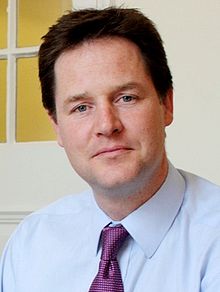
    Below is the text of the speech made by Nick Clegg, the Deputy Prime Minister, to the BIS Manufacturing Summit in Liverpool on 19th June 2014.

    Growing optimism

    For the first time, I think, since these summits began, there’s a real sense of optimism emerging – albeit cautiously – about the future of British manufacturing.

    Our economy is growing again – with Britain forecast to grow faster than any other G7 economy this year.

    We have more people in work than ever before – with your businesses adding around 10,000 new manufacturing jobs to our economy every month.

    Orders are increasing. Exports are rising. Output is up.

    And, to take just one example, Britain now has the most productive car sector in Europe. We’re exporting more vehicles than ever before – with a new vehicle rolling off our production lines every 20 seconds. By 2017, UK industry predicts that Britain will be producing 2 million cars a year, beating our all-time peak of 1.92 million in 1972.

    That’s no accident. It’s down to your hard work, your expertise and the close partnership you’ve built with our government – especially Vince and his team – to help Britain get back on its feet.

    Why manufacturing matters

    Yet, of course, whatever these results, there’s always going to be an economist or statistician ready to point to a pie-chart and question the ongoing importance of British manufacturing. Some talk about global shifts in demand, the rise of lower-cost competitors and say that manufacturing is only around 10% of our economy.

    In truth, its impact is so much more. I only need to look at Sheffield, the city where I’m an MP, to see how much your success still matters. In fact, travel anywhere in the UK and ask people about the place they come from and they’ll talk with pride about the industries and products that put their communities on the map.

    To name just a few – in Sheffield it’s steel. In Sunderland, Birmingham and across the North West it’s cars. In the Highlands, it’s whisky. In County Antrim, it’s buses. In Broughton, it’s planes. And hopefully in years to come, here on the Wirral, it will be building renewable technologies.

    Your industries create a whole network of businesses that keep our local communities’ economies alive.

    Take the good news that Jaguar Land Rover will be investing a further £200 million in their Halewood plant, near Speke. This investment will bring production of the new Discovery vehicle to Halewood in 2015, creating 250 jobs. And will increase Halewood’s workforce to 4,750 – trebling it since 2010.

    Currently, this plant is producing a new Range Rover Evoque and Land Rover Freelander at the rate of one vehicle every 82 seconds. Over 80% of everything they build at Halewood is exported to markets including Brazil, India, China, the US and Hong Kong.

    Yet this is only part of the story, with countless local businesses supporting the plant across its supply chain. Companies like GETRAG, which produces transmissions for these vehicles and recently received investment from the Regional Growth Fund to expand its Merseyside plant.

    Beyond that, we also have the hundreds of service companies that contribute. Whether it’s the accountants or legal services used by Head Office, the building services teams that maintain JLR’s factories and offices, the sales teams that market their cars around the UK or the local pubs, cafes and shops that serve their employees after a hard day at work. The reality is your companies are creating jobs, driving growth and boosting productivity in manufacturing and services.

    And, as a sector, you delivered around £140 billion in GVA (gross value added) last year alone. You produce over half our exports in goods; invest more than anyone else in UK business R&D; and employ millions of highly-skilled people.

    With figures like that you’d never get a French politician talking down their manufacturing industry. And the UK’s manufacturing base is growing faster than France’s right now!

    Our commitment to you

    That’s why, when we joined this coalition government, we were committed to sitting down with you to set out what Britain’s long-term industrial strategy should be.

    It’s a conversation that had been long overdue: tackling the big issues that impact your companies – skills, access to finance, procurement, innovation and technology – and identifying the levers government could pull to help you grow.

    And we’re delivering on our promises – with globally competitive taxes, less red tape and more generous capital allowances.

    We’re establishing the British Business Bank to help make finance markets work better for small firms. And we have set up the Green Investment Bank – which is leveraging extra private sector investment for major green projects. This includes the partial conversion of the Drax Coal Power Station to biomass fuels – which when completed will provide around 10% of the UK’s 2020 renewable electricity target.

    We’ve created our Catapult Centres – a national network of cutting-edge business research facilities, dedicated to commercialising the latest processes, materials and technologies.

    Earlier this month, Vince and I opened a new Rolls-Royce facility in Washington, Tyne and Wear, which uses innovations developed at our Advanced Manufacturing Research Centre in Sheffield: to radically cut the time and energy it takes to produce essential engine components.

    And Vince’s announcement today of a new £7 million grant to support research into cutting-edge aerospace technologies at Sheffield’s AMRC will help secure the UK’s global lead in this sector also.

    More widely, we’ve expanded our apprenticeships programme, with 1.7 million new apprentices since 2010.

    And, wherever possible, we’re giving power back to local councils, colleges and businesses like yours – through our Local Enterprise Partnerships, our Regional Growth Fund, as well as City Deals and the billions of pounds worth of Growth Deals we’re now negotiating. Together, this is helping to boost local skills and kick-start local infrastructure projects like the development of new transport systems and roads to support your business.

    I’ve also established a new Local Growth Committee – which brings together ministers from across government to speed up the critical decisions needed in Whitehall to get projects in your local area moving.

    Planning for the future

    But despite all the progress the job’s not done.

    And I know that, as the economy improves, many of you are questioning just how committed Whitehall will be to sticking to this strategy in the long-term.

    You work in industries where it can take you years to develop your next big idea: whether it’s 3 to 5 years to develop a new car, 10 years to produce a new drug and up to 15 years to design and build a new aircraft.

    These long timescales do not sit easily with the minute-by-minute demands and 5-year election cycles of the political world. And, over and over again, in Britain, we’ve seen politics not business drive the focus and scope of our country’s industrial policy.

    And it’s staggering to see that, in the 10 years of the last government, the importance of our manufacturing base to Britain’s economy was left to decline 3 times faster than it did under Margaret Thatcher – shrinking from 20% as a proportion of our economy to a little over 10%.

    Compare this to France, Germany and Asia where, for decades, your competitors have benefited from governments committed to preserving their countries’ industrial strengths, whatever the global challenges.

    Taking the politics out of industrial policy

    In my view, it’s time we had that same kind of certainty and stability here in Britain. The way I see it is like this: if this 5 year parliament was about rescuing the British economy, the next will be about renewing our economy. If this parliament was about reviving our economy, the next must be about finishing the job of rebalancing our economy.

    It is about ensuring that we’re never again reliant on just one sector, just one region or over rely on simply boosting public sector jobs to shore up growth across our country. And, to make that happen, we need British governments – now and in the future – to act in a more strategic and less short-term way.

    To put it bluntly – we need to take the politics out of Britain’s industrial policy. The country needs us to establish a cross party consensus – strong enough to last in this parliament and beyond – which isn’t about picking winners, on the one hand, or leaving it all up to the market, on the other. But, instead, builds on the work of individuals from across parties – such as the Conservative’s Lord Heseltine, Labour’s Lord Mandelson and Vince in the Liberal Democrats – to lay the best possible foundations for the future.

    I know as much as anyone about trading blows in the Westminster bear pit. And I’m not going to pretend that’s going to end anytime soon. Yet, as we’ve seen in the last 4 years, there are times when – in the national interest – we need to put the political point scoring aside.

    And whether it’s tackling the deficit, securing long term pension reform, creating the Office of Budget Responsibility or delivering the biggest programme of economic decentralisation in a generation – we are committed to pushing through the big, ambitious reforms Britain needs to make its economy stronger and prospects brighter, working with others across party lines where needed.

    We’re committed to governing for the long-term – guaranteeing a government that is ready, on the one hand, to get out of the way of your businesses, so you can generate jobs and growth.

    And that, on the other, is equipped to step in – where needed – to tackle market failures and create the best possible conditions for securing your success.

    So, today, I want to set out 3 possible policy areas where, I believe, we could achieve the long-term, cross-party agreement we need. It starts with government’s industrial strategy.

    Supply chain strategy

    Over the past 4 years, working in collaboration with you, this government has been able to set out a long-term plan to boost Britain’s competitiveness and secure jobs.

    The importance of this work shouldn’t be underestimated. For example, Richard Parry Jones – co-chair of the Automotive Council – has talked about the critical role that our industrial strategy is playing in securing that sector’s recent success.

    Businesses have confidence in our industrial strategy, because they have helped to develop it and they’re helping us deliver the strategy. And this powerful partnership gives us the chance to rectify some of those mistakes of the past – notably, by strengthening Britain’s supply chains.

    Every time a UK manufacturer has moved overseas in the past 40 years, we’ve seen the local companies that support them disappear too. Company by company, this has led to a hollowing out of the UK’s domestic supply chain – meaning that over half of the materials and components used in British manufacturing are now sourced from overseas.

    But, if we move now, I believe that trend can be reversed. As you know, the Fukushima earthquake 3 years ago heavily impacted global supply chains – forcing factory closures in Japan and months of production delays across the world. That’s led to companies like Nissan taking a serious look at basing more of their supply chains here in the UK to mitigate problems like this in the future.

    I believe a new UK Supply Chain Strategy – developed in collaboration with your core UK suppliers – would help us identify how we can turn that intention into long-term investment. These supply industries are huge, important sectors in their own right – our steel makers, petrochemical companies, glass producers and so on – all of which employ thousands of people and generate millions for our economy.

    Leading business organisations, including the CBI, believe that real potential exists for the UK’s share of global supply chains to be much higher. And, to help make that achievable, I believe this new strategy should focus on answering 3 central questions:

    What exactly are the big issues your sectors face in basing more of your supply chain in the UK?

    What are the common barriers to investment and growth in the UK’s supply chain sectors – such as access to finance, regulation and research etc?

    How can we tackle these issues to make the most of opportunities like major government-supported infrastructure projects?

    Take our offshore wind industry – which is so important to this region’s future. By 2020, it’s estimated that there will be around £40 billion worth of renewable electricity projects in the UK. Yet only around 20% of the components needed to build our offshore wind farms are currently being sourced in the UK. Think of the opportunities for local jobs and growth, if – together – we could increase that figure. Siemens are already paving the way, with their £160 million planned investment in UK turbine manufacturing.

    The other major weakness of the past which needs addressing will be familiar to you – skills. We’re already doing a lot of work to increase the number and quality of apprenticeships available, by giving you greater input into these qualifications, and also to make it easier for you to recruit and train the young people you need for the future.

    And, recently, Vince announced his plans for a new network of National Colleges – centres of excellence dedicated to giving people the high-level technical skills required to work on huge projects like the development of High-Speed 2.

    We’re now consulting with you on the priority projects and skills gaps that you think these colleges should address. For instance, boosting the skills and training needed in the offshore wind industry will give people highly transferable skills which they can use not just in one sector but across our economy as a whole.

    These kinds of skills are highly transferable, giving people a greater shot not just at employment in one sector but also across our economy. And this could be another critical opportunity for businesses like yours to help develop Britain’s future workforce.

    Regional Growth Fund

    Finally, with public finances likely to remain tight in the next Parliament, we also need to look at where government can best focus its money to continue that rewiring of Britain’s economy.

    Gradually, we’re repairing the economic mess of the previous government – but it can’t be fixed overnight. Between 1998 and 2008, cities like Birmingham and Nottingham actually saw their private sector workforces shrink even in the boom years. This has left behind a profound imbalance in our regional economies – increasing their reliance on public sector employers for jobs.

    That’s why we established the Regional Growth Fund (RGF) to help kick-start private sector investment and jobs in areas like this. And, over the past 4 years, government has committed to invest £2.9 billion in over 400 projects focused on increasing business competitiveness across our regions. This includes companies in Merseyside like Glen Dimplex Appliances, where I visited recently, a manufacturer of cookers and ovens, which secured £3 million in RGF funding to expand their operations – creating 300 new jobs.

    And I’m pleased to announce that Round 6 of the RGF opens today, with over £200 million available. We’re encouraging bids directly from companies that require grants of more than £1 million, as well as from organisations like Chambers of Commerce, universities and others to help support SMEs who require funding of less than a million. So, if that’s you, please apply.

    Of course, there are some who complain that our RGF money isn’t getting spent fast enough. They’re comparing it to the days when the last government would just hand over money to the Regional Development Agencies (RDAs) to spend as they saw fit. But we’ve changed that – we’ve put the businesses that secure this funding in the driving seat. They decide when this money is spent in line with the growth plans for their companies.

    And this is proving a powerful stimulus for business investment in those regions that need it. In total, for every £1 invested through the RGF, we’ve leveraged over £5 in extra private investment: creating and safeguarding over half a million jobs across the UK. This compares to the RDAs which only leveraged 65p for every £1 they spent.

    But, we’ve still got a way to go to clear up the damage done to our long-term competitiveness. That’s why I believe there’s such a strong case for extending the RGF beyond this parliament to 2020.

    Conclusion

    So, in conclusion, together, we’re building a better future for British manufacturing.

    We’re delivering results, but we mustn’t stop now.

    Together, we’ve got to ensure that the hard work of the last 4 years continues to pay off.

    And this is my commitment to you – that I will do everything I can to build a long term political consensus focused on helping your sectors thrive, your companies grow and securing a stronger economy for Britain’s future. Thank you.