Tag: 2014

  • Mark Lyall Grant – 2014 Speech on Ukraine

    Below is the text of the speech made by Mark Lyall Grant, the Ambassador and Permanent Representative to the UN, at the UN Security Council on 3rd March 2014.

    Madame President,

    The pretence is now over. The world can see that Russian military forces have taken control of the Crimean Peninsula, part of the sovereign territory of Ukraine. This action is against the expressed wishes of the legitimate Ukrainian Government. It is a clear and unambiguous violation of the sovereignty, independence and territorial integrity of Ukraine, and is a flagrant breach of international law.

    We can see absolutely no justification for these actions. We have heard from Russia that their forces are in Ukraine to protect minorities from armed radicals and anti-Semites; we hear claims of interference in the affairs of the Orthodox Church, we hear claims of hundreds of thousands of refugees. But Russia has provided no evidence for any of this. It is clear that these claims have simply been fabricated to justify Russian military action.

    In assuming control of a sovereign part of Ukraine on a trumped up pretext, the Russian Federation has contravened its obligations as a member of the international community. It has violated Article 2 of the UN Charter, which prohibits ‘the threat or use of force against the territorial integrity or political independence of any state’. It has failed to honour its international commitments as a founding member of the OSCE and as a signatory to the 1975 Helsinki Final Act. It has reneged on its obligations under the 1997 bilateral Treaty on Friendship and Cooperation between Russia and Ukraine and the 1994 Budapest Memorandum.

    The Russian representative claims that Mr Yanukovich has called for Russian military intervention. We are talking about a former leader who abandoned his office, his capital and his country. Whose corrupt governance brought his country to the brink of economic ruin. Who suppressed protests against his government leading to over eighty deaths and whose own party has abandoned him. The idea that his pronouncements now convey any legitimacy whatsoever is farfetched and of a keeping with the rest of Russia’s bogus justification for its actions. The government in Kiev is legitimate and has been overwhelmingly endorsed by the Ukrainian parliament.

    In the 21st Century no country should be acting with such blatant disregard for international law. These actions will be met with a strong and united response from the international community. Russia should not be surprised that its political and economic reputation have already suffered. The Rouble has fallen and the Russian stock market is now down more than ten percent.

    Madame President,

    Just as we condemn the Russian Federation for its confrontational acts, we commend the Government of Ukraine for refusing to rise to provocation. This is a wise decision. We urge the Ukrainian government to continue to act calmly and to avoid actions or rhetoric that would inflame tensions or provide a further pretext for further military action.

    Madame President,

    We call on the Russian Federation to immediately cease all military action in Crimea and to refrain from any interference elsewhere in Ukraine. Russian should withdraw its forces to their bases and return to force levels previously agreed with the Government of Ukraine as part of the Black Sea Fleet basing arrangements.

    If Russia is genuinely concerned about protecting minority groups and upholding the human rights of Ukrainian citizens, then armed intervention is not the way to address these concerns.

    Instead, Russia should open up a direct dialogue with the Ukrainian Government in Kiev; and not simply pick and choose individuals with whom they wish to engage. They should respond to requests by Ukraine and other signatories of the 1994 Budapest Memorandum to hold consultations, as specified by paragraph 6 of that Memorandum.

    They should engage constructively in the debate taking place in the OSCE and other institutions concerning the deployment of a fact-finding mission and an international observer mission to Ukraine. Such a mission could establish the real facts on the ground, monitor the situation and indeed provide any necessary reassurances and guarantees, through peaceful means.

    We welcome the UN Secretary General’s decision to send the Deputy Secretary General to Kiev today. I hope that he would also go to the Crimea and Eastern Ukraine. We call on the UN Secretary General to use his good offices to their fullest extent to help to de-escalate the current situation.

    Madame President,

    This is not 1968 or 1956. The era in which one country can suppress democratisation in a neighbouring state through military intervention on the basis of transparently trumped-up pretexts is over. We stand ready to work with Ukraine, Russia and all our international partners to support a stable, united, inclusive and economically prosperous Ukraine.

    The United Kingdom urges Russia to uphold its obligations under international law, including under the UN Charter. To act in a way which promotes stability, rather than to destabilise the region through the promotion of new frozen conflicts. To support democratic processes and the rule of law, not to subvert or suppress them.

    Response by Ambassador Lyall Grant of the UK Mission to the UN, to Ambassador Churkin of the Russian Federation, at the Security Council meeting on Ukraine

    Thank you Madame President,

    I don’t want to prolong this debate, but I must take issue with some of the things that the Russian Ambassador has said.

    Let’s be clear about the facts about what has happened in Crimea. The Russian forces have forcibly taken over military and civilian airports, the infrastructure. They have set up road blocks. They have pressurised Ukrainian military leaders to defect. They have given other Ukrainian units ultimatums to surrender. They have blocked Ukrainian ports and they have vastly increased the Russian military forces all along the Russian / Ukrainian border.

    There is no justification for this military action in Ukrainian international law or in the Agreement between Ukraine and the Russian Federation on the Status and Conditions for the Presence of the Russian Federation Black Sea Fleet on the territory of Ukraine as article 6 of that says very clearly and I quote: “Military formations shall respect the sovereignty of Ukraine, shall abide by Ukrainian laws and shall not interfere in the internal affairs of Ukraine.”

    And what part of that agreement justifies the military action that we have seen Russia taking in the Crimea?

    My Russian colleague has said just now that the Russian Federation is not against the idea of an OSCE Monitoring Mission to Eastern Ukraine and Crimea. Can he now confirm that the Russian Federation accepts the deployment in the next few days of such a mission?

  • Michael Gove – 2014 Speech on Education Reform

    michaelgove

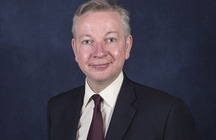
    Below is the text of the speech made by Michael Gove, the then Secretary of State for Education, on 10 July 2014.

    It’s an enormous pleasure to join the Education Foundation in welcoming everyone today to the first ever global Education Reform Summit held here in London.

    Everyone here has a story to tell about the changes that idealistic teachers are making to improve the lives of the next generation.

    Everyone here will also have experiences to share about the specific challenges they face in helping children to succeed.

    And all of us will be able to learn from each other – about those successes and challenges – in order to ensure that we can all make a difference for good to the lives of young people.

    A shared moral purpose

    Because everyone here is united by more than just a professional commitment to improving education. We all share a moral purpose – liberating individuals from ignorance, democratising access to knowledge, making opportunity more equal, giving every child an equal chance to succeed.

    And nowhere has the case for reform to drive that moral mission been clearer than in England.

    As part of our long-term economic plan to secure a better future for Britain, we want to deliver the best schools and skills for our young people. We want young people and their parents to have the peace of mind that they’ll gain the skills they need to get a good job, no matter where they live or how well off they are.

    When this government was formed in 2010 we inherited one of the most segregated and stratified education systems in the developed world.

    More than a fifth of children left primary school without reaching a basic level of literacy and numeracy; two-fifths finished full-time education without even the bare minimum qualifications that most employers and universities demand.

    And what made this scandal more shameful was the inequality it entrenched. The poorest students overwhelmingly attended the weakest schools. And as children made their way through the education system in England, the gap between rich and poor widened.

    Closing that gap is a personal crusade for me.

    But it’s also an economic imperative for every developed nation.

    Because the twin forces of economic globalisation and technological advance are transforming the world we live in.

    Our jobs, our lives, our economies and our societies are going through dramatic and irreversible change.

    For the next generation to flourish, education systems must equip every child with the knowledge and skills, the qualifications and confidence they need to succeed.

    Children who leave school with no skills or low skills will find their employment opportunities limited and their horizons narrowed.

    If we are to defeat the evil of youth unemployment and give the next generation economic security then many more children need to be educated to a far higher level than we now accept.

    We need not just to close the gap, but to raise the bar.

    Based on rigorous evidence

    And while globalisation and technology make reform imperative, they also allow it to be more collaborative.

    We have to achieve both much greater equity and much higher standards than our predecessors – but we also have access to much richer data and much deeper knowledge about what works.

    We now have the networks and mechanisms to assess policies more rigorously than ever before, compare innovations and learn from each other.

    In the past, great teachers – and indeed education ministers – have operated in isolation from any systematic and rigorous analysis of which of their interventions worked. Views on pedagogy or funding had to be taken on trust.

    But in the last decade there has been a much more rigorous and scientific approach to learning. Instead of a faddish adherence to quack theories about multiple intelligences or kinaesthetic learners, we have had the solidly grounded research into how children actually learn of leading academics such as E.D. Hirsch or Daniel T. Willingham.

    And when it comes to analysing which interventions, approaches and techniques help children to learn more quickly, more deeply and more sustainably we have also had access to a better bank of data than ever before,

    The OECD’s PISA study, alongside the data from PIRLS, TIMSS and other studies, have transformed our understanding of what works.

    And that data and the data of what happens in individual classrooms with individual practitioners has been analysed by reformers from John Hattie to Sir Michael Barber, so the lessons of what works can be shared more effectively than ever before.

    One of the most encouraging trends in English education – which helps the cause of reform worldwide – is the way in which those leading the debate and driving evidence-based change in our schools are teachers.

    We commissioned Dr Ben Goldacre – the author of ‘Bad Science’, a brilliant debunking of pseudo-scientific myths and fallacies – to help improve the use of evidence in English education.

    And the biggest enthusiasts for his work have been teachers.

    Teachers such as Andrew Old, Daisy Christodoulou, Robert Peal, Joe Kirby, Kris Boulton and Tom Bennett have used social media and professional networks to drive this move towards a more rigorous and evidence-based approach to helping children learn.

    We in the UK government want to do everything to support this move. We believe the evidence base we build here can help children worldwide. We set up a new charity, the Education Endowment Foundation, to trial and evaluate the most effective techniques to narrow the gap in attainment between children from rich and poor backgrounds.

    We have also set up a network of teaching schools to act as generators of evidence and excellent practice in education in the same way as teaching hospitals generate medical innovation.

    These are schools rated outstanding by independent inspectors – and they are pioneering breakthroughs in learning and building evidence from which all professionals can benefit.

    As are similar organisations across the globe, from the What Works Clearinghouse, Uncommon Schools and the Knowledge is Power Programme.

    Improvements so far

    We have built our reform programme in this country on the evidence we have gathered so far of what works in those countries where the gap has been narrowed and the bar has been raised.

    We have studied what works in the highest performing and most improved education systems – from Poland and the Netherlands to Singapore and Shanghai – and we have sought to implement the essence of those policies here.

    That has meant:

    • setting the highest standards nationally
    • ensuring every child can follow a stretching academic curriculum to the age of 16
    • giving principals more autonomy to hire and fire, set curricular policy and shape the school day
    • sharpening accountability through more rigorous, externally set tests and more intelligent inspection
    • devoting extra money to helping the poorest students
    • celebrating success wherever it’s found

    We’ve done all we can to ensure the authority, respect and prestige of teachers is enhanced in and beyond the classroom. We’ve scrapped absurd ‘no touch’ policies which prevented teachers from keeping control in the classroom as well as keeping children safe; and given teachers back powers to manage pupil behaviour.

    By following the evidence – by adhering to the principle that what’s right is what works – there has been a renaissance in English state education.

    The benefits of our long-term plan are already starting to show:

    • more great schools
    • more great teachers
    • more pupils studying the subjects they need to get a good job
    • record numbers of apprenticeships

    Since 2010, the number of children in failing secondary schools has fallen by almost a quarter of a million.

    Eight hundred thousand more pupils are now being taught in schools ranked good or outstanding by independent inspectors compared to 2010 – and around 50 of those schools didn’t even exist 4 years ago.

    In the same period, around 600 of the worst-performing primary schools have been taken over by expert sponsors or headteachers – the majority of which are already leading other schools with a proven track record of success.

    This has been an explicit continuation of a policy set in train by 2 of my predecessors, Andrew Adonis and Tony Blair: the academies programme.

    Progress on this policy stalled under Gordon Brown but has been massively accelerated under this government.

    It is giving the very best heads control over many more schools, and thousands of children a better start in life.

    Underperforming schools taken into the academies programme and placed under the leadership of great heads are improving more rapidly than those schools which remain in the hands of local politicians.

    A stunning example of what’s happened under this programme is the progress made by a school in London which used to be called Downhills Primary and which has been reborn as Harris Primary Academy Philip Lane.

    When Downhills was under the control of local politicians, it failed its pupils year after year. For almost a decade it drifted in and out of the very lowest category of performance: ‘special measures’.

    Pupils failed to meet minimum standards in maths and English for 5 years in succession – provoking repeated demands for significant improvement.

    When it was proposed that Downhills should become an academy and benefit from the leadership of great headteachers who had brought success elsewhere, local politicians and trade unions fought reform every step of the way.

    But 2 years later the evidence is clear. As Ofsted’s first inspection of the new Harris Academy Philip Lane reported:

    Pupils’ progress has improved rapidly since the academy opened in 2012 […]. Leadership and management, including governance, are outstanding. Leaders have brought about considerable improvements in teaching, behaviour and achievement because of very high expectations [and] worked very closely with parents, who are supportive of the academy.

    This transformation is a credit to the hard work and dedication of the school’s teachers and leaders – and of the Harris Federation’s expert, experienced team.

    Harris Primary Academy Philip Lane is now giving hundreds of pupils and parents a better, brighter chance in life. Like all the Harris academies – and particularly through the 2 Harris teaching schools – spreading their best practice and outstanding teaching techniques to many more schools than ever before.

    And it’s not alone. All over the country, failing schools are being taken over and transformed – and brand new schools are being set up, bringing new choice and high standards.

    And this renaissance is being driven by teachers

    Look at the Greenwood Dale trust, led by the recently and deservedly knighted Sir Barry Day.

    As a teacher, Barry worked in some of the most deprived schools in the country, helping children from the poorest backgrounds. As head of Greenwood Dale School, a secondary in an extremely deprived area of Nottingham, he transformed a failing school into one of the most successful schools in the country – and one of the first to become an academy sponsor in its own right.

    Today – overseeing 22 academies and 2 free schools – he’s using that proven track record to reach exponentially more children than ever before.

    Right across the East Midlands, working in the most disadvantaged communities, Greenwood Dale Trust academies are achieving fantastic results. Last year, on average, the proportion of pupils achieving 5 or more good GCSEs including English and maths rose more than twice as fast in Greenwood Dale Trust academies as in local authority schools across the country.

    And there are many, many more examples. Look at Reach Academy in Feltham, a new, innovative, all-through free school founded by dedicated teachers.

    Look at the London Academy of Excellence, a fantastic new sixth-form free school, drawing its students from some of the most deprived areas of London and aiming to send them to the top universities in the world.

    Look at Sir Michael Wilkins’ schools – including a teaching school – in the Outwood Grange Trust. More others than I can mention – teachers leading change in a self-improving system.

    Further to go

    But that doesn’t mean ‘job done’. There’s still much further to go.

    In 10 years’ time, children who started school back in September 2010 will be finishing compulsory education at the age of 18 – the first cohort since our reforms began.

    So today I’d like to set out what the self-improving system should achieve by that time.

    What a world-class education, and education system, will look like – not just today and tomorrow, but next year, and in 2024 and beyond.

    More and more schools run – and more and more decisions made – by teachers, not politicians.

    Higher standards and higher expectations from every school and every pupil at every stage and every age.

    More children from all backgrounds taking core academic subjects at GCSE – the best possible preparation for apprenticeships, places at top universities, and good jobs.

    A drastic reduction in levels of illiteracy and innumeracy in our country and in our schools.

    A marked and sustained rise in school quality, driven by every school being part of a supportive, collaborative chain or network – because when you give schools more autonomy, they collaborate more, not less.

    Calm, orderly classrooms, and stretching, challenging curricula. Exams that command respect among universities and employers alike.

    Basically, it means this.

    Every child in the country, no matter where they live, what their background, or whatever type of school they attend, gets the sort of education which introduces them to the best that has been thought and said.

    The sort of education which equips them to do whatever they want in life – and leaves no opportunity out of reach.

    Conclusion

    That is the mission which drives me and unites all of us.

    This is the goal we are all striving to achieve.

    Of course, any change to the status quo is difficult. Of course, people can be more frightened of what might be lost than inspired by what might be gained.

    But for years, for decades, our status quo has simply not been good enough. We can’t and we mustn’t keep going backwards – and failing the poorest above all.

    So to those striking today – to those walking out of classrooms to take to the streets – I urge them to reconsider.

    The unions, in the past, have claimed to ‘stand up for education’. Today they’re standing up for their own pay and pensions.

    I urge them to join all of us in this hall, all of us who are really standing up for education – putting education first and foremost – and the education of our most deprived children most of all.

    So thank you again for coming here today.

    For your commitment to the future of education – and the futures of every individual child in your care, today, tomorrow and in the years to come.

    Thank you, above all, to the Education Foundation for all their hard work to create this event today.

    May it be a celebratory, ambitious, inspiring day for all of us – and a turning point in the global movement of education reform.

    Thank you.

  • Michael Gove – 2014 Speech on Vocational Education

    michaelgove

    Below is the text of the speech made by Michael Gove, the Secretary of State for Education, at the McLaren Technology Centre in Woking, Surrey on 3rd March 2014.

    Thank you very much for that kind introduction.

    It’s a huge pleasure to be here at McLaren today – during what must be a brief and exceedingly busy period before the grands prix roar into action.

    As this incredible setting shows – more like a Bond villain’s lair than anywhere I’ve ever spoken before – McLaren are world leaders in technological innovation; constantly and quite literally reinventing the wheel, to make it ever faster, ever more aerodynamic, ever more efficient.

    This restless pursuit of excellence builds on an impressive sporting heritage.

    Since their first race in 1966, McLaren have won more grands prix than any other Formula 1 marque – with champions like Ayrton Senna, James Hunt, Niki Lauda and, of course, Lewis Hamilton.

    But just as important as a glorious past is a bright future.

    Which is why McLaren are taking part in helping to train the next generation of engineers, scientists and inventors.

    Through apprenticeships, trainees, internships, work experience and as STEM ambassadors, McLaren are every bit as much a world-beating educational institution as Oxford University or Imperial College – introducing young people to the dazzling potential of science and technology, and training them to play their part.

    The future is coming faster than we think

    It’s fitting that I’m here where educational and technical innovation meet, because I want to talk today about the future relationship between education and the world of work.

    I want to do so because the world of work is changing at high speed – and we are about to see that change accelerate at dramatic pace.

    If young people are to be prepared for that radically changing world of work, we need a plan to change our education system – and to secure their future.

    In particular, we need to end the artificial and damaging division between the academic and the practical – the apartheid at the heart of our education system.

    We need to ensure that more students enjoy access to the academic excellence which will make a practical difference to their job prospects in a fast-changing world.

    And we need to ensure that practical, technical and vocational education is integrated with academic learning to make both more compelling for all students in our schools, and more valuable in the new labour market.

    It’s important to stress, of course, that education is about more, much more, than preparation for employment.

    It’s an initiation of every new generation into the best that’s been thought and written. It’s an exploration of all the riches of human creativity. And a preparation for the moral responsibilities of adult life.

    But education is also – critically – the means by which we can give each individual the chance to shape their own future; their future employment as well as their cultural, social and moral lives.

    The right education – the acquisition of the right skills – can enable any individual to take control of their economic destiny rather than being left at the mercy of economic forces beyond their control.

    And getting every child’s education right is central to our long-term economic plan for the country.

    We cannot afford to leave any intellect untapped, any pair of hands idle, because the security we want for all can only be achieved by a first-class education for all.

    Because of the economic forces which are reshaping our world now, getting education right has never mattered more.

    Globalisation – the opening up of markets which followed the collapse of communism – has meant that those with the right skills have a wider choice of jobs and career paths, and goods and services, than ever before.

    But it has also meant that those with the wrong skills – or no skills – have found their opportunities narrowing, as employment opportunities migrate to nations with lower labour costs, or technology renders more and more traditional jobs redundant.

    What economists call the economic return to skills – basically the extra amount you earn for being well educated – is remorselessly high. And for those with good maths skills the premium on their earnings is even higher.

    But while globalisation has had a powerful effect on our economic destinies, other changes – only now beginning to be felt – will be even more dramatic.

    Technology is poised to change the world of work in a manner as dramatic as the shift from a predominantly agricultural to a predominantly industrial society which advanced nations underwent in the 19th century.

    The second machine age – the robolution

    We are embarking on a second industrial revolution – a new machine age.

    Developments in a variety of fields – especially artificial intelligence – are changing how workplaces operate. Machines which once accelerated production because processes could be automated are now increasingly capable of operating autonomously. Cars which were once assembled by robotic technology are now being driven by robotic technology. I know – I’ve been in one. And Google’s driverless car is a far safer presence on the road than any vehicle which has me behind the wheel.

    These breakthroughs – in artificial intelligence, robotics, and related fields – are changing every workplace we know.

    It’s no longer simply routine manual labour which is capable of being performed better by machines than by men.

    From train driving to surgery, auditing to merchandising, technology is reshaping the whole world of work. It is striking that the major tech companies who have done so much to shape our modern lives – like Google – are moving so speedily and heavily into this area.

    Google’s driverless car is not a careless thought experiment on the part of a company which has hitherto been predominately virtual and digital rather than physical and mechanical.

    It is a leading indicator of where tech is taking us next. Google has been investing very heavily recently in artificial intelligence, machine learning and robotics – with its acquisition of the robot firm Boston Dynamics, the smart thermostat make Nest Labs and the British AI company DeepMind.

    And in case anyone thinks Google’s moves are just California dreaming, consider what’s happening in east Asia.

    Fujitsu, the world’s third largest maker of IT products, is re-shoring its PC and mobile phone manufacturing from Thailand and the Philippines back to Japan because multifunction robots can solder and assemble parts more cheaply and efficiently than workers in developing nations.

    Canon, the world’s leading supplier of digital cameras, has said it is “fully robotising” its digital camera and lens factories.

    Similar advances in technology have meant that Hewlett-Packard and the Chinese computer firm Lenovo are increasing their production in Japan to take advantage of the greater efficiency and lower costs of fully automated – robotised – production.

    Of course we’ve had robots on production lines for decades now. But it’s often the case that the real power of a new technology is only felt when its potential is liberated by other innovations.

    Computers had been around for decades before the world wide web generated the changes which mean each of us now conducts so much of our lives via smartphone, tablet and laptop.

    Similarly, breakthroughs in IT are proving to be a decisive, disruptive innovation changing how we deploy robots. The manufacturing process is now altered not by retooling production lines but by reprogramming machines with improved software – and in particular, by giving them the power to perform a complex series of actions.

    When we place these changes in the context of other rapidly accelerating innovations – in speech recognition, vision sensors and wireless networking – it’s clear we are reaching an inflection point, when actions hitherto thought impossible to perform by machines become actions which it’s increasingly obsolete to leave to humans.

    In the first industrial revolution, machines multiplied a thousandfold the physical power mankind could deploy.

    In this second revolution, machines are poised to multiply by a similar factor our mental creativity.

    Making all these opportunities more equal

    These changes promise to make goods and services more abundant – and to allow human ingenuity an unimaginably broader canvas to work on.

    But there are also dangers.

    For those of us committed to social justice, to respecting the innate dignity of every human being, to giving every individual the chance to flourish economically, socially and emotionally, these changes constitute a profound challenge.

    How can we avoid growing unemployment as technology displaces labour from jobs which now disappear? How can we ensure that, for example, those who currently, or might in the future, drive our tube trains or generate purchase orders and invoices, find jobs? How can we ensure young people have the ability to adapt to technological changes – to take advantage of them – to lead richer lives with more opportunities?

    How can we prepare young people for jobs that don’t yet exist in industries that haven’t yet been invented in a world changing faster than any of us can predict?

    And how can we ensure that these changes – whose ramifications will affect the whole shape of our economy and our society – can be harnessed to make our economy overall stronger and our society fairer?

    The answer is by ensuring we implement all the elements of our long-term economic plan – and, critically, by pressing ahead with our reforms to improve schools.

    Other jurisdictions are following the path we’ve set.

    They are giving heads greater control of their schools.

    They are enhancing the prestige of teaching by raising the bar on quality.

    And they are ensuring curricula and exams are more rigorous – with a proper emphasis on the centrality of academic knowledge in the education available to all.

    Giving all children access to high-quality teaching in maths, English, physics, chemistry, biology, languages and the humanities to the age of 16 provides every child with the opportunity to flourish whichever path they subsequently choose.

    And more than giving children choices, that academic core also trains our minds to be critical and creative.

    The work of cognitive scientists, most helpfully analysed by the University of Virginia’s Daniel T Willingham and buttressed by the research of educationists like ED Hirsch, has shown that the best way to develop critical thinking skills is to ensure all children have a firm grounding in a traditional knowledge-based curriculum.

    As Willingham has pointed out,

    Surprising though it may seem, you can’t just Google everything. You actually need to have knowledge in your head to think well. So a knowledge-based curriculum is the best way to get young people ‘ready for the world of work’.

    Elsewhere, he said:

    Knowledge does much more than just help students hone their thinking skills: it actually makes learning easier. Knowledge is not only cumulative, it grows exponentially. Those with a rich base of factual knowledge find it easier to learn more – the rich get richer. In addition, factual knowledge enhances cognitive processes like problem solving and reasoning. The richer the knowledge base, the more smoothly and effectively these cognitive processes – the very ones that teachers target – operate. So, the more knowledge students accumulate, the smarter they become.

    And it’s demonstrably the case that the higher order thinking skills we need – even and especially, in the sphere of technology – can be and are successfully cultivated through traditional intellectual disciplines.

    Mark Zuckerberg arrived at Harvard – and laid the groundwork for his future success – after close study of classical Greek, Latin and Hebrew at school. Sergey Brin of Google and Sal Khan of the Khan academy were gifted university mathematicians. Martha Lane Fox – the government’s digital champion – read ancient and modern history at university and Dido Harding, the chief executive of TalkTalk, who has been responsible for huge steps forward in e-safety, studied politics, philosophy and economics at university.

    It is striking that the jurisdictions which have seen huge improvements in their schools in recent years – such as Poland – have been those which ensure all children have access to a stretching academic curriculum until at least the age of 17. No matter what path students choose – whether academic or vocational – they all share a core academic foundation on which to build.

    And that desire to overcome false divisions, unhelpful stereotypes and the premature setting of young people into tracks from which they cannot later deviate lies behind our approach to education.

    And just as last month I set out how we can tear down the Berlin Wall between state and independent schools, so today I am setting out how we can end the apartheid between academic and practical learning.

    It’s critically important that we recognise the value of traditional academic disciplines – and should not allow them to be abandoned, neglected, or thought of as suitable only for a minority of students.

    But we must also ensure that we are alive to the ways in which technology and other innovations are now in a position to help us to overcome the unnecessary and harmful divide between the academic and the technical – between thinking and doing – which has held us back as a nation.

    Bringing together thinking and making

    For centuries since the Renaissance, dominant education models have had a strict separation between, first, what is regarded as learning and, second, training people to make things.

    This separation has helped to generate – and perpetuate – class divisions. It has, in societies like our own, encouraged people to think in terms of intellectual castes – thinkers or makers, artists or designers – those happiest in the realm of the conceptual and those who prefer the hard and practical.

    Now, thanks to technological developments and groundbreaking innovators, this is changing.

    We can now reunite making things with the training of the intellect.

    Take computer science, for instance. There’s no doubt that it’s a demanding intellectual discipline: computer sciences courses at Cambridge or Stanford are every bit as rigorous – if not more so – than degrees from our best universities in pure mathematics or classical languages.

    But one of the great virtues of computer science is that it enables students to create things of both utility and beauty even as they push forward the boundaries of intellectual exploration. The apps on our smartphones are the application of conceptual scientific thinking in the most immediately practical way conceivable.

    Sadly, however, we’ve been failing to provide our children with the opportunities to think and make anew in this way. For years now we’ve introduced students to computers at school through an undemanding – indeed, frankly dull – ICT curriculum.

    It taught students how to fill in spreadsheets and prepare slideshows, how to use applications which were already becoming obsolete – rather than enabling them to see how they could create new applications, by offering them the chance to code, to let their imaginations roam, to build their own future.

    From this September, however, we will be teaching every child in the country how to code and programme, how to master algorithms and design their own apps, through our new computing curriculum.

    It’s been drawn up by industry experts alongside teachers and academics. And it’s unique among major economies. As Eric Schmidt of Google has said, this has made England a world leader – other countries are now considering how to follow our lead, including those ahead of us in the PISA tables.

    It’s not just in computing, though, that students are being given new opportunities to think and make in the most innovative way possible.

    In the existing design and technology curriculum students have had the opportunity to work with traditional products – wood and metal in resistant materials, wool and silk in textiles – to learn traditional methods of production. There is – and always will be – a demand for skilled artisanship of this kind. Indeed there has been a welcome resurgence of demand for the work of individual makers.

    But now technology is radically redefining what it is to be a maker.

    In the last few years there has been a huge improvement in the technology for – and a huge reduction in the price of – 3-dimensional fabricators, sometimes known as ‘3D printers’.

    Machines that used to cost hundreds of thousands of pounds have shrunk in price dramatically. There are now 3D printers costing only a thousand pounds or less that are available to home hobbyists, small businesses, and – critically – schools.

    The democratisation of access to this technology is already changing what we understand by design, by manufacturing and by artisanship. For example, Chris Anderson – the former editor of Wired – now uses 3D printers to build parts for his pioneering drone company.

    These technologies are also dramatically changing education. Building on this opening up of access to manufacturing for all, MIT’s Center for Bits and Atoms runs a course called ‘How to make (almost) anything’ – which has rapidly become hugely popular.

    Two years ago in England, we began a pilot scheme to introduce 3D printers to English schools. It was only small but it gave pioneers a chance to learn. We are now working with teaching schools to develop training and best practice in how 3D printers can be used in teaching a range of subjects in schools.

    And we have also overhauled our design and technology curriculum with the help of tech innovators like James Dyson to include the principles of 3D printing – and to place greater emphasis on the links with maths, science and computing.

    I have already seen in some of our best schools how an attachment to traditional intellectual disciplines and modern technological innovation sit side by side. In Holland Park school – for example – the same students who study A level texts like King Lear at the age of 14 are also using 3D printers to design individual products which could take their place tomorrow on Ikea’s shelves.

    But these technological advances hold out the promise of even greater scope for creativity and intellectual adventure in our schools and colleges in the future. If they can integrate the new science curriculum, the new maths curriculum with its emphasis on mathematical modelling, the new computer science curriculum, and 3D printers, we can give pupils the chance to do science themselves and to see the connections between physical principles, mathematical models, computer programs, and the art and design of engineering physical objects.

    This will help in 2 directions – on one hand, it provides a new route for pupils to learn about old principles in physics, chemistry, and biology; and on the other, it provides a new route for pupils to learn about the connections between mathematical models and physical reality, with computers as an intermediary.

    And it also provides a fantastically exciting way of reuniting learning and making things. As Neil Gershenfeld, the computer pioneer and head of the Center for Bits and Atoms, says, it ends the distinction that schools have lived with since the Renaissance.

    Gershenfeld has seen how his own children have taken enthusiastically to the new opportunities technological innovation has brought. As he said, “I’ve even been taking my twins, now 6, in to use MIT’s workshops; they talk about going to MIT to make things they think of rather than going to a toy store to buy what someone else has designed.”

    I think that the innovations Gershenfeld has talked about and helped advance will both enhance traditional aims in schools and colleges and also enthuse and inspire many children who have not been interested in traditional science lessons.

    Because of the various changes we have made – which I think will be supported by the other political parties – we have a chance to lead in this fascinating new educational field.

    Instead of thinking some students do GCSE triple science, others do hands-on courses; instead of thinking some students might aspire to intellectual exploration at university, others should prepare to be hewers of wood and drawers of water; instead of thinking some students are rational, mathematical and coolly cerebral; others are artistic, intuitive, design-oriented and creative – with this combination of changes, we can give every child the chance to make connections, develop both intellectually and practically, think and make.

    I am convinced that Gershenfeld is right and the changes we are seeing will not only help the traditional aims of science education but will enormously expand what pupils know and do when they leave school. It will also help squash the idea that has been particularly damaging in England that messy practical subjects are a lower form of learning. It will end the apartheid in our education system that has held so many back.

    Elevating the practical to the level of the intellectual

    It was because I wanted to take head-on the idea that practical learning could never be as rigorous as academic that I and my colleague John Hayes commissioned Professor Alison Wolf – Britain’s leading expert on practical education – to review how those subjects were taught, funded and assessed.

    We commissioned Alison right at the start of our time in government – long before we embarked on changes to the rest of the curriculum.

    Alison’s report – published 3 years ago, to the day – made the case, compellingly, for proper equivalence between the practical and technical and the academic.

    That is why we changed the funding of education for students between the ages of 16 and 18 to make it equal for all, whatever qualifications and courses they took – overturning a status quo which favoured the purely academic.

    We also changed the demands we make of students after the age of 16, so all students – whether they are studying more practical or more academic courses – are increasingly expected to pursue maths beyond GCSE.

    And any students who fail to get maths and English GCSE by the time they’re 16 must, whatever path they’re taking, pursue both subjects until they secure those qualifications. Without those basic intellectual accomplishments, the world of work is increasingly out of reach for students.

    Alison also recommended changes to practical and technical qualifications – to make them as rigorous and demanding as academic qualifications.

    Under previous governments, many so-called vocational qualifications were simply watered down or diluted academic courses with less rigorous content and lax forms of assessment.

    As a result they conferred almost no benefit on students. They were badges that marked their bearers as undereducated. The reason these qualifications did not enjoy parity of esteem with academic qualifications was nothing to do with the subjects themselves and everything to do with the course design – there was no parity of difficulty, challenge, accomplishment or worth. Alison estimates that hundreds of thousands of students acquired these qualifications which actually had – in some cases – a negative impact on their employability.

    Now every qualification which counts in our schools and colleges – academic or technical – must have a rigorous marking structure, external assessment, robust content and real stretch, or must be redeveloped to meet that standard. As a result there is – at last – the prospect of a genuine equality of worth and parity of esteem between all qualifications.

    The CBI asked a few years ago when vocational qualifications would be as rigorous and respected as A levels. Thanks to Matthew Hancock’s development of Alison’s work, and the introduction of tech levels and a technical baccalaureate from September, that day is now coming.

    We’re ending the apartheid between the academic and vocational – and giving every single young person in the country the best possible start to their future, whatever that future may be.

    Alison’s and Matt’s work has helped us move our educational system towards the goal I’ve been aiming for – making opportunity more equal for all children. And all our curriculum and structural changes are designed to help every student succeed with the right mix and melding of courses and study for them.

    But even as we bring students, courses and qualifications closer together as part of our long-term plan to secure our children’s future there is another element we need dramatically to improve on.

    If our education system is to equip our children for the changing world of work, business must embrace change and work harder to get closer to education.

    Bringing together the worlds of learning and working

    Business – quite rightly – points out that it needs workers who possess not just impressive academic qualifications but attractive personal qualities. Employees need to be self disciplined, capable of subordinating their own instincts and interests to the needs of the team, responsive and respectful towards others, resourceful under pressure, tenacious and self motivating. Increasingly, they also need to be creative in the face of adversity, quick thinking when presented with unexpected challenges.

    The first step to ensuring students have those character virtues is enforcing effective discipline and behaviour policies in all our schools.

    We have given teachers new powers to ensure good behaviour – and we have enhanced the training new teachers receive to ensure they can manage behaviour better.

    And we are also supporting schools in the cultivation of those virtues – character strengths – which employers value through co-curricular activities such as team sports, cadet forces, debating, dance, music and drama.

    That’s why we’re investing over £150 million a year in sport in primary schools, to instil a sporting habit for life. It’s why we’re expanding the number of cadet forces in state schools and why we have national plans for music and culture education to support the work of individual schools.

    But if these investments are to pay their full dividend – for young people, and for society more broadly – then business needs to play a bigger part in a joint venture.

    We need business people with experience of company boardrooms on the governing boards of our schools. Headteachers and the professionals they lead thrive best in an atmosphere of thoughtful support and rigorous challenge. The skills required to provide that support and challenge exist in abundance in the business world. But too few business people volunteer to serve on school governing bodies.

    We have made it easier to do so. Setting out changes to governance which mean meetings can be more focused, training for governors more tailored, unnecessary bureaucratic box-ticking has gone. The whole process has become more businesslike. Now business must meet the challenge.

    We also need business to provide more opportunities for students to learn about the world of work directly from those who can speak with enthusiasm and passion about their companies and careers.

    For young people reflecting on which career path to follow no information is as valuable, no inspiration so powerful as the testimony of those at the front line of business. That is why the new careers guidance produced by my colleague Matt Hancock is all about cutting out the middle man and getting inspirational speakers in front of students to spark their ambitions. Students can’t aspire to lives they’ve never known. So we need business people to visit schools, engage and inspire.

    Initiatives like Robert Peston’s Speakers for Schools and Miriam González Durántez’s Inspiring the Future: Inspiring Women are superb models. But every business should be engaging with its local schools and colleges – offering speakers and competing to inspire the next generation.

    And that inspiration should feed through directly to the offer of work experience.

    I know that some companies have been reluctant to offer, or maintain, work experience because of the bureaucracy, risks and costs associated with it.

    Offer a young person your time, interest and access to your workplace and you can then find yourself worrying about arcane, confusing and unnecessary regulatory burdens.

    We’ve already started to sort out this nonsense. Last year the Health and Safety Executive stripped away unnecessary health and safety rules, the Home Office removed the need for criminal checks on employers offering under-18s work experience, the insurance industry – at the government’s request – confirmed that young people on work experience will be covered by employers’ liability insurance, and the Department for Education introduced new funding rules that encourage schools and colleges to arrange post-16 work experience. We’ve changed the law so that for most businesses, so long as you behave reasonably, you have discharged all your duties under health and safety legislation.

    Soon, there will be no excuse for any company to decline to offer young people proper work experience.

    Indeed, there is no excuse for not going further.

    Thanks to the changes we’re making to the apprenticeship programme, there is no reason why every company in the country should not be offering apprenticeships.

    Until now some of our most impressive companies have stood aloof from the apprenticeship programme. They’ve felt that it was too bureaucratic and costly to offer apprenticeships. And they argued that the apprenticeship frameworks – setting out the skills and competencies we expected apprentices to acquire in each industry – were too inflexible, and didn’t deliver the high-quality skills they needed.

    So we set ourselves the challenge of simplifying the apprenticeship programme and making it more responsive to employers’ needs, so no employer could have any reason for standing aloof.

    And we asked the hugely successful entrepreneur Doug Richard to help us strip the programme down to essentials.

    He’s done a brilliant job.

    Following his recommendations we’re introducing reforms to put employers in the driving seat – giving them control of more than £1.4 billion invested in apprenticeships by the government so that employers can demand higher quality from whatever training provider they choose, rather than giving it to providers who force employers to take whatever training they happen to want to offer. We’re getting rid of those study requirements which were inserted by self-serving lobby groups, bureaucrats and trade unions and which have nothing to do with preparing young people for the modern workplace.

    Critically, we’re getting businesses to design the quality standards which mark out an apprentice in any field as properly qualified. They are leaders in their field and will ensure that the apprenticeship programme at last serves modern business needs rather than politicians’ vanity.

    And building on Alison’s work we will also require apprentices to achieve GCSE passes in maths and English alongside their workplace learning. The apprenticeship standards themselves will only be met if students demonstrate both a theoretical and practical grasp of their area. This synoptic form of assessment will ensure that apprentices have both deep knowledge and an assured level of skill in their chosen career.

    These reforms address every single one of the concerns raised by business about weaknesses in the apprenticeship programme we inherited. There is now therefore no excuse for business not to engage – and many who held back before, are now, thankfully, starting to get much more closely involved.

    That is why I hope we will see every business as enthusiastic about playing its part in providing high-quality education and training as the employers in our trailblazers.

    I’d like to see every business include details of its apprenticeship scheme – indeed details of its work experience programme, its speakers for schools programme and its level of commitment to providing school governors – in its annual report, on its website front page and every time its CEO speaks.

    It’s also why, whenever business leaders report their results, I hope they’ll take the trouble to report apprenticeship growth – and be quizzed about their commitment to education and training by business journalists and shareholders.

    A long-term plan for all our children

    The proposals I’ve talked about today:

    – changes to take advantage of technological breakthroughs

    – changes inspired by what’s happening in the nations with the highest-performing educational institutions

    – changes to make the curriculum more modern

    – changes to make qualifications more rigorous

    – changes to make funding fairer

    – changes to ensure bureaucracy and regulation are reduced

    – and changes to bring the world of work and education – making and learning – closer together

    – are all elements in the comprehensive long-term plan we have to make our education system world class and our economy world-beating.

    That plan has been designed to take account of the rapid change being forced on us by economic, social and, above all, technological changes, affecting every nation on earth.

    That plan gives schools greater autonomy and flexibility to adapt to change and respond to innovation – through the academy and free schools programme.

    It also gives schools more power, money and freedom to recruit the very best teachers in all the disciplines the modern workplace requires – with performance-related pay, improved teacher training and bursaries for the best graduates entering the profession.

    But it holds schools to account more rigorously than ever for making sure every child succeeds – with tougher exams and performance tables that recognise the achievements of every child.

    But if all our children are to benefit from these changes we need continuity in the direction of education policy, determination to meet the future unflinchingly, consistency in our pursuit of excellence.

    That is what David Cameron and George Osborne’s leadership provides, and that is why it is vital the reform programme they have begun – the long-term plan they are implementing – is carried through to completion.
  • George Eustice – 2014 Speech on British Farming

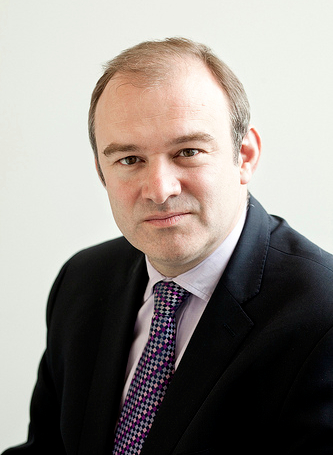
    Below is the text of the speech made by George Eustice on 25th February 2014.

    Introduction

    It is a pleasure to be with you today at my first NFU Conference, but I would like to begin by giving Owen Paterson’s apologies. As many of you will know, he recently had an eye operation. Owen is not one who likes to rest – as I’ve discovered – so he has been itching to get back behind the wheel, but he has taken medical advice to make sure he allows for a full recovery, so that when he does return we will once again have him firing on all cylinders.

    I would also like to take this opportunity to pay tribute to the great work that Peter Kendall has done over the past eight years at the helm of the NFU. I have joked before that Peter has almost seen as many farming ministers during his tenure as the Queen has seen Prime Ministers with, I think, no less than six of us over the last eight years.

    But he took over at a difficult time for the industry when the horrors of the 2001 Foot and Mouth crisis were still very much fresh in everyone’s mind but I think he leaves the NFU at a time when the farming industry has far more confidence in its future and in its ability to meet future challenges. This transformation is in no small part due to the determination of Peter and his team. He has tirelessly made the case for British agriculture and put farming back at the heart of our countryside and rural communities, so Peter: thank you for what you’ve done and good luck in what comes next.

    My message today is that the industry should have confidence in its future. Firstly, as Peter pointed out, there is growing consumer interest in food provenance. People want to know where their food comes from and how it was produced, and they are increasingly looking for locally sourced products.

    Secondly, we have a rising world population set to top 9 billion coupled with increased demand for more westernised foods such as dairy products and meats.

    As a result, demand for food is forecast to rise by 60 percent by 2050 and that means we need a vibrant and profitable farming industry in the UK to meet this rising demand and to supply these new markets.

    Flooding

    But before returning to these themes, I want to start by addressing the issue of flooding and the action this government is taking to get people’s lives back on track.

    We have suffered the wettest winter for 250 years and the impact has led to thousands of properties being flooded and many families’ lives being turned upside down.

    As the Prime Minister has said, we understand the hardship and disruption this causes families and businesses and we will do everything in our power to help the recovery operation now underway.

    It was recently put to me in an interview with the BBC that the government was only announcing the actions it has taken to be popular. Believe you me, the one thing I have learnt over the past six weeks is that there is nothing popular about handling a floods crisis but the government has pulled out all the stops to meet this crisis head on.

    Environment Agency staff have been out 24 hours a day making sure that flood protection assets have been working correctly. While it is of little comfort to those whose homes have flooded, it should be noted that the flood defence infrastructure we have in place has protected over one million homes that would otherwise have been affected.

    We have also set up a crisis fund of £130m to help repair damaged flood defences. We have relaxed the Bellweather rules around government support to local authorities to ensure that they have the support they need.

    We have given leeway to businesses affected so that they can delay paying Business Rates and we have instructed agencies from HMRC and the Rural Payments Agency to make allowances for these businesses affected by floods.

    As the problem escalated, we put thousands of troops on standby to help protect communities, and the emergency services have worked around the clock.

    There is nothing like a crisis to draw the farming community together. Perhaps it’s because we are used to it!

    But countless farmers have been out there helping their local communities and their fellow farmers by offering straw or shelter and fodder to help those farmers affected get through the crisis.

    Take, for example, the fantastic emergency response organised by the local NFU, and supported by farming charities, at the Sedgemoor Auction Centre to provide emergency fodder to those farms affected with many other farmers offering help.

    In order to continue to support the recovery in the medium term, I can announce that Somerset County Council has agreed to work with the NFU to provide a continued storage site for feed and fodder. The site will be managed by two co-ordinators bolstered by a group of voluntary organisations and local businesses in order to make sure that farmers are able to get their businesses back up and running as quickly as possible.

    The government will play its part too.

    Today, I can announce further details of the £10m Farming Recovery Fund.

    It will assist with 4 key areas of recovery offering support with uninsured losses to help get farms back into production again.

    Firstly, it will help with the restoration of grassland. Secondly, it will support restoring productive arable and horticultural land, where soil structure has been damaged. Thirdly, restoring field access for vehicles and finally, improving field drainage.

    To provide fast support for those farms that have been flooded, there will be an immediate response fund with grants for up to £5000 and which will cover up to 100 per cent of the eligible costs. This will be open for applications later this week.

    There will then be a second part of the fund which will be held back initially so that funds are still available to help those farms which continue to be affected but where it is too soon to be able to assess the full extent of the damage.

    Once we have a better picture of the scale of the damage we will reassess the upper limit for grants and we will keep the scheme under constant review so that it remains flexible and is targeted at those in greatest need.

    We’ve also made changes to the Farming and Forestry Improvement Scheme to better help farms in flooded areas to build resilience and protect farm productivity in the future.

    And from 1st April, rural homes and businesses affected by the floods will also have access to one-off grants of up to £5000, to help make them more resilient and better-protected from future flooding events.

    Longer term, as Peter mentioned, we need to learn lessons. The Environment Agency has had river maintenance pilots underway since October.

    These aim to allow farmers and landowners to de-silt their own watercourses without unnecessary red tape.

    And we plan to have a new streamlined consenting mechanism in place by 2015.

    In Somerset, the Environment Agency has overseen one of the biggest pumping operations the country has ever seen in recent weeks.

    And we have committed to dredging the Levels as soon as it’s safe and practical to do so. We are working with local partners on a long term plan to reduce flood risk and improve resilience.

    Finally, although there has been much predictable political debate about spending on flooding, the simple truth is that spending on flood defences is a major priority for this department. This government has continued to increase investment despite the challenges facing the public finances.

    In the last four years we have spent over £2.4 billion on flood defence infrastructure compared to £2.2 billion in the final four years of the last parliament. In the years ahead we plan to invest record amounts.

    In 2012 we increased spending by £120 million, and we insulated the Environment Agency from departmental cuts last year. We agreed an unprecedented 6-year capital settlement from 2015/16 to 2020/21 of £2.3 billion on flood defence.

    The Rural Economy

    But at Defra, as well as responding to emergencies, we also need to focus on creating the right environment for businesses to grow, and that requires a long-term economic plan. The rural economy is worth £211 billion a year. Rural areas are home to one fifth of the English population, yet they support nearly a third of England’s businesses. That’s around half a million businesses. Small and medium enterprises employ around 70 per cent of employees in rural areas and they are the lifeblood of the rural economy, and the engines of local growth. We need to get the conditions right for all these businesses to thrive. That means cutting the deficit, cutting fuel taxes, creating more jobs and improving skills wile sorting out the welfare system. This long-term economic plan builds a stronger, more competitive, economy and secures a better future for Britain by helping spread growth and prosperity all over our country.

    For years, the rural economy and farms were ignored but today, the Government is doing everything it can to support them. And that means more jobs, more opportunities and more financial security for hard working people.

    Economy and regulation

    I said at the beginning of my speech that there were reasons to be optimistic about the future prospects of farming in Britain. But we will only realise that potential if we stick to this long term plan for growth. And today I want to talk about two key areas: cutting regulation and promoting innovation.

    First on regulation. As many of you will know, I spent ten years working in the farming industry. And even 20 years ago, the burdens of regulation were high. It is partly because of my own experience in the industry that I want to bear down on the burden of regulation today.

    This government has done a lot already.

    At the beginning of this year Owen Paterson announced major changes to the livestock movement rules that we plan to implement in 2015. This will make it easier for farmers to manage movements from their holdings to grazing land.

    We’ve just published the conclusion to the Red Tape Challenge on Agriculture.

    In total we will scrap 156 regulations and simplify 134 more. And we’re going to slash guidance. Reducing by at least 80% the amount of guidance that farmers have to follow and saving them around £100 million a year.

    We’ve also made progress on earned recognition which was one of the key recommendations of the Macdonald Review. 14 out of 31 on-farm inspection regimes now allow businesses to earn recognition, leading to reduced regulation.

    Earned recognition in the Environment Agency Pigs and Poultry scheme saves farmers £880 a year. And on animal feed it could reduce the total number of on-farm inspections by 10,000 a year.

    But while much has been done, there is more to do. We want to drive down the burden of farm inspections further.

    We’re introducing new measures to enable agencies to target their inspections more effectively towards those businesses that pose the highest risk. And we are going to review the existing cross compliance regime to ensure that any sanctions are fair. We are pushing hard at an EU level for sanctions and penalties to be more proportionate.

    So we will not let red tape hold your businesses back.

    The farming and food sectors have a key role to play in this Government’s Long-term Economic Plan. They’re the drivers of local growth, and the foundation of economic security.

    Innovation

    But I want to talk about innovation. If we want a competitive and successful farming sector then, as well as reducing burdens on business we must also promote innovation.

    After major advances in farming productivity in the immediate post war period, improvements in productivity have stalled in recent years. The UK has always had an excellent reputation for science and technology. We need to build on this to capitalise on the very real opportunities that exist for growth.

    In July, we launched the first ever Agri-Tech Strategy in the UK committing £160m to translating our excellent science into industry-led, practical applications. £60 million will go on promoting the commercialisation of knowledge and £90m will go to developing world class centres of excellence in research. There has been a huge amount of interest already.

    As well as innovation we need new entrants to the sector. All industries need new talent to move forward and farming is no exception. I want to move away from the position where only those who inherit a farm can own their own businesses. We need other models from profit sharing to contract farming to ensure that the bright young talent in agricultural colleges today can fulfil their aspirations. And as Peter mentioned, we need to promote the status of farming as a career in our schools.

    Protecting plant and animal health

    I want to say a few words on protecting plant and animal health, because safeguarding the health of plants and animals is not only vital to our environment but also to our farming industry and the wider economy, so where there are problems, we have acted.

    One of the biggest threats to animal health and our livestock industry in the UK today is bovine TB. For anyone who thinks this disease is a problem for just a few farmers in remote parts of England they should just look at the facts.

    Between January and November 2013, over 30,000 cattle were slaughtered, an average of over 90 cattle a day. The continued spread of this disease poses a growing threat to farmers in parts of the UK that have largely managed to avoid it until now.

    We all know that BTb is a difficult disease to fight.

    There is no single measure that will, on its own, solve the problem.

    Instead we need to pursue a range of options which together can make a difference and turn the tide on the disease. It is why we are researching the potential for vaccines and it is why we continue to take further steps to improve cattle movement controls to limit the spread of the disease. But let’s be clear: there is no example anywhere in the world of a country that has successfully tackled TB without also dealing with the reservoir of the disease in the wildlife population.

    While the badger cull policy is contentious, we believe that it is a vital element of any coherent TB eradication strategy.

    Last year farmers in Gloucestershire and Somerset, the NFU, Defra and many others collectively took a very difficult but also very significant step forward in farmer-led efforts to tackle the disease reservoir in the badger population.

    I pay tribute to the work of all those involved in the pilot culls often in the face of intimidation and harassment.

    We have learnt many things from our experiences last summer, so it’s important that we give due consideration to the Independent Expert Panel’s report before making a decision on culling in new areas.

    But without prejudging this decision, Natural England has encouraged anyone interested in a badger control licence to start planning ahead and make an expression of interest.

    Exports

    So, cutting red tape, encouraging innovation and safeguarding plant and animal health all set the right environment for farm businesses to grow. And I want to conclude by talking about some of the opportunities.

    Yesterday I was in Dubai for the Gulfood exhibition, where over 100 British companies were present promoting British food and food catering equipment manufacturers.

    Our exports to Dubai increased by 14 percent last year and there is growing demand for British dairy products and British lamb.

    Owen Paterson has prioritised opening new markets since being appointed. In the last year alone we have opened up 112 markets for animals and animal products, contributing to an increase of nearly £180 million in these products to non-EU markets. The latest provisional figures show that British food and drink exports have grown to nearly £19 billion in 2013 and there is room to grow even further.

    In just the last year:

    – we signed a deal on pork with the Chinese that has contributed to £9 million of growth in the pork market, in addition to £12 million of growth in hides and skins;

    – we secured a deal on beef and lamb to Russia worth up to £100 million over the next three years;

    – we agreed a deal on porcine genetic material with China, which alongside live pig exports is worth up to £45 million over five years; and

    – in October we re-launched the joint government and industry Export Action Plan, which commits us to deliver £500 million of value to the UK economy by supporting 1,000 companies with their international growth by October 2015.

    The world’s population is growing. Tastes are changing and we want British Agriculture to be at the forefront of supplying these new markets.

    Concluding remarks

    So I want you to know that this Government backs the business of British farming. You are at the heart of our long-term economic plan.

    We are working with the sector to increase resilience. And We are creating the right environment for businesses to grow and flourish. We are cutting red tape and farm inspections. We are encouraging all forms of innovation in agriculture. We are making significant progress in safeguarding our plant and animal health. Together, we are growing the rural economy.

    We cannot do this without you. We need to work to ensure that the changes we make are the right ones and are implemented in the right way.

    I look forward to working with you and your new President closely, making the sector ever more resilient, ever more successful.

  • Angela Eagle – 2014 Speech to Electoral Reform Society

    Below is the text of the speech made by Angela Eagle, the Shadow Leader of the House of Commons, to the Electoral Reform Society on the 17th June 2014.

    It is good to be here this afternoon with the Electoral Reform Society, and good to see so many of you here. In my remarks I want to address the democratic decline that we have faced in our country, and I want to argue that we must act urgently or risk the legitimacy of our Parliamentary system being threatened.

    I am going to speak from my strong personal belief that despite all its flaws and disappointments, democracy is the only political system for any country to achieve and sustain. I assert this as an active volunteer and participant in democratic politics for forty years and counting.

    I never thought I would live in an era when this statement of the obvious had to be reasserted. But the intervention of culturally significant people like Russell Brand urging young people not to vote has set the alarm bells ringing in my head at least.

    The election results we had a few weeks ago underline the scale of our challenge.

    What was startling was not that UKIP did well, but that just 1 in 9 people voting for a political party can be described as a ‘political earthquake’. Surely the real challenge which deserved the attention of the myriad of opinion formers and pontificators was the abstention rate. Two out of every three people just didn’t vote, and a quarter of those that did voted for a Party that positions itself from the right as anti-politics.

    People have every right to feel like the current terms of political trade just aren’t doing it for them. They see their kids having fewer opportunities than they had. They are often working all hours God sends, but they still aren’t managing to make ends meet at the end of the month – much less have time to enjoy life. They see those who got rich and caused the global financial meltdown rewarded with tax cuts, while they work harder for less. They see widening inequality, an increasingly insecure jobs market and arbitrary treatment at work, and they think: what is politics doing for me?

    The truth is, with this Government, all they get is a reliance on a failed model of trickle-down economics that offers no light at the end of the tunnel. It is certainly the case that the dominance of neoliberal economic ideology in the last thirty years has considerably narrowed the choice and the possibilities of change which voters perceive is on offer from the mainstream political parties. Perhaps they are signalling to us that they want a wider choice. After all non-participation merely aids the status quo and keeps the influential and the powerful precisely where they want to be – in charge.

    The crisis we have in our politics certainly isn’t unique to the UK. It is mirrored to a greater or lesser extent in all the advanced democratic societies around the world and it is a profound problem that has no quick or easy solution. But as the election approaches, that doesn’t mean that we don’t have a responsibility to try and solve it.

    I’ve spent the last year asking why people feel so disconnected through my People’s Politics Inquiry. I’ve been guided by one simple principle: step out of the day-to-day grind of politics at Westminster and talk to the people who are actually disengaged. Along with a team of colleagues from the Parliamentary Labour Party, I went to mothers & toddlers’ groups, universities, held town hall meetings. I knocked on doors and called people up from the electoral register who we knew haven’t voted. And we began a dialogue.

    I benefitted from some really fascinating insights once I had got through the anger and disappointment. It was clear that many felt forgotten about and welcomed a real chance to have their opinions heard.

    A couple of months ago I brought together fifteen of the hundreds of people that we met to form an Inquiry Panel. Their contributions are guiding a lot of what I’m going to say to you this afternoon, but it was Annette – a children’s centre worker from Oldham who has never voted – who made an extremely valuable point. We were having a discussion and I had written at the top of a piece of flipchart paper ‘how can we re-engage people with politics’. She put her hand up and said: ‘You’ve got the question wrong. It should read how do we re-engage politics with people’.

    In that comment, I think she might have summed up part of the current malaise.

    When we talk about the crisis in our politics from the vantage point of a room in Westminster or after a lifetime of political commitment we too often make a series of assumptions. We assume people know why our democracy is important. We assume people know how to vote, who they want to vote for, and why. We talk with a sense of righteous indignation about the insult to those who died to give us rights and we cannot understand their indifference.

    But we have to stop making these assumptions. We have to renew our democratic dialogue with everyone in our country. And we have to do as Annette said and take politics to people rather than expecting people to come to politics – simply because we did in times which were very different from those we are living through today.

    Throughout my Inquiry I’ve been struck by the sheer number of people who have told me that they don’t vote because they just don’t feel like there is any point. They feel their vote won’t make a difference. They think no one listens anyway. They believe that all politicians just lie to get your vote.

    These are statements I heard over and over again. But they are statements that all seem to be driven by the same thing. And that is a sense of powerlessness. A belief that politics isn’t controlled by ordinary people, for ordinary people, and instead it just gets done to them from on high.

    Passive indifference is a pretty rational response to that judgment, and the only way to counter it is to empower people. To remind them how powerful they are if they decide to be, and if they decide to participate. We have to make people believe once again in the power of politics to change their lives and we have to create a mood of political optimism that shows such change is possible.

    I was struck by just how many people told me that they didn’t feel like they knew enough to vote. This was an observation women especially made. It was also far more likely to be made by a product of the English education system than the Scottish where ‘modern studies’ seems to have better equipped school pupils north of the border with the basics they need for active democratic participation.

    Take Debra, one of the Inquiry Panellists. Debra has never voted but recently decided to develop an interest in politics after returning to education opened her eyes. She’s embarked on a mammoth mission to find out about politics and political parties. But she still told me she doesn’t feel qualified to vote.

    This sense of a lack of knowledge of the democratic basics has certainly worsened since I was a teenager. I think that part of the reason for that is that it is now less common for families to share political knowledge between generations. I learnt my politics from my Mum and Dad, from the stories that were told in the family and from a sense of belonging which has now fragmented. Tribal political allegiances have declined as a result but little has filled the vacuum.

    The answer to this is to rely more on imparting knowledge about the duties and expectations of citizenship in our schools, but all the evidence from the Inquiry tells me that citizenship education in schools is often just not up to scratch.

    Too often it is dry and unexciting. If it takes place at all it focuses on the mechanics of voting, but not on the value or the nature of the choices on offer. Too many young people are leaving school none the wiser about how our democracy works, how important it is or how they could get involved if they wished to.

    It is right that schools have the freedom to promote citizenship in the way that they best see fit, but we will encourage schools to do more to make sure that our young people understand what their vote means. This is especially important with our commitment to introduce votes at sixteen.

    It is also important that our young people get the chance to participate practically in democratic decision-making and the requirements of accountability from an early age, which is why every school should have an elected school council.

    People I met during the Inquiry didn’t just say “I don’t know enough” they also said politics is “not a place for me”. It’s no wonder really when you think about it. When people look at parliament, they see a sea of white male faces too many of whom have backgrounds that just don’t reflect theirs, speaking in an arcane, often technocratic, language which is profoundly alienating.

    We must make our Parliament more representative of our communities. That means more women, more people from ethnic minorities, from the working class and those who have disabilities too. But we can’t just hope for equal representation to occur naturally, we have to go out and organise for it – like I did with women in the Labour Party in the fight for All Women Shortlists.

    Until we have a politics where all leadership styles are welcomed and not ridiculed, where you hear all accents, see all faces. Until then, we won’t be able to build the politics we want to see. People need to believe that power is in the hands of people like them. And they won’t believe that until they see that it is.

    There is very little understanding of what Parliament does. There is little meaningful coverage of what actually goes on in Parliament over and above the weekly theatrical joust that is Prime Ministers Questions.

    This problem has not been assisted by Parliament’s institutional preference to be more closed than open. Indeed it is only this year that it has been finally agreed to allow the documentary filmmaker Michael Cockerell to make a fly on the wall documentary about the inner workings of the institution that is the centre of our democratic system. I hope it will provide the first of many more insights which will make the Commons more accessible to the people it is there to serve.

    The Speaker’s commitment to an enhanced educational service and the provision of a bespoke building to house it in is also a very positive step in the right direction.

    I now want to turn to the second part of my speech this afternoon, the practical solutions the Inquiry has suggested for how we can increase democratic participation.

    I’ve been campaigning for Labour since I was fifteen and I’m very used to the ‘get out the vote’ operation on polling day. I must admit that it can be pretty frustrating when you are confronted by a voter who just won’t nip round to the polls even though there’s plenty of time left. But they have a point especially if they have young kids and nipping anywhere involves a logistical operation of military proportions.

    Labour will do more than just expect people to vote – we will do what it takes to understand their busy high pressured lives and understand how we can better help voting fit in with them.

    The first thing we will do is demystify the polling station. I was struck by the number of people who told me that they didn’t know what happened when they go to vote and felt too embarrassed to ask how.

    As well as working with schools to make sure people learn these basics at an early age, we will also do more to give people enough information before elections. Every registered elector is already sent a poll card, and I think that is where we should start. Every card should contain basic information about how you vote, and it should provide links or QR codes so that people can access further information online.

    There are already a number of websites where people can learn more about their vote. The Electoral Commission, Parliament and Downing Street all have online information about voting and registration. But this information is incomplete, and spread across a variety of places that you really have to seek out.

    I’ve been impressed by the example set by the GLA in London who run the London Elects website. It not only gives people information about how and where they vote, but also acts as a portal so people can learn what parties stand for.

    A Labour Government would work to use this model to produce a comprehensive democracy portal. It would draw together in one place all of the things you need to know before you vote. Who your MP is, who your local council and representatives are, how you vote, who the political parties are and what they stand for.

    We will also encourage local councils to email every first time voter who is added to the electoral register with a link to the site encouraging them to understand the process they are about to take part in and answer any questions they might have.

    Using modern technology isn’t just the answer to how we can better inform voters about elections, it is also crucial to how we create a voting system fit for the 21st century.

    Person after person I met during the Inquiry just couldn’t understand why when they can shop online, bank online, meet their partner online – they can’t vote online.

    The Electoral Commission are right to be looking at online voting, and the Speaker was right to say last week that it makes sense in our internet age. But we can’t ignore the scale of the security challenge we’d have to face.

    Examples from around the world in elections such as the often cited 2000 Arizona State Democratic Presidential Primary show that it can be done, but we’d have to develop a system that is completely secure.

    The Inquiry showed me that we can’t allow ourselves to fall behind the times on online voting because the more out of touch with people’s lives voting is, the less relevant voting feels to them.

    The second thing the Inquiry highlighted was the inadequacies of voter registration. It is estimated that around 10 per cent of the adult population are currently missing from the electoral register, and those figures are much worse for young people with as many as half of them disenfranchised by virtue of being missing from the electoral roll.

    Registration should not be a barrier to voting, so as well as making sure that voter registration becomes a routine ask for any public sector workers who come in to contact with an unregistered voter, Labour will trial allowing people to register to vote on polling day itself.

    It is also right that my colleague Sadiq Khan has already announced that we will trial different days for polling day.

    There was an advert on our TVs in the run up to the recent elections from the Electoral Commission that I think is quite revealing when it comes to our attitude to non-voters. It pictured a man walking up to the polling station with a hook in the back of his clothes. When he gets to the desk, he is told that he is not registered to vote. The hook pulls back, and he is thrown at full pelt in to a skip.

    This might have been effective at getting attention, but we should promote a positive message about why people should register too. We must talk about the importance of having your voice heard and having a share in the collective decision of your constituency and your country.

    I can still remember the sense of joy in Archbishop Tutu’s voice when he talked about casting his first ever vote at the age of 62 in South Africa’s first ever democratic election. This was something he had fought for and wished for all his life which had finally been achieved.

    Everyone I spoke to during the Inquiry told me that we need to develop a sense of excitement around voting, and a sense of community. They said that it should become part of our cultural identity again – and they are right.

    Why is it that people will help their neighbour out with their weekly shopping, volunteer at their youth club, help coach at the local football team; but don’t connect their civic participation with party politics?

    We don’t just need changes to make it easier to vote, we also need to show people that it is worth their time. Of course we do that by delivering results. By showing the difference we can make. But we also do that by trying to rebuild the broken relationship between people and their politicians.

    That’s why the final issue I want to talk about this afternoon is something we don’t talk about enough: trust.

    It was Jordan who I met at Wolverhampton Youth Council who summarised the problem best. He said that the expenses scandal just confirmed in his mind what he already thought about politicians, that MPs are just out for themselves.

    I heard that a lot. And I heard of lot of anger and resentment.

    Of course that is understandable. The expenses scandal was toxic.

    But there was something else that I realised during the Inquiry. Almost everyone I spoke to said ‘my MP seems alright, but it is the rest of them that are crooks’. And that’s why I want to say something now that is not said enough: we’ve let our political narrative focus on the rare cases of misconduct, and we’ve let that overshadow the positive work members of parliament do.

    In his resignation letter to the House, the Clerk Sir Robert Rogers beautifully articulated the mood of the Commons. I just want to read you an extract now. He said:

    “The House of Commons, across the centuries, has never expected to be popular, and indeed it should not court popularity. But the work it does in calling governments to account, and its role as a crucible of ideas and challenge, deserves to be better known, better understood, and so properly valued. So too does the work of individual Members: not only working for the interests of their constituencies and constituents, but often as the last resort of the homeless and hopeless, the people whom society has let down. This is a worthy calling, and should be properly acknowledged and appreciated.”

    That’s why the first solution to the problem of trust is providing more information about what exactly it is MPs do, and why they do it.

    IPSA did some research last year which underlines the scale of the problem. More than half of people don’t know what their MP does, especially when they are in Parliament. This is of course primarily the responsibility of individual MPs, but Parliament and political parties should do more nationally too. There is a lot of information spread across a variety of websites, but there is no uniformity and it is not easy to locate. We need to do better.

    But clarity can only really come when the process of legislation is clearer and more accessible, and when people can follow what it is their MP is doing in the House.

    That is why I announced in February my reforms to the legislative process to make it simpler, more accessible and more widely reported. A new public stage would ensure that the public can have their say, and a new scrutiny stage would test Minister’s mettle, ensure legislation is in better shape, and mean that the media would have something more succinct and interesting to report.

    It is not just processes we need to change, we must change the way we operate too.

    The Speaker is right to criticise the worst aspects of bad behaviour in the chamber. Because to the public that looks like public school boys arguing in the playground.

    People I met in my Inquiry were right to criticise our sound bite culture, because the buzz words might poll well, but they make politicians sound like automatons.

    And Karina was right to say that we can’t ignore the elephant in the room: people just don’t believe politicians keep their promises.

    That’s a problem that I think all politicians have a responsibility to solve.

    Nick Clegg promised he’d vote against any increase in tuition fees, and off the back off that won swathes of the student vote. How many of those students now just won’t ever vote again.

    David Cameron promised he’d clean up politics but he produced a lobbying bill that gags ordinary people and lets vested interests off the hook. And he promised no top down reorganisation of the NHS but then he delivered a top down reorganisation of the NHS.

    When does this end? Surely we have a responsibility in politics to say what we mean and to do so responsibly. The focus groups may not say it, but I think the British people value honesty over the cheap headline. However our retail model of politics values sales talk and overblown claims over the complex realities of what Governments can actually achieve. We need a more candid discourse about all this.

    Before I conclude this afternoon, there are two other words that emerged from the Inquiry that I think are at the heart of our quest to rebuild trust: transparency and accountability.

    If you look at the debate around Maria Miller’s expenses, the public outcry focused around this idea that MPs were somehow ‘marking their own homework’ and letting themselves off the hook.

    A lot of this was based on a misunderstanding of the nature of the unfortunately named ‘parliamentary privilege’, of the new IPSA rules and of the workings of the Standards Committee, but there is at the heart of it a valid point. If people don’t have trust in the system and don’t believe it is delivering fair results then we have a problem.

    That’s why if the Government’s Recall Bill is anything like their draft it won’t provide the reassurance that people expect. It will deliver neither greater public confidence, nor satisfy Recall’s critics.

    Labour supports Recall, and will work with the Government if they produce a sensible and workable model that will increase public trust. But at the moment it looks as though that’s not what they are going to do. It is right to have a mechanism to hold MPs to account outside of the 5 year cycle when MPs do something seriously wrong. But it is wrong to allow rich and powerful interests an opportunity to rid themselves of any MP they don’t like.

    The Inquiry told me that we don’t just need more accountability for MPs, we need more accountability for other vested interests in parliament too.

    Just look at some of the lobbying scandals under this Government. We have Lynton Crosby working in number ten, and mysteriously absent legislation on plain packaging for cigarettes. We had the Adam Smith and Fred Michel interactions over the proposed takeover of BskyB. We had Adam Werrity and Liam Fox.

    But what did the Government do? They promised to clean up politics, and then proposed lobbying regulations so weak that they actually make the industry less transparent. Labour will repeal the Lobbying Act and bring in a universal register of all commercial lobbyists backed by a code of conduct and sanctions, but we won’t just stop there.

    We will ban second jobs for MPs, and we will root out unaccountable influence wherever else it resides which is why Ed hasn’t been afraid to stand up to aspects of the unaccountable press.

    If you look at the recent case of Patrick Mercer, at the heart of his misconduct was the use of an All Party Parliamentary Group to give parliamentary credibility to lobbying activity. As the Chair of the Political and Constitutional Reform Select Committee Graham Allen has warned, APPG’s are the next big scandal waiting to happen.

    That’s why a Labour Government will review whether lobbyists should be allowed to provide the secretariats for APPGs, and we will continue to support the ban on parliamentary passes for any APPG staff.

    This afternoon I have sought to share with you the insights of the disillusioned, and I have come to some conclusions about change we need to see based on their views.

    A Labour Government will do as Annette said and take politics to people, not expect them to come to us. We will do more to help people understand our democracy and why it is important. We will take simple steps to ensure voting fits around people’s lives. And to restore trust in politicians we will focus on three principles: clarity, transparency and accountability.

    Listening to disengaged voters has been a good place to start, and I hope these thoughts contribute to the debate.

    I’d like to thank everyone who spoke to me and to my colleagues during the course of the People’s Politics Inquiry. And I’d like to thank you for listening.

  • Ed Davey – 2014 Speech to the Eurelectric Convention

    eddavey

    Below is the text of the speech made by Ed Davey, the Secretary of State for Energy and Climate Change, to the Eurelectric Convention held in London on 2nd June 2014.

    Introduction

    Colleagues, in five months’ time Europe’s leaders have a historic opportunity to learn recent lessons for our energy and climate change policies – and make a new start.

    But I’m not sure if they’ve all fully realised it yet.

    At the European Council this October, Heads of State have a realistic chance to bring together, at last, the key three strands of energy policy – carbon, security and price – to forge a coherent strategy, for the first time.

    This has happened more by happenstance than design – so there is a real risk the moment will pass without anyone realising it.

    So today, as well as explaining what this historic opportunity is – I want to enlist you – Europe’s electricity industry – in the task of making sure all Europe’s leaders wake up to the possibilities and grasp them.

    It may be thought somewhat bold, to launch a pro-European energy and climate change campaign here in London. Just after the European elections. With the debate on the next President of the European Commission raging.

    But – if I can persuade you to sign up today – the prize is huge.

    So what am I talking about?

    Well you should all be aware of the debates over Europe’s 2030 energy and climate change package. What our targets should be for 2030. How we can reform the EU ETS. These are vital questions – and the March European Council said they should be settled this October.

    This would be a critical strategic moment by itself – if it was just the 2030 climate package we have all been working on for so long.

    But it turns out it could be even more significant. And we have President Putin to thank for that. For alongside climate, energy security is also now at the top of the European energy debate.

    Just last week, the Commission’s published its welcome Energy Security Plan, building on the deal agreed by myself and other G7 energy ministers in Rome last month.

    This plan shows not surprisingly that there is no quick fix to tackle European energy security. We need a sustained effort, over many years.

    And it makes policy sense and political sense to embed a robust energy security strategy within an ambitious and flexible EU 2030 policy framework.

    For the political challenge in the past has not been getting energy security at the top of the EU agenda, it has been keeping it at the top of the EU agenda. In October, we could ensure that happens.

    But of course, climate and energy security are only two of the three pillars of a modern energy policy – the third is price.

    Everyone knows that energy prices are a huge issue – for consumers and European industry alike. As gas prices have risen here and fallen in the USA, the need to help people struggling with their energy bills and to do more for industrial competitiveness could not be more urgent.

    Yet at the moment there is no official document, no package, no process for EU Heads of State to include energy affordability in their discussions.

    Fortunately, I don’t think actually we need a paper. But we absolutely do need Europe’s leaders to see the links – to make the links between climate, security and price, as they reach their conclusions.

    Let me now deal with the detail of the European energy trilemma.

    To give you my account of what we should aim for in October.

    And my account of how the energy inter-relationships of carbon, security and price can be dealt with, together.

    For we can bring them together if we do three things:

    – diversify

    – drive investment in EU production and energy efficiency; and

    – complete the single market

    A critical first step for Europe is to diversify – and to understand the benefits of diversity.

    In the UK, our whole energy and climate change policy is based on a mixed approach – to bring on all low carbon technologies. Not to pick a winner, as these technologies develop fast. But to recognise the uncertainties caused by dramatic technological change.

    And so to design a market-based framework which supports diversity in a low carbon world.

    So for us, Europe should not repeat the 2020 renewables target, which was binding on an individual member state, as that is too rigid, and for some countries too expensive.

    Member states must be allowed to follow the Treaty – which in effect demands technology neutrality in European energy policy. An EU-wide renewables target will continue to support these vital green technologies, without threatening the low carbon diversity we need against the threat of climate change.

    But we must diversify for energy security too.

    Eurelectric rightly notes that while 30% of EU natural gas imports come from Russia, only 5% of European electricity is fired by Russian gas.

    But we should not forget that many European homes are warmed by Russian gas.

    And as the cleanest fossil fuel, gas will become more important in the future as we transition to a low carbon economy.

    We will be using more gas, not less, at least in the medium-term – including using it to generate electricity.

    So we will continue to need to import gas, but we need to source it from far and wide.

    The UK has invested significantly in our ability to import liquid natural gas.

    This, coupled with indigenous production in the North Sea and pipelines to Norway, limit our own reliance on Russian gas.

    It also helps to make the UK the most energy secure nation in the EU – a point noted by the recent report by the US Chamber of Commerce.

    But we are not complacent.

    That is why the UK is pioneering shale gas exploration in Europe.

    And we have acted to ensure that shale exploration happens safely, without harming the environment, and provides a boost to local communities who host the resources.

    So shale can form part of the UK’s, and Europe’s, energy security future.

    Other nations need to consider their own reliance on gas from one supplier and one source and urgently adopt strategies to mitigate this in the long-term.

    The European Commission’s requirement for national gas risk assessments due to be submitted by all Member States on Wednesday (04 June) should provide a good base-line to proceed – and take collective action where necessary.

    Second, we need to produce more energy ourselves – and be far more efficient in using it.

    We need to accelerate the investment in secure, home-grown energy resources as we decarbonise.

    This will not only assist energy security, but it will aid the recovery by pinning jobs and investment into Europe – maintaining Europe’s leading position in the global green energy market worth some £3.3 trillion and growing at the rate of 4% a year.

    So putting the 2030 Energy Framework on the right footing is crucial.

    The EU ETS, is often considered the cornerstone of the European climate and energy policy framework.

    So any new Framework has to address the weaknesses in the ETS system tackling the large surplus of allowances that is depressing the carbon price.

    We cannot repeat the experience of last year’s backloading reforms. And in the UK’s view, we have to go further than the reforms proposed by the Commission.

    And having spoken to many of Europe’s energy ministers intensively in recent months, my strong view is that major reform of Europe’s carbon market is now possible.

    Increasingly people are recognising that climate change policies are not the cause of Europe’s competitiveness problem: the recent report from the IEA spelt it out: Europe’s energy price problem has been caused by America’s successful exploitation of shale gas. If we addressed that imbalance more effectively with policies such as completing the single energy market, higher carbon prices would drive investment not threaten it.

    But we will need more than a reformed EU ETS – to stimulate growth in home-grown low carbon capacity, the central plank of 2030 should be an EU Green House Gas target of at least 40%.

    We need to make use of everything nature and science has provided us – renewables, nuclear, indigenous gas supplies – and new technologies like hydrogen and carbon capture and storage.

    And an ambitious greenhouse gas target is the technology neutral approach that will do this – supporting carbon pricing.

    We will need major investment too in energy efficiency – which will also be supported by this 40% domestic European target.

    Building new supply is expensive so we shouldn’t miss the massive demand side opportunity.

    I have spoken before about the UK’s drive to create an energy saving society.

    The Green Deal, the Energy Company Obligation, Energy Demand Reduction, products policy, smart meters, business energy efficiency – creating an energy efficiency market with a new business model.

    Households are now using around a fifth less energy than they were in 2004 – saving the average consumer around £200 a year in today’s prices.

    By tapping the potential of energy efficiency, we estimate we can save ourselves in the UK the need to consume 196 TWh by 2020, the equivalent output of 22 new power stations.

    But demand measures should be judged in the same way as supply measures.

    How can we reduce emissions in the most cost-effective way possible?

    And the most cost-effective mix of action on supply and demand will be different in each member state.

    The EU framework needs to foster innovation and investment, not hinder it.

    And European policies on more ambitious energy efficiency standards offer the best way forward, to support member state work.

    The third area we have to act in to ensure energy security is to get our own house in order on the internal energy market.

    This will not only deliver the lowest available prices for our consumers, but the Internal Energy Market can be the solid backbone of Europe’s energy security.

    As Eurelectric have said in response to the Commissions communication on Energy Security:

    “An integrated EU market combined with improved interconnection is the single most important guarantee for security of supply.”

    Being able to trade energy more freely between ourselves means we can maximise the use of home-grown European energy, and reduce imports from outside the continent.

    And to make that home-grown option a cost-effective reality, we must step up the integration and interconnection of European energy markets.

    So what do we need to do to make this a reality?

    Before I set any hares running let me be clear.

    We don’t need to go back to the drawing board.

    There are new challenges to the single energy market which policymakers do need to think through – from Europe’s various low carbon subsidy regimes to the need in some countries for capacity markets.

    There are some who say that we cannot complete the single market until we have somehow either integrated these interventions or outlawed them.

    I profoundly disagree. That is a recipe for never completing the single market.

    We need to get on with what we have already committed to on the single market – whilst we work through the low carbon transition that requires these temporary interventions.

    That means each Member State must fully implement the EU’s energy liberalisation legislation to put the legal and political frame in place.

    We must complete the complex technical and market framework that will allow our national networks and markets to operate more effectively together.

    We must facilitate investment in the physical links that make market integration possible through the Projects of Common Interest process.

    And we must take the action needed to integrate low-carbon electricity into the market while maintaining system stability.

    Let me take each of these in turn.

    Completing the market

    First, the legislation.

    It is critical that Member States implement the Third Package fully and consistently.

    Here in the UK we have fully implemented all the Third Package provisions, committed to market integration and opened our markets fully to competition.

    So we are among the good guys!

    But I recognise that with the reforms in the UK market over the last few decades, we had an easier platform to build on.

    But in the spirit of solidarity, all Member States should be looking to support each other by effectively meeting all their Third Package obligations.

    Second, the network and markets frameworks.

    Network codes and guidelines must be agreed and implemented.

    The Commission should present formal proposals to all Member State setting out how this should be achieved.

    And that process should start immediately.

    My Department is geared up to look at the detail and see how we can implement swiftly.

    Our regulator OFGEM and the National Grid are primed to act.

    So let’s get on with it.

    Third, interconnection.

    Member States, regulators, developers and the Commission should work together to ensure that the key Projects of Common Interest are built as quickly as possible.

    The UK has supported 6 GW of interconnection projects which would represent a 150% increase in our connected capacity.

    Three projects are heading for financial over the next 12 months.

    Eleclink through the Channel Tunnel is due to be operational in 2016.

    Nemo to Belgium in 2018.

    And NSN to Norway, the world’s longest sub-sea electricity cable, by 2020.

    With interconnection flourishing we need to enable cross-border participation incapacity mechanisms.

    The capacity market we will shortly implement in Great Britain will be consistent with the target model.

    And we will allow interconnected capacity to participate directly in the mechanism from 2015.

    We must continue to work together to learn from each other experiences, developing and sharing best practice to minimise market distortions.

    We should also look at ways to improve the co-ordination of National Generation Adequacy Assessments, including the contribution expected from interconnectors.

    And we must ensure that national measures to promote investment in low carbon generation complement the internal market.

    In the UK, we have designed a system that preserves the wholesale market price while providing support for low carbon investment.

    Our Contracts for Difference are a prime example of how such market based intervention can be consistent with the internal energy market.

    The Electricity Coordination Group is a good forum for working together to address such common challenges and ensure that national measures work with, and not against, the Internal Energy Market.

    But the Commission needs to reinvigorate the Group and Member States need to participate actively in the discussions.

    Conclusion

    Ladies and Gentlemen,

    The three overarching issues of energy policy – security of supply; affordability for consumers; and the requirement to decarbonise – have all come into sharp focus over the last few months.

    The Ukraine crisis has sparked a reassessment of European energy security.

    The recent reports by the UN IPCC leave us in no doubt about the urgency of action on climate change.

    And as Europe recovers from the most dangerous economic crisis since the Second World War, competitiveness and the costs of energy are high on the agenda.

    Energy is at the top of political priorities, and we should seize this moment. Today I have set out a way ahead.

    The next few months will be crucial. Your voice will be critical.

    And I am determined that we find the collective political will to act.

  • Ed Davey – 2014 Speech to Climate Group

    eddavey

    Below is the text of the speech made by Ed Davey, the Secretary of State for Energy and Climate Change, at King’s Place in London on 28th April 2014.

    Introduction

    It’s great to be here with you today to help mark the Climate Group’s 10th anniversary.

    Over the last ten years you have demonstrated a unique ability to bring together businesses and government officials;

    At all levels and from all corners of the globe;

    To help unleash the economic opportunities presented by the low-carbon revolution.

    And there can be no doubt about the need for bold action to tackle climate change.

    The latest reports from the International Panel on Climate Change makes the situation crystal clear.

    The science is unequivocal.

    Without radical reductions in greenhouse gas emissions, the world is set to be potentially 4 degrees hotter than today.

    And the latest reports are also clear on the consequences of that scenario.

    Not just the physical consequences – lack of arable land, shortages of water, extreme weather.

    But the social and economic consequences too.

    Of course there are always uncertainties when it comes to economic prediction but the long-term economic impacts of climate change are likely to make the problems we have encountered over the last few years look mild in comparison.

    So the debate cannot be about if carbon emissions are reduced, it has to be about how.

    Because that is what all logic dictates – scientific logic and commercial logic.

    The voice of business on climate change

    Because this debate cannot be confined to the realm of science.

    Or even the realm of politics – government regulation and international negotiations.

    It must take place in the business community too.

    Because you are the engine of our global society.

    Without the active support of business, we cannot bring about the low-carbon revolution that we need to manage and limit the consequences of climate change.

    Only by working together can we provide confidence and credibility for the market mechanisms required to reduce emissions.

    Carbon-pricing, carbon-trading, encouraging low-carbon innovation.

    And only by working together can we harness the social and economic benefits of going green.

    Jobs for our citizens.

    Profits for our businesses.

    Revenues for Governments.

    Growth for our economies.

    Development for our societies.

    The voice of business in this debate is critical.

    We have a year or so leading to the end of 2015 to get the international politics aligned to make Paris a success.

    Politicians will have to make balanced choices.

    To meet their responsibility to look after the interests of those they directly represent, while trying to work for the greater good.

    Political results are rarely clean and neat.

    But it is much easier to come to a reasonable and workable position if those who create wealth, provide jobs and drive innovation are demanding bold action.

    Business and climate risk

    I know how difficult it is for businesses to make long term commercial decisions when there is so much uncertainty about how the international climate change policy framework will play out.

    And there will always be those with a vested interest in the status quo who argue against change.

    As the IPCC report itself points out, “Given loss aversion, the potential negative consequences of moving away from the current state of affairs are weighted much more heavily than the potential gains, often leading the decision maker not to take action.”

    But we have to overcome this status quo bias.

    Because for a business to gamble that climate change won’t happen just doesn’t make commercial sense.

    No boardroom worth its salt can avoid making the long-term risk assessments climate change threats require, faced with the scientific evidence.

    And that shouldn’t be some worthy annual report from the sustainability team, however helpful that might be.

    Climate change needs to be mainstreamed into core business risk management processes.

    How will climate change affect my business and my customers?

    How do we mitigate the negative consequences?

    And what options will provide my business with the greatest net benefit from a low-carbon economy?

    Because as the Climate Group has consistently demonstrated, there is a huge business opportunity ready for those who grasp the green mantle.

    Green growth

    It isn’t just the higher productivity that can be gained by going green.

    Things like lowering energy use or embracing new sustainable techniques.

    There is a booming low-carbon market to take advantage of.

    The global low carbon and environmental business market is worth around €4 trillion a year.

    And it is expected to grow at over 4% a year for the foreseeable future.

    Europe as a whole has carved out a 22% leading share of this global market.

    Worth over €900 billion a year.

    Supported by the far-sighted regulatory framework put in place by the EU and its member states.

    We in the UK are a leading player in supporting low-carbon business.

    Our ground breaking 2008 Climate Change Act, the product of a wide and welcome political consensus, commits to achieve at least an 80% cut in carbon emissions by 2050.

    With 5 year carbon budgets to help us stay on track.

    And through the 2013 Energy Act, we are putting in place one of the first low-carbon electricity markets in the world.

    With a long-term political and financial framework to provide predictability and confidence for business investment.

    Just last week, I announced the first eight contracts issued under the new regime.

    Which will provide £12 billion of private sector investment in new renewable energy projects.

    Too often, we are told that those who go low-carbon first will sacrifice their competitiveness.

    But Europe and the UK are far from alone in embracing the opportunity green growth has to offer.

    Global clean energy investments have grown sixfold since 2004 to nearly €195bn a year.

    As you will hear from the Chinese ambassador later today, China is investing over a trillion dollars in its green economy over the coming years.

    When I was in China at the end of last year, at almost every meeting I went to, the concept of a new ecological civilization was being discussed.

    The enthusiasm with which this is being embraced in China gives me great hope.

    And after years of appearing to stand apart, the United States, under the Obama Administration, is once again helping to drive this process.

    The US recently became the world’s largest investor in low carbon energy research & development.

    For the planet, this is encouraging, suggesting that the world’s two largest polluters have a growing stake in a low carbon-future.

    So I have growing confidence that the international community can come together to set the global framework businesses and investors need.

    This isn’t just about the big players, or national governments.

    As today’s event will show, action is being taken to change the facts on the ground from the bottom to the top.

    Local neighbourhoods coming together.

    Cities going green.

    All parts of civil society working to make the low-carbon transition possible.

    Conclusion

    But as I said at the beginning.

    Without the engine of the business community, the low-carbon revolution cannot be achieved.

    So I whole-heartedly support the Climate Group’s ‘We Mean Business’ campaign.

    Powerful voices speaking up for climate action.

    Backing new business models.

    Supporting innovation.

    Embracing low-carbon solutions.

    And taking them to a booming market place.

    None of this is going to be easy.

    The year ahead to Paris in 2015 will be challenging.

    And achieving an ambitious and workable international agreement is going to take courage from all who lead.

    And we will have to sustain this low-carbon transition over decades if it is to have a lasting effect.

    But we can and must hold the course.

    The UK Government, negotiating as part of the EU, will be a strong voice for ambitious action.

    At Ban Ki Moon’s summit in September we have an early opportunity to show we mean business.

    Lets take it.

  • Ed Davey – 2014 Speech on Scottish Energy

    eddavey

    Below is the text of the speech made by Ed Davey, the Secretary of State for Energy and Climate Change, in Scotland on 9th April 2014.

    Introduction

    I am here in Edinburgh today to make the case for the United Kingdom.

    And to make the case for Scotland’s place in the United Kingdom.

    And today, as the UK Government publishes its analysis of the implications in energy of Scottish independence, I want to talk specifically about Scotland’s energy future within the United Kingdom.

    Before I go into detail, let me first address the wider debate on whether we are better off together or apart.

    You know, as the UK Energy and Climate Change Secretary I’m regularly here in Scotland.

    This is business as usual for me.

    The Department of Energy and Climate Change is co-located in Aberdeen.

    And as I have said here in Scotland many times before, I have no doubt that with the talents of the people, and the natural resources of the land, Scotland could make a go of it alone.

    But to do this, the people of Scotland will have to give up being part of family of nations that make up the United Kingdom.

    Not a holiday, not a sabbatical.

    But an irrevocable, irreversible act of divorce.

    That closes the book on three hundred years of shared history, shared fortunes, shared fates.

    The decision that the people of Scotland will take in September is monumental.

    Not just for the people here but for the people of England, Northern Ireland and Wales too.

    Because if Scotland chooses to go it alone, it will have a huge and lasting impact on all of us.

    Because the United Kingdom is more secure and richer with Scotland in it.

    And Scotland is more secure and richer as part of that family.

    Families stick together

    Yes, we can split up and be small countries making our way in the world.

    But such a decision would leave all of us, all of us, poorer than we are today.

    Not just in an economic sense – but emotionally too.

    Together we are a great country.

    Greater than the sum of our parts.

    People always say that you never really miss something until it is gone.

    And I think that if we wake up on 19th of September to find that our United Kingdom has been sundered forever, we will regret it for the rest of our lives.

    And that is why, although this is a decision being taken by the Scottish people alone, all of us in the United Kingdom have a stake in the outcome.

    All of us have the right to be heard.

    Not bullied into silence, or scared off, or told we have no part in this, or our views don’t matter.

    Just think about what would never be the same again.

    Just think about what we would have to do to unpick the ties that have bound us together.

    Things that affect all of us in the United Kingdom.

    Our economy – the money we use, the taxes we pay.

    The debts, pensions and liabilities we have built up together for better or for worse.

    Our welfare state.

    One of the crowning achievements of the post-war generation.

    That supports every citizen of the United Kingdom in sickness and in health.

    The Armed Forces that protect us and our way of life

    The historic units that trace their history back centuries.

    Who have fought for us and died for us in good times and in bad.

    This United Kingdom is so much more than a marriage of convenience.

    Just a body of law and regulations.

    It is a Union of the heart and the mind and the soul.

    We are a family and we should stick together.

    Better together, poorer apart.

    Energy powerhouse

    And in no area is that more true than in energy.

    The industries and networks that generate and deliver power around this United Kingdom.

    Keeping our houses warm, our lights burning, our businesses working.

    As part of the United Kingdom, Scotland is fast becoming an energy powerhouse.

    One of the world’s energy hubs.

    And this is being achieved precisely because Scotland is part of the United Kingdom.

    Supported by the integrated energy market across Scotland, Wales and England of 30 million homes and businesses.

    Supported by the pull and weight of the UK economy with the scale of the financial support it can provide.

    Scotland’s energy future is booming.

    Oil and gas

    The UK is providing substantial help to industry to maximise output and revenues from the North Sea oil and gas as the challenges of extraction are increasing.

    And, in the process, supporting the 225,000 Scottish jobs that directly rely on the oil and gas industry.

    We are also investing heavily in decommissioning and cleaning up those areas that are becoming depleted.

    Can Scotland do this alone?

    It would be far more difficult.

    North Sea Oil revenues fluctuate.

    Since devolution anywhere between £2bn a year and £12bn a year.

    The weight of the UK economy can soak up this uncertainty as it amounts to only 1.5% of income.

    But for Scotland, North Sea revenues would have been almost 14% of income.

    In the UK, Scottish tax payers are shielded from over-reliance on a single uncertain strand of income.

    In Scotland alone, they would be exposed.

    Take decommissioning.

    An independent Scotland would have to invest around £3,800 per head to match the £20bn the UK has committed to decommissioning

    That is over ten times more than when the costs are spread across the UK.

    Scotland’s Oil and Gas industry prospers in the UK and Scottish taxpayers are protected from volatility and uncertainty.

    Better together, poorer apart.

    Renewables

    But it is not just the traditional oil and gas industry that makes Scotland’s energy future within the UK so bright.

    It’s the new green energy industries too.

    A third of all renewable generation in the UK is now in Scotland.

    This is a fantastic story bringing jobs and investment to local communities.

    And the pipeline is looking very healthy.

    My Department’s planning database shows that Scottish renewables projects set to power a further 4.3 million homes (5GW), have been approved.

    Worth around £4bn, supporting over 4,000 jobs.

    And further Scottish renewables projects are currently in the planning system have the potential to serve up enough electricity to power another 8 million homes (9.7GW).

    Worth over £10bn, supporting almost 8,000 jobs.

    This success is being mirrored in other parts of the UK too.

    I’ve been able to boast with my European colleagues about how the UK has become Europe’s renewable investment hotspot.

    Many on the continent are casting envious glances our way.

    By working together as the United Kingdom, with our integrated systems and markets, we share the risks and costs.

    And share the benefits too.

    I am convinced that we can meet the ambition of the Scottish Government, one that I fervently share, for renewables sources to meet 100% of Scottish electricity consumption by 2020.

    So let’s get down to the heart of why this green future, this green ambition, the interests of both Scotland’s new green energy industry and Scotland’s households are better served within our United Kingdom.

    Better off together

    These new industries need support to compete as technology matures and costs are reduced.

    And because of the success of Scottish renewables, although Scotland accounts for some 10% of electricity sales in the UK, it receives 28% of the support paid by all UK consumers to renewable generators.

    And then there are the networks.

    £6bn has also been earmarked over the next seven years to upgrade and improve the electricity transmission network in Scotland to support this green boom.

    Reaching out to the remotest islands.

    Within the United Kingdom, Scotland’s people are protected from the full costs of this necessary transmission work and support for renewables.

    All 30 million UK consumers pay an equal share.

    Because we are part of an integrated market place.

    If Scotland became an independent state, the current integrated energy system could not survive it is current state.

    Both the independent Scottish state and the continuing UK would be focussed on serving the best interests of their citizens.

    For the continuing United Kingdom, the energy relationship with and independent Scotland would become purely commercial.

    The future of European energy is a single competitive market, where we trade our home grown energy and boost our collective energy security.

    The UK has interconnectors that transport electricity to and from a number of countries in the rest of Europe and is developing more.

    In fact, we already input on average more electricity to England and Wales from France and Belgium, than we do for Scotland.

    The current connections to France, Ireland and the Netherlands have the capacity to provide electricity for almost 3.5 million homes (4GW).

    And there are new advanced interconnector projects where other European countires could potentially provide electricity for 5 million more (6GW).

    These include:

    – NEMO to Belgium.

    – NSN to Norway.

    – And ElecLink to France – through the Channel Tunnel .

    All to be operational well before 2020.

    The market price is paid for power traded in this way.

    The UK does not currently provide financial support for network infrastructure or support generation in these other countries.

    Why would we pay over and above the market price for Scottish power?

    Poorer apart

    In an independent Scotland, only Scottish households and businesses would bear the extra burden of upgrading the Scottish grid and supporting Scottish renewables.

    And the analysis we are publishing today sets out how this would add at least £38 to the averages household’s yearly bill.

    And £110,000 a year to the bills of a medium sized manufacturing firm.

    I say at least.

    Because our analysis shows that in some scenarios, where the full costs of supporting large scale Scottish renewables falls to Scottish bill payers alone, it could be as much as £189 extra per year per household, or over £600,000 for a medium sized manufacturing firm.

    The SNP insist that the integrated market will continue in its current form.

    They insist that England and Wales will continue to need and pay for Scottish renewables regardless of the cost and there would be no taxation issues at all.

    They have even gone so far as to claim the continuing UK would face blackouts if it doesn’t play the ball their way.

    If that isn’t the negative politics of fear and bullying, I don’t know what is.

    And if that is the way the SNP would conduct negotiations on behalf of an independent Scotland, I would seriously fear for the future.

    So let me be crystal clear.

    As the analysis in the paper published today proves, in the event of independence there would be no need for the continuing UK to support an independent Scottish state’s energy costs to ensure its own security of supply.

    The lights will stay on, with or without Scotland as part of the UK.

    The SNP insists that the continuing UK will have to buy Scottish electricity to meet our renewables targets.

    But why would the continuing UK not instead invest in burgeoning renewables within its own borders?

    English and Welsh offshore wind is booming.

    England and Wales have huge tidal powers reserves.

    And we have more hours of sun in the average year than Scotland.

    And with the interconnectors being built to Europe, renewable credits can be sourced from wherever they are cheapest.

    There can be no guarantees about how much or at what price the UK will trade energy with an independent Scotland.

    Because there are no guarantees about how much electricity from an independent Scotland will actually cost.

    And bills in Scotland are likely to rise as a result – by as much as £189 per household.

    Despite all this, the SNP insists that bills would go down in an independent Scotland.

    They have said they would pay for some social policy costs through general taxation rather than through bills – for things like energy efficiency and supporting the most vulnerable.

    But that is just robbing Peter to pay Paul.

    Putting these costs into taxation would mean either higher taxes or £175m that can’t be spent in other areas.

    Conclusion

    The whole point is this.

    As the UK we are a family.

    Those who need more, get more, supported by the whole.

    This is business as usual in the United Kingdom.

    It’s the way we do things.

    It’s natural.

    We don’t tot it all up on a per capita basis.

    Instead everyone across the UK pays their fair share.

    And the money goes where the money is needed.

    Where it will be used best on behalf of all the citizens of the UK.

    The United Kingdom provides security and economies of scale that cannot be matched by Scotland alone.

    The United Kingdom supports Scotland’s bright energy future – and benefits from it in equal measure.

    But its more than just economics.

    The United Kingdom is our way of life, our identity, our comfort.

    It’s what we built together.

    For better and for worse.

    We are integrated precisely because we choose to be governed jointly.

    And I would urge the people of Scotland not to walk away from our future together.

  • Ed Davey – 2014 Speech to Scottish Renewables Conference

    eddavey

    Below is the text of the speech made by Ed Davey, the Secretary of State for Energy and Climate Change, to the Scottish Renewables Conference on 18th March 2014.

    Introduction

    It’s great to be back here at the Scottish Renewables Conference.

    It feels like I’ve never really been away.

    Since we last met my Ministerial team and I have been getting around Scotland.

    Visiting new energy projects.

    Seeing the incredible progress being made in Scottish renewables.

    Generating electricity for the grid, powering people’s homes.

    I had the great pleasure of opening the Natural Power Wind Control Centre in Dumfries and turning on the Burnhead Hydro scheme.

    Greg Barker has been here helping you pursue the goal of opening up marine energy in all its forms.

    And just last week Michael Fallon was flown over Whitelee so he could appreciate the sheer scale of what you are achieving.

    Scotland is fast becoming a world energy hub – not just in oil & gas, but in renewables too.

    Being here with you is business as usual for me.

    And for Scottish Renewables, business as usual means investment and progress.

    And I want to celebrate that today.

    But I know that some of you are nervous about the regulatory change that is coming with the move from the Renewable Obligation to Contracts for Difference.

    So I want to talk about the stability the new regime will bring.

    And the Scottish people are also facing a historic choice on independence in September.

    This has the potential to fundamentally change the integrated energy system our United Kingdom has enjoyed for so long.

    So I want to make the positive case in energy for Scotland to remain part of our family of nations.

    But let me start with the progress being made.

    Progress

    Last year when I spoke here, the latest figures showed Scottish renewables were providing enough electricity to meet roughly 35% of Scotland’s consumption.

    That has now increased to 40%.

    A third of all renewable generation in the UK is now in Scotland.

    As a whole the United Kingdom is making phenomenal progress.

    The latest figures show that between the third quarter of 2012 and the third quarter of 2013, renewable electricity generation is up 20% on the previous 12 months.

    Together we are now around half way to our ambition of meeting 30% of the UK’s electricity needs from renewables by 2020.

    And my prediction is, that with the framework we are putting in place, we’ll do even better than 30%.

    Bloomberg figures show average annual investment in renewables has doubled since 2010 compared to the previous 5 years.

    And last year almost £8bn was invested in renewables – a record high.

    This record is in stark contrast with the rest of Europe, where renewables investment halved between 2012 and 2013.

    I’ve been able to boast with my European colleagues about how the UK has become Europe’s renewable investment hotspot.

    Many on the continent are casting envious glances our way.

    And the pipeline is looking very healthy.

    My Department’s planning database shows that Scottish renewables projects set to generate 5GW have been consented, worth around £4bn, supporting over 4,000 jobs.

    These include the Dorenell Wind Farm in Moray which is estimated will generate at least £93m in direct benefits for the Scottish economy.

    And the Speyside Biomass Combined Heat and Power Plant at the MaCallan Distillery, which would represent an inward investment of £60 million to the local area.

    A further 9.7 GW of Scottish renewables projects are currently in the planning system worth over £10bn, supporting almost 8,000 jobs.

    These include the Inch Cape Offshore Wind Farm set to support up to 1,600 Scottish jobs during construction.

    And the Kype Muir Wind Farm that would see contracts worth up to £20 million placed with local businesses.

    This whole positive picture is down to your hard work – our hard work together.

    So the challenge is to maintain this momentum as the regulatory picture moves from the Renewables Obligation to Contracts for Difference.

    So let me turn to the stability and certainty we are bringing under the new regime.

    Energy Act 2013

    When I was with you here in Edinburgh last year, the Energy Bill was just starting its passage through Parliament.

    Now it is law.

    It passed through the Westminster Parliament with the active support of the Labour opposition.

    And all six SNP MPs voted in favour at its crucial third reading.

    This sends out a strong message.

    There is a consensus on the continued deployment of renewables across the UK.

    This legal, financial and political framework is designed to last.

    Not just for the next few years, but it reaches out ten, twenty, thirty years into the future.

    Certainty, stability, predictability.

    By creating, the world’s first low carbon electricity market, we are going green at the lowest cost.

    Demonstrating that carbon reduction and economic growth can go hand in hand.

    We estimate that the new framework has the potential to support investments up to 2020 of at least £40 billion in renewable electricity generation projects alone.

    I know that the CfD auction process is of particular interest to you.

    Following formal and informal consultations over the last 6 months, we have developed a CfD allocation approach based on confidential sealed-bids.

    Auction design is now being developed.

    We intend to publish further detail in the Spring and the allocation framework will be published in advance of the first round.

    So, our design will prevent so called bed-blocking and ensure confidentiality – and as we have done throughout EMR design, we will listen to you

    Public support for renewables remains high with only 1 in 20 voicing opposition.

    But to maintain public support we must continue to show that this vision of a competitive low-carbon market will keeps bills as low as possible as we decarbonise.

    We need to provide certainty, stability and fair returns for investors, generators and suppliers.

    But we also need to provide affordability and value for money for consumers.

    Ultimately, you know as well as I do, that renewables must reach grid parity.

    In a world where carbon is properly priced.

    Within a reformed EU ETS, Europe’s carbon market, subject of this month’s European Council.

    Costs are already reducing.

    By three-quarters in raw solar PV costs over recent years.

    Support rates needed for onshore wind dropped 10% last year.

    And the offshore wind industry has set out a clear pathway for cost reduction.

    But to see further cost reductions we continue to need a real commitment to innovation.

    The affordability of existing technologies needs to improve and new technologies need to become commercially deployable in the future.

    That is why I am pleased to announce today a £2.7m grant award to 2-B Energy to take forward their two-bladed turbine design that has the potential to reduce offshore wind costs by up to 35%.

    I will do everything I can to help you with the process of cost reduction.

    Because I recognise the huge and complex issues you face.

    And we continue to work closely with the Scottish Government and others to explore where we can make a difference.

    For instance, we have recognised the particular challenges of harnessing renewable resources on the Scottish Islands.

    That is why we announced a higher strike price for the islands.

    And I will do everything I can to continue to drive investment into renewables.

    To help Scotland’s renewable industry, along with industry in other parts of the UK, to realise its potential.

    To maintain energy security as we transition to a low-carbon economy.

    And to help the household across the whole of the UK by using competition to keep prices as low as possible.

    And that brings me to my final point today.

    Scotland in the United Kingdom

    In September, people in Scotland will take one of the most important decisions in our shared history.

    Whether to stay within the United Kingdom family.

    Or whether to divorce and go it alone as an independent state.

    I don’t have a vote in this.

    But it is right, that as a UK Government Minister, I continue to set out the case for our United Kingdom.

    I have no doubt, that with the talents of its people, and its natural resources, Scotland could make a go of it, alone.

    But the United Kingdom is greater than the sum of its parts.

    When it comes to energy, the positive case for Scotland in the United Kingdom is simple.

    The size of the United Kingdom protects Scottish consumers from the full costs of Scottish power generation.

    In the United Kingdom, Scotland’s households pay less than they would in Scotland alone.

    Why?

    Because, the UK’s integrated energy market is ten times larger than that of Scotland’s alone.

    Scotland has a tenth of the households in the UK as a whole.

    But over a quarter of all UK support for renewable generation goes to Scotland.

    These costs and subsidies are spread out over all 27 million households, not just Scotland’s 2.5 million.

    If Scotland were to choose to go it alone, maintaining this level of support would take up a greater proportion of national finances.

    Meaning either higher taxes, higher energy bills or cuts in other areas.

    Welfare, housing, education, health, defence – maybe losing out.

    As a United Kingdom, we act as a family.

    Those who need more, get more, supported by the whole.

    For instance, in recognition of the lack of transmission infrastructure particularly in remote parts, almost 30% of the investment earmarked for upgrades to the British transmission grid over the next 7 years is to be spent in Scotland – over £6bn.

    This is business as usual in the United Kingdom.

    It’s the way we do things.

    It’s natural.

    We don’t tot it all up on a per capita basis.

    Instead everyone across the UK pays their fair share.

    And the money goes where the money is needed.

    Where it will be used best on behalf of all the citizens of the UK.

    So the positive case for Scotland’s energy future in the UK is the protection of the integrated market.

    Sharing support, sharing benefits and sharing costs.

    Scotland alone

    But this positive case also leads to the negative.

    We are an integrated, border-blind, market.

    What happens if there is a border?

    Look, I have no doubt that we would continue to trade energy with an independent Scotland.

    But net electricity imports from Scotland make up only about one twentieth of demand in England and Wales.

    Around 4.5%. A very small proportion.

    With a border in place, the integrated market will not be sustained in the same form.

    We would have to strike a new deal.

    I have experience in negotiating cross-border energy deals.

    And believe you me, it is incredibly complex and difficult.

    And throughout the whole process I keep foremost in my mind the interests of the UK taxpayer and UK consumer.

    And where the UK benefits in terms of jobs and economic and industrial growth.

    Negotiating post-independence energy contracts would be no different.

    I would put the interests of the UK first – a UK then without Scotland.

    The Scottish Government asserted in today’s Scotsman that “England and Wales will continue to need and pay” for Scottish renewables regardless of the cost and there would be no taxation issues at all.

    But let me be frank.

    There can be no guarantees about how much or at what price the UK will trade energy with an independent Scotland.

    Because there are no guarantees about how much electricity from an independent Scotland will actually cost.

    Scotland alone would need to find the £6bn required to upgrade Scotland’s transmission grid.

    Scotland alone would need to subsidise its remoter parts.

    Scotland alone would need to pay for the Scottish Government’s ambition to meet 100% of Scotland’s domestic electricity consumption from renewable sources by 2020.

    All of these costs would fall to the Scottish consumer or Scottish taxpayer without being shared across the whole of the current UK base.

    It will be much harder for a nation having to spread these costs of across the small Scottish base to keep green energy prices competitive.

    And it is at this point that our trade would begin.

    When looking to import electricity, the UK would consider rationally which sources provide the cheapest and most reliable options for our people.

    Scotland will go onto a list of all the places in the open market the UK can buy power from – wind from Ireland, geo-thermal from Iceland, Hydro from Norway.

    And don’t underestimate the renewable potential yet to be tapped in England, Wales and Northern Ireland, including offshore wind and tidal.

    The Scottish Government can assert that UK consumer would continue to subsidise the costs of Scottish renewables and buy Scottish electricity to meet renewables targets no matter what the cost.

    But this goes against all commercial logic.

    At some point they are going to have to face up to the fact.

    Independence means independence – not a continuation of business as usual.

    Conclusion

    You know, I was up in Peterhead last month to celebrate the funding for the next stage of the Carbon Capture and Storage project there.

    If we can develop CCS as a viable commercial proposition, our energy future, the world’s energy future and the future of our climate, becomes that little bit more secure.

    These things should not be trivialised.

    But Alex Salmond’s response was to accuse me of trying to ‘bribe’ the Scottish people ahead of the referendum.

    But I don’t see everything through the lens of independence.

    I see success and I celebrate it.

    Whether it is in Scotland, England, Wales or Northern Ireland.

    That is why I’m here today to celebrate your success.

    Scottish renewables, just like renewables in other parts of the United Kingdom, are an integral part of our vision for a low-carbon future.

    The wide cross-party agreement we have reached through the 2013 Energy Act puts in place the legal and fiscal framework that supports this vision for the decades ahead.

    I am confident, that as we work through the process of implementation, we can maintain the momentum.

    Investment, consent, construction and generation.

    Scotland – a world-leading renewables energy hub.

    The United Kingdom – the best place to do business.

    Our citizens – reaping the benefits of the home-grown green energy revolution that you are driving forward.

  • Edward Davey – 2014 Speech at Ecobuild Conference

    eddavey

    Below is the text of the speech made by Edward Davey to the Ecobuild Conference in London on 5th March 2014.

    It’s great to be back here at Ecobuild helping you celebrate your 10 year anniversary.

    This exhibition is now the world’s largest sustainability show for the built environment.

    As Paul King wrote in the Conference supplement:

    “Ecobuild has become the Crystal Palace of its day, the Great Exhibition where new products can be found and sold, and fortunes can be made in the name of green building.”

    One of my very first engagements when I became as Secretary of State two years ago was to launch DECC’s Energy Efficiency Deployment Office.

    I said then that one of the purposes of EEDO was to “change the way we think about energy……to make energy efficiency real and relevant to people’s everyday lives”.

    And that remains the challenge – a challenge for government, for industry and for all those who support what we are going for.

    So today I want to talk about how Government proposes to improve two of our key policies to meet that challenge.

    In particular the Energy Company Obligation – ECO – with the new consultation we are publishing today.

    And I want to set out how we’re improving the Green Deal, in the light of what many of you have told us – what we’ve being doing already and a sneak preview of some announcements we’ll be making shortly.

    The challenge

    But before I do, I want to emphasise just how important it is that we constantly strive to improve what we do, together.

    For our shared ambition is to build one of the least wasteful, most energy efficient, most climate friendly societies in the developed world.

    And to drive home that ambition we will all need to work together to help your customers – our citizens – the families and households of Britain – to bring about a radical change in the way they approach powering and heating their homes.

    Taking control of their consumption.

    Becoming smart savers.

    Cutting out waste where they can, bringing down their bills so they can stay warm for less – and bringing down their polluting carbon emissions.

    People have seen this winter the kind of wild weather the scientists warn us will become more frequent in a warming world.

    So many recognise the need to be more energy efficient – to cut their bills, to act on climate change – or both.

    But they are still not always convinced that there is anything they personally can do.

    Together, that’s our challenge.

    That is why initiatives such as Sir Ian Cheshire’s ‘Big Energy Idea’ which he’ll be talking about tomorrow are encouraging.

    Because it will be through shared endeavours – government and industry – that we will drive the change we need.

    Progress

    So we need to remember what’s been achieved.

    Together, over the last 10 years – government working with industry – we have grown a market for energy efficiency here in Britain with over £18bn of sales, supporting over 130,000 jobs.

    With energy efficiency exports at almost £2bn, Britain is a recognised world leader in technology and expertise.

    Because of the work you’ve done.

    Around two thirds of lofts and cavity walls are now well insulated.

    Over three quarters of homes have double glazing throughout.

    And this energy efficiency has been driving a fall in household energy consumption.

    Households are now using around a fifth less energy than they were in 2004 – saving the average consumer around £200 a year in today’s prices.

    But of course more needs to be done.

    Around half of all homes don’t have energy saving condensing boilers fitted.

    Around seven and a half million homes could have more roof insulation.

    Around five million homes are not fully double glazed and almost 1.5 million have no double glazing at all.

    Over five million homes could benefit from cavity wall insulation.

    And almost eight million solid wall homes remain untreated.

    A lot of potential business.

    Of course, in some areas, reaching that potential is getting harder.

    A lot of the easy to treat, low-cost, low hanging fruit has been plucked.

    The harder to reach consumers, living in the hardest to treat houses, are often the poorest and most vulnerable in our society who need support and help to access your services.

    The private rented sector, which accounts for five million homes, has never been properly targeted or incentivised for energy efficiency.

    And like any emerging market, there are bumps along the way, and it can take time to ensure we have the right regulatory balance that guarantees quality and access without inhibiting growth.

    So let me turn to ECO and the Green Deal.

    Energy efficiency policy framework

    Last year, when I spoke here at Ecobuild, we had just launched the Green Deal and the Energy Company Obligation which replaced the CERT and CESP schemes.

    And since the launch, just twelve months ago, over 450,000 households have benefited from the new regime – 450,000.

    And our ambition for that new policy framework – our target – remains the same as at that launch.

    To have at least one million homes upgraded under ECO and the Green Deal by the end of the next financial year.

    That’s not to say, things have worked out quite as planned or gone smoothly.

    And today I want to be frank about the lessons learnt.

    But we should acknowledge what has been achieved – just as we acknowledge that the name of the game must be to improve.

    I know the frustration is that we don’t always get it right first time.

    And that the certainty and stability we all want isn’t helped when we have to make changes.

    Yet the prize remains large.

    The prize remains creating a stable long term market – for decades.

    So changes at this stage perhaps shouldn’t be too surprising, given that ambition.

    I’m just determined to make sure that you, the green building industry, have a say in how we move forward.

    So let me start with improving ECO.

    ECO

    ECO’s effectiveness for driving home energy efficiency is not in question.

    It is our foremost tool for helping the poorest and most vulnerable in society to get those benefits.

    As with previous schemes, it incentivises carbon reductions and remains an obligation on the large energy suppliers.

    And even following the boom year of 2012 – when Cert and CESP came to an end with a scramble to meet targets by the deadline – 2013 with ECO has been a great success.

    Hundreds of thousands of the poorest and more vulnerable have been warmer this winter – in the main part, at no cost to them.

    But of course ECO does have a cost.

    And it’s because the impact of this government policy falls on consumers through their energy bills, that it is entirely reasonable that we reviewed it to ensure that it delivers in the most cost effective manner possible.

    So today I am publishing our consultation on the future of the Energy Company Obligation.

    We are proposing a series of changes designed to reduce costs for suppliers and thereby reduce the impact on bills for millions of consumers.

    This consultation is a key opportunity to make sure we take into account your needs and the experience of ECO this last year.

    It is a real chance to shape its course in the future.

    But before, during and after this review of ECO, I’ve been clear: the obligations under ECO that meet the needs of the fuel poor cannot be compromised.

    And they have not been cut back.

    We continue to cleave to the basic idea that the nature of our housing stock means that expensive but necessary work can require subsidies.

    These principles will continue to underpin ECO.

    But we recognise that near term targets create long-term uncertainty and can result in surges of activity followed by lulls as the market adjusts.

    So it is our intention through this consultation to deliver longer-term certainty that is required for proper business planning.

    As we announced in December, we are extending the reach of the current ECO through to 2017, with new targets from 2015-17.

    The two fuel poverty elements of ECO have been fully protected before the old 2015 cut off, and we propose to fully extend them, for an additional two years.

    And to avoid any repeat of boom and bust, we propose that suppliers will be able to carry forward a proportion of their delivery against 2015 targets to count towards 2017 obligations.

    Lofts and cavities will now be eligible as so many in the industry pressed for and, for the first time, we will put a target in place for Solid Wall Insulation – a minimum target, not a maximum.

    Of course the danger of consultations is that they themselves can create a hiatus.

    So as we carry forward this ECO consultation I am keen to ensure that work now does not suffer, while the new legislation is put in place later in the year.

    So Ofgem will continue to administer ECO – and measures installed after 1st April will be included as allowable primary measures under the new regime.

    So I urge you to get stuck into the detail of the consultation and work with DECC and OFGEM to ensure that we are providing the stability and certainty required.

    Driving the energy efficiency market

    Of course our vision of an energy efficiency market is much wider than the obligations under ECO.

    While ECO focusses in the main on the poorest, the great innovation this government is bringing about is to develop a whole new energy efficiency business model.

    A model where the basic proposition to is to help all households buy less energy rather than selling energy to them.

    That is the underlying proposition of the Green Deal.

    It’s different from anything that has gone before; a world first.

    And of course central to the Green Deal design is the Green Deal assessment.

    More than 145,000 Green Deal assessments have been undertaken in little over a year.

    And our surveys show that of those who’ve had a green deal assessment, not only are the vast majority satisfied with that assessment, but over 80% have already acted on it, or are seriously considering having the work done to improve their home’s energy efficiency.

    So I am encouraged that so many people are using the Green Deal assessment to seek information and to take action to invest in making their homes warmer.

    We are looking at ways to improve the Green Deal assessment, of course, and we want your thoughts, but the good news is that we have a lot of assessments to go on.

    But when it comes to converting Green Deal assessments into finance plans, the story so far has been, let’s face it, disappointing.

    And we need to tackle that.

    But the fact that most people currently having a Green Deal assessment are not then going on to choose Green Deal finance plans shouldn’t actually worry us.

    How people pay for energy efficiency improvements is not after all the main issue.

    The aim of the Green Deal isn’t to sell credit plans, but to make our homes warmer, cheaper and greener.

    First and foremost, the Green Deal is a way of helping people understand how they can save energy and reduce their bills.

    It is about the availability of good information on home improvements and access to trusted companies to do the work.

    And that is what we need to focus on because the outcome is far more important that the input.

    Nonetheless, we need more outcomes.

    We need the Green Deal to help deliver more activity.

    More investment.

    More energy efficiency.

    So we are determined to take the necessary steps to overcome the barriers that people are saying they face when it comes to accessing Green Deal measures and savings.

    It’s clear from the feedback that the information, administration and finance has been too difficult, lengthy and complicated for people to access easily.

    The assessment process needs to be improved.

    And the old incentives weren’t taken up.

    So what do we need?

    First, a single route through for consumers – to get the energy efficiency advice and upgrades they want, whether it is ends up being through ECO, Green Deal or self-financed – easy, simple, hassle free.

    Second, a healthy market place of companies that can make the improvements, sell the benefits to customers and be trusted to work to the required standard.

    And third, attractive incentives and access to a finance package that makes sense for the individual.

    Where are we on delivering these?

    From quite early on, we’ve been looking for ways to streamline the Green Deal.

    It started off too clunky and too complex.

    So, for example, the simple on-line Home Energy Tool is now available – to help people check quickly what types of improvements would benefit them and what support they can get.

    And where to go for more advice.

    The Energy Saving Advice Service can match consumers together with local Green Deal providers and help them through the journey from assessment to finance to installation.

    We are stripping down the red tape required to get a Green Deal finance plan, knocking 10 days of the process, so people can now – as of last month – sign up to a plan on the same day they get a quote for the work.

    Amendments to the Consumer Credit Act have now come into effect which will allow the same Green Deal finance plan to be offered to all customers irrespective of what tenure they have.

    Vital for the privately rented sector.

    Let me be completely candid on this.

    The day I found out that the 2011 Energy Act had not made it crystal clear where the liability for the green deal loan was, in the case of a landlord and tenant, was my most frustrating Green Deal day last year.

    I’ve always regarded the Green Deal – with the Green Deal finance plan – as tailor-made for the private rented sector. But a mistake was made.

    And we’ve corrected it.

    Now, as of last month, Green Deal Providers can access the as yet untapped demand in the private rented sector.

    Giving landlords the opportunity to improve their properties for the mutual benefit of themselves and their tenants.

    And there is more work in train.

    You have told us that many customers wanting to use Green Deal finance to fund improvements can’t borrow enough to cover the full cost of the measures they want to install – and meet the ‘Golden Rule’.

    So we are considering whether changes may be possible so the Golden Rule may cover more costs while maintaining important consumer protections.

    But making sure the Green Deal journey is smoother will only take us part of the way.

    We have to make sure that we get the message out in the first place and encourage people to start the process to begin with.

    In December, we announced that we have increased fourfold the capital funding available under the Green Deal Communities scheme.

    And we received 64 Green Deal Communities bids from Local Authorities hoping to accesses the extended fund of £80m.

    As Greg Barker announced yesterday, the first six projects have been approved.

    These projects are in Cambridgeshire, Ashfield, Suffolk, Peterborough, Haringey & Bracknell Forest, and together represent a total £19.5m to deliver over 5,500 Green Deal Plans to over 7,000 households.

    Further projects are being assessed and we will announce the next tranche of successful projects shortly.

    We also set out in December a £450 million package over three years to provide new energy efficiency incentives, including for home-buyers and landlords.

    The new schemes are being designed to be simple to access, and work flexibly with or without Green Deal finance.

    Again, we’re learning from the shortcomings of the original cashback scheme.

    Again we’re taking advice from the industry.

    We are considering whether to open the new scheme to installers and if we do would give you notice before the scheme goes live, to give you time to prepare.

    We are working to ensure the new scheme is up and running before the current one closes to allow a smooth transition and avoid a hiatus in the market.

    In the meantime, applications for the current cash back incentives have been extended to the end of June and we have uplifted the value of several measures, with solid wall insulations increased to £4,000 as a clear signal of our intent.

    Conclusion

    Today I have focussed on the Green Deal and ECO, as I know that these are of direct interest to many of you.

    But they are by no means the be all and end all.

    The domestic Renewable Heat Initiative has received state aid clearance and is now subject to the approval of Parliament.

    So, we are on is on track to launch in the Spring.

    And I’m delighted to announce that ministerial responsibility for energy efficiency and products has been transferred from DEFRA to my department.

    DECC’s Energy Efficiency Deployment Office is now taking this work forward – driving innovation and helping to bring new, energy efficient appliances to the market.

    Working with manufacturers and retailers will be part of this.

    I was pleased to be able to launch with John Lewis, an innovative retail trial to see whether giving people lifetime electricity running costs on white goods results in higher sales for energy efficient models.

    This full trial is running now and will complete in June.

    This is all part of helping people to be smart savers.

    Just like the roll out of smart meters.

    By 2020, we want every home and small business in Britain to be in control of their energy use through smart electricity and gas meters, focussing minds on what is being used and how to save energy and money.

    We are also pressing ahead with help for businesses and organisations to cut their energy use and save money.

    The £20 million Electricity Demand Reduction pilot is now open for registration of interest through my Department.

    Final pilot rules will be published in June 2014, with applications to be submitted by October 2014.

    Contracts to support EDR installations will be issued to successful bidders by January 2015.

    So there is action being taken across the piece

    But the vision for energy efficiency is clear.

    For Britain’s householders – a single, simple way through to a warm home and a lower bill.

    For Britain’s businesses – cutting energy costs to increase productivity and competitiveness.

    For Britain’s green energy efficiency industry – a partnership with government that grows the markets and sells the benefits.

    And for the country as a whole, playing our part in the global drive to limit climate change by cutting our emissions.

    Thank you for your help and your leadership in those vital green ambitions.