Tag: 2014

  • Andrew Gwynne – 2014 Parliamentary Question to the Ministry of Defence

    Andrew Gwynne – 2014 Parliamentary Question to the Ministry of Defence

    The below Parliamentary question was asked by Andrew Gwynne on 2014-05-06.

    To ask the Secretary of State for Defence, how many veterans have bought a house through the Forces Help to Buy Scheme since its establishment in April 2014.

    Anna Soubry

    The Forces Help to Buy Scheme launched on 1 April 2014 is designed to assist members of the Armed Forces in purchasing a home. The scheme is for serving personnel, but those being made redundant will be eligible.

    For details on the support available to veterans, I refer the hon. Member to the answer I gave on 28 April 2014 (Official Report, column 442W) to the hon. Member for Windsor (Adam Afriyie).

  • Chris Ruane – 2014 Parliamentary Question to the Speaker’s Committee on the Electoral Commission

    Chris Ruane – 2014 Parliamentary Question to the Speaker’s Committee on the Electoral Commission

    The below Parliamentary question was asked by Chris Ruane on 2014-05-06.

    To ask the hon. Member for South West Devon, representing the Speaker’s Committee on the Electoral Commission, what the ranked order of spending per person on electoral registration by local authorities was for the last year for which figures are available.

    Mr Gary Streeter

    A copy of the information requested by the hon. Gentleman has been placed in the Library.

  • Chris Ruane – 2014 Parliamentary Question to the Deputy Prime Minister

    Chris Ruane – 2014 Parliamentary Question to the Deputy Prime Minister

    The below Parliamentary question was asked by Chris Ruane on 2014-05-06.

    To ask the Deputy Prime Minister, with reference to the Answer of 11 October 2011, Official Report, column 344W, on electoral register: standards, if he will make it his policy to collect information on the proportion of post-primary schools and further education colleges visited by electoral administrators in all parts of the UK.

    Greg Clark

    The Government has no such plans. It recognises that electoral registration officers are best placed to determine what type of registration activity is likely to prove most effective at a local level.

  • Queen Elizabeth II – 2014 Christmas Broadcast

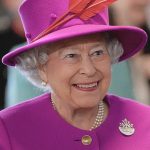
    Queen Elizabeth II – 2014 Christmas Broadcast

    The Christmas Broadcast made by HM Queen Elizabeth II on 25 December 2014.

    In the ruins of the old Coventry Cathedral is a sculpture of a man and a woman reaching out to embrace each other. The sculptor was inspired by the story of a woman who crossed Europe on foot after the war to find her husband. Casts of the same sculpture can be found in Belfast and Berlin, and it is simply called Reconciliation.

    Reconciliation is the peaceful end to conflict, and we were reminded of this in August when countries on both sides of the First World War came together to remember in peace. The ceramic poppies at the Tower of London drew millions, and the only possible reaction to seeing them and walking among them was silence. For every poppy a life; and a reminder of the grief of loved ones left behind.

    No-one who fought in that war is still alive, but we remember their sacrifice and indeed the sacrifice of all those in the armed forces who serve and protect us today.

    In 1914, many people thought the war would be over by Christmas, but sadly by then the trenches were dug and the future shape of the war in Europe was set. But, as we know, something remarkable did happen that Christmas, exactly a hundred years ago today. Without any instruction or command, the shooting stopped and German and British soldiers met in No Man’s Land. Photographs were taken and gifts exchanged. It was a Christmas truce.

    Truces are not a new idea. In the ancient world a truce was declared for the duration of the Olympic Games and wars and battles were put on hold. Sport has a wonderful way of bringing together people and nations, as we saw this year in Glasgow when over seventy countries took part in the Commonwealth Games. It is no accident that they are known as the Friendly Games. As well as promoting dialogue between nations, the Commonwealth Games pioneered the inclusion of para-sports within each day’s events. As with the Invictus Games that followed, the courage, determination and talent of the athletes captured our imagination as well as breaking down divisions.

    The benefits of reconciliation were clear to see when I visited Belfast in June. While my tour of the set of Game of Thrones may have gained most attention, my visit to the Crumlin Road Gaol will remain vividly in my mind. What was once a prison during the troubles is now a place of hope and fresh purpose; a reminder of what is possible when people reach out to one another, rather like the couple in the sculpture.

    Of course, reconciliation takes different forms. In Scotland after the referendum many felt great disappointment, while others felt great relief; and bridging these differences will take time. Bringing reconciliation to war or emergency zones is an even harder task, and I have been deeply touched this year by the selflessness of aid workers and medical volunteers who have gone abroad to help victims of conflict or of diseases like Ebola, often at great personal risk.

    For me, the life of Jesus Christ, the Prince of Peace, whose birth we celebrate today, is an inspiration and an anchor in my life. A role-model of reconciliation and forgiveness, he stretched out his hands in love, acceptance and healing. Christ’s example has taught me to seek to respect and value all people of whatever faith or none.

    Sometimes it seems that reconciliation stands little chance in the face of war and discord. But, as the Christmas truce a century ago reminds us, peace and goodwill have lasting power in the hearts of men and women.

    On that chilly Christmas Eve in 1914 many of the German forces sang “Silent Night”, its haunting melody inching across the line. That carol is still much-loved today, a legacy of the Christmas truce, and a reminder to us all that even in the unlikeliest of places hope can still be found.

    A very happy Christmas to you all.

  • Michael Gove – 2014 Comments on Expansion of Free Schools

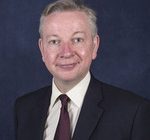
    Michael Gove – 2014 Comments on Expansion of Free Schools

    The comments made by Michael Gove, the then Secretary of State for Education, on 19 June 2014.

    Free schools are giving thousands of children from ordinary backgrounds the kind of education previously reserved for the rich and the lucky.

    Thanks to our free school programme, many more parents now have a new school in their neighbourhood offering high standards and tough discipline. Free schools put teachers – not bureaucrats and politicians – in the driving seat, as they are the ones who know their pupils best.

    As part of our long-term economic plan, we are determined to deliver the best schools and skills for our young people, and free schools are achieving exactly that.

  • Michael Gove – 2014 Comments on New School Food Menus

    Michael Gove – 2014 Comments on New School Food Menus

    The comments made by Michael Gove, the then Secretary of State for Education, on 17 June 2014.

    These new food standards will ensure all children are able to eat healthy, nutritious meals at school.

    We now have a clear and concise set of food standards which are easier for cooks to follow and less expensive to enforce. Crucially we have achieved this without any compromise on quality or nutrition.

    There has been a great deal of progress in providing healthy school meals in recent years and these new standards will help deliver further improvements.

  • Michael Gove – 2014 Statement on Schools in Birmingham

    Michael Gove – 2014 Statement on Schools in Birmingham

    The statement made by Michael Gove, the then Secretary of State for Education, in the House of Commons on 9 June 2014.

    With your permission, Mr Speaker, I should like to make a statement on schools in Birmingham.

    Keeping our children safe – and ensuring our schools prepare them for life in modern Britain – could not be more important – it is my central mission.

    Allegations made in what has become known as the Trojan Horse letter suggested children were not being kept safe in Birmingham schools.

    Ofsted and Education Funding Agency have investigated those allegations. Their reports, and other relevant documents, have today been placed in the Library of the House. Let me set out their findings and my actions.

    Ofsted states that “headteachers reported… an organised campaign to target.. schools…in order to alter their character and ethos,” with “a culture of fear and intimidation”.

    Headteachers who had “a record of raising standards” reported they had been “marginalised or forced out of their jobs”.

    One school leader was so frightened about speaking to the authorities that a meeting had to be arranged in a supermarket car park.

    Ofsted concluded governors “are trying to impose and promote a narrow faith-based ideology in what are non-faith schools”, specifically by narrowing the curriculum, manipulating staff appointments and using school funds inappropriately. Overall, Ofsted inspected 21 schools. Three were good or outstanding.

    Twelve schools were found to require improvement.

    The remaining 6 are inadequate and are in special measures.

    Let me explain why.

    At one secular primary school, terms such as “white prostitute” unsuitable for primary children’s ears, were used in Friday assemblies run exclusively by Muslim staff.

    The school organised visits to Saudi Arabia open only to Muslim pupils.

    Senior leaders told inspectors that a madrassah had been established and been paid for from the school’s budget.

    Ofsted concluded the school was “not adequately ensuring that pupils have opportunities to learn about faith in a way that promotes tolerance and harmony between different cultures”.

    At one secular secondary school, staff told officials the call to prayer was broadcast over the playground using loudspeakers.

    Officials observed lessons had been narrowed to comply with conservative Islamic teachings – in biology, students were told “evolution is not what we believe”.

    The school invited the preacher Sheikh Shady al-Suleiman to speak despite the fact that he is reported to have said:

    Give victory to Muslims in Afghanistan… Give victory to all the Mujahideen all over the world. Oh Allah, prepare us for the jihad.

    Ofsted concluded that “governors have failed to ensure that safeguarding requirements and other statutory duties are met”.

    At another secular secondary school inspectors described “a state of crisis” with governors reportedly using school funds to pay private investigators to read the emails of senior leaders, Ofsted found a lack of action to protect students from extremism.

    At a third secular secondary school, Ofsted found students are “vulnerable to the risk of marginalisation from wider British society and the associated risks which could include radicalisation”.

    And at a secular primary Ofsted found, that “pupils have limited knowledge of religious beliefs other than Islam”, and “subjects such as art and music have been removed – at the insistence of the governing body”.

    Inspectors concluded that the school “does not adequately prepare students for life in modern Britain”.

    Ofsted also reports failures on the part of Birmingham City Council.

    They found that the council did not deal adequately with repeated complaints from headteachers. School leaders expressed “very little confidence” in the local authority and Ofsted concluded that Birmingham has not exercised adequate judgement. Indeed the chair of one of the schools found to be inadequate, Tahir Alam, was in a business relationship with the former Lead Member for Children and Young People.

    Mr Speaker, these findings demand a robust, but also a considered, response.

    It is important that no one allows concern about these findings to become a pretext for criticism of Islam itself, a great faith which brings spiritual nourishment to millions and daily inspires countless acts of generosity.

    The overwhelming majority of British Muslim parents want their children to grow up in schools that open doors rather than close minds.

    It is on their behalf that we have to act.

    There are, of course, questions about whether warning signs have been missed.

    There are certainly questions for Birmingham Council, Ofsted and the Department for Education.

    I have today asked Birmingham Council to review their history on this issue, and the Chief Inspector has advised me that he will be considering the lessons learnt for Ofsted.

    I am also concerned that the DfE may not have acted when it should. I am asking the Permanent Secretary to investigate how my department dealt with warnings both since the formation of this government in 2010 and before.

    We all must acknowledge there has been a failure in the past to do everything possible to tackle non-violent extremism.

    But let me be clear, no government and no Home Secretary has done more to tackle extremism.

    In the Prime Minister’s Munich speech of 2011;

    In the Home Secretary’s own review of the Prevent Framework;

    And in the conclusions of the government’s Extremism Task Force last year.

    This government has made clear that we need to deal with the dangers posed by extremism well before it becomes violent.

    And since 2010 the DfE has increased its capacity to deal with extremism. We set up Whitehall’s first ever unit to counter extremism in public services with help from former intelligence and security professionals. That unit has developed since 2010 and we will continue to strengthen it.

    Ofsted now train inspectors to understand and counter extremist Islamist ideology. And inspections of schools at risk, like those in Birmingham, are carried out by the most senior inspectors – overseen by Sir Michael Wilshaw himself.

    But there is – of course more to do – and today’s reports make action urgent.

    First, we need to take action in the schools found inadequate.

    Academies will receive letters saying I am minded to terminate funding agreements.

    Local authority schools are having governors replaced.

    We have already spoken to successful academy providers who are ready to act as sponsors.

    We need to strengthen our inspection regime even further.

    The requirement to give notice of inspections clearly makes it more difficult to identify and detect danger signs.

    Sir Michael Wilshaw and I have argued in the past that no-notice inspections can help identify when pupils are at risk.

    I have asked him to consider the practicalities of moving to a situation where all schools know they may receive an unannounced inspection.

    I will also work with Sir Michael Wilshaw to ensure, as he recommends, that we can provide greater public assurance that all schools in a locality discharge their full statutory responsibilities and we will consider how Ofsted can better enforce the existing requirement that all schools teach a broad and balanced curriculum.

    I have talked today to the leader of Birmingham Council and requested that it sets out an action plan to tackle extremism and keep children safe.

    We already require independent schools, academies and free schools to respect British values.

    Now we will consult on new rules that will strengthen this standard further, so that all schools actively promote British values.

    And I will ask Ofsted to enforce an equivalent standard on maintained schools through changes to the Ofsted framework.

    Several of the governors whose activities have been investigated by Ofsted have also been active in the Association of Muslim Schools UK – which has statutory responsibilities in relation to state Muslim faith schools.

    So we have asked AMSUK to satisfy us that they are doing enough to protect children from extremism and we will take appropriate steps if their guarantees are insufficiently robust.

    I have also spoken to the National College for Teaching and Leadership and we will further strengthen the rules so that from now on it is explicit that a teacher inviting an extremist speaker into a school can be banned from the profession.

    I will, of course, report in July on progress in all the areas I have announced as well as publishing the findings of the report of Peter Clarke, who is investigating the background behind many of the broader allegations in the Trojan Horse letter.

    The steps we are taking today are those we consider necessary to protect our children from extremism – and protect our nation’s traditions of tolerance and liberty.

    Mr Speaker, the conclusions of the reports today are clear.

    Things that should not have happened in our schools were allowed to happen.

    Our children were exposed to things they should not have been exposed to.

    As Education Secretary, I am taking decisive action to make sure those children are protected.

    Schools that are proven to have failed will be taken over, put under new leadership and taken in a fresh new direction.

    Any school could now be subject to rigorous, on the spot inspections – with no advance warning and no opportunities to conceal failure.

    And we will put the promotion of British values at the heart of what every school has to deliver for children.

    What we have found was unacceptable. And we will put it right.

    I commend this statement to the House.

  • Michael Gove – 2014 Comments on Extremism in Schools

    Michael Gove – 2014 Comments on Extremism in Schools

    The comments made by Michael Gove, the then Secretary of State for Education, on 9 June 2014.

    We have to ensure children are safe in our schools. Evidence uncovered in Birmingham clearly indicates that schools have used the notice they have been given of inspections to evade proper scrutiny. Sir Michael Wilshaw will now examine the practicalities of moving to a position where all schools know they may face an unannounced inspection.

    Our children need to be protected in schools, kept safe from the dangers of extremism and guaranteed a broad and balanced curriculum. This change will help provide parents with the reassurance they need.

  • Michael Gove – 2014 Comments on Teacher Training

    Michael Gove – 2014 Comments on Teacher Training

    The comments made by Michael Gove, the then Secretary of State for Education, on 1 May 2014.

    There has never been a better time to be a teacher. There are more teachers in England’s classrooms than ever before, with a rise of 9,000 in the last year, and there is no doubt that the current generation of young teachers is the best ever.

    While we have already taken steps to improve teacher training, including through the popular School Direct route, it is right that we look at how we can ensure all courses are providing the best possible training.

    I am very pleased to appoint Andrew Carter to lead this important review. He has a wealth of experience in this area and I look forward to receiving his report.

  • Michael Gove – 2014 Comments on Amanda Spielman

    Michael Gove – 2014 Comments on Amanda Spielman

    The comments made by Michael Gove, the then Secretary of State for Education, on 15 April 2014.

    Throughout her tenure, Amanda has proven to be a respected chair of the Ofqual board, ensuring that Ofqual has been a strong regulator, driving up standards in exams and increasing confidence in the system. Under her guidance Ofqual has retained its focus and rigour, making sure that our examinations push pupils to reach their full potential, and I am delighted she will be continuing as chair.