Tag: 2013

  • George Eustice – 2013 Comments on the Future of Farming

    George Eustice – 2013 Comments on the Future of Farming

    The comments made by George Eustice, the then Minister for Farming, Food and Fisheries, on 20 November 2013.

    Agriculture is one of the most vital and rewarding careers on offer today. From food production to science and engineering there is a wealth of opportunity for young people across the sector. Whilst providing us all with the food we eat, farming is also a crucial part of our economy, contributing £9 billion and 450 thousand jobs. We need to make it a more attractive career choice for talented, entrepreneurial young people so it can continue to thrive in the future.

    Every industry needs new entrants with fresh ideas to be innovative and competitive and farming is no exception. I want to look at ways of ensuring that bright young people can fulfil their aspirations in the industry.

  • George Eustice – 2013 Comments on Assisting Farmers

    George Eustice – 2013 Comments on Assisting Farmers

    The comments made by George Eustice, the then Minister for Farming, Food and Fisheries, on 13 November 2013.

    The farming industry has always had to contend with risk but the harsh winter last year had a devastating impact on many farmers. As we enter winter it is essential we do all we can to support the industry in its efforts to prepare and plan to mitigate risks. The Met Office’s Get Ready for Winter webpage is an example of joint working to make our industry more resilient.

  • George Eustice – 2013 Comments on the Coastal Concordat

    George Eustice – 2013 Comments on the Coastal Concordat

    The comments made by George Eustice, the then Minister for Farming, Food and Fisheries, on 11 November 2013.

    The coastal concordat will make achieving essential coastal development a much simpler process. This more straightforward approach will benefit businesses, while also enabling sustainable growth and helping to protect the marine environment.

  • George Eustice – 2013 Comments on the Rural Development Programme for England

    George Eustice – 2013 Comments on the Rural Development Programme for England

    The comments made by George Eustice, the then Minister for Farming, Food and Fisheries, on 7 November 2013.

    During the past seven years, Yorkshire has received about £50 million of Rural Development Programme for England (RDPE) funding, supporting the creation of hundreds of jobs.

    We want to channel more of the CAP budget into the kinds of projects that have had given such a boost to Yorkshire’s rural economy.

    But we want to make sure that all our choices are made with the input of people who live and work in the countryside. I’m looking forward to taking your views in Harrogate today.

  • George Eustice – 2013 Comments on the Common Agricultural Policy

    George Eustice – 2013 Comments on the Common Agricultural Policy

    The comments made by George Eustice, the then Minister for Farming, Food and Fisheries, on 31 October 2013.

    The UK ensured that we have choices in how we implement the Common Agricultural Policy, rather than having to work with a one-size-fits-all approach from the European Commission.

    This gives us the flexibility to target funding in ways that will deliver real benefits to the environment, boost the competitiveness of our farming industry and grow the rural economy. It’s vital that the new system is designed with the input of the people whose lives it will affect. That’s why it’s so important that people give us their views on how we can best achieve this.

  • George Eustice – 2013 Comments on Scottish Fishing

    George Eustice – 2013 Comments on Scottish Fishing

    The comments made by George Eustice, the then Minister for Farming, Food and Fisheries, on 24 October 2013.

    I want to work closely with fishermen so we can achieve our shared goals of a thriving fishing industry, sustainable fish stocks and a healthy marine environment.

    I wanted to make a visit to Scotland an early priority. There are some important negotiations in the months ahead, particularly relating to cod quotas.

    Reducing quotas at a time when stocks have increased would only lead to increased discards which no one wants.

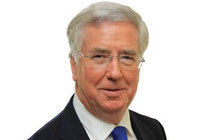
  • Michael Fallon – 2013 Speech to Npower Business Conference

    Below is the text of the speech made by Michael Fallon, the then Minister of State for Energy, on 6 June 2013.

    Introduction

    Innovation has always been the key to successful energy policy.

    It has never been as simple as rolling out one proven means of power-generation. On the contrary, we have always endeavoured to find new sources in new places, whether we look at the first generation of nuclear power stations in the 50s, or the opening up of the North Sea in the 60s.

    In the past, innovation has given us access to more – and therefore more secure – energy, and at lower cost.

    Today, it must also mean cleaner energy, so that we can move towards a low carbon economy and a sustainable, secure, affordable energy future.

    I am going to set out what Government is doing to set the framework for an innovative, diverse energy mix and I will talk about some particular technologies at the forefront of energy policy.

    Electricity Market Reform – Outline

    Electricity Market Reform is the framework which will deliver the cleaner energy and reliable supplies that we need, at the lowest possible cost.

    Set out in the Energy Bill, which reached the House of Lords this week, EMR will attract £110 billion investment in this decade alone – the amount needed to replace our ageing energy infrastructure with a diverse and low-carbon mix.

    This is essential to keeping our homes heated, our industries powered and our lights on.

    Renewables, fossil-fuel plant equipped with Carbon Capture and Storage, gas and nuclear will all play their part.

    Diversity will provide security for our electricity supplies and the low carbon mix will help us meet our emissions and renewables targets.

    It’s not only that this will power our economy – the investment will also directly create jobs and growth across the UK.

    Electricity Market Reform – detail

    EMR works with the market and encourages competition, thereby minimising costs to consumers as we attract the investment we need.

    Costs to consumers will fall only when the new plant start generating, with costs spread over the operational lifetime of the schemes.

    At the core of our reforms is a new mechanism, the Feed-in Tariff with Contracts for Difference.

    These long term contracts will provide long-term electricity price stability, and therefore revenue certainty, to developers and investors in technologies such as carbon capture and storage, renewables and nuclear.

    Competition will bring down overall costs and, eventually, provide a level playing field where low-carbon generation can compete without support with other technologies in the electricity market.

    We will also introduce a Capacity Market, to ensure that sufficient reliable capacity is available to meet electricity demand as it increases over the next decade.

    These new mechanisms will be underpinned by a robust and transparent institutional framework which will provide certainty for industry and investors.

    Energy Bill

    The Bill is making good progress through parliament. This is a reflection not only of Coalition consensus around our reforms, but also representative of cross-party agreement on our objectives for the sector.

    Discussion in the Commons has been wide-ranging – covering issues ranging from the setting of a decarbonisation target for 2030 to transparency. This debate is healthy and welcome – it is hugely encouraging that these discussions are around the fine-tune EMR rather than a disagreement with the underlying principles.

    We are on track to achieve Royal Assent of the Energy Bill by the end of this year, setting in law the framework for Electricity Market Reform, and allowing the first Contracts for Difference to be signed in 2014.

    Decarbonisation Target

    The new Government clauses added to the Energy Bill enable the Secretary of State to set a legally binding 2030 decarbonisation target for the electricity sector in 2016.

    These provisions enable the Government to set the world’s first legally binding target range for power sector decarbonisation and they do this in the right way by taking into account the needs of investors for clarity about the long term, the costs to consumers, and the transition of the whole economy to meet our 2050 target.

    A decision to exercise this power will be taken once the Committee on Climate Change has provided advice on the level of the 5th Carbon Budget and when the government has set this budget, which is due to take place in 2016.

    This timing ensures that any target would be set at the same time as the fifth carbon budget, which covers the corresponding period and within the overall framework of the Climate Change Act.

    This means that a target would not be set in isolation but in the context of considering the pathway of the whole economy towards our 2050 target, and making sure we do that in a way that minimises costs both to the economy as a whole and to bill payers.

    North Sea

    Last century, electricity generation was dominated by fossil fuels. Oil and gas will remain central to the UK’s energy mix as we make the transition to a low carbon economy.

    We continue to work closely with industry and we have a fiscal regime that encourages further investment, bringing forward new UK fields while the existing infrastructure is in still place.

    Working together, my two Departments have launched an Oil & Gas Industrial Strategy to maximise recovery, maintain competitiveness, and promote growth of the UK supply chain.

    Shale Gas

    Shale gas is a prime example of a new option available because of technological innovation. A combination of hydraulic fracturing and horizontal drilling have opened the possibility of exploiting fuel which were deemed too difficult or too costly to extract just a few years ago.

    It is true that shale has led to significant price falls in the US. However, we are still at an early stage in the UK and need to explore and prove the potential, safely and while protecting the environment.

    Despite some far-fetched claims in the media about the implications of shale gas for the UK, there is no doubt that it has the potential to add to indigenous energy supplies.

    We are building momentum – by setting up the Office for Unconventional Gas and Oil; taking forward work on a new onshore licensing round; and planning to incentivise shale gas development, as announced in the Budget.

    Carbon Capture and Storage

    Carbon Capture and Storage will have a critical role to play in reducing emissions in the UK and allowing gas and coal to continue to participate in our future low carbon energy mix.

    We want to see CCS deployed at scale in the 2020s, competing on cost with other low carbon technologies.

    To make this happen, Government has created a comprehensive programme, including a CCS competition with £1bn capital funding available.

    Our two Preferred and two Reserve bidders were announced in the Budget. We aim to sign FEED contracts in the summer; with decisions to be taken in early 2015 to construct up to two full projects.

    These projects offer us the opportunity to ensure that both gas and coal generation have a hugely reduced impact on our carbon emissions.

    Renewables

    We are strongly committed to a long-term future for the UK renewables – a commitment underpinned by a publicly-stated annual budget of £7.6bn for low-carbon electricity by 2020.

    However, our ambition extends beyond 2020. Our goal is to put renewables firmly in the energy mix over the period of the 4th carbon budget.

    To take marine energy, we have prioritised funding for the next big step for the industry: the move to the first arrays. Firstly through DECC’s £20m Marine Energy Array Demonstrator – MEAD for short; and secondly through prioritising marine energy projects in accessing EU NER 300 funding.

    As a result, a Scottish Power Renewables’ and a Marine Current Turbines’ projects were recently awarded around 40m € in total of NER 300 funding. This represents a tremendous opportunity for these two UK projects to demonstrate the sector’s future potential.

    New Nuclear

    The UK has everything to gain from becoming the number one destination to invest in new nuclear.

    We are in negotiations with NNB Genco about the potential terms of an Investment Contract (an early form of CfD) that might enable a decision on their Hinkley Point C project – for which planning consent has been granted.

    The last quarter of 2012 also saw the successful sale of Horizon Nuclear Power to Hitachi, regulatory approval of the EPR reactor design, and the beginning of site characterisation work at Moorside.

    Direct Innovation

    The government also invests directly into a variety of smaller projects across a broad portfolio of innovative technologies – in excess of £800m in this spending review.

    This will ultimately drive down the costs of new low-carbon technologies, making clean energy cheaper for householders and businesses.

    Business Consumers

    I know higher energy bills are hitting businesses hard.

    Competition is key to keeping prices as low as possible. Although there is more competition in the business supply market than in the domestic market, we need to see greater engagement from small business consumers.

    Ofgem’s non domestic retail market review proposals will provide greater protection and clearer information to small business customers to help them engage in the market.

    Ofgem plan to introduce new enforceable standards of conduct will mean suppliers will have to act promptly to put things right when they have made a mistake.

    And they will widen existing licence conditions to enable up to 160,000 extra smaller businesses to benefit from clearer contract information on their bills.

    Energy Intensive Industries are also critical to the UK economy and the Government is committed to ensuring that they remain competitive. We announced the £250 million package of compensation for these industries whose international competitiveness are most at risk from indirect costs of the Carbon Price Floor and the EU Emissions Trading Scheme.

    Conclusion / Energy Efficiency

    So, Government is legislating to put in place a framework which will see our energy supply diversified to meet our energy goals: secure, low-carbon, affordable.

    And work is underway across the board to facilitate the development or deployment of promising power generation technologies.

    One final area of innovation which may be of particular interest to businesses is energy efficiency.

    The Coalition Government has a mission to seize this opportunity. The Energy Efficiency Strategy sets out actions to exploit untapped, cost-effective potential.

    We estimate that we could be saving the equivalent to 22 power stations in 2020.

    And we have also brought forward amendments to the Energy Bill so that a financial incentive to encourage permanent reductions in electricity demand can be delivered through the Capacity Market.

    The Electricity Demand Reduction incentive would be available to a range of sectors and technologies and could target reductions at peak demand and so incentivise reduction at times when it is more valuable.

    As you will appreciate, doing more with less makes economic sense for businesses and for the country.

  • Michael Fallon – 2013 Speech to the Renewable UK Offshore Wind Conference

    Below is the text of the speech made by Michael Fallon, the then Minister of State for Energy, on 12 June 2013.

    Introduction

    Good morning.

    I’m very pleased to be here today speaking at this important event.

    This is my first speech to RenewableUK since I was asked by the Prime Minister to take on my energy role within DECC, whilst still retaining my responsibilities as Business Minister with the Department for Business Innovation & Skills.

    This is a wide portfolio but it makes perfect sense. I believe that my role offers the opportunity to ensure that two of Government’s top priorities are taken forward in a co-ordinated manner. DECC has the vital task of ensuring that we have clean and affordable energy and tackle climate change, whilst BIS are responsible for helping to deliver our growth agenda. In offshore wind there are large synergies between these areas which I’ll mention later.

    I haven’t come into my energy role totally cold as I have a personal history with the subject. Between 1987 and 1988 I was Parliamentary Private Secretary to the Secretary of State for Energy. A lot has changed since then particularly in relation to renewables, the realisation of focus on climate change, and changes in our energy self sufficiency as production of our oil and gas has declined.

    Offshore Wind – a UK Success Story

    Back in 1988 there was not an offshore wind industry anywhere. Now I’m speaking to you when the UK has more installed offshore wind than everyone else in the world put together.

    UK leads the world.

    The UK leads the world in offshore wind. This is a major success story and one we should all be proud of. One that you have helped contribute to.

    Not only do we have more installed offshore wind we also have the largest wind farms and a real knowledge base about how to build offshore windfarms.

    This year we have passed the 3GW mark for fully installed capacity. London Array, the largest offshore wind farm in the world, has become fully operational, Lincs and Teesside are nearing completion, Gwynt y Mor and West of Duddon Sands are installing at sea.

    These are signs of an industry which is driving forward and making a real difference to UK energy.

    So can I now stop there and say everything is obviously working well, exhort you to keep up the good work and leave it at that? Well no, I can’t.

    There are a number of areas where Government and Industry have to work together, constructively, to ensure the sector maximises its potential. I will now spend some time talking about these.

    The Economic Opportunity

    As a Government our priority is ensuring long term economic growth. The economy needs to get going again. And to do this infrastructure is critical.

    The scale of investment needed in energy infrastructure dwarfs that of any other area – including transport, telecoms or water. That’s because of a lack of investment to replace energy generation and energy networks that are now getting to the end of their normal lifetime.

    Between now and 2020, 20 per cent of our energy generation will go offline, some of the coal plants and some of the old nuclear plants are coming off line, so we have got to replace that just to stand still.

    And of course we need to invest in low carbon electricity generation in its many forms.

    Between now and 2020, outside oil and gas; we believe there is £110 billion of investment we need to attract.

    And we know if we are going to do that, to meet that challenge to upgrade the UK’s infrastructure, we have got to make sure that investors want to come to the UK. – This is one of the main reasons for our Electricity Market Reforms, and I am pleased to say the Bill received its 3rd reading in the House of Commons.

    EMR will provide certainty to investors with long-term electricity price stability in low carbon generation. This will be achieved through Contracts for Difference (CfDs) within a framework that will allow us to treble the current levels of support for low carbon technologies to £7.6bn per year by 2020.

    So our driving force is to make sure what we are doing creates a long term, stable, predictable framework backed by political consensus and a new legal framework.

    I am committed to helping investment to come forward in advance of the Contract for Difference regime. That is why the Government launched the Final Investment Decision Enabling for Renewables project in March. Further details on the second phase of the process will be published shortly.

    This will bring certainty to this transition period and will give investors the confidence to invest. And if they have the confidence to invest, the supply chain will have the confidence, in turn, to make investments and expand.

    Increasing UK benefit

    It’s not just about investment in generating capacity, we are determined to turn that investment into UK jobs.

    In offshore wind, whilst there have been notable successes across the UK, I think we all agree that we need to deliver greater growth and opportunities for the UK-based supply chain.. UK content levels are low and we must do more. Consumers support offshore wind through their bills and expect there should be economic benefit in terms of UK jobs and value.

    I share that expectation.

    I can assure you this is of vital importance to the Government. The opportunity for growth and jobs is the reason why offshore wind is one of the sectors in which Government is developing a long term partnership with industry, through the Industrial Strategy programme launched last September.

    The forthcoming Offshore Wind Industrial Strategy, which will be published later this summer alongside the EMR draft delivery plan which will set out draft strike prices, will set out how we will work together to deliver this growth, increasing investment in the UK supply chain and building a competitive advantage.

    I passionately believe that UK industry can compete on price and on quality. Through the Industrial Strategy, we will deliver a coherent programme to enable UK industry to take advantage of the opportunities on offer.

    Many of you here today have been involved in developing the proposals for action in the industrial strategy and I thank you for this.

    We are not waiting until the strategy is published to deliver these actions. Tomorrow’s programme includes a Share Fair where a number of developers will present details of their upcoming projects and procurement process – giving greater visibility to supply chains is one of the priorities identified by the industrial strategy partnership. I strongly endorse this initiative and encourage supply chain companies to go to the Share Fair and find out more about the business opportunities available.

    This concept is drawn from the oil and gas sector so this is an example of how we are sharing thinking between sectors through the industrial strategy programme.

    Alongside enabling companies to diversify into the offshore wind market, it is vital to attract inward investment into the UK. Our country is the most attractive in the world for investment in offshore wind. And by attracting investment from the top tier of the supply chain it will open up opportunities for the deeper supply chain.

    Today I can announce that we will be forming an Offshore Wind Investment Organisation to significantly increase the levels of inward investment to the UK. This Investment Organisation will be an industry-led partnership with Government, headed by a senior industry figure and complementing the work of DECC and BIS. It will be measured on tangible results and will focus on the offshore wind supply chain.

    So we are making real progress now to deliver the ideas being developed in the context of the industrial strategy partnership. And we won’t stop after the strategy has been published. The real value will lie in the long term partnership between Government and industry.

    The critical importance of cost reduction

    Efforts to build the UK-based supply chain and increase competition also have the potential to play an important role in helping to reduce costs.

    Offshore wind is currently more expensive than many other forms of electricity generation. This is a statement of fact. Whilst all of us here are well aware of the benefits of offshore wind we simply cannot ignore economic aspects.

    Offshore wind is still a relatively new technology and new forms of energy generation tend to be more expensive and require support to until they become established. The Renewables Obligation, which has served the sector well, and the new Contracts for Difference recognise this.

    But we should never lose sight of the fact that pressure on consumer bills is a real issue. Of course we all know that it has been rising gas prices that have been the main driver of increases to bills and that the costs of wind in an average household bill are relatively small. But it’s imperative that costs of offshore wind fall substantially.

    If I can sum this up frankly, the further costs can fall the greater the potential for more offshore wind to be built.

    So, can cost reduction be achieved?

    The easy answer is that it must. I am very encouraged the Cost Reduction Task Force concluded that costs can be reduced to £100MW/h by 2020 and that the Offshore Wind Programme Board is now actively addressing the recommendations made by the Task Force. I am very pleased to note that RenewableUK are publishing, at this conference, an updated version of the project timelines for future offshore wind farms, a key recommendation from the Task Force This will provide clarity and confidence to the supply chain and help to aid and inform investment decisions.

    Innovation in offshore wind also has the potential to deliver significant cost-reductions.

    I am therefore pleased to announce three innovation projects we are supporting as part of our Offshore Wind Components Technologies Scheme:

    Power Cable Services Limited, based in Kent, have been awarded a £540,000 grant towards their high voltage subsea cable jointing technology project
    Aquasium Technology Ltd with partners Burntisland Fabrications Ltd and TWI have been awarded a grant of £769,600 towards their cost-effective fabrication project

    Wind Technologies Ltd (Cambridge) have been awarded a £728,355 grant to design, manufacture and test an innovative 5MW medium speed drive train concept

    Ultimately our long-term vision is for low-carbon generation to compete fairly on cost, without financial support and delivering the best deal for the consumer. We must be clear on this point – we want the least cost approach to meet our climate change targets and offshore wind have to compete with other technologies.

    Post 2020 role of the sector

    Government also has an important role to listen, and I am well aware of the consistent messages you have given regarding the need to ensure there is a long-term market for offshore wind. This of course is very much linked to cost reduction and our industrial strategy.

    We fully acknowledge that investors take long term decisions and that it doesn’t all stop at 2020. After 2020 we will still need low carbon generation and offshore wind will be an important part of a diverse and secure low carbon energy mix.

    And last week Ed Davey announced that the UK has agreed to support an EU wide binding emission reduction target of 50% by 2030 in the context of a global climate deal and even a unilateral 40% target without a global deal. There is no doubt that we will need significant levels of renewable and other low carbon energy to meet such an ambitious target.

    2030 Renewables target

    I fully understand that many of you would prefer a binding 2030 renewables target. The government takes a different view. We want to maintain flexibility for the UK and other Member States in determining their energy mix.

    This demonstrates that cost reduction, together with growth and jobs in the UK-based supply chain, really is the key to the future of the sector. Deliver significant cost reduction and the potential size of the sector increases dramatically.

    Conclusion

    Offshore wind is already a part of our diverse energy mix and is growing fast. Our future is low carbon and this Government is committed to delivering the right framework to ensure we attract the huge investment needed, and we will soon be setting out our industrial strategy to ensure that we reap the economic benefits.

    I hope, by next year’s conference we can celebrate more supply chain successes and good progress towards cost reduction.

    These challenges – reducing costs and increasing UK benefit – are not easy. I’m confident we can overcome them together.

    Thank you.

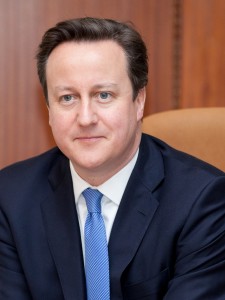
  • David Cameron – 2013 Statement on the G8

    davidcameron

    Below is the text of the statement made by David Cameron, the Prime Minister, in the House of Commons on 19 June 2013.

    With permission, Mr Speaker, I would like to make a statement on the G8.

    The government decided to hold the G8 in Northern Ireland to demonstrate the strength of this part of the United Kingdom.

    We wanted to show the success of the peace process, the openness for business and investment, and the potential for tourism and growth.

    I want to thank my Rt Hon Friend the Secretary of State for Northern Ireland, the First and Deputy First Minister for all they did to help with the conference. To congratulate the PSNI and all those responsible for delivering a safe and successful G8 and to thank everyone in Northern Ireland for giving us such a warm welcome.

    The global economy and the 3 Ts

    Mr Speaker, we set a clear agenda for this summit: to boost jobs and growth, with more open trade, fairer taxes and greater transparency.

    What I have called the 3 Ts.

    I also added a fourth T – terrorism. And we reached important agreements including on support to the Libyan government and ending ransom payments for kidnap by terrorists.

    Despite our fundamental differences, we also made good progress agreeing a way forward on working together to help the Syrian people achieve the change they want.

    Let me take each of these points in turn.

    Growth

    We started with the issue that matters most to our people – jobs, growth, mending our economies.

    First, we agreed that each country needs to press on with sorting out its public finances.

    Dealing with our debts and securing growth are not alternatives.

    The former is an essential step in achieving the latter.

    In fact the Communiqué that we agreed unanimously reflects all three parts of the plan we have for growth in Britain.

    Not just fiscal sustainability but active monetary policy to unlock the finance that businesses and families need and structural reforms to increase our competitiveness so our young people can get into work and succeed in the global race.

    The 3 T’s

    The UK’s G8 also launched a bold new pro-business agenda to drive a dramatic increase in trade and to get to grips with the problems of tax evasion, aggressive tax avoidance and corporate secrecy.

    This was a distinctive British agenda, to shape the way the world economy works for the benefit of everyone.

    We believe in free trade, private enterprise and low taxes as the best route to growth.

    But that is only sustainable if ambitious trade deals are agreed, the taxes owed are paid and companies play by the rules.

    This agenda has now been written into the DNA of G8 and G20 Summits for many years to come.

    On trade, we started the summit with the launch of negotiations on an EU-US trade deal.

    This could add as much as £100 billion to the EU economy, £80 billion to the US and as much as £85 billion for the rest of the world.

    Let’s be clear what these numbers mean.

    2 million more jobs.

    More choice and lower prices in the shops.

    The biggest bi-lateral trade deal in history – launched at the G8.

    On tax, the Lough Erne Declaration that leaders signed yesterday sets out simple, clear commitments.

    Tax authorities across the world should automatically share information – so those who want to evade taxes will have nowhere to hide.

    Companies should know who really owns them and tax collectors and law enforcers should be able to obtain this information easily, for example through central registries, so people can’t escape taxes by using complicated and fake structures.

    And in a world where business has moved from the offline and national to the online and international, but the tax system hasn’t caught up. We are commissioning the OECD to develop a new international tax tool that will expose discrepancies between where multinationals earn their profits and pay their taxes.

    The Declaration also makes clear that all this action has to help developing countries too – by sharing tax information and building their capability to collect taxes.

    Crucially for developing countries, we agreed that oil, gas and mining companies should report what they pay to governments – and that governments should publish what they receive – so natural resources are a blessing not a curse.

    Charities and other NGOs have rightly campaigned for years for action on these issues.

    For the first time they have been raised to the top of the agenda and brought together in one document.

    The agreements on tax made at the summit are significant but it is also worth noting what has happened on this front since I put this issue to the top of the agenda.

    On 1 January there was no single international standard for automatic exchange of information.

    Now there is such a standard – and over 30 jurisdictions have already signed up – with more to follow.

    After years of delay, the European Union has agreed to progress the sharing of tax information between member states.

    The Overseas Territories and Crown Dependencies have signed up to the multilateral convention on information exchange, agreed automatic exchange of information with the UK and action plans for beneficial ownership.

    Taken together all the actions agreed with the Overseas Territories and Crown Dependencies will provide over £1 billion to the exchequer. Helping to keep taxes down for hardworking families in the UK.

    People around the world also wanted to know if the G8 would take action to tackle malnutrition and ensure there is enough food for everyone.

    The pledges at our Nutrition and Hunger Summit earlier this month will save 20 million children from stunting by 2020.

    But crucially at our G8 we also took action on some of the causes of these problems.

    That’s why the work we did on land, extractive industries, tax and transparency is so important.

    Fighting terrorism and extremism

    Turing to the fourth T – terrorism.

    We agreed a tough, patient and intelligent approach. Confronting the terrorists, defeating the poisonous ideology that sustains them and tackling the weak and failing states in which they thrive.

    The G8 leaders reached a ground-breaking agreement on ransom payments for kidnap by terrorists.

    In the last three years alone these have given Al Qaeda and its allies tens of millions of dollars.

    These payments have to stop and this G8 agreed they will.

    We also discussed plans to begin direct talks with the Taliban.

    Britain has long supported a peace process in Afghanistan to work alongside our tough security response.

    So we welcome this step forward.

    We also discussed support to Libya.

    We should be proud of the role we played to rid Libya of Colonel Gadaffi.

    But we need to help that country secure its future.

    So we held a separate meeting with the Libyan Prime Minister which included President Obama and European nations have offered to train 7,000 troops to help Prime Minister Zeidan disarm and integrate the militias and bring security to the whole country.

    More contributions will follow from others.

    And let me be clear the Libyan government have asked for this – and will pay for it.

    Syria

    Finally, let me turn to Syria.

    Mr Speaker, it is no secret that there are very different views around the G8 table.

    But I was determined that we should use the opportunity of this Summit to overcome some of these differences and agree a way forwards to help the Syrian people achieve the change they want.

    This did not happen during just one night in Lough Erne.

    The talks between Secretary Kerry and Foreign Minister Lavrov have been vital.

    In the weeks before the Summit I flew to Sochi and Washington.

    And I met again with President Putin and President Obama in the hours before the Summit began.

    The conversations were open, honest and frank.

    But we were all agreed on what must be the core principle of the international approach to this crisis.

    There is no military victory to be won – and all our efforts must be focused on the ultimate goal of a political solution.

    Together with our G8 partners, we agreed almost $1.5 billion of new money for humanitarian support.

    This is an unprecedented commitment from Lough Erne for Syria and its neighbours.

    We agreed to back a Geneva II process that delivers a transitional governing body with full executive authority.

    So a core requirement for success that had been called into doubt in recent weeks – has now been reasserted unanimously with the full authority of the G8.

    We pledged to learn the lessons of Iraq by making sure the key institutions of the state are maintained through the transition, and there is no vacuum.

    This sends a clear message to those loyalists looking for an alternative to Assad.

    The G8 also unequivocally condemned any use of chemical weapons and following an extensive debate, we reached for the first time a united position, including Russia, that the Regime must immediately allow unrestricted access for UN inspectors to establish the full facts on use of chemical weapons by Regime forces or anyone else.

    All of these agreements are absolutely fundamental to saving lives and securing the political transition that we all want to see.

    Mr Speaker, let’s be clear on what is happening in Syria and what we are trying to achieve.

    We are faced with a dramatically escalating humanitarian disaster with more than 90,000 dead and almost 6 million having had to flee their homes.

    There is a radicalisation of terrorists and extremists who will pose a direct threat to the security of the region and the world.

    There is a growing risk to the peace and stability of Syria’s neighbours.

    And the long-standing international prohibition on chemical weapons is being breached by a dictator who is brutalising his people.

    None of this constitutes an argument for plunging in recklessly.

    We will not do so. And we will not take any major actions without first coming to this House.

    But we can not simply ignore this continuing slaughter.

    Of course it is right to point out that there are extremists among the Opposition.

    I am clear: they pose a threat not just to Syria but to all of us.

    And the G8 agreed they should be defeated and expelled from their havens in Syria.

    I also understand those who fear that whatever we try to do could make things worse not better.

    Of course, we must think carefully before any course of action: But we mustn’t accept what President Assad wants us to believe – that the only alternative to his brutal action against Syria is extremists and terrorists.

    There are millions of ordinary Syrians who want to take control of their own future – a future without Assad.

    That is why I made sure that the G8 agreed the way through this crisis is to help Syrians forge a new government that is neither Sunni, Allawite nor Shi’a.

    Mr Speaker, we are committed to using diplomacy to end this war with a political solution.

    This is not easy.

    But the essential first step must be to get agreement between the main international powers with influence on Syria.

    That is what we have done at the G8 in Lough Erne.

    We must now work to turn these commitments into action.

    And I commend this Statement to the House.
  • Patrick McLoughlin – 2013 Speech on Local Enterprise Partnerships

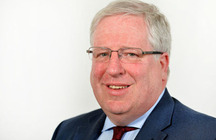
    Patrick McLoughlin
    Patrick McLoughlin

    Below is the text of the speech made by Patrick McLoughlin, the Secretary of State for Transport, on 18 April 2013.

    Thank-you. It’s a pleasure to be here today.

    As you probably know, I’ve been in politics quite a while.

    In fact I’ve been Transport Minister twice with a gap of 20 years in between.

    And in that time I’ve heard a lot of ministers speak eloquently about how things are best done locally – while doing the precise opposite.

    For decades, they’ve been preaching devolution, while planning and orchestrating it from their Whitehall offices.

    And it hasn’t worked.

    So I understand why you might be a bit suspicious whenever there’s a new outbreak of that enduring “ism” – localism.

    But today I want to talk about why something big is changing in how we run our country.

    And I want to talk about the role that transport can play in that.

    First of all, today’s conference is proof in itself that we are serious about change.

    We’re here because you represent a new force in government: local partnerships bringing business and government together to change the way we think about localism.

    Not the theoretical, unworkable localism of the past, but localism that is practical and deliverable, that responds to local conditions, and local communities, and that balances growth across the UK – not just in the south east.

    Local decision making is particularly important in transport.

    Because the transport issues that most concern people are local in nature.

    Congestion. Road safety. Bus and train services. Issues that are not just understood better by local people and businesses, but that are best solved by them too.

    That’s why the DfT has been at the front of the queue to involve and empower local enterprise partnerships (LEPs).

    I’ll be honest.

    Many in government had doubts.

    Could local partnerships succeed where others have failed in the past?

    Well you are already proving that you can.

    You’ve been helping us make the case for HS2, a scheme that has the potential to change the economic geography of the UK.

    This year you start making the decisions on where funding for local major transport schemes should be targeted from 2015.

    This is a fundamental part of our commitment to devolve responsibility for transport, and streamline government.

    Because LEPs are in the best position to target investment more effectively, and get the best value for money.

    Under the last government, local major schemes were managed through the regional funding allocation, which meant central government remained the ultimate decision maker.

    It was a top-down system with a thin veneer of localism.

    But with the new structure, we will be genuinely shifting power away from Whitehall into the hands of local transport bodies, accountable at the local level, and responsive to local economic conditions.

    You’ve also played an important role in the delivery of our £170 million Local Pinch Point Fund, which the Chancellor announced in last year’s autumn statement.

    And I’d like to thank you for your help so far.

    It’s a new way of prioritising schemes.

    And it’s already making a real difference.

    Because tackling road bottlenecks is one of the most effective ways we can remove obstacles to economic growth.

    In March I made £25 million available to get cracking with the first 10 schemes.

    The first – a £6.8 million project to increase capacity on Northampton’s ring road, and improve access to the Northampton waterside enterprise zone R1; has already begun construction.

    Work on others is starting this spring.

    They include an upgrade to the notorious A40 and A4010 Chapel Lane junction in Buckinghamshire, and improvements to the Clock Tower junction in Harlow, Essex.

    Four of the 10 schemes will boost transport links around enterprise zones – reflecting our commitment to support local economies.

    We’ve also announced a further 58 pinch point schemes to reduce congestion on Highways Agency roads – again, with your help.

    And we’re delivering a programme of 24 major road schemes – including 4 new ones announced in the autumn statement.

    For example, the £60 million A30 Temple to Higher Carblake scheme in Cornwall will relieve congestion, reduce journey times, and improve links between Cornwall and the rest of the country.

    Another vital project is the A453 dualling between M1 Junction 24 and the A52 Nottingham ring road.

    This is a major stretch of road serving the East Midlands and East Midlands Airport – and the £150 million improvements will not only help address congestion, but also make the route safer.

    Of course devolved transport isn’t just about roads.

    We are also moving ahead with plans for further rail devolution.

    And earlier this year we also launched the competition for local transport authorities to become designated as Better Bus Areas.

    All this means there will be tremendous opportunities for devolved bodies over the next few years.

    Not just in transport, but across government.

    And I’m sure that later today Lord Heseltine will expand on those opportunities in the light of his “no stone unturned” report.

    Government has now accepted the majority of Lord Heseltine’s recommendations.

    This includes the single local growth fund to cover housing, transport and vocational training.

    The clear message from government is that there certainly won’t be any slowing down in the rate of decentralisation.

    On the contrary, we’ll be looking to accelerate.

    So the work to set up local transport bodies (LTBs) – and to prioritise transport schemes by this summer – will go ahead as planned.

    The strategic growth plans which LEPs are currently preparing will be integral to the deal that we negotiate with each local partnership.

    We have set out the criteria we will use in those negotiations.

    But the scale of the resources available will depend on the current spending round.

    So there is an opportunity over the next few weeks for LEP chairs to make clear which spending programmes they think should be included in the Single Local Growth Fund.

    So, to sum up.

    This is a time of great fluidity in government: a time or innovation and new ideas.

    The challenges we face as a country are very different to those we faced a few years ago.

    And we need to translate thoughts and policies into jobs and growth faster than ever before.

    How we do that involves not just central government.

    But everyone here today.

    LEPs are uniquely positioned to help us get devolution right.

    Making the trade offs that will deliver the best value results for your areas.

    Using the knowledge and experience of businesses and local authorities.

    Supporting economic growth from the ground up.

    With your help, we can set local government in Britain on a new course.

    And emerge with a model of localism that will change this country for good.

    Thank you.