Tag: 2013

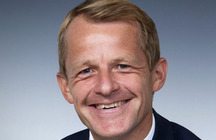
  • Mark Prisk – 2013 Speech on Housing

    Below is the text of the speech made by the Housing Minister, Mark Prisk, at the Chartered Institute for Housing Conference held in Manchester on 27th June 2013.

    Delighted to be here today.

    Let me start by saying that housing really matters.

    Now admittedly, (as both Housing Minister and a chartered surveyor), I’m a bit biased!

    But the truth is that shelter is a basic human need. A need we all share and one which is essential to a healthy, happy life.

    And so whilst today, we may be focussed more on the financial and economic role of housing, we should never lose sight of why homes really matter.

    For too long our housing markets have been dysfunctional. And that is why as an incoming coalition government we chose to set a housing strategy which is broad in scope and long, in vision.

    Delivering supply

    Indeed, the dysfunctional nature of our housing markets in this country is best illustrated by the fact that for the best part of the last three decades, we have been building roughly half the homes we actually need, year on year.

    That’s why for example we have made radical reforms to the planning system, not least through the new National Planning Policy Framework. The early signs are encouraging, with the latest independent figures showing a 20% rise in the number of new homes granted permission.

    But there’s more to do, because afterall development control is only part of the regulatory maze that developers face. So next month, we will be broadening permitted development rights and setting out how we intend to rationalise the 6,000 pages of current planning guidance.

    Unlocking sites

    Now since I started this job, last September, I have been really keen to focus on the practical unlocking sites and schemes that have got stuck for a variety of reasons.

    In last year’s Autumn Statement, we were able to create a £474 million Local Infrastructure Fund, to make long term recoverable investments.

    I am pleased to say that we are making good progress. A couple of weeks ago I was able to confirm that the new market town of Sherford will proceed, delivering some 5,500 new homes. It’s a scheme which has been years in the making, but it was (until now) failing to make any progress.

    Sherford is just the latest example. Since August over 40,000 homes have been unlocked in this way, including the scheme at Ebbsfleet in the Thames Gateway. But just as important is the fact that what we are seeking to build here isn’t simply housing estates, but good quality, long term communities.

    Indeed, the loan we provide usually ensures that the infrastructure and community facilities are built alongside the homes, and not later, as an after thought.

    A good example is Cranbrook, near Exeter. It’s the first new settlement to be built in Devon for 600 years. Our intervention means that the whole development will now happen, including the schools, the town centre, the shops and the workplaces. The roads will be laid down alongside the new railway station, which will provide an invaluable link into Exeter and elsewhere.

    But there is another aspect to ensuring that we create real communities, not anonymous housing estates.

    When I visited Cranbrook I was really impressed with the work of the local Churches Together, in East Devon. Right from the start they have worked with the planners and the developer so that there is already a dedicated Minister for Cranbrook, Mark Gilborson. A new Community Development Worker is also in place and the result is that from the start, people arrive and settle together better, as a community.

    I think this is really important, because whatever we do in terms of bricks and mortar, its people who make communities. So I shall from now on be wanting to see similar commitments for other new settlements from developers, their partners and local planning authorities. I hope you will also embrace this idea.

    Looking ahead, the Local Infrastructure Fund prospectus has attracted very strong interest for similar support, and we are now working with a further 14 sites, which are capable of delivering in the region of 38,000 homes.

    But, in addition to the need for upfront capital investment, many local authorities are finding it a challenge to deal with the complexities of major housing schemes.

    So I’m pleased to announce today that we are also making available significant resources to assist local authorities with the capacity and skills needed to deliver large scale, locally supported housing.

    To be specific, we are awarding over £11 million of capacity funding to 11 schemes, including Bicester, St Austell, Wokingham, Cranbrook, Sherford, Kettering, Wichelstowe, Charnwood, North Ely, Monkton Heathfield and Didcot. And together, these schemes could deliver nearly 50,000 new homes in the coming years.

    Public land

    But we cannot rely solely on just new homes to meet our housing need. We must also make sure that we make best use of redundant land or underused buildings.

    Take surplus public sector land for example. We have already been able to free up land with capacity for 47,000 homes. But we need to work more quickly and more efficiently.

    So I can tell you that (from 2015-16) the Homes and Communities Agency will become the default disposer of central government’s public sector land. This will ensure that we engage as a single voice with developers and housing professionals, maximising opportunities to create growth and increase housing supply.

    But, Ladies and Gentlemen, we need to see the approach we are taking to central government land mirrored across the public sector. Local authorities and housing associations also have land and other assets which are lying idle.

    So I want to encourage you all to look again at what more you can do to turn idle assets into homes and jobs. Its incumbent on us all to make the very best use of land for which we are responsible.

    Affordable Homes

    Last September, on my first outing as Housing Minister, I was challenged about the funding settlement for affordable homes, after 2015. Many of you made it clear to me that what you needed from us was greater certainty, if you were to invest for the longer term.

    So I made a promise. I promised that by this summer you would know where you stood, after 2015.

    Well, Ladies and Gentlemen, this may be a novelty in politics, but today I can deliver on that promise.

    I can now announce that the spending round provides that certainty. And not just for a couple of years after 2015, but for the 10 years beyond that. You can now plan within the long term affordable housing framework – which critically includes capital funding up to 2018, and a rent policy up to 2025.

    Under the current Affordable Homes programme, the sector has already delivered over 84,000 new homes and is well on track to meet our 4 year target of 170,000. That is a great performance and is something you need to take great pride in.

    Of course, the huge deficit we inherited means we have to achieve more with less. We all need to think differently and creatively.

    So, it’s testimony to the success of our current programme that we have secured a new Affordable Homes programme beyond 2015. I can now confirm that we will invest an additional £3.3 billion over 3 years from 2015. Together with receipts from Right to Buy sales, we expect this to deliver 165,000 affordable homes.

    That’s 165,000 affordable new build homes in 3 years – the equivalent 55,000 homes a year. Indeed this is a faster annual rate of building than in any year for at least twenty years.

    As well as continuing Affordable Rent and shared ownership, the £3.3 billion package includes £400 million for a new product – Affordable Rent to Buy. This will help people who need a limited period of support – in the form of a sub-market rent – in order to help them achieve their aspiration of home ownership. The money will help fund new build homes that will be let at affordable rents for a fixed period of around 10 years before being sold, with the sitting tenant getting the first chance to buy. We want to work with you in the sector to design the scheme and start delivering these homes in 2015 to 2016.

    It will come as no surprise that all this new money comes with high expectations about efficiency. We will need to maximise the value we get out of every pound of grant funding. We will do this through what we call ‘something for something’ deals. In considering bids for grant, we will expect providers to bring forward ambitious plans for maximising their own financial contribution. And we will expect this to include a rigorous approach to efficiency, along with ambitious plans to maximise cross-subsidy from the existing stock.

    Under the current programme, a modest level of relets have been converted to Affordable Rent, or sold and the proceeds reinvested. Under the next programme we expect providers to take a rigorous approach in looking at every relet and asking how it could best help build more homes to help more families. I expect the result to be a significant change in the number of homes that are either converted to Affordable Rent or sold when they become vacant.

    Of course, rent certainty is absolutely crucial to those landlords wanting to build more homes. And that is why, I am pleased to confirm that social rents will increase by Consumers Price Index (CPI) + 1% for ten years from 2015 to 2016. This is a good deal for both tenants and landlords. It will allow you to plan for the long-term, and invest in building more affordable homes and improving existing ones.

    Housing for the vulnerable

    Of course we must also need to respond to the needs of those with specific housing requirements, such as the elderly. Especially as their numbers are to rise rapidly.

    That’s why on entering office we secured over £725 million to help people who wish to stay in their own home, under the Disabled Facilities Grant (DFG). But its also why, we decided to provide £300 million for specialist housing for those who do need care.

    I am pleased to say that both these schemes have now been recognised in the Spending Round announcement. Some £220 million has now been secured for the DFG in 2015 to 2016 alongside a further £115 million for the specialised housing fund.

    And to make sure that we continue to deal with this issue in a holistic fashion, the Minister for Care Services Norman Lamb and I will be chairing a roundtable meeting early next month to see how we can further develop our thinking.

    Helping those who find themselves homeless is also vital. Given that Lord Freud has spoken earlier, I won’t rehearse the arguments over welfare reform. Rather I want to reiterate my remarks at the recent Housing Justice Conference in Bradford. As a government we strongly support the principles around the preventation and recovery approach adopted by many of our leading voluntary and charitable groups, most notably the No Second Night Out policy. We’re starting to see the dividends in London, Merseyside and here in Manchester.

    However we recognise that investment remains important. So, in addition to the £470 million earmarked to help prevent and tackle homelessness, I can today confirm that we are providing a further £40 million expressly for homeless hostels, to help even more people get off the streets and back on their feet.

    Demand

    I said at the start that our Housing Strategy seeks to address both supply and demand. Indeed, for the market to work there needs to be effective demand to stimulate development. And, in the current economic circumstances, people do need support to be able to find a home they actually want to live in.

    Help to Buy Equity Loan

    For example, our Help to Buy Equity Loan scheme is about helping people plug the deposit gap. It’s proved tremendously popular. In its first two months over 4,000 reservations have been placed way ahead of many people’s expectations. And it’s also been popular with the industry. 450 builders are already on board and many of the major lenders have signed up, including Nationwide.

    Right to Buy

    We also believe that people who want to own their own home should be able to do so and this includes council tenants. It cannot be right that they should be excluded.

    Now I am delighted that Right to Buy sales have doubled over the last year but we want to go further. We have increased the maximum discount available to tenants in London to £100,000 and we are legislating to allow tenants to qualify for the scheme after only three years, as opposed to five years under the current scheme.

    However, the old Right to Buy policy of the 1980s, wasn’t perfect. It didn’t require receipts in any form to go back into building more affordable homes.

    So we changed it and today receipts from additional sales are now being recycled to help expand the overall stock. Thus we are ensuring at least £108 million from 2012 to 2013 will be used to build more affordable homes to rent.

    Longer term change

    The private rented sector also has a central role in our Housing Strategy. Put simply, we want a bigger and better private rented sector.

    In fact, demand has been strong for some years. However, to date much of the investment has come solely from individual buy to let landlords. There’s an opportunity to broaden the sector considerably and in particular to draw in larger, longer term investors, people, who are less concerned with short term gain.

    So we’ve implemented the key recommendations of the Montague Review.

    Build to rent

    First, the Build to Rent Fund is intended to stimulate building, by supporting off-the-shelf investment opportunities. Worth in total £1 billion it’s designed to help demonstrate to the investors that there are good returns to make, and so help the market grow and mature.

    Bids for the first round have been shortlisted and are currently going through due diligence. We believe they will deliver up to 10,000 new homes and the first contracts should be signed by the end of next month.

    And today, I can confirm there will be a second round of bidding, which will begin in September.

    Guarantees

    Second, we are providing multi-billion pound debt guarantees, to underpin investment in both the private and affordable housing sectors.

    The Affordable Housing Guarantee Scheme is worth up to £3.5 billion and will be run by Affordable Housing Finance, part of The Housing Finance Corporation. This will then enable housing associations to borrow and, (when combined with the £450 million in grants already announced), could help deliver up to 30,000 new affordable homes to rent, over and above the 170,000 already planned by 2015.

    Now, at the same time, the £3.5 billion Private Rented Sector Guarantee scheme will offer direct guarantees to a wide range of housing providers. The full application process is about to open and I would very much welcome those who are interested to come forward.

    And subject to demand, both the affordable and the private rent sector schemes, could be boosted by a further £3 billion, which we’re holding in reserve as those schemes mature. And indeed, there is an opportunity for the two to come together.

    A better sector

    Finally, I want to explain how we can make this not just a bigger sector but a better sector, especially for the tenants.

    The 1988 Act has helped create the right regulatory framework for the sector, one which has enabled more people to invest in more and better stock.

    There is however one area where we felt that tenants needed more help. Whilst the majority of letting agents offer a perfectly good service, we are well aware that a small minority act in a way that ranges from incompetent at best, to wholly unacceptable, at worst.

    So we have now introduced primary legislation which will require all letting and managing agents in England to belong to an approved redress scheme. This will give landlords and tenants the means to pursue complaints: the opportunity to drive out the cowboys that give agents a bad name: and drive up standards.

    Conclusion

    So Ladies and Gentlemen.

    If we are going to reverse the past failures in housing, we need to take a comprehensive approach that is broad in scope and recognises all tenures.

    One which boosts not just supply but also demand. Which helps tenants, as well as home buyers. And one which recognises that alongside new homes we really do need to make the very best of existing land and buildings.

    There is no single solution to our housing needs. And nor will we overturn a generation of undersupply, in one Parliament.

    But I strongly believe that we are making good progress.

    We’ve unlocked 40,000 homes on sites, which have been stuck for years. We’re building 170,000 affordable homes. And we’re now committed to accelerate this to the fastest rate of building for at least twenty years.

    There is much, much more to do. But I believe that working together we can ensure that that people have the homes that they and their families need, now and for the generations to come.

    Thank you.
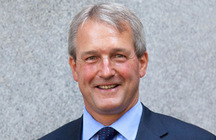
  • Owen Paterson – 2013 Speech to Policy Exchange

    owenpaterson

    Below is the text of the speech made by Owen Paterson to the Policy Exchange on 20th November 2013.

    Thank you for inviting me to speak today. It’s a great pleasure to be here at Policy Exchange, a think tank that does so much to shape and inform debate across a wide range of issues.

    Since becoming Defra Secretary last year I have set out my four key priorities for the Department. These are to grow the rural economy, improve the environment, and safeguard both plant and animal health.

    My desire to improve, rather than just protect, the environment, while at the same time growing the economy stems from Edmund Burke’s description of us as the “temporary possessors and life-renters” of the earth who must live in a way which doesn’t “leave to those who come after… a ruin instead of a habitation.”

    I have lived in the countryside all my life. I have always been immersed in its activities. I have seen for myself the impact each and every one of us has on the environment.

    That’s why I believe that we need to leave our natural environment in a better condition than we inherited it. Our 2011 Natural Environment White Paper – the first of its kind for twenty years – set the goal of “being the first generation to leave the natural environment of England in a better state than it inherited.” That is a big ambition, to which I am strongly committed.

    This is not only because it’s the right thing to do but because it’s the only way in which we will secure growth that is both environmentally and economically sustainable.

    There is no doubt that our natural environment is under pressure. In the UK populations of farmland birds have declined by 50 per cent and woodland birds by 17 per cent since the 1970s. The State of Nature report produced by a wide range of environmental organisations earlier this year set out the scale of the task we face.

    That said, it’s not all doom and gloom. While many species have declined, others have increased significantly in range or abundance over the last two to three decades. These include common and widespread species, as well as some formerly declining species that are conservation priorities, such as the red kite, otter or large blue butterfly.

    The causes of this overall decline are broadly understood, with loss of habitat and increasingly intense human use of the countryside, not least in the 1960s, ‘70s and ‘80s when agriculture went through a rapid period of modernisation. This is a problem that has faced successive generations and governments. It is not a matter of blaming this government or that organisation. This is a complex and long-term issue that we must, as a society, work together to solve. This is especially the case as we try to deliver more, with fewer resources and less taxpayers’ money.

    Yesterday’s publication of the Nature Check 2013 report only serves to demonstrate the scale of some of the problems we face. While I would disagree with many of the report’s conclusions, it serves a useful purpose in highlighting the continuing limitations of a top down approach to the natural environment. If we are to make progress in this important area, we must look to a new approach, working with the grain of nature and society. Hence we must harness the enthusiasm and expertise of the public, farmers and landowners.

    I am a practical environmentalist. I find common cause with all those who passionately believe that we have a duty to pass on a better environment than the one we inherited. Too many times those that say they are doing their best to protect the environment shy away from the difficult decisions. I won’t do that. The environment’s much too important to be left to ideologues.

    Our approach is based on three core principles:

    First, the environment and the economy are inextricably linked.

    Second, the natural environment in Britain is overwhelmingly managed by man rather than being abandoned in a homage to Rousseau.

    And finally, improving the environment is a national challenge requiring a concerted, partnership approach. It’s not something that taxpayers’ money or government alone can fix. We must harness the rich seam of practical environmentalism that runs through our country.

    Up until recently the choice has often been portrayed as one of growing the economy or protecting the environment. That’s not how I see it. I am absolutely convinced that we can only improve the environment if we have a growing, prosperous economy. Mrs Thatcher said, in a speech to the Royal Society in 1990, that “we must enable all our economies to grow and develop because without growth you cannot generate the wealth required to pay for the protection of the environment.”

    I will never forget travelling to Albania and seeing brooks running black with oil as a result of the disastrous rule of Enver Hoxha. Economic failure led to environmental failure. In contrast, in China and a host of other countries, where per capita income is increasing as a result of continuous economic growth, people are taking an interest in their environment for the first time resulting in more trees being planted.

    We cannot have sustained economic growth without a healthy natural environment. Neither can we invest in nature without the resources generated by economic activity. That is why I want to secure growth and improve the environment in tandem. These two priorities are not mutually exclusive.

    We need to be able to measure our natural capital and build it into our economic decision-making. That’s why we set up the Natural Capital Committee. The Committee, established in 2012, was one of the headline commitments in the White Paper. It is the first committee of its kind in the world.

    The water industry is a prime example of economic investment as environmental investment. Of improving the environment while growing the economy.

    The privatisation of our water industry in the late 1980s has secured more than £116 billion of private investment – investment that would never have come from the Exchequer. As a result, we have moved from several of our major rivers being classified in the not too recent past as sterile or biologically dead to our waterways now being cleaner than they have been for decades. We now have otters in every region of the UK. Salmon and trout are returning to rivers and streams where they have not been seen for generations.

    Earlier this year I visited Northumbrian Water’s waste treatment site in Howdon on Tyneside. Their investment in anaerobic digestion is enabling them to process half a million tonnes of sewage, which was previously dumped untreated in the North Sea every day. This generates enough electricity to power the equivalent of 8,000 homes and produce a dry fertiliser for local farmers.

    This investment not only makes economic sense for the company but it is also helping clean up the Tyne, once one of our most industrialised and polluted rivers. Upon my arrival at the site, one of the staff showed me a picture of a large salmon, which he had caught only yards from where I stood, something that would not have been possible until recently.

    Looking to the future, there’s still more to do. The Water Bill will reform the water market still further by removing barriers to competition. That will lead to a more efficient and resilient water industry with lower environmental impacts. It’s in the interests of the water companies themselves to continue to invest in reducing leakage, pollution and unsustainable abstraction. It is not just good for the environment; it is good for business.

    The privatisation of the water industry shows us that we should not be afraid of economic or technological innovation. In fact, we should embrace it.

    Indur Goklany has calculated that if we tried to support today’s population using the production methods of the 1950s, instead of farming 38 per cent of all land, we would need to use 82 per cent. It has also been estimated that the production of a given quantity of a crop now requires 65 per cent less land than it did in 1961.

    Continued progress and innovation could see us using cultivated land more efficiently, presenting us with exciting opportunities to free up more space for biodiversity and wildlife. The adoption of technology will be key to us meeting the challenge of “sustainable intensification” as set out by the Government’s former Chief Scientist, Sir John Beddington.

    Technological advances over the course of the 20th century have also meant that Britain now has three times as much woodland as it did a century ago. Woodland cover in England reached a nadir of 5 per cent at the end of First World War. Today, it stands at just over 10 per cent, around the same level as when Chaucer wrote the Canterbury Tales. We believe that government and the forestry sector working together could achieve 12 per cent woodland cover by 2060. An increase equivalent to a county the size of Derbyshire.

    The forestry sector is leading the way in demonstrating how a healthy environment and economic growth can go hand in hand. With around two thirds of the UK’s woodland resource in private hands, the importance of working with private individuals to make progress in improving biodiversity cannot be overstated.

    The Grown in Britain initiative, led by the forestry industry itself, is working to increase demand for British wood products, thereby increasing investment in the planting and management of woodland. The initiative seeks to provide an “economic pull” to galvanise landowners to see the many benefits, both economic and environmental, of well managed woodland.

    Thanks to Grown in Britain, Heal’s is stocking a new range of British grown and manufactured ash furniture. Just this relatively small step is supporting 60 jobs, 20 of which are furniture-making apprentices. It’s improving the environment and helping business.

    One policy which I believe has huge potential for improving the environment, and placing our biodiversity on a sustainable footing for the future, is that of biodiversity offsetting.

    Offsetting is a measurable way of ensuring that we make good the residual damage to nature caused by development which cannot be avoided or mitigated. This guarantees that there is no net loss to biodiversity from development and can often lead to net gain. It will not change existing safeguards in the planning system but it makes it quicker and simpler to agree a development’s impacts to ensure losses are properly compensated for. Offsetting could help create a ready market for farmers, landowners and environmental organisations to supply compensation for residual damage to nature, providing long term opportunities for investing in our habitats and biodiversity.

    It’s incredibly apt that I’m speaking here at Policy Exchange, the think tank that through its Nurturing Nature report has put offsetting on the political agenda and highlighted the real contribution it could make to our natural environment.

    There are already over 20 other countries using offsetting and the Ecosystems Market Task Force, chaired by Ian Cheshire, recommended that we adopt offsetting as its priority recommendation. Not all of these models would work here but we’re looking closely at the US, Germany and Australia to see what lessons we can learn. On a visit earlier this year, I saw different models working well in Australia. And in July I visited one of our offsetting pilots in Warwickshire.

    The Biodiversity Strategy we published in 2011 sets out our plan to halt the overall loss of England’s biodiversity by 2020. The ultimate aim is to move from a net biodiversity loss to a net gain. The Rural Development Programme, which invests £400 million a year in agri-environment schemes, is already rewarding farmers for providing and improving habitats and biodiversity. I see offsetting as a potentially important tool to sit alongside this.

    In a small and heavily-populated country such as ours, there will always be developments or infrastructure projects that require a trade-off between economic and social benefits and the natural environment. It could be a new housing development that would cover some woodland, or a new road crossing a wetland area. The first question should always be can the environmental damage be avoided or mitigated. If it can’t then we would look to offsetting to add an equal or greater amount of environmental value to another area.

    But this isn’t something we will rush into without careful consideration. The consultation on our green paper has just closed. I’ve gathered views from all sides of the debate, from developers, environmental organisations and the public. This was a genuinely open consultation. I am determined to find a solution that works for both the economy and the environment. I am determined to make sure the planning system allows sensible decisions on development by ensuring that environmental value is considered at the very start.

    The ideal outcome is a system that correctly values nature. We know it can work – in Australia offsetting has reduced the number of applications to develop on native grassland by 80 per cent. Such a system can provide certainty for both developers and the environment.

    Moving to the second core principle of our approach, I believe that to build on the successes we’ve seen in boosting the populations of species such as the red kite and the otter we must recognise that the countryside we see today, and the landscapes that are part of it, have been shaped by man over thousands of years.

    In this country there is very little of what can be termed genuine wilderness. Some of our most iconic landscapes – the landscapes which have inspired artists and poets across the centuries – are managed landscapes. The Lake District would not look the way it does today without the presence of sheep and the careful management of hill farmers. The Downs would soon return to elders and bracken if it were not for the presence of livestock and active farming.

    These landscapes not only support our plants and wildlife. They contribute to our health and wellbeing and attract large numbers of tourists. In rural England, the £33 billion tourism industry accounts for 14 per cent of employment and 10 per cent of businesses.

    Our countryside is something which needs constant management and intervention. The influence of man can be seen in both our flora and fauna. The names of the following species – the barn owl, harvest mouse, meadow pipit, corn bunting and hedge sparrow – demonstrate the importance of the farmed landscape to our wildlife.

    The American author and conservationist, Aldo Leopold, recognised this when he said: “The hope for the future lies not in curbing the influence of human occupancy – it is already too late for that – but in creating a better understanding of the extent of that influence and a new ethic for its governance.”

    The backdrop of a growing population, increased pressure for land for development and changing farming practices means that this approach is more necessary than ever.

    It is after all human activity that has, across the centuries, removed many of the countryside’s natural predators and introduced invasive non-native species. It would therefore be a dereliction of duty for us to shy away from continuing to manage and intervene in our natural environment.

    The work of organisations such as the Game and Wildlife Conservation Trust demonstrate the importance of managing both our landscapes and wildlife populations. The GWCT’s Allerton Project demonstrates the real contribution game management on farmland can make to meeting wider environmental objectives. Its ‘Fields for the future’ report, published to mark twenty years of the project at Loddington in Leicestershire, found that:

    – Wild pheasants increased four-fold in response to full game management

    – Hare numbers dropped substantially once predator control was withdrawn

    – Songbird numbers doubled in response to game management but showed a gradual decline once feeding and predator control was stopped.

    Individuals such as Philip Merricks are also demonstrating the importance of addressing all components of conservation management. At his Elmley National Nature Reserve on the Isle of Sheppey, an hour from London and which I had the privilege of visiting on Sunday, predator control is enabling him to achieve lapwing fledging rates that both protect and increase the population. To maintain a stable population, lapwings need to fledge a minimum of approximately 0.7 chicks per adult pair per year. In 2010, Merricks achieved 1.3 fledged chicks per adult pair, whereas the neighbouring nature reserve, where species management is not undertaken, achieved a fledging rate of less than 10 per cent of Merricks’s rate.

    Tomorrow, I will be visiting Lark Rise Farm in Cambridgeshire, the headquarters of the Countryside Restoration Trust. For 20 years the Trust has been demonstrating how farming can coexist and benefit from a countryside rich in wildlife. In a relatively short time, otters and barn owls have returned after an absence of nearly forty years.

    The Trust is also leading efforts to try and clear a large area of the Upper Cam Valley of mink for the benefit of our indigenous wildlife. The scheme has been taken up by a total of 42 landowners, farmers and charities along a total of 45 miles of water courses and lakes. As a result of this intervention, 163 mink have been trapped, with water voles beginning to make a comeback and the number of kingfishers and moorhens on the increase.

    Wildlife control is also playing a key role in the battle to save the red squirrel, a species which has been native to Britain for more than 10,000 years but has been in decline ever since the more dominant grey squirrel was introduced from North America at the end of the 19th century. Greys also cause significant damage to our woodlands.

    The Red Squirrel Survival Trust and others have long been working, in partnership with local organisations and volunteers, to protect and stabilise our existing red squirrel populations. Grey squirrel control is central to their efforts and is starting to yield results. In the North East, monitoring shows that the red squirrel managed to expand its range by 7 per cent between 2012 and 2013, with the greys’ presence in these areas shrinking by as much as 18 per cent.

    With 70 per cent of all agricultural land in this country under an agri-environment scheme, there are real opportunities for us to begin to redress the current imbalance that exists in our countryside. An imbalance which, since 1970, has seen Britain’s magpie and crow populations increase by 90 and 81 per cent respectively. We must manage both landscapes and species.

    It is against this background, that we must acknowledge that the beautiful landscapes and diverse ecosystems the countryside supports, will soon fall into disrepair without the presence of thriving communities and businesses.

    Farmers alone are responsible for managing 75 per cent of the UK’s surface area. They are some of our greatest environmentalists from whom we can learn a great deal and with whom we must work in partnership.

    That’s why it’s so important that the British countryside is a living, working one and why I want to make sure that people in rural areas have access to the same services and facilities as people living in urban ones.

    I believe that the roll-out of superfast broadband has the potential to transform rural areas, bridging the age-old gap between rural and urban. It could be bigger than the advent of the canals, railways and telephone combined. It will allow businesses to grow and expand.

    Google estimate that small online businesses can grow up to 8 times faster than their offline equivalents. I’ve seen brilliant examples, not least the architects’ business located in a converted barn at the top of a Cumbrian fell designing golfing villas for clients in Nasiriyah.

    We are investing £1.2 billion to 2015 to connect as many properties as possible. Currently we’re connecting 10,000 rural properties a week. And from 2015 there will be a further £250 million to connect even more properties. We’re also investing £150 million to improve mobile phone coverage.

    We need to recognise the realities of rural life and the constant balancing act that’s necessary between different activities. I believe that we can have long term growth and improve our environment. That’s my vision. To achieve this we all need to work together; people, environmental groups, businesses and government. But what we can’t do is look to government to have all the answers and turn things around overnight. That’s not how nature works. That’s not how the economy works.

    Watercourses, for example, are an important part of the rural landscape, from both an environmental and flood prevention perspective. Despite this, the last government, in its blind adherence to Rousseauism, failed to maintain watercourses or enable land managers to do so. That’s why we’re working to remove the unnecessary burdens that discourage farmers and landowners from undertaking their own watercourse maintenance.

    Last month we launched seven River Maintenance Pilots across the country to do just this. These pilots are part of the wider Catchment Based Approach that make sure the river maintenance and other environmental goals are considered together to achieve the best outcome for farmers, landowners, local communities and the environment.

    With effective forward planning, river maintenance activities and their timing can be managed in ways which enhance water quality and support wildlife interests, particularly fisheries. These pilots will help us develop a new, more flexible consenting system for river maintenance by 2015.

    The third principle of my approach stems from the fact that we must seek to work with the grain of both nature and people. It is increasingly clear that a top down approach to the natural environment hasn’t worked. We must empower, encourage and utilise our farmers, land managers and civil society. All of whom have knowledge and experience of where they live and work. These “little platoons” of practical environmentalism can help us with our ambition to improve the natural environment, leaving it in a better condition than we inherited it.

    When Ash Dieback was first discovered, the contribution of the public was invaluable to helping us identify diseased trees and monitor the spread of the disease. There was an innovative use of technology to make this possible – the Chalara mobile phone app.

    I’m pleased that we’re taking this principle forward in the Observatree project, which aims to develop an early warning system for pest and disease threats to the UK’s tree. This is a partnership between the Forestry Commission and other organisations. The Woodland Trust and National Trust will use their experience to recruit and train a network of volunteers. The volunteers will support scientists by acting as a first line of response to the reports of tree pest and disease sent in by the public. They will screen and filter reported incidents, enabling scientists to focus on those reports of greatest significance.

    This is a brilliant example of how we can harness the enthusiasm of the public to benefit the natural environment and mobilise people to engage with an area of policy which would normally be considered the preserve of specialists.

    There are also millions of people across the country who take part in activities such as shooting or angling and who as part of their pastime make a significant contribution to the natural environment. The 2006 PACEC report estimated that two million hectares of land are actively managed for conservation as a result of shooting and that the shooting community spends 2.7 million work days on conservation. The 2012 Fishing for Answers report found that 25 per cent of anglers said that they “contributed to environmental or aquatic habitat conservation projects.”

    Many farmers and landowners already see themselves as stewards of the land they own or farm. They are also already working on a landscape or catchment area scale. In his 2010 review of England’s Wildlife Sites and Ecological Network, Sir John Lawton identified this as of huge importance to the delivery of a more coherent and resilient wildlife network.

    If we are to succeed in delivering meaningful environmental benefits, partnership between government, local authorities, landowners and communities will be key. This is especially important when so much of the nation’s property, be it farmland or back gardens, is in private hands and often beyond the reach of Whitehall intervention. It is this sort of approach that I want to seek and promote.

    That’s why we are building local partnerships in a variety of areas – Local Nature Partnerships, Nature Improvement Areas and the Catchment Based Approach. This is the best way of directly engaging communities in the management of their local environment.

    Many of the Nature Improvement Area partnerships are led by voluntary organisations, with the aim of creating an environment that is better for wildlife and people. By working across large, discrete areas, this approach can provide a huge range of benefits, from flood protection to pollination services.

    We’ve invested £7.5 million over three years to establish 12 Areas. For every pound invested, an additional £5.50 has been leveraged. This is a great example of government and private funding working together.

    A few weeks ago I went to see this approach in action in the Nene Valley. It’s an area that had one of the highest areas of species extinctions and the lowest amount of land being protected. The Nature Improvement Area is turning this around. They’ve worked to build strong ties with the Local Nature Partnership and the Local Enterprise Partnership. In the first year they’ve secured an additional £1 million of investment. An impressive 3,300 days of volunteer time have been mobilised. 1,500 hectares of farmland have been added to Higher Level Stewardship schemes. For these partnerships to work they must enjoy the full co-operation of farmers and landowners.

    The Catchment Based Approach is also being rolled out across all of England’s 89 river catchments. It will form the principle mechanism to deliver our national water quality targets. Interested parties from the local area will take part in the decision making process.

    We’re also applying a landscape-scale based approach, or the marine equivalent, to our fisheries. In my 2005 Green Paper, I described the Common Fisheries Policy as “a biological, environmental, economic and social disaster.” The continental, top-down control of our fish stocks, based on little local scientific evidence or regional flexibility, has proved catastrophic for the sustainability of our seas.

    I’m pleased that after three tough years of negotiation and as part of the historic deal on the CFP, we’ve been able to secure a move to a more appropriate, regionalised system of decision-making. We’re also putting an end to the scandal of perfectly edible fish being discarded, which was a key proposal in my Green Paper, as well as reaching a legally binding commitment to fishing at sustainable levels. This deal will help put our fish stocks and fishing economy on a firm footing for the future. Improving the environment. Growing the economy.

    This speech asked a question – can we have it all? Can we have growth and improve the environment? The answer is yes. It will take hard work and cooperation but we are laying the foundations. It is possible.

    I am absolutely convinced that to improve the environment we need a growing economy. At the same time we need to avoid growth that erodes our natural capital and therefore our ability to grow in the future. We need to encourage and secure growth which conserves or enhances our natural environment.

    The countryside is not something that can be preserved in aspic nor would we wish it to be. It is something of which we are custodians. We must seek, as practical environmentalists, to improve our habitats and ecosystems, to leave them in a better condition than we found them. We must not be afraid to intervene.

    I believe that by working with the grain of the countryside and harnessing the enthusiasm that millions of people have for nature, be it on their farms or in their back gardens, we can make real progress in boosting our wildlife and biodiversity.

    Valuing natural capital, as the basis of sustainable economic and environmental growth, is central to this Government’s vision. I look forward to working with you on making that vision a reality.

  • Owen Paterson – 2013 Speech on the Environment

    owenpaterson

    Below is the text of the speech made by the Secretary of State for the Department for Environment, Food and Rural Affairs made to the Civil Society Advisory Board on 29th October 2013.

    I would like to thank Defra’s Civil Society Advisory Board for organising this event and the RSA for hosting it.

    As many of you know, I have four key priorities for Defra. Growing the rural economy. Improving the environment. Safeguarding both plant and animal health. Civil society has a vital role to play in helping to design and deliver the policies to achieve these goals.

    As part of civil society, you have a huge geographical reach. You have a vast amount of expertise. You understand local issues and people trust you to take action. You are potentially the most powerful ally we have to deliver growth while improving the environment. I want us to work together to achieve this.

    Our partnership needs to be built on openness, trust and goodwill. There are times when we could have done this better. We are paying attention. We are improving the way we work.

    For example on our proposals for the nation’s forests, it was said that we did not listen or explain ourselves properly.

    There will be times when we will have differing views on the best way to make progress. For these issues it’s even more important that we talk to each other. We need to understand the range of concerns so that we can make the most robust decisions.

    That’s why I now insist that for all major new policies we start working with interested parties as early as possible.

    On forestry, last autumn I made sure that in developing our policy we sought the expert advice of civil society. We did this through a large Forestry Summit and by involving local people in discussions about the future of their local woodlands.

    The government’s Forestry and Woodlands Policy Statement recognised the need to reconnect communities with their woodlands. The Forestry Commission has been working on this with civil society. This has led directly to the formation of the Woodland Social Enterprise Network, which is now taking forward development of the pilot project.

    There are many other examples. On my return from Australia and New Zealand earlier in the year, I was clear that we needed to look seriously at biodiversity offsetting. To gather evidence and views we had a series of informal meetings with NGOs on both sides of the debate. I’ve also been to see pilots in the UK for myself – like Ryton Pools Country Park in Warwickshire.

    As a result, we’ve just launched a green paper that is a genuine consultation. I really want to hear from a wide range of individuals and organisations. I want to get as much evidence as possible before taking a decision.

    There are many examples of Defra and its network working innovatively and successfully in partnership with you. Sometimes the most effective way for government to empower you is for us to get out of your hair.

    The best example of Defra employing this approach is the establishment of the Canal and River Trust in July 2012. We transferred the functions, assets and liabilities of British Waterways in England and Wales to a charitable body – the Canal & River Trust.

    This gives users and communities a much greater involvement in managing their waterways, while improving their long term financial sustainability. The Trust has had a successful first year, which included the recruitment of more than 450 volunteer lock keepers, 17 community canal adoptions and over 29,000 volunteer days.

    In my own constituency, I’ve seen the incredible impact that this can have. The Montgomery canal is being improved by volunteers who travel from all over the West Midlands at the weekends to restore this historic waterway.

    Sometimes the focus will be on improving communication and raising awareness. An excellent example of this is the If They’re Gone campaign, which I launched in March this year. The campaign highlights the threats posed to four iconic endangered species – rhinos, elephants, orang-utans and tigers.

    It involves more than 20 wildlife organisations, zoos and safari parks. It will provide the public with information on the plight of these species and give practical advice on how people’s decisions can help save these majestic animals from extinction.

    Sometimes a successful partnership depends on civil society mobilising resources at the local level, for example in The Big Tree Plant. This is supporting communities to plant a million new trees, often in areas of urban deprivation.

    Working with local organisations has been fundamental to the on-going success of the project. The Tree Council and others have raised significant amounts of match funding, almost double the £4 million made available from government. They have provided routes to a huge range of community groups. They have helped to ensure the grant application process remains fair and robustly monitored. Without this extensive partnership working, The Big Tree Plant simply could not have happened.

    I’m particularly pleased with the way we’re working together on tackling irresponsible dog ownership. Defra funding helped the RSPCA, the Dogs Trust and Battersea Cats and Dogs home to run community projects on encouraging responsible ownership. And on microchipping, these organisations are making our policy a reality by not only providing free microchipping but also using their networks to explain its value. Last autumn the public’s contribution to the ash dieback survey was crucial to identifying diseased trees and monitoring its spread. There was an innovative use of technology to make this possible – the Chalara mobile phone app.

    We want to build on this through the Observatree project. Civil society will be helping to safeguard the health of our plants. The project starts this autumn. It aims to develop an early warning system for pest and disease threats to the United Kingdom’s trees. This is a partnership between the Forestry Commission and other organisations. The Woodland Trust and National Trust will use their experience to recruit and train a network of volunteers.

    Volunteers will support scientists by acting as a first line of response to reports of tree pests and diseases sent in by the public. They will screen and filter reported incidents, enabling scientists to focus on those reports of greatest significance.

    This is a brilliant example of how civil society can mobilise people in an area of policy which would normally be considered the preserve of specialists.

    We are building local partnerships in a variety of areas – Local Nature Partnerships, Nature Improvement Areas, and the Catchment Based Approach. This is the best way of directly involving communities in the management of their local environment.

    Many of the Nature Improvement Area partnerships are led by civil society organisations, with the aim of creating an environment that is better for wildlife and people. Earlier this month I went to see this approach for myself in the Nene Valley, Northamptonshire, where 25 different organisations are working together to improve the local environment.

    The catchment-based approach is being rolled out across all of England’s 89 river catchments. It will form the principle mechanism to deliver our national water quality targets. Interested parties from the local area will take part in the decision making.

    Looking ahead, I want to build on our success by developing even better and more extensive partnerships. We need to change the culture of both Defra and civil society. On both sides I believe the change will be for the better, but the demands and impacts of the change need to be recognised and managed.

    Our mindset should be that partnership with civil society is critical to the successful delivery of our policies. The department should consider the use of partnerships when developing new policies and programmes. They will not be applicable in all cases, but the range of delivery options should always include working with you.

    This will require us to embed the spirit of the Compact, the agreement re-launched in 2010 between central government and civil society, more systematically within the department.

    So, every Defra official will be sent the text of this speech with a message from Bronwyn Hill, Defra’s Permanent Secretary, underlining the importance of partnership working. Guidance on effective cooperation is being prepared by Defra’s Civil Society Advisory Board and will be shared with staff.

    The Civil Society Advisory Board has been our active link with civil society since it was established in 2009. I am very grateful to the Board for the support and advice it has generously provided. In line with Cabinet Office regulations on advisory bodies the Board’s lifespan is time limited and it will be wound up in March 2014.

    However, I am determined to build on the Board’s legacy. The Board is currently advising us about the form its successor body should take. I very much hope that many of you will be involved.

    My aim is that Defra sets an example across Whitehall in the way it works with you. I want us to be open, innovative and efficient. The design and delivery of our policies should be transformed through partnership working at national and local levels. I want Defra to be the benchmark in government of how to work constructively with civil society.

    I want us all to work together to boost the rural economy while improving the environment. This partnership working can also help safeguard our plants and animals.

    Ultimately, what I want to achieve is a thriving network at local and national levels.

    I am confident that by pooling our collective goodwill and creativity we can, and will, succeed.

    I look forward to continuing to work with you.

  • Owen Paterson – 2013 Speech on Illegal Wildlife Trafficking

    owenpaterson

    Below is the text of a speech made by the Secretary of State for Environment, Food and Rural Affairs, Owen Paterson, at St. James’s Palace in London on 21st May 2013.

    I would like to start by thanking Their Royal Highnesses for hosting today’s forum and for providing us with an opportunity to discuss this urgent and vital issue. It is inspiring to see and hear two generations of our Royal Family following in the footsteps of the Duke of Edinburgh who over many decades has done so much to promote the conservation of many of the species that are now under threat.

    The illegal trade in wildlife jeopardises the very survival of some of our most iconic species, like rhinos, elephants, tigers and orangutans.

    ‘If they’re gone…’

    It is against this background that I launched the ‘If they’re gone…’ campaign at the Cotswold Wildlife Park back in March, focusing initially on rhinos. The campaign is a key part of our efforts to raise awareness of the impacts of the demand for products made from animal parts. Education must be a key weapon in our armoury.

    Rhino horn has the same medicinal value as my big toenail. Despite this, the seemingly insatiable appetite for rhino horn means that it is now fetching as much as £40,000 per kg. It is shocking that we are losing a rhino to poachers every 11 hours. This is reversing all of the good conservation work that saw white rhino numbers increase by around 9.5 per cent a year and black rhinos by 6 per cent between the early 1990s and the end of 2007. It is beyond depressing that between 2007 and 2011 there has been a 3,000 per cent increase in rhino poaching.

    In June, I will go to Knowsley to launch the next part of the ‘If they’re gone…’ campaign focusing on elephants. In 2011 more than 23 tonnes of illegal elephant ivory were seized around the world, that’s the equivalent of 2,500 elephants. These statistics are particularly worrying when it is estimated that up to 30 per cent of tree species in central African forests may require elephants to help with dispersal and germination. As the Prince of Wales has already said, these animals do not exist in isolation but at the heart of ecosystems and communities.

    What should shame us all is the fact that the perilous situation many of these species find themselves in is not as a result of some hideous disease that we can’t cure but as a result of human criminal violence. A human crime that is based on ignorance and greed. A human crime that supports a trade that is estimated to run into billions of dollars.

    This is a problem of global proportions that will need a coordinated global response. That’s why we must use events such as today to commit to redouble our efforts to protect these wonderful animals for future generations. We cannot afford to lose them or the habitats or ways of life they support. History will not forgive us if we allow vicious criminals to make them extinct.

    Implications of the trade

    This abhorrent trade not only puts our wildlife in danger. It poses an increasing threat to security by funding criminal gangs and terrorism. It also hampers efforts to tackle long term poverty.

    Collectively, we need to stop activities like poaching and illegal logging. It is also crucial that we end the demand for wildlife and wildlife products. We need to stop both supply and demand.

    Much good work is being done in this respect through international organisations such as CITES and INTERPOL.

    And the UK Government is determined to play its part. William Hague and I recently met other senior ministers to agree to focus our efforts on 3 key areas that will have the most impact. We want to improve enforcement, reduce market demand and help communities find viable alternatives.

    Enforcement

    To carry out enforcement in the UK, we have a dedicated National Wildlife Crime Unit within our Police Service and a dedicated Border Force team at Heathrow Airport monitoring imports of wildlife products.

    We are also helping to fund international enforcement through INTERPOL, the Global Tiger Initiative and the African Elephant Action Plan.

    We share our expertise in enforcement with other countries to strengthen global efforts. I would like all of us in this room to work together to make sure we’re learning best practice from one another.

    Supporting communities in developing countries

    The UK Government will continue to play an active role in the international legal framework through CITES. However CITES can only establish the framework for action. It is the responsibility of individual countries to implement these agreements.

    The UK is helping developing countries to implement CITES and other environmental agreements through the Darwin Initiative Grant Scheme.

    For example, a Darwin project in La Primavera forest in Mexico is looking into a local payment scheme to provide resources for rural development. This will protect biological corridors and halt land-use change in the oak-pine forest.

    We believe that this model, where a small amount of funding can lead to significant and long-lasting action on the ground, is an effective way to help.

    Concluding Remarks

    There is no doubt that the organised level of ruthless criminality that we’re up against will require strong international co-operation and leadership. We need to build consensus to tackle the underlying cause of poaching: the demand for wildlife products.

    The UK is committed to developing the tools and generating the international drive to help us safeguard these species. I believe that this meeting provides a tremendous basis for the gathering of Heads of States planned for the autumn, where I hope we can secure international agreement to work together to eradicate illegal wildlife trafficking.

    The prize if we do is glittering: a legacy for our children and their children after them. Failure will be a shame on us all.

    I would like to thank the Prince of Wales, once again, for getting us all together today and I look forward to working with each and every one of you to ensure that the amazing diversity of species on this planet not only survives, but under our watch, thrives.

  • Owen Paterson – 2013 Speech at UK-Ireland Business Innovation Summit

    owenpaterson

    Below is the text of the speech made by Owen Paterson to the UK-Ireland Food Business Innovation Summit in Dublin on 29th May 2013.

    I would like to thank Simon Coveney, Teagasc, the UK Institute of Food Research and the British Embassy here in Dublin for organising this event.

    I am particularly pleased to be here today to build on the Joint Statement that the Prime Minister and the Taoiseach made at Downing Street in March last year. The Statement, which looks at how we can strengthen the relationship between our two countries even further, highlights the agri-food sector as an area where both our Governments “believe there is considerable potential for closer cooperation”.

    It also sets out our commitment to boosting competiveness and growth through innovation, research and development. This Summit and this sector have a key role to play in helping us unlock the huge potential that exists for the UK and Irish economies. Economies that already benefit from a flow of people, goods and ideas.

    I’ve been in Ireland for the last few days with a really packed agenda. The shared problem of animal diseases. European cooperation on CAP Reform. And innovation and skills for food businesses. The themes of my visit encapsulate some of the key challenges and opportunities for the food and farming sectors in both countries.

    CAP Reform

    While I’ve been here, I’ve been treated yet again to a wonderful showcase of the best of Irish food, drink and entertainment at the Informal Agriculture Council.

    Simon Coveney has done a remarkable job in the Presidency. He’s made huge progress over the last five months on CAP and CFP reform. I really believe that we will reach an agreement on CAP at the next Council in June and that is very much down to his skilful and knowledgeable leadership.

    Simon has heard me bang on about my objectives for the negotiations many times. I want to make sure that CAP continues on the path of reform set in train by MacSharry and Fischler. It should be simpler for farmers and get better outcomes for the environment. Decisions on implementation should be taken according to local circumstance, so I fully support regional decision-making. Negotiations between 27 Member States and the European Parliament are not easy. We all have different visions for the future of CAP. I was able to support the compromise position we agreed at Council in March because it is broadly heading in the right direction. The package which Simon managed to get agreement on prevented many of the more regressive measures, like market intervention, which would have hindered both our countries export objectives.

    I’m particularly pleased that we agreed not to extend the sugar quota regime to 2020. The challenge now is to maintain and indeed improve on that agreement at the June Council. In the long term, I believe that agriculture should be less reliant on subsidy. I want farmers to be free to make their own decisions about what they produce and how they operate their businesses based on market signals.

    On my recent trip to New Zealand I saw new world-class wineries built on poor soil in an area once dominated by sheep farms. This was a choice that the farmers were able to make as there were no subsidies and coupled payments influencing their decisions.

    In the bad old days of subsidy, New Zealand had 70 million scraggy sheep. Now without subsidy they have 30 million sheep but they are actually exporting more sheep meat. Ideally I’d like farming in Europe to be in the same place – driven by market signals not subsidy. Although, this will not happen in this CAP round that runs to 2020.

    However, I do believe that there is a clear role for taxpayers’ money rewarding farmers for the public and environmental goods they provide for which there is no market mechanism. This is why I support our schemes in Pillar 2, which help rural development and improve the environment.

    When it comes to implementing the new CAP we must not repeat the errors of the past. The system that emerged under the previous Government was far too complex. The UK was fined €590 million because we couldn’t comply with the excessively complex regulations

    In the next month I would like us to follow these principles for the CAP Reform. Keep it simple. Keep it local. If in doubt make it voluntary.

    Overview of the food sector

    Improving CAP will benefit agriculture and the food industry. But we must recognise that across the food supply network at the moment there are some real difficulties. Bad weather continues to have a significant effect on crops and livestock. I know how difficult the cold weather has made getting cattle fodder, especially in Ireland.

    That’s why I’m working with the banks, agricultural charities and representatives from the farming industry to look at risks to agriculture and building resilience within the sector. Including exploring the appetite for a contingency fund for future disasters like weather or disease.

    The horse meat fraud shook consumer confidence. As a result many businesses are looking to shorten their supply chains.

    Added to this there are long-term challenges. By 2050 the world’s population is expected to grow from 6 billion to 9 billion, which will significantly increase the need for food production. This will put pressure on land, water and energy. It will also create food security risks.

    But, I am convinced that we should be optimistic about the future of this great industry. All of us need to eat three times a day, so there will always be a market. Innovation means that not only are consumers getting convenience at reasonable prices, but also farmers are able to be more productive than ever before.

    Technological improvements in agriculture have allowed us to produce a given quantity of food with less than half of the land required in 1961. Between 1967 and 2007 crop yields increased by 115 per cent but land use only increased by eight per cent. Indur Goklany has calculated that if we tried to support today’s population using the production methods of the 1950s, instead of farming 38 per cent of all land, we would need to use 82 per cent.

    And of course all this innovation would not be possible without the highly skilled workforce right across the sector. There are nearly 4 million people employed in the UK industry alone. It makes sense for our two countries to work closely together. Our citizens are uniquely linked by geography and history. They are connected today as never before through business, politics, culture and sport, travel and technology and of course family ties.

    Our consumers have similar tastes. Many products are developed for both the UK and Irish market – helping economies of scale. Our companies often have large footprints in both countries.

    In addition, we have similar weather. We suffer from the same animal and plant diseases. Tackling these together could save us time and money. And make our response more effective. By working together we can maximise the benefits to the food and drink industry in the UK and Ireland.

    Exports

    Food is our largest manufacturing industry worth nearly £80 billion a year.

    Closer working between our two food industries is crucial. Ireland is the top destination for UK food, feed and drink, with exports worth £3.1 billion in 2011. 17 per cent of the UK total for the sector.

    In the same year in the same sector the UK imported £3.5 billion from Ireland. That’s 9 per cent of UK food and drink imports. Over half of all Irish agricultural exports currently go to the UK.

    Our two markets are so closely tied together that in 2011 66 per cent of UK exports of beef and veal, worth £95 million, went to Ireland. Equally, 52 per cent of UK mushroom imports came from Ireland, worth £96 million. We export about the same amount of chocolate to Ireland as we import from Ireland – just under £130 million worth.

    I met ABP yesterday. Their business model relies on innovation and working across the UK and Ireland to offer high quality premium and processed beef products. In fact one of their largest abattoirs is in Ellesmere in my constituency. It is businesses like this that show how closely linked the two countries are.

    Both countries are looking to increase exports. From a UK perspective, Ireland is a really important market for us. The FDF’s 2020 target of a 20% sustainable increase in exports by 2020 can only be met if we look to our neighbours in Ireland as well as to other countries like China and Brazil.

    Skills

    Key to making the industry successful is making sure that there are the right people with the right skills in the sector. We need entrepreneurial, ambitious people who have both the motivation to succeed and the skills to do so. New entrants have a range of options from entry to PhD level jobs. Those already in the industry have plenty of options to progress. In the UK, the industry is taking the lead in promoting itself to young people and supporting new entrants. Creating opportunities for young people at all levels to enter the industry. For example they made 50,000 new apprenticeship places by the end of last year.

    They have set up the UK’s first Food Engineering degree course at Sheffield Hallam University, which will be ready for its first intake in September 2014.

    Jobs in the industry range from cutting edge research and development to the business skills needed to run multi-million pound global corporations. Every job is part of a vital chain that puts food in an ever growing network of shops and restaurants.

    We should be encouraging graduates and people with experience and skills from other sectors to take advantage of the opportunities on offer. We should use the synergies between the British and Irish industries to make sure that we’re attracting the best and the brightest into our companies.

    Innovation

    Part of the reason the industry is so successful is its ability to embrace new technologies – in the UK there are around 6000 new products a year. We recognise the importance of innovation, so Defra invests £65 million a year and the UK Government as a whole invests around £400 million in agriculture and food research.

    David Willetts, the Science Minister, and I are developing an Agri-Tech Strategy to support and capitalise on the UK’s world class science and technology base. The aim is to turn innovative new ideas into practical applications, processes and products. We need to take advantage of opportunities to export UK agri-tech skills and services.

    There are some really exciting examples, like Pepsi Co. whose i-crop initiative, in partnership with Cambridge University, is using precision technology to reduce the amount of water used in growing the potatoes used in Walkers crisps every year. And the Wheat Initiative which is using genomics to speed up the natural selection process to increase crop yields.

    It’s no secret that I think GM technology has the potential to be a crucial tool for helping us to tackle the global challenges of food security and the sustainable intensification of agriculture. 17 million farmers cultivated 170 million hectares of GM crops globally in 2012, that’s over 12 per cent of the world’s arable land. This represents a 100 fold increase since 1996.

    I recently met the Brazilian Agriculture Minister who told me that 90 per cent of all soya grown in Brazil is GM, because it is 30 per cent more cost effective. And it is better for the environment with reduced inputs such as pesticides and diesel.

    I sympathise with the incredibly difficult position the Commission are in given wildly conflicting views on GM across member states.

    The EU has the strongest and strictest safety-based regime for GMOs in the world – and its right that products should be subject to such controls.

    But there is more the EU as a whole can do to facilitate fair market access for products which have been through that system. The EU is being left behind when it comes to GM, and I fear we’ll regret it if we don’t try and catch up.

    The whole of the food and drink sector is constantly innovating. Farmers are using exciting new technologies to increase productivity and reduce the impact on the environment. Manufacturers are making healthier and more convenient foods to meet consumer demands. Retailers are becoming more conscious of their supply chains and are increasing traceability while reducing waste. For example Allied Bakeries are supporting consumers to eat more healthily by reducing the salt content of their breads. McCain are using excess cooking heat and waste water to produce energy to power their plants.

    Coca-cola are minimising their environmental impact through recycling. At the Olympics, in partnership with ECO, they invested £15 million in a recycling facility to turn waste bottles back into new bottles within 6 weeks. Recycling 10.5 million bottles, which were made into recycled material that went towards manufacturing 42 million new bottles.

    There are real benefits to working together both within and across countries. In the UK, we promote and invest in collaborative research across Government, academia and industry.

    We support the transfer of research into practice. And we support opportunities for SMEs across the sector to benefit from rapid development of innovative ideas. But I am sure there is more we can learn from each other.

    EU collaboration on innovation across the sector could be a real boost. I encourage you to get involved in all the opportunities that are available.

    Animal and plant health

    One of the key things on this trip was meetings with vets and visits to farms here to discuss animal disease. I am completely clear that we must do more to safeguard plant and animal health.

    That’s why I took such a strong stance on ash die-back disease – banning imports and carrying out the largest ever plant survey in the UK. Working together with Irish counterparts we built up a clear picture of the disease across these islands.

    I commissioned an Expert Taskforce on Plant Health that published its final report last week. This will kick off a major reappraisal of the way we deal with threats to plant health, including how we deal with threats from overseas. This is vital both for the farming industry and the environment.

    We’re also raising awareness. FERA won the silver prize at the Chelsea Flower Show for their garden ‘stop the spread’.

    There are clear lessons to be learned from the markedly different regimes that I saw last month in Australia and New Zealand.

    The UK and Ireland face threats from similar diseases. We already have a close working relationship but I would like us to do more.

    The horse meat fraud showed how well our two governments can work together to share information and take action at a national and European level. By working together we were able to galvanise the Commission to carry out Europe-wide testing and agreeing to bring in Europol to coordinate the investigations.

    By combining our efforts we will have more knowledge about existing diseases. We will more easily be able to learn about emerging threats. We will have more resources to find solutions. The Common Travel Area has been a benefit to both countries for decades, I would like us to build on this. I want to work towards a plant and animal health biosecurity regime for these islands, as part of our shared determination to strengthen our food and drink industries.

    Concluding remarks

    My trip here has reaffirmed my belief that we have a lot to learn from each other. By working together we can help to tackle some of the problems in the industry more quickly. We can also more easily work together to realise the benefits for industries.

    The continuing success of the industry hinges on its ability to continue to innovate and attract the people with the right skills.

    Since I’ve been in office, I’ve enjoyed an excellent working relationship with the Irish Government. The two biggest challenges we’ve faced together are the horse meat fraud and CAP Reform. On both we’ve built strong relationships at official and Ministerial level, so that we can face the challenges and seize the opportunities together.

    I hope that the same spirit of cooperation will make this Summit a triumph. I look forward to hearing your concrete proposals. I congratulate those that put it together and hope it will be the first of many such events.

  • Owen Paterson – 2013 Speech to the Oxford Farming Conference

    owenpaterson

    Below is the text of the speech made by Owen Paterson in January 2013 to the Oxford Farming Conference.

    I am delighted to be speaking at the conference which for more than 65 years has done so much to provide a platform for debate in the farming industry.

    I must first acknowledge what a tough year this has been. The year that started in drought has ended in torrential rain and floods. Only yesterday, I saw for myself the impact of flooding on homes and farmland in Worcestershire and Gloucestershire. These difficulties have been further compounded by pressure on prices, high feed costs and diseases such as bovine TB and Schmallenberg.

    I would like to pay particular tribute to the generosity of the Prince of Wales and the Duke of Westminster whose recent donations will bolster the work of organisations, such as the Royal Agricultural Benevolent Institution, in supporting those facing “need, hardship or distress”.

    Despite these problems, there is much to be positive about. Farming in this country successfully produces food for 63.5 million people and supports industries that add nearly £90 billion to the UK economy. It also adds value in many other ways, from enhancing some of our most valuable habitats to managing the landscapes that underpin recreation and tourism.

    Our farmers and landowners demonstrate on a daily basis how you can grow the economy while improving the environment. The two are not mutually exclusive. It is these twin objectives, alongside our determination to safeguard animal and plant health, that must guide everything Defra does.

    Above all, I see Defra’s role as working to create the right conditions for rural businesses to thrive and grow. That includes investing £530 million in superfast broadband for rural areas by 2015, with £20 million for the most remote communities.

    We are also overseeing a £150 million programme to get mobile phone masts into rural areas, helping to overcome the perennial frustrations of not-spots.

    When it comes to flooding, we are investing more than £2.3 billion in flood prevention. The additional £120 million that we secured in the Autumn Statement, alongside the money brought in through our successful partnership funding programme, means that more money is being invested over this current spending review period than in any previous four year period. This investment doesn’t just focus on bricks and mortar: 59 projects completed during 2011/12 provided an improved level of flood protection to more than 74,000 hectares of agricultural land.

    I am absolutely convinced that we can only improve the environment and enable farmers to continue to make the significant contribution they do if we have a growing, prosperous economy. I want to work with you to drive that growth.

    From Turnip Townshend to Sir Joseph Nickerson, the industry has long been at the forefront of innovation through its development of new processes, technologies and land management techniques. This is something we must continue to champion.

    The world’s population has grown from 2.5 billion in 1950 to just over 7 billion today. New technologies for food and agriculture are helping us to keep pace with the growing population. Between 1967 and 2007 crop yields increased by 115 per cent but land use only increased by eight per cent. Indur Goklany has calculated that if we tried to support today’s population using the production methods of the 1950s, instead of farming 38 per cent of all land, we would need to use 82 per cent. It has also been estimated that the production of a given quantity of a crop now requires 65 per cent less land than it did in 1961.

    It is for these reasons that the UK Government as a whole invests over £410 million annually in research in the agriculture, food and drink sector. I am also working closely with David Willetts, the Science Minister, on the Agri-Tech Strategy. This will look at how best to capitalise on the UK’s world class science and technology base to increase the competitiveness of the agricultural sector, as well as addressing the challenge of food security. We need to be able to translate research into new products, processes and technologies.

    When we’re talking about innovation, we should also consider GM. In 2011, 16 million farmers in 29 countries grew GM products on 160 million hectares. That’s 11 per cent of the world’s arable land. To put it in context that’s 6 times larger than the surface area of the UK.

    I fully appreciate the strong feelings on both sides of the debate. GM needs to be considered in its proper overall context with a balanced understanding of the risks and benefits. We should not, however, be afraid of making the case to the public about the potential benefits of GM beyond the food chain, for example, significantly reducing the use of pesticides and inputs such as diesel. As well as making the case at home, we also need to go through the rigorous processes that the EU has in place to ensure the safety of GM crops. I believe that GM offers great opportunities but I also recognise that we owe a duty to the public to reassure them that it is a safe and beneficial innovation.

    The key for growth, however, must be for us to put the conditions in place so that we can get out of people’s hair and let them get on with what they are good at. I want our farmers to be farming not form-filling.

    In response to the Farming Regulation Taskforce’s recommendations, we have made 137 commitments to reduce the regulatory burden on farmers.  I am keeping in close touch with progress and met Richard Macdonald, the Chairman of the Implementation Group, just before Christmas for an update. As a result of this work, there will be 12,000 fewer dairy inspections a year.  We must now crack on to replicate this across the industry, as well as reducing further the burden of paperwork.

    I start from the position of trusting farmers. I am determined that we should move towards a system of “earned recognition”.  Such a system would acknowledge that the majority of farmers adhere to high standards and ensure that those who do are rewarded by less frequent inspections.

    While many of the changes that we have made will not have grabbed the headlines, I do believe that they are beginning to make a practical difference. Since 2011, we have removed over £13 of unnecessary compliance costs for every £1 added. There is however no room for complacency. I know, for example, that there are areas like movement of livestock that still require real work.

    I am keen to hear from farmers about how regulation affects them and their businesses, day in day out, in order to work to improve the system.

    To put farming on a sustainable footing, it needs a highly skilled workforce. We need entrepreneurial, ambitious people who have both the motivation to succeed and the skills to do so. There are half a million people employed in agriculture and horticulture. And almost 4 million in the food and drink sector in total.

    I welcome the lead the industry is taking in  promoting itself to young people and supporting new entrants, not least through the ‘Bright Crop’ initiative, which is working to change perceptions. We will continue to support the industry in its efforts to get the right people with the right skills into the right jobs and that is why David Heath, the Farming Minister, will be making a more detailed announcement on the ‘Future of Farming’ group later on today.

    There are exciting opportunities at every level of the industry, ranging from agronomy to research and engineering. We should be encouraging graduates and people with experience and skills from other sectors to take advantage of them. People need to know that many of these roles involve multi-million pound budgets and cutting-edge science. All of them put food on the nation’s plates.

    I am personally committed to ensuring that we seize the opportunities that the growing global demand for high-quality UK products presents us with. Food and drink exports were worth £18.2 billion in 2011 – the seventh year of continuous export growth.

    There are some great examples of new markets that we are opening up. After lengthy negotiations, Russia has just lifted its ban on British beef and lamb imports in a deal potentially worth £80 million over the next three years. China has also opened its doors to British pork, enabling us to export the fifth quarter for which there is little demand in the UK with a value of £50 million a year.

    In November, I visited Shanghai as part of the largest ever delegation of food and drink companies from the UK to open the Food and Hotel China trade fair. I also attended a reception in Hong Kong where I carved a prime piece of Yorkshire beef to promote our new agreement to sell beef on the bone there.  I intend to return to China later this year to build on these foundations.

    British food is increasingly marketable abroad thanks to its excellent reputation. Our animal welfare standards are some of the highest in the world. We have top quality ingredients and raw materials, coupled with rigorous food production systems. We have totally reliable traceability.

    We must not only capitalise on the opportunities that exist across the globe but also on the huge support amongst the public for UK farmers and the genuine desire to buy local products. We need to convert this support into buying decisions, supporting growth in the sector and the wider economy.

    At home, we are currently 78 per cent self-sufficient in the type of food we are able to grow in this country. We currently import 22 per cent of food that could be produced here. For example, we have a £1.2 billion trade deficit in dairy products. Each year we bring in 115,000 tonnes of ice cream – more than double the 50,000 we send abroad, 150,000 tonnes of yoghurt – six times the 25,000 we export. British fruit and vegetable growers are in a similar position.

    We can all do more and, just as everyone got behind Team GB last summer, we must get behind our food producers. By buying British, we boost the rural economy and enjoy some of the best quality produce in the world.

    In addition to the role farmers play as food producers, the public places a huge value on the work they do for the environment. The Government supports this work through its agri-environment schemes. Around 70 per cent of our agricultural land is covered by such agreements and we continue to develop our schemes with a new winter bird feeding option coming on stream this week.  Only recently, Tedney Farm in Worcestershire became our 10,000th Higher Level Stewardship scheme, delivering benefits for agriculture and the environment.

    2013 is an important year for CAP reform. That is why I plan to attend all of the Agriculture Council meetings in person. I am working hard to build alliances with other Member States, both in the Council and the Parliament. In December I hosted a lunch for like-minded agricultural ministers from countries in the Stockholm Group to explore common ground for sensible reform. It is also important that the CAP reflects how the UK works, so we’ve been working with the devolved Ministers and arguing for decision-making at regional level.

    In the current negotiations, I know where I would like European agriculture to end up, although we might not get there this time. It is clear that in this round, due to run until 2020, Pillar 1 will continue.

    I would like decisions on which food to produce to be left to the market, so farmers alone decide which crops to grow and which animals to raise according to demand in the food sector. While this is already happening, and farmers have risen to the challenge, with over 90 per cent of EU support payments now decoupled, there’s more to do. I do, however, believe that there is a role for taxpayer’s money in compensating farmers for the work they do in enhancing the environment and providing public goods for which there is no market mechanism. Farming makes a real contribution to our habitats and wildlife.  We must be able to continue to develop our agri-environment schemes.

    Throughout this process, I have made it clear to Commissioner Ciolos that if his reforms continue the process set in train by MacSharry and Fischler I will support them. If they seek to take us backwards, I will not.

    I will continue to push for greater simplification as we cannot afford another round of unnecessarily complex or costly reforms. This would risk undermining the progress that has been made at the RPA, which saw it achieve its best ever performance in December paying out more than £1.4 billion to 97,000 farmers. Last time the CAP was reformed, the changes were so horrendously complicated that we struggled to implement them and ended up paying out over €550 million in disallowance – the EU’s euphemism for clawing back our money.

    As we explore farming’s broader contribution to society, it is vital that we find ways of placing a value on nature so that we can make informed choices when it comes to assessing the economic value of one form of farming against the environmental value of another.

    We have established the Natural Capital Committee, chaired by Professor Dieter Helm, to explore how we might be able to create a value system around our natural capital which acknowledges the diversity and benefits we all enjoy from our wildlife and landscapes alongside the need for a living, working countryside.

    What potential, for example, is there for a credits system that takes into account the difference between habitats and their relative scarcity, building on the sort of offsetting approach that we are piloting in the planning system through section 106 agreements? This is an approach that is already being deployed in the USA and Australia.

    I hope that the Committee’s work will help us identify a system which recognises the importance of agricultural production and wildlife, moving us away from the polarised nature of previous debates.

    The health of our animals and the important role they play in both our economy and environment must be at the heart of everything Defra does.

    We must not only ensure that our native animals are healthy for economic reasons – in 2011 exports of beef and lamb totalled £851 million alone – but the very important role they play in supporting our landscapes and biodiversity.

    Many of our most delicate landscapes and wildlife – the landscapes which have inspired some of our most famous artists and which continue to attract millions of visitors – depend on the presence of animals such as the Herdwick in the Lake District or the Southdown on the Downs.  These animals, and the benefits we derive from them, sum up the multi-faceted contribution farming makes to society.

    Bovine TB is the most pressing animal health problem in the UK. Its impact on our cattle farmers, their families and their communities cannot be overstated. Last year TB led to the slaughter of 26,000 cattle in England at a cost of nearly £100 million. In the last 10 years bovine TB has cost the taxpayer £500 million. This will rise to an estimated £1billion over the next decade if the disease is left unchecked.

    Coming from a farming background, and representing a constituency where the cattle industry is central to both its economy and character, I have long taken a deep interest in this issue.  As a Shadow Minister I tabled more than 600 Parliamentary Questions on the subject and met international experts in the field.

    Research in this country over the past fifteen years has clearly demonstrated not only that cattle and badgers transmit the disease to each other but that the culling of badgers can lead to a reduction of the disease in cattle if carried out over a large enough area for a sufficient length of time. We must also learn from the experience of other countries which shows that TB in cattle cannot be controlled without also bearing down on it in the surrounding wildlife population. In New Zealand, the number of infected cattle and deer herds has been reduced from 1,700 in the mid 1990s to fewer than 100 in 2011. This is a result of rigorous biosecurity, strict cattle movement controls and proactive wildlife management.  A similar approach has been successfully deployed in Australia, the Republic of Ireland and the USA.

    The decision, based on the advice of the NFU, to postpone the culls last autumn was a disappointing one for us all but the right one in terms of the effective delivery of the policy. I would like to thank the NFU’s leadership, staff and members for the huge amount of work they put in on the ground and their courageous public stance on this emotive issue.

    The pilots will go ahead this summer.  That’s why I have established a project board with all the key partners – including Defra and its agencies, the NFU, Natural England and the police – to oversee the delivery of the pilot culls.  We are all committed to working together in partnership to ensure that the culls go ahead and to establish a sustainable model for future deployment.

    Culling is, however, only one element of the Government’s approach to tackling bovine TB. That is why we continue to strengthen cattle movement controls, increase our surveillance testing regime and invest in research into badger and cattle vaccines. I’m also keen to pursue better diagnostic techniques such as PCR and to work with the European Commission on a way forward on vaccination.

    With an injectable cattle vaccine and a legal and validated diagnostic test still some way off, I am acutely aware of the burden the increasingly stringent on-farm measures are placing on farmers. That’s why I am determined to use every tool at our disposal and to bear down on the disease in both cattle and badgers.

    The presence of Schmallenberg on our shores is another reminder of the many threats to our livestock. It’s a midge-borne disease so we have no way of stopping it and there is no known cure. Defra is funding research in the UK and collaboratively with other EU countries to find out more about this virus, how it spreads, how it works and what its impact is. We continue to work with the AHVLA to raise awareness and provide testing for farmers’ flocks.

    We don’t just face animal diseases though. We have to be increasingly vigilant for disease in our plants and trees. Ash dieback has served as a timely reminder of the need for us to prioritise plant health and the centrality of plants to our economy, landscape and history.

    In October, I asked our Chief Scientific Adviser, Professor Ian Boyd, to convene an Independent Taskforce on Tree Health and Plant Biosecurity to review our strategic approach to plant health and to think outside the usual political, regulatory and resource constraints. Their initial recommendations lay the groundwork for a radical reappraisal of how we approach plant health.

    The interim control plan for Chalara, published in December, builds on the tree health summit that we organised for more than 100 forestry experts, campaign groups and businesses and the two COBR meetings I chaired to co-ordinate our response across government and across the UK.

    We will reduce the spread of the disease by maintaining the ban on the import and movement of ash trees. We will work with research councils and European partners on research into spore production at infected sites and on understanding genetic resistance.  Farmers, landowners, voluntary organisations and the general public all have a crucial role to play in helping us identify diseased and potentially resistant trees. We will also work with the horticulture and nursery sectors on long-term resilience.

    I am determined that disease in trees and plants is given the same priority as that in animals.

    I have lived in the countryside all my life and represented a rural constituency for more than 15 years. I am in no doubt about the vital role farming plays in our society economically, environmentally and socially.

    I believe that government’s role is to help where it is needed and to get out of the way where it is not. That’s why we are determined to put in place the conditions that will enable the industry to capitalise on the very real opportunities that exist at home and abroad and to put itself on a firm footing for the future. By doing this, we will have a flourishing, outward-looking industry boosting growth in the economy while improving the environment: a confident industry delivering for society.

    I look forward to working with you and I wish you all a successful New Year.

  • David Laws – 2013 Speech to Teaching Leaders Graduation Ceremony

    davidlaws

    Below is the text of the speech made by David Laws, the Education Minister, to the Teaching Leaders Graduation Ceremony.

    I am delighted to be here tonight to celebrate the achievement of the fourth graduating cohort of middle leaders from the Teaching Leaders Fellows Programme.

    And thank you all for the hard work you are doing in your schools to improve the standards of education available to the children who are most in need of additional help. Your dedication to getting the most for your pupils is inspiring.

    The importance of high-quality leadership in schools cannot be overstated.

    Analysis of Ofsted inspection reports by McKinsey has shown that the overall performance of a school rarely exceeds the quality of its leadership and management.

    For every 100 schools that have good leadership and management, 93 will have good standards of pupil achievement. For every 100 schools that do not have good leadership and management, only one will have good standards of pupil achievement.

    The support of great leadership and management helps all teachers to improve the quality of their teaching. And recruiting and training high-quality teachers for leadership positions amplifies their impact.

    One great leader can build a team of great leaders. A team of great leaders can build a school of great teachers. And a school of great teachers can support thousands of children to achieve to their full potential.

    It has long been held that having an outstanding headteacher can make a significant difference to the performance of a whole school. But it is not headteachers alone that make this difference. We need strong leaders at all levels within a school, working together as a team.

    Middle leaders are able to take a direct role in improving teaching and learning. First and foremost they can act as models of great teaching. But they can also contribute to improving standards by helping other teachers to develop and by challenging under-performance. And they are at the forefront of developing curricula, and establishing systems to track and improve pupil progress.

    Senior leaders benefit from distributing leadership to a strong group of middle-leaders because it frees up their time to focus on whole school improvement. Schools are stronger with great middle leaders because they are less reliant on a small group of senior leaders, and therefore more resilient to changes in the senior leadership team.

    And by identifying and developing outstanding middle leaders today, we are able to help ensure that we will have a sufficient supply of outstanding headteachers in the future.

    We need great school leaders because the challenges are great. Around 40% of young people still fail to secure 5 GCSEs at grade C and above, including English and maths, rising to above 60% when we look only at children from poorer families. These figures remain completely unacceptable for an advanced society such as England. We cannot accept these levels of educational failure, and there is nothing inevitable about this.

    Excellent practice does of course already exist, and some schools are closing the gap between poorer children and their better off peers. But the attainment of pupils who are eligible for free school meals varies greatly between schools in different regions. There are too few secondary schools outside London where large numbers of pupils from poorer backgrounds are matching the attainment of their peers.

    A recent report from Ofsted found that attainment at GCSE varies across the regions of England by 23 percentage points for pupils eligible for free school meals. But attainment varies by only 6 percentage points for pupils who are not eligible for free school meals.

    In 2012, there were only 97 secondary schools in England with over 14% of pupils eligible for free school meals where these pupils attained above the national average at GCSE. Sixty-four of these 97 schools were in London. Well done London. But we have to be concerned that there were none in the South West or South East of England.

    So schools with a strong record of attainment amongst all of their pupils are heavily concentrated in London. The weakest performing schools are spread across the country, and often in smaller towns rather than large urban areas.

    And the greatest challenge is that within schools the quality of teaching varies too much. The Sutton Trust estimate that having a very effective rather than an average teacher raises each pupil’s attainment by a third of a GCSE grade.

    This is both a striking finding and a great opportunity. It makes clear the consequences for individual children of ending up in the wrong class at school. But it also gives us a clear indication of what we need to do.

    The quality of teaching is absolutely critical. And middle leaders like you can make improvements across a department so that all of the pupils benefit from the same high standards of teaching.

    We look to you to help us meet these challenges. Teaching Leaders identifies and develops middle leaders to improve teaching in the most challenging schools, and for the pupils who will benefit most from it.

    In 5 years, Teaching Leaders has grown from a pilot of 25 middle leaders to over 776 fellows in 365 schools. The vast majority of alumni stay in education. Of those from the 2011 cohort staying in education in the UK:

    – 97% are still working in challenging schools

    – 56% have been promoted within challenging schools

    – 25% have been promoted to the senior leadership team

    You and your cohort are improving teaching for around 15,000 pupils in 81 schools. The pupils for whom you are responsible are making more progress and achieving better GCSE results than the national average. And this is especially impressive given they come from groups that are too often expected to fail.

    These pupils are being helped by outstanding teaching leaders such as Shamim Hussain. Shamim is Head of Maths at Lilian Baylis Technology School in Lambeth, where 76% of pupils are eligible for free school meals.

    He has introduced systems to monitor and support teachers in the maths department. This has led to the majority of the team being rated ‘outstanding’ by Ofsted, and the rest as ‘good’. Shamim also introduced systems to track student progress against challenging targets, giving pupils a clear picture of the learning gaps that they needed to address. Seventy-nine per cent of Shamim’s pupils made 3 or more levels of progress, significantly higher than the national average.

    Jackie Bowen started the Teaching Leaders programme as Head of English and is now Assistant Vice Principal for Achievement at Cedar Mount Academy in Gorton, Manchester. Jackie worked with her team to move each member of staff up at least one Ofsted grade. Having been judged ‘inadequate’ when she arrived, 80% of Jackie’s team now secure ‘good’ or better in lesson observations.

    Jackie’s work has helped achieve big increases in the proportion of pupils making expected progress and the proportion achieving a grade from A* to C. And this has been a success for pupils of all backgrounds. Amongst Jackie’s pupils there was no gap between the attainment of those eligible for the pupil premium and the rest of the cohort. If ever you needed proof that the gap between the achievement of poorer and better off pupils is not inevitable, Jackie has provided it.

    This demonstrates what can be achieved. But we want to do more, especially in those areas that have not benefitted from the programme so far.

    So I am pleased to announce that the Department for Education is investing an additional £9.9 million in Teaching Leaders from 2014 to 2016.

    This funding will more than double the number of Teaching Leaders fellows and alumni from 776 to 1,706. This means over 900 new fellows, working with 3,000 classroom teachers, to improve teaching for 150,000 pupils.

    And as well as creating more fellows we want to expand their reach. We want Teaching Leaders to work with schools outside of the urban areas that already benefit from the programme. This will include schools in the East Midlands, Humberside, West Yorkshire, the North East and Merseyside.

    The new fellows in these areas will benefit from the same intensive programme that you all received. They will receive face-to-face coaching, and there will also be local evening training and more geographically-focused networks, providing opportunities to share with other middle leaders from their area.

    But, of course, we must continue to improve the impact of the programme. Teaching Leaders has already found ways to enable more middle leaders to benefit from the programme within the funding that is available. Getting more from the money we spend is essential given the financial constraints that we face. I would like to thank you for this achievement.

    My challenge to Teaching Leaders, and to you, is that whilst the programme grows in terms of the numbers of pupils it benefits, it also continues to grow in terms of the impact it has.

    I want you to be at the heart of a self-improving school system:

    – by working within and alongside teaching schools to recruit and train the next generation of outstanding teachers

    – by growing the evidence base in education and leading on the development of evidence-based practice in schools

    – and by using effectively the new freedoms that we are making available to schools

    We look to you to provide the proof that by putting the teaching profession in charge of school improvement we can ensure that all children have the opportunity to succeed.

    Thank you for everything you have achieved and will achieve. I wish all of you the very best for your future careers.

  • Johann Lamont – 2013 Speech to Labour Party Conference

    Below is the text of the speech made by Johann Lamont, the Leader of the Scottish Labour Party, to the 2013 Labour Party conference.

    Conference, I am delighted to be here and honoured to address you as Scottish Labour Leader in these challenging times for people in Scotland and across the UK.

    I am a proud Scot. And it because I am a proud Scot, not despite it, that I want us to stay strong in the United Kingdom.

    That is why I am determined to campaign with every bit of energy I can muster to ensure that on 18 September 2014, the people of Scotland will not just reject separation, but reaffirm their commitment to the United Kingdom.

    Scotland is known for its proud industries – shipbuilding, oil and gas, whisky. But in the last few months you could be forgiven for thinking we have a new boom industry – the creation of historic days.

    It seems the Scottish Government just need to call a press conference for the day to become historic.

    Well I look forward to coming back to conference after the historic day next year when Scotland renews its embrace of the United Kingdom – and makes the politics of narrow nationalism a thing of history.

    There are those who in the next year will want to perpetuate some myths about Scotland and the rest of the UK.

    We are told that somehow Scotland is another place, with different values and concerns. But we know the reality. That across the UK families are worrying about the future.

    About their children’s education, about the care of their elderly loved ones, about whether they will keep their jobs and how to make the world a safer place.

    The nationalists claim that we as Scots are denied our rights, refused our potential, held back by the rest of the UK.

    But the truth is that we Scots were part of shaping the United Kingdom through time. And it is the Labour movement united across the country which shaped it for the better – and will again.

    That is why not only do we play our part in Better Together, the cross party campaign, but with the energy and talent of my deputy Anas Sarwar, we have established United With Labour, making Labour’s own case for staying in the UK and recasting the values that shaped labour’s legacy – that we are stronger together.

    The nationalists’ central deceit is that inequality in Scotland was created in 1707 and can be eradicated by the re-establishment of an independent Scotland.

    They believe that Scotland is, by its nature, more progressive. They create the impression that this debate is somehow Scotland versus the Tories. It is not.

    Scotland does not agree with Alex Salmond – and if we work hard over the next year it will become increasingly clear this is Scotland versus Salmond and Scotland is going to win.

    The struggle in Scotland is between truth and deceit, between a Scottish Government content to sloganize rather the address the real problems in our communities.

    For above all we are fired by the determination that politics is about the real world, that identifies the challenges and creates the solutions that make a difference to people’s lives – and insists that the real world experience of the trade unionist, the agricultural worker, the mum, the carer should shape our politics, our policy and ultimately our lives.

    And that is the test that others fail.

    The Tories tell us things are getting better, in denial about the lives most people live, without security, but with increasing uncertainty, and increasing bills and stress.

    And the Lib Dems, with empty policy offer to demonstrate they care, yet collude with and embrace the argument that this economic crisis is because Labour’s investment in schools, hospitals and our children.

    And as a consequence of that betrayal, they are content to see the most vulnerable bear the brunt of the reckless decisions of a banking system that nearly brought the country to its knees.

    And the nationalists? When they see the policies driven by the coalition – of austerity, of the bedroom tax, what do they say? Do they see the affront to families across the UK? No, they see they see a political opportunity.

    For the Nationalists the misery of the people isn’t a wrong to be corrected – it is a chance to be exploited. For them grievance is not to be addressed it is to be nurtured.

    And that cynicism, that calculation which leaves families suffering now is a price worth paying if it translates into votes next September.

    It is a cynicism which corrodes our politics. It should create in us a revulsion that demands a Labour campaign of truth, passion and hope in the months ahead.

    A cynical SNP that in private questions the affordability of the state pension and in public says what it thinks it needs to say to get over the line.

    And when confronted with the real world:

    With the health refugee to England seeking the cancer drugs not available in Scotland.

    With the person with a free bus pass but no bus.

    With the care worker distressed by their care for an elderly person reduced to less than 15 minutes and with an instruction to ‘task and go’.

    With the student denied a place a college to learn the skills to access the unfulfilled jobs in oil and gas, what do they say?

    They hunt the alibi – Westminster, local government, anyone except themselves.

    Opposition is frustrating and in these tough times unity and focus to secure power will never be at a greater premium.

    But how much more frustrating is it in Scotland when the Government behaves like a reckless opposition, refusing to take responsibility, happy to take the credit and energetic in blaming others. And above all, this truth – content to ensure that all those who could be protected are not helped.

    For that would be to show devolution working. Devolution protecting. And if they allowed devolution to do what it was meant to do, how then they would achieve their own and only real ambition – for Scotland to be separate from the rest of the UK.

    The SNP are fond of saying that Scotland should complete its home rule journey. Pity they didn’t join us on the first two legs of that journey. They stood outside the Constitutional Convention which shaped the Parliament. They wouldn’t be part of the Calman Commission which delivered real change to devolution. Yet they shamelessly rewrite Scotland’s history.

    They deceive because it was the Labour Party which delivered the Scottish Parliament, it was we who started the journey to enhanced powers. And it is the Labour Party who will do so again – the party which delivered home rule for Scotland – who will enhance home rule and defend it. A strong Scotland within a strong United Kingdom.

    So the prize next year is a huge one – to defeat the politics of nationalism.

    Because the politics of identity is not the politics of justice. It wasn’t Scots, or the English or the Welsh or the Irish who fought for women’s votes, it was women and men who believed in justice.

    We didn’t join the fight against Apartheid because we were South African, we joined that battle because it was our duty, whatever our identity, race or gender to fight against injustice.

    And I believe that Scotland is too big a country to hide behind Hadrian’s Wall and not play our part in fighting injustice in all its forms throughout these islands, and through partnership with our friends and neighbours across the world.

    And we will deliver hope and change at home. To the elderly person who needs help, and who wonders what it means when their government trumpets free personal care, but who only sees a carer for a few minutes a day, who gets tucked up in bed by six o’clock because that is all a pressured carer can do, I tell them Labour will deliver hope and Labour will deliver change.

    To the men and women, denied the opportunity to better themselves by this Scottish government, to learn the skills which could lead to a career not just a job, I say Labour will deliver hope and deliver change.

    And to those people in Scotland who do not believe that politics can change lives because they have been fed on a diet of smart slogans not real policies to change lives, I promise to restore integrity to our politics.

    Reality. The truth about how real people live real lives will be at the heart of our politics. We will be honest about what we can do and we cannot do in an era of scarcity.

    But there will be no limit to our vision and our thirst for justice. The limits of today should not limit our vision of a better tomorrow.

    We know in this movement, in all its forms, that when we stand together there is nothing we cannot achieve.

    Division is the greatest bar to our progress.

    But we will stand together. Labour in all its forms, in every corner of the country, to fight the case that the nations on these islands will stand together. That is how we achieve justice at home and abroad.

    Yes, conference. The next year is about defeating the politics of nationalism, a virus that has affected so many nations and done so much harm. An ideology that never achieved anything.

    But it is about more than that. It is about Scotland and all our nations embracing the ideal of the United Kingdom.

    It is about being a beacon to the world about how people can preserve their identity, share their values and live together and bind together to form a stronger community.

    It is about embracing a new United Kingdom. One of justice. One of fairness. One of opportunity.

    And conference, I promise you, I will be back next year to tell you how Scotland will play its part in building a new United Kingdom.

  • Norman Lamb – 2013 Speech on Mental Health

    Below is the text of a speech made by the Health Minister, Norman Lamb, to the Royal College of General Practitioners on 10th October 2013.

    Good morning everyone, I would like to thank you for inviting me here today.

    I was greatly encouraged by the positive views on integration that have already been spoken about today.

    I think we are living in a time of great opportunity. For any Western democracy, I believe the stars are aligned to deliver better and more integrated care for people with mental illness.

    Today’s conference covers both integration and mental health – two things which I am incredibly passionate about.

    But from the patient’s point of view, despite the advances in mental health, too many people don’t get access to the care and support they need – they don’t get holistic care.

    And, if we are being honest, there is an institutional bias against mental health within the NHS.

    But we are also here to talk about the potential for integrated care and to focus on that care from the patient’s view point.

    This is not about organisational change but about the model of care which is shaped around the needs of the individual patient, not the needs of the organisation.

    Unfortunately, over the years we have institutionally separated mental health and physical health in the NHS.

    Later today I will be making a speech to colleagues in the department about the importance of mental health.

    I know that poor mental health can start in the workplace – 1 in 4 workers will experience stress, anxiety, depression or another condition during their working life.

    Mental health is the single biggest cause of disability in the UK, bigger than cancer and cardiovascular disease. So it is important for people to feel that they can speak up when they feel like their mental wellbeing is suffering.

    But it is also important to remember today what ramifications someone’s mental health can have on their physical wellbeing.

    A few weeks ago, Rethink released a shocking set of statistics.

    People with serious mental health problems – like schizophrenia – on average die 20 years younger than people with no mental health issues. And more than 30,000 people with severe mental health problems die needlessly every year.

    These statistics make for difficult reading. But they are well-known.

    Those people died because their poor mental wellbeing had a dramatic impact on their physical health. Conditions like heart problems, diabetes and addiction to smoking, physical health problems which were exacerbated by their mental health.

    And last week, new research from Taiwan suggested that people with depression are three times more likely to develop Parkinson’s disease.

    I am pleased to mention here that the Department will shortly be embarking on a major new strand of work on reducing premature mortality. Mental health will form an absolutely integral part of this – and that is crucial. To address these frightening figures, we have to tackle physical co-morbidities and adopt a whole-person approach.

    There are organisations out there doing some incredibly innovative work around improving people’s mental health so their physical health doesn’t suffer.

    In fact, one of them has helped organise this conference.

    The emergency mental health service at South London and Maudsley FT – or the A&E of the Mind as it has been called – where people who come in to A&E with severe mental health issues are seen quickly, diagnosed and discharged – is incredibly innovative.

    I want to see this sort of service replicated elsewhere. I want to see this become the norm, not the exception.

    The health service is very good at treating physical health emergencies.

    The system may be under pressure, but when someone breaks their leg, the health service swings in to action. When someone has a stroke, there are a raft of doctors, nurses and specialists at the scene to deal with them quickly.

    But is this replicated for mental health emergencies? In some areas yes – having a positive impact on wellbeing and lowering the pressure on local services – but often, mental health services are slower to act.

    I’m not the only one who thinks this.

    I’ve heard from many charities and health organisations that crisis care for people with mental health problems is not reliable.

    One example of this is a constituent of mine. A lady who had recently moved to Norfolk, her son had suffered severe mental health problems in his 20s. One day she found ligature marks on his neck, she took him to the local A&E, they both had a half hour discussion with a junior doctor.

    This put that doctor in an invidious position – he had no mental health training up – and then the patient was released, with no mental health specialist being involved in the process.

    The next day, she found him hanged in her own home.

    I found it heart wrenching and shocking to hear that, but I know it is not isolated. This happens too often.

    I was in an A&E Department recently, I was there for some hours looking at some really amazing work in that Department, but out of hours there is no mental health specialist there. Yet we know that a mental health crisis often happen in inconvenient times of the day or night.

    And we are working with a range of organisations to develop a single national Crisis Care Concordat – one national agreement setting out what local areas should provide for people who have a mental health crisis.

    The A&E of the mind is a great way to treat people with mental health issues in a timely fashion, in exactly the same way that physical health emergencies are treated.

    I would like to see more services like the Rapid Assessment, Interface and Discharge – or RAID – in Birmingham. I visited them to hear about the great work that they are doing.

    They offer training and support for City Hospital Birmingham A&E staff for when there is a person attended who has both a physical and mental health emergency – like people who have self-harmed, or people who have alcohol problems and mental health difficulties. We know that many people who have self-harmed turning up at A&E do not get the assessment and referral that they so desperately need. Out of everyone who turns up to A&E, they are the ones who are most prone to taking their own lives.

    In Birmingham, they have managed to provide around the clock care as well as make huge savings. For every £1 spent in the RAID service, it makes £4 worth of savings from dealing with people’s mental health issues before they become a crisis.

    These kind of innovative approaches make it obvious that we need to change the way we think about how we look after people’s mental health.

    And, more to the point, we need to look at how we can improve the way health and mental health services can work together.

    My overarching goal is to make sure that mental health has equal priority with physical health, and that everyone who needs it gets access to the best available treatment.

    It is outlined in the Health and Social Care Act that there needs to be equal importance given to mental health with physical health, and we will be able to hold them to account for the quality of services.

    I am acutely aware that, the whole time we discuss parity of esteem, we need to continually challenge the health system to make certain we can make a reality of this.

    Yet often, the health service provides few interconnecting bridges between the two. And where those bridges are present, sometimes they are rickety, not up to scratch for people to traverse.

    The discussions that are happening today are going to be hugely important in improving and building those bridges, those services.

    I hope that this leads to a ground swell in new evidence and research on building more integrated services across the health service.

    What I also wanted to cover today is how my department is trying to make the health service more integrated – more bridges being built between physical and mental health services.

    We want to forge together new bonds between health and care settings, but also inspire the health service to be creative and think around the issues of integration, much like you will be doing later today.

    This focus on holistic care has, frankly, been lost recently.

    And when it was, it was normally in spite of the system, rather than working with it.

    Now, integration is written throughout primary legislation.

    Now, there is a legal process for encouraging this type of joined-up working.

    There has never been a legal duty on the NHS to specifically promote the integration of services, and the Care Bill will place the same duty on local authorities.

    But an important point on this is giving professionals the power and the freedom to decide for themselves how this should work.

    Although it isn’t enough to point to legislation and say “now go and become integrated”.

    A line of legislation isn’t going to cause in itself an eruption in the creative minds of the health and care service which I mentioned earlier.

    The term ‘silo working’ is often employed to describe the health and care system.

    And when we look at any local health service in the abstract, yes, it is a series of people, working in a series of buildings, often miles apart from one another.

    But that separation isn’t just physical, it is also cultural. Our NHS is a diverse and mixed institution, and each part of that system works differently.

    How do you make those services work together?

    It takes encouragement.

    And there are two parts to this.

    The first part is to show that they need to work like this.

    Because the simple fact is that doing nothing would provide us with a health service that is not value for money and ultimately be sustainable.

    The statistics scream out for action.

    By 2026, 3 million people will have three long-term conditions. There are 1.9 million people with them now.

    Between now and 2030, the number of people over 85 will double.

    And we know that the rate of the England population with a mental health problem increased from 15.5% in 1993 to 17.6% in 2007. An increase of 2.1% might not sound like a lot, but we are talking about over a million more people being affected by a mental health condition.

    The health makeup of our society is changing, and we need to change with it if we’re going to rise to the challenge of an aging population with more complex health needs.

    The second part of the encouragement is about inspiring people to work together.

    And I believe we are leading by example on this.

    My department is working across the health sector – with NHS England, the Local Government Association, Monitor and others – and has set out a vision of how health and care can become better integrated.

    But we will also be working alongside a number of pioneering organisations that have really exciting ideas for integrating health and care.

    We put a call out for bids in May, and the response has been really positive.

    We have had over 100 bids from across the country, across a wide range of services – an overwhelming, and in all honesty, unexpectedly high level of interest.

    It showed to me just how creative and efficient our health and care services can be, shaking off the idea that these services are systemically bureaucratic.

    It also showed me that there is an extraordinary pent up energy out there. People want to do things different, people wanting to work better for their patients.

    These have been whittled down to a shortlist and we will select the very best proposals, sharing their learning right across the country.

    We are not too far off announcing who these trailblazers are going to be, and I am looking forward to the prospect of exciting new approaches to treating both physical and mental health in a holistic way.

    Nor do I want to limit the number of pioneers to those we select within this process. This is about championing exemplars to encourage others everywhere.

    The culture I want to instil in the Department and in NHS England is one of experimentation, to say that you can do things differently if it makes sense, if it is rational and if it offers better care for patients.

    What I consider the most exciting part of our integration work is how we are funding integration across the country.

    Through the Integration Transformation Fund, we are providing £3.8 billion to encourage people to work better together.

    What I want to see is exactly what is in the name of the fund: a transformation.

    It plans to make sure that health and care services work together;

    That organisations act earlier to prevent people reaching crisis point;

    That seven-day services are offered so people can access them when they need to; and

    That care that is centred on individual needs, rather than what is convenient for the system.

    It is ambitious, that’s true. But I want organisations to be ambitious and think what they could do with some of this money.

    What I want to see is the funding used to break through the barrier to integrated health and care, including mental health.

    I want to see plans to improve the care that people receive.

    I want simple, clever and creative ideas that present a way for people to move seamlessly through the health and care system.

    Another example, which I am happy to be able to announce today, is the clinical trial which Kings Health Partners are going to be undertaking into medically unexplained symptoms.

    You will be hearing more about this later today from the team themselves, but it will be taking place in Lambeth and Southwark and will focus on people who experience unexplained symptoms like dizziness, chest pains, headaches and fatigue, which can disrupt people’s day to day lives.

    They will bring a team of physicians, psychiatrists and psychologists together, who will assess and treat people who present with medically unexplained symptoms, backed by £2.5m of funding. This kind of cross-cutting work is incredibly exciting – and important – and I wish them luck in their trial and look forward to hearing about the results.

    So in closing, I want to wish you the best for what I know will be a thoroughly interesting conference.

    One of the great frustrations of this job is that the schedule is so heavy that you can’t stay to listen to the work being presented.

    I think the conversations you will be having today will help end the mind-body dualism of the health service.

    If we want to offer better care for patients and those that use the health service, we need to be able to treat a person holistically.

    In short, we need them to be treated as a person, something much greater than the sum of their parts.

    Thank you.

  • Baroness Kramer – 2013 Speech on Low Carbon Vehicles

    Below is the text of the speech made by Baroness Kramer on the 23rd October 2013 at an ‘e-car club’ event.

    Thank you Charlie, and good morning ladies and gentlemen.

    It’s a great pleasure to be here in my new capacity as Minister of State for Transport.

    I might be new to the department, but my interest in transport goes back a long way.

    I ran a business advising on infrastructure finance in central and eastern Europe.

    I was on the board of Transport for London.

    And I was Liberal Democrat Shadow Transport Secretary – under the leadership of Sir Menzies Campbell.

    But despite this experience, I had never travelled in a pure electric car before today (23 October 2013).

    I must say I was hugely impressed.

    So impressed, in fact, that I’m trying to persuade E-Car to let me drive one.

    The environmental case for going electric is widely understood, but I wasn’t expecting the vehicles to be as sophisticated and refined as they are – both in their design and in the quality of their ride.

    Clearly the products are right.

    And sales are growing.

    But over the next few years, we have to make them even more commercially attractive to potential customers.

    So it’s inspiring to see a business like E-Car Club, which was only set up a couple of years ago, doing so much to promote ultra low emission vehicles.

    While government is providing significant funding to develop the technology, expand the infrastructure, and reduce the cost of electric vehicles to buyers, ultimately building the market requires initiative and entrepreneurial flair at a local level.

    And that’s precisely what E-Car Club and HARCA are doing here.

    This type of collaboration, between the car club, local authority and community association will be instrumental in growing the market and changing the way we travel.

    Pay-as-you-go car clubs don’t just help us improve air quality, reduce traffic noise and cut carbon.

    They also give Londoners more choice about the journeys they take.

    Reduce the cost of transport to individuals and businesses.

    And promote more efficient use of cars.

    We are absolutely committed as a government to speeding up the development of electric and other ultra low carbon vehicles – and supporting the growing market.

    As some of you may be aware, last month we published our ultra low emission vehicle strategy – called ‘Driving the future today’.

    Taking on board the views of stakeholders, it sets out a structured plan to transform sales of ultra low emission vehicles. Our long-term vision is for all cars and vans on our roads to be ultra low emission vehicles by 2050.

    We will continue to support the early market, through:

    – plug in grants which currently reduce the upfront cost by up to £5000 per car or £8000 per van

    – tax concessions

    – and grants for installing charging infrastructure

    We are also working to install more publicly accessible chargers in key locations like car parks at train stations and rapid chargers at motorway services.

    We have an unwavering, long term commitment to decarbonising road transport.

    Not just to tackle climate change.

    But also to make the UK a global leader in green vehicle technologies and engineering.

    The government’s focus will remain consistent and technologically neutral.

    And we welcome any innovative thinking that helps us achieve that goal.

    We will work to resolve any market failures or barriers to growth.

    In Europe we will continue to negotiate on the basis that regulations on reducing CO₂ from cars are ambitious but realistic.

    And we will keep on listening to industry and ensure that its concerns are taken on board when formulating policy.

    The industry’s role is crucial – and will be even more crucial in the future as our investment in green vehicles grows.

    In the 2013 Spending Round, the Chancellor announced that £500 million would be made available to develop the ULEV market between 2015 and 2020.

    This is a world leading commitment that gives certainty to the market.

    But we need the industry to help us deploy it in the most beneficial way.

    So we will shortly be launching a call for evidence to draw in a wide range of ideas to help us design the next phase of our ULEV programme.

    This is your opportunity to tell us how we can best support sustainable market growth in this sector.

    How best we can help UK technology businesses.

    And how best these changes can boost economic growth.

    We will retain incentives to help motorists with the upfront cost of buying ULEVs.

    And of course we will continue to invest to get the necessary infrastructure in place.

    I think we all appreciate that the decarbonisation of road transport presents us with a once in a lifetime opportunity.

    Like you, I am determined that we seize that opportunity.

    And I look forward to working with you in the months and years ahead to do just that.

    Thank you.