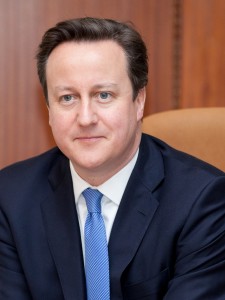
Tag: 2012

  • David Cameron – 2012 Speech on Crime and Justice

    davidcameron

    Below is the text of a speech made by the Prime Minister, David Cameron, on crime and justice on Monday 22nd October 2012.

    Two weeks ago, I spoke about this Government’s mission: to build an aspiration nation, where those who work hard can get on – and no one gets left behind. A stronger private sector. Welfare that works. Schools that teach.

    Today I want to talk about another, critical, part of helping people to rise up and that is confronting the crime and bad behaviour that holds so many people down.

    Go to some neighbourhoods in our country and you can feel that aspiration is dead. Children learning from a young age that life is about surviving, not thriving. Gang leaders as role models, drug dealers as career advisors. This doesn’t just matter to the elderly lady with five bolts on her door or the woman terrified to walk home in the dark. It matters to all of us.We will not rise as a country if we leave millions behind and write off whole communities.

    So today I want to tell you about our approach to crime and justice – and the bold, unprecedented action we’re taking.

    For many people, when it comes to crime I’m the person associated with those three words, two of which begin with ‘H’, and one of which is ‘hoodie’; even though I never actually said it. For others, I’m the politician who has argued frequently for tough punishment. So do I take a tough line on crime – or a touchy-feely one?

    In no other public debate do the issues get as polarised as this. On climate change you don’t have to be in denial on the one hand or campaigning to get every car off the road on the other. Life isn’t that simple – so government policy isn’t that simple. And yet with the crime debate, people seem to want it black or white.

    Lock ‘em up or let ‘em out. Blame the criminal or blame society. ‘Be tough’ or ‘act soft’.

    We’re so busy going backwards and forwards we never move the debate on.

    What I have been trying to do – in opposition and now in government – is break out of this sterile debate and show a new way forward: tough, but intelligent. We need to be tough because the foundation of effective criminal justice is personal responsibility.

    Committing a crime is always a choice. That’s why the primary, proper response to crime is not explanations or excuses, it is punishment – proportionate, meaningful punishment.

    And when a crime is serious enough, the only thinkable punishment is a long prison sentence. This is what victims – and society – deserve.

    Victims need to know the criminal will be held to account and dealt with. And the ‘society’ bit really matters: retribution is not a dirty word, it is important to society that revulsion we all feel against crime is properly recognised. But punishment is what offenders both deserve and need, too. It says to them: “You are adults. Your actions have consequences.”

    To treat criminals as victims – to say they had no choice – is to treat them like children. I firmly believe in their right to be treated as adults, with the responsibility to carry the consequences of their actions. But that’s not the whole story.

    Just being tough isn’t a successful strategy in itself. Come with me to any prison in this country. There you’ll meet muggers, robbers, and burglars. But you’ll also meet young people who can’t read, teenagers addicted to drugs, people who’ve never worked a day in their whole lives.

    These people need help so they can become part of the solution and not remain part of the problem. Recognising this isn’t soft, or liberal. It’s common sense.

    We’ll never create a safer society unless we give people, especially young people, opportunities and chances away from crime. Prevention is the cheapest and most effective way to deal with crime – everything else is simply picking up the pieces of failure that has gone before. That’s part of what I mean by being intelligent as well as tough.

    Not just saying what people want to hear, not playing to the gallery, but thinking hard about dealing with the causes of crime as well as the fall-out. And today, being intelligent has got to mean something else too. Achieving our ambitions when there is much less money than there used to be. The politics of the blank cheque are well and truly over.

    The only way to achieve our ambitions is reform – radical, intelligent reform. So much of what went wrong in public services previously wasn’t because the money was missing, it was because the methods were wrong.

    Top-down, bureaucratic, centralising. Judging every service by the money you put in rather than by the service you got out.

    Our whole reform agenda is about turning this on its head.

    Going from big government to big society; more choice, more competition, more openness. You see it in welfare providers paid by results and hospitals publishing their results online.

    Some say, this is fine in welfare, fine with hospitals or fine with schools, but it won’t work in criminal justice. They think when it comes to keeping people safe, we’ve got to stick with the old, state-heavy approach. I believe that’s wrong.

    It was the old approach that gave us police stuck behind desks filling in forms. It left us with the criminal justice system chasing ridiculous, unhelpful targets. And it left us with sky-high re-offending rates.

    So we are bringing the logic of our public service reform agenda – transparency, payment by results, accountability – to transform criminal justice too. Because every part of that system needs change. Every part needs tough, but intelligent reform.And today, I want to explain how that’s working, right through the criminal justice system.

    Let’s start with the police. I am profoundly grateful for the job our police officers do.

    Years ago I used to run near Wormwood Scrubs every morning, and on my route there was a small stone monument. It said: ‘Here fell PS Christopher Head; PC Geoffrey Fox; PC David Wombwell, 12th August 1966’; and it was a daily reminder of this single truth: Police officers put on their uniform in the morning, kiss their children goodbye, and leave home having no idea about the dangers they might face.

    Just a few weeks ago, Police Constables Nicola Hughes and Fiona Bone answered a 999 call without knowing where it would lead. And though PC Ian Dibell was off-duty, he too could not have imagined what he would come up against. These people were professional, brave, instinctively selfless. The same can be said of thousands of police officers who work on our streets, protecting our families day-in, day-out.

    All of us owe them our thanks. All of us owe them our respect. And for all those who wear the uniform, it’s essential we get policing right. For years police officers were held back from doing the job they signed up for. We had targets like the ‘Offences Brought to Justice Target’ which encouraged police to chase easy wins.

    I remember being out on the beat with a police officer in South Wales and he felt he had to book a boy for taking some money from his mum’s purse – rather than just a stiff talking to down at the nick. That’s what the culture and targets demanded. He knew it was ridiculous. Everyone knew it was ridiculous. But the targets forced his hand. And then there was the out-of-control bureaucracy.

    Police officers spending almost half their shift on paperwork. So Theresa May is doing what so many Home Secretaries before her shied away from; fundamentally reforming the police and allowing them to get on with the tough, no-nonsense policing that they want and we want.

    We’ve scrapped all the targets and given them a single, core objective – to cut crime.We’ve ended micro-management from Whitehall and returned professional discretion to local forces.

    The notion that you had to fill out a form every time you stopped someone on the street – it’s gone.The endless looking up for instruction from some official in the Home Office – it’s over. And we’re going further; reforming police pay so it rewards crime-fighting, not just time served; and changing the leadership of the police too.

    Our reforms are comprehensive, they are sophisticated – and they are working.

    HMIC – the independent regulator – found that even at a time of tight budgets, the frontline is being protected. The number of neighbourhood police officers is up. Public satisfaction is up and crime is down. And if you like official figures, here they are.

    Even though in real terms, central police spending cuts are around 20 per cent over four years, the latest figures – out at the end of last week – show that crime is down 6 per cent in the last year.

    We can have tough policing when money is tight. And we’re bringing intelligent reform too. More accountability and transparency to put people in charge of policing. That’s what Police and Crime Commissioners are all about.

    These are big, important elections coming up. It’s the first time they are being held. People are going to be voting in their own law and order champion: One person who sets the budgets; sets the priorities; hires and fires and Chief Constable; bangs heads together to get things done.

    Some people are saying that no one’s bothered, that people aren’t interested in how we fight crime in their area. I don’t agree. I say look at crime maps and you come to a conclusion.

    They said no one would care about transparency – but this website has had 500 million hits and counting.

    The more high profile Police and Crime Commissioners get, the more engaged people will be – and the more pressure they’ll put on them to deliver tough local policing.

    So my message for these elections is clear: If you want more tough policing, you can get it.If you want coppers who are on the beat, on your street, cracking down on anti-social behaviour, focussing on the things you care about, then don’t just talk about it, get out on November 15th and vote for it.Intelligent reform is happening at the national level too, with the National Crime Agency.

    This is, if you like, Britain’s version of the FBI; recognising that there are some highly serious and organised crimes – human trafficking, money laundering, drug rings – that need the very best in terms of national co-ordination.

    The next part of the criminal justice chain is prosecution and here again we need tough, but intelligent reform.

    Too often the story’s the same. Someone gets arrested in the middle of the night. They’re bailed. It takes months before they appear in court. Then the day dawns and they’ve disappeared.

    It’s why you get whole walls of police stations papered with pictures of people missing on bail. But we saw with the riots last summer it doesn’t have to be like that. Justice was swift and it was tough – and we want that all the time.

    So we’re opening our courts earlier in the morning, in the evenings and weekends; because crime doesn’t keep normal working hours and neither should our criminal justice system. Already this is happening in 48 courts across the country.

    Another innovation is video links between police stations and courts. If someone is arrested, the police can flick the switch on a monitor and get them in front of a magistrate in hours rather than months. So no bail to jump and no cracks to slip through.

    And we need to toughen up the process in court too.

    Today, once the verdict is passed, the defendant can stand in the witness box and make their case for a more lenient sentence; but too often the victim doesn’t get a say. The one person whose life has been torn apart is kept silent.

    We want to give more victims the chance to be heard – to say how their life has been affected by the crime. And to back that up we will be appointing a new Victims’ Commissioner to make sure that victims’ voices are heard not just in court but right at the heart of government.

    We need intelligent reform, too, to open up our whole justice system. Today it’s all too closed, opaque, unaccountable.

    We hear second hand what sentence a criminal is getting. Wouldn’t it be better if we could hear and watch the result and the reasoning – directly?

    So we are legislating to start televising the sentences that Judges deliver, so that people can hear why a decision has been reached directly from the Judge.

    This will start in the Court of Appeal next year, and in the long-term we want to see this happening in the Crown Court too.

    When those criminals are convicted, we need to make sure the punishment fits the crime. At every single level of sentence this Government is getting tougher.

    Where fines used to be limited, with us magistrates will be able to impose unlimited fines. While the maximum compensation that criminals used to be liable for was £5000, we are uncapping it. If you cost someone £10,000 or £20,000, you should potentially have to pay that back.

    And we are toughening up community sentences too.

    Having a monthly meeting with your probation officer is hardly a punishment – so tomorrow in Parliament, something important is happening. We are laying amendments to the Crime and Courts Bill, making sure that every community sentence contains an element of punishment.

    And this tough change is aligned with an intelligent reform.

    We’re introducing new GPS satellite tagging that can pin-point exactly where offenders are. Making it literally impossible to duck under the radar.

    If you’re on a community sentence, you will be supervised. You will be properly punished. And you will be forced to complete that sentence.Of course, for many crimes, only one form of punishment will do – and that is prison.

    I want to be clear. I want to see people who ruin the lives of others – rapists, murderers, muggers – behind bars, and kept there for a long time.

    I’ve always supported the principle of the life sentence.

    You do something heinous – and for the rest of your life you are either in prison or on licence and subject to recall if you step out of line. I don’t believe that’s old-fashioned, it is vital, so we are increasing life sentences.

    A new two strikes and you’re out rule means that if you commit two serious sexual or violent offences, you get life. Not at the Judge’s discretion – but mandatory life.

    We are creating a new maximum sentence of life for those who import guns and death onto our streets. And we are looking too at toughening up knife sentences, because to me a caution for carrying a knife just does not seem enough.And for anyone sentenced to a spell in prison, there will be space in prison. There will be no arbitrary targets for our prison population.

    The number of people behind bars will not be about bunks available, it will be about how many people have committed serious crimes.

    Once they are inside prison, we’re toughening up the regime.

    Too many prisoners see out their time by just lying on their beds for hours and hours, watching TV, doing nothing, learning nothing. So we are turning those prisons from places of idleness into places of work.

    Like HMP Manchester, where prisoners work in the laundry or printing workshop for up to 40 hours a week. I saw myself today a number of programmes where it is possible for prisoners to work and earn.

    This is about fit and able people getting out of their cells, having a structured day, earning respect and earning privileges. And when they earn money, we’ll be making them pay a chunk of it back to their victims too.

    So on the punishment of criminals – I don’t want there to be any doubt that we will be tougher. But it’s not good enough just being tough, locking people up and thinking: that’s it.

    We need to be intelligent too, about what happens to these people during and after their punishment. And here’s why.At the moment, six out of ten of those leaving jail are reconvicted within two years. If you think that figure’s depressing, try this.

    While those in the care system account for just one per cent of children, a quarter of those in prison were in care as children.

    Half the prison population say they have no qualifications. We have got to give these people a chance. Not just for their sake, but for ours. To stop that revolving door that sucks millions of pounds of public money in and spits thousands of unreformed offenders out.

    We’ve tried just banging people up and it’s failed.

    We’ve tried letting people out with £46 in their pocket and no help on the outside and guess what? They’ve gone back to their old ways.

    So I’m not going to try and out-bid any other politician on toughness, saying “let’s just bang them up for longer, let’s have more isolation, and once they’re out they’re on their own.”

    I say: let’s use that time we’ve got these people inside to have a proper positive impact on them, for all our sakes.

    It’s not a case of ‘prison works’ or ‘prison doesn’t work’ – we need to make prison work. And once people are on the outside, we’ve got to stick with them, and give them proper support, because it’s not outer space we’re releasing these people into – it’s our streets, our towns, among our families and our children.

    That’s why this Government is engaged in what can only be described as a rehabilitation revolution – led by the new Justice Secretary Chris Grayling.

    His main, driving mission is this: to see more people properly punished, but fewer offenders returning to the system.

    To achieve that, we’re saying to charities, companies and voluntary organisations – come and help us rehabilitate our prisoners. Give offenders new skills. Educate them.

    If they’ve been in a gang, send a reformed gang member to meet them at the prison gates and take them under their wing. If they’re on drugs, try the latest techniques to get them clean.

    Do whatever it takes to get these people back living decent, productive lives. We will pay you for that; but – and it is a major but – once again the payments will depend on results.

    We’re going to pay people by the lives they turn around. Just think of what this means for the taxpayer.

    When this Government came to power we were spending £40,000 a year (per person) just on banging people up. With payment by results, your money goes into what works: prisoners going straight, crime coming down, our country getting safer.

    It’s such a good idea I want to put rocket boosters under it; indeed today I have an announcement to make.

    By the end of 2015, I want to see payment by results spread right across rehabilitation. Of course, there will be some high-risk offenders for whom this is not appropriate but this approach should be the norm rather than the exception. And I want to see rehabilitation reach more of those who would benefit from it.

    Today, rehab just goes to those who have been inside for a year or more. But that misses all those who go in for shorter sentences yet re-offend time and time again. So I want to look at making them part of the rehabilitation revolution too.

    I’ve touched on all the parts of the criminal justice chain, from policing to prison but where we need the most intelligent reform is prevention: stopping all this happening in the first place.

    The riots last summer were a stark warning that parts of our society are broken. They told us we need to intervene much earlier in the story, before the jail cell, before the robbery, before the petty theft.

    As the CSJ has argued so passionately, having a strong family is absolutely vital to people’s life chances and we believe that too. Strengthening families, strengthening partnerships, strengthening marriages, encouraging commitment are all part of our agenda.It’s why we’re shaking up fostering and adoption, ending the scandal that left children languishing in the care system for years.

    It’s why we’ve re-focussed Sure Start centres – with more parenting classes, reaching out to the parents who really need support. And it’s why we’re bringing new help for the most 120,000 troubled families, the ones that live in a constant cycle of poverty, addiction and hopelessness.

    For these families we’re bringing in professional, targeted help to get them into work, get the kids in school, help bring some order to their chaotic lives. And prevention means something else.

    Some of those rioters last summer showed a complete indifference to the rules. We need to make clear to young people that respect is not something you can just expect, it’s something you earn.

    So we’re bringing real discipline to schools – with teachers having more power to use reasonable force and take control of their classroom. And crucially, we’re focusing on those children who have been excluded from school.

    Some Pupil Referral Units have been little more than a nursery class before the juvenile detention centre. So we’re turning failing PRUs into Academies, just as we are with failing schools, so that powerful, effective sponsors can bring the same radical improvements to them, as to some of the most challenged schools in the country.

    On the other side of the coin we’re doing more to encourage good behaviour. National Citizen Service is about showing young people that they have responsibilities as well as rights, that they have a stake in our society.

    Tens of thousands took part this year, and it is a personal passion of mine that in the coming years this should become a permanent part of the landscape in our country, a rite of passage that every teenager in every school goes through.

    And all this fits into the bigger, broader picture of what this Government’s doing.

    Whether it’s changing welfare so there’s no more something for nothing or putting the law on the side of victims and not criminals, we are re-scoring that line between right and wrong; between good behaviour and bad.

    So I don’t want there to be any doubt how serious this Government is about law and order. Yes, we are tough – but we’re being intelligent too.

    Not just giving police more power but giving people more power.

    Not just speeding up our courts but opening them up.

    Not just punishing but rehabilitating too.

    By taking this approach we can cut crime even while cutting budgets. We can show law-abiding people that finally, the system is on your side.

    And we can go to all those communities where life felt like a dead-end. Where crime felt inevitable; and we can restore hope and opportunity there too.

    This is our goal. An aspiration nation. Where no one is left behind. And we are absolutely determined to achieve it.

  • David Cameron – Speech on the European Council

    davidcameron

    Below is the text of a Parliamentary statement made by the Prime Minister, David Cameron, to the House of Commons on Monday 22nd October 2012.

    With permission, Mr Speaker, I would like to make a statement on last week’s European Council.

    The European Union faces difficult choices in the coming months to meet tough economic challenges and to deal with the problems in the Eurozone.

    There were no landmark decisions at this Council but there was some limited progress on both issues.

    Mr Speaker, we are in a global economic race.

    All European economies need to become more competitive, expanding the private sector, reforming welfare and improving education.

    In terms of action at the EU level, that means: lifting the burdens on businesses, completing the single market and taking forward trade deals with the biggest economies and the fastest growing countries in the world.

    I have consistently promoted these solutions and will continue to do so.

    And at the Council we made some good progress.

    On deregulation, I joined with others to secure a new agreement that specifically refers to withdrawing legislative proposals from Brussels that stifle our businesses.

    Of course, we now need to see specific actions, but it is worth noting that the conclusions refer to the “intention to withdraw a number of pending proposals and to identify possible areas where the regulatory burden could be lightened”

    On completion of the single market, as I reported in June there is a proper plan with dates and actions for completing the market in energy, services and digital.

    These are reflected in both the Conclusions’ text and in the document issued with the Growth Compact.

    Again it is vital that this plan is followed through to secure jobs and growth.

    On trade, the Council agreed an ambitious agenda to create 2 million jobs across Europe.

    This includes completing free trade deals with Canada and Singapore in the coming months and starting negotiations with the US next year on a comprehensive transatlantic trade and investment agreement.

    And we made some new progress on launching negotiations with Japan “in the coming months.”

    This deal could increase EU GDP by 42 billion euros.

    Let me turn to the Eurozone.

    Britain is not in the Eurozone – and we’re not going to be joining the Eurozone.

    But it is in our national interest that the uncertainty surrounding the Eurozone comes to an end.

    I have argued for some time that a working Eurozone needs a working banking union.

    It is one of the features a successful single currency needs.

    You don’t need a banking union because you have a single market you need it because you have a single currency.

    So Britain should not – and will not – be part of it.

    Britain’s banks will be supervised by the Bank of England, not the ECB.

    And British taxpayers will not be guaranteeing or rescuing any Eurozone banks.

    But we do need Eurozone members to get on and form a banking union.

    And at this Council I joined those arguing for progress to be made on the plan announced in June.

    Put simply, it is not enough having a banking union stripped of the very elements like mutualised deposit guarantees, a common fiscal backstop and a framework for rescuing banks that are needed to break the dangerous link in the Eurozone between sovereign debt problems and the stability of Eurozone banks.

    But because not all countries outside the Eurozone will want to join such a banking union it’s also essential that the unity and integrity of the single market is fully respected.

    The organisation that currently ensures a level playing field for banking within the single market is the European Banking Authority.

    We need to make sure that it will continue to function properly, ensuring fair and effective decision making.

    And this is specifically recognised in the Conclusions.

    More broadly, as Eurozone countries take steps to deepen their economic and monetary union, I also secured an explicit commitment in the Conclusions that the final report and roadmap in December will include concrete proposals to ensure that the integrity of the single market is respected.

    Finally, the next Council in November will discuss the financial framework for Europe between 2014 and 2020.

    Mr Speaker, I have not put in place tough settlements in Britain in order to go to Brussels and sign up to big increases in European spending.

    I don’t believe that German voters want that any more than British voters and that’s why our governments have led the argument in Europe for fiscal restraint.

    So I put down a marker that we need a rigorous settlement.

    As the letter signed in December 2010 by a number of European leaders said given the tough spending settlements that all Member States have had to pursue in their own countries -and I quote – “payment appropriations should increase, at most, by no more than inflation over the next financial perspectives.”

    On foreign affairs, this Council, led by Britain, once again discussed further restrictive measures on the Syrian regime and made clear to Iran that we will increase the pressure if there isn’t progress on the nuclear dossier.

    So Mr Speaker, making our economies competitive, dealing with uncertainty in the Eurozone, keeping the EU budget under proper control and making sure the EU speaks with a strong and united voice on the key international challenges – this is our agenda.

    And I commend this statement to the House.

  • David Cameron – Speech at Britannia Naval College

    davidcameron

    Below is the text of a speech made by the Prime Minister, David Cameron, at Britannia Naval College on Wednesday 17th October 2012.

    It is a huge privilege to be here with you today. I have spoken at passing out parades at Sandhurst, and at Cranwell so I suppose you could say I’ve left the senior service and the best till last.

    As Prime Minister, I get to spend quite a lot of time with our Armed  Forces. From visiting bases at home and abroad to meeting our top officers for briefings as part of our National Security Council. And I can just tell you this, there is nothing that makes me more proud of our country, of what we stand for in the world or what we’re capable of doing, than our Armed Forces.

    You are the pride of Britain and to share this moment of celebration with you today is very  special.  The 68 of you passing out today come from nine countries; not just from Britain, but from Saudi Arabia, Iraq, Yemen and the United Arab Emirates, from Barbados, the Bahamas, Kuwait and Jordan.  And we are very proud that you’ve all chosen to come here for your training.

    There will of course be huge challenges ahead, but as you leave here today I hope that you will take three things with you. First, pride in what you’ve achieved. Second, pride in the navy you are going to join. And third, pride in those things you are going to do in the future.

    Let me take each in turn. You’ve been through 30 weeks of the toughest and best training that anyone could have.  You’ve done fitness training, weapons training, navigation, seamanship, leadership, boat handling. You’ve proved yourselves in challenging environments, from braving the elements of Dartmoor to deployment at sea in HMS Illustrious and HMS York.

    Outwardly, you are fitter, leaner and stronger. Inwardly, more confident, more sure of your abilities and your own limits.  You have succeeded where other could not.  A third of those who sit the Admiralty interview board don’t get accepted in the first place.  Nearly a tenth of those who pass in, don’t pass out.  So your success is a great testament to your strength and to your endurance.  And you should take great pride in that.

    The second thing I want you to take away is pride in the navy you’re going to join. For the Brits amongst you, you are quite simply becoming part of the navy with the greatest history in the world.  The Royal Navy is absolutely fundamental to our security as an island nation, and it is a vital part of our heritage. As Viscount Cunningham famously said at the Battle of Crete in 1941, ‘It takes three years to build a ship; it takes three centuries to build a tradition.’

    You will stand on the shoulders of those that have come before you, those who saved Britain from invasion, who swept the evil of slavery off the high seas, who’ve won great victories in every corner of the globe, and those who defeated Hitler and preserved our freedom. Our ships, submarines and naval air squadrons carry battle honours that literally span every part of the planet.  In my generation alone we have sent the Navy to the Falklands, to the Gulf twice, and recently to Libya, and not forgetting the constant patrolling of the nuclear deterrent, the South Atlantic patrols, the countering of Somali piracy, and capacity building across the world.

    A shell casing from HMS Liverpool sits in my office in Number 10 Downing Street. It was the last fired in anger in the Libya campaign, and it is a permanent reminder to me of the Royal Navy and its work to defend freedom.  Put simply, the words carved into the front of this imposing building remain as meaningful today as they were 350 years ago.  It is on the Navy, under the providence of God, that our wealth, prosperity and peace depend.

    Now that leads me to the third thing I want you to take away,  pride in what you’re going to do.  The challenges you face over the coming years may place demands on you experienced by few others of your age in the world today. Because, despite the technology of today, being in the armed forces is an intensely human business.  It is based on personal relationships and the ability of people like you to lead your fellow men and women, even in the face of danger. And there is no greater honour that a nation can bestow than the trust to lead your fellow men and women.  That is the task that you will have. Your training here has given you the best possible start.  You will need to continue to develop all these skills and more.  But I want you to be proud of the difference that you can make.  Quite simply, you will be helping to defend our way of life, and there is no greater calling than that.

    In return for all you will give to your country, I want your country to have pride in you. As a Government, we will do everything we can to support you, to look after your families, and to rebuild the  Military Covenant that is so important to this country and, I believe, everyone who lives in it.  People expect us to do the right thing by you, and we must.

    But today is about you and what you will do, about your service and your leadership. So let me finish with the words of His Majesty King George VI, engraved on a plaque in the college next to his statue: ‘Nobody can lead unless he has the gift of vision and the desire in his soul to leave things in the world a little better than he found them. He will strive for something which may appear unattainable but which he believes in his heart can one day be reached, if not by him, by his successors if he can help to pave the way.’

    What you will do is not just important for our country today but for generations to come. I wish you all the very best for the future and, once again, congratulations on this very, very special day.  Thank you.

  • David Cameron – 2012 Address to the United Nations General Assembly

    davidcameron

    Below is the text made by the Prime Minister, David Cameron, to the United Nations General Assembly on Wednesday 26th September 2012.

    Mr President, Deputy Secretary General, Excellencies, Distinguished Delegates, Ladies and Gentlemen.

    I am proud that this year Britain welcomed the world to the Olympic and Paralympic games and put on a great display showing that while we may only have the 22nd largest population, we can roll out one of the warmest welcomes in the world.

    I am honoured too that in this coming year I have been asked to co-chair the High Level Panel to build one of our greatest achievements with the Millennium Development Goals.

    Britain takes this very seriously.

    I am convinced that we need to focus more than ever on the building blocks that take countries from poverty to prosperity. The absence of conflict and corruption. The presence of property rights and the rule of law. We should never forget that for many in the world the closest relative of poverty is injustice. Development has never been just about aid or money, but I am proud that Britain is a country that keeps its promises to the poorest in the world.

    Mr President, a year ago I stood here and argued that the Arab Spring represented an unprecedented opportunity to advance peace, prosperity and security.

    One year on, some believe that the Arab Spring is in danger of becoming an Arab Winter.

    They point to the riots on the streets, Syria’s descent into a bloody civil war, the frustration at the lack of economic progress and the emergence of newly elected Islamist-led governments across the region.

    But they are in danger of drawing the wrong conclusion.

    Today is not the time to turn back – but to keep the faith and redouble our support for open societies, and for people’s demands for a job and a voice.

    Yes, the path is challenging. But democracy is not – and never has been – just about simply holding an election. It is not one person, one vote, once. It’s about establishing the building blocks of democracy, the independence of the judiciary and the rule of law, with the majority prepared to defend the rights of the minority, the freedom of the media, a proper place for the army in society and the development of effective state institutions, political parties and wider civil society.

    I am not naive in believing that democracy alone has some magical healing power. I am a Liberal Conservative, not a Neo-Conservative. I respect the different histories and traditions that each country has. I welcome the steps taken in countries where reform is happening with the consent of the people.  I know that every country takes its own path. And that progress will sometimes be slow.

    Some countries have achieved stability and success based on tradition and consent. Others have endured decades in which the institutions of civil society were deliberately destroyed.

    Political parties banned. The free media abolished. The rule of law twisted for the benefit of the few. We cannot expect the damage of decades to be put right in a matter of months.  But the drive for opportunity, justice and the rule of law and the hunger for a job and a voice are not responsible for the problems in the region. Quite the opposite.

    The building blocks of democracy, fair economies and open societies are part of the solution, not part of the problem. And we in the United Nations must step up our efforts to support the people of these countries as they build their own democratic future. Let me take the key arguments in turn.

    First of all, there are those who say there has been too little progress, that the Arab Spring has produced few tangible improvements in people’s lives. This isn’t right. Look at Libya since the fall of Gaddafi. We have seen elections to create a new Congress.

    And now plans to integrate armed groups into the national police and army. None of this is to ignore the huge and sobering challenges that remain.  The murder of Ambassador Chris Stevens was a despicable act of terrorism. But the right response is to finish the work Chris Stevens gave his life to. And that’s what the vast majority of Libyans want too.

    As we saw so inspiringly in Benghazi last weekend, they are taking to the streets in their thousands, refusing to allow extremists to hijack their chance for democracy. The Arab Spring has also brought progress in Egypt where the democratically elected President has asserted civilian control over the military, in Yemen and Tunisia where elections have also brought new governments to power and in Morocco where there’s a new constitution – and a Prime Minister appointed on the basis of a popular vote for the first time. And even further afield, Somalia has also taken a vital step forward by electing a new President.

    So there has been progress. And none of it would have come about without people standing up last year and demanding change and this United Nations having the courage to respond.

    Second, there is the argument that the removal of dictators has started to unleash a new wave of violence, extremism and instability. Some argue that in a volatile region only an authoritarian strong man can maintain stability and security. Or even that recent events prove that democracy in the Middle East brings terrorism not security and sectarian conflict not peace. Again I believe we should reject this argument.

    I have no illusions about the danger that political transition can be exploited by violent extremists. I understand the importance of protecting people and defending national security.

    And Britain is determined to work with our allies to do this. But democracy and open societies are not the problem.

    The fact is that for decades, too many were prepared to tolerate dictators like Gaddafi and Assad on the basis that they would both keep their people safe at home .and promote stability in the region and the wider world. In fact, neither was true. Not only were these dictators repressing their people, ruling by control not by consent, plundering the national wealth and denying people their basic rights and freedoms, they were funding terrorism overseas as well.

    Brutal dictatorship made the region more dangerous not less. More dangerous because these regimes dealt with frustration at home by whipping up anger against their neighbours, the West and Israel. And more dangerous too, because people denied a job and a voice were given no alternative but a dead end choice between dictatorship or extremism.

    What was heartening about the events of Tahrir Square was that the Egyptian people found their voice and rejected this false choice. They withheld their consent from a government that had lost all legitimacy. And they chose instead the road to a more open and fair society. The road is not easy – but it is the right one and it can make countries safer in the end.  Next, there are those who say that, whatever may have been achieved elsewhere, in Syria, the Arab Spring has unleashed a vortex of sectarian violence and hatred with the potential to destroy the region.

    Syria does present profound challenges. But those who look at Syria today and blame the Arab Spring have got it the wrong way round. You can not blame the people for the behaviour of a brutal dictator. The responsibility lies with the brutal dictator himself. Assad is today inflaming Syria’s sectarian tensions, just as his father did as far back as the slaughter in Hama 30 years ago.

    And not only in Syria.  Assad has colluded with those in Iran who are set on dragging the region in to wider conflict. The only way out of Syria’s nightmare is to move forward towards political transition and not to give up the cause of freedom.The future for Syria is a future without Assad. It has to be based on mutual consent as was clearly agreed in Geneva in June.

    But if anyone was in any doubt about the horrors that Assad has inflicted on his people, just look at the evidence published by Save the Children this week; schools used as torture centres, children as target practice.  A 16 year old Syrian called Wael who was detained in a police station in Dera’a said: “I have seen children slaughtered. No, I do not think I will ever be ok again…If there was even 1% of humanity in the world, this would not happen”.

    The blood of these young children is a terrible stain on the reputation of this United Nations. And in particular, a stain on those who have failed to stand up to these atrocities and in some cases aided and abetted Assad’s regime of terror. If the United Nations Charter is to have any value in the 21st Century we must now join together to support a rapid political transition. And at the same time no-one of conscience can turn a deaf ear to the voices of suffering.  Security Council Members have a particular responsibility to support for the UN appeal for Syria.

    Britain, already the third biggest donor, is today announcing a further $12 million in humanitarian support, including new support for UNICEF’s work helping Syrian children. And we look to our international partners to do more, as well.

    Of course the Arab Spring hasn’t removed overnight the profound economic challenges these countries face. Too many countries face falling investment, rising food prices and bigger trade deficits. But it’s completely wrong to suggest the Arab Spring has created these economic problems.  It’s a challenging time for the world economy as a whole.  And there was never going to be an economic transformation overnight, not least because far from being successful, open, market-based economies, many of these countries were beset by vested interests and corruption, with unaccountable institutions.  And this created a double problem.

    Not just fragile economies, but worse, people were told they had experienced free enterprise and open markets – when they had experienced nothing of the sort.
    We must help them unwind this legacy of endemic corruption, military expenditure they can’t afford, natural resources unfairly exploited – in short, mass kleptocracy that they suffered under for so long.

    And while I’m on the subject of stolen assets, we also have a responsibility to help these countries get back the stolen assets that are rightfully theirs, just as we have returned billions of dollars of assets to Libya.  It is simply not good enough that the Egyptian people continue to be denied these assets long after Mubarak has gone.

    Today I am announcing a new British Task Force to work with the Egyptian government to gather evidence, trace assets, work to change EU law and pursue the legal cases that will return this stolen money to its rightful owners the Egyptian people.

    Finally, and perhaps most challenging of all for Western countries like mine, is the argument that elections have simply opened the door to Islamist parties whose values are incompatible with truly open societies. My response to this is clear.  We should respect the outcome of elections. But we should not compromise on our definition of what makes an open society. We should judge these Islamists by what they do. The test is this.

    Will you entrust the rights of citizenship to your countrymen and women who do not share your specific political or religious views? Do you accept that – unlike the dictators you replaced – you should never pervert the democratic process to hold onto power if you lose the consent of the people you serve? Will you live up to your commitments to protect the rule of law for all citizens, to defend the rights of Christians and minorities and to allow women a full role in society, in the economy and in politics? Because the truth is this: you can not build strong economies, open societies and inclusive political systems if you lock out women. The eyes of the world may be on the Brothers, but the future is as much in the hands of their mothers, sisters and daughters.

    Holding Islamists to account must also mean that if they attempt to undermine the stability of other countries or if they encourage terrorism instead of peace and conflict instead of partnership, then we will oppose them. That is why, Iran will continue to face the full force of sanctions and scrutiny from this United Nations until it gives up its ambitions to spread a nuclear shadow over the world.  And it is also why we will not waver from our insistence that Hamas gives up violence.  Hamas must not be allowed to dictate the way forward.

    Palestinians should have the chance to fulfil the same aspirations for a job and a voice as others in region and we support their right to have a State and a home.  And Israelis should be able to fulfil their own aspirations to live in peace and security with their neighbours.

    So, of course there are challenges working with governments that have different views and cultural traditions. But there’s a fundamental difference between Islam and extremism.

    Islam is a great religion observed peacefully and devoutly by over a billion people. Islamist extremism is a warped political ideology supported by a minority that seeks to hijack a great religion to gain respectability for its violent objectives. It’s vital that we make this distinction. In Turkey, we see a government with roots in Islamic values, but one with democratic politics, an open economy and a responsible attitude to supporting change in Libya, Syria and elsewhere in the region. I profoundly believe the same path is open to Egypt, Tunisia and their neighbours.  And we must help them take it. Democracy and Islam can flourish alongside each other. So let us judge governments not by their religion – but by how they act and what they do. And let us engage with the new democratic governments in Egypt, Tunisia and Libya so that their success can strengthen democracy not undermine it.

    Mr President, there is no doubt that we are in the midst of profound change and that many uncertainties lie ahead. But the building blocks of democracy, fair economies and open societies are part of the solution not part of the problem. Indeed, nothing in the last year has changed my fundamental conviction.

    The Arab Spring represents a precious opportunity for people to realise their aspirations for a job, a voice and a stake in their own future.

    And we, in this United Nations, must do everything we can to support them.

  • David Cameron – 2012 Speech on Railway Investment

    davidcameron

    Below is the transcript of the speech made by the Prime Minister, David Cameron, in Birmingham on 16th July 2012.

    PRIME MINISTER

    Good morning everyone, and welcome. We got you here to help the headline writers with sharing platforms, minding gaps, trains on track and I am sure you will think of some others; no, the real reason for being here is that this is the next stage in the biggest investment in our rail network since Victorian times.

    Already as a government, we have put in place £18 billion of investment by March 2015. Today we are announcing accelerated investment by network rail beyond that, with over £9 billion of investment between 2014 and 2019. We are creating a fast, modern, reliable railway with more capacity and cleaner electric trains. It is about getting people, and of course freight, off the roads and onto the railways.

    While just ten miles of track were electrified in the last 13 years, we can commit to over 850 more miles of electric railway by 2019. By the time this is complete, around three quarters of all rail journeys in England and Wales will be made on electric trains. Here in Birmingham, we are already transforming New Street station with High Speed 2 to come as well. Today we are announcing more capacity and electric lines for the region.

    There is good news for Wales, where we are committing to electrify the line all the way to Swansea and into the Welsh valleys. In the Midlands I can announce that we are electrifying the midland main line, from Sheffield to London. This has been talked about for years, actually decades, but it is this government that has got the finance and is really getting things moving.

    In the North, we are committed to delivering the Northern Hub transformation, which will see a massive improvement in services between Liverpool, Manchester, Leeds and Sheffield.

    In the South East, as well as Crossrail – which is of course the biggest construction project anywhere in Europe – London and the South East will receive an extra £700 million to support the capital’s economy and allow an extra 120,000 commuter journeys every day.

    Heathrow airport will get a much needed direct connection to the West – again something that has been talked about a lot, which is now being delivered – so that trains from the West Country and Wales can reach the airport directly.

    There is more to come this week, with the Chancellor and Chief Secretary setting out plans to use the strength of the government’s balance sheet to support further investment in the country’s infrastructure. We can do this only because we have a credible deficit reduction plan that is trusted and allows us to invest for the long-term.

    I would argue that this is just one aspect of the long-term mission of this coalition government. Of course the coalition has come into question, some asking whether it has real momentum for the rest of this Parliament; others even asking whether it should end. I just want to say I am even more committed to making this coalition government work today than I was in May 2010 when Nick Clegg and I formed this government. I believe it has real purpose, a real mission.

    I do not just believe this because the world has become even more dangerous and difficult than 2010, although it undoubtedly has; switch on your television sets and you can see weak governments being buffeted by events and economic difficulties. It is vital that this government has the majority, has the decisiveness, and has the strength to keep our economy safe, to cut our deficit – which we have done by a quarter in two years – and to have all the drive that we need for economic growth in the years ahead.

    I would argue that as well as that clear justification, because of economic difficulties and uncertainties, there is also, I think, a huge momentum in this government behind the agendas that the Liberal Democrats and the Conservatives share.

    We are both absolutely committed to rebalancing our economy; it became too dependent on finance, on the South East, on the public sector and we need jobs and growth from the private sector that I think is absolutely vital. 800,000 new jobs in the private sector since May 2010; last year the best ever year for establishing new businesses in Britain, but frankly there is much more we need to do to rebalance. Both parties are committed to that.

    Both parties are also absolutely committed to driving aspiration and giving people life chances in our country by reforming education. We announced last Friday an extra 100 free schools; something governments of one party have never done, breaking open the state monopoly of education, providing great new schools, great new education for children, real rigour in terms of discipline, exam standards, helping people to achieve their potential.

    Another absolutely shared mission is what the Deputy Prime Minister calls ‘alarm clock Britain’, what I call being on the side of people who work hard and want to get on, is reforming welfare so that it actually pays to work rather than not to work. We have capped welfare; we are introducing universal credit so you are always better off in working and always better off if you work more.

    I also believe there is a shared agenda on making sure that Britain stands tall in the world. We will complete the united [indistinct] over the mission that we carried out with allies in Libya, which has resulted in the first free elections in that country for over four decades. We stand together for freedom and democracy in Syria. We back Britain’s expanded aid budget, to make sure that Britain has a moral purpose in the world but also to safeguard our interests.

    Those are just some of the areas I would mention where there is a great common interest, a driving mission, for this government. I would argue that we have achieved some things in two years that have eluded single party governments that have been in office for over a decade.

    We were always told, ‘You can’t reform public sector pensions’; we have, and we have cut that cost by almost a half. We are always told, ‘You can’t reform welfare’; we are well down that track. We have also grappled with difficult subjects like higher education reform, to make sure we can go on having well-funded universities that will serve our economy and young people in the future.

    There is much more to come on all of these agendas; we will be publishing a midterm review at the end of the summer, as we go into autumn, looking at the things we have achieved so far and also setting out the next goals and objectives of things this coalition government wants to achieve in the remainder of this Parliamentary term.

    I say this Parliamentary term, because that is what this government is for. I think it is important we have that fixed term, we have that fixed government; people know, the markets know, businesses know there is strong decisive government throughout this term.

    What has driven this government is a view that we need to get things done, a view that we need to safeguard the British economy in difficult times but above all that what we do is about the national interest. That is what drives the Deputy Prime Minister and me; that is what this government is all about; that is its foundation.

    I think today, with this big rail announcement, is yet another example of a long-term decision that will strengthen the British economy and also strengthen our society too.

  • Vince Cable – 2012 Why Africa Matters Speech

    vincecable

    Below is the text of a speech made by the Secretary of State for Business, Innovation and Skills, Vince Cable, on 8th October 2012 at Lagos Business School in Nigeria.

    It is a real privilege to start my visit in Lagos – a city which provides an impressive example of the entrepreneurship and the vibrancy of Nigerian/Sub-Saharan African economics.

    Perhaps I should start on a personal note, so that you know where I come from and also to reassure you that I am not just repeating the mantras of a visiting Minister but speak from conviction.

    I was last in Lagos on business visits in the mid 1990’s during the dark days of military rule, preparing a series of Nigerian scenarios for Shell as part of long-term planning. It hardly needs saying that the political and economic environment and outlook are now vastly better.

    One of my scarier episodes was making a presentation of these scenarios to General Abacha and his military high command at an economic summit in Abuja. One of my stories I called the Road to Kinshasa: essentially a parable of how Nigeria could end up if it continued in its, then, trends (and which would inevitably lead to Shell and the investors disengaging from the country). My scenario also described an altogether happier outcome in which political and economic reform unleashed a period of sustained growth – which I estimated at 6% per annum: perhaps a little conservative seen a decade and a half later.

    To be fair to the late President he listened politely and even burst into laughter when one of his Ministers – the finance minister – angrily interrupted me to say “there is no such thing as corruption in Nigeria”.

    These visits saddened me since I could see the wasted potential. Indeed, I have always been an optimist about African development since I first worked in post-colonial Africa in the mid 1960’s, in Jomo Kenyatta’s Kenya as a civil servant in the Finance Ministry. Africa then, had – to say the least – plenty of challenges. South Africa and Rhodesia were still under racist governments; Portugal’s colonial engine was intact; the Congo was a disaster area; Nigeria was beset by civil war; shiny new regimes in Ghana and Guinea were badly tarnished. A book by the French agronomist Rene Dumont, A False Start in Africa, captured the spirit of the time. Yet it was clear that there was also vast entrepreneurial energy amongst smallholder farmers and businessmen as a rapidly growing, young, educated generation wanted change.

    I later worked closely with people like Chief Emeka Anyaoku the inspirational and greatly respected Commonwealth Secretary General on the problems and potential of African development. In the last decade that potential has begun to be realised in many parts of the continent including Nigeria. One statistic alone would make any future investor sit up and take notice. There are over 40 million mobile phones in Nigeria.

    The Economist newspaper ran a cover story with the title ‘Africa – The Hopeless Continent’. That was 10 years ago. Today, this has been replaced by ‘Africa Rising’ (last December’s issues). During this time six of the world’s 10 fastest growing countries were African. In 8 of the past 10 years Africa has grown faster than east Asia. Nigeria has managed 8% growth recently. The IMF expects Africa and Nigeria specifically to grow by nearly 6% this year, even allowing for the knock on effect of the northern hemisphere’s slowdown. This is about the same as Asia. Looking beyond 2012 there is every reason to believe that these rates of expansion can be sustained despite the lingering effects of the 2008 global financial crisis and weak growth in richer countries.

    In contrast to past global downturns Africa has proved resilient this time around, experiencing both a smaller dip in growth and faster recovery. Indeed economic performance and prospects in sub-Saharan Africa have undergone a fundamental change since the mid 1990’s. Following a period of negative per capita growth between 1980 and 1995, sub-Saharan Africa has recoded an average increase in per capita GDP of close to 3% since 1995.

    Several factors explain this turnaround. The wave of democratisation has been accompanied by more coordinated economic policies, leading to more market-orientated, business-friendly economies and more budget discipline. This in turn has resulted in significantly lower debt burdens. Nigeria’s reforms to the budget especially have undoubtedly made a difference – it has one of the world’s lowest debt to GDP ratios in marked contrast to the debt crisis three decades ago which led to rescheduling and the IMF.

    As a result, Africa and Nigeria specifically have been better able to withstand the impact of the volatility we have seen in the global economy. High commodity prices and fewer links to the financial sector have certainly helped. Until recently resource rich countries likes Nigeria suffered from the so called ‘Dutch disease’ or ‘resource curse’ as oil wealth was wasted, and productive farming and industry were undermined by an over valued exchange rate. These problems remain but are less acute.

    Clearly western markets are facing uncertainty at the moment and it is possible that even the Asian markets may have peaked for now. Africa stands to benefit and Nigeria, if recent growth trends are maintained, will be Africa’s largest economy before 2020.


    The Business Enviroment

    Nevertheless, there is no room for complacency. As you are well aware the problems are vast. In Nigeria 100 million out of 160 million are still ‘extremely poor’ on any international comparative basis and unemployment is endemic. And while the entrepreneurial energy of at least this part of Nigeria is palpable, Nigeria ranks 133rd in the world for the ease of doing business. All this requires actions to boost infrastructure, increase transparency and strengthen legal protections, in order to expand trade and attract inward investment.

    The positive actions taken across Africa in response to the World Bank’s ‘Doing Business Index’, encompassing a number of areas such as business registration, land acquisition and tax reform are powerful symbols of that commitment.

    I welcome the Nigerian Government’s commitment to reform. Our government is also committed to working with Nigerian authorities to make the business climate here more attractive to investors. Improvements in power supply, transportation and legislation that protects business investment can make a real difference to Nigeria’s already impressive growth rates.

    The Petroleum Industry Bill is of particular significance for Nigeria. The bill has the potential to enhance transparency and accountability in the oil and gas sector. This would send out the strong message to international investors about Nigeria’s willingness to do business. It would also ensure that the Nigerian people can see how the natural wealth of their country is managed. However, this will only be achieved by a well-crafted bill that sets robust and transparent legal frameworks in place. The issue here is not what is good for the oil companies but what best helps the country maximise its potential. At present, even with recent recovery to 2 million barrels per day it is operating well below sustainable production levels.

    The Nigerian Government has also signalled its willingness to take a tough stand on corruption – the collaboration between our two countries to bring about the prosecution of James Ibori sent out a strong message that corruption will not be tolerated. The recent communique agreed between Nigeria and the UK reinforces our joint work in this regard.

    But the UK understand its responsibilities too: the UK bribery act sets out a zero tolerance policy on corruption and in part this is a message to UK investors that they must play by the rules in Africa and elsewhere.


    UK/Nigeria Bilaterial Relations

    This work is creating strong foundations that will enable Nigeria and the UK to build on the relationship that we already enjoy – politically, economically and culturally. Indeed in 2011 the UK’s exports of goods and service to Nigeria increased by 13% and trade overall grew by 35%. We are on track to meet our shared commitment to double trade to 8 billion by 2014 from 2010. Key sectors include petroleum and its associated product, industrial machinery, education, transport equipment and natural and manufactured gas. The business delegation that is accompanying me is active in these sectors.

    The UK wants to work with Nigeria and form productive partnerships. The Nigeria/UK supply chain engagement programme has brought together UK and Nigerian companies to grow local capacity and to support development of Nigeria’s hydrocarbon resources.

    This initiative has been successful as it was fully supported by Government and trade organisation stakeholders; Nigerian National Contact and Monitoring Board and PETAN (Petroleum Technology Association of Nigeria). UK companies have been able rapidly to expand the value and range of contracts by combining UK experience with local Nigerian capability. Larger UK companies including Wood Group, Invensys, Swagelok, Aker Solutions, Bel Valves, Fugro, have found main partners and supply chain companies to provide essential local sub contracting services and commodity supply to deliver expanded contracts. Many of the UK companies that have successfully located partners are SMEs that would otherwise find the time and cost to develop a market presence in Nigeria too challenging. So far, there have been 47 new partnerships between UK and Nigerian companies.

    In addition, there are other areas where we can build new links for our mutual benefit. These include agriculture, ICT and security.


    International Students

    One area where the UK has a particular expertise and long association with Africa is in the area of education and skills. I would like to say a little more about education, in particular, as it is important to emphasise that the UK is keen to welcome international students to study at our universities – and the UK university degree is a sound investment for discerning students. I want to disabuse anyone of the idea that Britain does not welcome Nigerian students. We do.

    The UK is the second most popular nation worldwide for students deciding to study abroad. According to the QS University rankings 2012, the UK is home to 4 of the world’s top 6 best universities – Cambridge, UCL, Oxford and Imperial College London – and more than 30 of the top 200. Once in the UK over 80% of all students rate their teaching and learning experience as good or excellent.

    Furthermore, UK educated graduates achieve higher average salaries than those who study in their home country – not just because of the quality of our degree programme but through the process of improving their English language skills.

    Perhaps most importantly, the UK offers a warm welcome to international students. We know that people can get a decent education in any number of countries. This is a competitive market and we will not take overseas students for granted. I was pleased to learn recently that Nigerian citizens are the third largest contingent of overseas students at UK universities.

    Whilst student exchanges are important, opportunities for collaboration between Nigeria and the UK extend significantly beyond that. UK institutions can offer expertise in Governance models, professional development and curricular design, construction, management or financing. Many education systems, whether in emerging or developing markets, have complex needs. For them, we are adopting a new approach which we are calling system-to-system, facilitated and coordinated by the UK Government. The collaboration could be in any area of education, be it higher education, further education and skills or a range of non-education specific services such as consultancy, technological expertise or architecture.

    Our countries are forging closer academic links in a number of other ways such as the education partnerships in Africa funded by my department and managed by the British Council, which has supported 72 projects involving 40 universities and 15 further education colleges in the UK, and 69 and 16 further education institutions in sub-Saharan Africa. Over the 18 months of the scheme, 388 African academics and students have visited the UK and there have been 305 visits from the UK to African partner institutions.

    The UK’s Open University is leading an initiative to develop the distance learning skills of a group of academics from 7 universities in Nigeria. The ‘train the trainers’ is designed to help the 7 universities to expand their own distance learning activities and expand open distance learning capacity in Nigeria. The Universities are the Federal University of Technology (Yola), the University of Abuja, the University of Lagos, the University of Ibadan, the University of Maiduguri, the Obafemi Awolowo University, and the National Open University of Nigeria.

    Professor Steve Swithenby, who is leading the initiative, explained, “each year there are about 800,000 qualified students who can’t find a place at a Nigerian university. Distance learning can provide a way forward for these young people. It will allow them to study while earning a living and will allow Nigeria to develop its economy from its present resource extraction and agricultural base.”

    Last year more than 400,000 international students enrolled at UK universities. For the first time this was exceeded by the record 500,000 people who benefited from British higher education while living abroad.

    To return to the point I made earlier, there have been suggestions that the UK is reducing the number of student visas it issues. I want to make it clear that in reality there is no cap of any kind. If an individual has the potential to benefit from a UK education and the ability to learn in English, our universities will look at their application with real interest.


    Conclusion

    We are committed to a relationship based on openness, equality and friendship, with Nigeria and with other nations right across the continent.

    I have every confidence Nigeria will only enhance its position in the global economy and its reputation for dynamism in the years ahead. I wish you every success.

  • Vince Cable – 2012 Mansion House Speech

    vincecable

    The below speech was given by the Secretary of State for Business, Innovation and Skills, Vince Cable, on 7th March 2012.

    I would like to thank the Lord Mayor for inviting me to speak for the second year in succession at this event: an annual coming together of the City and rest – and best – of British business.

    I would like to pay tribute to you, Lord Mayor, for your unstinting efforts to promote British business around the globe. During your term of office you will be visiting many of the most important emerging markets in South East Asia, Central America and the Middle East, showcasing what London and the UK has to offer. You do an outstanding job and I am grateful.

    Until this Government, Secretaries of State seemed to rotate more frequently than Lord Mayors of London. We are taking a more settled and long term view. Some of you may regret that in my case and feel you are stuck with me longer than you would wish. But the advantage is a consistent approach and learning by experience.

    I will start as I did last year and will in future years, by reminding everyone of the underlying and unifying purpose of the Coalition: to cut the deficit and sort out the country’s finances. In the case of my own department’s contributions to that difficult and painful task that means taking a 25% cut, while still delivering the science, skills and business support this country needs. We are doing that.

    And across government, through similar efforts in every department, we are succeeding – the deficit is falling, and our interest rates well below where they were when we took power.

    But we cannot emerge from this fiscal crisis without growth. This is the other overriding concern of the Coalition. And here we have just as strong a story to tell. Within BIS, we prioritised apprenticeships – record numbers over the next few years. We have defended the Science resource budget, despite all the fiscal pressures. We have launched the first Catapult centres that will drive technological innovation. We are setting up a Green Investment Bank to catalyse billions of pounds of low carbon investment. We have refocused UKTI on the emerging economies. We are gradually putting in place a strong industrial policy to reverse years of decline in manufacturing and position ourselves well for the growth opportunities of the future, be they in low carbon technology, creative industries and design or aerospace.

    Elsewhere we are simplifying the planning system, putting business taxes on a downward trajectory, and lifting millions out of tax.

    None of these steps are easy, but over the long term I am confident they will pay off.

    In the short term, we know things are difficult. Soaring energy prices; chronic uncertainty in the EU; our country still recovering from an historic debt binge. No-one says it more often than I do: there will be nothing easy about this recovery. But with the government getting its own house in order, and backing business every way it can, I am confident that we are well placed for the future.

    However, I am concerned that there is a missing piece of the puzzle.

    It is well known that growth requires the lubrication of private finance. That is my subject tonight: the relationship between the global financial services industry of the City on the one hand and on the other the financing needs of what I loosely call the “real economy” of the UK: the tens – hundreds – of thousands of firms which together generate the goods and services which make up our national economy.

    You, yourself, in your speech made an essential point when you said the relationship should be close and complementary: financial institutions hoovering up savings which are then deployed by business in productive uses. It sounds simple. But it isn’t working as it should, at least outside the world of the big corporates.

    I would go so far as to say that we have a financial services industry in London that plays in the Champions League, with overseas owners to match, and a British business finance system which struggles in the second division. We have some of the world’s smartest, most creative, financiers, doing brilliantly in the City or Canary Wharf while there are also smart creative British entrepreneurs – or even run-of-the-mill smaller businesses – still struggling to raise finance to operate and expand. They depend, as one put it to me the other day, on the three ‘Fs’: friends, family and fools – shunned by banks, unable to access equity markets.

    Let me try another colourful metaphor. I am struck by a parallel between the world I am describing and the world of the oil industry I left to go into Parliament. The upstream oil industry deploys the world’s best geologists and petroleum engineers: there are high standards of professionalism – and also high pay – but outside the perimeter fence in many countries there is a shortage of petrol, power supplies are intermittent and there is only a tenuous connection between the enclave of a global excellence and the local economy.

    Many in the industry would (and did) say: that’s nothing to do with us. We pay shedloads of money to the Government in tax; why should we worry about what happens to the money and the country in which we operate? I exaggerate, obviously, for effect, but some of you will recognise some similarities, a similar disconnect, between the global financial markets of the City and our local economy in the UK.

    The rational response is not to reject the oil industry – or London’s global financial centre. Indeed I regard the internationally traded activities of the City as a major plus for the UK. Like the oil industry, it is volatile, but properly managed and regulated it is a major revenue source for Government and a valuable export. Lord Mayor, you are absolutely right to talk about the City being a ‘unique selling point’ for UK PLC. Indeed, when I have been involved in trade diplomacy on behalf of UK PLC, in India, China, Brazil, Russia, Turkey, Vietnam, Indonesia and Japan in my capacity as President of the Board of Trade, I speak for City banks and insurers, lawyers and accountants, as well as manufacturers.

    What does concern me is a disconnect with the rest of the economy.

    And this cleavage between the financial sector and other businesses isn’t a new concern. Winston Churchill’s first big job in government was doing what I currently do, a hundred years ago, in the great liberal reforming administration in which he worked alongside the Chancellor, Lloyd George. Later, as Chancellor himself, Churchill’s frustration with a business environment that was proving devastating to traditional industry saw him make his much quoted comment about a desire to see industry content and finance less proud.

    I suppose, actually, this could be described as an early form of ‘banker bashing’. But this Churchillian prose was a more eloquent description of what we today call rebalancing – and a recognition that these two great sectors are not separate but intimately linked.

    What we face today is a modern version of this imbalance between the world of finance and the real economy, made many times worse by the 2008/9 banking crisis and its aftermath. Let me try to disentangle the two issues. The longer term problem is the big gap between small enterprises – which normally function on the basis of the owners’ equity and credit from banks – and the big quoted companies which can raise equity capital from stock markets and debt from capital markets. The gap – which was described in the interwar period as the Macmillan Gap after the Macmillan Commission which was set up to study it – relates to thousands of midsized but high growth companies which could not access equity and capital markets.

    As the CBI has recently argued very forcefully, the problem remains. It is especially acute for innovative firms who find themselves trapped in a “valley of death” unable to raise funds to develop a proof of concept and cover the risks of early stage growth. These firms are often the ones most effective at producing growth and jobs. Last year saw the launch of the Business Growth Fund promoted and financed by the UK banks to the tune of £2.5bn, and it is now starting to invest: a laudable welcome initiative but modest in relation to the scale of the problem.

    These problems have been overshadowed by the fallout from the banking crisis. As with every other banking crisis throughout history a period of exuberant, reckless lending is being followed by a period of deleveraging and credit restriction – a problem particularly acute in the UK where the size of our banking sector was – and is – vast compared to the underlying economy.

    So, several years after the crash, we still have a big headache. The Governor of the Bank of England warned only last week that lending to small companies was the one piece of the puzzle missing for recovery. And although the approval rate of bank loans is high – 75% for SMEs – business remains frustrated by lack of access to capital of all kinds. The small number who actually get rejected are outnumbered by those who never try, perhaps scarred by recent experience, or simply scared of what might go wrong. For those who do get a loan, the frustration is often about cost and conditions.

    This leaves a yawning mismatch between the needs of productive business and the finance available. Banks are trying to reduce risk. But business lending, especially to SMEs, is risky. Exporting to emerging markets is risky. Innovation is risky. I hardly need to tell a room full of successful business people that a flight from risk is a flight from business.

    The clash between these two contrary aims is what has caused such frustration. I would urge you to listen and understand the frustration which is out there. Wherever I meet groups of business people around the country I am given fresh anecdotes about how hard it is to deal with the banks, how few choices there are, how swift and arbitrary the treatment can seem. I hear this weekly in my constituency surgery. I hear it from academics, business titans and even the right wing tabloid press, usually the first to scold politicians like me for interfering in business.

    And quite apart from anecdotes, the regular analysis of lending trends by the Bank of England shows the seriousness of the position. The message is a simple one: Britain’s recovery is being imperilled by the parlous state of the very institutions that caused the crisis in the first place.

    Policy makers have been grappling with this problem now for several years but there are no easy answers. Let me review the options.

    First, we can sit patiently waiting for normality to return – markets to return to their senses and new good banks to emerge – the 19th century laissez faire solution. The problem is that, meantime, the recovery is held back.

    Second, some argue that we should soften, for the moment, tough capital requirements on SME lending – adopt the “counter cyclical” regulatory standards that are often being discussed. A sensible idea, although one rendered legally difficult by our need to keep to international standards.

    Third we can browbeat and beg the banks to lend more to business when they don’t want to. That is why we negotiated the Merlin agreements last year. It was criticised as naive and ineffectual, but I think it did have some beneficial effects in prompting more SME lending than would otherwise have occurred and has genuinely prompted a change back to business relationship banking in some banks. It has, in any event, run its course.

    Fourth we are often urged to toughen up the Merlin approach for the partially state owned banks. As the Daily Mail puts it, “make the banks lend.” I have been an advocate of this approach; indeed it is embedded in the Coalition Agreement. But I recognise there are major consequences. There has been a lot of interest in an option I floated in a private letter to the PM and DPM about creating a British Business Bank out of RBS. Indeed a lot of businesses I speak to have been supportive of such an idea but this would not be straightforward. It would almost certainly be necessary to lengthen the period in public ownership. It may well mean state-controlled banks being able to lend at cheaper rates than new commercial banks, thereby affecting the development of more diverse finance. And even if they did these things, we would run into problems with EU state aid clearance.

    Our focus at the moment is on credit easing where the government uses its own access to currently cheap bond finance to support cheaper and hopefully more plentiful bank credit. The Chancellor spoke about this yesterday to the EEF and confirmed that the scheme would be up and running by the Budget.

    And last, the government can try to absorb some of the risk of lending. There is a variety of small schemes, led by the Enterprise Finance Guarantee Scheme, under which the government underwrites a share of the loan where, for example, there is insufficient security. We have venture capital funds that co-invest with the private sector; various measures to support export credit; schemes funded by the Regional Growth Fund to give firms the equity strength to borrow.

    So no-one can deny that the Government is taking this problem seriously! We feel that we have shown our commitment, but also recognise that we cannot do it alone.

    A different and longer-term approach to this whole problem is needed: one that harnesses the positive qualities of a premier league financial sector down to ordinary businesses; that provides British businesses with finance they need to survive and thrive. To bring UK business finance up to the higher divisions

    That is why I have asked Tim Breedon, CEO of Legal and General, the Chairman of the Association of British Insurers, to lead a Taskforce to examine this question. How do we re-shape the finance landscape to make it serve better the needs of British businesses.

    The arguments for diverse sources of finance are strong. We have seen the risks of over-reliance on bank lending. The UK needs a well-functioning non-bank ‘safety valve’.

    Tim’s approach has been very wide-ranging. He has led an industry Taskforce bringing together businesses, investors and advisers. They have mobilised many experts, across the UK, to provide evidence and ideas. I applaud this level of co-operation and believe it essential to deliver the changes needed. Making it work depends substantially on business, and particularly the financial community, being positive and creative. The problems are not intractable, but will take positive thinking and creativity to solve.

    The Taskforce is looking at ways to allow more businesses to raise finance directly or indirectly from capital markets. It is looking at how individuals are already finding ways to invest directly in businesses, through new and innovative channels. It is looking at how businesses themselves can fund other businesses, perhaps through their own supply chains. It is learning from what happens around the world; in the US, where trade finance is four times more significant than the UK; in Germany, where I’m told the state bank KfW provides a ‘Heineken Effect’, reaching the parts of business that other markets don’t reach.

    I greatly look forward to receiving the Taskforce recommendations. I have encouraged them to be bold. I hope their work will represent a turning point in UK business finance.

    My objective is clear and straightforward: to improve Britain’s finance landscape for the benefit of businesses and investors. I believe we need to seize the opportunity created by the crisis, to make a big difference; to tackle the long-term as well as short-term problems. Our government has an opportunity created by the crisis environment in which we operate, to make a big difference and tackle not just the immediate problems of the credit crunch but -with your help – to narrow the divide between finance and productive business which has existed for generations. To do that, we need your ideas, creative thinking and practical support.

  • Paul Burstow – 2012 King’s Fund Speech

    Below is the text of the 2012 King’s Fund speech made by Paul Burstow.

    Thank you for the invitation to take part in your conference today.

    Just seven days have passed since the publication of the Care and Support White Paper and draft Bill.  And of course the progress report on reform of how care is paid for.

    I think social care can be described as Beveridge’s or perhaps Bevan’s orphan.  What was left after the birth of the NHS in 1946.

    Social care has suffered ever since.  Hidden behind its favoured sibling: the NHS.

    For most people social care is out of sight until life takes a turn that tips us into a crisis.

    I call it an orphan because social care is not the product of Beveridge’s universalist vision or Bevan’s determination to deliver an NHS.

    Social care looks back.  It looks back to older less egalitarian principles.  The mark of the Poor Law rests on the 1948 National Assistance Act.

    Not universal.

    A safety net for the needy.

    Last week that began to change.

    Although if you followed the media reporting you could be forgiven for thinking that it was all about who pays for care.

    Drawing the line between personal responsibility for meeting our care costs and the State. Deciding where the boundary should fall.

    Of course reform of how care is paid for in this country is important. It is something I care deeply about.

    It is social care’s nasty little secret: it’s not free.

    A secret that is beginning to be more widely understood.

    But redrawing the boundary between personal responsibility and State support is not enough.  Not by a long way.

    It scratches the surface of a broken system.

    So let me say something about that broken system and what we plan to put in its place.

    Let me start with a proposition.

    I believe morbidity not mortality is the biggest challenge facing our health and care system. Failure to prevent or at least postpone the onset of morbidity, especially co-morbidity, is a huge driver of cost to the individual and to the taxpayer.

    And failure to manage morbidity well can tip people into more costly crisis interventions.

    So last week the White Paper and the Bill signalled a radical shift in policy and practice. Away from a system that stutters into life only once the crisis has arrived. To one focused on wellbeing, prevention and early intervention.

    So the challenge is not just how we support people with co-morbidity.  It’s how we tackle the causes themselves.  Those wider determinants of health and wellbeing.

    It is that convergence between public health, social work and health that is the really exciting opportunity.

    A new paradigm that looks to the assets people and communities have – not just their deficits and gaps.

    The talents, the networks of mutual support.

    This asset based approach is at the heart of the White Paper and the Bill.

    It is also part of the draft JSNA guidance that we are consulting on.

    Let me illustrate what I mean.

    I have talked a lot recently about loneliness.

    I’ve called it a hidden killer.

    There is mounting evidence of the impact on a person’s wellbeing and health of loneliness. The absence of connectedness.

    Put simply, relationships matter. They are critical to personal resilience. They confer a health benefit.

    Tackling those wider determinants of health and wellbeing are exactly why I successfully made the case for public health coming home to local government and for the establishment of Health and Wellbeing Boards.

    And this central idea of wellbeing is at the heart of the Care and Support Bill.

    The idea that the system is the servant of the individual. That decision-making should be centred on the person with needs: whether service user or carer.

    And that idea of ‘no decision about me without me’ is crucial. The response should be co-produced and about meeting the personal goals of the individual.

    And for the first time the draft Bill creates the framework for a universal social care offer from local authorities.

    Information and advice so that people can plan and prepare.

    Prevention

    Sufficiency and quality of service to support choice

    Integration and co-operation – going beyond the NHS and social care to include housing too.

    And the Bill goes even further than that.

    It clarifies the point at which the state will start to offer support by setting a national minimum eligibility threshold for the first time.

    It does something no Government Bill has ever done before.  It recognises the role of family carers.  Establishing for the first time an entitlement to support for eligible needs.

    A major milestone.

    30 years ago the Carers National Association, now Carers UK, was denied charitable status because it was thought there was no such group of people.

    The Bill also provides protection from disrupted care, either when moving from one part of the country to another or for young people as they transition to adult services.

    And as I have already said the Bill enshrines the idea of person centeredness.  That idea is given further substance with the provisions for personal budgets.

    Indeed since I first set the ambition of everyone eligible for a personal budget receiving one in 2010 I can report that the number of people receiving a personal budget has increased from 168,000 to 432,000.  Over half over people eligible for a budget.

    So a Bill full of reform.

    Let me return to reform of who pays for care.

    Let me be clear.  The Government has made significant progress on funding reform. We have accepted the principles of the Dilnot Commission’s model and a number of the Commission’s other recommendations. Many of those recommendations are translated into the draft Bill.

    That was an important milestone on this long road of funding reform.

    Something else important happened in the past week.

    Liberal Democrat, Conservative and Labour all endorsed the Dilnot model of a cap on life time care costs and an increase in the means test threshold to £100,000.

    There is now a consensus about the principles of the reform.  We now must move from consensus to settlement.

    There are design questions still to be considered.  Trade-offs to be weighed.

    Would a higher cap offer similar benefits at lower cost?

    Could a voluntary or opt-in scheme ensure that those who benefit most pay?

    But with all public spending hemmed in by the economic situation it is right that final decisions will be made in the next Spending Review.

    In the meantime we are pressing ahead with the introduction of a universal deferred payment scheme.  A scheme we will consult on.  A scheme we will fund.  A scheme that will come into operation in 2015.

    That leads me to the question of funding.

    Before the 2010 spending review the Dilnot Commission urged the Government to protect baseline funding for social care.

    We did just that.

    In October 2010 we confirmed an extra £7.2 billion of support for adult social care which together with a programme of efficiency was sufficient to protect access to support.

    This included an unprecedented £3.8 billion of NHS resources to support social care to promote integration and service transformation.

    So how are Councils coping?

    It’s easy to simplify – to oversimplify.  To caricature even.

    The truth is the picture is complex.

    Are Councils struggling with a tough budget settlement.  Yes.

    Are some Councils coping better than others.  Yes.

    I want to acknowledge the difficulties.  I also want to applaud the ways some Councils have risen to the challenge and are protecting vulnerable people.

    I won’t tar every Council with the same brush, as crude cutters of social care.

    Different Councils are responding to the pressures in different ways.  Some are being smart, others are resorting to easy, short-sighted cuts.

    The smart ones are working with service users, carers and providers to innovate and redesign services.  Using the investment in reablement.  Looking to integrate.  Sharing back office functions.

    Such as in Greenwich where they have redesigned their care management system, creating integrated teams with the local NHS Community Health partners, care managers, occupational therapists, district nurses and others. They manage the care pathways around hospital admissions, reducing emergency admissions, and delivering better discharge planning into intermediate care and reablement. The service has not only created £800,000 of efficiency savings but has also won the HSJ Award for Staff Engagement for 2012.

    Another is Wiltshire, who have transformed their provision of domiciliary care. They have managed to reduce delivery costs by 20-25% through tighter geographic organisation of provision, the integration of housing support, reablement and low level preventive services, and the introduction of automated billing. As part of the new contracts the council has introduced a payment by results system. The results must improve independence and quality of life, delay deterioration or prevent harm.

    The examples of Greenwich and Wiltshire, and there are many more, show what is possible, and show how services can improve despite tough economic times.

    The latest budget survey from the Association of Directors of Adult Social Services reveals Councils protecting frontline care.  In 2011 for every £1 saved 69 pence came through greater efficiency.  This year that rose to 77 pence.

    Overall, the latest budget data from the Communities and Local Government Department point to a planned reduction in spending on adult social care of around 1 per cent this year.

    At no point have we publicly or privately suggested that the Government would reopen the 2010 Spending Review or bring forward the next Spending Review.

    So it should have come as no surprise to anyone, that a little over a year into the Spending Period the Government has not embarked on a mini spending review for social care.

    Nonetheless, we have been able to secure £300 million more NHS support for integration and innovation in 2013/15.

    This sum of money is more than sufficient to meet the costs of our reforms in their early years.

    Before I draw my remarks to a close, I want to say a few words about integration.

    The Health and Social Care Act creates a legal framework that promotes and enables integration.  Every part of the system has it hardwired into itsDNA.

    The draft Bill gives Councils a matching duty.

    The White Paper sets out our intention to measure people’s experience of integrated health and care; align incentives to support integration and focus on delivering person centred co-ordinated care for older people.

    But just as our genes don’t determine everything we do.  We know leadership counts too.  Which is why the White Paper signals a major drive to support collaborative leadership.

    There is still a huge amount that I have not covered today.

    Action on quality:

    Greater provider transparency.

    Tackling care billed by the minute.

    A new vision for care homes.

    Doubling the number of care apprenticeships to 100,000.

    The first ever national minimum training standards for care workers.

    Action on safeguarding.

    Action on end of life care.

    Action on housing:

    £200 million to support the growth of specialist housing.

    New opportunities for home improvement agencies.

    The White Paper contains a rich agenda of action and reform.

    Taken together with the draft Bill, with or without funding reform it amounts to the most comprehensive overhaul of social care for 60 years.

  • Paul Burstow – 2012 Speech at Community Care Live

    Below is the text of the speech made by Paul Burstow on 17th May 2013 at Community Care Live.

    Thank you Penny [Thompson, GSCC CEO].

    And thank you for the work you have done over these past two years.

    For your leadership and determination to move the profession forward.

    And it is the future of social work – particularly of adult social work – that I want to talk about today.

    Social work at its best is extraordinary.

    You enrich people’s lives, you solve problems and you make change happen.

    But.

    Let’s be honest, social work and social care are often in the news for all the wrong reasons.

    When things go wrong.

    The talk is of crisis management.

    Of abuse and neglect.

    While failures are splashed across the media your successes go uncelebrated and certainly unreported.

    Shortly the Government will publish a White Paper setting out how we plan to reform care and support in England.

    While I can’t talk in detail about the White Paper today I can tell you that social work will be critical to its success.

    Why?

    Because at its best social work can have such a huge and positive impact on people’s lives…

    That is why we need to do everything we can to encourage and support the best people to become social workers and social care workers.

    Everything we can to help them to be the best they can possibly be, every single day, and above all make sure that the person receiving care and support is at the centre of your practice.

    That is what we will do and it is what, together, we are doing now.

    Strengthening and supporting the workforce, driving up the quality of care and personalising care formed three key elements that were discussed during the course of the Autumn last year during our Caring for our future engagement and fed into our thinking around the White Paper.

    And these principles will be echoed in the Bill that will follow shortly too.

    I am sure you will all have noticed that last week, despite what many were predicting, the government confirmed its commitment to a Care and Support Bill in the Queen’s Speech last week and we’ll be publishing a draft Bill shortly.

    But what does this mean in terms of the coalition’s vision for social care?

    And how do you fit in?

    Radical Social Work

    The idea of social workers playing a greater role in ‘joining up the dots’ for people in acting to prevent and postpone the need for formal care and support is nothing new.

    What is new, is a Government that truly embraces this idea, one that displays a desire to see this vision become a reality in more than just a few areas across the country.

    Some people call it local area co-ordination, some call it connected care and others call it asset-based community development.

    Simply put, it is a vision for social work that is no longer based on one that only reacts in a crisis.

    Instead, we want social workers to look to people’s assets – whether that be a talent for gardening or a supportive friend – to build resilience through relationships, to foster those informal networks of family and community that give meaning and purpose to people’s lives.

    This is not about buying and selling a service.

    I am talking about starting with a different question.

    Asking what a person’s goals are, what their gifts and talents are. What they can achieve and want to achieve themselves.

    This is a system serious about prevention.

    – which prevents people from becoming socially isolated,

    – protects them from declining health,

    – and helps them to be active members of society for as long as possible.

    This is not about prescribing practice, it is about scaling up best practice.

    There is great work being done, so in a very real sense the future of social work and social care already exists. Putting it all together is where the transformation comes.

    From Darlington to Suffolk and Basildon, councils are tailoring this vision to local needs and demands.

    These councils and many others are challenging the age-old concept of seeing care and support as merely a service to make people better.

    And we won’t just build social capital by making a reality of this kind of vision.

    There is emerging evidence that shows these approaches make economic sense too. Studies into Turning Point’s ‘Connected Care’ project, for example, have shown that savings of £2.50 can be made for every £1 invested in these sort of approaches.

    In short, in preparing the White Paper and draft Bill we are strongly considering the crucial role that support networks and asset-based approaches can play in allowing people to lead the life they want to lead.

    Workforce

    Now, changing systems is one thing, but all the system change in the world won’t matter if we don’t get the culture right and that means supporting the people working within the system – supporting you.

    You may by now have discerned that I think relationships matter.

    And when it comes to formal care and support, the single most important relationship is the one between the social worker or the social care worker and the person who needs care, their carers and family.

    If the relationship is strong and built on mutual respect then it can make the world of difference.

    As professionals with great responsibilities, you need to have the right training and support throughout your careers. And there is a lot going on here.

    The Social Work Reform Board has been hard at work looking at how we can improve the quality of the curriculum for social work – we’re currently consulting on the best way to use the Social Work Bursary to attract new top talent. If you haven’t already contributed to the consultation about the bursary, please do get involved.

    And while we’re talking about the Reform Board, I’d very much like to thank Moira Gibb and the other members of the Board for the incredible work they have done, leading and transforming the profession.

    And also to Maurice Bates and Corrine May-Chalal for leading the development of the new College of Social Work.

    The College, working with ADASS, Skills for Care and others, is currently establishing an Adults Faculty, shining a new spotlight on social work with adults.

    And, in the coming year there will be more done to strengthen the social work. This includes:

    – implementing the assessed and supported year in employment in September to give students stronger practical grounding in their chosen career,

    – putting in place a Professional Capabilities Framework that sets out the skills and knowledge you need at different points in your career,

    – and strengthening the entry requirements for social work degrees from September 2013, thus emphasising the value of good quality social work.

    And we haven’t forgotten social care workers. Skills for Care and Skills for Health are working together to develop a code of conduct and suggested training requirements for health support workers and care workers, which will not only help to improve the skills and competence of staff, but also improve the reputation of the profession, which is crucial for both its stability and sustainability.

    Funding of care services

    Of course, I know that one of the main concerns when it comes to social care is money.

    But that doesn’t mean there aren’t ways to make the money that is in the system go further and deliver better results as well.

    Last year when I spoke at this conference there was a healthy dose of scepticism about what I called an unprecedented transfer of money from the NHS to local authorities – £648m last year.

    Some said it would never happen, the money would never arrive.

    But it did.

    Of course there are real pressures on local authority budgets, I won’t deny that.

    But acting as a high dependency crisis service is unsustainable.

    Quite simply the choice is this, it’s on a retrench or reform.

    Radically changing the way we think about and deliver social care in a way that chimes with the asset rich approach I’ve just outlined.

    I do not think this is pie in the sky. Last year, a report by Demos, ‘Coping with the Cuts’, showed how councils who take a radical and creative approach to social care can protect the frontline while delivering better quality care.

    Leadership

    The places that are daring to do things differently have one thing in common.

    Effective leadership.

    Leadership will be central to the future of social work and social care. It’s what we heard time and again during the Caring for our future engagement, and it’s what we believe will really make the difference.

    And here I’m not only talking about leadership at the very top, but at all levels. While high-level leadership is vital – and Government is committed to the recruitment of a Chief Social Worker which will help to bring coherence and drive to the profession – the real job is to be done on the ground, at practice level.

    When it comes to pushing the boundaries and exploring what’s possible with local leadership, the Social Work Practice Pilots are also leading the way. These social enterprises, led by social workers who are actively engaged in social work practice, will seek to improve the lives of and adults by empowering the front line and cutting bureaucracy.

    So whether it’s working with hard to reach groups in Lambeth or people with disabilities in Birmingham, change and innovation is coming.

    Conclusion

    I have no doubt – certainly not from this government or in my mind – of the vital importance of social work.

    Government can do many things.

    It can legislate for a simpler system and we will.

    It can provide national leadership on the issues that count and we will.

    It can create an environment where quality is expected and demanded and where those who are entrusted with delivering it are held to account and we will.

    But you are the ones who will make this work. You will be the ones to make the difference, and we want to support you to make this happen.

    And I have faith that you will.

    Thank you.

  • Simon Burns – 2012 Speech at Peterborough Station

    Below is the text of the speech made by Simon Burns at Peterborough Station on 14th November 2012.

    Thank you for that introduction.

    And thank you also for asking me along. It’s a genuine pleasure to be here today.

    When my officials first asked me if I was interested in a makeover, I thought they meant for me.

    Fortunately for my self-esteem the officials in my private office eventually put me straight.

    The makeover is right here at Peterborough Station.

    And, looking around, I can see that every penny of that £3 million was well spent.

    A makeover that really delivers

    There’s a new station front, a bigger main concourse and a much brighter interior.

    There’s a new information point, as well as a new customer waiting area.

    People using the station will feel safer and more secure thanks to improved CCTV coverage.

    Automated ticket machines mean less hassle and more convenience for passengers.

    And, talking of convenience, even the toilets have been refurbished. Looked at from any angle, this is a makeover that really delivers.

    And I’m pleased to say it doesn’t stop there. Because I understand there’s more to come.

    There will be new lifts and footbridges, as well extra and longer platforms.

    And all the work is due to be completed by the end of next year.

    Bigger picture

    But of course, the passenger friendly changes we see here are part of a much bigger picture.

    Because we’re actually engaged in a massive rail modernisation effort:

    – new services and extra carriages

    – more seats and faster journeys

    – transforming conventional rail and backing rail high speed rail

    From massive, multi-billion pound projects like Crossrail, to smaller multi-million pound projects like Peterborough, we’re renewing and rebuilding Britain’s railways and making them truly fit for the 21st century.

    Team effort

    Now, I know that it takes a real team effort to pull off something like this – from back office to building site, from accountants to architects.

    So, as far as I’m concerned, it doesn’t matter if you were sat in front of a computer or you wore a hard hat, or whether you’re from Network Rail or part of East Coast.

    If you were involved in modernising this station then you should feel very proud of yourselves.

    And that’s why I’d like to take this opportunity to applaud you for an absolutely fantastic job.

    Common interests and a common purpose….coming together and working together to achieve this station improving, passenger friendly end result.

    So a big thank-you for all of your hard graft.

    Concluding remarks – cutting ribbon/plaque unveiling

    Okay. In my experience “I wish they’d gone on longer” is rarely a tribute paid to a public speaker, especially a politician.

    So, without any further ado, it’s an honour and a privilege to declare this station open.