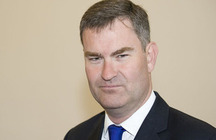
Tag: 2012

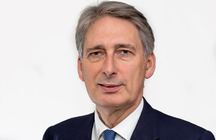
  • Philip Hammond – 2012 Speech to the Royal College of Defence Studies

    philiphammond

    Below is the text of the speech made by Philip Hammond, the then Secretary of State for Defence, to the Royal College of Defence Studies on 23 July 2012.

    Introduction

    Thank you for inviting me here to speak to you.

    And as you approach the end of your course I know you will have made the most of the opportunity presented here at the Royal College of Defence Studies to get to grips with some of the very complex issues facing defence and defence diplomacy.

    Many of which are common to the United Kingdom and its allies and partners.

    The international nature of this course is one of its strengths.

    And your generation of leaders will have a key role in addressing these challenges; and in forging the bilateral and multilateral defence relationships that the defence and security arrangements of every country, even the United States, is likely to rely on in the future to protect its national security.

    So I want to talk this morning about some of the strategic challenges we’re facing in UK defence and more widely.

    And pose you some of the questions that will have to be answered during your generation’s tenure in the top jobs.

    Strategic picture

    Strategically, the world is a far less certain and, in some ways, a less threatening place than it was 25 years ago.

    Then we faced an adversary with the means and the intent, if an unpredictable and paranoid leadership.

    Nowadays at least the paranoid leaderships are still struggling to obtain the means!

    More broadly technology is racing ahead; changing the way we protect critical infrastructure more likely to be rendered inoperable through a computer virus than a bombing raid, requiring multi-level C4ISTAR; capabilities which are not as obvious to the public as an aircraft carrier, a tank or a jet.

    The rise of ‘invisible’ capabilities like this presents a challenge to politicians who need to demonstrate to the public who are paying for them, how we are spending their money and how we are keeping them safe.

    At a geo-political level, the dispersion of power that began as the Berlin Wall crumbled has gathered pace with the emergence of new potential military powers and greater strategic competition between growing economies, both regionally and globally.

    Alongside this, the impact of globalisation means there are diminishing levers available to individual national governments to effect change, manage their economies, and protect their national security.

    The economic realities facing the mature economies show how linked we are; how easily contagion can spread.

    In the medium term, those charged with the task of protecting national security, in economies set for relative decline as the pattern of wealth adjusts, will have to do so in an environment of constrained resources

    This is the future in which you will lead in your respective services and in your respective countries.

    And although this future will be unpredictable and volatile, we can clearly see some of the issues that will dominate.

    Economic means

    First, the economic backdrop.

    Economic strength underpins national security.

    It is a requirement for generating military capability.

    Look at what is driving the changed pattern of military power today.

    Look at what settled the Cold War.

    Without strong economies and public finances it is impossible to build and sustain, in the long-term, the military capability required to project power and maintain strong defence.

    That is why, today, the debt crisis should be considered the greatest strategic threat to the future security of western nations.

    And it is also why, although NATO has often talked of distributing the burden of collective defence more equitably, in the current fiscal climate, it is essential that we no longer talk, but begin to act.

    The reality is that too many member states are failing to meet their financial responsibilities to NATO, and so failing to maintain appropriate and proportionate capabilities.

    Too many are opting out of operations or contributing but a fraction of what they should be capable of.

    But we have to be realistic.

    The economic and fiscal circumstances in which most developed countries find themselves makes this problem difficult to fix in the short term.

    Across the alliance, aggregate defence expenditure is certain to fall in the short term and, at best, recover slowly in the medium term.

    So more money is not going to be the answer.

    So, the challenge is to maximise the capability we can squeeze out of the resources we have available.

    Political will

    Which brings me to my second point: alliance structures are only as strong as the political will of individual nations to meet their responsibilities.

    It matters that NATO countries meet their commitments on funding defence, to ensure the means to protect our collective security.

    But it is no good having the means if you lack the will to use them.

    Libya showed what can be achieved when many of the stars are in alignment:

    The UN Security Council, NATO, regional powers, the political will of those with the capabilities to act, and of course the will of the majority of the Libyan people.

    But it also showed quite starkly the imbalances in NATO.

    Imbalances in the hardware (and increasingly software) available to the alliance from national contributions.

    But also imbalances in the will to act, the will to deploy, the determination to take part and commit nationally owned capabilities that have absorbed many billions of taxpayers’ cash in order to make us all collectively safer.

    There are untapped reserves of resource in European NATO which need to be tapped to support our collective security.

    Over the next few years, the United States will put into practice its ‘tilt’ to the Asia-Pacific theatre, a focus that is very much in our interests as the US rise to meet the strategic challenge set by the emergence of China.

    The US will expect Europe to do more to of the heavy lifting to ensure security in our own region, and our near abroad: the Middle East, North Africa, and the Horn of Africa.

    How European nations respond to this pivot will set the context for the multilateral environment British armed forces and others will operate in.

    This brings me to my third point: cohesion of purpose.

    Meeting threats

    We need to confront, head on, a real tension within the NATO alliance: basically to answer the question, what is NATO for in the 21st century?

    The threat from a monolithic Soviet Union no longer exists.

    And the approach to Russia differs across the alliance.

    For those of us further back, west of the old iron curtain, the threat is no longer territorial, but global terror and rogue states.

    So a passive defence of national territory is no longer adequate protection for our citizens.

    We are starting from a reality that it is much better to fight in the space of our adversaries rather than at home.

    Of course this is relatively easier to do if your adversary is a terrorist, rather than a state.

    And this requires rapidly deployable, adaptable, agile, flexible, expeditionary forces.

    So this is what the UK’s strategic defence and security review was all about; responding to these 3 drivers: the economics, the evolving alliance pattern, and the evolving threat pattern.

    Shaping the spread of capabilities we will maintain, in the face of fiscal restraint, to the future character of warfare, and to maintain national security by acting at distance.

    But.

    The future posture of Russia is by no means certain.

    And with political change sweeping across North Africa and the Arab world, change that is far from at an end, far from predictable, and has the potential to leave a less secure and less safe neighbourhood, we cannot rule out the return of a strategic threat to territorial Europe.

    So this has been about striking the right balance between our own direct national needs and those of the NATO alliance upon which we continue to rely for collective security.

    And recognising the likely future shape of operations in that context.

    The future shape of operations

    You will have had the opportunity during your course to look at current operations and to draw lessons from them for the future character of warfare.

    Libya showed the utility of precision weapons in an era where minimising collateral damage and civilian deaths will be part of the strategic objective.

    And it also exposed shortfalls in the European contribution to NATO.

    But Libya has tested another concept.

    The utility of air power as an alternative to ‘boots on the ground’.

    Libya has shown how air power can provide politicians like me with political choices short of intervention on the ground.

    But I have not drawn the conclusion that ground intervention will be unnecessary in the future.

    There was a ground campaign in Libya;

    It could not have proceeded without NATO airpower support.

    But it was decisive.

    And it was undertaken by Libyans, not NATO troops.

    After 10 years of enduring campaigns, you do not have to be a political sage to recognise that the public’s future appetite for open ended interventions is limited.

    Of course, we do not yet know the end outcome of the Libya intervention.

    Displacing the old regime was, relatively, the easy bit.

    And what comes after is not yet completely clear.

    So modern warfare requires firepower and political sensitivity;

    And that requires a deep understanding of the situation on the ground.

    In Afghanistan, our troops have had to wear the face of both the warrior and the diplomat, fighting one moment, and taking tea with the elders the next.

    The political dimension of warfare is crucial to success.

    You can win the battle but lose the war unless you are focussed on what you really want to achieve.

    And it will usually be the case that force of arms alone cannot deliver victory.

    That is certainly the case in Afghanistan.

    That is why the comprehensive approach, marrying politics, finance, military capability, diplomacy, development, not just across national government, but internationally too, will be so important in the future.

    So, against that backdrop, let me bring this discussion closer to home and say something about the future shape of the UK’s armed forces.

    The future shape of UK armed forces

    Afghanistan is still very much the priority in terms of operations.

    But the end of the combat mission is now in view.

    And, intellectually, we have moved on to look beyond 2014 at the shape of the forces we will need for the future.

    The needs of the mission in Afghanistan, and before it Iraq, have dominated for a decade.

    For all the dangers and complexities of those missions they have provided some predictability.

    People have known, often 2 years in advance, when they are going to be deployed; they know how long they are going to be deployed for; often they have known exactly where they are going to be deployed to before they go.

    We have bent our military, our army in particular into the shape required for this 6 month rotational enduring conflict in Afghanistan.

    But, in the process, we have lost some contingent capability.

    Post 2014, the move from enduring campaign to contingency signals an end to the predictability of the roulement cycle;

    It heralds a future force geared toward being ready to deal with the unexpected and unplanned.

    And we make this change against a background of fiscal constraint driven by the economic health of the country as a whole, and the legacy of mismanagement in the defence budget in particular.

    The transformation we are undertaking is challenging, probably the most complex change programme being undertaken anywhere in the western world at the current time.

    The black hole that existed in the defence budget, the weakness of the equipment programme, and the shape of the country’s finances, have militated against simply bailing the budget out.

    It would be hard to justify excluding the defence budget, the fifth largest call on the public purse, from the programme to exert fiscal control.

    Balancing the books and creating a sustainable forward defence programme has meant reducing personnel numbers, retiring some capabilities, and taking some calculated and managed risks.

    But as I told an audience in Washington last week, it is far better to have a smaller but well-equipped and well-trained force; with an equipment programme that offers a high level of confidence that we will deliver it; giving our armed forces the ability to plan for the future.

    With the announcements I have made over the last couple of months on the defence budget, the equipment programme, army 2020 and the reserves we have put in place the vision set out in the SDSR of sustainable armed forces, equipped with some of the most capable and most technically advanced platforms in the world, configured to respond to the unexpected and to go anywhere to do it.

    And we have also set out a blueprint for the reform of the management of defence:

    Renewing the way strategic direction is provided;

    Pushing authority and accountability down the chain of command;

    Encouraging innovation and budgetary responsibility;

    And developing a new strategy for the procurement of defence equipment.

    Seeking to instil private sector skills and disciplines to our acquisition process, driving up productivity, by bringing a private sector partner into the process.

    And creating clearer and harder relationships between the different functions in the defence procurement chain.

    To read some of the comment in the media, often fuelled by retired officers whose view of the world was shaped in the Cold War era, you would think that Britain was getting out of the force projection business altogether.

    Nothing could be further from the truth.

    Even when this programme is complete, we will still expect to have the fourth largest defence budget in the world;

    Exceeding the NATO standard of 2% of GDP;

    Spending £160 billion on our equipment programme over the next 10 years;

    Delivering the next generation of military technology and platforms that will help provide a battle-winning edge;

    So this is the picture:

    Smaller armed forces, but better equipped and confident that they will receive the equipment that has been promised;

    Agile, high-tech, capable of conducting the full spectrum of operations;

    Structured to allow rapid reaction and expeditionary warfare;

    Able to deploy overseas and sustain a brigade-sized force indefinitely, or a division-sized force in time of need.

    Able to command in the coalition context and more interoperable with our main allies;

    Fully integrated between regular and reserves, with predictable obligations for the reservists that will require a real commitment to service;

    And a more systematic use of contractors for support and logistics; allowing greater focus of military manpower on fighting tasks;

    And, crucially, structured to be able to generate mass and capabilities if the threat picture changes or the fiscal position eases.

    Conclusion

    These are the British armed forces that some of you will be leading in, or for our partners overseas, the British armed forces you will be operating with.

    And many of you who are from overseas will be seeing similar transformations in your own militaries over the next few years.

    All of you are here because you have been identified as having the qualities needed for top level responsibilities.

    You know that the moral component of leadership is one of the most important.

    If this transformation is to be realised, and national and collective security to be guaranteed, you will need to be focussed, positive, full of ideas, prepared to change, to challenge convention, and willing to drive change in others, inspiring those around you.

    And there is a challenge at a political level too, for people like me.

    As Secretary of State, I have responsibility for defence but as a cabinet member, I have responsibility to look wider and help to balance national priorities.

    When an immediate or existential threat shrinks, the public appetite to fund defence shrinks with it.

    We are lucky in the UK, particularly compared to other European nations, that the public feels a strong affinity with our armed forces and has a greater inclination to give defence a higher priority than many of our neighbours.

    But the legacy of Iraq and Afghanistan has undoubtedly left us a public which is without appetite for enduring campaigns.

    And politicians need to think carefully about how we are going to maintain public support for defence spending in the years ahead;

    Especially when more and more of the capabilities we are investing in will not be traditional military assets, and indeed will often be invisible to taxpayers.

    There are many actions in hand to manage the transition from a period of enduring campaigns to one of contingent readiness; and I have described a few today.

    But we have answered by no means all the questions:

    Questions about the future focus of NATO;

    About how we maximise the military effect that we get from limited budgets across the alliance;

    About the balance of capabilities between traditional kinetic effect and investment in C4ISTAR, cyber and space;

    About the type of warfare we need to prepare to fight;

    And about the future of European defence industries in the face of rapidly changing export markets and shrinking domestic purchasing power.

    These, and many other questions, will form the challenges that the next generation of military and political leaders will face over the coming years.

    And I look forward to hearing your thoughts on them!

  • Gregory Barker – 2012 Speech at RHPP Communities Scheme Launch

    gregbarker

    Below is the text of the speech made by Gregory Barker, the then Minister of State for Climate Change, on 24 July 2012.

    Good morning and thank you for coming today, I have great pleasure in announcing the third and final element of this year’s Renewable Heat Premium Payment – the Communities Scheme. Before launching into the detail of this new scheme, lets discuss why I believe renewable heat is so important and why we need to take action now.

    The UK Building Stock and Targets

    Under the EU Renewable Energy Directive, the UK has a legally-binding commitment to generate 15% of its energy from renewable sources by 2020. An incredible 47% of the UK’s carbon dioxide emissions are attributable to heat generation.

    Looking ahead, the DECC Carbon Plan sets out the Coalition Government’s aim to reduce emissions from heat in buildings from 124 Megatons to zero by 2050. To achieve these extraordinary targets, heating used in buildings will need to come from renewable technologies such as air-source or ground-source heat pumps. The RHPP is really the first step on the road to achieve this.

    I don’t under estimate the challenge and this is an important first step. Throughout this decade, Government is really focussing its attention on working with industry to prepare the market. We are committed to renewable heating, driving innovation and supporting the UK industry to build supply chains – with the goal to bring down costs ahead of large scale roll-out. Creating British jobs, British firms and British expertise.

    Phase 1: RHPP Success

    So what has happened so far.

    Under Phase 1 of the RHPP, which ran from August last year to the end of March this year over 6000 homes received help. These houses were previously on costly, high carbon fuels for heating and have now had their systems replaced with low or zero carbon renewable heating.

    Phase 2: Building on success

    Now let’s move to Phase 2, which is building on the successes of Phase 1. Under the RHPP, we are continuing to provide one-off grants to householders across Great Britain to help with the cost of installing renewable heating technologies. Since we reopened in March, we have issued a further 1,187 household vouchers – all helping to install renewable heating technologies in people’s homes.

    Social landlords competition

    In May this year, I launched the second social landlords competition. We received 72 applications and I can announce that all were successful in this competition at a value of just over £5million. A full list of winners will be published on the DECC website today.

    The value of the applications received was just over £5 million -this is approximately half the £10million we have set aside for social landlords. We would have, of course, liked to have seen more applications, but I am still very encouraged that these applications are seeking to install a significantly higher number of heating systems – three times more than seen in the first competition for the same financial contribution from DECC.

    We are now considering our next steps – Should we have another competition or not? If we do decide to do so, we will announce something very soon. I am very interested to hear views from the room today through the Q&A.

    I am already convinced that low carbon heating systems have a role to play in social housing. Social landlords do not have to take my word for it, they can see for themselves. Tenants have told us that their new heating systems are saving them money and are easier to run.

    Communities Scheme

    Now let me turn to the Communities Scheme – the reason we are here today. The Coalition pledged to “support community ownership of renewable energy schemes” and we have said on many occasions that local people are best placed to decide what is best for their communities. Schemes such as LEAF have enabled communities to act on this and be at the forefront, playing their part in effectively delivering these priorities at a local level.

    Communities have much to gain aside from the evident carbon benefits and energy bills savings. It has been shown that communities working together on low carbon energy projects enhance trust between local people and local organisations. This is a strong foundation to build future local capacity and further collective action.

    I would like to take this opportunity to thank the Community Board for their help in developing this new Scheme. I am also extremely pleased to see so many of you have joined us here today and are interested to know more about this new initiative.

    This new RHPP Scheme draws on the successes of the Local Energy Assessment Fund (LEAF), which closed in March 2012 and which some of you, I’m sure will already be familiar.

    LEAF supported communities across England and Wales to play an active role in the development of a low carbon society where the energy supply is both secure and affordable.

    There was widespread interest from around 600 communities, and 236 of them received funding from the £10million pot. The funds supported work by community groups and there were many inspirational examples of communities getting together, assessing local energy efficiency and renewable energy needs and produce local solutions tailored to their unique needs. We will be running an in-depth evaluation of learning from LEAF over the coming months.

    Can I take this moment to give you a bit of detail about the Scheme. The objective is to facilitate the installation of renewable heat systems into privately-owned homes in England, Scotland and Wales.

    It will work by supporting those who are currently unlikely to be able to benefit from the RHPP household voucher scheme, through additional Government funding and by encouraging community groups to negotiate bulk buying discounts. We would particularly like to focus on properties and communities which are off-gas, where bills and emissions are higher.

    After this event and until the beginning of September, community groups will be able to register their interest with the Energy Saving Trust. Those projects that pass an initial assessment will progress to the development phase. Here, communities will be supported to develop their ideas into project proposal bids. These bids will be independently assessed and winners announced later in the year.

    Innovation: Heat Strategy, the Green Deal & RHI

    The RHPP Scheme is a piece in a wider jigsaw and we are working hard to deliver other key initiatives such as the Green Deal and the Renewable Heat Incentive. In recognition of this I was pleased to announce last month that we will be launching a Community Energy Strategy Document to bring together DECC’s strands of work on communities, which will be published in 2013.

    The Green Deal launches this autumn helps people pay for home improvements like insulation through savings on their energy bills. It will help people to make energy-saving improvements to their homes to keep them warm and cosy. At the same time, it’ll reduce the amount of gas and electricity householders need and keep their heating bills down. ECO, a subsidy from energy suppliers, will provide extra help for those most in need and for properties that are harder to treat.

    We know more and more families are being hit by the rising cost of gas and electricity. But our inefficient homes are using a lot more of it than they need to – more than half of our homes don’t have sufficient insulation.

    The Green Deal is designed to address these problems, but in a truly revolutionary way. It places consumers at the centre of energy efficiency policy. It isn’t about stop start Government driven and owned programme of works. It is about consumers driving demand, and a competitive market responding.

    And as the market grows and develops, homeowners, landlords and tenants will get access to a whole range of home improvements to increase the energy efficiency of homes.

    The energy efficiency measures in the Green Deal also help to boost the effectiveness of many renewable heat technologies, such as air and ground source heat pumps. Having an energy efficient home is also a prerequisite for installing renewable hear technologies.

    The RHI non-domestic scheme already incentivises community groups and social landlords to connect several households together to create local community heat networks and to supply renewable heat to community buildings such as schools and village halls.

    We are on track to meet the RHI delivery timetable and we are publishing our longer term proposals for budget management, as well as proposals on biomass sustainability and air quality. I am also pleased to confirm that we are on track to launch the Domestic RHI consultation this September.

    Conclusion

    In conclusion it is clear to me that communities and a decentralised approach to energy generation is at the heart of any real long-term solution to climate change and the reduction of our carbon emissions. But I would like to go further. I’ve seen the way these local schemes bring neighbourhoods closer together. I’ve seen them build greater community cohesion. I’ve seen them catalyse new local projects that embed sustainability and resource efficiency and drive greater sense of responsibility. Decentralised energy efficiency is a great thing. Not just a means to an end. I hope that communities of all shapes and sizes will get on board and take advantage of all this scheme has to offer.

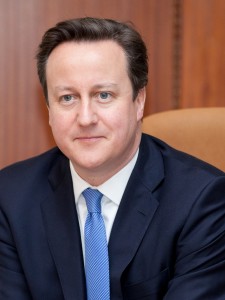
  • David Cameron – 2012 Speech at LGBT Reception

    davidcameron

    Below is the text of the speech made by David Cameron, the Prime Minister, at an LGBT reception on 25 July 2012.

    I just wanted to say three things to you tonight. First of all, this party is really a celebration of the immense contribution that lesbian, gay, bisexual and transgender people make in every part of our country, in the arts, in media, in sport, in business, in finance – that’s what tonight is about and I want to thank you for the immense contribution that you make to our country.

    The second thing I wanted to say – there are a number of anniversaries – it’s the 40th anniversary of the first Pride march in London, the 40th anniversary of the foundation of the Jewish Gay Equality Group and I think it’s worth remembering the journey that politics has been on in terms of gay equality over the last forty years – the decriminalisation of homosexuality, the lowering of the age of consent to 18, the equalisation of the age of consent that the Blair government achieved, the introduction of civil partnerships – backed by my party and I just want to say I am absolutely determined that this Coalition government will follow in that tradition by legislating for gay marriage in this parliament. I make that point not only as someone who believes in equality but as someone who believes passionately in marriage. I think marriage is a great institution – I think it helps people to commit, it helps people to say that they’re going to care and love for another person. It helps people to put aside their selfish interests and think of the union that they’re forming. It’s something I feel passionately about and I think if it’s good enough for straight people like me, it’s good enough for everybody and that’s why we should have gay marriage and we will legislate for it.

    And I know there’s going to be some big arguments, there will be arguments obviously within political parties including my own, there will be arguments with many of the public that take a different view, although it is worth noting that opinion polls consistently show that the public support the case for equality and obviously there’ll be arguments within the Churches as well and I can say how great it is to see some Church men and women here tonight supporting this cause.

    I run an institution – the Conservative Party – which for many many years got itself on the wrong side of this argument, it locked people out who were naturally Conservative from supporting it and so I think I can make that point to the Church, gently. Of course this is very, very complicated and difficult issue for all the different Churches, but I passionately believe that all institutions need to wake up to the case for equality, and the Church shouldn’t be locking out people who are gay, or are bisexual or are transgender from being full members of that Church, because many people with deeply held Christian views, are also gay. And just as the Conservative Party, as an institution, made a mistake in locking people out so I think the Churches can be in danger of doing the same thing.

    The third point I wanted to make is, changing laws is important, legislating is important. But what is equally important – arguably now what is more important – is actually going to be changing culture; whether it’s on the football field, or in the rugby dressing room. Changing the culture whether it’s in the school playground, changing the culture in the workplace, changing the culture everywhere so that people can genuinely feel we live in an equal, fair and tolerant country. And changing the culture is much more difficult than changing the law, changing culture is much more subtle and difficult. But the promise I can make you is that this coalition government is committed to both changing the law and also working to help change the culture and the Conservative party absolutely backs that. This is something I personally feel very passionately about.

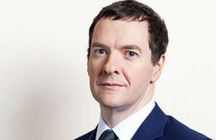
  • George Osborne – 2012 Speech at Global Investment Conference

    gosborne

    Below is the text of the speech made by George Osborne, the Chancellor of the Exchequer, at the Global Investment Conference on 26 July 2012.

    Welcome to this session – and a particularly warm welcome to my distinguished colleagues, Christine Lagarde, Managing Director of the IMF, and Angel Gurria, Secretary General of the OCED.

    I thank you both for taking the time to join us on the eve of the London Olympic Games.

    The Olympic Games celebrate human endeavour and peaceful competition between the nations of the earth.

    This Global Investment Conference celebrates human innovation and industry, and show-cases Britain as a home for investment in a fiercely competitive world economy.

    You’ve heard from the Prime Minister and many colleagues of mine in Government already.

    I hope the message you are receiving is loud and clear:

    Britain is open for business.

    Indeed, we assert that there is no major western economy that is more open, more welcoming of foreign investment, less protectionist and more pro-free trade than the United Kingdom.

    Across all political parties, in all parts of the country, we welcome overseas companies with open arms.

    In the last few months, we’ve encouraged Chinese investment in our capital’s water system, Hong Kong investment in our telecoms and gas network, Indian investment in our car-making and steel, and today, Malaysian investment in a prime property site here in London.

    In the very difficult global economic environment – and with our own disappointing GDP numbers – we as a Government have to work even harder to attract more of this investment.

    We have a relentless focus on the economy.

    And our message, our sales pitch, if you like, to investors has three components:

    – We’re dealing with our debts

    – We’re creating the most pro-business tax regime in the developed world

    – And we’re making the long-term structural reforms to secure a more productive future.

    Let me take each briefly in turn.

    First, in our continent reeling from a sovereign debt crisis, the UK is a country which demonstrated to the world that is has a credible plan to deal with its debts.

    In the last 2 years, we have cut our deficit by 25 per cent.

    When this Government entered office, the UK’s cost of borrowing was the same as Spain’s and Italy’s.

    Today, their cost of borrowing is more than six per cent and ours is one and a half per cent.

    That market confidence and those ultra-low interest rates are precious assets – hard won and easily squandered.

    And it is precisely that market confidence and fiscal credibility that allows our independent monetary authority, the Bank of England, to operate a more active monetary policy.

    – Expanding the Quantitative Easing programme.

    – Launching with the Treasury the new Funding for Lending Scheme operational next week that will reduce bank funding costs to reduce loan rates and mortgage costs.

    – And it is the same fiscal credibility that means we can use our balance sheet to offer billions of pounds worth of guarantees to new infrastructure projects and export opportunities.

    You will hear those arguing that we should abandon our plan and spend and borrow our way out of debt.

    You hear that argument again today.

    These are the siren voices luring Britain onto the rock.

    We won’t go there.

    A credible plan to deal with our debts is an anchor of stability and a prerequisite of recovery.

    We have that credible plan – and we’re sticking to it.

    That gives confidence to investors looking at the UK.

    So too should our pro-business reforms to the tax system.

    I challenge anyone in the audience to name another major western economy that is:

    – Reducing its corporation tax as aggressively as we are: from 28% to 22%.

    – Or cutting its top rate of income tax to attract wealth creators.

    – Or introducing new generous tax regimes for patents, and research, and creative industry.

    – Or creating a new regime for the headquarters of global firms, so that companies are now moving to Britain instead of moving away.

    – This is the most pro-business tax reform in any developed economy today.

    And the final sales pitch is this.

    We are also tackling the deep-rooted problems that undermine the competitiveness of many western economies, including ours.

    In the last 2 years, we’ve undertaken major reforms of planning, higher education, schools and welfare that will equip Britain for the future.

    It’s involved tough decisions, raising pension ages, reducing public sector costs, taking on vested groups.

    But we’ve done it.

    And despite disappointing GDP numbers, we are determined to continue to tackle the deep rooted problems our economy faces.

    The deficit is down by a quarter.

    Inflation has halved.

    Employment is up.

    Exports are rising – and Britain’s businesses are now exporting more to the rest of the world than to Europe.

    A sign of openness to the opportunities from emerging as well as established economies across the world.

    And we know we have more to do.

    Our motivation is simple.

    It was spelt out by the Prime Minister this morning.

    We’re in Government at a time of great change in the world economy.

    Great change, and of course, great uncertainty.

    And we think that some western countries will adapt well to that change, cope with that uncertainty well.

    And others not adapt so well.

    We have a relentless focus to ensure that Britain adapts to the changing world and thrives in it.

    These Olympic Games are a showcase of Britain at its best.

    This Conference is a sign of our nation’s commitment to welcome the world’s investors.

    Britain is open for business.

  • David Cameron – 2012 Speech at Global Investment Conference

    davidcameron

    Below is the text of the speech made by David Cameron, the Prime Minister, on 26 July 2012.

    Welcome to London, welcome to the greatest show on earth. Everything is ready, the stadia are ready and everything is looking good. We have even, at least for the business summit, managed to lay on the weather.

    Over the next two weeks the world’s greatest athletes will compete right here. Records will be broken, new champions will be crowned, history will be made. But I believe the legacy of these Olympics can be about many more things as well as great sport. For instance, the legacy should also be about great business too. At a time when it is global business partnerships, new investments and, vitally, start-up ventures that will help get the world back to growth, nothing symbolises the opportunity of partnership and collaboration more than the Olympics.

    Forging those partnerships and those investments is why we are all here today. So, yes, of course I want medals for Britain, and there will be no more passionate supporter of Team GB than me, but I have got another job to do this summer and a big part of that job is to get behind British business and do everything I can to help secure the trade and investment that will help get the world back to sustained, global growth.

    I am absolutely delighted to welcome you to the British Business Embassy. This is the biggest business summit any British government has ever hosted and I think it is also the biggest Olympic business summit in history.

    At this Conference alone we have more than 200 business leaders from 36 countries representing quite literally some of the greatest companies on the planet. And that is just the beginning. Over the next fortnight we are going to have 4,000 business leaders attending sector conferences on everything from energy to life sciences, aerospace to education and the creative industries.

    They will take part in country-specific days on China and Brazil, the previous and the next hosts of the Olympics and two of the most exciting and fast-growing countries in the world. And also I hope people will get stuck into venture capital events that will help to secure the vital resources needed to commercialise new inventions and, of course, exciting new start-up businesses.

    In order to make it in these difficult times, I think there is also a very tough and uncompromising message that all of us – politicians perhaps particularly – have to take on. And it is this: countries all around the world have to face up to some very hard truths and to take some difficult decisions. The global competitive race has never been faster; some countries will make it, some will not. The challenge is particularly great right here in our European neighbourhood.

    Since the financial crash the world economy has grown by 20 per cent, but Europe has hardly grown at all. The countries that make it will be those that step up to meet the big long-term challenges. Getting your debts under control; ensuring you have a welfare system that you can afford; making sure you have a great pensions system for older people, but making sure you have liabilities you can manage; building an education system that is going to produce some of the best graduates in the world; making your economy as competitive as it possibly can be; ensuring you are linked up to the fastest growing parts of the world and that your trade is delivering as many jobs as possible.

    By meeting these key challenges, I am absolutely determined that Britain will be one of the success stories of the next few decades. I want to take some of these key points in turn.

    The first thing you need as investors is confidence in the long-term stability of the economy that you are investing in. You need to know that the public finances are under control and that your businesses aren’t suddenly going to be crippled by uncertainty or by high interest rates.

    The coalition government that I lead in Britain inherited the worst deficit this country has had since the Second World War. But we have acted decisively to put in place a credible and steady plan to restore confidence in our public finances.

    That meant taking some very tough decisions. Increasing the state pension age, reforming public sector pensions – which has actually cut their long-term cost in half – and taking forward sweeping, long-term reforms of welfare.

    We have taken a series of bold decisions to sort out our public finances and to earn credibility in the markets. As a result, in just two years we have cut the deficit we inherited by more than one quarter and our market interest rates are less than 2%.

    My message today is clear and unequivocal. Be in no doubt: we will go on and finish the job, we will deal with the deficit, we will keep UK interest rates low and we will continue to take the tough decisions that are necessary for business leaders and investors to have confidence in the long-term future of the British economy.

    Getting our debts under control is clearly essential for growth. Fiscal discipline and growth are not alternatives – you need one to get the other – but sound finances alone are not sufficient. If Britain is going to be a success, we need a competitive economy. So we are absolutely focused on doing everything to support enterprise and make Britain the best the best place in the world in which to start or grow a business.

    We have listened to what business wants and we are delivering on it. Business said, ‘We want competitive tax rates’, so we are creating the most competitive corporate tax regime in the G20 and the lowest rates of corporation tax in the G7.

    Business said, ‘We want a simplified planning system’. Why? So companies can expand and invest more easily and grow and create the jobs that will put people into work. We have taken 1,000 pages of planning documentation and reduced it to just 52.

    Business wants tax credits for research and development so they can develop the high end products that future countries like ours need. We have got them.

    Business wants a radical patent box so that if you develop a patent in Britain and manufacture here you pay only 10% tax. Again, we have got that too. Companies like GlaxoSmithKline, AstraZeneca and international companies like Qualcomm have already announced new investments as a direct result of this.

    We have also listened to entrepreneurs. We are radically reducing the time it takes to start up a business, so instead of filling in endless forms you can now get online, set up a business and register for taxes – and see the taxes that you have paid and that you owe – all in one place.

    Last year, despite the tough economic climate, the number of new business start-ups was one of the highest in our history. We have created a 50% tax break for the first £150,000 invested in a start-up and more than doubled the limit on the amount of tax deductable funds that can be invested in a single company in a year.

    And in this Olympic year we are making an extraordinary – and, I think, unprecedented – offer. If you sell assets in this tax year and invest the proceeds in one of the businesses in our seed investment scheme, you will not pay a penny of capital gains tax on the assets that you have sold. Not this year, not next year, not any year. That is, I think, an incredibly pro-enterprise policy.

    We are supporting the rebalancing of our economy with bold new infrastructure investments. In a world in which too much investment has been high risk and short-term, there should be huge potential for a different approach.

    We are pioneering a new investment scheme, the Green Investment Bank, to bring in private sector funds to make the most of the green infrastructure that we will require. This is the first green investment bank in any advanced country, anywhere in the world. It starts with £3 billion of taxpayers’ money to get those projects going.

    We are making the biggest investment in our rail network since the Victorian era, retaining our status as a key global hub for air travel and expanding access to broadband, including through super-connected cities where citywide access to ultra fast 80 megabit broadband will give Britain twenty of the fastest and best connected cities anywhere in the world.

    And we are also – vital for all the countries that want to ‘make it,’ as I have put it – sorting out our financial system. Our financial system is a huge strength for our country, but we do need proper regulation. So we are going to have it properly regulated by the Bank of England with banks made to hold enough capital to keep them safe and a regime so that if they do fail, they can do so without the taxpayer picking up the bill. That resolution regime is already now in place.

    We are putting into law the ring-fencing of retail banking and its separation from investment banking, and introducing the most transparent rules on pay and bonuses of any major financial centre anywhere in the world.

    And we are building on the Kay report earlier this week, promoting greater trust and confidence by cultivating a change in corporate culture to focus management teams and investors on longer-term, sustainable value creation rather than merely short-term profit chasing.

    So we are making our economy more competitive but we are also taking a totally different approach to trade. I went into the Foreign Office on day one of being Prime Minister and I said to them, ‘You are, of course, the Queen’s diplomats, but you are also the sales force for Britain and for British industry’.

    We have set an ambition of doubling our exports to £1 trillion by 2020. That would get us in line with Germany and match their record level of exports last year. I believe it is absolutely achievable.

    Britain is already now exporting more goods to rest of the world than we are to the European Union, and if we could increase the number of small and medium sized firms in the UK that sell overseas at all from one fifth to a quarter that would add £30 billion to our economy, create 100,000 jobs and pretty much wipe out our trade deficit altogether.

    That is the power of trade to drive growth and it’s the same story the world over. That is why I have made advancing trade a personal priority. At the G20 in Mexico, I fought hard to advance a trade deal between the US and the EU, because when two continents that account for more than half of the world’s total trade liberalise their trade, the benefits to growth could be felt all over the planet.

    I discussed EU bilateral trade with the Brazilian president yesterday – she is here for the Games – and will do the same with the Russian president next week when he is here. We will be at the judo, so it may be a bit off-putting, but nonetheless, I know my major priority is to get those trade deals to get that investment and not to concentrate on what’s happening on the mat.

    I’ll keep up the pressure on the EU to conclude those new trade agreements with India, Canada and Singapore and to launch trade negotiations with Japan. I’ll continue to champion a free trade area in Africa, which could play such a vital role in lifting Africa further out of poverty. And I will make trade a core priority when Britain hosts the G8 here in the United Kingdom next year.

    I know some people think it is sort of grubby to mix money and diplomacy. Frankly, I couldn’t disagree more. This is about jobs. In the last year alone we’ve increased the number of British jobs created by trade and investment by a quarter. That means nearly 150 jobs created or safeguarded every single day. But for Britain to be a success, we need to do even better than that. So I will go on loading up aeroplanes with businesspeople and taking them to the great markets of the world. Already I’ve done that with India, China, Russia, Turkey, South Africa, Nigeria, Mexico, Japan, Singapore, Indonesia and Malaysia, and I’m delighted at the news today about one of the big deals we were pursuing when I was in Malaysia.

    Battersea Power Station is one of the iconic landmarks of the London skyline. Any fans of Pink Floyd in the audience will know it from the cover of the Animals album. That ages some of you, I know, but I expect there are a few Pink Floyd fans here. This site sits on 40 acres of land that is ripe for development, right by the River Thames, here in one of the most dynamic cities anywhere in the world. It is quite simply one of the most exciting opportunities for investment in Europe. So, we very much welcome the plans for an £8 billion development that will create 20,000 jobs, with 13,000 permanent jobs at the end, and it will protect those famous towers too.

    This all follows from the announcement yesterday of a further £2 billion investment into the UK energy sector by our long-term partner and good friends at Hutchison Whampoa. I hope these are just the first in a long line of deals that I hope we can do, with further billions of pounds of deals expected to be announced this summer, creating and safeguarding jobs across the UK.

    I’m passionate about what Britain can offer. We have a time-zone where you can trade with Asia in the morning and America in the afternoon. We have the English language, the language of finance and business, and increasingly – as I find in the European Union – of politics too. I sometimes say the single language is going a little bit better than the single currency, but it’s very important that we safeguard and promote both.

    We have the easiest access to the European market where 500 million consumers are generating €12 trillion in economic activity. We have some of the best universities in the world. We have products and services that people need. Here in the room, we have got British companies like WPP, the world’s largest advertising agency; Vodafone, the world’s most international mobile phone company; and ARM, the British company based in Cambridge that provides technology used in 90% of smart phones.

    There are British firms – and I have checked this out – exporting tea to China, vodka to Poland and cheese to France. There’s even a firm I found in Anglesey that sells canoes to the Eskimos. This year Britain has become a net exporter of cars for the first time in 35 years. That is the sort of badge that you think once you’ve lost, you will never get back. People in the 1970s and 80s I think wouldn’t have dreamed that 30 years on, with Honda, with Nissan, with Jaguar, we would be back as a net exporter of vehicles to the rest of the world, and we are. Jaguar Land Rover yesterday announced 1,100 new jobs in the West Midlands. Some of these companies are selling so fast into China they can hardly produce the cars fast enough.

    But it’s not just our car industry that’s strong. If you want modern medicines, we’ve got world leading pharmaceutical businesses. If you want energy technology, we are the home of some of the world’s leading energy companies: pioneers in exploring green technology, but also oil and gas recovery in some of the most difficult parts of the world.

    If you want a holiday here, you can even now think that the sun does occasionally shine, and we’ve got an extraordinarily vibrant tourist industry. And while you’re at it, of course, you fly in to Britain on the wings of an Airbus plane, designed in Bristol, made in North Wales, and powered by Rolls Royce engines, of course made in Derby.

    So, this is – I hope you can see – a personal mission for me. I mean it when I say to all those here: if there are barriers in your way preventing you from investing, tell me. If there are things the British government can do to help you invest, let me know. If there’s an opportunity you think we are not sufficiently seizing, get on to me about it. My office, or Stephen Green and all of the team at UKTI will help, and I will gladly speak personally with any of you who have a deal or an opportunity that will mean jobs and growth for Britain.

    My message today is very simple: Britain is back open for business and we are committed to supporting global growth with open trade between our nations. So invest in Britain, partner with Britain. Not just to invest in this country, but because I believe this will increasingly be seen as the place, as the hub, from which your company can grow and expand. So let’s make this Olympic year a great year for your business, here in Britain. Thank you.

    Question

    Mr Prime Minister, you talked about incentives for small business, and so much of the high tech industry is about creating that entrepreneurial environment and blowing away the road blocks, but a lot of it has to do with immigration policy and the duration of engineers and simulating concepts there. Could you say a little bit further on your policy regarding start-ups?

    Prime Minister

    First of all, a very warm welcome to Cisco Systems and congratulations on your acquisition of NDS, a great technology business here in Britain – really pleased to see that happen. Britain had an immigration system that I think was really not serving the country well. We had an enormous amount of unskilled migrant labour coming to Britain at the same time as having five or six million people living in Britain on out-of-work benefits.

    So the government has quite a mission of reforming welfare to get people off those benefits and into work, and proper control of immigration. But we do want to be an open, vibrant economy that welcomes the best and brightest to our shores. I think the offer we make, particularly to students, is pretty hard to match, and it’s very simple, so don’t believe all the myths.

    The offer is this: if you have the ability to speak the English language and a place at a British university, there is no limit on the number of people that can come. And having come and studied, there are opportunities to take part in a graduate job after you have left university. So you’ll read about immigration control in Britain – and it’s right we have proper immigration control – but there’s no limit on the number of students that can come and study and then work in the UK.

    We have also introduced some very growth-friendly immigration policies like the entrepreneurs visa, which is a special category of people. If they’ve got great entrepreneurial skills, or want to come to Britain and take advantage of some of those tax changes I have said, there is a special category, and it is very important that people understand that. There’ll be experts here from UKTI. If anyone’s got questions about immigration or visas, then please get on to them, because I don’t want that in any way to get in the way of the growth story here in the UK.

    Question

    I have been an investor here, and recently we have invested in the auto sector in Leeds. One of the suggestions I would make: if the uncertainty of taxation on the global wealth can be clarified, it will help quite a lot to bring in more investments in this country.

    Prime Minister

    Very good point. This is the – first of all, thank you for all of your investments in the UK over many years. In terms of the taxation of global wealth, there are two points I would make. First of all, obviously as well as cutting our corporation tax rates down to the lowest levels in the G7 – and you have seen a series of cuts, even though we have had to make tough spending choices with the 22% target at the end of this parliament – we are also changing the taxation for headquarters companies and we are seeing a number of headquarters companies now thinking of either coming back to Britain or coming to Britain for the first time.

    On the taxation of global wealth, obviously we do have this system in Britain of non-domiciled taxpayers, so people who don’t pay tax on their worldwide income in the UK because they’re domiciled somewhere else for tax purposes. We now charge people for having that tax status, but if they have that tax status they’re not taxed on their worldwide income, and I think that does encourage those people to make their homes, their businesses and their bases here in Britain, and that will continue.

    Question

    I wonder if you could give a commitment, Prime Minister, that you will be working with the devolved administrations of the UK on issues like economic development? And certainly, as you mentioned, on education in terms of qualifications and indeed the training of young people, including apprenticeships?

    Prime Minister

    Yes, absolutely. I mean, it’s great that the devolved countries – including the Welsh Assembly government – are here. I’d say to all international investors, you know, look at the whole of the United Kingdom. There are huge investment opportunities in Scotland, in Wales, in Northern Ireland. We have devolution in Britain, but we work together as a team when it comes to promoting investment in Britain, and frankly I think we can probably do more with the Welsh Assembly government and UKTI together to jointly promote what we have.

    In terms of the points you make, absolutely happy to work on all of those subjects with you. I think all of the countries of the United Kingdom have got to realise that getting education right is a huge challenge. If I had a challenge to the Welsh government, it would be that we are doing a lot in England to raise standards in schools and make sure we’re really creating a competitive and very much results-focused school system. I think we need to do that in Wales too.

    And in our universities, obviously we’ve had to make tough choices. We now have a fees-based system and this was a difficult decision the UK government made for English universities, but the strength of it is that one of the big challenges the whole world’s going to face is: who’s got the best universities? Who’s producing the brightest graduates? And frankly there’s only two places the money can come from: you can get it from taxpayers, or you can get it from graduates. We are now getting it from graduates, and that means the universities know they’re not going to have to wait in the queue behind healthcare and behind pensions and the rest of it. We’ve got well-funded universities guaranteed into the future, and I think that for businesses that’s a very, very positive message.

    Perhaps one last question, and then I’ve got to go off to the Olympic Park to welcome the foreign press.

    Question

    Good morning, Prime Minister. We’re just a little bit curious about the aviation policy of the coalition government in the United Kingdom. I know there are a number of options that have been presented to you, whether it’s the third runway at Heathrow or the expansion of the regional airports, and of course there’s the estuary project. Recently, you decided to postpone that review, or rather the results of the review. As a foreign carrier – and Emirates is quite a big one into Heathrow and other points in the United Kingdom – we’re particularly interested to see just where we’re going on this, or perhaps rather where the government’s going. Thank you.

    Prime Minister

    Well, be in no doubt, by the end of the year we will have both this review underway and the call for evidence about all the future options underway, and I think that’s vitally important. Both the coalition parties made a pledge not to have a third runway, and that’s a pledge that we made and that we will keep.

    But I do understand it’s vitally important that we maintain the sort of hub status that Britain has. There are lots of different options that can be looked at, but frankly I think we’ve discovered something in the last couple of weeks that I think business travellers and investors would welcome even more, which is if you really tool up and put the effort into running a good service at Heathrow you can reduce the border queues right down. And I don’t know what everyone’s experience was here – I won’t chance a show of hands – but my wife said when she came in from a business trip from Italy, she didn’t even have time to put her hand into her bag to get the passport out before it was being checked.

    So if you put the effort in, if you make sure there’s a real customer service ethos at our major airports, I think we can improve the welcome that we give people while having very important security checks.

    And we mustn’t underestimate that for one moment. You know, one of the most important things about this Olympic Games is, yes, of course, an enormous festival of sport, huge legacy, great opportunities for business deals, as I’ve spoken about, but actually making sure they’re safe and secure is vitally important, and our borders really matter for that.

    So I think we can deliver on making Britain have hub status, making it easy to get into and out of to trade with the rest of the world. Heathrow is still one of the busiest airports in the world, some people talk about Heathrow as if somehow it’s now sliding down the ratings. It’s a massively successful, busy and connected airport, but I think we’ve learnt something already this week about a real focus on customer service. We can do it better. Let’s do it better all the time, and not just during the Olympic Games.

    Can I thank you all again very much for coming. Thank you. I want to make a particular welcome to so many of the international bodies that are here: Angel Gurria from the OECD, Christine Lagarde from the IMF, Mario Draghi from the European Central Bank. You’re incredibly busy people, there are huge challenges on your time and resources. It’s great to have you taking part, and Mervyn King from the Bank of England as well. So thank you all very much for coming.

    I hope this is a great moment to come together, do some great deals, think of some great investments. Britain is there for you and we’ll give you a very enthusiastic welcome. Thank you very much indeed.

  • Chloe Smith – 2012 Speech to the Oil and Gas Fabricators Conference

    chloesmith

    Below is the text of the speech made by Chloe Smith, the then Economic Secretary to the Treasury, to the Oil and Gas Fabricators Conference on 27 July 2012.

    Introduction

    Good evening, and thank you for inviting me to speak to you today.

    Even as we move towards a lower carbon economy, no one should be in any doubt as to the continued importance of oil and gas, which still provide nearly three quarters of the UK’s primary energy needs.

    Oil and gas is one of the UK’s greatest industrial success stories, supporting a third of a million jobs, and successfully extracting the equivalent of 41 billion barrels of oil to date.

    The supply chain – and fabricators such as yourselves in particular – plays an especially crucial role in making the oil and gas industry what it is today.

    Highly skilled supply companies have developed a global reputation of excellence – which I was pleased to see recognised in an Economist article only last week.

    I myself have seen this work in Aberdeen.

    And I am particularly pleased to be in Norwich to discuss how we can help the sector continue to flourish, as the Southern North Sea and this region play a considerable part in that success as a centre of excellence for offshore activity and expertise.

    In conversations with companies operating in the North Sea, it always strikes me that this is a truly global market – not only in terms of the commodities that are sold, but also in terms of competition for capital and jobs.

    Companies can choose to invest in the UK or in Canada, Brazil or Nigeria.

    A trained engineering graduate can begin their career in the Southern North Sea or in Norway, the Gulf of Mexico or Australia.

    We recognise that, as the UK Continental Shelf matures, and other basins compete for the skills and investment it needs, Government and industry need to work together to adapt accordingly.

    Let’s be frank – we need to ensure we extract the full benefit from the oil and gas that remain under the shelf.

    The UKCS has many advantages:

    – a superb hydrocarbon system;

    – a wealth of seismic and production data;

    – superb infrastructure; and

    – oil companies that lead the world in skills and capability.

    It is important that we play to these strengths and exploit them fully.

    So I want to take a few moments today to talk to you about how we do that – working with industry to ensure that, through investment, innovation and the tax system, we can secure the greatest benefit for the UK that our rich natural resources can offer.

    State of the sector

    I am pleased to see that 2012 is already shaping up to be a successful year.

    DECC expects a substantial increase in offshore field approvals over last year, on top of the many other discoveries already being worked on; and applications for the 27th licensing round are the largest since offshore licensing began almost 50 years ago – 35 more than the previous record.

    And I was very pleased to see Oil & Gas UK’s most recent Business Confidence Index show a significant rise in confidence in the first quarter of 2012.

    I am keen for the industry to maintain this momentum, by making the most of the many opportunities still available.

    Fiscal measures

    We recognise that the Government has a crucial role to play in ensuring that the regulatory and fiscal regimes help to deliver the best possible future for the UKCS.

    And today I want to focus on some of the recent decisions we have taken that highlight the Government’s commitment to delivering a fiscal regime that encourages investment and innovation – as well as ensuring a fair return for UK taxpayers.

    We have been engaging constructively with companies at an individual and industry-wide level on tax issues that could promote confidence and facilitate further investment in the basin.

    And at this year’s Budget we announced a package of measures to secure billions of pounds of additional investment in the UKCS.

    … Adopting a contractual approach to offer long term certainty on decommissioning relief, delivering billions of pounds of extra investment;

    … A new £3 billion allowance for deep fields with sizeable reserves, targeted at the west of Shetland

    … A significant expansion of the value and size threshold for the small field allowance

    … As a signal of our intent, we brought in legislation giving Government the power to introduce a brown field allowance.

    … And only yesterday the Chancellor announced further support for the gas industry alongside wider measures on the UK’s energy market as a whole.

    This included a new allowance aimed at securing investment in large shallow water gas fields in the North Sea. This is likely to benefit investment in this area – the Southern North Sea – in particular, and I am pleased that this has been welcomed by the industry.

    Taken together, the changes we have made to the field allowance regime aim to encourage investment in commercially marginal fields – ensuring that, as a country and for you as an industry, we continue to make the most of the rich resources available to us.

    The positive effects of these changes will be felt across the industry, including throughout the supply chain.

    These changes also follow from excellent engagement between Government and industry.

    Earlier this month I chaired the second meeting of the Fiscal Forum in Aberdeen – a Forum we established to provide a regular, structured basis for the ongoing discussions on the key tax issues facing the industry, complementing the excellent work done by DECC’s PILOT group.

    I warmly welcome the constructive engagement we have seen from all sections of the industry attending.

    And I know that there is important work still to be done. Earlier this month, I was pleased to launch our consultation on Decommissioning Relief Deeds, and I look forward to hearing industry’s views on the issues we raise there.

    Following the introduction of the necessary legislation, and in recognition of the importance of ongoing investment in older fields, discussions are also ongoing between Government and companies on a potential brown field allowance.

    It is through this kind of co-operation that we can ensure that Government and Industry can deliver together for the UK – not just on the fiscal regime, although that is clearly a key part of our thinking, but also through ensuring the sector has the access to the skills and technology it needs to reach its full potential.

    Technological challenges

    The best overall outcome from the basin will require innovation and advances to existing technologies.

    We have made changes to the tax regime to encourage innovation, including improving the viability and generosity of R&D tax credits, and we need to continue to look beyond fiscal policy at the support Government can offer.

    My Ministerial colleagues in DECC are tackling the challenges of maintaining our infrastructure through PILOT, and I know the workgroup is due to report back to them in the Autumn.

    And DECC are also working to deliver an “Innovation Demand Chain” event at the beginning of November to share challenges and connect operators with developers.

    Skills

    But the success of the sector is reliant not just on the best technology, but also on the best people.

    The strong supply chain we have brings quality, highly paid jobs in an exciting industry – whether in the UKCS, or any other hydrocarbon-producing country, where our expertise is highly prized.

    The subsea sector in particular has been very successful in recent years and is forecast to continue growing at around 8 per cent this year.

    With the potential to create an additional 10,000 jobs in the next two years in that part of the industry alone, it is imperative we have the training to get the right people with the right skills in the right place.

    In recognition of this, the Government – particularly my colleagues at BIS and at DECC – has established close working relationships with OPITO, Cogent and Skills Development Scotland to address the skills challenge.

    Together, we are ensuring the opportunities and rewarding prospects of the industry are promoted to young people, as well as the jobs for highly skilled and qualified individuals looking for employment or changing career from other industries.

    Summary

    I have set out today what we are doing to help the industry continue to benefit the whole of the UK through making the most of the energy resources we enjoy.

    Without the fabrication industry, we would never have experienced the energy revolution we did, alongside the wealth and economic stimulus that oil and gas has given us.

    We need to continue to work in partnership – government and industry – to ensure that that continues: getting regulation right; getting the tax regime right; and developing and applying the right skills and technology.

    From what I can see of the programme of papers, it is clear that you are continuing that tradition, and long may it continue.

    Thank you.

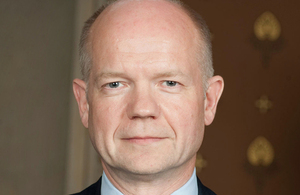
  • William Hague – 2012 Olympic Truce Speech

    williamhague

    Below is the text of the speech made by William Hague, the then Foreign Secretary, on 27 July 2012.

    It is a great pleasure and a proud moment for us in the country to welcome all our friends from around the world to London including our friends from the International Olympic Committee who are here with us today on the eve of the Olympic and Paralympic Games; and a particular honour to speak alongside UN Secretary General Ban Ki Moon. We’ve had some extremely good discussions this afternoon.

    The Games are a time of celebration and hope, and the Olympic Truce itself is a source of optimism and inspiration in a troubled world.

    We are proud that we set the first world record of these Olympic Games in October last year, when we managed to get all 193 Member States of the United Nations to co-sponsor our Olympic Truce Resolution – and that is the first time this has ever been possible.

    Since then, it has been our ambition to inspire and unite people in countries around the world with the ideals of the Truce and all this stands for. I will say a few words in a moment about how our Embassies and diplomats around the world have used the Truce to promote peace and conflict resolution around the world.

    But first, we should remember all those who are enduring the horrors of war: who are displaced, who are refugees, the child soldiers forced to fight against their will, those with their livelihoods and dreams destroyed, the families torn apart and the victims of rape. We should all remember all those valiant people in governments and civil society striving to rebuild societies emerging from conflict, or to stand up for human rights and freedom.

    War, I think we can agree is a scar on the conscience of humanity. It is because of the terrible cost of conflict that we believe that nations gathered in New York today have a duty to come together and agree a robust, legally-binding and ambitious Arms Trade Treaty. Our common interest in reducing conflict should be far greater than any differences that divide us. After six years of preparations and four weeks of intensive negotiations, we call for each nation around the table to make every effort possible to reach a historic agreement today which would, for the first time, regulate the global arms trade. It is time for governments of the world to fulfil their responsibilities and agree a strong Arms Trade Treaty.

    I also want to send a clear warning to the Syria regime as it masses its forces against the beleaguered city of Aleppo.

    This utterly unacceptable escalation of the conflict could lead to a devastating loss of civilian life and a humanitarian disaster. It will add to the misery being endured by the Syrian people, and plunge the country further into catastrophic civil war.

    The Assad regime must call off this assault. I call on all countries around the world, including all the Permanent Members of the Security Council, to join us in condemning these actions and to insist on a political process to end the violence in Syria. All those countries with influence on the Syrian regime should bring it to bear now. No nation should stand silent while people in Aleppo are threatened with a potential massacre.

    Throughout these Games the British Government will not relent for an instant in efforts to bring about an end to the conflict and increase the pressure on the Assad regime. This dire situation illustrates very strongly why the people of Syria needed the Security Council Resolution we proposed last week. The regime should be in no doubt that the world is watching its actions, including any intention to use chemical or biological weapons and that those responsible for the crimes being committed will one day be held to account.

    In a world that can sometimes seem bleak in the face of such atrocities, sport has the power to bring people together and remind them of their common humanity.

    All of us who have travelled overseas to conflict zones around the world will have marvelled at and admired the spirit, energy and tenacity with which people turn to sport.

    At Christmas in 1914, British and German troops abandoned their trenches and entered No-Man’s Land. They exchanged small gifts, and someone brought a football with them. Despite the enmity between their nations for that day they were men playing a game of football far from home.

    The Olympic Truce itself dates back to the 8th Century BC, when it was used to enable spectators and participants to travel safely to and from the Games.

    Today, the Truce, embodied in a United Nations resolution, calls on UN Member States of to promote those ideals at all levels in their societies, as well as internationally.

    Our Prime Minister described this Olympic Truce as a ‘historic opportunity, and we wanted to ensure that we made the most of it.

    On top of our Government’s financial and political commitment to conflict prevention and poverty reduction, we decided to mobilise the ideals of the Olympic Truce; development, participation education, to bring a diverse range of people together.

    Here in the United Kingdom, LOCOG have managed to bring the ideals of the Olympic Truce to more than 20,000 schools though their ambitious ‘Get Set’ programme.

    Internationally we sought ways to use our diplomatic network – one of the largest in the world – to bring people together from all parts of society including governments, international organisations, opposing parties, ex combatants, women, people with disabilities, politicians, the young and the old.

    In Thailand we organised a media development course for key reporters and commentators on the violence in Southern Thailand, encouraging more objective journalism, which can be consumed widely without fear of fuelling further discontent.
    In Sarajevo we worked with the Nansen Dialogue centre to bring together students from different communities to create short documentaries. The film they created about the Olympic Truce was played during the Sarajevo Film Festival in July.

    In Sri Lanka, our High Commission hosted a sports day, inspired by the Paralympics, for disabled soldiers, disabled ex-LTTE combatants and disabled civilians; bringing together former adversaries.

    And in the Philippines, alongside local representatives, we organised a coaching and football tournament to bring together Christian and Muslim communities.

    These are just a few examples of our work, and I am grateful to all of our diplomats and staff around the world who have played a part in these projects, and to all our friends and partners who have worked with us including British parliamentarians including Lord Bates who brilliantly over a few months walked from Olympia in Greece to London to raise awareness of the Olympic Truce.

    In June I also announced a major new UK initiative on preventing sexual violence in conflict. This will be a focus of our G8 Presidency next year. We must shatter the culture of impunity for those who use rape as a weapon of war.

    Of course it would be naive to expect all people, everywhere in the World to forget their grievances and lay enmity aside for a couple of months every two or four years.

    But if there is one thing that we can take from the Olympic motto, ‘Citius, Altius, Fortius’ – Higher, Faster, Stronger – is that in foreign policy we must always strive to build on the achievements of the past, whether it is to extend human rights and freedom, protect our global environment, or support peace in conflict-ravaged countries.

    I hope that Russia, Brazil and South Korea, as the future stewards of the Olympic Truce, also go on to use the spirit of the Olympics to bring communities together, and perhaps, during one Olympics in the future, we can be a world genuinely at peace.

  • William Hague – 2012 Speech on UK-China Relations

    williamhague

    Below is the text of the speech made by William Hague, the then Foreign Secretary, on China Business Day held at Lancaster House in London on 27 July 2012.

    It gives me great pleasure to welcome you all here just a few short hours before the opening of the London Olympic Games.

    This is the first time I have ever visited a British Embassy without having to leave the country. This historic building was where the independence of Zimbabwe was signed and two G8 summits have been hosted. However today and for the duration of these Games it has been transformed into an Embassy for British Business.

    We are holding 17 business summits over the course of the Olympics, but this is one of only two dedicated to a specific country. This is a signal of the importance we attach to our relationship with China, and the enormous potential that our economic and commercial ties have to benefit the citizens of both our countries.

    Today you can all consider yourselves ambassadors; whether you are visitors, eager to learn more about business in Britain, or representatives of British industry, envoys for the commercial sectors of which we are so justifiably proud.

    This is an opportunity to learn more about what you can offer one another. We hope you will develop relationships that stand you in good stead for the future and are part of the economic legacy of London 2012.

    This year is an important year for UK-China relations. We are celebrating the 40th anniversary of ambassadorial-level diplomatic relations between our countries.

    You could not be here at a more exciting time for London and the United Kingdom as a whole. It marks the culmination of all our efforts since 6th July 2005 when we were successful in our bid for these Olympics; and the years of preparation not just by our organisers and by British governments but by athletes around the world.

    Tonight, at the opening ceremony, we will have the opportunity to share with the world everything that is great about Britain, following the standard that was so impressively set at the Games in Beijing four years ago.

    China has brought hundreds of athletes, coaches and support staff to the UK, who have been based in Leeds for the last four weeks in my native Yorkshire as they prepare for the Games.

    It is an honour to welcome them, and all of you, to Britain.

    Whilst the attention of the world is currently on London, in our international relations Britain is looking East as never before.

    Asia is the engine of the world’s growth and we want to be part of that success, and we have spent our two years in office strengthening our ties with China and many other countries in Asia; opening new diplomatic posts, despatching more diplomats, and making a huge number of visits as Ministers.

    The growth in the Chinese economy is one of the most remarkable achievements in modern history. The Chinese economy is fifteen times larger than it was two decades ago and growth is expected to be around 8% this year. That is an increase in GDP of $580bn.

    Trade between the UK and China is also growing. Last year total exports in goods and services to China increased by 18%. In the first quarter of 2012 in comparison to the same period in 2011 they have increased by a further 12%.

    While those increases are impressive, there is opportunity to do much more. The share of the UK’s total exports that go to China has increased to 3%, but there is considerable scope for more growth; particularly in services, where the UK excels. It is clear that growth will not come from spending by the government or domestic consumers alone. Instead we must look outwards and to the expansion of globe trade as the engine of sustainable global growth.

    In 2010 the Prime Minister and Premier Wen agreed a bilateral trade target of $100 billion, and a goal of 250 more Chinese investment projects in the UK, by 2015 and we must make sure those targets are reached, if not exceeded.

    We want companies from China and across the world to thrive in the UK market. And we want our companies to do the same in China.

    We must continue to build a strong and transparent partnership between our two countries. Our shared interests outweigh our differences and they are growing all the time. We have much to learn from each other and it is a relationship that is mutually beneficial. I am pleased that China has pledged to open up more areas of its economy and encourage foreign investment.

    China’s Five Year Plan outlines some ambitious goals to turn China into an innovative knowledge economy. I hope that policy makers will find ideas to support their goal from within the UK.

    The British Government understands the needs of both our domestic business and those of other nations overseas. That is why we are putting a huge amount of energy, across the whole of Government, in to making the most of the opportunities in a world-wide economy.

    The United Kingdom is already a world-class location for international business. It is a global economic hub, and the most attractive destination for inward investment in Europe.

    But we want to make it an even better proposition for international investors which is why we are aiming to create the most competitive tax system in the G20, with lower corporation tax and no withholding tax, credits for research and development investment and ‘Patent Box’ measures to benefit the most innovative and high-tech firms.

    It is also why we will continue to support open and fair markets, resist protectionism, battle bribery and corruption and take a firm stance in enforcing intellectual property rights to support innovation and growth.

    We foster an open society, where debate and freedom have enabled innovation and creativity to flourish. This has made our creative industries world leaders. Our private sector is open and businesses from all over the world can invest and operate with confidence on a fair and equal basis with all competitors. This transparency is essential for business to thrive and inward investment to grow.

    We have a sound legal system for enforcing contracts, and our infrastructure investment systems should be encouraged and replicated in other developed countries.

    Britain is open for business and this Government is committed to removing the hurdles to trade. That is why we want to ensure that there are fewer barriers to business, less onerous regulation and more free trade. These are the crucial conditions in which a global economy can flourish.

    We are also identifying what the Foreign Office and UKTI can do to support this endeavour. In a time of economic uncertainty we are one of the few nations that are looking to expand their diplomatic network. We are opening eight new British diplomatic Posts in Asia by 2015, building stronger trade and investment, economic, scientific, political and cultural links across the whole of the region.

    We have already seen the gains that that these approaches have made. April saw the launch of the first Renminbi bond outside China here in London. China Investment Corporation recently made a successful investment in Thames Water, and the Agricultural Bank of China formally launched its London subsidiary in February. This is good news for both of our countries.

    As the relationship between our economies grows, Britain can be a springboard for China into European markets, and China’s appetite for British goods and services will only grow.

    At the Olympics in Beijing four years ago China won an impressive 51 gold medals. I am certain that the competition for medals at the Games in London will be fierce. Unlike the pursuit for sporting gold, the pursuit of global economic success is not a zero-sum game but an undertaking where both our nations can win. I hope that we can look forward to achieving that mutual success in the coming years, and may today’s event be both enjoyable and rewarding for you all.

    I hope that you enjoy the games and you have the strongest and warmest welcome possible from the government of the United Kingdom.

  • David Cameron – 2012 Speech with Turkish Prime Minister

    davidcameron

    Below is the text of the speech made by David Cameron, the Prime Minister, and Recep Tayyip Erdogan, the Turkish Prime Minister, on 30 July 2012.

    Prime Minister Cameron

    It is very good to welcome Prime Minister Erdogan here to Number 10 Downing Street. The relationship between Britain and Turkey has always been strong. I have been keen to strengthen it.

    As Prime Minister, it was one of the first countries that I visited. We set some aggressive targets for our trade, exports, imports and investment; I think we are well on track to meet those targets as our relationship deepens.

    It is not just an economic relationship. There is also a very strong political relationship. We continue to support Turkey’s membership of the European Union; we hope we can make good progress with that over the months and years to come.

    We have had good discussions today, and we have spent a lot of our time clearly discussing the appalling situation in Syria and the very real concerns that we have that the regime is about to carry out some truly appalling acts around and in the city of Aleppo. This would be completely unacceptable. This regime needs to realise it is illegitimate, it is wrong and it needs to stop what it is doing. The international pressure against this regime and against Assad is only going to build until he finally goes.

    But a very warm welcome to my good friend and colleague, Prime Minister Erdogan.

    Prime Minister Erdogan

    Let me start by saying that I am very pleased to be in London on the occasion of the Olympics. I am very pleased that my friend David has found the time, in what must be a very busy time for him, to meet and talk to me. I thank him very much for that.

    Of course, relations between Turkey and Britain have always been very strong in the military aspect, politically, in trade, in culture and in economics. Economically speaking, at a time when there are great difficulties in Europe, we have seen our trade grow and rise from $10 billion to $14 billion. This shows that we are well on track of achieving the $20 billion that we have set in our bilateral trade as a target for 2015.

    We are also always very thankful to the UK for the support that your country has given to Turkey in Turkey’s process of accession to the European Union. I would like to take this opportunity to thank you, your country and your nation, for this support.

    Of course there are many important developments in the world and we have had time to discuss some of them. The most important, which we have seen arise more recently, is the situation in Syria where what is happening is very important and very dangerous. There is a regime there that kills and massacres its own people; we must do what we can together, in the United Nations Security Council and also in the Organisation of the Islamic Countries and the Arab League, to make sure that we can make some important progress in trying to avert this appalling situation.

    There is a build up in Aleppo and the recent statements, with respect to the use of weapons of mass destruction, are actions that we cannot remain an observer or spectator to. Steps need to be taken jointly within the United Nations Security Council, the Organisation of Islamic Countries, the Arab League, and we must work together to try to overcome the situation.

    One last point, I would also like to draw your attention to the situation in Myanmar where we see hunger, we see massacre and a lot of devastation. This is a place where there are a lot of things that no human being should be subjected to. They live in very difficult conditions and we must also make sure that there is peace and freedom everywhere in the world; we must work to achieve that.

    For that, I also hope that the Olympics in London 2012 will be a good opportunity to continue to promote the message of peace. I wish to thank you for your very successful hosting of the Olympics. I would also like to take this opportunity to express the best wishes of the Turkish people to the British people.

  • Henry Bellingham – 2012 Speech on Nigeria

    henrybellingham

    Below is the text of the speech made by Henry Bellingham, the then Parliamentary Under Secretary of State at the Foreign and Commonwealth Office, on 30 July 2012.

    Excellencies, ladies and gentlemen, on behalf of the British Government, it is a great honour for me to welcome distinguished guests from both Nigeria and the UK to London today. I would like to thank His Excellency Mr. Olusegun Aganga for inviting me to attend. May I also thank the Bank of Industry in Nigeria for hosting this important event and in such superb surroundings.

    The Olympics is about bringing different nations together: athletes from different countries; spectators; journalists; entrepreneurs; politicians; business-men and -women. The Olympic spirit is about building understanding and trust across national boundaries.

    In that sense, today’s summit clearly embodies the Olympic spirit. I am delighted to have the opportunity to reaffirm the importance and value that Britain places on its friendship with Nigeria.

    I would like to take this opportunity to warmly welcome you to London during the Olympics. In particular I welcome all of Nigeria’s athletes, and wish them all success – that is except when competing against Team GB!

    I hope that the games will also leave lasting business and commercial relationships.

    Today I shall explain why the United Kingdom cherishes and aspires to nurture our commercial ties with Nigeria, and where we see opportunities for increased bilateral co-operation.

    As some of you may be aware, prosperity is at the heart of this Government’s foreign policy agenda. Since the last general election, the Government has focussed on supporting British companies to invest in, and to export to, new markets. The results have been impressive. British exports are growing and there has been a particular surge in exports to markets outside Europe. The Government has a responsibility to position the economy so it takes full advantage of opportunities away from the Euro zone.

    Just over a year ago, the Prime Minister, David Cameron, visited Nigeria. He was deeply impressed by the commercial drive of the Nigerian economy, and set an ambitious joint goal with President Goodluck Jonathan: to double bilateral trade by 2014.

    One year on, I am confident that we are well on the way to achieving, and possibly surpassing, this ambitious target. Indeed bilateral trade last year was just under £4 billion. In the last year alone British exports to Nigeria grew by 13%. The UK remains in the top five exporters to Nigeria and it remains our second largest market in Sub-Saharan Africa. And the trade is not all one way, Nigerian exports to Britain have also grown substantially during this period, despite global economic challenges.

    Trade is a two way phenomenon. The UK remains an important destination for Nigerian goods and we want to encourage Nigerian exporters to think of the UK as a gateway to the EU market as well.
    Sub-Saharan Africa boasts some of the World’s fastest growing economies and some of the greatest commercial opportunities, both for investment and export. As the most populous nation in Africa with impressive continued rates of growth, Nigeria is a country that remains at the top of our prosperity agenda. A World Bank study forecast that seven of the World’s fastest growing economies will be from Sub-Saharan Africa. Our view is that Africa still does not get enough attention from investors or traders. UK trade with Ireland continues to be greater than our trade with the whole of Sub-Saharan Africa, but the potential for increasing trade with Sub-Saharan Africa is significantly greater.

    Statisticians expect the Nigerian economy to become the largest economy in Africa in the next few years. There are tremendous opportunities in Nigeria, and British companies are well placed to realise them.

    It is clear to see why Nigeria has grown so fast and so consistently in recent times. Last year since I had the fortune to visit Lagos. I was struck by the entrepreneurship and vibrancy of the economy.

    I came back hoping that we in Britain could build even stronger partnerships with Nigerian businesses, harnessing the energy and dynamism that characterises Nigeria today.

    For example, I often refer to the impressive new Eko-Atlantic development. It will be one of the largest and most creative land reclamation projects in the world over the next few years, and there will be numerous opportunities for British business in construction, engineering, architecture, retail and many other sectors.

    Some people associate Nigeria only with the oil and gas sector. Of course, we do work closely with energy firms and are delighted that some of the leading British firms, like Shell continue to do well in Nigeria.

    But although I recognise the immense wealth and potential there, I am keen to ensure that British companies are aware of the many other opportunities that Nigeria has to offer. Take, for example, the boom in consumer goods. Diageo, PZ Cussons and Unilever are firmly established in Nigeria, where they manufacture and market their brands. This demonstrates an investment in skills and people.

    Take too the example of services and skills, which are becoming increasingly exportable to Nigeria. The number of students who choose to study at British universities and then return to Nigeria with newly acquired skills is growing year on year.

    This knowledge exchange is not only of immediate benefit to the higher education system and to those who study here in the UK, but is a long term investment in the flow of skills and peoples between our two nations.

    A strong recent example of collaborative working on ideas and innovation is the successful launch of Nigerian satellites, to provide imagery for mapping, agricultural monitoring and disaster relief programmes works.

    The images will not only assist people in Nigeria itself, but will be of value to governments and business across the region and perhaps globally. NigeriaSat-X was built by engineers from Nigeria’s National Space Research and Development Agency with expert guidance from specialists at Surrey Satellite Technology Ltd.

    The new generation of Nigerian scientists and engineers trained up under the NigeriaSat-X project will continue to support Nigeria’s space programme, ensuring its continued success and sustainability. In total, twenty six Nigerian engineers were located at SSTL’s facilities in Guildford for eighteen months throughout the design and test phases. I am sure there will be further opportunities for co-operation in the future.
    We have been working hard to ensure that the good news about Nigeria is spread across the United Kingdom. Officials at UK Trade and Investment have been lauding the diversity of opportunities to British businesses.

    Just last month UK Trade and Investment hosted a delegation from the Nigerian British Chamber of Commerce at a business promotion event at Lord’s Cricket Ground and last year they organised Nigeria conferences in London and Manchester.

    While events like these can educate and raise awareness in the business community, it is impossible to replicate the value of close cultural links to commercial partnership. There are over half a million people of Nigerian origin living in Britain. They are in a unique position to provide a bridge between our cultures and economies. Small and Medium-sized Enterprises really benefit from their experience and contacts in identifying potential partners for trading and investing in Nigeria. The Diasporas is key for developing people to people relationships.

    So the opportunities for deeper and broader commercial partnerships between the UK and Nigeria are already there. Part of realising those opportunities must involve overcoming potential hurdles and changing perceptions. We are already working to counteract some of the misconceptions that deter businesses from investing in Nigeria.

    Our government is also committed to working with the Nigerian authorities to make the business climate there ever more at-tractive to investors. Improvements in power supply, transportation and legislation that protect business investment can make a real difference to Nigeria’s already impressive growth rates.

    Our Department for International Development, refers to the opportunity to “unleash” the Nigerian economy. By 2015 it will be providing £300 million per year in Development assistance. Its aim will be to unlock the potential already latent in the Nigerian economy, pulling people out of poverty in the process.

    Of course, trade plays the vital role in resolving poverty. It is a vital stimulus for growth, development and productivity. And as has been shown in the markets that have grown fastest over the last fifty years, private enterprise is the real engine of growth – creating wealth far more quickly than the public sector can.

    It is also important that British investors are reassured by a robust legal framework that is conducive to large-scale investment. That legal framework must enforce respect for contracts and due-process. While the perception of commercial risk endures, companies will focus less on the commercial opportunities.

    So the Petroleum Industry Bill is of great significance. It provides a real opportunity for Nigeria to demonstrate to the business community that it is ready and willing to embrace and protect new investments.

    A well crafted Petroleum Industry Bill could set a legal framework that ensures investor confidence in the oil and gas sector. And it could ensure that Nigeria’s immense natural wealth is harnessed and managed for the good of the Nigerian people.

    There has already been a great deal of interest in the Bill. When the Financial Times – an institution not given to hyperbole – refers to legislation as a “game-changer”, then it is a clear signal that prudent action will be widely noticed.

    It is therefore vital that the Bill leads to a law that enhances transparency and visibility in the oil sector. Not only would this will go a long way to countering negative perceptions about the business environment in Nigeria, it would also show Nigerians how, where and for whose benefit the income from their oil wealth is being spent.

    And it would also be an important step in ongoing efforts to raise oil production to four million barrels a day. Nigerian crude, famed for its high quality, could help to diversify the global energy market and further strengthen Nigeria’s reputation as a responsible member of the International Community.

    A recent study by the World Bank, the Ease of Doing Business Index, placed Nigeria just a few places behind other large emerging economies, such as Brazil, India and Indonesia. This bill provides the opportunity to push forwards and establish Nigeria in front of those countries as a leading up-and-coming market in which to invest.

    So, ladies and gentlemen, there is a wealth of opportunities in Nigeria. All of us here today have a role to play in realising those opportunities. While the Olympics may be a competition, trade and investment is not. It is a positive sum game from which we can all benefit. My government is wholeheartedly committed to supporting Nigeria’s rise. I hope that we can all work together to strengthen our political, commercial and cultural relationship for the good of our mutual prosperity.

    The World economy is tough and unforgiving. The UK has no Divine Right to stay as one of the World’s top ten economies. Nor does Nigeria, a strong emerging economy, have a divine right to fulfil its clear potential. It is only through hard work, including through partnerships between our countries, that we will succeed.