Tag: 2012

  • Nick Clegg – 2012 Speech on House of Lords Reform

    nickclegg

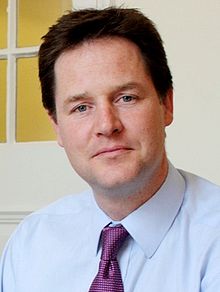
    Below is the text of the speech made by Nick Clegg, the former Deputy Prime Minister, in the House of Commons on 9 July 2012.

    Mr Speaker, no one doubts the commitment and public service of many members of the House of Lords.

    But dedicated individuals cannot compensate for flawed institutions, and this Bill is about fixing a flawed institution.

    So let me begin by setting out why our upper chamber is in need of these reforms.

    The three simple reasons why I hope members will give it their full support.

    First: because we – all of us here – believe in democracy.

    We believe that the people who make the laws should be chosen by the people subject to those laws.

    That principle was established in Britain after centuries of struggle, and it’s a principle we still send our servicemen and women halfway across the world to defend.

    Yet, right now, we are one of only two countries in the world – the other being Lesotho – with an upper parliamentary chamber which is totally unelected, and instead selects its members by birthright and patronage.

    It’s an institution that then offers those members a job for life.

    An institution that serves the whole of the UK yet draws around half its members from London and the South East.

    An institution in which there are eight times as many people over 90 as there are under 40.

    An institution which has no democratic mandate – none whatsoever – but which exercises real power.

    The House of Lords initiates bills. It shapes legislation. As governments of all persuasions know, it can block government proposals too.

    So these reforms seek to create a democratic House of Lords – matching power with legitimacy.

    Under our proposals 80% of members would be chosen at the ballot box, with elections taking place every five years, the remaining 20% appointed by an independent statutory commission.

    There would be no more jobs for life.

    We’re proposing single, non-renewable limited terms of around fifteen years, and our reforms would guarantee representation for every region in the UK.

    At the heart of this Bill is the vision of a House of Lords which is more modern, more representative, and more legitimate. A chamber fit for the 21st Century.

    The second reason is that these reforms will lead to better laws. This Bill isn’t just about who legislates, it’s about how we legislate.

    Right now, in our political system, power is still overly concentrated in the executive – governments, quite simply, can be too powerful.

    Many members have seen, in their political lifetimes, landslide administrations able to railroad whichever bills they like through the Commons.

    And we’ve all heard our colleagues complain about different governments trying to ram bills through the other place, when they should have been trying to win the argument in both Houses.

    Despite its assertiveness, too often governments believe they can disregard the Lords. This Bill, by creating a more legitimate House of Lords gives it more authority to hold governments to account – a greater check on executive power.

    That doesn’t mean emboldening the Lords to the point that it threatens the Commons – and I’ll come on to those concerns shortly – but it does mean bolstering its role as a chamber which scrutinises government.

    It means forcing governments to treat an elected upper chamber with greater respect.

    The aim of this Bill, to quote the Right Honourable member for Charnwood, is to create a second chamber: “more independent of the executive, more able to exercise independent judgement”.

    That will not only mean better laws, but also fewer laws, restricting, again in the words of my Right Honourable friend, “the torrent of half-baked legislation” governments are capable of.

    The third reason to support the Bill is simple practicality.

    The House of Lords cannot continue on its current path. We need to reform the Lords to keep it functioning, and we need to do it soon.

    Right now we have an upper chamber that is ever-expanding.

    That’s one of the main consequences of the unfinished 1999 reforms.

    Very simply: after a general election, new governments will always seek to reflect the balance of the vote in the Lords, but it is impossible to get rid of members – the only way to leave is to die.

    So new administrations inevitably have to make more appointments to get the right balance.

    The current membership is 816. That will soon be over 1000. Clearly the status quo is unsustainable.

    The House of Lords is already too big and it will continue to grow bigger still unless we do something about it.

    So this Bill reverses that trend. It gradually reduces the membership, and caps it at 450, plus 12 Bishops.

    Some people have said the numbers could be dealt with much more easily:

    That you can slim the other place by disqualifying convicted criminals or allowing members to resign.

    The first solution would bring the total down by a handful, potentially. The second perhaps by none.

    Others have said: yes, cap the House at an appropriate limit, but make it fully appointed.

    But how could we possibly justify dramatic reform of the Lords that didn’t introduce a democratic element?

    That would be unthinkable.

    It would be in direct contravention of each of the three main party’s manifestos, flying in the face of our collective promise to renew our politics.

    The only way to get to grips with the numbers is fundamental democratic reform. That is what this Bill does.

    So democracy, better laws, the urgent and practical need for reform. The three reasons why members of this House should give this Bill their blessing and wish it a swift passage into law.

    Mr Speaker, before I address some of the concerns around the Government’s proposals, I would just like to make the point that, while the Bill has been introduced by the Government, in many ways it’s not just the Government’s bill.

    These reforms build on the work of our predecessors on all sides of this House.

    As with all of the best examples of British constitutional reform, the proposals look to the future but are respectful of the past.

    Veterans of these debates will know that the Coalition parties cannot claim full credit for the reforms presented here.

    Go back to the White Paper produced by the Right Honourable Member for Blackburn in 2008; the late Robin Cook’s ‘Breaking the Deadlock’; the House of Lords Act in 1999; Lord Wakeham’s Royal Commission; and everything that went before over the last 100 years.

    And it’s clear the reforms have a long bloodline that includes all of our parties and political traditions.

    Indeed in 1910, when Government proposals to limit the power of the House of Lords were introduced, it was Churchill who said:

    “I would like to see a Second Chamber which would be fair to all parties.

    And which would be properly subordinated to the House of Commons …

    And harmoniously connected with the people.”

    He ended by saying:

    “The time for words is past, the time for action has arrived.”

    I couldn’t agree more.

    In 2007 the Commons voted overwhelmingly for a mostly elected second chamber.

    Each of the main parties stood on a platform of Lords reform at the last election and, since coming into Government, my Honourable Friend the Minister for Political and Constitutional Reform and I have looked for every way to take this forward by consensus.

    We convened a cross-party committee, which I chaired.

    We then published a white paper and draft bill for pre-legislative scrutiny.

    A Joint Committee of both Houses spent nine months considering that White Paper and draft bill – and I remain extremely grateful for their forensic and detailed analysis.

    We accepted over half the Committees recommendations and reshaped the Bill around their advice.

    So this Bill is the sincere result of a long and shared endeavour.

    Its history belongs to us all:

    To Liberals, Conservatives, to Labour and to all other parties in this House, as well as to the great political reformers and pragmatists of the past.

    Of course, that doesn’t mean every member of this House agrees with every clause. There is no perfect blueprint for a modernised second chamber.

    Even within each of the main parties differing visions of reform can be found, and this Bill reflects a number of compromises that have been made to accommodate differences across this House.

    And, I want to say to members of this House who have specific worries about particular aspects of this Bill: that’s precisely what further scrutiny of the proposals, in both Houses, will be about.

    Of the concerns that remain – they fall into two camps.

    The myths, which I will now seek to dispel, and the fears, which I hope to address.

    Taking the myths in turn:

    I have heard the accusation that the reforms will be too quick, too abrupt,

    that the Bill amounts to some frantic act of constitutional violence.

    The truth?

    These reforms would be implemented over around 15 years.

    New members would be appointed or elected in three tranches, over three elections.

    The political parties and groups would have maximum discretion over how to reduce their existing numbers.

    I have heard that the modernised Lords will cost the earth.

    The truth?

    Taken as a whole, and once completed, the Government’s reforms of Parliament will be broadly cost neutral.

    The additional costs attached to running a reformed House of Lords – which, incidentally, are much more modest than some of the estimates doing the rounds – will be offset by the saving from reducing the number of MPs.

    Once all this is implemented, the real terms cost of running Parliament is expected to be roughly the same as it is now.

    The only additional cost will be conducting the elections themselves.

    Next, I’ve heard Lords reform presented as some kind of Liberal Democrat crusade.

    The truth?

    All the main parties stood on a platform of Lords reform at the last election – and in elections before that too.

    Indeed, it was in the Conservative Party’s manifesto in 2010, 2005 and in 2001, and the Labour Party has long campaigned against privilege and patronage in the other place.

    Going back – as the Right Honourable Member for Neath has highlighted – all the way to Keir Hardie’s 1911 manifesto.

    The final myth:

    I’ve heard that the House of Commons should not be concerning itself with Lords reform at a time of economic difficulty.

    Then let’s get on with it. Proper scrutiny, yes. Years of foot-dragging, no.

    I don’t remember this complaint being made when we legislated to create elected police commissioners, or when we were debating local government finance, or legal aid reform.

    And it’s odd to suggest that Parliament cannot do more than one thing at a time. But I certainly agree that jobs and growth are the priority.

    So let’s not tie ourselves up in knots on Lords reform. We don’t need to – all the parties are signed up to it.

    Vote for the Bill and the programme motion so we can scrutinise the Bill properly, while still allowing ourselves to make progress on other Government priorities.

    So much for the myths.

    Now let me address some of the fears about the Bill, many of which I believe have been expressed in good faith.

    Broadly, there is a worry that we risk upsetting a delicate constitutional balance, creating a second chamber that is too assertive and so a threat to this place.

    I’m not surprised by that – it’s part of a normal and familiar pattern.

    Every time the other place has been reformed, questions over the primacy of the Commons have arisen, with predictions ranging from disaster to apocalypse.

    In 1999 some said that new Life Peers wouldn’t accept traditional conventions, and so would start blocking manifesto bills, where Governments legislate on their election promises, resulting in endless gridlock over government priorities.

    As with all these things, the prediction was completely wrong. The reformed House accepted that the conventions should continue.

    It adjusted to its new status without overreaching its role as a junior partner – as it will again.

    So, while questions of primacy are important and must be clearly answered, we should remember that these fears are the routine reflexes of Lords reform.

    And this Bill will not turn the other place into some kind of monster. It relates to size and composition only, and does not contain any new powers for the other place.

    Ultimately the primacy of the Commons will remain grounded in our conventions and absolutely guaranteed by our laws.

    To ensure a rock solid legal backstop the Parliament Acts will remain, and we have reaffirmed the Acts on the face of the Bill to make that point crystal clear.

    The Government will still be based in the Commons.

    The appointed element of the new chamber means it could never claim greater electoral legitimacy.

    And the Commons will of course continue to have sole responsibility for Money Bills.

    A separate but related fear is that opening up the Lords to election will politicise it, creating a chamber of career politicians likely to rival MPs and robbing the Lords of its wisdom and expertise.

    Let’s be clear on the current situation.

    The other place contains some extremely eminent individuals, who bring a wealth of knowledge and experience to Parliament.

    But it is hardly entirely dispassionate – an institution somehow untouched by party politics:

    More than 70% received their peerage from party leaders.

    That’s over two thirds of members taking a party whip – and very few rebel.

    Members of the House of Lords are more likely to have come from this place than from any other profession – 189 are ex-MPs.

    In a reformed House members will see themselves and their role very differently to us here.

    Not least because of their longer term and the means by which they are elected.

    This Bill attempts to make space in parliament for a different kind of politician.

    A different character of parliamentarian.

    The Government not only accepted the recommendation by the Joint Committee that appointed members should be able to combine membership with a role outside the House, but we have extended that principle to elected members.

    Because the Lords should be a place for people who are public spirited, who have political and ideological affiliations, who want to serve this country, but who also want to continue to lead a life outside politics, who want or need to work, who have neither the desire or inclination to be an MP.

    And they won’t be allowed to leave the Lords and immediately seek election in the Commons, encouraging them to see their time in the House of Lords as their one real chance to make their mark.

    The combination of elections by proportional representation, single terms and a specific duty on the Appointments Commission to consider diversity could encourage more women, more members from BME communities, and more people with disabilities to serve.

    And, crucially, the list system will mean that the new membership will properly represent all parts of the UK.

    Right now nearly half of the members of the House of Lords are drawn from London and the South East.

    Yet only 5% come from the North West. 2.6% from the North East.

    Our proposals will correct those imbalances.

    Proportionately, the West Midlands will see its representation more than double. For the East Midlands it will treble.

    This Bill has sown into it the chance to create a richer, more diverse house, drawn from many more walks of life.

    Mr Speaker, I would like to conclude my speech as I began.

    There are three reasons to vote in favour of the Bill and its orderly passage.

    Because we believe in democracy, for the sake of better laws, because reform cannot be ducked.

    I welcome the reasoned and expert questions, arguments, concerns I know many members will raise.

    I also know there will be those who are not interested in rational discussion.

    Those who will oppose Lords reform in whatever form, at whatever time, no matter what commitments their parties have made.

    This project has always been dogged by those who fear change.

    What encourages me is that it has also been kept alive by those who champion democracy.

    The reformers and modernisers who believe, simply, that power belongs in the hands of the people.

    We, here, have a chance to finish their work. This has been a hundred year long project. Let us now get it done.

    I commend the Bill to the House.

  • William Hague – 2012 Speech on Diplomatic Excellence

    williamhague

    Below is the text of the speech made by William Hague, the then Foreign Secretary, at the Hague in Netherlands on 9 July 2012.

    It is a great pleasure to be here. When Your Foreign Minister recently invited me to come to The Hague, I gladly accepted his invitation. We consider ourselves lucky to have such a strong and like-minded friend in the Netherlands. Our countries work extremely closely together in foreign policy. In the EU our countries are consistent champions of free trade, a deeper Single Market, and the fiscal discipline and structural reform which will be essential to future growth, and from Burma and the Western Balkans to Syria and Zimbabwe we work side by side.

    I also like to think that the Dutch and the British have much in common, in the way in which we look at the world and in the way we do business: we are direct, we want to see decisions and action rather than process for its own sake, and we are outward-looking. We understand each other’s sense of humour, and I am told by our Ambassador that British television comedies such as Yes Minister are very popular here. I visited Unilever and Shell this morning: two of our most successful multinationals and shining examples of how well we work together in business.

    I also believe that we share many of the same instincts and understanding of trends in the world. Your Foreign Minister has just spoken about some of these, and explained how the Netherlands is adapting to them. I congratulate him on this work and on his leadership, and I thank him for the chance to speak to you all.

    My message to you today is that we are witnessing a Renaissance in the importance of diplomacy.

    Some people thought that advances in technology, and the trend towards multilateralism, would lessen the demand for diplomats and Embassies in far-flung parts of the world.

    But that has turned not to be the case at all. On top of the stresses and strains we are all experiencing here in Europe and in our own economies, the world we are operating in is rapidly becoming more challenging.

    Today, there are far more centres of power and decision-making that we need to be present in, that we need to understand and to try to influence.

    For although the world has become more multilateral, it has also become more bilateral at the same time:

    In addition to the established ‘emerging powers’ such as the BRICs, many other countries are bursting onto the international scene, powered by a combination of economic dynamism, geographic location, youthful populations, natural resources, sovereign wealth, and the spread of global connectivity thanks to the internet and related technologies. We have moved irreversibly from a G8 world to a G20-plus world.

    It is also true that countries are not settling into rival geographic blocs of states that think and act the same way. There is a far more dynamic and complex lattice-work of connections at play between states in terms of trade and foreign policy interests; and also a rich web of overlapping connections between business, civil societies in those countries which contribute to their choices and actions.

    It also goes without saying that the same web of connections also applies increasingly to criminal gangs, cyber-criminals and terrorist groups, which now are often truly transitional in nature while rooted in local circumstances.

    Working out how to navigate this much more complex landscape of a networked world;

    How to protect our national interests and promote our common values and security;

    How to work with countries that are not natural allies;

    And how to address threats to our security and seek out economic
    opportunity when both lie further afield;

    All these things are the tasks of diplomacy today.

    Some of these changes are uncomfortable.

    We face the prospect of there being more situations in the world that we do not like but cannot easily change.

    We have to adapt to the fact that some of our traditional diplomatic measures, including EU sanctions, will have a weaker impact as the EU’s share of global GDP declines relative to the rest of the world.

    We have to expect more ambiguity in our foreign policy relations, as we work with countries that will be strong allies on some issues but vehemently opposed to us on others, or that do not share our values on human rights, democracy and the rule of law. Nonetheless we have to build confluences of interests with such countries over time, since they will be essential to achieving our common objectives.

    But there are also tremendous opportunities:

    This includes the potential to develop a broader sense of international responsibility among the emerging power, and to forge global on issues that matter to us all. Securing a robust and effective global Arms Trade Treaty this month would be one example of this.

    Vast new opportunities for the prosperity of our citizens are opening up, with the world economy projected to double from $60 trillion to $120 trillion over the next fifteen years.

    And as the Arab Spring shows, our model of democratic freedom under the rule of law remains a powerful aspiration for people everywhere, and gives renewed hope and impetus to our efforts to promote human rights.

    So whether it is to seek opportunity or defend ourselves against threats, for Britain these changes in the world lead to one inescapable conclusion:

    It is that there is no substitute for a global diplomatic network of Embassies that gives our country the reach and influence it needs.

    We need more skilled diplomats on the ground in the places that matter, who are able to get under the skin of those countries, who are immersed in their language, culture, politics and history, and who have access to decision-makers and can tap into informal networks of influence. We need a more expeditionary approach to foreign policy, particularly in the area of conflict prevention, but also to tap into new opportunities for commerce and trade.

    And so after a decade in which Britain closed many Embassies, we have begun a diplomatic advance that seeks to build up our presence and influence in the fast-growing parts of the world, and that strengthens our Foreign and Commonwealth Office as an effective institution for the long term. We think this is good for our country, but we also believe it will contribute to our ability to support peace, security and prosperity.

    We do want to see the European Union use its collective weight in the world to good effect, and argue strongly that it must not turn inwards but remains outward-looking and engaged in its neighbourhood and the wider world.

    I gave a recent speech in Asia calling for the EU to do more collectively in its relation with ASEAN. We want to see more EU Free Trade Agreements concluded, and an ambitious approach to the strengthening of human rights and democracy in our neighbourhood. And now the EAS has been established, we want to see it work efficiently. We are determined to play an active and activist role in all the Foreign Policy discussions and efforts by the European Union, from climate change to nuclear proliferation. But at the same time we believe that there is no substitute for our own national diplomatic network and capability.

    Our focus on strengthening the Foreign Office and expanding British diplomacy takes three principal forms, which I want to set out briefly.

    The first relates to policy. We are investing in our bilateral relationships with the fastest growing economies and the new powers of the 21st century. This means strengthening our ties beyond Europe and North America. We completely disagree with those who think that Britain has to choose between the EU and America. So while maintaining our close ties with the US and the European Union, we are tapping into our other networks and relationships with an intensity not seen in Britain in years.
    This includes the Commonwealth, which we see as a unique network that has been undervalued in recent years. We have invested significantly in our relationships with the Gulf – which stood us in good stead during operations in Libya where we worked in equal partnership with Arab nations. It includes our ties with India, Pakistan, Japan, New Zealand, Canada and Australia, and we have begun the biggest effort to build up our relationships in Latin America since the 19th century.

    The second change in our foreign policy relates to the first, and it is our conscious decision to expand our diplomatic network even at a time of budgetary constraint.

    By 2015 we will have deployed 300 extra staff in more than 20 countries. We will have opened up to eight new consulates or trade offices, including two new Deputy High Commissions in India which brings the number of our posts there to seven, and we will have opened up to 11 new British Embassies in Liberia, El Salvador, Paraguay, Haiti, Laos, South Sudan, Kyrgyzstan, Madagascar, Cote D’Ivoire, and Somalia if circumstances permit.

    The third change, which really binds this approach together, is a new focus on strengthening our Foreign and Commonwealth Office as a thriving institution at the heart of government. It must be as expert and effective as promoting our long terms interests as it undoubtedly is at being resilient and imaginative in dealing with urgent crises.

    Our goal is a Foreign Office that continues to be capable of attracting and retaining the very best and brightest minds in the country, that equips its staff with effective diplomatic skills and places a strong emphasis on languages, history and regional expertise as well as on management and effective use of modern technology. I have summed this up as striving for ‘diplomatic excellence’ in the pursuit of our three core objectives: safeguarding Britain’s national security, supporting British nationals overseas and building our country’s prosperity.

    This focus on skills and knowledge includes an increase in our budget for teaching languages to our staff by 30%. We are increasing the number of jobs overseas for which language skills will be an absolute requirement , and opening a new language centre in the building as well, so that our diplomats study together and foster a collegiate spirit. And I pleased that our Ambassador is a good example of this himself, being one of the few diplomats to master the Dutch language.

    I launched a new Expertise Fund to deepen the geographical and thematic expertise of staff; this year we have so far supported over 300 projects worth over £800k.

    We have introduced a sharper focus on commercial diplomacy, with a reinforced economics unit, more staff seconded to business, and Charter for Business.

    We have brought Foreign Office historians into our main building for the first time ever, with their proximity reflecting the increased emphasis we are giving to the perspective they bring along with our Research Analysts.

    We have adopted a new and much closer approach to Foreign Office Alumni so that we continue to draw on the skills and experience of our former diplomats. We have established alumni groups across different foreign policy areas, including my own Advisory Group of former senior FCO officials. As I put it to my colleagues, our staff should feel that they never really leave the Foreign Office, but are closely associated with it whatever else they go on to do.

    At the same time we are bringing in more ‘outsiders’ from think tanks, non-government organisations, businesses and civil society groups, to test ideas and new and innovative approaches, and to help ensure that our policies are robust and remain relevant.

    And as you are, we too are increasing our use of digital channels to discuss and inform our policy making: engaging on twitter personally, hosting Q&A sessions on foreign policy issues, and encouraging our Ambassadors to use twitter and Facebook. The FCO has 90 blogs, over 100 Twitter accounts and more than 130 Facebook pages. But there is still more that we can do to really harness the full power of digital diplomacy and we are studying this as I know you are.

    So this is how we are responding to the challenges and opportunities we see in the world around us: the expansion of British diplomacy, an active and engaged role in the European Union, a greater focus on bilateral relationships, a programme of Diplomatic Excellence to build up the Foreign Office for the long term, and embracing the digital technologies of the 21st century.

    We have a great sense of excitement and momentum about what we are doing. It is encouraging to know that others like the Netherlands are engaged in similar efforts. We have a lot that we can learn from each other and many areas in which we can work together, and I hope that we will collaborate even more closely in the years to come.

  • Tim Loughton – 2012 Speech at ADCS Conference

    timloughton

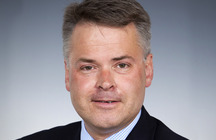
    Below is the text of the speech made by Tim Loughton, the then Parliamentary Under Secretary of State for Children and Families, at the ADCS Conference in Manchester on 5 July 2012.

    Thank you Debbie. It’s a great pleasure to join you today to discuss our plans for the year ahead and beyond.

    But before I look forward, I want to look back and pay a few words of appreciation and acknowledgement to your teams.

    In particular, I want to say thank you to the ADCS and its members for your thoughtful, positive engagement with government over the last year in business critical areas like fostering, adoption and social work reform.

    Thanks to you, we are beginning to see significant progress in the implementation of Professor Munro’s child protection recommendations and real evidence of sector led improvement, particularly in terms of supporting and challenging councils.

    This is important progress – in an exceptionally difficult economic context – so let me start by offering my warmest congratulations, and can I ask that you please pass on my appreciation to your teams around the country.

    I would like to say a few words this morning about the work we need to do to speed up progress in child protection, focusing on the most vulnerable children in particular. But I am going to start by laying down some very substantial challenges for local areas in the year ahead.

    Over the 12 months, I have witnessed some truly inspiring turnarounds in fortune for many of the most vulnerable children and families in this country: for which you must all take enormous credit.

    Young people moved back into education after months, sometimes years of disengagement. Chaotic families supported to establish loving attachments. Children rescued from neglect and abuse by the extraordinary professionalism of social workers.

    This is the very best of child protection work in this country – the very best example of what can be achieved with focus and ambition.

    But I am also acutely aware of the fact that these successes do not excuse the very serious examples of service failures we have sometimes seen:

    Young people transported across the country to live in care miles from family and friends and familiar environments. Teenage girls lured away from residential homes by gangs of men to be sexually exploited. Children waiting years for high quality adoption placements to take place.

    These kind of failures ask all of us to take a long, hard look at the circumstances in which they occur, and keep occurring.

    Where is the drive in weaker areas to reduce delays in adoption and fostering placements? Where are the basic safeguards against children being placed in unsafe, unsuitable accommodation? Why are we still failing to protect children in care from abusers: surely the most elementary of all expectations?

    These are questions we all, and I do mean all, need to confront: from politicians to policy makers, DCSs to staff on the frontline. They are also the challenges I want you to now put at the top of your in-tray if they aren’t already.

    In saying this, let me make the point that I know, as well as anyone, the utter commitment of everyone in this room to protect young people from danger; to secure the best results for them; and to deliver the very highest quality services. I also understand as well as anyone that we cannot guarantee the safety of every child in this country.

    But as leaders, we need to be relentless in our ambition to improve safeguarding arrangements: continually to assess where we could do better, where we could reduce risk.

    I want us to be able to look each other in the eye at these conferences and say: ‘yes we have done everything humanly possible to safeguard those children in our care’.

    But to accomplish this, we must first be honest and transparent about performance levels. We must be rigorous in our commitment to self-assessment and improvement. We must work across the sector to encourage, challenge and support one another. We must ensure that the experience of the best is transferred to those who are not so strong, and make sure there is no scope for the denial of weak performance.

    For our part, we will continue to do everything we can as a government to support you, to get safeguarding right and to strengthen public confidence. I talk about an approach of spreading best practice, not just finger wagging. Sending out letters of congratulation, not just scrutiny and intervention

    Already this year, we have made significant progress to bring Professor Munro’s widely acclaimed report on child protection into practice.

    We have shortlisted several exceptional candidates for the position of Chief Social Worker and will announce the successful candidate shortly. Eight local authorities are testing new approaches to child assessment. Ofsted has introduced its new inspection framework to provide a sharper focus on the quality and effectiveness of support for children.

    We have also responded to your concerns over excessive government control by cutting back disempowering bureaucracy in areas like the Working Together guidance. The three draft documents we have published for consultation will replace over 700 pages of detailed instructions with just 68 – focusing on the essentials and leaving the details to you.

    These are radical reforms aimed squarely at putting the power of decision making back in your hands.

    My plea to you this morning is to embrace this power shift enthusiastically and energetically. Don’t wait for government pronouncements that are not going to arrive, take charge of the opportunity and press ahead with local reform.

    To support you we have invested in the Children’s Improvement Board to work with councils across the country to develop a model of sector-led improvement that is based around rigorous, honest and open self assessment, peer challenge and sector based support.

    This is not an insignificant commitment from government. We are providing seed funding of £8.85 million over this financial year to support CIB and we expect to see lead members, chief executives and yourselves leading us towards a more open, transparent, innovative and collaborative approach to self improvement.

    I have been hugely encouraged to see you putting the structures in place that will allow every region to make a reality of sector led improvement.

    What we need to see now though, is more impact across the country – with self-assessment, peer challenge and support used as a routine way of securing meaningful improvement.

    In particular, I want to see much faster progress towards raising standards of residential care for young people.

    On Tuesday, I wrote to you all outlining the urgent reforms we are taking to protect children in care from sexual exploitation as part of a wider overhaul of the system.

    These measures include ensuring more robust checks are made before children are placed in care outside their home boroughs, and ordering the immediate lifting of all regulations that stop Ofsted telling police and other agencies the location of children’s homes.

    On top of this, we are reviewing all aspects of the quality and effectiveness of children’s homes – including their management, ownership and staffing.

    It is important to say that there are many exceptional children’s homes that keep vulnerable children safe, as well as helping them to thrive and succeed. Last month I met inspirational residential staff who had been nominated for awards by the children in their care.

    I know there are many more professionals like these around this country, who work tirelessly and passionately to support children in care, and they deserve our unstinting praise and respect.

    But it would be entirely wrong to pretend there are not significant challenges before us. You know, and I know, that there are residential homes in this country that are clearly failing their children in the most tragic of circumstances.

    Sue Berelowitz underlined the scale of the problem earlier this week and I am enormously grateful to her for responding to us so quickly with the early findings into her ongoing report on child sexual exploitation in gangs and groups.

    As you will have seen, her report finds a clear pattern of residential homes being specifically targeted by abusers where there is, in her words: ‘a constant flow of vulnerable children for perpetrators to exploit’.

    We are working with Ofsted to make sure all care homes match up to the very highest standards and are properly assessed. I have also set up a multi-agency taskforce to address the inadequacy of data relating to children missing from care.

    Most importantly, as many of you will know we published the Child Sexual Exploitation Action Plan last November, identifying several key stages where we needed better intervention on child sexual exploitation: including taking more effective multi-agency action.

    We are already seeing signs of positive progress, with the LSCB chairs’ network helping to spread best practice. And I thank Sue Woolmore for her efforts on this and for helping to coordinate the efforts of individual LSCBs.

    But I remain acutely concerned at the worrying trend for placing children in unsuitable residential accommodation miles away from the familiarity of home. Some 45 per cent of young people in care now live outside their home boroughs.

    If you look at a heat map of our towns and cities showing the locations of residential homes and then transpose onto them the whereabouts of known child sex abusers, drug dealers and criminal activity, you will find that we are too often placing our most vulnerable children into the most dangerous areas of our country.

    We should not imagine that the public easily accepts or forgets failures in child protection of this kind. Or of the kind we saw in the Rochdale case this year, where young girls were lured from care homes with the promise of cheap vodka or drugs, before being passed around ‘like balls’ in the words of one of the victims.

    So, I want to make it absolutely clear today that we expect action to be taken immediately, and decisively, if there is any suggestion that care homes are not passing muster or providing excellence in safeguarding.

    DCSs have a critical role to play in selecting the best care homes for individual children: do not think it is ok to send a child to a poorly run home miles away from your own authority – or to take an ‘out of sight, out of mind’ approach to child protection.

    This is an issue we must all work together on, with total determination. And I want today’s conference to mark the start of an uncompromising focus by councils on improving standards in residential care for children.

    These homes should not simply be protecting children from danger, they should be supporting them to achieve to the very best of their abilities: to succeed at GCSE; to succeed at A Level; to go on to University; and to secure meaningful employment.

    I want residential homes, and their staff, to take their responsibilities to these children as seriously as you or I take our own role as parents.

    They should set world class benchmarks for the care of our most vulnerable young people and hold themselves to the highest possible standards of delivery.

    As you are by now well aware, the other, related, area where we want to see significant progress is in adoption.

    At the NCAS conference in October, I made the point that there are councils doing a sterling job of improving the quality of their adoption metrics.

    But we know the wider picture is mixed. Overall adoption figures fell again last year. Still only 74 per cent of children are being placed within 12 months of their adoption decision, and there is significant variation at local level.

    The evidence shows overwhelmingly that delay has a negative impact on the life chances of children. It is imperative that stable homes are found within a reasonable time, and we are determined, as a government, to do all we can to speed up and streamline the adoption process.

    In March, I wrote to you announcing the publication of the Adoption Action Plan. Last month, we published our adoption scorecards setting out performance thresholds and minimum expectations for timeliness.

    On top of this, we are undertaking critical research in areas like adoption breakdown so we can fill data gaps, and we’re working to recruit a greater number and wider range of prospective adopters.

    We know this is already having a positive impact, with greater attention and interest by councils producing substantial improvements in their adoption figures.

    I would like to thank those authorities straightaway for their work but I also want encourage the others to will themselves on to do even better.

    I ask you to treat adoption as a priority issue and to take it as a given that we will do anything, and everything we can to support you as you take action.

    At the same time, I ask you to focus hard on fostering, where the challenge is just as significant, just as urgent.

    According to the Fostering Network, a child comes into care every 22 minutes. Of all the children who come into care, 75 per cent are looked after by foster carers. To cope with demand, an estimated 8,750 new foster carers are needed across the UK in this year alone.

    Foster carers are in an unrivalled position to build strong, stable relationships with the children they care for and to help a child address difficulties resulting from their experiences before entering care so they can turn their lives around.

    That is why I launched the Foster Carers’ Charter last year, to give foster carers the recognition they deserve. I am delighted that 86 local authorities have already signed up to the Charter with a further 37 in the process of doing so.

    The issue now is to make sure all fostering services sign up to, and implement the Charter so that all foster carers, whether they foster for local authorities or independent providers, receive the support, training and recognition that they need.

    Finally, I want to build on my comments from last year’s conference and encourage everyone here to ensure they are using Positive for Youth to inspire high quality services for young people.

    As some here will already know, we are publishing new guidance for local authorities shortly that will show the key role that services for young people have to play.

    As I said at NCAS, we are going to provide you with the flexibility you need to design services and prioritise resources around local needs. In particular, the guidance will be shorter and sharper and it will be up to you to assess the sufficiency of the offer you make to young people.

    We’ll also be taking stock of progress on positive for youth at the end of the year and pushing ahead with the inspirational National Citizen Service programme.

    But I want to take this opportunity to say that I have been delighted to hear so many stories about the involvement of young people in local decision making, scrutiny of services and commissioning.

    In particular, it is enormously encouraging to see so many positive examples emerging of councils working together across professions, legacy service structures, and radically redesigned local services.

    I appreciate these efforts and do please keep on sharing your experiences of what works, and indeed what doesn’t, with colleagues around the country.

    I know many of you are already doing this as a matter of routine so I want to end with sincere thanks to the ADCS.

    I am aware that I have been challenging at times today. I do not, however, want you to imagine that I either underestimate or under appreciate the inspirational impact that you can have as DCSs.

    I see the difference you make with my own eyes every day: not just in the reports that cross my desk and the conversations we hold across board tables, but in the work I see being done on the frontline by your teams.

    Nor do I live in ignorance of the tremendous pressure that is placed on you from all angles, particularly in these tough economic times.

    It is very difficult for those not directly involved to appreciate fully the extraordinarily fine judgements involved in child protection, and the pressure under which your staff are expected to deliver.

    On a day-to-day basis, DCSs negotiate conflicting demands and situations of inordinate complexity, making the most far reaching of decisions. I want to assure you I never forget this contribution or take it for granted.

    So, thank you and please take my challenge only as a signal of my very highest regard: the confidence I have in you to make a lasting difference to the most vulnerable young people in this country.

  • David Cameron – 2012 Speech on Family Planning

    davidcameron

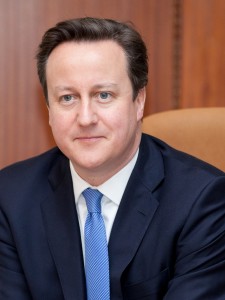
    Below is the text of the speech made by David Cameron, the Prime Minister, on 11 July 2012.

    We’re here for a very simple reason: women should be able to decide freely, and for themselves, whether, when and how many children they have.

    This is not something nice to have. Some sort of add on to our wider development goals.

    It’s absolutely fundamental to any hope of tackling poverty in our world.

    Why?

    Because a country can’t develop properly when its young women are dying from unintended pregnancies and when its children are dying in infancy.

    As a result of this Summit, in the next 8 years we will avert an unintended pregnancy every 2 seconds and 212,000 fewer women and girls will die in pregnancy and childbirth.

    That alone, frankly, is a good enough reason for us to be here.

    But there’s another reason why family planning is so important for development.

    When a woman is prevented from choosing when to have children it’s not just a violation of her human rights it can fundamentally compromise her chances in life, and the opportunities for her children.

    Without access to family planning, pregnancy will often come far too early.

    In Sierra Leone, for example, a UNICEF survey found that a staggering two fifths of girls give birth for the first time between the ages of 12 and 14.

    These young girls are not ready physically, emotionally or financially to become mothers.

    They don’t want to give up school or the chance to go on and run a business and build a better life for themselves.

    And yet suddenly their dreams are broken as they become trapped in a potentially life-threatening pregnancy.

    Even if they survive, many are left with catastrophic scarring.

    They struggle to bring up children that are healthy and educated and they are likely to have many more children than they have the resources to look after.

    It’s a simple fact that as countries get richer, women generally have fewer children.

    And by concentrating their resources on a smaller number of children those children are healthier, better educated and more likely get a job and build a prosperous future for themselves and their own children.

    Family planning helps that process along.

    The availability of contraception enables women to decide to have fewer children.

    And as fertility rates decline, having fewer children to support can help the economy to grow.

    We should be pragmatic about what works.

    In East and Southeast Asia, this reduction in children accounted for more than two fifths of the growth in per capita GDP between 1970 and 2000.

    In Matlab in Bangladesh, a 20 year study found that a family planning programme together with improved support for maternal and child health led not just to smaller, healthier families but also to women being better educated and earning more and their families owning more assets with the average value of an educated woman’s home as much as a fifth higher than for women in nearby villages where this programme hadn’t been introduced.

    So we know this works.

    So family planning works not just because smaller families can be healthier and wealthier but because empowering women is the key to growing economies and healthy open societies -unlocking what I call the golden thread of development.

    The UK government is taking a whole new approach to development.

    We know that in the long term we can not help countries develop just by giving them money.

    Development can not be done to the poor by outsiders.

    It has to be driven by the people who need the change.

    Our role is to help the poorest countries create the building blocks of private sector growth and prosperity.

    These building blocks are the same the world over.

    No conflict, access to markets, transparency, property rights, the rule of law, the absence of corruption, a free media, free and fair elections.

    Together these key enablers of growth make up the golden thread that runs through all stories of successful development across the world.

    And they are quite simply life changing.

    Curbing corruption means not having to pay a bribe to lease a plot of land.

    Transparency means that people can monitor whether revenue from natural resources like oil is being invested in roads or wells for their villages, or wasted.

    The rule of law means that a woman can go to court to settle a dispute knowing that her evidence will be given the same weight as a man’s.

    Free and fair elections mean that every citizen has a voice in their government and the opportunity to stand for office.

    But these vital building blocks of freedom and democracy can not be laid down without a transformation in the participation of women.

    Why?

    Because where the potential and the perspective of women is locked out of the decisions that shape a society, that society remains stunted and underachieving.

    So enabling women to have a voice is a vital part of improving governance and achieving sustainable and equitable growth.

    And this isn’t just the case in Sub-Saharan Africa.

    This is the case all over the world.

    A World Bank Study of 100 countries found that the greater the representation of women in parliament the lower the level of corruption.

    While one of the most powerful signs that real change was afoot in Egypt and Libya was when women turned up and made their voices heard, refusing to be confined to their homes while men decided their future.

    And one of the standards by which Egyptians will judge their new government must surely be the engagement and participation of women.

    Crucially, it is by empowering women that countries can unlock their economic potential.

    Studies show that limited education and employment opportunities for women in Africa mean annual per capita growth is almost a whole percentage point lower than it should be.

    Had this growth been achieved, Africa’s economies would have doubled in size over the last thirty years.

    Providing girls with just 1 extra year of schooling can increase their wages by as much as 20 percent.

    And that really matters because a woman who can decide when to have children, will go to school for longer and then invest her extra money in her own family.

    When women have opportunity, resources and a voice, the benefits cascade to her children, her community and her country.

    So family planning is just the first step on a long journey towards growth, equality and development.

    But it’s an essential step – saving lives and empowering women to fulfil their potential as great leaders of change.

    So I am delighted that Britain is taking the lead – together with the Gates Foundation – to tackle an issue that has been ignored for so long.

    Just like the money we gave last year through GAVI to immunise children against preventable diseases this aid is transparent and direct – it reaches the people who need it, and it doesn’t get caught up in bureaucracy.

    Last year’s vaccines summit is saving 4 million lives.

    This year’s family planning summit will prevent a further 3 million babies dying in their first year of life giving 120 million women and girls in the world’s poorest countries the chance to access affordable, lifesaving contraception for the first time.

    And I’m proud to say that Britain will contribute over £500 million between now and 2020 – doubling our annual investment in family planning.

    This alone will help 24 million women and girls preventing an unintended pregnancy every 10 seconds and saving a woman’s life every two hours.

    Of course there are some who will oppose this.

    There are those who will say we can’t afford to spend money on aid at a time like this.

    And there are those who might accept the case for aid, but who object to supporting family planning and the empowerment of women because they think it’s not our place to tell people what to do, or interfere in other cultures.

    I think it’s vital that we confront these arguments head on.

    Let me do so.

    First, it is morally right to honour our promises to the poorest in the world.

    Every 6 minutes a woman who did not want to become pregnant will die in pregnancy or childbirth. Every 6 minutes.

    So how many minutes do we wait?

    I say we don’t wait at all.

    But there’s not just a strong moral argument for keeping our aid commitment, there’s a second, more practical argument too.

    If we really care about our own national interest about jobs, growth and security we shouldn’t break off our links with the countries that can hold some of the keys to that future.

    For if we invest in empowering women in Africa as the key to driving trade and economic growth it’s not just Africa that will grow but Britain too.

    And that’s why I will always defend our spending on aid.

    As for those who say we shouldn’t interfere let me be absolutely clear.

    We’re not talking about some kind of Western imposed population control, forced abortion or sterilisation.

    What we’re saying today is quite the opposite.

    We’re not telling anyone what to do.

    We’re giving women and girls the power to decide for themselves.

    Yes family sizes need to come down but they come down not because we say they should but because the women who have children want them to.

    And to those who try to say it is wrong to interfere by giving a woman that power to decide I say they are the ones who are interfering, not me.

    I’m not dictating who runs her country.

    I’m not saying how many children she should have.

    What jobs she can do.

    How she can dress.

    When she can speak.

    It’s those who are imposing their values on women who are doing the interfering.

    I say that every woman should be able to decide her own future.

    And yes I say we should stand up against those who want to decide it for her.

    Because there are no valid excuses for the denial of basic rights and freedoms for women around the world.

    So what we are talking about today is the beginning of a much wider battle that will define our century.

    A fight for female empowerment and equality that can not be won by having special separate discussions on women every now and then but requires instead that women are at the table in every discussion on every issue.

    In Britain, we are scaling up and re-prioritising resources for women and girls in all of DFID’s 28 country programmes.

    We have made a commitment to help 6.5 million of the poorest girls in the world to go to school.

    We are standing up for women’s rights against horrific sexual crimes, including through the campaign to prevent sexual violence in conflict which William Hague launched in May with Angelina Jolie.

    We are determined to end the barbaric practice of female genital cutting making it illegal in Britain leading the way in countries like Somalia where it affects a staggering 98 per cent of women and supporting the brave leadership of the first ladies of Burkina Faso and Niger who are here today.

    And I will personally ensure that the fight for the empowerment of women is at the heart of the international process I am co-chairing to renew the Millennium Development Goals.

    Because we know today just how important that empowerment is for women, for the well-being of their families and the future growth and prosperity of the whole world.

    Just before I came onto this stage today I met Aslefe.

    Aslefe is an inspiring young woman from Ethiopia.

    She told me she is the captain of her village football team. She uses football matches to distribute materials, contraceptives and HIV prevention methods.

    She wants every woman and girl to have access to family planning and wants improved health systems in Ethiopia so girls her age no longer have to suffer.

    She has hope in her eyes.

    She has ambition in her voice.

    She gives you that sense that she believes things really can change.
    Today we are investing in that hope for Aslefe and for girls like her all over the world.

    Their future will determine our future.

    And we will help them fight for it.

    Today and every day until that battle is won.

    Thank you.

  • Edward Davey – 2012 Speech on Climate Action

    eddavey

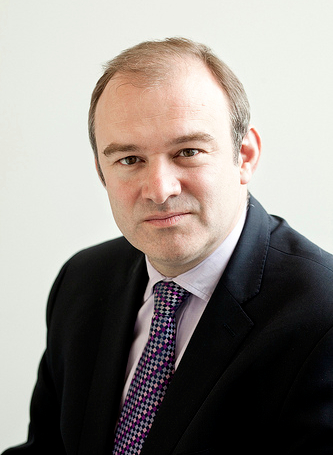
    Below is the text of the speech made by Ed Davey, the then Secretary of State for Energy, at Chatham House in London on 11 July 2012.

    Thanks very much Bernice, and thanks to Chatham House for hosting this event.

    There are few think tanks that are global in both outlook and recognition. This is one of them. So I’m very pleased to be here to talk about a subject of global importance.

    When I first got interested in the green agenda – as an idealistic student – climate change was just crossing over into the public consciousness.

    For people concerned about the environment, climate change seemed to wrap up all of our worries – pollution, resource scarcity, sustainability – yet add another layer of complexity.

    Thinking about local impacts wasn’t enough. Global climate change raised global questions – like justice and equity, diplomacy and development.

    And so the path to getting international agreements on climate change has been a long one.

    Agreeing responsibility for action on emissions is hard enough. And in a global economy built on fossil fuels, it can seem an impossible ask. For twenty years, the world has been working on the answer.

    Today, we are closer than ever. Countries have agreed that in 2015 we will aim to sign a global deal to limit emissions and curb climate change. This commitment is the primary achievement of the Durban meeting last year, which Christiana Figueres described as the ‘most encompassing and furthest reaching conference in the history of the climate change negotiations’.

    In a little over three years, we must set in train a change to the whole structure of the world economy; breaking the bond between carbon and growth. Building the systems to support low-carbon economies in the most advanced countries, and low-emissions development in poorer countries.

    History

    Today, I want to talk about how we can do that. I will make three points:

    Firstly, that the economic case for climate action is clear – and pressing. Green growth is real, and is already making a compelling contribution to our economy.

    Second, that political leadership in Europe can unlock more green growth – and drive global ambition to tackle climate change.

    And third, that multilateralism works. That at the UN climate negotiations in Doha and beyond, we can plot out the path towards a safer future.

    I’m under no illusions: it will not be easy. But we have the technology to live sustainably; every year, renewable energy use rises. And we have the economic incentive.

    The problem is political. And it is complicated by the fact that we are living in a distracted world.

    Distractions

    Because although evidence of climate change grows stronger by the day, the pressures on the world economy are equally unrelenting.

    The financial crisis that began in 2008 has not yet run its course. The global recovery is still fragile; what happens in the eurozone could shatter it again.

    Economic problems have driven political change: in Europe alone, nine governments have fallen since the crisis struck. People are losing faith in our ability to work together to solve the big problems.

    This really matters for climate change, because unless we can show that multilateralism works, we cannot get the global agreement that we so badly need.

    It matters because when householders – and businesses – are concentrating on cutting costs, we have to remind them why going low-carbon is a priority now.

    And it matters because with financial instability pushing up the cost of capital, investors need certainty to invest in clean energy.

    So how can we focus minds on a problem that for many seems far-off – and far away?

    Economics

    I believe we have to start with the economic case for action on climate change. Right now, everyone is focused on stability and growth. So my first point is this: the green economy can be good for both.

    I’m hardly the first person to say that – a fair few politicians got there first.

    But businesses are saying it too. Take the Director General of the CBI – John Cridland. Just last week, he said, green and growth are inextricably linked.

    Reducing our reliance on fossil fuels can help insulate businesses and consumers from volatile fossil fuel prices. Research shows climate change policies could halve the effect of global fossil fuel price spikes on the UK economy by 2050.

    And energy efficiency is unambiguously good for growth. If the EU can hit its 2020 energy efficiency target, it could save 34 billion euros – and add 400,000 jobs. UK businesses alone could save up to £4 billion a year by using energy more efficiently.

    But the real engine of sustainable growth is green business. Over a third of the UK’s economic growth in 2011/12 is likely to have come from green business, which accounts for 8% of UK GDP.

    The UK’s green economy grew by £5.4 billion last year – that’s 4.7% growth, even as the rest of the economy was struggling. It created more than 25,000 jobs last year, and now employs nearly one million people.

    Globally, the clean energy market is increasingly competitive and fizzing with opportunities. Not just for our companies, who are competing in a £3.3 trillion global market, growing at 3.7% per year, but for our economies, too.

    The UK is 6th in the world in the low-carbon sector, with an industry worth £122 billion. I want us to secure a greater share of this vibrant and growing sector. Not because I’m a hair-shirted hippy, or bound by ideology; but because I believe in following the evidence.

    Green business generated a trade surplus for the UK of £5 billion last year; if we play it right, it could halve our trade deficit before the next election.

    Too often, we are told that those who go low-carbon first will sacrifice their competitiveness.

    This is misleading and dangerous.

    The real danger is not going green, but being outpaced by our competitors.

    Around the world, the countries who are most competitive are the ones who are investing the most in low-carbon.

    Korea, spending 2% of GDP on green growth. Germany, whose development bank is leveraging 100 billion euros for renewable energy.

    China, putting green industries at the heart of its 12th five year plan. Investing more than anyone else in renewables, developing pilot emissions trading schemes in seven provinces – including Beijing and Shanghai.

    And India, which taxes coal and uses the proceeds to fund renewable energy; which has incentives for wind and solar power, and far-reaching energy efficiency plans.

    Investment in low-carbon – and policies to support it – reach right across the globe.

    And at last month’s summit, all the G20 countries recognised the important of putting green growth at the heart of their structural reform policies. By this time next year, there will be 33 countries with national emissions trading schemes. More than half the world’s countries have renewable energy targets.

    This ambition is not just matched by businesses: it is surpassed. When it comes to pursuing sustainable growth, businesses are way ahead of governments. They are looking to Ministers in Governments across the world to give them the certainty they need to invest in a clean energy future: to provide clear and predictable policies that can unlock investment at scale.

    So we cannot be drawn into some false choice between economy and environment. Instead, we must make the clear-eyed – the hard-nosed case for green growth.

    Time horizons

    And that means making a better argument about time horizons. For if I’ve learnt anything in the last few months about energy and climate change policy, it’s that time horizons have to be long – decades not days. Yet in a distracted world, it is easy to focus on the urgent at the expense of the important. But action on climate change is about both. We cannot let the search for short term solutions threatens our long-term goals. An economic recovery that exposes us to greater climate risk is by definition unsustainable.

    Partly this is about looking to a different horizon: making sure that our efforts to build a more sustainable economy, in the UK and in Europe, lead to a financial sector, for example, that looks beyond the next quarter and invests in long-term growth.

    Partly this is about doing everything we can to ensure the government takes the right decisions for the long term, too. This desire – to do what’s right for the future, not just the near-term – is one of the principles on which the coalition government was founded.

    And from the Green Investment Bank to the Fourth Carbon Budget, I think we’re doing just that.

    But it’s also about understanding where responsibility really lies. When people talk about climate change, there’s a tendency to talk about children and our grandchildren. About how future generations will feel the worst impacts of a changing climate.
    That’s understandable: I think most people view the future differently when they have children. You can’t help but think about the kind of world you want them to grow up in. And the kind of complicated feedbacks in the global climate can take time to reveal themselves.

    But there’s a risk that by locating the problem far away in the future, we forget that it is this generation who must act to solve it. It is those in power now who must find the political will – and show the political leadership – that will deliver results.

    EU30

    I believe Europe has a chance to show that leadership.

    At a time when Europe is asking itself searching questions – when the European project itself seems to be on trial, shaken by problems in monetary union – it is worth reminding ourselves of the leading role this continent has played in the global climate fight.
    Europe has already cut emissions by around 17% on 1990 levels – outstripping its Kyoto Protocol obligations. We have just agreed an energy efficiency directive which could deliver savings equivalent to a 25% cut. And for all its shortcomings, we have the largest emissions trading system in the world.

    For all its problems, the EU is the world’s largest integrated economy. And when it comes to climate change, this union has served us well: Europe negotiates as a bloc at the UN, one with more authority than we could muster individually.

    By working together, we have been able to achieve so much more than we could alone. A gathering of individual agents, each fighting for different national priorities, could not have secured the Kyoto Protocol, or its extension.

    We should draw strength from this legacy. Rather than letting ambition slip, we should pay tribute to our past achievements by raising our sights still higher.

    Europe must do more to complete the single energy market. More on interconnection. More on a continental-scale supergrid. More on energy efficiency standards. More on renewable energy deployment. More on climate finance.

    And – crucially – I believe we must do more on greenhouse gas emissions. So my second point today is this: a more ambitious EU carbon target is in everyone’s interests – and I as Secretary of State am working hard to secure that.

    The arguments for moving to a 30% cut in emissions by 2020 are well-rehearsed.

    It is the most cost-effective way of cutting carbon. It will help us secure the investment in clean energy we need to stay competitive. It will help grow our low-carbon industries, ensuring Europe’s competitiveness. It will limit our exposure to volatile fossil fuel prices.

    And – critically – it shows the world what Europe stands for.
    I believe that moving to 30% is the clearest statement of ambition and leadership that we can make. It is a key coalition government commitment, and I am doing everything I can to deliver it.

    My strategy is to approach this from both the top down and the bottom up. Not just trying to secure Council conclusions on the 2050 low carbon roadmap or a 30% target, but also delivering the measures that will help to move us towards 30%.

    Leadership in Europe is about building coalitions and working to deliver compromise deals.

    Take the Energy Efficiency Directive, which the UK played a pivotal role in securing.

    It is not as ambitious as we would have liked. But it was the very best outcome we could secure, given the negative voices in the Council, and it will help us to go beyond 20%.

    The UK is also leading calls for the Commission to present strong and ambitious proposals to strengthen the EU Emissions Trading Scheme.

    I’m working closely with the Deputy Prime Minister, NGOs and business leaders to build a coalition for change.

    And my German counterpart and I are working particularly hard to find a way to help bring Poland into that coalition.

    Their support mustn’t be at any price, but looking a little further ahead, it’s better if Europe moves together. In the next few years we need to start discussing 2030 emissions targets, and longer term reform of the ETS. If Poland remain where they are it will be a struggle.

    They’ve set out their concerns to us; now we need to work together find ways to address them. That’s why I am meeting the Polish Minister in London. And actually, the message for Poland is the same as for the rest of the EU: 30% is doable, it’s desirable; so let’s find a way to make it work for everyone.

    Moving to 30% will be an act of climate statesmanship, one that speaks to Europe’s reason for being: collective action for the betterment of our citizens.

    And – by ensuring we enter the negotiating room from a position of strength, commitment and leadership – it can help secure a better future for all the world’s citizens, too.

    UNFCCC

    And European leadership can help deliver on my third priority tonight – preparing properly for this year’s climate change talks in Doha at the end of the year.

    For the next objective in the UN climate negotiations must be to take forward the important achievements made in Durban last year – and to prevent the attempts to block further progress we are already seeing.

    Doha is unlikely to be an epoch-making event – but it needs to be a significant step in taking the Durbna platform forward. Some are calling it an ‘implementation’ meeting. It certainly is that.

    But we can also agree some major steps, if we fully lay the groundwork.

    It should be the meeting that produces a second commitment period of the Kyoto Protocol.

    It should be the meeting that sets us on the way to the new legally binding Protocol. That makes the negotiation process clearer, showing us not just the destination – but the route to a global deal.

    It should be the meeting where more countries make 2020 pledges under the Copenhagen

    Accord, to keep real momentum and progress. More national policies and actions to support carbon cuts.

    It should be the meeting where we make further progress on climate finance. And it could be the meeting where we see big pushes on key technologies, such as carbon capture and storage and renewables.

    Given the world is simply not making fast enough progress to keep us below the 2 degree limit, we need to use every occasion like Doha to push further. Whatever the political and economic challenges countries face.

    Outside

    And we should work hard outside the negotiating room too.

    Yes, getting the global architecture right matters. Without it, we cannot get a meaningful and cost-effective agreement, and we cannot be certain that emissions will fall. We need the multilateral, rules-based and top-down approach to deliver – with everyone making commitments. That is why a comprehensive, legally binding global deal is such a cornerstone of our climate policy.

    But we need to do more to get things going on the ground. Bottom up, not just top down.

    There is absolutely no doubt in my mind: negotiating summitry must not get in the way of actually doing things that close the gap between our climate goals and our actual emissions.

    Action to reduce deforestation, for example. With funds pledged and ready, we need more action to save the forests and our plant’s own ecosystem’s ability to absorb carbon.

    Action to encouraging more countries to make emissions pledges, and action to encourage those who have made pledges actually to deliver on them;

    Action to bring powerful greenhouse gases like hydrofluorocarbons into the Montreal Protocol;

    And one area I want the UK to lead even more is on taking positive steps on climate finance. Many developing countries are committing serious resources to climate change; and we are supporting them both because it is right, and because it is in our interest to do so.

    We are on track to meet our Fast Start Finance pledge, with more than £1 billion spent or committed. We’re working to leverage private finance through our Capital Markets Climate Initiative. And we’ve set up the £2.9 billion International Climate Fund to help developing countries tackle climate change and reduce poverty.

    We want to focus our climate finance where it will get results. So the Fund will make at least 15 million poor people more resilient to the impacts of climate change and natural disasters in Bangladesh by 2014, protect 39 million hectares of forests, and help over 2 million poor people access clean energy.

    So our commitment should be clear: we will meet our fair share of the $100bn of public and private international finance per year the world has pledged to provide from 2020.

    So we must not see a gap in financing after the Fast Start period ends: I want to encourage other countries to pledge funding beyond 2012.

    Action on finance, forests and HFCs; these are some of the things we must now focus on if we are to come close to closing the emissions gap. And there is no reason why we should not do them in parallel with negotiations on a climate treaty.

    So my final message today is this: I believe that top-down and bottom-up approaches are not mutually exclusive, but mutually reinforcing. They are different halves of one whole: action to cut emissions and protect the planet.

    Conclusion

    On Sunday I’m travelling to Berlin to meet 45 of my counterparts to discuss how we prepare for Doha and how we raise our ambition levels. The case I will put there is the same I have put to you here today.

    Research published this week shows that recent climate change made the 2011 Texas heat wave twenty times more likely than 50 years ago. Here in the UK, extreme flooding – like we saw in 2000 – is twice as likely thanks to man-made climate change. Extreme weather events caused by climate change are not a distant worry: they are already happening.

    The call to arms on climate change is growing ever louder. But it risks being lost in the noise of the world’s business as usual concerns.

    But it must be heard. At my first international meeting on climate change three months ago, I was struck by an impassioned speech by a Minister from a small Pacific Island – when he argued that some countries’ right to develop were in conflict with his people’s right to survive.

    That’s our challenge.

    So we must reject those who argue that action on climate change and economic growth are incompatible. Those who claim that the EU is ineffective. Those who pretend that multilateralism cannot deliver.

    And I’m determined that my Department and our Coalition Government is front and centre in those arguments. Thank you.

  • Nick Gibb – 2012 Speech on Learning Languages

    nickgibb

    Below is the text of the speech made by Nick Gibb, the Schools Minister, at the German Embassy in London on 11 July 2012.

    Thank you for that kind introduction Mr Ambassador. Ich freue mich heute hir zu sein.

    I feel enormously privileged to be asked to help present today’s awards, and I’m grateful for this opportunity to talk briefly today about the work the Government is doing to promote language learning in schools.

    Young people who have a second language are at a huge advantage in life. It opens doors to new friendships, gives them greater facility to learn different tongues and enables them to think both laterally and creatively.

    Many of the world’s most important discoveries have been made by the great linguists. The deciphering of the Rosetta Stone, Linear B and old Persian cuneiform by Jean-Francois Champollion, Michael Ventris and Georg Friedrich Grotefend.

    On top of this, we know that the German language, in particular, gives us a unique perspective into our own history and society. Some 50 per cent of the most commonly used English words are Anglo-Saxon in origin – brought over by the Angles, the Saxons and the Jutes from northern Europe and Germany in the 5th and 6th centuries.

    It is absolutely imperative that young people can understand and appreciate these influences. So, let me thank the UK-German Connection, as well as the schools and teachers here today, for the inspiring work they are doing to promote German language skills, and to organise valuable exchange placements for UK students.

    The Government is absolutely determined to ensure more pupils have access to these opportunities. And I am particularly keen to encourage more students to take advantage of the close economic ties between the two countries by considering German as a subject choice at GCSE, A Level and University.

    As I’m sure everyone here will know, London is a base for many of the largest German institutional investors and businesses, house-hold names like Deutsche Bank, Allianz and Commerz Bank. These companies – their competitors and their partners – are crying out for school and university leavers who can speak German confidently and have experience of working in an international setting.

    Only this year, the CBI conducted a poll of businesses showing nearly three quarters of employers in the UK value linguistic skills in their employees, with 50 per cent rating German as the most useful for building relations with clients, suppliers and customers – ahead of every other language including French, Spanish, Italian, Arabic and Mandarin.

    Thanks to organisations like the UK-German Connection, our teachers and schools, we are making some progress towards meeting this demand, but it would be wrong to pretend we do not have challenges before us.

    Last week’s European Survey on Language Competencies placed England at the bottom of the table for foreign language skills in reading, writing and listening.

    The study also found that:

    – pupils in England start learning a language later than average;

    – are taught it for fewer hours a week than average;

    – spend less time on homework than average;

    – do not see the benefit of a language as much as most other pupils in Europe;

    – and were significantly behind their peers, with only one per cent of foreign language students here able to follow complex speech. This compared with a Europe average of 30 per cent.

    We have also seen a sharp drop in the number of UK students taking modern foreign languages over the last seven years. In 2004, 118,014 students took German at GCSE, by 2011 the figure was just 58,382. A 49 per cent fall.

    The Government is 100 per cent committed to restoring languages to their rightful place in the school curriculum: ensuring more children are able to access the kind of high quality learning and experience we are celebrating today.

    As many here will know, we announced this year that we want to make foreign languages compulsory for children from the age of seven in all primary schools. This proposal is now out for consultation and I urge everyone here to make sure their voices are heard.

    Importantly, we have also included foreign languages in the new English Baccalaureate to arrest the decline in the number of children taking languages like French, German and Spanish at GCSE.

    Already we are seeing a positive impact: the National Centre for Social Research estimated that 52 per cent of pupils were expected to enter GCSEs in a language subject in 2013. This compared with 40 per cent of pupils who took a language GCSE in 2011.

    CfBT’s Language Trends Survey last year revealed similar movement, showing 51 per cent of state secondary schools now have a majority of their pupils taking a language in Year 10, against 36 per cent in 2010. This proportion increased particularly among schools with higher levels of free school meal children.

    To cope with this extra demand, we need to attract more teachers into the profession. Greater pupil numbers are likely to stretch staffing resources in many of the E-Bacc subjects unless we take action.

    This is why the government is also prioritising initial teacher training places on primary courses from 2012 that offer a specialism in modern languages, sciences and maths. From 2013, we also want to adjust financial incentives to favour teacher trainees with a good A Level in language subjects like German.

    Our overarching goal is clear – we want to provide every child in the country with access to the very highest standard of education: irrespective of background. And that’s why all our reforms over the last two years have been, and will continue to be guided by three principle objectives.

    First, to close the attainment gap between those from poorer and wealthier backgrounds. Second, to ensure our education system can compete with the best in the world. And third, to trust the professionalism of teachers and raise the quality of teaching.

    Thanks to the hard work of pupils and schools, we are beginning to see real progress but the scale of the challenge in languages should not be underestimated or oversimplified.

    English children do not tend to be immersed in languages to the same extent as young people in many other countries – where English speaking music, TV, films and media are a part of tapestry of everyday life.

    Nonetheless, many of this country’s best state schools have shown that there is no reason why young people in the UK cannot embrace and learn languages effectively.

    St Paul’s Church of England Nursery and Primary School in Brighton is the first bilingual primary school (Spanish-English) in the country and it is now achieving outstanding results in Year 6.

    The Bishop Challoner School in Birmingham is achieving excellent results for its pupils thanks to an enormously impressive language department that trains its own language teachers.

    I know many of the schools here today are setting exactly the same example, and I would like to congratulate all of today’s nominees for the inspirational, tireless leadership they provide in the teaching of languages.

    Charlemagne likened having a second language to having a ‘second soul’.

    This government is committed to ensuring every single pupil in the country has the opportunity to experience this for themselves: to gain a deep understanding of other cultures, and access the enormous benefits of speaking a language other than English.

    Thank you.

  • Tim Loughton – 2012 Speech on PE

    timloughton

    Below is the text of the speech made by Tim Loughton, the then Parliamentary Under Secretary of State for Children and Families, on 16 July 2012.

    Thank you for that kind introduction Eileen.

    As everyone here will be able to tell, I am a keen sportsman. You may be surprised to hear that I have even been mistaken for a Swiss ski instructor, although this could be more to do with the colour of my ski jacket than my skiing prowess.

    So, it is an enormous pleasure to be here and I am grateful to the Association for giving me the opportunity to set out the Government’s commitment to PE in schools.

    But before I begin, I want to take a step back and thank Eileen and her team, and particularly Sue Wilkinson, for their positive, thoughtful engagement with the government over the development of the draft PE programme of study.

    I would also like to congratulate all the teachers here today for their hard work and application over the last few years. As far as I am concerned, PE is the great leveller of all the subjects on the National Curriculum.

    It is uniquely inclusive and democratic, bringing pupils of every conceivable background together. It challenges young people in a way no other subject can, testing both physical and mental capabilities. It also holds a singularly important and elevated place in the school week by virtue of the skills it develops and the values it teaches.

    On a day-to-day basis, you inspire children to reach new heights, literally in the case of the high jump, and to explore their capabilities with confidence.

    You give them the skills to work creatively and efficiently both in teams and as individuals. You teach them to be good winners and gracious losers. You provide them with the skills and techniques they will need to enjoy and take part in sport for many years after leaving school.

    I have been privileged enough to see the fruits of this labour at first hand many times over the past two years, including the wonderful School Games in Manchester last July, and two weeks ago at the London 2012 World Sport Day in Brighton, involving some 24,000 young people from 60 different schools in the town.

    I know none of these events would have been possible without the hard work and endeavour of PE teachers so let me congratulate you and can I ask you to please pass on my warmest thanks to your teams and colleagues around the country.

    I am going to talk briefly today about the progress we are making on the PE programme of study, and say a few words about the invaluable work the Association has done in publishing the new guidance on safe practice in PE and sport.

    But I wanted to begin by looking at the wider work we are doing as a Government to provide teachers with greater autonomy and flexibility over lesson planning.

    As many here will know, this Government’s approach to education is based on the fact that teachers are best positioned to design lessons that meet the needs of their pupils, not politicians.

    Over and over again, international evidence shows that professional autonomy is an essential feature of every high performing state education system. To quote from the OECD: ‘In countries where schools have greater autonomy over what is taught and how students are assessed, students tend to perform better.’

    We are currently reforming the curriculum to make it more stable and less cluttered; focused more tightly on the essential core of knowledge that every pupil should be taught.

    We want the new curriculum to focus on the fundamentals that give children today, and tomorrow, the best possible start to their future.

    Just as importantly, we want teachers to ‘go back to their roots’ – to paraphrase from today’s conference title – and enjoy far greater professional flexibility over how and what they teach within far less prescriptive boundaries.

    So, although we are clear we want PE, swimming and competitive sport to be a compulsory part of the curriculum at each of the four key stages, the new Programme of Study, when it comes out, will be shorter, simpler and far less prescriptive to allow for the maximum level of innovation in schools.

    In return, we need you to seize the opportunity to be creative, to inspire young people to engage with PE and help them understand the enormous benefits it offers. In particular, we all need to think long and hard about how we engage those children who insist they ‘don’t do exercise’ or whose only experience of competitive sport is on a games console.

    How do we inspire these young people to pull on a pair of trainers for the first time? How do we appeal to those who are not interested in traditional sports like tennis, cricket, hockey, netball or rugby? What are the methods we should be deploying to boost young people’s confidence in competitive sport? How do we get them on a football pitch so the English team can string a pass together at the next world cup?

    These are the sorts of thorny questions we all need to be answering and I am hugely grateful to Eileen and her team for the solutions they have been working up following the call to evidence last June, and the subsequent consultation period.

    As many of you will know, the Government has made it absolutely clear that the PE programme of study will be geared towards engaging more young people in physical activity. We will not allow pupils to become draft dodgers.

    But our ultimate ambition is to ensure you have much greater freedom to use your professional expertise to tailor PE lessons to individual pupils and classes, rather than ask you to work towards arbitrary targets set by politicians and policy wonks.

    It is clear to me, and I think to most right thinking people, that what makes for an appropriate and popular PE class for a primary school in Devon, may not easily fit the mould in an inner city school in London.

    Thanks to the Association, we are making good progress and I am pleased to say we are on target to publish the draft PE programme of study by September next year, and to introduce it for teaching into schools by September 2014, along with those for English, maths and science.

    As you would expect, we will continue to consult with the sector over the coming months on the detail and I want to strongly encourage everyone here to make their voices heard.

    There will be a statutory consultation on all National Curriculum subjects later this year – when the time comes, please collect your thoughts with colleagues and make sure you feed back so that we are in as strong a position as we possibly can be on the development of the PE programme.

    The other, related, area where we are extremely keen for the Association and its members to really take charge is in the early scoping work it has been doing on self-assessment.

    As you will all know, Ofsted is working towards a more focused scrutiny of schools’ performance, with inspectors concentrating on key basics such as the quality of teaching – instead of overwhelming staff with superfluous demands for information and time.

    The agency is also looking specifically at how well leaders and managers ensure that the curriculum is broad and balanced, and it will continue to produce three-yearly subject reports to help ensure the health of subjects like PE in our schools.

    This sharper, more intelligent accountability provides an opportunity for organisations like the Association to step up and provide their own options for self-assessment.

    Eileen and her team have been amongst the most fleet footed, as you might expect from PE teachers, of any organisation to put forward proposals for awarding and issuing quality marks for teaching along the lines of kite marks.

    We will be paying very close interest as you develop those plans over the coming months but in the meantime, I want to congratulate you on seizing the initiative so enthusiastically. There is every reason to suggest that external benchmarking of this kind would prove enormously useful for parents, and provide important recognition to hard working, innovative schools and their staff.

    Similarly, I would like to thank the Association for the leadership it has shown in amending and re-publishing the guidance on safe practice in PE and sport. I understand that it has proved so popular you have had to arrange another print run. I know schools value it tremendously, as do officials in my own Department who use it as a bible for safe practice.

    For our part, I want to assure you the Government will do everything in its power to provide a similarly high level of support to schools, particularly in the wider work we are doing to strip back disempowering bureaucracy in the education system, and to support more effective behaviour management.

    Over the last two years, we have set about tackling needless regulation and red tape with great vim and vigour: in total, the Department has removed 75 per cent of centrally-issued guidance – some 20,000 pages.

    Behaviour and bullying guidance has been slimmed from 600 pages to 50; admissions guidance down from 160 pages to 50; health and safety guidance from 150 pages to just 6.

    On top of this, we have scrapped the requirements on schools to set annual absence and performance targets; to consult on changes to the school day; and to publish school profiles.

    And we have removed a host of non-statutory requirements like the self evaluation form, replaced the bureaucratic financial management standard, stopped 10 data collections and clarified that neither the Department, nor Ofsted, require written lesson plans to be in place for every lesson.

    From September, we will be introducing further measures to remove or reduce some of the bureaucracy around teacher standards, admissions and school governance.

    At the same time, we want to support you in every way we can to improve behaviour in schools. We are clear that no teacher should have to put up with aggressive, confrontational or abusive behaviour from the children in their classes, whether in the classroom or on the playing field.

    Over the last two years, we have introduced a series of measures to support heads and teachers in managing poorly behaved pupils; and we expect heads, in turn, to support you at every corner.

    Since the start of last month, schools have had increased search powers for items which they believe will lead to disruption. We have clarified headteachers’ authority to discipline pupils beyond the school gates, including for bullying outside of school. And we have given teachers the ability to issue no notice detentions.

    We’ve also given teachers extra protection from malicious accusations, ensuring they always have a legal right to anonymity until the point they are charged with an offence.

    Finally of course, we have revised guidance to local authorities and schools to speed up the investigation process when a teacher or a member of staff is the subject of an allegation by a pupil.

    These are substantial changes, designed to let you get on with the job in hand and to restore much needed professional respect and autonomy. In short, we want to give you back what has been taken away. We want to make the job of teaching easier, more rewarding, more flexible.

    I hope you’ll agree this is the right direction. Importantly, we want to make and create these reforms in partnership with organisations like the Association wherever we can, not foist them on you.

    So to end, let me offer a final thanks to Eileen, her team and to all the teachers here for their engagement with the Government in these last two years and for their inspiring work.

    In 22 days, 10 hours, and roughly 29 minutes, two very important events are taking place. First, and most important, is the summer opening of Parliament. A red letter day in all our calendars I’m sure.

    Second, of course, the Olympics kicks off with what promises to be a spectacular opening ceremony involving sheep, goats, BMX riders and Sir Paul McCartney – although in what exact order I don’t know.

    Amidst all the pomp and pageantry, music and din, special effects and light shows, I hope PE teachers and schools are recognised and appreciated for the quiet way they have set about creating this Olympic legacy.

    Under your auspices, we have seen more children and young people taking PE at GCSE and A Level than ever before. We have seen across the board improvements in standards, achievement, provision and leadership. And we have seen the quality of PE teaching, leadership and management judged good or outstanding in an incredible two thirds of all schools.

    This is truly a victory of Olympian proportions and I hope everyone here takes enormous pride in their achievements. You are the true Olympic torch bearers for team GB.

    Thank you.

  • David Cameron – 2012 Speech with Afghanistan President

    davidcameron

    Below is the text of the speech made by David Cameron, the Prime Minister, with the Afghanistan President on 20 July 2012.

    Prime Minister

    Well thank you very much, Mr President. It is very good to be back here in Kabul with you, a strong ally and a good friend. It has been very good to have these discussions this morning.

    As you say, it was here two years ago, that we discussed the idea of establishing an officer training college in Kabul, part-run by the British. I am very pleased that within two years we have been able to sign this memorandum, and I hope it will be a lasting contribution from my country to the people of Afghanistan to help with the training and development of your officers and your army.

    Thank you very much for that, and thank you for the warm welcome. We met earlier this year; we met in Chicago in May and we have had good talks here today. We do share the same vision for Afghanistan: a secure, stable and democratic country that never again becomes a haven for international terror.

    We are working together to achieve it. We are building up Afghan forces, so that they can protect your citizens and keep out violent extremists, once the international forces leave.

    We are strengthening democracy and governance so that all Afghans can play their part in developing a more prosperous country. We are working with regional partners, because a stable Afghanistan is not just in the interest of Afghans but in the interest of their neighbours too. I look forward to the meeting we will have later today, with the Pakistan Prime Minister, between us.

    A year ago, when I last visited Kabul, British troops were the lead force responsible for keeping people safe in the three districts of Helmand. Now it is Afghan forces leading operations against insurgents in Lashkar Gah and in Nad Ali; Nahri Saraj will follow after Ramadan.

    In October there will be 350,000 Afghan security forces. When I first came to Helmand in 2006, there were almost no security forces at all. This is huge progress, and as I saw in Helmand yesterday, these are capable forces.

    Nationwide they are leading 40% of the convention operations and carrying out 85% of the training. I believe we are on track for 2014, when international forces will withdraw from their combat role.

    I think this is testament to the huge commitment and professionalism of British troops, their international partners, and the bravery and dedication of the Afghan army too.

    As Afghan forces grow in capacity and capability, British forces are shifting into a training and mentoring role. More of our troops will gradually return home. While we will no longer be fighting alongside Afghan forces, we will continue to support them.

    At the NATO summit, we agreed to commit £70 million – $100 million – as part of the $4 billion package to support and sustain the Afghan security forces long after 2014. I think this is very important. We will also continue to train these forces, as we have just discussed, through the training academy.

    The President and I also talked about the political process that Afghan needs to build a stronger and more stable state: more representative and inclusive politics and strong well-governed institutions.

    I welcome the President’s commitment to the elections in 2014 and to a peaceful and democratic succession, after your second term. The constitution and the leadership of the Afghan country are for the Afghan people to decide, but we both agree that these elections must be credible, inclusive and nationwide.

    Britain stands ready to assist the Afghan government and the independent electoral commission, to help in any way we can, to ensure this is achieved. We have already committed to maintain our development assistance to Afghanistan, at £178 million a year.

    Over the last three months, in Chicago and Tokyo, the international community has made clear our commitment to securing Afghanistan’s future and prosperity for decades to come.

    We want to work with you to transform the future together. I think this sends a very clear message to the Taliban, that you cannot wait this out until foreign forces leave in 2014, because we will be firm friends and supporters of Afghanistan long beyond then.

    Now is the time for everyone to participate in a peaceful political process in Afghanistan. All those who renounce violence, who respect the constitution, can choose to have a voice in the future prosperity of this country rather than continuing in fighting to destroy it.

    Afghanistan’s neighbours have a vital role to play, and I look forward to those discussions we will have with Prime Minister Ashraf and President Karzai shortly. Afghanistan and Pakistan have a shared interest in a stable Afghanistan. It is vital, not just for the future security of their citizens, but for their prosperity too.

    Britain is a strong partner of both countries, and I believe that both sides need to build trust and work together to build that safe and secure future; I look forward to those discussions we will have later today.

    Thank you once again for your welcome. It is very good to be back in your country and I look forward to further meetings that I am sure we will be having in the months and years to come.

    Question

    Thank you Prime Minister and thank you Mr President. In two and a half years, as you’ve just mentioned, British troops end their combat role in this country; and yet it appears that the peace talks with the Taliban are not making any meaningful progress.

    How worried are you, Prime Minister, about that? And Mr President, how committed are you personally to that process?
    And if I may, Prime Minister, on the Olympics you said to me yesterday that we should not focus on the negative parts of London 2012 – so I mean this question in the best possible way.

    How positive should we see the Border Force Union threat to strike during the Olympics? And Mr President, of course you’re most welcome, will you come to London 2012?

    Prime Minister

    First of all, on the issue of peace talks, I think we have to be clear that at one level there are fighters leaving the battlefield, who are giving up their weapons and giving up their fighting, and who want to be part of a successful future Afghanistan. So, that is happening on the ground.

    What I would say to the question, indeed to the Taliban, is that be in no doubt that there is a very clear and strong plan to transfer lead security responsibility from very capable ISAF forces, including British forces, to very capable Afghan forces.

    I am content that they will be able to defeat an insurgency and that Afghanistan will have a secure future. Of course we would make even further progress if there was successful political talks and if the insurgency was to come to an end in that way.

    But the Taliban should be in no doubt that we will be handing over to a very capable, very large, very well-equipped Afghan army, security forces, police forces, local police, and that that plan is on track and working well.

    Of course there are huge challenges, and as I said yesterday, the security challenges in Afghanistan will not end in 2014; they will continue. But I am convinced that we have the right plan for transition and that we can deliver on that plan.

    It would be improved by further political discussions, by better cooperation between Afghanistan and Pakistan; it would be improved by those things, but it is not dependent on those things.

    On the Olympics, I do hope people can be positive, I think it is going to be a great few weeks for Britain and a great few weeks for sport. I think there is also going to be a fantastic legacy in terms of the future of Britain.

    I am going to be very focussed on making sure we win new investment, new jobs, new businesses coming to Britain; there will be a whole series of investor conferences, all the way through the Olympic Games, and I will be playing a part in those.

    I think the question now is not just, ‘How do we have a great Games?’, but ‘How do we make the most out of the Games?’

    In terms of the ballot that took place yesterday, my understanding is that there was a 20% turn-out and a very narrow majority. So I hope that strike action will not take place; I do not believe it would be right; I do not believe it would be justified.

    I think what we see at our borders right now is actually, with the extra investment that has been put in, the contingency plans that were made, that Heathrow seems to be working and working well. So I am confident that we will deliver all the things necessary for a safe, secure and successful Games.

    I said to President Karzai, he would be very welcome. I know he has done a huge amount of international travel in recent months because we have had Chicago, we have had Tokyo: very important international gatherings. But he is always welcome in London, and indeed the rest of the United Kingdom; he has a particular love for some of the rural parts, and he is always very welcome.

    Question

    First of all, most welcome Mr Prime Minister to Afghanistan. My question is to His Excellency the Prime Minister. You spoke about the importance of the role of the neighbours of Afghanistan and you are also having a trilateral with the Prime Minister of Pakistan.

    The traditional relationship that you have with Pakistan, and that you have been enjoying with Pakistan; what role do you see that Pakistan can play in the peace process?

    And the threats that Afghanistan is facing from across the borders of course emanate from Pakistan. What would be your request and call on Pakistan, specifically on the threats?

    Prime Minister

    Thank you. I would just make this very clear point, which I have made to the President of Afghanistan and I will make to the Pakistan Prime Minister: the terrorists that are trying to wreck Afghanistan are, by and large, the same terrorists that are trying to wreck Pakistan.

    This is one fight that we all need to be engaged in, to save Afghanistan from Talibanisation, and from the Taliban and terrorism. We need to do the same to help Pakistan, which is threatened by a very similar terrorist threat.

    We should be together in one single fight, working as closely together, because it is in all our interests to have a stable, peaceful, prosperous, democratic Afghanistan and to have a stable, peaceful, prosperous, democratic Pakistan.

    Why is Britain so involved in this? Well, we have long-term relations with both countries, stretching back many, many years. We have huge ties with both countries; there are over a million people of Pakistani origin living in Britain.

    Also, we face a security threat. When I first started coming to Afghanistan, six years ago, over three-quarters of the terrorist plots that were threatening people in my country were coming from the Afghanistan, Pakistan area.

    Because of the work of ISAF, the work of President Karzai, the work that Pakistanis have done within their own country, the work of the Americans, that threat has – instead of three-quarters of the threats – it is now less than half.

    So, we are making progress and this is our fight, as well as your fight, as well as the Pakistanis’ fight. We need to secure both countries against this terrorist threat. As I say, it is not a terrorist threat that threatens one at the benefit of the other; it is a terrorist threat that threatens both.

    That is, I think, the very clear background to the discussions that we will have. Britain will do everything it can to try to encourage the strong joint working between Afghans and Pakistanis to face up to this threat together.

    It is in all our interests that we do so and that we do so rapidly, as we have this vital period in Afghan history as you take full control over the security of your country over these next two years.

    Question

    Prime Minster, what is your message to President Assad and President Putin after the last 48 hours in Damascus?

    Mr Cameron, if I may, there have been a whole load of new allegations about G4S incompetence, the need for many more troops and its Olympic guards being arrested as illegal immigrants. Do you think the company should be taking millions more pounds in management fees in these circumstances?

    Prime Minister

    First of all, on G4S, I made very clear yesterday if a company does not fulfil its contract then that company should be got after for that money. That is exactly what is going to happen in the case of G4S. I think it is very important that we allow them to try to carry out the role that they are contracted to deliver.

    But of course it is in the Government’s interest, the interest of the Olympic Games, the interest of everyone in our country, to make sure that whatever it is necessary to do to deliver a safe and secure and successful Games is done.

    We have always had contingency plans in place to deliver just that, and we activate those contingency plans as and when necessary to deliver that. I could not be clearer, we will do what is necessary and contracts that are not fulfilled will have consequences including pretty tough financial consequences. I think G4s, in apologising for their performance, have already made clear that they realise that fact.

    In terms of Syria, I would have a very clear message for President Assad, which is ‘it is time for him to go; it is time for transition in this regime’. Clearly, Britain does not support violence on either side but if there is not transition it is quite clear there is going to be civil war. That is the clear fact I think that we can all see on the ground.

    The regime has done some truly dreadful things to its own people. I do not think any regime that carries out acts, as they have, against their own citizens and continues to do so by the way, should survive; I think that regime should go.

    So the message to President Assad is, ‘It is time for transition; it is time for you to go.’ The message to President Putin, who I discussed this with at the G8 in Mexico, and the message to all those on the UN Security Council, it is time for the UN Security Council to pass clear and tough messages about sanctions, I believe, under Chapter Seven of the UN, and to be unambiguous in this.

    Obviously we are a UN Security Council with permanent members and permanent members that have vetoes. We cannot pass these things without everybody stepping up to the plate and taking the right action. I would appeal to those who, in the past, have held out against tough action against Syria, that ‘what more evidence do we need about a regime that has brutalised its own people?’

    As I say, the alternative to political transition at the top of Syria is revolution from the bottom in Syria. I think it is in everybody’s interests – the Syrian people, the region, the wider world, the fight against terrorism – it is in everybody’s interest that that transition takes place and that political transition takes place quickly. The sooner that happens, the sooner the people of Syria can be freed from the tyranny under which they are currently suffering.

  • Ed Davey – 2012 Speech on Cornwall Together

    eddavey

    Below is the text of the speech made by Ed Davey, the then Secretary of State for Energy, on 23 July 2012.

    Thanks very much – it’s absolutely fantastic to be here at the Eden Project, whose low-carbon credentials are impeccable.

    The world’s first eco car show. Plans for an 80% cut in emissions by 2020. And a new deep geothermal energy system, drawing heat from Cornish stone to warm the biomes and feed into the grid.

    These are all real achievements. But what I find most impressive is the work Tim and the team here have done to bring environmental issues into the national consciousness.

    The Eden Project is the one of the most recognisable green ‘brands’ in the world. Everyone knows what it stands for: sustainability, not just in environmental terms, but in a social context, too.

    The scheme we are here to launch today speaks to the same agenda. Helping people save money. Helping communities benefit from energy projects. And hopefully saving carbon, too.

    I’ve been a consumer advocate for many years. As an MP, and as a Minister at the Department for Business, where consumer affairs and competition was a big part of my brief. I even launched a Consumer Empowerment Strategy, to help people realise the power they have to get a better deal.

    So I know the consumer landscape well. And I’m absolutely clear that getting more competition in our energy markets, and helping people take advantage of it, is vital.

    That’s why one of my top priorities after taking this job was to focus on collective switching and collective purchasing.

    Everyone here today knows that the way people buy energy – and who they buy it from – can make a real difference. But that message isn’t making out to the wider world.

    In 2010, we saw significant energy price rises. Wholesale energy costs soared, driving up consumer bills. Yet consumer switching rates fell.

    In 2010, just 15% of us switched gas suppliers, down from 19% in 2006. For electricity, it was even worse: 17% of consumers switched, down from 22%.

    We need to better understand why – and what we can do to turn that around. And I believe the first thing to do is to give people better information.

    We want to see fewer tariffs and much clearer pricing, so that customers can find the best deal more easily. We want people to have access to better information about their energy consumption, with smart meters to help consumers monitor and manage their energy use.

    But better information isn’t enough. We also need to give people more power in the energy markets, which is where collective switching can really come into its own.

    We’ve seen a few partnerships starting up, with Which? and the campaigning group 38 degrees coming together for the Big Switch, successfully carrying out a reverse auction that was won by Co-operative Energy.

    At a time when householders everywhere are looking to cut their bills wherever they can, such schemes have grabbed media attention.

    And I’ve been clear from the start that this is about more than commercial opportunities.

    It’s about more than helping those who are already clued up. I want to see new providers – not just the usual suspects, not just the private sector, but charities and the public sector too – coming up with schemes that can reach the most vulnerable consumers. I want the benefits of collective switching to be open to all communities.

    That’s why Cornwall Together is such a fantastic initiative.

    Not just because this is the first time a county has joined together to help people save. Not just because it’s coming from a new angle, by working with big employers in Cornwall, across sectors. Not just because it encourages people to think about more sustainable energy options.

    But also because this is the first collective switching scheme I’ve heard of that will actively target the hard-to-reach the households who most need help. And 1 pound out of every 10 generated will go into a fund for Cornish communities.

    This scheme really is the first of its kind. And I sincerely hope it’s the first of many.

    I want to congratulate everyone who has put the work in to get this far. Thanks to your efforts, Cornish households could save up to 20% on their energy bills. For the most vulnerable, who spend a greater proportion of their income on energy, that can make a huge difference.

    Everyone here today knows that fuel poverty is a difficult and pernicious problem. Cold homes harm the health of those least able to cope. Children. The elderly. People with disabilities or long-term illnesses.

    For those who are already struggling to get by, worrying about keeping warm adds another layer of stress.

    Being able to heat your home adequately and affordably ought not to be a luxury, but a basic right.

    High energy prices, low household incomes, and energy inefficient homes are the main drivers of fuel poverty. And like other types of inequality in our society, there are few simple solutions.

    We’re doing what we can to help. We’re working with energy suppliers. We provide direct support to households who are vulnerable and in fuel poverty. And – in the long term – we’re trying to limit our exposure to volatile global energy markets.

    But we have to be realistic: income and prices are the two parts of this equation that we have the least control over. For government, it makes sense to really focus our efforts on energy efficiency.

    That’s why the Green Deal and the Energy Company Obligation are so important.

    I want every household in Britain to benefit from energy savings; it’s good for consumers, good for the climate, and good for growth.

    But it’s the poorest and most vulnerable who need the most help, and that’s what the Affordable Warmth and Carbon Saving Communities parts of the ECO are designed to provide.

    Every year, they will help around 230,000 households to install energy efficiency measures worth £540 million.

    I believe that’s going to make a real difference. But it’s not enough. Because when it comes to fuel poverty, we face a problem which – on the current measure – affect 4 million households.

    That’s why I’m so passionate about encouraging collective purchasing and switching. Particularly when it’s done by genuine partnerships, who are working to help whole communities.

    Just like Cornwall Together.

    Once again, I want to congratulate everyone involved in this groundbreaking project; and wish you all the very best in the months and years to come. Thank you.

  • David Gauke – 2012 Speech on Tax Avoidance

    davidgauke

    Below is the text of the speech made by David Gauke, the then Exchequer Secretary to the Treasury, on 23 July 2012.

    Good morning. I am delighted to be back again at Policy Exchange to discuss an aspect of tax policy. On this occasion, the important and topical issue of tax avoidance.

    At a time of economic difficulty, when tough decisions have to be made on public spending and when the burden of taxation remains high, there is little sympathy for those who do not make their full contribution. For those who work hard and pay their taxes, it is galling to see others shirk their responsibilities on either front.

    But for there to be a sensible public debate on this complex issue, it is crucial that we understand the facts and the UK’s position. Tax avoidance is not a recent problem. In the fourth century AD, the Roman Emperor Valens had to make it illegal for individuals to sell themselves into slavery to avoid tax. And while this particular ruse seems to have fallen out of fashion, there will always be some who seek to shirk their civic duty. Just like every country at any time in the history of government, there is still work to do to ensure every pays what they should. But it is important to get a sense of perspective on our position – both in the context of recent history, and internationally.

    While there is reason to be more optimistic and more grateful than headlines suggest, we are building on the work we have already done to make life difficult for those who artificially and aggressively reduce their tax bill. Today, I can announce a consultation on proposals to crack down further on those that seek to push abusive tax avoidance schemes and make it easier for taxpayers to identify such schemes when they are on the end of a hard sell by a dodgy promoter.

    First, it is important to recognise the scale of the problem. Last year, HMRC collected £474 billion in tax. The tax gap – the difference between what is owed and what is collected – is about £35 billion. Tax avoidance (as opposed to tax evasion, the hidden economy, criminal attacks and other aspects of the tax gap) accounts for just 14 per cent of this gap – around £5 billion or about 1 per cent of total liabilities. While that may be too high – being as it is more than zero – evidence suggests it’s probably one of the lowest in the world. That’s because, contrary to some claims, the vast majority of UK taxpayers do not aggressively avoid tax; and yes, that includes the vast majority of wealthy individuals and multinational corporations, as well as the vast majority of ordinary working people and small businesses.

    If anyone is tempted to believe that tax is optional for the wealthy, remember that The top 1 per cent of individuals by income pay 26 per cent of all income tax, and the top 0.1 per cent (just 30,000 individuals) pay around 11 per cent. Large businesses pay around 60 per cent of all taxes in the UK, but account for around only a quarter of the estimated the tax gap.

    And where HMRC finds tax avoidance, it takes action – many who have been investigated have been disappointed when the false claims that it is soft on the rich and powerful turn out to be unfounded.

    For those not immersed in matters relating to tax, the debate on tax avoidance can be a confusing one, not least because the term ‘tax avoidance’ can be used somewhat loosely.

    Legitimate use of reliefs is not tax avoidance:

    Claiming capital reliefs on investment is not tax avoidance – when those reliefs were introduced precisely to encourage the investment in question.

    Claiming reliefs against double taxation is not tax avoidance – when the alternative would be taxpayers paying tax twice on the same income.

    Claiming back tax on legitimate charitable donations is not tax avoidance – any more than ticking the ‘gift aid’ box is.

    Not paying tax on your pension contributions is not tax avoidance.

    Taking out a tax free ISA is not tax avoidance.

    Clearly, the examples I have listed represent perfectly reasonable tax planning – making use of reliefs for the purpose they were intended, and ensuring one pays only what one is liable for.

    Now I would hope this would be obvious to anyone who understands the purpose of reliefs. Yet some estimates of the tax gap count use of these reliefs as ‘avoidance’.

    That is what avoidance is not. But artificial structures that aggressively exploit reliefs contrary to parliament’s intended purpose through contrived, artificial schemes fall very clearly into the definition of avoidance.

    Buying a house for personal use through a corporate entity to avoid SDLT is avoidance.

    Channelling money backwards and forwards through complex networks for no commercial reason but to minimise tax is avoidance.

    Paying loans in lieu of salaries through shell companies is avoidance.

    And using artificial ‘losses’ deliberately accrued to claim back tax is avoidance.

    These kinds of schemes are where we are focussing our efforts, and they are all, to borrow a phrase from the Chancellor, ‘morally repugnant’.

    These schemes damage our ability to fund public services and provide support to those who need it. They harm businesses by distorting competition. They damage public confidence. And they undermine the actions of the vast majority of taxpayers, who pay more in tax as a consequence of others enjoying a free ride.

    Now those who have engaged in tax avoidance have received their share of public scrutiny recently, to say the least. But often it is the firms that market such schemes that are the root of the problem. Some firms will adopt tactics that border on mis-selling – promising large tax savings, and saying the arrangement is unlikely to be challenged. Those who enter into the schemes are often shocked to find that HMRC pursues them relentlessly. Often they lose a lot of money, a lot of time, and their right to confidentiality due to the resulting tax tribunal. Just this month HMRC won a long-running legal challenge against a large avoidance scheme first marketed ten years ago by a ‘big four’ accountancy firm that ultimately gave nothing for the substantial fees that those participating paid for it.

    There are those who may argue that “if it doesn’t involve lying to the Revenue, it’s OK” regardless of how artificial or contrived the arrangements may be. But for most people in the tax world, there has always been such a thing as a “smell test”. Where the tax consequences of an arrangement are so clearly contrary to the intentions of Parliament, where the nature of the arrangements so clearly lack a commercial, non-tax rationale and where the result looks “too good to be true”, most reputable advisers would say that the arrangements stink – and stay well clear.

    But for the taxpayer, there may be times when it is not clear if an arrangement is legitimate tax planning or contrived avoidance. It is up to us as Government to make clear the features of dodgy schemes so that taxpayers can take ownership of their affairs and know that HMRC will challenge aggressive tax avoidance in all its forms.

    Today we consult on ways to improve the information available to the public on avoidance. Publishing warnings for all to see, and making it easier for taxpayers to see if their adviser has promoted failed avoidance schemes in the past.

    The tax avoidance landscape is changing, and it is important that we adapt as it does. I am glad to say that the mainstream view within the tax professions is that contrived avoidance schemes are bad and have no place in an honest, reputable firm. I welcome the recent comments from senior figures in the industry that confirm this – Michael Izza’s statement, on behalf of the Institute of Chartered Accountants, that there is no place in the profession for those involved in egregious schemes; the warning from the Solicitors Regulation Authority, that SDLT avoidance can damage a professional reputation; and the denunciation of those who push abusive schemes by Patrick Stevens of the Chartered Institute of Taxation. Through today’s consultation, I hope we can continue to work closely with professional organisations to ensure that together we stamp out practices that harm the reputation of the industry, as well as the pockets of the honest majority of taxpayers.

    That is the view of the mainstream. But we face a problem with a minority – the ‘cowboy tax advisers’. Small, niche firms peddling crude schemes that are unlikely to be successful once they are brought to HMRC’s attention. There has been some excellent coverage in the Times of the sort of thing I am talking about; the so called ‘K2’ scheme, for example, in which a shell company gives out payments described as loans in lieu of salaries.

    These firms behave differently to the well-established, reputable advisory firms. They change name frequently to avoid detection; they include ‘fighting funds’ in their fees – pre-empting an inevitable clash with the authorities, and often do not comply in full with HMRC’s disclosure rules.

    It is these organisations in particular that we need to raise public awareness of. If I find out my builder has changed trade names three times, avoids informing the planning authorities, and includes in his fee a ‘litigation fund’, I might be tempted to find another builder. But all too often there is not the same awareness around tax advisers.

    If there is one lesson to be learnt from the cases exposed in recent newspaper reports, if a tax adviser tells you something that sounds too good to be true, it probably is too good to be true.

    So one of the major parts of our consultation looks at how we can make people aware where a company has previously peddled schemes that have been successfully challenged – so that they know there is a strong chance that no good will come of it.

    And we are also consulting on how we strengthen our disclosure regime, looking at how the descriptions of schemes covered might be reformed to ensure we capture more, and that we can crack down on those who flout the rules. The Disclosure of Tax Avoidance Schemes regime, DOTAS, has assisted HMRC greatly over the years – closing off around twelve and a half billion pounds in avoidance opportunities. But as the avoidance landscape changes, so must it

    We have already extended DOTAS to make it stronger and more effective. In 2010 and 2011 we implemented a number of improvements to the system requiring promoters to provide client information. And this year we legislated to allow HMRC to flush out users of certain SDLT avoidance schemes more effectively.

    And the major reforms to the system we consult on today can, informed by our responses, place DOTAS once again at the forefront of anti avoidance measures globally. These and other proposals consulted on will:

    Strengthen our descriptions to ensure we close the net around the few schemes that are not already captured.

    Clarify what needs to be disclosed.

    Require higher quality information on how schemes work.

    Require a named individual to take responsibility as promoter for the scheme.

    Demand better disclosure of those who use suspect arrangements.

    Take further steps to inform the public of the genuine dangers of entering into such arrangements.

    Ensure taxpayers know it is in their interests not to go near them.

    And tighten the screw on those who refuse to co-operate.

    I am confident that we can work with those parts of the industry that act with honesty and integrity, and with everyone else with an interest in promoting fairness and transparency in the tax system to bring about the change we need. We welcome views from representative bodies, tax agents, businesses and individuals, and I would encourage all of you with an interest to offer your thoughts.

    There are some who might say that consultation documents on tax administration are often an effective cure for insomnia, but this is one consultation that will keep the promoters of aggressive tax avoidance schemes awake at night.

    And while we look at how to strengthen the regime, we will continue to tackle aggressive avoidance wherever it occurs.

    Reinvesting money to make sure we stay on top of the fight – £917 million in additional resources committed towards tackling evasion and avoidance over the spending review period, which will bring in around £7 billion per year in additional revenue by 2014.

    And last month, we issued our consultation on a General Anti-Abuse Rule, aimed at deterring and tackling abusive schemes with a new rule that is effective against the most egregious arrangements.

    It will act as a further deterrent to those engaging in abusive schemes, and improve our ability to secure payment of the right amount of tax.

    But it’s important to realise that there is no tax avoidance ‘magic bullet’. No single rule can ever wipe out avoidance completely. The benefits of a GAAR will be considerable but its full effects will take time to be realised, and we should remain ever vigilant against wider forms of avoidance that do not fall within its scope.

    Through the steps we are taking, we will build on the excellent compliance record that HMRC has:

    Moving swiftly to advise ministers to close 7 tax avoidance schemes successfully in the last year alone -schemes that exploit loss reliefs, or claim relief twice for the same expenditure, for example.

    Establishing the High Net Worth Unit in HMRC, to manage the affairs of individuals where the most tax is at stake, ensuring that those who can most afford to pay contribute what they should.

    Compliance yield doubling in 6 years

    And this month’s closing of the ten year-old scheme I mentioned earlier, used by around 200 wealthy individuals, which will mean recovery of around £90 million of tax at risk. This is the latest in a long line of successful challenges – including a scheme closed in April saving £117 million, and one last year involving allowances of around £1.8 billion.

    It is this kind of activity that ensures that avoidance does not pay – upholding the wisdom of the vast majority of those – rich or not, who do not engage in it.

    As a result, our compliance record is one of the best in the word. The tax gap in the U.S. is around 14 per cent, compared to 8 per cent here.

    It is unfortunate that HMRC’s achievements are sometimes not only under-acknowledged, but undermined by ill informed criticism.

    There are those who claim that HMRC is soft on big business. But this ignores the facts that:

    £29 billion in additional compliance revenue has been collected since 2006-07 through the Large Business Service, excluding some exceptional items.

    Over eleven and a half billion pounds of this was saved through the High Risk Corporate Programme in the last six years.

    And, as was demonstrated in February when an aggressive debt buyback arrangement was closed down, HMRC takes decisive action when large corporates engage in contrived tax avoidance.

    Instead, the press coverage tends to focus on accusations of ‘backroom deals’ which allegedly cost the exchequer billions. One such accusation in a magazine resulted in the formation of UKUncut. There were protests and arrests and increasingly hysterical accusations as others joined the bandwagon.

    HMRC’s strict statutory duty of taxpayer confidentiality meant that it was very constrained in what it could say publicly about the affairs of specific taxpayers and had limited ability to defend itself.

    But on this occasion, the NAO commissioned a review, led by Sir Andrew Park, of tax settlements with large businesses. Sir Andrew concluded that all the settlements reviewed were reasonable and the overall outcome for the Exchequer was good. The NAO went on to say that ‘the resolution of the issues by HMRC with the companies in question is welcome’. In the case that has attracted most publicity, Sir Andrew suggested that there may have been grounds for the taxpayer not to be liable for £6 billion, as is routinely reported, nor £1.2 billion (as was the amount settled) but nothing. It is a shame that the media coverage of the positive findings of the report has not been as prominently or as widely reported as the discredited claims that a business was let off billions.

    Companies must pay tax in accordance with the law, just like individuals. But it must also be accepted that the tax affairs of companies are often more complex than the tax affairs of individuals. Companies – especially large multinational companies – will have profits and pay taxes in many jurisdictions. As a matter of policy decided by Parliament, our tax system contains characteristics, such as capital allowances, R&D tax credits and interest deductibility that will mean that a company will often pay tax at an effective rate lower than the headline or statutory rate. The fact that that happens is not in itself evidence of avoidance on the part of the company, nor incompetence on the part of HMRC. Parliament can change those characteristics, although in doing so it would have significant implications for the UK as a place in which to do business.

    Of course, HMRC tailors its responses to different taxpayers, based on their needs and behaviours and the risks they pose. So it’s inevitable that HMRC needs to take a hands-on approach in some cases, and doing so saves the public millions in legal fees and lost revenue. But let me be clear – when they do so, they are nothing but even handed. HMRC’s aim with any taxpayer is to ensure they each pay the tax they owe and receive the reliefs to which they are entitled, minimising compliance costs and uncertainty through early and open dialogue where there are issues to resolve.

    This government has led the charge on ensuring that we keep the UK competitive with lower tax rates for everyone who contributes. That purpose, and the debate around it, is often obscured by unsubstantiated claims and wild accusations from the political fringes. Anyone who thinks that we happily pass up the opportunity to raise revenue while increasing our popularity has probably never met a Treasury minister – or perhaps even a politician. And they’ve certainly never met an HMRC tax inspector!

    But we are still determined to do more to maintain a level playing field for all taxpayers, and stop those who seek to game the system at the expense of others. The actions we are taking and our consultation today should reaffirm our determination to ensure that everyone pays their fair share, whether companies or individuals. I hope that with the co-operation and input of all who have an interest in seeing a fair and transparent tax system, we can deliver a system that is robust to those few who might exploit it.

    Thank you.