Tag: 2011 Liberal Democrat Party Conference

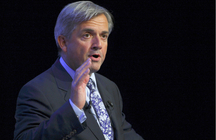
  • Chris Huhne – 2011 Speech to the Liberal Democrat Conference

    chrishuhne

    Below is the speech made by the then Energy Secretary, Chris Huhne, at the 2011 Liberal Democrat Party Conference on 20th September 2011.

    One abiding set of values that all Liberal Democrats share is a respect for our environment, natural systems and sustainability.

    With this conference’s backing, we will hold course to be the greenest government ever.

    No more, no less.

    But are we still on course?

    Well, I can hardly pick up a Tory paper these days without a whinge about energy and climate change policies.

    It’s been nip and tuck between Vince and me in recent months to win an unpopularity poll – that’s on Conservativehome among Tory activists.

    So as we assert Lib Dem values within government, we must be doing something right – or is it Left?

    Personally, I have no doubt that climate change is one of the greatest challenges we face.

    But if you are facing a pay squeeze or even worse a lost job, if your pay packet no longer buys what you need, people understandably put other priorities higher up the scale.

    As always during hard times, every other issue pales into insignificance besides the big issues of earning your living.

    Keeping your job.

    Making ends meet.

    But cutting carbon is not a luxury to be ditched when the going gets tough.

    It is essential to the survival of mankind as a species.

    The science is ever more clear.

    Cutting carbon is also a vital part of our recovery from the deepest recession since 1929.

    Then we had David Lloyd George’s Yellow Book: now we have Green Growth.

    In the thirties, we did not create new jobs by bringing back the textiles, coal and iron jobs that were lost.

    We created new jobs in new industries.

    And the same is happening today.

    Every month, more than 300,000 people leave the unemployment register to find new jobs.

    Thousands of those jobs are now in the low carbon economy. It is our route to recovery. Green business is good business.

    There are now a million jobs in low carbon goods and services in Britain, and they are growing rapidly.

    New jobs in cars, where Nissan will produce the all-electric Leaf at Sunderland with a £5,000 premium for each car from our government.

    New jobs in energy saving, where our Green Deal, launched next October, is set to create 250,000 jobs across the nation, up from 27,000 now.

    With the Green Deal, we are stopping the scandal where we use more energy to heat our homes than in Sweden, despite their icy winters.

    Saving money that can be spent at home on British jobs, not foreign gas.

    And I am proud to announce that our party is putting our principles into practice.

    Every single Liberal Democrat council has now signed up to pioneer the Green Deal.

    New jobs too in renewable energy, where we are determined to be the fastest improving pupil in class – having started from being 25th out of the 27 EU member states.

    Onshore wind farms that are now the cheapest form of renewable electricity.

    Offshore wind farms that are setting the standard for the world.

    New jobs in heating, where our Renewable Heat Incentive is a world-beating first.

    Saving power by drawing heat from the air and the ground.

    And from our woodland, where we use only a tenth of the sustainable timber we could produce.

    New jobs in nuclear too, without a penny of public subsidy.

    And providing that we stick to the strictest safety standards in the world, and learn the lessons of Fukushima.

    And new jobs in coal and gas plants, as we provide them with a long-term future through capturing and storing their carbon.

    All told, energy investment will be £200 billion in the next ten years, double the normal amount as we replace Britain’s ageing power stations.

    Our Electricity Market Reforms will mean three quarters of our electricity comes from low carbon sources by 2030.

    Funded in part by the world’s first Green Investment Bank.

    When people ask where is the demand coming from to power the economic recovery, tell them its clean energy.

    It’s energy saving.

    It’s low carbon transport.

    It’s the new green industrial revolution.

    Now, some people argue that we should not be pushing low carbon business, because no-one else is.

    Nonsense.

    Look at China, with six of the biggest renewable companies in the world.

    Installing wind turbines across the South China Sea.

    Building 28 nuclear power stations in the time it will take us to build one.

    Building 10,000 miles of high speed rail in the time we will take to go from London to Birmingham.

    Covering 40 per cent of the Chinese population with low carbon economy zones.

    If that’s doing nothing, then climate sceptics have a weird idea of zero.

    The real risk is not doing too much.

    It is doing too little.

    And getting left behind.

    Other people argue that we cannot afford to boost the low carbon economy.

    It would be cheaper, they say, to rely only on oil and gas.

    To say it is to laugh at it.

    World gas – and hence electricity – prices have leapt by a third thanks to Libya and far eastern growth.

    Global factors.

    So we should surely try to limit our dependence on oil and gas, not increase it.

    Particularly as our own North Sea resources are running down.

    In the storm-tossed seas we have to sail, low carbon energy gives us security.

    Assurance.

    Safety.

    British energy consumers will on average be better off in 2020 thanks to our low carbon policies. Yes, I said better off.

    Getting off the oil and gas price hook and onto clean, green energy makes sense.

    And with energy saving, we can offset the effects of higher prices and end up with lower bills.

    In one generation, we will go from fossil fuel smokestack to low carbon cash back.

    But there is hardship now, and we are determined to help.

    Higher energy bills hurt.

    None of us should have to save on warmth in a cold winter.

    Some of the most vulnerable and elderly will shiver – and worse- if we do not help.

    That is why this Government is boosting by two-thirds the discounts to help people in fuel poverty.

    Why our Warm Homes Discount is a statutory scheme, not a grace and favour handout relying on energy companies’ good will.

    That is also why this Government will make those in fuel poverty a top priority for the Green Deal, helped by our ECO subsidy.

    Improving people’s homes cuts fuel poverty forever, while a discount only cuts fuel poverty for a year.

    Year after year, fuel poverty rose under Labour.

    Now we are helping the poor where Labour flannelled.

    We are acting where Labour talked.

    We are delivering where Labour failed.

    But it is not just the fuel poor who need help.

    Today I can announce a new package to help the hard-pressed consumer this winter and every winter.

    We are determined to get tough with the big six energy companies to ensure that the consumer gets the best possible deal.

    We want simpler tariffs.

    Requiring energy companies to tell you whether you could buy more cheaply on another tariff.

    And you can save real money.

    Ofgem, the independent regulator, calculates that the average household could save £200 by switching to the lowest cost supplier – but fewer than one in seven households do so.

    Britain privatised the energy companies, but most consumers never noticed.

    Contrary to the Times’ report, I neither said nor meant that this was laziness.

    It is just that consumers still think that they face the same bill whoever they go to.

    So I want to help households save money.

    With simpler charging.

    Clearer bills.

    Quicker switching.

    I also want more consumer-friendly firms – co-ops, partnerships, consumer charities – dedicated to doing the shopping around for consumers to make sure that you are always on the best deal, even if you do not have time to check yourself.

    Ofgem should also have new powers to secure redress for consumers – money back for bad behaviour.

    Ofgem is already stamping out bad doorstep practices that lead to energy mis-selling, with the guilty companies suffering swingeing fines.

    And we will stop the energy companies from blocking action by Ofgem, which can delay matters by a year.

    I remember when I was on the board of Which? the Consumers’ Association that the best guarantee of a good deal is more competition for your pound.

    We want to encourage new small companies to come into the market.

    Cutting red tape so they can grow bigger.

    Making it easier for them to buy and sell electricity in the wholesale market.

    And with Ofgem, we are cracking down on any bad practice that could smack of being anti-competitive.

    It’s not fair that big energy companies can push their prices up for the vast majority of their consumers – who do not switch – while introducing cut-throat offers for new customers that stop small firms entering the market.

    That looks to me like predatory pricing.

    It must and will stop.

    Labour and Ed Miliband had thirteen years to get this market right, and all they can do now is call for another inquiry by the Competition Commission.

    Another delay of two years.

    Another chance to sit on the fence .

    How feeble!

    We know what’s wrong.

    And with Ofgem, we are getting tough to put it right.

    John Donne once said that no man is an island entire unto himself, and no government in this complex and interdependent world is entire unto itself.

    National sovereignty’s historic writ does not run over so many issues that matter to every family in this country.

    National frontiers do not bar toxic waste, sulphur or carbon.

    That is why we must always work with our partners in Europe – and more widely – to secure our objectives, nowhere more clearly than on environmental issues.

    The European Union is also key to our prosperity.

    The Eurozone takes nearly half our exports.

    We export more to Ireland alone than to China, India and Brazil put together.

    Being part of Europe is not a political choice. It is a geographical reality

    It always was. And until the tectonic plates break up, it always will be

    We will not, as Liberal Democrats in government, weaken the ties that deliver our national interest through Europe.

    Let me make another point about our Coalition.

    Whatever we think of the Conservative campaign in the alternative vote referendum, and I for one thought that the vilification of Nick was appalling, for Liberal Democrats compromise is not and cannot be a dirty word.

    Finding common ground.

    Uniting in joint purpose.

    Partnership politics.

    That is what we had to do – Conservatives and Liberal Democrats – to get this country out of the economic danger zone.

    Many countries that have suffered from the debt crisis since then – Portugal, Spain, Italy – had smaller budget deficits than us.

    Yet we can borrow money at lower rates than at any time in three hundred years.

    This coalition government saved Britain’s credit standing by compromise.

    The danger if you don’t compromise is now clear from America.

    There the markets looked over the brink when the mad-cap Republican right in Congress would not compromise with the President.

    Let that be a warning to the Conservative right here: we need no Tea Party Tendency in Britain.

    If you fail to compromise, if you fail to seek the common ground that unites us, if you insist that only you have the answers, if you keep beating the anti-European drum, if you slaver over tax cuts for the rich, then you will put in peril the most crucial achievement of this Government.

    You will wreck the nation’s economy and common purpose.

    We are all in this together and we can’t get out of it alone.

  • Sarah Teather – 2011 Speech to Liberal Democrat Conference

    Below is the text of a speech made by Sarah Teather to the Liberal Democrat Conference on 18th September 2011.

    Good morning conference.

    “Education… beyond all other devices of human origin, is the great equalizer of men, the balance-wheel of the social machinery.”

    The quote is from Horace Mann, the great 19th century American reformer. But it speaks to the instincts of liberals here with as much resonance as then.

    The scandal is that though it should be true, it isn’t.

    LABOUR’S LEGACY

    You will hear many people talk this week about the shocking state of the nation’s finances that was Labour’s legacy. I want to talk about another of Labour’s legacies: the shocking inequality at the heart of the nation’s education system.

    A system where the poorest children start school behind and fall further behind at every stage.

    Where poor seven-year olds are twice as likely to fall short in reading and writing than their richer peers.

    Where the poorest 16-year olds are three times as likely to fail to get five good GCSEs as the richest.

    Labour didn’t only waste money – they wasted the chance to make a difference for our children.

    We have come to expect that poverty will inevitably always go hand in hand with poor attainment. But in other countries it does not necessarily follow.

    Something in the way society functions, in the way education works, makes children elsewhere more resilient, more self confident, more aspirational, better able to benefit from what education has to offer, and so escape their family background.

    Conference, it is not acceptable that poor children to fail. That reflects badly on the complacency of the previous Government, and it reflects badly on the complacency of our society.

    We have to put it right.

    It is our ambition that every child will be the author of his or her own life story, will be able to fulfil his or her own potential, not bound by the confines of their family background, of their parent’s job or wealth, or of other’s expectations.

    To break the link between your birth and your fate: this is our task. It is the reason we are in Government.

    It is the reason I came into politics.

    It is not an easy task. But it is the challenge we have chosen to take on, and carefully, and consistently, we have begun to try and tilt the playing field, back in favour of those children and families who are falling behind.

    EARLY YEARS

    What do we know about how best to make that difference?

    Inequality starts early. A bright child from a poor background in Harlesden in my constituency will already have begun to fall behind at two. Life’s race is too often lost long before they start school.

    Liberal Democrats have consistently argued that we need to intervene early.

    So we’re reviewing the early years curriculum for every child and every nursery.  It will be simpler for parents and more focused on how children develop and learn.  And I’ve just announced a review of workforce qualifications, to make sure the best people are working with our youngest children.

    But that won’t help, unless it reaches the children who most need it.

    So, Liberal Democrats in government have extended the free hours of early years education for all three and four year olds. For the first time, we will make 15 hours of early education available to all disadvantaged two year olds.

    And this early education will become a legal entitlement.

    And today I can make a further announcement.

    I will shortly be launching a consultation on how councils will decide which children are eligible.

    I’ll propose that first and foremost every family who meet the criteria for free school meals should qualify, along with looked after children.

    What’s more, we know that some children with special educational needs and disabilities could particularly benefit from extra support at an early stage.

    So I’m proposing that councils should be free to offer it to these other groups if they choose.

    I have seen the difference this commitment will make.

    Children whose confidence and vocabulary has been radically changed because of these crucial hours of early education.

    Children who will begin school further ahead because of help they had at a critical time.

    Conference, these children will have a fairer start in life because Liberal Democrats fought for it and Liberal Democrats in Government made it happen.

    PUPIL PREMIUM

    That’s not all we’re changing. Since April this year, schools in England have had an additional £625m to spend on the pupil premium.

    Schools up and down the country are already using this extra money to help children who otherwise would have fallen behind their peers.

    Extra individual tuition.

    Parent support advisors.

    Out of school clubs.

    We’ll be sharing evidence about what works, and making sure that schools are held to account on the results they achieve.

    We have to do more.

    Today I can announce that, next year, the amount of money available for the pupil premium will double to £1.25bn. Doubling the amount of support schools are able to offer their most disadvantaged students.

    Conference, five years ago, as your Education spokesperson in opposition, I asked you to support the pupil premium. You went out and campaigned on it. Nick Clegg championed it. It was on the front page of our manifesto. We put it at the centre of our coalition negotiations and we made sure it was protected it in the spending review.

    Conference, children across the country will have a fairer start in life because Liberal Democrats fought for it and Liberal Democrats in Government made it happen.

    EDUCATION SYSTEM

    I’d like here to thank my parliamentary colleagues Joan Walmsley, Dan Rogerson, Simon Wright and Tessa Munt, and Cllr Gerald Vernon Jackson and James Kempton who sit on the Education Department’s advisory group. They have worked tirelessly over the past year to support me in working to close the achievement gap left by Labour.

    A fairer school admissions systems.

    A better deal for children excluded from school.

    Strengthened access to vocational education, and so much more.

    Together, we are tackling Labour’s wasted years.

    Years when youth unemployment increased by over a third.

    Years when thousands of young people were pushed towards qualifications that didn’t lead to college or a job.

    Years when our young people fell further behind their compatriots in other developed countries.

    Conference, Labour may have thought this was a record to be proud of but we do not.

    SUPPORTING FAMILIES

    If we’re going to turn around the entrenched relationship between poverty and life chances, yes, quality education is an important part of the story.

    But it is only one piece of the jigsaw.

    We all know what marks the difference between the 5 year old who begins school confident, sociable, able to read and write their own name, compared with the child who isn’t ready for school. It is as much to do with the head start they were offered at home by their family.

    Strong, stable, confident parenting.

    Mothers and fathers spending time with children, reading them stories, engaging with their education.

    And yet just this week UNICEF published a report showing how our parents feel under so much more pressure than in other countries, so much less confident in their parenting ability.  They struggle in finding time for their children.

    Liberals have traditionally said that it is not Government’s job to interfere in family life.

    But if we are serious about allowing each individual to realise their full potential, it must surely be Government’s job to create the kind of society in which all families are able to flourish. The kind of society which fosters a safe, stable and happy environment in which children can grow and develop.

    Every family goes through tough times, but if you don’t have family close by, if you are bringing up a child on your own, if your health is poor or you are out of work things can be really difficult. If you are lucky, friends and family can step in. But if you aren’t, if we are going to provide that fair start for every child, we need to offer families the support they need.

    That is why the Government is investing in relationship support. £30m over the next four years.

    That is why Ed Davey has proposed to extend parental leave to both parents, to give families more flexibility and to encourage both parents to play their part.

    That is why Children’s Centres are so important – with a new core purpose, clearer that they’re accessible to all, but more focused on what works for the most disadvantaged and needy families.

    And we are now identifying some of the best Children’s Centres to become centres of excellence, training others in offering support, and making changes so that parents and community groups can be more involved in how they are run.

    PARENTING SUPPORT

    But we want to do more. To respond to those parents who say they are under pressure, and would like more information on what to expect, more ideas on how to cope, and more ideas for helping their child learn and develop.

    So I can announce today that the Government will shortly begin piloting an offer of voluntary parenting classes for every parent of a child under 5 in three or four areas.

    This is a direct response to the evidence that the home learning environment is the biggest single determinant of your child’s future success. Where parents support their children to learn, the link between poverty and poor attainment can be broken.

    SOCIETY AFTER THE RIOTS

    But bringing up children isn’t just a job for parents. It is all of our responsibility.

    The riots this summer gave most of us pause for thought. Many theories were proffered in the immediate aftermath, some more ludicrous than others.

    Liberal Democrats in Government have tried to take a more thoughtful approach.

    And in responding to what we saw on our television screens, we also saw differences between the political parties.

    Differences in their values, and what they believed for the future of our country.

    For me, it provoked many deeper questions about the kind of society we are trying to create, the kind of society we want our children to grow up in.

    Our schools – are they places where children are happy and safe, and want to learn or are they places where a macho, and “have that now” culture gets in the way of aspiration and achievement?

    Our families and friendships – are they built on strong relationships, or, as that UNICEF report suggested, are they too often filled with “stuff” we can buy as a substitute for valuable time?

    Our communities – are they places that encourage children to be children, or are they dominated by what adults want and desire?

    Our country – is it one where individual rights are cherished and protected, or where the response to threat is to clamp down harder?  Is it one where your birth is allowed to equal your fate, or where we use the nation’s resources to fight against it?

    Conference, it is time to think again about how we value children and young people, how we portray them, and what part they play in society.

    It is time to challenge Labour’s wasted years.

    It is time to be strong in standing up for human rights, for children’s rights, and for a society that is free and fair for all.

    Liberal Democrats, you fought for a fair start for every child.  And in government, that is what we will deliver.

  • Danny Alexander – 2011 Liberal Democrat Conference

    Below is the text of the speech made by the Chief Secretary to the Treasury, Danny Alexander, at the 2011 Liberal Democrat Party conference.


    I’d like to tell you about a man who’s been a great source of inspiration and guidance to me behind the scenes over the last year.

    Gordon.

    Although outwardly dour, his finely tuned political antennae and no nonsense style make him the perfect sounding board.

    He’s not flash – he’s just Gordon. Gordon Birtwistle, the Liberal Democrat MP for Burnley. One of the most talented and tenacious of our 2010 intake. I’m privileged he agreed to be my PPS.

    Alistair Darling wasn’t quite so keen on his Gordon.

    His Gordon racked up a record deficit fuelled by irresponsible and unsustainable spending.

    His Gordon denied any responsibility for the economic woes caused by his own policies.

    His Gordon “unleashed the forces of hell” simply for sharing his views on the severity of the economic crisis.

    Who was feeding Gordon Brown such advice? Was it Mandy? Or McBride? I think it’s pretty obvious – it was all Balls.

    Unlike Labour, our party has never shied away from telling difficult truths on the economy:

    Vince Cable led the way in warning of the dangers that were building.

    And we made a historic decision last Spring. When we signed up to coalition government, we knew our country’s economic stability depended on it.

    Returning our country to lasting prosperity is the founding purpose of this Government – the overwhelming national interest that motivated two very different political parties to take responsibility together for a full 5 years.

    We resolved to act in the national interest and put our country first. That is what we’re doing.

    “In government, on your side” doesn’t mean telling people there’s an easy answer to the horrendous problems Labour left.

    It means telling it straight.

    To get things right for the long term, we must stick to our guns now.

    And we shouldn’t forget the impact of our unity and our resolve.

    Concern about both sovereign debt and economic growth is at the heart of the current market turbulence.

    Turbulence fuelled by uncertainty about the ability of political leaders across the globe to take the decisive action their countries need.

    Since we came into office, our coalition Government has taken the difficult, and sometimes unpopular decisions necessary to fix our economy.

    This decisive action has made an immediate impact.

    Interest rates have stayed low, keeping workers in their jobs and families in their homes.

    Fellow Liberal Democrats, we played a decisive role in securing our country’s financial credibility. This should make us proud.

    We have built a strong shelter, but the storm is still raging.

    Elsewhere in Europe, the struggle to establish credible deficit reduction plans goes on. In the US, political deadlock brought a historic downgrade of the country’s credit rating.

    Yet despite all the evidence, the party that put us in this hole just want to keep digging.

    Labour say our motivation is dogmatic. They’re wrong. It’s practical.

    Financial discipline is necessary for effective government. It would be completely wrong to leave the bills for past mistakes to be paid for by our children. The economic case is indisputable – that’s what so many of you have done in local government, and that’s what we must continue to do in central government. We must stick to our plans and we will.

    We’ll be straight with people: about how long this will take; how hard it will be, and what we will do to get it right.

    A huge deficit, an unbalanced economy, our trading partners in real difficultly.

    These are very big problems. Solving them will take years, and every one of us has a role to play. To support growth, to help families under pressure.

    As Liberal Democrats, our judgements about what needs to be done should be driven by the liberal economy we want to build.

    A liberal economy shaped by free and open competition,

    A liberal economy built on long-term investment, not debt and waste.

    A liberal economy where growth is shared across the country

    A liberal economy where taxation delivers fairness.

    Sustainable, balanced, competitive, fair. To get the kind of growth we want, we must break down the vested interests – the enemies of growth that stand in the way of future prosperity.

    We are prepared to take them on. We will name and shame those standing in the way of that central national purpose.

    Free trade has been a liberal rallying call for centuries. Offering gains to countries around the world and especially for Britain, with our quality exports and trading history.

    Today our trade policy is being brilliantly led by Ed Davey.

    The inception of the European single market a quarter of a century ago helped create hundreds of thousands of new jobs.

    Astonishingly, the single market is not yet complete. Huge areas of the European economy are still not fully open to British firms – especially in the services and energy sectors

    Completing this work will support growth, jobs and competitiveness not just in Britain but across the whole of Europe.

    There’s an opportunity for Britain to lead this agenda right now – as we did so successfully in the 1980s.

    As the Eurozone seeks to deepen its integration – and we need it to do so more quickly – they will need our support. And they will get it.

    Sadly, eurosceptics on left and right still fail to understand Winston Churchill’s insight that sharing sovereignty strengthens our influence and isolation weakens us. Scottish Nationalists make the same mistake.

    We’ll never let the anti-European isolationists or nationalists frustrate our national interest.

    They are enemies of growth.

    Fortunately, coalition ministers are united in pursuing a policy of practical, pragmatic engagement in the EU.

    Nick Clegg and I are working with David Cameron and George Osborne to make deepening, strengthening, and deregulating the single market a central aim of Britain’s European policy – because it will bring jobs and growth.

    Too many businesses are being held back by congested roads, slow railways, inadequate broadband.

    At the spending review last year, we looked at infrastructure spending in the round, picking only the most economically valuable projects from across government for funding.

    And as a result, we’re investing more in the transport network over these 4 years than Labour managed in the last 4. The redevelopment of New Street Station here in Birmingham, the Mersey gateway bridge, Crossrail in London, and a national high speed rail network.

    And we have prioritised the money to invest to make sure that high speed broadband gets to every part of the country.

    Now more than ever, we need to get on with this work.

    But there’s a major vested interest in the way. Bureaucracy, rules and red tape that mean it takes years to get things done. A planning system that can take more than a decade to allow even modest developments to go forward.

    It has to change. And under the coalition it will.

    I know there are concerns about our planning reforms. So it’s important to understand what we’re really doing. The presumption of sustainable development is right because it establishes the right balance.

    Local communities in the driving seat, local protections in place and yes more local homes and local jobs.

    So while it is politically contentious – we will reform planning.

    As Chief Secretary, I set the rules that control public spending. Mostly, that’s about making sure we stick within our budget, which I’m sure you can imagine doesn’t always make me very popular.

    On infrastructure, I’m pressing departments to make sure they deliver their plans on schedule.

    And we need to do more. More to help support jobs and growth in our communities.

    Because growth can’t be imposed from the centre – it must be driven by businesses, communities and local authorities.

    They are critical to delivering the jobs and homes that our communities need.

    So I’d like to tell you about the next steps in our Plan for Growth.

    To support local growth, I can today announce my decision to reduce the interest rate offered to local authorities by the Public Works Loan Board to finance the £13bn of debt needed to leave the Housing Revenue Account subsidy system.

    I’ve listened to local authority concerns that this is a one-off transaction within the public sector and should be financed as such.

    Let me put it simply – an extra £100m every year that councils can then reinvest in housing.

    And I want to take a further step to support local growth.

    Across the country, projects are being held back by tough market conditions, difficult cash flow and a lack of confidence. Projects where people could be working but aren’t.

    That is why I’m announcing today the creation of a new Growing Places Fund.

    Half a billion pounds that will kick start developments that are currently stalled.

    Half a billion pounds that will deliver key infrastructure and create jobs.

    Putting local areas in the driving seat, to boost the local economy and get people into work.

    Providing flexibility to local areas to recycle funding for other projects once development is completed.

    In South Gloucestershire, £300 million of private investment, 3,000 jobs and 2,200 homes is being unlocked with £6 million of public money to build a link road. Just think what we will be able to do with £500 million.

    Unlocking local growth by freeing businesses to grow, creating jobs, and freeing councils to build housing. Liberal Democrats in government, on your side.

    We’re on your side when it comes to the banks too.

    Delivering on our promise to protect the taxpayer from the cost of future bailouts. Never again should bankers go to the casino with their stakes guaranteed by the rest of us.

    That’s why we commissioned the Vickers report

    It’s why we welcomed his recommendations on ring-fencing.

    It’s why we welcomed his call to extend competition in the banking sector.

    And it’s why we will legislate to protect future taxpayers in this Parliament.

    Of course, our main tool to help low and middle income families with the pressures they are facing is the tax system.

    Thanks to Liberal Democrats there is genuine progress.

    And I’m not just talking about fuel duty cuts for our remotest communities, though I expect we will have that in place next year.

    This year, the average worker is paying £200 less income tax than last year. Next year, the bill will come down by another £120. By the end of this Parliament, most working people will be paying £700 less income tax a year.

    Conference, an income tax threshold of £10,000 was the first priority in our manifesto. Now it’s the first tax priority of the government. We should be proud that in government our ideas are making a real difference to every working family in Britain.

    But we shouldn’t rest on our laurels. In the next Parliament, I want us to go further; our aspiration should be that someone working full time on the minimum wage should pay no income tax at all.

    An income tax threshold of £12,500 – think what that would do to work incentives, think what it would mean for basic fairness.

    Let’s put that on the front page of our next manifesto.

    Some people have argued that we should change our tax priorities and focus our limited resources on cutting taxes for the wealthiest instead.

    At a time of austerity, this argument simply beggars belief. If we are all in this together, those with the broadest shoulders must bear the greatest burden.

    Fair taxation of the wealthiest is key to our deficit reduction plan. Of course, if a better way can be found to raise the money from this group, I will be willing to consider it.

    But right now we must focus relentlessly on those who are struggling.

    And we need to make sure tax owed is tax paid.

    Last year, I announced a package of investment to strengthen our fight against tax evasion, as well as tax avoidance.

    Let me tell you how we’re getting on.

    This year, an additional 2,250 HMRC staff will move into new anti-evasion and avoidance jobs.

    This month, over 1,000 of these jobs are being advertised.

    And already this package is bearing fruit.

    I promised you we’d collect an extra £7bn a year by the end of the Parliament;

    And I can tell you we’re already on track to raise £2bn this year.

    It took 12 years for the previous Government to take action against the wealthiest 5,000 people some of who weren’t paying their fair share of tax.

    We can do better than that.

    In less than a month’s time, a new ‘affluent team’ will be place. This team will look specifically at the next 350,000 wealthiest taxpayers.

    These are the people who pay or should pay the 50p rate of tax. And my message to the small minority who don’t pay what they owe is simple, I agree with the Chancellor. “We will find you and your money” and you will pay your fair share.

    Economic credibility comes from doing the right thing – that’s why Labour lost it.

    At the next election, we can make sure there will be only one party that people trust to both handle the economy and deliver fairness – the Liberal Democrats.

    We’ll win that trust by sticking to our guns, especially when times are tough.

    We’ll do that by levelling with people about the scale of the challenge we face, not offering false promises as Labour did.

    By delivering our aspiration to rebuild a more sustainable and balanced economy.

    By showing that we understand the fears and the pressures on the people of this country, and share their ambition for a better Britain.

    Most of all, we will do that by building a shared sense of national economic purpose so that we are working alongside every person in this country to restore our prosperity.

    Do you remember how Gordon Brown liked to conclude his speeches?

    Long lists – did you find them annoying? I know I used to.

    But not now, with so many Lib Dem achievements already in place, I can’t resist:

    A clear plan to deal with the deficit, removing barriers to business growth, investing in infrastructure, promoting free trade and competition, sorting out the banks,

    tackling tax avoidance, and cutting taxes for those who need it most.

    That is the economic policy of the Liberal Democrats in government and it is a record to be proud of.