Tag: 2010

  • Gordon Brown – 2010 Podcast Text on the Economic Recovery

    Gordon Brown – 2010 Podcast Text on the Economic Recovery

    The text of a podcast made by Gordon Brown, the then Prime Minister, on 3 April 2010.

    For many of us, Easter is a time for reflection and spending time together as a family.

    I know that times have been tough and that many people are still apprehensive about their jobs, their homes and their businesses.

    Whether it’s a worker watching their wages, or a parent juggling the household budget, or a small business owner calculating the cash flow, I hear every day how worried people still are.

    Our economy has just been through a global financial crisis and at the moment we’re in a period of fragile recovery. In the past few months growth has returned. In fact, latest figures show that in the last quarter of 2009 the economy grew faster than people originally thought – by 0.4 per cent.

    And in the last three months we have seen unemployment fall. And we have seen vacancies rise.

    In total 300,000 men and women are leaving the unemployment register every month.

    The improved ‘Time to Pay’ scheme has given over 200,000 businesses longer to pay £5bn worth of tax. These businesses employ more than 1.4 million people, and the additional time has helped those businesses pay more of the tax they owed.

    And this year almost half a million families have received extra tax credits.

    All our efforts have been focused on getting us through the recession – and now they are designed to secure the recovery.

    That’s why we have a designed a plan to secure the recovery and raise your living standards.

    First of all, we are continuing the vital support we have been giving the economy until recovery has firmly taken root.

    That includes the extra investments we’re making in big infrastructure projects like high-speed rail – and the support we are giving to the sectors which will underpin our return to prosperity: industries like low carbon; digital; advanced manufacturing and life sciences.

    And secondly, we are from this month increasing the support we’re giving to small businesses – the backbone of our UK economy.

    Our Time to Pay scheme is now being extended until the end of the next Parliament.

    And we’re cutting business rates from October for a year for over half a million small businesses in England – 345,000 of whom will pay no business rates at all.

    And then thirdly, we are increasing the number of jobs created for young people through the actions of the Future Jobs Fund.

    This is providing up to 120,000 paid jobs for young people and a further 50,000 jobs for those over 25 in the hardest hit areas.

    In total we’ve put £5 billion in to help people looking for jobs – money that some people opposed.

    I believe that securing the recovery is the biggest issue facing our country. That means we shouldn’t take money out of the economy this year.

    Let me explain it a bit like this: I know Wayne Rooney’s just had an injury to his foot and I know everyone will be hoping he’s fit for the World Cup but after an injury you need support to recover, you need support to get back to match fitness, you need support to get back your full strength and then go on to lift the World Cup.

    So with the economy – we’re not back to full fitness, we need to maintain support. If you withdraw support too early, we’ll risk doing more damage. And that’s why so many people – the CBI, IMF, the Institute for Fiscal Studies, economists and other thinkers and the vast majority of business people I’ve spoken to say it’s wrong to take money out of the economy this year. And that’s why I think it’s wrong to say that we should take six or seven billion pounds out of the economy this year.

    Now of course we need to make sure that money goes to skills, to jobs, to small businesses and to job creation and we need to be ruthless on cutting down on waste – and we’re doing that – but if we try and jump off the treatment table as if nothing had happened we’ll do more damage to the economy – and frankly that means we risk a double-dip recession.

    I think that’s a risk we can’t afford to take. So going for growth and jobs to achieve prosperity for all is the overriding duty and responsibility of this Government – and I promise you we will not let you or your family down.

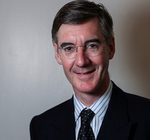
  • Jacob Rees-Mogg – 2010 Maiden Speech in the House of Commons

    Jacob Rees-Mogg – 2010 Maiden Speech in the House of Commons

    The maiden speech made by Jacob Rees-Mogg, the Conservative MP for North East Somerset, in the House of Commons on 7 June 2010.

    It is a great pleasure to follow my hon. Friend the Member for West Suffolk (Matthew Hancock) in making a maiden speech in this debate. He made a fantastic maiden speech and we all now know to be very careful where we blow our noses in his constituency.

    It is a great honour for my family for me to be elected for North East Somerset. My father—or my noble kinsman, Lord Rees-Mogg, as I am now meant to call him—told me that between him, myself and my sister, we have tried seven times with one victory. I fear that if we were a football team, people would be calling for the manager to be removed.

    It is also an enormous honour for me to be elected for North East Somerset, which is where I was brought up and where my family have lived for generations. As everybody knows, Somerset is God’s own county, and North East Somerset is God’s own part of God’s own county.

    I inherit the seat from two very distinguished gentlemen, one of whom is my hon. Friend the Member for Bath (Mr Foster). I am very glad he is now my hon. Friend, because I discovered when canvassing that a lot of people who were unaware of boundary changes were still intending to vote for him. When they discovered they could no longer do so, they turned out to be lifelong Conservatives, so I welcome him to the Peelite coalition that we now have.

    The main part of my constituency was the old Wansdyke seat, which I have inherited from Mr Dan Norris, a most distinguished Labour Member, and a Parliamentary Private Secretary to the right hon. Member for South Shields (David Miliband). He is probably sorely missed at the moment during the Labour leadership election. He was the model of an assiduous constituency MP. He worked tirelessly both as an Avon county councillor and as an MP and I indeed have large shoes to fill.

    North East Somerset, which, as I said, is God’s own part of God’s own county, has a great place in British history. I am not going to go back at any great length to Bladud, the father of King Lear, who in 683 BC founded Bath—he found some pigs with skin disease in north-east Somerset, and washed them in the waters—because he is a rather peripheral figure.

    Alfred the Great is more substantial. Alfred the Great, we must remember, in 878 AD, had just Somerset left, with the Danes all around, as they had begun to take over all of Wessex and already had much of the rest of England. Alfred, however, brought together the people of Somerset, Wiltshire and parts of Hampshire and they crossed over from the Somerset levels through north-east Somerset to Edington, near Chippenham, and there they fought the great battle on which our freedoms depend. They put paid to Danish occupation. Alfred was a great law giver—a man we should think about in this debate particularly, because he did not want to innovate laws; he wanted to codify laws. He wanted to tell people what ancient rights they had and how they ought to have their liberties. He was able to expel the Danes and his grandson became the first King of England on borders we would recognise to this day.

    Moving on a little later, the next great figure from North East Somerset is Alphege, Archbishop of Canterbury, born in Weston, a village bordering north-east Somerset and Bath. He is really the first tax martyr. He was called upon to pay the Danegeld, and he took £48,000 to the Danes, then at Greenwich, and handed it over. They said, “Mr Alphege, we would like some more, and if you don’t give us more, we are going to hold on to you as a hostage.” And Alphege replied: “I will not give you more; I will not put higher taxes on my people; I will not have them suffer this imposition.” So they threw ox bones at Alphege until he died. I hope that people will not find it necessary to throw ox bones at me, but as another representative from North East Somerset, I will stand constantly for low taxation.

    The final figure I am going to mention in this great pantheon of wonderful figures from God’s own part of God’s own county is John Locke. Brought up in Belluton—this really is a sop to the Whig coalition that we now have—this philosopher of the Whigs was in many ways the founder of the constitution that we now have, one that has as its essence the fact that power comes from the people up to the legislature, which is there to supervise the Executive. Members will all know that the argument at the time was about the divine right of kings and some may now think that we have another form of divine right of the Executive. Locke made it clear that the duty of the legislature was to check and to stop the Executive exceeding the powers, the rights and the authority that it had from time immemorial.

    Let us take these three great Somerset men: Alfred the Great, the first Eurosceptic, who got rid of the Danes and made England independent; Alphege, the low-tax martyr; and John Locke, standing up for the legislature and the people against the Executive. For however long I represent North East Somerset, I will take these three as my great heroes and hope to model my political words on their thoughts.

  • Jo Johnson – 2010 Maiden Speech in the House of Commons

    Jo Johnson – 2010 Maiden Speech in the House of Commons

    The maiden speech made by Jo Johnson, the then Conservative MP for Orpington, in the House of Commons on 8 June 2010.

    Thank you, Mr Deputy Speaker, for calling me this evening. The six hours that I have been waiting have truly passed in a flash, such has been the quality of previous maiden speakers, including just now the hon. Member for Newcastle upon Tyne Central (Chi Onwurah). I should particularly like to associate myself with the remarks made by my hon. Friend the Member for Grantham and Stamford (Nick Boles), who is sadly no longer in the Chamber, about the equalities agenda and gay rights.

    At the outset, I should make a declaration, as we do a lot of that at the start of Parliaments. Anyone hoping that I will enliven proceedings in the manner of one of my elder brothers, the former Member for Henley, is likely to be disappointed. Private Eye, in the issue on newsstands at the moment, has helped me to set expectations appropriately low. It quotes an unnamed Oxford contemporary, in the first of a series that it is doing on new Members, and that friendly Oxford contemporary of mine says:

    “He could not be more different to Boris. It’s as though the humour gene by-passed Jo altogether and he inherited only the ambition gene.”

    It is an absolutely fair comment, but I do not really apologise for the humour-ectomy, nor, indeed, for any hint of ambition that the House might detect, because these are serious times and politicians need to be ambitious when the country is in such a mess. History will not forgive us if we flannel around in the House over the next five years and fail to pick the economy up off the floor, where it is at present.

    Orpington, the constituency that I am fortunate enough now to represent, has not troubled the House with a maiden speech for 40 years. I am tempted to give Members a double helping, but time will not allow it. That lengthy interlude has arisen because my distinguished predecessor, John Horam, began his parliamentary career not in the idyllic glades of northern Kent, but in the gritty Gateshead West area of Newcastle.

    John Horam has the distinction, as many Members will know, of being the only Member to have served in all three parties. He was originally of course a Labour MP in Gateshead, but, disillusioned with Labour’s leftward drift, he dallied with the Social Democratic party in the early ’80s before eventually donning Conservative colours and becoming the MP for Orpington in 1992. By the time he came to give his maiden speech that year, he was of course no maiden, but as a liberal Conservative long before the genre became fashionable, he was at least ahead of his time.

    That John’s political journey—his odyssey, in some ways—culminated in Orpington of all places is entirely appropriate. After all, it was in Downe, one of the constituency’s most picturesque villages, that the father of evolutionary biology propounded the earth-shaking theory of natural selection—the most important scientific breakthrough of the past 150 years. It is no surprise to me at all that the people of Orpington inspired Charles Darwin to come up with the concept of the survival of the fittest: meet them and one sees the very best that evolution has done with homo sapiens over the millennia.

    Orpington is famous for much more than the man who debunked creationism. I shall not dwell too long on the “Buff Orpington” chicken, admired by poultry breeders for its gentle contours, colourful plumage and succulent breast meat; suffice it to say that they are easy layers, go broody very often and make great mothers. Would it be too much to expect the local Tesco superstore to stock it and support the breeders of that fine bird? I shall keep the House informed of my progress, but my office called Tesco this morning, and it does not currently stock that chicken.

    If Orpington’s contribution to science is beyond question, its place in the footnotes, if perhaps not the chapter headings, of British political history is no less assured. In 1954, for example, the constituency almost snuffed out the career of a young Mrs Thatcher. Having fought unwinnable seats in neighbouring Dartford, she sought the nomination for Orpington. In The Croft Tearoom in St Mary Cray, one of the more hard-on-its-luck areas of the constituency, can be found a fine photograph of the young Mrs Thatcher buying her daily milk from a horse and cart in an attempt to impress her local credentials on selectors. She was unsuccessful. Bitterly disappointed at how leading local Tories reckoned her candidacy incompatible with her role as a mother of twins, she wrote to central office to say that she was abandoning all thought of Parliament for many years. Needless to say, British politics would have been very different had she not relented.

    I shall not dwell on counterfactuals, but one thing is certain: Orpington would not have gone on to become the totemic seat for the Liberals that it did in 1962 had Mrs Thatcher become our MP. The man who defeated her for the nomination resigned unexpectedly, triggering a famous by-election. A good Balliol man by the name of Eric Lubbock, representing the Liberals, scored an historic victory by overturning a very substantial Conservative majority and chalking up a Liberal gain in an area far away from his party’s traditional heartlands in the west country and the Celtic fringe. The birth of Orpington man sparked a revival that marked the end of the Macmillan era and made Orpington a permanent fixture in Liberal folklore.

    I come back to the present and the subject of this debate. The scale of the Conservative victory on 6 May, with its 60% share of the vote, was a resounding endorsement of the Conservative party’s economic programme. The priority now is to achieve an accelerated reduction of the £156 billion deficit and it is one that I wholeheartedly support, as I support the creative and compassionate ways that I know the Government will use to go about that difficult task. The £6 billion of cuts already announced is barely a start in the process. I look forward to the emergency Budget on 22 June and the public consultations on the role of the state, which will follow.

    As one who recently spent four years working in one of the fastest growing parts of Asia, with a ringside seat on the emerging economy that is India, I am fully aware of the challenges that globalisation presents to the British economy. I would like to use the time that I have in Parliament to help this country and Orpington constituency meet those challenges.

  • Chi Onwurah – 2010 Maiden Speech in the House of Commons

    Chi Onwurah – 2010 Maiden Speech in the House of Commons

    The maiden speech made by Chi Onwurah, the Labour MP for Newcastle upon Tyne Central, in the House of Commons on 8 June 2010.

    Thank you, Mr Deputy Speaker, for giving me the honour to follow so many excellent maiden speeches.

    I would like to start by paying tribute to my predecessor. To be able to say on the doorsteps of Newcastle upon Tyne Central that I was the new Jim Cousins was a huge asset. Perhaps one in five constituents knew him personally, and had a tale to tell about how he had helped them. As a constituency MP, he could not be bettered. He was also a champion of Newcastle and the north-east, and his long service on the Treasury Committee was of great benefit to his country and his city. His role in saving Northern Rock will be long remembered.

    In the boundary review, Newcastle Central gained the wards of Elswick and Benwell and Scotswood from the old Tyne Bridge constituency. I want to thank David Clelland for his dedication to his constituents in those historic areas of my city.

    The Romans chose Newcastle as the lowest bridging point of the Tyne, and later built Hadrian’s wall, which runs through the constituency. In the centuries that followed, we guarded England from the attacks of Scottish raiders. How times change! But as a port, we were ever open for trade. Newcastle played a huge part in the major industries—wool, salt, shipbuilding, coal and engineering. We were at the leading edge of the first industrial revolution.

    If history is merely the story of great men, I need mention only some of Newcastle’s favoured sons to prove our place: Earl Grey, who has found such favour on the Government Benches; Armstrong, the great industrialist and founder of Newcastle university; and my own hero and fellow engineer, Stephenson, who built the railways.

    But I believe that it is the contribution of those whose names are not recorded that it is most important to remember. It was the unnamed, ordinary men and women of Newcastle who built the ships that enabled this small island to wield global influence. My own grandfather worked in the shipyards of the Tyne. The men and women of Newcastle built the trade union and Labour movements, to which we owe so many of our working and voting rights. They built the co-operative and the Fairtrade movements, which combined the best of international idealism and local realism. Closer to home, they fought to protect the unique environment that is the heart, or rather the lung, of Newcastle.

    Newcastle’s town moor is justly famous—a vast expanse of open moorland, kept in common and grazed by herds of cows. In London, cows in the centre of the city are considered installation art. In Newcastle, our councillors debate the future of our city within spitting distance of cowpats, an arrangement that I recommend to the House as ensuring a grass-roots sense of perspective.

    With this history and community, it is no wonder that I felt a huge sense of privilege growing up in Newcastle. Yes, we were a one-parent family on a poor working-class estate, North Kenton, but good local schools, great public services, great housing and the health service meant that I could fulfil my ambition of becoming an engineer. But just as I was deciding to enter engineering, the country was deciding to leave it behind. We were going to become a service economy. I believe in a strong service sector, but time has shown that an exclusive focus on services left our country weaker. Certainly, I had to spend much of my career abroad. Still, I saw first hand the devastation brought about by the loss of the great northern industries of mining, shipbuilding and steel—whole communities robbed of a purpose. Let us be clear, that loss was not just a north-east loss; it was the country’s loss. Although we remain the sixth largest manufacturing economy in the world, building and making things is no longer a part of our culture. That has to change.

    I know that I should not touch upon controversial subjects, which is why I am so glad that what I am going to say is entirely uncontroversial. During the election, all parties were in agreement that the economy needs to be rebalanced in favour of manufacturing. Newcastle, with our great universities, specialising in medicine, design and engineering, our industrial heritage and strategic assets, has an essential role to play. We can help the UK to meet two of the great challenges that face us—securing sustainable energy resources and supporting an ageing population. These sectors need to be part of the new economy. We need to build up our science and manufacturing base and foster the spirit of innovation that led George Stephenson to invent the steam engine and make his fortune.

    I know from my own experience that building a business takes vision, courage, blood, sweat and tears. But manufacturing is particularly difficult. It needs long-term investment. I recently visited BAE Systems and Metalspinners, two engineering firms in my constituency. I saw 60-tonne pressing and cutting machines that cost millions of pounds and are expected to last for decades. We must continue to help these companies invest. They need a strong public sector. They need apprenticeships, good transport links, a strong regional development agency and tax allowances for manufacturing and innovation.

    We are a small country and it is no longer our ships that set the boundaries of the world. But even as a small country, we can set the direction of the new industrial revolution if we equip ourselves to grasp those opportunities, and I will fight to make sure that the Government do just that. My career in Parliament will be dedicated to ensuring that Newcastle upon Tyne Central is an economically and culturally vibrant contributor to the UK and the world.

  • Mike Crockart – 2010 Maiden Speech in the House of Commons

    Mike Crockart – 2010 Maiden Speech in the House of Commons

    The maiden speech made by Mike Crockart, the then Liberal Democrat MP for Edinburgh West, in the House of Commons on 8 June 2010.

    Thank you, Mr Deputy Speaker, for giving me the opportunity to make my maiden speech. I want to pay tribute to the hon. Member for Wycombe (Steve Baker) for his considerable knowledge of the banking industry. I cannot wait to hear more about that in future debates. It is slightly difficult for me to follow the hon. Member for Edinburgh South (Ian Murray)—we are starting to become slightly Edinburgh-centric, with the hon. Member for Edinburgh East (Sheila Gilmore) hopefully still to make a contribution this evening—because I can no longer mention the Edinburgh Evening News. The journalist mentioned by the hon. Member for Edinburgh South wrote the same paragraph for me.

    My predecessor, John Barrett, is taking a well-deserved rest after more than quarter of a century of public service, having represented the many people of Edinburgh West on community councils, city councils and, latterly, as its MP for nine years. He was a local business man and entrepreneur. In that spirit, he sold this job to me as being the best in the world. It has certainly been the most exciting in the first four weeks—even more exciting than my first few weeks as a green probationer in Lothian and Borders police.

    In his time, John met many interesting people, including the Queen and Dolly Parton. I will let the House into a secret—it was the photograph of Dolly Parton that hung on the wall in the office. The seat has a well-established Liberal history, and I join a select but growing group, including my hon. Friends the Members for Orkney and Shetland (Mr Carmichael) and for Caithness, Sutherland and Easter Ross (John Thurso) by being a third—or perhaps even more—generation Liberal MP. We are joined, too, by my hon. Friend the Member for St Austell and Newquay (Stephen Gilbert). That Lib Dem legacy is established through the quality of service given to our constituents, in my case in Edinburgh West, and an absolute commitment to them.

    I have deliberately chosen this debate on economic affairs in which to make my first contribution. My constituency is immensely diverse, taking in areas of great affluence as well as areas of great poverty. Historic villages such as Corstorphine, Davidsons Mains and Cramond are now subsumed in the Edinburgh sprawl, as well as modern housing estates such as Muirhouse. Residential Barnton as well as rural Ratho and Kirkliston. The constituency is a key player in the powerhouse that is the Edinburgh economy, boasting within its boundaries some of Scotland’s most iconic and important brands and businesses, which have brought prosperity to Edinburgh and, indeed, to Scotland. Some of them, however, have been at the centre of the catastrophic events of the past two years and that has resulted in many thousands of people losing their jobs in Scotland.

    There are many, many community groups in Edinburgh West, from those conducting community litter picks in South Queensferry or on Cramond beach to those fighting to protect the integrity and boundaries of Corstorphine hill. The Carrickvale community centre provides services to older and young constituents, and the Gylemuir Community Association does a similar job. Thousands of people are actively improving their communities all over Edinburgh West.

    I am in the middle of the summer gala season—for the benefit of the English in the Chamber, I should explain that is a fête. On Saturday, along with thousands of others, accompanied, surprisingly for Scotland, by the sun, I attend the Corstophine fair—the largest community-run event in Edinburgh, and perhaps in Scotland. In it was a programme bursting with entertainment, kids’ activities and community displays, as well as the usual stalls to give people a chance to meet those behind the many community groups across the constituency. At the end of that, I officiated at the tug-of-war event, where two teams battled it out for victory. There was much name calling, shouting and huge efforts in blood, sweat and ultimately tears before both teams claimed a moral victory, at the very least. It reminded me a great deal of the past four weeks on this side of the House.

    Edinburgh West is also a centre for many varied Scottish, British and internationally renowned companies. I have already found that across the business sector too, there is unity and solidarity in the adversity that we face, and I am immensely lucky that in these difficult times, Edinburgh West has a shared aim and a sense of team spirit. So as we rightly place more emphasis on industries such as biotechnology and the engineering of exciting new marine energy solutions, we should not forget two other priority industry sectors in Scotland, which have contributed significantly to the success of the Scottish and UK economies in the past decade. I refer to tourism and the financial services, two sectors in which my constituency has flourished.

    Edinburgh airport, the gateway from mainland Europe not only for Edinburgh but for Scotland more generally, has 320 flights a day and 20,000 passengers, and those numbers are climbing. It is opening up new routes all the time—for example, to Marrakesh and many others announced in February. This is to be commended, as the more direct routes we have, the less wasteful travel we have through the London hubs of Heathrow and Gatwick. Add to this the potential for a much-needed high speed rail link with London, and we will see a continuing healthy picture for Scottish tourism and business, boosted by the year-round reputation of Edinburgh as a festival city.

    I must not forget Edinburgh zoo when talking about tourism. In his maiden speech my predecessor joked about representing more penguins than any other Member in the House, and I am proud to say that that is still the case, but I can now add to that list of animals and say that I am the only MP in the UK to represent koalas. Should present plans come to fruition, I hope to be standing here in five years’ time as the only person representing pandas.

    The financial services sector is a major sector in Edinburgh West, employing many people, but I shall move on as time is defeating me. Understandably, many of those working in the financial services sector and banking in particular fear the banking reform that must surely come. They should be reassured that the aim of that reform is to make their jobs more secure, not less. I will work closely with my right hon. Friend the Secretary of State for Business, Innovation and Skills to ensure that that happens.

  • Gavin Williamson – 2010 Maiden Speech in the House of Commons

    Gavin Williamson – 2010 Maiden Speech in the House of Commons

    The maiden speech made by Gavin Williamson, the Conservative MP for South Staffordshire, in the House of Commons on 8 June 2010.

    It is a great honour to be called and to follow so many fantastic maiden speeches: when the bar is set so high, it is often easier to duck under it. It is a great honour to serve South Staffordshire. It is traditional for hon. Members to pay tribute to their predecessors, and that is easier for some than it is for others.

    It is easy for me to pay tribute not only to my predecessors for previous constituencies, such as Cannock and Brierley Hill—for example, Sir Fergus Montgomery and Jennie Lee, who were great parliamentarians—but to my immediate predecessor, Sir Patrick Cormack, a great parliamentarian whom we all greatly admire. Sir Patrick believed in and fought passionately for his constituency and constituents, but he also believed passionately in this House—in its traditions and its importance in our national life. He also believed in the importance of a strong House of Commons in holding the Government to account and ensuring good government. Those principles were close to Sir Patrick’s heart and will be close to mine.

    Over the weeks following my selection, Sir Patrick and I became good and close friends. We enjoyed spending a great amount of time campaigning together, and although our styles were sometimes a little different, that made it all the more enjoyable. I remember campaigning in the former mining village of Great Wyrley, where many constituents rushed up to Sir Patrick to wish him well in his retirement and thank him for the work he had done for them. They shook his hand and said, “Mr McCormack, Mr McCormack.” After about the 10th person had done so, I said to Sir Patrick, “Don’t you ever correct them?” He said, “Dear boy, after 40 years, it hardly seems worth bothering, don’t you think?” It is an honour to step into Sir Patrick’s very large shoes, but I hope that, over the years, I will gain some of his panache and style, which graced this Chamber, and that I will be an asset not only to the people of South Staffordshire but to this House.

    South Staffordshire is one of those constituencies about which so many people say, “Where is it? Which town is in it?” People probably travel through it many times when they go up the M6 or up the west coast main line. It is a beautiful constituency that does not have a single major town, but is built up around many small, and some large, villages scattered across the South Staffordshire countryside. Many of those villages were born out of the industrial revolution and coal mining traditions, and have settled in some of the most beautiful, pretty and gentle English countryside that one can imagine.

    The people are straight talkers, which, as a Yorkshireman, is comforting to know. As a straight talker myself, it is nice to have it blunt from others. South Staffordshire is a beautiful constituency that is criss-crossed by many canals and beautiful fields. However, it has its problems and issues. In South Staffordshire, compared with the national average, twice as many people work in manufacturing. That is important to me, because I have worked in manufacturing since I left university. I think it is fair to say that I am one of the few potters who sit in the House today. It is that experience of manufacturing that I hope to bring to the House, because far too often Governments of all colours have believed that we can build a strong, stable and vibrant economy on the twin pillars of financial services and coffee-shop economics. I have a great deal of respect for anyone who works in coffee shops and I even grudgingly admit that we might need bankers, but we cannot have a vibrant British economy without a strong and vibrant manufacturing sector.

    Far too often, young people who go into manufacturing or engineering are seen as taking a second-class career, whereas we reward and sing the praises of people who go into accountancy, the law or public relations. We do not sing enough the praises of our designers, engineers and manufacturers. We need to change that ethos and have a similar one to that of Germany or Japan. We will have a truly vibrant economy only when we recreate the Victorian spirit of ingenuity and inventiveness that made Britain such a vibrant country, as I am sure it will be again.

    I truly welcome the Prime Minister’s comments about the importance of manufacturing and I hope that the Treasury team listen well to his comments and do not spend all their time listening to bankers. They should also listen to manufacturers, because we often have a lot more common sense than bankers. I hope I can play my part in representing South Staffordshire and the people of a beautiful and lovely constituency, and that I can ensure their voices are heard loud and clear in this Chamber.

  • Kwasi Kwarteng – 2010 Maiden Speech in the House of Commons

    Kwasi Kwarteng – 2010 Maiden Speech in the House of Commons

    The maiden speech made by Kwasi Kwarteng, the Conservative MP for Spelthorne, on 8 June 2010.

    It is a great honour to be called to deliver my maiden speech. First of all, I want to give a hearty thanks to David Wilshire who, amidst difficulties and press distortions, managed to keep up his work as a fine constituency MP. Very often, people would open the door to me and say, “Ah, so you’re the new David Wilshire,” and I would reply, “Well, sort of, but I want to continue his traditions of service and commitment to the constituency.”

    People always ask me, “Where is Spelthorne?” A friend of mine said he did not realise it was a constituency; instead he thought someone called David Spelthorne was the MP for Wilshire. It is, however, a well-known constituency, and Spelthorne is a very old name, too. It comes from an old English word of which we have a remnant in the word “spelling”. It means speaking, and the “thorne” part of the word “Spelthorne’” referred to a thorn tree on Ashford common where people used to gather and speak. That is where the name comes from, and it also appears in the Domesday Book as the southern hundred of the old county of Middlesex.

    Middlesex had a long and illustrious history, which my predecessor was very keen to stress-much to the annoyance of my Surrey colleagues. Middlesex did have an existence, however, and it had a reputation in this House, because in the old days it had proper elections. Charles James Fox was elected, and thousands of people were involved, whereas in nearby rotten boroughs there might be only half a dozen people. Famously, John Wilkes was elected in Middlesex, and was a distinguished Member of this House. He was described as the “ugliest man in England” but, like many politicians, he was not afraid of boasting and celebrating his own talents and he said that he had such charm that he could “talk away his face” in “half an hour”. Hon. Members can imagine my surprise at the fact that we were given only seven minutes to speak in the House today.

    In the limited time available to me, I wish to make some points about the subject of today’s debate. Spelthorne is a seat in the south-east that relies almost exclusively on infrastructure and economic expansion, and in that context self-starting business men are very important. A gentleman from Shepperton, in my constituency, who has been in the breakage business for 30 years said to me, “Kwasi, it is very difficult. I am getting strangled by red tape and bureaucracy.” A Government quango, whose name I shall not mention, had been bombarding him with forms that he had to fill in, so he had been spending all his time filling in forms and none of his time attending to the business. My thought was that it was precisely those small business people who will drive us out of recession and into recovery.

    I have to say-even though this is a maiden speech, I will be controversial-that to hear Labour Members in many of these debates is to be in never-never land; they have not once accepted any blame for what happened and they seem to think that we can just sail on as before. In many of their eloquent speeches it appears that they have forgotten that wealth creation is the most important element in getting us out of this recession. I heard the right hon. Member for Oldham West and Royton (Mr Meacher), who I believe has been in the House for 40 years, say that he was going to tax those in The Sunday Times rich list. Of course, one of the results of their being rich is that they can leave the country in about half an hour, so if he were to go down that route, a lot of them would leave and he would not bring in any more money to the Exchequer.

    One of the right hon. Gentleman’s remarks reminded me of the story of the man who, when leaving a gentlemen’s club-it might have been the Carlton Club-in 1970 gave the footman sixpence. The footman looked at him and said, “That is only sixpence”, to which he replied, “Ah, it is sixpence to you, but it is a pound to me.” That was because income tax was at 95 or 97%. We cannot go down the road that the right hon. Gentleman suggests, and the Conservatives have stressed again and again that the only way to get out of this difficulty is to try to let business grow.

    I was surprised to hear the hon. Member for Edinburgh South (Ian Murray) refer to the Scottish enlightenment. He will recall that one of its most prominent figures was Adam Smith, rather than the previous Prime Minister, who did not take an enlightened Scottish approach. Adam Smith made it very clear in “The Wealth of Nations”, a book that many hon. Members will know, how societies grow rich and how they can become very poor. I am sorry to say that the past 13 years have been an exercise that Adam Smith and the university of Edinburgh would probably have awarded a flat D grade for performance-perhaps he would have awarded a B grade for effort, who knows?

    I am pleased at this juncture to refer to the compelling speech made by the hon. Member for Newcastle upon Tyne Central (Chi Onwurah), in which she mentioned George Stephenson. There was some controversy as to whether he came from Newcastle upon Tyne Central or from Chesterfield, but I shall not comment on that as that is a matter for Labour Members. What she did say was that he made a fortune through industry, enterprise and innovation, and those are exactly the kind of things that this coalition Government will look to promote in the months and years ahead.

    To sum up, I should say that the truest words said in this debate were uttered by someone making a maiden speech, my hon. Friend the Member for Loughborough (Nicky Morgan), who said that the private sector is the “backbone of our economy”. In my few weeks in the House, I have not heard any truer words uttered in it. That is something that we have to be absolutely focused on, in terms of getting out of the recession. I hate to say this, but I find it staggering that Labour Members have not had the good grace to come to the House to apologise and to show some recognition of the very real problems that we face and the solutions that we need to get out of this situation. I thank the House for giving me such a good and warm reception to my maiden speech.

  • Jonathan Hill – 2010 Speech to the Church of England Academy Family Conference

    Jonathan Hill – 2010 Speech to the Church of England Academy Family Conference

    The speech made by Jonathan Hill, the then Education Minister, on 16 November 2010.

    I am delighted to be here this morning and particularly pleased to have the chance to thank you all – and the National Society generally – for the wonderful contribution you make to education in this country.

    Now I am sure that ministers of all parties come along and start their speeches like that, but for what it is worth, I say it as someone who likes choice and variety; is drawn to a patchwork quilt of provision rather than some neat and tidy – and soulless – uniformity, and; is instinctively mistrustful of the state.

    All of which makes me a natural fan of Church of England schools, even before citing any evidence that Church of England schools get excellent results and are extremely popular with parents.

    And yet – somewhat to my surprise – I find myself having to stick up for faith schools. It is something I am very happy to do, but it is perhaps indicative of how secularist parts of society have become.

    It is also all the more extraordinary when one reflects on what the National Society has done for children in this country since its foundation in 1811.

    It is astonishing to think that, in the forty years to 1851, the Church of England established 17,000 schools in parishes up and down the land. Free Schools, eat your heart out.

    Decades before the state stepped in, in 1870, it was the Church that taught the poor and needy to read and write – spreading knowledge and enlightenment where before there had been ignorance.

    I know it is the same moral purpose which drives you today.

    Like us, you worry about the gap in achievement between rich and poor, and are anxious to extend opportunity to those in poorest areas.

    And I am sure that it was because of that great moral purpose – and in keeping with your historic mission – that the Church of England was among the first to recognise the importance, and potential, of the Academies programme and, of course, became one of the first sponsors.

    Academies

    Now, academies are a subject close to my heart. On my second day in the House of Lords, I had to introduce the Academies Bill and, for two rather crazy months, I did little else but think and, I’m sad to say, dream about the Bill.

    Some people accused us of rushing it through, of reaching for the legislative lever too quickly – but my view was, and is, that it was vital to give schools the chance to have these freedoms on behalf of their children as soon as possible.

    Children only get one crack at education and we have to give them the best possible chance to succeed. So, yes, the Secretary of State and I were impatient to get on with doing so.

    But that brings me to an extremely important point about our overall approach. It is permissive, not coercive. Some schools might not want, ever, to go down the academy route. They might feel that their relationship with their local authority is so good that they don’t want to lose it. Or that greater freedom and control over their budgets, staffing and the curriculum aren’t going to help them give children the best possible chance to succeed.

    If that is the case, we fully respect that. We are not seeking to impose a one-size-fits-all solution on every school. If you believe in freedom, I think you should allow people to exercise it – or not – as they think fit.

    So we are also introducing greater freedom for all schools. That is why we’ve abolished the self-evaluation form, reduced the data collection burden and told Ofsted to slim down its inspection criteria. We will also be slimming down the National Curriculum, making governance simpler and financial management less onerous. All of these steps will give schools more freedom to concentrate on their core responsibilities – teaching and learning.

    Our schools white paper, to be published later this month, will set out a comprehensive reform programme for this Parliament to raise the bar for every school, close the gap between rich and poor, and ensure our education system can match the best in the world.

    When you look at the statistics you can see how urgent the need for reform is.

    Still a long way to go

    In the last ten years we have fallen behind other countries in the international league tables of school performance – falling from fourth in the world for science to fourteenth, seventh in the world for literacy to seventeenth and eighth in the world for maths to twenty-fourth.

    And at the same time, studies such as those undertaken by UNICEF and the OECD underline that we have one of the most unequal educational systems in the world, coming near bottom out of 57 for educational equity with one of the biggest gulfs between independent and state schools of any developed nation.

    The huge numbers of talented young people who still do not achieve as they should means we need to change.

    And so too does the fact that other nations have been forging ahead much faster and further when it comes to improving their education systems.

    Global race for knowledge

    Across the globe, other nations – including those with the best-performing and fastest-reforming education systems – are granting more autonomy for individual schools.

    In America, President Obama is encouraging the creation of more charter schools – the equivalent of our Free Schools and academies.

    In Canada, specifically in Alberta, schools have been given more control over budgets and power to shape their own ethos and environment. Alberta now has the best-performing state schools of any English-speaking region.

    In Sweden, the system has opened up to allow new schools to be set up by a range of providers. Results have improved, with the biggest gains of all where schools have the greatest freedoms and parents the widest choice.

    And in Singapore, often cited as an exemplar of centralism, dramatic leaps in attainment have been secured by schools where principals are exercising a progressively greater degree of operational autonomy.

    These governments have deliberately encouraged greater diversity in the schools system and, as the scope for innovation has grown, so too has their competitive advantage over other nations.

    The good news in England is that there are already some great success stories here to draw on. In the five or so years after 1988, the last Conservative Government created 15 city technology colleges. They are all-ability comprehensives, overwhelmingly located in poorer areas, but they enjoy much greater independence than other schools.

    They have also been a huge success. The proportion of pupils eligible for free school meals in CTCs who achieve five or more good GCSEs A* to C is more than twice as high as for all maintained mainstream schools.

    These results were replicated by the group of schools that were turned into academies under the last Government.

    I am delighted that so many parents and school leaders have seen how academies can improve performance, with academies securing improvements at GCSE level twice as fast as other schools and the best academy chains doing much, much better than that.

    Back in 2005, the white paper promised that all schools would, in time, be able to enjoy academy freedoms – but sadly these freedoms were curtailed. A ceiling of 400 academies was placed on the programme and primaries were refused entry.

    The Academies Act removed both of these barriers to the rapid expansion of the programme by giving all schools, including special schools, the chance to take on academy status – starting with those rated outstanding by Ofsted.

    Since the start of this school year, 144 academies have opened – more than one for every working day of the term. A further 70 are due to open in the coming months.

    Just under half of these replaced failing schools, and we will continue to challenge schools that are struggling; either they improve fast or they will have their management replaced by an academy sponsor, or an outstanding school, with a proven track record.

    That is why the Secretary of State wrote to local authorities earlier this month confirming that we want to work with them to consider whether there are schools in their areas where attainment and pupil progression are both low and where they lack the capacity to improve themselves. And we have also actively encouraged sponsors to work directly with local authorities to do so too.

    All of the schools that have converted now have the freedom to shape their own curriculum; they are at liberty to insist on tougher discipline, pay staff more, extend school hours, and develop a personal approach to every pupil.

    Crucially, all of the outstanding schools that have already converted have also said that they will use their new-found powers and freedom to support weaker schools. For instance, Seaton Academy in Cumbria is looking to employ more specialist staff to support students with additional needs. St Buryan Primary Academy in Cornwall is reducing class sizes by taking on an extra teacher. Urmston Grammar School in Manchester is looking forward to bringing back after-school services now that it has control over its own budget.

    We also have schools coming to us talking about forming clusters – clusters of primaries, or primaries and secondaries, working together to raise standards and share costs. That is why I believe the result of the Academies Act will be autonomy within a culture of collaboration, where the bonds between schools are strengthened and there is a further step-change in system-led leadership.

    It seems to me that this combination of autonomy and partnership is a very strong one, and one that is likely to appeal to the Church of England. I know that one of your concerns early on was that the Government was somehow turning its back on the moral purpose of the Academies programme and that the converting academies might become islands within the broader educational framework.

    In fact, what is happening is rather different.

    In the coming days, in the next stage of the expansion of the Academies programme, we will also explain how the next wave of schools – those that are good with outstanding features – will be able to apply for academy freedoms.

    I particularly look forward to welcoming more Church of England schools into academy status. And I’d like to say how grateful I am for the Church’s support in encouraging more of their schools to follow suit.

    At the moment, some 320 Church of England schools have registered an interest in becoming an academy, and 24 of these have so far submitted a formal application to convert.

    As we’ve worked through the conversion process with the first wave of converters, a number of practical issues have come to light – for instance, around pension or land ownership. For church schools in particular, land ownership is often complicated and there have been questions about what role the diocese will have once schools have converted to academy status.

    I completely understand these concerns and I think that the National Society has been absolutely right to want clarity. Politicians and governments come and go. The Church has been around a lot longer than any government and you are right to be sceptical about government promises. I am sceptical about government promises too. But I hope I have been clear from the outset that my intention is simply to maintain the status quo in terms of the relationship between the Church of England and the state. And I do sympathise with the National Society’s desire to get that understanding down in black and white and close any loopholes.

    So I am very pleased that we now have an agreed set of model documentation for single academy trusts, and a model funding agreement.

    We have also agreed a supplemental agreement, to be signed by the Secretary of State, which will set out the Department’s underpinning relationship with the Diocese.

    I know that some of you have faced delays while the drafting has been going on, for which I apologise, but I believe we now have a solid foundation on which Church of England schools can move forward to academy status.

    Although I have been keen to press ahead, it is important to get things right – and that I think is what we have now done.

    The Church has always played an important part in providing choice and quality in this country’s education system.

    You’ve always worked hard, often behind the scenes, collaborating with other education partners and sponsors to drive improvements.

    I very much look forward to continuing and building on our relationship with the Church and taking our collaborative partnership to the next level – because we need your energy, commitment and experience to be at the fore of school improvement if we are to achieve that shared moral purpose.

    Thank you very much.

  • Jonathan Hill – 2010 Speech at the Second Reading of the Academies Bill

    Jonathan Hill – 2010 Speech at the Second Reading of the Academies Bill

    The speech made by Jonathan Hill, the then Education Minister, in the House of Lords on 7 June 2010.

    My Lords, I beg to move that the bill be now read a second time.

    My Lords, the House will be aware that I am now the Minister in charge of this bill, rather than my noble friend, Lord Wallace of Saltaire in whose name this bill was introduced.

    I am happy to assure the House that I too believe that the provisions of this bill are compatible with the Convention Rights and would have been content to sign the necessary statement had I been in a position to do so when the bill was introduced.

    My Lords, this bill will:

    • grant more freedoms to schools
    • give more responsibility to teacher
    • help ensure that standards rise for all children

    Last week we had an excellent debate on the measures contained in the Gracious Speech.

    Re-reading the whole debate over the weekend, I found that there was broad agreement on the need to trust professionals more, to reduce the bureaucracy they face and to give them more opportunity to drive their own improvement and to deploy resources in the most effective way.

    It is precisely those freedoms that the measures contained in the Academies Bill will help to deliver.

    My Lords, I have had very thoughtful discussions with the right reverend Prelate, the Bishop of Lincoln and others about managing expectations for this bill.

    So let me be clear from the outset that this bill does not in our view represent a revolution in our schools system.

    Rather, it builds on what has gone before.

    We can trace its roots to the reforms introduced by my noble friend, Lord Baker, through the Education Reform Act 1988, which led to the opening of the first City Technology Colleges in the late 1980s and early ‘90s.

    But it was under a Labour government that the pace of reform really picked up and I recognise that contribution very clearly. The Learning and Skills Act 2000, saw the beginning of the Academies programme, and the Education White Paper of 2005 built on it.

    I hope I won’t embarrass the noble Lord, Lord Adonis by saying what I said in his absence last week, how much I respect his achievement, and what high standards he set for those who came after him.

    I am happy to pay tribute to him, and to my other predecessors who should feel pleased at the good they have done through the Academies programme and the thousands of children’s lives they have already changed for the better.

    My Lords, I do not for one moment argue that Academies are always going to be the answer. The noble Baroness, Baroness Morris of Yardley reminded us in the debate on the Gracious Speech that many outstanding schools are notAcademies. And that not all Academies are outstanding. She is of course right.

    But, overall, academies do represent one of the best and fastest routes to school improvement.

    They have transformed some of the worst performing schools in the country into some of the best.

    And in doing so, they have transformed the prospects of tens of thousands of young people. In 2008 and 2009, Academies saw GCSE results increase twice as fast as the national average.

    My Lords, it is also clear that the extension of the Academies programme we now propose was what the then Labour Government itself intended to do. In a speech given the day before the publication of the 2005 White Paper, this is what the then Prime Minister, the Rt. Hon Tony Blair, had to say “We need to make it easier for every school to acquire the drive and essential freedom of Academies… We want every school to be able quickly and easily to become a self-governing independent state school… All schools will be able to have academy-style freedoms… No one will be able to veto parents starting new schools or new providers coming in, simply on the basis that there are local surplus places. The role of the LEA will change fundamentally.”

    It has taken 5 years my Lords, but this bill is giving effect to what the previous government intended.

    My Lords, it is worth reminding ourselves why we need reform.

    Despite the best efforts of previous governments, it is still the case that 81,000 11-year-olds left primary school last year without achieving the required standard in reading.

    Half of young people left secondary school without achieving five good GCSEs including English and maths.

    And in the last year for which we have data, out of 80,000 young people eligible for free school meals, just 45 made it to Oxbridge.

    My Lords, raising standards is not simply about structures – that was a point well made in last week’s debate. It is about the quality of teaching – which is why we will build on the previous government’s excellent Teach First programme.

    And at a time of great pressure in public spending we have also prioritised investment in education by protecting frontline spending this financial year for Sure Start Children’s Centres, for 16-19 learning and, of course, for schools.

    But we do believe that giving schools and teachers more freedoms will help them do the job they came into teaching to do.

    This bill will give all schools – including, for the first time, primary schools and special schools– the opportunity to apply to apply to become an academy.

    I want to stress the word ‘opportunity’. This is largely a permissive bill rather than a coercive one.

    And it will help schools right across the spectrum, from the very worst to the very best.

    Schools already rated as outstanding by Ofsted may have their applications fast-tracked, and open this year if they wish to.

    In return, we will expect every outstanding school which acquires academy freedoms to partner with at least one other school to raise performance across the system.

    Schools that are really struggling, my Lords, will see government intervention.

    There has always been a focus in the academies programme on the weakest schools, and that will continue.

    The Bill will allow the Secretary of State, in circumstances where a school is struggling, to remove a school from the control of the local authority and to reopen it as an academy.

    This will mean that we can deliver faster and deeper improvements in deprived and disadvantaged areas.

    And for the schools in between, my Lords – those that are doing well but could do better – academies will present a real opportunity to achieve excellent results through the core freedoms that all academies enjoy: making their own decisions about the curriculum, teachers’ pay, the length of the school day and how they spend the money currently spent on their behalf by local government.

    But, again, it will be for head teachers, governing bodies and school trustees to decide whether or not to apply.

    My Lords, I was struck by this sentence in the speech made by the noble Baroness, Baroness Morgan of Drefelin last week: “There is a good argument for successful schools being given more managerial autonomy and flexibility, provided that that is on the basis of fair admissions, fair funding and a recognition of their wider school improvement responsibilities.”

    I thought that was a very fair statement and summed up what we are trying to achieve with this bill very well.

    This bill will not just help a small proportion of pupils in leafy suburbs – the original focus of the academies programme on underperformance and deprivation will remain a key feature.

    This bill will not allow a small number of schools to float free above the rest of the state school system – it will help all schools improve standards by increasing the number of heads inspiring heads and teachers learning fromteachers through greater partnerships between schools.

    This bill will not impinge upon a school’s unique ethos or religious character if it becomes an Academy – we want to give schools greater freedoms, and the preservation of a school’s unique ethos will be an important consideration in deciding whether or not to apply for academy status.

    That is also why the legislation ensures that for foundation schools and voluntary schools with a foundation, consent must be gained from the trustees of the school’s foundation before the school can apply to become an academy.

    This bill does not provide a back-door to selection – while the small number of schools that are currently selective will be able to keep their selective status, if they choose to become an Academy, non-selective schools will not be able suddenly to become selective. A fair and open admissions policy will mean that intakes at academies will be diverse, inclusive and drawn from the local community.

    And we will aim to ensure that the position with maintained special schools is mirrored – we want a special school that converts to an academy still only to take children with statements.

    The bill will not disadvantage any maintained school financially, nor will there be extra funding going to academies that maintained schools will not get.

    Finally my Lords, this bill will not create a two-tier schools system. Indeed, we believe that it will help close the gap in our current system.

    And most importantly of all, while it is not catered for in the bill currently before you for consideration, we will also target resources on the poorest through a new pupil premium. That will take money from outside the schools budget to make sure that those teaching the children most in need get extra resources, for example to deliver smaller class sizes, more one-to-one tuition, longer school days and more extra-curricular activities.

    In concluding, my Lords, may I update you on the response we have received from schools so far.

    In a little over a week, over one thousand one hundred schools have expressed an interest in applying for academy freedoms.

    More than 620 outstanding schools – including over 250 outstanding primaries and over half of the outstandi ng secondaries – have expressed their interest, along with more than 50 special schools.

    So there seems to be a real demand for the measures in this bill.

    Our aim is to meet it and to ensure that:

    • heads and teachers have the freedoms they want and need
    • parents have the choice of a good local school
    • a child’s background does not dictate whether they succeed

    I know that this is a vision that is shared on all sides of this House.

    My Lords, I am pleased to present this bill for your consideration.

    And I beg move that the bill be now read for a second time.

  • Jonathan Hill – 2010 Speech at the National Launch of Studio Schools

    Jonathan Hill – 2010 Speech at the National Launch of Studio Schools

    The speech made by Jonathan Hill, the then Education Minister, in London on 18 November 2010.

    Good morning everyone and thank you Geoff for that warm welcome.

    The more observant among you will by now have realised that I’m not Michael Gove, who unfortunately has been called away at the last minute. He has asked me to apologise on his behalf and to say how sorry he is not to be here. I know that he is a big fan of studio schools, a great admirer of the pioneering work done by the Young Foundation, and a keen supporter of the Studio Schools Trust, which he recently described as ‘superb’.

    But I am delighted to be here in his place because it gives me the chance – less eloquently than Michael no doubt – to put on the record my own support for the work of the Studio Schools Trust and my appreciation for what you do.

    I have been lucky enough to go to Barnfield College in Luton, shortly after it opened one of the first two studio schools in September. And last Friday I was at Futures Community College in Southend-on-Sea – not a studio school but doing something similar around practical training.

    I am the new kid on the block, but you don’t have to be a rocket scientist to get the point.

    Switched-on, positive children working hard and learning practical skills.

    Switched-on, positive employers telling me how brilliant it was for them.

    Academic and vocational teaching being offered side by side; learning tailored to pupils’ individual needs; aspirations raised, so that going to university or getting a good job becomes a realistic prospect for children in families where aspiration and expectation has been very low.

    So I want to thank them, as well as everyone at the Netherhall Learning Campus in Kirklees, the Studio Schools Trust and the Young Foundation for the enormous amount of work they’ve done to push the boundaries forward and make the argument for why we need to offer young people the chance of acquiring high-quality practical and technical skills, as well as high-quality academic qualifications.

    The challenges

    I came to this new job not having worked in education. For the last 12 years, I ran my own business. It has meant I have had – and still have – a steep learning curve, but coming to something fresh is not without advantages.

    It means you have to approach things from first principles and you have to ask lots of questions.

    Questions like: are enough of our children leaving primary school able to read and write properly?

    Are we equipping young people with the skills, knowledge and aspirations employers and universities are demanding?

    Have we got an exam and qualification system to which we have confidence? Have league tables and equivalents led to gaming of the system?

    Are we motivating and enthusing the workforce of tomorrow – so they fulfil their potential and have the confidence to succeed? Or, at the very least, know how to turn up on time, work in a team, or take direction from a manager?

    Is vocational and practical training strong enough so we can compete internationally – or even be able to fill jobs at home without having to recruit from overseas?

    How do we measure up against best practice internationally?

    To which, my answers are: no, up to a point, not really, yes, not well enough, no and it’s a very mixed picture.

    The truth is that too many young people still don’t get the right skills and qualifications for work and further study.

    Too many young people are turned off learning at an early age, fall behind and then get left behind.

    And it’s not good enough for more young people to be staying on in education if the qualifications they’re working towards aren’t valued by future employers.

    I also can’t help feeling that out of a well-intended desire to give vocational and academic skills parity of esteem – which is right – we have ended up undervaluing both.

    We’ve forced vocational and academic qualifications to have some kind of uneasy equivalence, when actually we should just be making sure that they are all high quality and do what universities and employers need. And above all that they should be tailored to what individual children need.

    So, what are we doing about it?

    The top line is that we are trying to get out of the hair of professions to allow them to get on with what they do best. To come up with ideas of their own – like studio schools – as to how they can best cater for their children.

    We also want to stop directing and prescribing quite so much, I hope leaving more space for professionals to learn from each other, forming partnerships, spreading good practice and raising standards through collaboration and the sharing of experience.

    Reform

    More specifically, we have a number of clear aims.

    First, to strengthen qualifications so they are more robust, rigorous and teach the economically valuable skills that employers demand to keep pace with the rest of the world.

    We will also give universities and employers more say over developing A levels. It’s right that those with the strongest interest in making sure young people have the right skills have a louder voice.

    Second, we’ve asked Professor Alison Wolf to lead an independent review of vocational qualifications. Alison’s review isn’t about creating yet another set of Whitehall-designed, top-down qualifications – it’s about giving colleges and schools the flexibility to offer qualifications that meet the labour market’s constantly shifting demands and higher expectations.

    Third, we want to raise the quality of careers guidance.

    Fourth, we are expanding the number of Apprenticeships.

    It’s sobering that only eight per cent of employers in England offer Apprenticeships – compared with 24 per cent in Germany. And of businesses with at least 500 employees, it’s just 30 per cent here compared with more than 90 per cent across in Germany.

    Fifth, we are trying to put the right structures in place through our wider reform programme.

    People sometimes say to me: why are you making these structural changes? Surely its teachers who make the difference? Stop messing around and concentrate on the teachers.

    I agree totally that it always comes down to people – and we will be saying more about that in our white paper to be published shortly. But the point of the structural changes is to give those people more space and it provides the opportunity for new ideas to bubble up from below.

    So we’re expanding the Academies programme and we’re ensuring that new providers including parents, community groups and businesses can come together and open new Free Schools where there’s demand – bringing outside expertise and experience into the state sector.

    That’s why we back Lord Baker, who through the Baker-Dearing Trust that he set up with the late Lord Dearing, is doing a fantastic job in pioneering a new generation of University Technical Colleges.

    They will offer high-quality technical qualifications – all as autonomous institutions, sponsored by leading local businesses and a local university.

    The JCB Academy in Staffordshire is already open – offering hard practical learning alongside academic GCSEs.

    The new UTC in Birmingham will specialise in engineering and manufacturing when it opens in 2012 – with students working with Aston University engineering staff and students, as well as local business and colleges.

    And Ken has ambitious plans to open many more in cities across the country.

    Studio schools – the way forward

    And it’s in that same spirit that we are right behind the studio schools movement and keen to see it grow, and we hope that the wider education system sits up and takes note of your distinctive philosophy and ethos.

    We think that studio schools have huge potential, and it’s not just us who think so. I gather that there is a great deal of interest from overseas.

    Studio schools have a fresh and new culture for young people at risk of dropping out elsewhere. They are all ability, have high aspirations for all pupils and make sure young people get the strong qualifications they need to get into employment or university, whether that’s GCSEs, A levels, Diplomas, BTECs or NVQs.

    But they also give them the practical skills employers demand in trades like construction, hospitality, plumbing and engineering, as well as softer skills like team working, communication, initiative and punctuality – exactly the kind of intangibles that businesses want but often can’t find in school leavers.

    Studio schools show us how to go beyond so-called ‘traditional’ teaching by using some of the most innovative teaching methods like personal mentoring and coaching, project-based learning which cuts across subjects, and rooting lessons in practical, real-life situations. And they use smaller classes to back up high-quality staff, allowing them to focus more attention on pupils who might have been at risk of falling behind or switching off.

    And one vital point: this doesn’t mean dumbing down – it’s about making sure young people are inspired and excited to invest the time and effort in their own futures.

    They mustn’t be seen as some kind of halfway house between mainstream provision and PRUs, as some sort of sticking plaster. This is exactly the kind of false label, often attached to vocational education, which we need to squash. It doesn’t do justice to the teachers teaching or the pupils learning in them. And it misses the point about the enormous potential that studio schools have.

    By bringing employers into the classroom, it’s a win-win for them and the children.

    Young people are doing real work in real business environments – the over-16s are paid a proper wage, but above all they are getting the chance to work alongside professionals on real commercial projects.

    I like the fact that employers involved in studio schools recognise that there is not much value in making noises-off about the quality of skills, while not actually working in schools directly. So it is absolutely right they are reaching out to young people directly and taking them under their wing.

    By working together, I know we can spread the word about the studio school approach. And I would urge everyone here who thinks they might be interested to talk to the Studio Schools Trust.

    Conclusion

    Today is a celebration of the launch of the first two studio schools, but I hope it also heralds more to come.

    It is extremely important that the pioneers do well, not just for the children you are teaching, but because of the role models you can be.

    Showing that it is possible to break down the long-standing divide between academic and vocational qualifications that has existed in our country for too long. Showing that it is possible to re-engage young people and get them to set their targets higher.

    And showing that we can give more young people real choice in their lives.

    I believe that studio schools can help achieve all of that.

    And I hope this is just the start of things to come.

    Thank you.