Tag: 2010

  • Michael Gove – 2010 Comments on Schools Becoming Academies

    Michael Gove – 2010 Comments on Schools Becoming Academies

    The comments made by Michael Gove, the then Secretary of State for Education, on 26 May 2010.

    The government is genuinely committed to giving schools greater freedoms. We trust teachers and headteachers to run their schools. We think headteachers know how to run their schools better than bureaucrats or politicians.

    Many school leaders have already shown a keen interest in gaining academy freedoms. They want to use those powers to increase standards for all children and close the gap between the richest and the poorest.

    Today I am inviting all schools to register their interest. It is right that they should be able to enjoy academy freedoms and I hope many will take up this offer.

  • Michael Gove – 2010 Comments on Trusting Teachers

    Michael Gove – 2010 Comments on Trusting Teachers

    The comments made by Michael Gove, the then Secretary of State for Education, on 26 May 2010.

    The government is genuinely committed to giving schools greater freedoms. We trust teachers and headteachers to run their schools. We think headteachers know how to run their schools better than bureaucrats or politicians.

    Many school leaders have already shown a keen interest in gaining academy freedoms. They want to use those powers to increase standards for all children and close the gap between the richest and the poorest.

    Today I am inviting all schools to register their interest. It is right that they should be able to enjoy academy freedoms and I hope many will take up this offer.

  • Danny Alexander – 2010 Speech to the Inverness Chamber of Commerce

    Danny Alexander – 2010 Speech to the Inverness Chamber of Commerce

    The speech made by Danny Alexander, the then Chief Secretary to the Treasury, on 27 August 2010.

    Introduction

    Thank you.

    It was pointed out to me that I am the first Cabinet Minister from the Highlands since Baron Irvine was Lord Chancellor back in 2003.

    Yet this is where I felt the similarities between us end.

    As he is probably best remembered for spending nearly £60,000 of public funds on hand-printed wallpaper. While the only person likely to decorate my walls is my daughter – Isabel – and her rates tend to be far more reasonable.

    And this is an excellent place to start, for much of what I will be looking to achieve in the run up to November will focus on the elimination of unnecessary expenditure, while prioritising funds on the areas that matter most to the UK.

    So it’s a great pleasure to be in Inverness today, for my first major speech as Chief Secretary. And to be able to set out the steps we, as a Government, are taking to control public spending and restore confidence in our economy.

    For the decisions we have made since the election – and the actions we will take over the ensuing months – are essential to returning our economy to a sustainable path.

    We have steadied the ship, but if we wish to remain on course we must deliver on the plans we have set out.

    Defence of the Government’s position

    It is impossible to exaggerate the seriousness of the situation we inherited, or the risks to Britain – and to the Highlands – if we had continued on the same course.

    With an economy that was limping out of the longest recession since official records began.

    With almost 2.5 million people unemployed.

    Historically low levels of private investment.

    And a Budget deficit that was due to peak at £166.5bn – the largest in the G20.

    With no clear plan for getting it under control.

    A legacy that had the UK spending four pounds for every three it raises in taxation.

    Yet there are those in Opposition who deny the need to take action and clean up the mess they left behind.

    Who pretend that we could wait years before dealing with the deficit.

    This could not be further from the truth.

    There is nothing credible about denying that the deficit is a problem. There is nothing responsible about pretending it can be solved without making difficult, and sometimes painful, choices.

    For those who deny the need to reduce borrowing – unable to kick the destructive habit – would put our economy at far greater risk of recession.

    Yes it was right to take action to stop the banks collapsing. The stability of our economy depended on it.

    But economic stability now depends on having a credible plan to restore the public finances to a sustainable footing.

    We only need to look at the Euro area – and the recent turbulence in sovereign debt markets – to understand the cost of delaying difficult decisions – endangering jobs, growth, investment and control of your economy.

    This is why we now have a credible plan to deal with the record deficit. And why we will stick to it.

    To tighten the public finances by a total of £113bn by 2014-15.

    With around £30bn coming from tax measures.

    £11bn from the welfare reforms announced at the Budget.

    £61bn from departmental expenditure.

    And another £10bn from lower debt-interest.

    The necessary steps to ensure that we live within our means in the future.

    Mervyn King agrees that “it is essential to take measures this fiscal year to demonstrate the genuine commitment and determination of the new Government.”

    The OECD have praised our Budget, saying it provided “the necessary degree of fiscal consolidation over the coming years to restore public finances to a sustainable path, while still supporting the recovery.”

    And the head of the CBI has said “The Chancellor has achieved his twin objectives of setting out a credible plan for the public finances and producing a convincing growth strategy for the longer-term.”

    So I am determined to see this through, to deliver on our commitments.

    Fixing the nation’s finances is not just the right course of action, it is the only course.

    It is unavoidable, it is necessary, and it is fair. And we will stick to that principle of fairness in our spending decisions.

    But always remember that there is nothing fair about having an ever growing burden of debt for our children to inherit. That is the least fair, the least progressive option of all.

    And the Spending Review is the next crucial step in this process.

    We need to cut public spending, but that is not an end in itself. It is an essential step on the path towards long-term, sustainable, and more balanced growth.

    Growth and Fairness

    We are seeing some very early signs that the economy appears to be heading in the right direction.

    The private sector is growing.

    Employment is on the rise.

    And exports are recovering in response to improving global demand.

    But we must remain cautious.

    I agree with Mervyn King when he says that we are likely to face a choppy recovery.

    To expect an easy ride after the biggest economic crisis of our lifetimes – and with the debt problems this Government has inherited – would be asking too much.

    And I know well how difficult things are for many local businesses here in the Highlands. I have held 28 surgeries in the last 2 weeks in communities right across this area, and at almost every one a local business came to discuss issues they were facing. Most often – but not always – access to finance from the bank.

    There are also some fantastic examples of innovation here in the local economy. Only today, I opened Fujitsu’s new office in Inverness, part of a substantial investment to deliver services and cut costs for the Highland Council. And I looked round the world class exhibition of housing innovation at the Expo.

    So it is crucial that our choices are driven by clear principles and objectives, led by the need to promote a more sustainable model for economic growth and prosperity.

    At the Budget, we took some significant steps to support the private sector, to lead the economic recovery.

    Setting out our ambition to create the most competitive corporation tax regime in the G20.

    Minimising burdens on businesses through a ‘one-in, one-out’ system of regulation.

    And starting the process of banking reform, with improving access to finance. We know more is needed on that issue, which is why we’re making it a priority.

    The Spending Review will have a strong focus on lasting economic growth.

    So as we scrutinise every pound of Government spending, we will identify those areas that do the most to promote sustainable growth and prosperity.

    We will also work with the private sector – with businesses and entrepreneurs ,such as yourselves – to identify the drivers of growth. Broadband access, transport infrastructure, the green economy being three that I know matter a great deal here.

    And we shall address the social barriers that inhibit individual progress, as this is the surest way to maximise national success.

    For as the Deputy Prime Minister set out last week, our determination to tackle the deficit and support economic recovery is matched by our determination to create a more socially mobile society.

    Getting people back to work, promoting fairness of opportunity, and ensuring that all parts of the UK are able to prosper.

    With this approach, the Spending Review will promote a fairer and more sustainable model for growth. By working in partnership with the devolved administrations to create an economy that is better balanced – where the benefits are more evenly spread across all people and regions of the UK.

    But while one key driver behind spending decisions will be investing in the recovery, another will be public sector reform.

    Empowering People

    As part of the Spending Review, I am overseeing a complete re-evaluation of the Government’s role in providing public services.

    We are doing this because the Spending Review is not just about reducing spending, it must also be about fundamental reform.

    Reform driven by very simple ideals – to give more power to people, to communities, and to those working on the front-line.

    Reform to get ‘more for less’, by harnessing the skills capacity and abilities of our public servants.

    Reform to ensure that budget reductions don’t just result in a salami slicing of public services.

    There is no hiding from the fact that there are difficult choices ahead. Public sector workers are understandably worried about their jobs, their future pay and their pensions.

    We have already announced a 2-year pay freeze – with modest rises for those earning under 21k.

    This cost reduction will help to protect jobs.

    And is exactly the sort of thing that has been happening in the private sector over the last 2 years.

    But I also believe that our reforms – where individuals will have more freedom and greater responsibility – will make the public sector a more attractive, as well as a more efficient place to work.

    This is crucial – because the experience, the dedication and the commitment of people working in the public sector is critical to delivering the improvements we need.

    The previous Government took a top-down approach – they believed that Whitehall (or Holyrood) should micromanage every action from Ipswich to Inverness – this has stifled innovation and created excessive bureaucracy.

    We have already started to sweep away this centralised approach, ending the complex system of Public Service Agreements.

    Freeing professionals from top-down targets and unnecessary interference.

    And we will continue to devolve power away from Whitehall and put it into the hands of local people and communities.

    Enabling public sector professionals to deliver a service that is tailored to the specific needs of their area, and where the users – the public – have the ability to shape the services they receive.

    So in October, I will set out a completely new approach to public sector performance and accountability – a new Public Services Transparency Framework.

    Where the guiding principle is not accountability through a centrally designed system of targets and processes. But accountability to people.

    A system that gives professionals more freedom to decide how best to run their own services, in partnership with their local communities and other sectors.

    One where Departments will be responsible for publishing information to allow taxpayers to judge for themselves if we’re delivering on our commitments. And enable the public to hold Departments and Local Authorities to account.

    Providing democratic, rather than bureaucratic, accountability.

    It may seem obvious, but this is a radical shift from the failed, restrictive and centralised system of the last decade. Cutting public spending must not be an excuse for greater centralisation, but a spur to decentralise, to empower, to engage.

    It will empower local communities and those working on the frontline. As I have no doubt that people in the Highlands or elsewhere are far better placed to say what is needed in their local area than the faceless man from Whitehall.

    That is why the public consultation we have been running on the Spending Review has been one of widest ever undertaken by government and has already generated over 100,000 contributions.

    From frontline workers in Stornoway to policy experts in London, we have been seeking suggestions about where savings can be made.

    It is great to see the excellent Highland Council working hard to listen to people as it makes tough spending decisions too.

    Conclusion

    There is little doubt that, in the months ahead, we will all face some tough choices.

    I didn’t come into politics to cut public spending. But, like most people in the Highlands, I know it has to be done.

    As a politician, you don’t choose the time when you have the opportunity to govern. But you do decide how you respond to the challenges of your times.

    The question is not what we have to do – we have made our judgement as a Coalition as to the scale of change that is needed – but how we do it.

    So the spending decisions for which I am responsible will be guided by clear principles:

    To support private sector growth that lasts, that is more balanced across the people and places of the UK.

    To promote fairness and opportunity.

    And to devolve power away from Whitehall – empowering communities and front-line workers, giving them more responsibility and control for delivering their public services.

    The Spending Review is not just about next year, or the year after that. It will pave the way for the long-term success of the UK, our economy, and our people.

    There is no hiding from the fact that we’ll have to make some difficult choices.

    But the action we will take in October will put us back on a secure footing and allow us to plan for a better future.

    We are all in this together.

    And the Spending Review we will produce in two months time will show that this is the case.

    Not only during the testing times, that we have all been through.

    But for good times as well, once the recovery is secured.

  • Harriet Harman – 2010 Speech on the Saville Inquiry and Bloody Sunday

    Harriet Harman – 2010 Speech on the Saville Inquiry and Bloody Sunday

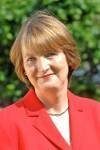
    Below is the text of the speech made by Harriet Harman, the Labour MP for Camberwell and Peckham, in the House of Commons on 15 June 2010.

    May I thank the Prime Minister for his statement? As he said, it is more than 12 years since the then Prime Minister Tony Blair set up the Saville inquiry to establish the truth of what happened on what became known as Bloody Sunday. For the 14 families whose loved ones were killed, for the 13 who were injured, for the soldiers and their families, for all those whose lives would never be the same again, the report has been long-awaited. We all recognise how painful this has been, and the Prime Minister has been clear today. He said that there is no ambiguity, that it was wrong; he has apologised and we join him in his apology.

    I also join the Prime Minister in thanking Lord Saville and all those whose work contributed to the report. The report speaks for itself and it speaks powerfully.

    I remind the House of what Tony Blair said on the day that the House agreed to establish the Saville inquiry. He said that Bloody Sunday was a day we have all wished “had never happened” and that it was “a tragic day” for everyone. I reiterate his tribute to the dignity of the bereaved families, whose campaign was about searching for the truth. He rightly reminded the House of the thousands of lives that have been lost in Northern Ireland. May I restate our sincere admiration for our security forces’ response to terrorism in Northern Ireland? Many lost their lives. Nothing in today’s report can or should diminish their record of service. They have been outstanding.

    The Prime Minister has acknowledged that the Saville inquiry was necessary to establish the truth and to redress the inadequacy of Lord Widgery’s inquiry, which served only to deepen the sense of grievance, added to the pain of the families of those who died and were injured, outraged the community and prolonged the uncertainty hanging over the soldiers. I am grateful to the Prime Minister for reminding the House that the setting up of the Saville inquiry played a necessary part in the peace process. Does the Prime Minister agree ​that, notwithstanding the considerable cost of this inquiry, its value cannot be overestimated in both seeking the truth and facilitating the peace process? Does he believe that Saville has now established the truth?

    How the Government handle the report is of great importance, so I thank the Prime Minister for committing to seek a full day’s parliamentary debate on it. Will he consider allowing for a period of time between the debate in each House, so that what is said in this House may be considered before the debate in the Lords? When will he be in a position to say what, if any, action will be taken in Government as a result of the findings of the Saville report? What will be the decision-making process, and will the process be as transparent as possible?

    The Prime Minister must recognise that some will no doubt raise the possibility of prosecutions. The prosecution process is independent, but has he been asked to consider the question of immunity from prosecution if we are instead to take things forward by a wider process of reconciliation? Is the time now right to move towards a process for reconciliation, building on the work of the Consultative Group on the Past, chaired by Lord Eames and Denis Bradley? Can there now be a comprehensive process of reconciliation to address the legacy issue of the troubles, such as that proposed by my right hon. Friend the Member for St Helens South and Whiston (Mr Woodward) when he was Secretary of State for Northern Ireland? Does the Prime Minister agree that that is what is now necessary?

    The peace process is a great achievement by the people of Northern Ireland as well as by politicians. It is a process built on the value of fairness, equality, truth and justice. This House has played its part, not least in agreeing to the Saville inquiry. The Belfast agreement, the St Andrews agreement and, of course, this year’s Hillsborough castle agreement are all great milestones on the path to a lasting peace. Does the Prime Minister agree that the completion of devolution just a few weeks ago is relatively new and fragile and still requires great care? Our response to Saville must be as measured as it is proportionate. We have sought the truth; now we must have understanding and reconciliation.

    May I conclude by expressing the hope that while people will never forget what happened on that day, this report will help them find a way of living with the past and looking to the future?

  • David Cameron – 2010 Statement on the Saville Inquiry and Bloody Sunday

    David Cameron – 2010 Statement on the Saville Inquiry and Bloody Sunday

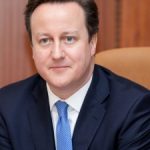
    Below is the text of the statement made by David Cameron, the then Prime Minister, in the House of Commons on 15 June 2010.

    With permission, Mr Speaker, I would like to make a statement. Today, my right hon. Friend the Secretary of State for Northern Ireland is publishing the report of the Saville inquiry—the tribunal set up by the previous Government to investigate the tragic events of 30 January 1972, a day more commonly known as “Bloody Sunday”. We have acted in good faith by publishing the tribunal’s findings as quickly as possible after the general election.

    I am deeply patriotic; I never want to believe anything bad about our country; I never want to call into question the behaviour of our soldiers and our Army, which I believe to be the finest in the world. And I have seen for myself the very difficult and dangerous circumstances in which we ask our soldiers to serve. But the conclusions of this report are absolutely clear: there is no doubt; there is nothing equivocal; there are no ambiguities. What happened on Bloody Sunday was both unjustified and unjustifiable. It was wrong.

    Lord Saville concludes that the soldiers of Support Company who went into the Bogside

    “did so as a result of an order… which should have not been given”

    by their commander. He finds that

    “on balance the first shot in the vicinity of the march was fired by the British Army”

    and that

    “none of the casualties shot by soldiers of Support Company was armed with a firearm”.

    He also finds that

    “there was some firing by republican paramilitaries… but… none of this firing provided any justification for the shooting of civilian casualties”,

    and that

    “in no case was any warning given before soldiers opened fire”.

    Lord Saville also finds that Support Company

    “reacted by losing their self-control… forgetting or ignoring their instructions and training”

    and acted with

    “a serious and widespread loss of fire discipline”.

    He finds that

    “despite the contrary evidence given by the soldiers… none of them fired in response to attacks or threatened attacks by nail or petrol bombers”

    and that many of the soldiers

    “knowingly put forward false accounts in order to seek to justify their firing”.

    What is more, Lord Saville says that some of those killed or injured were clearly fleeing or going to the assistance of others who were dying. The report refers to one person who was shot while

    “crawling… away from the soldiers”

    and mentions another who was shot, in all probability,

    “when he was lying mortally wounded on the ground”.

    And the report refers to a father who was

    “hit and injured by Army gunfire after he had gone to… tend his son”.

    For those looking for statements of innocence, Saville says:​

    “The immediate responsibility for the deaths and injuries on Bloody Sunday lies with those members of Support Company whose unjustifiable firing was the cause of those deaths and injuries”,

    and, crucially, that

    “none of the casualties was posing a threat of causing death or serious injury, or indeed was doing anything else that could on any view justify their shooting”.

    For those people who were looking for the report to use terms like murder and unlawful killing, I remind the House that these judgments are not matters for a tribunal, or for us as politicians, to determine.

    These are shocking conclusions to read and shocking words to have to say, but we do not defend the British Army by defending the indefensible. We do not honour all those who have served with distinction in keeping the peace and upholding the rule of law in Northern Ireland by hiding from the truth. So there is no point in trying to soften, or equivocate about, what is in this report. It is clear from the tribunal’s authoritative conclusions that the events of Bloody Sunday were in no way justified.

    I know that some people wonder whether, nearly 40 years on from an event, a Prime Minister needs to issue an apology. For someone of my generation, Bloody Sunday and the early 1970s are something that we feel we have learnt about rather than lived through. But what happened should never, ever have happened. The families of those who died should not have had to live with the pain and hurt of that day, and with a lifetime of loss. Some members of our armed forces acted wrongly. The Government are ultimately responsible for the conduct of the armed forces, and for that, on behalf of the Government—indeed, on behalf of our country—I am deeply sorry.

    Just as the report is clear that the actions of that day were unjustifiable, so too it is clear in some of its other findings. Those looking for premeditation, those looking for a plan, those even looking for a conspiracy involving senior politicians or senior members of the armed forces, will not find it in this report. Indeed, Lord Saville finds no evidence that the events of Bloody Sunday were premeditated. He concludes that the United Kingdom and Northern Ireland Governments, and the Army, neither tolerated nor encouraged

    “the use of unjustified lethal force”.

    He makes no suggestion of a Government cover-up, and he credits the United Kingdom Government with working towards a peaceful political settlement in Northern Ireland.

    The report also specifically deals with the actions of key individuals in the Army, in politics and beyond, including Major-General Ford, Brigadier MacLellan and Lieutenant-Colonel Wilford. In each case, the tribunal’s findings are clear. The report does the same for Martin McGuinness. It specifically finds that he was present and probably armed with a “sub-machine-gun”, but concludes

    “we are sure that he did not engage in any activity that provided any of the soldiers with any justification for opening fire”.

    While in no way justifying the events of 30 January 1972, we should acknowledge the background to the events of Bloody Sunday. Since 1969, the security situation in Northern Ireland had been declining significantly. Three days before Bloody Sunday, two officers in the ​Royal Ulster Constabulary—one a Catholic—were shot by the IRA in Londonderry, the first police officers killed in the city during the troubles. A third of the city of Derry had become a no-go area for the RUC and the Army, and in the end 1972 was to prove Northern Ireland’s bloodiest year by far, with nearly 500 people killed.

    Let us also remember that Bloody Sunday is not the defining story of the service that the British Army gave in Northern Ireland from 1969 to 2007. That was known as Operation Banner, the longest continuous operation in British military history, which spanned 38 years and in which over 250,000 people served. Our armed forces displayed enormous courage and professionalism in upholding democracy and the rule of law in Northern Ireland. Acting in support of the police, they played a major part in setting the conditions that have made peaceful politics possible, and over 1,000 members of the security forces lost their lives to that cause. Without their work, the peace process would not have happened. Of course some mistakes were undoubtedly made, but lessons were also learnt. Once again, I put on record the immense debt of gratitude that we all owe those who served in Northern Ireland.

    I thank the tribunal for its work, and thank all those who displayed great courage in giving evidence. I also wish to acknowledge the grief of the families of those killed. They have pursued their long campaign over 38 years with great patience. Nothing can bring back those who were killed, but I hope that—as one relative has put it—the truth coming out can help to set people free.

    John Major said that he was open to a new inquiry. Tony Blair then set it up. That was accepted by the then Leader of the Opposition. Of course, none of us anticipated that the Saville inquiry would take 12 years or cost almost £200 million. Our views on that are well documented. It is right to pursue the truth with vigour and thoroughness, but let me reassure the House that there will be no more open-ended and costly inquiries into the past.

    However, today is not about the controversies surrounding the process. It is about the substance, about what this report tells us. Everyone should have the chance to examine its complete findings, and that is why it is being published in full. Running to more than 5,000 pages, it is being published in 10 volumes. Naturally, it will take all of us some time to digest the report’s full findings and understand all the implications. The House will have an opportunity for a full day’s debate this autumn, and in the meantime the Secretaries of State for Northern Ireland and for Defence will report back to me on all the issues that arise from it.

    This report and the inquiry itself demonstrate how a state should hold itself to account and how we should be determined at all times—no matter how difficult—to judge ourselves against the highest standards. Openness and frankness about the past, however painful, do not make us weaker; they make us stronger. That is one of the things that differentiates us from the terrorists. We should never forget that over 3,500 people, from every community, lost their lives in Northern Ireland, the overwhelming majority killed by terrorists. There were many terrible atrocities.

    Politically motivated violence was never justified, whichever side it came from, and it ​can never be justified by those criminal gangs that today want to drag Northern Ireland back to its bitter and bloody past. No Government I lead will ever put those who fight to defend democracy on an equal footing with those who continue to seek to destroy it, but nor will we hide from the truth that confronts us today. In the words of Lord Saville:

    “What happened on Bloody Sunday strengthened the Provisional IRA, increased nationalist resentment and hostility towards the Army and exacerbated the violent conflict of the years that followed. Bloody Sunday was a tragedy for the bereaved and the wounded, and a catastrophe for the people of Northern Ireland.”

    Those are words we cannot and must not ignore, but I hope what this report can do is mark the moment when we come together, in this House and in the communities we represent; come together to acknowledge our shared history, even where it divides us; and come together to close this painful chapter on Northern Ireland’s troubled past. That is not to say that we must ever forget or dismiss that past, but we must also move on. Northern Ireland has been transformed over the past 20 years and all of us in Westminster and Stormont must continue that work of change, coming together with all the people of Northern Ireland, to build a stable, peaceful, prosperous and shared future. It is with that determination that I commend this statement to the House.

  • Theresa May – 2010 Speech to Association of Chief Police Officers

    Below is the text of the speech made by Theresa May, the then Home Secretary, to the Association of Chief Police Officers and Association of Police Authorities National Conference, in Manchester on 29 June 2010.

    Not many people understand the weight of responsibility that rests upon the shoulders of a police chief constable. Like chief executives of large private sector companies, you manage multi-billion pound budgets, lead thousands of men and women, and devise strategies to succeed.

    Except, being a chief constable isn’t like being a chief executive at all.

    On Wednesday 2 June, Chief Constable Craig Mackey of Cumbria Constabulary went to work and found himself leading an armed police response to Britain’s worst mass shooting since 1996. Just days earlier, his officers had dealt with the tragic school coach crash near Keswick. And at the end of last year, it was Craig Mackey’s men and women who came to the rescue when Cumbria was devastated by floods. Being a chief constable is a job like no other – and I want to start by paying tribute to Craig and to all of you for the work you do.

    And let us not forget the work of the members of police authorities up and down the country. We might have our differences about the future of accountability in policing – and I’ll come to that later – but we all recognise the importance of listening to local communities. And I salute you for the dedication and sense of duty with which you serve your communities.

    Budgets

    I stand before you today as a new Home Secretary in a new government and I am about to tell you something that no Home Secretary has ever said before. I take no pleasure in that fact, because what I have to say is tough.

    Our country has the worst budget deficit of any major economy. The public finances are in the biggest mess that any of us have seen in our lifetimes. And as you saw in the budget, that means the Coalition Government is going to have to take tough action.

    Like almost all of my colleagues in the cabinet, I have to cut spending in my department. The spending review has not begun yet, so we don’t know the exact figures, but I must be clear. We are not talking about a spending freeze, or a reduction of one or two per cent. The cuts will be big, they will be tough to achieve, and cuts will fall on the police as they will on other important public services.

    In the Home Office, I will be ruthless in cutting out waste, streamlining structures and improving efficiency. But these practical measures can only go so far, and together we have to make sure that – despite the cuts – policing must remain visible and available to the public.

    Value for money

    So we are going to have to make sure that every penny of your budgets is spent in the most useful possible way. As I told the Police Federation conference last month, we will honour the existing pay deal for police officers negotiated with my predecessors. And we will stand by the deal for other police staff too.

    But we have to be realistic about what we can afford, so we will also undertake a review of police terms and conditions. Let me be crystal clear from the beginning: police officers and staff need to be ready, along with the rest of the public sector, to make sacrifices and accept pay restraint. It cannot be right, for example, that police overtime has become institutionalised. We may not win popularity contests for asking these difficult questions, but it is time for them to be asked.

    I want to work with you, the leaders of our police forces and members of police authorities, to make sure we get value for money wherever we can. I’ve said before that I don’t want to run the police, and I don’t – but there is no need to do everything 43 different ways.

    So in tandem with our reforms to make the police more accountable to their local communities, I am considering what matters should be delivered for the service nationally. For example, does it really make sense to buy in police cars, uniforms and IT systems in 43 different ways? Where central procurement is consistent with our desire to devolve responsibility and accountability downwards, and it saves money for the taxpayer, we will encourage it and facilitate it.

    I know that some of you have argued for mergers between police forces. I understand the operational advantages of large forces, particularly in relation to the most serious forms of criminal activity. But let’s get one thing straight: this government believes strongly in building strong local communities and giving the people who live in these communities a major role in the planning and delivery of the public services they use. In keeping with this belief in local democratic accountability, police force mergers will not be allowed to happen unless they are voluntary and unless they have the support of local communities.

    But of course, there is a lot that police forces can do in terms of sharing back office functions and procurement. And, to that end, I welcome ACPO’s offer to produce a national plan for the way the service does business. I’m eager to hear over the coming weeks from ACPO and the APA what progress has been made in putting together a project to meet the financial challenges of the future.

    I want that plan to look at what other matters are best reserved and what essential functions – such as criminal justice units, call handling and training – can be delivered more cheaply and effectively with other forces or partners. And I want that plan to identify where collaboration can strengthen the police response to terrorism, organised criminality and threats to the public that cut across force boundaries.

    We need to understand too the potential benefits of outsourcing, and not just in areas like human resources and finance. Some forces have already shown substantial savings in things like custody management.

    The ACPO plan will need to look critically at the size of these functions and the number of officers deployed. I am determined that frontline availability should increase even as budgets contract. I acknowledge that increasing the visibility and productivity of officers, PCSOs and other staff is a major challenge. But I firmly believe that it is a challenge that chief constables can – and must – meet.

    The matter of deployment and availability will be examined by HMIC in their value for money inspections later this year. And we will make sure that the review of remuneration and conditions of service recommends ways we can give chief constables more discretion over how to use their workforce flexibly and cost-effectively.

    Liberating the police to get officers onto the beat

    Because we need to think creatively about how to get officers from behind desks and onto the streets. And I’m pleased to say that we have, in our short time in government, already made some progress.

    We have long promised to scrap the ‘stop and account’ form in its entirety and reduce the burden of the stop and search procedures. I can announce today that these important commitments will be delivered by the end of the year.

    In my speech to the Police Federation, I promised to return charging decisions to the police for a broader range of minor offences. And I can announce today that there will be a phased rollout of the new arrangements from November.

    Essex, London, Thames Valley, Staffordshire and West Yorkshire have been testing these new charging arrangements. When they are rolled out across the whole country, up to 80,000 cases a year will be returned to the discretion of police officers.

    And I can also announce today that I am also scrapping the confidence target and the policing pledge with immediate effect.

    I know that some officers like the policing pledge, and some, I’m sure, like the comfort of knowing they’ve ticked boxes. But targets don’t fight crime; targets hinder the fight against crime. In scrapping the confidence target and the policing pledge, I couldn’t be any clearer about your mission: it isn’t a thirty-point plan; it is to cut crime. No more, and no less.

    I know that the Home Office hasn’t been the only guilty partner in creating all this bureaucracy. The criminal justice system can waste officers’ time, and I know that Nick Herbert, who is not only a minister in the Home Office but also the Ministry of Justice, is keen to hear your ideas about how to make it more efficient. Nick is going to be here all week, and is anxious to hear your views on this and any other subject that is bothering you. So please do make sure you speak to him.

    But we have to face the fact that some of this bureaucracy also stems from the forces themselves. When times are tight, when we are removing red tape imposed by the Home Office, it simply cannot be right that this bureaucracy is reinstated at a local level. Nor can it be right for remaining paperwork to be goldplated by forces. So I call on all of you, chief constables and police authority members alike, to take the same, radical approach to cutting bureaucracy as we are taking in Whitehall.

    The announcements I have made today are by no means exhaustive, and I want to hear from you about what else we can do to help you do your jobs more efficiently and effectively. Tell me precisely where bureaucracy is making your life harder for no benefit, and I will do whatever I can to change it.

    But the truth is that if we are going to make the police more visible, more available, and more accountable to the public you serve, then we have to go beyond these changes. We have to look again at the driver of all this bureaucracy, and that is the top-down model of accountability imposed on police by government.

    Swapping bureaucratic accountability for democratic accountability
    That is government’s way of doing things. Ask a bureaucrat to do something and he’ll create bureaucracy. It’s not really a surprise, is it? But we can’t sweep away the targets, initiatives and paperwork and leave nothing in their place. The police, like every public service, have to remain accountable. But they do not have to be accountable to bureaucrats in Whitehall – they should be accountable to the people they serve in their communities. So we will swap the top-down, bureaucratic accountability for local, democratic accountability, as we promised to do in the Coalition Agreement, and indeed as was promised in the manifestos of both Coalition partners.

    It means a directly-elected individual at force level, setting the force budget, agreeing the local strategic plan, playing a role in wider questions of community safety and appointing – and if necessary removing – the local chief constable.

    It means publishing accurate local crime data, so that maps can be produced showing exactly what crimes have been committed where.

    It means regular beat meetings for local communities to hold their neighbourhood policing teams to account. And I give you this assurance: none of these changes will compromise the foundation stone of British policing, your operational independence.

    That is the deal I am offering to you. I haven’t had time today to do more than outline some of its main principles. In the next few months, Nick Herbert and I will be in listening mode – and I urge you to use this opportunity to tell us how you think that these general principles should best be implemented.

    Later this summer, we will be bringing forward detailed proposals and introducing the necessary legislation to be implemented in this session of Parliament. Some of you will no doubt argue that this timetable is too ambitious. Some have suggested that what we should do is set up a Royal Commission to think about these matters for a couple of years.

    Frankly, these issues are too important to be put on the back burner. In this age of spending cuts and policing on a budget, our programme of police reform becomes more urgent, not less. So we will get on with the job.

    Our vision is a bold one, with a totally redrawn national policing landscape: more collaboration between forces, a review into the role and remit of the NPIA, a border police force as part of a refocused Serious and Organised Crime Agency, and, of course, directly-elected individuals to deliver local accountability. And I want you, the senior police officers, to think sensibly about a clearer and more transparent leadership role for ACPO in this landscape.

    Conclusions

    Times might be tough, and money might be tight, but there is no reason to check our ambition.

    What I have outlined today is a real plan to cut crime and anti-social behaviour. It’s not – as we’ve been used to – a bureaucratic checklist we expect police officers to follow. It’s a plan that gives responsibility to the police, accountability to the public, and the clearest sense of direction possible: your job is nothing more, and nothing less, than to cut crime. And I will do everything I can to help you do so.

  • Theresa May – 2010 Statement on Police Reform

    Below is the text of the statement made by Theresa May, the then Home Secretary, on 29 June 2010.

    I am today setting out some further details of the government’s approach to police reform. Policing governance has become distorted and over-centralised in recent years and the government is committed to ensuring that accountability and transparency are firmly at the heart of policing.

    The first step for reform must be the return of proper operational responsibility to chief constables and their teams and that for this to work effectively there needs to be a redesign of the current performance landscape. The police service needs more freedom from central control – fewer centrally driven targets and less intervention and interference from government. That is why I am announcing that we are abolishing the centrally imposed target on police forces to improve public confidence and we will scrap the Policing Pledge. Police forces need to be
    accountable instead to their communities.

    To achieve greater accountability, the public need better information about their police and about local crime. This is why we will make sure that crime data is published at a level that allows the public to see what is happening on their streets, enabling the public to hold the police and other local agencies to account for how they are dealing with problems in their area. We will also require police forces to hold regular ‘beat meetings’ to provide residents with the opportunity to put forward their concerns and hold the police to account.

    In the future, the establishment of a directly elected individual at force level, setting the force budget, agreeing the local strategic plan, playing a role in wider questions of community safety and appointing – and if necessary removing – the local chief constable, will strengthen local accountability for policing. We will publish further details on our reform of policing later in the summer, which will assist our discussions with the public and our partners, and inform the government’s preparations for the Police Reform and Social Responsibility Bill in the autumn.

  • Theresa May – 2010 Statement on English Language Requirement

    Below is the text of the speech made by Theresa May, the then Home Secretary, in the House of Commons on 9 June 2010.

    I wish to inform the House that I am today announcing the introduction of a new English language requirement for migrants applying to come to or stay in the UK as a spouse. Changes to the immigration rules will be laid before Parliament to bring this policy into effect in the autumn.

    Non-European migrants joining a British citizen or non-European national settled in the UK will have to demonstrate a basic command of English in order to be considered for a visa. The rules will apply to spouses, civil partners, unmarried partners, same sex partners, fiances and proposed civil partners, and will be compulsory for people applying from within the UK, as well as visa applicants overseas.

    The Government believe that speaking English should be a pre-requisite for those wishing to settle here. This new English requirement for spouses will help promote the economic well-being of the UK, for example by encouraging integration and protecting public services. It will assist in removing cultural barriers, broaden opportunities for migrants and help to ensure that they are equipped to play a full part in British life.

    This is only the first step. We are reviewing English language requirements across the immigration system with a view to tightening the rules further in the future. We will inform the House of our conclusions in due course.

    Today’s announcement is one of a range of new measures the Government will be taking to ensure that immigration is properly controlled for the benefit of the UK. These include an annual limit on non-EEA migrants coming to the UK to live and work and measures to minimise abuse of the immigration system, for example via student routes.

  • Liam Fox – 2010 Speech on General Fonseka

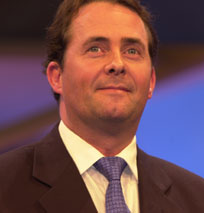
    Below is the text of the speech made by Liam Fox, the then Shadow Secretary of State for Defence, on 17 February 2010.

    After years of war, there is much talk in this country about peace. This is a welcome change. But peace is not simply the absence of war.

    A genuine peace requires other, positive attributes. It requires freedom from fear-the fear of hunger, the fear of sickness, the fear of persecution.

    It requires freedom of expression including a free press and broadcast media. It requires freedom to dissent within the law. And it is a law that must be applied without regard to race, gender or religion, accepting fundamental human rights. It is a law that must apply equally to the governed and the governing.

    Sri Lanka is a fortunate country. It has seen decades of violence and terror under the LTTE brought to an end. It has a constitution and a judicial system that should be the foundations of a peaceful, tolerant and progressive society.

    This is a country with huge natural wealth and economic potential. Yet too many Sri Lankans have been denied access to this potential. I have visited camps where children from the war zone have never been to school. I saw other children brutalised by a life as child soldiers, totally unaware of the existence of a different lifestyle that so many others take for granted. For those returning home from the camps there must be a new start with access to quality social infrastructure-good housing, education and healthcare. All Sri Lankans, of whatever ethnic group, must share equally in the future of this country or the country will never reach its full potential.

    Of course, such infrastructure requires money. That is why I have brought plans with me for the creation of a new fund which can help provide basic social infrastructure for the reconstruction that this country will need if the end of the violence is to develop into a sustainable peace. I am extremely grateful for the support I have received across the political spectrum and from religious leaders. We will be signing a memorandum of understanding for the workings and next steps in establishing this fund and will set out details in the near future. I hope this initiative we will give the people of Sri Lanka, and particularly the Tamil people in the North and East, the tools they need to ensure that opportunity and prosperity are the inheritance of all the people of this island.

    There is however a political problem which needs to be addressed if the outside world is to have confidence that Sri Lanka is a stable place in which to invest. The President won a huge victory and deserves congratulations. But the situation surrounding General Fonseka threatens to damage Sri Lanka’s international reputation . At a crucial time for this country’s future it cannot afford to have the prosecution of such a senior military officer portrayed as an act of revenge. It is not for any outside nation or body to determine who should or should not be tried in this country but how such trials are conducted will play a huge role in how this country is perceived abroad. The law not only has to be applied fairly but has to be seen to be applied fairly. It is my strong view that the General should be tried in a civil court where the charges against him can be tested with all the rigour that the law can muster and where transparency will enable both the domestic population and the international community to have confidence in the judicial process.

  • Liam Fox – 2010 Speech on Defence Spending

    Below is the text of the speech made by Liam Fox, the then Shadow Secretary of State for Defence, on 3 February 2010.

    I would like to thank the Secretary of State for his statement and for prior sight of it, although we do seem to have been the last to see the Green Paper since every journalist I have met this week has been telling me about its contents.

    I think the Secretary of State deserves genuine praise for his attempts to find a cross party consensus. When the history of this dreadful government is written, his will be one of the more honourable mentions. I would also like to thank my Honourable Friend the Member for Mid-Sussex for the effort he has put into producing a balanced and open-minded Green Paper and I know that his experience in the MoD was appreciated in the process.

    This Green Paper indicates that the MoD is coming out of denial but the Prime Minister is not. We are used to the Prime Minister briefing against his perceived enemies in the corridors of Westminster but not normally undermining a Secretary of State on the front page of The Times. How far away from the number 10 briefing this week is paragraph 9 on page 9 of the Green Paper which says ‘we cannot proceed with all the programmes we currently aspire to. We will need to make tough decisions.

    Of course this week we have seen the truth of the Prime Minister’s approach to defence. The former Defence Secretary, the Right Honourable Member for Ashfield, said that there was ‘quite a strong feeling that the defence review was not fully funded.’

    The former Chief of the Defence Staff, Lord Walker, told us that the defence chiefs threatened to resign as a result of the savage cuts which the then Chancellor tried to apply to defence in the middle of two wars.

    And today the former permanent secretary Sir Kevin Tebbit talked about having to operate a ‘permanent crisis budget.’

    The Defence Secretary introduced defence cut backs in December but the Prime Minister has talked about Defence increases this week.

    In his statement the Secretary of State said ‘there has been a great deal of interest and speculation about whether any major capabilities will be confirmed in the Green Paper’.

    But we all know why: it is because No 10 have been briefing all week that any project that has job implications for the Prime Minister’s constituency will be spared. That is taking a core strategy way too far.

    There are some things on which we are clearly agreed.

    We know from bitter historical experience the difficulty of predicting future conflict- either its nature or its location. We cannot base our future security on the assumption that future wars will be like the current ones. That is why we must maintain generic capability, able to adapt to any changing threats.

    There is no doubt that in Afghanistan we have been too slow to give the army, in particular, the agility and flexibility it needs to maximise its effectiveness.

    But we must also remember that we are a maritime nation dependent on the sea lanes for 92% of our trade. A time when the threat of disruption is increasing is no time for Britain to become sea blind.

    We also agree that France and the United States are likely to be our main strategic partners. For us there are two tests: do they invest in defence? And do they fight? Sadly too few European allies pass both these tests.

    The Secretary of State talked about a 10% increase in the defence budget in real terms. He also talks about the higher level of defence inflation. Can he tell us how much of the increase in the defence budget has gone into pay, pensions and allowances? And what proportion of that increase has been made available for equipment and other programmes over the period he outlined?

    Can he confirm that the department’s budget for next year will be 36.89 billion pounds as previously set out? He says ‘not a penny will be cut for next year’s budget.’ What cuts does the Government envisage after that?

    Unlike the Opposition and the House of Commons, he has access to all the costs of the contracts and penalty clauses for the major programmes. Why will the Government not give honest answers about the implications of the cost overruns in the years ahead?

    We know that there has been serial mismanagement at the MoD, with the equipment programme somewhere between 6 and 35 billion pounds above what can be afforded. How will it be reconciled?

    After twelve years on indecision, we finally get a Green Paper weeks before an election. And despite all the good words in this Green Paper today, the future defence budget will have to be conducted against the backdrop of Government debt of 799 billion pounds. That is the equivalent of borrowing 1.1 million pounds every day since the birth of Christ.

    That our nation’s security should be compromised by Labour’s historic economic incompetence is truly a national tragedy.