Tag: 2009

  • Harriet Harman – 2009 Speech to the Welsh Labour Party Conference

    harrietharman

    I’m delighted to be here in Wales with so many friends and wonderful Labour Party people.

    And to join you on this important day of debate and discussion and motivation at an important time

    Time when because of the global recession, people are afraid for their future

    Time when Labour in government and local government has stepped in to take bold action

    Time when divide between Labour and the Tories has never been starker and clearer

    Time when we face – on June 4th – the European elections. Which are important elections in their own right but are also the curtain raiser for the General Election.

    We will face these big challenges with unity and with determination because of our values and because of our principles.

    And every part of Labour’s team has a major part to play in facing these big challenges

    Our whole team – like the whole Wales Labour team that is here today

    Party activists – like Pat Brunker

    Our Members of the Welsh Assembly – under the brilliant leadership of Rhodri. Rhodri, everyone in Wales knows you and more importantly feels that you know them. You are their voice

    Our MPs and Ministers – and Paul Murphy is a clear and constant advocate for Wales not just in Cabinet but particularly on the National Economic Council. Just as Chris Ruane and our Welsh MPs are in Parliament

    Our local councillors. You have had to struggle and I know that you have worked hard to move on from the set-back last May.

    Our trade unionists – and I want to thank Andy Richards who co-ordinates our trade union team in Wales. The Trade unions are a vital part of Labour’s team and have always stood with us through thick and thin.

    A particularly important part of our team as we go forward to June 4th is our MEPs, Eluned and Glenys and our MEP candidates – and I want to pay tribute to Glenys Kinnock who has blazed a trail, for women, for Wales, for international development, for Labour, who is a dear friend and who is leaving Europe but will continue to make a huge contribution.

    It is the whole party – supported by Chris Roberts and our hard-working party staff – that will not only keep us strong in these difficult times but shape our future.

    Charting the way forward should never and never could be the preserve of government.

    The party is the engine of progress. And the party in Wales before Neil Kinnock and since have played a major part.

    I know that as Labour in Wales, you are proud of our achievements in government, your achievements in Wales in the Assembly and in local government. But I hope you will be bold and demanding and insistent for the future.

    I know that you will support the party but that you will challenge it too.

    When I first joined the party in my twenties I joined because I knew and supported what it stood for – particularly on equality and social justice. But I didn’t think it walked the talk. It needed to change fundamentally – particularly to listen to, and include women alongside men. And working with other young people, young women in the party and in the Trade Union movement, we worked together and changed the party for good.

    We must be sure that the next generation is the generation who will be the agents of change for the future and that is what is important about today and about all your work.

    This conference comes at a time of unprecedented change. The global banking system is in crisis and its ripples reach all around the world and to Wales.

    We believe that when the market fails and people are threatened – that is the time for the public sector, for the government, to act. We believe that – in a recession -when private sector construction freezes – that is the time for public sector construction projects to be brought forward.

    We believe that when people’s jobs are threatened the government must intervene to get the banks lending, to give help to threatened industries, to protect those who lose their job from losing their home as well, and to help them get retrained and back into work as soon as possible.

    We believe that we need to invest so that when the economy grows we are set to take advantage of it with a green, digital, highly skilled economy.

    And we believe that to do this we have to allow public borrowing to rise and that public spending now will help ensure that the recession is as short and shallow as possible.

    We believe that fairness and equality is necessary and that when it comes to paying back the public debt those who have most should contribute most – so in his Budget this week, Alasdair Darling announced a new top rate of tax of 50% on income over £150,000 We believe that much of the growth in the future will be generated in the emerging markets and the developing world. On humanitarian grounds we need to protect them – with our Aid budget – from the effect of the recession – but for the sake of the world economy we need to help them grow for the future.

    We believe that we need to act here at home – but also to act together internationally. This is a global economic crisis which – particularly on regulation of the banks and financial services – requires global as well as national action. This would be the very worst time to turn inwards, resort to narrow nationalism and put up trade barriers. That’s why Gordon’s leadership of the G20 is so vital.

    The Tories would do the opposite

    All this is the polar opposite to the Tories.

    They would cut public investment They would turn inwards – against Europe and the rest of the world They would cut help to the unemployed They would cut taxes for the richest – with inheritance tax cuts of £200,000 each for the richest 3,000 people They would have let the recession take its course and let the suffering of the unemployed be a price worth paying. Their approach would have been both disastrous and heartless.

    And I feel that we can all be proud of Gordon’s leadership on the economy and his championing of fairness and equality. In such contrast the inconsistency and tactical manouevering of Cameron’s Tories.

    And as for Cameron’s recent visit to Wales – what he calls “the Principality” – I understand that he left pledging to cut the number of Welsh MPs by 10 and boasted that the Tories now had a Tory councillor in the Rhondda. Chris Bryant – my brilliant deputy as leader of the House of Commons – tells me that the people of the Rhondda have much more sense than that and that Rhondda is a Tory-free zone.

    Working together, Labour in Wales, in government, in the European parliament, we have made progress.

    We can see that in every neighbourhood, in the schools, hospitals, in people’s living standards. We should be proud of that.

    We have a national minimum wage

    In my constituency there are now 3 times more young people going into further and higher education than there were in 1997.

    Disabled people have legal rights and gay and lesbian partnerships can now be recognised in law.

    Maternity pay and leave is doubled and the number of childcare places have doubled.

    But there are people saying – now is the time to draw back on our quest for fairness, opportunity and equality. At least “put it on the back burner”.

    But I think that when times are hard, fairness is even more important.

    And I think when we look for hope for the future – it is a fair society with opportunities for all, that people want.

    So we did go ahead – earlier this month – with rights for all parents of children up to 16 to request flexible work to help them balance their work with their very important family responsibilities.

    And on Monday we will introduce our new Equality Bill.

    The Bill will

    Take a step forward on equal pay. Women are half the workforce yet still paid less than men. In the past it’s been left to the woman to complain. But its not about her – its about pay discrimination. It should be left for her to complain it should be for the employer to explain if pay is unequal and that is why we have included in the Bill mandatory pay reporting.

    The Bill makes public procurement an important lever for equality. We will use the power of public spending as the public sector contracts with the private sector to widen opportunities and promote equality.

    And the Bill also takes a new, bold step, to tackle the great inequality which is based on class, on family background. It sets a new duty on all public authorities when they are making strategic decisions they must ask themselves – “how can we do this so that we narrow the gap between rich and poor?” and I am proud that the Welsh administration has chosed to take powers under this part of the Bill to drive that duty through strategic public authorities in Wales.

    This Bill is the work of all those who’ve struggled for equality – women like Julie Morgan and like my committed parliamentary aide, Nia Griffith.

    Our argument is that fairness and equality is important not just for the individual but also for the economy and society.

    Equality and fairness is necessary for a meritocracy. It is backward looking societies which are characterised by rigid hierarchies, women knowing their place and oppression of gays and lesbians.

    When we see unfairness and inequality – we take action.

    So this is not turning the clock back – it is looking to the future.

    Our Labour team faces a big test on June 4th when everyone will have a vote in the elections for the European parliament. We need every vote out. Every vote will count. This is about electing a key part of Labour’s team – our Euro MPs.

    This is about the importance of European funds helping the Welsh Economy. Its about the Welsh jobs that depend on our trade in Europe. It’s about the environment and about cross-border security.

    And it is only by working together in Government, in local government, in the Assembly and in Europe that we can deliver for people.

    Of course we need to be on the doorstep, on the phone. That’s the way to show that we are on people’s side

    Thank you all for your work

    I hope that you will continue to be energetic, idealistic and ambitious and confident.

    I, for my part, promise that I will

    Work side by side with you here in Wales.

    Continue my unswerving support for Gordon Brown and

    Leave no stone unturned in campaigning to win the next General Election

    And I look forward to us working together in the demanding and important time ahead.

  • Iain Gray – 2009 Speech to Labour Party Conference

    Below is the text of the speech made by Iain Gray, the then Leader of the Labour Party in the Scottish Parliament, to Labour Party conference on 28th September 2009.

    The Tories have not changed.

    David Cameron has come a long way.  He isn’t hugging hoodies and huskies any more. He is embracing Europe’s extremists.

    In Scotland we are not surprised at the company Tories keep.  We have watched them nuzzling up to the nationalist government from day one.

    In Scotland, we do not have to imagine a leader who will say anything, promise everything and be whatever you want to get into office.  We already have Alex Salmond.

    A year ago he didn’t mind Thatcher’s economics. But now he’s a Keynsian in the crisis.

    A climate change warrior by day, a gas guzzler by night; sending his car round the corner for a curry.

    He really did turn up for the opening of a new shortbread tin. And he really did stand up the chief executive of Diageo with 900 jobs at stake. He had an important raffle to draw on TV that day.

    While Scots are doing everything they can to get through the recession, what is Alex Salmond doing?

    He’s in his Bute house Brigadoon. Picking furniture for imaginary embassies round the world. And choosing curtains for his office in the united nations. Planning tv schedules for SBC – that’s the Salmond Broadcasting Corporation.

    No mandate.  No majority.  And no shame.

    The SNP are not a government.  They are a campaign. The day may well come when the people of Scotland want a referendum to settle their constitutional future once and for all. But not now, in the midst of a recession. And not on a question rigged by the SNP.

    In 2007, in a tight election the SNP won votes by cynically making promises they had no intention of keeping.

    Parents trusted them to cut class sizes.  They haven’t.

    Students trusted them to pay off their student loans. They didn’t.

    First time buyers trusted them to help with their deposit. They let them down.


    With twice the resources Donald Dewar ever had, the SNP have built fewer houses, fewer schools, and fewer hospitals than Labour ever did.


    Labour in power had a vision of a modern, prosperous, fair Scotland.  We started building the infrastructure to connect Scotland to the world.  We began to heal the Tory legacy in places like Ravenscraig.  We expanded apprenticeships and student places in our universities.  Funded the pipeline from research to jobs, in photonics and bioscience and renewable energy.  Trained more teachers than ever before and guaranteed them jobs.


    In just two years the SNP have cancelled the rail links to Edinburgh and Glasgow airports.  They have slashed the enterprise budgets which supported innovation and regeneration.  Halted the expansion of higher education, and thrown 1000 teachers on the scrapheap.

    Alex Salmond is not taking my country forward he is dragging it back.

    That’s what happens when Labour loses power.

    My Scotland would not be a country where two year-old Brandon Muir dies at the hands of his mother’s boyfriend and the First Minister says “everyone did all they could.”  My Scotland would be a country where we would not give up on the 20,000 children living as Brandon Muir lived.

    My Scotland would not be a place where the father of a young man stabbed to death comes to his Parliament to be told by the First Minister that he’s going to abolish jail sentences for hundreds of knife criminals. My Scotland would be a country where if you carried a knife, you would go to jail.

    Alex Salmond is not lifting my country up, he is dragging it down.

    That’s what happens when Labour loses power.

    The next election is a choice, between a Labour government or a Tory government. Alex salmond wants a Tory government. His senior civil servants are already planning for it.

    The SNP believe that the unemployment, the social division, the fractured lives that the Tories would bring are all a price worth paying for their campaign for separation.

    Alex Salmond refused to debate with Jim Murphy – because, he said, he debates with me, every Thursday.

    What’s so special about Thursdays Alex?  How about St Andrews day? Clear your diary. Debate my vision of Scotland against yours. Tell us which side you are on.  I dare you.

    In the Scottish Parliament from Opposition, we delivered 8000 apprenticeships, stopped the unfair, unworkable Local Income Tax, and forced the strongest climate change legislation in the world on the SNP.

    But in Opposition there is so much more we cannot do.

    That is what happens when Labour loses power.

    We must fight, fight and fight again for the future we want to see.

    Last year conference, I said that Labour MSPs would stand shoulder to shoulder with MP colleagues, and with our Prime Minister in the Glenrothes by election and we would elect Lindsay Roy the new Labour MP.

    We did.

    And together we can do the same in Glasgow North East and make Willie Bain a Labour MP. And then we will make Gordon Brown Prime Minister again.

    Together we will defeat those whose sole creed is self interest, whose sole purpose is division whose sole principle is expediency. Whether they are Tories, or nationalists.

  • Tessa Jowell – 2009 Speech to Labour Party Conference

    Below is the text of the speech made by Tessa Jowell, the then Minister for the Olympics, to the 2009 Labour Party conference on 28th September 2009.

    Conference, five years ago, I came to tell you about the progress of our bid to host the 2012 Olympic Games.

    I told you then that we were going all out to win, that big prizes are never won by timidity and playing safe.

    Britain went all out to win, and we won the big prize. To host the Olympics in London 2012.

    In just over 1,000 days, the next big prize is up for grabs.

    The eyes of four billion people will turn to the Olympic Stadium in East London for the opening ceremony:

    A chance to show that Britain delivers.

    A chance to show the extent of our ambition.

    A chance to showcase Britain to the world.

    Let no-one be under any illusion, hosting the Olympics is a huge challenge:

    The largest peacetime logistical operation in our history,

    26 world championships in 60 days.

    We’re a little bit ahead of time and on budget.

    With just under 3 years to go and over 40% of the build complete, there is no longer any doubt that we will deliver the Olympic Games and Paralympic Games we promised.

    But hosting the Games was always about much more than 60 days of world class sport.

    When we decided to back the bid in 2003, we had two major ambitions:

    To accelerate the regeneration of East London by 30 years in 5 years

    And transform a generation of young people through sport, including through International Inspiration, in developing countries around the world.

    We are making huge strides forward:

    With Europe’s biggest regeneration project, and in partnership with outstanding local leadership, we’re transforming 4 of the 10 most deprived boroughs in the country.

    We are creating a major international centre for the industries that will drive our economic recovery: sport, digital, tourism, retail and sustainable living.

    We’re fulfilling our ambitions for young people, too.

    Our groundbreaking school sports programme has allowed us to get 90% of children doing 2 hours a week of sport in school.

    And now we are going further.

    By 2012, we will achieve 5 hours each week for the under-16s, while the free swimming programme launched in April has already delivered 4.5 million more swimming sessions.

    In tough economic times, we stretched our ambitions so that London 2012 delivers a shot in the arm to the UK economy, creating jobs and work for businesses right across the country.

    By 2012, 30,000 people will have worked on the Olympic Park.

    But these are not just London’s Games, they belong to the whole of Britain.

    And all of Britain is playing its part:

    Steel for the Olympic Stadium from Bolton;

    The Basketball Arena, the largest temporary structure ever built, constructed by a firm from Glasgow;

    And the steel for the Aquatics centre, the iconic building that will be the symbol of London 2012, supplied from Neath.

    1,000 companies around the country – two-thirds of them small and medium-sized businesses – have won direct contracts to help build the Olympic Park and Village, with hundreds more further down the supply chain.

    So when in three years time, the curtain goes up on opening ceremony for the Olympic Games, the greatest show on earth, the world will witness a Britain that succeeded in its ambitions:

    – That delivered the Games we promised

    – That brought regeneration to East London

    – That transformed a generation of young people through sport.

    For the athletes arriving from around the world, and the fans who come to cheer them on, the opportunity to discover a Britain that is open to the world, a Britain of creativity and talent, a Britain of diversity and tolerance.

    For all of us at home, the opportunity to witness our Olympic heroes and heroines in action, clocking up the medals. Our goals: 4th in the Olympics medal table, and second in the Paralympics’.

    I, though, have the privilege to see Olympic heroism all the time as I travel round the country.

    I saw it when, along with the Prime Minister, I met young apprentices helping to construct the Olympic Park, working hard for companies which have the foresight to invest today in the workforce of tomorrow;

    I saw it when I went to the ceremony for young people graduating from the Personal Best programme, who have succeeded in learning new skills so they can join the 70,000 volunteers we’ll need to host the Games;

    And I saw it when I met young people at the Fight for Peace Academy in Newham and its sister organisation in Rio, a pioneering project which helps combat crime and gang violence through sport.

    All of them, striving to succeed because they’re ambitious for their future. They can’t realise their ambitions alone: inspiration has to be provided, horizons lifted, and doors opened.

    Their names may not hit the headlines in the summer of 2012.

    They may not mount the podium to receive a medal, the adulation of a nation ring in their ears.

    They may remain, in President Obama’s words, ‘obscure in their labour’.

    But, as they realise their ambitions, so we realise ours.

    An Olympics like no other: success measured not simply in bronze, silver and gold, but in the transformation of young lives.

  • Peter Hain – 2009 Speech to Labour Party Conference

    Below is the text of the speech made by Peter Hain, the then Welsh Secretary, to the 2009 Labour Party conference in October 2009.

    In the past four weeks I have travelled the length and breadth of Wales joining with local party members at a series of fight back meetings. I have been asking everyone a simple, solitary question and I repeat it here:  do we want to win?

    Not – ‘Yes, of course we do. Or OK, why not?

    No I mean do we really, really want to win? Do we really, really want our Labour Government back in power?

    I ask because unless we do, unless you do, then we all might as well wrap conference up now, go home, put our feet up and wait for David Cameron to give that smarmy smile of his from the steps of Number 10 next year.

    We must not behave as if a Tory win is inevitable.

    Seemingly ready to throw away thirteen years of Labour investment in schools and hospitals, to hand over everything we have achieved – minimum wage, tax credits, massive public spending increases, trebling our overseas aid budget doubling the Welsh budget, devolution for Wales, the Northern Ireland settlement – hundreds and hundreds of concrete Labour achievements – absolutely everything, to those callous, right wing Tories.

    The opinion polls have killed us already. The media have written us off, some licking their lips at their Tory mates being back in power again. Plaid Cymru and Liberal Democrat leaders are preparing to work with the Tories.

    But, they have all forgotten something. Not a single vote has been cast yet.  Nobody knows what will happen on election day.

    They have forgotten something else:  this labour and trade union movement never gives up: we never have, we never will. Because the Tories have not been winning with the kind of huge leads Labour achieved before 1997.  On June 4th they won Wales – shockingly – with just six out of a hundred people registered to vote. Labour voters have simply stayed at home – by the millions.

    So, if we get under the radar – underneath the ferocious media attack on us and speak to voters directly – we can still beat them.  And nobody else can do that except us – each and every one of us.  Because in this general election campaign, more than any election I can remember, direct contact with voters on the doorstep or the telephone will be vital – absolutely critical.

    I think it will be decided at the very last moment. If we do our job as a Labour leadership, if you do your jobs at the grass roots, whatever the polls say, when people get into the privacy of the polling booth, then I think the next election will be more like in 1992 when everyone expected the Government to lose but in the end voters considered the Opposition too much of a risk. I think voters might set aside their dissatisfaction with our Government and ask themselves a much more fundamental question: do they really, really trust the Tories?  Trust the Tories with their jobs, their mortgages, their families, their pensions.

    Everyone is worried about debt, but do they trust the Tories to manage the crisis when their policies of savage cuts would make debt worse?

    Everyone is worried about rising unemployment, but they know savage Tory cuts mean millions more could lose their jobs in future.

    Everyone would prefer that the recession hadn’t driven up government borrowing, but everyone also knows if we were not investing now the economy would be much, much worse.

    What I find really offensive is how David Cameron and George Osborne so transparently relish chance to make cuts, to exploit this global crisis to do what even Thatcher could not do. Slash and burn local government.  Introduce regional benefit levels, meaning lower pensions, disability and unemployment payments for low income areas like Wales. Also in Wales ending free prescriptions, abolishing free bus travel for pensioners, and abolishing European funding programmes.

    And now, we have the extraordinary spectacle of the Liberals trying to out-do the Tories in savagery on cuts!

    Over recent months the soft Cameron mask has slipped and the real Tories have emerged blinking into the sunlight.  Tory pin-up, their European MP Daniel Hannan, revealed their true colours: “You would be better off being ill in America than in Britain.” Why on earth does he think President Obama is fighting to reform a health system that leaves nearly 50 million Americans without any health protection whatsoever?

    On Europe David Cameron has now joined up with the far right leaders:- one says homosexuality is a disease another called for global ‘chemotherapy’ against muslims.

    – one described climate change as a global myth’ another insisted the Holocaust was a myth

    – yet another celebrated his city’s local connection to Hitler’s notorious SS

    Lets remind ourselves why we want to beat the Tories. Because we all share the same Labour values, and the really encouraging thing is that the vast majority of the British people share these values too. The same values of caring, community, solidarity, social justice, equality, fairness, liberty, democracy.

    The same values that brought me into politics through the anti-apartheid struggle – opposed by the Tories.

    The same values which motivated the great Nelson Mandela – denounced as a ‘terrorist’ by the Tories.

    The same values of the trade unionists who banded together to protect working people – opposed by the Tories.

    The same values of the Chartists who struggled for working people to get the vote – opposed by the Tories.

    The same values of the Suffragettes who fought for women to get the vote – opposed by the Tories.

    And – yes – the same values of mutual care and mutual support that inspired that great Welsh Labour leader Nye Bevan to create the NHS – also opposed by the Tories.

    Labour values that today stand for fair taxation. Not greedy Tory values that will reward 3,000 of the very richest people in Britain with inheritance tax cuts of £200,000 each. £200,000 each. Whilst they plan to give nurses, doctors, teachers and police officers the sack.

    That’s the threat we face, that’s what we must all stand up and fight against.

    I’m proud of what we have achieved as a Labour Government. Yes – we have made mistakes; everyone makes mistakes.

    But nobody can take away the fact that, even after the global financial crisis, after all the problems people face, there are still 2.4 million more jobs in Britain under your Labour Government than under the Tories.

    Nobody can dispute that under Labour there are still over 800,000 more public sector workers, especially doctors, nurses, teachers, police officers to ensure waiting times for hospital operations are now down from years to weeks,  that school standards are up, and crime is down.

    All of these and many, many more concrete and tangible Labour achievements.

    We should be much more confident about our policies. This should be our era. After the terrible failures of financial capitalism, this is an era for active not passive government, an era for hands-on not hands-off government, for getting stuck in and helping people, not leaving them on their own prey to the banking blizzards. An era for Labour not Tory Government.

    So let’s be proud of our Party, proud of our Labour traditions, proud of our socialist heritage.

    And let’s do everything – absolutely everything – in our power to stop the Tories destroying all our achievements and wrecking Britain again.

  • Mike O’Brien – 2009 Speech to the National Association of Primary Care

    Below is the text of a speech made by the then Health Minister, Mike O’Brien, on the 17th November 2009.

    I am very pleased to be here.

    Over 60 years ago, the people of this country made a bold and historic choice. Amidst the ruins of war, they chose to unite under a common cause and rebuild their shattered land. They chose to create a society where the needs of the many were put ahead of the needs of the wealthy elite. A welfare state where the success of a government would be judged against how effectively it battled Beveridge’s five giants of want, idleness, ignorance, squalor and disease. Where someone’s future would depend not on their family’s lineage and wealth but on their own talent and industry.

    This is still very much a work in progress. But one of the greatest achievements in this battle to tackle Beveridge’s giants was the National Health Service – what Donald Berwick, of Harvard Medical School, has called the “bridge between the rhetoric of social justice, and the fact of it.”

    Giving people access to the healthcare they need, free at the point of need, has transformed the quality of countless lives. And it has saved millions more. But this is not a political choice made once and then forgotten. It needs to be constantly renewed. The NHS was forged in the heat of political controversy with massive opposition to it. Again and again political controversy has swirled around it and its values. Like it or not the NHS is a political creation and will continue to be a matter of political debate.

    A service to the public, free at the point of need, funded through taxation is about values. The consequences of a lack of commitment to its values were made clear in the 80s and 90s when a chronic lack of investment brought the NHS into crisis. Crumbling buildings, old equipment, over-worked and under-paid staff and patients waiting in pain and distress for a year, sometimes two, for operations. So the public was faced with a choice. This time between abandonment of NHS values and a move to private health care or renewal. They chose renewal. The result of which has seen massive and sustained investment in the NHS since the turn of the century. Again, amidst controversy. The increase in funding through national insurance rises was bitterly resisted by the Opposition.

    In the last decade, investment that has given the Health Service in England, 40,000 more doctors, 80,000 more nurses, rebuilt or refurbished buildings, and given patients access to the latest NICE approved drugs and treatments guaranteed through the NHS Constitution, pushed through Parliament into law last week.

    Most importantly, it saves tens of thousands more lives every year.

    33,000 fewer deaths from cardiovascular disease, 40% fewer deaths caused by stroke, and almost 9,000 fewer deaths every year from cancer.

    Of course, I suppose you would expect a Government Minister in charge of the NHS to wax lyrical about its achievements. But this is not spin or a case of looking at the world through some kind of rose tinted spectacles. We all know, for example how this morning’s report on Alzheimer’s’ care shows there are still big issues that need to be addressed.

    For proof that the NHS is a truly impressive, world class provider of health care you need look no further than the esteemed Washington based think-tank, the Commonwealth Fund. Each year it compares the healthcare systems of various developed countries. They ask the people who deliver healthcare, the clinicians on the front line, what they think about their own system. It published two weeks ago and this year the focus was on Primary Care. Once again, the NHS has come out rather well. Of the eleven countries – including Australia, Canada, France, Germany, The Netherlands, New Zealand and the United States – the United Kingdom was;

    Top for low waiting times for specialist care,

    Top for the use of multi-disciplinary teams,

    Top for the use of financial incentives to reward patient experience,

    Top for quality of clinical care,

    Top for management of chronic diseases,

    Top for the use of data on patient experience,

    Top for reviewing doctors’ clinical performance, and

    Top for the benchmarking of clinical performance.

    This is the NHS that you are responsible for and as a Health Minister I want to thank you for your hard work in transforming the Health Service and making sure it comes out top in all these categories. This report is a real vindication of the work you have been doing.

    When it comes to primary care, it is hard to find anyone who does it better than the NHS anywhere in the world. It’s also hard to find anyone with more drive and ambition for doing more and getting it better, and for improving quality and improving the patient experience.

    Of course, it’s great to know that we do things better than others. It’s gratifying to watch as Britain moves up the league of nations, vindicating our efforts. But it is not an end in itself. Our mission is to give every single patient the highest possible quality of care and the best experience of the National Health Service that they can possibly get. Why stop at just being better than everyone else?

    It is testament to every person in this room and to the people you all represent and work with back in your communities that we have come so far and achieved so much in the last decade. That when the public chose renewal, they made the right choice.

    But the next 10 years will be different.

    If the last 10 years or so has been about quantity – more money, more doctors, more nurses, more hospitals and more clinics – we know we need to ensure that the next decade has to be about quality. Ara Darzi’s bottom-up review of the NHS, High Quality Care for All, has given us a vision around which we can all unite. A vision of a clinically-led Health Service where quality is always and everywhere the organising principle.

    Staying true to this vision will be increasingly important in the years to come as budgets start to level out. We need to find ever more creative ways for releasing funds to the front line. Now of course working more efficiently and cutting waste is important in the future direction of the NHS. But also working more effectively, continuing to improve the quality of care for patients.

    Clinical leadership 

    We will do this not by Whitehall diktat but through local clinical leadership. In many cases that means your leadership. You are the ones closest to patients, you are the ones who know where the waste and duplication lie. This government has done what it could do best, to push through the reforms needed to lift the NHS from poor to good. But the government cannot achieve quality through central mandate. It is now your turn to do what you can do best. To move the NHS from good to great.

    Practice Based Commissioning

    One of the principal ways of making this happen is Practice Based Commissioning. Practice Based Commissioning is about putting clinicians at the heart of PCT commissioning, giving them greater power both to transform the quality and the efficiency of local services. Where it has been embraced, the results have been impressive. In Bexley, major schemes include a cardiology service where virtually all aspects of the specialty, other than interventions, are carried out in the community.  Practices now receive hard, delegated budgets for prescribing. If practices make savings then they can use them, but they are also responsible for any losses. Through PBC, Bexley has so far saved £4m, money they can now spend in other ways for their patients, on more integrated, community-base care.

    Many other PCTs such as Nottinghamshire County and Hampshire are actively drawing up autonomy and delegation schemes in collaboration with their PBC groups. Enabling practices to take on greater responsibility as their capability grows. But we have to acknowledge that Practice based Commissioning has not taken off everywhere. Even where it has, it is a way off reaching its full potential.

    So you may well ask, if it hasn’t yet then why will this happen now, in the future?   Why will it be different this time?   My answer is it will be different because it needs to be. Because this is the only way to deliver High Quality Care for All. And, most dramatically, because the financial context has changed. This level of clinical leadership, of local leadership, will be the single most powerful way of driving up quality whilst releasing funds for further services. There is nothing to stop PCTs and Practice Based Commissioners from working together and devolving hard budgets to GPs. Nothing to stop every PCT in the country being bolder and more imaginative in how they work with GP Practices. Nothing to stop Practice Based Commissioning from transforming community-based care.

    This isn’t just about holding hard budgets, it’s about giving practices real responsibility for the design of local services and then holding them accountable, so the hard budgets can be there. It is about more than that however. It is about requiring organisations to work together. There is nothing to stop us, but ourselves.

    I would like to thank James Kingsland [President of the NAPC] for his work, independent of the NAPC, in leading the National PBC Clinical Network, doing what can be done to encourage the expansion of PBC. PBC is right for many surgeries. But it should be a matter of choice. Some GPs want it and their practices can cope with the administration it brings. Some GPs don’t want it. Particularly some small practices may want to focus on patient care not budgets. They may benefit from coming together with other practices. But some small practices could be broken if budgets are forced upon them. Lets leave the choice with GPs – rather than forcing GP budgets on all of them as some would do.

    The NAPC manifesto for the election, which was published just an hour or so ago I believe, has a core proposal for Community Health Collaborations, which is a really interesting idea. Aimed at raising the quality of primary care. Bringing GPs together with some going on to become Foundation Practices with greater independence for leading high quality practices. I welcome these ideas. I promise to look at them.

    Primary and Secondary

    And our changes are not just in primary care. Increasingly, acute trusts are devolving budgets directly to specialist clinical leaders. Enabling them to spend money in a similar way to Practice Based Commissioners. The next step is to join these two up. And to allow us to devolve acute budgets to primary care. I am not saying you must do this, it is not a new target. But I am saying that surely it is the logical next step. For clinicians in primary and secondary care to work ever more closely together to create a truly integrated patient care pathway. Imagine the impact of this sort of partnership.

    We talked for several years about moving care into the community, but the funding practices have not always encouraged this. We need to find better ways of doing this, with for example COPD to prevent repeated admissions when people take a turn for the worse but instead allow them to be cared for at home.

    This is done in large parts of the country but not in others. We need to find ways of spreading good practices more quickly across the NHS. We must ensure collaboration between the acute and primary sectors, then we can get better outcomes for patients, which are more effective and cost less. The work to reduce C Diff and MRSA has saved  £240m in the NHS. Quality saves money.  But it needs true clinical leadership providing a better service for patients and better value for the taxpayer.

    Innovation

    I am certain that this sort of cooperation will lead to all sorts of new and innovative practices. Strategic Health Authorities now have a legal duty to innovate. Here in the West Midlands, GP practices are working with the Met Office to ensure over 6,000 people with respiratory diseases are given warning of bad weather and helped to take simple steps to take care of themselves and to avoid a hospital admission. In Halton and St Helens PCT, GP practices are working together to deliver an award winning rapid access home visit service.   I understand that with their Health and Social Care Award safely displayed in their trophy cabinet, they’re up for another award at this conference too. Recognition that is richly deserved. A detailed analysis of their Acute Visiting Scheme revealed a 30% drop in hospital admissions and a saving of about £1 million in its first 6 months.

    Patients have better access to primary care,  the option to receive their care at home,  and are less exposed to the risk of infection in hospital.

    Patients as a result report a 90% satisfaction rate and one GP said it was, “the best thing to happen in my 37 years of General Practice.” Best of all, it’s ripe for adoption and spreading across other PCTs.

    We’ve been good at identifying best practice, but bad at spreading it further, and we must do better to spread innovation. In April, to encourage innovation across the whole of the Health Service and at every level, we announced the new £220 million Innovation Fund. The first round of awards have now been issued to SHAs. In Yorkshire and the Humber, they’re accelerating the uptake of telehealth technology to improve care for people with long term conditions. East of England SHA is encouraging practical solutions around long-term conditions, patient safety and keeping children active. And South Central SHA is funding a joint project between Milton Keynes PCT, Razorfish and Microsoft to support diabetic self-care. All providing a better service for patients and better value for the taxpayer.

    Rights and entitlements

    Last week, we announced the introduction of a new set of patient rights as part of the NHS Constitution. We propose that from April next year patients will have the legal right to start their treatment with a consultant within 18 weeks of GP referral, and to be seen by a cancer specialist within 2. If the NHS can’t deliver, then it will have to find an alternative provider that can. This means that patients will receive the same high standards of care wherever they live.  And, more controversially, working with the profession, we are looking at how we can give patients greater choice when it comes to registering with a GP practice. Perhaps one that is more convenient for them to get to, one with higher quality care or one with longer opening hours. It depends on what the patient wants.

    As the NHS has been given more money, people are expecting more to be done and greater choice. The information is there for all to see on NHS Choices, and the choice will be theirs for the making. Improving the patient experience and driving up quality through competition is important.

    In the next decade, the NHS must move towards being a preventative, people centred service.  So from April 2012 we want to give people over 40 the right to a 5-yearly NHS Health Check to assess their risk of heart disease, stroke, diabetes and kidney disease.  By identifying the risks early and provide a better service for patients and better value for the taxpayer. We’ll also soon consult on a legal right for a person to choose where they want to die and on personal health budgets, giving people power over their own care. These proposals, building on the NHS Constitution, are part of decisive shift guaranteeing standards for patients and putting power in their hands.

    Targets in the NHS remain controversial. In 1997 the NHS budget was £35bn. It is now £103bn having almost tripled. Targets are a way of ensuring people get tangible returns for their money.  There is a choice here. The Opposition would end those targets. Some people would say ‘good’. But cancer patients would say otherwise. The right for suspected cancer patients to see a specialist within 2 weeks and get diagnostic tests in a week – gone. A maximum 18 weeks for an operation – gone. All A+E patients to be seen in 4 hours – gone. By contrast we would convert targets into patients’ rights. It’s a choice.  They would end extended hours access to GPs. Some GPs would say ‘good’. But patients wouldn’t. There are some difficult choices here. We would extend it. We support the GP-led health centres. They don’t.

    We need to ask – where is the patient in all this? Where are they getting better care? Where are the real values of the NHS? The NHS faces tighter budgets than in the last decade. But more than ever we need to choose the kind of NHS we want.

    Conclusion

    Patient rights, patient choices, innovation and joined-up local clinical leadership need to become as deeply ingrained in the psyche of the NHS as being funded by the tax payer and being free at the point of delivery.

    For this is about values. And if we are to maintain the values of the NHS, if we are to maintain the public’s confidence in the system for another 60 years, if the public are to continue to choose renewal, then we must always and everywhere be looking to make the Health Service better, more efficient and higher quality.

    The investment is there. The mechanisms are there. The opportunities are there. It will never be a done deal. There will always be a need to improve. We have already gone from poor to good. Now, with your leadership, the NHS moves from being good to great.

  • John Denham – 2009 Speech to Labour Party Conference

    Below is the text of the speech made by John Denham, the then Secretary of State for Communities and Local Government, to the 2009 Labour Party conference.

    You can’t say you weren’t warned.

    When David Cameron said Tory Councils show what a Tory Government would look like he meant it.

    They are hard to get rid of’ the Tory Leader of Hammersmith and Fulham moans about his council tenants

    Put up charges until people can’t afford to pay, says the Leader of Wandsworth.

    Oppose ‘free swimming, free buses’, says the Leader of Southampton

    Make people pay taxes – and then make them pay again just to get a decent service, says Barnet Council.

    Privatise for dogma. Block new homes, block new jobs and block green power.

    Look at Cameron’s Councils to see what a Cameron government would be like.

    People like that would never have created SureStart, free swimming, pensioner bus passes, decent homes, apprenticeships, better schools.

    These people are different to us. They have different values, different priorities, a different view of what makes the world tick.

    Of course, every Labour Council leapt at the chance of free swimming for kids and pensioners. And of course over 60 Tory councils did not.

    I’m proud of Labour’s record – your record – serving local people. You fought for decent public services under a Conservative Government; you’ve delivered them under a Labour Government.

    More than this when times are tight, it’s Labour in Government – national and local – that makes every taxpayers pound work as hard as it can.

    George Osborne says Tory councils save money.

    They do.

    Just not as much as Labour councils.

    Last year all councils made value for money savings of a staggering £1.7bn. And Labour Councils saved twice as much as Tory Councils, putting the money back into frontline services and £100 off the Band D Council Tax.

    Councils like Labour Hackney who haven’t increased Council Tax for the last four years but have improved the services they provide.

    We couldn’t improve services and save money if local public servants weren’t prepared to work hard, to accept change and be realistic about pay. So thank you.

    It’s not always easy.

    And I know you do this because you care about the people you serve

    And you deserve a fair deal.

    The average pay of local government workers has gone up by £6,000 in seven years. The average pay of the chief execs has gone up by £40,000.

    And nine chief execs get paid an average of £212,00 a year.

    Don’t get me wrong. These are not bad people. Most have given their own lifetime of public service.

    But we all know.

    It’s just all got out of hand.

    And it’s just got to stop.

    I don’t want to see the pay or the pensions of local public servants dragged down by public anger at the excess of a few.

    I’m not joining the clamour of Clegg and Cameron to slash your pensions. The average local government pension is less than £4,500 a year.

    But, I do want to limit the pension entitlements of the very highest earners.

    With every council publishing details of high paid posts, their pay, pensions, bonuses and allowances.

    I will tackle the boomerang bosses who walk away with huge payouts, straight into their next job.

    At the same time I’m giving the go ahead today for another £500m of equal pay awards.

    And asking pension providers how we can keep more low paid members in the scheme.

    And I can do all this while capping the burden of new costs falling on Council Taxpayers.

    And do this because, if I didn’t, it wouldn’t be fair.

    Common sense fairness is in the DNA of the British people.

    And in hard times fairness matters more than ever.

    Let’s acknowledge.

    There are people,

    People who have voted for us in the past.

    Who are asking whether Britain’s fair today…

    They’ve seen a lot a change.

    Communities have changed.

    The world of work has changed.

    In the last year everything – life, work, homes, incomes – have changed.

    And become more difficult.

    For all we have done – to build up the health service, improve schools, raise incomes with tax credits, invest in building and construction – they want to know that we are still on their side.

    And for a fair deal.

    And if this party does not speak for them – in every street, in every community – then we have no purpose.

    That’s why they wanted to hear Alistair’s promise on bankers bonuses.

    Why I will make sure Yvette Cooper’s Future Jobs Fund makes a difference every  community.

    Why I’ll work with Alan Johnson make sure the public can question how the police tackle anti-social behaviour.

    It’s why John Healey is insisting that every single new public housing development employs apprenticeships.

    And why I’m investing more money, from the levy on migration, to stop unscrupulous employers of foreign workers undercutting the minimum wage; or putting lives at risk at work.

    If people know we are dealing with these issues, they’ll know we are speaking up for them.

    And I want to make sure, in every community, in every corner of this country, people know we are on their side. No favours. No privileges. No special interest groups. Just fairness.

    And together, we will reject the extremists, the separatists, the people – wherever they come from – who would pull this country apart; not build it up.

    Conference, there will be challenges in the coming years.

    Money will be tight. But people still have a right to decent services they rely on.

    How do we do it? The answer is local leadership, strong leadership, Labour leadership.

    I’ve proposed the biggest shift in power to local people and local communities in 30 years.

    Labour believes people have the right to a personal service. The right to shape where you live. The right to elect a councillor who can come back to you on every public service in your area.

    Councils being able to challenge how every pound is spent whether by the council the health service or the police.

    Driving out any waste and duplication. Making every taxpayers pound work as hard as it can.

    Not like Cameron’s Councils. Which won’t check standards because there will be no standards.

    Where you live, not what you need, matters most. With their prejudice, their dogma, the unfairness, their opposition to jobs and homes and their rush to cut services and make people pay twice.

    And I’ll tell you something.

    This Labour government funds communities in every part of the country. Whatever the shade of the local council. Of course we do.

    But I’m getting sick and tired of Cameron’s Councils who take Labour investment, claim the credit, for the new home, the new schools and the new play areas and have the cheeck to say it isn’t enough – and all the time they are working for a Tory Government that will take it all away.

    It’s about time they were honest with the people about their real plans.

    But that may be too much to ask so we’ll do it for them.

    We’ll tell the truth about Cameron’s councils on every doorstep, in every street and in every community.

    They’ve said one thing and done another for too long.

  • Ray Collins – 2009 Speech to Labour Party Conference

    Below is the text of the speech made by Ray Collins, the then Labour Party General Secretary, to the 2009 Labour Party conference in Brighton.

    Thank you Chair, and thank you Conference.

    I am delighted to be here in Brighton for my second Annual Conference, as the Party’s General Secretary – although it is my 36th as a Labour Party member.

    Harold Wilson once said that ‘a week was a long time in politics’

    Having been in the job for a year, I now know exactly what he meant.

    But it has been a productive year, working together with the NEC to win for Labour, and I want to especially thank Cath Speight,

    She has chaired the NEC brilliantly this past year, and who has been a constant source of strength and support.

    When I spoke at Conference twelve months ago, I outlined my three priorities for our Party:

    – putting the Party on a solid, long-term organisational and financial footing.

    – promoting equality within our Party, by making it the personal responsibility of the General Secretary.

    – and investing in Young Labour and Labour Students, ensuring our young members are the shapers of policy and campaigns today, as well as the leaders of tomorrow.

    Last year I was very frank with you about the financial problems we faced, and despite solid progress, our position remains difficult.

    Nevertheless, I remain optimistic for the future.

    I am optimistic because your National Executive has adopted a strategy that over the long term will: reduce our debt burden, by utilizing our commercial income and reduce structural costs, so we live within our means

    This enables us to guarantee that every penny received in donations from individuals and organisations will go directly into campaigning.

    This Give-to-Win strategy is helping us to meet our objective to secure the funds to fight the next General Election,

    And on Wednesday, Jack Dromey, the Party’s treasurer, will be announcing an important new initiative to build upon our fundraising activities.

    I want to thank Jack and all the fundraising team for all the work that they have been doing. The Party is in a better place financially because of their efforts.

    But whilst we have not been able to do all that we wanted – we have achieved much:

    Douglas has already taken you through our campaigning strategy, but let me stress again:

    675 thousand marginal seat voters contacted – more than twice as many as in the run-up to the last election

    4.5 million pieces of personalised direct mail sent to key voters using Print Creator

    5 million pieces of print sold through the campaign shop – a real testament to how much work you are doing on the ground.

    And our online Virtual Phone Bank – used by thousands of members from all over the country to make over 25,000 phone calls to target voters so far.

    There is much much more, that I could talk about for another hour at least, but as I am a humane General Secretary, I will suggest that instead you go along to the Labour Party stand and collect a General Election handbook.

    You will also find there a free street-stall pack for every local party, containing postcards and newspapers to be used in your local high street during next week’s Tory Party Conference.

    And it is not just the Party who have been innovative – – our affiliates too, both the trade unions and the socialist societies, have been looking at new ways of reaching voters:

    Unison, UNITE and the GMB’s development of member-to-member contact through online surveys, emails and phone calls.

    The Christian Socialist Movement is reaching out to faith communities, communicating the Party’s record on combating poverty.

    Community’s election magazine special, and their campaign drive against the BNP.

    BAME Labour have been engaging our ethnic minority communities, ensuring their voice is heard at the very highest levels of the Party

    USDAW’s fantastic campaign materials, that celebrate our government’s achievements.

    I said last year, and I will say it again, that though we have invested in new technologies – there is no substitute to local activists knocking on doors and speaking to one another in factories and on shop-floors.

    We may be outspent by the Tories, but we will never be outgunned.

    You, the Party members, and the union activists who give us a direct link into thousands of communities and workplaces, are the true strength of our Party,

    I want to thank you for all you did in the local and European elections, and all that you are doing now.

    I want too to thank the Party’s staff, who do everything that is asked of them and more. When money is tight, it is the staff who feel it most, but they are undaunted, travelling all over the country to deliver for the Party, and for you, the members – No General Secretary could ask for more.

    And whilst I will do all in my power to secure the funds to fight the next General Election, I also pledge to you that the Party’s long-term financial stability will be sustained.

    Because we must end the twenty-first century as we began it – as a Party of government creating a better Britain for all.

    But if we are to be a Party of the future, then we must not look like a Party of the past. We must reflect those we seek to represent, not just because it is right but because it is crucial to our electoral success across all our communities.

    And here I want to say a few words about our policy of All-Women shortlists.

    As a party, we adopted this process for one reason alone: the shameful under-representation of women within our Parliamentary Party.

    It was not an easy road down which to travel, but the Labour Party has never been about what is easy, it is about what is right, which is giving women their proper voice in Parliament.

    Labour Party leads the way on this, and we cannot afford to slip back.

    So as your General Secretary I will make the case for your policy at every opportunity, and to those who argue that it is undemocratic, I say this: what could be more undemocratic than a 21st century Parliament in which less than a fifth of its members are women – eighty years after they won the right to vote?

    We hope too, that automatic short-listing for ethnic minority candidates will begin to further their representation at a national level.

    Because we are a nation of vibrance and diversity. It is our strength, both as a country and as a party, and we must always stand strong against the voices of hatred, who seek only to divide and to persecute.

    We have been here before, at a time of economic difficulty, when a fascist party sought to exploit people’s poverty and turn them against their neighbours.

    Only then they were not called the BNP, and they were led not by Nick Griffin, but by Oswald Mosley.

    We stood against them then, as we stand against them now, and no one more so than my friend and comrade from the T&G, Jack Jones, who sadly died earlier this year.

    From the battlefields of Spain, to the streets of the East End, Jack was adamant that fascists would not pass.

    I can think of no better tribute to the man, than that we continue his struggle; driving the BNP from Brussels and local government, and ensuring that they never gain a foothold in Westminster.

    To this end, we have established an anti-BNP taskforce, led by Harriet Harman, and we want you to join with us, giving your time and whatever you can afford, to fighting the racists and the fascists, wherever they raise their ugly heads.

    I think Jack would have been proud of our young members, who have campaigned not just against the BNP, but for the Labour Party;

    – spreading the message of our achievements across the country.

    They were there in the local and European elections, and, like many of you, they were there in Glenrothes, when we defied the predictions of the media, by returning Lindsay Roy to parliament.

    I know too that they will be there in Glasgow North-East, and I hope to see you all there with them, when we elect Willie Bain to Westminster.

    And this is what gives me every cause for optimism going into the next election. The media might have written us off, but let me tell you something: the media doesn’t have the first idea about the commitment and the passion of Labour Party members.

    The elections in June were tough for our Party, and I want to thank all our council and MEP candidates, especially those who lost their seats to a climate of anti-politics that was no fault of their own.

    But wherever I go in the country, I do not see a party on its knees. I see a Party ready to fight,

    To fight for the future of a country that faces a very stark choice.

    So let us focus for a minute upon Cameron’s victorious councils, the ones he claims “demonstrate Conservative government”, and represent his ‘modern breed’ of Tory.

    Bromley and Lincolnshire where the Conservative council have taken steps to use tax-payers’ money to subsidise private school fees.

    Essex, where Cameron’s shadow business minister has advocated wholesale privatisation of all public services.

    And Barnet, where the Tories want to see a “Ryanair” approach to council services.

    “Cheap and cheerful,” says council leader, Mike Freer.

    Cheap if you’re a high-band tax-payer, perhaps -, but very far from cheerful if you’re poor or sick or disabled.

    The Tories have opposed every action we have taken to tackle the recession.

    They would have let the banks go to the wall, blocked support for families and jobs, and would cut public services for the many, at the same time as giving away millions of pounds to the 3,000 wealthiest estate owners in Britain.

    Contrast that with Gordon Brown’s help for hard-working families, hit hard by the recession:

    300,000 people helped to stay in their homes

    200,000 businesses kept open using the tax deferral scheme

    500,000 jobs saved

    And over 300,000 additional jobs, training, college and school places created, so that the recession has not claimed another lost generation of the young, as it did in the 80s and 90s under the Tories.

    Cameron would jeopardise all this, and when we tell the voters this, they listen, wherever they are in the country. This was demonstrated in June, in Hastings and in Oxford – where we made council gains in Cameron’s own backyard.

    When I meet members, I know you haven’t given up, you are fired up, because the dividing lines have never been as clear as they are now.

    You are fighting back in your constituencies, and you are fighting back in the marginal seats.

    And to those of you who think you could do more, I urge you to go to the Party stand, and volunteer today.

    Let us prove the media wrong, and the country right.

    Let us keep Britain Labour. I know we’re up to the task.
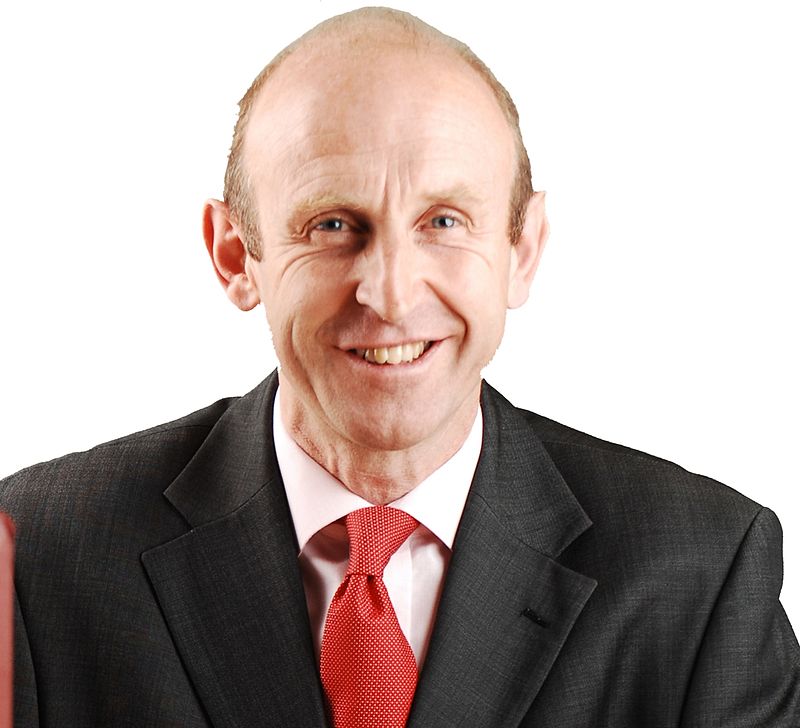
  • Ken Clarke – 2009 Conservative Party Conference Speech

    kenclarke

    Below is the text of the speech made by Ken Clarke on 6th October 2009 at the 2009 Conservative Party Conference.

    I have done this a few times before – and I still enjoy it. Those who have followed my political career from afar and those who know me well will probably agree that I am not one of nature’s pessimists. I am trying to delay becoming a grumpy old man. I am also a realist.

    And it is the realist in me that says we are set to take over the biggest mess that a Conservative Party has ever inherited from a Labour government.

    It is amazingly true that Labour always winds up leaving behind an economic disaster. It has happened every time since the war. But this is far, far worse. It’s worse even than Margaret was confronted with in 1979.

    So yet again it is our duty to repair the damage after those years of recklessness, and prepare the UK for a better future.

    A lot of that work is economic. Above all the sound management of the public finances, which George and Philip spoke about this morning.

    No-one believes Alistair Darling when he talks of halving the public debt in four years.

    Gordon Brown wants to introduce a new law to make it illegal for Alistair to be as irresponsible as he, Gordon Brown was when he was Chancellor. What useless gesture politics.

    Past sinners promise that they will be prosecuted in future if they sin again. George Osborne’s strong sensible policies on tax and spending and debt will be necessary – but will not be enough on their own.

    Our debt crisis is not only the result of reckless spending. It is also the fall of tax income. A crazy financial bubble brought big fluffy tax takes into the Treasury. Gordon Brown spent it all in full – then borrowed more on top.

    Now tax revenues from corporation tax to fat cat income tax have fallen off a cliff because the City, banks and business all crashed into recession.

    Spending has gone up. Tax revenue has gone down. Result – colossal and mounting debt.

    George has boldly and correctly declared the need for spending cuts. He also needs revenue. We need successful business to create wealth, jobs and economic growth – and profits from which to pay taxes.

    I have been through more public spending rounds than most people have had hot dinners. I admire George Osborne and Philip Hammond and I completely trust them to succeed at that task. They have the hard bit of the problem. I and my team have the fun bit – getting the climate right for the best of British business to succeed again and to create the wealth and security for future generations.

    REGULATORY BURDEN

    New Labour has been a burden and a handicap on business that we can no longer afford. The world of New Labour is more bureaucratic than anything we have ever known. An over-powerful executive, bigger government, an ungovernable bureaucracy. We all feel it in our daily lives. Businesses, in particular small businesses, face far more than their fair share of it.

    How much does it cost? Estimates vary. Everyone agrees it is a great and still growing burden. For our entrepreneurs it is not just money, it is wasted time.

    The Federation of Small Businesses says its members now spend on average seven hours a week on official form-filling and red tape of one kind or another. The people who run the health service, education and the police would tell you the same.

    To get Britain back in business, the excessive regulation that businesses – and the great public services – face has to be swept away. Managers should not have to deal with excessive regulations, countless government quangos and too many inspectors of one kind or another, when they ought to be getting on with making their businesses survive and grow, their public services improve and creating new secure jobs .

    LABOUR’S PROBLEM

    The instinctive dislike that we Conservatives feel for excessive bureaucracy is anathema to Labour. One thing New Labour never lost was the idea that the gentleman in Whitehall knows best. Socialists thought, and New Labour still thinks, that politics and government have the answer to everything. They can’t hold themselves back from wishing to have a policy on this, an initiative on that, a public protection intervention of one sort or another. Whenever we have a Labour government, government just gets bigger.

    I don’t think any of this regulation, bureaucracy or legalism was ever introduced for malicious motives. The well-meaning nanny state is at the very heart of this system. A sort of puritan belief that everything can be so perfected that no risk of any kind is ever going to be taken. Parliament churns out legislation like a sausage machine. The tax code is twice as long and complicated as it was in my day. And British life and British business suffer.

    GREEN PAPER

    We are publishing today a paper which was outlined earlier by John Penrose, which sets out our plans to win the battle against red tape. We need to protect the highest standards of health, safety, fair trading and honesty in business life. We are not going to lower standards. We do not need mountains of forms, thousands of non-jobs, hundreds of quangos in gleaming office blocks to achieve that. Regulations based on achieving outcomes rather than just blindly following box-ticking procedure, will actually work better.

    John Penrose’s paper sets it all out. It is solid policy. It is a worthwhile read. We will introduce a system of regulatory budgets across government, that means that no new red tape will be introduced without a compensating cut in the costs and burden somewhere else. We will give each regulator and quango a ‘sunset clause’. That means they will automatically cease to exist after a set period unless they can prove their continuing usefulness. Finally, we will create a stronger and more assertive Parliament which can scrutinise new laws more effectively. We need better laws not just more laws.

    SMALL BUSINESS

    This part of our policy passes my favourite test for economic policy making.

    I’ve always thought that the most important job of the Business Ministry – and the Treasury come to that – is to make it easier for the small businessman in the Midlands to make his living, to produce a bit of prosperity and create some jobs. That was a guiding principle I often stated when I was Chancellor. It should be our guiding light now.

    The question ministers must ask themselves is – are we making it easier for that businessman or businesswoman to thrive or not? And half the time, as they will tell you, this government’s getting in the way.

    We are in the final stages of developing policies in many other areas. To plug the gaps in the venture capital market. To provide more apprenticeships and training opportunities. To develop our science and engineering. With James Dyson’s help, to ensure that our innovations in science and engineering are translated into businesses, services and employment in this country and not lured away by better business conditions for enterprise abroad.

    Today – Deregulation. We will have to strive to provide the right environment for businesses, large and small, to grow. For if you succeed on that score, you provide the growth, the tax revenues, the jobs and prosperity which come with it. That is how to get out of trouble. Britain must be open for business again.

    BIG BUSINESS

    We need big British business as well. Big business needs to work with government in different ways. It needs government alongside it in markets across the world, where there is a political content in marketing. There are plenty of countries in the world where the government has got to be supportive to enable its own businesses to be in with a shout.

    We don’t believe that Government can create national champions but those that emerge become our national champions, and we take pride in them. Some modern businesses require multinational scale, to be a success and take their fair share of the jobs and the prosperity that come from great new industries.

    The UK’s future depends on these great industries – increasingly in new areas like high technology manufacturing and the creative industries. That means rebalancing our economy away from dangerous over-dependence on areas like financial services.

    Try telling business people or politicians from the States, Germany or Japan, that you can have a successful wealthy economy without having any manufacturing. Only the British came to believe that. In 12 years of Labour Government, the number of manufacturing jobs in Britain has dropped by more than a third. We have paid for the error. Britain has to make things again.

    CREATING A FUTURE ECONOMY

    The future lies in nurturing high-added value, technologically advanced, scientifically innovative, well-managed, aggressively marketed companies. Providing our young people with all the skills and the ability to contribute to those fields.

    That is the mission on which all our team was focused when we presented Get Britain Working yesterday.

    PERORATION

    If an individual who wants to develop his own business can’t feel the Conservative Party is a friend, what exactly are we about as a centre right party?

    If we say we all believe in free market economics then aren’t small businesses the best manifestation of the best qualities of free market economics?

    If we want to have social mobility – and we do – have more small business.

    If we want to have a less bureaucratic society, have more small business.

    If we want to create jobs, have more small business.

    Can we leave it to Brown and Mandelson? Led by David Cameron and George Osborne we need to do it ourselves.

    Peter Mandelson displayed theatrical talents which we never suspected last week. From next May onwards he could have a future on the stage – and not just as a pantomime villain. He said I sometimes agree with him.

    Yes I did – responsibly and in the national interest – agree with him on the future of Royal Mail. We agreed with him when he took his Bill through the House of Lords. And what happened? That weak and dithering Prime Minister – Gordon Brown – has stopped him bringing his Bill into the House of Commons.

    Peter Mandelson’s boldest policy is now a symbol of paralysed indecision while the Royal Mail slips into insolvency and strikes.

    So where has Peter Mandelson made his biggest mark on British politics so far? Ironically he is the man who saved Gordon Brown from the incompetent plotters in the Labour Party who were trying to overthrow him twelve months ago. That was the whole point of the Mandelson come-back. But for Peter Mandelson, Britain would have thrown off the burden of Brown as Prime Minister. Why, oh why did you do that Peter?

    Gordon Brown contributed to the global crash by his failed reforms of bank regulation and his reckless Government borrowing.

    Brown denied the crisis was here when it first hit us.

    Brown denied that debt was a problem or that any of his spending and borrowing was unaffordable.

    Brown was denying the need for any cuts at all in public spending or borrowing until only a few weeks ago.

    For Britain, Gordon Brown is and was a large part of the problem – he can play no part in the answer.

    So, as one comeback kid to another, Peter, why did you save Gordon Brown for the nation? The nation is not grateful.

    And what is Gordon Brown’s main legacy going to be to the people of Britain? A terrible surge in unemployment.

    Who would have thought it – that a Labour Government – a Labour Government – would ever preside over the biggest rise in unemployment in a single quarter since records began. Would Nye Bevan ever have imagined that twelve years of Labour Government would end with one in five young people under the age of 24 unemployed? That is the legacy for real people of Gordon Brown.

    When I first started coming to this Conference – a long time ago – my great hero was a man called Iain Macleod.

    Iain is, alas, little remembered now – he died in 11 Downing Street after a few weeks only as Chancellor of the Exchequer.

    I can remember him charging the Party Conference with a striking phrase.

    Labour was about to leave an economic mess behind to a Conservative Government. A mess it was but Iain could never have imagined an economic catastrophe as bad as the legacy that New Labour will leave to us.

    Macleod said “Labour may scheme their schemes, Liberals may dream their dreams, but we have work to do”.

    Mandelson is a schemer. Clegg is a dreamer, Cameron and Osborne are highly intelligent decent young politicians who have what it takes to do the work. And you and I still have the work to do to put them into Downing Street to lead our country to future economic security and success – to make Britain a decent place to trade and do business again.

  • Eric Pickles – 2009 Conference Speech

    ericpickles

    Below is the text of the speech made by Eric Pickles at the 2009 Conservative Party Conference in Manchester on 5th October 2009.

    My dear Chums – welcome to Manchester,

    Welcome to our Conference,

    And welcome to the start of the General Election.

    Since we met in Birmingham 12 months ago a lot has happened

    To our country,

    To the world economy,

    And to the challenges faced by our Party

    After a bruising political year, we remain ahead in the opinion polls.

    After June’s elections we have over ten thousand councillors

    …in the north

    AND

    In the south.

    More than the Liberal Democrats and Labour combined.

    We are the only political party to have an MEP in every region and every country that makes up the United Kingdom.

    And to confound all the pundits, we outpolled Labour in Wales – a feat last achieved when Lloyd George was a lad.

    To cap it off, just when Gordon Brown was sloping off on his holidays, we elected the youngest member of the House of Commons – Chloe Smith in Norwich North.

    Won’t it be a wonderful moment when Chloe takes her seat in parliament next week?

    Well done Chloe, and well done all of you who worked so hard on that campaign.

    Now there are some people who will tell you that because of these results, the General Election is in the bag.

    And all we have to do is sit back and enjoy the view.

    A bit like Neil Kinnock in Sheffield in ‘92

    Well take a tip from your Uncle Eric – that is just not the case.

    Be under no illusion, the General Election is not in the bag.

    We still have a mountain to climb.

    To form the next Government, we need to gain 117 seats – something not achieved by the Conservative Party since 1931.

    We need a swing greater than Margaret Thatcher’s in 1979.

    Because of the way parliamentary boundaries are drawn Labour still has an inbuilt advantage over the Conservatives.

    Now, there is a popular saying in politics that oppositions don’t win elections, governments lose them.

    That is not enough for me,

    And I know it’s not enough for you.

    And it is not enough for David Cameron

    We are not going to sit by and just watch the Labour Party implode

    We want to earn each and every vote.

    We don’t want to get people’s votes just because we are not the Labour Party

    We want to earn people’s votes

    Because we want a mandate for change.

    We will make bold announcements.

    By the end of this week, we will have clearly demonstrated to you, and to the rest of the country, that our Party, led by David Cameron has the answers to rebuild our broken economy, mend our broken society and put the trust back in politics.

    We will also lay down a clear set of tests by which a Conservative Government will be judged.

    A test firmly rooted in social justice.

    Measured in those communities that have been abandoned by Labour.

    Those run down estates,

    Those children in sink schools,

    The unemployed – particularly the long term unemployed.

    Those communities forgotten and neglected by Labour

    I know in my heart that David Cameron’s shadow cabinet team has got what it takes to tackle these challenges.

    Just ask yourself, who would do a better job?

    The decisive George Osborne or dithering Alistair Darling?

    The determined Theresa May or Yvette Cooper?

    The wise William Hague, or banana man David Milliband?

    The experience of Ken Clarke,

    or

    His Lordship Peter Mandelson First Secretary of State for …. well just About Everything

    Actually, you know Gordon Brown is in serious trouble when he recalls Peter Mandelson to the Cabinet – and 12 months later – he is still there!

    Of course, there were rumours last week that Peter might want to join a Conservative Government.

    He has even started using my catchphrase – he’s now calling journalists “chums”.

    Well at least that is what I think he had said, but my hearing is not what it was.

    Now Gordon Brown likes to talk about dividing lines – about the differences between us and Labour.

    We are not about dividing lines – we are about drawing people together – uniting people for the common good.

    Sure, there are differences.

    Unlike Labour, we will achieve our aims through social responsibility not state control.

    By giving power back to people and communities, not handing it over to unaccountable bureaucrats.

    They want remote Ministerial control from Whitehall.

    We want decentralisation, transparency and local people in charge.

    And we want accountability.

    So when Gordon Brown talks about fair votes, and changing the voting system

    We say yes!

    We will introduce fair votes and reduce the cost of politics in the process.

    We will make all constituencies equal in voting size ending the system that devalues the votes of some at the expense of others. And in the process we will reduce the number of MPs initially by 10%

    Furthermore, the first election under a Conservative Government will be fought on these new boundaries. We will deliver fair boundaries. Now that’s fair votes.

    So friends, this is going to be a decisive week in British politics.

    A week where we must prove that our whole party is ready for change.

    A week where we show we will not be deflected.

    We will not be distracted.

    And we will show we are united in our determination to bring change to the country as a whole.

    So I say to the Labour voter who feels let down by the once great party of the working man.

    – who feels angry at the abolition of the 10p tax hitting Britain’s poorest

    – cuts in the NHS,

    – who is not prepared to send our soldiers off to war without the proper equipment.

    I say join a truly progressive party who want to be judged by how we treat the poorest in society.

    To the Liberal Democrat voter worried about ID cards, social justice and climate change.

    I say vote for a party with Liberal Democracy firmly at its heart and that can deliver in Government

    And to all those union members worried about spiralling debt, job losses and the neglect of thousands of young people consigned to a life without a job and without a sense of purpose.

    I say to them vote for a party determined to get Britain working and to give our young people the life changing experience that only a job can bring.

    I make this appeal above the heads of party leaders, union officials and newspaper editors.

    Join us. Trust us with your vote. And help us change our country for the better.

    Trust us, and we will not let you down.

  • Alistair Darling – 2009 Speech to Labour Party Conference

    alistairdarling

    Below is the text of the speech made by Alistair Darling, the then Chancellor of the Exchequer, to the 2009 Labour Party conference.

    Within months, the country faces a big choice.

    A choice not just about who’s in Government, but about the values that will shape our country and the opportunities for our people.

    A choice that will affect every area of our lives, every aspect of our future.

    If we didn’t know a year ago the difference governments can make, we certainly know it now.

    When I spoke at last year’s conference, I talked about the scale of the global economic crisis and warned that we may not yet have seen the worst.

    Within weeks, the international financial system was in meltdown, the world economy on the edge of the abyss.

    There was a real prospect of a repeat of scenes not witnessed since 1929.

    Banks unable to give savers their cash. Firms unable to pay their staff.

    In the face of such unprecedented global turmoil, no one government could hold back this economic tidal wave.

    But I also said last year that the choices made by governments could reduce the severity and the length of the crisis – and help people through it.

    That was the challenge.

    And when the history of this period is written, this country and this party will be proud.

    Proud that the people who led the way in stopping recession turning into global depression were our Government and our Prime Minister Gordon Brown.

    We intervened to stop the banks failing.

    Not for the sake of the banks themselves.

    But because the alternative would have been an economy in paralysis and employment in freefall.

    Let me assure the country – and warn the banks – that there will no return to business as usual for them.

    So in the next few weeks we will introduce legislation to end the reckless culture that puts short-term profits over long-term success.

    It will mean an end to automatic bank bonuses year after year.

    It will mean an end to immediate pay-outs for top management.

    Any bonuses will have to be paid over years, so they can be clawed-back if not warranted by long-term performance.

    We won’t allow greed and recklessness to ever again endanger the whole global economy and the lives of millions of people.

    Over the last 12 months, we’ve also acted to help businesses keep afloat and people stay in jobs and in their homes.

    By cutting VAT, we put an additional £1billion each month into the pockets of shoppers and retailers.

    Through the car scrappage scheme, we will continue to support jobs in the car and wider manufacturing industries.

    Through targeted tax cuts for business and more time to pay, we have helped them weather the storm.

    We knew that to have cut investment would have worsened the recession.

    So instead of cutting, we brought forward planned capital projects, modernising schools, homes and hospitals.

    Countries across the world have followed the same course and co-ordinated action through the G20 in a way which has never been seen before.

    I can tell you, having been at every one of these meetings, that ministers around the world recognise this would not have happened without Gordon Brown’s leadership.

    The results of this global intervention, led by the UK, is now beginning to come through.

    Germany, France and Japan are showing signs of growth.

    Many independent forecasters now believe the UK too is coming out of recession.

    I think it is too early to say so with total confidence.

    But I stick with my Budget prediction that, as long as we continue to support the economy, recovery will be underway in the UK by the turn of the year.

    I also expressed my confidence in the underlying strength of the British economy and the skills and energy of its people.

    And I believe that confidence will prove to be correct.

    For if we continue to make the right choices as a country and the right investment for the future, we are ideally placed to make the most of the opportunities the global recovery will bring.

    Investing in the new industries of the future, helping Britain lead the way in the move to a low-carbon economy, supporting the research and innovation at which this country shines.

    But had we made different choices – Tory choices – the UK and global economy would be in a very different place.

    So too would our prospects for the future.

    For as well as being a test of leadership for the Government, this crisis was a test of judgement for the Conservatives.

    It was a test they failed at every turn.

    Every step to limit the severity of this recession and the damage to families, they opposed.

    When the crisis began in the global mortgage markets, they thought the answer was less regulation, not more.

    When we stepped in to save Northern Rock – protecting the savings of millions – they wanted to leave it all to the markets.

    When we acted to prevent the widespread collapse of the banks, they protested we were wasting money.

    As the financial crisis turned into the deepest global recession since the 1930s, they alone said we should do nothing to support the economy.

    At every stage, the Tories have misunderstood the causes of the crisis. Underestimated its severity. And opposed the measures to limit its impact.

    And why did they get it wrong? Because the natural response of the Tories is always to step back, not step in.

    In this party, we believe it is our responsibility to make a difference, to help people help themselves.

    People sometimes talk about the invisible hand of the market, but the last year has underlined how it must go alongside the enabling hand of government.

    The Tories in their hearts believe the answer is always for the government to do less, leaving people to fend for themselves.

    So just as the support we have put in place is getting the economy back on its feet, they want to withdraw this helping hand.

    Having just come back from the G20 summit in Pittsburgh, I can tell you that no other government is following their lead.

    Whether right or left, in Beijing or Berlin, they know that withdrawing support before recovery is secured risks plunging us back into recession.

    We can’t sit back and relax.

    Many businesses and families are still struggling to keep their heads above water.

    If we followed the Tory route now recovery would be put at risk, prospects for growth damaged, borrowing would, in the long-run, be greater.

    We cannot – must not – let that happen.

    And we cannot – must not – repeat their mistakes of the 80s and 90s when short-term job-loss became long-term unemployment for a whole generation.

    The result was the scandalous loss of potential and talent – and a huge welfare bill for the country.

    And why? Again a deliberate choice by a Tory party to step aside and let people sink or swim.

    It is why a key priority for us has been, and remains, to help people off welfare and into work.

    And, of course, to make sure they were paid fairly, for the first time, through the minimum wage.

    Introduced by this Government, and again opposed by the Tories.

    The success of our approach was seen in record employment over the last decade.

    And it continues to show its worth even as the global recession hits our economy.

    Unemployment is rising here and across the world. Every job lost is a serious blow to that family.

    But thanks to the support already in place, more than half of those who lose their jobs come off Job-Seekers Allowance within three months, and almost three-quarters within six months.

    Since November, we have helped over two and half million people leave the claimant count.

    It explains why unemployment here, although too high, is lower than in the euro area and in America.

    But even when we begin to see growth in the economy again, unemployment is likely to keep rising for some time.

    It is not within the power of any Government to protect every job.

    But we believe it is our responsibility to support people in every way possible to find new employment.

    To stop help now – as the Tories want – would be callous and counter-productive.

    So rather than stepping back, we have stepped up our efforts.

    Investing £5bn to provide high quality assistance and advice to those who have lost their jobs.

    A guarantee for 18 to 24 year-olds of work or training – already 47,000 jobs have been agreed for take-up when needed.

    A guarantee, too, for every school leaver of a college place or apprenticeship.

    The difficult decisions we have taken – the choices we have made – have been driven by our belief in what Government can do, and our values of opportunity and social justice.

    Yes, debt has risen.

    Not just here, but across the world, as tax revenues have fallen as the global recession takes hold.

    But had we not borrowed, we would have made a very difficult situation far worse.

    The recession would have turned into depression, and debt would have been more, not less.

    And this increased debt would be spent not in supporting jobs and families now but on long-term welfare bills.

    It would have been irresponsible to walk away when the economic shock waves hit our country.

    It will be equally irresponsible, once recovery is secured, not to take tough action so we can live within our means.

    I welcome the chance of a mature debate on how we achieve this goal – even if it is hard to see the Shadow Chancellor playing much part.

    There has, after all, been little that is grown-up about his performance so far.

    And again, this country and this Government have set the lead – the first to set out firm plans to put our finances on a sustainable footing.

    In the Budget, I laid out how we will halve the deficit over four years.

    We are raising revenue by removing unfair pensions relief for higher earners.

    And raising the top rate of tax for the very highest incomes.

    Because it is right that those who earn the most should shoulder the biggest burden.

    And to make sure people can’t avoid paying their fair share, we and other countries are cracking down on offshore tax havens.

    We’ve already demanded details of over 100,000 offshore accounts.

    And this will mean billions of extra unpaid tax returning to our country, with an expected £1bn from our agreement with Lichtenstein alone.

    In contrast, what are the Tories doing? What’s their priority? Their priority is to cut inheritance tax for some of the richest families in the nation.

    This cannot be the priority at a time like this.

    But the steps we’ve taken to raise revenue are not enough.

    In order to get borrowing down, spending will have to be tighter in the years ahead, against a background where public investment has tripled over the past decade.

    I believe the public understand that difficult decisions will be needed.

    The public know that adjusting to this new reality won’t be quick, it won’t be easy

    They are right. But this makes it even more important that these difficult decisions are taken for the right reasons.

    For just as there was a choice over tackling the recession and helping the recovery, so there is on public spending.

    A choice between a Labour Government which believes passionately that front-line public services are vital to support everyone to meet their ambitions.

    And a Tory party which has reverted to type and is relishing the chance to swing the axe at the public services millions rely on.

    Cuts driven by ideology – not by what’s right for families and for the country.

    We have already seen the damage such an approach inflicts on the fabric of our nation.

    After 18 years of Tory neglect of our public services, the question was not whether every classroom had a computer, but whether every school had a proper roof.

    In healthcare, the question for far too many was not whether you could get your operation in weeks, but whether you could get it at all.

    A legacy of disdain and underinvestment, of shaming poverty among the young and old, a lack of hope among millions of families.

    The result of a Tory party which deep down sees public services as essential only for those who have failed to do well enough to go private for their health care or education.

    It was a legacy we have worked hard to put right.

    Half a million children lifted out of poverty thanks to increased child benefit and tax credits.

    Practical support for families through Sure Start Children’s Centres – like the one I visited today.

    The best ever exam results for our children.

    Average time on an NHS waiting list down from 13 to just four weeks.

    Helping families through support for childcare and dramatically improved maternity leave and pay.

    We won’t put these improvements at risk. We intend to build on them.

    Tighter spending doesn’t mean a return to the Tory dark ages.

    It does mean a determination to cut waste, cut costs – and cut lower-priority budgets.

    This will require difficult decisions.

    I haven’t shirked them in the past, I won’t shirk them now.

    We must keep the public finances on a sustainable path.

    The long-term health of our economy depends on it.

    That is why we will introduce a new Fiscal Responsibility Act to require that the Government reduces the budget deficit year on year, ensuring that the national debt remains sustainable in the medium term.

    But we need to do that rationally, in a way that is right for the economy, not driven by dogma.

    The Tories’ approach is wrong, is naïve, and down right dangerous.

    It will damage our economy now and in the future.

    In the next few weeks, I will set out in the Pre-Budget Report how we will protect front-line public services, bring the deficit down, and invest in the country’s future.

    We will invest to make our economy grow.

    Growth is the best way of reducing debt, creating jobs, and raising living standards.

    The low-carbon economy will create tens of thousands of new jobs.

    But this won’t happen on its own – government must work with business.

    High-speed rail links will help us tackle climate change and boost our economy.

    Again, they won’t happen without government support.

    We need thousands of new homes for families – we will work with the industry to ensure they are built.

    We are world leaders in innovation and technology – we will continue to invest, to harness this ingenuity and create new industries and new jobs.

    Extending opportunities to all, removing the barriers which stop people playing their full role in our economy and society.

    Fairness, opportunity and responsibility will underpin everything we do.

    The last 12 months, more than any time in recent history, has demonstrated the difference Government can make.

    The Tories have been wrong on tackling the recession. They are wrong on how to ensure recovery. And they will make the wrong decisions on our public services.

    They are wrong because on every question, the Tory answer is to step back, to walk away, to leave people on their own.

    So that will be the choice in the next few months.

    Maturity and experience against the politics of the playground.

    Investment in the future against a return to the past.

    I am proud of the difference we’ve made to this country over the past 12 years.

    Proud of our judgement and determination over the last 12 months.

    And we should be confident we can win the support of the country to keep taking Britain forward.

    We have a good story to tell.

    It’s time for all of us to go out and tell it.