Tag: 2009

  • HISTORIC PRESS RELEASE : UK to continue push for change in Burma PM tells ASSK [December 2009]

    HISTORIC PRESS RELEASE : UK to continue push for change in Burma PM tells ASSK [December 2009]

    The press release issued by 10 Downing Street on 30 December 2009.

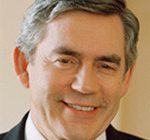
    The Prime Minister has written a letter to Burmese pro-democracy activist Aung San Suu Kyi in which he says the UK will continue to do everything possible to push for change in Burma.

    In the letter, Gordon Brown calls for free and inclusive elections in Burma next year and urges the Burmese regime to engage Aung San Suu Kyi in a genuine dialogue on democracy.

    The letter has been handed to the Burmese authorities by the British Embassy in Rangoon – the formal channel by which messages to Aung San Suu Kyi are passed.

    TEXT OF LETTER

    Dear Daw Suu

    You have dedicated the whole of your life to the cause of democracy and freedom in Burma. You have selflessly highlighted the wider suffering of the Burmese people rather than dwelling on your own pain. And through that courage you have gained the respect of the entire international community not just for a person,  but for a cause.

    The world knows that as Burma approaches an historic year you will be as resolute as ever in approaching its challenges. If the scheduled elections proceed under a rigged constitution, with opposition leaders excluded and with no international oversight, the military rulers will be condemning Burma to more years of diplomatic isolation and economic stagnation.

    But if the elections are genuinely inclusive, free and fair, then the whole of the international community is ready to stand with Burma, welcome her back into the community of nations, and contribute to rebuilding her future and prosperity. It is clear this is the only path which will lead to Burma’s future security, stability and progress for all her people.

    Sadly, as the year turns, the signs do not look good. Your continuing detention is only the most visible evidence of the bad faith of a regime which has so far shown no signs of listening to regional or international calls for an end to its violent behaviour.

    I continue to call upon the regime to engage with you and allow you further contact with diplomats in Rangoon, and to start a genuine dialogue that can give the Burmese people back their future and their hope.

    You have asked us to use our freedom to secure the freedom of the Burmese people. I assure you that as we move into a new year and a new decade the United Kingdom will continue to do everything possible to advance positive change and genuine democracy in your country.

    As you have said, there is so much that needs to be done in a Burma that cannot afford to wait.

    We are immovably with you – and with the Burmese people.

    Yours sincerely

    Gordon Brown

  • HISTORIC PRESS RELEASE : British hostage released after two year ordeal [December 2009]

    HISTORIC PRESS RELEASE : British hostage released after two year ordeal [December 2009]

    The press release issued by 10 Downing Street on 30 December 2009.

    The Prime Minister has paid tribute to those who have worked to secure the release of a British man held hostage in Iraq for over two-and-a-half years.

    Peter Moore from Lincoln was working in Iraq as an IT consultant when he was taken hostage along with four British bodyguards at the finance ministry in Baghdad in 2007.

    The Prime Minister has spoken to Peter Moore by phone, telling him he hoped he would be reunited with his family as soon as possible.

    In a statement, the PM said:

    “I am hugely relieved by the wonderful news that Peter has been freed, and will be reunited with his family as quickly as possible. They have faced a terrible ordeal, and I know that the whole nation will share their joy that he is coming home. I pay tribute to all those who helped in the protracted effort to secure the release.

    “At this moment of celebration, we also remember the families of British hostages who have been killed in Iraq and elsewhere. And we pledge to continue to do everything we can to bring British hostages back to their loved ones, including the remaining hostage of the group in Iraq, Alan McMenemy. I demand that the hostage takers return him to us.”

    The Foreign Secretary David Miliband said Mr Moore was in good health after his lengthy ordeal and is now with the British Embassy in Iraq.

    “Peter was set free by his captors this morning in Baghdad and delivered to the Iraqi authorities. He is now in the care of the British Embassy in Baghdad.”

    In June the bodies of security guards Jason Creswell and Jason Swindlehurst were passed to British authorities, followed by the body of Alec MacLachlan in September.

  • Gordon Brown – 2009 New Year’s Message for 2010

    Gordon Brown – 2009 New Year’s Message for 2010

    The message made by Gordon Brown, the then Prime Minister, on 30 December 2009.

    In his New Year message the Prime Minister has promised to continue to protect and improve Britain as it enters a new decade.

    The Government’s priorities will be to secure economic recovery, reform public services, clean up politics and continue fighting the threat of terrorism, Gordon Brown said in a podcast released today.

    The PM added that the UK would continue to step up efforts to disrupt terrorists planning to mount attacks on Britain.

    “This will have my relentless focus in 2010, just as Afghanistan will have. We will steadily be giving more control of Afghanistan to Afghan troops and police.

    On the economy, the PM said the Government’s strategy is to “go for growth”, and in his podcast he predicts that the New Year will mark the start of a “great decade for a great nation”.

    Mr Brown said the Government is determined to reduce the deficit without “choking off” the recovery or damaging frontline services.

    “Even as we take the tough decisions to halve the deficit, we can still invest in Britain’s future. I say this because Britain is too great a country with so much potential – and people with such high aspirations – that in the coming decade we must not settle for anything less than big ambitions.”

    The Prime Minister said the Government will shortly publish the first part of its plan for investment in industries and jobs for the future.

    “If we continue to make the right decisions to unleash all the talent that is to be found in these islands, we have much to look forward to – and you and your families have my warm best wishes for the year ahead.”

    The PM’s podcasts, which are available on our iTunes channel and YouTube, are recorded at Downing Street or around the world when the Prime Minister is travelling.

  • Queen Elizabeth II – 2009 Christmas Broadcast

    Queen Elizabeth II – 2009 Christmas Broadcast

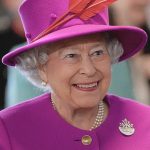
    The Christmas Broadcast made by HM Queen Elizabeth II on 25 December 2009.

    Each year that passes seems to have its own character. Some leave us with a feeling of satisfaction, others are best forgotten. 2009 was a difficult year for many, in particular those facing the continuing effects of the economic downturn.

    I am sure that we have all been affected by events in Afghanistan and saddened by the casualties suffered by our forces serving there. Our thoughts go out to their relations and friends who have shown immense dignity in the face of great personal loss. But, we can be proud of the positive contribution that our servicemen and women are making, in conjunction with our allies.

    Well over 13,000 soldiers from the United Kingdom, and across the Commonwealth – Canada, Australia, New Zealand and Singapore – are currently serving in Afghanistan. The debt of gratitude owed to these young men and women, and to their predecessors, is indeed profound.
    It is sixty years since the Commonwealth was created and today, with more than a billion of its members under the age of 25, the organisation remains a strong and practical force for good. Recently I attended the Commonwealth Heads of Government Meeting in Trinidad and Tobago and heard how important the Commonwealth is to young people.

    New communication technologies allow them to reach out to the wider world and share their experiences and viewpoints. For many, the practical assistance and networks of the Commonwealth can give skills, lend advice and encourage enterprise.

    It is inspiring to learn of some of the work being done by these young people, who bring creativity and innovation to the challenges they face.
    It is important to keep discussing issues that concern us all – there can be no more valuable role for our family of nations.

    I have been closely associated with the Commonwealth through most of its existence. The personal and living bond I have enjoyed with leaders, and with people the world over, has always been more important in promoting our unity than symbolism alone. The Commonwealth is not an organisation with a mission. It is rather an opportunity for its people to work together to achieve practical solutions to problems.

    In many aspects of our lives, whether in sport, the environment, business or culture, the Commonwealth connection remains vivid and enriching. It is, in lots of ways, the face of the future. And with continuing support and dedication, I am confident that this diverse Commonwealth of nations can strengthen the common bond that transcends politics, religion, race and economic circumstances.

    We know that Christmas is a time for celebration and family reunions; but it is also a time to reflect on what confronts those less fortunate than ourselves, at home and throughout the world.

    Christians are taught to love their neighbours, having compassion and concern, and being ready to undertake charity and voluntary work to ease the burden of deprivation and disadvantage. We may ourselves be confronted by a bewildering array of difficulties and challenges, but we must never cease to work for a better future for ourselves and for others.

    I wish you all, wherever you may be, a very happy Christmas.

  • Boris Johnson – 2009 Speech on Making London Safer

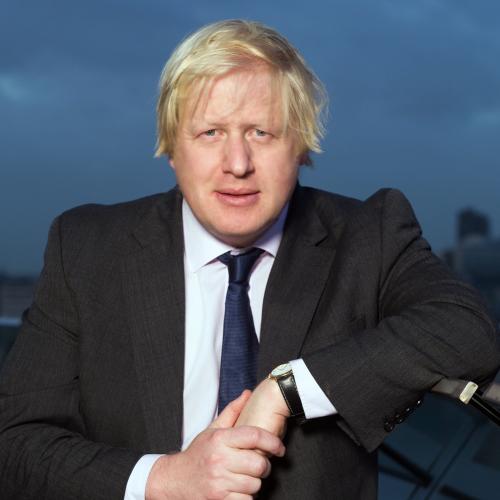
    Below is the text of the speech made by Boris Johnson, the then Mayor of London, on 27 March 2009.

    What did you want to be when you were a child? Was it something, by any chance, that involved wearing an impressive uniform? Did you marvel at the shiny buttons on Fireman Sam’s uniform, or wonder what it would be like to possess the natural authority that came with wearing Postman Pat’s hat?

    I for one trembled at the sight of a policeman, convinced I was doing wrong by my mere presence. When the terror in a tall hat passed, I would secretly yearn for the power that man possessed.

    Most people I know had childhood aspirations of becoming such authority figures with shiny buttons. Yet as we grow up, and we discover that a profession is worth doing for more than the sartorial standards it keeps, we choose different paths.

    However, there are some who keep the dream alive- ultimately for reasons of high public spirit. If they don’t go on to become fully fledged coppers, then they volunteer and become Special Constables – of which there are currently over two and a half thousand in London.

    Today, I was in Harrow to announce that we’ve secured the funding to train and recruit 10,000 Specials by 2012. They have the same powers and responsibilities as police officers. They can still say “‘ello ‘ello, what’s going on here then?” The only difference is that they are unpaid volunteers, working 8 hours a fortnight. So I’m calling on Londoners to reconnect with their childhood ambitions, to release that pent up desire to do good and step forward. You can still do your day job, and have the opportunity to be part of policing the Olympic Games too.

    When I was elected, one of my main promises was to get to grips with crime. This new initiative will see the addition of thousands of new, dedicated police officers to the streets of our city. We’re also continuing with the roll out of the new police teams to patrol bus ‘hubs’. I launched another one in Harrow this morning.

    These teams consist of nine officers and they are attached to an area with a high concentration of buses, typically a town centre with a bus station. By later this year, we will have 29 such teams across London. Their specific remit is to provide a highly visible presence on buses to deter the kind of low level disorder that has been prevalent over the last few years.

    We’ve also seen over 5,000 knives lifted from the streets of London through the sensitive use of stop and search powers. New police officers are also stepping up their patrols at suburban railway stations.

    So that’s what I am doing to honour my promise. My ambition is, by 2012, to have made public transport feel safer, got more police officers out on the streets and made youth violence an extreme rarity. You can help me achieve that by signing up to become a special constable.

  • Michael Martin – 2009 Statement on MP Expenses

    Below is the text of the statement made by Michael Martin, the then Speaker of the House of Commons, in the House of Commons on 19 May 2009.

    I should like to make a statement, for the second time today.

    This afternoon I convened a meeting of party leaders—both major and minor parties—and members of the House of Commons Commission to make decisions on the operation of parliamentary allowances pending the recommendations of Sir Christopher Kelly’s Committee on Standards in Public Life. The Chairman of the Committee on Members’ Allowances was also present to advise us.

    The Committee on Standards in Public Life will come forward with long-term reforms to the current allowances system. All parties are now committed to implementing its recommendations as a whole, subject to the formal agreement of this House, provided that these reforms meet the tests of increased transparency and accountability and reduced cost for the taxpayer. We have today agreed a robust set of interim measures which will take effect at once and do not pre-empt any more substantial changes to be put forward by the Kelly committee.

    Second homes: there will be no more claims for such items as furniture, household goods, capital improvements, gardening, cleaning and stamp duty. The following only should be claimable: rent, including ground rent; hotel accommodation; overnight subsistence; mortgage interest; council tax; service charges; utility bills, including gas, water, electricity, oil, telephone calls and line rental; and insurance—buildings and contents.

    Designation of second homes: no changes to be made to designation of second homes in the years 2009-10, with a transparent appeal procedure for exceptional cases.

    Capital gains tax: Members selling any property must be completely open with the tax authorities about whether they have claimed additional costs allowance on that property as a second home and are liable for capital gains tax. Members should make a declaration in respect of any property on which they claim for expenditure that it is not—and will never be—their main residence for capital gains tax purposes. Whether such a declaration has been made will be made public.

    Couples: Members who are married or living together as partners must nominate the same main home, and will be limited to claiming a maximum of one person’s accommodation allowance between them.

    Mortgages: all those Members claiming reimbursement must confirm that the mortgage continues, that the payments are for interest only, and the amount claimed is accurate. Mortgage interest claims will be capped at £1,250 per month. In the view of the meeting—and subject to the recommendations of the Kelly committee—this maximum figure should be reduced in the longer term. The same cap will apply to rent and hotel accommodation. Some of these measures I am announcing will require a resolution by the House in the near future; others will be put into effect by administrative action.

    Staffing: we confirmed the enforcement of deposit of staff contracts and the registration of any relatives employed.

    While the Kelly committee recommendations are awaited, there will be no specific changes to other allowances. The Department of Resources is instructed to tighten the administration of all claims and apply a clear test of “reasonableness”. If there is any doubt about the eligibility of a claim, it will be refused and there will be no appeal. In future, all authorised payments will be published online at transaction level on a quarterly basis by the Department of Resources.

    All past claims under the former additional costs allowance over the past four years will be examined. This will be carried out by a team with external management; the external manager will be appointed after consultation with the Comptroller and Auditor General. All necessary resources will be made available. The team will look at claims in relation to the rules which existed at that time, and will take account of any issues which arise from that examination which cause them to question the original judgment.

    The meeting also received a paper from the Prime Minister, which was endorsed by the other party leaders, calling for a fundamental reform of allowances—moving from self-regulation to regulation by an independent body. The Government will consult widely on this proposal. Further to this, the Leader of the House will be making a statement tomorrow, which will allow the House a full opportunity to ask questions, and Members to air their views on the decisions we have made and the proposals for the future.

  • Jim Murphy – 2009 Speech to Labour Party Conference

    jimmurphy

    Below is the text of the speech made by Jim Murphy, the Secretary of State for Scotland, at the 2009 Labour Party conference.

    Wherever I go in Scotland I am in awe not just of the beauty of our country but the brilliance of our people.

    Our cities that have helped shape the world can still have their best decades ahead of them.

    Visiting our islands and seeing the wind and wave power technology of the Western Isles, Orkney and Shetland and in Aberdeen which we want to be the renewable energy capital of Europe

    On the River Clyde hundreds of apprentices I met making Britain safer by building Royal Navy ships

    Parents I listen to balancing all the pressures of modern life and putting their children first.

    Scotland’s pensioners who worked hard and saved hard to make Scotland all that it is –  probably the most powerful small nation on earth.

    And we are stronger, fairer and more self-confident. But after repairing decades of Tory damage we still have a lot to do to build on our success.

    Of course we have so much in common across the UK but there are also many differences – that’s the nature of devolution.

    But the one big choice over the next year is the same – Labour government or Tory government; Gordon Brown or David Cameron; Gordon’s experience or the most superficial Tory leader in modern history.

    And David Cameron wants to make the Tories a one nation party again – but that nation isn’t Scotland.

    In Scotland David Cameron is even less popular today than Mrs Thatcher was in the 1980s – but he is no less a threat to Scotland’s families and our economy.

    And the Scottish Tory candidates are probably the most hard-line in living memory.

    They think the only problem with the 1980s was that their party didn’t go far enough in cutting back the welfare state and they can’t wait to finish the job.

    Back then they allowed generations of Scots to get stuck on the dole and would have done the same in this recession because they opposed Labour’s £500 million investment to prevent the newly unemployed from becoming the long term unemployed.

    Of course Labour will cut costs, but we’ll protect frontline services. However, the Tories would make savage cuts immediately, they would risk the recovery.

    Because they believe in small government; in the politics of sink or swim and in the politics of your on your own. Today’s Scottish Tory candidates are Mrs Thatcher’s grandchildren.

    And Scotland’s distrust of the Tories isn’t just because of what they did in government in the last recession but because of what they have said in opposition throughout this one.

    They are probably the only opposition party anywhere in the world demanding that their government does less to help those on modest and middle incomes during this global recession.

    In Scotland they are hated by many for their past and distrusted by most because of their present.

    The Tories still don’t get Scotland. But Scotland gets them. And doesn’t want them back.

    It will take an enormous effort from us but we have the team to do it. I am delighted to introduce Labour’s Leader in the Scottish Parliament and Scotland’s next First Minister Iain Gray.

  • Rhodri Morgan – 2009 Speech to Labour Party Conference

    Below is the text of the speech made by Rhodri Morgan, the then First Minister of Wales, to the 2009 Labour Party conference on 27th September 2009.

    Conference, I’ve had the privilege as Labour Leader in Wales, of addressing you since 2000, and today I’m doing so for the last time.

    Over that decade of devolution, I’ve seen Wales grow enormously in confidence.

    Learning the art of government.

    Getting used to making our own decisions.

    Moving away from the old culture of blaming others for anything that goes wrong.

    We would not, and could not, go back to the old days of going on bended knee for help from the likes of William Hague and John Redwood – those figures from what now seems like the prehistoric past.

    That era is over for ever and ever.

    Finito.

    Dead as a Norwegian blue dodo.

    Dead as the Thatcher/Reagan era of ultra free-market economics which ended with the 2008 credit crunch.

    What’s needed now is active, interventionist, strong government, helping people through the recession and re-equipping the country for the coming up-turn.

    You don’t get that from the free marketeers.

    Their only answer is – cue John Maples Tory Deputy Chairman  – ‘this recession must be allowed to run its course’.

    What Labour is doing is to intervene for breakfast, for lunch, for tea and for supper, to shorten the recession and reduce the bad effects on ordinary peoples’ lives.

    In Wales, that has meant a social partnership, getting trade union and business leaders, local government and the third sector, round a table to get a full understanding of where the shoe is pinching. Deciding what to do about it, so that Wales can be ready for the upturn.

    From those summit meetings came the ProAct programme, paying employers to keep workers on their books, instead of making them redundant when orders are low.

    But we pay our £4,000 per head in return for up-grading the skills of those employees on the scheme.

    ProAct is saving thousands of jobs now and, even more important, it will prove its worth in saving thousands of future jobs because of those improved skills.

    That’s creative government intervention for you.

    Wales now has our own state-owned bank, Finance Wales, with a £150 million investment fund for small and medium enterprises.

    I announced the first tranche of investments totalling £6 million in 37 companies last week.

    Also last week, we launched a £105 million fund for our housing associations, mostly from the European Investment Bank, to take the place of the money they can’t get from the market because of the credit crunch.

    Where the market fails, Labour steps in, creating thousands of desperately needed construction jobs and meeting our urgent need for new homes.

    But active government doesn’t end with beating the recession.

    Since I last addressed conference, we have rolled out to every nursery and infant school in Wales our new Scandinavian-style learn-through-play curriculum.

    I have never known enthusiasm like it among all our early years teachers and learning assistants.

    It’s the biggest investment of new money in education in Wales in decades and we will see the benefit in decades to come, shortening the long tail of educational under-achievement from which Wales has always suffered.

    Ten years ago we wouldn’t have had the powers to break with a century of educational tradition in the UK and in any case, we wouldn’t have had the confidence to do it, even if we had.

    Now this new curriculum for the 3 – 7 year olds is a fantastic example of inventive government using devolution to the full.

    We don’t now teach the bended-knee, or the tug of the forelock, any longer in our posture and comportment classes!

    So Conference, a word about the future. Wales’ worst kept secret – I’m not going to be with you next year as Welsh Labour Leader and I’ll be announcing, before too long, the exact details of how and when the election of my successor it going to take place.

    Still, it’s the little things which say the time is coming to move on. Two weeks ago today, Julie and I were having a swim on Barry Island beach, taking advantage of our Indian summer.

    There was a surf life-saving competition going on and as I’m swimming along, quite powerfully so I think – OK, I’m not Michael Phelps, but I was quite impressed with my powerful stroke – next thing I know there’s an inflatable boat alongside me, and there is Miss Baywatch Barry Island 2009 leaning over and saying, ‘I’m just checking that you’re alright sir’!

    At least she said Sir, not Grandad!

    It’s things like that which tell you, to get ready to hand the baton over to the next generation.

    It just remains for me to thank the Labour Party for doing all the heavy lifting – to get devolution up and running 10 years ago, to strengthen our powers in 2006 and to give me the chance to have been First Minister of Wales.

    The Devolution Decade has been the most important thing to happen to Wales since the industrial revolution.

    All because of you.

    All because of Labour.

    And now we need to make sure the British people make the right choice next year.

    This is not the time for a free-market obsessed party to take over.

    It’s not time to make government smaller when there’s such a big job to do.

    It’s a time for a Party that believes in the power of government to develop our public services and to generate the new technologies and the new jobs.

    You only get that from one party – Labour.

    So, two final messages for this conference.

    First, to the whole of the Labour party in this hall and outside.

    I know that we are in difficulty now. We have temporarily mislaid that magic recipe for blending the mushy peas of old Labour with the guacamole of new Labour.

    Those difficulties will be temporary. We will find that recipe again soon.

    Because when the country is in difficulties, the Government takes a hit – it always happens, but when the country is in difficulties, that is precisely when you need the intervention of a government that actually believes in intervention.

    That means Labour.

    Last, to all my Welsh Labour compatriots here:

    Diolch yn fawr am eich ffydd a’ch cefnogaeth di-dor dros y ddegaid ddiwethaf.

    Thank you from the bottom of my heart for coming with me on this incredible journey over the past decade.

    Your loyalty and support has enabled me to do what I’ve been able to do to lead Wales and establish Wales as a ‘Yes We Can’ country.

    I know you will give the same support and loyalty to whoever takes the helm of leadership on after me.

    While my Labour leadership in Wales may not have long to run, Labour’s role of leadership in Wales and in Britain certainly isn’t coming to an end.

    When times are tough, when the future needs to be shaped for everybody’s benefit, Labour is the one party you can count on.

  • Ed Miliband – 2009 Speech to Labour Party Conference

    edmiliband

    Below is the text of the speech made by Ed Miliband, the then Energy Secretary, to the 2009 Labour Party conference.

    Conference, let’s be honest.

    It’s been a hard year to be a Labour party member,

    A hard year for our party,

    A hard year too for anyone associated with politics,

    And it’s been a hard year most of all in our communities as some people have lost their jobs.

    The test for us is as it has always been – whether we can triumph over adversity.

    A year ago when we met, we faced an unprecedented economic crisis. Many said we were in for another Great Depression, a repeat of the 1930s.

    Why didn’t that happen?

    Because one person, more than any other, understood the need to be bold:

    – he didn’t stand by,

    – he didn’t stick with business as usual,

    – he stood up to save the jobs, the homes and the hard-earned savings of the hardworking men and women of Britain.

    That man is our Labour Prime Minister Gordon Brown and we are proud of what he has done at home and around the world.

    Conference, we know we are in for tough times on public spending in the years ahead. We know that we will have to be even more rigorous on priorities, efficiency and value for money.

    But we know also that Gordon and Alistair were right a year ago to take action, and they are right now to keep spending until recovery is established.

    And the Tories were wrong a year ago, they are wrong now, and they will be wrong at the coming General Election to say that before the recovery is established, now is the time to cut public spending.

    Make no mistake, and let’s go out and tell the country, recovery, and the Tory risk to recovery will be on the ballot at the next general election.

    But our argument at the coming election will be about so much more than that.

    Today I want to set out the argument that will inform our manifesto.

    And in the coming days my colleagues will set out policy announcements, and on Thursday we will publish our conference document which will feed into the National Policy Forum process.

    My central argument is that the events that have made politics so difficult over the last year will not go away: they will shape the next five years.

    The implications of the economic crisis, the political crisis caused by expenses and indeed the climate crisis.

    Against, this backdrop, business as usual just won’t do.

    If we are to create the more prosperous, fairer, greener more democratic Britain we believe in we need to be bold in our manifesto and we will be.

    The economy of the future must be different from the past.

    What do I say to the kid in my constituency, whose parents are struggling to make ends meet, and he sees people walk off with millions of pounds in bonuses, not for creating wealth in this country but destroying it?

    I can’t tell him that’s an economy based on people getting their just deserts.

    Being bold means facing up to the fact that irresponsible bonuses don’t just distort our economy, they corrode our society too.

    We will reform bonuses, raise the living standards of people like his parents and reform our financial institutions so they properly serve the interests of middle and lower income families.

    What do I tell him when he looks around him and asks, “What job am I going to do in the future?”

    Being bold means understanding that for him, and for young people in this country, we can’t build prosperity on financial services alone.

    That’s why even in tough times, we need to, as we are doing, invest in the industries of the future – like green manufacturing.

    And what do we say to his parents, and millions of other people in this country who are worried about their job but also worry about many other things in life too: family time, safety on our streets, caring – all things that make life worth living.

    Being bold means doing more in the next Parliament to give parents more time with their kids and our parents’ more dignity in old age.

    Anyone who’s been through the anxiety of care for an elderly relative knows our system has to change. That’s why Andy Burnham set out a range of choices of individual and government contributions to reform our system.

    Conference, by the time of the manifesto we must complete this process so that we can move, once and for all, from an unfair postcode lottery to a new national service for care in this country.

    So we will be bold through the recession and after and we will be bold on politics too.

    Conference, one of the most depressing things going out on the doorstep is when people of 30,40, 50 years old tell you that they’ve never voted before. One woman said to me recently, “voting, I don’t do that.”

    In those circumstances, business as usual won’t do.

    Bold reform starts with MPs’ expenses but it doesn’t end there

    We need to make MPs more accountable

    It means changing the way Parliament works so we have a system that reflects the 21st century not the 19th  – and that must mean a clear manifesto mandate on democratic House of Lords reform.

    And we must debate all the other big issues in relation to our democracy, and we must be the reformers in British politics today.

    Boldness in economics and politics and on climate change too.

    The single most important lesson that I have learned is that climate change is no longer just an environmental issue.

    It’s about how we get our energy, what job your kids are going to do and how we travel around.

    And business as usual won’t do here either.

    Business as usual says we wait for others to act before we do anything. It’s because we’re bold that we are the first country in the world with a sector by sector Transition Plan to show how we meet our commitments to 2020.

    Business as usual gives a veto to the minority who say no nuclear, no wind power, and no clean coal either.

    But being bold means reforming the planning system as we are the only party committed to do, and the Tories have refused to do, and standing up in the face of the minority who would say “no” to every form of low-carbon energy.

    Business as usual says climate or fairness but not both.

    Being bold means being open about the fact that there are costs to the transition to low-carbon, but making sure that the most vulnerable are not ripped off by the energy companies – including those on pre-payment meters.

    Boldness in climate, politics and the economy. But to do it we need to reform the state and government too.

    It’s the people like us who believe in the role of government who must be its most determined reformers.

    Markets need our values, but the state needs them as well.

    In the 21st century, public services must be more accountable to the people who use them.

    Because of the improvements in our public services, we can offer to people in our manifesto guarantees that were impossible in 1997.

    For example, a guarantee that all schools will be a good school.

    Sometimes this requires things to change.

    For three years I went into a local school and I knew the kids were being failed by the system.

    Now because of the changes made by Ed Balls, it’s under new management by another school, and it is starting to be transformed by a change in leadership.

    And if it happens to that school why not others: so our manifesto will be one which enables the most talented in the public sector to do more, not less.

    That’s what our manifesto is going to be about.

    And here’s the difference with our opponents: we want to reform public services because we believe in them and we want maximum quality and value for money.

    The Tories’ only vision for the good society is to cut public services.

    They would make the wrong choices with scarce resources because they believe in protecting the interests of a different set of people.

    And they say they want to spend billions on inheritance tax cuts of £200,000 a throw for the richest estates in Britain

    And yet at the same time they say they because of the deficit, they have to cut tax credits for ordinary working people.

    What kind of choice of priorities is that?

    And they have a completely different view of public services as well.

    A Tory council has even given it a name: the Ryanair model of public services:

    – lots and lots of queuing and waiting,

    – a bare minimum service for the many while the few get to pay their way.

    That’s the choice we’ve got to lay before people:

    The Ryanair model may be an okay way to run an airline but it is no way to run a hospital, a care home, or any of our public services.

    – The 18-week waiting list guarantee – gone under a Tory government;

    – The 2-week cancer referral guarantee – gone under a Tory government.

    – The guarantee that you can see a GP at the evening or weekends– gone under a Tory government;

    So let’s be clear: the Tories would sell Middle Britain down the river, on health, on education, just like they did the last time they had power.

    I grew up in the 1980s: an NHS where people died waiting more than a year for an operation, children even in affluent areas taught in Portakabins, our great towns and cities forgotten, a country divided between north and south and rich and poor.

    Everyone in this hall knows we can’t go back.

    Millions in the country know: we cannot go back.

    Everyone in this hall knows and millions in the country know: that was broken Britain.

    So don’t let anyone tell you there aren’t big choices at this election.

    It’s not a choice between who’s going to be a better manager of the system, it’s about two fundamentally different visions of Britain.

    It’s not change versus the status quo, it’s what kind of change you want.

    David Cameron used to say ‘let sunshine win the day’. Now what he offers is austerity Britain, pessimistic about Britain today and pessimistic about what can be achieved.

    We are the optimists in British politics today.

    We are the people who say, despite tough times, we can create a more prosperous, fairer, greener and more democratic Britain.

    We won’t  do it with a manifesto for business as usual.

    We won’t do it with a manifesto for safety first.

    The way we will win is with boldness.

  • Ed Miliband – 2009 Speech to Students at Peking University

    edmiliband

    Below is the text of the speech which was made by Ed Miliband at Peking University in China on 4th May 2009.

    Thank you for inviting me to the beautiful campus of Peking University.

    I have come to China to talk to members of the government and others about climate change because this year is a particularly important year, the year that the world has pledged to come together and reach a global agreement at Copenhagen, Denmark in December.

    But I wanted to talk to young people too because on this issue more than any other, you will see its effects, and you need to be powerful advocates for it to be addressed.

    And I feel very lucky to be talking to you, students in China, on National Youth Day, and the 90th anniversary of the May Fourth Movement – when students from this university wanted to modernise China and make it strong, and changed the course of this country.

    I’ve been learning about Cai Yuanpei, the seminal educator and Chancellor of the university 90 years ago, who was such a leading figure in the New Cultural Movement and modernisation. I can’t claim to be an expert, but I know he

    – Opened the doors of this University to women, at a time when it was radical to do so – Transformed the faculty to promote diverse views, even those he didn’t agree with – talking of “broad-minded tolerance” and “freedom of thought” – Encouraged students to be more active, managing their own affairs and forming extra-curricular societies.

    And just as I was thinking how much I approve, I learned he also founded Beijing University Society for the Promotion of Morality – which is fine – but to get a higher rank within the society members had to swear not to become a government official or a Parliamentarian – which I have to confess I have failed on.

    On this trip, I have seen firsthand some of the efforts that in just twenty years lifted more people out of poverty than the whole population of Europe – 400 million.

    It must be one of the most rapid and widespread alleviations of human suffering in human history – and I know that completing the journey, maintaining high growth, remains a top priority.

    I have spoken to policy-makers about how they are investing in reducing energy intensity.

    And yesterday I saw the results of Chinese engineers working with partners abroad to find new solutions to climate change, at a power station that captures carbon dioxide at source instead of pumping it into the sky.

    As the manager said to me, “it has succeeded here, it could succeed in every power station”. And if it does, it could make more difference to the generations that follow us than any other technology currently in development.

    And this experience illustrates the points I would like to talk about today:

    The growth of China – and the impact climate change could have on that growth

    The roles and responsibilities of both developed and developing countries to act on climate change

    And how we can work together – on technology, finance, and a global deal.

    Growth: a resurgent China

    First of all, let me say a few words about Chinese growth.

    What will be remembered, and seen as one of the most significant events of my lifetime and yours, is the rise of China.

    I welcome it.

    My country’s government and businesses support it. We are the leading destination for Chinese investment into Europe, and in return we invest more in China than any other European country.

    For all countries, the recent financial crisis has sent shockwaves through our economies and none of us have been immune.

    We now know how important it is to rebuild our financial system on a sounder footing.

    But what we know also is that just as the financial crisis was a hidden vulnerability which unaddressed has significant consequences, so we face the same situation with the climate crisis.

    I’ve seen in my own area in Britain what extreme weather can do. Two years ago we had very bad flooding. I arrived in one of the villages, near Doncaster, to see instead of the normal streets I am used to, people in boats and canoes rescuing people from their houses – people who had lost everything they own.

    I am going tomorrow to see the Shiyang River Basin, one of the great river systems of north western China. Here, climate change doesn’t mean floods, but droughts.

    Climate change makes more profound existing issues, like the growing need for food and water.

    That’s now. What happens if climate change continues beyond the most dangerous thresholds? We’re working with the Chinese government to find out.

    If we don’t act, scientists tell us that the world will get 5 degrees centigrade hotter by 2100, hotter than it has been for 30-50 million years and human beings have only been on the earth for 100,000 years. And all the evidence is that China’s temperatures will rise more than the global average.

    Even if the scientists are wrong and the world temperature rises by three degrees instead of five, this could mean drought in the Ganges and the Indus, water shortages affecting an extra one to two billion people worldwide.

    Right here in China, it could mean the Himalayan glaciers melting, the rivers beneath them flooding then running dry, and the Mekong River, for example, losing a quarter of its water by the end of the century.

    It could also mean cereal crops declining, the risk of hunger being faced by up to 600 million more people worldwide – and right here in China a fall in rice yields of up to ten per cent. It is equivalent to losing the rice of the whole production of Hunan province, the most productive in China.

    Right here in the lowlands and mega deltas of East China, science suggests the sea will rise by 90 centimetres and the number of people at direct risk from coastal flooding will rise by 7 million – plus all the knock-on effects such as migration.

    That’s why the world is so focussed on preventing climate change beyond 2 degrees.

    Up to this level will see very great challenges for our countries, beyond will see far worse, uncontrollable effects.

    Leadership: a responsible China not just acting but inspiring

    But we should not succumb to defeatism.

    Together we can tackle the problem, on the basis of common but differentiated responsibilities: everyone acting, but on the basis of their responsibility and their capacity to do so.

    I believe that rich countries have the moral responsibility and a historic obligation to take the lead.

    It was because we believe in rich-country leadership that in Britain, for example, we have written our transformation into a low-carbon economy into law.

    Ten years ago I worked in the Treasury in Britain and like all Treasuries they are the people who often say no.

    Then, environmentalists were asking us to measure our carbon emissions from particular policies.

    Today the world has been transformed.

    There is lots of ceremony and tradition in Britain around the announcement of the Budget each year – the chancellor stands in Downing Street, he always holds up a traditional Red Briefcase for photos, Parliamentary debates take a set form.

    Well this year we had a new tradition: we became the first country in the world to introduce national carbon budgets alongside national financial budgets.

    They commit us to cut at least a third of our emissions by 2020, more if there is a global deal, on the way to cutting at least 80 per cent by 2050.

    I believe rich countries should act at home and they should also spur each other on, and that is why we have pressed for ambitious action in the European Union, and now Europe has committed as a continent to cut emissions by 20 per cent by 2020, or 30 per cent if there is a global deal.

    In the US too, we are now seeing new environmental leadership.

    President Bush envisaged US emissions continuing to rise until 2025. President Obama has said they will cut emissions well before then, falling back to 1990 levels by 2020.

    We hope he will go further still, but he has transformed the debate on climate change. I saw it in Washington last week, when I was there with a number of countries including China.

    As an emergent great power, China, too, has the ability not just to act but to lead; to be great not just in size but in influence; to energise others around the world.

    And what does leadership consist in? What will determine whether China’s actions are followed by others?

    Partly it is by spreading the word on China’s successes so far:

    How energy intensity of the economy reduced through the 1980 and 1990s from three times what it is today How forest cover doubled over the same time. And it is through the actions you are taking now:

    The targets in the five-year plan to reduce energy intensity still further The commitment to 15% renewable power by 2020. But above all, what will elevate Chinese leadership is if this December, when the world comes together in Copenhagen, its ambition is crystallised into a public commitment in a global deal.

    And I believe China will commit to ambition.

    China’s commitment to this cause will propel others to commit to it too.

    So there is great potential for us to act together, on the basis of our responsibilities.

    But the clear message I want to say, is that there is huge scope for China, through its commitments, to encourage others to go further and to increase global action.

    China has an ability to lead.

    Partnership: technology and finance

    And I’d also like talk about how we can work together to achieve our ambitions, with partnership and shared goals between countries at different levels of development.

    All of us recognise that the world is moving towards low carbon. There are huge industrial opportunities for Britain, China and other countries in this: these are the jobs of the future.

    China is investing part of its stimulus plan in low carbon; Britain is preparing too for the low carbon economy of the future.

    Co-operation can benefit both of our countries. Today, we are announcing a joint venture between the Carbon Trust and the China Energy Conservation Investment Corporation, with £10 million to help British and Chinese companies work together and learn form each other.

    We think there is £100 million of investment that will come from this co-operation, benefitting many British firms and opening new markets.

    These firms will benefit from investment by Chinese enterprises, developing low carbon technologies in China.

    This is the sort of co-operation we need: joint ventures to further our mutual interests.

    And we need to look at this kind of co-operation in other areas, protecting intellectual property –as both of our countries would wish—but at the same time, working together where possible to drive the demonstration and development of new technologies forward.

    When I visited the power station yesterday, and saw how they had worked with other countries to demonstrate carbon capture, it showed me very clearly how we both have an interest in driving this technology.

    And it was clearly not just a case of one country having the technology, and another being given it. Both sides added knowledge and expertise – and that’s true across the board, for example with the major European partnership for Near-Zero Emissions Coal. The question is, “can we turn coal from the dirty fuel of the past to the clean fuel of the future?”

    So that’s why I will be working with China to make sure that driving technology demonstration and development is an important part of any global climate change agreement.

    Of course for some countries, particularly less developed countries, technology access is not enough and we also need to find ways of providing finance, including through the carbon market.

    And I was only hearing yesterday about how support from the carbon market was bringing international investment into wind farm projects viable in China, diffusing new technology for mutual benefit.

    I am clear we also need stable and predictable forms of finance to help make the transition to low carbon – and this too must be part of our agreement in Copenhagen.

    Conclusion

    Let me end with this thought:

    On the dangers of climate change,

    On the potential of China to inspire others through international commitments,

    And the importance of countries working together,

    It is only right that on national Youth Day we think about the role of you, the young people of China.

    A seminal figure in the May Fourth Movement, who you will all be more familiar with than me, was Chen Duxiu.

    His article that inspired the movement, Call to Youth, said the role of youth in society “is like… a newly-sharpened blade” shaping the new era.

    It reminds me of a line by the American Senator, Robert Kennedy, who when touring South Africa in 1968 said that to “lead in the introduction of a new order of things”, “the world demands the qualities of youth; not a time of life but a state of mind”.

    There are more people under the age of 24 in China than there are people in North America, Australia and Russia combined.

    There is more potential for you, the young people of the youngest great power, to reshape the order of things than for most generations that have ever lived.

    In British Universities at the moment, there are not only more students from China than from any other country, there is a movement to tackle climate change reaching out to you from there to here.

    Some people say that China’s moment is coming. The truth is, China’s moment is now, and nowhere is that more true than on climate change: none of us can say in the future that we weren’t warned about the scale of the problem or that we didn’t have the opportunity to tackle it.

    We know what the science is telling us. We know the urgency of the problem. We have many of the technologies we need.

    The test for us is whether we have the political and popular will to make it happen and protect the world from dangerous climate change.

    In the years ahead, we will look around and see either our success or failure at this task.

    Young people will enjoy the benefits of that success the most or will live longest with its failure.

    I hope we can work together – Britain and China, young people in Britain in China – to show something important: that we have secured our legacy as the first generations to understand and prevent climate change – not the last that didn’t.

    I hope we choose to work together and together, we can choose to protect the planet for future generations.