Tag: 2008

  • William Hague – 2008 Conservative Party Conference Speech

    williamhague

    I begin by thanking the Prime Minister of Georgia, a democracy which only two months ago came under direct military attack. It is not easy for many western Europeans, separated as we all are by many years from the threat of imminent invasion, to recall how that must feel. But it should not be difficult for all the nations of democratic Europe to say this to the people of Georgia: that your right to live in peace and freedom was long-awaited and hard-won, that your democracy has every right ultimately to join the alliances of the world’s democracies, and that the bullying of you or your neighbours must never be allowed to pay.

    In Britain we do not seek quarrels with Russia, but in dealing with any nation that turns its back on the peaceful resolution of disputes, history has taught us that weakness can never be the way. Russia has already paid a price for its flouting of international law in Georgia, in loss of business confidence and diplomatic support. The best chance of avoiding such conflicts in the future is for western nations to show what we have advocated: the strength of united resolve.

    We have heard too from Nana Addo, whom I thank not only for speaking to us so well but for demonstrating, with our sister party in Ghana, that there is no reason why the people of African nations cannot enjoy freedom, democracy and prosperity.

    The difference between the people of Zimbabwe, who have endured so many years of despotism and dictatorship, and the free people of Ghana comes down to the quality and wisdom of their leaders. It is a lasting reminder to all of us that politics has a purpose and that leaders make a difference, and we all hope that Nana Addo will go on to lead a country that’s an inspiration to its neighbours, shining out across Africa as a beacon of hope and freedom.

    We have heard at this conference of the many challenges a Conservative Government will face. In foreign affairs we have the exceptionally strong team of David Lidington, Mark Francois, Keith Simpson and Lord Howell. I say to you very bluntly, that all their talents will be needed, for in foreign policy the challenges may be the most serious for any incoming government since the end of the Second World War.

    Last month, David Cameron and I visited our troops in Afghanistan. And make no mistake about this: our soldiers, in their patience in winning over the local population, their stamina in fighting for weeks at a time in extreme conditions of dust and heat, and in doing their job despite equipment shortages which should have been remedied long ago, are still the best of our country and the best military professionals on earth.

    We regard progress in Afghanistan, and in the closely-related problems of Pakistan, as the single most urgent focus in foreign affairs for our work as a new government. Failure there would leave the world, ourselves included, much more open to terrorist attack. We will call upon the new President of the United States to intensify the efforts to turn tactical successes into strategic victory, requiring as that does a functioning, non-corrupt government in Kabul, the better co-ordination of international aid and a unified military command. It requires too, allied nations to make, alongside our magnificent soldiers, the military effort necessary for the peace and security of all.

    Terrorism, as Pauline Neville-Jones so ably reminded us, remains the greatest single threat to the security of our citizens. That is why, at our meeting with the new President of Pakistan in Islamabad last month, we said that Britain and Pakistan must co-operate closely at all levels to turn people away from terror.

    It is vital to conduct an unrelenting global pursuit of terrorist networks and their finances, and to be tougher at home in banning organisations which breed terrorism. But it is also vital, at all times, to uphold our own values of respect for the rule of law, which, after all, is what we are fighting for in the first place. Prisoner abuse scandals in Iraq, however isolated, have done as much damage to the western world as any battlefield defeat. The society we live in, which seeks dignity for all, freedom from arbitrary power, and the promotion of political freedom and human rights, must always be our inspiration, and we betray that inspiration if even for a day we turn into our enemy.

    Our liberal conservative beliefs mean we will approach foreign affairs with the strength and purpose to keep our people safe today but also with the humility and patience to make them safer tomorrow. That means learning from mistakes that have indeed been made, for instance in Iraq. We supported the decision to remove Saddam Hussein, but we all know that an occupation of Iraq that was better conceived and implemented could have spared so many the agony and bloodshed of the last five years. I call again on ministers to establish a full privy council inquiry into the origins and conduct of the war so that all can learn from its mistakes and apply the lessons as soon as possible, and I make it clear today that if they do not establish such an inquiry, one of the first acts of a Conservative Government will be to do so.

    Our combination of strength with patience means too the freshening and deepening of our alliances. Alongside our partnership with the people of Pakistan, we have called for an intensified special relationship between Britain and India, by far the world’s largest democracy. We have established constructive working relationships with China, a country with which we have many differences but whose partnership will be essential in tackling climate change and nuclear proliferation. And we have argued for an elevation of our political, financial and cultural links with the many friendly Muslim nations of the Middle East, among them the fastest-growing centres of economic activity and wealth on the globe.

    And we will refresh too our most important alliance of all, with the United States of America. David Cameron has struck up an excellent relationship with both John McCain and Barack Obama. Indeed, it his ability to impart a frank message within a warm relationship which has added to my conviction that he is the man to lead our country. We have said our relations with America will be solid but not slavish, and every bit of that solidity, and that frankness, will be necessary to push forward a peace in the Middle East which gives real statehood for Palestinians alongside real security for the people of Israel, and above all to face up to the danger which may well within a decade take over from terrorism as the prime threat to free people: the proliferation of nuclear weapons.

    Iran’s defiance of the UN Security Council and evident intention to develop nuclear capability could ignite a nuclear arms race in the Middle East and leave the non-proliferation treaty, the cornerstone of world security for 40 years, in ruins. Unless Iran responds positively in the coming weeks to the latest proposals, we call for EU nations to adopt progressively tougher measures against Iran, including a denial of access to Europe’s financial system and a ban on new investment in Iranian oil and gas fields.

    And at the same time we call on our Government, ahead of the crucial review conference of the non-proliferation treaty in 2010, to build now the international consensus to make far harder the illicit production of nuclear weapons and the trading of their components. This, looking ahead, is one of the great global challenges, a challenge to which the next Conservative Government will rise.

    Yet as we face this and other challenges, we will find on coming to office that many of the world’s key institutions are struggling or out of date. That is why we advocate reform of NATO, to share more equitably the costs and risks of mutual defence, and reform of the UN Security Council to reflect the 21st century instead of the middle of the 20th. And it is also why we call on the European Union to lead the way in responding to global competition, global warming and global poverty, the agenda of today, rather than building more centralised power in Brussels, which is the agenda of the past.

    We believe in a Europe where nations can work together to achieve goals they cannot attain on their own. We are proud of the progress the EU has made in widening the freedom to do business, to travel and to find work. We applaud the agreement on climate change which EU nations must now implement. We are firm in our view that it is EU membership or its prospect that has helped to entrench democracy in many nations of central and eastern Europe, and that prospect must be there for people across the Balkans, the Ukraine, Turkey, and indeed Georgia if they wish to attain it.

    But we are equally clear that while all this work requires will and determination, none of it requires more centralised power. We are clear too that all three political parties said at the last election that the treaty aimed at creating more centralised power, once called a constitution and now the treaty of Lisbon, would be subject to a referendum of the people of Britain.

    Few events in recent years have been more revealing about the duplicitous nature of the Labour Government, or more corrosive of public trust in the entire political process, than the spectacle of Labour MPs trooping through the lobbies to deny the referendum they promised to the people, while Liberal Democrat MPs summoned up the courage to turn up and abstain.

    Only the Conservative Party has remained true to the commitment to a referendum. We congratulate the people of the Irish Republic on having the courage to vote no to a treaty they did not want. In doing so they spoke for many millions across Europe who were denied any vote of their own. That result should be respected and we deplore the fact that Gordon Brown and David Miliband went ahead with British ratification despite the Irish vote, conniving in the attempt to bully the Irish into voting again. How undemocratic it would be if the people of Ireland were made to vote twice when the people of Britain have been denied the chance even to vote once.

    Our position rests on the basic truth that in a democracy, lasting political institutions cannot be built without popular consent. If in the end this treaty is ratified, by all 27 nations of the EU, then clearly it would lack democratic legitimacy here in Britain, political integration would have gone too far, and we would set out at that point the consequences of that and how we would intend to proceed.

    But we say to the Irish people – you are not alone, and if a Conservative Government takes office while the Lisbon Treaty remains unratified by Ireland or any other nation, we will hold the referendum the British people want and deserve and we will recommend as their government that they vote no.

    And in next year’s European elections, we will campaign for that referendum and for the open, free enterprise Europe we believe in, and we will form in the next European Parliament a new group of like-minded parties to campaign for that for many years to come.

    This then, is the Conservative approach, learning from the past but always preparing for the future; extending our alliances and standing by our friends; making the most of the world’s opportunities and seeking to pre-empt its great dangers; showing the patience to understand others but placing Britain, with our special links to America, Europe and Commonwealth, at the forefront of world affairs. It is an essential part of our preparation for government; a task, which now, we are ready, to take on once again.

  • Alistair Darling – 2008 Speech to Labour Party Conference

    alistairdarling

    Below is the text of the speech made by Alistair Darling, the then Chancellor of the Exchequer, to the 2008 Labour Party conference on 22nd September 2008.

    The true test of mettle comes when life is tough, not easy.

    And the economic challenges we have faced in recent months – and recent days – are unprecedented in decades.

    These are very uncertain times.  But one thing I am certain about is that we have the right Prime Minister, the right team and the right policies to help the country through them.

    A Prime Minister with experience and judgement who has helped deliver a decade of rising living standards.

    These qualities are going to be needed here and across the world.

    These are extraordinary, turbulent times. A crisis which has rocked the financial institutions around the world on top of huge rises in oil, food and commodity prices.

    A twin shock to the global economy which has hit every country in the world. A financial system which will never be the same.

    And it has left families concerned about their jobs, their houses, and how they are going to meet their household bills.

    So I want to use this speech today to explain what is happening and why.

    And to set out the steps the Government, at home and with our partners abroad, is taking to help families to guide the global economy into calmer waters.

    I also want to offer reassurance.

    To explain why, despite the problems facing us now, the strength of our economy and the talent and resilience of this country means we can be confident about the future.

    That we are ready to grab the opportunities which globalisation brings as well as cope with its risks.

    I will never be complacent. But Britain is in much better shape now than in the past to weather these global storms.

    Our economy is strong. We have historically low levels of inflation and high levels of employment.

    Achievements which owe a great deal to this party’s vision and values.

    Values of fairness, of partnership and a belief in the role of Government which is more important than ever after the events of the last few months.

    So I want to explain and re-assure. To be realistic but also optimistic.

    Over the last few weeks, we have experienced a period of unprecedented turmoil in the financial markets.

    Stock markets have fallen sharply. Some of the world’s biggest financial institutions have been brought to their knees.

    If you want one symbol of how the world has changed, it is a Republican Administration in America nationalising two of their biggest mortgage banks.

    The reasons for this turmoil are complex.

    But they demonstrate the fundamental changes that have taken place in the world economy which sets challenges for all Governments.

    Now it’s easy to blame globalisation. But don’t forget, it has brought – and will bring – many benefits. More jobs in this country, cheaper goods in the shops.

    As an outward looking trading nation, we’ve benefited more than most.

    But with these big benefits come increased risks. Problems in one part of the world can quickly infect everywhere and everything else.

    And we’ve seen this, in the past year. Mistakes and problems in the mortgages markets in the United States have spread right across the world, weakening financial institutions and the financial system, spreading into the wider economy.

    It’s clear we have to put in place measures to stop problems being repeated. It is clearer than ever that markets can’t do this on their own.

    Nor can individual Governments.

    In the past it was sufficient to ensure effective domestic regulation.

    That’s not enough today.

    And we need to strengthen global supervision.

    The first priority is to stabilise the banking system. If we don’t the whole world economy is at risk.

    At the time of last year’s conference, the credit crunch was already tightening its grip on the world economy.

    When I spoke to you, we had already intervened to stop the problems of Northern Rock spreading further and protect savers.

    As conditions deteriorated further, we brought Northern Rock into public ownership to help contain problems.

    It was controversial at the time and opposed by many. But now it is seen by everyone but the Tories as the right thing to do.

    We introduced legislation to make it easier to intervene if other banks got into trouble. Again fought every inch of the way by the Tories.

    They may claim to be committed to financial stability but people should be judged on what they do not what they say.

    Only last week, George Osborne claimed the causes of the problems were not the financial markets.

    That’s come as news to everyone else.

    And a year ago, the Tories were calling for complete deregulation of mortgage finance.

    When the whole world sees that there must be a role for Government, the Tories still appear to want to walk away.

    We believe there is a role for government.

    To help stabilise the banking system, we have gone further by authorising the Bank of England to inject in excess of £100 billion.

    Essential to enable the banking system to function properly.  Essential for our economy, for business, for mortgage payers, for jobs.

    All this will take time to work its way through. We are on a difficult road and there will, I am afraid, be bumps along the way.

    But I will continue to do whatever it takes to maintain financial stability and I remain confident we will do so.

    It is why last week, we acted decisively to help bring together two of the biggest banks in the country.

    HBOS and Lloyds TSB – a merged bank which to gether will be stronger.

    We changed the competition rules to make the merger possible in the interest of financial stability. Again a difficult decision. But also the right one.

    And it was right, too, that we were the first major economy to ban the speculative practice of short selling to help bring calm back to the markets.

    Short selling is not the prime cause of the present financial turmoil.

    But it has made it far worse in recent weeks by undermining confidence in financial companies.

    And working with other countries, we want to improve ways in which credit rating agencies work, ending conflict of interests and opening up the way they work.

    We are putting in place, both here in the UK and internationally, the tougher financial regulation no one can doubt we need.

    It is why I will introduce a new banking reform bill in the Commons in a fortnight.

    Strengthening the supervision of the banking system. Making it easier to intervene if a bank gets into trouble. Giving new powers to the regulators.

    We are also going to put in place measures to give added protection to savers.

    I have asked the new chairman of the FSA to review urgently what we need to do to improve the system.

    And to ensure that we play a full role in international decision making to design and implement more effective prudent system.

    It’s not a question of light-touch regulation against heavy-handed regulation.  It’s about effective regulation.

    I can promise that wherever weaknesses are found in the financial system – whether in the powers of Government, the Bank of England or the FSA,  I will take steps to deal with it.

    We need to look as well at the culture of huge bonuses which have distorted the way decisions are made.

    It’s essential that bonuses don’t result in people being encouraged to take on more and more risk without understanding the damage that might be done, not just to their bank, but to the rest of us in the wider economy.

    When I made this point at the TUC, I was accused of pandering to the unions.

    This is not an accusation many of you may think is often made against me.

    But I don’t think the millions of families or businesses forced to pay more for the loans will think I was pandering.

    Bonuses should encourage good long-term decisions, not short-term reckless ones.

    But the problems we face are also global – and will require global solutions.

    Just as no government on its own can combat global terrorism or tackle climate change, so no Government alone can put in place the right supervisory safeguards in this global economy.

    In the next few weeks Gordon and I will be in the US and Europe working with our counterparts to put in place the measures internationally needed to prevent the mistakes and misjudgements which caused this crisis.

    The credit crunch, of course, has not been th e only shock to have battered the world economy and hit business and families.

    We have also had to contend in this country and around the world with an extraordinary surge in food, oil and other commodity prices.

    Caused in part by short-term problems like bad harvests but largely by the growing demand of countries such as China and India.

    It has led, in the last two years, to rises in oil prices of 60% even after the latest falls.

    World agricultural prices up by 40%.

    Wholesale gas prices by 160%.

    It’s pushed inflation up here and across the world.

    It’s increased the cost of filling your car and household bills.

    It’s causing real difficulties for families – which is why I am so determined to make sure inflation does not become entrenched here in our economy.

    Inflation is too high. But over the last ten years, thanks to the decisions, we have made, it has been much lower than in the past.

    And the Bank of England beli eves it will peak soon and should fall over the next year.

    The price of oil is down from its summer high. There are signs too that crop prices are falling which should eventually be reflected in the shops.

    I believe families recognise – with inflation as well as the financial crisis – that these are global problems

    But they also want us rightly to do what we can to help families now.

    So to help with living costs, this month 22 million people on low and middle incomes will receive a £60 rebate – with an extra £10 each month until April.

    To help with housing, we’ve brought in a stamp duty holiday. We’ve also announced we would spend an £1 billion now to help people facing repossession and speed up the delivery of social homes.

    And nothing better illustrates how little the modern Tory party has changed.

    Than when we announced £1 billion to help the many over housing, they unveiled &p ound;1 billion to help a few thousand avoid inheritance tax.

    On energy costs, we’ve frozen petrol duty this year and increased the Winter Fuel Allowance.

    We’re introducing measures to reduce heating bills not just this winter but every winter through energy efficiency.

    Measures which will also help us tackle climate change. Measures, too, which will help us grab the opportunities of the switch to a low carbon economy.

    For the global economy brings not only threats, but also opportunities. And we should be confident we can seize them.

    The British economy has been a real success story in recent years.

    We are world leaders in many sectors: biotechnology, pharmaceuticals and our creative industries.

    Half of all British exports are manufacturing.

    Globalisation means more markets for our goods and services.

    And if you want reasons to be confident about our future, look no further than right here in Manchester.

    Over the last decade this city has been transformed.

    There are thousands more jobs and homes in a magnificent rebuilt city centre.

    A credit to the vision of Manchester City Council to the efforts of the private sector and the energy of the local community.

    But it’s also down to the stability we’ve built – and to the investment it allowed us to deliver here and up and down the country.

    Investment to provide new schools, new hospitals, and new transport links, new skills, new hope.

    Help for families through tax credits and increased child benefit.

    Help for thousands in work through a minimum wage and guaranteed holidays.

    Help in retirement through improved pensions – and, for the first time, every employer required to contribute to their employees pension fund.

    Decisions to support families we’ve made and which the Tories never would.

    Investment we provided and the Tories never would.

    It doesn’t mean we have tackled every problem. There’s plenty more to do to spread opportunity to every corner of this city and our country.

    But the economy is stronger and more stable, our public services improved, prosperity extended.

    We have taken the right long-term decisions for our country. Just as we are doing now on energy, on planning, on transport.

    Decisions which allowed us to triple public investment whilst at the same time reducing national debt to one of the lowest levels of any major developed country.

    Enabling us now to let borrowing rise to support the economy and families now when they need it most.

    Make no mistake, discipline in public finances is essential.  Being clear about our priorities.

    In the medium term, governments everywhere have to live within their means – so I will set out this autumn how I will continue to deliver sound public finances.

    A country fairer, stronger, changed for t he better. Not at the expense of economic stability, but because of it.

    That is the result of eleven years of Labour in Government.

    A stable economy, essential to building a fairer country.

    And it’s these same principles and leadership which must guide us through the present economic turmoil. Taking the right decisions at the right time.

    I’ve made headlines by saying just how tough times are.

    I draw little comfort from the fact that many people now understand what I meant.

    Yes we are facing real problems. Our economy, along with every other developed country, is bound to slow.

    It’s my job to be realistic. And these problems will take time to work their way through.

    But as I also said – and this got a lot fewer headlines – that I was confident that Britain will come through these difficult times.

    I am just as confident today.

    Britain is strong. Our economy is sound. Times are hard but we must keep things in perspective.

    Unemployment rose last week. But we still have near record numbers of people in work.

    Inflation is higher than we would like but nowhere near past levels – and should fall soon.

    Interest rates are at 5%, not the double figures of two decades ago.

    And remember, too, the many good things about our country.

    Our resilience, our determination, our talents. Our world-class industries. Our ability to innovate and invent.

    With a Government with the experience to make the right long-term decisions.

    A party with the values essential to guide our country through this new changed world.

    We should have confidence in ourselves. And confidence in the future.

  • Alistair Darling – 2008 Mansion House Speech

    alistairdarling

    Below is the text of the speech made by the Chancellor of the Exchequer, the Rt Hon Alistair Darling MP, at the Mansion House.

    1. My Lord Mayor, Mr Governor, my Lords, Ministers, Aldermen, Mr Recorder, Sheriffs, ladies and gentlemen. It is a privilege to be asked to address you this evening.

    2. It must also be something of a change for you as this event has been addressed by the same man for eleven successive years.

    3. In preparation for tonight, I have read my predecessor’s speeches closely.

    4. I have noticed that over the years, they tended to creep up in length. And in scope.

    5. To allow you to enjoy your coffee earlier, the Governor and myself – another sign of the close co-operation between us – have agreed to copy the early Brown period rather than the later.

    6. I do, however, want to talk about the global challenges our country faces and our determination to take action at home and internationally to ensure we meet them successfully.

    7. This, of course, is exactly what the UK and the City of London financial sector has demonstrated over recent years.

    8. Indeed, the talents, drive and commitment of the firms you represent are crucial to the prosperity of our country.

    9. Our financial services sector supports over one million jobs and accounts for over ten per cent of GDP.

    10. Over thirty per cent of the world’s foreign exchange trading and over 40 per cent of foreign listed equity trading takes place here.

    11. We are the world leader, too, in international banking.

    12. This success is underpinned by talent and achievement in many related professions and sectors, such as law and accounting.

    13. Together you have made London the world’s main financial centre. And I agree with you, my Lord Mayor, that working in partnership, we must do everything to keep it that way.

    14. That is why I meet regularly with you, a group of City firms, the FSA and the Bank of England.

    15. Following our most recent meeting, we agreed to set up a forum to consider the challenges to the City’s competitiveness.

    16. The group is also bringing together senior industry players to look at a range of issues, including the efficiency of our capital-raising around short selling.

    17. All our efforts to strengthen London’s position must be based on our long-standing tradition of openness and welcoming investment from overseas including sovereign wealth funds.

    18. We need also to be able to attract the brightest and best from around the world to the City and to our country.

    19. The new Australian-style points system will be introduced this autumn to help ensure this happens.

    20. We understand companies, like people, can choose where to do business. We want them to choose us.

    21. Our approach to regulation is one of the reasons companies choose to come to the UK.

    22. And a competitive tax system is also, of course, critical to our continued success.

    23. Through the new multinational business tax forum I set up, we are talking to you about what more needs to be done to keep the UK and the City of London in the lead.

    24. But, of course, the biggest single factor in helping you deliver your ambitions for the future are the decisions the Government takes to ensure the strength and stability of our economy.

    25. It is an economy having to deal, as elsewhere in the world, with turbulence in the financial markets and the soaring cost of energy, food and commodities.

    26. As an open economy, the UK, of course, has been well placed to take advantage of the opportunities that globalisation has brought.

    27. For businesses, it has meant new markets. For consumers, it has meant, for example, electrical goods and clothing at historically low prices.

    28. UK productivity, living standards and growth have risen as a result over the last decade, closing the gap with other major industrial countries and reversing decades of relative decline.

    29. But this new interdependent world brings risks as well.

    30. The twin global shocks of rising commodity prices and the credit crunch have led to growth forecasts for advanced economies being halved in the last year.

    31. Earlier this month, we again saw the OECD revising down their growth forecasts for economies around the world for both this year and next.

    32. No country can escape these consequences.

    33. As I made clear in the Budget, I expect the UK economy to continue growing, but for growth to slow this year. This is already clear from recent official figures and in business surveys.

    34. Lord Mayor, I have seen reports suggesting yesterday’s inflation figures show we are returning to the days of the 70’s.

    35. They are wrong, both in the nature of the problems we face and also in the scale.

    36. Today’s inflation must be tackled. We cannot be complacent.

    37. But in comparison to the 1970s when it reached over 26 per cent, it remains low. Even in 1991, it was still at 8 per cent.

    38. And it was home grown inflation which dogged our economy in the seventies and successive decades.

    39. In 1992 for example, when the UK was ejected from the ERM the price of imported raw materials was falling. But despite that, home grown pressures pushed CPI inflation to 4.3% that year while growth was just 0.2%.

    40. Eleven years ago we made the Bank of England independent.

    41. The MPC has been a cornerstone of the successful economic policy frameworks that have delivered sustained growth and a level of inflation that has been, on average, lower than in the euro area and United States.

    42. But while the inflationary pressures we faced in the past were primarily domestic, today they are global.

    43. The Governor, in writing to me yesterday, explained that the dramatic increases in the prices of food, fuel, gas and electricity alone account for 1.1 percentage points of the 1.2 percentage points increase in inflation.

    44. These sharp price increases reflect developments in the global balance of demand and supply for food and energy.

    45. In the last year world agricultural prices have increased by 40 per cent.

    46. Global oil prices have risen by more than 80 per cent to average $123 a barrel.

    47. To put this into perspective a decade ago a barrel of oil cost less than $10; two weeks ago it jumped by more than that in a single day.

    48. Lord Mayor, these are external shocks which are affecting every economy in the world.

    49. In May, inflation rose to 3.7 per cent in the euro area and 4.2 per cent in the US – both above inflation here in the UK.

    50. In fact so far this decade, inflation in the UK has been on average the lowest in the G7 except for Japan, which has suffered a long period of deflation.

    51. I believe that we are well placed to continue this record.

    52. Because of the UK’s flexible labour markets employment is at record levels, unemployment is low and half the level it was in the early nineties.

    53. And pay growth has remained moderate. Average earnings growth, excluding bonuses, in the year to April was 3.9 per cent, a little below its average since May 1997.

    54. But continued restraint on pay is required from both the public and private sector.

    55. We must recognise the need to reward efforts of people who work hard.

    56. But to return now to inflationary pay settlements would undermine rather than raise people’s living standards with a damaging circle of wage increases eroded by steadily rising prices.

    57. We must never return to those days.

    58. That is why the Government has agreed a number of multi-year pay deals that now cover 1.5 million public sector employees.

    59. Global inflationary pressures mean I am likely to receive more letters from the Governor in the coming months.

    60. The Government will continue to support the MPC in its decisions to maintain price stability and support the economy.

    61. Lord Mayor, times are tough. It will take time for these global difficulties to work through.

    62. But our economy will continue to grow.

    63. Independent forecasters expect UK inflation to fall back next year.

    64. Employment is at a record high.

    65. Many order books are full.

    66. British business is competing and winning all over the world.

    67. Our economy is flexible and resilient.

    68. In fact, both the OECD and the IMF expect us to be among the very best performers in all major developed economies.

    69. I agree.

    70. But, Lord Mayor, the global nature of inflation today highlights how the economic challenges we now face are different from 1997.

    71. The UK then had a record of economic instability and home grown pressures driving inflation.

    72. We had high levels of public debt and unemployment and a legacy of chronic underinvestment in our key infrastructure and public services.

    73. In the past, to reduce borrowing, public investment was cut to historically low levels.

    74. We have cut debt from 43 per cent of GDP in 1997 to 37 per cent last year.

    75. It means that, with the world economy slowing, we can allow our borrowing to rise this year to support families and businesses, while maintaining sound public finances.

    76. We have taken the decisions needed to provide stability and a platform where companies can invest with certainty and individuals can make the most of their talents.

    77. Our macroeconomic framework is facing its toughest test in a decade. But we will come through it with renewed confidence.

    78. And from this essential platform of stability, we also need now to show the same determination to meet the new global challenges facing our country.

    79. We are determined to press for a new global approach to remove the barriers which are preventing an increase in the supply of oil and put in place long-term measures to reduce demand.

    80. The Prime Minister will travel to Saudi Arabia this weekend for a summit between the main oil suppliers and oil consumers to see how we can work together to better balance the supply and demand for oil.

    81. Both energy and food were discussed at last weekend’s G8 Finance Ministers’ meeting.

    82. They will be high on the agenda at next month’s G8 summit when the UK will propose a global initiative to increase agricultural production.

    83. And we must look again at the Common Agricultural Policy. It is unacceptable that at a time of significant food price inflation, the European Union continues to apply very high tariffs to many agricultural imports.

    84. We must also do all we can to secure a global trade deal at Doha. We believe it is within our grasp and are pressing to achieve it.

    85. And we must be on our guard against those who may use the present difficulties to push for new trade barriers and higher tariffs.

    86. While other countries might make increasingly protectionist overtures, our message must be that we are open for business.

    87. Lord Mayor, globalisation is not a choice. The clock can’t be turned back.

    88. Indeed, as the City of London has demonstrated, it brings huge opportunities to those ready to seize them.

    89. And we can see similar success stories across our economy. In the biotech sector, pharmaceuticals, and aviation – all knowledge-based industries.

    90. And we are well placed to grasp the opportunities opening up as we move towards a low-carbon future – vital if we are to tackle the threat of climate change.

    91. Lord Mayor, just as inflation now is a global challenge, so too is the need to maintain financial stability.

    92. Over the past ten years financial markets have been transformed. They are increasingly fast-moving and international in scope.

    93. This has brought real benefits but also increased risks.

    94. In the past, if a bank failed it might affect a city or a country.

    95. But as we have seen in America earlier this year, it can now spread to the entire world within days. And this new reality affects us all.

    96. The challenge for governments now is to balance the need for innovation in markets while minimising systemic risk and protecting consumers.

    97. This requires both a global and domestic response.

    98. Internationally, the IMF and Financial Stability Forum need to play an increasing role in providing an early warning of the threats to the financial systems.

    99. We have secured support for the expanded use of international colleges of supervisors recognising that financial institutions increasingly operate in many different countries.

    100. Here at home we will continue to support the Bank of England’s special liquidity scheme.

    101. We expected initial take up to be around £50 billion, although we have made it clear that it is not capped.

    102. The scheme has helped stabilise the financial markets and bring greater confidence, which will, over time, support lending in the economy.

    103. And I want to thank the Governor for his tremendous work and invaluable support over the past twelve months.

    104. Lord Mayor, among the areas that have been transformed in recent years are mortgages.

    105. A decade ago, almost all mortgages in the UK were funded by depositors. By last summer, a third of new mortgages were funded by the global money markets.

    106. That is why I have asked Sir James Crosby to consider both the underlying problems in the wholesale mortgage markets and the steps the industry and government can take to restore confidence.

    107. As we have seen, problems which began in the US housing market last summer soon meant financial institutions across the world needed support from their authorities.

    108. Northern Rock tested our own system of financial regulation.

    109. There were no easy answers to its problems. But we took the necessary steps to protect savers and wider financial stability.

    110. We ensured that Northern Rock’s problems did not spread to the rest of the banking system. No savers lost money. And we will continue to do everything we can to protect financial stability.

    111. I believe that our proportionate, principles based approach to regulation – and the single regulator model that has been widely copied since we put it in place a decade ago – remains the right one for our future.

    112. As I have said before, the answer is not more regulation, but regulation that is more effective.

    113. It is important that, for example, the FSA has the necessary powers to tackle market abuse and ensure investor confidence is protected. The Government will be bringing forward legislation to provide the FSA with additional powers.

    114. And we are already working with prosecutors to help the FSA improve its prosecution rate.

    115. I want to thank Sir Callum McCarthy for his leadership of the FSA over the last five years and welcome Lord Adair Turner, who takes over in September.

    116. Lord Mayor, no system of regulation, of course, can or should prevent the failure of each and every institution.

    117. But we must do everything possible to prevent problems which could pose a wider threat to stability.

    118. At the centre of our banking reform proposals are new powers for both the FSA and the Bank and improved procedures for co-ordination between them.

    119. These will reduce the likelihood of failure, lessen the impact if it happens and ensure that savers are properly protected.

    120. The FSA will remain the sole banking supervisor.

    121. But the Bank of England also has a critical role in protecting financial stability.

    122. The Bank of England Act 1998 gave the Bank a statutory objective on monetary policy.

    123. As I have said, the Government now intends to provide as well a formal legal responsibility for financial stability, alongside its existing role in monetary policy.

    124. In doing so, we will build on the very positive experience of the Bank’s Monetary Policy Committee.

    125. A slimmed down Court will have oversight and a new Financial Stability Committee, including Non-Executive members drawn from Court, will guide the Bank’s operations in this field.

    126. It will bring valuable, external expertise with City experience to bear on the Bank’s decision making.

    127. I shall set out full details tomorrow in a letter to the Chairman of the Treasury Select Committee and in a consultation document shortly.

    128. The challenge for us is to ensure that the authorities can act quickly and decisively where necessary to support financial institutions. These proposals will give the authorities the full range of powers they need.

    129. They do so by entrenching the model established a decade ago – the FSA responsible for individual institutions, the Bank of England for the stability of the financial system as a whole – but by providing each institution with new powers, and improving co-ordination between them.

    130. I would like to take this opportunity to pay tribute to Rachel Lomax, who is retiring this year, for her distinguished service, not just as the Deputy Governor, but in the civil service too.

    131. I expect to announce her successor tomorrow.

    132. I am also taking the opportunity to strengthen the procedure for future appointments.

    133. In future, we will also advertise the posts of the Governor, the Deputy Governors and also for external members of the MPC, consistent with the principles of open competition. to inject more openness and transparency to the process.

    134. Taken together, these measures represent a major reform equipping us to deal with the challenges we face, and in particular giving the Bank of England and the FSA the mandate, the responsibility and the accountability to discharge the vital duty of ensuring financial stability.

    135. A clear statutory objective to provide financial stability, a smaller and reformed Court, a new Financial Stability Committee and more transparency in appointments.

    136. Lord Mayor, as we take the decisions needed to come through present difficulties, we are keeping our eye firmly on the long-term future of the country.

    137. We are taking the hard decisions, many controversial, but I believe essential for our long-term interests.

    138. We are, for example, addressing problems with our energy and transport infrastructure.

    139. We have brought forward plans to streamline the planning process. To meet the challenges of the 21st century, we need a planning system which is both fairer and faster.

    140. We have given our backing to a new generation of nuclear power stations to help meet our energy security and tackle climate change.

    141. We strongly support new airport capacity for London and we are going ahead with Crossrail.

    142. And we will continue to invest in skills, infrastructure, science and innovation, which are essential for our future success.

    143. Over the last decade, we have taken the decisions needed to provide a strong and stable economy. We are now taking the right decisions to ensure the continuing prosperity of our country.

    144. Lord Mayor, the forces of globalisation are becoming ever stronger.

    145. They bring both opportunities and challenges.

    146. We must never be complacent. But we should also be confident.

  • Alistair Darling – 2008 CBI Annual Dinner

    alistairdarling

    Below is the text of the speech made by the Chancellor of the Exchequer, Rt Hon Alistair Darling MP at the CBI annual dinner, Grosvenor House.

    1. Ladies and gentlemen, it is a tremendous privilege for me to be invited to address the CBI’s annual dinner.

    2. The success of British businesses is the foundation on which this country’s economic prosperity is built. Your energy, your creativity and your commitment to wealth creation are the engine that drives the British economy.

    3. I also want to thank the CBI for the crucial role it plays in promoting the interests of British businesses at home and abroad.

    4. Over the past ten years – at Trade and Industry, Transport and now at the Treasury – I have been a great advocate of British businesses. The continued success of the British economy will rest on how government and business can work together, which is why the importance of the relationship between the Treasury and the CBI cannot be overstated.

    5. I want you to know that I am listening to you, and even though there will be times when we do not agree, it does not mean that I have not heard what you have to say.

    6. And you can be sure that on one issue, we will always find common ground – that the competitiveness of the British economy and British businesses should be at the heart of our economic agenda. We will do nothing to jeopardise that.

    7. Our work with the CBI and TUC to get agreement on the Agency Workers’ Directive is a good example of how we can work together – protecting vulnerable workers – while at the same time ensuring support for business. John Hutton and I want to acknowledge the huge effort put in by the CBI in resolving this difficult issue.

    8. On the Working Time Directive, we shall continue to argue for the opt out, so that we can balance fairness at work with the ability to remain competitive at all times.

    9. For the last decade the foundation of our success as a country, and your success as businesses, has been a strong and stable economy.

    10. While other countries have suffered recessions, the British economy has been growing continuously for over a decade – the longest period of sustained growth in our history.

    11. And especially at this time, it is essential that we do everything in our power to maintain stability and to support business and the wider economy.

    12. But it is equally important that we should not be diverted from our long-term aim – to equip our country for the competitive challenge of the next decade and beyond.

    13. The world is experiencing the biggest economic upheaval it has seen in recent times. And every country is affected.

    14. Continued uncertainty in the global financial markets, tighter credit conditions and rising world commodity prices – with the price of oil doubling over the past year – all this affects you and the way in which you do business.

    15. Families are facing rising food and energy bills, companies too are facing increased costs.

    16. Inflation, while at low levels compared to the peaks we have seen in the past, remains a threat to economic stability.

    17. But while the global outlook remains uncertain, I remain optimistic about the underlying strength and resilience of the British economy – and confident that we will get through this difficult time.

    18. Every major economy expects to see slower growth this year.

    19. But despite this slowdown, the world economy will continue to grow by around four per cent this year. In China, by over eight per cent, India by over 7 per cent. The Euro-area, and sixty per cent of our exports go to Europe, by one and three quarters per cent.

    20. And the British economy will also continue to grow, underpinned, as it is, by record levels of employment.

    21. Let us not talk about what might go wrong and while the financial sector has experienced a particularly difficult time, industrial and commercial Britain as a whole is in sound financial shape.

    22. As many of you know, many British businesses are doing well, with healthy order books here and abroad.

    23. But we cannot be complacent. Here in the UK – and in every country across the world – there is a determination to do everything possible to support growth and maintain stability.

    24. At the macroeconomic level, the Government fully supports the Monetary Policy Committee of the Bank of England in the difficult decisions it faces. As it balances the upside risk to inflation in the short term from global price shocks, against the longer term downside risk to growth and inflation, as a result of the global credit squeeze.

    25. Debt is lower than in the past and low by international standards. Our fiscal policy is designed to support monetary policy to maintain stability in these uncertain economic times.

    26. But we need to do more. That is why I agreed to the Bank of England’s special liquidity scheme launched last month.

    27. It has helped stabilise the financial markets and it will contribute to greater confidence which will over time support lending in the economy – to businesses and especially in the housing market.

    28. And I have asked Sir James Crosby to report to me shortly on what more can be done to support the wholesale and securitisation markets and increase the amount of money available for mortgage finance.

    29. And tomorrow the Chief Secretary and the Housing Minister will meet with industry and consumer and debt advice groups to consider what they can do to support borrowers in difficulty.

    30. Small and medium sized firms are facing pressures from the credit squeeze. That is why I took the decision to extend the Small Loans Guarantee Fund.

    31. And why we are also asking the European Investment Bank to do more to provide funds for these firms here in Britain – to increase the support it provides by expanding the range of finance on offer to small and medium enterprise from traditional loans to, for example, equity finance.

    32. In addition, I want to ensure that this finance is available to a broader range of businesses, so I will also be asking the EIB to take a larger share of the lending they back by banks to small business.

    33. Many of you here have already seized the opportunities that come from operating in a truly global market.

    34. London has grown to become the world’s leading financial centre. That success has been built on, our commitment to free trade, our openness to overseas investment and the flexibility of our product and labour markets.

    35. But globalisation brings challenges too. A problem in America’s housing market last summer affected the whole world in just a few weeks.

    36. We need to learn the lessons from that and will reform the banking laws to ensure we can deal more effectively with the risk of bank failure. But we will avoid a heavy-handed response which would be counter-productive and endanger London as the best financial centre to do business.

    37. So we will maintain our risk-based and proportionate approach to regulation.

    38. These are international problems which demand international action.

    39. That is why are working through the IMF and the Financial Stability Forum to get better early warning of mounting problems and to strengthen co-operation between supervisors and regulators.

    40. But here again, we will defend our approach to regulation in Europe and internationally, for example, by resisting the calls for direct regulation of executive pay. It is the role of Boards and their shareholders, not governments or regulators, to set the level of executive remuneration.

    41. And we should adopt the same approach – one based on openness, free trade and flexible markets – in addressing the two big problems facing developed and developing countries alike – rising oil and food prices.

    42. Now is not the time for putting up barriers to trade or increasing tariffs. Quite the opposite. Now is the time for all of us – governments and business – to make the case for more open and fair trade. It is time to reject calls for increased protectionism, wherever they come from.

    43. A fair world trade deal is increasingly urgent. Not just for food, but for other goods and services. We need a successful conclusion to the Doha trade round.

    44. The new World Trade Organisation papers move us significantly forward. There is now a deal to be done. But we are in danger of running out of time. Negotiators should return to Geneva and work full time until a deal is done.

    45. And at this time perhaps more than any other, it is right to look again at the Common Agricultural Policy. It is unacceptable that at a time of significant food price inflation, the European Union continues to apply very high tariffs to many agricultural imports.

    46. The European Union has a clear responsibility to play a full role in the international community’s efforts to address the consequences of spiralling food prices, but it also has a responsibility to its own citizens to ensure that its policies do not unnecessarily inflate the cost of food.

    47. And it is time too for international action in the face of remorselessly rising oil prices. I shall be raising this issue at the G8 in Japan next month, and shall be proposing that we discuss with oil producers how we reduce these costs.

    48. And while we need to act to try to ease constraints to supply, high oil and energy prices reinforce the need for us all to become more energy efficient, to keep down costs and support security of supply.

    49. So there are significant challenges in the world economy.

    50. Challenges that require government and business to work together to resist protectionism, bring down barriers to trade and continue to push the case for open markets.

    51. But let us also remember the strengths and successes in the British economy.

    52. Knowledge based businesses now account for over half our job growth in the last 20 years.

    53. The biotechnology sector leads Europe in terms of capitalisation revenues and product development.

    54. The pharmaceutical industry accounts for nearly a quarter of business R&D expenditure.

    55. Companies invest over £3 billion in medical research. We have supported them with R&D tax credits, as well as measures designed to tackle animal rights extremism.

    56. Public investment in science will rise to over £6 billion. Invention and innovation is transferring from universities to the market place across every sector of the economy.

    57. In aerospace we are shaping the design and manufacture of the next generation, supporting over 270,000 jobs across the economy.

    58. And British design and manufacturing is winning orders here and across the world.

    59. Here is living proof of business success underpinned in many cases by public investment and support.

    60. And the Treasury’s core purpose must be to maintain a strong macroeconomic framework and to promote growth.

    61. But the Treasury must also be at the heart of making changes both in society and in the economy.

    62. Working with you, we have a central role in increasing our longer-term competitiveness. And if we are to ensure economic growth we need to have a clear understanding of where the economy is strong and where its strengths will lie in the future. And to use that understanding to drive competitiveness in areas of that strength.

    63. Thirty years ago there was much debate about whether governments could pick winners. There still is such debate in some countries today.

    64. Now I do not believe that governments can pick out individual companies or industries, nor should they. But what we do can make a difference; supporting industries which are thriving and encouraging those that are developing and have the potential to succeed. We need a new approach.

    65. We are not talking of subsidies or protectionism. Rather we want, sector by sector, to look at how government action impacts on, and can promote, business success. In some areas, it might be a case of getting out of the way. But I believe that it is important that we are ready to reinforce what we are good at.

    66. And I am working across Government to ensure the impacts of what we do on specific industries are taken into account.

    67. There are opportunities too for business as we meet the challenges ahead.

    68. Climate change, and the need to reduce our dependence on carbon fuels provides new opportunities.

    69. We need more renewables and have given the go ahead for replacing nuclear power stations. That is work here in Britain. Let us seize the opportunity, so that British industry can benefit. Not just from construction, but from research and development too.

    70. Supporting science. Spending more on universities and skills. It comes at a cost, but it is essential.

    71. So too is investment in transport. Crossrail was vital for London and the UK and we need to spend more on rail. More will also need to be spent on road transport, and the need to provide more airport capacity remains essential.

    72. And whether it is transport or energy, we will not do what we need to do without reform to the planning system, which is why it is so important to get that legislation through.

    73. As I have said before, we also need effective public services that support a competitive economy by providing the services individuals and businesses need.

    74. Governments do have to be more efficient. And public services need to be reformed to provide value and better services.

    75. Many businesses play a major role in delivering public services and I want to see more of that.

    76. To get best value for money, we will continue to ensure that there is fair access for businesses trying to enter public markets. The public service providers of the future must be those who can offer the best quality to users at the best price for taxpayers.

    77. We will ensure that there is fair access and competition between businesses that want to deliver public services.

    78. And we will continue too, building on Peter Gershon’s review, to get more efficiency from public service.

    79. We are cutting the administrative burdens faced by UK companies by 25 per cent.

    80. And this morning’s Cabinet discussed John Hutton’s plans to consult on new proposals to impose a limit on the amount of regulation that can be imposed by Whitehall departments.

    81. Businesses are acutely aware of the costs they face and, in particular, the taxes they pay. So are we all.

    82. We now have two rates of personal income tax – the starting rate of twenty pence, the lowest rate for 75 years.

    83. And corporation tax has been cut to 28 per cent from this April, the lowest in the G7.

    84. A few years ago, one of our airlines used to say ‘we never forget you have a choice.’ Today, governments should remember that. Business does have a choice. Business is increasingly mobile.

    85. Tax rates have to be globally competitive.

    86. I am determined that British business will not be the fiscal fall guy. Business is the lynchpin of the British economy.

    87. Business creates jobs, wealth and generates growth.

    88. And government must ensure the right framework within which business can prosper. And tax is an essential part of that framework.

    89. Getting business tax right is not easy. We recognise that the need to fund public services – like universities and transport – from which you benefit, must be weighed against the need to maintain competitiveness. We need to get the balance right.

    90. I also have to ensure that tax rates encourage investment by providing incentives to innovate and encourage growth.

    91. We listen carefully to what you have to say, and we will consult on significant changes which will affect your future competitiveness.

    92. But we need the right corporate tax structure in order to be able to compete in the next 10 or 20 years. That is why I set up a group of business experts to examine what we need to do to ensure that Britain remains a good place to do business.

    93. I intend to use that forum to discuss current and future pressures on globalisation; to put tax issues for business in the context of wider business decision-making; and, to ensure that the tax system is forward looking to future challenges.

    94. We want to work with the forum to see how we can, in the longer term, deliver our aim of bringing the corporation tax rate down.

    95. The forum can also contribute to the debate on the taxation of foreign profits, which we began last year in response to business concerns.

    96. We have been clear that we want to deliver a revenue neutral package that would enhance the competitiveness of our tax system, while protecting existing UK tax revenues.

    97. In recent months, pharmaceutical, and other intellectual property-rich companies, have raised concerns about the potential impact of changes to the rules.

    98. Any changes to the rules will be taken forward in close consultation with businesses and the final proposals should take into account the impact on individual sectors, including those that deal with intellectual property.

    99. We need to ensure that the tax system is competitive and predictable, as well as ensuring that the business environment is attractive to increasingly mobile businesses.

    100. Everyone here is well aware of the pressures this country – and others right across the world – face today. Government and industry both have difficult decisions to make.

    101. We have a lot going for us. Britain is a good place to do business and we can do better still.

    102. We have world-class companies, an excellent research base – some of the world’s leading universities – an ability to innovate that is recognised the world over.

    103. I believe we can face the future with confidence.

    104. Confident about our country. Confident about our business. Confident in ourselves.

  • Alistair Darling – 2008 Speech at Chatham House

    alistairdarling

    Below is the text of the speech made by the then Chancellor of the Exchequer, Alistair Darling, at Chatham House in London on 29th April 2008.

    1. Your conference today is about new financial frontiers. And I want to talk about the impact of those changing frontiers on the UK and indeed other developed economies.

    2. The benefits of globalisation are undoubted; and you will find no greater champion of fair and open markets than us.

    3. Our future depends on our being able to seize the huge benefits that globalisation brings. But we also need to make sure that we anticipate and respond effectively to the huge challenges that come with it.

    4. Today, Governments the world over are dealing with greater and more complex cross border activity; the increasing value of intangibles and intellectual property, and changes in production chains across countries and continents.

    5. Nowhere are these challenges more acutely felt than in financial services, one of the most integrated parts of the global economy.

    6. And since last summer, global financial markets have suffered a prolonged period of turbulence with liquidity being squeezed.

    7. The events of the last few months have demonstrated how a problem that might once have been confined one city or state, or even one country, can today spread rapidly to affect the whole world within a few weeks.

    8. As we have seen, problems that started in the US housing market last summer have affected every other country, and Britain is no different.

    9. The UK mortgage market now facing challenges as a result of the US sub-prime crisis.

    10. Borrowers face tighter lending conditions as a result of higher funding costs.

    11. Mortgage approval figures for March – released today by the Bank of England – show that mortgage lenders are continuing to reduce lending.

    12. These events present real challenges both here and abroad. That is why the Bank of England announced its support scheme last week.

    13. We need to deal with turbulence and uncertainty in the financial markets by acting together with other Governments and Central Banks.

    14. We need to act both internationally and here at home to resolve these problems. And let me take the international response first.

    15. It is clear that the international institutions set up 60 years ago need to change and adapt to reflect today’s realities.

    16. And in Washington two weeks ago, the Financial Stability Forum agreed a range of action – some of it implemented in the next three months, others for the longer term.

    17. The immediate priorities were to ensure that banks were as open as possible, in order to remove the continuing uncertainty as to their true positions.

    18. Banks writing down losses and rebuilding their capital will help rebuild confidence because it provides greater certainty.

    19. We also agreed to strengthened oversight of risk management, including capital and liquidity; clearer standards for valuation and transparency; and changes in the role and use of credit ratings.

    20. We will also strengthen international co-operation, so we are better able to prevent crises and deal with problems that occur.

    21. We are also working with the IMF and FSF to allow it to play a greater role in providing an early warning of the threats to financial stability, so that the authorities can take early action to prevent these problems in the future.

    22. The use of international colleges of supervisors should also be expanded along with more concerted action between countries to deal with this problem.

    23. And in the European Union we will next month be discussing how regulators can work closer together, recognising that banks operate in many Member States.

    24. Improved co-operation between regulators is essential. Systemically important banks trade in many different jurisdictions in Europe, as well as in other parts of the world.

    25. Closer to home, the British economy remains resilient and strong.

    26. It has proved resilient to a number of shocks over the past decade, as a result of our macroeconomic policy framework and the promotion of open and flexible products, labour and capital markets.

    27. As a result of this resilience, in the past decade, the UK is the only G7 economy to have avoided any negative quarter of growth. But none of us can be complacent. And all of us have to be vigilant.

    28. With low inflation, record employment, and numbers claiming unemployment benefit at their lowest level for a generation, and with the action taken last year to curb inflation, Britain is well-placed to withstand the slowdown in the global economy.

    29. But we will see the effects and the slowdown like everyone else.

    30. So how do we respond?

    31. First, by understanding the causes of the present problems. And putting in place measures to deal with them and to try to keep them from happening again.

    32. The global economic stability that has characterised the recent years – low inflation and low debt – has coincided with a wave of innovation and restructuring in financial markets.

    33. Financial innovation has brought considerable benefits.

    34. It has increased the access to finance, with the easier and more efficient allocation of capital with, and between, economies

    35. It has also increased the scope for risk to be diversified. That is all to be welcomed.

    36. But there are also more unwelcome effects. And the first line of defence has to lie with the directors of a company.

    37. The prevailing culture in the past few years has been one of achieving the greatest returns in the shortest period of time.

    38. This has been driven, in part, by what is known as ‘the search for yield’ during a period where we have experienced historically low interest rates.

    39. This has led to people developing, and others investing in, more and more exotic products.

    40. As products have become increasingly complex, there has been less understanding of the risks they bring. Boards have not always fully understood what their organisations were doing, and the risks to which they became exposed.

    41. Let us be clear: banks have a clear responsibility to manage risk in their lending, and institutional investors a corresponding duty to be diligent in their investments.

    42. Primary responsibility must lie with the banks, their boards and their shareholders.

    43. And banks will want to look at their own governance arrangements.

    44. But it also means that we need the right level of supervision, and that regulators co-operate with each other in what is an increasingly international industry.

    45.The problems in the wholesale markets are beginning to spill over into the retail markets, there continues to be a clear public interest to act.

    46. Recognising this, the Government is taking action, to help ensure a fair and well functioning UK mortgage market.

    47. Last week, I met mortgage lenders to discuss what the industry could and should be doing to address concerns of borrowers in difficulty.

    48. I welcome the arrangements that the industry has in place, which they will continue to build upon, to help ensure borrowers are treated fairly and are helped through this period.

    49. And last week, the Bank of England announced its special liquidity scheme designed to improve conditions in the financial markets.

    50. The Governor of the Bank has made it clear that the Bank will take whatever action is necessary to provide the banking system with the liquidity assistance it needs to function normally.

    51. It is not a case of more and more rules and regulation. There are gaps that need to be plugged. But you cannot have a rule or regulation for every possibility: overregulation brings its own problems.

    52.But we do need to have the right supervisory and regulatory regime to make sure that we can respond. And we need to ensure that regulators do what they are supposed to be doing more effectively.

    53. We need to close gaps within the system – that is why we consulted on changes to our supervisory system earlier this year.

    54. Here we are proposing reforms to the banking system with legislation later this year.

    55. These reforms will make it easier to intervene in the event that a bank gets into trouble, in order to protect depositors and maintain the stability of the financial system.

    56. We will also make changes to the Bank of England to strengthen its role in maintaining financial stability – alongside its responsibility for monetary policy.

    57. We will continue to discuss these proposals to make sure that we get them right. But we must have legislation ready for early next year.

    58. Today’s turbulence in the financial markets is one issue.

    59. But there are others too, such as how governments respond to multinational companies’ increasing mobility and the impact that has on tax.

    60. We need to anticipate a growing problem for all governments – how to protect revenues in an increasingly global market place for goods and services while promoting the competitiveness of our businesses so that they can take advantage of open markets.

    61. This is another example of the new financial frontiers we all need to respond to.

    62. The UK’s open and flexible markets and light-touch approach to regulation mean that the UK is a good place to do business. Tax is one element of this strong business environment that makes the UK competitive at a global level. We have one of the most competitive tax systems among major economies, including the lowest corporation tax rate in the G7.

    63. What should a modern corporate tax regime look like in 10 or 20 years time? How do we respond to the changing world?

    64. We are determined that Britain remains one of the best places in the world to do business, but we can never afford to be complacent about that. Our future depends on being able to seize the huge benefits that globalisation brings. But we also need to anticipate and respond effectively to the fresh challenges we are facing.

    65. I am therefore bringing together a group with industry representatives to discuss ways in which the tax system can provide the long-term certainty multinational companies need, considering the competitiveness and other challenges facing both businesses and government.

    66. Like the USA, Germany or France, the protection in the UK tax system includes rules covering the diversion of profit into foreign subsidiaries – the Controlled Foreign Companies rules.

    67. We need to keep these rules under review, as an integral part of our work to reform the taxation of foreign profits: something which business has long asked for.

    68. We will do so in a way which reflects the vital importance of maintaining a competitive tax framework. We are determined that Britain remains a good place to do business.

    69. We have been working closely with businesses, and as a result of those discussions our thinking has developed substantially.

    70. So in the consultation document that we will produce shortly, we will show that we have made progress on issues such as how we apply intellectual property rules; our treatment of income already subject to levels of taxation comparable to those in the UK and a set of exemptions to lessen compliance burdens.

    71. We are committed to continuing to engage with business in this area to ensure that the detailed proposals that we are bringing forward in the summer respond to businesses’ concerns.

    72. The long-term stability of the economy remains our key priority.

    73. We have taken steps to make our economy more dynamic and competitive – and globalisation drives us further down that road.

    74. We are determined to remain one of the best places in the world to do business – but we can never afford to be complacent about that.

    75. London’s history as a trading and financial centre over the last three centuries, and our long standing tradition of openness, internationalism and flexibility explain why modern Britain is responding to the challenge of financial globalisation, without the protectionist and nationalistic reactions that hold back many of our trading partners.

    76. Such openness and transparency has also helped instill market confidence in investors – and we welcome that.

    77. Here we have taken advantage of this rapid change, and as a result we have one of the world’s strongest financial centres.

    78. New financial frontiers require new responses.

    79. I am determined that we do what is necessary to remain one of the world’s best places to do business – and critically to ensure that we maintain our strong and resilient economy, as well as the world’s leading financial centre.

  • Alistair Darling – 2008 Budget

    alistairdarling

    Mr Deputy Speaker, the core purpose of this Budget is stability – now and in the future.

    And its core values are fairness and opportunity, founded on stability and strength.

    Mr Deputy Speaker, in every country in 2008, every government has one aim – to maintain stability through the world economic slowdown.

    Britain with its central role in the world’s financial system is no exception.

    With low inflation. Record levels of employment. And unemployment at its lowest level for a generation.

    And with the action taken last year to curb inflation, Britain is better placed than other economies to withstand the slowdown in the global economy.

    Mr Deputy Speaker, this year’s Budget is a responsible Budget that will secure stability in these times of global economic uncertainty.

    And we will do everything in our power to maintain stability – keeping inflation and interest rates low and maintaining our record of growth.

    While other countries have suffered recessions, the British economy has now been growing continuously for over a decade – the longest period of sustained growth in our history.

    Because of the changes made by this Government to entrench stability and increase the flexibility and resilience of our economy, I am able to report that the British economy will continue to grow through this year and beyond.

    Even in today’s difficult and uncertain times, we are determined that we will not be diverted from our long-term aim – to equip our country for the challenges of the future, confront climate change and to end child poverty in this generation.

    Mr Deputy Speaker, this Budget is about equipping Britain for the times ahead. Making sure that everyone – no matter what their circumstances – can exploit their potential.

    It’s about building a fairer society, offering more opportunity, a fair Britain in which everyone can succeed.

    Mr Deputy Speaker, throughout the world economies have benefited from the globalisation of trade and investment, which has delivered strong world growth.

    Here in Britain, our openness, our global reach, our history of scientific invention and creative success, make us uniquely placed to succeed in the global economy.

    But with the benefits of globalisation we see too how problems in one part of the world can quickly spread to another.

    Turbulence in global financial markets – which started in the American mortgage market – has affected all economies from the United States to Asia, as well as Europe.

    We have seen significant disruption across many credit markets: with a number of them barely functioning at all.

    And since the turn of the year, global stock markets have also been affected. This poses a major risk to the world economy.

    And so we welcome yesterday’s commitment by the world is central banks including, the Bank of England to address these concerns.

    Here, the action we took last autumn to support Northern Rock and protect depositors and savers mean that – despite seeing the worst period of financial disruption for a generation – we have maintained confidence and stability in the banking system.

    Mr Deputy Speaker, between the early 1970s and the mid 1990s the UK was one of the least stable economies in the G7. Today we are the most stable.

    In the past our economy suffered from high unemployment and high inflation but today unemployment is lower than in Germany, France and Italy.

    Welfare reform makes work pay and encourages people off benefits. The strengthened competition regime has increased the flexibility of product and labour markets, backed by fair employment laws.

    So, the reforms we have made since 1997 – independence for the Bank of England and tough fiscal rules – mean that Britain is now more resilient and better prepared to deal with future shocks. And is better equipped to meet the challenges of rapid global change.

    We are developing new strengths in the industries of the future – creative industries account for 7 per cent of the economy; pharmaceuticals account for a quarter of the UK’s research and development.

    Ours is the only major industrial economy to see an increasing share of trade in global services – from 7 per cent a decade ago to 8 ¼ per cent today.

    In knowledge-intensive services, the UK is second only to the United States. High-tech manufacturing has grown by 30 per cent in the last ten years.

    Driven by improved productivity, the UK’s GDP per head – the average income for every man, woman and child – has gone from the lowest amongst the group of seven leading industrial economies in the early 1990s to being second only to the United States last year.

    Mr Deputy Speaker, right across the world, countries have lowered their forecasts for growth in the coming year.

    In Japan, growth is forecast to be 1.4 per cent, in the Euro area and the United States 1.6 per cent, and in Canada, 1.8 per cent.

    And even the fastest growing markets: China, India and Brazil, which have enjoyed record growth in recent years, are expected to slow.

    Despite the slowdown in the world economy, in 2007 the British economy grew by 3 per cent – the fastest growth of any major economy.

    This year my forecast is that – as growth in the world economy slows further – growth in the British economy will be between 1¾ and 2¼ per cent in 2008 – but faster than Japan, the US and the Euro area.

    I expect growth to shift towards companies and exports with growth rising to 2 ¼ to 2 ¾ in 2009 and 2 ½ to 3 per cent by 2010.

    So Mr Deputy Speaker, my forecast shows the UK economy will continue to grow throughout this period of global uncertainty – a view supported by the Bank of England, the International Monetary Fund and the Organisation for Economic Co-operation and Development.

    Mr Deputy Speaker, in the past, inflation has overshadowed many Budgets. From the 1970s until the early 1990s, the British economy suffered through the failure of successive governments to deliver economic stability.

    Mr Deputy Speaker, we have seen recent increases in world food, fuel and energy prices.

    The reforms we have made since 1997 mean we can be confident about the inflation outlook. There will be no return to the inflation rates of the early 1990s.

    As is happening in many countries because of commodity prices, inflation in the UK will rise in the short term as higher oil and food prices feed through into domestic inflation.

    But inflation is forecast to return to target in 2009 and remain on target thereafter.

    The success of the Monetary Policy Committee and the resilience of the UK economy is clear. Energy prices have tripled since 2002, but over this period inflation has averaged just 2 per cent and growth has averaged 2 ¾ percent.

    To provide certainty, and to build on this foundation of stability, I am today writing to the Governor of the Bank of England to re-confirm that the inflation target for the Monetary Policy Committee remains 2 per cent on a CPI basis – entrenching our commitment to low inflation.

    And the discipline we have shown on pay in the public sector will support the Bank of England in maintaining low and stable inflation.

    The reforms we made, this hard-won stability, means that – whereas in previous decades the UK economy suffered more than other economies in the face of global economic downturns – we enter this period of uncertainty, better placed than any other major economy.

    Mr Deputy Speaker, our fiscal policy, like our monetary policy is designed to support stability.

    It is founded on tough fiscal rules, underpinned by the Code for Fiscal Stability and forecast on the basis of cautious assumptions audited by the independent National Audit Office.

    Our fiscal rules – to keep debt low and stable and to borrow only for investment over the economic cycle – deliver sound public finances in the medium term.

    They protect public investment and allow fiscal policy to support monetary policy at the right time to sustain economic stability and growth.

    Over the past ten years at all times we have taken the action necessary to meet our fiscal rules.

    The disciplines we have imposed mean that borrowing is much lower than it was before 1997 – and so too is debt.

    And between 1979 and 1997 borrowing was 3.4 per cent of national income.

    Since 1997 it has averaged just 1.2 per cent.

    And debt which – at the start of the economic cycle in 1997 – was 43.3 per cent has now fallen to 36.6 per cent of GDP.

    It is precisely our commitment to this discipline and stability that gives us the flexibility now to respond to the global economic challenges we face today.

    Given the fundamental strength of our public finances, it is right to allow fiscal policy to support monetary policy over the period ahead in helping to maintain stability in the face of the global downturn.

    For environmental reasons we will increase fuel duty by ½ pence per litre in real terms from 2010.

    Fuel duty is due to rise again in April but because I want to support the economy now and help business and families I will postpone that increase until October.

    Mr Deputy Speaker, I can tell the House with our Budget projection for the current budget balance in 2007/08 will come in at £8 billion as forecast.

    And our projection for net borrowing at £36 billion is £1.4 billion lower than forecast at the time of the Pre-Budget Report.

    Debt too this year is forecast to be lower than the Pre-Budget Report at 37.1 per cent.

    As a result of decisions in this and recent Budgets that come into effect this year – including a reduction in the main rate of income tax from 22 to 20 pence – fiscal policy is able to provide real support to the economy this year.

    This is a responsible approach – within the disciplines of our fiscal rules – that will help entrench the resilience of the UK’s economy.

    So borrowing next year, which peaked at 7.8 per cent of national income by 1993, equivalent to £110 billion today, next year will rise to £43 billion, some 2.9 per cent of national income, less at its peak than the average level of borrowing between 1979 and 1997.

    Because of the decisions taken in this Budget it will fall to 2.5 per cent, then 2 per cent, then 1.6 per cent and then 1.3 per cent by 2012/13, supporting stability and resilience in the economy. That is £38 billion and then £32 billion, £27 billion and £23 billion by 2012/13.

    Even taking into account the turbulence in financial markets and the support we are providing to the economy now, the current balance this year is in line with my forecast at Pre-Budget Report at minus £8 billion.

    Next year it will be minus £10 billion, then minus £4 billion, returning to a surplus in 2010 of £4 billion, then £11 billion and then £18 billion by 2012/3, forecast to meet the Golden Rule over the economic cycle.

    And so Mr Deputy Speaker, the Budget shows that we are meeting our first fiscal rule – the Golden Rule – with the current budget in surplus over the economic cycle.

    In the previous 2 cycles the then Governments failed to meet the Golden Rule; in the cycle from 1986 to 1997 they failed by a margin of £240 billion and in the cycle from 1977 to 1986 by £140 billion.

    In the past, the then Government borrowed to fund the immediate pressures of the day with no long-term return to the taxpayer.

    Today our fiscal discipline means that over the cycle we will borrow only to invest.

    Vital investment – in transport, schools and hospitals – has been protected and increased.

    So whereas in 1996-7 public sector net investment was £5.4 billion, over the forecast period it is set to rise further from £33bn next year to £37bn in 2010 – the highest in three decades.

    Borrowing for investment within the fiscal rules, means that we will meet our second fiscal rule – the Sustainable Investment Rule. In each year and over the cycle.

    This year debt will be lower than the US, Euro area and Japan.

    Debt levels are forecast to be 38.5, 39.4, 39.8, 39.7 and 39.3 per cent of GDP by 2012 /13. Every year lower than in 1997.

    Mr Deputy Speaker, in the 18 years between 1979 and 1997 investment increased by only 20 per cent in cash terms and reached a low of just 0.3 per cent as a share of national income.

    But by 2011, I can tell the House that investment will have increased by 500 per cent since 1997 and will have trebled as a share of national income.

    Mr Deputy Speaker, by 2011 we will have seen the longest sustained expansion of investment in public services since 1945.

    It is an achievement to be rightly proud of.

    And we remain committed to continued investment in these public services.

    And building on the platform of stability provided by the new fiscal rules, successive Spending Reviews delivered sustained increases in spending addressing the backlog of underinvestment in public services.

    Mr Deputy Speaker, public spending grew by 3.6 per cent a year in real terms between 1997 and 2007.

    Following the Comprehensive Spending Review last October, public spending in the coming three years will grow by 2.2 per cent, building on past increases and underpinned by our stretching value for money reforms.

    In 10 years, spending on health has almost doubled; spending on education is up by 58 per cent.

    As a result waiting lists are down; school standards are up. Transport spending is now 90 per cent higher. More people are using public transport than ever before.

    Aid for the world’s poorest countries has doubled in real terms.

    The Defence Budget has seen the longest period of increased spending in a generation.

    This year we again expect to spend over £2 billion more supporting our troops on the front line. Including around £900 million on military equipment.

    Mr Deputy Speaker, I want to take this opportunity to pay tribute to our service men and women in Iraq and Afghanistan, and their families.

    We are deeply proud of the bravery, professionalism, and courage they display in serving our country.

    Mr Deputy Speaker, this has been an exceptional commitment to improving public services. By 2010-11 we will have seen the longest sustained expansion of investment in public services in recent history.

    In 1997 the annual cost of servicing our national debt was 9 per cent of public spending.

    But today it is 5 per cent of total public spending. Freeing up an extra £23 billion each year to invest in public services – around half the entire budget for schools.

    In the early 1990s as much as three quarters of all new public spending went on debt and social security costs. The figure is now just a third of that – allowing us to target spending where it is needed.

    We have turned welfare into work and borrowing into wealth creation.

    And it is essential that we continue to help everyone who can work to do so.

    So Mr Deputy Speaker, we will bring forward further proposals to reform housing benefit to ensure that work pays.

    From April 2010 all long-term recipients of incapacity benefit will attend work capability assessments.

    These reforms will continue to free up resources for investment.

    And it is right that like any other organisation, the public sector is as efficient as possible and that it delivers value for money.

    Over the last year public sector employment has fallen. At the same time, private sector employment has grown strongly leading to record levels of employment, underlining the resilience of the British economy.

    All departments have now published plans which will deliver another £30 billion in savings each year from 2010/11.

    All of these savings will be reinvested in services.

    And we will examine all major spending areas to identify where further reform could be made to deliver better value for money and maintain the improvement of public services.

    Mr Deputy Speaker the Prime Minister has made clear, spending must be matched by reform. Reform remains vital. It’s not optional – it’s essential. It’s common sense.

    Since 1997 we have responded to peoples’ expectations for better public services after decades of underinvestment and neglect.

    We have driven up standards, developed a greater diversity of providers, tackled failing services, thereby ensuring that maximum benefit was gained from investment.

    10 years ago there were 600 schools in which less than a quarter of pupils gained at least five good GCSEs. Today there are fewer than 50.

    Compared to 1997, around 10percent fewer people under 75 now die from cancer thanks to faster and better treatment and more specialist doctors.

    But the test for public services in the future is not whether they are better than before or simply good enough. It is whether they are as good as they can be.

    So, if the focus of the past decade was on repairing the old; the focus of the next will be on developing genuinely world-class services.

    After a decade of hugely increased investment, we will continue our spending at a sustainable rate alongside our wider objectives for the economy and public services.

    This Budget therefore confirms the spending plans set out in last year’s Comprehensive Spending Review, and makes an assumption for continuing real growth in public spending after 2011 at a rate of 1.9 per cent a year.

    That will allow departmental resources to continue to grow at broadly the same rate as in the next three years.

    Now, Mr Deputy Speaker, I want to turn to the steps that we need to equip Britain for the future.

    There is no greater moral imperative than to make sure that every child has the highest aspiration and ambition.

    And the best possible opportunity to go as far as they have to the talent to go. Not some children, but every child.

    If we are to build a fairer future for our children then we must eradicate child poverty in Britain.

    Between 1979 and 1997 the number of children living in poverty has doubled.

    Since then Mr Deputy Speaker, I can report that there are 600,000 fewer children in relative poverty, and we have halved the number of children in absolute poverty.

    We have set ourselves an ambitious target to eradicate child poverty by 2020 and to halve it by 2010. And today I want to do more to deliver that ambition.

    I will help their families to escape permanently the cycle of deprivation that blights too many lives.

    Central to this is helping more parents into work.

    We want to demonstrate our commitment to supporting parents, through a contract in which Government undertakes to provide the support that families need to move into work and the other side of this contract we look to families to make a commitment to improve their situations where they can.

    From October 2009, we will change the rules for Housing and Council tax benefit so that parents are better off in work than on benefits.

    As a result, a working family with one child on the lowest income will gain up to £17 a week. Mr Deputy Speaker this measure will lift 150,000 more children out of poverty.

    And I can do more to help all children and hard working families.

    In 1997 Child Benefit for the first child was £11 a week. I can tell the House that from April 2009, I will increase Child benefit for the first child to £20 a week – a year earlier than planned.

    I will increase by £50 a year above inflation the child element of the Child Tax Credit for families on low and middle income from April next year.

    This means that a family with two children, earning up to £28,000 a year, will be over £130 a year better off.

    To make further progress we will spend a further £125m over the next three years targeting help to those who need it most and where the challenges are the hardest, developing new approaches that help families for the long-term.

    Taken together these measures mean that, even at a time when we need to take difficult decisions, are investing a further £765 million next year and then a further £950 million the following year to take 250,000 more children out of poverty.

    Today I am publishing analysis on what further steps we intend to take to eradicate child poverty.

    And I believe further action is now needed to help vulnerable groups deal with rising energy prices.

    We want to see the 5 million customers on prepayment meters given a fairer deal and energy companies to increase their support to vulnerable customers.

    We will work with the companies to take further action on a voluntary and statutory basis – to underpin this as necessary we will legislate.

    Energy companies currently spend around £50 million a year on social tariffs. I want to see this rising to at least £150 million a year over the period ahead.

    Mr Deputy Speaker, the Government is committed to encouraging more people to save.

    There are now over 17 million people with individual savings accounts and, from this April, we are increasing the annual Individual Savings Accounts investment limit to £7,200 with the amount that can be held in cash rising to £3,600.

    And parents have now opened over 2.4 million Child Trust Fund accounts saving more for their children’s future.

    We must go further.

    So I can also announce that the Government will launch the Saving Gateway nationally with the first accounts available to savers from 2010. By contributing to these accounts we will offer incentives to save to up to 8 million people on lower incomes.

    Ending child poverty, encouraging saving, raising ambition and providing greater opportunity.

    Mr Deputy Speaker, for business, my Budget provides continuing stability and certainty and introduces new opportunities for entrepreneurs – the three critical factors contributing to the strength of the UK’s business environment.

    Ensuring that the UK remains one of the best places in the world to do business, we will continue to promote open and competitive markets – including by removing barriers to trade across the world through bilateral and multilateral trade negotiations including the conclusion of the Doha development agenda.

    Mr Deputy Speaker, our goal is, and will continue to be, to maintain the most competitive corporation tax rate of any major economy. We have the lowest corporation tax rate in the G7.

    A competitive and simplified tax regime is essential.

    That is why we cut the main rate of corporation tax in 1997 and again in 1999.

    And from next month the main corporation tax rate falls again from 30 per cent to 28 per cent.

    Mr Deputy Speaker, the UK is one of the best places in the world to do business. We are committed to consultation with business to maintain a stable business tax system that remains responsive to business’ needs and internationally competitive.

    Underlining our commitment to maximising the economic recovery of the UK’s oil and gas reserves, I can also confirm reforms to the North Sea fiscal regime to help incentivise investment and support production.

    But today I also want to do more to support Small and Medium Enterprises now and in the longer term.

    13 million people work in Small and Medium Enterprises. And there are over 750,000 more firms than in 1997.

    The new Capital Gains Tax rate will come in next month including the entrepreneurs’ relief I announced in January.

    And that will benefit over 80,000 businesses and investors in the next year alone – 90 per cent will continue to pay Capital Gains Tax at 10 per cent – one of the lowest rates in the world.

    This Budget continues a programme of tax simplification. I am today announcing further steps to help small companies simplify their tax calculations.

    Mr Deputy Speaker, especially at this time we need to do more to help Small and Medium Enterprises get access to the finance they need.

    To help them in current conditions, I can therefore announce that funds available through the Small Firms Loan Guarantee scheme will be increased by £60 million for the coming year.

    And I am from next month extending the scheme to small and medium firms.

    I am also increasing the amount of investment on which tax relief is available under the Enterprise Investment Scheme from £400,000 to £500,000, and the employee share limit for tax relief under the Enterprise Management Incentive Scheme will increase from £100,000 to £120,000.

    The Secretary of State for Business and Enterprise will consult on radical new proposals to impose a limit on the amount of regulation that can be imposed by Whitehall departments.

    I will also provide a capital fund of initially £12.5 million to specifically encourage more women entrepreneurs.

    There is more I can do to ensure that small and medium firms win more business from the public sector.

    So we will take immediate steps to give firms better access to Government contracts, and to help them with their cashflow.

    And I am asking Anne Glover, Chief Executive of Amadeus Capital Partners, to look into what other barriers we can remove and the practicality of setting a goal for Small and Medium Enterprises to win 30 per cent of all public sector business in the next five years.

    I believe that this could help promote enterprise in one of our most innovative and dynamic areas of the economy.

    I believe we can help support them grow their businesses, creating new jobs and opportunities.

    Mr Deputy Speaker, we welcome the contribution made by people born outside the UK who choose to come and work here. They are an important and central contributor to our economy’s growth and prosperity.

    They pay taxes on their earnings here and also pay tax on money they bring into the country from abroad.

    But for those non-domiciled individuals or families who have chosen to make Britain their home, I believe that it is right and fair that they should, after 7 years, pay a reasonable charge to maintain the right to be taxed differently from other UK residents.

    Beyond that, as I have said before, we will not seek to charge UK tax on offshore income or capital gains that is not brought into the UK.

    This new charge will be implemented from April. There will be no further changes to this regime for the rest of this Parliament or the next.

    Last October I said that I would consider a scheme to which claimed to raise an additional £2.8 billion. On closer examination it was clear that the sums that did not add up. Not for the first time given the source. And I have rejected it.

    We will continue to be vigilant against tax avoidance and we are publishing today further measures to ensure fairness for all taxpayers.

    If we are to compete in the future it is essential to do even more to drive up standards in education and to improve skills. Increased spending on education has benefited children across the UK.

    We have cut the number of underperforming schools dramatically in the last decade.

    And building on last year’s Spending Review, we will raise standards even further. To create greater opportunity for all children.

    And so the Secretary of State for Children, Schools and Families will be investing £200m to bring forward by a year to 2011 the Government’s aim for no schools to have fewer than 30 per cent of its pupils achieving 5 A*-C GCSEs, including English and Maths.

    We will extend the successful London Challenge model, enable the best head teachers to turn round low performing schools, create new trusts and federations around successful schools, and in areas of greatest need drive forward a faster expansion of our Academies programme.

    And as a result, by 2011, we will ensure that every school is an improving school meeting the standards we have set.

    And I can announce today that we will commit £10 million over the next five years – which alongside contributions from the Wellcome Trust and private sector will create a £30 million Enthuse Science fund.

    This will give every science teacher in secondary and further education access to high quality professional development helping improve the science offer to today’s children.

    And to improve skills, the Comprehensive Spending Review increased resources for adult training. Extra funding will enable nearly 3 million adults to gain new, higher-level skills by 2011.

    And today I can announce an extra £60 million over the next three years to provide new opportunities for people to gain the skills needed to enter the labour market, to remain in work, and progress in work.

    This includes additional apprenticeships with leading employers to help tackle skills gaps and shortages.

    Mr Deputy Speaker, by 2010 we will be spending over £6 billion a year supporting British science and innovation.

    And tomorrow also the Secretary of State for Innovation, Universities and Skills will publish the Science and Innovation White paper.

    Including proposals for a Further Education Innovation Fund to help them support businesses to develop their innovative potential.

    If we are to compete in the future, not only do we need to have the best business environment and higher skills levels, we also need good transport links to make up for decades of underinvestment.

    In the last ten years we have doubled the amount we spend on transport. £7 billion on the West Coast Mainline to Glasgow cut journey times. Public transport usage is at a 25 year high.

    Mr Deputy Speaker, last November, following the Government’s investment of £6 billion, saw the completion of the Channel Tunnel rail link, with the opening of the St Pancras international station.

    This week the new Terminal 5 opens at Heathrow.

    Today I can announce new measures at Heathrow and other airports to ensure that a greater use of biometric technology speeds up the time it takes passengers to get through immigration control.

    Good for business. Good for Britain.

    Government funding for Crossrail is now secure; this will support economic growth not just in London but in the whole of the United Kingdom by adding an estimated £20 billion to national income.

    This will help ensure that London retains its position as the world’s pre-eminent international financial centre.

    We are spending more on public transport. But we also need to reduce congestion and improve transport links.

    If we are to remain competitive over the next 20 to 30 years, we have to take more radical steps to reduce congestion on our roads.

    We need more capacity on our roads but we cannot build our way out of all the problems we face.

    Last week the Secretary of State for Transport announced further measures to ease congestion. In addition she has made available funding to develop local schemes to tackle congestion in the short-term.

    In the longer-term, road pricing could reduce congestion as well as helping to meet our wider environmental obligations.

    So I am setting aside new funding to develop the technology that could underpin national road pricing, inviting tenders to test this with the results expected next year.

    Just as we need good transport links, we also need to make sure that we have more housing to meet the rising demand for new homes as well as to support our growing economy.

    Since 1997, as a result of historically low mortgage rates we have seen one and a half million more home owners.

    Already we have helped 95,000 families into new homes through shared ownership and shared equity schemes. And we will spend £8 billion on new, affordable and social housing over the next three years.

    This will enable the Housing Corporation to deliver 70,000 new affordable homes each year by 2010/11.

    But I want to go further.

    From this April, key workers – such as teachers and nurses – and first time buyers will be able to borrow money from new-shared equity schemes.

    Until now these were only available to those who could afford three quarters of the price of their new home. I am now extending the scheme to help those able to afford half of the price of their new home.

    And I can also announce that from today, stamp duty on shared ownership homes will not be required until buyers own 80 per cent of the equity in their home.

    Mr Deputy Speaker, it is precisely at this time that we need to do more to promote longer-term stability for home owners and mortgage holders.

    Already the reforms we have introduced have created much greater stability with consistently low mortgage rates for home owners.

    However, the uncertainty in the financial markets is having an impact on mortgage lenders here in the UK.

    So I want to take measures that will keep mortgage rates low and stable.

    In 2006, 30 per cent of mortgages agreed in the UK – £100 billion of lending – were funded through secondary funding markets.

    Current conditions in these mortgage funding markets are extremely difficult because of financial turbulence in global markets.

    In some countries these markets are closed.

    It is, however, imperative that lenders have access to stable and low cost funding so that mortgage rates can come down as soon as possible.

    We will to bring together, investors and lenders with the Treasury, the Bank and the Financial Services Authority to find market-led solutions to strengthen these funding markets further.

    Mr Deputy Speaker, I also want more people to have the choice of long term fixed rate mortgages. These protect borrowers from risks and still allow them flexibility to move, or get a new mortgage if rates go down.

    Today, however, most people in the UK have short-term fixed rate mortgages for two or three years, leaving them exposed to interest rate rises when their mortgage deal ends.

    This is not the case in other countries, such as Denmark where the majority of homeowners take out long-term fixed rate mortgages.

    I want to see more flexible and affordable long-term fixed rate mortgages for 10, 20 or even 25 years.

    And I am today publishing the findings of the review of housing finance in the UK.

    The conclusions show that long term fixed rate mortgages can reduce some of the risks of taking out a mortgage, especially for first time buyers and lower income families.

    And it will help more people get on – and stay on – the housing ladder.

    So, I will seek views on how we can deliver – drawing on international experience – the right framework for the UK to achieve affordable, long term fixed rate mortgages. I will report back at the Pre-Budget Report.

    Mr Deputy Speaker, the best way to improve long term affordability and stability is to build more homes. That is why we are committed to 3 million more homes by 2020.

    So I can announce that in addition to the 40,000 already under construction, we have through the review of public sector land identified sites for 70,000 more homes.

    Mr Deputy Speaker, we are determined to take decisions now for the long-term future of our country.

    Helping to improve affordability, supporting long-term stability for homeowners, and meeting the needs of future generations.

    And our greatest obligation to future generations must be to tackle climate change.

    Britain has been at the forefront of international action. We are one of the few countries meeting our Kyoto target.

    We are working with other countries following agreement in Bali last year to agree tougher global goals after 2012.

    And the UK will use our £800 million environment fund to work with the United States, Japan and other countries as well as the World Bank to fund clean technologies in developing countries, and adaptation to climate change.

    Britain is already the leading financial centre for carbon markets and we are also working with California and other American states to build these markets and strengthen international partnerships.

    We need to do more and we need to do it now. Few doubt the science. The need to take action is urgent.

    There will be catastrophic economic and social consequences if we fail to act.

    Recognising this threat, we are the first Government anywhere in the world to introduce legal targets compelling us to take action to cut carbon emissions.

    We have an established target to reduce carbon emissions by at least 60 per cent by 2050.

    I believe that we should go further.

    That is why we have asked the Climate Change Committee to advise us – whether as part of an international agreement – we should raise our target to 80 per cent.

    And if we are serious about reaching demanding targets then every department in Government, every public sector body, every business, every one of us needs to play its part.

    And to ensure carbon reduction is a central part of our economic objectives, I can tell the House that the first carbon budgets to 2022 will be announced alongside the Budget next year.

    Long-term growth must be sustainable.

    There are huge opportunities here too for business, and there could be over a million jobs in our environmental industries within the next two decades.

    Meeting these long term challenges will require us to make substantial reductions in emissions across the economy – in energy supply, transport, in our business and in our homes.

    But I believe that there are three key steps we can take now.

    Firstly, working in Europe we have helped build the Emissions Trading Scheme to curb the amount of carbon produced by generators and large industrial users.

    The scheme imposes a cap on the amount of carbon companies can generate. Companies get allocations for credits to help them adapt.

    If we want to encourage investment in low carbon technology in energy renewables and in nuclear, for example, and to make industry more carbon efficient we need to go further.

    So in the next phase, instead of auctioning 7 per cent, I want to see auctioning of 100 per cent of these allowances for energy generators.

    Last year’s Energy White paper committed us to increasing the supply of renewable energy and the Energy Bill will allow the tripling of renewable electricity by 2015.

    We will consult on how to meet our share of the European Union target in the summer.

    Secondly, we need to do more to reduce the amount of carbon generated at home and at work.

    Given the damage that single-use carrier bags inflict on the environment, we want to be able to take action. We will introduce legislation to impose a charge on them if we have not seen sufficient progress on a voluntary basis.

    Legislation would come into force in 2009 and based on other countries’ experience, it could lead to a 90 percent reduction, with around 12 billion fewer plastic bags in circulation.

    The money raised should go to environmental charities.

    And next month we will launch the most ambitious household emissions reduction programme.

    Energy companies are obliged through the Carbon Emissions Reduction Target to give their customers better deals for energy efficiency and therefore cut bills.

    Cavity wall insulation for nearly three million homes. Loft insulation, more energy efficient appliances and light bulbs.

    I can announce £26 million funding next year for a Green Homes Service to help people cut their carbon emissions and their fuel bills.

    We will roll out smart meters to medium and large companies over the next five years, providing greater incentives to reduce the amount of energy they consume.

    We already have a target to make new homes zero carbon from 2016. I believe that we can go further.

    And I can announce today that new non-domestic buildings will become zero-carbon from 2019.

    We will consult on achieving that targets with the potential to save 75 million tonnes of carbon dioxide over the next thirty years.

    The Climate Change levy, which is the main reason why we have met our Kyoto targets and which is still opposed by some, will increase in line with inflation from April.

    The third key area we need to take action now is in relation to transport.

    It accounts for nearly a third of our carbon emissions.

    We recognise the contribution of aviation to the UK economy. That is why we support the expansion of Stansted and Heathrow.

    I have always been clear that aviation must meet its environmental costs, and that is why we want aviation in the European Union Emissions Trading Scheme.

    Because emissions from aircraft are forecast to continue to grow, I am also announcing that revenue from plane duty will be increased by 10 per cent in the second year of operation.

    But Britain’s 30 million cars, vans and lorries together account for 22 per cent of total carbon emissions.

    Over the last 20 years new cars have become 50 per cent more efficient. And new technology will bring further improvement.

    Today, I am publishing Professor Julia King’s review of low carbon cars in which she examined new technologies which could help cut carbon emission.

    Professor King found that by simply switching to the cleanest cars on offer, motorists could save 25 per cent of their fuel costs.

    She also found that manufacturers needed to be encouraged to bring new technology to the market.

    And I am asking the European Commission today to set a tighter target which reduces the cap on emissions from cars from 130 grams per kilometre of carbon dioxide to 100 grams per kilometre of carbon dioxide by 2020.

    The road tax system should do more to support the use of more carbon-efficient, and therefore less costly cars.

    This will help reduce average carbon dioxide levels in new cars.

    Firstly, from April 2009, I am proposing a major reform to Vehicle Excise Duty to encourage manufacturers to produce cleaner cars and by introducing new bands, there will be an incentive to encourage drivers to choose the least polluting car.

    And as a second stage for new cars, from April 2010 there will be a new first-year rate based on carbon dioxide emissions of the car.

    Cars that emit less than the proposed 130 grams per kilometre European standard of carbon dioxide emissions will pay no car tax at all in the first year.

    But a higher first year rate will be introduced on the most polluting cars.

    Cutting taxes for those who cut carbon emissions.

    But it is right that if people choose to buy a more polluting car that they should pay more in the first year to reflect the environmental cost.

    The changes will provide a real incentive to manufacturers and motorists.

    We must encourage sustainable biofuels. Therefore the biofuel duty differential will be replaced by the Renewable Transport Fuel Obligation.

    I am also reforming capital allowances for business cars to increase the incentive to move to lower emitting cars.

    Mr Deputy Speaker, today is no smoking day. From 6pm today the duty on tobacco will rise, adding 11 pence to the price of a packet of 20 cigarettes and 4 pence to the price of five cigars.

    And to help people to stop smoking, we are continuing the 5 per cent reduced rate of Value Added Tax on smoking cessation products beyond 30 June this year.

    Mr Deputy Speaker, as incomes have risen, alcohol has become more affordable.

    In 1997, the average bottle of wine bought in a supermarket was £4.45 in today’s prices. If you go into a supermarket today, the average bottle of wine will cost about £4.

    From midnight on Sunday, alcohol duty rates will increase by 6 per cent above the rate of inflation. Beer will rise by 4p a pint, cider by 3p a litre, wine by 14p a bottle and spirits by 55p a bottle.

    Alcohol duties will increase by 2 per cent above the rate of inflation in each of the next four years.

    Mr Deputy Speaker, it is only because I have taken these decisions on alcohol and on closing tax loopholes that I am able to provide additional support for families and lift more children out of poverty.

    And it also why I am now able to make two further announcements whilst still meeting our fiscal rules.

    As the House will know, the basic rate of income tax will fall by 2 pence in April.

    Charities play a vital role. We will therefore implement a transitional rate of 22 per cent, to allow them to continue to claim gift aid at the current rate, delivering £300 million worth of relief and will give charities the certainty they need for the next years.

    I said that one of the key features of this Budget is fairness. I also want to do more to help older people especially this year.

    Mr Deputy Speaker, we are spending £11 billion more in real terms per year on pensions with over half this extra money going to pensioners on the lowest incomes.

    From this April, as a result of changes made last year, a further 600,000 pensioners will be taken out of paying income tax.

    The pension Credit now guarantees a minimum income of £124 per week from April.

    Before 1997 there was no Winter Fuel Allowance.

    For this year I have decided to help pensioners who are facing pressures such as higher energy bills. I will raise the winter fuel payment for over 60s from £200 to £250 and for the over 80s from £300 to £400. 9 million pensioner households will be better off. Conclusion

    Mr Deputy Speaker, this is a responsible Budget to secure Britain’s stability in the face of global uncertainty.

    I have made my choice.

    Responsible decisions not irresponsible, unfunded promises.

    Fairness and opportunity for everyone in Britain.

    To secure a strong, sustainable future.

    And I commend it to the House.

  • Nick Clegg – 2008 Speech to Liberal Democrat Party Conference

    nickclegg

    Nick Clegg made his first leader’s speech to the Liberal Democrat party conference, which was held in Liverpool in 2008. He set out his personal beliefs and the need to change Britain’s political system:

    My grandmother was a Russian exile.

    She fled the Russian revolution as a child, escaping through Europe and finally settling here in Britain.

    My mother spent part of her childhood in a Japanese prisoner of war camp in Indonesia.

    My mother and my grandmother – their lives torn and reshaped by the great wars and upheavals of the twentieth century.

    And they found a home in Britain because ours is a nation of tolerance, of freedom, and of compassion.

    And what my mother and grandmother endured taught me the extraordinary, precious value of those beliefs.

    They understood that beliefs matter. They make all the difference between war and peace. Beliefs shape our world, for better and for worse.

    And my family taught me never to give up on problems, and no matter what the odds or opposition, always to seek to do what’s right.

    And there are problems in Britain today.

    Too many.

    Families stuck in grinding poverty.

    Liberty taken and abused by government officials.

    Climate change starting to tighten its deathly grip.

    But they aren’t problems with the British people.

    They’re problems faced by the British people.

    We are not the problem.

    It’s the system that’s the problem.

    And that’s what gives me hope.

    Because there is nothing we cannot change.

    Our party is growing.

    We’re going from strength to strength.

    More supporters, more members, more MPs.

    It’s not that long ago, if 13 MPs wanted to rebel, we’d have had to borrow some from the other parties.

    You want to know the great political story of our generation?

    It isn’t New Labour.

    It isn’t New Conservatives.

    Those are just the dying sparks of a fire that’s running out of fuel.

    No. The great political story of our time is the story of the vast and growing army of people who look at the two main parties and say “no thanks.”

    People who, like me, like you, want something different.

    In 1951, only 2% of voters chose someone other than Labour or the Tories.

    At the last general election, it was 32%.

    Now a gimmick here, or a lucky break there may boost Labour or Conservative poll ratings for a few weeks or months.

    But it cannot, and will not reverse the trend.

    Who seriously believes that the British people, offered so much choice in every aspect of our daily lives, will ever again settle for a two-party system?

    If you have two parties, you only ever have two ideas.

    Actually that’s on a good day.

    Most of the time they can’t even rustle up a single good idea between them.

    No wonder people are tired of politics.

    Tired of a system that swings like a pendulum between two establishment parties.

    Tired of the same old politicians, the same old fake choices, the same old feeling that nothing ever changes.

    But this isn’t a story of indifference.

    People do care about issues. Climate change. Poverty. Their local school or hospital.

    There are marches and campaigns and petitions launched every day of the week.

    People care. They just don’t care about politicians.

    So this is the end of the line for politics-as-usual.

    If we want a political system that works for the future, we need to start again.

    From scratch.

    I am not just talking about electoral reform.

    A change in our voting system is a vital part of what we need, but it isn’t enough.

    First, let’s clean up politics.

    Scandals over pay and expenses have shattered confidence.

    Thousands of voters have seen their MP exposed for corruption – and been told there’s nothing they can do about it.

    I want a Derek Conway Clause.

    So if an MP is suspended for serious misconduct there is an automatic recall ballot so people can call for a by-election.

    If your MP lets you down, you should have the power to fire them.

    Second, let’s give people the say they deserve.

    I hold town hall meetings up and down the country every couple of weeks – where I answer any question, on any topic, and anyone can come along.

    I say to Gordon Brown and David Cameron: do the same.

    Today I’m writing to invite them to join me at any one of the town hall meetings coming up.

    Not as a media stunt, but a direct conversation with people – no spin, no hand-picked audiences, no planted questions.

    And our plans for the NHS, approved this weekend, would give every citizen an even more direct say.

    The power to run their local health service, by standing for election to their local health board.

    This is real democracy in action.

    Giving local people the chance to run services which really matter to them, and being held accountable at the ballot box by their own communities.

    It’s our health service – it’s time to put it back in our hands.

    Third, let’s design a new political system for the 21st century.

    It shouldn’t be hammered out in secret, smoke-filled rooms, by the powers that be.

    I want a citizens’ jury of 100 people to sit in a Constitutional Convention with all the political parties, churches, civil society groups and more – to look across the board, and redesign the way Britain is governed.

    I wrote to David Cameron and Gordon Brown proposing such a Convention just after Christmas.

    Their replies were laughable.

    Dave suggested he and I gang up on Gordon.

    And Gordon sent me six pages of legalistic waffle.

    Willie Goodhart, Anthony Lester and the rest of our top legal experts are still locked in a Committee room trying to decipher it.

    You see, only the Liberal Democrats will ever champion the sort of change we need.

    Only we can transform the system, because we aren’t part of it.

    I joined the Liberal Democrats because we’re independent.

    When I was a teenager, Labour were in the pockets of the trade unions.

    Conservatives in the pockets of big business.

    What drew me to the Liberal Democrats was that we weren’t in anyone’s pocket.

    It’s still the same.

    The establishment parties will manipulate the system to get the power they want.

    But they’ll never change it.

    They like having power and privilege sewn up between a few chums in the Westminster bubble.

    That’s why they won’t do what’s needed and get the money out of politics.

    They don’t see we’re heading for the skids.

    If we don’t act, Britain will end up like America, where political influence is all about cash.

    That’s why I want a universal £25,000 cap on donations.

    A real cap on spending.

    And yes, an end to big union donations, and an end to offshore finance from Belize.

    Transparency. Openness. A new constitutional settlement. And an end to big money politics.

    That’s what Britain needs and we will get it done.

    I’m not shy about doing whatever it takes.

    If it means walking out of Parliament when the big parties collude against us, I say: fine.

    If it means boycotting banquets that celebrate our relationship with dodgy regimes, like Vince Cable did, or speaking up to expose corruption like Chris Davies did, I say: so be it.

    If it means risking court, and refusing to sign up for an Identity Card, I say: bring it on.

    And you can expect more – much more – of that from me

    It’s a high-risk strategy.

    And I warn you, we can only make it work if we are united and if we are disciplined.

    United and disciplined in the face of attacks from the establishment parties and the establishment media.

    If we are not the radical force in British politics, who will be?

    Not Gordon Brown.

    Until last summer, we all thought we knew what Gordon Brown was all about.

    We knew he’d signed the cheques for Iraq.

    We knew he had an arrogant, centralising obsession with controlling everything.

    And a steely determination to get his hands on the keys to Downing Street.

    But at least people thought he would be able to manage things with a little competence.

    Then look what happened.

    A bottled election.

    Northern Rock.

    Party funding scandals.

    Data losses.

    This government had the audacity to advise every family in Britain to get a paper shredder, to protect them from identity fraud – and then proceeded to lose more of our personal data than any government in the history of the world.

    But there’s worse.

    Remember last autumn, after the election-that-never-was?

    Alistair Darling stole a policy from the Tories and announced an inheritance tax cut that will help only the richest 6% of people.

    And do you know where they found the money?

    If the reports are true, they scrapped a plan they’d been developing all summer.

    A plan to cut child poverty.

    The future of hundreds of thousands of children sold down the river because the Labour party sold its soul and became the second Conservative party.

    Money taken from the poorest kids and given to the richest adults, no questions asked.

    Gutless, heartless, incompetent.

    Gordon Cameron. David Brown. What’s the difference any more?

    I’ve actually found out why it’s going so wrong for Gordon.

    I’ve got my hands on a secret memo.

    Drafted by Ed Miliband, redrafted by Ed Balls, leaked by Charlie Whelan.

    Gordon Brown’s masterplan.

    Number one: get into Downing Street.

    Number two: don’t leave.

    Number three: errr, that’s it.

    No vision. No agenda. No hope.

    And the Conservatives are just the same.

    They’re in favour of winning, they’re against losing, and that’s it.

    David Cameron has taken a conscious, strategic decision? not to have any policies.

    They have commissions, and papers, and ideas, and possibilities.

    But not one concrete promise.

    This is sham politics from a party bereft of belief, that will say anything to get elected – and Britain deserves more.

    You know their proposals for tax breaks for marriage are so ill-thought out, they would even give cash to a man who’s ditched his stay-at-home-wife and shacked up with his secretary.

    Think about the alternatives to Alistair Darling.

    In the yellow corner: Vince Cable, former chief economist at Shell.

    In the blue corner: George Osborne, former Tory research assistant.

    On tax: Vince Cable has carefully costed plans for a fairer, greener Britain.

    And George Osborne has a review by Lord Howe, famously described as a dead sheep.

    On Northern Rock, Vince Cable had a sensible plan for temporary national ownership.

    And George Osborne has had more positions than the Kama Sutra.

    On every issue, Vince is streets ahead, the Liberal Democrats are streets ahead of the Conservatives.

    But have you heard the latest wheeze from the Tories?

    It’s the extraordinary claim that David Cameron wants to mimic Barack Obama and be “anti-establishment”.

    That’s like Margaret Thatcher claiming to be the champion of the unions.

    Or Boris Johnson giving a master-class in the art of diplomacy.

    This is a man who’s still not welcome in the great city of Liverpool. Or Portsmouth. Or Papua New Guinea.

    And we must keep him out of City Hall too.

    Ken Livingstone has let London down and the only man fit to replace him is Brian Paddick.

    An outstanding candidate who will transform London.

    It’s not just in London where we’re facing elections in May.

    There are three thousand seats to be won.

    So let’s campaign as we’ve never campaigned before.

    Win more votes and more seats so even more British people can have the opportunity of a Liberal Democrat council.

    The day before I was elected leader, Mr Cameron suggested we join them.

    He talked about a “progressive alliance”.

    This talk of alliances comes up a lot, doesn’t it?

    Everyone wants to be in our gang.

    So I want to make something very clear today.

    Will I ever join a Conservative government?

    No.

    Will I ever join a Labour government?

    No.

    I will never allow the Liberal Democrats to be a mere annex to another party’s agenda.

    But am I interested in building a new type of government? Yes.

    Based on pluralism instead of one party rule? Yes.

    A new system, that empowers people not parties? Yes.

    We want a new, more liberal Britain.

    And the Liberal Democrats will be the gathering point for everyone who wants that liberal Britain too – no matter their background, no matter their party.

    So for anyone who shares our ambitions I have two words: join us.

    What will it look like, this new Britain?

    First the great monoliths of centrally-run bureaucracies must be opened up – and run for the sake of the people, the patients, the pupils.

    These days individuals are powerless in the face of the rules and regulations that run everything.

    Every sensible request is met with a mindless “Computer Says No”.

    Who hasn’t got stuck in the nightmarish world of an automatic phone service they laughably call a “helpline”?

    The lift music. The menus. The mechanical voice that tells you “your call is important to us”.

    It’s frustrating when you’re trying to sort out your gas bill.

    But what if that helpline’s your only route to getting money for food, heating, clothes for your kids?

    That’s what happened to Hayley Sandford, a young single mum from Camborne, in Cornwall.

    She didn’t want to be stuck on benefits.

    So she took a job over the summer.

    She and her friend Donna spent six weeks doing face-painting for kids.

    But the season ended, the crowds went home, and the job stopped.

    Hayley’s tax credits had been mistakenly stopped too. And now she had no wages either.

    Just imagine. No money, and a young son to feed.

    She was desperate.

    Tipped into financial chaos because the system couldn’t keep up.

    Because bureaucrats were interested only in forms and rules.

    They couldn’t see the human tragedy emerging in front of them.

    In the end, Hayley was lucky. Her MP, Julia Goldsworthy, stepped in and helped sort out the chaos.

    But it shouldn’t have to be like this.

    We can’t all rely on Julia.

    We want services that are human-sized, personal in nature, and designed for real people.

    We don’t want these services handed down by the faceless state.

    Gordon Brown is obsessed with building bigger and bigger database systems.

    I sometimes wonder if it’s a mid-life crisis thing.

    You know – instead of buying a Porsche or trying to climb Everest.

    It’s an international game of “mine’s bigger than yours”.

    They’re actually proud of the fact Britain has more innocent people’s DNA on file than any other country in the world.

    Proud that Britain is leading the world in fingerprinting children at school.

    Proud that the Identity Card database will be the biggest and most complex the world has ever seen.

    They shouldn’t be proud, they should be ashamed.

    Our civil liberties are a hard-won inheritance from our forefathers who fought and died for our freedom.

    And our party will defend them to the end.

    It’s a funny thing, freedom.

    It ought to belong to everyone, in equal measure.

    But in Britain today, some people are still more free than others.

    Pensioners spending a whole winter in the bedroom, because it’s the only room they can afford to heat.

    That isn’t freedom.

    Children shunted from one damp, temporary flat to another – sharing a bed with their parents because there’s no space for a room of their own.

    That isn’t freedom.

    Teenagers trapped in a cycle of drink and drugs and crime, because they have never known anything different.

    That isn’t freedom.

    And it doesn’t have to be like this.

    A better Britain would put education and opportunity at its very heart so no child, no parent, is ever trapped in poverty.

    These days, a clever, but poor child, will be overtaken at school by a less clever, but wealthier child by the age of six.

    The age of six.

    Just two thousand days old, and already let down by the system.

    We cannot let this go on.

    I met a remarkable young man a couple of months ago in Southwark.

    Ashley had the kind of drive and charisma that fills you with hope – and the kind of childhood that makes you want to weep.

    Passed about from one set of foster parents to another.

    These days, the government calls kids in care “looked-after children”.

    Too often, “looked-after” is just a painful euphemism for a childhood on the scrap heap.

    You know how many looked-after children go to university?

    Five percent.

    But Ashley defied the system, defied the statistics, and got into Cambridge.

    By sheer force of personality, and with the help of a good school, he has conquered circumstance.

    But it shouldn’t be so hard.

    The system should pave the way for people like Ashley, not set up roadblocks.

    That’s why our idea for a Pupil Premium is so important, to get investment in education for the poorest children up to the levels of private schools.

    And I will find the £2.5 billion it will cost.

    I want to build an education system where the people who need the most help get the most help.

    Where schools that take on children who are harder to teach get extra cash to fund catch up classes, Saturday school, one-to-one tuition – whatever it takes.

    I’ve seen it work.

    In the Netherlands, classes in deprived areas are half the size of classes in more affluent areas.

    And as a result everyone gets a good education, no matter what their background.

    We can have that here.

    We can have a better education system, and through it a better Britain.

    But, inequality today isn’t just about what happens at school.

    The crisis reaches so deep that where you are born, and who your parents are, affects everything about how your life will pan out.

    It even affects how long that life will be.

    Some day, if you’re in London, get on the tube at Westminster, on the Jubilee line.

    Take an eastbound train towards the Docklands.

    Every station you pass, every time the train stops, every time the doors open and close, for every stop you travel east, life expectancy drops by a year.

    It’s the same across Britain.

    In Sheffield, a child born in the poorest neighbourhood will live 14 years less than a child born just a few miles away.

    The NHS is a great national institution.

    But it isn’t good enough.

    It isn’t good enough when the very number of days you will spend on this planet are determined by the place and circumstances of your birth.

    So let us build a new NHS – a People’s NHS.

    That’s why this week we’ve committed ourselves to a patient guarantee.

    Treatment within a specified waiting time – or we’ll pay for you to go private.

    That’s the way it works in Denmark – not to undermine the public health system, but to guarantee patients’ rights.

    And patients should have more control over their care – with budgets in their own hands to treat long term and chronic conditions.

    Nowhere is this more important than in mental health.

    People are waiting for literally years for help.

    In Plymouth you’ll be stranded for three and a half years before you even get to see a therapist.

    So people languish on incapacity benefit, and stuff themselves with pills that might not even work.

    And sometimes, help never comes.

    Like for Petra Blanksby.

    A childhood of sexual abuse. Beatings from her mother. Repeatedly locked with her twin sister in a cupboard with the dogs.

    In a last desperate cry for help, she set fire to her own mattress.

    Instead of receiving help, she was convicted of arson and sent to prison where she tied a ligature around her neck and hanged herself.

    She was 19.

    And what makes the tragedy even more agonizing is that her twin sister, locked as a child in the same cupboard, but given help and therapy in her teens, is OK.

    That’s how it should be. People should get a second, a third, a fourth chance at life – however many chances it takes.

    Take our criminal justice system.

    It doesn’t have to be just a dustbin for people who’ve been failed by everyone else.

    It should be a place where people and communities come together to tackle crime and deal with problems.

    Where criminals are punished, of course, but also steered away from crime.

    I visited a great drugs court in West London last year run by a Judge called Justin Philips.

    He wants the drug addicts he sees to really feel they’ve achieved something when they’re staying away from drugs and crime.

    He cajoles, encourages, admonishes, and praises the offenders as if they were from his own family.

    And it makes such a difference.

    I met a young man called Aaron. His story was like that of almost every drug addict.

    Stealing to buy drugs.

    Failed attempts at rehab.

    A never-ending cycle of crime, punishment, cold turkey, falling off the wagon.

    And then he was sent to Judge Justin.

    Who – quite literally – held his hand through the huge task of getting clean, and keeping clean.

    Aaron told me – “Justin was the first person I ever met, my whole life, who cared about what happened to me.”

    It makes a difference when you treat a human being like a human being.

    And it can be this way.

    We don’t have to have to have tens of thousands of young people hooked on drugs.

    We don’t have to have women selling themselves on the streets to fund their desperate need for a hit.

    We can care for people as we punish them, not only for their sake but to make British communities safer too.

    Change the system, and we can change Britain.

    Education, health and crime.

    The top three concerns of the British people.

    They have been for decades.

    But I want us to get the environment up there too.

    Our planet is sick.

    And we will only heal it if people – if millions of people – demand action.

    Climate scientists trade all sorts of terrifying numbers and statistics: degrees of warming, metres rise in sea levels, numbers of people who’ll be driven from their homes.

    But there’s one number that worries me most.

    Just one in fourteen people thinks the environment is a big problem.

    Everyone in this room knows the Liberal Democrats have the best policies on tackling climate change.

    But I am not content to sit around, burnishing our policy credentials so that, some time in the future – if the apocalypse comes – we can say “I told you so”.

    We’ve got to make concern about the environment a mass movement – now.

    We must provide an optimistic, empowering case for action to tackle climate change.

    You can’t hector people – they must be motivated and inspired.

    Especially when they’re already struggling to meet their council tax bills, the gas, the electric, childcare.

    When you’re struggling to keep your head above water, buying a wormery or going organic seems like a luxury for someone else.

    We all need to feel like the system’s on our side.

    There are too many rules, too many blockages, too many obstacles to making life greener.

    It’s even difficult to make small steps.

    It actually took me a year – a whole year – to get the Labour council in Sheffield to put a recycling bin in the playground of a primary school in my constituency.

    Now, I’m an MP. It’s my job to campaign for this sort of thing sometimes.

    But how many parents are there, across the country, who had the same idea – let’s get a recycling bin at school – and gave up?

    By changing the system, to support people who want to do their bit, we can get business, government and people to act together.

    If we all begin today, we can still save the planet.

    We can harness environmental leadership to drive our economy too.

    We will need it, if we’re to withstand the global downturn that’s on the doorstep.

    Britain is in no fit state to endure the impact of a recession in the US.

    Our government has created a system propped up on cheap credit.

    We’ve been building castles on the sand. And the tide is coming in.

    Poor Alistair Darling has become the chief mourner at his own political funeral.

    But outside Westminster, we all know who will suffer first, and most.

    It isn’t the hedge fund managers. It isn’t the wealthy tax exiles.

    It’s ordinary families, already struggling with rising council tax, soaring gas and electricity bills, and the merciless upwards creep of the price of food.

    Why is it that those ordinary families still pay more tax than the richest people in Britain today?

    What kind of messed-up system is that?

    If we want a better Britain, with opportunity for everyone, we’ve got to have fair taxes.

    Cutting income tax by 4p in the pound is a great start.

    But we must never stop thinking about how we make taxes fairer, greener and – if possible – lower.

    Not loopholes for people with clever tax accountants and offshore trusts.

    But lifting the burden on ordinary families.

    We mustn’t be a party that taxes for the sake of it.

    I have no interest in taxing people to “send a message”.

    Taxes should be fair, and they should be green.

    They should raise the money we need? and not a penny more.

    So if, before the General Election, we find we can deliver our objectives with money to spare, we shouldn’t look for new ways to spend it.

    We should look for new ways to hand it back, especially to those who need it most.

    We have called for tax rises in the past, when investment in our public services was intolerably low.

    We were right to do so.

    But after a decade of unprecedented increases in spending the problem now is not “how much” – it’s “how”.

    We need to think radically about how we improve our public services.

    Change funding systems so there’s fair access for everyone.

    Deliver services efficiently, instead of wasting money on massive centralised systems that do more harm than good.

    And devolve control to councils, communities, families, parents, patients and pupils.

    Change will upset some people, I know.

    Change always does.

    There are vested interests at play – in the establishment parties, in the big central bureaucracies that run things in Britain today.

    Someone’s got to take on the vested interests?

    Someone’s got to challenge the established order of things?

    And it’s got to be us? it can only be us.

    I don’t just mean vested interests determining government policy here at home.

    Our whole international political system – and Britain’s role within it – is twisted and warped by powerful people determined to promote their own interests.

    What better example is there than Iraq?

    If there is one thing this illegal war has taught us, it is this –

    That when others choose to ride their tanks over the top of international law, our government must not roll over or join in.

    Iraq was Bush’s war – and supporting it is Labour’s greatest shame.

    Our whole political establishment is in thrall to the might of the Pentagon and the White House.

    Only the Liberal Democrats say no.

    Britain must embrace our relationship with other allies – especially Europe.

    That’s why I will always be a passionate promoter of the European Union and Britain’s place at its heart.

    But the Bush administration is coming to an end. At last.

    We have a real chance now to break with the past.

    Set priorities here in Britain, not in the Pentagon.

    No more nods and winks to the abuse of human rights.

    No more secretive deals to host American missile systems on British soil.

    No more neo-con wars.

    Now is the time for change.

    Of course there will be times when military action is necessary.

    We supported, and continue to support, the intervention in Afghanistan – and we must do more to make it a success.

    But Britain’s response to threats must always be ethical, measured and legal.

    Under Labour, quite simply, it isn’t any of those things.

    This is a government which identifies twenty ‘major countries of concern’ for human rights abuses, then exports record levels of arms to nineteen of them.

    This is a government which cancels an investigation into corrupt arms sales to Saudi, then rolls out the red carpet for a state visit from its king.

    This is a Prime Minister who refuses to speak up on human rights abuses in China, then picks up his reward in the form of special trade deals.

    For too long, vested interests have triumphed over doing what’s right and it’s got to stop.

    Sometimes it makes you feel so helpless – and yes, angry too – when there’s so much you want to change.

    I bet you’ve all felt like that once in a while.

    Like there’s a mountain to climb, and it’s just too much to do alone.

    The cynicism of so much public debate doesn’t help.

    A cynicism that mocks anyone with the nerve to speak with sincerity about what they believe.

    A cynicism that’s given up believing in hope.

    But I am not embarrassed by sincerity.

    I am not ashamed of believing in things.

    I want to believe in a better Britain.

    Every one of us is here today because we believe in a better Britain.

    It’s time for a party that isn’t cowed by the system, or afraid to challenge it.

    Because the chance for change is there – within our reach.

    The chance to prise open, once and for all, the rotten old system, and build something new.

    The chance is there.

    It’s ours to take.

    So let’s seize it.

  • David Cameron – 2008 Conservative Party Conference Speech

    davidcameron

    Below is the text of the speech made by David Cameron, the then Leader of the Opposition, at the 2008 Conservative Party Conference.

    It’s great to be here in the Symphony Hall.

    But it’s even better to know that in this party, everyone: the Shadow Cabinet, the Members of Parliament, the council leaders and all our candidates and colleagues…

    Everyone is playing the same tune.

    Today the financial crisis means that all eyes are on the economy and the financial markets and that is absolutely right.

    As I said yesterday, on this issue, we must put aside our differences and work together with the government in the short-term to ensure financial stability.

    I am pleased that our proposal to increase the protection for depositors to £50,000 has been taken up.

    I’m pleased that the European regulators are looking at our proposal to bring stability to the banking system.

    I repeat: we will not allow what happened in America to happen here, we will work with the government in the short term in order to protect our economy.

    But as I also said yesterday, that must not stop us telling the truth about the mistakes that have been made.

    It is our political duty…

    …and if we had a written constitution I would say constitutional duty…

    …to hold the government to account, to explain where they went wrong, and how we would do things differently to rebuild our economy for the long-term.

    So we must not hold back from being critical of the decisions that over ten years have led us to this point.

    We need to learn the lessons, and to offer the British people a clear choice

    It is our responsibility to make sense of this crisis for them, and to show them the right way out of it.

    We started to do that in Birmingham this week.

    We’ve had a good conference this week, an optimistic conference – but a sober one.

    We understand the gravity of the situation our country is in.

    And our response is measured, proportionate and responsible.

    The test of a political party is whether it can rise to the challenge of what the country requires and what the times demand.

    I believe we have passed that test this week and I want to thank George Osborne, William Hague, all my team in the Shadow Cabinet and all of you for making this conference a success.

    The reality of government is that difficulties come not in neat and predictable order, one by one and at regular intervals.

    Difficulties come at you from all sides, one on top of the other, and you’ve got to be able to handle them all.

    So amidst this financial crisis let us not forget that we are also a nation at war.

    In Afghanistan today, our armed forces are defending our freedom and our way of life as surely and as bravely as any soldiers in our nation’s history.

    Let us be clear about why they are there: if we fail in our mission, the Taliban will come back.

    And if the Taliban come back, the terrorist training camps come back…

    That would mean more terrorists, more bombs and more slaughter on our streets.

    That is why we back our troops’ mission in Afghanistan one hundred per cent.

    I’ve been to visit them every year since I’ve been doing this job.

    Earlier this month, up the Helmand River in Sangin I met a soldier in the Royal Irish Regiment, Ranger Blaine Miller.

    He’d just turned eighteen years old.

    He was the youngest soldier there.

    He’s not much more than a boy and he’s there in the forty-five degree heat, fighting a ferocious enemy on the other side of the world.

    I told him that what he was doing was exceptional.

    He told me he was just doing his job.

    Every politician says it’s the first duty of government is to protect our country, and of course that’s right.

    But today we are not protecting the people, like Blaine, who protect us – and that is wrong.

    In Afghanistan, the number of our troops has almost doubled but the number of helicopters has hardly increased at all.

    American soldiers start their rest and recuperation the day they arrive back home, our troops have to count the days they spend getting home.

    We’ve got troops’ families living in sub-standard homes; we’ve got soldiers going into harm’s way without the equipment they need…

    …we’ve got businesses in our country that instead of welcoming people in military uniform and honouring their service choose to turn them away and refuse them service.

    That is all wrong and we are going to put it right.

    We are going to stop sending young men to war without the equipment they need, we’re going to stop treating our soldiers like second class citizens…

    …we will do all it takes to keep our country safe and we will do all it takes to protect the heroes who risk everything for us.

    And today there are a particular group of heroes that I have in mind.

    They fought for us in the slit trenches of Burma…the jungles of Malaya…and the freezing cold of the Falklands.

    Yesterday the courts ruled that gurkhas who want to come and live in Britain should be able to.

    They risked their lives for us and now we must not turn our backs on them.

    I say to the government: I know there are difficult questions about pensions and housing but let’s find a way to make it work…

    Do not appeal this ruling.

    …let’s give those brave gurkha soldiers who defended us the right to come and live in our country.

    These are times of great anxiety.

    The financial crisis.

    The economic downturn.

    The cost of living.

    Big social problems.

    I know how worried people are.

    They want to know whether our politics, and let’s be frank, whether our politicians – are up to it.

    In the end, that’s not really about your policies and your plans.

    Of course your plans are important…

    …but it’s the unexpected and unpredicted events that can dominate a government.

    So people want to know what values you bring to big situations and big decisions that can crop up on your watch.

    And people want to know about your character: the way you make decisions; the way that you operate.

    My values are Conservative values.

    Many people wrongly believe that the Conservative Party is all about freedom.

    Of course we care passionately about freedom from oppression and state control.

    That’s why we stood up for Georgia and wasn’t it great to have the Georgian Prime Minister with us here, speaking today?

    But freedom can too easily turn into the idea that we all have the right to do whatever we want, regardless of the effect on others.

    That is libertarian, not Conservative – and it is certainly not me.

    For me, the most important word is responsibility.

    Personal responsibility.

    Professional responsibility.

    Civic responsibility.

    Corporate responsibility.

    Our responsibility to our family, to our neighbourhood, our country.

    Our responsibility to behave in a decent and civilised way.

    To help others.

    That is what this Party is all about.

    Every big decision; every big judgment I make: I ask myself some simple questions.

    Does this encourage responsibility and discourage irresponsibility?

    Does this make us a more or less responsible society?

    Social responsibility, not state control.

    Because we know that we will only be a strong society if we are a responsible society.

    But when it comes to handling a crisis….

    …when it comes to really making a difference on the big issues…

    …it’s not just about your values.

    There’s something else people want to know.

    When people ask: “will you make a difference?” they’re often asking will you – i.e. me – will you make a difference?

    You can’t prove you’re ready to be Prime Minister – and it would be arrogant to pretend you can.

    The best you can do is tell people who you are and the way you work; how you make decisions and then live with them.

    I’m a forty-one year old father of three who thinks that family is the most important thing there is.

    For me.

    For my country.

    I am deeply patriotic about this country and believe we have both a remarkable history and an incredible future.

    I believe in the Union of England, Scotland, Wales and Northern Ireland, and I will never do anything to put it at risk.

    I have a simple view that public service is a good way to channel your energy and try to make a difference.

    I am not an ideologue.

    I know that my party can get things wrong, and that other parties sometimes get things right.

    I hold to some simple principles.

    That strong defence, the rule of law and sound money are the foundations of good government.

    But I am also a child of my time.

    I want a clean environment as well as a safe one.

    I believe that quality of life matters as much as quantity of money.

    I recognise that we’ll never be truly rich while so much of the world is so poor.

    I believe in building a strong team – and really trusting them.

    Their success is to be celebrated – not seen as some kind of threat.

    Thinking before deciding is good.

    Not deciding because you don’t like the consequences of a decision is bad.

    Trust your principles, your judgment and your colleagues.

    Go with your conviction, not calculation.

    The popular thing may look good for a while.

    The right thing will be right all the time.

    Tony Blair used to justify endless short-term initiatives by saying “we live in a 24 hour media world.”

    But this is a country not a television station.

    A good government thinks for the long term.

    If we win we will inherit a huge deficit and an economy in a mess.

    We will need to do difficult and unpopular things for the long term good of the country.

    I know that.

    I’m ready for that.

    And there is a big argument I want to make – about the financial crisis and the economic downturn, yes…

    …but about the other issues facing the country too.

    It’s an argument about experience.

    To do difficult things for the long-term…

    …or even to get us through the financial crisis in the short term…

    …what matters more than experience is character and judgment, and what you really believe needs to happen to make things right.

    I believe that to rebuild our economy, it’s not more of the same we need, but change.

    To repair our broken society, it’s not more of the same we need, but change.

    Experience is the excuse of the incumbent over the ages.

    Experience is what they always say when they try to stop change.

    In 1979, James Callaghan had been Home Secretary, Foreign Secretary and Chancellor before he became Prime Minister.

    He had plenty of experience.

    But thank god we changed him for Margaret Thatcher.

    Just think about it: if we listened to this argument about experience, we’d never change a government, ever.

    We’d have Gordon Brown as Prime Minister – for ever.

    Gordon Brown talks about his economic experience.

    The problem is, we have actually experienced his experience.

    We’ve experienced the massive increase in debt.

    We have experienced the huge rise in taxes.

    We experienced the folly of pretending that boom and bust could be ended.

    This is the argument we will make when the election comes.

    The risk is not in making a change.

    The risk is sticking with what you’ve got and expecting a different result.

    There is a simple truth for times like this.

    When you’ve taken the wrong road, you don’t just keep going.

    You change direction – and that is what we need to do.

    So let’s look at how we got here – and how we’re going to get out.

    At the heart of the financial crisis is a simple fact.

    The tap marked ‘borrowing’ was turned on – and it was left running for too long.

    The debts we built up were too high. Far too high.

    The authorities – on both sides of the Atlantic – thought it could go on for ever.

    They thought the days of low inflation and low interest rates could go on for ever.

    They thought the asset price bubble didn’t matter.

    But it’s not just the authorities who were at fault.

    Many bankers in the City were quite simply irresponsible.

    They paid themselves vast rewards when it was all going well…

    …and the minute it went wrong, they came running to us to bail them out.

    There will be a day of reckoning but today is not that day.

    Today we have to understand the long-term policy mistakes that were made.

    In this country, Gordon Brown made two big mistakes.

    His first big mistake – and his worst decision, sowing the seeds of the present financial crisis…

    …was actually contained within his best decision: to make the Bank of England independent.

    Let me explain.

    At the same time as giving the Bank of England the power to set interest rates…

    …he took away the Bank of England’s power to regulate financial markets.

    …and he took away the Bank of England’s power to blow the whistle on the total amount of debt in the economy.

    He changed the rules of the game, but he took the referee off the pitch.

    Eddie George, who was the Bank of England Governor at the time, was only given a few hours notice of this massive decision.

    He feared it would end in tears – and it has.

    Gordon Brown’s second big mistake was on government borrowing.

    After a prudent start, when he stuck for two years to Conservative spending totals, he turned into a spendaholic.

    His spending splurge left the government borrowing money in the good times when it should have been saving money.

    So now that the bad times have hit, there’s no money to help.

    The cupboard is bare.

    So the question is, how are we going to get through this crisis?

    How are we going to rebuild our economy for the long term?

    Now I’ve studied economics at a great university.

    I’ve worked in business alongside great entrepreneurs.

    And as Gordon Brown never stops reminding people, I’ve been inside the Treasury during a crisis.

    But when it comes to handling the situation we’re in, none of that matters as much as some simple things I believe to be true.

    First of all, I believe that government’s main economic duty is to ensure sound money and low taxes.

    Sound money means controlling inflation, keeping spending under control and getting debt down.

    So we will rein in private borrowing by correcting that big mistake made by Gordon Brown, and restoring the Bank of England’s power to limit debt in the economy.

    That will help give our economy the financial responsibility it needs.

    But we need fiscal responsibility too.

    So we will rein in government borrowing.

    You know what that means.

    The country needs to know what that means.

    And it has a lot clearer idea now, thanks to that fantastic speech by George Osborne on Monday, one of the finest speeches made by any Shadow Chancellor.

    Sound money means saving in the good years so we can borrow in the bad.

    It means ending Labour’s spendaholic culture…

    …it means clamping down on government waste…

    …and it means destroying all those useless quangos and initiatives.

    So I will be asking all my shadow ministers to review all over again every spending programme to see if it is really necessary, really justifiable in these new economic circumstances.

    But even that will not be enough.

    The really big savings will come from reforming inefficient public services, and dealing with the long-term social problems that cause government spending to rise.

    To help us stick to the right course, we’ll have an independent Office of Budget Responsibility.

    There will be no hiding place, no fiddling the figures – for all governments, forever.

    It’s not experience that will bring about these long-term changes.

    Experience means you’re implicated in the old system that’s failed.

    You can’t admit that change is needed, because that would mean admitting you’d got it wrong.

    We propose a major shake-up in the way the public finances are run…

    …and we have the character and the judgment to scrap the discredited fiscal rules and make this vital long-term change.

    It’s a change that will help us get taxes down.

    I believe in low taxes – and today, working people are crying out for relief.

    Like the young couple I met in York three weeks ago, who both work seven days a week and still struggle to make enough to pay the mortgage.

    But I am a fiscal conservative.

    So is George Osborne.

    We do not believe in tax cuts paid for by reckless borrowing.

    So let me say this to the call centre worker whose mortgage has gone up by four hundred quid a month but his salary’s gone down.

    To the hairdresser who’s a single mum doing another job on the side to try and make ends meet and pay for childcare.

    To the electrician whose fuel bill, rent bill and food bill have all gone up and he’s trying to work out which one to pay when the tax bill’s gone up too.

    I know it’s your money.

    I know you want some of it back.

    And I want to give it to you.

    It’s one of the reasons I’m doing this job.

    But we will only cut taxes once it’s responsible to do so…

    …once we’ve made government live within its means.

    The test of whether we’re ready for government is not whether we can come up with exciting shadow budgets.

    It is whether we have the grit and determination to impose discipline on government spending, keep our nerve and say “no” – even in the teeth of hostility and protest.

    That is the responsible party we are and that is the responsible government I will lead.

    Sound money; low taxes.

    Simple beliefs with profound implications.

    And here’s something else I believe about the economy.

    I believe that people create jobs, not governments.

    I understand enterprise.

    I admire entrepreneurs.

    I should do – I go to bed with one every night.

    And today, Labour’s taxes and regulations are making life impossible for our entrepreneurs.

    Just this week, the exodus of business from Labour’s Britain continued as WPP announced it was moving to Ireland.

    A man called Steven Ellis Cooper emailed me at the end of last month.

    You know him, this conference heard his story on Sunday.

    He’s from Worcestershire – and with his wife and two daughters he’s been running his business for nearly twenty years.

    He saw it grow into something he described as “magical”, employing five people and contributing to the economy.

    And then along came Labour .

    Now he’s down to his last employee and he says “I am sat at my desk now in tears as I’m so sad that what I have spent such a long time trying to build up is being so systematically smashed into the floor and the Labour Government are to blame.”

    What an outrageous way for a government to treat someone who’s trying to do their best, trying to make a living for their family, trying to create opportunity for others.

    So here’s what we’re going to do.

    We’ll start by dealing with the nightmare complexity of our business taxes.

    We’ll get rid of those complex reliefs and allowances and use the savings to cut corporation tax by three pence.

    But I don’t believe that the government’s role in the economy is just about tax and spend and sound money and finance.

    I have never believed in just laissez-faire.

    I believe the government should play an active part in helping business and industry.

    So when our economy is overheating in the south east but still needs more investment in the north…

    …the right thing to do is not go ahead with a third runway at Heathrow but instead build a new high speed rail network…

    …linking Birmingham, Manchester, London, Leeds…

    …let’s help rebalance Britain’s economy.

    But the problems this country faces go far beyond financial crisis and economic downturn.

    In the end I want to be judged not just on how well we handle crises, but on two things…

    …how we improve the public institution in this country I care about most, the NHS…

    …and how we fulfil what will be the long-term mission of the next Conservative government: to repair our broken society.

    Now there is a dangerous argument doing the rounds about how we do that.

    You may have heard it.

    I have to tell you, Labour are clutching at it as some sort of intellectual lifeline.

    It goes like this.

    In these times of difficulty, we need a bigger state.

    Not just in a financial and economic sense, but in a social sense too.

    A Labour minister said something really extraordinary last week.

    It revealed a huge amount about them.

    David Miliband said that “unless government is on your side you end up on your own.”

    “On your own” – without the government.

    I thought it was one of the most arrogant things I’ve heard a politician say.

    For Labour there is only the state and the individual, nothing in between.

    No family to rely on, no friend to depend on, no community to call on.

    No neighbourhood to grow in, no faith to share in, no charities to work in.

    No-one but the Minister, nowhere but Whitehall, no such thing as society – just them, and their laws, and their rules, and their arrogance.

    You cannot run our country like this.

    It is why, when we look at what’s happening to our country, we can see that the problem is not the leader; it’s Labour.

    They end up treating people like children, with a total lack of trust in people’s common sense and decency.

    This attitude, this whole health and safety, human rights act culture, has infected every part of our life.

    If you’re a police officer you now cannot pursue an armed criminal without first filling out a risk assessment form.

    Teachers can’t put a plaster on a child’s grazed knee without calling a first aid officer.

    Even foreign exchanges for students…you can’t host a school exchange any more without parents going through an Enhanced Criminal Record Bureau Check.

    No, when times are tough, it’s not a bigger state we need: it’s better, more efficient government.

    But even more than that we need a stronger society.

    That means trusting people.

    And sharing responsibility.

    But no-one will ever take lectures from politicians about responsibility unless we put our own house in order.

    That means sorting out our broken politics.

    People are sick of it.

    Sick of the sleaze, sick of the cynicism.

    Copper-bottomed pensions.

    Plasma screen TVs on the taxpayer.

    Expenses and allowances that wouldn’t stand for one second in the private sector.

    This isn’t a Conservative problem, a Labour problem or a Liberal Democrat problem.

    It is a Westminster problem, and we’ve all got to sort it out.

    In the end, this is about the judgment to see how important this issue is for the credibility of politics and politicians.

    And it’s about having the character to take on vested interests inside your own party.

    That’s what I have done.

    The first to say: MPs voting on their pay, open-ended final salary pension schemes, the John Lewis list – they have all got to go.

    And it’s no different in Europe.

    We’ve drawn up a hard-hitting code of conduct for our MEPs.

    With European elections next year, the message to them is simple:

    If you don’t sign, you won’t stand.

    And while we’re on this subject, there’s one other thing that destroys trust in politics.

    And that’s parties putting things in their manifesto and then doing the complete opposite.

    Next year in those European elections we will campaign with all our energy for that referendum on the European constitution that Labour promised but never delivered.

    Taking responsibility is how we will mend our broken politics.

    And sharing responsibility and giving it back to professionals is how we will improve our public services.

    Let’s be straight about what’s happened to our NHS.

    Money has been poured in but maternity wards and A&E departments are closing.

    Productivity is down.

    The nurses and doctors are disillusioned, frustrated, angry and demoralised.

    I know from personal experience just how brilliant and dedicated the people who work in the NHS are.

    But they have been terribly, terribly let down.

    Instead of a serious long-term reform plan for the NHS…

    …working out how we can deliver a free national health service in an age of rising expectations and rising healthcare costs…

    …never mind the rocketing costs of social care…

    …we’ve had eleven years of superficial, short-term tinkering.

    Top-down target after top-down target, with another thirty seven targets added last year.

    Endless bureaucratic re-organisations, some of them contradictory, others abandoned after just a few months.

    Labour have taken our most treasured national institution, ripped out its soul and replaced it with targets, directives, management consultants and computers.

    In August, I got a letter from one of my constituents, John Woods.

    His wife was taken to hospital.

    She caught MRSA and she died.

    Some of the incidents described are so dreadful, and so degrading, that I can’t read you most of the letter.

    He says the treatment his wife received “was like something out of a 17th century asylum not a 21st century £90 billion health service.”

    And then, as his wife’s life was coming to end, he remembers her “sitting on the edge of her bed in distress and saying ‘I never thought it would be like this’.”

    I sent the letter to Alan Johnson, the Health Secretary.

    This was his reply.

    “A complaints procedure has been established for the NHS to resolve concerns…

    “Each hospital and Primary Care Trust has a Patient Advice and Liaison Service to support people who wish to make a complaint…

    “There is also an Independent Complaints Advocacy Service…

    “If, when Mr Woods has received a response, he remains dissatisfied, it is open to him to approach the Healthcare Commission and seek an independent review of his complaint and local organisation’s response…

    “Once the Health Care Commission has investigated the case he can approach the Health Service Ombudsman if he remains dissatisfied….”

    A Healthcare Commission.

    A Health Service Ombudsman.

    A Patient Advice and Liaison Service.

    An Independent Complaints Advocacy Service.

    Four ways to make a complaint…

    …but not one way for my constituent’s wife to die with dignity.

    We need to change all that.

    But here is the plain truth.

    We will not bring about long-term change if we think that all we have to do is stick with what Labour leave us and just pump some more money in.

    Instead of those targets and directives that interfere with clinical judgments we’ll publish the information about what actually happens in the NHS.

    We’ll give patients an informed choice about where to go for their care…

    …so doctors stop answering to Whitehall, and start answering to patients.

    This way, the health service can at last become exactly that: a service…

    …not a take it or leave it bureaucracy.

    I’m afraid Labour have had their chance to show they can be trusted with the NHS, and they have failed.

    We are the party of the NHS in Britain today and under my leadership that is how it’s going to stay.

    But if you want to know what I really hope we will achieve in government.

    If you want to know where the change will be greatest from what has gone before.

    It is our plan for social reform.

    The central task I have set myself and this Party is to be as radical in social reform as Margaret Thatcher was in economic reform.

    That’s how we plan to repair our broken society.

    I know this is a controversial argument.

    Some say our society isn’t broken.

    I wonder what world they live in.

    Leave aside that almost two million children are brought up in households where no one works.

    Or that there are housing estates in Britain where people have a lower life expectancy than in the Gaza Strip.

    Just consider the senseless, barbaric violence on our streets.

    Children killing children.

    Twenty-seven kids murdered on the streets of London this year.

    A gun crime every hour.

    A serious knife crime every half hour.

    A million victims from alcohol related-attacks.

    But it’s not just the crime; not even the anti-social behaviour.

    It’s the angry, harsh culture of incivility that seems to be all around us.

    When in one generation we seem to have abandoned the habits of all human history…

    …that in a civilised society, adults have a proper role – a responsibility – to uphold rules and order in the public realm…

    … not just for their own children but for other people’s too.

    Helen Newlove spoke to us yesterday.

    I can’t tell you how much I’ve been moved by working with Helen over the past year.

    This woman, whose husband Gary was brutally kicked to death on her own doorstep…

    This woman, who had to explain to her beautiful children that their father was not coming home from the hospital, not ever, because he had dared to be a good, responsible citizen.

    Helen Newlove knows our society is broken.

    But she believes we can repair it – and so do I.

    The big question is how.

    And here is where we need some very plain speaking.

    There are those who say – and there are many in this hall – that what is required is tough punishment, longer sentences and more prison places.

    And to a degree, they’re right.

    We’ll never mend the broken society without a clear barrier between right and wrong, and harsh penalties when you cross the line.

    But let’s recognise, once and for all, that such an approach only deals with the symptoms, picking up the pieces of failure that has gone before.

    Come with me to Wandsworth prison and meet the inmates.

    Yes you meet the mugger, the robber and the burglar.

    But you also meet the boy who can’t read and never could.

    The teenager hooked on heroin.

    The young man who never knew the love of a father.

    The middle aged failure where no-one in the family has known what it’s like to go out and work for two generations or maybe more.

    Miss the context, miss the cause, miss the background…

    …and you’ll never get the true picture of why crime is so high in our country.

    There are those who say that all of this – mending the broken society – will require state action, state programmes and state money.

    And to a degree, they are right too.

    We are not an anti-state party.

    In the twentieth century, state-run social programmes had real success in fighting poverty and making our society stronger.

    Pensions, sickness benefits, state education: I honour those men and women of all parties and none who created these safety nets and springboards.

    But today, the returns from endless big state intervention are not just diminishing, they are disappearing.

    That’s because too often, state intervention deals with the symptoms of the problem.

    I want us to be different: to deal with the long-term causes.

    That will be the test of our character and judgment.

    First, families.

    If we sincerely care about children’s futures, then all families, however organised, need our help and support.

    So I don’t have some idealised, rose-tinted view of the family.

    I know families can be imperfect.

    I get the modern world.

    But I think that in our modern world, in these times of stress and anxiety…

    …the family is the best welfare system there is.

    That’s why I want to scrap Labour’s plans for a new army of untrained outreach workers…

    …so we can have over 4,000 extra health visitors and guarantees of family visits before and after your child is born.

    To those who say this is some sort of nanny state I say: nonsense.

    Remember what it was like the first few nights after your first child is born, the worry, the uncertainly, the questions.

    Health visitors are a lifeline – and I want more of them.

    It’s because I want to strengthen families that I support flexible working.

    To those who say this is some intolerable burden on business, I say “wrong”.

    Business pays the costs of family breakdown in taxes – and isn’t it right that everyone, including business, should play their part in making Britain a more family-friendly country?

    Do you know what, if we don’t change these antiquated business practices then women…

    …half the talent of the country…

    …are just put off from joining the workforce.

    We will also back marriage in the tax system.

    To those who say…why pick out marriage …

    …why do you persist in aggravating people who for whatever reason choose not to get married…

    ….I say I don’t want to aggravate anyone, but I believe in commitment and many of us, me included, will always remember that moment when you say, up there in front of others, it’s not just me anymore, it’s us, together, and that helps to take you through the tough times…

    …and that’s something we should cherish as a society.

    When families fail, school is the way we can give children a second chance.

    My passion about this is both political and personal.

    After the 2005 election, shadow education secretary was the job I asked for in the Shadow Cabinet and Michael Howard kindly let me have it.

    I’m not sure my reshuffles work quite like that, but there we are.

    He’s a very kind man and was a great leader of our party.

    But it’s personal because I’m the father of three young children – and I worry about finding good schools for them more than anything else.

    There’s nothing quite like that feeling when you watch your children wandering across the playground, school bag in one hand, packed lunch in the other, knowing they’re safe, they’re happy, they’ve got a great teacher in a good school.

    But the straightforward truth is that there aren’t enough good schools, particularly secondary schools, particularly in some of our bigger towns and cities.

    Any government I lead will not go on excusing this failure.

    That’s why Michael Gove has such radical plans to establish 1,000 New Academies, with real freedoms, like grant maintained schools used to have.

    And that’s why, together, we will break open the state monopoly and allow new schools to be set up.

    And to those who say we cannot wait for structural reform and competition to raise standards I say – yes, you’re right, and we will not wait.

    The election of a Conservative government will bring – and I mean this almost literally – a declaration of war against those parts of the educational establishment who still cling to the cruelty of the “all must win prizes” philosophy…

    …and the dangerous practice of dumbing down.

    Listen to this.

    It’s the President of the Spelling Society.

    He said, and I quote, “people should be able to use whichever spelling they prefer.”

    He’s the President of the Spelling Society.

    Well, he’s wrong. And by the way, that’s spelt with a ‘W.’

    And then there’s the Qualifications and Curriculum Authority.

    These are the people who are officially supposed to maintain standards in our school system.

    You pay their wages.

    And do you know what you get in return?

    They let a child get marks for writing “F off” as an answer in an exam.

    As Prime Minister I’d have my own two words for people like that, and yes, one of them does begin with an ‘F’.

    You’re fired.

    If strengthening families is the first line of defence against social breakdown, and school reform is the second – then welfare reform is the full, pitched battle.

    This problem goes very deep – and dealing with it will be very tough.

    There are almost five million people in Britain of working age who are out of work and on benefits.

    That’s bad for them. It’s bad for our society. And it’s bad for our economy.

    Decades ago, when we had a universal collective culture of respect for work, a system of unconditional benefits was good and right and effective.

    But if we’re going to talk straight we’ve got to admit something.

    That culture doesn’t exist any more.

    In fact, worse than that, the benefit system itself encourages a benefit culture, and sends some pretty perverse messages.

    It’s not even that it’s picking up the pieces and treating the symptoms, rather than providing a cure.

    Today, it is actively making the problem worse.

    So we will end the something for nothing culture.

    If you don’t take a reasonable offer of a job, you lose benefits.

    Go on doing it, you’ll keep losing benefits.

    Stay on benefits and you’ll have to work for them.

    I spent some time recently sitting with a benefit officer in a Job Centre plus.

    In came a young couple. She was pregnant. He was the dad.

    They were out of work and trying to get somewhere to live.

    The benefit officer didn’t really have much choice but to explain that they would be better off if she lived on her own.

    What on earth are we doing with a system like that?

    With the money we save by ending the something for nothing welfare culture we will say to that couple in that benefit office:

    Stay together, bring up your kid, build your family, we’re on your side and we will end that couple penalty.

    In all these ways, and with the inspiring help of Iain Duncan Smith, we have made the modern Conservative Party the party of social justice.

    The party that says yes: we can build a society where anyone can rise from the bottom to the top with nothing in their way…

    …but only if we put in place radical Conservative school reform to do it.

    Yes: we can build a society where we end the scandal of child poverty and give every child the decent start they deserve…

    …but only if we have radical Conservative welfare reform to achieve it.

    This is the big argument in British politics today, an argument through which we show that in this century…

    …as we have shown in the centuries that went before…

    …with Peel, with Shaftesbury, with Disraeli…

    …when the call comes for a politics of dignity and aspiration for the poor and the marginalised, for the people whom David Davis so vividly described as the victims of state failure…

    …when the call comes to expand hope and broaden horizons…

    …it is this Party, the Conservative Party…

    …it is our means, Conservative means…

    …that will achieve those great and noble progressive ends of fighting poverty, extending opportunity, and repairing our broken society.

    Progressive ends; Conservative means.

    That is a big argument about the future.

    That is a big change.

    And it is because we had the courage to change that we are able to make it.

    We changed because knew we had to make ourselves relevant to the twenty-first century.

    You didn’t pick more women candidates to try and look good…

    …you did it so we wouldn’t lock out talent and fail to come up with the policies that modern families need.

    You didn’t champion green politics as greenwash…

    …but because climate change is devastating our environment…

    …because the energy gap is a real and growing threat to our security…

    …and because $100-a-barrel oil is hitting families every time they fill up their car and pay their heating bills.

    You didn’t take international development seriously because it was fashionable…

    …but because it is a true reflection of the country we live in, a Britain that is outward-looking, internationalist and generous…

    …and because this Party …

    … that has always believed in one nation …

    …must in this century be a Party of one world.

    This is who we are today and those who say the Tories haven’t changed totally underestimate the capacity this Party has always had to pick itself up, turn itself around and make itself relevant to the challenges of the hour.

    Those who say we haven’t changed just show how little they have changed.

    We are a changed party and we are a united party.

    We are making progress in the north in the south in the east and in the west.

    The first Conservative by-election gain from Labour in thirty years.

    The first Conservative metropolitan council in the North East in thirty four years.

    And the first Conservative Mayor of London, Boris Johnson.

    We are a united party, united in spirit and united in purpose.

    And we know that our task is to take people with us.

    Rebuilding our battered economy.

    Renewing our bureaucratised NHS.

    Repairing our broken society.

    That is our plan for change.

    But in these difficult times we promise no new dawns, no overnight transformations.

    I’m a man with a plan, not a miracle cure.

    These difficult times need leadership, yes.

    They need character and judgment.

    The leadership to unite your party and build a strong team.

    The character to stick to your guns and not bottle it when times get tough.

    The judgment to understand the mistakes that have been made and to offer the country change.

    Leadership, character, judgment.

    That’s what Britain needs at a time like this and that’s what this party now offers.

    I know we are living in difficult times but I am still optimistic because I have faith in human nature…

    …in our remarkable capacity to innovate, to experiment, to overcome obstacles and to find a way through difficulties…

    …whether those problems are created by man or nature.

    We can and will come through.

    We always do.

    Not because of our government.

    But because of the people of Britain.

    Because of what you do – because of the work you do, the families you raise, the jobs you create…

    …because of your attitude, your confidence and your determination.

    So because we are united…

    Because we have had the courage to change…

    Because we have the fresh answers to the challenges of our age.

    I believe we now have the opportunity, and more than that the responsibility, to bring our country together.

    Together in the face of this financial crisis.

    Together in determination that we will come through it.

    Together in the hope, the belief that better times will lie ahead.
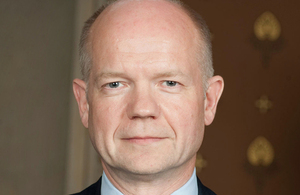
  • David Cameron – 2008 Living Within Our Means Speech

    davidcameron

    Below is the text of a speech made on May 19th 2008 by David Cameron.

    “For the past two and a half years, the changes I have led in this Party have been aimed in one direction: giving people a positive alternative to a failing government. I don’t want us to be elected on the back of a disintegrating Labour Party. I want us to be elected with a clear mandate to make the changes Britain needs.

    “So we’ve changed the way we select candidates. After the next election our Party will be more like the country we hope to lead. We’ve changed our policies and our politics: becoming once again the true champions for progressive ideals like tackling poverty, protecting the environment and kick-starting social mobility. We have taken clear positions and stuck to them:

    “Putting economic stability before tax cuts.

    Improving public services for everyone, not helping a few to opt out.

    Recognising that the progress people want to see is a better quality of life, not just higher GDP.

    “All this supports the overriding mission we have set for ourselves: to revive our society just as Margaret Thatcher revived our economy; to reverse Britain’s social breakdown, just as she reversed our economic breakdown. And we have set out how we will achieve that mission – by ending the era of top-down state control and big government. We want to respond to what should be a new post-bureaucratic age, by decentralising power, by giving people more opportunity and control over their lives, by making families stronger and society more responsible.

    ANGER WITH LABOUR

    “That is our positive alternative, the alternative to a Labour government that people are increasingly regarding with contempt. Whether it’s on the streets of Crewe and Nantwich, around the country in the run-up to the local elections, or in the emails and letters I get, I’ve noticed a new feeling of anger.

    “It’s not just because the Prime Minister can’t seem to stop treating people like fools – whether it’s on the true reason for last year’s cancelled election, or the true reason for last week’s 10p tax trick. It’s not just because in Britain today there are more people in severe poverty and nearly five million people on out-of-work benefits, because mortgage rates have gone up and the cost of living is going up and because all this shows that Labour have failed to deliver either the social justice or the economic efficiency they promised.

    “The anger today is about more than Labour’s economic incompetence. It’s about more than Labour’s failure to advance progressive ideals. The reason people are more and more angry with the government today is that while they see their taxes going up and up, there’s no corresponding improvement in the quality of their lives.

    “Of course our quality of life is not just about what government does – far from it. But there’s a real sense of unfairness that people are feeling today. They feel that Labour have broken the basic bargain between government and the people, the bargain that says: “We’ll take money off you in taxes, and you’ll get decent quality services in return.” That’s what I want to focus on today.

    WE NEED TO START LIVING WITHIN OUR MEANS

    “After a decade of reckless spending under Labour, Britain needs good housekeeping from the Conservatives. We need to start living within our means. Why? Because in the decades ahead there will be pressure to spend more on the essentials – whether that’s care for the older generation, equipment for our armed forces, or more prisons and police to keep us safe. At the same time, we have reached the limits of acceptable taxation and borrowing.

    “With the rising cost of living, taxpayers can’t take any more pain indeed they want a government that can give them the prospect of relief. And our economy can’t take any more pain without losing jobs to lower tax competitors.

    “So how are we going to square the circle? How are we going to spend more on the essentials without putting taxes up – and over time, creating the space for cutting tax, as we have promised to do? Our overall method and aim are clear: we will share the proceeds of economic growth. Sharing the proceeds of economic growth is what living with our means, actually means. Not spending everything we have. Not borrowing to spend beyond our means. But ensuring that, over time, the economy grows faster than the state, so spending falls as a share of national income and we can reduce taxes and borrowing.

    “Those who criticise sharing the proceeds of growth have sometimes not appreciated that if a government actually did this, either taxes, or borrowing, or both would have to fall over an economic cycle. I stress: have to fall.

    “Today we are setting out our strategy for delivering this commitment. We’ll do it by attacking the problem at its source: by attacking the three causes of a bigger state and rising public spending.

    “First, the cost of social failure. Family breakdown, unemployment, drug and alcohol addiction – these social problems rack up the biggest bills for government, so we’ve got to get them down.

    “Second, the cost of unreformed public services. Massive top-down state monopolies cost more and deliver less, so we need to improve the running of public services through more choice, competition and non-state collective provision.

    “And third, the cost of bureaucracy itself. All bureaucracies have an inbuilt tendency to grow, so we need to call a halt to the wasteful spending and inefficiency we’ve seen under Labour.

    “But that’s not about some one-off efficiency drive, it’s about a whole new method of government that’s careful, not casual, with public money.

    “That is our strategy. It learns the lessons from Labour’s failure to control public spending. It’s based on simple Conservative principles of good housekeeping. And it avoids easy answers in favour of commitments that we know we can deliver.

    LABOUR AND WASTE

    “The first and most obvious mistake Labour have made it when it comes to public spending and taxpayer value is their acceptance of government waste. It’s clear that we now have in power in this country a bunch of Labour politicians who are just shockingly casual about public money and how it’s spent.

    “£20 billion wasted on an NHS computer that still isn’t working properly.

    £2.3 billion spent refurbishing the offices of MOD civil servants.

    And in one year alone nearly £2 billion of tax credits lost due to fraud and error.

    “These are outrageous examples of a spendaholic culture in government a culture that is the public sector equivalent of the reckless, debt-fuelled spending spree that Gordon Brown’s policies have encouraged in the private sector. The level of government waste in our country today is evidence of an out-of-touch political elite who have forgotten whose money it is they’re spending. Ministers who get in their offices and think ‘great, now how can I spend lots of money.’ People who have become so accepting of government waste that they assume it’s just part of the job and that anyone who objects must be calling for “cuts.” But Labour’s mistakes on public spending go far deeper than their casual tolerance of government waste.

    LABOUR AND REFORM

    “I believe that a much more important factor than the waste is the superficiality of Gordon Brown’s political thinking.

    “Let me explain how I see it. Contrary to the fashionable view today, I think the Prime Minister has always been rather good at political communication. He was the one who wrote New Labour’s soundbites – “tough on crime, tough on the causes of crime”; “social justice combined with economic efficiency.” He even used to talk about “cutting the bills of social failure.”

    “But he has never developed a clear set of political ideas, or a clear political strategy, for achieving the aims expressed by the soundbites. Brown has been good at talking, lousy at delivering. He can tell you what he wants to achieve, but not how he’s going to achieve it. That’s why people are getting so angry now.

    “They were promised national renewal, and ended up with very little of substance being achieved at all.

    “And so we see today a government with absolutely no coherent plan for tackling our country’s deep-seated social problems – in particular the devastating rise in family breakdown and absolutely no coherent plan for reforming public services in order to make sure they deliver value for taxpayers’ money.

    “One minute it’s local accountability for policing, the next it’s a whole new set of top-down targets. One minute it’s a constitution for NHS independence, the next it’s a top-down plan for closing GP surgeries and replacing them with polyclinics. One minute it’s school reform…the next it’s putting LEAs back in the driving seat.

    “And with Ed Balls using his job to promote his leadership credentials to the Labour left, it’s just a non-stop series of moves to block and reverse school reform, and to increase state control of education.

    “The Prime Minister’s draft Queen’s Speech last week set out his legislative agenda more or less right up to the next election. That’s it. There’s nothing more to come.

    “Anyone looking for serious reform, especially in those crucial areas of school reform, welfare reform and strengthening families the areas that can make the biggest difference to our society now knows that as far as this Prime Minister is concerned, the cupboard is bare.

    CONSERVATIVE PRINCIPLES

    “Our positive alternative is based on three clear principles – principles of good housekeeping applied to the nation’s finances.

    “These principles matter because when it comes to these big questions of tax and spending, in many ways the nitty-gritty questions that are at the heart of politics people don’t just want some technocratic explanation of projected shares of GDP.

    “They want to know where you’re coming from. What your basic attitude is. Why it would make a difference to have a new set of ministers sitting in those offices making those decisions.

    “So here’s what we’re about. This is our attitude, and this is why we would be different.

    “First of all, we understand that you can’t get decent quality on the cheap. We will give public services the proper funding they need so that everyone in the country can have access to the services they need. As I’ve said before: no ifs, no buts, no opt-outs.

    “Second, we understand that when ministers and officials spend money, it is taxpayers’ money, not government money.

    “We will be careful with it, not casual. We will expect to be judged on a clear basis: if you’re taking people’s hard-earned money away from them you’d better be able to show that you’re spending it on what people want and that you can get better value for that money than they could.

    “And our third principle is the need for long-term tax reduction. As George and I have said repeatedly, we believe in low taxes – because we believe low taxes are both morally right and economically efficient. But as we have also said, we will never trick people into voting for us with promises of tax cuts that cannot responsibly be delivered, or that cannot be sustained.

    “We are the party of low taxes for the long term, not tax cut promises for the short term. That is why we are setting out our long-term strategy today. When it comes to tax and spending, it is tempting for politicians to make simplistic promises and to give easy answers to difficult questions. I know there are people who want us to do just that today, and I’d like to explain why I don’t think that would be right.

    NO EASY ANSWERS

    “We all know that the easiest thing in the world is for an opposition party to stand up at an event like this and blithely talk about all the efficiency savings we will make in government how we will streamline public spending, how we can close tax loopholes, how we can move towards a bright future of less spending and less tax with a few well-chosen cuts that miraculously deliver substantial savings without harming public service delivery at all.

    “It is a well-trodden path by opposition parties. I know – I’ve been there.

    “At the last election, we produced something called the James Review. A long list of all the government functions, quangos and bureaucrats a Conservative government would cut.

    “Well-intentioned – certainly. A Conservative government should always try to cut out waste and deliver value for money for taxpayers. It’s in our political DNA.

    “And the James Report was a serious and impressive piece of work. But was the overall approach credible? I’m not so sure. To make a long list of efficiency savings in advance of an election; to add them up to produce a great big total; to turn that total into debt reduction, spending increases elsewhere and a tax cut…?

    “People didn’t believe it, for the very good reason that controlling public spending is not about a one-off efficiency drive, it’s about a whole new culture of government.

    “There is a simple fact which political historians amongst you will know very well. The government “efficiency drive” is one of the oldest tricks in the book. The trouble is, it’s nearly always just that – a trick.

    “In fact it’s such a cliché, there was an episode of Yes Minister about it, called “The Economy Drive.” Ministers are summoned, officials instructed, the media prepared for sweeping savings in the running costs of government. And then, a few months down the line, the sheepish-looking ministers and officials come back and say “well actually, it wasn’t quite as straightforward as we’d hoped, Prime Minister.” Gordon Brown announced another one last week.

    “Let me make it clear: I believe that driving efficiency though the government machine should be a constant administrative effort. Every business has to improve its efficiency every year, or it won’t survive. That should be a constant principle of government too

    “But I do not believe in simplistic lists of cuts. In naïve over-estimations of potential savings. Or in cobbling together a big number in order to get a good headline. Making government more efficient and cutting out waste is absolutely part of our strategy for controlling public spending. But it is only a part.

    “To make it the only thing in our plan would simply not be credible. The scale of the public spending crunch that is coming down the line, the scale of people’s expectations for public services, and the imperative for competitive taxes all mean that we need to think far more deeply about the role of the state if we are to live within our means in the decades ahead.

    “It cannot and must not simply be about “efficiency savings.” And it must especially not be about the kind of short-term savings that in the end add to demands on the state because they undermine social value in the name of delivering economic value. Spending cuts that look efficient on a powerpoint chart but end up costing more money are just a false economy. Instead, living within our means is about taking three key steps.

    REDUCING DEMANDS ON THE STATE

    “The first way in which we will control public spending is to reduce the long-term demands on the state. We need to tackle the causes of the social problems that give rise to public spending in areas like welfare and crime. That means taking forward the work that began with Iain Duncan Smith’s magnificent Policy Group report, Breakthrough Britain.

    “The key areas for radical reform, and the early focus of our work in government, will be in school, reform, welfare reform, and strengthening families.

    “We have already published: Policy Green Papers on school reform and welfare reform, and some of our thinking on making Britain more family-friendly. And the next stage in our work on strengthening families will be published within the next few weeks. If we get these three things right: school reform, welfare reform and strengthening families, then I believe we will make serious progress in tackling these deep social problems that have caused so much pain, and cost so much money, for so long.

    “But we will also be developing policy beyond the immediate focus areas of schools, welfare and families to address the complex and interconnected problems Iain and his team identified in his report, From drugs to debt; from children in care to people with disabilities.

    PUBLIC SERVICE REFORM

    “The second way in which we will control public spending is by carrying out the work that was the great missed opportunity of the Blair and Brown years – proper public service reform. Unlike the Labour Party, there is no internal feud or ideological war preventing us from carrying out the reforms that everyone knows are needed.

    “As Nick Herbert set out in a superb speech last week, there is now a distinctive modern Conservative approach to public service reform, based on clear thinking about how we can give power over services to those who use them.

    “Where services are individually consumed we will transfer power over those services to individual people, giving them a choice between competing providers.

    “And where services are collectively consumed, we will transfer power over those services to the lowest practical tier of government, opening up provision to social enterprises, private companies and community organisations.

    “For us, public service reform is about choice and voice – bringing greater accountability to the provision of public services, so the power relationship is not top-down – from Whitehall to public services but side to side – a new relationship between the professionals who deliver public services and the public, who pay for them and use them.

    “So in education we will end the state monopoly and allow new schools to be set up by a wide range of expert organisations, giving parents real school choice for the first time. In the NHS we will get rid of the top-down political micromanagement and put the power in the hands of patients, who can choose the GP who they think will get the most out of the NHS on their behalf. And in prisons and probation we will empower the local managers – and pay them by results.

    EFFICIENCY AND TRANSPARENCY

    “The third component of our strategy is cut out waste and make government more efficient. That is one of the principal responsibilities of Francis Maude and his implementation team. This is a really significant commitment for us.

    “Normally, political parties would only devote resources to the things that directly help them win an election. But we don’t just want to win – we want to know exactly what we’ll do when we’ve won.

    “So Francis and his team will be looking at government efficiency right across the board: procurement, staffing, structures – everything you would expect from a modern, professional and businesslike operation.

    “We are using the best private sector expertise to find ways to save taxpayers’ money and improve service delivery. But I do not believe that it’s enough to just stand here and make promises about efficiency. I believe we need to create additional pressure on ourselves – and that’s why I believe transparency in public spending is an absolutely vital part of this.

    “If we can show people exactly how their money is being spent, that will leave no hiding place for waste and inefficiency. It will shame ministers and officials into spending public money wisely.

    “And in this post-bureaucratic age, the information revolution makes such detailed accountability possible for the first time. That’s why last year, we introduced a Bill in Parliament to force the government to list on a public, easily searchable website, every item of public spending over £25,000.

    “Unsurprisingly, Labour blocked it – but I can promise you that this will be one of the first innovations of a Conservative Government.

    “And I can also announce that we will shortly be launching an online whistleblower service, so that people who work in the public sector can tell our Implementation Team about the waste and inefficiency they would like us to change.

    CONCLUSION

    “So that is our three-part strategy for controlling public spending: reducing the long-term demands on the state; reforming public services, and making the public sector more efficient and transparent. Britain needs this strategy because under Labour, Britain is on the wrong path.

    “They have splashed the cash like there’s no tomorrow – but the trouble is, there is a tomorrow, and it’s got to be paid for.

    “Unless we make big changes, we’re heading for a future as a high-tax, uncompetitive backwater with soaring social costs and a falling quality of life. To avoid that future, while fulfilling the essential requirements of modern government, we will need to put into action those good Conservative principles of good housekeeping.

    “And then we can look forward to a very different future: a low tax, competitive economy, with a high quality of life and the opportunity for everyone to make something of their life. It used to be said that “good food costs less at Sainsbury’s.” Well I want good services to cost less with the Conservatives. That’s why it’s so vital that we have a serious plan for living within our means.

  • David Cameron – 2008 Speech on Primary Care

    davidcameron

    Below is the text of the speech made by David Cameron, the then Leader of the Opposition, to the King’s Fund on 21st April 2008.

    My thanks to the Kings Fund for hosting us today. I am here to talk about general practice and the polyclinic programme. But first I want to set out the context of my party’s overall approach to the NHS.

    The health service needs serious reform. That reform should be steady, purposeful and with a clear direction, avoiding unnecessary upheaval. Changes in lifestyles, in technology and medicine itself, in the expectations people have of the services they receive all this means we need a more decentralised, more patient-centred, less bureaucratic system. And at the same time, if we are to maintain public consent for all the extra spending the NHS receives we have to ensure better value for money than we’ve had in the past.

    But my point is that reform should be bottom-up, not top-down: wherever possible driven by the discretion of professionals responding to the needs and wishes of their patients.

    We need to change the essential power relationship in the NHS: from a vertical relationship where professionals are told what to do by politicians and managers above them with patients left just to take what they’re given to a horizontal relationship where professionals have the necessary autonomy and discretion to respond to the demands of patients and patients are in the driving seat because they have the ultimate power: the power to choose the service they want.

    How do we get there? One thing I’m sure of: we won’t get there through yet another massive structural reorganisation. For too long the NHS has been treated by Government like a surgeon treats a patient – laid out unconscious on the operating table, passively receiving major invasive surgery. Instead we should treat the NHS more like a walking, talking, conscious adult, in its right mind: in need of treatment, yes, but able to understand what’s going on and, most importantly, able to take significant responsibility itself. In a word, we politicians need to treat the NHS as if we were its GP, not its surgeon.

    Assaults on the NHS

    No one says Labour doesn’t care about the NHS. But it’s not enough to support an institution in principle. You’ve got to understand how it works. And to me the way Labour has treated the NHS over the last 10 years shows a severe lack of understanding.

    There have been reforms and counter-reforms. The abolition of the internal market under Frank Dobson. The return of the internal market under Alan Milburn, but with the addition of countless bureaucratic targets. Then the catastrophic loss of financial control under John Reid and Patricia Hewitt leading to the closure of community hospitals, maternity units and accident and emergency units.

    It is genuinely impossible, looking back, to trace any coherent direction in the path of Labour’s health policy over the last 10 years. The one constant has been a restless series of changes which, to the NHS itself, have felt like a series of frontal assaults. It all reflects Labour’s seduction by management consultants.

    It’s said in the private sector that no-one ever got fired for hiring IBM. The same seems to go for the NHS. You see it in all the constant upheavals: the PCGs and the PCTs, the SHAs and the StHAs, the fiasco of the junior doctors system which replaced recruitment by human beings with recruitment by a computer, and an incompetent computer at that; the billions – literally billions – of pounds of public money wasted.

    It’s all the product of Labour’s bureaucratic mindset, or what I call policy by PowerPoint: clever flowcharts and organograms which ignore the human relationships that are the most important aspect of healthcare.

    GP contract

    And this applies especially to primary care. Look at the mess the Government has made of the GP contract. First, they negotiated a deal which took the responsibility for organising extended opening hours and out-of-hours care away from GPs and gave it to Primary Care Trusts.Then, when the PCTs didn’t organise this extended access, the Government cried foul and blamed GPs for it.

    It is fundamentally dishonest for the Government to blame GPs for agreeing to a contract that ministers negotiated and urged GPs to accept. Nor is it GPs’ fault that they are being paid far more than they or the Government intended – it’s the Government’s fault for miscalculating doctors’ workload. And that’s what happens when you organise the health service using top-down bureaucratic methods dressed up to look good on a PowerPoint presentation.

    Private providers

    I often can’t help thinking that Labour have been blinded by the private sector – not just management consultants but private providers too. The ironic result is a smaller role for GPs – the original independent contractors to the NHS. PCTs are taking back control from GPs, and shifting contracts to private providers under preferential terms.

    This is a flawed strategy. It didn’t work in secondary care when the Government paid for block contracts with independent sector treatment centres at 11 per cent more than the equivalent cost in the NHS. And it won’t work if executed in the same way in primary care.

    Worst of both worlds

    So we have a flawed GP contract, and an uneven playing field for providers. Neither side of the purchaser-provider split is working properly. Indeed, the Government has spent 10 years oscillating between the rhetoric of local decision making on one hand and their instinct for central control on the other.

    Now, instead of the original system of doctors buying care directly for patients, Primary Care Trusts hold the purse strings. They call it Practice Based Commissioning. But in fact GPs neither hold real budgets nor have the ability to reinvest savings on behalf of their patients.

    As Julian Le Grand has put it, the Government was “trying to get the best of fundholding and the best of the health authority and probably ended up with the worst of both.” Put another way, we have ended up with neither a GP-led service nor an efficient central bureaucracy.

    The role of the GP

    So let me set out how I think general practice should work. I have a simple starting point. GPs should manage the entire relationship that a patient has with the NHS: meaning they should be responsible for providing the care that patients need or commissioning it from other providers or a mixture of the two.

    In a nutshell, GPs should control the budgets that NHS patients are entitled to. There is a good economic rationale for this. Budget-holding is a natural guarantee of efficiency, ensuring that money follows the patient and it is spent on frontline care rather than on bureaucracy. GPs – rather than remote managers – should be responsible for reconciling the available resources with clinical priorities and patient choice.

    And there is a good health rationale for GP budget-holding too: what’s called the continuity of care. The family doctor service is the way to ensure that – even though the patients may see many specialists – there is always one doctor in charge: the doctor closest to the patient. This is especially important when it comes to preventative action or the management of chronic conditions, which require significant patient involvement.

    Five years ago Gordon Brown said that “in healthcare the consumer is not sovereign” – meaning that patients should not be trusted or expected to manage their own care. Well I disagree. Because I believe in general practice. With the GP to advise the patient and to commission care on their behalf from a variety of providers, then in healthcare the consumer can be sovereign.

    Polyclinics

    All this brings me to the plan for polyclinics. Just at the very moment that patient sovereignty is becoming both possible and popular with technology and consumer expectations both in its favour, the Government is going in the other direction.

    The plan for a national network of polyclinics is the biggest upheaval in primary care since the creation of the NHS or even since the beginning of modern general practice in the 19th century. Because of course in 1948 GPs were left alone, as small independent practices operating under contract to the NHS.

    60 years later, Gordon Brown is attempting what Nye Bevan never managed to do: make GPs salaried employees of the state, and abolish small practices in favour of large multipurpose centres.

    Let me, in fairness, acknowledge the government’s rationale for polyclinics. I accept that the scheme is not simply designed to save money. And as I said in my Party Conference speech last year, it is often a very good thing for GPs to share premises with specialists like physios and pharmacists.

    In fact, many GP surgeries already provide these services, and they’re especially popular with young professionals. If you’ve got a back problem, say, and you also need some jabs for a business trip to India a polyclinic open till 8 in the evening may be just what you need. But frankly that’s not the sort of person who most relies on primary care.

    The Government says that in London, most patients will be within a mile and half of a polyclinic. The people who need GPs the most are the elderly, those with small children and those with long-term conditions. Those are the people least able to get to a polyclinic, and least comfortable in a large impersonal institution. They like to rely on the doctor they know, at the end of their street, often in a building not much bigger than a house. They have a human relationship with their GP that they simply won’t have with a member of staff at a polyclinic.

    So I don’t object to polyclinics in principle. I object to the principle of imposing them on local communities without public support and against the wishes of GPs themselves. Where they occur, they should occur naturally, as the voluntary combination of free agents – not as the latest structural re-organisation of the NHS. Lord Darzi, the health minister behind the polyclinics plan, has admitted that doctors will, effectively, be forced into polyclinics using the GP contract. It is quite wrong.

    If the Darzi plan is implemented a thousand GP surgeries are likely to close in London alone – that’s three quarters of the total. Another 600 local surgeries will close across the country. Labour has already tried to bring about the end of the district general hospital.

    Now they are trying to abolish the family doctor service. Communities which have lost their Post Office, their local shops, their local police station, are going to lose their doctor. So the Conservative Party will fight Labour’s plans to close GP surgeries. We pledge to save the family doctor service from Gordon Brown’s NHS cuts.

    Modernisation

    The Government presents this as modernisation. Well, as so often, Labour gives modernisation a bad name. I don’t believe that 21st century medicine requires the end of the family doctor service.

    A truly modern health service would enhance the small local GP surgery, not abolish it. The creation of an NHS national digital network means that small practices can connect to other services where there is additional need. For example, say more outpatient therapists and diagnostics are required. If GPs are given budget-holding responsibility to contract for those services, they can easily source the necessary providers. Improved provision of care in the community doesn’t require loss of small practices.

    GPs petition

    I want us to establish now the consensus we need for a primary care led health service in the future. So let me read to you the petition organised by the thinktank “2020health” and drawn up in consultation with Andrew Lansley and Mark Simmonds. It represents the values that GPs and patients have discussed with Andrew and his team over recent years.

    I quote:

    “We believe that General Practice is the foundation of the NHS.

    We are the first point of contact for the majority of patients, and we value the relationships we develop with our individual patients.

    We believe that GPs should remain independent contractors to the NHS, and support a level of remuneration commensurate with our responsibilities and the quality and outcomes we achieve.

    We want to be free from central Government interference and bureaucracy; able to control our own budgets; rewarded for working in socio-economically deprived areas; free to re-invest for our patients’ benefit and able to innovate in contracts with healthcare providers.

    We also believe we should be free to determine the opening hours, size and locations of our practices, in response to our patients’ needs, and object to being forced into polyclinics against our will.

    We want a structure of primary care that is truly accountable to patients, and is encouraged and rewarded for innovation, excellence and outcomes.”

    These are the values of General Practice which the next Conservative Government will defend. We want to work in partnership with GPs, not in conflict with them as this Government is doing. So I urge GPs to sign up to this petition and ensure that the next Conservative Government has the backing of the profession to modernise general practice in a way that works for the staff and patients of the NHS.

    Conclusion

    I said at the outset that I believe NHS reform should be gradual and organic – but that it should have a clear direction. This stands in contrast to the sudden, misdirected jerks that have characterized Labour’s health policy over the last 10 years.

    So in conclusion, let me set out the four basic steps that a Conservative Government will take. First, our commitment to a fully-funded health service: increased NHS spending year on year. Second, devolution of power to the front-line – and that especially means GPs. More power and responsibility for NHS professionals, and more choice and freedom for patients.

    Third, independence for the NHS as a whole. Politicians should be focusing on the health outcomes that the NHS achieves in exchange for taxpayers’ money – not trying to micromanage every decision. So we will formally make the NHS independent of Government control. And then last – the conclusion of these reforms – a transformation of the Department of Health itself. From the national manager of primary and acute care, to the agency responsible for public health. These are the steps that a Conservative Government will take to reform the NHS.