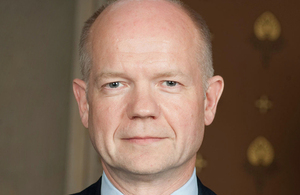
Tag: 2006 Conservative Party Conference

  • William Hague – 2006 Speech to Conservative Party Conference

    Below is the text of the speech made by William Hague, the then Shadow Foreign Secretary, at Conservative Party Conference on 1 October 2006.

    Well, there we are: a centre-right leader who’s changed his party, appealed to his country and defeated a left wing government in power for three terms.

    And isn’t it great to see from David Davis’s superb speech the unity of purpose and personnel that our party now enjoys.

    Our leadership election was so successful that both the other parties wanted one too.

    Now Labour’s never ends, and the Lib Dems wish they’d never had one.

    And I will tell you this: when I look around the Shadow Cabinet table, and I listen to the canny thoughts of David Davis, the down-to-earth wisdom of Liam Fox, the sharp insights of George Osborne and the brilliant visions of Oliver Letwin and David Willetts – to name but a few – I have never been more convinced that we can win.

    And when I go to meet people around Britain – such as the woman I met in a deprived area of Wakefield last week, who said ‘please give us some pride in our country again’ – I have never been more sure that people need us to win.

    And when I look across at the Government front bench, six feet away in the House of Commons; Gordon Brown scheming, Tony Blair seething and John Prescott snarling, I have never been more certain that we’ve got to win.

    It is one of my great privileges to ask parliamentary questions of our Deputy Prime Minister. Sometimes I think I should thank him for the joy he brings in to our lives.

    I am ever so polite to him. Partly because nothing makes him crosser. It’s not difficult to make him cross. Every day he wakes up angry and goes to bed furious.

    When we discussed the Olympics I asked him if he might put forward a new sport for Beijing – croquet. I even reminded him of Rule 1c of Oxford Croquet, which says that when you have scored a certain number of times you are declared to be ‘pegged out’ and have to be removed from the game.

    Well now he is to be removed from the game. Things will never be the same,

    – no more references to the ‘Balklands’,

    – never again will we hear that the greenbelt was Labour achievement that they intend to build on,

    – no more hitting the voters.

    And, let us hope, no more imposition of unwanted regional government, no more transport plans for ten years abandoned after four, and no more jacking up of everyone else’s council taxes while forgetting to pay his own.

    Seven years ago John Prescott made the one sensible remark of his life. He looked up at the Dome and said ‘If we can’t make this work, we’re not much of a Government’.

    I think that in the ludicrous script for Tony Blair’s farewell tour, which had him being serenaded on Songs of Praise and applauded on Blue Peter, presumably before disappearing dewy-eyed towards some great Cliff Richard villa in the sky, instead of visiting twenty iconic buildings opened since 1997 he need go to only one to sum up his premiership. There it stands – vast, expensive, over-hyped and empty – the perfect monument to the high hopes and pitiful delivery of New Labour.

    There we have seen them these last weeks, while our soldiers bravely fight on in Afghanistan, our health workers worry about redundancy and our primary school results decline, ministers doing nothing but fight each other in their own jealous little world. And the bad news for them is that they are not just fighting because they loathe each other, although loathe each other they do. The Labour party is turning on itself because after nine years of their government they have produced a country where violent crime and school truancy have rocketed, where hard-working citizens are ensnared in officialdom, where we are falling behind in our ability to compete just as Asian economies snap at our heels.

    They have given us a Government so inefficient that we have 700,000 more public servants but no-one can find a dentist, so incompetent that the Home Office releases foreign prisoners and then fails to find them, loses track of illegal immigrants and ends up employing them, so complacent that as 20,000 jobs are lost in hospitals the Health Secretary describes it as the ‘best year ever’. We have rarely endured a Government that has so rapidly, shockingly and comprehensively lost its way.

    I have always argued that Tony Blair is not new at all but is actually another Harold Wilson. The similarities are uncanny, from both starting with the claim to be modern and new, to both ending up disgracing the honours system. And both will have left behind something that could never have been said of a Thatcher, a Churchill, or even of an Attlee – that the whole thing was an act, the entire business a con, and the entire period a wasted opportunity.

    And this is the legacy he will leave – he has ensured that politics has never been so mistrusted and the word of government has seldom counted for less. His legacy is that the coinage of politics has been debased amidst the rampant inflation of pre-announcement, re-announcement, false announcement and the search for the days to bury bad news.

    And now they seek renewal from Gordon Brown. Well, I just say this about Gordon Brown.

    It was my job to respond to his first budget. And I remember how he concealed as a minor reform to taxes on dividends, the robbing of £5 billion a year from the pension funds of the people of this country . By now that comes to some £50 billion, an unimaginable sum. Today, people retiring are already finding their pension funds worth much less than nine years ago. And I say this: I will never believe that anyone who takes away the income of generations of pensioners without even having the decency to admit he was doing it should guide the destiny of our country.

    Last week he told the Labour Party there was a poverty of opportunity and aspiration in this country. And for once he wasn’t talking about opportunities for old chancellors of the exchequer to become Prime Minister. He was talking about school pupils. ‘Don’t tell me we couldn’t have done better for them’, he told his Party. We’ve been telling him that for years. But who has been in government for the last nine years while a poverty of aspiration has spread among our schools?

    Never in modern times has a Government enjoyed such immense public goodwill and huge parliamentary majorities in its opening years in office. And never have such assets been so squandered.

    So let us be in no doubt, as we gather here in Bournemouth this week, that if we wish to serve our country and give people the chance of a better government, we do not really have a choice. We are not a debating club, or a pressure group. We have, all of us have, to do everything we can to make sure our party can win the confidence of the nation.

    I hope you agree with me on this: we cannot rely on Labour to lose the next election; we must positively win it in our own right. And I hope you share my excitement that now, at last, it is possible to do so.

    It is possible to win, first of all, because of David Cameron. I have worked, one way or another, with the last six leaders of our party and I served as one of them myself. So I think I know what I am saying when I say that for the willingness to listen, readiness to lead a team, and ability to hold steadfastly to the course he has set, David Cameron is already an outstanding leader who deserves the loyalty of us all.

    It is possible to win, too, because wherever I travel I see that it is Conservative ideas that are positively transforming people’s lives. When was the last time you heard, anywhere in the world, of schools and hospitals being improved by centralised planning, or industries prospering under state control, or countries getting richer by taxing their citizens to the hilt? The spirit of freedom, decentralisation, and families running their own lives has always been ours, and now it is the spirit of our age.

    And the third reason we can win is that when David Cameron tells us to change we say yes, we’re going to do it.

    Our party has served Britain for so long because each generation who has led it understood when it needed to move on: whether it be Disraeli’s vision described by David Davis, or Harold Macmillan’s recognition of the need to house millions of people in the 1950s or Margaret Thatcher’s instinct in the 1970s that those millions were ready to own those homes for themselves.

    So today, in a new century, we must respond to the need for change. As the destruction of our natural environment becomes a central challenge for all nations, who better to take up this cause than a party whose first instincts are to improve the good and preserve the best?

    As drug abuse becomes the greatest scourge of our young people and violent crime escalates, who better to find the answers than a party that has always believed in responsibilities as well as rights?

    And why shouldn’t the Party that has been organised from the inside out by women, has traditionally won the most votes from women and brought to office the first woman prime minister in western Europe, – why shouldn’t the Party that has done all these things see that women are fully and properly represented on the benches of the House of Commons?

    I went to a reception a few weeks ago for our aspiring women candidates. I was meant to give them encouragement. They were energetic; they were clever; they were accomplished; they were eager to get on with winning; they were immensely impressive – the last thing they needed was encouragement. In fact it was me that received the encouragement.

    “You can win”, they said.

    “We are your new generation”, they said.

    “None of our friends wants Labour anymore”, they announced.

    I went away inspired. I went home and I said if we can get half of those people into parliament, Gordon Brown will be run out of Downing Street faster than he can fiddle his figures again.

    So now we must do it. You, me, all of us must change even if it’s hard. If changing our party to understand the problems of urban Britain means delving deeply into our troubled cities, we must do it. If it means, for me, learning from mistakes we made in the past, or even being patient with John Prescott, I must do it. And if it means, for you, selecting more candidates who are women candidates, then I say to you, you must do it.

    And let us remember too that there are now millions of people in Britain of minority ethnic backgrounds, and that, facing as we do the great issues of social division and home-grown terrorism, the answer is not to reject people but to welcome and integrate them. We will have performed the most powerful service if we can bring forward as members of parliament people who will show all those people that they too can get to the very top in a country which also belongs to them.

    Wherever you look, the political world is changing. Last month I was given a lecture about the benefits of privatisation. But I was in Shanghai, and the speakers were from the Communist Party of China.

    We will be privileged to hear at this conference from two pre-eminent international figures, each of whom may become president of their great countries, and each of whom also carries a message of change to their party. Nicholas Sarkozy is telling his Gaullists that the French social model has to change. Senator John McCain is telling Americans that climate change must be tackled, and that if we are to defeat attacks on our free society, we must uphold the highest ideals of respect for human dignity ourselves.

    Their speaking to us is a sign that our party is once again taken seriously the world over.

    Whether they succeed in their own countries is something we cannot influence, but whether we succeed in ours is up to us and us alone. And so as David Cameron seeks to bring necessary change to our party, he will receive from me the most unwavering support.

    We live in an age of political cynicism. People have given up having faith in politics. They have heard too many promises from a Government that does not deliver, that counts appearance above reality.

    If we have learned anything in recent years it is that people need from us an overall vision of Britain from which our policies are derived, not piecemeal policies adopted one by one. That is why we are right to begin this year by demonstrating our purpose, direction and principles.

    We must all be conscious this week of the people we meet around the country. We can picture them now: teachers retiring early and utterly demoralised, residents of noise-ridden housing estates who lives are never free of anti-social behaviour year after year, people with small businesses who are staggered by the red tape, and even people who want to emigrate from what ought to be the best place to live in the world.

    They do deserve better. They deserve a party that will trust people to make a difference.

    After someone else has made a mess of things, the Conservative Party has always been there to put things right. We have always had the same values – freedom, an understanding that real change comes from individuals and families working together in society, not from the state. And our values have always been relevant because as Britain has changed and grown we have changed and grown. We have always succeeded when we applied our values to the Britain of the present.

    If we want to make a difference we need to change with Britain.

    The British people want a change of government.

    They need us to change, because they need us to win. All of us have our work to do, so let all of us now do it.
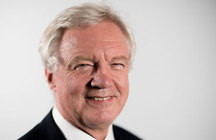
  • David Davis – 2006 Speech to Conservative Party Conference

    Below is the text of the speech made by David Davis to the Conservative Party Conference on 1 October 2006.

    David Cameron wants to change the Conservative Party.

    I’m speaking today because I’d like to tell you why I agree with him.

    There is one change that I want to see more than any other.

    A change of government.

    Today, I’d like to talk about how I think we’re going to get it; why we’re going to win the next election.

    History

    The Conservative Party is the oldest and most successful political party in the history of democracy.

    We should all recognise that every single significant Conservative Prime Minister was remarkable because they changed the party and transformed the country.

    For me the first great Conservative was Pitt the Younger.

    The label certainly fitted – he was even younger than the leader we’ve got now.

    Pitt took the tired old Tory Party, the party of the shires, of privilege, of turning back the clock, and he made it into a party which was popular, modern, and successful.

    So how did he do it?

    Well he certainly didn’t do it by throwing the old Tory Party away and starting all over again.

    Pitt was a conservative.

    He took the essential principle of the Party – loyalty to the Crown and to the nation – and he made it serve the age.

    Pitt was a great patriot and a great war leader. He saved the nation from Napoleon.

    He was a brilliant administrator. He cut taxes and opened Britain to free trade.

    And above all, he was compassionate. He and his friend William Wilberforce brought about the end of slavery in Britain.

    Pitt exemplified the principle that to be Conservative is to be modern, freedom-loving, and decent.

    Other great Conservatives followed. I can only do justice to three this afternoon.

    It’s fair to say that Disraeli shook the Tory Party up a bit.

    Disraeli’s genius was that he saw what democracy could do for the Conservatives.

    And, he saw how the Conservatives could use democracy to transform our country for the better.

    He gave the vote to working men in the urban areas, and passed the largest body of social legislation in the entire Victorian period.

    So Disraeli took the Conservative party from the country to the cities.

    He made ‘One Nation’ the slogan of our party – the idea that we govern not for any class, or any interest, but for the whole country.

    And what about that towering Conservative, Winston Churchill?

    After six years of World War Two, the voters chose a Labour government to look after the peace.

    So Churchill took a hard look at his own party and realised it had to change.

    We had been so busy winning the war that the party organisation was still stuck in the 1930s.

    And, people wanted better living conditions than they’d put up with in the 1930s.

    Churchill understood that.

    And, he changed the party.

    He launched the Industrial Charter – that great document which made peace between the Conservative Party and the welfare state.

    After six years of Labour, the Conservatives were back in power for 13 years.

    In those years, earnings rose twice as fast as prices.

    Home ownership nearly doubled.

    Savings multiplied by ten.

    What was that dangerous phrase coined by Harold MacMillan?

    ‘We’d never had it so good’.

    Of course, it didn’t last. Labour got back in.

    Devaluation. Inflation. Stagflation. Strikes. Bankruptcies. Rubbish lining the streets.

    All the horrors of government by trade union.

    But then came – that’s right – Margaret Thatcher.

    Let us never forget what we owe to that lady!

    We owe her our freedom from the threat of the Soviet Union.

    We owe her our freedom from socialism at home.

    We owe her our prosperity, and our pride in our country.

    She made Britain great again, and the whole nation knows it.

    But as a party we also owe her this:

    Margaret Thatcher gave us the perfect example of how a Conservative leader should lead.

    She didn’t have an easy time of it at first.

    A lot of you will remember:

    She had to fight against the old guard that wanted her to stick with ideas from the past.

    But she persevered and she took the government of Britain and made it work for the British people.

    Like Disraeli, Margaret Thatcher made a whole generation of hard-pressed men and women into Conservative voters.

    Vision

    So what do all these leaders have in common?

    It’s simple.

    They were visionaries. Radicals, if you like.

    They took the party they loved, and turned it in a new direction: to face the challenges of the day.

    Pitt, Disraeli, Churchill and Thatcher were all agents of change, who transformed our Party, and more importantly transformed our country.

    During the dark days over the last nine years, I’ve never doubted for one minute that the Conservative Party would have the resilience and resourcefulness to recover.

    And, that is why we are the oldest and greatest party in the world.

    Because, with every generation we have been able to renew ourselves.

    To find in our philosophy the ideas that address the challenges of our time.

    And, that is what we are doing again today.

    Conservation

    We have an odd name, our Party.

    Don’t worry – I’m not going to suggest we change that too.

    That oak tree is enough for now.

    By the way, I don’t mind the oak tree.

    Have you noticed that the trunk leans to the right?

    That’s good enough for me.

    The name Conservative is right.

    We want to conserve the things that we love about our country – and which Labour hate.

    But we face a particularly formidable task.

    To do what we want to do, we are going to have to shock the British people.

    Shock them out of their growing loss of faith in our democratic system.

    Shock them out of a belief that politics in Britain is progressively more sleazy and corrupt.

    Shock them out of the idea that politicians are in it only for themselves.

    That the promise of today’s bright new government leads inevitably to the broken promises of tomorrow’s tired old government.

    And we’ll have to shake voters into the realisation that the Conservative Party is the party to mend that broken faith, clean up that grimy self interest, and deliver on those unmet promises.

    And we’ll have to do that by leading by example keeping promises and saying what we mean.

    It was Edmund Burke who said that “History is a pact between the dead, the living, and the yet unborn.”

    And so the next Conservative government should see themselves as public servants three times over:

    As servants of our history, the men and women who made Britain great and who are no longer with us. As servants of today’s nation, the people who we represent today, and as servants of the generations yet to come.

    And as Conservatives, we know the best way to serve today’s generation and tomorrow’s is by preserving the best of our country.

    Preserve our great nation, and its freedom to act in its longstanding tradition of wise and ethical action in international affairs.

    Preserve our great institutions and with them the traditions of liberty and justice, of freedom and compassion that have marked this country out over the centuries.

    Preserve our economic skills and competitive capacity, because that’s the only way can we offer security in old age to today’s generation, and a life of opportunity to tomorrow’s children and grandchildren.

    And yes, preserve our countryside and environment because only then can we pass on what Margaret Thatcher called the “full repairing lease on our planet”, to the next generation in a form that they can enjoy and that we can be proud of.

    You all know that I walk a couple of hundred miles of Britain every September.

    Well, almost every September. I was a bit distracted last year.

    This summer I walked with my son from coast to coast from St Bees to Robin Hood’s Bay across the Pennines.

    And, as usual, two things struck me.

    One is the awesome beauty of Britain.

    Hill and dale, moor and fell, river and lake – this landscape is a gift from God.

    It is our home – the most precious thing we have.

    And we’ve got to conserve it.

    So, when David Cameron talks about the environment he shouldn’t be saying anything new or surprising for a Conservative.

    There can be no more Conservative idea than the conservation of nature.

    And the other thing that struck me was this.

    The people.

    I walked through farms, villages, market towns.

    I walked along pilgrim routes, old trade roads, the tracks made over centuries by the people of this country going about their business.

    Today they go by rail, by air and by motorway.

    But they are the same people who made those tracks I walked along.

    Hardy. Strong.

    Proud but not boastful.

    Capable of great things – but happiest at home.

    The people I talked to this summer reminded me once again why I went into politics.

    I am in politics to conserve the tradition of liberty.

    Tradition – because it is part of our inherited wisdom, distilled over centuries.

    It is not some abstract invention.

    It didn’t come by bloody revolution.

    It is the bequest of ages.

    And liberty – because it is the inheritance of free men and women.

    And, we need to conserve that inheritance.

    We have to conserve it from our enemies abroad – as we did under Pitt and under Churchill and under Thatcher.

    We have to conserve it from our enemies here in Britain.

    And, the test of whether we succeed is easy.

    When I am locked in political combat with one of our opponents, and life is a bit difficult, I remind myself that what we are striving to defend was protected by millions of lives of previous generations, so a little political discomfort is worth taking.

    And I remind myself of W. H. Auden’s poem, the unknown soldier, which contains the lines:

    “To save your world you asked this man to die.

    Would this man, could he see you now, ask why?”

    That is the test we’ve got to pass. That the nation we pass on is one worth fighting and even dying for.

    We have a Government whose idea of liberty is forcing us all to carry little cards to prove who we are.

    They want to conscript us, number us, put us into little boxes.

    They want to control us, manage us, nanny us.

    They want to run our lives for us.

    They even think they can spend our money better than we can.

    And it is the eternal job of the Conservative Party to stop them – and tell them loud and clear that we are a nation of liberty.

    That is the job for us.

    Change

    So, those are things we need to conserve.

    Our country.

    Our people.

    Our tradition of liberty.

    But to conserve those things we’ve got to change ourselves..

    It has been said that a state without the means of some change is a state without the means of its own conservation.

    The same goes for parties.

    So what are the things we need to change?

    That’s easy.

    Too many people still think the Tories stand for the rich.

    For the shires of England.

    For the established and static not the inventive and creative.

    And in a sense that’s all true and right.

    We are in favour of people being rich. No shame in that.

    As Abraham Lincoln said: ‘You can’t build up the poor….by tearing down the rich’.

    We do love the shires of England.

    We do respect the long established over the newly invented.

    But we are so much more than that.

    We are the party of the unfortunate, no less than the Party of the prosperous.

    We are the party of the council tenant, no less than the landed gent or the dotcom millionaire.

    We are the party of aspiration and hope, no less than achievement and comfort.

    We are the party of all the people.

    But if we’re going to have any chance of changing perceptions then we have to change our preoccupations.

    This Conference should understand that the battle we face is no longer beating the government.

    We have done that already.

    They are doing are a good enough job of that themselves.

    After all, how many more Labour Home Secretaries do you want?

    No. The battle we face is no longer about defeating the Government, it is now about winning the people.

    We have to talk about the things that matter to ordinary voters.

    Nurseries. Schools. Hospitals and GP’s. The school run.

    Opportunities for youngsters.

    All the things that you and I talk about at home with our families when we’re planning the complicated business of life.

    And, we have to change the way we look.

    That means widening the range of people who represent us in Parliament.

    I know this can be painful.

    But we have to do it.

    And you know, it’s working.

    People out there are taking note.

    They see us changing, and they like what they see.

    Peroration

    I mentioned earlier the dark days of the last nine years.

    That was no reflection on the men who have led us these difficult last years.

    William Hague, Iain Duncan Smith, Michael Howard.

    They kept the ship upright and afloat and they kept it moving forwards, through all the storms and turbulence.

    But I am sure – in fact I know – that each of them recognises what David Cameron has done in 10 short months.

    This time last year we engaged in an honest, open and democratic debate about the future direction and leadership of this Party.

    I hope you agree that we set an example the other parties would have done well to follow.

    It was a privilege to be part of that debate.

    Some of you will remember that I said at the time that the process was designed to ensure that the next PM elected by the British people was called David.

    And you can be quite sure I wasn’t thinking of David Milliband.

    To that end, the time for debate is over. Now is the time for action; action to deliver a Conservative government.

    Ten months ago you elected the next Conservative Prime Minister.

    It is my job, and the job of all my colleagues, to get David into Downing Street.

    And it is your job too.

    Because the Conservative Party does not exist for itself.

    It certainly doesn’t exist for us, the politicians.

    It doesn’t even exist for you, the members – though it certainly wouldn’t exist without you.

    It exists for the British people.

    We are gathered here this week to re-dedicate ourselves to the job we have to do.

    Let us go out from here renewed…

    …restored in confidence…

    …committed to the fight…

    …determined to take our message into every home in Britain.

    So that once again we can see:

    A Conservative majority in Parliament…

    A Conservative government in Whitehall….

    …and a Conservative Prime Minister in Downing Street.

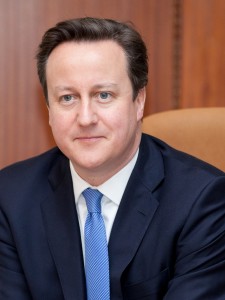
  • David Cameron – 2006 Conservative Party Conference Speech

    davidcameron

    Below is the text of the speech made by the then Leader of the Opposition, David Cameron, to the 2006 Conservative Party Conference.

    It’s a huge honour to be standing before you as leader of the Conservative Party.

    And first of all I want to thank you for the support you’ve given me in the past ten months.

    It’s been a time of great change.

    I’m already on my second leader of the Liberal Democrats.

    Before long I’ll be on to my second Labour Prime Minister.

    Soon I’ll be the longest-serving leader of a major British political party.

    I wanted this job for a very simple reason.

    I love this country.

    I have great ambitions for our future.

    And I want the Party I love…

    …to serve the country I love…

    …in helping Britain be the best that it can.

    We need to change in order to have that chance.

    You cannot shape the future if you’re stuck in the past.

    You knew that.

    And that’s why you voted for change.

    I believe we can all be proud of what we’ve achieved these past ten months.

    People looking at us with new interest.

    25,000 new members.

    And in our first electoral test, in the local elections, we won forty per cent of the vote.

    Let’s hear it for our fantastic local councillors who worked so hard and won so well.

    Tony Blair says it’s all style and no substance.

    In fact he wrote me a letter about it.

    Dear Kettle…

    You’re black.

    Signed, Pot.

    What a nerve that man has got.

    In the whole of the last year, there is only one substantial thing that the Labour Party has achieved for our country.

    Their education reforms.

    Right now, across the country, trust schools are being prepared with greater freedoms to teach children the way teachers and parents want.

    The only reason – the only reason – that’s happening is because the Conservative Party did the right thing and took the legislation through the House of Commons.

    I’m proud of that – proud of us, for putting the future of our children before party politics.

    Another sign of our changing fortunes is the impressive array of speakers who have come to join us at our conference this year.

    SENATOR McCAIN

    And I’d like to pay a special tribute to one in particular.

    He’s a man who knows about leadership.

    He’s endured hardship that’s unimaginable to many of us here.

    And he’s fought battles for principles that we all admire.

    Who knows what the future may hold?

    But John, I for one would be proud to see you – a great American and a great friend to Britain – as leader of the free world.

    COLLEAGUES

    I’d also like to pay tribute to my colleagues who have spoken already today.

    A year ago, David Davis and I were rivals.

    Today we’re partners.

    He has given me the most fantastic support over these past ten months.

    Ideas, energy, advice.

    He has not only helped bring this Party together…

    …he has helped take our Party in the right direction, and I want to thank him for all he’s done.

    And I’m proud to work with another man who is a brave politician, a wise counsellor and a great Conservative.

    A man who would be a Foreign Secretary that this country could be truly proud of: William Hague.

    Then there’s Francis.

    I know Francis likes to pretend that everything is doom and gloom.

    He’s always talking about the mountain we have to climb.

    He’s so gloomy, he makes Gordon Brown look like a ray of sunshine.

    But Francis, you’re doing a great job.

    LABOUR SPLITS AND BACKSTABBING

    Of course Francis has long told us to avoid the point-scoring and name-calling that can give politics such a bad name.

    He’s right.

    But we didn’t bargain on the Labour Party.

    First Gordon said he could never trust Tony again, then Tony called Gordon a blackmailer.

    Charles said Gordon was stupid, then John popped up and said no, Tony was stupid.

    Charles called Gordon a deluded control freak.

    And a member of the Cabinet said “it would be an absolute effing disaster” if Gordon got to No.10.

    That was just the husbands.

    When I look at these Labour ministers I ask myself how much time they’re worrying about their own jobs…

    …and how much time they’re worrying about NHS, about crime, about our troops in Iraq and Afghanistan.

    You only have to ask the question to know what the answer is.

    And there are months more of it still to come.

    Months of infighting, instability, indecision, jockeying for position…

    They said it would be a “stable and orderly transition.”

    Yeah, right.

    Like they said “24 hours to save the NHS”, “education education education.”

    These are the things they should be fighting for, but they’re too busy fighting each other.

    OUR RESPONSIBILITY

    So we have a great responsibility.

    To set out a clear, united and credible alternative.

    With some elections, you just know the result before a single vote has been cast.

    We were never going to win in 1997.

    People wanted change.

    I remember it well.

    I fought Stafford.

    And Stafford fought back.

    Labour were never going to win in 1983 when they offered Michael Foot as Prime Minister.

    Other elections are wide open.

    And the next election will be one of those.

    But we will not win, nor deserve to win, without a clear purpose and a proper plan.

    We must learn from Labour’s big mistake.

    When Tony Blair won his first election, he had only one clear purpose: to win a second term.

    Even now he says that the only legacy – the only legacy – that really matters to him is Labour winning a fourth term.

    Back in 1997, he had no proper plan.

    No real understanding of how to make change happen.

    He had good intentions.

    But he hadn’t worked out how to deliver them.

    So New Labour went round and round in circles.

    They abolished grant maintained schools – and now they’re trying to recreate them.

    They reversed our NHS reforms – and now they’re trying to bring them back.

    Road building – cancelled, then reinstated.

    They wasted time, wasted money, wasted the country’s goodwill.

    Only now, after nine years, does Tony Blair seem clear about his purpose.

    Well I’m sorry Mr Blair.

    That’s nine years too late.

    THIS WEEK

    We won’t make the same mistake.

    On Wednesday, the last day of our conference, I want to talk in detail about the important issues we face as a nation – and what our response will be.

    But today, on this first day of our conference, I’d like to set the scene for our discussions this week.

    I want to explain how we will arrive at the next election knowing exactly what we want to do, and how we’re going to do it.

    My argument is based on a simple analogy.

    Getting ready for the responsibility of government is like building a house together.

    Think of it in three stages.

    First you prepare the ground.

    Then you lay the foundations.

    And then, finally, brick by brick, you build your house.

    PREPARING THE GROUND

    These last ten months, we have been preparing the ground.

    Our Party’s history tells us the ground on which political success is built.

    It is the centre ground.

    Not the bog of political compromise.

    Not the ideological wilderness, out on the fringes of debate.

    But the solid ground where people are.

    The centre ground is where you find the concerns, the hopes and the dreams of most people and families in this country.

    In 1979, they wanted a government to tame the unions, rescue our economy and restore Britain’s pride.

    Margaret Thatcher offered precisely that alternative.

    And this Party can forever take pride in her magnificent achievements.

    Today, people want different things.

    The priorities are different.

    Safer streets.

    Schools that teach.

    A better quality of life.

    Better treatment for carers.

    That’s what people are talking about today.

    But for too long, we were having a different conversation.

    Instead of talking about the things that most people care about, we talked about what we cared about most.

    While parents worried about childcare, getting the kids to school, balancing work and family life – we were banging on about Europe.

    As they worried about standards in thousands of secondary schools, we obsessed about a handful more grammar schools.

    As rising expectations demanded a better NHS for everyone, we put our faith in opt-outs for a few.

    While people wanted, more than anything, stability and low mortgage rates, the first thing we talked about was tax cuts.

    For years, this country wanted – desperately needed – a sensible centre-right party to sort things out in a sensible way.

    Well, that’s what we are today.

    In these past ten months we have moved back to the ground on which this Party’s success has always been built.

    The centre ground of British politics.

    And that is where we will stay.

    LAYING THE FOUNDATIONS – SOCIAL RESPONSIBILITY

    But preparing the ground is just the first stage.

    Now we must show what we will build there.

    A strong government needs strong foundations.

    And I want us to lay those foundations this week.

    That’s not about individual policies.

    It is about a vision of the Britain we want to see.

    A Britain where we do not just ask what government can do.

    We ask what people can do, what society can do.

    A Britain where we stop thinking you can pass laws to make people good.

    And start realising that we are all in this together.

    Social responsibility – that is the essence of liberal Conservatism.

    That is the idea I want us to explain this week.

    That is what we stand for.

    That is what we’re fighting for.

    That is the Britain we want to build.

    Take fighting crime.

    It is not just a state responsibility.

    It is a social responsibility.

    Let’s not pretend that all we need is tough talk and tough laws to bring safety to our streets.

    Of course the state must play its part.

    That’s why we’re developing a programme of radical police reform.

    That’s why we want to build more prisons and reform the ones we’ve got, so they help reduce re-offending instead of encouraging it.

    And that’s why we’ll invest in drug rehabilitation, so we help addicts get clean and stay clean, instead of living a life of crime to feed their habit.

    But that is not the end of the story.

    It is just the start.

    We need parents to bring up their children with the right values.

    We need schools to be places of discipline and order.

    We need to stand up for civilised values in public places.

    We need to design crime out of the housing estates of the future.

    We’ve got to stop selling alcohol to children.

    We need the music industry to understand that profiting from violent and homophobic words and images is morally wrong and socially unacceptable.

    But more than this, we need people, families, communities, businesses to step up to the plate and understand that it’s not just about stopping the bad things…

    …it’s about actively doing the good things.

    Not waiting for the state to do it all, but taking responsibility, making a difference, saying loudly and proudly: this is my country, this is my community: I will play my part.

    That is social responsibility.

    That is our idea.

    So I want us to be the champions of a new spirit of social responsibility in this land.

    A new spirit of social responsibility that will succeed for Britain where Labour’s outdated state responsibility has failed.

    LABOUR’S APPROACH

    Think of any issue – not just crime – and then think of Labour’s response.

    This Government’s way of doing things – the old way of doing things – is so familiar, and so depressing.

    Ministers hold a summit.

    They announce an eye-catching initiative.

    A five-year plan.

    Gordon Brown generously finds the money for it.

    The money gets a headline, but no-one knows what to do with it.

    So they create a unit in the Cabinet Office.

    A task force is set up.

    Regional co-ordinators are appointed.

    Gordon Brown sets them targets – after all, it is his money.

    Pilot schemes are launched.

    The pilot schemes are rolled out across the country.

    They are evaluated.

    Then revised, re-organised and re-launched.

    And then finally, once the reality dawns that the only people to benefit are the lawyers, accountants and consultants of Labour’s quango army…

    …with a pathetic whimper – but no hint of an apology – the whole thing is just abandoned.

    We’ve seen too much of this in the past nine years.

    Headline after headline but absolutely no follow-through.

    It is a story of ignorance, incompetence, arrogance.

    A story of wasted billions – and disappointed millions.

    Somewhere out there, there is a place where Blair and Brown will never go.

    It’s dark.

    It’s depressing.

    It’s haunted by the failures of nine years of centralisation, gimmick and spin.

    It is the graveyard of initiatives, where you’ll find the e-University that died a death,

    the drugs czar that came and went…

    …the Individual Learning Accounts that collapsed in fraud and waste, the tax credits that were paid and reclaimed…

    …the Connexions service that flopped, the Strategic Health Authorities that were dropped…

    …the marching of yobs to the hole in the wall; the night courts that never happened at all.

    And still they keep coming, those hubristic monuments to big government, the living dead that walk the well-trodden path from Downing Street and the Treasury to New Labour’s graveyard of initiatives.

    The NHS computer: delayed, disorganised, a £20 billion shambles.

    Forced police mergers: the direct opposite of the community policing we need.

    And then the perfect example.

    ID cards.

    When a half-way competent government would be protecting our security by controlling our borders…

    …these Labour ministers are pressing ahead with their vast white elephant, their plastic poll tax, twenty Millennium Domes rolled into one giant catastrophe in the making.

    They’ve given up trying to find a good reason for it.

    Last week Tony Blair said that ID cards would help control immigration, when new immigrants won’t even have them.

    Does he even know what’s going on in his Government?

    ID cards are wrong, they’re a waste of money, and we will abolish them.

    These last nine years have been the story of a Government which instinctively believes, whatever it says, that everything is the state’s responsibility.

    We believe in social responsibility.

    Because there is such a thing as society, it’s just not the same thing as the state.

    THE BRITAIN WE WANT TO SEE

    So let us define this week the kind of Britain we want to see.

    And let us show how our idea – social responsibility…

    …not Labour’s idea – state responsibility…

    …is the right response to the challenges Britain faces.

    GLOBALISATION, WELL-BEING, THE ENVIRONMENT

    We know that in the age of globalisation, in the face of fast-moving economic change, people want their government to provide security.

    We know that the end of the traditional 9 to 5 job can make life tough for families, and people look to their government for answers.

    And we know that in the race against time to tackle climate change and protect the environment, people expect their government to show leadership.

    On all these challenges, Labour’s first response is to regulate business, hoping to offer protection.

    It may sound attractive.

    But there are unintended consequences.

    Well-intentioned regulation can make us less secure in the age of globalisation.

    Less able to provide the jobs, wealth and opportunity on which well-being depends.

    It can undermine the competitiveness of our companies, so it’s harder for them to invest in the new, green technologies of the future.

    So our response, based on our philosophy of social responsibility, is to say to business:

    Yes you should look after your workers, yes you should look after your community, yes you should look after our environment.

    And we must stand up to big business when it’s in the interests of Britain and the wider world.

    So next week our MEPs will vote to strengthen proposals to make companies replace dangerous chemicals with safe ones.

    But where Labour are casual about increasing regulation, we will be careful.

    We will ask:

    Are we making it easier to start a business?

    Easier to employ someone?

    Is the overall burden of regulation going down?

    Will the regulation that’s being put forward lead to real changes in behaviour, or just time-wasting and box-ticking?

    If only we had a government that was asking these questions today.

    We want companies to create their own solutions to social and environmental challenges, because those are the solutions most likely to last.

    So in a Conservative Britain, corporate responsibility will provide the best long-term answer to economic insecurity, well-being in the workplace, and environmental care.

    It is the same approach when you look at the other great challenges we face.

    PUBLIC SERVICES

    We know that in an age of amazing technological advance, instant information exchange, and empowered consumers who don’t have the deference of previous generations…

    …people expect more from our health service and our schools.

    And government has to respond to that.

    Labour’s response is the culture of targets, directives and central control, aimed at raising standards in our public services.

    They mean well.

    But the unintended consequence is to make these services less responsive to the people who use them, dashing expectations not meeting them.

    So our response, based on our philosophy of social responsibility, is to say to our nurses, doctors, teachers:

    Yes you should meet higher standards, yes you should give your patients and your pupils more.

    But we’re not going to tell you how to do it.

    You are professionals.

    We trust in your vocation

    So in a Conservative Britain, professional responsibility will provide the answer to rising expectations in the NHS and schools.

    POVERTY AND REGENERATION

    And just as people will no longer accept second best in public services, we know that in their communities they are fed up with squalor and poverty and crime…

    …and they look to their leaders to sort things out.

    Labour’s response has been a massive expansion of central government into local communities.

    The centralised Neighbourhood Renewal Unit, the insensitive Pathfinder programme, prescriptive top-down schemes for regeneration.

    You can see why Labour have done it.

    But the unintended consequence is to stifle the very spirit of community self-improvement that they are responding to.

    Our response, based on our philosophy of social responsibility, is to trust local leaders, not undermine them.

    So we will hand power and control to local councils and local people who have the solutions to poverty, to crime, to urban decay in their hands.

    We trust in your knowledge and commitment.

    So in a Conservative Britain, civic responsibility will provide the answer to improving the quality of life in the communities left behind.

    CHILDREN

    And then perhaps the greatest challenge of all.

    The challenge of bringing up children in a world that often seems fraught with risk and danger.

    There is nothing that matters more to me than the safety and happiness of my family.

    Of course it’s right that government should be on parents’ side.

    But Labour take it way too far.

    A national database of every child.

    Making childcare a state monopoly.

    Slapping ASBOs on children who haven’t even been born.

    Labour’s intentions may be good.

    But the unintended consequence is to create a culture of irresponsibility.

    They may have abandoned Clause 4 and the nationalisation of industry.

    But they are replacing it with the nationalisation of everyday life.

    The state can never be everywhere, policing the interactions of our daily lives – and it shouldn’t try.

    Real change will take years of patient hard work, and we will test every policy by asking: does it enhance parental responsibility?

    We need to understand that cultural change is worth any number of government initiatives.

    Who has done more to improve school food, Jamie Oliver, or the Department of Education?

    Put another way, we need more of Supernanny, less of the nanny state.

    So in a Conservative Britain, personal responsibility will provide the best answer to the risks and dangers of the modern world.

    Personal responsibility.

    Professional responsibility.

    Corporate responsibility.

    Civic responsibility.

    These are the four pillars of our social responsibility.

    That is the Britain we want to build.

    A Britain that is more green.

    More family-friendly.

    More local control over the things that matter.

    Less arrogant about politicians’ ability to do it all on their own.

    But more optimistic about what we can achieve if we all work together.

    We want an opportunity society, not an overpowering state.

    BUILDING OUR HOUSE

    This week, in our debates, we will lay the foundations of the house we are building together.

    The foundations must come first.

    How superficial, how insubstantial it would be, for us to make up policies to meet the pressures of the moment.

    Policy without principle is like a house without foundations.

    It will not stand the test of time.

    That is what our Policy Review is all about: getting it right for the long term.

    OPTIMISM ABOUT BRITAIN’S FUTURE

    If we do this, we can help achieve so much for this country.

    In a few years’ time, Britain could wake up to a bright new morning.

    We have everything to be optimistic about.

    You could not design a country with better natural advantages than we have.

    We speak the language of the world.

    We have links of history and culture with every continent on earth.

    We have institutions – our legal system, our armed forces, the BBC, our great universities – which set the standard that all other countries measure themselves by.

    Our artists, writers and musicians inspire people the world over.

    We are inventive, creative, irreverent and daring.

    In this young century, these old advantages give us the edge we need.

    CONCLUSION

    What a prospect for a great Party – to guide our nation at this time of opportunity.

    So let us stick to the plan.

    Let us build – carefully, thoughtfully and patiently, a new house together.

    Preparing the ground as we move to the centre, meeting the priorities of the modern world.

    Laying the foundations with our idea – social responsibility.

    And building on those foundations with the right policies for our long-term future.

    The nation’s hopes are in our hands.

    People’s hopes.

    Your hopes.

    My hopes.

    In eight days’ time I will be forty years old.

    I have so much to look forward to.

    My young family.

    They have so much to look forward to.

    The world I want for them is the world I want for every family and every community.

    If you want to know what I’m all about, I can explain it one word.

    That word is optimism.

    I am optimistic about human nature.

    That’s why I will trust people to do the right thing.

    Labour are pessimists.

    They think that without their guidance, people will do the wrong thing.

    That’s why they want to regulate and control.

    So let us show clearly which side we are on.

    Let optimism beat pessimism.

    Let sunshine win the day.

    And let everyone know that the Conservative Party is ready.

    Ready to serve.

    Ready to fight.

    Ready to win.