Tag: 2006

  • Keith Taylor – 2006 Speech to the Green Party’s Conference

    Keith Taylor – 2006 Speech to the Green Party’s Conference

    The speech made by Keith Taylor, the then Principal Speaker of the Green Party (alongside Caroline Lucas) on 22 September 2006.

    Great to welcome delegates here to the greenest city in the uk where, just 18 months ago we secured the highest ever UK general election vote and where next year, we are looking forward to significant gains in the local elections

    This is our first national conference since this May’s local elections where there was an increase of almost a third in the number of cllrs across the country. The elections that saw massive Labour losses and the LibDems failing to win a single seat. I’d like to congratulate those winning candidates and their local parties – their diligence and determination is an example to us all.

    What those results show is that people are turning to the Greens because the traditional politics, whether at Westminster or in their Town Hall is no longer part of the solution, it’s part of the problem.

    What those results show is that people are recognising that our vision of environmental, social and economic justice is the right vision for the 21st century.

    Those votes have been given to us so we can continue our work ..So that Caroline Lucas can fight for Fair Trade not Free Trade so Jean Lambert can defend public services and human rights. So Jenny Jones and Darren Johnson can carry on the greening of our capital city, as Londoners clearly want. So councillors across the country can bring the green revolution to people’s doorsteps..making improvements to people’s lives.

    We are doing all this, and more, delivering concrete political achievements in all the decision-making chambers to which we’re elected

    And it doesn’t take much imagination to realise how much more we’ll be able achieve once the first Greens are elected as MP’s to Westminster,

    Fellow greens, at the start of the 21st century humankind faces a climate change challenge which could literally end our time as the dominant species on this planet.

    Over the last 200 years there have been social and political challenges which have been solved by the emergence of new philosophies, new movements.

    At the beginning of the 19th century out of UK population of 16m, only 400,000 people were allowed a vote. After dedicated campaigns from reformers it took till 1928 until all adults, men and women had a vote.

    And it wasn’t til midway through the 20th century, in a bid to combat ignorance, disease, squalor, and poverty the Beveridge Report laid the foundations of the Welfare State.

    New thinking to provide new solutions to new problems.

    And now it is our climate that is on a critical path in world affairs, because of the activities of humankind.

    People are hungry for a solution, the planet is desperate for mercy, and it is green thinkers like us who have the answers..

    But when people look to the Westminster political parties for those climate change answers, what do they get?

    With the party of government, for all their posturing and ‘world leadership’ on global warming, they see carbon emissions going up not coming down under new labour!

    Furthermore, when Blair eventually does go, the country has to hope in vain his replacement will be any better – the New Labour project has entirely failed to lead the world on climate change by example – and they’ve proved leading by spin alone just doesn’t work.

    And when we look to the tories/lib dems –

    It’s good that environmental awareness has at last surfaced onto the mainstream agenda – because18 months ago at the last election it was nowhere.

    Indeed Cameron – architect of the brand new hug-a-hoodie-ride-a-bike- conservatism, failed to mention climate change at all when he wrote the Tories last manifesto.

    And as for Ming, just look and see what decisions the LibDems take when they are in power, more roads like the M74 in Scotland which was branded by FoE as probably the worst environmental decision ever taken by the Scottish Assembly.

    That’s repeated across the UK with more runways approved or supported by the LDs in Manchester, Exeter and Sheffield

    But this new found enthusiasm from the Tories and the LibDEms for tackling climate change is hollow without understanding the need for wholesale radical economic reform. The green taxes proposed by the Lds this week in Brighton are only part of the solution. A part that won’t work in isolation.

    Economic management is at the heart of tackling carbon reduction.

    For as long as the Westminster parties remain wedded to the joint beliefs the ‘market’ will deliver social and environmental solutions and that unrestrained unfettered economic growth at home and abroad must be given free rein we will make no real progress

    They are clinging to the economic strategies of the past which were about increasing consumption, about growth at any cost. But that growth brings effects the future can simply no longer absorb.

    The economic strategies of the past will not meet the needs of the future.

    Those traditional targets have no room for restrained and channeled growth, for reigning in our addiction to oil, and profligate energy use

    Nor do they accommodate or promote a world where simple solutions, using technology we already have…for wind farms, for solar panels, for energy efficient homes, … that could start us on the road to recovery and adaptation where local, small measures adopted on a global scale could make the high energy lifestyles of today unrecognizable.

    TERROR

    Since our last conference we’ve also see the fifth anniversary of the twin tower attack and since Bush and Blair declared their disastrous War on Terror.

    Five years on but disaster follows disaster and the world is now a far more dangerous place than it was five years ago…

    Tens, possibly hundreds, of thousands of people have died as a result of the War on Terror, most of them civilians. Crimes against humanity have been committed, and the situation in the Middle East is bloodier than ever.

    The Americans have simply thrown international law, and respect for international law, out of the window.

    Under the new neo-con world law, set and sheriffed by the US they seek to secure both continuous oil supplies and the destruction of any groups and governments perceived as hostile to US policies, democratically elected or not.

    Pre-emptive strike policies have now become a valid form of defence, and god help anyone who stands in their way. Right-thinking people the world over hope the lessons of Iraq are learnt before the same mistakes are made in Iran.

    This policy is both illegal – It violates the UN charter – and immoral

    And our own country’s involvement has been ignoble and shameful with Yo Blair’s act-now-pray-later-anything-you-say-boss-brown-nosing adoration of Bush and anything American.

    Blair is responsible for crimes against humanity and should be tried alongside Bush accordingly It’s not only abroad that the New Labour project is intent on leaving their damaging mark on our society.

    With both Blair and Brown’s support for a Trident nuclear weapons replacement they are spending billions in contravention of the Nuclear Proliferation Treaty.

    And in championing Trident, a replacement for a system which was designed to be a deterrent in a cold war which no longer exists, they have the full support of the Tories, and though the Lib Dems might be sitting on the fence we al know which way they are going to jump!

    Trident – the nuclear weapons system that, as part of the world wide web of WMD’s, ensures we are all only seconds away from annihilation at any one time.

    Tragedy is that whilst the nuclear nations spend billions on more efficient ways of killing people, millions die of malnutrition or lack of clean water for want of aid

    And at home, when we look at the energy crisis and government enthusiasm for a new programme of nuclear power stations we can see just how out of touch the they really are, both with the aspirations of this generation and any sense of responsibility to generations yet to come.

    We already have 2.3 million cubic metres of nuclear waste in storage,every single tax payer in this country is already paying 1000 pounds a head to clear up the toxic legacy of our current generation – but the government want to build more! There are better, cleaner, safer and cheaper alternatives, that don’t endanger our children’s health. That provide cheap and reliable energy and an end to fuel poverty, that don’t leave a dirty dangerous and expensive legacy for future generations to deal with.

    We should immediately rule out a greater use of the nuclear option and focus on cleaner, safer, renewable forms of energy. There should be a national strategy in place now to address the impacts of Peak Oil

    The challenge for the Green Party

    So how can the GP increase the pressure? Simply put, to achieve change through the political process we nee more greens elected.We already have the policies that can appeal to millions, now we have to sharpen up our act in admin delivering our message We need to be presenting our case across doorsteps, in works canteens, in colleges and meetings. We must all be messengers that another world is possible We must keep faith as other parties make their half-hearted attempts to jump on the green bandwagon.As it says on the back of a pair of Levis, beware of imitations.the time is arriving for our party, we have a job to do and a responsibility to step forward with our green solutions

    CALL TO ARMS

    The UK needs a new political order to deliver a new political will, to breathe life into the aspirations of people in their millions waking up to the real threat climate change poses, to put people at the centre of policies and curb the corporate takeover of the UK.

    The Green Party are a central part of that new political order

    That’s because, unlike the major parties with their self interest in preserving their own structures and government’s corporate links, we’re different. We are honest, trustworthy and courageous. We are not afraid to challenge and change the political climate, and the patronage that supports it. We need drastic, radical action on global warming – not tinkering round the edges. We have already adopted Tradeable Carbon Quotas and Contraction and Convergence – these together with a basket of other measures are solutions that will work and they must be widely adopted right now because we don’t have time to squander.

    The Westminster parties have failed to take decisive action, as yet they have not adopted these models

    But the greens are prepared to do this, because we are motivated by more than political expediency and tomorrow’s headlines. Our overarching ambition at home and abroad is a just and sustainable world.

    This means facing some hard choices and having the courage to challenge the status quo of life in Britain today and the effects it has

    ….Something the other parties aren’t prepared to do.

    They aren’t prepared to look at a country where…

    1 in 4 children grow up in poverty where the gulf between rich and poor is every day widening, public services are being eroded schools and hospitals sold off to the highest bidder and civil liberties eroded in the name of respect where billions are wasted on the Big Brother ID card scheme

    ….no, the other parties don’t want to go there..let alone say “something has go to change”

    They would prefer not to admit that…

    the world’s policeman has turned into a bully-boy and words like intolerance, bigotry, hatred, persecution and ethnic cleansing are stock in trade of evil leaders and the rich live in excess at the expense of the poor or that the world’s poorest are suffering the impacts of our over travelled, over consumptive lives in the West, and where extreme weather events are more frequent and the dead and displaced are measured in their millions

    We must not shirk from confronting these wrongs

    We have a part to play in returning true environmental, social and economic justice whether it be to the Transit camps at DarfurOr the refugee camps in Gaza

    Conference, I think now is the time that we must declare war on carbon.

    This is a war we CAN win, and a war we MUST win for human survival. The front line is here, the time for action is now.

    And I believe the Greens are the party with real and pragmatic plans to get us out of this hole

    A party that understands to lower our emissions by 90% by 2050

    reduce energy demand source from renewable sources, improve efficiency.

    ..We must have binding , compulsory carbon reduction targets

    We need to control and reduce aviation emissions, with a special aviation emission trading system

    We need to look at the way we live and how we can change that to fit within the resources of one world.

    And we must shout loud and clear that voters shouldn’t be taken in by the green-sounding platitudes of the gray parties.

    There is only one party that’s really green, and that’s the Green Party

    And we have the solutions that the future needs.Because we only have one planet, and we only have one chance, and that is why we will continue to win peoples hearts and minds. And that’s why people will vote Green.

    Conference, we must never give up our quest, because the future is in our hands, and history waits to see if humankind is up to the challenge we’ve been given.

    Thank you.

  • Queen Elizabeth II – 2006 Christmas Broadcast

    Queen Elizabeth II – 2006 Christmas Broadcast

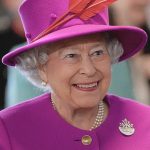
    The Christmas Broadcast made by HM Queen Elizabeth II on 25 December 2006.

    I have lived long enough to know that things never remain quite the same for very long. One of the things that has not changed all that much for me is the celebration of Christmas. It remains a time when I try to put aside the anxieties of the moment and remember that Christ was born to bring peace and tolerance to a troubled world.

    The birth of Jesus naturally turns our thoughts to all new-born children and what the future holds for them. The birth of a baby brings great happiness – but then the business of growing up begins. It is a process that starts within the protection and care of parents and other members of the family – including the older generation. As with any team, there is strength in combination: what grandparent has not wished for the best possible upbringing for their grandchildren or felt an enormous sense of pride at their achievements?

    But the pressures of modern life sometimes seem to be weakening the links which have traditionally kept us together as families and communities. As children grow up and develop their own sense of confidence and independence in the ever-changing technological environment, there is always the danger of a real divide opening up between young and old, based on unfamiliarity, ignorance or misunderstanding.

    It is worth bearing in mind that all of our faith communities encourage the bridging of that divide. The wisdom and experience of the great religions point to the need to nurture and guide the young, and to encourage respect for the elderly. Christ himself told his disciples to let the children come to him, and Saint Paul reminded parents to be gentle with their children, and children to appreciate their parents. The scriptures and traditions of the other faiths enshrine the same fundamental guidance. It is very easy to concentrate on the differences between the religious faiths and to forget what they have in common – people of different faiths are bound together by the need to help the younger generation to become considerate and active citizens.

    And there is another cause for hope that we can do better in the future at bridging the generation gap. As older people remain more active for longer, the opportunities to look for new ways to bring young and old together are multiplying.

    As I look back on these past twelve months, marked in particular for me by the very generous response to my eightieth birthday, I especially value the opportunities I have had to meet young people. I am impressed by their energy and vitality, and by their ambition to learn and to travel.

    It makes me wonder what contribution older people can make to help them realise their ambitions. I am reminded of a lady of about my age who was asked by an earnest, little grand-daughter the other day “Granny, can you remember the Stone Age?” Whilst that may be going a bit far, the older generation are able to give a sense of context as well as the wisdom of experience which can be invaluable. Such advice and comfort are probably needed more often than younger people admit or older people recognise. I hope that this is something that all of us, young or old, can reflect on at this special time of year.

    For Christians, Christmas marks the birth of our Saviour, but it is also a wonderful occasion to bring the generations together in a shared festival of peace, tolerance and goodwill.

    I wish you all a very happy Christmas together.

  • David Cameron – 2006 Speech at the Business in the Community Annual Conference

    David Cameron – 2006 Speech at the Business in the Community Annual Conference

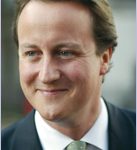
    The speech made by David Cameron, the then Leader of the Opposition, at the Business in the Community annual conference held on 9 May 2006.

    I’m delighted to be able to join you this morning.

    I feel very much at home with Business in the Community.

    The cause that you champion – corporate responsibility – was always very much part of my personal values when I worked in business.

    And now that I’m in politics, it’s a central part of my political values.

    I believe passionately that we’re all in this together – government, business, the voluntary sector, families and individuals.

    We have a shared responsibility for our shared future.

    And if you read my Party’s new statement of aims and values, Built to Last, you’ll see that shared responsibility is one of the two core values that define the modern Conservative Party we’re building.

    The second of our core values is trusting people.

    Today I want to explain how those two values – trusting people and sharing responsibility – relate to business in general, and specifically the work you all do as members of Business in the Community.

    I’ll start by setting out our attitude to corporate responsibility.

    In a few years time, I hope that Britain will have a Conservative Government.

    So you need to know where you stand.

    How would a future Conservative Government approach corporate responsibility?

    What kind of policy direction should you expect?

    I take the view that sharing responsibility is a positive thing.

    It’s not about annoying box ticking.

    And it certainly isn’t about nannying.

    When it comes to the role of politicians and government, it never ceases to amaze me that some people simply cannot grasp the distinction between exhortation and regulation.

    I understand the difference and it would inform my actions in government.

    Modern Conservative attitude to Corporate Social Responsibility

    So let’s start with the big picture.

    For too long, the Conservative Party has allowed itself to be painted into a corner.

    Our instinctive and healthy suspicion of excessive government intervention in business affairs has too easily been turned into a false caricature.

    For some, we have become associated with the view that the only social responsibility of business is to make as much money for shareholders as possible.

    Of course we in the Conservative Party understand that profits are the lifeblood of capitalism, the greatest wealth-creating system known to man.

    Of course we recognise that profitable companies, large and small, are vital both for our economic prosperity and for our quality of life.

    Companies provide jobs, wealth and opportunity, constantly improving the goods and services that make people’s lives easier and happier.

    Business also generates much of the tax revenue that pays for public services.

    So I have always passionately believed in the dynamism of the free market and its power to do good.

    But, equally, I’ve never believed that we can leave everything to market forces.

    I’m not prepared to turn a blind eye if the system sometimes leaves casualties in its wake.

    Unless shortcomings are addressed, the entire system risks falling into disrepute.
    If a supermarket opens a convenience store on the high street and uses its financial muscle to drive down prices until small shops are forced out of business – and then immediately puts prices up again – we need to complain.

    Or if employers are making it harder, not easier, for people to combine fulfilling work with their family life, we should speak out.

    And if the cultural impact of business activity has a negative effect on our society’s values, we need to complain.

    These are the kinds of things I mean when I say that I’m prepared to stand up to big business.

    But I will also always stand up for businesses.

    Because I know that we need successful, profitable, enterprising businesses to create wealth for individuals and the community alike.

    And I believe that it’s more than possible, indeed it’s essential, for these businesses to operate ethically and treat their employees, customers, suppliers and local communities fairly.

    This has always been the Conservative tradition.

    It was Tom King, a minister in Mrs Thatcher’s government, who convened the Sunningdale Anglo-American business conference in 1980 which led to the establishment of Business in the Community 25 years ago.

    It was Michael Heseltine who saw the potential for business to play a leading role in urban regeneration in response to inner city riots.

    And today we understand that corporate responsibility practice has developed enormously over the years…

    …now encompassing not just what companies do with the profits they make, but how they make those profits in the first place.

    Reclaiming corporate social responsibility from the left

    So I want to reclaim corporate responsibility for the political centre-right.

    If we leave this agenda to the left, we will end up with left-wing responses that are bad for business and bad for society.

    It’s the sort of thing Ronald Reagan had in mind when he lampooned the attitude of over-zealous state interventionists…

    “If it moves, tax it. If it still moves, regulate it. And if it stops moving, subsidise it.”

    You can add to that list…

    …”ban it”…

    …”control it”…

    …”develop a cross-cutting strategy for it”…

    ….and “set up multi-stakeholder workstreams to facilitate dialogue about it.”

    I suppose I should be careful here, we’ve probably got stuff like that going on in our Policy Groups…

    But for me, the right approach to corporate responsibility was captured some years ago by one of the real heroes of the corporate responsibility movement in this country, Alan Knight.

    When he was leading B&Q’s pioneering work in this area, he described corporate responsibility in the most straightforward possible way, as being a “good neighbour.”
    We all know what a good neighbour is in our personal lives.

    Someone who behaves with respect for others.

    Not leaving litter and rubbish in the street; not playing loud music in the middle of the night.

    And as well as avoiding behaviour which causes harm and annoyance, a good neighbour will occasionally go out of their way to do something friendly.

    Offering to babysit one night. Or let workmen into your house if you’re out one day.

    It’s exactly the same for business – whether you’re a small business like a pub or a newsagent, or a huge global business like Microsoft or Tesco.

    It’s only reasonable to expect that you behave responsibly.

    The difference with big businesses comes in the range of areas where they have responsibilities.

    A company like Tesco has countless ‘neighbours.’

    The communities where its stores are based. The customers who shop there. The farmers and other businesses that supply the products it sells. The people who work in its stores and offices.

    And for a company as big as Tesco, you could say that all of us are its neighbours, since Tesco affects all our lives – by helping to shape our culture, habits and lifestyles, or through the environmental impact of its carbon emissions.

    So to those – and there a few of them around – who still see corporate responsibility as socialism by the back-door…

    …I say that it’s nothing more sinister than the good manners we look for in our personal lives.

    Our approach – deregulation in exchange for more responsibility

    I know there are also still some corporate responsibility sceptics in the boardroom.

    To them I say this.

    The real world alternative to corporate responsibility is not some buccaneering, profit-maximising utopia.

    It is the dead hand of state regulation and enforcement.

    No society has ever allowed businesses to operate without consideration of wider social impacts.

    History is littered with examples of hubristic enterprises being brought up short by legislative interference.

    Increasingly – thanks to the efforts of Business in the Community and similar organisations around the world – it is understood that corporate responsibility makes good business sense.

    And the more that companies voluntarily adopt responsible business practices, the more compelling the case for a lighter touch on regulatory inspection and enforcement.

    Of course businesses understand the sense of some regulations – but it is the over-officious and bureaucratic way they are applied that often rankles and frustrates.

    This is not a party political speech but it’s worth noting that in recent years, as regulatory burdens have gone up, the UK has fallen down the international league tables of competitiveness.

    We need an alternative to the proliferation of laws, rules and regulations…

    …of statutory authorities and inspectors.

    So I want the Conservative Party to develop its own distinctive approach to corporate responsibility.

    An approach that is consistent with our passion to help make Britain’s economy more competitive.

    And an approach that is true to our core values – trusting people and sharing responsibility.

    I want to explore the potential for a new understanding between business and Government.

    With this new understanding, businesses that have publicly signed up to a commitment to responsible business practices would enjoy a lighter touch regulatory enforcement regime.

    The same rules would apply to them as to all businesses – but the presumption is that they are in conformity unless proven otherwise.

    Responsibility should be more about what business can do – and less about what business must do.

    It should be about innovation rather than regulation; opportunities rather than obligations.

    Specific issues – our working group

    I want the Conservative Party to lead the debate over what those opportunities could be in the years ahead.

    And I’m delighted to announce today the formation of our Working Group on corporate responsibility, comprising distinguished experts in the field, including Business in the Community’s very own David Grayson.

    The aim of the Group is to help us move beyond the stale battle between those campaigning for a stronger regulatory regime, applying to all companies…

    …and those who instinctively resist any regulatory encroachment.

    The point is this: corporate responsibility is not a fixed entity, but varies company by company.

    Regulation, on the other hand, tends towards requiring the same thing of everyone.

    The companies that have become leaders in corporate responsibility have manifestly not done so as the result of a regulatory regime.

    What considerations have incentivised these companies?

    How can these incentives be built upon to provide a similar spur to others?

    Business can lead change

    Companies can lead change, not just within the business community but in broader society.

    Who better than a TV company to run programmes on homelessness that can open hearts and change minds?

    Who better than Coca Cola, a firm with a better distribution network in sub-Saharan Africa than any aid agency, to get materials out to needy populations?

    Who better than Boots, an organisation that probably gets more ill people through its doors than even the NHS, to offer health education?

    They certainly helped me.

    This is the way forward.

    Exhortation not regulation

    As I have said, when it comes to getting business to behave responsibly, my bias is for exhortation not regulation.

    I am instinctively hostile to a state that seeks to impose rules and controls on business, save in circumstances where there is a clear and proven need for it.

    Compulsion should be a last resort, not a first impulse.

    But nor am I attracted to a value-neutral approach in which those in government and politics are loftily indifferent to ethically suspect business practice, regarding it as an essentially private matter.

    As well as being morally wrong, it is also foolish in practical terms.

    For if we choose to remain silent in the face of bad behaviour then we leave the field clear to those whose agenda is profoundly anti-capitalist.

    To such people every sin is proof of the inherent evil of commerce and provides a justification for their agenda of ruinous over-regulation.

    So when I see businesses behaving irresponsibly I’m going to speak out.

    And there’s one case I want to address now.
    Premature commercialisation and sexualisation

    Like many parents I talk to, I’m concerned by the impact on children of the increasingly aggressive interface of commercialisation and sexualisation.

    I have no desire to wrap kids in cotton wool.

    Growing up is about finding out what goes on in the real world

    But the protection of childhood innocence against premature sexualisation is something worth fighting for.

    Sometimes I think that our society treats adults as children, and children as adults.

    I remember a couple of years ago BHS had to withdraw a range of underwear for kids after some mums objected to the fact that padded bras and sexy knickers for the under tens were on sale.

    BHS’s initial reaction was to claim that the underwear was “harmless fun.”

    That sums up why parents are often reluctant to complain even when they feel uneasy.

    No one wants to be seen as uptight or over protective.

    ‘Relax – it’s only a bit of fun.’

    But actually, it’s not just a bit of fun – it’s harmful and creepy.

    The marketing and advertising agencies even have a term for it: KGOY – Kids Growing Older Younger.

    It may be good for business, but it’s not good for families and it’s not good for society, and we should say so.

    Business has the power to do so much good in society.

    A good society is one in which we care for our neighbours and have pride in our communities.

    A good society is one where we have time to stop and chat.

    A good society is one where work and home life exist in harmony.

    When I say that we’re all in this together, I mean that we have a shared responsibility for our shared future…

    …and that we’ll never enjoy truly meaningful lives if we cut ourselves off from each other.

    The solution to social problems like crime, drug abuse and poverty is not to insulate ourselves from their consequences.

    It is to fight them together.

    We should never subcontract to the government the job of making our country a better place to live.

    There is such a thing as society – it’s just not the same thing as the state.

    You are part of society.

    You have the power, the creativity and the enterprise to help tackle some of the most pressing social challenges we face.

    You’re already doing so much.

    I want to do all I can to help you do more…

    …and to benefit commercially from doing so.

  • George Osborne – 2006 Speech to the Credit Today Conference

    George Osborne – 2006 Speech to the Credit Today Conference

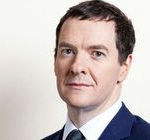
    The speech made by George Osborne, the then Shadow Chancellor of the Exchequer, on 12 May 2006.

    “I am delighted to be here at the Credit Today conference, and to follow such an impressive array of speakers who have covered such broad subjects.

    I have been impressed by the focus of the credit industry on controlling risks and striking the balance between competition and responsible lending.

    That is what I want to talk about today.

    The story of the credit industry has a rich history, and is closely intertwined with the development of the modern economy that we live in.

    The first recorded loan transactions known to man date from Mesopotamian agreements etched in stone, paying interest in silver.

    And the Romans entered into contracts based on contingent liabilities.

    In early modern times, first in Holland and later in London in the sixteenth and seventeenth centuries, credit began to finance an expansion of world trade that heralded the beginning of the industrial revolution.

    To pay for the ships and crew that undertook global trade, the entrepreneurs of the day needed to borrow. Until this first expansion of credit, only kings had the gold to pay for ships. But as debt finance grew, so did the merchants who brought spices from the east, and cotton from the west, and returned with cloth.

    By the end of the seventeenth century, the Government too saw the advantage of credit, and in 1694 King William III set up the Bank of England to borrow from his people. That innovation is often credited with underpinning victory in King William’s war against France three years later.

    Since then the industry has expanded, and London has grown into the largest international financial centre in the world. Over a million people now work in the UK financial services sector, and in London, nearly one in ten is employed in finance. Financial products of all kinds, including credit, are one of our key exports.

    In recent years we have seen another expansion of credit, both private and public. Since the mid 1990s, the level of personal debt has risen in double digits each year, while inflation has remained low. And the level of private sector borrowing, on and off the balance sheet, has rocketed.

    Borrowing by households has risen to almost £1.2 trillion. That’s £40,000 for every family in Britain. A fifth of that debt is unsecured, borrowed on credit cards, personal loans, and overdrafts.

    This great expansion in credit brings both challenges and opportunities.

    Free access to credit allows people and families to plan their budgets. Gone are the days when we had to wait in turn for access to a mortgage, when the building society would tell us when we were considered responsible enough to buy our first home. With freer access to credit, young people can apply for mortgages when they choose.

    Unsecured credit helps us to manage our finances, to smooth over tricky times, and to plan when we spend. Access to credit allows us to move money over our lifetime, to spend when we need it, and earn it back later. So when we discuss the challenges that are posed by debt, we must not lose sight of the huge benefits that access to credit can bring.

    As in many markets, liberalised credit markets have boosted our freedom and boosted our economy.

    But as well as these great advantages, the expansion of credit has brought challenges. The Conservatives have been very aware of these challenges in recent years.

    There are two challenges I particularly want to talk about today. First, for some, especially vulnerable, families, too much debt can cause misery and great financial hardship. And second, high levels of debt, both public and private, make the economy more vulnerable to certain types of shock, and may put macroeconomic stability at risk.

    For families, and for the wider economy, more debt means more vulnerability.

    Most of us use our credit cards every week, and many pay off our balances at the end of each month, and we can manage our mortgage payments. But that isn’t the case for everyone.

    Just this week, the governor of the Bank of England described the rise in debt and bankruptcies as a ‘social problem that is materialising’. He is right. We are in danger of becoming credit card Britain.

    Last year, three million people had problems paying off debt. Another twelve million have kept up payments only after a struggle. 1.1 million people contacted the Citizen’s Advice Bureaux with debt-related enquiries – up 47% over the past five years. So debt is a significant problem for a small but important minority. For many of those struggling with debt problems are also the most vulnerable – often living from benefits or in badly paid jobs.

    The Financial Services Authority has spoken of a ‘financial crisis’ for 18 to 40 year olds. Average debt for 18 to 24 year olds has doubled to £15,000 since 1999. And Alliance and Leicester has found that those in their 20s pay as much on average in interest as those in their 30s and 40s, despite usually not yet having a mortgage.

    This is not a problem that is going away. As we as a nation get richer, problems with debt are getting worse. Bankruptcies have doubled in the past year. That may partly be due to a change in the law in England and Wales. But even in Scotland and Northern Ireland, where the regime has not been changed, bankruptcies have risen. Last year alone, 120,000 people were declared bankrupt – three times more than in 1997.

    Even despite the benefits of more freely available credit, we cannot ignore those whose lives are made a misery by debt.

    Like the case of a lady who built up £58,000 of unsecured debt despite telling her creditors that her only source of income was from benefits. Or the pensioner who attempted suicide after she acquired 25 personal loans and credit cards totalling £135,000 of debt over a decade. A man from Yorkshire whose only income was disability benefits accrued £40,000 in unsecured debt from several lenders. When he first applied for a card he had expressed doubts to the lender about his creditworthiness, but the lender advised him to ‘be creative’.

    We need to consider imaginative solutions to these interconnected and difficult problems.

    For policymakers who believe in markets, this leaves a difficult challenge.

    I instinctively believe in the power of business to generate wealth and opportunity, as well as the tax revenues that fund our public services and infrastructure.

    Like you I want a strong and healthy credit industry. And like you I want that industry to be responsible.

    That is what David Cameron said earlier this week when he talked about corporate responsibility.

    Every time a business behaves irresponsibly, it makes it that much harder to persuade people that business is a force for good. If the political response to corporate responsibility becomes the preserve of the left, then the response is over-regulation and yet more burdens.

    That applies in the domestic debt market too. Irresponsible lending to those unable to cope is bad for people, and it’s bad for business too. In the short term, it’s bad for the bottom line as irresponsible lending is less likely to be paid back. And in the long term, it harms the good name of business and encourages those who don’t believe in or understand business at all to interfere and impose new regulation.

    So what can we do?

    Last year the Griffith report, commissioned by the Conservatives and produced by Brian Griffith of Goldman Sachs, reported on possible solutions to the challenges we face. I am glad to say that some of those recommendations have been taken up. I might suggest four areas that we must consider in more detail.

    We must, for instance, continue the FSA’s work in financial literacy, so that all families understand the consequences of taking on debt. Well informed customers are better placed to borrow responsibly – and better financial literacy will lead in turn to even less need for regulation. Some people, for instance, believe that a higher APR is a good reason to choose a credit card. According to a survey by Norwich Union, over three quarters of people find finance complicated and around half said that complexity has put them off addressing their financial needs.

    As well as boosting financial literacy to improve the responsibility of customers, we must ensure that credit advertising and credit scoring are responsible. It is a knee-jerk reaction of an interfering Government that responds to this challenge with yet more regulation. But it is in the credit industry’s own interest to advertise responsibly.

    And we can support measures for helping families out of debt. I want to pay special tribute to the work of the Citizen’s Advice Bureaux and others in helping so many people who find themselves in difficult financial situations. Their services should be properly funded, because if they are not then it is the state that will have to pick up the bill.

    These are all step we should take. But many of the most difficult cases, like these, occur when people accumulate debt from many different lenders.

    While any one loan may be affordable, taken together, loans from many different lenders can tip a family over the edge. So responsible credit scoring should take into account not just defaults, but the financial stress of any applicant.

    But that sort of responsibility is difficult without adequate procedures for data sharing. The existing data protection legislation causes difficulties, even among lenders who want to share.

    So we should consider extending data sharing among lenders, particularly of unsecured debt, so that lenders know their clients’ full financial picture before agreeing more loans. I recognise the work that the industry and the Treasury Select Committee have done in pushing forward this agenda.

    It seems to me that data sharing doesn’t just help lenders to assess the reliability of a client. But, properly introduced, it would help to protect vulnerable clients from resorting to many different lenders, often to pay interest on other debt.

    In the past there was no need to share data. Credit was effectively rationed, through queuing. And the number of lenders was small. In 1971, there was just one credit card – the Barclaycard. Now, there are over 1,300 types of credit card, and over 70 million cards in issuance – that’s more than one for every man, woman and child in the country.

    So policy must adapt to changing circumstances.

    I acknowledge that there are concerns about data sharing. We would not want data sharing to become an unnecessary regulatory burden. But data sharing can improve the competitiveness of the credit market. Only with more accurate information about risk can lenders price risk more accurately.

    And data sharing benefits highly credit-worthy customers too, as lenders know who the low-risk customers are too.

    So I applaud the strides have already been made by some banks to share data with customers’ consent through credit rating agencies.

    We must strike the right balance, appropriate for the challenges that we now face.

    We can see that excess debt increases vulnerabilities at the personal level. And it causes vulnerabilities at the national level too.

    Over the past nine years, the ratio of debt to annual national income has doubled.

    Four fifths of the outstanding debt has been secured against housing, and has in part financed the rapid increase in house prices.

    As the debt and house values have risen in tandem, so the average homeowner’s balance sheet has not been damaged. But the mismatch between a fixed-price debt and a variable priced asset heightens exposure to a fall in house prices. With larger debts relative to income, the impact on consumption and therefore on the wider economy of a fall in house prices would be bigger.

    The remaining fifth of households’ debt, lent on credit card, personal loans, and overdrafts, usually funds consumption. Growth in the economy is at risk if it is mainly fuelled by consumption – both by individuals and by the Government – that is funded by debt.

    An economy built on borrowed money is eventually living on borrowed time.

    And on top of all the mortgages, credit cards, and bank loans, there is one man who has borrowed more than us all. The Chancellor has borrowed a further £100 billion on our behalf. He plans to borrow another £150 billion over the next three years. And that is before you add in the billions borrowed and hidden off the balance sheet.

    These twin deficits – in the public and private sectors – combined with a current account deficit of almost 4% of GDP, means that overall, Britain is borrowing from overseas to spend, and our imports are out of balance with our exports. In other words, we have a trade deficit, which over the first three months of this year was the largest on record.

    These imbalances in our economy may not reverse soon.

    Economists play a game of trying to predict when the structural imbalances will unwind with as much enthusiasm as politicians playing the game of when Tony Blair will depart. At least in our game there’s an end in sight.

    What the economists do agree on is that imbalances caused by profligate Government borrowing and high private borrowing makes our economy more vulnerable to instability, like a sharp exchange rate movement, or a fall in asset prices.

    So just as private lending should be responsible, Government must be responsible too. We must strengthen the fiscal rules, and instead of fixing the rules to fit our spending, we must fix our spending to fit the rules. We must be transparent about Government borrowing – we must share data too. In January we proposed a ‘triple lock’ on stability to do just that.

    The modern Conservative approach to debt is part of our broad economic strategy.

    To re-build the competitiveness of our economy, by entrenching stability, and encouraging growth.

    By taking long term decisions;

    by facing up to the challenges of the new global economy;

    and by trusting people, and sharing responsibility.

    We want to build an economic strategy that can make Britain the most competitive place in the world to do business, where Government doesn’t just get in the way, with rising living standards for all.

    We are at the start of a journey, as we build the ideas, and vision, and policies that will help Britain meet the challenges of the twenty first century.

    And I would like to ask for your help in travelling on that journey too. We want to work with you, listen to you, both directly and through our policy groups on economic competitiveness and social justice, and I look forward to participating in this debate and learning from it in the months and years to come.

  • Malcolm Harbour – 2006 Speech on the Services Directive

    Malcolm Harbour – 2006 Speech on the Services Directive

    The speech made by Malcolm Harbour, the then Conservative MEP for the West Midlands, on 15 February 2006.

    Mr President, it is more than two years since I started working on this directive and I have been convinced from the beginning that its objectives and the ambition to tackle the barriers to the internal market for services have been absolutely right. Why has it taken two years? We had it at the end of the last Parliament; we have seen some of the issues raised by the many speeches here today, which, in many cases, have vastly overplayed the problems but underplayed the opportunities.

    With some of the high-flown rhetoric we have heard today about issues like social dumping and so on, which I have never been in any way convinced would arise from this directive, it is most important that we do not forget the opportunities, so I shall talk a little about those tonight.

    Firstly, I particularly want to thank all the members of my group on the Committee on the Internal Market and Consumer Protection who have worked so tirelessly with me to reshape this text. I calculate that three-quarters of all the amendments to the text that we will vote on on Thursday originated from our group. In particular, the whole idea of a central clause called ‘freedom to provide services’ was developed by us in the run-up to the committee vote. That will form the basis for the compromise that I want to commend to all my colleagues this afternoon. I also want to thank our colleagues in the ALDE and UEN Groups who helped us achieve a very important result in the committee back in November.

    This is one of the subjects to have attracted the most debate and argument over the last two years. This will be the final debate of this cycle, but I am sure we will have many more. At the heart of the debate has been Mrs Gebhardt, a very hardworking and determined rapporteur. I want to pay tribute to her and the very courteous and painstaking way in which she has led our work on a very complicated and difficult proposal.

    I said that I wanted to look at the impact of the directive as a whole, because we should be thinking particularly about small and medium-sized businesses, which are constantly frustrated at their inability to access the internal market at the moment. There is a whole range of provisions in this proposal – no less than 81 provisions on Member States – to deal with these sorts of barriers, because businesses want to be able to go into markets; they want to be able to start up without unnecessary and bureaucratic barriers; they want to be able to send their experts to other countries. But they also want to know that they will not be subject to disproportionate and unnecessary restrictions and that includes requiring them to comply with duplicate sets of rules and authorisations when they have already complied with them in their own country. I do not think that is reasonable. The European courts do not think that is reasonable and that is contained in this compromise. If that is the devastating country-of-origin principle, then what have we been arguing about all this time? It is there in the law of the Court of Justice. My reading of this compromise is that it is not in any way eroded and we must make sure that it is not eroded when we come to the vote.

    The role of the Commission has been mentioned. The Commissioner, has a crucial responsibility to take this forward. I do not want him just to produce a proposal based word for word on this text. We need to do more work on it, because it needs to deliver benefits for business, otherwise there is no point in having it at all. I think we can do that.

    I say in conclusion to Mr Bartenstein – and I am still wearing my Austrian tie, because I told him I would wear it for as long as we were in sight of a clear agreement – he can still get this on the table of the economic summit in March if he puts his mind to it.

  • William Hague – 2006 Speech on the Battle Against Terrorism

    William Hague – 2006 Speech on the Battle Against Terrorism

    The speech made by William Hague, the then Shadow Foreign Secretary, on 16 February 2006.

    “I am delighted to be with you tonight and grateful for the opportunity to address you. It is a particular pleasure to speak here at the School of Advanced International Studies. It is an impressive institution, with a well deserved reputation as one of the leading centres of strategic thought in your country. As you prepare for your careers in government, business, journalism, international law or non-profit organisations, I wish you well, and am looking forward to hearing your thoughts and questions tonight. Many of the issues I will raise no doubt feature in your courses of study and it is a privilege to address such an informed audience.

    Few countries enjoy such close ties of kinship, shared adversity, and common economic opportunity as the United States and the United Kingdom. We share a common history, common values and common interests.

    We have developed over the years a powerful alliance in business and employment: today the United Kingdom is the top destination for United States foreign direct investment, and the United States is the location of the largest proportion of UK overseas assets.

    These factors alone would be enough to result in warm relations between our countries. But it is the additional dimension of close co-operation in foreign and defence policy over the last century, with the vast and mutual sacrifices it has entailed, which makes a sense of special partnership undeniable, and, in the view of many of us, the phrase ‘special relationship’, irresistible.

    This does not mean that there have not been disagreements. Churchill and Roosevelt, who spent more time together than any other leaders of our countries in history and presided over the most gargantuan achievements of Anglo-American co-operation, had many sharp disagreements over the conduct of World War II and its aftermath. Margaret Thatcher famously complained to Ronald Reagan over the invasion of Grenada. Washington and London had a fundamental and very public disagreement over Suez, and again over the Balkans in the 1990s. And we have not seen eye to eye on issues such as the Kyoto Treaty.

    Yet these disagreements have only rarely disrupted a relationship which remains the cornerstone of strategic thinking in London, and I hope in Washington too.

    I am visiting Washington DC to affirm that broad and historic alliance and also to raise issues important to the future of our united and special partnership.

    In the British Conservative Party, we have had a long period in opposition but we are now preparing for government again. Before we come into government, we want to have the deepest possible understanding of how foreign policy should be conducted and in doing so we are looking at many questions afresh. But in one thing we are clear from the onset: our relationship with the United States is central to our foreign policy, and will be one of deep and enduring partnership.

    In the 21st century we find ourselves at a unique moment, not only in our own history, but in that of the world as well.

    In the last two decades the most striking changes have taken place. The security environment of the 1980s and the times we live in now could scarcely be more different.

    Who could have imagined in 1989 that Poland, the Czech Republic and the Baltic states would today be members of NATO; that Eastern Bloc would be replaced by Eastern expansion; that the Ukraine would be discussing membership with the Alliance; or that Belarus would have a democratic opposition party?

    Who would have said that we would be regularly consulting with Russia on security issues – or indeed that the US, Europe and others would be throwing their weight behind a Russian proposal to resolve the nuclear standoff with Iran?

    Today there are almost no ‘far away countries of which we know little’. If anything, we are now affected by events beyond our borders as much as by those inside them. This is not merely the result of the so-called ‘CNN effect’, but a reflection of the reality that our freedom and our values may sometimes have to be defended beyond our neighbourhoods.

    Paradoxically while the end of the Cold War and the advent of globalisation have removed the walls of separation between us, they have also made us vulnerable.

    It is now far easier for terrorists and criminals to organise, coordinate their activities; to move money, and disseminate their ideas.

    Proliferation of weapons of mass destruction and the attendant threat of nuclear material falling into the hands of terrorists have risen to the top of the international community’s agenda. The AQ Khan experience shows that the control of nuclear weapons technology and the prevention of secondary proliferation is difficult, even when the state in question is willing. The danger is brought into focus by recalling that terrorists wishing to wreak nuclear havoc, unlike states seeking nuclear weapons, do not need access to uranium mines or nuclear facilities, or to master the complex technology necessary to build a deliverable weapon – all they need is enough smuggled or stolen fissile material to build a crude bomb.

    Nor are we dealing with these new threats in isolation. Old problems continue to persist and complicate our endeavours. Indeed as someone recently remarked, the new strategic environment seems almost too chaotic – enough sometimes for diplomats to yearn for the simplicities, however dangerous they were, of the Cold War era.

    When I speak about this new international background I see it as a common framework for all and not, as some would describe it, as an American construct, inspired by the attacks of September 11th.

    Violations of human rights, poverty, infectious diseases, organised crime, and human trafficking are not only problems for the people of the countries in which they occur. The genocide in Darfur …

    Iran’s nuclear aspirations do not affect Israel and the United States alone; Hamas’s victory in the Palestinian elections is not just a concern for its immediate neighbours. Likewise the rise of Islamic fundamentalism and the risks associated with our shared dependence on Middle Easter oil are quandaries we have all in common.

    These are immense issues, and it is impossible to contemplate dealing with any of them without close co-operation with the United States.

    It is against this background that the relationship between our two countries evolves. The relationship should be solid but not slavish, firm but also fair.

    In many areas American leadership has been unmistakable and strong:

    Together in Afghanistan we are not only fighting terrorists but working to build a country.

    In Iraq, we are helping build a democratic country that is unified, free and at peace with itself and with its neighbours; an Iraq that respects the rights of Iraqi people and the rule of law.

    Indeed in a world where cynicism and pessimism seem to govern the news agenda we do well to remember the crucial role that America and Britain play in the wider world.

    But to make sure that our victories are not hollow and that we remain respected rather than feared, our values must not become victims of our struggle.

    Winning the battle against the perpetrators of terrorism requires moral as well as military strength – the kind of moral strength in the eyes of the world which America so richly deserved for carrying the burden of two world wars, painstakingly rebuilding Japan and Western Europe and, in more recent times, resolutely leading NATO in stopping another wave of ethnic cleansing in the Balkans. In the light of these actions it has always been possible to view America as a great but compassionate power.

    But lately we have seen the tensions created by the new realities of the War on Terror.

    Reports of prisoner abuse by British and American troops -however isolated- and accounts, accurate or not, of the mistreatment of detainees at Guantanamo and extraordinary rendition flights leading to the torture of suspects, have led to a critical erosion in our moral authority.

    This has resulted in a loss of goodwill towards America which could be as serious in the long-term as the sharpest of military defeats.

    It is ludicrous that opinion polls indicate that a majority of Europeans now believe the United States poses the greatest threat to international security, but, shockingly, it is also true.

    We therefore must not forget that the most important quality of democracy, which we are trying to spread today in Iraq and elsewhere, is respect for the rule of law. In standing up for the rule of law, we must be careful not to employ methods that undermine it. To do so would be to set a poor example to those who look to the Western world for leadership, and would undermine our achievements among emerging and new democracies.

    Such moral firmness is necessary even though the war we are fighting is not an ordinary one.

    However difficult, certain lessons must be learnt. The undermining of goodwill towards the US cause is particularly alarming since the war on terror is not remotely won. Indeed it seems to be the case that international terrorist networks based around revolutionary fundamentalist Islam are currently gaining recruits rather than losing them.

    Furthermore the war on terror is not fought in isolation. Instability in the Middle East could worsen in the coming years: the next administration to take office in America or in Britain could face a nuclear armed Iran, continued violence in Afghanistan, a still unstable Iraq, a stalled peace process between Israel and Palestine and major instability in one of our major Arab allies – all at the same time. All of these conflicts have the potential to feed into or be hijacked by forms of terrorism.

    Such a combination of factors would present the most alarming outlook for world peace since the darkest moments of the Cold War. You only have to think about such a scenario for a moment to realise how important it is to place the maximum pressure on Iran to return to meaningful negotiations about its nuclear ambitions. And while no-one wishes to contemplate military options in dealing with Iran, it would certainly be wrong to rule them out.

    In dealing with such dangerous issues, the US and the United Kingdom must remain close allies.

    Firstly, our alliance must also be strong enough to make a frank assessment of successes and setbacks in the campaigns in Iraq and Afghanistan as well as in the broader prosecution of the war on terror.

    I still believe that we were right to support the war in Iraq, but it seems obvious now that the great difficulties of uniting and securing such a country were seriously underestimated. More ground troops were needed, not to win the war but to secure the peace, and it was evidently a mistake to disband the Iraqi army so early.

    We cannot now abandon the people working so hard in Iraq to create a stable and democratic country, nor abandon the leaders valiantly pursuing a similar course in Afghanistan.

    To hand Afghanistan back to the Taliban is unthinkable, but given our experience in Iraq, and given our concern to use our armed forces wisely and not to risk their lives unnecessarily, they are many questions we are asking in the British Parliament about the fresh deployment of NATO forces in Afghanistan, which is spearheaded by Britain.

    Are there sufficient troops to meet our objectives? Is it possible to simultaneously achieve the twin objectives of creating political stability and drastically reducing the opium trade? And are we receiving sufficient support from our allies?

    Secondly, we must continue to coordinate our policy towards Iran’s nuclear programme. It is unmistakable that Washington’s weight is indispensable towards achieving meaningful progress with Iran – this was amply demonstrated in the agreement reached among the Permanent Five Members of the Security Council in London last month.

    Thirdly, we must also not shy away from addressing the grievances that motivate many to feel anger towards the western world, and that some use to justify supporting and financing violent extremists. Foremost among these is the still unresolved conflict between Israel and the Palestinians where American and UK leadership, in concert with our European partners, still has an essential role to play.

    Finally, a fundamental challenge of the international terrorism we are fighting today is ideology. Al Qaeda is often presented as a global terrorist organisation. However it is less of an organisation than an ideology.

    Whilst it is true that bin Laden managed to create a base and some kind of organisation in Afghanistan, it is difficult to see Al Qaeda as a traditional and coherent terrorist network in the way commonly conceived.

    Military pressure is but one way of defeating such a network.

    We destroyed, quite rightly, the bases of the Taliban. Yet since then we have seen in Britain citizens of our own country, born and bred in our own neighbourhoods, with the right to vote, to free speech and to education become terrorist suicide bombers on the buses and trains of London.

    In addition to our military power we must have sound intelligence, political dialogue, and diplomatic and economic engagement with those in countries producing terrorism who are free from its influence and find its teachings abhorrent. This translates into political dialogue, economic help, educational and aid programmes, and the promotion of reform and education.

    Looking back on the Cold War we should take confidence that the enduring values of freedom and democracy eventually triumphed, just as much as economic power and military muscle.

    In fulfilling our strategic goals we must work with others, particularly our NATO allies. NATO embodies the absolutely vital partnership between Europe and North America. Neither Europe nor America can afford to see these bonds loosened.

    Beyond Europe’s borders, NATO’s assumption of new responsibilities for the stabilisation and rebuilding of Afghanistan, and its training of security forces in Iraq, are tentative but vital steps for the alliance.

    However they are too often influenced by issues of lack of capability, and sometimes regrettably by national politics.

    Generating the forces required for the crucial NATO deployment to Afghanistan has been a protracted and acrimonious affair, and highlights the importance of there being ‘more than one number to call when Washington wants to talk to Europe’.

    Some policy makers in Washington have continued to support every effort towards closer European integration, even in the field of foreign affairs and defence. The assumption has been that a unified Europe would inevitably prove more pro-Atlanticist, and more pro-American; in other words that a wholly integrated Europe is in the US interest.

    Today, however, following the transatlantic rift over the Iraq war and disagreements over Afghanistan, such an analysis is at odds with the reality of the post Cold War transatlantic relationship. America’s interests are best served when European states act flexibly according to their national interest.

    Today the European nations working through NATO have an unprecedented chance to prove their military credibility. Europe wants to do more, and should be able to do much more, and but only under NATO auspices.

    The danger of weakening NATO either by political designs or divided loyalties, at a time when it needs to provide readily available, well trained and interoperable forces, is clear. NATO has a vital ongoing role to play which must not be diluted by the EU on the one hand, or rendered inadequate by the US, on the other.

    In this context we must continue to work closely with the US on the fundamental issue of how to enhance the ability of our forces to operate together. Efforts to improve mechanisms for exchanging technology at the industrial level between the US and the UK remain an important part of this work. A genuine strategic partnership must entail careful consideration of the consequences for allies of changes in US procurement programmes or policies

    Britain plans to build two new aircraft carriers to carry out the vital task of projecting force over huge distances. Integral to the project are the aircraft for those carriers. It is essential that we receive assurances from the US that we will have what we need to operate, maintain, and upgrade our preferred option; the Joint Strike Fighter, under our Sovereign control. After all we are equity partners in this programme.

    As the new Shadow Foreign Secretary, I have the task of getting to grips with the major policy questions that have emerged globally at the beginning of the twenty-first-century: how to understand and influence Iran; how to adapt foreign policy to the rapid economic rise of China and India; how to win support for a different model of Europe that is open, flexible and decentralised rather than ever more centralised and bureaucratic; how to help fight the great evils of our world – preventing genocide, and focussing in our aid efforts on preventing and treating HIV and AIDS. The latter in particular is an area where relatively small amounts of money, effectively spent, can achieve considerable results.

    Finally, we must face the reality of climate change, arguably the biggest threat facing our planet today. We are working to a timetable set by nature rather than our own choice and we cannot afford to be sluggish in our responses to a challenge that threatens the very sustainability of our life on this planet.

    Following the President’s State of the Union Address the world is looking to the United States to offer sustained leadership in tackling this momentous issue.

    This will require the type of cooperation which I consider to be the essence of the special relationship – the ability to put aside differences and work together for the common good, and a willingness not to shy away from difficult choices. It is vital that these practices endure.

  • David Cameron – 2006 Speech on the New Global Economy

    David Cameron – 2006 Speech on the New Global Economy

    The speech made by David Cameron, the then Leader of the Opposition, to the Euromoney Conference on 22 June 2006.

    I’m grateful for the opportunity to be with you today.

    This is an exceptionally well-informed audience.

    It sounds like you’ve enjoyed two days of very detailed discussion and debate.

    As people who are involved at the sharp end of the financial markets and the global economy, I’m sure you won’t hesitate to challenge me and I’m looking forward to that.

    Today I want to talk about the new global economy…

    .. and the great challenges and opportunities presented by the changes that we’re seeing.

    Above all I want to set out how I believe politicians can prepare their countries to compete in tomorrow’s world…

    Why do we have a new global economy?

    Globalisation isn’t new – we had free trade pre-1914.

    Writing about that period, Keynes said:

    “The inhabitant of London could order by telephone, sipping his morning tea in bed, the various products of the whole earth, in such quantity as he might see fit, and reasonably expect their early delivery upon his doorstep; he could adventure his wealth in the natural resources and new enterprises of any quarter of the world”

    What is new, and unique to our time, is the extent and speed and sheer size of the new global economy.

    Over the past decade, a combination of events has led to a rapid rise in world trade, and rapid growth in prosperity in some of the poorest areas of the world.

    The end of cold war. The victory of capitalism, privatisation and liberalisation within countries. The opening up of trade between countries. And of course, the ICT revolution.

    These events have driven change.

    World economic growth is at its highest level in thirty years – and on some measures the highest ever.

    This is largely driven by a rapid growth in world trade – up by 10% in 2005.

    And the level of world trade is at its highest ever.

    The result is that two billion more people – a third of the world’s population – have left subsistence poverty and are now engaged in the world economy.

    Not only has this changed the volume of trade but it’s also impacted on the way we trade.

    You can see the change clearly in the rapid increase in the global capacity for manufacturing.

    Because the world can now more easily turn raw materials into goods, the price of manufactured goods has fallen compared to the price of raw materials.

    There are many winners in this process.

    In the West, consumers enjoy lower prices for things we import like TVs and shoes.

    In poorer countries there are rapid increases in incomes.

    In nations with natural resources – especially oil – GDP is growing.

    And in this global economy, the new winners – across Asia and among oil exporters – are lending much of their gains back to the developed world, driving a further round of growth.

    But there are losers too.

    Manufacturing firms in the west struggle in the face of this competition.

    Many nations are suffering environmental damage and social instability.

    Nevertheless, I believe that the overall impact is hugely positive.

    In the UK, the price of our imports has fallen relative to the price of our exports, making everyone better off, even if your income is fixed.

    You don’t need me to tell you that.

    Take a walk up any high street.

    The price of a pair of jeans is the same – or lower – than twenty years ago.

    There are real benefits here.

    Recently I visited a large supermarket and talked to its retail director.

    “People ask what our anti-poverty strategy is” he said. “And I show them this.” It was a smart school uniform, on sale for just £13.

    The new global economy is a great challenge

    The great changes taking place pose many challenges.

    We are losing not just low-paid, low value added jobs, but some high value added jobs too.

    The pace of change will accelerate.

    There are more people in China studying English than there are people in England.

    India, China and other countries are investing enormously in education.

    India alone has 1300 engineering colleges.

    Unless we can compete in the knowledge-based new global economy we will lose out in the economy of the future.

    Demand for resources is intensifying.

    China is now the world’s second largest user of oil, after the United States, absorbing 6.6 million barrels per day.

    A quarter of this comes from Africa, where China is investing heavily.

    All of this impacts on us in the developed world.

    At a micro level it has an impact on businesses and patterns of employment.

    And at a macro level rapid change brings uncertainty: we simply can’t guarantee that the beneficial effects of globalisation will continue automatically.

    We can’t guarantee that the price of imports will continue to fall.

    We can’t be sure that the ICT revolution will be sustained at the same pace.

    As Donald Rumsfeld would put it, there are simply too many ‘unknown unknowns’.

    Mervyn King talked last week about the ‘bumpy ride’ ahead as the world manages a transition to higher global interest rates, after a period of low rates around the world.

    Opportunities

    But as well as these challenges, the new global economy also offers great opportunities.

    Those two billion new workers are rapidly becoming two billion new customers too – and you know what, western brands are in high demand.

    But the UK is failing to make the most of those opportunities.

    Our level of new investment in China is sixth in Europe – after Germany, Italy, the Netherlands, France and Sweden.

    Our trade with China is third in Europe

    When President Chirac went to China last year, he took 1000 businessmen with him, and opened doors for them.

    Politicians seeking to understand China shouldn’t think ‘sweatshop’ – they should think ‘silicon’.

    And they should remember how significant Japanese inward investment was to our economies in the 1980s because – as the head of Kingfisher pointed out to me recently – Chinese inward investment in Europe could be much bigger in the future.

    What are the UK’s greatest advantages in the new global economy?

    I am convinced that the UK has many great advantages in the new global economy.

    There are few places anywhere that are as profoundly stable as Britain.

    Our system of government is tried and tested.

    The rule of law is entrenched in a tradition reaching back centuries.

    We have a highly educated workforce with a diverse talent base and, of course, a natural command of the English language.

    We are, by and large, welcoming to foreigners – especially in that most cosmopolitan and tolerant of cities, London.

    But, having said all that, we are eroding our advantages.

    In recent years we have seen more regulation and higher tax.

    Our transport infrastructure and skills base have both been criticised by the OECD.

    Crime – especially violent crime and anti-social behaviour – is a blight on too many communities.

    Any responsible government must fully acknowledge these shortcomings and come up with a credible plan to tackle them.

    The City is a great example of using our advantages

    The City of London is a great UK success story.

    It’s the biggest international financial centre on earth.

    The London foreign exchange market is the largest in the world, with an average daily turnover of $504 billion. That’s more than New York and Tokyo combined.

    There are more than 550 international banks and 170 global securities houses in London.

    By contrast Frankfurt has around 280, Paris, 270 and New York 250.

    The growth of the modern City as we know it was shaped by three critical Conservative decisions.

    First, because of our attractive tax regime, in the 1970s, US bonds were traded in London – the so-called ‘euro-bond’ market.

    Then the big bang of the 1980s removed a huge swathe of regulation that allowed the City to expand and removed restrictive practices.

    And by being open to competition from banks from anywhere in the world, we injected an enterprising spirit into the City.

    The success of the City helps to drive the UK economy and provides huge benefits for our wider society.

    Over a million people are employed in financial services, who last year generated net exports for the country of £19 billion.

    Far from being based on the old school tie, it is supremely meritocratic.

    It is also highly innovative.

    You cannot simply set in stone a tax or regulatory regime for the City as it is today because it’s always changing, adapting and mutating.

    But, again, we must not be complacent.

    London has no God-given right to be the financial Capital of the world.

    If we want to remain ahead, not just of Frankfurt or Paris but of Shanghai and New Delhi in the next 20 years we need to continue to make Britain the best place in the world to do businesses – whether it’s in the financial sector or any other part of the UK economy.

    The lessons from the City are clear. Low tax. Low regulation. Meritocracy. Openness. Innovation. These are the keys to success.

    What do political and economic leaders need to do to compete in the future?

    So what will our political and economic leaders need to do in order to compete in the future?

    There are, I suppose, two responses to the challenges of the new global economy.

    One option is to shut out the threats, close down borders and retreat into protectionism.

    But isolation means closing the door on the opportunities too.

    I reject that path.

    The alternative is to build a flexible economy with low tax , light regulation and open markets.

    To embrace the new global economy and prepare for the inevitable changes that are taking place.

    I welcome the fact that there is now a broad consensus between both major parties in the UK on many fundamentals.

    But we should recognise our differences.

    As Chancellor, Gordon Brown has given us the highest tax burden in Britain’s history…

    Whereas I believe that a low tax regime is a vital part of economic prosperity.

    The government is wedded to the impulse to over-regulate…

    While I see a much greater role for exhortation and leadership.

    Many on the left-of-centre still seek to solve problems through more taxes, more laws and more regulations…

    But we, on the centre-right, prefer to step out of the way of business.

    One of the greatest services that government can give to the economy is to know when to stand clear.

    Clint Eastwood, in his guise as Dirty Harry, says “A good man knows his limitations.”

    I believe that a good government knows its limitations too.

    But that should never mean we are limited in our aspirations of what we can all do together.

    Successful economies also need good infrastructure – not just physically in terms of transport and energy but stable legal systems too…

    And, increasingly, a highly-skilled workforce.

    There’s another factor that is emerging.

    I believe it will grow in importance in the years ahead.

    The companies and key workers of the future will ask of a country: is it an attractive place to do business? Is it a nice place to live?

    There’s a developing quality of life agenda that only the short sighted can ignore.

    Instead of just measuring GDP, we need to think about GWB – general well being.

    People who dismiss this as woolly nonsense are economically short sighted.

    Increasingly, the most creative, productive and innovative people are insisting on working in an environment where they’re not just paid well but where they can stroll down a street in safety and educate their children in a good school.

    Conclusion – the choice

    Understanding the profound forces shaping change.

    Identifying the right response to globalisation.

    Recognising the broader aspirations that people have for a better quality of life in the 21st century.

    These are the keys to our future success.

    This Government doesn’t seem to understand the world of today and tomorrow.

    So it can’t work out the best way forward.

    Just compare the approach of our government to these challenges to the approach taken by our best businesses.

    Look at taxes. While businesses are cutting prices, government is getting more expensive.

    Look at IT. While businesses are decentralising, government still seeks centralised solutions.

    Look at management and openness. While businesses are flatter and more transparent, government is clings to hierarchies and secrecy.

    While businesses are moving towards flexible labour practices, government imposes more employment regulations.

    As I said a fortnight ago, there are things that the private sector can learn from the public sector.

    The strength of vocation. Passion for the job. A belief in the value of service.

    The tragedy of this government is that it is mismanaging the public sector and undermining its ethos through relentless target driven centralisation, while failing to learn lessons from the private sector about the right way to respond to the modern world – all at the same time.

    The challenge – of responding to globalisation with an agenda that combines competitiveness with quality of life – is passing to a new generation.

    As I watch a government that is too top down, too centralised, that doesn’t trust people enough or share responsibility widely enough, I am determined to find a better way.

    It will take hard work, a profound understanding of the changes taking place around us and tough decisions to put our country in the best possible position for success.

    But it is a challenge that I am determined to meet.

  • David Cameron – 2006 Speech on Fighting Global Poverty

    David Cameron – 2006 Speech on Fighting Global Poverty

    The speech made by David Cameron, the then Leader of the Opposition, in Oxford on 29 June 2006.

    For too long, politics in this country treated global poverty as a secondary issue.

    Conservatives used to regard it as a significant, but second-order subject.

    Labour have helped to raise its significance, and we should all acknowledge the personal commitment and leadership of Tony Blair and Gordon Brown in doing so.

    Along with the vital role played by campaigning organisations and the many thousands of individuals who rallied to the banner of Make Poverty History…

    …this has helped create something of which everyone in Britain can be incredibly proud.

    Last year, this country led the way in beginning, finally, to make poverty history.

    We should never forget the international leadership Britain has shown.

    Not just our politicians but our NGOs, large and small, and our anti-poverty campaigners.

    People have often been ahead of the politicians – as we saw with the incredible generosity of the response to the Tsunami.

    Earlier this week, the Prime Minister spoke about where we are, one year on from Gleneagles.

    And today, Bob Geldof and DATA will give us their assessment of how far the promises made have been honoured.

    Clearly we have seen some real progress.

    Britain has taken the lead.

    But where are the other G8 countries?

    The spirit of Gleneagles 2005 was not meant to be British pushing and cajoling other developed nations into line.

    It was supposed to be about a shared commitment to a better world.

    But world trade talks remain deadlocked, in large part because of the short-sighted protectionism by rich countries.

    If you take out money for Iraq and Nigerian debt cancellation, aid from Germany and France actually fell between 2004 and 2005.

    And despite some real progress, too many politicians in Africa continue to put their own interests before those of their people.

    Making Poverty History is a task for which we all must share responsibility.

    Britain is doing a lot; now other governments must meet the challenge.

    We should do justice to the progress made last year by strengthening those early faltering steps.

    By going further, and faster.

    And by resolving that whatever the ups and downs of our domestic politics, Britain will seek always to be in the lead in the great struggle to rid the world of poverty.

    Today I want to explain how.

    To make a Conservative contribution to the debate.

    But first I want to talk about why.

    A MORAL IMPERATIVE

    For my generation, global poverty is one of the central challenges of our time.

    I came into politics to help make our country a better place to live.

    But I don’t believe it is either morally acceptable or politically sensible to limit our ambitions to improving the well-being of our citizens.

    As I learn more and more about the issues that affect our country, our continent and our world, I recognise with increasing clarity the need to take a global view.

    It is why one of the principal aims set out in Built to Last, the Conservative Party’s new statement of aims and values, is to do all we can, alongside the many others who share our aims, to fight global poverty.

    The prominence that we’re giving to the challenge of global poverty is right for our times and right for this time in history.

    In the 19th century, we witnessed the great economic struggle between the rise of industrialisation and the decline of the agrarian society.

    In the twentieth century, we saw that great ideological battle between left and right.

    And the fundamental challenge for the twenty-first century will, I believe, be a moral one: how can we bring the rich world and the poor world closer together?

    I describe it as a moral challenge because that, for me, is first and foremost what it is.

    It is morally unacceptable for billions of people to live in dire and degrading poverty when we now know the secret of wealth creation.

    ENLIGHTENED SELF-INTEREST

    But it’s not just a question of values, rights and morality.

    It is also a question of hard-headed political and economic reality.

    It is, frankly, a question of enlightened self-interest.

    The world is smaller that ever before.

    With the rise in mass migration, the revolution in communications technology, and the transformation in our understanding of the planet’s environment…

    …we are truly one world.

    Every night, hundreds of Africans arrive on Europe’s southern shores.

    They don’t want to leave their homes.

    But when poverty forces mass migration on a scale never seen before, we must recognise that tackling poverty is not just a moral imperative.

    It is a security imperative; an immigration imperative; an imperative we cannot ignore if we want stronger, more cohesive communities in all our countries.

    CONSERVATIVE COMMITMENT

    So for all these reasons, I am passionately committed to producing a comprehensive, ambitious policy programme on international development.

    That is why I established the Globalisation and Global Poverty Policy Group.

    Chaired by Peter Lilley, advised by Bob Geldof, its members include a range of talented, internationally-respected experts like James Rubin and Will Day of the UN.

    I look forward to its report next summer.

    Many of you here today will know Andrew Mitchell, Shadow International Development Secretary, who has immersed himself in these issues over the past year.

    And I also welcome the establishment of the Conservative Human Rights Commission which will focus on regimes that violate the rights of their citizens.

    There is now an emerging cross-party consensus on the importance of issues like fair trade, aid effectiveness, debt relief, conflict resolution and disease prevention.

    This is great news.

    I’ve never believed that politics should be about creating artificial points of difference or fake dividing lines.

    The more that we can work together in politics, the better the outcomes for society – whether at home or abroad.

    But I do believe that my Party can make a distinctive contribution to the poverty debate.

    And I do believe we have a role in questioning and probing the Government on its approach – as we have done on the need for interim targets for AIDS treatment.

    So today I’d like to outline some of the key aspects of that contribution…

    To set out our commitment and our priorities.

    And to put these in the context of a clear vision, based on our instinctive values.

    VISION AND VALUES

    As Conservatives, our values are clear.

    We believe in trusting people – that the more you trust people, the stronger they and society become.

    And we believe in sharing responsibility – that we’re all in this together: government, business, civic society, families and individuals.

    These values teach us that free markets are necessary for the creation of wealth.

    But that’s not the same as the elimination of poverty.

    We used to say that a rising economic tide lifts all boats.

    Well that obviously isn’t true.

    In recent years, the greatest global economic expansion in the history of mankind has lifted billions out of poverty.

    We should celebrate that as a success for open markets and free trade.

    But billions are still left behind.

    To eliminate poverty, economic liberalism – free markets and free trade – are not enough.

    They are necessary, but not sufficient.

    So our modern Conservative vision must combine economic liberalism, to remove the barriers that hold prosperity back…

    …with economic empowerment, to remove the shackles that lock poverty in.

    Economic empowerment means enabling people and countries to move from poverty and dependency to prosperity and sustainability.

    It means fixing the broken rungs on the ladder from poverty to wealth.

    And it means focusing first on the triple tragedies that stand in the way of poor countries getting richer: disease, disaster and conflict.

    DISEASE

    Tackling killer diseases such as HIV/AIDS, malaria, and TB should be our first priority.

    The burden of diseases falls disproportionately upon the poor.

    They are more susceptible to infection.

    And they lack the funds to get treatment.

    As well as ruining individual lives, diseases lower productivity and undermine national development.

    Jeffrey Sachs has estimated that malaria slows economic growth in Africa by up to 1.3% each year.

    Anti-disease interventions can be amazingly cost-effective.

    For relatively small sums, our support can lead to an immediate and profound improvement in millions of lives.

    DISASTER

    It is also the poor who suffer the most, and soonest, from natural disasters.

    Countries like Bangladesh could be catastrophically affected by rising sea levels.

    Desertification can contribute to conflict, as we have seen in Darfur.

    A part of Conservatism is the instinct to conserve.

    Another part is an understanding of our duty to future generations.

    That’s why Conservatives have an instinctive understanding of environmental sustainability.

    We grasp the importance of handing our planet on in a better condition than we found it, and that’s why I have put the environment at the heart of our political strategy.

    And it’s why we see climate change and environmental sustainability as a critical component of international development policy.

    CONFLICT

    Deadly diseases and natural disasters are bad enough, but man’s inhumanity to man is in some ways even worse.

    In Darfur, as Andrew Mitchell and William Hague saw for themselves when they went there recently, there are two million people living in camps, victims of conflict and state-sponsored ethnic cleansing.

    The people of Darfur need a UN force with the mandate and capacity to protect them, and I want to see more effective, targeted sanctions on the Government of Sudan.

    In Northern Uganda we have seen appalling atrocities committed and abject levels of poverty in the displaced peoples’ camps which contain over a million and a half people.

    The British Government, along with the international community, should put pressure on the Ugandan Government to ensure that the International Criminal Court’s arrest warrants for the leaders of the murderous Lord’s Resistance Army are carried out.

    IATT

    Uncontrolled arms sales help to fuel brutal and destabilising conflicts like those in Darfur and Northern Uganda.

    So there is a vital need to ensure that the global arms trade is governed by firm, consistent and fair rules.

    That is why I support the principle of an International Arms Trade Treaty.

    It will take a lot of work to firm up and secure international agreement on the details of such a Treaty.

    But doing so must be a key objective ahead of the UN General Assembly meeting this summer.

    AID

    When we consider the tragedies of disease, disaster and conflict, we must surely see the short-termism of those who argue, still, that aid has no place in international development.

    That we should leave it all to free markets and free trade.

    I believe that effective aid is essential for economic empowerment, and that is why a Conservative government would spend more on aid.

    We will work towards achieving the target of spending 0.7% of national income on aid by 2013.

    And every year between now and then, we should look to see if it is desirable, and possible, to go further and faster.

    We should also be proud of the Department for International Development’s achievements today.

    I want to build on its success, and cement DfID’s reputation as the leading national aid agency.

    My vision is for a strengthened Department for International Development, delivering better results and saving more lives.

    That’s why an incoming Conservative government will keep DfID as an independent department.

    And we will maintain the Government’s approach on tied aid.

    I’m delighted that in 2000 we gave up the misguided policy of tying aid to the use of contractors from the country that is supplying it.

    And I’m dismayed that other governments, such as the Americans and Germans, persist in using aid as a tool for subsidising their domestic industries.

    But I believe we can be more innovative still in our approach.

    One idea we will investigate, based on our belief in trusting people – and our instinctive dislike of top-down solutions – is aid vouchers.

    Aid vouchers, put directly in the hands of poor communities, would be redeemable for development services of any kind with an aid agency or supplier of their choice.

    The vouchers could be converted into cash by the aid agencies.

    For the first time, poor people themselves would be the masters, and aid agencies would have a direct and clear incentive to deliver effective services.

    Such an innovation would help show us what the poor really want – and who is most effective in meeting their needs.

    There has been a growth in aid policy in direct budget support.

    This makes sense in some cases, but our role, in Opposition, is to question and probe how well it is working – and to learn from experience.

    But our goal, of course, is to work towards a situation where countries no longer need aid.

    That’s what we mean by economic empowerment.

    And to achieve it, we need not only to remove the shackles of disease, disaster and conflict that lock poverty in.

    We need to remove the barriers that hold prosperity back.

    TRADE

    Chief amongst these is trade.

    I want us to move beyond the sterile debate about free trade or fair trade.

    Let’s focus on what people in the poorest communities want and need: real trade, that’s both free and fair.

    It’s a simple bargain: we sell to them what they legitimately need and want, and we buy from them what they can produce, on terms that are fair.

    But we cannot hope to persuade poor countries of the benefits of progressively opening their economies if we, the developed countries, are not prepared to open our markets unilaterally to them.

    So the EU should further reform its Common Agricultural Policy, by abolishing all remaining production linked subsidies, scrapping import tariffs and removing all export subsidies.

    And, as I said to the Prime Minister in the House of Commons yesterday, we must recognise that the EU is not moving fast enough – we must be prepared to take the bold first step to unlock vital trade talk

    We should press for inventive measures to encourage trade between poor countries, where tariffs are highest.

    And we should press for the immediate abolition of so-called ‘killer tariffs’ – the shocking tariffs that some governments levy on imports of anti-malarial bednets and vital medicines.

    INSTITUTIONAL CHANGE

    But as well as tearing down the trade barriers that hold developing countries back, we must also help tear down the institutional barriers that stand in the way of progress and development.

    Here too, I believe that Conservatives have something important to add to the debate.

    We believe in trusting people, and in sharing responsibility.

    So we reject the old-fashioned, top-down approaches that impose identikit solutions which go against the grain of local cultures and traditions.

    And we understand that making poverty history is not something that rich countries can just ‘deliver’ for poor countries.

    We’re all in this together, and we all have our part to play.

    So of course it’s right that democratic governments in Africa and elsewhere should be given the policy space to develop in ways that make sense for them.

    But equally, we have a responsibility to share the lessons of our own development.

    Those lessons are clear and we should never be frightened to talk about them.

    FREEDOM

    First, freedom and prosperity go hand in hand.

    As Amartya Sen has shown, democratic countries with a free press are less prone to suffer from major famines.

    It is in closed societies, where leaders are insulated from scrutiny, feedback and criticism, that situations are likely to spiral out of control.

    Countries in the past like China under Mao and the Soviet Union under Stalin…

    …and countries in the present like North Korea, Zimbabwe, and Burma.

    THE RULE OF LAW

    The second lesson is that the rule of law and prosperity go hand in hand.

    Corruption is a scourge that eats away at growth and development.

    As ever, the poor are hardest hit.

    We should be inspired by the heroic example of John Githongo, who had the courage to blow the whistle on corruption in Kenya

    We have many levers at our disposal – not least our aid and our diplomatic influence – to help foster development in the poorer parts of the world.

    I want to encourage states and polities in the developing world which have a vested interest in the development of their countries, rather than in servicing their networks of clients and patrons for private gain.

    So we should champion and reward good governance.

    PROPERTY RIGHTS

    The third lesson, as economists from Adam Smith to Hernando de Soto have taught us, is that property rights and prosperity go hand in hand.

    The poor in developing countries are often denied rights to their land, undermining their ability to use it as collateral to support the investment that drives development.

    In November last year, I proposed establishing a Property Rights Fund to help formalise and entrench property rights in the developing world.

    GOLDEN THREAD

    There is a golden thread that links freedom, good government, the rule of law, property rights and civil society – and helps create the conditions for the economic empowerment of the poor.

    This must be central to our approach.

    It will help make poorer countries attractive to invest in.

    It will help remove the barriers that hold prosperity back.

    And it will help build good societies, as well as rich societies.

    CONCLUSION

    No one should underplay the scale of the challenges we face.

    More than 1.2 billion people – one in every five of the world’s population – still live in extreme poverty.

    Most countries in Africa are off-track to meet the Millennium Development Goals.

    We need to help developing nations alleviate immense human suffering and set the stage for self-sustaining growth.

    But I am convinced that with the right attitude and the right solutions we can win.

    Africa’s economy grew by almost 5% last year.

    The poor are not victims, permanently trapped in poverty.

    They are hard workers, creative entrepreneurs, potential customers and trading partners.

    As C K Prahalad put it, there’s a fortune at the bottom of the pyramid.

    With unprecedented speed, millions have escaped poverty in China and South Asia.

    With mobile phones and other modern technologies, developing countries can leapfrog decades of development.

    They don’t need to re-invent the wheel, computer, or mobile phone.

    They need economic empowerment, to remove the shackles that lock poverty in; and economic liberalism, to remove the barriers that hold prosperity back.

    The seeds of the wealth of nations can – and have – been sown around the world.

    With our help, they can spread yet further.

    This is the challenge for our new politics

    Organisations like Oxfam, with its dedicated staff and volunteers, embody the spirit we need.

    I want us to work together to help achieve our shared objectives.

    It’s a personal priority for me.

    I know it is for you.

    And together we can help make the world a better place.

  • Timothy Kirkhope – 2006 Speech on the Finnish Presidency

    Timothy Kirkhope – 2006 Speech on the Finnish Presidency

    The speech made by Timothy Kirkhope, the Leader of the Conservatives in the European Parliament, on 5 July 2006.

    President, President-in-Office,

    The new Presidency wants to develop a transparent and effective Union. The issues of transparency and openness are ones British Conservatives have been championing for many years. The opening of Council meetings is a step in the right direction and has been taken despite the crass attempts by the new British Foreign Secretary to preserve secrecy. We will watch carefully to see that the letter and spirit of openness is upheld in the coming months. Equally, the Presidency’s wish to scrutinise the effects of legislation and improving its clarity is something I welcome. But British Conservatives have long argued for proper assessments on whether some legislation is actually required at all. The initial presumption must always be, in my view, against legislating. There shall also be proper impact assessments undertaken before embarking on new laws. I hope that the Presidency will make progress in creating a new culture in the EU which lays emphasis on less legislation and less regulation. This is an essential part of the reform agenda that I want Europe to develop.

    The Presidency also wants to see more effective decision-making in judicial co-operation in criminal matters. I hope the emphasis here will be on better inter-governmental co-operation and not harmonisation. The announcement by Commissioner Frattini last week that he will urge Member States to make use of the passerelle clauses to move to qualified majority voting in the third pillar is unwelcome news. People do want governments to work together more effectively to prevent terrorism, combat human trafficking and fight the scourge of drugs. I do too. But this does not require the ending of the veto in these areas. Harmonisation is a flawed approach. It denies the police and security services the flexibility and adaptability they need to stay one step ahead of the terrorists and the drug traffickers. Giving Parliament and the Court of Justice ‘second guess’ powers will hamper and undermine the work of law enforcement agencies across Europe.

    I am strongly against any proposal that would see national parliaments ceding power over drugs policy, the Serious Fraud Office in the UK ceding power over anti-corruption investigations to Europol and the police ceding powers over criminal investigations to Eurojust and the Court of Justice. These are matters that go to the heart of the powers of the nation state. People elect governments to protect them from internal and external threats to security. If governments give away these powers and deny themselves the flexibility they need to contain threats to security, all in the name of European integration, people will rightly judge this as simply another attempt by Brussels to intervene in their domestic affairs. The case for harmonisation has not been made and the evidence that qualified majority voting will make us safer and more secure is not there. So, I urge the Presidency not to pursue this course.

    I hope the Presidency will work closely with President Barroso on the economic reform agenda. There is no room for complacency here. The drive to make Europe more competitive does not begin and end with Summit conclusions. The need for reform is as urgent as ever and I hope the Presidency will champion the kind of liberalising, reformist economic agenda that I have long urged. The protectionists and those who champion the outdated concept of national champions are still with us – I hope the Prime Minister and his Presidency will resist them.

    I also want the Presidency to sort out the vexed question of the seat of the European Parliament. We have been in the forefront of the campaign to end the Strasbourg sessions. Having two seats is expensive, wasteful and a major burden on taxpayers. Over half a million people have already signed the petition to end Strasbourg, including myself and my British Conservative colleagues. We must have some action on the matter.

  • David Cameron – 2006 Speech on Energy to the LGA Conference

    David Cameron – 2006 Speech on Energy to the LGA Conference

    The speech made by David Cameron, the then Leader of the Opposition, on 6 July 2006.

    “Thank you for inviting me to speak to you today.

    I want to talk about the importance of local democracy and the potential of local government.

    About what Joseph Chamberlain, in 19th century Birmingham, called the “municipal gospel” – the good news of reform, improvement and rebuilding.

    If ever a city needed a gospel, 19th century Birmingham was it.

    I am sorry to say the city was in the grip of rather reactionary civic leaders, called “the Economists”, whose only concern was to keep the rates down.

    They did not believe in “improvement”, especially when it cost money.

    But Chamberlain had a bolder vision for Birmingham.

    Using legislation passed by Disraeli’s government he cleared slums and built Corporation Street in their place.

    The centre of Birmingham became an economic powerhouse, and a place of beautiful urban design.

    Now I wouldn’t want to do everything Chamberlain did.

    I wouldn’t take the gas and water companies into public ownership, for instance.

    But I do want us to recover his spirit.

    The spirit of civic pride.

    For there are great things which local government can do.

    And there is a growing realisation in our country that many decisions that are now made centrally would be better made locally.

    So today, I’d like to set out my vision for empowering local government.

    And I’d like to illustrate that vision with a specific example of how local government can help tackle the great challenges we face.

    That example is climate change, where local government has a huge part to play in meeting our national – indeed our international – ambitions.

    In all our work on local government, I’m extremely fortunate to have the support and advice of an incredibly strong team that really understands the issues.

    People like Caroline Spelman and Eric Pickles.

    Sandy Bruce-Lockhart.

    A growing number of talented and experienced council leaders.

    And I want to make it clear today that we want to work with talented local government leaders across the political spectrum.

    No one party has a monopoly on wisdom, and we should be generous and open-minded in celebrating and learning from success, whatever the party label.

    PAST CONSERVATIVE COMMITMENT TO LOCALISM

    I know that devolution and deregulation have been the buzzwords of this conference.

    Government ministers have stood here this week and promised to hand more power and control back to local government.

    I was as delighted to hear that – as no doubt you were too.

    And I hope that you will approve of the localising vision that I will set out today.

    But first I think a note of humility is in order.

    It’s easy for Westminster politicians to talk about giving up power.

    But in practice, devolving power seems the hardest thing to do.

    This is certainly true of the last Conservative government.

    Despite our deepest Conservative values and instincts…

    …trusting people…

    …sharing responsibility…

    …believing that government should be closer to people, not further way…

    …the last Conservative government introduced a number of measures that centralised, rather than localised power.

    Of course there were some moves in the opposite direction, like local management of schools and the transfer of responsibilities in social care.

    And of course there were strong arguments at the time for the centralising measures that were taken.

    Protecting people from the costs of politically extreme councils.

    Promoting efficiency.

    Helping create jobs and wealth by stopping business from being fleeced.

    TODAY’S CONSERVATIVE COMMITMENT TO LOCALISM

    Well, since then, times have changed.

    Conservative leaders have certainly changed.

    That is, incidentally, one area where I am trying to reduce the rate of change.

    But my Party as a whole is changing.

    So I stand before you today, perhaps not quite a repenting sinner…

    …but at the very least an enthusiastic disciple of the localist creed.

    So what does that mean in practice?

    Today I want to set out four specific commitments that demonstrate our determination to give you more power…

    …empowering you to serve your local communities better.

    FOUR SPECIFIC COMMITMENTS

    First, we will address the democratic deficit caused by regionalisation and regional Assemblies.

    I believe passionately that Regional Assemblies are a costly and unnecessary bureaucratic barrier between local government and local people.

    Our position on Regional Assemblies could not be clearer.

    We will abolish them and return their powers to the local authorities where they belong.

    Secondly, we will address the cost and hassle imposed on councillors by the Standards Board.

    While its intent is positive, its bureaucracy just gets in the way.

    So we will abolish that too.

    Third, we will untie your hands when it comes to spending money.

    You know better than anyone what your local communities need.

    So you should be free to make your own spending priorities.

    We will progressively phase out the ring-fencing of government grant.

    All in all, we need a bonfire of the directives, audit systems, best value regimes, ring-fencing and all of the stark paraphernalia of the Whitehall control-freak regime that tells local authorities what they can and can’t do.

    My fourth commitment is about the structure of local government.

    I don’t think we need another local government reorganisation.

    We want to see stability in local government structures, and so we would scrap the review that David Miliband started. It’s wasting time, it’s setting council against council – and it’s a distraction from the real task of improving services and increasing efficiency.

    We will not hold yet another review of options like the creation of unitary authorities.

    We understand the value of civic pride, the impact of local democracy, and the inspiration that strong local leadership can bring.

    TACKLING CLIMATE CHANGE: A LOCAL GOVERNMENT PRIORITY

    There’s another powerful way of illustrating our commitment to localisation.

    It is to focus on what I believe is one of the greatest challenges for local government.

    Twenty years ago, at the height of the cold war, local councils had a key role in contingency planning for the greatest threat to the survival of mankind.

    Namely, a nuclear exchange between the two superpowers.

    The world has changed dramatically since then.

    Today, in the twenty first century, the greatest long term threat this planet faces is climate change.

    I’ve seen the evidence for myself.

    Earlier this year, I went to the Arctic.

    That’s where temperatures are rising faster, and where the effects of climate change are more pronounced.

    The consequences of those effects – the melting of the ice and the rise in sea levels – are potentially catastrophic for the rest of the world.

    I had the opportunity to interrogate the experts and put the arguments of the sceptics.

    It left a lasting impression, and it left me convinced that we must all rise to this great challenge.

    And in the battle against climate change, here in Britain, local government is in the front line.

    That’s because there is a direct connection between the choices we all make in our daily lives, at a local level, and the future of our planet.

    And I passionately believe that we all have a shared responsibility to rise to the challenge of climate change.

    My responsibility as a national politician is clear.

    To provide leadership.

    To push the issue up the political agenda.

    To champion the innovation and fresh thinking we need.

    And to set tough targets for reducing our carbon emissions.

    Your responsibility as local political leaders is also clear.

    To look at every aspect of local government and ask:

    How can we change the way we do things so we reduce our carbon emissions?

    How can we use less energy?

    How can we help local people and organisations to use less energy?

    How can we change the energy we use?

    THE CLIMATE CHANGE OPPORTUNITY

    I am fundamentally optimistic about our ability to rise to this challenge.

    I know that Britain is today lagging behind many other countries in our response to climate change.

    But it doesn’t always have to be like that.

    We here in Britain can lead the world in a decade if we act decisively today.

    That does mean radical changes in the way we live, work and play.

    But that doesn’t mean putting a brake on progress – far from it.

    When I think about climate change and our response to it, I don’t think of doom and gloom, costs and sacrifice.

    I think of a cleaner, greener world for our children to enjoy and inherit.

    I think of the almost unlimited power of innovation, the new technologies, the new products and services, and the progress they can bring for our planet and all mankind.

    Local government has a critical role to play.

    Think about the impact you have:

    The planning system… housing …

    … the massive purchasing power of local government procurement…

    … and the impact of education in our schools.

    Local councils have a vital part to play in delivering a low carbon future.

    We need to waste less energy; to generate more energy locally, and to generate more energy from renewable sources.

    Local authorities can make it happen, and I want to give you all the encouragement and help you need.

    DECENTRALISED ENERGY

    It will involve a new way of thinking about energy.

    Put simply, we need to move away from the old-fashioned top-down model of energy supply.

    The future of energy is not top-down, it’s bottom-up.

    In a word, the future’s not centralised – it’s decentralised.

    Decentralised energy – electricity generated in smaller, more local units like neighbourhood combined heat and power schemes – could make a huge contribution to reducing carbon emissions and improving energy efficiency.

    Decentralised energy offers an exciting vision of 21st century energy supply, re-engineering the system and opening it up to new, smaller technologies and more local participants.

    But we’ll never realise that vision unless we change our attitude to energy.

    In Britain we are still lumbered with the same backward-looking, central-planning mindset that has dominated thinking on electricity since the first half of the last century.

    There will always be a need for a robust and secure National Grid.

    Energy security is vital, but it is a myth that it can only be provided from remote and inefficient power stations…

    …or that electricity has to travel hundreds of miles to market.

    We live in a fast-changing world of scientific research and innovation.

    We’re on the brink of amazing technological breakthroughs that could transform the effectiveness and affordability of green energy options.

    I want Britain to be at the forefront of the green energy opportunity, and I want local government to be in the forefront of Britain’s environmental progress.

    That in turn requires action from national government.

    We need to spark a new green energy revolution in this country.

    We must remove the barriers that stand in the way of exciting innovation in fields like renewable and decentralised energy.

    BEST PRACTICE

    Already councils up and down the country are taking the lead in pioneering 21st century solutions to the new energy challenge.

    Last month, I presented the Ashden Awards which highlight and reward the successful use of sustainable energy.

    One of the main awards was won by Barnsley Council which has pioneered the most extensive application of biomass heating in the UK, using waste wood to heat community housing and other public buildings.

    They’ve taken out the old coal and gas burners and put in new ones that burn woodchips.

    As a result, the council has saved nearly 3,000 tonnes of carbon dioxide emissions a year.

    And Woking Borough Council isn’t waiting for a global solution to climate change.

    It has pioneered the use of decentralised energy to reduce carbon emissions.

    Combined heat and power; solar power, geothermal power, hydrogen fuel cells.

    All are playing a part in meeting Woking’s energy needs.

    In total Woking has been able to reduce its carbon emissions by a staggering 77% across its municipal estate.

    I want to see these islands of local government innovation become the everyday experience right across Britain.

    ENERGY REVIEW

    This needs vision and leadership from national government to set the right framework and create the right incentives.

    Today, we are publishing the interim findings of our own Energy Review.

    We have consulted widely with industry leaders and relevant experts.

    There is much more detailed policy work to be done.

    And we will study the conclusions of the Government’s own Energy Review carefully.

    But we are clear about our strategic objectives, the key principles that underpin our approach, and the policy direction we are taking.

    Our strategic objectives should be to reduce carbon emissions from the electricity supply industry and to guarantee an affordable and secure electricity supply.

    The policy direction we’re taking is based on two key principles.

    First, that government’s role should be to set the right framework for emissions reductions and energy security.

    Government should not be in the business of specifying a particular mix of electricity generation capacity.

    Our second principle is that industry’s role should be to develop the best and most affordable technology within this framework.

    We think it’s wrong to start with the technology you want to see, and set the framework afterwards.

    These principles, applied to the strategic objectives of carbon reduction and affordable energy security, point towards the three main components of the policy direction we are taking.

    We can guarantee carbon reduction by developing a long-term ‘cap and trade’ regime for carbon emissions.

    That means setting a limit on the overall amount of carbon dioxide that the electricity sector can emit, and allowing generators to buy or sell permits to emit carbon dioxide within the overall cap.

    We can guarantee that there will always be enough electricity generating capacity to keep the lights on by establishing a capacity payment system.

    That means paying generators to have spare capacity on stand-by.

    And we can spark a revolution in green energy by improving the regulatory structure for renewable and decentralised energy.

    That means getting rid of all unreasonable obstacles to investment in renewable and decentralised energy, for example making it easier for local generators to sell any spare electricity they generate back to the National Grid.

    There must be a level playing field for renewable and decentralised energy to compete on equal terms with nuclear power.

    That means, for example, improving and streamlining planning procedures both for nuclear and for green energy.

    ENERGY REVIEW SUMMARY

    So our position is clear.

    Guaranteed carbon reduction to tackle climate change.

    Combined with guaranteed security of energy supply to make sure the lights stay on.

    We want to give green energy a chance.

    That means no special favours or subsidies for nuclear power.

    Where the Government see nuclear power as the first choice…

    Under our framework it would be a last resort.

    Where the Liberal Democrats rule out nuclear power…

    We rule out subsidies and special favours for nuclear power.

    That is the strong and responsible position to take.

    CONCLUSION

    In renewable and decentralised energy, as in so many areas, councillors of all parties can lead a revolution in the way that Britain is run.

    There is an appetite for change.

    A hunger for progress.

    And a thirst for more local democracy and participation.

    I can feel it at this conference and I can feel it everywhere I go.

    Out there are the 21st century Chamberlains, the civic leaders who will be talked about in another hundred years’ time.

    Remembered for their vision.

    Recognised for their achievements.

    Rewarded with the legacy of strong communities and lasting civic pride.

    My job is to give you the power to make it happen.