Tag: 2003

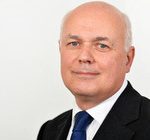
  • Iain Duncan Smith – 2003 Speech at the Launch of the Conservative Party Consultation Document on Health

    Iain Duncan Smith – 2003 Speech at the Launch of the Conservative Party Consultation Document on Health

    The speech made by Iain Duncan Smith, the then Leader of the Opposition, on 5 June 2003.

    The Labour Government is dangerously divided.

    And it’s got its priorities hopelessly wrong.

    That’s as plain today as it will ever be.

    We are not be going to spend today talking about the euro.

    We are going to talk about things that are already damaging the British people’s quality of life…

    Day in, day out…

    The public services on which they depend — and which are now failing them badly under Labour.

    But the Government are most certainly talking about the euro today.

    And they’ll still be talking about it tomorrow.

    And for a long time after that.

    Even as – we – speak, Mr Blair and Mr Brown are lining up their coalitions, on either side of the Cabinet table, ready for a battle over the euro — in which the losers will be the British people.

    While the Government are busy talking about something people don’t want — the euro — we will be talking about something they do want – better healthcare.

    This distracted and divided Government should be focusing on the things that really matter to the British people.

    The British people want better public services.

    Public services that work – and work well.

    We’ve already begun.

    For the past two years, we have been conducting the most wide-ranging policy review for a generation.

    A policy review focused on making the public services better.

    We have travelled – at home and abroad – learning from whatever works best for people.

    So last month, we promised to scrap Labour’s university tuition fees – their tax on learning.

    Today, Liam Fox and I are launching fresh, exciting proposals designed to give British people the better healthcare they need and deserve.

    Today begins a full consultation with patients and professionals on something that will make a real difference to people’s lives.

    The ‘patient’s passport’ is our plan to give people real choice over the health treatment they receive.

    This will be a fair deal for patients.

    A fair deal for everyone on healthcare.

    Our proposals will mean…

    Fairer healthcare, with no-one left behind, as we expand choice to everyone, not just those who can afford it.

    Fairer healthcare, with no-one held back, as we recognise the contributions of those who pay for their own treatment.

    Last year, a staggering number of people – 300,000 – paid for their own treatment.

    Most of them were pensioners — desperate people, who had suffered for too long.

    Under our proposals for a Patient’s Passport, everyone in the NHS will be able to get treatment at the hospital of their choice, free of charge.

    And people who choose to go outside the NHS for their treatment will be helped, not penalised.

    Our proposals would also mean…

    Better healthcare for everyone, with choice driving innovation and excellence.

    And more healthcare, as we expand the capacity of the health system in Britain.

    Our proposals would mean nothing less than a revolution in healthcare.

    We will preserve all the founding ideals of the NHS.

    Healthcare, according to your need not your ability to pay, and free at the point of delivery.

    But, for the first time in its history, the NHS would become a truly national health service — embracing our belief that healthcare is first and foremost about the patient.

    Compared to that, everything else is surely secondary.

    Our plans for a patients’ passport, combined with our plans to shift power from politicians to doctors, nurses and hospitals, will deliver a fair deal for everyone on healthcare.

    We care enough to find out what people really want, and we are open-minded enough to find out what really works.

    That’s why last month we promised to scrap Labour’s university tuition fees, abolishing their tax on learning.

    That’s why today we are proposing to give every patient in Britain a Patient’s Passport, making real choice available to all, not just those who can afford it.

    We have the courage and vision to commit Britain to a better course.

    Today, we are taking forward our fight, on behalf of the British people…

    For better public services — and a fair deal for everyone.

    A fair deal for people who find themselves paying higher and higher taxes, but not getting the improved public services they need.

    We will give them those better public services

    …public services where no-one is held back…

    …and no-one is left behind.

    A fair deal for people who deserve better healthcare.

    A fair deal for people who deserve a better education.

    A fair deal for people who have been made to wait and suffer too long.

    That’s our fair deal for everyone in Britain.

  • Liam Fox – 2003 Speech at the Launch of Conservative Party Consultation Document on Health

    Liam Fox – 2003 Speech at the Launch of Conservative Party Consultation Document on Health

    The speech made by Liam Fox, the then Shadow Secretary of State for Health, on 5 June 2003.

    Unless there is fundamental and radical reform, the NHS will never produce the quality of care we have a right to expect. And the people who would suffer most as a result would be the very people who rely most on the NHS.

    Labour’s internal divisions mean it is unable to deliver the reform that many
    recognise to be necessary. Only a Conservative Government will be able to deliver this.

    Our experiences during our extensive travels convinced us that we must undertake far-reaching reform on three broad fronts:

    – taking politicians out of running the NHS;
    – giving real freedom to health professionals; and
    – ensuring patients have real choice in health.

    We believe that the NHS is there to serve patients not vice versa.

    Freeing health professionals from the burden of red tape and the paperwork which targets bring will enable them to spend more time looking after their patients.

    This is vital, since ultimately greater professional satisfaction is the only route to more health care professionals, something which Labour has failed to understand.

    Our principle is that we want to see total spending on healthcare increase, but we will want to see the proportion of that spending that comes from other sources increase at a faster rate than that coming from the State. This will bring the UK more into line with the pattern of spending found in most of the European countries we have visited.

    We believe that choice – a Conservative word – must be available to all patients who will receive their health care through the NHS.

    But this alone is not enough. The standard of healthcare currently available to the British people is far below that which they have every right to expect in the world’s fourth largest economy.

    Over recent years, whereas there has been minimal growth in PMI, the number of people opting for self-pay (frequently the elderly, reflecting the high cost to them of PMI and their desperation to avoid excessive waiting times late in life) has increased by an average of over 20 per cent a year.

    In order to stimulate the creation of the new, non-NHS capacity referred to above, we will send clear signals that we are fully committed over the long term to measures designed to stimulate and strengthen demand in the voluntary and private sectors.

    The most effective way of doing this is to make it more attractive for individuals to supplement what is already being spent by the State through the NHS. This will therefore be on top of what they spend through their taxes, not, as Labour falsely claims, as an alternative.

    There are three main candidates which might be thus incentivised:

    • Personal PMI;
    • PMI available through company schemes; and
    • Patients who pay for a single procedure or item of care
    (the ‘self pay’ sector).

    We saw examples during our overseas visits of cash rebates, tax incentives and reductions of the price at source, with the State reimbursing providers.

    Attention needs to be given to companies who provide all their employees with a health insurance scheme and to those who negotiate reduced rates on their employees’ behalf with private insurers.

    This will include the large number of Trades Union members who benefit from these types of scheme.

    The self-pay market accounted for some 300,000 procedures last year (the age profile for which tends to be higher than that for personal PMI), a trebling since Labour came to power in 1997. If these patients did not opt to pay directly for defined elements of their care, in addition to what they have already contributed to the NHS through their taxes and National Insurance, they would be added to NHS waiting lists. It is doubtful whether the NHS would be able to cope with that extra demand.

    Under our proposals, patients will be able to move around the NHS, with the finance for their treatment automatically following them. This will mean that for the first time there will be access to a truly national health service. Patients will be given a greater say over where and when they are treated, and by whom.

    GPs could act as independent professional advocates for patients, advising them on factors such as comparative waiting times, outcomes and locations. This informed partnership between the patient and the GP would refute the argument advanced by Labour that patients would be unable to make sensible decisions about what form their treatment should take – a view which is both patronising and outdated.

    There is no acceptance in Labour’s centralised monopoly model that patients have any ownership, in part or full, of the funds they have contributed through their taxes to the NHS.

    We believe that the concepts of social solidarity – we all accept the need to cross-subsidise others in our society – and individual entitlement to contributions already paid are not mutually exclusive.

    We believe it is simply unacceptable for choice to be available to a small proportion of patients. We want it to become the norm that patients are free to get treatment beyond the NHS whatever their income. We will therefore extend the Patient’s Passport to services beyond the NHS – that is to the voluntary, the not-for-profit and the private sectors – as soon as capacity allows.

    This will yield two important benefits:

    • It will become a realistic option for a much larger proportion of the population to have access to a very much wider range of healthcare providers than is now the case.

    • Those who choose to have their health care provided within NHS hospitals will reap the benefit of shorter queues if more patients choose to have care elsewhere. Patients will, of course, be able to stay entirely in NHS hospitals if they choose: nobody will be compelled to go outside.

    The value of the Patient’s Passport beyond the NHS – i.e. whether patients take some or all of the standard tariff funding that patients can take to voluntary or private hospitals – will need to take account of several factors: the total cost to the public purse, the level of available capacity from other providers, the predicted effect on NHS demand, the effect on the current private insurance market and the need to promote greater diversity in provision.

    During the 1980s, the Conservative Government brought choice in home ownership to millions of people who had been denied it by socialist dogma.

    This laid the basis for a home-owning democracy in which all social groups were able to take part.

    The next Conservative Government will set patients free from the restrictions they face in the centralised Labour model of the NHS, so that all patients can benefit from the type of high quality and accessible care which is taken for granted by so many of our neighbours.

  • Michael Howard – 2003 Response to the Chancellor’s Euro Assessment Statement

    Michael Howard – 2003 Response to the Chancellor’s Euro Assessment Statement

    The response by Michael Howard, the then Shadow Chancellor of the Exchequer, in the House of Commons on 9 June 2003.

    “The time of indecision is over.” That was what the Chancellor said about the euro six years ago.

    It’s time, he said, to “establish clear national purpose”, to show “economic leadership”, to “make . . . hard choices”.

    “Divisions,” he said, led to “indecision” and policy that was “inconsistent and unclear”.

    Today ministers are speaking with one voice. They are united in common purpose, with one objective only in mind: to paper over the cracks which have riven them apart over the last few weeks.

    Is it not clear, from any objective reading of the evidence, including the 18 volumes we were given today, that joining the euro would damage our prosperity, destroy jobs and lead to an irreversible loss of control over our economic policy? That is certainly our view. And it is the view of the clear majority of the people of this country.

    Today’s statement is not the result of any real assessment of Britain’s national economic interest. It’s a result of the frantic efforts by the Chancellor and the Prime Minister to cover up their differences. After all, that’s why the five tests were thought up in the first place.

    Indeed, the Prime Minister was so determined that the Treasury view wouldn’t be decisive that he thought the unthinkable. He suddenly saw the merits of Cabinet decision-making. There’s a first time for everything. This Prime Minister will pay any price to do down his Chancellor.

    There they sit: united in rivalry. Each determined to frustrate the other. Each determined to scheme against the other. Each determined to do the other down. So there’s no clarity in policy. There’s no consistency of purpose. And each of them is the loser.

    The Chancellor is losing. The Prime Minister is losing. And much more importantly, the British people are losing.

    The Government’s ability to deliver has broken down; on health, on education, and now on the euro. Blair goes one way, Brown goes the other way, and bang goes the Third Way, lost in conflict, compromise and confusion. No wonder so little under this Government ever gets done.

    That’s the price we are all paying for the fault line at the heart of this Government. What a humiliation for the Chancellor! Wasn’t it the Chancellor of the Exchequer who briefed there was no reason for another assessment this Parliament?

    What if the 1,738 pages of data we’ve been given today had shown that the tests have been passed? How on earth are we to know whether a similar assessment in two or five or ten years’ time would reach a similar conclusion? If the data changes in one direction, how can anyone know it won’t change back again?

    If, at any particular moment in time, our growth rate or inflation rate or interest rates are at similar levels to those in the eurozone, how do we know whether that convergence is permanent? Might it not be because our economies were like ships passing in the night, coming together for a moment before moving off in different directions?

    The Chancellor predicted that trade with the EU could grow by as much as 50 per cent over 30 years. Will he confirm that his own department’s reports conclude that improved levels of trade are totally dependent on sustained convergence that has not yet been achieved?

    At the moment, we can choose to have the same interest rates as the eurozone when that suits our needs. But why on earth should we be forced to do so when it doesn’t suit our needs? Why on earth should we accept the straitjacket of a one-size-fits-all interest rate when it’s not the right rate for our economy?

    Competitiveness would be lost. Growth would be hampered. Jobs would be put at risk. And that will be just as true at the time of next year’s Budget and in a year’s time as it is now. Other countries have discovered these truths the hard way.

    This party has learnt its lesson from the experience of fixed exchange rates. But the Government has not — despite the fact that the present Chancellor was calling for “early entry” to the ERM nearly a year before we joined. Today the national economic interest took a back seat. As the Government dithers, uncertainty is maximised.

    This is the Prime Minister who promised in Opposition not to be derailed by “internal bickering” on Europe. This is the Government whose election manifesto in 1997 pledged that Labour would make a hard-headed assessment of Britain’s economic interests, rather than be “riven by faction”.

    This is the Government which promised to “prepare and decide”. But now it’s “not prepare and decide”. It’s not even “wait and see”. It’s just “hope and pray”.

    Today they haven’t put off a referendum because they’re against joining the euro or because they think it will damage the national economic interest. They haven’t put off a referendum out of conviction. The only reason we are not having a referendum now is that they know they can’t win it.

    Today’s statement comes from a divided Government, a Government on the run. This whole exercise has been an exercise in deceit. The deceit that they had the national economic interest at heart. The deceit that they wanted an objective assessment of what this country needs. The deceit that they were united. It is time for an end to the deceit. It is time for an end to the duplicity.

    This is not the end of the beginning for this Government. It is the beginning of the end. And the sooner it ends, the better it will be for the national economic interest and for the British people.

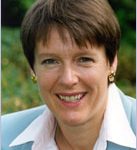
  • Caroline Spelman – 2003 Speech to the Solihull Multi Agency Domestic Violence Conference

    Caroline Spelman – 2003 Speech to the Solihull Multi Agency Domestic Violence Conference

    The speech made by Caroline Spelman to the Solihull Multi Agency Domestic Violence Conference on 9 June 2003.

    I welcome the opportunity to come and address you today on “Domestic Violence – the National Context”. Before I move on to this subject, may I congratulate all of you who are part of the Solihull Multi Agency Domestic Violence Strategy for the work you have done and are doing to fight domestic violence. It is an extremely important and much-needed work and I am sure that there are many survivors of domestic violence grateful to you.

    When I was Shadow Spokesman on Health and when I came to be Shadow Minister for Women, I was shocked to discover the extent of domestic violence. Domestic violence is cross-cutting and is not constrained to a particular gender, age, class, ethnicity, region – it can, and does affect people from all circumstances. 1 in 4 women and 1 in 6 men suffer from domestic violence and domestic violence accounts for a quarter of all violent crime. Figures I found even more shocking were that 2 women and 2 children die every week at the hands of their partner or ex partner as a result of domestic violence. You cannot argue with these statistics for you cannot argue against bodies in a morgue.

    You may have heard it said that there are 3 types of victims of domestic violence. The primary victim is the person who has been directly attacked by their partner or ex-partner. The secondary victims are those who may not have been directly attacked but have been indirectly affected, for example, children who may have been in the same house or room when the violence took place. I also recently met with a group of Grandparents who had watched the lives of their grandchildren suffer as a result of the scars from seeing domestic violence. The tertiary victim is the future victim who may enter a relationship with the perpetrator if he is not sufficiently dealt with by the statutory agencies. So, not only is domestic violence cross-cutting, there are also many hidden people affected.

    Provision of services nation-wide to help those affected by Domestic Violence is far from adequate. That is why it is so encouraging to see that Solihull is taking a lead with a Multi Agency Domestic Violence Strategy. The provision of refuges in the UK is very scarce. It appalls me that there are more animal sanctuaries in this country than refuges. It is estimated that around 40,000 women are on the move in refuges every week. This ‘caravanning’ around the countryside of vulnerable women and children looking for somewhere to hide and sleep is barely credible in the 21st century.

    I am very pleased to be involved with the refuge that is being set up in the Solihull area. With little help from the Government in establishing refuges, it is a difficult process but this must not put us off. I hope that this is the start of further refuges being built in the Solihull area so those affected by domestic violence can find a safe haven away from their abusive partners, before it is too late.

    So, what is being done on a national level to fight against domestic violence? At any time now, the Government will announce a Bill on Domestic Violence. I understand the Bill will cover a number of areas. For example, unduly lenient sentencing, establishing where the public interest lies in prosecution of perpetrators of domestic violence, a focus on a multi-agency approach, and child contact orders.

    There will be a period of Government consultation and I will also be carrying out consultation with the relevant agencies and actors. May I encourage you to play an active role in the consultation process both with the Government and myself – this is a real chance to influence the legislation as this early stage, before it is ‘put in stone’. We haven’t had any legislation dedicated solely to domestic violence for over 25 years – we must not get it wrong.

    I welcome this legislation and we will work closely with the Government on it – this is not an issue to score political points. However, I feel strongly that legislation is not the only answer to the problem of domestic violence. There must be a culture shift in relation to domestic violence. Domestic Violence can no longer be termed ‘just a domestic’.

    Imagine domestic violence being seen as unacceptable in the UK; perpetrators wouldn’t be able to ‘get away with it’ and they would receive the lengthy sentences they deserve; victims of domestic violence would hopefully seek help before it was too late; those of us thankfully not primary victims of domestic violence, would be there to support our friends who were victims and have confidence to raise concerns about possible perpetrators; children being able to talk openly to their teachers about their fears. Maybe this seems unrealistic, but I honestly believe we can bring about a substantial culture change.

    Let me give you an example of how we have tried to contribute to this. Last Christmas I produced a domestic violence poster. This was the first time the Conservative Party had done something like this. The poster carried the helpline numbers of Women’s Aid and the NSPCC. Over 10,000 posters were put up in GP surgeries, hairdressers, police stations and other places throughout the country where women could discreetly write down the helpline number and seek help.

    The model for the poster campaign was the Drink Driving Campaign seen in the early to mid 1990s. Some of you may remember that few eyebrows used to be raised when people went to the pub, drank alcohol and then drove home. However, as the result of an effective, nationwide, advertising campaign over consecutive years, and I must add no specific legislation, there has been a huge culture shift. Now, it is my generation and the one above who may still be tempted to drink and drive. But on the whole, those in their 20s and 30s view it as unacceptable. They would not drive if they had drunk alcohol and they would not get in a car with someone who was over the limit. So, why can’t the same change in opinion occur with domestic violence?

    It is crucial that we target all generations but for a culture change to be sustainable, we need to target the younger generations. And may I press it upon you that this need is urgent. There are worrying figures which show that about 20% of young men and 10% of young women think abuse or violence against a partner is acceptable. This trend needs to be urgently reversed.

    Another example of trying to bring about a culture change was the recent BBC Hitting Home Initiative. I am sure many of you saw some of the programmes during that week in February. The media is an effective tool of changing public opinion and we must encourage them to do this with domestic violence, as we did with the BBC.

    One area I am extremely concerned about is child contact arrangements. I acknowledge this is an extremely contentious area but one that needs to be resolved in the forthcoming legislation. I think that we must address the problem of abusive and violent parents – particularly those convicted of a sexual or violent offence against a child, having unsupervised contact with their children following separation. This may sound shocking but it does occur.

    Courts are putting children and their mothers at unnecessary risk. There have been incidents of child contact arrangements being used by an abusive partner to track down his wife and children and then to kill them. A court needs to consider all the relevant evidence, assess the risks and take all reasonable steps to ensure the protection of the child when a violent parent applies for contact or residence.

    I am very encouraged about your emphasis on a joined-up approach to the development and delivery of services. Domestic Violence will only be tackled if we work together. It is very important that we make early intervention with victims of domestic violence. A woman is likely to be assaulted by her partner or ex-partner 35 times before reporting to the police. This is unacceptable. A victim of domestic violence may feel unable to go to the police but they may have to receive medical treatment for their injuries. If we can make contact with them at this point, and encourage them to seek help, we may be able to prevent further abuses against them in the future.

    A multi-agency approach will only work if all the relevant agencies receive better training. This is particularly needed with the magistracy. Survivors of domestic violence will be more willing to press charges if they feel justice will actually be done. Unfortunately this is not the case at the moment. Perpetrators of domestic violence do not receive the sentences they deserve. I was, however, very encouraged to read in the strategy that Solihull Magistrates Court will be dedicating Wednesday mornings to Domestic Violence Cases. I hope this practice will be extended as time goes on.

    So, let me bring my remarks to a close. This week, people are suffering at the hands of their partners or ex-partners, some may even die; there are not enough refuge places to deal with the demand; perhaps a child will be forced to have contact with a parent they are terrified of; perhaps a perpetrator will receive a light punishment for the crimes committed.

    But it is not all negative; I really believe the tide is turning in relation to domestic violence. The new piece of legislation will bring about some important changes but we have to make sure we get it right – we owe that to all those affected by domestic violence. May I once again congratulate you on all you are doing to fight domestic violence and urge you to continue to give it a high priority. And every day, we can all play a part in the daily fight against domestic violence. By talking about domestic violence, we bring it into the public arena and if we actually do something to fight it, we can bring about the much needed culture change and change the lives for the better of many people affected by domestic violence in this country.

  • Michael Ancram – 2003 Speech During the Opposition Debate on the European Convention

    Michael Ancram – 2003 Speech During the Opposition Debate on the European Convention

    The speech made by Michael Ancram in the House of Commons on 11 June 2003.

    I beg to move, – ‘That this House believes that any Treaty providing a constitution for the European Union should only be ratified by Parliament once it has received the consent of the British people, democratically given in a referendum.’

    This is a straightforward and democratic motion that I hope will win widespread support across the House. It is also a timely motion, as it is being debated on the eve of the national referendum on a referendum that is being conducted by the Daily Mail. I congratulate the Daily Mail on its initiative, and it is not alone. A referendum is also backed by The Sun, The Daily Telegraph, the Yorkshire Post, The Birmingham Post, The Scotsman and many other newspapers, but, most importantly—as shown in opinion poll after opinion poll—it is massively backed by the British people.

    The terms of the motion are simple and straightforward. They are as politically neutral as possible, and I hope that the hon. Gentleman will reflect on his position when we reach the end of the debate.

    I hope that as many people as possible will register their opinion tomorrow, if only to show the Government that the British electorate will not readily be sidelined on major issues that involve the transfer of powers from this country.

    At a time when referendums have become an instrument of our political system, and when popular involvement in decisions has become part of our national culture, it would be wrong for an important decision affecting the future of our country to be taken without reference to the people. We should provide them with the opportunity to choose, “And then the people will decide”.

    Those are not my words, but those of the Secretary of State for Wales on the “Today” programme on 27 May when he thought, perhaps unguidedly—until he was required later to unthink—that next year’s elections could be used as some sort of surrogate referendum.

    The words of the Secretary of State for Wales are important, because they reflect the purpose of this motion, which is to enfranchise the people, not through the European elections but through a referendum. I hope that the right hon. Gentleman, who—I am sad to see—is not in his place today, will have the intellectual integrity to support us in the Lobby later.

    What of the Liberal Democrats? I was pleased to hear the right hon. and learned Member for North-East Fife say that “If Convention proposals have constitutional implications, there should be a referendum.” That sentiment is broadly reflected in the amendment that they have tabled today. Our motion refers to a “Treaty providing a constitution for the European Union”.

    It is impossible to see how a constitutional treaty providing a constitution can, by definition, be said not to have constitutional implications. I cannot see how even the Liberal Democrats can, with integrity, avoid supporting our motion today.

    We will be told that when we were in office we did not propose referendums on European matters of constitutional significance—that attack has been made on previous occasions—but was not it John Major who promised a referendum on the single currency? After six years of commitment from this Government, we are still waiting for that referendum.

    We are told that we will still get a referendum on the euro, but we will have to wait and see. All that we are getting at the moment is the Tony and Gordon roadshow—the Government’s answer to our ill-fated Eurovision entry Jemini, being ill matched and out of tune. After six years of being told that the single currency was simply an economic decision, with no constitutional significance, suddenly we are told that it has achieved constitutional significance again.

    The Prime Minister said in Warsaw on 30 May that “if we recommend entry to the euro, it would be a step of such economic and constitutional significance that a referendum would be sensible, and right, which is why we have promised one.”

    The Prime Minister used the phrase “constitutional significance”, but what about the Convention? At Question Time today, the Prime Minister said again that he did not believe that the Convention was constitutionally significant, but I ask the question again: if a constitutional treaty providing a constitution for the EU is not of constitutional significance, what on earth is? Surely it would be as sensible and right to have a referendum on the constitution as on the euro?

    I am sure that we will also hear the usual attacks for not backing referendums in the past. The answer is straightforward. Ten or 12 years ago, we did not have referendums. Even Labour Members argued in many debates—and I can give the House examples, if necessary—against referendums. However, nowadays we do have referendums, and that is because this Government have made them readily available as a political and constitutional device for allowing people to decide. There has even been legislation on the systems of referendums.

    The Government have used referendums with gusto. There have been 34 referendums since 1997, on matters ranging from the Belfast agreement and devolution for Scotland and Wales to the London Mayor and Assembly and the much-canvassed mayor of Hartlepool; many more are promised on regional assemblies. This Government love referendums, as they have shown over and over again—but not on this matter, the most important and far-reaching issue of the lot. It is their instant ruling-out of one on the European constitution that stands out.

    Why this matter? What are the Government afraid of? If the people’s consent to set up a mayor of Hartlepool is so important, why is it to be denied for the setting-up of a European president of a European political Union? The answer, we were told by the Prime Minister again in Warsaw, is that neither the Convention nor the IGC represents “a fundamental change to the British Constitution and to our system of parliamentary democracy”.

    How does the Prime Minister know what an IGC that has not yet begun is going to represent? On that basis, how can he rule out a referendum now?

    Today’s amendment changes the criteria. Out goes the phrase “a fundamental change to the British Constitution”, and in comes the phrase “do not involve a fundamental change in the relationship between the EU and its Member States”.

    Those are two very different sets of criteria. In a sense, it is perhaps all about words, but what matters is the reality. It is the reality that matters, not the words. We are at the moment part of an albeit imperfect Europe of nations. I believe that the European Union is in need of reform, but if the Convention proposals as they stand were ratified in a treaty we would be part of something fundamentally different.

    I do not mind whether we call it a superstate, a federal power or—the Prime Minister’s preferred option—a superpower. I do not care whether we call it a politically united Europe or even Romano Prodi’s “advanced supranational democracy”. All I know is that it will not be what we have now. It will be a step change away from that. I do not understand how can the Government can claim that that does not involve a fundamental change of the relationship between the EU and its member states, because it changes that relationship: member states would go from being partners to being subservient components.

    If we look at the overall result of the Convention’s proposals, we begin to see what is happening. The proposals will lead to a legal personality, a constitution, a president and a foreign secretary. It will involve fundamental rights, including the right to strike, legally enforceable at a European level. There will be a common foreign and security policy, and a European prosecutor. European law will have explicit primacy, and it will have an increasing role in criminal law, especially in procedure. There will be shared competence over immigration and asylum, with no veto, and Europe’s powers will be expanded into vast areas, from transport to energy. There could even be—who knows?—a common currency.

    Each of those elements diminishes our existing national sovereignty in one way or another. Together, they build a new and distinct political entity that has many of the attributes of a country. That is the truth, however hard the Government seek to disguise it. To call this a tidying-up exercise is laughable, and simply not true.

    One of the Convention’s leading members, the former Italian Prime Minister Lamberto Dini, said in The Sunday Telegraph of 1 June: “The Constitution is not just an intellectual exercise. It will quickly change people’s lives . . . and eventually will become an institution and organisation in its own right.”

    That may not suit the Government’s agenda, but Lamberto Dini is on the Convention, and that is what he believes will happen. That is the reality.

    If we look at the totality of what is being done. I used to practise in the courts, and one could take little bits of evidence and say that none of them amounted to much on its own. What matters is the eventual result of putting them all together. I am suggesting to the House that what is being created, whether one wants it or not, is very different from what we have now. If that is the case, it is of constitutional significance, and it should be the subject of a referendum.

    I believe that those components will change the nature of the EU. An EU foreign secretary and a common foreign and security policy would mean that the circumstances of the EU would be very different from what they are at the moment. We must consider that point as we determine whether a referendum is necessary or not.

    The Government know that the proposals are far reaching. The Treasury’s own single currency assessments published on Monday state: “Many of the issues being considered by the European Convention could have far reaching consequences for the future performance of EU economies whether they are part of the euro area or not.”

    That means us, and it does not sound to me like tidying up. It sounds much more like the Prime Minister’s criteria of economic significance as well as constitutional significance, about which he spoke in Warsaw, where he said that they make a referendum sensible and right. His words also apply to what we see coming from the Convention.

    My party opposes the constitution, but that is not the point of the motion. The point is to give the British people the right to decide whom they believe and what choice they want to make about how this country goes forward in Europe. That is why we are pressing for a referendum. Parliament is sovereign, but, in my view, that sovereignty is granted to it in trust by the people. Parliament should not be able to alienate sovereignty permanently and irreversibly without the express consent, democratically given, of the electorate. In the absence of a general election, such authority can be given to Parliament only by a referendum.

    Authority has not been given, nor have the Government sought it. There was no mention of a European constitution in their manifesto. That is another reason why a referendum is necessary. That is not just the view of the Conservative party or our country: the hon. Member for Moray reminded us of the origins of the Convention, and I shall quote what Valéry Giscard d’Estaing said on 28 February 2002 when he launched it: “Treaties are made by states and agreed by Parliaments, but constitutions are created by citizens and adopted by them in referendums.”

    That was his view then; I believe it remains his view today. The Danish Prime Minister, Mr. Rasmussen, was reported as saying on 28 May: “What is at stake is so new and so big that it is right to hold a referendum”.

    From all corners of the debate in Europe, people are telling us that the constitution is a significant move forward and that it is a subject fitting for a referendum. The case for a referendum is compelling.

    The motion refers carefully and deliberately to “a treaty providing a constitution for the European Union”.

    That makes it even more difficult for me to understand how, without their knowing the eventual shape and contents of the treaty, the Government are able instantly to rule out a referendum. If they do not know what they will be looking at in the long term, how can they say that there will be no referendum? Why are the Government so frightened? Are they frightened that their smokescreen will be blown away, and is that why they dare not let the British people decide? Other countries will let their peoples decide. Denmark and Ireland will let the people decide. France, Portugal, Sweden, Finland and Austria may, in various ways, let their people decide. The Netherlands has just decided on a non-binding referendum. Only Britain, Germany, Belgium, Luxembourg and Greece refuse point blank to let the people decide.

    The Government’s position insults the British people. They continue to play what I call the “big lie” card, saying that the debate on Europe is about going right in or coming out of Europe, and that they want in and we want out. That is dishonest spin of the worst sort—the kind of spin that has already brought them into disrepute, a lesson from which I hope they learn. The real Europe debate, which the Government are so keen to avoid, is the debate about the sort of Europe that we want to be in. Is it a Europe of sovereign nations that we seek, or is it a European superpower that the Prime Minister proclaimed in Poland in October 2000 and in Cardiff in November 2002? That is the real choice.

    This motion is about trusting the people. It is a democratic motion. It exposes the arrogance of a Government who will not let the people have their say. What is the betting that the Leader of the House will shortly tell a newspaper that there are rogue elements in the electorate, let alone in the House, who are seeking to undermine the Government, and that that is why we cannot have a referendum? Only six years ago, the Government asked us to trust them. What we are saying is: “Trust the people.” Why do they continue to say no?

    We will trust the people. We will not take no for an answer. We will let the people decide. I call on the House to support the motion.

  • Jonathan Evans – 2003 Speech on the European Council in Thessaloniki

    Jonathan Evans – 2003 Speech on the European Council in Thessaloniki

    The speech made by Jonathan Evans, the then Leader of the Conservatives in the European Parliament, on 4 June 2003.

    Mr President,

    I congratulate you, President-in-Office, on the progress that has been made during the Greek Presidency on progressing enlargement. The special Athens Council in April was a landmark in the history of Europe following the collapse of the Berlin Wall, and we look forward to the ten applicant states taking their rightful place in the new Europe.

    However, looking at the priorities which were set out by the Presidency, two of them in particular have, sadly, been a disappointment.

    First, the Lisbon process. After three years, this agenda is stalled, indeed going backwards. It is disappointing that the Presidency has been unable to persuade Governments to get their act together on an issue that is fundamental to the prosperity of people across the Union. As a result, many EU countries are looking to a future of economic stagnation and deflation.

    Second, the Presidency wanted to see “the new Europe as an international motor for peace and co-operation”. Of course, the Iraq crisis was a difficult one. However, the way in which, during the Greek Presidency, the ‘Gang of Four’ convened in April in Brussels to consider alternative defence structures to NATO, merely reinforced anti-American sentiment.

    Thessaloniki will also mark the end of the Convention on the Future of Europe, when former President Giscard presents the conclusions of eighteen months of discussion. The Convention still has work to do in the coming two weeks, but I wanted to comment today on the emerging draft Articles published last week.

    At Laeken, Heads of State and Government said: “Within the Union, the European institutions must be brought closer to its citizens”. Having looked at the draft Articles in this Convention document, I fear that this noble ambition has fallen somewhat short of the mark. Indeed, I would say that, in many ways, it heads in precisely the opposite direction.

    The Convention is proposing a European Union that is more centralised, more bureaucratic, in many ways less democratic and certainly more federalist than is currently the case.

    I am a long-standing supporter of Britain’s membership of the European Union. But, the document that Heads of Government are likely to see in Thessaloniki is one that does, in my view, change the nature of the relationship between Member States and the European Union.

    In summary:

    A Constitution

    Incorporation of the Charter of Fundamental Rights

    Legal status for the Union

    A President for the EU

    A Foreign Minister for the EU

    The collapse of the second and third pillars

    A Common Foreign and Security Policy

    The eventual framing of an EU defence policy

    A requirement for economic policies to be co-ordinated

    Harmonisation of certain taxes

    The establishment of a European Public Prosecutor

    The British Government has called the Constitution a “tidying-up exercise”, and therefore not worthy of being put to the people in a referendum. In contrast, the Danish Prime Minister is to submit the Constitution to a referendum because: “the EU’s constitution is so new and large a document that it would be right to hold a referendum on it”. 80% of the British public agrees.

    The former Prime Minister of Italy, Lamberto Dini, who also sits in the Convention, has said: “The Constitution is not just an intellectual exercise. It will quickly change people’s lives … “.

    This is not just a case of the British Government dismissing the right of the British people to have a say on their own future, it is also that the Convention proposals fundamentally change the relationship between the Union and the Member States and the way in which we are all governed.

    For those who have cherished the concept of a United States of Europe, the blueprint has been set out by Giscard, and the debate on the consequences of this draft Constitution should be based on this fundamental fact so honestly and sincerely articulated by President Prodi and many speeches in this debate.

    When the Inter-Governmental Conference begins its work later this year, my Party is determined to see that the accession states not only have a right to contribute to the discussion, they must also have a vote in Council on the crucial decisions it will take. The outcome of the IGC will impact on people in Warsaw, Prague and Budapest, just as much as London, Paris and Berlin. It is unacceptable for the EU 15 to impose a radical new Constitution on these new Member States without them having a proper, democratic role in the outcome.

    We have long been the most ardent supporters of enlargement and the rights of the accession states to take their place at the European top table. But our Europe is one where diversity is celebrated, not one where countries are forced into an institutional straightjacket. We want a Europe that is democratic, prosperous, works with the United States to defend our freedoms and confront common threats. The Convention takes us down a different route to a Europe where the nation state is no longer the foundation on which the Union rests.

  • Michael Ancram – 2003 Speech at the Oxford Centre for Islamic Studies

    Michael Ancram – 2003 Speech at the Oxford Centre for Islamic Studies

    The speech made by Michael Ancram on 13 June 2003.

    It is a great pleasure for me to be here today at the Centre for Islamic Studies.

    Already in its short lifetime since being set up in 1985 the Centre, and the work of its Director Dr Nizami, have acquired an unsurpassed reputation in the academic world and indeed beyond. Its mission in helping to bring the Islamic and Western worlds closer together through increased understanding is more important than ever. Dialogue is central to that understanding, hence the title of my lecture tonight.

    The “Clash of Civilisations” idea was advanced by Samuel Huntington in his 1993 article in the journal “Foreign Affairs”. In that article, in a nutshell, he “posed the question whether conflicts between civilisations would dominate the future of world politics”. He further developed his theme in his subsequent book in which he stated that not only were “clashes between civilisations (the) greatest threat to world peace” but also that basing an international order on civilisations would be an effective way to prevent war.

    Understandably his thesis generated, and continues to generate, considerable debate and the whole spectrum of reactions. Some have chosen to interpret it as meaning that following the end of the Cold War a new, ‘civilisational’, dragon must be found to replace the defeated Communist enemy. Even before 9/11, but more so afterwards, an ill-informed minority seem to be suggesting that Islam could be that dragon.

    That is as offensive as it is wrong. Wrong because it is not true. Wrong because the need for dragons is the stuff of fairytales and not of real life. And offensive because Islam is not an enemy of the West. Crudely to transpose the acts and views of a tiny minority as being representative of the entire religion is both inaccurate and dangerous. Such assertions find easy root in the fertile soil of misunderstanding. The more difficult terrain of understanding is much harder to cultivate, but cultivated it must be. And the only way is through dialogue.

    The unacceptable alternative is to yield to the doctrine of conflict, the clash of civilisations dragons and all.

    Conflicts between “civilisations” have occurred in the past. Differences of culture, religion, politics have led to conflict. The Crusades were one such example, although there were many other factors at play in that conflict. Similarly in more recent times we see the Israeli-Palestinian clash. We see the Kashmir dispute, and a host of other conflicts worldwide. While however the world will always find issues that divide, we are united by a far greater factor – we all share this small planet. The differences and diversity around us should be a source of pride. It is up to us to learn from each other’s cultures, and to achieve greater understanding. Understanding is not grown in a vacuum chamber. It must be watered constantly by dialogue.

    In November 1998 the UN General Assembly passed a Resolution declaring 2000 the “Year of Dialogue Among Civilisations”. Since then a team of academics and experts has examined how best to promote this, presenting a paper to the UN last year. They too have recognised, as do I, that dialogue is essential. I was the Political Minister in Northern Ireland for 4 years during the time that we moved from conflict to dialogue. In Northern Ireland there are two distinct cultures, fundamentally opposed to each other on religion, on allegiance and on territory. It was a microcosmic example of the clash of cultures, but none the less of a clash for that. 3000 people out of a population of 1.5 million lost their lives over 30 years of clash.

    I was immediately faced on arriving in Northern Ireland with how to get a dialogue to work, when there was no dialogue and no will for dialogue. The answer for a start was ‘slowly’, but I learned early that the key is to begin to understand each other’s fears.

    Fear is at the core. Fear on each side of being dominated by the other. Not the desire to conquer each other, but the fear of being overwhelmed and run by the other. Extremists on each edge of these fundamental clashes of civilisation often appear to be motivated by the rules of conquest. The paradox is that, certainly in my experience, those who allow them to operate by giving them succour, shelter and support are not. One way or the other they are motivated by fear.

    So I believe it is between Islamic Fundamentalists and the West. Their mindset is not one of conquest but of fear. They fear what has been called “Westoxification”.

    The fear of “westoxification” is the fear that another culture, in this case that of “the West”, can seduce followers of other cultures or ways of life, in this case followers of Islam, away from their Faith and the way of life which goes with it. “Westoxification” is a particularly apposite term for it is both addictive and seductive, and yet at the same toxic.

    Viewed through this prism, the idea of a clash of civilisations is in fact a defensive reaction to events that people do not sufficiently understand. So we must strive to understand what each side, or each group, is trying to protect, and then demonstrate that they do not need to be at risk, that their fears are unfounded.

    Dialogue is not only the first step but also the continuing staircase to the understanding and tolerance we must build. But to engage in a truly open and productive dialogue one must understand the fears that drive people. To do that requires a real knowledge of history and backgrounds. In Northern Ireland my first step was to read as many history books on the subject as I could find, to talk to as many people as I could – to understand the background to the fear and how it had reached that stage. Without understanding our past it is very difficult to appreciate our present, or project our future.

    My firm view was and is that an understanding of the past provides the background that is necessary to inform dialogue. It discloses the sources of the fears that in turn have given rise to the bitterness and the hatred. It rapidly becomes the basic building block of discourse. Knowing how and why the knots of hatred and mistrust came to be tied is the only route to loosen, to unravel, and eventually to undo them.

    In Iraq we cannot hope to see a stable and successful post-Saddam Iraq without the Iraqi people themselves leading the way. And without understanding the history of that country, the attitudes that are prevalent, the ethnic and religious tensions and balancing all these we cannot be much help in assisting the Iraqi people in that task. Iraq certainly today is full of division and mistrust and consequent fear. They certainly need dialogue amongst themselves and urgently. And for us too. It is only through dialogue and interaction that we can help to make the new Iraq which we all wish to see a reality. There must be no creation of permanently disenfranchised minorities who can never expect to share in power. History teaches us the cost of such mistakes. The fears of the Iraqi people of such inequalities internally, or of Western domination externally, must gradually be laid to rest through dialogue.

    The Israeli-Palestinian dispute is the inevitable backdrop to most of the long-term tension in the Middle East. It is in many ways the key to Arab, and indeed Muslim, attitudes towards the politics of the region and towards the West in general.

    I know that many Muslims view the West’s and America’s attitude to the dispute as Israeli-centric. I know too that many in the Muslim world feel that the West has often shown over-scant regard for the injustices suffered by the Palestinian people every day. The Palestinians are stateless, and they feel both dispossessed and humiliated. They fear remaining permanent refugees with no future for their children and no home of their own. They fear that Israel will never allow them their own State.

    On the other side the Israelis also feel threatened. They feel immediately vulnerable to the indiscriminate horrors of suicide bombings. Some fear that the Arab nations still wish to drive them in to the sea, to destroy the State of Israel. They fear the military vulnerability of Israel that could result if a Palestinian State were to be used as a springboard for an attack.

    Fear is therefore at the heart of the perceptions on both sides. That fear can and must be dispelled. I believe it can be. I do not believe that the Arab nations have any real remaining desire to destroy Israel. I do believe that today they realistically recognise Israel’s right to exist. Crown Prince Abdullah’s Saudi plan last summer, endorsed by the Arab states, signalled a welcome willingness to accept this. Similarly I do not believe Israel to be fundamentally opposed to the creation of a Palestinian State. Camp David and Taba showed that the template for the two state solution was and is there, even though on these occasions it was not made to stick – partly because the fear was not sufficiently dispelled, the trust not sufficiently established, and the dialogue not sufficiently deep.

    What is certain is that dialogue, not conflict, is the only way that these underlying fears can be assuaged. The vast majority of ordinary Israelis and Palestinians want peace, but a peace which is both just and secure. The recently published Roadmap is a significant step on the road to resuming dialogue, backed by a real international political will to make that dialogue work.

    The Roadmap is not a magic talisman that will solve the problem overnight, but we saw at Taba that on issues such as the Right of Return, the Borders, Settlements and even Jerusalem the two sides can be brought far closer by dialogue than previously thought possible. The Roadmap provides a framework for taking that dialogue further.

    A two state solution is the only way forward and dialogue is the only way to achieve it. But dialogue and negotiation involve give and take on both sides. If the two sides are too rigid or too many conditions are set, then the power to derail the dialogue passes to the extremist and fear takes over again.

    The active assistance of the USA and the UK in the Middle East Peace Process is vital. I am confident that we will see a sustained and balanced contribution by the international community to the eradication of fear and the underpinning of peace. We all on every side have a political, and indeed a moral, duty to do everything in our power to help settle this long-running dispute.

    Then there is Kashmir, an area where fear has also come to dominate the two sides in the dispute. Once again there are two “civilisations”. For once the West is not one of them. Instead we see predominantly Hindu India and Muslim Pakistan engaged in a dangerous game of brinkmanship and escalating tension, with the nuclear threat always thinly veiled in the background, centred in or on the breathtaking highlands of Kashmir located in between.

    Although ostensibly a territorial dispute, fear of domination by either side underlies the concerns of many Kashmiris. Both sides fear the others weaponry and the domestic impact any deal might have on their own political positions. Yet by studying the origins of the dispute and engaging in a dialogue, both parties can begin to build that level of understanding and trust which are vital to progress and de-escalation of tensions. I welcome the tentative steps towards resuming dialogue of the last few days. We must give them every encouragement we can.

    There is another important aspect to dialogue. In the West when we talk of dialogue we must be careful. Too often we appear to preach, to approach dialogue from a morally superior position. This is not only wrong in itself, but it also immediately undermines the genuine interaction of dialogue.

    Our tendency to do so has sometimes made dialogue more difficult. It has been seen as a sign of arrogance, and arrogance is the enemy of genuine dialogue. It is important therefore that we in the West do not adopt a position whereby we assert the idea that Western civilisation is somehow more advanced and inherently superior to other civilisations. Nor must we seek to impose our way of life on other cultures and societies.

    To assert that one civilisation is naturally superior to another, to the exclusion of all others, is the road away from dialogue and towards the clash of civilizations. It ignores the historical reality that the interaction of civilisations in the past that has produced much of value which we take for granted as our own today.

    At the height of Islamic power, in the age of the Caliphates, the Muslim world was the most powerful force militarily and economically. It came in to contact with the Christian West at many points, perhaps most notably in Spain, Al Andalus. Its trading networks, stretching across Asia, Europe and Africa brought a wide-range of exotic commodities to the West, it had assimilated the skills of Ancient Persia, Greece and the Middle East, and this placed Islamic civilization at the forefront of the arts and sciences. Indeed many great advances in medicine and science were brought about, or based, on ideas that originated in the Islamic world and were carried to the West by contacts in Medieval Spain.

    The Islamic world’s transport and communications links supplemented this knowledge with knowledge and skills from outside, such as the art of paper-making from China and decimal positional numbering from India.

    As the author Bernard Lewis writes: “It is difficult to imagine modern literature or science without the one or the other”. The Age of the Caliphates was by no means an age without conflict but there was considerably more dialogue between civilizations than many people might suspect. The massive literary, scientific and artistic steps forward by the West at this time owe a great deal to constructive contacts and dialogue with Islam & are an indication of the progress that can be made for human civilization in general through dialogue.

    There is an aspect of dialogue which is important, and that is the layered approach to it. To be successful it should never just be carried forward at a single level. It should not simply take place at great power level, heads of state to heads of state, governments to governments. Big Power settlements and solutions with no grassroots support or participation lead far too often to hollow structures and empty agreements.

    An effective dialogue between civilisations or to end a conflict must of course be a dialogue between states. But if the outcome is to take root, it must equally be a dialogue between academics, between journalists, between communities, between neighbours and even a dialogue between individuals.

    In Israel and the Occupied territories if a peace is to last it must be believed in by the ordinary Palestinians and Israelis who see each other every day. I believe the overwhelming majority wants peace. I believe that by giving ordinary citizens a stake in the peace process, by carrying them along, then that peace becomes more durable. I believe also that the trust needed to underpin a successful peace begins with dialogue leading to understanding at each and every level.

    And so it must be between the West and Islam in general. Each and everyone one of us has a duty to attempt to understand each other more. In our ever more interconnected world, where cultures intermingle and ideas can be exchanged across the world at the push of a button on a laptop, it is more important than ever that we build trust and tolerance, through an understanding of where each of us is coming from.

    The fear of the unknown, or the insufficiently understood remains at the core of many problems facing the West, the Islamic World and indeed the whole planet today. Dialogue above all else can counter this fear. That is why we must ensure that it does ultimately triumph over the clash of civilisations that can only bring darkness and yet more fear. It is often not the easiest way. It can itself be full of pain and frustration. It requires immense patience and self-control. But the storms it may in the short-term generate will be nothing as compared to the seismic and cataclysmic movements that would be created by the tectonic collisions of the clash of civilisations.

    Although in a different context, President Kennedy’s message is still applicable when he said: “Let us never negotiate out of fear, but let us never fear to negotiate”. Dialogue is the path of the wise. Let us take it.

  • Eric Forth – 2003 Speech on the Government Reshuffle

    Eric Forth – 2003 Speech on the Government Reshuffle

    The speech made by Eric Forth in the House of Commons on 17 June 2003.

    Can I welcome the Rt Hon Gentleman to his new position as part time Leader of the House.

    I congratulate him on his marriage on Saturday – I wish him many years of happiness… …and at least a few weeks as Leader of the House.

    Mr. Speaker, last Thursday the Prime Minister’s Press Office announced sweeping change to our Constitution and our system of justice, as a half-baked afterthought to the most botched and shambolic reshuffle in living memory.

    But since then the Prime Minister hasn’t deigned to come to the House to explain what it all means.

    He can’t explain because he doesn’t know what it all means.
    He won’t explain because he doesn’t care what it all means.
    And now he has left it to the part time Leader of the House to pick up the pieces.

    As a result of what the Prime Minister cobbled together between trips abroad —
    the separate and distinct voices of Scotland and Wales in the Cabinet have been utterly confused and downgraded;

    a Scottish Member of Parliament is in charge of health in England, imposing on England a foundation hospital system rejected in Scotland, but no English Member is allowed a say on health policy in Scotland;

    another Scottish Member is responsible for transport in England while defending the interests of Scotland, yet reporting to a unelected English Minister in another Place.

    Last Thursday, the West Lothian question became a Westminster question.

    A question over the competence of the Prime Minister, over his openness and honesty with his Cabinet colleagues and over the accountability of Ministers to Parliament.

    Chaos, confusion and conflicts of interests run rife everywhere.

    Downing Street’s first task was to explain whether or not the Lord Chancellor still existed, and if not, who or what would perform the vacant roles.

    The timetable of this sorry saga went something like this…
    On Thursday the Government announced that a Department for Constitutional Affairs would replace the Lord Chancellor’s Department. Lord Irvine, the Prime Minister’s former boss, who objected to the changes, was sacked, and Lord Falconer, his former flat mate, was appointed to a new role: Secretary of State for Constitutional Affairs.

    Not, I note, Lord Chancellor, because, as part of the changes, the post of Lord Chancellor would be abolished and his responsibilities as head of the English judiciary, Cabinet minister and Speaker of the Lords would be reallocated.

    According to the Downing Street website on Thursday: ‘the [Prime Minister’s Official Spokesman] said that in the transition period Lord Falconer would not fulfill either the judicial function of Lord Chancellor or the role of speaker’.

    But on Friday, Lord Falconer had to be dragged to the Woolsack to assume his place on the Woolsack as speaker of the House of Lords, and was forced to admit that he was after all the Lord Chancellor.

    Then on Saturday, Lord Falconer said: ‘I will continue to be the Lord Chancellor and exercise his powers until such time as statutory arrangements can be made to replace it, and that was always made clear. As long as the House of Lords wish the Lord Chancellor to sit on the Woolsack I will continue to do that’ (Daily Telegraph, 16 June 2003).

    Then there was the need to explain the plans for a Supreme Court, and the Government’s commitment to consult widely on their proposals.

    On Thursday, the Prime Minister announced the creation of a Supreme Court to replace the Law Lords.

    The role of the Lord Chancellor as head of the English judiciary would be reallocated.
    A Judicial Appointments Commission, an independent body to select new judges, would take over responsibility from the Lord Chancellor.

    But can the part time Leader of the House confirm that it may be another six weeks after the announcement of the creation of these new bodies before consultation papers on this are even published?

    Because that’s what the timetable published by Downing Street last Thursday said.

    On Friday, the Hon and Learned member for Medway told the Today programme:
    ‘If you are going to change 1,500 years of constitutional history, you do it carefully, you have a consultation, a white Paper and experts, and then finally you bring it before Parliament, because Parliament decides the way we are governed, not the Prime Minister on the back of an envelope in Downing Street. What we have here is a botch, which looks as though it has been put together in panic. It totally lacks coherence and clarity.”

    On Sunday, Speaking on Breakfast with Frost on Sunday 15 June, Lord Falconer said that ‘as far as the Supreme Court is concerned the effect of the announcement on Thursday is that we would have a Supreme Court but the detail of that has to be worked out after proper consultation.’

    And meanwhile, the Government’s claim that the proposed Judicial Appointments Commission would make judicial appointments impartial was queried by Lord Donaldson, former Master of the Rolls: ‘You can have an Appointments Commission which is independent of the executive, but nevertheless is tailor-made to produce an entirely different kind of judge who perhaps would be more acceptable to the Home Secretary’.

    Might this have been what the Rt Hon Gentleman, the part time Leader of the House, meant when he said in Tribune in 1984:
    “The next Labour Government should appoint only judges who have clear socialist or libertarian leanings.”

    The story of the fast diminishing representation of the people of Scotland and Wales bears some retelling.
    On Thursday, the Downing Street press briefing read:
    “New arrangements will also be put in place for the conduct of Scottish and Welsh business.”
    “The Scotland and Wales Offices will henceforth be located within the new Department for Constitutional Affairs, together with the Parliamentary Under-Secretaries of State for Scotland and Wales.”

    On Friday, the Downing Street press briefing described the Rt Hon member for Edinburgh Central as “Secretary of State for Transport and Secretary of State for Scotland” and the Rt Hon member for Neath as “Leader of the House of Commons, Lord Privy Seal and Secretary of State for Wales”.

    The briefing went on to say that, “The [Prime Minister’s Official Spokesman] said he couldn’t give a precise breakdown of Alastair Darling’s schedule and it would be wrong to do so but … one of the reasons Alastair Darling was made Secretary of State for Scotland was that he was Scottish.”

    “Asked if he was saying that Alastair Darling, Peter Hain and Helen Liddell didn’t have enough to do the PMOS said that what he was saying was that was in respect of Wales and Scotland, given the progress of time in relation to devolution was that these were no longer full-time jobs so they were being combined with other roles.”

    “Asked who the civil servants in the Scottish and Welsh offices would answer to, the PMOS said that they would come under a single Permanent Secretary Sir Hadyn Phillips but would work to their respective secretaries of state. Asked if the Permanent Secretary would be answerable to Lord Falconer the PMOS said he would.”

    After all that, I think all of us will agree with the conclusions of Friday’s Downing Street Press Briefing…

    “…the PMOS said that…some things had been a little hazy.”

    But not apparently to the part time Leader of the House, who told BBC Radio Wales on Friday, “The Wales Office is not being abolished, I stay as Secretary of State for Wales.”

    He did, however, have a few harsh words for the Prime Minister and his team:
    “I readily admit that in the comings and goings yesterday this whole issue could have been communicated far more effectively from Downing Street.”

    On Saturday, Lord Falconer said, “Of course I am not their boss … There is still a Scottish Office, the officials work in my department, but politically those offices are led by Peter and Alistair, there is still a very strong voice in the Cabinet for Scotland and Wales”.
    And as the Hon Lady the member of Stirling, now parliamentary undersecretary in the Department of Constitution Affairs, said: “I am working for Alistair Darling as a junior minister in the Scotland Office which is part of the constitutional affairs department … A great deal of the day to day activity will be done by me anyway, Alistair and I have discussed that”.

    Today, the sad tale can be summed up in one line.
    As the Scotland Office website now reads:
    “This site is currently under redevelopment”

    But Mr Speaker, today’s debate is about more than constitutional confusion.

    It is about the loss of representation for the people of Wales and Scotland.

    It is about the loss of democratic accountability for the acts of this Government.

    Exactly what are the roles of the Scottish Secretary, the Welsh Secretary and the Secretary of State for Constitutional Affairs?

    Does a Scottish Member with a concern go to the Rt. Hon. Member for Edinburgh Central or to the Lord Chancellor?

    What happens if the Rt. Hon. Member disagrees with the Lord Chancellor?

    What happens if the Rt. Hon. Member gives a civil servant a differing instruction from the Lord Chancellor?

    Is the Scotland Office part of the Department of Constitutional Affairs as we were told on Thursday?

    Or is there still a Scotland Office as the Secretary of State for Constitutional Affairs told us on Sunday?

    If the Rt Hon Member for Darlington felt obliged to resign from the job of one Secretary of State – how can others be reasonably expected to do two jobs?

    The government has totally lost the plot on constitutional change.

    It began last week with a flat “No” to a referendum on the new European Constitution.
    It started this week with a pledge of referendums on regional assemblies.

    We began last week with them running away from a referendum on the destruction of the pound.

    We ended the week with them promising emergency legislation in another place allowing referendums on fluoride in water.

    The final question this House must consider Mr Speaker is that of the Rt Hon Member for Hamilton North and Bellshill and the West Lothian Question.

    The absurdity of his appointment is that we now have an MP representing a Scottish constituency, telling us how to run the NHS in England when he has no say over health policy in Scotland because the issue is devolved.

    Our Father of the House said of his appointment: ‘It is an extraordinary piece of casting to put a Scot in charge of the English health service. Dr Reid has no say whatsoever in health matters pertaining to those who sent him to the Commons.’

    The Hon gentleman, the Member for Thurrock, said: ‘I am not happy that the health ministry, which is almost totally an English ministry, is headed up by a member of parliament representing a Scottish constituency.’

    The Secretary of State for Health will have the task of pushing through the foundation hospitals bill in England, even though it has been rejected by the Labour run Scottish assembly.

    Has he forgotten what the Rt Hon Member for Livingstone, Shadow Health Secretary and a Scottish MP just before the 1992 Election, once said? ‘Once we have a Scottish Parliament handling health affairs in Scotland, it is not possible for me to continue as Minister of Health, administering health, in England’.

    Mr Speaker, the Prime Minister has been guilty of breathless arrogance and supreme incompetence.

    At a time when our public services are in crisis and in dire need of real and radical reform…
    At a time when one in four children are leaving our primary schools unable to read, write and count properly…

    At a time when 30,000 children go on to leave secondary school without a single GCSE…
    At a time when there are still a million people on hospital waiting lists…
    At a time when 300,000 people are forced every year to pay for their own hospital treatment…
    At a time when our pensions are in crisis, with personal pensions halved since 1997…
    At a time when our roads are more congested than ever before, when the British people spend longer commuting to work than any people in Europe, and when one in five trains is late…
    At a time when gun crime is spiraling out of control…
    What does the Prime Minister come up with?

    The Prime Minister decided that what the country needed was a shambolic reshuffle that nobody has been consulted on and that nobody understands.

    So he announces his plans and then he asks us to agree with them.

    But does he want us to agree with the version his spokesmen briefed out on Thursday night, the amended version they briefed on Friday morning or the revised plans they came up with over the weekend?

    No wonder no-one trusts the Prime Minister’s priorities any more.

    No wonder no-one trusts anything the Prime Minister says anymore, when so much of what he says is corrected or contradicted just 24 hours later.

    And no wonder no-one trusts the Prime Minister’s ability to deliver anymore.

    Have the key decision already been taken on…
    the role of the Lord Chancellor?
    a Supreme Court?
    a Judicial Appointments Commission?
    …Or is genuine consultation and debate to take place?

    Does anyone understand the roles and responsibilities of…
    the Department of Constitutional Affairs
    The Scottish Office
    The Welsh Office
    …And what about their ministers and officials?

    Who, for example, is the Minister for Constitutional Affairs in the Commons?

    Mr Speaker, “The lesson of previous Parliamentary change is that it has to be carried out with care and sensitivity.”

    Not my words, but the words of the now Prime Minister in 1996.

    How can we have confidence in a Prime Minister who has forgotten any lessons he claimed to have learned and who now tries to impose this shambles on our Parliament and our country?
    We need consultation, debate, thought and care over such delicate matters.

    As we are showing today – if the Government won’t do it, we will.

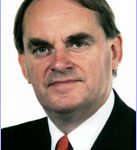
  • Timothy Kirkhope – 2003 Speech on the European Convention

    Timothy Kirkhope – 2003 Speech on the European Convention

    The speech made by Timothy Kirkhope in Copenhagen on 25 June 2003.

    Ladies and Gentlemen, the past eighteen months have been perhaps the most busy and interesting months of my political career.

    The Convention has succeeded. Not necessarily in the nature of its final text but certainly as an exercise in ‘opening up’ the debate in Europe by bringing together so many interests and views. I do not agree with the final outcome of the Convention – a European Constitution (I believe we should have had a new Treaty, like the old Treaties) – but I remain a keen support of the Convention model for European negotiations.

    Having had the privilege of representing the Conservative Party on both the Charter of Fundamental Rights Convention and the ‘Future of Europe’ Convention, I believe that the model provides a blueprint for bringing together representatives from different political opinions and countries to discuss issues in an open and accountable manner.

    I would like to begin by refreshing your memories about the events of the past eighteen months. Specifically, how we reached where we are now.

    The European Convention was, as you will recall, established at the Laeken European Council in December 2001 to bring together representatives from both the existing Member States and the new Accession States to work out how a European Union of 28 countries should operate in future – a necessary initiative.

    The Convention began its work last February under the chairmanship of former French President Valery Giscard d’Estaing.

    The first phase involved listening to the people of Europe. This was done both formally, through representations from Civil Society and the Youth Convention, and informally, through individual consultation exercises with our constituents and colleagues. Unfortunately, this was not as successful as it could have been.

    The second phase of the Convention involved studying specific issues in separate working groups. Each working group had around 30 members, broadly balanced according to political group and nationality.

    The first working group members served on studied institutional reform. The issues studied were the Charter of Fundamental Rights, complementary competencies, legal personality; national parliaments, simplification and finally subsidiarity.

    Convention members then studied specific policy areas: defence, economic governance, external action, Freedom Security and Justice, and finally, social Europe.

    The third phase of the Convention, which we are still technically in, has involved drafting the final document.

    At the beginning of February, the Praesidium unveiled a draft text of the first 16 Articles for Convention members to amend and discuss; and, week by week, new sections and drafts have been amended and discussed.

    The final document includes a:
    -Preamble, outlining the objectives of the Union.
    -Part One is essentially an overview of Part Three, which contains the detail of the Constitution.
    -Part Two incorporates the Charter of Fundamental Rights.
    -Part Three, entitled ‘The policies and functioning of the Union’ contains the detail of the Constitution.
    -Part Four covers the ‘General and final provisions.’

    And there follows protocols on:
    -the role of national parliaments,
    -the principles of subsidiarity and proportionality, and
    -representation in the European Parliament and voting in the Council.

    Submitting amendments to the drafts of the text over the past four months has been the toughest part of the Convention process.

    I have based my suggestions on Conservative principles and the opinions of Conservative people.

    My central principle is that the Conservative Party and Britain should remain engaged but vigilant in the European Union. And, of course, it is well known that the views of the British are somewhat anarchical to Europe!

    As well as consulting my constituents, I have consulted include Conservative MEPs and MPs, the Voluntary Party, young people in Conservative Future, and activists through a nationwide questionnaire.

    I would like to take this opportunity to acknowledge the support I have received over the past eighteen months and thank everybody for their contributions. I wouldn’t have been able to represent the Conservative Party as effectively as I hope I have done without the help of many other people.

    The Conservatives’ ‘Bottom Line’ for the Convention, which was published in the Spring 2003 edition of our magazine Delivering for Britain, is based on long-standing, traditional Conservative principles and philosophy. It is not ‘anti-Europe’ but it is a statement of our wishes for a sustainable Europe.

    Our first bottom line is to say:

    1. ‘No’ to a European Constitution for a Federal Superstate

    The United Kingdom has never had a codified constitution – that is to say, a ‘higher law’ bringing together the basic principles of government in one document. The British constitution is, in political science terms, uncodified. That is to say, it is drawn from many documents of ordinary statutory law and convention. Whereas I could walk into a bookshop in America and ask for a copy of the constitution, if I did so in the Britain, they would think I was mad. Therefore, because we have never had a codified constitution, accepting a codified European Constitution goes against the grain of our political traditions.

    Our second bottom line is to say:

    2. ‘No’ to a single legal personality for the European Union

    To some extent the EU already has legal personality, but this ‘departure’ takes it too far. Giving the European Union legal personality would sit uncomfortably with our political traditions. The British system of government is based on parliamentary sovereignty – Parliament, not the Prime Minister or the monarchy, is the source of political power in the UK. Tony Blair may have centralised power and ridden roughshod over Parliament, but the Conservative Party continues to believe in Parliamentary democracy. To establish an alternative powerbase would therefore run contrary to the political traditions that have served us well for so long. And can we envisage the UK or France willingly giving up a seat on the UN Security Council?

    Our third bottom line is:

    3. ‘No’ to a legally binding Charter of Fundamental Rights

    As a member of the Charter of Fundamental Rights Convention, I welcomed the emphasis placed on the protection of human rights, but I worry about its compatibility with the European Convention of Human Rights. We are in a situation where we have two sets of human rights law: we have the Convention set up by the Council of Europe and the Charter established by the European Union. Both the Charter and the Convention deal with the same area of law but with different wording. Why does the competence of the EU need to include an area that is dealt with satisfactorily by the Council of Europe? Two sets of human rights law will undoubtedly harm rather than help the very people it was designed to protect. It would also divide the membership of the Council of Europe. Incorporating the Charter would, I believe, create more problems than it cures.

    Our forth and fifth bottom lines cover the cutting-edge issues of integration – foreign and home affairs

    4. ‘No’ to a Common Foreign and Security Policy or a European Army

    European Democrats support cooperation on foreign and home affairs, but only in the context of the pillar structure, which guarantees intergovernmental decision-making. The European Union encompasses many countries with long and distinctive histories. Some Member States have a unique historical involvement in certain parts of the world, reinforced by ties of language, trade or blood. All Member States have specific memories and experiences which shape their ambitions today. Some states want neutrality, others participate in NATO, and France and the UK have a global military reach and the tradition of action. Enlargement will only increase these distinctions. For these reasons, whilst the European Democrats hope that we will continue to cooperate closely under NATO, we do not feel that it is appropriate to develop a Common Foreign Policy under the first pillar decision-making mechanism.

    Turning to Home Affairs, we also say:

    5. ‘No’ to a Common Home Affairs Policy or a Common Asylum Policy – perhaps the biggest issue of them all.

    As politicians, we are elected to represent the views of our constituents and opinion polls suggest that the public does not want more centralisation in justice and home affairs. The Eurobarometer carried out in April 2002 specifically for the Convention showed us that only a minority of those surveyed were in favour of European-level decisions being taken on justice (58% against) and police matters (63% against). Having said that, the same survey showed us that the fight against organised crime and drugs trafficking ranks third (after peace and security and the reduction of unemployment) in public priority and has the support of almost 9 out of 10 Europeans. To me, the message from Eurobarometer is clear: ‘yes’ to cooperation between member states’ judiciaries, police forces and Home Offices; but ‘no’ to greater harmonisation in this field. If we go ahead with a European Public Prosecutor, a European Border Guard, the abolition of the third pillar and greater qualified majority voting, I feel that we will be going against pubic opinion and fuelling the dissatisfaction that many people feel about politics and politicians in general.

    Having heard five things European Democrats are against, you may well be wondering what, if anything, are we in favour of for the future of Europe. What we do say is:

    6. ‘Yes’ to a new Treaty simplifying the existing Treaties

    At the beginning of the Convention, there were signs that we would conclude by proposing a new Treaty, simplifying the existing Treaties and making the European policy making process more understandable to the peoples of Europe.

    The German state, for instance, is based on a ‘Grundgesetz’ as opposed to a ‘Verfassung’ – a set of basic laws rather than a constitution. The European Union needs a new treaty nearer to a Grundgesetz than to a Verfassung because European citizens want a Europe of nation states rather than a United States of Europe. A Simplifying Treaty would both outline the boundaries of competence between European and national institutions and parliaments and also shift the balance from the undemocratic to the democratic components of the European Union. Sadly, this is not the basis of the draft European Constitution, but we are in favour of a new Treaty along these lines.

    We also say:

    7. ‘Yes’ to cooperation in foreign and home affairs on a bilateral basis

    I passionately believe that Member States should be able to cooperate together in areas falling outside the competence of the European Union, such as foreign and home affairs. My question to those who oppose this proposition is: How can we legitimately talk about national sovereignty if we attempt to prevent other countries from exercising their national sovereignty? Therefore I believe there is a need for a mechanism to allow Member States to cooperate together outside the Union.

    The mechanism I would suggest is through bilateral and multilateral treaties. Independent cooperation is, I believe, the way forward because enhanced cooperation as a process has been abused in the past as a trail-blazing mechanism with a bent to further integration beyond the Treaties. Participation in core issues such as the single market, the environment and some transport matters, for example, should be compulsory. But issues such as foreign and home affairs should be dealt with on a bilateral basis to avoid the ratchet effect of enhanced cooperation.

    The eighth bottom line is about promoting democracy and accountability:

    8. ‘Yes’ to more democracy and accountability in the EU

    The European Democrats believe that power should be moved from the unelected institutions of the European Union to the elected institutions. One change I have suggested is that the right of initiative should be shared between the unelected Commission to the elected European Parliament. Another change would involve improving the transposition process of European legislation into national law. So, Mr President, why does gold plating affect the UK more than any other member state? One important reason is because the UK, unlike many other member states, simply does not involve its MEPs in the transposition process.

    In Belgium, the Chamber of Representatives has an Advisory Committee on European Affairs which is made up of 10 MPs and 10 MEPs who enjoy equal status on the Committee. Belgian MEPs are also allowed to speak in Standing Committee meetings and to table written questions to the Government. The German Bundestag also has a Committee where MEPs are entitled to propose subjects for discussion and to give opinions on the proposals discussed. And the Greek Parliament has a similar arrangement.

    As an MEP who has been a UK MP, I now realise how little I and my colleagues knew about the regulations coming from Europe. Because we concentrated on national policy matters, we were often unable to spend very much time with the European legislation under consideration. As a result, Government Departments were able to ‘gold plate’ the legislation without MPs knowledge or involvement. This problem has got much worse under the present British Socialist Government as they reduce the powers of our House of Commons and the time available for any scrutiny.

    By establishing joint committees of MPs and MEPs to oversee the transposition of European laws there would be less gold plating and the government would be held to account.

    Our penultimate bottom line is to say:

    9. ‘Yes’ to international free trade and ‘yes’ to greater decentralisation

    Adam Smith, the great eighteenth century philosopher and economist, proved that economic freedom goes hand-in-hand with public prosperity. The lesson we should draw from The Wealth of Nations is that a low tax, lightly regulated economy helps both rich and poor alike by inducing entrepreneurship, creating jobs and generating wealth. I am a great believer in Adam Smith and free trade and I have attempted to inject some of this spirit I my amendments, by restating free trade as a major objective of the Union and an integral element of overseas aid. I hope this is a point with which unites us all here today.

    Our final bottom line is:

    10. ‘Yes’ to a referendum so the people of Europe can have the final say

    This principle is integral to our party policy and I’ll be referring back to it in my concluding remarks

    These 10 bottom lines have been the main inspiration for my amendments; and they encapsulate the beliefs of the European Democrats and our approach to the future of Europe debate.

    For those of you who are interested, my amendments – which reflect the bottom line – have been collated into a ‘Simplifying Treaty’ which is available on the internet at www.conservatives.com or www.kirkhope.org.uk.

    Ladies and gentlemen, I am the first to recognize that there are significant differences between the text which I have produced and that produced for the EPP by Elmar Brok. But I have done what I believe is right. As a Conservative, I have participated and argued for my beliefs for the future of Europe.

    There is one area where I hope we will be able to find consensus this week, and that is the issue of a referendum on the European Constitution.

    Last October, the Conservative delegation supported me in announcing our commitment to the principle of giving people a say on the next stage of the integration process.

    This is a cause which I know many of you here today have committed yourself to as well. It is a cause that unites many of us in our approach to Convention.

    So, I would like to leave you with one thought. The European People’s Party and the European Democrats must agree on one thing, it is this. We must be united on the need for a referendum.

  • Oliver Letwin – 2003 Speech on Crime and the Inner Cities

    Oliver Letwin – 2003 Speech on Crime and the Inner Cities

    The speech made by Oliver Letwin, the then Shadow Home Secretary, at the Ritzy cinema in Brixton on 25 June 2003.

    Some time ago, I made a speech about how we aspire to prevent crime in our inner cities. Instead of asking what were the causes of crime, I asked what are the causes of the neighbourly society?

    I argued that a strong neighbourly society is about the establishment and preservation of the right relationships between individuals and that only strong relationships can foster strong communities.

    Whilst many would agree with these aspirations, it is much harder to make them a concrete reality.

    My task as Shadow Home Secretary is to try to formulate a set of foundations on which the neighbourly society can build:

    First and foremost a neighbourly society must be one which fosters and encourages the networks of support between individuals, families, neighbourhoods and community associations. It depends on active citizens. and gains enormous benefits from voluntary activity.

    Second, a neighbourly society is one which welcomes the society we have today, not one that hankers after the society which existed fifty years ago. It means establishing a framework in which neighbours of differing creeds and colours, backgrounds and aspirations, lifestyles and mores, can agree to differ and live together in harmony. They share the common enterprise of sustaining a neighbourhood, and the common enterprise of ensuring that their children are brought up to be law abiding and active citizens. From the many one.

    Third, a neighbourly society requires providing young people with exit routes from the conveyer belt to crime. Parents of very young children facing difficulties need help. Persistent offenders need long term rehabilitation and young addicts need serious and effective drug treatment.

    Fourth, a neighbourly society depends on the police. We need to give them the ability to recapture our streets through the real and sustained neighbourhood policing that we have had in Brixton – actively pursued by Borough Commander Richard Quinn and Inspector Sean Wilson. We will support this commitment by allowing for a real and substantive increase in police numbers. We are pledged to increase police numbers by 40,000 – roughly a third – over eight years which would mean an extra 8,482 extra officers for London alone.

    The strange thing is that – in an age in which obligatory disagreement between politicians of differing Parties has become almost a religion (though not a religion of which I am an adherent) – these propositions have not attracted much opposition.

    I should love to believe that the lack of disagreement is wholly due to positive and enthusiastic agreement – a positive consensus.

    And I do believe there is a degree of consensus.

    There is agreement on the scale of the problem in our inner cities. There is agreement on the nature of the problem in our inner cities. There is even agreement on many of the particular things that we need to do to tackle the problems.

    But I fear there is another, much less comforting reason for the lack of opposition. I believe that my political opponents – and many of the commentators – think that the establishment of a neighbourly society in our inner cities is no more than a pleasing, nostalgic pipe-dream.

    They think that the problems of the inner cities are so vast as to be insoluble. They are happy for the Government to take initiatives – but, as Barbara Roche’s interesting commentary has recently emphasised, they do not really believe that these initiatives will do much more than to show willing by bringing about temporary improvements. They regard the idea of what I have called sustainable social progress in the inner cities as desirable but naïve.

    I do not agree with them.

    In another context, I recently described myself as a naïve optimist who believed in miracles.

    I am, and I do.

    I believe in the miracle of the establishment of a neighbourly society – the bringing about of sustainable social programmes in our inner cities.

    Yes. This is a dream. But only in the sense in which Martin Luther King used that term in his speech on the steps of the Lincoln Memorial. It was the greatest speech of the twentieth century, and the dream he dreamed that day has surely been coming true ever since.

    We too must have the capacity to dream – and the will to make our dreams come true.

    I say this as much to my own party as to any other. As Iain Duncan Smith has made abundantly plain, the Conservative Party cannot be seen merely as the Party of the leafy suburbs and of the rural shires.

    The Conservative Party is committed and has to be committed to a fair deal for everyone. No one held back and no one left behind.

    To fulfil that commitment, the Conservative Party has to be the Party of the Inner Cities.

    We have to believe in our dream of sustainable social progress in the inner cities. We have to believe in our dream of establishing a neighbourly society in the inner cities. We have to believe that we can lift young people off the conveyer belt to crime.

    Of course, we have to recognise that there are grounds for – at least reasons for – the pessimism and cynicism that is so prevalent.

    In just over fifty years, as we have vastly increased our national income, we have moved from a “deferential society” through a “liberated society” to a “celebrity society” in which David and Victoria Beckham’s comings and goings attract more attention than an earthquake in Algeria. We now live in a society in which millions of our citizens prefer to vote characters off reality TV programmes – using their mobile phones at 25 pence a shot – rather than turn up at polling booths for elections.

    The paradox is that this prosperity and celebrity are not enough. Behind the glitz and glamour of much of modern life there is an underbelly of material and spiritual poverty. One estimate from Dick Atkinson – an expert in urban renewal – suggests that 20% of the population live in 3,000 troubled inner and outer city neighbourhoods. A further 10% teeter on the brink.

    To have almost one in three of our fellow citizens facing such circumstances is shocking enough. Add to this the knowledge that a crime is committed every five seconds, that criminals only have a 3% chance of being convicted and that 75% of young offenders re-offend following their sentences, and the “celebrity society” begins to look very threadbare indeed.

    No wonder great pessimism abounds about the breakdown and, what some have termed, the ‘atomisation’ of our communities. No wonder there are some who believe that nothing can be done.

    And, beyond the spiritual poverty of the celebrity society, there lies another reason for pessimism: the all too frequent failure of well meaning Government initiatives and Whitehall sponsored schemes that offer a lot of hope – and money – but do not achieve what they set out to do.

    Take ‘zones’. Education zones. Health zones. New Deal zones. It sometimes feels as if we now live in a kaleidoscope of zones. And, as the kaleidoscope is shaken, as one zone turns into another, as Whitehall celebrates another initiative in another place, the troubled, hard-pressed neighbourhoods are left with the same fundamental problems that they had before the men from the ministry moved in.

    As Dick Atkinson says :

    “While we may end up with say 50 Education Action Zones, even 100 Health Zones and 40 New Deal communities, these will hardly touch the 3,000 troubled neighbourhoods and the 15,000,000 people who live in them…..
    …..the honest intentions of government risk being diverted again into icing the crumbling cake instead of helping bake a new one”.

    Or take another example of huge regeneration schemes. Earlier this year it was revealed by the Birmingham Evening Mail that an organisation set up in April 2001 – with £54 million cash – under a new deal project for Aston in Birmingham, managed to spend just £5 million of which £538,000 was spent on bureaucrats and hundreds of thousands more on consultants doing feasibility studies. 14,000 residents in Aston who had been told that their neighbourhoods would be transformed did not experience any changes at all.

    As the newspaper stated:

    “lots of bluster about holistic visions and overarching statements cloud the fact that in three years virtually nothing has been done”.

    No wonder the All-Party Commons Select Committee on Local Government warned in a Report earlier this year that “the targets and outcomes of area based regeneration programmes need to be aligned to the needs of the area concerned”.

    Or as Rachel Heywood puts it:

    “We want sustainable solutions; we’re weary of the quick fixes, parachuted in expertise, the plethoras of short term projects, bored of being an experiment. We know that we have expertise on the ground, we know that we could lead the way in best practice.. the community is aware of the scale and the complexity of what is going on and what needs to be done.”

    Rachel is right and the pessimists are clearly wrong. Community, not bureaucracy is the answer.

    But the fact that there are reasons for the pessimism and the cynicism does not mean that the pessimism or the cynicisms are justified.

    On the contrary, I know that the pessimism and the cynicism are unjustified.

    I know that they are unjustified because in some places the dream is becoming true.

    I know that miracles can occur, because in some places they are occurring.

    These miracles have not been bought about by politicians or by bureaucrats. They have not been brought about by plans, or initiatives, or targets. They have not been brought about by money or celebrity or glitz or spin.

    They have been brought about by faith and hope.

    They have been brought about by communal effort, by people determined to make, for themselves and their neighbours, sustainable social progress in the inner cities – the very commodity that the cynics and the pessimists believe cannot be manufactured.

    Three Miracles

    Brixton

    I have been taken to the Pulross Playground by Rachel Heywood and Inspector Sean Wilson, Head of the Brixton Town Centre Team. Rachel tells me that her activities began in 1996 with a campaign to save their dangerous playground from property developers. Not only did Rachel and other local residents ward off the developers, but they warded off the drug dealers as well. How was this done? Through sheer determination, courage and community action. The mess was cleared, gardens were planted and events organised. They have transformed a dangerous playground full of drug needles and other detritus into an oasis of tranquillity for the children who live nearby. They have restored a community spirit and pride in a neighbourhood that was previously known for its local crack houses.

    What is even more remarkable is that Rachel and others have moved on from rescuing a playground to helping to renew a whole community. Their work in building close relationships with the police, the anti drugs campaigns, the positive messages sent out to young people cannot be understated. This, coupled with the efforts of the Brixton Police to engage with the local community and build close relationships, is all having a dramatic effect.

    The result is undisputed both anecdotally and factually. For example, the leader of a Rastafarian temple invited police to clear out drug users from the temple – something that would have been unthinkable a few years ago.

    Over the past year, crime figures for Lambeth have radically improved. Since August 2002, robbery is down 36% and burglary down 50%. Over 140 abandoned cars have been removed, over 900 graffiti sites cleansed and 30,000 needles collected.

    Haringey

    Joel Edwards who has done such remarkable things with the Evangelical Alliance once said:

    “Christians are all called to be ambassadors – agents of reconciliation pointing people to forgiveness in Christ and reminding us of our obligations towards one another. In the book of Revelation, we read of the time when, the kingdom of this world will become “the kingdom of our Lord and of His Christ.” In the mean time, preacher, priest or politician – all of us – must seize every opportunity to work for that society. A society which anticipates the time when hostility and hatred ends. And it will start in our families, down our street and across our communities as we dare to think of ourselves as God’s ambassadors of reconciliation.”

    I was reminded of Joel’s powerful words, when I visited the Haringey Peace Alliance a few months ago – a remarkable organisation set up by Pastor Nims in 2001. The Haringey Peace Alliance has many qualities, but its key role is in building relationships between all sections of the community. The Alliance draws together local clergy (of all faiths), local authorities and the police and takes a lead role in organising campaigns against drugs, gangs and violent crime.

    When violent crime was at an all time high, the Alliance staged a Week of Peace which involved seven days of continuous activities including a youth festival. When young people needed support and advice, the Alliance set up a Pastor’s initiative, training a team of twelve committed individuals to go out to mentor troubled youngsters.

    When there was distrust between the police and local inhabitants, the Alliance worked with the police to arrange for local people to accompany them on night duties. When the police received funds from the Crime and Disorder Partnership, instead of just spending it on their own immediate and short term needs, they shared it round with the Alliance and other community groups. When a police officer died in a car crash, the Alliance gave a public show of solidarity by organising members of the public to turn up to the funeral.

    The Alliance applies for Government and agency funding wherever possible. But because the community from the grassroots are applying directly for funds, the money they receive, whilst not huge, is spent much more wisely. This is the Brixton story all over again.

    Asked what is the secret ingredient to the Alliance, Pastor Nims has a simple answer. The Alliance works because people with a passion are working together for the good of their neighbourhood and are establishing relationships which are strong because they are personal rather than bureaucratic.

    What has been the effect of the Alliance on crime? The first Peace Week led to a big decrease in violent crime, a fortnight after the event had ended. Firearm crimes involving murder and attempted murder have dropped by 47% over an eight month period. These figures speak for themselves.

    Birmingham

    Earlier in my speech, I gave an example of a bureaucratic top down regeneration scheme in Aston in Birmingham, which has clearly failed. Yet by contrast, just around the corner there are social entrepreneurs who are working from within their neighbourhoods to improve people’s lives.

    Recently, I visited Handsworth in Birmingham where I met two groups, Parents United and the Partnership Against Crime. These groups were set up in response to the violent gang culture in the area, exemplified by the tragic murder of teenagers Letisha Shakespeare and Charlene Ellis in Aston on New Year’s Day. They are determined to work with residents and existing groups such as local churches to draw their young people away from the gun and gang culture and off the conveyer belt to crime. They are doing everything possible to ensure that the tragedy that befell the families of Letisha Shakespeare and Charlene Ellis does not happen to another family. Because they have been established by local people within their neighbourhoods, they are able to build relationships where none existed before. They are able to offer young people exits from the conveyer belt to crime, because they know and understand the young people concerned.

    Although it is early days, there is every possibility that Parents United and Partnership against Crime will achieve the same success as the Brixton Crime Forum and the Haringey Peace Alliance.

    Conclusion

    What is my message to the miracle-workers? What is the message of my Party?

    It is that visiting these examples of extraordinary human achievement is not enough, and that politicians like me need to help the spiritual flowers we have found take root in other, currently barren soils.

    It is that the purpose of the state must be to recognize, to celebrate and to assist – but not to seek to replace or supplant their efforts.

    It is that, in their efforts, their successes, their miracles, lies the route to the establishment of the neighbourly society, the route to sustainable social progress in our inner cities.

    The pessimists will never be able to kill off their neighbourhood action and the renewal of the neighbourly society because it works. These are miracles, but they are not complex and they can be replicated. They do not involve splitting the atom, or inventing eternal motion. They involve human beings learning to feel differently about one another.

    Michael Groce has a very important message which I hope he won’t mind me quoting. He says:

    “I don’t think they can ever kill off the community of Brixton”.

    From what I have seen, I could not agree more.

    We have much to thank the optimists for…… for working miracles in our inner cities.