Tag: 2003

  • Iain Duncan Smith – 2003 Speech on Health

    Ian  Duncan Smith
    Ian Duncan Smith

    Below is the text of the speech made by Iain Duncan Smith, the then Leader of the Opposition, at the launch of the Conservative Consultation Document on Health on 5th June 2003.

    The Labour Government is dangerously divided.

    And it’s got its priorities hopelessly wrong.

    That’s as plain today as it will ever be.

    We are not be going to spend today talking about the euro.

    We are going to talk about things that are already damaging the British people’s quality of life…

    Day in, day out…

    The public services on which they depend — and which are now failing them badly under Labour.

    But the Government are most certainly talking about the euro today.

    And they’ll still be talking about it tomorrow.

    And for a long time after that.

    Even as – we – speak, Mr Blair and Mr Brown are lining up their coalitions, on either side of the Cabinet table, ready for a battle over the euro — in which the losers will be the British people.

    While the Government are busy talking about something people don’t want — the euro — we will be talking about something they do want – better healthcare.

    This distracted and divided Government should be focusing on the things that really matter to the British people.

    The British people want better public services.

    Public services that work – and work well.

    We’ve already begun.

    For the past two years, we have been conducting the most wide-ranging policy review for a generation.

    A policy review focused on making the public services better.

    We have travelled – at home and abroad – learning from whatever works best for people.

    So last month, we promised to scrap Labour’s university tuition fees – their tax on learning.

    Today, Liam Fox and I are launching fresh, exciting proposals designed to give British people the better healthcare they need and deserve.

    Today begins a full consultation with patients and professionals on something that will make a real difference to people’s lives.

    The ‘patient’s passport’ is our plan to give people real choice over the health treatment they receive.

    This will be a fair deal for patients.

    A fair deal for everyone on healthcare.

    Our proposals will mean…

    Fairer healthcare, with no-one left behind, as we expand choice to everyone, not just those who can afford it.

    Fairer healthcare, with no-one held back, as we recognise the contributions of those who pay for their own treatment.

    Last year, a staggering number of people – 300,000 – paid for their own treatment.

    Most of them were pensioners — desperate people, who had suffered for too long.

    Under our proposals for a Patient’s Passport, everyone in the NHS will be able to get treatment at the hospital of their choice, free of charge.

    And people who choose to go outside the NHS for their treatment will be helped, not penalised.

    Our proposals would also mean…

    Better healthcare for everyone, with choice driving innovation and excellence.

    And more healthcare, as we expand the capacity of the health system in Britain.

    Our proposals would mean nothing less than a revolution in healthcare.

    We will preserve all the founding ideals of the NHS.

    Healthcare, according to your need not your ability to pay, and free at the point of delivery.

    But, for the first time in its history, the NHS would become a truly national health service — embracing our belief that healthcare is first and foremost about the patient.

    Compared to that, everything else is surely secondary.

    Our plans for a patients’ passport, combined with our plans to shift power from politicians to doctors, nurses and hospitals, will deliver a fair deal for everyone on healthcare.

    We care enough to find out what people really want, and we are open-minded enough to find out what really works.

    That’s why last month we promised to scrap Labour’s university tuition fees, abolishing their tax on learning.

    That’s why today we are proposing to give every patient in Britain a Patient’s Passport, making real choice available to all, not just those who can afford it.

    We have the courage and vision to commit Britain to a better course.

    Today, we are taking forward our fight, on behalf of the British people…

    For better public services — and a fair deal for everyone.

    A fair deal for people who find themselves paying higher and higher taxes, but not getting the improved public services they need.

    We will give them those better public services

    …public services where no-one is held back…

    …and no-one is left behind.

    A fair deal for people who deserve better healthcare.

    A fair deal for people who deserve a better education.

    A fair deal for people who have been made to wait and suffer too long.

    That’s our fair deal for everyone in Britain.

  • Iain Duncan Smith – 2003 Speech to Businessmen in the North East

    Ian  Duncan Smith
    Ian Duncan Smith

    Below is the text of the speech made by Iain Duncan Smith, the then Leader of the Conservative Party, to businessmen in the North East on 20th February 2003.

    Thank you for inviting me here today.

    It’s a great pleasure to be here in Newcastle — and a privilege to be among you.

    This opportunity to see what you do at Rite-Vent has been very valuable.

    So let me say thank you, first, to the Directors and the workforce for making me so welcome and for taking the time to show me around.

    And let me also take this opportunity while I’m here in Newcastle to say congratulations to Sir Bobby Robson and his team for the excellent result on Tuesday.

    I wish them well as they progress in the Champions League and – as a keen Tottenham fan myself – I hope we’ll be joining them there next season.

    Football is of course one of the things for which Newcastle is best known.

    A tradition of manufacturing and industry is another.

    But these are tough times for British manufacturing – and it’s companies like Rite-Vent which — in spite of the higher taxes and over-regulation Labour has imposed – are holding the line.

    Last year manufacturing output in Britain fell by 4% — the sharpest drop year-on-year for a decade…

    Manufacturing investment has suffered its sharpest drop for 20 years.

    And the number of jobs in manufacturing has being falling every month for the past 4 and a half years.

    In fact, under Labour we’ve been losing 303 manufacturing jobs every day.

    Last Friday, the Chancellor said the economic boom had not come about by accident.

    Britain’s manufacturers would say it hasn’t come about at all.

    This gap between rhetoric and reality is the trademark of New Labour.

    So what has happened under the New Labour government should come as no surprise –

    New Labour was built on rhetoric.

    And now we have the gap.

    Labour promised innovation – and instead they stifled it.

    They promised to support business – and instead they turned their backs on it.

    They promised more choice – and instead they restricted it.

    They promised to improve our public services – and instead they have led those services into spectacular failure in every important sector –

    – our schools and universities,

    – our hospitals and surgeries,

    – our railways, our roads and our airports.

    – 30,000 children leave school with no GCSEs.

    – 60,000 care home places gone.

    – longer commuting times than anyone else in Europe.

    All the work they did in opposition to convince people to give them a chance…

    All the good-will they were given in their first four years in power…

    All the benefits of a strong economic inheritance…

    Are gone…

    Squandered.

    Instead, we have had six years of waste and incompetence.

    Take the New Deal for example:

    Supposedly one of this Government’s crowning achievements, but now we see it as an expensive failure. Thousands of young people have to go through it 3 times before they find a job. Many of those who have jobs would have found them anyway.

    And all this at a cost of £11,000 for every person on the scheme.

    Or consider this Government’s approach to pensions:

    They forced companies to take on stakeholder pensions – but the Insurers Association says that 90% of them have no members.

    Worst of all, Gordon Brown imposed the ultimate stealth tax – a £5 billion a year tax raid on pension funds, which he foolishly sought to justify by pointing to the buoyancy of the stock market which he inherited from the Conservatives.

    We all know what has happened to the Footsie after six years of Labour government. It has halved. But the Chancellor’s tax grab has made the prospect of retirement a source of fear and anxiety for millions of hard-working people.

    Incompetence on this scale is extremely damaging.

    New Labour promised to be different. They pretended to be Conservative even.

    But you can’t be Conservative when your instincts are wrong.

    I believe we are witnessing the slow death of New Labour.

    This may be good news for those who were always suspicious of it – those on the Labour left who were prepared to keep quiet so long as they were in Government.

    But it is bad news for the people of Britain who will be made to endure the pain.

    Because as Labour reverts to type things are not going to get any better.

    The Government is committed, now, to —

    in the Chancellor’s own words –

    ‘vast increases’ in spending over the next few years.

    From this April, the Labour Government will be spending £50 million an hour – that’s almost 50% faster than the rate of spending in 1996-97 before they came to power.

    By the time of the next election, spending on the Health Service alone will have risen by 70% in real terms.

    But if the record of this Government is anything to go by, then that profligacy will do little good for the lives of ordinary people.

    But I’ll tell you where it does harm – and that’s when Government takes more and more money from the people, then spends it badly, and wastefully.

    And boy, has Labour been on the take!

    Since 1997 they’ve raised the national tax bill from £270 billion to £380 billion.

    That’s £36 a week more for every man, woman and child in the United Kingdom . . .

    Business alone has paid £47 billion in extra taxes . . .

    And if all this spending had led to results then some may say it was worth it.

    The problem is, it didn’t.

    We didn’t get the results.

    We’ve got little to show for the money we spent.

    Take the health service.

    A 22% increase in spending in the past two years alone . . .

    For just a 1.6% increase in hospital activity.

    So where’s the money going?

    Well, for the first time ever, the NHS has more administrators than it has beds.

    What a magnificent achievement.

    They told us they’d create jobs – and they have.

    The trouble is – you’re paying their wages.

    Now — because they’ve failed to keep their promises — taxes are going up again.

    So this April they’re putting up National Insurance contributions.

    They’re taking another £4 billion a year from employers – which, for a company like Rite-Vent, means an added cost of around £10,000 a year.

    And for a typical Rite-Vent employee it means another £100 a year.

    This is nothing short of a tax on jobs – plain and simple. Overall, it’s the equivalent of an effective 3p increase on the basic rate of tax.

    And what do Labour say this new tax increase is for?

    To fund their new spending on the Health Service,

    This in spite of a promise by Gordon Brown not 15 months ago that

    “there will not be one penny more [spent on the Health Service] until we get [the] changes [that] let us make reforms and carry out the modernisation the health service needs”.

    And have we got any of those changes yet?

    Not if we’re to believe the Health Secretary.

    Mr. Milburn told health professionals behind closed doors this week that he fears these additional taxes will be wasted.

    So now we have it.

    The reforms aren’t in place.

    The Health Secretary thinks the new money won’t make much difference.

    And the new money is simply going to go the way the same way as before – to waste.

    Well, if that’s the case – and we have absolutely no doubt that it is – Indeed the government is now admitting privately what we have been saying in Parliament and on public platforms up and down the country for many, many months! –

    If that’s the case . . .

    Then the Government must think again, before more damage is done and scrap this jobs tax now before this spending goes the same way as the last.

    I say again – we are witnessing the death of New Labour. . .

    And the resurrection of Old Labour . . .

    The whole, hopeless cycle of tax-and-spend-and-fail.

    We have to break that cycle.

    And we have to make up a lot of lost ground.

    The stock market has touched a seven-year low.

    For many people, retirement is receding further and further into the distance.

    And those already in retirement are struggling.

    Looking ahead —

    The latest Mori poll of Business Confidence says 87% of you think economic conditions will be the same or worse.

    The consumer boom is petering out as house prices appear to be stagnating

    And consumers are confronting a very large debt hangover.

    If we are to have any chance of making up that lost ground, then Britain needs businesses like yours to thrive. . . and thrive. . . and thrive!

    And it starts by saying – enough is enough.

    I’ve been travelling around the country every week for the past few months – and that’s what people say to me . . . enough is enough!

    Enough tax.

    Enough spend.

    Enough failure.

    Enough spin.

    And enough time to deliver the results they promised.

    And in consequence, enough is enough of this Labour government.

    It’s time for a change.

    It’s time to think differently — and do things differently.

    And that will be our approach as a Conservative government.

    Keith Joseph said something I have never forgotten —

    “There are limits to the good governments can do, but there are no limits to the harm they can do.”

    What he was doing was expressing, essentially, why we are, by nature, a party of lower tax.

    It flows from our belief in smaller government, greater individual liberty, and greater personal responsibility.

    It flows from our belief that governments should measure success not by how much they spend of your money, but how well – and how carefully – they spend it.

    And our belief – also — that low-tax economies are more efficient, and more competitive, than high-tax economies.

    A Conservative Government will not be trying to second-guess everything you do.

    A Conservative Government won’t be over-interfering in the way you run your businesses.

    And unlike the Labour Government, we mean what we say when we say we’ll cut red tape.

    Most importantly, because we are determined to spend your money more carefully, we will take a different approach to the public services.

    Last year, when I spoke of my belief in low taxes, Labour and the Liberal Democrats accused me of wanting to destroy public services.

    They refused to admit that a lower tax regime means a healthier economy.

    They could not grasp that it is possible to have both lower taxes and better public services.

    They baulked at the fundamentally simple and sound proposition that by changing the way we run and deliver those services, we can cut waste and improve delivery.

    And now, in desperation, Tony Blair ha resorted to the Labour lie that we would cut front-line services by 20 per cent. I call it a lie because it is fundamentally untrue. We are committed to our core strategy of public service reform, widening choice, rooting out waste and keeping taxes low.

    What sets us so completely apart from Labour is that we understand how important it is to have a holistic approach.

    Without strong businesses, you cannot have a strong economy.

    Without a strong economy you cannot have strong public services.

    Without strong public services, you cannot have strong businesses.

    And without all these things you can’t have a strong country.

    My friends, we are still some way out from an election.

    Between now and that time, I and my party intend to fight this Government’s dangerous and damaging anti-business policies.

    And when the election comes,

    I believe you will fight for a Government that knows the real meaning of support for business, and why that is so important to Britain.

  • Oliver Letwin – 2003 Speech at Conservative Spring Conference

    Below is the text of the speech made by Oliver Letwin at the 2003 Conservative Spring Conference on 16th March 2003.

    On our minds today, we have two great matters: the war with Iraq and the threat of terrorism in this country. But we cannot allow these matters to prevent us from considering the abiding problems of our society – in particular, the problems of crime and disorder. Just as Rab Butler took his great Education Act through Parliament in 1944, against the backdrop of war, so, we, today, must attend to the nature of our society, notwithstanding the dangers in which we find ourselves.

    2003 did not begin well for Britain.

    It began with a tragedy.

    On New Years Day two teenage cousins Letisha Shakespeare and Charlene Ellis – out at a party in Birmingham – died in a hail of sub machinegun fire.

    Alas, this was not an isolated incident.

    Gun crime has risen; violent crime has risen; burglary has risen; drug offences have risen; and criminals contemplating a crime know they have only a 3% chance of being caught and convicted.

    In almost every sphere of criminality it is the criminal that is winning.

    What kind of country are we now becoming?

    We are facing a retreat from civilised values.

    Things happened yesterday that didn’t happen last year. Things happened last year that didn’t happen ten years ago.

    First fists, then knives, then guns. First pot, then smack, then crack. First cities, then towns, then villages. First men, then women, and then children.

    Only a few years ago we were worried about knives. Now we are worried about sub machine guns.

    In some of our inner city estates, those who can get out do so. The poor, the old, the weak retreat from parks and playgrounds, from streets and shopping areas to live behind closed doors.

    But, despite this crisis of criminality, despite the retreat from civilisation that is occurring in many of our most vulnerable neighbourhoods, I am still optimistic we can turn back the tide.

    Across the country, I have met and seen remarkable individuals who are determined to reduce crime on their estates.

    These are individuals who refuse to give up. We Conservatives must do everything we can to support them.

    I want to tell you this morning about some of these people.

    Recently, I visited Handsworth in Birmingham where I met two groups, Parents United and the Partnership Against Crime. These groups were set up in response to the shootings in Aston. They are determined to work with local churches to draw their young people away from the gun culture and off the conveyer belt to crime.

    They are doing everything possible to ensure that the tragedy that befell the families of Letisha Shakespeare and Charlene Ellis does not happen to another family.

    Recently I also went to the Clarence Way Estate in Camden, North London. This is an Estate riddled with drug users, dealers and drug related prostitution. Residents often have to step through needles, excrement and vomit just to get out of their front door. Young children see addicts injecting in front of them on their way to school, as often as other luckier children might see their friends on swings in a park.

    The whole Estate has just one part time WPC who manages to patrol every Tuesday, Wednesday and every other Saturday. I doubt that the drug-dealers wait politely to let her arrest them when she arrives!

    I am not sure that the drug dealers regard the police as having a right to be on the estate. When I was there, I saw at first hand drug addicts waiting for their next drop and dealers providing it. They even shouted at us to move on as we were on their “territory”.

    I was told of a man who lives in the block and is a leaseholder. He hasn’ t seen his daughter for three years because she is too afraid to make her way through the drug addicts on every corner. He has had excrement and firebombs put through his letterbox because he had the temerity to ask the drug addicts to get away from the outside of his front door. The police couldn’t deal with it because they were tied up with other crimes in the area, or as it was described “with paperwork”.

    Mental torture is not too strong a term for this man who suffers day in, day out, for months, for years.

    This is an Estate which has been virtually taken over by the forces of criminality…

    Almost.

    I say “almost” because of the efforts of a remarkable woman, Silla Carron who lives on the Estate.

    Almost single handedly she has worked hard to make her Estate a better place to live. She has established a Tenants Association and she has organised petitions for more police on her Estate. Through vigorous campaigning she has secured funding for a dog patrol that provides some safety on the estate.

    When Silla Carron decided to do something about her estate, nobody told her to do this.

    She did it out of a sense of service and responsibility to her family and neighbours.

    You can’t teach good neighbourliness from on high or for that matter from Downing Street.

    This is something the Home Secretary doesn’t understand. He is well intentioned. He talks tough. But he delivers very little.

    Every time there is a crisis, every criminal outrage we face, Mr Blunkett responds with initiatives and targets, ably designed to create favourable newspaper headlines to show that he is doing something.

    He thinks that every problem can be controlled by pressing buttons at his desk in Queen Anne’s Gate.

    But, what is really needed, is to find ways to encourage and motivate the networks of individuals, families and community associations that are doing their best to keep their neighbourly society alive.

    Over 5 years we have had over sixteen Criminal Justice Bills and over 100 initiatives. We have had targets galore. But the targets have not been met. Targets for recorded crime, for class A drugs and for reducing robbery have been missed. Other targets on drugs, vehicle crime, burglary and asylum have gone missing altogether.

    Then there are the inevitable “summits” at the Home Office and Downing Street.

    An American philosopher George Santayana once said:

    “trust the man who hesitates in his speech and is quick and steady in action. But beware of long arguments and long beards”.

    Thinking of David Blunkett, I agree.

    It is time he was reminded of that old proverb “saying is one thing, doing another”.

    All this tough talk by the Home Secretary impresses for a while. The problem is that the failure to deliver in the long run breeds at best cynicism and at worse despair.

    If we are not careful, the public will turn away from traditional politicians to local, dangerous extremists whose only appeal is that they are ‘outsiders’ and offer quick and simplistic solutions. Their success will cause immense damage to the fabric of our society.

    That is why all of us have to work hard to ensure that the success of the BNP in some towns in the North is not replicated across the country.

    We face the threat of ever growing apathy and of ever-decreasing turnouts at elections. We face the danger of ever-increasing support for the kind of people who want to make this country a nasty and brutish place to live.

    We must not and we will not allow the contrast between rhetoric and the Government’s reality to be exploited by such people.

    Nowhere is that contrast between rhetoric and reality greater than in the case of asylum.

    Britain has lost control of her borders. Last year a record 110,000 people sought asylum here – the highest number in Europe. Of these, just 8,000 and their dependents were judged to be genuine refugees.

    Yet of the tens of thousands who were turned down, a mere 3,000 were removed from the country.

    The whole system is in chaos.

    David Blunkett’s response to this problem has been the same again: talk tough but do very little.

    Now we have the implausible spectacle of the Prime Minister, clearly under pressure, pledging to halve the numbers of asylum seekers by September. Unless the Government intend to manipulate the statistics by issuing in-country work permits or visas without restrictions on work to people who would otherwise claim asylum, this is a very rash promise indeed.

    A future Conservative Government will scrap our entire asylum system.

    We will replace it with a system of rational quotas for genuine refugees. We will accept around 20,000 refugees in a quota identified offshore with the help of the United Nations High Commission for Refugees. That 20,000 is larger than the number of genuine refugees admitted each year at present, but only one-fifth of the number of people currently using our asylum system to enter the country.

    Conservatives are determined to end the asylum chaos. We can no longer tolerate a system in which the genuine refugee, sometimes suffering from the most horrific persecution, is pushed way down the queue by those who are brought here frequently by people traffickers, to seek economic security.

    We can no longer support a system on which the taxpayer is spending £1,800 million a year. The quota system eliminates the need for asylum centres and costly processing. There will be no need for processing here because those within the quota will already have been identified as genuine refugees in refugee camps overseas. All those who arrive illegally and outside the quota will be removed. Our scarce financial resources could be better spent elsewhere.

    And I have a clear idea – which I am glad to say I share with the Shadow Chancellor – about where the money we save on the asylum system could and should be spent.

    We will spend it on the police.

    I know very well that policing is not the whole answer to the breakdown of order.

    That is why we have set out a range of policies that will offer long-term solutions to crime rather than quick fixes.

    For over fifteen months we have been meeting and consulting with hundreds of experts and practitioners in the field. We have travelled to America and countries across Europe visiting prisons, young offenders institutions, drug offender projects and neighbourhood policing schemes. In Bournemouth last October I set out to you the direction of our policy.

    We are determined to tackle crime at its source by lifting young people off the Conveyer Belt to Crime. We will intervene early when children show signs of disruptive behaviour, giving support to parents struggling to provide necessary authority and guidance. We will tackle persistent young offenders by providing for longer but more constructive custodial sentences, in which there is an intensive effort to rehabilitate and in which support continues long after they have been released. And we will focus effort on getting children off heroin and crack cocaine, providing a choice for every addict between compulsory, intensive treatment and rehabilitation or the penal system.

    But before we can do any of these things effectively, we have to reclaim our streets for the honest citizen.

    We have to ensure that once again police become the custodians of our neighbourhoods and the guarantors of authority and order.

    We can do this only by putting police on the streets where they can apprehend criminals and deal with social disorder.

    Often politicians promise more police on the beat but the reality is empty. The Government have been doing this for the past six years.

    It is time for real policemen and real neighbourhood policing.

    That is why I make this pledge to you today that the next Conservative Government will increase police numbers by 40,000.

    That is 5,000 extra police officers a year over eight years.

    This commitment will cost money.

    For those of you wondering where we will get the money from, let me reassure you: I have never been a serial spender! And I do not intend to start now.

    As I mentioned to you a moment ago, Britain pays a heavy price for the shambles on asylum.

    Total spending on asylum seekers is now – I remind you – £1.8 billion a year. This is a crazy figure given that most of the cash goes on those who are not genuine refugees.

    Were we to have an efficient and working system we could make significant savings on this amount and spend it where it is needed the most: waging the battle against ever rising crime by having tens of thousands more policemen on our streets.

    Our strict quota system for refugees will in due course save more than £1.3 billion a year. We know that, because the Australian quota system shows how much such an arrangement costs.

    These savings will allow us to provide 5,000 extra police officers a year, starting one year into the next Conservative Government. And amazingly enough we will have money left in the bank.

    Our proposals will enable our chief constables to put police officers back onto the streets in every Parish and neighbourhood across Britain.

    A long time ago, the Prime Minister promised to be tough on crime and tough on the causes of crime.

    The truth is that under Labour there has been very little serious, concerted and effective action to achieve a long-term change in the level of crime.

    There are no coherent and focused programmes to take young people off the conveyer belt to crime. There are no substantive measures to get people off hard drugs. There are no efforts to recapture the streets through real and sustained neighbourhood policing.

    The Government have missed an opportunity to get to grips with crime.

    It is time to offer a real alternative.

  • Geoff Hoon – 2003 Speech to Labour Party Conference

    Below is the text of the speech made by the then Defence Secretary, Geoff Hoon, to the Labour Party Conference in Bournemouth on 1st October 2003.

    Conference, we have heard today from an outstanding president of Afghanistan. I would like to tell you now about one man from Iraq.

    Muff Sourani was born in Northern Iraq in 1942. His father was in the army, and as a result, as a child, he moved to Southern Iraq, where he went to Secondary School in Basra.

    Mr Sourani first came to Britain in 1962 to complete his education. In the 1970s he returned to Iraq as an engineer. Saddam Hussein’s regime falsely accused him of being a British collaborator. They imprisoned and tortured him for eight weeks.

    It was only after urgent petitioning by the then Member of Parliament for Workington, the late Fred Peart, that Mr Sourani was released.

    Mr Sourani has lived in Britain ever since – with his wife Ahlam, who is also an Iraqi.

    The Souranis have experienced at first hand the brutality of Saddam Hussein’s regime.  Yet they also know of Iraq’s enormous potential, not least its educated, sophisticated people.

    Mr Sourani’s determination therefore, at the age of 60, is to see a better Iraq.  He has worked for over thirty years for the engineering unions.  He is currently a Regional Officer for AMICUS and sits on the Board of the West Midlands Labour Party.

    I am delighted that with the help of AMICUS, the TUC and the Ministry of Defence, Mr Sourani will soon be returning to Iraq to help organise free trade unions, beginning in the south of the country where he was brought up.

    Trade Unions were banned by Saddam Hussein in 1977. With the help of Mr Sourani, and others like him, trade unions will have the opportunity, once again, to recruit and to organise.  Free trade unions are a fundamental part of the civilised democratic society that we are determined to develop in Iraq.

    Conference, I am delighted to introduce you to Muff and Ahlam Sourani.

    Conference, we all know that there are different and passionately held views about the military intervention in Iraq.  There was a vigorous debate in Blackpool last year.  We have heard strong speeches today.

    But I do want to emphasise that no-one takes a decision to use military force lightly. Whether and when to intervene militarily is always the most difficult decision to take. I have spoken to bereaved family members too often lately. I will never take their loss lightly. The decision to commit Britain’s armed forces is never one that I, or anyone else in Government, takes without carefully considering all of the arguments.

    But whatever differences exist on the question of military intervention – now is the time to agree on a shared vision of the way forward for Iraq.

    Muff Sourani is determined to help rebuild the country of his birth.

    We want to work with him, and others like him, to help build that better Iraq.

    All of us should share that determination.  Whatever our sincerely held differences about the military intervention

    surely all of us want to see:

    – an Iraq that respects human rights.

    – an Iraq that respects democracy.

    – an Iraq, free and prosperous restored to its rightful place in the international community.

    Our Armed Forces are just as determined to go on playing their part.

    I want to pay tribute to the fifty-one British service personnel who have died since the conflict began.

    They died to remove Saddam Hussein’s regime – and in doing so, to disarm Iraq of its illegal weapons of mass destruction.

    They died to provide the opportunity we now have to build a better Iraq.

    We, and the people of Iraq, are indebted to them. Their sacrifice will not be forgotten.

    Nor should we forget the hard work and professionalism of all those people, both military and civilian, who have helped to support operations in Iraq.

    There are many unsung heroes – from planners to logisitics experts, from TA drivers to theatre nurses.  All have worked long hours, often in the most difficult and demanding conditions.  Proving once again that Britain’s armed forces are amongst the best, if not the best, in the world.

    Over 10,000 British service men and women are in and around Iraq today, working hard to secure that better future for the people of Iraq.  Demonstrating, now, their excellence at peacekeeping and their skill in the demanding and sensitive task of reconstruction.

    British service personnel are helping to stabilise the security situation.  The number of security incidents in the south has been declining.  Our work with local councils, schools and religious leaders is increasing public support – assisting the operations against those terrorists and criminals that remain.

    British service personnel are helping to train the Iraqi police. Some 45,000 police have been recruited across Iraq, with thousands now operating alongside coalition forces.  Together with over 2,000 Iraqi border guards they are providing vital improvements to the security of the country.  Every day enabling Iraqis to take more responsibility for their own country.

    And British service personnel are providing practical assistance to the international development efforts to rebuild Iraq. Too often those efforts have been thwarted by criminals and looters – literally stealing copper cable from power lines. That is why we still need a military presence. That military expertise is helping to deliver a more stable power supply and to significantly improve the delivery of fuel and water – securing the everyday necessities of life for the Iraqi people.

    Legitimate concerns remain. About security. About infrastructure. About the political process.

    But real progress is being made. Thanks to the determined efforts being made right across Government.

    Surely no-one would want us to fail.

    The fact that Britain’s armed forces are amongst the best in the world – able to make such a difference in Iraq, in Afghanistan, and elsewhere – does not happen by chance. Their excellence is the result not only of the inherent qualities of service personnel, but also of the decisions taken by Government on how they are trained, organised, equipped and supported.

    This Labour Government is providing our armed forces with the investment they deserve. The Tories cut the defence budget by nearly a third between 1985 and 1997. In contrast, last year’s spending review settlement produced an extra £3.5 billion for defence. Thanks to the Prime Minister and the Chancellor of the Exchequer, the defence budget is rising.

    And a growing defence budget means that we will be able to invest more money in the people that serve in the forces and in the modern technologies they need. For it is those people that ultimately define our armed forces.

    The extra money will be invested in better, more integrated training.

    The extra money will be invested to improve accommodation.

    And the extra money will be invested to provide better pay and fairer pension entitlements, where there will no longer be discrimination against unmarried partners.

    The extra money is also being invested to improve the quality of the armed forces’ equipment – equipping our forces to be the best.

    Thanks to the excellence and competitiveness of British manufacturing industry, and all those who work in manufacturing, our forces are equipped to succeed.

    We are helping the revival in shipbuilding by building over 30 ships and submarines in the next 20 years. This has given new hope to proud shipbuilding communities on the Tyne and Tees, on the Clyde, at Rosyth and at Barrow.

    And two weeks ago I was delighted to open Vosper Thorneycroft’s new shipyard in Portsmouth – the first new shipyard in Britain for 100 years.

    And this Government’s decision to choose Hawk as the next Advanced Jet Trainer for the Royal Air Force – securing over 2000 jobs on Humberside – is a further example of our commitment.

    When I visited BAE Systems at Brough last week, I was able to offer my thanks to the workforce.

    Hawk is an example of where we in government listened and where we in government have delivered.

    Talking to the shop-stewards, I was able to congratulate them on  their consistently constructive support and the support of the trade union leaders of AMICUS, the GMB and the T and G.

    They, like me, are committed to British manufacturing excellence.

    A commitment that delivers the best equipment for our armed forces when they need it.

    This is the real difference a Labour Government makes.

    With extra money for defence, there is renewed pride in local manufacturing communities, working together to build the best equipment for our armed forces.

    There is renewed pride in our armed forces, recognising the sacrifice they make on our behalf.

    And there is renewed pride in our Party’s internationalist tradition.  A tradition that ensures that the United Kingdom makes a real difference in the world.

    This debate is called “Britain in the World”. It is about Britain’s place in that world.

    This Labour Government is taking difficult decisions. Decisions that make a difference to real people’s lives.

    Providing medical and practical help to the orphans of Sierra Leone who lost limbs at the hands of vicious rebels.

    Rebuilding schools in Afghanistan to give girls – some for the first time – an education.

    And freeing the people of Iraq from a murderous and oppressive regime to give them back their rights as citizens of what is once again a free country.

    Conference, Ernest Bevin, said a generation ago:

    “We regard ourselves as one of the powers most vital to the peace of the world.” It was true then and it’s true now.

    That is Labour’s role in the world – contributing to peace, a force for good, upholding our values at home and around the world.

  • John Reid – 2003 Speech to Amicus Conference

    Below is the text of the speech made by the then Health Secretary, John Reid, to the Amicus Conference at Bishop’s Stortford on 17th September 2003.

    NHS values are at the core of existing and future policy of this Government. Equal access to health care free at the point of need paid for out of general taxation. We need to say much more loudly how important these principles are in the improvement of the NHS.

    Especially since the consensus which has held for almost six decades has now been shattered by a Conservative Party which is more extreme on the issue of health than even Mrs. Thatcher. In that, they are at odds with the British people.

    Independent MORI survey data shows consistently that three quarters of the British people believe the NHS is critical to British society and we must do everything to maintain it.

    Satisfaction with the NHS is higher than 10 years ago. And the NHS – and the future of the NHS – is not only a key issue. People feel it is more important than any other issue – including crime and immigration. They are committed to this idea of collective provision.

    And one of the central aspects of that is the belief that everyone in the country should have equal access to care – that no one should be discriminated against in their access to health care because they have less money or because they live in the wrong part of town.

    This value of equity rests at the heart of our people’s affection for the NHS and their trust in it.

    That is why the Government have regarded it as so important. This is why we set up NICE in order to overcome inequity in treatment.

    People believe strongly that if we all pay for the NHS out of the taxation that we all contribute towards, then we all have the right to use the NHS equally.

    People recognise that the introduction of money directly into the health service transaction would add a considerable barrier to access for those people who had less money than others.

    If money was involved as a part of each health service transaction – whether at the GPs, when seeing a nurse, or at hospital – those people who had more money would be able to increase their access. We would therefore not have a system of equal access.

    So it is not through individual meanness that the British people reject any form of payment for health services. Rather it is because they recognise the inequity this would inevitably cause.

    As today’s Datamonitor report on private medical insurance shows the number of people taking out private medical insurance has fallen by more than 10% this year. Their own analyst points out this is because “recent hike in premiums has priced some out of the market”. As the NHS gets better, private medical insurance is getting dearer.

    This is a major challenge to the Tory patient passport plans, and they will now have to recost their plans. On last year’s figures the Tories needed to find £1billion to fund this subsidy skewed to the wealthy. As the premiums go up, the potential tax relief liability goes up. So now they’ll need to make even more cuts to the NHS to fund their policy. Given the escalating and unsupported cost of this policy, Liam Fox should today dump his ridiculous proposal and return to the principles of the NHS. Equal access to treatment free at the point of need.

    This is a value with which the British people agree. Only around 1 in 10 people feel that the Government should encourage people to go private if they can afford it. And only 5% feel that NHS money should be given to people to buy private health care. As far as health services are concerned, inequity is simply not acceptable to most of the British people.

    The original White Paper on the NHS written in 1944 expressed this simply: “Everybody in the country…should have an equal opportunity to benefit from medical and other services”. That was an important aspiration then – it is important now.

    So equity is not an ‘add on’ to the NHS. It is a cornerstone of the NHS itself. Social fairness in the relief of pain and distress.

    And yet, for all our success in combating preventable pain, the National Health Service has not as yet achieved that aim. At the moment, the NHS principle of equity provides the opportunity for a universal and equitable service, since it does not introduce the barrier of cost to the patient into the process.

    But we must be honest – the present system does not yet meet this goal. We must do more.

    The first thing this needs is extra investment to provide the resources and the capacity we need. The extra investment that is now taking place in the NHS over the next five years we will see the biggest sustained funding increase in history.

    That massive increase – and those extra 55,000 nurses, 6,500 doctors, tens of thousands of additional workers – provide us with the possibility of moving further towards the goal of equality of access.

    But we need more than just increases in capacity.

    In July, I outlined the developments that will help us work towards our manifesto commitment on choice, which said:

    “We will give patients more choice…… By the end of 2005 every hospital appointment will be booked for the convenience of the patient making it easier for patients and their GPs to choose the hospital and the consultant that best suits their needs.”

    Today I want to explain to you that one of the main reasons for increasing choice in the NHS is to increase the fair distribution of access to health services.

    Choice and capacity building are partners, not enemies.

    I recognise that for some people this may appear counter-intuitive; for some time now it has been simply assumed that any increase in choice would automatically lead to a decrease in fairness. Many commentators have expressed the belief that it is inevitable that an increase in patient choice would automatically mean we lose the equity that they believe is a cornerstone in the provision of NHS services.

    I disagree with them on two counts.

    First, they are wrong to assume that the existing NHS distributes access to health care in an equitable manner.

    Second they are wrong to see choice as inevitably increasing inequity.

    The Government’s commitment to fairness in the health service is so strong that to help to extend fairness we will extend choice for patients in the NHS.

    The fulcrum of my argument is not just that fairness is central to the NHS, but an honest acceptance of the fact that the aim of the 1948 health service to provide equality of access to healthcare has not been fully met.

    Therefore, if we take this principle seriously – if we really want to achieve fairness in access to health care rather than just talk about it in resolutions – the NHS will have to work differently to bring it into reality.

    In the past, the collective responsibility to achieve equity in access to health was demonstrated by providing health services for ‘the general public’. For decades it was felt that in order to meet the health service needs of masses of people we would need to mass-produce a health service.

    It was felt over these decades that uniformity would create equal treatment for all. It was believed that delivering everyone the same sort of service would ensure that everyone would be treated fairly. The idea seemed to be that all of the British people were all the same and therefore if we were treated all the same it would create fairness.

    This was not the case. The mass production of any service ultimately fails to meet the individual needs of each service user. We have understood that lesson in industry; and we increasingly understand it in service delivery. Since the 1970s we know that uniform services have failed to meet the needs of women, people from ethnic minorities and others in the population who are without sufficient confidence and resources.

    We need a service which is comprehensive, fair to all, and personal to each.

    The problem of unfair health service access is not a new one. Researchers have been pointing it out for some time. A famous left wing critique of the NHS, Tudor Hart, as far back as 1971 created the famous “inverse care law”.

    His point is that, for a variety of reasons, the areas where there are poorer people with greater need simply have less health services than better off areas.

    We recognised that a part of the inverse care law is caused by material factors. More resources had to go to poorer areas. So our distribution of investment to PCTs last December gave the largest increases to those areas where there is the greatest health need.

    This emphasis on revenue spending has been matched by some of the larger inputs on capital expenditure. So for example there is a £707 million programme of investment in the infrastructure to support the continuing expansion of cardiac centres and diagnostic facilities in District General Hospitals. In cancer, new scanners have been delivered to the 6 most deprived health authorities in the country.

    It is not possible to change the distribution of health resources overnight but we have begun to tackle the past distribution.

    But the inverse care law is not just about the distribution of resources. There are what we can call cultural issues involved where some are much more likely to have the information and the confidence to use that information than others. Any system which tries to limit information and fails to support people in using that information will inevitably be unequal.

    That is why our policy on choice in the area of elective surgery for instance will also further our aim of equity. At the moment, there are real problems of equity of access to current health services. For example, in cardiac care there is evidence of inequitable access in the past to treatment in both diagnosis and operations. Studies of cardiac care have shown that deprived patients appeared to wait longer for surgery and were less likely to be rated urgent.

    Doctors, nurses and administrators do not deliberately deliver health care in a discriminatory way. They work with patients and provide them with care to the very best of their ability and with the resources at their disposal.

    However, whilst the existing system is set up to provide a fair chance for everyone, we know that there is room for the patient to intervene and ‘work’ the system. People with more information, confidence and general knowledge of public services are in a better position that others. The existing system, in fact, distributes access unequally.

    There is considerable evidence of differential access to other elective surgery. There are, for example, lower levels of treatment rates for hips, gallstones and hernias for lower socio-economic groups relative to need. There are further differentials according to poorer socio-economic group between consultation rates with GPs and hospital treatment rates for cataracts and tonsillectomies.

    If we believe in the value of fairness in the NHS then we need to do something about this.

    Some people can work the existing system better than others. Information, confidence and support are differentially distributed. The existing system tries to exclude this, but in a modern society this is just not possible. The history of command and control systems demonstrates that no system can ever tell people what to do with sufficient force to stop people finding their way through it. All over the world that has been tried and failed. We cannot tell people what to do and where to go. It does not work. And it does not work equitably.

    If we are a Government committed to equality of access then what we must do is try and tackle this.

    We must start by equalising the information at people’s disposal. We are putting more and more information about NHS health services into the public domain. The British Heart Foundation makes information available to patients, and some local cardiac centres, for example Liverpool, publish their own local information for patients. Only two years ago this information was known only if you were part of a small circle of people and it was kept secret from most patients.

    Every single piece of public information open to all increases the possible power of patients. But it is our job to make sure this is known and used by everyone, and not just the chosen few.

    When in doubt about whether patients want this information and choice, ask the patient!

    Over the last year, we have been carrying out a number of pilots for patients’ choice in surgery. These have been instructive. From July 2002, all patients who had been waiting longer than six months for heart operations have been offered the choice to go somewhere else if they want. Some 2,896 patients – around 50% of those offered the choice to move to another hospital – have chosen to do so. Since October 2002, patients in London have been offered a choice for cataract surgery. And from this summer, all patients in London waiting more than 6 months for any form of elective surgery have been offered choice of an alternative hospital. To date, 7,180 London patients have chosen to have faster surgery in an alternative hospital – over 70% of those offered this choice.

    Let’s be clear what we have done to date and why we have done it. Everybody within a certain clinical category, at a certain time of waiting, and in a certain part of the country gets this choice. Not those with money. Not those that are friends of doctors. Everybody. Everybody gets the same chance through this sort of choice – the same information and, crucially, the same support to help make these choices.

    This choice for people has not only improved their experience of the NHS, but it has also increased the use of capacity within the system. If a patient is ‘stuck’ on a single waiting list there is likely to be a hospital somewhere else that can treat them a lot earlier. By bringing all waiting lists together to provide people with choice, you increase the utilisation of the whole system. In London, in the past it was the case that some people waited for a cataract operation for 8 months and some were waiting for 8 weeks. By giving people the choice to move, you make much better use of the capacity and also encourage those hospitals that are operating well to do even more work.

    Next year we will roll out this choice at six months across the country.

    But even this is not enough. By the end of 2005, choice at the point of referral will be there for everybody, for all elective operations. By that stage we will be able to offer at least 4 different choices for people to make. Each hospital on offer will be backed by detailed information, which will be on hand in the GP’s surgery. Whilst this information will be in the public domain in general – it is when this information goes hand in hand with the GP’s real support that it will provide all patients with the same starting point.

    From the point of view of equity I want to explain what this will mean. It will mean that the information base will be open to everybody. It will mean that the GP will be on hand to assist everyone to use that information. It will mean that people will be able to make decisions that fit into their own lives and their own calendars. Not just those who know a hospital consultant – but everybody for every referral.

    That’s why our approaches to increasing choice and increasing equity go hand in hand. We can only improve equity by equalising the information and the capacity to choose. And we can only provide those choices when we have increased the capacity of the NHS.

    I know some believe that providing everyone with choice automatically biases the system against those who are socially disadvantaged and will lead to inequity. There are two problems with that position. First, as I’ve said, the existing system of not providing everyone with choice has not created equity.

    They are wrong for a second reason. Working people, poorer people, people who have disadvantages in their lives are quite capable of making difficult choices. Living the lives that they lead, they make very difficult choices every day.

    – Trying to make the most of a small income.

    – Coping with a world where English is not your main language.

    – Trying to tussle through a bureaucratic maze to get your rights.

    These are everyday activities for disadvantaged people and they need great capacity to survive and thrive. Such people – if given the information and the support of their GP – will be able to make choices for their health and their health service. And anyone that denies this is simply patronising people.

    So we start from a position that recognises a painful truth. 55 years of a ‘uniform service’ has not created equality of access. If we believe in greater equality of access we need to empower not just the few but the many. To do this we need to put the information and support in the hands of every patient and encourage them to take a greater say in where they have their treatment.

    The Government this week has been accused of being “ideologically timid”. But the course I have outlined is not for the fainthearted. This is not a hunker in the bunker policy. It is a real challenge to those who mistake the structures of the NHS for its values. If we were not addressing the issue of equity then thinktanks could rightly claim we had “lost our way”. But we have not.

    It is by developing choice and capacity in the NHS that Labour will increase equity in health in his country. If we were timid or had lost our way we would not – painfully at times – be reforming the NHS. But this would be the ultimate betrayal of modern working families since a failure to reform the NHS would soon be rightly seen as a failure to defend the NHS.

  • John Reid – 2003 Speech to NHS Chief Executives

    Below is the speech made by the then Secretary of State for Health, John Reid, to the NHS Chief Executives Conference on 3rd February 2003.

    You are the leadership of the NHS. And coming as you do from both a clinical and a managerial background the fact that you are the NHS leadership demonstrates how vital it is for nurses, doctors and managers to work together. And I would like to thank you for your leadership.

    Last September, in my first speech to you, I argued for the importance of values for the NHS. Values matter, not because they make us feel good about ourselves, but because they are awkward, difficult, bloody minded guides to action. They stand judgementally outside of our practice and argue with us to do better.

    The other thing about values, is they don’t go away, They are not just for Christmas. If you believe in them they last for a long time and they go on arguing with and improving your practice.

    The more we believe in these values; the more the values argue for reform to bring them about. And as I hope you notice, I believe in them strongly. So meeting the challenge of holding strong values argues for policies and practice of strong reforms. That is what my speech today is about.

    Lets look at where we are – the work you all do. The main value we are working towards is equity of access to health services free at the point of delivery. That value cannot be met when some people were waiting 18 months for their operations. The target for inpatient waiting times that you met last April, hopefully the targets you meet this April and will meet next year are all about equalising access to hospital treatment. The same is true of the 48 hour access to GPs. Without access there can be no equity of treatment. That’s why our first priority as a government has been to respond to patient demand and grow the treatment capacity of the NHS at an unprecedented rate.

    Delivery now and in the future has and will come about because of massive investment plus reform. This is now beginning to deliver real improvement and with the new contracts for all our staff and the growth of new capacity there will be more. With this new capacity the NHS is beginning to produce real results.  We continue to see an increase in elective admissions for patients into hospital and a large growth in procedures in outpatients and primary care. Taken together they show that on current trends about 400,000 more people than last year will have elective procedures. And both the NHS and independent sector Treatment Centres are playing their part in delivering additional capacity. Waiting times – the publics number one priority – are coming down. This is important because it improves equity of access.

    But this is not enough. In December we published Building on the Best, which demonstrated how we need to personalise our NHS.

    In the past the NHS has believed that uniformity of provision would create equity. To create that uniformity, decisions would be taken away from the individual patients and carried out by a centralised system. Sameness however, did not created equity.

    And that is why in Building on the Best we have been so careful to ensure that equity remains a goal for choice. People will get support and information in making those choices including interpretation for black and minority ethnic patients.

    Choice can and should be a part of our journey to greater and greater equity of access. As the Long Term Medical Alliance says

    “Choice is often seen as a prime example of inequity in health care. LMCA  believes it is possible to use choice as a lever to improve equity, but only if this has been made a specific objective”

    So, just as increased delivery was aimed at meeting the value of equity of access so to is our second policy aim of personalising the NHS. Equity and personalisation go hand in hand.

    But this is not enough. The NHS needs to, along with the rest of government and the rest of society, work with all the members of the public in helping them to improve their own and their families health. It is obviously in the interests of the NHS that people look after their health. The better the public improve their own health, the more the NHS will achieve. The NHS needs to play an increasing role in that process too.

    This too is about equity. One of the first facts I heard when I became SofS has truly shocked me. The fact that a boy born in Manchester lives ten years less than a boy born is Dorset is a disgrace and is palpably unequal. Of course that’s not just a matter for the NHS, but all of us, health service, government, and above all society itself should not let that situation continue.

    How will combining these three themes work for an issue  that you are looking at this afternoon – chronic disease management. There are 17.5 million people suffering from a chronic disease in England. We could just try to manage chronic diseases through increased capacity of our present system . Whilst this would provide us with a full range of different healthcare options, it does not fully engage the patient.

    Look at what the NHS could do as we develop our more personalised approach to health services, which gives the patient an opportunity to self manage and navigate their own way through the different ways of getting help with their chronic diseases. This will not just create a better experience for the patient but will improve medical outcomes.

    But we need to go further to develop an integrated prevention strategy as well. A genuine set of preventative health improvement measures would play a direct role in chronic disease management. It would reduce the numbers of people at risk, and mean fewer complications for people who already have the disease. The core business of the NHS draws us towards the wider agenda of the health of the public. We will mainly do this because it is the right thing to do, but it is also the case that – as Derek Wanless pointed out – the task of the NHS is less difficult if the public are engaged in their health.

    As a part of this process of developing our core business I want to endorse the conversation that you will be having with Nigel and Trevor Philips later on about leadership and race equality. For decades now people have been extolling other people to do more about race equality and far too little has actually happened. I want to explain why today is different. If you look at these three building blocks of our core business, we can’t do any of them without creating more opportunities for different black and minority ethnic groups.

    Look at delivery. Go into any part of the NHS and our staff our capacity to deliver anything at all, is as diverse as the nation. If we don’t make sure there is more internal race equality for those staff, we will not deliver.

    Look at personalisation. The need for personalising the health service is a medical one. Peoples bodies and needs are different. We need systems that treat them differently, and one of the main themes of difference is ethnicity. People live different lives and as such they need a different approach. Without greater race equality we can’t deliver a service that is personal to everyone.

    Look at improving the health of the public. The public we have is the public we serve. It is their health we have to help improve not some public in the image of the late1940s. In 2004 our public is wonderfully diverse, if we are going to engage them in improving their health, then we have to engage them all in their diversity. Without greater race equality we cannot do that.

    From here on in we cannot do our core business without it – and to signal that, in the near future Trevor Philips and I will be publishing a pamphlet making out that case.

    On the wider front of the health of the public, I am announcing today a very broad consultation leading to a new White Paper on the next stages of action to improve  the health of the public. I am making this announcement to you as the leaders of the NHS because you will be key in both developing and implementing this policy.

    However, and I want to stress this, the prime responsibility for improving the health of the public does not rest with the NHS nor with the Government, but with the public themselves.

    Indeed, the public recognises this. We are seeing a huge upsurge of interest in improving people’s health and wellbeing. It dominates pages in the Press everyday – and not just for the New Year resolution season. Our newspapers, magazines, television programmes are full of material about how to be fitter, healthier, and happier. We are seeing debates across whole cities about how to develop approaches to transport, to smoking, to housing, to find what works best for local communities. Only last week we saw the results of a survey about who should take responsibility for our children’s diet and the problems of obesity and ill health.  Individuals, organisations, communities are all looking at how to make things better. It is this drive for improvement coming from the people themselves that must be the core of our work.

    If people and their communities are the core to the development of the health of the public, does that mean that the Government should do nothing? Just as it is wrong to see the health of the public as solely a matter for the Government, so it is wrong to say that Government has no role. The consultation process we will be going through over the next few months will develop policies and practices for all different levels of Government. But we need a clearer understanding of what that role and its limitations should be.  Is it, as some suggest, the Government’s role to make rules and regulations? To ban things? Should the Government simply try to stop people doing what they enjoy? I can’t speak for every one of my colleagues but that was not what drove me to become a Secretary of State.

    But the Government must provide clear information, we must play our role in helping more people have the opportunity to make healthy choices. We must also be prepared to take action to protect the vulnerable in society – particularly children.

    These are issues that we need to debate seriously and in a grown up fashion. We all have a stake in getting this right. None of us wants to see our children or grandchildren growing up to be less healthy than we have been.

    We know what the big challenges to health are. In the White Paper Our Healthier Nation, we identified the big killer diseases, the scandals of inequalities, the “healthy behaviours” that we all know would make a difference, the continued need to work with people to tackle Beveridge’s giants of want, idleness, ignorance, disease, squalor, so as to create the circumstances in which individuals and communities can thrive.

    And many strands of action have begun. Local initiatives in neighbourhoods, communities, councils, healthy living centres, National initiatives, like smoking cessation clinics, the school fruit scheme.

    We have made excellent progress on reducing premature deaths from CHD by 20% and cancer by 10% since 1997. Also, the 10% fall in under 18 conception rates since 1998 is a very encouraging sign. But the focus on some of the challenges needs to sharpen. For example, obesity levels are rising at an alarming rate. They have trebled since the 1980s, are responsible for more than 9,000 premature deaths a year in England, and are linked to both CHD and cancer. The cost of obesity to the NHS is an estimated £1/2 billion per year.  Most alarmingly, over a third of children are now overweight or obese and we are now seeing increasing case of Type II diabetes in children.

    There has been a lot of sometimes, noisy debate about who should do this or that, to make the difference. We will be posing a wide range of questions to start off this consultation.

    Who should take prime responsibility for obesity in the nation’s children?

    What assistance should Government give to parents in tackling obesity?

    What contribution might schools, the food industry, retailers, advertisers, or others have to make?

    How far is it the business of Government to regulate the advertising of food and drink?

    Or, to take a different challenge,

    How does society as a whole take seriously the issue of increasing mental well being?

    What role could employers play in improving the health of our nation?

    And in the same way we need now to debate how best to support and promote improvement in health. As Michael Barber and Nick Macpherson might put it to you this afternoon, have we got our “delivery strategy” right yet?

    A good example is our Smoking Cessation Services. We have a comprehensive network of Stop Smoking Services at PCT level, backed by an investment of £138 million over 3 years.

    Since 2000, over 300, 000 have set a quit date and were still not smoking 4 weeks after with the help of the service. Many of those helped will have quit for good.

    We know that the Services do work and that they are very cost effective, but at present they are serving a very small proportion of smokers.

    On the one hand, we have this great demand with the vast majority of smokers wanting to quit, and on the other a NHS wide Service that is waiting to assist them.

    So, the challenge for us is to encourage more smokers to go through the door of their local Service, and in parallel, to ensure that the Services which are provided actually meet their needs.

    So now is the time, with Derek Wanless soon to report, to move on to a focused debate about what will help make the most improvements to the health of the public, individuals and communities over the next 5 years; and what are the most important actions for the longer term. This debate must generate some real momentum for social action, in response to the huge individual and public appetite for progress.

    Returning to you specifically as leaders of the NHS. The NHS this summer will start to plan for the next 3 years, the time is right to move upstream and put the same effort and energy into improving health itself, working with all those who have a contribution to make.

    Let me restate my position. I firmly believe that the government should take a lead in addressing these issues. But I also believe that no government or doctor can make a person healthy.

    Ultimately, that responsibility has to lie with the individual. Only they can make the choice to healthy lives, to change their lives for the benefit of themselves and their families. I need to be personal here. After 40 years I chose to give up smoking because at this stage of my life there were personal reasons that gave me the will to do it. I was helped by chewing gum. I was certainly informed by all the science which linked cigarettes and cancer. Lots of things helped me to do this. But no one could have made me do it.

    The role of government is to help its citizens to make those choices, by creating a supportive environment in and by helping them to stop smoking, improve their diets and take more exercise.

    This may sound relatively straightforward, but in reality it is a massive undertaking and I do not think we – the government – have the answers yet.

    It is clear from the current debates on public health that we all have a stake in the future of our health and the health of our children. Real progress will depend upon the concerted efforts of the NHS and other public bodies, local government industry, the media and the voluntary sector. Above all it will depend on working with peoples own desires to lead better healthier lives.

  • John Prescott – 2003 Speech to Labour Party Conference

    Below is the text of the speech made by John Prescott to the 2003 Labour Party Conference.

    Conference, after six years in government I’ve picked up a few titles.

    Civil servants call me “DPM”. I’m JP to my friends. To the press I’m “Two Jags” or “Four pads”. But the title that makes me the proudest is “DL”. DL? Deputy Leader. Deputy leader of the greatest party there is. The Labour party. A great party. A great conference.

    We confounded the doom and gloom merchants in the press didn’t we? They predicted disaster, a return to the 70s and 80s. The media saw blood on my collar during Monday’s speech. That’s progress. A few years ago, in the bad old days, they ‘d have been reporting the blood all over the conference floor.

    Last weekend the headlines predicted a week of reversals. We’ve only had a couple. And now we know why, don’t we? We haven’t got a reverse gear. But as one delegate said yesterday, “if you go in the right direction you don’t really need one, do you?”

    Yesterday we honoured two comrades. Jack Jones and Michael Foot who symbolise the two wings of our great movement: the industrial and the political. Never forget that. They did so much to make the party what it is today.

    We didn’t hear them speak, but then we didn’t need to. Their life’s work spoke volumes for them.

    But we did hear two powerful speeches this week: one from Gordon, one from Tony. Weren’t they magnificent? And you showed it, in the reception you gave them.

    The press were shocked that a Labour MP, a Labour chancellor in a Labour government used the word “Labour” in a speech to Labour conference. And that a Labour prime minister, used the word “Labour” as well. Mind you, as many times as he said “New Labour”, actually. It’s funny, I’ve been using the word “Labour” for years and no one’s ever given me stick for it.

    Two great speeches. Packed full of Labour values and Labour government achievements. That’s the real story.

    We heard Gordon’s passionate words:

    “… Labour policies have achieved the longest period of continuous and sustained economic growth in the last 50 years… and “there are today in Britain more people in work – 28 million – than at any time in our history.”

    And we heard Tony’s powerful reminder that:

    “… we can be proud of the new money in our schools and health service, proud that this year, last year and next year, spending on health and education is rising faster here than in any other major country.”

    That’s economic competence and full employment, giving us – at long, long last – economic prosperity and social justice.

    Wasn’t that what we’ve always wanted? Wasn’t it why we fought through all those bitter Tory years? Why we worked so hard together?

    So, two powerful speeches from Tony and Gordon.

    And this conference knows, this party knows, the whole country knows, that these two achieve more by their common endeavour than they do alone.

    Conference, this is where we sort out our differences, within the party. I’m pleased our debates have been open and constructive. That makes for better decisions. Progress means change, yes. And change is often controversial. But the most controversial issues are sometimes those that are least discussed.

    So this week we’ve debated foundation hospitals, tuition fees, PPPs, and pensions. All of them controversial. We all agree on what we want. Better hospitals, more investment in public services, more of our people going to university, dignity if retirement. But, of course, we have differences about how to achieve them.

    I remember the huge row over the national minimum wage. Not about how much it should be. The other row. Many years ago. About whether to have one at all.

    A few of us battled hard against massed ranks of those claiming that a national minimum wage would destroy the principle of free collective bargaining.

    So it was controversial. But we worked it through.

    And so this week the trade unions were able to place full-page newspaper advert calling, amongst other things, for a higher minimum wage. A call made possible only because we’ve now got a national minimum wage to raise.

    It is a reality. And it’s already lifted millions out of poverty pay.

    So, it’s important to have the debates, no matter how controversial.

    Unfortunately too many people, in all parts of the party and on all sides of arguments, say, “listen” when they really mean “listen and then do as I say”.

    Now Tony and I have our discussions. In private. And we have our ups and downs. But when we do disagree I don’t rush out and issue a press release. Or brief the newspapers.

    I do my job as the deputy leader. I do what you expect of me. I do my best to put the views of the party. Sometimes when we disagree he turns out to be wrong. It’s good to know Tony’s human. I was beginning to wonder.

    But sometimes I turn out to be wrong. Take our clause 4.

    Just after the two of us were elected, he told me he wanted to change the party’s constitution. I said “Oh no”, or words to that effect.

    So I told him if we’re going to do it, do it properly. Consult the wider party. Engage with members. Persuade them.

    And we did. And it was a success. We adopted a more relevant statement of our values. Traditional values in a modern setting.

    I especially like the first line, don’t you? How does it go? “We are a democratic socialist party”

    So I welcome participation and debate. I always have done.

    And now we need to start a new debate, having the confidence to listen to the party and listen to the country.

    As Tony said on Tuesday: “This must not be a discussion just between us. Because if we want a government in touch with the party, we must have a party in touch with the people.”

    But conference, I believe that any debate with the country must start within the party itself.

    Every section of the party – all of us – must have a part in that process:

    · trade unionists – the legitimate voice of working people;

    · socialist societies, bringing so many new ideas to our debates;

    · MPs, assembly members and MEPs – working hard to represent their constituents;

    · Labour councillors – doing a difficult job with little thanks;

    · and party members – the lifeblood of our movement in local communities.

    Let’s remember though, that we must – all of us – be prepared to think it possible that we are mistaken. We must be prepared to be persuaded in the argument by the force of the argument. We must be prepared to change our minds.

    But the right to be consulted brings with it an obligation to participate responsibly. But, I have to tell you, I have more chance of hearing the views of few of our more critical MPs on the TV, than in the place where we are supposed to air our differences: at the weekly meeting of the parliamentary Labour party.

    And when I go to party events around the country, hard-working party activists ask me “why do Labour MPs write articles, especially in the Tory Daily Mail, attacking a Labour government?” Even during the critical Brent byelection.

    I have to tell them, “I don’t know”, “I can’t understand it myself”.

    Mind you, chair, I should declare an interest. I’ve had an offer myself. Don’t laugh – it’s good money. All I have to do is write my memoirs.

    The Daily Mail say they’ll serialise it. And another newspaper wants a weekly column. All for six-figure sums apparently.

    But I looked at the small print. First, it said I have to resign from the cabinet. Second, no articles supporting Labour. To earn that kind of money I’ve got to do something else: I’ve got to slag off the government and my former colleagues.

    Then it says: “don’t worry if you take a different position now to the one you took in cabinet – we’ll just say that shows what an independent thinker you are”.

    Well conference, I haven’t been an MP for 33 years just to use the Daily Mail to attack any Labour government, let alone this one.

    So let me say to those in our party who claim that the government has betrayed Labour’s values.

    Our achievements would have been celebrated by our party at any time in its history.

    Keir Hardie would have rejoiced at our implementation of his minimum wage. Nye Bevan could only dream of the level of investment we are making in his health service.

    Any Labour leader, at any time in history, would be proud that we are lifting millions of our children out of absolute poverty, and cutting the debt burden of the poorest nations in the world.

    That’s not betrayal. I call it democratic socialism.

    So listening is important. Proper debate is important and respect for other people’s opinions is important too

    But so is leadership. And we’ve been reminded of that this week, haven’t we?

    Seeing Tony in action underlines just what a great leader we have.

    On Sierra Leone, on Kosovo, on Afghanistan and, yes, on Iraq, when he saw the need to act, he acted. As a leader. He couldn’t walk by on the other side.

    And what was the result? Small children no longer have their arms and legs hacked off in a vicious civil war in Sierra Leone. Ethnic cleansing in Kosovo stopped. A million Muslims back home, rebuilding their country. And the brutal yoke of the Taliban lifted in Afghanistan.

    Yesterday President Karzai gave us a powerful account of the emerging democracy in his country. One and a half million girls now back at school and two million refugees returned home.

    And on Iraq, I know there are strongly held views on both sides. And the debate will continue, especially over weapons of mass destruction.

    Today a statement on the Interim Report of the Iraq Survey Group will be published. The media are already carrying what they claim to be leaks from the report. All I have to say to those who doubted our action against Saddam is: wait until the report is published.

    And, as Ann Clwyd reminded us so powerfully yesterday, surely, there can be no remaining doubt that the Iraqi people live in a better country today without Saddam Hussein.

    Conference, that’s our leader. Providing serious leadership. Facing tough choices. Taking monumental decisions.

    But let’s look at the competition. When the voters face a choice let’s look at the alternative leadership on offer.

    The Liberals. Charlie Kennedy.

    He’s made a momentous decision recently. With lasting implications for his party and the whole nation.

    Conference, Charles Kennedy has ended Liberal co-operation with Labour.

    I am devastated. I never quite managed to make it to Lib/Lab liaison meetings and now I never will.

    Charlie’s leadership: Talking left and acting right, or vice versa, depending on the audience.

    Charlie’s economic policy: more government spending all round and no way to fund it.

    It’s like Charlie and the Chocolate Factory: as many sweeties as you like and you don’t have to pay for any of them.

    And now there’s Charlie’s cunning plan to replace the Tories. His message to his troops: “go back to your constituencies and prepare for opposition” Another 80 years of it. That’s fine by us, isn’t it?

    And the Tories. Iain Duncan Smith.

    He made a momentous decision too.

    He wants to change the face of the Conservative party. Literally.

    He’s spent £100,000 on a makeover. I’m not kidding. A personal image consultant. So he can, I quote, “walk, talk, and look the part”.

    He’s learning how to shake hands properly. Well, it’s a lot of money and it might well buy him a different handshake. But I tell you, it won’t give him a firmer grip on reality. Or his party. Or his job.

    He’s also been taught “new hand gestures” for when he’s speaking. Hand gestures? I’ll give him a hand gesture. And I’ll give him it for free.

    It’s old. It’s traditional. And it’s the same gesture the British people will give him – and the rest of his gang – at the next general election.

    Now, while I’m on the subject of elections, there’s a few coming up.

    Next year we’ll have them for: the European parliament, the London assembly and thousands of local council seats up and down the country.

    And, conference, there’ll be an opportunity for people across the north-west, north-east and Yorkshire & Humberside to vote in referendums to establish, for the first time ever, their own directly elected regional assemblies.

    At the last two general elections we had pledge cards. Do you remember them?

    I toured the constituencies signing them.

    I have to tell you I was a bit worried that we wouldn’t achieve all 10 pledges in 10 years. Well did it. Not in 10 years. We did it in six years!

    Here’s just 4 of those achievements:

    · A stable economy; smaller class sizes; youth unemployment down; shorter hospital waiting lists.

    That’s not distorted press perception. It’s crystal clear Labour reality.

    Have you ever wondered what a Tory pledge card for the next election would look like? We have.

    And we’ve had a stab at producing one ourselves.

    Have a look at this. Five Tory pledges.

    Privatise the NHS; cuts of 20% to public services; sack thousands of nurses; scrap the child tax credit and the pension credit, slash student numbers.

    That’s enough of that. Get rid of it.

    They might look down and out at the moment.

    But, I tell you, come the next election, the choice will be clear.

    And when that election does come around. Never, ever forget that they are the lowest, the meanest and the most dangerous opponents we could have.

    Never, ever forget that the Tories are the real enemy.

    Never ever forget, either, that Tory legacy. People’s memories have faded.

    You can’t blame them for blocking out just how bad it was under the Tories. But we have to remind people about:

    · Families struggling on our worst run-down estates; parents on the dole. Children with no hope.; sky-high truancy, overcrowded classrooms; communities consumed by drugs and crime.

    But it’s all changing. The shackles of those long Tory years are being prized open. Slowly and surely people are starting to see real improvement.

    It was our most deprived estates that suffered Thatcher’s worst blows. So we believe they deserved to be top of the list. To be Labour’s top priority.

    A better life for all, yes, but more help for those who need it most.

    A baby born in Britain on that same estate today has better life chances than ever.

    She might be born in a new maternity hospital, funded by the private finance initiative.

    Returning home to a home modernised to a decent standard.

    Thanks to Sure Start, she will receive a better start in life, while her mum can study for NVQs with a better chance of finding work.

    Huge capital investment has improved her primary and secondary school.

    Year on year, with exam results improving, truancy rates dropping and smaller classes, she and her classmates experience the joys of learning.

    If she leaves school early she is more likely to be employed than a few years ago.

    If she stays on she has a better chance of going into further or higher education.

    Her parents are using the working family tax credit and the national minimum wage to help them out of poverty and regain their self-respect.

    And her grandparents, from tomorrow, receiving a great boost to their pensions.

    That’s Labour. Still caring from cradle to the grave.

    Conference, we, in this party, hold power, not by virtue of birth or wealth.

    We are all of equal worth.

    We belong to the party that civilised the 20th century. And now history has placed in our hands the future of this country as we begin the 21st century.

    We hold in trust the memory of past generations whose pain, sacrifice and hard work built this party.

    We protect and promote the interests of today’s citizens: young and old, men and women, black and white. Not just those who voted Labour but all the people of this country.

    And with us we carry hopes and dreams to pass on to future generations.

    If we fail now. If we tear ourselves apart as we’ve in the past,

    Then that would truly be a betrayal. A betrayal of all those people who depend on a Labour government to make their lives better.

    So, yes, we will debate policy among ourselves.

    But let us remember this.

    The party in government, the party in the country, Britain as a whole, “we achieve more by our common endeavour than we achieve alone.’

    So go out there and speak to the people. Let’s tell them. Tell them what we’ve done

    Let’s explain what we’re doing. Let’s engage with them on what we intend to do.

    And let’s do that with a sense of purpose, a sense of unity, and a sense of pride.

    Proud of all we stand for. Proud of our Labour party.
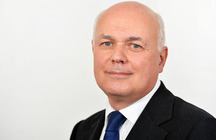
  • John Prescott – 2003 Speech on the Thames Gateway

    Below is the text of the speech made by the then Deputy Prime Minister, John Prescott, at the launch of a new house building project at the Thames Gateway on 30th July 2003.

    Prime Minister, ladies and gentlemen, it’s great to be here at Ingress Abbey.

    It is an example to all developers.

    Award winning planning.

    Award winning design.

    Built on a brownfield site.

    With social and market housing.

    And the restoration of a listed building.

    Some might say traditional values in a modern setting.

    It is a first step towards a new city here in North Kent.

    It is part of the 120,000 homes and 180,000 jobs we are aiming to create here in the Thames Gateway.

    New homes will be built alongside the Channel Tunnel Rail Link, which we rescued from collapse in 1998.

    The first phase of the Rail Link is now nearing completion – on budget and on time – and today setting a new speed record at almost 200 miles an hour. The tunnel runs right below our feet.

    Prime Minister, here at Ingress Abbey we are standing in the middle of the Thames Gateway – at the centre of the biggest brownfield site in Europe.

    It is a fantastic opportunity.

    An opportunity to boost the economy of the Thames Gateway and to provide the housing and jobs we need.

    Michael Heseltine identified the potential for the Thames Gateway more than ten years ago.

    Today we are not just talking about growth – we are making it happen.

    It was only in February that we launched our Sustainable Communities Plan.

    Today – under phase one of our programme – we are announcing plans to spend an additional £450 million over three years to support the development of key sites across the Gateway.

    That public funding will lever in three or four times as much in private sector investment. The development of the gateway will be a partnership between the public and the private sector.

    Public investment in infrastructure and land preparation will have a massive multiplyer effect.

    It will be the private sector that provides the vast majority of new housing in the Gateway.

    But we want to move ahead as quickly as we can.

    So, today I am allocating an additional £130 million to projects at the London end of the Gateway – that is in Stratford, the Royal Docks, Greenwich, Woolwich and Barking Reach where housing pressures are the most intense.

    An additional £100 million will be spent over the next three years here in North Kent, and £91 million in South Essex.

    Another £100m will also shortly be allocated for other projects awaiting approval, including setting up new Urban Development Corporations in Thurrock and East London.

    Getting the transport infrastructure in place is vital. Alastair Darling announced two weeks ago that he is allocating an additional £600 million for transport projects across the Gateway.

    And we will make the most of the £5 billion investment in the Channel Tunnel Rail Link – and the £10 billion upgrade of the West Coast Main Line.

    These massive, long term investments will provide us with faster, more efficient access to and from London from Europe and the north of England.

    Together they will form a transport corridor which will be the centrepiece of development in the Thames Gateway and other Growth Areas from Ashford to Milton Keynes and Northampton in the Midlands.

    When complete in 2007 the CTRL will open the way for domestic services providing additional capacity and faster journey times between Kent and London.

    The journey time from Ebbsfleet to London will be cut to only 17 minutes – 17 minutes by train, not hours by the motor car. That makes sense. That’s about public investment for sustainable development.

    The Dockland Light Railway will be extended to Woolwich and we will introduce new public transport infrastructure to open up Greenwich, Woolwich and Barking Reach.

    We will also ensure that the schools and hospitals are in place and that all areas are protected from flooding. Today, for example, we have announced around £130 million for three new or extended university campuses in the Thames Gateway.

    To the north of London, new development will also be well served by the transport investment we are making in:

    – the upgrade of the West Coast Main Line,

    – new rolling stock for the Midland Main Line,

    – the new interchange with Channel Tunnel Rail Link at St Pancras and Kings Cross and

    – additional investment in the M1 and M11 motorways.

    In the growth areas, I am announcing today plans for and additional £163 million to be spent in:

    Ashford, Milton Keynes and the South Midlands, and the London-Stansted-Cambridge corridor.

    This investment will help deliver an extra 130,000 homes and 120,000 jobs in the Milton Keynes- South Midlands area alone.

    To complete the picture, yesterday we announced a new £89 million Liveability Fund, to invest in our parks, public spaces and streets – improving the very sinews of our communities and the quality of life for everyone.

    And although the Thames Gateway is about new build, we also want to continue our record of improving the social housing stock.

    Two days ago we provided £1.5 billion to 13 new Arms Length Management Organisations to improve the quality of nearly 200,000 council-owned homes. That is in addition to the 800,000 council homes that have been brought up to a decent standard since 1997.

    Finally, I am very pleased that we are joined here today by Richard McCarthy, who will join my department to head up the new Sustainable Communities office in the autumn.

    The message today is that we are not just talking about sustainable growth.

    We are making it happen.

    Today marks the start of a long term commitment coupled with a long term process of delivery.

    We are putting new delivery mechanisms in place.

    We are putting the investment in place.

    And we have the political commitment to make it happen.

    Prime Minister, we are delighted that you are here with us today. We are embarking on a huge enterprise with the development of the Thames Gateway and the other growth areas. I know you want that to happen.

    It is a huge challenge, but we all know you will be keeping a close eye on it with the Cabinet Committee you chair. And together with our partners in the public and private sector we are determined to deliver.

  • Jeremy Corbyn – 2003 Speech on George Bush

    jc-small

    Below is the text of the speech made by Jeremy Corbyn in November 2003.

    Tomorrow the streets of London will be filled with a cross-section of the entire community as we march from Malet Street to Trafalgar Square via Kingsway, Waterloo and culminating in a march along Whitehall. This itself is a product of weeks of negotiation with the Metropolitan Police, to try and protect the right of free speech and assembly in our capital city. Having been a party to all these talks I have always had the feeling that there were huge pressures being placed on the Police to try and prevent any access to London by anybody whilst Bush was visiting.

    Bush’s visit, the first state visit by a US President (as opposed to the lower status ‘Head of Government’ visits by Carter, Regan, Bush Snr and Clinton) is really bizarre for any observers of this scene. Refused an open procession in the State Landau with the Queen, Londoners will at least see a horse and carriage, with appropriate cycling outriders when the Stop the War Coalition put on this event later this morning.

    All visiting heads of state or Government visit the Palace of Westminster and make an address to an assembly of both Houses, and some even answer questions. President Mandela came twice and happily answered questions on one visit for over an hour; he led no one into war, showed the courage of the South African people to oppose, and defeat the vile apartheid system. His State visit was the most popular ever. Bush Jnr on the other hand has no history of ever standing up for anything, unless avoiding being drafted into a war which he claimed to support counts as principle.

    Since he is the centre of attention this week, and those of us who oppose his visit are being accused of “crude anti Americanism”, it is worth looking at his record.

    On Sunday evening I was privileged to meet Vietnam veteran Ron Kovic and introduce him to the audience at the Prince Charles Cinema in Leicester Square, and then watched the film with him. The film is really a journey of discovery of a young man growing up in a patriotic American household in the sixties. Convinced of his country’s rightness and opposition to the communist menace he joins the marines, and in his fervour, does two tours of duty. Almost killed and paralysed in 1968, he comes home to indifference and hostility and in time, becomes opposed to the brutality of the Vietnam War.

    Ever since that time Ron has devoted his life to opposing the military policies of the United States. On Monday morning he led a delegation to Downing Street to ask that Bush’s visit be cancelled.

    Tomorrow the march will be led by a group of United States citizens who are opposed to the war. Far from being anti-American, the peace movement has united the ordinary people on both sides of the Atlantic, in the cause of peace.

    George Bush, for the red carpet and £4 million worth of security and hospitality being spent, is the only US President to be elected by the Supreme Court, and as a result of the greatest ever expenditure, by Corporate America, on his campaign. Since then he has repaid with interest: tax cuts, welfare cuts, huge arms budgets, oil drilling and now contracts to rebuild Iraq to the same companies who provided the weapons to destroy it.

    Globally, his administration has opposed the Kyoto protocol, supported cruel World Trade Organisation conditions and methods, and continued dumping surplus US food on the poorest countries – destroying much sustainable agriculture.

    Post September 11th the US never took stock and looked at the world; war in Afghanistan followed; the Axis of Evil speech; and then the build up to Iraq. Afghanistan is presented as a victory, yet 8000 died and opium production is soaring, so it is hardly complete.

    In Iraq, the military ‘victory’ of May, and the premature celebrations have been brought to a halt, as the casualties mount, and the effects of cluster bombs and Depleted Uranium are felt by thousands of wholly innocent Iraqis and their children.

    Bush’s cabinet contains those who met and financed the Saddam Hussein section of the Ba’ath Party and they will be well aware of the problems that the unilateral and illegal war has created. Nobody who opposes the war ever supported the regime, but most people want to see a peaceful Iraq with an accountable Government.

    In his determination to go to war in Iraq, Bush flouted the UN, and now wants the world body to pick up the pieces, without any legal authority.

    Whilst the war in Iraq and Afghanistan gain all the publicity, we should not forget the on-going gruesome and grim conflict in Colombia, where the pro US Government is rapidly losing support as the US maintains its military presence on the pretence of being part of an anti drugs crusade.

    Whilst many issues unite the peace and anti-war movements in this country, the Government’s support for the Bush-inspired National Missile Defence system has mobilised many members and supporters of CND; we opposed the US inspired cruise missiles in the 1980’s; NMD is equally as dangerous to world peace.

    Amidst all the opposition to Bush we should reflect on one positive aspect: the world, as John Pilger reminds us, is divided into one superpower and world opinion. The unwanted visit of George Bush has helped to create a huge Trans Atlantic movement for peace and justice. Merely being allowed to hold the march tomorrow shows the strength of public opinion and the power of peaceful protest.

  • Tessa Jowell – 2003 Speech to Labour Party Conference

    Below is the text of the speech made by the then Culture Secretary, Tessa Jowell, at the 2003 Labour Conference in Bournemouth on 29th September 2003.

    When I ask my South London constituents what would improve the quality of their lives their list is long and varied.

    They talk to me about jobs and pensions, freedom from fear, safer streets, more for young people to do.

    But perhaps most touching of all is the young mum I know who is just starting a college access course so that her young daughter could have greater ambitions than she had ever had for herself.

    So that her dreams can be within her reach, as they have never been for her mother.

    Perhaps the greatest gift we can give to those who dream is the confidence and the means to have a go.

    Achieving your best is intensely personal, but you cannot achieve it on your own.

    Each of us, according to our own tastes, enriches our own life, with music, drama, art, books and sport.

    And we do that with our families, teachers, coaches, friends, the community around us, to help us learn and understand.

    So, when we talk about the importance of culture, we must also accept the responsibility to give everyone the opportunities that the few take for granted.

    And when we talk of achievement, when we think of dreams coming true, nothing beats the Olympic Games.

    Earlier this year we decided to bid for the Olympics and Para-Olympics to come to London in 2012, so let’s just pause to look at a few of the reasons why……

    And one of those stars Steve Cram, is with us today and will address Conference in a few minutes.

    We are bidding for the Olympics because they will showcase Britain as a can-do nation.

    They will galvanise the regeneration of London’s East End.

    They will give sport in Britain its biggest ever boost.

    That’s why our Labour Government – with the support of the other political parties – has joined with the Mayor of London and the British Olympic Association to make this Bid.

    Barbara Cassani, the Chair of the Bid, now has her team assembled and things are really moving.

    This will be a bid to rival the best.  And we are backing it 100%.

    Young people starting in secondary school now can aspire to be champions in 2012.

    But we want everyone to feel that sport can be a vital part of their lives, regardless of their talent.

    To enjoy sport for its own sake.

    To compete and to excel.

    And because a good sport policy is also a good education policy, a good health policy and good anti-crime policy.

    This is not just talk.

    We are putting in place the foundations in schools and communities, and building the ladder of opportunity to take the talented, whatever their background, as high as they can go:

    – Reviving school sport, with 400 specialist sport colleges, and 3,000 sport co-ordinators, bringing competitive sport back into our schools.

    – Boosting grassroots sport, first with £750 million of Lottery money for school and community facilities announced by Tony Blair three years ago, then with a further £100m for community sport halls announced this summer, and just three weeks ago the decision to give community amateur sports clubs mandatory rate relief.

    – Bringing the best artists and creative talents into some of the most deprived schools in the country in our Creative Partnerships.

    – Developing summer play schemes, with sport, music, dance and theatre helping our young people feel the pride that comes from learning new skills.

    I’m proud that we brought back free entry to our museums, that the National Theatre and the Royal Opera House have brought in new audiences by cutting their ticket prices.

    The Baltic Gallery in Gateshead packs in local people and tourists alike, free to all.

    But as we know, equality of opportunity is a fine phrase for those who already have the will to succeed.

    But for many, success in any field remains just a dream.

    Our mission is to enable those who today can only dream, to have the chance to achieve their very best tomorrow.

    To feel they were given a chance and the means to grab it.

    Of course our Party exists to deliver prosperity, education, and good health for the many and not just the few, but we also exist to feed the imagination of the many as well.

    It’s only fair that everyone gets the chance to enjoy the finest of music, of theatre, of dance, of film.

    It’s only fair that everyone gets the opportunity to enjoy the sports of their choice.

    Throughout Britain our towns and cities are increasingly recognising just what the arts and sport can do for their people, for their environments and for their economies.

    Great cities, like Newcastle, Glasgow, Gateshead, Birmingham, Bristol, Manchester, Cardiff, Leeds.

    Wonderful cities, finding the vigour of their 19th Century boom years in the 21st Century’s creative industries.

    Liverpool will buzz with excitement and its economy will get a terrific lift as European Capital of Culture.

    Because cities that embrace the arts, sports, fine buildings, libraries and galleries, and yes, bars and clubs and sports venues, are cities worth living in.

    And worth businesses moving to.

    And in every part of Britain the Lottery is the cultural and sporting venture capital of our communities.

    – The Eden Centre, transforming the Cornish economy.

    – The Commonwealth Games legacy transforming East Manchester.

    – The Laban Centre in Deptford.

    – The Ikon Gallery in Birmingham.

    Every constituency has received at least 50 Lottery awards.

    From Village Halls to the Deep in Hull.

    From play for children to plays at the National Theatre, the Lottery touches every community, every age group, every culture in the country.

    This work goes on.

    Take just one example, I’ve asked the New Opportunities Fund to talk to War Veterans groups about how their members might want to mark the 60th Anniversary of the most remarkable 12 months in our history, from D-Day to the Fall of Berlin.

    I want to ask them how they would like their history remembered.

    Projects that make their memories available to today’s young people.

    That help us understand how today’s world was created by the sacrifices of a generation now in their 80s.

    This is the Lottery people love.  They know that Lottery money is the people’s money, not politicians’ money.

    That investment is building communities, changing lives, respecting differences, opening new doors.

    There are many dividing lines between this Labour Government and the Tory alternative.

    Under the Tories the Lottery neglected the most deprived areas and the most desperate communities.  We changed that.

    The Tories cut investment in sport and the arts.  We changed that.

    The Tories forced the sale of school playing fields.  We changed that too.

    Because markets fulfil the demand of those who can pay, not the needs of those who can only dream.

    Because equality of opportunity without a place for those who have never dared to aspire, is just a highway for the privileged.

    Opening that highway to all is the task before us: it’s not only in health, education, transport and welfare that we must rise to the challenge of change, but in bringing real opportunity to those with talent wherever they may be.

    And finally there is another message from the Olympic debate.

    When we asked people whether they wanted us to bid, they made one thing very clear, they wanted us to give it a go.

    They would forgive us for trying even if we didn’t win.

    They understand the challenge.

    But people want the best for Britain, and the best for their families.

    They expect us to set the toughest targets and do our damndest to reach them.

    But they won’t forgive us if we won’t even try.