Tag: 2003

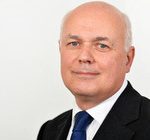
  • Iain Duncan Smith – 2003 Speech to Conservative Party Members in Birmingham

    Iain Duncan Smith – 2003 Speech to Conservative Party Members in Birmingham

    The speech made by Iain Duncan Smith, the then Leader of the Opposition, in Birmingham on 26 June 2003.

    The Conservative Party is committed to a fair deal for everyone.

    There are those, however, who claim this is little more than a dream.

    They argue that leadership is about choices.

    They say you have to penalise one group to help another. You soak the rich to help the poor or you neglect the poor to help the rich.

    This Government believes this argument.

    That became clear again last week when Peter Hain broke the golden rule of New Labour and told the truth about their tax raising agenda.

    But as Conservatives we reject this false choice. We recognise that you don’t help vulnerable people by making the rest poorer, and nor do you make our country richer by leaving large sections of society behind.

    Our fair deal for everyone demands that we are just as committed to leaving no one behind as we are to holding no one back. It is a realisable goal, but it requires leadership, vision and ambition.

    These are three qualities this party has shown before. And we have them again today.

    We have always been the party of one nation. The social and economic reforms of the 1980s were only possible because we built a coalition across social groups and reached out to the inner cities as much as to the leafy suburbs and the shires.

    Today we are still that party, but we must renew our commitment to solving and not merely managing the problems of places like Handsworth here in Birmingham.

    We believe the problems faced by parts of Britain’s inner cities are not insurmountable. No one should be excluded from society because of where they live.

    We believe in the creation of the neighbourly society – not as an unachievable utopia but as a real and possible vehicle of sustained social progress.

    We believe that we can transform our representation in our inner cities because by supporting community groups such as Parents United who I met earlier today, we are showing that only the Conservative Party believes in the potential of every single person who lives in some of the most deprived areas of our country.

    Our challenge is not to attack those who create our nation’s wealth, but to focus instead on ensuring everyone shares in that wealth to the benefit of society as a whole.

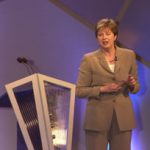
  • Theresa May – 2003 Speech to the Hansard Society’s Annual Lecture

    Theresa May – 2003 Speech to the Hansard Society’s Annual Lecture

    The speech made by Theresa May, the then Chair of the Conservative Party, on 26 June 2003.

    I’m very grateful to the Hansard Society for inviting me to deliver its fourth annual lecture.

    I’m pleased also to be following in the footsteps – I’ll resist the urge to say standing in the shoes – of Robin Cook, a distinguished parliamentarian and a long-serving member of the House.

    I strongly disagreed with Robin over his stance on Iraq, but I respect his decision to give up his Cabinet post because of his beliefs…

    …And I have to say, it makes a change to watch such an effective political operator focusing on his own government from the back-benches, rather than on the opposition from the front-bench.

    I looked back at the task Robin set himself in last year’s lecture and considered his legacy as Leader of the House.

    Clearly, the greatest disappointment is the stalling of real reform of the House of Lords. We have made no progress over the past year and indeed the whole issue seems to have been put on the back burner. The Conservative Party still stands ready to work with the Government to secure a lasting solution to this problem and to deliver a strengthened Parliament overall.

    I notice also that there was little mention in Robin’s lecture of the Government’s plans for the future of the Lord Chancellor and their effect on the House of Lords. It was quite a surprise to have these announced by press release one Thursday afternoon – not just for me, but also it seems for most people in the Government itself.

    It’s a great shame that the Prime Minister felt unable to apologise to Parliamentarians and to the public for the way that the entire fiasco was handled, with no consultation and seemingly no thought. It is, I fear, the hallmark of a man who has little but contempt for Parliament and by implication for the people themselves.

    But Robin Cook is certainly a House of Commons man, and some of the reforms he set out last year have indeed been put in place. The House of Commons now has new sitting hours; the process of appointing select committees has been changed; questions are now more topical and more effective.

    It is probably too early to give a full assessment of the benefits of these reforms, but I’m certain that his actions have ensured that Parliament will never be allowed to return to how it was when I joined the House in 1997.

    Yet I have always felt that the process of reconnecting Parliament with the people must go much wider than simply changing sitting hours and seemingly odd procedures.

    To highlight the ways in which people are turned off Parliament, proponents of parliamentary reform have often pointed to strange customs such as the wearing of a collapsible opera hat by an MP when they wanted to raise a point of order during a division.

    But this is to assume that anyone at all knew that this took place. Of course it was an odd tradition, but it was hardly one of the main reasons why people fail to take parliament seriously. Anyone who sat at home watching the House of Commons on their TV would have to be a serious political animal in the first place.

    I’m pleased that practices like that have gone, but let’s be honest: does anyone feel more connected to parliament now as a result of any of this Government’s reforms than they did before?

    I suspect the answer is no. We need to look at a wider problem.

    I would therefore like to talk about two things in particular tonight.

    Firstly, what procedural or substantive changes could we make to the House of Commons to bring it closer to the people?

    Secondly, what changes must we make to the level of political debate in this country to encourage people to take an interest again?

    Parliament and the people

    Let me take the first of those points.

    As I’ve said, the reforms so far under this Government have often been cosmetic rather than substantive. I believe we need to be far more radical in some of the things we do.

    Conservatives are too often portrayed as simply being resistant to change. This is not so. We simply believe that the benefits of change should be clear. We do not believe in change simply for change’s sake.

    It is in this spirit that as long ago as December 2001 we set out our principles for reform of the House of Commons.

    · We wish to see a strengthening of the role, status and powers of Parliament in general, and of the House of Commons in particular.

    · We wish to see debates and questions in the Commons become more topical and more relevant to the majority of people in the United Kingdom.

    · We believe that it is essential to enhance the ability of the House of Commons, and especially its Select Committees, to scrutinise the actions and decisions of Government.

    · We seek an enhancement in the role and influence of backbenchers on all sides, and a greater recognition of the important role performed by Opposition parties of whatever political colour at any given time.

    · And finally, our approach towards changing the procedures of Parliament is guided by this simple test – will such changes increase or diminish the ability of the legislature to hold the executive to account?

    With these principles in mind we were able to suggest and support some proposals to increase the topicality of parliamentary business, strengthen the powers of select committees (particularly with regard to the scrutiny of legislation) and ensure adequate time is put aside to debate primary and secondary legislation.

    Some of these proposals have since taken effect. We hope to see others coming into effect sooner rather than later.

    But important as these things are, if we’re honest I think the three things that erode the public’s faith in parliament specifically and in politics in general are excessive partisanship, a feeling that politicians are not like them and a belief that they are only in it for themselves and their friends – in other words, the prevalence of cronyism.

    To take the last point first, we live in an era where more and more key decisions about people’s lives are taken by un-elected bureaucrats and officials rather than elected politicians.

    We have a Monetary Policy Committee, a Strategic Rail Authority and a Food Standards Agency. Recently when a critical report about the NHS was published by the Audit Commission, the NHS Chief Executive – Sir Nigel Crisp – was rolled out to put the Government’s case.

    These organisations and individuals are anonymous to many people, but they wield tremendous influence.

    Many members of the public only hear about the people running these agencies and Quangos when they hit the headlines for doing something wrong.

    It’s about time we introduced some form of democracy and accountability to this system.

    In the US, they have done just that. Senior appointments to key bodies in the United States have to be confirmed by a Senate Committee – and only after the individuals concerned have been interviewed and investigated by that committee.

    I believe a similar system could work here in the UK and would go some way to alleviating people’s fears about the creep of cronyism throughout our system of government.

    People such as the heads of the Food Standards Agency and the Strategic Rail Authority together with people such as the NHS Chief Executive should appear before the relevant Select Committee of Parliament to answer its questions before their appointment is confirmed – and if the majority on the committee votes against the appointment it should not be made.

    Not only would this bring some democracy to the process, it would also strengthen the role of Select Committees.

    Similarly, Michael Howard has argued that members of the Monetary Policy Committee of the Bank of England – together with the Governor and Deputy Governor – should be vetted by a joint committee of both Houses of Parliament to bolster their independence, make the process more transparent and increase the power of Parliament.

    Politics also has a problem with representation. Parliament should reflect the country it serves – yet few would argue it achieves this in its current form.

    All political parties have a responsibility to do what they can to attract candidates from all walks of British society. This doesn’t simply mean more women and members of the Black and Minority Ethnic communities as is often argued. It also means getting more people from different professions with different skills and talents to come forward and stand for election to Parliament.

    For those of us charged with this responsibility there are two possible approaches: you can impose rigid structures from the top, or you can give people on the ground the choice of how they address the problem.

    The Labour Party tried the first approach. Their all-women shortlists programme achieved temporary success but it has not been sustained.

    I believe that in order to achieve long-term progress in this area we must work with local people and local parties and give them choice about how they deal with the problem.

    Centrally we have already made great strides. We have made the way we choose people for our candidates list more professional by employing assessment techniques from the world of business. We engaged the services of an occupational psychologist to put in place a rigorous selection procedure using cutting-edge assessment techniques.

    We now have to match these important changes to our national procedures with equally innovative changes at a local level.

    And to do this we are offering our associations the opportunity to pilot a series of new ideas to give local people a greater say in the selection of their local Conservative candidate.

    For example, in constituencies that have not yet selected their candidate and do not have a sitting MP we are offering the option of experimenting with US-style primaries. Under this plan, every registered Conservative voter in the constituency – or even all electors regardless of political affiliation – would have the opportunity to choose the candidate they want from a shortlist drawn up by the constituency party.

    We are also inviting associations to open selection committees up to non-party members. There could be huge value in including prominent local people such as chairmen of residents associations on these committees.

    We could expand the scope of the traditional selection process by allowing people to vote for their preferred candidate by post, rather than requiring them to turn up at the Special General Meeting.

    And we could look at the selection process itself and enhance the usual series of interviews with competency-based exercises to assess the best candidates.

    Fundamentally this is about choice: choice for constituency associations who want to try different ways of selecting candidates, and choice for local people who will receive a greater say in selecting their local candidate.

    Hopefully, some or all of these innovations will help us to match candidates with an appropriate constituency as well as encouraging more local people to take an interest in the politics in their area. They are a way of re-engaging people with politics, and we hope also that out of them we will see more representative candidates coming forward.

    In addition, we’re working closely with Simon Woolley and his team at Operation Black Vote to encourage greater involvement in both local and national politics among members of the Black and Minority Ethnic communities.

    But how to deal with the other point – the excessive partisanship?

    This is naturally more difficult. Politics is and always will be tribal. There is a reason I am Chairman of the Conservative Party and not of one of the other parties. It’s because of who I am and what I believe.

    But as well as being the Party Chairman I’m also the MP for Maidenhead, and I was elected to serve all the people of my constituency, whoever they are and however they voted. I am their representative at Westminster. They rightly want to know where I stand and what I think.

    Yet Westminster politics is run on a tightly controlled whipping system. Most votes are directed by the party whips. You see MPs wandering into the chamber when the division bells go, asking which way they should walk and duly obliging, sometimes without even knowing much about what they are voting on.

    We have all done it, but let me take a recent example. It is, I’m afraid, a partisan example, but I choose it simply because it is recent.

    Two weeks ago, we used one of our opposition day debates to raise an important issue – that of post office closures. The motion we chose to debate used exactly the same wording as an Early Day Motion which had been signed by 175 Labour MPs. But when it came to the vote at the end of the debate, 126 of those Labour MPs voted with the Government against our motion.

    It was not a vote that was going to change the world, yet they were simply unable to defy the whips and to vote in favour of something they had already supported.

    In any other walk of life this would be considered very odd indeed.

    And this strict approach leads to partisanship. It encourages MPs to take sides, shout at each other across the chamber and the despatch box, deliver speeches that are little more than a collection of sound-bites and party lines, and generally behave in a way that people outside politics would never dream of doing.

    Voters do not want yah-boo politics. They want can-do politics.

    So I’ve managed to escape the whip tonight to suggest something dangerously radical – wouldn’t it be good if we could find a way to lessen the power of the whips’ office and to allow more votes to take place on a free vote basis?

    I’m not proposing that this is anything that’s going to happen soon and of course the system remains valuable when it comes to allowing Government’s to meet their manifesto commitments and get things done, but I would like to see a system evolving where at other times MPs have more opportunity to speak their minds and to represent their constituents better.

    There is certainly a desire for this among the public. The presence of independent MPs in the House of Commons may be minimal at the moment, but I believe the coming years will see more and more single issue or independent candidates standing in elections.

    The lesson for political parties must be to allow their MPs to act as human beings more often, rather than continually asking them to obey religiously a party instruction with which they may disagree or which may run counter to the interests of their individual constituency.

    A new politics

    And this leads on to my second point: the need to raise the general level of political debate.

    Most of the things I’ve mentioned so far relate to parliament and the need to change conventions and procedures. But by themselves they will not be enough to reverse the decline in political participation in this country.

    I won’t go so far as to claim we are facing a crisis of democracy, but when more people are interested in voting in Big Brother than in parliamentary or local elections we have to ask ourselves the serious question of what’s gone wrong.

    It’s a familiar fact that the national turnout at the last general election was just 59%, but the really worrying statistic is that 61% of people aged between 18 and 24 chose not to cast a vote.

    That is, of course, their choice – and I do not agree with those, such as the new Leader of the Commons, who argue for compulsory voting here in the UK.

    But why did they make this choice?

    The instinctive answer is to say that young people just aren’t interested in politics. But I believe this is too simplistic a view.

    Look at the number of young people who marched through London and other UK cities to protest about the war in Iraq. Consider how many young people took part in similar demonstrations to protest about the problems in the countryside or the government’s policy on tuition fees. Think about the fact that the number of students enrolling for politics degrees last year was the highest on record.

    These examples show us that young people are not apathetic towards politics, but they are concerned that the traditional system of party politics fails to get things done.

    And I believe the reason for this is that we have failed to recognise or acknowledge the new nature of politics in the 21st century. These days people – particularly young people – are encouraged to question things more and more, and not to simply take things at face value.

    They’re used to questioning those in authority, rather than taking what they say on trust. We no longer live in an age of deference as we once did. Instead, we live in an age of reference – reference to one’s peers but not to those in authority.

    Nor is politics any longer a game played along strict ideological lines. Very few people these days choose their favoured party and stick with it for life. People who are more accustomed to making choices in their daily lives are also more discerning about politics.

    Elections become even more competitive than before when every vote is up for grabs. And the electorate themselves demand more from the political parties. They want to know what positive benefit the parties will bring to them personally, but they also want to know that the party they choose has a vision for society as a whole. It’s not all about self-interest.

    The implications of this for my party have been severe. We came to be seen as self-interested, and towards the end of our term in office many people who voted for us felt that they could do so only as long as no one else knew about it.

    Because our vision and our focus became too narrow, people felt that voting for us would tar them with the same brush. They felt uneasy about it and as a result they left us in droves.

    We’ve been working on broadening our approach again. To do this, we are trying to break out of the confines of the British political system.

    For too long, voters in this country have been faced with false choices and artificial divides. On the one side of British politics you have the Conservative Party – pro-business, good on the economy, strong on law and order. On the other you have the Labour Party – supportive of the workers and committed to health and education.

    Voters are asked to line themselves up on one side of the debate or another – the implication being that you can’t possibly agree with both.

    While the current Government managed to bridge this gap when they were in opposition before 1997 the artificial divides have returned since.

    Today we are told that you either want to improve public services or you can oppose ever-higher taxes – as if money alone were the answer to every problem in our public services, higher taxes were the only possible source of funding, and every penny already raised in taxes was spent as effectively as it could be.

    You are either a party that wants to help vulnerable communities or you are a party that wants to help businesses and encourage enterprise – as if vulnerable people are helped when the country as a whole is made poorer.

    On crime, you can either take the side of the victim or you can protect historic legal freedoms and deal with long-term trends in offending – as if you achieve justice by removing defendants’ rights from the courts system and offer no help to young offenders who’ve lost their way.

    It is time to change this sterile debate. The challenge of politics today is to recognise that prosperity and public services are partners, not opposites. That wealth and opportunity can be extended across society, not just to the few. And that a neighbourly society is a realistic vision for improving life in Britain’s most deprived communities.

    It’s little wonder people are turned off politics when the level of political discussion today displays such an astounding lack of ambition and lack of confidence in our country. And it is also a sad caricature of our political parties.

    I don’t believe any of the main parties do not have the best interests of the whole country at heart. I don’t think their intentions are wrong. On the whole, I think politicians of all parties are good people who are in politics to make people’s lives better.

    Of course I disagree with many of the methods and policies of the other parties – sometimes strongly – but I rarely think they are motivated by anything other than the desire to do some good.

    So these false and extreme divisions we create in British politics let down the people of this country who look to their politicians to take on the challenges of the day and to overcome them.

    If we are to genuinely reconnect people with politics and to rebuild their faith in parliament we have to seek a new political settlement – one which looks above these exaggerated and extreme opposites and delivers what the public wants:

    A Britain built on the principles of social justice with better public services, and a strong and thriving economy.

    There is no contradiction here. There is only a lack of political ambition and a resultant caricature of British politics leading to a sterile debate that simply turns people off.

    Who do we blame for this?

    The traditional target for politicians is the media and certainly they are not entirely blameless. Too often, they focus on personalities at the expense of policies. They look for sound-bites and catchy headlines. It’s not easy to change the nature of political debate when newspapers and broadcasters are prepared to repeat – without questioning – scare stories about ‘20% cuts across the board’ whenever someone tries to challenge the conventional thinking on the funding of public services.

    A few months ago we had an American intern working with us at Central Office. At the end of her stay she was asked what the main difference was between British and American politics, and she said the press. ‘In the US they report things, here they always try to interpret them’.

    Politicians know that everything they say and do will not just be reported, but interpreted. And as a result a politician’s greatest fear is going ‘off-message’. That’s why many political interviews these days take the form of an overly-aggressive interviewer demanding answers from an overly-defensive politician. Both participants know that any deviation from the party line – any slight difference in nuance – will be treated as a gaffe or the worst party split since the last one.

    The columnist Matthew Parris summed this up when he wrote:

    “If I could remove from the journalists’ lexicon a single word, and with it remove the moronism to which it gives throat, that word would be “gaffe”. Like a flock of demented parrots we shriek “gaffe! gaffe! gaffe!” whenever anyone in public life says anything interesting. What others would call speaking out, we call speaking out of turn. The voicing of unpalatable truth, we call indiscretion. Taking a flyer, we call dropping a brick. We peck to pieces any politician who breaks cover and speaks his mind. Soon only grey heads tucked below parapets and mouthing platitudes remain. Then the media parrots chorus “boring! boring” (The Times, 30 November 2002).

    More recently, another Times columnist, Danny Finkelstein, described how an ‘elaborate set of rules’ has grown up, determining how the political game is played. But he added that while: ‘The public has largely grown tired of the rules…politicians and the media have not’ (The Times, 3 June 2003).

    But you know politics is not a game – and many members of the press would do well to note that many people no longer read national newspapers or watch national news broadcasts. Research shows that 84 per cent of adults regularly read a regional or local newspaper, but 40 per cent of all adults who read a regional publication do not read a national paper – and if they do they no longer always believe them.

    But tempting though it is, I don’t want to blame the media entirely. The real problem lies with the politicians themselves.

    As I said earlier, politics is by nature tribal and this is never clearer than during a general election campaign, the point of which is to help people decide who they would prefer to run the country for the next five years. Here, amplifying the differences between parties can help to make that choice clear.

    The problem is that modern politics is becoming more and more like one long election campaign.

    Before allowing this trend to continue, politicians of all parties should consider the dangers it poses. Between elections, the differences that matter to people are not necessarily those that exist between the parties but those that exist between how things are and how things should be.

    The debate they would like to see is about how we can make things better.

    Now I certainly believe that Tony Blair’s government has introduced a range of policies that take us in the wrong direction. Others would say the same about policies introduced between 1979 and 1997. But no one in their right mind imagines that every problem in our schools or our health service originated with the election of one Government or another. Many of these problems are deep-seated and have been bubbling beneath the surface for decades. Finding solutions to these problems is what politics should be about and that is where the debate should be.

    My fear is that the five-year election campaign results in the victory of extreme and exaggerated rhetoric over the resolution of big and difficult challenges.

    And sadly this even happens when we’re dealing with some of the most important issues of the day.

    Europe

    Take for example the appalling way in which the important issues about Europe and the Euro have been treated in recent weeks.

    There is little doubt that the European Union and the European Parliament are taking on an increasingly important role in the life of this country.

    Recently the Convention on the Future of Europe published its draft proposals set to form the basis of a new European constitution. They plan:

    · A President of the European Council.

    · Tighter co-operation on foreign policy, including a European Minister for Foreign Affairs.

    · A legally binding Charter of Fundamental Rights, and

    · A common asylum and immigration policy across the community.

    At around the same time, the Government finally announced its decision (or more properly its non-decision) on Britain’s membership of the European Single Currency, with all the affect that decision has on interest rates, home-ownership, employment and UK trade.

    In short, it has been an important time in British politics when we have been facing major decisions about the future of our country.

    And yet, far from having the wide-ranging debate you would expect – far from setting out the economic, constitutional and political implications these issues have for the UK – the Government chose to conflate all these points into one single argument: you’re either in favour of the European Union or you want out of it.

    That’s it. No other vision of the EU’s future allowed, no debate permitted and certainly no consultation with the people.

    If I may be forgiven a brief moment of partisanship, this approach is ridiculous, it is cynical and it is a travesty of democracy.

    Rather than engage in a debate about the proposals from the European Convention, the Government has chosen to claim – quite alone of any of the European governments – that they have no real implications for Britain and anyone who questions them must want to withdraw from the EU.

    And rather than discuss the economic impact of the European Single Currency, the Government is seeking to portray anyone who does question it as being some sort of little-England isolationist.

    They are closing down the debate and instead deliberately creating that false divide of which I spoke earlier – you’re either part of their version of the pro-European consensus or you’re a dinosaur who wants to withdraw from the EU entirely and have nothing to do with it.

    Political debate can scarcely get much lower than that, when you’re prevented from discussing matters of such fundamental importance to the future of the country.

    It is emphatically not the policy of the Conservative Party to withdraw from the European Union. It is, quite simply, a lie – a scare story. Indeed, the only main party leader to ever stand for election on that platform is the Prime Minister himself.

    We have to be prepared to have an open and honest debate about the future of Europe, recognising that there are many different views among the current members and the accession countries.

    If we politicians are unable to have that full and frank debate on an issue of this importance it is no surprise that people have little faith in us and in the political institutions of this country.

    Conclusion

    At the end of the day, the task of reconnecting parliament with the people is about far more than the day-to-day workings of the Palace of Westminster.

    Parliament is not simply a building or even the conventions and traditions within the building – it is its members, the 659 MPs and the members of the House of Lords.

    For the people of Britain, that magnificent gothic looking building on the banks of the Thames is the repository of political power in this country, and people will only feel any connection with it if they feel part of the entire political process.

    If they feel politicians are like them, grown-up people with their own views and opinions who are serious about making a difference. If they think politicians are people who are prepared to consult them and listen to their views. If they think politicians trust them and are worthy of their trust in return.

    We no longer command respect simply because of who we are. In this day and age respect is something that has to be earned.

    If we can rise to that challenge and appear to be people who are prepared to put our ambition for our country ahead of our personal party prejudices then we just might encourage people to be proud of their politicians and their Parliament once again.
  • Iain Duncan Smith – 2003 Speech on Special Needs Schools

    Iain Duncan Smith – 2003 Speech on Special Needs Schools

    The speech made by Iain Duncan Smith, the then Leader of the Opposition, at Westminster Hall on 1 July 2003.

    I thank the Minister for Children for being here today. The subject of the debate, while not directly a party political issue, brings into question the Government’s attitude to special needs. I hope that she will be able to respond to some very serious questions that the consultation process in Waltham Forest has raised.

    I begin by declaring an interest. I am a trustee of a superb special needs school in my constituency called Whitefield, which, while originally part of the consultation process, is not directly involved. It is through that that I have come to take a very special interest in such schools.

    The schools that are directly affected by Waltham Forest council’s drive on special needs schools are Belmont Park, Brookfield House, Hawkswood, Joseph Clarke, William Morris and Whitefield, which I mentioned earlier. The timelines are very simple. I shall not go into details, as I am sure that the Minister has them already to hand. The first report from the council was, I believe, on 17 December 2002, at which time the consultation process was, essentially, mooted. A consultation process was set out, and I understand that it is finally due to conclude some time in the middle of September this year.

    I have questions about whether the consultation process is really as open and fair as it should be or whether the council and the education action forum have already reached a conclusion and are simply going through the motions. Three reasons were given for considering whether special needs education should be reordered, with the strong possibility of closure of one or more schools that deliver such education in the borough. The first reason was the Government’s position on the national standards established in the Special Educational Needs and Disability Act 2001. The second had to do with meeting the inclusion standards of the Department for Education and Skills, Ofsted and the Audit Commission, and the third was the borough’s own policy on social inclusion.

    Let me discuss my concerns about the consultation process by dealing with the Government’s position on the matter and what the borough is essentially saying about its needs. The consultation has not been as fair and as open as the council would have us believe. It received only a small number of returns on the original consultation that was sent out. I believe that more than 15,000 were sent out but not more than 1,000 were returned.

    In the meantime, there was a phenomenal reaction not only from people who have children in the schools, but most remarkably, from people who live in the borough but do not have children attending the schools and from people who live way beyond Waltham Forest but have a direct interest in the issue. A number of MPs fit into that category. Indeed, I think that the Minister’s own constituency is affected. I believe that a petition of just under 30,000 signatures was presented to the council and that more are arriving every day. I do not recall such an overwhelming passion being declared quite so clearly and openly to the council in such a short time. Sadly, the council does not necessarily seem to have paid much attention. I shall return to that matter in a moment.

    One problem with the consultation process is the fact that the costs of the integration have not been fully explained. We always hear about the savings to be made from closing a special needs school, but we do not see in detail how much it will cost to integrate children with serious physical or learning disabilities into mainstream schools. That is critical. Nowhere in the document have I seen a statement of such clarity that it would allow us to make a judgment.

    I should like to refer to a letter from Marcia Gibbs, a special educational needs adviser at the DFES, in response to Joseph Clarke school. She makes interesting points. First, she states: “Waltham Forest local authority would have to provide details of plans to support children currently attending Joseph Clarke School, including those pupils from other authorities, should it decide to make proposals for change.”

    However, none of those are included in the consultation, so how are we to make a decision about how effective the process will be? That is missing. Marcia Gibbs goes on to say: “The right of parents to make a positive choice and express a preference for a special school place will be fully maintained.”

    At the same time, however, she restates the Government’s determined advocacy of inclusion.

    My concern is that there seem to be conflicting interests even within that letter. It suggests that although the Government are determined about inclusion, there is not a clear statement to local authorities and education authorities on exactly what they need to do if they are to go down the route of the consultation process. There is only a general statement of what is required. I want to return to that issue, because I believe that it will cause the greatest problem.

    I understand that in the early part of June, the council announced, almost out of nowhere, that it was taking Brookfield school out of the process and that it was no longer under threat of closure. It said that that was because the costs of integrating those children with serious physical disabilities would be too great, but at no stage have we seen those costs. What are the costs and what calculations has the council made for schools such as Joseph Clarke or Hawkswood? Hawkswood has children with severe hearing disabilities and Joseph Clarke has children with visual impairment. My point is that at no stage has the local authority indicated anywhere what those costs are and how it has calculated them, but suddenly, out of the blue, it declares that one school is no longer relevant to the process. There is no regard to the costs. That makes us concerned about how the authority managed to arrive at those figures. Why not publish all the figures? Surely there should be guidelines stating that.

    There are questions concerning other aspects relating to the local authority. At no stage in the document or in the discussions has it entertained the idea that perhaps Waltham Forest simply does not transfer the real cost of education to other boroughs and does not reflect the true cost. It does not state what the real cost is and at no stage has it set about trying to calculate it or to say to other boroughs, “Let’s meet and discuss whether we can do a little more burden sharing.” The authority has talked generally about that, but has not said, “This is the real cost of educating a child at a special needs school in Waltham Forest. You’re paying only this much. Is there any chance that we could come to an agreement to share the burden?” At no stage has the authority attempted to do that.

    With regard to the consultation process, the document made some stark statements that I do not believe are true. I shall highlight one, although there are others. The consultation document states: “Although the borough has statemented a similar proportion of young people to other London LEAs, a rather greater proportion is educated in special schools than elsewhere.”

    The document did not give figures to back up that statement and it is not true. It is not borne out by any evidence that we can find. The percentage of statemented pupils in special schools in Waltham Forest is 42 per cent., the inner London average is 44 per cent. and the outer London average is 42 per cent. Comparing like with like in councils and boroughs that have similar problems, the figure for Hounslow is 41 per cent., Brent 43 per cent., Enfield 47 per cent., Ealing 55 per cent. and Lewisham 56 per cent.

    The document is full of statements, without any supporting evidence. No one can understand its rationale. It is almost as though the verdict is given first, followed by the evidence. It seems that minds were made up before entering the consultation process and I shall come to the reasons why in a moment.

    I quote from a letter sent by the head of pupil and student support services in Waltham Forest to a neighbouring borough, the London borough of Newham, which explains what the education authority—with EduAction—is trying to do. It states: “The transitional arrangements which would form part of the statutory notices have not yet been set out and cannot ’emerge’ until after June”, although it indicates that they have already been settled. It becomes clear what is going on from the penultimate paragraph of the letter, which states: “I would however want to take this opportunity of asking you not to put forward new admissions for the School from this point.”

    That is before decisions are supposed to have been taken. The borough is leaning on a neighbouring borough by indicating that there will not be a school or schools that can take further children, therefore it would be pointless to send them. The letter says of the Ofsted report, “we are driven by a poor LEA OFSTED inspection . . . “— which is not true. In general it is the case, yes, but most of the specific schools have reasonable, if not good, Ofsted inspections; only one is subject to special measures. It continues, stating, “re-organisation would be treated as a test of corporate governance.”

    The authority’s concern is that failure to meet the test by the Department for Education and Skills or by the Ofsted inspectors would lead to further pressure on the borough. It blames the Government and Ofsted for driving it into this position, thus indicating to Newham that the conclusion will be that it intends to shut certain schools.

    That explains my concerns about the consultation process. It is clear that the council has already arrived at its conclusions and the consultation process is, in essence, a way of covering that decision. Money is at the heart of it. The council declares itself in difficulties. It has had problems running its education policy. Ofsted was deeply critical of the education authority, as a result the company called EduAction now runs education in the borough. Throughout, the council is concerned about the money it believes it needs to run education generally and I want to explain why I have misgivings about it.

    The process should be very carefully undertaken if changes are to be made, as those involved are such special children and we cannot risk getting it wrong. There will be a dual effect on education in this and other boroughs, which will affect those pupils who are already being educated in mainstream schools. There has to be a serious rethink about how the process takes place, as once children with real special needs—learning disabilities, visual impairment, hearing impairment—are put into those schools things change dramatically. For example, about 47 per cent. to 50 per cent. of children at Joseph Clarke, a school for the visually impaired, go there because they are scarred by the difficulties they had in mainstream schooling. They are now in that school because they failed to make progress in mainstream schooling and have been hurt and damaged by that; no reference is made to that in the consultation process.

    The strength of parental support for such schools is awe-inspiring. The Joseph Clarke school asked parents for their views on the school, whether positive or negative, and 100 per cent. gave a positive response. I know of no other situation in which 100 per cent. of parents would respond to a notice from a school. Everyone knows how difficult it is to get parents to respond to requests from schools, but that is not the case at Joseph Clarke, or at the other special needs schools.

    It is important to note that special needs schools provide peripatetic services for the other schools. It is ironic that the lower number of statements in the borough is partly due to the fact that the outreach from those schools allows children to settle in mainstream schools without statements. If that service is removed, they will have to be statemented, and that will place much greater pressure on the mainstream schools. Mainstream schooling would need to be reorganised to meet those children’s needs—for example, there would need to be considerable debate on how mainstream schools could meet the Braille requirements of the visually impaired.

    I was talking recently to someone from Hawkswood school, who pointed out that teachers will often walk to the whiteboard—or blackboard, whatever they are using—and talk to the class while writing on the board. If a hearing impaired child is a lip reader, which is not always the case, once they break sight from the teacher, they have no idea what is going on in the class. How many times does a teacher go to the back of a class and explain over the heads of the children what they are looking at on the board at the front? Those are two very simple realities that most mainstream teachers would take for granted, but which they would not be able to do if their classes included hearing impaired children, because teachers must never break sight from a hearing impaired child. Such simple issues have been forgotten in this process. A huge amount of retraining of teachers would be required.

    Such examples show that there is a need to rethink this process, both nationally and locally. Dyslexia is arguably the most well known learning disability in schools. However, I have visited many mainstream schools—I am sure the Minister has also done so—that still struggle with the teaching of dyslexic children. Some of those schools are hopeless and others are good—the coverage is patchy. That problem has been known about for years, but we still struggle with it. How will we take children with much greater disabilities into those schools without a serious change in the way that mainstream schools are funded and supported?

    I believe that Waltham Forest council should stop and rethink the process. It should reconsider the options and hold an open consultation process, putting all the facts and figures on display, so that a reasoned and rational decision can be made. The way in which the council has behaved—in some cases quite rudely to parents who are concerned about what will happen to their children—has led parents and others living in the borough to lose faith in its ability to deal with the matter sensibly and rationally.

    I hope that the Minister will be able to explain some aspects of the matter to me. I do not want to make the issue a party political one, nor do I want special needs to be seen as party political. However, I believe that we need to have a proper, serious national debate about how we deal with children with special needs, and what we do about mainstream schooling. The Government, when they came to power, said that they wanted to move towards inclusion of children with special needs in mainstream schools. Superficially, that is a great idea—we would all want as many of those children as possible to be included in mainstream education. However, the devil lies in the detail of how that is done. How do we do that for children with real difficulties, and how do mainstream schools get funded? Who runs and controls that? The problem if we just have a general push for inclusion, is that cash-strapped local authorities see that as a way of putting up a shield behind which they find money that would otherwise not be there.

    Loose statements by the Secretary of State worry me. A few weeks ago he talked about the general funding of local education authorities and his concern that some of the money was not being passed down, although I gather that there has been disagreement with that. One matter on which he discussed a re-think is the way in which local authorities may be retaining that money to spend on capital, special needs or educating pupils in outside schools. He went on to say that those decisions had a major impact on the budget of individual schools. I am sure that he was not driving down and trying to say that special needs schools should therefore be closed, but my concern is that cash-strapped local authorities may see that as an opportunity to make savings and to transfer money into mainstream education, without serious consideration of the huge extra costs involved.

    How we treat children with special needs speaks volumes about us as a society and as Members of Parliament, and about the Government. It is important to think very carefully before making a major mistake. To see how disabilities are overcome and how those schools operate is not only moving but awe-inspiring and humbling. We owe it to those children, and to their parents and teachers, to think again. Waltham Forest should think again. I hope that the Government will initiate a real debate, and try to prevent councils, as an excuse for saving money, from closing special needs schools because inclusion is the order of the day.

  • Nick Bourne – 2003 Speech on the Welsh Assembly Building

    Nick Bourne – 2003 Speech on the Welsh Assembly Building

    The speech made by Nick Bourne on 1 July 2003.

    When the Assembly voted to proceed with this building in 2000, the then First Secretary said “Often, with a major public building, nobody knows about it until the finalised design is unveiled with a fanfare of trumpets.”

    At every painful step of this project there has been no fanfare by the people of Wales.

    Alun Michael also said “I agree that we should be open and transparent about all aspects of the building, including the costs”.

    At £23m, he announced, “we now have full and robust cost estimates”

    Three years later and Rhodri Morgan insists there will “be no more cost over-runs”.

    With this project it appears there is no ceiling figure. The sky’s the limit.

    You would have thought that given the long-running fiasco over the Assembly building that finally we would have some honesty over its true cost.

    The lump sum is £41m, but the final cost does not include VAT, furnishings, computer equipment and the millions of pounds already wasted.

    The true estimate of the building is therefore thought to be somewhere around the £55m mark.

    But not even that is guaranteed.

    When pressed on the overall figure the First Minister told journalists “I just don’t know to be honest.”

    I also hear that the company who sold a desk to the Scottish Parliament for just under £1m is now keen to sell one to Rhodri Morgan. I imagine their luck will be in.

    In February 2002, Edwina Hart said that Lord Rogers had got the cost of the building wrong and that she hoped the “right professionals” would be brought in to take over the project.

    Now the Richard Rogers Partnership is back on board and the taxpayer has footed the bill for thousands of pounds in disputed fees for the design of the building.

    The dithering and mismanagement, which has plagued this Labour government and is epitomised by this project, has cost the Welsh public dear.

    As for the Liberal Democrats, well Eleanor Burnham had a point when she warned the Audit Committee in 2001 that the Assembly was in danger of being perceived to be in the same position as the Millennium Dome. She was worried that the Assembly would be seen as “a huge white elephant of complete mismanagement”.

    The final cost of the Dome rose by 90%.

    The Assembly building costs have risen by 400%.

    As the costs rose Ron Davies conceded “this is a major embarrassment for the National Assembly”.

    Ieuan Wyn Jones agreed.

    Neil Kinnock said he wondered whether anyone would chose the Assembly building as a priority.

    It is a matter of priorities.

    When the project was halted in 2001, at considerably less cost than the sum before us today, Edwina Hart said “We do have a vision, but my vision of the new Wales is about changing things for ordinary people”.

    She said, “I have to look the electorate in the eye. They talk to me about health and education and I know what their priorities are.”

    What better symbol for the future of Wales than to turn around our flagging public services.

    To reverse the miserable rise in hospital waiting lists.

    When Assembly Members vote this afternoon, remember that £50m could provide a Children’s Hospital for Wales and up to 3,000 hip operations.

  • Laura Anne Jones – 2003 Speech on New Welsh Assembly Building

    Laura Anne Jones – 2003 Speech on New Welsh Assembly Building

    The speech made by Laura Anne Jones on 1 July 2003.

    It was very telling that none of the three proposers of this motion mentioned the views of the public – which are decidedly against spending untold millions on a “Palace for Politicians” in the Bay.

    The fiasco over the new Assembly building has already done a great deal of damage to the credibility of the Assembly as an institution. I have met many constituents who are disillusioned with the Assembly because it is seen to waste their money.

    I ask Members here today to vote for what their constituents would want – and not vote to satisfy their own egos – that is why we are here.

    The Labour Government in Westminster and the Assembly have “promised everything and delivered nothing.”

    – Instead of wasting time on Bills on Fox Hunting and now a new “Palace for Politicians” in the bay – surely we should be concentrating on what matters to the people – our failing public services and our dying agricultural industry.

    – Is it any wonder that Voter Apathy is so high in Wales – when we are ploughing more than £55 million into an unnecessary Debating Chamber?

    – We should be cutting waiting lists, raising educational standards, improving transport and cutting crime

    These are the problems that the people of Wales want their money to go towards solving.

    It is no wonder that they are disillusioned when you push such important issues to the sideline. It is disgusting.

    If it is anything like the Scottish Parliament, the costs for this project will escalate into hundreds of millions of pounds.

    What matters to the Welsh Conservatives is not what the Assembly looks like, but what it does for Wales.

    I strongly urge members to consider whether their constituents will think this a valuable use of public money when they cast their voted this afternoon.

  • Iain Duncan Smith – 2003 Statement on the Hutton Inquiry

    Iain Duncan Smith – 2003 Statement on the Hutton Inquiry

    The statement made by Iain Duncan Smith, the then Leader of the Opposition, on 10 August 2003.

    All of us were deeply shocked by the tragic death of Dr Kelly. Last week our thoughts were with his widow, his family and friends, as we paid our respects to a man who served his country as a Nobel-nominated scientist and a leading expert on weapons of mass destruction.

    Now that Dr Kelly’s funeral has taken place, attention will inevitably focus on the Hutton inquiry. Lord Hutton has a reputation for independence and integrity. I have every confidence that he will establish the precise circumstances of Dr Kelly’s death and the role that the Ministry of Defence – or even Downing Street itself – played in releasing Dr Kelly’s name to the media.

    The British people yearn for honest and straightforward politics. They are sick of behind the scenes briefings, and inappropriate or insensitive statements from senior officials and Ministers. Should Lord Hutton’s inquiry be subject to any attempts at political interference, it will only reinforce the public perception that the conduct of this Government is both unacceptable and undesirable.

    Even while the Government was publicly trying to show remorse at the tragic death of Dr Kelly, this last week behind the scenes we witnessed yet more of this Government’s black arts at work. The attempt by Tom Kelly, the Prime Minister’s official spokesman, to cheapen the record of Dr Kelly off the record, even before his funeral had taken place, was appalling. We should not simply allow it to be dismissed as an unauthorised mistake. It is what 10 Downing Street has been doing for far too long. Malicious briefings are part of their culture and Tom Kelly was only presenting the agreed counter-attack briefing from Number 10. The fault line goes right to the top. It is surely Mr Blair who must apologise. After all Tom Kelly, Alistair Campbell, and all of their spin-doctors ultimately work for him.

    This latest episode of Downing Street’s unwarranted involvement in the Dr Kelly affair is why I have asked for Lord Hutton to be given a remit that allows him to examine all the circumstances surrounding the death of Dr Kelly.

    I have argued that the processes leading up to the September dossier on Iraq’s weapons of mass destruction are inseparable from the Dr Kelly’s death, and I have repeatedly made the case for as wide and open an inquiry as possible. I also still believe it would be a good thing for Lord Hutton’s inquiry to have the power to take evidence under oath. The public demand this. The Government’s credibility depends on it. I hope that Lord Hutton’s inquiry is able to deliver it.

  • Damian Green – 2003 Speech on Teacher Shortages

    Damian Green – 2003 Speech on Teacher Shortages

    The speech made by Damian Green, the then Shadow Secretary of State for Education, on 9 September 2003.

    I beg to move

    That this House notes that thousands of teaching posts have been lost in schools as a result of this year’s funding crisis; condemns the Government for failing to respond early enough to reports of these redundancies, instead seeking to lay the blame on local authorities; further condemns the Government for not using any of the Department for Education and Skills’ underspent money to alleviate this crisis; further notes that schools are having to ask parents for regular contributions to alleviate cash shortages; is concerned about the effect of these redundancies among teachers and support staff on the implementation of the Workload Agreement; and urges the Government to simplify the funding system for schools so that there will be no repeat of this year’s problems in the recruitment and retention of teachers.”

    I am sure that the House will understand, as I do, that the Secretary of State has a prior commitment at the TUC, which is why he is not with us today. I hope that he takes the opportunity to talk some of the teachers’ representatives who will no doubt be there. One reason for our calling this debate is to show that the Government are letting down not just those who rely on our public services but those who work in them. It is not only parents and children who have been hit by the Government’s school funding crisis but teachers, who are being made redundant in schools up and down the country. I am not surprised that teachers are angry—they have been betrayed by the Government’s false promises, and they will never trust them again.

    Ministers sometimes affect surprise that trust in the Government and especially the Prime Minister has disappeared. They seem puzzled that people no longer think that they are competent to run the public services. For an explanation they need look no further than the mess that they have created in our schools and their own performance in responding to this crisis since it became apparent earlier this year. This year, Ministers have provided the general public with a master-class in blunder and confusion. One moment we have protestations of innocence, while in the next breath the Government concoct a short-term and inadequate solution to the very problem that they just told the public did not exist at all.

    The history of the crisis is instructive. When questioned by the Select Committee on Education and Skills in July this year, David Normington, the permanent secretary at the Department for Education and Skills, told us when he began to feel that there were going to be problems with school funding in the year ahead. His answer to the Select Committee was that it was after the Secretary of State’s arrival

    “at the end of October and before Christmas, some time around then.”

    We now know that the Department knew before Christmas that the crisis was going to hit our schools. After Christmas, at the Secondary Heads Association conference, the Secretary of State said that there was no problem. Indeed, he had previously told the Association of Chief Education Officers that simply throwing more money at them would not solve their problems. Such a request, he said, showing less than his usual charm,

    “just floods straight over my head. I don’t listen to what you say quite frankly”.

    I am sure that the association responded in kind.

    I ought to have been apparent to the Secretary of State and other Ministers that not only was the local government settlement likely to cause difficulties but that many other matters under the direct control of the Government were going to cause problems, not least the Chancellor’s insistence on increasing employers’ national insurance contributions, which hit schools particularly hard—characteristically, 80 per cent. of a school’s budget is taken up with staff costs—and the decision to increase employers’ pension contributions, which came straight off the bottom line of school budgets. The bulk of the crisis has therefore been caused by decisions made inside government.

    I therefore agree with my hon. Friend that the Secretary of State’s apparent ignorance of the fact that the crisis was going to happen, let alone the reason why it was happening, is quite extraordinary. I can only assume that he was convinced by the announcement by the Minister for School Standards that every local education authority

    “will be getting at least 3.2 per cent. per pupil increase for next year, with further increases in the following two years. No LEA will lose out in real terms as this new system is introduced”.

    That was the Government’s formal position in the early months of this year.

    I am afraid that it is sadly characteristic of the Government that, when they are faced with a problem, their first instinct is to look not for a solution, but a scapegoat. In this case, the scapegoat was to be local education authorities. I suspect that the reason why the Government gave up on their fruitless quest for a scapegoat had nothing to do with the merits of the case, but related to the fact that many Labour-controlled authorities throughout the country were pointing out that their schools were suffering in the same way as those of Conservative-controlled authorities, which became politically unhelpful to them.

    In May, in response to many LEAs of all political colours, protests from schools and the rising number of complaints about the crisis, the Department finally announced that it would allow schools to set deficit budgets and that they would be allowed to use their capital budgets for paying teachers’ salaries. That was he first signal that the Department was beginning to accept the scale of the problem. However, I remind Ministers of what we said at the time. Allowing schools to dip into money intended for capital projects as well as their reserves risks storing up even greater problems for the future. The scale of the problems that the Government have stored up with that approach to the problem is now beginning to become clear.

    Many head teachers have said that when a school is engaged in a major capital project, it is extremely likely that it will be carried out during the summer holidays. Given the need to book builders, it is likely that arrangements will have been made for this year long before the Government gave permission for the money to be spent elsewhere. Their gesture was therefore moderately futile as well as ill timed.

    Labour Members will have a lot of explaining to do to head teachers who have been told to use their capital budgets for revenue spending.

    Let me quote Nick Christou at East Barnet school, just one of the many affected head teachers, who has had to divert £90,000 from capital projects. He said:

    “The money that I had was for repairing the roofs because they are leaking all over the place—in the maths office and textile technology room for a start. But we have to use it and run with our leaky roofs for one more year. We will just have to put buckets underneath them.”

    In Labour-controlled Ealing, schools are using between 70 and 100 per cent. of their reserves just to avoid another crisis this year. The Government’s first response merely stored up a worse crisis for years to come.

    Even once the Department and its Ministers had accepted that there was a problem, there was still an enormous gulf between the reality of life in our schools and the purported facts coming from the Government. Even in June, some in the Government were unwilling to accept the scale of the problems. On 11 June, my right hon. Friend the Leader of the Opposition asked the Prime Minister

    “how many teachers are facing redundancy right now?”

    The Prime Minister replied:

    “According to the Department for Education and Skills, there are about 500 net redundancies.”

    We now know that that answer grossly underestimated the problems that schools have been facing. As my right hon. Friend said at the time

    “The reality is that the figures for redundancies are that, this year, three times as many will face the sack as last year.” —[Official Report, 11 June 2003; Vol. 406, c. 673–74.]

    Absolutely. All that I can say to my hon. Friend is that I hope that Ministers will apologise to the head, teachers, parents and governors at her school and at many others that face similar problems.

    By midsummer, even Ministers had stopped trying to bluster their way out of the crisis. Extraordinarily, one of their partial solutions was to scrap one of their own flagship policies—the school achievement award. That was truly bizarre. Only in May, the Minister for School Standards had said:

    “It is right to reward the staff whose work helps pupils to learn and today’s awards celebrate their achievements”.

    Two months later, the Secretary of State announced that too many teachers had been allowed to go to the top pay levels too quickly. In the next month, he announced that the Government would be scrapping the policy that was, according to them, intended to
    “celebrate the work of the entire school community”.

    Clearly, 2003 is not the year to be a teacher under this Labour Government. Last week, the Secretary of State finally came close to apologising to the thousands of children facing the new school year with fewer teachers. In a webcast to welcome the new academic year, he said:

    “The government make mistakes, certainly I do, my colleagues do, and the handling of the schools’ funding last year was a good example of that which I am determined to put right this year.”

    In these circumstances, with so many teachers experiencing redundancy or facing the threat of redundancy, I am amazed that the Government have the nerve to run expensive TV advertising campaigns for teacher recruitment. There is something surreal about watching a news programme that contains an item about teachers losing their jobs just before an advert urging people to become teachers. I congratulate Ministers on their latest advert, which features large numbers of headless people. As a piece of post-modern irony commenting on the Department’s performance this year, it cannot be beaten.

    If the Secretary of State had admitted culpability when these problems first arose, and had created a real solution instead of merely putting off the inevitable, perhaps we would not be in a situation in which one school in five are asking parents to make contributions to keep the school system going and in which a survey by the Secondary Heads Association and The Times Educational Supplement found that 2,700 teaching posts had not been filled and that 700 teachers have been made redundant. Only months ago, the Prime Minister was talking of losses in the order of 500 teachers.

    The articles head line was staff cuts running into thousands”, and it gives what it calls the “critical numbers”, stating that 2,729 teachers and 1,152 support staff have not been replaced because of lack of funding. The TES goes on to say that there have been 730 teacher and 301 support staff redundancies; that there are 1,881 unfilled teacher posts; and that, of teachers appointed, 4,246—16.6 per cent.—were judged unsatisfactory by heads.

    The Minister also knows that the increase in the school population means that approximately 1,000 teachers are needed to keep pupil-teacher ratios steady and that the Government have failed to do that. Perhaps he will turn to the inside pages of The Times Educational Supplement, which paint an even bleaker picture.

    The head of the Royal Grammar school in High Wycombe has pledged £15,000 of his salary to ease his school’s budget problems. The school caretaker is offering £5 a month. In East Anglia, one comprehensive school is considering charging for textbooks. One school in London—the London Oratory, which, I dare say, is familiar to senior members of the Government—is asking parents for an increase of £5 in the monthly £30 contribution that they already make. The school made it clear that the call for extra money is a direct result of the funding cuts for many schools in southern England that the Government announced early this year. The Oratory started term last week with fewer teachers.

    Ministers appear peculiarly reluctant to accept the facts that everyone else acknowledges to constitute an accurate description of life in our schools today. Their immediate reaction to the Secondary Heads Association survey was simply to rubbish it. It was followed by a survey of local education authorities in The Guardian that showed similar results. Ministers must stop pretending that the rest of the world is out of step.

    In 55 local authorities, more than 1,000 full-time teaching posts have been lost through redundancies and schools opting not to replace teachers who leave for other reasons. If that pattern were repeated in all local education authorities, approximately 2,500 teaching posts would be lost. We have a consistent set of numbers, which everyone, except the Government, recognises.

    In the Minister’s authority, 17 teaching posts have been lost. The LEA told The Guardian:

    “Schools have set budgets by using their high levels of carry-forward balances.”

    In the Secretary of State’s authority, 11 teaching posts have been lost and French and German classes are being cut in schools, which can simply no longer afford them. The Government tell us that they want to revive language teaching in schools, yet schools are having to cut such classes because of the Government’s funding policies.

    Not only teachers but support staff are suffering. According to The Times Educational Supplement, on top of the 301 support staff who have been made redundant, 1,152 support staff have not been replaced because of lack of funding. There are also problems with cuts in the capital budget that the Government have forced on schools. One can only spend one’s capital once.

    What do Ministers say to Roland Waller, the head of Morley High in Leeds, who said:

    “We have protected staffing by cutting repairs and maintenance to the bone this year. Upgrades to classroom furniture will be virtually zero and our rolling programme of redecoration and refurnishing has been curtailed.”

    Only yesterday, Anne Welsh, the new president of the Secondary Heads Association, said that this year’s cash crisis would have repercussions for many years. She said that problems were exacerbated because

    “It is increasingly difficult to persuade young teachers to take on the responsibility of middle management roles, which is very worrying given that most in leadership positions are within 10 years of retiring.”

    We are not therefore considering a one-year crisis; it will linger in schools for years.

  • Oliver Letwin – 2003 Speech at the Police Superintendents’ Conference in Newport

    Oliver Letwin – 2003 Speech at the Police Superintendents’ Conference in Newport

    The speech made by Oliver Letwin, the then Shadow Home Secretary, in Newport, Wales on 11 September 2003.

    This is an age in which the worst insult you can hurl at someone in my profession is “politicians are all the same.”

    I’d like to use this speech to argue against that. Politicians are not all the same. If only because they belong to different parties that each have a very different vision for Britain’s public services.

    Today, I want to tell you about my party’s vision for the police service. I can’t guarantee that you’ll like it, but I can guarantee this: At the next general election you will have a genuine choice. A choice between what you have now under this Government and what you could have under a Conservative Government.

    In a nutshell, our vision is this:

    The restoration of neighbourhood policing as a fully-respected, fully-resourced function of the modern police service – of equal importance, and equal status, to any other aspect of modern policing.

    Neighbourhood policing versus conventional policing

    In other speeches I have described the difference between neighbourhood policing and conventional policing. Neighbourhood policing is sometimes called beat policing, but it is not only that. The beat is at the heart of neighbourhood policing, but this is policing with brains too – as anyone who has seen it succeed in America can tell you. That is why you will not hear me use the term “intelligence-led policing” to refer to conventional policing alone. Each form of policing is as intelligent as the other. But they gather, and then use, intelligence in different ways.

    There are, of course, overlaps, but conventional and neighbourhood policing differ in emphasis: One deals with specific crimes, the other with general disorder; one targets major offences, the other minor offences; one is reactive and remedial, the other proactive and preventative.

    These two forms of policing are complementary; they could and should form two halves of a whole in today’s police service. But they do not. Over the years, neighbourhood policing has been systematically disrespected and under-resourced.

    As a result it has declined in importance and diminished in status. Debate over beat policing degenerates into talk of “bobbies on the beat”. And by that point, it is not long before predictable and patronising references to Dixon of Dock Green are trotted out. In this way the debate is lost, dismissed as mere nostalgia for an age long gone, if, indeed, it ever existed at all.

    Cargoes

    On the principle that I might as well hang for a sheep as a lamb, I’m going to indulge in a gratuitous act of nostalgia by looking back to my school days – the days when children were still taught to memorise poems by heart. I expect many of you will recall one particular poem by John Masefield, the one that begins like this:

    Quinquireme of Nineveh from distant Ophir,

    Rowing home to haven in sunny Palestine,

    With a cargo of ivory,

    And apes and peacocks,

    Sandalwood, cedarwood, and sweet white wine.

    The next verse describes a “stately Spanish galleon” and its equally exotic cargo of “diamonds / Emeralds and amethysts / Topazes, and cinnamon, and gold moidores”.

    The final verse is in total contrast to the first two. It describes a “Dirty British coaster with a salt-caked smoke-stack” and a deeply unglamorous cargo of “Tyne coal / Road-rails, pig-lead / Firewood, iron-ware, and cheap tin trays.”

    This poem is itself about nostalgia. The gritty realities of modern life are set against the golden age of the Stately Spanish Galleon and the even more distant glamour of the Quinquireme of Nineveh.

    Gritty realities

    One could draw a parallel here with the police service. On the one hand there are the gritty realities of neighbourhood policing, while on the other there is the glamour of conventional policing – which normally goes by a more glamorous name like “intelligence-led policing” or “high-level policing”. Just as the “dirty British coaster” goes “butting through the Channel”, so neighbourhood policing concerns itself with ordinary life in ordinary places. Sure enough, the neighbourhood police officer sees past the polite façade of those lives and places, but what he sees is not the stuff of TV drama. There is no thrilling heart of darkness, just a dim reality of commonplace crimes and misdemeanours.

    The neighbourhood police officer is unlikely to encounter Mr Big on his beat. But he can stop Mr Insignificant from selling Mr Big’s heroin on street corners. Which might mean that Miss Hopeless makes something of her life. Which might mean that Old Mrs Frightened feels safe enough to venture outdoors. Which might mean that the neighbourhood regains some sense of community, the essential first step to regeneration and renewal. Not bad for a dirty British coaster.

    But Masefield’s poem isn’t just about nostalgia, it’s also about progress. The dirty British coaster was a workhorse of the industrial age, at the cutting edge of modernity. The quinquireme and the galleon were undeniably more glamorous, but it was the coaster that, quite literally, delivered the goods.

    And this is where my analogy might appear to break down. Because conventional policing is not only seen as more glamorous, but more modern too. Neighbourhood policing, on the other hand, is seen not only as dull and dirty, but out of date too – a relic from yesteryear to be patronised and disrespected.

    The attack on neighbourhood policing

    But this is a misperception, and there are two main reasons for the misperception.

    The first is technological. Pursuit vehicles, surveillance equipment, computerised databases, DNA analysis and many other applications of technology have transformed the possibilities of policing. While paying due regard to civil liberties, it is entirely right that these possibilities should be fully explored and exploited. And yet, however adept we become in the use of technology to target serious crime, there can be no substitute for human intelligence, in particular, intelligence derived from the wider community that provides the context for every crime, serious or otherwise.

    The second reason for the disdain of neighbourhood policing is ideological. To some, for whom crime is a response to a system of oppression, and for whom the police are agents of those who control the system, neighbourhood policing is seen as something to be expelled from the community. In previous decades, those who laboured under this delusion moved to weaken the police presence in our communities, in order to bring about a shift in the balance of power. As a result, the forces of law and order have lost ground in towns and cities throughout this land.

    These two tendencies of very different kinds – the enthusiasm for top-down, technology-led policing and the ideological disdain for traditional authority – have together led to a Britain in which neighbourhood policing has in general been allowed to decline. In my view, this is a calamity, because the real balance of power lies not between the police and people, but between crime and the community. The front line runs through our most disadvantaged neighbourhoods, a front line from which police have been systematically withdrawn, leaving the weakest, most vulnerable members of our society alone and defenceless against the real enemy.

    Parallel with the medical profession

    To understand the full scale of this calamity, imagine that something similar had taken place within our healthcare system. The medical profession has its equivalent of the neighbourhood police officer: a class of professionals who are based in the community, who are involved in the day-to-day lives of those in their care, who deal mainly with minor complaints, but are best placed to know when and where to call in extra resources and specialist help. These professionals are known as GPs. Most of the glamour and the fame may attach to other roles within the NHS, such as that of surgeon or consultant, but the respect in which the family doctor is held is second to none.

    Now the NHS has its problems, but imagine how much worse these would be if the role of GP healthcare had been subject to the denigration and neglect that has befallen neighbourhood policing. Imagine the fear and frustration of the public; the stress and despair of those GPs who remained in place; the deterioration of untreated minor ailments into major emergencies; the loss of local intelligence leading to massive misallocation of specialist resources; the inevitable decline in the nation’s health.

    It is not for nothing that the service provided by GP surgeries is known as primary healthcare. It is so fundamental to the functioning of the NHS as a whole that it is impossible to think about it in any other way. And indeed the primary importance of primary healthcare has never been in doubt. That is why, whatever the problems of the NHS, one thing we haven’t seen is a general decline in the nation’s health.

    However, what we certainly have seen is a general decline in law and order. And on that measure, the problems facing Britain’s police service are deeper than anything facing the National Health Service. Deep problems require deep solutions, the deepest of which would be the restoration of neighbourhood policing to its rightful place in today’s police service, in today’s Britain. We need to think about neighbourhood policing as primary policing, of primary importance to policing as a whole.

    Police numbers

    That is how my party thinks about neighbourhood policing. But what would the next Conservative Government actually do to make that vision real?

    First of all we will provide the necessary resources, by which I mean sufficient funding for an unprecedented increase in police numbers – that is an increase of 40,000 police officers.

    There’s no small print in that commitment. We will increase police numbers by 40,000 over and above the level we inherit from Labour at the next election. And to give credit were it’s due, by the next election this Government will have increased police numbers by about 5,000. It’s also true that, over the same period, they’ll have increased Home Office central staff numbers by 10,000. This may tell you something about this Government’s priorities. It may also tell you why you’ve got so much paperwork to deal with.

    So while this Government has increased police numbers by 5,000 over eight years, we will increase police numbers by 5,000 every year for eight years. That makes a total of 40,000 – an increase of almost a third. For every three police officers now, there will be four. My intention is that this significant shift in the level of resourcing should enable a quantum leap in the level of neighbourhood policing. If every one of the 40,000 extra police officers is devoted to neighbourhood policing, then that will, I believe, triple the number of police officers on the beat.

    The conveyor belt to crime

    Of course, this isn’t just a numbers game. In a moment I’m going to say something about what else is needed to restore neighbourhood policing to its rightful place. But first I need to make something else clear:

    Neighbourhood policing is essential, but it isn’t sufficient. We won’t give you the impossible job of winning the war against crime single-handed.

    This is what Sir Robert Peel said when he founded the modern police service all those years ago:

    “Police, at all times, should maintain a relationship with the public that gives reality to the historic tradition that the police are the public and the public are the police; the police being only members of the public who are paid to give full-time attention to duties which are incumbent on every citizen in the interests of community welfare and existence.”

    In other words, it is society as whole that needs to wage the war against crime – or, as another Shadow Home Secretary once said, we must be “tough on crime, tough on the causes of crime.”

    It’s a great line. But now we need some action. The next Conservative Government will start with the greatest single cause of crime – which is drug addiction. Heroin and crack cocaine addicts are responsible for one-third of all crimes in this country. And that can only get worse as the army of addicts swells by 10,000 every year. For the addict there are only two ways out: One is death, the other rehabilitation. Unbelievably, there are just 2,000 places on rehab programmes in the entire country. The system will prescribe methadone like mother’s milk, but if you want to get clean, this country won’t help you.

    That is why my Party is committed to a ten-fold increase in rehab capacity. That’s 20,000 places, enough for every hard drug addict between the ages of sixteen and twenty-four. Whether they like it or not. Because our policy will be backed up by compulsion.

    But our attack on the causes of crime goes well beyond addiction. We will implement policies at every stage to get offenders off the conveyor belt to crime. We will institute much longer but much more constructive, rehabilitative sentences for persistent young offenders, with a period of serious rehabilitation in open custody and a long period of supervision based on the C-Far model.

    We will focus more effort on helping the parents of very young, troubled children before those children have a chance to go off the rails. And Damian Green and I will shortly be making announcements on helping those excluded from school to return to the rails.

    Conclusion

    It is fashionable these days to talk about partnership. But this really is about partnership. Government must do its part by providing the resources for neighbourhood policing and for policies to get young people of the conveyor belt to crime. And the police must do their part, which in particular depends on the people in this room.

    If fully-funded, fully-respected neighbourhood policing is going to work, it’s got to work at the level of the BCU. It will be the captain of the Dirty British Coaster that delivers the goods. Not the Chief Constable on his Stately Spanish Galleon. And certainly not the landlubbing politician, running up and down the beach, trying to direct the fleet.

    You can’t steer a ship from the shore. And you can’t police a neighbourhood from Whitehall. The Home Office has got to let go. Because, sooner or later, the obsessive, centralising tendencies of the current regime will end in disaster.

    The next Conservative Government will reverse the direction of policing policy. We will push power down from the politicians and bureaucrats, through the police force hierarchies and to the police officers on the front line against crime and disorder. Each of you will be accountable, not to me, but to the neighbourhoods in your care.

    At next month’s Conservative Party conference in Blackpool, I plan to make a major announcement on how the next Conservative Government will change the relationship between the Home Office, each police force and the general public. And, as with our plans for police numbers, that change will be dramatic.

    We are determined to create the basis for a serious revival of neighbourhood policing in this country. We are determined to let the stimulus for such policing come from local populations rather than from above. And we are determined to let you get on with the job, rather than telling you how to do it.

  • Iain Duncan Smith – 2003 Speech to the Compassionate Conservatism Conference

    Iain Duncan Smith – 2003 Speech to the Compassionate Conservatism Conference

    The speech made by Iain Duncan Smith, the then Leader of the Opposition, to the Compassionate Conservatism Conference held on 15 September 2003.

    Thank you all for coming to this ground-breaking conference.

    I’d particularly like to welcome people from some of the voluntary and charitable organisations that I – and members of the shadow cabinet – have been meeting over recent times. Thanks for being here today and for helping us to understand the nature of poverty in Britain and around the world.

    This is one of the most important conferences I’ve addressed since I became Conservative leader. One hundred and fifty Conservatives in their teens, twenties and thirties at a two-day conference on social justice. A third of the shadow cabinet – including most of its senior members – here to talk about the Conservative Party’s commitment to build one nation.

    I made that commitment after my first visit to Glasgow’s Easterhouse estate in February last year. Some dismissed my commitment as a publicity stunt. Some will dismiss this conference as a two-day publicity stunt. And in this in this age of spin, perhaps that’s understandable. But the people of Easterhouse and Gallowgate, of Hackney and Handsworth, of the many other hard-pressed communities all over this country have had a profound impact upon me.

    They have led me to refocus the Conservative Party on the challenges that most face these communities but which worry and threaten everyone. Britain’s left-behind communities are often thought of as Labour’s strongholds. Their heartlands. But there’s little heart in the way Labour neglects and forgets these communities.

    Communities suffering under the weight of drugs, crime, community breakdown and the other social challenges that the wealth and technology of our times have not defeated.

    The burdens of want and fear are blighting the lives of more and more people in this country. Casting a shadow over the lives of the many and dominating the lives of the few. In recent months Conservatives have announced policies on schools, policing, drug rehab and social entrepreneurship that will help people who find life a daily struggle.

    People whose struggle is greater because of this Labour government. Greater because of the humiliating complexity of Labour’s benefits system. Because of the taxes Labour have loaded onto the backs of the poorest workers. Because of Labour’s appeasement in the war on crime and drugs. Because of Labour’s pursuit of total politics rather than practical delivery.

    We won’t identify all of the answers to today’s social challenges over the next two days or even over the next few years. Problems that have grown over a generation will need the idealism, imagination and unfailing commitment of a new generation.

    Your generation.

    Today’s social challenges – the challenge of poverty in the twenty-first century – needs you.

    In your youth…

    In your idealism…

    In your creativity…

    You, in your solidarity with people for whom life is a struggle…

    You are the future of this Party.

    These challenges are your challenges.

    They’re the challenges of the many, not the few.

    The battle to overcome these challenges – in all their enormity – is the future of this Party.”That is why I have brought the issues and you together, in this conference, as a foundational act. We live in a world where poverty challenges our moral conscience and our security. It is a staggering thought that over the next twelve months, over ten million children around the world will die as a result of malnutrition.
    War, disease, terrorism and many forms of hardship and danger will feed on each other – claiming the lives of still more millions. And of those who do not die, the majority live in conditions that would be intolerable to anyone in this country.

    Against that background, there are those who say that poverty in Britain simply does not exist. But it does. Many people do not enjoy the opportunities and freedoms that most of us take for granted. I think of children growing up in homes where it’s still hard to make ends meet. I think of pensioners in communities ruled by criminal gangs. Poverty is real today for those children and pensioners. When I left Easterhouse, I committed the Conservative Party to a new mission with these words:

    A nation that leaves its vulnerable behind, diminishes its own future.

    Britain will never be all that it should be until opportunity and security mean something to people in Easterhouse.

    To make this country theirs as much as it is ours. That is a mission fit for the new century.”

    That is why there are two inseparable parts to our Fair Deal. No one held back and no one left behind. Opportunity and security. Aspiration and compassion.

    Talk is one thing, action is another. But, of course, action is the privilege of government, and so I want to spend some time on what this Government has done about poverty. To give credit where it’s due, Labour has not been inactive. They talk big on poverty and they spend big too. I‘m sure Labour politicians care about poverty but, sadly, something has gone terribly wrong with their policies. And we need to understand why if we are to avoid making the same mistakes. If we are to build an effective and distinctive Conservative programme of social justice.

    How you tackle poverty depends on how you define it. Currently the following definition is in use, ‘You’re poor if you live in a household with less than 60% of the median household income’. Now there are all sorts of problems with that definition. Above all the definition is exclusively financial and says nothing about the non-financial needs of every human being. It’s also interesting to note that Labour – the party of equality – has presided over growing inequality. According to the Government’s own statistics, Britain is more unequal under Tony Blair than at any time under Margaret Thatcher or John Major. Even under their own figures – Labour have failed.

    Ministers would say that they have focused on households with children – and that, according to their definition of poverty – and their figures – they have made real progress in this area. But they have missed their targets on child poverty and show little prospect of ever achieving them. The Labour MP Frank Field – as well as David Willetts – have shown that what progress has been made has been achieved by “picking off the easy ones.”

    In other words, the main effect of Labour’s policy is to shift some families from just below the poverty line to just above it. Now this helps ministers meet their targets, but it doesn’t do much to help those in the deepest need.

    Earlier this month a Save the Children report confirmed Frank Field’s analysis. The report’s authors were concerned with children in severe and persistent poverty – equivalent to household incomes of less than 40% of the average. Over one million children live in such households. The researchers were surprised to find that many, if not most, of these households are not on permanent benefits.

    An earlier report from the Institute for Fiscal Studies came to much the same conclusions: One in ten children, the report concluded, live in households on very low incomes – but almost half did not receive any of the main means-tested benefits. So it’s clear: Labour’s child poverty targets are being missed – and the limited progress that has been made has been achieved by focusing on the easiest cases. Those children deepest in poverty are those least likely to be helped.

    But we shouldn’t be surprised. The targets culture always encourages government to focus on the easy cases in order to fake success. The complexity of Labour’s benefits system may delight Gordon Brown but it is a nightmare for vulnerable families. They cannot cope with the humiliating bureaucracy that Labour has manufactured. The stigma of means-testing means that many families and pensioners who need help do not ask for it. The perversity of the whole system means that people who try to do the right thing are often punished.

    Save money and you’ll lose it. Seek work and, if you can’t master the complexity of the benefits system, you’ll find yourself out of pocket. The system is fundamentally flawed. Even the Government knows that something has gone terribly wrong with its policies. Let me read you this from a Cabinet Office report. It sounds as though it was written by Yes Minister’s Sir Humphrey Appleby, but it’s real:

    It is possible the efficacy limits of some key policy instruments are being reached.

    For example, the take-up of some means tested fiscal measures remain low and further means-tested support of in-work incomes could undermine the incentives of households to enhance their own earnings.

    Now, let me translate the gibberish into English:

    Our policy isn’t working.

    People aren’t getting the help they were promised.

    And if we carry on like this we’re going to trap even more people in poverty.

    Let’s not forget that we have reached these “efficacy limits” under the most favourable economic conditions. Tony Blair and Gordon Brown have enjoyed a golden legacy of record tax receipts. Which they have spent wasted. This compares to the record of Conservatives in Kent. Kent Conservatives have invested the good economic times of recent years to help families build free and independent lives through a range of innovative support programmes.

    Labour’s policies have left the poor even more dependent on the state for their incomes and the kind of public services they receive. Worse still – Gordon Brown has spread dependency up the income scale. And when times get harder, as they always do, that dependency will remain. But it will be harder for a weaker economy to afford. And that, in the end, will be Labour’s legacy to the poor. Dependence not independence.

    We can’t blame this Government for inventing the flaws in the system. They have pumped more money into these flaws than any government in history, but there is nothing new about the dependency culture. Or about means testing. Nothing new about the poverty trap.

    Since the war, unimaginable sums of money have been funnelled through the benefits system. Undreamt of wealth has opened up healthcare, education, transport and culture to all sections of society. And yet social mobility is less today than it was in the 1950s. After five decades of state-led welfare a child born at the bottom of the pile is more, not less, likely to stay there.

    This is what Patricia Hewitt, a serving member of Tony Blair’s Cabinet, said to the Fabian Society back in June:

    “Today [historians] would still be horrified by the gulf in health, education and life chances between the child growing up in an impoverished council estate – with a secondary school where only 10 or 15 kids in a class of 100 can expect to get five GCSEs – and the child of the leafy suburbs heading confidently for university and a professional career.”

    What she is describing is the final failure of socialism. The final failure of the know-all, centralised state. The state that Mr Blair runs from Downing Street.

    A failure all the more dramatic if one looks beyond purely financial measures of poverty.

    This is not a tactic for avoiding the issue of benefit levels. Families with young children, pensioners, people with serious disabilities, the sick, those looking for work – Conservatives will always ensure a fair income for these deserving causes. But we also know that there is no conceivable increase in benefits that would change some of the fundamental facts of poverty. A few extra pounds can make a big difference to a tight budget. But it won’t buy you security when you’re too frightened to let your kids play outside. Or peace, when your home is a noise-polluted tower block. Or friends, when vital support networks have been smashed by the breakdown of family and community. Or self-respect, when you’re trapped in dependency. Or ambition, when your child’s school descends into chaos.

    Surely, if the fight against poverty is to mean anything, then it has to be as much about peace, community and self-respect as it is about money.

    And it also has to be about turning round the public services on which we all depend, but on which the poor depend most of all.

    I have devoted the greater part of this speech to the problems dogging the fight against poverty. Governments have a role to play in fighting poverty and the next Conservative government will take its responsibilities seriously. But government cannot solve the problem of poverty on its own. Securing a fair deal for everyone is a shared task. A task for government, businesses, families and communities. Conservatives have, therefore, a project.

    A mission to replace the welfare state with a welfare society. It was William Beveridge who said –
    The making of a good society depends not on the state but on the citizens, acting individually or in free association with one another…

    The happiness or unhappiness of the society in which we live depends upon ourselves as citizens, not on the instrument of political power which we call the state.”

    Beveridge was never in favour of a monolithic welfare state and issued a prophetic warning against any policy which, in his words, caused “the whole field of security against misfortune, once the domain of voluntary Mutual Aid, [to be] divided between the State and private business conducted for gain.”

    The post-war Labour Government ignored that warning.

    That was a mistake of historic proportions – the consequences of which we still live with today. We must not live with it tomorrow. We can begin to build a welfare society.

    Let me give you a practical example of what I mean. In July, I visited Tabernacle, an inner-city school, mainly serving the African and Caribbean Community. Because the parents were fed up with the way the state system had failed their children they got together and started their own school. A school under the inspired leadership of Paulette and Derrick Wilson. Standards of discipline and academic achievement are high. The teachers love teaching there.

    The pupils love learning there. And the parents, many of modest means, make the necessary sacrifices. And yet this school is under threat.

    The Government is set to impose a crippling regime of inspection fees that would force the school to close.

    Conservatives oppose this disgraceful attack on high quality inner-city education. Our policy is not only to systematically reduce the regulatory burden on schools like Tabernacle, but to actively support their foundation and expansion. Our State Scholarships policy will give every parent the right to send their child to a school that’s right for them and consistent with the family’s values. It will support schools like the Tabernacle and create more of them. We are determined that no child should be left behind in a failing school.

    Tabernacle School is just one example of what voluntary action can achieve for our nation. Indeed, there isn’t a single social challenge to which someone, somewhere hasn’t found an answer. Social entrepreneurs are at work in every area of public policy. And we’ll be hearing from some of these trailblazing projects over the next two days. Projects which have inspired our green paper, Sixty Million Citizens, which contains sixteen proposals aimed at unlocking the full potential of Britain’s civil society.

    In a moment, Greg Clark, our Director of Policy, will explain how Conservatives would open up our public services to this spirit of social renewal. But I believe that the same principle – of Government enabling people to find their own solutions – can apply to the social security system too.

    David Willetts, the Shadow Secretary of State for Work and Pensions, will be here tomorrow to talk about his latest thinking in this area. Thinking informed by the One Nation Hearings he and other members of the shadow cabinet have held in disadvantaged parts of Britain.

    Also speaking will be Sir Sandy Bruce Lockhart, the Leader of Kent County Council, and Simon Milton, the leader of Westminster City Council – both of whom are proving that Conservatives can take on the dependency culture and win for the most vulnerable people in their communities. I thank both of them for their work.

    No serious discussion of social justice can ignore the injustice faced by communities plagued by crime. We often hear about poverty as a cause of crime. It’s time we heard more about crime as a cause of poverty. People in social housing are twice as likely to be burgled as homeowners. Residents of flats are twice as likely to have a vehicle stolen than those in detached homes. The unemployed are twice as likely to suffer violent crime as those in work. There can be no end to poverty without a start to security.

    That is why the next Conservative Government will recruit 40,000 extra police officers to take back the streets for law-abiding people who, today, are afraid to walk them. Our plan for a ten-fold increase in the number of drug rehabilitation places – to 20,000 – will give young people the chance to escape from a life of addiction and crime. I’m delighted that the Shadow Home Secretary, Oliver Letwin, will be here this evening to tell you more about our law and order policies.

    Crime is not the only cause of poverty. Drugs and family instability can also damage a child’s chances in life. Labour is too embarrassed to face up to these issues. They hide behind a screen of political correctness. Conservatives must not be afraid to talk about these and other causes of poverty. We must be intolerant of discrimination. We will have the opportunity to talk about the face of poverty within Britain throughout this conference. And the fact that deeper exists beyond the shores of our country. If there is a pressing need for a new approach to poverty at home, then there is a desperate need for a new approach to third world poverty. Statist, and superstatist, solutions have not worked.

    But as we’ll hear from Caroline Spelman, the Shadow Secretary of State for International Development, Conservative solutions do have a chance. Through our emphasis on free trader for third world producers. On fighting corruption and promoting good governance. On trusting local agencies and local people as the only people capable of delivering sustainable development. In particular, Conservatives will put greater trust in the extraordinary work of Britain’s aid agencies and fair-trade enterprises – including CaféDirect and Traidcraft – both of which are kindly with us today.

    On my first visit to Easterhouse, someone shouted out:

    “What are you doing here? This is a Labour area.”

    “Yes,” I said, “and look around you.”

    There will be others that say:

    “Why are you talking about poverty? That’s a Labour issue.”

    And to them I’ll say “yes, and look around you.”

    Labour think they have a monopoly on compassion. And this monopoly – like all monopolies – has hurt the people it dominates. Poverty is too important an issue to leave to Labour. It’s too important to leave to any one political party.

    Labour is failing because it thinks poverty is only about money. Yet, as I’ve shown, even on its own measure, Labour is failing. Defeating poverty is about more than spending money. It’s about living in a secure neighbourhood. But today – under Labour – violent crime is rising. It’s about fighting the drug menace that blights our children’s lives. Yet, today, families desperate to get their children off drugs find that there aren’t enough rehabilitation places available.

    It’s about order and structure in schools. Yet Labour have taken disciplinary powers away from headteachers. Most of all it’s about giving people control over their own lives. But over recent years Labour’s massive centralised state has increased dependency and left far too many people and communities unable to take key decisions about how they lead their lives.

    That’s why a future Conservative government will be different. We’ll protect the incomes of vulnerable people but we’ll do much more. 40,000 extra police officers will reclaim the streets from criminals and drug pushers. 20,000 drug rehabilitation places will give young people a second chance in life. Our State Scholarships scheme will give parents in the inner cities the means to send their children to better schools. Our proposals on the voluntary sector will greatly increase the opportunities available to community-based social entrepreneurs. These and other policies will make a real difference to the hard-pressed communities that I’ve visited throughout my time as Conservative leader.

    I don’t expect to storm the Labour heartlands at the next election. But unless Conservatives can show that we will govern for the whole nation, we will neither win nor deserve to. That is why our fair deal is for everyone. No one held back. No one left behind.

  • Oliver Letwin – 2003 Speech to the British Sikh Federation

    Oliver Letwin – 2003 Speech to the British Sikh Federation

    The speech made by Oliver Letwin to the British Sikh Federation on 15 September 2003.

    Some months ago, I was visited by a senior delegation of British Sikhs, many of whom are here this afternoon.

    I was astonished to learn that as far as the Commission for Racial Equality was concerned, the Sikhs almost do not exist.

    Why? Because the CRE code of practice advising Public Authorities on the monitoring of ethnic groups does not monitor Sikhs as a separate ethnic group.

    Not only does this lack of recognition not give dignity to the Sikh population in the UK that it deserves, but it also means that the Code is meant to ensure equal treatment and enables Sikhs to be properly assessed and mentored by health, police authorities and other agencies.

    The Sikhs’ omission from the Code is astonishing given that there are 600,000 Sikhs in Britain today, probably the largest ethnic group in the country.

    The CRE oppose ethnic monitoring of the Sikhs because the code reflects the 2001 census, which included Sikhs as a religious grouping not an ethnic grouping. Yet the CRE code strenuously monitors other smaller ethnic groups.

    As you have pointed out, given that none of the existing categories fit Sikhs, the exclusion of Sikhs would mean that a distinct ethnic group – that constitutes 1.5% of the British population – would be rendered `invisible’ from a statistical standpoint. But if statistics ignore real people, what is the point of them?

    Whatever the Government or the CRE think, I don’t think that the 10,000 people here today are invisible or the other 590,000 Sikhs in the country are either.

    Last year we helped organise a Sikh lobby to Parliament on this issue and sent a petition to Tony Blair. We are determined to pursue this issue and it will be top of my agenda when I meet Trevor Phillips, the new Director of the CRE, next month. I and Dominic Grieve, the Conservative Shadow Community Cohesion Minister, look forward to working with you to continue the campaign at Westminster for proper recognition of Sikhs when Parliament returns after the Party Conference.

    But you too will need to continue to campaign vigorously and as a united force.

    That is why it is excellent news that the Convention today has announced the creation of a new national Sikh organisation, the Sikh Federation. It is good that you have decided to work with the mainstream parties. As a cohesive organisation you will have a better chance of achieving not just proper recognition of Sikhs, but a host of other objectives.

    Sikhs and Conservatives

    Ladies and Gentlemen, I am delighted to be here today for a number of reasons.

    Not just because it offers me the chance to see and experience 10,000 strong members of the Sikh community engaged and active.

    Not just because I want to learn from the Co-ordinating Committee of the National Sikh Convention as to how to get so many people to turn up to a public meeting.

    We could use some of your skills at the Conservative Conference next month in Blackpool!

    But because I believe that there is much common ground that Sikhism and Conservatism share. Sikh values of family, community, service to others and self reliance resonate with much Conservative thought.

    Service to others

    In a recent speech in Brixton, London, I suggested that my task as Shadow Home Secretary was to try and build a set of foundations on which the neighbourly society can build. I said then that four building blocks were essential:

    · Firstly, a neighbourly society. This requires providing young people with exit routes from the conveyer belt to crime. We have to provide help for parents with young children facing difficulties. We have to offer serious rehabilitation for persistent offenders. We need to provide young drug addicts with serious abstinence based treatment;

    · Secondly, Neighbourhood Policing. We need real active and sustained neighbourhood policing so that the police can recapture the streets for the honest citizen. That is why we have pledged to increase police numbers by 40,000.

    · Thirdly, Active Citizens. We have to encourage a society which fosters the networks of support between individuals, families, neighbourhoods and community organisations. This kind of society depends on active citizens and flourishes from voluntary activity.

    · Lastly, A Tolerant Society. We need to establish a framework which recognises that neighbours of differing creeds and colours, backgrounds and aspirations, can agree to live together in harmony.

    The first two of these foundations – getting young people off the conveyer belt to crime and getting more police in our neighbourhoods will need commitment from Government.

    But the last two cannot be just done by politicians.

    Whatever social policies emanate from the politicians at Whitehall, whatever comes from local government, without the active participation of our active citizens in our neighbourhoods and communities very little will be achieved.

    Encouraging active citizens in our communities and ensuring harmonious race relations can in the end only be done by all of us working together.

    And this is where I see that the Sikh community has – and must have – a central role.

    I am told that central to Sikhism is what is termed as Sewa – service to others. Service to religion, family, community, voluntarism and charity are regarded as the requirement and duty of every Sikh. I understand that the Guru Nanak once wrote:

    “The essence of wisdom lies in the service of humanity.”

    I agree.

    I know that Sikhs run a host of community organisations dedicated to helping the needy, in the UK. In India, the Sikhs have a deserved reputation for running orphanages, widow’s homes, institutes for the destitute and the handicapped and a Blind School.

    But the work that you do in Britain, is not just important to Sikhs, it is essential for the well-being of every Briton in our country.

    I salute the way you are making miracles happen in our inner cities. I pay tribute to the determination of the Sikh community to transform the lives for many of our disadvantaged people.

    We strongly support your efforts to have Sikh faith schools. What better example could there be of community endeavour? What is more important than the education of our children?

    I am glad to be able to tell you today that Conservatives feel that every community – parents, teachers and faith communities should be able to establish excellent new schools in their neighbourhoods. If Sikh schools are able to attract parents and children – as they no doubt will – then they will be guaranteed the required funding.

    We believe that every school should have its own ethos and strongly support the creation of faith-based schools.

    Race

    But the Sikh community also have a role in the second of these foundations – helping to build a more tolerant and harmonious society.

    I mentioned earlier that the announcement of the establishment of the Sikh Federation is good news for Sikhs and good news for Britain.

    Similarly your other two announcements today concerning the establishment of the National Council of Gurdwaras and the new Sikh Advisory Group are both positive developments.

    You are showing a determination to act as a cohesive force. You are bringing the Sikh community together to ensure that you are best placed to work with the grain of political and social institutions in this country.

    The work that you do has never been more important.

    And I want to tell you why. Last week the British National Party won their 18th Council seat in the United Kingdom. They are now represented right across England.

    Make no mistake; the hate and extremism of the British National Party do not just threaten ethnic communities. They threaten us all.

    They threaten the democratic values all of us cherish.

    They threaten Britain’s proud status as a tolerant and liberal nation.

    I understand that since the atrocity of September 11 2001, many Sikhs have had to deal with racial abuse – and some have been victims of racial violence.

    My Party is determined to play its part in doing something about this and to try and curtail the BNP electoral success. We will be making an important announcement about this at our Party Conference next month.

    Conclusion

    Part of the reason for the success of the British National Party is because so many people feel let down by mainstream politics and politicians. So many promises made, so much promise unfulfilled.

    In a country in which a crime is committed every five seconds, where criminals have just a 3% chance of being convicted, where our asylum system is in chaos, it is no wonder that extremists are successfully exploiting popular discontent.

    There is a saying which states “nature abhors a vacuum”. We are living at a time when there is such a vacuum. There is a deep absence of trust and malaise in our political life. At best this leads to apathy and at worst the support for extremist and fringe groups that I talked about a moment ago.

    That is why this Sikh Convention today is so important. By organising this event today and coming here in such vast numbers. You are showing your commitment to public life and a determination to lead by example.

    I am told that the Guru Nanak said that:

    “Truth is higher than everything, but higher still is truthful living”.

    As I think of the loss of integrity in our public life, I can think of no better message to take back to Westminster:

    Waheguru Ji Ka Khalsa, Waheguru Ji Ki Fateh