Tag: 2002

  • Jonathan Evans – 2002 Speech on US Tariffs on Steel

    Jonathan Evans – 2002 Speech on US Tariffs on Steel

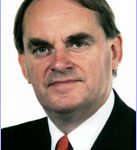
    The speech made by Jonathan Evans, the then Conservative MEP for Wales, on 13 March 2002.

    This week in Barcelona the European Council will gather to seek to build upon the Lisbon Process. At that meeting, we will be pressing for more action to be taken on deregulation, and for more liberalisation, ensuring that we learn the lessons of employment flexibility. There are those of us who have felt, ever since we have arrived in the European Parliament, that there is a lot of rhetoric in this place about free trade, but also a great deal of protectionism with Member States here in Europe.

    The entire agenda in Europe of taking forward a uniform competition policy and bearing down on state aid is geared towards ensuring that we have free trade. In these circumstances, those of us who count ourselves as the best friends of the United States are hugely disappointed by the action that the US President has taken. It is not putting it too strongly to say that, in a sense, we feel betrayed by it.

    I do not link this to our support for the United States following the events of September 11. The events of September 11 were so horrific that they should not be linked with any sort of agreement in any other policy area. But for those of us who have been pointing to the United States as an example of a deregulated and liberalised economy, it has been a shattering blow to see the way in which President Bush, faced with the difficulties that his steel industry is encountering, has gone for protectionism.

    What is even worse is to read in the Financial Times today a justification of this action from Robert Zoellick, the US Trade Representative. I feel sorry for Mr Zoellick, whom again we would regard as a friend of British Conservatives, because I must say that article destroys any credibility that he had in terms of discussion of trade issues.

    The US representatives watching this debate need to know that, while we may have heard from the usual suspects in terms of anti-Americanism, those of us who are friends of the United States feel very badly let down indeed.

  • Michael Ancram – 2002 Speech on Europe and America – Not Europe or America

    Michael Ancram – 2002 Speech on Europe and America – Not Europe or America

    The speech made by Michael Ancram, the then Shadow Foreign Secretary, at the Conservative Foreign Affairs Forum on 13 March 2002.

    Some weeks ago I spoke about the benefits of building partnerships of sovereignty rather than supranational structures. Tonight I want to pursue that debate in terms of its implications for our relations with Europe and with the United States of America.

    The end of the Cold War and the fall of the Berlin Wall, even more than September 11, represented a fundamentally important turning-point in international affairs. These events launched a process of change in which many cherished old assumptions perished. The era of the great countervailing blocs, of two great superpowers balancing against one another with a mix of military and economic might, ended. The solidity it offered was replaced by a fluidity last seen in the nineteenth century. This time, however, there was the added dimension of the “rogue state” complete with weapons of mass destruction – and unlike the blocs in the Cold War with no compunction about using them. This is a new challenge calling for new responses and new forms of relationships.

    At the heart of this new geopolitical environment stands America. America is in relative as well as in real terms probably the greatest superpower the world has ever known. It is the predominant force in the world today, and its predominance continues to grow. Count up the aircraft carriers, the aircraft, the frigates, the battle groups and the conclusion is inescapable. As we have seen in Afghanistan, its military power and reach are awesome.

    Nor is America’s strength merely military. Its technology leads the world. Its universities are the most advanced, its Nobel laureates the most numerous, its production now back to almost thirty percent of the entire global output. America is in every sense of the word a superpower. It is on its own not a bloc, not a supranational institution but a very big sovereign nation, jealous of its sovereignty and its independent rights of self-determination. In fact America with her flag, her sense of allegiance, and the clear values which underpin her nationhood is the epitome of the modern sovereign nation state.

    Yet like all great powers throughout history the USA gives rise to strong reactions and mixed feelings. These range on the one hand from the downright hostility of certain countries and regimes towards America, to feelings of great kinship and shared friendship in the face of common threats on the other. Between these, there has always been a danger that feelings of jealousy or inferiority, the instinctive envy of the ‘overdog’, could grow in the breasts of European integrationists as much as antagonism will grow in the hearts of those who have always seen American capitalism as the antithesis of the socialist utopias in which they still believe. The European Union official who was recently quoted saying that “it is humiliating and demeaning if we feel we have to go and get our homework marked by Dick Cheney and Condi Rice” was showing early symptoms of those feelings.

    Our Foreign Secretary’s ill-judged accusation that the US President’s foreign policy was motivated more by domestic politics than by international security considerations was a further manifestation. References by senior Europeans to American foreign policy as simplistic and absolutist in contrast to the sophistication of European foreign policy, only serve further to fan the embers of anti-Americanism and to set Europe against America. It is a misguided trend which stems from a false belief that a United Europe should somehow counterbalance the United States.

    What all this does, however, is to pose the choice – Europe or America. It infers that there are no realistic options outside this choice; and by inference that the wise will opt for Europe. It is a false choice because there is another. The Nations of Europe and America; the one I strongly support.

    Over the coming months the first option will be played out in the chancelleries of Europe as well as in our own British Cabinet Room on the delicate subject of Iraq. Already we have seen many of our European partners raising the flag of non-involvement in any future action to deal with Saddam Hussein and his weapons of mass destruction. Already we have heard senior Europeans striving to exculpate the regime in Iraq from accusations of ‘evil’. Once again the inference being created is ‘Europe against action in Iraq, US for action in Iraq.’ Again it is a false choice.

    The real option is the sharing with America of the evidence of real threats to international security stemming from Iraq and other similarly ‘rogue’ states, and the shared determination to deal with the problem. Europe and America rather than Europe or America.

    The Europe or America proposition is a dangerous one, particularly when it is posed with anti-American sentiment. Hostile rhetoric is an easy game for some Europeans to play. But it plays straight into the hands of those in the US who rejoice in what they see as their ‘unipolar moment’ and believe that they can go it alone. The truth is that Europe needs the US, and that the US needs Europe. The first because Europe is many years away from having the military resources required for its security and needs American intelligence and manpower. The second because September 11 demonstrated to America that it is now vulnerable and that it needs us and our European partners.

    Which leads directly to the Nations of Europe and America proposition, a partnership not of superpowers but of shared interests and shared objectives. With our close relationships with both, we are ideally placed to help build and secure this proposition. It will require a less introverted and bureaucratic Europe and a sense of shared values around which a renewed Atlantic Charter can be formed.

    It is an opportunity that our current Government cannot grasp. Mr Blair is publicly tholed to the building of a superpower Europe with all that that entails. A common foreign policy, that of the lowest common denominator. A common defence policy whose military capability will not even be fully and effectively operational for a decade. A single currency with the loss of economic self-governance and even greater harmonisation. This superpower Europe would find little to share in partnership with the American superpower with whom it would be designed to compete. It would be Europe or America – and Europe would be the loser.

    Europe and America is an opportunity we should grasp, but to do so we need to redirect the purpose and nature of the European Union. There could be no better moment. Europe, in preparation for the IGC in 2004, is examining its future structures, partly through the Giscard d’Estaing Convention, but more widely as well.

    Too often in the past this process has been caricatured as a fight between those who seek a more integrated and centralised Europe –with the New Labour firmly among them – and those who seek to see Britain withdraw from Europe. The Conservative Party adheres to neither of these positions.

    Where New Labour integrationists look for a pooling of sovereignty in Europe and where the anti-Europeans want no part in any European arrangements, we look for a partnership of sovereignties. We believe we are part of Europe, but that the relationship within the EU must be one in which our sovereignty is not ultimately dissolved by ‘pooling’ or rendered meaningless by a legally binding Euro-constitution.

    Where the New Labour centralists want ever closer monetary union, and ever greater regulation, and where the anti-Europeans want straight-forward divorce, we look for the strengthening of the single market, whilst retaining our own fiscal and macro-economic management.

    We believe that influence comes not from coercion or centralisation or harmonisation, or from hang-ups about single currencies or common foreign policies or European Armies, but from cooperation and mutual understanding. We are neither of the above. We are Constructive Europeans working within a Europe of Sovereign Nation States.

    We understand the present malaise that is afflicting the European Union. We can understand the erosion of democracy and legitimacy that has been allowed to occur. We know that enlargement, which we totally support, is opening up new divisions and in turn making the total reform of the entire Union, its structures and its methods, both essential and unavoidable. This is where from our Conservative European standpoint as Constructive Europeans within a Europe of Nations we have a significant role to play.

    It is our chance in the months ahead to develop and present a raft of new ideas for making EU institutions more accountable to national parliaments in order to strengthen democratic accountability. A Europe Minister based in Brussels but reporting back regularly to Parliament; committees of Parliament shaping the Commission’s agenda; and much earlier and more effective systems of scrutiny of matters European in the national parliaments.

    We should not be afraid to urge the re-opening of the treaties to bring Europe up to date with the modern world. We should seek constructively to reverse its centralising tendencies. We should challenge the aquis and urge repatriation of large parts of agricultural and foreign aid policy. We should be prepared to revisit those areas that have not worked. We would find surprising allies in Europe in so doing.

    We can show that the Lisbon Process is not working. The facts are that unemployment in Europe is still rising, and that the ‘competitive knowledge-based Europe’ simply isn’t happening.

    We can respond. Our constructive plans for European economic reform should be tied to low taxation, to enterprise, to innovation and above all to light regulation.

    All of these can help to lay the foundations for a genuine partnership of interests with the US. By creating a European Union which is genuinely a partnership of its member nations, which does not demand conformity of approach on international relations or in response to American initiatives, where there can be different layers of enthusiasm and participation. By encouraging a common understanding of the importance of America to us and the contribution we can make to America. By building the base of a lasting partnership in which there is competition rather than rivalry and admiration rather than envy; and where advice and consultation occur naturally and mutually from within the partnership rather than as hostile comment shouted from the sidelines.

    As Constructive Europeans who believe in the importance of the sovereign nation state we would be ideally placed to develop even closer relations with the most powerful sovereign nation state of all, the US. Yet to do so we must look at how, as America’s friend and partner, we can best influence how that power can more effectively be deployed to advance the concept of Europe and America.

    The old tried and tested if unwritten formula of the Atlantic Charter– partnership, not subservience – was right, and it still commands the overwhelming support of informed British opinion. We are the colleague and partner who offers advice in the spirit of greatest friendship and well-meaning. This is the basis of our ‘special relationship’ with America, greatly revived since September 11, which I would like now to see strengthened and entrenched as a durable feature of international relations in this new Century. That means not standing aside from America, but being actively involved with her; not indulging in the US-bashing so beloved by the Left, but participating in the delivery of a higher moral responsibility which has fallen upon the US precisely as a result of the overwhelming might which she possesses.

    But America cannot carry forward these responsibilities on her own. Nor can that spirit of openness and freedom, so crucial to American life, be protected by unilateral action. That openness can best be preserved and strengthened by America deploying her undoubted wealth and might not in the style of imperial mastership but in new and imaginative ways. It was President Theodore Roosevelt who identified the need for America to speak softly and to carry a big stick. Never has that advice been more relevant or more difficult to deliver. The big stick is present in unprecedented measure. But there needs also to be a spirit of international partnership and support, well presaged in the international coalition brought together in pursuit of el Qa’eda and the Taleban. America knows only too well that terrorism can never be defeated, or even contained, within the US itself; hence the international campaign against the scourge of international terrorism. Nor however can it be finally defeated from the decks of America’s gigantic carrier fleet. It can be ‘degraded’, if not physically destroyed, by military action; but it cannot be eradicated from the hearts and minds of those who are recruited to terrorism by threat or use of the big stick alone.

    The conditions in which terrorism can flourish and which terrorism seeks therefore to promote must be responded to as well. Terrorism is criminal but it feeds on the society in which it finds shelter and support, and on the prejudices and hatreds and fears and inadequacies of that community. As well as the big stick, this is where the soft talk and imaginative deployment of resources has a role to play, and where we can help America play it.

    Last December I visited Washington and had talks with senior members of the Administration. There was no arrogance of power, there was no desire for American hegemony. There was, and still is, a very clear appreciation of the awesome responsibility that has fallen to the United States through the way in which international events have developed in the last decade. The knowledge that history will judge them by their response is clear in their minds.

    They were examining every option, analysing every nuance, evaluating every possible consequence of every possible action or initiative. They left me very reassured that whatever courses of action are chosen they will be based on some of the most fundamental and comprehensive analyses of the facts and the options ever carried out. The fundamental truth is that being so powerful America is relied upon by much of the world. Often she must act in ways others cannot, and this unfairly attracts the stigma of arrogance. To the contrary, in my view American foreign policy is grounded in realism, with a well-honed understanding of the limitations of their role, and the extent of the world’s expectations of them.

    And that is why we can as America’s friend and partner advise her to look even more widely. The areas for soft talk are numerous and growing. Let me set out a few of those that I see to be most urgent.

    To work with Muslim moderates everywhere, but particularly in the Middle East and especially in Saudi Arabia where efforts to balance Islamic populism with Western values is a cause of potential dangerous instability. And while on the Middle East to help Israel down the difficult road of accepting a viable Palestinian state on her borders in return for guaranteed security for the democratic state of Israel.

    To help Russia overcome its current sense of exclusion by extending the hand of genuine cooperation on security, on internal terrorism and on economic development. Bringing Russia into the big tent and according her the respect and status she should enjoy is an important element of the agile partnerships of nations we should be seeking to create.

    To develop new thinking on global economic development in place of outdated and unsuccessful aid doctrines, especially in Africa, understanding that the keys to development lie in good governance, respect of property rights, the removal of trade barriers and acceptance of the rule of law.

    But most immediately and urgently to work together, and to seek regional support in so doing, to control and remove weapons of mass destruction and their delivery systems currently in the hands of unscrupulous regimes which threaten the stability not only of their regions but of the wider international community as well.

    And alongside this we should support the Americans in pressing our European partners in NATO into serious increases in defence expenditure. In the most diplomatic way the US should find the means of explaining to the European Union that the ESDP is an absurd distraction and duplication within the European theatre, and that its real timescale itself indicates that it is both a cover-up for inadequate defence budgets and a faintly pathetic attempt at Euro-machismo. ESDP is symptomatic of a wider malaise, a growing anti-Americanism and introspection. ESDP can be interpreted as advice for too many nations in Europe “to get America off our backs” and a disguise for inaction. America should join us in pressing for a strengthened European capability within NATO, just as NATO has backed America in the global anti-terrorism campaign.

    These are some of those areas which together amount to a powerful agenda of involvement and of partnership that can mobilise America’s wealth and strength in a way which will unite the world rather than divide it. It contrasts starkly with the tone emanating from EU institutions with their talk of a rival currency, of a balancing of superpowers and of challenging American hegemony. This is the language of confrontation, of Europe or America.

    I conversely have sought to set out a path for the nations of Europe and America. A Europe which in terms of the relationship with America is not a rival but a complement, not a critic but a counsellor. We here in Britain can lead the way, bringing America and Europe closer together on the basis of the common interests which we epitomise. A partnership of true friends. Europe and America together, with us at the hinge. A partnership for freedom, prosperity and peace.

  • Oliver Letwin – 2002 Speech to Conservative Mainstream

    Oliver Letwin – 2002 Speech to Conservative Mainstream

    The speech made by Oliver Letwin, the then Shadow Home Secretary, on 19 March 2002.

    The Frontline Against Fear: Taking Neighbourhood Policing Seriously

    Introduction

    In this speech I intend to set out a vision for the future of policing. But before I describe that vision, I want to say something about our overall philosophy on law and order.

    The neighbourly society – Beyond the causes of crime

    Back in January I delivered a speech at the Centre for Policy Studies, in which I set out a framework for Conservative thinking on law and order.

    The opposite of crime

    I called the speech Beyond the Causes of Crime, because the central thesis was that – just as in economic policy we need to direct ourselves towards identifying and promoting the causes of wealth-creation rather than the causes of poverty – so, in the field of law and order, we need to direct our efforts towards dealing not with the causes of crime but with the causes of the opposite of crime – in other words, all those assumptions, attitudes and actions that make for what I call the neighbourly society.

    Overcoming crime

    The neighbourly society is the most important defence we have against crime. A neighbourly society is built upon strong and supportive relationships within families, between neighbours and throughout the wider community. A united, concerned and vigilant community not only guards against the depredations of the established criminal, but also prevents the development of criminality in its young people. A neighbourly society is self-sustaining because its responsible, adult members provide their young with a proper start in life and, thereby, a cycle of responsibility which sustains the neighbourly society from generation to generation.

    The frontline against fear

    Crime against community

    But there can be no neighbourly society without community, by which I mean the human networks that make a neighbourhood out of a physical network of streets and houses. And there can be no community without security, by which I mean, principally, the safety of the shared spaces of a neighbourhood where community takes root.

    The unequal struggle

    We need to understand crime and community as two opposing forces, one of which will overwhelm the other. In this struggle, crime has powerful weapons at its disposal: above all, violence and the threat of violence. In the face of such violence and intimidation, the peaceful community can only retreat, ceding more ground to the criminal, exposing young people to values wholly opposed to those of the neighbourly society. If crime wins the struggle and criminals take possession of the streets, the cycle of responsibility is thrown into reverse, with the result that neighbourhoods decay; the young are corrupted; people who can, get out; and people who can’t, live blighted lives. All this, because decent people are afraid.

    Crime in the real world

    The cause of this fear isn’t just the headline offences of rape and murder, or even the more common offences of mugging and burglary. It is also all the other crimes and near-crimes that affect the quality of life, conveniently filed away under the term social disorder: graffiti, vandalism, petty theft, fly tipping, drug dealing, intimidation, bullying, racial abuse, the corrupting influence of gangs, and the underlying, but entirely viable, threat of violence against anyone who stands up to the wreckers. Yes, of course, people do fear the headline crimes, but in many neighbourhoods there is another kind of fear, closer to despair, born of the knowledge that we must limit our lives or become victims; that the street is owned by the criminal, not by the citizen; that vandals can do what they will, even if everyone knows who they are; that thugs may torment their neighbours with only retaliation guaranteeing a decisive police response; that the gang is a stronger influence on our children than the school; that in the frontline against fear no one is on our side; that we are right to be afraid.

    Taking back the ground

    I have spoken of the struggle between crime and community. It is a struggle that the community is losing and the evidence of defeat can be seen most starkly in Britain’s poorest neighbourhoods. There is something desperately wrong with our society when the people we put in the front line against fear are those least able to stand up to the thugs – the poor, the very old and the very young. They need some one to fight for them, not just holding the line against fear, but taking back the ground lost to the forces of disorder.

    The role of the police

    Conventional policing

    Who will take on this role? In my view it should be the police. But the conventional view is that the proper role of the police is to confront serious, organised crime through the discipline of criminal intelligence.

    The strength of conventional policing is the development of high-tech, intelligence-led methods that seek out connections and pursue them to the criminals at the other end. But its strength is also its weakness – the targets are now so selective that the police can confront crime without engaging with society. Conventional policing in the UK has, I believe, ignored the deeper connections that lead back to the frontline against fear.

    The one-legged police force

    Do you remember the Peter Cook and Dudley Moore sketch about the one-legged man who auditioned for the lead role in a Tarzan film? The casting director tries with great diplomacy to tell the aspiring actor that he is unsuitable for the part. Accentuating the positive he tells him that he likes his left leg: “it is a great leg, I have nothing against your left leg… the trouble is neither have you”.

    I have nothing against conventional policing methods. Indeed, I believe that they are integral to the vision of a neighbourly society. We need a combination of high-level policing, criminal intelligence and tough sentencing to take out the organised criminals whose interests are wholly opposed to the creation of the neighbourly society. But however intelligent the criminal intelligence, however tough the tough sentencing, high-level policing will never be sufficient on its own. And as long as it is on its own, we will only have half a police service.

    Community policing

    Whether crimes occur singly or in some organised fashion, they do not arise out of nothing – nor do they return to nothing after the recorded event is over. For every crime there is a criminal, and for every criminal there is a personal history of unchallenged anti-social behaviour degenerating into a lifetime of crime. For every crime scene there is a neighbourhood, and every neighbourhood has its story too – one in which social disorder is allowed to multiply and feed upon itself as it feeds upon the community. In terms of both people and places, every crime is the product of a complex web of events, decisions, relationships and conditions – stretching back for years, even generations.
    This is a view of crime that defies conventional attempts to record, but any one of us would recognise the phenomenon in a neighbourhood that just isn’t safe anymore. The corollary is a view of policing which regards social engagement as necessary and inevitable.

    To distinguish this role from conventional policing, the catch-all term of community policing is often used. But this term is woefully insufficient, and the activities it represents are nothing like the serious engagement which I have in mind. At its best, community policing can involve worthwhile activities like harm avoidance education in schools. At its worst, community policing can amount to little more than putting PR consultants in epaulettes. But both forms of what we have come to call, in the UK, community policing suffer from an overwhelming deficiency. Just as conventional policing in the UK confronts crime without engaging with society, community policing engages with society, but without confronting crime.

    Neighbourhood policing

    What I want to talk about is distinct from conventional policing. It is also much more than what is commonly understood by community policing.

    I want to talk about something that is currently being practised only in small areas or for brief periods in the UK – something that, if practised universally, would constitute a virtual revolution in British policing. This is a type of policy that relates to real lives, led in real homes, in real neighbourhoods. I am going to call it neighbourhood policing.

    Neighbourhood policing is distinct because it both engages with society and confronts crime – and can do so because it operates within a tangible geographical area. Neighbourhood policing is integral to the Conservative vision of a neighbourly society.

    Fundamental reform – the extent of change

    We must view conventional and neighbourhood policing as two halves of a whole. Of course, this is a simplification; the conventional and neighbourhood methods of policing are not mutually exclusive and there are many overlaps. Nevertheless, the emphases are very different: One deals with specific crimes, the other with general disorder; one targets major offences, the other minor offences; one is reactive and remedial, the other proactive and preventative.

    I don’t think that anyone could reasonably claim that these respective emphases form two halves of a whole in today’s police service. Neighbourhood policing can only be restored to its rightful position through fundamental reforms that transform the police service from top to bottom. What I am proposing is the biggest change to policing since the foundation of the police service by Robert Peel.

    Returning to the root

    Appropriately it was Robert Peel who enshrined the ideal of neighbourhood policing in his nine principles of policing. For instance, the first principle is about prevention: “The basic mission for which the police exist is to prevent crime and disorder.”

    And the ninth principle sets out the ultimate objective of neighbourhood policing: “The test of police efficiency is the absence of crime and disorder.”

    Whatever happened to neighbourhood policing?

    These are not just the words of a long dead politician, but the basis of a system of policing that endured into living memory. So whatever happened to neighbourhood policing? The simplistic answer is that policing has moved on, because crime has moved on: There is more crime than ever before; it is more sophisticated than ever before; it is more brutal than ever before. But some things never change – it is still the case that failure to deal with minor crimes will create the conditions from which major crimes arise. We must continue to advance those conventional policing methods that deal most effectively with the major crimes, but unless we return to the roots of the police service we will never effectively deal with the roots of crime.

    Moving Forward to neighbourhood policing

    How are we to achieve this effect?

    I do not believe it can be done by re-visiting our own past. Circumstances, when we last took neighbourhood policing seriously in Britain, were too different from those we face today. We cannot go back to Peel.

    Instead, I think we need to invoke Peel’s near-contemporary, Canning. We need to call “the New World ……to redress the balance of the old.” It is American cities that have shown, over the past decade, how a true combination of conventional policing and neighbourhood policing can be used to crack crime.

    The achievement of the NYPD

    Two weeks ago, I was in New York as the guest of the NYPD.

    What did I see there?

    I saw policemen walking the streets.

    I saw patrol cars, which patrol small areas on a continuous, 24-hour basis.

    I saw the teams available to move in behind the beat-cops and the patrols to tackle crime on the street.

    I saw how the NYPD provides transparent diagnosis of street crime and forces policemen at all levels to produce strategies for dealing with it through the so called Compstat which is much more than just a matter of comparative statistics.

    I saw how the Police Department and other agencies tackle quality of life issues as well as crime.

    I saw a criminal justice system which exhibits vitality and a sense of urgency at all levels.

    The lessons of New York

    It is difficult to convey the full extent of the difference between what I saw and heard in New York and what one sees and hears in Britain. Let me try to illustrate some of the differences.

    Let me start with what we would call “the bobbies on the beat”. Every policeman in New York starts by walking the streets. A policeman typically has about four blocks to walk. There are no set hours. The beat-cop is regarded, from the first day, as a professional, entrusted with a task – the task of accumulating low-level intelligence that will enable the NYPD in his Precinct (and, if necessary, on a wider scale) to trace disorder and crime. If that beat-cop needs to deal with specific circumstances that require unorthodox hours, that is his or her decision.

    I also rode along with a patrol car. We moved, very slowly, up and down the narrow area, patrolled day after day by the two cops in the car, in one of three shifts, providing 24-hour surveillance of a small area. Drivers showed no surprise at seeing the slow-moving police car – it was evidently a sight with which they were fully familiar. Passers-by joked with the officers at traffic lights (perhaps it is significant that some of these passers-by were black and the cops, in this case, white; perhaps it is also significant that many of the policemen I saw in the Precinct Headquarters in North Harlem were black). As we went along, the patrolmen pointed out to me individuals with specific criminal histories: they knew them by sight. When I asked how long it would take to reach the scene of a reported crime if one came through on their radio, they said “a couple of minutes.” I assumed this was hyperbole. I was wrong. A call came through; a couple of minutes later, without even the need for a siren, we were at the scene.

    Back in the Precinct – and in other precincts – there were groups of policemen, some specialist, some generalist, ready to move in, or taking proactive steps to prevent crime and disorder identified by the beat-cops and the patrolmen, or through wider intelligence. Nowhere did I see evidence of a divide between conventional, high-level intelligence-led policing and neighbourhood policing. The two were interdependent. Neighbourhood policing was understood to be an intelligence-accumulating activity as much as any other – the focus of crime and disorder was specific and local – but the specific and local was tied into the fabric of general intelligence.

    At Borough Headquarters, I sat through a Borough compstat meeting. This was exactly as described in the literature. A Precinct Commander, whose precinct showed increases in particular types of crime over the previous week, was being subjected, in front of the other Precinct Commanders in the Borough and in the presence of representatives of other agencies, to a cross-examination by the Borough Commander and other senior officers, on the basis of statistics and maps showing the particular crimes committed on particular streets in that precinct over the previous week. The Precinct Commander and his two senior assistants were having to give (and were giving) a detailed account of the specific measures they were taking to apprehend the villains in question and to prevent recurrences of these types of crime in these and other nearby streets. To appreciate the full force of this experience, one needs to understand that the Borough Commander – who had spent a good part of the previous week, he told me, as in every other week, studying for this session – was in charge of 2,300 policemen and was therefore equivalent to a Chief Constable of a mid-sized UK Police Force: he ranked as a “2-star Chief” broadly equivalent to an Assistant Commissioner at the Met. He himself feared that, at little or no notice, he might be subjected to a similar demand for explanations from the Chief of the Department (broadly equivalent to the Deputy Commissioner at the Met).

    The transforming effect of a few simple statistics available and published on a weekly basis, transformed into maps showing exactly the hot-spots, and allied to a system of open and accountability was evident. Right from the top to the bottom of the NYPD attention is focused on crime, where it is occurring, when it is occurring – and on what is being done to stop it.

    I saw this same phenomenon played out at the lowest level when I met officers in the North Harlem Precinct, who had donned plain clothes in order to mount a immediate operation to deal with a specific form of crime that was occurring in a small area within the precinct. When I asked if this was because that form of crime had shown an increase in the compstat statistics, they explained to me that it had not because it had only occurred in the last couple of days. Their intention, they explained, was to stop this becoming the cause of an increase which would embarrass their Precinct Commander the next week in the compstat meeting.

    Neighbourhood policing – in the sense of directly addressing crime on the streets of New York and other American cities – is not an idea or a theory: it is a reality which has focused the attention of policemen at every level of the force on crime and on stopping crime, in real time.

    But the neighbourhood policing I saw in New York goes beyond attention to episodes of crime. New Yorkers have their equivalent of our 999 number – 911. But they have something we don’t have: they have a 311 number, for citizens to make complaints about quality of life issues. These are not regarded as unimportant, insoluble or low priority. The broken windows theory which governs policing in New York and many other American cities today – and which has very often been misrepresented as aggressive “zero tolerance” – stems from the progressive and liberating idea that citizens do not need to tolerate low-level disorder and that in order to reclaim the streets for the honest citizen from the criminal or low-level disorder needs to be tackled with the same energy that is applied to dealing with episodes of crime. Once again, I did not find any of the NYPD regarding low-level disorder as something separate from crime. I met police officers at all levels who saw these phenomena as intrinsically intertwined with one another, and who understood very well that low-level intelligence, derived from street-cops and continuous patrolling was intrinsically related to an understanding of the location and causes of low-level disorder.

    Finally, I saw something that would have warmed the cockles of the heart of the Commissioner of the Metropolitan Police. I spent time in the District Attorney’s office, and I talked to police officers responsible on a daily basis for arrests and for taking people to court. The sense of co-operative effort and of urgency was unmistakable – and very different from the pattern obtaining in the UK. The aim of the system as a whole, from the moment of arrest, was to achieve speedy justice. I stress both elements of that proposition. There is a deep and fine tradition of civil liberties in the United States and perhaps the strongest concept of due process in the world. The aim of the system is to deliver justice, not arbitrary punishment. But the aim is to deliver speedy justice. And that is just what happens.

    In timescales that would seem impossible in Britain, arrests are turned into arraignments, summary justice, or indictments and plea bargaining, or trials. The police have not given up on the courts, and the prosecutors and the courts have not given up on the citizen. There is a sense of common purpose to identify, comprehend and convict the guilty.

    Does all this mean that, in New York and other cities such as Philadelphia, Boston, San Diego as well as other municipalities on a much smaller scale, such as Lowell in Massachussetts, the result is unpleasant, aggressive, intolerant policing? The mythology on this side of the Atlantic would often have it so. But that was not my experience in New York. You will recall the black officers of whom I spoke: the NYPD has a record of employing black officers of which we would be proud in the UK and which we have yet to achieve. I spent instructive time in the Community Affairs Department – I was told of activities mirroring the best practice in the UK used to establish and maintain appropriate relations built between the police and the communities they serve. New York, unlike some English cities, has not seen riots in recent years.

    The cities I have mentioned where the model first initiated by William Bratton has been implemented are cities in which policing is conducted very largely by common consent. You have only to walk the streets of North Harlem, or drive with the cops at night, to see, as I saw, a city in which the police benefit from far higher public esteem than our own.

    Does it work? The figures speak for themselves. Over 9 years, murder in New York has reduced by 80%; robbery, burglary and car theft by over 70%; theft by just under 50% and rape by just under 40%. Across these crimes as a whole, the reduction is 60% since the new methods were introduced. New York is now noticeably a safer and more pleasant city to live in than London. The city is cleaner; there is less low-level disorder. The morale of the ordinary policeman is far higher. Ordinary New Yorkers report vast improvements. The crime surveys show a trend that matches those of the official figures.

    Are we dealing with cause and effect? New York and other American cities have seen the reinvention of neighbourhood policing and, with it, the prevalence of transparency and accountability throughout the force – together with the provision of low-level, continuous, timely intelligence allied to the 311 reports. Has all this been responsible for the significant decrease in violent street crime? No doubt this will be debated for many years to come. But in a ground-breaking study produced last December by the Manhattan Institute, Kelling and Sousa subjected the disaggregated New York statistics to rigorous analysis – using the fact that the various precincts have significantly differing social compositions – to eliminate non-predictive variables. Their work deserves intense study from anybody interested in such analysis. Its results can, however, be summarised in one sentence: “the average NYPD precinct during the 10-year period studied, could expect to suffer one less violent crime for approximately every 28 additional misdemeanour arrests made.” If anyone needed to put a nail in the coffin of scepticism about the effectiveness of the broken window thesis and of properly organised neighbourhood policing, that does it.

    How do we apply the lessons in England?

    Let us, then, turn our attention from the United States to our own little island.

    What do we need, here in the UK? We need that same virtual revolution in policing which American cities began to undergo a decade ago.

    What does it take to foster such a revolution?

    Let me start with what it does not require. It does not require – and, indeed, it cannot be achieved by – Clauses 5 and 7 of the Police Reform Bill, which give the Home Secretary the power to intervene at every level of the police force and, in effect, seek to run the police forces of this country from a desk in Whitehall. I know of no reason to suppose that an effective revolution in policing methods can be delivered by the Home Office, which has given us an Immigration and Nationality Department that cannot process applications in a timely fashion, an asylum system that is, by the Home Secretary’s own admission, in a state of chaos, a prison system whose recidivism rates, particularly for young people, are the envy of criminals everywhere.

    I do not believe that a revolution can occur in any way except through enthusiastic sponsorship and initiative by the Chief Constables and their senior officers, supported and enthused by Police Authorities. Such enthusiasm will not occur if efforts are made to achieve this virtual revolution through bureaucratic imposition.

    Nor will this virtual revolution be brought about by trying to achieve neighbourhood policing on the cheap through community support officers with limited training, limited powers and limited duties. I see no reason to suppose that such people can properly do the job of the policeman on the beat. But, beyond that question, lies the far deeper question: How can our police forces be expected to take neighbourhood policing seriously if it is plastic policemen who are to carry it out? On the contrary, if neighbourhood policing is to be taken seriously in the UK, as it is in American cities, the very best people entering our police forces will need to see the accumulation of low-level intelligence, the provision of rapid response and the taking of effective action against localised crime as part of the essence of good policing, and will need to see training in such activities as fundamental to the achievement of the glittering prize of the policeman’s profession. To be taken seriously by policemen, neighbourhood policing needs to be policing by policemen.

    What the virtual revolution for which I am calling does require is a fundamental cultural change in our police forces, led from the top, achieved by consent and pursued with enthusiasm. I have no doubt that the Home Office will need to play its part in increasing transparency and accountability – perhaps through its own version, on a national scale, of real-time compstat. I have no doubt that the Home Office will need to provide better means of opening up to public and professional view examples of good and bad practice. I have no doubt that the Home Office and the Lord Chancellor’s Department will need to look at serious changes in the methods employed by our criminal justice system. Very possibly, we may need to look again at the internal structure of our Police Authorities to see how they can be provided with the means to hold Chief Constables to account.

    All of these questions – and many more beside – will need to be addressed if we are to create and then to sustain the virtual revolution that I have described. But I am sure that, so far from moving towards the establishment of a single national police force in the way prefigured by the Police Reform Bill, we should expect to see, and we should welcome, the blooming of many different flowers. In the United States, there are about 20,000 police forces. We have less than 50. There is every reason to suppose that we shall see 50 different models emerging – and every reason to suppose that the virtual revolution will be best achieved in 50 different ways, each responsive to the differing configuration of the area and population served by the police forces in question.

    I argue for common aims: a level of attention to neighbourhood policing not seen in this country for many years; a level of attention to the timely identification, analysis and effective resolution of street crime and disorder not witnessed in our police forces today, and a sense of urgency to address crime and disorder through the criminal justice system which we do not have today. But I do not argue for uniformity of method.

    There is one enemy. But against that enemy many battles must be fought on many different turfs under many different generals. Victory will be achieved only by the implementation of tactics suitable to each turf.

    Unless we begin to achieve that victory, we will never reclaim our streets for the honest citizen. We will never recreate a neighbourly society for Britain. We will fail this generation and the next. We cannot let that happen. This is a war we have to win.

  • Queen Elizabeth II – 2002 Christmas Broadcast

    Queen Elizabeth II – 2002 Christmas Broadcast

    The Christmas Broadcast made by HM Queen Elizabeth II on 25 December 2002.

    As I look back over these past twelve months, I know that it has been about as full a year as I can remember. But Christmas itself still remains a time for reflection and a focus of hope for the future.

    All great religions have such times of renewal, moments to take stock before moving on to face the challenges which lie ahead.

    Many of you will know only too well from your own experience, the grief that follows the death of a much loved mother or sister. Mine were very much part of my life and always gave me their support and encouragement.

    But my own sadness was tempered by the generous tributes that so many of you paid to the service they gave to this country and the wider Commonwealth.

    At such a difficult time this gave me great comfort and inspiration as I faced up both to my own personal loss and to the busy Jubilee summer ahead.

    Anniversaries are important events in all our lives. Christmas is the anniversary of the birth of Christ over two thousand years ago, but it is much more than that. It is the celebration of the birth of an idea and an ideal.

    In a different way I felt that the Golden Jubilee was more than just an anniversary. The celebrations were joyous occasions, but they also seemed to evoke something more lasting and profound – a sense of belonging and pride in country, town, or community; a sense of sharing a common heritage enriched by the cultural, ethnic and religious diversity of our twenty-first century society.

    I hope it also provided an occasion to acknowledge the progress of the past fifty years and the contributions of those who have done so much to make this country what it is today – their leadership and example, their achievements in science, the arts and many other fields.

    These celebrations also gave opportunities to recognise the valuable work undertaken by so many people in service of their communities. It was a time to remind ourselves, as the Christmas story does every year, that we must never forget the plight of the disadvantaged and excluded, that we must respond to the needs of those who may be in distress or despair.

    Our modern world places such heavy demands on our time and attention that the need to remember our responsibilities to others is greater than ever. It is often difficult to keep this sense of perspective through the ups and downs of everyday life – as this year has constantly reminded me.

    I know just how much I rely on my own faith to guide me through the good times and the bad. Each day is a new beginning, I know that the only way to live my life is to try to do what is right, to take the long view, to give of my best in all that the day brings, and to put my trust in God.

    Like others of you who draw inspiration from your own faith, I draw strength from the message of hope in the Christian gospel.

    Fortified by this and the support you have given throughout the last twelve months which has meant so much to me, I look forward to the New Year, to facing the challenges and opportunities that lie ahead, and to continuing to serve you to the very best of my ability each and every day.

    A Happy Christmas to you all.

  • Timothy Kirkhope – 2002 Speech at the European Convention

    Timothy Kirkhope – 2002 Speech at the European Convention

    The speech made by Timothy Kirkhope on 21 March 2002.

    This is the second convention on which I have sat, having been on the Charter of Fundamental Rights Convention. Although I was not totally happy with the results of that Convention, it did establish a new model of negotiation which excites me and many other people too. The Guardian newspaper in Britain this morning rightly said that this Convention will be seen to have more democratic legitimacy than the secretive wrangling of national leaders as witnessed most recently at the Barcelona summit.

    We must remember that Europe is not on trial here. Europe is part of the equation, part of the democratisation of Europe. After all, the peoples of Europe want to see all the institutions, not only the European ones but also the national Parliaments themselves, look carefully at their own activities. Maybe they want to reclaim some powers from Europe. At the same time, there is a general lack of confidence in politicians that we will have to address in the work we do here.

    I want to just support you, Mr. President, in what you have said about young people. I believe that the future of Europe is not just ours. I hope I’ve got a little of a future left in Europe, but young people have a much bigger future and a bigger stake in the future of Europe. It is therefore essential for us, as part of the listening process that we are now embarking on, to make sure that young people are a significant part of the consultation process and that their aspirations for the future are listened to. I shall certainly consult very carefully with young people, Mr President. You identified it yourself and I think you hit the nail on the head, as they say, in doing so.

    My only other remark is this. When consulting civil society, it is terribly important for us to draw the boundaries of civil society as widely as possible. There are some who call themselves representatives of civil society but who actually represent narrow vested interests. In order to avoid this problem, we must consult widely as part of the listening process.

    Whatever we get at the end of this process, I hope it is a great success, and I hope we regain public confidence in our institutions.

  • Peter Ainsworth – 2002 Speech on the Environment, Challenge and Opportunity

    Peter Ainsworth – 2002 Speech on the Environment, Challenge and Opportunity

    The speech made by Peter Ainsworth on 21 March 2002.

    Given that the environment is where we all live, I’ve never understood why, historically, it has come so low down the pecking order of political priorities.

    For years it was regarded as the unique preserve of cranks, new agers and people with strange beards. The caricature, usually unfair, of the tree hugging weirdo was easy to dismiss.

    But should we have so lightly dismissed the work and warnings of poets and writers who, from the outset of the Industrial Revolution that built and sustained cities like Sheffield, began to show an acute regard for the relationship between man and nature?

    The sense that something quite serious was going wrong runs like a thread through literature, from Wordsworth to TS Eliot, from Blake to Betjeman and Philip Larkin.

    They worked from instinct, but 200 years after the start of the Industrial Revolution, science has begun to catch up with instinct and we know we have a problem.

    It was in fact Margaret Thatcher who changed the whole nature of the debate about the environment. In a speech to the Royal Society in 1988, she took many by surprise in launching a series of new initiatives to protect the local and global environment, observing that “we have no freehold on this earth, only a full repairing lease”.

    Politicians who dismiss the environment should remember that parliamentary seats can be won or lost on issues like incinerators, landfill sites, housing schemes, quarrying proposals, and flood defences.

    So let’s put paid, once and for all, to the notion that the environment is not politically important.

    We live in a time when the world has never been more connected. The internet, satellite television, mobile phones, email can put us in touch with almost anyone from almost anywhere at the press of a few buttons. These connections mean that this world has become, for mankind, a smaller place. What happened in New York on September 11th had an impact on communities as far afield as Sheffield and Sydney.

    Yet there is a big paradox, in this age of connectedness, people feel that they have never been less connected with each other where it really counts; at home or in the communities where they live and work. Indeed, the very word ‘Community’ is in danger of becoming a meaningless piece of political jargon in a country where most people live in cities and don’t even know who their neighbours are, let alone share with them a developed commitment to work together and share their ideas and experiences.

    So the age of connectedness is also an age of palpable alienation for many people. A time in which, perhaps not surprisingly, casual and violent crime is on the increase.

    What has any of this got to do with the environment?

    Well, as I have said, the environment is where we live, it is quite literally everywhere; it is the context in which we lead our lives. If we degrade the environment we degrade ourselves. Conversely, a society that invests in its environment is not only placing a proper emphasis on the quality of the lives of its citizens, but also recognising its obligations to future generations. In so doing it helps to create a more stable society and, internationally, a more secure world.

    Those of us who care about the state of society are concerned by the indifference shown by large numbers of people, especially younger people, to politicians in particular and politics in general. The fact that more 18-25 years olds voted for Will or Gareth in Pop Idol than voted for Will or Tony in the General Election tells its own story.

    One of the reasons for the profound and, ultimately, worrying disconnection between politicians and voters is that politicians have utterly failed to keep up with the changed nature of the public’s aspirations. If we begin to work on the basis that there’s more to the quality of life than the standard of living, and that the quality of our shared environment helps to determine the quality of our lives, maybe we can begin to speak a language which people will understand.

    For this to happen, Government needs to ask itself what it is there to achieve, and to understand that, without the active support of people, nothing will happen at all.
    As Iain Duncan Smith has said:

    “People’s best intentions are defeated if doing the right thing actually makes them worse off. The job of Government is to align people’s best interest with their self-interest; to make it easier for people to follow their natural inclination to care for the environment; it is about giving purpose and direction to what people are prepared to do for free”.

    In practical terms, this means for example making it easier for households first to reduce the amount of waste they generate and then to recycle more of it. The costs of doing this need to be seen against the costs of not doing it – the financial, environmental and political costs of, say, large scale waste incineration or landfill, and I don’t need to tell people in Sheffield about those.

    As you may know, the Conservatives are presently engaged in a fundamental review of policy. The development of detailed policy will come later, but this does not prevent us from articulating some basic principles from which specific ideas will evolve.

    We believe in reducing the power and the role of the state; in increasing the opportunity and choice which people can exercise in their own lives; in providing security for our citizens; and in supporting enterprise.

    How might these principles be applied to the environment?

    Firstly, we recognise that the environment is not simply a national issue; that there is a need to work with the EU and other international organisations to forge binding global commitments to meet our obligations to future generations. I am delighted by the progress made towards ratification of the Kyoto Treaty. Though there remains much to do to persuade the developing world that it is in their interest to join up, and of course the onus is now on the US to come alongside the rest of the developed world.

    Secondly, we accept that there is a role for regulation to control activities which are contributing to climate change or which threaten the local environment . But regulation should be carefully targeted, properly thought through in genuine consultation, simple and effective. There are too many complex and overlapping regulations at present; the result can be a bureaucratic nightmare which hinders compliance and gives environmental protection a bad name. Law of unexpected consequences is an every present risk. The hugely expansive shambles of fridge mountains is an object lesson in exactly how not to regulate.

    We need to establish a more mature relationship between Government and industry; one which avoids arbitrary intervention but is based instead on a recognition of mutual needs, abilities and responsibilities.

    Thirdly, we believe that there is a role for fiscal intervention in the interests of a better environment. But we must ensure that environmental taxes actually deal with environmental problems.

    A Climate Change Levy which does virtually nothing to prevent climate change but which costs manufacturing industry £ million and exports jobs to countries with lower environmental standards is obviously counter-productive.

    An Aggregates Tax which nobody, including the Treasury, understands and which simply increases imports of products made from aggregates is plainly likely to fail.

    If we are to have taxes which discourage environmentally damaging activities let’s be straight forward. For example, if we are concerned about the impact of carbon emissions on the future viability of the planet (and we should be) shouldn’t we be thinking about taxing carbon emissions and seek to persuade other countries to do the same?

    Fourthly, we need to get away from the idea that Government action, the passing of new laws and regulations, is the answer to everything.

    I went into politics because I believed in its power to make things happen, not to stop them happening.

    It is important to emphasise that I am not advocating a laissez fair approach to the environment, the stakes are far too high for that. On the contrary, I believe that we need a step change in our approach to tackling environmental problems which reflects both the urgency of the need for action and the scale of the business challenge which this presents. Instead of seeing environmental improvement as a problem, we should start to see it as an opportunity.

    That’s what companies like Shell and BP are doing. Across the world, Shell is working on the delivery of 1,000 megawatts of renewable wind energy, aiming not only to achieve major environmental benefits but also to improve security of energy supply through diversification. The company is also now investing heavily in a joint venture to develop, manufacture and market hydrogen storage units which make use of the emerging science of fuel cell technology. They claim that fuel cells, which could revolutionise the way we power vehicles, are “the power plant of the future”.

    Last week, Lord Browne of Madingley, the Chairman of BP, made a speech in Stanford, Connecticut in which he detailed how, in the last 5 years, BP has cut the level of its own CO2 emissions by 14 million tonnes. They have achieved this through efficiency and technology, and through better management of the energy they use. The result has not only been beneficial to the environment, but also beneficial to the business.

    He also drew attention to BP’s investment in renewable energy sources, where their work on photovoltaics is on track to deliver 300 megawatts of solar panels each year by 2007 – supplying five million people. The market for these products is at present very small, but it is growing at around 40% this year and, particularly given the massive scope for their use in the developing world, the potential is immense.

    I have chosen to highlight BP and Shell because they have traditionally been regarded as environmental villains. Whilst their mainstream activities still depend on the exploitation of non-renewable resources, they have seen the new market opening up for cleaner, greener technology – and they want to be part of it. They will need to be part of it if they want to retain leading positions in the energy market of the 21st Century.

    The present global market for environmental products and services is worth around $515 billion, and it is forecast to grow to nearly $700 billion by 2010. That makes it not only one of the world’s largest business sectors, but one of the fastest growing. In the UK the market is already worth £16 billion and is thought to sustain some 170,000 jobs – and they can’t all be local authority inspectors.

    I want to see more British companies playing a leading role in developing new technologies which will not only mean new high quality jobs, but also a cleaner, safer, more sustainable planet.

    In the end, it will be up to you in industry to take up this challenge. But it is Government’s job to set the framework in which you can maximise the opportunities which are out there. You will not be helped if the Government’s mind-set remains wedded to outmoded concepts of tax and regulation. Already, Germany, Austria and Denmark, for example, are moving ahead of us; and it is interesting to note that the examples I used earlier from Shell and BP involve investment in overseas markets, not in the UK. There is a real danger of Britain being left behind.

    Just as we need policies that make it easier for people to care for the environment, to align their best interest with their self interest, so we need policies which do the same for business.

    We need an approach from Government that moves beyond flailing sticks which all too often miss the target, and offers instead some carrots if we are to take advantage of 21st century technology for the benefit of the planet, and the bottom line.

    Since the dawn of the Industrial Revolution the interests of economic development and the interests of the environment have essentially been in conflict. It is a conflict we cannot allow to continue, and forging a reconciliation between these two forces is one of the great challenges to our generation of politicians, businesses and citizens. I believe not only that it can be done, but that it must be done.

  • Theresa May – 2002 Speech to Conservative Spring Forum

    Theresa May – 2002 Speech to Conservative Spring Forum

    The speech made by Theresa May at the Conservative Spring Forum on 23 March 2002.

    I’m delighted to be responding to this session at the Spring Forum – and my goodness haven’t we heard some exciting examples of how Conservatives have been working to improve their local communities – making life better in your areas.

    Over the next few weeks we all have the opportunity in the local government elections to take the message we have heard today out onto the streets and show people that up and down the country it is Conservatives who are listening to their concerns and worries, it is Conservatives that are recognising the problems in their local communities and it is Conservatives who are delivering practical solutions that meet people’s needs.

    The Conservative Party is the party that listens, that cares and that delivers – delivers for all in society, from Bromley to Bradford, from Cambridgeshire to Calderdale.

    Local authorities are responsible for a wide range of services that directly affect people’s everyday quality of life and often it is the most vulnerable in our society who depend on them most.

    Good local government is about improving people’s quality of life – about making life better.

    Just think about the impact a council has on people’s day-to-day life – imagine someone walking out of their front door. Has the uneven pavement been mended? Is the street clean or full of litter? Has the rubbish been properly collected? Do the street lights work?

    Have the potholes in the road been repaired? Has the traffic got worse since the council gave permission for that new development on the outskirts of the town? Why did they bring in that one-way system? And now of course the primary school’s full. Mrs Smith next door is worried because her husband’s still in hospital – they simply can’t get him anywhere in a care home locally because they’re all closing.

    To find answers to these problems – to make life better – councillors need to have the freedom and flexibility to make decisions that suit their local area.

    Today that power has been taken away in so many ways. This Labour Government has increased centralisation, increased bureaucracy and increased the regulations local councils have to cope with.

    Now I accept that previous Conservative governments do not have a blameless record in their approach to local government. But what started as an attempt by central government to protect people from the worst excesses of bad local councils has now, under Labour, been made a means of control, a tool for imposing Westminster’s priorities over local priorities.

    In 1997 just over 4% of a council’s funding was ring-fenced today, it is 15%. And that’s without counting the money that’s spent on the extra bureaucracy and regulations imposed from Whitehall.

    Central government telling councils how to spend your money.

    Today, local authorities are judged against close to 150 performance indicators and must agree up to 66 plans with central government. Such burdens waste money and distort priorities. 66 plans – don’t tell me they’re a tool for better government – it’s just increased bureaucracy and a way of the centre exercising control.

    And when it comes to regulations just look at the impact of the directive on fridges – enormous cost to local authorities and the risk of fridges abandoned in our streets and lanes. Abandoned cars will be next and then other white goods.

    And against this background of red tape and central control Gordon Brown has made council tax a stealth tax .

    Every year since Labour came to power they have promised that there was no need for large increases in council tax and every year council tax has gone up by three times the rate of inflation.

    This year the average increase is 8.3% – more than four times the rate of inflation.

    What’s more the government has slowly increased the amount of council’s funding that has to be paid through council tax – from 23% in 1997 to 27% today.

    People are on average paying nearly £300 more on a Band D property than when Labour came into power.

    Conservative councils are still showing that they can charge less council tax and deliver quality services.

    How many of the top 20 councils charging the highest council tax are Conservative – none.

    Looking at Band D properties, this year across every tier of local government Conservative councils cost less than Labour or LibDem councils.

    In unitary authorities Conservative councils cost £132 a year less than Lib Dem councils.

    In London Conservative councils cost £313 less than Labour councils.

    On average across all types of council Conservative councils cost £135 less than Labour councils and £159 less than Lib Dem councils.

    And which council costs most of all – Tony Blair’s own back-yard yes, Sedgefield where for Band D local people pay almost £1,200 a year.

    Increases well over inflation and shifting the burden to the council taxpayer – yet another stealth tax.

    A stealth tax that hits hardest on some of the most vulnerable in society like the elderly living on fixed incomes.

    More red tape, more paperwork, higher cost, less freedom that’s the impact of Labour on local government.

    The other day Stephen Byers department announced that government would streamline and rationalise the 66 plans they require from councils. Do you believe Stephen Byers – I certainly don’t.

    Remember the three big lies – (the cheque’s in the post, Darling I still love you, and Trust me I’m Stephen Byers).

    What better advert for New Labour could there be?

    You can’t trust him on transport, you can’t trust him on local government and you can’t trust him on planning.

    Just look at what he is promising to do.

    He’s going to grade councils as high performing, coasting, striving or poor performing, but they will be judged not by whether they are doing what people want, but by whether they are doing what the government wants.

    He’s going to introduce a new tier of regional politicians. That means he’s going to abolish county councils and have to restructure district councils at an estimated cost of £2bn – how many care home places could that fund.

    He’s heaping yet more regulation and bureaucracy on parish and town councils including a code of conduct that means parish councillors, the unpaid volunteer backbone of our rural communities, have to declare not just their interests, but the interests of their relations, including would you believe it their nephew’s partner.

    Little wonder parish councillors are threatening to resign across the country.

    And on planning he’s going to bring in a new system that will increase bureaucracy for business, reduce the voice of local communities and bring in a betterment tax that will particularly hit small local firms.

    In the annals of incompetent government Stephen Byers is a serial offender.

    From the Post Office to PPP on the Tube, from increased rights for trade unions to reduced rights for local communities on planning, from Rover to Railtrack, Byers bungles cost us all dear.

    But this Government’s interference and centralisation doesn’t just increase the paperwork in the town hall. It erodes local democracy so fewer people vote and it damages the effective delivery of public services and the ability of local councillors to respond to the needs of their local community.

    The Department for Transport Local Government and the Regions is what I call the quality of life department because with transport and local government together it is responsible for the things that so often make the difference between having a good or a bad day.

    And across the country it is Conservative councils who are making the difference in their areas.

    Just think about the problems we all face in our day to day lives.

    What is number one concern for many people today – crime or the fear of crime.

    Kent and Westminster have recognised this and delivered for local people.

    Kent County Council has introduced rural community wardens in partnership with Kent police. Westminster Council has launched a city guardian initiative to reduce crime, anti-social behaviour and breaches of public safety; and their CCTV van, staffed by trained council officers, has played a significant role in reducing levels of crime in parts of the Borough.

    Conservative councils delivering for local people.

    But fear of crime is also about the environment in which people live and work. Graffiti ridden streets increase the fear of crime and petty vandalism is often a first step in criminality. We believe that cleaning up our streets is an essential part of the war against crime.

    West Oxfordshire District Council has introduced an Environmental Hit Squad to crack down on fly tipping and fly posting. Tandridge District Council brought in a successful graffiti clean up initiative, with a £500 reward for information on perpetrators. Wandsworth Council doubled the number of litter bins on local streets all of which are emptied at least once a day and has a team of uniformed investigators who patrol the Borough enforcing laws on litter, fly-tipping and dog fouling.

    Conservative Councils delivering for local people.

    People get fed up being held up in traffic jams on the way to work – we all know how much better the roads are in the school holidays so getting school transport right matters. That’s why Runnymede Borough Council has introduced yellow school buses and Surrey County Council is soon to launch its Pegasus project for school transport for primary schools.

    Conservative Councils delivering for local people.

    People want their children to have the best start in life with a good education. Calderdale Council recognised this and has one of the most improved set of academic results at 16 years across the whole country.

    East Sussex saw the need for a new university locally – it’s just been given the go-ahead and the first students will start in Hastings University in autumn 2003.

    Conservative Councils delivering for local people.

    People also want to see deprived areas in their towns and cities being regenerated – so the quality of life of people who live there can be improved. In Bradford the council’s decision to establish a ground breaking Urban Regeneration Company was described as “the single best piece of news the district has had for many long years”. The Council is pushing forward re-development such as the Broadway shopping complex and the plans to transform the Odsal stadium site with a new stadium, leisure and retail development, cleaning up a former landfill site and creating hundreds of new jobs. What a pity Stephen Byers has called the Odsal application in for an inquiry.

    A Conservative-led council delivering for local people.

    And people worry about those whose lives need re-building. Kent County Council has launched its Dependency Reduction Programme – which aims to support and help people trapped in dependency to lift themselves back into independence, employment and a better quality of life.

    A Conservative council delivering for local people.

    These are examples of how Conservative councils listen to their local communities, care about the quality of life for local people and deliver to make life better.

    But if that is what Conservatives in local government can achieve despite the imposition and burdens from the centre think what more good we could be doing for our local communities if councils had their freedom.

    If local democracy is to mean anything then the power to say whether or not a council is doing well should rest with the voters in the ballot box. In stark contrast to Labour’s principle of ‘earned autonomy’ – we believe that all councils should be given freedom.

    Of course it is right that there should be powers to intervene where a local authority is clearly failing in its duty, but this should be the exception and we should always presume freedom rather than regulation.

    It is now almost five years since Labour were elected. Five years since their warm words of decentralisation – how they would ‘give back responsibility to local communities’, ‘take the shackles off local government’ and create ‘powerful new roles for all councillors’. Five years on, not only has this not happened, but in many cases, the reverse has been the case –and Stephen Byers Local Government White Paper promises more of the same.

    Strong local government unburdened by impositions from the centre is essential to the quality of life and to re-building local democracy. Local authorities need to be able to recognise and respond to local needs, exercising community leadership and championing local interests.

    This is our model of local government. A model built on our key principles as a party of freedom, choice and independence.

    Unlike Labour we do not believe that Whitehall knows best. We believe in minimal state interference. We want to give people the opportunity to live their lives free from unnecessary and burdensome interference from the state. We want to see government taken down to the level where people can best exercise decision-making and choice.

    So the Conservative Party is launching a policy review in local government that will re-define radically the relationship between central and local government.

    We will roll back the intervention from the centre, remove regulations and restrictions on local government autonomy, reduce the amount of ring-fenced funding, cut the burdens imposed by central government, and revive local involvement in decision making.

    We will be the party that gives power back to local councillors to make a real difference for their local communities.

    Conservatives governing for the whole nation – the prosperous and the poor, the north and the south, the rural village, the suburban town and the urban inner city.

    Together Conservatives will deliver community government making life better for all.

  • Bernard Jenkin – 2002 Speech to Conservative Spring Forum

    Bernard Jenkin – 2002 Speech to Conservative Spring Forum

    The speech made by Bernard Jenkin, the then Shadow Secretary of State for Defence, on 23 March 2002.

    Recently I attended the Annual Dinner of the Armed Forces Parliamentary scheme – a scheme, which aims give MPs first hand experience of the armed forces. They put us in battle fatigues and take us out on exercise.

    The Prime Minister graced the dinner with his imperial presence. Surprised to see me, he asked: ‘What are you doing here?’

    I said, “Prime Minister, I want to learn about the armed forces. Soon I’ll know more than your Secretary of State.”

    The Prime Minister put me down with a quip. ‘That’s not difficult!’

    Think about that! That is a measure of the Prime Minister’s real confidence in the man responsible for the lives of our servicemen.

    Under this Government, Britain is now committed to a series of open-ended deployments, putting further pressure on our already stretched armed forces. Mr Blair has been dotting them around the globe wherever it makes him feel good. We should not devalue the gold standard of our armed forces in this way.

    Labour wants our Armed Forces to be a ‘force for good’, yet they have little understanding of what it takes to maintain the quality and readiness of the best armed forces in the world.

    We should be making sure our commitments are matched by our capabilities – it is government’s responsibility to square that circle. You only get what you pay for. Over-committing our forces not only tries the patience of the armed services and their families. It erodes their essential fighting capability.

    And look what they are doing to the front line. Britain’s defences are paying an increasingly intolerable price.

    Incredibly, since British troops were first deployed to Afghanistan, Labour has announced a whole series of cuts.

    · An entire Tornado air defence squadron – axed. The very same squadron put on standby after 11th September to defend the skies over London.

    · The Royal Navy’s ENTIRE force of Sea Harriers– axed. These are same Harriers played a key part in winning back the Falklands. Until a few days ago, they were due to remain in service until 2015. This leaves the Navy with no airborne air defence.

    · The axe is falling on Royal Navy ships.

    HMS Fearless – withdrawn a year early:
    HMS Sheffield – mothballed:
    HMS Monmouth – stuck in dock because there is no money for her maintenance programme.

    The army is 7,500 men short – but there is a new Labour solution to that; simply reduce the target size of the Army, so we need fewer men to meet that target – and that’s what they have done!

    This week, the government announced that Britain is to send 1,700 Royal Marine Commandos to Afghanistan to fight in the war against terrorism. Let there be no doubt that we support the principle of this deployment. This is a very grave responsibility: our forces are the best – they deserve better leadership than this Labour Government.

    Just look what Labour tried to do. They tried to make the announcement of the largest single deployment for combat operations since the Gulf War as though it was just routine.

    Considering that this is arguably the most dangerous mission that our forces have taken on for 20 years, it is unbelievable that the Government should fail to offer Parliament the right to debate it fully.

    That was not just a snub to Parliament, or even just a snub to the people Parliament represents. As Michael Portillo said during the debate:
    ‘when our soldiers are being put into such extreme danger, it is a grave discourtesy to them to suggest that the sacrifice that they offer the nation is not worth three hours of debate in Government time’ (Hansard 20 March 2002 Col 352)

    4-5 Commando Royal Marines are undoubtedly some of the finest troops that anyone will find on this earth. They are trained in mountain warfare. They are ideally fitted to this task. And they know they must defeat our enemies—those who threaten our own people in our own country and the peoples of our friends and allies.

    But it is not disloyal or unpatriotic for Parliament to require explanation. That is Parliament’s job – but we had to drag Defence Ministers to the House of Commons to answer concerns expressed from all sides of the House. And the Prime Minister was too busy fighting his own backbenchers about foxhunting, to turn up to a debate about committing to troops to action.

    This episode says everything about Mr Blair’s real sense of priorities.

    Iain Duncan Smith set his clear priority for defence last week. His paper, called A Race Against Time, explains how ballistic missiles and weapons of mass destruction are proliferating, and destabilising western security. He sets out why and how Britain must confront the growing missile threat. Few politicians in Europe understand the link between 11th September and the threat of weapons of mass destruction. This is why Britain should support the missile defence systems President Bush is offering Europe.

    Instead of helping to galvanise other Governments in Europe to face up to the new threats and instabilities of the post cold war world, the Government’s post 11th September consultation paper on defence does not even mention the word ‘missile’! Labour continues to run scared from its CND MPs and activists.

    This weekend Mr Hoon is in Spain at a meeting of EU defence ministers. What is his priority? He’s gone back to the EU’s defence agenda. Labour promised there was no such thing as a Euro Army. But this week the Spanish defence minister actually said:

    ‘We have formed, we are forming that European Army.’

    Having championed the EU Defence Policy, they have lost control of the agenda. Too late will they realise that this EU Army is already dividing Europe from America. The Euro Army is a dagger pointing at the heart of NATO.

    This debate, and the other debates we are hearing this weekend, underline that Labour is no longer fit for government. But we Conservatives have no automatic right to govern. We have to earn that right. Moreover, it is not our right, but our duty to ensure that we are not just ready for government at the next election, but that the British people really feel they have choice about where to put their vote.

    We are the Party of choice. Together we must offer that choice.

  • Caroline Spelman – 2002 Speech to Conservative Spring Forum

    Caroline Spelman – 2002 Speech to Conservative Spring Forum

    The speech made by Caroline Spelman, the then Shadow Secretary of State for International Development at Conservative Spring Forum in Harrogate on 23 March 2002.

    My debut as Shadow Secretary of State for International Development has been nothing short of a baptism of fire. September 11th has thrust this normally cinderella subject into the spotlight. Appointed on September 13th we were straight into an international crisis, a crisis with all the potential for sparking a Third World War.

    Thank god many of the gloomy predictions of Labour’s left wing proved spurious. Our leader’s decision to give the Government bi-partisan support throughout the campaign has been entirely vindicated. He came across as a statesman and our party as a responsible, resolute and reliable Opposition. It was both the right thing to do, and the right thing for us.

    My opposite number, Clare Short has a reputation for enjoying a good spat. But this time her adversaries were on her own backbenches and she got full support from me. As a result she finds it very hard to be scathing with me and thus often she seems disarmed by my gentle reason. She knows now that the Conservatives are serious about International Development and she cannot levy the charge that we lack heart in this matter.

    People say she walks on water because she is often out of step with her own party leadership. She openly challenges many of the Government’s decisions exposing the deep divides that exist in Labour, for which we should be grateful. She may sometimes seem like a thorn in Tony Blair’s side but deep down I suspect it suits him to have her ventilate the dissent within his own party.

    Jenny Tonge the Lib/Dem spokesman on International Development does a very good job of shooting herself in the foot. Remember her naïve soundbite when she called for Afghanistan to be ‘bombed with food’, they did, and what happened? Two houses collapsed in the process.

    If you want further evidence of Liberal Dem naivety just look at their stance on Zimbabwe. In April 2000, Jenny Tonge was chastising Conservatives for being nasty to poor Mr Mugabe. She helpfully reminded us all that Mugabe was a democratically elected leader. Some democracy. Some leader. Surprise surprise all Dr Tongue’s press releases about Zimbabwe have had to be taken off the Lib/Dem website.

    Nearer to home she issued a press release describing her visit to a Children’s Hospice. Apparently she was impressed by the children’s courage- only problem, the hospice hasn’t yet been built- Nice one Jenny!

    One wonders if the Lib /Dems are capable of organising a jumble sale let alone the country.

    International Development is an area ripe for new ideas. Clare Short and I may not go in for fisticuffs over the ballot box but there are real differences in our approach to Third World problems. Just last week while Clare Short was calling for aid to be withheld from Tanzania. I argued that she was targeting the wrong part of the problem. By withholding aid, the only people she was harming were the people of Tanzania, one of the poorest countries in the world.

    I want our approach to the problems of the Developing World to be practical. I want to encourage independence not dependency. Give people the tools they need to lift themselves out of poverty. This means revamping debt relief and freeing world markets to make it easier for poor countries to export their produce .Giving people a decent education because from education flows health, wealth and a real future. Currently every minute a woman dies while pregnant or giving birth in the Developing World, 7,000 people die of AIDs every day in Africa, 200 million Africans live on less than a dollar a day, a quarter of children in Afghanistan die before the age of five. This tragic litany can make people feel it’s all hopeless but who is it running a local charity shop, raising funds, and collecting for charities, more often than not it will be a Conservative. We know an individual can make a difference. International Development is where the Conservatives, traditionally generous donors, can show their heart and mean it.

    I am no exception. When I went out to the Afghan border before Christmas it was not just to gawp at the problems there but to try and make a difference. I discovered that a local charity which treats the victims of landmines had just lost their only evacuation vehicle. I mentally resolved to raise the money to replace it. I am delighted to say that with the help of a local agency, Islamic Relief, I have already raised over £50,000 and no doubt some of you have been donors to this Appeal – for which I say a big thank you. If nothing else this shows that Conservatives care and that we put it into action. Rhetoric is all very good, but it doesn’t save lives. Conservatives are above all practical – and we can be justifiably proud of th

    I would venture that this small gesture has more real impact than the sight of Tony Blair bestriding the continent of Africa like some Western Medicine Man ‘healing the scars’ of that continent. Apart from the rather grandiose idea what actually did he achieve? Particularly as he studiously avoided the one area of Africa that was in the spotlight and relevant to this country at the time, namely Zimbabwe.

    Can anybody give me one example of where Tony Blair’s newly discovered passion for Africa has made one jot of difference to the lives of people on that continent? That’s all I’m asking for – one example? No, I didn’t think so. In international development, like so many other areas of government, the emphasis is on style at the expense of delivery. Well, you can’t spin global poverty. Africans don’t want Tony to feel their pain – they want actions, not rhetoric.

    International development is about helping the most vulnerable. We want to make others’ lives better..

    And I’ll tell you who they are not . The poorest people in the world are NOT Labour Party donors. If Lakshmi Mittal can afford to give £125,000 to the Labour Party, and £400,000 to a campaign to introduce Tariffs in America, he is not deserving of UK aid. Clare Short’s department has now provided Mr Mittal with three loans totalling £153 million. You should not be able to buy international development.

    I want to show that we care about international development we care because we have learnt from experience the cost of turning your back on a problem: in 1938 Neville Chamberlain famously described Czechoslovakia as ‘the far away country of which we know little’. Conservatives must never be satisfied with knowing little. Conservatives are above all practical and clear-headed – and this must infuse our policy on international development. We’re not about grand gestures or media grandstanding. Above all we are practical and realistic.

    The Conservative Party has achieved great things in the past – in Britain and the world. Now more than ever we have to show that we can achieve great things in the future.

  • Michael Ancram – 2002 Speech to Conservative Spring Forum

    Michael Ancram – 2002 Speech to Conservative Spring Forum

    The speech made by Michael Ancram to the Conservative Spring Forum on 23 March 2002.

    It is a great pleasure to be addressing you here in Harrogate again. My role this year is different, but my aim is the same. To start to win the next election.

    I must thank you for the enormous help and support you gave me in my three years as Party Chairman. I know you will do the same for David Davis who has got off to such a flying start, and I wish him well.

    Our task over the coming months and years is to rebuild public trust in our Party. It will be won primarily on the public services. But it can be won on broader canvases too, and foreign affairs is one of them.

    September 11 changed many things. It changed in particular the perception of the invulnerability of powers like America and the UK.

    Defence strategies suddenly required new dimensions.

    International aid came centre stage as part of international economic planning and development.

    We have had a good session. The contributions we have had from the floor have been of great insight and common sense as well.

    Today we face a changed world where Cold War certainties and the stability of the great blocs are gone.

    What we have do now is to identify common interests, and to create agile international alliances from them.

    I also believe that loyalty, and trust and friendship have an important part to play.

    Loyalty to those who have stood and still stand by us; trust in those with whom we can do business; and friendship with those whose values we share.

    After 11 September Tony Blair did well. I paid tribute to his role in building the international coalition against terrorism, and we gave him our support.

    But since then power seems to have gone to his head.

    Building coalitions suddenly turned into his “I can heal the World” speech to his conference last October.

    That speech was vainglorious claptrap and it was dangerously misjudged.

    For a start, how can he aspire to heal the world when he so clearly cannot heal public services in Britain?

    And far from his much vaunted ethical foreign policy, too much of the rest of his actual foreign policy is coloured by three shaming features – let-down, sell-out and surrender.

    Firstly let-down.

    Blair told his Party Conference that “if Rwanda happened again today … we would have a moral duty to act there”, and that he would “not tolerate … the behaviour of Mugabe’s henchmen”. He talked about healing the scars on Africa.

    Brave words which raised high hopes in Zimbabwe.

    But they were words without action.

    Blair went to Africa recently, but he never went near Zimbabwe. Nothing new.

    When we called for targeted sanctions after the rigged parliamentary elections in 2000, this Government wrung its hands and did nothing. The same when the illegal land grabs began. And when voter registration began to be rigged in November.

    On each of these occasions we called for real pressure on Mugabe and on each occasion the Government did nothing. They even accused us of irresponsibility.

    And when in February they finally saw the light, it was too late.

    So in the face of murder and torture in Zimbabwe whatever happened to Blair’s ‘moral duty to act’?

    As Mugabe’s thugs stole the election where was the active non-toleration he had promised?

    Far from healing the world – or even the scars on Africa – he stood by while the open wound which is Zimbabwe gaped and bled, and he did nothing.

    He let the people of Zimbabwe down, and in the process killed his ethical foreign policy stone dead.

    There is still just a chance to retrieve something from this mess.

    The Commonwealth suspension was a start and I pay tribute to Australian PM John Howard for it.

    But we must start now in earnest to bring together a wider international coalition including the US, the Commonwealth, the EU and the states of southern Africa, to exert real pressure on the Mugabe regime to hold new free and fair elections under international scrutiny. Only that way can democracy be restored.

    Our Government should lead this initiative. They should stop talking and start doing – and we will chase them until they do.

    And then there is sell out, betraying one’s friends.

    This government has no qualms about betrayal.

    Blair and Straw are turning their backs on centuries of loyalty to Britain and to the Crown by selling out the sovereignty of the people of Gibraltar.

    They are preparing a deal with Spain to share sovereignty over the rock and a bribe for Gibraltar to accept it.

    But however it is wrapped up, sovereignty shared is sovereignty surrendered.

    Gibraltarians will have no part of it and neither will we.

    And nor can that deal just be parked for another day if Gibraltar says ‘no’. It must fall.

    Let me be clear. An incoming Conservative Government will not feel bound by any deal on sovereignty which has not received the freely and democratically expressed consent of the people of Gibraltar.

    And then there is Surrender.

    Bowing to European pressure against military advice to participate in the military initiative in Macedonia.

    Failing after five long years to get the illegal French ban on British beef lifted.

    Losing the agreement which we had with France to control asylum seekers at Calais.

    Surrendering ever more areas of decision making within Europe. Thirty one national vetoes surrendered in the Nice Treaty alone.

    Surrender may be a word which flows readily from New Labour lips. It will not flow from ours.

    And in the middle of all this poor old Jack Straw.

    Eaten alive by Peter Hain who wants his job, and sidelined by the PM who does it.

    Caught between the Rock of Gibraltar and the hard place of Europe.

    When you next see him on TV with his arm raised don’t be fooled. He’s not waving, he’s drowning!

    On Zimbabwe and Gibraltar our approach is essentially based on things as they are and not as we would wish them to be.

    September 11 created a new bond of friendship and shared values between ourselves and the US.

    The old ‘special relationship’ got a new lease of life as we were able to show America that once again our interests coincide and our values are the same, and that they can do things better with our help and with our counsel.

    That relationship has always been one of partnership not subservience.

    That is what we must now work on, a renewed Atlantic Charter based on the reality that Europe and America work best in partnership rather than in rivalry, and that the partnership of the US and the UK lies at the heart of it.

    Afghanistan and the destruction of al Quaeda is a good example. Iraq is another.

    The Iraqi threat is indisputable. Horrific weapons of mass destruction in the hands of a despot who will use them or give them to others to use in every part of the world.

    Our shared objective is the destruction of these weapons before they can be used.

    The means of achieving it must be effective and enduring. We cannot rule any option out.

    That is the perception we share with America. That is why we back them. And that is why we must persuade others in Europe to do the same.

    There are however those in Europe today who believe that the EU will only meet its objectives when it becomes a rival to America with its own Foreign and Security policy.

    They set a false and dangerous choice, one which could drive the US away from us at a time when the US does not so much need us as we need the US.

    It also would leave foreign and defence policy moving at the speed of the slowest ship in the convoy. It would be bad for Europe and for us.

    We want to see not Europe or America but Europe and America with us as the natural bridge.

    Europe must change, and Europe knows it.

    The growing gulf between people and institutions in the EU underlines the need for change and calls for greater democratic accountability, and so do we.

    That process has begun, and we want to be constructively engaged in it.

    The paths are there.

    We want to see an enlarged Europe, a partnership of sovereign nations, working together to strengthen the single market whilst retaining basic rights of self-determination.

    A vibrant Europe for the 21st century must be fuelled by deregulation and decentralisation, returning more power to the national parliaments, not least over agriculture and foreign aid.

    We want a European Union built from the bottom up, an EU which derives its power from the national parliaments and which is accountable to them.

    As constructive Europeans we should not be afraid to urge the reopening of the treaties to bring Europe up to date with the modern world. That after all is what IGCs are for.

    We should not be frightened of revisiting those areas that are not working.

    To do otherwise, Mr Blair, is to bury one’s head in the sand.

    If Europe is serious about change these are the challenges it cannot duck.

    We are part of the EU and we will remain so.

    But we also occupy that unique position from which we can bring Europe and America closer together – and the Commonwealth too.

    We can restore our traditional role of bringing people together, of bringing democracy and free trade to other countries to their benefit and ours.

    We can become a force for good by building relationships and partnerships with peoples and countries as we find them – once again from the bottom up.

    Even in opposition we can begin that process.

    We can start to rebuild international trust in our ability to deliver.

    And in doing so we can show that we believe in Great Britain again.

    That as so often in the past we are the only party which believes in Great Britain, which has pride in our flag and our history and our future too.

    People instinctively know that in Iain Duncan Smith we have a leader who will always hold that pride and that flag high. They cannot say the same for Tony Blair.

    When we speak with the voice of the British people we win.

    So let us be clear. We are proud of our country.

    We will speak with the voice of the British people for Britain again.

    We will restore respect and trust in Britain across the world again.

    We will stand up for loyalty, for trust and for friendship again.

    And we will win.