Tag: 2000

  • William Hague – 2000 Speech to Conservative Party Conference

    William Hague – 2000 Speech to Conservative Party Conference

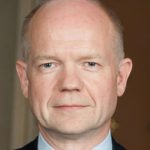
    The speech made by William Hague, the then Leader of the Conservative Party, on 5 October 2000.

    This has been the best, the most upbeat and the most successful Conservative Conference in years.

    This week the people of Britain look to us to see if we are ready to be a Government.

    And with the policies we have presented and the purpose we have demonstrated, we have shown beyond doubt that we are ready for Government.

    This week the people of Britain look to us to see if we have the right team to run the country.

    And with brilliant platform speeches we have shown beyond doubt that this Shadow Cabinet, with its breadth of vision and its depth of talent, is the best team for Britain.

    The breadth of vision to help hard working families; and depth of talent too. Didn’t Michael Portillo make a fantastic speech and show what a brilliant Chancellor of the Exchequer he’ll be?

    The breadth of vision to preserve our independence in a flexible Europe; and the depth of talent. After years of Robin Cook wouldn’t it be great to have a real Foreign Secretary like Francis Maude?

    The breadth of vision to rejuvenate our inner cities, set our schools free, help our pensioners and improve the NHS; and the depth of talent with people like Michael Ancram, Archie Norman, Theresa May, David Willetts and Dr Liam Fox ready to take up the challenge of government.

    The breadth of vision to win the war against crime; and the depth of talent that would give us a great crime-fighting Home Secretary in Ann Widdecombe.

    Our Conference has looked like a Conference for the future. Labour’s looked like a Conference from the past.

    After all the years of trying to control the trade unions, it was back to beer and sandwiches in Brighton last week. Tony Blair likes beer and sandwiches without the beer. I like it without the sandwiches. Come to think of it, I like it without the unions.

    And throughout this week, we have shown the British people beyond doubt that we can win the next general election.

    Thanks to the Deputy Prime Minister we now know when that election is planned to be. Last week that political titan was asked a trick question: has Labour’s disastrous performance changed your plans for an election in six month’s time? John Prescott innocently replied: ‘no it hasn’t’.

    But even without John Prescott helping us out, we’re ready for that election whenever Tony Blair now dares to call it. We’re ready for it next autumn, we’re ready for it next May, we’re ready for it now. Go on Tony, call it now.

    We all remember the armchair critics who told us after the last election that we could not recover. Don’t even bother they said, for we have entered a new world in which Tony Blair can do no wrong and New Labour will rule forever.

    But New Labour was not a philosophy, it was a fashion. And nothing is more unfashionable than a fashion that’s out of fashion.

    We saw them last week, divided, arrogant and out of touch. What a bunch they are – this soap opera of a government.

    In last week’s episode of the Neighbours from Hell: Robin has fallen out with Peter. Peter won’t talk to Geoffrey any more. Geoffrey won’t lend his holiday home to Tony. Mo has been sent to Coventry. Clare doesn’t like the tent run by Tony’s crony. Tony’s crony blames Chris and Peter. Tony rows with Gordon. Peter won’t speak to Gordon. And Gordon won’t speak to anyone at all.

    Last week in Brighton the security was so tight it was Wednesday before they stabbed each other in the back.

    No Ministers in recent times have lost touch so rapidly with the people who elected them.

    When an angry pensioner sent a cheque for 75p to Gordon Brown, he cashed it.

    When Baroness Jay was asked if she understood the desperate crisis in farming, she said she knew all about it because she “had a little cottage in the country”.

    Cocooned in Whitehall they have retreated into a world where they never have to make do with a failing school, or witness a crime, or pay for a tank of petrol.

    It is fundamental to their decline that they have betrayed and forgotten the real people of this country. And it is fundamental to our recovery that we have become the champions of the common sense instincts of the people of our country.

    And it is you, the people of this country, who do wait for hospital treatment, and do see crime on your street, and do pay for your tank of petrol, that I have in my mind as we fight the next election – It’s you that I’m in it for.

    For all the people who can’t afford to pay more in tax to a Government that squanders their money – I’m in it for you.

    For all the people who want classrooms where teachers can apply reasonable discipline to children without fear of ending up in court – I’m in it for you.

    For all the people who despair at the neglect and poverty and waste of human talent in our inner cities and want to do something about it – I’m in it for you.

    For all the people who think it’s a scandal when a patient’s throat cancer operation is cancelled four times because of political targets – I’m in it for you.

    For all the people who think that the law should be on the side of the house-owner and not the house-breaker – I’m in it for you.

    For all the people who can see that our asylum system is in chaos and want political leaders with the courage to get up and say so – I’m in it for you.

    For all the people who believe that we shouldn’t be handing over more of the rights and powers of this country – I’m in it for you.

    For all the people who want to keep the Pound – I’m in it for you.

    For all the people who are sick of the spin and the waste and the lies and the cronies and the sycophants, sick of the arrogance and the high-handedness, sick of the contempt for our traditions and for our Parliament, sick of a Chancellor too out of touch to listen and of a Prime Minister too arrogant to apologise, for all those people – we are all in it for you.

    For all the people who really hoped that they had elected a Government that would deliver on its promises and have been so bitterly disappointed – we are in it for you.

    These are people who look to us to give them back their country. And we will not let them down.

    When Tony Blair declared war on the forces of Conservatism, he declared war on all these people.

    Last year, in his Conference speech, he said defeating the forces of Conservatism was his great mission for the twenty first century. Last week, nine months into the twenty first century, he didn’t mention the forces of Conservatism at all.

    We really do have a Prime Minister who is prepared to say whatever will please his audience without the slightest consistent thought or principle entering his head.

    But just because he’s stopped talking about the forces of Conservatism, it hasn’t made us go away. Just because he’s paranoid about the forces of Conservatism doesn’t mean we’re not out to get him.

    Because what will bring this Government down is its arrogant contempt for the views of real people.

    You know the precise moment when everyone started to see through New Labour? Midnight. December 31st last year. You probably all had a good time on New Year’s Eve. Ffion and I, we went to the Dome.

    What did Tony Blair tell us about the Dome? ‘I’m absolutely sure that this is going to be a startling and exhilarating success … it will be the most famous new building in the world in the year 2000’. Well he wasn’t wrong about that.

    And then there was John Prescott: ‘if we can’t make the Dome work, we’re not much of a Government’. Whatever would we do without him?

    Tony Blair told us that the Dome would be ‘the first paragraph of Labour’s next Election Manifesto’. What a good idea.

    In fact such a good idea that I thought I’d help him out by drafting it for him: ‘Our New Labour Government, by wasting vast sums of money on something shiny and glitzy on the outside, empty and meaningless on the inside, with no understanding of our history, no vision of our future, and with so much hype followed by complete and utter failure, have successfully built the perfect monument to the way we have governed Britain for the last four years’.

    There it is, the Dome: the first paragraph of their Manifesto and the last word about their Government.

    For the real lesson is even more serious than the failure of the Dome. It is that the Prime Minister who now admits that Governments can’t run visitor attractions still thinks that Governments know best how to interfere in every classroom, manage every hospital ward, regulate every business and spend everyone’s money.

    You’ve seen how New Labour said the Dome was going to be a success, and poured your money into it, put their cronies in charge, denied there was a problem, and how at the end it was the people of this country who had to pick up the bill.

    That is New Labour. That’s what they’re doing to our schools. That’s what they’re doing to our hospitals. That’s what they’re doing to our police force.

    With the Dome it’s taken nine months to see that these interfering busy bodies didn’t know what they were doing. Don’t give them five more years to prove that they don’t know what they’re doing with our schools and our hospitals and our police.

    Peter Mandelson said recently: something’s gone seriously wrong with this Labour Government, but what is it?

    Shall we tell him?

    Tax is rising faster than anywhere in the developed world. Hospital waiting lists are up 87,000. Secondary school class sizes are bigger. Welfare bills are soaring. Crime is rising after years of falling. The transport system is at a standstill. Petrol taxes are the highest in Europe. Red tape is prolific. Waste is endemic. The bureaucracy is bloated. Political correctness is rampant. The countryside is in crisis. The cities are neglected. Our independence as a nation is being given away and the Prime Minister is spending millions of pounds trying to con us all into abolishing the Pound when we all want to keep it.

    That’s what’s wrong with this Government.

    Three years ago at this Conference I made a prediction. I said: ‘New Labour have certainly changed politics for the time being. Their politics without conscience brought fascination to begin with. Then admiration. But next it will bring disillusion. Finally it will bring contempt’.

    We remember the fascination. We endured the admiration. We have seen the disillusion and now, like millions of our fellow citizens, we feel the contempt.

    In his speech last week, Tony Blair announced again: ‘I will act’. Well, of course he will. It’s all been an act. It’s only ever been an act. He’s the biggest actor in town.

    But no amount of acting can save him from the truth spelt out in one of those famous Downing Street memos: ‘TB’ – a clever disguise – ‘is not believed to be real. He lacks conviction, he is all spin and presentation, he just says things to please people, not because he believes them.’

    TB spent thousands of pounds getting that advice. WH could have told him it for nothing.

    The only person in the country still stuck in the fascination stage with New Labour is the Leader of the Liberals. But of course we’ve witnessed the four stages of the Liberal Party too. Irrelevance, irrelevance, irrelevance, and irrelevance.

    So people now look to us. They’ve seen through the Labour Party and its Leader. Millions are coming to know that not only has Labour failed to deliver, but that they are never going to deliver.

    This week, and in the coming weeks, people want to know what the alternative will be. They look to us. They want to know if we’re ready. They want to know what drives us, what motivates us, what we would be like in office. They want to know where we come from and where we’re going to.

    And they want to know what motivates me.

    Come with me to the Rother Valley, to the heart of South Yorkshire. See Rotherham, the industrial town I was born in. Visit Wath Comprehensive, the school that gave me a chance in life.

    Come and meet the people I grew up with. Children of proud mothers who struggled with small budgets, who relied on the local health service, and who hoped for a better life for their sons and their daughters. Children of fathers who worked hard in mines and on farms and in steel works, who never knew the security of owning a home or saving for a pension, who had no choice but to live from one week’s pay packet to the next.

    Those children I grew up with have families of their own now. Many are better off than their parents. They own their own home and they’re saving for a pension. Their jobs are in supermarkets, in high street banks, in telephone call centres; they’re nurses and teachers and self-employed builders. And the girls in my class are now juggling with all the competing pressures of being good mothers and holding down a good job.

    But these people, the children I grew up with in South Yorkshire, want the same things as their parents did. They want security and stability for themselves and their families. They want a better life for their own children.

    Don’t think that because they holiday in Tenerife and not Tuscany that they don’t have aspirations for a better life.

    Don’t think that because they’ve moved to Ilkley and not Islington that their voice can be ignored.

    The people I grew up with, and millions like them, are the mainstream of our country. They are the people who motivate me.

    And I know that they have almost given up on any politician from any political party standing up for them.

    For they see their modest incomes eaten away by more taxes every time they fill up their car or tear open their pay slip, and they wonder if any politician knows what its like to raise three children on a family budget that just won’t stretch any further.

    They see young thugs walking free from our courts, and they wonder if any politician knows what it’s like to live on a council estate where the criminals take control after dark.

    They see the independence of the country they love cast aside, and they wonder if any politician shares their patriotism and their pride in being British.

    These people, the people I grew up with, the mainstream people of this country, are the people who motivate me.

    And these are the people we will govern for. We will govern for hard working families. We will govern for people of every community and background. We will govern for the mainstream that New Labour has ignored. We will govern for all the people.

    For when New Labour say to us that we’re only appealing to core Conservative voters when we talk about crime and asylum and tax and Europe, I say to them that they have completely lost touch with the hard working families of this country.

    I say to hard-working families everywhere: I know that you are looking at our Party and judging whether we are ready for government.

    You know that we are tough on crime, and I tell you this: no government in recent times has been as tough on criminals as we will be.

    You know that we want to reduce taxes, and no government in recent times has been as committed to cutting taxes as we will be.

    You know that we believe in Britain, and no party will stand up for the rights and independence of our country with as much resolve and fortitude as we will.

    You know all this, but I want you to hear something else you may not know.

    The Conservative Party in Government will direct its energies to improving the schools that are the most hopeless, to bringing life to inner city areas that are the most bleak, to helping pensioners that are the least well off, to tackling drug problems that scar the least fortunate, to addressing family break down in the most dislocated communities, and to improving the health care for those most dependent on the NHS.

    And it is because we are ready to do all these things that the message coming loud and clear from this Conference is that we are ready for government.

    There are some who say there is a contradiction between traditional Conservative issues and winning new Tory audiences; between tolerance and mutual respect for all people, and championing the mainstream values of the country.

    There is no contradiction. I say being tough on crime, believing in lower taxes and the robust defence of our nation’s independence are not in contradiction with wanting better schools and hospitals and thriving inner cities; they are an essential part of achieving all those things. I say defeating political correctness and refusing simply to accept every demand from every pressure group is not in contradiction with respecting the differences between individuals; on the contrary, the championing of mainstream values is the championing of tolerance, mutual respect and the rich diversity of our country.

    Only by trusting the instincts and the individuals and the institutions and the independence of the people of this country can we hope to seize the opportunity that this Government is so tragically squandering.

    That’s why we’re going to lead a Common Sense Revolution.

    That’s why we’re going to govern for the hard working, hard pressed, decent law abiding people of this country and bring an end to the rule of the small out-of-touch New Labour clique that thinks it is so much better than the rest of us.

    We’re going to govern for the families who’ve earned every penny they’ve got and need every penny they earn and want a Government that will cut taxes.

    Three weeks ago we experienced something in this country we hadn’t seen for more than 20 years. The pumps ran out of petrol, the shops ran out of bread, and the country came to a standstill. Labour governments, don’t you just love ‘em?

    Tony Blair and his Government say we mustn’t give in to pickets.

    What a nice little lecture from the same Labour politicians who led the seamans’ strike and encouraged the miner’s strike and supported the secondary pickets.

    If he’d really been listening, he’d never have introduced his stealth taxes and he’d never have had blockades and he’d never have had the vast majority of the people of this country join in a taxpayers’ revolt.

    Well if they don’t understand the taxpayers revolt, we do. If he’s not in sympathy with it, we are. And if he won’t cut taxes, we will.

    This Government has contempt for those who want low taxes. They think that wanting lower taxes is selfish and greedy.

    Wanting to pay less tax isn’t greedy. The truck driver who told me how he had to work day and night and sleep in his cab just to feed a family he scarcely got to see wasn’t being greedy.

    He was just desperate and angry to see that hard earned money he’d scraped together disappear in stealth taxes.

    And I tell him now that the Conservative Party understands the life he’s living and we see his desperation and we share his anger and we will govern for him.

    Wanting to pay less tax isn’t greedy. The young software consultant that I met who shook his head as he talked of his plans to move abroad because of the stealth taxes he now faces wasn’t being greedy.

    He just can’t understand how this country can ever succeed if he’s being taxed out of work in an era when business can go anywhere in the world and we need innovators so badly.

    And I tell him now that the Conservative Party can see the damage being done to the economic future of our country and we see our talent going abroad and we share his belief that our country cannot afford it and we will govern for him.

    Wanting to pay less tax isn’t greedy. The countless hard working families whom I meet everywhere I go who talk of how difficult they find it to save money and keep their families together and live on just one income while bringing up children aren’t being greedy.

    They just feel betrayed by a Government that promised no tax increases at all.

    And I tell them now that the Conservative Party understands their sense of betrayal and we know how difficult high taxes have made their lives and we are on their side – and we will govern for them.

    All these people are looking to the Conservatives now and they want to know what we’re going to do for them.

    We know what we’re going to do for them.

    We’re going to cut fuel tax. Three pence off a litre of petrol. Three pence off a litre of diesel.

    We’re going to restore a married couples allowance – because I believe marriage is the bedrock of a secure and stable society.

    We’re going to bring an end to the era of stealth taxes and start cutting the taxes paid by hard pressed families.

    And we know how we’re going to pay for it too.

    We’re going to make sure billions of pounds in surplus taxes raised by Gordon Brown goes back to taxpayers who earned it.

    We’re going to reform the welfare system so that we stop losing billions of pounds in fraud and so that those who can work must work.

    We’re going to stop wasting money on worthless Government schemes that are only designed to win headlines for Tony Blair.

    We’re going to reduce the number of Ministers, cut the size of the House of Commons, halve the number of political advisers and cut the whole size of Whitehall so that there aren’t so many politicians going around dreaming up expensive meddling schemes to interfere in everybody else’s lives.

    Tony Blair may think his made-up numbers about Tory cuts will win him back a few votes. He couldn’t be more wrong. People don’t believe the phoney statistics and falsehoods he tells about his own policies and so they certainly won’t believe the phoney statistics and falsehoods he tells about ours.

    The British people know we can have lower taxes and better public services if we spend wisely. They know it can be done.

    And we’re going to do it.

    For we’re ready to govern for all the people.

    We’re going to govern for the parents who want their children to get the best chance in life, who want a Government that will deliver on education.

    Last week I visited the largest comprehensive school in Birmingham. And the reporters said to me – “There’s a grammar school nearby, why didn’t you visit that?”

    And I said “I’ve visited grammar schools and they do a superb job. But our task now is to raise standards for that vast majority of parents and pupils who haven’t got a grammar school to choose from.”

    So I’ve been going to the inner city schools and talking to the pupils and the parents and the teachers.

    I’ve been hearing the pupils talk about their hopes and their dreams and how determined they are to better themselves:

    parents talk of how they want the right to choose the best schools for their children but feel that choice is denied to them;

    teachers talk of how frustrated they are to spend so much time filling in forms and how difficult they find it keeping discipline when the Government tries to stop them excluding troublemakers;

    head-teachers talk of the money that gets wasted on bureaucracy when it could be spent improving our schools.

    It’s time someone listened to these people. The Conservative Party is listening to these people and I am determined that we will govern for them.

    All these people are looking to the Conservatives now and they want to know what we’re going to do for them.

    We know what we’re going to do for them.

    We’re going to take the money that’s spent by politicians and bureaucrats and let the schools spend it instead. £540 for every pupil.

    We’re going to endow our universities and set them free to be the best in the world.

    We’re going to create Free Schools that can determine their own ethos and decide their own admissions policy and set their own pay policy.

    We’re going to have tougher discipline in our schools because we’re going to end the ridiculous situation where schools are penalised by the Government when they exclude pupils and are forced by politicians to take back those who disrupt classrooms. This is a policy that undermines discipline and makes teachers lives impossible and it’s going to stop.

    The British people know these things can be done.

    And we’re going to do them.

    For we’re ready to govern for all the people.

    We’re going to govern for the people who rely on the state pension and the National Health Service and think everyone should share in the growing prosperity of our country.

    The Government seems confused at why pensioners are angry. But the reason is simple.

    Pensioners don’t like being treated with contempt by people like the Chairman of the Parliamentary Labour Party who said they were all “racists”.

    They don’t like being talked down to by people like Peter Mandelson who said that they’re not worth bothering with because they’re not ‘aspirational’.

    I reject this language. Our pensioners should be treated with dignity and respect.

    And they don’t like being treated as charity cases by a Chancellor of the Exchequer who prefers to go on handing out means tested benefits and one off gimmicks because he thinks he knows best.

    Labour has not governed for them. We will govern for them.

    All these people are looking to the Conservatives now and they want to know what we’re going to do for them.

    We know what we’re going to do for them.

    We’re going to take Gordon Brown’s gimmicks and the administrative costs wasted on them and put that money back into the basic state pension. £5.50 more a week for every pensioner; £10 for an older pensioner couple.

    We’re going to match Labour penny for penny on the NHS and sweep away Labour’s dogmatic opposition to private provision.

    We’re going to make sure every penny is spent on clinical priorities rather than the political priorities of Labour politicians.

    We’re going to give every young person in the country the chance to have a pension of their own far greater than the current state pension.

    The British people know these things can be done.

    And we’re going to do them.

    For we’re ready to govern for all the people.

    We’re going to govern for the law abiding people of this country who have sometimes felt there wasn’t a politician left prepared to champion their common sense values and instincts.

    It’s time we halted the march of political correctness.

    Can you believe that Birmingham’s Labour Council decided to rename Christmas ‘the Winterval’?

    Can you believe that Education Ministers supported a ban on musical chairs because they think the game encourages aggression?

    Can you believe that they used Number 10 Downing Street to hold a summit on how many thin and fat people should appear on television?

    I want all these people who despair of this politically correct idiocy to know that we’re going to govern for them.

    I want all the parents who think schools should respect their values and don’t want Section 28 abolished to know that we’re going to govern for them.

    I want all the people who are angry at the way our asylum system is in chaos and just want enforcement of the rules – I want them to know that we’re going to govern for them.

    But nothing angers or frustrates the law abiding people of this country more than the failure of this Government to get a grip on rising crime.

    Like the group of black teenagers I met in a Lambeth comprehensive four months ago. We got around a table in their classroom, and do you know what they said to me? ‘The police have got their hands tied and they’ve lost it. Crime is rising and we’re most likely to be the victims’.

    These people are looking to the Conservatives now and they want to know what we’re going to do for them.

    We know what we’re going to do for them.

    We’re going to restore Labour’s cuts in our police force.

    And we’re going to stop tying their hands with red tape and politically correct nonsense. We’re going to have less PC and more PCs.

    We’re going to have no more of Labour’s early release schemes for rapists and burglars and muggers.

    We’re going to overhaul the law to make sure that it is on the side of the people defending their homes instead of the criminals breaking into those homes.

    We’re going to step up the war against drugs, not surrender to the drug dealers.

    We’re going to make sure that prisoners don’t idle around in their cells but do a full working day.

    We are going to give full force to the common sense instincts of the British people and we’re going to win the war against crime.

    The British people know these things can be done.

    And we’re going to do it.

    For we’re ready to govern for all the people.

    And we’re ready to govern for all parts of the country.

    Earlier this year, I went to inner city housing estates in London and the north of England

    I saw there how too many of their schools are failing, there aren’t enough jobs available, the shops have gone, and the sprawling tower blocks are rabbit warrens for crime. It’s the same story in many of our cities.

    The people who live on these council estates have never looked to the Conservative Party for support, but I believe passionately that we still have a duty to help them.

    We are going to reclaim their streets from the drug dealers and car thieves.

    We are going to bulldoze the worst of the concrete tower blocks and ensure that there are new low rise homes where the criminals won’t be welcome.

    And by bringing life back to our inner cities, we will ease the relentless pressure of the developers on our countryside.

    Only the most out of touch, metropolitan elite could regard the attack on our rural life and the desperate plight of our farmers as a source of amusement. Yet, in speech after speech, and joke after joke in Brighton last week, New Labour poked fun at the anger and hardship of the people of the countryside.

    This Government thinks it is attacking only a small rural minority. In fact it is attacking the values of tolerance and respect, the values of the mainstream majority.

    Rural people look to the Conservative Party to represent them and stand up for their way of life – and we will not let them down.

    For we are ready to govern for all parts of the country – and by country I mean the United Kingdom of Great Britain and Northern Ireland.

    But a Conservative Government will only be able to do all of these things, and govern for all the people, if we still have a country left to govern at all.

    For this Labour Government is taking us down the road to a European superstate.

    Britain is uniquely placed to take advantage of the opportunities of the twenty-first century.

    We have a unique relationship with the United States, a unique relationship with Europe and a unique relationship with the Commonwealth.

    Our language is the global language of the new economy.

    It seems to me to be blindingly obvious and basic common sense that with so many opportunities opening before us, we should not hesitate to make the most of being British.

    And the advantages of independence seem to have been blindingly obvious to the Danes too.

    The result of the Danish referendum last week has once and for all demolished Labour’s bogus arguments and scare tactics.

    In a Europe where so many decisions are taken by bureaucratic elites, we should be celebrating the fact that at least in one country the people have spoken.

    It now gives us a renewed opportunity to press the case for a different kind of Europe.

    Now we must champion the cause of a flexible, free trading, low tax, lightly regulated Europe. A Europe that goes with the grain of the new global economy, in which nations combine in different combinations for different purposes to different extents.

    We will be the champions of that flexible Europe. And we will be the champions of Britain’s right to govern itself. For we believe in being in Europe not run by Europe.

    So we will write into the law of our land the powers and rights that we hold today and which we will pass to the next generation, so that no stroke of a pen from Brussels, or retrospective court judgement, can take those rights away.

    And we will champion the common sense instincts of young people who know that the idea of creating artificial, centralised supra-national superstates is an idea left behind in the twentieth century as they plan their lives in the twenty-first.

    They too believe passionately that we should be making the most of being British. So I say to them, whatever else you might have thought about the Conservative Party and what we’ve done for Britain, it is only by coming with us that you can make sure that there will still be a Britain.

    Making the most of being British means that if taxes are lower in Britain than elsewhere in Europe we should be making them lower still to ensure that we keep our competitive advantages.

    Making the most of being British means that if our regulations are lighter than in Europe they should be lighter still for British businesses.

    And making the most of being British means that if other countries give up their currencies and take on the job of applying one set of rules to every economy across Europe, we should say: good luck, we wish them well, but we will keep our Pound.

    At the coming election, we will be the only Party committed to keeping the Pound, just as we will be the only Party committed to common sense on the countryside and on our inner cities, on crime, on education, on pensions, on health and on tax.

    As we approach this election, conscious of our responsibility to provide a new government, clear in our principles for which only we can stand, resolved in our purpose to serve the people of our country, we know who we are and what we promise to be.

    I don’t promise the earth.

    I don’t think we’ll solve every problem.

    I don’t think we’ll avoid every mistake.

    I won’t try to start new fads or fashions.

    I won’t claim to be creating a new era.

    I just want to govern with the common sense instincts of the people of this country.

    I just want to govern with the common sense instincts of a proud people who believe in Britain.

    In place of squandered opportunity and high taxation, the determination to seize the opportunity of a new economy.

    In place of dogmatic interference and Whitehall knows best, the certain belief in the freedom of people to make their own choices about their schools and hospitals.

    In place of political correctness and the noise of the pressure group, the quiet trust in the tolerance and mutual respect of the British people.

    In place of fear on our streets and the menace of drugs, the absolute conviction that the war against crime can be won.

    In place of the cringeing surrender of our rights as a country, the confident assertion of our right to be a nation.

    I just want to govern with the common sense instincts of a people that believes in Britain and its values and institutions.

    I just want to bring to a people so deeply disillusioned by its Government,

    A Party that understands their concerns.

    A Party that shares their values.

    A Government that believes in our country.

    A Conservative Government, ready to govern for all the people.

  • Peter Hain – 2000 Speech on Angola and the Responsibilities of Wealth

    Peter Hain – 2000 Speech on Angola and the Responsibilities of Wealth

    The speech made by Peter Hain, the then Minister of State at the Foreign Office, on 6 July 2000.

    I was born in Africa, and grew up in Pretoria where my parents were first jailed, then banned, then forced into exile in London where I continued their struggle as a leader of the British Anti-Apartheid movement.

    And now my job as British Minister for Africa gives me again the chance to make a difference. I am determined to do so. Our goal is a proud, safe, democratic, prosperous Africa. A self-confident Africa in which the views and aspirations of all Africans can be clearly heard, and fully taken into account.

    I have been to Angola before, in 1995. As now, it was strangled by war. Images of Huambo stay in my mind: Limbless, starving people. Every shop, office, and house gutted. Hopelessness and despair on peoples’ faces. The misery of the displaced. Thirty-five years of fighting fuelled first by the Cold War ideological clash between communism and capitalism, then by the pure greed of oil versus diamonds.

    During that visit I met the Government in Luanda. Then I flew deep into the bush to Bailundo, to meet Jonas Savimbi. He promised he would honour the United Nations peace agreement he had signed in Lusaka. But at the same time as he lied to me, he was re-arming, and the war started all over again. And still there is no end: the Angolan people deserve so much better.

    I am particularly pleased that so many members of Angola’s civil society are here. We usually hear talk only of the Government, of UNITA, of the United Nations. But civil society as a whole – press, NGOs, the churches, trade unions – all have a vital, perhaps a central, role to play in Angola’s future.

    Angola has suffered from slavery, from colonisation, from the geo political rivalries of the Cold War. But the past cannot continue to be used as an excuse. Angolans cannot allow themselves to be trapped by their history. Angolans must take responsibility for their future.

    In the past, foreign interests in the USA, South Africa and Europe supported UNITA and Savimbi to prolong the war for their own interests. Today I can assure you that this is not true for Britain. I hope it is no longer true for any other country. Some foreign individuals do profit from war in Angola by buying blood diamonds from Savimbi and selling arms and fuel. But there is no reason why Angolans should allow these evil people to control your destiny. If Angolans can find a just peace, no outsider should come between them and a secure and prosperous future. Your economy could develop. Your roads and hospitals could be rebuilt. Your children could be educated. You could travel freely throughout your beautiful country.

    The rest of us would benefit too. Britain would spend less on humanitarian aid and save money on the UN. British businesses would have new opportunities for investment and trade. Angola would become a dynamic force for stability and progress in Southern Africa, instead of a dark threat to the peace and prosperity of its neighbours.

    SANCTIONS

    But for this vision to become a reality, the war has to end. What can you do? What can we do to bring peace closer? The British Government’s view is that there are two major issues to be addressed. I will describe them here:

    First, Savimbi’s power to wage war has to be blocked by sanctions, vigorously enforced. We want to stop him selling his diamonds and block his supplies of fuel and munitions, until he is forced to lay down his arms as he promised in the Lusaka Protocol in 1994.

    I have been in the forefront of the international efforts to make sanctions effective. For as long as the fighting continues the British Government will seek to tighten the sanctions against UNITA, to cut off the outward flow of diamonds and inward flow of arms and fuel that sustains the misery of the Angolan people. And we will continue to expose those involved, however high or low: from African Presidents, to European arms and diamond dealers, to African based air companies – whatever their nationality. Their dirty trade deserves international condemnation. It is also illegal, so each of these individuals should be tracked down, publicly exposed and prosecuted. The diamond dealer in Belgium receiving UNITA’s blood diamonds helps to landmine children. The arms company in Bulgaria or Ukraine helps Savimbi to kill and maim. The European or South African pilot is just as culpable. Without these guilty people, the war would be over.

    Savimbi has repeatedly broken the United Nations peace agreements he has signed. So how can we trust his word again? Could he change? Could he contribute to the search for peace? I very much doubt it. Attacking convoys taking food and shelter to the displaced, planting mines to maim those who try to raise a crop, mutilating and killing unarmed villagers – these are not the actions of a leader with a cause who wants a better Angola for his people. They are the actions of a bloodthirsty tyrant who wants personal power at all costs.

    But UNITA needs to be part of a political debate about the future of Angola. It needs to have a new policy for peace. It must lay down its arms and play an active part in a dialogue about Angola’s future. Britain is willing to help achieve this. Too much is at stake. UNITA represents an important constituency in the country, politically, rurally and ethnically. Its voice deserves to be heard – but through ballot box not through the barrel of a gun.

    The world will not tolerate any more of Savimbi’s lies and obstructions. UNITA must be part of a political process and it must naturally honour any commitments it makes. To end such a long and bitter war everyone has to compromise. It will take courage on all sides. Agreements must be honoured in full. And I promise this: Britain along with other European Union countries will back such an agreement. We will support the Angolan people in their right to peace, to live a decent life, to begin farming properly again, to begin rebuilding their shattered country.

    GOOD GOVERNANCE, DEMOCRACY AND HUMAN RIGHTS

    The second issue is good governance, democracy and human rights. These have to be made a reality for all Angolans so that they can peacefully share in Angola’s prosperity.

    There must be space for the exchange of ideas, which is fundamental to democracy. Having different ideas about the best way forward does not mean disloyalty to the state. But the debate is not just between the MPLA and UNITA. There are other political parties. As important, there is civil society.

    A strong, independent civil society is very important to sustain a healthy democracy. In every society there are groups of people who come together because of their profession, their beliefs, their interests, their ideals.

    These formal and informal groups – churches, trades unions, humanitarian societies, human rights groups and many more – are each entitled to have their voices heard when they argue for what their members believe in. The more they are seen to live up to their own ideals, the more likely they are to gain the support of their fellow citizens. Although political parties are vital in a healthy democracy, civil society groups help connect government to the people. Open debate is good for our democracies.

    Of course, those of us in Government do not enjoy being criticised. As a Minister I know only too well what it feels like to see my name in the press or hear it on the television followed by critical or ill-informed comment. But that criticism is one of the guarantors of our democracy. I urge the Government to be bold in recognising the same in Angola. In any democracy there will be protest marches. (I used to organise marches myself years ago against apartheid!). And it is a rare journalist who thinks that the Government has got it absolutely right. Open discussion in an open society: that is the way forward to success.

    I have condemned the broken promises and murderous activities of Jonas Savimbi. But I have also felt able to speak honestly to President dos Santos and his Ministers and advisers about the evils of corruption. Angola is rich country made poor by corruption and dishonesty. Her wealth must benefit all her people not just a few. The money from oil and diamonds must go to new hospitals, schools, universities and technical institutes. It must build new roads, bridges and railways. It must be used to lift ordinary Angolans out of poverty, fear and dependency. And used to ensure that they can develop both themselves and their country to their full potential.

    In five years time oil export revenues could be as much as eight billion US dollars (depending on oil prices) per annum. This compares with government expenditure in 1999 equivalent to around three billion US dollars.

    Ending corruption and making government accountable will boost international business confidence and create greater prosperity and jobs.

    Angola’s huge resources – its natural wealth and its people – must not be squandered on War. The Government’s recent offensive against UNITA has been more successful than many expected. But I do not believe that there is a purely military solution to this war. Angola has become a war economy. Huge riches from oil and diamonds are just being wasted away as lives are lost or brutalised and the country devastated almost beyond belief. We have to make a fresh start. And Britain is ready to help.

    Ending the war is not enough. We must rule out the chance of future wars. Angolans deserve open and transparent administration. No bribes. No favours. Just good, clean government. Angolans deserve to see their economy being transformed into an open market functioning within the rule of law and delivering benefits to all.

    I welcomed the news that the Government has agreed to an IMF Staff Monitored Programme. A vital first step. You need the IMF, we need the IMF. We all live in an interconnected world. I urge the Government to publish the programme soon so that civil society can play an active part in achieving its targets. The Government has demonstrated its commitment to working for economic reform. They can be justly proud of that. Let’s make it happen through open discussion and open policy making. That is the way to win popular support from the people. That is the way to increasing investor confidence and economic advancement for all.

    In the anti-apartheid struggle I remember campaigning alongside MPLA comrades during the 1960s and 1970s. In Government the MPLA made sacrifices to support the struggle of the African National Congress for freedom in South Africa. The MPLA has an honourable history as a liberation movement. It faced almost impossible odds when it took over a country ruined first by colonialists, and later by UNITA’s foreign-backed subversion, invasion and brutal war. Despite this the MPLA government managed to implement new and bold health and education policies from which so many Angolans benefited. But somewhere along the way, something went badly wrong.

    We must build a new future. And look at what the result could be. Not a country bled dry by war and poverty and corruption. But one of the great African states. You have the oil, the diamonds. You have the agricultural potential. Luanda could be as big in the international trading market as Pretoria, Lagos or Nairobi. It is long past time that you took your place with them.

    CONCLUSION

    I speak today as a friend of Angola. And it is the duty of a true friend to speak honestly. I am determined to make a difference. I care about Angola because when I see the future of peace, I see a country, which could be the breadbasket of Southern Africa, feeding not just its own people but many millions of others. I see a country of great beauty with a people of great ability and potential. I see a country of enormous wealth that could be a powerhouse in Africa. An African Lion that could help make Africa roar with success. Instead of an Angola of war and poverty and corruption, I have a vision of an Angola in which human rights, social justice, democracy and prosperity for all flourish.

    Let us pledge ourselves to realise that vision.

    Let us all join together – you, I, your African brothers and sisters, the international community – in a rising chorus demanding peace and a new beginning.

  • Keith Vaz – 2000 Speech on the Europeanisation of South East Europe

    Keith Vaz – 2000 Speech on the Europeanisation of South East Europe

    The speech made by Keith Vaz, the then Minister for Europe, on 7 July 2000.

    Your Excellencies, Ladies and Gentlemen, good morning.

    This conference comes at a key moment for South East Europe. One year after the Kosovo crisis democracy is spreading throughout the region. People have exercised their right to vote in free and fair elections in Croatia, many parts of Bosnia and Herzegovina and in Montenegro. There will be elections this autumn in Kosovo, Albania and Bosnia and we hope that Serbian local elections and FRY state-level elections later this year will allow democracy to flourish there too.

    We want to see a new EU Balkan agenda to encourage this trend, one which will show the practical benefits of living up to European standards and ideals which will strengthen support amongst ordinary people in the region for what Chris Patten has described as the road to Europe. As President Clinton said during his visit to Europe in June, our goal must be to de-Balkanise the Balkans. Relations with the European Union are already growing stronger.

    EU ENLARGEMENT

    Bulgaria, Hungary, Romania and Slovenia are negotiating to join the European Union. Macedonia and Croatia are well on the way to EU Stabilisation and Association Agreements. The European Union has set a clear path for Albania and Bosnia and the Federal Republic of Yugoslavia is also eligible once they meet the European Union’s conditions.

    The prospect of closer EU relations and eventually EU membership is an important incentive for change. We welcome the growing evidence of commitments to European ideals and standards and to genuine intra-regional co-operation and I look forward to the summit hosted by the French Presidency in Croatia this autumn, which will be an opportunity to reinforce that message. The Stability Pact is reinforcing this process of Europeanisation, encouraging the countries of South East Europe to work together for shared goals. It has provided 2.4 billion euros for a variety of projects starting in the next twelve months. Britain has particularly supported the pact’s investment compact of which several of you must have attended yesterday’s meeting.

    OVERCOMING LEGACIES OF THE PAST

    Nevertheless there are significant challenges ahead for the region, including for Serbia. The West can and should help, but the real work has to be done by the people of South East Europe themselves. Overcoming the legacy of nationalism, extremism and war is a huge task, but South Africa, Northern Ireland and the Middle East show how old enemies can set aside their quarrels and work together for everyone’s benefit. France and Germany were at war for much of the first half of the last century, yet a common European destiny has made them and the rest of Western Europe firm allies and friends.

    Constructive leadership is crucial. Look at the example of Croatia. The Croatian Government and people have witnessed a dramatic turnaround in their relationship with Europe since the beginning of the year. The same path, the same opportunities, are open to the people of Serbia, but not while they are held back from their rightful place in the European family by a selfish corrupt regime whose leaders refuse to be held responsible for their past actions. Milosevic has presided over the ruin of his country. The cost of Milosevic may have been as much as a hundred billion dollars, the difference between actual national income since 1991 and what that income might have been if Serbia too had embraced economic and democratic reform. Only when Milosevic has gone to The Hague can Serbia’s reconstruction begin in earnest and there should be no doubt of our willingness to help when that happens.

    TRADE AND INVESTMENT

    I hope the conference today will build links between us and the region in the areas where the European Union can really make a difference. Trade and investment, it is time for the EU to be bold, imaginative and generous. We should open its markets to South East Europe’s products and South Eastern Europe in return needs to attract investors by creating a favourable climate for investment. That is why I am so delighted to see here today so many leading members of the private sector. The private sector’s involvement of the reconstruction of the Balkans is absolutely crucial. We shall hear more from Sir David Wright on this point later. Secondly, civil society, people to people links between NGO’s, universities, towns, cities and other civic groups will help spread awareness of Europe.

    The Lisbon Economic Council highlighted the importance of the information society for the EU. We want South East Europe too to exploit the opportunities of e-commerce and the Internet in increasing economic growth, breaking down ethnic barriers and facilitating freedom of information.

    CONCLUSION

    Finally, the European Union has committed over fifteen billion euros to South East Europe over the last decade, but Europeanisation is not just about a transfer of resources, but a transfer of vision, including the people of this corner of our continent and in our common European destiny. The European Union has just such a vision for the people of Central Europe and over the last decade tremendous change has already happened there. I hope for the same for South East Europe. Following this seminar we shall be establishing a UK-Balkans Task Force to build on what we have achieved here and to monitor progress. I shall be calling on some of you to take part in that Task Force.

  • Peter Hain – 2000 Speech on Corruption in South Africa

    Peter Hain – 2000 Speech on Corruption in South Africa

    The speech made by Peter Hain, the then Minister of State at the Foreign Office, at the Royal Institute of International Affairs on 10 July 2000.

    Can I begin by congratulating Transparency International on its role as a scourge of corruption and bad governance, and for organising this important conference.

    Corruption is of course not unique to Southern Africa: it happens the world over and always has done. But the African continent has a particularly bad dose of it. And whereas in the past this was accepted as a fact of life – one of the legacies of colonialism and economic exploitation from which Africa has suffered so badly – today it can no longer be tolerated.

    This is not simply a moral imperative. The new factor is globalisation. Modern communications mean it is less easy to cover up. And whereas foreign investors have happily colluded with corrupt governments or public officials through the ages, today’s global investors have less interest to do so. Modern capital is so mobile it prefers to invest where corruption does not take a slice of profits. It is also much more at risk of exposure in today’s transparent and highly competitive environment.

    In Southern Africa today destabilising civil conflicts such as in Angola and the Democratic Republic of Congo have hit the region as a whole. HIV/AIDS threatens to wipe out large swathes of Southern Africa’s productive population. Drought – and more recently flooding in Mozambique and neighbouring countries – has devastated the agricultural output of the region and diverted scarce resources away from productive activities to rebuilding infrastructure and rural communities.

    These serious problems have been hugely debilitating and contributed equally hugely to Africa’s main problem: poverty. But, resolving conflicts, and eradicating poverty is badly hampered by corruption. Sustained poverty in Southern Africa is partly due to failure of governments and corruption is a central feature of this failure.

    REDUCING POVERTY THROUGH INVESTMENT

    The British government is committed to halving the proportion of people living in extreme poverty by 2015. But ultimately poverty reduction requires sustained economic growth and a key element in this is attracting foreign investment. Foreign investment delivers clear benefits: the transfer of capital and resources (including skills and know-how), new jobs, and a boost to the rest of the economy. Some African countries, such as South Africa, Botswana and Mauritius have been relatively successful in attracting Foreign Direct Investment (FDI).

    Yet Sub-Saharan Africa receives only 0.4 per cent of global FDI. And that figure is falling. Greater investment flows will only be possible if the investment climate improves, raising business confidence.

    The reasons given by businesses for not investing in Africa vary, but corruption is almost always on the list. It is difficult to quantify, although in Eastern Europe this is an extra 10 per cent tax on business according to the World Bank and EBRD. Just as important as the financial cost is that doing business is much more complex and confusing in a corrupt country. Many foreign investors will simply walk away if the environment is too difficult. Globalisation gives them plenty of alternatives.

    THE IMPACT OF CORRUPTION

    Corruption is the abuse of a position for private gain. We can draw a distinction between petty corruption and what George Moody Stuart calls ‘grand corruption’. Clearly it is right to start tackling the problem at the top with the big fish. But ultimately the aim must be to change cultures where petty corruption is viewed as normal. The causes of corruption are complex. Certain economic policies can inadvertently promote corruption. Foreign exchange or import controls often encourage corruption. There are obvious risks attached to uncontrolled deregulation as well. Too much economic power in the hands of political elites is undesirable. Africa’s leaders must shoulder some of the responsibility; Western Governments must hold their hands up and accept their share of the blame too.

    The consequences are widespread. When the law is for sale, why obey it? If your political leaders are only interested in enriching themselves, why respect them? If an official demands a bribe to perform the simplest service, why bother? The insidious result is a society whose members do not trust its institutions or even each other. Individuals and groups therefore act regardless of the consequences for others. The rule of law and with it any sense of a coherent society breaks down.

    If government decisions can be influenced by illegal or improper means, they are unlikely to be good ones. Hospitals or roads may be built in the wrong place; incompetent contractors may be given contracts which they never complete; friends and family members end up running businesses into the ground. In brief, corrupt governments do not do their job as well as honest ones.

    In the last few years – pushed and prodded by organisations such as Transparency International – we have all come to realise that corruption (and good governance in general) is not an optional extra. Without tackling corruption, the task of encouraging sustainable economic growth in Southern Africa is impossible. So what can be done?

    COMBATING CORRUPTION

    All Southern African countries should develop their own national strategies to promote good governance and eradicate corruption. Only if there is an internal drive led from the top is an anti-corruption initiative likely to be successful. Without it, no amount of help from outside experts will secure the demonstrable change necessary. There is no one model. But any strategy should include all the key players in society, public and private sectors, NGOs, civil society, political parties, foreign investors, religious leaders and financial institutions.

    Some African countries have taken the first step towards such a strategy by agreeing the Global Coalition for Africa’s Anti-Corruption Principles. I hope that other African countries sign up to these and that they can form the basis for a coherent set of national strategies. Excellent work is being done by the World Bank Institute in seven African countries to develop national anti-corruption strategies. The Institute’s approach of trying to work with a wide range of interests in each country is commendable and I understand that our Department for International Development is looking at ways to build on this work.

    Signing up to the international instruments is, while a welcome first step, is not enough. A corruption free environment must be supported by the enforcement of national laws against corruption. Those laws need to have real teeth. There will be genuine public support if serious and high level corruption is tackled vigorously.

    It is by no means an easy task, but real progress is possible, as a number of African countries have shown, for example Kenya.

    In July 1999, after years of criticism from both inside and outside the country, and a steadily declining economy, President Moi announced an Economic Recovery Strategy designed to root out corruption and inefficiency in the civil service. The Strategy included the establishment of a Change Team headed by Cabinet Secretary and Head of the Civil Service, Richard Leakey. The Team has implemented wide-ranging economic management and governance reforms. These have included:

    • the establishment of an autonomous Kenya anti-corruption authority (KACA). It is now fully operational, with 50 staff and has received 800 complaints to date;
    • dismissals and prosecution of corrupt officials, including one serving and one past Permanent Secretary;
    • key public agencies have been reorganised and management changed in response to complaints and investigation about corruption e.g. a Nairobi City Council oversight Board has been established. Top officials in the Ministry of Land have been replaced and past decisions on land disposal are being reviewed. Top managers of the ports, Kenya Coffee Board, Kenya Tea development Authority and Central Tender Board have been replaced;
    • there has been high profile naming of alleged corrupt officials in the Parliamentary Select Committee report on Anti-Corruption;
    • Cabinet approval has been given to a new public service code of conduct and declaration of assets bill;
    • There is a commitment to introduce a new Anti-Corruption and Economic Crimes Bill which substantially enhances the prosecution and investigation powers of the Kenya Anti-Corruption Authority, strengthens its preventive and advisory functions and establishes a corruption court and a Parliamentary Ethics and Integrity Committee. The statute of limitations (currently 3 years) will be abolished for serious fraud, embezzlement and corruption;
    • civil service reform (rightsizing, pay reform, improved management and performance appraisal);
    • procurement reform: restructuring of the tendering and procurement system and revamping of the Central Tender Board including the establishment of an appeals board and quarterly reporting of activities including bids received and acted upon. Development of new legislation to amend current procurement regulations and the establishment of a new independent Public Procurement Agency.

    These tough measures have already brought benefits to Kenya. As a direct result, the IMF/World Bank have resumed negotiations with the Government of Kenya for a Poverty Reduction and Growth Facility (PRGF) – the previous ESAF having lapsed in 1997 because of governance concerns.

    Although there is a long way to go, and there is obstruction by vested interests, including some Kenyan Ministers, the country has made a start and President Moi and his team deserve to be both congratulated and supported for this.

    BRITIAN’S ROLE IN FIGHTING INTERNATIONAL CORRUPTION

    Meanwhile we are looking at ourselves. Britain is in the process of reviewing the UK’s laws on corruption, and last month, the Home Office issued a discussion paper. Partly this is to ensure we meet the highest international standards, but primarily it is to ensure that we are effective in deterring British citizens from involvement in corrupt practices wherever they take place.

    We are playing a leading role internationally to promote greater efforts by all countries to stamp out corrupt practices. We strongly support the OECD’s Convention on Combating Bribery and urge all countries to sign up to it. We are also exploring with our G8 partners what else we might do to drive this work forward. Corruption will be one of the subjects discussed at the G8 Summit in Okinawa next week.

    Our Secretary of State for International Development, Clare Short, has made quite clear that tackling corruption is a very high priority for UK development assistance. Practical help for tackling corruption is now a major part of her Department’s (DFID’s) strategy in Africa and elsewhere, as indicated by their support for this event.

    Britain is a leading player within the G8 and the EU in tackling corruption and illegal diamond trade that is fuelling Angolan War. I have just returned from Angola where I pressed the Government of Angola to encourage more transparency and accountability within its budgetary process. We are also working with them to ensure that the proceeds of the legal diamond trade and oil exports are not diverted elsewhere and are channelled directly to benefit the Angolan people, not just individuals within the country. And of course, we are working with the Government of Sierra Leone to try to stop the proceeds of diamond sales financing the rebel military campaign.

    I should say that African diamonds are not synonymous with conflict. Just look at what Botswana, the world’s leading diamond producer, has achieved in using its diamond wealth to promote development. With growth of 9 per cent, it is one of the fastest growing economies in the world. What is the secret of Botswana’s success? Good governance, transparency and an uncompromising approach to corruption.

    A GLOBAL ISSUE

    Corruption is a global issue. Corruption in Southern Africa often involves participation by foreign entities, including major corporations and individuals seeking contracts and business opportunities. The UK accepts its responsibility for trying to ensure that UK nationals are discouraged from corrupt practices and we will change our legislation to be more effective in doing so. Most of our European and OECD partners do the same. All should.

    The UK is working with its partners in the IMF, World Bank and other multilateral and bilateral aid agencies to encourage them to use their influence to promote anti-corruption systems in the countries where they are working, particularly in Southern Africa. It is important that clear guidelines for promoting good governance, such as those developed by the IMF in 1998, are replicated by all organisations, including NGOs, procurement agents and other service delivery participants. Country assistance programmes and strategies should take into account and promote anti-corruption strategies at the national level. Particular attention should be paid to the level of transparency and accountability in government decision-making. There are a number of international initiatives to tackle corruption. Apart from the OECD’s Bribery Convention, there are also the Council of Europe’s Criminal and Civil Law Conventions on Corruption covering active and passive bribery of domestic and foreign public and private sector officials, including judges and members of public assemblies. I hope that Southern African countries will consider introducing similar provisions in their own legislation which explicitly criminalise corruption. Britain is willing to help.

    The Commonwealth Framework sets out some clear principles to address governance and corruption in member countries. Commonwealth Heads of Government signed up to the Framework at the Durban Summit last year. A proposed ‘code of conduct’, which could apply equally to government ministers and civil servants as well as parastatal companies and their employees, is particularly worthy of implementation. The code of conduct needs to be legally enforceable, with appropriate and robust sanctions for breaches of the code.

    The profits from corruption can be huge. But if they are to be safe, they need to be laundered and then hidden away out of reach of the domestic authorities. A key element in fighting corruption is therefore to be able to trace and seize the proceeds both to reimburse the country and to reduce the financial incentive.

    Britain has played a leading role in international efforts to tackle large-scale money laundering, whether linked to corruption or other crimes. We are supporting the Eastern and Southern Africa Anti-Money Laundering Group (ESAAMLG), established last year to strengthen legislation and regional cooperation to tackle money laundering.

    CONCLUSION

    The key role of corruption has been ignored for too long. For those of us who love Africa, it is painful to imagine what might have been achieved over the last thirty years without corruption. Honest governments working for the benefit of their people could have brought great prosperity to that continent. Instead, corrupt, selfish regimes have blocked their people from finding their way out of poverty and misery.

    But Africa can still turn itself around. If it can tackle the central problems of governance, then globalisation offers unlimited scope for attracting investment and beginning the process of catching up with the Asian Tiger economies and establishing its own successful Lion economies. The global growth in information and communication technologies will force governments to become more transparent, helping cut out corruption. As we have seen in the last two months in Zimbabwe, growing use of the internet by the Opposition MDC has helped lead to a more open, inclusive society, with stronger institutions, and a greater voice for civil society. IT can improve information flows to foreign investors. New technology (for example mobile telephones and solar panels) may provide ways round traditional obstacles to growth. African governments must look to these new ways of doing business if their development plans are to succeed.

    For, while the rest of the world has been getting richer, Africa has got poorer. We must build a new partnership between African Governments, bilateral partners and international financial institutions to find solutions for Africa’s economic problems and give the people of Africa the chance for success.

  • John Battle – 2000 Speech on the Falkland Islands

    John Battle – 2000 Speech on the Falkland Islands

    The speech made by John Battle, the then Minister of State at the Foreign Office, at the Royal Commonwealth Society in London on 12 July 2000.

    Today I want to talk about partnerships fit for the 21st century, partnerships for progress and prosperity. That is the essence of our relationship with the Overseas Territories, as expressed in our March 1999 White Paper on the Overseas Territories. This Forum’s theme, ‘Sustaining a secure future’, reflects this well.

    ELEMENTS OF A MODERN PARTNERSHIP

    First, a modern partnership with the Falklands needs to be founded on the idea that Falklanders can decide their own future. Self-determination was one of the best and most popular ideas of the twentieth century. With the entry into force in 1976 of the International Human Rights Covenants, self-determination gained the force of international law as a fundamental, collective human right. And these notions have been carried forward to this day. So that one of the fundamental principles of the modern partnership with the Overseas Territories is that people living there must experience the greatest possible control over their lives.

    Second, the partnership, like all partnerships creates responsibilities on both sides. For our part the most important of our responsibilities towards the Falklands are defence and foreign affairs. We are unequivocally committed to ensuring the security of the Falkland Islands. We will continue to station a strong garrison there, with resources from three armed services. Our Strategic Defence Review confirmed that the composition of the garrison was about right. It now stands at around 1,650 personnel not including naval crews. Our naval deployments in the South Atlantic include the Falkland Islands Guardship, her accompanying Royal Fleet Auxiliary and a Castle-Class Offshore Patrol Vessel. And the RAF will continue to operate their air-bridge between the UK and the Falklands and to carry civilian passengers and cargo on the route as well. Not an insubstantial presence, I think you will agree, as my colleague Geoff Hoon Secretary of Defence reaffirmed on his recent visit.

    In foreign affairs we represent and promote the interests of the Falklands wherever they are affected around the world. This might be directly with other countries, or in multilateral institutions such as the UN. In particular, negotiations to protect the environment or arrangements for air services or where our sovereignty over the islands is challenged.

    In our relationship with the Overseas Territories, Britain has the right to expect the highest standards of probity, law and order, good government and observance of relevant international commitments entered in to by the UK. As you know the British Government gives priority to the fields of environment and human rights in its foreign policy. In pursuit of our objectives we have signed up to a number of international agreements in these fields. I am delighted, and not surprised, that the Falkland Islands Government have worked hard to ensure that they have complied fully in implementing these, as a place leading the way in understanding the science of the marine environment, with unique natural habitats and far sighted resource conservation strategies.

    A third element of our modern partnership is the exercise of democracy. Falklanders have a proud record in this respect. The Legislative Council, composed of eight Councillors is chosen by Falklanders. They pass local laws, Ordinances. They also elect three of their number to sit on the Executive Council. The Falklands Legislature, with powers set in the constitution, is lively, governs the Islands efficiently and is a beacon of democracy. It reflects well on the political maturity of the Islanders the quality of Councillors and the professionalism of the Falklands Islands Government that the governance of the islands is so effective – it is a model of good governance.

    This is not to say that the situation is perfect. For all of us involved in politics a constitution is never finished. We need to improve, update, adapt and modernise our democratic processes and practices to meet new situations. One of the messages of our White Paper last year was to encourage Overseas Territories to let us have their proposals for democratic renewal and constitutional change. I am delighted that a healthy, open debate is gathering pace with the Falklands. The questions that Islanders have floated are many and diverse, ranging from the number of electoral constituencies, to how best to provide for independent scrutiny of Executive Council decisions. It is important that the debate on constitutional change is as full as possible, involves as many people as possible and be as wide ranging as possible, engaging all the people in democratic participation and renewal.

    The fourth element of our twenty-first century partnership is that Britain will continue to help the Overseas Territories that need it. The Falklanders do not receive any development aid from Britain now, and nor I suspect would they wish to. This is a mark of the economic success of the Islands over the past decade or so. Success which has meant that they now enjoy control, effectively, over their own resources, shaping the economic future.

    I have described to you some of the fundamentals that lie behind our modern partnership with the Falklands: self determination, responsibilities on both sides, freedom to exercise the greatest possible control over their own lives and the availability of help from Britain when needed. These fundamentals underpin any thriving modern market economy. That they are in place in the Falklands means a great deal. It means that the necessary conditions for further economic development are in place.

    ECONOMIC DEVELOPMENT

    I would like to turn to the economy and to look ahead. First the Falklands, like any modern economy can not operate in isolation. The Falklands are linked to the South American region, and to Europe and hence to the rest of the world. In June last year, at the request of the Falklands Councillors, we entered into groundbreaking talks with the Argentine Government on South Atlantic issues of common interest. The understandings reached were recorded in a joint statement signed by both Foreign Ministers and approved by the Falklands Councillors. Elements of the Joint Statement included strengthening co-operation on the conservation of fisheries, and the restoration of air links between the Falklands and the continent. The ban on visits to the Islands by Argentine passport holders was also lifted. I am sure that the benefits if these arrangements already apparent in the short term will prove to be of lasting value.

    I mentioned fisheries; this has been a vital source of prosperity for the Falklands. The most recent fishing season around the Falkland Islands has again been successful. This is very good news. Fishing lies at the heart of the Falklands economy, it generates much of government income and is a growing activity for the private sector. It is therefore crucial that we secure the long-term viability of the fishery. And that can only be done through a responsible, sustainable use of the resource. In 1986 the Falklands Islands Government and HMG announced the Falklands Islands Interim Conservation and Management Zone (FICZ). Since then the Falklands Islands Government and we have done much to promote the conservation of the fish stocks in the South West Atlantic. This has paid off. We have been able to operate a successful licensing regime and conserved fish stocks. We know the fish are no respecters of political boundaries; as I learnt last night from Jan – whole shoals change their mind on the way down which water to turn to. A particular renegade is the Illex Squid – the most lucrative resource around the Islands – that migrates between Argentina and Falklands waters. Clearly in these circumstances it makes sense to cooperate with Argentina on conservation of that and other key species of interest.

    A major part of the July Joint Statement with the Argentine government related to the long-term sustainable conservation of the fishery. Important here was the recognition that practical measure needed to be put in place to deal with poaching in the South West Atlantic.

    We agreed to these measures last September, when an ad hoc meeting of the South Atlantic Fisheries Commission (SAFC) took place in Madrid. There was a further meeting of the SAFC last month in London. Both sides agreed that the level of co-operation between the scientists is exemplary. Both delegations re-affirmed their commitment to the conservation of fish and squid stocks in the waters of the South West Atlantic and agreed to work even harder to reduce poaching.

    The Falkland Islands Fisheries Protection vessels now have the means at their disposal to be even more robust than previously about tackling illegal fishing within the Falklands fishing zones. I congratulate those involved in combating poaching in the South West Atlantic. They do an arduous job very well. I have to say that it is not only the Falkland Islands which have taken strong action against poachers, the Argentines too have been taking tough action against poachers especially so this season. And we welcome that.

    We have also been discussing with other Governments whose fishing fleets visit Falklands waters how to reduce the risk of poaching in coming years. I hope this dialogue will prove successful, and that the Falklands fishery will go from strength to strength. With all the hard work done by the Falklands Islands Fisheries Department I am confident that it will.

    The future is not just fishing – nor can it be in the need to diversify the economic base. The prospect of oil and gas development in the South Atlantic has been studied for some time. It is exciting, but it is also a long-term prospect. Exploration began to be a serious possibility with the signing of the Joint Declaration by Britain and Argentina in 1995. For the first time Britain and Argentina has a forum to discuss exploration, and to cooperate on its exploitation. The Joint Declaration committed the two governments to set up a Special Co-operation Area that straddles Falklands and Argentine waters. It is here that we plan to launch a joint licensing round. Our twice-yearly meetings with Argentina have brought us a long way towards doing so. We continue to negotiate the detail to get this ambitious project off the ground. The next opportunity is a meeting later this month.

    Meanwhile, could I add that the Falkland Islands Government continues to do an excellent job in promoting Falkland waters to the oil and gas industry, as somewhere worthy of serious exploration with a view to exploiting a potential resource in a world class, environmentally sound and responsible manner. The UK oil and gas industry, with its experience in developing the North Sea, as I know from my two years as Minister for Energy, is ideally placed to take an interest. There has been recent activity in the North Falklands Basin. The information to this date has been encouraging – for example in 1998 five out of six wells drilled showed traces of oil – but commercially viable deposits have still to be found. With the commitment of the islanders – in particular Phyllis Rendell, the Director of Mineral resources, who has done so much – and the industry I am sure that progress will continue to be made.

    More than anything else in the last three years our Government has emphasised the importance of education and skills training in any modern economy. The Islanders deserve to be congratulated on their far-sighted investment in education, having built a splendid secondary school with a first class record of achievement, helping students to attend sixth form and university in the United Kingdom, and recently I understand allocating funds to extend the junior school, all putting the Falklands in a strong position to participate in the new information based knowledge driven economies of the future where geographical isolation will be relatively unimportant.

    There are also cutting-edge agricultural projects under way in the Islands in order to improve the marketing of Falklands products. European demand for organic produce looks set to grow and grow, so the environmentally green agricultural practices used in the Falklands will prove to be a real and significant opportunity.

    Last but not least, the Islands are having considerable success in attracting tourists. They will never be a mass market. And Amen to that, I am sure you will agree. But for those who do visit and are looking for peace and tranquillity, the Islands offer warm hospitality and unbeatable opportunities to see some beautiful wildlife, up close and in its native environment – penguins most famously, but also sea lions, seals and a bio diverse array of species, bird and marine life unique to the Falkland environment.

    On a personal note, Michael Binyon of the Times last night suggested you have to really visit the place to get it into your system to begin to know the Falklands. When one of my staff returned from visiting the islands this year, I asked her to come and discuss her visit and bring her photographs and we poured over a large scale map. I was attracted and captivated and hope to visit soon and not just for the usual Ministerial day in day out visit.

    Tourism is, of course, one of several areas where co-operation and links with neighbouring countries can be crucially important. So I am delighted that the Joint Statement of last July has made such a positive contribution. It has restored and safeguarded regional air links, so tour operators and travel agents can now plan ahead with confidence. Stanley itself has become an ever more attractive port of call for the many cruise ships which tour the South Atlantic and Antarctica.

    Last night Councillor Jan Cheek in her speech described the Falklands as small and complex and uniquely interesting. Today’s forum ‘Sustaining a Secure Future’ I’m sure will not just be about recovery and consolidating from the difficulties of the past, but will be about a practical, implementable vision for the future – a quietly confident twenty-first century Falklands in partnership with a twenty-first century world.

  • Peter Hain – 2000 Speech on Diamonds for Prosperity, Not War

    Peter Hain – 2000 Speech on Diamonds for Prosperity, Not War

    The speech made by Peter Hain, the then Minister of State at the Foreign Office, in Antwerp on 17 July 2000.

    To anyone expecting me to ‘name and shame’ those responsible for using illicit diamonds to fuel wars in Africa, I am sorry to disappoint you. Today I come not to ‘name and shame’ but to ‘name and praise’. To praise the International Diamond Manufacturers Association (IDMA) for the leadership it is giving to the industry to tackle the problem. To praise De Beers for the steps it has already taken to block diamonds from conflict zones.

    To praise Antwerp’s leading diamond banks: ABN-AMRO, the Antwerp Diamond bank and Artesia Bank for deciding to terminate relations with any client dealing in ‘conflict diamonds’. Other banks may have made similar moves: all should do so. To praise recent moves taken by the Belgian, Indian and Israeli trade associations to clamp down on the small minority of rogue traders in conflict diamonds who discredit the vast majority.

    I hope we can all join together to find workable solutions and agree concrete ways forward. Because this will make all the difference in reassuring increasingly worried consumers. Everyone wants to be sure that that diamond ring for the finger of their loved one has helped create prosperity not war.

    It is vital that we take urgent action to stop this. Vital because that will help block the money that finances brutal rebellions in those countries. Vital because we must safeguard the prosperity and jobs of tens of thousands of people world wide dependent upon the legitimate diamond trade.

    BREAKING THE WAR-DIAMONDS LINK

    We can – and we must – work together to break the link between war and diamonds in Africa and deny these ‘conflict diamonds’ access to world markets.

    We have all been shocked by the brutality of the RUF rebels in Sierra Leone. They, like the UNITA rebels in Angola, finance their murder and mayhem with diamonds. Angola is the worst place in the world to be a child, yet it has the mineral and agricultural wealth to be the most prosperous place in Africa. We have a moral obligation to act. We also have a commercial obligation to protect the reputation of the industry.

    Because there is no necessary link between diamonds and war in Africa. Diamonds can, and should, mean prosperity for Africa. Botswana – with one of the highest growth rates in the world last year – is a shining example of the benefits that diamond wealth can bring.

    I was born in Africa and was involved in the anti-apartheid struggle. As Britain’s Minister of State for Africa I am determined that the resolution of the ‘conflict diamonds’ problem must in no way harm post-apartheid South Africa and Namibia.

    What we all want are prosperity diamonds: for Africa’s people to experience the prosperity that diamonds can bring. But to do so, we must first bloc the ‘conflict diamonds’ which fuel the suffering of people whose lives are being decimated by war in Angola, Sierra Leone and the Democratic Republic of Congo.

    I know that many of you feel it is unfair that politicians like me, and NGOs, have been vocal on the issue of ‘conflict diamonds’. And unfair in getting a strong media spotlight on ‘conflict diamonds’. After all it is not the diamonds that cause the wars, but the men who start them; who illicitly mine and trade diamonds in order to buy arms.

    And you are right that it would be unfair, if we focused solely on diamonds. But we are not. The British Government is actively supporting the United Nations in stopping those who break sanctions on the supply of weapons and fuel. And we are very actively involved in international efforts to stop the proliferation of small arms and leverage up standards on arms export controls. We would like the international community to go further and stop the supply of weapons to non-state actors.

    But this issue just cannot be wished away. The African producer countries had the wisdom to see that by launching the Kimberley process, in which Britain is an active member.

    The British Government has done the right thing in galvanising action on ‘conflict diamonds’. With the Americans, we have got the issue high on the agenda of the G8 countries, which represent the bulk of your market.

    We have engaged with the leading producers: Russia, Botswana, South Africa, Namibia, Canada and the war-afflicted states. We have supported the unprecedented activism of Canada’s Ambassador to the United Nations, Robert Fowler, in making sanctions against UNITA bite.

    A few weeks ago we convened a meeting of the importing countries in the British Foreign Office. I was able to welcome representatives of the trade from Antwerp, Tel Aviv, Bombay, Russia, the USA and Canada to discuss how to move forward together. Most recently we have led the way in the UN Security Council to get a ban on all uncertified diamonds from Sierra Leone, with the adoption of Resolution 1306 on July 5.

    The proactive stance which IDMA, and others in the industry, are now taking can only work to the long-term benefit of the legitimate trade. And I wish to pay tribute to the leadership of individuals in this room who have acted as the catalysts for change.

    I am struck by how the mood now contrasts to nine months ago. Then, I was told by some in the industry that the there was little prospect of a new approach, of promoting greater transparency and accountability, of starving the illicit diamond trade of its pickings. But look where we are today.

    The newly agreed UN Security Council resolution 1306 on Sierra Leone requires both governments and the industry world wide to enforce the ban on all uncertified diamonds. I am very keen to explore with representatives of the national associations and companies here how we best work together to enact this.

    How can we learn from the experience of imposing sanctions on UNITA diamonds? What can we do better this time and do more quickly to help deprive the Sierra Leone rebel RUF of the means to wage war?

    What can we do together to address the wider problem of ‘conflict diamonds’? I very much agree with your President, Sean Cohen, that it’s unrealistic to expect your members – the manufacturers down the supply chain – to resolve the problem by themselves. It is clear that you can not. You need action ‘upstream’ and you need governments to be prepared to introduce the necessary controls. I think you are right that we need to strengthen the ‘front line’ of the problem by tackling the trade in ‘roughs’.

    DIAMOND CERTIFICATION

    That is why my government is actively backing attempts to introduce a certification scheme for rough diamonds. I hope the G8 Heads of Government will endorse work on this at their summit later this week.

    We are active in the Kimberley process, where industry, governments of producing and importing states and representatives of civil society are developing proposals to stop the import of all uncertified roughs.

    I am delighted to learn that leaders of the IDMA have formulated their own proposals that closely follow our thinking on the need for controls on the import and export of roughs from the producer countries. I am impressed by what you propose and I hope we can work together to achieve workable and pragmatic controls. And avoid unnecessary bureaucracies, or loading unnecessary burdens on producing countries and industry. Let’s make it simple and effective and get it in place urgently.

    You are right to challenge governments to go beyond stating their concerns to taking action. Just as we are right to say that governments cannot crack this one alone. We need the industry. You need governments. Together we can work to get the best blend of government controls and industry self-regulation.

    Our thinking on how best to take forward a certification scheme is that:

    • Producer countries would agree not to export rough diamonds without a proper certificate of origin;
    • Importing countries would only agree to import roughs with such a document
    • A credible monitoring system – simple, effective, but not overly bureaucratic.

    I believe this is achievable and will ensure consumer confidence in the diamond industry. But we need to move fast. Building on the work done in the Kimberley Working group, we need to get agreement to an inter-governmental process to work out what such a scheme might look like and whether we are all willing to commit to it.

    I can assure that the British Government will be active in putting its best efforts into making this happen. Working with other key actors – IDMA, the African producers (led by South Africa), fellow G8 members: Canada, Russia and the USA and Belgium and other EU partners.

    I am delighted that IDMA is also pointing the way forward on what more the industry itself can do. The proposal that every diamond organisation adopts a binding code of conduct on conflict diamonds, labour practices and good business practices is excellent. Especially the proposal that the codes be given teeth, through the expulsion of any member who fails to comply.

    I very much hope that the diamond bourses are thinking along similar lines and that the World Federation of Diamond Bourses will act in concert with IDMA this week. To make this week’s Antwerp World Diamond Congress an even bigger success story for the diamond industry.

    A CREDIBLE AND EFFECTIVE CODE OF CONDUCT

    Might I suggest some pre-requisites for a credible and effective code of conduct, to build on what has been proposed in the industry?

    Firstly, expulsion from a manufacturing association, or diamond bourse, has little meaning if you can carry on trading regardless. I think the industry needs to decide that only licensed manufacturers and dealers can trade. In that way the threat of expulsion can be given meaning.

    I suggest you also need to benchmark clear minimum standards and encourage best practice. On the latter, I am encouraged by the move of companies, such as De Beers, to make affirmative statements on all sales invoices that they are not dealing in ‘conflict diamonds’. If we can get meaningful controls in place to allow only certified roughs into the leading and bona fide diamond trading centres which you represent, consumers will surely demand that the trade gives them confidence through a voluntary ‘chain of warranties’. I would welcome discussion on how this might best be taken forward, with the onus on the seller to make an affirmative statement to the buyer.

    It makes no sense to disrupt the normal pattern of the trade and the way that companies add value by mixing and selling on between the different marketing centres and traders. So we must go for workable ways forward.

    But the 21st century consumer increasingly demands the right to know. The voice of civil society cannot be ignored. If NGOs are demanding greater transparency and accountability, we should all welcome their wake up call. And, like IDMA, not act defensively, but engage to get the best outcome for the industry and the consumer.

    I believe that NGOs like Global Witness have earned their place at the table. Because they have been prepared to listen and learn. And because they have networked effectively and helped bring the different actors together. The Foreign Office has been happy to contribute funding to their research into identification and certification. But that does not mean we agree with all their conclusions. We do not.

    So, I welcome forward-looking thinking in the IDMA suggesting that if an international diamond council is to be considered, it should be a tripartite body with industry, government and civil society representation. But let us avoid heavy bureaucracies, inter-governmental procrastination and look instead to light and effective models of industry self-regulation backed by both full transparency and the support of government legislation.

    I am pleased to have been able to join you at what I’m sure will prove to be a successful conference for IDMA. I hope it will be an important milestone in our efforts to give a clean bill of health to the industry by eradicating the minority of war diamonds which discredit the overwhelming preponderance of prosperity diamonds.

  • Keith Vaz – 2000 Speech on Working to Advance Common European Interests

    Keith Vaz – 2000 Speech on Working to Advance Common European Interests

    The speech made by Keith Vaz, the then Minister for Europe, at Lancaster House in London on 18 July 2000.

    I’m delighted to be co-hosting this Forum today with the Local Government Association (LGA) and the Local Government International Bureau (LGIB).

    When I contributed an article to your ‘European Information Service’ publication in March, I resolved to do more – as Minister for Europe – with Britain’s local government representatives.

    That I stand before you today – in the splendours of the FCO’s Lancaster House, co-hosting this Forum with the LGA/LGIB – is testament to how far we have collectively come in this short time. But there is much more that we can do together – because we share a common interest in relation to European, and indeed wider international affairs.

    One of our key interests has to be – as the conference suggests – bringing Europe closer to the citizen, and that is a task that local government is particularly well-placed to do. Taking messages about Europe to the British public is also an objective which I am heavily involved with as Minister for Europe.

    Being so focused on the British public may not be traditional for Foreign Office Ministers, but it is an approach to which I attach considerable importance – hence my desire to co-host this conference, and speak to you today about Europe.

    GOVERNMENT POLICY ON EUROPE

    The Government came to power with a clear commitment to being ‘pro-Europe, pro-reform’ – and we have remained committed to it. We are ‘pro-Europe’ because EU membership is good for Britain – it is good for our economy, good for our citizens, good for our environment, and good for British jobs. Independent research has revealed that 3.5 million British jobs, one seventh of all UK income and production depend on sales to European countries.

    It is also good for Britain’s local communities: in the past, local links to Europe sometimes meant little more than symbolic ‘town twinning’. It is interesting that twinning itself has now in many cases taken on a more strategic dimension, being incorporated into European and international perspectives of the more forward-thinking local authorities.

    Today, Britain’s local governments have embraced European relationships in a more comprehensive way, ensuring that the interests of the communities they serve are taken forward in Europe – and above all ensuring that local interests are well served by Europe, whether in terms of structural assistance or funding for creative projects.

    However, often the general impression given is that many authorities are mainly interested in European relationships for the financial assistance that EU programmes bring, and in particular the monies available for regional structural funding. As such, local authorities often appear as supplicants to the Commission, (and indeed sometimes to central government), rather than stockholders in a richer, more egalitarian relationship.

    I am therefore extremely pleased to see that there is now a growing emphasis within local government on pursuing a dialogue on a programme of policy development with the European institutions, in areas as diverse as food safety to social inclusion, and from innovation policy to media, sport and related cultural and economic activities.

    Whilst some of this policy development work may indeed carry financial benefits, very often the relationship involves using the expertise within local government to influence European policies and legislation at source, as part as the wider process of serving the citizen. It is in serving the citizen that central and local government can develop a dialogue on shared interests with regard to Europe.

    In three short years, the Government has built on this ‘pro-Europe’ commitment, pursuing a step change in Britain’s relations with our EU Partners, and a sea change in Europe’s policies.

    And we have achieved these goals by engaging positively with our European partners – not by standing on the sidelines of Europe, simply complaining about our lot, but actively seeking to shape the agenda and our future in Europe. In many ways, such an approach is nothing new for local councils up and down Britain, who have known for a long time that positive engagement with Europe is an absolute necessity – we in central government now heartily agree!

    And central government’s engagement with Europe is paying dividends for Britain: let me take the recent Lisbon European Council as an example. In the run-up to this summit in March, we demonstrated the step-change in our relations with our EU Partners by agreeing bilateral policy initiatives with nine of our Partners. These nine policy initiatives in turn shaped the agenda that was to be discussed at Lisbon, the agenda of ‘economic reform’ which the UK had been advocating for over a year.

    The successful outcome from the summit was – to quote the Prime Minister – a ‘sea-change in European economic thinking – away from heavy-handed intervention… towards a new approach based on enterprise, innovation and competition’. Britain’s agenda on economic reform had become Europe’s economic agenda.

    Despite this progress, what then concerned me – as Minister for Europe – was whether the British public – bombarded with scare stories about Europe in the press – was aware of these solid British successes.

    YOUR BRITAIN, YOUR EUROPE

    That is where my information initiative – entitled ‘Your Britain, Your Europe’, under which today’s conference has been organised – comes in. When the Prime Minister appointed me Minister for Europe last year, he gave me a clear remit to take the message about the Government’s policy towards Europe to a wider British audience.

    The ‘Your Britain, Your Europe’ initiative is intended to take information about the benefits to Britain of EU membership to that wider public – to bring Europe closer to the British citizen.

    To date, my key ‘public diplomacy’ activities have included a week-long roadshow to eleven English cities late last year, a seminar for British businessmen and women at Canary Wharf on economic reform and Lisbon, an open day at the Foreign Office to mark ‘Europe Day’, and today’s conference with the LGA.

    I have also started a series of ‘city visits’ – with the help of numerous city councils – that take me to a new city every fortnight or so: we started with Leeds back in May, and have so far since been to Liverpool, Norwich and Southampton.

    On Friday, I shall be on a ‘city visit’ to Edinburgh with the Foreign Secretary, the Chancellor of the Exchequer and members of both the Scottish Executive and Edinburgh City Council.

    We – that is Central Government, the devolved administration and the local government council – shall all be taking the same message to a local audience at the same time.

    As such, we are breaking new ground for the FCO in terms of cooperation among the spheres of government in the UK – and all in the ‘pro-Europe’ cause of explaining to the public the benefits to Britain of EU membership

    PARTNERSHIP BETWEEN CENTRAL AND LOCAL GOVERNMENT

    Let me just say a word about that cooperation. Members of central and local government formally pursue issues of interest through the ‘Central/Local Partnership’, and those involved consider if a range of European and international matters could have a place within that very useful mechanism for dialogue.

    This is because we are in fact all part of a much wider, more informal network. Alongside central and local government, this network incorporates the UK’s new devolved administrations – including of course London, represented today by Mr Lee Jasper- and reaching over to the EU institutions in Brussels, Luxembourg and Strasbourg.

    As part of that network, our Permanent Representative in Brussels – I am aware – has for a long time valued his connections to representatives of Britain’s local governments, not least through the Brussels office of the LGA/LGIB, one of our co-hosts at this forum today.

    I know that our new man in Brussels – Nigel Sheinwald, who takes up his post in September – is equally keen to maintain these contacts. Such networks don’t require new and formal structures – but they do need dialogue, and if there is one message that I would like you to take away from today’s conference, it’s the following:

    on European affairs, I – as Minister for Europe – am also open for business, open to your ideas and open to dialogue: today’s conference could usefully mark the start of a joint commitment to such an informal partnership and dialogue, as I know that local government is equally open to sharing ideas with me on the European and international dimension.

    The same is true of our network of Embassies throughout Europe: they too stand ready to assist you in contacts with our European Partners, and I trust you’ll make use of them.

    LOCAL GOVERNMENT AND EUROPE: KOSOVO

    Such ‘partnership’ can never be a one-way process: let me give an example. Ten days ago, I held a conference with Chris Patten – Britain’s Commissioner responsible for external relations – on the Balkans, and how we are ‘Europeanising’ this area of South Eastern Europe.

    In the process, I have learnt much of British local government’s involvement in Kosovo. Following the crisis there last year, Britain’s local government representatives have been actively involved in the reconstruction of this corner of Europe.

    With the collapse of civil society in Kosovo, the need to ‘rebuild’ democratic life is proving as important as reconstructing the material infrastructure. Representatives of local government are ideally placed – and apparently well-respected on the ground – to advise their counterparts in the rest of Europe.

    In this sense, they have been ‘Ambassadors for Britain’ – and often fine ones at that too!

    LOCAL GOVERNMENT AND EUROPE: ‘SMART CITIES’ AND GOVERNANCE

    Such examples of our local government’s activism in Europe are crucial to correct some stereotypes, and in particular to correct the general impression, mentioned earlier, that relations with Europe are primarily about accessing EU money through the Structural Funds. Local authorities are not simply beneficiaries of EU regional funding: they are stakeholders in a much richer relationship.

    While I do not wish to belittle the benefits of structural fund spending in the UK – and I was recently in Liverpool, seeing the real benefits of its special Objective 1 status – we should highlight other aspects of the relationship with Europe, and in particular networking to influence the European policy and legislative processes, that I have referred to above.

    Let me leave you with two further examples:

    First, recently I visited Southampton, a great European city that is clearly prospering; it is not, therefore, a candidate for the obvious structural funding that many associate with Europe’s largesse. I was nevertheless struck by a particularly creative project that the city council had launched, and which had attracted a high level of European interest.

    It had also attracted some financial assistance, not from the Structural Funds but from the European Fifth Framework Programme for Research and Development, under the IST programme. Southampton city council won EU support for its launch of a ‘smart card’ that will give local citizens access to the full range of city services and facilities, and the ability to pay for them with the same card.

    Financial assistance from the IST programme, essential to the project, came about as a consequence of the Commission being convinced of the viability and the attractiveness of the idea.

    The ‘SmartCities’ project – a world-first! – is an excellent example to us all of how creative one can be in our relations with Europe, highlighting the innovation of our ideas and helping to influence pan-European initiatives in a very positive way. All regions and cities, whatever their economic condition, can similarly exploit their ideas, their diversity and their creativity within this broader European framework, not only to gain funds but to gain influence, credibility and partners.

    Second, a quick word on the issue of ‘governance’ within Europe, on which the Commission President will be producing a White Paper early next year. This is a serious issue: it’s about how the various spheres of government throughout the EU – local, regional, national and European – deliver ‘governance’ for their citizens.

    This issue is about how Europe functions, how it makes shared competences work, how Europe decides, how it legislates, how it allocates resources – the bread and butter issues for our citizens… Because, at the end of the day, all politics is local: the EU isn’t about what happens in Brussels – it’s about what happens in Bradford or Birmingham or Berkshire.

    Through the LGA and the Committee of the Regions, you are already making your ‘local’ voices heard in these debates: I would be interested in hearing more of your views on this subject, perhaps in the Question/Answer session that is about to follow.

    CONCLUSION

    In conclusion, let me draw out three strands from what I’ve said.

    First, Central Government is now committed to making a success of Britain’s EU membership, and explaining to the British people the benefits we get from that membership. We are making headway with our ‘pro-Europe, pro-reform’ agenda: now we need to disseminate that information.

    Second, Britain’s relationship with Europe operates through all the ‘spheres’ of government – from local government efforts in Kosovo to summits of the EU Member States. European governance is the better for it, as is the UK’s relationship with its EU Partners: the informal networks bring us together more successfully than mere institutions alone would.

    Finally, we need a true partnership among Britain’s spheres of government in pursuit of our European objectives, and in explaining to all our citizens the benefits we thereby gain: we have much to learn from each other, much to offer, and much to do.

    That is why I stand before you today and express my interest in dialogue and in partnership: I look forward to hearing from you, and working with you in the future to advance our common European interests.

  • Peter Hain – 2000 Speech on Britain’s Policy in the Middle East

    Peter Hain – 2000 Speech on Britain’s Policy in the Middle East

    The speech made by Peter Hain, the then Minister of State at the Foreign Office, to the Council for the Advancement of Arab-British Understanding on 17 July 2000.

    I am grateful to you, Mr Chairman (John Austin), and to Sir Cyril Townsend, for this opportunity to address the Council for the Advancement of Arab-British Understanding, and the many members of the Arab community in London represented here.

    You have invited me to speak on Britain’s policy on the Middle East. I hope, though, you will permit me to range a little further, covering – like CAABU – the whole of the Arab world.

    The Middle East and North Africa remain central to British Foreign Policy. The region is our neighbour, our trading partner, and a strategic priority. We are in regular contact with Ministers and parliamentarians in every country. In the last year I have been to Morocco, Tunisia, Algeria, the West Bank and Gaza Strip, Israel, Jordan, Syria, Egypt, Saudi Arabia, Kuwait, the United Arab Emirates, Oman, Bahrain, and Qatar. The Foreign Secretary has visited the region. The Prime Minister has seen President Arafat, Prime Minister Barak, King Abdullah, Prince Salman of Saudi Arabia, and the Amirs of Bahrain and Qatar. Lord Levy, too, has been extremely active on our behalf.

    PEACE

    The key to the Middle East’s development is peace.

    Over the past year we have seen Syria and Israel come desperately close to peace. We have seen Israel withdraw from Lebanon. And we have seen the Palestinians and Israelis edge closer.

    I wanted to let you know how the Israelis and Palestinians were getting on at Camp David, but the Americans took away their mobile phones. So let me leave that until later, and start with Lebanon.

    The end of the Israeli occupation of Lebanon was a major step towards peace. I hope that the Government of Lebanon will now take rapid steps to assert its effective authority in southern Lebanon, including by deploying the Lebanese Armed Forces.

    There were many who refused to believe that Israel would ever withdraw. They were wrong. Israel under Ehud Barak has worked hard to comply with the requirements of the United Nations to achieve full implementation of Resolution 425. Of course, it was high time.

    I look forward to the next step, also long overdue: implementation of UN Security Council resolutions 242 and 338, in Syria, and in the West Bank and Gaza Strip.

    Syria will emerge this week from its 40 day period of mourning for Hafez al-Asad. The transition to President Bashar Al-Asad, completed today, has been very smooth, and I welcome the emergence of another leader of the new generation in the Middle East. I believe that, over the past year, Britain and Syria have laid the foundations for a new relationship between our countries. I welcome President Asad’s commitment to social and economic reform, and to the strategic choice of peace. Britain will, as an old friend, seek to help Syria in both.

    As I speak, Yasser Arafat and Ehud Barak and their teams are meeting in Camp David. They both face enormous challenges. Britain recognises the pressures on both sides. President Arafat in particular bears the burden of many expectations, in the Islamic world and beyond. But I am very hopeful of a positive result, even if a full permanent status agreement is not achieved in the next few days. I look forward to the negotiations leading to the creation of a viable, democratic and peaceful Palestinian state. It has often been said that the consequences of failure – for both sides – are too great to contemplate. The prizes of success are also too great to be discarded.

    Our efforts towards peace extend well beyond the Middle East Peace Process. You will all be aware of the terrible suffering in Sudan caused by civil war – a war that has lasted 16 years in its current phase alone. You will also be aware of Britain’s long and close association with the Sudan. That link remains strong, as I see from my mail-bag each week.

    Only a negotiated settlement can bring sustainable peace to the Sudan. That is why we have been trying to bring the parties – indeed all stakeholders – to talks. We have provided political and financial support for a permanent negotiating secretariat in Nairobi and we are in regular contact with all the parties, pressing the case for talks and explaining the benefits that peace would bring to the civilian population.

    Tomorrow I shall be meeting the Sudanese Foreign Minister, Mustafa Osman, who I gather will be visiting you at CAABU later this week. We have seen a number of positive developments in Khartoum recently, and I look forward to discussing with him the prospects for peace, and how we and the international community can help.

    Nor will we forget the Western Sahara, sometimes called the ‘forgotten war’. We have supported the UN mission in the Western Sahara consistently and unswervingly, providing civilian administrators and peace-keeping contingents, and substantial funds to underpin them. We continue to believe that a just solution to the problem depends on the people of the western Sahara having the right to express their will at the ballot box.

    A solution also requires all parties to be constructive, flexible and committed to peaceful means. We have been happy to support James Baker, the UN Secretary-General’s Personal Envoy, providing facilities for him to hold talks in London in recent months. We urge all sides to respond positively to what he has to say. I have carried the same message to Morocco and Algeria.

    As you can see, much of our diplomatic and aid effort in the Middle East and North Africa is dedicated to promoting peace and understanding between communities. Another priority is promoting the observance of human rights.

    HUMAN RIGHTS

    Human rights are fundamental and universal. They are one of the foundations of the international community, which is why all members of the United Nations accept the Universal Declaration of Human Rights. How a state treats its citizens is a matter of legitimate concern to all states and all citizens, not just the West.

    So I am wholly unapologetic about our desire to promote human rights, in the Middle East and North Africa, and right across the world.

    There is real progress. The establishment of consultative councils in the Gulf, the elections in Iran earlier this year, and the formation of a human rights committee in Bahrain, all reflect changing attitudes. The increasing rights of women in a number of countries, and the development of the Arab media in the region, in particular Al Jazeera in Qatar, also reflect a more liberal and modern approach.

    We shall continue to promote progress, through political channels, and by financing programmes – the Palestinian rights programme, for example, was the largest UK-funded human rights programme in the world last year. And we shall continue to consult Non-Governmental Organisations before visits to the region, and to raise individual and collective cases when we meet leaders from the Middle East and North Africa.

    Increasingly we work on human rights in close cooperation with the countries of the region. We look forward to working with those recently elected to the UN Commission on Human Rights, including Saudi Arabia, Syria, Algeria and Libya; and with Qatar, which continues on the Commission. Together we can improve the human rights situation throughout the world.

    PROSPERITY

    In working together to achieve peace and secure human rights, we shall also increase prosperity. Because respect for individual freedoms and good governance permit the talents of individuals to flourish, and provide the secure environment needed for investment.

    I am convinced that the Euro-mediterranean partnership, in particular the Free Trade Area, offers the best prospects for economic development. It is the agreed objective of the EU and nearly all our Mediterranean partners. I look forward to Libya joining us soon.

    With the EU, the Mediterranean partners, and the countries which have applied to join the EU, the Free Trade Area will include more than 700 million people. That is more than one in ten of the world’s population, and a much higher proportion of its wealth – an incredible and diverse community and market which will benefit us all, and the Gulf as well.

    The building blocks are gradually falling into place. Of course, much turns on progress in the Middle East Peace Process. At present flows of state money to the region are large. But following peace I am confident that investment from the private sector will dwarf aid from states. We have seen the pattern – starting from a much lower base – in Central and Eastern Europe. If the investment environment is stable and attractive, international capital quickly follows. The companies that invest bring know-how and create jobs. And it is better for the countries of the Middle East and North Africa that investment should come from a wide range of private investors, rather than as aid from a few states.

    Britain’s bilateral trade relations with the countries of the Middle East and North Africa remain very healthy. Just a few weeks ago I was privileged to address the ‘Investing in Saudi Arabia’ conference, in the presence of Prince Abdullah bin Faisal bin Turki. The two pillars of British Trade International, Trade Partners UK and Invest UK, continue their efforts to promote investment in both directions.

    Last year, no doubt partly because of the strength of the pound, and partly because of the low oil price, UK exports to the region fell, while our imports from it increased. I am pleased to say that our exports to the region are now rising again, and in January to March of this year were 4% higher than in the equivalent period of last year. Imports were a remarkable 34% higher.

    The economic links between Britain and the Arab world are increasing steadily, a welcome trend which I am confident will continue.

    IRAQ

    Iraq is an issue of great concern to many of you, as it is to us. That is why we, the UK and the UN, intensified our efforts to look creatively at the situation, resulting in the Security Council’s adoption of the ground-breaking Resolution 1284.

    This resolution for the first time provides for the suspension of sanctions in return for progress by Iraq short of full compliance.

    It offers Iraq an unprecedented opportunity to make quick progress on sanctions – an opportunity we must all encourage Iraq to take. This does not mean the international community is going soft on Saddam’s aggression. 1284 makes clear that Iraq must allow the new monitoring organisation, UNMOVIC, full access to sites still of concern. That is an exacting requirement. But it is also necessary, if we are to prevent Saddam from once again threatening his people and Iraq’s neighbours.

    As the tenth anniversary of the invasion of Kuwait approaches, none here will need reminding of the deadly results of those threats in the past. But we need to be looking forward. Resolution 1284 clearly maps out the way to the lifting of sanctions, and is the only way of doing that. I urge the Iraqi government to accept it.

    The Iraqi government are fond of claiming that they have given up their weapons of mass destruction and that they have nothing to hide. If that is so, then they have everything to gain by seizing the opportunity offered by 1284.

    In the meantime we strive to help those suffering in Iraq. Resolution 1284 contains a raft of humanitarian measures, providing a bigger and better humanitarian programme – none of it conditional on Iraq’s behaviour on weapons of mass destruction.

    There has, for example, been no ceiling on the amount of oil which Iraq can export under the ‘oil for food’ programme since December 1999. That means that more than $10 billion should be available for humanitarian relief this year alone. This will make a real difference on the ground, prompting the UN Secretary General to underline recently that the Government of Iraq is in a position to improve the health status of the Iraqi people. 1284 has also streamlined the approvals procedures for exporting ‘oil for food’ goods to Iraq. More essential goods are arriving more quickly.

    We are doing all that we can to help the Iraqi people. We urge Saddam Hussein to do the same.

    Much too has been made of claims of a UK/US bombing campaign against Iraq. Let me say here categorically: there is no bombing campaign. Nor do current UK and US patrols in the No Fly Zones represent the continuation of Operation Desert Fox. That was a limited operation to diminish Saddam’s weapons of mass destruction capability. It ended on 19 December 1998. Our aircraft now patrol the NFZs, as they have for nearly nine years, to protect the Kurds, the Shias and others from Saddam’s attacks. The patrols are not without serious risk. Iraqi forces have attacked our aircraft on more than 820 occasions. Our aircraft only respond when they are attacked. If Iraq stops its aggression, we shall stop responding. But we continue the patrols because, as a visiting Kurdish delegation told us just last week, it is only these patrols which deter Saddam from repeating his past attacks on the Kurds.

    The states in the region know the reality. We are grateful for the support of so many of our oldest friends in the Gulf. We have acted to provide a path to achieve improvement. Saddam must decide to go down it.

    CONCLUSION

    I want to end on a positive note.

    The Middle East stands on the brink of a resolution to the Arab-Israeli conflict. We all hope that Yasser Arafat and Ehud Barak can find the strength to take the last leap to achieve it. We hope that President Bashar Al-Asad will soon be able to achieve the peace that eluded his father. And we look forward to the gains from Israeli withdrawal from Lebanon being consolidated through a Lebanese-Israeli peace agreement.

    Increasingly the importance of trade, human rights and good governance in increasing prosperity is understood.

    I look forward to closer cooperation between Britain and all our friends in the states of the Middle East and North Africa, in a world where, increasingly, the international interest, the national interest and the citizen’s interest are the same.

  • Robin Cook – 2000 ‘Guiding Humanitarian Intervention’ Speech to the American Bar Association Lunch

    Robin Cook – 2000 ‘Guiding Humanitarian Intervention’ Speech to the American Bar Association Lunch

    The speech made by Robin Cook, the then Foreign Secretary, at the QEII Conference Centre in London on 19 July 2000.

    Mr Chairman, Ladies and Gentlemen,

    I am glad that so many of you have crossed the Atlantic to be with us today. Those of us who live here were startled a couple of weeks ago to learn from Dan Rather and CBS that Britain had a higher rate of crime than the US, if we don’t count murders. So we must give a particularly warm welcome to you for leaving the relative safety of the United States for our dangerous island. On reflection, perhaps I should not be surprised that reports of a crime wave in Britain have been followed so soon by an influx of American lawyers.

    One friend who, unfortunately, could not be with us today, is Madeleine Albright. It would have been a pleasure and a privilege to share a platform again with Madeleine Albright. Since I took office in 1997, Madeleine and I have worked closely together on tackling some of the biggest foreign policy problems of our age. Continuing efforts to find a settlement to one of these, in the Middle East, have kept her in the United States today and I am sure we all support her in those efforts and hope for their success.

    Madeleine Albright has proved a steadfast ally to this country and a good friend to me. We have stood shoulder to shoulder in dangerous circumstances – I am thinking here of our joint appearance on Larry King Live.

    Her principled and courageous stand on a host of issues shows that it is possible to be an idealist and a realist at the same time. She has shown that the most powerful nation on earth should and can help the weak and the oppressed, wherever they are in the world.

    HUMANITARIAN INTERVENTION

    I would have welcomed hearing Madeleine address our topic for today – the conceptual and legal basis for intervention. How can the international community avert crimes against humanity while at the same time respecting the rule of international law and the sovereignty of nation states? The question of when it is right to use or threaten force is perhaps the most difficult issue with which political leaders have to grapple.

    No-one can claim any longer that massive violations of humanitarian law or crimes against humanity fall solely within a state’s domestic jurisdiction. The UN Charter itself was written after the Holocaust. It begins ‘We the Peoples’, not ‘We the States’. It explicitly recognises the importance of protecting and promoting the rights of individuals.

    And there is now a well-established body of international law on genocide, crimes against humanity and war crimes. The Tribunals for War Crimes in Rwanda and Yugoslavia operate in this context. So will the new International Criminal Court. They illustrate the growing international determination not to allow state sovereignty to act as a shield for war criminals.

    But it is not enough to react after the event. It is far better to prevent genocide than to punish the perpetrators after the grisly evidence and mass graves are discovered. It is not good enough to have UN Blue Helmets standing aside while acts of unspeakable cruelty are carried out. We cannot accept another Srebrenica.

    Exceptional circumstances demand an exceptional response. Just such circumstances arose in Kosovo. Regrettably, the threat of veto by two of the Permanent Members made Security Council action impossible despite majority support for our cause. But, under these exceptional circumstances, we were still justified, in every respect, in intervening as we did through NATO.

    CHALLENGE FOR THE NEW CENTURY

    Kofi Annan has said that the core challenge to the United Nations in the new century is ‘to forge unity behind the principle that massive and systematic violations of human rights – wherever they may take place – should not be allowed to stand’. He has challenged us all to ‘think anew’.

    My answer to Kofi’s challenge, and my contribution to this debate, is that we should set down guidelines for intervention in response to massive violations of humanitarian law and crimes against humanity. In doing so, I want to reinforce the Security Council’s ability to do what is right and to fulfil its duties. If we cannot do this, and the Security Council cannot respond to the most serious aspects of modern conflict, it risks becoming irrelevant. This is in no-one’s interest. The Security Council must continue to act in the interests of the members of the UN. It must do so on the basis of a common understanding that, when given circumstances arise, military action is justified and necessary.

    The stronger the likelihood that the international community will act, the more we deter future perpetrators of crimes against humanity.

    BRITAIN’S FRAMEWORK TO GUIDE INTERVENTION

    The international community is more likely to act if there are clear principles to guide us when to act. Britain has submitted to the UN Secretary General a framework to guide intervention by the international community. Today, I want to share with you six of the principles on which we can build such a framework.

    First, any intervention, by definition, is an admission of failure of prevention. We need a strengthened culture of conflict prevention. Last week I was in Japan for the G8 Foreign Ministers’ Meeting where we agreed that a ‘comprehensive approach’ integrating all the policies at our disposal is the right one for conflict prevention. We need to stop the trade in small arms, and the illicit trade in diamonds which often fuels conflict – and I am proud that Britain played a leading part earlier this month in passing a Security Council resolution aimed at doing just that. We need to use development policies to eliminate the causes of conflict – poverty above all. And we need to end the use of children as soldiers.

    Second, we should maintain the principle that armed force should only be used as a last resort. Intervention may take many forms, including mediation, as in Cyprus, sanctions, as in Angola, observer missions, as in Georgia, and international condemnation, as in more countries than I care to mention.

    Third, the immediate responsibility for halting violence rests with the state in which it occurs. Sometimes a state would like to act but cannot. Then the international community should be ready to help if asked, as we were in Sierra Leone. But other states refuse to halt the violence, or are themselves the cause of the violence – as with Milosevic’s Serbia.

    Fourth, when faced with an overwhelming humanitarian catastrophe, which a government has shown it is unwilling or unable to prevent or is actively promoting, the international community should intervene. Intervention in internal affairs is a sensitive issue. So there must be convincing evidence of extreme humanitarian distress on a large scale, requiring urgent relief. It must be objectively clear that there is no practicable alternative to the use of force to save lives. But we should act on the principle that a UN member state should not be able to plead its sovereign rights to shield conduct which is inconsistent with its obligations as a member of the UN. We need to strike the correct balance between the sovereign rights of states and the humanitarian right of the international community to intervene where necessary, as it was in Kosovo.

    Fifth, any use of force should be proportionate to achieving the humanitarian purpose and carried out in accordance with international law. We should be sure that the scale of potential or actual human suffering justifies the dangers of military action. And it must be likely to achieve its objectives.

    Sixth, any use of force should be collective. No individual country can reserve to itself the right to act on behalf of the international community. Our intervention in Kosovo was a collective decision, backed by the 19 members of NATO and unanimously by the 42 European nations which attended the Washington NATO Summit in April 1999. Our own preference would be that, wherever possible, the authority of the Security Council should be secured.

    The first and best way of dealing collectively with conflict remains the United Nations. When conflict prevention fails, the UN usually takes the blame. But failures of the UN are no more and no less than failures of the UN’s members – all of us. We need to do better if we are not to undermine the credibility of collective international efforts.

    The Security Council itself needs to be more representative of the membership of the United Nations. It cannot do its job properly in the 21st century if its membership still reflects the geopolitical realities of the 1940s. Britain has been advocating the enlargement and modernisation of the Council for some time, and I welcome the United States’ willingness to look at formulae which involve a Security Council of more than 21 members. A more effective and representative Security Council must be a key part of any strategy for modernising the UN.

    CONCLUSION

    As the world grows smaller, national interests and global interests are converging. The international community is moving towards the principle that when crimes are committed against humanity, it is in the interests of the whole of humanity to deal with them. During the dark days of appeasement that preceded the Second World War, one Prime Minister famously described Czechoslovakia as a far-away country of which we know little. In the modern world, there is no such a place as a far-away country of which we know little.

    Yet the international law under which we still operate dates from the aftermath of the Second World War. It was drawn up to deal with the threat to international order of the time – aggressive invasion by a foreign power of another country. In response, it gave central importance to the sovereignty of governments and non-interference across borders. These are vital concepts of international law and they have helped make aggressive invasion a rarity in modern times.

    But they do not help us address the more common threat to peace and stability in today’s world. Millions have died in conflict over the past decade, overwhelmingly civilians rather than combatants. They have been the casualties not of international war but of internal strife. We need new rules of the road to guide us on when to intervene to halt casualties within a nation which we would not tolerate between nations.

    When is it right for the international community to intervene and who decides that it is right? The United Nations Charter declares that ‘armed force shall not be used, save in the common interest’. But what is the common interest, and who shall define it?

    These are not questions which politicians can attempt to answer by themselves. We need a global debate on these crucial questions on how to develop international law to meet the needs of the modern world. And we need help to find answers that establish a new international consensus.

    Where better to turn for that help than to such a distinguished gathering of the American Bar. It is traditional for the speaker to end by answering questions from his audience. This time I am going to get my retaliation in first by putting those questions to my audience. And if you can help us get nearer to the answers, then I will regard my lunch break as time well spent.

  • Robin Cook – 2000 Speech on the Diverse Face of Modern Britain in Diplomacy

    Robin Cook – 2000 Speech on the Diverse Face of Modern Britain in Diplomacy

    The speech made by Robin Cook, the then Foreign Secretary, at Ealing Town Hall in Ealing, London on 19 July 2000.

    I spend most of my time selling Britain to the world. My job this afternoon is to sell the Foreign Office in Britain to you. I want to start by stressing why it is important to you, to everybody in Britain, that we do have a top class, world class Foreign Office.

    A GLOBAL VILLAGE

    Britain depends for its prosperity on our relations with the rest of the world. We are the fifth largest trading nation of any of the world’s nations. We export more per head than Japan or the United States. We need to have a good network of contacts around the world so that we can maintain and build on that source of our own domestic prosperity. We are the third largest investor in the other countries of the world, again per head way ahead of any other single nation. And in terms of receiving inward investment, we are the second largest recipient of inward investment in the whole of the world. The factories in Britain, the technology that they use, depend on us maintaining that strong, vibrant, dynamic relationship with the rest of the global economy.

    Those of course are some of the benefits we get from our participation in the world community. Of course as our Prime Minister properly reminds us, if you are going to take the benefits and the rights of being part of a world community, you also have to accept your responsibilities and duties, and Britain has a unique position from which to fulfil those duties and responsibilities. We are the only country in the world that is a member of the UN Permanent Membership of the Security Council, of the European Union, of the G8 and of the Commonwealth. No other country has such a broad or rich range of international representation or of better opportunity to influence the world for good, and if we want a world which is secure and stable, which respects the global climate and environment, which develops a healthy playing field for trade, then Britain through its membership of all these networks is in a powerful position to achieve that outcome.

    But I would not want you to think that the Foreign Office spends its time on issues which may appear remote, abstract to the ordinary member of the public. Famously back in the Middle Ages one of our earliest diplomats defined an Ambassador as an honest man who is sent abroad to lie for his country. That was 400 years ago. We have moved on since then. Most of the time the people who work in our Embassies and our posts abroad are people who are working for the people of Britain. The largest single activity of all our staff abroad is promoting commercial contacts. 40% of all staff time in foreign posts goes into promoting British exports and assisting in promoting British investment. That is of direct importance to people in Britain who work for the companies who export, who work for the companies who have received investment from abroad.

    One of the next biggest sources of activity, of demand of business for our posts abroad is our consular work, supporting British people when they travel abroad. And let me tell you from a Foreign Office perspective, you, the rest of Britain, are travelling abroad with now alarming frequency. Last year there were 50 million visits abroad by citizens of Britain – in my brief it actually said 50 million people in Britain visited abroad, but that is not strictly right because many of them are the same people doing it several times. For myself I think I account for the first several hundred out of that 50 million. But it gives you a glimpse of the enormous scale of travel undertaken by British people either for tourism because of community ties, for business ties.

    When they travel abroad they may get into trouble, they need to have the British consular service there to help them and much of our time now is helping those who may have lost their passports, may have been involved in a coach crash or some other accident, those people need members of the staff who understand them, with whom they can identify, who can give them advice that they will find sympathetic. One of our innovations in the past year is that we were the first predominantly Christian country to send a delegation to the pilgrimage in Mecca, Saudi Arabia. We helped 2,000 British citizens attending the recent Hajj.

    Another area of activity of course is helping those who want to come to Britain. Just as there are more people travelling out of Britain, there are more people wanting to travel to Britain. Last year we granted 1.25 million visas for people to visit Britain. 94% of all applications were cleared. It is very important that we make sure that we have the staff who can handle those applications without any conscious or unconscious discrimination or cultural discrimination against those applying.

    Now I mention all that to underline the extent to which now Britain, like all the other countries, are members of the same global village, in which our peace, our prosperity depends on our relations with all the other members of that community. I firmly believe that Britain could have a great advantage in making its way, and in making contacts, and in making friendships within that global village precisely because we are ourselves a multi-ethnic society, because we contain in our country citizens of different cultures, of different religions. Here in London there are 300 different languages spoken by communities around London. Indeed we have so many different languages here in this one capital city that Air France has just relocated its ticketing service to London because it can get access to so many different and diverse languages for people to handle the calls. And let me tell you, France is a proud nation. If Air France can relocate to London for commercial advantage it really does demonstrate the great asset of that diversity of our society.

    USING THE ASSET OF DIVERSITY ABROAD

    I would like us to use that asset abroad in the same way that it can be an asset to us in our own country and economy. I want a Foreign Office that shows to the world the true face of the modern Britain. I can only do that if I have a Foreign Office staff which is representative of that modern Britain. There are a number of distinguished members of the Asian community serving with distinction in the Foreign Office. It is an Asian officer who is handling our commercial links with Madrid; it is an Asian officer who has recently been recruited from a high street bank to help handle our billion pound budget for the Foreign Office. But I want more.

    That is why I have set for the Foreign Office the target of recruiting from the ethnic minorities within Britain 10% of all our total recruitment annually for the Foreign Office. And over the past three years we have come pretty close as an average to that target. But it is not by accident, it has been because we deliberately set out to increase the recruitment. We were the first department in the whole of Whitehall to appoint a Minority Ethnic Liaison Officer. With his help we have carried out a number of open days, which has opened the doors of the Foreign Office to people who might otherwise never have thought of applying for a career with the Foreign Office, and I know that some of them then went on to do so.

    We also pursued outreach to communities where we want to discuss and meet with leaders of the local communities who can provide guidance to the young people, who can help us dispel the idea that the Foreign Office is an old-fashioned bastion which is closed to ethnic communities in Britain. It is open to every community and I want it to be representative of every community.

    That is why I want to end by asking for your help in getting me to meet that target I have set myself of 10% recruitment per annum from the minority ethnic communities throughout Britain. You can help. I appeal for that help, confident in the knowledge that the Asian community has been very successful in so many of the professions in Britain, in the law, in medicine. I remember it well from the days when I was Health spokesman how many of our hospitals depend on Asian doctors in order to make the hospitals work and to maintain the high quality of service.

    In business and commerce there is a tremendous contribution for the Asian community of Britain to the British economy and to British business. I just pose the question – why not an equally significant contribution to Britain’s diplomacy? We can do it. I want your help and together we might be able to turn that richness and diversity of Britain to an advantage in Britain’s diplomacy to the world outside.