Tag: 1999

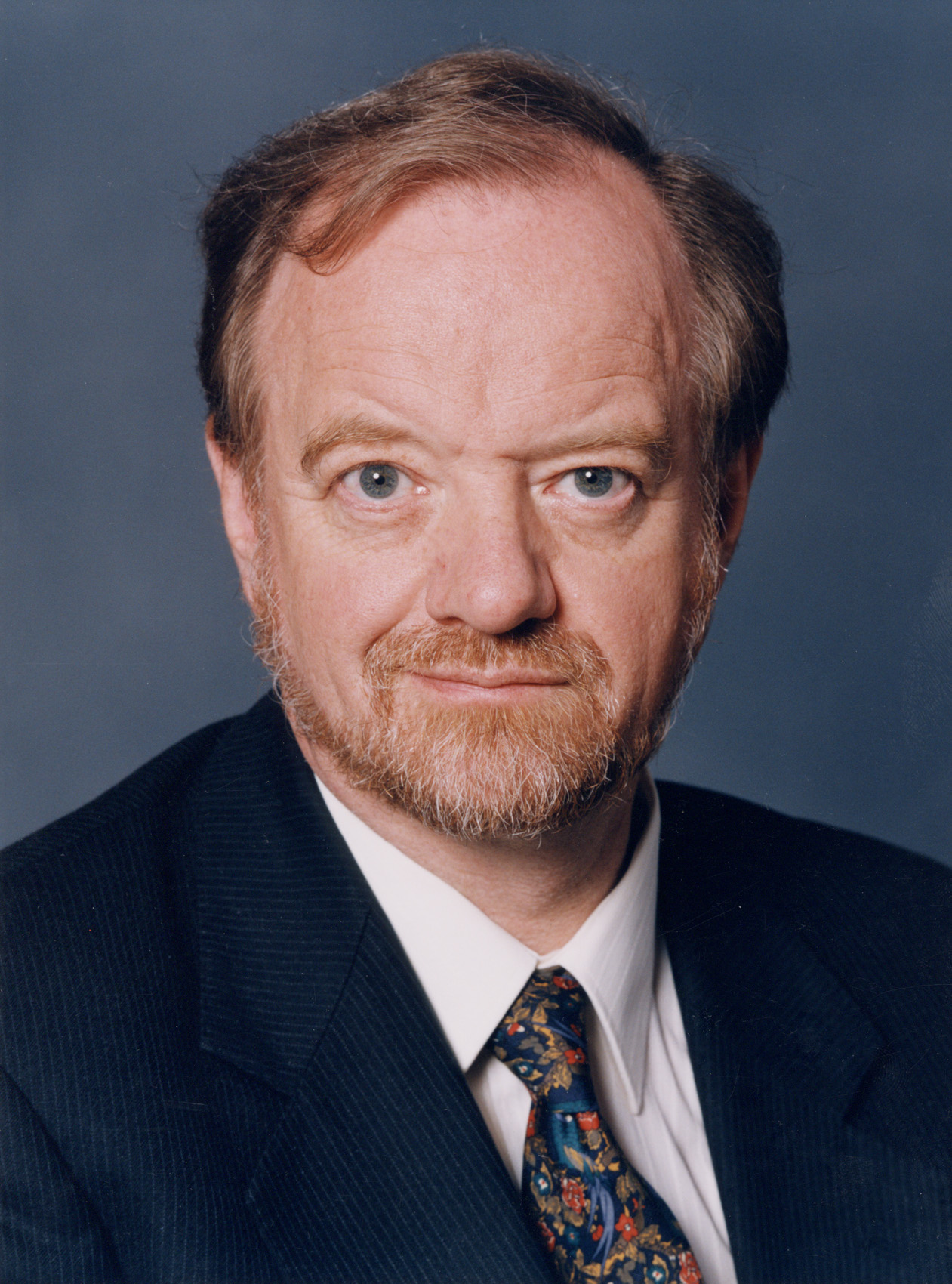
  • Robin Cook – 1999 Speech on Kosovo

    robincook

    Below is the text of the speech made by the then Foreign Secretary, Robin Cook, at the Mansion House in London on 14th April 1999.

    May I begin, Lord Mayor, by thanking you for your hospitality and your invitation to join you again at this annual dinner. It is a tribute to this dinner that as I look around this room I see such a distinguished audience of people of calibre, status and wisdom in front of me. Never too early to invest in the goodwill of your audience.

    As I look around I see nearly all the Diplomatic Corps in front of me, and can I say to each of those familiar faces of friends from the Diplomatic Corps, I am conscious of the heavy responsibility on me. I see in your eyes as you look at me in expectation that this speech may obtain the matter for at least one reporting telegram. I see I also have with me one of my eminent predecessors, here to see if the new man is quite up to the mark of the old. And as final confirmation of the distinguished character of this event, I also see in this room all those members of staff of the Foreign Office sufficiently senior to be paid more than the Secretary of State.

    Last year I said that the Lord Mayor was one of the greatest roving Ambassadors for Britain. I have to begin this year by admitting you have more than fully kept up to that tradition, My Lord Mayor, indeed you have achieved a first, I suspect, in the history of both Lord Mayors and Ambassadors in that in one single year you have visited every capital in the European Union. And you did that in order to carry a very important message around Europe, that the introduction of a single currency for the rest of Europe does not in any way diminish the attraction and the significance of the City of London as a financial trading centre. It is a mark of the confidence that you have contributed to in the City of London as a place to do financial business that we in the City of London trade more in the euro than France, Germany, or Italy, all added together. I am proud of the fact, but I would mildly suggest that it would be helpful to our diplomatic relations if Paris, Bonn and Rome did not put that in their reporting telegram tonight.

    May I thank you, Peter, on behalf of Britain for that tremendous effort you have put in, and that contribution you have made to the continuing success of the City of London. Can I balance those thanks with one modest correction. I did read in a recent interview from you that you said: ‘When I travel abroad as Lord Mayor, I enjoy the status of Cabinet Minister, so I can get up and say what I want to say.’ I am not sure that you have quite correctly comprehended the constitutional freedoms of a Cabinet Minister, so I did ring Alastair Campbell this afternoon and asked him: ‘Could I get up and say what I want to say?’, to which I got the blunt and characteristic response: ‘Who do you think you are – the Lord Mayor of London?’ But I am happy to say I have got clearance to report to you on the conduct of our foreign policy.

    Unlike so many of the companies in the City, it has been a year of steady growth. We have increased the number of our posts around the world, we have increased the number of diplomats working in our posts around the world. We have put particular focus in that expansion on helping British business. We have doubled the number of diplomats representing us in the Caspian Basin where within the next few years 10 per cent of the world’s oil supply will come. We have created new consular posts to support our business work in Scandinavia, in China and in countries in between.

    We have mended fences with countries where we have previously had no full diplomatic relations. I am happy to say that in the past week I have been able to announce the up-grading of our relationship with Iran to full Ambassadorial status, reflecting our success in securing a commitment from the government of Iran to take no action to further the fatwah against Salman Rushdie. And that has paved the way for us to have a dialogue with the Organisation of Islamic Congress in order to make sure that we have a better understanding between both the European world and the world of Islam.

    With Libya we have achieved an historic breakthrough within the past two weeks in that we have secured the handover of those two whom we have charged with the bombing of the Pan Am flight over Lockerbie. It has not entirely cleared the way yet for normal diplomatic relations with Libya, there are other matters that are still to be resolved in our bilateral relations, particularly the killing of WPC Fletcher, but it has enabled us to proceed with our judicial process and has enabled us also to lift the United Nations’ sanctions on Libya through the immediate suspension of those sanctions and thereby remove what is becoming an increasing problem between us and countries of the Arab world.

    I am particularly pleased with one relationship which we have also improved. We have always maintained diplomatic relations with Nigeria. I have to say until last year our High Commissioner found that the diplomatic relations that he had with the country to which he was attached was mainly being summoned in to be scolded whenever the Foreign Secretary had criticised the previous military regime in Nigeria. But nothing has given me more pleasure in the past year than the visit which I paid immediately after the Presidential elections as the first western Foreign Minister to visit the new democratic Nigeria: to sense the tremendous excitement of those people as they move into a new era of democracy and away from the recent past of military rule. The goodwill that I sensed there from the people of Nigeria in part reflected their respect for our firm position during the dark years of military rule.

    While I was in Africa I also hosted a joint conference with the French Foreign Minister. Those of you here from the Diplomatic Corps from an African state will understand the full and striking novelty of the British and the French Foreign Minister hosting a joint conference in Africa. Indeed I can confirm, since the doyen of the Diplomatic Corps has pointed out, this building was constructed in 1752, even in that long time this room has never heard of a joint conference in Africa between the French and the British Foreign Ministers. But both myself and my colleague strongly feel the time has come for our two countries to put behind us the habits of competition in Africa and to base our approach to Africa on a policy of cooperation. We are both interested in securing stability and development in Africa; we both strongly believe we have a better chance of securing that if we work together rather than against each other.

    This, if I may say, is a striking example of how close cooperation now is between the government of Britain and our European partners. There are other examples. We have just held this past weekend the first summit between the Prime Ministers of Britain and of Spain. The trial that we are about to hold in the Netherlands over the Lockerbie bombing would not have been possible without the very welcome and strong cooperation with the government of the Netherlands and particularly the personal interest of my colleague, van Aartsen. With Sweden we have launched a joint programme on social exclusion. With the new Germany we have secured a commitment in Europe to an annual report on European activity on human rights. And next month our Prime Minister goes to Germany to receive the Charlemagne Prize in recognition of his contribution to European development.

    That strong standing in the capitals of Europe is a vital asset to us in European negotiations. I have to say also it is a vital asset as well to the companies of the City and elsewhere in British industry. It has enabled us to end the ban on our beef exports; it has enabled us to secure one of the biggest increases in support of structural funds for Objective One regions in the recent Agenda 2000 negotiations; it has secured for Britain a commitment that there will be a seat for the United Kingdom in the European Central Bank if and when we join the euro; and at the Berlin European Council it enabled us both to support budget discipline and retain the British budget rebate.

    Together with our partners we are building a modern Europe, a modern Europe which has two clear futures. First, barriers are coming down between us. We have learnt that we can achieve more security for our nations by integrating our markets and our economies than we ever achieved by arming frontiers that kept us apart. But secondly, it is not an homogenised, pasteurised Europe, it is a Europe which recognises that cultural diversity is a source of strength, a Europe that respects equal rights of every citizen regardless of ethnic identity. A Europe that does not just tolerate cultural difference but treasures them as part of the richness of our communities. And those two features of a modern Europe, free of barriers with equal respect for cultural diversity, those key characteristics, explain why it is that Europe is united in support for the military campaign against Yugoslavia.

    In our Grace earlier this evening we prayed for peace in our time. I hope we will secure that peace soon in our time. But meantime modern Europe cannot tolerate on its continent the revival of fascism or the doctrine of ethnic superiority and the fostering of ethnic hatred. We have seen in the past three weeks mass deportations on a scale that we have not seen since the years of Hitler or Stalin. We have seen innocent women, children and some, but not all, their men herded like cattle into railways and carried on mass deportation by shuttle service. We have seen others of their ethnic community hunted like animals across the hillside.

    When I was at Rambouillet I was introduced by our Ambassador to a young woman from Kosovo who has acted as Albanian interpreter to our Embassy in Belgrade and had accompanied us to Rambouillet. I met her again last week after she had spent a fortnight escaping from Kosovo to Macedonia. In that time she had spent several days on the hillside with many thousands of others seeking to escape from the ethnic cleansing. In those days on the hillside she saw 14 babies born under the open sky. Many of those babies died and so too did some of their mothers.

    Mercifully, many of those refugees have now made it over the border from that terror and I warmly welcome, Lord Mayor, the generous donation that you have announced tonight on behalf of the City of London, a donation which demonstrates the responsibility with which the City takes its international role. I also wish to pay particular appreciation to the enormous relief work that is being carried out by our and our Allied troops over those past three weeks. In two days alone, British troops constructed shelter in camps in Macedonia for 30,000 people. NATO is now emerging as a major humanitarian agency, assisting the victims of that ethnic cleansing at the same time as we seek by military campaign to make it more difficult for that ethnic cleansing to be conducted.

    We meet within a City of London whose very basis is respect for the rule of law. In Kosovo at the present time we witness total contempt for the rule of law. The mass graves that have been uncovered by our photographs by aerial reconnaissance are the graves not of the casualties of fighting or of war, they are the graves of the victims of war crimes. I say to you, we will hold to account those who have carried out those unpardonable crimes. We know the names of the Field Commanders, they know their responsibility for the conduct of their units and we are passing to the War Crimes Tribunal all our information and intelligence in order that they may pursue those responsible and pursue them right up the chain of command to the top in Belgrade.

    I am well aware that one should not commit servicemen to take the risk of military action unless our national interest is engaged. I firmly believe that upholding international law is in our international interest. Our national security depends on NATO. NATO now has a common border with Serbia as a result of the expansion to embrace Hungary and other countries of central Europe. Our borders cannot remain stable while such violence is conducted on the other side of the fence. NATO was the guarantor of the October agreement. What credibility would NATO be left with if we allowed that agreement to be trampled on comprehensively by President Milosevic and did not stir to stop him? Therefore we must succeed, we must succeed for our own sake but also for the sake of the refugees, we must succeed in pressing home our key objective that they should be able to return to their homes under international protection. Anything else would be a betrayal of the refugees and a reward for President Milosevic.

    One of the encouraging features of the past two weeks has been the solidarity that we have received from the other seven countries of the region. I met last Thursday with the other European Foreign Ministers. All their governments are robust that a stand must be made against President Milosevic. All of them are now in a new dialogue with each other on regional solidarity. With each of them Europe is now accelerating its contacts and deepening its economic links. This is an exciting development which must not cease with a solution to the immediate crisis in Kosovo, but which we must take forward to enable those seven countries to develop a fuller integration with the modern Europe which they want to join.

    By contrast, Belgrade still lives in the past. I visited Belgrade at the start of the Kosovo crisis and had a full discussion with President Milosevic on the looming developments in Kosovo. I have to report that he began by saying that I could not understand what was happening in Kosovo unless I started in 1389. There was something tragic about such a deep history perspective on current events. I am pleased to assure the diplomatic representatives here today that I did manage to choke back the observation that if we all went back to the 14th century, HMG would have very sound title to large chunks of France. But I did not believe that it would be in our national interest to assert that title, nor is it in the interests of Serbia to live in the Middle Ages when the rest of the world is moving on into the 21st century. And some day his people too will decide that they want to join the modern Europe and they do not want to be trapped in the time warp which President Milosevic offers them.

    The strength of our Alliance is in no large part thanks to the continued commitment of our north American allies to freedom and stability in Europe. Just before I left for this dinner I held my daily conference call with Madeleine Albright. I will share with you the thought which I did not share with her, that for once I was very glad it was not a video conference call. The past three weeks has carried with it the very important message that vital to the freedom and security of Europe is the partnership between America and Europe, a partnership which goes back to the last war. And in 1945 when together we surveyed what we found in Europe, we found death camps, we found indecent bureaucracy of the extermination programme, pathetic survivors and millions of victims and we said then: ‘Never again’. That is the pledge that we must honour in Kosovo, because in the past two weeks we have again borne witness to forced movements by train, to thousands hungry and squalid in makeshift camps, to pathetic masses shorn of their homes and their papers for no reason other than ethnic identity. Had we done nothing in response, we would have been complicit in that evil. Had we done nothing, we would have betrayed the modern Europe we are trying to build.

    President Milosevic may be beginning to grasp that we will not let him profit from the ethnic cleansing he has inflicted in Kosovo. He knows exactly what he must do to end the NATO air strikes: stop the violence, withdraw his troops and let the refugees go back with a guarantee of an international military force.

    NATO was born 50 years ago out of the defeat of fascism. 50 years later we cannot tolerate the rebirth of fascism in our continent and that is why our servicemen are in action over Kosovo, some of them risking their lives tonight as we meet in the safety of the Mansion House.

    This annual dinner is one of the many expressions of the strong traditions of the City, traditions that provide deep roots for the political and economic freedoms that have fostered the success of the City: the rule of law; equal opportunity on merit; transparency of information and the freedom of comment; a spirit of internationalism and security for trade with any part of the world. Because we possess these freedoms perhaps we do not sometimes prize them enough. Nobody has a better or a more bitter appreciation of the worth of freedom than those who are denied it, such as the people of Kosovo. It is in the hope that we can build a modern Europe in which all its peoples can be united by the same security and freedom that I now call upon each of you to join with me in a toast to the Lord and Lady Mayoress.

  • Robin Cook – 1999 Speech on the Global Environment

    robincook

    Below is the text of a speech made by the former Foreign Secretary, Robin Cook, to the Green Alliance at the Institution of Mechanical Engineers in London on 15th February 1999.

    For the past week I have been commuting to and from Rambouillet, the chateau just outside Paris where the Kosovo peace talks are going on. It is easy in foreign affairs to become preoccupied with the pressing issue of the day. But while we deal with the conflicts of today, it is crucial that we keep thinking about the kind of world we want to live in tomorrow.

    THE SIZE OF THE CHALLENGE

    If we want that world to have a healthy environment, then we have a major challenge ahead of us. For anyone who still thinks that global warming can be treated as a side-issue here are four simple statistics. The six warmest years on record have all been since 1990. Last year was the warmest ever. Thousands of square kilometres in Britain are already at risk of flooding. A fifth of the world’s population live within 30km of the coast.

    The facts are just as stark in other areas. Take biodiversity. Some people still say that the extinction of plant and animal species is a natural process. So it is. But as the malign result of human activity it is now occurring at up to a thousand times the natural rate. Well over a tenth of the plant species known to man are at risk of extinction. And that isn’t just a tragedy for those who enjoy nature. It should concern anyone who cares about our health. A quarter of all prescription drugs are derived from plants. Drugs derived from tropical forest plants are worth USD25 billion a year.

    In fact, last year the scientific journal Nature published the first ever estimate of the monetary value of the services nature provides for us. The figure the authors came up with was USD33 trillion. If he had to pay for their true value, even the hardest-nosed cynic might think twice about destroying them. It is no coincidence that New York City has found it is cheaper and more effective to restore the forest from which its water is drawn rather than build a new water treatment plant.

    Freshwater is another issue where the position is crystal clear. The demand for freshwater is doubling every 21 years. In 1994 the UN Development Programme reckoned that there was a third as much usable water per person in the world as there had been in 1970.

    Each one of these issues is a slow-moving menace with the momentum of a super-tanker bearing down on us. And I haven’t even got onto the loss of soil and spreading deserts, the state of the world’s fish stocks, the forests, the coral reefs or the ozone layer.

    There is another statistic that is pretty sobering for party politicians like me. All of Britain’s political parties together have less than a million members. The largest number of them, of course, belong to the Labour Party. But there are over five million paid-up supporters of environmental groups in Britain. This is clear evidence of the immense public interest in the environment – people putting their subscriptions where they see their interests.

    THE ROLE OF THE FOREIGN OFFICE

    I believe firmly that the agenda of foreign policy should be set by the concerns of the people. I believe it should be about the things that matter to them. I have therefore pushed the environment up the Foreign Office’s agenda.

    The environment is not a problem we can deal with on a national level alone. CFCs from Chinese fridges will cause skin cancer on this side of the globe. There are still sheep in Britain that cannot be brought to market because of the Chernobyl explosion in the former Soviet Union.

    The response therefore to the environmental challenge must be international. We need to build a coalition that unites the international community in a determination to take the action required. And the Foreign Office has a key role to play in building that coalition.

    I also believe that the environment must be central to foreign policy because it cannot be separated from other issues with which we have to grapple. The prospects for peace in the Middle East would be enhanced if the region’s freshwater were properly conserved. South-East Asia would be more stable if over-fishing were not forcing the fishermen further into the disputed Spratly islands. We strengthen our foreign policy and help make a safer world by factoring in protection for the environment.

    And the converse is true. We strengthen our environmental policy by having a foreign policy that supports democracy, human rights, accountability and openness. It is no coincidence that democratic countries tend to look after their environments better than dictatorships, or that the East European Greens were in the vanguard against communism. All across the world environmental concern is driven by the people. If the people have no voice, their leaders have no interest in the environment.

    STRENGTHENING THE ENVIRONMENT DEPARTMENT

    We have already strengthened our environment department – it is now the fastest-growing department in the Foreign Office. I can announce today that we are taking this one step further:

    We will be inviting a secondment from an environmental organisation. I want a closer dialogue between government and the environmental movement – so our foreign policy benefits from their immense expertise, and they benefit from a foreign policy that is alive to their concerns and priorities.

    We will be inviting a secondment from business. This will strengthen our partnership with business both to protect the environment and to promote exports from Britain’s strong environmental industries.

    We have agreed a series of secondments into our environment department for young future leaders from developing countries. The programme will be organised through the ‘Leadership for Environment And Development’ programme based in New York. The key to building a global consensus on the environment will be to break down the suspicion between North and South. We in the developed world need to convince the South that our concern for the environment is not a form of protectionism in disguise. We also need to listen to their legitimate wish to enjoy the same prosperity we take for granted, and work with them on models of economic development that are also environmentally sustainable. When the fifth of the world’s population in the richest countries are responsible for over four-fifths of the world’s consumption it is a bit much for the rich to lecture the poor about preserving the environment. We need to work with the South, and build their perspective into our foreign policy.

    A GREENER FOREIGN OFFICE

    The other announcement I made in November was that the Foreign Office was going to put our own house in order as well. I announced a full environmental audit of our operations, so we could ensure that it wasn’t just our policy that was green, but our buildings were as well. This is moving ahead.

    We have carried out an energy audit of our Embassies from Tokyo to Dhaka. The new Embassy we are building in Berlin will be a model in energy efficiency, and our new Embassy in Moscow will contain some of the latest environmentally-friendly building technology.

    We are preparing a Green transport plan for all our operations. We have engaged consultants to look at our home estates and our posts overseas. And we are looking at bringing the Foreign Office and all its posts into line with the criteria of ISO 14001 – the recognised world-wide standard for environmental assessment.

    MAKING A DIFFERENCE

    Our Embassies can have a real impact overseas using their political contacts and public profile to make a practical difference on the ground. All over the world our embassies are running pilot projects, organising training courses, funding consultancies and other projects that have an impact multiplied out of all proportion to our investment in them.

    In Kazakhstan, for example, our Embassy is funding a project to use British expertise to tackle mercury pollution. In Venezuela we are helping to train the National Guard and Coastguard in the enforcement of environmental law. We are providing start-up funding for the manufacture of fuel-efficient stoves to reduce chronic air pollution in the capital of Mongolia.

    I am shortly going to visit Russia. When I am there I will be going to Murmansk to visit the decommissioned nuclear submarines whose waste poses a severe environmental hazard to the region. We are already working with the Russian nuclear regulator to ensure that it has the capability it needs to deal with this problem. But there is a great deal more to be done, and I will be seeing for myself how Britain can best contribute to that.

    THE CLIMATE CHANGE CHALLENGE FUND

    By working with business, the environmental movement and developing countries, we can break the myth of conflict between the green agenda and the growth agenda. I want British business to lead the way in showing that what is good for the environment can also alleviate poverty – it is not just a rich man’s luxury.

    Today I can announce a major step forward in the way we do that work. Together with the DETR, and in cooperation with DFID and the DTI, we are launching a new climate change fund in partnership with business. It will be called the Climate Change Challenge Fund. It will help us make use of British expertise in clean technologies and renewable energies. It will fund projects that will help developing countries to build up the capacity they need to combine healthy growth with low emissions of greenhouse gases.

    To start it off the Foreign Office is putting in half a million pounds into the fund. We hope British companies with an interest in energy and the environment will at least match this sum.

    The Challenge Fund will enable young high-fliers in the key industries in these countries to spend time in British companies. It will pay for carefully targetted consultancies and training programmes.

    The authorities in Peking, for example, tell us that they would welcome British expertise in encouraging the use of gas rather than coal for heating and cooking. And a consortium led by a British company, The Solar Century, is negotiating in China to build the world’s largest factory to make solar panels. At a stroke they will be vividly illustrating the value of environmental technology to the Chinese, helping to hold back global warming, and also creating jobs for Britain. Shell are already showing what British companies can achieve by providing solar power to the townships of South Africa.

    This fund will be a model for government and business working together. It will show that being green need not put you in the red on the balance sheet. And it will show that business can be a friend of the environment and not a threat to the environment. It is a win-win solution.

    I can report that I have already received business support for the initiative. For example, British Gas, Lloyds Register, Price Waterhouse Coopers, National Power, Alstom Gas Turbines, the British Consultants Bureau, ABB UK, and the Combined Heat and Power Association have all welcomed it.

    Today I spoke to Sir Brian Unwin, the President of the European Investment Bank. The Bank is keen to work with us, funding appropriate projects that our challenge fund opens up through its well-established banking network in developing countries. And we could not hope for a better partner. The bank exists to fulfil the objectives of the European Union, and one of those objectives is to make the Kyoto agreement work. It already lends almost 7 billion euros a year on environmental projects, including 150 million euros in developing countries. We will be working together with the Bank to harness some of those resources for the projects opened up by our Challenge Fund.

    THE OTs – A PARTICULAR CONCERN

    The Foreign Office has another particular environmental responsibility, and that is for the Overseas Territories. Their ecosystems are of global significance. The British Antarctic Territory acts as a barometer for climate change and atmospheric pollution – it was there that British scientists first discovered the hole in the ozone layer. The Pitcairns contain the world’s best preserved raised coral atoll. 22 species of whales and dolphins have been recorded around the Falklands. Gibraltar is a key migration route for birds of prey.

    If Britain is worried about biodiversity, then the Overseas Territories should be our first concern – they have ten times as many endemic species as Britain itself.

    These ecosystems are under threat. Uncontrolled development and economic pressures are taking their toll. Foreign species of animals and plants threaten the delicate ecological balance. And few places face such a direct impact from global warming as our island territories.

    We will shortly be publishing a White Paper on the Overseas Territories. It will set out our renewed determination to protect their environments. We will work with their governments, with our international partners and with the environmental community and the private sector.

    Our aims are to build sustainability and proper resource management into their economies, to protect their fragile ecosystems from further degradation, and to find viable alternatives to the depletion of scarce resources.

    We will step up the policy advice we have been providing, like the Caribbean Marine Biodiversity Workshop we organised last year. We will step up the financial assistance we are providing, like the 2.5 million pounds the British Government has committed, since coming to office, to environment-related projects in the Overseas Territories. And we will ensure that the Overseas Territories have access to the expertise they need to become the guardians of their own natural heritage.

    GREENING GLOBAL GOVERNANCE

    One of the slogans of the Green Movement is ‘think globally and act locally’. It is the Foreign Office that can supply some of the thinking globally.

    The lending policies of institutions like the IMF and the World Bank can have a direct impact on the environment. We need to make sure that it is a positive and not a negative impact. The trade policy of the European Union helps determine whether it is in the interests of farmers in the South to look after their soil or not. We need to make sure that all external policies of the European Union support its expressed commitment to safeguarding the environment.

    We need to think carefully about whether there is more we can do to wire in the environment to the work of international organisations. I believe that the key to doing so is transparency. Historically, progress in the environment has been driven by the public and by their lobby groups. Concerned citizens and pressure groups can have a huge impact. Their principal weapon is fact, and so they need access to the facts.

    All international bodies, from the European Union to the United Nations, should not only conduct full assessments of the impact their activities have on the environment, but open up their workings in ways that are now the norm for international treaties on the environment.

    And transparency is also the key to accountability. When institutions take decisions that have environmental consequences we need to make sure that those who are affected by those decisions can hold them to account. To do that, they need to know how those decisions were made.

    Let me deal with two of these multinational bodies where Britain has a leading role. First, the European Union. We used our EU Presidency last year to get agreement to integrate the environment into all policy-making. Three of its Councils must submit comprehensive environment strategies by the end of this year. Opinion polls agree that the environment is one area where the British public, along with all the other citizens of Europe, want to see more rather than less concerted action.

    Today I can announce a further step in partnership in Europe on the environment. Both Joschka Fischer and I have a long commitment to the environment and we talk about it whenever we meet. We have proposed a British-German forum on the environment, to bring together not just our governments but our non-governmental organisations and our businesses as well to look at some of the strategic problems we face on the environment.

    Secondly, the Commonwealth can make a stronger contribution to international partnership on the environment. It is unique in the trust it engenders between its members, and the constructive and friendly atmosphere of its discussions. It is the ideal body for breaking down mutual suspicion on the environment between North and South.

    It was at the Edinburgh Commonwealth Heads of Government meeting that my discussion with the Malaysian Foreign Minister led to the environment initiative at last year’s Asia-Europe Meeting in London. We will be tabling proposals to the South African Government and working closely with them to ensure that the environment is central to our work at this year’s Commonwealth Heads of Government in Durban.

    TRADE AND THE ENVIRONMENT

    Lastly, let me address the question of trade and the environment. We live in a global economy, and the framework of that economy will do more than anything else to determine our global future – from the spread of prosperity and the equity of global growth to the survival of the environment and the protection of biodiversity.

    Economists have long recognised that markets do not function effectively when hidden costs are not taken into account. If our trading system ensures that the polluter pays, then we will have taken a major step to creating an economic framework that ensures both transparent markets and sustainable growth. And that is just as important for developing countries as it is for the West.

    We have made clear our support for the High Level Symposium this year on Trade and the Environment. It will help bring together policies on both trade and the environment – not to strengthen one at the expense of the other, but to create a trading system in which growth is sustainable. It will also provide a focus for our work with our EU partners to make sure that our joint concerns for the environment are fully reflected in the new trade round.

    WHY THE ENVIRONMENT MATTERS

    The pioneers of the environmental movement had to work hard to persuade people that it mattered. Today the impact of environmental stress is all too apparent. There is barely a major area of public policy unaffected by it.

    National security, once the preserve of diplomats and generals, must now take the environment into account. Boutros Boutros-Ghali predicted that the next war in the Middle East would be over water. Two-fifths of the world’s population live in multinational river basins. Nine countries, for example, share the water of the Nile.

    Our economic future is bound in with our environmental future. Our companies now know that growth must be sustainable if it is to be commercially viable in the long-term. Farmers and fishermen the world over have learnt to their cost the economic impact of exhausting the soil and the ocean.

    And the environment is a key determinant of our health. Every day our doctors see the casualties of poor air quality. It may not be too long before the hole in the ozone layer brings them more patients. And according to a recent study in the Lancet modest action on greenhouse gases now could be saving 700,000 lives world- wide a year through cleaner air by 2020.

    PROGRESS SO FAR

    We have made progress. Kyoto and Buenos Aires showed that the world can get its act together, set itself legally-binding targets and develop innovative mechanisms for protecting the environment. We have taken action on the ozone layer by phasing out the use of CFCs.

    But we are under no illusion that this is enough. We are still piling sandbags in preparation for a tidal wave. Assuming all the Kyoto commitments are met in full, global emissions of greenhouse gases will be a third more in 2010 than they were in 1990. We have started on the road to effective international action on the environment, but we have a long way yet to travel.

    A JOINED-UP RESPONSE

    It is not a job that can be delegated to one part of government. To use the vogue expression, it needs a joined-up response. And this Government is providing just that.

    Whether it is Gordon Brown at the Treasury looking after our relations with the World Bank and the IMF and reflecting environmental objectives in his budget, Stephen Byers at DTI working for British environmental technology, John Reid developing a public transport policy for Britain, or Clare Short at DfID providing a record boost to our development strategy, the environment is being integrated.

    It is being led by John Prescott and his staff at DETR. It was his leadership and strength of will that brought Kyoto back from the brink. It was he again that kept the process on track in Buenos Aires. We could not ask for a more effective and committed champion to lead the work which is supported through half a dozen other Whitehall departments.

    CONCLUSION

    But Government cannot achieve everything on its own. We are only one of many agents of change to the environment. Business and commerce have a direct impact on the environment. Together we have a responsibility to shape that impact for the good. Pressure groups and the media can be an important driving force for the education of the public. Together we need to get across the message of how their own conduct can shape their environment for the better or the worse.

    I therefore end by asking you to join with me in a global partnership, to protect our global environment. It is a partnership around one clear message – ultimately, what we do to our planet we do to ourselves and our children.

    What John F Kennedy said over thirty years ago applies even more strongly today:

    Never before has man had such capacity to control his own environment. We have the power to make this the best generation of mankind in the history of the world – or to make it the last.

    Let’s make sure that it is the best.

  • Joyce Quin – 1999 Speech on Devolution

    Below is the text of the speech made by the then Foreign Office Minister, Joyce Quin, held at the Northern Ireland Assembly on 26th February 1999.

    I am delighted to be the first FCO Minister to address the Northern Ireland Assembly. This audience, more than most, will understand the dynamic between domestic and international affairs, between the Assembly’s transferred responsibilities and EU and international relations. We intend that the UK Government and the devolved administrations will cooperate effectively where their interests overlap. It is my particular aim – and that of Robin Cook – that the FCO’s co-operation with all the new administrations should be one of real partnership. I will say something today about the arrangements that I hope will underpin our partnership.

    RENEWAL IN THE UK AND EU

    As the FCO Minister for Europe and devolution I am involved in two of the Government’s most ambitious and exciting programmes. Devolution in Northern Ireland, Scotland and Wales is part of a wider programme of democratic renewal. Described by Tony Blair as ‘the biggest programme of change to democracy ever proposed’, it includes reform of the House of Lords, incorporation into UK law of the European Convention on Human Rights and strengthening the voice of the English Regions.

    We are in the middle of an important phase in the development of the European Union, in which Britain is playing a leading role. We are in the decisive phase of the Agenda 2000 negotiations: we want reforms to control EU spending and overhaul the CAP. These reforms are a necessary prelude for enlargement, which Britain strongly supports. We are encouraging the modernisation of the EU’s institutions, to make them more effective and accountable. We back Europe’s fight against crime, drugs and illegal immigration. we are taking forward the employment and economic reform agenda in the EU. We want the single currency to be a success, whether Britain is in or out. Big issues and a big agenda.

    GOALS AND PRINCIPLES

    There is a fit between our reforms at-home and our objectives in Europe. The UK has for too long been too centralised. Devolution will ensure that many decisions that affect the day to day lives of people will be taken locally – taking into account local needs, conditions and history. The idea of a centralised Europe is also discredited. The goals of ‘subsidiarity’ and ‘devolution’ are the same. We want to ensure that diversity is respected. We want to find flexible solutions.

    But the Government also believes that working together in the EU benefits the UK. We need to work together to tackle common problems. This is the vision behind our initiative on European Defence. It is the vision behind the single market and the common foreign and security policy. It is the vision behind devolution in the UK too.

    The Government believes that conducting international and EU relations on a UK basis benefits all the component parts of the UK. We have influence and respect as one of the major EU states; as a permanent member of the UN Security Council; and as a member of the G7. This influence means an effective foreign and security policy. It means we can drive forward international cooperation on drugs, environment and human rights. It means we can provide our companies with effective advice and assistance across the globe.

    THE DEVOLUTION SETTLEMENT

    Last year three important Acts established the framework for devolution in the UK. Devolution is different in each of Northern Ireland, Scotland and Wales – tailored to the needs, political circumstances and aspirations of the people. In Northern Ireland it is giving tangible effect to will of the communities for peace and cooperation. The Assembly will have the wide range of powers with which you are familiar. It will be able to legislate on such matters as health, education, support for industry, agriculture, and fisheries. A new democratic focus with real powers over real issues.

    The UK Government will remain responsible for international relations, including relations with the EU. This includes the negotiation and agreement of treaties and other international agreements, relations with territories outside the UK, relations with the EU and international organisations, the regulation of international trade, international development assistance and consular assistance to British nationals in distress. It is clear that in some areas the interests of the UK Government and the devolved assemblies will overlap.

    Northern Ireland has particular interests. Inward investment plays an important role in the regeneration of the local economy. Northern Ireland is a major beneficiary of EU programmes including the Peace and Reconciliation Programme and structural funds.

    PRINCIPLES FOR COOPERATION

    The UK Government has made clear that it wants to involve the devolved administrations in the development of policy on international issues that also have implications for devolved functions. This is particularly true in relation to EU matters, where legislation in Brussels will have a direct impact in areas for which the Assembly is responsible.

    In these and other areas, we expect to set out agreed working arrangements in a series of Concordats between the UK Government on the one hand and the devolved administration on the other. To that end we shall be putting to the Northern Ireland administration proposals for Concordats both on EU matters and on international relations more generally. However until the Executive Committee has taken on its powers and elections have taken place in Scotland and Wales we shall not be able to finalise these working arrangements.

    The Concordats will provide a framework for practical cooperation. A key principle is that there should be no surprises. The administrations need to keep each other informed of developments that might impact on each other’s responsibilities. The FCO will keep the Northern Ireland administration informed on international and EU developments that touch on its devolved responsibilities. We will provide relevant information and analysis including reporting from our overseas Posts. For its part the Assembly should keep us informed, including on its policy proposals, legislative programme and proposed international contacts.

    The UK Government will continue to be the formal channel for relations with other countries. The UK is, of course, the EU member state and the member of international organisations. It will be for the UK to negotiate and conclude treaties and other binding international agreements. There is, however, no barrier to the devolved administrations maintaining working level contacts with other governments on matters within their responsibility. Indeed we hope and anticipate that contacts will develop quickly with other leading European regions. These may lead to informal agreements highlighting common concerns and strengthening ties e.g. through twinning arrangements.

    Where international and EU negotiations touch on devolved matters we intend to involve the devolved administrations as directly and fully as possible in the formulation of the UK’s position. This arrangement will require a mutual respect for confidentiality and a commitment to support the agreed UK position. There will of course be disagreements. We will need to broker agreements. This is, of course, a role familiar to the Cabinet Office and Cabinet Committees. However, what we propose in this instance is to establish a Joint Ministerial Committee of which the UK Government and the devolved administrations would be members. The JMC will be a consultative rather than a deliberative body, supported by a committee of officials and a joint secretariat. I think it will provide an important forum in which we can all find common ground.

    Ministers and officials of the devolved administrations will be able to participate in EU Council of Ministers meetings and other EU negotiations. The emphasis must be on working as a team to achieve the best outcome. As at present, it will be for the lead Minister to decide how each member can best contribute.

    The UK Government and the devolved administrations will need to work together to ensure the implementation of the UK’s EU and other international obligations. The devolved administrations will normally play a leading role, consulting the UK Government. Under the devolution legislation it will be for the UK Government, after consultations in each case about if and how this should be done, to make subordinate legislation splitting quantitative obligations (e.g. reductions in greenhouse gas emissions) between the UK and the devolved administrations. We will together need to ensure that any difference of approach nonetheless produce consistency of effect and, where appropriate, of timing. There will be cases where we will agree that it is more convenient to implement obligations through UK wide legislation. We intend to continue to implement UN Security Council Resolutions by means of Orders in Council under the United Nations Act 1946. If we fail to implement our obligations each administration will bear the share of the financial costs or penalties imposed, flowing from its own conduct in this respect.

    OPPORTUNITIES FOR COOPERATION

    The FCO will continue to serve the interests of the UK and all its constituent parts. We will assist official visits to other countries by Ministers and members of the Assembly. We will work together on programmes for official guests and in arranging international meetings when these take place in Northern Ireland, Scotland or Wales.

    Our Posts will continue to promote the UK and all its constituent parts. We will ensure that the World Service and the British Council continue to reflect the diversity of all the constituent parts of the UK. We will work together on threats to the environment, encourage respect for human rights and tackle drugs, terrorism and international crime. We will continue to help travellers from all parts of the UK in trouble overseas.

    TRADE AND INVESTMENT

    The Assembly will be responsible for supporting industrial development in Northern Ireland. The Industrial Development Board has done an excellent job and I am sure it will continue to so. Locate in Scotland and the Welsh Development Agency have also done Scotland and Wales proud. But I want to make it crystal clear that the UK Governments trade development and investment promotion effort will continue to serve you and all the constituent parts of the UK.

    The UK trade promotion effort is the most extensive and effective in the world. The FCO puts more resources into this activity that any other, over 30 per cent of frontline effort. 221 Embassies, High Commissions and other Posts assist companies to export and invest, and identify and encourage inward investors. I am confident that we will build on our recent successes.

    The Invest in Britain Bureau, a joint FCO/DTI operation, maintains a close relationship with the Industrial Development Board and the other development agencies at home and abroad. We were glad to support the Board’s inward investment roadshow in the US last year. You might like to know that the current edition of IBB’s main promotional magazine – Briefing on Britain – gives pole position to a feature on Northern Ireland’s attractions and successful track record in securing inward investment from world famous companies such as Fujitsu, Ford, Caterpillar and Nortel as well as newer companies in fast growing sectors like software, multimedia and communications centres.

    REPRESENTATION IN BRUSSELS

    Our Embassies and High Commissions will continue to work on behalf of all the constituent parts of, the UK. UKRep in Brussels will continue to represent the UK to the European Institutions. We expect that the devolved administrations will set up their own offices. These might be inside or outside the UKRep framework. The key is that they should complement rather than cut across existing activity. The role of regional administrations in Europe is increasing. It will be to the advantage of the UK that we can enrich our relationships with regional links.

    CONCLUSION

    We live in a world where there is no neat divide between local and international issues. Encouraging industrial development or addressing climate change requires us to work on a global level to concert international action and at a local level to make a difference in our communities. Devolution will provide us with new challenges and new opportunities to make a difference. I hope we can rise to those challenges together.

  • Stephen Byers – 1999 Speech to TUC Conference

    stephenbyers

    Below is the text of the speech made by Stephen Byers to the 1999 TUC Conference.

    Hector, can I say that I am personally delighted, as Secretary of State for Trade and Industry to be addressing Congress this afternoon. I am acutely aware that I am the third Secretary of State in as many years to address Congress. It is what the Prime Minister means by labour market flexibility, I think. But I have given your General Secretary an assurance that as this may be my first and last address to Congress, I will be on my best behaviour. John has put me on a very strict vegetarian diet so the bad news for all those journalists is I have got to decline your invitations to a fish supper this evening.

    I know that Charles Kennedy has been attending Congress today. I understand that it is the first time he has ever had a non-speaking role in anything that he has done, but I am sure that he will have learnt a lot from conversations and discussions with delegates.

    As Secretary of State for Trade and Industry, having held the position now for nine months or so, I have personally welcomed very much the advice, the recommendations and the views that have been put forward by the TUC. That does not mean that I have always been able to agree with the points that have been expressed. There will be times when I have to say “No”; there will be times when I can say “Yes”. But in democracy I believe that is a healthy relationship, not an overly close one that many felt existed under previous Labour Governments.

    Now I appreciate that at times decisions that we take in Government will cause tension between us. There will be disagreement and occasionally a feeling of anger and frustration as far as you are concerned. When this happens we need to ensure that we maintain a dialogue between each other. Our actions in Government will always be to put the national interest first. That means that in all we do we will operate on the basis of fairness and not favours.

    I hope that I do not put John Monks in a difficult position when I reveal there has been one occasion in my time as Secretary of State when he has written to me with unreserved support for a decision that I have taken and a policy that we have implemented. He did not write that letter though as General Secretary; he wrote it as a long-standing supporter of Manchester United and it was supporting my decision to reject BSkyB’s takeover of Manchester United. (Applause) But at least I have one letter from John Monks of unreserved support for my actions.

    This Government was elected on a policy and an agenda of modernisation and reform, not to be rooted in the past or overwhelmed by the present, but a Government with a clear vision of the future direction of British society and the British economy. That vision and sense of direction is vital as we are witnessing a fundamental shift in our economy and our society. It is driven by globalisation, by knowledge, innovation and technology. It is changing the nature of work and the very workforce itself. The successful economies of the future will excel at generating ideas and exploiting them commercially.

    The first industrial revolution, in which we led the world, was based on investment in plant and machinery. We are now living through a new revolution, a new industrial revolution which is knowledge based which means investing in learning, skills and training. In all this, education will be the key.

    In response to this rapidly-changing world in which we live, we, as a Government, are doing things differently, and I appreciate that for some this is not easy. But week in and week out we are delivering policies and doing so in a way which will retain and consolidate the support of that historic coalition that gave us a landslide victory in the May 1997 general election.

    Let us quickly look at some of our achievements over the last 2 2 years. We restored trade union rights at GCHQ and we have cut corporation tax. We have signed the Social Chapter and we have led the case for reform in Europe. We have begun to invest , 40 billion in our schools and hospitals and we have cut the rate of income tax. We have introduced a national minimum wage and cut the rate of tax for small business to its lowest ever level. Within the month we shall see the introduction of the Working Families Tax Credit and we have also introduced tough measures to tackle fraud in our benefits system. We have established the New Deal for the young and long-term unemployed. We have also introduced a research and development tax credit for business. We have achieved all of those.

    What has been the response of the official Opposition? The Tories still oppose the national minimum wage. They have got a new Trade and Industry Shadow Minister, Alan Duncan. He has described the minimum wage as a cretinous idea. I had a quick look in the dictionary yesterday just to reaffirm in my own mind what a ‘cretin’ was. A cretin is a fool or a stupid person. I think that is a far more accurate description of Alan Duncan than the minimum wage which has directly benefited 2 million working people.

    The Tories would scrap the New Deal. They say it has been a failure, but let us look at the facts and not rely on prejudice: 300,000 young people already helped; youth unemployment cut by a half. The Tories regard that as a failure! It should come, of course, as no surprise. When they were in Government they were prepared to see a whole generation of young people the innocent victims of their economic and social policies. This Government will discharge our responsibilities to the young people and the future of our country. The New Deal does that and gives them hope for the future.

    The Tories say they do not support the introduction of the Working Families Tax Credit and would abolish it if they could. This, perhaps, is the latest sign that they have learnt nothing from their election defeat. Support for hard-working families is now a key dividing line between the two major parties in our country. The working families tax credit will make work pay and give parents a real incentive. It will leave 1 2 million families, on average, 24 a week better off.

    At the end of July we finally saw the Fairness at Work legislation reach the statute book, on the very last day of that parliamentary session – a new settlement for the workplace, a settlement based on partnership and minimum standards, for the first time, part-timers with the same employment rights as full-time workers, part-time workers at long last no longer treated in law as second-class citizens, trade union recognition if that is what the workforce wants, unfair dismissal regulations applying after 12 months and not two years, an end to blacklisting for trade union activity. We are going to make it unlawful to discriminate against an individual because they choose to belong to a trade union.

    Whistleblowers, those courageous employees who expose wrongdoing in the workplace, often in a very vulnerable position: they will be entitled to unlimited compensation if they are unfairly dismissed – a clear indication of the importance of someone in that situation as events in Clapham with the rail crash and at the Bristol Royal Infirmary have all too clearly revealed.

    I am also very conscious of the crucial work carried out by health and safety representatives. They are often in a very vulnerable position in the workplace when they try and secure a safe working environment. We need to find a way in Government to signal the important role that they play, and I was particularly pleased that we were able to introduce a late amendment to the legislation which ensures that if a health and safety representative is unfairly dismissed, there will be unlimited compensation to be paid to that individual.

    Of course, in the Fairness at Work legislation, the union Movement has not secured everything it wanted; neither has the business community. A balance had to be struck and this was ‘fairness not favours’ in action.

    In this changing world more parents are in work. One of the great challenges facing parents is how to juggle the responsibility of bringing up a family with holding down a job. We need to introduce family friendly policies into the workplace and we are beginning the process of doing that. We have extended maternity leave by four weeks. Additional maternity leave will be available after 12 months of employment, not the two years as at present. We have introduced 13 weeks parental leave for both mothers and fathers. We have introduced a right to time off work to deal with a family emergency, a right that will start from day one of employment. So no longer will a working parent have to worry about losing their job if they are called away to care for a sick son or daughter or to look after an ailing parent.

    I recognise that the long hours culture that exists in our country is not supportive of family life and I know that many of you have concerns about changes we have proposed to the working time regulations. What is clear to me, both in relation to the working time regulations and our proposals for family friendly policies, is that we need to win over hearts and minds.

    The adoption of these policies represents a major change in labour market policy, a change that can benefit both employers and employees, but they will only be of benefit if they are introduced in a sensitive and sympathetic way. I believe that these fundamental changes can be introduced in a way which secures our objectives without placing an undue bureaucratic burden on business.

    It is not our intention to exclude white-collar workers from the protection offered by the Working Time Directive. I do not believe that our amendments to the regulations do that, but we need to make it crystal clear and I believe the best way of doing so will be to issue guidance on the regulations which will achieve that objective and which we will develop with the Health and Safety Executive. As is our usual practice, we will discuss the guidance with the TUC and with employers’ representatives.

    As we implement detailed measures in the whole area of employment policy I want, wherever possible, to avoid the blunt instrument of regulation. Instead, we want to develop more flexible approaches to solving these common and shared problems. Alternative mechanisms, such as codes of conduct, need to be considered. Ensuring we achieve our goals will require more imagination and even greater constructive engagement from the unions particularly working in partnership with business.

    That is why today I am pleased to announce that I am inviting applications to a Partnership Fund. The Partnership Fund will have , 5 million to help foster new attitudes and approaches to partnership in the workplace. Partnership must be seen as more than just a warm word. It should involve real changes in the workplace, new ways of working together, new approaches to training and development, new systems of performance and appraisal. There are many good examples of partnership in practice and we want the Partnership Fund to act as a catalyst, and we especially want ideas based on family friendly policies and on how the partnership approach can help small businesses.

    Here in Britain we are putting in place the policies which will lay the foundation of economic success in the future, but any consideration of our future prosperity cannot ignore the question of Europe.

    Now is the right time to make the case for Britain in Europe. We must do so from the standpoint of the British national interest. Nearly 60% of our trade, that is , 100 billion a year, is now within the European Union. The share of our exports going to EU countries has risen rapidly since we joined. Many markets which were closed in Europe have now been opened up and the UK has been at the forefront of that liberalisation agenda.

    British jobs and investments increasingly depend on Europe. It is our key market. Our exports to France and Italy alone exceed those to the whole of North America, including the United States. Exports to Belgium and Luxembourg are double those exports from the UK to Japan. The figures speak for themselves.

    Financial services, in which the City of London plays a vital role, now provide a million jobs in our country with overseas earnings in excess of , 25 billion a year. Europe is a great and growing market for these particular services.

    In total, the jobs of probably millions of your members depend on Europe. As any inward investor will say, increased investment depends on two things above everything else – Britain’s modern flexible and stable economy, and its membership of the world’s largest market. There are 380 million consumers in the European Union. In the next ten years, with enlargement, there will be another 100 million more. This is the big prize that attracts the major players in our global economy.

    It is against that backdrop that talk of renegotiation is so dangerous. Yet that is exactly what the Tory Party is doing. The effect of this marked shift in Tory thinking in Europe is to ensure that the issue of Britain in Europe is now at the heart of the party political debate. It means that yet again in this generation we will need to make the case for British involvement and participation in Europe, for the benefits of EU membership will once again need to be proclaimed.

    This is now a battle that we must win, that we cannot afford to lose. Over the years it is a question that we have faced on a number of occasions – in or out of Europe? In the end, often after long and agonized debates, we have always chosen to be in. That conclusion has not been as a result of a triumph of political dogma over reason or by submitting to some powerful vested interest, but it has been due to sound common sense and always putting the national interest first.

    Europe matters politically and economically. Influence and partnership in Europe is essential to the British national interest. The Conservatives have confused the powerful case for reform in Europe – and there is a powerful case for changing Europe – with the case for disengagement and a retreat to the margins. Those of us who believe in the importance of Europe must be the first to recognise and to argue that the Europe we have today, its institutions, its working practices and its policy priorities, are not designed for the challenges we now face. Reform in Europe is vital because it needs direction for the future. It needs to reflect the challenge of the global economy in the 21st century.

    Europe must make a reality of the Single Market in all sectors. It must recognise that regulation can be a barrier to growth and job creation. To achieve this reform programme Europe needs to be more forward-looking, working to an agenda of education, enterprise and innovation so that the knowledge-based economy of the future is seen as a bringer of opportunity and not as a threat. We need to engage at all times to be building political alliances and to be shaping Europe’s development, not having it shaped by others, which has been the case far too often in the past.

    As soon as we came to office we pressed the case for economic reform to make the product, labour and capital markets of Europe more flexible. Without banging the table, we have successfully promoted Britain’s interests by arguing our case and, as a result, we have been able to cap the growth in European Union spending, to win a higher share of funding from regional and structural funds for the next six years, to safeguard our nation’s border controls, to end the beef ban by agreement on the basis of solid, scientific evidence, and we have protected our rebate.

    So we can see the benefits of Britain in Europe and the success that we can achieve as a result of constructive engagement. In all our dealings with Europe we must always act in the national interest. The British people would rightly expect nothing less.

    That must also be our response to the single currency. There is endless speculation about the Government changing our position on the euro, that we have gone cool on the idea or that we have become more enthusiastic, that the brakes have been applied or that our foot has now been pushed down hard on the accelerator. All this press speculation has meant that a Norwegian forest has been felled for no good purpose.

    Our policy remains the same. It was stated by the Chancellor in October 1997 and repeated by the Prime Minister on 23rd February this year. The Government’s view is that membership of a successful single currency would bring benefits to Britain in terms of jobs, investment and trade. The Chancellor has laid down five tests that will need to be satisfied in our national economic interest and, of course, the final decision will rest with the British people in a referendum.

    Now some people argue that we should rule out joining for a period, whatever the economic conditions. Some say that we should set a date for joining, whatever the economic conditions, and I understand that we may well be hearing these arguments put forward during the course of Congress this week. Without wishing to cause offence, I want to make it clear that the Government rejects both approaches. No one will push the Government into adopting either of these two positions because we believe they are not right for Britain, they are not in our national interest. Meeting the economic conditions will be the test. It is principled, pragmatic and practical. It is our settled conviction and will remain our policy.

    Congress, as we survey the world in the dying months of the 20th century, one thing is clear: we are living in a world of change. The nature of work also is changing. More of our people work part-time, and in many cases choose to do so. Many people work on a temporary basis or have fixed-term contracts. Fewer work on the shop floor and there has been an explosion of serviced-based jobs. More people work in small businesses. The composition of the workforce is also changing. More women are working. Some 52% of married women with children under 5 are now in work, more than double the situation a generation ago. More families depend on two earners.

    The businesses and organisations that people work for face new challenges, more competition, a greater pressure to innovate to stay ahead and a greater pace of change. Businesses are having to become more flexible, more and more people are being asked to take on real responsibility in the workplace.

    Change is the order of the day. We all need to recognise that and the union Movement is no exception. The advantage of the Government having laid down the conditions for economic stability is that it gives us all the space we need to react to these longer-term trends. We must see change as an opportunity and not as a threat.

    We all have a role to play here but only if we are prepared to embrace change, because these new working patterns put new responsibilities on all of us, whether in Government, in business or in trade unions – a responsibility on Government to ensure minimum standards of fairness, to promote the benefits of electronic commerce and the Internet for business, and to create a climate for economic prosperity; a responsibility on business to work in partnership and to ensure that the task of making a reality of a flexible labour market does not fall solely on working people; a responsibility on trade unions, on yourselves, to seek consensus and not conflict, to support dialogue and avoid damaging disputes.

    Flexibility does not have to, and must not, mean insecurity and poor treatment for people in the workplace. This only leads to additional stress for the many whose lives are already too stressful, leads to low morale and poor productivity. We must help people to adapt to the new world of fast changing markets and shifting patterns of work without sacrificing their quality of life. On many occasions the trade unions have been at the forefront of change over the years. You have been swift to adapt to the vast changes in collective bargaining that we have witnessed over the last 20 years.

    Unions now negotiate a far wider range of packages for their members, embracing new forms of pay and new forms of working. Unions were among the first to recognise the importance of training, with support for modern apprenticeships and the need to train workers in broad based skills throughout their working lives. Unions have embraced the Investors in People approach. One reason why the UK’s health and safety record is one of the world’s best is the important role which trade unions have played on safety issues.

    Union structures and services have adapted greatly to changed labour markets. The challenge for unions, as for our country, is exactly the same: it is to modernise and reform, to find new ways to work with members and their employers, to raise skills, improve productivity and play a role in making Britain a more prosperous and competitive nation.

    Working in partnership with business, working with your members to strengthen their skills and to deal with a more challenging labour market is the new agenda for the trade union Movement, and it is one which we in Government support. In a world of change, to look back is to condemn yourself to opposition; this is a lesson William Hague needs to learn. We cannot a build a future for our people based on a return to all our yesterdays. Those who resist change are not learning the lessons of history but are living history.

    Halfway through a Parliament is often the most challenging time for a government in office because voices call for consolidation, a reconsideration of our objectives and our priorities. But this is not the time to stand still. Now is the moment for Government to push forward on our agenda of modernisation and reform. If the world changes but we as a political party do not, then we become redundant and our principles become dogma. That is why as a party we have changed. In government we have demonstrated the nature of that change, not to betray our principles but to carry them out; not to lose our identity, but to keep our relevance.

    It is because of that change that we are able to be a progressive force for fairness and justice and not an historical footnote. There can be no distractions or diversions from the task before us. Our objective must be a dynamic, knowledge‑based economy founded on individual empowerment and opportunity, where government enables but does not dictate and the power of the market is harnessed to serve the public interest.

    The challenge for government is how to prepare Britain for a world in which change is continuous and knowledge is the new currency. Successful economies and societies will be those that can adapt to the demands of such rapid change, that are flexible and creative and manage change rather than become overwhelmed by it, finding new ways to include all the people. Our approach is built around a new coalition but with clear objectives to create a better standard of life for all our people to ensure British business succeeds at home and abroad, to tackle exploitation in all its forms. This is an approach which recognises that the role of Government itself has fundamentally changed, but that it still has a critical part to play in improving the performance of the British economy and improving the quality of life for all our people.

    First and foremost, we must create a stable economic environment, ending the wealth‑destroying cycle of boom and bust that has dogged British business and the British economy since the war. We must never forget, and never return to, those days in the early 1990s where we saw inflation at 10%, interest rates at 15% and over a million manufacturing jobs lost.

    Stability matters in our new economy because, more than ever, we need businesses to invest in knowledge and to take risks to stay ahead in fast‑moving markets. We can ill‑afford this vital investment to be put off through fears about economic stability and the long‑term future.

    With stability achieved and uncertainty removed, there are great opportunities ahead. Those opportunities will only be achieved if we embrace the new and leave behind the old ways of doing things. On the eve of the new century, the challenge facing us all is how we can ensure that people become partners in change and not the victims of change. I am confident that, by working together ‑‑ trade unions, business and the Government ‑‑ we will be able to meet that challenge and, in so doing, that we will be able to discharge our joint responsibilities to your members, our people and our country.

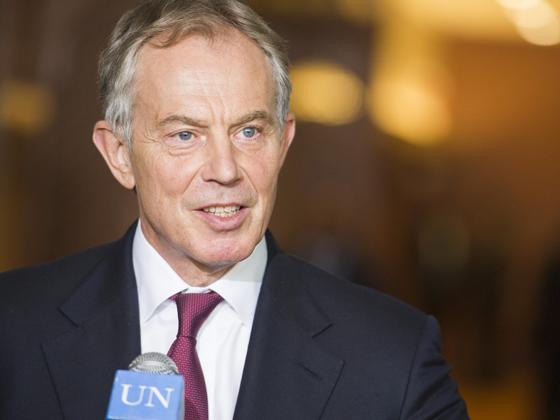
  • Tony Blair – 1999 Speech to TUC Conference

    tonyblair

    Below is the text of the speech made by the then Prime Minister, Tony Blair, to the 1999 TUC Conference.

    Hector, my Lord – in fact my Lords actually looking along the platform there – it is a delight to be with you today and to be here again at Congress, and I am particularly flattered and privileged to be the warm-up act for the poet laureate. (Laughter) In fact, I am so flattered and so privileged I have written you a little poem, which I am going to read to you:

    Every year, this time of year I come to the TUC and every year the press report, there’ll be a row between you and me.

    They say I’ll come and beat a drum, unleash the annual cry,

    “Change your ways, clean up your act, modernise or die”.

    “Well, modernised you have”, I say, New Labour, new unions too,

    both for the future, not the past, for the many not the few.

    So the link between us changes, you’ve changed and so have we.

    You’re welcome now in No.10 but no beer today, just tea.

    And amid the change there’s bound to be a call for the link to end.

    What staggers me is the call should come from the left-wing firebrand Ken.

    Ken, I thought your job was to put out the fires not start them, and maybe that is the way we should keep it! So now you have got my poem, you have got Andrew Motion’s later and tonight you can composite the two of them.

    Congress, it is a real pleasure to be with you because there are huge and important challenges that we face and it is those that I want to set out in my speech to you today. But before I do that I also want to deal with what is the criticism or the attack that is sometimes mounted on us as a New Labour Government, and it is really summarised in the phrase, “What has New Labour done for us?” If you take out the “new”, that cry has been made within our ranks whenever there has been a Labour Government for the 100 years of our history.

    For example, I came across a quote the other day from Walter Citrine, no less, who said in the 1940s, “I can’t remember a single occasion when Attlee has ever helped us since he has taken office”, and we all remember some of the speeches made in the Labour Government of the 1970s, or the 1960s, or even the 1920s.

    So what has this New Labour Government done for the country, for the workers of the country, for your members? – A statutory national minimum wage, lifting the pay of 2 million workers, the first ever under the Labour Government; the right for unions, where their members vote for it, to be recognised by employers for the first time ever in our history; halving the qualifying period for unfair dismissal; raising the compensation limits back to their real value of 20 years ago; an end to check-off; paid holiday for the first time ever; the Social Chapter signed; parental leave so that people can balance work and family responsibilities. These are things that the New Labour Government has done for people in this country.

    The New Deal for the unemployed: 250,000 on the programme, almost 100,000 young people into employment who were previously unemployed; youth unemployment halved; long-term unemployment down to its lowest level since the early 1970s and no one I have ever talked to on the New Deal calls it a skivvy scheme.

    Or the working families tax credit, lifting the living standards of 2 million lower and middle income families; or the biggest ever rise in child benefit this April; or this November £100 extra to every pensioner household to help tide our pensioners over the winter months. Those are achievements that any Labour Government and any Labour Party can be proud of.

    More than that – the £800 million John Prescott is putting into the poorest estates in the country; capital receipts after years of lying idle freed up for use by local councils; Section 11 money restored to help ethnic minorities with the English language; the abolition of charges for eye tests for the over 60s; a 10p tax rate for the low paid; cutting class sizes for 5, 6 and 7 year olds; replacing nursery vouchers with guaranteed nursery places; £40 billion extra spending on schools and hospitals; ending the ban on unions at GCHQ. All these things has a Labour Government done and, of course, there is much, much more to do. Hospitals still need to be modernised, schools that are run down to be changed, sink estates still sink estates, pensioners still living in poverty.

    We know all these things remain to be done, but we should remind ourselves of two things. First, we are working hard as a Government every moment of every working day to put right what is still to be done and we will not rest until we’ve done it. We have made a start but we know there is so much more to do. Second, every bit of that progress – every bit of it – has been opposed root and branch by today’s Conservative Party, every bit of it delayed in the House of Lords by Tory hereditary peers, every last line of it fought over by the ever-more extreme sect that is now the Tory Party in the House of Commons.

    That is the choice, not between this New Labour Government and some fantasy Government where no hard decisions are ever taken and everything is put right overnight. The choice is between a New Labour Government, trying our best to put right 20 years of Conservative Government, and a Conservative Party that is worse than they were before and if they ever got the chance would reverse every bit of progress and change we have made in the last two years, be in no doubt about that whatever.

    There is another thing: for the first time in 20 years, yes, trade union leaders come to Downing Street. They are consulted, they are listened to, just as the CBI are. No favours but fairness, equality – exactly what we promised. Yes, we are New Labour. You run the unions, we run the Government and we will never confuse the two again. Yes, we are not going back to the old days of secondary action, mass pickets and all the rest, but don’t let anyone pretend that this is not a Labour Government delivering for ordinary working people in this country because we are and we need your help to do it. The moment we ever go down that road of betrayal, we all know the destination as well. This is what will happen if we ever listen to it, not a left-wing Labour Government but a right-wing Tory Government and that is not what this country needs.

    It is necessary to say this because whenever the myth of “What has the Government done for us, what has New Labour done for us?” is raised, we have to dispel it, otherwise our supporters are told the myth but not the reality. I know that remarks that are made are often misinterpreted. You don’t have to tell me – I have got the scars in my back to prove it!

    But actually I know that the vast majority of you here today don’t share the sentiment of betrayal. You do recognise the change that we have brought about. Yes, you would like us to go quicker and further, and there will inevitably be disagreements, but I believe in many ways we have today a better, clearer relationship than ever before between trade unions and Labour Party, between trade unions and Government. We share many of the same goals and values, but we are not in each other’s pockets. We have both matured. We have both changed, and for good.

    Because when we are attacked as having ‘sold out’, it is largely not because of what we have done or what we are, but because of what we are not. We are not as a Government, or as a Labour Party today, anti-business or anti-wealth. We enjoy good relations with business. We are in favour of wealth creation. We celebrate British entrepreneurial success. Many successful business people support New Labour, and we are proud of it.

    The real criticism is that we are not out there jabbing our finger at the ‘bosses’, engaged in old-fashioned class-war rhetoric and all the rest of what used to be standard stuff for conference speeches (and occasionally still is) and it is for good reason. Business and employees, your members, aren’t two nations divided. That is old-style thinking, that is the thinking of the past. Business and employees, your members, work best when they work together for their common interests, when they’ve got one direction and one purpose. So I make no apology for saying that New Labour does strongly support business, but it is absurd to suggest that supporting business means somehow we don’t support employment or we don’t support employees or we don’t support trade unions. When we back business, we are supporting employees and employment. When we support employees and employment, we are backing business.

    On the Working Time Directive, for instance, the Government is accused by the TUC of listening to the CBI. Let me answer that charge by pleading guilty. Yes, we did talk to the CBI. The Government is accused by the CBI of talking to the TUC. Let me answer that charge too by pleading guilty. Yes, we did talk to the TUC. Curiously enough, we talked to both TUC and CBI, and to lots of others too. That is because we are, and should be, a Government that listens, a Government which includes all sides in the argument. But it is a Government too which ultimately must make the final decision, not a decision for one side or a decision for the other – those are, indeed, the sterile ways of the past – but a Government that takes decisions for the whole country. I will say that here today at the TUC and I will say that in November at the CBI conference, because taking decisions for the whole country is what we have been about since May 1997, and it is what we will continue to do now.

    You, in your way, are doing precisely the same. Of course you will resist bad employment practices, of course, in certain circumstances, there is going to be conflict but your emphasis today is on partnership with your employers, recognising the common interest you both have in producing quality goods or delivering quality services. We have both been – TUC and Labour – politically liberated and as a result we both do a better job. We have actually done more as a Labour Government in two years than virtually any of our predecessors, and the trade union Movement’s standing today is higher than it has been for decades.

    That political liberation was necessary, not necessary simply to win but necessary in a far more profound sense, necessary to achieve our basic aims and values. For you, the old-style confrontation harmed your ability to represent your members and harmed your ability to recruit because, though day in, day out, trade unions were doing a thoroughly responsible job, though in fact, not in myth, most unions were preventing strikes not calling them, though on the ground away from the media profile employers and unions were actually co-operating, because the profile was different, the perception based on some reality of a politically charged, highly confrontational trade union Movement, it did nothing but damage. Now the perception and reality are different and, as a result, this union Movement today is once again recruiting.

    When the TUC and CBI discussed how the new laws on recognition would work, I was struck by how you were both clear that the mere presence of the law would encourage voluntary recognition. We can already see this happening, and it is clear that unions are helping to make it happen. There is a huge change in industrial relations. That partnership message that you have spearheaded is actually spreading. The days of mass meetings in car parks and readiness to strike have gone for good, but that does not mean that employers should ride roughshod over their staff. Modern organisations have to succeed in today’s competitive-orientated society. Your insight is that they will do that best when they take their staff with them, when they work with their staff, when they treat their staff as partners in the enterprise and that is the appeal of that partnership message.

    Sceptical employers – and there are a few – should just look at the many successful companies who say that the partnership they have with their staff is not just good for employees but benefits their business through good and bad times. As I said in your TUC partnership report, “Britain works best when business and unions work together”. So that is a huge change that you have brought about.

    The same was true for us as a Labour Party. Though, in fact, Labour Governments were often clearing up an appalling financial mess inherited from Tory Governments, we were perceived, it was the common myth, you will remember finding it on the doorstep from time to time, that we were somehow financially irresponsible and we would expend masses of our political credibility, political energy, doing things we felt we had to for reasons of ideology which obscured the true aims of social justice that we really care about.

    Take the New Deal: it is the biggest ever programme spending money, £3.6 billion, getting people who have languished on the dole for months and years back into work. It is being done, however, with the support and active participation of employers. It is helping get welfare bills down but, more important, it is giving real hope and opportunity to thousands previously denied it. It is social justice in action and isn’t it a far better way to do it with employers helping us, with the country behind us? When we introduced the minimum wage, isn’t it a good thing that we should be proud of, that now today many employers in the country actually support it?

    In May I addressed a joint TUC-CBI conference on work and industrial relations. I think it was not just constructive and serious, it was a ground-breaking conference. What has happened is that at long last our belief in social justice has become allied to modernity. In history that is, in fact, what has always allowed people from the centre and centre-left political persuasion to advance. We have always advanced when the belief in justice has been allied to a commitment to the future, to progress, and that is the challenge we have risen to.

    But – and this is my message to you today – this challenge never stops. The real point I want to make is that we now face a bigger challenge in this country than ever before. We can rise to it but not if we under-estimate its scale or its scope, and that challenge is the challenge of the new economy. The economic world around us is changing so rapidly, the pace of technological advance is so fundamental, the revolution in communications and business practice so pervasive we cannot as a country sit still. We cannot rest on our laurels. Our country needs us as a government to be fully alive to the threats and opportunities of a future that is upon us, and your members need you to help equip them and help them cope with this massive economic change, with this new economy.

    I want to see trade unions as partners in this change, not as enemies but as champions even of this change. Together – Government, people, business, trade unions – we have to address the challenge of this new economy, and I say to you in all seriousness this challenge of the new economy is the fundamental issue of our times. It does not grab the headlines but it will make the history.

    Yesterday when I was in Cambridge I saw the huge potential of the Internet and electronic commerce to transform business, and not just business but the public sector too. Today, all right, it is only a minority of people who are using it, but in years to come, as a matter of course, people will shop, they will buy goods and services of every description using this technology. They will look for jobs, they will book government services. They will use government services through the new technology. Industries will alter dramatically. Unskilled low-pay jobs will go. It is why, to take controversial examples, running the Post Office in the same way, or failure to reform the way we pay teachers or organise the Health Service isn’t on. Without change we will, as a country, decline.

    There are opportunities, of course, in this new technology revolution too. We can get better ways of working, of combining modern family life with modern working. You know better than me bringing up children as well as making up the family income, as well as caring for elderly relatives or the disabled, all at the same time is today’s reality for millions of women and men, and it can be hell. We have to use the changes that are coming to find new and better ways of working to improve people’s lives, but it all requires change and modernisation.

    To succeed in this competitive global economy, our economy needs to be stable, knowledge-driven, skilled, flexible, creative, collaborative and inclusive. Our vision, the vision we have got to unite the whole of this country behind, is of Britain as a knowledge-driven economy competing on the basis of skills and talent and ability, not low wages and poor working conditions. There is no future for Britain as a low-wage, sweat shop economy – none. Anybody who fails to realise it, like today’s Conservative Party, does not actually understand the new world that is upon us.

    It is an enormous task. It is why we cannot waste time on outdated ideology, on old-fashioned attitudes or practices. It is why every ounce of our political energy and our political credibility has to go on carrying out this task.

    It is why we gave the Bank of England independence in monetary policy. It is why we have set tough new spending rules. It is why we have introduced what amounts to a revolution in British economic management. We have done that in these first two years and the result? – We have the lowest interest rates for over 30 years, the lowest level of inflation for over 30 years, our budget is now moving into surplus. We can afford to spend now, but wisely and in a way that can be sustained over a number of years, but I promise you, if we had not had those first two tough years, if we had not taken the measures, some of which were unpopular, like petrol tax rises and all the rest, to sort out the huge debt we inherited, we could never have achieved the position of economic strength we have today.

    Already we have people trying to drag us back into the past. The Tories, who oppose Bank of England independence, who accused us of putting the country into recession last year and have had to eat their words, are now already spending what they call Gordon Brown’s war chest. I tell you, start back on that road and we’ll end up where the Tories put us – boom and bust. In today’s global financial markets, prudence is the only course and we are going to stick to it.

    I say this to you: New Labour, not the Tories, is the Party of economic competence in Britain today and I am proud that we have achieved that record for ourselves, proud of it and proud of what it can do for our country.

    Stable economic management is here to stay, but it is the foundation. On that foundation we then build the knowledge economy and that is the reason why we focus relentlessly on education. Yes, it needs more money. We are putting in £19 billion extra in the next three years. But it does need reform and modernisation too – school standards raised; basic literacy and numeracy in primary schools achieved; comprehensives that take account of pupils’ different abilities; poor teachers rooted out; teachers pay linked to performance; bad education authorities no longer running children’s education; more school leavers at university; all schools connected up to the Internet and using the new technology; increasing the number of computer literate people (including myself); learning for life; and a £1.4 billion investment in science and engineering already paying dividends is what the New Labour Government has committed to science and research.

    These changes are necessary. It is why we need a flexible labour market. It is why we need to remove unnecessary bureaucracy and regulation. It is why we need to change and have changed capital gains rules to help small businesses and stimulate more venture capital.

    It is why, in my view, we must remain fully engaged with change in Europe, now a vast single market of 360 million people. We must be leading partners in shaping the Europe of the future, sensible and positive about the single currency whilst maintaining the economic conditions for British participation, and we must leave behind us for ever the disastrous isolation of the Conservative years to which today’s Conservative Party wants to return us.

    We must achieve all these things and it is why we need you, the trade unions, to be at the forefront of this change, driving it on, making sure it works for your members, delivering that partnership. We will give the help and support that we can. It is why we gave £5 million to form the new trade union Partnership Fund, why David Blunkett is making available an additional £2 million to establish a Union Learning Fund. To represent the employees of the future we need trade union officials who understand that future and the challenges it presents.

    Following our conference in May, I would like to propose a joint Government-CBI-TUC Conference specifically on the knowledge economy early next year, where we think through the consequences of this technological revolution and what it means for us in our working lives.

    Your own Millennial Challenge shows you in pretty stark terms that union membership isn’t there as much as it should be in the growth areas of employment. John Monks said yesterday that he was ambitious for unions to be as relevant to the jobs of the future as you were at the birth of trade unionism to jobs in the mines, mills and factories of industrial Britain. He is right. You can seize the opportunity to be part of the modern economy and the modern Britain I want to see created. That is the vision of which you can be a part – an economy and a country which has at its heart success and achievement but social justice too; an economy which sees no gap but the vital connection between competitiveness and compassion; an economy which praises entrepreneurship and promotes opportunity for everyone; an economy and a country which wants to see business do well with employment growing and one which wants to see help for those who need it and the way clear for those who can make it and do well; an economy and a country which can compete in the modern world and which can ensure that as many as possible are ready and able to contribute to that modern world.

    A hundred years ago, at the turn of the century, the Labour Representation Committee was formed, and at the 1906 general election a fledgling Labour Party, 29 MPs, was elected to Parliament. At the heart of this historic partnership between trades unions and Labour Members of Parliament was a passionate desire to end the squalor of long hours and low pay, dangerous working conditions, to put an end to slum housing, poor health care, inadequate education. We have achieved so much with successive Labour Governments and with the unsung work of countless volunteers working for the Labour Movement.

    That spirit of the beginning of this century, the spirit of fairness and of justice, and the anger at waste and the lives of unfilled potential, those values and that spirit drive us still. But I have to say to you, in all frankness, it should not have taken us, should it, 98 years to achieve a national minimum wage? It should not have taken us that long to achieve many of the basic rights that we now have and that is why we must all be even more ambitious for the next century, and that means making the next century one that is not dominated by the Conservative Party. That is our ambition because this century has been. If you look back on this century, three-quarters of it has been dominated by Conservative Governments and we ourselves spent 18 long years in opposition whilst the Conservatives did whatever they liked to our country in Government.

    So if you think from time to time I get a bit too restless to make sure we win a second term of a Labour Government, if from time to time you think I am a bit too hard in knocking down those who I think are being irresponsible and wrecking our chances of achieving that second Labour Government I tell you, a Labour Government is always better for this country than a Tory Government.

    I remember the very worst thing about those 18 years. It was sitting there, day in, day out, in the House of Commons, winning the argument, losing every vote and ending up being completely and totally powerless to prevent the decimation of parts of our country, to prevent 3 million unemployed growing up and being taken as a matter of course, powerless to prevent the poll tax, powerless to prevent every single part of rights being taken away from working people, powerless to prevent a two-nation Britain growing up around us.

    So when we look at what we have done in our two years, I believe we have a lot to be proud of, but I am not so naive as to think we can transform the whole of the world in one term of a Labour Government. We need more than one term to succeed in doing the things our country needs. So I will carry on working for that second term. It is why our Government is unremitting in its determination to renew our economy, our institutions, to match the breakneck speed of change in the world about us, and it is why I repeat unashamedly to you that that challenge of change to you here in the trade union Movement, as to us in the Labour Party in Government, is not something with a beginning and an end. It is a relentless process of modernisation with a timeless purpose of releasing the energies and enriching the lives of all the people that we represent.

    We have come a long way but our memories should not be too short. Three years ago we were still under a Conservative Government. Three years ago we were setting out a programme that was a New Labour programme and people supported it. Some people supported it, like me, because they believed in it; other people supported it because they realised it was a way of winning an election. What I say to you is that is no longer good enough. It is important we all believe in this because what New Labour is is very simple: it is Labour values applied to the modern world. It is the values of community and fairness and social justice and opportunity for all – all the things that brought me into the Labour Party, that brought many of you into the trade union Movement, but it is just always allied to progress and to the future.

    These challenges we can meet together. The fact that we have a dialogue together is a good thing today. The fact that I come down here today and there isn’t some great sense of impending crisis – at least not until I have given one – is a good thing. The fact that you can just tell from the way that people regard our relationship today that it is a good thing. Yes, you will make your demands that we should go further and do more, of course you will, and that is your job. You are the trade union Movement there to represent your members and it is right that you put pressure on us to do more and to achieve. But it is right also that we remember how far we have come and how important it is that we carry on doing the right things for our people. Yes, there will be times when I have to say “No” when you would like me to say “Yes” and when I might like to say “Yes”.

    People who come into my room, day in and day out, it does not matter who it is, the one thing they always have in common is they always want money from the Government. The other thing they have in common is that all the causes are just causes and the problem is you can’t say “Yes” to everybody, and that is what Government is about. But for the first time, at least in my adult political life, we have got a Government that will listen, that will let people in the door. So, yes, I agree £100 for the pensioners is not enough, many of them want more – quite right too – but it is £100 more than they ever got under a Tory Government and people should not forget that.

    There are lots of people who want more for the minimum wage and I agree it would be nice to pay everyone everything you want, fine, but never forget you have only got a minimum wage because you have got a Labour Government and a Tory Government would take it back off you again.

    The other day I wrote an article. I had been to this marvellous new Health Service facility where we spent all this money giving the very best care that possibly is there for all elective surgery and people were only having to wait two months and they were getting booked appointments and you got the hospital surgery done at the very time you wanted it, and I got all these letters in from people saying, “That’s marvellous, when can I have it?” I say to them, “You will have it, we will get round to doing it in every part of the country but we have to start somewhere”.

    When David Blunkett is starting his education revolution and raising the standards for 11-year-olds and putting an extra £1.5 billion in school buildings, yes, there are still other school buildings that need changing, but at least we are starting and at least we have got our hearts in the right place and at least the policies are coming there that will ultimately deliver the changes we need.

    So what I say to you is what I always say to the Labour Party and, in a sense, what I say to the people of this country. This is a Government that is on your side. We will get there, we are getting there. We have made changes that no Government before us, Labour or Tory, has ever done, in our two years of office, but we are going to do it this time in a way that lasts. We are not going to be having two years of giving people everything they want and then three years of retrenching. We are not having any more irresponsible financial policies pursued and then finding we don’t have the money to pay the bills and we are going to chop away the spending in the years to come.

    This is a New Labour Party and it is a New Labour Party for one very simple reason, that the 21st century, if I have anything to do with it, is going to be the century of the progressives again, of those who believe in social justice. It is not going to be another Conservative century for this country.

    As ever, it has been a delight to be with you; as ever, you probably have not enjoyed everything I have had to say; but, as ever, remember that I am proud to be a member of the Labour Party and to be a Labour Prime Minister. If I am ever tough on the things that I believe Labour has to do, it is for the very simple reason that I want a Labour Government that succeeds not in the impotence of shouting about what Tory governments do, but in the sense of having principles and being able to do something about them.

    When I talk about the new economy and the knowledge‑driven society I know it is not as interesting as giving the usual lines on what we are going to do about this and that and all the rest of it (and you know the little pattern that you get when everyone knows you are going to applaud and all the rest of it, sometimes anyway!) but it is important too. When we hold that conference next year, TUC and the CBI, you should really get engaged with it and take the debate out to your members. The technology that is developing now in our country is going to transform the world. We have to have our values intact and secure but apply them to the modern world. If we do that, then I (or someone else) will be turning up as Labour Prime Minister to address you for many years to come.

    Despite all the changes and all the interesting people that now address the TUC, I think you would prefer to have us than others.