Tag: 1999

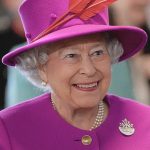
  • Queen Elizabeth II – 1999 Christmas Broadcast

    Queen Elizabeth II – 1999 Christmas Broadcast

    The Christmas Broadcast made by HM Queen Elizabeth II on 25 December 1999.

    A very Happy Christmas to you all. Listening to the choir from St. George’s Chapel, Windsor, reminds me that this season of carols and Christmas trees is a time to take stock; a time to reflect on the events of the past year and to make resolutions for the new year ahead.

    This December we are looking back not just on one year, but on a hundred years and a thousand years. History is measured in centuries. More than ever we are aware of being a tiny part of the infinite sweep of time when we move from one century and one millennium to another.

    And as I look to the future I have no doubt at all that the one certainty is change – and the pace of that change will only seem to increase.

    This is true for all of us – young and old. On my mother’s ninety-ninth birthday last August I was struck by how the inevitability of change affects us all, and how different were my mother’s early years compared with those of my grandchildren.

    For many of their generation the future is a source of excitement, hope and challenge.

    For others however the future is a cause of understandable anxiety. There are many, for example, of my age or amongst the more vulnerable in society who worry that they will be left behind. The sheer rate of change seems to be sweeping away so much that is familiar and comforting.

    But I do not think that we should be over-anxious. We can make sense of the future – if we understand the lessons of the past. Winston Churchill, my first Prime Minister, said that “the further backward you look, the further forward you can see”.

    It was this importance of history which was much on my mind when I opened the new Scottish Parliament in July this year. Devolution in Scotland and Wales, and more recently the very welcome progress in Northern Ireland, are responses to today’s changed circumstances, but they need to be seen in their historical contexts.

    History and a common past have also played an important part in bringing together so many different nations into the modern Commonwealth.

    This was a frequent theme last month at the Commonwealth conference in South Africa.

    At that meeting many of us highlighted the way in which the varied strands of our shared history have been woven together so that we can more effectively address the challenges and opportunities ahead.

    The Commonwealth, as with the process of devolution in the United Kingdom, reminds us of the importance of bringing the lessons of the past to bear on the aspirations for a better future.

    To do this we need to draw from our history those constant and unchanging values which have stood the test of time and experience. Fairness and compassion, justice and tolerance; these are the landmarks from the past which can guide us through the years ahead.

    These timeless values tell us above all about the way we should relate to people rather than to things; thinking of others, not just of ourselves.

    Earlier this autumn in Manchester I visited some of the emergency services, whose responsibilities day in and day out are based on concern for others. As always they are on duty over these Christmas and New Year holidays.

    Up and down the country people like those firemen, nurses and ambulancemen I met are working tirelessly to help others. They remind us of the responsibility of each and every one of us to show concern for our neighbours and those less fortunate than ourselves. I believe that this provides us with the direction and resolve required for the years ahead.

    The future is not only about new gadgets, modern technology or the latest fashion, important as these may be. At the centre of our lives – today and tomorrow – must be the message of caring for others, the message at the heart of Christianity and of all the great religions.

    This message – love thy neighbour as thyself – may be for Christians 2,000 years old. But it is as relevant today as it ever was. I believe it gives us the guidance and the reassurance we need as we step over the threshold into the twenty-first century.

    And I for one am looking forward to this new Millennium.

    May I wish you all a Merry Christmas and, in this year of all years, a very Happy New Year.

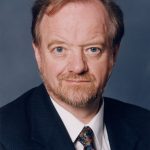
  • Robin Cook – 1999 Statement on Yemen

    Robin Cook – 1999 Statement on Yemen

    Below is the text of the statement made by Robin Cook, the then Foreign Secretary, in the House of Commons on 11 January 1999.

    Madam Speaker, with permission I should like to make a statement on recent events in Yemen. There have been three separate developments affecting British nationals in Yemen since the House last sat. On Saturday, and again this afternoon, I have discussed those events by phone with the Prime Minister of Yemen, Dr. Iryani.

    The most recent event was the kidnapping on Saturday of Mr. John Brooke from the compound of the oil company for which he worked, in the Marib area of northern Yemen. Our ambassador was in contact immediately with the Yemeni Prime Minister and Interior Minister to insist on full consultation with us on any steps being taken by the authorities to secure Mr. Brooke’s release. This afternoon I have expressed to Dr. Iryani our strong view that the release of Mr. Brooke should be achieved through mediation, and the Prime Minister of Yemen gave me an assurance that no force would be used without consultation with us.

    We currently have in Yemen a team of police officers who are preparing an account of the previous kidnapping. Two of those officers are experienced in hostage negotiation. We have made their skills available to the Yemeni authorities.
    We have also been in contact over the weekend with the Government of Yemen about the five British nationals who have been detained there. We understand that the five men were detained on 24 December. Our embassy in Yemen first heard of the arrest of unnamed British nationals on 29 December and immediately demanded access to them, including through a succession of meetings between our ambassador and Yemeni Ministers. However, access was not granted until last Friday, when our consul-general immediately visited the prison in Aden but was given access to only three of the five men.

    On Saturday, I stressed to the Prime Minister of Yemen the vital importance to us of obtaining access to all five men under detention in order to reassure ourselves and their relatives that they are well and being properly treated. Dr. Iryani undertook to make immediate inquiries and on Saturday our consul-general was permitted access to one of the other two men. Access to the fifth man is still being denied on the ground that he has Yemeni-British dual nationality.

    However, this afternoon Dr. Iryani assured me that access to the fifth detainee will be granted today or tomorrow.
    On Saturday, I stressed to the Prime Minister that if the five men are to be charged, those charges must be brought soon. They and their relatives are entitled to know why they have been arrested, and the five men cannot defend themselves against allegations until they are charged. If they are not to be charged, they must be released. This afternoon, I sought and obtained fresh assurances from the Prime Minister of Yemen that all five men will have access to legal advice, that any charges will be subject to due process of law in open court, and that consular staff will have the right to attend.

    I now turn to the tragic events arising from the seizure of 16 tourists in southern Yemen. Twelve British nationals, two Australians and two Americans were ​ kidnapped by an armed group on 28 December. According to the Yemeni authorities, the kidnappers’ key demand was the release of a number of Yemenis and foreigners arrested by the Yemeni authorities. As soon as we learned of the kidnapping, the British ambassador spoke to the Yemeni Interior Minister, Hussain Arab. He made clear our paramount concern for the hostages’ safety. He pressed on the Yemeni authorities our strong wish that no precipitate action be taken which could endanger the hostages’ lives.

    The next day Yemeni security forces encircled the kidnappers and their hostages. There was a firefight, in which four of the hostages were killed. Three were British. I am sure that the whole House will join me in extending our deep sympathy to the families who grieve for those who were killed. The testimony of the survivors confirms more forcefully than any hon. Member can that all the hostages conducted themselves with the greatest courage and concern for each other.
    There is still much confusion about how the firefight started and about whether hostages had been killed before the security forces intervened. At the request of the Foreign Office, a team of British police officers went to Yemen on 1 January. In close co-ordination with the visiting Federal Bureau of Investigation team, they are preparing a full account of what happened.

    On Saturday, I expressed to the Prime Minister of Yemen the importance of full co-operation between our Governments in the investigation. We agreed that the best way for us to maintain sound bilateral relations was to work closely together in establishing the truth and in bringing the full truth into the open. It would be wrong to prejudge the police investigation or to anticipate what it may conclude about the handling of the rescue attempt by the Yemeni authorities. Let us be clear, however, that the primary responsibility for what happened rests with the armed gang who seized the hostages in the first place. Those responsible for seizing the hostages, and for the death of four of them, must be pursued and brought to justice.

    I pay tribute to the British ambassador, Vic Henderson, to Consul-General David Pearce and to their small team. They have responded with professionalism and with total commitment to a succession of demanding events.

    Two areas of public policy require to be reviewed in the light of recent events. The first relates to the travel advice issued by the Foreign Office. Our travel advice in relation to Yemen has for some time warned of the risk of kidnapping. Following the recent tragic deaths, our travel advice has been strengthened to advise

    “against all non-essential travel to Yemen”.

    Following the recent kidnapping of Mr. Brooke, our ambassador has today met representatives of the British community to impress on them the need for heightened vigilance, and to discuss with them the implications for their safety of recent events. All British nationals are being encouraged to re-register urgently with the embassy.

    Our system of travel advice is widely held up as a model of good practice by other countries. It already tends to the side of caution, although it is necessary that it should not veer to over-reaction if it is to retain credibility among the public. We are constantly looking for ways of improving distribution of that advice. We need to be sure that it is seen by anyone thinking of travelling to dangerous parts of the world.

    I am therefore inviting tour operators and other members of the travel industry to the Foreign Office to discuss how we can further improve the distribution of our travel advice. We hope to develop with them a voluntary agreement on advice to clients booking holidays to countries where there is a risk. We would wish such an agreement to include a commitment to notify our consular division when tours are being organised to dangerous countries.

    The second area of public policy that we must review in the light of recent experience is how we can improve our support to other countries in handling the seizure of hostages. I can announce that the Foreign Office will appoint a police expert with experience in hostage negotiations as a consultant to the Foreign Office on counter-terrorism work. Our intention is that he or she will travel abroad to discuss the training needs of foreign Governments, and to offer advice on their handling of hostage-taking.

    We shall also launch a global series of seminars and consultations to share best practice in handling terrorist incidents with countries around the globe. Last November, we held such a seminar within the G8 to pool expertise on handling kidnap cases. Now we must make sure that the expertise pooled at that London seminar is shared more widely with countries outside the G8. These initiatives reflect the two principles that must guide the conduct of our consular duty: first, that the safety of British nationals is our paramount concern; and secondly, that only we can succeed in securing their safety from terrorism only by close international co-operation in defeating the terrorists.

    The whole House will wish to record its condemnation of terrorism. Kidnapping is a crime. It is the same crime whether it is committed for financial gain or for political reward, and it is as much a crime under Islamic law as it is anywhere else. I invite all hon. Members to join me in sending the firmest possible message to terrorists that we are determined to protect the safety of our nationals and to be robust in combating terrorism wherever it occurs.

  • Frank Dobson – 1999 Speech on the NHS

    Below is the text of the speech made by Frank Dobson, the then Secretary of State for Health, in the House of Commons on 11 January 1999.

    I should like to make a statement on how the national health service is coping with the recent sharp rise in the number of people falling ill.

    First, on behalf of everybody in the country, I want to thank all the people working in the health service and local social services for the huge effort they have been putting in to ensure that everybody gets the treatment and care that is needed. They have done all that because there has been a surge in the numbers of people going to see their doctor, and an even bigger surge in the number of people calling ambulances and helplines and going to hospital. The sharp increase in the level of illness is confirmed by the increase in the number of people dying, which in some parts of the country has meant that families trying to arrange funerals face long delays.

    The figures put together by the Public Health Laboratory Service from returns made by the Royal College of General Practitioners show that the present outbreak of flu and flu-like illnesses seems likely to be on the same scale as that which occurred in the winters of 1994 and 1996, although the figure may go higher. The figures reflect the increased number of people with flu-like symptoms who go to see their local GP. Until now, flu and flu-like illnesses have been worst in the west midlands and the north, but there have been sharp peaks elsewhere.

    The demand for ambulance and hospital services has shown a much larger increase, with daily ambulance journeys almost doubling in some places. Both the Merseyside and the Greater Manchester ambulance services saw the demand for ambulances shoot up to more than 1,000 journeys a day, compared with an average of 500 to 600. For the London ambulance service, this new year was the busiest on record with more than 4,700 journeys, compared with a daily average of 3,000.

    There have also been some tragic fatalities due to meningitis. I extend my sympathy to the families concerned. Parents are right to visit their family doctor to seek advice if they have concerns. In November, the chief medical officer advised general practitioners to refer suspected cases of meningitis promptly to hospital, and he will renew that advice.

    The national health service is better prepared than ever before to cope with those illnesses, and in most places hospitals have coped well with the pressures that they face. In August, I asked the NHS to prepare itself, to strengthen emergency and ambulance services, to make best use of the beds available, to improve discharge arrangements and to prevent unnecessary admissions to hospital in the first place. It has done so. Almost 2,200 schemes are under way nationally, backed by the £159 million announced by my right hon. Friend the Chancellor in the pre-Budget statement. Those include £750,000 to improve intensive and high-dependency care in London; £200,000 for one-stop clinics in Walsall; £175,000 for better home treatment and care in Leeds; £140,000 for a community-based phlebotomy service in Gloucestershire; and £45,000 to help prevent fractures among the elderly in Kent.

    In August, we also announced that GPs could this winter, for the first time, offer flu vaccinations to all their patients over 75, rather than confine vaccinations to ​ particularly vulnerable groups. As a result, a third of a million extra doses have been given this year compared with last, and vaccine remains available.

    We are tackling particular pressure points. Over the past week, those parts of the NHS that are suffering particular problems which could be helped by extra cash have been told that they can draw on the £50 million contingency fund, which is there for that purpose. In some places that will mean more high-dependency beds being provided to relieve pressure on intensive care beds.

    The position today is that 35 adult intensive care beds are free and available for use. The situation seems to be easing, but it could get worse again if icy weather were to lead to a lot of falls, particularly among the elderly. The NHS cannot be complacent. It is not, and I am not.

    I will not pretend that the NHS everywhere has coped as well as the public are entitled to expect. Such an increase in illness will always cause difficulties, but those difficulties have been made worse because of the serious underlying problems that we inherited. We inherited a rundown NHS with serious staff shortages. Many buildings are out of date, much equipment is old and unreliable, methods of working are not making best use of new technology—particularly information technology—and there are not enough staffed beds. The Government are getting a grip on the short-term consequences of those problems and are also laying longer-term foundations to build a modern and dependable NHS. Much of that work is already under way.

    One of the causes of the shortage of nurses is the cuts that the previous Government deliberately made in the number of nurses going into training, which fell from 15,000 a year at the time of the 1992 general election to fewer than 13,000 when they left office, having fallen at one point to 11,700. If they had not made those cuts, there could have been an extra 11,000 nurses available to the NHS today. It takes three years to train a nurse, so the country is paying a heavy price for those years of Tory neglect.

    This year, 15,500 nurse training places will be available and 2,500 more people are already in training compared with when we took over. As I have said before, we must also reform the system of nurse education and training, which the previous Government introduced in the 1980s. It has achieved some of its objectives, but its emphasis on the academic element has put off some potential recruits.

    Many nurses, when they qualify, think that they lack the practical skills necessary on a ward. The transfer of responsibility to the education sector from the health service has broken the old links between individual hospitals and nurses in training, to the disadvantage of both. Many nurses and nurse managers recognise the need for change, so I hope to carry the profession with us—but reform there must be.

    The previous Government refused, right up to the end, to recognise that there was a shortage of nurses. This Government recognise that reality and therefore training extra nurses is a major objective. We spelt that out in our evidence to the pay review body. This year, we also made it clear that the pay review body should give special attention to the pay of nurses in the lower grades. Like the nurses, we want reform of the present rigid grading structure and better career development prospects so that those vital staff have a modern, fair and flexible system for pay and promotion. I repeat my hope that the ​ independent pay review body will propose a settlement that is fair to nurses and midwives and which the Government will be able to implement in full.

    We are also addressing the concerns of qualified nurses who have left the NHS. We want to attract them back, not only with better pay, but with family friendly shift patterns and a better and safer working environment. If we are to retain existing staff, recruit new staff and persuade former staff to return, we must provide them all with the modern buildings, plant and equipment that they need. We have already embarked on the biggest hospital building programme in the history of the NHS, and there is more to come. High priorities for more small-scale investment include the replacement of outdated and unreliable equipment.

    Last September, the Prime Minister announced that the national lottery new opportunities fund would help to provide new and better equipment for the detection and treatment of cancer. He also announced that, from April, we would be investing £30 million to renew 25 per cent. of accident and emergency departments to make them better and safer for both patients and staff. Ambulance services will be given new control systems, new vehicles and new equipment. All those will help the NHS to cope better with winter pressures.

    New methods of working will also help. We launched three pilot schemes in Newcastle, Preston and Milton Keynes to test NHS Direct, a nurse-led 24-hour helpline. The schemes have been a great success: providing advice and reassurance round the clock, they have been very popular with patients, and have had a positive impact in helping them to look after themselves and reducing unnecessary calls on other services. Over Christmas and the new year, NHS Direct pilots took almost double their usual number of calls—itself an indication of the upsurge in illness. After receiving advice from the nurse to whom they spoke, about half the patients with flu symptoms were able to look after themselves. That shows how the NHS is delivering new and better services, and it is being extended to the rest of the country.

    With the special investment of £44 million that we have provided, NHS Direct has already been extended to the west midlands, where it took more than 1,150 calls in its first week of operation. By April this year, it will cover more than 20 million people in the west country, Manchester, south London, west London, Essex, Nottinghamshire and other places: over 40 per cent. of the population. That will provide a new and better service for patients and at the same time help people to avoid resorting unnecessarily to GPs, the 999 service or their local hospitals.

    Finally, there is the question of beds. Under the last Government, the number of acute beds was reduced by 40,000 and the number of general beds by a further 23,000. In September I announced a review of beds in the health service—of the number of beds involved, the sort of beds and where they should be. Preliminary work for the review suggests, not surprisingly, that the health service needs more beds. Our extra investment in the NHS over the next three years will ensure that we can respond rapidly when we have the final report.

    Then there is the question of intensive care and high-dependency beds. Soon after taking office, on the advice of the specialists in children’s intensive care, I authorised a shift of extra funds from the paperwork of ​ GP fundholding to children’s intensive care, and the concentration of the service in regional and sub-regional centres, with special arrangements for retrieval of very sick children by specially trained and specially equipped staff. As a result of the additional investment, the service can now provide up to 300 children’s intensive care beds, very specialist new-born babies’ beds and high-dependency beds. The new system has been working well, but recently there was an unacceptable delay in dispatching an ambulance from Nottingham to Rotherham. In the light of that experience, I have insisted that each children’s intensive care unit, with its local ambulance service, must review its arrangements to ensure that it is possible to stabilise and transfer very sick children safely and promptly.

    Intensive and high-dependency care beds are vital to the treatment of many people who have had operations, as well as accident and emergency cases. They demand huge resources. Intensive care is not just a matter of a bed and some specialist equipment. To care properly for one patient for one day in intensive care can require the services of around six specialist nurses as well as specialist intensive care doctors, anaesthetists and others.

    Previously, the overall level and availability of intensive and high-dependency care has not had the attention that it deserves. That is why the Audit Commission is co-operating with the national health service and the Intensive Care Society to carry out a detailed study of the operation of intensive and high-dependency care in the NHS. I hope that that will provide a sound basis on which to plan for better services. I am also reviewing the role of the emergency bed service and of the national intensive care bed register. None of that is a criticism of the people working in those services—more than anyone else, they want the system to be modernised.

    It has always been a source of pride in our country that, when difficulties crop up, people rally round to help and they have certainly done so on this occasion. I thank them all. In particular, I thank Dr. Ian Bogle, chairman of the British Medical Association, for his repeated advice to the public that normally healthy adults should use services in a considerate and responsible way.

    From next April, for the first time in 20 years the NHS will operate on a budget entirely set by a Labour Government. It will benefit from the first stage of our £21 billion extra investment. In the meantime, I know that people realise that, when so many people suddenly fall sick, as they have in some places recently, it is inevitable that treatment and care cannot be as prompt as at other times. I want to ensure that we provide the people who work in the NHS with sufficient tools and resources to ensure that the impact is much less in future.

    Over the past few weeks, nurses, doctors, midwives, health visitors, cleaners, kitchen staff, managers, porters, ambulance staff, laboratory scientists, therapists, pharmacists, telephonists, clerical, administrative and maintenance staff and social services staff have all performed wonders on our behalf when their own ranks have been severely depleted by the same illnesses that are affecting the rest of us. Many of them have kept on working while “under the weather” themselves. Many ​ have returned early from leave to help their colleagues. Others have cancelled leave that they planned to take. I thank them all. They have done us proud.

  • David Taylor – 1999 Speech on School Governing Bodies

    Below is the text of the speech made by David Taylor, the then Labour MP for North West Leicestershire, in the House of Commons on 11 January 1999.

    As a parent of four daughters in full-time education and as one who was once employed in the profession, it has been a pleasure and a privilege for me to be a member of school governing bodies in north-west Leicestershire for more than 20 years. However, there is no comparison between those early years as a governor and now, and nor would I ever want to return to them. The role of governing bodies has changed completely following the implementation of local management of schools introduced by the Education Reform Act 1988. Every survey of governors since then has revealed the great time commitment that the job now involves and has referred to the paper mountain from central and local government and from the schools themselves.

    I am delighted that the Minister for School Standards, my hon. Friend the Member for Birmingham, Yardley (Ms Morris), is replying to the debate. Since her election to the House, she has used her 18 years as a teaching professional to excellent effect and she is widely respected in the world of education. She knows only too well the impact on governors of the huge changes in the culture of education during the past decade or so.

    In the debate on the education White Paper, my hon. Friend said:

    “We recognise the important role of governors… I am afraid that we have put a further burden on them… When the relationship between the governing body and the school is right, it is a tower of strength for the good of the children. When it is not right and when governors feel that they are burdened down with paperwork, it is a matter for concern.”—[Official Report, 18 July 1997; Vol. 298, c. 656.]

    In my visits last year to all schools in north-west Leicestershire, it was clear to me that the Government have every right to be concerned. The chairs of governors of those schools—mainly village primaries—often said that they were drowning in a sea of paper. I requested this debate in an attempt to raise the profile of the issues.

    Nationally, there are more than 300,000 governors and they are a huge and valuable resource. However, there is a risk that, as unpaid volunteers, they are being taken for granted and overwhelmed by consultation papers and new duties. Members of all governing bodies are increasingly concerned about the layer upon layer of additional responsibility and work that is being placed upon lay governors. Governors are unpaid volunteers: although they can reclaim expenses for expenditure incurred on behalf of the school, few do so because they are concerned about additional costs on already stretched school budgets. It might seem surprising, but many new governors are still not aware of the commitment and responsibilities that come with being a governor, while more experienced governors feel that they cannot commit more and more time to doing justice to their role. Recently, there has been a much higher turnover of governors in my part of the world, and we are not unique.

    The issue is not merely the call on the time of governors—time which so far has been willingly and freely given: there is an enormous information overload. ​ The continuing inflow of documents for the attention of chairs and members of governing bodies is reaching alarming proportions and is a disincentive for people either to take on, or to continue with, the role of governor. A cursory glance at the commitments for school responses in Leicestershire last term, and for some due early in the current term, reveals eight major consultations by the local education authority: on educational development, lifelong learning, behaviour support, nutritional standards for school meals, fair funding, key stage 1 class sizes, the new deal for schools and early-years child care. Soon, the LEA will be required to hold consultations on asset management, youth work, school organisation, special educational needs provision, youth and community education review, fair funding from April 2000 and the LEA Ofsted action plan. The Minister will appreciate what a daunting agenda that is for governing bodies and head teachers.

    I do not criticise the LEAs; they are carrying out statutory responsibilities to consult and would be acting illegally if they did not do so. Central support staff in local authorities are as overwhelmed by those requirements as are governors and school staff. However, at the rate that we are going, something will have to give.

    I have referred to the particular pressures of time and to the immense information overload for governors. I now turn to the issue of responsibilities. The increased responsibility in many areas requires a range and level of professionalism and expertise that few lay individuals can reasonably be expected to have. However, what is frequently demanded of governors, especially those who are chairs of governing bodies, now includes the setting of staff pay and conditions, professional development interviews and appraisal of head teachers, and, most importantly, the health and safety legal requirements. Following the delegation of health and safety issues to schools, governors have a corporate responsibility for health and safety regulation and non-compliance might constitute a criminal act that can carry severe penalties.

    I have always supported increased freedom for governors in relation to schools and recognise that it brings increased responsibility. I believe that most governors are content to accept that responsibility. However, they are volunteers and they require training and support. Local education authorities are under a specific duty to provide governor training. In Leicestershire, that is very well handled within the limited resources available, but that is not necessarily the case elsewhere. One of the difficulties in providing up-to-date and effective training and support is that guidance material on recent educational initiatives is not as full or as available as would be ideal, nor are the resources typically available to LEAs for such matters anywhere near the levels necessary to help optimise governors’ contributions to driving up standards.

    The three key roles of governors remain to provide a strategic view, to act as a critical friend and to ensure accountability. The day-to-day pressures are such that the urgent can too often drive out the important. It is easy to forget that one’s original intention was to drain the swamp when one is up to one’s ears in alligators. Many of the extra pressures on governors that I have described developed in the years following the Education Reform Act 1988, but the past 20 months have posed additional challenges for school governing bodies through the major new duties placed on them.

    The Labour Government brought into force certain provisions of the previous Government’s Education Act 1997. The new duties now placed on governing bodies include the requirement to make arrangements to adopt a baseline assessment scheme for pupils entering primary education. Governing bodies must now adopt curriculum tests and public examination schemes with locally defined annual targets. There is a new duty on governing bodies and head teachers to provide careers education in years 9 to 11.

    Finally, under the School Standards and Framework Act 1998, governing bodies are required to ensure that schools meet limits on the size of infant classes; they must conduct the school with a view to promoting higher standards of educational achievement; they must have regard to guidance issued by the Secretary of State on determining the capability of members of staff; they must set annual school attendance targets; they must adopt a home-school agreement and take reasonable steps to ensure that the parental declaration relating to such agreements is signed by every parent; and they must ensure that any school lunches comply with regulations prescribing nutritional standards.

    There is an additional duty, to which I have already referred, relating to health and safety of persons on school premises, or taking part in any school activities elsewhere. A recent tragedy in Leicestershire underlines the importance of that new responsibility. I have outlined only a few of the new duties to illustrate the extra challenges posed for governors.

    Notwithstanding the changing priorities and despite the limitations on time and resources, the predominant role of any school governing body should be a strategic one. Governors constantly strive to establish high expectations, challenge complacency and provide a practical policy framework within which the school can thrive. However, the key to that is surely to have every post on the governing body filled, some continuity of local and national policies and properly resourced support from the LEA or school.

    Governing is a commitment which, if carried out properly, consumes many hours of precious time. Governors are expected to share responsibility for the safe and efficient running of the school. Many governors are in full-time employment and find it difficult to persuade their employers to allow them time away from work to fulfil their widening duties. Some governors have to use days from their precious annual holidays to do that, which compromises their commitments to their own families.

    At local schools, governor visits are often used to monitor and evaluate curricular work in the school—in my area, the literacy hour is under review this year. Monitoring and evaluating the curriculum is an area in which governors often feel out of their depth. It is very time consuming if it is to be done properly.

    The pressures on chairs of governors are heavy; at different times, I was chair of a small village primary school and of a large upper school. As chair, one’s work load is clearly much larger than that of other governors. One is in daily contact with the head teacher to give support, with frequent meetings to discuss special needs, budgets and new directives, to fill in consultation documents, or to consider admissions. The chair probably tries to summarise all the documents coming into the school to make things easier for the other governors. One must often produce much of the governors’ report to ​ parents and write letters to the local authority when one does not agree with its decisions. One must make and consider suggestions for the school’s development plan—the list goes on.

    I loved the role of chair of governors: it was one of the most interesting voluntary jobs that I have ever done. However, the calls on time and energy can become wholly unreasonable. We are rapidly reaching the position where future candidates for the chair will come only from the ranks of the retired, the unemployed, or those with some other means.
    I remember that Sir Ron Dearing recommended that schools should be allowed to work in peace for at least five years.

    That would have given governors and teachers time to consolidate and improve the new skills that they had had to acquire during the previous 10 years. No one expects the world to stop for them, however, especially when social and economic change is so rapid. Our new Government, with an ambitious agenda to fulfil, produced even more pressure. I was delighted that our top campaign priority was education and that education is a main focus of our actions in government. Nevertheless, we absolutely must carry governors with us. The voluntary commitment of governors is already heavy and the hours are extensive. Many governors feel that even more delegation is undesirable and that governing bodies have been given enough powers and responsibilities to absorb. More paid staff, either in schools or in LEAs, are required to support the governor’s role.

    When it was known that I had been successful in securing the debate, I received some feedback from local governors with a substantial number of letters, faxes, phone calls and visits from schools in the county of Leicestershire. We should bear in mind that many of those people have performed that role for a decade and more. They have experienced all the changes made by successive Governments and are not harking back to some illusory golden era of governing. I shall quote briefly from that correspondence. The chair of governors at a small village primary school says:

    “We are now implementing the various initiatives detailed in the School Standards and Framework Act. I am increasingly concerned that the governor work load is going to become prohibitive. In addition, the increase in governor responsibility and accountability does not seem commensurate with the voluntary nature of serving as a school governor.

    I do not think that remuneration for governors—as has been suggested occasionally—is the answer. I do, however, feel that governors are becoming a free substitute for the education authority professionals who are rapidly disappearing as more and more services and administration are devolved into schools.

    Aside from the increased role of governors, this devolution of services puts extreme pressure on the staff of small schools.”

    A second letter states:

    “It is slightly alarming to note the rapid way in which the role of school governor has changed over the last year—it may be increasingly difficult to find people who are willing to take on this job in the future.”

    Another letter says:

    “I have been Chair of a local primary school for the past 18 months. During this time, we as a governing body have seen the amount of our work load increase tremendously. The sheer weight of documentation that comes through from the DfEE and the LEA is such that I do not have time to read it all… I am aware that many of my colleagues find themselves equally beleaguered. We ​ find ourselves having to concentrate on the everyday issues of running the school rather than focusing on strategic issues and those directly affecting the children within our school.

    I became a governor because I cared about my children’s education. I now find myself dealing with a whole array of issues which have little or nothing to do with that education.

    I have to take responsibility for keeping them warm, safe, fed and partially educated at home. The balance of their education should be provided at school but governors cannot focus on that crucial part because they are too engrossed in the new bureaucracy of governor accountability. Frankly, it is labour on the cheap. Please help”.

    I pass on to my hon. Friend the Minister that poignant and heartfelt plea.

    As a governor in and the Member of Parliament for a constituency containing 50 schools and 12,000 children, I urge the Minister to recognise governors’ problems and give them encouragement about the Government’s support for them and reassurance about their future role. The weight of work and worry that we are transferring to volunteer governors seems neither sensible nor sustainable. We cannot go on like this.

    I am grateful to the Whips for carving out so much time for the Minister to respond to a crucial issue. I look forward to her speech with great interest.

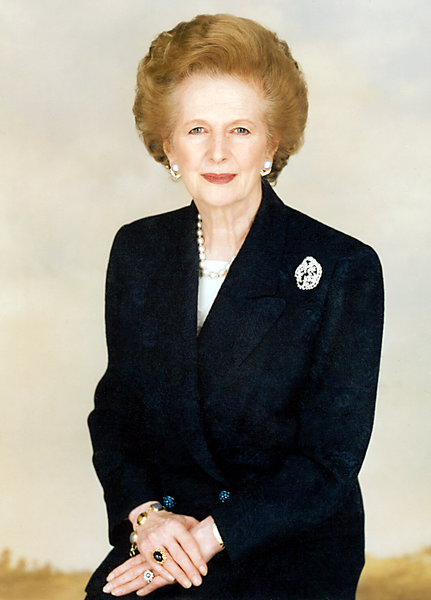
  • Margaret Thatcher – 1999 Statement on General Pinochet

    margaretthatcher

    Below is the text of the statement made in the House of Lords by Baroness Margaret Thatcher on 6 July 1999.

    My Lords, my noble friend Lord Lamont has done the House a service by initiating this short debate on a matter of great importance to Britain’s reputation, to Chile’s stability and to the orderly conduct of international relations. I shall try to deal with each of those matters while seeking to avoid remarks about the case itself.

    Britain’s reputation should be of vital importance to the government of the day. Our reputation sustains our interests. The Pinochet case has sullied that reputation. Senator Pinochet came here last September as a long-standing friend of Britain. Though I shall not go into the details, I can say that without President Pinochet’s considerable practical help in 1982, many more of our servicemen would have lost their lives in the South Atlantic. The country thus owes him a great debt.

    After leaving power he was accordingly received here as an honoured guest on a number of occasions. Similarly, on 22nd September last year, when he entered Britain on a diplomatic passport charged with a special mission by the current Chilean President, he was accorded all the privileges of an ambassador, including the protection of the Metropolitan Police Diplomatic Protection Squad.

    However, some weeks later the general was arrested in hospital at dead of night, when under heavy sedation following a serious back operation. There is a widespread suspicion that there had been collusion between the British and Spanish authorities prior to the arrest, when the Chileans were not given the warning they might have expected about the imminent risk. That inhumane arrest was in any case made on the basis of an unlawful warrant. Senator Pinochet was then held for six days illegally under that warrant. Those circumstances left Britain’s reputation for loyalty and fair dealing in tatters.

    Secondly, I want to speak about the situation in Chile—this country’s oldest and truest friend in Latin America. The great majority of Chileans, even the political opponents of Senator Pinochet, feel wounded at the way we and the Spanish have treated them. They are right to do so. Until the Senator’s arrest last October, Chile had achieved three remarkable successes, all of them in large measure due to former President Pinochet.

    First, it had seen the total defeat of communism at a time when that ideology was advancing throughout the hemisphere. As Eduardo Frei, the former Christian Democrat president of Chile put it: “The military saved Chile”. Secondly, Chile has seen the establishment of a thriving, free-enterprise economy which has transformed living standards and made Chile into a model for Latin America. Thirdly, Chile is also remarkable because President Pinochet established a constitution for a return to democracy, held a plebiscite to decide whether or not he should remain in power, lost the vote (though gaining 44 per cent support), respected the result and handed over power to a democratically-elected successor.

    Chile thus enjoyed prosperity, democracy and reconciliation—until we and the Spanish arrogantly chose to interfere in her affairs. So far, the Chileans have behaved with great restraint. But we should not assume that this will continue, particularly if Senator Pinochet, who is not now in the best of health, were to die in Britain or is taken to Spain. Anything that happens then will be the direct responsibility of this Government and, in particular, of the Home Secretary.

    My final point concerns the implications of the Pinochet case for the conduct of international relations, which are essentially based on trust between nation states. This trust has now been shattered by the prospect of the courts in one country seeking the extradition of former heads of government from a second country for offences allegedly committed in a third country.

    Senator Pinochet is, of course, being victimised because the organised international Left are bent on revenge. But on his fate depends much else besides. Henceforth, all former heads of government are potentially at risk; those still in government will be inhibited from taking the right action in a crisis, because they may later appear before a foreign court to answer for it—

    Lord Carter My Lords, perhaps the noble Baroness would be kind enough to give way.

    Baroness Thatcher My Lords, I am nearly at the end of my speech.

    Lord Carter My Lords, I should just like to remind the noble Baroness that this is a timed debate and the limit for each speaker is four minutes. The noble Baroness is now in her seventh minute. I wonder whether she could now bring her remarks to a close.

    Baroness Thatcher My Lords, I am very close to the end and I very rarely take up the time of this House. It will now take me longer because the noble Lord interrupted me in the middle of a sentence.
    Henceforth, all former heads of government are potentially at risk; those still in government will be inhibited from taking the right action in a crisis, because they may later appear before a foreign court to answer for it and—this is where I was when I was interrupted—in a final ironic twist, those who do wield absolute power in their countries are highly unlikely now to relinquish it for fear of ending their days in a Spanish prison. This is a Pandora’s box which has been opened—and unless Senator Pinochet returns safely to Chile, there will be no hope of closing it.

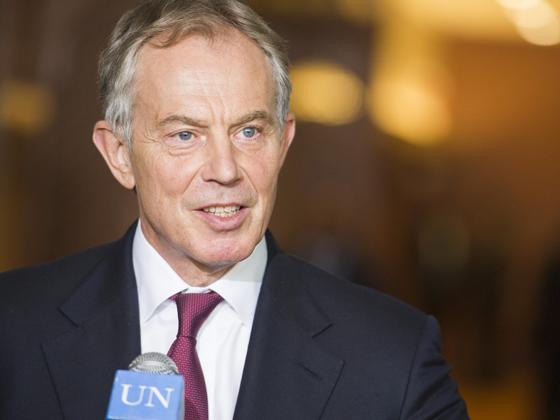
  • Tony Blair – 1999 Speech at NSPCC Full Stop Campaign Launch

    tonyblair

    Below is the text of the speech made by Tony Blair, the then Prime Minister, made at the NSPCC Full Stop Campaign Launch on 23 March 1999.

    NB – the original numbers have been lost from the transcript.

    Your Royal Highness, Ladies and Gentlemen. I am delighted and honoured to be here this morning to launch a campaign that I believe will be something very special. Something that is going to make a difference.

    Something that Jim Harding has just said sticks in my mind. Cruelty to children is not inevitable. It can be prevented. We can act effectively to tackle it. There is hope. We cannot and will not be deflected from ending it.

    Child poverty is one issue. I have no doubt the circumstances in which a child is brought up, play a huge part in their development. It is the reason for the focus of policy on social exclusion. Kids brought up in a culture of family instability, drugs, crime, poor housing and education, long-term unemployment. All these problems need to be confronted head-on. In other words, we must have both hope and ambition.

    By the end of this Parliament, we aim to lift 700,000 children out of poverty.

    All this will help. But it needs more. This campaign has one Big Idea. It is a long-term idea. It is that children are everybody’s responsibility.

    It is about personal, professional and public responsibility for children. That is, our responsibility. Everyone’s responsibility.

    Because ending cruelty is not just in the interests of children themselves.

    It is in everyone’s interest.

    The Full Stop Campaign’s goal is to end child cruelty. But it is much more than that. It is about ending cruelty and replacing it – where it exists – with positive support for parents. I therefore wholehearted endorse a strategy based on:

    – better access to help and advice for everyone – children and parents alike

    – through schools, helplines, the internet and local community organisations and networks

    – and through particular initiatives like making parks and open spaces safer for children

    – and providing a birthpack which gives guidance to new parents, for every baby born in the new millennium.

    The Government is complementing what you are doing now. We have already put in place tough legislation on sex offenders. We will support the Private Member’s Bill sponsored by Deborah Shipley, which will for the first time put the Department of Health’s Consultancy Index on a statutory footing and help to unsuitable prevent adults from working with children.

    A �0 million programme Sure Start will be available to local partnerships to deliver support services, including family support, childcare, primary healthcare, early learning and play. Some of these services may be provided in the home. The Sure Start programme will help children be ready to thrive when they reach school. Each programme will service the local community within ‘pram pushing’ distance.

    We are also undertaking a far reaching programme to improve the quality of services for vulnerable children at risk or in care. The ‘Quality Protects’ Programme to transform the quality of children’s care will be backed by a special grant of �5million.

    Through this, we will take steps to strengthen the regulatory system to ensure that all children’s homes and fostering agencies are subject to welfare inspections. We will establish a new Regional Commission for Care Standards to make sure that children’s services are properly licensed and inspected.

    We are doing this because children are central to our overall agenda for social policy. We need to break the cycle of disadvantage so that children born into poverty, or let down by the education system, or abused, are not condemned to social exclusion and deprivation in adulthood. So throughout their childhood, children must get a better deal.

    As Prince Andrew said, as a father he supports this campaign. It is as a father I support this campaign. The government supports this campaign.

    The private passion we feel for our children should become the public passion we feel for our children.

    I believe ending cruelty to children is the right idea at the right time. It is the best way to invest in the future. We all have a part to play. Let it be our ambition for Britain for the new Millennium.

  • Tony Blair – 1999 Speech at Maths 2000 Conference

    tonyblair

    Below is the text of the speech made by Tony Blair, the then Prime Minister, at the Maths 2000 Conference held on 16 March 1999.

    This conference is to announce that next year will be Maths Year 2000 – following this year’s National Year of Reading.

    But let me start with the bigger picture.

    Education is this government’s top priority. That is why we are investing an extra £19 billion in education over the next three years, an unprecedented commitment to our children’s future.

    It is investment for modernisation and higher standards at every level. Because without change, we will never achieve our goals.

    Our programme of modernisation extends right across the education system:

    • A huge expansion of nursery and under-fives provision, to give our children the best possible start in life.
    • A transformation in the teaching of the basics in primary schools, so that all 11-year-olds are up to standard in literacy and numeracy.
    • A modernisation of the comprehensive system – including a significant increase in the number of specialist and beacon schools – so that secondary schools develop the skills of young people of all abilities.
    • A reform of the teaching profession, to reward performance properly and to improve the status, training and reputation of a profession which has been undervalued for too long.
    • A reform of further and higher education, raising standards, extending opportunities, and modernising the system of student finance to make it sustainable for the next generation.

    This is the big picture – a government committed to the serious investment and reform needed to create a world-class education system for this country. At every level it requires step-change – step-change in aspirations, step-change in attainment, and step-change in confidence that we can meet our goals if we resolve to do so.

    Maths Year 2000 is part of that big picture, and a key part. As a country, we have devalued mathematics for too long.

    It is frankly scandalous that four in ten of our eleven-year-olds are not up to the basic numeracy standard expected of their age. And we need to do far more to ensure that adults who lack basic numeracy skills have the opportunity to acquire them.
    This means destroying the myth that’s it’s clever to be hopeless at maths.

    The urgent priority is to improve the teaching of maths in our schools, particularly primary schools, which lay the foundations for success or failure. The national numeracy strategy, to be launched this September, is designed to achieve this.

    But we must also forge a new status for maths within society as a whole – to make numeracy more accessible, even fun. That’s what Maths Year 2000 is all about.

    We want to see projects to popularise maths in every community nationwide – involving schools, colleges, businesses, shops, the media, and voluntary organisations.

    One of the successes of the Year of Reading has been Mersey TV’s Brookside adult literacy initiative – “Brookie Basics”. I look forward to something similar for numeracy – if not on Brookside, then perhaps a venue equally popular.

    I am therefore delighted that Carol Vorderman spoke to you earlier. I’m told that her theme was ‘Why is maths so scary?’ – We need to eliminate the fear and replace it with confidence in dealing with numbers in every age group nationwide.

    It is especially important that we instil that confidence in children during their first years at school.

    A child who cannot read cannot learn. And a child who lacks confidence in arithmetic and basic maths is equally disadvantaged in modern life.

    Yet we inherited a situation where a third of our eleven-year-olds were not up to standard in English, with an even higher proportion not up to standard in maths.

    There is no more important task for us all – government, teachers, parents, business and the wider community – than putting this right.

    That’s why we launched the national literacy strategy last September, with the literacy hour and high quality training and support. This has been widely welcomed by teachers, and is already making an impact.

    Now we are doing the same with numeracy. Many primary schools already have a daily maths lesson, with structured learning programmes to support it. We are taking a big step forward, and this week will be sending comprehensive training and support materials to all schools for the new national numeracy strategy, which will lead to the numeracy hour in primary schools from this September.

    The numeracy strategy has been extensively piloted already, and has received an extremely positive response.

    Far from being regarded as an imposition, it is seen for what it is – first class support for teachers in planning and delivering maths classes, on a daily basis, to meet the expectations of parents that all children should be up to standard by the time they leave primary school.

    The training materials are only the first step. With the extra investment for education more than 300 numeracy consultants have been appointed to train and support teachers. Primary head teachers and other teachers will receive training in the next school term, and there will be additional training for schools that need it.

    We are also continuing to expand our numeracy summer school programme, which has been highly successful in raising standards. There will be more than 300 numeracy summer schools during this year’s summer holidays.

    This is an important day for head teachers, teachers, and all those involved in maths education. Maths Year 2000, and the national numeracy strategy, give us the chance to make a step-change in maths competence across society, starting in our schools.

    Our numeracy target is for 75% of all 11-year-olds to be up to standard by 2002. We are now at 59%.

    We need to commit ourselves – together – to doing everything necessary to meet the 75% target. I am convinced we can do it. The numeracy strategy is in place. We have allocated the necessary resources to back it up. The will is there. Now we need to deliver.

    There is no more important challenge facing us as a country. I wish you well in everything you are doing to make a success of Maths Year 2000 and our numeracy strategy.

  • Tony Blair – 1999 Speech at NATO’s 50th Anniversary

    tonyblair

    Below is the text of the speech made by Tony Blair, the then Prime Minister, on 8 March 1999.

    A 50th anniversary is a time to celebrate the achievements of the past and to plan ahead for the future. This conference, which I am delighted to have a chance to address, is an opportunity for open debate among friends and partners on the way ahead for the NATO Alliance, a debate which I warmly welcome. The 50th Anniversary Summit next month in Washington will be the time for decisions as well as celebration. It will shape the way we provide for our defence and security for the early part of the 21st century.

    The Alliance is fortunate to have at its helm a Secretary General of the quality and fine touch of Javier Solana. I am delighted that he will be speaking here tomorrow, and would like to thank him for all the work he has done. I am glad that Jose Cutileiro, who has steered the work of the Western European Union so ably, is also attending.
    The range of representation here today, including from countries beyond NATO’s borders – Russia, Ukraine, Central Europe, including the Baltic States, and elsewhere – shows how NATO’s horizons have widened. East and West, divided for too long, are now intertwined. NATO guaranteed the stability and defence of Western Europe since its foundation 50 years ago. It is now adapting and developing.

    But there are unique qualities which we must hold on to.
    NATO binds the United States and Canada with Europe. NATO members guarantee each others defence. We have an integrated military structure in which our forces plan for operations under a single command structure. NATO has prevented the nationalisation of defence for the first time in modern Europe. It is these qualities which have made the Alliance so strong and which we must preserve and cherish into the next century.

    PARTNERSHIP

    In the Cold War NATO’s main role was the defence of its own members in the face of a persistent and very real threat. Now, NATO exports security to others. We are now creating a framework of stability and security across the whole Euro-Atlantic area, with NATO at the core. The main tool is NATO’s Partnership for Peace programme. Partnership with 43 countries, including many who were once our adversaries.

    Our partnerships with Russia and Ukraine are the most important. Negotiated so skilfully by Secretary-General Solana, backed by the vision and good sense of US Deputy Secretary of State Strobe Talbott, who is speaking here later today, the NATO-Russia Founding Act ushered in a new era for Russian co-operation with the West. We now consult with Russia more intensively than ever before on issues ranging from proliferation and arms control to the Balkans and the Millennium Bug. The NATO-Ukraine Commission, too, is building up a track record, increasing understanding and laying the framework for working together.

    ENLARGEMENT

    Three of our Partners – Poland, Hungary and the Czech Republic – have gone beyond partnership and later this week, at a ceremony at Independence, Missouri, will become members of the Alliance itself. These three countries which were fought over for too long, and this century rarely enjoyed real independence, will take the ultimate step to guarantee their defence by becoming members of the Alliance. They will also share responsibility for the defence of their fellow Allies.

    I hope they and other European countries will also become members of the European Union in a few years time. NATO and the European Union, perhaps the World’s two most successful organisations, extending their reach and the benefits they bring.

    NATO enlargement not only underpins the defence of its new members. It will also strengthen European security as a whole. Although Russia and others have their concerns, I believe these are now receding as the defensive nature of the Alliance and our wish for genuine partnership becomes clearer.

    I want the process of NATO enlargement to continue, at the right pace. At the Washington Summit, we will commit ourselves to helping other applicants to prepare themselves to come through NATO’s open door. I look forward to more countries joining once they and NATO itself are ready, and as their inclusion in the Alliance strengthens European security as a whole.

    BOSNIA AND KOSOVO

    Sadly, the countries of the former Yugoslavia have not all shared in the progress made by NATO’s partners. NATO was slow to become engaged in the Balkan wars of the 1990s. We tried to bring peace to Bosnia through the UN and with political good offices but without the willingness to use force which we now know was necessary. Our troops, under the auspices of the UN, did a good job at great risk, to deliver humanitarian relief. But they could only deal with the symptoms of the problem. It was NATO that brought serious force to bear and gave the desperately needed muscle to end the war. Since Dayton, NATO has underpinned the peace and created the conditions in which Bosnia can rebuild.

    In Kosovo, we will not repeat those early mistakes in Bosnia. We will not allow war to devastate a part of our continent, bringing untold death, suffering and homelessness. Robin Cook and Hubert Vedrine, with their partners in the Contact Group, made good progress at Rambouillet towards an interim political settlement based on substantial autonomy.

    But political agreement is not enough: the Balkans are littered with agreements that are signed but not implemented. To make an agreement work, to bring stability to Kosovo, an international force is an indispensable element. Only NATO is equipped to lead it. Either side in the negotiations can wreck the chances of full agreement. But both must understand their interest in success.

    The Kosovars should see that the time has come for the Kosovo Liberation Army to cease its operations and accept demilitarisation.
    The Serbs must reduce their forces to agreed levels and allow a NATO-led force to underpin the new autonomy arrangements.
    We will not accept prevarication in the negotiations. No side can be allowed to obstruct the process. In this crucial period President Milosevic and his commanders must also understand that NATO will not stand by in the face of renewed repression in Kosovo or atrocities like the one we witnessed recently at Racak. Nor can the International War Crimes Tribunal in The Hague.

    True peace and security will not come to the Former Yugoslavia until authoritarian, nationalist governments give way to democracy based on ideas rather than ethnicity. Free press, a market economy, responsible and accountable government and an end to repression are all essential for the long term. NATO can help by providing a stable base. But it is for the people of Serbia, Croatia and Bosnia to build their own civil societies and free institutions.

    The countries of the Former Yugoslavia will integrate into the European mainstream eventually. Their leaders and societies have to become more like their counterparts in West and Central Europe before that can happen. I expect to see further political change in the Balkans. But political change should be achieved by political means. More war will only set back those dreams of security and prosperity to which the ordinary people of the Balkans aspire.

    EUROPEAN DEFENCE

    In dealing with the Balkan wars of the 1990s the full strength of the Alliance, Europeans and Americans working together, has been needed. Alliance cohesion with a strong US role, have given clout to our political efforts, and forced the warring factions to stop fighting and start negotiating. US engagement in European security was essential to our success. It will remain essential in dealing with future wars and other profound challenges to security and stability on our continent.

    The initiative I launched last autumn on European defence is aimed at giving greater credibility to Europe’s Common Foreign and Security Policy. Far from weakening NATO this is an essential complement to the Transatlantic Alliance. We Europeans should not expect the United States to have to play a part in every disorder in our own back yard. The European Union should be able to take on some security tasks on our own, and we will do better through a common European effort than we can by individual countries acting on their own.

    Europe’s military capabilities at this stage are modest. Too modest. Too few allies are transforming their armed forces to cope with the security problems of the 1990s and the 21st century. To strengthen NATO and to make European defence a reality, we Europeans need to restructure our defence capabilities so that we can project force, can deploy our troops, ships and planes beyond their home bases and sustain them there, equipped to deal with whatever level of conflict they may face. George Robertson will address this issue in more detail when he speaks to you on Wednesday. But let me assure you of this: European defence is not about new institutional fixes. It is about new capabilities, both military and diplomatic.

    The declaration which President Jacques Chirac and I issued at St Malo was the first step to defining the new approach. We decided that we should go beyond the Berlin arrangements agreed by NATO in 1996 to give Europe a genuine capacity to act, and act quickly, in cases where the Alliance as a whole is not militarily engaged. In any particular crisis, the European Union will develop a comprehensive policy. But within that, deployment of forces is a decision for Governments. I see no role for the European Parliament or the Court of Justice. Nor will the European Commission have a decision-making role on military matters.

    Anglo-French collaboration has continued and fleshed out the practical requirements for Europeans to decide and act soundly on military matters.

    I want our Alliance as a whole to give support to these European developments. I look to our Summit in Washington to endorse some important next steps. It would be foolish and wasteful for Europe to duplicate the tried and tested military structures in which we already play a full part in the Alliance.

    We should use what we have in the Alliance. But those structures and assets need to be more readily available for European led operations and we need to be able to rely on them being available. At the same time, we European Allies need to commit ourselves at the Washington Summit to develop the full range of capabilities needed for the sort of crisis management tasks and humanitarian operations where Europe might take the lead. Only then can we make European Defence a reality.

    To retain US engagement in Europe, it is important that Europe does more for itself. A Europe with a greater capacity to act will strengthen both the European Union and the Alliance as a whole. And I want our Allies in NATO who are not members of the European Union to be able to play a full role in European operations, without reserve.

    With the Alliance’s endorsement and agreement on these points, the next step will be the WEU Ministerial in May where we shall take stock of the first part of the audit of European capabilities, which I suspect will start to reveal how much more we Europeans need. The June European Council in Cologne will be an opportunity to draw these threads together. I hope we will reach agreement there on the principles for new arrangements for security and defence in Europe, giving the European Union a direct role and a close working relationship with NATO.

    These tasks are substantial. Our responsibility is huge. 50 years ago a British Labour government helped found the NATO Alliance which locked Europe and North America safely together through all the dangerous years of the Cold War.

    We are now creating new arrangements for the 21st century. We do not know exactly what dangers lie before us, what threats we will face. We must be prepared for some difficult challenges, for decades to come. Let us lay the foundations for dealing with them now in a spirit of partnership, cooperation, interdependence and commitment.

  • Tony Blair – 1999 Speech at the Rail Summit

    tonyblair

    Below is the text of the speech made by Tony Blair, the then Prime Minister, at the Rail Summit on 25 February 1999.

    Today is an important day for railways in Britain.

    In 10 years’ time, I want today to be seen as the day of rail’s new beginning in Britain.

    This government rightly focuses much of its intention on raising standards in our schools and hospitals. Education is key to our success as a nation. A thriving NHS gives all of us peace of mind.

    But it is transport – our trains, and buses and roads – that often determine the quality of our life.

    Most people use them almost every day. Most people face the anger, irritation and frustration when their journey takes twice as long as they would like.

    When people talk about the rotten day they have had, they are often talking about the rail journey they have just taken. The train was cancelled. It took twice as long. It was so crowded they did not get a seat.

    This has got to stop. A modern Britain needs a modern transport system. That means fast, punctual trains; a modernised efficient London Underground; cities not gummed up by congestion. Passengers given proper information, timetables that are easy to use, fares that don’t break the bank.

    That is the agenda of passengers. And John Prescott and I are at this summit to champion the frustrated passenger.

    Today’s summit is about how we end the misery and deliver for passengers.

    It will take time. Just like rebuilding the NHS. Or creating a first class education system. Or reforming welfare.

    These things take time. But today must be a day of commitment.

    I know many of you share that commitment. I offer you a partnership to help realise it. But it must be a partnership based on success, results, real, genuine, sustained improvement in our transport system.

    We have moved beyond the sterile debate between wholesale privatization and old-style state control. There is a different way. A third way. That’s what we’re doing on the London Underground. That’s what we’re doing with the Channel Tunnel rail link. That’s what we’re doing with the new Strategic Rail Authority.

    Now I know that many of you here are working hard for a better rail system. I know that many of you are trying hard to make Britain’s railways better. I pay tribute to those in the industry who are getting results.

    But I know as well that many of you here take the view that trying hard isn’t enough. I have to say to you plainly today that overall, the rail industry is not getting good enough results. It is not doing well enough. Its service standards are not high enough.

    It needs to start doing better. And it needs to start doing better now.

    I know it. Your customers know it. And you know it.

    There has to be improvement. Above all in two key areas: in investment, and in service.

    For too long Britain’s railways were systematically starved of investment. As a result, the fabric of the railway network we inherited when we came into Government was tattered, and torn. It was patently inadequate for its task. Our railways were, quite frankly, worn out.

    I know investment is now increasing. 1800 vehicles, trains and carriages, have now been ordered and will be operative in the next two years. But there must be more. Not just replacing existing capacity but expanding. As a result of decisions taken in the last two years, there will be more drivers and better infrastructure and stock. But with passenger numbers rising we must do more. Because as it stands today, the railway system simply lacks the capacity to sustain our policies to expand both passenger travel and freight transport by rail, and to relieve road and air congestion.

    To deliver those policies, we must invest – with the lion’s share of that investment coming from the private sector, in the public-private partnerships trailblazed by John Prescott.

    Our watchwords apply to rail as to anywhere else: investment for reform, and money for modernisation. When investment goes up, service standards will go up too.

    But at the same time, we need action now to improve services now.

    Passenger complaints are rising. And passengers are right to complain because it is unacceptable to see punctuality falling back to the level it used to be under British Rail – and worse.

    I know that it’s in part been driven by the growth of the number of passengers, 13 per cent up in the last two years, and in the increased number of services, but it is also the result of mistakes and poor management. Mistakes like getting rid of too many drivers and other staff. Like not having enough reliable rolling stock. Like defects in the track and signaling systems.

    I welcome the move by the railway industry to try to combat the curse of a fragmented and incoherent industry. The new Strategic Rail Authority we shall be establishing will be a big help in putting that right. The Industry’s own action plans are steps in the right direction.

    But you need to do more. And my central challenge to you today is this: you must improve your performance, improve punctuality and reliability, and combat overcrowding.

    You must listen to your customers. You must give the passengers what they want – and what they’re paying for.

    If you’re going to be true private sector companies operating in the market, then you must accept that in the railways as in other businesses, the customer really has got to be king.

    I’m confident you have the resolve and the responsibility to accept the challenge I’m putting to you today. I believe you will put in place the improvements which are necessary. We will be monitoring your progress closely, and calling you back to another summit next year to hold you to account.

    But though I do believe that you will be able to make progress and to secure improvement, I want today to make it perfectly clear to you that you are on trial.

    You are failing your customers, and those who continue to fail them have no place in the rail industry of the future.

    Companies in breach of their franchise agreements have seen action taken against them by the franchise director. Some of his actions have attracted criticism from people who’ve said they’ve not been tough enough.

    You know we intend taking more and better powers to promptly punish poor performance.

    But today I want to go further and say this to you: don’t think either that the length of the franchises held by train operating companies means that everything between us is set in stone.

    Don’t think that because the franchises are contractually in place, there is nothing we can do to drive forward improvements. That we will have to wait until the franchises come to an end.

    We are of course bound by the contractual arrangements reached by our predecessor in government.

    But we are willing to go beyond those arrangements by opening negotiations now – negotiations which will lead to an extension of the franchise for the best-performing companies, the real improvers, regardless of when their current franchises are supposed to come to an end.

    We know that there are companies who will steer clear of this offer. The poor performers. Those who are unwilling or unable to improve.

    For them, the end of their franchise will mean exactly that.

    The end.

    But we know too that there are companies keen to start negotiating. Companies who are willing to offer improved performance and new investment in exchange for an extension to their franchise. Extra time over which they can earn a return on extra investment.

    I welcome that. I look forward to these companies and the new rail authority sitting down in the very near future to start work together to improve standards and improve services.

    Delivering on our promises on transport is as important to the Government as delivering on its promises in all our key areas, like education and health.

    On transport, as with education and with health, we said we would deliver. And we will.

    That’s the challenge for today. That’s the outcome I want to see from this summit.

    I’m confident we can do it. I believe we can work together to achieve a step change improvement in rail transport. To take rail into a new era.

    Today should be a new beginning for rail in Britain.

    A new move towards the railway system of the future our country needs and deserves.

    As a key part of a new, dynamic and confident Britain for the 21st century.

  • Tony Blair – 1999 Speech on Modernising Public Services

    tonyblair

    Below is the text of the speech made by Tony Blair, the then Prime Minister, on 26 January 1999.

    NB – the original numbers have been lost from the transcript.

    I am very pleased to be to speaking to you today. To 500 Charter Mark winners – a record. Many of you are previous winners. 18 of you are here for the third time.

    So my first reason for speaking to you today is simple. To say thank you. To say thank you to Dyfed-Powys Police, for investigating every reported crime and solving two thirds of them; to the Compensation Agency in Northern Ireland for cutting costs by a tenth while increasing applicants’ satisfaction by a quarter; to the Newcastle Benefits Agency for working with the local authority to improve their service to pensioners. To say thank you to you all for the work you do.

    But there’s another reason. I want others to notice how good government can be. Because we should value our best public servants – people like you – as much as our captains of industry.

    Valuing public service

    I said last week that we needed to change society’s prejudices about volunteering. That do-gooding shouldn’t be a term of derision. Well it’s the same for public service.

    We inherited an under-valued public sector. It is absurd that we ever got into the position under the previous administration where government seemed to devalue the very people it relied upon to deliver its programme. Where private was always best. Where the public sector was always demonised as inefficient.

    In the last 21 months, I’ve met many people across the public sector who are as efficient and entrepreneurial as anyone in the private sector, but also have a sense of public duty that is awe-inspiring. Most of them could be earning far more money in business. But they don’t and you don’t.

    Why not? Because of a commitment to public service. Because helping a five year old to read, coaxing a patient out of a coma, convicting a burglar is fulfilling in a way that money can’t buy. This country needs its wealth creators, but it needs its social entrepreneurs as well.

    So let me say today, loud and clear – this government values public service; this government is proud of its public servants. What made you choose this career is what made me go into politics – a chance to serve, to make a difference. It is not just a job. It is a vocation. Britain relies on that ethos of public service, and we need to rekindle it if we are to deliver improved public services.

    After 18 years of public service being talked down, this is a difficult task. There was a time when we could assume that the brightest and best of each generation would want to join the public sector. But that is an assumption we can no longer make, particularly when the financial rewards at the top of the private sector are so great, and too often public sector workers are weighed down by bureaucracy and silly rules.

    So this year I want to launch a major new initiative on this. Not delivering a solution from on high, but starting from what public servants think, from your day-to-day experience, your successes and frustrations. Through this speech today I want to start a conversation with public servants and others, about recruitment, retention and motivation. Write to me or take part in the debate on the Number 10 web site. We will respond through the Modernising Government White Paper later this year. And we will not duck the difficult questions you raise.

    So, first, we will tackle pay. For example, in teaching, we are proposing the most radical changes to the profession in living memory. In health, we will see that nurses are properly rewarded and improve recruitment and retention. In both, we are revising pay scales and introducing new grades – advanced skills teachers and nurse consultants – so that more can afford to stay at the front-line.
    But increased pay must be tied to improved results. And that may mean taking on some sacred cows to make better use of the pay bill. Do we need greater differentials within the public sector? Should we decentralise pay more? What are the lessons of performance pay and where else should we be using it?

    Of course, there will always be constraints on public resources. We will never match the salaries at the top end of the private sector. So we need to look at non-financial rewards too.

    This is about esteem – from ceremonies like today’s to nominations to the House of Lords, from careers advice to portrayal in the media. But what more should we do?

    It’s about career prospects. So in both teaching and health we are looking to fast-track careers. But what more do we need to do to retain the enthusiasm of young people? Should we be devolving responsibility earlier and further down our organisations? How can we spot those with exceptional potential and bring them on quicker?

    It is about making sure we get the best people into public service drawn from all sections of the community and all ethnic and religious backgrounds. So for example new patterns of family life mean working habits must change. But progress is often frustratingly slow. What more could we do to make a difference?

    It’s about developing skills. So, we’re creating the Centre for Management and Policy Studies in Whitehall – a virtual business school for the public sector. There are similar initiatives in health, education, local government. But again we may need to do more.
    It’s about greater career flexibility. So we are examining how we can make it easier for people to move between departments and around the public sector. And we need to get more interchange with the private sector – so it becomes routine rather than exceptional for there to be private sector appointments to the civil service for a few years and civil servants gaining experience in the private sector before rejoining the civil service.

    And of course it means not tolerating mediocrity in the public sector. I make no apology for saying that we cannot afford incompetent teachers, nurses, police officers, local government workers. Because all that will do is undermine the good work done by people like you. So, what more could we do to have fast but fair disciplinary and incompetence procedures?

    Modernising public services

    So we need to value and reward public servants. But the main reason people will come into the public sector and their most important reward will still be the chance to make a difference, to be part of a public service they are proud of. So I now want to turn to our strategy for modernising public services.

    This must start with a diagnosis of the problems faced by the public sector. First, they needed proper investment, especially schools and hospitals. So, over the next three years, we are investing in our public services – � billion in health and education alone.

    But the problem was not just how much government spent. It was how it was spent. Ministers traditionally spent most of their time fighting yearly spending rounds. Departments pursued policies that were contradictory. Efficiencies were covered up for fear the Treasury would take the money back. Front line workers were hampered by silly rules.

    We’ve already started to address these problems and will elaborate our strategy in the White Paper. I believe it is nothing short of a quiet revolution in the way government works in Britain, an approach focused on outcomes, rather than inputs.

    That’s why we started with a Comprehensive Spending Review – so that we could adapt the spending patterns we inherited to the priorities on which we were elected.

    We have made big changes in what the money is spent on, but only in return for clear targets. For the first time, these have been published, in Public Service Agreements. They set out long term objectives in each area, backed by 500 clear, demanding targets such as: cutting deaths from heart disease and strokes by a third amongst people under 65; or getting half of 16 year olds achieving 5 or more A-C’s at GCSE.

    In turn, departments are setting standards for local public services to deliver – whether on exam results, rough sleepers, truancy or waiting lists. And local agencies are setting their own targets for local people to judge their success.

    Focusing on outcomes will allow us to address the second traditional weakness of Whitehall I mentioned – contradictory policy making. Government is organised vertically, with departments based on the function they perform – such as paying benefits or running the National Health Service. But people’s problems are rarely so neat: the socially excluded will need help not only with housing, but education, health and so on; starting up a new business will involve interaction with a whole range of Government agencies.

    We are determined to overcome these divisions. New approaches to joined up government are being tried all over Whitehall – the Social Exclusion Unit in the Cabinet Office, Sure-start for the very young or the new Active Community Unit that we announced last week. All examples of policies being developed and implemented jointly across departments, with joint targets and often joint budgets.
    Focusing on outcomes also helps us free up the public sector. Because we have agreed what departments are trying to achieve, we spend less time double guessing how they do it. The centre can devote more time to developing strategy and less to trying to micro-manage front line services.

    In particular, we have given departments three year spending plans. Departments can now shift money between programmes and keep any savings they make from one year to the next – another revolution in Whitehall, which should eradicate the traditional March rush to spend unused budgets before the end of the financial year.

    Again, departments are passing those freedoms on to their front line. We have abolished crude and universal capping of council tax, while at the same time protecting local tax payers. We have put doctors and nurses in the driving seat in shaping and funding local health services.

    And the more successful you are, the more autonomy we will give you. So, for example, OFSTED is introducing a light touch inspection regime for good schools. The best councils – beacon councils – will in due course have more freedom to vary local taxes.

    But that doesn’t mean we will tolerate failure. Because the people who suffer from a bad service are the users – the pupils, the ill, the elderly, often the most vulnerable in society.

    So we need rigorous and fair inspection systems to know whether public services are achieving their targets. We need league tables to allow individuals to choose which services to use. And we need competition within the public sector and where appropriate with the private sector – because what matters is not who delivers the service but the outcome it secures.

    Now freeing up the public sector doesn’t mean we will cut you adrift. We will help you by spreading best practice. This needs to be rigorous, based on evidence of what does and doesn’t work. In the health service, we are setting up the National Institute for Clinical Effectiveness – to assess what treatments works best and at what cost and issue guidance to front-line doctors. In local government, we welcome the fact that the LGA has set up a new Improvement and Development Agency. In education, we are implementing a numeracy and literacy strategy to tackle decades of under-performance.

    But guidance from the centre can only go so far. The problems you face are all different. You often know how to solve them, but are held back by silly rules or set ways of doing things. That’s the rationale behind action zones for health, education and employment. They are laboratories to test new ways of working. They suspend rules that stifle innovation and ensure that those innovations can be spread around the system.

    But it’s also about culture. We shouldn’t be afraid to take risks, even if that means risking failure. When we fail, we should learn from our mistakes. Because if we never make mistakes we’ll never change anything. My idea of the ideal public servant is not someone who never fails, but someone who always tries to make a difference.

    Finally, we need to organise our services around the individual. That means listening to their views. That is why we have set up a People’s Panel of 5000 to ask taxpayers about the services they get. And it means organising services around the needs of users, not the convenience of producers. We live in a 24 hour economy – we can no longer deliver services 9 to 5, Monday to Friday. We are in the middle of an information revolution – we need to explore how the telephone and the Internet can improve convenience. For example, NHS Direct will enable people to contact a nurse over the phone when they need help, rather than going to hard-pressed A&E departments.

    So we need public services that feel tailor-made – not uniform,’one size fits all’. We need to find better ways of delivering services, particularly enabled by new technology. And there’s a �5 billion Capital Modernisation Fund to turn those new ideas into reality.

    Conclusion

    I’ve argued today that we need to turn back the tide. Stop denigrating public service, start valuing public servants again. Match the private sector at its best, be proud of the public sector at our best. Provide proper rewards and funding, not services starved of cash and with low morale.

    I’ve tried to start a debate about attracting people into the public sector. I’ve said that will involve financial and non-financial rewards. And that it will involve giving you the resources to do your jobs.
    I have outlined our strategy. Invest in public services. Focus on outcomes. Devolve power to the front-line. Value the public servants who succeed. Encourage innovation. Work across government boundaries. Organise around the individual.

    We will set this vision out at more length in the White paper. I look forward to your views. Because together we can make a real difference, to the prosperity of our country and to the lives of our citizens, in particular the vulnerable and excluded. I know you will rise to the challenge.