Tag: 1997

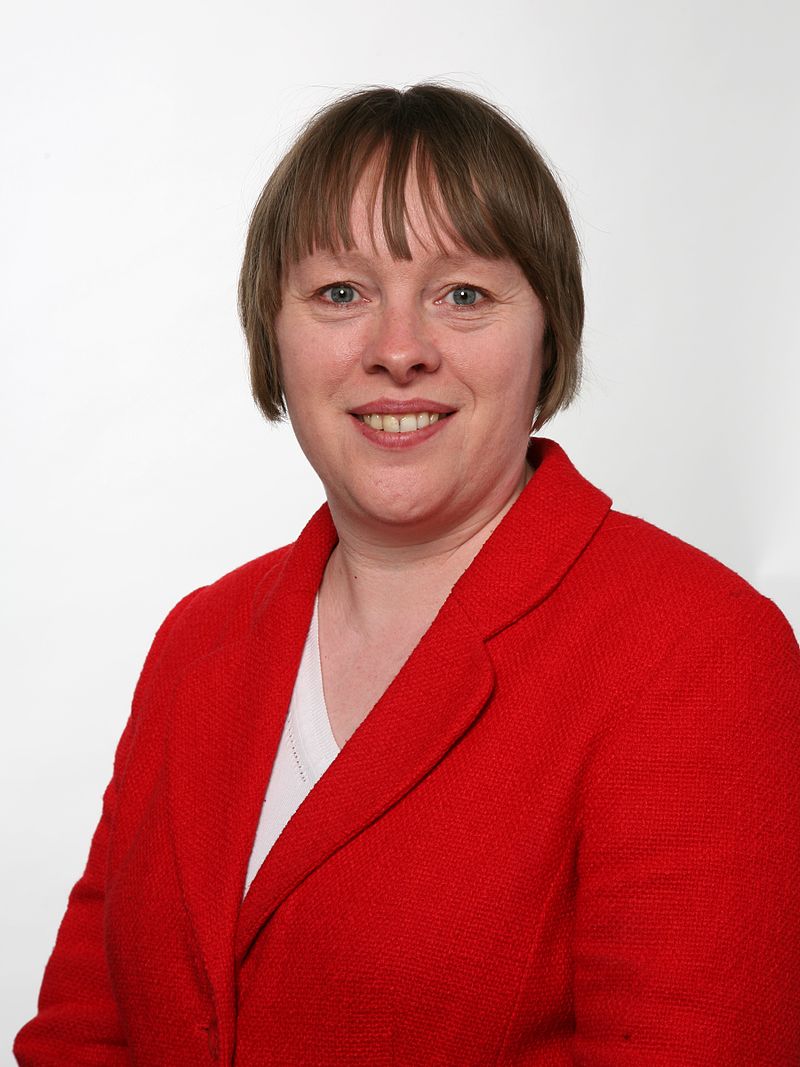
  • Maria Eagle – 1997 Maiden Speech in the House of Commons

    marieagle

    Below is the text of the maiden speech made by Maria Eagle in the House of Commons on 17th June 1997.

    I am grateful to you, Mr. Deputy Speaker, for allowing me to make my maiden speech in this important debate. I am particularly happy to be able to congratulate my hon. Friend the Member for St. Helens, North (Mr. Watts) on his first contribution, and I am sure that we shall hear many more contributions from him.

    Garston is positioned to the south of most of the well-known Liverpool landmarks, and it is a mixed residential and industrial constituency. It includes some of the docks and the old industrial heartland of the city, much of which was devastated in the early 1980s. Were I to list the factories and employers who have gone from my constituency, it would be a depressingly long list. Liverpool, however, is irrepressible and the people are of the best sort. There are encouraging signs of hope and renewal, especially in the single regeneration budget partnership areas of Speke, Garston and Netherley valley.

    Garston’s borders are logical on three sides—the River Mersey, the green belt at the southern edge of the city and the M62. The border on the fourth side runs almost down Queens drive, but not quite. My constituency is perhaps the most socially and economically diverse of all the Liverpool seats and as such, it has always been a volatile swing seat. It used to be a true marginal, but it has lately swung strongly to the Labour party. Although I might like to think that that phenomenon coincides precisely with my appearance on the scene, in fact it predates it. Garston’s progress to an 18,000-plus Labour majority has been aided enormously by the slow death of the Tory party in Liverpool.

    Whichever of the two—the right hon. and learned Member for Rushcliffe (Mr. Clarke) or the right hon. Member for Richmond, Yorks (Mr. Hague)—who are vying to be Leader of the Opposition is successful in grabbing that poisoned chalice, he might profitably reflect on how his party can ever again be relevant to the people of my constituency. If he finds an answer, he may well be on the way to renewing his party. As recently as 1979, Garston was held by the Conservative party, but now it is a very distant third.

    Garston contains some of the most desirable and expensive housing in Liverpool, in the Woolton and Allerton areas, and has the highest proportion of owner-occupation in the city, but it also has huge peripheral estates in Netherley and Speke and some very poor private terraced property in Garston, some of which is unfit for human habitation. Unemployment is well above the national average and all indices of deprivation show Liverpool to be very poor—one of the poorest regions in the European Union. Large swathes of my constituency suffer the problems associated with unemployment and poor housing—poverty, ill health and crime, to name just three—yet the community spirit is strong.

    Throughout the constituency, community-led groups and businesses have sprung up to try to tackle the problems—whether by way of credit unions taking banks to the estates, such as those in Netherley and Speke, long since abandoned by commercial institutions, or by way of employment and regeneration initiatives, the list is almost endless. SMART, ARCH, CREATE, VANT—I could go on for many hours about the good work of those organisations in my constituency, but time is short. Suffice it to say that the capacity of the people of Garston constituency to fight for improvements and life chances for themselves and their families is endless and inspiring.

    Despite the efforts being made, however, regeneration is never an easy task. Some basic problems must be tackled by the Government, and I shall address one of the most basic problems in my constituency, which the Government can and should tackle—the provision of adequate housing. First, I want to refer to three of my predecessors—Eddie Loyden, David Alton and Sir Malcolm Thornton. All have represented part of my constituency and all left this House on 20 April or 1 May.

    Many hon. Members on both sides will recall Eddie Loyden as a modest man, but a determined fighter for his constituents and for his strongly held socialist beliefs. A seafarer and a docker, his fight on behalf of the families of the victims of the MV Derbyshire typifies him. I know that hon. Members will join me in wishing him a long and active retirement.

    David Alton was another respected representative of the Grassendale ward of the Garston constituency. He has now gone to the other place where, I have no doubt, he will continue to speak up for Liverpool.

    Sir Malcolm Thornton, who left this House at the behest of his constituents in Crosby rather than of his own volition, was the Member for Garston between 1979 and 1983, so I ask the indulgence of my hon. Friend the Member for Crosby (Ms Curtis-Thomas) if I make some remarks about him. Our paths crossed in 1992, when I fought Crosby for Labour while Sir Malcolm Thornton fought it for the Conservatives. I came, as I recall, a rather glorious second. I recall seeing Sir Malcolm again on 2 May 1997 after his shock defeat. He was as courteous and gracious in defeat as he had been in victory five years previously. I am sure that all hon. Members wish him well in his future endeavours, whatever they are. I certainly wish all my predecessors well.

    Something else all my predecessors and I share, apart from having had the honour of representing Garston, is that we have all made maiden speeches about housing. That illustrates how, across party and through time, the issue has been so important in Garston. It still is.

    Council housing in Liverpool is, in the main, very poor. Of more than 45,500 dwellings, almost 27,000—over half—are structurally substandard or in poor condition. Much of the stock is ill maintained, some of it designated defective under housing defects legislation, and some which is defective has not been designated. The local authority estimates that £700 million is required to bring the stock up to standard. The standard in Liverpool council housing for heating is one gas fire. Damp, disrepair, mould growth and the consequences for the health and well-being of the occupants are endemic throughout the stock. Those consequences include needless and difficult additional burdens for thousands of my constituents who already have many other burdens to bear.

    I know about this, not just because 80 per cent. of my constituency case load relates to housing problems, but from my experience before the election as a solicitor in private practice in Liverpool, specialising in housing law. During my time in the House, I want to achieve an improvement in living conditions for those in the poorest housing. Before my election, I used the courts—civil and criminal—to achieve that for those who sought my help. Now I shall use legislation. However improvements are achieved, they are long overdue.

    In her maiden speech in 1945, Bessie Braddock—a well-known Liverpool Member of Parliament whom I feel I can cite because she had a connection with Bennett street in Garston—told of families of 10 in her Liverpool, Exchange constituency who were forced to live in overcrowded conditions. At my first constituency surgery after the election, I was consulted by a constituent who complained that she and her family of 10 were overcrowded in their home in Speke, yet she had no immediate prospect of adequate housing. Little seems to have changed in Liverpool.

    We must do something about that state of affairs. That is why I welcome and support the Bill. It begins to tackle the housing crisis that has been worsened by the dogma of the Conservative party and bequeathed to the nation. It makes provision for the Secretary of State to take into account capital receipts set aside for debt redemption when issuing supplementary credit approvals. That sounds dry and technical, but it will get some of the £5 billion of locked-up set-aside capital receipts back into the equation for rebuilding and rehabilitating social housing. The measure is long overdue, delayed purely by the previous Government’s prejudice against social housing.

    In Speke and Garston, in Netherley and Childwall valley, we need repairs and improvements to houses—and soon. I welcome other initiatives that the Government are supporting, such as establishing housing companies and mechanisms to involve tenants. I believe passionately in the strength, sense and ability of ordinary people to shape and transform their lives, given half a chance. I have a particular belief in the capacity of Liverpudlians to do that. Their solidarity, community spirit and adaptability are demonstrated every day on the estates to which I have referred. Let us ask them what they want to do, and listen to the answers.

    Landlords, even social landlords, do not have a monopoly of wisdom—certainly not in Liverpool. The best of them would not claim to. I hope that, with the backing of the Government, determined to make a difference in Speke and Netherley, things will change. The Bill is a good start. Perhaps we can then ensure that the next hon. Member for Garston—who, I trust, will not come to the House for many a long year—will be able to choose a different subject for his or her maiden speech.
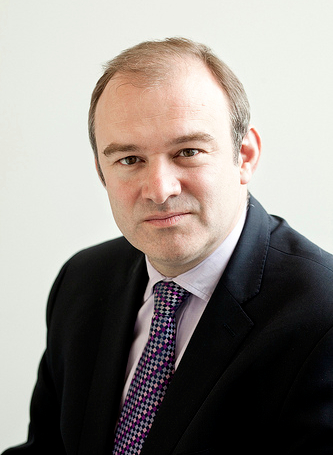
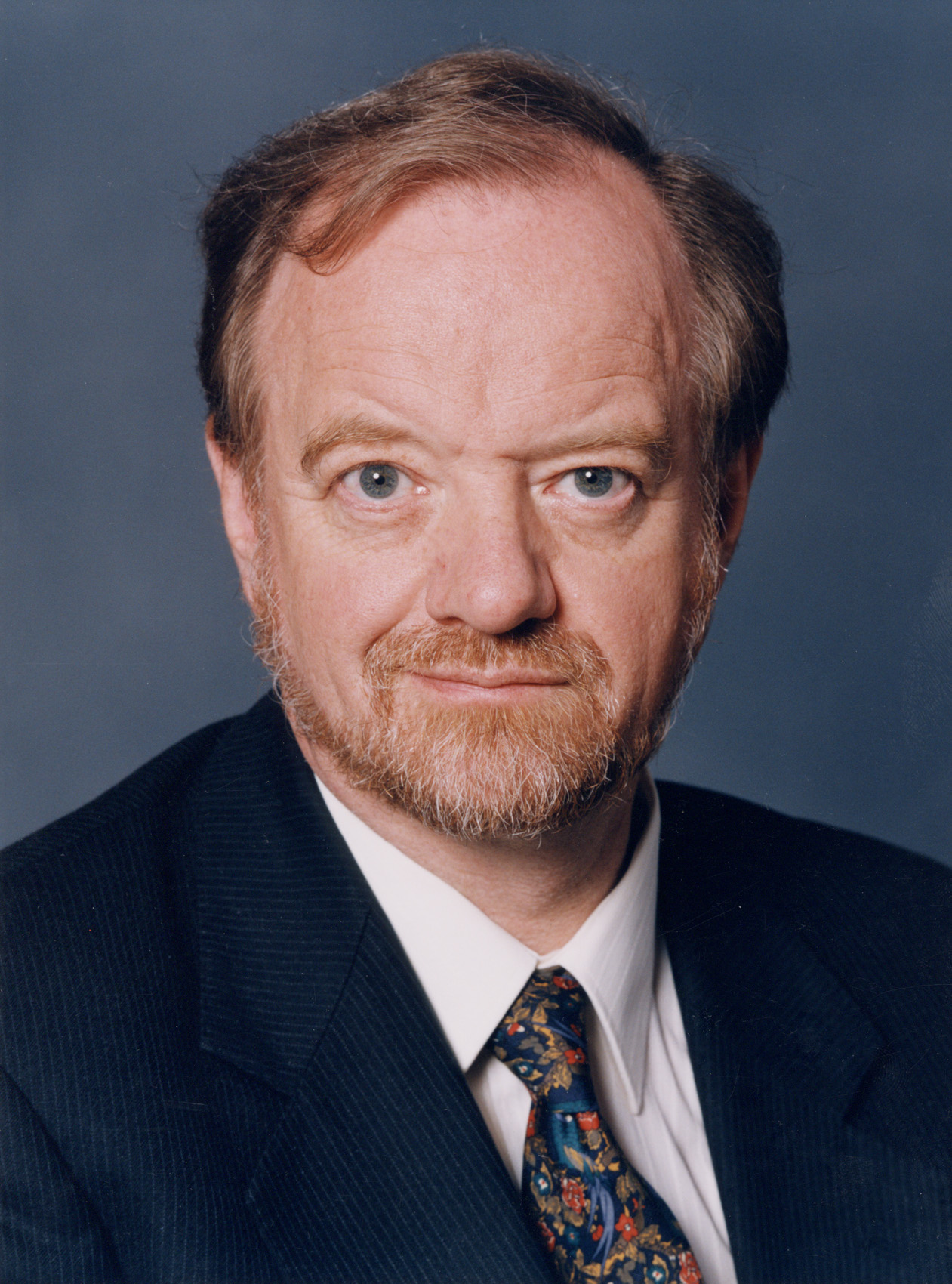
  • Ed Davey – 1997 Maiden Speech in the House of Commons

    eddavey

    Below is the text of the maiden speech made by Ed Davey in the House of Commons on 6th June 1997.

    It is a pleasure to follow the hon. Member for Hendon (Mr. Dismore), although a daunting prospect because he gave us such an entertaining and interesting speech. I congratulate him on making such an erudite maiden speech.

    I would also like to offer the hon. Gentleman my sympathy and condolence for having the hon. Member for Hartlepool (Mr. Mandelson) in his constituency. This obviously brings a new meaning to the big brother state. I hope that the health service in the hon. Gentleman’s constituency improves, because having the hon. Member for Hartlepool looking over his shoulder all the time might not be good for his health.

    From listening to Labour Members and to my hon. Friend the Member for Southwark, North and Bermondsey (Mr. Hughes), it is clear that a great consensus is emerging on the new government for London. That consensus spreads to the wider community—the business community, as the Minister said, in the boroughs, and in the population of London as a whole. The need to remove the quango state that was introduced by the previous Government, and the need for a strategic authority that is democratically accountable to the people and will take a strategic perspective on issues such as employment, transport and the environment—issues that affect the daily lives of our constituents—is crucial.

    There is a genuine debate, however, about the suitability and appropriateness of having a directly elected mayor. My hon. Friend the Member for Southwark, North and Bermondsey described our position clearly. I am concerned that we will have some very odd hybrid if we have an elected authority and a directly elected mayor. The mandates will clash. It will be a recipe for confusion, and the only way around that—perhaps a separation of powers model—is a recipe for gridlock.

    I see no merit in a directly elected mayor. Indeed, I endorse the remarks of the hon. Member for Brent, East (Mr. Livingstone). Why are we not going for the tried and tested model of party competition for the new strategic authority? That seems sensible. I would support a strategic authority that was elected in a proportionally representative system. I urge the Minister not to be affected by “manifestitis” and to be open to the idea of having a multi-question referendum.

    I am very grateful for having this early opportunity to make my maiden speech. I am the first ever Member of Parliament for the new constituency of Kingston and Surbiton. It was formed from the old Surbiton seat and from the southern part of the old Kingston upon Thames seat and covers a number of communities, from Malden Rushett, Chessington and Hook in the south, through to Tolworth, Berrylands, New Malden, Norbiton and Worcester Park. It covers three quarters of the royal borough of Kingston, which through its long and distinguished history has previously returned only Conservative Members of Parliament to the House, so I am especially pleased that the royal borough is now represented on the Liberal Democrat Benches, by me and my hon. Friend the Member for Richmond Park (Dr. Tonge). It is a great responsibility, but I look forward to meeting the challenge.

    My predecessor in the Surbiton seat, Richard Tracey, was first elected in 1983. He has a long history of public service and, on behalf of my constituents, I thank him for all his work over the years for the people who live in the Surbiton area. I trust that his experience in the media as a former BBC presenter will suit him well as he embarks on a new career.

    My predecessor in the Kingston upon Thames seat was perhaps better known in the House. I recommend that hon. Members who want to inquire about how he is getting on go to my hon. Friend the Member for Harrogate and Knaresborough (Mr. Willis), from whom I understand that Mr. Lamont is doing very well. He is remembered affectionately by many of his constituents, whom he helped.

    In a former life, I was an avid reader of his speeches as I used to assist my right hon. Friend the Member for Berwick-upon-Tweed (Mr. Beith) in his many battles with the former Chancellor, but it is not Mr. Lamont’s speeches as Chancellor that I reflected on in making my maiden speech and wanting to pay tribute to him. I looked back at his very good maiden speech, which I recommend to other hon. Members. I should like to quote one or two phrases from it because they reflect interestingly on recent debates.

    For example, Mr. Lamont said early on in his speech: I have to admit that for some years I have been strongly pro-European. Hansard does not record whether he said that sotto voce, but he went on: I hope that everyone will agree that by making an uncompromisingly European speech I am being as non-controversial as it is possible to be. If only that were still the case. I recommend the speech because it talks about the advantages of European governance. He said: At least in the Community there is nothing secret about the way in which the Commission’s thinking is developing. It is a shame only that, when he took office, he did not reflect on those views and still kept, unfortunately, the Budget purdah. I hope that this Government will be a little more open.

    My favourite part of the speech is when the former Chancellor discussed the foreign exchange markets. He referred to currency volatility in the early 1970s and stated: One wonders how much of last year’s currency upheaval could have been avoided had there been a joint European strategy”.—[Official Report, 13 July 1972; Vol. 840, c. 1887–92.] How times have changed since 1972.

    I do not, however, want to dwell on the past. My constituents’ main concern is education—our future. Kingston schools are extremely popular, and teachers, parents, governors, councillors and council officials work very hard to deliver high-quality education in our area, but in recent years their efforts have been thwarted by cuts imposed by central Government, which have led to huge overcrowding and some of the largest class sizes in the country.

    Efforts to absorb those cuts from central Government have proved impossible within the current draconian system of local government finance, so, unfortunately, some of the cuts have been experienced in schools. To meet previous cuts, the authority had to run down its reserves, which are now at the minimum prudential level, yet in the past three years the grant has been cut by £15.1 million.

    The authority has worked hard to make efficiency savings to try to meet that challenge and has achieved savings of nearly £4 million, but last year’s cut was just one too many and schools felt it badly. In looking to next year, my concern is that the Chancellor of the Exchequer will somehow be able to escape from the trap on public spending in which he has put himself. I am filled with dread when I hear him reiterate the Labour party’s manifesto commitment to keep the previous Government’s public spending controls for the next two years. When one talks to professionals, one realises that the claim that money from the abolition of the assisted places scheme will fill that gap insults their intelligence. More money is needed.

    Cuts have been made not only in schools but in further and higher education. In Kingston college, last year’s settlement means that 20 teachers—10 per cent. of the staff, in one college, in one year—may face redundancy.

    I hope that there is a plan to escape that trap somehow. Liberal Democrats will make no apology for returning to this issue time and again, because it is at the heart of the education debate. Until we have more resources for schools and colleges, sanity will not return to the education system.

    If the Government put education at the top of their agenda, as they said they would, we shall be helpful, and make suggestions. In that spirit, as they prepare for the future, I would like to offer them an idea for their welfare-to-work proposals. In my constituency we have Hillcroft college, which presents a unique example of the type of programme that the Government should have in mind.

    Hillcroft is the only adult education institution in the country geared solely to the needs of women. Over many years it has helped women who missed out on their first chance of education; women who as single parents are trying to find a path back into the workplace; and women who had previously been dependent on the social security system.

    In a recent visit to the college, I was most impressed by the way in which the college supports individual women’s needs, as some try to repair some of the self-confidence that was shattered by some of the previous Government’s policies. I recommend that Ministers come to my constituency, visit Hillcroft and use it as an example in their deliberations on the Government’s welfare-to-work proposals.

    In Kingston and Surbiton there is a wealth of examples of policy initiatives that the Government could usefully study—some to follow and some to forget. Kingston university has expanded tremendously over the past few years, and I hope that the proposals in the Dearing report will enable that process to continue.

    Unfortunately, many problems have been caused by police cuts in Kingston. In the past two years we have lost more than 40 officers.

    The need for a strategic transport policy is one of the subjects of the debate today. In Kingston we certainly have not had such a policy. Moreover, South West Trains has made appalling cuts in services, and the recent infamous cuts have caused many problems for my constituents.

    The accident and emergency department in Kingston hospital experiences queues every day of the week. Unfortunately, until there is more capital funding to build a new accident and emergency department there, those problems will continue.

    One Kingston policy is highly germane to the debate, and I recommend it to the Government. For the past three years the borough council has pursued the policy of devolution of power to neighbourhoods. The neighbourhood system has been a huge success. In the past, central committee meetings were held at the guildhall, and a few political aficionados used to attend and listen to the debates. There was little participation, and the general public did not know what was going on.

    Now, seven neighbourhood committees have been set up round Kingston, which is the smallest borough in London. Many people come to the meetings and participate, and democracy has flourished in our borough. The efficacy of policy decisions, too, has improved because of the public participation.

    The success of the neighbourhood system, that revolution in decentralising power within a borough, has become so famous that many people have come to Kingston to study it. After the first two years of its implementation, the previous Government’s district auditor produced a glowing value for money report on it.

    The report said: Communications between officers and with citizens appear to have improved as a result of the neighbourhood structure”, and there is real value in local diversity … for many service areas, there is clear justification for delegation to achieve a local focus”. The extra marginal cost was found to be minimal, and the auditor also noted that the royal borough of Kingston operated on staff numbers that were among the lowest for outer London borough councils.

    The district auditor was not alone in praising the value of the neighbourhood system. In a recent document entitled “Innovative models of local authority working”, the local government management board said: Kingston has achieved much and is a good example of clear devolution plans being carefully implemented in a very limited timescale. Its experience is well worth considering and drawing upon.

    We have heard today about the powers of the strategic authority and how it will be elected, but I hope that any Green or White Paper will refer also to the inter-relationship between the strategic authority and the borough councils—and between councils themselves, and within councils—so the debate is not just about the strategic authority; it is about all aspects of the future governance of London.

    I would like an assurance from the Minister that any future Green or White Paper will allow scope to discuss models of how power can be decentralised within, and to, boroughs. Taking power from the centre to empower communities and citizens was what the neighbourhood system in Kingston was all about. If that is the goal of the Government’s proposals for the governance of London, they will be a great success and improve the lives of the people of London. After all, it was the Prime Minister who, in the John Smith memorial lecture on 7 February 1996, said: I want to enable local communities to decide more things for themselves through local councils. I agree, and I hope that the Government’s proposals for the future governance of London follow that statement.

  • Jack Cunningham – 1997 Labour Party Conference Speech

    Below is the text of a speech made by the Minister of Agriculture, Fisheries and Food, Jack Cunningham, to the 1997 Labour Party conference in 1997.

    British interests in Europe encompass agriculture, fisheries and food. Our ability to change the Common Agricultural Policy, ensure a sustainable future for our fishing industry, and provide safe, affordable, properly labelled food is determined by our standing in the European Union.

    We inherited a shambles from the Tories on Europe – credibility and trust were at rock bottom. – the BSE crisis – the appalling consequences of new variant CJD, we express our deepest sympathy to the families who have lost loved ones, – the ban on British beef – the quota hopping fiasco in fishing.

    The cost of this Tory incompetence runs to billions of pounds to taxpayers, industry, farmers and fishermen alike.

    We have begun to turn things around by developing a constructive, open dialogue with the Commission, the Council of Ministers and the European Parliament. Progress has been made but much remains to be done.

    Today I can announce the formal submission to the European Commission of a date based export scheme for British Beef. This we hope will operate in parallel with the Export Certified Herd Scheme.

    We have started a dialogue with fishermen about creating a sustainable fishing industry for Britain. I want to thank in particular colleagues in the European Parliament and Neil Kinnock for their advice and support.

    We said we would establish a new, more effective role for Britain in Europe and we have done so.

    Reform too is necessary in the Ministry of Agriculture.

    We have made a rapid start. I have put the health and well-being of people and the environment at the top of my agenda.

    We have begun the establishment of a new independent food standards agency. Open consultation with everyone concerned is guiding the drafting of our White Paper. I expect the necessary legislation to follow next year.

    We intend to rebuild people’s confidence in our food, through open debate, clearer, more informative labelling and more rigorous hygiene standards.

    We have accepted and will implement the recommendations of the Pennington Report.

    I shall appoint a consumer representative to every advisory committee.

    New powers including custodial sentences available to the courts await anyone proved to have undermined Britain by illegally exporting British beef before the ban is lifted. If food plants persistently fall short of acceptable hygiene standards they will be closed.

    We now have reform of the Common Agricultural Policy on the European agenda. Change is essential. The CAP wastes billions of pounds of European taxpayers’ money. It does not ensure a sustainable environment and results in higher food prices.

    We are working to build coalitions for change which will benefit consumers, farmers and the environment.

    Last week I was the first UK Minister of Agriculture ever to address the organic food conference of the Soil Association. I want to see resources from the CAP transferred to organic farming and to investment in rural enterprise.

    We have made progress too for the first time having animals recognised as sentient beings in all future European legislation. We have introduced better controls for the welfare of animals in transit.

    We are promoting the export of meat rather than livestock – more manifesto commitments delivered.

    In Europe too we must find a solution to the WTO decision on the banana regime. Surely the powerful nations of the world can find a way to resolve this situation.

    I shall do everything possible to meet our historic obligations to these people during my term as President of the Council of Agriculture Ministers and beyond.

    In the Ministry of Agriculture we are delivering our manifesto commitments to the British people:

    through a more open, redirected department

    through strengthened consumer involvement

    with a more productive relationship in Europe

    by tackling reform of the CAP

    by driving up food hygiene standards

    by insisting on better animal welfare.

    New Labour is the real party of the countryside. We now represent more rural constituencies than the Tories and the Liberals put together.

    And I can make one further commitment today.

    It is time to take a fresh look at our quarantine laws. I am therefore establishing an independent scientific assessment of all the alternatives. This discussion document is published today and a full public consultation will follow.

    I want to create a department that can tackle the challenges of the new Millennium. To produce safe food and safeguard the environment for all our people. An open, accessible department which is trusted by consumers, environmentalists and farmers alike.

  • Robin Cook – 1997 Speech to TUC Conference

    robincook

    Below is the text of the speech made by the then Foreign Secretary, Robin Cook, to the 1997 TUC Conference.

    Thank you, Tony, and thank you for that warm welcome. I have, because of my life style, become accustomed to starting my speeches by apologising for being late. As the first speaker to present the fraternal greetings on behalf of the Labour Party and Government, I want to begin by apologising for being 18 years late. Sorry it took so long! If it helps to make up for the fact that it took so long, let me begin by assuring you that we have every intention of staying there for the next 18 years.

    We began by making up for lost time. One step that I was proud to take within the first fortnight in office you have already referred to, Tony. The staff of GCHQ make a major contribution to defending the freedoms of this country. Now they are free to share in one of those fundamental freedoms, the right to join the trade union of their choice. Never again must we allow it to be accepted that you cannot be true to your country and also loyal to your trade union.

    I took that step as Foreign Secretary, partly because I know that if I want to say to other countries that “you should observe civil liberties and labour freedoms”, then I have to practise what I preach in Britain first. I am proud of the fact that we have managed to bring to our foreign policy the same values of democracy and of civil liberty and trade union rights that inform our domestic policy.

    Once in my travels I saw a sign in a Paris hotel, “Please check in your values at reception.” I am not one of those who believes that you should check in your values when you check in your passport as you leave the country. We are an international Movement. The rights and freedoms we demand for ourselves we should demand for others who are unable to obtain it by themselves.

    That is why when I was in Indonesia last week I pressed the Government of Indonesia on the concern felt across the union Movement in Britain about the position of Mr Pakpahan, currently in prison on charges arising from his steps to organise an independent trade union ‑‑ independent of Government approval. I was told that he had actually been charged with making a speech inciting the overthrow of Government. I had to tell the Government of Indonesia that if that was an offence in Britain, Tony Blair and I would have spent the last five years locked up in prison!

    I do not want Foreign Ministers to arrive in Britain, from Indonesia or any other country, to start to tell me that we have fallen down on trade union rights. That is why I am delighted that we now have made a commitment that early next year we will publish the White Paper giving effect to our commitment that unions will be recognised by companies where a majority of the work force vote for recognition.

    I want to pick up something that Adair said in his fraternal greetings from the CBI, before me. Of course, it would be far better if that recognition was done by voluntary agreement between management and work force. Of course I understand the tensions that can arise where management feel that they are forced to recognise the trade union. All I would ask is that it is also recognised that tensions can arise within a work force when they feel that their legitimate aspirations are being ignored and are not being listened to.

    As we enter the next century, the key to a competitive successful company will be the skills, the energy and the creativity of its work force, and you cannot ask a work force to bring their innovation, their initiative and their creativity to their work station but then say to the same work force “We are not going to listen to you when you want to talk about the conditions of work in the workplace.” It is an issue of democracy.

    Democracy is one of the key values that has run through what the Labour Government has done since it took office in May. It is because of that commitment to democracy that tomorrow we will give the people of Scotland a vote on the return to Scotland of a Scottish Parliament which will enable us to ensure that the public services to the people of Scotland are delivered by people elected by the people of Scotland. And the same again next week in Wales. It will be the first time in history that Scotland has had such a democratic Parliament.

    I know there are some Nationalists in my own country who will say it will be the first time for 300 years we have had a Scottish Parliament. I do not want to disillusion them about the nature of the previous Scottish Parliament, but very few of the people that I represent ever got a look in in that Parliament of 17O7. This will be a democratic Parliament, bringing decisions closer to the people. It will be good for Scotland. Devolution will be good for Wales. I tell you this, I think it will also be good for Britain because one of the problems that we must tackle is that we have inherited a state in Britain that is too over‑centralised, in which too much power is exercised by too few people at the top, and there is too little freedom for discretion, for local communities to decide the services they want for themselves.

    That is why, having won that power in Whitehall and Westminster, we are determined to share that power, to return power from Whitehall, from Westminster, back to local communities, in particular to take the last remaining power away from that cast of a Gilbert and Sullivan opera in the House of Lords. By the time we meet again next year, we will be on the verge of putting into practice our commitment to clear that mediaeval lumber of Parliament and to make it absolutely established in both Houses of Parliament that the people who take part in passing the laws of our country should earn their seat by the process of democracy, not by the right of birth.

    For democracy to work best it needs to work within a society that is cohesive, a society in which there is social cohesion and social justice. That is why we have already set up our Low Pay Commission which has already met twice to put into effect our commitment to introduce a national minimum wage.

    Yes, I accept ‑‑ and I agree with Adair Turner on this ‑‑ that we have to be competitive in the international world, we have to trade successfully in a global economy, but we will never compete on the basis of going down the cul de sac of lowering wages. There will always be somewhere in the world which will do the job more cheaply than ourselves. We will only compete if we do the job better than others, not through low pay, but through high skills, high technology, high motivation. You do not get a high skilled, motivated, committed work force on the back of poverty pay.

    So we have started on our task, creating a fairer, more just, more open, more democratic Britain. We have started to create a Britain that is more at ease with itself, and also a Britain that is more at ease with its European neighbours.

    I am a magnanimous personality. I wish to be generous to my opponents. I therefore wish to record the immense contribution made to Labour’s election victory by the Tory Eurosceptics. If it had not been for the constant image of division and dis‑loyalty which they paraded I might not be standing in front of you here as a Government Minister. My prize award to a Tory Eurosceptic for having his cake and eating it at the same time went to a former Tory MP ‑‑ I stress former ‑‑ who in his election address said “I shall listen very carefully to all the arguments about the single currency and then I shall vote against it”. Fortunately his electors, to their credit, having listened carefully to all the arguments, then voted against him!

    On May 1st Britain rejected a narrow nationalism that looked back to the lost world of the 19th century independent nation states. It voted to look forward to the next century of interdependent states, and Britain as a result of that new Labour Government is no longer standing on the side lines in Europe, heckling from those side lines ‑‑ not a very good position from which to score any goals. Britain is now a respected and leading player in the European team. We gave an early signal of our commitment in the first weekend after that election, by announcing our determination to sign the Social Chapter, to end the unfair, unjustifiable situation in which the work force in Britain was left with the worst rights to know what was going on of any country in Europe.

    If I have any concern about Europe, it is I think that too often our image of Europe is one of top politicians meeting at Summits, in top people’s hotels, talking about politicians’ obsessions about institutions and procedures. I firmly believe that if we want to make that European project legitimate, relevant, we have to demonstrate that we are participating in the European Union because it can bring real benefits to the lives of the citizens, of people, can bring them a better environment by making sure we do not dump our pollution on each other, can give them better rights at work by making sure we have minimum standards across Europe and, most of all, can tackle the biggest question facing so many families in Britain and across Europe, which is how do they obtain and how do they keep a job.

    As Tony Blair has said, the key objective of our policy Europe should not be to integrate the economies of Europe but to strengthen the economies of Europe. There is no better test of the strength of an economy than its ability to offer its people the opportunity of a job and the security of a career with a future.

    I therefore give you this assurance, that next January, when Britain assumes the Presidency of the European Union, we will make it our number one objective to establish the European Union as a Europe for the people, not a Europe for the top politicians. If I am going to do that, Tony, I need the help of the trade union Movement. I need your help to communicate to the British people why partnership cannot stop at the Channel; why we need to co‑operate with the other countries of the European Union. I want your help to explain during that British Presidency that Britain’s place is in Europe and that we can make Britain’s place the driving seat of Europe. Together we can do it, just as we together won that victory on May 1st.

    Ours is not a tactical alliance, it is a strategic bond based on our common belief that by working together we can achieve more than we can as individuals, based on our shared commitment that for the individual to thrive the individual needs a strong community.

    I am very much aware that Labour’s longest serving Foreign Secretary was Ernest Bevin who came from the trade union Movement. Having seen both the Foreign and Commonwealth Office and also the trade union Movement, he said “Can the diplomats and governing classes show us anything so wonderful as this Movement which was built out of nothing?” Those of us who are now in charge of the Government and of its embassies must now show the same humility in constantly remembering that we were put there to serve the ordinary people of Britain. That is what the new Labour Government will do, that is the task we have begun, that is the job for which we will seek another renewed mandate at the next election, and that is the task that I ask our friends in this hall to join with us, to make sure that we complete it.

  • Rosie Winterton – 1997 Maiden Speech in the House of Commons

    Below is the text of the maiden speech made by Rosie Winterton in the House of Commons on 17th June 1997.

    I congratulate my hon. Friend the Member for Regent’s Park and Kensington, North (Ms Buck) on her evocative and passionate speech. Her experience as a Westminster councillor has made her an expert on housing and local government. I am sure that her constituents will appreciate that. I am grateful for the opportunity to make my maiden speech on this important Bill, which will benefit directly the lives of many of my constituents in Doncaster, Central by improving housing provision and generating much-needed jobs.

    In making a maiden speech, it is customary to refer to one’s immediate predecessor. I would like to go much further by paying a heartfelt tribute to Sir Harold Walker. He turned a Conservative seat into a Labour one in 1964, and served the people of Doncaster, Central loyally for 33 years. The people of Doncaster returned that loyalty with not only deep respect but true affection. Those feelings did not stem only from the fact that Sir Harold was an excellent constituency Member. Doncaster people are proud of Harold’s national work. He was the longest-serving Employment Minister and piloted through Parliament the Health and Safety at Work, etc. Act 1974, the Employment Protection Act 1975, and the Equal Pay Act 1970. He reformed the Merchant Shipping Acts and introduced many other pieces of legislation that bettered the employment conditions of millions of working people. Sir Harold went on to occupy with great distinction the position of Deputy Speaker and Chairman of Ways and Means for nine years.

    Sir Harold’s one shortcoming is his time-keeping, which is due only to the fact that he so enjoys talking to people that he is often delayed in getting to meetings. He takes jokes about it in good heart, and during the general election campaign he apologised to an assembled company for his delayed arrival by saying, rather proudly, “I am of course known throughout Doncaster as the late Sir Harold Walker.”

    During the general election campaign, I was reminded time after time by constituents of what a hard act to follow Harold would be. That was an unnerving experience, but Harold and his wife Mary did everything possible to help me during the campaign. They both worked tirelessly on my behalf; I could not have asked for more. Harold is not the tallest of men, and perhaps derives some pleasure from the thought that whilst he cannot tower over many people, he can at least tower over his successor.

    Doncaster is renowned for its coal mining, its railways and its thoroughbred horse racing, which takes place on the Town Moor course. The Grand St. Leger, as I am sure hon. Members know, is one of the highlights of the racing calendar. There is one other fact about Doncaster that I hope will cause Ministers to look favourably on my constituency. In 1899, the Doncaster branch of the Amalgamated Society of Railway Servants sent a motion to the Trades Union Congress meeting in Plymouth. The motion called on the TUC to organise a joint conference with socialist and co-operative bodies to discuss Labour representation. Thus it was really in Doncaster that the Labour party was conceived. I am sure that hon. Members will be delighted to learn that the foundation meeting of the society was held at the Good Woman inn at St. Sepulchre Gate in Doncaster.

    For me, being the area’s Member of Parliament is a special honour, as I was brought up in Doncaster. My mother Valerie was a nursery school teacher, and my father Gordon a local head teacher—and, later, an elected representative on Doncaster council. Let me take this opportunity to thank not only the electors of Doncaster, Central for giving me the privilege of serving them, but the members of the constituency Labour party for campaigning for me in the recent historic general election, with its Labour landslide.

    Yorkshire people are famous for the warmth of their welcome, and the people of Doncaster are no exception. Since the election, I have been overwhelmed by people’s generosity and kindness, and I intend to repay that by doing my best to represent their interests in the House.

    The Bill that we are discussing is about achieving two of the Government’s important objectives, jobs and social justice. When it is passed, councils such as mine in Doncaster will at last be able to use some of the money that they have in the bank from the sale of council houses to modernise existing homes and to build desperately needed new ones. The consequent building and refurbishment programme can be used to provide much-needed jobs and training in Doncaster. I believe that the Bill will end 18 years of unremitting underinvestment in housing in Doncaster.

    More than 5,000 people in my constituency alone are victims of Tory neglect, waiting for homes and worried about accommodation for themselves and their families. They deserve better, and the Bill will help them in their aspirations for a better life. Too many people in the Doncaster area are out of work, alienated and disaffected because they see little hope or future. The knock-on effects on society, in terms of crime and the growing drug culture, are frightening to witness.

    Much of the drive for change that will be brought about by the Bill is due to our two Ministers’ lifetime commitment to decent housing for all, and to local government. I understand that the Government will be looking to the construction industry to provide a significant number of new jobs and apprenticeships, but let me take that further, and ask whether the Ministers will visit my constituency to hear at first hand from a cross-section of representatives of my local authority and the voluntary and private sectors what Doncaster can do to assist in achieving the Government’s stated aims—securing jobs and social justice.

    Britain’s housing problems cannot be eliminated overnight, and unemployment cannot be made to disappear immediately, but both difficulties can be alleviated through the regional development planning to which my right hon. Friend the Deputy Prime Minister and Secretary of State for the Environment, Transport and the Regions and his Ministers are dedicated. The Yorkshire and Humberside region could become the most exciting growth area in the country. From Sheffield to Humberside stretches a conurbation of great economic potential, where considerable growth could take place. Through the policies of my right hon. Friend and his Ministers, that growth will be encouraged, cultivated and fashioned to bring about a regeneration of Yorkshire and Humberside.

    The Bill makes a start by tackling the basic issue of people’s right to decent homes. I believe that, if we can sort that out, many of society’s other problems can be tackled effectively. That is why I welcome the Bill, on behalf of my constituents in Doncaster, Central.

  • Vince Cable – 1997 Maiden Speech in the House of Commons

    vincecable

    Below is the text of the maiden speech made by Vince Cable in the House of Commons on June 11th 1997.

    Thank you, Madam Speaker, for giving me the opportunity to make my maiden speech. As this is a debate of substance, I shall try to keep the maiden speech formalities to a minimum. That should be easy, as I represent Twickenham, which I hope that most hon. Members will have heard of, so I need not make an extensive Cook’s tour of the constituency.

    My predecessor, Mr. Jessel, served on the Back Benches for 27 years. It was never entirely clear to his constituents whether that was conscious career planning or merely the result of oversight by a succession of Conservative leaders. Whatever the reason, he applied himself assiduously to the duties of a constituency Member. He worked hard on his constituents’ behalf, and many people have spoken warmly of his contribution in solving their individual problems.

    Mr. Jessel fought hard on particular constituency issues. Hon. Members of long standing will remember the case of the Kneller Hall Royal Military school of music, which he fought hard to save. It was said in the 1980s that Ministers and officials in the Ministry of Defence were spending more time worrying about the problem of military music than about the future of the North Atlantic Treaty Organisation, largely at his insistence. His campaign was successful, but if officials in the MOD are relieved at his passing, I must tell them that I intend to fight equally hard for that institution and others, if they are threatened by the Government.

    I disagreed with almost everything that the hon. Member for Hackney, North and Stoke Newington (Ms Abbott) said, but she deserves credit for having brought an important issue—probably the most important decision that the Government have yet made—to the attention of the House.

    I shall briefly rehearse the central arguments why central bank independence is important and why so many Governments have followed that policy. The first is the need for an institution that is clearly and unambiguously committed to low and stable inflation. We take low inflation for granted, but we forget the corrosive effect of cumulatively high rates of inflation.

    If I can revert briefly to the game with the round ball rather than the oval one, back in 1966, German football supporters visiting this country for the world cup required DM12 for every £l. Those who came back last year for the European cup required less than DM3, despite some appreciation of the pound in previous months. That is a measure of the experience of monetary incontinence under Governments of both major parties.

    Inflation is a corrosive phenomenon that has continually undermined the competitiveness of British industry and has required endless and often humiliating devaluations to recoup the loss of competitiveness. I have never understood why people on the left feel that inflation is unimportant, because all the evidence suggests that the main victims of inflation are the poor. They do not have the resources or capacity to hedge against inflation, they do not have people to bargain on their behalf and they suffer more than anyone else.

    That is not only a British experience: the countries of south America, such as Argentina and Brazil, that have reverted from high inflation to low inflation with the help of independent banks had previously suffered high levels of inequality produced by inflation. It is now universally accepted, in Europe and the Anglo-Saxon world, including New Zealand and the United States, and in south America and Russia, that Governments need a bulwark against inflation. Independent central banks provide that.

    The reason why it is important for central banks not to suffer day-to-day political intervention is that it is difficult for such intervention to be successful, because of the long lags in economic policy. It is usually necessary to raise interest rates long before inflation appears. We know that politicians can be courageous in making difficult decisions about monetary austerity. Lord Jenkins and Lord Healey have, in the past, forced through many painful decisions to bring down inflation, but they always acted too late. They—or, rather, their predecessors—should have acted in advance of inflation appearing. That is what a technically based, independent central bank can do.

    The second basic reason why independence is important relates to interest rates. We know from long experience that markets always discount inflation. Long-term interest rates in Britain are consistently higher than those in other European countries, notably in Germany, and people pay a price for that. Companies pay a higher price for long-term capital. Individuals suffer, and the national debt is inflated unnecessarily by high interest rates. An independent central bank should get those down, as we saw from the market reaction to the Chancellor’s announcement a few weeks ago.

    We need to achieve a climate of long-termism in British industry. I am sure that that is an issue that is close to the heart of the Minister who will reply to the debate. It is important.

    I have left British industry from a company that engaged in 25-year planning. Industry often has a long-term outlook, but I was fortunate to work for a company, Shell, that was in a strong financial position, with very little debt, and that was internationally diversified so that it did not have to worry about exchange rate fluctuations. However, British companies that are highly dependent on bank debt and the value of sterling can be destabilised by erratic monetary policy. British industry’s outlook has been so short-term because of the way that monetary policy has been conducted. It is not in the nature of capitalism to be short-term: it is the way that our policy has been conducted.

    Independent central banks have a general problem with accountability, which was the core of the argument by the hon. Member for Hackney, North and Stoke Newington. How do Governments ensure democratic control over one of the core elements of economic policy? That is a genuine dilemma, and different countries have struggled with it in different ways. The analogy I choose is with the military. Clearly, the military have to be under political control, but no Government in their right mind would insist that battlefield commanders should be directed in their tactics in the field. We have to separate broad political control from day-to-day management.

    The model that the Government have chosen, which is based on American experience rather than German, is correct, and the Liberal Democrats fully support it. Although we agree with the Government’s broad approach and the model that they have chosen, we are critical of some aspects of the Government’s approach.

    The Government have not consulted much, and the decision was sprung on the country, industry and the City. The decision could have been taken with more consultation. My hon. Friend the Member for Gordon (Mr. Bruce) has shown how that could be done. Some time ago, he prepared a statement of the possibilities for a UK reserve bank. He discussed his proposals with the City and the Governor of the Bank of England, and received feedback. That is the model that the Government should have followed. They will have time to do so when the legislation is considered, but the decision was taken very peremptorily.

    Another of my criticisms relates to the way in which the members of what is now called the Interim Monetary Committee are chosen. The people who have been chosen are undoubtedly of high quality, and congratulations are due on that. I can vouch for at least one, who was a predecessor of mine at Shell as chief economist. That person is technically competent and, to the best of my knowledge, politically independent. She is able to draw on the experience of the United States and British industry.

    My predecessor, Charles Goodhart and Willem Buiter have high technical standards, but the way they were chosen could be improved. For example, members of the monetary committee could be interviewed by the Treasury Select Committee, as they would be in the United States, their views exposed, and their experiences examined and approved by the House. That would add to the democratic content of accountability.

    Another measure that could, and probably should, be taken is to extend the members’ periods of office. They are presently vulnerable to political interference. Their contracts will expire before the life of this Government, but extending their contracts to five or six years would give them the necessary security and political independence.

    I have another criticism, which is apparently trivial, but has important substance—the name of the Bank of England, which sends the wrong signals. I spent the early part of my political career in Scotland, and I have some sensitivity to the fact that we are a United Kingdom. 1063 We are a country of differing regions. Scotland has a different level of house ownership from England, and levels of unemployment differ greatly from one part of the country to another. Those regional experiences should be reflected by the people who make decisions on monetary policy. We would like a regional system of directors, as well as those with outside academic expertise.

    The Liberal Democrats strongly support the Government’s decision, both its principle and the model that they have chosen. However, it is important to stress that it is a necessary rather than a sufficient condition for good economic policy. If the Government were to allow the Bank of England to operate independently and to pursue an austere approach to the management of money while not disciplining their fiscal policy, we would quickly experience high interest rates, appreciating sterling and considerable damaging side effects. A necessary corollary of the Government’s actions on the monetary front is a similar discipline on fiscal policy. We shall see in the Budget whether that commitment is there.

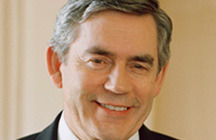
  • Gordon Brown – 1997 Mansion House Speech

    gordonbrown

    Below is the text of the speech made by the then Chancellor of the Exchequer, Gordon Brown, on 12th June 1997 at the Mansion House in London.

    1. I am pleased to attend the Lord Mayor’s dinner here at the Mansion House. 
    2. An annual dinner that has been going since mid-Victorian times, celebrating an institution, the Corporation of London, that has lasted since the 11th century. 
    3. Tonight a third of our guests are from overseas, including from Frankfurt, New York, Japan and Hong Kong. 
    4. A clear example of the internationalism, the openness and global reach of the City today and an illustration of how the City has changed in response to changes in the economy around it. 
    5. And I am pleased to speak alongside, not only the Lord Mayor, whom I thank for his invitation, but also the Governor of the Bank of England. 
    6. The City of London has established itself as one of the world’s greatest financial centres for over three hundred years. 
    7. At each stage the City has continued to respond imaginatively to the need for change: from the days in the 17th century when Edward Lloyd discovered the post office had become a better source of shipping information than the waterfront and moved his coffee house from the docks to Lombard Street; to today, when face to face contact, telephones, and ledgers have been replaced by computer screens and electronic information. 
    8. Because it has demonstrated the best qualities of our country, what can be described as the British genius:
      • always outward-looking and open to the world;
      • invariably innovative;
      • aware of the need for hard work
      • and perhaps most relevant of all, to the bewildering changes we see around us, continuously willing to respond and adapt to changing conditions and emerging technologies.


    9. And these qualities – evident in the City from its earliest years – the qualities that make for the British genius – are exactly the qualities required to succeed in today’s global marketplace. 
    10. We can take pride that London is home to more us banks than New York, and more Japanese banks than any City except Tokyo:
      • that there is more international equity trading on the London Stock Exchange than any other exchange;
      • that Britain’s overseas earnings from financial services amount to 12 billion Pounds a year.


    11. And it is because of its adaptability, its innovation, its dedicated workforce – managers and employees alike – and its willingness to embrace change that the City is well-placed for the 21st century. 
    12. If the City is to succeed today and tomorrow in an ever more competitive international marketplace it must be prepared to continuously adapt to ever greater change. And so too must the rest of the British economy be prepared to change if it is to prosper . 
    13. In a global marketplace characterised by ever more fierce competition, and unparalleled waves of technological change, we need – more than ever before – to be able to respond to change. 
    14. How we as a country prepare ourselves for these challenges of the future is the subject that I want to address this evening. 
    15. In this new economy our task is to ensure that, as individuals and companies and indeed as a country, we are fully equipped to contribute to and compete within this global marketplace. 
    16. While our national objectives of high and stable levels of growth and employment are unchanging, they can only be achieved in a new world by new methods and new policies. 
    17. I want to suggest tonight that we need as a country to take a long view of what needs to be done, set in place a foundation of monetary and fiscal stability that will last, and make long term decisions too about how we remove the obstacles to dynamism in our economy and make supply side improvements that are are needed to deliver higher levels of investment, growth and employment. 
    18. And let me say that this global economy, characterised by rapid and all-pervasive change, stability is more important than ever. 
    19. The stability of the post-war period was achieved within a relatively closed economy, with national financial markets, fixed exchange rates and frequent recourse to capital controls. 
    20. Today stability has to be won in an environment of global capital markets where investors have more choice and more freedom than ever before, and where day to day flows of capital are greater and faster than ever before. 
    21. It used to be said that a week is a long time in politics. Now an hour can be a very long time for a government that loses credibility in international capital markets. 
    22. Today the judgement of the markets – whether to punish or to reward government policies – is as swift as it is powerful. 
    23. The evidence shows that, over the long-term, investors will choose to invest for the future in a stable environment rather than an unstable one. Many of our competitors have enjoyed higher levels of investment than us, for the very reason that they have delivered more economic stability. 
    24. For in the new global marketplace there are no short cuts to long-term prosperity. To succeed, countries must convince the markets that they have the policies in place for long-term stability. 
    25. After a century of relative economic decline, we have to move Britain up the world economic league . I believe therefore that now is the time to lock into place long term policies for stability and for growth which will encourage investment, overcome the obstacles to dynamism, and make for better employment opportunities for our citizens. 
    26. If we are to achieve these objectives, there are five barriers to success that this country has to tackle. We must overcome instability and imprudence in public finances. We must address under-investment and unemployment, and avoid the risk of isolationism. 
    27. So I believe we must overcome these challenges by making, as a country, five long term commitments.
      • first, a commitment to monetary stability that allows businesses, as well as families, to plan for the future with confidence;
      • second, a commitment to long-term fiscal stability, to meeting our priorities within sustainable public finances;
      • third, a long term commitment to higher levels of investment both in people and in business to provide the capacity for strong and stable growth for the long term;
      • Fourth, a long-term and far-reaching modernisation of the welfare state so that it complements the needs and realities of modern employment by extending the opportunity to work, and allowing the workforce to adapt within a dynamic economy;
      • and let me add one further long-term commitment; a long term commitment to free trade and to Europe with policies I want to outline for constructive engagement in the developed world’s largest open market.


    28. So it is because we intend to play our full part in equipping the country for the future that this government will give short shrift to short-termism. 
    29. Step by step, I want our government to overcome each of the barriers to our long-term prosperity as a nation. 
    30. My first Budget on July 2nd will not be a budget for the short term but will take the long-term view:
      • so it will start from economic realities and challenges we face in a global market place where no one owes us a living;
      • and, with its concentration of welfare to work measures it will take the first in a number of steps we are determined to take to modernise the welfare state, and equip our country for the future.

      Monetary Stability


    31. We must start from the foundation of monetary stability. 
    32. The challenge for this government, has been to establish a credible long-term approach to monetary policy, that tackles the root causes of inflation, including the capacity constraints that have so often derailed recovery and convinces investors that they can expect stable non-inflationary growth that lasts. 
    33. Consistently low and stable inflation is essential to encourage the long-term investment on which high levels of growth and employment depend. 
    34. Since I became Chancellor, a lot of attention has been focused on the specific details of our institutional reforms giving the Bank new monetary policy responsibilities. But these highly-publicised changes are the means by which we will deliver a more fundamental and long-prized objective that has eluded Britain for years – to create a lasting framework for monetary stability. 
    35. During the last two decades governments have adopted and then abandoned a succession of monetary targets – sterling M3, M0, the ERM. And, far from delivering monetary stability, Britain has suffered the most volatile inflation record of any G7 country in the last 10 years. And we have had the lowest investment as a share of GDP. 
    36. Our new monetary framework is established on the basis of clear principles: it is for the long-term; it sets clear rules, and clear divisions of responsibility; and it is open, transparent and accountable. 
    37. The government’s role is clear – to set the economic objectives and, in particular, the inflation target. The Bank of England’s role is clear – to take the operational decisions to meet the inflation target. 
    38. Interest rate decisions will be free from any political influence. They will be recognised as being based on good long-term economics: beyond any accusation of bad short-term politics. 
    39. My appointments to the Monetary Policy Committee, made with the Governor’s agreement, were based on economic expertise, not party political persuasion. 
    40. The new Monetary Policy Committee has already shown it is prepared to take the action necessary to keep a lid on inflation. 
    41. Demand in the British economy is growing faster, but because the economy we inherited suffers from a long-term lack of investment in capacity and in skills, the recovery needs to proceed steadily to avoid a rebound in inflation. And it was because of this I decided to raise interest rates in May. 
    42. We must break out of the stop go cycle under which, every time we expand, capacity constraints and under-investment trigger inflationary pressures. 
    43. Progress has already been made in building our anti-inflation credibility. Long-term interest rates and inflation expectations have fallen. 
    44. But to create the lasting stability I want, we need to go further. 
    45. We need to lock into our economic policy a commitment to consistently low inflation over the long term. 
    46. Real stability is achieved not when we meet a target one or two months in a row, but when we can confidently expect inflation to be consistently low for a long period of time. 
    47. We need a long-term monetary policy framework. 
    48. This afternoon in the House of Commons I affirmed the inflation target. Tonight I will explain how I am completing my reform of monetary policy, by introducing more rigorous, precise and open procedures. That will help the Bank of England to deliver the inflation target consistently over the long-term. 
    49. If inflation is 1 per cent higher or, for that matter, lower than the target of 2.5 per cent, then the Governor, on behalf of the Monetary Policy Committee, should write an open letter to the Chancellor. 
    50. That letter should explain:
      • the reasons why inflation has moved away from the target by more than 1 percentage point;
      • the policy action which they are taking to deal with it;
      • the period within which they expect inflation to return to the target;
      • how this approach meets the Bank’s objectives as set by the government.


    51. Of course, any economy at some point can suffer from external events or temporary difficulties, often beyond its control. Attempts to keep inflation at the target in these circumstances may cause undesirable volatility in output. 
    52. But, if inflation is still more than 1 per cent away from the target after three months, I will expect the Governor to write to me again. 
    53. Instead of the old procedures that were ad hoc, personalised, and could not last credibly for the long term, this government has set in place clear rules, divisions of responsibility and a target supported by tight procedures for monitoring whether it is delivered. It is because there are clear rules and rigour that our approach will command greater confidence. 
    54. Over the coming years I want the British economy to enjoy the far greater underlying strength that comes from a base of low and stable inflation. 
    55. If we succeed in strengthening the ability of the British economy to sustain growth with low inflation. And if international conditions permit, I would hope to lower the inflation target. But the long-term inflation target of 2.5 per cent I have reaffirmed for the Bank of England today, reinforced by the open letter system, provides the final building block for our new framework of British monetary policy. 
    56. The open letter is yet another example of the government’s commitment to a more transparent and accountable system of monetary decision-making. 
    57. The committee’s performance and procedures will also be reviewed by the reformed court. The Bank will be accountable to the House of Commons through regular reports and evidence given to the Treasury Select Committee. Finally, through the publication of the minutes of the Monetary Policy Committee meetings and the inflation report, the Bank will be accountable to the public at large. I believe, in time, our new framework may become a model for other countries to follow.Fiscal Stability


    58. Building a platform of long-term stability means not only a stable monetary framework for the long-term, but government must play its own role by achieving sustainable public finances for the long-term. 
    59. That is why yesterday the Chief Secretary announced our plans for a comprehensive review of all government spending. 
    60. This will be a root and branch appraisal of how we can improve the efficiency of government in meeting our objectives for improving investment, opportunity, fairness and employment; how we can make better use of government assets; and, finally, how we can best make use of public/private partnerships to harness new sources of financial and management expertise. 
    61. The review will ensure that our public spending decisions reflect our long-term priorities, and meet the country’s long-term needs. 
    62. Our determination to have long-term stability in the public finances lies behind our commitment to draw up a national register of government assets. One of our departments alone has 90,000 buildings. 
    63. We are committed to ensuring that government assets are used efficiently to deliver our priorities and we will not hold assets that have no further use. 
    64. I can announce tonight that we have asked departments to complete this register by November, so that it can inform the conclusions of our Comprehensive Spending Review. 
    65. And just as we will resist any other irresponsible demand on public spending, we will resist irresponsible public sector pay demands. 
    66. Alongside the Comprehensive Spending Review, we will introduce tough rules for government borrowing. 
    67. Two central principles will guide our approach. First, meeting the golden rule for borrowing. Over the economic cycle, the government will only borrow to finance public investment and not to fund public consumption. 
    68. Second, alongside this golden rule commitment, we will keep the ratio of government debt to GDP stable on average over the economic cycle and at a prudent and sensible level. 
    69. This platform of fiscal stability will deliver, more investment, more growth and more jobs.Investment


    70. But we will only achieve and sustain monetary and fiscal stability if we can strengthen the underlying capacity of the British economy. 
    71. For too long investors have recognised the importance of stability and taking a long-term view, while governments have not. 
    72. Long-term investment holds the key to our future prosperity in Britain. That is why I am determined to put in place the conditions that will encourage the high levels of investment we need. 
    73. Of course economic stability – with investors confident of low inflation over the long term – is central 
    74. But it is also crucial to improve the supply-side of the economy – to remove the obstacles to dynamism, and make it possible for us to sustain high and stable levels of growth with low inflation. 
    75. Geoffrey Robinson, the Paymaster General, will head an Enterprise and Growth Unit in the Treasury which will work with business to nurture innovation and entrepreneurship. And he has asked Malcolm Bates formerly deputy managing director of GEC, to undertake a thorough-going review of the Treasury arrangements for PFI projects to ensure quicker and better decision-making. 
    76. We need to seek public/private partnerships to deliver better public services and investment. And I am determined that the private finance initiative has a new start. 
    77. And I am also determined that we improve the competitiveness of our marketplace so that investment levels can rise. 
    78. Our measures on the electricity industry yesterday show that we are prepared to open up markets to competition and contribute to investment and dynamism.Welfare reform


    79. Stability provides the platform. But we cannot build a dynamic economy unless we can unleash the potential in everyone. A welfare state that thwarts the opportunities that we need, will hold the economy back. A welfare state that encourages work is not only fair but makes for greater dynamism in the economy. 
    80. This new approach to welfare aims to strengthen the supply side of the economy and so contribute to the maintenance of long-term stability. 
    81. The three modernisations we propose – of employment policy, of tax and benefits, and of lifelong learning – reflect our determination not merely to compensate people for their poverty, but actually to tackle the causes of poverty by means that provide opportunity and so strengthen our economic performance. 
    82. Britain cannot succeed unless we develop our greatest asset: our people. The new realities of fast changing labour markets mean there is a constant need for retraining and upskilling by the British workforce in the new global economy . 
    83. So the starting point of our reforms is our welfare to work programme. It will be aimed at helping 250,000 young and long-term unemployed people into work by giving them opportunities to learn, train and gain employment. 
    84. But we will also modernise the tax and benefits system to ensure that people have jobs, are able to keep the jobs they have, and are able to move into better jobs. 
    85. Finally our new approach to welfare will establish a new platform of educational opportunity – a skills ladder – through initiatives such as the university for industry – in order that British people can acquire the new skills they need to earn a living and contribute to our economy’s long-term strength.Long-term stability in Europe


    86. We cannot build a stronger British economy in isolation. Europe is where we are, where we trade, and where we make our living. 60 per cent of our trade and 3.5 million jobs depend upon it. 
    87. It is vital that investors have confidence in our relationship with Europe. I can put that beyond any doubt tonight: Europe is where we are and where we will stay. 
    88. Our long-term commitment to Europe means that it is essential that we must play a leading role in shaping Europe’s future. 
    89. We will pursue a British agenda to equip Europe for long-term success. That is what the British initiative that I launched last week to get Europe to work was all about. 
    90. We will push ahead with the completion of the single market. 
    91. David Simon is taking forward the government’s competitiveness agenda in Europe. He will promote flexible labour markets across the EU and work to break down the barriers to competition in the single market. 
    92. Tonight’s audience will recognise that there remain major barriers to free trade in financial services in the EU. We are working hard to overcome those barriers. 
    93. It is in every country’s long-term interest to have internationally competitive industries, trading freely in an open market. 
    94. We in Europe must also share our experience and expertise in reforming our welfare systems and promoting long-term flexibility in our markets, especially our labour markets. And we must tackle obstacles to dynamism.Conclusion


    95. A lot has been written and said about the first days and weeks of the new government. Popularity in politics will ebb and flow, but the true test of the announcements and reforms we are making is not the response we have received or will receive in the short term but the results these reforms achieve in the long term. 
    96. In our monetary and fiscal policy we are determined to chart a consistent course, not for a few months or even a year or two, but for the long term. By being better equipped for the future, Britain and the British people can and will be better off.
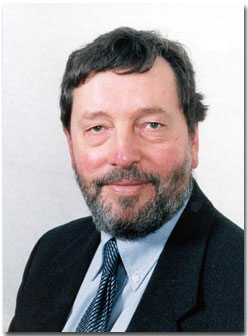
  • David Blunkett – 1997 Speech to TUC Conference

    davidblunkett

    Below is the text of the speech made by David Blunkett, the then Secretary of State for Education and Employment, to the 1997 TUC Conference.

    It gives me very great pleasure to congratulate the TUC and all those staff who have made it possible to gain the Investors in People award. After hearing the Archbishop and Prime Minister, I think I had better keep my speech very short. It is not so much the organ grinder and the monkey but something that I would rather not say at an open TUC meeting! I am delighted to be here. I am very pleased indeed that after New Labour, the TUC now have Investors in People, and it is my job to make sure that the Department for Education and Employment receive it as well because they have not yet achieved this.

    In offering congratulations and presenting the award of the Investors in People plaque to be displayed in the foyer at Congress House, we have a very clear message which is that the trades union Movement is taking a lead in achieving one of the most prestigious awards in terms of quality for development of staff, for training and ensuring the skills of the future. If the TUC can give this lead, then every employer in the country has a beholden duty to make sure that they are also taking steps to get Investors in People status and to treat their employees in a civilised and acceptable way. This should not be dealt with merely in terms of basic rights, which are the foundation that you have been debating at Congress this week and on which Tony Blair spoke this afternoon, but it should be taken much further, not looking backwards over our shoulders but looking to the future and taking the example of Bargaining for Skills and the Return to Learn programmes and other similar measures that unions within the TUC have been implementing.

    They should join in partnership with the new Government in making it possible to bring alive adult and continuing education in the way that the early Labour and trades union Movement began so many years ago with the Mechanics Institutes. That is why we have appointed Bob Fryer, the principal of the Northern College, to head the Advisory Group to reinvent adult and continuing education in the community and the workplace so that we can draw on the experience that members of the TUC, and the TUC itself, have had.

    Earlier this afternoon, a delegate spoke about her experience on the Health and Safety courses, Levels I and II. I used to teach those courses back in the 1970s. I was proud of that and, as a Secretary of State, it is my job to make sure that trades union education and skills for life are at the top of the agenda. As we invest in nursery provision ‑‑ we have removed the nursery voucher scheme which people said it would take us a year to do; we did it in three months ‑‑ as we remove the assisted places’ scheme and divert the money in the coming years to lower class sizes, and as we take up the cudgel of stopping the cut‑backs, redundancies and retrenchment from next April as we invest the , 1 billion that Tony Blair talked about, we do so only as a foundation. Many of your members, just like myself when I was a youngster in the community in which I was born and grew up, did not have a first chance, never mind a second or third chance.

    The idea is to bring about lifelong learning in and out of the workplace, making the issue of employability and skills come alive for people who have been denied those opportunities. It is bringing alive partnership in practice for everyone in our communities and taking up the cudgel that the TUC have so gallantly laid down in terms of setting an example. That is why I am so proud to be able to be here and to offer the award this afternoon. I have been on a learning curve over the last few weeks as well. In fact, I am thinking of inventing an NVQ Level IV for Cabinet Ministers so that we can make ourselves qualified for the job. We just have to hang on to it long enough to be able to ensure that we make it in practice. Just as we get to the point where we think we are experts, we are either sacked or reshuffled!

    The skills’ revolution is about job security in the cabinet and job security at work. I commend everyone this afternoon in taking the agenda forward in the way that the Prime Minister indicated, a modern trades union Movement in a modern Britain, moving to a new century, preparing and equipping people to take on that challenge. You will be looking at the global economy anew but ensuring that in your hearts you know what you are doing to ensure that the people who rely on you have the grasp, equipment and tools to be able to do the job and to fend for themselves.

    It is a tremendous challenge. Together with Margaret Beckett and Ian McCartney from my department who have been here, I hope to be able to work on that new agenda. I congratulate the TUC and all of you for the Investors in People Award. I present the award this afternoon, not to Morecambe, not to Wise, but to John Monks, General Secretary of the TUC.

  • Tony Blair – 1997 Speech on the Environment

    tonyblair

    The speech below was made by the then Prime Minister, Tony Blair, in his constituency of Sedgefield on Friday 14th November 1997.

    I am delighted to be back in my constituency at such an exciting and important event. Sedgefield is one of the pioneers of the sustainable communities’ project.

    Britain will never be a modern, forward-looking country if it is a place whose beauty, character, air, rivers, are polluted, defaced, and contaminated.

    To be modern is to be green. It is about seeking new solutions to new environmental challenges. Not just so that future generations have a planet that is still inhabitable but so that all of us going about our lives today can improve our quality of life. And it is about working with business to ensure that our companies and industry are able to take advantage of the huge opportunities that markets for new technologies offer. Many businesses already recognise that this agenda is an opportunity not a threat.

    It is also about recognising that we will only succeed if we work together. Individuals, business, communities and government must all act if we are to meet these new challenges. Communities such as Sedgefield are taking the lead.

    Today we have all seen examples of people and communities who have decided to take effective and practical action to change their lifestyles so that they benefit and the environment benefits. I am particularly pleased that so many different businesses and organisations have been involved, from Northumbrian Water, to the library, from Fujitsu to local schools, working together in partnership. I hope that many more local communities will take up the challenge.

    And I welcome Going for Green’s “Eco-Cal” initiative – a computer based tool to help people measure how green their lifestyle is. It encourages people to recycle, to walk more, to turn their thermostats down, to wash their car with a bucket not a hose.

    It will help all of us save money on our energy bills, improve the quality of our local environment-in short how to live a more sustainable lifestyle.

    Small changes can collectively make a big difference to energy use. There are so many simple things that can be done when you realise the waste that occurs in our daily lives;

    Every nine months households generate enough waste to fill Lake Windermere.

    A third of household waste is packaging.

    Hosing a car for ten minutes uses almost 100 litres of water.

    Leaving a computer screen on all night uses enough power to print 800 pages of A4 paper.

    Lighting an empty office overnight is equivalent to making 1,000 cups of coffee.

    What these facts show is that working towards a greener country doesn’t require a PhD in bio-chemistry merely a degree of common sense and thought.

    Well over half of all journeys are less than 5 miles and if we did more of them on foot or by bike rather than by car we would save ourselves money, avoid causing pollution and make ourselves a bit healthier – in short improve our quality of life.

    Our job as a government is to encourage local action of this sort but also to take a lead ourselves.

    Since May 1 we have done just that.

    In a few short months we have:

    Set tough targets on leakage for water companies to meet.

    Given £3m to the Iwokrama rainforest in Guyana.

    Published a White paper on international development committing Britain to sustainable development.

    But I want to do more. I want to tackle head on the serious and growing pressures on the country’s transport systems.

    We cannot carry on as we are. We know the problem. Congestion in our cities is increasing. At times there is complete log-gam. Pollution, noise, personal frustration, road rage, as well as extra costs and inconvenience is the result.

    That is why we are undertaking a fundamental review of transport policy so that we have an integrated transport policy that makes public transport a real and attractive alternative.

    Of course many people will always want to use their car. Often their livelihood depends on it. That is why we must take advantage of new technological advances to ensure that we minimise the adverse environmental impact of car use.

    Firstly we will provide £5m of grant funding to be matched by industry funds to help industry and academia work together to develop vehicles that are more environmental friendly through the foresight Vehicle Link programme.

    I want us to find new ways of making car use greener.

    So I have asked Ian McAllister of Fords, president of the society of Motor Manufacturers, to join with Gavin Strang in setting up a partnership between government and the private sector to find ways of making it easier for the public to switch to greener vehicles, more fuel efficient vehicles.

    I want people to be able to make real choices, and choosing an environmentally friendly car should be a real cost-effective alternative. We need new attitudes, so that more drivers think green.

    We are also taking action on air quality.

    Our first step will be to put in place a National Air Quality Strategy. We will give local authorities the tools they need to assess air quality and devise strategies to deal with problem areas. Local authorities in seven areas are going to be given the powers to carry out roadside checks on vehicles to make sure that all vehicles are up to standard. If this is successful it will be extended throughout the country.

    Second, we are going to make information about air quality easier to understand, so that people will be able to judge us on the progress we make.

    And we will also use the opportunity of our Presidency in the EU next year to make progress on reaching agreements to ensure that cars, vans and lorries sold throughout the EU minimise their emissions.

    This government’s lead is not just about what we can do in Britain but how we can influence the international community.

    The government is convinced of the need to tackle the factors which contribute to climate change. Many of you will be aware that Sir Robert May, the government’s Chief Scientific Adviser published a report in October which showed the evidence is now clear.

    At current trends carbon dioxide will be present in the atmosphere at twice pre-industrial levels by the middle of the next century and still rising. The IPPC predict this would mean an average global temperature rise of about 2.5° by the end of the next century. This could lead to a rise in sea levels of up to 50cm on average causing widespread flooding of low lying coastal areas.

    It is a global problem and needs a global solution. The Kyoto conference in December is an opportunity to show that we and other developed countries are serious about taking this challenge on. We are in the forefront of efforts to secure a successful outcome at Kyoto. John Prescott has done sterling work in the negotiations so far and will continue to play a key role in the next few weeks to press for progress. We are urging all developed countries to agree to take on serious targets to reduce emissions of greenhouse gases.

    I do not underestimate the challenges that we face in securing a meaningful agreement. But I also say that we should not underestimate the potential threat that climate change poses and it is vital that developed countries take the lead in reducing emissions.

    The message of today is that local action by individuals and national action by government can work together to make sure that progress today does not mean a degraded environment tomorrow.

    Britain is the country of Constable and Turner; of rural dreams and seaside holidays; of the Lake District and spectacular coastlines; the prettiest villages and the most vibrant cities.

    To be modern is to make our historic love of the countryside and of nature a modern day commitment to protect and sustain our environment. In Sedgefield today and Kyoto in December we see two ways in which we, the British people, can made an important start.

  • Tony Blair – 1997 Speech to the CBI

    tonyblair

    The below speech was made to the CBI Conference at Birmingham on Tuesday 11th November 1997 by the then Prime Minister, Tony Blair.

    Two years ago when I last addressed the CBI’s National conference, I promised a new partnership between New Labour and business. Six months into office, we have laid the foundations of that partnership.

    There are business people bringing their experience and expertise by serving in Government, on Advisory Groups, leading task forces, all contributing to the success of Government policy. But there is also great commitment and enthusiasm, right across the Government, for gorging links with the business community. That this is the approach of a Labour government is of historic importance. It demonstrates we are entering a new era in British politics.

    I have described my approach to the development of government economic and industrial policy as the pursuit of a third Way between the laissez-faire of the last 20 years, and the model of statist and corporatist policies that used to be fashionable on the left. Neither of these approaches, new Right or old Left, fits the modern world.

    The third way recognises a new and different role for Government. Not as director but as enabling of wealth generation. Not trying to run industry or protect it from proper competition; but stepping in, where the market fails, to equip business and industry to compete better in that market. And the market today is global. Technology, travel, communication, financial services are shrinking the world.

    It will require us, as a nation, constantly to adapt and change. The third way is to try to construct a partnership between Government and business to help us cope with change and success in the face of its challenge.

    Margaret Beckett set out this morning the progress she’s made on building a partnership between the DTI and business to promote competitiveness. Yesterday Gordon spoke of the measures we have taken to secure long-term stability. Later this month in the pre-budget report he will make it clear that removing barriers to growth is central to the task he has set himself at the Treasury.

    And beyond those departments throughout the new Government there is the understanding that creating the conditions for growth, enterprise and competitiveness is a job for all of us in Government.

    Britain has world-class industries and world-class firms. We have real strengths and outstanding successes. Inward investors from around the world have found Britain a good place to do business.

    All this is to be praised and admired. But we should also acknowledge that often the performance of our firms and industries does not match the standards of the best at home and abroad.

    Today the DTI has published a report benchmarking the |UK economy – comparing our performance with our competitors. It shows that, while there are British firms competing effectively with the world’s best, many are not. The message is clear: we need to redouble our efforts to match the standards set by the best companies in the world. And ‘benchmarking’ – seeking out and implementing best practice – can be a powerful tool for improving performance. It’s a message everyone in the country and industry needs to heed. Raising performance to match the best in the world is the challenge for modern business in Britain. This is why I warmly welcome the launch of the CBI’s ‘Fit for the Future’ initiative to promote best practice. I wish it success.

    But important though these initiatives are, they have little prospect of success unless firmly set within a framework of economic policy to build strength for the long-term. I am an unrepentant long-termist. There aren’t quick fixes to get economic success. Politicians who promise them are not telling the truth.

    What we can do, though, is to be clear about our direction and purpose as a nation.

    Yesterday at the Mansion House in London, I set out the five priorities of a modern foreign policy for Britain. Today let me set out the basic principles of a modern economic policy for Britain.

    It rests on one key belief: to succeed, today, Britain must be the world’s No 1 creative economy. We will win by brains or not at all. We will compete on enterprise and talent or fail.

    The partnership I advocate is not some cosy old consensus. It is a hard-headed look at what Government and business need to do together to reach that goal.

    These are the principles.

    First, we must end Britain’s affliction of boom and bust economies and run a well-managed, tight economic ship. Interest rate decisions taken on the basis of politics are bad decisions which is why we gave the Bank of England independence to make these decisions. I know it’s hard to have interest rate rises and consequent pressure on the pound as we choke off inflation that was back in the system. It was hard, too, to ensure that the July Budget got our public finances on a more stable footing so that we eliminated the structural budget deficit. But I believe passionately that we were right in both cases. Better to have interest rate rises now – still at 7 per cent – than to go back to the early ’90s when they were at 15 per cent for a year. Better to have cut the deficit now than to carry on paying out now just in debt interest payments more than we spend on schools.

    Our aim is to rid this country of the vicious cycle of boom and bust that has plagued us for so long. Families, entrepreneurs, all of us feel recession and fear economic instability. It threatens our business, it threatens our job, it makes our mortgage harder to pay, it means we work harder for less reward. That is why the Chancellor and I are determined to take the tough decisions now to ensure long term stability. I want every business to have the security to plan its expansion, every family the stability to pay the mortgage and afford a holiday, every entrepreneur the security to take the risks that are needed to set up new enterprises.

    I have promised sound public finances and monetary policy and I will deliver them.

    Second, the absolute number one priority for our domestic policy is education. I won’t rehearse the argument. You know it and agree. This Government is making the most concerted effort to tackle poor standards in schools since the war. We have set ourselves some pretty rigorous targets of achievement. I am determined to get there. If we reform student finance – another hard decision, but right – we can also end the cap on student numbers and get resources back into the science and research base of our universities. There can be no first class education system without first rank universities.

    Third, we are beginning the process of welfare reform, to encourage work, education and savings. I congratulate business on what it is doing to help us with the programme to tackle long-term youth unemployment. I don’t believe any youngster should leave school and go on the dole. There should be work and skills available and a responsibility to take the opportunities offered. The Green Paper will say more on how we make the tax and benefits system more work-friendly. We are working now on how we reform pension provision for the long-term.

    You may say: what’s this got to do with business? I say: everything. Because we cannot carry on spending more and more on social failure. We need to use the talents of the unemployed, not waste them; and encourage work and savings precisely to enforce long-term stability. That is why welfare reform is an essential part of our business strategy.

    Fourth, we must keep on looking at how we stimulate enterprise and initiative. The world of work is different today. Many more will work in different ways, in their own business or at home. We will keep a flexible labour market. Even where you may have doubts about certain parts of policy – a minimum wage or trade union representation – remember: that we are consulting business every step of the way; and that taken altogether, the entire changes proposed would still leave us with a labour market considerably less regulated than that of the USA. But flexibility is about more than a light tough on regulation. It is also about helping small businesses, as we are doing. Lifting their burden as with the reduction in corporation tax and especially small businesses corporation tax to its lowest ever level. It is about technology and how we train people to use it.

    It is about competition. Who would have thought eighteen years ago a Competition Bill would have been in the first Queen’s Speech of a new Labour Government?

    Fifth, we must work with you to renew the country’s infrastructure, especially its transport system.

    Sixth, we must get the best out of our membership of the EU for Britain.

    On a single currency, I would simply say this. It is important for Britain that the single currency succeeds. Whether we are in or out. If the economic benefits are clear and unambiguous in favour of going in, we want Britain to be part of a successful single currency. And we want business to prepare for that eventuality and make a practical reality of it, as only business can.

    To join too early would imply a massive monetary relaxation in the UK at a time when our economy is near the peak of the cycle. There would be a risk of setting off a short-lived inflationary boom that it would then require a long period of recession to overcome. That is precisely the economics of boom and bust which this government was elected to bring to an end. That is why joining this Parliament is unrealistic.

    But we must now prepare so that as the point of decision comes, it will be taken on the basis of a clear and unambiguous assessment of Britain’s economic interests. We will put the national economic interest first, and there will be a referendum of the people on the decision.

    We have made a pledge to our partners that we will do all we can to ensure a successful start to the single currency in our EU presidency. Our role will be constructive and engaged.

    But we will also work hard to ensure that the single currency is set up on a sound footing. We must become Europe’s reformers. Monetary union is a unique and ambitious project. To make it work Europe will need to demonstrate a new adaptability and flexibility. We shall work for that. We will fight hard for a modern and flexible labour market in Europe; and I believe the forthcoming Jobs Summit in Luxembourg will show we are starting to make progress.

    Making a reality of the single market is a key priority. Legislation that has been agreed in Brussels needs to be properly applied in Member States. The single market is far from complete and too many distortions in the form of state aids and the rest remain.

    David Simon has taken the lead in Government on this issue, he has been working closely with the Commission on the Single Market Action Plan and he will make sure we pursue this vigorously during our EU Presidency next year.

    We will fight strenuously for reform of the EU Budget.

    I don’t want Britain to become constructive in Europe just by giving in to whatever is proposed by any other European country or the Commission. I want us to be able to persuade for the case for change. But we cannot persuade unless people believe our objectives are rooted in commonsense and reason, not narrow chauvinism.

    These objectives – the six principles – are clear and right. With your support they are achievable.

    It means setting aside many of the dogmas of the past from left and right. But that is no bad thing. For countries to succeed today, their political leaders must liberate themselves from the old ideologies that plunged the 20th Century into such strife and folly.

    Britain is uniquely placed. There is fresh confidence and optimism: fresh understanding of the joys of our history but also the great prospects of our future. There is a new sense of national purpose. Our direction is clear. Help us to get there. For the first time in a generation, I am confident it can be done. So, together, let us do it.