
Tag: 1996

  • John Major – 1996 Speech to the Institute of Directors

    johnmajor

    Below is the text of the speech made by John Major, the then Prime Minister, to the Institute of Directors on 19th January 1996.

    I am delighted to be here on this occasion to have the opportunity of talking about some of the matters that lie ahead of us economically and some of the opportunities that are there for us to take.

    I had the opportunity this morning to reflect on these in a rather philosophical mode. I spent the early part of this morning at Ironbridge – the cradle of the industrial revolution. And there at Ironbridge, by innovation, enterprise, investment, sweat and courage, new industries were born and the world followed Britain’s lead. It helped in its day build an unparalleled prosperity for this country.

    As we meet here today we are in the middle of another more complex but equally important industrial revolution. It is one that will have a just as far reaching effect upon this country if we are successful in the way we approach it.

    Last year at this very same convention centre, I set out five core principles, core themes, for our future. Today I would like to elaborate, to concentrate, upon just one of them. But let me remind you what those five themes were: to build a nation of enterprise and prosperity, a nation of opportunity and ownership, to safeguard law and order, to deliver first class public services and to defend a strong, united and sovereign United Kingdom.

    All of those are important. But today I want to focus on just one of them, I want to focus upon enterprise.

    Not all that many years ago Britain was universally regarded as the sick man of Europe. We had over mighty trade unions, strikes brought the country to a standstill, inflation hit all time highs and nationalised industries cost the taxpayer 50 million pounds each and every week. Today that is all behind us and I for one never wish to see those set of circumstances return to this country again.

    What is true as we meet here at lunchtime, though it is unfashionable to say so, is that Britain is today building a platform for success that is outstripping more and more of our competitors across Europe.

    In our adversarial political system, and I make no complaint about the nature of that, but in that adversarial political system many have a vested interest in scoffing at our success. But they can’t deny the fact of it.

    We have seen the longest period of low inflation for 50 years. When inflation is there it is a mighty peril, when it has gone it is speedily forgotten. But I recall how it rendered us uncompetitive, how it destroyed our savings, how it brought this country almost to its knees in earlier years, and now we have the psychology of inflation under firmer lock and key than ever in my lifetime. I am proud of that and I have no intention of letting that lock go in the future.

    We have now got the lowest basic rate of tax for over 50 years, the lowest mortgage rates for over 30 years. We have more of our people in the United Kingdom actually in jobs, and fewer unemployed, than any major European economy. And I wonder how many people in this room can remember when last that was the circumstance.

    We have exports running at record levels. We have days lost for strikes falling to the lowest level since we first began to keep records of that. And Britain is the leading recipient in Europe of foreign investment. Indeed over the recent years we have received more foreign investment from outside Europe into the United Kingdom than has gone into the rest of the European Union added together.

    That is what Britain has achieved. It is not a negligible achievement. Of course there is a great deal more to be done, but the position that we have reached offers very great opportunities for the future provided the policies to take advantage of those opportunities are not thrown to one side and are followed through in the years that lie immediately ahead.

    I have no doubt about the key to that future. The key to that future is enterprise, enterprise at the heart of a free and prosperous society. With enterprise comes risk, but also reward. It creates competitiveness and builds prosperity and economic growth. Growth – a buzzword to some, but a reality for all our hopes. It is growth that pays for our national security,our defence forces, that pays for our social inclinations, our education system, our social provision, and so it is crucial for our future well-being.

    And it is for that reason, the belief that I have that we need growth with low inflation if we are to maximise our opportunities for this generation, this country and future generations, that leads me to say that I believe that what we need to do is to promote the opportunities of enterprise for the future. And it is because of that that the government that I lead aims to turn Britain into the unrivalled enterprise centre of Europe, not just in the short term but for the long term future.

    That will not be achieved without effort, it cannot be achieved by empty slogans. Britain can only do it if we believe in the values of enterprise and we then follow the policies that promote enterprise. Enterprise benefits society through the goods it makes and the services it provides, through the jobs it creates and the taxes it pays to support public services, through the contribution that businesses make to the communities around them. And it is worth considering that just for a moment. That contribution takes many forms, working to improve the local economy, to improve training, in Techs, in Chambers of Commerce and countless other local business groups, getting involved in local schools, helping voluntary groups, sponsoring sport and sponsoring the arts.

    Our businesses, in my judgment, enrich our society in every sense of the word. They don’t need someone to instruct them to do this any more than they need someone to instruct them upon how to run their business.

    But this enterprise culture, this opportunity, this belief in enterprise and all the wider benefits it brings, would be very easy to destroy. Vilify our businessmen for their very success, interfere on the grounds that the government knows best, make it impossible for them to earn a fair reward for their efforts, that would do it, that would destroy what is currently being built in this country for the benefit not just of businessmen but of all the people of this country.

    And there is an idea, passed on from generation to generation by a curious mix of the well meaning, the envious and the confused, that it is wrong for business to make a profit. What nonsense that is. It is about time not just the politicians but that business defended the need to make a profit in the common wheel as well as in the interests of the shareholder. Profit should be applauded, not condemned. It is not a dirty word except to the peddlers of envy. It funds investment, it generates jobs, it is not only respectable, it is essential for the future that we wish to build.

    If there is no profit then there is no enterprise. If there is no enterprise then there are no jobs. If there is no enterprise and no jobs then we will all be the poorer.

    Government has its own role in fostering enterprise. I am not in favour of unadulterated laissez faire. Enterprise depends on government to follow sensible economic policies and create the right tax and regulatory environment, and we Conservatives are tax-cutters by conviction whenever we have the opportunity. And when I say tax-cutters by conviction, when I look at the demands for the future, the demands that demand an enterprise system for this country in the future, I don’t just refer to income tax when I refer to the Conservatives being tax-cutters by conviction. Taxes on capital are like taxes on jobs. If they are too high it is not worth building up a business and employing people. And that is why I want to cut, and in due course, and I offer you no timescale for this, but that is why I want to cut and in due course abolish both capital gains tax and inheritance tax.

    Our opponents, playing their old game of the politics of envy, claim that reducing these taxes only benefits the few. But what that shows is how little they truly understand enterprise and all its effects. By denying businessmen and their families the rewards of their efforts, these taxes discourage enterprise, discourage job creation and discourage the growth of prosperity right across this country.

    This country today, Britain today, now has the lowest tax burden of any major European economy. Forty-two percent of our national income is spent by the government on behalf of the taxpayer. That is going on for 10 percent less than the European average. That gap is worth 60 billion pounds a year, the equivalent of around 30p on the basic rate of income tax. So we are doing far better than Europe, even our competitors admit it. Even Germany, for so long seen as the strongest and most competitive economy anywhere in Europe.

    But listen to what the Head of the German CBI had to say about the German economy just the other day: “We have too rigid labour laws, we have too high social costs and taxes. We work the shortest working week in Europe. The German government spends 50 percent of GDP as opposed to 42 percent in Britain – no wonder we have a problem.” That is the voice of modern Germany looking enviously at the situation that is applying in modern Britain.

    And I believe that 42 percent that we spend, that we the government spend on behalf of the taxpayer, still isn’t good enough. I want to get government spending down to below 40 percent of our national income in the first instance. We need to raise our eyes beyond the competition with our European partners. We need to compete worldwide where half of all our trade goes outside the European Union, with Japan, with the United States and with countries like Korea, Singapore and Taiwan.

    It is not just enough to have warm aspirations and to set soft targets. Controlling public spending requires tough decisions, determination and foresight. And here we have built up an advantage over our competitors. We have taken many of the difficult decisions and accepted the political unpopularity that inevitably goes with them. And I believe we were right to do so.

    Elsewhere that has not happened. Throughout Europe governments are waking up to the gap between the expectations of their citizens and the state’s ability to support them. And that is not some abstract problem. In France it erupted on to the streets. But we foresaw the problem and began to tackle it years ago.

    Let me give you just one of a number of examples. By encouraging occupational pensions we have ensured people’s security and limited the burden on the state. And as a result we now have in this country, in Britain, more invested in pensions for the future than the rest of Europe added together.

    And it is the same for the rest of our welfare system. Social security currently costs every worker 15 pounds every single day of the year. Until we began to reform it a few years ago, spending on benefits was set to grow faster than the economy as a whole, Clearly that couldn’t go on. Our reforms are now beginning to give us a social security system that is fair, that is reasonable and that the taxpayer can support, one which promotes incentives to save and be self-reliant – the values of an enterprise economy and above all makes it worthwhile to go out and get and accept a job.

    But there is no point giving people incentives to get a job if firms themselves cannot afford to create jobs. Too often in Europe that is precisely what is happening. Approaching 20 million adults in Europe, as we meet here today, are unemployed. From the 1950s onwards, in good years of growth as well as bad years of no growth, the underlying level of unemployment has risen across Europe. I believe that that is a problem that Europe dare not ignore and I have repeatedly raised this point at European meetings.

    When I say dare not ignore, I don’t just mean talk about, I mean determined policies that will actually encourage business to create jobs for the future. It is often said, not least by our political opponents, that we British are often isolated on some aspects of European policy, that we won’t accept the European consensus. Well I make no apology for rejecting consensus when that consensus in my judgment is wrong and not in the British interest.

    Our political opponents say it is tedious, nationalistic of us, to oppose signing the social chapter. They think we should sign it. I believe we should not sign it and I believe this because of the facts of what it is, but more relevantly what it would do to the prospects of people in this country, as it has already done for the prospects of people across Europe.

    And let me spell it out for you, because the campaign of mis-information about the cuddly sounding social chapter deserves to be exploded.

    At present unemployment in Germany is 8.5 percent and rising. France and Italy 11.5 percent. Spain 22.5 percent. But here in Britain unemployment is 8 percent and falling. It has been falling month in, month out, month in, month out for around about two and a half years.

    And why is it that Britain is doing better at creating jobs than the rest of Europe? In Britain, for every 100 pounds spent on wages, an employer has to add an extra 18 pounds for non-wage costs for every employee. But that same employer would have to add, not 18, but 32 pounds in Germany for every employee, 34 pounds in Spain, 41 pounds in France and 44 pounds in Italy. Why should entrepreneurs create jobs in those countries at that expense if it is cheaper to create jobs and more profitably in this country?

    Our political opponents try to denigrate our record. They claim those new jobs are temporary and not real. Well let me nail that lie immediately. A higher proportion of the workforce are temporary employees in Germany, France and Spain. In Spain almost one-third of the workforce are temporary, and that compares with 7.5 percent only of employees in the United Kingdom. And why is there that disparity? Because temporary jobs are higher elsewhere because it is a loophole to escape the costs of restrictive employment and social regulations. These are the sort of costs that could be imposed on British business if we ever signed up to the social chapter.

    Our opt-out that I negotiated at Maastricht, and to which I shall passionately hold for as long as I am in politics, that opt-out helps to protect Britain’s competitiveness at home and in Europe, and if we surrendered it that competitive edge would no longer be safe.

    In many areas proposals under the social chapter will be put forward for decisions by qualified majority voting. I have no doubt that if it suited them, others would find a way to blur what can be imposed by majority voting and what cannot. If Britain were in the social chapter we would have precious little say over which bits of it applied to the United Kingdom. We could not rely on being able to block proposals that we thought were damaging. To think that we could pick and mix if we joined the social chapter is naive and wrong. There would be no opportunity to pick and mix.

    Experience of negotiating in Europe has taught me that we must not just look at what is in the Social Chapter today, we must also look at what it can be used for in the future. The reality is that it will become the channel through which our European competitors could impose upon the United Kingdom their social costs, regulations and potentially their trades union laws.

    Measures on working conditions could be imposed upon us and what does that mean? A ban on overtime, the Social Chapter already producing proposals regulating paternity leave and part-time employment. And then there is consultation: huge numbers of decisions businesses take clogged up by harmonised European rules about who needs to be consulted, how and when, with the inevitable cost, delay and difficulty in making those decisions in the interests of the country, the company and the workforce and that would put a very significant spanner in the works of successful businesses.

    The fact is no-one knows precisely what the European Community might or might not propose under the Social Chapter or how the European Court would interpret it. It is a blank cheque, the thin end of a very dangerous and uncompetitive wedge.

    It sounds very attractive to some politicians, it sounds like painless charity. It may sound nice for those people with jobs but I believe that it is dishonest because loading costs and regulation onto business makes it more expensive to employ people and that means only one thing: employers cannot hope to create new jobs and might well have to scrap existing jobs.

    The Social Chapter should be seen for what it is – a European jobs tax, a tax on jobs by the front door and in time a tax on jobs by the back door and that is why I judge it to be immoral. That is why, if I had signed the Social Chapter, I would not have been able to look the unemployed in the eyes again. Europe needs more jobs; it does not mean more taxes on jobs – that is not in the interests of Europe and it is emphatically not in the interests of the United Kingdom. [Applause].

    I opposed the Social Chapter at Maastricht and I opposed it on principle. I believed then that it would cost jobs and not create them and I was right. I still believe it. Our enterprise economy is not negotiable, our economic success is too valuable to be wrecked by Socialist experiments.

    Let me say a word about our success at attracting inward investment. We are again here outstripping the rest our European partners but does anyone seriously believe that Japanese and American companies would still be coming here in their droves if we crippled ourselves with extra social costs as other people have done? I don’t think they would. Those companies bring not just jobs and investment; just as importantly, they bring innovations, new technology, new management techniques and the spur of competition and we must build on these skills but for that we need people who are able and motivated to learn from the success of others, people who can keep up with the pace of change, people who can dictate the pace of change for the future. I don’t doubt for a minute that the British nation are capable of that; they have the ability, the inspiration but it needs nurturing and above all, tomorrow’s businesses need a workforce with first-class education and skills, enterprise and education go together.

    Education is the raw material not just for a satisfying life for the individual but for providing the skills that industry and commerce will need in the years that lie ahead and yet for too long too many of our children were getting a very raw deal from our education system. It would have been very easy to leave things as they were to avoid a row with the establishment and with establishment thinking, not to traipse into that secret garden of education that was kept so quiet and secret for so long. We could have avoided change and avoided many rows but I believe it would have been wrong to do so, so we tackled the problem and we took the rows because I believe there can be no compromise on standards in education – our future and our children’s future is too important for that.

    Despite the scars – and there have been one or two – I am proud of what we have done in changing the education system. Thanks to the national curriculum, children are now taught the basics from an early age; now we are making sure we give our children the best possible start in nursery education; special literacy and numeracy centres will ensure children don’t miss out on the essentials; children are tested on a regular basis at 7, 11 and 14; exam results are published for all to see, giving parents the information they have always deserved but once did not get, essential information to exercise choice, a choice that now includes grant-maintained schools, city technology colleges so often sponsored by individual companies or individual businessmen, grammar schools, specialist schools and the whole system backed up by far more regular inspection and far more effective inspection than education in this country has ever known before.

    Look at what we have done in some of those aspects of education by establishing a proper framework of vocational qualifications and by introducing modern apprenticeships. For far too long in this country education was regarded as a matter for academics and not something that should teach practical vocational skills as well and the way in which it led to an artificial class distinction between white-collar jobs and blue-collar jobs in my judgement was wholly wrong and did immense damage to this country over so much of the last century.

    Look at the success also of investors in people and what the techs are now beginning to achieve. Look at the number of our young people who are now going on to further education, to higher education, to university. For many of my generation, that still remained an impossible dream. Today, one in every three of our young people go on to university; only fifteen or sixteen years ago, that was one in eight – today it is one in three.

    We are seeing a revolution in education, a revolution in standards, a revolution in achievement. Of course, there is a great deal to be done and I am determined to continue to do it but it could not have been done unless we, the Conservative Party, had been in Government and it would not be carried forward in the future unless we remain in Government to carry out and carry through the education policies that we have been following. Our ambitions for enterprise and the whole quality of our life in the future depend upon carrying those policies forward.

    I have spoken about how the Government is fostering enterprise but enterprise – important though profit is as I have acknowledged – is not only about that. The core of enterprise is not Government either, it is individuals, individuals with a special spark of magic, of imagination, of innovation, of a willingness to take risks, that “get up and go!” instinct that drives them to achieve what many other people believe to be impossible, often flying in the face of conventional wisdom, individuals inspired by a dream not of what is but a dream of what might be.

    We do well to remember, those of us who promote innovation and enterprise and perhaps even more so those who despise it and fear it, that it wasn’t Government that invented the steam engine, the telephone, the motor car, the radio, it certainly wasn’t the Government that built British Railways – it was Government and nationalisation that ran down the service of British Railways and once again it will be private enterprise that builds it up when we have finished the privatisation of them – and indeed, Mr. Chairman, I somehow doubt it was a government that invented the wheel many years ago though I have to say I can read the memos that would have come to me at the time explaining how the invention of the wheel would undoubtedly have destroyed jobs and how we should not maximise this new and startling invention.

    This spirit of enterprise isn’t confined to inventors who have changed the world, it is what has made thousands upon thousands of people every year set up in small businesses putting their security and their livelihoods on the line because they have an idea that they believe will work and they have that instinctive gut instinct that has always been in the British nation that they wish to set up something themselves, run it themselves, build it up for themselves in their interests and in the interests of their own families. That is a culture that we should encourage and it does mean putting aside another culture, it means putting aside the old culture of disparaging success and all those who aspire to it. If we wish to be a successful society, we cannot afford to be an envious society and we should turn our back on all those who preach envy whenever they have the opportunity. [Applause].

    I don’t interpret enterprise narrowly. It is not just a business culture, it is a set of values that can be expressed in countless other ways as well – and it is – in charities, sports clubs, schools, hospitals and throughout the public service. I wonder how many of the successful businessmen here today actually use those precise same skills on behalf of the community generally in some other way, in hospital trusts, in school governorships, in sports bodies, in arts bodies, in whatever it may be? I suspect a very large number use that skill for enterprise that is their profession in the interests of the community in other ways as well and it is a Socialist myth that enterprise creates a selfish and greedy society; it is a myth that society can only be made fair and just by bureaucracy meddling and corporatism; it is a myth that you can make the weak stronger by making the strong weaker.

    No-one disagrees in politics today that we have common obligations to help and protect people in our society who are vulnerable. The argument between the parties is not upon that principle, it is upon whose policies can create the wealth to do it. There is no point in having your heart upon your sleeve if your business enterprises are so unsuccessful there is no money in your wallet in order to meet the social obligations that all of us wish to accept.

    I speak as a Conservative, Conservative by instinct not by learning. Some people occasionally say: “What great Conservative philosophers did the Prime Minister read?” and I say to them: “I didn’t read any Conservative philosophers, I learned my conservatism in the back streets of Brixton when I saw how Socialism had failed the people who lived there and I saw the only opportunity for getting out of that was to give people individual opportunity and choice for the future and make sure that opportunity and choice was available to everybody in this country wherever they came from, whatever their background, whatever their income, whatever their class, whatever their colour and whatever their creed!” That is what made me a Conservative and it is what keeps me a Conservative and it is the only thing that is going to make this country great. [Applause].

    I stand for enterprise opportunity for the whole nation, one nation, undivided and whole, not one nation racked by false of devolution that will set one part of the United Kingdom against the other within immense damage to all of us in the years that lie ahead if such policies were to be carried through.

    Mr. Chairman, you cannot build such a nation – the nation of enterprise, of hope and prosperity, the inclusive nation, with everybody having those choices that I passionately believe they should have – on warm words and soft policies and no substance. You cannot build it if your policies are for the short term and not for the long term, you cannot build it if you will not take the decisions unpopular in the short term that you believe to be right for the long term but you can build it if you are prepared to make the decisions you know are right, to defend those decisions and to promote them in Britain’s long-term interests.

    I will tell you what I believe: I believe we are building a nation that creates prosperity by encouraging ownership, not ownership by the state extending its powers and right to meddle under the cloak of public interest, not ownership by the bureaucrat at the taxpayers’ expense but individual ownership through enterprise, shares, pensions, savings, homes and small businesses, the right to own and the power to choose. Those are the things that genuinely give people a stake in society for this generation and the next. That, I believe, is the way to build a nation that provides a ladder of opportunity and rewards success, a nation where there are incentives to work and a safety net for those who need it. That has been an intrinsic part of Conservative philosophy and Conservative gut instinct since the party had its founding days and it will never change. That is the Britain that we are building, the Britain that I care about, an enterprise Britain, a nation that is successful and of which we can be proud.

    If I had a single wish, it would be that the people of this country could see the success of this country, its values, its institutions and its nation, with the same clarity that the rest of the world can see the success and the values of this country.

    As we take the decisions ahead to build that enterprise Britain, some of them will be difficult. Not all decisions will be easy, not all the rewards will be swift but there is no choice. we must travel the enterprise road or we will fall behind those countries that do. The choice is very clear and I have made my choice. We will build this country as the enterprise centre of Europe and we will not be deflected. I believe in that we will be successful and I wish each and every one of you the same success in your individual endeavours. It is the amalgamation of those endeavours that will build up our nation.

    It is our job as Government not to carry out your job for you but to provide the opportunity, the economic background and the incentives to encourage you and not discourage you and prevent you from playing your part in building up this country and its enterprise prospects for the future. It can be done. We are outstripping others. What would be fatal would be if we were to let go of the policies we have followed for so long and that are beginning to show the clearest fruits of success at present; if we were to throw them away in the future, generations ahead would look and say: “Why did they do it? On the eve of such success, why did they turn away from the opportunities that lay in front of them?” I do not believe that we will. I believe that enterprise centre of Europe is being built and will be built and I intend to see it through.[Applause].
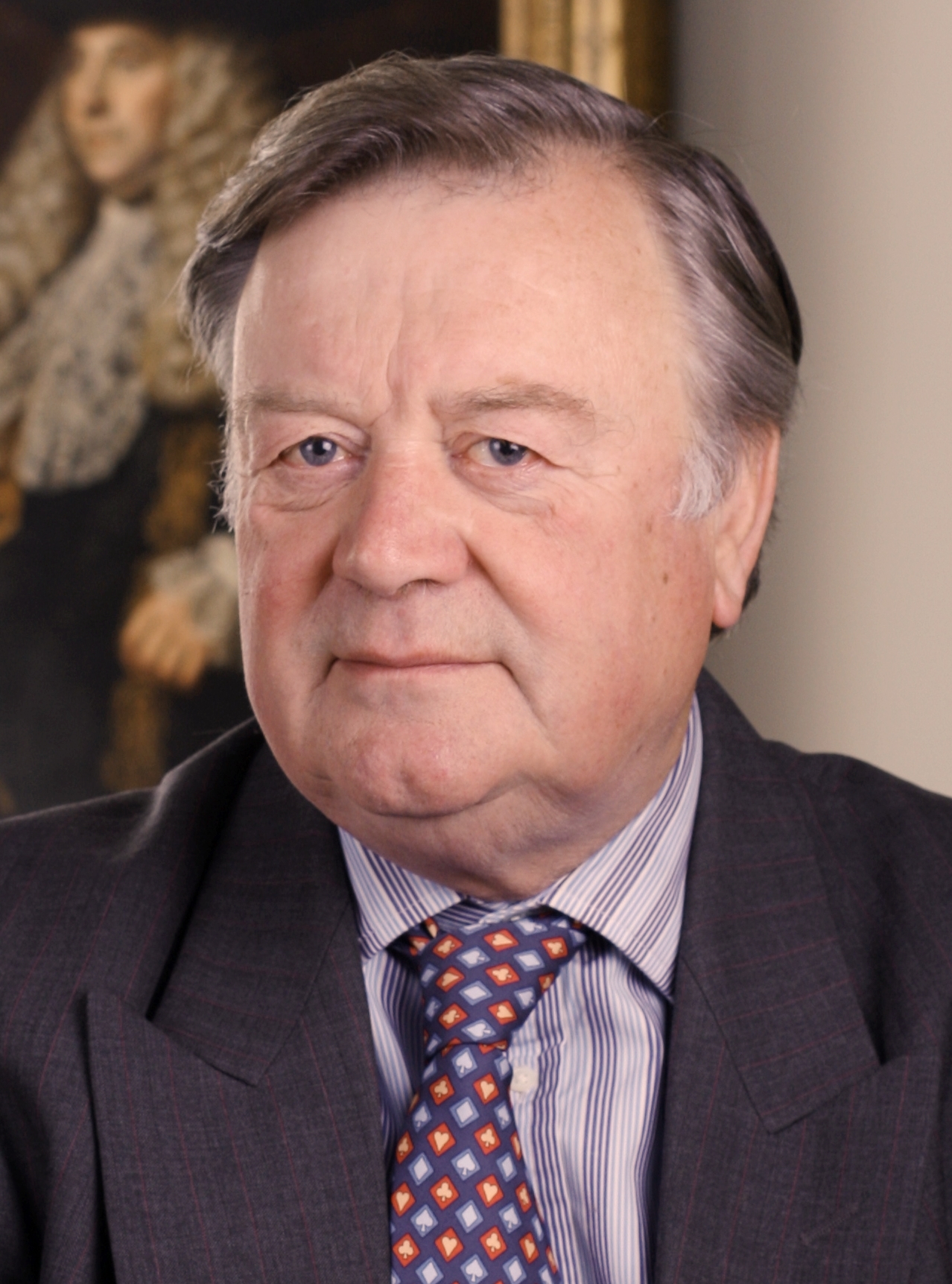
  • Ken Clarke – 1996 Budget Statement

    kenclarke

    Below is the text of the 1996 Budget Statement made by Ken Clarke, the then Chancellor of the Exchequer, in the House of Commons.

    INTRODUCTION

    Mr Deputy Speaker, the British economy is today prosperous and successful. This Budget will make it even more prosperous and an even bigger success over the coming years.

    When I presented my first Budget in 1993, it was against a very different background from today. Although the recovery had begun, consumer confidence had not yet returned. Growth was not yet firmly established. Further firm action was needed on the public finances, and our critics were peddling doom and gloom.

    The recovery is now in its fifth year. Consumer confidence has returned and we are achieving something unprecedented for a generation – growth with low inflation and without a widening trade gap. But one thing has not changed – our critics still peddle doom and gloom.

    In my first two Budgets I curbed the growth of public spending and took firm decisions on tax, which have brought borrowing down by almost half since 1993.

    Last year, in my third Budget, I was able to return to cutting tax while spending more on the public services which people care about most – health, schools and the police – and keeping borrowing on a firm downward path.

    This year, I am presenting a Budget which builds on my last three. It reduces public spending plans further, while providing more money for priority services. It makes responsible progress on our tax cutting agenda, while getting borrowing down faster. This is not a reckless Budget on tax or spending. In the run up to Christmas I am not going to play Santa Claus, but this year I do not have to play Scrooge either.

    I have one overriding aim – the lasting health of the British economy. We are securing that by creating the best conditions for British businesses and British men and women to earn a living. All my Budgets and all my policies have been designed to set this country on course to be the strongest industrial economy in Western Europe in years to come.

    ECONOMY 

    The British economy is in its fifth successive year of steady, healthy economic growth, with falling unemployment and low inflation.

    These are the best circumstances we have faced for a generation.

    This is a Rolls Royce recovery – built to last.

    The IMF and the OECD expect the UK to be the fastest growing major European economy again next year.

    By next year we will have grown faster than either France or Germany for 5 years in succession for the the first time in half a century.

    This time – unlike so many previous recoveries – healthy growth has been accompanied by the best inflation performance for nearly 50 years. And restrained growth of earnings has been good news for jobs.

    The British labour market has become our flexible friend. Employment began to rise sooner and unemployment began to fall sooner than in the previous recovery. Growth creates jobs quicker in a flexible labour market.

    The OECD have praised us for having one of the least regulated labour markets in the industrialised world. High social overheads, minimum wages and unnecessary legislation do not protect workers – they cost jobs. Unemployment is still rising in France and Germany. It has fallen sharply here, to its lowest levels for over 5 1/2 years.

    In the bad old days recoveries were derailed by balance of payments crises. In this recovery, the current account has actually improved, despite the slowdown in our main European markets. In fact we now have a current account broadly in balance – our best overall trading performance for nearly 10 years.

    Economic policy

    Mr Deputy Speaker, I want to ask the British people – in the years ahead do we seriously want to be prosperous? I think we do. If so, we need an economic policy aimed at the next 5 years, not just at the next 5 months. We want an economic policy that will go on delivering our enviable combination of rising prosperity, low inflation and more jobs. That is my purpose in this Budget. This Budget secures a prosperous future for all sections of our people and their families. It is a Budget not just for today but for tomorrow. This is a sensible Budget for growing prosperity.

    The last thing the British economy needs now is a change of direction.

    We need at least another 5 years of this Government’s continuous vigilance on inflation.

    We need more of this Government’s determination to get government borrowing down.

    We need another 5 years of this Government’s commitment to raise the wealth-creating potential of the British economy, by improving incentives, reducing the role of the State and creating a climate for enterprise.

    Growth

    I expect the British economy to grow by 2 1/2 per cent this year and 3 1/2 per cent next year – and there are few serious commentators who will disagree with that.

    By keeping a close eye on the prospects for inflation up to 2 years out, and by taking sensible early action if and when necessary, I intend to ensure that healthy growth continues without inflationary pressures emerging. That is what I have always promised – no return to boom and bust.

    Consumer spending

    I expect consumers’ expenditure to continue to be the main engine of growth next year. The real value of take home pay is growing strongly.

    The housing market recovery is firmly established. I hope that negative equity can soon be consigned to the economic history books.

    People are feeling the improvement in their family finances. Consumer confidence is at its highest levels for over 8 years.

    I expect consumer spending to grow by 3 per cent in 1996 as a whole. But it has been strengthening through the year. I expect stronger growth to continue, with consumers’ expenditure rising by over 4 per cent next year.

    Investment

    But this recovery is not just about a more confident consumer. Businesses are optimistic too. The climate for business is excellent: strong demand at home and a recovery in our key export markets present British industry and commerce with tremendous opportunities.

    Interest rates and tax rates remain low and profitability is high. The result has been business investment growth of 6 per cent so far this year. I expect business investment to continue to grow strongly: by almost 10 per cent next year.

    These excellent conditions for business are not lost on overseas companies looking to invest for the future. Let us never forget the most valuable practical endorsement that we get for our sound economic policies. The United Kingdom remains the No.1 destination for inward investment into the European Union. Keeping our enterprise economy on course at the heart of Europe will keep us in pole position.

    Exports

    Exports have grown by almost 20 per cent over the last 2 years – an impressive performance in the face of weak demand in our key European markets. This achievement is down to our strong cost conscious British exporters. They will benefit further next year as the tentative recovery on the continent becomes more established. I expect export volumes to rise by over 7 per cent this year and 6 per cent next year.

    The current account has been close to balance during the last 2 1/2 years, thanks to strong growth in exports and income from our investments overseas. I expect the current account to remain broadly in balance this year and next.

    Jobs

    Our thriving economy is creating jobs. Employment has risen by over 3/4 million since the recovery began. Unemployment has fallen by almost a million from its peak. It will soon drop through the 2 million mark. This is still too high and I want it to go on falling and I expect it to go on falling.

    Inflation

    We are on course to get underlying inflation down to our target of 2 1/2 per cent or less and to keep it there. In October, underlying inflation rose slightly, to just over 3 per cent. This should not have surprised anybody who looked at last year’s statistics. It is a temporary and inevitable reflection of the exceptional falls in the price level 12 months before.

    Let me give you my concrete reasons for being so confident about low inflation. Apart from oil prices, which have risen sharply, commodity prices are steady and are not putting upward pressure on inflation. Earnings growth remains sensible and modest. Producer price inflation – a good indicator of what is in the pipeline for retail price inflation – is at its lowest levels since the 1960s. Producer input prices are actually lower than they were a year ago.

    Any risk to this recovery from inflationary pressures reemerging remains a good way off. But as I have demonstrated again and again, when I see any risks, I will act. I will continue to stay ahead of the game on monetary policy. Eddie will keep me steady and I will continue to be canny.

    I expect underlying inflation to meet our target of 2 1/2 per cent or less. I will ensure that it goes on meeting that target for the foreseeable future.

    PSBR

    We have made good progress in reducing public sector borrowing, but not as fast as I expected. The Budget therefore targets public sector borrowing. One reason why I continue to concentrate so heavily on public sector borrowing in setting policy is because money spent paying the interest on our debt would be better spent on public services and to reduce taxes.

    We are making good progress on bringing down borrowing, but lower than expected tax revenues mean that it has not fallen as fast as I expected in the last Budget. This is not bad news for everyone. People are no doubt quite glad not to be paying as much tax as I expected. As I am the Chancellor, I prefer to keep any tax cuts under my control.

    The causes of these shortfalls in our forecasts of tax revenue, primarily on VAT, but also on direct taxes, cannot wholly be explained by any experts inside or outside the Revenue Departments. But there does seem to be an increasing tendency to exploit loopholes and use special reliefs in an artificial way to reduce tax bills. Those sort of tax cuts are unacceptable. If they are not tackled every year in the Budget, they mean that a few people pay less tax, but the rest must pay more.

    In this Budget I will propose a number of measures to stem tax leakage, to protect the ordinary tax payer and make sure we get the right tax from the right people. When I reduce tax I want to do so in a way that is fair for businesses and fair for the hard working British man and woman.

    Government borrowing has been steadily coming down for 3 years. This Budget will ensure Government borrowing keeps coming down. I expect the Public Sector Borrowing Requirement to be 26 1/2 billion Pounds this year. That will mean it has halved as a share of GDP over the past 3 years. I expect it to come down to 19 billion Pounds next year and to be broadly in balance by 1999-2000.

    That pattern of declining borrowing is very much better than the one I had to put in my Summer Economic Forecast last July – 4 billion Pounds better next year. A large part of that improvement is the result of the measures I am taking in this Budget. This Budget tightens fiscal policy. I am tightening fiscal policy now to reduce the risk of having to tighten monetary policy excessively as I set policy to hit my inflation target.

    My decisions are always taken solely in British interests to benefit the British economy. But my decisions in this Budget also mean that, by happy coincidence, we will meet the Maastricht debt and deficit criteria in 1997, and we will do even better than that in the medium term. It is a happy coincidence because those criteria make sound economic sense, with or without a single currency. Our option whether to join or stay out of a single currency, based on British national interest, remains a genuine choice for the next Parliament to exercise, when the time comes.

    This Government is the champion of sound public finances, of limited government and of low taxation. Our combination of low taxation, low public spending and low debt is the best in Europe. We intend to stay in that enviable position. We can only do this if we continue to bear down on public spending.

    PUBLIC SPENDING 

    In the 1980s, across the rest of Europe, the modern State remorselessly took an ever greater share of almost every nation’s wealth. We in Britain held the line. The proportion of GDP going into Government spending in the United Kingdom is now 8 per cent lower than the average in the rest of the European Union. If our spending had risen to their levels we would now have to raise nearly 2,300 Pounds a year more in tax from every British household.

    I have set a target of 40 per cent or below for the share of national income that goes on public spending. Making progress towards this target means tough decisions on public spending every year. But this year we have had to cope with the costs of BSE and larger than expected increases in the costs of social security, as more and more elderly and disabled people receive benefits to which they are entitled.

    Against this background, we had to keep the rest of public spending within the tightest possible limits, in order for us to spend more on the public services people really care about – education, combating crime and on our National Health Service.

    This country has been well served by my Right Honourable Friend the Chief Secretary who has successfully tackled this problem. Despite all the difficulties, we have been able to reduce public spending plans over the next 3 years by a further 7 billion Pounds in this Budget. Public spending next year will be over 24 billion Pounds lower than was projected when I became Chancellor – a reduction of 7 per cent.

    We have been able to reduce spending plans because we have lower inflation, falling unemployment, a continuing campaign for efficiency in the public sector and sensible policy priorities. On top of that, the Government’s relentless drive against fraud and abuse of tax and benefits will be stepped up another gear.

    Next year we are going to meet our target of 40 per cent for the share of national income that goes on public spending. In last year’s Budget I said I would make 40 per cent in 1997-98. This year’s Budget secures that important goal. So long as we keep the growth in public spending down below the growth in the economy, we will go below that.

    Education

    Education is the key to the future of any prosperous and civilised society. It helps to determine how well the economy performs in the long run. It also helps to determine the sort of citizens we are and the sort of society we have. This Government is committed to raising standards in education.

    As a result of last year’s Budget 878 million Pounds extra was provided for schools this year. We are giving schools priority again in this Budget. Planned expenditure on schools will rise by another 830 million Pounds next year. A large proportion of this money – 633 million Pounds – will be channelled through the local authorities.

    Judging by last year’s experience, some local authorities are reluctant to pass these increases on to their schools, preferring to spend the money on other areas. It is no good local authorities campaigning for more spending on education in the autumn and then spending their money on other things in the spring. Parents will want to make sure their local authorities spend money on the things they want for their children – good teachers and better equipped schools.

    A good school has a value far and beyond its buildings. But the quality of school buildings in which our children are taught is still very important. We will be providing an extra 50 million Pounds on top of the previously planned provision for more capital investment to improve the fabric of our schools.

    By setting high standards for schools and increasing choice for parents, this Government is delivering better trained and better qualified young people. Almost 1 in 3 young people now go on to university, compared with 1 in 8 in 1979. And our universities and colleges maintain some of the highest standards in the world despite the pressure on their unit costs that this unprecedented explosion of opportunity for young people has produced.

    But I recognise this pressure and I also realise that our universities and colleges make an important contribution to the economy. My Budget therefore includes 280 million Pounds to boost further and higher education over the next 2 years. This includes an extra 20 million Pounds next year for science equipment. We want to ensure that the British science research base remains the best in the world, which it certainly is at the moment.

    As the Secretary of State for Education and Employment announced in September, the Government is planning a substantial sale of student loans debt.

    It makes no sense for the Government to keep a huge portfolio of loans on its books when the private sector could manage it more effectively and is better placed to cope with the risk. The sale will have no effect on the terms on which students can get loans. The substantial reduction in the figures for education that members will find published in the new spending plans is more than accounted for by the sale of this debt. We will actually spend more on the things that really matter – educating our children and young people.

    Combating crime

    This Government believes that effective law and order is an essential part of making Britain a nation at ease with itself. A good quality police service and an effective system of criminal justice, are high on the list of this Government’s priorities.

    When it comes to spending on law and order this Government has a record as long as your arm. Spending on law and order has already doubled in real terms since 1979. Provision for combating crime – police and prisons – will now rise by another 450 million Pounds next year. Our plans provide for 2,000 more police constables by the end of next year. We are well on course to meet the Prime Minister’s pledge for 5,000 more constables.

    Health

    Our British National Health Service, with treatment free at the point of delivery, is the envy of the world.

    In every modern, civilised society the demand for better health care, for new techniques to save lives and improve our quality of life grows constantly. This Government completely understands that. That is why we have increased spending by some 75 per cent in real terms since 1979. That is why the Prime Minister has pledged more resources for the National Health Service in real terms every year, throughout the next Parliament.

    We are also spending that money better. We have reformed the NHS so it is much better managed and much more efficient. When waste is reduced, more can be directed to higher quality patient care. This means that patients get more treatment and care out of every pound that we spend.

    For next year, we will increase current spending on patient services by 1.6 billion Pounds, or 2.9 per cent in real terms. The real increase in current spending for hospitals next year over and above inflation will be 3 per cent.

    On top of this, Private Finance Initiative investment will play an increasingly important role in providing new healthcare facilities. The PFI contract for the Norfolk and Norwich hospital scheme, worth close to 200 million Pounds, was signed yesterday, and others will follow. PFI investment in the NHS will reach some 900 million Pounds over the next 3 years on top of the increased public spending I am announcing.

    The NHS will continue to grow and continue to improve. We are totally committed to the National Health Service as a public service providing high quality up-to-date treatment, free at the point of delivery.

    By our decisions on public spending, we prove that the NHS remains at the top of the Government’s priorities. The NHS has been safe in our hands, it is safe in our hands and it will always be safe in our hands.

    Other programmes

    This year’s spending round was as tight as any I can remember, eye-wateringly tight, but we never lost sight of our objective which is to sustain and improve the key public services that the British public care about: education, combating crime and our National Health Service. In part we have achieved that by increasing efficiency within the priority services but inevitably we have also had to find savings in other programmes.

    Falling unemployment and lower inflation has helped to reduce the social security and employment programmes. We are also continuing to transfer activities to the private sector where this is more efficient as it is for student loans. We have refocused the housing programme to encourage the use of private finance and the transfer of the local authority housing stock to the private sector. We are stepping up our programmes against fraud. We are continuing our remorseless squeeze on the costs of bureaucracy itself. And we have looked in every department for ways of achieving our objectives more economically. With efficiency savings, most departments will be able to deliver their programmes next year, but with less money in real terms.

    Private Finance Initiative

    People pay their taxes in order to get good quality public services, not to accumulate state-owned buildings. This simple truth has led to the development of the Private Finance Initiative.

    The PFI helps to square the circle of sound public finances and growing demand for better and more modern public services by tapping the expertise and the resources of the private sector.

    A year ago we had agreed 1.5 billion Pounds worth of deals – now we have agreed 7 billion Pounds, and we are on course to double that by March 1999. Time and again the taxpayer is getting better value for money, through new road schemes, new prison services, and Information Technology projects. And reforms to local government rules are bringing the PFI into new areas – notably schools.

    London is currently experiencing a transport investment boom under the PFI: the Channel Tunnel Rail Link, Thameslink 2000, the Docklands Light Railway extension, and the A40 and A13 improvements. This is in addition to conventional public and private capital spending on the Jubilee Line extension, the Heathrow Express and the new A12-M11 Hackney Link. Investment in London Transport is now running at 50 per cent in real terms above the average for the 1980s. London will soon become one of the biggest construction sites in the country. As a man from Nottingham, I can only say that I hope London will be even nicer when its finished.

    Adding traditional capital spending to PFI investment, publicly sponsored capital spending in the United Kingdom in the next three years will be substantially higher in real terms than it was in the 1980s.

    Social Security

    One third of all public spending goes on Social Security.

    Our social security system is there to provide an income when people cannot earn because of sickness, disability, unemployment, caring for relatives or old age. People on the left and right of politics continue to search for a radically different and better way of meeting these needs in our wealthy nation. I have studied many of their proposals and so far, I am afraid, nobody has yet come up with anything remotely sensible or practicable.

    Until they come up with a radical alternative, if they ever do, our welfare safety net must remain affordable. It must not be allowed to damage the incentives of individuals or businesses in the private sector, because it is the wealth-creating enterprise economy that sustains our social security system.

    In the post-War period social security has grown in real terms by around 5 per cent a year. In recent Budgets we have taken action to bring that growth under control. We now expect future growth of 1 1/2 per cent a year. Well below the growth of the economy.

    Year after year, this Government has also vigorously attacked fraud and has reformed benefits to target them on those in genuine need. The measures I now propose in this Budget intensify these efforts yet again.

    We plan a further move to align the benefits paid to lone parents and couples with children. From April 1998, new awards of Family Premium and Child Benefit will be the same for lone parents and couples. And we are introducing a number of measures on housing benefit and Council tax benefit to ensure that those on benefits do not have a more comfortable lifestyle than those who are supporting themselves on modest incomes. That would be unfair and unwise. Full details will be made available later today by my Right Hon. Friend the Secretary of State for Social Security.

    In my Budget two years ago, I announced a whole package of measures to help the unemployed get back to work – from improvements to the Family Credit System to National Insurance holidays for employers taking on long-term unemployed people.

    In this Budget I am providing another 100 million Pounds of new money, mainly targeted on people who have been unemployed for 2 years or more. They will be required to attend a compulsory programme of interviews with the employment service to give them a helping hand to compete in our ever improving market for jobs.

    We are expanding Project Work pilots to a further 28 areas. This will create up to 100,000 new opportunities, on a programme with a good track record for getting long-term unemployed people back to work.

    I can also announce pilots for a new scheme called “Contract for Work”. Private contractors will help people to find work. These firms will be paid by results. As with Project Work, if the scheme works better than the existing approach, we’ll expand it.

    Dependency impoverishes us all. The welfare system should provide a safety net. It must provide the support that a caring society wants to give to our less fortunate fellow citizens. But the welfare system must never become a way of life. We do not want our social security system to be undermined by resentment. We have to take these careful measures because we are serious about protecting those in genuine need and we want to go on delivering that protection for the future.

    Spend to save

    We want to combine a strong affordable welfare system with a successful low tax economy. That means that when we spend money on social security, it must only go to those who need it. It also means that when we levy taxes we must make sure that they are paid by those who ought to pay them.

    As part of our continuing fight against tax and benefit fraud and tax loopholes, I am introducing a package of measures called “spend to save”. This involves spending modest amounts of money – carefully targeted – to save much more money, and to raise revenue.

    There will be more money next year to clamp down on benefit fraud. There will be more visits and checks on benefit claimants in high risk groups. And the information we already have on benefit claimants will be used more effectively to catch cheats.

    Inland Revenue tax experts will be redeployed to investigate even more rigorously how some big, sophisticated companies seem to pay so little tax. They will make sure that companies are paying what they owe. And what we intended they should owe. In short, we intend to do more about companies being “economical with their tax”.

    There will be more resources in the Revenue and Customs to stem the growth of the shadow economy. Tax cheats put law-abiding small entrepreneurs out of business. We all lose from that.

    There will be more Customs and Excise Officers to tackle VAT and other tax abuse, including yet more to target the smuggling of alcohol and tobacco.

    The “spend to save” package will cost 800 million Pounds over the next 3 years to secure, in a well-planned and measured way, revenue and expenditure savings of well over eight times that amount, 6.7 billion Pounds.

    Running costs

    “Spend to save” protects the ordinary taxpayer and the people in genuine need of benefits. It is not about more bureaucracy or more red tape. We remain a Government committed to deregulation. And committed to a more efficient Civil Service.

    We have cut overall Central Government departments’ running costs by 8 per cent in real terms since the start of this Parliament and we are going to reduce them by a further 7 per cent by the end of the decade. Civil Service numbers are already below 1/2 million, and we expect this fall to continue.

    TAXATION 

    The first duty of Government is to make sure that people can live their lives as they want and that businesses can flourish. People must have the opportunity of a good quality job to go to, a good standard of living, good schools and hospitals and safe streets to live in. Only when those essentials are secure, and only when the Government has made sure that it is not borrowing more than it should, can a Government think about tax cuts.

    Last year I cut taxes paid by the ordinary family and this year I am able to cut a little more. I think that the message I have repeated over recent months has now been understood. If there are to be tax cuts, they must be for keeps. They must be backed not only by sound spending decisions but also by a sound fiscal judgement.

    Consumer spending is strong and inflation remains in check. But a fiscal stimulus to the economy at this stage could be just as damaging as letting go of monetary policy. So, in setting my Budget, I have struck a careful balance.

    I want to cut taxes, but first I have to continue my drive to secure the tax yield. I have to make sure that tax due is turned into tax paid. The balance of the tax burden must be distributed sensibly and fairly and it must not distort decisions or competition.

    I am introducing a number of measures which will help us to achieve this. I am plugging some loopholes, ending some tax reliefs that have done their job and adjusting some indirect tax rates.

    SECURING THE TAX BASE 

    Even though VAT revenues have revived in recent months, they are still coming in significantly below what was expected last year. This Budget includes a crackdown on some of the clever wheezes that have sprung up to get around paying VAT. These measures will raise 3/4 billion Pounds in revenue next year, but they also protect a further 1 1/2 billion Pounds a year of existing revenue from further attack.

    Customs will restrict access to special VAT schemes for retailers. We will also tighten up the rules of VAT relief schemes for bad debts, and the option to tax commercial property, to prevent widespread abuse of these reliefs. I also propose to take steps against retailers who reduce their VAT bills when selling insurance with their products.

    We announced a 3 year limit on repayments of VAT claims. This was a sensible precautionary measure. Recent high profile court cases have revealed the potential exposure of the Exchequer to claims for tax going back to when the tax was first introduced. No responsible Government could leave the Exchequer, and, ultimately, all taxpayers, exposed in that way. Government needs to strike a balance between what is fair to the individual taxpayer, and what is fair to the whole body of taxpayers. The three year cap strikes that balance.

    But one feature that attracted particular criticism from accountants and their clients was that Customs still retained the right to claim underpaid tax going back six years. This argument was rather disingenuous because Customs do not claim underpaid tax on unexpected changes to the interpretation of the law when those go against taxpayers. However, Government must not only be fair – it must be seen to be fair. I have, therefore, decided that Customs’ right to claim underpaid tax, in cases where no fraud or malpractice is involved, should be restricted to three years as well.

    I will be releasing details today of a package of measures to stamp out tax abuse in a number of areas including leasing transactions, the abuse of foreign tax credit rules, and paying employees in their own company’s shares. I am sure these will be accepted as necessary and sensible measures to stem the growing loss of tax revenues. And to protect the ordinary tax payer.

    I will not tolerate tax abuse. A number of these measures are being introduced, subject to the Finance Bill becoming law, with effect from today.

    Special tax reliefs can be a powerful tool. They can play an important pump-priming role, encouraging companies and individuals to change their behaviour in a way which benefits the wider economy. But by their very nature, they need to be used very selectively. We owe it to the ordinary tax payer to keep each and every special tax relief under constant review to determine whether it is still justified, or whether it has now served its useful purpose.

    Profit Related Pay

    The tax relief this Government introduced in 1987 to promote profit related pay schemes has been a success. It has played a key role in reinforcing this Government’s strong beliefs that employees’ rewards should depend on the success of the business for which they work.

    I have always believed, and argued publicly for years, that in a modern enterprise economy people’s pay should be closely linked to the performance of the business for which they work. The best way for businesses to motivate their staff is to let them share in the rewards of success. I am delighted that tax reliefs have helped to get this idea accepted so widely.

    The tax relief on Profit Related Pay was always intended to be a pump-priming measure. As Nigel Lawson said in 1986: “There is considerable inertia to overcome, so it might make sense to offer some temporary measure of tax relief”. Profit related pay is now firmly established as part of British businesses’ pay policy. Over 3.7 million people are in schemes. 10 years on, the tax incentive has successfully served its pump-priming purpose.

    I can no longer justify the increasing cost of the tax relief to the 22 million taxpayers who are not in profit related pay schemes. We cannot permanently divide the workforce into groups who pay different levels of tax on the same earnings depending on whether the firm they work for is in a scheme or not. The goal of widespread use of PRP has been achieved and I would rather make faster progress on lower taxes for everybody.

    Good managers do not need a tax relief any more to know that pay should be linked to their firm’s performance. Pay linked to profits produces it own rewards on the bottom line in a thriving economy.

    It is therefore time for the Government to start to withdraw this special tax relief. I intend to do this gradually, to ensure that businesses who need to adjust their pay packages and their sharing of the rewards of success have ample time to do so.

    The upper-limit of pay attracting the relief will remain unchanged at 4,000 Pounds until 1998 and no one will be affected before then. It will then be progressively reduced until the year 2000, when the relief will be withdrawn altogether.

    Capital allowances for long life assets

    Investment is vital to our recovery and business investment is now growing strongly. The tax system recognises investment through capital allowances. These allow the cost of investment to be written off against tax bills, frequently faster than it is written off in commercial accounts.

    For plant and machinery with a long lifespan, the rate at which costs can be written off for tax is far more generous than for other types of investment and bears no relation to the useful economic life of the asset. This is an unjustifiable distortion in the tax system.

    I propose changing the capital allowance for plant and machinery with a life of more than 25 years to 6 per cent on a reducing balance basis. This will spread the tax relief more evenly over the average life of these assets.

    Groups spending less than 100,000 Pounds a year on such assets will be exempt. This will mean that the vast majority of small companies will not be affected. Ships and railways will also be exempt.

    Oil production

    I also propose to withdraw the 100 per cent corporation tax deduction for the intangible costs of drilling most production oil wells.

    OTHER TAX CHANGES 

    This Government recognises that low marginal tax rates on income are a spur to hard work and enterprise. Taxes on spending do less damage to effort and enterprise than taxes on income. But the balance of the taxes on spending must be right. And I am making some changes to taxes which help to move towards a better balance for the tax system as a whole.

    Insurance Premium Tax

    I propose to increase insurance premium tax, which applies to most general insurance, to 4 per cent. Three-quarters of all insurance – including life and other long-term insurance – will remain exempt. Insurance remains undertaxed for consumers compared with other services in this country. The introduction of the tax did not harm the healthy insurance industry that we have. Most companies absorbed the tax and some premia actually fell for a time. Even after this further modest change, the overall rate of insurance premium tax in the UK remains very low – lower than in almost any other European Union country.

    Air Passenger Duty

    Air travel has also been undertaxed because it has proved difficult to get international agreement to tax its fuel. The rates of air passenger duty are to be increased. The 5 Pound rate on flights to most European countries will be increased to 10 Pounds, and the 10 Pounds rate on flights to the rest of the world will be increased to 20 Pounds. These increases will not come into effect until 1 November 1997, to give tour operators time to reflect these new rates in the prices they publish in their holiday brochures.

    Business travel is soaring and the holiday business is booming at the moment in prosperous Britain and this modest change will not stop it booming in future prosperous years. About 40 per cent of the revenue raised by this tax is borne by overseas visitors.

    Vehicle Excise Duties

    I am making the same changes to the main Vehicle Excise Duties this year as I did last year. The cost of a car tax disc will go up by 5 Pounds, around the rate of inflation. The cost of a lorry tax disc will be frozen for the seventh year in a row.

    Road fuel duties

    I firmly believe that motorists should bear the full costs of driving – not only wear and tear and congestion on the roads, but also the wider environmental costs. Even those of us who frequently have to drive can take steps to cut fuel consumption and we all ought to consider carefully the use of our cars.

    I intend to stick to my 1993 Budget commitment to raise road fuel duties by an average of at least 5 per cent each year in real terms. In line with this I am raising the tax on all petrol and diesel by 3 pence per litre from 6.00 pm tonight. These tax rises will encourage fuel efficiency and help control harmful pollution.

    Air quality package

    I am glad to say that pollution from vehicles is already coming down, helped by tax measures in previous Budgets. The tax measures taken to encourage unleaded petrol were a huge success. It now accounts for two-thirds of the petrol market. I want to go further in this Budget to attack pollution in cities and improve air quality by effective steps to reduce particulate emissions – the smoke produced by diesel engines.

    In recent years, new evidence has come to light strengthening the health arguments for reducing particulates. This pollution is being reduced, but we all want to see it being reduced further and faster.

    Ultra-low sulphur diesel is cleaner than ordinary diesel, but is slightly more expensive to produce. I want to create the conditions where ultra-low sulphur diesel can cost the same at the pump as ordinary diesel. I have just said that I am increasing the tax on diesel by the same amount as petrol. I plan to reduce the duty on ultra-low sulphur diesel by 1 penny per litre relative to ordinary diesel, when I get the necessary international agreement.

    I also want to encourage high mileage vehicles in our towns and cities to switch to cleaner gas power. Last year’s Budget changes broadly equalised the pump prices of gas and petrol. From 6.00pm tonight I am reducing the duty on road fuel gases by a further 25 per cent.

    I also intend to reduce Vehicle Excise Duty by up to 500 Pounds for lorries meeting very stringent emissions standards from early 1998. This will give an incentive for lorry owners to fit particulate traps or to convert to gas power. We will be consulting on the practical details of these changes.

    I believe that this “air quality package” will significantly speed up the reduction of urban emissions of particulates, helping us to meet our air quality targets for 2005 and beyond. We intend to ensure that economic growth in this country is consistent with a healthy environment and sustainable development.

    Tobacco duties

    In my 1993 Budget, I gave a commitment to raise duty on tobacco by more than inflation each year. I believe this is a fair and effective way to hammer home the message that smoking can seriously damage your health. So far I am concerned, this is necessary masochism in the wider public interest.

    From 6pm this evening, the tax on a packet of 20 cigarettes will increase by about 15 pence, on a packet of small cigars by about 7 pence and on a packet of pipe tobacco by about 8 pence.

    But I am limiting the increase in the duty on hand rolling tobacco to the rate of inflation. Hand-rolling tobacco is proving to be by far the easiest tobacco product to smuggle, although it represents a very small part of the tobacco market.

    Alcohol

    I am aware of the serious problem that cross-border shopping and smuggling of alcohol causes our drinks industry in Britain. I have already announced that Customs are stepping up their efforts further to catch smugglers.

    Last year I was able to freeze the duty rate on beer and wine. This year it will remain frozen. The proportion of tax on the price of a pint in the pub is now at its lowest level for 30 years. For some of us, that helps to keep our small cigars affordable.

    Last year’s cut in the duty on spirits was the first for 100 years. I was tempted to maintain a striking rate of once every 100 years. But I am sure the industry will be glad to know that they will not have to wait so long this time.

    From 6.00pm tonight the tax on whisky, gin and other spirits will fall by another 4 per cent, worth 26 pence a bottle.

    The reduction in the rate on spirits boosts an important industry in the United Kingdom. It will also reinforce last year’s signal to overseas authorities not to discriminate against our products. Only smugglers will regret that we are slowly moving our duty of spirits nearer to the continental level.

    From 1 January, the tax on alcoholic soft drinks will be increased by over 40 per cent, by between 7 and 8 pence a bottle. This will help meet public concern about the attraction of these “alcopops” for under-age drinkers, and it will also attack a distortion of competition by bringing the tax broadly into line with beer.

    You’ll notice that I have considered the balance of my overall package carefully and I have not yet been converted to a bubble-gum flavoured alcopop.

    Business

    Nothing matters more for business than a stable economic environment – low interest rates and low inflation. Businesses throughout Britain are benefiting from the healthy sustainable growth in the economy that I have described today.

    As I promised in my last Budget, from April 1997 there will be a cut in the main rate of employers’ National Insurance Contributions, to 10 per cent, paid for by the proceeds from the landfill tax. A tax on waste to cut a tax on jobs. This will benefit employers in Britain and make it cheaper to create new jobs in our growing economy.

    Our overheads on jobs are already less than half those in Germany, France, or Italy. I am determined to keep that advantage over our continental competitors where the creation of new jobs is over-regulated and over-priced. This is another reason why I am confident that our unemployment will keep falling.

    In this Budget, I propose to keep the three intermediate thresholds for employers’ National Insurance Contributions where they are now. I propose to increase – by 10 Pounds and 1 Pound respectively – the upper and lower earnings thresholds for employers’ and employees National Insurance Contributions.

    In this Budget I also want to address a particular concern of our small businesses – the burden of non-domestic rates.

    The Uniform Business Rate is a fixed cost which can rise each year beyond the control of the manager of a small business. Since the last revaluation of business rates, I have repeatedly slowed down the increase of rates for those businesses whose rates have had to go up. No business property has seen its rates go up by more than 7 1/2 per cent above inflation in any one year. But I want to do more than this.

    I have decided to freeze next year’s rates bill for all the small businesses whose rates would have gone up. Small properties whose rates are falling will have those reductions accelerated. This will benefit over one million small business properties, by up to 130 Pounds a year.

    A freeze is an important step that I can make this year. We have already reduced business rates for rural village shops. But I realise that the present system of business rates bears particularly hard on the smaller business for whom they represent a much bigger proportion of total costs. We must therefore move on as soon as possible to more changes in the system to recognise this and redistribute the burden more sensibly between smaller and larger businesses.

    Inheritance tax

    This Government is committed to reducing and then abolishing capital gains tax and inheritance tax. But we have always said that we will cut these taxes only when we can afford to do so. This is a responsible Budget which is protecting future growth and prosperity by putting the public finances into a healthier state.

    We will not be able to make progress on both these taxes this year.

    But I am pleased to announce that we can take a further significant step towards abolishing inheritance tax.

    Inheritance tax is a penalty on thrift, independence and enterprise. It is a growing anachronism. Lloyd George’s maxim that the “the most convenient time to tax the rich is when they are dead” no longer holds. It is largely paid by people of modest means who either cannot or simply do not make careful plans to avoid it.

    Last year I made significant progress towards our commitment. In this Budget I will build on that by raising the value of the inheritance tax threshold to 215,000 Pounds.

    That means, that in two years the Government will have raised the threshold for inheritance tax by 40 per cent.

    Tax rewrite

    In last year’s Budget Speech I announced a project to rewrite Inland Revenue tax legislation in plain English. This project is as ambitious as translating the whole of War and Peace into lucid Swahili. In fact, it is more ambitious – War and Peace is only 1,500 pages long, Inland Revenue tax law is 6,000 pages. And we did not have a Tolstoy to write our taxation laws in the first place. We have consulted extensively on how the project should be carried out, and I am glad to say there is wide consensus. The Inland Revenue will publish the plans and arrangements shortly after the Budget.

    The aim is to prepare a series of rewrite Bills, the first of them to be ready for enactment in the 1997-98 session. My noble and learned friend Lord Howe has produced a thorough and helpful report on how Parliament might handle these bills. We endorse his broad proposals, and invite the Procedure Committee to consider how the House is going to handle the bills in a sensible fashion. I can announce that my noble and learned friend Lord Howe has agreed to chair the steering Committee which will oversee the rewrite project.

    The project will bring the benefits of clarity and certainty to businesses and ordinary taxpayers. It has been widely welcomed and deserves the continuing support it has enjoyed in all parts of the House.

    Income tax

    Mr Deputy Speaker, this Government has led Britain towards our clear goal of a low tax economy where private enterprise has the incentive to generate jobs, investment and wealth to make people and their families more prosperous. We are moving towards a low tax economy where individual living standards continue to rise and the Government can afford the excellent public services that people want.

    Low direct taxes are the most effective way to encourage enterprise and hard work. Under this Government those who do an honest day’s work and those who take entrepreneurial risk will keep more of what they earn and save.

    This year people have taken more heed of my speeches on the overriding priority of securing future prosperity and jobs and financing key public services. Sensible people already expect my cuts in direct taxation to be modest. They know their well-being depends on lasting growth and more jobs and that living standards rise from a combination of steadily rising incomes and steadily lowering taxes. Tax cuts matter a lot to low paid people and to men and women in ordinary jobs. I announced my income tax cuts last year as a return to our tax cutting agenda and for the second year in succession, I am delivering an instalment of that agenda. I want to ensure that tax does not start to be paid at all at too low a level of income and I want to improve work incentives. I propose first of all to raise the threshold below which no income tax is paid at all.

    In this Budget, I am making an increase in the basic personal allowance of 280 Pounds. That is 3 1/2 times more than necessary to cover the rate of inflation. It will also ensure that each and every person who pays any income tax at all will get a direct benefit out of this Budget.

    I am also increasing the married couple’s and related allowances by 40 Pounds, maintaining the extra tax allowance to all married couples. It will now be worth nearly 275 Pounds each year for married couples. The tax system does recognise marriage, contrary to popular belief.

    We also give a special tax allowance to blind people. This year I am increasing that by the rate of inflation. And I will put indexation of this allowance onto the same statutory basis as for the other income tax allowances.

    I also propose to raise the threshold above which people start to pay the 40 pence higher rate tax by 600 Pounds.

    One of this Government’s most important pledges is that we will move to a basic rate of income tax of 20 pence as soon as we can. We are proving that we can move towards the delivery of the promise and still deliver healthy public finances. Every step we take makes it more and more credible. Every step that we take makes it more affordable to reach the ultimate goal which we are getting tantalisingly near to. As a further step towards that, I propose to widen the lower rate band of 20p tax by 200 Pounds, twice as much as required by indexation.

    This will mean that the slice of income on which a 20 pence tax rate is paid will have more than doubled during the lifetime of this Parliament. More than one in four of all taxpayers now will only pay tax at 20p in the pound.

    Mr Deputy Speaker, this is the stage of my Budget speech where everyone is asking themselves – are the guesses of the newspapers right? Am I indeed going to cut a penny off the basic rate of income tax? What the newspapers did not know was that my control of public spending and borrowing would have allowed me to take 2p off if I had chosen to. But I preferred instead to raise personal allowances and widen the 20p band for those at the bottom end of the scale.

    And yes, Mr Deputy Speaker, I am indeed also able to reduce the basic rate of income tax, by 1 penny to 23 pence in the pound.

    The small companies rate of corporation tax will be reduced to 23 per cent in line with this, helping 400,000 companies. The main rate of corporation tax of 33 pence is already lower than in any other major industrialised country.

    Seventeen years of steady progress – so far – means that the basic rate of income tax is now a full 10 pence lower than the rate we inherited in 1979. It is at its lowest rate for 60 years. Its lowest rate since Baldwin was Prime Minister, Edward VIII abdicated and Wally Hammond scored a double century at the Oval.

    Another penny off the basic rate is a significant further step towards this Government’s target of a 20 pence basic rate of tax. For over 7 million people – our promise of a 20 pence basic rate is already a reality. I am bringing other income taxpayers ever closer to that reality. 20 pence is a realistic and attainable goal for the next Parliament. We will not be content until we have completed the task of getting it down to 20 pence and every Budget I have presented has step by step shown how we are going to get there.

    LIVING STANDARDS 

    With increases in real earnings and the tax changes in this Budget, a family on average earnings will be another 370 Pounds better off next year over and above inflation. The same family will have over 1,100 Pounds more to spend each year after tax and inflation than they did before the last election. In 1992, the background was one of a worldwide slowdown and a recovery in the United Kingdom that had barely started. Now we are enjoying strong growth and rising living standards, and we are going to enjoy more of the same.

    CONCLUSION 

    Mr Deputy Speaker. In November 1993 I promised that I would put Britain firmly on course for a sustained period of rising prosperity and falling unemployment, based on low inflation and healthy public finances.

    I have done what I clearly said I would have to do and I have delivered on those promises.

    Mr Deputy Speaker, the Government believes in allowing people to keep as much as possible of their own income so that they can make their own decisions.

    This Budget cuts public spending next year by 2 billion Pounds, and it generates an extra 1/2 billion Pounds in revenue through “spend to save”. It contains a balanced tax package – it includes tax cuts of 2 billion Pounds while it secures the tax base by 1 billion Pounds. Taken together the effect of the Budget is to tighten fiscal policy and so protect healthy lasting recovery.

    I am a man of the world, I realise virtue doesn’t always brings its own rewards. But this virtuous Budget will bring rich rewards. The rewards of economic success to the hard working men and women of this country. Never forget, good economics is good politics.

    This is not a Budget just for the next few months. It is a Budget for many prosperous years to come. It is a Budget that this Government will build upon again in twelve month’s time.

    I commend this Budget to the House.