Tag: 1995

  • Queen Elizabeth II – 1995 Christmas Broadcast

    Queen Elizabeth II – 1995 Christmas Broadcast

    The Christmas Broadcast made by HM Queen Elizabeth II on 25 December 1995.

    During a year of wartime commemorations which has seen Commonwealth countries honouring their past, it has sometimes been tempting to let nostalgia lend a rosy glow to memories of war, and to forget the benefits of the relatively peaceful years bought for us by the heroism and sacrifice to which we have been paying tribute.

    Those who suffered the horrors of warfare, in whatever guise, will not have been prey to this temptation. For them, war was not a “Boys’ Own” tale of comradeship and good cheer, but one of hard slog, danger, suffering and exhaustion.

    Those songs we sang during the VE Day commemorations did much to brighten the days of war, and they certainly cheered us last May. But, as any veteran will tell you, there was a lot more to the war years than dreaming of the White Cliffs of Dover.

    In talking to the veterans, I was forcibly reminded of the detachment with which those personally unaffected by violence can view its effect on others.

    This seems particularly true of Northern Ireland, where the present peace of a year and more has been welcomed by all right-thinking people here and abroad. Now, however, the ‘process’ is at something of a crossroads as we speculate about what happens next.

    But it seems to me that much of the expert analysis of the manoeuvring and negotiating is somewhat detached from the reality as seen by those whom I meet who live and work in Northern Ireland.

    They, who for 25 years have lived their lives in the dark and relentless shadow of the gun and the bomb, do not seem to have as much time for past history and prejudice as do those who commentate and pronounce on the situation, often from afar.

    For those who have seen family, friends and neighbours die by violence, the bomb and the gun are the weapons of hatred which have blighted their lives for at least a quarter of a century: surely, they say, now is the time to lay them down: surely there can be discussion of a peaceful and prosperous future conducted without the threat of a return to the old evil ways.

    I echo those sentiments today. I pray that those who can exercise that threat, whoever and wherever they may be, will be persuaded that the old way was the wrong way, and that to revert to it is unthinkable.

    We heard much, in May and August this year, of how the future of the free world was saved by the ordinary men and women who did their bit for the victory of 1945.

    It is the ordinary men and women who, so often, have done more than anyone else to bring peace to troubled lands. It is they who suffer most, and it is up to others to see that their courage and common sense are rewarded. It should not be too much to ask.

    During my visit to South Africa last March, I was able to see, in a township, how the energy and inspiration of one person could benefit thousands of others. And that one person would lay no claim to be anything other than ordinary – whatever you or I might think of her!

    I have of course used the Christmas story before in this context. But I cannot think of any Christmas of my reign when the message of the angels has been more apt.

    Think, for instance, of all the children round the world suffering from the effects of war and the unscrupulous use of power. Some of them are growing up in countries of the Commonwealth, an organisation which is proud of its devotion to the principle of good government.

    Those children will, however, be less impressed by communiqués and good intentions than by seeing democratically elected governments governing with justice and with honour.

    “Blessed be the peacemakers,” Christ said, “for they shall be called the children of God.” It is especially to those of you, often peacemakers without knowing it, who are fearful of a troubled and uncertain future, that I bid a Happy Christmas.

    It is your good sense and good will which have achieved so much. It must not and will not go to waste. May there be still happier Christmases to come, for you and your children. You deserve the best of them.

    Happy Christmas and God bless you all.

  • Michael Heseltine – 1995 Speech on the Gas Bill

    Michael Heseltine – 1995 Speech on the Gas Bill

    The speech made by Michael Heseltine, the then President of the Board of Trade, in the House of Commons on 13 March 1995.

    I beg to move, That the Bill be now read a Second time.

    The assumption that the supply of gas to the public can best be undertaken on a monopoly basis dates from 1847, when a committee of inquiry led to the passing of the first Gasworks Clauses Act. The conclusion that monopoly was the necessary form of organisation was based on the poor economics of laying competing pipelines and the associated disruption in terms of street works that that was found to entail.

    The idea of separating the trading functions from the operation of the distribution pipes has emerged progressively over the past few years. We have an active competitive market in the supply of gas to industrial and commercial customers. These customers have already seen savings of 10 per cent. to 15 per cent. or more as a result of that competition.

    The Bill provides a sound foundation for the phased introduction of the benefits of competition to the 18 million domestic gas customers in Great Britain. The Bill will empower customers to demand the levels of service that they want. It will provide a powerful incentive to innovation and efficiency, and it will provide a strong downward pressure on average prices. Already since privatisation, we have seen a fall in the price of gas before VAT of more than 20 per cent. in real terms and an even larger fall in the standing charge. Alongside that, British Gas has invested £9 billion in the United Kingdom since 1986, including a £2 billion programme of mains replacement to improve safety.

    Mr. D. N. Campbell-Savours (Workington)

    The President of the Board of Trade used the word “average”. Can he illuminate that—[Interruption.] I do not think that the Minister for Energy and Industry needs to tell the right hon. Gentleman the answer. He does not need help in that way. Will the right hon. Gentleman tell us what will happen to low-use consumers of gas? Will their bills go up substantially, as is being argued?

    Mr. Heseltine

    I can try to help the hon. Gentleman. “Average” is a complicated idea. One has to take the lowest prices and the highest prices, put them all together and divide them by the number of consumers. Out of that calculation comes what we customarily called, when I was at school, an average. I hope that the hon. Gentleman has noticed that I did not need to refer to my right hon. Friend the Minister for Energy and Industry for that remarkable piece of memory of my childhood years.

    Mr.Dafydd Wigley (Caernarfon)

    I do not want to challenge the right hon. Gentleman on the definition of “average”. He will be aware of the danger that a person walking through a river with an average depth of 4 ft 6 in may drown in the middle. Is he not aware of the danger, within the average charges, to rural areas? If charges are required to reflect the costs of the supply of gas, the charges in rural areas may increase disproportionately, albeit within the average, which will hit some people hard.

    Mr.Heseltine

    As the hon. Gentleman will know, it has been suggested that because of the transportation charge, there may be a differential of between plus and minus 2 per cent., depending on the area. That has to be set against the forecasts of the companies anxious to enter the market. They can see economies of up to 10 per cent. in overall prices. Those matters will be dealt with considerably in the licences that the regulator will issue. The details of the licences will appropriately be explored in Committee, if the Bill receives a Second Reading.

    Mr.Peter Bottomley (Eltham)

    Is not the key point that over the past 20 or 30 years, gas has expanded from covering 7 per cent. of households to about 50 per cent.? Many people in rural areas wish that gas could reach them. If the transportation variation is so small compared with the rest—except when oil prices are very low—most people will be glad that gas has been extended to more people.

    Mr.Heseltine

    That is absolutely right. That is why my hon. Friend will have welcomed the figure that I gave for investment by British Gas in widening and modernising its facilities; that investment amounts to £9 billion since 1986. That money has been obtained without recourse to the public purse because it has been raised in the private market.

    Mr.Richard Caborn (Sheffield, Central)

    Can the right hon. Gentleman enlighten the House on how he believes that the Bill will proceed in terms of the transportation charge? First, there is the geographical point, which he explained to the House. Secondly, there is the variable and the fixed part of the gas charge which, as he probably realises, the Select Committee on Trade and Industry brought to the attention of the House. Can the right hon. Gentleman give the House any assurances that the average price for TransCo was at the lower end? Both the right hon. Gentleman and the regulator accept the figure of £15. Can he give assurances that the cross-subsidy, which is now built into the price, will continue and that it will not be removed in the near future?

    Mr. Heseltine

    The hon. Gentleman puts the case very fairly, in asking about the £15 standard charge that is built into the proposals. That matter is subject in the end to the regulatory regime, but obviously there would be no point in changing the regime shortly after it had been introduced. I am sure that the hon. Gentleman will be reassured by the answer that I have given.

    In formulating our proposals, we have been careful to ensure that safety will remain a top priority. We asked the Health and Safety Commission for a detailed report on our proposals. That report was published last week and we have accepted it.

    It is central to our proposals that every supplier will have an obligation to supply on request any domestic customer covered by its licence. It will charge for gas against publicly available price schedules. There will be a number of measures to discourage cherry picking of the more attractive customers and rules to deal with price discrimination by nationally or locally dominant suppliers. At the same time, market entrants will be allowed to choose pricing structures that meet consumers’ needs. If some new suppliers wish to enter the market on the basis of a standing charge set at zero, as one has suggested that it may, we would not wish to stand in its way.

    We shall ensure that the requirement for special services to pensioners, the disabled or the blind and to those who have genuine difficulties paying for their gas should continue. That includes important services such as the free gas safety check for pensioners or disabled people who live alone and the provision of a range of special controls and adaptors to help with the use of gas appliances. The current requirements for service in those areas will be maintained and, in some cases, enhanced. All suppliers will have to bear their share of the social obligations to those customers, but there will be arrangements in the licences for a levy to share the costs of those services in certain circumstances if they fall disproportionately on a particular supplier.

    Mr.Peter Hardy (Wentworth)

    The Minister referred to social obligations. Does he feel that the Government have any social obligation to the many Sids and Mrs. Sids who were beguiled by Government legislation, persuaded to buy shares in British Gas and who had not expected that, in the short time to which he referred a moment ago, such a dramatic change in their circumstances would be effected?

    Mr. Heseltine

    The hon. Gentleman has made an important contribution, but is he quite sure that he has the right industry? We are talking about the gas industry this afternoon, not the electricity industry.

    Mr.Hardy

    Sid was gas.

    Mr.Heseltine

    I understand that. The complaints of his right hon. Friend the Member for Copeland (Dr. Cunningham) are about the electricity industry, not the gas industry. If I may say so, it is a quite bizarre reversal of fortune for Labour Members to know that there are even things called shareholders, let alone to rise to their feet to defend them.

    Dr. John Cunningham (Copeland) rose—

    Mr. Heseltine

    I thought that the Labour party was interested in customers, consumers and the public. Indeed, the object of this legislation is to reduce prices for the people who buy the gas.

    Dr. Cunningham

    I am talking about this Bill. The Minister mentioned a levy on all providers. That is not in the Bill and the House has not yet had the advantage of seeing the licences, because they have not been published. Is he telling the House, and is he giving a guarantee, that that matter is agreed between himself and the Director General of Gas Supply?

    Mr. Heseltine

    When the right hon. Gentleman gets into the detail of the Bill, he will find that the powers to impose a levy are in the legislation.

    Dr. Cunningham

    Who will decide?

    Mr. Heseltine

    From the licences around, the regulator would decide whether that was a necessary development. The power to levy a charge to ensure that those services are protected is in the legislation.

    Dr. Cunningham

    Yes, we understand that, but that was not really the point of question. The power is there, but is the right hon. Gentleman guaranteeing that it will be implemented, and is he guaranteeing that the director general will ensure that that power is used in the way that he suggests?

    Mr. Heseltine

    The right hon. Gentleman can be absolutely sure that the Government’s intention is to ensure that the services that we are talking about are protected for the benefit of those who depend on them. The power in the Bill therefore ensures that the opportunity to do that exists. If the regulator could find other ways of doing that through the licensing system, that would achieve the same ends. However, that is not in any way a substitute for our determination that those services should be maintained.

    Dr. Cunningham

    It is the case, then, that it is quite possible that the director general could ensure that those services continue by making their costs fall on the consumers concerned.

    Mr.Heseltine

    Not in a way that would act adversely against the Government’s intentions in introducing this legislation. That is the point. The Government are determined to preserve the social implications of the legislation, and the powers to do that are there in the ability to levy in the way that I outlined. I do not in any way criticise the right hon. Member for Copeland for pressing me on the point, because it is important and it is one that the Standing Committee will want to consider when we get to the details. I wholly accept and welcome that as the point is very important.

    Dr. Keith Hampson (Leeds, North-West)

    My right hon. Friend has just said that what we are seeing, or about to see, is a total revolution in the energy industry. Does he believe that one way to stop the scare stories that are being put about by Opposition Members to the effect that those on low income and the disabled will lose out, may be to guarantee to people—particularly during the transitional period—that the present British Gas standards are an absolute minimum and that that will be enshrined in a code of practice, which the regulator will have to follow in the legislation? Would not that shut up Opposition Members?

    Mr. Heseltine

    My hon. Friend makes an interesting point. However, without committing ourselves to a code of practice, the Government’s intention is to ensure the outcome that my hon. Friend has drawn to the attention of the House: in other words, the standards of British Gas today are the minimum standards. How we ensure that that happens is an issue that we shall have to resolve in detail. However, it is irresponsible and unforgivable for the Opposition to suggest that somehow or other those minimum standards will not be maintained. They will be maintained.

    Sir Michael Grylls (Surrey, North-West)

    Does my right hon. Friend agree that the scares being raised by the Labour party are very familiar to Conservative Members, because they were raised when we privatised British Telecom? At that time, Labour Members said in the House that all the telephone boxes would be closed after privatisation, but the outcome has been that there are 50 per cent. more telephone boxes and 96 per cent. of them are working.

    Mr.Heseltine

    My hon. Friend reminds us, if we needed reminding, that every piece of competition-enhancing or privatising legislation put through the House by this Government has been subjected to total misrepresentation, deliberately and cynically, by the Opposition parties in order to try to persuade us not to proceed. When we have proceeded, their forecasts have turned out to be misleading and worrying for the particular groups of people on behalf of whom Opposition Members claim to speak.

    Dr. John Reid (Motherwell, North)

    What the Minister is saying about the maintenance of minimum standards and social responsibility is utter balderdash. Can he answer my question without reference to all the President’s men beside him? If what he says is the case, why are there 60 fewer home service advisers to visit old people and disabled people, to advise them on the adaption of gas equipment? Without reference to all the President’s men, can he tell me why those minimum standards are being reduced day by day?

    Mr. Heseltine

    The hon. Gentleman is complaining about the existing situation. We are trying to introduce competition to improve the existing situation.

    I have never been ashamed to turn to my right hon. Friend the Minister for Energy and Industry, to seek his guidance on a matter in respect of which he is a well-known authority. Usually we manage to reach an agreed view, which I then present at the Dispatch Box. That is very different from what we see happening in the Labour party, where leading spokesmen fight each other to get to the Dispatch Box to give the different views of the Labour party’s current policy.

    We have a bizarre situation in which the Labour party is largely absent from the debate this afternoon because it is now trying to agree its new policy on privatisation. We know perfectly well that when Labour Members have agreed, 53 per cent. will believe that they have won and 47 per cent. will believe that they have lost. If the Labour party ever came to power — which heaven forfend—half its members would sit on the Back Benches opposing the government in which they had been elected to serve. They would then talk to us about divisions in the Conservative party.

    Dr. Robert Spink (Castle Point)

    Can I bring my right hon. Friend back to the question of special interest groups? He will be aware of my special constituency interest in blind people. Can he confirm that blind people will still be provided with Braille controls by all gas suppliers?

    Mr. Heseltine

    I know of my hon. Friend’s interest and I am pleased to be able to give him a simple answer, which is yes.

    Mr.Nigel Spearing (Newham, South)

    Will the right hon. Gentleman give way?

    Mr. Heseltine

    I have given way enough. We must maintain the high standard of the debate and keep to the intellectually coherent case that I wish to deploy without that case being knocked about by the roughnecks on the Opposition Benches.

    Mr.Spearing rose—

    Mr. Heseltine

    I know that the hon. Gentleman speaks for those roughnecks, but if he will forgive me, I shall try to make some progress.

    Mr.Ronnie Campbell (Blyth Valley)

    The President has the biggest neck.

    Mr.Heseltine

    I may have the biggest neck, but there are parts of the hon. Gentleman with which I cannot compete.

    The Bill retains the duty to promote energy efficiency. It creates a new environmental duty, which would, for example, require the director general to take into account the environmental impact of losses in the gas transmission system. The licences will extend to all domestic supplies the current requirement on British Gas to produce energy efficiency services and advice.

    Perhaps most important, we are sweeping away the requirement that gas can only he sold as a fuel. The Bill will allow gas to be sold as part of an energy package, including a more efficient boiler as well as the gas itself. Suppliers will be able to compete in selling warm houses and not simply in selling gas, and they will have every incentive to compete by offering such added-value services as well as competing on price.

    Mr.Spearing

    Will the right hon. Gentleman give way?

    Mr. Heseltine

    The hon. Gentleman’s neck is still as rough as it was a moment ago, and I will not give way to him.
    I believe that competition will provide a powerful dynamic for energy efficiency. I know that Labour Members have always taken a cynical view about that. They believe that the only way to promote energy efficiency is through public expenditure or levies on other consumers. But they have always scoffed at what a competitive market can achieve. They have always been proved wrong in the event.

    The principal concept underlying the Bill is the division of the various components of the gas industry. In particular, the public gas supplier envisaged by the Gas Act 1986 is to become three separate types of entity.

    The first is the public gas transporter, who operates the pipelines through which gas is delivered to premises. The Bill recognises that, at the level of local distribution, that remains a monopoly function. Accordingly, British Gas’s prices for transportation services will remain closely regulated.

    The second entity is the gas supplier, who will contract with the customer for a supply of gas and will be responsible for delivering the services that the customer requires.

    The third entity is the gas shipper, who performs the specialised function of arranging with public gas transporters for the right amounts of gas to be put into pipelines—normally at the beach—and conveyed to premises. In effect, that is a wholesaling function. The Bill requires that public gas transporters are separate legal persons from suppliers or shippers. However, the Bill allows the supplier and shipper functions to be handled either by the same entity or separately so that companies can organise themselves to fit their expertise.

    A memorandum giving details of the principal terms of the licences—to which Opposition Members have drawn the attention of the House—was placed in the Library last week. The legal drafts of the licences are being prepared and will be published as soon as they are ready. We will of course listen most carefully to the views of hon. Members, the industry and others with an interest as we move towards finalising those standard conditions.

    The Bill’s detailed provisions largely consist of amendments to the Gas Act 1986 to give effect to the new structure and to provide an appropriate system of licensing. Clauses 1 and 2 adapt the duties of the Secretary of State and the director to the new regulatory framework. Clauses 3 to 8 introduce the new licensing framework for the industry, appropriate to the introduction of full competition. Clauses 3 and 4 and schedule 1 make it a criminal offence, subject to exemptions, to act as a supplier, shipper or transporter without the appropriate licence.

    Clause 5 sets out the licensing regime for public gas transporters. Clause 6 sets out the licensing regime for gas supply and gas shipping. Clause 7 provides for the scope of licence conditions and procedures for application. Clause 8 enables the Secretary of State to determine and publish standard licence conditions and provides for their incorporation in licences. The Bill includes a number of other clauses and schedules, which there will be an opportunity to consider in detail at a later stage.

    This Bill brings to an end a 150-year period of monopoly in the gas industry. It provides for the change to take place carefully and with fully adequate safeguards, yet it will allow people in the pilot areas to start benefiting from competition from next April. No stronger confirmation could be seen of the popularity of our proposals than the widespread interest that has been shown by people and their elected representatives in participating in the pilot phases. The Bill sets out proposals that have been welcomed by British Gas, by independent suppliers and by the Gas Consumers Council.

    Perhaps I can take the House just a little further back in history and deal with the views that the Labour party has expressed on the issue. As we listen to what the right hon. Member for Copeland says this afternoon, we ought to know the judgment, authority and quality of view that lie behind the Labour party’s policies.

    In 1985, the right hon. Member for Salford, East (Mr. Orme), who was then the Opposition spokesman, said:

    There is no evidence that the Bill will improve efficiency, provide a better service, produce cheaper gas or, least of all, create greater competition. As the House knows, there have been significant reductions in the price of industrial and commercial gas. There has been a significant increase in competition. There is certainly improved efficiency and a wider service.

    The next forecast that we were to hear came from the Liberal spokesman, the hon. Member for Gordon (Mr. Bruce). He told us that

    the 16 million British gas consumers can expect only one result—to pay increased gas prices, higher than the rate of inflation, for years to come.”—[Official Report, 10 December 1985; Vol. 88, c. 780-93.] The whole House knows that there has been downward pressure on prices. The forecasts are that that will be intensified as a result of the Bill. The average annual gas bill for domestic consumers fell from £392 to £315 including VAT in 1994, in real terms. That is a fall of almost £77 per average domestic consumer.

    So what happens? The Opposition forecast inaccurately at every stage. The hon. Member for Clackmannan (Mr. O’Neill) said on 3 October 1994:

    The Labour party has no interest or intention in seeking to return British Gas to the public sector. That is not altogether surprising, but it should be contrasted with a statement by the right hon. Member for Salford, East. He told us in 1985:

    We shall reacquire the assets, based on the policy of the Labour party conference. The only conclusion is that Opposition Members got their judgments wrong and because their judgments were so wrong, they changed their policy. Now they know that they cannot possibly go back to the electorate with the policies that a few years ago they believed were absolutely essential. That is why the Labour party is in such turmoil on clause IV.

    If one thinks that the Labour party’s policy is some sort of muddle based on misjudgments about the gas industry, perhaps I may trespass on the House’s time a little longer.

    When the right hon. Member for Sedgefield (Mr. Blair) led for the Opposition in opposing the Electricity Bill in 1988, he said:

    what is proposed today is not something radical, evolutionary and new, but something old-fashioned and failed. Yet now he is flogging around the country trying to persuade his party that the things that we did in 1988 are so central to the economic fabric of society that they cannot be changed.

    Just to illustrate the depth of knowledge that he brought to the subject, the right hon. Member for Sedgefield had to say:

    the idea that we will have an influx of power stations, all competing on the grid, is nonsense. Yet I was at the Dispatch Box a year or so ago when the Labour party condemned us for the dash for gas, which produced precisely the range of power stations that the Leader of the Opposition forecast would not be produced.

    The last forecast stands in line. It is from the right hon. Gentleman in the same debate in December 1988:

    In exchange for having no choice, we have the reality of higher prices.”—[Official Report, 12 December 1988; Vol. 143, c. 680-84.] Yet everyone knows that the downward pressure on prices has continued throughout that time.

    I took the liberty of looking once again at the amendment tabled by the right hon. Member for Copeland and his right hon. and hon. Friends. This is what Opposition Members will vote for tonight, if they get the chance. It says that the Bill

    is damaging to the interests of many sections of the population, including elderly people, those with low incomes and those living in South West England, Wales and other parts of the United Kingdom distant from beaching points”. That is clear. That is their opinion. I took the liberty of asking whether any representations had been made by local authorities to be the first experimental area to have the benefits of the competition that will do so much harm to the elderly, those on low incomes and those living in the south-west. After all, if this is so obvious, so important and so devastating for the people for whom hon. Members on both sides of the House have the utmost sympathy —this is going to be a good one—no authority would want to be an experimental area.

    The Tories do not come out of this story as well as I would like, if the standard is the imposition of hardship on all those hard-luck cases. Only two Tory-controlled local authorities applied to be part of the first experiment. The Liberal party did rather better. It did 100 per cent. better than the Tories in trying to impose, in the language of the Labour party, hardship on all the most pressurised classes in society. Four Liberal local authorities wanted to be part of the first experiment.

    I warned the right hon. Member for Copeland that there was trouble coming. What did we discover about the people who were going to damage the interests of many sections of the population, including elderly people and people on low incomes scattered all over the place? Who takes the prize for the number of local authorities that came to my Department and asked to help get the experiment in place? The right hon. Member for Copeland should stand up and be counted. Six Labour authorities, as opposed to four Liberal and two Tory authorities, applied to be part of the experiment. So which is the party that really cares? Which party is in the business of damaging the interests of elderly people and people on low incomes? It is the Labour party.

    I say to the right hon. Member for Copeland and to you, Mr. Deputy Speaker, for goodness sake, if you can get away from the Chamber, go back to where clause IV is being drafted and check it against the amendment on the Order Paper today. The Labour party will have to do some pretty fast talking if all the forecasts for which it will vote tonight come right. The Labour party has campaigned most arduously.

    We might ask a question or two about the Liberals. The Liberal party will undoubtedly vote for the Labour amendment, abstain or something—anything to keep out of the Government Lobby. That will be the Liberals’ position, because they want to pretend that they are a distinctive party.

    On 13 October 1994, the hon. Member for Gordon, who was the Liberal Treasury spokesman, sent a letter to my right hon. Friend the Minister for Energy and Industry. The hon. Gentleman has moved on. The great thing about being a Liberal spokesman is that one never stays in the job for long. One can abandon the position that the party has adopted one month, hand the job to someone else and disown it the next, in any part of the country. In that letter, he said:

    I am concerned to read that the Government may be unable to find sufficient space in the Parliamentary timetable to legislate for competition in the gas industry. It is extremely important that the legislative framework for this is put in place as soon as possible”. So that there should be no doubt—even for people like myself who perhaps do not pay as much attention to the Liberals as we should—the letter continued:

    `i.e.’ the next session in Parliament. Even I could work out on 13 October 1994 when the next Session of Parliament would be. I have good news for the hon. Gentleman—join us in the Lobby tonight, because this is the legislation that he regarded as so critical just a few months ago.

    Mr. Spearing

    Will the right hon. Gentleman give way?

    Mr. Heseltine

    No, he will not.

    Mr. Caborn

    On a very important point of order, Mr. Deputy Speaker—the security of Government files. I have just been handed a file on the Second Reading of the Gas Bill—a file that obviously should be in the Minister’s hands. All the points that he has mentioned are there—notes on intervention, regional pricing, winners and losers, small customers, cherry picking, direct debit, jobs, safety and the role of the regulator. They are all here in this file and as you will see, Mr. Deputy Speaker, they are marked, “Priority”, “Immediate”, and “Priority” again. I am sure—

    Mr. Deputy Speaker (Mr. Michael Morris)

    Order. The Chair is not responsible for any sources of reference that hon. Members may have. Clearly, the speech of the President of the Board of Trade has a little way to go yet.

    Mr. Caborn

    Further to that point of order, Mr. Deputy Speaker.

    Mr. Deputy Speaker

    Order. It is no good the hon. Gentleman standing there and waving papers at the Chair. With the greatest of respect, that was not a point of order for me.

    Mr. Heseltine

    It is a huge hoot that the hon. Member for Sheffield, Central (Mr. Caborn) should be able to raise that matter today, but if he ever gets into government, he will discover that everything leaks. All that he has demonstrated is that that was a particularly proficient and professional example of the art. Had I organised it myself, I could not have done it faster, and I could not have chosen a nicer hon. Member to do it to.

    Another reason why the Opposition will try to persuade the House to vote for their amendment is that the Bill omits any regulatory provision to enable price cuts to consumers where there are unjustified salary and share options awarded to senior employees.

    Dr. John Cunningham

    Read that again.

    Mr. Heseltine

    Yes, I will. If the right hon. Gentleman cannot understand that, I shall be happy to read it again. The words are in the Opposition amendment and I thought that Opposition Members could read their amendments. It is clear that the right hon. Gentleman wants an opportunity to discuss recent pay awards and option schemes in British Gas. That is a legitimate thing for him to do and I am not complaining. He did not hear a word of protest from me. I am merely putting that subject on the agenda, so that when he gets up and does so, it will come as no surprise. Indeed, it might even encourage some of my hon. Friends to hang about to hear what the right hon. Gentleman has to say—not that he will not have said it all before.

    Nevertheless, I want to deal with that matter seriously. It is suggested that the regulator should be able to impose pressures on gas industry prices to deal with unjustified salary and share options awarded to senior employees. The House will want to know that the turnover for British Gas is £9.698 billion—nearly £10 billion. Total board pay and share options are under £10 million, which works out at 0.09695 per cent. of turnover—less than 1,000th of total turnover. Worked out in terms of the effect on the average domestic customer, it means that if there were no directors, stock options or bonuses, the price to that customer would be reduced by 50p a year. British Gas has succeeded in bringing down prices by 20 per cent., which is £77 for the average domestic customer. So, if one got rid of all the senior directors, bonuses and options and did not replace them, one would save 50p—for a board of directors who have saved customers £77 a year.

    I have this question for the right hon. Member for Copeland. Will he not replace that remuneration? Will there be no directors? Where would he recruit them, what would he pay them and how much would that take back from the 50p that he implies would be saved? Does he really think that he could run British Gas and all those other companies with no directors and no cosy soft jobs for pensioned-off trade unionists? He had better not tell them that this side of a general election campaign.

    The Opposition are trying desperately to confuse the public about the transformation that they are trying to bring about in Labour party policy on the issue. That policy lacks any credibility because they have had to abandon—or half of them have had to abandon —everything that they have ever believed in on the issue. That is a slight exaggeration, because some Labour Members have certainly not abandoned those beliefs.

    I have before me a reference to the hon. and learned Member for Leicester, West (Mr. Janner), who is rather keen on advising people about remuneration. I understand that he is making a killing out of advising directors in the private sector about stock options and remunerative packages—[Interruption.] I am not complaining, but observing that a member of the Labour party is making a killing out of all that. Having done so, in another capacity he is teaching them to present themselves as well as possible, in a friendly and smiling fashion on television, to rationalise and justify to the British people the remuneration packages that he has told them how to get—[Interruption.]

    Mr. Deputy Speaker

    Order. I hope that the Secretary of State warned the hon. and learned Member for Leicester, West (Mr. Janner) that he intended to refer to him. There is a code in the Chamber, which Madam Speaker has re-emphasised, that if hon. Members are to be referred to, they should be done the courtesy of being forewarned.

    Mr. Heseltine

    I respect that judgment, Mr. Deputy Speaker. I shall convey to the hon. and learned Member for Leicester, West the fact that

    I did not give him warning and that I have referred to that matter. As it has been in national newspapers and as he has set himself up as an authority on the matter, he might have come to the House today to participate in the debate. He is an endangered species—he is hunting with the hounds and with the hares. He jolly nearly got himself outlawed in the House a week ago.

    The Opposition amendment reveals that the Labour party has been forced to abandon its opposition to privatisation. It has been forced to recognise that every Government of any significance in the world are moving in the direction that this Government pioneered. Labour Members know that that is in tune with the mood of the people and that is why they have abandoned their long-held views.

    Conservative Members have long-held views on the strength of the private competitive world, which offers better services, and is the most effective on quality and prices. We stick to our views and we will stick to this legislation.

  • Michael Heseltine – 1995 Speech on Regional Electricity Companies

    Michael Heseltine – 1995 Speech on Regional Electricity Companies

    The speech made by Michael Heseltine, the then President of the Board of Trade, in the House of Commons on 20 February 1995.

    I beg to move, to leave out from “House” to the end of the Question and to add instead thereof: ‘applauds the improvements in performance in the electricity supply industry since privatisation; welcomes the benefits which customers are receiving in terms of lower prices and improved service; supports the continuing development of competition in the electricity market and the maintenance of effective regulation where this is necessary; and notes that the Director General of Electricity Supply will continue to promote competition and protect the interests of consumers.’. In anticipation of this debate, I spent some time looking at the Opposition motion. If I may, I shall take the motion as my text. I hope that the right hon. Member for Copeland (Dr. Cunningham) will forgive me for sticking to the subject as expressed on the Order Paper.

    Apparently, the reason for deploring what I have not done is that the bid by Trafalgar House for Northern Electric was unpopular with the majority of Northern Electric’s shareholders who turned up at a meeting on 15 February. That is the first reason.

    The second reason is that, apparently, Trafalgar House has no experience of running a private domestic monopoly energy utility”. The third reason is that the concerns of the Director-General of Electricity Supply about his ability to regulate a regional electricity company which becomes subsumed within a larger group were ignored. The fourth point, to which the right hon. Member for Copeland referred, is the ongoing inquiries being made by the Securities and Futures Authority”. The fifth point is the expiry on 31st March 1995 of the golden share held by the Government in the 12 regional electricity companies”. Those are the reasons which the Labour party gave notice that it wished to draw to the attention of the House tonight.

    I am at something of a loss to understand the thinking behind those reasons. Perhaps we can explore just what Labour Members have in mind. It seems that, if a company has a meeting at which an undefined, unprescribed number of shareholders turn up, and if a majority of those who turn up hold a particular view, no matter how few they are, no matter the views of the others and no matter whether proxies are registered from the majority, the fact that those who turn up hold a view should be the determining factor. That is a curious constitutional innovation in the way in which British public companies should be run.

    I find it fascinating that the Labour party believes that the view of a small number of possibly wholly unrepresentative shareholders should be the basis on which the President of the Board of Trade reaches his judgment. What about all the other shareholders who did not turn up? What about the majority who may not have expressed an opinion? Supposing that they were against the view of the small minority who did turn up? Am I supposed to ignore them? Am I not supposed to listen to their views and to a range of other people’s opinions on the matter?

    The fact is—[Interruption.]

    Madam Deputy Speaker (Dame Janet Fookes)

    Order. There are too many seated interventions. I expect Front-Bench Members in particular to set a good example.

    Dr. John Cunningham

    I apologise, Madam Deputy Speaker; you are absolutely right.

    It is no good the right hon. Gentleman coming out with this fraudulent nonsense about listening to people’s views. He did not want to listen to any views. He did not want to come to the House, and he did not want to make a statement. He did not want to answer a private notice question, and he did not want a debate. The truth is that, with perhaps one or two exceptions, he did not want to listen to views.

    Mr. Heseltine

    The right hon. Gentleman could have put all that in his motion, in which case I would have addressed it. My point, to which the right hon. Gentleman has no answer, is that nothing is so lacking in intellect or logic as the suggestion that I should take the views of a minority of shareholders as the determining factor in such a matter.

    The nearest equivalent I can think of immediately is the mass meeting of the trade union movement at which a minority of vocal militants were able to dominate the scene, which led to strike action. This is the sort of technique that the right hon. Gentleman thinks should be introduced in British public affairs. I am not prepared to have anything to do with such an argument.

    Mr. Martin O’Neill (Clackmannan)

    Will the right hon. Gentleman give way?

    Mr. Heseltine

    No, because I want to make a bit of progress.

    I move on to the next argument paraded, which is the absence of any experience on the bidders’ part of running a private domestic monopoly energy utility. This is said by the party that, for 40 years, has nationalised industry after industry after industry so that it can put trade unionists, civil servants and politicians in charge of the commanding heights of the British economy. This is the party that, for 15 years, has sat on the Opposition Benches.

    Labour Members have never run any serious industry in their lives, yet they now claim the right to run the whole of the British economy. I have never heard—[Interruption.]

    Madam Deputy Speaker

    Order. Hon. Members must contain themselves.

    Mr. Heseltine

    If Labour believes that a company making a takeover bid must have had specific experience in the particular industry, it should say so. The fact is that lack of experience has never stopped Labour Members pursuing any policies of any sort in any circumstances. I cannot believe that they seriously believe that this argument should weigh with me.

    I move on to the concerns of the Director General of Electricity Supply about his ability. Here I thought that the right hon. Gentleman asked some important questions, but I was intrigued that he managed to avoid any reference to the Director General—

    Mr. Allan Rogers (Rhondda)

    Condescending.

    Madam Deputy Speaker

    Order. I am sorry to interrupt the Secretary of State, but I have made the point before that a continual running commentary from a sedentary position is not acceptable.

    Mr. Heseltine

    I come back to the point. How can the right hon. Member for Copeland pray in aid the views of the Director General of Electricity Supply, important though his views are, without reference to the Director General of Fair Trading? There was a difference between the two regulators, which I freely admit, so I had to weigh the advice that I was given from two different regulators. I chose to follow the advice of the Director General of Fair Trading.

    I found it absolutely fascinating, having listened to what I thought at the beginning of the right hon. Gentleman’s speech were to be paeans of praise for the Director General of Electricity Supply, that he provided a catalogue of criticism on how the industry had been badly regulated, how prices—apparently—had been allowed to go up and how consumers had been ripped off. But all that is the responsibility of the Director General of Electricity Supply, the one person who, according to the motion, I am supposed to listen to, as opposed to the Director General of Fair Trading.

    Dr. John Cunningham

    Of course, the right hon. Gentleman is talking nonsense. The Director General of Electricity Supply can work only within the regulations laid down by the right hon. Gentleman and his right hon. and hon. Friends. The Director General of Electricity Supply is as much a victim of this hopeless, hapless system as are the consumers who are paying the price.

    Mr. Heseltine

    Now we have—I have not got the words down, but we will have them all in the morning, as they will be carefully recorded—an apparently hapless system that is so unsatisfactory. So I gather that the Labour party, if it ever had the chance, would want to change it. [HON. MEMBERS: “Yes.”] That is very interesting. Would I be right in thinking that that would be the case not only for the electricity industry, but for a range of other industries? [HON. MEMBERS: “Yes.”] Yes, it would change industry after industry after industry. Where would the Labour party stop?

    Mr. Stuart Bell (Middlesbrough)

    At the utilities.

    Mr. Heseltine

    It would stop at the utilities. So am Ito understand that the National Freight Corporation, British Airways and British Steel, and all those other privatised companies, have been given a clean bill of health? Are they now safe from the predatory instincts of the Labour party? We are talking only of the utilities. That is what one might call a halfway house. All the utilities are under threat from the Labour party.

    Dr. Cunningham

    No, they are not.

    Mr. Heseltine

    No, they are not. Let us not talk about a divided party. Let us not have references to splits. Are we for clause IV or are we against clause IV? Are we dealing with clause IV(a) or clause IV(b)? Who is the great arbiter between clause IV(a), (b), (c), (d), (e), (f) or anything else’? Is it the spokesmen for the party above the Gangway, below the Gangway, on their feet, on their bottoms? Who speaks for the Labour party?

    Mr. George Mudie (Leeds, East) rose—

    Mr. Michael Clapham (Barnsley, West and Penistone) rose—

    Mr. Heseltine

    I shall give way to both hon. Members.

    Mr. Mudie

    Will the President be serious about a matter that may be funny to him, but is of extreme importance to millions of consumers? The man whom the President has to represent consumers, the regulator, advised the President not to allow Trafalgar House to take over 100 per cent. of Northern Electric, and that 25 per cent. was needed for transparency. The man responsible for protecting consumer interest put that position. Will the President take that advice, which would give the customer some protection, or will he sweep it aside?

    Mr. Heseltine

    I would seriously like to help the hon. Gentleman. The Director General of Electricity Supply has responsibilities, which he is discharging. I understand that he is in conversation with Trafalgar House. Certain assurances have been given, and those are now being discussed by the regulator. It is right and proper that that should be taking place. What the outcome of those discussions will be, I do not know, because that is something within the purview of the director general. But the right hon. Member for Copeland raised some important questions, on which I want to be as helpful as I can to the House, such as the timing of the announcement.

    It is perfectly true that, on Monday last week, I left for India. During that afternoon, I reached a judgment about the matter. It followed from that judgment, because I was interested in the assurances that Trafalgar House was offering, that officials in my Department pursued the matter, which they did.

    Of course, it was not possible to announce the outcome, because we did not know at that stage whether such assurances would be forthcoming. It is also perfectly true that it fell to my hon. Friend the Under-Secretary of State for Corporate Affairs to make the statement. I would be the first to say that I felt uncomfortable, because I could see how the circumstances were developing. I shall share exactly with the House the dilemma that I faced.

    I knew that I was leaving for India. It was a very important trip, as the House would recognise. There was nothing that I could have done, or that I would have wanted to do, to avoid it, and I am sure that no one in the House would have asked me to do so. But I knew that, if I were to have made the statement, it would have had to wait until I had returned on Thursday. I did not believe that information of such sensitivity would hold between Monday and Thursday.

    Therefore, I took the initial decisions, and I instigated the consultations that were to lead to the assurances which were forthcoming, and which are now the subject of discussion. I believe that, in that way, I behaved perfectly properly.

    Dr. Cunningham

    Will the President tell the House whether those assurances are legally enforceable?

    Mr. Heseltine

    No, they are not legally enforceable. But that is not the end of the matter, because the powers of the director general remain. He has powers first—as he is now doing—to discuss the matters with Trafalgar House; and, secondly, he has powers to refer Trafalgar House to the Monopolies and Mergers Commission, if, in future, he should in any way feel the need to do so. So it is important to understand the balances that exist.

    Dr. Cunningham

    If the regulator determines that a reference should be made to the Monopolies and Mergers Commission, would the right hon. Gentleman accept that decision, or would he overrule it?

    Mr. Heseltine

    As the right hon. Gentleman knows, once that process is under way, I am in a quasi-judicial position. [Interruption.] Hon. Members must understand that someone in my position, a position which this House has put me in, as a quasi-judicial authority, is extremely constrained, and rightly so, in their actions. I cannot prejudge matters. I have to listen to all representations, I have to take all such matters into account, and I have to be guided by the very clear legislative framework within which I operate. The judgments are often complicated, finely balanced and difficult, but I reject utterly and absolutely any suggestion that such matters are not carried out in the proper and full way.

    Mr. John Gunnell (Morley and Leeds, South)

    Will the President comment on the assurances that have been given? Trafalgar House does not have a reputation for being a company in which there is total transparency. It is felt that cash assets are being transferred from one member of the group to another. Have we assurances that such movements will be transparent, so that Northern Electric’s consumers may be sure that they are not paying to prop up some other member of the group?

    Mr. Heseltine

    The hon. Gentleman raises essential questions, and those exact issues are now being discussed by the director general and Trafalgar House. The director general is bound to do that. It is not for me to say that I support him in doing so. It is his legal duty so to do. I understand, as does the House, that that process is now under way. I also understand the need for that transparency, and the public confidence which would flow from it, to be in place.

    Dr. Cunningham

    Those are important points, as the right hon. Gentleman says. A question now arises over the apparently independent regulator having a right to make a reference to the Monopolies and Mergers Commission. Is the President of the Board of Trade saying that he would respect that independent right? If the regulator were to act in such a way, would the President intervene again to refuse the reference?

    Mr. Heseltine

    I have no power to stop the director general referring the matter to the MMC. I have a right to challenge the view of the MMC in the recommendations that it makes, but afterwards. That would be done in public, after public debate, and I would have to account in public to this House or wherever appropriate for any decision that I took. I would hope that, like any Secretary of State from any party, I would exercise that discretion and make those decisions in the way in which the House would expect me so to do.

    Mr. Richard Caborn (Sheffield, Central)

    Will the President give the House his view on the notice presented by Offer, in terms of changing and varying the licence in relation to section 11(2) of the Electricity Act 1989? If there is an objection in 28 days, there could well be a referral to the MMC.

    Will the President give us the Government’s view about that variation of the licence which, I think, was printed in The Financial Times on 10 February, particularly in light of Northern Electric’s position on pricing when it can effectively give shareholders about £380? That point was referred to a little earlier by my right hon. Friend the Member for Copeland (Mr. Cunningham). That was effectively price control, which could now vary the licence conditions that were printed in The Financial Times on 10 February. Will the right hon. Gentleman gives us his view about that?

    Mr. Heseltine

    The hon. Gentleman raises a complicated issue. It is not a straightforward issue, and I will not give him an answer off the cuff. However, I will ensure that he gets a proper answer, because these are highly complex and technical legal matters, and the House is entitled to be properly informed. Either my right hon. Friend the Minister for Energy and Industry will reply to the hon. Gentleman in his response to the debate, or I will ensure that the Chairman of the Select Committee receives a letter setting out the matter in detail.
    We have now dealt with the substance of one of the legitimate concerns. I hope that the House feels that I have dealt with it at some length, and I do not apologise for that.

    I was surprised at the suggestion that, if the takeover is successful—I do not know whether it will be successful or not—that is somehow centralising the decision-making in London. As I understand it, Trafalgar House has made it clear that it will leave the headquarters of Northern Electric where it is presently based. It will therefore remain a provincially based company.

    I could not understand how the Labour party could argue in that way when, during the last half-century, Labour nationalised provincial company after provincial company and centralised the control of those companies in London. I do not understand why Labour should find it extraordinary that this Government have returned all those companies to provincial headquarters.

    The fact that the water and electricity companies and the gas industry now have major provincially dominated headquarters is a very important part of the Government’s process of spreading power throughout the country, as opposed to centralising it in London. It is not in the Labour party’s gift to suggest that we are trying to centralise powers by the back door—

    Mr. Allan Rogers (Rhondda)

    Will the President give way?

    Mr. Heseltine

    No, I want to say something else—

    Mr. Rogers

    The right hon. Gentleman is not telling the truth.

    Mr. Deputy Speaker (Mr. Geoffrey Lofthouse)

    Order. Did I hear the hon. Member for Rhondda say that the Secretary of State was not telling the truth? If so, I hope that on reflection he will want to withdraw that comment.

    Mr. Rogers

    I said that the President of the Board of Trade was misleading the House. I will withdraw the remark that he is not telling—

    Mr. Deputy Speaker

    Order. That will not do at all. The hon. Gentleman must rephrase his comment.

    Mr. Rogers

    I never said that he was deliberately—

    Mr. Deputy Speaker

    Order. The hon. Gentleman must withdraw that comment.

    Mr. Rogers

    I withdraw my comment, Mr. Deputy Speaker.

    Mr. Heseltine

    We all make such mistakes. However, if I had made that mistake, I would have admitted it more quickly than the hon. Gentleman did.

    Mr. Rogers

    Will the right hon. Gentleman give way?

    Mr. Heseltine

    The hon. Member for Rhondda (Mr. Rogers) has just corrected himself. He should just sit there.

    Mr. Rogers rose—

    Mr. Deputy Speaker

    Order. It is clear that the President of the Board of Trade is not giving way.

    Mr. Heseltine

    Thank you very much, Mr. Deputy Speaker. I am not giving way.

    The most distressing feature of the debate, of the speech made by the right hon. Member for Copeland, and of many of the comments made by Labour Members is the relish with which they want to portray a major British company like Trafalgar House in the least favourable light.

    Trafalgar House is one of our leading overseas companies. It falls to my Department, and it is my privilege, often to spend a lot of time with the export managers, directors and executives of that company, travelling the world trying to obtain business. I wonder what kind of impact Labour Members feel it makes on the people whose lives are devoted entirely to trying to further British interests when they have to listen to the carping criticism that we have heard from Labour Members.

    If by any chance the takeover bid goes through—I have no knowledge as to whether it will go through or not—Trafalgar House will then be able to point to its experience of running an electricity company in the United Kingdom as it bids for major world opportunities to install, run and manage electricity facilities internationally.

    In this country, we must understand that fighting in the international marketplace today demands a scale of expertise in an ever-toughening competitive world. If, every time we try to put together a major British company to win in the world, we hear carping criticism from Labour Members who constantly talk about rip-offs, the consumers being robbed, soaring prices and any other slanderous attack they can find, they are simply undermining this country’s ability to win in the world marketplace.

    Dr. John Cunningham

    Will the right hon. Gentleman give way?

    Mr. Heseltine

    No, the right hon. Gentleman has had a fair go. He knows full well that he and the rest of those on the Opposition Front Bench never miss an opportunity to undermine the excellence of British exporting companies across the world.

    Mr. Clapham

    Will the right hon. Gentleman give way?

    Mr. Heseltine

    No, there is another Opposition Member trying to get in on the same act.

    We are now winning in the export markets of the world on a scale which would have seemed almost inconceivable two or three years ago. We should be immensely proud of that.

    We heard another classic canard from the Labour party. I do not want to blame the right hon. Member for Copeland for originating it. The canard was that prices have been soaring—

    Dr. Cunningham

    No.

    Mr. Heseltine

    If the right hon. Member for Copeland did not say that, I apologise straight away. I turn my attention to where the blame should lie, and that is with the Leader of the Opposition. Obviously, there is another split in the Labour party. The Leader of the Opposition says prices are going up, but the right hon. Member for Copeland does not believe they are.

    That is a welcome conversion—[Interruption.] The right hon. Member for Copeland should be quiet for a moment and decide which side of the argument he is on. I want to nail the Leader of the Opposition. When the Electricity Bill was before the House, the right hon. Member for Sedgefield (Mr. Blair) said: outside of the Conservative party and the Department of Energy, it is barely an issue that prices will rise because of privatisation.”— [Official Report, 12 December 1988; Vol. 143, c. 684.] What has happened? Prices to customers have fallen. They are down by 9 per cent. in real terms to domestic users in the past two years. Industrial consumers have also seen falls in real terms. That record compares with a real increase of 5 per cent. in industrial prices, and a 22 per cent. increase in domestic prices under the last Labour Government.

    The right hon. Member for Copeland cannot deny that he said that the quality of service has not improved. However, there has been an 80 per cent. reduction in the number of domestic customers who have been disconnected. Customer complaints to the regulator are falling. The right hon. Member for Copeland then said that investment was not taking off. However, the electricity industry has increased investment by more than 10 per cent. in real terms since privatisation.

    Productivity is also rising. It is perfectly true that the regional electricity companies have reduced staff in comparison to pre-privatisation levels. They have introduced more flexible work patterns and pay bargaining. However, is Labour arguing that we must continue to employ people in companies that could achieve the same results with fewer people? Is that what Labour Members are saying? If they are saying that, how would they achieve productivity gains to pay the real increases in wages, upon which real increasing prosperity depends?

    Whenever there were job losses in any industry, Opposition Members never said, “Britain is becoming more competitive.” They tried to pretend that we could freeze—fossilise—our industrial and manufacturing capability in the chaotic world that we inherited from them 15 years ago. That simply is not an option. It was not an option then—that is why they lost power—and it is not an option now. We are winning so much extra export market because we have turned the tide of British productivity.

    In this debate, as in all others, Opposition Members cannot come to terms with the fact that it is only within the private sector that we will make the gains upon which the increasing wealth of this country depends. Opposition Members talk about shareholders doing well. I take credit for that and pride in it, because I know that shareholders are the pensioners, the people with the insurance companies, the people who are the savers, and the workers in industry who bought shares in their companies. One should rejoice in that, not condemn it left, right and centre whenever one has an opportunity.

    The Labour party cannot come to terms with the fact that, 100 years ago, some lunatic dreamed up the idea called “socialism”. It is bust, it is finished, and that is why Labour Members are on the Opposition Benches, and will stay there.

  • George Young – 1995 Statement on Rail Franchising

    Below is the text of the speech made by Sir George Young, the then Secretary of State for Transport, in the House of Commons on 18 December 1995.

    With permission, Madam Speaker, I should like to make a statement on the franchising of passenger rail services.

    The House will be aware that, on Friday, the Court of Appeal, considering an application for judicial review by Save Our Railways, found against the Director of Passenger Rail Franchising on whether the passenger service requirements for some of the first seven franchises had been developed in accordance with the instructions and guidance that had been issued to him by the Secretary of State.

    The court ruled that the franchising director could proceed with the award of the first three franchises—Great Western, South West Trains and London Tilbury and Southend Rail—although it ruled that the PSR for LTS Rail was not consistent with the instructions. The court also ruled that the PSRs for the next four franchises were similarly inconsistent. In doing so, the court was overruling an earlier judgment of the High Court that had dismissed the judicial review.

    The court’s ruling comes after the franchising director made excellent progress in preparing the first franchises for award to the private sector. Indeed, the first three franchises are ready to be awarded soon.

    We have, of course, given careful consideration to the implications of the court’s judgment. I confirm that, as planned, the franchising director hopes to announce the award of the first three franchises later this week, and I welcome the court’s agreement that he should go ahead with them.

    The court has been concerned with the consistency between the franchising director’s instructions and guidance and the PSRs. It is, in the court’s words, a “limited legal problem”. The court has not questioned the Government’s policy. Indeed, the judgment describes the franchising director’s approach to developing PSRs as

    intelligible and in no way irrational”. The franchising director has prepared his PSRs in a manner which my predecessors and I have consistently approved. We believed them to be consistent with the formal instructions and guidance that were given to him. The Court of Appeal has now examined the meaning of the existing instructions and guidance and concluded that the existing PSRs are not consistent with them.

    I have decided, therefore, to clarify the instructions and guidance to the franchising director to ensure that they reflect beyond doubt the policy that we have always followed. Franchisees should have flexibility to adjust commercial services, but the franchise agreement should ensure that a core service level is protected so that service levels operated by franchisees are broadly similar to those operated immediately prior to franchising. My intention is to ensure that the work done in developing the PSRs so far can be relied on in the continuing franchising process.

    I am pleased to tell the House that, while clarifying the franchising director’s instructions, I intend to go beyond the requirements of the Court of Appeal judgment. I shall instruct him, when considering the award of future franchises, to take account of bidders’ contractual commitments to, and future plans for, providing services over and above the PSR. In practice, bidders for the first franchises are offering significant commitments in addition to the minima required by the invitations to tender, and they have been taken into account by the franchising director when evaluating bids, but I have judged it right to require him formally to do so for the future to ensure the continuation of that policy.

    In view of the uncertainty generated by the court’s judgment, I hope that the House will welcome this statement of the Government’s intentions. Our concern is to ensure that passengers should be allowed to enjoy as soon as possible the benefits that franchising will bring. The Government’s policy has been clear and consistent and I assure the House that there will be no change as a result of last Friday’s judgment.

  • Queen Elizabeth II – 1995 Queen’s Speech

    queenelizabethii

    Below is the text of the speech made by HM Queen Elizabeth II in the House of Lords on 15 November 1995.

    My Lords and Members of the House of Commons,

    The Duke of Edinburgh and I look forward to receiving the state visit of His Excellency the President of France and of His Excellency the President of South Africa next year. We also look forward to our state visits to Poland and the Czech Republic in March and to Thailand in October next year.

    National security remains of the highest importance to my Government. They will continue to support the North Atlantic Treaty Organisation and to promote Britain’s wider security interests by contributing to the maintenance of international peace and stability. The United Kingdom’s minimum nuclear deterrent will be maintained.

    My Government will encourage a co-operative relationship between NATO and Russia, and will offer further help to countries in central and eastern Europe to consolidate democratic reforms and build stability and prosperity in the region.

    A Bill will be introduced to bring up to date the legislation governing the reserve forces. My Government will also continue to work to preserve and modernise the Conventional Forces in Europe Treaty. During their presidency of the Western European Union next year, they will work to enhance that organisation’s effectiveness.

    Preventing the proliferation of weapons of mass destruction remains a priority. My Government will introduce legislation to ratify the Chemical Weapons Convention. They will pursue negotiations on a verifiable comprehensive test ban treaty and a convention to ban the production of fissile material for nuclear weapons and other explosive purposes.

    The fight against terrorism, organised crime, and drug misuse and trafficking, in the United Kingdom and elsewhere, will remain a priority.

    My Government will continue to pursue the objective of transatlantic free trade in the context of world trade liberalisation.

    In the European Union, my Government will participate in the 1996 Inter-Governmental Conference and contribute to preparing the Union for further enlargement. They will work for the continued implementation of the principle of subsidiarity and maintain their efforts to combat fraud. They will promote flexible labour markets and reduced social costs as the best means to improve the competitiveness of the European economy and create a climate for job creation.

    A substantial aid programme will be maintained, focused on the poorest countries, to promote sustainable development and good government, including respect for human rights.

    Reform of the United Nations, and efforts to enhance the organisation’s effectiveness in peacekeeping, will remain an important objective. My Government will work to develop the capacity of the United Nations and regional organisations in the prevention of conflict. They will continue to promote a negotiated settlement in the former Yugoslavia.

    My Government will continue working to strengthen ties between members of the Commonwealth.

    My Government will work for the prosperity and stability of Hong Kong. In the interests of the Hong Kong people, they will seek to co-operate with China on the basis of the Sino-British Joint Declaration in order to promote a smooth transition in 1997.

    My Government will maintain support for the Middle East peace process.

    In Northern Ireland my Government will continue to build on the present peace and to create the conditions for political progress through inclusive talks. They will facilitate economic development and promote fair and equitable treatment for all people in Northern Ireland. They will maintain close and friendly relations with the Government of the Republic of Ireland. Legislation will be introduced to continue special provisions required for preserving the peace and maintaining order.

    Members of the House of Commons,

    Estimates for the public service will be laid before you.

    My Lords and Members of the House of Commons,

    My Government will continue with firm financial policies designed to support economic growth and rising employment, based on permanently low inflation. Fiscal policy will continue to be set to bring the public sector borrowing requirement back towards balance over the medium term. The share of national income taken by the public sector will be reduced.

    My Government will improve the performance of the economy by encouraging enterprise and competitiveness and offering support for small businesses. They will promote further deregulation. They will introduce a Bill to extend choice and competition in broadcasting by providing for new digital services and easing restrictions on media ownership. Legislation will again be brought before you to authorise the construction and operation of a high speed rail link between London and the Channel Tunnel.

    Increased competitiveness will be encouraged by raising educational and skill levels, advancing knowledge, and promoting an efficient and flexible labour market. Legislation will be laid before you to expand nursery education for four year-olds and to allow grant-maintained schools to borrow on the commercial market. Legislation will be introduced to enable students to choose between private and public suppliers of subsidised loans. In Scotland, legislation will be introduced to reform education and training.

    My Government will continue to improve the quality of public services through the Citizen’s Charter programme and by other means.

    A Bill will be introduced to streamline further the handling of asylum applications and to strengthen enforcement of immigration controls.

    Legislation will be laid before you to enable the Security Service to assist the law enforcement agencies in their work against organised crime; and to reform the procedures in criminal cases, including those for prosecution and defence disclosure.

    My Government will bring forward legislation to make better provision for housing and to promote the smooth running of construction contracts.

    Legislation will be introduced to extend the Parliamentary Health Service Commissioner’s jurisdiction, and to enable local authorities to make payments to particular groups of people who want to purchase their own community care.

    My Government will introduce legislation to reform the law governing divorce and other aspects of family law.

    Other measures, including other measures of law reform, will be laid before you.

    My Lords and Members of the House of Commons,

    I pray that the blessing of Almighty God may rest upon your counsels.

  • John Major – 1995 Speech to Northern Ireland Mayors and Councillors

    johnmajor

    Below is the text of the speech made by John Major, the then Prime Minister, on 23 January 1995.

    I’m very glad you could all be here. I tend to spend most of my time concentrating on the political process in Northern Ireland, and I believe we are making progress. But the nuts and bolts of how we help the peace work on the ground is equally important. It is up to the politicians to make the peace. But it is up to the people to make the peace work. So I am really looking forward to your ideas.

    Economic progress will be essential. The prospect of peace of already boosting the local economy. I was struck by the sea change in attitudes when I visited Belfast last month. We have seen the sales rise in Belfast’s shopping malls by up to 90%, a CBI survey rating confidence in the Northern Ireland economy at the highest level since 1987, unemployment down and the number of jobs up. So a spectacular recovery is already underway. But Northern Ireland needs more investment, more prosperity and more jobs if the peace that we seek is to be successfully underpinned.

    That was why we held the Investment Conference in Belfast last month. This generated a tremendous response. It reflected the new mood of hope on the ground. This will bring more jobs to the Province. And it will change the way people look at Northern Ireland.

    Today, Northern Ireland is an exciting investment opportunity. Many of those at the Conference saw that potential. Already, I understand that nearly 20 possible new projects are now being explored. But in the end the prosperity of Northern Ireland depends on the people of Northern Ireland. And that is why I am so hopeful.

    As leaders of the District Councils, you have a major role both in local economic development and in helping to heal community division. You can help create the climate in which peace can take root. And if you succeed, we shall all look back on this time as an historic turning point.

    I see this meeting as the start of a process of close consultation. All the Northern Ireland team are here today to listen to what you say and then carry it forward.

    One of the issues we must discuss is how to deploy the welcome package of extra EU help. It won’t be possible to please everyone. But we want your views before we discuss with the European Commission how to allocate these funds. We aim to make the best use of them.

    But you also want greater resources to promote local economic development. So let me announce today two initiatives which I hope will help:

    – I know that District Councils would like to spend more of the District rate on local economic development. I have therefore decided that the Government will introduce legislation soon to double the present provision from 2p in the £ to 4p in the £.

    – Second, we shall increase the resource elements in your General Grant by £2 million from a total of £17.8 million to just under £20 million. This will help you exploit this unique opportunity to use your district rate for economic redevelopment.

    We have also allocated a further £5 million to the Community Regeneration and Special Programme (CRISP). This will enable a further 25 projects in disadvantaged towns and villages over the next three years.

    I mentioned earlier the crucial role of the District Councils in developing community relations. Because I see you as uniquely placed to promote this, I have decided to extend the District Councils Community Relations Programme for a further three year period up to March 1998.

    Before calling on the first speaker, let me say a word about something which is not on our agenda today – the Joint Framework Document.

    There has been a great deal of speculation about it, which can unsettle people.

    So let me stress four points:

    – First, the document has only one purpose, which is to help the political Parties themselves to find an agreed way forward in the talks process. It will indicate one set of ideas, drawing on the talks of the past four years, on how a settlement might be found which would gain the necessary wide support across the community. But, as we have repeatedly said, there will be no question of the two Governments imposing a blueprint on the Parties. These will be proposals for negotiation.

    – Second, our proposals are not yet completed. I want to complete them as soon as possible, so that we can then publish them. The people of Northern Ireland will then be able to judge for themselves all the suggestions – including our parallel suggestions for new arrangements within Northern Ireland. They will be able to comment on them to us and to the political Parties.

    – Third, when the proposals are published, you will find no provision for the British and Irish Governments to exercise joint authority over the affairs of Northern Ireland. That has never been our intention, and that will not be our proposal.

    – Fourth, the need for consent remains paramount. And agreed outcome will finally be put to the people of Northern Ireland in a referendum. The voice of the people will decide these matters.

    I am taking this opportunity to reassure anyone who has been concerned at partial interpretations of what many be in a very full and careful set of proposals. I cannot yet say when they will be completed. But when they are, I hope that people will read them with equal care before forming their own opinions.

    Let me now return to the business of this meeting.

    We have three agenda items, one in two parts:

    – economic growth

    – urban and regional regeneration

    – finance

    We have four speakers, who will give a brief introduction to each item. I shall then call for short interventions from others, so that we can gather in as many ideas and opinions as possible.

  • John Major – 1995 Speech to Scottish Conservative Conference

    johnmajor

    Below is the text of John Major’s speech to the Scottish Conservative and Unionist Association Annual Conference at the Royal Concert Hall in Glasgow on Friday 12th May 1995.

    Let me turn first to those Conservative councillors who lost their seats in Scotland last month and in England and Wales last week.

    From my time as a councillor, I know how bitter defeat feels. I know the disappointment when a good local record is swept aside by national politics.

    So let me say to them: you served local people ably and well. You served local democracy well. Your defeats were none of your doing. And I am proud of what you achieved.

    There are two things we can do after such a defeat. We can grumble and be disillusioned.

    Or we can fight back.

    We can work to make sure that the councils our opponents won this spring come back to us at the first opportunity.

    So we will keep an eagle eye on them.

    We shall set up a “Council Watch” to see how they keep their promises. To see how they spend your money. To see how they put your council tax up.

    We must put disappointment aside. Go out into local communities. Work. Work. Work. Begin now to prepare for the next elections. And when they come we will take back those councils, each and every one of them.

    Politics is in a strange mood at the moment.

    Curiously this is partly because we have won the battle of ideas and forced Labour to deny some of their ancient prejudices.

    We’ve won the battle for an enterprise economy.

    For individual choice. For consumer power.

    We’ve defeated the old socialist ideas of state control and public ownership.

    Of course, Labour still hanker for them in private. But in public they’ve been forced to claim that they disown all the values they once believed in.

    All gone. The Socialist cupboard, we are told, is bare after the most comprehensive philosophical wipe out in British political history.

    Well, I am a bit suspicious about that. Some changes, yes.

    But if Labour could shed so easily the values they held for so long, how deep is their commitment to values they’ve lifted from us likely to be?

    I’ll tell you. As deep as electoral convenience needs it to be. Labour know that the electorate wants Tory values. So they have an extraordinary election cry.

    “We were wrong all the time. The Conservatives were right. But trust us to behave ourselves in future. Oh, and by the way, please don’t ask us about policies.”

    We’re very generous hearted, we British, We always forgive sinners who repent and Labour is benefiting from that at the moment. But we’re also discriminating and I think people will ask “if they were wrong before, why should we believe they’ll be right in future?”

    It’s a good question – and we’ll go on asking it.

    The extraordinary thing about our Party is that, after 16 years in government, it is still fizzing with ideas.

    In this week alone we have announced measures to:

    cut electricity bills

    make our Post Office more competitive

    and crack down on drugs

    And before, the Commons rises for the summer we will:

    publish a Housing While Paper

    launch a major new national volunteering programme

    invite the first private Sector bids to run British Rail services

    announce a fares policy to help commuters

    publish a second Competitiveness White Paper

    consult widely on ID Cards

    and announce a bold expansion of nursery education.

    We already have a range of ideas which will keep us moving forward for years.

    But it is right for us now to discuss with you, the bedrock of our Party, what you want to see in the next Manifesto.

    A Manifesto grown from our grassroots, as we build the next phase of Conservatism.

    I came from the grassroots of the Party.

    I know the wealth of talent and experience our supporters have to offer.

    So I will be the first leader in our Party’s history to give every member in every constituency an historic opportunity.

    An invitation to help shape the policies of the future.

    I have already set up Policy Groups on more than 30 policy areas, chaired by senior Ministers, and including representatives of all parts of the Party. Their first reports will reach me by the end of June.

    Now it is right to unveil the next stage of this unprecedented exercise in consultation.

    From this summer to next spring there will be a series of discussions across the party and across the country.

    Each discussion will be around the Five Themes set out last month:

    how to secure economic prosperity

    how to improve further opportunity and choice for everyone

    how to improve decent, commonsense values in law and order

    how to deliver first-class public services

    And how to build pride in the nation.

    These discussions will be detailed and genuine. They will take place on an agenda which will be shaped by the work of the relevant Policy Groups.

    I want Conservatives up and down the country to take part in this.

    CPC groups – as ever – will form the core of policy discussion at constituency level. But we intend to involve as many party members as possible.

    These discussions will be followed by Conferences here in Scotland, Wales and across England, where we can bring these ideas together.

    The developing agenda – not detailed Manifesto points – will begin to be unveiled at next year’s Central Council Meeting in Harrogate.

    I will play an active role in leading this process, together with all my colleagues.

    The Conservative Party has always listened to the people.

    That is why we were the first party to support the Right to Buy.

    The first to introduce Trade Union democracy. The first to give parents the right to know about their children’s schools.

    So we will begin this massive consultation exercise within our party, and then will broaden it to engage and enthuse the public as a whole.

    So I am going to go out and about. To meet you, to talk to you and to listen to you.

    To build a People’s Policy to bridge the gap between the doorsteps of Britain and the Corridors of Power.

    I’m going to share with you the hopes I have for this country of ours. The problems we face. The opportunities we have. I’m going to talk about the long-term as well as the short-term.

    And when we’ve reached a policy conclusion, I’m going to ask the nation for a majority sufficient to put it into operation.

    I believe that the commonsense of Conservatives up and down the land is the best guarantee that we will enter the 21st century with the right policies for our nation’s future.

    Let me turn to two or three of the five themes. First, policies to spread economic prosperity and security.

    People feel secure when:

    their jobs are secure

    their living standards grow steadily year after year

    and they can be confident that their children will have a better future. I know of no-one who doesn’t want that.

    But it doesn’t happen by magic.

    If we’re really determined to build security and prosperity for all – as I am – then we must continue to build an enterprise economy. And to get that we must take the tough decisions to create it.

    Sometimes they’ll be unpopular. Because it means resisting the clamour of every interest group for higher spending.

    It means clamping down on inflation, however loud the protests. And it means cutting state borrowing, whatever the moans.

    We’ve been doing that. And it is the right thing to do – and to do what is right, however, difficult, is not a bad creed for politics.

    And, as a result, we can now look forward to the best and most prolonged period of economic recovery for decades.

    This is no ordinary recovery. What we may be seeing – provided we can carry it fully through – is the reawakening of Britain as a growing economic power.

    And before our critics scoff let me give them some examples.

    When we came to office, Scotland was the home of dying industries, poor productivity and mass trade union power. Frankly, it was an economic mess.

    Today Scotland is in the forefront of new technologies. Scotland makes more than a third of all the personal computers manufactured across Europe and over half of all Europe’s cash machines.

    Scotland is attracting inward investment from companies in Germany, Japan, the United States and across the globe.

    They are attracted here by the enterprise culture built by the Tories, the corporate tax structures, designed by the Tories, and our lack of the Social Chapter insisted on by the Tories.

    Since 1980 Scotland has seen self-employment increase by two-thirds.

    For the first time in decades, the United Kingdom is increasing its market share of exports.

    And we are now paying our way in the world.

    For years we looked enviously at the industrial competitiveness of Japan. So we attracted their investment. Now Japanese companies based in Britain are exporting their products from here back to Japan.

    And now, just think about this. Today, when you put visible and invisible trade together, the UK is in surplus with Japan.

    How many of us ever thought we would see that happen again? That transformation is remarkable.

    And it’s been achieved by implementing the Conservative agenda of reducing burdens on business. Cutting back the power of shop stewards.

    Getting Whitehall off the backs of our companies. Lowering corporate taxes. Resisting unnecessary regulations from Brussels.

    And above all, by setting free the talent and skill of individuals right across this country. No serious observer can doubt these changes.

    And yet the country had better be warned: every aspect of this transformation would be reversed in one term of Labour government.

    We were told that by changing Clause IV Labour showed they were reformed: they no longer believed in nationalisation. At last, they were a modern party.

    But what have they spent the last fourteen days doing?

    Pledging themselves to reverse rail privatisation – even though it will produce lower rail fares.

    Promising to end compulsory competitive tendering – even though it has saved council taxpayers hundreds of millions of pounds.

    Threatening new controls on privatised companies – even though their increased efficiency has produced a much better deal for consumers.

    And trying to block the privatisation of the nuclear industry – even though it will cut electricity bills right across the country.

    What this shows is that there is still a yawning credibility gap between what Labour says and what Labour does.

    Do real Labour honestly worry about the profitability of our companies at ward meetings in Govan and Monklands?

    Do they agonise about the “insecurities” of the middle classes in Constituency Labour Parties in Tayside?

    Do delegates at Labour Conferences rack their brains to propose new policies to help private enterprise?

    Of course not. You only have to ask the questions to know the answer.

    If they were really serious they’d stop supporting the Social Chapter.

    They’d drop their ideas to force employers to recognise trade unions.

    They’d abandon their commitment to a minimum wage.

    They won’t, of course. Because their commitment to the market is skin-deep. Were they to be in government, their Party would resurrect the calls for Socialism.

    Daily our warnings are being proved right.

    We always said the minimum wage would be damaging to jobs. And this week has proved it

    First the CBI made it clear that they believe that any minimum wage would destroy jobs, drive away investment and cripple our companies.

    And now we learn of a huge row within the Shadow Cabinet.

    John Prescott attacked Gordon Brown’s figures on the minimum wage.

    Gordon Brown attacked John Prescott. So in the end, decisive New Labour could only agree not to publish a figure at all.

    Let me help them out of their dilemma. A minimum wage would cost hundreds of thousands of jobs and hurt most those who are most vulnerable.

    And that is why we believe it is wrong.

    This little cameo creeping out from behind the mask shows how utterly unfit for office Labour still are.

    They have ideas aplenty on how to make companies less competitive but none on how to help them win.

    That is why, next time as last time, the economy will be an area where we will win – and win well.

    I want to say a word or two about crime.

    We’ve always stood for decent commonsense values and for strong law and order.

    We’ve always stood by the police.

    Our first thought has always been for the victim.

    And we’ve always believed in tough action against crime, And we’ve backed up our views with votes in the House of Commons.

    The battle against crime is constant. It’s never easy. It has to be fought consistently over years.

    Tougher penalties. New crime prevention measures. More powers for the police. That’s what we have been doing.

    The statistics show that crime in Scotland is falling. Good – but not good enough.

    So we have introduced measures which will have a significant effect on the fight against criminality.

    We are introducing a national DNA database to harness the advances of science against the criminal.

    This may prove to be the biggest breakthrough in the detection of crime since the invention of fingerprinting.

    From now on, those who break the law had better know that the best techniques of modern technology will be used to track them down.

    Just one drop of blood or tissue or hair at a crime scene could be enough to identify and catch a criminal.

    We have set up a national fingerprint register.

    And in the next few weeks a national database of criminal records will go live to provide a valuable new weapon against convicted and persistent criminals.

    From now on, if someone is arrested in Glasgow the police will be able to know immediately whether they have also been committing crimes in London.

    And our new Criminal Justice Bill in Scotland will give the courts and the police a wider range of powers than ever before to catch, charge and convict criminals.

    All these changes are designed to make our country safer and put more thugs behind bars.

    But we have fought this battle alone without Opposition support. Where have Labour been as we have waged this war?

    When we strengthened police powers to stop and search criminals, were Labour tough on criminals? No, they voted against.

    When we gave the police new powers to deal with riots, were Labour tough on rioters? No, they voted against.

    When we ensured that all prisoners serve at least half their sentences in prison, were Labour tough on prisoners? No, they voted against.

    And when we passed laws to fight terrorists who bomb and maim the innocent, were Labour tough on terrorists?

    Hazard a guess.

    No, they voted against.

    But most revealing of all, how did Mr Blair describe Michael Howard’s 27 measures to fight crime?

    Measures to crack down on young offenders. Measures to tackle bail bandits. Measures to stop professional crooks running rings round the courts. Measures called for by the police for years.

    Mr Blair called them “gimmicks”. Gimmicks.

    Well, I don’t call them gimmicks.

    The view I take of crime is quite straightforward. We are engaged in a war against the criminal.

    In that cause we should put the rights of the public first and the rights of criminals second.

    Most people are perfectly able to distinguish right from wrong.

    If people break the law, they should not be excused.

    They should not be pampered.

    They should be punished.

    That is what that people of this country expect. That is what this Party expects.

    That is what I believe.

    And that is what our policies will deliver.

    Let me just say a few words about policy on Europe. Britain’s future depends on us getting that right.

    The European Community gives our companies the biggest home market in the world.

    It has brought peace to countries which had fought for centuries.

    And it can increase the influence and prosperity of all the countries within it. It has many virtues.

    So I want Europe to succeed.

    But not at any price.

    And not at the expense of the nation-state.

    I am keen to co-operate with our European partners. But I will not deliver Britain to a federalist future.

    At Maastricht I negotiated long and hard for two key opt-outs against total opposition from our partners.

    Both were vital for our national interests. I secured them.

    I removed Britain from the Social Chapter – making this country a haven for foreign investment, and giving our companies a crucial edge over their competitors.

    And I reserved for us the absolute right to take our own decision, in our own time, about whether we join a single currency or whether we stand aside.

    There has been some speculation in recent days about what will happen to those opt-outs at the next Inter-Governmental Conference.

    So let me tell you.

    Those opt-outs will stay. They are permanent.

    And they are not negotiable.

    In any discussion about Europe’s future, I will always consider Britain’s interests before I decide,

    That is what this country expects. And that is what this party will deliver. Pride in the Nation is a phrase with a particular meaning here in Scotland.

    We have a deep instinct as Conservatives. We care passionately about the nations of the United Kingdom. Our feelings are emotional as well as intellectual.

    There is no other political party in the world whose history is so deeply bound up with the identity of one particular country.

    You couldn’t translate the Conservative and Unionist Party to any other country. Yet for 300 years, it has given voice to the people of a United Kingdom.

    I am proud of our Party. Of its history. Of its record. It has built Britain’s influence in the world.

    It has defended our institutions and our freedoms from threats without and within.

    It has worked unceasingly to spread decent values of democracy and push back the darkness of totalitarianism.

    In a rough, tough world, Britain has a high profile – at the UN, in the G7, in NATO and in Europe.

    We have real influence as we approach the 21st century.

    So it would be a disaster if we of all nations imploded into nationalist divisions of our own.

    Labour’s devolution policy is a shambles. With one speech last year, I forced a U-turn on regional assemblies in England. Since then, Ian Lang and I have asked a series of simple but important questions of Labour’s leaders about their ideas.

    Questions like how much would it cost? They don’t know. What would happen to the Scottish Office? Difficult one, that. And what is their answer to the West Lothian Question?

    Mr Blair said that “The answer to the West Lothian Question is the answer that we’ve always given”.

    Unfortunately for him, they’ve never given an answer.

    In that at least it’s consistent with the rest of Labour’s Scottish policy. There are lots of questions, but rather fewer answers.

    Labour’s approach to devolution is as elusive as the Loch Ness Monster but a good deal more dangerous.

    Nessie brings jobs to Scotland. Devolution would drive them away.

    So, why do Labour support devolution? It’s a good question.

    Not because they really care about the constitution of Scotland. If they did care, they would have found answers to these basic questions.

    Not because they think it make Scotland more prosperous, They are tartan taxers. They accept that it would put Scottish taxes up – and they know that the Scottish business community think it would drive away investment.

    No, the simple reason why Labour support devolution is just to lure votes away from the Scottish Nationalists.

    Yes, they are ready to play with the very survival of our United Kingdom for party political advantage.

    It is the most cynical policy of modern times.

    There could be no clearer demonstration of the difference between parties which talk about convictions and values –and those who live them.

    I scorn such cynicism. And I will never take any lectures from people such as these on the importance of principle in politics.

    And what of the Scottish Nationalists themselves?

    At least they have thought their policy through. It would be profoundly bad for Scotland but it is thought through.

    They admit that if you fiddle with the powers of the United Kingdom Parliament you will ultimately destroy the unity of the United Kingdom itself.

    The SNP aren’t Tartan heroes. They should be seen for what they are.

    They are socialists. They are unilateralists. And they are politically extreme.

    Their message is a contradiction of all Scotland really stands for. A denial of its historic role. Inward looking and introverted.

    They thrive on negative resentment, the culture of criticism. They kick traditional institutions just to feel good. It’s a dangerous game to play.

    The SNP’s approach boils down to one phrase. Socialism in one country.

    It has never worked. It can never work. And our task is to make sure that it is never tried.

    Scotland would pay a high price for independence.

    Taxes here would soar and soar again.

    Independence would be an unpriced menu.

    But I do not rest my opposition to independence solely on that.

    For Scottish independence would hurt not only Scotland, but the rest of the United Kingdom as well.

    All of us – Scots, English, Welsh and Northern Irish – would find ourselves citizens of a lesser county, with a smaller voice in the world, and with less chance to influence our future.

    So we are and will remain the Conservative and Unionist Party. We believe in the Union and in Scotland’s place in it.

    I believe the Union is in the lifeblood of our party and our nation. It’s our duty to stand up and defend it. We won’t shirk that duty.

    So long as I have heart and voice I will defend the Union against all who would weaken it.

    In the interests of all our country some causes are bigger than the transitory rancour of politics. And this is one.

    Those who would seek to marginalise Scotland must be defeated. And with the help of those in this hall they will be.
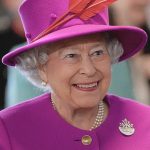

  • John Major – 1995 Speech in Belfast

    johnmajor

    Below is the text of John Major’s speech in Belfast on Wednesday 3rd May 1995.

    Thank you very much for that introduction. I look forward in a few minutes to hearing what you have to say about tax, and no doubt roads, and no doubt a whole range of other matters. And may I say what a delight it will be to discuss the same sort of economic matters in Northern Ireland that I would discuss in every other part of the United Kingdom as well, and the sooner I can come here and discuss just that, the better it will be for Northern Ireland and the better it will be for everyone else.

    But we have not quite reached that happy state yet and what I want to do this morning is to talk for a while about where we are on the road towards a durable peace. A great deal of attention, especially outside Northern Ireland, has been focused on a rather narrow definition of the peace process on the exploratory talks with Sinn Fein and with the Loyalist Paramilitaries. Of course they are important, but progress in Northern Ireland runs much wider and much more deeply than that, its seeds were sown long ago and people in all walks of life are contributing. You and your fellow businessmen are contributing. Those who have long worked for fair employment and against sectarianism are discrimination are contributing. The churches, the community workers, groups fighting courageously against intimidation and violence. And the police, not just in protecting the population with the army’s help, but extending crime prevention and community policing. And of course those democratic politicians who, throughout the troubles, have stood against violence and exclusively for constitutional methods.

    That common determination to move forward is, I believe, the surest guarantee that Northern Ireland will have a better future. Our task, everyone’s task, is now to create a rolling tide for peace that no-one can withstand. I want to see the people of Northern Ireland confident in themselves, confident in their economy and confident that the political system can produce a lasting agreement. And I think the signs of progress are beginning to show. Unemployment here is now at its lowest point for 13 years. Employment, the number of people in jobs, is at an all time high. Tourism is growing dramatically, there will be 20 percent more visitors this year spending an extra 200 million pounds, and there are going to be new hotels to house them.

    And since the Belfast Investment Conference there have already been 20 possible new investment projects. In the last week Seagate have announced a large expansion creating 300 jobs in Londonderry; Dairy Young [phoentic] is bringing 500 jobs to a new investment in Craigavon; and Mivan [phoentic] of Antrim have announced double profits. I hope we are going to hear further success stories at the Washington Investment Conference later on this month.

    So I believe that your growth challenge, an important initiative is an initiative that is catching that rolling tide for peace that I referred to. It comes at a time when Northern Ireland exports are growing even faster than those of the United Kingdom as a whole, and the United Kingdom as a whole is leading the field in exports across the whole of the European Union.

    Peace is boosting business confidence, just as growing prosperity itself reinforces peace. So I think the moment is right for business, in partnership with government, to accelerate growth. And we need to make sure that this peace I speak of extends right across the community, that it meets the challenges of a new situation. This morning I had the opportunity of discussing some of those challenges with church leaders, with trade union leaders, and with representatives of Families Against Intimidation and Terrorism. And later on this afternoon I will be seeing how the RUC are responding to the challenges that they face.

    And one challenge of course is to deal with paramilitary criminality, with extortion rackets, with intimidation and with a vicious phenomenon of what are called punishment beatings. Since the ceasefire there has been an unwelcome increase in vicious paramilitary assaults, the mis-named punishment beatings. I met, as I said a moment ago, Families Against Intimidation and Terror this morning and they told me that they had counted 97 assaults since 1 September, at least one of which led to a young man’s death, a young man not yet 17 who killed himself as a result of what are euphemistically called punishment beatings.

    They told me of other things as well. Another 16 year old boy whose legs were smashed on both sides with iron bars for 10 minutes while he lay on the ground with a paramilitary foot on his body, holding him in place while he was beaten. The family is forced out of Northern Ireland for speaking out against terrorism. And I met a mother who, like other grieving relatives here, cannot be at peace in her mind because the paramilitaries murdered her son 17 years ago and they have still not told here where that body lies so that she can give her son a decent Christian burial.

    That is not politics. That is barbaric criminality. And everyone in the community should help the police and the courts to combat it, and no-one who aspires to democratic politics in any way should defend or in any way tolerate such unspeakable activities. I hope that the people of Northern Ireland, whenever they have any knowledge of any incident like that, any group that seeks to exclude someone from part of Northern Ireland, that takes upon itself punishment of some sort that they have no proper legal authority to take upon themselves, I hope anyone with any information of that sort will have the courage to take that information to the police so it can be properly dealt with, properly investigated, the perpetrators arrested, tried and if found guilty suitably punished properly in accordance with law.

    It is a difficult job, policing in Northern Ireland. I have a great admiration for what the RUC have achieved. They are already responding to the challenge of civilian policing throughout all of the community. But it does need the help of the community, not wilful obstruction of the crime prevention campaigns or intimidation of new recruits, the whole community needs to be involved to help develop policing for a Northern Ireland at peace and to break down decades of suspicion and distrust.

    Over the years the RUC has withstood the most intense assault and it has made many sacrifices in the cause of impartiality, courage and professionalism. As it is increasingly freed from the threat of terrorism, I believe it can serve the whole community as never before. The men and women of the RUC have seen Northern Ireland through the past 25 years, they have defended democracy, they have defended the rule of law, they deserve our support and they will get it and we will stand by them.

    Let me mention also the trade union leaders whom I met this morning and who play an important part in your lives as businessmen. They too have played a remarkable role often where passions burn most strongly in bringing all sides together. They have helped rid shop floors of destructive sectarianism, they have shown that people in Northern Ireland can and do work together in the workplace to the benefit of everyone and Northern Ireland as a whole. And for doing so they deserve their share of the credit for Northern Ireland’s success.

    Let me now for a few moments just turn to the political process. Paddy Mayhew and his colleagues will shortly begin a further round of talks with the parties. Those talks have one overriding objective – to move towards agreement on the widest possible basis on a stable and harmonious future for Northern Ireland. Such an agreement has always eluded us, it will not come quickly or easily now. But without question, we have a better chance of achieving it than we have ever had before.

    In the two framework documents we identified the issues that need to be addressed. There has been a wide debate about those issues, different views have been expressed, sometimes with more passion than accuracy. Hard questions have been asked. We now want to have a constructive discussion with the political parties on the way forward, about the issues in the two documents and about their own ideas as well on a political settlement. And encouragingly some meetings have already taken place between the political parties themselves.

    Mr Vice-Chairman, I am in doubt that with your support and with the support of the overwhelming majority in Northern Ireland which seeks a stable and just future, there is a basis for a lasting settlement, a settlement which the parties can honourably agree and the people will be prepared to support in a referendum. This is a process with a single track. Sinn Fein, through their own actions, have left themselves further back than others, but they can advance down that track and we wish to see them do so. We want all parties in Northern Ireland to be full participants in a democratic, political and exclusively peaceful process.

    And that is one of the main purposes of the exploratory dialogue with the Loyalists and Sinn Fein. When Michael Ancram joins the dialogue with Sinn Fein next week it will be an historic moment. It will also be an historic opportunity because we want to explore how Sinn Fein and the Provisionals can best demonstrate their exclusive commitment to peaceful methods by putting away violence and by putting away the instruments of violence. They know what is required of them. We and the Irish government spelt this out in the Downing Street declaration and have done so on many subsequent occasions. There will be no tricks and no traps, just the opportunity offered by the Downing Street declaration to Sinn Fein to join in the political process on the same basis as other parties with a democratic mandate, the basis of exclusively peaceful methods and a commitment to abide by the democratic process, the basis of a level playing field on which no-one threatens violence or intimidation.

    When we began many people did not see the Downing Street declaration a a realistic basis for a ceasefire. They were wrong. Some now argue that it is not realistic to expect the paramilitaries to dispense with their arsenals. They too are wrong. It is neither realistic, nor acceptable, as we come to the end of the 20th century, for parties in our democracy to front private armies. And this is why I have said, and the Taoiseach has said, and President Clinton has said the decommissioning of arms is so important. And that is why we and the Irish government have worked on a joint plan for decommissioning.

    I can put it no better than the recent Irish Times editorial which said, and I quote: “Sinn Fein can be under no illusion that the question of IRA arms must be resolved before it can be an equal partner in political talks”. That is the end of the quote. To sit at the same table, Sinn Fein must gain the confidence of the other parties, by making a commitment to progressive disarmament and by beginning a verifiable process of decommissioning.

    Over the months the government and the security forces have responded in innumerable and imaginative ways to the new opportunities of the ceasefire. The people of Northern Ireland have responded themselves to those opportunities. It is now time for the paramilitary organisations and their political representatives to pay heed to what the people of Northern Ireland are seeking and are saying and to respond to that.

    I have no doubt that it is realistic to expect them to take these essential steps and we shall help them to do so in every way that we can. I spoke earlier of confidence. In the Downing Street declaration we offered a fair deal for everyone who embraced peace, and you can be confident, and they can be confident, that we shall stand by that pledge.

    You yourselves are helping-to generate confidence through your growth initiative. Every week, every month, has helped to build more confidence in that rolling peace process. The tide is carrying Northern Ireland away from violence and towards an enduring peace. With growing and visible economic success, an unshakeable political resolution, a much better future for Northern Ireland is at hand.

    There is a new atmosphere out there in Northern Ireland, a willingness to think afresh. People here, people I have spoken to today, people who have suffered terribly from violence over the years, they want to take down barriers and make peace irreversible, to make the price for going back to violence unbearable for those people who might seek to go back to violence.

    After 8 months of ceasefire people can see no cause, no reason and no sense in the illegal arsenals which still impede progress. Neither can I. An opportunity to remove them, an opportunity to come fully into the democratic process is there, it is there for everyone with courage and vision to take that opportunity.

    I believe that the time has come to put those weapons aside forever and to invest only in peace. That is the chance that is at hand, that is the chance that I hope everyone will take.

    We for our part will do our best to bring those talks satisfactorily and honourably to a conclusion that will lead to a permanent peace in Northern Ireland. The opportunity is there. If we have to be patient, we will be patient. If we have to be bold, we will be bold. But we see that chance of peace and we don’t wish to see it lost. My hope is that everybody will see that peace and that chance in precisely the same way and we may be able to carry it through to fruition.

    I come back frequently to Northern Ireland. Every time I return I am refreshed in my view of the opportunities that exist here. I know in listening to what you have to say in a few minutes I shall find that view reaffirmed yet again and I am delighted to have had the opportunity to express it this morning.

  • John Major – 1995 Speech at the Britain in the World Conference

    johnmajor

    Below is the text of John Major’s speech at the “Britain in the World” conference, held in London on Wednesday 29th March 1995.

    Ladies and Gentlemen, good morning. When I heard Jim was here chairing the conference I tore up my speech and prepared 32 interruptions.

    The motto to this conference today perhaps is best epitomised by a leading British Ambassador, now retired, who kept what became a very famous plaque in the middle of his desk, and in capital letters it bore a single word upon it: “THINK” – not I think a bad motto. And these days when Ministers and officials, pre-occupied perhaps obsessively sometimes with the immediate issues of the day, find themselves constantly under pressure to react, and react immediately, perhaps thinking long-term thinking may be thought to be an optional extra, but in truth it is not, it is essential.

    And thinking of course, thinking widely, perhaps quite outside the normal drift of thinking, is precisely what today’s conference is about. In its 75 distinguished years Chatham House has done a very great deal of useful thinking about foreign policy and in doing so it has provoked a great deal of thought amongst others, and I warmly congratulate it for that.

    I congratulate also both Chatham House and Douglas Hurd in bringing together on this occasion industrialists, bankers, politicians, public servants, academics, journalists, non-governmental experts and specialists in a range of different fields. Britain’s place in the world, in a different way perhaps, is of concern to all of us present today and everyone else in the country.

    And I am delighted also that later on today the conference will hear of how the United Kingdom looks from the outside from two very eminent speakers, Dr Kissinger and Dr Joffe, and I am delighted to see them both here today.

    Mr Chairman, this conference might equally have been entitled Britain in the Wider World, because over recent years the domestic debate in Britain has perhaps too often focused, and too narrowly focused, simply upon the internal workings of the European Union. And of course they are vitally important to our interests in this country, but so too are the United Kingdom’s interests and responsibilities in the other four continents and the oceans between, to which the other half, and at the moment a growing half, of our international trade goes.

    So I think it is right to widen the focus today, to ask whether this medium size country of ours of 55 million people really needs a global foreign policy, and if so, how we should operate it over the next quarter of a century or so. And I think the timing is right to look at that as well because there is a sense in which one historical period has ended and another is just beginning. It is surprisingly 70 years ago since Winston Churchill said: “What a terrible century the 20th Century has been”. Well a terrible 20th Century, savagely deformed by totalitarianism, by fascism, by World War and by Cold War, but marked also by astonishing technological progress, and yet it has ended sooner and more suddenly than anyone could have foreseen. And it is not merely, I believe, that the world is changing faster than ever before, it is at least as much that the rate of that change is accelerating. Events happen on a speed and on a scale which risks running beyond the control of governments and of international institutions.

    Let me give you but one graphic example in the 24 hour global money market. Ten years ago daily currency flows were of the order of 300 billion dollars. Now, thanks to computerisation and space-age communications, 1 trillion dollars can cross the exchanges in a single day. So 10 years ago central bank intervention could be decisive. I suspect that can no longer be the case and a different approach is needed.

    And change of a different sort has affected international politics and security. Today’s world is less predictable and perhaps more volatile than at any time in the past half century. The old known threats to stability, huge though they were say during the Korean war, the Berlin Blockage and the Cuban Missile crisis, they have changed, they have been changed, supplanted by new, often unknown and diverse risks. For example, international terrorism, some of it state-sponsored, must be high on the agenda of all responsible governments and so is the need to deny the most destructive modern technology to extremist regimes.

    I would like this morning to divide my remarks really into two parts. And first, as a backdrop to your discussions today, I would like to describe in outline the British government’s broad approach to the world. And then I would like to pose some questions to you, questions about how we should respond to the challenges and the opportunities that lie ahead.

    I suspect, looking at this audience, that I scarcely need to remind them of Dean Acheson’s famous dictum in the ’60s, that Britain had lost an empire and not found a role. It hurt, it hurt at the time because Dean Acheson was uncomfortably close to the truth when he said it, and that is why we hated him for saying it.

    But that was 33 years ago. Britain has found her role in Europe and around the world and has developed it more successfully than many people in this country appreciate. We have operated in that time as a leading member of NATO and the European Union, a Permanent Member of the United Nations Security Council, part of the Group of Seven Economic Summit countries, and of course as a founder member of the Commonwealth. The UK now has troops deployed or stationed in over 40 countries around the world in a wider variety of roles than ever before. The end of the Cold War may have led us to reduce the size of our Armed Forces, but not their quality which we believe remains the equal of any in the world, and nor their importance to this country for which the Armed Forces remain an outstanding national asset.

    We have begun I think more than ever before to realise the power of our language and of our culture. We have built up a remarkable portfolio of investments overseas. Per head the United Kingdom’s direct investment is higher than that of the United States, of Japan, of France or of Germany. Our global investments are said to be worth around 300 billion dollars and only Japan and the United States can exceed that sum. And that very naturally gives this country a very lively interest in what happens practically anywhere across the globe.

    I will not attempt this morning a full inventory of our national interests, but let me try and define some of the main characteristics of the United Kingdom in the world.

    First, this is a nation state, a nation state in what I firmly believe will continue to be a world of nation states for the foreseeable future. We are attached to our independence, to our sovereignty and also to our national peculiarities. But there are numerous interests that we necessarily share with others. We work particularly closely with our partners in the European Union which remains essential to our prosperity and to our security. The world may no longer be divided into rigid blocks, and nations must act more closely together than ever before to deal with the global, economic and security problems that we all must face.

    And second, it follows inevitably from what I have just said that we have at the moment a global foreign policy. Prescriptions for areas of concentration and inner and outer circles were floated in the 1960s and they were done then on a pessimistic analysis of the future outlook for Britain. We did not follow them at that time and I think the politicians of the day were right not to follow them for events have shown that that is the case.

    Thirdly, no less than in past centuries, the United Kingdom remains a trading nation, but in a world where invisibles are now as important as visible trade, and one quarter of our GDP comes from external trade. Export success, investment success, have both helped our current account to go down dramatically last year from nearly 12 billion to more or less zero and we now have a current account surplus with Japan, a point perhaps not generally recognised in every part of the country.

    Promoting trade is an important part of our activities, an important part of my own business abroad whenever I travel. The Indo-British Partnership which I launched in India has helped the surge in trade. Visits to other parts of the world that I have made and that other senior Ministers have made have so often taken with them large parties of British businessmen interested in trading with the countries abroad, investing in countries abroad and attracting investment from those countries into the United Kingdom.

    Those of you who are here today who are businessmen will have noticed, I believe should have noticed, a cultural change in British diplomacy abroad. Carlton Brown has left the Foreign Office and the Foreign Office now devotes far more of its overseas resources to commercial work than to any other front-line activity, and rightly so. And that has made a significant difference to the way in which British commercial interests can be represented overseas.

    And fourthly, the United Kingdom remains one of the world’s leading free market democracies. We actively promote democratic values and liberal economics in our foreign policy, not simply to proselytise but because in our view they are the best guarantors of peace and of stability.

    And fifth, we have stopped taking for granted the English language, British science, education, training and broadcasting, we realise precisely what assets they are and what can be done with them both at home and abroad. Through immense good fortune the United Kingdom originated the world’s most valuable piece of intellectual property – its main international and business language – and we are now marketing it more aggressively than ever before.

    Let me add one more characteristic. The United Kingdom is a conservative country, with a small ‘c’. We have enjoyed enviable stability over centuries and we cherish our institutions – Monarchy, parliamentary government, a rigidly impartial Civil Service, professional Armed Forces, an independent judiciary and churches operating within religious tolerance. It has become fashionable in some circles, some cynical quarters, to snipe at those institutions. I believe that is a destructive tendency, but it will pass because those institutions remain the bedrock of this nation and the bedrock of Britain’s place in the world and they will outlast superficial criticism.

    But the essential conservatism of the British, and I am not making a party political point here, it spans the political divide, should not be mis-read in any sense. We are rightly averse to revolutions but we are not afraid of change or of risk. And indeed I would go further. I think that our willingness to take intelligent risks, to act sometimes quickly and independently and to give a political lead, underpins Britain’s standing in the world. It explains why, despite nature’s inevitable limits on our size and resources, the UK is one of the five Permanent Members of the Security Council and has the world’s sixth largest economy. It is not a quality that we should permit to be submerged, it brings value not only to this country but to the international community as a whole. And let me perhaps put some flesh on that assertion, some illustrations from current policy.

    One revolution we did back, and backed sometime before it became fashionable to do so, was Gorbachev’s revolution in Russia. We did not hesitate to support the reformers when they came under attack, both under Gorbachev and under Yeltsin, and we have no intention of changing direction now. It may take a generation, perhaps longer, before Russia has a full range of effective democratic institutions, more time still before its people enjoy the standard of living we take for granted here, but we shall continue to take the long view for I believe that is the wise view to take with the changes taking place in Russia.

    There will inevitably be set-backs. Chechnya I believe is one such example. The Russians there faced an unenviable problem. But the response of Russian military commanders was wrong and it was brutal, as many Russians to their credit will acknowledge. The fighting there must be brought to an end, international conventions and norms of behaviour must be respected. We should not pull our punches at all over Chechnya, but that huge error does not toll the knell of economic and political reform in Russia, it remains in our interest in this country and in the West to encourage reform in Russia and to develop further cooperation in foreign policy. And that is why I stand by my decision to recognise our common sacrifice in the World War II by going to Moscow in May, as I promised President Yeltsin last September. And it is also why I continue to support Russian participation in the Halifax Summit later this year.

    We have taken a similarly long-term view of China. No longer these days is China a sleeping giant. We have welcomed China’s advance on the world scene, we would like to bring China into economic partnership and political dialogue. But at the same time we have not minced our words about human rights and their abuse in China. We are fulfilling our vital responsibilities to Hong Kong. That approach has not been free of risk but I believe it has earned respect and we will continue with it.

    PRIME MINISTER:

    When Yugoslavia erupted, the United Kingdom didn’t hang back. we sent in an emergency aid programme which remains the lynchpin of the international humanitarian effort. We convened the international conference in London against I may say a very unpromising background indeed and got a diplomatic process moving. The UK was amongst the first to deploy troops to UNPROFOR in Bosnia and our large contingent has performed outstandingly there. I am in no doubt whatever that the suffering in Bosnia would have been far worse without the steps that we took and that the war would almost certainly have spread perhaps southwards, perhaps wider to a full-scale Balkan conflict.

    That Bosnian problem is still with us and may I fear be with us for some years to come. In the past few days, fighting flared up again in Tusla, in Kravnik, even though the cease-fire has yet another month to run and if there is all-out war in Bosnia, UNPROFOR’s position could become untenable but sooner or later the Bosnian parties will need to find a negotiated outcome and there will be no clear-cut military solution and the sooner that is recognised the better. But however hard the task, it is in Britain’s interest, working with Europe and the Contact Group, to edge the parties towards a settlement.

    Two weeks ago, I visited Israel, Palestine and Jordan. It is an area fraught with political risk but the United Kingdom has huge interests and a longstanding affection for the Middle East. I was the first G7 Head of Government to visit Chairman Arafat in Gaza and I went because we have an interest in supporting the peace process. Yasser Arafat asked me on that occasion if the European Union would coordinate international monitoring of the Palestinian elections and the Israeli government, when I spoke to them, supported this request. I hope that the European Union will now agree to take on that task and thereby to engage more directly than ever before in the attempt to build peace in the Middle East.

    We have had to take risks over Iraq. We took losses in the Gulf War and broke new ground promoting safe havens for the Kurds. When Saddam threatened Kuwait again last year, we responded very rapidly and in force. Now, Saddam Hussein is trying to blackmail the Security Council by causing his people to suffer. The world must not give in to such tactics, Saddam must comply with the United Nations obligations and must never again be permitted to threaten Iraq’s neighbours but we must also help the Iraqi people, themselves innocent, who are as much his victims as anyone else and we must do that by standing robustly against Saddam’s wanton abuse of human rights and declining any compromise or accommodation with him whatever his blandishments and of course by trying to get aid through to those who are today suffering. Britain is therefore launching a new proposal in the Security Council to allow Iraq to sell oil and thereby import food and medicines. We wish to see an end to malnutrition and deaths from curable diseases. Saddam must show whether he has any concern for his people and I hope he will take up the offer that now lies before him.

    Neither, Chairman, has our commitment to the Kurds of northern Iraq diminished. I understand Turkish concerns about PKK terrorism but Turkey itself should remain within the rule of law. We look to Turkey to withdraw its forces as soon as possible and to avoid harm to non-combatants and to relief efforts.

    South Africa, like Russia, is at the beginning of a long-term transition without a guaranteed outcome. It would have been wrong for the United Kingdom to hold back and wait and see what happened so we are doing all that we can to help this remarkable transition we see daily in South Africa move towards success. I believe the United Kingdom can be a tremendous power for good in South Africa provided we don’t shy away from taking risks and there could be no better demonstration of this than last week’s outstandingly successful state visit by the Queen in which the Foreign Secretary took part.

    Finally perhaps Ireland. For the past four years, we have worked more closely than ever before in our history with the Republic of Ireland and we have done so to promote peace in Northern Ireland. In doing this, the British and Irish Governments had to overcome historic tensions and entrenched positions. It hasn’t been an easy process for either of us and many more difficulties remain to be surmounted but a lasting settlement will only come about if all concerned are prepared to risk a new approach.

    That, Mr. Chairman, is the sort of country I believe us to be and that I wish us to remain, perhaps a little less cautious and a lot more hard-headed than many people may believe.

    Now let me take the opportunity of speaking first at this Conference by throwing some of the difficult questions at you that governments will have to grapple with within the next quarter of a century and we perhaps may benefit from your advice today.

    How should the United Kingdom respond to future challenges and opportunities? If the last quarter of a century is anything to go by, the world in 2020 will be a very different place from the one we meet in today. By then, the Asian tigers, once aid recipients bearing a Third World label, should be prosperous players in the economic first division. How is that going to change the balance of political power around the world?

    Will China realise her huge potential and if so, to what effect? Will Latin America have consolidated democracy and taken off economically? Will South Africa have helped to generate an upturn not just in her own country but perhaps in all Africa south of the Sahara? What will be the consequences of the serious and mounting instability in North Africa? And in Europe we will, I hope, have embedded the new democracies of central and eastern Europe within an enlarged European Union but will we also have developed a close and harmonious relationship with the large states further to the east, with Russia and with Ukraine? How can we be sure of avoiding, as we must, a new dividing line down the centre of our European continent? Another question of some importance: to what extent will the United States still be engaged as an active partner in European security?

    Technology has made a huge change to the way in which the world operates. Instant television reporting can move public opinion in an instant, easy air travel brings people together more frequently at all levels, telecommunications and computerisation have revolutionised the work of overseas outposts, heads of government these days can pick up the telephone and speak to forty or fifty other heads of government whom they personally know and have met in a way that their predecessors could never have imagined and how will the march of technology affect us over the next generation?

    This is by no means an inclusive list but these are some of the variables in long-term thinking that are necessary for the present generation of politicians and businessmen and diplomatists to consider. Of course, we are often overwhelmed by short-term problems but how refreshing it will be to see some of these longer-term problems examined, considered and debated so that the public mood may be taken and the public wisdom gauged.

    What policies should we now be shaping to equip the United Kingdom for change to take advantage of the new opportunities, to be ahead of the curve as events move on and what is going to happen to the institutions of which we are a part?

    Let me here identify some of the key issues, turning first to the United Nations. The United Kingdom has supported the United Nations from its birth and played a leading role in it. Recently, we have been a leader of continuing efforts to reform the United Nations and make it more cost-effective and arguably – some would say unarguably – the need for a powerful, compelling United Nations has never been greater. The world is certainly replete with both man-made and with natural disasters and yet as we say that we see something else at the same time: the United Nations is in a profound financial crisis which is set to deepen; despite American arrears of $1.5 billion, the Congress has voted to reduce the United States contribution. Does the financial crisis present an opportunity for us to press for really effective reforms in the United Nations and if so, in what direction?

    Second, that crucial transatlantic relationship. Britain has a vast range of shared interests with the United States which I shall be discussing next week with President Clinton. We have traditionally favoured both a strong Europe and a strong relationship with North America. How can we help promote ties between the two heartlands of democracy now that we are no longer bonded together by shared fears over the Cold War? We have seen the first stirrings of a debate in Britain and in Europe about a new transatlantic community, it is a worthy aspiration but how should it be developed?

    Third, the United Kingdom and Germany have led the drive to extend western Europe’s security and prosperity to the east, to bring the countries of central Europe into the European Union and by forming closer ties with Russia and with Ukraine and this will require a huge political and economic effort over many years; it will require us to take the domestic strain of opening the markets of western Europe and of investing more in the east. Is this an attainable goal? Is western Europe simply strong enough to undertake that job?

    Fourthly, is our diplomacy adapting fast enough to new international problems?

    Some of the most acute threats to our interests and to our way of life are not posed by dictators, not posed by traditional conflicts but by terrorism and by crime, by the narcotics trade, by extremism in the name of religion, by diminishing natural resources and by environmental pollution. Do these problems receive a high enough priority? What new approaches to these problems should we now be developing?

    Fifth, how do we play our proper part in tackling world poverty? Official development aid can point to some successes, for example in South Asia, but it is trade, investment, education and entrepreneurship which have fuelled the more spectacular development of South East Asia. Hundreds of millions of people in sub-Saharan Africa have seen little improvement in their living standard despite huge flows of official aid over many years. How can we promote investment and entrepreneurship there? Is there still a rationale for official aid, tackling emergencies, promoting reform and spreading know-how? We have in the United Kingdom a tightly-administered aid agency in the ODA, it delivers both value for money and I believe credit to this country but increasingly the British bilateral aid budget is being swallowed up by our contributions to the multilateral programmes of the European Union so looking into the next century, what kind of aid programme should we maintain?

    Without pre-empting the many questions already on the agenda, let me just raise one final point. I am a firm believer in the Commonwealth. It is more of a family than an institution and it brings us together with nearly one-third of the world’s nations. Sometimes we make good use of its assets as in the Trinidad Terms initiative or the Harare initiative on good government but if we don’t keep using it, then I believe we will lose it. The Commonwealth needs a focus, it needs a raison d’etre; what should it be as we look at the years ahead?

    Mr. Chairman, as the opening speaker, I have had a luxury perhaps denied to others, a luxury of raising questions and inviting you to debate and perhaps supply some of the answers but I hope in some way I may have done a little more than that. I believe that this Conference is about building on success. The United Kingdom, as an island with a trading and a seafaring tradition, has always looked outwards. I am sure that we should continue to look outwards. We cannot afford a “Little Englander” mentality and frankly, I see little danger of that but I do think we will have to work even harder in the future to maintain the United Kingdom’s influence and a healthy competitive position.

    I hope that the outcome of today’s Conference will help to guide our way in the years ahead, I hope it will inject fresh thinking into our external strategy, I hope it will assess our strengths and our assets critically but fairly and suggest how they can be best applied to the greatest benefit. If this gathering of nearly 700 people with such wide experience at home and abroad can do that, as I believe it can, then Chatham House in the Institute’s 75th year will have made yet another invaluable contribution to national policy and for that we may all be grateful.

  • John Major – 1995 Speech to the Conservative Local Government Conference

    johnmajor

    Below is the text of John Major’s speech to the 1995 Local Government Conference, held at the International Maritime Organisation at 4, Albert Embankment in London. The speech was made on Saturday 4th March 1995.

    Everyone in this room believes in service. Many of you have a long record of service in local government. In recent years that has been against a difficult political and economic background. But that is now changing.

    We are now into a comprehensive economic recovery. It hasn’t been easy. It’s involved difficult and often unpopular decisions that have had a backlash for you in local government. I know how unfair that is. But the decisions we made were necessary and now we need to capitalise on them. To make sure that it is widespread and that it improves the security and livelihood of people as well as the health of industry and commerce.

    I was given the wise advice that politics is about people when I entered local government. I learned in local government that too many people have too little self-esteem. There is a poverty of ambition.

    Yet local government can help with many of the causes of that: education, housing, social services. So local government matters. It matters in the delivery of the services and in creating the choices and opportunities that people deserve. And it is not an accident that these are found more often in areas with a long tradition of Conservative local government.

    When I am with Conservatives in local government, I know I’m with people who share the values and instincts that brought me into our Party. You and I joined the Party for the same reason.

    It spoke a language people can understand. Not the language of protest, of rights, of obligations by others – but the language of opportunity and hope and service.

    Our party has beliefs but, like the British people, we’re not ideological. We’re not defined by grand theories handed down from on high. We’ll never have a Clause IV to abolish. We grow from shared values and experience. We speak to people about their aspirations and their futures. We are not little Englanders nor are we blind nationalists. But we do share a deep love of country. We want it to do better. We care about its traditions and its future. We are a commonsense party, pragmatic when necessary and we find answers in practical action.

    Always remember, we are different from other Parties. We see people first and foremost as individuals not as part of a group. To us, they’re people, not a block vote. We don’t set one part of society against another with the politics of envy. We don’t trade politically on social divisions. We don’t pigeonhole and categorise on the basis of class, colour, gender or creed. Our Party is open to everyone. And it always must be.

    When times have been difficult, as they have, we are wise to remember our virtues and our strengths because they are what set our Party apart.

    Economy

    Let me now turn to the fact that should be central to public debate at present – but isn’t. The fact that we are now well into the broadest based, most secure economic recovery we have seen for generations.

    I know that for many people, this recovery isn’t apparent. It would be much more evident if it were led by house price rises and consumer spending. But we know where that leads. We are better with what we have: a long-term recovery led by investment and exports.

    All around the world people can see how well the British economy is doing. Only here in Britain is that not recognised. That matters. It matters politically. It matters economically too. Because confidence is a key ingredient in taking advantage of our recovery.

    You can help us and yourselves by taking this message out onto the doorsteps. When people ask about the feel good factor invite them to look at the lengthening job columns in your local paper, point to the falling dole queues, to the local businesses that have won new export orders.

    To the fact that employment in manufacturing is growing for the first time in generations. To the fact that we are beating the performance of the best economies in Europe. These things matter to local government because your spending and your services depend upon the growth of the British economy.

    And herein lies one of the ironies of government. We need growth to pay for services. But to make sure we have that growth we must hold down spending to what we can afford.

    That is why this year’s spending round was tough. The local government settlement is tight. It had to be. This means choosing the right priorities. Let me illustrate the point.

    Is it really more important to expand top management in town halls or to put money into services? You know the answer. But an extra £500 million has gone into top management over recent years.

    Is it really defensible that in some authorities, employees take twice as much sick leave as in others? Of course not. But it happens.

    Is it really the right priority that for every three teachers in the classroom, there are two others in the education service who are not teaching?

    And why in times of stringency, is it always the front line teachers that we are told will be cut back?

    The responsible local government position is to say: yes, it’s a tough settlement so we’ll pick our priorities and our teachers are among the first of them. That’s the way local government acts best in the interests of local communities.

    Of course setting the right priorities is difficult. But that plays to our strengths. Many Conservative councillors bring to local government invaluable experience in business. You know what it’s like in the market place. You know how intense are the competitive pressures out there. Local government cannot be divorced from the real world.

    Regional Assemblies

    Nor should it be too divorced from its electorate. The virtue of most local government is its closeness to the electorate. But that link with people would be gravely weakened if local government were to lose many of its services to the new regional assemblies that the Labour Party would like to inflict on us.

    Frankly, the last thing our communities need now is Labour’s plans to put you under the control of regional government. Another whole tier of government would make Britain the most over-governed country in Europe.

    And why are they doing it?

    Because they’ve promised a Parliament in Scotland and an Assembly in Wales and they don’t want an English backlash.

    And why have they offered these?

    Because they’re running scared of the Nationalists. And why are they running scared of the Nationalists? Because they need to win a large majority of seats in Scotland and Wales to win a General Election at Westminster.

    So there you have it.

    Because of their partisan political interests at Westminster Labour are prepared to inflict a whole new higher tier of Regional Government, at unknown cost, with a huge increase in bureaucracy and weaken the powers of genuine local government.

    And “once regional government is up and running the demand for more services will be unstoppable.”

    Don’t take my word for it – that’s a straight quote from Labour’s policy document.

    And at whose expense will that be? It will be at your expense. Let me tell you why. According to dear old Frank Dobson, Labour’s policy would ‘probably’ – note that – suggest that a few responsibilities for delivering services should be transferred from local government to regional assemblies. So, these new Assembly’s won’t just take devolved powers from Westminster – they will inevitably suck up powers from the present system of local government. A new principle – devolution upwards.

    Which few responsibilities are they going to take? Well, we don’t really know. Planning? Transport? Education? These are all functions local government now has. Is Frank Dobson suggesting that Labour is likely – wholly or partly – to suck them up into regional assemblies? He seems to be. And, of course, the appetite of these assemblies will grow with the feeding.

    I wonder how many Labour candidates for the local elections realise that Labour wish to disembowel the Councils they’re standing for.

    And these regional authorities will also have an appetite for spending. They’ll spend. You’ll precept. So they’ll get the money and you’ll get the pleasure of sending out the Bills.

    Or will you? Because who do you think said this:

    “You could not conceivably establish elected regional assemblies as well as having a tier of shire counties and districts underneath that”.

    Jack Straw said that. Does that mean that they’ll suck up all your powers? We don’t know. That’s the latest revisionism. So presumably it’s official Labour policy. Probably. But what does it mean? Are you to be abolished? Heaven alone knows.

    Now, you’ll have noticed that what poor old Frank Dobson has been saying is quite different from what Jack Straw said.

    But if they can’t agree on what these assemblies will do, surely they can say where they’ll be established. Well you’d be disappointed. They have – and I quote – ‘no fixed views’.

    It’s not as if they can plead ignorance of local government. Frank Dobson has plenty of experience. He was Leader of Camden Council, among the most inefficient and expensive in the land. The Council, not Frank. Well, maybe Frank too. In any event, I think he was the Leader. He would say he was ‘probably’ the Leader.

    So there we have it. I have never known such a total shambles as Labour’s plans for Regional Parliaments and Assemblies. They are a complete mess. Farcical, amateurish, ill-thought out and contradictory. The plain fact is instead of rambling around the country addressing carefully selected audiences on Clause IV, a dinosaur that has been dead for years, the Labour leader should be explaining this nonsense to Local Councils. 16 years in opposition and they’re still making policy on the hoof. They have lots and lots of options. No one can say their local government policy is in a straitjacket. But perhaps the person who wrote it should be.

    Call me old fashioned, but when I was a councillor in Lambeth the people who emptied the bins were called dustmen. And it was an honourable calling. Then the politically correct decided dustmen had to be called refuse collection operatives. Now I understand Labour authorities call them environmental hygienists. Well, I suggest we give our environmental hygienists a copy of Labour’s plans and tell them to pass it to honest, down to earth dustmen and they’ll know exactly what to do with it.

    What nonsense their plans are. We don’t need yet another tier of councils, more politicians, more bureaucrats, more directives, more frustration and more costs. They want councils that:

    deliver low council taxes;

    put the frontline first;

    play a role in making our streets safe;

    back local business.

    There’s a clear choice here, First, lower council taxes. If you want to pay over £75 more, vote for your Liberal candidate. If you want to pay about £150 more, vote for your Labour candidate. But if you want to spend more of your money on your groceries, your clothes, your holiday, your family, then vote Conservative.

    But, paying less doesn’t mean getting less – if you give priority to frontline services. Conservative councils work for higher standards in the classroom. Labour Sheffield doubles its leisure budget and cuts its funds for education.

    And Wigan spends £1/4 million of its education budget on vintage traction engines, including the splendidly named Lively Lady. Frankly, I’d sooner money went on lively pupils.

    Conservative councils give priority to better homes. Labour Sheffield admits it takes twice the national average time to prepare properties for new tenants.

    Conservative councils give priority to fire services. Labour Dudley apparently thought it more important to send its councillors to Delhi to see how the Indian Fire Brigade works.

    And good Councils, too, are involved in the fight against crime. They have a pivotal responsibility in making our streets safe. The best way to fight crime is to make sure it doesn’t happen in the first place. It is not just a matter of leaving everything to the police. Better street lighting, more closed circuit cameras in streets and shopping malls – the electronic bobby on the beat. Intelligent use of the planning laws. And it also means backing the active citizen. In many ways local authorities can play a role which makes streets safe for the law abiding and dangerous for the criminal. You, as leaders of our communities, need to give the message loud and clear. We are all on the same side in the fight against crime.

    We must always be the party that backs local business. You know that it is the factories that create the local jobs, it is the shopkeepers who create the bustle, vitality and character of our town centres. But how often, as councillors, do you hear of over-zealous officials imposing petty restraints which make life difficult for business and drive shops from the centres of our towns? It is you, as Conservative councillors, who can exercise the restraining arm. With your help, you can help local business prosper and create jobs.

    Peroration

    Conservative councils stand for commonsense, not politically-correct nonsense. Stories about the antics of Labour councils pandering to political correctness well might be funny. But, it’s not so funny if it’s your money going down the Swanee.

    I have a great trust in the commonsense of the British people. I don’t believe they’ll be taken in by clever-dick sound bites. They want a rational explanation of the great issues. They want to know what is at stake. We’ve got to get out and tell them. Now more than ever we must go on the attack and end the easy ride that Labour and the Liberals have had.

    A General once said: ‘Wars are not won by evacuations’.

    They are won by winning the battle of ideas.

    By offering the best services at the lowest cost

    By taking our case, undiluted, out to the doorsteps.

    It’s an old fashioned concept. It’s hard work. But it’s the right thing to do and I believe it will bring you the success you deserve.