Tag: 1994

  • Queen Elizabeth II – 1994 Christmas Broadcast

    Queen Elizabeth II – 1994 Christmas Broadcast

    The Christmas Broadcast made by HM Queen Elizabeth II on 25 December 1994.

    I shall never forget the events in Normandy last June, when the representatives of the wartime allies commemorated the fiftieth anniversary of the D-Day landings.

    We who were there, and millions of others through television and radio, paid fitting tribute to the courage of those who took part in that epic campaign.

    As Prince Philip and I stood watching the British veterans march past on the beach at Arromanches, my own memories of 1944 were stirred – of how it was to wait anxiously for news of friends and relations engaged in that massive and hazardous operation; of the subsequent ebb and flow of the battles in France and then in Germany itself; and of the gradual realisation that the war really was at least coming to an end.

    Since those D-Day commemorations, Prince Philip and I have been to Russia. While we were in St. Petersburg, we had the opportunity to honour the millions of patriotic Russians who died fighting the common enemy.

    To see British and Russian veterans standing together, in memory of the sacrifices of their comrades-in-arms, was a moving experience.

    I never thought it would be possible in my lifetime to join with the Patriarch of Moscow and his congregation in a service in that wonderful cathedral in the heart of the Moscow Kremlin.

    This Christmas, as we pray for peace at home and abroad – not least in Russia itself – we can also give thanks that such cathedrals and churches will be full and that the great bells, which greeted us, will be ringing out to celebrate our Saviour’s birth.

    We are frequently reminded, of course, that violence and hatred are still all too much in evidence. We can take some comfort, however, from the fact that more people throughout the world, year by year, have real hope of their children growing up in peace and free from fear.

    Last Christmas we were witnessing the signs of a new dawn after the long bitterness, and this year these signs have become steadily stronger. If that new dawn is to be a real and not a false one, courage, patience and faith will be sorely needed – those same qualities which kept the flame of hope alive in the war-torn countries of Europe and the Far East in the dark days of the last war.

    Christ taught us to love our enemies and to do good to them that hate us. It is a hard lesson to learn, but this year we have seen shining examples of that generosity of spirit which alone can banish division and prejudice.

    In Northern Ireland, peace is gradually taking root; a fully democratic South Africa has been welcomed back into the Commonwealth; and, in the Middle East, long-standing enmities are healing.

    What is it that makes people turn from violence, and try to bring peace to their community? Most of all, I believe, it is their determination to bring reality to their hopes of a better world for their children.

    The sight of the happy faces of children and young people in Russia, in South Africa, where so much has changed with such extraordinary speed in the last year, and in Northern Ireland, where there is real hope of a permanent end to the bitterness of recent years, should be enough to convince even the most hard-hearted that peace is worth striving for.

    Next year, we shall commemorate the fiftieth anniversary of the end of the Second World War. The celebrations will no doubt be spectacular, and I hope we all enjoy them. But we can also, each in our own way, ensure that they leave a lasting mark in history.

    If we resolve to be considerate and to help our neighbours; to make friends with people of different races and religions; and, as our Lord said, to look to our own faults before we criticise others, we will be keeping faith with those who landed in Normandy and fought so doggedly for their belief in freedom, peace and human decency.

    The poet Siegfried Sassoon, amidst all the horrors of war, still found himself able to write these words:-

    “Everyone’s voice was suddenly lifted
    And beauty came like the setting sun.”

    If he could see the beauty from the trenches of Flanders surely we can look for it in our own lives, this Christmas and in the coming year.

    Happy Christmas and God bless you.


  • Andrew MacKinlay – 1994 Speech on Fenchurch Street Station

    Andrew MacKinlay – 1994 Speech on Fenchurch Street Station

    The speech made by Andrew MacKinlay, the Labour MP for Thurrock, in the House of Commons on 17 March 1994. The speech was made at 05:15.

    I begin the debate which I have initiated on the impact on the commuters of the closure of Fenchurch Street station and Limehouse station for seven weeks this summer by apologising to you, Mr. Deputy Speaker, and to the House, its servants and its officers for detaining them at this unearthly hour. I extend that apology to the Minister and to his colleague, the hon. Member for Sheffield, Hallam (Mr. Patnick), who, on a personal level, are always courteous. Nevertheless, I shall not hesitate to criticise the Government and their stewardship of our railway network as it affects east London and Essex, despite the fact that the Minister has always been courteous and helpful to me about constituency matters.

    The fact that Back-Benchers have to raise important issues at ridiculous hours of the day and night reflects the imbalance of the way in which we do things in this House. Before I depart from the House, my ambition is that the balance between Government business and BackBenchers’ debates will have been altered. Government business should be held in the middle of the night and Back-Benchers’ initiatives should be held during the day. I have already been in the Palace for 21 hours, working on parliamentary business. It is absurd that we hold these debate so late when the Minister, like me, has a full diary for the day ahead.

    Having got that point off my chest, I state clearly that I do not question the urgent need for the resignalling works on the line that goes from Fenchurch Street to Southend, via my constituency of Thurrock and the constituency of Basildon; nor do I minimise the urgent need for Fenchurch Street station and other stations along that line to be refurbished and for the track to be renewed. Indeed, that work is long overdue, but I question whether, to complete those works, it is necessary to close Fenchurch Street and Limehouse stations for seven weeks from 22 July. Had the Government and managers of Network SouthEast been alive to the decay of the London-Tilbury-Southend and Great Eastern lines and their stations, those closures would not have been necessary. They are a direct consequence of years of neglect and indifference by the Secretary of State and his predecessors under this Administration.

    My constituents will suffer enormous additional delay and inconvenience as a result of that neglect. The impact will be quite awful for the thousands of commuters who travel from East Tilbury, Tilbury, Grays and, to a lesser extent, South Ockendon stations. They would wish me to place on record their considerable irritation at the inconvenience that they face this summer. The problem is not exclusive to my constituency but will affect thousands of commuters from Essex and east London, Southend, Shoeburyness, Basildon, Pitsea, Upminster, Dagenham Dock and particularly Barking. Some 19,000 commuters a day use Barking station and there is already considerable congestion and problems for commuters interlining from that station on their way to work in London.

    When Fenchurch Street and Limehouse stations close this summer, Network SouthEast intends that the bulk of commuters travelling from Essex will disembark at Barking and join the already heavily used, if not overloaded, District and Metropolitan underground lines from Barking. Commuters who normally interline with the docklands light railway at Limehouse station will have an additional problem to get to their place of work in the new docklands development area.

    The closures will affect not only travellers to Barking but commuters living in Barking. Had my late colleague Jo Richardson still been with us, I am sure that she would have participated in this debate because of the enormous impact that the closure of Fenchurch Street station will have on the Barking and Dagenham constituents. I regret that no other hon. Members whose constituents will be affected by the closures are in the Chamber. In fairness, the right hon. Member for Southend, West (Mr. Channon) is indisposed. He takes a keen interest in transport matters, having been a former Transport Secretary, and is also my chairman on the Transport Select Committee. I am sure that, had it been possible, he would have been here tonight. The inescapable fact remains, however, that there are Essex Conservative Members who should have been here tonight to speak up for their commuters, who will be greatly disadvantaged by the closures.

    I have been a consistent and unashamed critic, not just of the Government and their transport policy, but of the managers of Network SouthEast, who do not respond as they should to the interests of commuters. They make cosmetic efforts to recognise those interests, but I am not satisfied that they properly champion consumers’ interests in their dealings with the Government. Were they to fulfil the spirit of their duties as line managers they would join me in criticising the Government for their chronic underfunding of the lines, which in turn has led to the chaos of one of London’s oldest mainline stations being closed for seven weeks in the summer.

    The managers make some attempt to acknowledge the interests of commuters. Just this morning, they issued commuters with a glossy brochure entitled, “LTS Newsline: Customer Newsletter”. The banner headline reads: Station to shut for seven weeks”. The second page of the document is headed: LTS moves towards shadow franchise”. It goes on: The senior management team headed by Chris KinchinSmith, divisional director of LTS, has already expressed its initial willingness to mount a bid for the line, providing the terms of the franchise are acceptable. I hope that the Minister will acknowledge that during the tortuous debates on rail privatisation, in the House and in the Select Committee, we were assured both by the Minister and by the chairman of British Rail that line managers who might be contemplating putting in a bid for a franchise should keep that interest separate from their operational role. Mr. Kinchin-Smith and his colleagues, in a document paid for by commuters through their fares, are flagging up an interest in bidding for a franchise—that clearly runs contrary to the spirit of those undertakings. I hope that the Minister will accept that, and that his Department will tick off people who are mixing up their responsibilities in this way.

    Another sign that the legitimate interests of commuters are being ignored is the lack of facilities for the travelling public. The document also tells commuters that no toilets will be available for their use at Barking station, the main inter-line station, which is due to accommodate a great many more travellers this summer. That is symptomatic of the decay of the line and its understaffing by Network SouthEast and it is wholly unacceptable. It is not unreasonable to say that the line and its passengers must be properly looked after. It is a very bad state of affairs if they cannot provide WCs for commuters.

    I move to the central issue of the debate—the closure of the Fenchurch Street main line station. Mr. Chris Kinchin-Smith says: We know this work will cause severe disruption for many of our customers”. My word, he can say that again; it is the understatement of the year. He then argues that the temporary closure of Fenchurch Street station is essential.

    As I have said, I have no way of testing whether it is essential or unavoidable now, but it could have been avoided had there been proper funding and planning of the refurbishment and restoration of the line in previous years. The Government and the line management failed to acknowledge that, despite the fact that I and other Labour Members have been drawing attention to the problems of the misery line for a number of years.

    The management’s document says that the station will be closed when many passengers take their holiday. That is very kind of them, but the fact that the work will be carried out in July or August will not greatly reduce the irritation to customers. We are not a town that has a “holiday week”. Thurrock does not close down and nor does Essex. In the south-east of England, in modern times, holidays straddle the summer months. It is of no great consolation to us that the work will be conducted in the summer and it is nonsense to suggest that that is any great concession to the fare-paying customers.

    In their document, the managers of network SouthEast also say: We are working closely with London Underground”. I am not sure that that is so. Dear old London Underground has been told there about the closure of Fenchurch Street and Limehouse station and has to live with it.

    In the past 24 hours, I have corresponded with the senior public affairs executive of London Underground. She replied: The eastern section of the District Line is currently operating the optimum level of service possible and therefore additional trains can not be provided by the line — that is the District line— during the 7 week closure period.”. The management of London Underground are in no position significantly to abate the problems of commuters from Essex; nor can they do anything to affect the impact on the existing underground customers who will also suffer through increased congestion on already overcrowded underground trains.

    I also criticise the management because their glossy and expensive document does not give much time or attention to the problems that will be faced exclusively by my constituents on the Tilbury loop line. The section headed, “Your Questions Answered”, contains hardly any reference to mitigating the problems for my constituents, apart from telling us that present proposals include the Tilbury line and that all stopping services will terminate at Barking with onward travel by tube. It then gives us the good news that LTS tickets will be valid on the underground.

    I have been fighting a continuing battle with Network SouthEast about its penalty fares scheme and how it relates to the closure of Fenchurch Street. I support the principle of the penalty fare scheme, but the management of Network SouthEast on the London-Tilbury-Southend line have been unable to maintain the ticket machines so that honest fare-paying passengers can purchase a ticket and avoid the embarrassment of having to defend their position when an inspector gets on the train. It is a wholly unsatisfactory state of affairs when, night after night on the main concourse of Fenchurch Street station, it is impossible, unless one has the exact fare, to purchase a ticket for use on that line. If Fenchurch Street station is to be refurbished, I hope that the management are able to get their act together. Apparently the machines there are supposed to be self-replenishing in change, but they do not self-replenish and the management seem incapable of arranging for people to empty them and fill them up with change.

    The situation gets worse. If more people have to change at Barking on to London Underground, which is also introducing a penalty fares scheme from the beginning of this financial year, it makes it even more imperative that passengers are able to purchase a ticket or permit to travel at stations in Essex. I hope that the Minister will take that on board and ensure that the management of London Underground and Network SouthEast understand that that is a reasonable expectation and demand by the commuters in view of the penalty fares policy.

    I want to ask the Minister some questions. First, what compensation will commuters who are disadvantaged by the lengthy closure of Fenchurch Street station receive? They do not have a good service at the present time. Despite what the management say, the journeys are still erratic in terms of punctuality. Their problems will be compounded. I guess that the vast majority of commuters from Essex will have each day an additional three quarters of an hour travelling time, at least, to their place of work in London as a result of the closure. That is not fair when one bears in mind that commuters from Southend, if travelling only on the LTS line, pay £1,912 per annum for their season ticket. If they are travelling LTS and Great Eastern, the season ticket costs £2,056 per annum. In my constituency, commuters from Tilbury pay £1,564 per annum. At that price, bearing in mind the problems that they will experience this summer, they are entitled to a rebate. I hope that the Minister will consider that matter and make the appropriate recommendation to the management of Network SouthEast.

    Secondly, is the Minister able to give me an assurance that when the work is complete following the closure of Fenchurch Street and Limehouse stations, there will be no further hiatus for commuters from Essex? I ask that because I have no confidence about the frankness of the management of Network SouthEast. For example, they did not mention the possibility of this closure until it was almost unavoidable. They must have known about it a year or two ago, but they did not tell us. I have a deep suspicion that there will be further closures of stations along the LTS line in the coming months or perhaps the next two years. If I am wrong, I would welcome that correction and reassurance from the Minister.

    Thirdly, after significant sums of public money have been spent on refurbishing the LTS line and Fenchurch Street station, will the station be fully used to the advantage of the Essex commuters? Each evening, commuters wanting to get back to Essex are faced with the absurd irritation of having to look at the clock and decide whether to head for Fenchurch Street station or Liverpool Street station. About halfway through the evening, Fenchurch Street is closed and those travelling to Essex must use Liverpool Street.

    Fenchurch Street is a mainline station. It services my constituents on the Tilbury loop, and many others who want to get to towns between London and Southend. I do not think it unreasonable to expect those people to be able to board a train at Fenchurch Street throughout the evening. I hope that, following the expenditure on Fenchurch street, that problem will be remedied and a proper service will be restored.

    Although I have tempered my remarks, I hope that the Minister will understand why I legitimately accuse the Government of neglecting the line. They are, to a large extent, to blame for the problems that will be experienced this summer by my constituents and by people living throughout Essex and in east London. Some of the blame must lie with the management of Network SouthEast but, putting that aside, I hope that the Minister will tell us that he will have a further meeting with the management to establish whether the work can be completed without closing the station.

    I feel that, although it might be inconvenient and involve some additional cost to Network SouthEast, the work could be completed in the middle of the night and over a series of weekends. It might take a good deal longer, but the disadvantage to computers would be a good deal less. I suspect that a seven-week closure of Fenchurch Street station is the easy way out for the management, rather than being truly unavoidable. I hope that the Minister will investigate that.

    I also hope that the Minister will establish whether it will be possible to increase capacity on London Underground during the closure of Fenchurch Street—assuming that it goes ahead—and that he will ensure that passengers can purchase tickets from properly maintained machines, both on that line and throughout the Network SouthEast area. That is not happening now. Finally, I hope that commuters will be told about any other anticipated problems months, if not years, in advance, rather than those problems’ being sprung on them with the minimum notice.

    I expect the Minister to say that Network SouthEast has consulted local Members of Parliament, because that is what Network SouthEast told me today. It is true that Mr. Kinchin-Smith has invited me to meet him, and I look forward to arranging a mutually convenient date. What he has never done, however, is write to me, as a Member of Parliament, saying, “We have a problem: we are going to have to close Fenchurch Street station, which will affect your commuters.” All I got was a press release, some weeks weeks ago—not even a letter. I do not protest about that discourtesy on my own behalf, but I am protesting on behalf of my constituents and other commuters from Essex. It shows the way in which the management of the line treat their customers.

    I hope that we will receive some reassurance from the Minister and that, as a consequence, the enormous chaos will be avoided for commuters this summer.

  • Michael Heseltine – 1994 Speech on the Coal Industry Bill

    Michael Heseltine – 1994 Speech on the Coal Industry Bill

    The speech made by Michael Heseltine, the then Secretary of State for Trade and Industry, in the House of Commons on 18 January 1994.

    I beg to move, That the Bill be now read a Second time.

    In our election manifesto, we pledged to privatise British Coal. Last spring, in our White Paper “Prospects for Coal”, we renewed that pledge. Before I deal with the specific measures in the Bill, it is worth spending a few moments on the wider issues of nationalisation.

    The British coal industry is one of the last major industrial sectors left in the public sector. Nationalisation of our industries was a central feature of post-war Labour Governments. It was resisted fiercely by the Conservative Opposition of the day, and there are few people left who would deny that, as a policy, it imposed intolerable economic and legislative burdens on our country and contributed to the decline of our regional economies.

    The policy was designed to transfer the commanding heights of the economy to state control. The naive political rationalisation at the time was that control would be vested in the people. In reality, power rapidly shifted to monopoly providers and monopoly producer unions. What power the people possessed was exercised by civil servants, who rapidly became both protector and confidant of the industries’ self-interest, and, worse, by the political convenience of the party in power.

    The traditional—and, in the end, the only effective—disciplines of the marketplace were replaced by ill-disciplined compromises and cash-consuming delay. The objectives of enhanced efficiency, increased productivity and a high quality of service played little part in the day-to-day practices or assumptions.

    Industrial management, hitherto widely dispersed throughout the regions of the United Kingdom, was replaced by top-heavy bureaucracies that were located largely in London. Perhaps most damaging of all, in virtually every case our key industries withdrew from or were denied access to the markets of the world. I say this to reinforce the case for the Bill, if such reinforcement were necessary. Today, the concept of state ownership is bankrupt. Across the world, country after country is turning to the discipline of the marketplace as each seeks to dispose of its nationalised industries.

    Even the Labour party has lost the will to fight for this arcane concept of industrial organisation and management. Of course it parades and re-parades the weary arguments that a tiny body of its constituents, and of course its union paymasters, want to hear, but it knows that the tide of freedom that we have brought to the nationalised industries is now as irreversible here as it is in so many countries, under Governments ranging from the socialists of China to the right-wing Government in France.

    Mr. Dafydd Wigley (Caernarfon)

    Does the Secretary of State accept that one of the worries of many ex-coalminers and miners’ widows is that the benefits and agreements that they had with the National Coal Board will not be continued after privatisation? Will he give a categorical assurance on the matter?

    Mr. Heseltine

    I shall deal with the specific objects of concern case by case, as I consider the detailed contents of the Bill.

    Before I leave the overwhelming case in favour of privatisation at large, which rests behind the Bill, I must point out that, as hon. Members will know, the facts are stark. In 1979, the nationalised industries were costing the taxpayer £50 million per week in losses. Today, they pay £60 million per week in taxes on the profits that they earn as private sector companies and, most chilling of all for the Labour party, 6 million shareholders are willing to testify and to vote for the success that privatisation has brought.

    What are the facts about the nationalisation of the mines? At the time of nationalisation in 1947, there were 720,000 mineworkers employed by the National Coal Board. By 1980, that figure was down to 230,000—a reduction on average of around 15,000 a year. The rundown was as much a characteristic of Labour as of Conservative Governments.

    The number of operating pits also declined throughout that period. Opposition Members will recall, for example, that between 1964 and 1970, and between 1974 and 1979, the number of producing pits fell by 313. Indeed, since 1979, it is a Conservative Government who have injected by far the largest support for British Coal in the history of British Coal—nearly £20 billion.

    Mr. Ronnie Campbell (Blyth Valley)

    That was redundancy pay.

    Mr. Heseltine

    Yes, the Conservative Government made very generous redundancy payments. However, the hon. Gentleman is not prepared to face up to the fact that £8 billion of that £20 billion was capital investment in the industry. So, since the war—

    Mr. Campbell

    I can give the Secretary of State one example of what happened in my colliery. A transport system, which cost £300,000, was bought, put in the timber yard, set up and kept there, and charged to that colliery when it closed. That is only one example. What happened at the other collieries in which the Government invested?

    Mr. Heseltine

    The hon. Gentleman can quote his £300,000 example, but does the House seriously believe that it stands up against the £8 billion that has flowed into capital investment in the Coal Board since 1979? The Opposition talk as though they cared about the industry, but they ran it down. There has never been such a large investment programme in the coal industry as under Conservative Governments since 1979.

    Mr. John Evans (St. Helens, North)

    Is the Secretary of State aware that, at Parkside colliery in my constituency, a £6.5 million investment in a new face, which was in production for a fortnight before it was closed down under his regime, is now rotting in the ground?

    Mr. Heseltine

    The hon. Gentleman might ask himself whether the decision to invest such large sums of money was justified in the face of a falling market for the product. That is an example of precisely the lack of discipline that I have been referring to—a lack that was characteristic of nationalised industries throughout the post-war period.

    Mr. Eric Clarke (Midlothian)

    The accounts of the National Coal Board show that it repaid to the Government, at a very high interest rate, loans that it had received over some years. The money that the right hon. Gentleman was crediting the Government with investing in the industry was paid back before the so-called profit was decided. The Secretary of State can investigate that fact if he likes.

    Mr. Heseltine

    The hon. Gentleman must understand that most of the £20 billion invested in the National Coal Board since 1979 will be written off, which means that it will be charged in perpetuity to the taxpayer. I admire the fact, however, that he is now a director of a private sector coal company. I know that the House will wish him all the very best good fortune.

    Mr. Clarke

    I am not a director of a private company: the right hon. Gentleman has been misled. I am an adviser to a company which has the involvement of the Scottish trade union movement.

    Mr. Heseltine

    I would not wish to misrepresent the hon. Member. If his advice is successful, however, he might soon be a director of the company.

    Since the war and nationalisation, the coal industry has lost its market for producing town gas, it no longer sells coal to the railways or mines coking coal, and it has lost the greater part of sales of coal for home heating and industrial use. During the debates of the past year or so, we have been all too familiar with the fact that British Coal is now very dependent on sales for electricity generation, and we are equally and starkly aware that it is coming under increasing pressure in that market as well.

    Mr. Derek Enright (Hemsworth)

    If there is no market whatsoever for coal, can the President please explain why five applications are being processed for opencast coal mining in my constituency, when the opencast coal will be dearer than that from Grimethorpe?

    Mr. Heseltine

    The explanation is entirely a matter for those people who have submitted the applications to carry out the mining. It seems extremely unlikely to me that people are bidding to take on onerous responsibilities for mining coal in an opencast field when they could get it cheaper from the deep-mined industry. However, that is a judgment for those people who are prepared to invest their money in the process.

    The Government’s position is clear. We have given an undertaking to ensure that the Coal Board offers to license the deep mines to the private sector, and I am glad that there are a number of cases in which agreements have been reached or the negotiations are well advanced. I much admire all those Opposition Members who are playing a role in facilitating negotiations and encouraging the prospects that those pits might find an alternative life in the private sector.

    Several hon. Members rose—

    Mr. Heseltine

    I cannot give way to three people at once, but the lady must of course have preference.

    Ms Joan Walley (Stoke-on-Trent, North)

    Will the President tell us exactly why he is not prepared to set up a target for the amount of opencast mining, and why it is that in, north Staffordshire, Trentham and Silverdale have been closed, and we now expect even more opencast mining to go ahead? Why are not environmental issues at the heart of his energy policies?

    Mr. Heseltine

    The hon. Lady mentions a most important subject, and she must be aware that consultation is now under way on mineral planning guidance 3. It is a matter for my right hon. Friend the Secretary of State for the Environment, but it raises important issues of balancing the environmental and economic arguments that are—superficially at least—in conflict. I have great sympathy with the hon. Lady’s arguments.

    Mr. John Cummings (Easington)

    The right hon. Gentleman has confused me. I agree with him that successive Governments, Labour and Tory, have invested heavily in the mining industry during the past 30 years. Indeed, with the closure of Easington colliery, tens of millions of pounds of taxpayers’ money have been left in a flooded mine. Is it not obligatory for the President to underpin that £20 billion-worth of taxpayers’ investment by assisting in working a market for the benefit of a British industry, providing British coal?

    Mr. Heseltine

    The hon. Member has obviously missed the point: that, with the approval of the House, we offered to put more taxpayers’ money behind the production of deep-mined coal if people would come forward and find an additional market for that coal. In some cases, negotiations have been concluded or are proceeding. It would be wrong for me to give artificial assurances that I can sustain economic activities for which there is no market justification.

    Mr. Terry Lewis (Worsley)

    Will the President explain the logic of taxpayers’ money subsidising the acknowledgedly inefficient Spanish coal industry through the European Union?

    Mr. Heseltine

    I challenge that logic constantly. My department, as the custodian of much of the trading interest of this country, has the responsibility of constantly challenging the existence of subsidies. The aim is not for us to introduce them into our economy; it is for us to try to eliminate them from the rest of the European Union. That is the task in which we are engaged.

    Mr. Paddy Tipping (Sherwood) rose—

    Mr. Heseltine

    Will the hon. Gentleman forgive me? Madam Speaker, you introduced a ten-minute limit, and I suspect that I am beginning to intrude into rather more speeches than I would wish to do. I must ask hon. Members to allow me get on to the detail of the Bill.
    There is one last point that I wish to record about my judgments on the industry. I have not the slightest doubt that our coal industry would be in a much healthier position today if the adjustment which has taken place under every Government, and too late, had taken place in the post-war period of economic expansion, when the diversification of the economy could have proceeded faster and when the highly desirable employees of the coal industry could have found jobs in growth industries of that time.

    I will go further. I have little doubt that, if the coal industry had had to face the challenge of the marketplace much earlier, it would have achieved productivity gains which recently, and under pressure, it has begun to achieve, but it would have achieved those productivity gains in time to head off at least part of the dash for gas, and thus it would have secured for itself a larger share of the marketplace than is today realistic.

    Mr. Simon Hughes (Southwark and Bermondsey)

    If the President is arguing that a secure future for coal required privatisation some time ago, there have been 14 years of his government during which that could have happened. Is not the criticism the same—that a lack of strategic energy policy has been the consistent feature of every year of his Department and its predecessor since 1979? That is why coal is in difficulty; it has never known what place it would have and never been given any security as part of a diverse market supply, as the best resource that we have available.

    Mr. Heseltine

    That was an interesting intervention by the hon. Member from the Liberal party. I do not pretend to have been shadowing with great care Liberal policy statements for the earlier part of the past decade, but I do not remember, Madam Speaker—perhaps you do, and perhaps I owe the hon. Member an apology—the Liberals making a major demand in all those years that we should privatise the coal industry.

    Indeed, if the Liberals had ever come forward with any firm demand at all, especially one that might contain any element of controversy, it would have come as a surprise to me. The Liberals would demand privatisation of the coal industry only in sections of industry, or of the electorate, where there was no coal industry, for fear that otherwise they might offend someone. That is a classic example of the Liberal Democrat party waiting until all the policy options have been closed, and then asking, “Why don’t you do it some other way?”

    Mr. Dennis Skinner (Bolsover)

    Will the President of the Board of Trade give way?

    Mr. Heseltine

    I cannot resist.

    Mr. Skinner

    The right hon. Gentleman has not been following Liberal policy closely enough. I know that he has been ill and has been missing, and that for a long time he was not a Cabinet Minister. However, if he would check the facts, he would find that, in true Liberal Democratic fashion, that party was in favour of privatisation before the general election, but is now against it.

    Mr. Heseltine

    The hon. Gentleman reveals the sort of inconsistency on doctrine that we have come to expect from the modern Labour party. I congratulate him on having read the documents. It shows that he is preoccupied with “back to basics”, and has learnt to read effectively after all this time.

    Mr. Bill Etherington (Sunderland, North)

    I took great note of the right hon. Gentleman’s long diatribe against nationalisation. Is he prepared to tell the House how many private companies have made as many gains in productivity as the Coal Board has made over the past two years?

    Mr. Heseltine

    The hon. Gentleman will know that British Steel is now a world-class company, that British Gas is trading in more than 45 foreign countries, that British Airways is now one of the most successful airlines in the world, and that our electricity, our power and our telecommunications industries are straddling the world in the best interests of Britain.

    Why? It is because we privatised the companies that have made that possible. Let us remember that we did that in the teeth of the opposition of the Labour party. If it had had its way, we would still have huge bureaucracies of politicians and civil servants suffocating the entrepreneurial zeal that the Conservative party has let loose on the world market.

    Mr. Jack Thompson (Wansbeck)

    Will the Secretary of State give way?

    Mr. Heseltine

    For the last time.

    Mr. Thompson

    I have followed the right hon. Gentleman’s argument closely for the last few minutes, and he rightly claims that £20 billion has been put into the industry in the period concerned—£8 billion in capital investment. But does he recall that the Conservative party has been in power for the past 15 years, and that he and his predecessors were responsible for policy? Surely policies could have changed over those 15 years so as to accommodate the situation that has developed now.

    Mr. Heseltine

    If I had to plead guilty to the hon. Gentleman’s accusations, I would have to say that I wish that we had privatised the coal industry in the early 1980s. I must make that clear. However, the implication is that, in doing so, we would have gained the serried support of the Labour party, whereas actually it was encouraging the National Union of Mineworkers in any obdurate political action that it could devise to stop the modernisation of the industry. The coal industry has found itself at the end of the queue. More’s the pity, and, I suspect, more’s the price that the coal industry has paid as a result.

    The Bill contains the Government’s proposals for restructuring and privatising British Coal. It sets out the necessary provisions for safeguarding pension rights and concessionary fuel entitlements, and those affected by mining subsidence. It also reflects our determination to ensure that the high safety standards in the industry are maintained or improved in the light of the advice of the Health and Safety Commission.

    We believe that a competitive energy market is the best guarantee of secure, diverse and sustainable energy supplies in the forms that people and companies want, and at competitive prices. Electricity and gas privatisation have changed the nature of the energy market from a producer-led to a consumer-led market. We have made it a priority to establish a range of substantial privately owned energy companies free to take strategic decisions within a proper framework of regulation. The time has come for the coal industry to enjoy the same freedom.

    We examined the prospects for coal within the energy market very carefully during the coal review. On the basis of all the evidence that was presented to us, we had to conclude that there was every prospect that the market would continue to be difficult.

    Despite that, it remains the case that coal accounts for over half of all fuel used for electricity generation. On any calculation, coal will continue to be one of the chief sources of energy for the electricity supply industry in the years ahead. The House will remember that we accepted the key recommendation of the Select Committee and have introduced a subsidy for additional sales for electricity generation from deep mined coal. However, the real test is the rate at which the industry can improve its competitiveness.

    The industry, as Opposition Members have said, has made considerable strides in improving productivity over recent years. It is only by building on those gains that the industry will compete effectively in future. Privatisation will best ensure that prospect. Time and again, privatisation has demonstrated the ability of industries which had previously lagged behind their international competitors to catch up and, increasingly to set the pace. That is true whether one looks at the docks, at steel, or at a whole range of public utilities. There is every reason to expect that the coal industry will do the same.

    Mr. William O’Brien (Normanton)

    Will the President give way?

    Mr. Heseltine

    If the hon. Gentleman will forgive me, I think that I have given way enough.

    Our intention is to offer British Coal’s assets for sale in five regional businesses. Those will be based on Scotland, Wales, the north-east, and two parts of the central coalfield. Potential purchasers will be able to bid for one or more packages, and all bids will be considered on their merits. Our proposals will attract new outside management, and they will give the industry’s existing managers and employees the chance to make proposals to take over their own industry.

    The Government have made it clear that we are prepared to offer financial support to help potential management and employee buy-out teams to carry their proposals forward.

    Mr. William O’Brien

    Will the President of the Board of Trade give way?

    Mr. Heseltine

    No.

    On receiving Royal Assent, the Bill will end immediately the existing statutory restrictions that limit the scale of operations of private sector mines that can be licensed by British Coal. It will provide for a new Coal Authority to carry out those functions of British Coal which would not be appropriate for the private sector.

    The new Coal Authority will be based in Nottinghamshire. Its main functions will be licensing of coal mining, owning and granting access to our coal reserves, carrying out British Coal’s responsibilities for the physical legacy of past mining to the extent that they are not taken over by the private sector, and making available mining records and geological information.

    The Coal Authority must be fully impartial in carrying out its licensing duties, so it will not, therefore, be allowed itself to participate in commercial mining. British Coal will become a licensee of the Coal Authority prior to privatisation. The Bill contains scheme-making powers, similar to those in previous privatisations, for the transfer of property, rights and liabilities of British Coal to other parties as necessary for the privatisation of the business. The Bill provides for the dissolution of British Coal in due course.

    I turn now to the critical issue of safety. The coal industry in the United Kingdom has one of the best safety records in the world. I made it clear as soon as I arrived at the DTI that I would do nothing to prejudice that record. I repeat that pledge today. In 1992, we sought—

    Mr. Ronnie Campbell

    Will the President give way?

    Mr. Heseltine

    The hon. Member has had a go.

    In 1992, we sought the advice of the Health and Safety Commission on the safety implications of privatisation. The commission’s full and considered advice was received in October. The Government published that advice, and accepted it in full.

    The essence of the commission’s advice is that it should continue to be the health and safety regulatory body for the coal industry, that the Health and Safety Executive should be the enforcement authority, and that the framework of legislation must be sufficiently robust to command the continued confidence of the industry and to ensure that health and safety standards are maintained or improved.

    Mr. Ronnie Campbell

    On that point—

    Mr. Heseltine

    The commission’s advice is that there is already a comprehensive framework of law governing the mining industry, with a rigorous inspection and enforcement regime. The commission believes that the work that it has been doing since 1983 to modernise that framework will make an important contribution to ensuring that it is adequate to the demands of a privatised industry.

    The commission has also taken steps to ensure that the best practice in British Coal’s existing owners’ instructions continues to be applied throughout the industry. The work to achieve that is now largely completed. Draft regulations were laid by my right hon. Friend the Secretary of State for Employment on 1 October last year to give legal status to a number of the most important requirements of British Coal’s safety instructions.

    The commission has also recommended that there should continue to be a national rescue service. The commission will consult widely about the way forward. The Bill reflects the advice that we have received from the commission.

    Another issue of fundamental concern to employees and former employees of British Coal is pension provision. I am determined that the pension entitlements of those who have given their working lives to the industry, and their dependants, should be fully respected and safeguarded in the process of privatisation. A consultation paper on proposals for British Coal pensions after privatisation was published in September last year. Comments were received from the trustees of the British Coal schemes, from the corporation, from industry unions and from more than 1,000 individuals.

    After careful consideration of all the responses to the consultation paper, on 2 December we announced our decisions. All pensioners and deferred pensioners of the mineworkers’ pension scheme and the staff superannuation scheme and all currently contributing members will be able to leave their past service entitlements in the schemes, which, on privatisation, will be closed to new members. New industry-wide pension schemes will be created for employees of British Coal and its subsidiaries who are transferred to employment in successor companies.

    The Bill provides for the closed schemes to be given a Government solvency guarantee that will ensure that pensions and deferred pensions are increased annually after privatisation, in line with the retail price index by reference to their level at privatisation. In addition, beneficiaries will be able to benefit from any fund surpluses through pension payment increases over and above RPI levels. The new industry-wide schemes will provide the same package of benefits as the corresponding main scheme. Employees transferred to the new schemes will be given protected person status under the Bill.

    The Government believe that those proposals meet in full our commitment to protect pensions under the two existing schemes. The proposals will provide security for pension entitlements earned from service with British Coal and will provide protection for pension entitlements from future service with successor companies. The Bill provides the necessary statutory underpinning for all the- safeguards proposed.

    Next, I refer to concessionary fuel entitlements. I am again determined that they should be properly safeguarded. A consultation paper on this subject was published in October. My hon. Friend the Minister for Energy yesterday announced our conclusions. Responsibility for meeting the entitlements of former employees and their dependants will be transferred to the Government. Successor companies will be responsible for the entitlements of British Coal employees who transfer to them.

    I believe that our policies for the treatment of pensions and concessionary fuel fully meet the Government’s commitment to safeguard entitlements, and are fair to beneficiaries and to taxpayers. They will provide welcome and essential reassurance to many mining families that their hard-earned entitlements will not be jeopardised.

    Mr. Eric Illsley (Barnsley, Central)

    Will the right hon. Gentleman give way?

    Mr. George Foulkes (Carrick, Cumnock and Doon Valley)

    Will the right hon. Gentleman give way?

    Mr. Heseltine

    No. I have given many times.

    The Bill addresses the issues of subsidence. There must be proper protection for the rights of householders and others who may be affected by coal-mining subsidence. A large part of the Bill is devoted to establishing a strong regulatory regime for that purpose.

    The Coal Authority will take over all British Coal’s existing responsibilities for subsidence, except in clearly defined areas where licensees will be responsible. Householders will therefore be in no doubt against whom to claim. It is an enabling power. We have yet to take final decisions as to the extent of the areas for which licensees will be responsible. Obviously, that will need careful consideration, bearing in mind the interests of the industry, the taxpayer, and, of course, the claimants.

    The Coal Authority is given a strong duty to ensure that licensees make proper financial provisions for meeting claims, and the power to require that security, possibly in the form of a trust, is provided.

    Mr. Foulkes

    Can the President give an assurance that the beneficiaries of concessionary coal will continue to receive coal if that is what they wish, and will not be forced to take cash in lieu?

    Mr. Heseltine

    The answer is yes. But as happens now, there will be arrangements for a financial exchange of those rights if it is agreed with the individuals concerned. The hon. Gentleman’s point is well made.

    After nearly 50 years in the public sector, the coal industry has acquired exactly the same myths as those that used to haunt other nationalised industries. It is commonly suggested that they can never match the efficiency of their competitors; that their future lies only in an endless continuation of taxpayers’ subsidies of one sort or another; that somehow or other they cannot attract significantly worthy management for the task in their control; and that, in the end, only politicians are fit to take the strategic decisions affecting their future. Time and time again, all those myths have been exposed and exploded. In case after case, they are myths.

    This Bill will give the coal industry the opportunity to demonstrate that it can compete, it can stand on its own feet, it can attract managers who are the best in the world, and it is fit and able to take control of its destiny. I do not have the slightest doubt that the industry will make good use of that opportunity.

    I look forward to the day when private sector coal companies will join other privatised companies as free-standing, competitive enterprises, carrying a new entrepreneurial spirit into the marketplaces of the world. To enable that to happen, we will privatise the coal industry. We will set the industry free to meet the challenges of the marketplace, to innovate, to compete and to win its rightful share in the diversified energy market in the years ahead. That is the Government’s policy, and I commend the Bill to the House.

  • Queen Elizabeth II – 1994 Queen’s Speech

    queenelizabethii

    Below is the text of the speech made by HM Queen Elizabeth II in the House of Lords on 16 November 1994.

    My Lords and Members of the House of Commons,

    The Duke of Edinburgh and I look forward to receiving the state visit of His Highness the Amir of Kuwait in May and His Excellency the President of Finland in October next year.

    The Duke of Edinburgh and I look forward to our state visit to South Africa in March. We also look forward to our visit to New Zealand and to the Commonwealth heads of government meeting there in November next year.

    My Government attach the highest importance to national security. They will work to continue the process of NATO’s adaptation to the changing security environment to allow it to play a wider role in protecting stability throughout Europe. At the Budapest Summit in December they will seek to enhance the role of the Conference on Security and Co-operation in Europe in conflict prevention and resolution. They will also work for full implementation of the Conventional Armed Forces in Europe Treaty. The United Kingdom’s nuclear deterrent will be maintained.

    My Government will continue their efforts to promote a peaceful settlement in the former Yugoslavia.

    Preventing the proliferation of weapons of mass destruction remains an important priority. My Government will work to promote the indefinite and unconditional extension of the Nuclear Non-Proliferation Treaty and will pursue Energetically negotiations for a verifiable and comprehensive nuclear test ban treaty.

    The fight against terrorism in the United Kingdom and elsewhere will be maintained.

    My Government look forward to the enlargement of the European Union in January. They will work with our partners to give greater substance to the Europe agreements between the Union and countries of Central Europe with the aim of preparing these countries for eventual membership of the Union.

    My Government will work for early implementation of the agreements concluding the GATT trade negotiations, and for early establishment of the World Trade Organisation.

    They will seek to ensure that the principle of subsidiarity is applied to European legislation. They will promote budgetary discipline in the Union and combat fraud. They will participate in the study group which from June 1995 will prepare for the 1996 inter-governmental conference.

    My Government will continue to promote respect for human rights.

    They will maintain a substantial aid programme to promote sustainable development and good government.

    The United Nations will celebrate its fiftieth anniversary in 1995. My Government will continue efforts to enhance the capabilities of the United Nations, particularly in peacekeeping and preventive diplomacy.

    My Government will play an active part in tackling drug misuse, drug trafficking and organised crime at home and abroad.

    Support for consolidation of a peaceful and stable democracy in South Africa will remain a priority.

    My Government will continue to work for the long-term stability and prosperity of Hong Kong. They will seek to develop co-operation with China to implement the Sino-British Joint Declaration in the best interests of the Hong Kong people and a smooth transition in 1997.

    Support for political and economic reform in the former communist countries of Europe and Asia will continue.

    My Government will maintain support for the Middle East peace process.

    They will work for yet stronger ties with the countries of the Asia Pacific region.

    Members of the House of Commons,

    Estimates for the public service will be laid before you.

    My Lords and Members of the House of Commons,

    Legislation will be introduced to give force to the changes in the European Community’s system of own resources following the agreement at the Edinburgh European Council.

    My Government will continue with firm financial policies designed to support continuing economic growth and rising employment, based on permanently low inflation.

    Fiscal policy will continue to be set to bring the budget deficit back towards balance over the medium term. My Government will reduce the share of national income taken by the public sector.

    My Government will continue to promote enterprise, to improve the working of the labour market, and to strengthen the supply performance of the economy. They will bring forward legislation to promote increased competition in the gas industry and to reform the agricultural tenancy laws in England and Wales. A Bill will be introduced to create a Jobseeker’s Allowance, reforming benefits for unemployed people and giving them better help into work.

    Legislation will be introduced to equalise the state pension age between men and women and to improve security, equality and choice in non-state pensions.

    My Government will continue to implement policies and programmes responsive to the needs of the individual citizen in line with the principles of the Citizen’s Charter.

    They will introduce a Bill to tackle discrimination against disabled people.

    My Government will bring forward legislation to make further improvements to the management of the National Health Service; and to provide for people with a serious mental disorder discharged from hospital to be cared for under supervision.

    Legislation will be introduced to transfer the Crown Agents and the commercial activities of the Atomic Energy Authority to the private sector; and to authorise the construction and operation by the private sector of a high speed rail link between London and the Channel Tunnel.

    The delivery of environment policies will be strengthened by legislation to establish environment agencies for England and Wales, and for Scotland.

    Legislation will be introduced to reform the Scottish criminal justice system.

    In Northern Ireland my Government will build on the progress already made to secure peace and a comprehensive political accommodation founded on the principles of democracy and consent. They will uphold law and order and strive to strengthen the economy and create equality of opportunity for all sections of the community. They will seek to maintain close and constructive relations with the Republic of Ireland.

    My Government will promote further measures of law reform.

    Other measures will be laid before you.

    My Lords and Members of the House of Commons,

    I pray that the blessing of Almighty God may rest upon your counsels.

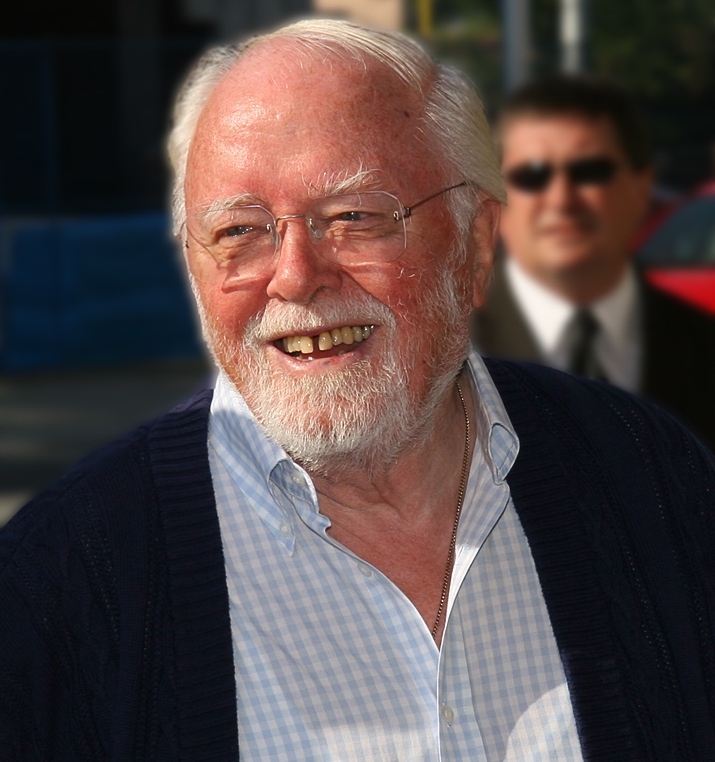
  • Richard Attenborough – 1994 Maiden Speech in the House of Lords

    https://commons.wikimedia.org/wiki/File:RichardAttenborough07TIFF.jpg
    https://commons.wikimedia.org/wiki/File:RichardAttenborough07TIFF.jpg

    Below is the text of the maiden speech made by Richard Attenborough in the House of Lords on 22 November 1994. The speech was in reply to the Loyal Address and was the only contribution Lord Attenborough made in the Lords.

    My Lords, it would perhaps have been more appropriate had I been able to deliver these few words during the arts debate last January when my noble friend Lord Menuhin made his impressive maiden speech but, sadly, a bout of ‘flu confined me to my bed. I also wish to apologise to my most kindly sponsors—friends of long standing; the noble Lords, Lord Cledwyn and Lord Walton—for the subsequent delay in making my own maiden speech; a delay occasioned by a lengthy professional commitment in the United States and a tour of South Africa on behalf of the United Nations Children’s Fund.

    Nevertheless, as possibly noble Lords may have surmised, my subject is the arts—the arts in their broadest sense; the arts as an essential element in what we are pleased to call our civilised society. I have it on the best of authority, from a not too distant relative, that we are related to apes, but it is, surely, not only the ability to stand on our hind legs that sets us so singularly apart from the animal kingdom. The crucial difference must lie in what we call soul and creativity. Our distant ancestors, the first true humans, started to communicate through language some 35,000 years ago and, almost contemporaneously, they began to create pictures on the walls of their caves.

    Is it not remarkable that those early hunters, balanced as they were on the very cusp of survival, should need to paint the creatures which surrounded them in their daily lives: that in the bowels of the earth and on bare rock they felt impelled to recreate the colour, form and movement that they witnessed in the forest outside? A cave painting tells us, surely, far more than the simple appearance of a bison or deer. Across untold generations it speaks of the painter, too; of his uniquely personal interpretation. It grants us a window into his mind. President John F. Kennedy once said: Art establishes the basic human truths which must serve as the touchstone of our judgement”. From the very earliest of times the arts have been an instinctive essential of our humanity. They are a miraculous sleight of hand which reveal the truth and a glorious passport to greater understanding between the peoples of the world. The arts not only enrich our lives but grant us the opportunity to challenge accepted practices and assumptions. They give us a means of protest against that which we believe to be unjust; a voice to condemn the brute and the bully; a brief to advocate the cause of human dignity and self-respect; a rich and varied language through which we can express our national identity.

    Today, as a nation, we face daunting problems—problems which are obliging us to examine the very fabric of our society. And the role of the arts in healing a nation divided, a nation in which too many lack work, lack self esteem, lack belief and direction, cannot and must not be underestimated.

    This is the first century of mass communication. We have now, as never before, the ability to disseminate the arts in all their forms, cheaply, quickly and qualitatively, to the widest possible audience. But art—any art form—can never rest upon its laurels. It was Winston Churchill who said: Without tradition, art is a flock of sheep without a shepherd. Without innovation, it is a corpse”. The arts in this country have a long and enviable tradition. Shepherds there are in abundance. But innovation which must, of necessity, entail the possibility of ridicule, even failure, is the life blood of continuing tradition. For the arts to continue to flourish we must underwrite both innovation and, of course, training.

    We have in the United Kingdom some of the finest academies of dance and drama in the entire world. Is it not, then, a supremely tragic irony that many of our most promising students are being denied access to those institutions for lack of a mandatory grant? As a result, hundreds of dedicated and talented young people are now being lost to their chosen professions as dancers, actors and technicians, with their places taken by those who can afford to pay. The loss of their talents, furthermore, is inflicting untold damage on our internationally acclaimed theatre, television and film industries.

    Film, the movies, as noble Lords may be aware, has occupied much of my life. It is now more than 50 years since I entered the industry. In that time I have seen it weather many storms and falter repeatedly from lack of concern on the part of far, far too many arts Ministers. Certainly, now that at last every aspect of our cinema industry is under the sole aegis of the Department of National Heritage, such pitiful inactivity can no longer be excused.

    Sadly, however, from my own particular viewpoint, cinema was scarcely mentioned during the arts debate to which I referred earlier—a fact I register with regret since I believe the vast majority of the British people generally accept that it is the art form of this century. My belief is borne out by recent figures which indicate that United Kingdom cinema attendances for 1994 will reach 120 million; the 10th successive year of steady increase from a base of less than half that figure. In fact, three times more people go to the movies than all those who attend concerts, opera, ballet and theatre put together and we currently spend, as a nation, nearly £2 billion a year on watching feature films, either at home or in the cinema. However, the sad fact is that only some 4 per cent. of that revenue will accrue to films of British origin.

    We, as indigenous film makers, are often accused of special pleading, of extending the perpetual begging bowl. That is not true. The fact is that the making of feature films cannot be compared with any other manufacturing process. Every film made is a prototoype, a one-off original, that must be packaged and marketed in its own distinctive fashion —a procedure that is extremely risky and very expensive.

    Since no one film can ever be guaranteed to make a profit, wise investors will spread their risk over 10 or 20 such prototypes in the knowledge that 50 per cent. will fail, 30 per cent. will break even and 20 per cent. will prove immensely profitable. If we in Britain are ever again to have a film industry worthy of the name, we have to persuade government to create conditions that will allow investors to spread their risk in that way.

    Some, of course, might argue that our film industry is not worth saving, that it should be allowed to go the way of shipbuilding or the manufacture of motor cycles. But I repeat that the making of feature films cannot be compared with any other industrial process, for they represent, as no other art form, as no other business activity, a crucial definition of our cultural identity, both here at home and throughout the world. Movies are the mirror we hold up to ourselves, the reflection of our codes and practices, our goods and services, our skills and inventions, our architecture and landscapes, our comedy and tragedy, our past and present. And they have the ability to grant us, as no other medium can, a worldwide showcase, generating immense returns—both tangible and intangible, visible and invisible—in every conceivable sphere.

    The novelist Julian Barnes wrote a decade ago: Do not imagine that Art is something which is designed to give gentle uplift and self-confidence. Art is not a brassière. At least, not in the English sense. But do not forget that brassière is the French for life-jacket”. Today we have need of that life-jacket as never before. The arts are not a luxury. They are as crucial to our well-being, to our very existence, as eating and breathing.

    A recent survey, undertaken for the National Campaign for The Arts, revealed that 79 per cent. of the population attend arts or cultural events, that the same high percentage believe that the arts help to bring people together in local communities and almost the same number are prepared to state, without equivocation, that the arts enrich their quality of life. In the face of such cogent endorsement, the role of the arts in all our lives—in health care, in social education and rehabilitation, in business, in the community—is, I profoundly believe, one that we underestimate at our peril.

    Some years ago, when I had the privilege of helping to prepare a report concerning the arts and disabled people, I was reminded of Somerset Maugham, who wrote: An art is only great and significant if it is one that all may enjoy”. “Exclusive” is a shameful word in the context of the arts. We have, as a nation, excluded far too many for far too long. Whether consciously or unconsciously, we have assumed that certain of our compatriots, most notably the disabled and the disadvantaged, have little to gain and little to contribute. Nothing could be further from the truth. In common, I am certain, with many Members of this noble House, I am encouraged by mention in the gracious Speech of the Government’s intention to introduce a new Bill to ameliorate the many inequities which confront the disabled. Mindful of the constraints placed upon those making their maiden speech, I will content myself with adding that I trust their present intention will ultimately result in a more productive and seemly outcome than that which befell the Private Member’s Bill earlier this year.

    The arts are not a perquisite of the privileged few; nor are they the playground of the intelligentsia. The arts are for everyone—and failure to include everyone diminishes us all.

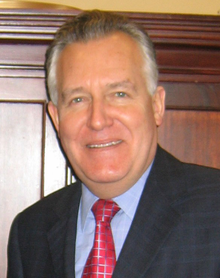
  • Peter Hain – 1994 Speech on Regulators

    peterhain

    Below is the text of the speech made by Peter Hain in the House of Commons on 20 April 1994.

    A big thank you, Madam Speaker. I beg to move,

    That leave be given to bring in a Bill to reform the accountability and other objectives of the privatised utility regulators.

    Without any serious debate, the regulation of the privatised utilities has been hived off to autocratic unaccountable directors general. The invisible hand of Ofman the regulator now guides policy for every light switched on, every bath run and every telephone call made. Regulators are independent and all-powerful, and they have extensive discretion, which has often been exercised in a highly personalised fashion.

    Oftel, Ofgas, Ofwat and OFFER cover vital services.

    Telecommunications, gas, water and electricity affect major areas of public policy and every citizen in the land.

    However, the regulators were largely afterthoughts. Regulation has evolved in an ad hoc fashion, becoming complex, over-technical, rambling and fundamentally flawed. The main beneficiaries are shareholders, whose dividends have soared–dividends had increased by 85 per cent. for water by 1992, and by a massive 63 per cent. in the first year of electricity privatisation. Industry chiefs have also enjoyed a pay and shares bonanza.

    By contrast, job losses in the privatised utilities will soon total a staggering 200,000. The National Consumer Council reports at best a mixed record on prices, with anomalies such as a £9,000 charge for a 4 ft water connection to a residential home in my constituency of Neath.

    The right-wing assumption that individual shareholder interest necessarily equates with the public interest is nonsense. Individual shareholder or consumer interests, compartmentalised from each other, do not inevitably aggregate into the general public interest. Indeed, selfishly pursued with the support of the regulator, they often thwart achievement of the general interest in such matters as the ability of strategic national companies to compete in world markets, environmental protection and the preservation of precious natural resources.

    In 1993 the electricity regulator–a public servant, not an elected representative–insisted that forcing the electricity generators to maintain existing coal volumes would infringe competition rules. He thereby vetoed an alternative energy policy, which led to the closing of dozens of pits. That public servant’s encouragement of the dash for gas for electricity power station base load is depleting North sea oil reserves by more than 15 years’ usage, and causing a most inefficient use of a critical fuel. Coal is sentenced to death, while coal imports soar and nuclear power has a £1 billion-plus subsidy. The driving objective of the regulators to promote competition almost at all costs invites foreign companies to enter the United Kingdom market on advantageous terms, while British companies are barred from reciprocal rights abroad. That is most striking in gas and telecommunications, where American-owned television companies are capturing important local markets. British Telecom cannot enter the United States market on equivalent terms, and is further penalised by being barred from offering broadcast services, such as cable television, over its lines.

    Britain’s industrial interests in that vital area of information technology are being undermined, as BT is forced to concentrate on pigmy competition in its backyard at the expense of international competition, where we are now threatened with an American takeover. Competition dogma is also tending to force the privatised utilities to concentrate on the most lucrative, fastest growing markets, where competition from new entrants is fiercest, at the expense of low- income communities. That so-called “cherry picking” means that the most profitable users get the cheapest and most sophisticated services. Telecommunications in the City of London is a good example. By contrast, there is social dumping of rural areas and poor inner city areas, where competition is limited or non-existent. Installation charges for telephones are high, well beyond the reach of many people on low incomes.
    Water disconnections trebled after privatisation, and charges soared almost as high as executive salaries and perks in the water industry. Low-income households face discrimination, with higher deposits and pre-payment systems.

    Privatised British Gas is refusing to extend the main supply an extra few miles to supply villagers–in Neath’s Dulais and Swansea valleys, for example. The new competition regime will also increase gas charges for the poor and reduce charges, relatively, for the rich, while gas showrooms are closed.

    Competition is not value free, nor is regulation a value-free, non- political exercise carried out in an objective, technical fashion. Each regulator has enormous discretion to determine public policy as he sees fit for his own industry without regard to the knock-on effect. We need to put democratic politics back in charge. The Government should take a small stake in each industry and should appoint a Government director, thus securing considerable influence at minimal cost.

    New regulators should be appointed with different objectives to ensure that policies to advance strategic national and social interests always take precedence over promoting domestic competition or shareholders’ profits. The regulators should have new performance targets, such as universal tariffs, protection of supplies to the elderly and the disabled, research and development, levels of investment and international competition. Those, rather than competition for its own sake, should be the driving objectives of the regulators.

    Democratic accountability could also be improved by establishing a parliamentary Select Committee to scrutinise the utilities, with annual debates on the Floor of the House. A utilities commission should be established to bring the regulators under one roof. That would promote policy consistency between the different regulators housed within it. We do not see that at the moment, especially in gas and electricity.

    The commission would be a quasi-judicial body, akin to the Monopolies and Mergers Commission, but with powers of scrutiny and subpoena similar to those of a Select Committee. It could be governed by a board of representatives from all sectors–from consumers, senior managers, trade unions, shareholders and academics appointed by the Secretary of State.

    Enabling the different regulators to share common resources would also bring economies. Each regulator would still be proactive and would still have considerable operational autonomy, but each would be supervised by the commission’s board. It would have an advisory role for Government on policy and strategy, and it would help to resolve disputes between the regulators in industries. Such disputes have sometimes dragged on for months.

    There must be transparency in the regulators’ decisions and the regulators’ right to silence should be abolished. They should be required to explain the reasons for their decisions, either publicly or at least privately to the industries concerned. It would also make sense for the regulators to be merged and reorganised so that we had one regulator covering communications ; telecommunications and broadcasting are increasingly converging. There should be one regulator for energy, including coal, one regulator for transport and one regulator for water.

    The customer is crying out for change and the companies themselves want consistency. Opinion-formers and utilities experts, and even some of the regulators themselves, are casting around for alternatives. The Bill would introduce regulation for the common good.

  • Denis MacShane – 1994 Maiden Speech in the House of Commons

    Below is the text of the maiden speech made in the House of Commons by Denis MacShane on 16th May 1994.

    I have addressed many audiences and many chambers, but none quite as intimidating as this, with my true friends behind me and my real opponents facing me. I gather that convention demands that one must be polite, so polite one must be.

    I am very conscious of coming to the House in place of Jimmy Boyce, a man who came from a part of our society about which not enough of us know. He was unemployed for many years, a victim of the very cruel policies that have cost so much for some of the great talents of our nation over the past 15 years. I come from a different background, but I will fight for the causes that Jimmy supported. I hope that I can in some way measure up to the service that he provided to Rotherham in the short two years in which he was a Member of this House.

    I am also conscious of the fact that I follow in the footsteps of Stan Crowther who is well known to the House and was a great public servant to Rotherham over 50 years of political life. I am also conscious of following in the footsteps of Brian O’Malley, the man who inspired me when I first became involved in politics. He collapsed at the Dispatch Box, another victim of the stress of public life. Like everyone else, I was glad of the tributes paid to John Smith in the press. We speak no ill of the dead; perhaps from time to time, my old friends in the Gallery may speak some good of the living.

    Last week was for me the best of weeks and the worst of weeks. When I came to the House on Tuesday, John Smith greeted me and said that it would be a day that I would remember for the rest of my life. John Smith talked of a dream, but the dream was extinguished when, on Thursday, he left us. He spent a whole day with me in Rotherham, seeing the steel plant and the college, and talking to Asians and to party members. He left a message of hope for a new and better Britain.

    I am proud to have been elected by the people of Rotherham to represent their interests in Parliament. They have not always been so happy in their choice. The first Member for Rotherham—a Member for Yorkshire in those days—was Sir Thomas Wentworth, later the Earl of Strafford. Older Members of the House may remember that he was executed on a Bill of Attainder in 1641. He was promised that his life would be saved by none other than King Charles I, but he was, of course, sacrificed.

    Alas, the right hon. Member for Kingston upon Thames (Mr. Lamont) and the right hon. and learned Member for Putney (Mr. Mellor) are not with us today. They must know how poor Thomas Wentworth felt as they, too, were given the full support of a Prime Minister—a sure sign that they were about to mount the political scaffold. ‘Put not your trust in princes’, were Thomas Wentworth’s last words. The spirit of Rotherham and, indeed, of Yorkshire ever since has been one of sturdy self-reliance and a rejection of authoritarianism and the centralising forces that Toryism has represented throughout the ages.

    Rotherham was the place where Thomas Paine, that most noble of commoners, who brought democracy to America and the ‘Rights of Man’ to Europe, even as he was forced into exile by the Pitt Government, built his great suspension bridge. I do not know how many hon. Members know that Thomas Paine was a great manufacturer as well as a great democrat. The bridge was a feat of great engineering, as important as in many ways as his enunciation of the rights of man. Paine’s bridge was built by the Walker Brothers of Rotherham, whose cannons sunk Napoleon’s fleet at Trafalgar.

    What would Tom Paine find if he returned to Rotherham today? The great manufacturies, on which Adam Smith based his ‘Wealth of Nations’, have all but disappeared, 25,000 jobs have gone since 1979 and the coal mines, which once promised Britain its own energy source safe from the perils of foreign disturbances, are now capped. The local council, with the money and the will to build homes for the homeless, is prevented from doing so by the most centralised administration since that of Charles I.

    Paine would find poverty in Rotherham, I am sad to say, as bad as anywhere in Europe. Indeed, he was dismissed from Government service for arguing for fair wages for public servants. Poorly paid public service, he argued, attracts only the ill-qualified and breeds corruption, collusion and neglect. He went on: ‘An augmentation of salary sufficient to enable workers to live honestly and competently would produce more good effect than all the laws of the land can enforce.’ I offer that to our low-wage merchants on the Government side of the House. We already knew that Thomas Paine was a great democrat and a friend of Rotherham manufacturing, but it came as news, even to me, that he believed in a statutory minimum wage 200 years before its time.

    For all those problems, Paine would find, as would anyone who visits Rotherham, a town and a people whose spirits are unbroken despite all that has been thrown at them in the past 15 years. The pedestrianised town centre, which is one of the nicest in Europe, is spoiled only, alas, by the pressure on shopkeepers arising from the declining purchasing power of the citizens of Rotherham.

    One of the world’s most advanced engineering steel plants, UES, is at the cutting edge of modern technology. I must to say my hon. Friends, talk not of steel as an old industry. Steel is one of the most modern and advanced sectors of our economy.

    There are new partnerships between the chamber of commerce, the training and enterprise council, the local council and the trade unions, which support unity and a common cause to promote Rotherham.

    Tom Paine would also find a very great sense—Tom Paine was, if nothing else, an internationalist—of feeling that, if Rotherham is to succeed, Britain must play its full part in Europe, because Britain is part of Europe as surely as Yorkshire is part of Britain.

    I pay tribute to the right hon. Member for Old Bexley and Sidcup (Sir E. Heath), the Father of the House, who, since 1938, has stood for, yes, a Tory vision of internationalism against isolationism and that yellow streak of appeasement and opting out, which has always shamed the Conservative party, as it shames it in so much of its policy today.

    We are part of Europe and the Euro-septics on the Government Benches may want their cash-and-carry Europe, in which each state takes what it wants. They decry centralisation, yet they have gone through the Division Lobby voting for measure after measure after measure to transfer power from local authorities—indeed, from the House—to give it to their friends in privatised companies and quangos. I want to see power shared downward to the regions, to communities, horizontally to the sister units of civil society in Europe, but, above all, I want to see power made accountable.

    If we are to live in an international community in which trade and travel and money and ideas can go through porous frontiers, at least we, as human beings, as subjects of Her Majesty, as citizens of Europe, should have the right to have the human spirit protected through regulation of trans-frontier activity. Yes, Europe is too important to be left to Brussels, but if we are to fight for British interests, we must do so by promoting transparency, democracy and accountability in all European institutions. R.H. Tawney described the hereditary disease of the English nation as ‘the reverence for riches’ and went on: ‘If men are to respect each other for what they are, they must cease to respect each other for what they own.’ I apologise to the hon. Ladies present and to you, Madam Deputy Speaker, for the references to the rights of man and quoting men. I see myself, after post-modernism and post-industrialism, as the first ‘PPC’—post-politically correct—hon. Member.

    England is the most money-obsessed country in Europe. Switch on the BBC and every five seconds there is some Brylcreemed spokesperson for the bond markets telling us how the dollar is doing. The BBC and ITV tell us the price of the stock market at any moment, anywhere in the world, but have ceased to report on the values needed to bring cohesion back to our communities. I do not blame them. They take their lead from those who rule our society and until we get public interest hands on the tiller of the state, instead of the sticky fingers of so many of the Conservative Members and their friends in the till, the media can do no more than take a lead from those who put a price on everything, but know the value of nothing.

    For all our obsession with cash, Britain remains the poor man of Europe. Italy’s gross domestic product per capita in 1960 was exactly one half of Great Britain’s. Now, it has overtaken us. We have been so busy preaching at Europe and trying to teach Europe the secrets of the United Kingdom’s economic record, we have committed, to use James Fenton’s phrase—how pleased I was to see my old friend become professor of poetry at Oxford on Saturday— ‘the fault of thinking small and acting big’. Perhaps we have forgotten that we have some lessons to learn; lessons about partnership, lessons about the successful countries in Europe. Germany, even after unification, has a lower unemployment record than our own. The Benelux countries and the new entrants are successful, too. Those who proclaim themselves Thatcherites, such as in the Prime Minister’s favourite holiday country Spain, have the worst record of job creation and balanced development.

    The core answer from Europe—one of vital importance to Rotherham and one to which I intend to commit myself in the House—is that manufacturing is not dead and, despite all the best efforts of the Government, should not die. The rising sun has been coming here continually to try to save a sinking England, but we now find that Japanese investment is going to Germany, to France and is leaving these shores.

    If I may refer, as a socialist, to my favourite Sunday reading, The Sunday Telegraph tells us how well Germany is doing, that the Japanese research and development centres are installing themselves there and that the Japanese now prefer to be in Germany because of its high skill base, good labour relations and its position as Europe’s engine of growth.

    My right hon. Friend the Member for Bethnal Green and Stepney (Mr. Shore) blamed our balance of trade on Europe. I have to say to him that it is 15 years of anti-manufacturing policies, of the destruction of partnership, of the lack of investment and the money that has flowed overseas that has been at fault. In fact, if we would learn from our European partner competitors, Britain would be in a much better shape.

    It is not only an economic question. I was privileged to have many conversations with John Smith when he was in Rotherham and he talked of the constitutional changes that Labour would like to introduce, such as the end of the absurd spectacle of hereditary Members in another place making and casting laws, the need for national Governments for Scotland and Wales and regional assemblies, and the need for a referendum—not on electoral reform as I see it, but on re-thinking the way in which we govern ourselves. That is part of the constitutional package that I think is necessary for a new Britain.

    As with John Smith’s commitment to full employment and to trade union rights, we are seeing fleshed out a new programme to reconstruct our lives in Britain as great as that which we saw after the war, but, this time, with us secure in the heart of Europe.

    A Europe of what? Is it a ‘Europe des patries’ as General de Gaulle said? That is difficult for us. We have four nations, but what is our fatherland? That is not a word that we can use easily as British people. It is not a united states of Europe or a stepping stone to Tennyson’s ‘Parliament of the World’, either. After many years working in Europe, I find the Germans more German, the French more French and the Italians more Italian. It is only we in Britain who seem to live in a permanent identity crisis about who we are and what it means to be British. That is because the old Toryism is dying. The new Labourism is not yet born. As a consequence, the morbid symptoms of corruption and xenophobia that lie at the heart of the Cabinet are everywhere to be found where the Government are at work.

    Those who are hostile to Europe are to be found in all nations. We have the Euro-sceptics here, there are the French communists and now we have the Italian fascists. I have with me the programme of Philippe de Villiers, the conservative right-winger in France. He wants Europe to be protected against any imports from outside the Community. He wants also a Europe in which national controls stop immigration. Like the Chief Secretary to the Treasury, my father came here in the 1930s. He was a refugee from fascist Europe. The Europe that is described by Philippe de Villiers is not one of which I want to be part. Indeed, I am not even sure whether Conservative Members believe in such a Europe.

    Closing the door to foreign immigrants and to exports from around the world is not a Europe in which we need to believe. We in Europe should defend our interests, but, at the same time, we in this country should deepen our friendship with countries such as Germany and—I declare an interest because my wife is French—France. In the words of Victor Hugo, ‘France is the adversary of England as the better is the enemy of the good.’ I am conscious of returning to the country that made me. I have returned from elsewhere in Europe, where I worked for many years. I have learnt much, and some of that learning I might bring to the House. I am not ‘A steady patriot of the world alone, The friend of every country but his own.’ I remain British. I am proud of the schools that made me and of the health service that put me together when I cracked my head open in the 1950s. I am hopeful that such again could be the kind of United Kingdom in which my children can grow up. It is a country in which we always refer to faith, hope and charity. But greater than any of those concepts is justice.

    I will argue for justice for the people of Rotherham. I will strive for economic justice for the unemployed and social justice for the weak and disabled people of Rotherham. I so much agree with those who say that the best tribute that we could pay to John Smith would be to pass the Civil Rights (Disabled Persons) Bill, which was recently talked out. There must be ‘plain justice’—justice for the criminals who walk free in an England that opts out of Europe. In so many parts of our communities, unfortunately, it seems to opt out of decency and law and order. If I can deliver any part of that message during my time in the House on behalf of the people of Rotherham, I shall be well pleased.

  • John Major – 1994 Conservative Party Conference Speech

    johnmajor

    Mr. President, the political landscape has changed in the last few years, and it’s changed again in the last few months. The language of politics is now Conservative language. With every speech and every copied aspiration, the Labour Party finally admit how wrong they have been for so long, and how right we have been.

    So forget the hype. It’s we who’ve changed the whole thrust of politics and moved it in our direction. We have won the battle of ideas, and it is an astonishing triumph.

    When the Labour Party consider what has happened, they may realise what they’ve done, because what they’ve done is to study our instincts and our attitudes and then go away and market test them. And when they’ve done that they’ve discovered what we told them long ago: that they are the hopes and dreams of the typical Briton. It’s a huge compliment to this party and we should accept it gratefully.

    But it’s one thing for the Labour Party to commit grand larceny on our language. It’s one thing for them to say what market research has told them that people would like to hear. But it’s quite another to deliver it. They have some hard questions to answer.

    If you talk of full employment, then you should say what you mean. And then you should explain how that could possibly square with the minimum wage and the Social Chapter, which sound comforting but are deadly to jobs. And if you talk of low tax and low spending, does that mean supporting Tory tax cuts and Tory expenditure reductions? As to that we shall see before the writ of this parliament is run.

    If you preach about community, then you shouldn’t grow politically fat on the politics of envy – and didn’t Blackpool reek of it last week? And if you’re going to attack over-mighty government and bureaucracy, then you shouldn’t promise Scottish and Welsh parliaments with more bureaucrats and more taxation.

    And if you do, you should answer the question: Will Scottish Members of Parliament be permitted to vote on matters in England that English Members of Parliament would not be permitted to vote on in Scotland? And if Labour plan a Scottish Parliament, will they plan also to reduce the number of Scottish MPs in the House of Commons at Westminster, or will they gerrymander the Commons to boost their own political chances?

    Mr. President, these are deep waters. So let Labour be the party of devolution. We are the party of Union, the party of the United Kingdom.

    Mr. President, I’ve relished this debate. These are great issues, but they are our issues, this is our ground, and upon this there is a battle to be fought that this party will undoubtedly win. So I have this advice for you: don’t waste time on the past – it’s gone. Out there, up and down the country, people are concerned about the future, not the past. That is where the political debate should be, and that is where I intend to take it in the months and years ahead.

    In politics, if you expect the unbelievable, then you’ll never be surprised. It is probable that at the next election, the government and the alternative government will both be talking Tory language. But there is a difference: only one will mean it. Buying Tory policies from Labour is like buying the Rolex on the street corner. It may bear the name, but you know that it isn’t real. Our task is to promote the real thing, and expose the counterfeit. We hear talk of a new Labour Party. A new Labour Party. These aren’t people without a past, lovable little extra-terrestrials beamed down for the duration.

    Mr. President, since 1979, we’ve beaten the old Labour Party, the very old Labour Party, the redesigned Labour Party and the new model Labour Party. And as for this new, “biologically improved” Labour Party, it may wash blander, but I would give it a shelf life of under three years.

    Mr. President, at Blackpool, Labour filched two of the principles on which we fought the last general election: opportunity and responsibility. But wasn’t it interesting that they left out two others: personal choice and private ownership. They’re vital to us.

    So socialism may be a bit out in Islington just now, but Conservatism isn’t off my agenda. As they so often invent what we think, let me tell them clearly what we stand for: we believe in free markets, we believe in private ownership. It doesn’t go against the grain for us to say so. It’s not a new Conservatism that we’ve just discovered, it’s one of the oldest principles of our party and we believe in it passionately.

    And because we’ve believed in it, millions of families up and down the land now have savings of their own: Granny bonds, TESSAs, PEPs, the hundreds of billions of pounds in the banks and building societies. It is our philosophy that has given people that choice and that security. That is the message that we must carry forward. Our opponents present ownership as if it was something selfish, self-centred, perhaps even greedy. Some people are all of these things, but most are not. People who have earned well, people who have saved, people who have inherited the fruits of a parent’s lifetime’s work are not the “undeserving rich”.

    No, Mr. Brown, they are deserving workers. How does Clause IV put it – “by hand or by brain”. So let me hammer the point home ever more clearly: we are the party of savings, of ownership, of property, of personal independence. We offer people choice: the liberty to grow, and yes, the liberty to make their own mistakes. We admire success in life, and we will never, never, never resent it in other people.

    We try to remove government from the everyday lives of people. We believe that every family should be entitled to enrich their own private corner of life, and then pass it on to their children without over-mighty taxation. That, Mr. President, is what Conservatism is about, and there is only one party in this land that truly believes it.

    Mr. President, I know when people hear the word “economy”, the spirits droop. They think they’re in for a lecture on the PSBR, GDP, and all the rest of it. Well, you’re normally right, but not today. I just want to say today that the word “economy” should lift the spirits and not depress them, because the great cries of lasting growth with low inflation, which we have sought for the whole of my adult lifetime, is now within our grasp. Whisper it gently, but we are now doing well as a country.

    For most people, it isn’t their everyday experience, not yet. But it will be, and I’ll tell you why. Britain is making more, selling more, exporting more. This time we have built a recovery to last, built on firm foundations, on export and investment. Month after month after month, exports from Britain have broken the record set the month before, and they did so again just last week.

    These islands of ours are exporting cameras to Japan – you did hear me right, cameras to Japan; computers to Germany; cars to America; clothing to Hong Kong, and Cosmetics to France. We know what we were told. We were told unemployment would go on rising to five million. It’s been falling for the best part of two years, and Michael Portillo announced another fall earlier this week.

    We were told we wouldn’t get interest rates down, but we have; that we couldn’t hit low inflation, but we have. These are the very things that bring security, make jobs safe, improve living standards and strengthen this country’s influence right across the world.

    What is the prize that lies ahead? Let me tell you what it could be. In 1954, in Blackpool, “Rab” Butler was speaking to this conference. Suddenly he said something quite extraordinary. He said that living standards could double in this country in 25 years. People scoffed, but he was right. For the country as a whole they did double in 25 years.

    So let us have the courage to look forward once again. If we are able to keep inflation down, as we must, and control public spending, as we must, what does that mean for our people? It means stronger growth, improving the services we care about – education, health, the police service; it means more money in people’s pockets and more free choice for those people.

    Britain has changed. It may not have been noticed but it has changed. Not for 30 years has this economy grown so much faster than prices. So let us bang the drum and say so. It’s time to put the marker down, but as Ken Clarke told you yesterday, we need to stick at it, and for this reason neither Ken nor I, ever again, want to go through the boom-bust cycle that causes so much pain and so many lost hopes for so many people up and down this country.

    And that is why in some ways we are a bit puritanical. That’s why we are so determined to control public spending, improve competitiveness, cut regulation, and let private enterprise build public wealth. That’s why we’ll be prudent about what we spend, cut taxes where we can, and above all build up the long-term health and strength of our industry and of our economy.

    Mr. President, it’s time for this country to set our sights high again. What “Rab” Butler saw was prophetic and positive. Let me echo it today. Because of what has been achieved, with the right determination, with the right policies, we have the chance once again to double our living standards in the next 25 years, and that is something that everyone in this country can feel good about and feel good today.

    Mr. President, I want to talk about education. How many people in this world are fulfilled, really fulfilled? How many do the jobs that they might do? How many have had their minds stretched and extended? “Not enough” is the answer. Not as many by hundreds of thousands as should have. That’s why education matters so much to me. I’m just burned enough to know a little about that. I left my chance late, so I did a lot of my schooling while off for a year with a shattered leg, in the company of Trollope, and Jane Austen, and Adam Smith, and a lot of dull but terribly useful books on banking. Better companions one never had, until now.

    But I was lucky. Not everyone is. It’s my personal ambition that everyone should have the same chance to rise to the top on merit. Never mind where they come from, what their parents income is, what their religion is, or what their colour is. These are irrelevant, and please God they will always remain irrelevant to the people of this country. What matters to me is that they have the same chance.

    Good schools can be a lifeline out of poverty, the ladder to a better life. That’s what our changes are all about: the curriculum, the testing, the league tables, the inspection, the new parental choice, the challenge to the old council school monopoly, the emphasis on better vocational education, and the creation of new universities. Mr. President, it is not reform for its’ own sake, it is reform to deliver higher standards for all our children.

    Bad teaching fails children. They may get through if they come from families with a social edge, a sophisticated home and the good books that go with it, but bad schooling falls most heavily on pupils who have none of these things – children from homes without a book in the house, from blaring day-long television homes.

    Mr. President, we are a national party, and these children are as much our responsibilities as are the higher climbers. If the school ladder’s all abstract theory and holds out no rungs of letters, facts and numbers, who loses? The children lose. The people who need our protection lose. The people easily defeated lose. The people who live at the bottom of the heap who deserve a chance to get off it lose, and it’s just plain wrong.

    And that is why I want teaching in the weaker schools to be levered up, because if it is, someone will get off the bottom of the heap, and if it isn’t that is where they will stay, probably for the rest of their lives. I will never accept that. I’ve no time for those who are complacent and oppose improvement, and all too often they are the high priests of the politically correct.

    They are the people who can afford the good things in life, who chortle away about our emphasis on basic standards and the three ‘R’s, and then move to a different catchment area, with better schools for their own children. They’re people who have in their own homes the books that they say other people’s children aren’t up to reading. They are the people I cannot take, the kind of people who have clambered up the ladder and then seem ever ready to kick it away from other people.

    Education’s there to lift the eyes, broaden the horizon, distinguish between the great and the trite, the right and the wrong. It’s there to unlock the gate to a better life, and by and large teachers deliver this. They have a hell of a job, but they can make the difference for children between apathy and despair, and seeing the remote but inviting light upwards and out.

    Teachers that do their work well, for heaven’s sake, teachers that do their work well, are the prime route out of the class trap. I care enough about teachers to give bad teachers a bad time, and I care about children enough to oppose sloppy, experimental teaching that ignores common sense.

    Up and down the country, dedicated teachers have worked hard to put our reforms in place. They haven’t always liked every aspect of them; so we’ve listened. Sometimes they have been right and we have changed our minds. Many teachers feel there’s been too much paperwork. I agree with them, and there still is.

    That’s why we’ve been working with them on slimming down the National Curriculum. We’ve now finished that job, and it’s been dramatically cut, and we’re now out to reduce much of the other paperwork that schools have to deal with. Teachers should be marking homework, they shouldn’t be doing it, and we’re determined that is how it will be. After the curriculum changes of recent years, teachers deserve stability, to be able to get on with their jobs without any more upheavals. So today I promise them this: there will be no further significant changes for the next five years.

    And there’s another area in which we must give teachers our full support. I’m disturbed by some of the stories I hear – too many stories to ignore – about violent attacks on teachers and false allegations against them. The teachers’ unions are concerned about these issues and so are we. In this area, the unions deserve our support and the unions will get our support. But education involves fun as well as facts. Schools are friendlier, less forbidding places than once they used to be, and I think that’s good. But they seem to have lost something. I don’t regard sport, especially team sport, as a trivial add-on to education. It’s part of the British instinct, it’s part of our character. Sport is fun, and it deserves a proper place in the lives of all our children.

    Of course it can’t supersede Maths and English, though how I longed for it to do so when I was at school! But it must take its proper place alongside them. We are therefore changing the National Curriculum to put competitive games back at the heart of school life. Sport will be played by children in every school, from five to sixteen, and more time must be devoted to team games. Many schools already offer at least two hours a week for sport and physical education. That should be the minimum, and I hope schools will offer more.

    Schools should establish links with local clubs and national sports bodies to help do this. They must open up their facilities outside school hours, and harness the willing help that I know is out there. There are sports coaches, parents and other volunteers by the hundreds and hundreds and hundreds who will willingly come in outside school hours to help our youngsters have a better grounding in sport, and all it means, for the rest of their lives. So while we’re about it, I don’t want councils selling off school playing fields they may need. I want those playing fields kept, and I want those playing fields used.

    Mr. President, there are many views about nursery education. My view is quite clear: I am in favour of it. The picture’s improving. Over half our three and four-year-olds go to nursery school. Nine out of ten have been to a playgroup or nursery school before they’re five. I think it’s time to accelerate this trend. So I’ve asked Gillian Shephard to work up proposals to provide places for all four-year-olds whose parents wish them to take it up.

    This is a long-term proposal, but we intend that this new provision will begin to come on-stream during the lifetime of this parliament. This won’t be an easy exercise. We must consult parents and practitioners to get it right, because any additional publically-funded provision must be of high quality, it must promote diversity and parental choice, and it must be carefully targeted in a way that expands and does not crowd out the private and voluntary provision that we have at present.

    Since we are making a lasting change to pre-school opportunities, we will have to phase in the introduction of this extra provision, but what I am doing today is giving you a cast-iron commitment that it will happen, and I’m giving you that commitment now so that Gill Shephard can start consulting on it next week.

    Mr. President, I intend now to dispose of one of the most insidious lies in British politics. In life, some of our deepest convictions are formed by experience. Book-learning is vital, but life-learning runs deeper. When I was a boy, my father was elderly and sick, and my mother was frail. Their life wasn’t comfortable; they needed treatment regularly. They got it from the National Health Service. They had no money to pay, but they weren’t asked for any. I saw then, not only how well they were treated by the National Health Service, but the security of mind it gave them to know that it would always be available. I have never forgotten it.

    Now let me tell you a later story. Two weeks ago when Boris Yeltsin was at Chequers, we went for a walk. There was some comment afterwards that I was using a walking-stick. Naturally if I was using a walking-stick there must be an ulterior motive – was this my bid for the rural vote? Well, no, actually. I was using a walking-stick because I injured my leg badly in a car accident thirty years ago. For a while, that many years ago, I thought I might use it. It was saved by treatment on the National Health Service. I have never forgotten that either.

    Against that background, is it likely that I would damage the National Health Service or privatise it? Believing as I do that the greatest nightmare for millions is that one day, however prosperous they are today, that one day they may be old, sick, poor and uncared for, is it likely that I would take away from them the security of mind that was of such value to my parents? Mr. President, I can tell you, not while I live and breathe would I take that away.

    Let me say something else about the Health Service: It is the National Health Service, it doesn’t belong to any one political party. The Labour Party, even today, take credit for setting up the NHS. I wouldn’t take that away from them – it’s one of the few bits of their past they don’t currently seem willing to repudiate. But who has been in government for most of the fifty years since the Health Service was established? We have. It is we, the Conservative Party, who have been in government for most of those fifty years. It is we, the Conservative Party, who have cherished the National Health Service, and built it up year after year after year after year. Mr. President, it’s our Service too.

    But there is one difference between us and Labour. We don’t use it as a political football for party ends. Mr. President, we just build it up. I wonder how many of you know how many huge new hospital projects have been built since 1980 – you know, that period during which it’s said we have been running the National Health Service down? How many? None? Five? Ten? Twenty? A hundred? More than that? Surely not. In fact yes. The actual figure is over seven hundred big projects, each costing more than a million pounds and some of them many tens of millions for the one project.

    And I’m not talking about car parks and offices, I’m talking about patient facilities – new hospitals, operating theatres, pharmacies, maternity units and the like – all within the National Health Service, seven hundred of them since 1980, and I saw the latest bulletin here today: a new day surgery unit in the Royal Bournemouth Hospital just down the road. But there’s more. Consider it, perhaps, as it is: one multi-million pound National Health Service project every eight days the Conservative Party have been in government, throughout its fifteen years. That’s not words, it’s reality, and go out and tell it because it’s our Service too. So I have a message for Labour’s Health Spokesman, “Junket” Blunkett.

    Mr. President, when I became Prime Minister, I asked for a fresh look at the criminal justice system: the way we prevent crime, the way we police our streets, and the way we punish the criminal, and I did so because I felt that concern had shifted too much towards the criminal and too far from the victim. Why is there so much crime? The cheap, thought-free answer is to blame the so-called “acquisitive 80s”, but that’s just party political posturing; the roots are deeper than that. It is a long-term trend: sadly too many people feel less respect for their neighbours and for their neighbours property than once they did. And yes, I believe we have fostered too easy, too casual a response to crime by too great a tolerance of crime over many years.

    There have been too many voices excusing crime, explaining crime, and justifying crime. We think that’s wrong. That’s why we’ve increased penalties for rape, violence against children, firearms offences, drug-related crime and crimes committed on bail. And so that we can not be said by our opponents to have ignored what our opponents call our “friends in the city”, let me say we have also increased sentences for financial crime.

    For a whole range of crimes, then, we have toughened sentences, and judges are now using them. For the first time in years, a rising proportion of convicted criminals are being sent to prison. I take no pleasure in that, but everyone has the chance to stay within the law, and that is the point. If we are to change the climate against crime, then the offender and the offender’s chums must know they will not be able to swagger out of court, untouched, immune and boasting about getting off scot-free.

    I believe such firmness is right, and I believe it is necessary. Prison should be decent, but it should be spartan. No-one wants to alienate and harden attitudes, but prison is there to punish and not to pander. I fear that is not always the case, and where it is not, Michael [Howard] and I are agreed, it will have to change. But don’t let us fool ourselves. Punishment alone will not do the trick. We have to change attitudes, improve policing, and support the innovative methods of Chief Constables. We are now developing much more targeted approaches to crime – new approaches; we’re investing in more effective crime prevention.

    We must make streets safe for the law-abiding and dangerous for the criminal, and that is why we’re putting yet more money into closed-circuit television. It’s been a huge success, not only in big cities like Newcastle, but in smaller places like King’s Lynn as well. We’re going after drug dealers and drug trafficking, putting together the most comprehensive campaign against drug use ever launched in this country, and we will be announcing the details of this next week.

    And we are putting modern science at the disposal of the police. As Michael Howard told you yesterday, we’re giving them wider powers to take DNA samples from people they suspect of crime, and that will help target sex offenders against women and children, and as a result help make this country just a little bit safer for millions and millions of people. The powers in the Criminal Justice Bill are needed, and I can tell conference this: we will never be deterred by the disgraceful riots like those we saw in London last weekend. And the sooner the Labour leadership disowns those Labour MPs involved in organising and speaking at this event, the sooner we may be prepared to take seriously some of their strictures on crime.

    And I can tell you how I feel about that episode: I think there’s something profoundly sick with people who organise a demonstration which turns into a riot, and then criticize and attack the police who are only there to protect the public from the results of that riot. Mr. President, we hear enough bad news about crime. Let me tell you some good news. In Manchester crime fell by 12% in the last year; by 12% too in my own county of Cambridgeshire; in North Wales by 10%. What does that tell us? Not to relax, never. It doesn’t tell us to be complacent. But it does tell us we can fight back successfully. If you can target burglary and cut it in London and Warwickshire then you can do it elsewhere. Mr. President, it will take a national effort to beat crime, it will take time, and it must involve everyone, but we are determined to succeed and we have made a beginning.

    Many of the changes I’ve been talking about have come about in the last year or so, and I believe that people who have spent that time criticising my good colleague Michael Howard would have been far better off supporting him during that year.

    Mr. President, a generation ago it was said that Britain had lost an empire but not yet found a role. It may or may not have been true then, but it surely isn’t true today, because economically and militarily Britain remains in the top league – a member of the permanent five of the United Nations, a leading member of NATO, of the European Union, and of a Commonwealth that covers one-third of all the people on earth, a member of the Group of Seven of the worlds’ most powerful economies and one of only five significant nuclear powers in the world, and we have too as a priceless asset, perhaps the finest professional armed forces anywhere.

    That is Britain today, stripped of the masking-tape so often placed above it. So let’s recognise what we are, look with confidence at the new world, and go out and put our own distinctive British mark on it. The changes taking place around the world are truly awesome. I’m not sentimental about them – I know how fragile they are. Two months ago I was in Warsaw, where the first bombs fell in 1939, fifty years on from the heroic uprising in the Warsaw ghetto. It was good to be there. That August evening, we met in a free Poland, whose President was Lech Walesa, a shipyard worker who helped to change history. And taking his hand in friendship were the leaders of a democratic Russia and a united Germany. Poland’s past enemies were there as friends; hope had flowered and the world had changed.

    A month later I flew to Berlin, where allied forces were leaving after half a century. That day, our troops marched away from Berlin with that professionalism and that patience which is the special preserve of the British soldier. For nearly fifty years, they had stood guard for peace and freedom at the gates of Berlin; now they were no longer needed; the world had changed. Three weeks ago, I was in South Africa. When Harold Macmillan spoke there of the “wind of change”, it was to an all-white audience and a South Africa that was soon to leave the Commonwealth. But I spoke to a parliament freely elected by all South Africans, and that great country is back in the Commonwealth, back where it belongs.

    And what a tribute that is, to the statesmanship and the vision of Nelson Mandela and F.W. De Klerk. Finally, Mr. President, I flew from South Africa back to Chequers. There Boris Yeltzin was my guest, and the President of Russia and the British Prime Minister shared a country house weekend, a walk in the English countryside, and a pint of beer in a British pub. Four snapshots of change, historic days, when the impossible becomes not just possible but an everyday reality. Now the cold war is over, but while the threat was there, there were appeasers and accomodaters in plenty – but not in our party. We can say it with pride: We never heard their voices in this hall.

    As in the past, so in the future. Whatever uncertainties may lie ahead, this nation can trust that instinct for security that is a defining characteristic of the Conservative Party. Mr. President, the challenge now is to catch the tide of events that have flown in recent years so very strongly in our favour, to draw the nations of eastern Europe – historic, vivid nation states: Poland, Hungary, the Czech lands, and others – back into the European camera, to make democratic Russia an ally and not a threat, to help the democracies in the third world escape the excessive debt that cripples their development – and time after time it has been British initiatives that have led the way in achieving this, to use our age-old links with Africa to help prepare that troubled continent for a better future.

    These are historic roles; historic roles for which Britain and the Conservative Party are marked out by history and by experience. We will use that experience. We will use it also to carve out the right position for Britain in the right sort of Europe. There are extraordinary enthusiasms – hopes, fears, apprehensions – on both sides of the European argument, but I made our general position clear with my speech at Leiden. I believe it carries with it the overwhelming majority of this country, and that is the basis on which I will negotiate in 1996.

    And if I am not satisfied, I will do as I have done in the past: I will just say “No” to changes that will harm Britain. But I hope I will be able to secure an agreement that we can accept, for that is in the best interests of Britain. Across the world, the last four years have been turbulent. The years ahead may well be turbulent as well. We will be cautious, pragmatic and safe, but the world remains uncertain and unstable. If anything the end of the cold war has made regional wars more likely and not less likely. We cannot safely assume that it will be a safe world. Only this week we have seen how quickly a crisis can blow up in the Middle East, but who better to send there and act for Britain than Douglas Hurd, our own Foreign Secretary.

    Mr. President, we have interests the world over. Isolationism is a luxury that Britain cannot afford, and there is a growing need for regional peace deals – we are very good at them; the defence of British interests does not always lie on British soil. So we will continue to play a leading role, as we have always done, through the United Nations.

    Mr. President, the main point’s clear: while we have Conservative government, Britain will have a sure and stable defence, the best equipment, the best weapons, the best trained troops that we are able to provide. Last week showed again how distinctive that position of ours truly is. In opposition it doesn’t matter that Labour voted to scrap Trident – in Government it would. In opposition it doesn’t matter that the first place Labour would look for cuts would be another defence review – in Government it would.

    So let me mark out the clear ground, so that no-one serving our country in uniform is in any doubt. Three months ago, we confirmed our frontline would have an extra three thousand troops, and placed five thousand million pounds worth of orders and tenders for modern and effective equipment for the army, the navy and the air force. That, Mr. President, made implicit what I will now make explicit: the big upheavals in our armed forces are over. They deserve the best from us and they will get it.

    Let me say something about Northern Ireland, and the momentous events through which we are living. For the past 25 years, Northern Ireland has faced the daily horror of murder and brutality, kneecapping and beatings, organised racketeering and viciousness to fund terrorism for political ends. No morning has dawned that might not contain an atrocity: a father who didn’t return home, a woman or child indiscriminately bombed, a policeman or soldier killed by a hidden sniper. That evil has spread, from time to time, to mainland Britain: the Brighton Bomb, ten years ago this very day, that some of you will be remembering so vividly and so painfully. We still miss those who were lost and think of those who were injured. It was intended to murder a cabinet, but it ended up hardening the resolve of an indomitable Prime Minister.

    We remember the murders of Airey Neave and of Ian Gow, the bombs in the city and at Downing Street, the agony of Warrington, and the heart-rending memories of Tim Parry and Jonathan Ball who will never know the future that should have been theirs. What did those two little boys ever know of political disputes? In all this time, these long twenty-five years, the extraordinary people of Northern Ireland have carried on with their lives. Northern Ireland is part of the United Kingdom. All the people of Northern Ireland need to know that a search for a solution to their problems is right at the top of the British government’s agenda, and I solemnly give them that promise.

    We have made progress. It was the Downing Street Declaration that set out the principles that will continue to guide us. It helped isolate the IRA and push them to their ceasefire. As Jim Molyneaux put it, “It was significant”, he said, “when the IRA started to murder pensioners, children, mothers and fathers and so it was bound to be significant when they stopped. The most significant part of all has been the victory of ordinary people over the terrorists”, and how right Jim Molyneaux was.

    And yesterday, yesterday the loyalist paramilitaries announced that they too were stopping violence. Another victory for ordinary people, brave people, in Northern Ireland. Today, for the first time in a quarter of a century, the people of Ulster have woken up to peace. Our determination must be to make that peace permanent. To fasten down what is unfolding needs clear reasoning and cold calculation. Many people will urge me to hurry. I understand their enthusiasm. I will not tarry one day longer than I judge is necessary. But I will take it in my own time. The responsibility for Northern Ireland is the responsibility of the British Government.

    I am used to being urged to hurry. I have had such advice daily since the Downing Street declaration. But if I had listened, we would not today where we are, with the guns stilled and the bombs stopped and Northern Ireland on its way to a better future. So other people can call for speed if they wish, but I must ask the hard questions and I must make the right judgements at the right time, and to the best of my ability, I will. Things are changing; the profile of street security has lessened on military advice, men and women are no longer searched when they enter hotels and large stores; but let me give this assurance: for as long as is necessary, as many policemen and troops as are necessary will stay on duty in Northern Ireland to protect all the people of Northern Ireland.

    We have made a beginning, but not yet an end. Every day that violence is absent brings more hope. Progress may not be easy, there will be setbacks, there may be disappointments – people who are suspicious, who block progress. All this probably lies ahead. But there is, I am sure, a way through. If you will something, you can make it happen, and the will for peace in Northern Ireland is very strong. So Paddy Mayhew and his team, who have done so well, will press ahead with the political talks with the constitutional parties. We intend to complete a framework document with the Irish Government.

    We hope to restore local accountability and local democracy to Northern Ireland; to seek an agreement, an agreement that is acceptable to the people of Northern Ireland, and we shall test their view in a referendum as a cast-iron safeguard of our intentions. I know the size of the task ahead. I’ve no illusions about its difficulty, or the past record of many of the people with whom we are dealing. But we cannot let history freeze us into inaction. There is a chance, a window for peace. We will enter it if we can do so with honour and with consent.

    In the words of the old testament, which is common to both traditions in Northern Ireland, “There is a time to love and a time to hate, a time of war and a time of peace.” The people of Northern Ireland are sick of war. It is for them that we must build a time of peace.

    Mr. President, it’s a cliche’ today that every leader must have “the vision thing”. We’re told he must map out, in dramatic form, new direction. I don’t disparage “the vision thing”, but alongside “the vision thing” I must tell you I remain rather attached to “the action thing”, to “the practical thing”, to the “how on earth do you deliver these promises thing”. By all means listen to a politician when he tells you what he plans, but ask him too “How will you do it?”. Take it from me, the devil, the very devil, can be in the detail.

    I don’t disparage the mapping of direction, or sometimes, new direction. I hope I’ve sketched out some today, but I must tell you, there is sometimes merit in the old direction. Change for the sake of change should never appeal to any Conservative. In a world sometimes of bewildering change, this party must stand for continuity and stability, for home and for health. And we must build this for the long term, for our children and for our grand-children. It is the young people out there, it is they who will make the world in which we grow old. They will make the decisions. They may decide in their time to strike out along new pathways, but it is for us in our time to build for them a stronger foundation so they may have that choice.

    And today my message to you is that Britain is growing stronger: we are beginning to see the fruit of all the things we’ve battled and striven for throughout these difficult last four years. You know, running the country isn’t like walking down the road. You have to hold fast to your core beliefs, whatever the short-term pressures may be; see the right things through to their finish, whatever the risks may be. To govern is to be engaged in a hundred themes, a thousand roots, and the everyday visions, sometimes conflicting, of literally millions upon millions of people. No windy rhetoric, no facile phrases, no pious cliche’, no shallow simplification, no mock-honest, mock-familiar adman speak, can conceal or should be permitted to conceal the infinite complexity of government.

    Take care nobody tries to conceal that from you. Take care not to confuse travesty with truth. Never assume that because an idea is easily communicated that it must be right. Take care not to confuse oratory with practical concern. Look for the achievements of government not always in bold plans or crude conflicts, but sometimes in mended fences too, and sometimes in the accretion of small steps whose pattern takes time to become clear.

    In this difficult world, our interests are daily at stake. The time is ripe for grown-up politics. The glib phrases, the soundbites, the ritual conflicts, all these may be the daily stuff of life for the upper 1,000 in politics, but to fifty million other people in this country they are utterly irrelevant and my interests must be with them.

    It is said that actions speak louder than words. I hope so, for in the end, and when it comes to a choice I shall bend my energies always to work, not talk. My trade has never been in adjectives; I shall be patient. I shall be realistic. I shall ask for patience and realism in others, and I promise you this: I shall put my trust in results. Thank you.
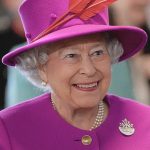
  • John Major – 1994 Leiden Speech on the European Union

    johnmajor

    Below is the text of Mr Major’s speech at the William and Mary Lecture, given in Leiden at the University on 7th September 1994.

     INTRODUCTION

    Britain and the Netherlands

    John Milton, the great British poet, described Leiden as “That famous University and renowned Commonwealth, a sanctuary of liberty”. I am privileged to deliver the second William and Mary Lecture in such distinguished surroundings.

    This lecture series was inaugurated by Ruud Lubbers in Milton’s University, Cambridge. It celebrates the close bonds between our two nations over hundreds of years. Bonds so old that even in the time of the first Queen Elizabeth, her Secretary of State, Sir Francis Walsingham, declared Britain and the Netherlands to be “the most ancient allies and familiar neighbours”. Bonds epitomised in our fierce attachment to the liberty stressed by Milton. Liberty underlies much that I shall say this evening.

    The long history of the Anglo/Dutch relationship is, of course, not wholly one of unbroken harmony and friendship. I admired Ruud Lubbers’s lightness of touch in passing over four Anglo/Dutch wars as “the occasional naval battle” in last year’s lecture. And at various times in our history, Britain and the Netherlands have been fierce rivals in their pursuit of prosperity on the world’s sea lanes.

    In the post-War period, we have been staunch allies in NATO – many of whose leading figures have come from our countries. We’ve been totally committed in our support for the Atlantic Alliance. As we meet, our two Air Forces are making the largest European contribution to NATO air power in the skies over Bosnia, just as our armies have undertaken some of the most hazardous operations for UNPROFOR on the ground. Our joint amphibious force operated in Iraq in 1991 and now helps to defend NATO’s Northern region.

    The Dutch and British are not just allies; not just the inheritors of outward-looking, sea-faring, free trading, global traditions; not just bound by the history which united our Crowns in 1688; not just close neighbours; but friends, in the most genuine sense of the word. Friends from conviction and shared values. Friends by habit and instinct. Friends wherever they meet around the world.

    The challenges facing Europe

    It is from that perspective – of a candid friend – that I would like to give a British view of the challenges facing us in Europe.

    My theme is the long-term future of Europe – all of Europe – and the extent to which we are now outgrowing the concept of the original founders of the European Union.

    To some, who believe the original concept is not yet met, that may seem provocative. It is intended to be realistic. Since the 1950s and especially over the past five years, our Continent has changed in ways no-one could foresee. We live in a different Europe and a different world. The vision of the 1950s is not right for the mid-90s.

    I shall first describe Britain’s outlook on Europe.

    Then I shall look at the ways in which the European Union should be developed in the future.

    Finally, I shall set out how we can extend security and prosperity to our neighbours in Central and Eastern Europe.

    BRITAIN’S OUTLOOK AND CONTRIBUTION

    The caricature of Britain

    Let me tackle, straight away, a popular caricature.

    The caricature is that there are, in broad terms, only two approaches to the European Union – that of the Eleven on the one hand, and of Britain on the other. Britain, for these purposes, is said to be a backmarker; a country interested only in a glorified free trade area.

    The caricature is ludicrous. Many of the key developments of the past few years have been advanced by Britain’s advocacy – the Single Market; budgetary discipline; proposals for CAP reform; CFSP; deregulation and trade liberalisation. No backmarking there.

    Nor is it right to characterise Britain’s opposition to some policies as anti-European. I have argued continually that the European Union must improve its competitiveness. With over 18 million unemployed that is surely essential.

    That is why I believe we must keep social costs down. If we don’t we will lose competitiveness, lose jobs, lose prosperity.

    This, to me, is a pro-European argument. But when I first made the case, my arguments were regarded as close to heresy, and as distinctly anti-communautaire.

    The fact is that there are not two approaches to Europe among the Governments of the Union, but one and twelve. One because we are all firmly committed to a strong and effective European Union. But twelve because no two Governments have identical approaches. Issue by issue, the twelve members line up in different ways. Sometimes, the United Kingdom finds itself with the majority, sometimes not.

    Sometimes, we are on our own. But that does not happen only to the United Kingdom. Yet how often have we seen the headline “Britain isolated”; and Britain’s fidelity to the European Union questioned as a result? We don’t see this question asked when, as often happens, other Member States stand on their own, in what they see as important national interests.

    Yes, Britain – like the Netherlands, like Germany, like France, Italy, Denmark, in fact like all twelve Member States -has her own perspective on Europe. Our perspective is not wrong simply because it is different.

    The British Outlook

    So what is the British perspective?

    First, it is quite simply that Britain is irrevocably part of Europe. We are hard-headed about it but perfectly clear. The British people know that their future rests with being part of the European Union.

    But, second, it must be the right sort of Europe. One which does not impose undue conformity, but encourages flexibility. Only in that way will we achieve the Europe we want – a Europe which is free and secure, prosperous and coherent, democratic, potent and generous.

    Third, we believe that the political dimension is crucial to making the most of the development of the Union.

    Fourth, we want the European Union, – which is, after all, a unique community of democracies – to pull its full weight internationally and be a power for good in the world.

    And fifth, we want the Union’s development to be realistic, attainable, and – crucially – supported by its peoples.

    Like everyone else, we want to move forward in Europe. We cannot consider Europe complete while so many European democracies remain outside the Union. But if we are to build well, we must build carefully. We do not just want a futuristic grand design which never leaves the drawing board. Even worse would be to put up a building which fell down because we hadn’t got it right. The most constructive attitude to Europe is to plan a future that  works. That is what Britain wants.

    Britain’s Contribution

    It is to this Europe that Britain seeks to make a very large and positive contribution.

    The assets Britain brings to Europe are pet haps too easily taken for granted.

    We have the world’s sixth largest economy. London is one of the world’s leading financial centres. Our trading links and global connections bring substantial benefits to Europe. We are the second largest net contributor to the European Union’s budget.

    With France, Britain is one of only two nations in the Union which still have a global reach to their foreign policies. Alone in Europe, the United Kingdom is a member simultaneously of the UN Security Council, the Economic Summit, and of the Commonwealth which now comprises one third of the world’s nations. We have a deep involvement in all of the Continents of the world.

    Our contribution to the defence of Europe, to its security institutions, to its ability to exert an influence when conflict threatens European interests – as in the Gulf – is second to none among the Member States. Far from staying separate, over 40 years ago we merged our security policy into that of the North Atlantic Alliance. We were prepared to commit ourselves to its integrated military structure. We have made a more significant contribution to NATO – and hence to the security of all Europe – than any other European nation.

    I make these points, not from national pride, but because our willingness to contribute, whether to the European Union or to NATO, is vivid evidence of the British commitment to the freedom and future of continental Europe.

    Given this commitment, it is high time that the caricature of Britain in Europe was buried. We have a commitment which surely gives Britain the right – just as others have the right – to advance her reasoned views without constant questioning of our European credentials.

    THE FUTURE OF THE EUROPEAN UNION

    Achievements and Problems

    We should not let the European Union’s recent difficulties obscure its remarkable success over four decades.

    The European Community was born to end divisions in Western Europe. It has succeeded. With NATO, it has given us peace and prosperity in our part of the Continent, and made war literally unthinkable. The determination of the Founding Fathers has succeeded far beyond the estimations of most people in their time. Their vision was proved right for its age. But it is outdated. It will not do now. We must all adjust our vision to meet the challenges of today and tomorrow.

    The deep hurt of the recession and bitter divisions over Maastricht – within so many Member States have left the European Union bruised and battered. We British had a parliamentary fight unequalled in perhaps a hundred years to pass the legislation. Other Governments had to invest great effort into persuading their Parliaments of its worth. Where Member States held referenda, their results were far from a ringing endorsement of the Treaty. This year’s European Elections were another warning. All over Europe, the picture was much the same: a poor turn out, with many votes cast more on domestic than on European issues. I believe that the Netherlands were no exception.

    The European Union seems temporarily to have lost the self-confidence of the 1980s. Popular enthusiasm for the Union has waned. We need to listen to these warnings if we are to make the right moves in the future.

    The Lessons for the Future

    The European Union has come a very long way in a very short time. There is impatience to take it further, but impatience is a poor framework for building soundly. Even though the original ambitious schemes mooted were not incorporated in the Maastricht Treaty, the final outcome nevertheless strained the limits of acceptability to Europe’s electors.

    The lesson is self-evident. Harmonisation and integration will not work if they have to be forced on people. Of course it is for governments and politicians to give a lead. But our vision will only work if we carry support of our electors, if our people can see the benefits, understand them and want them. That is the fact of the matter. We need a vision grounded in reality.

    Another clear message is that Europe’s peoples in general retain their faith and confidence in the Nation State. In the European Union, Nation States have both pooled elements of sovereignty and retained their independence and individuality. We have reached a careful and effective balance, and the evidence is that our peoples are wary of over-centralisation and of overambitious blueprints for new European architecture. They do not feel that a huge, remote, multi-lingual, multi-cultural, multi-national amalgam would be responsive to them or could properly reflect their national identities.

    Edouard Balladur said last week: “France has always wanted a Europe of nation states, which respects each country’s own personality”. So has Britain. I believe that the Nation State will remain the basic political unit in Europe.

    A third lesson is the need for greater transparency. Both the language and the institutions of the European Union can be extraordinarily difficult to penetrate from outside. They need to be made accessible to the citizens of Europe. At present they are not.

    Tasks for the Future

    I see two pre-eminent tasks for the period ahead:

    – within the existing Union, to rebuild the cohesion and confidence which has diminished in the past few years;

    – in external policy, to extend security and prosperity to the countries to our East. I shall come back to this in a few minutes.

    The European Union now needs to regain public support by making a success of what is already on its agenda.

    Let me touch on some of the key points in this process.

    Flexibility

    First, cohesion within a community of twelve to sixteen requires flexibility, as I argued consistently throughout the recent European elections.

    So I am glad a debate on this matter is now developing, and I have read with great interest recent contributions by Edouard Balladur and by Wolfgang Schauble and Karl Lamers. I welcome their emphasis on a more flexible Europe. Diversity is not a weakness to be suppressed: it is a strength to be harnessed. If we try to force all European countries into the same mould we shall end up cracking that mould. Greater flexibility is the only way in which we shall be able to build a Union rising to 16 and ultimately to 20 or more Member States.

    The way the Union develops must be acceptable to all Member States. It seems to me perfectly healthy for all Member States to agree that some should, integrate more closely or more quickly in certain areas. There’s nothing novel in this. It is the principle we agreed on economic and monetary union at Maastricht. It may also happen on defence.

    But the corollary is that no Member State should be excluded from an area of policy in which it wants and is qualified to participate. To choose not to participate is one thing To be prevented from doing so is quite another – and likely to lead to the sort of damaging divisions which, above all, we must avoid.

    So I see a real danger, in talk of a “hard core”, inner and outer circles, a two-tier Europe. I recoil from ideas for a union in which some would be more equal than others. There is not, and should never be, an exclusive hard core either of countries or of policies. The European Union involves a wide range of common policies and areas of close co-operation. No Member States should lay claim to a privileged status on the basis on their participation in some of them. For nearly forty years now, the Member States of the European Union, first six, then nine, ten, twelve, soon to be sixteen, have worked to reduce divisions in Europe. We must not see them reintroduced.

    That is why an essential component of the future European construction must be flexibility. We need a debate about it.

    By flexibility, of course, I do not advocate chaotic non-conformity. Our union depends on the rule of law. Where countries have accepted obligations, they must honour them. If they fail to honour them they must – if necessary – be made to do so. Nothing is more destructive of commitment to common European aims than the popular belief that, while some countries diligently obey the rules, others are cheating and being allowed to get away with it.

    There are areas where conformity is right and necessary – in the rules which govern international trade and the Single Market and the environment, for example. But conformity can never be right as an automatic principle. Flexibility is essential to get the best out of Europe – and to respect the wishes of our peoples.

    The European Monetary Union is a case in point. The arrangements in the Maastricht Treaty for progress towards EMU do not simply allow, but require a differentiated approach. This is essential. Whatever one’s view of EMU Stage 3 – and I have thought it right to reserve the United Kingdom’s position, and still do – the introduction of a common currency without proper prior economic convergence would be calamitous. But Maastricht recognised that. In general, the Maastricht Treaty’s flexible arrangements allow countries freedom and choice on how they decide to participate in the pursuit of our shared aims.

    The Inter-Governmental Conference

    The Inter-Governmental Conference in 1996 is likely to bring many issues into sharp focus. How, for example, can we fashion a fairer voting system? Can we develop simpler and more transparent legislative procedures? Should the Council exercise more control over the Commission? Is the number of Commissioners becoming unwieldy as the Union enlarges? Should the Commission have new powers in some areas – for example to pursue budget fraud into the Member States themselves?

    In developing Britain’s approach to the IGC, I will be guided by four considerations:

    The first is my sense of what Britain’s Parliament wants and what people actually need.

    Secondly, I shall want to see greater flexibility in the European Union, and greater tolerance of diversity.

    But that makes it all the more important, third, that Europe maintains a strong sense of shared purpose and common enterprise. The IGC must be the anvil on which we forge a stronger Union.

    And fourth, that any proposals for change are workable and effective. The European Union has never lacked for ideas for its development. But it needs ideas which work.

    The European Parliament and National Parliaments

    This is particularly evident in the approach we must take to developing the European Union’s democratic credentials.

    Within a more open, flexible and diverse Europe, what should be the respective roles of the European Parliament and the national parliaments?

    Parliaments take time to mature. Compared with the British Parliament and the States General in the Netherlands, the European Parliament is a fledgling institution. It has gained considerable powers in a short period. It plays a significant role in the legislative process: some 50 per cent of its legislative amendments are adopted, which is a far higher average than any national parliament. Yet clearly there is a long way to go before it wins respect and popular affection.

    The European Parliament sees itself as the future democratic focus for the Union. But this is a flawed ambition, because the European Union is an association of States, deriving its basic democratic legitimacy through national Parliaments. That should remain the case. People will continue to see national Parliaments as their democratic focus. It is national parliamentary democracy that confers legitimacy on the European Council.

    The European Parliament is not the answer to the democratic deficit, as the pitiably low turn-out in this year’s European Elections so vividly illustrated. The upshot, sadly, has been an unrepresentative and rather incoherent range of parties in the new European Parliament, in which fringe, protest and opposition groups are over-represented. We must wait to see if, over time, our electorates begin to take European Elections more seriously. But, for now, it would be premature to consider a further increase in the Parliament’s powers.

    The task for 1996 is for the European Parliament to grow into its existing powers – for it to ensure that legislation is sensible and proportionate; to avoid damage to competitiveness and jobs; and to contribute to matters such as budgetary control, market opening, and the scrutiny of spending.

    It should also do all it can to oppose fraud. Defrauding the Community budget has become a multi-billion ECU industry. It is scandalous and it does need comprehensive action. No Member State is immune from this. Indeed, it is an area in which national interests and the best interests of the European Union often conflict. The Parliament should continue to give its full backing to the Court of Auditors in waging war on fraud. In that way it can earn the strong support of European electors by lightening the load on their pockets. It could give them more confidence that their taxpayers’ money is properly spent. It’s this sort of action which will improve the status of the Parliament.

    In parallel, I believe that much more should be done to build links between national Parliaments and the European Parliament. Westminster, as I suspect is the case with most national Parliaments, is partly at fault here. We all need to develop a more cooperative effort with the European Parliament and we must examine how this can be done. In my own country, I see a case for Joint Committees (both by inviting MEPs to contribute to national scrutiny committees, and vice versa) and we will examine this in the months ahead.

    Second and third pillars

    The IGC will also consider the so-called pillars – the separate arrangements for foreign and security policy, and for home affairs and justice. They enable Europe to operate through co-operation and not compulsion in areas that are hugely sensitive to the national interest. Britain wants to see more energy put into them.

    The first joint actions in foreign policy strike us as no more than a modest beginning. They have included the elections in South Africa and Russia, humanitarian aid in Bosnia and assistance to the Middle East peace process. We should be more ambitious. There are obvious advantages in developing common policies towards Russia, Ukraine, and other countries in Eastern and Central Europe.

    Of course, for each of us, there will be areas of foreign policy where national action is more appropriate. Hong Kong is an obvious example for the United Kingdom. But when we can act together we have a diplomatic impact much greater than the sum of our parts.

    What of defence? We have NATO, we have the Western European Union. Both offer guarantees for our safety, both call for commitments, both have been a focus of British efforts over the past 40 years. We have now decided to retain and reshape NATO – that is one of the fundamental decisions of the last two years. The January NATO Summit agreed to develop new structures which will allow groups of countries to conduct operations together within the NATO framework, but without the participation of all. We have also decided, at Maastricht, to work towards a common European defence policy, based on the WEU.

    There is serious and detailed work to be done before we have turned these general propositions into reality. Britain will be at the core of this enterprise. Britain’s armed forces have the experience, skill and professionalism to meet the new challenges which we now face. The defence of Europe is not for us a luxury, but a necessity.

    The third pillar, Home Affairs and Justice, deals with threats to our societies of a different kind. There are growing risks to all of our countries from organised crime, and in particular from drug trafficking and money laundering. Cooperation in the fight against crime must become as instinctive as it is in foreign and defence policy. And our Governments must organise their work better than the criminals who oppose them. We are determined to see a success made of Europol, and the further development of the third pillar. The United Kingdom will pursue this energetically.

    ENLARGEMENT TO THE EAST

    A month ago, on a warm night in Warsaw, I sat by the Monument to the 1944 Uprising and heard a remarkable speech by the President of Germany. To anyone familiar with Warsaw’s history, it was striking that he should be there at all. He was speaking to a nation whose overriding foreign policy objective is to integrate with Western Europe’s institutions and above all with the European Union and with NATO. For all that has happened in Polish history, the Polish people want to bind themselves to Germany and to the rest of us. And for all that has happened in German history, Germany wants Poland to be a free and equal partner in our Union.

    On the following day I sat in Vilnius with the Prime Ministers of the three Baltic States. Their goal was the same. They, like the Poles, the Czechs, the Slovaks, the Hungarians and other peoples on the edge of our present Union, are part of the European family.

    After the war, and through the 1950s and beyond, we had to preserve the security of Western Europe against the threat from Communism. Now we must move on. Communism has gone. For the next generation we face a different task. It is to make sure that the barriers now down in Europe’s East do not rise again in any form.

    We have taken our first small steps along that road but we have to go a great deal further. Our predecessors went to war after Poland and Czechoslovakia were invaded. But at the end of a six year war that engulfed the world, those same nations lost their freedom for half a century. By bringing the Central European States into our family of democracies, we can finally make good the damage they suffered. This must and can be done in a way which benefits the whole of Europe. Indeed, it will enhance the Union: a free, stable, prosperous and democratic Central Europe will be a huge benefit to the whole Continent.

    The process will require many changes from the countries to our East. They will need to embody our standards of democracy, law and human rights. They must adopt the economics of the free market.

    However, the change cannot be only on one side. If we expect them to make changes to join us, then we must make changes to help them do it. We must be prepared, for example, to offer periods of transition in some areas. We must also face the fact that our European Union cannot function in the same way and with the same policies with sixteen or twenty or more members as it did with six or ten or twelve.

    Two examples suffice to make this point. The Common Agricultural Policy, as at present operated, would be unsustainable and unaffordable with twenty. members. Wholesale reform will be essential. Secondly, the admission of less economically advanced countries will mean a major reform and redirection of structural funds.

    No-one can doubt that these changes will be controversial and, for some, very painful. Across Europe, we have only just begun to think about them. Member States are not yet reconciled to the policies that are necessary to bring them about. It must not be our objective to admit new members to a status inferior to other partners. They must enjoy the same options, in a flexible Union, as are open to us.

    Enlargement: Economic Cooperation and Free Trade

    We have a responsibility to help the economic development of our neighbours to the East – and it is in our own interests to do so. We must be open-minded and open-handed.

    They must be given access to our markets and not kept at bay by trade defence mechanisms. We do not want to build a Continent where economic divisions would return as the ghosts of the political barriers which crumbled in 1989.

    Enlargement: Security Relationships

    Our outward reach of course must extend to security relationships. Here, too, we must be flexible. For some countries, membership of NATO will be the  the right answer, the only question is when rather than whether. For twenty-one countries now including Russia “Partnership for Peace” is making a reality of practical cooperation. The six central European countries and the Baltic states are now also associate partners in the Western European Union. The end of communism has been the biggest peacetime change in our continent for over a hundred years. It is an opportunity we have longed for, hoped for. We now have the chance to entrench democracy right across Europe. I do not believe history will forgive us if we squander it.

    Mr. President, soon we hope to be welcoming four new members to the European Union. They will not be the last. We have the prospect of a Union of increasing diversity, a Union in which difference in size, shape, economic and industrial profile, philosophy, history and culture will make varied geometry a fact whatever decisions we may choose to make about our institutions.

    This diversity, these differences, will undoubtedly make for more vigorous debate, more late nights, harder work to keep our common aims on track. We may sometimes need to take comfort in the observation of a Dutch philosopher, Spinoza, that all excellent things are as difficult as they are rare.

    We will have to balance priorities, the priorities of the smaller nations with those of the larger ones, the needs of the southern countries with those of the north, of allowing for the various weights of agriculture and industry in the national economies of our European Union. In the future, Britain will work hard to ensure the Union takes good account of these differences. We want to ensure that common policies are adopted wherever they offer common benefits; we want to ensure our Union is not a directorate of the larger countries at the expense of the smaller countries. Above all, Mr. President, we don’t want Europe to go off the road. When we see a proposal that could have this effect, then we will say so in a frank and a realistic way and when we have positive proposals to put forward, we will do so vigorously and argue our case with conviction and clarity. That is the positive attitude that we have, an attitude to help Europe towards a future, a future that works, a future that we believe can be built if we have the courage, the application and the farsightedness to take the decisions now that will shape our future not just for the months and the years immediately ahead but far beyond that to make the most of the opportunity that I passionately believe lies at hand for all of us in Europe. [Applause].