Tag: 1993

  • Queen Elizabeth II – 1993 Christmas Broadcast

    Queen Elizabeth II – 1993 Christmas Broadcast

    The Christmas Broadcast made by HM Queen Elizabeth II on 25 December 1993.

    I am speaking to you from the Library at Sandringham.

    Four generations of my family have enjoyed the quiet and solitude of this library. It is still a haven of peace even if my grandchildren do their best over Christmas to make it rather more lively!

    Most of the books on the shelves date from my great-grandfather’s time, and their titles reflect the life and events of those days.

    Books are one of the ways in which each generation can communicate its history, values and culture to the next. There are books here about statesmen, explorers, warriors and saints; there are many about war, especially the First World War which ended seventy-five years ago.

    Families and loved ones of those who fought in it knew little of the horrors of the trenches, other than from artists’ drawings or photographs – often published days or weeks after the event. Nowadays stories and pictures from all over the world can be gathered up and appear in print within hours.

    We have indeed become a global village. It is no longer possible to plead ignorance about what is going on in far-off parts of the world. Switch on the television or radio, and the graphic details of distant events are instantly available to us.

    Not all the pictures bring gloomy news. This year has seen significant progress made towards solving some of the world’s most difficult problems – the Middle East, for instance, the democratic future of South Africa and, most recently, Northern Ireland.

    All too often, though, we find ourselves watching or listening to the sort of news which, as a daily diet, can be almost overwhelming. It makes us yearn for some good news.

    If we can look on the bright side, so much the better, but that does not mean we should shield ourselves from the truth, even if it is unwelcome. I believe that we should be aware of events which, in the old days, might have passed us by. But that means facing up to the question of what we can do to use that awareness for the greater good.

    The simple answer is, of course, all too little. But there is another answer. It is that the more we know, the more we feel responsible, and the more we want to help.

    Those involved in international charity work confirm that modern communications have helped to bring them public support and made them more effective. People are not shunning the added responsibility, but shouldering it.

    All of us owe a debt to those volunteers who are out there in the front line, putting our donations to use by looking after the wounded, the hungry and the oppressed. Much of their work never reaches the headlines or television screens, but their example should inspire us all the same.

    We cannot all follow them the whole way, but we can do something to help within our own community – particularly at Christmas, when those without work, or the company of family or friends, feel especially left out.

    I am always moved by those words in St. John’s Gospel which we hear on Christmas Day – “He was in the world, and the world was made by him, and the world knew him not”.

    We have only to listen to the news to know the truth of that. But the Gospel goes on – “But as many as received him, to them gave he power to become the sons of God”.

    For all the inhumanity around us, let us be grateful for those who have received him and who go about quietly doing their work and His will without thought of reward or recognition.

    They know that there is an eternal truth of much greater significance than our own triumphs and tragedies, and it is embodied by the Child in the Manger. That is their message of hope.

    We can all try to reflect that message of hope in our own lives, in our actions and in our prayers. If we do, the reflection may light the way for others and help them to read the message too. We live in the global village, but villages are made up of families.

    We, the peoples of the fifty nations of the Commonwealth – more than a quarter of the world’s population – have, as members of one of the largest families, a great responsibility. By working together, we can help the rest of the world become a more humane and happier place.

    I hope you all enjoy your Christmas. I pray, with you, for a happy and peaceful New Year.

  • Michael Heseltine – 1993 Speech on Trade, Industry and Deregulation

    Michael Heseltine – 1993 Speech on Trade, Industry and Deregulation

    The speech made by Michael Heseltine, the then Secretary of State for Trade, in the House of Commons on 24 November 1993.

    When I returned to the House not many weeks ago—I thank the hon. Member for Livingston (Mr. Cook) for his kind remarks—someone asked me, “How’s life?” I replied, “A great deal better than the alternative.” As I listened to the hon. Member for Livingston today, I wondered whether I had been a little rash in my judgment.

    The Gracious Speech made clear the importance that the Government attach to a successful outcome to the present general agreement on tariffs and trade round. It was fascinating that not a word was said about that, although it is perhaps the single biggest opportunity facing the entire world, to improve living standards and trading opportunities—not a word about that from the hon. Member for Livingston. However, Conservative Members will welcome the boost which the passage of the north American free trade agreement has already given to the Uruguay round. There must be no doubt that no country will work harder than we will for a successful conclusion to that round.

    The calculations show the excitement of the possibilities. The Organisation for Economic Co-operation and Development claims that a successful outcome could raise annual world income by about $270 billion during a decade. That estimate could well prove to be on the cautious side, once the effects of trade in services and the dynamic benefits of trade liberalisation are taken into account.

    We all realise that the timetable is perilously tight and, frankly, all the Governments of the world must face the understandable criticism that it has taken seven years of negotiation, yet we now face trying to conclude the deals on so many issues with just three weeks to go.

    It is also important to remember that a successful outcome to the GAIT round would not only be welcomed on trade grounds, important though they are; the less-developed and poorer countries in particular stand to gain far more in extra trade and investment than they could ever expect in extra aid from the more prosperous countries.

    Within a more open trading environment, our policy is to enable and assist British-based companies to gain the largest possible share of world trade.

    On any detached analysis, there are growing signs today of success. We heard virtually not a word from the Opposition about the direction in which the economy is moving or about the news, which is more encouraging by the day. Inflation is at its lowest level for 30 years. Headline inflation has been below 2 per cent. for 10 months—the best performance since the 1960s. With the base rate now cut to 5.5 per cent., since October 1990 interest rate reductions have added about £12 billion a year of benefit to business. Investment is rising; manufacturing investment in the third quarter of this year was up by 2 per cent. on a year earlier, a point which also seems to have passed the hon. Member for Livingston by—it certainly passed his colleagues by when they drafted the amendment on the Order Paper.

    Our GDP has been rising for 18 months. It was 1.9 per cent. higher in the third quarter of this year than a year earlier. Perhaps most excitingly of all, exports are at record levels. The volume of manufactured exports going outside the EC was up by 16 per cent. on a year earlier. Characteristically, the hon. Member for Livingston sought to diminish the world trade that this country has achieved by claiming that our share of it had risen under the Labour Government. The only way he can do that is by talking about cash and ignoring exchange rate calculations. In fact, persistently and under all Governments, since the war we have lost our volume share of world trade. Our share has now stabilised, however. The task is to ensure that we build up our export success, to make sure that it increases in the right direction.

    It is particularly encouraging to realise that this is now beginning to happen, given the depth of the recession affecting our principal markets in the European Community. Within the single market, it is this country’s economy that is leading the recovery. There are clear background signs now that we can look forward to persistent growth. Our prime task, which my right hon. Friend the Prime Minister has spelt out with great clarity, is to enhance the competitiveness of our economy.

    Opening the debate on the Gracious Speech, my right hon. Friend the Prime Minister covered many of the essential ingredients of this enhanced competitiveness when he set out our central strategies for education, training, research and development, infrastructure and macro-economic management—to which my right hon. and learned Friend the Chancellor will return tomorrow.

    In the Gracious Speech, my Department, as the hon. Member for Livingston rightly said, has three Bills: the deregulation Bill, the trade marks Bill and the Bill to privatise the coal industry, and the House would expect me to comment on each of them. I wish to make it clear that the deregulation Bill will not be about destroying the environment, imperilling safety or exposing the unsuspecting to fraud and cheating. We believe it is vital to keep red tape to a minimum. I expected that phrase to provoke a response from the Labour party—I thought that its members might have welcomed it. Why? Because those were the words of the Leader of the Opposition to a small firms conference that he held the other day.

    It is all very well for the right hon. and learned Gentleman to come out with these wonderfully ringing words—with which I agree—when he is away from the House and away from the parliamentary Labour party—and when he is not being listened to by his supporters. But when he comes here, he dismisses deregulation, as he did in his remarks on the Queen’s Speech, as almost irrelevant to our national recovery.

    The truth is that the only thing that is marginal, in the context of a party that has lost four elections in a row, is the policy of that party on deregulation. We want to make sure when we regulate that we protect the vulnerable, protect the public, protect our heritage and protect the countryside, but in such a way as to deal best with the real risks and to put the fewest obstacles in the way of wealth creation. We must keep paperwork to a minimum and keep the intrusive nature of bureaucracy under the tightest possible control.

    There are three thrusts to the policy that we intend to introduce. The first is the new regulations; we will ensure that regulators count the cost of their proposals before they publish them. Secondly, there is no point in taming domestic regulators in Whitehall if European directives keep piling on the burden. Last year, we persuaded our European colleagues to put the cost of business into account and to publish it when new European measures are proposed.

    Thirdly, there is the subject matter of the Bill. We are reviewing existing regulations. Under the guidance of Lord Sainsbury, eight task forces from business and the voluntary sector have been examining regulations on the statute book to see whether they can be scrapped, modified or improved.

    Even then, primary legislation can stand in the way of reform. That is why we are introducing a deregulation Bill to cut the red tape and open up the opportunities for business. The Bill will include specific deregulation measures, as well as a means to deregulate in the future. [HON. MEMBERS: “Ah.”] The hon. Member for Livingston was deeply immersed in creating fear, at which he is a past master. A parliamentary process will be involved in our proposals.

    In the same Bill, we will be removing statutory obstacles to market-testing and contracting-out programmes of both Government and local authorities because we want to see better value for money for the taxpayer in all our policies.

    Mr. Bill Etherington (Sunderland, North)

    I am pleased to welcome back the President of the Board of Trade after his illness. He seems to fail completely to comprehend that some Labour Members do not correlate cutting red tape and minimising death and injury in the industry. Why does he fail to comprehend that?

    Mr. Heseltine

    I do so for precisely the same reason that the Leader of the Opposition made it absolutely clear that he wanted to cut red tape to a minimum as well. The hon. Member for Sunderland, North (Mr. Etherington) and other Labour Members cannot understand that in a competitive world we have no choice but to make absolutely sure that every avoidable cost is avoided in our legislative programme.

    It must be recognised that deregulation is not simply about the letter of the law. The law gives rise to a plethora of guidance notes, circulars, inspectors and forms—all the familiar trappings of bureaucracy. Our review covers the impedimenta of legislation, as well as the legislation itself.

    Mr. Anthony Steen (South Hams)

    Conservative Members are finding this speech extremely invigorating, and I hope that we will hear a little more of this wonderful stuff. I wonder whether my right hon. Friend will bear in mind that it is not simply about deregulation—it is about the over-zealous interpretation by officials not only in Whitehall but at local level. It is an attitude problem which we must address from the top.

    Mr. Heseltine

    My hon. Friend is absolutely right, and that is why I referred to the impedimenta of legislation and all the practices that flow from it. We are well aware that many of the changes that we hope to see will not require legislation; they will require changing practices in a new changed culture. The House will have an opportunity to examine our detailed proposals when we introduce the Bill.

    The speech of the hon. Member for Livingston was anticipated, but he is not the only one. Labour Members are already in full cry and, if I may say so, in characteristic vein. This is not the first time that the hon. Gentleman has had an opportunity to indulge in what might be called slightly exaggerated versions of the truth. Indeed, he has a technique. He is a sort of chill factor in the body politic. We are well aware of how he does it because the record is there. He was shadow spokesman for the health service.

    Mr. Robin Cook

    I was very good.

    Mr. Heseltine

    Let me remind the hon. Gentleman, if he needs any reminding, of what he said before the election about Conservatives seeking a health service where organisations were put on the second floor of buildings to discourage people who were disabled and therefore expensive to treat from enrolling, or where casualty patients died because no one could pay for them. The hon. Gentleman knew that that was not true; it was a great distortion of anything that we had in mind, but if he could find people to frighten, frighten them he would, regardless of the facts.

    The Leader of the Opposition had an even more brazen charge. He said that it is all the Government’s fault—we heard that again from the hon. Member for Livingston — because we are simply reviewing our own regulations. Nothing so reveals the fossilised inherent approach of the socialist in practice as that allegation.

    A communications revolution can sweep the world. The globalisation of markets can overwhelm national boundaries. The Asian-Pacific rim can transform the competitive threat. Industry and commerce must change. The one thing that must never change is the good old British regulation. Like the pint and the good old British banger—once a regulation, always a regulation. What a battle cry for the modernised Labour party.

    But who can be surprised? The Labour party is the regulator’s natural ally. About the only things left of the trade union movement are the white collar affiliates of the Trades Union Congress who dream up the regulations, inspect the regulated, regulate the regulators and drown the rest of us under the weight of the burden. That is typical of those socialists in their approach, with their ideas frozen in time and practices set solid in concrete. That is the image that one would think they wanted to portray—no change; and when it is done, leave it there.

    Hon. Members will want to consider carefully whether that argument is applied as consistently by Labour Members as they would have us believe. They may not be prepared to change one dot or comma of the most outdated regulation. Not a hair on the head of the most lowly inspector must be subjected to the wind of change, but when it comes to their fundamental socialist beliefs, which have cost them four consecutive elections, they want us to believe that the whole lot have been flung out the window. They fought against Europe for 30 years. Now they take every nugget of Euro-speak before the red ink is dry on the paper. Nationalisation was once the essence of their industrial strategy. Now it has become the word that dare not speak its name.

    I shall give one example of what can be achieved when the yoke on nationalisation is removed. In 1983, we privatised the ports. In 1989, we abolished the dock labour scheme. The hon. Member for Kingston upon Hull, East (Mr. Prescott) doubtless reacted with a characteristically moderate and balanced judgment. The modesty of his language was exceeded only by the energy with which he rushed around the docks spreading the news of impending disaster.

    I took the liberty of doing a little research. In 1980, less than 4,000 tonnes of cargo went through Hull. In 1992, it was nearly 9,000 tonnes. The figure had more than doubled. The only other difference that I have detected over the years of Hull’s growing success is the absence of the hon. Gentleman, who, I am told, has not visited the thriving new dock company since its inception. Like the scarlet pimpernel, they seek him here, they seek him there. But the first sign of real success in his constituency brings forth in the hon. Gentleman a unique contribution to the political debate—absolute silence.

    Mr. Dennis Skinner (Bolsover) rose—

    Mr. Heseltine

    There is someone who has never known what absolute silence is.

    I can only say that when the hon. Member for Kingston upon Hull, East describes my deregulation proposals as a return to the killing fields, nothing persuades me more that I have got them more or less right.

    Mr. Skinner

    Give way.

    Mr. Heseltine

    Yes, why not?

    Mr. Skinner

    I have a little tablet here that the President can put under his tongue. Is he aware that when he talks about imports into Hull, he is talking about the massive increase in coal imports which have enabled him 475and his fellow Ministers to encourage pit closures? As a result, the 31 pits that he said he would save now look as if they will be closed. He should be ashamed of himself for putting all those workers on the dole.

    Mr. Heseltine

    The hon. Gentleman gives the game away. In the real world, employment in the docks is the preoccupation. He cannot understand that there has been a container revolution and that the efficiency of the ports today makes them competitive. What he would really like to see are the days of old when thousands of men carried the loads in sacks on their backs. Then he could have a national union of sack carriers. Doubtless we would have Members of Parliament sponsored by the national union of sack carriers, paying their funds into the Labour party and shackling the competitive instinct of this country, at which the hon. Gentleman is one of the greatest experts.

    I should be the last person to wish to do the Labour party any sort of injustice. I have said that it would regulate everything. I am prepared to believe that every rule has an exception. I have missed out one area where no doubt the deregulating zeal of the Labour party would be at the forefront of its political agenda: the trade unions would be deregulated. Here we would find a veritable bonfire of controls: strikes, go-slows, no-gos, Labour in power, socialism in practice—all back to an agenda that we drove from the country 14 years ago. The painful sacrifices accumulated over 20 years that have given the country the best industrial relations for a century would be thrown away in a single Act of Parliament.

    On this issue at least let me accuse the hon. Member for Kingston upon Hull, East of no silence. He has made it absolutely clear that Labour would repeal all our trade union legislation. There is nothing to keep. It all has to go. The House will want to contrast that with the charge made by the hon. Member for Livingston that, because we talk to leaders in the construction industry, with a view modestly to changing the regulations to lighten the load on our system, we are indulging in corruption. Yet the Labour party is prepared to sweep from the statute book all our trade union legislation to satisfy its paymasters. What are we supposed to call that? So we shall press on with our deregulation programme as part of our determination to help British industry compete.

    Mr. Malcolm Bruce (Gordon)

    The President of the Board of Trade is making an entertaining speech. Will he tell the House specifically how the regulations will be introduced? Will the House be presented with a detailed Bill that includes the specific regulations, which can be debated, amended and voted on; or will we be presented with an enabling Bill in which each individual regulation will be determined by statutory instrument? If the latter is the case, that is not the way to deal with deregulation.

    Mr. Heseltine

    The good old Liberals are at it again. They want it all ways. Whatever we do, it will be wrong. The hon. Gentleman must contain himself. We will have a Second Reading of the Bill, when he can examine it in great detail. Doubtless he will table some amendments, the scrutiny of which we shall be forced to subject ourselves to. Nevertheless, in the proper, democratic exercise of our duty, the Liberals must have their turn, however small it may turn out to be.

    Mr. Richard Caborn (Sheffield, Central)

    It is good to see the President of the Board of Trade back on form. His speech is entertaining, if in no way factual. I remind him that a great deal of research was done by the Select Committee on Trade and Industry for its report on Europe. Does he recall that the report pointed out clearly to Ministers that the burden of many European Community regulations had been increased by his own civil servants? That was a strong criticism.

    My hon. Friend the Member for Livingston (Mr. Cook) has referred to the increase in regulation. That has arisen directly from the inability of Ministers, particularly those in the Department of Trade and Industry, to control their civil servants, who are adding extensively to EC regulations. Ministers rode on the back of EC regulations that would not have passed through the House had the turnkey of the European Community not been used.

    Mr. Deputy Speaker (Mr. Geoffrey Lofthouse)

    Order. I remind the hon. Gentleman and other hon. Members present that interventions are supposed to be brief. They are not supposed to be mini-speeches.

    Mr. Heseltine

    The hon. Gentleman makes an important point and I thank him for his generous words to me personally. If he wants to help me to a full recovery, he will avoid inviting me to appear before his Select Committee again.

    I now want to say something about the privatisation of the coal industry. The hon. Member for Livingston treated us to a general denunciation of the issues of privatisation, so it may be helpful if first we spend a moment or two looking at the record of privatisation over this decade. We have absolutely no doubt that privatisation drives up standards of efficiency and management, ensures that investment decisions are taken by customers, not Government, leads to increased efficiency and lower costs and encourages innovation, all of which help the privatised companies to get out and become world class players on the international stage.

    Just one sobering statistic—a single sentence—will show why we believe that we have brought about a fundamental and important shift. In 1979, taxpayers paid £50 million a week to subsidise the losses of the nationalised industries. The privatized industries are now paying £60 million a week in taxes to the Exchequer on the profits that they are making. There is no clearer vindication than that of the privatisation policies of the past decade.

    British Steel is now one of the most efficient in the whole world. PowerGen, National Power and the National Grid are international companies. We have a major extension and modernisation of our water and sewerage infrastructure, with a £30 billion investment programme. British Telecom’s prices are down by more than 27 per cent. in real terms since 1984. Domestic and small business prices for gas have fallen by 20 per cent. in real terms since privatisation. British Gas now operates in more than 45 overseas markets.

    The hon. Member for Livingston describes that as the grotesque irrelevance of privatisation. There has been a dramatic transformation of the commanding heights of our economy precisely because they have been privatised. This is the remarkable transformation of great parts of the previously nationalised industries. It is against that background that we believe that the best future for coal is in the private sector. I have no need to repeat the concern shared by everyone in the House for the difficulties experienced by those in the industry.

    Mr. Terry Lewis (Worsley)

    Bloody hypocrisy.

    Mr. Heseltine

    The hon. Gentleman talks of hypocrisy. The Opposition have presided over the run-down of the coal industry every time they have been in office. The figures are startling. In 1948, when the industry was brought into public ownership, there were 958 collieries and 700,000 workers; by 1970, it was down to 300 collieries and 375,000 workers. Everybody knows that the market for coal has been declining persistently for the past half century.

    Another matter has been proved beyond peradventure. Energy markets are too volatile for any kind of central planning system to make sensible decisions for the future. A salient feature of Government forecasts on energy is that they have always turned out to be wrong. It was forecast that oil and gas would become rare and expensive towards the new millennium. In practice, new discoveries are taking place all the time. Production is at a high level and reserves are mounting. As a result, prices are low and look set to remain that way.

    We plan to bring before the House as soon as possible this Session a Bill to privatise British Coal. That would free the industry from the dead hand of state control and allow it to compete within the wider energy market. The Opposition do not see it that way. They have not seen it that way whenever we have privatised an industry and they have always been wrong.

    The hon. Member for Livingston is up to his old tricks and trying to suggest that privatisation will threaten the safety of miners. It is despicable how the hon. Gentleman always finds the most vulnerable sectors of society and cynically exploits their legitimate fears for narrow party purposes. When I became President of the Board of Trade, at my first meeting on the subject, I said that I would do nothing to prejudice safety in the mines. I have never been asked to do anything that would do that and, if I were asked, I would not do it. We have fully accepted the advice of the Health and Safety Commission which was contained in its recent report, which has been placed in the Library.

    I look forward to the day when British coal companies are free to seek—and invest in—world opportunities and to export their skills and experience in the huge international market. Furthermore, looking back over the decades, I have no doubt that, had we privatised the industry earlier, British Coal would have saved more jobs and we would have had a larger and more viable industry than the market can now sustain.

    Mr. Robin Cook

    The President must have missed out a page of his speech. Before he leaves the issue of privatisation of the coal industry, will he answer the question put to him? If privatisation is to work such a wonderful transformation of the coal industry, how many pits will survive to be privatised?

    Mr. Heseltine

    It is an illusion of the Opposition. When they were in power, the pits closed month after month. They never knew, and no Minister will make such forecasts in a market condition where the customer will determine the market.

    My third Bill covers trademarks, which play a critical part for business. The forthcoming trademarks Bill will deregulate procedures. It will open the door to the use of international trade mark registration systems under the Madrid protocol, thereby allowing businesses to protect trade marks overseas in all contracting states by a single application. That will achieve substantial savings for other businesses.

    The Gracious Speech debate and the Opposition’s amendment go wider than the specific legislation that I propose to introduce. I should like to update the House on the position of Leyland Daf because nothing so illustrates the difference in policy as the differing approaches of the Government and the hon. Member for Livingston on that issue.

    The House will remember that the company went into receivership in February this year. The hon. Member for Livingston was on his feet demanding instant intervention. “Bail the company out” was the instant policy. I refused, not least because, having put £3.5 billion into Leyland, we did not seem to have succeeded in doing the trick by bailing the company out with taxpayers’ money. Instead, we backed the entrepreneurial skills of the management, receivers, banks and financial houses to let them find a commercial market solution. The van and truck businesses were able to set themselves up as two independently run companies. Half the jobs were saved, as was the supply and distribution chain. The cost to the British taxpayer was £5 million in regional assistance.

    While my Department was encouraging and helping all that intricate, detailed work to save half the jobs at minimum cost to the taxpayer, the hon. Member for Livingston was not idle. He was leaping about, flying to the continent, and climbing on any old soap box urging me to do what the Belgian and Dutch Governments were doing. It all made good headlines at the time, and nudged the hon. Member up the shadow Cabinet pecking order a bit. But, as always, when the facts come out, they do not fit the scare stories in which the hon. Gentleman trades.

    The Dutch and Belgian work forces were reduced! by virtually the same proportions as ours, but the poor old European taxpayers were £100 million worse off as a result of their Governments’ hasty involvement. That is what the hon. Gentleman really believes in—spend money first and then try to find solutions. That is what the last Labour Government tried, but it costs money and it does not work.

    The news for us is even better. Both Leyland DAF Vans and Leyland Trucks have recovered well. The vans business is maintaining its production volume and has recently announced an £8 million development programme. Leyland Trucks has been able to increase civilian volumes by 30 per cent. and win export markets, and is discussing joint development of a new medium weight truck.

    However, to the hon. Member for Livingston, all that was grist to the mill. Some of my hon. Friends, who do not need to concern themselves with the details of those matters, may have missed a little press release that he put out at the time. It was in characteristic language and was headed: Labour reveals the threatened ‘dossier of disaster’ if Leyland Daf closes”. The hon. Gentleman had identified 6,000 firms that would be pushed into closure by the loss of business. He produced a “dossier of disaster”. Are my right hon. and hon. Friends in the Government in whose constituencies a Leyland van had ever been seen were listed for that hideous impending disaster—6,000 fingers stretched out in blame, reaching to tear the throat from the hapless President of the Board of Trade.

    My poor old right hon. Friend the Foreign Secretary was up to his eyes in it simply because the Rover car company in his constituency had supplied parts to Leyland Daf. Rover would be hit, we were warned. What happened? Rover is selling cars like there was no tomorrow, recruiting extra employees and setting world quality standards.

    It was not just the big fish. Even the junior Ministers were not to be spared the ruthless scourge of the hon. Gentleman’s searing foresight. He said that my hon. Friend the Member for Solihull (Mr. Taylor), the Parliamentary Secretary, Lord Chancellor’s Department, was about to see Land Rover knocked off its perch. What happened? Land Rover has taken on 300 extra staff, and sales of the Discovery have doubled in Japan and Australia.

    What has happened to those 6,000 fingers? They are stuck in the dykes of Labour’s crumbling allegations, as every day the recovery reveals the bankruptcy of its statements. If the hon. Member for Livingston is searching around for another press release, why does he not put out one containing good news stories from the constituencies of his colleagues in the shadow Cabinet? I do not want to impose any unnecessary burden or strain on him. Let us have just a press release of good news stories from his constituency—£20 million investment in NEC semiconductors by 1994; 300 new jobs at VRG International in the next four years; 200 new jobs at Mitsubishi in the next two years; 300 new jobs at Marshall Food Group in the next three years; 400 new jobs at David Hall in the next four years; 400 new jobs at IMTEC. I could continue with the list in his constituency alone.

    So why are there no press releases about all that? Where are all those menacing fingers? They are itching to get to work in the hon. Gentleman’s constituency, with the new technologies, new factories and new British opportunities. What else? [Interruption.] The hon. Member for Livingston said that it was a gross misrepresentation.

    Mr. Robin Cook

    The President of the Board of Trade must not run away with a mishearing. What I said was that it was an excellent representation of Livingston.

    Mr. Heseltine

    That is interesting. It brings me conveniently to the next argument. Why are all those companies in the hon. Gentleman’s constituency? What is it that brings them there? They are all seeking a base in Europe and they are choosing Britain because we are competitive and attractive and they are welcome here. Under this Government, Britain will stay that way, but not under a Labour Government.

    I am sorry that the Leader of the Opposition is not here; he is probably looking after some of his new friends in the boardrooms of England. He is famed for his flirtation and carrying-on with the leaders of our great companies—last week, he was at the Confederation of British Industry conference and, week by week, he is among the thick pile and hushed atmosphere of the City dining rooms. I must make it clear to the leaders of our great companies that it is not their smoked salmon that he is after. He has a different agenda. He has a manifesto of Euro-socialism. Of course, he says that it does not mean all that it says, but it has got his name on it, he is a lawyer and it is printed in English.

    The manifesto may not mean much to the Leader of the Opposition or his hon. Friends, but if one asks the directors in the boardrooms of the international companies deciding whether to invest in our country or not, they have no doubt about what it all means. What is the agenda that we have from the Euro-socialists? The manifesto supports a substantial cut in working time including the prospect of a 35-hour or four-day week. to breathe life into the European social Chapter. It supports European works councils, consultations of workings in multi-national businesses and European sectoral collective agreements … a guaranteed minimum wage and Community measures … to avoid a tax-cutting competition between member states”. We shall not even be allowed to cut the taxes to bring the investment to create the jobs in the constituency of the hon. Member for Livingston.

    There is one other little nugget tucked away in the manifesto for Euro-socialism. It supports a European policy on waste”. Let us start by ripping up the manifesto itself. To what does it actually add up? Every competitive advantage that this country possesses will be thrown away. To pursue the international brotherhood of man is one thing, but to sell the dear old country down the river to get it is another.

    The Leader of the Opposition made much play—[Interruption.] There were a great many more people at the Tory party conference than there are Labour Members present today. The Leader of the Opposition made much play of the need for evidence. He asked, “What is it about the Tories? They make all the decisions and announcements—the only thing that is ever missing is evidence.” He accused us of designing policies, against the facts, without regard for evidence, and as a mere reaction to events. I reject that charge absolutely. We are determined to steer the country to a new competitiveness and a sustained recovery.

    If the right hon. and learned Member for Monklands, East (Mr. Smith) wants evidence, I shall give it to him. We have the highest proportion of our population at work among the major Community countries. Unemployment has fallen by 137,000 this year. Inflation is persistently lower than at any time since 1960. Exports are at record levels. Interest rates are among the Community’s lowest. Industrial relations are excellent. That is the evidence upon which a sustained recovery can be based and on which I invite my right hon. and hon. Friends to vote for the motion.

  • Michael Heseltine – 1993 Speech on the Budget and Industry

    Michael Heseltine – 1993 Speech on the Budget and Industry

    The speech made by Michael Heseltine, the then Secretary of State for Trade and Industry, in the House of Commons on 22 March 1993.

    The Budget sets in place one more step in our strategy for industry. When coupled with the autumn statement, it must be seen as a comprehensive response to our industrial needs. First, it provides a sound economic background against which our companies can more effectively enhance their competitiveness. Secondly, it backs our drive on the export markets. Thirdly, it addreses a range of specific measures that industry has raised with us. Fourthly, it recognises the vital role that small and medium-sized firms play in economic vitality.
    No Government have done more to create a favourable climate for enterprise and wealth creation. Interest rates have been cut by 9 per cent. As a consequence, industry’s costs have been reduced by £11 billion a year. The Government’s privatisation programme is perhaps one of the most radical changes in the United Kingdom’s economic and industrial structure since 1945.

    In 1978–79, the nationalised industries received subsidies of some £2.2 billion in today’s prices. In contrast, in 1990–91, the privatised companies paid £3 billion to the Exchequer. The privatised industries are achieving striking improvements in productivity. British Airways has increased its productivity by more than 20 per cent. The number of customers per employee in respect of British Gas has increased by about 19 per cent. Productivity at British Steel, which is now considered to be one of the world’s most efficient steel producers, has increased dramatically. It now takes only 4.8 man hours to produce a tonne of liquid steel, compared with 13.2 man hours in 1979–80.

    Those improvements in productivity have been passed on to consumers as lower prices and rising standards of service. Since privatisation, gas prices have fallen by 18 per cent. for domestic customers and by 40 per cent. for large industrial customers. Those industries are, in many cases, now acting as flagships for Britain in overseas markets.

    During the Prime Minister’s visit to India last month, British Gas signed an agreement with the Gas Authority of India enabling both companies to take gas from offshore Bombay and send it through a new distribution network to more than 60,000 offices, factories and homes.

    In Argentina, British Gas has won a $300 million contract to replace the Buenos Aires distribution system. The company is working as far afield as Indonesia and Kazakhstan. It is developing the Uisker oil field in Tunisia and converting the German town of Spremberg to natural gas.

    Since privatisation, Rolls-Royce——

    Mr. David Winnick (Walsall, North)

    The Secretary of State has mentioned gas and electricity and there is much confusion in people’s minds outside this place. Will the Government fully compensate pensioners, and particularly those on very low incomes, in respect of the imposition of VAT? Is it not necessary for the Government to be quite clear, before the vote at 10 pm, precisely what is to be done, bearing in mind the tremendous hardship and misery that so many people on low incomes already face when they pay their heating bills during the winter months?

    Mr. Heseltine

    Of course that is important and that is why the Chancellor of the Exchequer made the position clear in his Budget statement and why my right hon. Friend the Prime Minister built on what the Chancellor had said when he addressed the House last Thursday. I will return to that subject when I reach that part of my speech.

    As I was saying, since Rolls-Royce was privatised in 1987, its share of the world civil engine market has risen from 10 per cent. to no less than 22 per cent. Its aero-engine order book has more than doubled and currently stands at £6.7 billion. More than 70 per cent. of its output is exported. Its industrial and marine activities are also world wide. It recently won power supply contracts worth £67 million in India and the subsidiary, NEI Parsons, secured a £100 million contract for turbines in Singapore.

    Ten years ago, British cars were hardly seen on the streets of Tokyo. In 1991, Rover exported 10,000 vehicles to Japan. The company produced 395,000 vehicles in 1991, of which about 40 per cent. went overseas, the bulk to other members of the single market.

    As I said in the House last week, British Telecom is now one of the world’s foremost telecommunications companies. Last year, it won a £350 million contract to install a network for the New South Wales Government.

    Our water companies are making formidable strides in overseas markets. Thames Water is expected to sign a contract for £450 million for a water supply scheme in Izmit in Turkey to build, operate for 15 years and then transfer the scheme to the Turkish Government.

    Mr. Andrew Mackinlay (Thurrock)

    What about the unemployed in Dock road, Tilbury? What about real people?

    Mr. Heseltine

    I heard the hon. Gentleman say, “What about real people?” Does the hon. Gentleman believe that real people do not work for those real companies? What sort of real people does the hon. Gentleman have in mind if people who export for Britain and design and manufacture for Britain are not considered by the Labour party to be real people? I suppose that, in the language of the Labour party, the real people are those who disrupt industrial relations, try to undermine Britain and talk the nation down: the real people of the left; yesterday’s real people.

    Mr. Dennis Skinner (Bolsover)

    Will the right hon. Gentleman give way?

    Mr. Heseltine

    Here is one of them. One of yesterday’s real people stands before us.

    Mr. Skinner

    As a matter of fact, I am making inquiries about today’s real people. The Secretary of State knows as well as I do that the mining industry could do with participating in the exports to which he referred. After a 15 to 20 per cent. reduction in the value of the pound, we could be exporting coal and today’s real miners could be taking part in that.

    Will the Secretary of State tell us today that the 20 million tonnes of coal imported into Britain will be massively reduced and that he will launch an export drive for coal? If we are exporting all those things to all those parts of the world, why has there been a announcement today of an increase in the balance of payments monthly deficit of £1.3 billion?

    Mr. Heseltine

    I can help the hon. Gentleman. Yes, we can export coal the day that we produce it at a price which the export market will absorb. If the hon. Gentleman had put his mind years ago to advising his constituents about the productivity gains that we are beginning to see in the mining industry, we might not have these imports of foreign coal. The price that we have paid for the views expressed by the hon. Member for Bolsover (Mr. Skinner) and his right hon. and hon. Friends and their failure to bring home the realities of a competitive marketplace to the miners of this country is now being visited on those very people.

    Thames Water, as I said, expects to sign a contract for £450 million. Anglian Water has won a stake in a winning consortium for a Buenos Aires water privatisation project. North West Water, in conjunction with an Australian engineering firm, has signed a contract for 100 million Australian dollars to improve water quality in Melbourne.

    That is a remarkable transformation. Not only are those privatised companies no longer loss making, in tax terms, but they are paying large sums of money to the Exchequer. They are now winning for Britain in a way in which, for the past 30 or 40 years, we denied them the opportunity even to try to.

    I am not sure whether the hon. Member for Dunfermline, East (Mr. Brown) is in his place at the moment.

    Mr. Rhodri Morgan (Cardiff, West)

    I am grateful to the right hon. Gentleman for giving way before he goes off on one of those manic, last deckchair attendant on the Titanic performances. Does he not realise that the reason why the water companies are able to make flash investments in places such as Turkey and New South Wales has nothing to do with the technology which they have to offer? It has everything to do with the guaranteed and ludicrously high prices which they are allowed to charge by the over-generous terms on which they were privatised by the Government in 1989. As a result of having that guaranteed income, the companies can spend overseas the capital which they have accumulated from the ordinary water and sewerage users in the United Kingdom. It is capital which we, the taxpayers, have provided. It is nothing to do with the skills of the companies.

    Mr. Heseltine

    Here we have the revisited Labour party. This is the Labour party which does not want to see real people involved in making real products. We now have a new concept: if a privatised British company goes out and wins in the marketplace of the world, somehow it is doing so because it is taking on loss-making contracts. That is what the hon. Member for Cardiff, West (Mr. Morgan) said. British companies are not winning on their merits. They are winning contracts because, somehow or other, they are being artificially supported in the domestic marketplace.

    What sort of message does the hon. Gentleman think that he is sending to countries that are considering taking British tenders? The message has come from the British Labour party that it is a giant fix—that these are not competitive tenders but have all been sorted out on the back of the domestic market by the British Government.

    I hope that all those people out there who are selling for Britain are listening to this debate and to the support that they are getting from the Labour party in the House. Labour Members of the revitalised Labour party say that they are backing Britain. They are backing Britain everywhere except when it comes to winning contracts in the overseas marketplace. If the hon. Member for Dunfermline, East (Mr. Brown) were here today——

    Mr. George Foulkes (Carrick, Cumnock and Doon Valley)

    Get on with it!

    Mr. Heseltine

    The hon. Gentleman should not worry: I shall get on with it. The hon. Member for Dunfermline, East said: The central questions are how we invest in people for the future, how we invest in industry and how we invest in the social and economic fabric of our country to ensure that we will have not only rising production in industry but rising standards of living.”—[Official Report, 17 March 1993; Vol. 221, c. 296.] That was the great sort of interrogation to which the Chancellor and the Chief Secretary were subjected by the hon. Gentleman.

    What is happening to improve the living standards? What are the facts? As a result of the changes which I have been talking about, real spending on the national health service in England has increased by 60 per cent. since 1979. There are 19,000 more doctors and dentists and almost 38,000 more nurses and midwives, and 45 per cent. more acute in-patients and day cases are treated each year.

    Dame Elaine Kellett-Bowman (Lancaster)

    Real doctors, real nurses, real patients.

    Mr. Heseltine

    My hon. Friend is right: this is another example of real people doing real things because a Tory Government have made it possible.
    The investment programme in the privatised water industry is heading for an additional £30 billion by the end of the century. There has been record public expenditure on roads and the urban programme has been transformed. The essence of the matter is that, while Labour Members continue to talk about these problems, the Tory Government continue to do something about them. There has been much comment about the Chancellor’s commitment to extend VAT to fuel bills. That applies with a rate of 8 per cent. in the year starting 1994 and moves to the full rate in April 1995. The Chancellor made his position clear in his Budget speech. On Thursday, the Prime Minister told the House that there would be extra help for less well-off pensioners and other people on low incomes. They will get the extra help from next April before the higher fuel bills come in. That help will be additional to the future increases in pensions and other benefits which will take place automatically. Cold weather payments will also be adjusted to reflect increases in fuel costs.

    I was intrigued to read in The Observer that the Chancellor and I were engaged in a furious row on the subject. Apparently, I was furious that I had not been consulted. Perhaps I may say a word about the matter. I was consulted in an orderly way. I made no protest, for the simplest of all reasons—I shared the Chancellor’s judgment that it was necessary to raise taxes in the Budget.

    Of course any tax increases are likely to be difficult, but, frankly, I am not prepared to cop out of the difficult tax decisions on the most contemptible of arguments—that I agree with what the Chancellor is doing in principle, but I disagree with some specific examples of the difficult decisions which he must take. That is the sort of stuff of which Opposition arguments are made. That is the sort of argument which the Labour party relishes. Indeed, it is the sort of argument which keeps Labour Members pinned to the Opposition Benches.

    Why did not The Observer take the trouble to check the facts about this great row between me and the Chancellor? It cannot be because it did not know exactly how to get hold of me. That cannot be the case, because I received a telephone call from The Observer on Saturday wanting to take my photograph. The House will be delighted that I turned down that extremely generous offer. If the picture editor of The Observer knows how to find me, is it too much to think that the serried ranks of industrial and political correspondents somehow cannot manage the same trick—or were they frightened that, if they put to me the straight question, they would get the truth and the truth would deny them any sort of headline at all?

    I can see that this will be the revisiting of the inglorious past of the hon. Member for Livingston (Mr. Cook). This afternoon he will be in his element. If ever there was a story tailor-made for the hon. Gentleman, this is that story. There are millions of pensioners to frighten and spectres of ill-health and hardship to conjure up. The hon. Gentleman knows the arguments backwards, because, over the years, he has invented most of the arguments backwards. He is the seasoned practitioner on whom all those people out there will wish to make a judgment.

    In The Times of 14 December 1987, the hon. Gentleman described the Government’s intentions as to leave the NHS as a ghetto service for those who are too poor to afford anything better”. In The Times of 1 February 1989, he said of GP budget holders: For the first time, GPs will have an incentive to turn away patients with a high price tag, the elderly, the disabled and the chronically sick. In The Independent of 5 October 1990, he spoke of an NHS in which pensioners queue up for their operations in an end-of-season sale”. What happened? All the trusts are still in the public sector, and 1 million more patients are being treated than when the hon. Gentleman was making his statements.. The hon. Gentleman is a man with a record. He has been through it all before. He should be judged by how true it all turned out to be.

    I took a little time off last Wednesday to listen to the hon. Member for Dunfermline, East, and I am glad to welcome him to our deliberations today. Some of us had the privilege to watch him. He was at his most ferocious. Psychologically, the red flag was up—I see that it is round his neck today. Red blood was flowing all over the carpets as he ended his speech with these fighting words: There is no one left for this Government to betray; they have no credibility in this country. The electorate will never trust them again. If Britain is to have a new start, it will need a new Government—and that will be a Labour Government.”—[Official Report, 17 March 1993; Vol. 221, c. 298.] Trust a Labour Government! In September 1964, the Leader of the Opposition, Mr. Wilson, said: Over the period of a Parliament I believe that we can carry out our programme without any general increase in taxation. When that Government left office, they were collecting £2 for every £1 collected when their promise was made. In the same election campaign, the late George Brown—[Interruption.] Oh yes. Opposition Members may laugh now. I know that it is a long time ago, but it is a long time since we had a Labour Government. The reason why it is a long time is because the Labour party said these preposterous things and was found out.

    The late George Brown said: For new mortgages we have something in mind of the order of 3 per cent. By the time that Government left office, mortgage rates were 8.5 per cent. By the late 1960s we had the then Prime Minister, Lord Wilson, proclaiming on 17 April 1969: The Industrial Relations Bill is an essential Bill, essential to full employment and essential too for the Government’s continuation in office. On 18 June 1969, the Bill was withdrawn from the legislative programme.

    For those who are interested in the flights of fancy of the hon. Member for Dunfermline, East about trusting a Labour Government, what about all the bravura claim in October 1964: Labour will abolish poverty in Britain”? Six years later, the Child Poverty Action Group had sadly to conclude: in many ways the plight of poor families is now worse than when the Labour Government took office. Worse it was, worse and always it will be. Trusting the Labour party is not a matter of investing in risk. It is a matter of investing in certainty. All out. All up. All over.

    The hon. Member for Bolsover asked a question about coal. I recognise, as will the House, that there has been much speculation in recent days about the coal contracts. Some progress has been made in respect of the base contracts. Work has continued now through several weekends. I hope that I am about to be able to report on the position. I hope that I may be able to do that in the not-too-distant future. However, as I have said many times, I have no powers to make people sign contracts. In the meantime, I have agreed that British Coal can extend the redundancy terms until the end of December this year.

    Increases in productivity are often accompanied by falls in employment. We have had to face that problem in the coal industry over many years. But we are familiar with the general trend throughout manufacturing industry. Indeed, manufacturing employment peaked as far back as 1966. That phenomenon is not confined to the United Kingdom. Some decline in employment in manufacturing is evident in most industrial countries.

    Increased competition and continuing technical progress mean that many firms will reduce employment to stay competitive. That does not mean that those firms are in difficulties. Far from it. The vehicle industry in the United Kingdom is producing 300,000 more vehicles a year than 10 years ago, but it employs 100,000 fewer people. The paper, printing and publishing industries increased their output by more than a quarter between 1980 and 1991, but employment fell by 12 per cent.

    In many industries, successful firms are cutting jobs as they invest for the future to stay ahead of the competition. New firms and new businesses were the key to employment growth in the 1980s and they are undoubtedly the area of the economy to which we must look for new jobs in the future. We have been more successful in job creation than other European Community countries. The work force in employment grew by almost 1.5 million over the last economic cycle, between 1979 and 1990, so it is of critical importance that we recognise that every degree of support that we can give to new companies is most relevant to creating new jobs and new opportunities in our economy.

    The next matter of dramatic importance in what we seek to achieve and must achieve is support for our export companies. Our companies know that there is no such thing as a secure market. Overseas firms face the same pressure to win as we do. We are pushing forward with fresh initiatives to help exporters.

    Last November the Minister for Trade announced an export strategy to maximise our strengths and minimise our weaknesses. I have invited British companies to second to my Department 100 men and women to help us in the promotion of our exports. I am extremely gratified by the response that I am achieving. I believe that we shall have 100 such people by the summer of this year. That will give us experts with first-hand knowledge of overseas markets who will aim to identify and promote opportunities to help our companies to fulfil their potential.

    Mr. John Townend (Bridlington)

    I am sure that my right hon. Friend agrees that our exporters are doing a fantastic job, but is not the United Kingdom’s problem the fact that we import too much? Do we not have a cultural problem? A large part of the British buying public still believes that it is smarter or better to buy foreign, even when British goods are competitive and of the right quality.

    I give my right hon. Friend an example from my constituency. I represent more pigs than people. We produce the finest pigmeat in the world. British charter bacon is of top quality and is internationally competitive. Yet 50 per cent. of the bacon bought by housewives is from Holland or Denmark. Is not that a national disgrace?

    Mr. Heseltine

    I understand my hon. Friend’s anxiety. That is why I was delighted to notice the seminar which my right hon. Friends the Prime Minister and the Minister of Agriculture, Fisheries and Food, with leaders in both the retail and producing sectors of the food industry, held recently to address some of those difficult issues. As my hon. Friend says, that part of our economy is particularly important because it represents one of the largest deficits in our balance of trade.

    The Budget of my right hon. Friend the Chancellor of the Exchequer will help business build on the achievements of the 1980s. It will promote the economic recovery by providing concrete benefits for business and a stable framework for business decisions. His Budget has successfully combined three aims, at least two of which were widely said to be incompatible before he rose last Tuesday and showed how it could be done. His Budget has avoided damaging the inevitably fragile early stages of recovery; it has achieved a substantial improvement in the public finances into the medium term; and it has done all this while keeping inflation within clearly defined limits. All three aims, and especially the continued control of inflation, are of vital importance to business.

    We now hear less than we did two or three years ago about short-termism as a feature of our industrial and commercial life. To a large extent, this is because we have got inflation down, yet I do not doubt for one moment that deep-seated short-term attitudes are prevalent in our affairs; or that this is one important strand in understanding why we as a nation have performed less well than many of our competitors.

    Such attitudes have led us to invest less than we might in technology and advanced means of production. They have encouraged growth in companies by acquisition and financial engineering, rather than through organic development and building on products and markets. They have led us to place far too great an emphasis on comparisons of near-term financial results in judging our companies, instead of considering the strength of management and its underlying strategy.

    Those attitudes are all of a piece. They reflect much that is cultural, and they can be changed only slowly. But they have one great mechanism of reinforcement—inflation. Inflation is an evil which narrows the focus of attention into the short term. Inflation must be kept low in the years to come if our performance is to be improved. The Budget measures will reduce burdens on business by £1 billion in the year ahead. They will assist small and medium enterprises to do what they do best—create the wealth on which the rest of the country depends.

    Ms Liz Lynne (Rochdale)

    On that specific point, can the President of the Board of Trade say why the Chancellor did not introduce a statutory requirement to pay interest on late payment of debt? That would have helped small businesses considerably.

    Mr. Heseltine

    We have no doctrinal view on that measure, but there are many doubts about whether it would have the effect that the hon. Lady suggests. We have discussed the matter. My noble Friend Lady Denton has exercised significant influence on late payment of debts. There has been a substantial improvement in the rate of payment. Not the least reason for that is that the Government have paid their bills in a timely way and encouraged large companies to do the same. My noble Friend has made it clear that she will take up specific cases if they are drawn to her attention.

    Mr. Robert Sheldon (Ashton-under-Lyne)

    I wish it were true that Government Departments had been settling their bills promptly. The Public Accounts Committee took evidence from the Property Services Agency, which was only paying when it received payment, and I shall shortly be criticising that strongly.

    Mr. Heseltine

    I fully acknowledge the high position of responsibility that the right hon. Gentleman has in our affairs. If he has examples that my Department should explore, I assure him that we shall do so, as that is an important matter. We have tried to do what we can to speed up payments, but we are aware that a statutory process might not improve matters in the way that people think, and have therefore hesitated to move in that direction.

    For the second year running, no business will face a real increase in its rates bill. The package of value added tax measures introduced by the Chancellor will also be welcomed by every small firm. Finance for small businesses—a subject of great concern—will also be given a boost by the changes in premiums and loan size limits, under the small firms loan guarantee scheme. I have no doubt that my right hon. Friend the Chancellor has thrown a challenge to the banks. The Government have taken an initiative and it is now up to the banks to judge business plans and to make their loans in a way that will help businesses to grow.

    The changes to capital gains tax will encourage reinvestment by not penalising those who use their profits to start another business.

    I have referred to the need to help exporters. We are making available an additional £1.3 billion of cover for key markets. Together with the changes in the autumn statement that will mean that annual cover for United Kingdom exporters in priority markets will have increased by more than 75 per cent. in just four years. Premium rates have also been cut and are now more than 25 per cent. lower than in 1991–92. Those reductions will bring the average level of premiums charged in the United Kingdom down to around the average charged by the United Kingdom’s competitors.

    The Chancellor announced a special scheme in the Budget to help persuade foreign-owned companies to choose the United Kingdom as a location for international headquarters companies. The present advance corporation tax rules are an obstacle to their doing so. The new rules, which will be implemented next year, will remove that obstacle, which should attract new business to the United Kingdom, and bolster London’s role as Europe’s premier financial centre.

    I know that oil companies have always recognised the responsiveness and stability that our North sea tax regime offers. However, the petroleum revenue tax regime was introduced in 1975, with the last substantial amendment in 1983. In keeping the tax system under review, it was important to keep in mind the fact that the North sea was maturing as an oil province—new fields tend to be smaller, and older fields are gradually declining. The Chancellor has now reduced petroleum revenue tax from 75 to 50 per cent. for existing fields from 1 July 1993, and abolished the tax for future fields given development consent on or after 16 March. The Chancellor’s proposals move the North sea from a high-tax to a low-tax regime.

    Conditions for recovery are in place. The United Kingdom has the lowest inflation rate for 25 years; the lowest interest rates since 1977; and the lowest base rates in the European Community. Interest rates have fallen by nine percentage points since autumn 1990, knocking £11 billion a year off industry’s costs.

    We have a fiercely competitive exchange rate; a set of Budget measures to boost confidence and stimulate growth; and confidence is rising. The Confederation of British Industry, the chambers of commerce and the Institute of Directors show rising confidence in their surveys. Retail sales are at record levels; car sales are up sharply; manufacturing investment in the fourth quarter of 1992 was up by 5.5 per cent. on the start of the year; the increase in average earnings is the lowest for 25 years and we expect a further decline in the coming months.

    Rapid productivity growth means that United Kingdom manufacturing unit wage costs are lower than those in Germany or Japan, on recent OECD estimates, and they have fallen during the past 12 months. However, further pay restraint is vital to maximise the competitive advantages of sterling depreciation. This month’s fall in unemployment is welcome, but too much should not be read into one month’s figures, as the fall might not be immediately sustained and it may be some time before the underlying trend takes a downward turn. Unemployment is likely to be one of the last indicators to respond to any recovery in the economy.

    Exports and productivity are at record levels and Britain is moving ahead. British business now has clear advantages in competing in the rest of the world.

    Mr. Anthony Steen (South Hams)

    While I agree with all that my right hon. Friend is saying, does he agree that the rules and regulations affecting small firms prevent them from competing with other countries on that famous level playing field? Something needs to be done to reduce the number of rules and regulations affecting small firms. Can he tell the House what the deregulation unit is doing about future and existing regulations, which are preventing the recovery that small firms so badly need?

    Mr. Heseltine

    As my hon. Friend knows, we have started to review proposed regulations and those already on the statute book and are applying the review to domestic and European Community regulations. We have been fortunate in securing the services of Lord Sainsbury and those of various other chairmen and significant figures from the private sector, who have helped us to establish seven task forces, to consider the 7,000 existing regulations, which obviously create the climate in which industry has to operate. I shall report to the House as progress takes place.

    Mr. Peter Hain (Neath) rose——

    Mr. Heseltine

    I shall not give way.

    I assure the House that in all those ways the Government will play their full part to help the private sector in difficult circumstances.

    As I told the House in a recent debate, we live in a competitive world. As we export such a high proportion of our output, it is impossible to believe that we can operate as an island economy. We are broadly comparable with many economies in the world. During the past year industrial production has fallen by 2 per cent. in Italy, by 2.5 per cent. in France, by 6.5 per cent. in Germany and by 7 per cent. in Japan, but in this country industrial production has risen in that period.

    Japanese gross domestic product fell by 0.75 per cent. in the second half of 1992, output fell in France and Italy and there were three successive quarters of decline in Germany. Since 1981—the trough of the last recession—United Kingdom manufacturing output has risen by more than a fifth, manufacturing investment is up by nearly two fifths and manufacturing productivity by two thirds. Our export volumes are at an all-time high and by the end of 1990 there were about 400,000 more businesses operating in this country than in 1979.

    The underlying strength of our manufacturing base can also be seen from our ability to attract inward investment. In 1991, we attracted one third of all inward investment into the European Community.

    So, as we have said many times, despite the severity and length of the recession, Britain is in a strong position to take advantage of prevailing domestic and world economic circumstances. That can be done only by making this country’s economy competitive, which can be achieved only by the relentless grind on costs and the pursuit of improved quality.

    The Opposition are incapable of understanding those arguments, and view the British economy as an island apart from international pressures and the international marketplace. They keep peddling their view of an industrial strategy, which is simple and based on clear but irrelevant ideas: higher taxes to finance higher public expenditure; bigger training budgets; pushing up education standards; helping workers with statutory rights; and embracing the social chapter. They have pursued all those ideas in France, where their income taxes are higher and their education system renowned. They have extensive public ownership and have turned the social chapter into a Domesday book. What has happened under one of Europe’s most substantial socialist Governments? The people living under it are sick to death of what is happening.

    The French election result, if replicated in this country, would take a scythe to the parliamentary Labour party. It would be down to a rump of about 10 people; the impregnable Labour strongholds might be all that would be left if we had a Labour socialist Government. What would that Government look like? Perhaps the hon. Member for Merthyr Tydfil and Rhymney (Mr. Rowlands) would be Foreign Secretary; the hon. Member for Rhondda (Mr. Rogers) would be Chancellor of the Exchequer; the hon. Member for Liverpool, Riverside (Mr. Parry) would be Home Secretary; and presumably there would be an early return to the Front Bench for the right hon. Member for Islwyn (Mr. Kinnock) as Secretary of State for Wales. We could count on the fact that the hon. Member for Bolsover would be there clambering on to any convenient barricade, searching for a starring role in “Les Miserables”. What a brilliant piece of casting that would be, but it would be casting in the world of make-believe. The Budget contains real policies for the real world; I commend it to the House.

  • Michael Heseltine – 1993 Speech on Manufacturing Industry and Unemployment

    Michael Heseltine – 1993 Speech on Manufacturing Industry and Unemployment

    The speech made by Michael Heseltine, the then Secretary of State for Trade and Industry, in the House of Commons on 9 March 1993.

    I beg to move, to leave out from ‘House’ to the end of the Question and to add instead thereof: ‘recognises the importance of the manufacturing base to the wealth creation process in this country; congratulates Her Majesty’s Government on setting in place the basic framework for economic recovery—low inflation, low interest rates, good industrial relations and a low tax regime—supported by measures in the Autumn Statement; applauds Her Majesty’s Government on its success in attracting more inward investment than any of the United Kingdom’s Community partners; acknowledges the widely reported signs of recovery in business confidence; recognises the unparalleled opportunities to help individuals to get back to work; and looks forward with confidence to the prospect of a return to sustained growth.’. It is not possible to overstate the trivialisation of the critical issues that the House is debating to which the hon. Member for Livingston (Mr. Cook) returns time and again. Everybody knows that the trading world—our major customers—has been experiencing a significant and prolonged recession. The political complexion of the Government of our trading partners makes no difference—whether it be America, which has gone through a very difficult period but is now recovering; Germany, which is now heading down; right-wing Governments; or France and Spain, which have considerable economic difficulties. No nation broadly the equivalent of our own has been able to stand apart from that recession process.

    As the House knows full well, with a nation such as ours, which has such a high proportion of its gross domestic product exported, it is utterly naive and totally irresponsible to try to give the impression that somehow this country’s economy can stand apart from the impact of that recession across the world.

    It is characteristic of the systematic policy of the hon. Member for Livingston of undermining this country that he seeks to parade our problems as uniquely British and uniquely related to the late 1980s. The hon. Gentleman has become one of industry’s greatest salesmen. The problem is that it is the industrial interests of France, Germany, America and Japan that he is selling—and selling at the expense of British industry, British investment, and British jobs.

    In the emotional end to his speech, the hon. Gentleman drew our attention to the problems of Leyland DAF. I will apologise to no one for the concern that we share for the problems of Leyland DAF. The hon. Gentleman totally fails to understand that the Dutch and Belgian Governments had to act so quickly because under the rules of receivership in those countries, it is not possible for the receiver to use money that is the product of the business. Instead, the receiver must look for outside funds. In this country, the receiver can use the funds of the business to keep it in existence.

    A British bank provided the money that enabled the receiver to continue the activities of those businesses, whereas the hon. Gentleman’s contribution to the position taken by the British banks was to suggest that they had pulled the rug from under Leyland DAF. There he was again, undermining the British banks—just as he undermines British industry.

    The most dispiriting aspect of today’s debate is the wording of the Opposition motion. It contains not a word of praise for British companies, and no recognition of a single person out there who is selling, manufacturing, marketing or exporting to help Britain to win. Nothing at all—except the carping, whingeing criticism of the hon. Member for Livingston, whose closest experience of the entrepreneurial society was his role as campaign co-ordinator in 1985, when he tried to sell the Labour party to the British people—and laid the foundations for the second worst defeat in the party’s history. The hon. Gentleman’s capacity to exploit the electorate’s fears in the search of profit for the Labour party is utterly staggering.

    There are no credible policies left for the left. I reject absolutely the gross distortion of the 1980s that the Opposition motion parades before the House, because it is not true. It is not true to say that our manufacturing industry is collapsing. Despite the recession, output remains more than one fifth higher than at the bottom of the last recession in 1981. [HON. MEMBERS: “Oh!”] The only fair comparison is to take the bottom of a recession with the bottom of a recession, the top of the peak with the top of the peak.

    Investment is more than one third higher, productivity is two thirds higher, and exports are four fifths higher.

    Mr. Michael Brown (Brigg and Cleethorpes)

    Does my right hon. Friend recall that, in the early 1980s, south Humberside suffered massive structural unemployment from the decline in the fishing and steel industries? Will my right hon. Friend share with the House and with the hon. Member for Livingston (Mr. Cook) his visit to my constituency just 10 days ago, when he performed the topping-out ceremony for the new Kimberly-Clark factory, which has £12 million of DTI finance, and at which 700 people will be newly employed with effect from next year, rising to 2,500? Is it not the case that unemployment in my constituency has fallen from about 6,000 in 1987 to 4,500 and that it is now below the national average? Is not that an example of the achievements of the regeneration of British industry?

    Mr. Heseltine

    That is what I call speaking for England. [Interruption.] I am certainly not prepared to share my experience of visiting my hon. Friend’s constituency with the hon. Member for Livingston, who would be embarrassed to hear of the success that we saw there.
    Much more important, the motion reveals how little the Labour party understands the achievements of the past decade—how little it understands the realities of world competition, or the degree of change that the 1990s will continue to demand. Let us remember—although it is a sickening prospect—the end of the 1970s. Then, this country had a reputation as the sick man of Europe. We had been losing our share of world trade in manufactured goods for 30 years, and probably longer; we were overtaxed, and we were over-nationalised. We had failed to regenerate our small industrial and commercial companies, we had inadequate training, we were under-educating our children and we were gripped in an inflationary spiral.

    To make matters worse, we had an appalling industrial relations record. Our managers could not manage: they faced strikes in their own factories, in the factories of their suppliers and in the public services. In the starkest terms, British industry was uncompetitive. That was the inheritance that our party came to deal with in 1979.

    Today, all that the hon. Member for Livingston can say, half apologetically, is, “I had my doubts about the record of the last Labour Government.” At least I said what my doubts were when I was on the Back Benches; it took the hon. Gentleman a long time to work out what his were.

    Dr. Keith Hampson (Leeds, North-West)

    Does my right hon. Friend recall that, at the very end of the 1960s —after a long period of Labour government—Michael Shanks, the guru of the Labour party, published a Penguin book called “The Stagnant Society”? That book bore true testimony to Labour’s period of office.

    As my right hon. Friend may have noticed, the hon. Member for Livingston (Mr. Cook) completely ignored the underlying legacy with which British industry was faced: the appalling reforms forced on our school system during that period of Labour Government and the fact that the proportion of 18-year-olds in higher education had fallen under Labour—the only time since the war when it had done so.

    Mr. Heseltine

    My hon. Friend is absolutely right to point out Labour’s critical failure to improve our education standards.

    In 1979, the problems that we faced were deep seated and long term. In large measure, they were a deliberate consequence of the Labour party’s policies. We always made it clear that the Labour party, its policies, its manifestos and its dogma were a disaster; now, even Labour itself has come to recognise that those policies are a disaster. The party leader himself has realised that change must come, simply because his party’s policies have proved to be a disaster. The problem for him is that his party now thinks that he is a disaster as well.

    Mr. Malcolm Chisholm (Edinburgh, Leith)

    Will the Secretary of State give way?

    Mr. Heseltine

    No.

    How can the hon. Member for Livingston possibly have the nerve to come to the House and lecture us on industrial policy, when the whole House knows that the closest thing to an industrial policy in the Labour party is an apology for the past and a promise that it will not do the same all over again?

    Let me set the 1980s in context. I shall begin wall industrial relations. Labour resisted every step of reform as it fought to preserve the privileges of the trade unions which provided its funds. What is the result? The result is that this country has the best industrial relations for 100 years.

    Then there is privatisation. There was never a policy more calculated to destroy the motivation and resilience of an industry than the policy of transferring that industry’s ownership to the state. In state hands, industries are subsidised by taxpayers, suffocated by political and bureaucratic control and denied the chance to compete overseas. Their investment programmes are curtailed to meet the public expenditure constraints of the national Government. That was our inheritance—and the greatest single justification for all the criticisms that we have made over the years is the fact that Labour now has not the nerve to say that it will ever introduce nationalisation again.

    So unaware is the hon. Member for Livingston of the damage that nationalisation did to this country that he points to my Department’s budget which has been cut. Why has it been cut? Because the losses of the nationalised industries have been turned into the profits of the privatised industries. What are those industries doing? I will tell the House what they are doing.

    Mr. Chisholm

    Will the Secretary of State give way?

    Mr. Heseltine

    In 1979—

    Hon. Members

    Give way.

    Mrs. Alice Mahon (Halifax)

    On a point of order, Mr. Deputy Speaker. Is it not customary, and polite, for Ministers to give way to Back Benchers?

    Mr. Deputy Speaker

    It is entirely up to the Member who has the Floor to decide who to give way to.

    Mr. Heseltine

    I am, as a matter of custom, always polite. I will give way to the hon. Member for Halifax (Mrs. Mahon).

    Mrs. Mahon

    I thank the right hon. Gentleman. He will remember Mr. Catton, from Eliot Machine Tools in Halifax, who wrote asking whether he could intervene when Customs and Excise—quite wrongly—fined the firm. It is struggling in the present climate.

    That happened just after the right hon. Gentleman made his speech about intervening before breakfast, dinner, tea and so forth. Will he now tell us why he wrote back to Mr. Catton saying that he could not possibly intervene? The company has now had to be taken over.

    Mr. Heseltine

    As I am sure the hon. Lady knows, if Customs and Excise pursue outstanding bills, that must be a matter for them. It would be utterly wrong for Ministers to interfere with the course of their legal processes. [Interruption.] This is a novel development. The Labour party clearly believes that it is right for Ministers to intervene in the course of justice. That is a chill warning of what we might expect if it ever returned to power.

    I was speaking of the transformation of the loss-making nationalised industries. In 1979, those industries cost the Exchequer £3 billion, some 1.5 per cent. of gross domestic product. Last year, the privatised industries paid £2 billion in taxes. That is why my Department’s budget has changed so dramatically.

    Moreover, those companies—now in the private sector—are out in the world trading place, winning contracts for Britain. In 1982, the United Kingdom produced 14 million tonnes of crude steel and exported 3 million tonnes of finished steel. Last year, we produced 16 million tonnes of crude steel and exported 8 million tonnes of finished steel. We now have a trade surplus of about 3 million tonnes, compared with a deficit in 1982. Not the least reason for that is the fact that British Steel now produces a tonne of steel in under five man hours, compared with over 13 in 1979.

    Many of the privatised industries tell a similar success story. We do not hear about that from Labour.

    Mr. Chisholm

    Will the right hon. Gentleman give way?

    Mr. Heseltine

    No, I am not going to give way. I am going to tell the House how well the privatised industries are doing. British Gas, in partnership with Agip—[Interruption.]

    Mr. Deputy Speaker

    Order. The hon. Member for Blyth Valley (Mr. Campbell) must not half get up and shout across the Chamber. [Interruption.] Order. The hon. Gentleman has been in the House a long time.

    Mr. Heseltine

    That is characteristic of Opposition Members. All that I want to do is to parade before the House the success of British companies. All that the Opposition want to do is to make sure that nobody listens.

    Mr. Chisholm

    Will the right hon. Gentleman give way?

    Mr. Heseltine

    No, I am not going to give way. I am going to explain to the House the success of British companies. I do not mind how much the Opposition like or dislike it—I am going to do it.

    British Gas, in partnership with Agip, is investing over £4 billion in the next 10 years on the exploration and development of a huge new gas field in Kazakhstan. British Telecom is now one of the world’s foremost telecommunication companies. Last year, it won a contract worth £350 million to run a telecoms network for the New South Wales Government.

    Mr. Chisholm

    On a point of order, Mr. Speaker. I have been in the House for about a year, and I seek your guidance. When I was elected to this place I thought that I was coming to a debating Chamber. Can you please tell me how I can turn this House into a debating Chamber? I have never seen anything like this throughout the past year.

    Mr. Deputy Speaker

    The House is in order. We are having a fulsome debate.

    Mr. Heseltine

    The problem, Mr. Deputy Speaker, is that there have to be two sides to a debate, but the Opposition have no case to make.
    Thames Water, as part of a consortium, has won a £448 million Turkish water plant construction contract. Instead of monopolistic Government ownership, in addition to the profits and the contracts, there are now some 9 million individual shareholders—three times the number there were in 1979. The privatisation programme was the second major change that was brought about in the 1980s, to the immense benefit of the national economy.

    My responsibilities include one of the last of the nationalised industries. The hon. Member for Livingston referred to the coal review. I have always made it clear to the House that there are no easy solutions to this intractable set of problems.

    At the end of January, the Trade and Industry Select Committee produced its report on British energy policy and the market for coal. I pay tribute to the amount of detailed work that the Committee put into its report. The Government will publish their detailed response shortly. [HON. MEMBERS: “When?”] The Select Committee has recognised that the central issue is the market for coal. It makes no sense for British Coal to continue to produce coal that no one wants to buy.

    The stark facts are these. Over 30 million tonnes of coal are stocked at the generators. Over 10 million tonnes are stocked at the pithead. There is enough coal for the rest of this year without another tonne being mined. Well over £1 billion of coal is stocked in mountains that get bigger with every shift that is worked.

    The Select Committee’s central conclusion is that it should be possible to find a market for an additional 16 million tonnes of deep-mined coal in each of the next five years. It suggests that the Government should require the generators to contract for an additional 5 million tonnes on top of that.

    The Select Committee is right to see the size of the market as the central issue. It estimated total electricity demand in England and Wales over the next five years as equivalent to 586 million tonnes of coal. Caminus, the consultants who advised my Department and whose report I have published, puts the figure at only 565 million tonnes. British Coal puts it lower still—at 563 million tonnes. These differences may seem small, but they remove one quarter of the additional market of 80 million tonnes which the Select Committee believes that it has identified.

    No one can predict with accuracy the precise scale of a market five years ahead. The Select Committee’s figures are at the very top of the range. The critical question that we face, therefore, is the extent to which private sector companies will contract for coal. Those companies will form their own judgment about the size of the market.

    The fuel mix is equally important. I note that the Select Committee had considered carefully the extent to which the market for coal could be increased by interfering with gas or nuclear. I have noted with interest that the Select Committee has come out against that. This has no doubt been greeted with relief by many hon. Members’ constituents whose jobs would be put at risk. I have said it before and I shall say it again: we cannot interfere to protect jobs in one part of the economy without losing jobs and investment elsewhere.

    One of the most attractive of the Select Committee proposals to many hon. Members is to restrict electricity supplied from France via the French interconnector. I have looked into that issue extremely carefully. I myself shared with the Select Committee the concern to examine again the extent to which the scope for additional sales of coal rests upon reducing imports of electricity. I have also taken legal advice on the matter, a summary of which I intend to make public.

    The position is clear. As I am sure the right hon. Member for Chesterfield (Mr. Benn) will remember, measures to restrict imports of electricity across the interconnector would be contrary to article 30 of the treaty of Rome. It would also put the Government at considerable financial risk in relation to indemnities given at the time of electricity privatisation and reported to the House.

    The effect of removing Electricité de France’s non-leviable status, as the Select Committee recommends, would be highly uncertain and may lead to EDF being allowed access to the same premium prices available to Nuclear Electric and financed through the levy. The regional electricity companies would in turn have to be put under an obligation to purchase electricity from EDF. Far from reducing imports from France, this would reinforce their position, and our consumers would end up paying more for their electricity.

    I therefore have to tell the House that the proposal by the Select Committee to reduce the amount of electricity coming across the interconnector from the present 6.5 million tonnes of coal equivalent to zero, or anywhere near that, is not an option, but we are still looking at whether anything might be done. To this end, my hon. Friend the Minister for Energy will go to Paris tomorrow to follow up the conversations that we have been conducting with the French Government.

    Dr. Michael Clark (Rochford)

    Will my right hon. Friend give way?

    Mr. Heseltine

    No, not at the moment.

    I now turn to the suggestion that the additional tonnages that the Select Committee believes that it has identified can be purchased through a subsidy at a total cost of £500 million. This is intended to reflect the difference between British and world prices. It is an interesting approach. The Select Committee suggests that this could be achieved at a cost of no more than £5 per tonne, but I regret that I cannot agree with the Select Committee’s assessment of the likely costs. I am continuing to discuss these matters with the generators.

    Finally, I turn to the proposal that we should legislate to require the generators to take coal at a price and in a quantity that they would judge to be against their commercial interests. I have to say, at least to my hon. Friends, that this is not an attractive proposition. I have never hidden my regard for the immense amount of work that the Select Committee undertook, but many intractable problems remain to be resolved. The Government have to weigh all the consequences. I expect to set out the Government’s reply to the Select Committee and to publish the White Paper shortly.

    Dr. Michael Clark rose—

    Mr. Heseltine

    I give way to my hon. Friend.

    Dr. Michael Clark

    I am grateful to my hon. Friend for giving way. Of course, the detail of the Select Committee report will be debated at another time, but my right hon. Friend referred to the legal position on importing electricity from France—we shall consider that matter later—and I therefore invite him to consider the legal position on our using the French grid system, within the Common Market spirit of good will, to export electricity to Italy and Spain. If that does not happen, the French will have the prerogative to export electricity to us while we are denied the opportunity to export to France and Spain, because the French will wish to keep that market, too.

    Mr. Heseltine

    My hon. Friend is well informed on such matters. I assure him that my hon. Friend the Minister for Energy will discuss that and a range of other matters with the French Government tomorrow. I also reassure the House that there have already been consultations and discussions with the French on that matter.

    Mr. Malcolm Bruce (Gordon)

    To take up the point of the hon. Member for Rochford (Dr. Clark), does the President of the Board of Trade accept that nobody suggests that we should terminate the interconnector with France or reduce its use—certainly the Select Committee does not suggest that? The suggestion is that it should be operated as was intended in the first place, as a two-way exchange of electricity, which provides us with a market that would substitute up to 6 million tonnes of coal equivalent a year. Does the right hon. Gentleman accept that he is being asked simply to negotiate free and fair trade rather than allowing the French to have it all their own way?

    Mr. Heseltine

    I am sure that the hon. Gentleman will wish to consider the point that he is pursuing in the light of the legal advice about the exact position. The contracts are long standing and subject to the law. The hon. Gentleman will want to consider the matter further.

    I will go back to what I was saying, dealing with the record of the 1980s—

    Mr. Andrew Mackinlay (Thurrock)

    Will the right hon. Gentleman give way?

    Mr. Heseltine

    Is it about coal?

    Mr. Mackinlay

    No, it is about the fact that the right hon. Gentleman is going backwards.

    Mr. Heseltine

    No, I shall not give way. I must make progress.

    Mr. Derek Enright (Hemsworth) rose—

    Mr. Heseltine I must now make progress.

    A critical component of a healthy economy is the vibrancy of the small and medium-sized company. Today at last, Britain is generating small and medium-sized businesses. When the Government were elected in 1979, there were 1.75 million of them; today there are 1 million more, which grew and developed in the 1980s. Even during the recession of 1992 about 400,000 business start-ups took place.

    Why did that happen? It happened because we changed the tax regime to enable it to happen. Changes in corporation tax, in inheritance tax and in income tax made it pay to invest, to hold on, to take risks and to start businesses. It left discretionary wealth in the hands of people who were prepared to invest it in the enterprise culture. It is from the small and medium-sized company sector of the economy that jobs come.

    The hon. Member for Livingston made a great deal of the issue of unemployment—but let us consider the facts. Let me remind him that, over the last economic cycle, in 1979–90, the work force in employment grew by 1.5 million, twice as fast as in the rest of the EC. Even in recession, employment now is almost 1.5 million higher than it was 10 years ago. We still have a higher proportion of the adult population in work than almost any other European country.

    Mr. MacKinlay rose—

    Mr. Heseltine

    Let me put the heart of the matter to the hon. Member for Livingston. Has he any idea of the dilemma that our companies face? When he visits large companies, does he ever even look to see the changes that are there staring him in the face? He can walk round any company and ask any management; he can talk to the people employed there. There will be only one story, one explanation, one option. Fewer people are employed, in the drive for those companies to survive in an ever more competitive marketplace. Fewer people are employed as investment—the very investment that the hon. Gentleman keeps talking about—replaces people’s jobs.

    For example, we are producing 300,000 more vehicles a year than we were 10 years ago—but 100,000 fewer people are employed in the industry producing them.

    Mrs. Angela Browning (Tiverton)

    Although I have been in the House only for a few months, I worked in business for the previous 18 years, 15 of which—during the 1970s and 1980s—I spent selling the products of British manufacturing industry against the competition. I totally support what my right hon. Friend says about the competitiveness of British manufacturing industry. Is he aware that only last November the shadow Chancellor said in The Guardian that in Labour’s view the public sector would be the engine of growth? How out of date can the Labour party get?

    Mr. Heseltine

    My hon. Friend makes a telling point. Let me add to it: the other day the shadow Chancellor, looking at the success of the privatised utilities, argued that there should be a windfall tax. The Labour party does not have the money to renationalise businesses, so now it wants to tax them into subjection. It is the old story—when Labour Members see success they want to tax it—before breakfast, before lunch, before tea, and before dinner. Then they get up the next day and start taxing it all over again. That is when Labour Members are really happy, destroying success at every turn, every day, all the time.

    It is our duty to tell companies that they have our support in the battle to survive, even if that means telling the people the truth about the nature of change and the process of moving from job to job. Let us be clear—

    Mr. Mackinlay

    Will the right hon. Gentleman give way?

    Mr. Heseltine

    No, I shall not give way.

    The Government strategy is clear.

    Mr. Mackinlay

    What about the south-east?

    Mr. Heseltine

    What about a bit of silence, for a minute?

    We must set the conditions for growth and pursue competitiveness over the whole range of Government policy. That means low inflation, low interest rates, a competitive pound and support for exports, higher education, research and development and for training.

    Now I come to the next great success of the 1980s. The United Kingdom received one third of all inward investment into the EC in 1991. We have 41 per cent. of Japanese inward investment and 36 per cent. of the investment from the United States. It has been estimated that inward investment in 1991–92 created 23,000 jobs and safeguarded 29,000 more. That is success on a massive scale and the Labour party would do well to remember it.

    Several Hon. Members rose—

    Mr. Heseltine

    The hon. Member for Livingston called for an industrial strategy—

    Mr. Mackinlay

    Will the right hon. Gentleman give way?

    Mr. Deputy Speaker

    Order. I should be most grateful if the hon. Member for Thurrock (Mr. Mackinlay) would recognise that the Secretary of State is not giving way. [HON. MEMBERS: “He is frit.”] That may be hon. Members’ view, but the Secretary of State is not giving way to the hon. Member for Thurrock.

    Mr. Heseltine

    The hon. Member for Livingston called for an industrial strategy. What is the cornerstone of that strategy? It is to impose the social chapter of British industry. Spain, under a socialist Government, has 18.3 per cent. unemployment; companies are leaving France to bring jobs here, away from a socialist Government; German industrialists are shifting manufacturing to central Europe; as a result of the Maastricht treaty, Britain has the opportunity to attract inward investment on a growing scale. We now have the chance to restore the manufacturing base that the Labour party did so much to erode over 40 years—and what is Labour’s policy? It is to impose the social chapter.

    Jacques Delors says that Britain can be a paradise for Japanese investment. Good. Today, not tomorrow, please. And thank you.

    The Labour party says that it has changed; it will never change—because change requires courage, guts and vision. Change requires the will to stand up to vested interests and the Labour party is nothing except the representative of—

    Mr. Jimmy Boyce (Rotherham)

    On a point of order, Mr. Deputy Speaker.

    Mr. Deputy Speaker

    Order. I am sorry to stop the President of the Board of Trade in full flow, but there is a point of order.

    Mr. Boyce

    On a point of order, Mr. Deputy Speaker.

    Mr. Deputy Speaker

    Is it for me?

    Mr. Boyce

    Yes, it is. I wonder whether the President of the Board of Trade could—[Interruption.] Would you be kind enough to ask the President of the Board of Trade to lower his voice a couple of octaves because we can hear his ranting through the microphones on this side of the House at the same time as his ranting from the other side of the House?

    Mr. Deputy Speaker

    Neither the content nor the volume are the responsibility of the Chair.

    Mr. George Howarth (Knowsley, North) rose—

    Mr. Deputy Speaker Order.

    The hon. Member only came into the Chamber a few minutes ago and he has been leaping up and down ever since. He must resume his seat.

    Mr. Heseltine

    I hope, Mr. Deputy Speaker, that I have not offended you by the scale of my voice. I tend to adjust the volume depending on the penetration of the Opposition that I must make.

    I think that the House will wish me to extend a note of sympathy to the hon. Member for Livingston, because the 829disaster scenario to which he clings becomes less credible every day. Survey after survey shows confidence and recovery. The latest surveys by the Confederation of British Industry and the Institute of Directors show that British business knows that the recovery is coming and is under way. The surveys all have the same message—that Britain is moving ahead.

    In the three months to January, retail sales were 1.5 per cent. higher than a year earlier. In February, car registrations were 16 per cent. higher than the year earlier. In the fourth quarter of 1992, manufactured exports were at record levels, excluding oil and erratics, and were up 6.5 per cent. on a year earlier, and manufacturing investment was 5.5 per cent. up on the start of the year.

    The poor old hon. Member for Livingston is stuck where he was a year ago—he is the only person whose performance has not improved during the past 12 months—when he was talking about health service trusts. The Opposition—led by the hon. Member for Livingston—engaged in a scandalous campaign and exploitation of public concern about the national health service. Yet what has been the Government’s record under their stewardship of the NHS? More than 1 million more patients are being treated.

    The hon. Member for Livingston is now in the business of undermining British industry, but let me tell him that British industry is already making a commendable job of undermining him. I hope that the House will finish the job tonight and will support the Government.
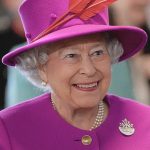

  • Michael Heseltine – 1993 Statement on DAF Trucks

    Michael Heseltine – 1993 Statement on DAF Trucks

    The statement made by Michael Heseltine, the then Secretary of State for Trade and Industry, in the House of Commons on 2 February 1993.

    The Government have been disappointed to hear about the financial problems facing the Dutch-based company DAF NV, which today filed for a legal moratorium on its debts. We are concerned about the implications for its United Kingdom operations.

    I regret that it has not been possible for the company and its bankers to put together a satisfactory restructuring package. We have kept in close contact with the company and with the Bank of England, which has been closely involved in trying to help the relevant United Kingdom banks come to an agreement with their Dutch and Belgian counterparts, which have led the consortium. The United Kingdom banks have done all that they were asked, but unfortunately not all the other banks have felt able to agree an acceptable financing package with the Dutch and Belgian Governments.

    The legal position of Leyland DAF should be clarified this afternoon. We have not participated directly in the discussions on the financial restructuring, as that primarily related to the company’s Dutch and Belgian activities.

    The Government stand ready to work closely with Leyland DAF, the receivers, banks and other interested parties to mitigate, as far as possible, the impact on United Kingdom jobs. We hope that it will prove possible for all those involved to find a means of creating a business with a long-term commercial future out of at least part of DAF’s United Kingdom operations.

    While regretting the particular circumstances affecting Leyland DAF, we must remember that the United Kingdom vehicles sector has made excellent progress during the past few months. In the midlands alone, Rover recently announced a 5 per cent. increase in output for its four-wheel drive vehicles in 1992 and a new £9.5 million fleet deal; Jaguar will be launching a £560 million investment plan on the back of a sharp rise in sales in the United Kingdom and the United States markets; and Lucas is to build a new £3.7 million factory, creating 350 jobs. We must continue to build on those extremely encouraging prospects.

    Mr. Cook

    Will the President of the Board of Trade précis his answer by confirming that, when I asked what Government assistance may be available, the answer that we got today was that there will be none for Leyland DAF? Is he aware that the news that he has just confirmed is another bitter blow to Britain’s shrinking industrial base? Will he try to understand that it is not enough to express disappointment for the work force, as he did today? The work force, who face the loss of their jobs, want to know what he is going to do to help save them.
    Will the right hon. Gentleman remember that he prefers to be known as the President of the Board of Trade? Does he know that Leyland DAF is the leader in the British truck market? If that market share goes on imports, how many more millions will it add to the trade gap? Will he remember that he is the Minister responsible for regional policy? What help will he offer the communities whose local economy will be devastated if those factories and their suppliers close?

    Will the right hon. Gentleman remember that he promised to intervene before breakfast, before lunch and before dinner? Why did he not intervene to stop that major British company going into receivership?

    Why is it that the Belgian and Dutch Governments were willing to underwrite the loans that would secure the company’s future but not the British Government? Why did the British Government not support that rescue package by underwriting it?

    Will the right hon. Gentleman accept that, as advised this afternoon by DAF, the minority who wrecked the deal in the banking consortium were all British banks—NatWest, Barclays and Lloyds? Why has he not had talks with them to press them to take the longer view of the Dutch and Belgian banks who want to rescue, not close, the plants?

    Today 5,500 people face the prospect of redundancy. When they hear the Government talk about recovery, it must sound like a Government who do not know what is happening in the real world. Will the President of the Board of Trade do them the justice of now admitting that Britain faces a real industrial crisis and needs an industrial strategy that tackles it?

    Mr. Heseltine

    The hon. Member practises his usual technique of undermining any British company or institution. He would have done well to read the press release put out by DAF, a copy of which I have. Perhaps I can quote from it in dealing with the serious allegation that the hon. Member made: However, both Governments”— that is, the Dutch and Belgian Governments— have informed the Board of Management of DAF N.V. that they consider a further delay in a final decision on the restructuring and long term financing proposals to be unacceptable … I do not understand how, faced with that public information, the hon. Member can suggest that the British Government have been dilatory in performing their duties. Nor do I understand how he can name and single out three British banks which, he says, did not co-operate without, as far as I am aware, one shred of evidence to substantiate the charge. Does he understand the damage that he does to British banking interests by so careless a use of language?

    The Labour party might have learned from its experience in putting hundreds of millions of pounds through the National Enterprise Board into the motor industry when it suggests handing out short-term working capital to a company of this sort that such action is unlikely to solve the problems that it ought properly to address. Will the hon. Member realise that my Department has done all that has been asked of it by the company itself? We have been in touch with the company, and it has made no specific request to us for specific financial aid of the sort that we are discussing today. We have been in touch with the Bank of England, and we know that it has been in touch with British banks.

    All the hon. Member seeks to do is to make mischief out of a very difficult situation. He also fails to understand what receivership is about. There is every reason to hope that at least some of these jobs can be saved. What now must happen is an orderly process of analysis so that other people in the market can make offers for parts of this company in order that there can, we hope, be a viable commercial opportunity for those parts of the business that can stand competitive strains.

    Mr. Den Dover (Chorley)

    Will the Secretary of State confirm that in Chorley and Leyland in Lancashire there is purpose-built accommodation, a test track for vehicles, a major assembly plant for vehicles which is the largest in Europe, and Multipart office and warehousing? Will he also confirm that the labour force in Lancashire is one of the hardest working, best qualified, most skilled and most co-operative and, therefore, looks forward to constructive discussions?

    Mr. Heseltine

    I know that my hon. Friend the Member for Chorley (Mr. Dover) and my hon. Friend the Member for South Ribble (Mr. Atkins) have been extremely energetic in making sure that the best interests of their constituents were drawn to our attention. I am delighted to confirm the references that my hon. Friend made to the work people of Lancashire. I am equally delighted to know that, while national average unemployment is 10.5 per cent., in the travel-to-work area of Preston it is 7.9 per cent.

    Mr. Terry Davis (Birmingham, Hodge Hill)

    Is the Secretary of State aware that the Leyland DAF van factory in Birmingham increased its production, its sales and its market share last year in spite of the reduction in the market as a result of the recession, that 2,000 people work at that factory in my constituency, and that the factory has been forced to stop production this afternoon because suppliers have stopped deliveries, putting even more thousands of jobs at risk? Is the right hon. Gentleman aware that the factory has, in turn, been forced to stop its deliveries, including those of components of the Range Rover—the four-wheel drive vehicle mentioned by the Secretary of State—so putting yet more jobs at risk?

    The Dutch and Belgian Governments have been engaged in direct talks with the banks in an attempt to save jobs in those countries. Why will not the British Government talk to the banks to attempt to save British jobs and avoid an industrial disaster?

    Mr. Heseltine

    I fully understand that the hon. Gentleman is deeply concerned about the large number of jobs that will be affected in his constituency. I can only repeat what I said in my first reply: my Department has been absolutely satisfied that the British banks and the Bank of England have been fully engaged in the necessary dialogue. It is now a matter of the administrators, the receivers and management of the company working out proper arrangements to secure, where possible, commercially viable jobs within the DAF organisation. That will not be helped by exchanges across the Dispatch Boxes of the House of Commons based largely on inaccurate allegations from the Labour party. We must let the receivers do their job. Jobs may well be saved as a result.

    Mr. Iain Mills (Meriden)

    Does my right hon. Friend recognise that many of my constituents live near the factory in Birmingham and, like the constituents of Opposition Members, have contacted me as they are greatly concerned about both the direct effect on their jobs and the indirect effects on the many component suppliers? Will he give me an assurance that he will do everything possible to facilitate a quick solution, whether partial or total, to the problem? The workers have literally been presented today with a closure.

    Mr. Heseltine

    I give my hon. Friend an unqualified assurance of the sort that he requested. My Department has kept in touch with DAF over this difficult period and will certainly continue to do so. Any proper assistance that we are able to provide we will provide.

    Mr. Roy Hattersley (Birmingham, Sparkbrook)

    If, as the Government claim, the recession is at last gradually coming to an end, how can it make sense to allow the collapse of a company which, when recovery comes, would make a substantial contribution to our balance of payments? The Secretary of State will recall that he said to my hon. Friend the Member for Livingston (Mr. Cook) that no request had been made to the Government for immediate emergency support to see the company through its difficulty. Were such a request to be made, what would the right hon. Gentleman’s answer be?

    Mr. Heseltine

    I think that the right hon. Gentleman will realise that the company has been seeking a solution to its difficulties over a significant period. Were there to be a request for the short-term working capital which is, as I understand it, at the heart of the dilemma today, such a request could be put to my Department by a myriad different companies in the motor industry and many others. It would be extremely difficult to find any argument that I could deploy for providing taxpayers’ support for working capital for one company to enable it to compete more effectively with other British companies in the same industry that produce competitive products.

    The second issue involves the development of an alternative product to the van, which is the principal product line of the DAF organisation in the midlands. That issue was discussed with my Department before the last election, when figures of the order of £450 million were suggested as the possible investment needed to deal with the long-term programmes. We made it clear that we could not contemplate a project of that sort. Under the regional assistance that my Department is entitled to provide, the maximum amount available would be £18 million. The House should understand that we are either talking about subsidising short-term losses and the implications of that for a wide number of companies in this country or we are talking about dramatically large investment capital projects, and the House having to decide why we should invest in one company when a range of other companies which have invested their own capital are surviving in the marketplace.

    §Mr. John Butcher (Coventry, South-West) I congratulate my right hon. Friend on resisting the ghosts of Upper Clyde Shipbuilders. My right hon. Friend is aware of the large implications that this has for the engineering industry generally in the west midlands. Will he reassure me that he will place his office at the disposal of private sector bidders, who may be involved in quite complex negotiations across the North sea, in order to expedite such negotiations, whether purely British companies or British companies in alliance with European companies, so that we may have a speedy solution?

    Mr. Heseltine

    I welcome my hon. Friend’s constructive approach, which is precisely the approach that is likely to bring the best possible outcome for the large numbers of people employed by DAF and for the viability of the separate component parts of that organisation.

    There is no question but that in Leyland in Lancashire there is a modern factory with order books for an important product, and one hopes that there will be alternative owners and capital for that product. It must also be self-evidently the case that the products sold by the company over the years leave considerable demand for spare parts which, again, must offer potential jobs in some companies based on what we have here today. But none of this can be dealt with without a detailed set of negotiations conducted by the receivers in the calm atmosphere that is essential to constructive progress.

    Mrs. Audrey Wise (Preston)

    Is the Secretary of State aware that compliments to highly skilled, hard-working workers will not be well received unless they are accompanied by some action? The right hon. Gentleman is apparently willing for taxpayers’ money to be used to pay unemployment costs rather than invest in maintaining them at work. He casts scorn on short-term capital investment. Why does he not then find some long-term solutions to prevent the 2,500 workers in the Preston-Leyland-Chorley area from being put on the scrap heap? If the right hon. Gentleman is so scornful of short-term solutions, who does he not look for long-term solutions?

    Mr. Heseltine

    The hon. Lady should have more faith in the quality of the work people and the quality of the product in Leyland. She would do well to remember that her party has indulged in massive long-term investment in the automobile industry with scant benefit to show for it.

    Sir Giles Shaw (Pudsey)

    My right hon. Friend will be aware that this company was set up by his predecessors in office at the Department of Trade and Industry, and he will recall the substantial losses that were written off at that time to enable the consortium between Leyland and DAF to survive in order to employ those persons in Lancashire whose considerable skills were at risk. Can my right hon. Friend confirm that the project, which was initially to provide a trans-European prospect for commercial vehicles, where DAF would have the entry into the Community, still remains a realistic partnership on offer to any other company that may well seek to acquire the considerable assets which British taxpayers have supplied to that plant?

    Mr. Heseltine

    My hon. Friend is right. One of the arguments in favour of the DAF deal with Leyland in 1987 was that DAF would secure for Leyland greater access into the European single market. That it has done, and that is an additional asset now available within the negotiations that must come under way. It is obviously important that those negotiations are given a fair chance.

    Mr. David Marshall (Glasgow, Shettleston)

    Is the Secretary of State aware that 500 jobs are at risk in the excellent Leyland DAF Albion works in Glasgow which makes axles for the company? As the Dutch and Belgian Governments are doing all that they can to help, will the right hon. Gentleman advise the Secretary of State for Scotland that the Scottish Office, Scottish Enterprise and Glasgow Development Agency will need to do everything possible to protect and maintain those vital, highly skilled jobs in Glasgow?

    Mr. Heseltine

    The hon. Gentleman cannot have listened to what I said about the Dutch and Belgian Governments. They have made it clear that they are not satisfied with the arrangements that have been offered by the banks involved, so it would be wrong for me to suggest to any colleague of mine in the Government, including the Secretary of State for Scotland, that he should seek to act in a way that neither of those two Governments is prepared to do.

    Mr. Phillip Oppenheim (Amber Valley)

    While everyone is understandably concerned about the possibility of job losses, will my right hon. Friend bear in mind when considering requests for financial assistance the huge amount of Government money that the predecessor to Leyland DAF received in the 1970s? Does he recall that, under a Labour Government during the period that it received that money, manufacturing output in this country fell, whereas, despite the recession, it has risen under this Government? Will my right hon. Friend bear in mind that any money that he might give companies such as Leyland DAF would have to be taken from other companies that might better be able to utilise it in creating jobs and products that can be successfully sold?

    Mr. Heseltine

    My hon. Friend is perfectly right. I can only reiterate that the Labour Government’s experience, through the National Enterprise Board, of investing huge sums of taxpayers’ money in what was then seen as the creation of a long-term, viable automobile industry in this country was wildly unsuccessful. During the course of the 1980s, very largely as a result of inward investment in the industry, Britain can now enjoy the prospect of moving back to a trade surplus in the automobile industry. That is because we have viable companies with profitable records behind them. It is absolutely clear that no purpose is to be gained from trying to repeat the mistakes of the past and the Government trying to double-guess the commercial market in that industry.

    Mr. Michael J. Martin (Glasgow, Springburn)

    As my hon. Friend the Member for Glasgow, Shettleston (Mr. Marshall) said, many people in Glasgow are dependent on the Albion motor works for employment. There are highly skilled engineers throughout the group, and if steps are not taken to protect their jobs Britain will lose an engineering base that has taken generations to build. If the right hon. Gentleman argues that the recession will soon be over, we shall need skilled men and women to cope with the new situation.

    Mr. Heseltine

    It is precisely because Labour tried to protect industry after industry from the effects of world competition that so much of Britain’s manufacturing base was eroded. The then Government tried to protect it in the way that the hon. Gentleman suggests that we should do.

    Mr. John Wilkinson (Ruislip-Northwood)

    My right hon. Friend rightly said that he is willing to maintain a dialogue with interested parties. Will he discuss with his colleagues in the Ministry of Defence the military implications of the possible failure of Leyland DAF? As A. W. D. Bedford, another supplier of military vehicles to the British armed forces, failed only recently, will my right hon. Friend and his MOD colleagues see whether some restructuring can be achieved, whereby the important indigenous capability to build military vehicles that Leyland DAF hitherto provided can be maintained?

    Mr. Heseltine

    My hon. Friend is right to draw attention to the Army truck order that was won by Leyland with the help of DAF. That contract has about another 18 months to go. That supports the point that I was making, that here is a company with a good product and order books—and, hopefully, someone in the commercial marketplace will come to invest in it.

    Mr. Malcolm Bruce (Gordon)

    Does the President of the Board of Trade recollect that at the time of the Leyland DAF merger I and others expressed concern about the long-term implications for the British truck industry? Admittedly, there has been investment, but the situation now is that a major sector of our industrial base faces destruction. Does not the right hon. Gentleman accept the inconsistency of his statement to the House? On the one hand, there are full order books and a competitive business; on the other, there is no role for Government in ensuring its continuity.

    Mr. Heseltine

    That is a classic example of the Liberal Democrats wanting it both ways. They claim to want a single European market and to believe in Europe, but the moment a company sets out to achieve a Europe-wide base they criticise us.

    Mr. Richard Burden (Birmingham, Northfield)

    If the right hon. Gentleman really believes that he and his Department were doing all that was necessary in the run-up to today’s announcement, how does he explain the fact that last week there was speculation in the press, particularly in Holland, that jobs in Britain would be at risk because of the Government’s failure to get involved in a rescue plan? Does the right hon. Gentleman dispute the figures and the effects on jobs in Birmingham, Glasgow and Leyland claimed by my hon. Friends? What does the President’s statement amount to, other than a wringing of hands?

    Mr. Heseltine

    The hon. Gentleman can start with the employment of 5,500 people in Leyland DAF in this country. I do not accept that that automatically means that all those jobs are at risk. It is hoped that there will be commercial solutions, which will produce long-term, viable opportunities for at least parts of the company and, therefore, for a significant number of the work force.

    I fully accept that there has been speculation about the company’s future for some time. We were fully aware of that. The only issue is whether we should have joined the Dutch and Belgian Governments, and whether we would have reached a different decision from theirs. I do not think that it was necessary for us to join them, because they were dealing with problems that were largely located on the continent; but, in view of the advice that we have received from banking sources, I do not see any reason for us to have reached a different decision.

    Mr. Alex Salmond (Banff and Buchan)

    Was the Secretary of State aware of the existence of the Albion works in Glasgow? He did not mention it until he was prompted. When did his Department first learn the extent of the serious financial problems enveloping the company? Was an intervention package prepared by his Department at any stage, and was such a package then rejected by the Secretary of State on political grounds? Has the right hon. Gentleman tried and failed, or has he just failed?

    Mr. Heseltine

    Yes, I was fully aware of the existence of the Albion factory in Glasgow. I have before me a list showing the location of Leyland DAF employees, and showing that the axles for the van were produced at the Albion works in Glasgow, which at the time employed some 500 people. The number of employees may have changed since then, but it is of that order.

    The hon. Gentleman asked whether an intervention package had been presented. If he was asking whether we were prepared to put money into providing short-term working finance, I can tell him that we were not asked to do that, and that, if we had been asked, we would not have done it.

    Mr. Bob Cryer (Bradford, South)

    Was not selling off British Leyland to DAF an act of sabotage in the first place, and were not the Government warned at the time that it could lead to the extinction of a significant part of British manufacturing industry?

    The Secretary of State keeps talking about refusing to put money into manufacturing industry. Given that he knows that between 10,000 and 20,000 jobs may be at stake—if the component manufacturing jobs are taken into account—why will he not argue the case for putting money into British manufacturing industry to keep our skills and our industry alive? He is prepared to put money into the dole queue to finance the millions who are unemployed, and to add to the queue at a rate of more than £9,000 per head per year. That simply does not make economic sense, or compassionate sense.

    Mr. Heseltine

    The simple answer is that, having been here as long as the hon. Gentleman, I have observed the track record of parties in government which have put money into what is called “manufacturing industry”. It always results in mounting losses, and in Governments eventually having to face unpalatable conclusions. The Labour party knows that, but is not prepared to recognise it.

  • John Major – 1993 Speech to Conservative Central Council

    Below is the text of Mr Major’s speech to the 1993 Conservative Central Council meeting, held in Harrogate on 6th March 1993.

    PRIME MINISTER:

    Yesterday this Conference paid its tribute to Nick Ridley.

    He was an original. A one-off. And whatever he did he faced the world square on and never once flinched.

    The Commons was the poorer when he left it. And the Party is the poorer for his loss.

    Mr Chairman, in the last two years events have thrown at this country everything they could.

    Abroad – we’ve had the Gulf War, the Yugoslav war, a world recession that gets worse abroad as it gets better here. There have been plans from Europe that we’ve had to water down or reject. At home we have had our share of world recession, a difficult general election, and conflicts on Europe that strike deep at the instincts of many in our Party.

    Mr Chairman, on these issues it’s right that we should have vigorous debate. When people feel strongly they should express their views. Argue their case. Fight their corner.

    But once we have taken our decisions on how to proceed, then I believe we should all support those decisions. The British people put us back in power to carry on with the full range of our policies. They gave us five years to beat inflation, create growth and jobs, improve choice, fight crime and maintain the unity of the United Kingdom.

    Mr Chairman, that is what I want to see this Party and this Government do. And I want to see us do it now – and I want to see us do it together. It is in difficult times like these that the Conservative Party most needs to be united – and to stay united.

    At the last election we had one of the biggest leads in votes ever recorded. But only a 21 seat majority – now, sadly, for the moment only 20. So these are difficult days. We no longer have a cushion of 100 seats, and those who want us to be successful know what that means. Let me say it bluntly – disunity is a luxury we cannot afford.

    Mr Chairman, none of us should forget the scale of the responsibility placed upon us. On April 9th last year, 14 1/4 million people turned to us – people of all ages, all walks of life, from all corners of Britain. Every one different. Each with their own personal hopes and fears. They all trusted us with the hard job that lay ahead.

    We must live up to that trust. That does not mean responding to every short-term whim. It does not mean avoiding difficult decisions. It does mean holding fast to the long-term course that will bring us prosperity, growth, and jobs, even in the teeth of short-term difficulties.

    Those short-term problems have often caught the headlines. But they have not prevented progress towards our long-term objectives. So let me put it all in perspective. Let me remind you of what we have done in the last eleven months – smack in the middle of a world recession.

    I’ll start with the Health Service. Remember what Labour said about health. They said if we won it would be the end of the Health Service. One year on, we have more National Health Service Trust hospitals and more GP fundholders providing better care to more patients than ever before.

    The end of the Health Service? One year on, it’s not the NHS that’s falling apart; it is Labour’s scares that have fallen apart. Remember that truly disgraceful election broadcast? That was the one in which Robin Cook predicted the end of the NHS. Well today the Health Service is moving on – and Robin Cook has been moved on. Out on his Jennifer’s ear – and deservedly so.

    As hospitals have become self-governing – running their own affairs – so have schools. Over 500 have chosen the new freedom to become Grant Maintained. They have moved out of the hands of local authorities and into the care of governors and parents.

    And we’re promoting subject teaching in primary schools – so much more important than vague topic work and generalised themes. So it’s maths, geography, science and history lessons. And putting emphasis right from the start on standard English and on the 3Rs.

    That, Mr Chairman, is the right Tory agenda – and we have put it in place in the first year. We’re supporting good teachers and putting the spotlight on the bad. Publishing the exam results of every school.

    Mr Chairman, those results should never have been hidden in the first place. Now we’ve brought them into the open. And they will never be hidden again.

    And, one more thing, Mr Chairman. When we talk of publishing the facts, I must say this to those teacher unions that are threatening to boycott tests – you are wrong. Life is a test. You do pupils no good by hiding them from reality.

    To teach children what they need to know, we must find out what they don’t know. Tests are an essential part of good schooling. Tests are here to stay. And I hope the teacher union leaders get that message loud and clear from this Conference. And, before I leave education, here’s something for the history books.

    By 1996 nearly a quarter of a million extra students will be in college – the biggest expansion ever. And when they are there they won’t have to join the activities of the National Union of Students – because we are ending the NUS closed shop.

    That’s the right Tory agenda – and all in the first year. And it is not only the NUS monopoly that is going – remember Neddy, that hangover from the 1960s, that corporatist relic?

    Well, that’s gone, too. Unlamented. We have scrapped it. And not before time. We are giving new freedoms to members of Trades Unions. And new powers for every individual to act in court to stop wildcat strikes. All part of the right Tory agenda – and in hand in the first year.

    And the Tory programme to promote ownership is rolling forward, too. We have introduced a new incentive for personal pensions. One that will help millions enjoy their retirement in comfort and security.

    In housing, we are back on course for the home-owning democracy. We have a new scheme to help tenants become homeowners by treating rents as mortgage payments. We’re giving leaseholders the right to buy their freeholds. And later this spring Michael Howard and his team will launch a new campaign to spread the Right to Buy.

    That’s the right Tory agenda – this Government’s agenda. Never mind the news – that’s the reality.

    All that sounds like a full menu for a full Parliament. Yet all I have done is to give you a selection of starters. Your starters for 5, 10, 20 years, years in which we will indeed – build a stronger and better Britain.

    Fine words, you say. But fine words butter no parsnips. What about jobs? I know that the main thing so many people seek above all is a worthwhile job. That is why, from April, we will have in place the most comprehensive package to help people back to work that we have ever seen in Britain: youth training, Training for Work, Restart, Job interview guarantees, business start up schemes. Schemes that will help up to 1 1/2 million of our fellow citizens keep in touch with the world of work.

    And those schemes all have one thing in common. Every one was opposed by the Labour Party. How can they defend that? They call for help for unemployed people and then vote against it.

    We want our training schemes to lead to full-time jobs. It’s permanent jobs that people want. The only way to get people permanently back to work is to help the economy grow. To improve our skills. To promote our exports. To widen our manufacturing base. And to make it worthwhile to start new companies.

    That’s the road back to jobs. Permanent jobs. Jobs with prospects. And that’s the road we are travelling. The outlook for our economy is good. Interest rates down. Inflation down. Strikes down. Manufacturing productivity up. Retail sales up. Exports up. That’s what’s happening. And that’s the way back to work for Britain. The only way.

    The prospects for the Nineties are good. It’s been slow, frustratingly slow. But we are on our way. And don’t just take it from me. Over the next two years Britain is forecast to have the highest rate of growth in Western Europe.

    If we have confidence in ourselves others will have confidence in us. And when confidence grows jobs must follow. Some people still haven’t quite grasped the progress we’ve made.

    So let me put this way. 1954 – that’s 39 years ago, the year Roger Bannister ran the 4 minute mile – that was the last time the January inflation rate fell to 1.7%.

    And 1956 – 37 years ago, the year Jim Laker took 10 Australian wickets for 88 at the Oval and, no, drat it, I wasn’t there! – that was the last time mortgage rates for first time buyers were as low as they are, now.

    So, for goodness sake, let’s not belittle what we’ve done. Let’s not run our prospects down. Let’s leave that to the Labour Party. Day after day they attack us for ‘talking the economy up’. What a crime. What a dreadful thing to do. Trying to instill confidence.

    Well, it’s about time we got after them for talking the economy down. When did you last hear John Smith say a good word about Britain?

    And another thing, is there anyone here who’s ever seen Gordon Brown smile? No one. I thought not. Is there anyone anywhere who’s ever seen Gordon Brown smile? Is there anyone who wants to see Gordon Brown smile? And by the way, has anyone yet seen Gerald?

    Mr Chairman, there’s something else that is absolutely crucial to business confidence – the certainty that Britain will help determine policy in Europe, and not be dragged along behind a policy made by others. We should remember what we have achieved for Britain in Europe this year. We have every right to be proud of it.

    We have completed the biggest free trade area the world has ever seen. We have reformed the Common Agricultural Policy after years of squabbling. We have put a ceiling on EC spending right until the end of the century. We have opened up the Community to new members. And we are changing the course of Europe – away from centralism and returning powers to member states.

    That is the classic British agenda for Europe. It is not the federalist agenda. On crucial issues we are making sure the final say sits where it should be – right here in Britain. So let’s not fear the future in Europe. Let’s go out and shape the future of Europe. Shape a market of 340 million, where businesses can compete, export and invest wherever they like – where future generations will have opportunities we never dreamed of to work and to travel.

    And we must shape a wider Europe. That’s what we decided at Edinburgh – to bring in new member nations, first from Scandinavia and later from central Europe. And we won agreement – against all expectations – that our old friends, the Poles, the Hungarians, and the Czechs would eventually join us.

    Do you remember how as the Iron Curtain fell we welcomed them to our Party Conference two years ago? Well, we are still working on their side. And now – in time – we look forward to them joining the European Community, too – as a result of our influence.

    The present Community is but a fragment of Europe. Our long- term vision is a Europe without trade barriers, a vast continent of free democracies, from the Urals to the Atlantic and from the Baltic to the Mediterranean.

    A Europe full of trade and free of war. We won’t achieve that speedily – but isn’t that what we should work for for future generations? So let me tell you what’s at stake. I know the concerns and passions aroused by arguments over our future in Europe. I see them in the House of Commons whenever we debate the Treaty of Maastricht.

    I understand the instincts and the patriotic feelings that motivate many in our Party who have doubts about the Treaty. I understand, and share, their pride in Britain’s great past. But we have to build a great future. So let me tell you, clearly and frankly, that I believe the fears of those who resist our European policy are mistaken.

    Mistaken because they underestimate what we have achieved in our negotiations in Europe.

    Mistaken because they have failed to focus on our wider vision of Europe.

    Mistaken because if we step aside from what we have agreed there would be an enormous economic price to pay.

    There would be an immediate blow to economic recovery. International investors, who have poured money into Britain, £100,000 million in the last five years, would turn their backs on us.

    Those investors want access to the European market. And if we sidelined ourselves they would no longer be certain that that would be the case. That is why the price of standing aside from the agreement we freely made would be heavy. As Douglas Hurd told you yesterday, it would be £50 billion off our national production over the next five years. I wonder how many jobs that would cost?

    And then there is that Social Chapter – another threat to jobs. Surely no-one in this Party – for any reason – would give houseroom to that. Where we want to be is on the inside track to prosperity, and outside the grasp of bureaucracy and socialism. Inside Europe and outside the Social Chapter.

    I know our Party. I cannot believe that anyone, when they have considered all the facts, could want to let slip those opportunities before us.

    Let me tell you what I believe. To do so would be to take a conscious decision to become irrelevant in Europe. That would be a decision not only for our time, but for our children’s also. It would be the surest possible way to impoverish our country and damage our standing in the world – almost beyond repair.

    So let us put aside the fears and hesitations that hold our Party back. We may have our differences. But they are as nothing to the things that unite us.

    So let us take the chance we have today – to mould Europe in our own image. Don’t let us shirk that challenge. In a thousand years of history we never have. And we must not now.

    Mr Chairman, I want British industry to win not just in Europe, but around the world. I want a different attitude to industry at every level in this country. I want people to see that making things matters. I want more that matters to be made in Britain.

    Our exporters need to know that the Government supports them. And where we can help to open doors and free up markets we will always do so. That’s why in the Autumn Statement we committed £700 million extra to help British companies win new orders. And when our businessmen travel abroad I expect all our embassies to work with them. Cultural exchanges are fine – but I want export deals as well.

    Mr Chairman, exports are booming. Leaving the factories faster than journalists leaving the Daily Mirror. Mirror, mirror, on the wall – are there any journalists left there at all? In the battle for exports I want Government out there in the field foursquare behind our businesses.

    A few weeks ago, I spent the morning in India, lunched in the desert in Oman, and had dinner in a palace in Saudi Arabia. And that day, as a result of months of effort by business and Government working together, we won orders for British goods worth billions and safeguarded thousands of jobs. These days there are no easy exports. The world is too competitive for that. More competitive than ever before.

    Those countries that once were captive markets are now manufacturing themselves or challenging us as rivals. The countries on the Pacific Rim have developed massive industries of their own. China is set to become a huge manufacturing power in the century to come. Against that background, we need to help British companies carve out a bigger place for Britain. But before we export, we have to manufacture. And we have to manufacture quality.

    That’s why we need to build up craft skills and practical training in every part of Britain. End once and for all that senseless prejudice against the best of our brains going into commerce and industry. That prejudice is damaging – and we can no longer accept it.

    Mr Chairman, by helping business I don’t mean artificial subsidies to industries. I mean setting the right economic structure for business. I mean pursuing the right policies for business. I mean having the right curriculum in our schools. I mean reforming vocational training. I mean lifting burdens from the back of businesses.

    Of course, we need some regulations. But there are people in Brussels, in local councils and, yes, in Whitehall who seem to have a mania to hold back the future in a mesh of pettifogging detail.

    So I have told every Department of State: scrap unnecessary regulation. It’s a simple message. Red tape means lost jobs. And that doesn’t only apply to large companies like ICI. It applies to the smallest businesses and local services too.

    You know what I mean. Health and safety enthusiasts bent on eliminating every conceivable – and inconceivable – risk. Local councils badgering good nursery schools when they’d be better employed helping them.

    The food safety people who tell us that what we’ve been eating for generations will certainly kill us if we don’t stop instantly. Well we’ll certainly die a good deal sooner if we do stop eating instantly. Mr Chairman, it’s all gone way over the top. Well, I’d rather it went in the bin.

    Isn’t it barmy? Would Drake have been in time to meet the Armada, and would Nelson have made Trafalgar, if an inspector had been on hand to say ‘Hold everything – we haven’t checked the ship’s biscuits!”

    Mr Chairman, I said earlier that one of the reasons we were elected was to keep up the fight against crime. Vandalism; burglary; car theft. Crimes against property; crimes of violence; crimes involving drugs.

    The fear of crime lies deep in the instincts of law-abiding people. They find it hard to understand how others move outside the law, careless of the interests of their neighbours, preying on the property of others, even threatening their lives. I said last week that we need to understand less and to condemn a little more. That was not a simple cry for retribution.

    My point was this. Unless society sets rules and standards and enforces them, we cannot be surprised if others flout them. It’s true we mustn’t exaggerate the problem. Compared to many others in the world, Britain is still a safe country.

    But those who point to that and say ‘do nothing’ are wrong. I say to those people: even if the problem here is smaller, it’s still far too big. And every single victim of crime in this country will agree with that.

    That’s why this Government has done so much to step up crime prevention and crack down on crime. There are too many violent offences – that’s why we have increased penalties against them, especially for those thugs who go out carrying firearms.

    There is too much drug dealing – that’s why we’ve taken powers to confiscate the assets of those who sell drugs and wreck the lives of young people. There have been too many lenient sentences – that’s why we’ve given the Attorney General power to refer sentences to the Court of Appeal. And one final example – it is intolerable that some offenders charged with a crime go out and commit another while they’re on bail. I want to see those further offences reflected in the sentences they receive.

    Mr Chairman, there can be no doubt about where this Party stands in the fight against crime. And no doubt about the support we have given to those who fight it. We have given our police forces better pay and more resources than any Government in history. Now we must help them get even better results in everything they do. That is why we are now reviewing the effectiveness and the organisation of British police. I want our police to the most modern and the most efficient crime-fighting force in the world.

    Mr Chairman, the issue of crime runs deep. To catch and to punish is to deter. But we want to prevent crime too. So we must go to the roots of why some young people do what they do. Too many children have been denied the proper guidance they need in their own homes and schools. Of course, the authority of the family comes in here.

    And, yes, the churches – they may have a legitimate role to criticise, but they certainly have a role to play. And there’s another factor that goes right home in every sense. And that’s too much violence in videos and on television. What we watch is the single biggest influence on many people’s thinking.

    We’re an open society. We can’t censor television. But we can say to parents – control what your children watch. And we can say to those who make and distribute films and videos – think whether a relentless diet of violence won’t have a serious effect on the young. And we can say to television programmers – don’t just be careful when you show it, be careful what you show.

    Mr Chairman, Government alone cannot change behaviour. Concepts of right and wrong are something for all of us. But there are some things Government can do – and we will.

    First, truancy. It is stark staring obvious to me that if children are staying out of school, they are not learning what they should be and they are probably learning what they shouldn’t. For too long the facts on truancy have been hidden by a conspiracy of silence. So from this autumn in our new league tables we will make all schools publish openly their levels of attendance.

    We will find out where the problem is worst. We’ll target it and tackle it. I want our children in class. Not in trouble. And, Mr Chairman, we are taking another step. This morning Ken Clarke told you about his new proposals to set up secure centres for that hard core of youngsters who go on offending and reoffending, devoid, it seems, of any sense of fear or guilt about what they do.

    Some say we shouldn’t respond. They say it’s a relatively minor concern. I don’t agree. I say that not to respond would be a double dereliction of duty. A dereliction of duty to the public at large. And, worse, a dereliction to those children. Because we let children down if we don’t set boundaries and enforce them. For their own good and for the good of their communities we must take those persistent young offenders off the streets.

    It is a clear-cut idea, carefully worked up over these last few months, targeted directly at an obvious gap in the law. How strange – but how very revealing – that in a matter of minutes it was condemned out of hand by the new model Labour Party. When I heard that, it sounded just like the old unreconstructed Labour Party to me.

    When the test came they failed it – so let’s give them another chance. We’ll set them another test. Eleven times in all Labour have voted against the Prevention of Terrorism Act. I find that unbelievable.

    And so, I suspect, do the people in the battle against terrorism who are putting their lives on the line to protect the lives of others. Terrorism is the biggest crime of all. So for Labour let it be the biggest test of all. So no hedging, no weaving, no messing about. Let them vote with us next week – or pipe down about crime.

    Mr Chairman, I’ve reminded you of some of the things we have done in these last few months – and set out some of our plans for the future. As always this Party is a reforming Party. And as a nation we need to reform. Because we live in a rapidly changing world. Change can be frightening. We must manage it carefully. Nurture it to our national advantage. Our watchword is – to hold on to the best of the past and to create the best for the future.

    Mr Chairman, last March it was at this Central Council that we launched the General Election campaign – the election that no-one thought we could win. We took our message to every part of our country. It was the roughest, toughest campaign for years. But we won it.

    And how did we win? By sticking to our principles. By keeping our nerve. By standing together. And, above all, by staying together. United. That’s how we won – and that’s a lesson we must never forget.

  • Teddy Taylor – 1993 Speech on the European Communities

    Below is the text of the speech made by Teddy Taylor in the House of Commons on 9 December 1993.

    It is a shame that we shall not be able to vote on amendment (c). It would have been helpful to the House and to the public in general if we could have simply recorded the fact that the debate is pointless, worthless and useless, and can have no influence on determining developments in the wide range of issues that are mentioned in the huge pile of documents. It is terribly important that people should realise that, in the House and outside.

    I ask hon. Members, look at that huge pile of documents, dealing with vast expenditure! There is nothing that we can do and, no matter how we vote about anything, it is simply a waste of time. It might help the unemployed and those people who are suffering if we were to get across the simple message that no matter how they vote, no matter what they do, the power has gone. The second message that we have to get across—although it is sad to say so, when we have the always most courteous Foreign Secretary opening the debate—is that it is important that we start telling people the truth.

    I heard, and all of us heard—and I am sure that he meant it—the Foreign Secretary say that we now have control of the funds; we are not going to have overspending; we cannot go across the budget. In Edinburgh, however—I have the letter here from the Agriculture Minister—even though there was a budget laid down for spending on agriculture which one could not exceed by a penny because the Foreign Secretary and civil servants would prevent us, in practice they agreed to exceed it by an extra £1 billion on the basis that that was a special reserve fund.

    Mr. Iain Duncan Smith (Chingford) Does my hon. Friend agree that half the problem with the CAP is that, although it is aimed at farmers, to help to sustain their income—that may be a laudable aim—60 per cent. of the money goes to the administration and only 40 per cent. reaches the farmers?

    Sir Teddy Taylor My hon. Friend is so right. The CAP is totally wasteful and damaging to almost every interest. I find in my constituency, and I am sure that Treasury Ministers find in theirs, that poor people have to pay more and more for their water rates because vast sums are being spent on huge machines for taking out of the water the nitrates, pesticides, and all the other things that are thrown into the ground in order to produce more and more food. We have to spend a fortune on destroying or dumping those substances.

    I was at Hanningfield recently, and I wish you had been there, Mr. Deputy Speaker, to see how the Essex water company—now privatised and French-owned—is spending millions of pounds on a new procedure for taking out pesticides. I asked, “Wouldn’t it be better if we didn’t have all those nasty nitrates and things in the ground in the first place?” I was told, “Of course.” And it is the water rate payer who foots the bill.

    The right hon. Member for Bethnal Green and Stepney (Mr. Shore) told people the facts of life, and he will accept that there is little point in saying to the voters. “Those nasty Tories are putting up your water rates; Labour will not do that,” when we know what is really going on. Poor people are suffering and their burdens are increasing.

    Secondly, it is sad to hear all the assurances being given to try to pacify us. For example, our courteous Foreign Secretary—with sincerity, doubtless—talked about all the things that were going wrong, with people breaking the rules, and told us that the Commission would now impose fines. I have been looking at the figures, and they are frightening. The Court of Auditors report is one of the big documents that I mentioned earlier, and it shows that, although millions of pounds have been levied in fines, only 10 per cent. of them have been collected. There is a great new mechanism to sort everything out, supported with enthusiasm by the Liberal Democrats and designed, once again, by those clever Foreign Office civil servants to ensure that people do not do nasty things. Yet the fines are still to be paid; only 10 per cent. have been paid over many years.

    Thirdly, we must watch carefully what is happening on the continent today. It is frightening, and I hope that: the Economic Secretary to the Treasury will answer one simple question. I have been horrified to see that the other European countries have been borrowing vaster and vaster sums of money. All of us, even those who do not have degrees in economics, know that that simply cannot go on, because there is a limited amount of money to lend—unless we start printing.

    The whole message of Maastricht and of the EC is that one should not print money. Even the Leader of the House would stop us if we tried to print money in this country. Continental countries are borrowing huge sums of money this year and next. Germany is borrowing £57 billion, and we are told that France is borrowing £30 billion—although we know that that sum has now increased. Italy is borrowing £70 billion; and Belgium is the worst of all. Where will the money come from?

    The Treasury in Britain is in good condition, because the currency is strong, so we are ahead of schedule. Unfortunately, the European countries will not be able to do that. I understand that some money can be borrowed domestically. In Britain about £22 billion can be obtained from the institutions. But much of the money has to come from other sources. Where will it come from?

    I have been told by my friends who advise the insurance and banking firms of which I am a director that, basically, it is the Arabs and the Japanese who provide the cash. But the poor old Arabs are having a difficult time these days, because the price of oil has dropped like a stone, so they do not have so much to lend. The Japanese, too, have plenty of problems of their own, and are holding on to their money. I hope that the Minister will comment on that, because I fear that early next year, because so much money is being borrowed and there is a limited amount of money available for loan, there will be a sharp rise in interest rates on the continent. I realise that that may not happen—although I believe that all the conditions are in place—but if it does, what the blazes will we do about it?

    There are now 17 million unemployed people on the continent. That is a horrendous figure. We can see the instability in Europe; it is shown by what has happened in Germany. We have seen the uncertainty and the attacks on minority groups there. In Italy—a delightful country—people voted for fascism or communism in the local government elections, not because they especially like those things but as a way of saying, “Please let us have a strong Government.” With an unstable situation, and unemployment high and rising, if there is a sharp rise in interest rates, what on earth will we do about it? I fear that there is a horrible danger.

    Our Ministers at the Treasury and the Foreign Office, or at least most of them—now that there has been one resignation things are much better—are decent, respectable, sincere people. But it worries me sick that we are deluding ourselves about what is happening. I have been worried about what happens to poor people and the unemployed in the EC ever since I came to the House. I have probably been considered a silly minority person, putting forward a minority view, but it makes me sick to see people made unemployed unnecessarily because of the stupid exchange rate mechanism and all that came with it.

    The facts are there and we all know what they are. It makes me angry to see poor people suffering because they have not got the money to pay their electricity bills or even to buy a light bulb when I know that, even according to the Foreign Secretary, all those people are paying an extra £28 a week for the stupid CAP. Think what a boost it would be to poor people in Britain if we could say, “You can have £28 extra a week—and an extra £3 a week for the cost of membership of the EC.” I have been talking about such things for a long time.

    I know that Britain is now more popular in the EC. That nice chap Boris Johnson, who writes for The Daily Telegraph, says that Britain is more accepted because the Chancellor of the Exchequer has been disclosing his personal support for the goal of a single Euro-currency. That may make him more popular in Brussels, but whether it does or not, please let us face up to the possibility that something nasty may happen. We must ask ourselves what we shall do if it does.

    I am afraid that we British are comforting ourselves by saying that we are the best in Europe, but we all know that we are doing well economically not because we have a brilliant Government or a brilliant Opposition, but because we had the boost of getting out of the ERM. That made our currency and our interest rates drop like stones. It is rather like having an Australian uncle who sends one £1,000 to help with one’s financial hardship—it makes one feel good for a while. But that is not happening on the continent. It does not help us or the people there if we take the attitude, “We are the best in Europe and we are doing terribly well.”

    Will the Minister say whether he thinks that I am right in any way to say that there may be a terrible problem with a sharp rise in interest rates on the continent next year? Will he tell me what we can do about that if it happens?

    It is too late for Parliament to control the legislation. Maastricht has been passed, so to that extent our power is useless, but we must think, “What about the people?” What about the poor and the unemployed of Europe, who are now in a horrendous position? What shall we in Britain do if by chance things continue to get worse, and we have the social upheavals and misery that we have seen in Europe?

    Conservatives must face the facts. We cannot go on kidding ourselves about the European People’s party, and saying that we are not linked with it, and have nothing to do with it. We may say that although we all sit together and work together, we do not agree on anything, but everyone knows the score. There was a meeting in Athens in 1992. The Conservative Members of the European Parliament and the members of the European People’s party were there, and a great document was drawn up to say that the EC should be given powers of taxation.

    We should not bother about all the talk about federalism, because a federal Europe would be better than what we have now. I do not understand why Ministers keep saying that they will fight to the death to avoid a federal Europe. If we had a federal Europe, at least some things would belong to us. However, at some stage the Conservative party will have a real problem in deciding how to carry on with our stable mates—

    Mr. Cash Would my hon. Friend care to know that the congress of that great European People’s party is meeting this afternoon? Furthermore, it appears that it may publish its manifesto tomorrow. It was not so long ago that Mr. Herman, the rapporteur of the Christian Democrats, published the European Parliament’s working document on a new constitution which said that if we did not go along with it all we would be expelled. Does my hon. Friend not think that that is becoming an increasingly reasonable proposition, from some people’s point of view?

    Sir Teddy Taylor All I am saying is that the Government and my hon. Friends—[Interruption.] My hon. Friend the Member for Esher (Mr. Taylor) does not agree. But he is a good guy. [Laughter.] I mean that sincerely; I am not trying to be funny.

    It is crucial to stop pretending that people are stupid. We cannot go into the European elections and treat people as stupid by saying that we do not really have anything to do with the European People’s party; the names of the candidates simply happen to be in the same box. It will not wash. Similarly, we should not think that people are stupid when we talk about the EC. They know what is happening to unemployment on the continent. They are not daft. They know what is happening to prices which they must pay unnecessarily. They are not stupid. They can see the damage that is being inflicted by the mad EC system of everything being based on artificial prices and more money being spent.

    I have been a Member for a long time. The same thing happens every time we debate a treaty. Ministers say, “Do not worry—we will get tough with the nasty Euro-guys. We will kick Mr. Delors down the stairs. Everything will be sorted out.” Sadly, it is continuing—more money, more power, more waste, more extravagance, less conservatism, less control for the people and more control for the bureaucrats.

    This is a pointless, useless debate and all we can do is to express our views. The crucial point is that we must appreciate that something nasty will happen early next year. If we do not wake up to it, and if we do not treat people as adults and stop pretending that they are stupid, we will have a horrible democratic mess.

  • Nigel Lawson – 1993 Maiden Speech in the House of Lords

    Below is the text of the maiden speech made by Nigel Lawson in the House of Lords on 14 July 1993.

    My Lords, I am most grateful to the noble Lord, Lord Jenkins—who has just sat down—for his expression of interest in what I am about to say. I shall try not to take too long in saying it. I suspect it is somewhat unusual, although I believe by no means unprecedented, to make one’s maiden speech during the course of the Report stage of a Bill. To those of your Lordships who feel affronted by my departure from custom, I can only apologise but perhaps plead in mitigation that this is no ordinary Bill and that this amendment is no ordinary amendment; not to mention the fact that, having had the privilege of being a Member of your Lordships’ House for a year, it was probably about time that I broke my cluck anyway.

    It is a particular pleasure to speak in a debate initiated by my noble friend Lord Blake. My noble friend was my politics tutor when I was an undergraduate at Oxford some 40 years ago. I may say that he survived the experience remarkably well. As a result, I always pay particular heed to what he has to say.

    It seems to me that at the heart of this debate lie two distinct questions. The first is whether a consultative referendum has any part in our constitution; the second is whether, if so, this Bill provides one of those rare occasions on which such a referendum is called for.

    As to the first of those questions, I am happy to agree with my noble friend Lord Blake. The precedent that has to some extent inadvertently been set in recent years, that fundamental constitutional change be put to the people in a referendum, is one that I welcome. I welcome it because it buttresses a constitution that is badly in need of buttressing. But I have to agree with my noble friend the Leader of the House that those who advocate a referendum on Maastricht do not strengthen their case by praying in aid the fact that at the last general election all three political parties were in favour of Maastricht, thus depriving the electorate of the possibility of casting a vote against it. Even if that had not been so, a general election is not an occasion on which a single isolated issue can be put to the people, as Mr. Heath discovered in 1974.

    But much more importantly, all-party agreement is not the only way in which the people can be deprived of the opportunity to vote against a proposal. It happens all the time. The people had no opportunity, for example, to vote against the Single European Act, which was ushered through Parliament under the leadership of my noble friend Lady Thatcher. As an issue it was not even in contemplation at the time of the 1983 general election and by the 1987 election it was already a fait accompli.

    No, the question—it is an important question—is simply whether, unlike the Single European Act, the Maastricht Treaty involves such a fundamental change to our constitution and such a grave loss of national and parliamentary sovereignty that it should, on those grounds and those grounds alone, be put to the people in a referendum first before final ratification can be contemplated.

    Those who claim that the objective of the architects of the Maastricht Treaty is to replace the European Community of nation states by a single European superstate are clearly right. There is nothing disreputable about such an objective, although for my part, as a longstanding proponent of European unity, I believe it to be profoundly mistaken and, if it were ever to be imposed on the peoples of Europe, a blueprint for disaster. But I repeat: there is nothing disreputable about it. All that might perhaps be considered disreputable would be to deny that that is the objective of the architects of the Maastricht Treaty, since it manifestly is so.

    But the question to which we have to address ourselves is whether the Maastricht Treaty in fact achieves or can be expected to achieve that objective. The heart of the Maastricht Treaty and the means by which its federalist architects seek to achieve their political objective is monetary union, the replacement of the individual European currencies and central banks by a single European currency and a single European central bank. That is the heart of it.

    I believe that there are two distinct constitutional dimensions to it. In the first place the loss of one’s national currency and of the ability to possess a national monetary policy is in itself a constitutional change and a loss of national autonomy of the first importance. But it does not stop there. It is envisaged that monetary policy ‘would be conducted by a European central bank which is politically independent.

    The idea of central bank independence has aroused increasing interest in recent years. I myself have long made clear that I favour conferring independence, within an appropriate statutory framework, on the Bank of England. But what is agreed on all sides—and the Prime Minister recently made this point in another place—is that in a democracy independence must be accompanied, as indeed it is in all those countries that already possess an independent central bank, by accountability. That involves both co-operation with the elected government of the day and open accountability to Parliament. So long as there is no single European government and no genuine Single European Parliament, a European central bank, which would arguably be the most powerful entity in the entire Community, would be effectively unaccountable and thus democratically unacceptable.

    As the architects of Maastricht are doubtless aware, the only way in which that dilemma could be resolved would be to create the European political institutions of a genuine European Parliament, a European finance ministry and a European government that democracy itself would then demand. Thus would the superstate be born. However, in regard to this country, none of that is in the treaty before us today, containing as it does a protocol specifying that the United Kingdom shall not be obliged or committed to move to the third stage of economic and monetary union without a separate decision to do so by its government and Parliament. It is of course only at the third stage that the single European currency and European central bank are planned to come into being.

    It is clear that Her Majesty’s Government, by negotiating that protocol, recognised the special political and constitutional significance of monetary union. Without monetary union the Maastricht Treaty is not, in my judgment, of any greater constitutional importance than the Single European Act (in the preamble to which, incidentally, the objective of monetary union was for the first time brought back to life from the grave in which it had lain since the collapse of the Werner plan in the mid-1970s).

    However, should there come a time when this or any future British Government are so unwise as to conclude that this country should participate in a European monetary union, with all its political consequences, that would be a decision of such momentous constitutional significance as to warrant not merely the separate approval of Parliament at a time as provided for in the treaty before us, but also a prior referendum of the British people. Unless and until that time arrives—and for a number of reasons I rather doubt that it ever will—I do not believe that the case for a referendum is made and I shall vote tonight accordingly.

  • David Rendel – 1993 Maiden Speech in the House of Commons

    davidrendel

    Below is the text of the speech made by David Rendel in the House of Commons on 19 May 1993.

    Thank you, Mr. Deputy Speaker, for giving me this early opportunity to do what the Prime Minister would no doubt describe as “breaking my duck”.

    As is traditional, I should like to begin by recalling the sad circumstances of my election to the House. In February of this year, my predecessor, Judith Chaplin, tragically and very suddenly died after what had appeared to be a routine and successful minor operation. Her death was a great loss not only to the House, and particularly to her many close friends here, but also to all of us in west Berkshire. I do not think that anyone doubted that she was a woman of immense ability. Indeed, she was believed on all sides to be destined for high office. For her parliamentary career to be cut short after only 10 months was indeed a tragedy.

    Sadly, just one week after he had given the oration at Judith’s memorial service, her predecessor, Sir Michael McNair-Wilson, also died. He too will be long remembered with great affection by many in this House, as well as by all of us who knew him in west Berkshire. He had many friends and, so far as I know, not a single enemy, even among those who, like myself, were his political opponents. But, above all, we shall remember him for his immense courage after his health failed him. He not only remained a Member of the House while on kidney dialysis, but fought and won in a further general election. It is a great sadness that he enjoyed less than a year of retirement before he too died.

    Both my predecessors were admired greatly as first-class, hard-working constituency MPs. As I said in my acceptance speech, they will be a very hard double act to follow. The constituency that they have passed on to me covers almost half of the area of Berkshire. Although it is dominated by the two largest towns—Newbury and Thatcham—nearly half the population live in the town of Hungerford, in the larger villages such as Lambourn, Compton, Mortimer and Burghfield Common, or in the smaller villages and outlying settlements spread across the rural area. With the M4 cutting across the constituency from west to east, we lie in the now somewhat tarnished silicon valley, with high-tech industries providing a large share of local employment. We are also, of course, famous for our racing stables, particularly in Lambourn and West Ilsley.

    Many hon. Members will, for one reason or another, have had cause to visit our beautiful constituency during the past few weeks. Indeed, there was a time when we saw so much of the hon. Member for Winchester (Mr. Malone) that I began to wonder whether he was looking for a home in the area. It is, of course, no surprise to me that people should wish to visit west Berkshire, a very large proportion of which is designated as an area of outstanding natural beauty, but I suppose that it is only fair to say that, of the two principal tourists who visited us from Somerset recently, one—the right hon. Member for Yeovil (Mr. Ashdown), who often sits in the seat that I have temporarily occupied today—got a rather better reception than the other.

    It is because so large a proportion of our population live in the rural area that I particularly wished to speak in this debate. Over the past few weeks, hon. Members on both sides of the House have found their mail bags full —as I have done—of letters pleading for the retention of rural sub-post offices. Indeed, if the Secretary of State has done anything for post offices recently, it is perhaps that many extra stamps have been sold to pensioners who have written to their Members of Parliament on this subject.

    But it is not just a matter of letters. As I went round my constituency during the recent by-election, I was struck by how often this issue was raised on the doorstep. As we all know, rural sub-post offices are often housed in the village shop, and thousands upon thousands of our village shops are dependent on their post office income for survival.

    Let me illustrate briefly how important these village shops are for life in rural areas by telling the House about what one village postmistress said to me only a week or two ago. She told me about the lady who comes into her shop almost every day, takes just one or two items off the shelves, and then waits to pay. After a while, the attendant at the till motions to the lady, to indicate that it is her turn to pay, but, in reply, the lady stands back and motions others to go ahead of her.

    At first the postmistress could not understand why the lady should act in this way, but eventually it dawned on her that the lady comes into the shop not merely to buy her daily rations but also because the shop is her sole meeting point for contact with her fellow human beings. She lives on her own—a lonely existence, without relatives around her—and her contact with humanity consists of her daily visit to her village shop-cum-post office, where she always waits at the end, of the queue, listening to the village gossip.

    For all too many people, the village shop is now the only escape from their well of loneliness. If we lose such shops, we shall lose a vital ingredient of the quality of life in rural areas.

    Let there be no doubt that the sub-post office system is vital to the survival of village shops. I have long since lost count of the number of letters that I have received, mainly from elderly people, but also from those in receipt of various other benefits as well. They have all stated that their local post office is now the only remaining place in the village where they can obtain cash. The banks have mostly long since closed their village branches.

    If the post offices close as well, the only option will be a trip into town. It may sound easy, but it is not when people have to rely on public transport because they are too old or too disabled to have a car of their own. Public transport has more or less disappeared from most rural villages. Even when a bus is available, many people have written of how a trip into town to draw their pension will cost them more in bus fares than the total increase in their pensions this year.

    Of course I understand that the Secretary of State intends to leave it to the individual to choose between payment through a bank and payment through a post office, but that is not the choice that people want—a real choice for them means choosing between paying through a bank in the town or paying through the post office in their local village. That choice is under threat today.

    I understand that the Secretary of State wishes to reduce the taxpayers’ subsidy to rural post offices, but surely hon. Members should take a wider view. Yes, we can save the taxpayer money by reducing the subsidy to rural post offices, but what about the far greater cost to the taxpayer of the extra traffic on the roads as more and more people have to drive their cars into towns? What about the cost of car parks, petrol and environmental pollution?

    The overall cost to the community caused by the loss of the sub-post office system will be far greater than any possible savings. Let all hon. Members join to save village sub-post offices, not by merely giving a vague pledge—such as the Secretary of State gave about some national network—but by giving a specific pledge that the number of sub-post offices will not be further reduced. A small, but important, aspect of our country is in danger. It is our duty to save it before it is gone for ever. I therefore urge hon. Members to vote for the motion, not for the Government’s amendment.

  • Queen Elizabeth II – 1993 Queen’s Speech

    queenelizabethii

    Below is the text of the speech made by HM Queen Elizabeth II in the House of Lords on 18 November 1993.

    My Lords and Members of the House of Commons,

    The Duke of Edinburgh and I look forward to our tour of Caribbean countries next spring. We shall visit France to inaugurate, with the President of the French Republic, the Channel Tunnel in May; and to attend the ceremonies to mark the 50th Anniversary of the Normandy Landings, in June. We shall visit Canada to attend the Commonwealth Games in August.

    My Government attach the highest importance to national security. They will maintain full support for the North Atlantic Treaty Organisation. They will work to secure NATO’s adaptation to the changing security environment, and to continue developing the operational role of the Western European Union. My Government will work for full implementation of the Conventional Armed Forces in Europe Treaty, and for the entry into force of the Open Skies Treaty. Britain’s minimum independent nuclear deterrent will be maintained.

    My Government will work for the effective implementation of the Chemical Weapons Convention, to prevent proliferation of weapons of mass destruction, to promote the indefinite and unconditional extension of the Nuclear Non-Proliferation Treaty and to encourage international responsibility in conventional arms transfers. They will take part constructively in negotiations on a verifiable and comprehensive Nuclear Test Ban. They will continue to help with the safe and secure transport of nuclear weapons for dismantling in the former Soviet Union.

    Now that the Treaty of Maastricht has entered into force, My Government will attach particular importance to implementing the new common foreign and security policy and intergovernmental co-operation in the fields of justice and home affairs. They will work to ensure that the principle of subsidiarity is applied to European Community legislation. My Government will promote financial and budgetary discipline in the Community. They will work within the Community for a successful conclusion to the Uruguay Round of trade negotiations.

    My Government will work for a rapid conclusion of accession agreements with Austria, Finland, Norway and Sweden, and will continue to put forward the case for European countries which are ready and wish to join the European Community.

    My Government will strive for a peaceful settlement in the former Yugoslavia. They will provide help for political and economic reform in the states of the former Soviet Union, and their integration into the international community.

    My Government will play a constructive role in strengthening the United Nations’ capacity to undertake peacekeeping and preventive action. They will work for full Iraqi compliance with Security Council Resolutions.

    My Government welcome the recent breakthrough in the Middle East peace process. They will continue to support efforts to bring lasting peace to the region.

    My Government will work for the long-term stability and prosperity of Hong Kong and to co-operate with China to implement the Sino-British Joint Declaration in the best interests of the Hong Kong people.

    My Government will play an active part in the Commonwealth. They will support construction of a democratic society in South Africa.

    My Government will maintain a substantial aid programme to promote sustainable development and good government.

    My Government will introduce legislation to place the Secret Intelligence Service and Government Communications Headquarters on a statutory basis; and to make further provisions for the oversight and accountability of them and the Security Service.

    In Northern Ireland My Government will continue their efforts to defeat terrorism through impartial and resolute enforcement of the law, to uphold the democratic wishes of its people and seek political progress by broadly based agreement, to strengthen economic progress and to create equality of opportunity for all sections of the community. They will maintain positive relations with the Republic of Ireland.

    My Government will maintain their fight against terrorism, throughout the United Kingdom and elsewhere.

    Members of the House of Commons,

    Estimates for the public service will be laid before you.

    My Lords and Members of the House of Commons,

    My Government will continue with firm financial policies designed to support continuing economic growth and rising employment, based on permanently low inflation.

    My Government will bring together tax and expenditure decisions in a unified Budget. Fiscal policy will be set to bring the budget deficit back towards balance over the medium term. My Government will reduce the share of national income taken by the public sector. They will continue to promote enterprise and improve the supply performance of the economy.

    The Citizen’s Charter will remain central to My Government’s programme for improving public services.

    Legislation will be introduced to give force to the changes in the European Community’s system of own resources following the agreement at the Edinburgh European Council.

    Legislation will be introduced to facilitate deregulation and to remove obstacles to contracting out by central and local government.

    My Government will continue to give priority to law and order. Legislation will be introduced to allow the courts to deal more effectively with young offenders and to make improvements in the criminal law.

    A Bill will be introduced to improve the organisation and management of the police so that they are better able to combat crime, and to strengthen the administration of magistrates’ courts.

    My Government will continue to develop their policies on social security so that help is concentrated on those most in need and expenditure is kept within affordable limits. Legislation will be introduced to raise the National Insurance Contributions paid by employees.

    Legislation will be introduced to privatise British Coal.

    My Government will bring forward legislation to reform local government in Scotland and Wales.

    My Government will introduce legislation to establish new arrangements for funding teacher training in England and Wales and to reform student unions.

    My Government will bring forward a Bill to reform the law on Sunday Trading in England and Wales.

    Bills will be introduced to take forward Environment Agency planning, and to reform the law on trade marks.

    Other measures will be laid before you.

    My Lords and Members of the House of Commons,

    I pray that the blessing of Almighty God may rest upon your counsels.