Tag: 1992

  • John Major – 1992 Speech at Conservative Party Rally

    John Major – 1992 Speech at Conservative Party Rally

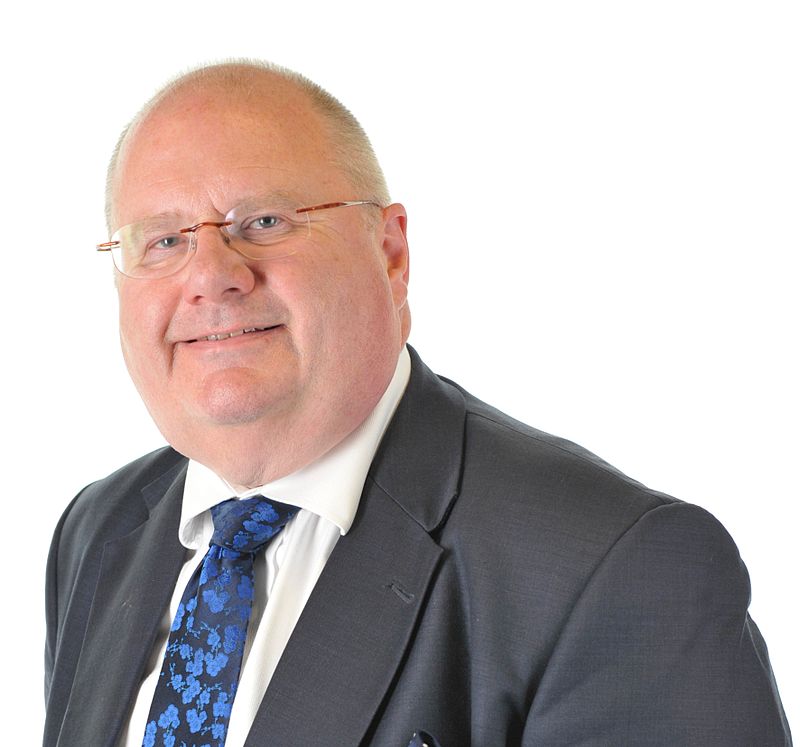
    The speech made by John Major, the then Prime Minister, on 5 April 1992.

    PRIME MINISTER:

    I want to turn first to a key issue at the very heart of this Election. It is the sleeping issue – but it matters more than anything. It hasn’t been much talked about, but it’s always been there. It is something that grips our very being as the British people. I speak of the unity of the United Kingdom – the rock of our constitution. We take it for granted – but at this Election it is at risk.

    Let me therefore speak to you simply, directly and, through you, to every part of the country. As your Prime Minister, yes, but as a Briton, too. Let me speak in plain, unvarnished terms.

    At this Election there are three great constitutional battles that we are fighting. These matters go way beyond Party allegiance. They affect the birthright of us all. There is no division in the British flag between red and blue. In it, and under it, we are one people. But if we take the wrong decision next Thursday, all that could change.

    The first issue arises in Scotland. At this Election, there is a Nationalist party which proposes to tear Scotland away from our union. It is a negative case, a socialist case, a separatist case. It is the fast route to divorce between two great nations. The exchange of Great Britain for a little Scotland and a lesser union. Our admirers and our rivals across the world would think we were mad.

    The Labour and Liberal parties see short-term advantage in seeking to appease, not to wrestle with, this demon. They propose a new tax-raising parliament in Scotland. Such a plan would shake the balance of our constitution. Set us on the road to bitterness, conflict and separation.

    There will be no further debate, no referendum. Just a headlong plunge into something of disastrous consequence to Britain. Scarcely a soul in England or Wales is aware of it. But, in the consequences of these changes, our whole nation would be caught. We could be no longer a United, but a Disunited, Kingdom – an outcome which would diminish us all.

    To imperil the tried and successful Union of our four nations for Party benefit, as our opponents do, is unforgiveable. To toss aside the Union through which, over three hundred years, this country has moulded the history of the world. That is unbelievable.

    Can you, dare you, conceive of it? Consider the outcome. The walls of this island fortress that appear so strong, undermined from within, the United Kingdom untied, the bonds that generations of our enemies have fought and failed to break, loosened by us ourselves. But that is what is at risk on 9 April. Labour and Liberal policy could break up Britain.

    This Party, and this Party alone, will defend our union. I ask you – go out and tell the people of the danger we face. If I could summon up all the authority of this office I would put it into this single warning – the United Kingdom is in danger. Wake up, my fellow countrymen. Wake up now, before it is too late.

    Europe

    That is the first threat to our constitution. But there are two more, hardly less grave than the first.

    The next relates to that independence as a nation for which our ancestors toiled and fell. It relates to the nature of the European community that we want to build.

    I have never been in any doubt that our political and economic interests require us to be at the heart of Europe. We must be at the heart of Europe in order to play our full part in the debates that will shape its future.

    For there is a choice about that future. We can – as we wish to do – build a Europe of nation states, based on the free market principles that have served us well. That is the right Europe for which we will continue to work.

    But there is an alternative – to move towards a federal Europe, towards a United States of Europe, in which power is centralised and influence is focused in Brussels and the institutions of the Community, not in the Parliaments of the nations. That would be the wrong Europe.

    The people of Britain do not look for such a Europe. So they must awake again – and realise that at this Election Labour implicitly and Liberals explicitly intend to move towards a federal Europe.

    I profoundly believe that is not in the interests of this country and should never be accepted by the people of this country. Let them think then for whom they cast their vote.

    I do not believe that the people of Britain realise the scale of this danger – the Lib-Lab left would not speak for Britain in Brussels; they would act for Brussels in Britain. They are prepared to weaken Westminster, sign up to a single currency now, right or wrong, irrespective of the conditions in which it might be introduced at a later date. They would bring in the social chapter – that would strengthen trade union power, it would impose new costs on industry and, as a result, cost Britain jobs up and down the country.

    None of those policies is in the interests of the British people. None is in Britain’s interests. All of those polices are damaging. That is why we have rejected them.

    When Douglas Hurd and I, at Maastricht, refused to accept these ideas, Labour’s Mr Kaufman called it a ‘betrayal’. He is precisely wrong. It was not a betrayal to say ‘No’. It would have been a betrayal to say ‘Yes’. But this misguided Mr Kaufman is the Shadow Foreign Secretary – not that we’ve seen so much as his shadow at this election. The Labour Party will not let him speak at home for all of them – but they propose to send him abroad to speak for all of us.

    There are great issues at stake at this Election. They require a maturer judgment, fuller debate. I want partnership in Europe between nation states. But I do not want to see a United States of Europe. And the British do not want it either. But that’s what they will get if they are not careful next Thursday – a United States of Europe, Lib hook, Lab line, and socialist sinker.

    Proportional Representation

    But, ladies and gentlemen, the Lib-Lab threat does not only relate to our position in Europe. Here at home our opponents are dancing a minuet over the spoils of office that they have not won – and, for Britain’s sake, must not win. Almost casually, they are toying and trifling with a new voting system. One that would ensure permanent representation in power for the Left. Disproportionate representation for the smallest and most unpopular party that presented itself at the polls.

    They want us to have that system they use in Italy, Ireland, Belgium and Israel. Would that be in our interests? No. Would we have better government? No. We would have weaker Government. And we would have thrown away that link between the MP and the constituency that is such a precious feature of our Parliamentary system.

    But more than that. What would have happened if we had had PR in the 1980s? There would have been no reform of the trade unions, no privatisation, no sale of council houses, no income tax cuts, no nuclear shield against communism, no revival of Britain. There would have been no authority to take immediate action to regain the Falklands. No active support for the United Nations in military action against Saddam Hussein.

    Minority governments in a PR system could have been frustrated in all these things. And the Lib-Lab Left would have prevented them all.

    Let me make one thing clear. The other Parties may fiddle and flirt with constitutional change for party political gain. This Party will not. Let them put their Parties first and their country second. We will put the country first. First, last, and always. I will entertain no constitutional changes that will weaken the United Kingdom.

    The Success of Britain

    I tell you one thing that has really irritated me about this Election. It is the insatiable appetite of our opponents for running Britain down. Day after day, on subject after subject, in their view it’s Britain that’s always wrong – criticising manufacturing industry that is beating export records; rubbishing a Health Service that is treating more patients better than ever before.

    I happen to believe – and I suspect most people in this country do too – that this is a great country. I happen to believe the British people should be proud of what they’ve achieved: we the country, and we the Conservative Party. In 1979 we picked the country up off the floor where the Labour Party and their trade union friends had left it. We are not about to listen to lectures from them about all that has been done since then.

    We have the greatest literature, the proudest history, the finest countryside, the best sporting tradition, the most brilliant scientists and inventors of any country in the world. What is our job? Our job is to keep it that way. Keep Britain the best. That’s what Conservatism stands for. And that’s what we are going to do.

    We have a golden tapestry of talents in this country. We always have had. And we want them all to stay here. They will – so long as we give people the room for ambition and the incentive to succeed.

    And we have a truly open society. Don’t believe for one moment the propaganda of our opponents. We have made this a country in which people from all backgrounds can rise to the top in their chosen professions. And you only have to look round this room to see how many have done just that.

    The biggest disaster for this country would be if we brought back an old- fashioned Socialism still speaking the language of class envy and division. We are on the road to the classless society that I want to see. For heaven’s sake, don’t turn back: let’s fight on to build it.

    No Return to Socialism

    Ladies and gentlemen, the choice at this Election could not be clearer. It is whether we continue with the work of the 1980s in changing Britain. Or whether we – and we alone in the world – turn back the clock.

    I know that over the years we in Britain have sometimes been the odd man out. But it would be more than odd, it would be stark staring mad for Britain – and Britain alone – to go back to Socialism, when it’s being kicked from doorstep to dustbin in almost every country of the world.

    All the world is turning to the free enterprise policies in which we Conservatives believe. The ‘British disease’ of trade union militancy, constant strikes, headlong decline; it’s a thing of the past now. This Conservative Government curbed it, then cured it. Now people in every continent are queuing up for a dose of the British cure – low tax, deregulation, private ownership, trade union controlling policies – that’s another export from Britain that the whole world is buying.

    Are we alone about to reject it? Will this be one more great British invention which all the world copies, while we throw away the patent? Is that what you want for your children, ladies and gentlemen? For other countries to race ahead of us, using our ideas? What folly that would be. We must never let it happen. NEVER. We must fight with every fibre of our being to prevent it. And we will.

    But it could happen. No other country could do it to us. But we, the British people, could inflict this damage on ourselves. We could take that sword of Socialism and fall on it. And if we did our country would fall with it. The choice will be yours on Thursday.

    On that crucial day we could decide that Britain will be the last refuge of a dying and discredited Socialist creed. We could lurch blindly down a cul-de-sac that by the middle of the ’90s would make Britain the last left-wing country left.

    And we would be left. Left out, left behind, left impoverished in the most competitive decade the world has ever known.

    In our country, we are one of the cradles of competition and enterprise, and, were we to abandon them, we would be a laughing stock in a world now singing the anthems of ownership and freedom. But here at home it would be no laughing matter. We would be left adrift.

    Ladies and gentlemen, can you believe that the people of Britain will make such a colossal mistake? I know them better.

    These are the people who in the ’80s won the Cold War, saw off the trade union barons, achieved the biggest rise in living standards this country has ever known.

    Can you believe they won’t see what the people of America, Germany and Japan have always seen, what the people of Sweden, Denmark and France now see, what the people of Hungary, Poland and Czechoslovakia don’t need to see? That Socialism cannot be trusted, and ought not to be voted for.

    Of course, they can see. I know the mood of the people. Unlike some of my opponents, I’ve been out there amongst them, day after day after day from the beginning of this campaign.

    They can see why Socialism ought not to be voted for. Because one of the duties of Government is to take – and to hold to – the decisions that are right in the long-term. And this the modern Labour Party has never been able to do.

    They have changed their minds – or claim to have changed their minds – on all the crucial issues of our time – the market economy, nationalisation, devolution, Europe, and the necessary reforms to our great social institutions. It would be a nice change to find a subject on which they hadn’t changed, for a change.

    But above all they have wavered on defence. In the Cold War they campaigned to disarm in the face of the Soviet nuclear threat. It was Margaret Thatcher who insisted we install Cruise missiles here, while Soviet missiles were targeted on us. She was bitterly opposed by Labour, with their present Leader in the van. But she persevered. And because she did, fewer missiles are now pointing at us. Who was right? We were. Who was wrong? They were. And because of what we did we won the Cold War in Europe.

    But do the Labour Party acknowledge our success? Do they admit for a moment that their tactics would have lost the Cold War, not won it. No. Now the heat is off, now that others have won it, Mr Kinnock comes out boldly and claims he would stand firm. Welcome, but a bit late. That shows two things: that he was wrong before. And that he hasn’t even the courage of his own past lack of convictions. And who knows even now where he stands on the crucial question of the full Trident deterrent that Britain needs? His defence policy is a case of now you CND, now you don’t. And if you can’t trust his judgement on the defence of the realm, who knows what judgement we should trust? Ladies and gentlemen, because he has such a past, he doesn’t deserve to decide your future.

    The Road to Recovery

    I understand why some, who scorn the Labour Party, have been hesitating about joining our cause. I know what is in their minds. The difficulties caused for us – and for all the great economies of the world by the world recession. We have become used to record growth. It comes as a shock when we have to mark time. But you cannot wish away the business cycle. You cannot legislate against world conditions. What you have to do is to hang in there, get the basics right, and be ready to be first off the blocks when the world economy begins to move once more.

    That’s what we have done. I’ll tell you what you need for a strong recovery. You need low inflation. You need falling interest rates. You need low taxation. You need stable exchange rates. You need falling levels of debt. You need freedom for managers to manage, and incentives for workers to succeed. That’s what you need. And to get that you need a Tory Government in a Tory Britain.

    And to be strictly fair. Let me tell you what you need to stay in recession. You need higher taxes. You need higher inflation. You need higher interest rates. You need a weaker pound. You need policies that restore power to trade union bosses. You need a vendetta against the successful and the skilled. In other words, you need Labour.

    The message is simple. If you want to start recovery, stop Labour. If you want to stop recovery, start Labour.

    Ladies and gentlemen, all around us the signs of imminent recovery are there. There in the house-building industry. There in the growth of manufacturing exports – in February the highest in history. There in the growth of retail sales. There in the surveys of business opinion by the CBI. There in the fact that 93% of businessmen say Conservative policies are right for recovery. Just one in a hundred looks to Labour for a miracle cure. One in a hundred? We’re still looking for him, and we can’t find him. Perhaps he’s the result of the statisticians rounding up.

    I’ll tell you one thing about Britain today. We can expect a strong recovery. It may already have started. All the country is waiting for now is the confidence that would follow a Conservative victory. And on April 10th the whole world of industry and commerce will do two things. Breathe a sigh of relief that the threat of Socialism is gone – and then begin to invest.

    Don’t Throw It Away

    I warn the people. Don’t fall into Labour’s trap. Don’t sleep walk into Thursday. This is not a by-election. It will determine who forms a government on Friday and who governs our country for five years. Don’t let the short-term problems of recession, which so many other countries are feeling, blind you to the long-term truth. Don’t throw away the policies – the astoundingly successful policies – of the last 13 years in an idle moment. Because once you have let them go, you can’t begin to get them back for another five years.

    Just remember. You don’t cut down a mighty oak at the start of spring because its leaves are yet to show. And you don’t turn from free enterprise to Socialism because the world economy has caught a cold.

    The Achievements of Conservative Britain

    In 13 years of Conservative Britain, free enterprise Britain, proud Britain, we have cut tax by eight pence in the pound; we have controlled inflation, and made the economy grow. As a result, the spending power of the same average family man has risen, even after allowing for inflation, by £68 a week – £3500 a year more for the family budget than under Labour.

    So let’s hear it for the new wealth of Britain and what this Government has created:

    * 1000 more miles of trunk roads and motorways; 750 miles of railway electrified; more than 100 communities transformed by new bypasses;

    * record resources for the Health Service and for pupils in our schools;

    * four million new homeowners;

    * four-and-a-half million young people with personal pensions;

    * six million shareholders in privatised companies;

    * social security and support for pensioners and disabled people is better than at any time in our history.

    We have finer public services than we have ever had – and through the Citizen’s Charter we are going to improve them still further.

    And we also have a sea change in the living standards of the average family. So let’s hear it for a successful, low tax economy.

    Let’s hear it for the fact that the number of homes without central heating has been halved. Six homes in seven now have washing machines. Seven in eight a telephone. Four out five a freezer. Huge new industries in home computers, videos, and compact discs have grown up. The number of cars per head of the population is up by a quarter. The number of holidays taken by British people almost doubled.

    These things didn’t rain down from heaven. They had to be worked for. And they were made possible by that growth in the wealth of the average man which our policies allow. We are creating in this country a new commonwealth – in which wealth and ownership are for all, not for the few. In our time Britons have earned more, owned more, achieved more than at any time in history. So let’s hear it for our wealth creators that make welfare possible.

    Thirteen wasted years? There have never been 13 more productive years in modern British history.

    So Labour call this failure. Failure? It’s a miraculous, historic success. It’s the rebirth of ‘Made in Britain’ as a label of pride. It’s what the people of Britain have worked for. It’s what the people of Britain can expect more of when recovery comes. It’s what a Conservative government will let you keep. It’s what a Labour Government would tax away.

    Ladies and gentlemen, Labour are the masters of blame and shame, doom and gloom. They want us to forget the successes of the Tory years. They want us to close off the prospect of a golden future for us all.

    So just let me remind you of this. In five years of struggle and strife, in five years of cuts in the health service, strikes in the graveyards, scorn in the international arena, Labour managed to raise the living standards of the average family man by just £2 a week. Just £2 a week in five years. And they actually cut the living standards of single people and married women across every level of earnings. Socialism equals conflict equals poverty equals the past. Remember those things on Thursday. Say to yourselves: “Never again”.

    Wealth For All the People

    Ladies and gentlemen, many people come up the hard way – they know what it is to scrimp and to save, they know what it means when you can do more for your family and children. And let me tell you what it does mean – personal pride, personal dignity, personal satisfaction, personal choice – for the person’s own family.

    We’re not divisive and dismissive like Labour. To be a modern Conservative is not to be against some of the people; it is to be for all of the people. If there is one thing that Conservative Government will do, it is to allow more people more money to buy, to own, to save and to leave more for their children and grandchildren. It is right that families want to create a better home and a better life. These are proper instincts, natural instincts, not selfish ones. And we will defend them to the last. For it is from the ambitions and efforts of millions that the wealth of the nation and the resources of our great public services grow.

    What we have shown in the ’80s is that you can have lower tax and more investment. The modern Britain is not an uncaring Britain – and the Labour politicians who make that charge have no understanding of the fellow countrymen they want to control. Uncaring Britain? Where its citizens respond more generously than any other country to international appeals. Uncaring Britain? Who has the finest, best funded charities in the world. Uncaring Britain? Where the Health Service has more doctors and nurses today than ever before, more patients treated, more money spent, shorter waiting lists. That’s not an uncaring Britain. It’s a Britain that cares. And it will see off a Party that scares.

    That is the biggest divide between the Parties in Britain today. Labour fought against wider, family ownership – and they’re against it still. They can take the Socialism out of their manifesto, but they can’t take it out of their souls.

    They have policies that – as we saw last Wednesday – would force down the values of the privatised shares people own. They have tax policies that would force down the value of the homes people own. They have policies that would destroy the value of the pensions people own.

    I have warned the people – and I warn them again. In a Labour Britain I warn you not to be successful. I warn you not to be ambitious. I warn you not to have a second pension. I warn you not to own shares. I warn you not to own a home.

    The Labour Leader has a word for those who want to do something extra for their families – to provide personal care. He calls it a sin. ‘A sin, a sin, a sin’. Was ever casual word more revealing? A sin, he calls it. Ladies and gentlemen, it is not a sin, not a sin for parents to do more for their children, children more for their parents. It is right for people to do more for those they love. It is the natural instinct of the family. It’s our natural instinct, too.

    A Greater, Better Britain

    There is a choice before you about Britain’s future. Let me tell you about the sort of life I want for every family.

    Inflation heading towards zero; prices steady; taxes coming down again; more money in the pockets of the people; growth well under way, so overtime and extra earnings are back in business; a strong pound which holds its value; the right to a postal ballot whenever union bosses try to call a strike; and never, ever any threat from flying pickets at the factory gate; good state schools, that get the basics right, bringing the best out of each and every child, not controlled by the council, but run by the Head teacher, governors and parents; a modern, expanding health service there behind you, more say for your GP in how the best care should be given, and more successful trust hospitals cutting waiting times and performing more operations than ever before; the chance for everyone to buy their home, falling mortgage rates whenever we can bring them down, strong recovery, meaning a pick-up in house prices, and growth in the value of your privatisation shares; millions more people with second pensions of their own and the chance for every family to pass on to their children the fruits of a lifetime’s work.

    That’s what I want for Britain in the 1990s. That is the choice you should make.

    Ladies and gentlemen, I cannot express to you what I owe to this country and what it has done for me. In the next five years, if you continue to give me your trust as your Prime Minister, I will do all I can to repay that debt. I want to make Britain a greater, better place.

    But if we succeed in that, as I know we will, it is not the government, not the council, not the trade union who will do it. It is you. And you. And you. It is the people of this country, given their chance, given their choice, given their head, who will find the space to grow and the sky to aim for.

    That is the country I want. That is what is at stake on Thursday.

    A country which will lead the world in the respect it carries and the values it spreads. We are that country. Let us stay that country.

    What I want is a country of real opportunity, where every one of our people is free to choose. A country with a head. And a country with a heart. Wealth and welfare hand in hand.

    If that’s what you care for, if that’s what you fight for, then go out with me on 9 April – and win for Britain, win for our children, win for freedom, and win for all our futures.

  • John Major – 1992 Speech on the Conservative Vision

    John Major – 1992 Speech on the Conservative Vision

    The speech made by John Major, the then Prime Minister, on 1 April 1992.

    PRIME MINISTER:

    Ladies and gentlemen, on Friday 10 April 1992 the work of the next government will begin. It will be a Conservative government or it will be a Labour government. There is no other choice. If you vote Conservative you will get a Conservative government. If you vote Labour you will get a Labour government. If you vote Liberal you will get a Labour Government. That is a message that every elector must understand.

    Over sixteen months ago I started work on building the type of Britain in which I believe. You will decide whether I continue in that work – or whether to allow Labour to pull down all that British people have built since 1979.

    Let me tell you about the Conservative government I want to lead. It is not the intention of the next Conservative government simply to safeguard the achievements of the eighties – astonishing though those achievements have been.

    The aims of the new generation in the Conservative Party – the youngest cabinet this century – are set much, much higher. By the end of this decade, all that Britain has accomplished in the first thirteen years of Conservative rule will be seen in their true perspective – a magnificent beginning, but only that, a beginning, of a great nation’s historic and continuing revival. That is the pledge I give to you this evening. That is the challenge that the next Conservative government will meet and fulfil.

    The ideas we stand for – we fight for – are being adopted right across the world. Think of the political map of Europe – how it looked until quite recently. Great blocks of red interspersed with blue. Look at it now. Where have all the red blocks gone? Gone from Government almost every one. Going. Going. Gone.

    All over the world Socialism is discredited. It is fading in every part of Europe. And in Britain on 9 April we will see the red flag dying here. Let’s get out there and help it on its way.

    The New Britain

    Many people are yet to make up their minds in this Election – the ‘don’t knows’. On Election day you can’t afford to be a “don’t know”. So my message to them is ‘come and join us’. Help us build a better Britain.

    My job as Prime Minister in the 1990s will be to give millions more people a helping hand up the ladder in life – to a home of their own, more savings, more secure and well-paid jobs, a better future. I see clearly the new Britain I want to build: a classless Britain in which everyone has their full share.

    I have spoken of the Open Door Society – a nation in which more and more people can go through the doors of opportunity into a better life. To build up and to keep a piece of Britain for themselves. A Britain where what were once the privileges of the few can be enjoyed by all.

    That’s the kind of country I want to see.

    I see a Britain freed from the scourge of inflation. Where rising prices no longer eat into savings and bring misery to those on fixed incomes. My target is stable prices. Is that the kind of Britain you want? Then come and join us. Where there is no levelling down, only levelling up. My aim is for parents to have the power to choose what is right for their child. Is that the kind of Britain you want? Then come and join us.

    I see a Britain in which there is true equality of opportunity for all. Where every boy or girl, whatever their background, can expect an education that brings out their talents to the full. Where there is no levelling down, only levelling up. My aim is for parents to have the power to choose what is right for their child. Is that the kind of Britain you want? Then come and join us.

    I see a Britain where every family has the opportunity to own and to improve their home. Where there is no threat of credit controls, no need to depend on the council. My aim is ownership for every family – ownership for the security it brings. Is that the kind of Britain you want? Then come and join us.

    I see a Britain where every citizen has the freedom to keep the wealth they have built from a lifetime’s work. Where there is no threat of penal taxation and no confiscation of a lifetime’s savings. My aim is for everyone to have the chance to pass on what they have built up in life to their children. That’s what people work for. That’s what people care about. Is that the kind of Britain you want? Then come and join us.

    I see a Britain where our government plays a confident role in the world, standing for what is right. Where we don’t neglect our defences, and never give way on what is right for Britain. My aim is for Britain to be a byword – the byword – for decency, principle and freedom. Is that the kind of Britain you want? Then come and join us.

    I see a Britain where government continues to show a true responsibility for others. Where it plays its proper role in supporting those who cannot help themselves. Where we have a modern, expanding Health Service free at the point of use for all. Where we bring more help to our poorest pensioners. Where every citizen is free to walk the streets without fear of crime.

    I see a Britain where the cost of living falls and the standard of living rises. Where we don’t look to the State for answers, but to each other.

    I believe that every person wants to have more say, have more choice, be the master in their own private corner of life. That is what in these last thirteen years we have given the people. I want a Britain in which people have the incentive to work harder and produce more. That is the way – the only way – to create resources for better public services for all.

    Is that the kind of Britain you want? Then come and join us. This is no time to be a ‘don’t know’. This is a time to fight for a positive future for our country.

    Taxation: the great divide

    Ladies and gentlemen, people ask why we contrast Labour’s tax policies so often with our own. It is because here in this single issue is the great divide between the parties. We believe that people express themselves by their choices – and must be allowed to do so. When they decide how much to spend on housing, how much on holidays, or how much on a car, on pensions or insurance, they are living according to their own priorities. They are their own masters. In a free society they must remain their own masters. But Socialism always takes that freedom away.

    And when Governments or councils make those decisions for them, they are preventing people from living by their own values. Every pound left in the pay packet is a token of freedom. It offers choice. Every pound taken out of the pay packet takes away choice. In raising taxes by the record amount that they plan, Labour are not just taking away your income. They are taking away, more than ever before, the chance for ordinary people to live their life as they please. That’s why Socialist policies are so wrong, ultimately so destructive. We must never, never, never let them come back to this country.

    Labour: The Opposition

    I warn you. Look beneath the surface of Labour’s policies. You will see the cold hard truth staring at you. They haven’t changed. They have not changed. They have not changed. Let no-one think for a moment that Socialism has lost its ambition to change people’s lives. They still want people to pay up for the privilege of being told what to do. That is the badge of Socialism.

    Socialism operates like a reverse philosopher’s stone. It can change gold to base metal at a touch. Opportunity and enterprise into regulation and control. That would affect everyone. In a Labour Britain it wouldn’t just be the gold bullion that they were shipping out the country, it would be the golden tapestry of British talent – business, scientific, sporting, cultural. Going. Going. Gone. And we would all be the losers.

    It’s not just their policies for the future that give Labour’s game away. It is what they have done, what they have said. As we struggled to change Britain for the better, they struggled to stop us changing Britain for the better. You can see why they call Labour the Opposition.

    We have lowered income tax for everyone by eight pence in the pound; they opposed it. They voted against every tax cut we have introduced – the one thing on which they’ve always been consistent. And one of the many things on which they have always had the support of the Liberals.

    We gave people the right to buy council houses; they opposed it.

    We sold loss-making State industries to the public and the staff in them. We made them profitable and made millions of people new shareholders; they opposed it.

    We brought trade unions within the law, banned flying pickets and ended the closed shop; they opposed it.

    We helped millions of young people to take out personal pensions of their own; they opposed it.

    We wanted the people to be free, to have choice, to have power. To have the space to live their own lives as they wished – not as the council, the union, or the State wished. And Labour opposed us. They opposed the people’s rights. Not just once. Not by accident. But deliberately. By design. And day after day after day.

    Whatever we proposed, they opposed. It is their only political programme – to tear down all the things that the people of Britain have built. Labour are the masters of opposition. What a pity it would be now to waste all that experience.

    To every owner a warning

    “Ladies and gentlemen, as this Election approaches one point is central to the decision that everyone should take. It is this. We believe in personal ownership in a way that no other party does. We believe that people have the right to own – to enjoy the security and peace of mind it provides for them and their families. No other party shares that philosophy. Do you remember? Labour did everything in their power to stop the people having the right to own. And still do, whenever and wherever they can.

    Let no-one out there who gained in the ’80s ever forget it. Four million new homeowners; four and a half million young people with personal pensions; six million shareholders in the State companies we sold to the people. Many of those must be in this audience tonight.

    I warn each of you. Just stop, listen, and think. Look at your children and ask yourself this. Dare you trust your home, your pension, your savings, your shares – your future – to the very Labour people who fought to stop you having them at all?

    Going. Going. Gone. Is that the future you want? For the freest country in the world? Never.

    Liberals

    Ladies and gentlemen, I hear Paddy’s still round about. Sounds comfortable, doesn’t it? But don’t forget what he stands for. Policies that are close cousins to Labour’s. A special tax on petrol. What would that do to large rural areas of our country? Swingeing cuts in defence – cuts twice as big as Labour propose. What would that do to the defence of this country and our great defence industries? I’ll tell you – no defence. And no industries. And they stand for big tax increases for all – rises in income tax nationally and rises in income tax locally, too. What would that do to recovery and prosperity and jobs? It would destroy them.

    Liberal policy would crucify rural areas. Cut back our defence industries. Impose new taxes. Whatever happened to real Liberal policies. These are Labour policies – left wing policies. And anyone who is thinking of supporting the Liberals should be clear about that. Don’t let the Liberal Party be the Trojan Horse to a Labour Britain.

    Beware Mr Ashdown. He is the doorkeeper to a Labour Britain. I warn you. Don’t look at the man; look through the door. The most famous door in the world is Number 10 Downing Street. Don’t let Mr Ashdown open it for Mr Kinnock.

    Economic Recovery

    A Labour Government would stop in its tracks the one thing for which the people of Britain are waiting – economic recovery. I know that many businesses and families have been feeling the impact of the world recession. There are families in America and in Germany who feel just the same. Your concerns will never be brushed aside by me, they will always be heard.

    But they should not blind us to the underlying changes which have taken place in the British economy over the last decade. There’s a new spirit of enterprise – with management and workforce working as one to take on the competition and win. Quality, design, service are once more at the forefront. British companies are pushing forward the boundaries of innovation. Productivity has risen by leaps and bounds.

    We’ve been keeping strike records for a hundred years. Last year, the number of days lost was the lowest ever. Why? Because we’ve changed industrial relations law and we’ve changed industrial relations attitudes.

    Britain has become a magnet for overseas investment. We have as much investment from Japan as the rest of the Community put together. It’s low tax that did that. Low inflation. They’re what brought investors here. Do you think they would all have come here under a Labour Government? Do you think the confidence the Conservative Government has built up would continue under Labour?

    On top of all this, interest rates have come down. Britain’s rate of inflation is now below Germany’s – the first time that has happened since before men walked on the moon.

    But, after a generation of striving to reach that very goal, within two days, just two days, of our getting there, Labour’s John Smith said he’d be happy to see inflation rise again. He dismisses our target for Britain – stable prices – as an ‘unnecessary virtue’. Those are the words of a shallow ‘chancellor’ – shallow and blind to what matters to every housewife and pensioner in the country.

    Labour talk of recovery. But what Mr Smith is ready to add to inflation would add £2500 million to the costs of industry. And he dares to talk of a billion pound recovery package. Labour’s inflation would destroy profits, destroy companies, destroy jobs.

    What is more it now seems that Labour plan special payoffs to their big union friends. Public sector unions would be given pay increases one per cent above the going rate in private business. Whatever that rate may be? That is a recipe for higher public spending with no improvement in service. For wage spirals and for rising inflation. For the return of trade union muscle to the heart of public policy. In other words the same old Labour policies. It would be a disaster for Britain.

    Ladies and gentlemen, the foundations for recovery are in place. Let business speak for itself. Fifteen times more businessmen would increase investment under the Conservatives than they would under Labour. In fact, under Labour one in four businessmen would cut investment.

    I believe that under a Conservative Government the 1990s will usher in a new era for prosperity and for jobs. The once impossible are within reach:

    – stable prices

    – sustained industrial peace

    – free enterprise given free rein.

    Only one thing could stop it. The Labour Party – pledged to tax; to nationalise; and to give power back to the unions. That would knock recovery on the head – for this year, next year and through the nineties.

    Labour would turn recovery into slump.

    I am not prepared to see that happen – it’s not going to happen. Britain is on the brink of a breakthrough to a great future. Is the dull, dead hand of Socialism to be allowed to strangle that future? Not if I can help it. And I can. I will. With your help, I will.

    Health

    Ladies and gentlemen, we need a strong economy to sustain our spending on the National Health Service. Earlier this week I said I was taking the gloves off about the National Health Service. And I meant it. It is the national Health Service. It is not Labour’s Health Service. Well, the gloves are staying off. Because I’m not prepared to see our Labour opponents run down the work that this great service performs.

    The National Health Service has been in existence for 44 years. For 30 of those years we have had Conservative Governments. The Health Service has flourished and grown. We have cherished the National Health Service, built it, modernised it. We care for it and for those who it serves. And now we’re reforming it – not privatising it, never privatising it – to make it even more successful. To help it treat even more patients than ever before.

    They’re working, our reforms, really working. We are now treating over a million more inpatient cases and two million outpatient cases a year than we did under Labour. And why? Because we have provided more money than ever before.

    Hip replacements are up by a half. Heart, liver and heart and lung transplants have become a daily occurrence. And why? Because we have provided more money than ever before. More year after year after year than even the rashest Labour opposition ever dared promise.

    I want you all to shout from the rooftops the miracles that our doctors, nurses, and hospitals have achieved.

    And remember. The last Labour Government really did cut the Health Service. Really did cut hospital building. Really did cut nurses’ pay. And pushed the waiting lists up to an all-time high – the most shameful record even in their sorry history. The Conservative Party will take no lectures from them.

    I tell you, ladies and gentlemen, their exploitation of the Health Service shows up the real face of Labour. Cynical. Desperate for power. The ‘anything for office’ syndrome. These are people ready even to exploit and distort the case of one sick child in order to blacken the image of one great service and all who work in it. Nothing matters to Labour except that it should ‘serve their purpose’.

    I give the people of Britain this promise. Any government I lead will make the National Health Service, ever better, ever stronger, ever more able to tackle the huge challenges of modern health care. It’s not our Health Service. It’s your Health Service, yours – the people’s. And we will protect it – and we will build it up.

    Defence

    Ladies and gentlemen, there are three momentous issues which lie at the heart of this election – defence, Europe, and the future of our Kingdom.

    Ten years ago this very day a dictator gave the order for the invasion of the Falklands. That act of aggression was triumphantly reversed by our armed forces. I do not think there is anyone alive who will not recall the emotions they felt as they watched those ships of the Royal Navy set sail for the South Atlantic. It was one of the boldest and most skilful expeditions ever to leave these shores. The victory they won came at heavy cost. We will never forget the courage and the sacrifice of those who gave their lives for their country, there in the South Atlantic. We will never forget. But we can give thanks for what they did. For they fought the fight that it seems must be fought by each generation – the fight for justice, for democracy, for the rights of every individual to think and breathe free.

    But ten years on what do we hear from the Labour Party – a threat from their defence spokesman to review and cut the strength of our Royal Navy. What message does that send to our armed forces?

    And what message did Labour send to those who went out nine years later to join the United Nations action against another dictator’s unprovoked aggression. They wanted to leave those troops sitting there in the desert, waiting for sanctions to drive out Saddam Hussein. Either they would still have been in the desert today or Saddam Hussein would have been sitting in Saudi Arabia.

    That is not how we see our armed forces. They deserve a better and a stronger lead. They were not easy times – for them or for any of us. I had only just become Prime Minister. And emotions stirred in all of us as we thought of the skill and daring of our pilots, and the cool professional resolve of the young men and women of the ground forces, waiting in the desert night for the order to advance.

    It is a great responsibility to lead a nation in time of war. It reinforced my passionate determination to preserve the peace in this dangerous world. But I never doubted that, whatever the challenge, our armed forces would be ready for it. And so they were. They did the job. They sent that barbarous dictator, licking his wounds, back to his lair, humiliated.

    Ladies and gentlemen, the first duty of any Government is to safeguard the defence of the realm. You can be sure that a Conservative Government, this one, the next one, every one will discharge that duty. You can take our word for that. And if you take the word of the Liberals and Labour you will know that they will cut defence, that they will risk our country. Such a course would never be for us.

    We will never take risks with our defence. One thing I learnt from the war with Iraq was the crucial importance of having the right equipment for our troops. We will make sure they get it. That’s why we have ordered the new Challenger tank for the Army; the Merlin helicopter for the Navy; the new air defence missile for the RAF. Our armed forces must remain the best armed the best supported in the world. And I promise they will be.

    The Liberals say that now the cold war is won we can hack back our armed forces to the bone – perhaps they have become too fond of one man armies. They want to cut our defence spending by a half. I tell you that would be utter folly. The story of the Falklands and Kuwait is the story of the sudden dangers that can arise in the modern world. We must stay on our guard, be prepared for the unexpected – and under this Conservative Government our armed forces will do so.

    And one other thing, ladies and gentlemen, for so long as dictators like the wicked man who rules Iraq are plotting to build a nuclear bomb, we will keep our independent nuclear deterrent. I say – and say again – we will order, build, deploy and arm that fourth Trident submarine that our armed forces tell me they need. We will not take any risk with that crucial shield.

    But I tell you who would. Labour would. They don’t say, can’t say, won’t say what their attitude on Trident would be. Because they don’t know.

    First Labour say they will build it. Then they say they won’t build it. They even say they might build it and send it floating round the world devoid of arms. What would they call it? HMS Spineless? HMS Witless? HMS Clueless?

    Ladies and gentlemen, you simply can’t trust Labour when it comes to defence. And since defence is about the most serious issue that any country has to face, you just can’t trust Labour with power.

    Europe

    Ladies and gentlemen, this Party took Britain into Europe. It is where our future lies. I said I wanted us to be at the heart of Europe. And I meant it.

    We need to complete that single market that is so vital for our industry – and we will, when we hold the Presidency of the Community later this year.

    We need to strengthen co-operation between the nation states of Europe where our common interests point us. And we will, when we hold the Presidency of the Community later this year.

    And I believe we need to extend Europe – to create a wider Europe. For the greatest benefit of the Community is not economic. It has made it inconceivable that war in Western Europe could ever again take the world to the edge of ruin. That is why I believe so passionately in widening Europe – until the Community comes to embrace Russia itself. Then we can take to the countries of the East that gift of peace that today we in the West take so much for granted. It may not happen in our political lifetime – but it will happen. And I will do everything I can to help it on its way. And when that new Europe has been built from Britain to the Urals, then we will have built a secure life for the next generation that will be greater than we have ever seen before.

    That’s what I want to see happen in Europe. That is my vision for Europe. But that vision doesn’t mean we have to be uncritical about how Europe now is. When you’re dealing with Europe you need to pitch in there fighting – fighting for Britain as well as for Europe. With a Conservative government Britain will always come before Brussels.

    That’s what Douglas Hurd and I did at Maastricht – fight for Britain in Europe. They were tough negotiations – but we got the right result for Britain. Just imagine what would have happened if we had a Labour Government. They wouldn’t have spoken for Britain; they would have broken Britain.

    There are just three words in Labour’s vocabulary for Europe – oui, si, and jawohl. Well, let me offer you a fourth absolutely vital word to defend Britain’s interests – no. Can anyone imagine Mr Kinnock saying anything so short?

    Labour has been wrong on all the critical issues of defence and foreign policy in our time. Wrong. Wrong. Wrong. I warn the people of Britain. Men who have been so wrong so often on so much would find it hard to break the habit of a lifetime.

    Ladies and gentlemen, these great issues of our time call for a clear head and a steady hand. You need consistency. Conviction. Coherence. You need experience. You need judgement. The one thing you don’t need is Labour.

    The Union

    Ladies and gentlemen, I want to turn to one of the greatest threats the United Kingdom has faced for generations. I don’t think the British people have yet woken up to the danger that Labour and Liberal policies present. To create a new tax-raising Parliament in Scotland would cause the very foundations of our constitution to quake. I warn the people; it could lead to the break-up of Britain itself.

    Nothing shows more clearly the irresponsibility of Labour and Liberals alike – and how alike they are. They don’t seem concerned; they don’t seem to care. They would diminish our Westminster Parliament. The end result of their policies would be a disunited Kingdom in a United States of Europe. A United States of Europe? That means a federal Europe. The people of Britain don’t want a disunited Kingdom; and they won’t accept a federal Europe. But I warn the people. If they vote Labour or Liberal that is what they will get.

    They will get a federal Europe taking powers away from Westminster. They will get a tax raising parliament in Scotland taking powers away from Westminster. And they will get federal assemblies throughout England and Wales taking powers away from Westminster. Is that what people want for the Westminster Parliament? To strip it of authority and influence. But that’s what they will get if they vote Liberal or Labour. I warn the people.

    Ladies and gentlemen, thirteen years ago the Labour Leader fought against devolution. If I had to use any label, he said, I would call myself a Unionist. Not the label I would use for him. Now he tells us – and I quote: ‘I think that people can trust my word and attitude, because I’ve always been in favour of devolution.’ Was that a temporary lapse in a record of consistency? I rather think not. This is the European who ‘wanted out’ of Europe just a few years ago. This is the man who talks of defence but campaigned for years to disarm our country in the face of the Soviet threat.

    Ladies and gentlemen, do words mean anything to this man? He’s the chameleon of politics. Consistent only in his inconsistency. Wouldn’t it make a nice change to find an issue on which he hadn’t changed, for a change?

    Conclusion

    Never forget. In spite of a world recession we’re on course for a better life, a more secure life. We’ve learnt what to avoid and what to strive for. We’ve learnt to protect the weak, to encourage the young, to care for the old, and to keep our cities clean and our country safe, safe from attack on our values and our principles from without and within.

    Ladies and gentlemen, there are three great issues at the heart of this Election. Little debated, so far. But fundamental to the very fabric of our lives, about which I warn the people, warn them before it is too late. I speak the defence of our country, our place in Europe, the very survival of the United Kingdom. None of these would be safe in the hands of a Labour Government.

    Labour and Liberals in office would give Scotland and Wales devolution without even a referendum. They have said so. And in Europe whatever Brussels asked for Brussels would get. That, too, is abundantly clear.

    The breaking up of our United Kingdom and abject surrender to the most extreme demands of the European Commission, along with the defence of the realm, these things go to the very heart of our constitution. The future of our country takes precedence over every other consideration, even Party allegiance. On these things Labour is not to be trusted. I warn the people.

    The Conservative case is not nourished by dogma. The Conservative case does not assert theories discarded by most of the civilised world. To be a modern Conservative is not to be against some of the people; it is to be for all the people.

    Our standards and values are Britain’s heritage. It is we who are the traditional builders of national recovery and renewal.

    Ladies and gentlemen, this is a critical, vital Election. None of us can afford to stay on the sidelines. To be a ‘don’t know’ may well be enough at certain elections. Not this one. What is at stake is the future of Britain. From such a contest no-one can stand aside.

    I urge all Conservatives and those who are broadly in sympathy with us to talk to any who are still uncertain. Remind them what we Conservatives stand for and what we believe in. A country of real opportunity. A country with a head. And a country with a heart. Open their eyes to the threat that our opponents present to their lives. Warn the people. And turn the ‘don’t knows’ into ‘now I know.’

    Tell them to vote for the team with experience. Vote for the team that will help recovery, not kill it. Vote for the team that will unite the country, not divide it. Vote for the team that will keep your family safe, not sorry. Vote for the team you can trust. Tell them those things – and on April 9th they will vote for a Conservative future.

  • Queen Elizabeth II – 1992 Christmas Broadcast

    Queen Elizabeth II – 1992 Christmas Broadcast

    The Christmas Broadcast made by HM Queen Elizabeth II on 25 December 1992.

    This year, I am speaking to you not from Buckingham Palace, but from Sandringham, where my family gathers every year for Christmas.

    My great-grandfather, King Edward VII, made Sandringham his country home in 1862, and it was from this house that my grandfather, King George V, and my father, used to speak over the radio – originally to the Empire and then to the Commonwealth – on Christmas Day all those years ago.

    It was from here that I made my first Christmas Broadcast forty years ago, and this year I am very glad to be able to speak to you again from this family home.

    I first came here for Christmas as a grandchild. Nowadays, my grandchildren come here for the same family festival. To me, this continuity is a great source of comfort in a world of change, tension and violence.

    The peace and tranquillity of the Norfolk countryside make me realise how fortunate we are, and all the more conscious of the trials and sorrows that so many people are suffering both in this country and around the world. My heart goes out to those whose lives have been blighted by war, terrorism, famine, natural disaster or economic hardship.

    Like many other families, we have lived through some difficult days this year. The prayers, understanding and sympathy given to us by so many of you, in good times and bad, have lent us great support and encouragement. It has touched me deeply that much of this has come from those of you who have troubles of your own.

    As some of you may have heard me observe, it has, indeed, been a sombre year. But Christmas is surely the right moment to try to put it behind us and to find a moment to pray for those, wherever they are, who are doing their best in all sorts of ways to make things better in 1993.

    I am thinking especially of the Servicemen and women, and the aid workers with them, trying to keep the peace in countries riven by strife, and to bring food to the weak and innocent victims. They do not have an easy task and they need all the moral and practical support that we can give them.

    Curiously enough, it was a sad event which did as much as anything in 1992 to help me put my own worries into perspective. Just before he died, Leonard Cheshire came to see us with his fellow members of the Order of Merit.

    By then, he was suffering from a long drawn-out and terminal illness. He bore this with all the fortitude and cheerfulness to be expected of a holder of the Victoria Cross. However, what struck me more forcibly than his physical courage was the fact that he made no reference to his own illness, but only to his hopes and plans to make life better for others.

    He embodied the message in those well-known lines: “Kindness in another’s trouble, courage in one’s own”.

    One of his Cheshire Homes for people with disabilities is not far from this house. I have visited others all over the Commonwealth and I have seen at first hand the remarkable results of his, and his wife’s, determination to put Christ’s teaching to practical effect.

    Perhaps this shining example of what a human being can achieve in a lifetime of dedication can inspire in the rest of us a belief in our own capacity to help others.

    Such talents and indomitable spirit are not given to all of us. But if we can sometimes lift our eyes from our own problems, and focus on those of others, it will be at least a step in the right direction, and Christmas is a good time to take it. I hope that his example will continue to inspire us all in the years ahead.

    1993 will certainly bring new challenges, but let us resolve to meet it with fresh hope in our hearts. There is no magic formula that will transform sorrow into happiness, intolerance into compassion or war into peace, but inspiration can change human behaviour.

    Those, like Leonard Cheshire, who devote their lives to others, have that inspiration and they know, and we know, where to look for help in finding it. That help can be readily given if we only have the faith to ask.

    I and my family, as we approach a new year, will draw strength from this faith in our commitment to your service in the coming years.

    I pray that each and every one of you has a happy Christmas and that we can all try to bring that happiness to others. God bless you all.

  • David Willetts – 1992 Maiden Speech in the House of Commons

    David Willetts – 1992 Maiden Speech in the House of Commons

    The maiden speech made in the House of Commons by David Willetts, the then Conservative MP for Havant, on 9 July 1992.

    I am most grateful to you, Mr. Deputy Speaker, for allowing me to catch your eye and so make my maiden speech. I follow the conspicuous and eloquent maiden speech of my hon. Friend the Member for High Peak (Mr. Hendry). Mine is very much a valley after his great heights.
    I have the honour of succeeding Sir Ian Lloyd, who was the Member for Havant for 25 years. He was a most assiduous and well-respected constituency Member and he was ably assisted by his wife Frances who made a particular contribution to the local work of the National Society for the Prevention of Cruelty to Children.

    Ian was a most distinguished parliamentarian. He was never cramped by day-to-day political argument but always took the long view. In his maiden speech in 1965, he reminded the House of an ancestor of his who successfully introduced a measure in 1693 to denationalise the mines—one of the preconditions for our industrial revolution. It is particularly apt, therefore, that we will be able to celebrate the 300th anniversary of that measure by setting the mines free once more.

    Perhaps Ian’s influence was strongest in science and technology. It is one of those ironies of political life that, within a few months of his taking his retirement, two measures for which he fought long and hard have finally been implemented. On 1 May, we saw created the Office of Science and Technology, falling within the responsibilities of my right hon. Friend the Chancellor of the Duchy of Lancaster. Ian had also fought for the creation of the Parliamentary Office of Science and Technology. For a while, it was financed entirely through private sponsorship, but again, only a few weeks ago, the House of Commons Commission finally voted public funds to support that office. I hope that both measures can be regarded as our tribute to Sir Ian Lloyd on his retirement.

    Before the House adjourns, I should like to raise several matters that are of concern to my constituents. Havant stands literally at a crossroads and has done so since Roman times. It stands where the A3 from Portsmouth to London intersects the A27 coastal road. A new A27 was recently constructed. It was intended to bring relief to the area, but sadly it has blighted the lives of many people in Warblington and Emsworth. Its deeply ridged concrete surface produces the notorious A27 roar. When the road was opened, the Department of Transport described the surface as “experimental”. It is an experiment which has failed. We in Havant are fighting a battle for bitumen. My hon. Friend the Member for Chichester (Mr. Nelson) and I look forward to meeting our hon. Friend the Minister for Roads and Traffic next week, when we will argue forcefully for resurfacing the A27.

    Hon. Members have often referred in their maiden speeches to the sense of community in their constituencies. Havant has its sense of community, too—but perhaps that sounds a trifle worthy or even dull. I assure the House that it is not like that at all. The other week, I had the honour of taking part in the Havant annual town parade, and was preceded by giant Sooty and Sweep puppets, an array of teenage mutant ninja turtles and the south coast’s finest Norman Wisdom impersonator. It was a most enjoyable event.

    The borough of Havant comprises several distinct communities, and few issues arouse as much emotion as proposals to build on the remaining green land that survives between them. The last thing that we want Havant to become is one long anonymous urban agglomeration. Each part of the constituency, from Hartplain to Emsworth, values its own identity. Waterlooville, for example, is the place where British soldiers camped before embarking to defeat the forces of Napoleonic centralism at Waterloo, that famous battlefield 100 miles south-east of Maastricht. Napoleon, of course, had a notoriously limited grasp of the important idea of subsidiarity—it extended only as far as making his brother King of Spain.

    Emsworth used to be famous for its oysters, until a most unfortunate incident at a banquet nearly 100 years ago, when civil dignitaries, local grandees and councillors became extremely ill on eating Emsworth oysters, and I am afraid that some died. I am sure that hon. Members will agree that that is no way to treat local councillors.

    There are also the people of Hayling Island, who have taken the sensible precaution of preserving their distinct identity by arranging to be an island. It has rich agricultural land and a very fine beach—one of the 16 in the country to have been awarded the coveted blue flag. It was a Hayling islander who first had the idea of putting a mast on a surfboard, and thus windsurfing was created. I am pleased to say that Hayling remains one of the world centres for that sport.

    The names of some parts of my constituency may ring a faint bell with hon. Members who have read their P. G. Wodehouse—Lord Emsworth, Lady Warblington, even the Duchess of Havant. P. G. Wodehouse lived in the area for a time, and parts of it are now immortalised as the titles of upper-class eccentrics in his novels. But my constituents are very far from being characters in a P. G. Wodehouse novel, because, above all, what we do in Havant is make things. We have a concentration of world-class manufacturing firms. We are therefore particularly concerned about the state of the economy.

    There is no disguising the recession. Our firms in Havant are going through a difficult time, just like many firms around the country. It is no good gloating over the recession and taking a snapshot of the economy when it is at the bottom of an economic cycle. Instead, we have to compare the full economic cycle—the upswing and the downswing—with the previous economic cycle. That way, we can take a step back and measure the changes in the underlying performance of the economy. We find that a lot has changed for the better in the 1980s. During the full cycle from 1981 until now, the British economy has had an average growth rate of more than 2 per cent. a year. That compares with the previous economic cycle from 1975 until 1981, when we had an average growth rate of a little more than 1 per cent. per year. It is a measure of the conspicuous improvement in the underlying performance of our industry, and I see in Havant the practical evidence that lies behind those statistics.

    IBM has a large factory in Havant. Its output has trebled in the past few years. Only the other week, an IBM manager was telling me how his Havant plant could compete with its rival IBM plant in Germany and outperform IBM’s Japanese point in both quality and cost control. I asked him how that was achieved and he said that it was because of our more flexible employment legislation. We are now beginning to gain back from the far east the technological lead in computer disc drives which was lost 10 or 20 years ago.

    The other day, another Havant firm was floated on the stock exchange—Kenwood. It was created by Mr. Ken Wood, although he was not, as far as I know, a chef. That firm had languished in a large conglomerate, but, after a management buy-out a few years ago, its performance has been transformed. Kenwood’s sales have been booming and it is now beating competition from France and Germany. There are many other such firms, such as De la Rue systems, Apollo fire detectors and Colt ventilation systems. They are all at the sharp end of British industry and they are exporting much of their output. The dynamism of such firms lies behind the transformation of our trade performance, with our share of world trade increasing in the past three years, having stablished during the 1980s, after years—decades—of decline.

    Several of our exporters in Havant have criticised the performance of the Dutch firm that has taken over some of the short-term insurance responsibilities of the Export Credits Guarantee Department. I have written to my hon. Friend the Minister for Trade about their concerns. Other firms still feel that they do not yet have completely open access to the European market and that we in Britain are more serious about free trade than some other member states of the EC. I therefore welcome the fact that the Government have made completion of the internal market one of their priorities for the United Kingdom’s presidency of the European Community.

    Havant is a young constituency, so we are very interested in the standards of our schools. Many were built during the 1960s and, sadly, are in need of repair or even complete rebuilding. We are worried that educational planners are so preoccupied with the decline in the number of secondary school pupils that they have lost sight of the baby boom and the increase in the number of very young children. We now have nearly 4 million under-fives, compared with a little more than 3 million in the early 1980s.

    In 1998 there will be about 15 per cent. more primary school pupils than in 1984. Therefore, we need to be wary of closing infant and junior schools precisely when we can see an increase in the number of young infants who will soon join them. I shall fight to ensure that changes to our schools proposed by Hampshire county council take account of these trends and the clear wishes of parents and teachers.

    Some people ask me why my constituency, which contains Leigh Park, one of the largest council estates in Britain, returns such a substantial Conservative majority. That is the old snobbish assumption that Conservatism is just for the upper crust. One of the best aspects of the count in Havant on 9 April was when the ballot boxes from Leigh Park were opened and we saw the voting papers pouring out, so many with a cross for the Conservatives. It was evidence that the modern Conservative party understands the aspirations of the people on the council estates as well the people on the Bovis estates.

    They are people who have bought their council house thanks to Conservative policies. They are people who work in private firms and know that the success of those firms, their jobs and their prosperity depend on a healthy private sector. They are people who care about standards in their schools. They are people who try to bring up their children decently and have no truck with the sociological defences of the criminal. They are people who want more choice in health and education, who want to keep a greater share of their pay packets to spend in the way that they know best. The modern Conservative party speaks for them. I am proud to represent them.

  • Michael Heseltine – 1992 Speech on Recessions and Unemployment

    Michael Heseltine – 1992 Speech on Recessions and Unemployment

    The speech made by Michael Heseltine, the Secretary of State of Environment, on 19 February 1992.

    I beg to move, To leave out from “House” to the end of the Question and to add instead thereof: congratulates Her Majesty’s Government on its success in winning the battle against inflation and in bringing interest rates down; welcomes the recent reduction in the balance of payments deficit and the fact that exports are at record levels; notes that the United Kingdom has some of the most competitive tax rates in the world, including the lowest level of corporation tax in either the G7 or the European Community and that Government spending on training has increased by two and a half times over and above the rate of inflation since 1979; recognises that the foundations for economic recovery are now firmly laid; and rejects totally the policies of the Opposition, which would lead to soaring inflation, greater public sector borrowing, higher taxation, increased unemployment, rising interest rates, declining investment and a spiralling cycle of higher wages and prices which would destroy any prospect of recovery and plunge Britain into perpetual recession.”. You, Mr. Deputy Speaker, will of course identify the speech of the right hon. and learned Member for Edinburgh, Monklands—[Interruption.]

    Mr. John Smith

    Monklands, East.

    Mr. Heseltine

    —the right hon. and learned Member for Monklands, East (Mr. Smith). You, Mr. Deputy Speaker, will know that the main thrust of the right hon. and learned Gentleman’s argument was to suggest that the recession in this country was the responsibility of the Government, and of the Government alone.

    Nobody questions the nature of the recession with which we have to grapple. It has never been disputed by my colleagues or by myself. It is interesting that in this morning’s newspapers the effect on the German economy is so adequately described—to indicate as clearly as possible the effect of recession on that economy.

    I fear that this morning’s newspapers reveal another casualty of the recession. Labour’s campaign, as The Guardian reveals, has quite failed to convince the British people that the British Government are to blame. Only 9 per cent. of the British people believe that the recession here is the fault of the British Government.

    If the right hon. and learned Member for Monklands, East has scanned this morning’s newspapers, what he will have found interesting is not the uncritical columns of the Daily Mail or the Daily Express, but what he might have found in the uncritical columns of The Guardian. The Labour party, dismayed by the right hon. and learned Gentleman’s failure to pin the blame on the Tory Government, is looking for a scapegoat.

    I read with some surprise that, despite the onslaught from the Labour party, its members have already lost faith in the man at the front end of the attack. No Conservative Member would say such things, but I understand that the right hon. and learned Gentleman’s colleagues, loyal to a man, are concerned that he is not radical enough on the economy”. I gather that it is felt—dare I say it—that he is ” less clever than he thinks and less busy than he should be”. There is even a suspicion growing—only on the Labour side, of course—that he has left Labour boxed in”, and that his policies are deflationary and offer little comfort for the unemployed or for debt-laden firms”. [AN HON. MEMBER:”Is that The Guardian?”] Yes, that was The Guardian. The tumbrils are rolling. This evening’s Evening Standard carries the headline: Labour’s knives out for Smith”. The debate began as a vote of confidence in the Government’s economic policies; it has rapidly become a vote of confidence in the shadow Chancellor. I find no difficulty in agreeing with some of the anxieties that flow from the whispers on the Labour Benches, although I totally reject the implication that what is needed is not less but more of them.

    Nothing more reveals the willingness of the Labour party to misread the harsh nature of present events than the accusation by the Leader of the Opposition in the House two weeks ago that the Government are “inventing recessions abroad”. The report of the Bundesbank—the right hon. and learned Member for Monklands, East will not feel that I am undermining his position in saying that I trust the Bundesbank’s views on the German economy rather than his—is that the main reason for three successive quarters of negative growth in Germany is the international recession which is reflected in particularly low investment activity”. Perhaps the right hon. and learned Gentleman should think again. Inventing recessions? How does he explain unemployment in Germany of 3 million? Did we invent the fact that in the past three months, industrial production fell by more in the United States, in Japan and in Germany than it did in the United Kingdom? Did we invent the fact that there are economic problems across the world, from Stockholm to Sydney? Did we invent the comment on Japan by Russell Jones of Phillips and Drew? He said: There’s no doubt in my mind that the manufacturing sector is in recession”.

    Mr. Nigel Griffiths (Edinburgh, South)

    The right hon. Gentleman talks about inventions. Let us bring him to the facts. Do he and the Government take responsibility for the tens of thousands of people who have lost their houses? Does he take any responsibility for or feel any guilt about the 2.5 million people who have lost their jobs? Let him deal with the facts for which he is responsible.

    Mr. Heseltine

    We shall come to the policies that will affect those who have lost their jobs. The hon. Gentleman will welcome as much as I do the fact that houses are now beginning to sell and that the starts are 2 per cent. up.

    The issue that we must recognise is that there is one particular reason why the world economy is especially difficult for this country. Britain’s economy is one of the world’s most dependent on exports. The right hon. and learned Member for Monklands, East knows that Scotland alone exports more manufactured goods per head of population than do Germany, America or Japan. He knows that Britain exports a greater proportion of our gross national product than Japan does. If there is difficulty in the world economy, our economy will suffer disproportionately as a consequence. If all our principal overseas markets are sluggish, we cannot avoid the consequences at home.

    The question that must concern us is the nature of the policies that we need to fight our way out of the present international difficulties. In stark contrast to the right hon. and learned Gentleman, let me set out the policies that are essential for us to fight our way out of our present position.

    Mr. Tony Benn (Chesterfield)

    When there are so many unmet needs in Britain and so many unemployed people who could meet those needs, why cannot the two be put together to create prosperity for the 1990s?

    Mr. Heseltine

    The reason is that, unlike the right hon. Gentleman’s right hon. and hon. Friends, we are not prepared to direct labour, as all the most ineffective economies in the world have tried to do at some stage.

    The question with which we must concern ourselves concerns the essential policies which we believe we must follow to fight our way out of our present circumstances. The first essential ingredient is that we must pursue the drive for competitiveness in every aspect of the domestic economy. That is critical in the battle to contain public expenditure, to reduce inflation, to keep interest rates under control, to attract inward investment, to stimulate new enterprise and to keep our tax rates competitive. Those economic policies are essential to our policies, as are those for improving education and training, and for the safeguarding of the environment.

    The right hon. and learned Member for Monklands, East said that we were doing nothing. All that reveals is that he does not understand what must be done. During the past 16 months, interest rates have been cut eight times and inflation has fallen from 10.9 per cent. to 4.1 per cent. The contradiction in everything that the right hon. and learned Gentlemen says is displayed no more eloquently than in the words of the man who is something of a hero figure to the right hon. and learned Gentleman—Jacques Delors. He said that Britain is fast becoming a paradise for foreign investment. That is why, in spite of the world downturn, we have seen in recent months Toyota’s announcement of further investment in Derbyshire bringing 3,000 more jobs, Nissan’s additional £150 million in Sunderland and other inward investment projects from Kimberley Clarke on Humberside to Toshiba in Plymouth.

    The objectives are clear. The question that we must debate today is how we are to achieve those objectives. To be fair to the right hon. and learned Gentleman, I do not think that he would have too much difficulty in accepting many of the priorities that I have listed. Nobody should be especially surprised about that. He is one of the few Labour Members who has served in a Government with a basic rate of 35p in the pound, a top rate of 98p in the pound, inflation running out of control at 27 per cent. and more days lost in strikes in just one month in the winter of discontent than were lost in the whole of last year. I understand that he is not leaping up and down to restore the record of a Government among whom he was prepared to serve without complaint.

    The right hon. and learned Gentleman’s problem is that most of his right hon. and hon. Friends are positively enthusiastic to restore, piece by piece, the regime that Labour left behind in 1979. What is at issue this afternoon is not the debate across—[interruption.]

    Mr. Deputy Speaker

    Order. I very much hope that the hon. Member for Vale of Glamorgan (Mr. Smith) will show a little more restraint.

    Mr. Heseltine

    What is at stake this afternoon is not the debate across the Floor of the House; it is in reality the debate within the Labour party and, even worse, the debate within the shadow Cabinet. On the one hand, we have the much vaunted prudence of the shadow Chancellor and on the other, the irresponsible extravagance of his shadow Cabinet colleagues.

    I hear wherever I go that the right hon. and learned Gentleman has become a star attraction in the City. Lunch after lunch, dinner after dinner, the assurances flow. The prawns are consumed and there are soft shells, soft words and soft lights. Not a discordant crumb falls on to the thick pile. “All will be well,” is the message that the right hon. and learned Gentleman conveys. “The shadow Cabinet? Don’t you worry,” is the message. “I’ve stitched them up.” The words are no sooner uttered than up pops the hon. Member for Oldham, West (Mr. Meacher), the shadow Secretary of State for Social Security, who said: If you took a poll on Labour’s public expenditure commitments in the City, you would find it almost 100 per cent. against”. Think of the tragedy, Mr. Deputy Speaker. All those prawn cocktails for nothing. Never have so many crustaceans died in vain. With all the authority that I can command as Secretary of State for the Environment, let me say to the right hon. and learned Member for Monklands, East, “Save the prawns.”

    Mr. John Smith

    I forgive the Secretary of State for not knowing that Monklands is not in Edinburgh. It was very revealing about Conservative attitudes to Scotland. [Interruption.] I hear the right hon. Gentleman asking his hon. Friend where it is. It is in Lanarkshire. However, I ought not to badger the right hon. Gentleman about his lack of knowledge of his country. While we are of divisions within parties, does the Secretary of State hold to the view expressed in his article in November 1989 in The Times that Britain should sign the social charter?

    Mr. Heseltine

    The right hon. and learned Gentleman knows full well that the matter was then negotiated brilliantly by my right hon. Friend the Prime Minister [Interruption.] The Labour party has been duped on the social charter. Labour Members all know that the Germans want to export their high costs, that the French cannot resist the social charter because they have a socialist Government, and that other countries will not take any notice of it. The Labour party has been duped into signing up to that extravagant impost on our industrial economy.
    I have to recognise that there is another lacuna in the dilemma that we on this side of the House face. Up to now I have discussed the unlikely hypothesis of the right hon. and learned Member for Monklands, East being the Chancellor of the Exchequer should a Labour Government emerge. I assumed that we should enjoy the bespectacled geniality of the right hon. and learned Gentleman. But there is even dispute about that. The hon. Member for Livingston (Mr. Cook) tells us: Once we have a Scottish Parliament handling Scottish home rule affairs in Scotland, it is not possible for me to act as Minister of Health administering health in England and Wales. At a stroke, the shadow Health Secretary—a Scot—is gone. By the same standards, the shadow Chancellor—a Scot—is gone; the shadow Trade and Industry Secretary 364—another Scot—is gone. All Scots, all gone. Never have I heard so convincingly and eloquently made the case for devolution.

    Let us assume that the right hon. and learned Member for Monklands, East survived the scenario sketched by the hon. Member for Livingston. The right hon. and learned Gentleman may think that he has trouble now, but in those circumstances his trouble would hardly have begun. Not a day passes when his protestations of economic constraint are not shot to pieces by his colleagues. As each Labour spokesman promises a new priority, urgent action, immediate initiative—

    Mr. George Foulkes (Carrick, Cumnock and Doon Valley)

    Will the Secretary of State give way?

    Mr. Tam Dalyell (Linlithgow)

    Will the Secretary of State give way?

    Mr. Heseltine

    No.

    Each Labour spokesman has his own variant of a crash programme. That is exactly what it would be—the biggest crash programme in British economic history.

    Let us look at the heart of the matter. Only two weeks ago, Labour’s housing spokesman, the hon. Member for Hammersmith (Mr. Soley) tried to cook the books by redefining public borrowing. He promised—his phrase was eloquent—a phased release of up to £8 billion of capital receipts, without, of course, increasing the public sector borrowing requirement. Consternation in the Opposition camp. Urgent telephone calls. But they were all abroad somewhere out there across the continent. Dramatic disruption of the grand tour. Then, before we knew where we were, the climbdown.

    Mr. Clive Soley (Hammersmith)

    Will the Secretary of State give way?

    Mr. Heseltine

    No. I am not giving way. In order that the hon. Gentleman does not get the quotation wrong, it might be helpful to provide the House with the quotation from The Times of 6 February this year in which he continued his saga of this phased release. He said: There is no plan to revise the PSBR. I was wrong. I withdraw it. This is not really about the phased release of capital receipts. We have witnessed the phased release of the Opposition spokesman on housing. The whole House will wish to join me in saying, “Good luck, good fortune and goodbye.”

    Mr. Soley

    I have the advantage over the Secretary of State of having the script available to me with the exact words. What I said, as the hon. Member for Ealing, Acton (Sir George Young) will tell him, was that there should be a phased release of capital receipts and that that would have an impact on the PSBR. That is precisely what I said. The interesting thing, as the hon. Member for Acton will agree, is that he went on to say that the Government were also keeping that very option under review.

    Mr. Heseltine

    The Times now joins the list, along with the Daily Mail, the Daily Express and The Guardian, of unprincipled misrepresentation of Labour’s policies.

    Mr. George Howarth (Knowsley, North)

    On a point of order, Madam Deputy Speaker. A few moments ago, the Secretary of State wilfully and deliberately misquoted comments attributed to my hon. Friend the Member for Hammersmith (Mr. Soley) who, with the benefit of his script, has corrected him. Should not the Secretary of State apologise to my hon. Friend?

    Madam Deputy Speaker (Miss Betty Boothroyd)

    I fear that that is a point of frustration, rather than a point of order. [Interruption.] Order. These are matters for debate, not for points of order.

    Mr. Heseltine

    Without taking issue with you, Madam Deputy Speaker, it is not frustrating me, it is frustrating them. All that I want to know is, if the transatlantic or trans-European phone calls produced a result, how much did they add to public expenditure as a consequence? Opposition Members cannot have it both ways.

    Mr. Soley

    I am willing to give the Secretary of State a copy of the script. I have the exact words, as taken down at the time. I am happy to give them to him either in half an hour or later. If I give them to him, will he give an apology to the House?

    Mr. Heseltine

    I am just old-fashioned: I believe what I read in The Times. I, the House and the country want to know what deal the hon. Gentleman did with the right hon. and learned member for Monklands, East. How much public expenditure was slid under the carpet which they thought that no one would see?

    Mr. George Howarth

    Apologise.

    Mr. Heseltine

    I had not intended to raise the matter, but as I hear the hon. Member for Knowsley, South (Mr. Howarth) interrupting from a sedentary position, I tell him to go back to Knowsley and look at Cantrill farm, as it once was. It was one of the great housing slums of Europe. It took a Tory Government to rescue it.

    Mr. Howarth rose—

    Mr. Heseltine

    I will not give way.

    Mr. Robert N. Wareing (Liverpool, West Derby)

    On a point of order, Madam Deputy Speaker. Is it not one of the conventions of the House—[Interruption.]—there are such things—that when a Member names another Member as part of a speech, he is willing to give way when requested to do so?

    Madam Deputy Speaker

    It is certainly up to the hon. Member who has the Floor whether he gives way, but I am afraid that many of the common courtesies which we used to extend to each other in the House were forgotten a long time ago.

    Mr. Heseltine rose—

    Mr. George Howarth

    At least because of you, Madam Deputy Speaker, the Secretary of State has learnt some courtesy. He mentioned Stockbridge village. Will he confirm that the Stockbridge Village Trust has been technically bankrupt for the past three years and that, without the guarantees which have been provided by the Labour council in Knowsley, it would have been in the hands of the receiver?

    Mr. Heseltine

    The Labour council of Knowsley begged me to rescue that estate. The hon. Member should never forget that the Abbey National and Barclays bank made it all possible.

    If I may leave the junior spokesman for the environment, I should like to come to the hon. Member for Dagenham (Mr. Gould)—no slouch he, when it comes to egging up the public expenditure ante. Within the past few months, by his team alone we have been asked to support: local authority bids for an extra £2 billion a year; the full release of all those capital receipts; the unfettered discretion of local authorities to clobber the business rate payer.

    That is just part of the hon. Gentleman’s programme. Then there is the problem of renationalising the water industry. In the past few weeks—this is why there has been so much muttering on the Labour Back Benches—we have heard about the £1 billion so-called recovery package, about the £800 million that Labour wants to spend on training and the £50 million that it wants to spend on the national health service by cancelling private health insurance.

    But hold on: not to he outdone, the hon. Member for Dagenham says that renationalising the water industry is a “priority” for Labour. What will all that cost—about £4 billion, just to get control of it. That will cost about four times the size of Labour’s recovery package; five times the amount that it proposes to spend on training; and 80 times what it deems to be essential for the national health service. All for one purpose—to buy off the hard left of the Labour party. The consequence would be a return to the regime when Labour cut water investment. That was Labour’s contribution to the environmental enhancement of that vital industry.

    Before the day is out, the hon. Member for Dagenham will be back on his feet, defending the higher tax rate plans of the Labour party, which overnight would do more to destroy the housing market than any other single thing one could do.

    Mr. Bryan Gould (Dagenham)

    I know that the Secretary of State can hardly wait for me to get to my feet. When I do so, I shall attack the Government’s record on the recession—something which the right hon. Gentleman has so far notably failed to defend.

    Mr. Heseltine

    My colleagues and I tremble on our feet. I promise the hon. Gentleman that we shall all be here waiting for the great hour when the hon. Member for Dagenham flattens us. I confess that I had intended to go out to dinner tonight, but I shall not do so now.
    I do not want to be unfair to the hon. Member for Dagenham. Why should he respect the shadow Chancellor’s edict, when the leader of the Labour party designs policies over Luigi’s pasta, late at night—economics bolognaise?

    Several Hon. Members rose—

    Madam Deputy Speaker

    Order. The Secretary of State has made it abundantly clear to me that he is not giving way.

    Mr. Heseltine

    I do not want to pretend that the Leader of the Opposition isolates himself from advice, to act alone. He does not act alone—he does it with the aid and assistance of some of Britain’s leading economists, even if they are heavily disguised as journalists from the Galleries of the parliamentary Lobby.

    There was the leader of the Labour party—wrestling with the twin complexities of national insurance on the one hand, and how to carve up the shadow Chancellor on the other. Picture the scene. The Leader of the Opposition, fighting to prevent long strings of spaghetti from slipping through the prongs of his fork, while the minutiae of national insurance were slipping through the caverns of his mind.

    Mr. Foulkes

    On a point of order, Madam Deputy Speaker.

    Mr. D. N. Campbell-Savours (Workington)

    On a point of order, Madam Deputy Speaker.

    Mr. Heseltine rose—

    Madam Deputy Speaker

    Order. There are points of order.

    Mr. Foulkes

    In my constituency, the level of unemployment is more than 20 per cent. Is it therefore in order for the Secretary of State to give us nothing other than a music hall turn?

    Madam Deputy Speaker

    The hon. Gentleman knows that that is not a point of order for the chair.

    Mr. Heseltine

    So, there we were, it was the politics of Bedlam—fork-twisting, head-spinning, mind-boggling—the right hon. Member for Islywn (Mr. Kinnock) firmly in charge. He would have been better employed wrestling with the damaging consequences of his tax policies on the national economy.

    The right hon. and learned Member for Monklands, East is not that far apart from his leader on putting up tax rates. In a recent interview, David Frost put it to him that The Economist had pointed out that, under his proposals, Britain would have the highest tax rates for middle managers anywhere in the world. Quick as a flash, the right hon. and learned Member for Monklands, East said, “Ah.”—[HON. MEMBERS: “Ah!”]—I paused because it is so awful that I had to check it before I read it. He said, by way of excuse, “Ah, what they took was not all the countries in the world; what they took were the G7 industrial countries.”

    So, there it is, on the record, staring us in the face. Put the right hon. and learned Member for Monklands, East in the Treasury and, as long as he can find some clapped-out, down-at-heel, fly-blown socialist economy with higher tax rates than we have in this country, he will be content to point his lawyer’s finger and say that someone, somewhere is suffering more than we are.

    The Opposition have the effrontery to come to the House and talk of job creation. They talk of better education. They did so when they were in government. They called for a great debate, which consisted of agonising over the collapse of education standards that the worst excesses of Labour’s social engineering had delivered.

    Twelve years ago, only one in eight of our young people went through higher education. Today, that figure is one in four and it is heading for one in three. The Government are investing £2.8 billion in training, enterprise and vocational education—that is two and a half times as much in real terms as was invested in the final year of the last Labour Government. In addition, the private sector is spending £20 billion on training its employees; exports are at an all time high; inflation is at 4.1 per cent., below the average of the European Community and that of the G7 countries. Interest rates are down by 4.5 per cent. in just over a year. We have some of the most competitive tax rates in the world and the lowest level of corporation tax in either the G7 countries or the European Community. All the Labour party can do is talk about taxing the rich, as though that will help the economy.

    The Labour party does not understand that there is a whole generation of young people out there—the skilled, the talented and the enterprising—who need to believe that there is a future for them here, in Britain, where energy and initiative will be rewarded.

    We want to see young teachers seek the initiative to assume responsibilities as head teachers. We want young engineers to believe that it is worth their while to be promoted to production managers. We want young doctors to stay and practice in Britain and aim for the privilege and reward of running our hospitals. We want young scientists to relish the opportunities to explore tomorrow’s frontiers in our laboratories and research establishments.

    Mr. Giles Radice (Durham, North)

    On a point of order, Madam Deputy Speaker. Is it in order for someone who is making a speech to the House to speak only to those on his Benches? Is this a leadership bid?

    Mr. Heseltine

    Why should I not speak to my own Benches? We are the governing party and we will stay that way because the Labour party is out of date, out of touch and out of office. We will keep them there.

  • Michael Heseltine – 1992 Speech on the Local Government Bill

    Michael Heseltine – 1992 Speech on the Local Government Bill

    The comments made by Michael Heseltine, the then Secretary of State for the Environment, on 20 January 1992.

    I beg to move, That the Bill be now read a Second time.

    Judging by the representation on the Opposition Benches, that is an uncontroversial statement. As this Government’s local government policies unfold, and fewer and fewer members of the Opposition parties turn up to oppose us—or even to listen to us or criticise us—it has become self-evident that we are winning the intellectual debate day after day.

    The Bill is about preparing local government for the 21st century. It involves a review of all local authorities so that we can bring local government closer to the people. It involves the extension of competitive tendering, which will continue the disengagement of local authorities from direct service provision and which will promote their strategic and enabling roles. The Bill requires the publication of standard performance measures, which will give local electors the information that they need to judge their own council’s performance.

    The new local government commission for England, which is proposed in part II, will review the structure of local government. It will have a rolling programme of reviews, examining the shire counties area by area, and assessing the case for unitary authorities in those areas. We know that most local authorities want unitary status and we believe that such status will provide a better structure for the future in most areas. However, it will be open to the commission to recommend that there should be no change to the existing structure in some areas. We have already made it clear that we do not intend that either the county or the district tier of the local authorities be abolished as a whole. People want local councils with which they can identify and local people will be given a significant voice in the commission’s reviews. I expect to see more unitary authorities with a strong local identity.

    Mr. Anthony Nelson (Chichester)

    I apologise for asking my right hon. Friend to give way so early in his speech, but I intervene on an important point. Will my right hon. Friend confirm that what really matters is the quality and cost of the local government services that are provided to the people whom we represent, yet nothing in the Bill specifically refers to that need as a criterion for change? Before a costly and traumatic reorganisation of the structure of local government is embarked upon, is it not necessary to show ordinary people that demonstrable improvements are available to them as a result of that change and that, without those improvements, there is no case for change?

    Mr. Heseltine

    My hon. Friend raises a most important point. If he studies the draft guidance that we have issued for the local government commission, he will see that we have placed considerable weight on the need to demonstrate that there is an economic case for change. I know that my hon. Friend will be as concerned as I am to consider that part of the legislation which provides for an extension of competitive tendering and which gives the Audit Commission the ability to reveal comparisons between one authority, and one service, and another, which is what he is interested in achieving. I shall come to that part of the Bill in a few moments.

    Sir Charles Morrison (Devizes)

    I too am sorry to interrupt my right hon. Friend but, as his reply to my hon. Friend the Member for Chichester (Mr. Nelson) referred to the economic case for change, does he agree that if there is such an economic case for change, it must be made on the basis that where there are unitary authorities, which, as a matter of principle, I strongly support, those authorities must be of an adequate size? If we have endless small unitary authorities, we shall simply add enormously to administrative costs.

    Mr. Heseltine

    My hon. Friend has raised an interesting issue that will involve the House and local government practitioners in much debate in the years ahead. As my hon. Friend and I remember all too well, that was the argument that was made in the early 1970s when it was suggested that we should establish a minimum size standard to cope with the provision of certain services. However, at that time we did not give sufficient attention to the concept of an enabling authority, which has the possibility of buying in services from larger, perhaps neighbouring, authorities. Therefore, it is possible to have both a larger-scale provision of services and more local, smaller-scale authorities which buy in and then provide services. It would be wrong for us to block the option of seeking to have an advantage of scale, through private sector or other public sector providers, while placing the structure much closer to individual people.

    Mr. Tam Dalyell (Linlithgow)

    On a factual point, will the Secretary of State confirm that the Government are looking positively and constructively at the de minimis provision, and at providing an increase from the current level of £100,000 to about £250,000, which was promised in the debate on 17 December last year?

    Mr. Heseltine

    I hope that the hon. Gentleman will forgive me for being unable to identify the issue to which he refers. However, if he writes to me, I shall do my best to respond in specific terms. The de minimis provision with which I am familiar cannot be the one about which he is talking, which is the old cut-off point below which capping did not apply. As I do not wish to fail to provide an adequate response to the hon. Gentleman, perhaps he will let me know exactly what de minimis provision he has in mind.

    Mr. Dalyell

    I am talking about the Scottish authorities and their concern about de minimis provision.

    Mr. Heseltine

    In that case, the hon. Gentleman can be absolutely sure that he will receive the diligent reply from my hon. Friend the Under-Secretary of State for Scotland, the hon. Member for Eastwood (Mr. Stewart), to which he is accustomed.

    Mr. Robert Adley (Christchurch)

    I am sorry to have to intervene in my right hon. Friend’s speech when two important questions have already been asked of him. I hope that he will not be too bored to hear again my concern that we do not make the same mistakes that we made in 1972. Is he aware that there is still widespread anxiety that, when his Department establishes a commission, there will be a hidden agenda on, say, size or functions? What can he say to those of my constituents, especially in Christchurch, the priory of which celebrates its 900th anniversary in 1994, to assure them that, contrary to the universally expressed wishes of the local citizenry, they are not likely to be subsumed into some suburban, subtopian and grotesque unit of local government, which they would detest universally, to a man and to a woman?

    Mr. Heseltine

    I cannot believe that my hon. Friend would suggest that I, of all people, have ever had a hidden agenda—[Laughter.] Well, I can assure my hon. Friend that the horrendous spectres which he has waved before us and which the local government commission will doubtless address do not in any way form part of our plans for the future of local government. I hope that my hon. Friend will find that a constructive reply.

    Trying to address the issue of local accountability will be a crucial task for the local government commission. We are pleased that Sir John Banham, with his experience at the Audit Commission, has agreed to become the chairman of the new commission when he stands down from the Confederation of British Industry this summer. As I have already said, we have issued a draft of the guidance that we propose to give the commission. Copies have been made available to all hon. Members and we have invited views on the draft by the end of this month.

    The guidance should require the commission to assess community identities and the impact and effectiveness of any proposed new structure. It will be important for the commission to consider the most effective exercise of functions and the delivery of services, consistent with community identities and the wide public interest.

    The commission will be able to obtain advice from other expert organisations, and particularly from the Audit Commission, to assist it in its work. However, it will be the following matters that will influence decisions.

    I cannot stress too often that money spent on excessive public relations campaigns will be wasted cash. Although I have said this before, perhaps I may trespass on your tolerance, Madam Deputy Speaker, by repeating this advice to local authorities. They will not enhance their case by employing expensive public relations consultants to spend the local people’s money trying to create a synthetic case, which will be looked at in great detail and dispassionately by the local government commission when it begins its work.

    Mr. Eric Martlew (Carlisle)

    I have listened carefully to the Secretary of State at the Dispatch Box today. His speech was similar to that which he made when he told us that he would get rid of the poll tax. Is what he is trying to say an apology to the people of Britain who have been struggling under a local government system that has never really worked, ever since the Conservatives put it through the House in 1972? Is it not an admission of failure that he has had to come to the Dispatch Box today and introduce the Bill?

    Mr. Heseltine

    If what the hon. Gentleman suggests is true, the only apology that is necessary is from the Labour Government who ruled Britain for significant periods after 1972 and did nothing whatever to put the defects right. Once again, when reform is required, it is a Conservative Administration who address the issue.

    Mr. Derek Enright (Hemsworth)

    Apologise.

    Mr. Heseltine

    If another apology is required, it is from the hon. Member for Dagenham (Mr. Gould) for psyching up the level of community charge bills and encouraging local authorities to increase their expenditure, to add another burden to the tax increases with which we are already threatened by a future Labour Government. [Interruption.] Although few Opposition Members are present, I hope that they will allow me to make progress with explaining to the House the merits of yet one more piece of refreshing Conservative legislation.
    The Bill sets out a framework for the procedures that the commission will follow in conducting its reviews, including the arrangements for consultation with local authorities, local people and other interested organisations. The commission will initiate a review, with publicity. If appropriate, it will outline proposals or options. There will then be an opportunity for local authorities and other interested parties to put their views.

    The commission will then prepare draft recommendations and invite comments on them. We are particularly anxious that local people should put their views on the local government structure that they want to see in their areas. Once the commission has considered comments on the draft recommendations it will draw up final recommendations which it will publish and submit to the Secretary of State for the Environment. If necessary, I can ask the commission to carry out further investigations or, indeed, to supply more information. Finally, an order implementing the commission’s recommendations will be laid before Parliament.

    As well as conducting reviews of local government structure, the local government commission will take on the work of the Local Government Boundary Commission. It will be responsible for any reviews of boundaries and electoral arrangements which are needed as a consequence of structural review. It will also be able to carry out separate reviews of local government boundaries or electoral arrangements, at my request.

    As now, there will continue to be reviews of electoral arrangements at mandatory intervals of not fewer than 10 and not more than 15 years. Therefore, the Bill also provides for the abolition of the Local Government Boundary Commission for England. Any reviews begun by the Boundary Commission but not completed by the time that it is abolished may be transferred to the new Local Government Commission. Our aim is that the commission should consider the structure of local government area by area so that it can make tailor-made recommendations for each area about the most appropriate structure to meet that area’s particular needs and circumstances. That calls for flexibility.

    Therefore, the Bill provides for parliamentary orders to change the structure of local government area by area. Such orders will be subject to affirmative resolution procedures.

    Mr. Paul Channon (Southend, West)

    When my right hon. Friend says “area by area”, what does he mean? When the commission gets down to its job, will it look at a county at a time or, in some cases, units smaller than a county? How will the commission decide which areas to select for review?

    Mr. Heseltine

    My right hon. Friend raises an interesting question. We do not anticipate that the areas will be smaller than counties. Indeed, we expect that they will usually include several counties. Undoubtedly, there 41are areas where local ambitions or requirements might indicate that cross-county boundary reorganisations are appropriate. For example, in certain areas old counties disappeared. They might reappear and county boundaries might have an effect on the matter.

    Part II of the Local Government Bill also contains enabling powers, subject to Parliament, for setting up a residuary body or bodies, or a staff commission or commissions. As the House will know, such bodies have been found helpful in previous reorganisations. But we intend to set them up only if the need for them is clear.

    Part I of the Bill deals with competitive tendering. It is almost uncontested by local authorities—at least in private—that competitive tendering has powerfully changed local services for the better.

    Mr. William O’Brien (Normanton)

    What of quality of service?

    Mr. Heseltine

    If the Labour party intends to abolish competitive tendering, that is an additional interesting revelation about its policies. I am only too anxious to give way if anyone wishes to suggest that there will be no more competitive tendering. It is obvious that the winds of change have blown such socialist nostrums from Labour Members’ minds. Competitive tendering is one more item on the long list of items that the Conservative party has implanted in the national culture of how to deliver services.

    Mr. Allen McKay (Barnsley, West and Penistone)

    Does the Secretary of State agree that there is a difference between competitive tendering and compulsory competitive tendering?

    Mr. Heseltine

    Yes, there is a difference. In the case of voluntary competitive tendering, Labour authorities do not do it. In that of compulsory competitive tendering, they do.

    Research by the Institute of Local Government Studies has shown that work awarded through the competitive tendering procedures costs 6 per cent. less on average, and that in general standards are maintained or improved.

    Mr. David Blunkett (Sheffield, Brightside)

    Will the Secretary of State confirm that only 40 authorities were surveyed by the Institute of Local Government Studies? On page 132, paragraph 13.36, in its conclusion it says: Confidence in the financial assessment of the impact of competition must be limited. Outturn figures for the post-tender period are not available. The changing accounting practices that have resulted from competition have made the provision of information and comparisons of cost before and after competition difficult. In other words, it said that it did not really have the evidence, but it took a good stab at it.

    Mr. Heseltine

    If the hon. Gentleman is so sceptical about the benefits of competitive tendering, why does he not have the courage to pursue the logic of the argument and say that his party will get rid of it? He knows, as everyone knows, that competitive tendering, imposed where necessary by the Government, has shaken up service delivery standards in local government like nothing that we have seen in recent decades. That is why the Conservative party has the courage to say so, and intends to extend competitive tendering. We will obtain better value for money and higher quality services, despite the worst attempts of the Labour party to frustrate that aim.

    The costs have materialised at 6 per cent. less on average and in general terms standards have been maintained or improved. But that is an average position. The truth of the matter is that there are many more extreme examples. No one in the House will forget the state of the city of Liverpool when its trade unions, encouraged by the Labour party, tried their customary strong-arm tactics against the Labour council of the time. We had the unedifying sight of pile upon pile of rubbish towering in the city centre streets. When the city went to tender, the in-house team bid £7.9 million. The private sector bid £3.9 million. The private sector cleaned up the city.

    Liverpool was not the only dramatic example. When we used our powers to force Camden council to re-tender its street-cleaning and refuse services, it replaced an ineffective and costly in-house service with a private sector contract that swept the streets and saved the local taxpayer millions of pounds.

    So the question remains whether those who oppose compulsory competitive tendering seriously believe that without that process those cost savings and management improvements would have taken place in many local authorities. There is a stunned silence from the Labour Benches because Labour Members know in truth that those improvements would not have taken place without compulsory tendering. The fact is that in the past too many authorities ran their services more for the convenience of their work forces than for the communities that they should have served.

    Where authorities, on behalf of their chargepayers, wish to employ an in-house team for these services compulsory competitive tendering has forced them to demonstrate that their team can do the job as efficiently and effectively as an outside contractor. That discipline has meant that they have had to knuckle down and get on with the business of providing services for the citizen, and not jobs for the boys.

    We now have to extend competition into local authority white-collar services.

    Mr. John Maxton (Glasgow, Cathcart)

    Why?

    Mr. Heseltine

    Here we go again. The question is again asked immediately. The Labour party says that it will not prevent competitive tendering in respect of the services to which it now applies. I shall be very interested to hear whether the Opposition intend to prevent its extension and thus deprive people of the further enjoyment of improved services.

    Last November we published a consultation paper entitled “Competing for Quality—Competition in the Provision of Local Services”. That document proposes initially to extend CCT to a number of construction-related professional services, such as architecture and engineering, and then eventually to bring the stimulus of competition to a range of core corporate services, such as finance, legal services, personnel and administration. The consultation paper made it clear that we recognise that the existing CCT procedures under the Local Government Act 1988 may need revision for such services.

    For the activities already covered by the 1988 Act local authorities decide on the quality of services that they want and then set specifications for the job. Once they have received tenders it is up to them to ensure, in a fair and objective fashion, that tenderers can meet their specifications. But in the case of professional and technical services considerations of quality are more complex and more difficult to measure. It is for that reason that we are prepared to consider a modified tendering procedure with a separate quality threshold and double-envelope tendering. This would enable authorities to look at the prices tendered by those who come up to the standards that they and their local communities require and then to judge on the basis of price alone. It is our intention that this Bill will provide powers to modify the existing CCT procedures for the professional and technical services to take account of this and other concerns.

    As it stands, clause 8 does not not do that. Instead, it purports to provide a wholly inflexible and unusable power which could not address the particular concerns relating to professional services. It would treat quality in architecture on the same level as quality in refuse collection. I give notice that, in Committee, we shall table amendments to restore the necessary flexibility to this power.

    Mr. Dalyell

    I wonder whether the Secretary of State can answer a question that bothers West Lothian district council. In the event of the authority’s having misgivings as to the capability of the lowest tenderer to maintain a quality service, what remedies are available to it at the tender-evaluation stage? This is a matter that bothers serious people.

    Mr. Heseltine

    The hon. Gentleman is perfectly right, and I have just answered his question by my reference to the concept of double-envelope tendering, whereby quality thresholds are set and firms have to ensure that those are met. Above the quality thresholds, it is a question of price. The hon. Gentleman raises a perfectly legitimate question, but it is one that we have anticipated and answered.

    Mr. Allen McKay

    On the question of quality, it is well known that firms submit tenders even though architects would advise that those firms could not do the job. On paper the costing looks good, but practical experience is another matter. In such a case, would an authority, on the advice of its officers, be able to eliminate a tender?

    Mr. Heseltine

    The hon. Gentleman must be fully aware that invariably officers advise against competitive tendering techniques. They invariably produce a range—

    Mr. Allen McKay rose——

    Mr. Heseltine

    I have twice given way to the hon. Gentleman, and I want now to reply to his questions.

    If we had not introduced the rigour of competitive tendering regimes, we should not have seen the dispersion of activity towards the private sector. Local government, if it had had the will, could have done these things on its own initiative. However, it took legislation to change the minds not only of local politicians but of local officials and, in particular, of the trade unions behind them.

    Mr. Allen McKay rose——

    Mr. Heseltine

    I have dealt with the issue, and I wish now to move to the third aspect of what I have to say.

    Clauses 8 and 9 contain enabling provisions, and they will not affect local government activities until we bring secondary legislation before Parliament. The consultation paper sets out a number of ways in which we intend to use these enabling powers if Parliament grants them. We shall carefully consider responses to the consultation paper and shall bring forward our proposals for secondary legislation in due course.

    I should like now to come to a question that has been raised by Conservative Members—local authority performance standards. Everybody knows that service standards vary. We know about authorities in whose areas rents are not collected and repairs are not done. We know about the bins that are not emptied and about the streets that are not swept. We know that costs too vary. The whole House must know that, in general, costs under Labour authorities are higher than costs under Conservative authorities. It is still true that, on average in local government, a vote for Labour costs the individual payer £80 a year extra.

    The citizens charter White Paper promised that electors would be given the information they need to enable them to judge the services provided by their local councils and the costs. Those electors should know that it costs 8.69p per head to collect the rubbish in Tory Wandsworth, and 23.28p—nearly three times as much—in Labour’s Camden. They should know that it costs £10,000 per km to maintain the roads of Labour’s Lancashire, but only half that in Tory Lincolnshire. We know that these variations exist. [Laughter.] I am not surprised that hon. Members find it funny that services in Labour-controlled areas should cost so much more.

    Dame Elaine Kellett-Bowman (Lancaster)

    Is my right hon. Friend aware that when the Conservatives were in charge of the Lancashire county council the standard and maintenance of our roads were well above the national average but that they are now below the national average?

    Mr. Heseltine

    But not in cost. As we should expect, my hon. Friend makes a most eloquent point.

    We all know that these variations exist, but the electors should not have to rely on stray admissions to find out what is going on. I refer, for instance, to the admission of Keva Coombes, the former leader of the Liverpool council. In July 1990 The Independent quoted him as having confessed: The council’s problems are not down to resources, rather inefficiency. It costs four times more to pick up a piece of litter in Liverpool than it does in other areas. Some hon. Members—you, Madam Deputy Speaker, and I among them—will remember Maureen Colquhoun, an ex-Member of Parliament and an ex-councillor in Labour Hackney. She summed up the situation in Hackney in these words:

    There was only one reason for Hackney council losing seats at the 1990 elections—the total failure of the Labour Group … to deliver services. The record is shameful. She went on to make another observation—and this is a matter of which I have experience and in respect of which I know how she feels. She said: Tenants were not treated as people at all. These are the words of a former Labour Member of this House describing Labour in local authorities.

    We do not think it good enough to rely on these accidental admissions, so clauses 1 to 4 provide the basis for systematic comparisons. Standards of service and costs should be reported on a common basis determined by an independent body. That is what the Bill provides, and the Audit Commission is already preparing proposals that will allow the public to compare the cost in their area with the cost in other areas of services of similar standards.

    Mr. Blunkett

    The Secretary of State has made comparisons. Does he believe that all comparisons are fair? Would he say that it is fair to compare the costs for collecting a single tonne of rubbish? Will he confirm that in Wandsworth it costs £39.28 to collect a tonne of rubbish, in Westminster it costs £21.33, but in Haringey it costs £16.62 and in Newham £19.08? Will he confirm that in Chiltern, a Tory-controlled authority in Buckinghamshire, it costs three times as much to collect the rubbish as it does in Labour-controlled Milton Keynes, down the road? If there are to be comparisons, will they be across the board, so that we can see the kind of rubbish that the Secretary of State is talking?

    Mr. Heseltine

    As on so many other occasions, having listened to what I have had to say, the hon. Gentleman has come round to agreeing with me. We shall give him exactly what he wants—all the statistics for all the services for all the authorities. I am delighted to tell the hon. Gentleman that, because now he will come through the Aye Lobby in support of our Bill. We have another convert on the Labour party Benches.

    Mr. Enright

    Will the Secretary of State also look at the statistics on additionality in RECHAR areas?

    Mr. Heseltine

    The hon. Gentleman is as aware as I am that this matter is being carefully considered by the Government, and when we have something to say, we shall make a public statement. However, to the best of my knowledge, that policy is not covered by this Bill. If I am wrong, I should be grateful if the hon. Gentleman will correct me, because I have nothing about it in my briefing notes.

    Mr. Bob Cryer (Bradford, South)

    If it is not in the Secretary of State’s briefing notes, he cannot say anything about it.

    Mr. Heseltine

    No. If it is not in my briefing notes, it is not there.

    Mr. Christopher Gill (Ludlow)

    Before he leaves accountability, will my right hon. Friend agree that, whatever the proposed changes that are made, accountability will be achieved only if responsibility and authority are vested in the same pair of hands? Whatever he does in this review of local government, will he ensure that that principle is scrupulously adhered to?

    Mr. Heseltine

    My hon. Friend will have heard what I said earlier about the local government commission because it is with the intention of seeing the emergence of more unitary authorities that we are introducing the Bill. My hon. Friend will therefore be able to support us with enthusiasm.

    The Audit Commission has issued a paper—”The Citizens Charter: Local Authority Performance Indicators”, and I have arranged for copies of it to be placed in the Libraries of both Houses. The paper sets out the Audit Commission’s preliminary thinking on how it would set about its new tasks. The paper is most important and one that the House will want to consider with great care. As I have said, all the figures will be published and the resulting publicity will be a powerful motivator. Authorities will no longer be able to hide behind vague definitions of standards and vague assessments of costs.

    Let me make two things clear. First, standards of performance are central to the provisions in clauses 1 to 4 and to the future development of the so-called league tables. There was some confusion about this matter in the other place. The Bill makes it clear that the subject matter of comparisons is to be standards of performance achieved, as is set out in clause 1(1) at the beginning of the Bill. The criteria of comparisons follow, and are cost, economy, efficiency and effectiveness.

    Secondly, the requirement for the Audit Commission to give directions to local authorities requiring them to give the public information on their performance in no way detracts from the freedom of authorities to decide for themselves what standard of service to provide. The Bill is concerned about the reporting of levels of service delivered. This will enable the public to make their judgment on whether their authority is delivering good value for money.

    Clauses 5 and 6 implement another aspect of the citizens charter. In too many cases, local authorities do not respond to their auditors’ reports and recommendations. Clause 5 imposes on bodies a new duty to respond promptly, formally and in public to auditors’ public interest reports made under section 15 of the 1982 Act.

    There are doubts about the ability of the Audit Commission to publish information about individual authorities—in other words, to name names. Clause 7 will enable the Audit Commission to disclose information on which bodies fail to comply with the requirements of performance standards or contravene the accounts regulations—for example, by failing to publish their accounts on time—or are subject to an auditor’s report. They could also disclose the contents of such a report and the body’s response. I see no case for shielding authorities which do any of those things from the publicity that their performance should properly attract.

    Both in the citizens charter provisions and in the proposals for structural reform, the Bill puts the interests of the people first. It will provide voters with the facts about the way that councils discharge their responsibilities. It will extend the benefits of competitive tendering and it will lead to a local government structure that takes account of the needs of each area and of the views of local citizens. I believe that it will lead to a significant advance in the quality of local government, and I commend it to the House.

  • Paul Tyler – 1992 Speech in the House of Commons

    Below is the text of the speech made by Paul Tyler, the then Liberal Democrat MP for Cornwall, North, in the House of Commons on 6 May 1992. Tyler had briefly been an MP in 1974 and had made his maiden speech then, but this was a similar style of speech to that.

    May I be the first Liberal Democrat Member to congratulate you, Madam Deputy Speaker, on your elevation to your new post. I hope that I shall be forgiven by other right hon. and hon. Members from the south-west for congratulating you on your new position on behalf of the south-west Now that we have no Minister representing a constituency west of Bristol, we must look to you as our principal guide and mentor, and I hope that you will ensure that those from the south-west—the wild west—are given the opportunity to speak. I hope that we shall have the opportunity to catch your eye on future occasions.

    I have heard six excellent maiden speeches in today’s debate. The last one—from the hon. Member for Barrow and Furness (Mr. Hutton)—was particularly adroit and adept. It was also succinct—an especially admirable virtue to those of us who have been waiting to speak. The hon. Gentleman gave particular emphasis to employment—a matter to which I should like to return—and no doubt the points that he made about his constituents’ employment difficulties would be echoed in many hon. Members’ constituencies.

    It is 18 years since I made my maiden speech from this Bench. It was a long time ago, and a number of right hon. and hon. Members were not even Members of the House at that stage. I well remember the difficulty that I experienced in catching the eye of the Deputy Speaker on that occasion, waiting throughout a long debate and trying to make the right speech for the occasion. Today, we have been admirably well served by the six hon. Members who have broken the ice.

    When I made my speech all those years ago, I had the misfortune to be serving in one of the shortest Sessions of Parliament and to have one of the most minuscule majorities—a majority of only nine. I hope that, in this Parliament, I shall have improved on both. Several changes have taken place. Then, I represented the now defunct constituency of Bodmin. I now represent the constituency of Cornwall, North, which you, Madam Deputy Speaker, know well. It is a glorious constituency renowned for the character both of its people and of its places. It has been the popular holiday haunt of many famous Members of Parliament, including one very distinguished former Member of the House, the previous Prime Minister, who I suppose is now caught in limbo somewhere between this House and the other place, although I forget how we properly describe the purgatory between the two.

    Sadly, when I spoke on that occasion 18 years ago, the situation was rather more propitious than it is today. As hon. Members on both sides of the House have remarked, the word “employment”—or “unemployment”—does not appear in the Gracious Speech. There are many hon. Members on both sides of the House who, while accepting the special requirements of inner cities, to which the Prime Minister referred in his speech, and which will be reflected in and addressed by the urban regeneration agency, are nevertheless concerned that concentration on the problems of inner cities may mean that insufficient attention is paid to the deep-seated economic problems of the more rural areas of England, Wales, Scotland and Cornwall. I suggest that the hidden needs of many of those communities, rarely as newsworthy as those of the inner cities, also deserve special attention.

    I will illustrate that point by referring to some of the circumstances which have changed since, as a very new Member of Parliament, I made my maiden speech just over 18 years ago. I referred then to housing waiting lists and to the homeless in my constituency. Today, repossessions stand at 16 times their 1974 level. In Devon and Cornwall there are more families in bed-and-breakfast accommodation than ever before, and the waiting lists for rented accommodation are simply impossible. Another change is that the mainstay of the local rural economy—the small family farm consisting mostly of livestock—has worse income levels today than it did before the war. That is not a political point—it is a point that has been intelligently and well argued by the special unit at Exeter university.

    Thirdly, small businesses, which in comparative terms were thriving those years ago, are now in considerable difficulties. The hon. Member for Shrewsbury and Atcham (Mr. Conway) referred to the difficulty with the uniform business rate. We very much regret that the uniform business rate has not been pegged at last year’s level and is still edging its way up. In parts of Cornwall, 50 per cent. of holiday businesses are up for sale. That represents a vote of no confidence in what for them has been the last straw—the level and valuation level of the uniform business rate.

    As I said, the starkest indicator of change in those 18 years has been the change in the employment pattern. This afternoon I asked the Library to give me the figures for North Cornwall 18 years ago and today. In 1974, a total of 800 people were on the unemployment register—2.5 per cent. of the population. That figure has risen more than sevenfold, to 5,621—nearly 17 per cent. of the total work force in the North Cornwall constituency. More than 3,900 men, or 23 per cent., and 1,600 women, or 9 per cent., are unemployed. Our problem is comparable with some of the worst problems of the inner cities to which the Prime Minister referred. That is a rise of more than 50 per cent. in the last six months, seasonally adjusted. In some journey-to-work areas in the constituency, up to one in three employable men are now without a job. Many of them are young and many of them are long-term unemployed. As my right hon. Friend the Member for Yeovil (Mr. Ashdown) said, rural areas are suffering deprivation—often hidden but nevertheless real—in terms of public services and opportunities for their citizens. While we recognise the case and welcome the special attention for the inner cities that will be effected by the new agency, we believe that in the far-flung areas of Britain which require special attention because of deep-seated economic problems and structural changes in the employment pattern we must have regionally based development agencies.

    We take some comfort from the fact that the new Secretary of State for Trade and Industry, who served his political apprenticeship close to your constituency, Madam Deputy Speaker, and to mine, is well known to be enthusiastic for the concept of locally generated development agencies. We hope that he will carry forward that enthusiasm in his new Department and use it to set up agencies that will be effective in turning the tide of unemployment in areas such as yours, Madam Deputy Speaker, and mine.

    We must have areas with integrity and clear identities and with clear similarities of economic problems, opportunities and characteristics. They must have cohesion and a manageable size. They must also have a sense of identity. I hope that some guidance may be provided by the existing agency, the Rural Development Commission, which I had the privilege and pleasure to advise when I was not a Member of this place. The new agency must be deeply rooted in the local community.

    My right hon. and hon. Friends and I welcome the tone of constructive intervention which we believe may well be personified in the Secretary of State for Trade and Industry. That is surely a far cry from the high tide and heyday of high Thatcherism. We want to ensure that the tone which has crept into ministerial voices is now carried through into action. Words are not enough.

  • John Whittingdale – 1992 Maiden Speech in the House of Commons

    Below is the text of the maiden speech made by John Whittingdale, the Conservative MP for Colchester South and Maldon, in the House of Commons on 6 July 1992.

    It is with great pleasure that, in this my maiden speech, I follow my right hon. Friend the Member for Shropshire, North (Mr. Biffen), whose views I have long held in great regard. It is also a pleasure to follow my hon. Friends the Members for Halesowen and Stourbridge (Mr. Hawksley) and for Milton Keynes, South-West (Mr. Legg) and the hon. Member for Feltham and Heston (Mr. Keen), all of whom made excellent maiden speeches and made my task considerably more difficult.

    As this is the first time that I have spoken in the Chamber it is only right that my first act should be to pay tribute to my predecessor, Lord Wakeham. For 17 years John Wakeham represented, first, the constituency of Maldon and Rochford, and then my constituency of Colchester, South and Maldon. He did so with enormous distinction in a way that won him friends throughout the area. I have lost count of the number of people who have come up to me in the past year and told me that I have a hard act to follow. But I have never doubted that they were absolutely right.

    In this place, John Wakeham was perhaps better known for his role in Government. He is one of that dwindling band who joined the Government in May 1979 and has remained a member of it ever since. In that time, he has held an enormous variety of positions, but he will be best remembered for his time as Chief Whip when he set a standard against which all his successors are likely to be judged. He once described himself as the Minister for stopping the Government doing silly things. It is a cause of great pleasure to my constituents and all Government supporters that he is still in the Cabinet and still fulfilling that role.

    In 1984 John Wakeham suffered severe injuries in the bombing of the Grand hotel at Brighton, which also caused the death of his first wife. I am sure that no one in the House who witnessed it will forget the moment when a few months later he walked back into the Chamber unaided. I remember listening to that event on the radio, and in particular the reception that he was given by hon. Members. It was a tribute to his remarkable courage—a courage that he has displayed every day since that terrible event.

    I should also like to mention some of my other predecessors. Before 1983, the Colchester part of my constituency was ably represented by Sir Antony Buck and, before him, by Lord Alport, to both of whom my hon. Friend the Member for Colchester, North (Mr. Jenkin) paid deserved tribute. Previous Members of Parliament for Maldon include Brian Harrison, who now lives in Australia but is still a regular visitor to the district. It was also once represented by Tom Driberg, who will be remembered as one of the more colourful Members of Parliament. Earlier still the constituency was represented by Mr. Quintin Dick, who is said to have spent more than any other hon. Member on bribery at parliamentary elections. I shall not follow his example, even if we do receive increased allowances for our office expenses.

    My constituency stretches from the southern part of Colchester to take in the whole of the Maldon district. It is an area rich in history. Colchester was the first Roman capital of England and is Britain’s oldest recorded town. At the end of the Dengie peninsula, at Bradwell, is the chapel of St. Peter-on-the-Wall—one of the first Christian churches in England. It is just a short distance from Bradwell power station—the first Magnox nuclear power station to be built in Britain.

    Maldon itself was made a royal borough in 1171, and almost 200 years earlier was the subject of repeated assaults by invading Danes. The battle of Maldon in 991, in which the great Saxon leader Bryhtnoth was slain, inspired a famous Anglo-Saxon poem. Last year, the battle was re-enacted as part of the millennium celebrations. The House will be glad to learn that my constituents now regard the Danes in a much friendlier light.

    The recession has hit my constituents hard. The Colchester Lathe Company has announced its intention to cease production, light industrial companies throughout Essex have shed labour, and retailers, small business men, and the construction industry continue to suffer from lack of demand.

    Confidence among Essex business men remains low. I am frequently asked what are the Government doing to bring about an upturn. I have always replied that it is not in the Government’s power to conjure up recovery. Only business can create lasting jobs, and it is the Government’s duty to create the right climate in which enterprise can flourish.

    Having spent almost three years as special adviser to three of my right hon. Friend’s predecessors as President of the Board of Trade, I read with interest his proposals to reorganise the Department of Trade and Industry. I welcome in particular his efforts to improve communications between that Department and industry and to reduce further the regulatory burdens on business.

    However, the key to recovery lies more with my right hon. Friend the Chancellor of the Exchequer. As I said, it is primarily for the Government to create the economic conditions in which recovery can take place. In the words of my right hon. Friend’s amendment, that can best be done by controlling public spending, reducing taxation, relieving business of burdens, and, above all, getting inflation down. I congratulate my right hon. Friend the Chancellor on his success in achieving that aim, and agree that nothing must be done to jeopardise the progress made so far. I hope, however, that my right hon. Friend the Chancellor will take the earliest possible opportunity to reduce interest rates again. With inflation falling, the real level of interest rates is actually rising, which is adding to the difficulties facing my constituents.

    I hope also that when interest rates fall again, that will be reflected in the rates charged by banks to small business men. I am concerned that too often they tell me that, despite the nine reductions in interest rates, the interest on their loans has not fallen accordingly—or that they have had to pay more in other charges.

    The other essential requirement for recovery is continued control of public expenditure. In that, I agree absolutely with my hon. Friend the Member for Milton Keynes, South-West. It is understandable at a time of recession that the public sector borrowing requirement will increase. Although it is higher than I would like, I am reassured that it is less than the average under the last Government, and that it is this Government’s intention to restore it to balance in the medium term. That will not be easy. It will require my right hon. Friend the Chief Secretary to the Treasury, like Ulysses, to lash himself to the mast and to fill his colleagues’ ears with wax so that they do not succumb to the siren voices in favour of higher public spending.

    If my right hon. Friend does that, and if the proportion of our gross domestic product taken by public expenditure can once again be reduced, allowing industry and the public to keep still more of the wealth that they create, then I am confident that, as the recovery gathers pace, the future for commerce and industry in my constituency and throughout the country will be bright.

  • Eric Pickles – 1992 Maiden Speech in the House of Commons

    Below is the text of the speech made by Eric Pickles, the then Conservative MP for Brentwood and Ongar, in the House of Commons on 5 June 1992.

    thank you, Madam Deputy Speaker, for this opportunity to address the House for the first time. It is a pleasure to follow the hon. Member for Greenwich (Mr. Raynsford). I have read many of his articles, always with pleasure. However, having reached the end of an article, I have often, regretfully, had to disagree with him.

    I pay tribute to my predecessor, Sir Robert McCrindle, who served with great distinction the people of Brentwood and Ongar, and its predecessor constituencies, in the House. He was rightly regarded by his constituents with great affection. He spoke with great authority in many debates, particularly those on financial services and aviation. His first speech was typically a battle on behalf of his constituents with regard to compulsory purchase. His last speech was, again typically, a battle on behalf of Brentwood and Ongar. He told the Government in no uncertain terms that the people of Brentwood and Ongar do not want the M12, which is blighting my constituency. As you may know, Madam Deputy Speaker, Sir Robert did not enjoy the best of health during his last few years as a Member of Parliament. Therefore, I am sure that the whole House will be pleased to know that Sir Robert is now in very good health. I am confident that both he and his wife Myra will enjoy many happy and healthy years of retirement from politics.

    Brentwood and Ongar is situated about 20 miles to the north-east of this House, in the county of Essex. Since my adoption of Essex, it has become clear to me that the people of the country are divided into two—those who come from Essex and those who wish they came from Essex. For a Yorkshireman to say that is true praise indeed.

    My constituency straddles the two main conurbations of Abridge and West Horndon. It has played a curious and significant part in the nation’s history. According to Robert Graves, it was the scene where a singular battle over sovereignty was fought—not over the treaty of Rome but over the treaty of the Roman legions. It was the place where the Emperor Claudius met the ancient Britons. The residents of Brentwood and Ongar were the first to see elephants on these shores. Our association with elephants continued for 2,000 years. The East India Company decided to set up its training school for elephants in Brentwood. It was there that the first, second or even third sons of the landed gentry met those huge quadrupeds for the first time. Stories still abound among my constituents about these bewildered members of the aristocracy losing themselves in Brentwood and Ongar.

    The site of that elephant training school is now the headquarters of Ford UK and Ford Europe. Many international and national companies are to be found in my constituency. Rhone Poulenc, a French pharmaceutical company, has based its research facility in Brentwood and Ongar. It is also the headquarters of Amstrad, the computer company which has done so much to ensure that ordinary people have the opportunity to own personal computers. While retaining its traditions, therefore, Brentwood and Ongar is a constituency which looks to the future. I am proud to represent it here.

    About 80 per cent. of Brentwood and Ongar’s housing stock is now in owner-occupation. The two district councils are the largest providers of rented housing for the remaining 20 per cent. In Brentwood there has been a decline of about 3 per cent. a year in the public rented sector, largely as a result of right-to-buy. There have been more than 2,000 sales since the scheme began. That is a remarkable achievement.

    Public housing was largely responsible for the forming of my own political views, contrary to the political tradition of my family. I was brought up on a council estate in the West Riding of Yorkshire where my parents ran a small corner shop. As I looked at the style and condition of the houses occupied by my friends and neighbours, my conviction grew that they deserved a better landlord. I served for many years on a local authority and do not want to paint all local authorities black, but, even when they are at their most benign, they do not make good landlords. They are cumbersome and bureaucratic. Pavements remain cracked for want of inspection; window frames remain unpainted for want of a form. Brave is a tenant who decides to take matters into his own hands. To me, there is no such thing as a golden age of public housing.

    Any reasonable housing policy must be based on quality, diversity and choice. Above all, it must be based on what people want. People simply want to own their own homes. According to the Council of Mortgage Lenders and a recent BBC survey, 77 per cent. of the population believe that to own their own homes is the ideal tenure. I have heard hon. Members on both sides of the Chamber argue that the British obsession with wanting to own one’s home is wrong. That message is particularly hard to swallow when it is given by people who come from families who are second, third or even fourth generation owner-occupiers. Perhaps my socialist ancestors would approve of what I think about those sentiments: what is good enough for the toffs is good enough for the workers. People have the right to own their own homes. We have an obligation to ensure that they can do so.

    I welcome the Minister’s reference to the rents-to-mortgages scheme. I understand and fully appreciate that it will not have the same impact as right-to-buy, but it will enable people, just one or two steps down the housing ladder, to own their own homes. I expect more people thereby to achieve their goal of home ownership. Nevertheless, I recognise that, for reasons of mobility and disposable income, some people may not want to buy. To offer diversity and choice represents a great challenge to both the Government and local government. It is a reflection of the greater challenge that faces the Government, which is to ensure that choice, freedom and opportunity are taken further down the social and economic ladder.

    I am especially pleased that my hon. Friend the Minister mentioned the concept of empowerment, which is the key to tenants’ rights. We need to ensure that there are methods other than purchase by which tenants can exercise choice and enjoy freedom.

    The more tenants are involved in the running of estates, the better those estates will be. And the more officials are removed from their air-conditioned towers and work and manage from estates, the better the estates will be. When I talk to housing officials, I sometimes feel that they regard estates as distant colonies—that there is a new form of colonialism, with the inspector going round once a month. If people have to drive past graffiti, cracked paving stones and holes in the road, those problems suddenly assume the importance that they should and suddenly the council gets round to doing something about them. I believe that the area management of estates is vital—just as important as the tenants charter.

    I welcome the promise that, in the autumn, the right to repair will be improved, because at present the provisions are a little cumbersome and difficult to understand. Will my hon. Friend the Minister give his attention to, and perhaps also give us some further details on, the right of improvement? If people are to have the opportunity to use their own homes as their own homes, we must ensure that, when they decide to leave them, they are financially compensated for the improvements that they have made. If anything, the present right of improvement poses more difficulties than the right of repair and I should welcome a commitment to improve that right in the legislation.

    I believe that council housing is now moving into a different age. Too much energy has been wasted on trying to find ways round regulations, on trying to prevent tenants from buying their own homes and on trying to stop housing action trusts coming into being. If just a quarter of that effort and vitality had been put into ensuring that tenants had a better deal and more opportunity to decide the way in which their homes, environment and estates were managed, the stock of public housing would be materially better than it is today.

  • Queen Elizabeth II – 1992 Queen’s Speech

    queenelizabethii

    Below is the text of the speech made by HM Queen Elizabeth II in the House of Lords on 6 May 1992.

    My Lords and Members of the House of Commons,

    I look forward with great pleasure to receiving the State Visits of His Majesty the Sultan of Brunei and Her Majesty the Raja Isteri in November, and His Excellency the President of the Portuguese Republic and Senhora Soares in 1993.

    I look forward to my forthcoming visit to the European Parliament and the Council of Europe at Strasbourg, and to my visits to Malta later this month, France and Canada in June and Germany in October.

    My Government attach the highest importance to national security. They will continue to give full support to the North Atlantic Treaty Organisation, and will work with our allies to adapt it to changing risks. They will aim to develop the Western European Union as a means of strengthening the European pillar of the Alliance and the defence component of the European Union. The United Kingdom’s armed forces are being restructured to reflect these changes. Britain’s minimum nuclear deterrent will be maintained.

    My Government will work for a comprehensive and verifiable ban on chemical weapons, to prevent the proliferation of biological weapons and other weapons of mass destruction, and to encourage greater international responsibility in conventional arms transfers. They will help the Russian Federation in the task of dismantling surplus nuclear weapons.

    My Government will work to strengthen the United Nations. They will require full Iraqi compliance with Security Council resolutions. They will work for a peaceful settlement in Yugoslavia. They will support moves to bring lasting peace to the middle east.

    They will lay before Parliament the treaty of Maastricht and introduce a Bill to implement it.

    My Government look forward to welcoming the European Council at our palace of Holyroodhouse in Edinburgh towards the end of the United Kingdom’s Presidency of the Community in December. During the Presidency, my Government will attach particular priority to enlargement of the Community and completion of the single market. They will promote sound finance and budgetary discipline. With our Community partners they will continue to strive for a successful conclusion to the GATT trade negotiations, and to press for changes in the common agricultural policy.

    My Government will encourage Community agreements with central and eastern Europe and the former Soviet Union, and will support democratic reform there.

    They will maintain the fight against terrorism in the United Kingdom and elsewhere.

    They will energetically pursue policies to combat the trafficking and misuse of drugs.

    My Government will play an active part in the Commonwealth. They will support efforts to build a democratic society in South Africa.

    My Government will maintain a substantial aid programme to reduce poverty in developing countries. Its objectives will include promoting good government, sensible economic policies and respect for human rights. They will continue to press creditor countries for a further reduction in the official debt of the poorest countries.

    The United Kingdom will work for a successful outcome to the United Nations conference on environment and development.

    My Government will continue to administer Hong Kong justly and efficiently, in the interests of its people, and to co-operate with China on the basis of the Sino-British joint declaration to promote the political and economic development of the territory.

    Members of the House of Commons,

    Estimates for the public service will be laid before you.

    My Lords and Members of the House of Commons

    My Government will pursue, within the framework of the exchange rate mechanism, firm financial policies designed to achieve price stability and maintain the conditions necessary for sustained growth. They will set policy in the medium term to ensure that the United Kingdom meets the convergence criteria set out in the Maastricht treaty. They will reduce the share of national income taken by the public sector and balance the budget over the medium term, reducing taxes when it is prudent to do so. They will promote market mechanisms and incentives and improve the working of the economy. To help business, legislation will be introduced to amend the non-domestic rate transitional arrangements.

    A Bill will be introduced to improve further the law on industrial relations.

    My Government will pursue vigorously their programme of privatisation. Legislation will be introduced to return British Coal to the private sector.

    My Government are committed to increasing the role of the railways in meeting the country’s transport needs. Legislation will be introduced to enable the private sector to operate rail services.

    My Government will give priority to improving public services through the Citizen’s Charter which will be at the centre of decision-making. Steps will be taken to apply charter principles throughout the public service.

    My Government will continue to work to raise standards at all levels of education, to promote vocational training for young people and adults, and to improve teacher training. A Bill will be introduced to extend choice and diversity in education.

    Action will be taken to combat crime and promote law and order.

    A Bill will be presented to enable applications for asylum in the United Kingdom to be determined quickly and effectively.

    Legislation will be presented to facilitate the work of the Parliamentary Boundary Commissions.

    My Government will work to enhance the quality of life provided by our nation’s cultural and sporting heritage. A Bill will be introduced to establish a national lottery to raise money for good causes.

    My Government will continue to improve the quality of the national health service and community care and their responsiveness to patients’ needs.

    My Government will work both at home and abroad to protect the environment. They will ensure that the environment remains a key issue in all policy-making and will continue to publish annual reports.

    Measures will be introduced to enhance the rights of local authority tenants in England and Wales and in Scotland, to establish an urban regeneration agency, and to enable leaseholders either to acquire the freehold or to extend the lease.

    My Government will continue to improve and modernise the social security system with sustained emphasis on those groups with the greatest need. Legislation will be introduced to maintain an additional rebate for holders of personal pensions aged 30 or over.

    Legislation will be introduced to promote improvements in agricultural marketing.

    A Bill will be presented to promote the Welsh language.

    For Scotland, legislation will be introduced to amend the laws relating to bankruptcy and early release of prisoners.

    In Northern Ireland, my Government will continue their efforts to eliminate terrorism through resolute enforcement of the law, combined with progressive economic, social and political policies. They, will promote the re-establishment of stable institutions of government, within a framework of positive relations with the Republic of Ireland.

    Other measures will be laid before you.

    My Lords and Members of the House of Commons

    I pray that the blessing of Almighty God may rest upon your counsels.