Tag: 1990

  • Cecil Parkinson – 1990 Speech on Sikorsky Helicopter Crash

    Below is the text of the speech made by Cecil Parkinson, the then Secretary of State for Transport, in the House of Commons on 25 July 1990.

    A Sikorsky S-61 helicopter on charter to Shell UK from British International Helicopters crashed into the North sea in the Brent field at about 10.45 am today. The helicopter was on its way to the Brent Spar loading rig, 116 miles north-east of Lerwick, from an accommodation unit also in the Brent field. The helicopter came down alongside the rig itself. The cause is not yet known.
    Thirteen persons are known to have been on board the helicopter. Seven have so far been rescued, of whom four are seriously injured. They are being taken to the Aberdeen royal infirmary, along with the other three less seriously injured survivors. The two crew and four other passengers are so far unaccounted for, but the search is continuing.

    Two Shell search-and-rescue helicopters based in the Brent field were on the scene within minutes of the accident. They were joined by a coastguard helicopter based at Sumburgh and an RAF Nimrod.

    The rescue operations are being co-ordinated by the Aberdeen coastguards, assisted by the rescue co-ordination centre at Edinburgh. The wreckage of the aircraft has been located on the sea bed, in 400 ft of water. Specialist diving craft are on the scene.

    Shell and Grampian police have set up contact telephone lines for relatives at their Aberdeen emergency control rooms.

    The Chief Inspector of Air Accidents has ordered a formal investigation.

    I am sure that I speak for the whole House in expressing sympathy for the families of those injured and missing.

  • Cecil Parkinson – 1990 Speech on the Channel Tunnel

    Below is the text of the speech made by Cecil Parkinson, the then Secretary of State for Transport, in the House of Commons on 14 June 1990.

    With permission, Mr. Speaker, I should like to make a statement about the proposals for a new high-speed rail link to the channel tunnel.

    The opening of the tunnel in 1993 will provide a major new business opportunity for Britain and for British Rail. Let me first dispel any doubts that we intend to invest in the infrastructure required to service the tunnel fully from the day that it opens. For British Rail, investment in tunnel services will be the largest that it has undertaken this century—more than £1 billion on passenger and freight services. Orders have already been placed for a common fleet of high-speed passenger trains, owned jointly by the British, French and Belgium railway companies, that will link London to Paris in three hours and to Brussels in two and three quarter hours. In addition to the half-hourly services between those three capitals, BR plans through trains from the regions offering 3 million seats a year.

    Work has started on improving the track between London and Folkestone and on the new passenger terminal at Waterloo. Last month I announced approval for new electric freight locomotives that will haul channel tunnel freight at speeds just as high as those on the continent. More than two thirds of rail freight to the tunnel will come from outside the south-east and BR is planning through services and freight depots throughout the country. We plan to spend more than £600 million on tunnel-related road schemes, which is about the same amount as the French Government. When the channel tunnel treaty was signed, we undertook that BR would meet the demand for passenger and freight services when the tunnel opened, and those commitments are being fulfilled.

    The railway investments will cater for demand in 1993 and for several years thereafter. In the case of freight, there is ample capacity in the south-east outside the commuter peaks. However, all the traffic forecasts show that growth in demand for international rail passenger services and domestic commuter services will eventually outgrow the capacity of the present system. That is why we asked British Rail to examine how best to increase that capacity when the time came. We made it clear that the investment in international services would have to be commercially justified, just as it would be in ferry, in air or in other competing services.

    Last November, British Rail selected Eurorail from a field of eight private consortia, and announced its intention to pursue the possibility of forming a joint venture to operate the international services and to construct a new line. Since then, it has identified measures that substantially improve the commercial prospects of the international passenger business. Despite those improvements, the forecasts submitted by the joint venture showed that its costs were likely to exceed its income by a wide margin. To meet that gap, the joint venture first required a capital grant of £500 million towards the use of the line by commuter services. Secondly, British Rail would need to invest up to £400 million, mainly in commuter terminals. Thirdly, it proposed a low-interest deferred loan of £1 billion, which in the case of default would rank below all other creditors.

    I have given careful consideration to the case for a capital grant. We have never ruled out capital grants for improvements in commuter services where they are justified on cost-benefit grounds. I made that clear in the new objectives that I published for British Rail last year. The new line would indeed bring significant benefits to commuter services, but unfortunately the benefits to commuters were not sufficient to justify both the investment by Network SouthEast of £400 million in its own facilities and grant of £500 million towards the use of the new line.

    The loan of £1 billion represents public investment already made in international rail services up to 1993, and taken over by the joint venture. The joint venture would get the benefit of that expenditure, but would not make any repayments or pay any interest until 2010. The House will now recognise that the total sums of public expenditure involved are far greater than the £350 million that has been widely but erroneously reported. In the event of cost overruns, the political reality would be that there would be great pressure on the Government to increase their already substantial contributions. I have therefore informed the parties that the proposals that they have made are unacceptable.

    In the light of that, British Rail and Eurorail have agreed that there is not a basis for carrying forward the project in the private sector at this stage. The Government remain very grateful to Eurorail for the considerable effort it has put into the development of the proposals, and for the expertise it has shown. BR has informed me that it will continue to work with Eurorail in the development of international services.

    The financial case for a new line will improve as demand for travel grows. I have discussed this with BR’s new chairman, and British Rail remains eager to proceed as soon as the project is viable. How soon this will be depends, among other things, on the benefits the new line can bring to commuters.

    I have already approved investment of more than £400 million on new rolling stock and improved infrastructure for services on the north Kent lines. British Rail has plans for further rolling stock investments of £300 million to £400 million for the rest of the Kent commuter services. That will radically improve the services from Kent.

    If demand continues to grow, even more capacity may eventually be needed and British Rail and Eurorail have shown that a new line could transform the slow commuter services from north and mid-Kent by halving journey times. I am not yet satisfied, however, that they have found the best solution and I am therefore asking British Rail to complete its studies with the aim of maximising the benefits to international passengers and commuters alike.

    This further work will concentrate on the options for the route from the North Downs to Waterloo and King’s Cross, with its efficient connections to the rest of the country. I have considered carefully the views expressed in the House and elsewhere about alternative routes. On the face of it, they are unlikely to be better financially than the Eurorail proposal or to offer a better deal for commuters.

    But the new chairman of British Rail is determined to satisfy himself on that and has commissioned a report by consultants on the proposals for routes to King’s Cross via Stratford. There seems to be general agreement that any service will need to terminate at King’s Cross. In our view, nothing in this statement invalidates the benefits to British Rail of the House proceeding with the King’s Cross Bill.

    A major civil engineering project of this kind, through this densely populated part of England, is bound to cause great concern to the people who live there. We owe it to them to minimise the uncertainty and to see that, where they suffer financial loss, there is proper compensation. Between the North Downs and the channel tunnel there is now broad agreement on the right corridor for the new line and considerable effort has been put into designing an environmentally acceptable route.

    There will need to be further consultations on the engineering details and a full environmental report will be published. But I am satisfied that it would now be right to safeguard that section of the route by planning directions. I therefore propose to consult British Rail and the local authorities about that. British Rail’s compensation scheme will continue to apply to the whole of the route published in September 1989.

    I began by confirming our commitment to invest in the infrastructure needed to make sure that we reap the benefits of the channel tunnel when it opens in 1993. I have also explained how we propose to carry forward the work needed to plan for increases in capacity. Some argue for vast and premature expenditure that would not be economically justified. International rail services are certainly of growing importance, but there are many other needs for improvements in transport infrastructure, including better public transport services within Britain, improved motorways, better access to airports and ports and better air traffic control.

    The Government’s aim is a balanced transport policy which allocates investment where it will bring the greatest benefit. Within that framework, we have approved the largest railway investment programme for over 25 years, the largest underground programme for over 20 years, an increase in the road programme and approaching £2 billion worth of investment in the infrastructure to serve the channel tunnel. I commend these policies to the House.

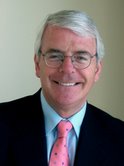
  • John Major – 1990 Autumn Statement

    johnmajor

    Below is the text of the Autumn Statement speech made by John Major, the then Chancellor of the Exchequer, to the House of Commons on 8 November 1990. 

    The Chancellor of the Exchequer (Mr. John Major) With permission, Mr. Speaker, I should like to make a statement.

    The Cabinet agreed the Government’s expenditure plans this morning. I am, therefore, now able to inform the House of the public expenditure outturn for this year; the plans for the next three years; our proposals for national insurance contributions in 1991–92; and the forecast of economic prospects for 1991 required by the Industry Act 1975.

    As usual, the main public expenditure figures, together with the full text of the economic forecast, will be available from the Vote Office as soon as I sit down. The printed “Autumn Statement” will be published next Tuesday.

    In this survey we have had to take some tough decisions in the interests of the economy and the new plans represent a very tight settlement. But it is a settlement which is fully consistent with the Government’s commitments and channels extra resources to the areas where the need is greatest. For this, and other reasons, I should like to pay tribute to my right hon. Friend the Chief Secretary for the skill and persistence with which he has brought the survey to a successful conclusion.

    Since 1984–85, while the economy has grown by nearly 20 per cent., total public spending has risen scarcely at all in real terms. As a result, the ratio of public expenditure to national income has fallen by more than seven percentage points, the largest sustained fall for 40 years. Moreover, in the past three years large budget surpluses have enabled us to repay debt totalling £26 billion.

    Mr. Dennis Skinner (Bolsover) Not any more.

    Mr. Major We shall add to that this year.

    The main objective of economic policy at present must be to bring inflation down, but, as we do so, the short-term prospect is bound to be one of weak activity. [Interruption.] In the past, during similar periods the ratio of public spending to national income has risen strongly. On this occasion it will not.

    Planned public expenditure in the current fiscal year is now expected to be £180.6 billion, rather less than 1 per cent. above the planning total set a year ago. A large part of this extra spending is due to an increase in the financing requirements of the nationalised industries, to a surge of common agricultural policy spending on agricultural market support and to expenditure on the Gulf crisis.

    Notwithstanding this cash overrun, public expenditure remains under tight control. Inflation has been higher than forecast, but it has not been allowed to feed through fully into expenditure. As a result, the ratio of spending to national income in the current year is likely to be slightly lower than projected at the time of the Budget – virtually unchanged from the 1989–90 level.

    The decisions on public expenditure for the next three years have been taken against a more difficult world and domestic economic background than for some time. Activity at home and abroad has begun to weaken and some countries such as Canada and the United States are expected to grow very slowly indeed over the coming year. The outlook has also been complicated by events in the Gulf, with the rise in oil prices and the uncertainty that they have produced. Against that background, our new plans are designed to protect the most vulnerable groups in society against the effects of higher inflation [Interruption.] I repeat, to protect the most vulnerable groups in society and to maintain longer-term policies to improve the working of the economy.

    Mr. Robert N. Wareing (Liverpool, West Derby) rose–

    Mr. Major I shall of course give way to the hon. Gentleman when we come to questions a little later.

    But, beyond that, this is not the year for making substantial additions to plans in other areas. The priority must be to honour existing commitments, within a total for public spending that is affordable and fiscally prudent. For 1991–92, the new planning total has been set at £200 billion, a little under £8 billion more than the previously published figure. The planning totals in the following two years are £215 billion and £226 billion respectively.

    In recognition of the economic uncertainties and the risks arising from the Gulf crisis, these totals include higher reserves than last year’s plans: £3½ billion in the first year; £7 billion in the second year; and £10½ billion in the third. I believe that these increases are prudent. Our plans also incorporate an estimate of privatisation proceeds at £5½ billion a year that is in line with the average outturn in recent years.

    After taking account of inflation, the level of spending next year will be rather less than implied by last year’s plans: that is, the cash additions to the planning total do not fully compensate for the higher level of prices now expected for 1991–92. This restraint is necessary, but it means that many of my colleagues have had to drop or postpone proposals that they would otherwise have regarded as desirable.

    Nevertheless, within this total there are substantial extra resources in three main areas: health, social security and central Government support for local authority services. These additions to plans total some £7½ billion in 1991–92. It has also been possible to make improvements to other key areas including education, public transport, and the environment.

    We have also been able to make savings elsewhere, including defence. I can assure the House categorically that financial constraints will not hinder in any way the United Kingdom’s military contribution to resolving the Gulf crisis. However, the “Options for Change” announced by my right hon. Friend the Secretary of State for Defence on 25 July will produce increasing savings in the defence budget. Over the next three years the new plans provide for a real reduction in defence spending of about 6 per cent., and further reductions should be achieved in later years as my right hon. Friend’s proposals are fully implemented. For the first time in the period since World War 2, we are now able safely to plan on a defence budget that is significantly less than one tenth of all Government expenditure and falling.

    In certain other areas, we have been able to accommodate increases in expenditure by finding offsetting savings. For example, on the trade and industry and employment programmes we have made selective increases while keeping broadly to existing plans overall, and within the Home Office programme, lower prison population forecasts have enabled us to reduce the prison building programme, while considerable resources have been made available for the refurbishment of existing prisons, including Strangeways.

    In July, the Government announced extra support for local authority current spending which will add around £2½ billion to previous plans. Current spending by local authorities has substantially outstripped central Government spending over recent years. This year local authorities in England budgeted for increases of over 5 per cent. in real terms before capping. This has led to community charges which in many authorities are far higher than expected or justified.

    The additional support that we are providing for next year should enable local authorities to finance local services without sharp increases in their charges. My right hon. Friend the Secretary of State for the Environment has already announced that, if required, the Government will make vigorous use of their powers to cap high-spending authorities. I re-emphasise that.

    Nearly £3 billion has been added to the social security plans for next year. This mainly reflects the upratings already announced by my right hon. Friend the Secretary of State for Social Security which maintain in full the real value of benefits paid to 10 million pensioners and 11 million people on income-related benefits. The additions also reflect the substantial extra cost of community charge benefit which will help about one in four charge payers. My right hon. Friend was also able to announce selective increases for poorer pensioners, people in residential and nursing homes and families. These improvements will be financed within the social security programme by savings from restructuring the statutory sick pay scheme, as announced by my right hon. Friend on 24 October.

    As in previous years, the Government have also made very substantial extra provision for health. Between this year and next, spending on the national health service in the United Kingdom will rise by £3 billion, so that the real resources over and above inflation that are available for spending on health will increase by a further 5 per cent. The total real increase in health service spending since 1979 will now be nearly 50 per cent. This has enabled the NHS to employ some 8,000 more hospital doctors and dentists, and over 50,000 more nurses and, of course, to provide for more sophisticated health care than ever before. As a result, more than 1½ million more in-patient and day cases are now treated every year. In the largest sustained programme of hospital building ever seen, nearly 500 major capital schemes have been completed since 1979. The plans that I am announcing ensure that the next three years will see further improvements in services.

    Extra finance is also being provided for public transport. London Transport and British Rail have large long-term investment programmes which will enable them to extend and to upgrade the London underground and to prepare for the opening of the channel tunnel. Between them, they will spend some £¾ billion on safety alone in the next three years. The new plans also consolidate the substantial extra provision for roads that was announced last year and include measures to relieve congestion in London. Investment in public transport in the next three years will be double the level of the past three years.

    Central Government spending on education will be increased by more than £500 million next year, largely to finance the record number of students in higher education. One in five of the 18 to 19 age group will be in higher education, compared with one in eight only a decade ago. The number of higher education qualifications gained, as a proportion of the relevant age group, is higher in the United Kingdom than in Germany, France, Italy and almost every other European country.

    Following the publication of the White Paper on the environment, the new plans provide significant extra resources for environmental research and in support of environmental bodies such as the National Rivers Authority and the Countryside Commission. There is extra provision also for the Government’s programme of action on rooflessness.

    Throughout the past decade, we have sustained a high level of capital spending in the public sector. In total, it will approach £30 billion in the current year. Leaving aside defence, our new plans include an extra £1½ billion a year for investment by central Government and nationalised industries. There is also extra support for local authorities’ capital spending on schools, housing and local transport.

    Taking capital and current together, real growth in total public spending over the three survey years will be less than 2 per cent. a year – well within the trend growth of the economy. As I have said, this is a tight settlement and it means that the ratio of public spending to national income should remain stable at its present level for the next two years. Thereafter, as activity strengthens and inflation remains in check, the downward trend will be resumed.

    I now turn to national insurance contributions. As usual, the review this autumn has taken account of advice from the Government Actuary on the income and expenditure of the national insurance fund, and of the statement on benefits that was made by my right hon. Friend the Secretary of State for Social Security on 24 October.

    The lower earnings limit at which contributions begin will go up next April to £52 a week, in line with the single person’s basic pension, while the upper earnings limit will rise to £390 a week. The upper limits for the reduced employers’ rates will also be increased.

    In addition to those changes, there will be reductions in the contribution rates paid by employers. As my right hon. Friend explained in the House on 24 October, the restructuring of statutory sick pay will add modestly to employers’ costs from next April. It is right that the Exchequer should share these costs. Therefore, the main employers’ contribution rate will fall next April from 10.45 per cent. to 10.4 per cent. and each of the lower rates will be cut by 0.4 per cent. This relief through contributions will limit the impact of the statutory sick pay adjustments on employers of lower-paid workers in particular. The necessary legislation will be laid before the House. The contribution rates paid by employees and the class 4 rates paid by the self-employed will remain unchanged.

    I am publishing today the economic forecast required by the Industry Act 1975, the first since we became members of the exchange rate mechanism. I must emphasise at the outset that the Gulf crisis and its effect on world oil markets make the future unusually difficult to predict. The United Kingdom, along with other countries, has already seen some of the adverse impact on consumer price inflation. The oil price rise is likely also to contribute to the general slowdown in the world economy that was already under way before the Gulf crisis.

    For the Industry Act forecast I am following the practice of international institutions such as the International Monetary Fund and assuming some fall in oil prices from recent levels to around $25 a barrel by the end of 1991. But I must reiterate that the situation in the oil market remains very volatile.

    Despite these uncertainties, however, it is now clear that the tight United Kingdom policy stance of the past two years is bringing about an easing of domestic inflationary pressures. This will make possible both a sharp fall in retail prices index inflation next year and a strengthening of output.

    So far this year, the public sector debt repayment has been running below both last year’s outturn and our expectations at Budget time. Local authority borrowing was particularly high earlier this year as some authorities experienced delays in collecting non-domestic rates and the community charge. Public corporations’ finances have been adversely affected by the slowdown in economic activity and central Government spending has also been higher. Nevertheless, despite this, I still expect a significant debt repayment in the year as a whole of £3 billion. This amounts to ½ per cent. of GDP and represents a strong fiscal stance at this stage of the economic cycle.

    Mr. Skinner What was the right hon. Gentleman’s forecast?

    Mr. Major For the benefit of the hon. Member for Bolsover (Mr. Skinner), we have a stronger fiscal position than Germany, France, the United States and every other member of the Group of Seven, with the solitary exception of Japan.

    Thus our public finances remain strong. Given our membership of the exchange rate mechanism and the counter-inflationary strategy that we are pursuing, it is essential that they remain strong. As I made clear to the House last month, the Government remain committed to the medium-term objective of a balanced budget. That is why we have continued our firm restraint of public expenditure in the current year.

    Turning to demand and output, it is clear that growth has now slowed down sharply. GDP is forecast to grow by 1 per cent. this year. This figure is the same as the forecast I made at the time of the Budget, but the path has been slightly different, and I expect output in the second half of the year to be down on the higher than expected and projected level in the first half.

    This period of weak activity should last until early next year, after which I expect growth to resume; GDP is expected to grow by over 2 per cent. in 1991, though year-on-year growth is forecast to be only ½ per cent.

    Unemployment has been rising since the spring and may continue to rise in the months immediately ahead, but job prospects will improve with a resumption of growth, the more so if employers keep tight control of costs, including pay rises.

    Within domestic demand, growth of consumer spending has now slowed markedly from over 7 per cent. two years ago to under 3 per cent. in the first half of this year. The signs are that it will fall further over the year ahead as consumers continue to adjust to lower growth of real incomes, following the high borrowing of recent years.

    Business investment rose by an unprecedented 45 per cent. in the three years to 1989, taking investment to an historically high level as a share of GDP. It may have fallen slightly in 1990 and is expected to fall a little further next year. A modest downturn from such a high level is unsurprising; indeed, it would be extraordinary if it did not occur at this stage in the cycle. It will still leave investment over 50 per cent. higher in real terms than in 1979.

    The current account has now begun to improve markedly. With low growth of domestic demand, import volumes have shown virtually no growth over the past year and import prices have been falling in recent months as a result of the firm exchange rate. Export growth, on the other hand, has remained strong over the past year so that the United Kingdom’s share of world trade in manufactures has risen for the second year running. The deficit on visible trade has followed a welcome trend and has virtually halved since the middle of 1989. This progress has been partly offset by poor figures for invisibles in recent quarters, although in the past these have, more often than not, been revised up later – at times, substantially.

    I now expect that the current account deficit in 1990 will remain close to the forecast I made at the time of the Budget – at just over £15 billion. With domestic demand and import growth likely to stay low, I expect a considerably improved performance next year, with the deficit falling to £11 billion despite some slowdown in export growth as world trade decelerates. As a proportion of gross domestic product the deficit is expected to fall from 3¾ per cent. last year to 1¾ per cent. in 1991 – a sharp improvement.

    I am now certain that inflationary pressures have been brought firmly under control. The monetary indicators show this clearly. The growth of MO has fallen every month since April and is now considerably within its target range, while growth of the wider measure, M4, and lending have fallen sharply to 14½ per cent. and 15½ per cent. respectively. With demand and output slowing markedly over the past two years, it is clear that inflation will come down next year. The fall in the headline figure will be very sharp as the effects of the past mortgage rate rises, of the high initial level of the community charge and of recent petrol price increases cease to influence the inflation rate by the end of next year. From a peak at the current level of about 11 per cent., I expect RPI inflation to fall to around 5½ per cent. in the fourth quarter of next year.

    In summary, the plans that I have announced today honour our existing commitments and provide additional resources for key areas – notably for the health service, for pensioners and for investment. They are within an overall total we can afford and they avoid the sharp upturn in the share of expenditure in national output which has occurred at similar stages in previous economic cycles. They are, therefore, consistent with the tight fiscal and monetary policies that will lead to a falling trade deficit and to a sharp reduction in inflation. They are, in my judgment, the right policies for building on the economic achievements of the past decade and I commend them to the House.

  • John Major – 1990 Speech at QEII Conference Centre

    johnmajor

    Below is the text Mr Major’s speech given by the Prime Minister at the presentation meeting of the new leader. The speech was given at the Queen Elizabeth II Conference Centre at Westminster, Tuesday 4th December 1990.

    Mr Chairman, when I joined the Conservative Party 30 years ago, I scarcely imagined this moment. That it has happened is a tribute above all to our Party and to the changes we have seen in the last decade.

    We owe so much of that to the will and determination of one woman. And I am glad beyond measure that she is here today so that we can tell her so.

    Margaret Thatcher has been a remarkable Prime Minister. There can be no doubt that history will record her as one of the great figures of our century – in Britain, and far beyond. The principles she fought for are right. They are shared by millions of people in this country. And we will build on them in the future.

    There was one simple precondition for those triumphant years.

    It is that we won three successive elections. Of course we did so partly because we were led by Margaret Thatcher. Partly because we touched the public instinct. And partly because you have made the Conservative Party the most formidable electoral fighting force in modern politics.

    But there was one other ingredient. We won those elections because we were united – in our principles, in our actions, and in a common cause.

    Margaret Thatcher knows that success for our Party depends on unity. That is why in her last speech in the Commons as Prime Minister – an unforgettable occasion for those of us who were there – she urged us all to work for a fourth election victory. So the message for the whole Party from the Branches to the Constituencies, from the backbenches to the Cabinet Room is this: there must be no backbiting, no recriminations, no post-mortems. There is too much at stake. We have an election to win.

    If there are any who doubt that judgement, let them ask themselves this question – what do the Labour Party want –and need? They want – and need – us to fight one another. So we must never forget that we have only one fight – and that fight is with them.

    Mr Chairman, people ask what I stand for.

    Let me tell you.

    First and foremost, I loathe inflation. To me inflation is not an abstract concept. It means the destruction of competitiveness for industry and commerce. It brings the destruction of peace of mind for people who see prices rising beyond their capacity to pay. It is economically destructive and socially divisive.

    So the centre piece of our policy must be an intolerance of inflation and a determination to beat it.

    Mr Chairman, what are our hopes?

    Again, let me tell you mine.

    It is to build a truly open society.

    Open because we believe that every man and woman should be able to go as far as their talent, ambition and effort take them. There should be no artificial barrier of background, religion or race. A society of opportunity where people can better themselves and their families by their own efforts. A Britain that puts people in control of their own lives, to exercise their own choices in their own time, in their own way.

    And yes, amidst the inevitable competitive thrust of life, it should be a compassionate society. Genuinely compassionate – because some people do need a special helping hand to help them enjoy a full life of choice and independence. And we should never forget that small changes in the lives of private people are every bit as important to them as dramatic changes in the lives of public people. And a classless society: not in the grey sense of drab uniformity – but in the sense that we remove the artificial barriers to choice and achievement.

    We should not underestimate what has already been achieved.

    But there is still more to be done.

    For there are still too many corners of Britain in which the effects of our Conservative reforms are yet to be felt.

    It is for this reason that I want the 1990s to become a Decade of Opportunity.

    Let there be no doubt that in spreading opportunity we must continue to encourage wealth creation.

    Continue to keep taxes low on families and on business.

    And continue to reduce regulation and promote enterprise.

    And, of course, we must continue to enlarge the private sector wherever we can. But where services do remain in public hands we will not hesitate to apply private sector skills to ensure that they are more efficient and deliver the high quality that people deserve and demand.

    When I came into the Party we had set ourselves the goal of a property-owning democracy.

    We wanted people to own their own homes.

    Now two thirds of families do.

    In the 1980s we worked for the capital owning democracy – more building society accounts, more shares, more personal pensions.

    And millions of families have gained from the actions we took.

    Now in the 1990s we must work to extend savings further.

    For two reasons: one economic and one social.

    The economic reason is that as a nation we will need those savings in the 1990s to finance the investment necessary to keep our companies competitive.

    And I don’t want those savings to be imported; I want those savings to be British.

    The social reason is that we want more people to have savings behind them. Because money set aside gives them and their families a greater sense of security and a wider freedom of choice.

    Those who talk of the selfish society misjudge a country in which more time is volunteered and more money is given in help to others than anywhere in Europe.

    For what do you see if you go to a local charity, the Citizens Advice Bureau, or the Red Cross?

    Half your constituency executive: that’s what you see!

    The challenge to us now is to remain the radical Party.

    Spreading the privileges once available to the few so they can be enjoyed by the many.

    We are committed to schools where all children have a quality education. We have brought in open enrolment, given financial control to the schools, encouraged more involvement by parents, and introduced a national curriculum. Now we want to ensure that the best people are attracted into the teaching profession and that teachers command respect for the job they do.

    We offer no sudden solutions or miracle cures.

    But where we find that things are not quite right, we will listen, and we will make the changes that are necessary.

    And that is precisely why we have put in hand a further review of the Community Charge.

    The Government that never reviewed policies, never made any.

    Mr Chairman, in this country 32 million people are under the age of 40.

    If we are to build for them we must look to the kind of world we would like to see in 25 years time and begin building it.

    The European Community remains central to our place in Europe and the wider world.

    The Channel Tunnel, connected this last week re-emphasises yet again that we are part of Europe.

    I believe it is in our national self-interest to help build and shape the European Community as it evolves.

    We must be in there, arguing, persuading and, yes, fighting for our interests and our vision of Europe.

    Just like our partners.

    But being a good European does not mean accepting every proposal from the Community.

    The more committed we are to our role in Europe, the more we must ensure that the Community is constructed on the principles we care about: liberalism in economics, democracy in politics, evolution in constitutional questions, and cooperation in foreign policy.

    So we will set out to work with our Community partners in building such a Europe. And do so with enthusiasm.

    But we will not be deterred either from saying what we believe to be wrong – or pressing what we believe to be right –by the cry that we are insufficiently European.

    Politely but firmly we shall say what we think.

    And our partners will respect us for it.

    Mr Chairman, there is one dark cloud that hangs over us.

    In recent months we have seen the invasion and systematic destruction of Kuwait.

    And now the United Nations Security Council has taken a momentous decision. It authorises use of all necessary means – and that includes force – if Iraq does not withdraw by the middle of January.

    No-one should doubt our objective.

    We want to see a peaceful solution in the Gulf.

    That is our preferred outcome.

    So we fully support President Bush when he says that he is prepared to travel the extra mile to achieve such a solution.

    So are we.

    But there can be no question of negotiations, concessions, partial solutions or linkage to other issues.

    The whole international community has made it clear that Iraq has to withdraw from Kuwait totally and unconditionally.

    The legitimate government has to be restored.

    And of course, all the hostages have to be released and sent home to their families – where they belong.

    If Saddam Hussein does that, he need have no fear of attack. It is in his hands.

    But for the international community, a vital principle is at stake. It is not only the restoration of the rightful government of Kuwait, important though that is. It is that if we want a safe world in future, Iraq’s aggression must be reversed.

    Mr Chairman, everyone’s political belief stems from his personal experience.

    My Conservatism comes from what I saw, what I felt and what I did, as well as what I read.

    It shaped what I want to do.

    To me, Conservatism is not a creed. It is essentially the common sense view of life from a tolerant perspective. And let me give you two cast-iron pledges today. As long as I am privileged to lead our Party it will never become an exclusive club.

    Conservatism will remain a word for economic progress, social mobility and for the individual dignity that is the natural right of every citizen. Ours must be a Conservatism which touches every instinct and enters every home.

    It will never be a word for “nothing left to do”.

  • Douglas Hurd – 1990 Speech on the Gulf War

    Below is the text of the statement made by the then Foreign Secretary, Douglas Hurd, on the Gulf War on 11th December 1990.

    Mr. Hurd : It is right that the House should debate the Gulf crisis from time to time and that it should require the Government to keep it fully informed, and I have tried to respond to Opposition suggestions on the timing of statements as the situation has developed.

    Today is an occasion to step back from immediate events, to look at the crisis as a whole and to consider what is at stake. One immediate event is wholly welcome, and that is the release of hostages which is now under way. The total British community in Iraq and Kuwait was just over 1,100 at the time of President Saddam Hussein’s last announcement. Aircraft have been chartered from Iraqi Airways to bring our people home and we have taken space on charters organised by others. The community were informed of arrangements by our embassies and announcements over the BBC World Service.

    Ninety-three people arrived early yesterday morning, picked up in Frankfurt by the British Airways aircraft that had been waiting in Amman. A further 11 arrived later in the morning by way of Rome. More than 380 arrived at Gatwick yesterday evening by Iraqi Airways and a further 380 are expected this evening. They will be mainly members of the community from Kuwait who were being taken to Baghdad in two planes this morning by Iraqi Airways. Her Majesty’s Government are bearing the full cost of chartering the Iraqi Airways aircraft. British Airways generously contributed the operating costs of its flight yesterday, leaving the Government to pay for fuel and war risk insurance. Other people are making their own way, using scheduled flights via Amman. The Government will meet the costs if travellers do not have recourse to funds and we shall organise further charters if necessary. We are strongly urging everyone to leave.

    Our embassy in Baghdad will try to establish the exact whereabouts of all who remain. I believe that reception arrangements here have worked well and that co-operation between Government Departments, voluntary organisations and airport authorities has been good.

    In two days from now, Her Majesty’s ambassador in Kuwait will be the last remaining ambassador carrying on his duties in that country. Mr. Weston and his colleague Mr. Banks have been keen to stay at their posts, so long as by doing so they could give somehelp to our community in Kuwait. If, as I hope, that community—or all but a small minority who wish to stay—is able to return—is able to return to Britain by way of Baghdad in the coming days, we shall work out with those two brave men how long they should stay. I thank them again for what they have done.

    I will comment on the advice that we are giving to British communities in the Gulf region outside Iraq and Kuwait. We are talking of some 50,000 people, more than the community from any other country. At the beginning of the crisis we encouraged some thinning out, but many people have since, for understandable reasons, gone back. At the end of last month, we recommended that school children should not travel out to Bahrain, Qatar or the eastern province of Saudi Arabia for Christmas and that families should get together for the holiday in this country. We also advised that those dependants leaving the Gulf for Christmas should not return until the situation became clearer. We look carefully and constantly at that advice. It is our duty to give the communities the best possible advice, a responsibility which weighs heavily on us. We do not want to cause alarm, disrupt people’s lives or separate families unnecessarily. But many British people live in countries which, in the event of conflict, would be at direct risk from Iraqi military action. We keep a close eye on the advice and, because of hon. Members’ interest in their constituents, I shall keep the House fully informed of any changes in our advice.

    President Saddam Hussein is now complying with one of the three main requirements of the Security Council. Attention can now focus on the other two requirements —the unconditional withdrawal of Iraqi forces from Kuwait and the restoration of the legitimate Government. Ten days ago I was in New York to join in the last Security Council debate on the subject. It was a notable and dramatic occasion. The council adopted, with just two votes against, resolution 678, which empowers the international community to use “all necessary means” to secure compliance with its earlier resolutions if Iraq does not leave Kuwait on or before 15 January next year.

    Mr. Tam Dalyell (Linlithgow) rose——

    Mr. Hurd : May I just proceed a little further, and then I will give way to the hon. Gentleman before I leave the subject of the use of force? The phrase “all necessary means” includes the use of force. Resolution 678 is not a call to arms or a timetable for military action. The resolution provides for what it calls a pause of goodwill. That was an idea of the Soviet Government. It gives Saddam Hussein a final opportunity to leave peacefully. We hope he takes it.

    We support the United States initiative to make sure that Iraq’s leaders hear the message loudly and clearly. We agree that, in the effort to avoid war, it is worth going that extra mile. I discussed how that might be done with Secretary Baker and the Foreign Ministers of the other permanent members of the Security Council while I was in New York on 29 November, just after the adoption of resolution 678. President Bush and Secretary Baker will not be bargaining. Their purpose is to speak plainly so that Iraq’s leaders understand exactly what is required of them, not by America or Britain, but by the international community, and the consequences if they continue to defy those requirements.

    There will be no concessions on the requirements of the Security Council, no partial solution or linkage to other issues. In the European Community last week we decided that the same message would be delivered to the Foreign Minister of Iraq after his visit to Washington by the Presidency of the European Community, probably in Rome.

    Mr. Dalyell : Does it bother the Foreign Secretary that one of the two countries that voted against the resolution was one which is nearest and stands to lose most—Yemen —whereas others such as Zaire, where I led the Inter-Parliamentary Union delegation, made it quite clear that the crisis is all about lifting the ban on American aid to Zaire on civil rights grounds, not about the merits or demerits of the Gulf? Will the Foreign Secretary look critically at what the United Nations has done?

    Mr. Hurd : The two members that voted against were Cuba and Yemen. I am not sure that Cuba is situated very close to the conflict. Yemen, as an Arab country, has been closely involved, but is not one of those countries closest to the conflict. As the hon. Member knows, the Arab countries closest to the conflict—Bahrain, Qatar, Saudi Arabia and the Emirates—are absolutely clear and solid on the matter. The hon. Member is not on a good argument.

    Mr. Tony Benn (Chesterfield) : Will the Foreign Secretary give way?

    Mr. Hurd : I shall continue a little and then give way to the right hon. Gentleman in a minute.

    Mr. Benn : I just want to ask the right hon. Gentleman one clear legal question.

    Is it the Government’s view that article 51, plus the resolution passed by the Security Council last Thursday, constitute authority for the use of force by the United States, Britain and others without returning to the Security Council or to the House of Commons?

    Mr. Hurd : Yes, it is. We believed, and Opposition Front-Bench spokesmen agreed, that article 51 and the original request from the Kuwaitis provided a legal basis; the argument was about whether there should be an additional political basis. That has been supplied by resolution 678.

    We continue to read in the media that the unity of purpose in the coalition against aggression is disintegrat-ing. We have read such reports more or less continuously ever since the coalition was formed. Sometimes it is the Arabs in the coalition, sometimes it is the French or the Russians, and sometimes it is the Americans, who, according to the reports, are looking for some compromise that falls short of the requirements of the Security Council. Now, after these weeks, the House can judge for itself and see that that is not true. We are all working for a peaceful outcome. None of us is ready to settle for less than the Security Council requires.

    As for linkage, it is common ground between most of us that we have long supported the idea of an international conference on the Arab-Israel problem. That support continues. A conference is a technique, not an end in itself. It needs willing participants if it is to get anywhere. The initiative—Jim Baker’s initiative—taken by the United States Government with our support was designed to find a basis on which talks could take place between Israel and the Palestinians, with a view to a conference in due course. That was before the invasion of Kuwait. We believe that the Baker plan was a realistic effort. The invasion of Kuwait set back that search for peace and a settlement between the Arabs and Israel, as did the partial support of the PLO for the invasion. We have no intention, however, of forgetting the injustices and insecurity that persist so long as there is no peaceful settlement of the Arab-Israel problem.

    Iraq under President Saddam Hussein has had and could have no useful contribution to make to this search for a peaceful settlement, but once the Iraqis’ aggression against Kuwait has been reversed we can and shall again focus our efforts on the search for a peaceful settlement. I hope that the co-operation in recent months between the different countries of the coalition against the aggression will improve the prospects of success.

    Dr. Norman A. Godman (Greenock and Port Glasgow) : Given the emphasis on the need to find a peaceful settlement, why do the Government and President Bush appear so impatient with sanctions? Surely, even if they take more than a year to work, they are a much more effective, humane and peaceful means of bringing this man down than the sacrifice of even one British service man.

    Mr. Hurd : I am just coming to that argument; it is a serious one and it needs to be dealt with.

    I come now to the pressures that the international community—not just British and America—is exerting on Iraq. More than four months after the aggression, those pressures are all peaceful. The most important of them are sanctions, mentioned by the hon. Member for Greenock and Port Glasgow (Dr. Godman), and the build-up of allied forces representing the so-called military option. There are signs in Iraq that sanctions are having an effect. Basic foodstuffs have been rationed since September. But the Iraqi people are used to hardship. They endured eight years of one of the most bloody and futile wars since 1945 —the Iraq-Iran war. It must be questionable whether sanctions, even if applied over a long period, will undermine the resolve of Saddam Hussein to keep his grip on Kuwait.

    Meanwhile—the point omitted by the hon. Member for Greenock and Port Glasgow—day by day Kuwait is being obliterated from the map. We can read what the hostages are saying as they come back and we can read the Amnesty report and listen to the Kuwaitis. There is no secret about what is happening. Whatever can be removed has been taken to Baghdad. Murder, torture and brutality have been commonplace, as the Amnesty report and later evidence shows. With each day that passes, the likelihood that we shall be able to restore Kuwait to its former position decreases. The Iraqi aim is clear. Iraq is out to eradicate Kuwait as an independent nation. We all welcome the return of foreign hostages from Iraq, as we have just done, but we should not forget the thousands of Kuwaitis who are virtually hostages and prisoners in their own city.

    President Saddam Hussein’s sophisticated war machine will continue to take advantage of the time allowed to improve its military position. There are now nearly 300,000 Iraqi troops and nearly 2,000 tanks in Kuwait, and work continues every day on improving the defences. Every delay risks increasing the casualties in an eventual conflict. Those are sobering facts which the House needs to take into account in assessing the situation.

    Sir Alan Glyn (Windsor and Maidenhead) : What will happen to the Iraqi civilians now in Kuwait? Will they be removed? I refer to civilians, not military personnel.

    Mr. Hurd : If the Iraqi forces withdrew as the Security Council requires, I imagine that the civilians would be wise to follow them.

    Mr. Gavin Strang (Edinburgh, East) : The Foreign Secretary has said that, because of the enormity of what is taking place in Kuwait, the British Government and other Governments are not inclined to allow sanctions to have a proper chance to work. What is happening in Kuwait is very disturbing, but it will be disastrous for the population of Kuwait if war breaks out there. That is the choice. As the impact of sanctions was always to be on the Iraq Government’s overseas earnings from oil, from which they obtain 95 per cent. of their income, it is surely reasonable to allow the sanctions a proper chance to work. That will certainly not happen as a result of the months in which they have so far been applied.

    Mr. Hurd : It depends what the hon. Gentleman regards as a proper chance. By 15 January the sanctions will have been in operation for five and a half months and an assessment has to be made. I have tried to give the House the means by which that assessment will be made. Members will have their own sources of information. People may say that sanctions are producing decisive shortages which may lead to Saddam Hussein changing his mind. That would produce a new situation, but, as I have said, in our our view that is not so.

    In August Her Majesty’s Government committed their forces to the Gulf region for a number of reasons. The first was to defend Saudi Arabia and the other Gulf states. The second was to deter Saddam Hussein from pursuing his military adventure further. Many other countries, including some of our closest friends and allies, have committed their forces with the same intentions. Those two objectives of defence and deterrence have already been achieved without any military action.

    The third reason for sending our troops to the region was to back the United Nations demand—not that of Britain or America—that Saddam Hussein should withdraw from Kuwait. By the middle of January, Britain will have more than 30,000 troops in the area and they will stand beside more than 500,000 others, most of them from the United States and Saudi Arabia itself. My right hon. Friend the Secretary of State for Defence will speak further about that deployment in his winding-up speech. I am satisfied that this accumulation of allied force provides the strongest single hope for a peaceful outcome. Nevertheless—there is no point in having debates such as this if one does not speak plainly—this country faces a risk of war and in that situation every hon. Member is entitled to know on behalf of his or her constituents why that risk is justified. In the age of the sound-bite and the one-minute television interview, this task of communication becomes difficult. Secondary matters crowd in and confuse the issue and immediate questions are put and answered. That is why the House and our debates are so important.

    It is not a question of who should rule Iraq—that is not a matter for us. It is not a matter of the price of oil or access to oil. If that were the issue, everyone would have settled with Saddam Hussein long ago. It is not a matter of an American—let alone a British—desire to impose some permanent presence in the Gulf. As the House knows, we are there because friendly states out of their alarm and anxiety asked us to return. The real issue is a different one and we must keep it clear.

    It has taken the world a long time to create even the beginnings of a system of collective security. In the 19th century, war was commonplace. The nation states of Europe blundered through treaties of alliance and treaties of reassurance into the great war of 1914. After that war, the international community experimented, but half-heartedly, with collective security. But the League of Nations was inadequate at its birth and it failed to act successfully even within its terms of reference.

    Haile Selassie came to Geneva, to the League of Nations Assembly, to plead his country’s cause. The League did not—could not—listen. We did not listen. The Hoare-Laval pact would have placated the aggressor, Mussolini, by giving him part of the country that he had attacked. Are there not echoes there for the House to catch? is it for a repetition of the Hoare-Laval pact that the right hon. Member for Chesterfield (Mr. Benn) is seeking and arguing? Abysinnia was snuffed out. The axis powers saw only weakness —

    Mr. Benn : As the right hon. Gentleman has referred to me, will he give way?

    Mr. Hurd : May I just conclude the point?

    [HON. MEMBERS: “Give way.”]

    I will, of course, give way.

    Mr. Benn : The first speech that I heard in the House was in 1937 when Winston Churchill denounced the Tory Prime Minister for his support for the fascists. The appeasement of the pre-war years was Conservative support for Hitler and Mussolini. There was no appeasement—there was active support for fascism. It does not fall to the right hon. Gentleman, who did nothing about Panama, Grenada, the invasion of the Lebanon or the invasion of Cyprus by Turkey, to accuse those who believe that war would be a catastrophe beyond imagining, and that the United Nations should be an agent of peace, of appeasement, and he should withdraw that.

    Mr. Hurd : I do not remember, but the right hon. Gentleman might remember—or his father and my father might remember—that when it became known that Sir Samuel Hoare, the holder of my office, had put together with the French Foreign Minister, Pierre Laval, an arrangement by which part of Abyssinia would be given to Mussolini, so that the awkwardness of his aggression should be forgotten, the Foreign Secretary was forced to resign and was swept from office.

    Mr. Benn : I have made no such suggestion.

    Mr. Hurd : I asked whether the right hon. Gentleman remembered. Some of the things that the right hon. Gentleman has suggested come close to that.

    Mr. Benn : On a point of order, Mr. Speaker. I am in no way sensitive about my personal position, but when the Foreign Secretary argues, by parallel with the Conservative Foreign Secretary, Sam Hoare, that I have argued that a part of Kuwait should be handed to Iraq, he is misleading the House and the country.

    Mr. Speaker : With any luck, the right hon. Gentleman will be called in the debate and he will be able to make his points then.

    Mr. Hurd : If the right hon. Gentleman is saying that he agrees with us that Saddam Hussein should withdraw completely and totally from the whole of Kuwait, I will withdraw any reference—

    Mr. Benn : Withdraw it now.

    Mr. Hurd : I would certainly withdraw any reference to the right hon. Gentleman. But there are certainly people who have argued that Iraq should be allowed to retain at least part of Kuwait—two islands, an oilfield, and so on. If the right hon. Gentleman is not among those, and if he is in favour of total Iraqi withdrawal from Kuwait, I withdraw my reference to him.

    Mr. Benn : As the right hon. Gentleman knows, I spent three hours with Saddam Hussein. I reported back to the right hon. Gentleman and to the American ambassador. The right hon. Gentleman knows very well, because I told him, that I told President Saddam Hussein that Iraq must comply with the United Nations resolutions, and it is in the early-day motion which I and my right hon. and hon. Friends have tabled. The right hon. Gentleman is doing what Tories always do in a crisis—they smear those who challenge them.

    Mr. Hurd : I withdraw my reference to the right hon. Gentleman —

    Mr. Benn : Withdraw.

    Mr. Hurd : I have already done so. But I hope that it will go out as the clear view of the House that President Saddam Hussein should withdraw not from part but from the whole of his aggression against Kuwait. If that is established as the universal view of the House, that is a major step forward.

    Mr. Benn : But not to war.

    Mr. Hurd : I shall come to that in a minute, though I hope that the right hon. Gentleman is not blurring his position again. I hope that it is established that the withdrawal from Kuwait should be total and absolute.

    For the 40 years of the cold war, the Security Council worked imperfectly and too often it was ineffective. Things have started to change and we have begun to make the United Nations work. All five permanent Security Council members are meeting frequently, talking openly and acting constructively together. We have the same aims. In fact, we have a better chance of collective security than at any other time this century. But there is a subscription to pay —if one may so put it—for collective security, in terms of collective action when aggression occurs. There can be little respect for those who want the benefits of collective security but are not willing to find that subscription.

    Some senior hon. Members have fought in a war, but most of us have not. However, we all have enough imagination and sense of responsibility to know that war must be the last resort. No one should believe—here I agree with points made by Opposition Members—that forcing Saddam Hussein out of Kuwait would be a quick or easy operation. No one should suppose that the aftermath of conflict would be painless or straightforward. We respect the belief held by pacifists that in no circumstances is war justified, even though that means that aggression and evil of all kinds may sometimes be allowed to succeed. The rest of us—probably most right hon. and hon. Members—accept that there are circumstances in which peace-loving nations may, and indeed should, use force to prevent and to reverse aggression.

    We do not argue that in any blithe or careless manner. We prepare the military option, we seek and we gain authority for the military option because in sober judgment we see the experience of that option—the possibility of that option, the existence of that option—as the last and most powerful peaceful pressure on the aggressor.

    The latest Security Council resolution—resolution 678 —is not a bluff. The legal authority to use force has been there for some time and the political authority has now been given by the Security Council. That is the strongest possible expression of collective security.

    Mr. John Wilkinson (Ruislip-Northwood) : My right hon. Friend is right to emphasise the importance of collective security and to stress the need to prepare to use force if Iraq does not withdraw from Kuwait. Will he and my right hon. Friend the Secretary of State for Defence make it equally clear that if war comes, it is likely to be protracted and bloody, and will not only engage British forces already in the Gulf but make it necessary to mobilise appropriate reserves, including air reserves? As it is likely to be largely an air war, the air element will decide the outcome of the conflict. The United Kingdom has very poor air reserves, but the United States has utilised 45 per cent. of its air transport to the Gulf from its reserves. Will my right hon. Friend make a similar commitment at this time?

    Mr. Hurd : My right hon. Friend the Secretary of State for Defence will deal with that point when he winds up the debate. One cannot predict with any exactness the length of a conflict of this kind. I have just said that no one pretends that it will be quick or easy.

    Mr. Harry Cohen (Leyton) : The Secretary of State for Defence said so only last week.

    Mr. Hurd : No, no one has ever pretended that.

    Mr. Cohen : The Secretary of State for Defence said that the operation would be short, sharp and quick”.—[Official Report, 4 December 1990; Vol. 182, c. 167.]

    Mr. Hurd : The existence of the military option is the strongest possible expression of collective security and the strongest possible incentive for Iraq to reverse its aggression. That military option is gaining formidable strength on the ground and in the air and Britain is adding notably to that strength.

    The aim is a peaceful solution. The Iraqis see the array that is now building up against them. They know of the authority that is backing that array, which now comes from so many nations and from the United Nations. Now that it has become clear and is no longer blurred, they have a powerful incentive and reason to comply. Let us keep the message clear and not confuse it with secondary issues. The message is a double one—if the aggressor stays in Kuwait, he will be forced out; if he leaves Kuwait and complies fully with the Security Council resolutions, he will not be attacked.

    There is a peace option. It is in Saddam Hussein’s hands. We are working for peace and will go on working for peace, but the doctrine of peace at any price leads not to safety but to danger.

    Dr. Dafydd Elis Thomas (Meirionnydd Nant Conwy) rose——

    Mr. Hurd : Our policy is clear, firm and reasonable. In commending it to the House, I hope that it will have the backing of all who believe in the possibilities of collective security and a safer world.
  • Margaret Thatcher – Comments made when leaving Downing Street

    margaretthatcher

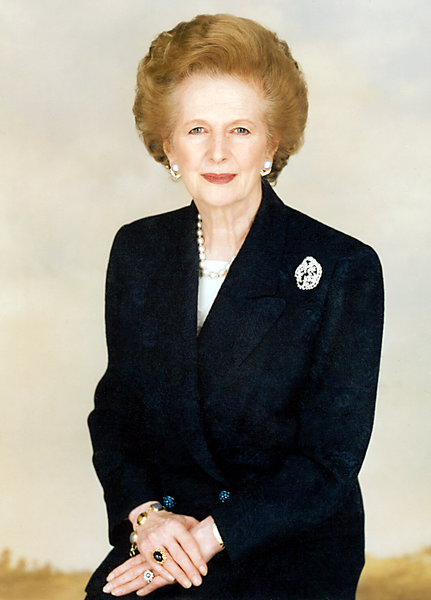
    Below is the text of the comments made by the departing Prime Minister, Margaret Thatcher, when leaving Downing Street in London on Wednesday 28th November 1990.

    Ladies and Gentlemen,

    We’re leaving Downing Street for the last time after eleven-and-a-half wonderful years, and we’re very happy that we leave the United Kingdom in a very, very much better state than when we came here eleven and a half years ago.

    It’s been a tremendous privilege to serve this country as Prime Minister—wonderfully happy years—and I’m immensely grateful to the staff who supported me so well, and may I also say a word of thanks to all the people who sent so many letters, still arriving, and for all the flowers.

    Now it’s time for a new chapter to open and I wish John Major all the luck in the world. He’ll be splendidly served and he has the makings of a great Prime Minister, which I’m sure he’ll be in very short time.

    Thank you very much. Goodbye.