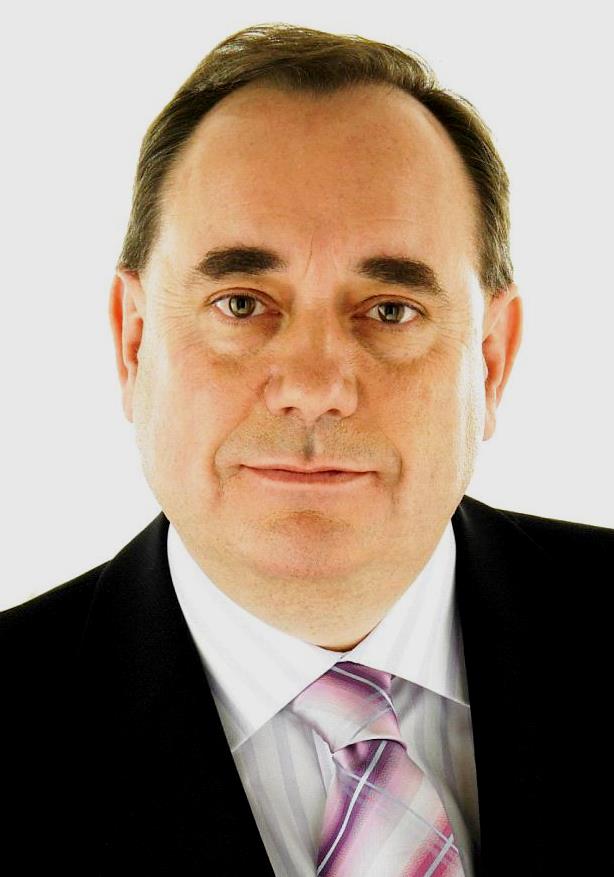
Tag: 1987

  • Jim Paice – 1987 Maiden Speech in the House of Commons

    Below is the text of the maiden speech made by Jim Paice, the then Conservative MP for Cambridgeshire South-East, on 3 November 1987.

    In rising to address the House for the first time I am mindful of the honour and privilege of being a Member of it. The trepidation with which I make my first speech is tempered only by the knowledge that even the greatest statesmen who have served the country have had at some stage in their careers to rise and address the House for the first time.

    Indeed, I follow in the footsteps of a great statesman: Francis Pym represented the old constituency of Cambridgeshire and, more recently, Cambridgeshire, South-East, for some 26 years. During that time he occupied many of the highest offices in the land, and for all that time he served both his constituency and country to the very best of his ability. He did so in a way which is an example to us all, and which I shall find it very difficult to emulate over the years in which I hope to represent my constituency. It is only right and proper that Francis Pym has now taken his place in the Upper House, where his counsel can still be heard.

    The constituency that I am proud to represent includes many of the features that are at the forefront of Britain’s revival. In it have taken place, and are taking place, many of the technological developments and the advances in research that are at the forefront of our economic recovery. The enterprise culture has blossomed and boomed there perhaps more than in any other part of the country. The very atmosphere seems to breathe and encourage success. However, it is a very large constituency and, geographically, a very rural one—stretching from the Essex-Suffolk border to around Newmarket and taking in the vast majority of that great centre of the British bloodstock industry, and extending upwards into the Fens and the city of Ely, including the magnificent cathedral that makes it the centre of tourism in that part of Britain.

    However, the area has its problems. Fortunately. they are the problems of success. The pressures of development. if not handled properly, threaten to destroy the very fabric of our community. There is a further problem: the businesses that are currently booming, expanding constantly and providing massive numbers of extra jobs face an even greater threat to their continued development. The great perversity of our current economic scene is the shortage of skilled staff. That is why I am addressing myself to the Bill, and particularly to part II, which deals with training. I am sorry that much of the vehemence of the Opposition is concentrated on part I. I can only assume that they support most of the section on training, which, in my view, is of much longer-term importance to the country. I welcome the clauses on training and the greater emphasis placed on it by my right hon Friend in appointing a Training Commission.

    Before I was elected, I was general manager of a company specialising in training and management development. My duties included running a substantial youth training scheme and many other MSC schemes. I also served for a time as a member of an area manpower board, and I have seen many of the MSC schemes from different perspectives. In my view, the youth training scheme that my right hon. Friend has already developed is one of the Government’s greatest achievements over the years since they were elected in 1979. However, I have a few caveats.

    First, and probably most important, if, as we all hope, the number of young people in strict unemployment is coming down, partly because of the improving employment picture and partly because there are slightly fewer school leavers, the challenge to us all to ensure that the youth training scheme continues to develop is even greater as the necessity for it appears to diminish. The YTS is not concerned merely with keeping people out of the dole queue, which is the accusation thrown at it by those who wish it ill. More important, it is a means of ensuring that all young people who leave school at the age of 16—or, now, at 17—whatever their level of academic ability or achievement, can go into work and gain the skills that are necessary for work. That does not mean only the manual and practical skills, essential though they are. It also means the skills of working discipline—personal skills, which are equally important to holding down a job and doing it well. All those skills are vital if young people are not only to obtain jobs in the future, but to play a full and lasting role in Britain’s economy.

    Many firms and businesses with which I have been associated understand that and use YTS as the normal route of entry for 16-year-olds, not simply as a means of paying only £28.50 a week. It is, of course, open to an employer to pay any figure above that minimum, and, in my experience, many do so. The framework of YTS provides an opportunity of training in a combined programme lasting for up to two years, to ensure that when young people reach the age of 18 they have learnt many of the basic skills that will stand them in good stead for the rest of their working career. That is a good basis on which to build, and I hope that in the next few years the Training Commission will take steps to develop it into a three-year scheme. It would then compare favourably with the apprenticeship schemes that it is now replacing in many industries. It is a pity that only about 10 per cent. of trainees have formal employee status, as opposed to trainee status, and I hope that the commission will set an increase in that figure as one of its chief targets over the next few years.

    My second caveat is that we must ensure that industry takes up its own responsibilities for training. One of the sadnesses that I faced in my career, until my election, was the low level of importance attached by some industries to training. They pay considerable lip service to it, but when it is time to come up with the goods they are found wanting. That is their loss and the loss of the country and the economy.

    It is no use threatening to institute massive levies on every business so that the Government, through some different arm, can redistribute and dispense those levies as they see fit. Contrary to what we have hard, and no doubt will hear again, it just does not work. Seen from the grass roots, it is not a good use of resources. What we have to do is to encourage, persuade and cajole industry to recognise its own responsibilities for the development of its staff — to recognise that it must make a major investment, which is worth every penny. The most important investment that a company can make is in training its staff for the future.

    As the number of people on the youth training scheme declines, the Government and the Training Commission will be tempted to begin to reduce the financial input. I know that it is the Government’s policy to move the burden of training more to the employers. That is right, and is as it should be, but we must be careful to ensure that we do not go too fast too soon. We must make sure that the slack is gradually taken up by industry so that the developments that have been at the forefront of the advances in the youth training scheme in the last few years are not lost.

    Even with inflation down to its present highly satisfactory level, the costs of training, especially in rural areas, where YTS trainees can be spread over many square miles, are considerable. Like everything else, the costs keep rising and I hope that my right hon. Friend will recognise the great cost and only gradually shift the burden to the employers. The burden should be shifted, but we must not do it too quickly, because if we do something will be lost in the middle.

    My final caveat is that the development of YTS in the last few years has spawned a number of private training operators. I listened to the speech of the hon. Member for Oldham, West (Mr. Meacher), who has left the Chamber, and noted the cynical way in which he spoke about privatised training. One of the major factors in the success of the scheme has been the development of private training operators, often in competition with established colleges of further education. Many colleges succumbed to the temptation of simply tacking the YTS on to their existing courses of study. Over and over again that failed miserably, because the very ethos of YTS and its concepts of integrating work and training into a combined package and of appraisal and assessment were new and could not simply be tacked on to existing programmes.

    Fortunately, professional trainers were there, as opposed to professional educators. They were able to take up the opportunities offered and in many cases they forced colleges of further education to recognise the great differences. The colleges now understand that if they are to run the youth training scheme and provide the level of service that young people deserve and require, a rethink is necessary. The results of that rethink are now beginning to show in the efforts of many of those traditional providers.

    In the proper shifting of the burden that is bound to come, I urge my right hon. Friend to make sure that private providers are not put at risk. We have already heard expressed the great antipathy of the area manpower boards, the trade unions and the established institutional providers against the private sector. It would be a great shame if private sector competition were lost. The private sector has taken great steps towards moving the whole ethos and understanding of the skills of training forward into the future. It is not good enough for the Opposition to say that we should hark back to 1974 when the Manpower Services Commission was first developed. Today, everything to do with training is totally different, because training is a different ball game. The skill training profession has moved a whole street ahead of where it was in 1974. We must recognise that. There is no point in looking back, because in those days training did not do half the job that it professed to do.

    I welcome the clauses in the Bill to ensure that every young person will have the opportunity to train and to make a responsible choice. They will be able to go into the planned programme of training and work provided by the Government, or choose to be unemployed. The social security changes that were given their Second Reading yesterday are welcome. It is estimated that about 6 per cent. of young people refuse YTS and that about 7 per cent. pull out of the scheme because they believe that it is doing them no good. That is about 40,000 people a year, and we must try to reduce that figure. If the young people who dither and wander, or who become sceptical or disenchanted with YTS, are to be persuaded that the scheme has something to offer, we must make sure that the developments that have taken place in the last four or five years continue at the same pace.

    The opportunities are there and the importance of the YTS has not diminished even though, perhaps, its original purpose begins to fade. We must ensure that industry takes up the challenge of using YTS as the normal route for training and accepts the responsibility for gradually paying a greater share of the costs. We must ensure that young people will accept the concept of YTS as being in their best interests. We are already moving fast down those roads. If we can do those things we will have taken the first step towards ensuring that the successful, booming industries and businesses in constituencies such as mine are not continually faced with the problem of a shortage of skilled staff. Sadly, such shortages are even now beginning to hamper development. That is not in Britain’s interests, and I urge my right hon. Friend to ensure that the skills are available for the future.

  • Michael Colvin – 1987 Speech on GP Training

    Below is the text of the speech made by Michael Colvin, the then Conservative MP for Romsey and Waterside, in the House of Commons on 27 October 1987.

    I wish to raise the problems of the funding of general practice training for medical students. We all accept that primary health care is the foundation of the National Health Service, yet it is the one aspect that we need to take more seriously when medical students enter their clinical courses. It is an issue with which I came face to face when visiting the Aldermoor health centre on the edge of my constituency last summer. I wish to thank the head of that facility, Professor John Bain, for having sparked off the inquiry that led me to ask parliamentary questions on this subject and also to introduce this debate.

    Everyone knows that there have been remarkable technical advances in medical care during the past three decades, and more can be expected. At the same time, there has been a matching growth in awareness of the importance of the social and psychological implications of being ill. General practice in this country must respond to both developments. Teaching medical undergraduates about medicine in the setting of the family and community and about how patients should be most sympathetically and effectively cared for outside the hospital is a special responsibility of all departments of general practice which have been created in the 31 medical schools in this country.

    Such new departments face important problems. Most are understaffed and all are under-resourced. They practise, teach and research a discipline which attracts high public demand but which does not enjoy the drama of acute hospital services to catch the public eye or perhaps the public purse. Their teaching is necessarily based on small groups and clinical experience on one-doctor to one-student attachments. We accept that such methods are expensive of the time which would otherwise be given to patient care.

    The shortage of university funding also puts pressure on medical school budgets. Although NHS funding may be well ahead of the rate of inflation, it is not ahead of public wants and expectations, and the ability of the NHS to supplement the shortfall in medical school budgets has been exhausted. One good way to guard against the misuse of high cost specialist services in the NHS is to promote their more sensitive use through more teaching of medicine in the setting of general practice, but this comes at a time when the NHS and medical schools are finding it difficult to fund this new and major academic discipline.

    I shall say a little about the background to the debate. Just over a year ago, the Mackenzie report, which is entitled “General Practice in Medical Schools of the United Kingdom”, described the achievements of the departments of general practice in the years since the first chair was established in the United Kingdom. Indeed, the first chair anywhere in the world was established in Edinburgh in 1963. The report also described the problems that are faced by the discipline in the immediate period ahead, and referred to the need for simple and relatively inexpensive measures to be taken to allow proper growth to take place.

    I take this opportunity to pay tribute to the work of Professor John Howie, head of the department of general practice at Edinburgh university. As one of the main architects of the Mackenzie report, he is a leading campaigner for the implementation of its recommendations.

    The interdependence of the links between the DHSS and the DES in the funding of medical education is well known. The DHSS contribution to undergraduate education, which is required under section 51 of the National Health Service Act 1977 for England and Wales and section 47 of the parallel 1978 Scottish Act, is recognised, or perhaps rationalised, in what is known as SIFT, the service increment for teaching element in the teaching hospital funding, and ACT, the additional for clinical teaching in Scotland.

    It is difficult to quantify how much money this involves and what proportions represent the tertiary health care service, and the teaching and research functions of teaching hospitals, but the total sum involved is now between £20,000 and £30,000 per clinical student year, which, for 4,000 students in each of three clinical years, represents between £240 million and £360 million annually.

    Alas, by a series of mischances—mainly historical—departments of general practice do not benefit from the notional budget, although their present and potential contribution to medical practice, medical thinking and medical education is considerable. Their need for service increment is as great as that of any of the hospital components of medical education. Their request for new investment to correct that anomaly is modest — £4 million a year. That is only a little more than 1 per cent. of the NHS contribution to teaching research in hospital specialties.

    That raises three questions: first, is the cause a good one and does it attract widespread support; secondly, is it affordable and will it create benefit; thirdly, is there a mechanism for meeting the request or, if not, can one be found, and found quickly? On the first question, there seems no doubt that the cause of providing proper resources to allow properly supported departments of general practice to make a proper contribution to medical school and medical education is a good one. In the Green Paper on the future development of primary health care, Cmnd. 9771, the Government stated: However, the undergraduate course content varies widely between medical schools, and in some general practice still forms only a relatively small part of the curriculum. There is scope for greater emphasis on the role of primary care and its interface with the hospital and specialist services. This would benefit not only those who then decide to seek entry to a general practice vocational training scheme, but also those students wishing to pursue a career in a hospital speciality since they would carry with them a greater understanding of the central role primary health care plays in the health of the nation. No one argued with that during the consultation period on the Green Paper. When the Social Services Select Committee discussed it during the 1986–87 Session and published its report entitled “Primary Health Care”, it specifically requested investment in that area. Paragraph 25 states:

    The case for introducing all undergraduates to primary health care is surely overwhelming and we suggest that University Departments of General Practice should be expanded to become Departments of Primary Health Care, not only to allow future general practitioners to be introduced at an early stage to medicine in the community but, perhaps more importantly, to introduce doctors who will spend their careers in hospital to an area of health care responsible for the majority of episodes of illness and which, to be successful, must integrate closely with the secondary care provided in hospital. Furthermore, the education sub-committee of the General Medical Council has now joined in calling for proper investment, which it sees as an essential prerequisite to the basic medical education of the nation’s future doctors. The responses to the Green Paper from the GMSC and the Royal College of General Practitioners, which are sometimes seen as representing the “political” and “educational” wings of general practice, are also agreed that the case presented in the Mackenzie report needs to be met urgently. The medical sub-committees of the Committee of Vice-Chancellors and Principals of the Universities of the United Kingdom and the University Grants Committee have been equally wholehearted in their support.

    Only today I received a letter from the British Medical Association, which sent me a copy of the resolution that was passed by the Conference of Medical Academic Representatives in 1987, which states: That this Conference supports the Mackenzie report and is disturbed by the low level of government funding which is available to academic departments of general practice. Hearts and minds seem to have been won across a remarkable and probably unique width of political, medical and educational opinion.

    What about the cost? Of course, the £4 million for which the departments of general practice are asking is either a lot of money or not much money, depending on how it is viewed. Compared with the £1.5 billion that was the cost of the general practice prescriptions issued in England in 1985–86, or with the sum of about £10 billion that was spent on the acute hospital services that are used when patients are referred to hospital for investigation and treatment, the sum is negligible. However, for hospital doctors and future general practitioners, attitudes to the prescribing of drugs, the investigation of patients and the use of hospital services are learnt early in medical training. A more broadly based early undergraduate teaching with greater emphasis on the role of good general practice will produce a more balanced use of services, which will be better for the patient and less expensive for the nation. The investment of £4 million, representing 1 p in £50 of NHS resourcing, will be recouped many times over. It is good value for money.

    On the mechanism, I am aware that active discussions are in hand involving, among others, representatives of the heads of departments of general practice and senior officials at the DHSS. Those discussions are mentioned in the recent GMC report. But similar discussions have fallen in the past because of legal advice to the DHSS that no mechanism existed to allow a payment giving the same benefits as SIFT to be paid by the NHS to ensure adequate base line funding of departments of general practice.

    The purposes of the debate are, first, to hear confirmed the Government’s acceptance of the merit of the case being argued by departments of general practice; secondly, to hear from the Government that they accept the need to allocate an annual figure equivalent to £4 million at current prices to be paid through DHSS channels; and, thirdly, to ask whether a mechanism has been found to allow such funds to be administered, or whether such legislation is needed and, if so, when it can be expected. To work equitably and efficiently, the mechanism will need to reflect medical student numbers and to be available through the regional health authority budgets, or their equivalents in Scotland, where our 31 medical schools are sited. The distribution will need to reflect the different legal arrangements which apply and will thus need to be apportioned on the advice of the head of the department of general practice in each medical school.

    My hon. Friend the Minister has a reputation for getting things done, so I should be grateful if she would reassure the House of effective progress on all three fronts. May we be told how soon the discussions, which in one form or another have occupied the time of three Administrations, can be satisfactorily completed? In short, will the DHSS and the Department of Education and Science acknowledge that they have a joint responsibility for funding medical education and get their act together rather than continuing to pass the buck to and fro?

  • Ann Widdecombe – 1987 Maiden Speech in the House of Commons

    Below is the text of the maiden speech made by Ann Widdecombe in the House of Commons on 28 October 1987.

    I am grateful to you, Mr. Deputy Speaker, for giving me the opportunity to make my first speech in the House in this important debate. In doing so, I pay tribute to my distinguished predecessor, Sir John Wells, who served the constituency with dedication and distinction for 28 years. His period of service will be remembered by his former constituents with respect and affection, as I am sure it will also be remembered by Members of the House. He earned respect for his exemplary chairmanship of many important parliamentary Committees and affection for the colourful way in which he sometimes drew attention to the needs of his constituents. On one occasion, he arrived for the day’s business on a horse. On another, he enlivened proceedings in the Chamber by eating an apple—a Kentish apple, of course—during the debate. I hope to follow his example in dedicating myself to the service of my constituents, but I shall not be eating any apples in the Chamber, as history attests rather strongly to the unfortunate results of ladies eating apples where they should not.

    My constituency has suffered badly from the recent wind storms. As a horticulturist, Sir John Wells would have understood all too well the misery and devastation suffered by many farmers, expecially the fruit farmers whose industry takes up such a large part of the constituency that I have the honour to serve. I hope that the Government will see fit to provide some compensation, in however cautious and measured a way, to those who have lost their livelihood not just in the immediate term but for years to come, because it will be some time before replanted trees can be expected to produce crops which will generate income.

    Leaving the country areas for the town of Maidstone, I am proud to have in that town concrete and tangible evidence of the Government’s firm commitment to the National Health Service in the shape of a large new modern hospital. I regret to tell the House, however, that, due to inequitable distribution of funds by the South East Thames regional health authority, that hospital is not being used as fully or as beneficially as it should be. On an appropriate future occasion, I hope to draw attention to the difficulties experienced by my constituents as a result of that inequitable distribution of funds.

    I address myself to the debate and to the Opposition amendments in the sure knowledge that I address myself to a subject of the utmost importance and interest to my constituents. I begin by congratulating the Government on the Defence Estimates and particularly on the sound basis on which they have drawn up plans for the nation’s security. I believe that the people of Britain will draw great comfort and reassurance from the fact that they are governed by a party which is wholly committed to an effective nuclear deterrent.

    I spent many hours yesterday and some today listening to Opposition Members decrying the Trident programme. I thought that they had been sufficiently effectively answered yesterday, but today we have heard the same tired arguments, based on the same flawed logic. Both in their amendments and in the many distinguished speeches that we have heard, the Opposition have claimed that the Trident programme is undesirable because it eats into conventional defence expenditure. There is a severe absence of logic in that statement. It is true that if we did not spend the money on Trident we could use it to purchase conventional weapons or, indeed, anything we liked — sacks of potatoes, biros, pounds of butter, or whatever. If we are to spend Trident money on something other than Trident, we must ask ourselves whether the optional thing that we are purchasing is capable of doing the job of Trident. If it is not capable of doing that job and fulfilling the aims of Trident, it does not matter that we could buy it with Trident money. It is totally irrelevant.

    The sole objective of Trident is to deter a potentially hostile force from launching a nuclear attack on this country, or to deter a hostile force with overwhelmingly superior conventional forces from attempting to use that superiority to launch a conventional attack. Therefore, if we are to give up Trident to buy conventional weapons, we must demand that those weapons are an equally effective deterrent.

    The statement on the Defence Estimates suggests that, if we devote all the Trident money to conventional weapons, we might be able to buy and maintain 300 tanks for an armoured division. I am sure that it is very laudable and worthy to buy 300 tanks for an armoured division but, when the Warsaw pact countries have a superiority of 30,000 tanks, it will not be a very effective deterrent. We can do the same arithmetical exercise for artillery, where we are outnumbered by 3:1, and in anti-tank guided weapons by 1.6:1. We can continue that exercise, but we shall not end up with a replacement that serves the same aim as Trident. We shall simply replace something designed to do one job with something designed to do a totally different job.

    Opposition Members were not terribly kind to the Government last night when summing up. The hon. Member for Knowsley, South (Mr. Hughes) said that he would not award a CSE pass to the Government for the reasoning behind their Defence Estimates but, after listening yesterday and for several hours today to the Opposition, I do not believe that they have reached a standard of elementary logic which would get them through the 11-plus. Perhaps that is why they have such an antipathy towards that examination. My nephews and nieces at the age of eight or nine, let alone 11, could have told Opposition Members that, if they are given the bus fare to get home and they spend it on a taxi ride, they will not get the same value because the bus will take them only a few yards.

    If we spend the Trident money on 300 tanks or whatever—frigates are much beloved of the Opposition —we shall find that we have gone not even a few yards or feet but only a few inches towards an effective deterrent, whereas Trident would do the entire job, so the logic is flawed. If we all took to the hills—as the Opposition came perilously close to suggesting not long ago—and invested our Trident money in bows and arrows, those bows and arrows might outnumber those of the Warsaw pact countries and would be about as useful as some of the arguments put forward by the Opposition.

    Opposition Members are trying to have it all ways when they argue that, if we are to have an independent deterrent, it must be truly independent. I am not quite sure what Opposition Members stand for. The distinguished and right hon. Member for Leeds, East (Mr. Healey) said that we do not have a truly independent deterrent because the Americans will do the servicing. We said very clearly—I am sorry that the Opposition did not understand the point—that we shall always have control over some of the missiles. Does the right hon. Gentleman seriously believe that, when he sends a suit to the cleaners, he has no clothes at all and must come into the Chamber in a state of sartorial dilapidation because he has no suit?

    Finally, in desperation, Opposition Members decided to try to claim that the conventional imbalance was a figment of the Government’s imagination, that it did not exist, and in support of that they triumphantly produced a document brought out by the International Institute for Strategic Studies and quoted it with the reverence normally reserved for Holy Writ. They said, “Look, this says something entirely different.” I have read that document and I find that within its figures there is ample evidence, which is clearly set out and not at all disguised, that the Warsaw pact enjoys an overwhelming numerical superiority of conventional weapons. I commend page 226 to the Opposition for further study. They may not have got that far.

    The amendment submitted in the name of the Leader of the Opposition is serious, because it exhorts the Government to take a headlong flight to abandon and abolish all battlefield nuclear weapons simultaneously with reductions on the conventional side. That is simply and solely the wrong timing. There must be no further reductions beyond the INF treaty agreements. There must be no further reductions in nuclear weapons until such time as the conventional imbalance — whether one believes the Government’s document or the IISS document—is eliminated.

    In that context, I should like to ask my hon. Friend the Minister for reassurance later. It is said that the statement on the Defence Estimates was drawn up at a time when the finer ramifications of the INF proposals, particularly the inclusion of shorter-range intermediate missiles, had riot been fully understood. Such are the massive implications for our conventional spending, not only for Britain, which already spends the third highest percentage of gross domestic product in NATO on defence, but for all our NATO partners, that we should be assured that not only will there be no simultaneous negotiations for the reduction of battlefield nuclear weapons, but that there will be a good long cool gap before any agreement that we may reach on conventional weapons while we assess the implications.

    So desperate were the anti-Trident Opposition that they said that there was supposed to be an escalation of the arms race. One sees such words in the amendments. That is interesting. An arms race implies that each side is trying to keep up with the other, but as I read it, the number of warheads on Trident is a lower proportion of Warsaw pact warheads than Polaris was when we first had it. So that is not an escalation.

    The Opposition used the worn-out argument that because the warheads were independently targeted, we had increased our numbers. However, if one is talking about an arms race, one must also look at what the other side is doing. Surely it is only prudent, when designing a system, to say that if one ever reached the highly undesirable state when one needed to increase one’s warheads, one should have the system to make that possible. The cost of the Chevaline operation that was forced upon the Labour Government can be interpreted as the cost of not having sufficient forward defence planning at the time of procurement.

    I regret that in this, my first speech in the House, I have had to devote so much time to the wild and woolly arguments of the Opposition. I am also rather surprised that they are still putting forward in the House the Alice-in-Wonderland reasoning that lost them the June election. I say to them: Come back from Wonderland. Do not go through the looking glass with Alice. Instead, stay in front of the looking glass and take a good long look. Do the Opposition’s policies reflect public opinion? No. But more importantly, do their policies have any bearing on the real world? Surely the answer must still be no. Thus the Opposition should stand at that looking glass and look in. But my belief is that the general public, as exhibited in poll after poll, have reason to be thankful and grateful to the Government who have drawn up their plans on a sound and effective deterrent rather than being able to offer no strategy and no alternative.

  • Gillian Shephard – 1987 Maiden Speech to the House of Commons

    Below is the text of the maiden speech made by Gillian Shephard in the House of Commons on 23 October 1987.

    I am grateful to you, Mr. Deputy Speaker, for calling me to make my first speech in this House during a debate on health matters which are of prime concern to my constituents in south-west Norfolk.
    I am privileged to represent one of the most beautiful and certainly one of the most diverse of rural constituencies in my native county. I am no less privileged to follow in the footsteps of my distinguished predecessor, Sir Paul Hawkins, who won the seat in 1964 and whose wisdom, quiet courtesy and deep knowledge of all constituency and farming matters will be as much missed in Norfolk, South-West as in this House. In his maiden speech he described Norfolk, South-West as one of the finest farming contituencies, and, despite the many developments and changes since then, not least in boundaries, that fact remains true today.

    The constituency covers more than 1,000 square miles of varied countryside. It stretches from productive fen land west of Downham Market, where crops include fruit and vegetables, where profitable holdings on the Norfolk county council smallholdings estate can be as small as 30 acres and whose inhabitants are extremely proud to be known as fen tigers, through the large Thetford forest to the unique area of Breckland, which was recently designated as an environmentally sensitive area. In the east of the constituency the farming pattern changes to large arable undertakings.

    Such a large and diverse constituency is bound to have its problems, some of which I hope in due course to help solve. Obviously, there are current problems in agriculture: and there can be no part of my constituency which will be unaffected by policy changes. Indeed, the percentage of people statistically described as directly employed in agriculture masks a much larger number involved in haulage, mechanical and agricultural engineering, food processing and cider making. Their livelihoods depend on a prosperous agricultural sector.

    My constituents are not afraid of hard work, nor are they unrealistic, but they will look to the Government to provide a clear framework for agricultural policy within which to work and plan. They want that framework soon in a year which has seen the worst harvest weather for decades, the threat of rhizomania, flooding and a hurricane.

    The economy of my constituency is not now uniquely agricultural. Thanks to a productive partnership between English Estates and the relevant local authorities we have flourishing industries in our market towns; notably Thetford, where several large industrial companies are based.

    There is no shortage of enterprise in the area, but if our companies are to compete on equal terms with those elsewhere we need improved road and rail links. The completion of the dualling of the A11 and A47 and the electrification of the Liverpool Street to Kings Lynn line is essential. I hope that it will not be too long before Norwich ceases to be the only connurbation of its size— 250,000 people — that is approached by a medieval network of single track roads. I shall continue to campaign for improvements, some of which are now in hand.

    Much attention will rightly be paid in this Parliament, and no doubt in this debate, to the problems of the inner cities. No doubt we shall be hearing much of Watford and what lies to the north and south of it. From time to time, I shall remind the House that there are areas of the United Kingdom that lie to the east of it and that the particular concerns of scattered rural communities such as my constituency also merit attention. In an area such as Norfolk, South-West the delivery of services such as education and health requires a degree of ingenuity that is not needed in Bromley or Bradford.

    Norfolk, South-West is served by three health authorities that have so far benefited tremendously from the recent RAWP allocations, which took account of our growing population and increasing numbers of elderly.

    With regard to health promotion, I am delighted that East Anglia has experienced a 26 per cent. reduction in perinatal mortality since 1978 and a large increase in the numbers of children who have been vaccinated against whooping cough and measles. It is excellent that last July Norwich health authority introduced its computerised recall system for cervical cancer tests. The West Norfolk and Wisbech health authority is ready to start its breast screening programme. All those developments are particularly welcome to women of all social classes.

    The delivery aspect of health education and promotion is all-important. Unless health promotion messages are comprehensible to the individual, acceptable and workable for the health professional and affordable for the public purse they are worthless. I am delighted that the point about the delivery of the health promotion message has already been raised in the debate.

    I should like to commend to the House a scheme that has been devised by the Norwich health authority for localised community health care. Its main merit is the getting across to all sections of the community of the message of health promotion. The scheme is based on GPs’ practices or groups of practices and it serves population groups of 25,000. It is therefore comprehensible to patients, because in Norfolk, South-West, as in other parts of the country, almost everybody is registered with a GP. Each population group is served by a multi-disciplinary team of professionals and that team includes the GP, thus spanning the somewhat artificial divide that is not perceived by the patient between health authority and family practitioner committee provided services. The team includes community and psychiatric nurses, midwives, health visitors, a speech therapist, a physiotherapist, a clinical psychologist, dietician and occupational therapist. It fosters links with social services and the voluntary sector. The contribution that such a group can make to health promotion within the community on diet, exercise and looking after one’s heart can have an impact at local level, where it matters, by involving schools, adult education, commerce and industry, voluntary groups and the local media. It involves a group of health professionals as professional equals, so it can exploit and use to the full, in a way that amounts to more than the sum of the parts, the skills and knowledge of all members of that team to the enormous benefit of the community.

    I should like to congratulate my hon. Friend the Minister on her enthusiastic and successful support of health promotion at national level. At the same time, I emphasise that it is the delivery at local level that will ensure that her policies reach people.

  • Cecil Parkinson – 1987 Speech on the City and Industry

    Below is the text of the speech made by Cecil Parkinson in the House of Commons on 28 January 1987.

    I have listened with interest to the speech of the hon. Member for Hackney, South and Shoreditch (Mr. Sedgemore) and his discussion on the big bang and the City revolution. Last week, we heard the speeches of the right hon. Member for Birmingham, Sparkbrook (Mr. Hattersley) and today from the hon. Member for Stockton, South (Mr. Wrigglesworth) which seemed to imply that the whole City revolution was started by the Conservative Government as a way of creating a sort of free-and-easy in the City.

    I wish to remind the House that the rule book of the stock exchange was referred to the restrictive practices court in February 1979 by the right hon. Member for Sparkbrook. It was the Labour party that decided that the stock exchange. in its old form, was guilty of unacceptable restrictive practices and set out to make sure that the stock exchange rules were changed.

    In 1983, the Conservative Government, after four wasted years on the legal case, sought to get the equivalent of an out-of-court settlement and we obtained from the stock exchange all the concessions that were sought by the Office of Fair Trading when it started its action. Indeed, the Director General of Fair Trading, who initially resisted the actions that I took, later admitted that the reforms that had been agreed were the ones he and the Labour Government had had in mind. Therefore, the notion that the free and easy City was started by the Conservative Government and that all troubles such as Guinness flow from it does not stand up to examination. The truth of the matter is that — perhaps the right hon. Member for Sparkbrook is ashamed of it and perhaps he did not realise what he was doing — that the right hon. Member for Sparkbrook set the changes in train.

    It is a mistake to think that the big bang was somehow connected with the Guinness and Distillers affair. That wrong thinking argues that, because of the big bang and the resultant changes, affairs such as that of Guinness have become possible. The Guinness affair was concluded in March but the changes to the City took place on 27 October.

    The hon. Member for Stockton, South spoke about the absence of a regulatory system after the big bang but the troubles of which he complained took place before the big bang under the old system. The other fallacy is that because of the big bang and the Guinness affair the new system of regulation has been discredited and there is convincing evidence that what we now need is a statutory system of regulations. It is argued that because of the existence of the Securities and Exchange Commission, insider trading and the Guinness affair came to light.

    Mr. Boesky’s activities came to the attention of the SEC because someone wrote an anonymous letter to it about Mr. Levene and his insider trading. Mr. Levene then talked about Mr. Boesky and Mr. Boesky talked about Guinness. It was not because of the magical powers of the SEC that Mr. Boesky’s activities came to light; it was because of an anonymous letter. I would have thought that the Securities and Investments Board is just as capable as the SEC of receiving an anonymous letter.

    Mr. Nelson Although I accept that the SIB is capable of receiving such a letter, there is nothing that the SIB can do about it.

    Mr. Parkinson I appreciate that, on the Conservative Benches, my hon. Friend is almost a lone devotee of the SEC. The Opposition have argued that there is a need for a body such as the SEC but nothing that has happened justifies that argument. The fact is that Mr. Boesky prospered for four years under the SEC. He made hundreds of millions of dollars and he was discovered only by accident. There is no argument for trying to impose on Britain the system that failed in America.

    Opposition Members make a big mistake by arguing that statutory somehow means certain. The impression is that if one has statutory regulations it is bound to work.

    Mr. Allan Rogers rose—

    Mr. Parkinson I shall give way in a moment.

    Allow me to offer to the House the experience that I gained when I was Trade Minister. We were having trouble with the Americans who were trying to extend their market regulations into our commodity markets. I invited the chairman of the Commodity Futures Trading Commission—that is another statutory body—to come over and see how we regulated our markets. At the end of the week, he admitted that our system of self-regulation was better than theirs. Unfortunately, he had to leave early because Hunts had cornered the silver market — his statutory system had failed. Therefore, to believe that somehow statutory means certain and that, as a result a statutory system, discovering people is inevitable has no basis when one considers the experience of the American or other markets overseas.

    Mr. Rogers If we accepted the logic of the right hon. Gentleman’s argument we would not need statutory regulations to catch criminals. The process that led to the apprehension of the criminals in this case is exactly the same that pertains in many instances, for example, in America, when one canary sings and the rest of the Mafia are pulled in. American crooks are just the same as British crooks.

    Mr. Parkinson The hon. Gentleman is implying that we will have a system that is voluntary and, in some way, unenforceable. That is the big difference between the two sides of the House.
    We do not know whether the SIB will work as it is not fully in place and, therefore, to argue its failure before it is in operation is to overstate one’s prejudices.

    The SIB is not a voluntary body exercising, if it wishes, powers. It is a body made up of practitioners in the market who understand how the system works but who have imposed upon them, by law, statutory duties that they must carry out. We have a system that is based on the law but run by people who understand the market.

    I believe that our system is imaginative and that it will work. It is quite wrong for Opposition Members to argue in favour of the SEC, a system that has patently failed, and to dismiss the SIB which is not yet in operation and which we have every reason to believe will be a success.

    The hon. Member for Hackney, South and Shoreditch congratulated one of his hon. Friends because he tripped up the Secretary of State by asking him why investment was not bigger than it was in 1979. Today’s debate is on the City and I would argue that it was not a shortage of funds that caused a shortage of investment. That is the implication of the Opposition’s motion.

    When I first went into the City as a chartered accountant more than 20 years ago there were few sources of capital. One could get short-term money from the joint stock banks, the ICFC that took minority stakes in medium-sized businesses, the merchant banks—but they wanted a substantial stake in the company if they agreed to be involved — and the stock exchange. Therefore, many companies went to the stock exchange far earlier than they should have done. That was the only way to get the necessary money.

    Now everything is different. There are venture capital organisations, the joint stock banks have their own merchant banks, business expansion schemes have been introduced and the banks are more ready to lend money. There is, in fact, a proliferation of sources of capital. There is no shortage of money for a good proposition. To criticise the City because the figures show that investment has not increased is to misunderstand the fact that the money is available, but the demand for it has not been there. That is hardly the City’s fault, and the demand is growing.

    It is wrong to argue that the City has failed in its job of providing capital. There is growing demand for investment capital, and I am pleased about that. However, it is wrong to imply as the Opposition motion does, that the cause of our less than desired investment is shortage of money. It has been shortage of good propositions.

    When the Labour Government were in power we had low company profitability and high rates of yield on gilts, and the stock exchange was used by the Government as a way to fund their ever increasing debt. It is outrageous of the Labour party to criticise the stock exchange because it does not provide enough capital when it was creating an economic climate in which business could not make the profits that justified further investment. We do not want any nonsense from the Labour party about the stock exchange. Nobody used the stock exchange more actively than the Labour Government, to raise money at high yields that were beyond the reach of industry, thus pricing industry out of the investment business.

    There is a notion that the British investment institutions take a short-term view. This morning, I was at a meeting of the board of a unit trust group that handles £4 billion of savers’ money. We have over 400,000 investors. When Labour Members talk about City institutions and how they are investing money, they talk as if they are the private property of the people who are running the organisations. We are investing the savings of 400,000 people, and it is no part of our business to experiment with them. We have to invest them soundly so that we can give a proper return to those who save with us.

    The House partly contributes to the problem of short-term thinking in the City and investing institutions because we have such relatively short parliamentary terms. We have to face the fact that the two sides of the House offer the electorate a different economic system. One of the reasons why our investors shorten their thinking is the uncertainty that could arise if we had a change of Government. Unlike other, successful capitalist countries, we have an Opposition who basically do not believe in private enterprise, so do not support the system.

    I refer now to BTR and Pilkington. We have supported enthusiastically the privatisation of nationalised industries, because we believe that the Government are a bad commercial decision taker and should be taken out of commercial decision taking wherever possible. We have also supported the sales because we believe in wider share ownership and giving people a stake in the businesses in which they work and a say in how those businesses are run.

    It struck me as absolutely unbelievable, when my right hon. Friend the Secretary of State took the correct decision that the takeover was a matter for the shareholders of Pilkington, and that there should not be a reference, that that decision was criticised by people who have made speech after speech saying that Governments should not take commercial decisions, we should privatise and reduce the size of the public sector. It is wrong of the House to say that we want to take the Government out of commercial decision taking, we want to privatise and spread share ownership, but then to say that there are a range of decisions that are far too important to be left to people such as shareholders, and the Government should intervene and take those decisions.

    My right hon. Friend the Secretary of State is to be congratulated on resisting the pressure to refer the BTR bid. That pressure was not the result of a genuine desire to see the Monopolies and Mergers Commission do its job. The only reason why anybody wanted the reference was to delay the bid and to mess it about. It was not to allow the MMC the chance to decide whether the bid was in the public interest.

    I have one thing to say to my right hon. Friend the Secretary of State about the review of mergers policy. We have broad criteria which my right hon. Friend uses in arriving at his decisions about whether to accept the advice of the OFT, and the principal criterion is that of national and public interest. My right hon. Friend has been urged to come forward with a series of very tightly drawn specific proposals. I hope that he will resist that advice, as he resisted the advice on Pilkington.

    As an accountant, I found that the section of the tax law that was most effective was the general anti-avoidance provision. The more specific the provisions, the easier it was to get around them. The more specific the rules about takeovers and mergers, the easier it will be for people to work their way round them, and my right hon. Friend will be legislating continuously. With the national interest criteria applied sensibly and wisely, my right hon. Friend has the basis for good decision taking. I hope that he will not allow himself to pushed or cajoled into thinking that if he comes forward with specific and clear-cut rules he will be doing something worthwhile. The present rules, with the national and public interests, as the main criteria, are just what he needs.

    I heard the right hon. and learned Member for Monklands, East (Mr. Smith) quoting the theory that one of the problems is that a company that makes investments and does research makes itself vulnerable. The idea is that one can either be profitable or invest and do research. The best companies do both, and they do them in tandem. I know that Labour Members admire the SEC greatly, so I was interested to read a speech by the acting assistant Attorney General of the anti-trust division of the American Government. He said this about the argument that one makes oneself vulnerable if one does research: Finally, this argument is also contradicted by an SEC study that demonstrates firms that are subsquently takeover targets spend relatively less on research and development than firms in the same industry that are not takeover targets. The idea that one makes oneself vulnerable in this way is nonsense. Companies that are not doing research are shown, by the Labour party’s favourite, much admired organisation, the SEC, to he the vulnerable ones.

  • Andrew Mitchell – 1987 Maiden Speech to the House of Commons

    Below is the text of the maiden speech made by Andrew Mitchell in the House of Commons on 20 July 1987.

    I rise to address the House for the first time in a spirit of great humility—deeply honoured to represent my constituency in this place.

    I am particularly pleased to have caught your eye relatively early in the Session, Madam Deputy Speaker, so that I may pay tribute to my predecessor, Sir Philip Holland. Philip’s love and knowledge of this place and his service to his constituency was well known and well respected—as much in Gedling as in this House.

    I mean no disrespect to Acton when I say that Philip graduated from that seat, from 1959 to 1964, to Carlton, which he went on to represent for 21 years—latterly as the constituency of Gedling, following the Boundary Commission’s most recent review.

    Any hon. Member who chairs the Committee of Selection and yet remains so well liked and respected by hon. Members on both sides of the House must be endowed with the greatest of skills. Only time will tell whether any of my hon. Friends will take up Sir Philip’s mantle as a great hunter of quangos. I have been left in no doubt over the past few weeks that Philip’s many friends on both sides of the House will join me in wishing him and Lady Jo Holland a long and happy retirement.

    The House may be aware that I am not the first member of my family to have taken his seat in this House; indeed, I am at least the fourth to have done so. Nevertheless, over the past three weeks I have come to the confident conclusion that not since Lloyd George have so many people known my father.

    I beg to suggest that the constituency of Gedling is insufficiently well known outside Nottinghamshire. The rural deanery of Gedling, which gave its name to the refashioned seat of Carlton in 1983, is far more compact than its predecessor, having lost all the land south of the River Trent. My constituency stands at the crossroads of England, with a foot in the north, a foot in the south, but its heart in the Midlands.

    Many hon. Members wax lyrical about the rural or urban nature of their constituencies and their agricultural or commercial interests. The great delight and at traction of the Gedling constituency lies in the exciting cross-section of the great variety of our national life that it provides. From the rural beauty and farming lands at the northern end to the more industrial areas of Netherfield and Colwick, my constituency includes the prime residential areas of Carlton, Woodthorpe and Arnold, perched either side of a hilly ridge. It also contains the attractive villages of Gedling, Burton Joyce and Stoke Bardolph, which include two of the most beautiful churches in the country which date from Saxon times. The Gedling colliery is achieving record productivity. It has been recruiting new members to the industry over the past six months and is an important feature of my constituency.

    The quality of life enjoyed by my constituents is, by and large, excellent. We are particularly well served by the fine health facilities in Nottinghamshire which have seen a 30 per cent. decrease in waiting lists over the past four years. My constituents profit from living under the benign sway of the Gedling borough council, which is continuously singled out for praise by the Audit Commission for its standards of efficiency and service provision. Indeed, the council had its own version of the right to buy before the Government introduced their Housing Bill in 1980. We receive national and international delegations to inspect our housing schemes for the elderly and the frail elderly.

    Of great significance is the fact that Gedling lies alongside the city of Nottingham. We know only too well that what happens in Nottingham today affects us in Gedling tomorrow. Gedling’s wealth and success are inextricably linked to the future of Nottingham city. As I try to follow that rocky pathway which is the lot of a Government Back Bencher, travelling as it does between toadyism and revolt, I shall be hoping, Madam Deputy Speaker, to catch your eye in the future when the Government’s bold plans to tackle the problems of our inner city come under discussion. We have much to be proud of in Gedling, and I am pleased to have been able to tell the House briefly some of those things.

    Many of my constituents have followed the passage of this Bill with keen interest. The measures which passed into law before the election were widely welcomed. The help for business in dealing with VAT and in reducing small companies’ corporation tax was warmly supported, as was the further help for the blind and the elderly. Above all, we have had the welcome reduction in income tax. Today we are asked to give a Third Reading to this Bill. the greater part of which reintroduces proposals for tax relief for profit-related pay, as well as extending the accessibility and flexibility of personal pension schemes. I warmly welcome both measures. As my right hon. Friend the Chief Secretary said on Second Reading: The working of the labour market remains one of the greatest weaknesses in this country.” —[Official Report, 8 July 1987; Vol. 119, c. 356.] There is common cause on both sides of the House that the level of unemployment remains appallingly high.

    I hope that I am being equally uncontroversial when I say that it is the supply side of our economy that must particularly command our attention and the Bill, with these two principal measures, makes a direct contribution on that front. In spite of significant progress on the supply side, there remain real restrictions on job mobility, occasioned by the lack of private rented accommodation and immobility within the council housing system.

    The problems within education and training are well rehearsed, but the results are that we do not always turn out children equipped to compete in today’s industries or win tomorrow’s jobs. There are still problems within the labour market which hinder productivity along with our industrial performance. Above all, there is the absurdity of a system whose rigidities can attribute greater value to being unemployed than to working.

    Tax relief for profit-related pay will ecourage the widespread adoption of such schemes and will help to dispel any vestige of that bizarre myth which was prevalent during the days of our economic decline in some parts of the private sector —that pay is somehow not in reality always directly linked to profitability.

    These measures will help further to eradicate the them-and-us sentiments which for so long have dogged British industry. They will extend and enhance a community of interest between employee, employer and shareholder and secure a more motivated and committed work force. Above all, who can doubt that such measures, when implemented, will act to cut unemployment by ensuring less risk for an employer contemplating taking on labour as well as acting as an alternative to redundancy when times are bad?

    I believe that the clauses which relate to private pensions will secure an equally warm welcome. They improve the lot of the early leaver, and perhaps I should declare an interest at this point. It is a sad fact that many who have changed careers during their working life are particularly disadvantaged in respect of their pension entitlements. The relevant clauses in the Bill will not only increase the freedom to choose in pension planning but free another rigidity in the labour market over the long term.

    The Bill’s provisions join the many other economic measures taken by the Government to improve choice and freedom for millions of our fellow citizens. Such measures also extend personal responsibility greatly within society. It is the extent to which these opportunities and responsibilities have been grasped throughout society which is truly remarkable. Many of these measures have been practical methods to improve the commercial operation of our economy, but they are part of a shift in opinions and ideas, and expression of a new consensus which has sprung up. They mark a sea change in public opinion. It may be that the Falklands factor disguised the extent of support for this new reality, but the 1987 third election victory is a message which cannot be ignored on the Opposition Benches. Indeed, the right hon. Member for Plymouth, Devonport (Dr. Owen) acknowledges these truths in his books and in his more recent speech in the debate on the Loyal Address. I dare to suggest that even the hon. Member for Dagenham (Mr. Gould) has shown an awareness of these new realities and aspirations over the past few weeks.

    It was a Conservative Prime Minister returning to office in 1951 who reflected in the House that the nation required time to allow certain Socialist legislation to reach its full fruition. Although the positions are not comparable, I hope that the Opposition will accept how great has been the revolution in the spread of choice and ownership within society as well as in personal responsibilities keenly grasped. It is time for the Opposition to embrace these verities.

  • Alex Salmond – 1987 Maiden Speech in the House of Commons

    alexsalmond

    Below is the text of the maiden speech made by Alex Salmond in the House of Commons on 29th June 1987.

    You have called me to speak at rather an apt time, Mr. Deputy Speaker. I have been watching with interest this evening and counting the relative strengths of the Scottish Nationalist party and Plaid Cymru, on the one hand, and the Scottish Conservative contingent, on the other. As the debate has worn on, the relative strengths have to-ed and fro-ed. At the moment, with five hon. Members on our Benches and only two Scottish Conservative Members, we have the most satisfactory result of the evening so far.

    I confess that I have been playing my game of spot the Scottish Tory for some time. Their number has been as low as one and as high as seven during this debate, but for most of the time there have been four Scottish Conservative Members in the Chamber. For some time, I thought that the Secretary of State for Scotland had laid down his particular 40 per cent. rule on his own contingent of hon. Members.

    My first duty is to pay tribute to my predecessor, Mr. Albert McQuarrie, who was known in the House and elsewhere as a robust character. He came to the House late in life, but I know that he played a full part in its debates, and I am sure that all hon. Members will join me in wishing him a long and happy retirement.

    Banff and Buchan, the constituency for which I now have parliamentary responsibility, is a constituency of robust characters, as one would expect from an area that depends for its livelihood on fishing, farming and oil and the industries related to them. My constituency has robust characters who work with their hands and get their faces dirty. They are involved in producing, making and catching things. They are people engaged in the manufacturing and primary sectors who are the real creators of wealth. If Government policy was orientated more to the primary and manufacturing sectors of industry, rather than to the rentier economy produced by the Conservative party, the long-term health and welfare of this country would be better served.

    I shall examine in turn the problems facing the three basic industries of my constituency—farming, fishing and oil. I notice that a good deal of attention was paid in the Gracious Speech to the problems of the inner cities, and I welcome Government initiatives on that serious problem. However, in Scotland we do not have a serious inner city problem. In our major cities we have problems on peripheral housing estates, but we have, too, an enduring and extremely serious problem in our rural communities. I do not think that the Government realise the extent to which the decline in farm income is causing such problems for the rural areas and I hope that they will turn more of their attention to that as the Session progresses.

    Conservatives claim that theirs is the party that reduces business taxation. If that is so, I hope to hear soon that they intend to abandon their plans to levy additional taxation on the fishing industry in the form of light dues—the dues paid for navigational lights. At the moment, the Government propose to remove the traditional exemption from light dues from the fishing industry while retaining that exemption for the owners of yachts and pleasure boats. I am sure that the right hon. Member for Old Bexley and Sidcup (Mr. Heath) would be very relieved to hear that, but I think too that he would join Opposition Members in arguing strongly that we should not impose an additional tax on working fishermen while those who own pleasure boats and yachts remain exempt. Light dues, which relate to a public service concerned with public safety, should continue properly to be met from the public purse.

    We have heard some interesting remarks from the Secretary of State for Scotland who, since the turn of this year, has ascribed all the problems of the Scottish economy to the decline of the oil industry in Scotland. That is a remarkable feat, given that Scotland has lost 180,000 manufacturing jobs since 1979.

    If the Secretary of State thinks that the impact of the oil downturn has been so serious in Scotland—it has cost us 30,000 jobs—why was it that the Government argued so forcibly for, welcomed and encouraged the decline in oil prices, which has caused these grievous burdens for the Scottish economy? Since 1979, successive Chancellors have received from the Scottish oil industry in revenue terms and in 1987 prices the sum of £70,000 million—approximately £14,000 for every man, woman and child in Scotland. Those Chancellors have been very sure that that should not be Scotland’s oil revenue, but, when it comes to a downturn in the industry, there has been no doubt that Scotland should have the job losses. For these three industries—farming, fishing and oil—I will argue at every opportunity in the Chamber, and I will argue for a stronger defence of their welfare.

    I move on to the political position facing Scotland and the reaction of Scottish Members to the Gracious Speech. Without doubt the Gracious Speech is interesting not for what it contains about Scotland but for what it does not contain. There is no sign that the Government will make any concessions to Scotland following their massive defeat at the polls. That position was encapsulated by the Secretary of State who, in an interview on Scottish television last week, said that the Gracious Speech is the same as that which we would have had if the Conservative party had won 72 Scottish seats instead of 10. That betrays the arrogance and contempt with which the Conservative party now proposes to treat the Scottish electorate. in its view, it does not matter what we in Scotland say or do, how we vote, how we think or how we learn from our experience of the policies under which we suffer. That position is not sustainable in the longer term. How long it is sustainable will depend on the level of opposition from Opposition Members.

    A number of questions have been asked about the importance attached to self government by the Scottish electorate. If the election results do not provide a convincing answer to that question, I have here the results of an opinion poll commissioned during the election campaign. The Conservative party has an interesting and geographically split view of opinion polls. It believes in them in England when they show that it is winning, but it does not believe them in Scotland when they show that it is not winning.

    I remember earlier this month when this opinion poll was released. I was sitting in a television studio with Mr. Michael Hirst, who did not believe the contents of the opinion poll. The results of the poll showed that the majority of Scottish Conservatives were about to lose their seats, although the Secretary of State for Scotland had said that such opinion polls were unreliable, that this could not happen and that the Conservative party in Scotland would increase its representation. In fact the poll has been proved correct in its analysis of how many Scottish Conservatives would lose their seats.

    It also asked people how important they regarded the setting up of a Scottish assembly. No fewer than 62 per cent. thought that it was very important or quite important. Only 25 per cent. argued that it was not very important or not at all important.

    We take opinion polls as we find them, but it is an incredible proposition from a party reduced to such a rump in Scotland, as a result not just of this but of a series of elections, to argue that it has the divine right to interpret the wishes of the Scottish electorate more than any other party, or particularly the party that won the Scottish election—the Labour party.

    Like many new Members I am engaged in moving home, and as I was clearing out some of my files I came across some yellowing pages of newspaper cuttings from the period immediately before and after the general election of 1983 in Scotland. In them, a number of Scottish Members of Parliament were making the case that the rights of Scotland should be respected—a case with which I agree. They were called “Labour’s new dogs of war,” and they included the hon. Members for Glasgow, Cathcart (Mr. Maxton), for Carrick, Cumnock and Doon Valley (Mr. Foulkes), for East Lothian (Mr. Home Robertson) and for Glasgow, Shettleston (Mr. Marshall). They argued that, by their efforts, they could impose the will of the Scottish people on the House and that they would manage to extract for the Scottish people a measure of Scottish devolution. We are now four years on and the dogs of war not only have not bitten very hard but have lost their bark.

    I scrutinised with some interest the speech made by the hon. Member for Cathcart on Thursday, in which he came up with the incredible proposition that the Conservative party has half a mandate in Scotland. His argument was that the Conservative party has a mandate over such sectors as the economy and United Kingdom matters, but does not have a mandate over specifically Scottish Office issues such as education. It is an incredible argument that the Conservative party has the right to destroy the Scottish economy but does not have the right to destroy the Scottish education system. It is not a case of half a mandate. The Conservative party either has or has not a mandate in Scotland.

    My hon. Friend the Member for Caernarfon (Mr Wigley) has put the case for the rights of parties coming up from the people. The hon. Member for Falkirk, West (Mr. Canavan) has argued eloquently why the Conservative party has no mandate in Scotland. For the benefit of Tory Members, I shall repeat it. The Tory party does not have a mandate in Scotland because Scotland is a nation and as such has a right to determine its own political destiny.

    I will repeatedly argue for independence for Scotland within the context of the EEC. I recognise that that is not the majority view in Scotland, although opinion poll evidence shows substantially more support for that position than for the position favoured by the Tory, party—the status quo. Scottish people have the right to choose the amount of devolution or self government that they want. Therefore, I am prepared to argue that, because the Labour party won the election in Scotland, it has the right to insist on its plans for the Scottish people being put into effect.

    The basic question is: how will the Conservative party be made to do this? The hon. Member for Glasgow, Garscadden (Mr. Dewar), in his quick-fire speech, was long on description of the condition of Scotland, but short on what he and his colleagues are going to do about it. The most with which he threatened the Conservative party was a few late nights for the reduced band of Scottish Conservatives. Incidentally, I am told that in Labour party circles at the moment the hon. Member for Garscadden is considered as something of a radical. If he is a radical, I wonder how conservative the rest are. I do not know what he does to Tory Members, but if I were in their position he would not frighten me.

    The same applies to the eloquent address of the hon. Member for Glasgow, Hillhead (Mr. Galloway). He cannot convince the Conservative party, Scottish Conservative Members or the Secretary of State for Scotland, by argument or appeal, to change their position. The Scottish Conservatives are a lost cause. They have lost their ability to argue their case before their fellow countrymen and women.

    I find remarks about the largesse of the London Treasury to areas such as Scotland, Wales and the north of England amazing, as Scotland has an annual surplus of revenue over expenditure of £3.5 billion. I cannot, therefore, take seriously the idea that Scotland is subidised by the London Exchequer.

    I hear other remarks about the history and geography of Scotland which make me realise why so much of the Gracious Speech is devoted to the English education system. I suspect, however, that, in looking at the state education system in England, English Conservatives are looking at the wrong sector for additional education on economics, history and geography. I seriously suggest to Conservative Members representing English constituencies that the nations of Scotland and England have a close and long history. Sometimes it has been a troubled history but it has always been a close one. At this juncture in our affairs, when there is a dramatic political divergence between Scotland and England, and indeed between England and Wales, would it really hurt them so much to concede a little justice to the Scottish nation?

  • Dennis Turner – 1987 Maiden Speech in the House of Commons

    Below is the text of the maiden speech made in the House of Commons by Dennis Turner on 2nd July 1987.

    I felt a little diffident about speaking after the comment by the leader of the Social Democratic party, the right hon. Member for Plymouth, Devonport (Dr. Owen), about people coming from local government, but then I composed myself, on the basis that as I have come from local government I might have more contemporary experience to bring to the House on some of the major issues that are being debated today and have been raised during the debates on the Loyal Address over the past five days.

    I sincerely thank hon. Members on both sides of the House, and all the workers in the House — the people who serve us our food, the Whips’ Office, Mr. Speaker’s Office, and the Fees Office, which I must not forget — for the warm welcome that I have received and for the courteous and helpful way in which I have been treated. Every hon. Member has helped me in settling into an awesome place. It is an experience that one has to live through to fully appreciate it. I say that in all humility. I am grateful for the help that has been shown to me.

    I come to the House following a legend — the legend of Bob Edwards, who was a fine parliamentarian, and who devoted all his life to the interests of the people. If I can serve the people of my constituency one quarter as well as he did, I shall be very pleased.

    Bob Edwards made a wider contribution than that, from the days when he sat with Trotsky as a young man, and with Mao Tse Tung. He fought in the Spanish civil war. All that is known to the House. He is such a modest man. He served through the years with such humility. It is a great privilege to follow him. To have had him as a mentor over the past 20 years has been of great value to me.

    Bob represented a black country constituency. Many of my constituents expected me to use words such as yow, bay or thear, and wanted me to talk in good black country dialect. However, I shall not do so, only because I have respect and regard for the Hansardwriters. The dialect orginated from the language of Chaucer, but I understand the difficulties of writing down all that I have been saying in black country dialect, so I shall stick to the Queen’s English as we debate the Queen’s Speech.

    Bob represented the black country towns of Bilston, Coseley and Sedgley. I now represent, as he did before his retirement, the constituency of Wolverhampton, South-East, which still takes in a large part of the black country. I am a black country man and proud of it. I come here with the spirit of the black country with all that has happened to us over the past few years, some of which has been debated in the past few days.

    Many of my black country men would not comprehend what has been said in the speeches over the past few days, I think that they would have difficulty in identifying some of the things that have been said by the Government about the community in which we live in the black country today. Unemployment is 25 per cent. in my constituency. In Wolverhampton, 25,000 good men and women do not have the opportunity to make a useful contribution to society and cannot receive the rewards that would arise from that.

    When we talk of unemployment, we must take into account the indignity that comes with it. Independence and freedom have been mentioned often in the past few days. The people whom I represent no longer have the freedom and independence given by the wage packet. A wage packet is important to them, and their dignity, standards and independence are based on that. So I must reconcile that freedom and independence with the difficulties and impoverishment in which many of our people have been placed by being out of work and finding it difficult to cope in present circumstances.

    I wonder what I am supposed to say to the lady who came to see me and told me that she was existing on £39.50 a week. Although she received housing benefit, she had to pay for gas and electricity and keep herself on that amount of money. I reflect on that, and on the fact that there must be days in the week on which people, inside and outside the House, spend that much on one meal, yet that person and many thousands of others have to exist week by week on amounts such as that coming into their homes.

    It is said that there is investment in housing, but in Wolverhampton we are starved of investment in housing. Year by year, since the Conservative Government came to power—my objective is not to make a political point—we have seen our capital programmes reduced to the extent that our ability to do what we want to in the inner areas has been taken away from us and we are not in a position to make a contribution.

    Two thousand five hundred senior citizens and disabled people in Wolverhampton are seeking bungalows or purpose-built sheltered accommodation. We have not been in a position to build a bungalow for the past four or five years. We have estimated that it will take some of the people on that list who are 70 years old now until they are 120 to qualify for the bungalows or sheltered accommodation that they need, because of our lack of ability to provide it.

    In Wolverhampton, 74 per cent. of the people are on housing benefit. Is that the freedom and independence that we are told about? What opportunities are afforded them to buy their own homes? Without any ideological hang-up, we— a Labour-controlled council—were selling houses in the 1960s and 1970s, and that is true of many authorities up and down the land. So the idea that tenants were somehow liberated purely by the advent of the Conservative Government is quite erroneous.

    If we talk of health, 85 people have been turned away from our hospitals in the past three weeks—people who were seriously ill and could not be provided with a bed when they desperately needed one for emergency treatment. There has been a cut of £3.9 million in our district health authority funding since 1983 — which is not the increase about which we have heard. Recently, because of pressures of finance, we have cut back by 50 per cent. on the incontinence pads that our elderly and disabled people need to be able to live in some kind of decency and comfort. That has happened in the past month.

    Will the education that we hear about be education that is uplifting for all, or occasional schools that will be identified and can be moved into the private sector? In the schools in Wolverhampton, there has been a reduction, year after year, in the capital programmes that are needed to improve those schools. There has been chaos in the legislation dealing with teachers, and we know that we cannot now give an education service to our children because of the turmoil that exists. Are we really intending to improve the lot of all our children in all our schools, or that of only a few? We shall see the test of that in the months ahead.

    Across all these issues—and there are many more—the reality of people’s lives in my community is different from what is portrayed in the speeches that we have had from Conservative Members. The Father of the House, the right hon. Member for Castle Point (Sir B. Braine) spoke a couple of days ago about the new licensing laws, but Omar Khayyam, that philosopher of old, would not have subscribed to his views on them: Ah love! could thou and I with Fate conspire To grasp this sorry Scheme of Things entire, Would we not shatter it to bits—and then Re-mould it nearer to the Heart’s Desire! That is what we want in our community. We want fresh thinking and application from this House for the real needs of our people. If we do that, we will give people hope where it does not now exist. We can give people the opportunity to believe that they can grow and build.

    In our lives, we have infinitesimal time to do what is necessary. Would it not be better now if, together, we were to start building something better, not only for some of the people, but for all of them? That would make a tremendous contribution to the people whom I represent.

  • Menzies Campbell – 1987 Maiden Speech in the House of Commons

    Below is the text of the maiden speech by Menzies Campbell in the House of Commons on 13th July 1987.

    I hope that it will not be thought presumptious or unduly prococious of the part of a maiden speaker to offer you, Madam Deputy Speaker, my congratulations on your new appointment. May I express the wish of those on the Liberal Benches that you enjoy your appointment and occupy the Chair for a long time to come.

    I am grateful for the opportunity afforded to me to make a maiden speech in this House. I do so attended with all the apprehensions to which maiden speakers are traditionally subject. In the spirit of that tradition, I wish to begin by referring to my predecessor, Barry Henderson.

    Barry Henderson served the constituency of Fife, North-East sincerely and conscientiously during the time he was its Member of Parliament. To me he was a courteous opponent, and he was gracious and generous in defeat. However, none of those qualities, admirable in themselves, was sufficient protection against the condemnation by the electors of Fife, North-East of the party of which he was such a loyal supporter. Some of the condemnation was especially reserved for the community charge, or the poll tax as it is colloquially described north of the border.

    I trust that we on the Liberal Benches may be forgiven some small self-indulgence from the realisation that the constituency that returned Mr. Asquith for so many years has once more returned a Liberal Member of Parliament.

    The House will be aware that within my constituency lies Scotland’s oldest university, founded in 1411. That university has a long noble tradition of scholarship in the arts and sciences, in teaching and research. The maintenance of that tradition is becoming increasingly difficult in the present climate. Research, in particular, is an issue of considerable controversy within that university. It is universally recognised within the academic community that research for its intrinsic merit is an essential feature of a vigorous and healthy university. It must surely be accepted that scholarship should not lightly be sacrificed to commercialism. However, that is an inevitable consequence of Government policies towards universities.

    Since 1980, St. Andrew’s university has suffered a cut of 21 per cent. in real terms in University Grants Committee funding. It has survived only by the skilful management of its investments and by a robust programme of recruiting foreign students who pay full fees. Obviously, that programme has been acompanied by a reduction in opportunity for students from the United Kingdom. Indeed, it may not be long before that institution is staring deficit in the face. One may think that that is hardly conducive to the role that is required of it during the last part of the 20th century.

    This debate is concerned with local government finance. Anyone who listens to those who are involved in local government on a day-to-day basis will readily accept that many of the difficulties that local government faces arise from the continuing reduction in central Government’s support for local government. In Fife, North-East, for example, if the housing support grant stood today at the same level as in 1979, the rents for council houses would be £6 per week less. Until that reduction in central Government support is halted, the pressure on local authorities will continue to be acute and damaging. To suggest, as appears to have been suggested in the House a few moments ago, that the community charge will bring a solution to the many problems of local government financing seems to ignore the fact that the community charge, of itself, will create its own difficulties.

    Of course, it is accepted that rates are universally discredited, although from time to time one feels that, as a means of raising local taxation, rates still enjoy some support from Labour Members. The replacement of one regressive tax by another is no solution. The community charge, or the poll tax, must be regressive and unfair; otherwise there would not be any need for rebates. If it were essentially a fair charge, there would not be any necessity to make allowances for those whose personal circumstances were such as to make them unable to pay. A tax that will benefit mostly those who earn over £350 per week is self-evidently unfair.

    We argue, as we have argued for a long time, that the only fair system of raising local taxation is by a local income tax based on the ability to pay. If ability to pay is recognised as the proper measure for raising taxation on a national, United Kingdom-wide basis, why is it denied that the same basis should be applied to local taxation?

    If the Government were to undertake to restore the level of central Government support to what it was in 1979 and to introduce a local income tax along the lines that we have argued, real progress could be made in the financing of local government. I look for that, but so far I have been disappointed.

  • Alistair Darling – 1987 Maiden Speech in the House of Commons

    alistairdarling

    Below is the text of the maiden speech made by Alistair Darling in the House of Commons on 6th July 1987.

    I am obliged to you, Mr. Speaker, for giving me the opportunity to make my maiden speech. Before I address the subject matter of the debate, I wish to pay tribute to my immediate predecessor, Sir Alex Fletcher, who represented the constituency for four years after the redrawing of the boundaries in 1983. Before that he had represented Edinburgh, North for some years. When I had dealings with him he was entirely courteous and during the election campaign there was no rancour. I am happy to tell the House that the campaign was conducted entirely on the issues, which is perhaps why I have the pleasure of being able to address the House this evening.

    Before I address myself to the Bill I take the opportunity of paying tribute to George Willis, who represented Edinburgh, North and who sadly died during the general election campaign.

    It is appropriate that in my first speech in this place I should talk about a local government Bill that affects Scotland and other parts of the United Kingdom. I shall allude briefly to the position of Scotland and of those of my right hon. and hon. Friends who are not separatists, who form the majority of Scottish Opposition Members. If we are to be part of the United Kingdom, the position of those of us in Scotland must be considered and recognised. I consider that it is bad practice to attempt to legislate by what are essentially English provisions and to foist those on Scotland without giving them separate consideration, which they so richly deserve, from a Scottish point of view.

    There is a feeling abroad in Scotland that the Government do not care. That feeling will be exacerbated or will be fired if we are to see more legislation that applies to Scotland tacked onto the back of English legislation. The powers of the Secretary of State for Scotland are perhaps greater than those of any other Secretary of State and that makes the case all the more for giving Scotland and Scottish legislation separate consideration. If the Government are so proud of their record, let us hear those who speak for it. Let them proclaim the advantages that they say have come to Scotland. There is a junior Scottish Minister on the Treasury Front Bench and perhaps we shall have the opportunity during the debate of hearing what he has to say about the Bill.

    This is an unusual local government Bill, because it deals with Scotland and other parts of the United Kingdom. Scotland normally has separate legislation and Scottish legislation usually follows in about a year after the legislation has been introduced for the rest of the United Kingdom. That was the position until the introduction of the community charge legislation, or the legislation that imposes a poll tax on Scotland. In that instance Scotland was treated, for once, as an experiment. The poll tax has been tried out in Scotland as an experiment to see whether it will work and to see what the response is before it is tried in the rest of the United Kingdom.

    In a perverse sort of way it is possible that some good may come from Scotland being used in this way. Conservative Members know how greatly their forces were diminished north of the border and I believe that the poll tax contributed possibly more than anything else to their rejection at the ballot box just one month ago. The much criticised and much talked about yuppies, if there be such creatures, turned out overwhelmingly to support Labour Members.

    In Edinburgh, Central, as in the rest of the country, we have a sense of fairness and decency and of what is right and what is wrong. We believe that if a local authority is elected it should be left to get on with the job without interference from central Government. The hallmark of this Government is that they have interfered more than any other Administration in the way in which local authorities conduct their business. More than that, we value local services and we are willing to pay for a job well done. We do not want cheap and shoddy services. Instead, we want repairs that last and services that people take a pride in delivering and that others appreciate when they receive them. Cost cutting does not make for greater efficiency, and privatisation leads to cost cutting, which means in the long term that local authorities and the public sector must pick up the pieces.

    Part I of the Bill is clearly designed to squeeze direct labour organisations, although in many parts of the country they are extremely efficient and win a large share of the work that has to be put out to tender. Local authority services can be efficient, because the people who provide those services take pride in doing so. They know that they are providing a service on which local people rely.

    The Transport Act 1985 did more than anything else to undermine the provision of one local authority service-buses—by putting transport affairs into private hands. In the Lothian region, we had one of the best bus services in the country; now the ratepayers are paying £2 million more to subsidise a less efficient bus service. The hon. Member for Edinburgh, West (Lord James Douglas-Hamilton) will no doubt have some sympathy with that. When I was chairman of Lothian region transportation committee, he wrote to me again and again, more than any other Member of Parliament, asking whether I could do anything to restore services in his constituency.

    We must maintain and enhance DLOs, because they have to deal with emergencies and pick up the pieces when the private sector cannot meet the need. If the legislation is passed, DLOs will be weakened, jobs will be lost and it will cost us, the ratepayers and those who live locally more in the long term.

    Part II of the Bill is what I might term the morality part. It seeks to strike at those local authorities that choose not to do business with certain firms. I cannot see what is wrong with deciding that we do not want to do business with a firm that conducts itself in a way that we find reprehensible. I cannot see what is wrong in deciding that I do not wish to trade with a firm that mistreats its work force by not paying them properly, or by discriminating against certain sections on grounds of race, creed or colour. I should have thought that such an attitude would be lauded by all hon. Members. However, it appears that the Government intend to strike against it.

    I consider this a matter of decency. Where is the local authorities’ right to choose? Coming from a Government who support the right to choose and freedom of choice, this part of the Bill is ill founded. It strikes at the very right of local authorities to make choices, not just on cost but on matters of straightforward decency.

    I find part III of the Bill particularly difficult to understand. The hon. Member for Isle of Wight (Mr. Field) paid tribute to the magnificent vistas that can apparently be seen in his constituency by anyone who visits it. I invite any Conservative Member who wishes to come to Edinburgh. Indeed, I will invite the Scottish Front Bench, and will gladly pay for the two taxis that will be required to take them round the city. The Georgian facades and the historic and beautiful royal mile belie the fact that 20 per cent. of the constituents are unemployed, many of them young people. We have young bands of nomads with nowhere to live and nowhere to go. Instead of paying money to private landlords to build accommodation, we need controls over the sort of accommodation that is provided, proper supervision and proper funding. When we consider that the public purse pays private landlords some £9 million a year in Edinburgh, we realise that the money would be better spent by local authorities to provide properly supervised accommodation to suit the needs of young people—to give them a sense of pride in their accommodation, and a chance to make something of their unfortunate lives.

    Much has been said about the part of the Bill that strikes at publicity. I will say only that it seems very bad practice that the Government intend to suppress dissent to the extent of saying that communications from local authorities, perhaps to Members of Parliament, are to be struck at if they are critical of the Government. Part IV demonstrates that no one can attack the Government without fear of retribution through the courts. This Government have spent a large amount of money, both directly and indirectly, on privatisation and advertisements. We were told that businesses that had been created by the state were shackled by the state, but when they were to be privatised they became, suddenly, a model of efficiency, and we were told that they ought to be purchased when the opportunity arose. Who paid for that? The taxpayers paid for it. If the Government can spend public money on advancing what they believe to be right, democratically elected local authorities ought to have the freedom to do exactly the same.

    The Bill is one of the worst examples of local authority repression. Scotland will oppose it, just as it will be opposed throughout the country. Scotland will not be pushed beyond the pale. The legislation is bad for Scotland, just as it is bad for all parts of the United Kingdom. Opposition Members who represent Scotland will not pull down the shutters. We shall advance our arguments for fairness, justice and decency.

    The Government say that the economic recovery is taking a long time to come north. Similarly, Labour’s argument for fairness, justice and decency is taking longer than I should like, but in the end I believe that our view will prevail. One can trample on decency and scorn consensus only for so long. This Bill illustrates what a heavy-handed, centralist approach this Government have adopted. That is why the Opposition will oppose it root and branch.